Regrouping Rally WorksheetMath Practice • Page 1 Division Rally Name Date Directions: Solve the 3-digit by 1-digit division problems below. Use the spacious area under each long division bracket to show your work (Divide, Multiply, Subtract, Bring Down). None of these problems have remainders. Problem 1 6 432 Problem 2 4 512 Problem 3 9 927 Problem 4 5 375 Problem 5 3 648 Scratch Space Use this space on the right for any extra calculations. Division Rally Worksheet Page 1 of 2 Math Practice • Page 2 Division Rally Name Date Keep Going! Complete problems 6 through 10 below. Remember to double-check your division steps! Problem 6 8 784 Problem 7 7 819 Problem 8 6 594 Problem 9 8 952 Problem 10 3 735 Double Check! Multiply back to check your answer: Quotient × Divisor = Dividend! Division Rally Worksheet Page 2 of 2
Regrouping Rally Answer KeyTeacher Resource • Answer Key (Page 1) Division Rally Document Type Answer Key Standard 4.NBT.B.6 Teacher Reference Guide: The correct quotients and long-division calculations are shown below in blue. Check for correct subtraction steps and placement of quotients on top of the bracket. Problem 1 Correct 72 6 432 -42 12 -12 0 Problem 2 Correct 128 4 512 -4 11 -8 32 -32 0 Problem 3 Correct 103 9 927 -9 027 -27 0 Problem 4 Correct 75 5 375 -35 25 -25 0 Problem 5 Correct 216 3 648 -6 04 -3 18 -18 0 Answer Key Problems 1 - 5 completed on Page 1. Division Rally Worksheet Answer Key • Page 1 of 2 Teacher Resource • Answer Key (Page 2) Division Rally Document Type Standard Page 2 Overview: The correct products and carry digits are shown below for Problems 6 through 10. Problem 6 Correct 98 8 784 -72 64 -64 0 Problem 7 Correct 117 7 819 -7 11 -7 49 -49 0 Problem 8 Correct 99 6 594 -54 54 -54 0 Problem 9 Correct 119 8 952 -8 15 -8 72 -72 0 Problem 10 Correct 245 3 735 -6 13 -12 15 -15 0 Quick Score 10/10 = 100% 9/10 = 90% 8/10 = 80% 7/10 = 70% Division Rally Worksheet Answer Key • Page 2 of 2
Pippin's Plan WorksheetReading Practice Pippin's Plan Name Date Before You Read: Read the story below. Pay close attention to Pippin, what he wants to do, and who his friend is. When you are finished, go to page 2 to answer the questions. Pippin the Happy Dog Pippin is a little brown dog. He has a red ball. Pippin wants to play in the yard. But it is raining outside! Pippin looks out the window. He is sad. Then, the rain stops. The yellow sun comes out. Pippin runs to the door. He barks. Pippin and his best friend, Max, run outside. They play with the red ball all day. Pippin is a happy dog now! Pippin's Plan • Reading Comprehension Page 1 of 2 Reading Comprehension Pippin's Questions 1. What color is Pippin? A Black B Brown C White 2. What toy does Pippin have? A A yellow truck B A red ball C A blue bone 3. Why is Pippin sad at first? A He is hungry for breakfast. B It is raining outside in the yard. C He lost his favorite ball. 4. Who is Pippin's best friend? A Max B Sam C Buddy 5. How does Pippin feel at the end? A Angry B Tired C Happy Pippin's Plan • Reading Comprehension Page 2 of 2
Pippin's Plan Answer KeyTeacher Resource • Answer Key Pippin's Plan Document Type Answer Key Grade Level 1st Grade Teacher Reference Guide: Correct options for the 5 comprehension questions are clearly highlighted in blue on page 2. Review student answers to ensure standard alignment CCSS.ELA-LITERACY.RL.1.1. Pippin the Happy Dog Pippin is a little brown dog. He has a red ball. Pippin wants to play in the yard. But it is raining outside! Pippin looks out the window. He is sad. Then, the rain stops. The yellow sun comes out. Pippin runs to the door. He barks. Pippin and his best friend, Max, run outside. They play with the red ball all day. Pippin is a happy dog now! Pippin's Plan Answer Key Page 1 of 2 Answer Key • Comprehension Pippin's Questions 1. What color is Pippin? A Black Brown C White 2. What toy does Pippin have? A A yellow truck A red ball C A blue bone 3. Why is Pippin sad at first? A He is hungry for breakfast. It is raining outside in the yard. C He lost his favorite ball. 4. Who is Pippin's best friend? Max B Sam C Buddy 5. How does Pippin feel at the end? A Angry B Tired Happy Pippin's Plan Answer Key Page 2 of 2
Fraction Showdown WorksheetMath Practice • Page 1 Fraction Showdown Name Date Directions: Use the visual fraction models below to help you write the correct equivalent fractions. Fill in the missing numbers on the blank lines. Problem 1 \(\frac{1}{2}\) = ? 4 Problem 2 \(\frac{2}{3}\) = ? 6 Problem 3 \(\frac{3}{4}\) = ? 8 Problem 4 \(\frac{1}{3}\) = ? 6 Problem 5 \(\frac{2}{5}\) = ? 10 Fraction Showdown Worksheet Page 1 of 2 Math Practice • Page 2 Fraction Showdown Name Date Fraction Wall Reference 1 Whole 1/2 1/2 1/3 1/3 1/3 1/4 1/4 1/4 1/4 1/6 1/6 1/6 1/6 1/6 1/6 1/8 1/8 1/8 1/8 1/8 1/8 1/8 1/8 Use the **Fraction Wall** above to help you solve these equivalent fraction equations. Problem 6 \(\frac{1}{2}\) = ? 8 Problem 7 \(\frac{2}{3}\) = ? 6 Problem 8 \(\frac{3}{4}\) = ? 8 Problem 9 \(\frac{1}{3}\) = ? 6 Problem 10 \(\frac{4}{6}\) = ? 12 Fraction Showdown Worksheet Page 2 of 2
Fraction Showdown Answer KeyTeacher Resource • Answer Key Fraction Showdown Document Type Answer Key Standard 3.NF.A.3 Teacher Reference Guide: The correct equivalent numerators are written in blue below. Ensure students understand how subdividing shapes increases both parts of a fraction proportionally. Problem 1 \(\frac{1}{2}\) = 2 4 Problem 2 \(\frac{2}{3}\) = 4 6 Problem 3 \(\frac{3}{4}\) = 6 8 Problem 4 \(\frac{1}{3}\) = 2 6 Problem 5 \(\frac{2}{5}\) = 4 10 Fraction Showdown Worksheet Answer Key • Page 1 of 2 Teacher Resource • Answer Key (Page 2) Fraction Showdown Name Date Fraction Wall Reference 1 Whole 1/2 1/2 1/3 1/3 1/3 1/4 1/4 1/4 1/4 1/6 1/6 1/6 1/6 1/6 1/6 1/8 1/8 1/8 1/8 1/8 1/8 1/8 1/8 Use the **Fraction Wall** above to help you solve these equivalent fraction equations. Problem 6 \(\frac{1}{2}\) = 4 8 Problem 7 \(\frac{2}{3}\) = 4 6 Problem 8 \(\frac{3}{4}\) = 6 8 Problem 9 \(\frac{1}{3}\) = 2 6 Problem 10 \(\frac{4}{6}\) = 8 12 Fraction Showdown Answer Key Page 2 of 2
Sam's Seed WorksheetReading Practice Sam's Seed Name Date Before You Read: Read the story below about a boy named Sam. Pay close attention to what Sam plants, what he gives it, and what happens at the end. When you are finished, answer the questions on page 2. The Tiny Seed Sam has a tiny brown seed. He puts the seed in the black dirt. Sam gives the seed some water. Every day, the warm sun shines on the dirt. Sam waits and waits. One morning, Sam sees a little green leaf! The leaf grows tall. Soon, it is a big yellow sunflower. Sam is very happy! Sam's Seed • Reading Comprehension Page 1 of 2 Reading Comprehension Sam's Questions 1. What does Sam plant? A A red flower B A tiny brown seed C A green leaf 2. Where does Sam put the seed? A In the black dirt B In a water cup C In his red box 3. What does Sam give the seed? A Some milk B Some water C Some sand 4. What is the first thing Sam sees grow? A A green leaf B A big red bug C A yellow flower 5. What flower does the seed grow into? A A rose B A sunflower C A tulip Sam's Seed • Reading Comprehension Page 2 of 2
Sam's Seed Answer KeyTeacher Resource • Answer Key Sam's Seed Document Type Answer Key Grade Level 1st Grade Teacher Reference Guide: Correct options for the 5 comprehension questions are clearly highlighted in blue on page 2. Review student answers to ensure standard alignment CCSS.ELA-LITERACY.RL.1.1. The Tiny Seed Sam has a tiny brown seed. He puts the seed in the black dirt. Sam gives the seed some water. Every day, the warm sun shines on the dirt. Sam waits and waits. One morning, Sam sees a little green leaf! The leaf grows tall. Soon, it is a big yellow sunflower. Sam is very happy! Sam's Seed Answer Key Page 1 of 2 Answer Key • Comprehension Sam's Questions 1. What does Sam plant? A A red flower A tiny brown seed C A green leaf 2. Where does Sam put the seed? In the black dirt B In a water cup C In his red box 3. What does Sam give the seed? A Some milk Some water C Some sand 4. What is the first thing Sam sees grow? A green leaf B A big red bug C A yellow flower 5. What flower does the seed grow into? A A rose A sunflower C A tulip Sam's Seed Answer Key Page 2 of 2
Benny's Buzz WorksheetReading Practice Benny's Buzz Name Date Before You Read: Read the story below about a busy bee named Benny. Pay close attention to what Benny looks like, what he does on the flowers, and what he makes at the end. When you are finished, answer the questions on page 2. The Busy Bee Benny is a little yellow bee. He has black stripes. Benny likes to fly in the warm sun. Benny flies to a red flower. He gets sweet juice from the flower. He goes buzz, buzz! Then, Benny flies to a purple flower. He gets more sweet juice. Benny flies back to his big hive. He uses the juice to make sweet honey. Benny is a very busy bee! Benny's Buzz • Reading Comprehension Page 1 of 2 Reading Comprehension Benny's Questions 1. What kind of bug is Benny? A A red ant B A yellow bee C A green frog 2. What color are Benny's stripes? A Black B White C Blue 3. What does Benny get from the flowers? A Green leaves B Sweet juice C Cold water 4. What sound does Benny make? A Chirp, chirp B Meow, meow C Buzz, buzz 5. What does Benny make in his hive? A Sweet honey B Warm tea C A soft bed Benny's Buzz • Reading Comprehension Page 2 of 2
Benny's Buzz Answer KeyTeacher Resource • Answer Key Benny's Buzz Document Type Answer Key Grade Level 1st Grade Teacher Reference Guide: Correct options for the 5 comprehension questions are clearly highlighted in blue on page 2. Review student answers to ensure standard alignment CCSS.ELA-LITERACY.RL.1.1. The Busy Bee Benny is a little yellow bee. He has black stripes. Benny likes to fly in the warm sun. Benny flies to a red flower. He gets sweet juice from the flower. He goes buzz, buzz! Then, Benny flies to a purple flower. He gets more sweet juice. Benny flies back to his big hive. He uses the juice to make sweet honey. Benny is a very busy bee! Benny's Buzz Answer Key Page 1 of 2 Answer Key • Comprehension Benny's Questions 1. What kind of bug is Benny? A A red ant A yellow bee C A green frog 2. What color are Benny's stripes? Black B White C Blue 3. What does Benny get from the flowers? A Green leaves Sweet juice C Cold water 4. What sound does Benny make? A Chirp, chirp B Meow, meow Buzz, buzz 5. What does Benny make in his hive? Sweet honey B Warm tea C A soft bed Benny's Buzz Answer Key Page 2 of 2
The Fossil Finder WorksheetReading Practice The Tide Pool Secret Name Date Field Notebook Guide: Read Leo's field journal story below. Think about where he loves to explore on weekends, the clothes he wears, and the amazing ocean creatures he discovers. Then answer the questions on page 2. Leo's Ocean Discovery Leo loved exploring the rocky tide pools at the coast. Every weekend, he wore his red rubber boots and carried his pocket notebook. He wanted to see what creatures the ocean left behind when the water went out. One Saturday afternoon, Leo found a deep pool. Inside, a bright orange sea star was clinging to a wet rock. Next to it, a green sea anemone looked like a soft, wavy flower. Leo watched a tiny hermit crab crawl inside a little spiral shell. He smiled and took out his pencil. He carefully wrote down every creature he found in his tide pool notebook. It was like visiting a secret underwater world! The Tide Pool Secret • Reading Comprehension Page 1 of 2 Reading Comprehension Field Questions 1. Where does Leo love to explore? A The tall green pine forests B The rocky tide pools at the coast C The dry sandy desert dunes 2. What special clothes does Leo wear for his exploration? A Red rubber boots B A warm winter coat and gloves C A heavy space helmet and visor 3. What bright color was the sea star Leo discovered? A Bright blue B Bright orange C Bright green 4. What did the green sea anemone look like? A A soft, wavy flower B A hard, sharp rock C A tiny swimming fish 5. What creature crawled inside a little spiral shell? A An octopus B A hermit crab C A sea star The Tide Pool Secret • Reading Comprehension Page 2 of 2
The Fossil Finder Answer KeyTeacher Resource • Answer Key The Tide Pool Secret Document Type Answer Key Grade Level 2nd Grade Teacher Reference Guide: Correct options for the 5 comprehension questions are clearly highlighted in blue on page 2. Review student answers to ensure standard alignment CCSS.ELA-LITERACY.RL.2.1. Leo's Ocean Discovery Leo loved exploring the rocky tide pools at the coast. Every weekend, he wore his red rubber boots and carried his pocket notebook. He wanted to see what creatures the ocean left behind when the water went out. One Saturday afternoon, Leo found a deep pool. Inside, a bright orange sea star was clinging to a wet rock. Next to it, a green sea anemone looked like a soft, wavy flower. Leo watched a tiny hermit crab crawl inside a little spiral shell. He smiled and took out his pencil. He carefully wrote down every creature he found in his tide pool notebook. It was like visiting a secret underwater world! The Tide Pool Secret Answer Key Page 1 of 2 Answer Key • Comprehension Field Questions 1. Where does Leo love to explore? A The tall green pine forests The rocky tide pools at the coast C The dry sandy desert dunes 2. What special clothes does Leo wear for his exploration? Red rubber boots B A warm winter coat and gloves C A heavy space helmet and visor 3. What bright color was the sea star Leo discovered? A Bright blue Bright orange C Bright green 4. What did the green sea anemone look like? A soft, wavy flower B A hard, sharp rock C A tiny swimming fish 5. What creature crawled inside a little spiral shell? A An octopus A hermit crab C A sea star The Tide Pool Secret Answer Key Page 2 of 2
The Beaver Builders WorksheetReading Practice The Reef Helpers Name Date Field Notebook Guide: Read the informative science passage below about the bustling marine community. Think about the unique relationship between the large fish and the tiny cleaner shrimp, and why both animals need each other. Then answer the questions on page 2. The Coral Reef Doctors Deep under the ocean, coral reefs are bustling cities filled with colorful marine life. To stay healthy, many fish in the reef rely on a small but important helper called the cleaner shrimp. These tiny, striped crustaceans run a specialized business called a "cleaning station." When a large fish needs a clean, it swims to the station and hovers completely still. Sometimes, the fish even opens its mouth wide! The bold cleaner shrimp crawls right inside the fish's mouth and across its scales, eating tiny pests and dead skin. This relationship is called mutualism because both animals benefit. The cleaner shrimp gets a free, nutritious meal, and the large fish gets rid of harmful pests that make it sick. Even the largest predators, like sharks and eels, never eat their shrimp helpers. They know how important these tiny doctors are to the reef community! The Reef Helpers • Reading Comprehension Page 1 of 2 Reading Comprehension Field Questions 1. What bustling underwater environments are described as "cities" in the passage? A Deep sandy trenches B Colorful coral reefs C Cold mountain lakes 2. What tiny helper crustacean runs a "cleaning station" on the reef? A A hermit crab B A cleaner shrimp C A purple sea urchin 3. What does a large fish do when it wants to get cleaned? A It swims away from the station as fast as it can B It hovers completely still and opens its mouth wide C It hides under a patch of thick seaweed on the sea floor 4. Why is the relationship between the shrimp and the fish called mutualism? A Because both animals benefit from helping each other B Because they live in separate, distant parts of the deep ocean C Because the larger fish eventually eats the tiny shrimp helper 5. Why do large ocean predators, like sharks and eels, avoid eating cleaner shrimp? A The shrimp are too small and much too fast to catch.
The Beaver Builders Answer KeyTeacher Resource • Answer Key The Reef Helpers Document Type Answer Key Grade Level 3rd Grade Teacher Reference Guide: Correct options for the 5 comprehension questions are clearly highlighted in blue on page 2. Review student answers to ensure standard alignment CCSS.ELA-LITERACY.RL.3.1. The Coral Reef Doctors Deep under the ocean, coral reefs are bustling cities filled with colorful marine life. To stay healthy, many fish in the reef rely on a small but important helper called the cleaner shrimp. These tiny, striped crustaceans run a specialized business called a "cleaning station." When a large fish needs a clean, it swims to the station and hovers completely still. Sometimes, the fish even opens its mouth wide! The bold cleaner shrimp crawls right inside the fish's mouth and across its scales, eating tiny pests and dead skin. This relationship is called mutualism because both animals benefit. The cleaner shrimp gets a free, nutritious meal, and the large fish gets rid of harmful pests that make it sick. Even the largest predators, like sharks and eels, never eat their shrimp helpers. They know how important these tiny doctors are to the reef community! The Reef Helpers Answer Key Page 1 of 2 Answer Key • Comprehension Field Questions 1. What bustling underwater environments are described as "cities" in the passage? A Deep sandy trenches Colorful coral reefs C Cold mountain lakes 2. What tiny helper crustacean runs a "cleaning station" on the reef? A A hermit crab A cleaner shrimp C A purple sea urchin 3. What does a large fish do when it wants to get cleaned? A It swims away from the station as fast as it can It hovers completely still and opens its mouth wide C It hides under a patch of thick seaweed on the sea floor 4. Why is the relationship between the shrimp and the fish called mutualism? Because both animals benefit from helping each other B Because they live in separate, distant parts of the deep ocean C Because the larger fish eventually eats the tiny shrimp helper 5. Why do large ocean predators, like sharks and eels, avoid eating cleaner shrimp? A The shrimp are too small and much too fast to catch. They know the shrimp act as important doctors that keep them healthy.
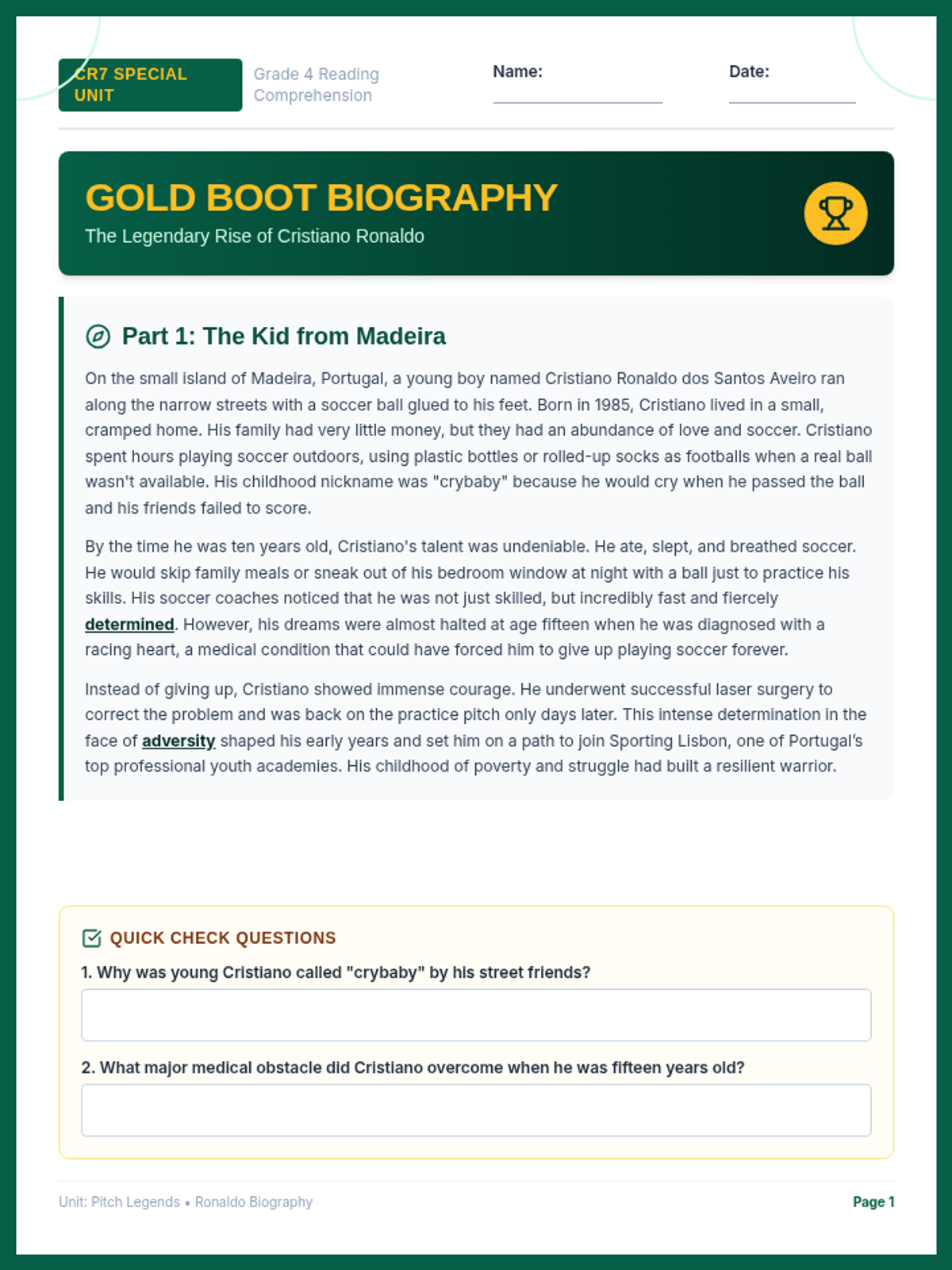
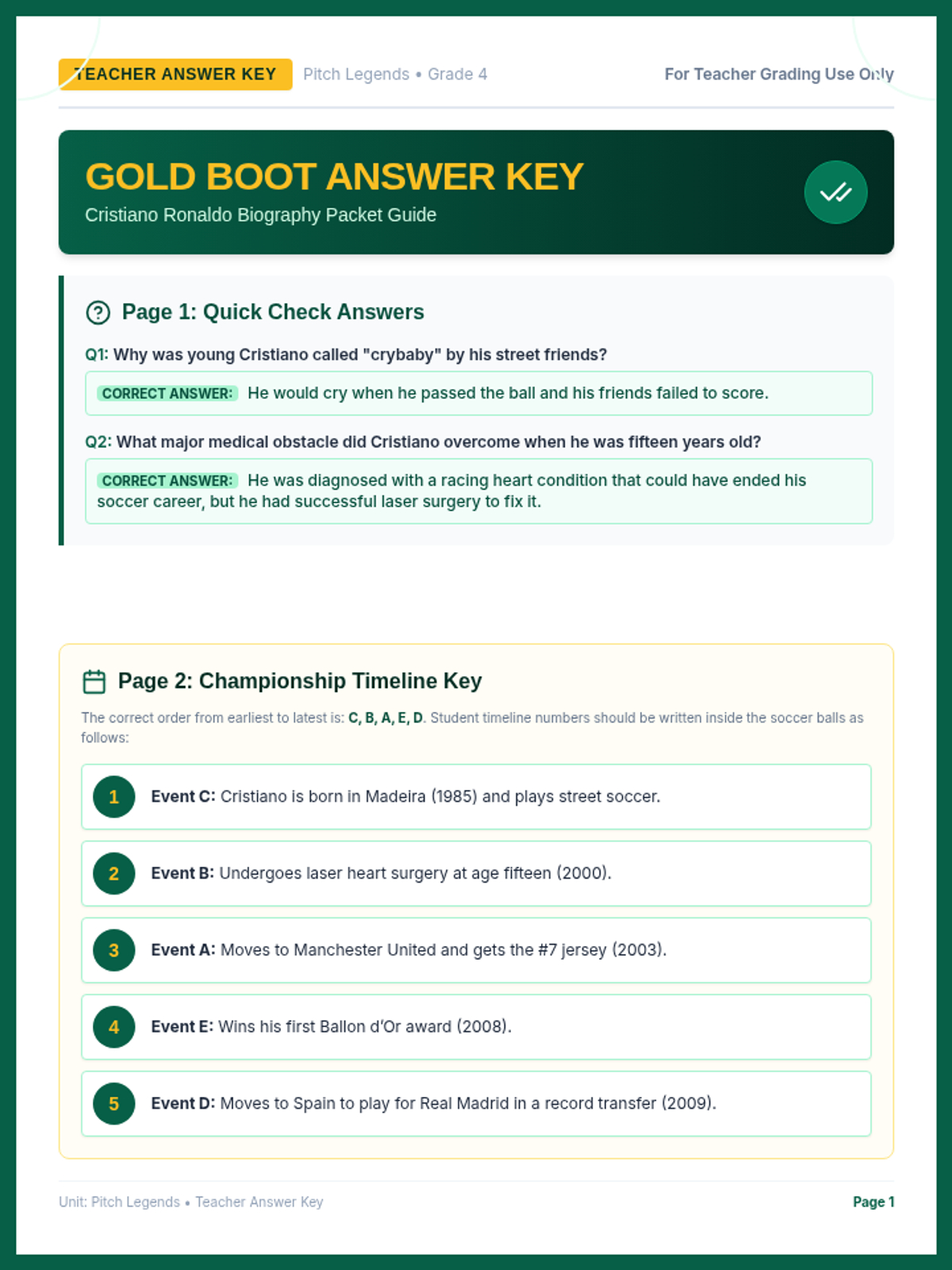
Canopy Giants WorksheetReading Practice The Cave Painters Name Date Field Notebook Guide: Read the informative history passage below about the discovery of the Lascaux Cave paintings. Think about how the teenagers found the cave, what animals were painted on the walls, and the clever tools the prehistoric artists used. Then answer the questions on page 2. The Secrets of Lascaux In 1940, four teenagers and a playful dog named Robot wandered into the woods of southwestern France. Robot chased a ball down a narrow hole near an old, uprooted tree. When the boys crawled inside to rescue him, they stumbled into a dark, massive cavern. Striking a match, they looked up and gasped in amazement. The boys had discovered the Lascaux Cave, home to some of the oldest and most beautiful cave paintings in the world. Painted nearly twenty thousand years ago, the cave walls were decorated with over six hundred large, colorful animals. There were giant bulls, wild horses, roaring lions, and even ancient rhinos! Archaeologists later discovered that the prehistoric artists had carved hollow stone lamps to burn animal fat, lighting up the pitch-black caves. They made their vibrant paints by crushing colorful rocks and mixing them with water. Today, the Lascaux paintings are known as the "Sistine Chapel of Prehistory," showing that humans have always shared a deep passion for art and storytelling. The Cave Painters • Reading Comprehension Page 1 of 2 Reading Comprehension Field Questions 1. How was the Lascaux Cave discovered in 1940? A Scientists dug a massive underground tunnel using heavy digging machines. B Four teenagers and a playful dog named Robot stumbled into the cavern. C An ancient forest castle collapsed down into a deep sinkhole. 2. Nearly how many years ago were the Lascaux cave paintings created? A Two thousand B Twenty thousand C Two million 3. Which animals were NOT painted on the massive stone walls of the cave? A Bulls and horses B Rhinos and lions C Eagles and whales 4. How did the prehistoric artists light up the pitch-black caverns? A They carried glowing forest fireflies inside small glass jars. B They carved hollow stone lamps that burned thick animal fat. C They carried metal torches powered by chemical batteries.
Canopy Giants Answer KeyTeacher Resource • Answer Key The Cave Painters Document Type Answer Key Grade Level 4th Grade Teacher Reference Guide: Correct options for the 5 comprehension questions are clearly highlighted in blue on page 2. Review student answers to ensure standard alignment CCSS.ELA-LITERACY.RI.4.1. The Secrets of Lascaux In 1940, four teenagers and a playful dog named Robot wandered into the woods of southwestern France. Robot chased a ball down a narrow hole near an old, uprooted tree. When the boys crawled inside to rescue him, they stumbled into a dark, massive cavern. Striking a match, they looked up and gasped in amazement. The boys had discovered the Lascaux Cave, home to some of the oldest and most beautiful cave paintings in the world. Painted nearly twenty thousand years ago, the cave walls were decorated with over six hundred large, colorful animals. There were giant bulls, wild horses, roaring lions, and even ancient rhinos! Archaeologists later discovered that the prehistoric artists had carved hollow stone lamps to burn animal fat, lighting up the pitch-black caves. They made their vibrant paints by crushing colorful rocks and mixing them with water. Today, the Lascaux paintings are known as the "Sistine Chapel of Prehistory," showing that humans have always shared a deep passion for art and storytelling. The Cave Painters Answer Key Page 1 of 2 Answer Key • Comprehension Field Questions 1. How was the Lascaux Cave discovered in 1940? A Scientists dug a massive underground tunnel using heavy digging machines. Four teenagers and a playful dog named Robot stumbled into the cavern. C An ancient forest castle collapsed down into a deep sinkhole. 2. Nearly how many years ago were the Lascaux cave paintings created? A Two thousand Twenty thousand C Two million 3. Which animals were NOT painted on the massive stone walls of the cave? A Bulls and horses B Rhinos and lions Eagles and whales 4. How did the prehistoric artists light up the pitch-black caverns? A They carried glowing forest fireflies inside small glass jars. They carved hollow stone lamps that burned thick animal fat. C They carried metal torches powered by chemical batteries. 5. What nickname is given to the Lascaux Cave today? The Sistine Chapel of Prehistory B
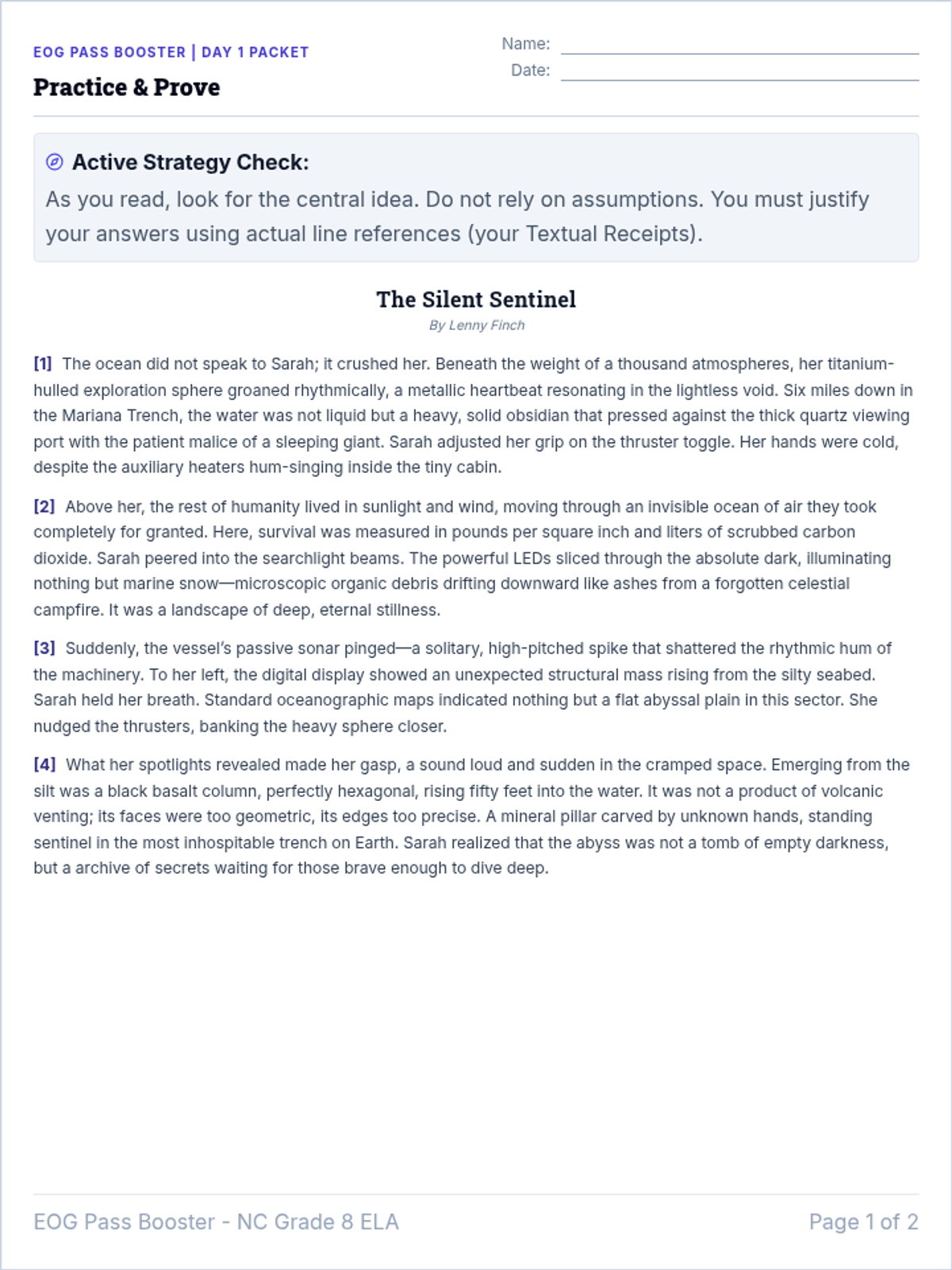
Abyssal Chimneys WorksheetReading Practice The Maya Codices Name Date Field Notebook Guide: Read the informative history passage below about the decipherment of the ancient Maya writing system. Think about what the codices were made of, Yuri Knorozov's breakthrough realization, and what the decoded stone inscriptions revealed. Then answer the questions on page 2. Deciphering the Glyphs For hundreds of years, the mysterious writing of the ancient Maya civilization was a riddle that no one could solve. Carved on stone monuments and painted on bark-paper books called codices, these complex hieroglyphs depicted strange faces, animal heads, and abstract symbols. Most European scholars believed that these carvings were just simple pictures rather than a complete written language. However, in the mid-twentieth century, a brilliant Russian linguist named Yuri Knorozov made a groundbreaking discovery. While studying copies of the surviving codices, he realized that the glyphs did not represent whole words or ideas. Instead, they were phonetic, meaning that each symbol stood for a specific syllable sound, much like modern alphabets. By combining these syllable sounds, the ancient Maya could write any word in their spoken language. This discovery allowed epigraphers—scientists who study ancient inscriptions—to begin reading the stone walls of ancient cities. Today, over ninety percent of the Maya glyphs have been successfully deciphered, revealing rich historical records of powerful kings, starry astronomical calendars, and epic legends that were silenced for centuries. The Maya Codices • Reading Comprehension Page 1 of 2 Reading Comprehension Field Questions 1. What are "codices" as described in the passage? A Heavy stone carving tools used to build monuments. B Ancient bark-paper books written by the Maya. C Starry astronomical calendars made of highly polished gold. 2. What did European scholars originally believe about the Maya hieroglyphs? A They believed they were simple pictures rather than a complete language. B They believed they were written by ancient scholars from Europe. C They believed they were left behind by extraterrestrial travelers. 3. What groundbreaking realization did Yuri Knorozov have about the glyphs? A He realized they were only used by priests to write complex codes. B He realized they were phonetic symbols representing specific syllable sounds. C He realized they were copied directly from ancient Egyptian pyramid scrolls.
Abyssal Chimneys Answer KeyTeacher Resource • Answer Key The Maya Codices Document Type Answer Key Grade Level 5th Grade Teacher Reference Guide: Correct options for the 5 comprehension questions are clearly highlighted in blue on page 2. Review student answers to ensure standard alignment CCSS.ELA-LITERACY.RI.5.1. Deciphering the Glyphs For hundreds of years, the mysterious writing of the ancient Maya civilization was a riddle that no one could solve. Carved on stone monuments and painted on bark-paper books called codices, these complex hieroglyphs depicted strange faces, animal heads, and abstract symbols. Most European scholars believed that these carvings were just simple pictures rather than a complete written language. However, in the mid-twentieth century, a brilliant Russian linguist named Yuri Knorozov made a groundbreaking discovery. While studying copies of the surviving codices, he realized that the glyphs did not represent whole words or ideas. Instead, they were phonetic, meaning that each symbol stood for a specific syllable sound, much like modern alphabets. By combining these syllable sounds, the ancient Maya could write any word in their spoken language. This discovery allowed epigraphers—scientists who study ancient inscriptions—to begin reading the stone walls of ancient cities. Today, over ninety percent of the Maya glyphs have been successfully deciphered, revealing rich historical records of powerful kings, starry astronomical calendars, and epic legends that were silenced for centuries. The Maya Codices Answer Key Page 1 of 2 Answer Key • Comprehension Field Questions 1. What are "codices" as described in the passage? A Heavy stone carving tools used to build monuments. Ancient bark-paper books written by the Maya. C Starry astronomical calendars made of highly polished gold. 2. What did European scholars originally believe about the Maya hieroglyphs? They believed they were simple pictures rather than a complete language. B They believed they were written by ancient scholars from Europe. C They believed they were left behind by extraterrestrial travelers. 3. What groundbreaking realization did Yuri Knorozov have about the glyphs? A He realized they were only used by priests to write complex codes. He realized they were phonetic symbols representing specific syllable sounds. C He realized they were copied directly from ancient Egyptian pyramid scrolls. 4. What is the primary job of an "epigrapher"?