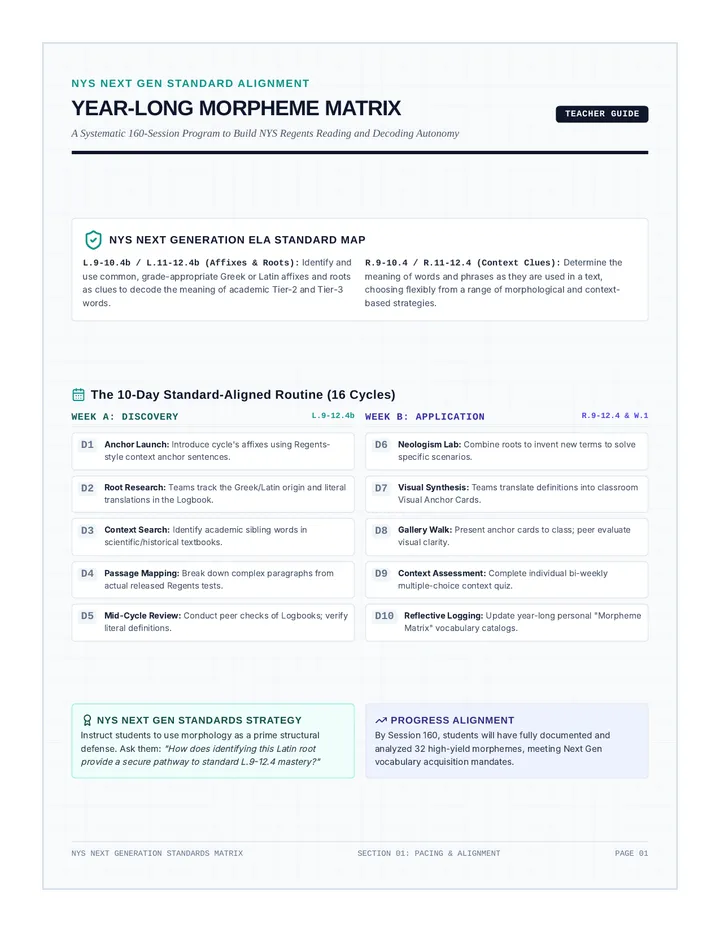
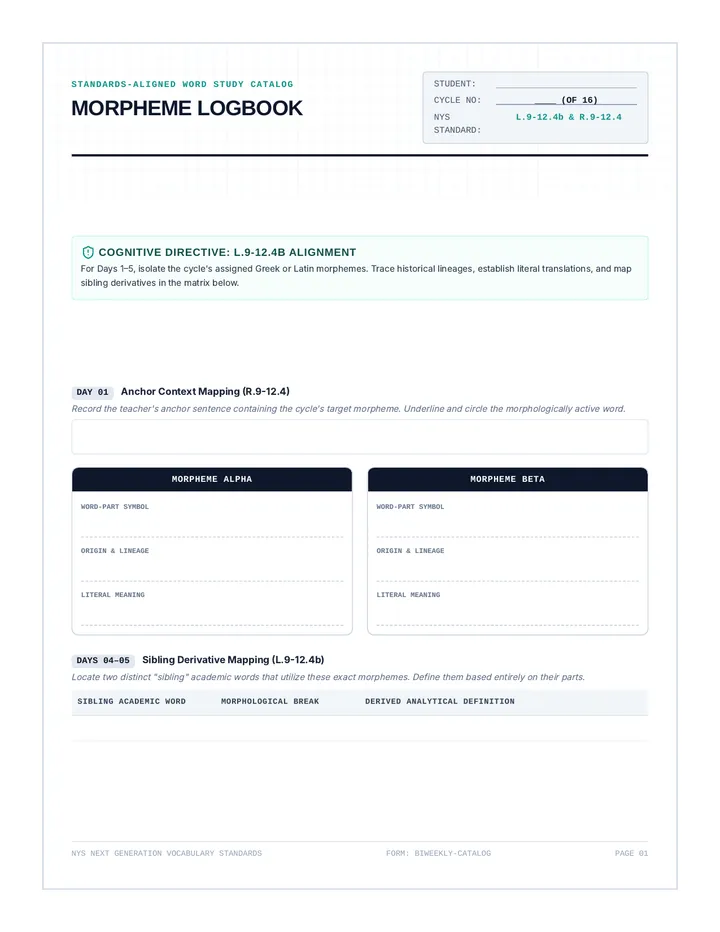
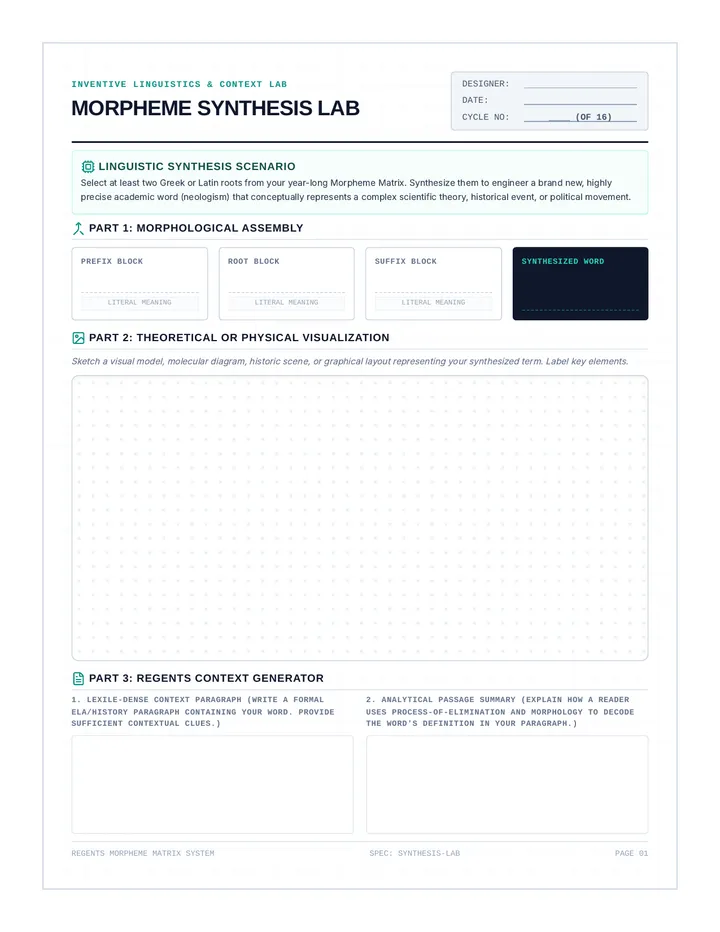
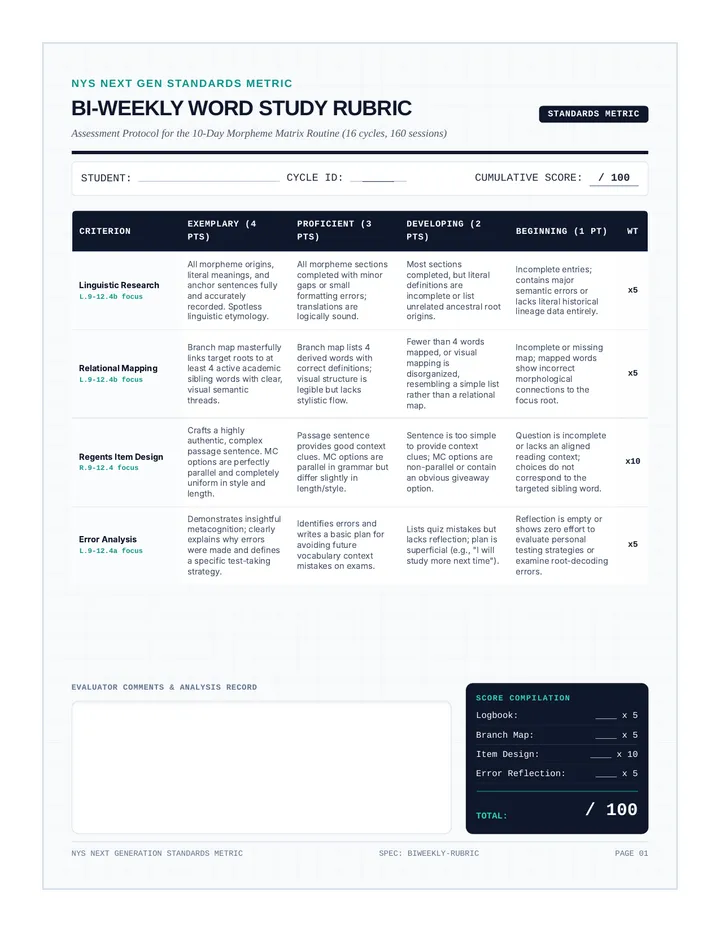
Blueprint Analogies Slides Architects of Analogy
Lesson 1: Deconstructing Explanatory Metaphors
The Time Traveler's Dilemma
The Scenario
A traveler from the year 1800 has just arrived. They have no idea what the internet is.
The Challenge
"Explain the Internet using only terms and concepts from a 19th-century farm."
Seeds / Crops
Granaries / Silos
Irrigation Ditches
Trade Routes
Essential Question
How can we use familiar concepts to unlock the understanding of complex, abstract systems?
Building the Bridge
Target Domain
The Unknown
A complex, abstract, or scientific concept.
Analogy
Mapping structures & relationships
Source Domain
The Known
A familiar, concrete system or object.
Case Study: The Cell
The "City" Model
🏢
Nucleus = City Hall
Central control & genetic instructions.
⚡
Mitochondria = Power Plant
Generating energy for the system.
📦
Golgi Body = Post Office
Packaging and shipping materials.
What's the Danger?
What happens when we take the "City" analogy too literally? Does a cell have roads? Can a cell vote for a new Mayor?
Analogies always "break" at some point.
Deconstruction Task
Working with your partner, analyze your assigned analogy:
1. Mapping
List 3 points of connection between the source and target.
2. Gain/Loss
What is gained in understanding? What is lost in simplification?
3. Breaking Point
Where does the comparison stop working or become misleading?
"All models are wrong, but some are useful." — George Box
Model Breakdown Worksheet Model Breakdown Worksheet
Architects of Analogy: Lesson 1
NAME:
DATE:
Part 1: The Time Traveler's Dilemma
You are explaining the Internet to a farmer from 1800. Record your favorite "farming analogy" for a specific digital concept (e.g., a website, a server, or a search engine).
Part 2: Deconstructing a Classic Model
Selected Analogy:
TARGET (Unknown) THE ATOM
SOURCE (Known) THE SOLAR SYSTEM
Target: Atom Component Source: System Component Nucleus Electrons Electrostatic Pull
1. GAIN: What does this solar system comparison help a beginner understand about the atom that might otherwise be confusing?
2. LOSS: Atoms are 3D and quantum, but solar systems are mostly flat and follow gravity. What key scientific detail is "lost" or misrepresented in this comparison?
3. THE BREAKING POINT: At what point does this analogy become dangerous or misleading for a student?
"Analogies are like shadows: they represent the object, but they are not the object itself."
Structure Scouting Slides Lesson 2
STRUCTURE
SCOUTING
Topic Selection and Structural Mapping
Forced Connections
I will draw one Academic Topic and one Random Object . You have 30 seconds to explain how they are related.
Topic
Feudalism
Object
A Ladder
Why do this?
Trains your brain to find functional similarity rather than surface looks.
Helps identify hierarchies and flow .
Step 1: Selecting Your Target
Complex Concepts
Choose a topic you are currently studying in another class that feels "difficult" or "abstract."
Photosynthesis
The French Revolution
Plate Tectonics
Quadratic Equations
Deconstruction Strategy
Before finding an analogy, you must map the target's "Skeleton":
Components
What are the "parts" of this system? (Nouns)
Relationships
How do the parts interact? (Verbs)
Input / Output
What goes in? What comes out?
Purpose
What is the overall "job" of this system?
Step 2: Source Domain Brainstorming
The best analogies come from concrete domains that everyone understands.
Sports & Games
Home / Cooking
Transportation
Daily Routine
Nature / Weather
Construction
Expert Tip
Avoid "Looks Like"
Don't pick an analogy because it looks like the target. Pick it because it works like the target.
"A brain looks like a walnut, but it functions more like a computer network."
Concept Connection Map Concept Connection Map
ANALOGY PROJECT: PHASE 1 & 2
DESIGNER
1
Target Domain Deconstruction
Academic Topic / Concept Name
Core Components (The "Parts")
Identify the key actors, pieces, or stages of your topic.
• __________________________
• __________________________
• __________________________
• __________________________
Functional Relationships (The "Verbs")
How do the parts interact? What is the main process?
• __________________________
• __________________________
• __________________________
• __________________________
2
Source Domain Brainstorming
List 3 potential concrete systems (Source Domains) that might share the same "Skeleton" as your target topic.
Option A
Shared Relationship:
Option B
Shared Relationship:
Option C
Shared Relationship:
The Blueprint Selection
"I will explain ________________________________ (Target) using ________________________________ (Source)."
Initial Pitch
The "Essential Connection"
Analogy Architect Teacher Guide Analogy Architect Teacher Guide
Project Phase 2
The Goal of Structural Mapping
Students often struggle with analogies because they focus on surface-level features (e.g., "The mitochondria is orange, and so is a carrot"). This lesson pivots them toward relational features .
"The goal is not to find something that looks like the topic, but something that behaves like the topic."
Forced Connection Hook
To run the hook from Slide 2 effectively, use these pairing suggestions:
Photosynthesis + A Factory Assembly Line
Feudalism + A Pyramid Scheme
Plate Tectonics + Bumper Cars
Market Economy + An Auction House
The "Target" Check
When students select their academic topic, ensure it meets these criteria:
Is it complex enough to need an explanation?
Does it involve a system or a process?
Can they identify at least 4 distinct "parts"?
Common Misconceptions
The "Visual Trap"
Students might choose "The Sun = A Lightbulb." While visually similar, it's not a strong explanatory analogy because it doesn't explain the how (fusion, radiation, gravity). Encourage them to look for functional parallels.
The "Over-Literal" Problem
Students might say "The French Revolution is like a war." A war is not an analogy for the French Revolution; it was a war. An analogy must bridge two different domains (e.g., a pressure cooker).
Discussion Prompts
"Which target topics seem most difficult to find analogies for? Why?"
"Why is it helpful to have multiple 'Option' sources before picking one?"
Extended Mapping Guide Ref: ARCH-03-MAP
Extended Mapping Guide
Phase 3: Deep Structural Alignment & Drafting
Target Topic
Source Analogy
1. The Alignment Matrix
Target Component (Scientific/Historical) Source Equivalent (Analogy Component) Alignment? Element 1:
|
Analogy Piece:
|
|
|
Element 2:
|
Analogy Piece:
|
|
|
Element 3:
|
Analogy Piece:
|
|
2. The Narrative Draft
Write a 1-2 paragraph explanation for a "layperson" (someone who knows nothing about your topic). Introduce your analogy immediately and use the mapped components to explain the system's function.
Self-Check: The Comparison Words
Use high-quality transition words to bridge your domains: "Similarly," "In the same way," "Just as X does Y, the..."
Friction Finder Peer Form Friction Finder
Peer Review: The Devil's Advocate Session
ARCHITECT (Author)
ADVOCATE (Reviewer)
Your Mission
As the Devil's Advocate , your job is to find where the analogy "breaks." You aren't being mean—you're being rigorous. Every analogy has limits; your goal is to help the architect identify them so they can clarify their explanation.
1. THE "LOGIC LEAP"
Identify one part of the comparison that feels like a "reach." Where does the mapping feel forced or confusing?
2. THE "LITERAL TRAP"
Is there a way someone could take this analogy too literally and end up with a scientific misconception? (e.g., thinking atoms are actually flat like paper).
3. THE "MISSING GEAR"
Is there a core part of the target topic (the science/history) that the analogy completely ignores? Could it be added?
Architect's Adjustment Plan
How will you change your draft or add a "disclaimer" to fix the friction points found above?
Visual Blueprint Slides VISUAL BLUEPRINT
Lesson 4: Visualizing the Analogy
Dual-Coding Theory
The Verbal Channel
Your written explanation provides the logic and detail .
The Visual Channel
Your image provides the spatial structure and memory hook .
1 + 1 = ∞
When we process words AND pictures together, understanding is significantly deeper.
The Power of Visual Symbols
[Insert Political Cartoon Image: Uncle Sam as a Teacher or similar]
Visual Mapping Checklist:
Caricature: Exaggerated features.
Labels: Clear text for key parts.
Symbolism: Objects representing ideas.
Analogy: The central visual comparison.
Infographic Standards
01
Hierarchy
Make the most important part (the central comparison) the largest visual element.
02
Parallelism
Use labels to show the connection. "Source (Target)" format. E.g., Power Plant (Mitochondria).
03
Flow
Use arrows to show the sequence or relationship between the parts of the system.
Infographic Sketchpad Infographic Sketchpad
Architects of Analogy: Stage 4 Visual Planning
Sheet No.
V-01
Layout Draft (The Thumbnail)
Draw your rough layout here. Consider where the main image, title, and explanation paragraph will go.
Visual Element Map
Label Architecture
Plan your labels. Remember the format: Source Component (Target Topic Component) .
The "Friction" Callout
Where will you include your "Warning" or "Disclaimer" about the analogy's limits? Draft it here.
"Note: Unlike this analogy, the [Target Topic] does not..."
Museum Docent Rubric Museum Docent Rubric
The Analogy Museum Exhibit: Final Assessment
Architect
Criteria Advanced (4) Proficient (3) Developing (2) Structural Accuracy
Mapping of target to source.
| Comparison is logically flawless; functional relationships are perfectly mirrored across domains. | Core components are mapped accurately; most relationships are clear and consistent. | Mapping is surface-level (looks like) rather than functional (works like); some logical gaps present. |
|
Explanatory Clarity
Quality of written draft.
| Prose is elegant and accessible. Complex topic is demystified for a layperson without oversimplifying. | Prose is clear and organized. Uses transition words to bridge domains effectively. | Explanation is either too technical or too simple. The analogy is mentioned but not fully developed. |
|
Visual Dual-Coding
Infographic design.
| Visuals create immediate meaning. Labels are perfectly aligned; hierarchy guides the eye through the system. | Clean layout with clear labels and symbols. Visuals support and reinforce the written explanation. | Visuals are decorative rather than explanatory. Labels are missing or confusingly placed. |
|
Critical Insight
Identification of limits.
| Brilliant "Friction Point" analysis; explicitly warns the reader where the model breaks to prevent misconceptions. | Identifies at least one significant limitation or "breaking point" of the analogy. | Fails to acknowledge the limits of the analogy; treats the comparison as literal. |
Architect's Feedback
Strengths
Areas for Refinement
Final Design Score
___ / 16
Visitor Log Peer Review Official Exhibition Guest Log
Visitor Log
Exhibit #01
Designer Name
Target Topic
1. What was the most effective part of the visual design?
2. Did the analogy make the complex topic easier to understand? Why or why not?
Exhibit #02
Designer Name
Target Topic
1. What was the most effective part of the visual design?
2. Did the analogy make the complex topic easier to understand? Why or why not?
Exhibit #03
Designer Name
Target Topic
1. What was the most effective part of the visual design?
2. Did the analogy make the complex topic easier to understand? Why or why not?
Architect Reflection Sheet Architect Reflection
Project Post-Mortem: Analyzing Understanding
The Evolution of the Idea
How did your analogy change from your first "Structure Scouting" session to your final "Museum Exhibit"? What was the biggest adjustment you had to make?
Metacognition
The core of this project was using the "Known" to unlock the "Unknown." Now that you've finished, do you feel you understand your target academic topic better? Why or why not?
Limits of Language
If you were a teacher, would you use your analogy to teach this topic for the first time? What is the one thing you would warn your students about before using it?
Project Certification
Architect signature