A series of highly focused, small-group lessons and scaffolded materials targeting ELA standard 6.RL.1. Students learn to extract explicit textual evidence and synthesize clues with personal knowledge to make precise inferences.
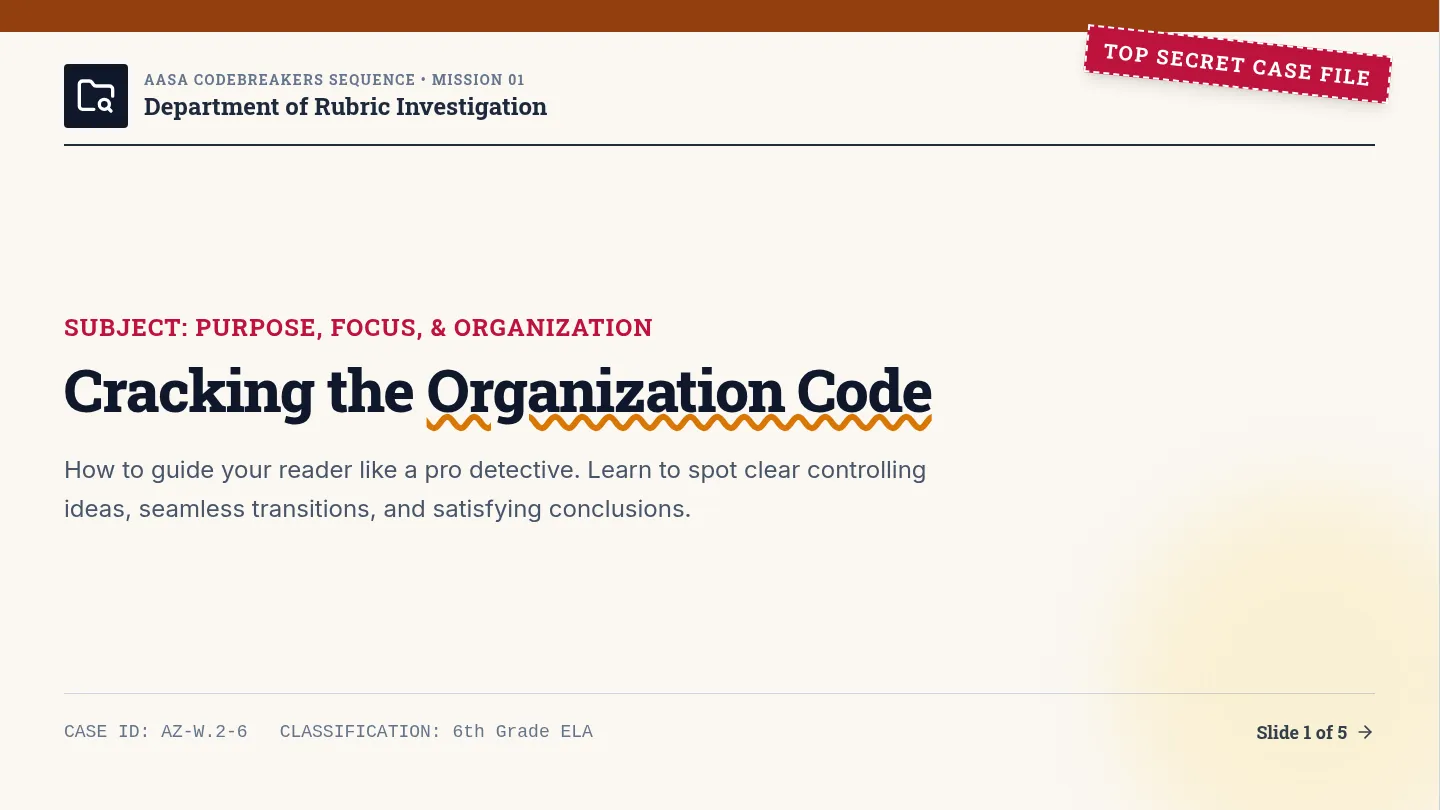
A 3-part writing sequence that teaches 6th-grade students how to read, understand, and apply the AASA Informative-Explanatory writing rubric to their own writing. Through mentor essays about technology and daily life, students learn to analyze writing and provide feedback like real rubric judges.
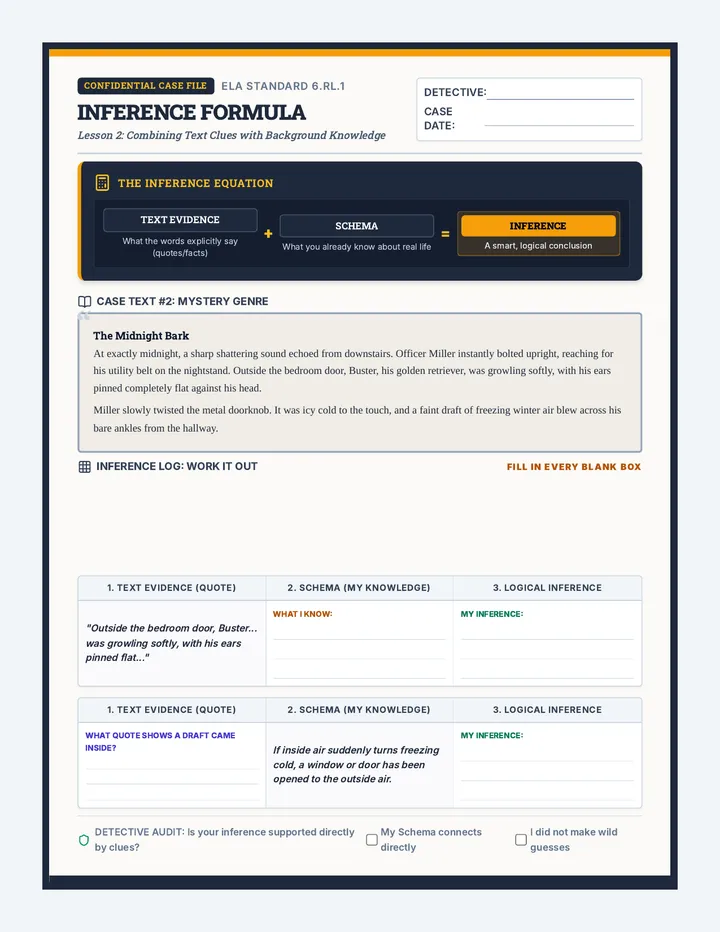
Focuses on the art of drawing logical inferences by combining explicit text evidence with background knowledge. Students learn the 'Text + Schema = Inference' formula.
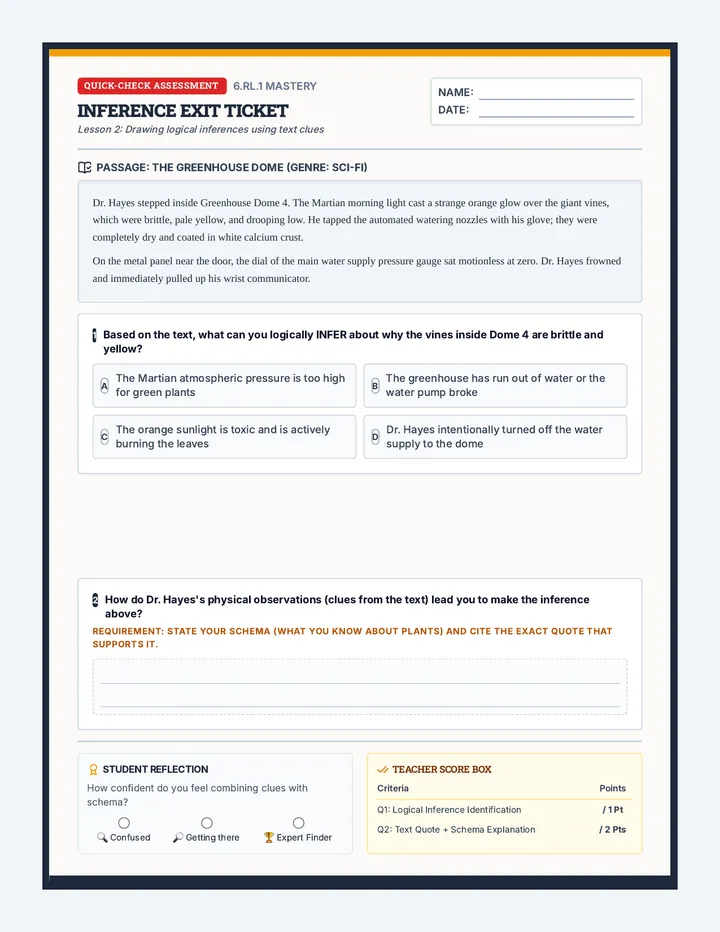
A 2-question formative assessment exit ticket with a focused sci-fi passage. Features a multiple-choice question and a written inference/evidence-citation question, plus a self-reflection scale and quick-score teacher rubric.
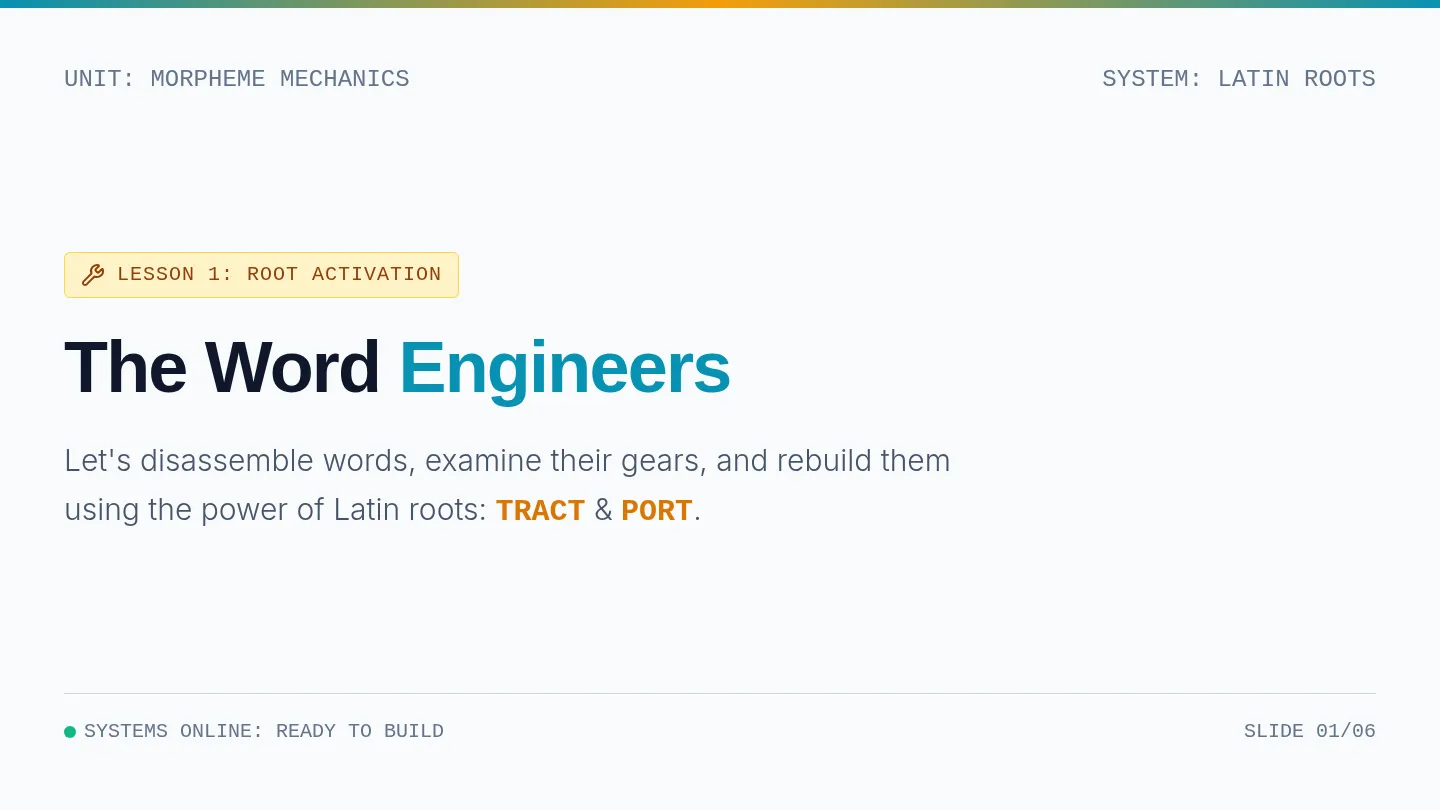
An intensive Latin roots intervention sequence designed for 6th-grade struggling readers. Focuses on high-yield roots tract, struct, port, and scrib/script through multi-sensory routines, explicit slides, practice sheets, and games.
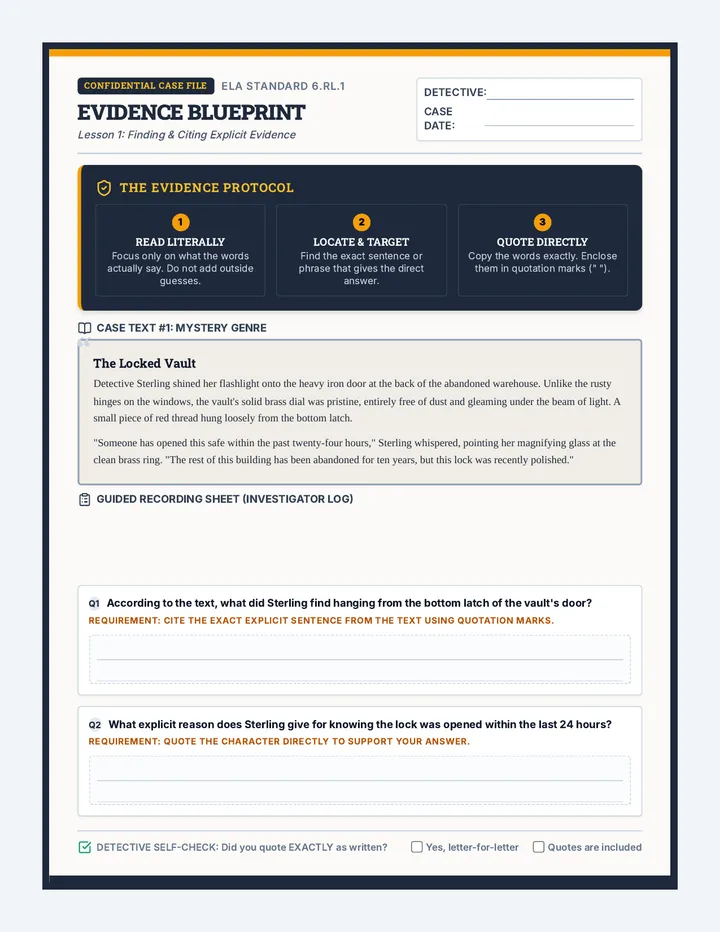
Focuses on finding and citing explicit textual evidence. Students learn to spot direct answers, quote accurately, and avoid adding outside assumptions when only explicit evidence is needed.
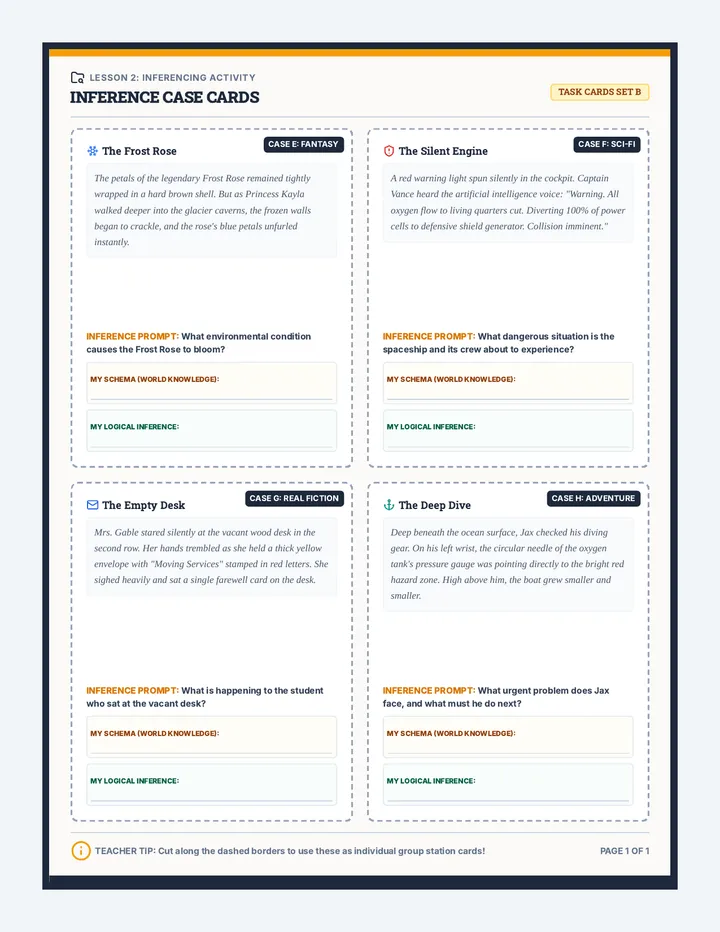
A collection of 4 printable, high-interest task cards with distinct literary genres (Fantasy, Sci-Fi, Realistic Fiction, Adventure) featuring bite-sized passages and targeted inference-hunting prompts.
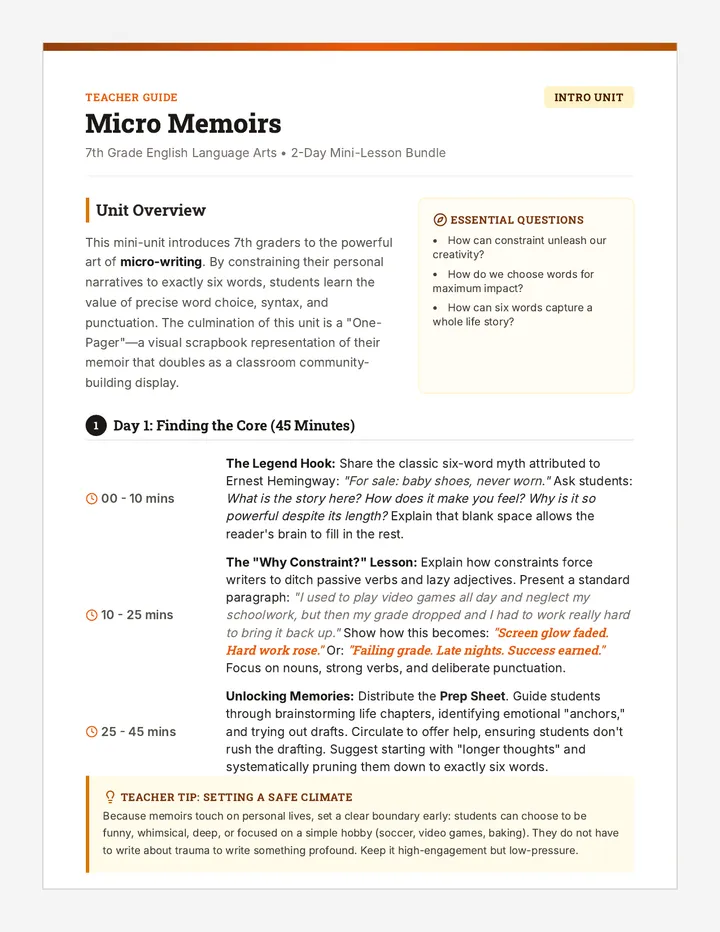
A comprehensive writing sequence that introduces middle school students to the power of micro-narratives. It scaffolds personal writing and visual design through highly focused, word-budgeted creative projects.
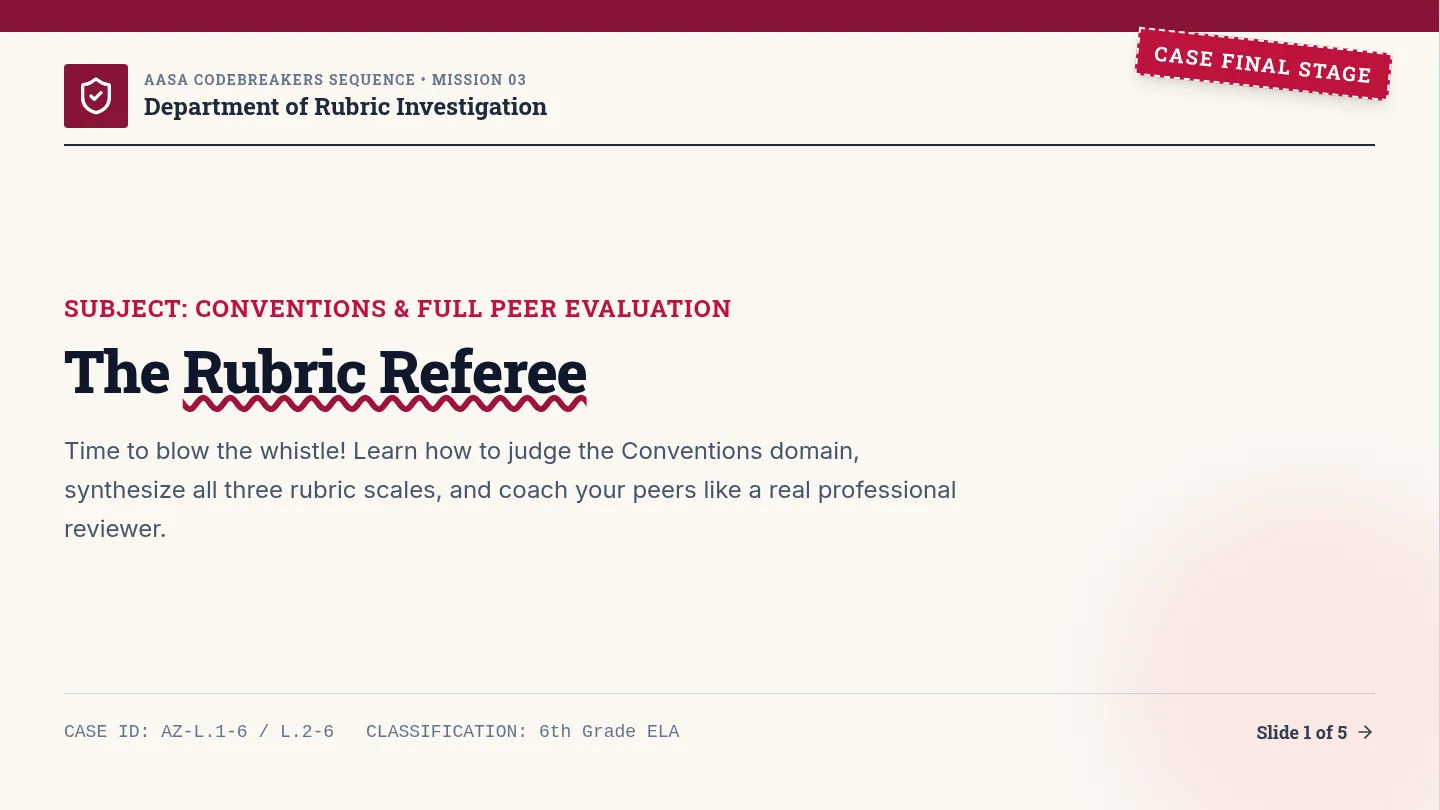
Students learn to master the 'Conventions' domain and synthesize all rubric areas to score essays on social media and sleep. They collaborate to grade work and give feedback using precise rubric language.
A graphic organizer featuring the core 'What the Text Says + What I Know = My Inference' formula. Includes a high-interest detective story passage and scaffolded work spaces.
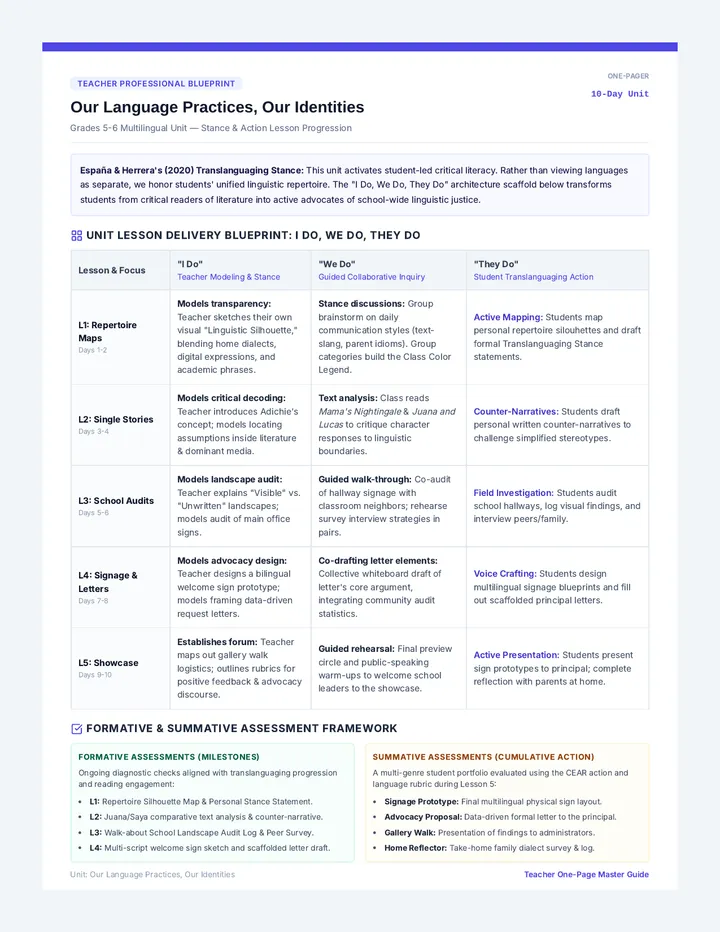
This 2-week unit for middle school (grades 5-6) multilingual learners explores linguistic identity, critiques single stories through diverse literature, audits school linguistic landscapes, and culminates in a student-led advocacy letter and multilingual signage campaign.
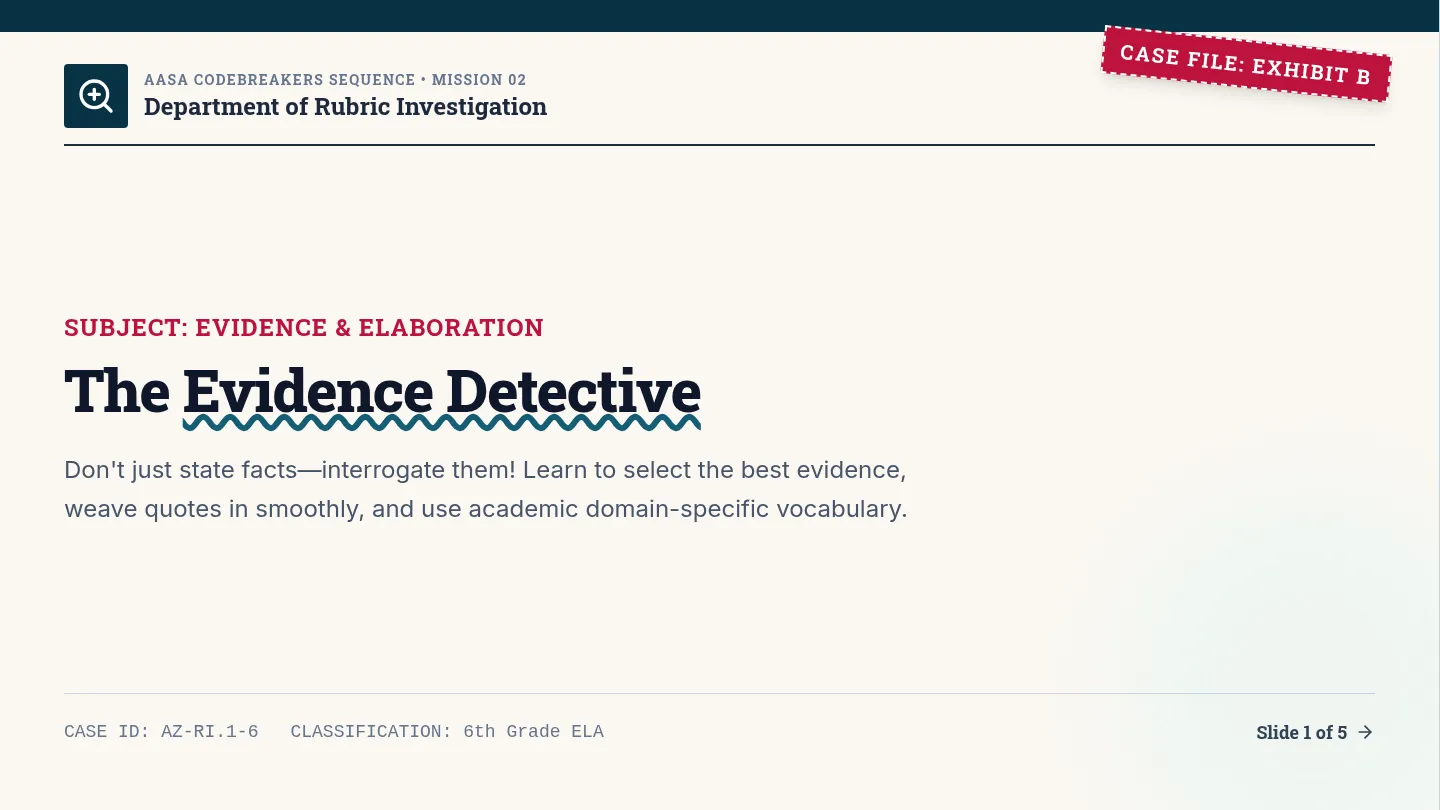
Students focus on the 'Evidence and Elaboration' domain of the AASA rubric. They learn to analyze and rate how well an author integrates quotes, uses precise vocabulary, and elaborates on facts in essays about video games and brain training.
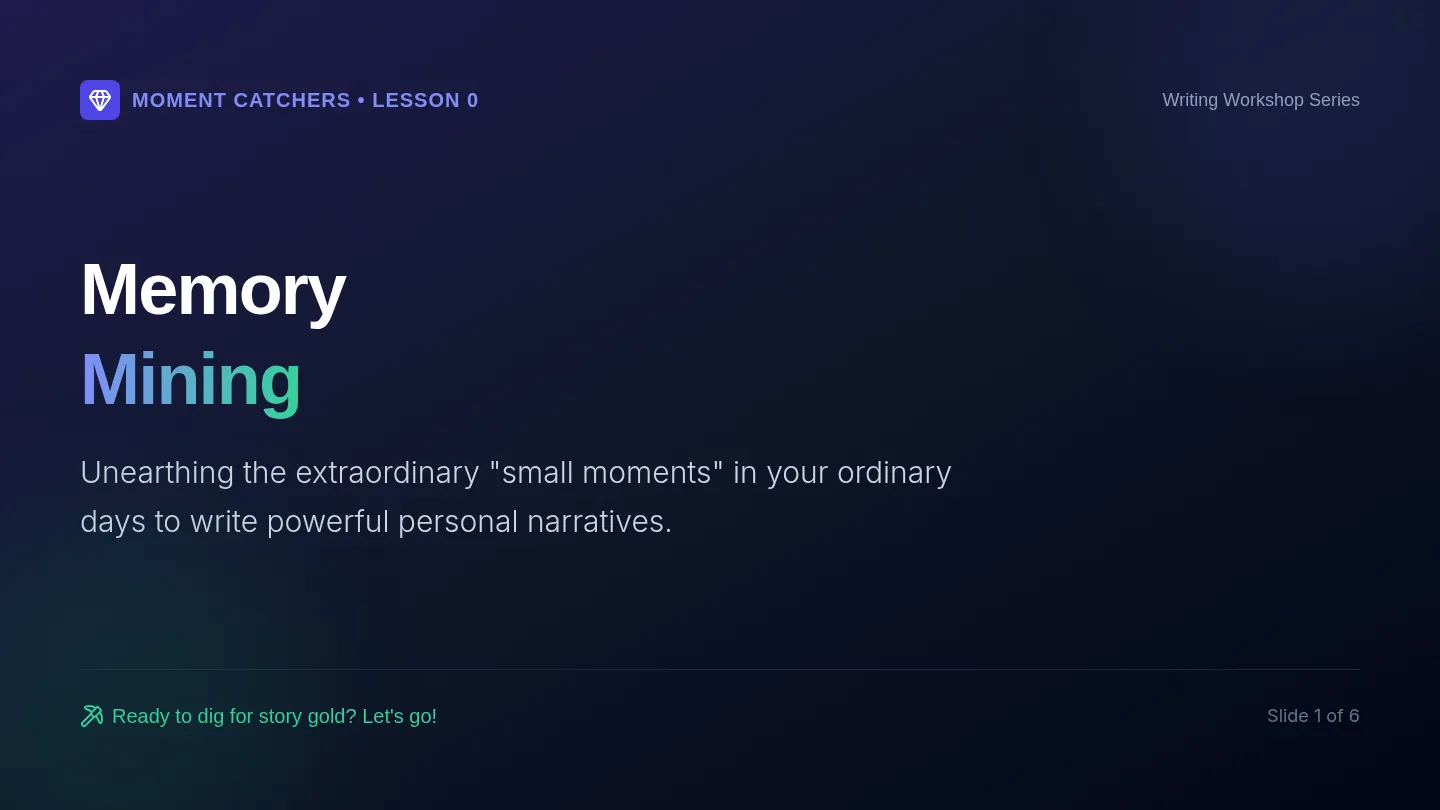
An immersive personal narrative writing unit that empowers students to capture small moments from their lives and craft them into compelling stories. This unit focuses on drafting catchy hooks, utilizing rich sensory details, and revising through collaborative editing stations.