A graphic organizer for students to sort picture cards based on whether they represent an ending ('termination') or an ongoing action.
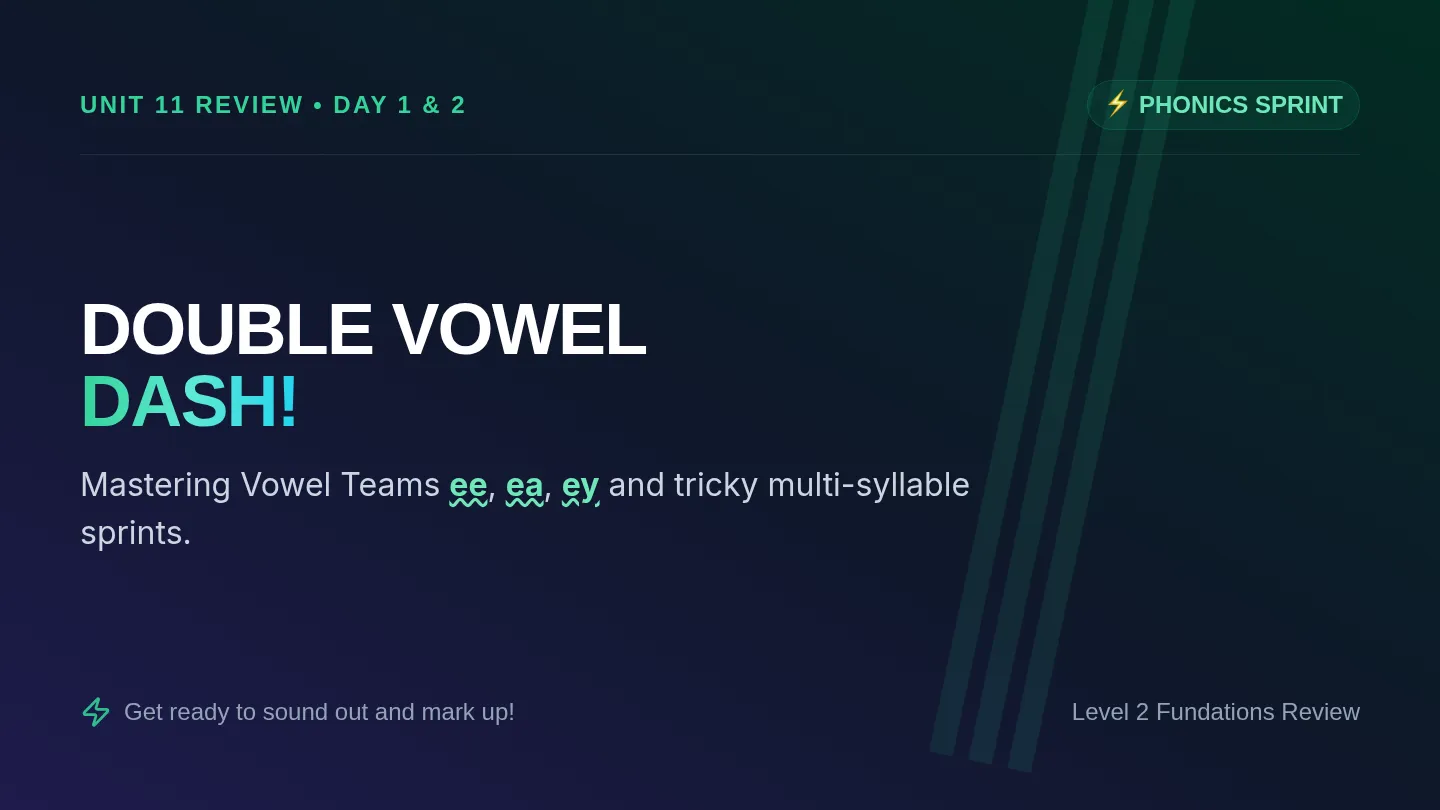
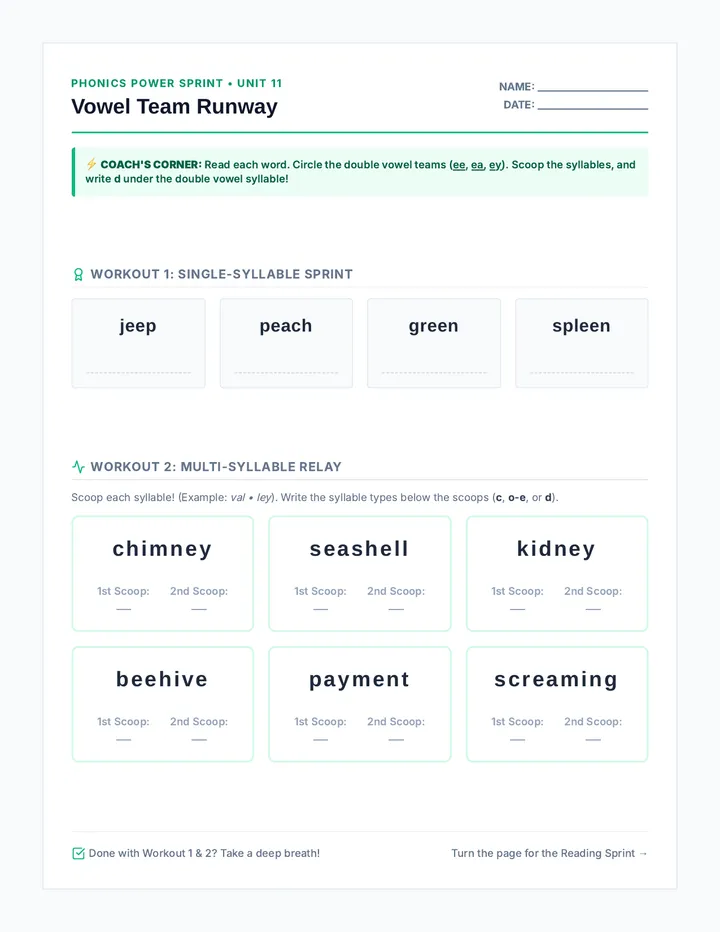
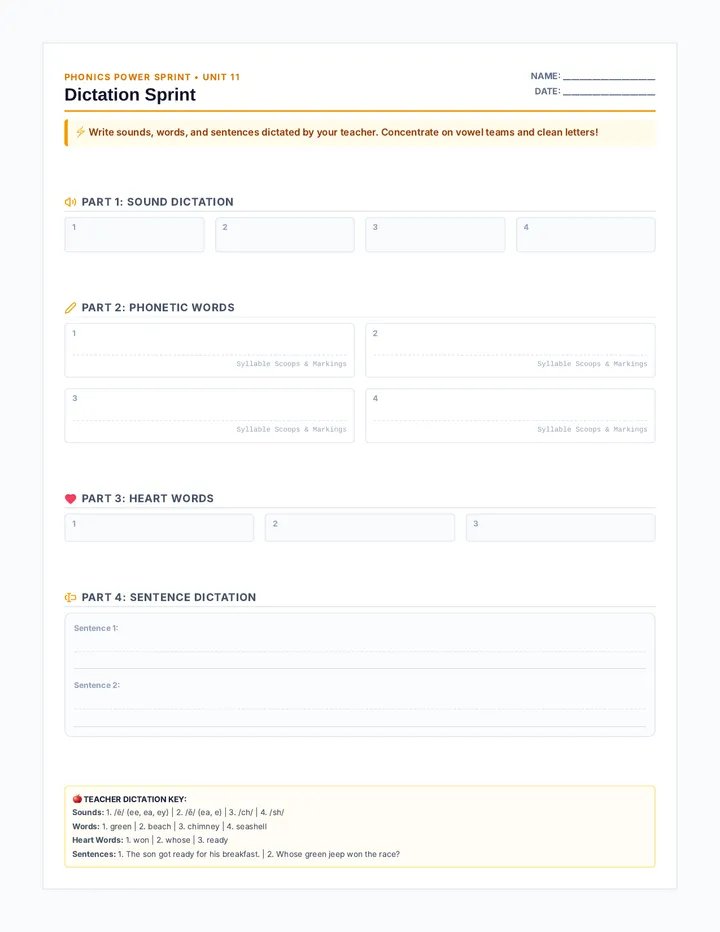
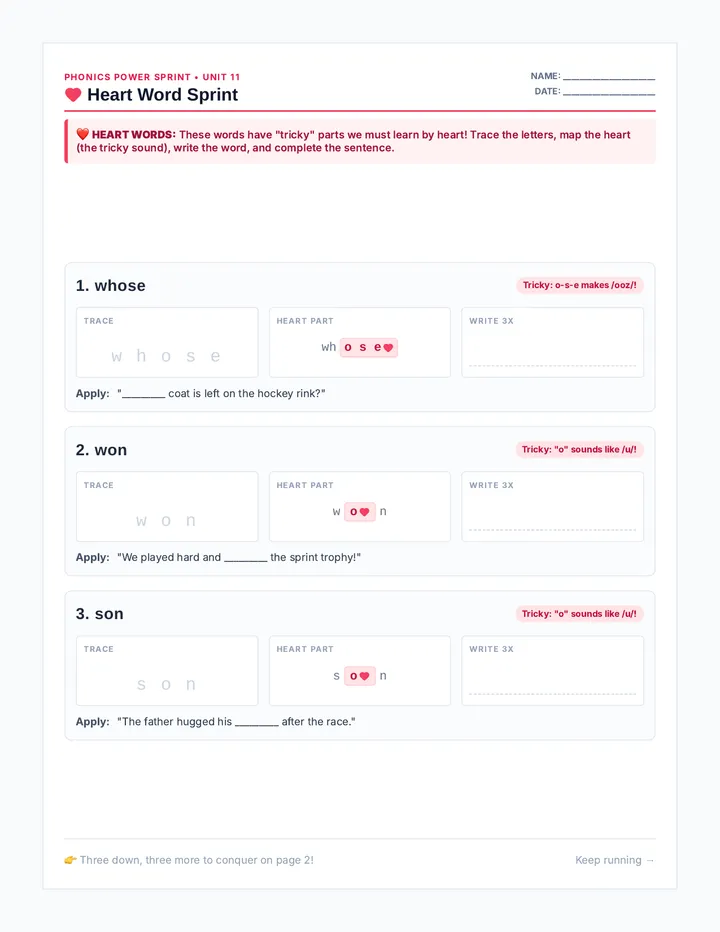
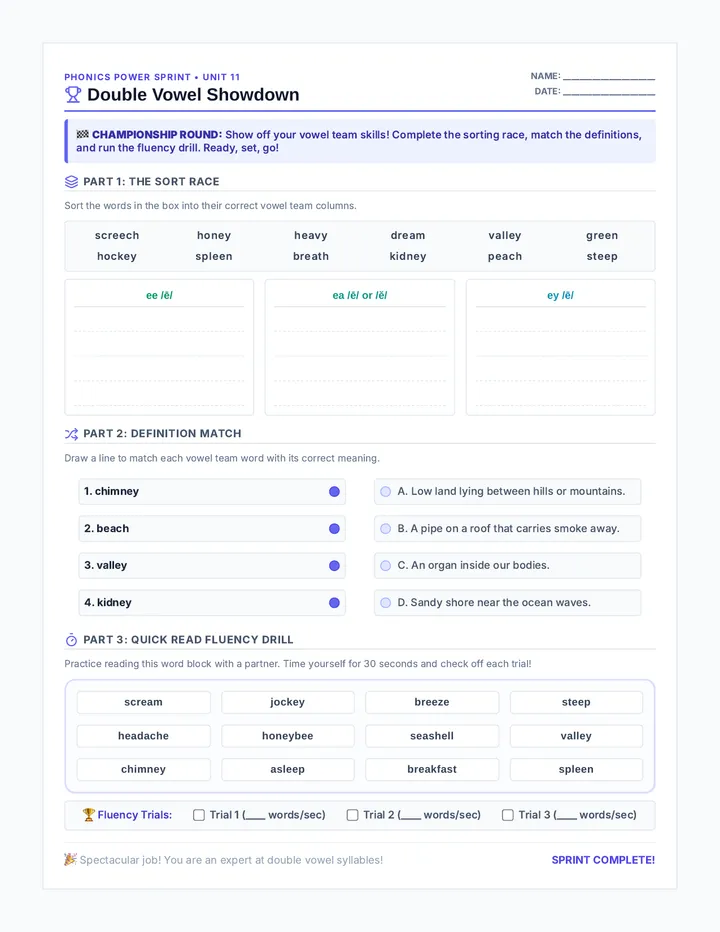
An accelerated, high-impact review of Fundations Level 2 phonics concepts, consolidating Units 11-17 into an intensive curriculum. This sequence focuses on double vowel syllables (vowel teams), multi-syllabic words, and essential high-frequency heart words to build rapid decoding and spelling mastery.
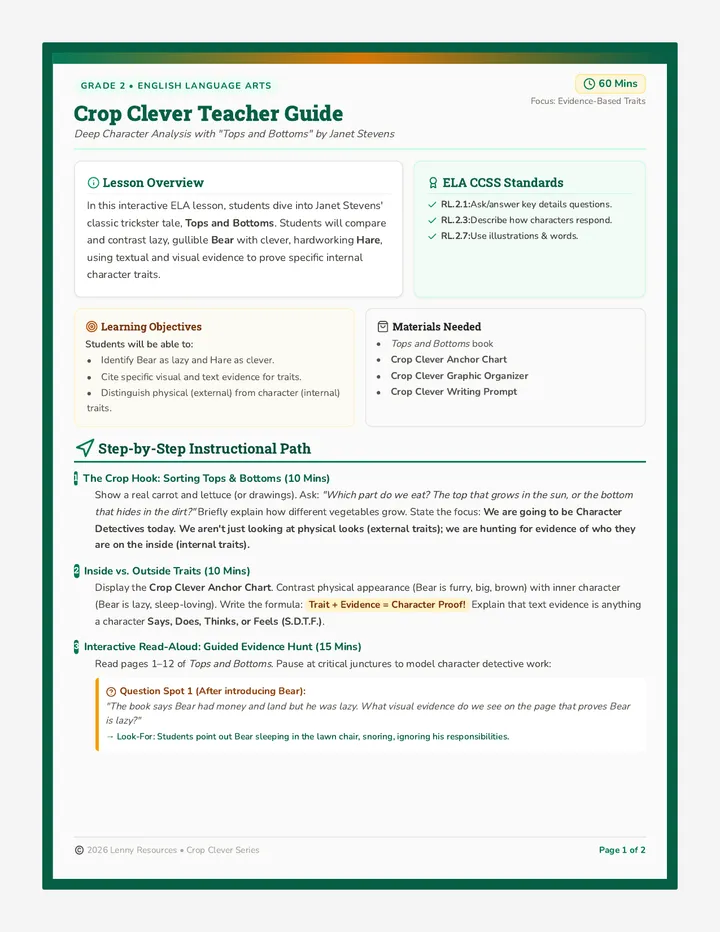
An interactive Grade 2 English Language Arts lesson based on the book Tops and Bottoms by Janet Stevens, focusing on evidence-based character traits, comparing lazy Bear and clever Hare.
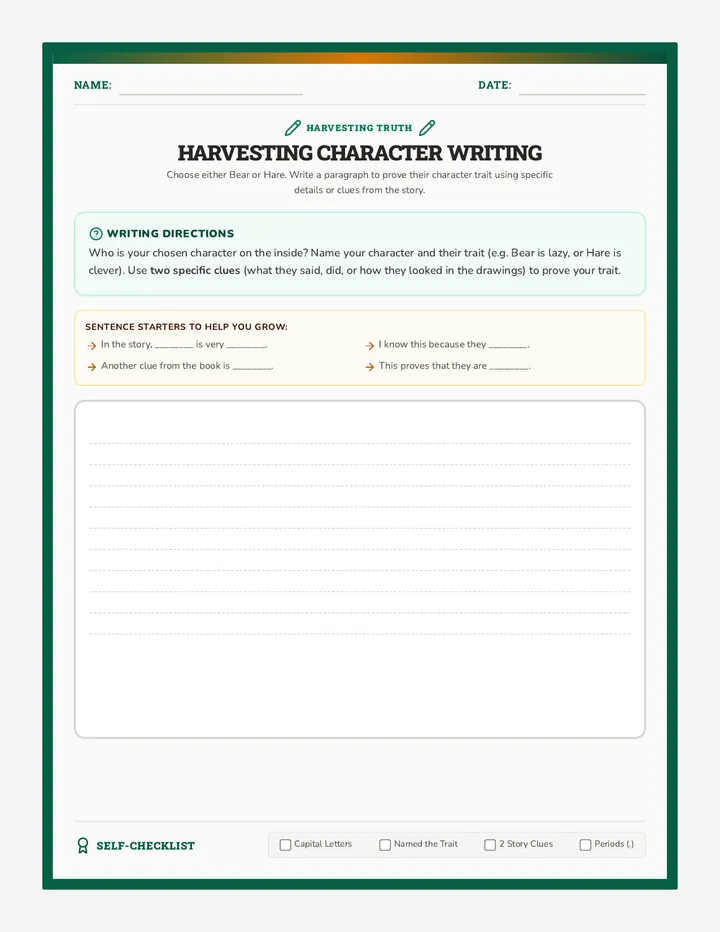
A Grade 2 ELA student-facing writing prompt sheet with ruled handwriting lines, scaffolding sentence starters, and a character detective self-checklist.
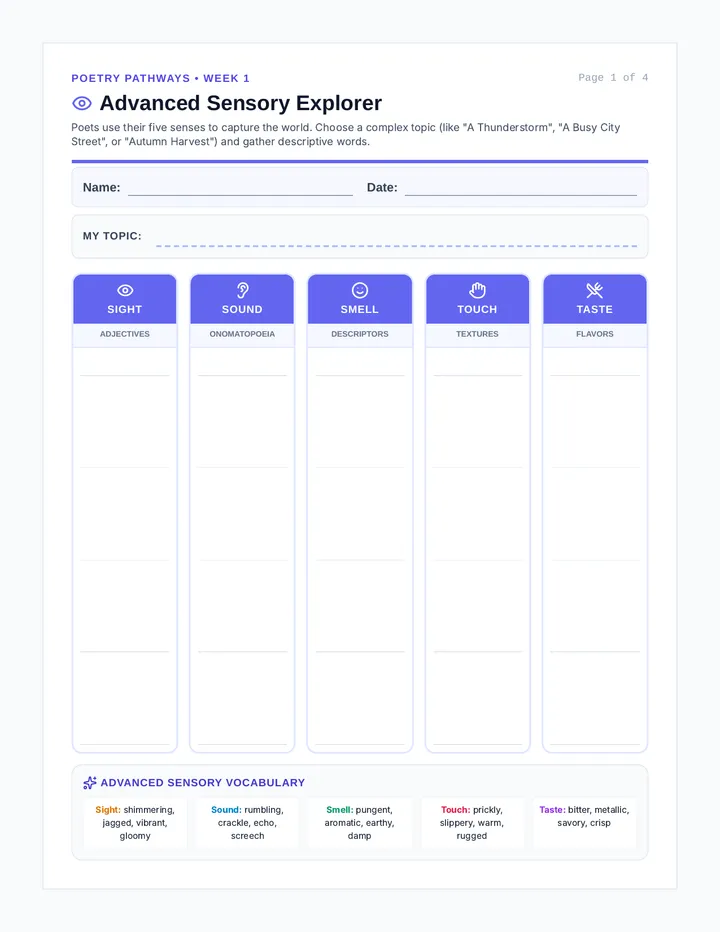
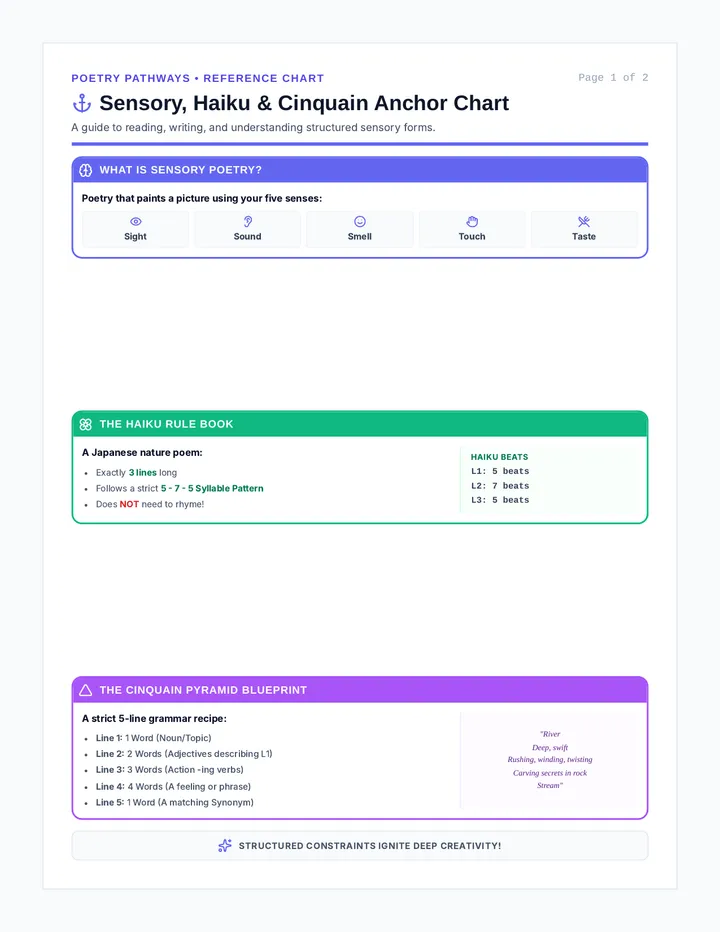
A comprehensive 4-week poetry curriculum designed for students requiring high structure and visual supports. It covers diverse poetry types (Haiku, Color, Acrostic, Couplets, Concrete, Free Verse, and Metaphor/Simile) with scaffolds like word banks, sentence frames, and graphic organizers.
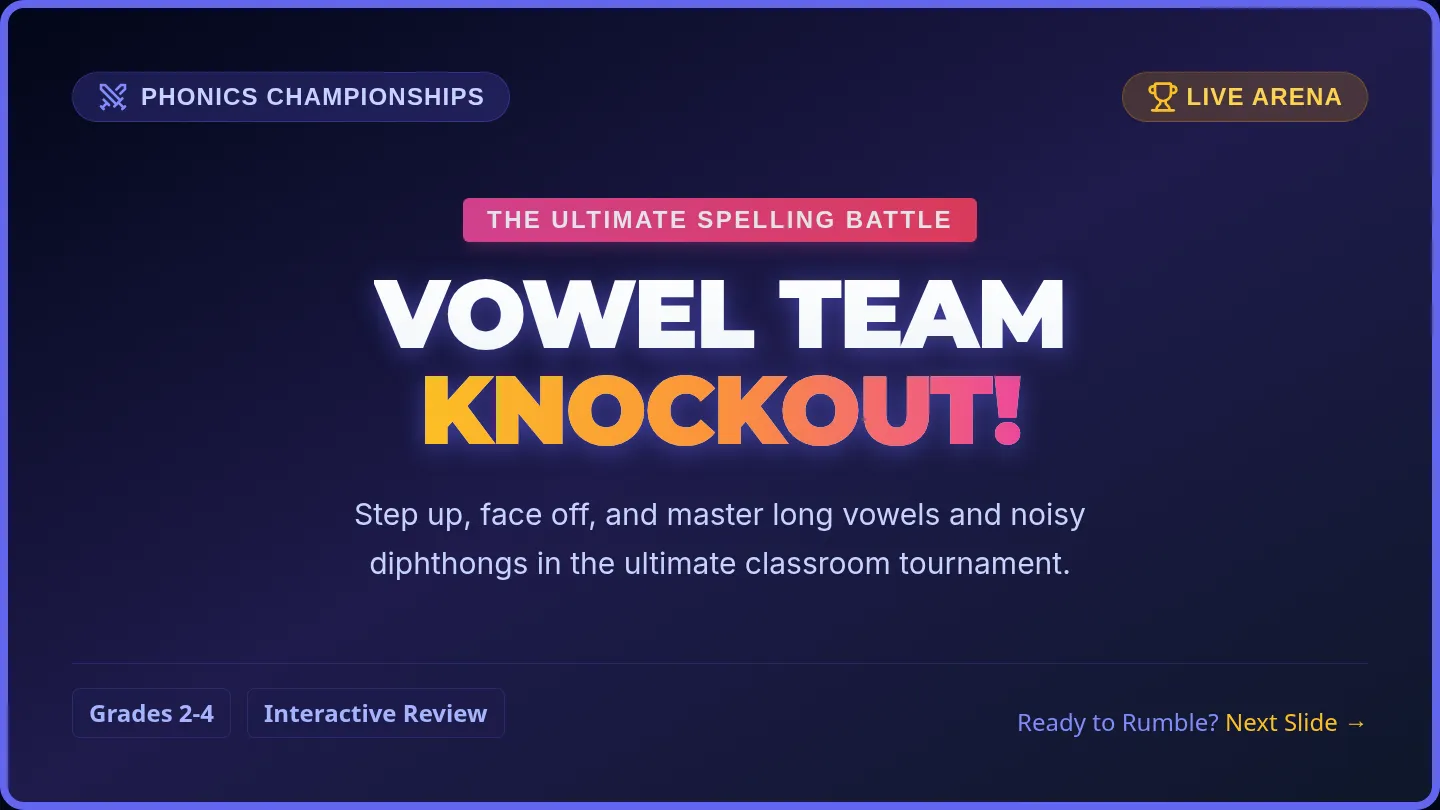
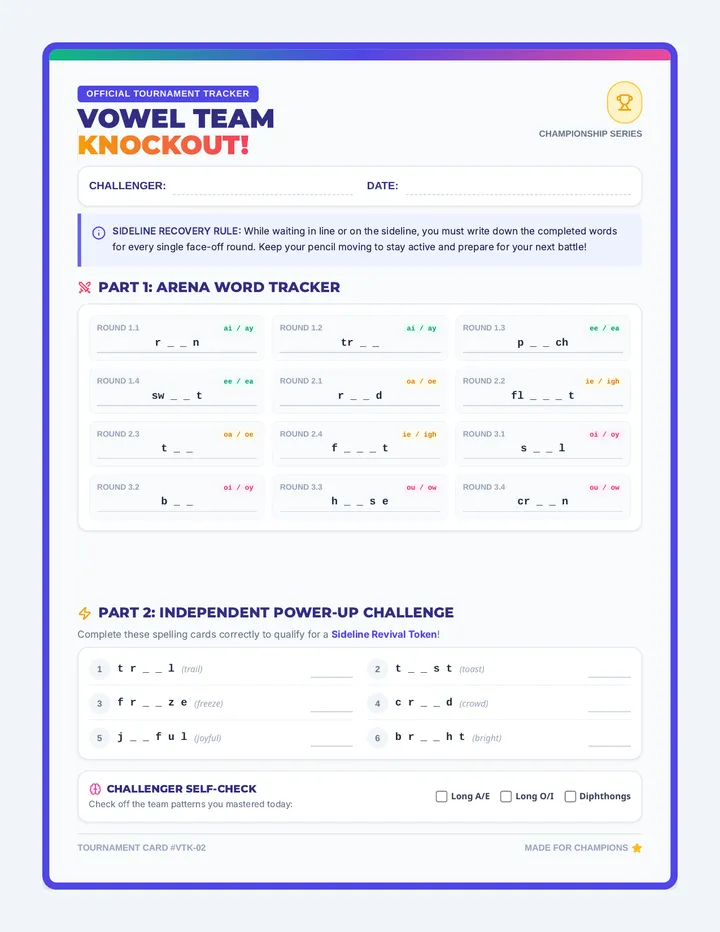
An energetic classroom phonics lesson where students compete in a friendly Knockout tournament to master vowel teams and diphthongs. Includes interactive instructional and gameplay slides, plus a student tracking sheet.
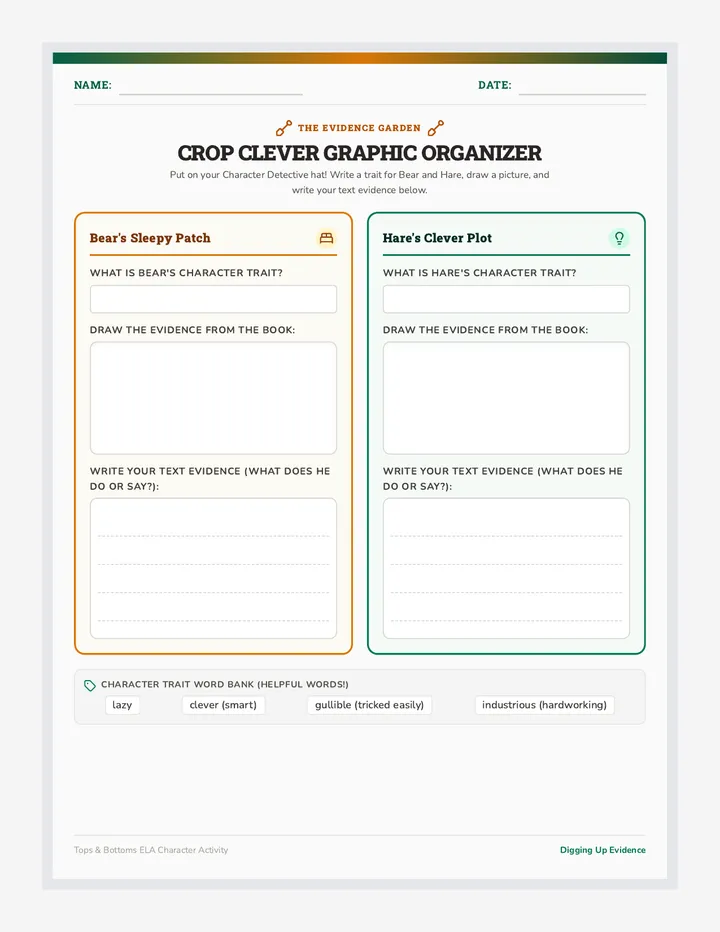
A beautifully themed, student-facing 1-page graphic organizer for comparing Bear and Hare's character traits with spaces to draw and write text evidence.
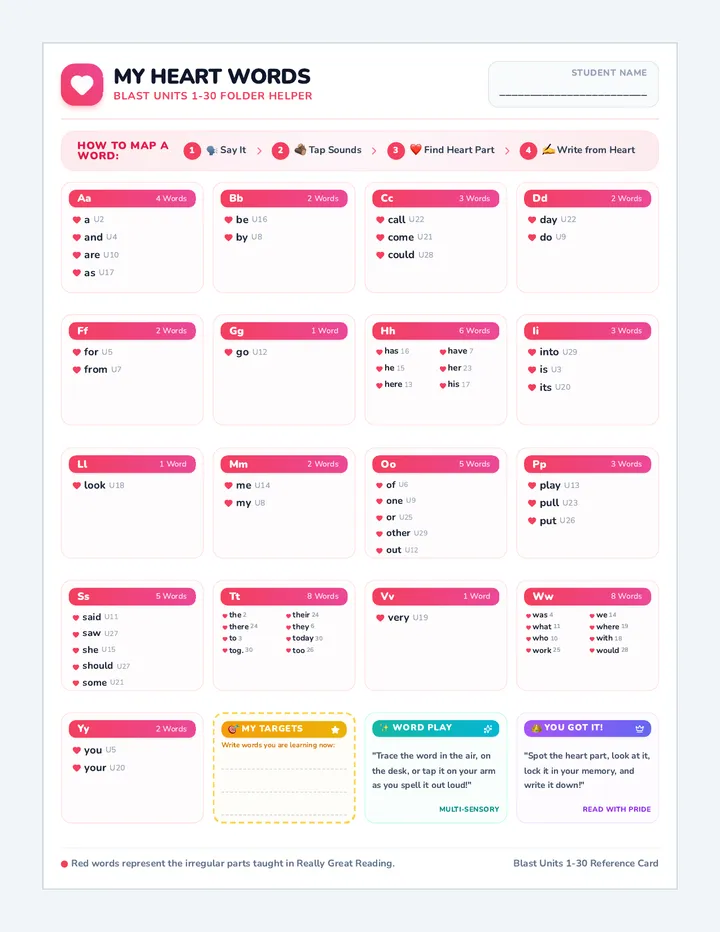
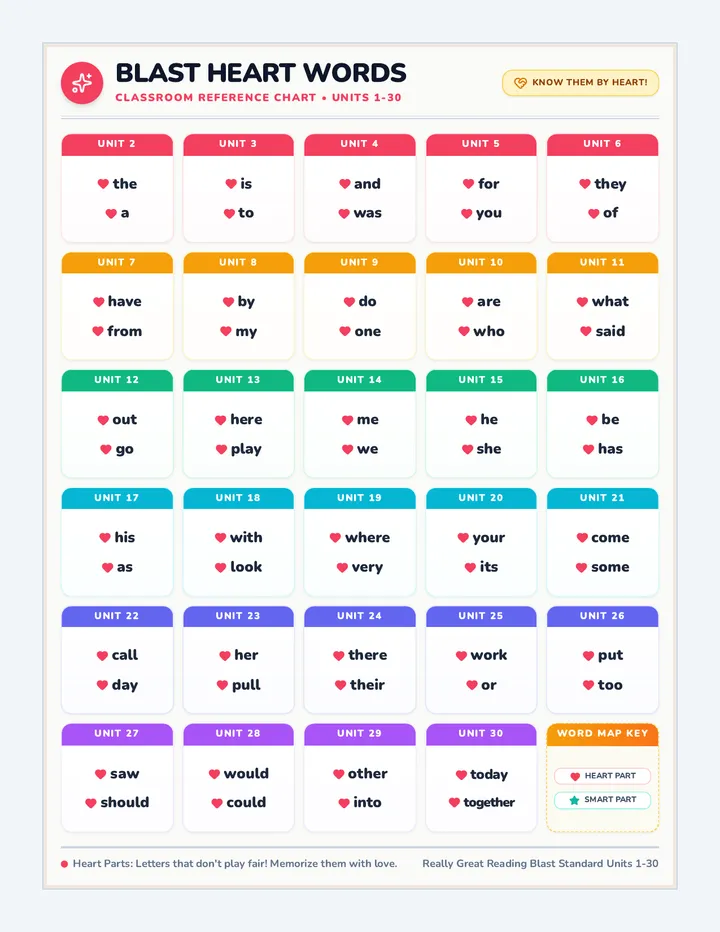
A complete suite of orthographic mapping references and student folder aids for Really Great Reading curricula, featuring both Countdown and Blast levels.
An intensive review of the double vowel teams 'ee', 'ea', and 'ey' in single and multi-syllabic words. This lesson compresses Unit 11 into a high-octane 1.5-day cycle featuring direct instruction, decodable text practice, and multi-sensory heart word spelling.
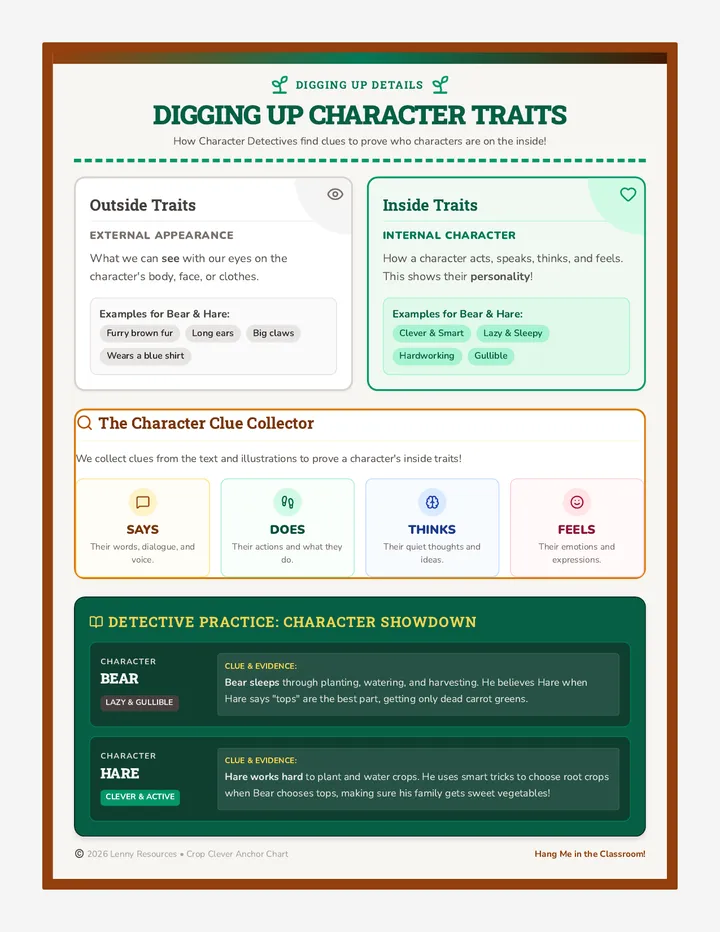
A highly visual classroom anchor chart comparing internal vs. external traits and demonstrating how to find character evidence in 'Tops and Bottoms'.
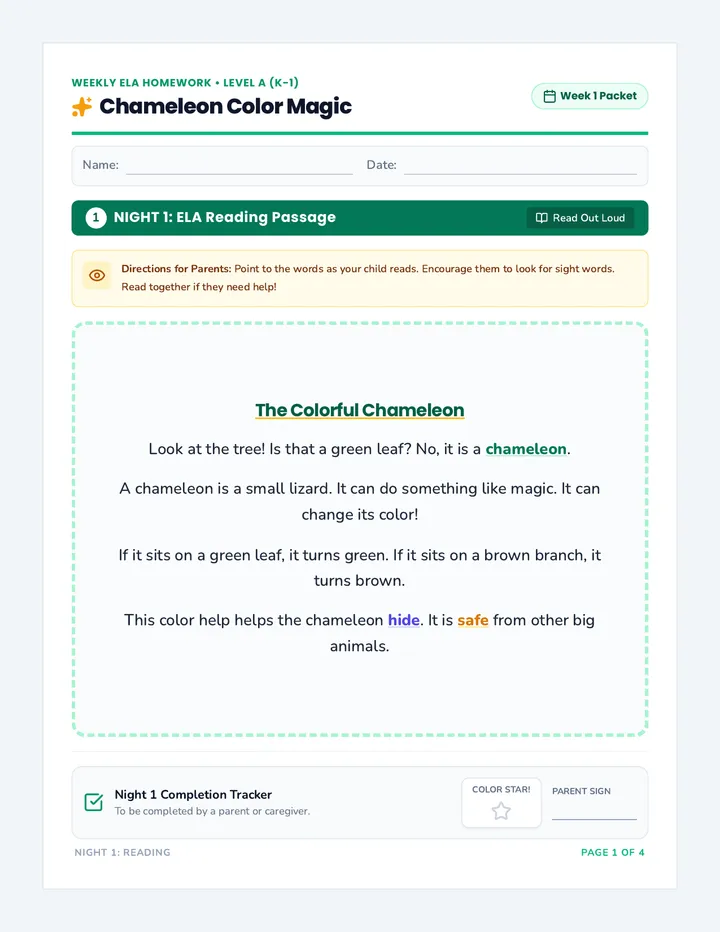
Weekly ELA homework packets focused on high-interest animal adaptations for elementary students (K-5). Each packet contains four nights of structured work: Night 1 (Reading), Night 2 (Vocabulary), Night 3 (Comprehension Activity), and Night 4 (Comprehension Questions), customized with visual icons, sentence frames, and simplified tracking guides for varying reading levels.
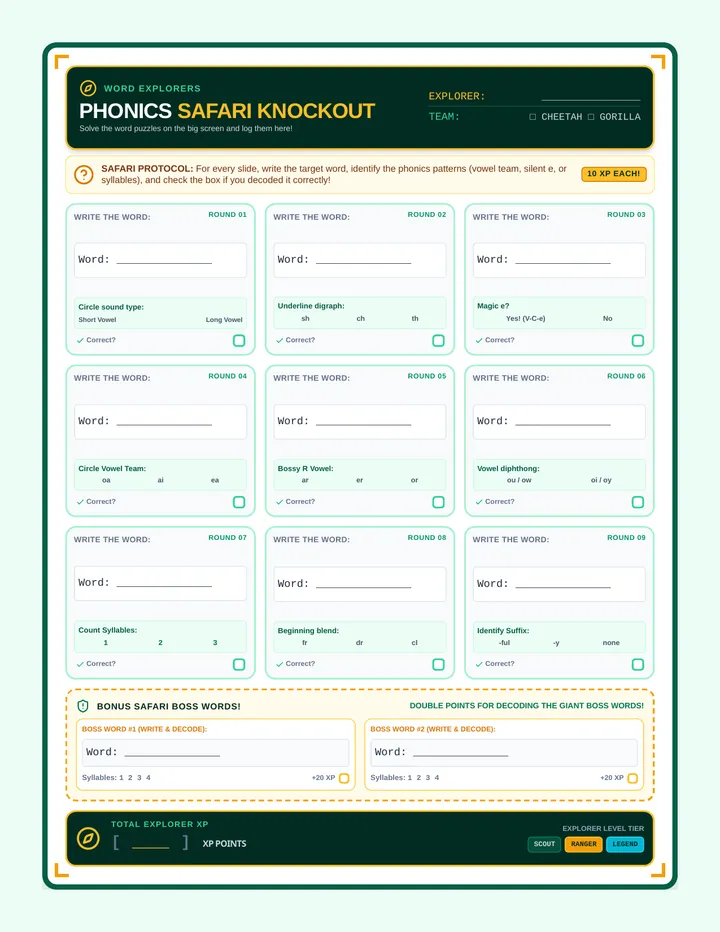
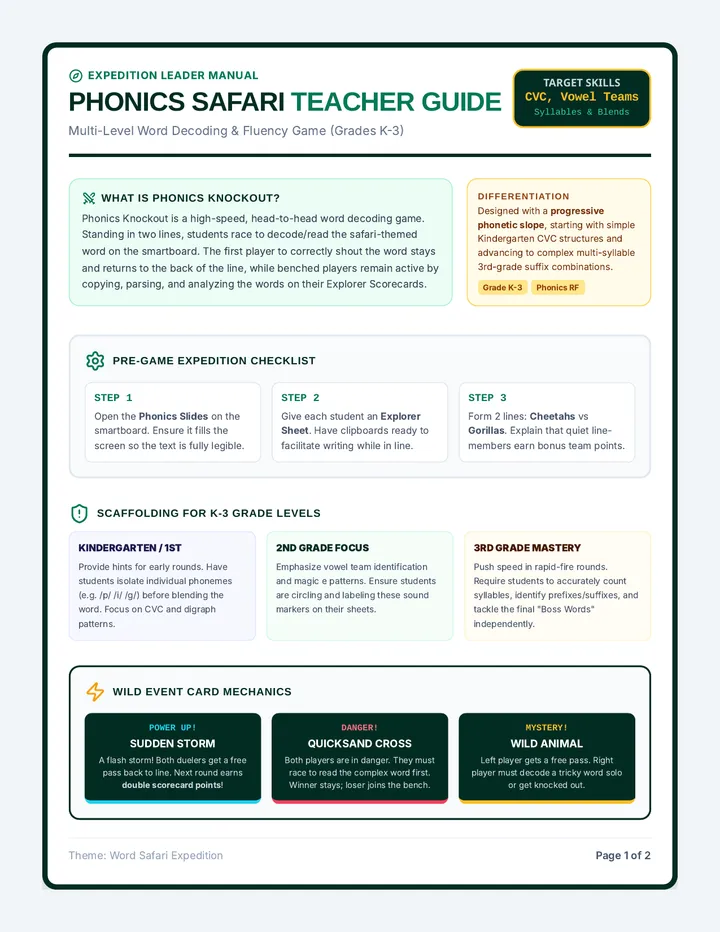
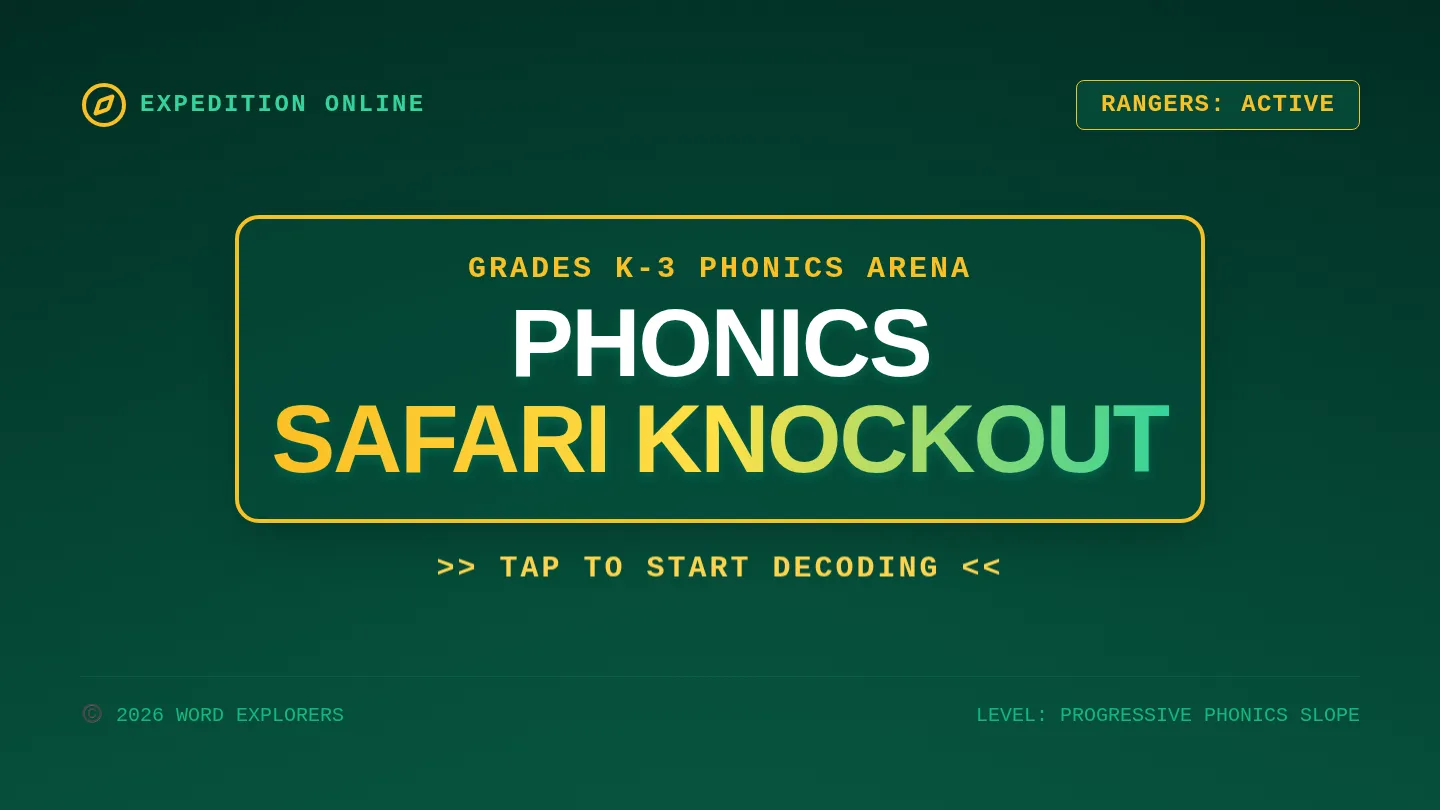
A high-energy, wild safari-themed classroom game for K-3 students focusing on key phonics skills including CVC words, silent 'e', vowel teams, and multi-syllable decoding. This lesson includes a widescreen smartboard presentation, a teacher facilitation guide with word keys, and an active-participation student tracker sheet.
A comprehensive 2-page teacher's lesson guide for 'Tops and Bottoms', detailing Grade 2 standards, discussion questions, pacing, and differentiation ideas for character analysis.