A high-contrast presentation designed for 6th-grade students to learn the fundamentals of AP news style and the importance of accuracy in journalism. It includes rules for numbers, dates, and times, along with a practice editing slide.
Updated teacher answer key to match the expanded "City Glitch" story and revised worksheet questions.
An engaging presentation deck with high-contrast slides, large text, and visual aids to support the introductory discussion and key concepts of the "City Glitch" story.
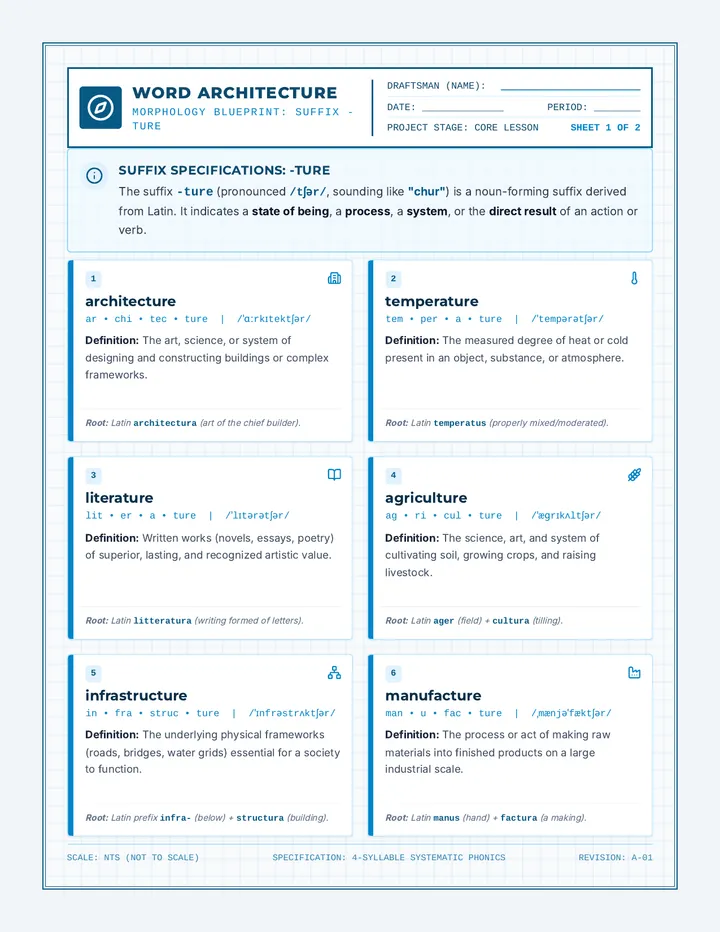
Polished vocabulary reference sheet with corrected page breaks and an additional term to better utilize the page space. Designed for students with diverse learning needs.
Revised comprehension worksheet for "City Glitch" with corrected page breaks, increased contrast for better accessibility, and balanced content distribution across two pages. All student work areas feature pure white backgrounds for maximum legibility.
A significantly expanded 2,000-word fictional story about two middle schoolers using technology and mystery-solving skills to save their local park. The story is written at a 6th-grade reading level and features large text and clear headers for accessibility. Protagonists are correctly identified as 6th graders to align with user request.
A high-contrast self-assessment checklist for students to verify the quality of their introductory paragraph and thesis statement against specific structural criteria.
A structured student worksheet providing a step-by-step graphic organizer for drafting an introduction, complete with sentence starters for each section.
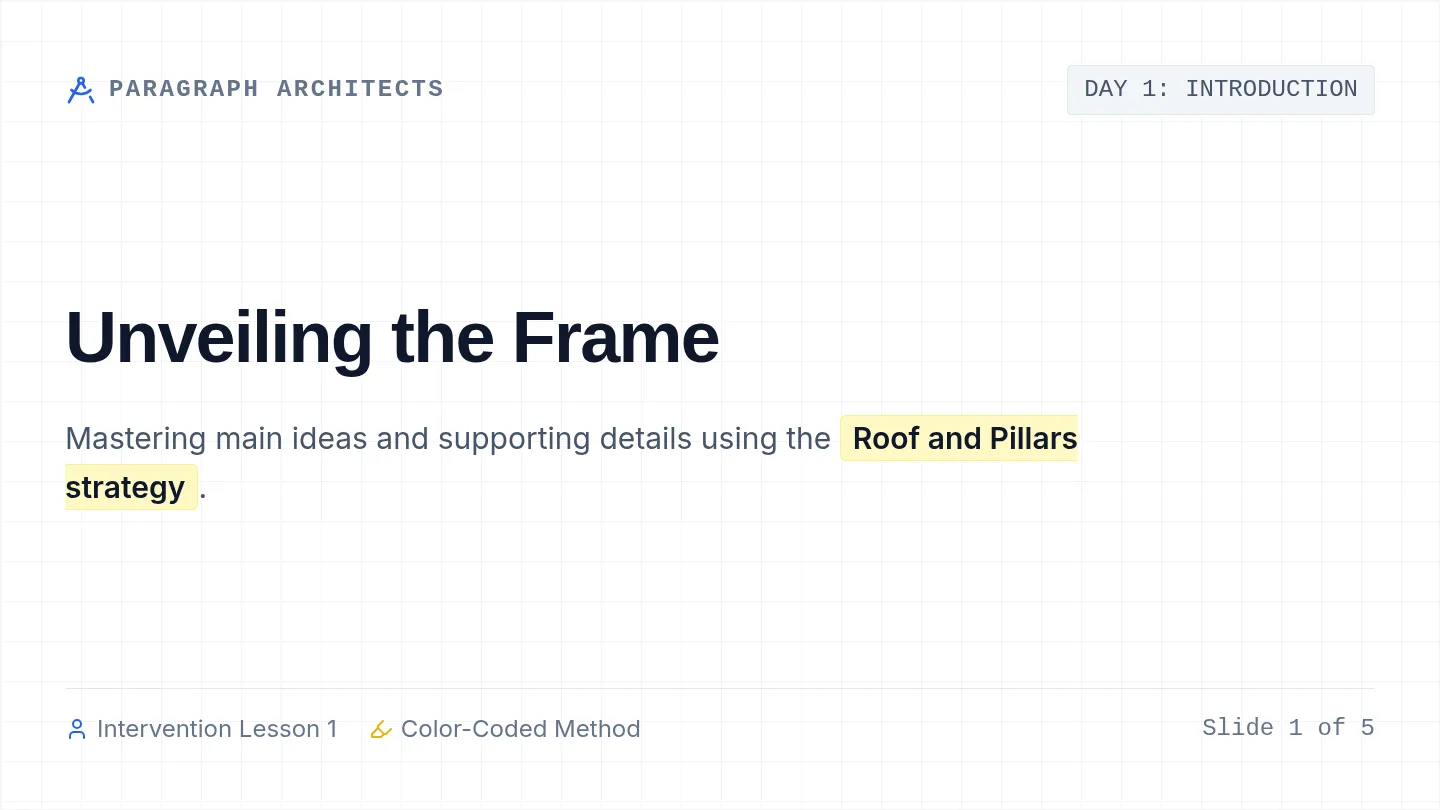
An instructional presentation using an architectural "blueprint" theme to teach the structural components of an introductory paragraph, with a heavy focus on thesis statements.
A comprehensive teacher guide outlining Specially Designed Instruction (SDI) strategies for teaching introductory paragraph construction, including explicit modeling and differentiation tips.
A comprehensive facilitation guide for teachers, providing structured discussion phases, differentiation strategies, and insights into common student misconceptions regarding the princess's motivations.
A structured worksheet for students to map out the princess's dual internal conflicts. It includes graphic organizers for Love vs. Hate and deep-dive analytical questions requiring textual evidence.
A visually striking presentation designed to facilitate a high-level discussion on the princess's internal conflict. It features key quotes, analytical prompts, and thematic slides focusing on jealousy, barbarism, and the final decision.
A comprehensive answer key for the Word Detective Quiz, providing correct responses for matching, multiple choice, identification, and example answers for fill-in-the-blank questions.
A 15-question quiz on nouns, verbs, adjectives, and pronouns. Features four distinct sections: matching definitions, multiple choice, sentence identification, and fill-in-the-blank word engineering. Optimized for 2-page printing.
A professional guide for teachers facilitating the comparison project, including pacing suggestions, key Gothic analysis points, and a RACECES-aligned rubric. Now includes EF strategies and reference tools.
An executive functioning writing scaffold for the 3-paragraph comparison essay, featuring a RACECES visual checklist, specific sentence starters for each paragraph, and guided work areas. Optimized for print efficiency.
A graphic organizer for collecting specific evidence from both the text and film versions of 'The Tell-Tale Heart', categorized by mood, narrative voice, and key plot moments. Includes a synthesis area and writing prep checklist.
Introductory presentation for 'The Tell-Tale Heart' comparison project, featuring visual guides for the RACECES strategy, specific sentence starters, and Gothic analysis points.
A teacher's answer key for the Polish Protocol Worksheet, providing corrected text for the style hunt activity, identified factual errors for the fact-checking challenge, and a scoring guide for student reflections.
An editing worksheet for 6th-grade students to practice house style and fact-checking. It includes a news brief for style correction, a comparative fact-checking activity, and a reflection prompt on journalistic integrity.