An instructional slide deck that teaches students how to infer implied main ideas and character motives from narrative 'showing' details, using a surveillance theme.
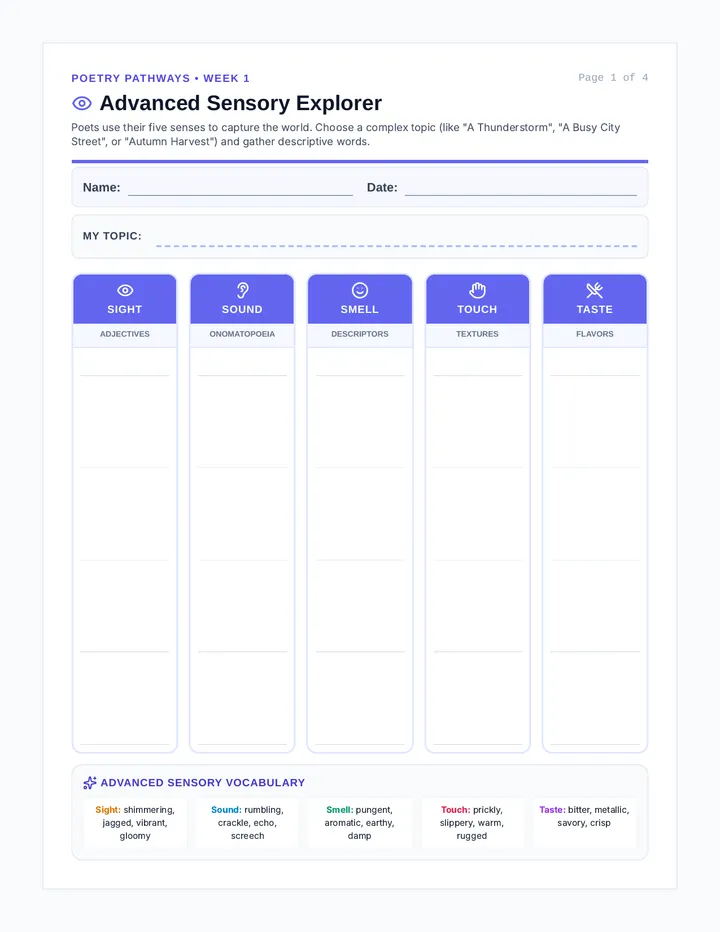
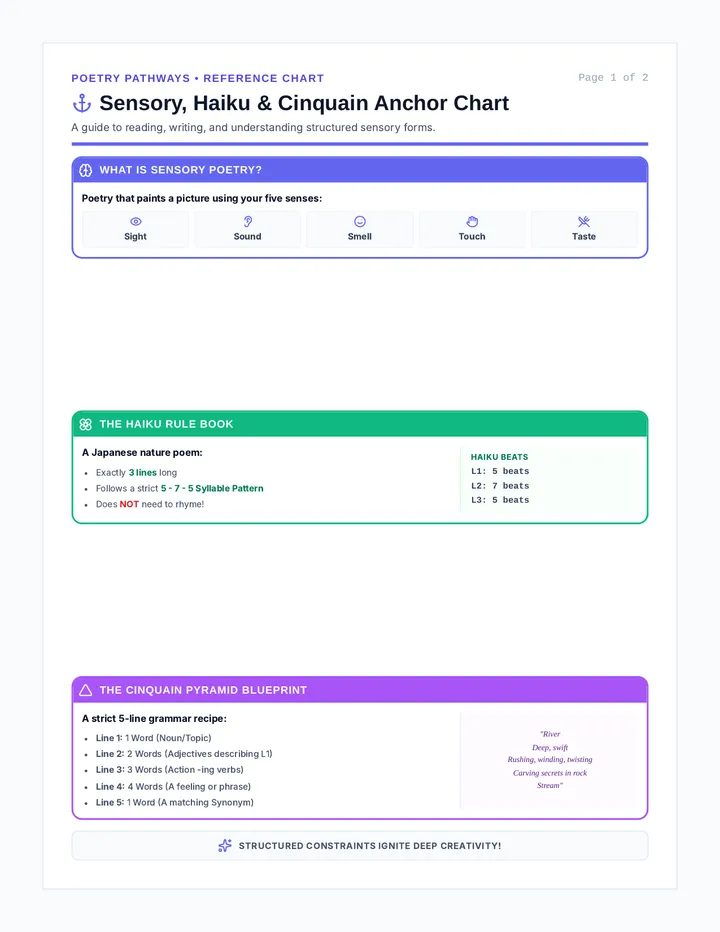
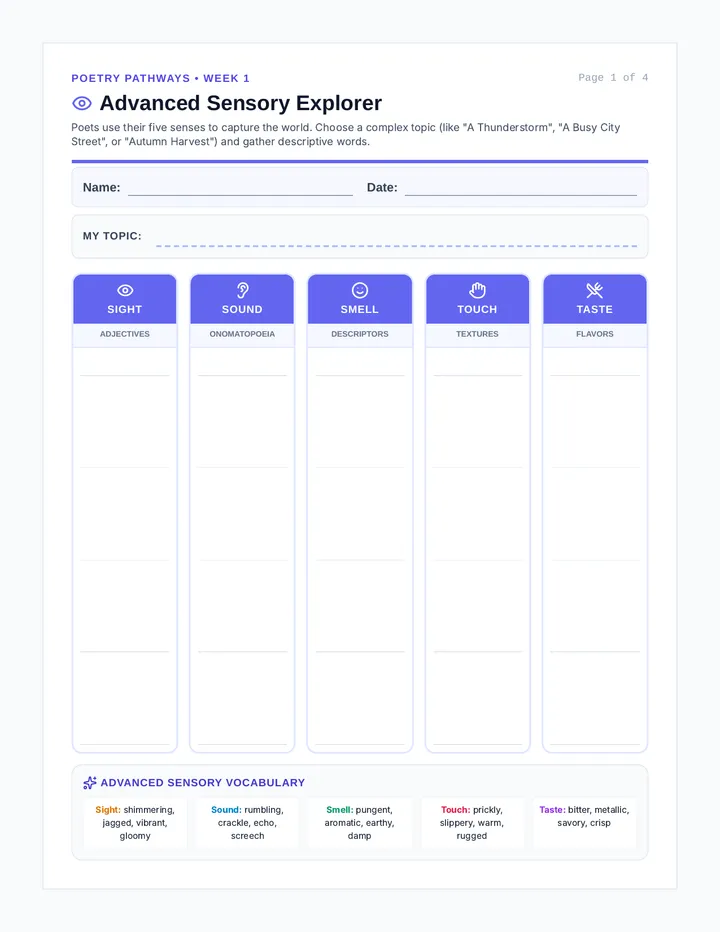
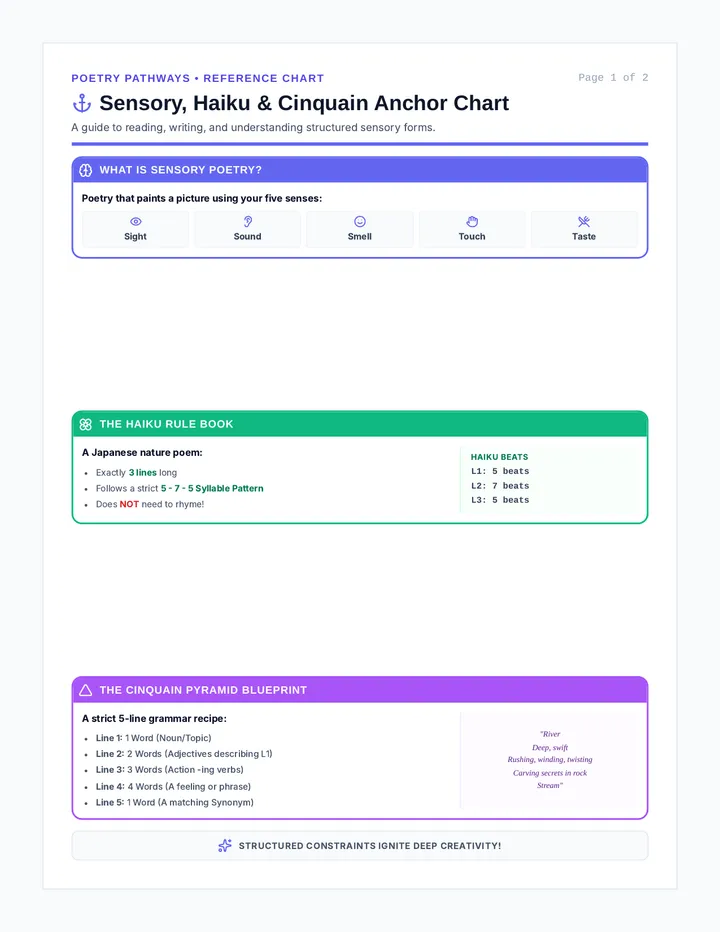
A comprehensive 4-week poetry curriculum designed for students requiring high structure and visual supports. It covers diverse poetry types (Haiku, Color, Acrostic, Couplets, Concrete, Free Verse, and Metaphor/Simile) with scaffolds like word banks, sentence frames, and graphic organizers.
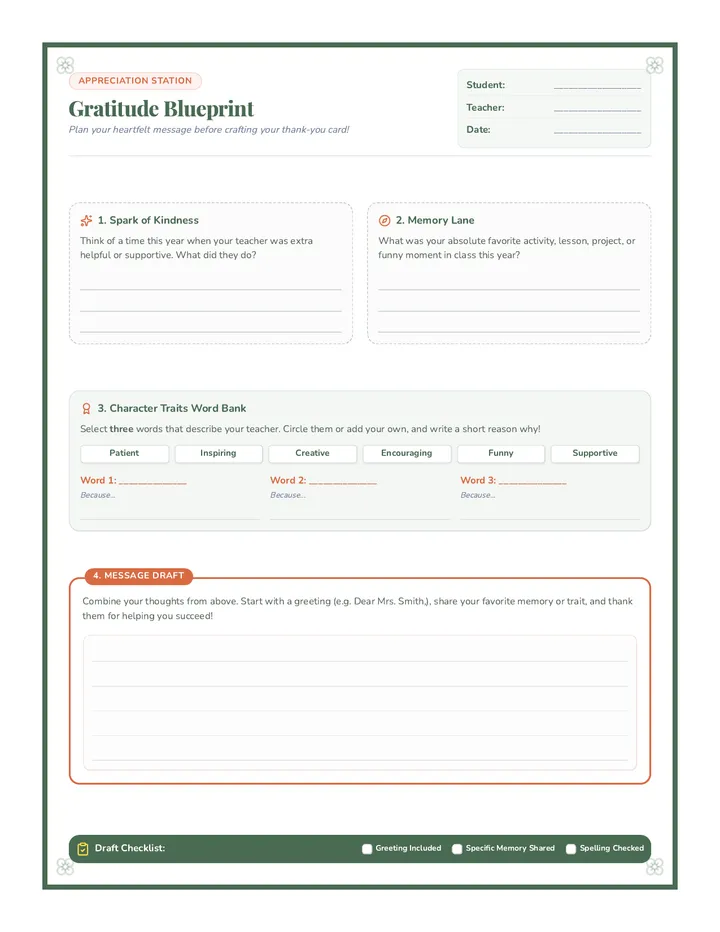
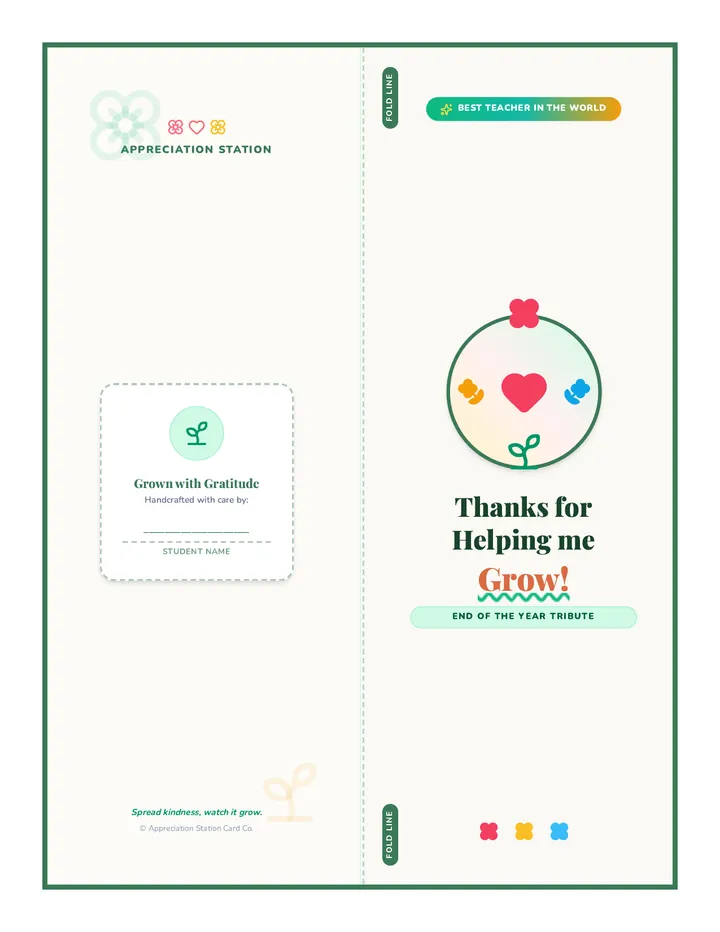
A complete end-of-the-year thank-you card crafting lesson. Students brainstorm specific memories and acts of kindness, draft their messages, and assemble beautifully styled, fold-in-half appreciation cards for their teachers.
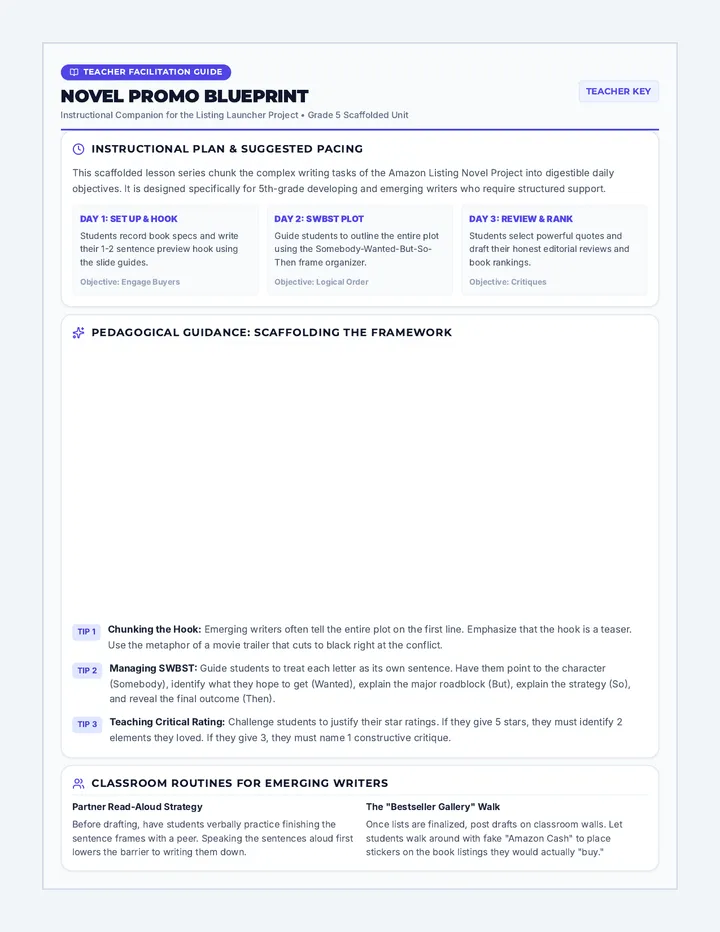
A 2-page instructional guide for teachers containing step-by-step facilitation plans, modeling guides for the sentence frames, a completed exemplar based on the novel Holes, and an asset-based 5th-grade writing rubric.
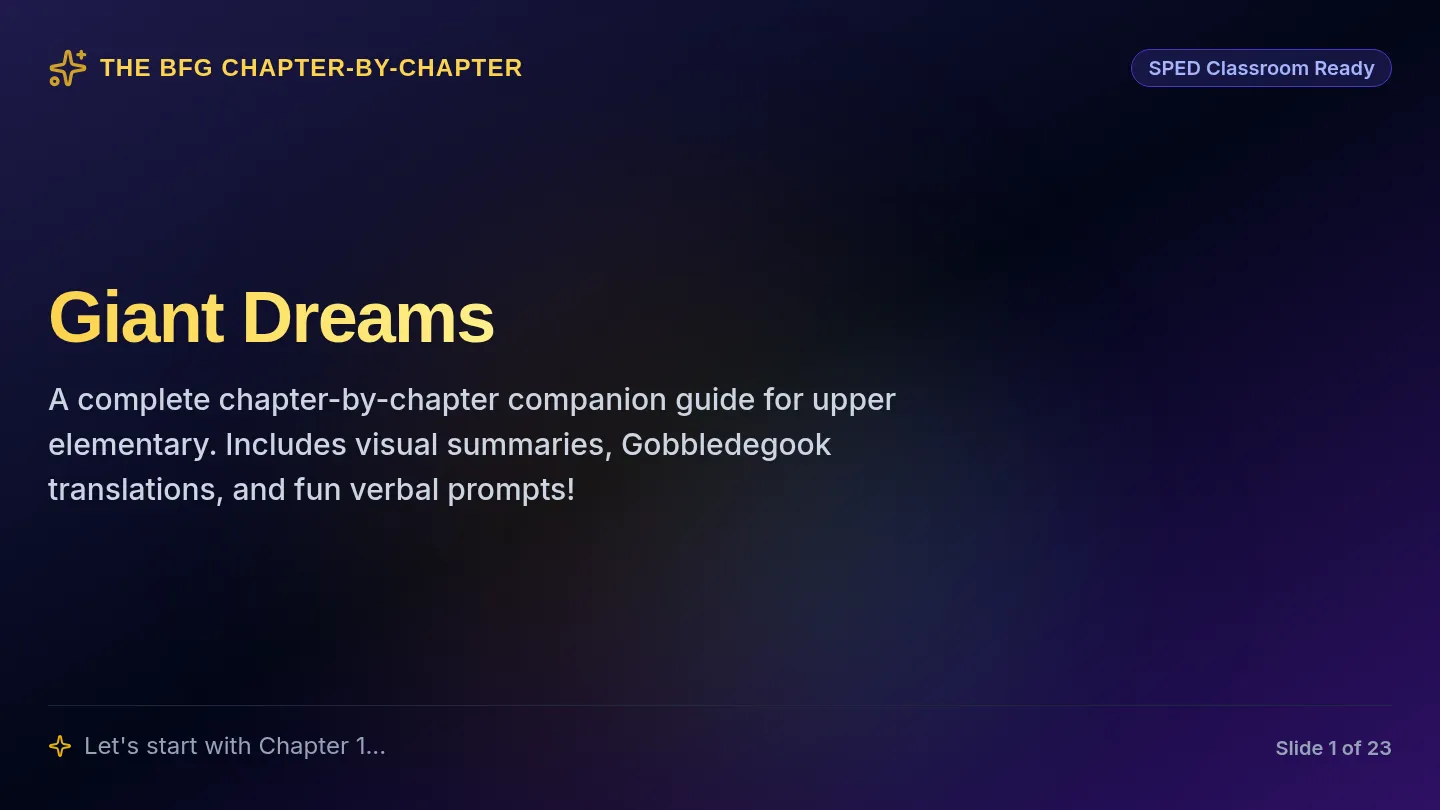
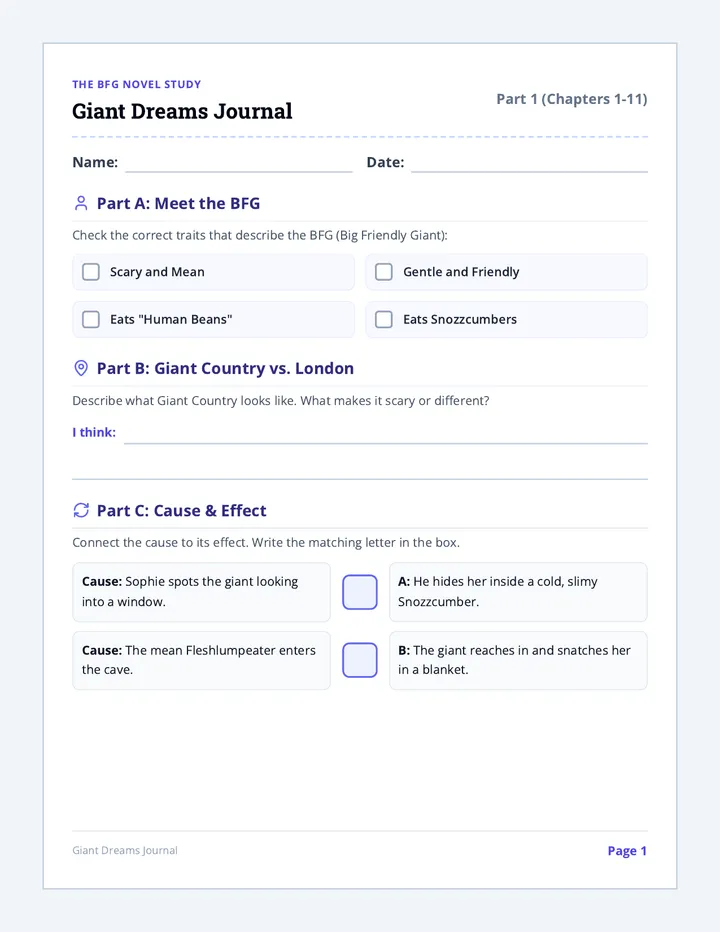
An interactive, SPED-friendly novel study of Roald Dahl's 'The BFG', tailored for upper elementary students (grades 3-5). Features simplified summaries, visual layouts, decoded BFG vocabulary ('gobbledegook'), and interactive class discussion prompts.
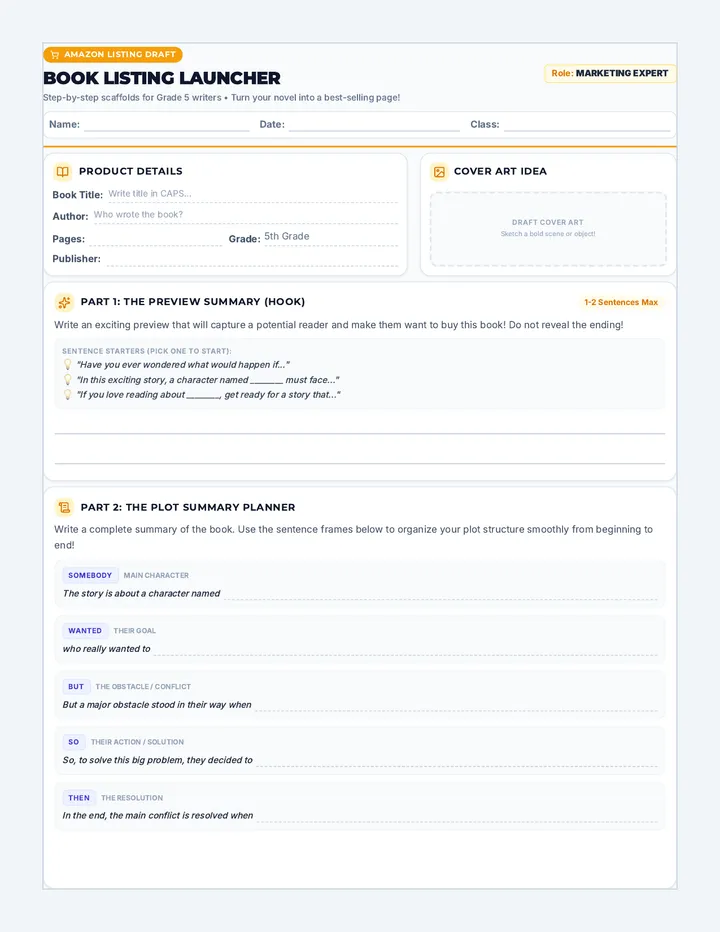
A 2-page print-ready scaffolded planner worksheet for Grade 5 developing and emerging writers. It breaks down the Amazon Listing Novel Project into manageable sections, featuring built-in sentence frames for the preview hook, plot summary, quote curators, editorial reviews, and book rankings.
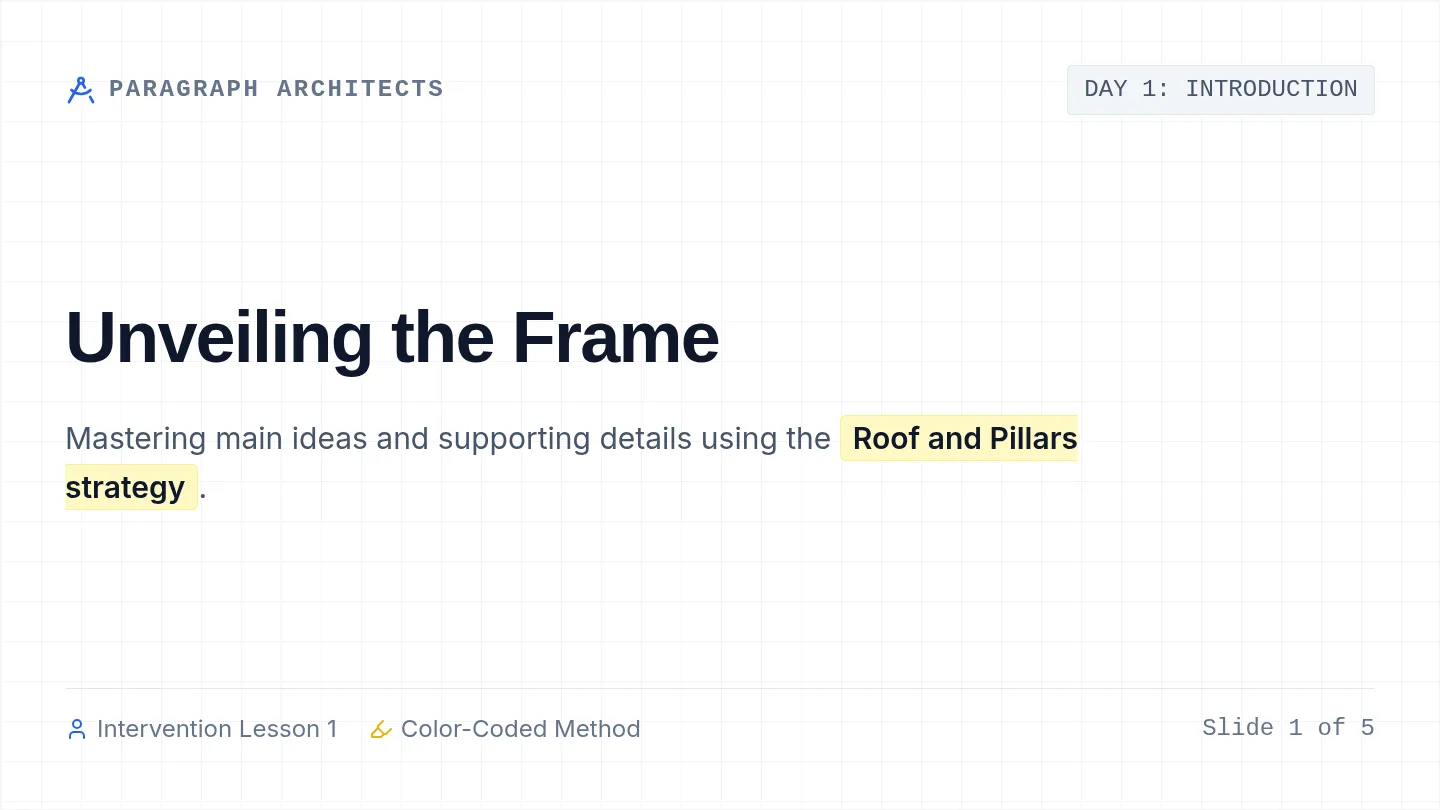
An intensive intervention lesson designed to help struggling readers master main idea identification using hands-on, color-coded highlighting strategies. Students learn to dismantle paragraph structures like blueprint architects, physically separating the 'roof' (main idea) from the 'supporting pillars' (details).
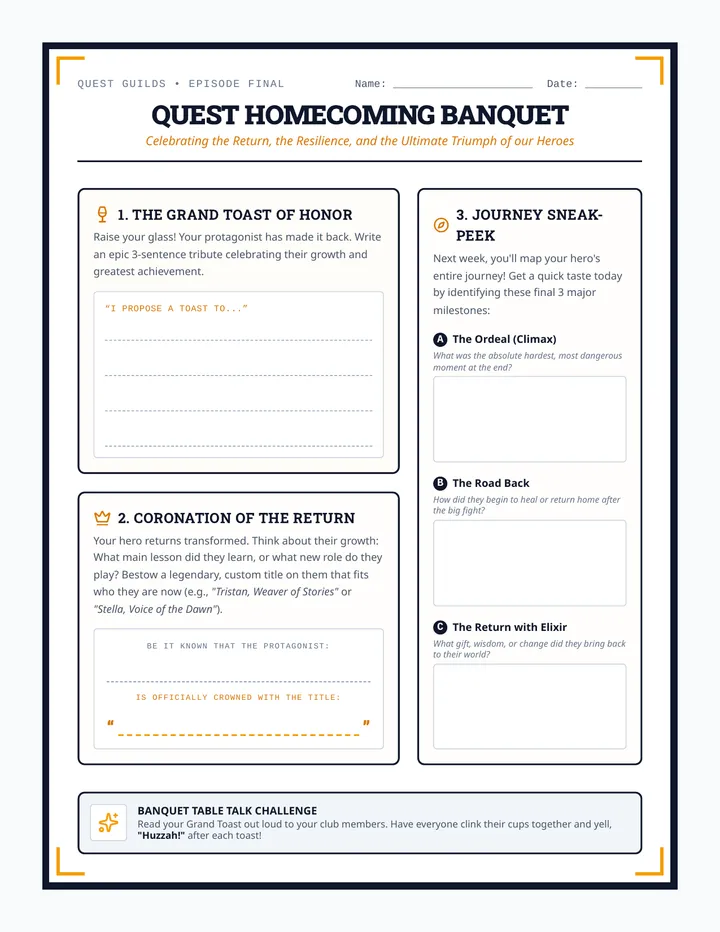
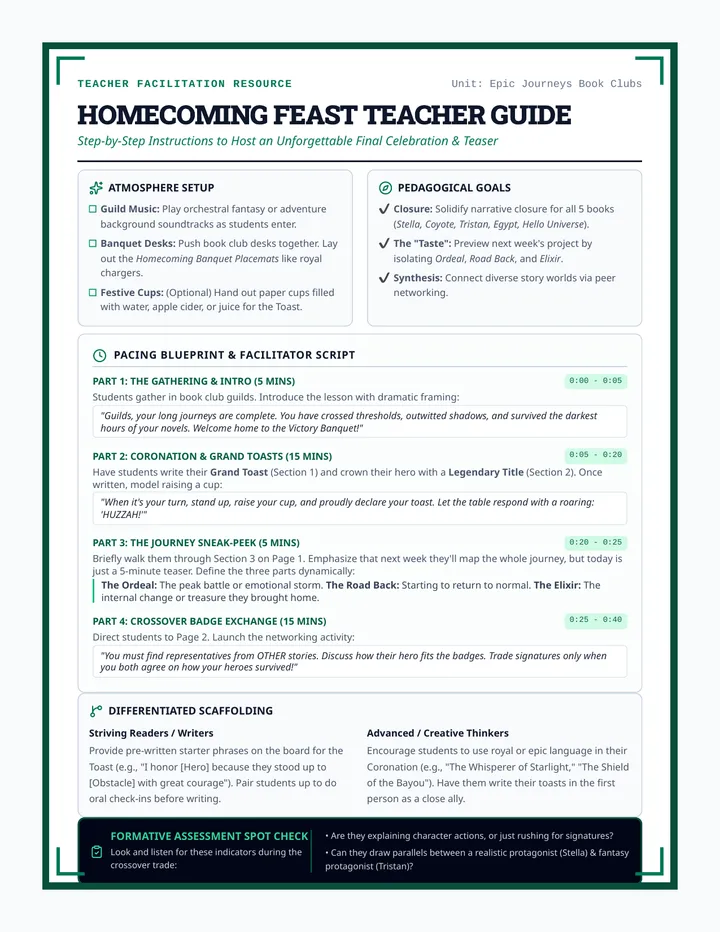
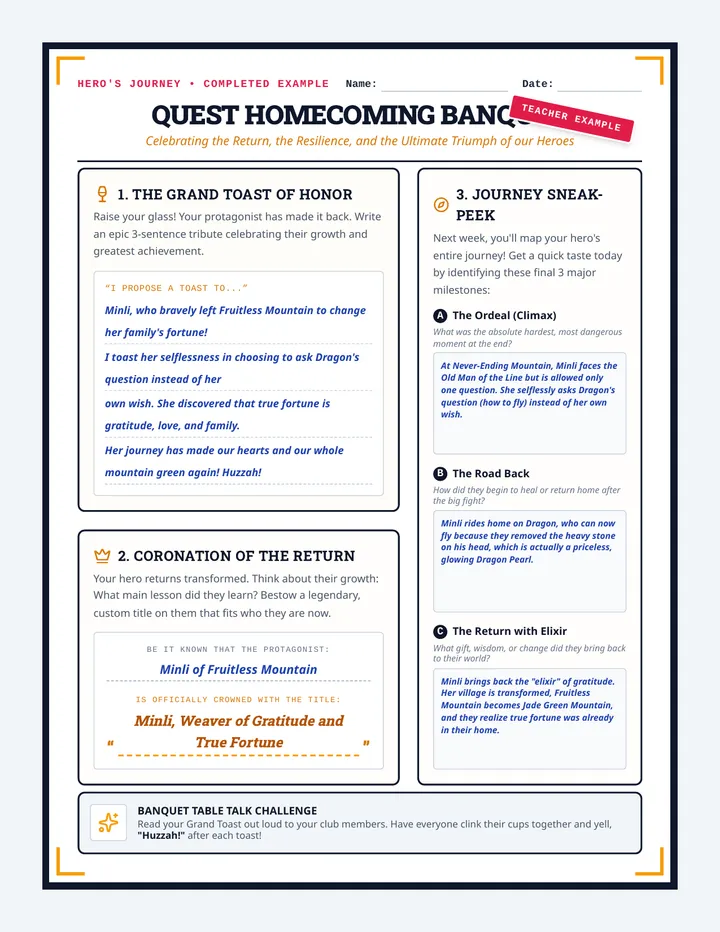
The celebratory final meeting of the book clubs, designed as a festive victory banquet. Students commemorate their protagonist's return through a grand ceremonial toast, active crossover badge trading with other groups, and a high-interest 5-minute teaser of the Hero's Journey mapping project.
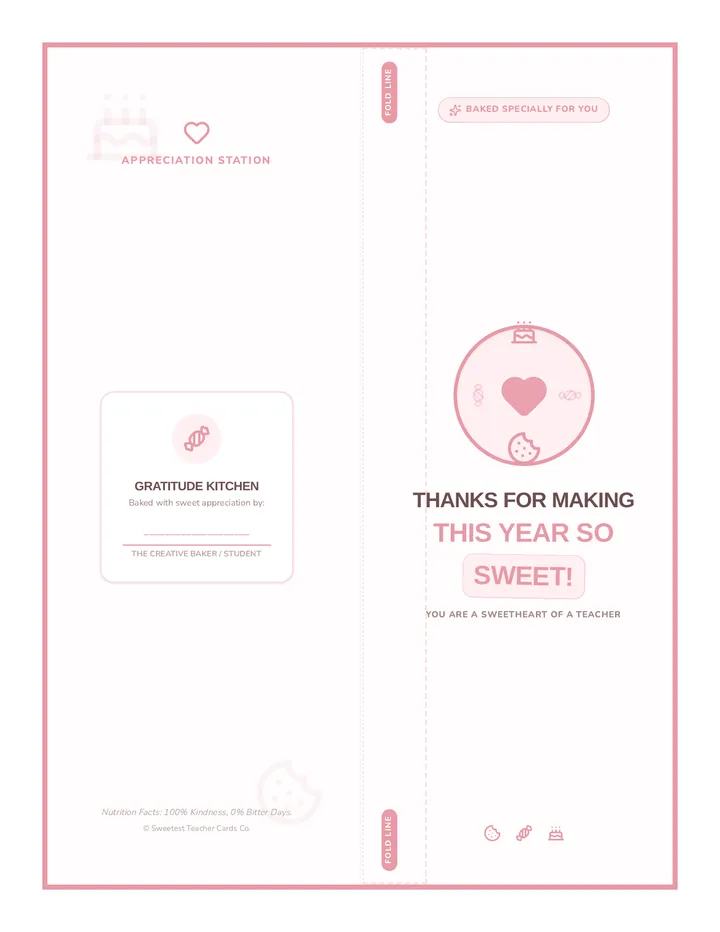
A sweet-themed fold-in-half printable thank-you card. The front cover features sweet candy illustrations and a 'Thanks for making this year so sweet!' design, the back includes a custom recipe-style stamp, and the inside features cute 'Recipe for an Awesome Teacher' ingredients, sweet memory prompts, and a classic recipe-card style lined writing space.
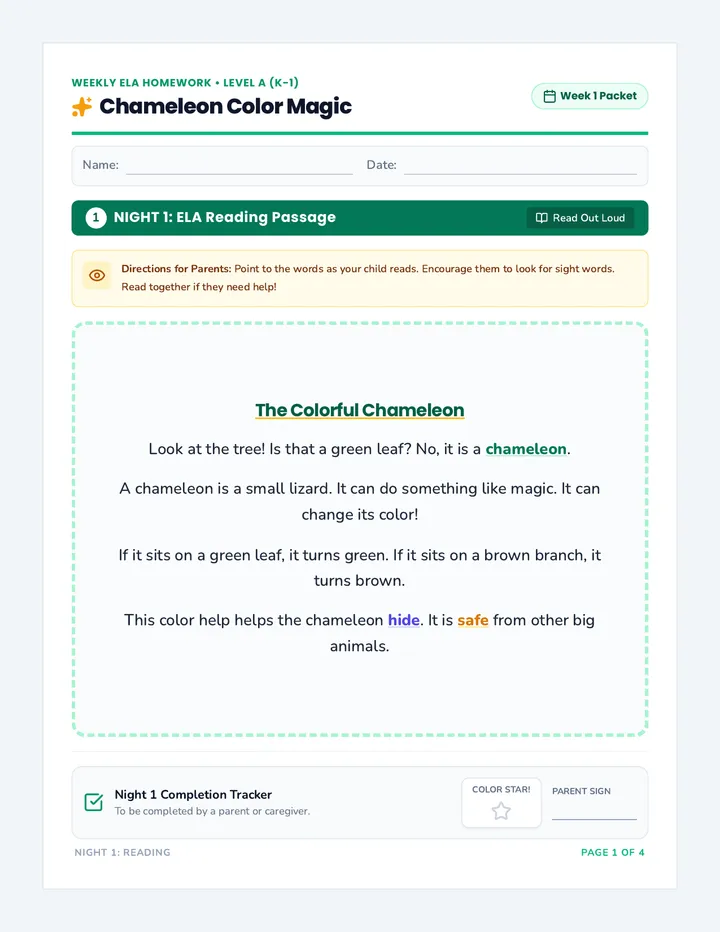
Weekly ELA homework packets focused on high-interest animal adaptations for elementary students (K-5). Each packet contains four nights of structured work: Night 1 (Reading), Night 2 (Vocabulary), Night 3 (Comprehension Activity), and Night 4 (Comprehension Questions), customized with visual icons, sentence frames, and simplified tracking guides for varying reading levels.
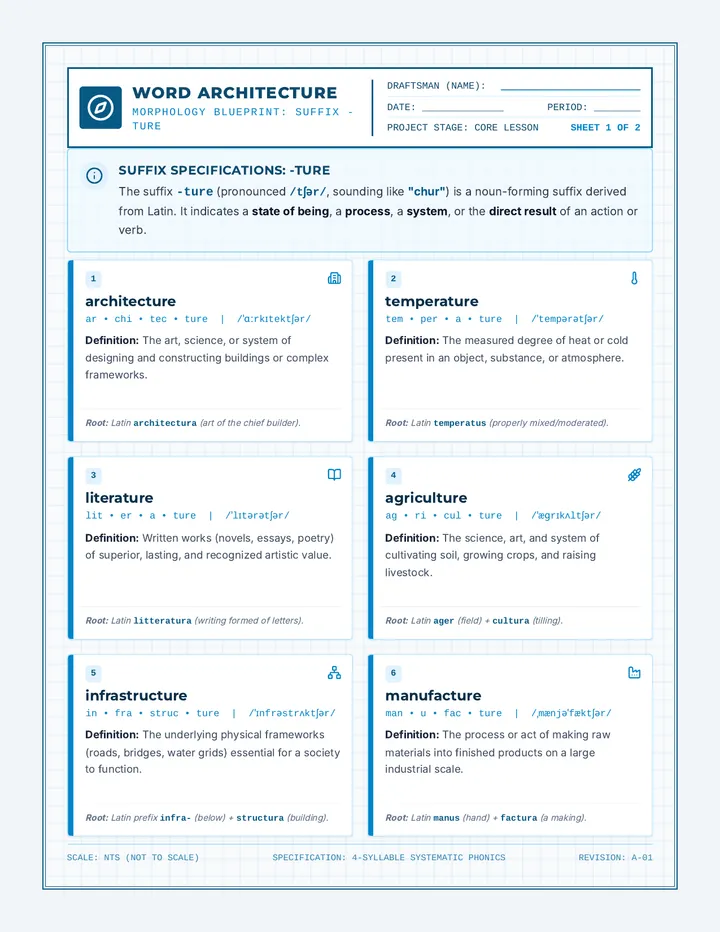
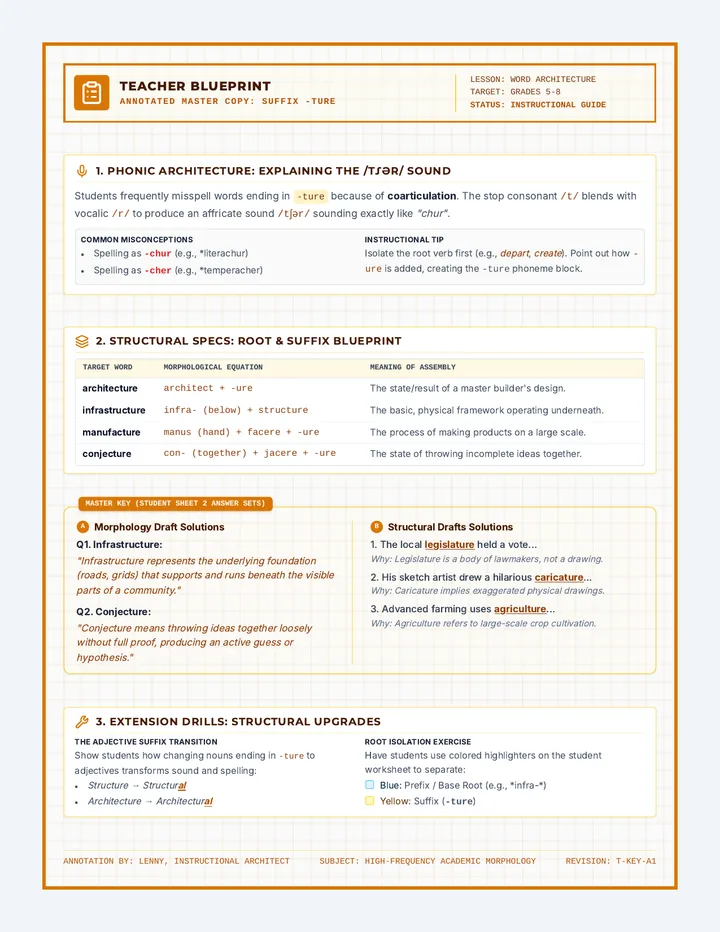
A middle school vocabulary lesson exploring 3-to-4 syllable academic words ending in the suffix -ture. Students examine pronunciation, morphological structure, definitions, and applications through a technical drafting/blueprint theme.
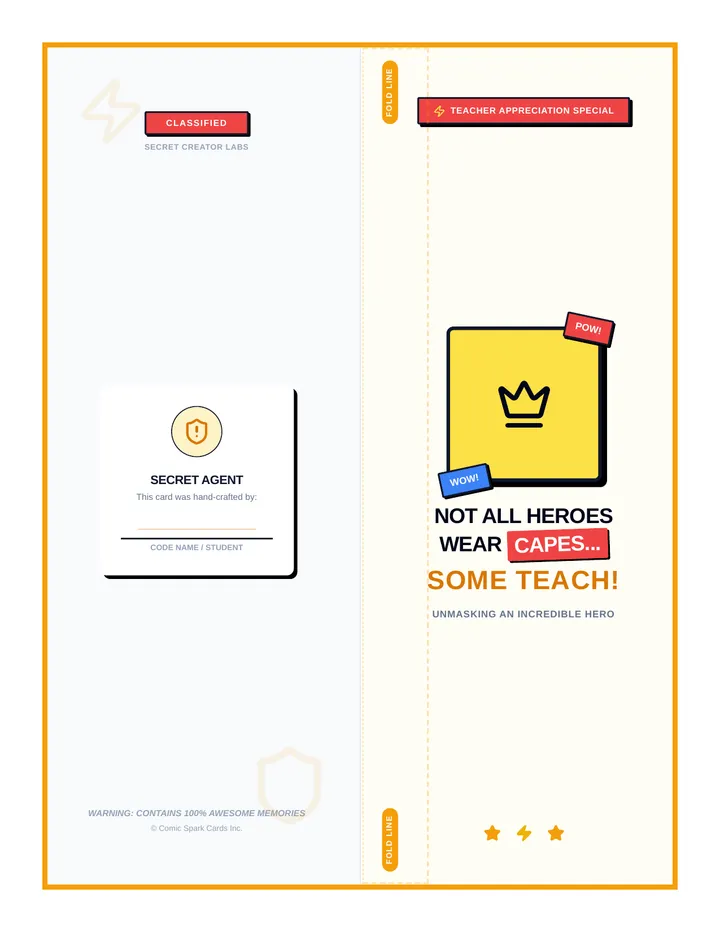
A comic-themed fold-in-half printable thank-you card. The front cover features an action-packed superhero 'Not all heroes wear capes... Some Teach!' design, the back has a top-secret creator stamp, and the inside features teacher superpower stat ratings, funny mission prompts, and a large lined letter bubble.