A set of 40 teacher calling cards featuring -ck and -tch words, including CVC and multisyllabic examples, styled as evidence tags.
A structured reading intervention sequence at Douglas School combining targeted phonic lessons with the multisensory Nessy online literacy system.
Summer literacy communication and family engagement resources to help rising kindergarteners maintain and build reading skills over the summer break through play-based activities.
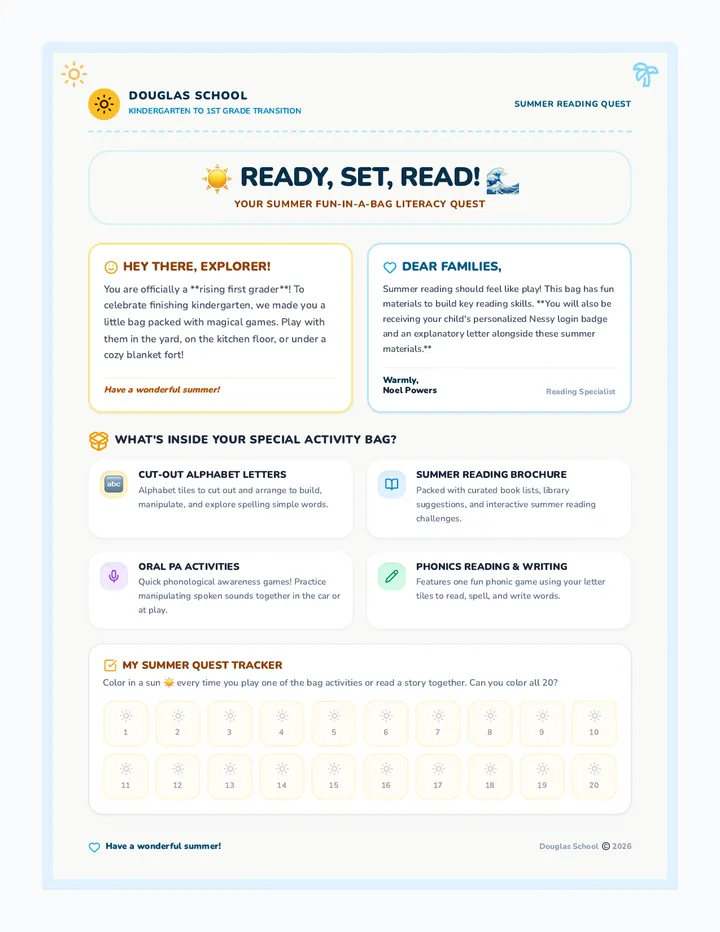
A cheerful, sunny summer reading introductory letter for rising first graders and their parents at Douglas School. It details how to use their "Summer Reading Activity Bag" containing alphabet flashcards, sight word popcorn matches, and syllable hopping games, complete with a printable 20-day summer tracking chart.
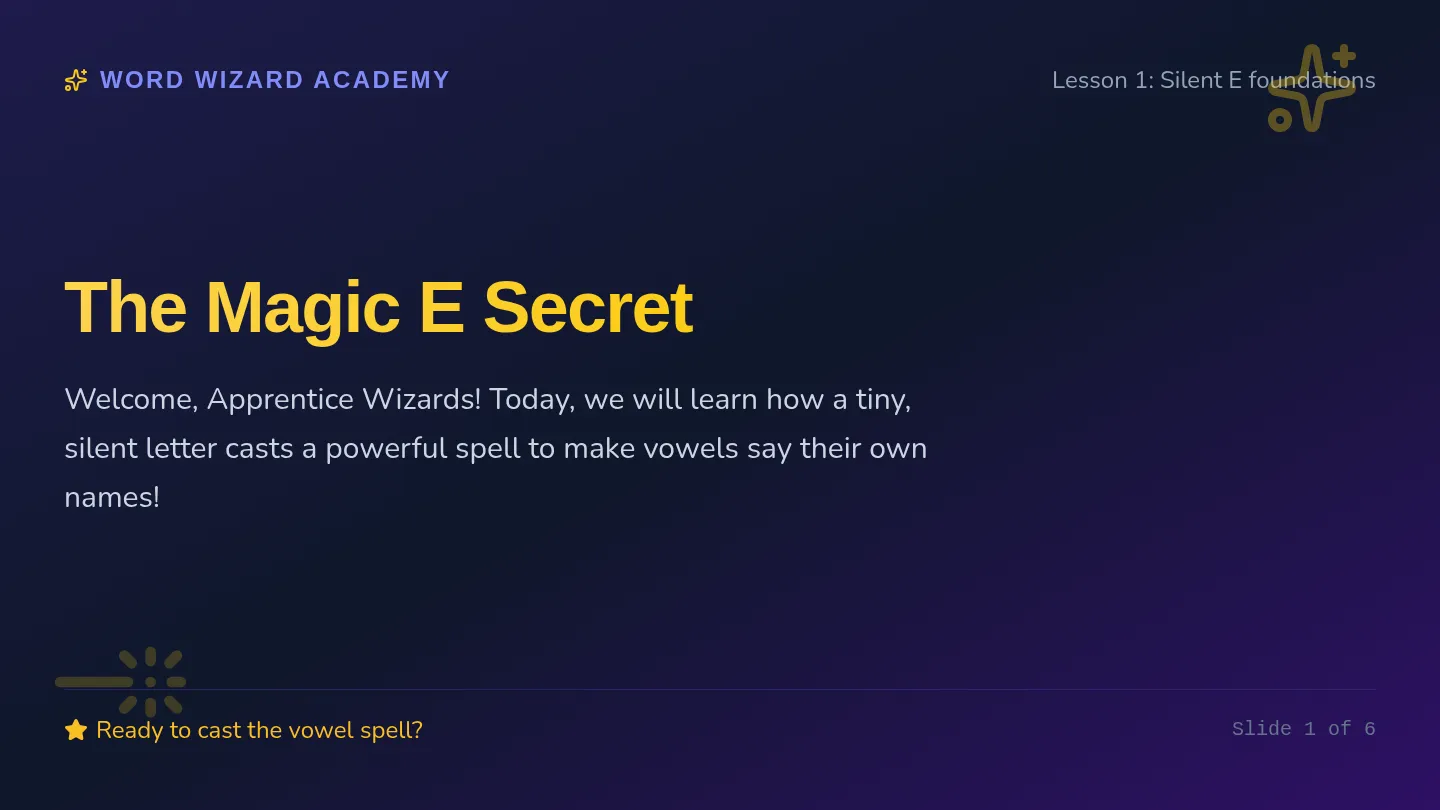
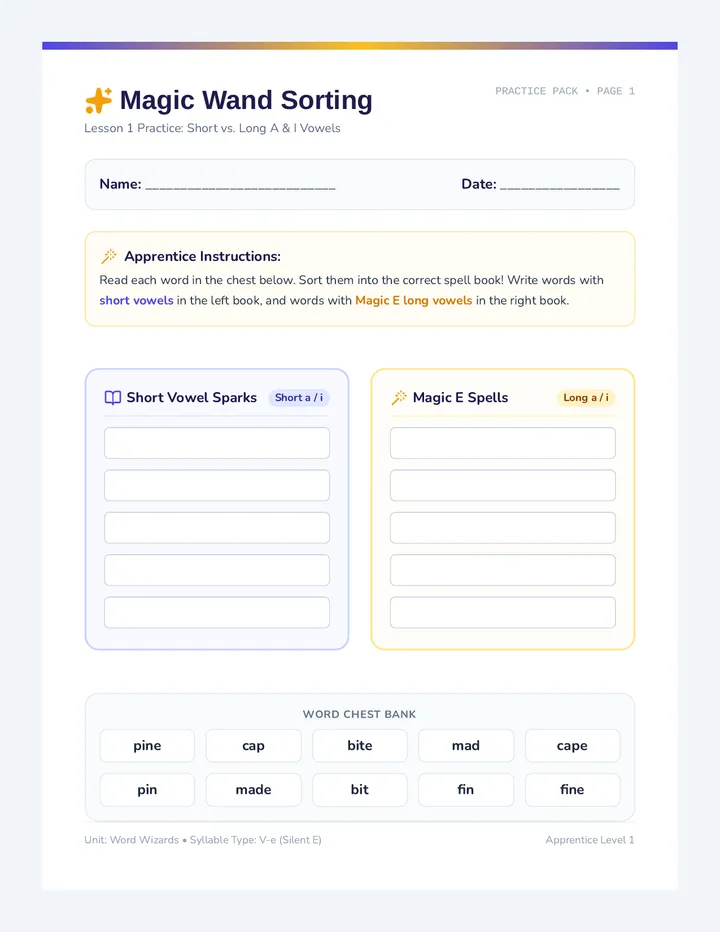
A 3-lesson phonics sequence focused on teaching Vowel-Consonant-e (V-e) syllables to late first and second graders. Using a whimsical 'Word Wizards' theme, it covers foundations, vowel expansion, and blends/digraphs, complete with guides, slides, practice pages, and assessments.
Materials and communication documents for launching and onboarding families to the Nessy Literacy Program at Douglas School.
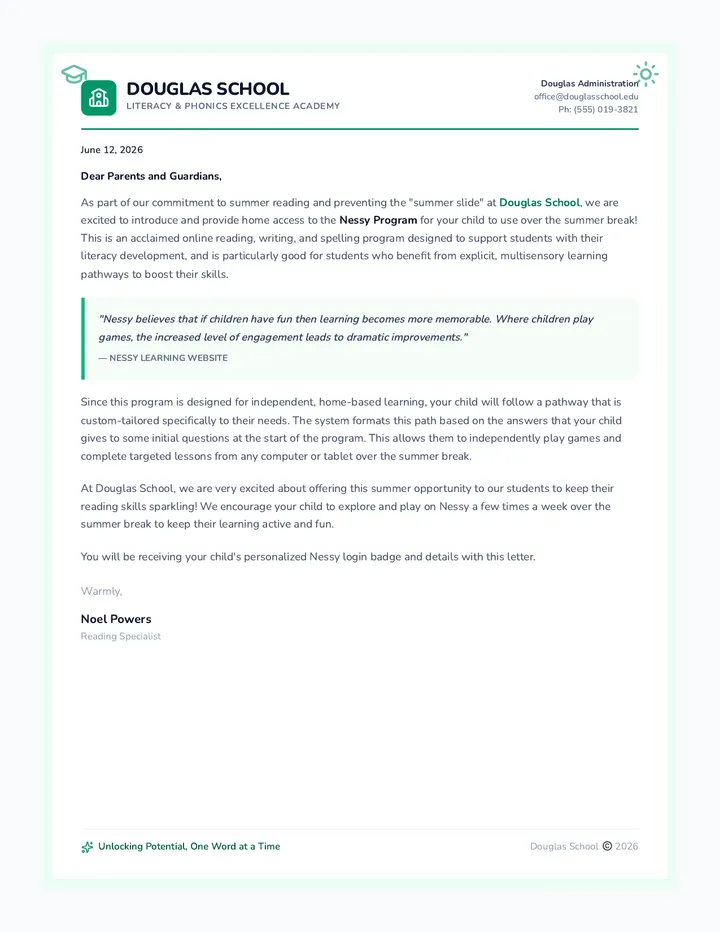
A formal parent/guardian introductory letter from Douglas School detailing home access to the Nessy Program over the summer break. It highlights the program's history, multisensory learning approach, and how families can use it at home to prevent the summer slide.
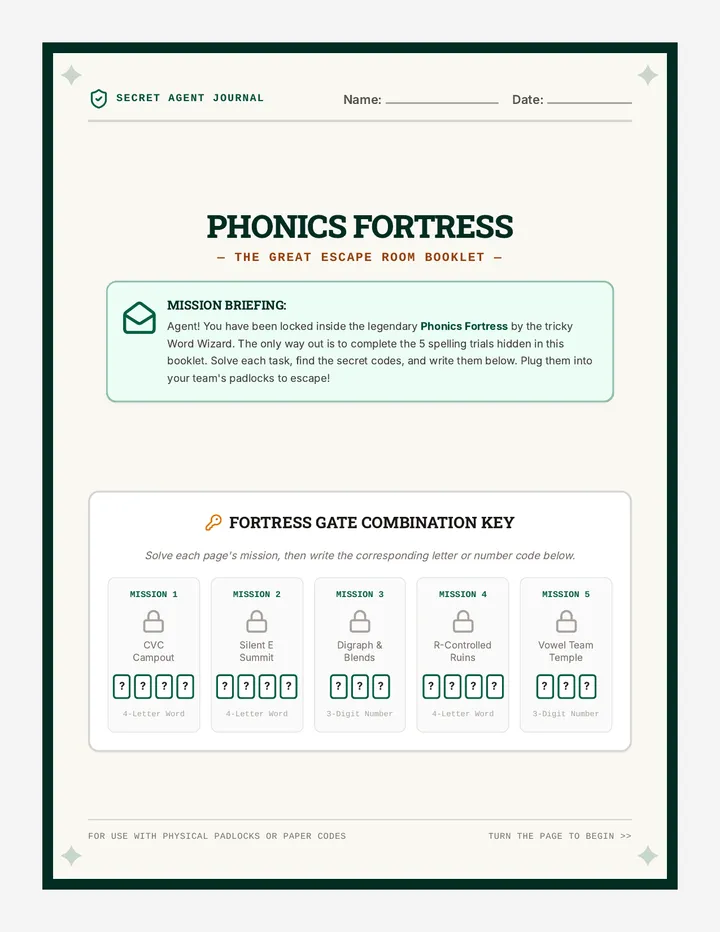
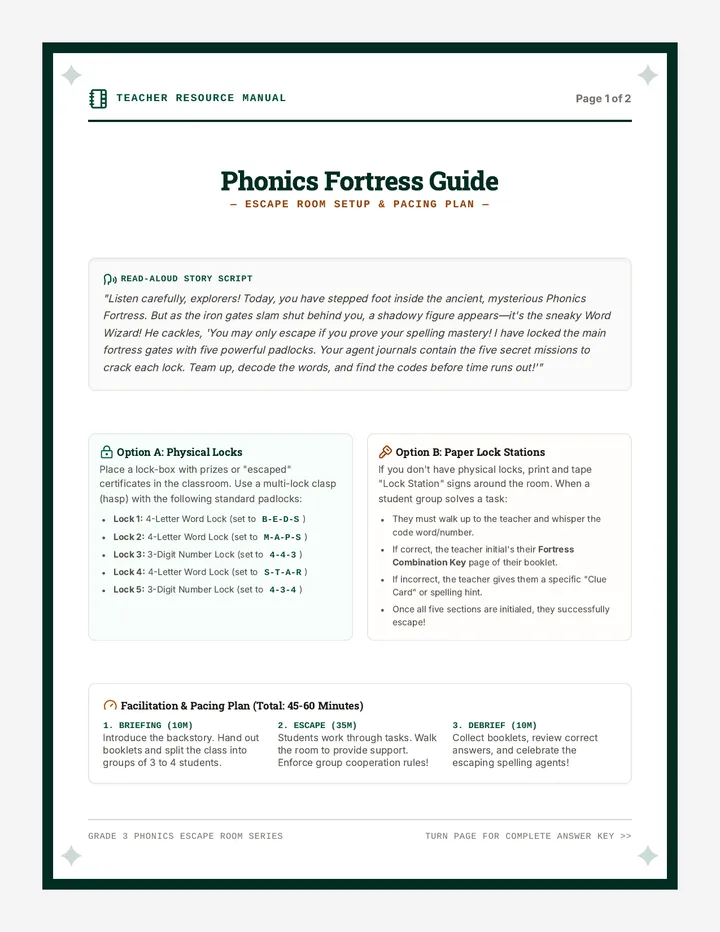
A comprehensive 5-day phonics breakout sequence where students complete daily independent spelling missions to crack codes. Covering CVC, Silent E, Digraphs/Blends, R-controlled vowels, and Vowel Teams, each day represents a new adventure challenge.
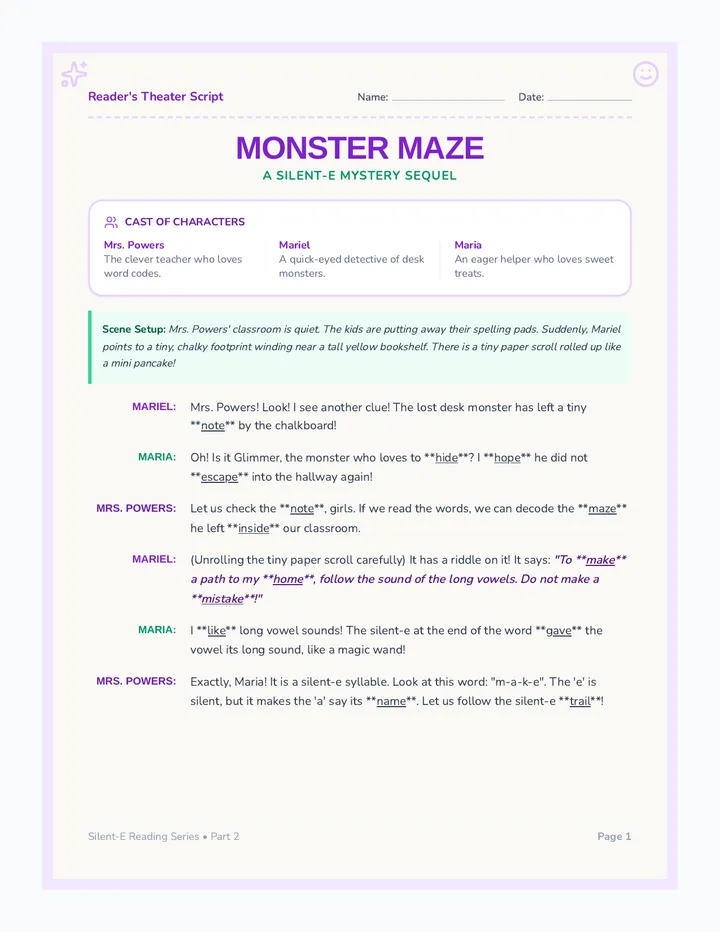
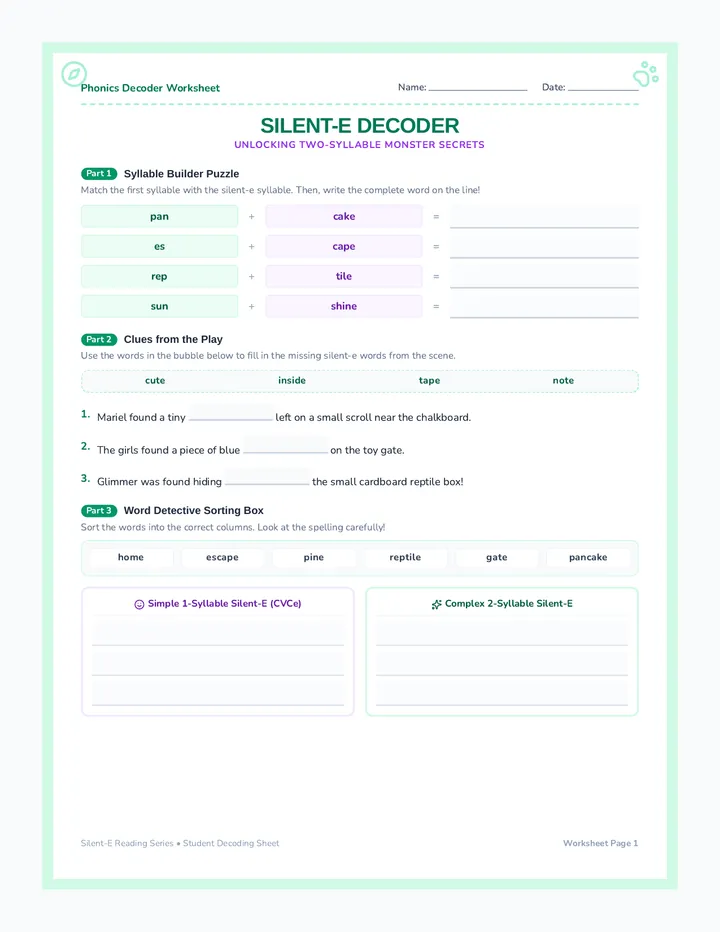
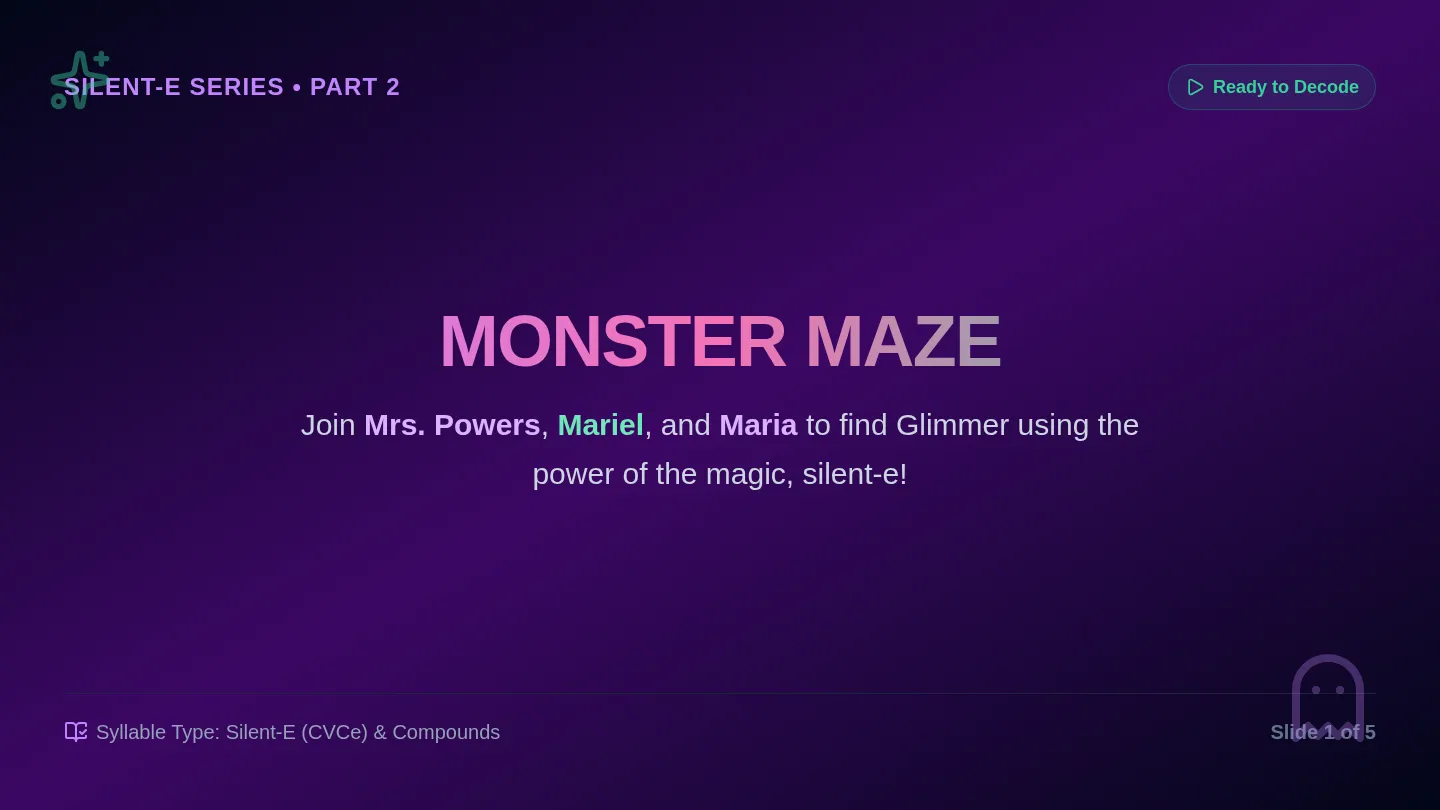
A lesson focusing on the silent-e syllable type (CVCe and two-syllable words) using a playful Reader's Theater sequel. Students build phonics fluency, decode key silent-e words, and collaborate on reading aloud.
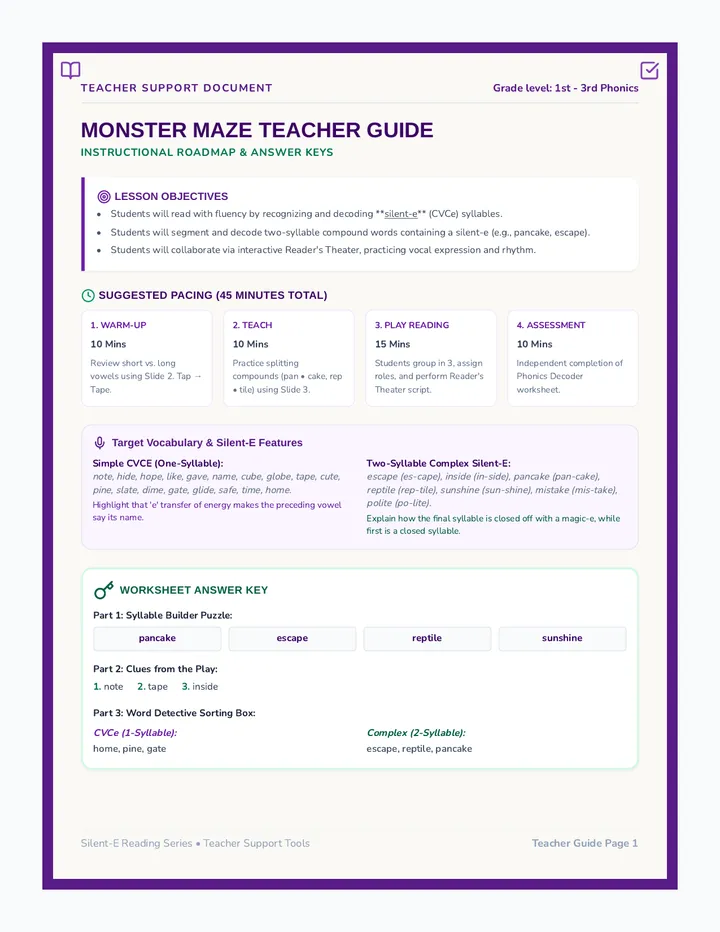
A teacher-facing lesson plan, pacing guide, and answer key for the "Monster Maze" curriculum. It outlines instruction strategies, discussion prompts, target silent-e phonetic concepts, and explicit answers for the student decoding worksheet.