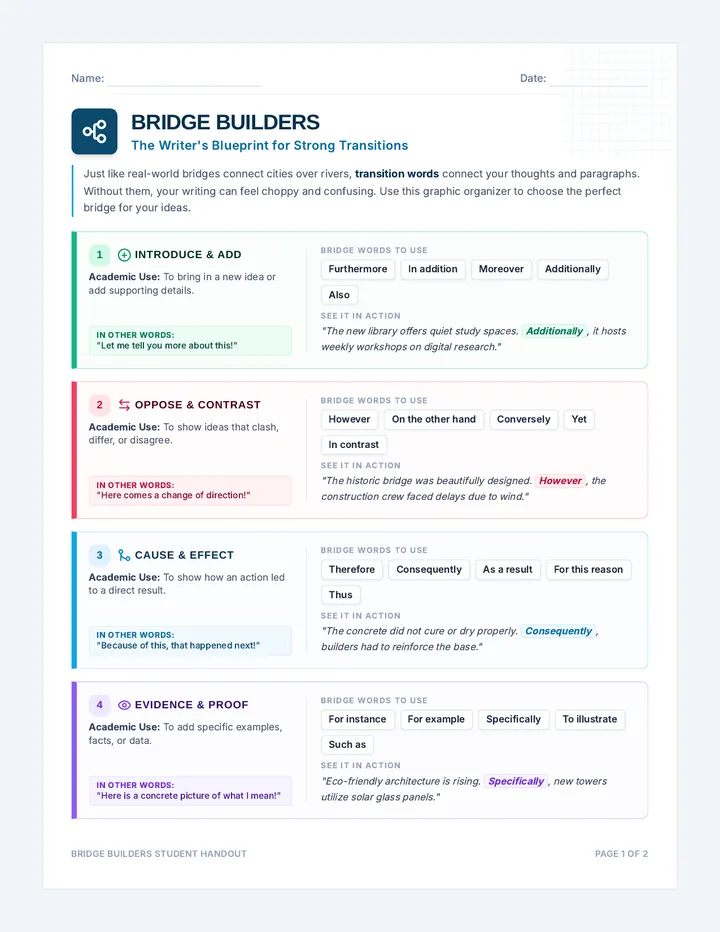
Students write a series of instructional steps or rules (e.g., 'Everyone needs to wait') to practice usage in context. They focus on maintaining consistency throughout a paragraph. Peer editing focuses on locating mismatching verbs.
A reading comprehension lesson focusing on making inferences using adapted excerpts from 'Their Eyes Were Watching God'. Students will practice identifying textual evidence to support conclusions about Janie's feelings and growth.
A focused study on Chapters 9 and 10 of Gary Paulsen's 'Hatchet,' focusing on Brian's discovery of fire and turtle eggs, emphasizing recall, inference, and types of literary conflict.
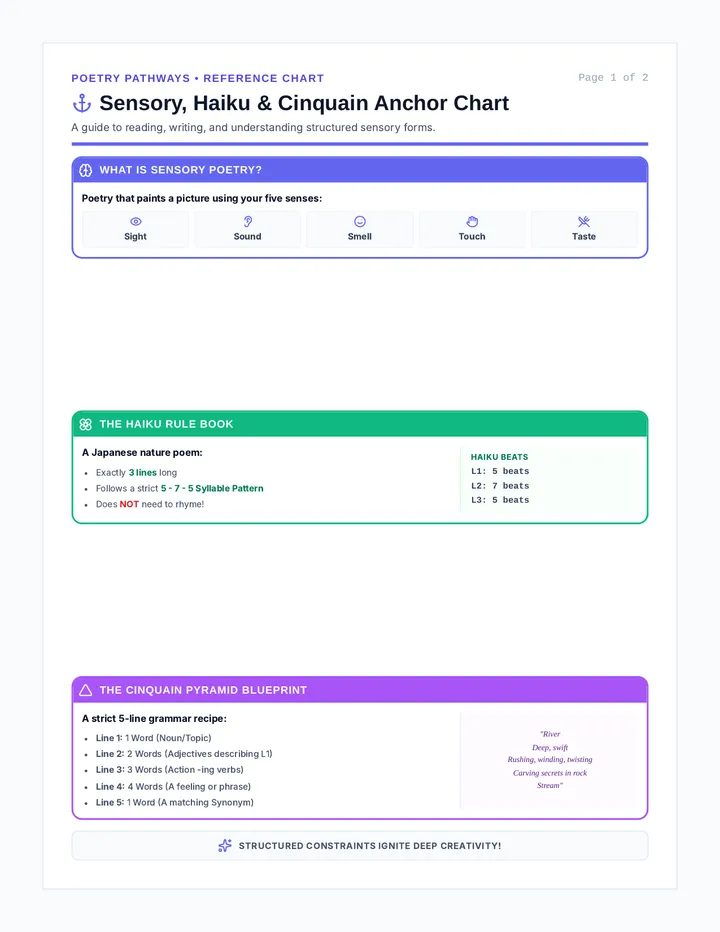
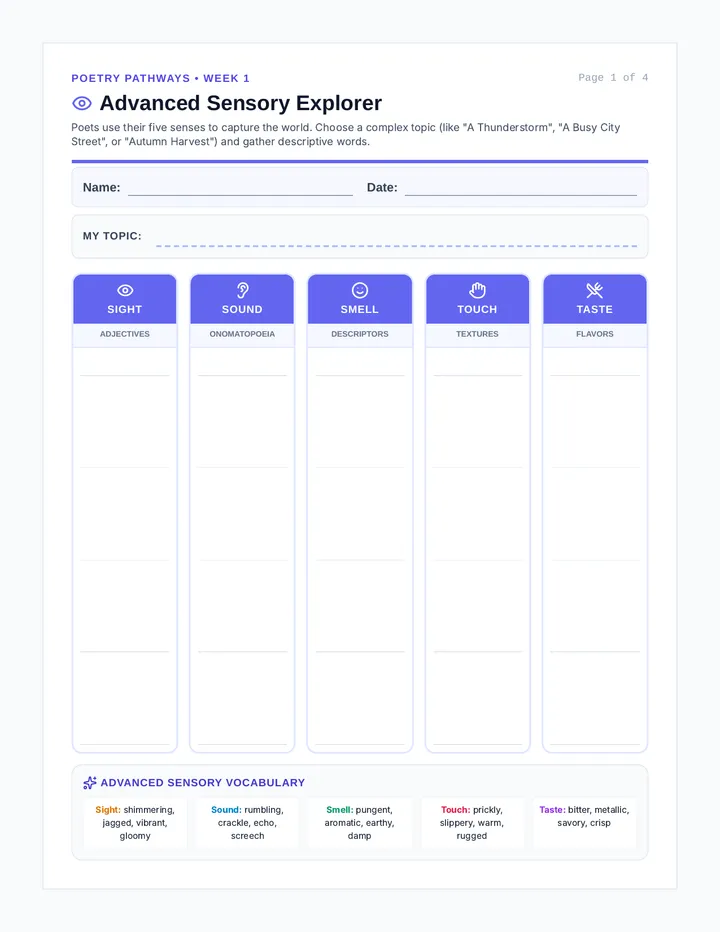
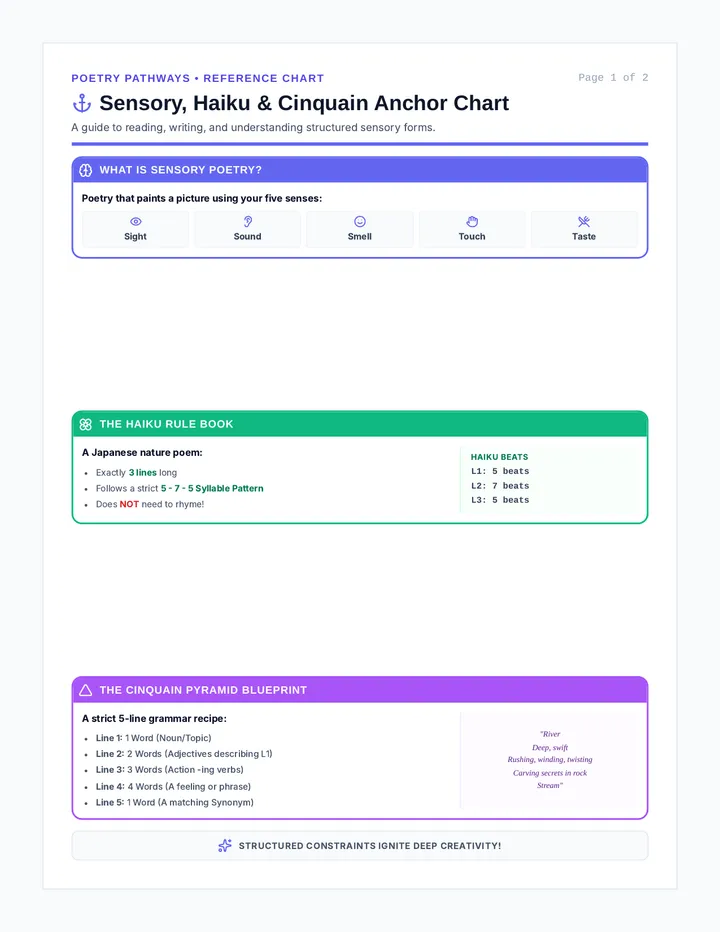
A guided poetry workshop where students use grammar concepts and figurative language to celebrate the arrival of spring.
Capstone simulation. Students apply all 11 strategies to solve a complex text-based 'Maze' and earn their Thought Tracker Mastery.
Metacognitive choice. Students practice deciding which 'Mind Tool' (Inference, Visualization, Questioning) is best for specific text challenges.
Masters the 'Click or Clunk' monitoring technique. Students learn to identify when meaning breaks down and which tool to use for a 'fix-up'.
Identifies text structures (Cause/Effect, Sequence) as 'Brain Blueprints' that help organize incoming data.
Uses Arthur Evans' deductive reasoning techniques. Students solve logic puzzles by eliminating impossibilities within a text.
Directly inspired by the Reading Detective series. Students learn to cite page, line, and word clues to prove their reasoning.
Focuses on Synthesis. Students track how their 'Thought Map' changes from the first page to the final sentence.
Introduces the 'Curiosity Compass' to generate Thick and Thin questions, moving from literal facts to deep inquiry.
Teaches visualization as a sensory experience. Students learn to 'film' the story in their heads using five-sense descriptions.