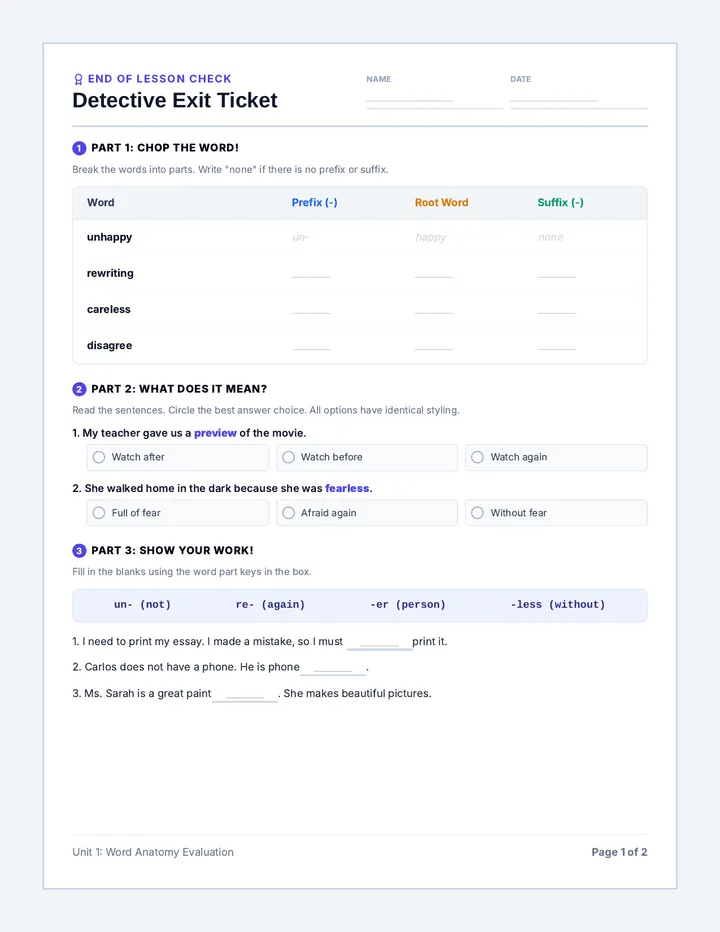
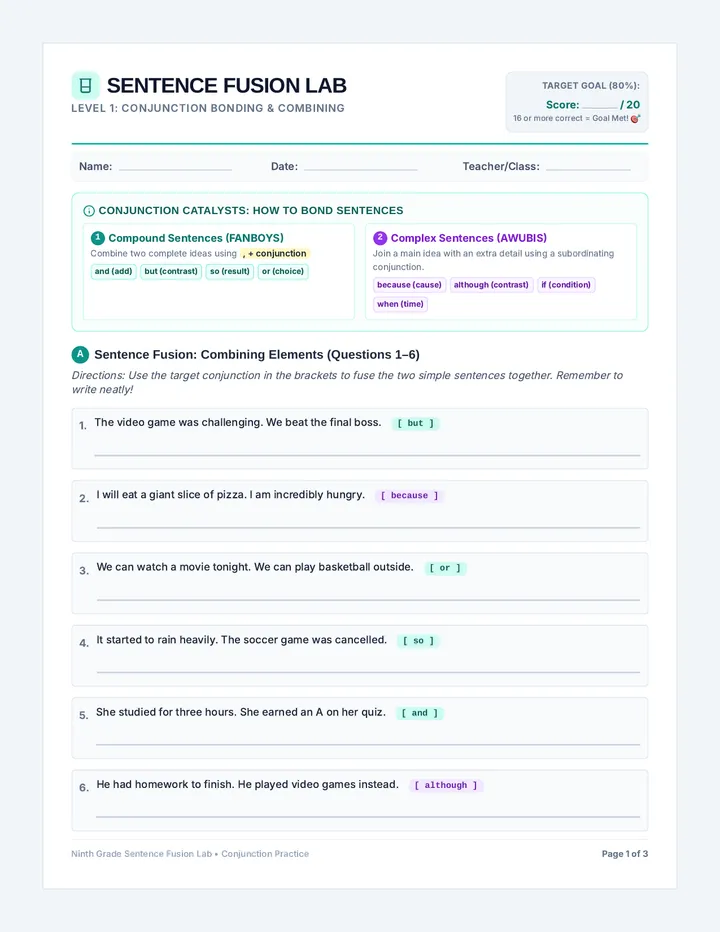
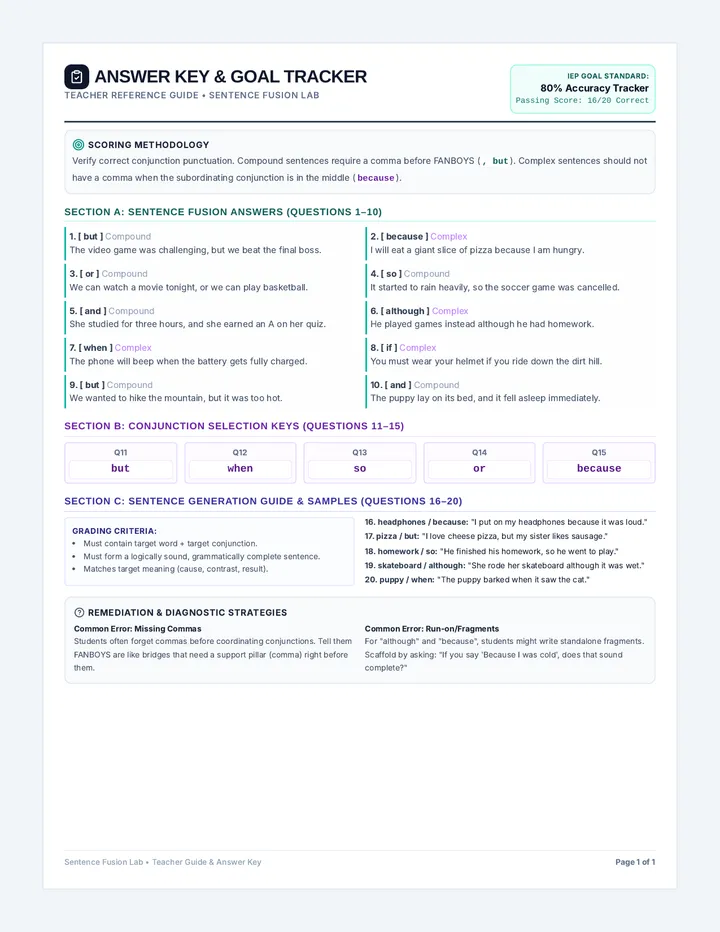
A series of five high-school entrance tickets focused on vocabulary related to social learning and sentence combining techniques including compound and complex structures.
A collection of wizard-themed games and activities focusing on Fundations Level 1 Trick Words from Units 5 through 9. Includes a board game, partner card game, and a comprehensive teacher guide for center implementation.
This lesson compares two student presentations on the god Hermes to help students understand grading criteria and how to improve their own mythological research projects.
A collection of Grade 1 decodable passages focusing on bird adaptations, specifically beaks and feathers, featuring common North American and exotic birds.
A comprehensive lesson on mastering the literary essay, focusing on thesis development and evidence integration using Fahrenheit 451, The Great Gatsby, and Charade as core examples.
A creative arts-integrated ELA lesson where students map the Hero's Journey using symbolic collage, supporting executive functioning through visual storytelling and metaphorical thinking.
A deep dive into Chapter 20 of 'The Westing Game', focusing on Turtle's sacrifice, the elevator bombing, and the ongoing investigation by the heirs. Students will demonstrate literal recall and summarize key plot developments.
A lesson focused on helping 9th-grade students master writing flow and logic through transition words and parallel structure. This lesson provides differentiated reference sheets for both topics.
A targeted grammar lesson focused on identifying and correcting run-on sentences using coordinating conjunctions (FANBOYS) within the context of Frederick Douglass's narrative.
A lesson designed to guide students through the planning phase of researching an extraordinary person. It covers selection, inquiry, source hunting, and outlining.
Students investigate the technical choices filmmakers make—including editing, music, and framing—to shape narrative truth. This lesson prepares freshmen to critically analyze documentary media and understand the ethical responsibilities of visual storytelling.
A set of fine motor activities designed to help young learners master the art of writing their own names through tracing, dotting, and rainbow writing. This lesson uses a blueprint theme to emphasize the "construction" of letters.
A cosmic journey into poetry for 1st graders, exploring rhyming patterns through 'twin stars' and sensory details to describe the 'galaxy' of language. Students will identify rhymes and draft their own sensory-rich space poems.
Polishes the narrative voice by adjusting language, tone, and sentence structure to suit a specific target age group.
Dives into the structural requirements of a children's book, focusing on the classic three-act arc and the specific pacing needed for illustrated storytelling.
Focuses on the foundational elements of a children's book: establishing a meaningful theme and creating relatable characters for a young audience.
The final planning phase where students map out the relationship between text and illustration using a professional storyboard layout.
Students learn how to weave meaningful life lessons and themes into their narratives without becoming overly didactic or 'preachy.'
An exploration of the classic three-act structure tailored for the pacing of a 32-page children's book format.
Students design relatable protagonists and supporting characters, focusing on visual characterization and emotional accessibility for children.
Students explore the developmental stages of young readers and analyze how language, tone, and complexity shift depending on the target audience age.
Final editing, peer feedback, and the digital showcase of students' completed storybook slide presentations.
Students translate their stories into a visual medium, focusing on pacing, slide layout, and the interaction between text and image.
Focus on creating relatable characters and crafting a compelling plot arc specifically for a young audience.
Students analyze mentor texts to identify common elements of children's literature and define their target audience and core theme.
A lesson focused on distilling the complex, dual-narrative structure of Art Spiegelman's Maus I into a concise summary using structured graphic organizers and sentence stems.
An introductory study of the first five chapters of 'I Am Number Four,' focusing on John Smith's arrival in Paradise and the initial development of his relationships and Legacies.