A 20-minute collaborative small group session focusing on main idea, details, vocabulary (synonyms/antonyms), and critical thinking through a short weather passage.
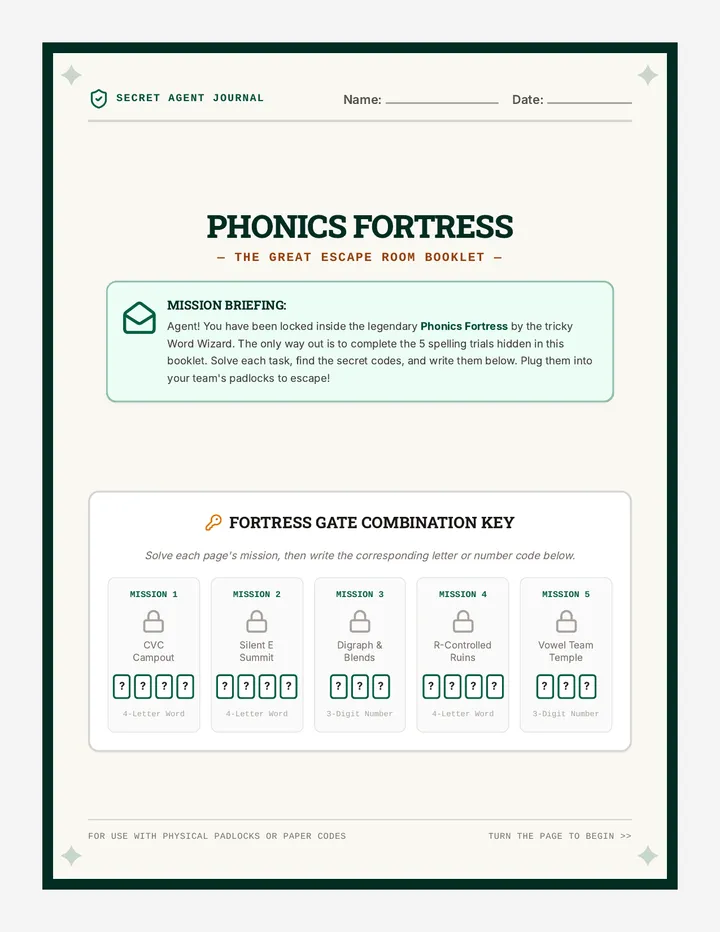
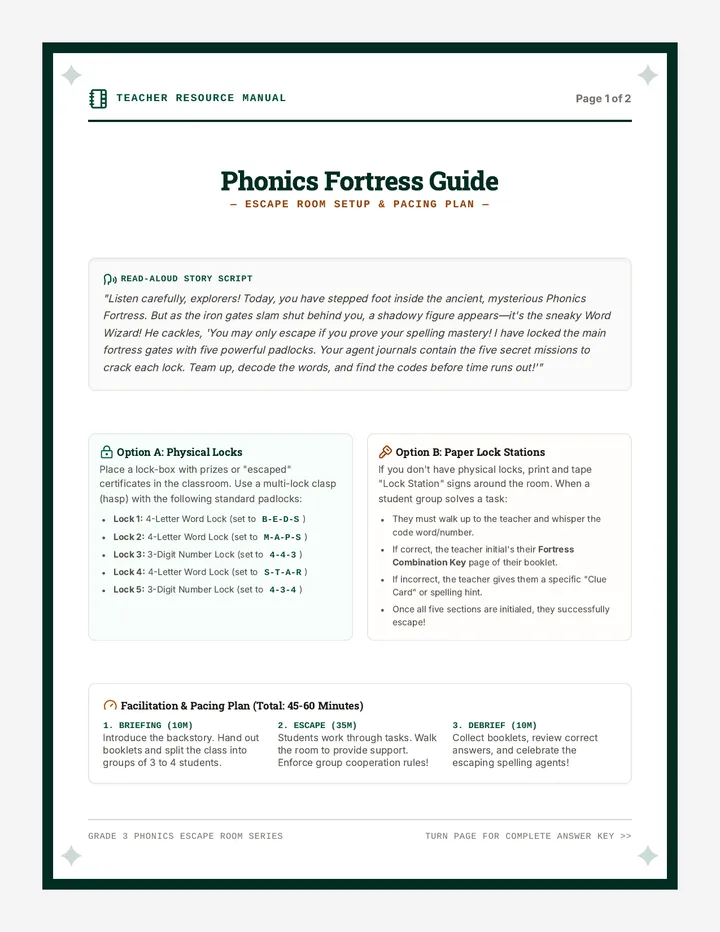
A comprehensive 5-day phonics breakout sequence where students complete daily independent spelling missions to crack codes. Covering CVC, Silent E, Digraphs/Blends, R-controlled vowels, and Vowel Teams, each day represents a new adventure challenge.
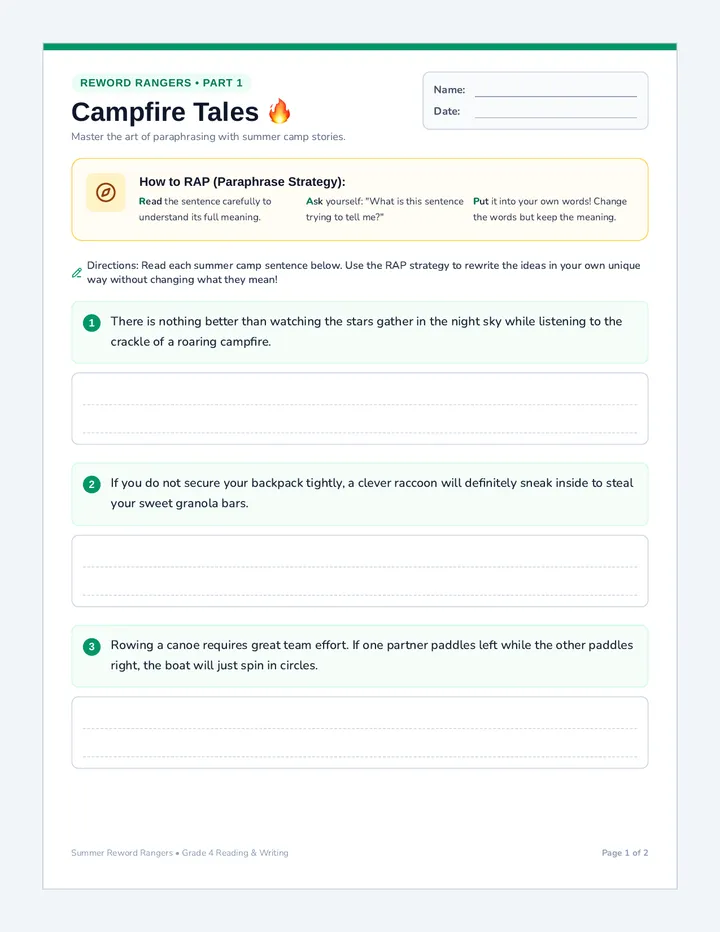
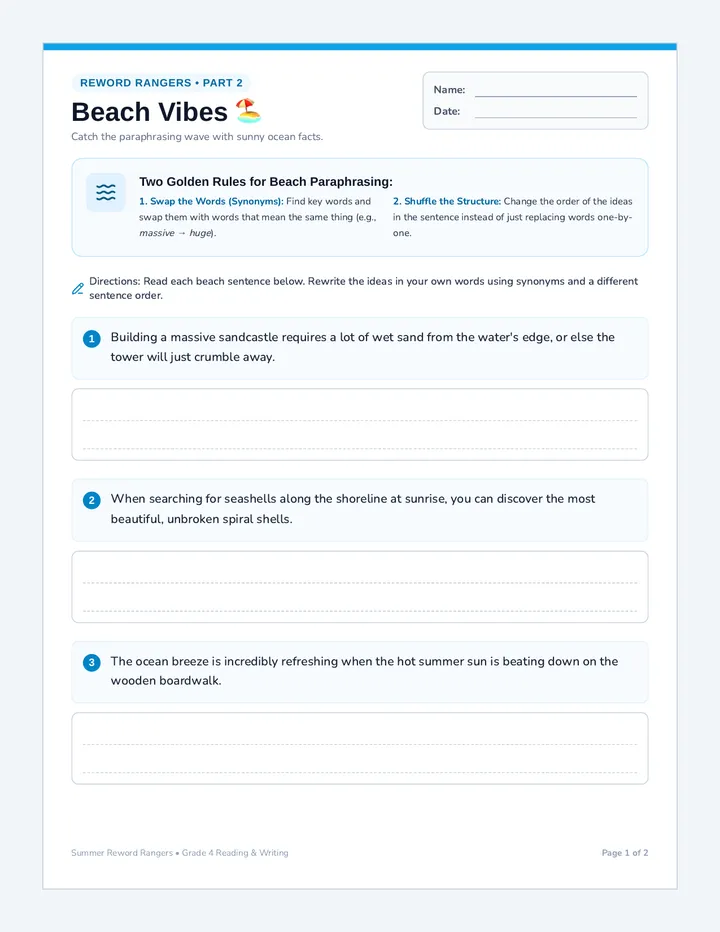
A series of high-interest, summer-themed worksheets designed to help fourth graders master the skill of paraphrasing. Students progress from paraphrasing direct quotes to identifying evidence in paragraphs and paraphrasing it.
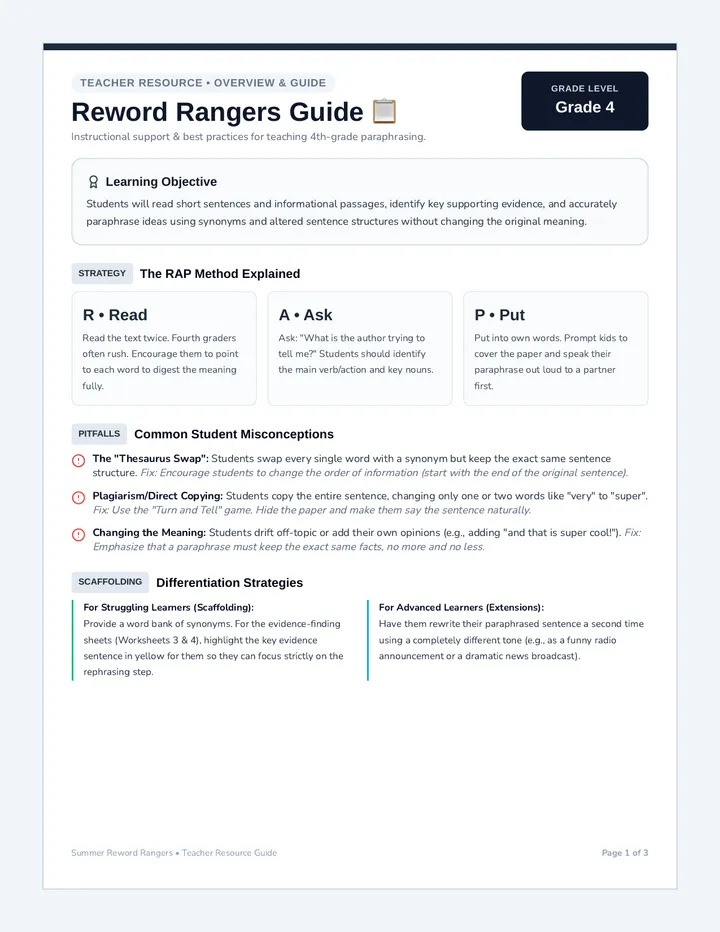
A comprehensive 3-page teacher guide and complete answer key. Contains teaching scripts, common 4th-grade student misconceptions, scaffolding ideas, and professional-grade exemplar student answers for all four summer paraphrasing worksheets.
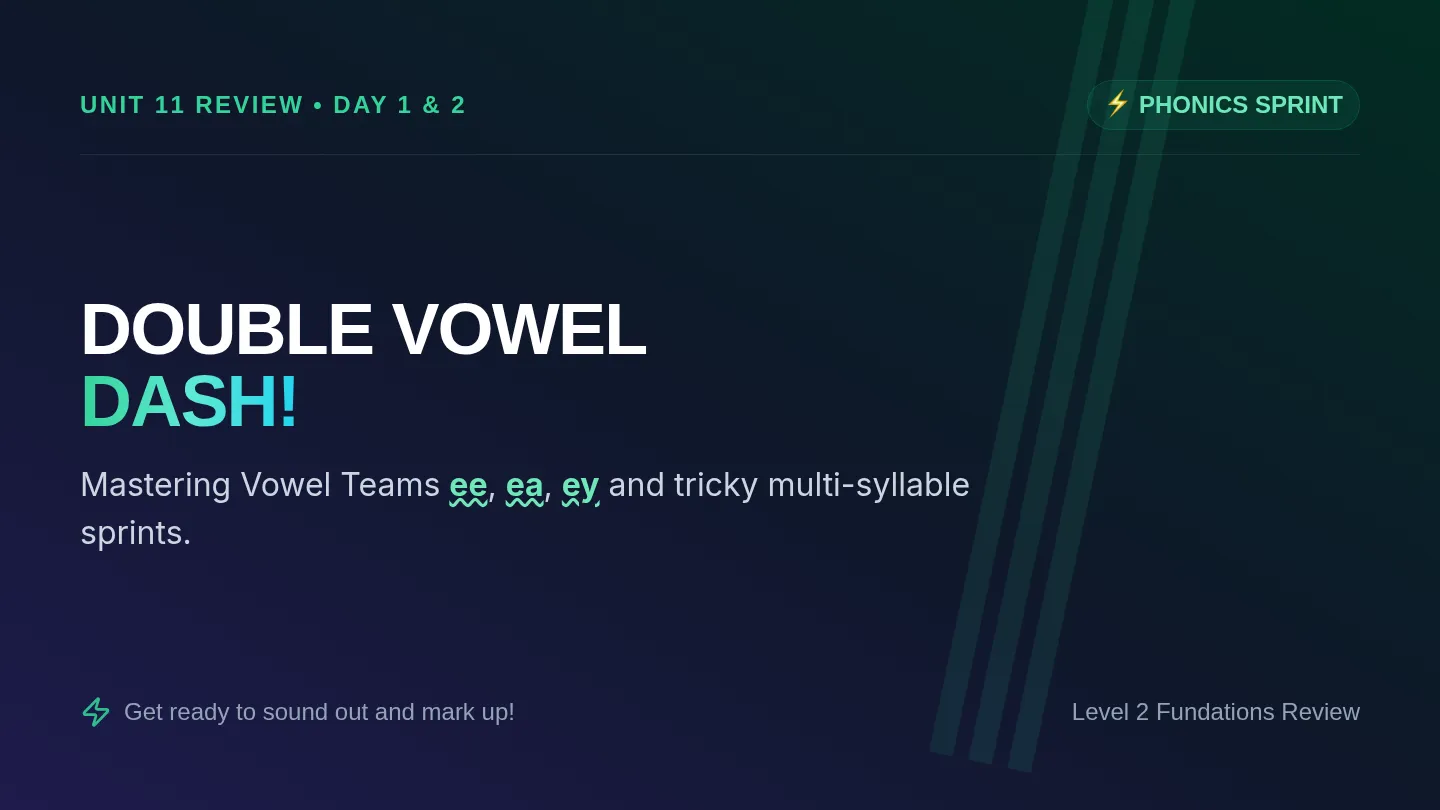
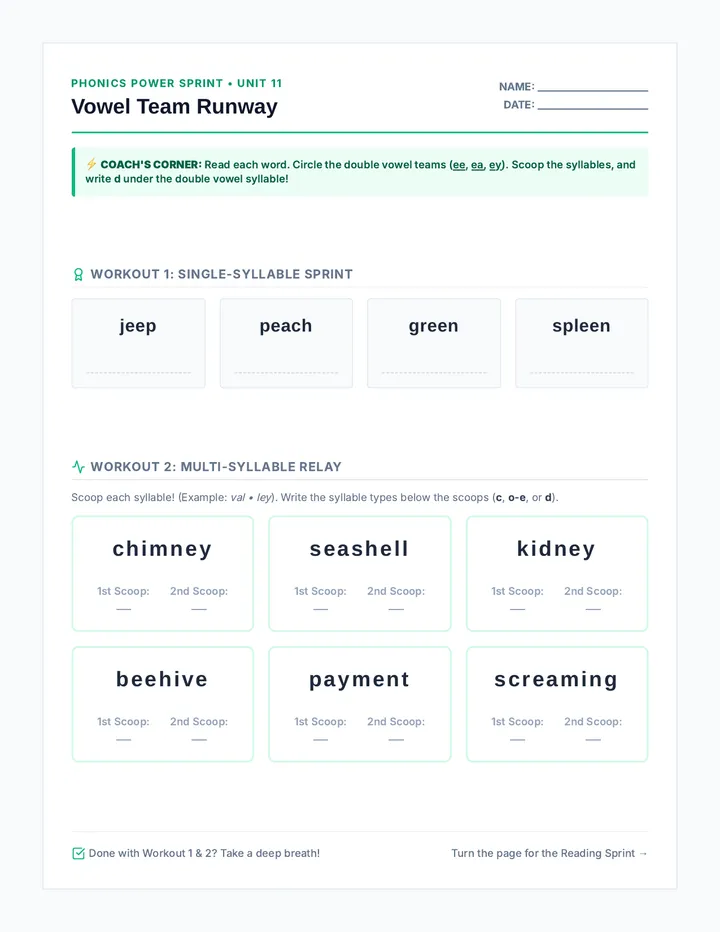
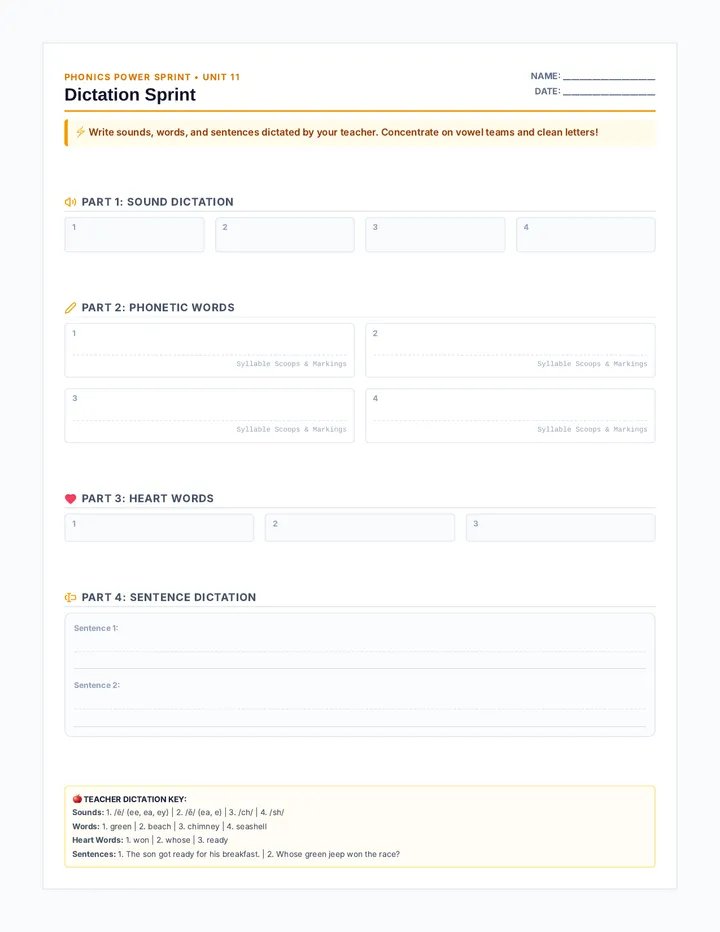
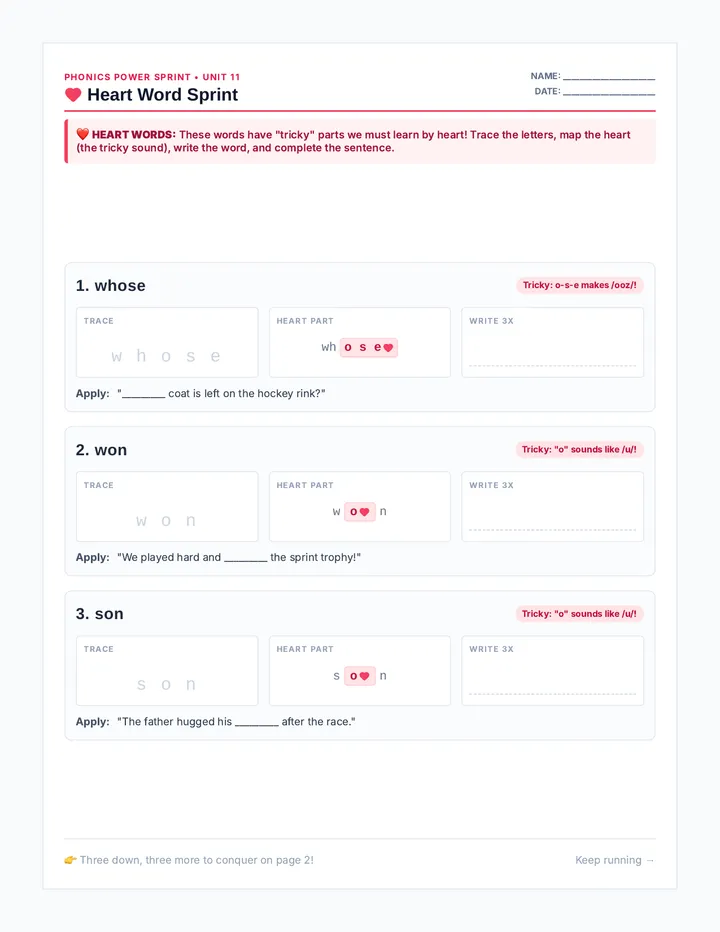
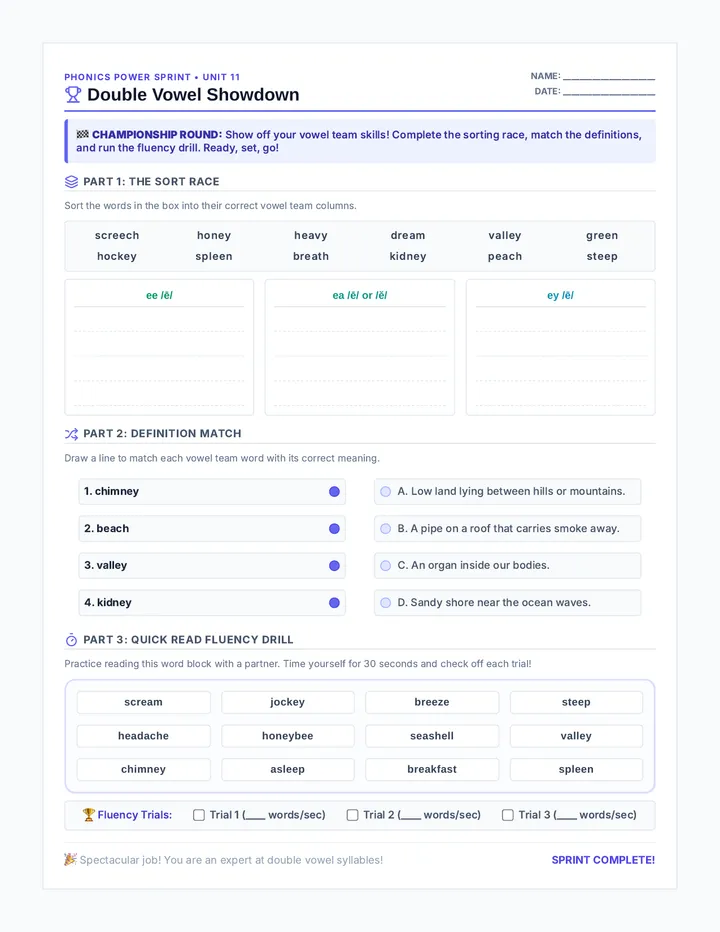
An accelerated, high-impact review of Fundations Level 2 phonics concepts, consolidating Units 11-17 into an intensive curriculum. This sequence focuses on double vowel syllables (vowel teams), multi-syllabic words, and essential high-frequency heart words to build rapid decoding and spelling mastery.
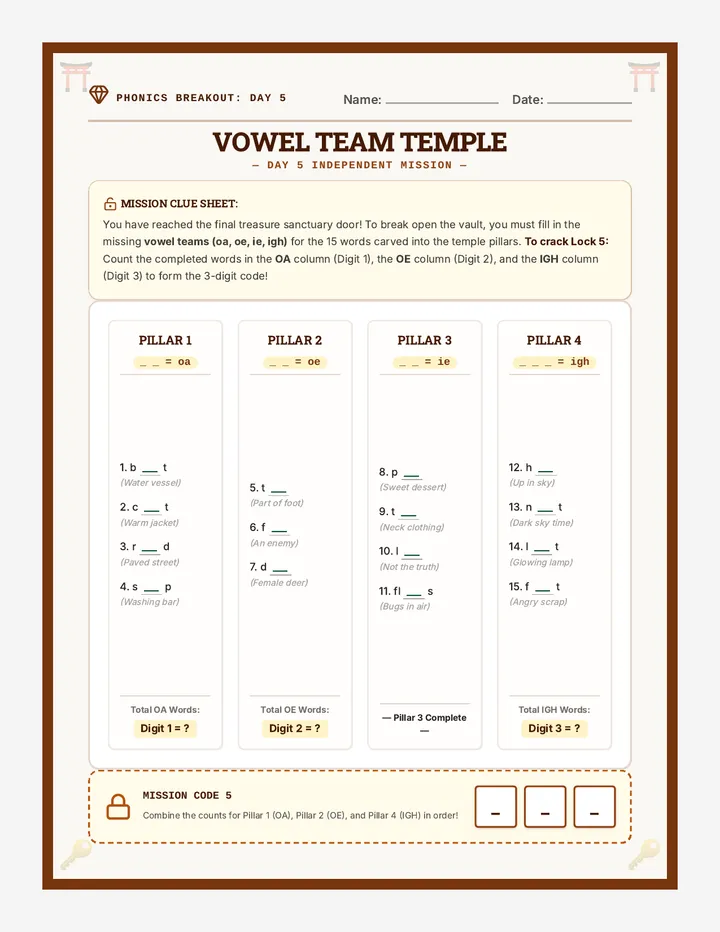
Day 5 of the Phonics Breakout Series. Students enter the Vowel Team Temple and solve vowel-team riddles (ai, ay, ee, ea, oa, oo) to open the final sanctuary vault with a 3-digit numeric code.
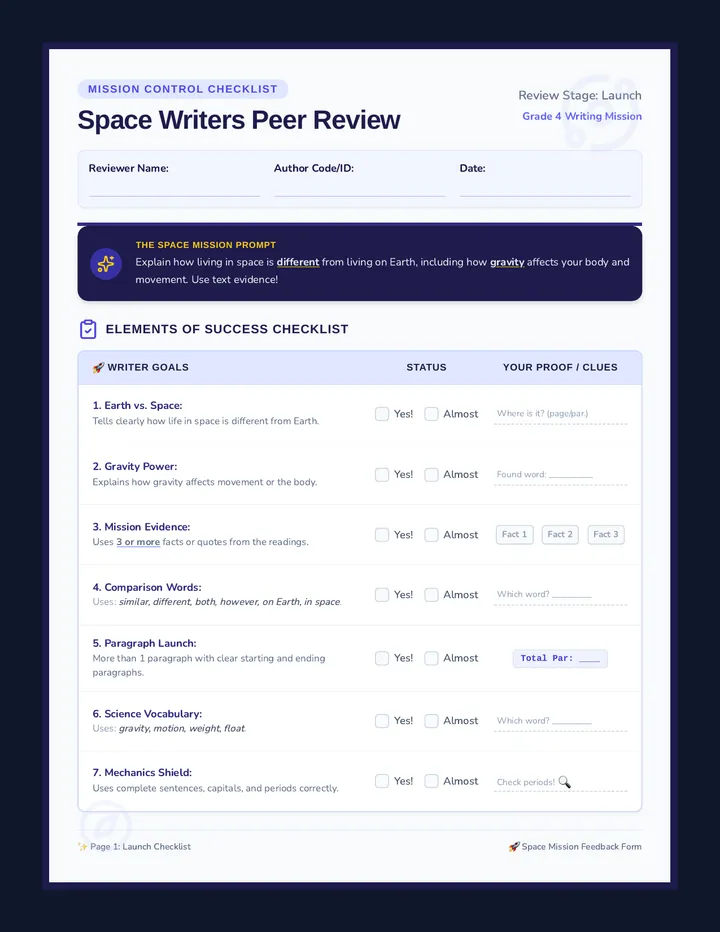
A two-page student peer feedback form styled with an astronaut/space theme. Page 1 contains a spacious visual success checklist for evaluating a writing piece. Page 2 provides expanded writing spaces with generous handwriting lines and color-coded boxes for comprehensive positive and constructive feedback ('Stellar Glows' and 'Cosmic Grows'), accompanied by sentence frames designed for Multilingual Language Learners.
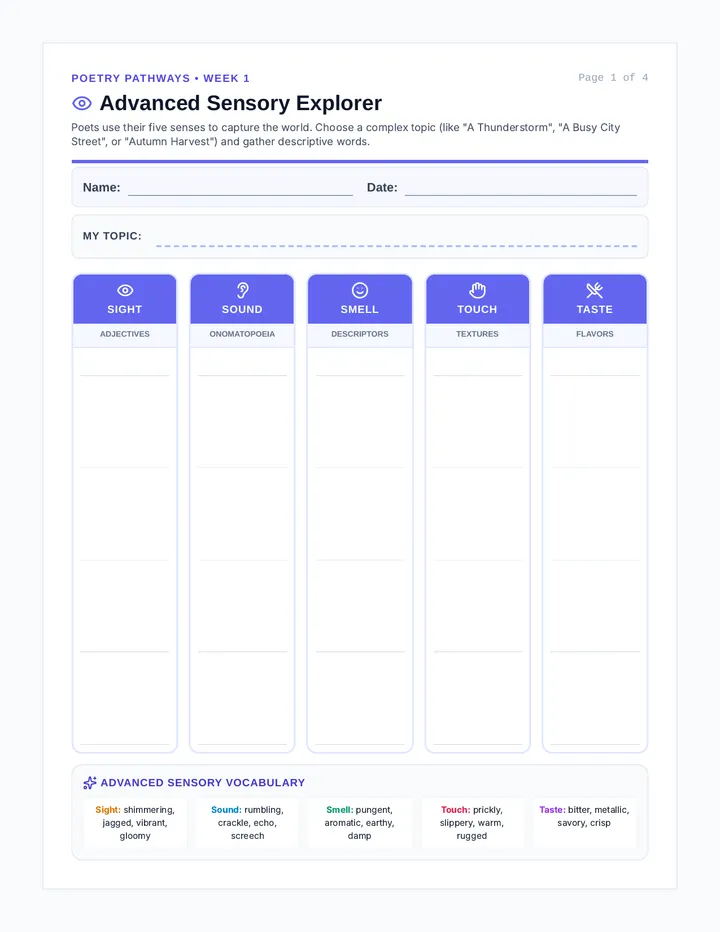
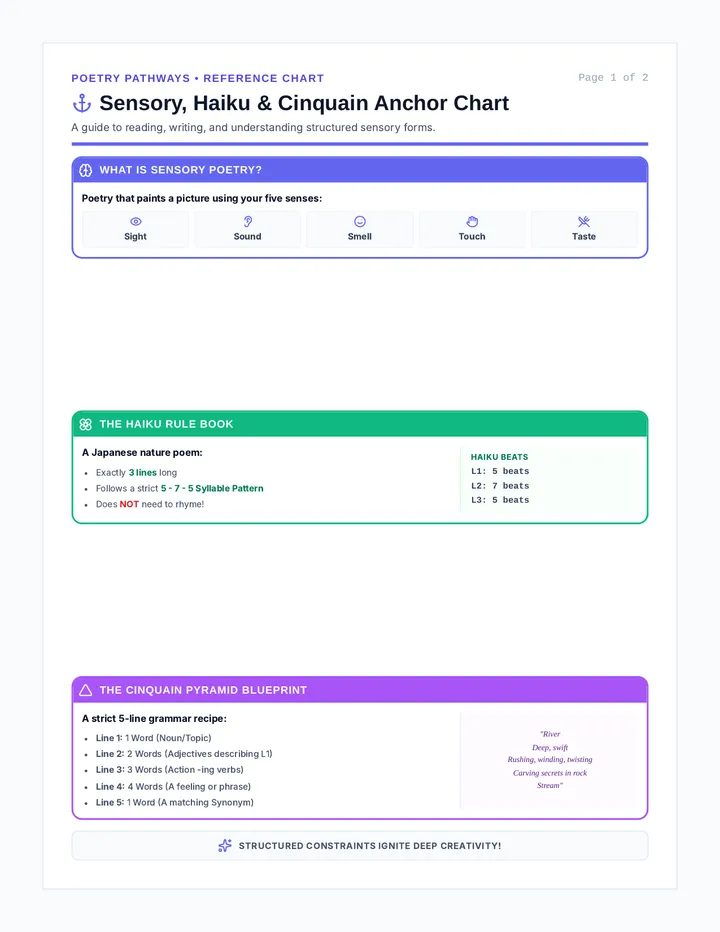
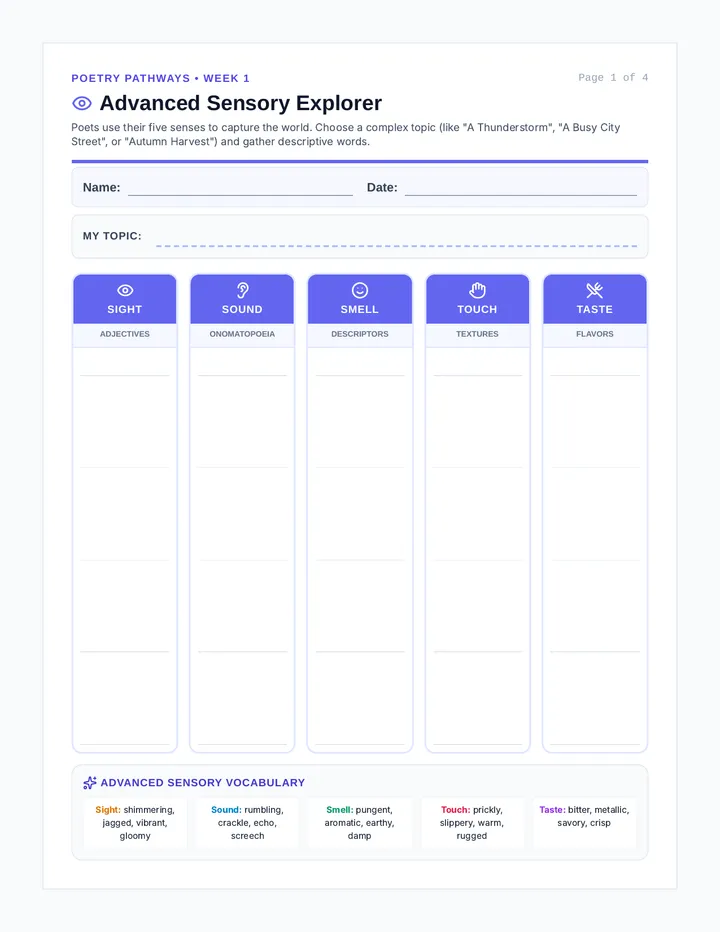
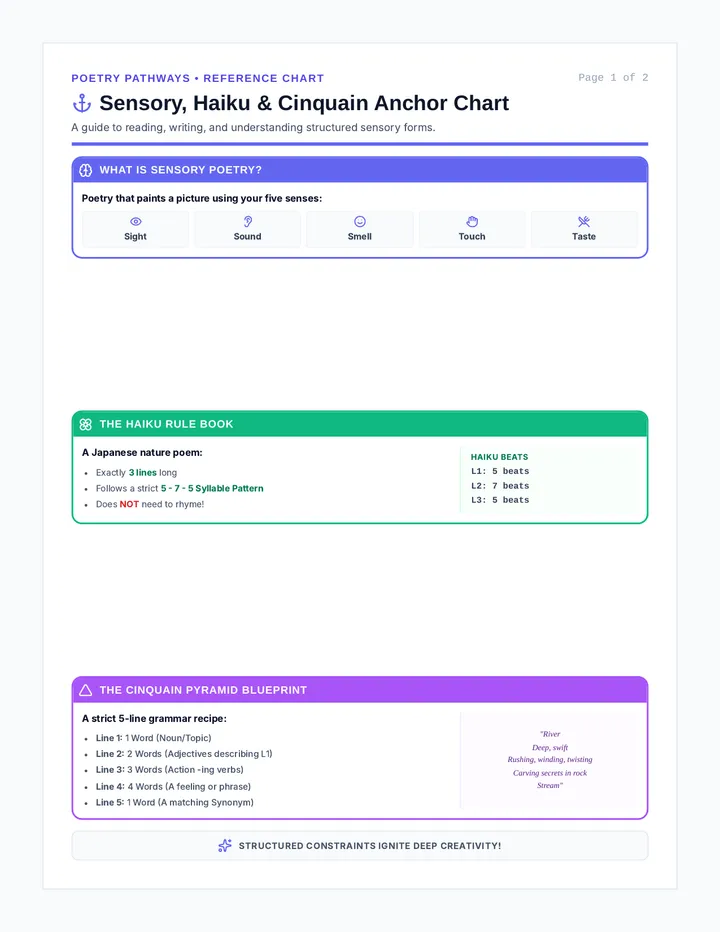
A comprehensive 4-week poetry curriculum designed for students requiring high structure and visual supports. It covers diverse poetry types (Haiku, Color, Acrostic, Couplets, Concrete, Free Verse, and Metaphor/Simile) with scaffolds like word banks, sentence frames, and graphic organizers.
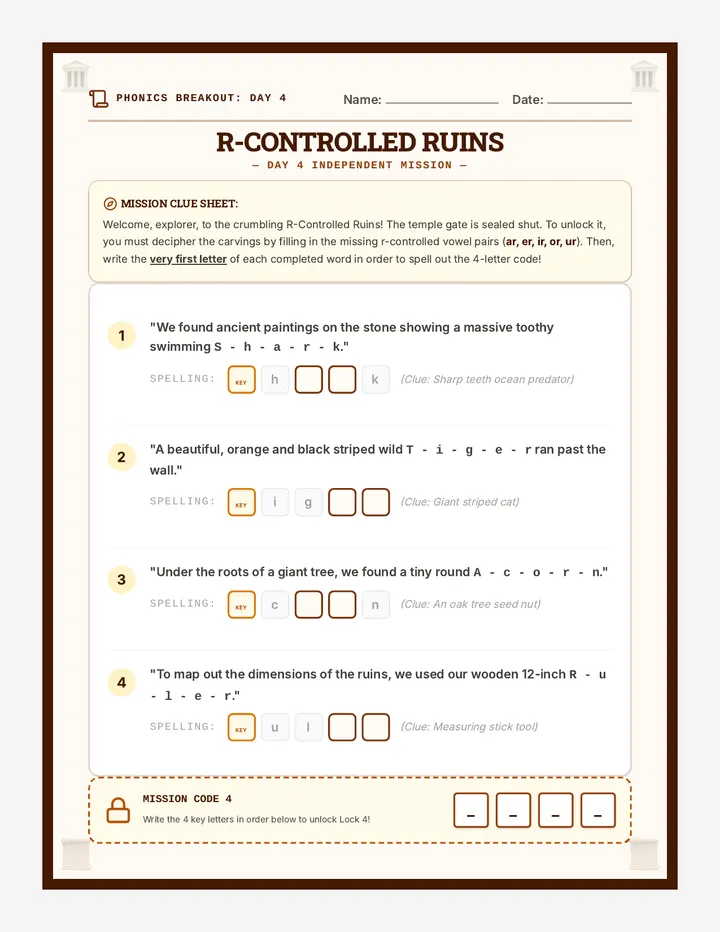
Day 4 of the Phonics Breakout Series. Students decipher ancient runes in the R-Controlled Ruins by writing missing ar, er, ir, or, and ur spelling patterns. Spells out a 4-letter word lock code.
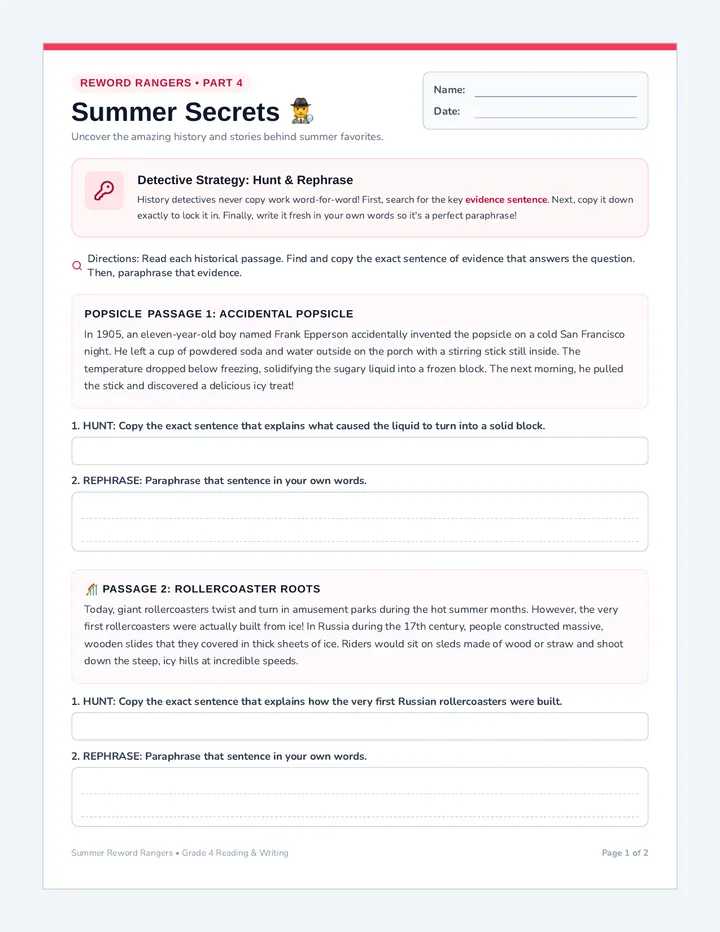
A 2-page history-and-invention-themed paraphrasing worksheet. Fourth-grade students read four passages about summer history (the invention of the popsicle, the origins of rollercoasters, the creation of the Super Soaker, and Arctic sunglasses), extract evidence, and paraphrase it.
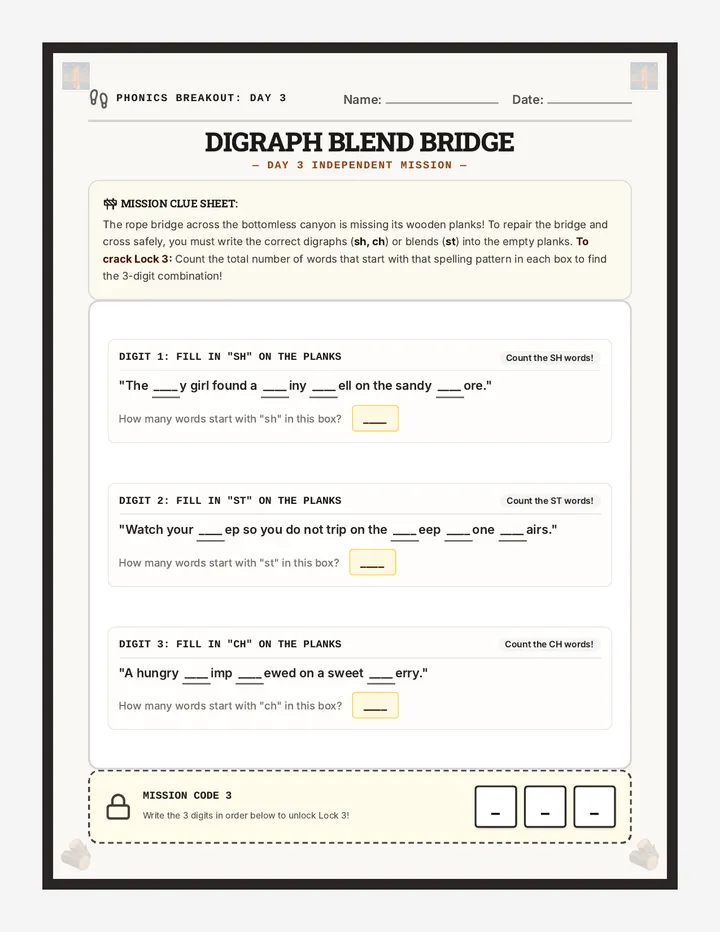
Day 3 of the Phonics Breakout Series. Students cross the rickety Digraph & Blend Bridge. They fill in missing blends and digraphs (sh, ch, th, st, gr, bl) and count word patterns to unlock a 3-digit numeric code lock.
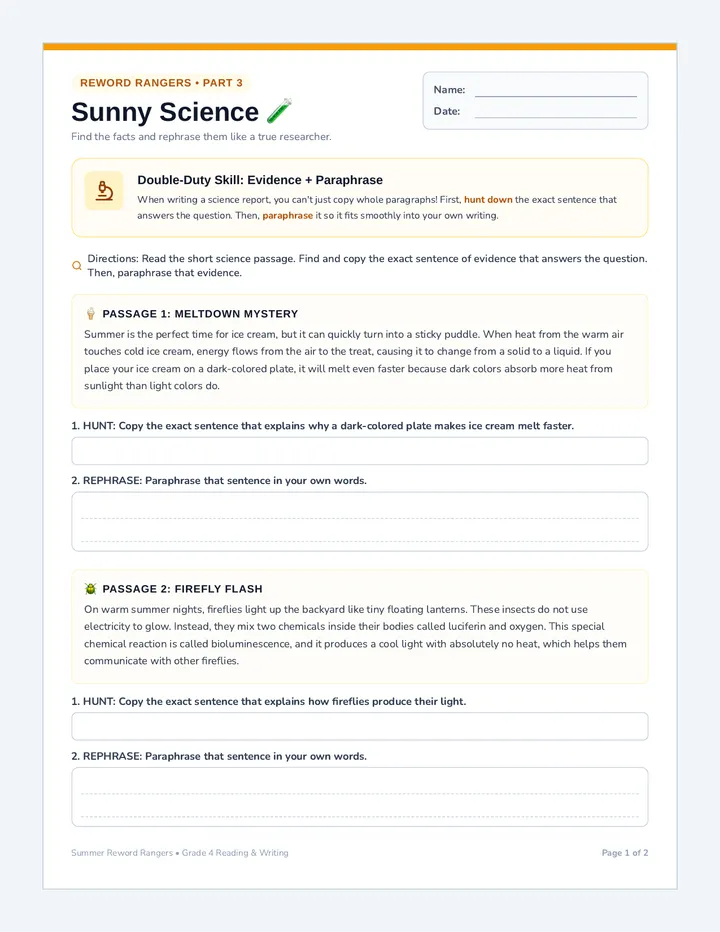
A 2-page science-themed paraphrasing worksheet. Fourth-grade students read four passages about summer science (melting ice cream, glowing fireflies, pesky mosquitoes, and sunburn defense), extract direct evidence, and paraphrase it.