Lenny.com
Explore
Create
ActivitiesNewMathEnglish Language ArtsScience & EngineeringSocial StudiesGlobal LanguagesHealth & Physical EducationSpecial EducationCounseling & Life SkillsArts & CreativityESL
Lenny.com
Lenny.com
Explore
Create
ActivitiesNewMathEnglish Language ArtsScience & EngineeringSocial StudiesGlobal LanguagesHealth & Physical EducationSpecial EducationCounseling & Life SkillsArts & CreativityESL
Lenny.com
Lenny.com

Solutions

Lenny for EducatorsLenny for SchoolsLenny for Districts

Product

ExploreSign inCreateSupportAbout

Resources

Getting startedMTSS Acceleration Program

© 2026 Lenny Learning Inc.

TermsPrivacyAccessibility
LinkedInInstagramX
Lenny
English Language ArtsPhonics & Reading FoundationsLetter IdentificationLearn Letters A-ZLowercase and Uppercase LettersConsonants and VowelsLetter-Sound AssociationsLetter-Sound Associations: LowercaseLetter-Sound Associations: UppercaseBeginning and Ending SoundsRhymingBlending And SegmentingShort VowelsShort Vowel SoundsConsonant BlendsConsonant DigraphsBlends, Digraphs, and TrigraphsDigraphs, Blends, and Silent LettersLong Vowel SoundsLong Vowel PatternsShort and Long VowelsShort and Long Vowel PatternsSilent EVowel SoundsVowel TeamsR-Controlled VowelsDiphthongs: Oi, Oy, Ou, OwVariant VowelsVariant, Diphthong, And R Vowel PatternsSoft G And CSight WordsIrregular WordsWord RecognitionSyllablesSyllable TypesTwo-Syllable WordsMultisyllabic WordsPhoneme ManipulationDecodable TextsVocabularyAction WordsQuestion WordsNouns and AdjectivesClassify WordsCompound WordsSynonyms and AntonymsHomophonesHomophones and HomonymsShades of MeaningContext CluesPrefixes and SuffixesGreek and Latin RootsAnalogiesIdioms and AdagesForeign Words and ExpressionsWord Choice and UsageReference SkillsReading ComprehensionRead-Along Literary TextsRead-Along Informational TextsReality vs. FictionStory ElementsCharacterSequenceMain IdeaCause And EffectCompare And ContrastReading StrategiesText StructureAuthor's PurposeAuthor's Purpose And ToneAuthor's PerspectivePoint Of ViewThemeInference And ThemeInference And AnalysisPoetry ElementsLiterary DevicesAnalyzing LiteratureAnalyzing Informational TextsComparing TextsAudience, Purpose, And ToneBusiness DocumentsNovel StudyNonfiction Book StudyGrammar & MechanicsSentencesNounsVerbsAdjectivesPronounsCapitalizationPunctuationContractionsConjunctionsPrepositionsArticlesAdjectives And AdverbsVerb TypesVerb TensePronouns And AntecedentsPronoun TypesSubject-Verb AgreementDirect And Indirect ObjectsSentences, Fragments, And Run-OnsPhrases And ClausesCommasSemicolons, Colons, And CommasDashes, Hyphens, And EllipsesSpellingAbbreviationsFormattingVerb Tense And MoodMisplaced ModifiersWritingDescriptive DetailsCreative WritingOpinion WritingTopic SentencesOrganizing WritingLinking WordsSentence VarietyIntroductions And ConclusionsPersuasive And Opinion WritingExpository WritingPersuasive StrategiesDeveloping And Supporting ArgumentsTopic Sentences And Thesis StatementsSummarizingResearch SkillsEditing And RevisingActive And Passive Voice=Writing Clearly And ConciselyDebate & Public SpeakingPublic Speaking BasicsPersuasive TechniquesClaims and EvidenceTypes of ArgumentsReasoning TypesLogical FallaciesTopic ResearchOrganizing EvidenceDebate Speech OrganizationAttacking and Defending ArgumentsClash and EngagementImpact CalculusQuestioning and Cross-ExaminationCritical ThinkingInformal LogicFormal LogicInductive Reasoning

Twin Tales Compare

A targeted RL.9 compare and contrast lesson pairing two original narrative texts featuring parallel maker challenges with contrasting approaches and themes. Students examine setting, characters, plot progression, and central messages using a structured comparative T-chart and text-based synthesis activities.

KK

Part 2: Contrast (Sentence Frames)

Frame A (Character Actions): "When faced with an obstacle, the character in Story 1 responds by pausing, breathing, and methodically coiling a replacement copper wire against his blueprint, while the character in Story 2 responds by scanning the park and improvising an arched wing using a bendable willow twig and snack pouch."

Frame B (Setting & Materials): "The setting and materials in Story 1 are a quiet indoor workshop with formal blueprints, brass cogs, and precise tools, whereas the setting and materials in Story 2 are a breezy outdoor park with recycled cardboard, tape, and natural willow branches."

Part 3: Thematic Contrast Model Response

"The theme of 'The Clockwork Sparrow' is that patience, planning, and meticulous repair bring success. In contrast, 'The Sky Dancer' teaches that adaptability and quick creative improvisation can turn an accident into a win. If my project broke right before the bell, I would use Maya's approach because when time is running out, you don't have hours to redraw blueprints—you have to think quickly and make the best of what is right in front of you."

Common Pitfalls

  • Topic vs. Theme: Students often mistake topic nouns ("flying", "crafts") for themes. Guide them to formulate a full sentence lesson.
  • Judging Superiority: Remind students that neither character's method is "wrong"; different contexts reward different approaches.

Scaffolding & Extensions

  • Striving Readers: Have students annotate each text with 'S' (Setting), 'C' (Characters), and 'P' (Plot events) during a second read.
  • Extension: Ask students to rewrite the ending as if Leo had used Maya's spontaneous approach or Maya had used Leo's methodical one.

Discussion Prompt: "How did each character's setting and available materials shape their final solution?"
RL.9 Aligned

You might also like

Paw Print Teacher Guide

Vowel Team Aw Pathways

A comprehensive structured literacy sequence targeting the vowel team 'aw', offering dual instructional pathways using both the Classic Orton-Gillingham 7-step routine and the 10-part Wilson Reading System (WRS) framework.

KW

Kellie Walsh

10
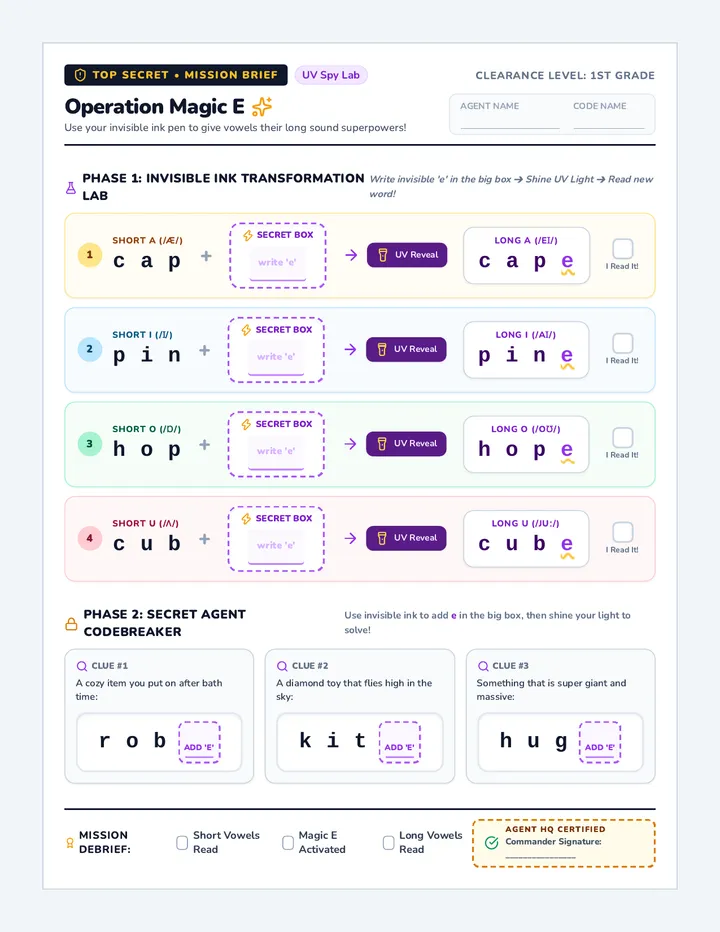
Spy Word Decoder Worksheet

Magic E Secret Agents

A high-energy, 10-minute small-group phonics intervention for first graders using UV invisible ink pens to explore how silent magic e transforms short vowel sounds into long vowel sounds.

K

Katherine.Land

2
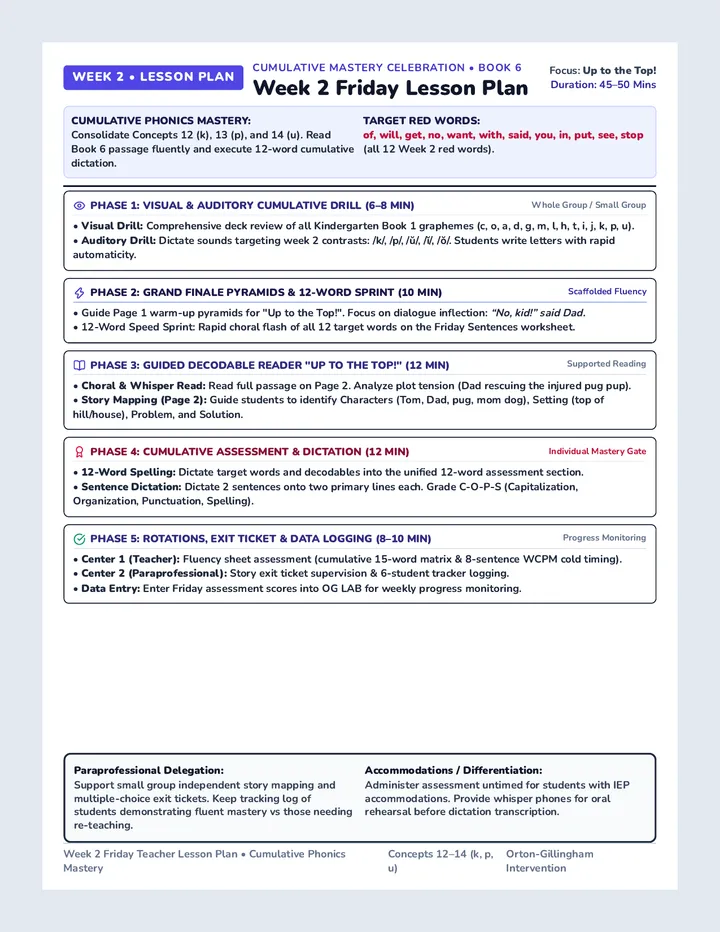
Week 2 Friday Lesson Plan

Week 2 Friday Lesson Plan

A 1-page Week 2 Friday teacher lesson plan detailing the explicit 5-phase Orton-Gillingham instructional protocol for 'Up to the Top!', cumulative assessment, OG LAB data entry, and center rotations.

S

Sara

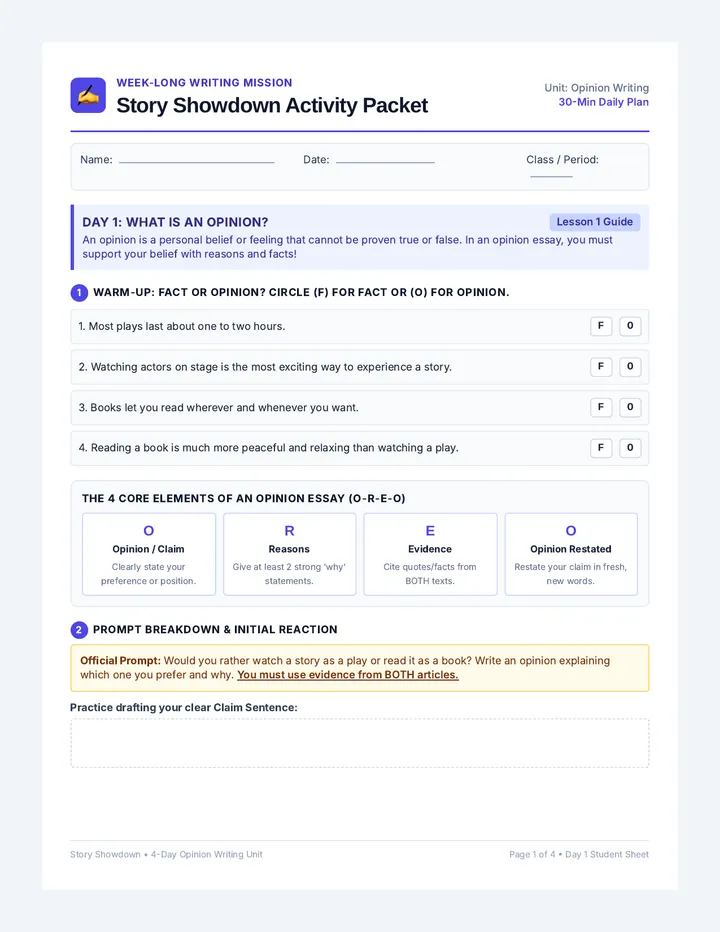
Story Showdown Activity Packet

Story Showdown

A four-day opinion writing unit guiding students through forming claims, analyzing paired texts, and crafting evidence-based essays comparing theatrical plays and books.

SM

Samantha McBath

6
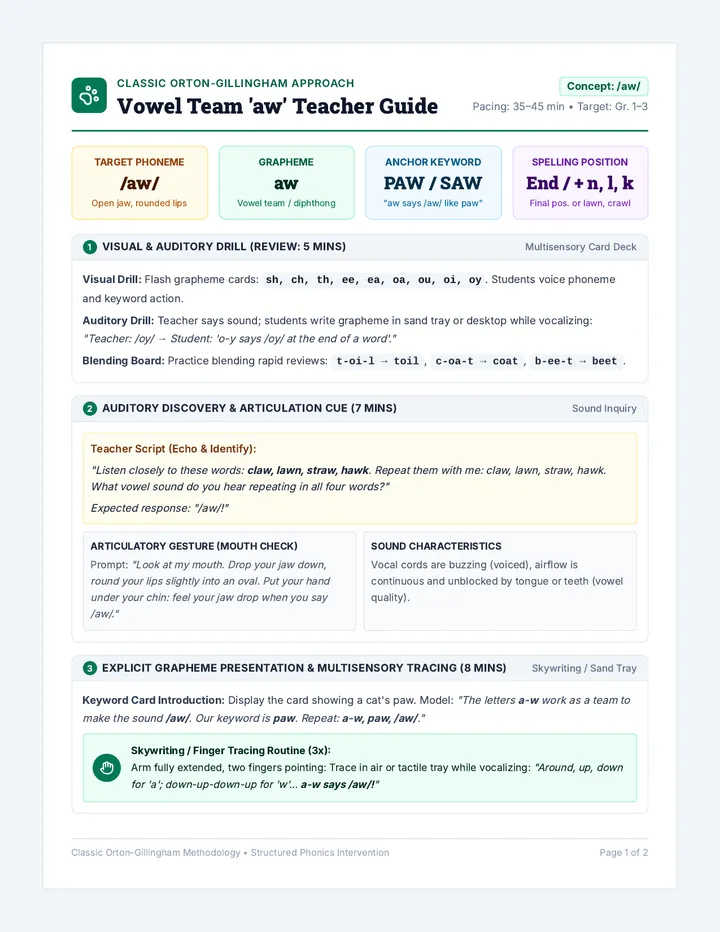
Orton Gillingham Teacher Guide

Classic Orton Gillingham Aw

A classic 7-step multisensory Orton-Gillingham phonics lesson introducing the vowel team 'aw'. Features articulatory exploration, skywriting, Elkonin sound boxes, tapping dots, decodable text reading, and positional rule sorts.

KW

Kellie Walsh

4
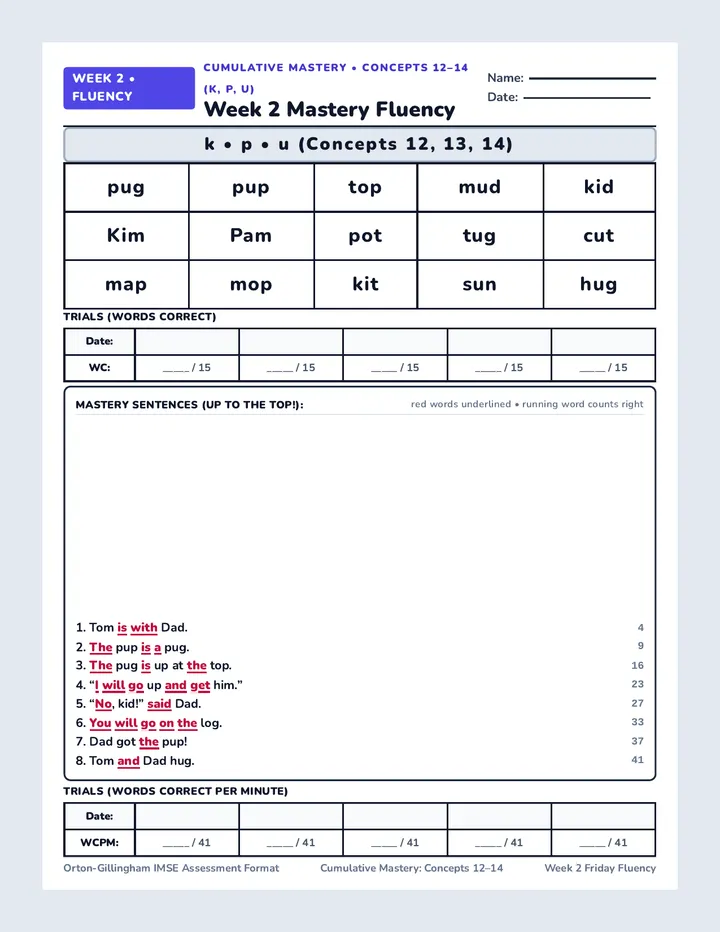
Week 2 Friday Fluency Sheet

Week 2 Friday Fluency Sheet

Week 2 Friday Orton-Gillingham cumulative mastery fluency assessment sheet featuring a 15-word decodable matrix, 8 'Up to the Top!' sentences with running word counts, and multi-trial tracking tables.

S

Sara

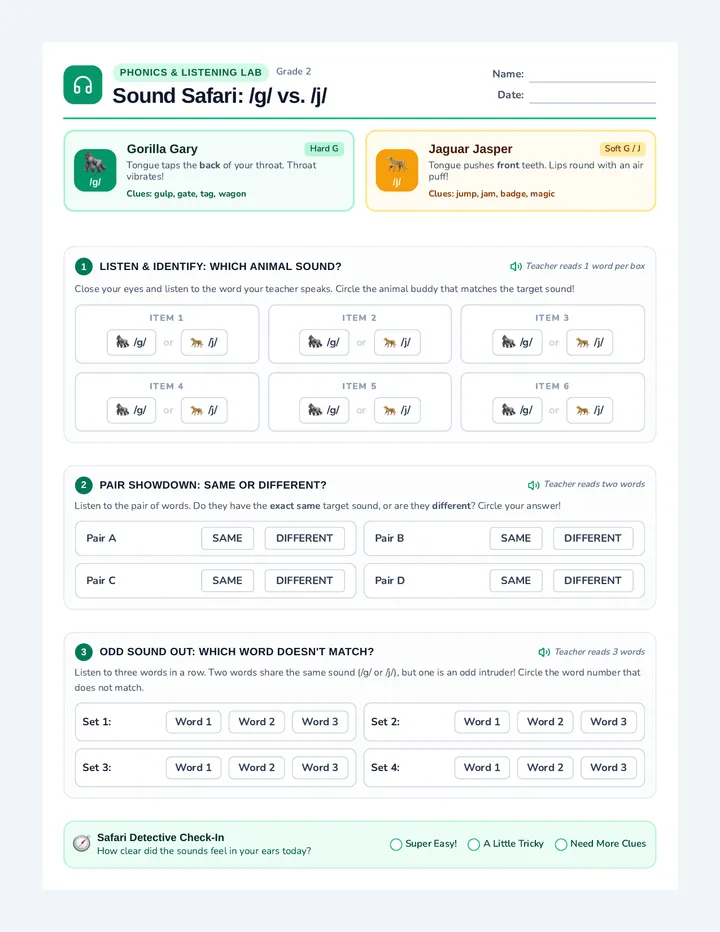
Sound Safari Activity

Sound Detectives Lab

A comprehensive second-grade phonemic and auditory discrimination curriculum targeting easily confused consonant pairs and digraphs through diagnostic listening sheets, teacher scripts, and tactile sorting manipulatives.

C

cnduffy

4
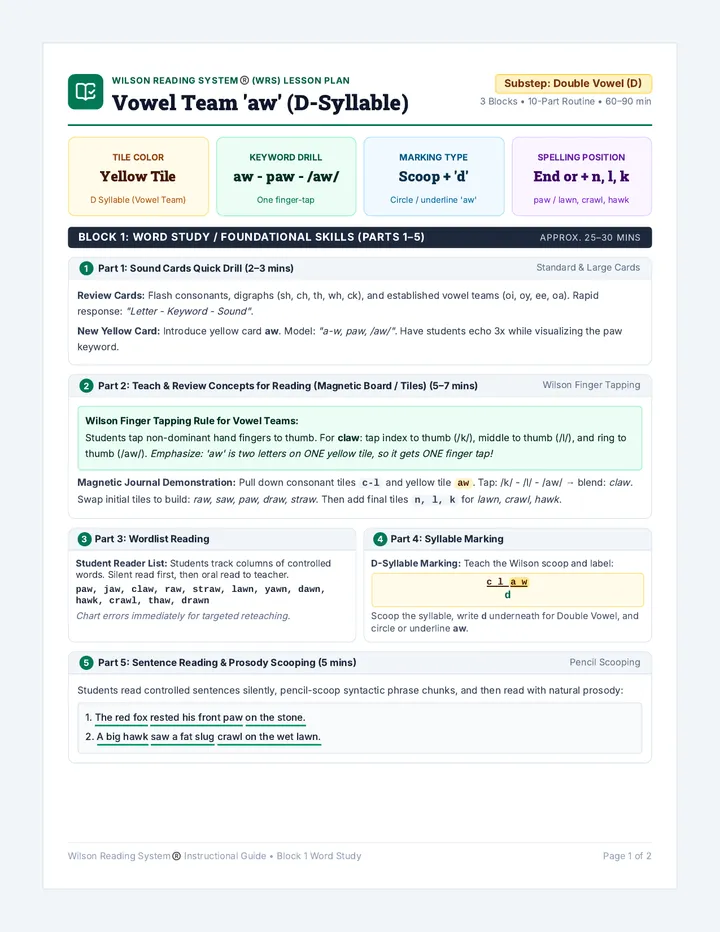
Paw Print Teacher Guide

Wilson Claw and Paw

A 10-part Wilson Reading System (WRS) literacy lesson targeting the vowel team 'aw' in Double Vowel (D) syllables. Features 3-block structure, finger tapping routines, magnetic tile tracking, dictation book grids, D-syllable marking, and pencil scooping.

KW

Kellie Walsh

6
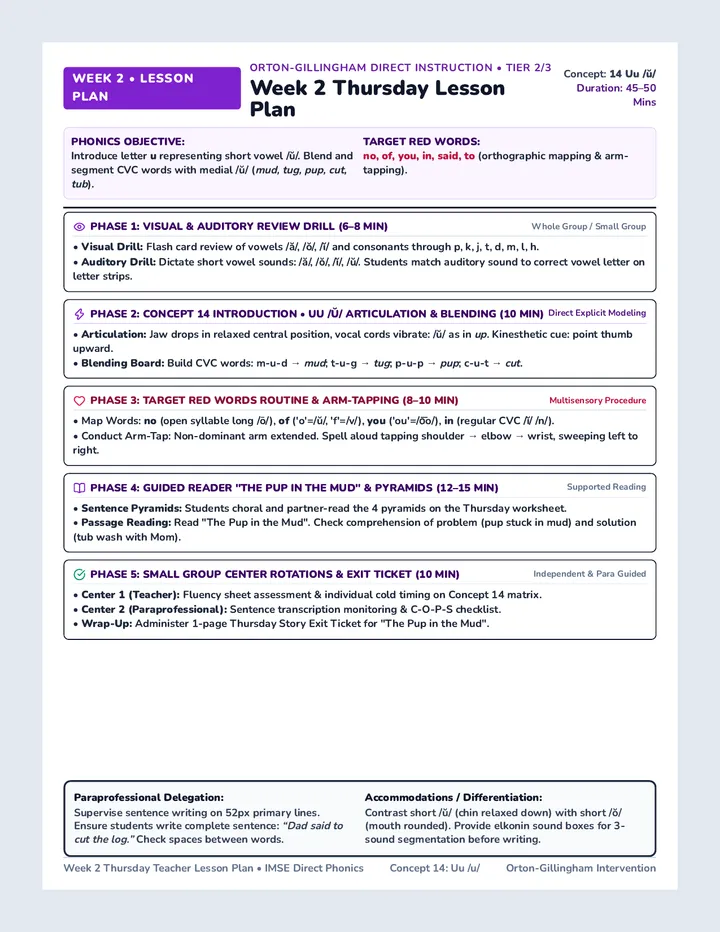
Week 2 Thursday Lesson Plan

Week 2 Thursday Lesson Plan

A 1-page Week 2 Thursday teacher lesson plan detailing the explicit 5-phase Orton-Gillingham instructional protocol for Concept 14 Uu, target red words routine, guided reading, and center rotations.

S

Sara

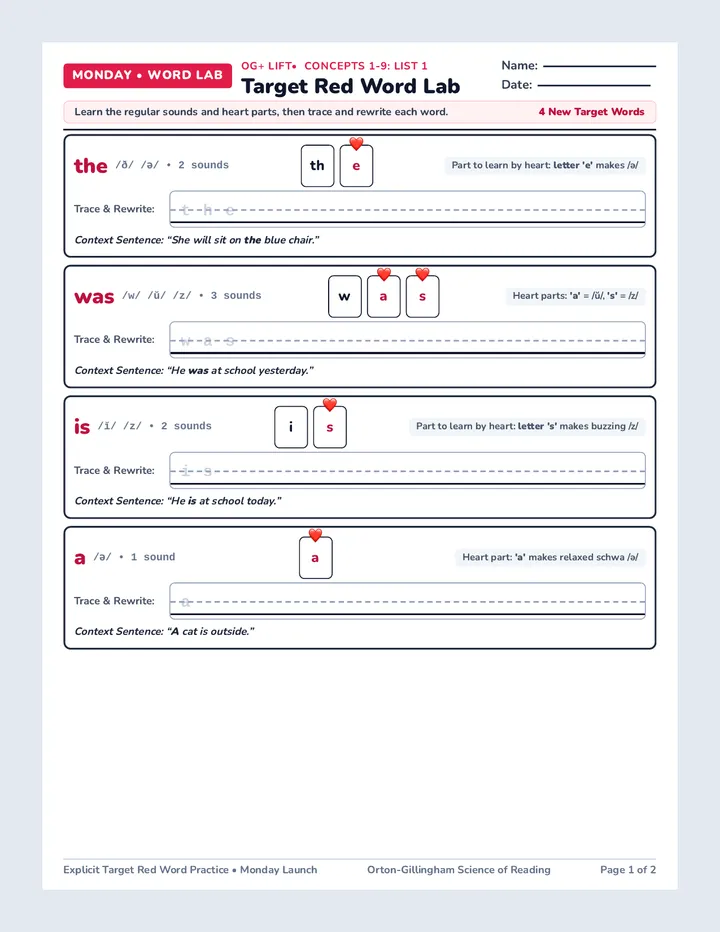
Monday Sentences Worksheet

Red Words Weekly Routine Week 1

A five-day Orton-Gillingham instructional sequence targeting 11 high-frequency red and decodable words through consistent daily routines, progressive sentence pyramids, and decodable stories.

S

Sara

43
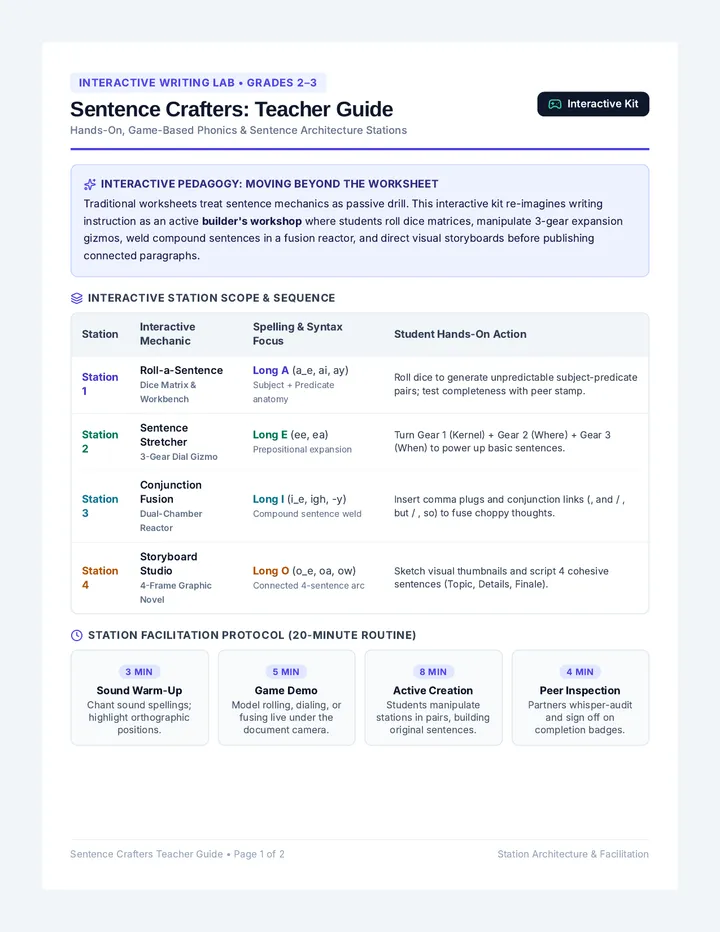
Sentence Crafters Teacher Guide

Sentence Crafters

A scaffolded writing curriculum connecting long vowel phonics mastery (a, e, i, o) directly to sentence architecture. Students progress through daily routines from identifying subjects and predicates to crafting expanded compound sentences and multi-sentence paragraphs.

KS

Kaila Strubhart

3
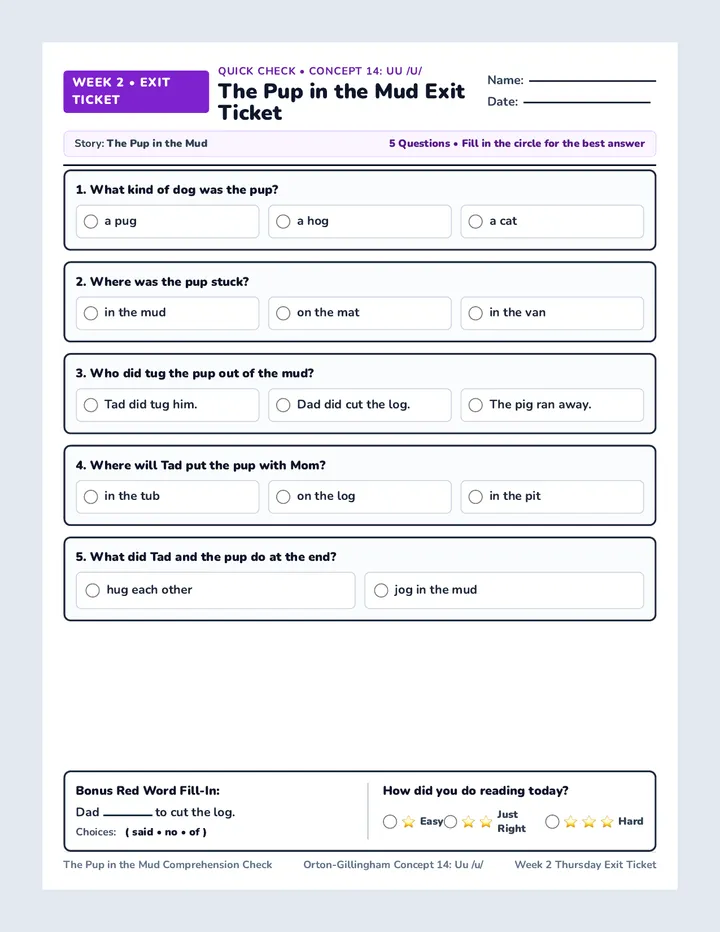
Week 2 Thursday Story Exit Ticket

Week 2 Thursday Story Exit Ticket

A 1-page Week 2 Thursday multiple-choice exit ticket assessing reading comprehension and target red words for the decodable text 'The Pup in the Mud'.

S

Sara