Students learn to distinguish between there, their, and they're using visual mnemonics and context-clue simulations.
A math place value unit focusing on identifying digit values through the thousands place with interactive detective-themed worksheets and puzzles.
A structured, multi-part phonics intervention lesson focusing on compound words and syllable division rules (VCCV, VCV) for decoding 2-syllable and 3-syllable words.
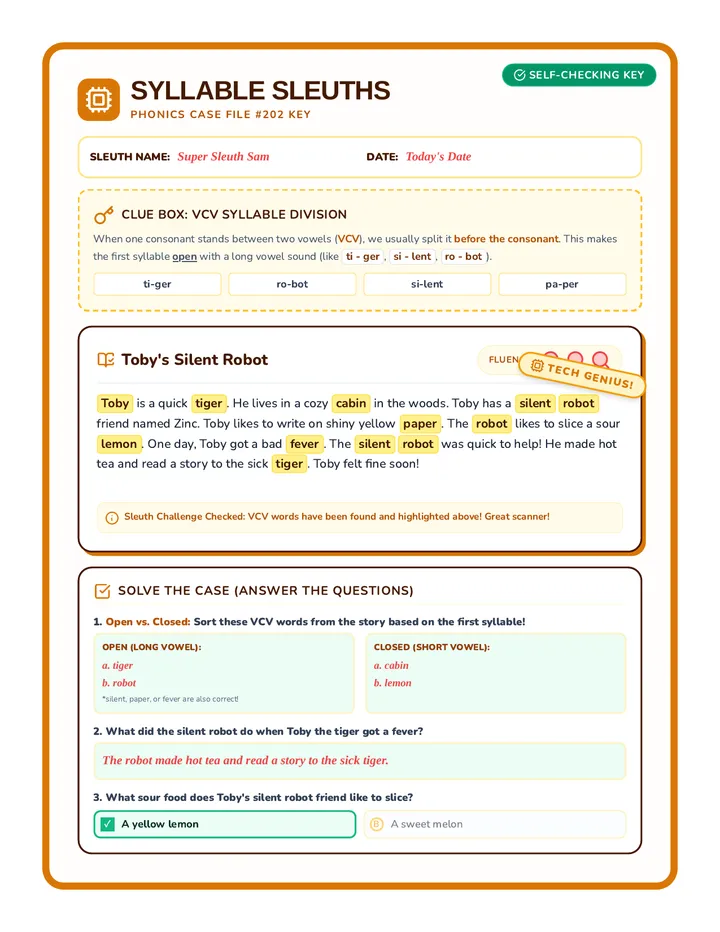
A self-checking child-friendly answer key for the Tiger Robot Worksheet. It displays correct answers in red handwriting style with detective-themed grade stamp.
A structured reading intervention sequence at Douglas School combining targeted phonic lessons with the multisensory Nessy online literacy system.
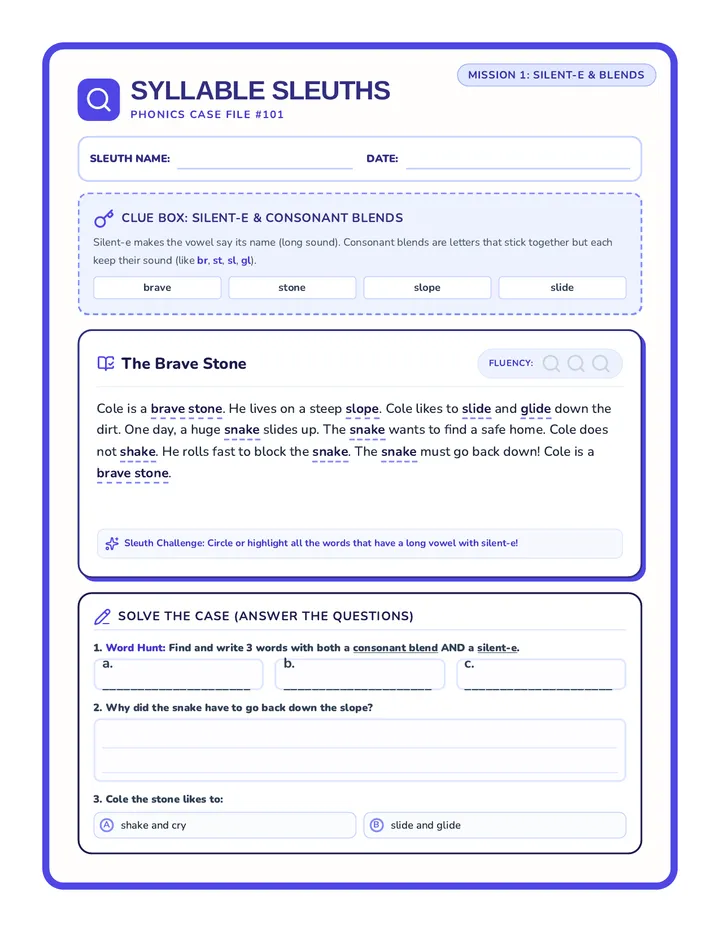
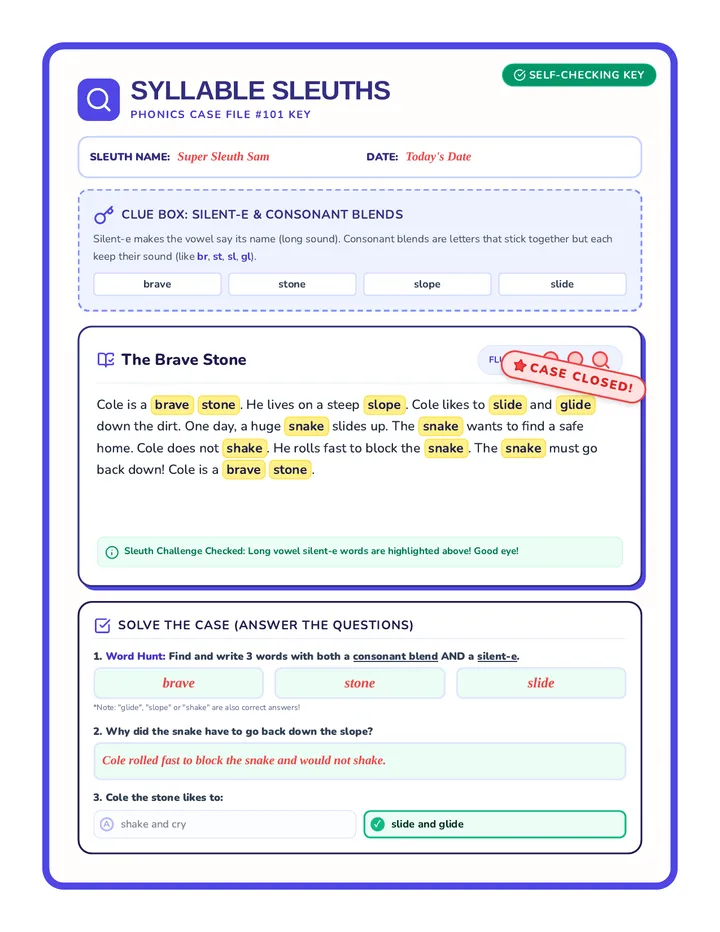
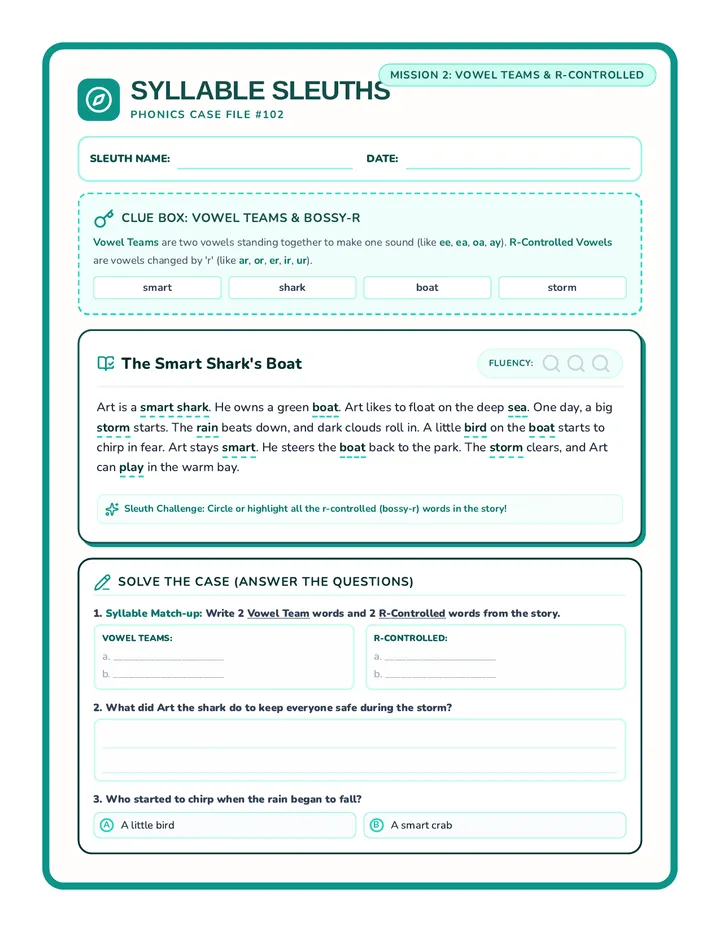
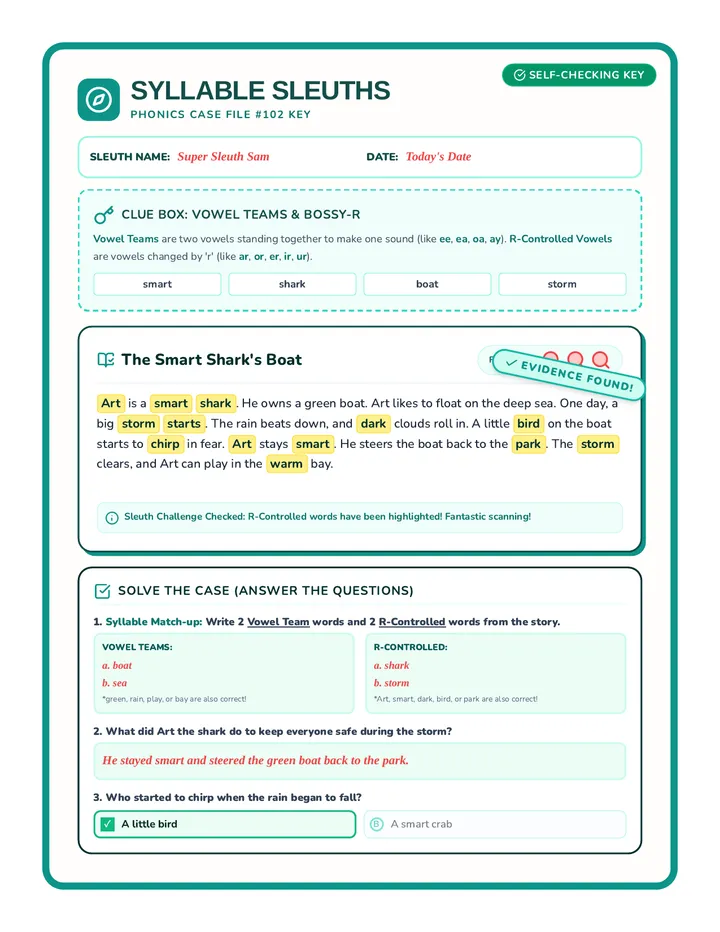
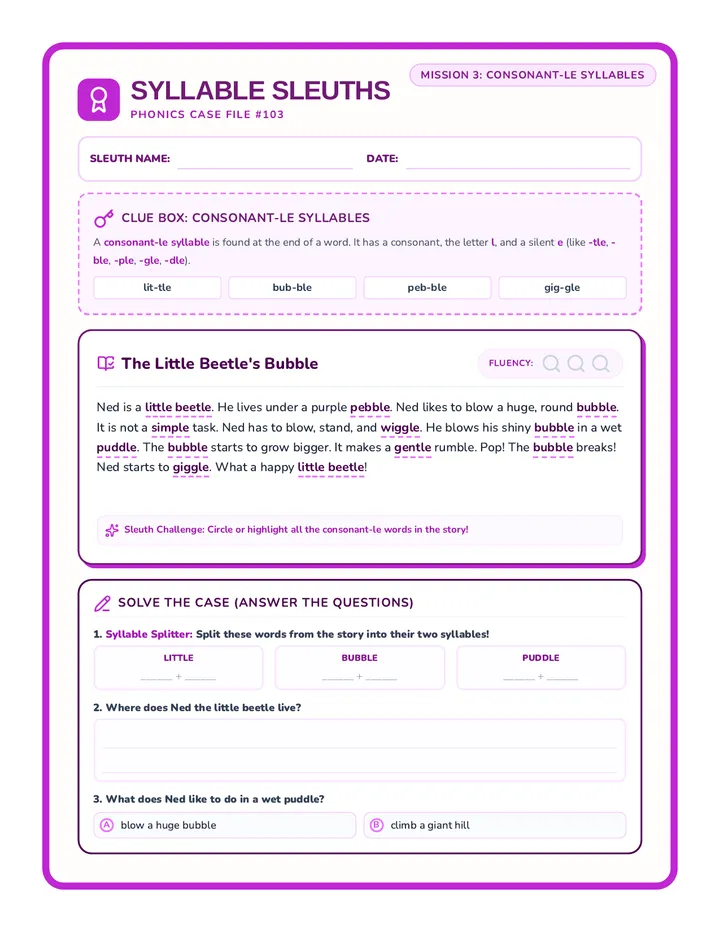
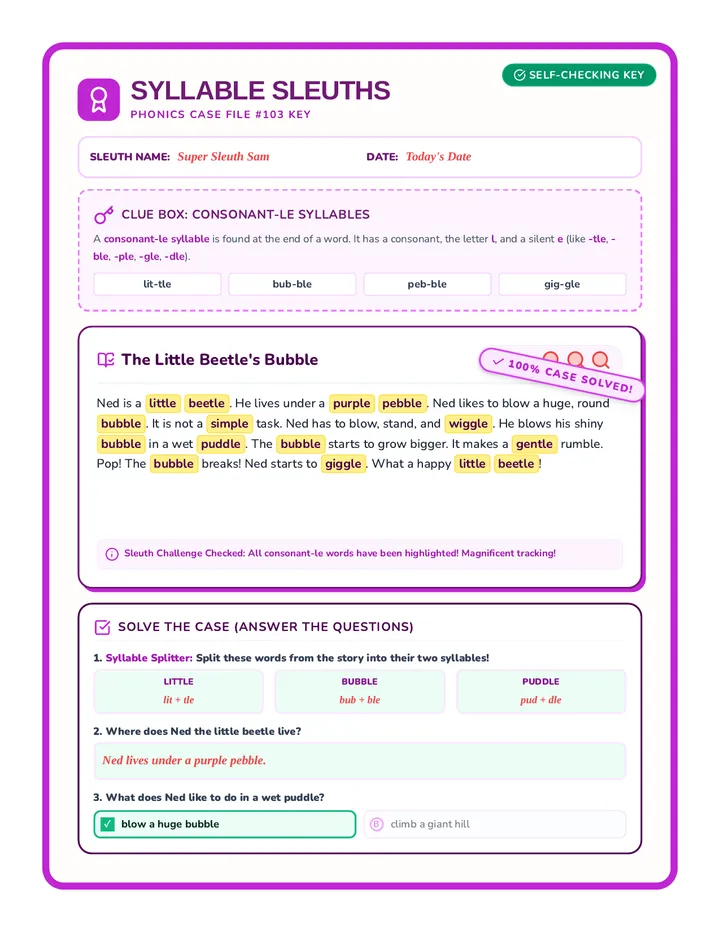
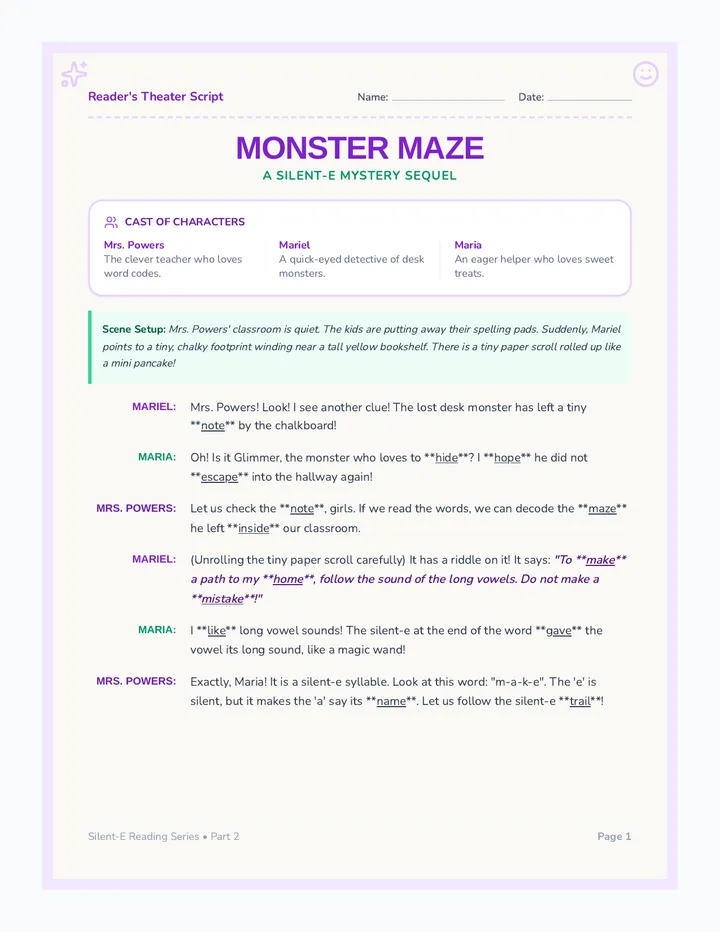
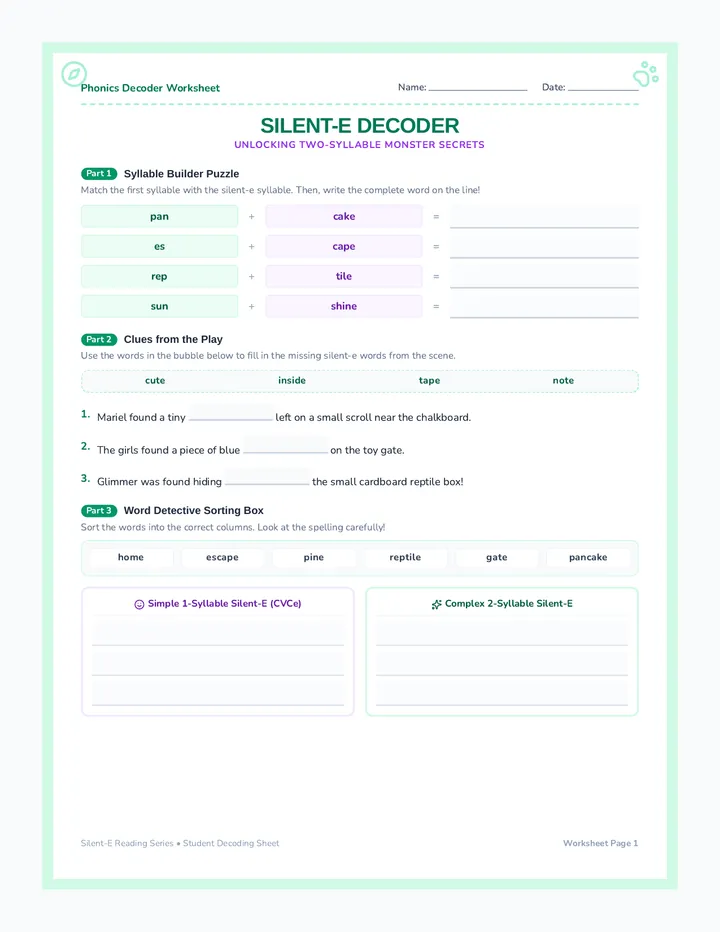
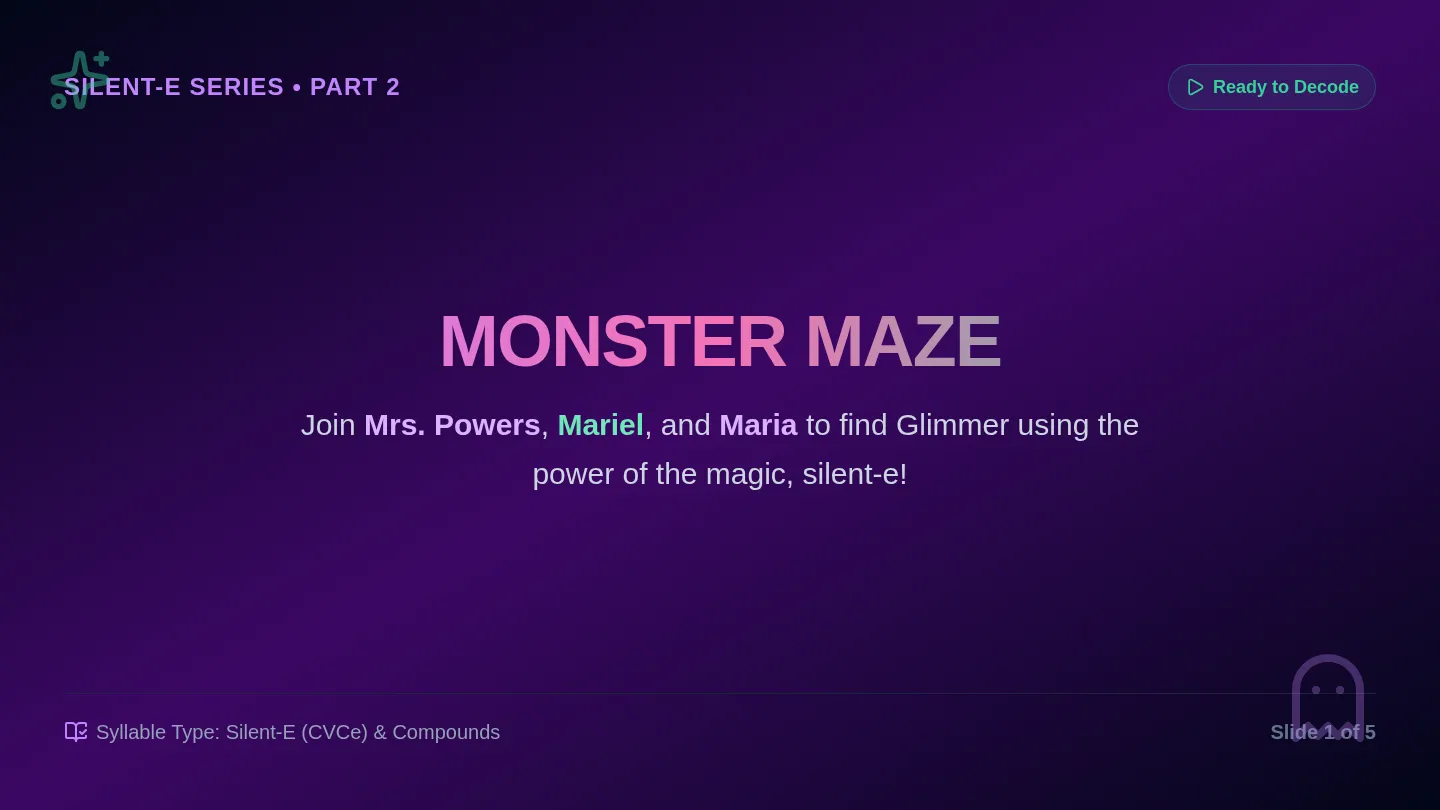
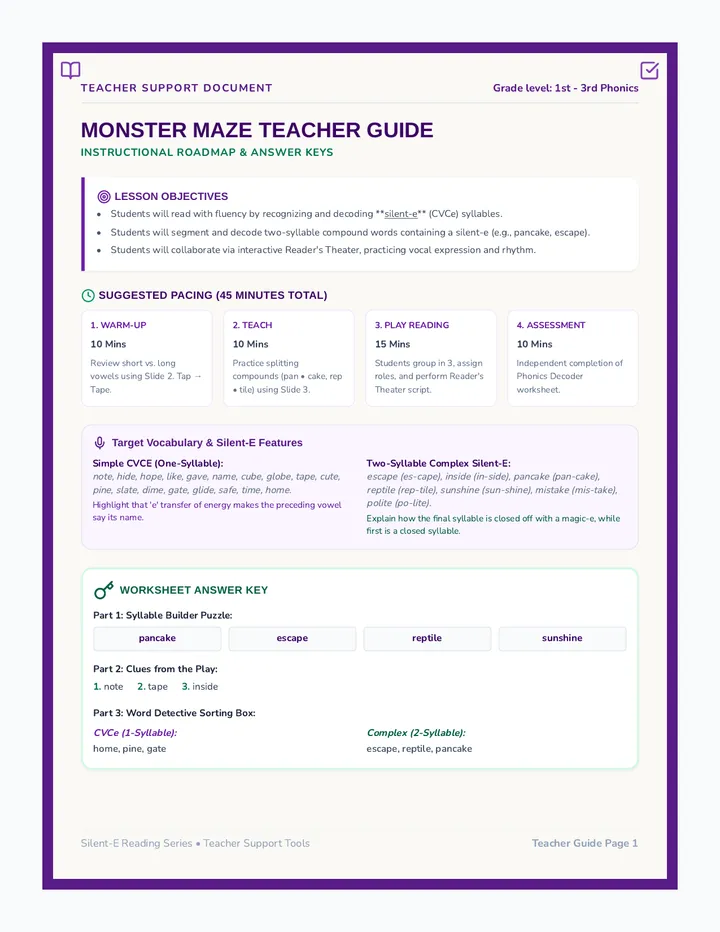
A highly structured, 3-part phonics intervention lesson focusing on advanced syllable types, consonant blends, silent-e, vowel teams, r-controlled vowels, and consonant-le syllables through decodable texts and self-checking materials.
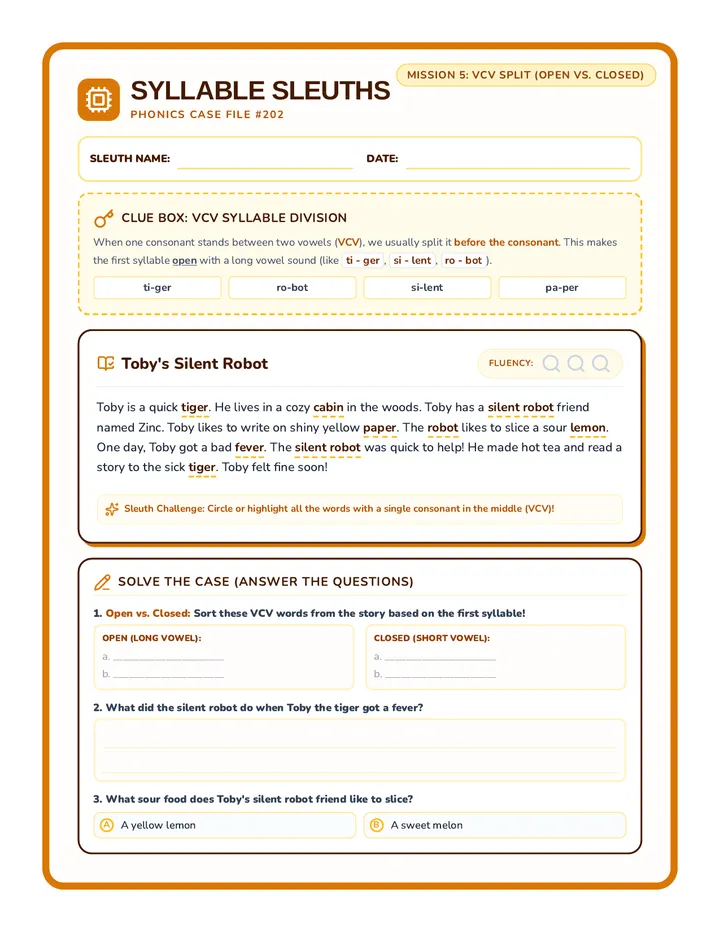
A student-facing decodable passage worksheet focusing on VCV syllable division (open vs. closed). Includes a decodable text 'Toby's Silent Robot', a fluency tracker, a VCV syllable sorting activity, and text-dependent comprehension questions.
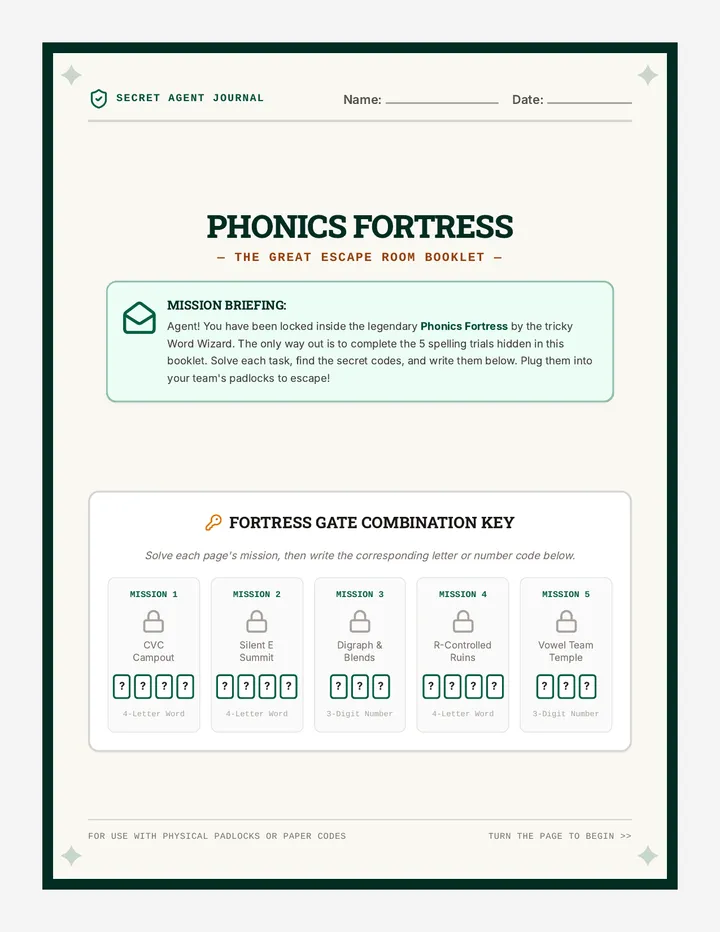
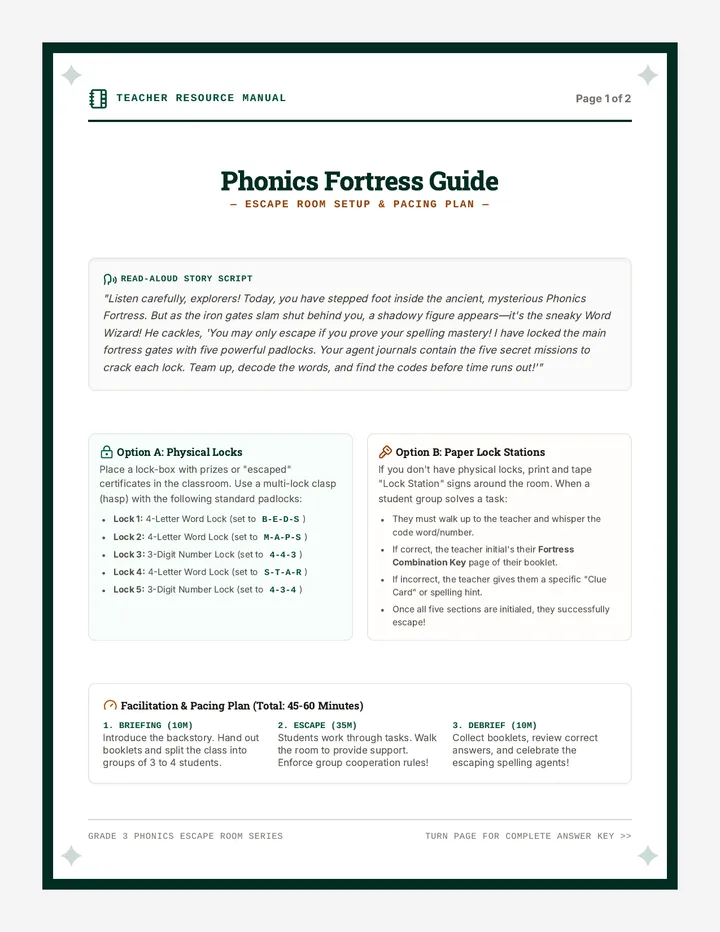
A comprehensive 5-day phonics breakout sequence where students complete daily independent spelling missions to crack codes. Covering CVC, Silent E, Digraphs/Blends, R-controlled vowels, and Vowel Teams, each day represents a new adventure challenge.
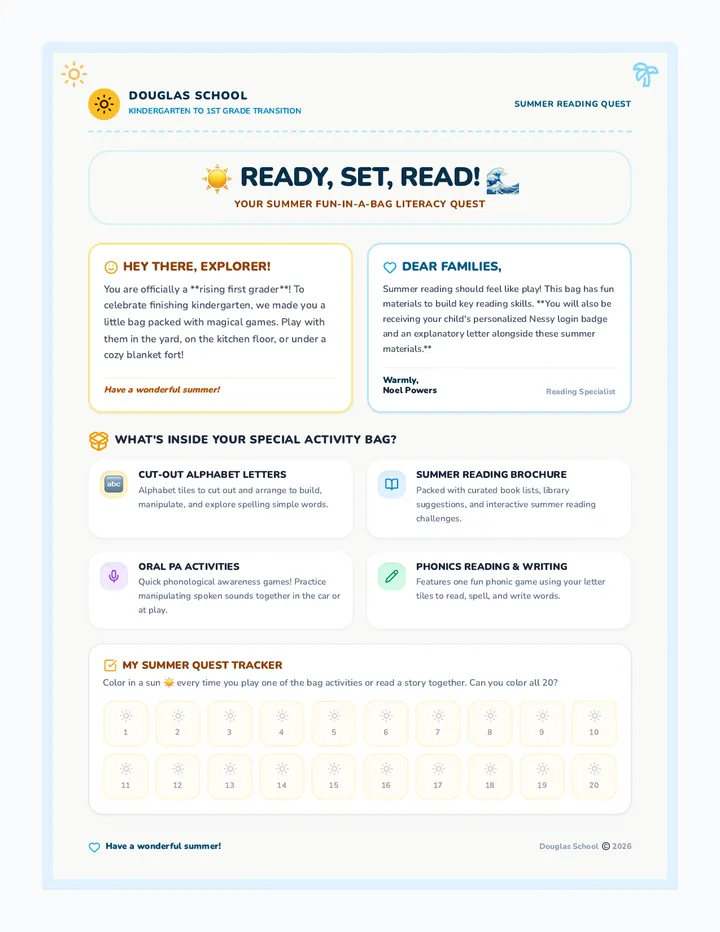
Summer literacy communication and family engagement resources to help rising kindergarteners maintain and build reading skills over the summer break through play-based activities.
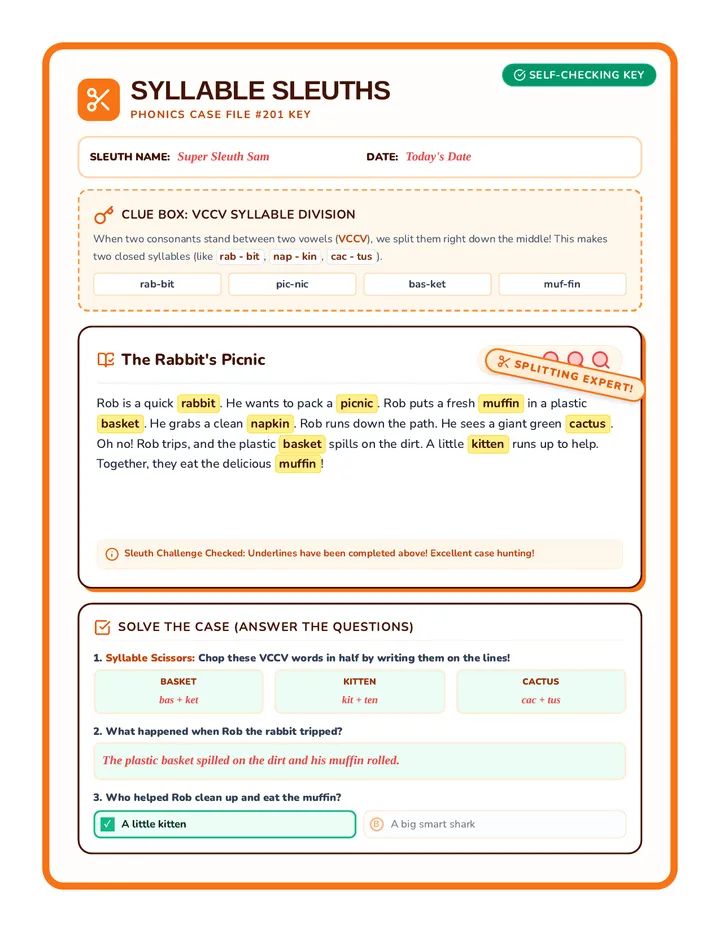
A self-checking child-friendly answer key for the Rabbit Picnic Worksheet. It displays correct answers in red handwriting style with detective-themed grade stamp.
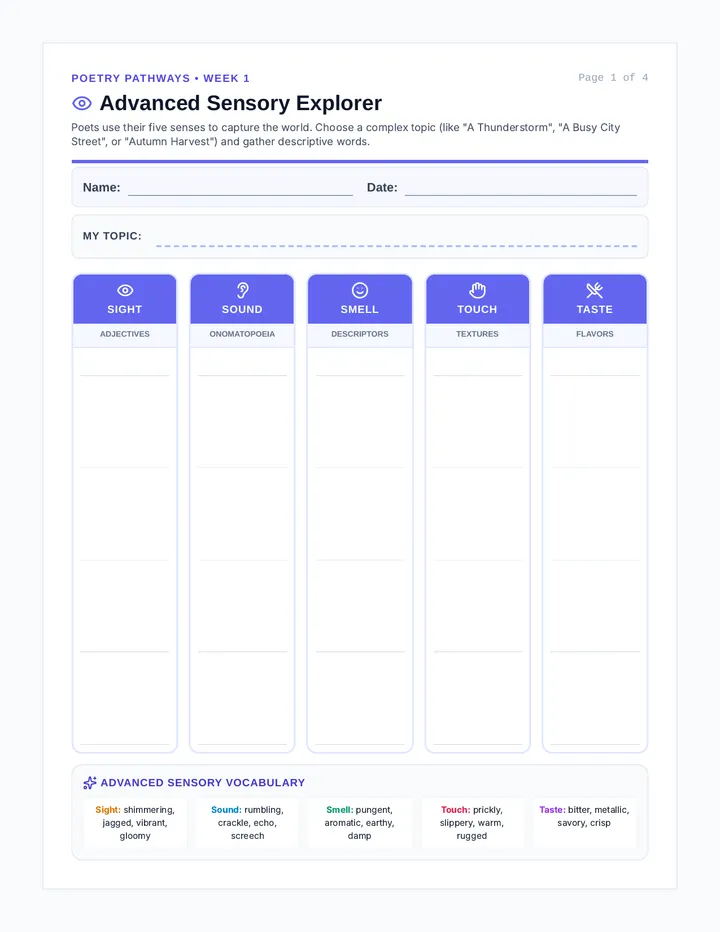
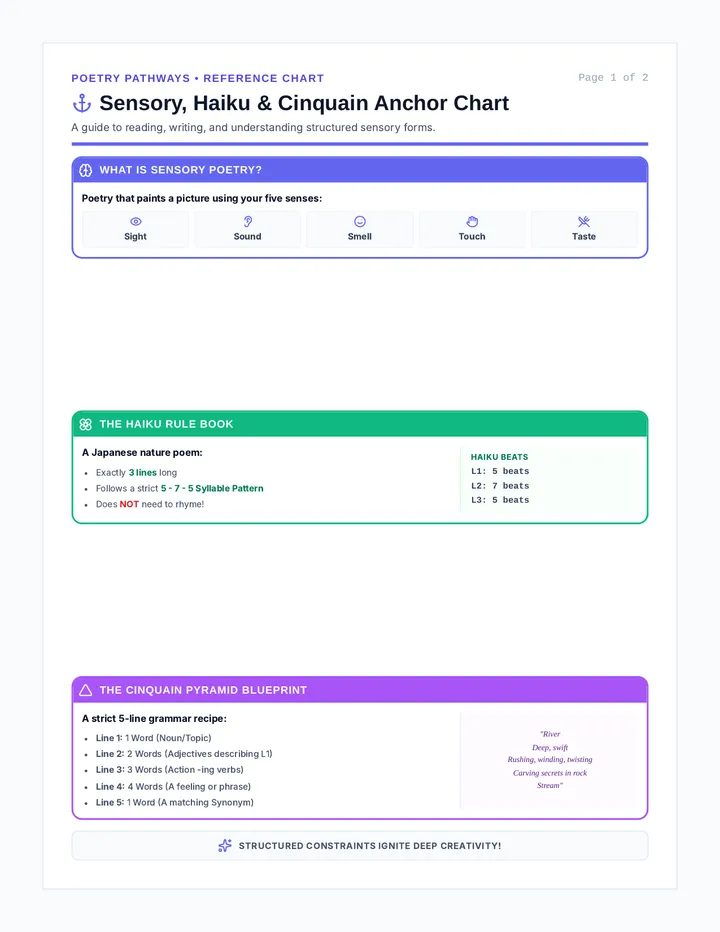
A comprehensive 4-week poetry curriculum designed for students requiring high structure and visual supports. It covers diverse poetry types (Haiku, Color, Acrostic, Couplets, Concrete, Free Verse, and Metaphor/Simile) with scaffolds like word banks, sentence frames, and graphic organizers.
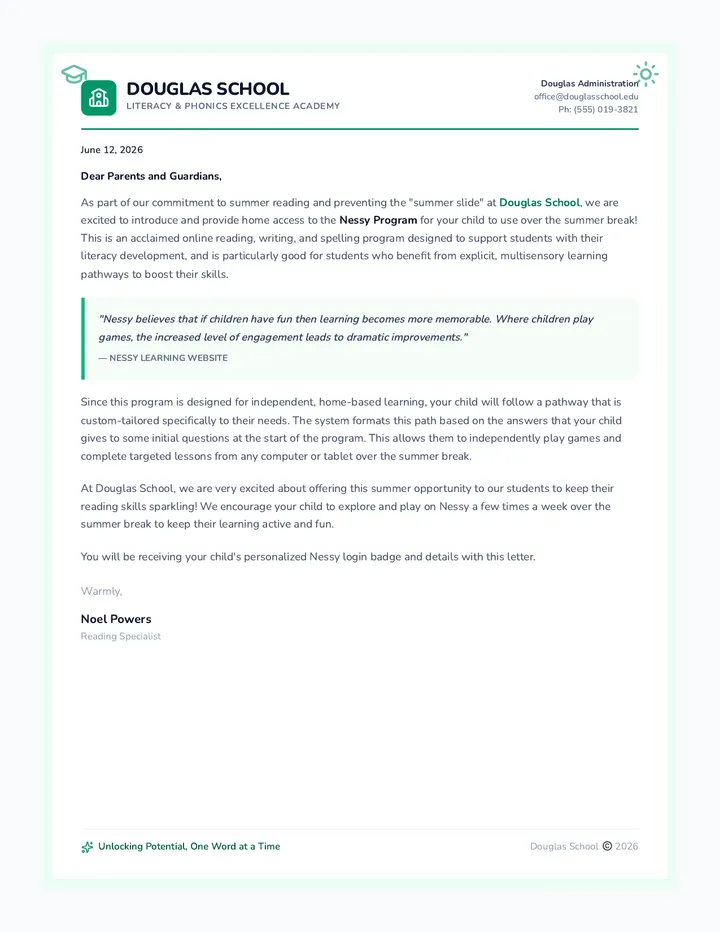
Materials and communication documents for launching and onboarding families to the Nessy Literacy Program at Douglas School.
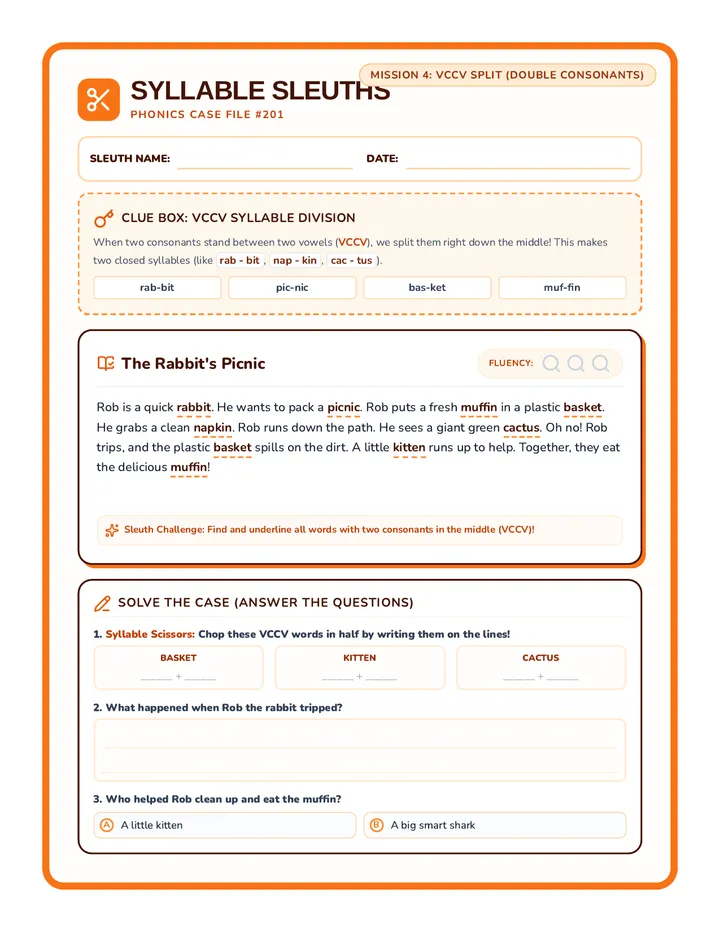
A student-facing decodable passage worksheet focusing on VCCV (double consonant) syllable division. Includes a decodable text 'The Rabbit's Picnic', a fluency tracker, a VCCV syllable division exercise, and comprehension questions.