Students differentiate between topic and theme, practicing the identification of universal messages within written essays through abstract thinking and literary analysis.
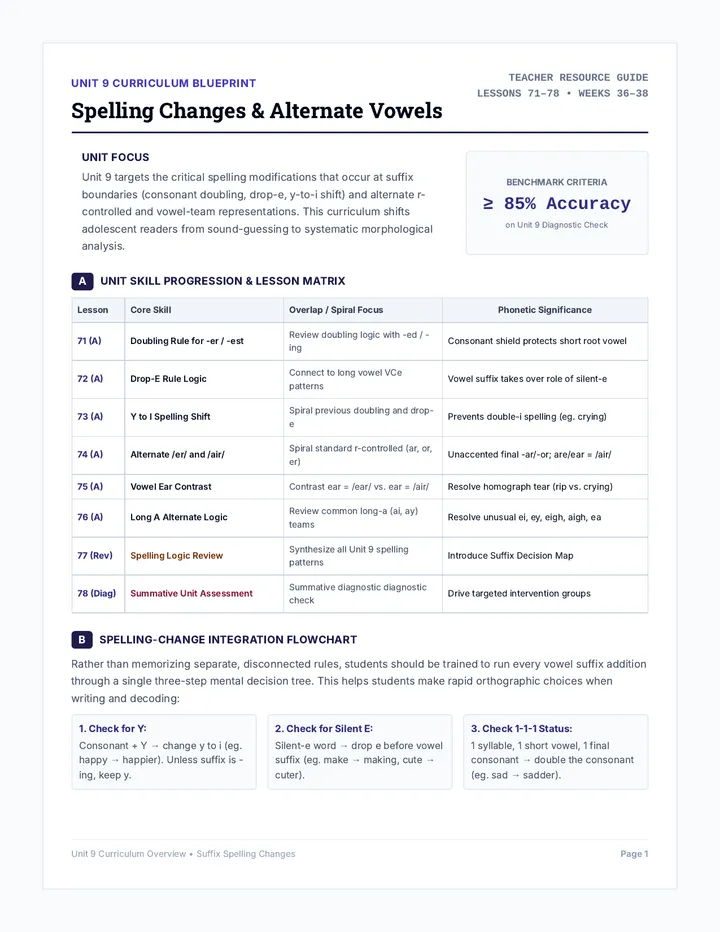
A reading intervention unit targeting the critical spelling changes that occur at suffix boundaries, designed for older struggling readers. The sequence covers final consonant doubling and silent-e dropping logic.
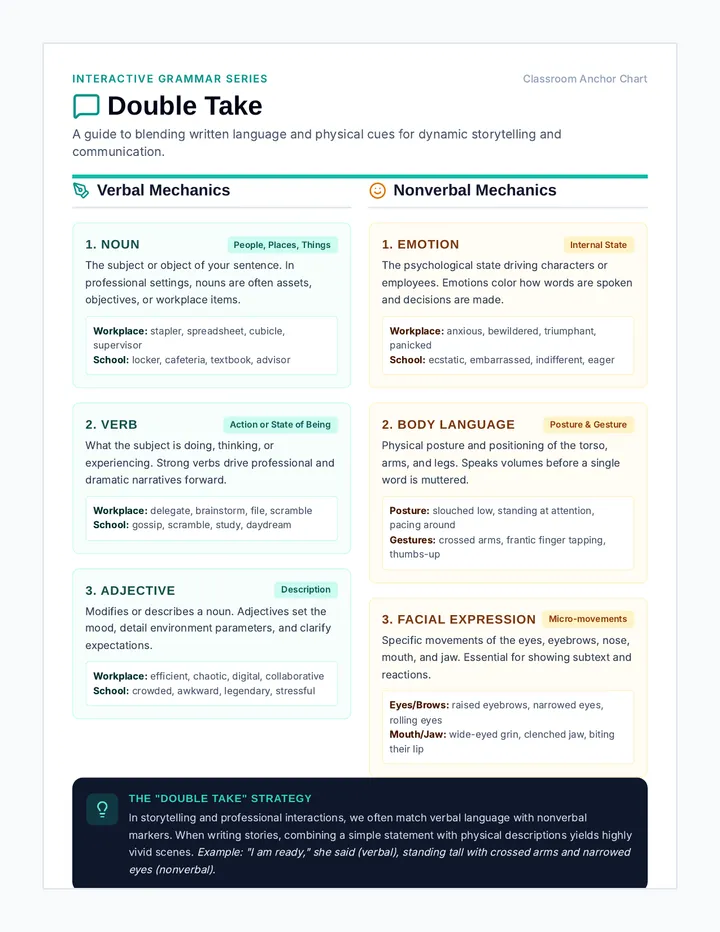
An engaging grammar and nonverbal communication lesson where high school students explore parts of speech, facial expressions, and body language through creative storytelling and mad libs.
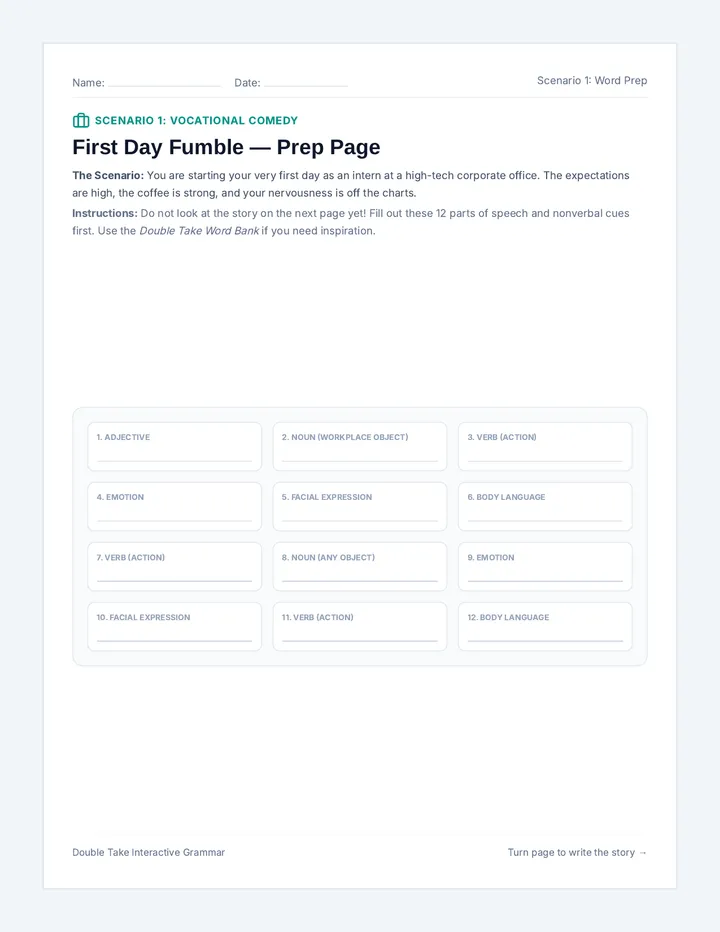
A comprehensive, 10-page Mad Libs packet featuring five high-interest scenarios. Each scenario is a 2-page set including a dedicated Word Prep planning page with 12 vocabulary slots, and a full-page, 500-word narrative with wide handwriting blanks for vocational comedies and high school drama.
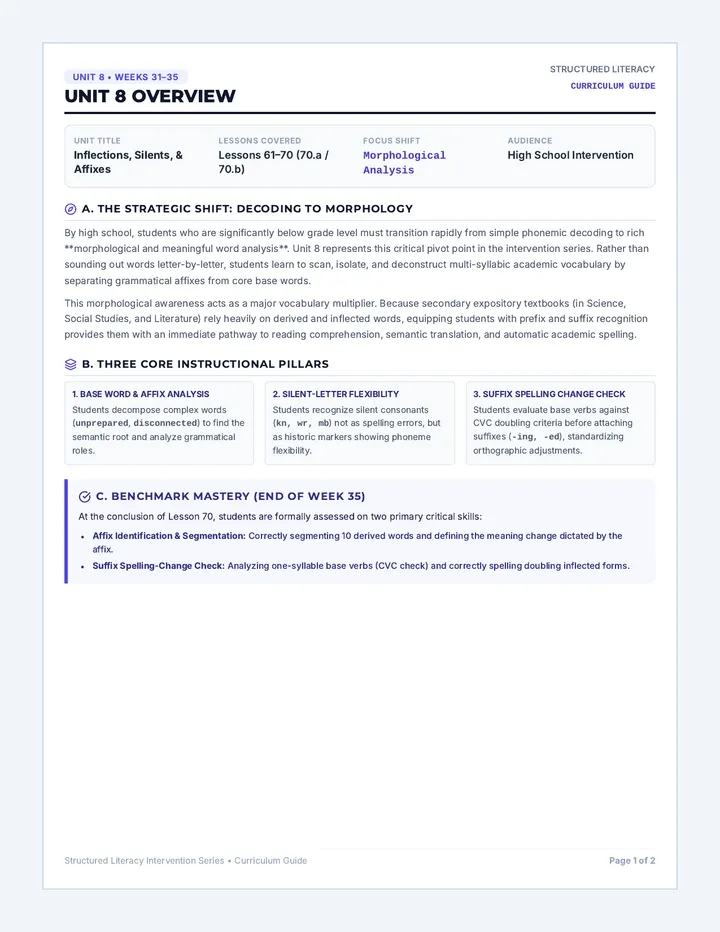
A structured high school reading intervention sequence focusing on silent consonants, orthographic markers, pluralization rules, and academic spelling structures.
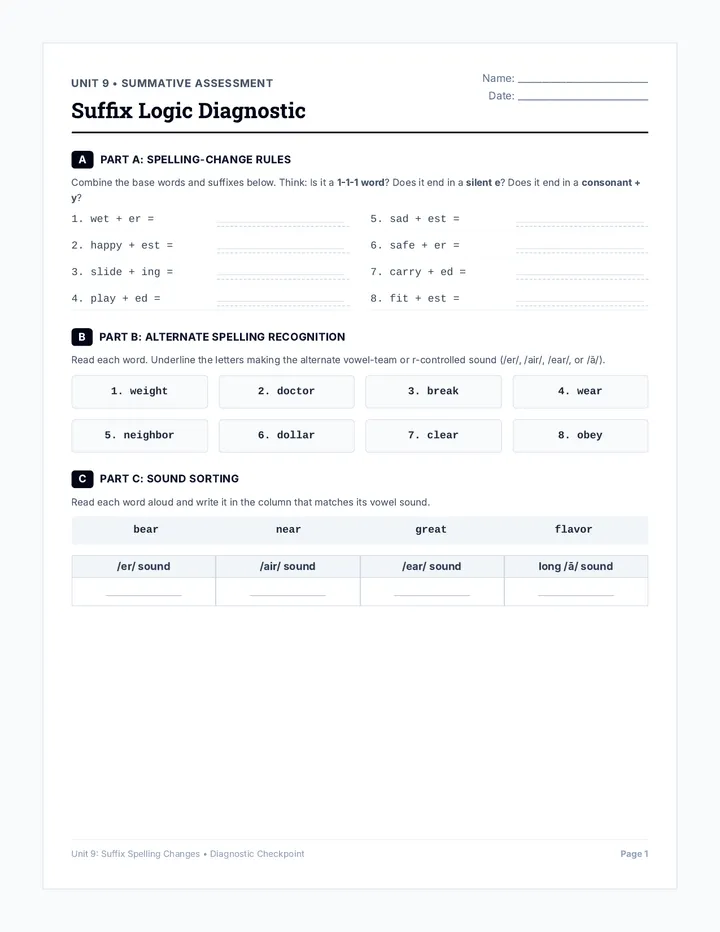
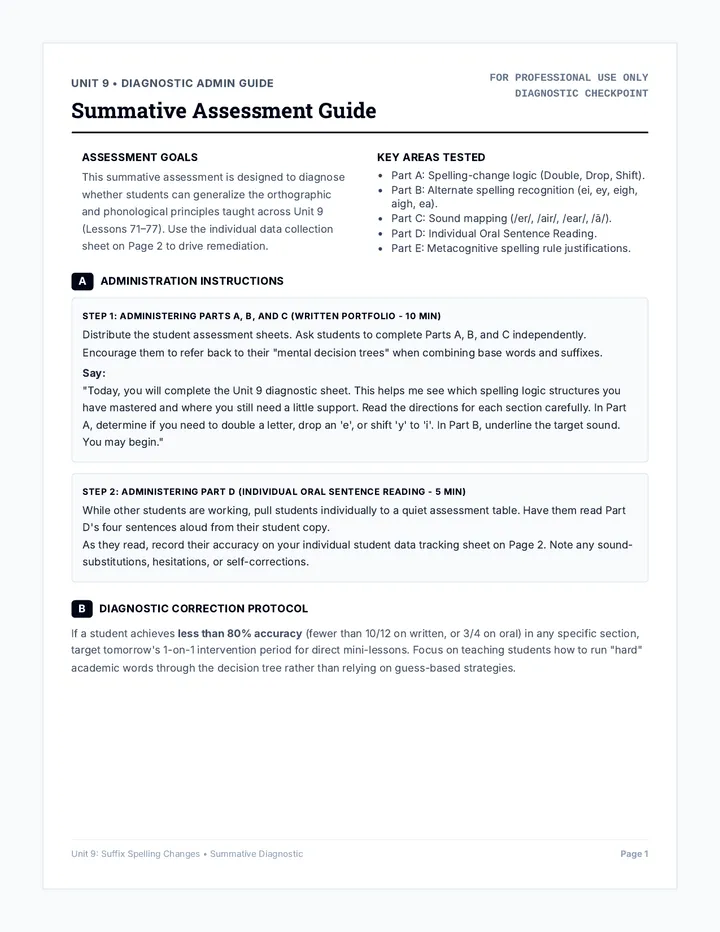
A comprehensive Unit 9 spelling and decoding diagnostic assessment for high school readers. It includes student test sections for spelling-change rules, alternate-spelling recognition, sound-sorting, and sentence reading.
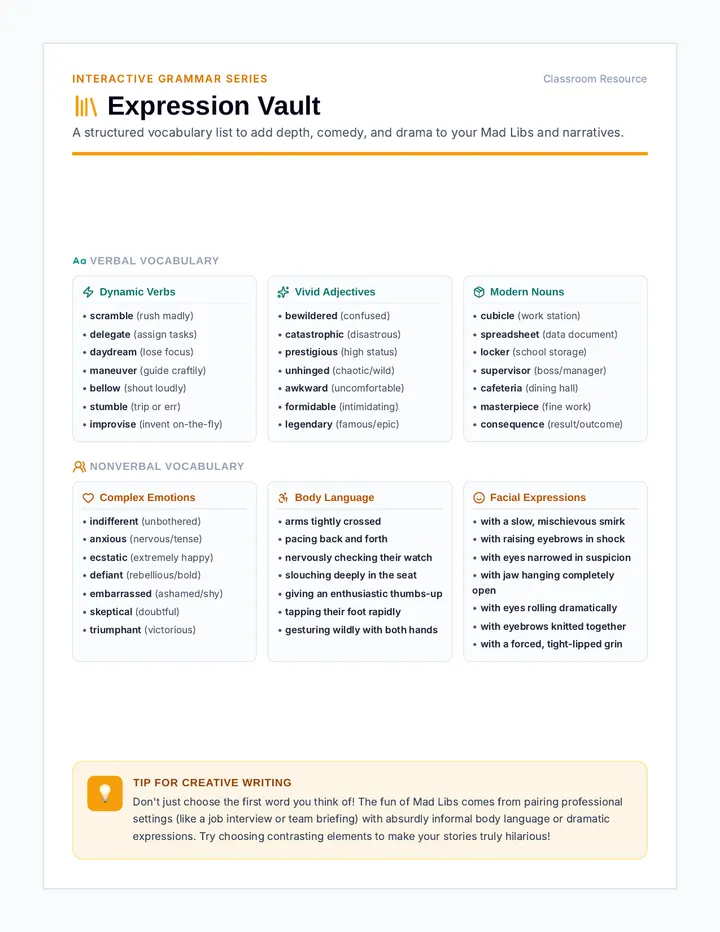
A comprehensive word bank featuring curated, high-interest nouns, verbs, adjectives, emotions, body language, and facial expressions with descriptive icons for high school level writing.
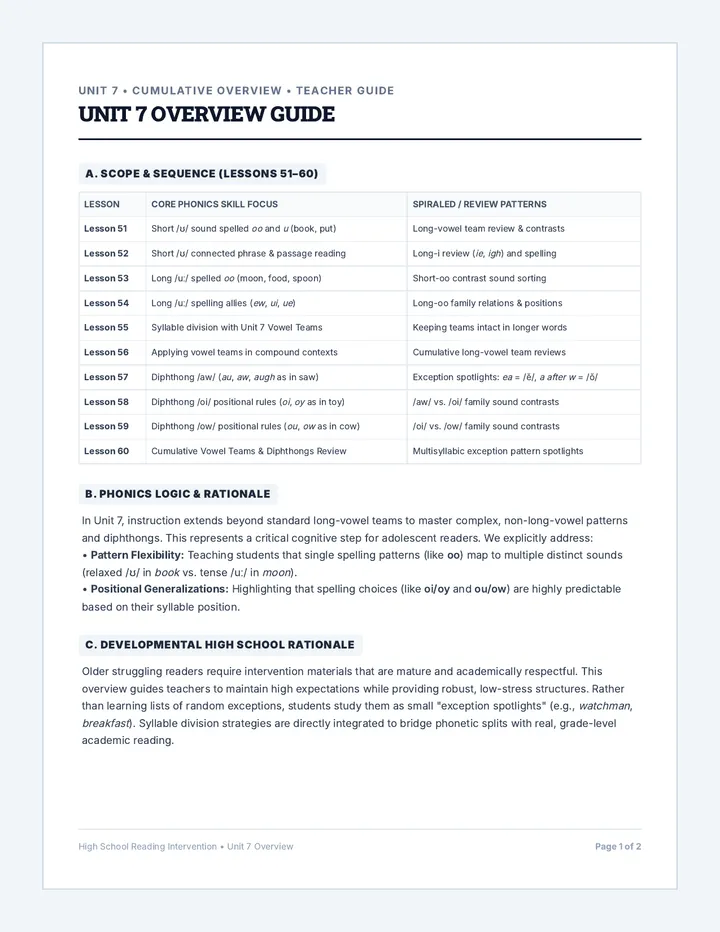
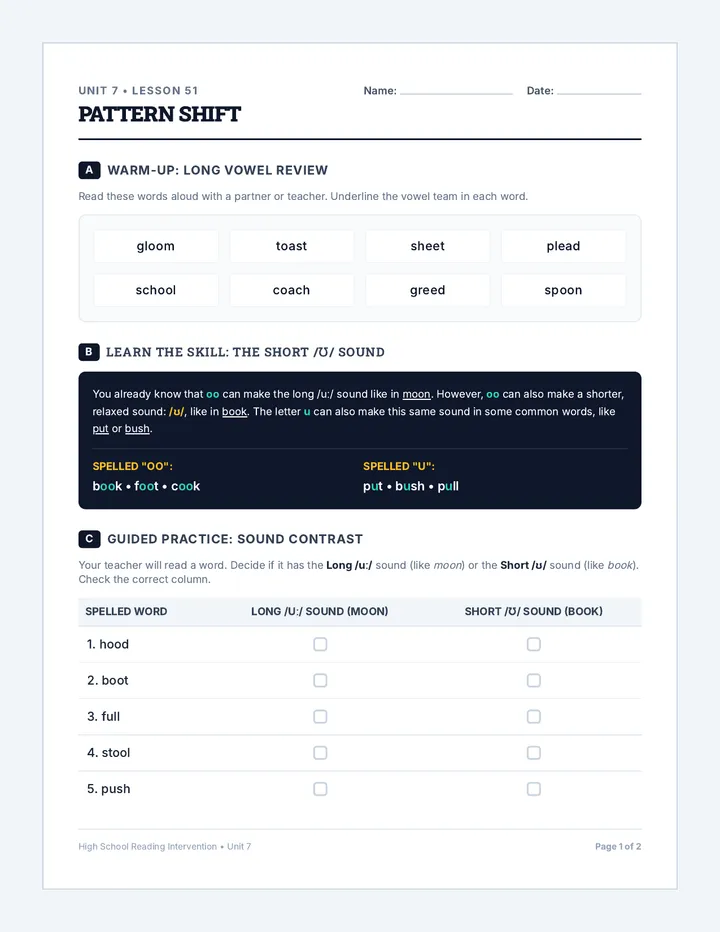
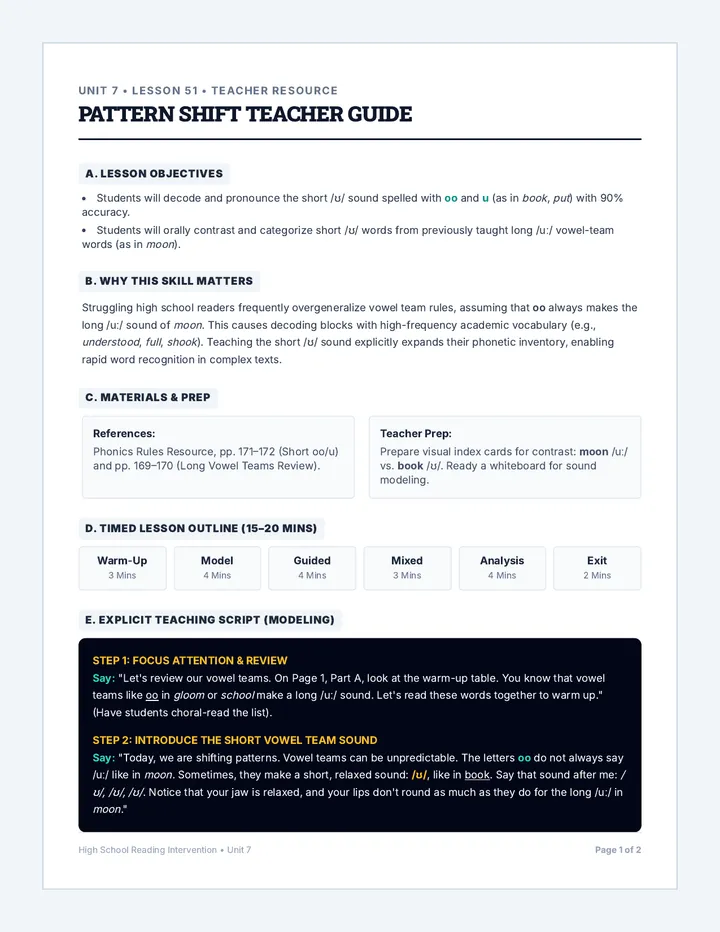
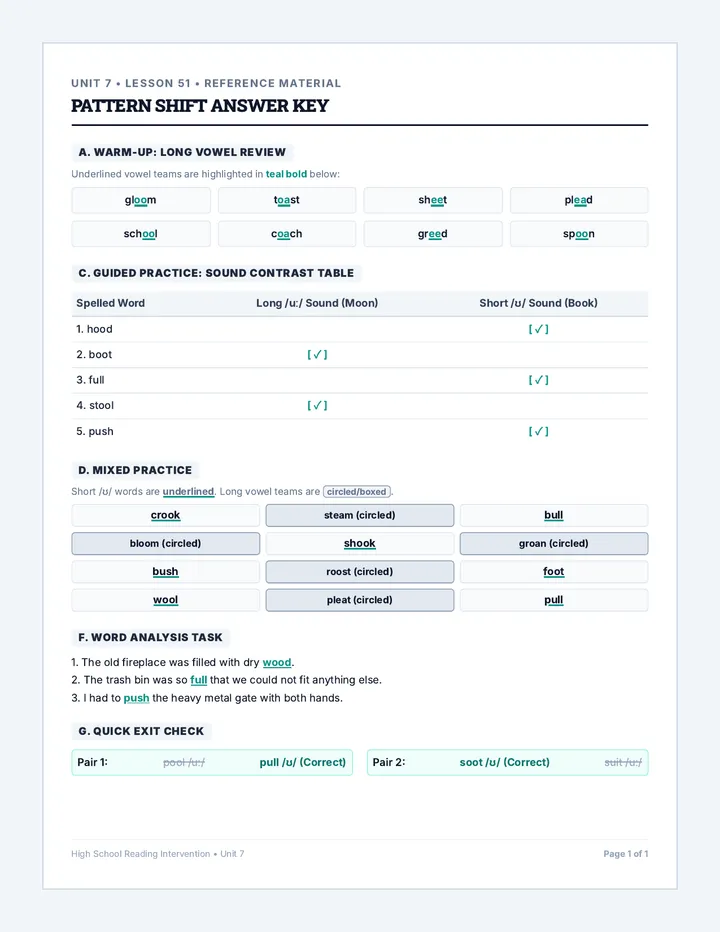
A phonics intervention unit for high school readers focusing on short oo patterns, sound contrasts, and spelling application.
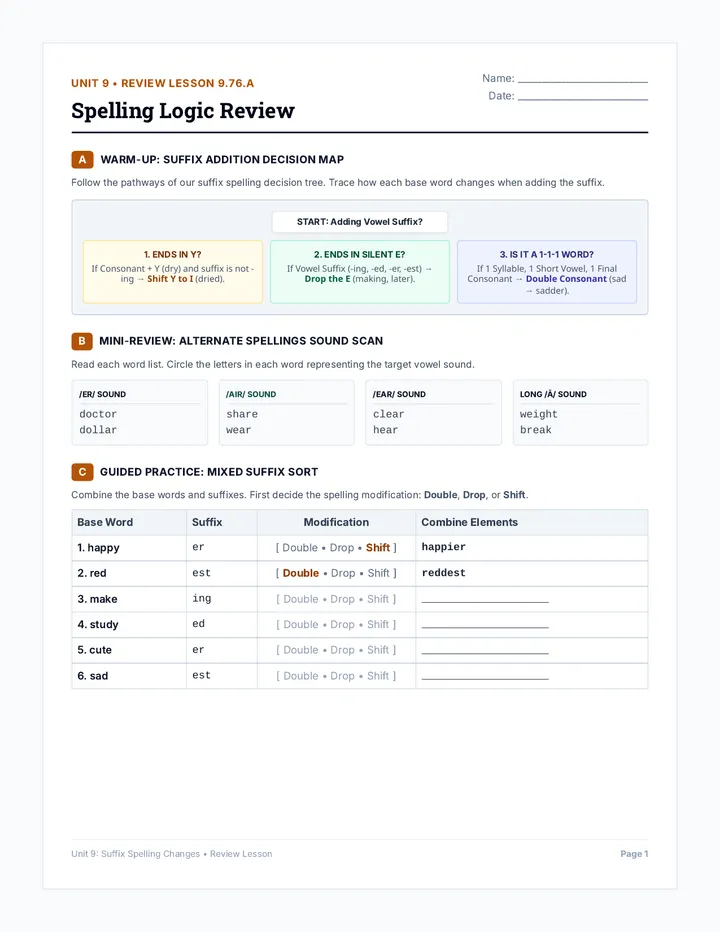
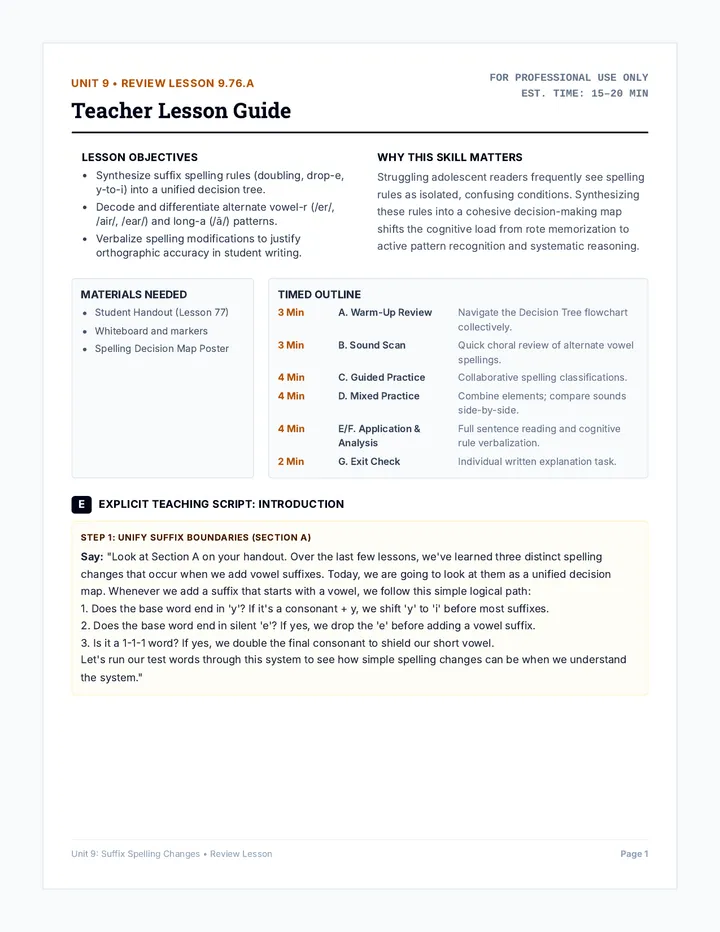
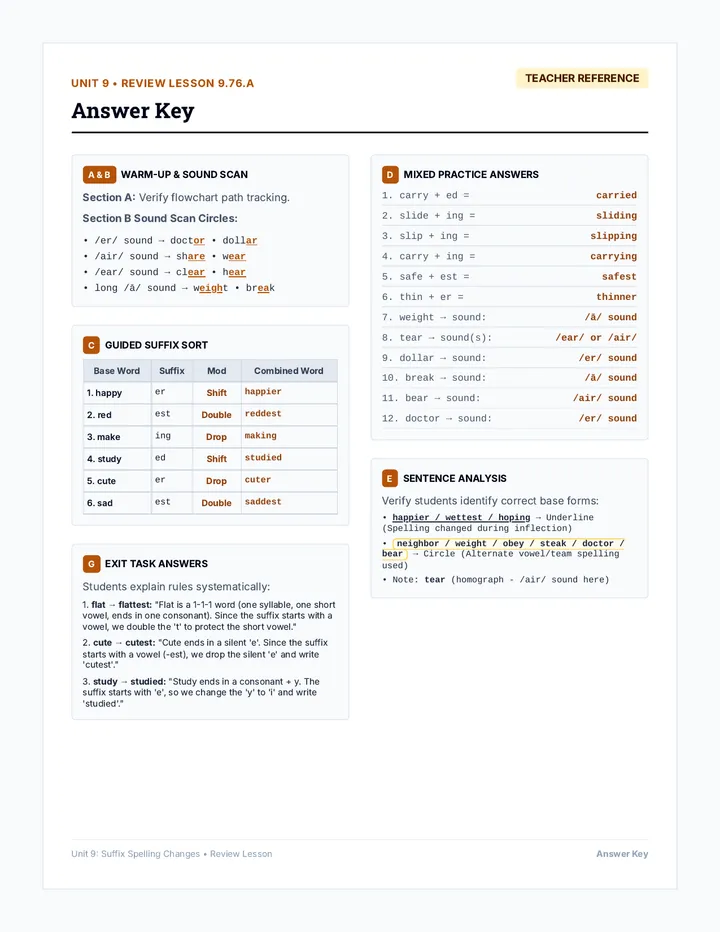
A comprehensive Unit 9 review lesson for high school readers. This lesson synthesizes and reinforces the consonant doubling rule, drop-e rule, y-to-i shift, unaccented final -ar/-or, alternate /air/ and /ear/ vowel contrasts, and alternate long-a spellings.
A professional and sleek anchor chart defining parts of speech (nouns, verbs, adjectives) and nonverbal communication elements (emotions, body language, facial expressions) with high-school appropriate definitions and examples.
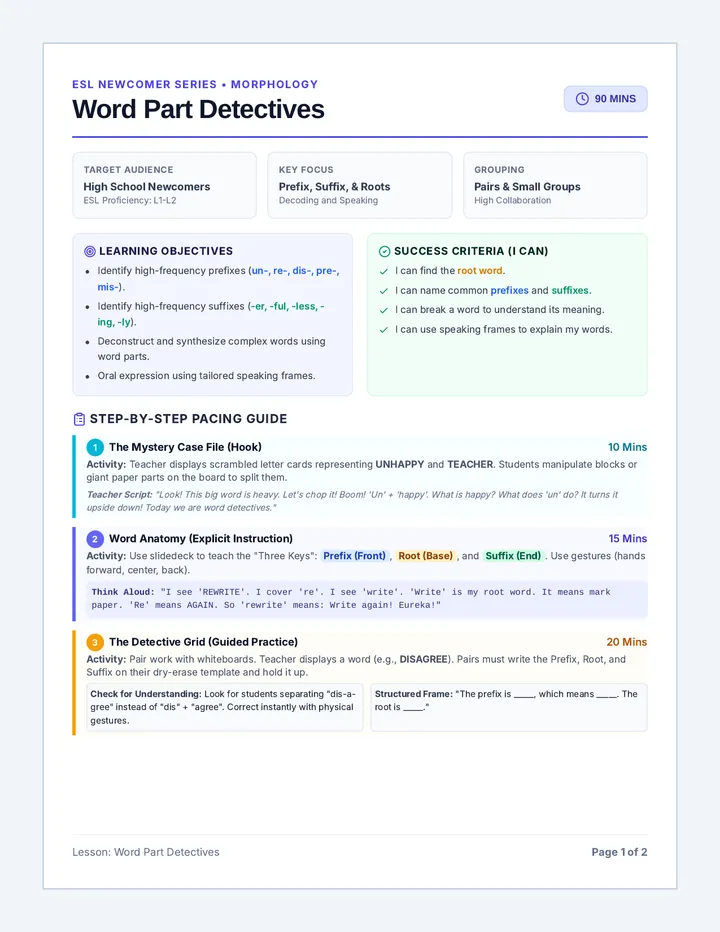
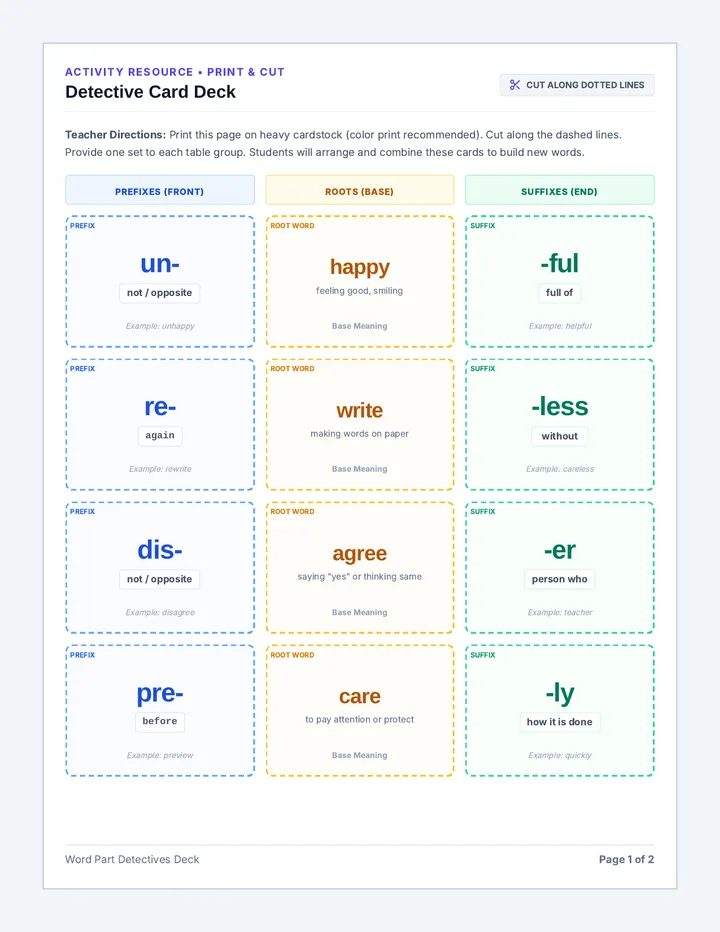
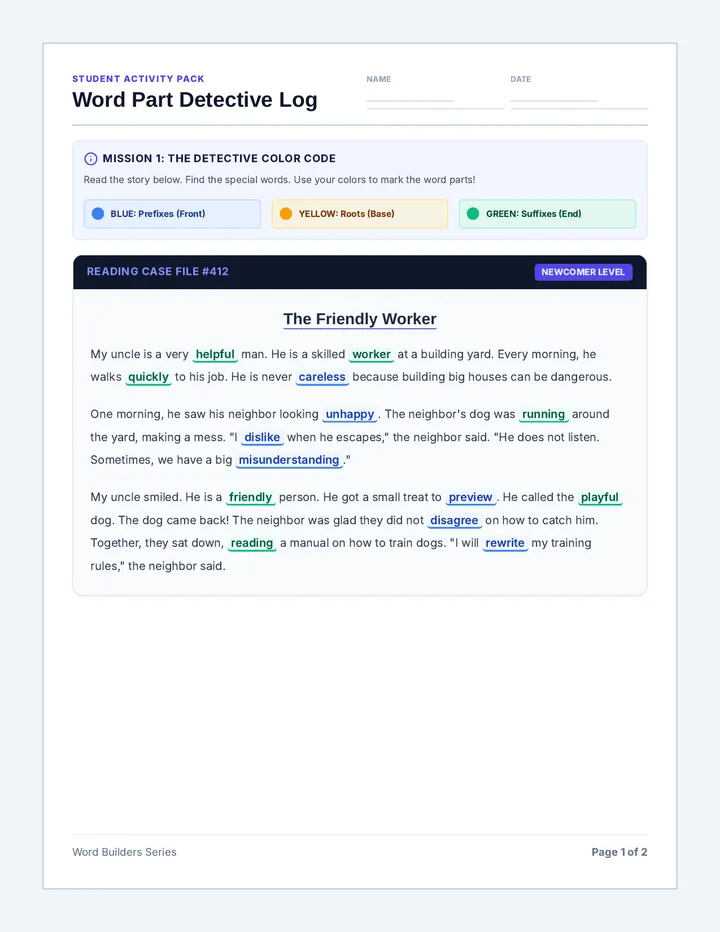
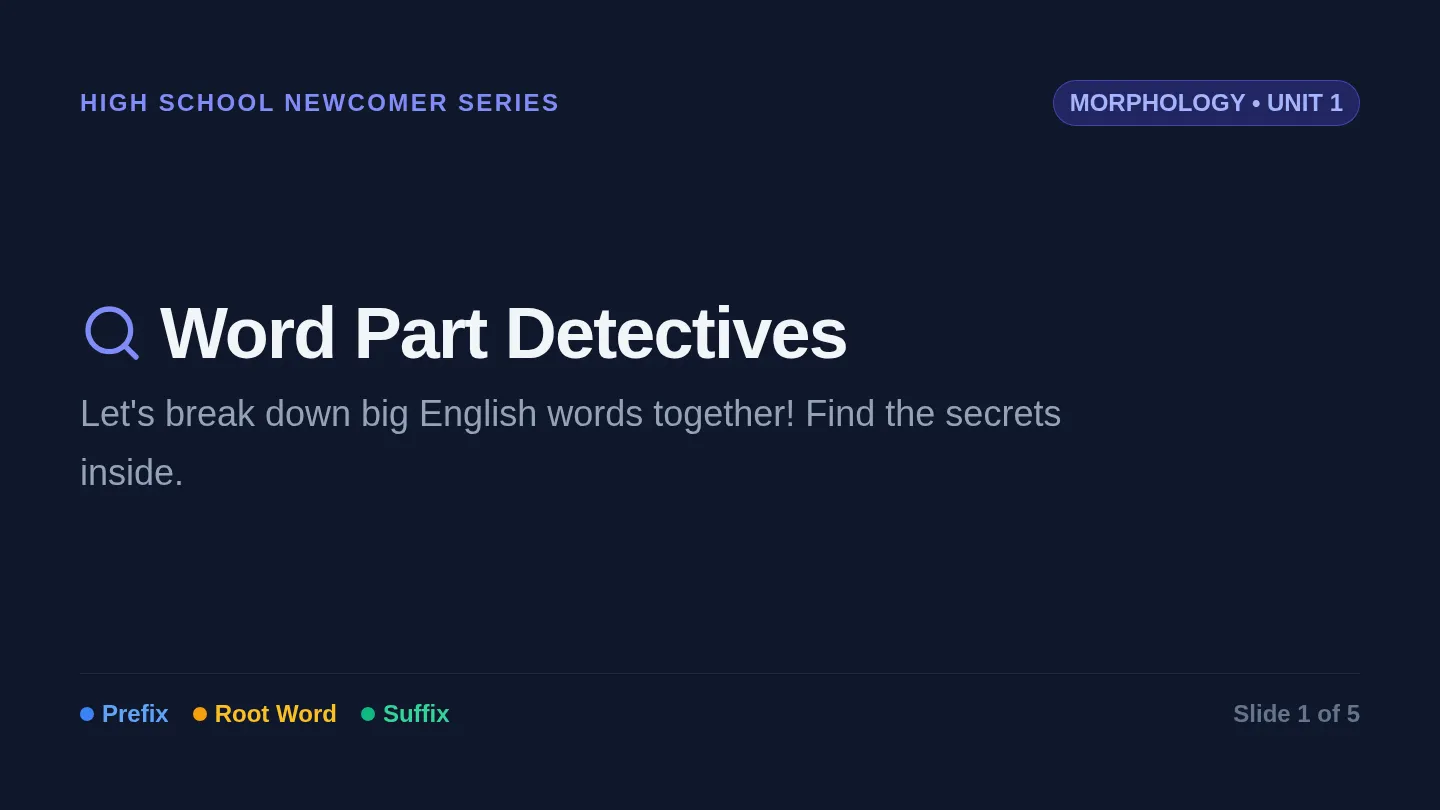
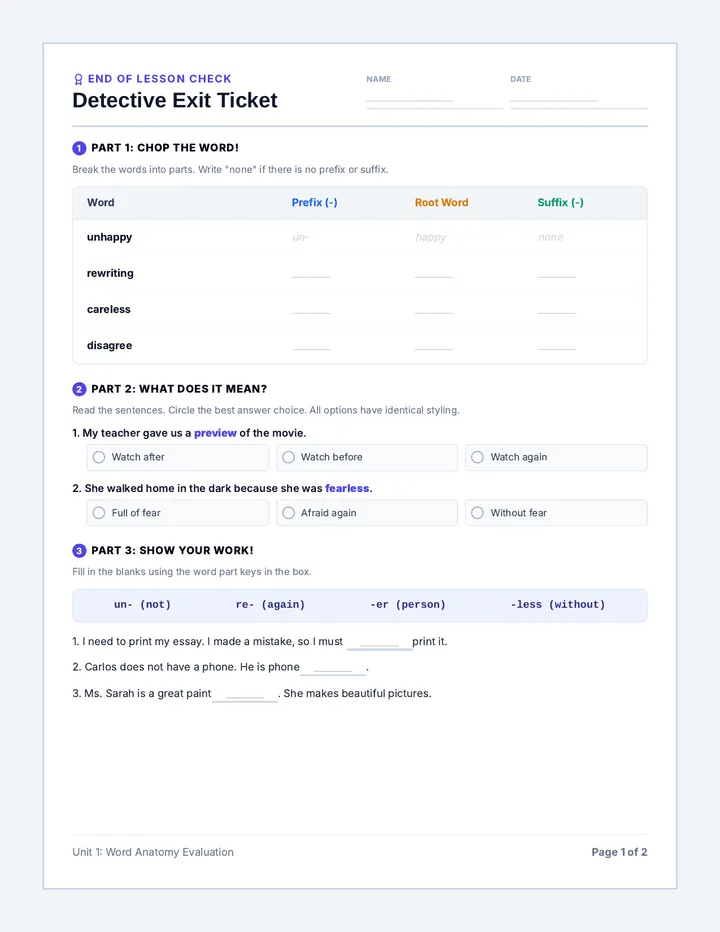
A foundational vocabulary and morphology unit designed specifically for high school newcomer ESL students. It focuses on breaking down unfamiliar English words into high-frequency prefixes, suffixes, and root words using heavy visual aids, scaffolded sentence stems, and highly collaborative activities.
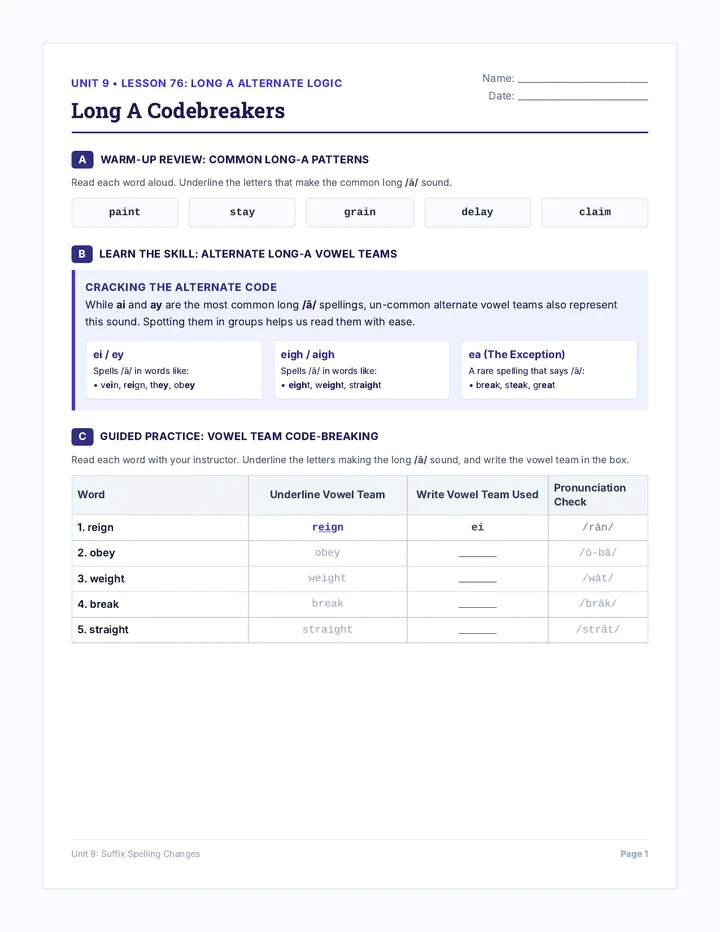
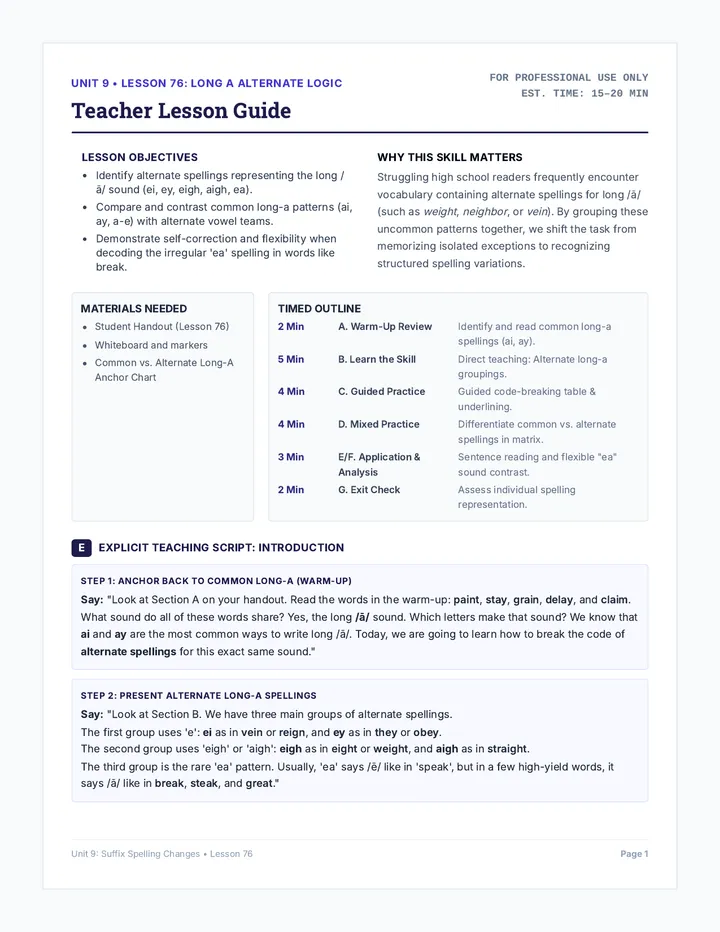
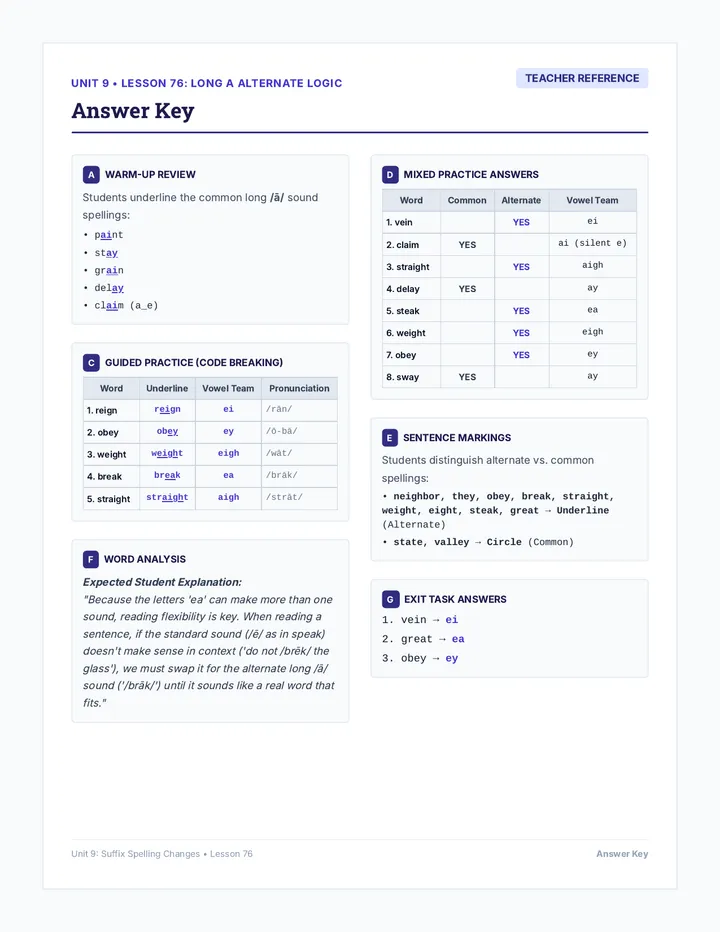
A structured, age-appropriate reading intervention lesson designed for high school readers. This lesson explicitly teaches alternate spellings for the long /ā/ sound (such as ei, ey, eigh, aigh, ea), while spiraling and reinforcing common long-a spellings like ai and ay.
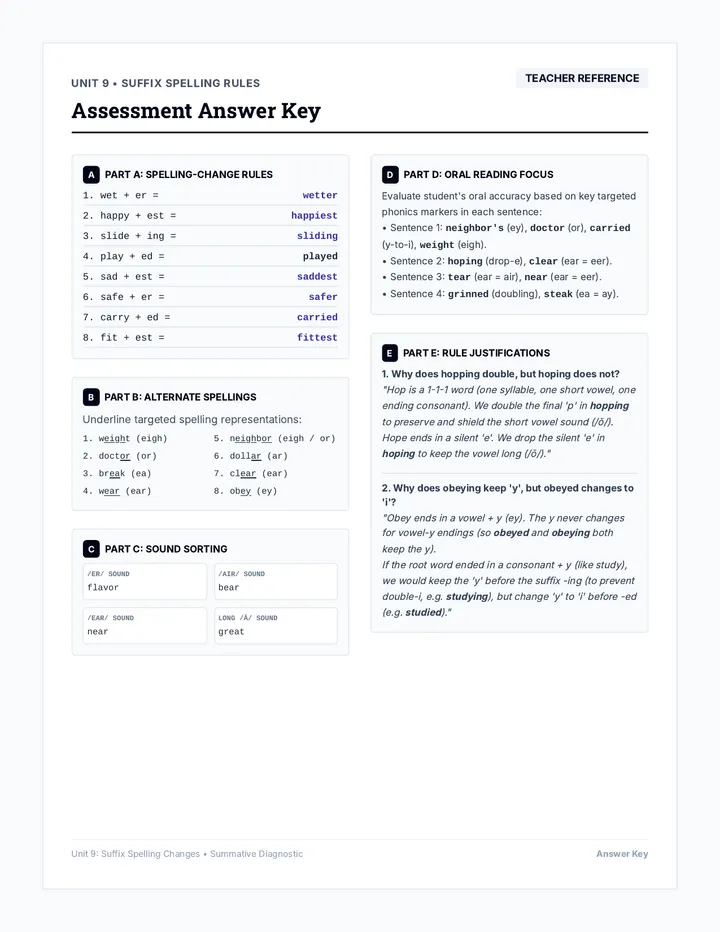
A clean, print-ready 1-page Answer Key for Unit 9 Student Assessment. It provides explicit answers for all student handout sections, utilizing bold colors and clear typography to make grading simple and fast.