Students write broad, narrow, and perfect topic sentences for given paragraphs. They then swap with partners to identify the correct 'prescription' for the text.
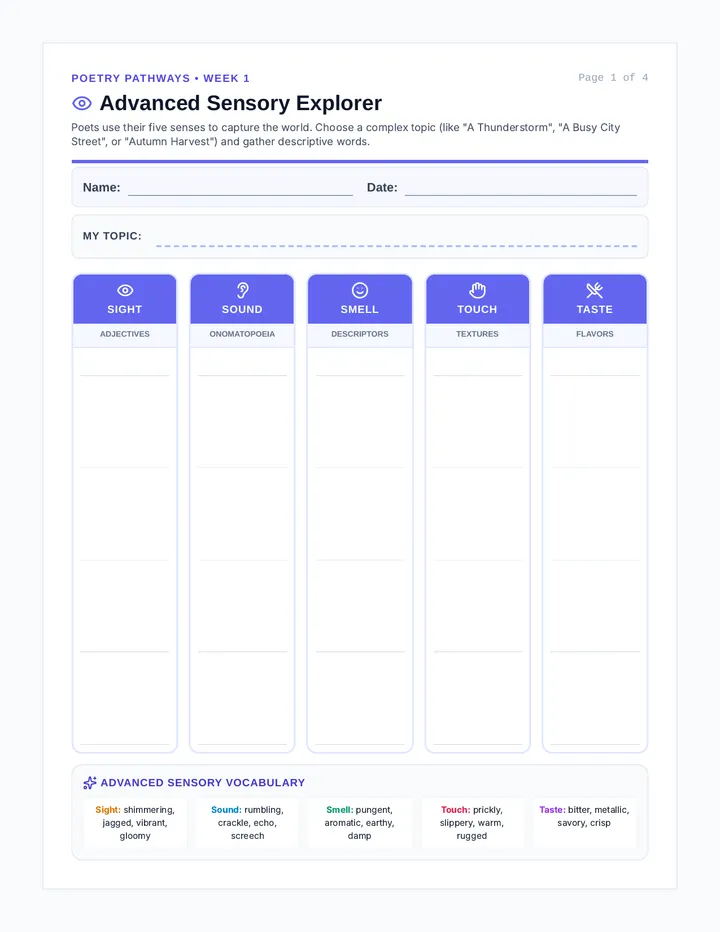
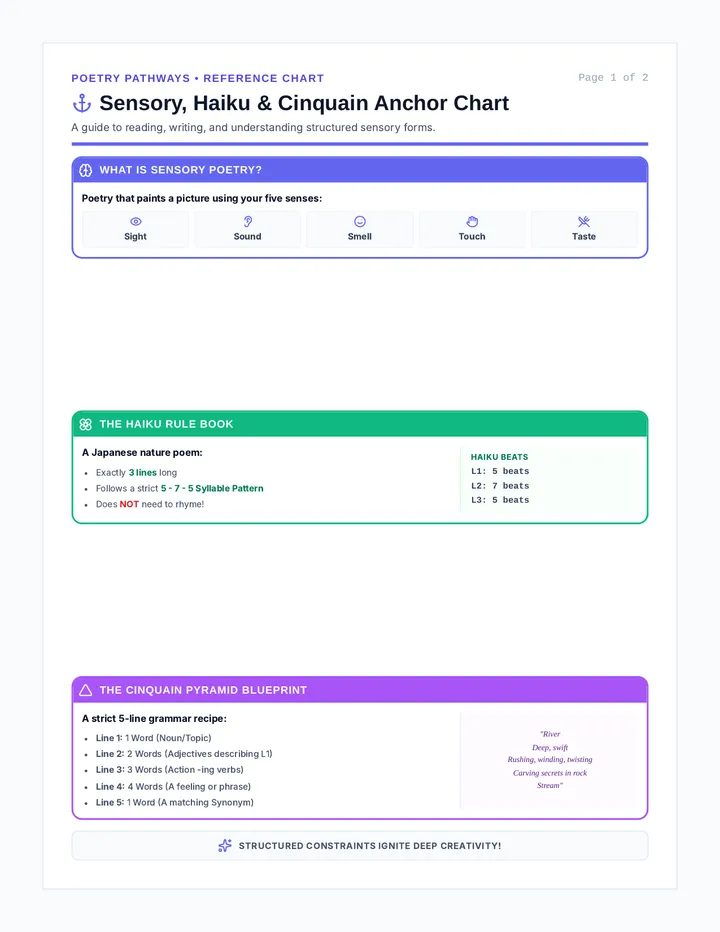
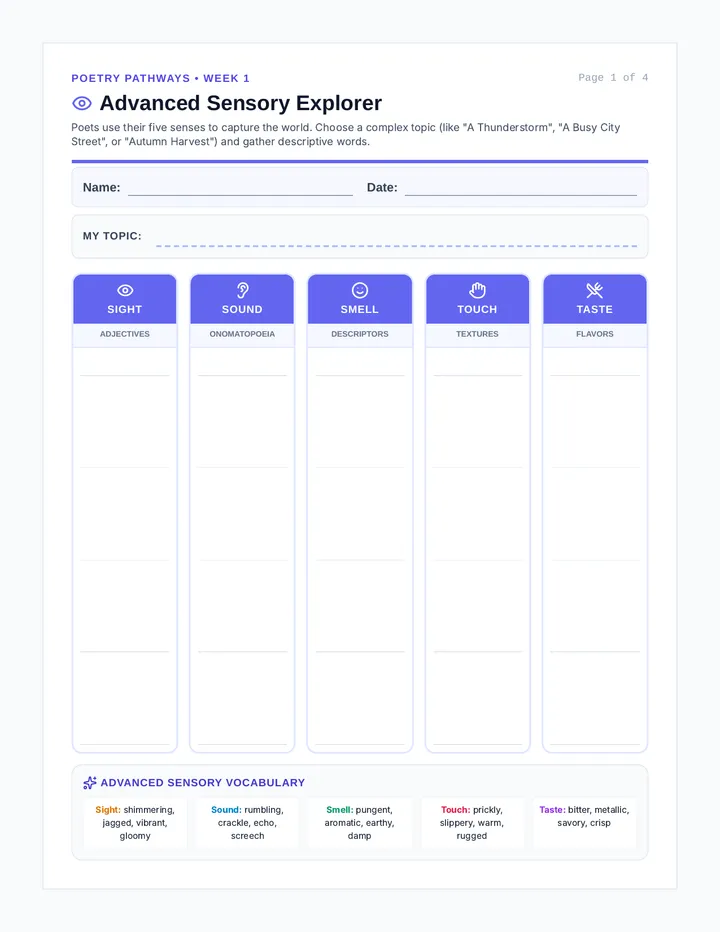
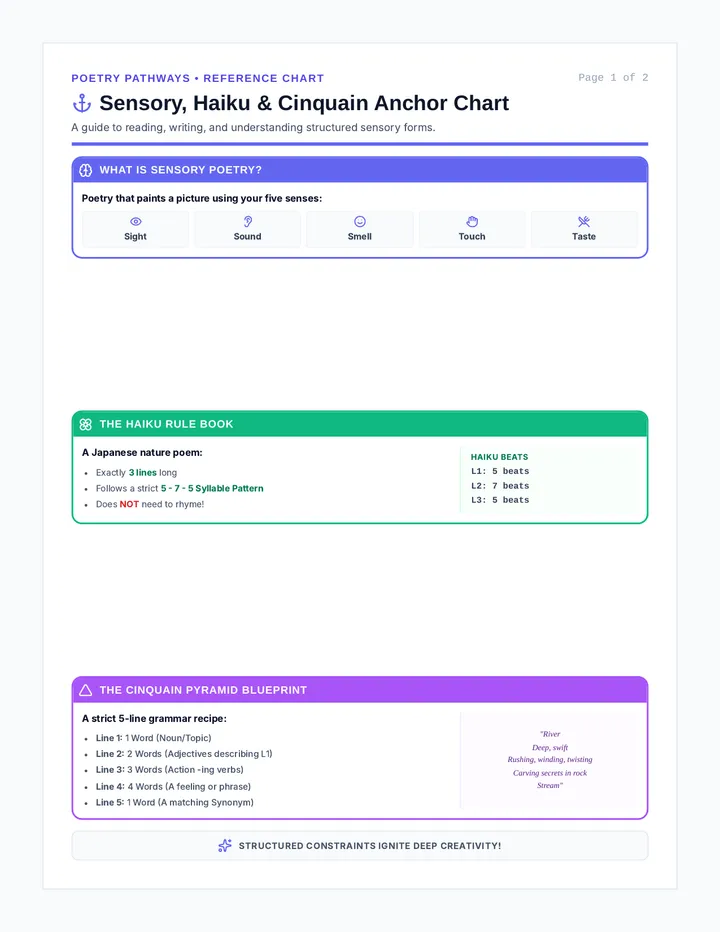
A comprehensive 4-week poetry curriculum designed for students requiring high structure and visual supports. It covers diverse poetry types (Haiku, Color, Acrostic, Couplets, Concrete, Free Verse, and Metaphor/Simile) with scaffolds like word banks, sentence frames, and graphic organizers.
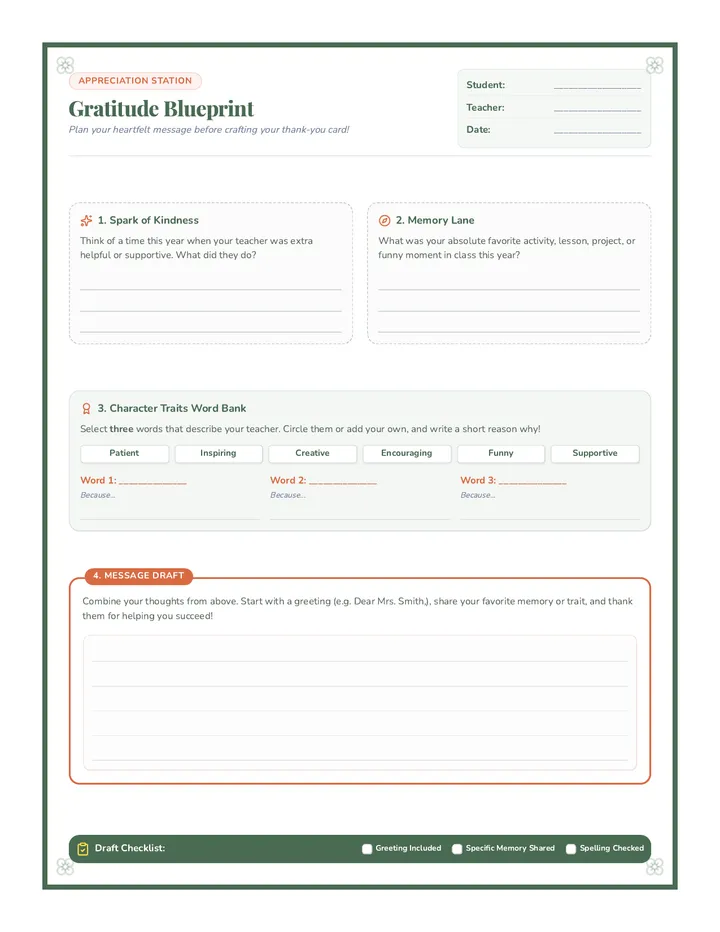
A complete end-of-the-year thank-you card crafting lesson. Students brainstorm specific memories and acts of kindness, draft their messages, and assemble beautifully styled, fold-in-half appreciation cards for their teachers.
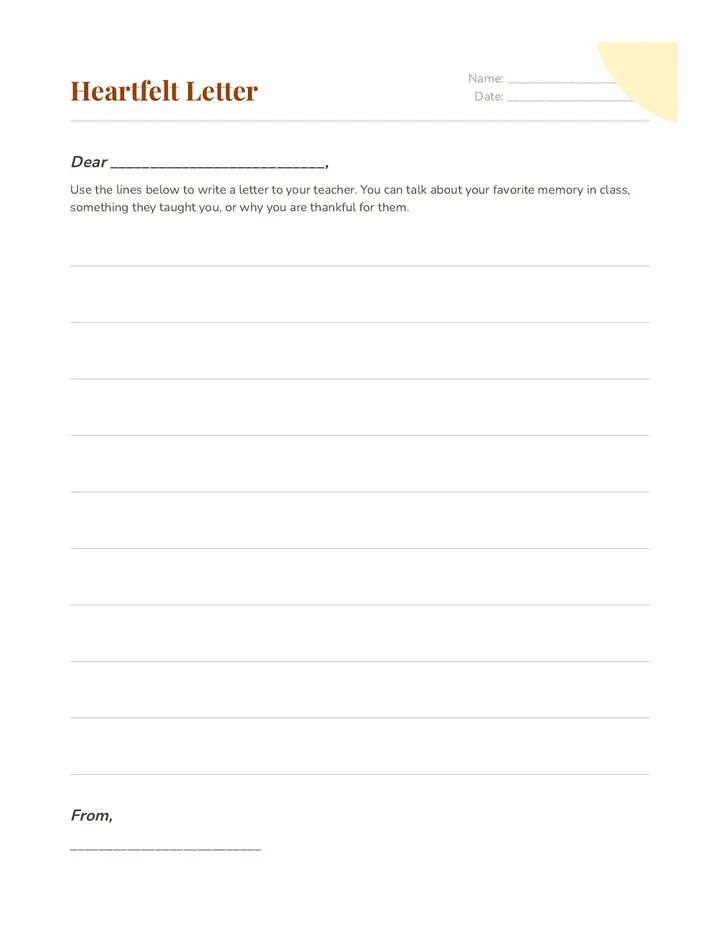
A set of three creative thank-you note templates including a traditional letter, an acrostic poem, and printable postcards for Teacher Appreciation Week.
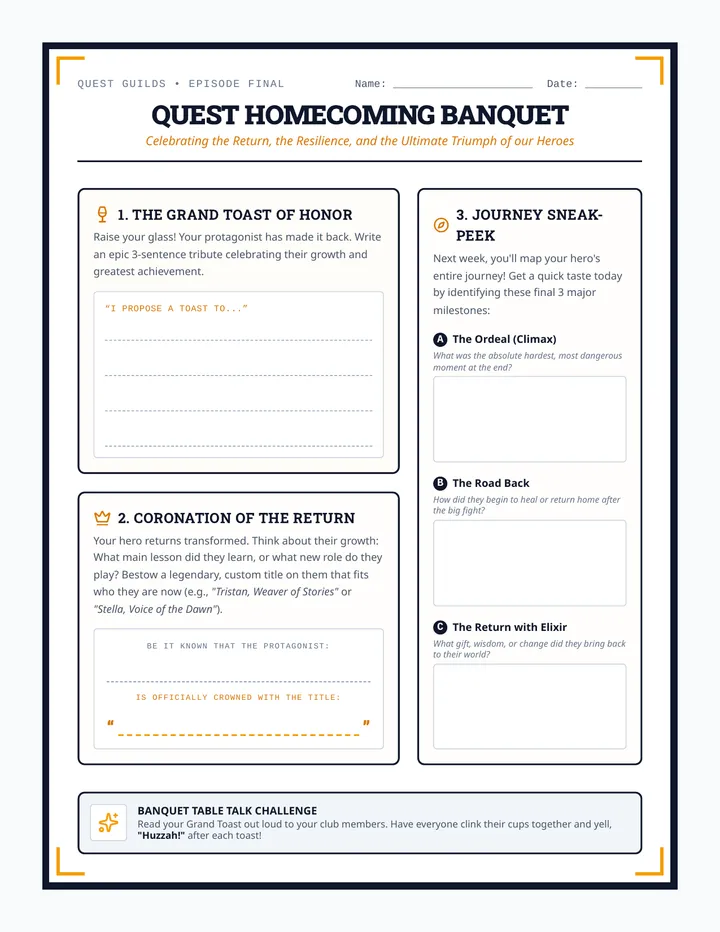
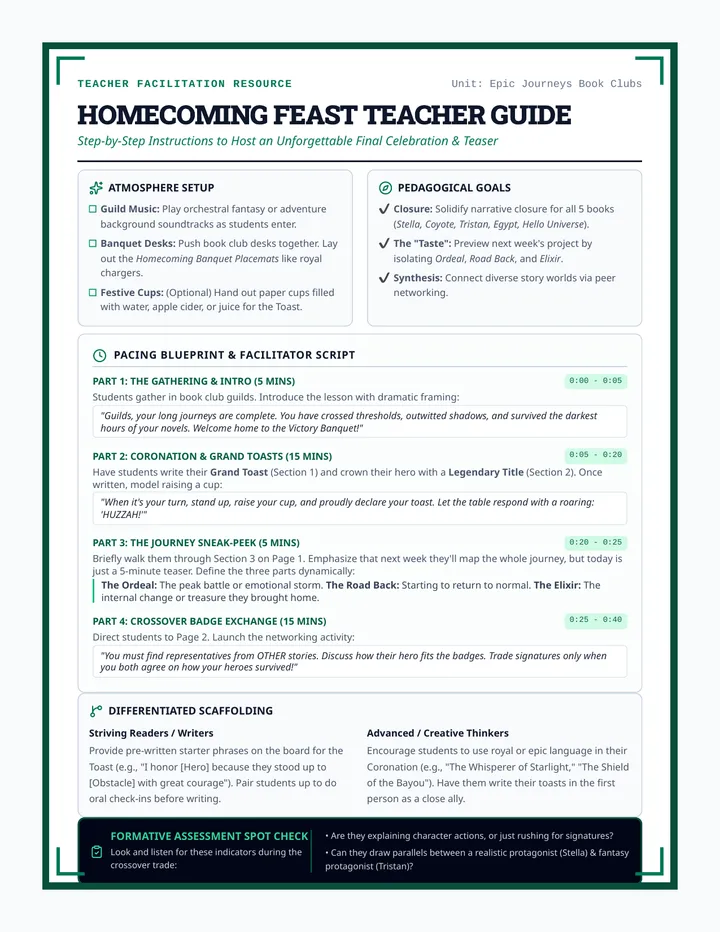
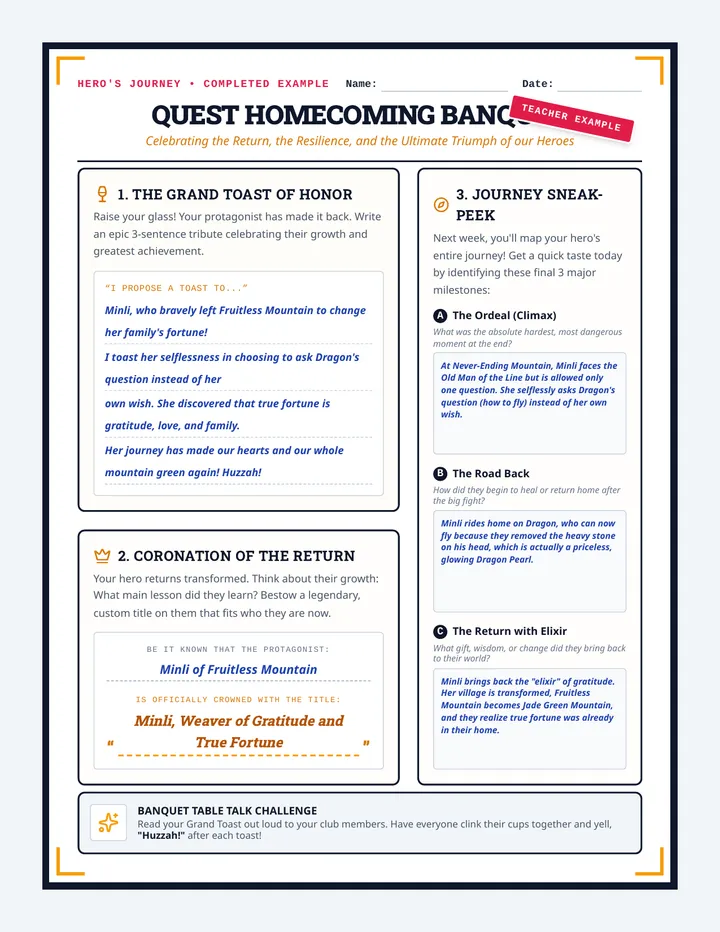
The celebratory final meeting of the book clubs, designed as a festive victory banquet. Students commemorate their protagonist's return through a grand ceremonial toast, active crossover badge trading with other groups, and a high-interest 5-minute teaser of the Hero's Journey mapping project.
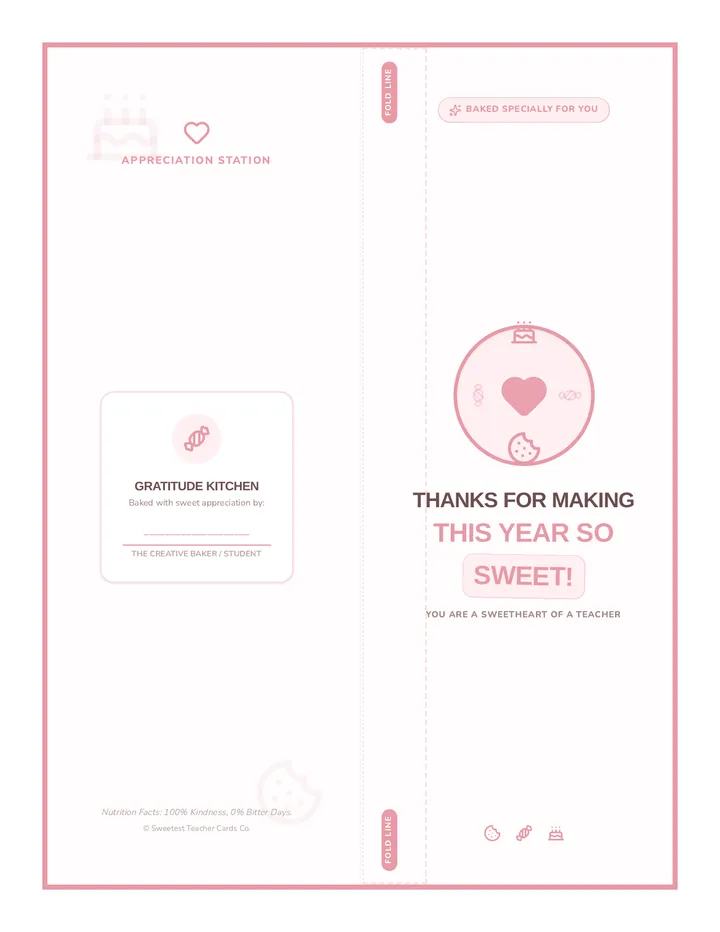
A sweet-themed fold-in-half printable thank-you card. The front cover features sweet candy illustrations and a 'Thanks for making this year so sweet!' design, the back includes a custom recipe-style stamp, and the inside features cute 'Recipe for an Awesome Teacher' ingredients, sweet memory prompts, and a classic recipe-card style lined writing space.
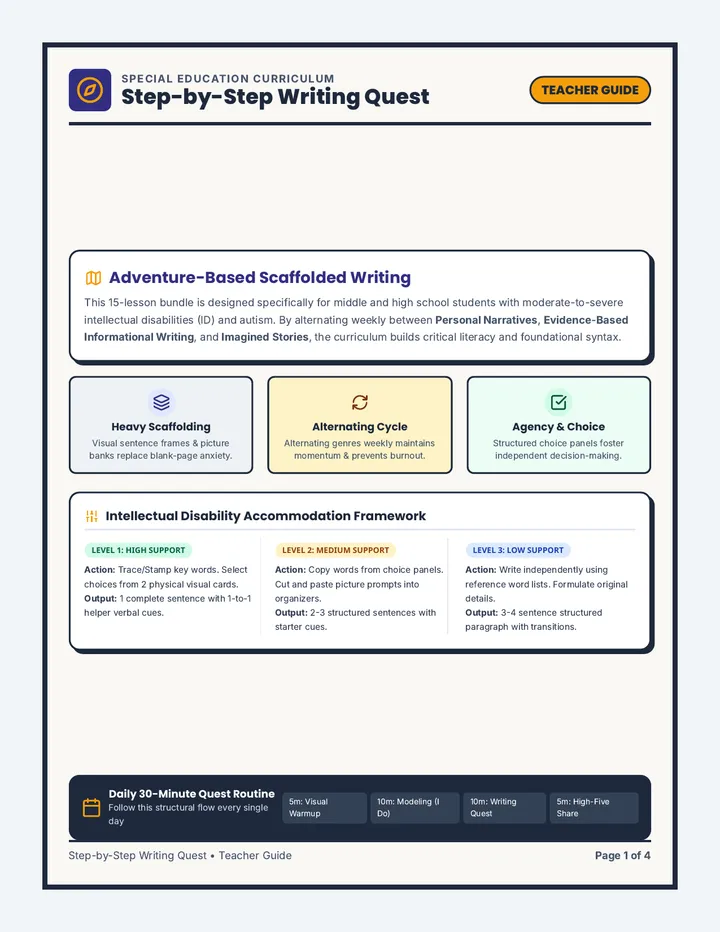
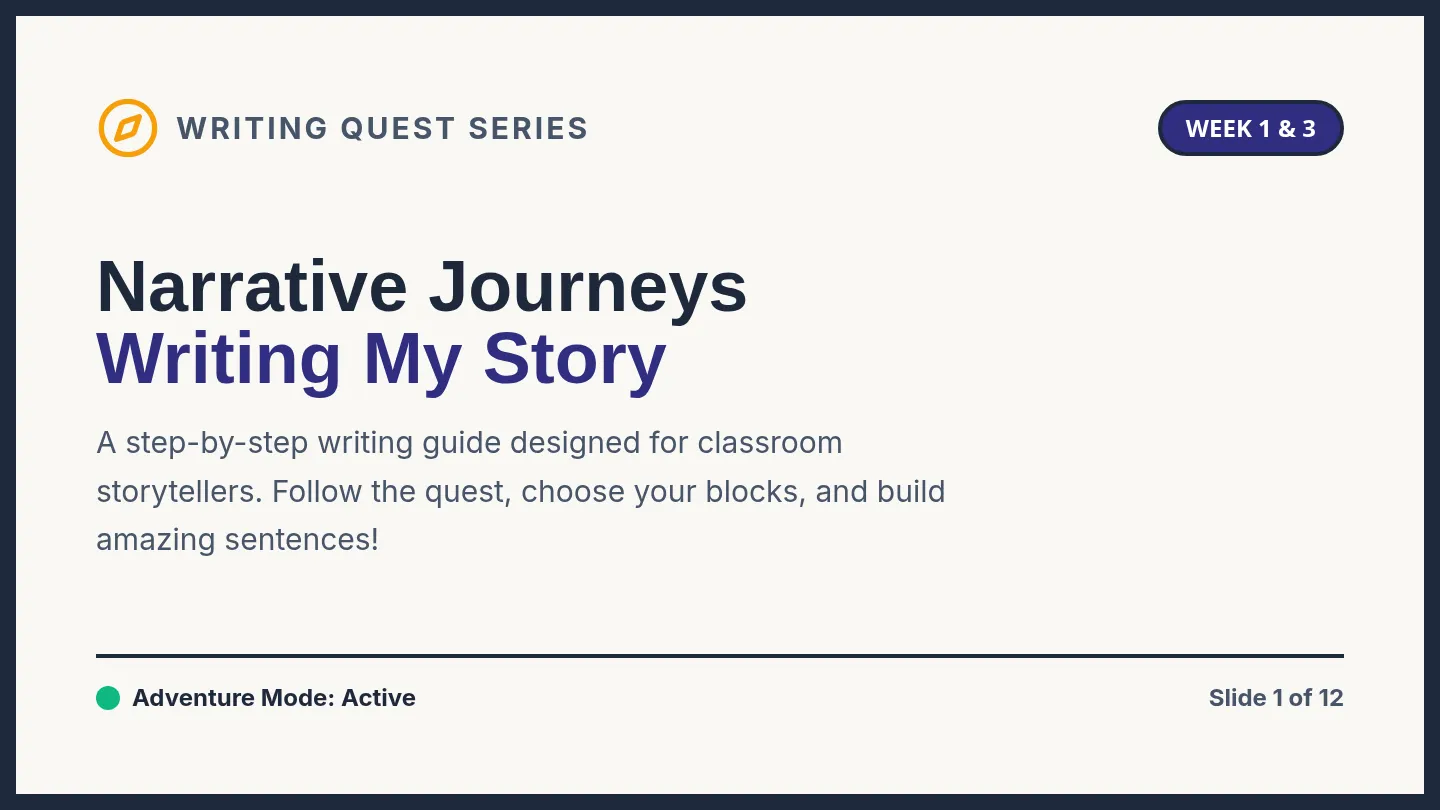
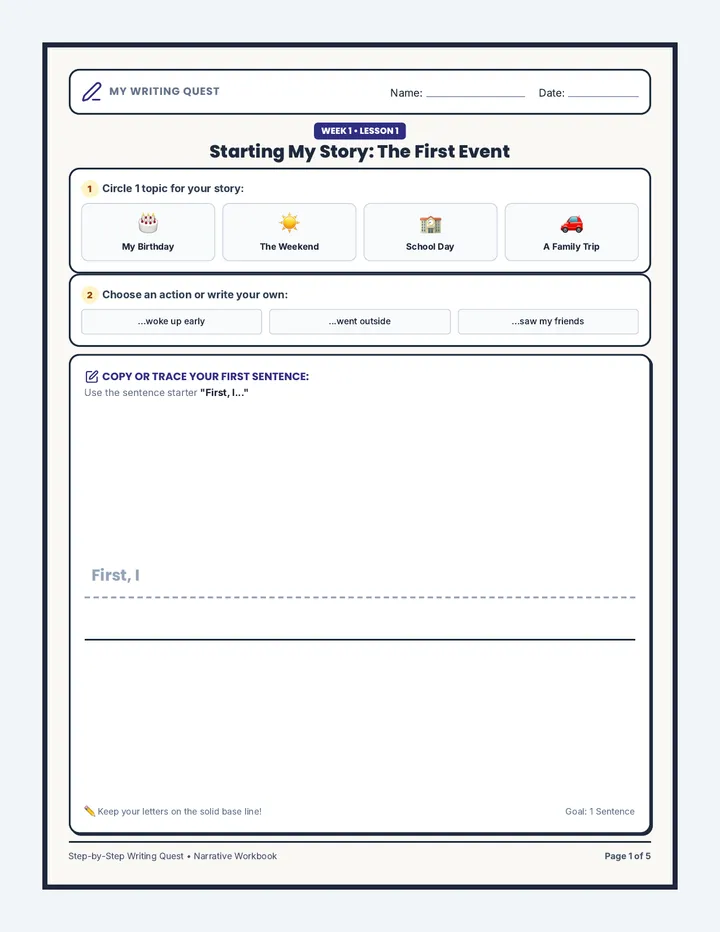
A comprehensive 15-lesson writing curriculum tailored for middle and high school students with intellectual disabilities. The sequence alternates weekly between personal narratives, evidence-based informational writing, and imagined stories, using heavy visual scaffolding, structured sentence frames, and clear graphic organizers.
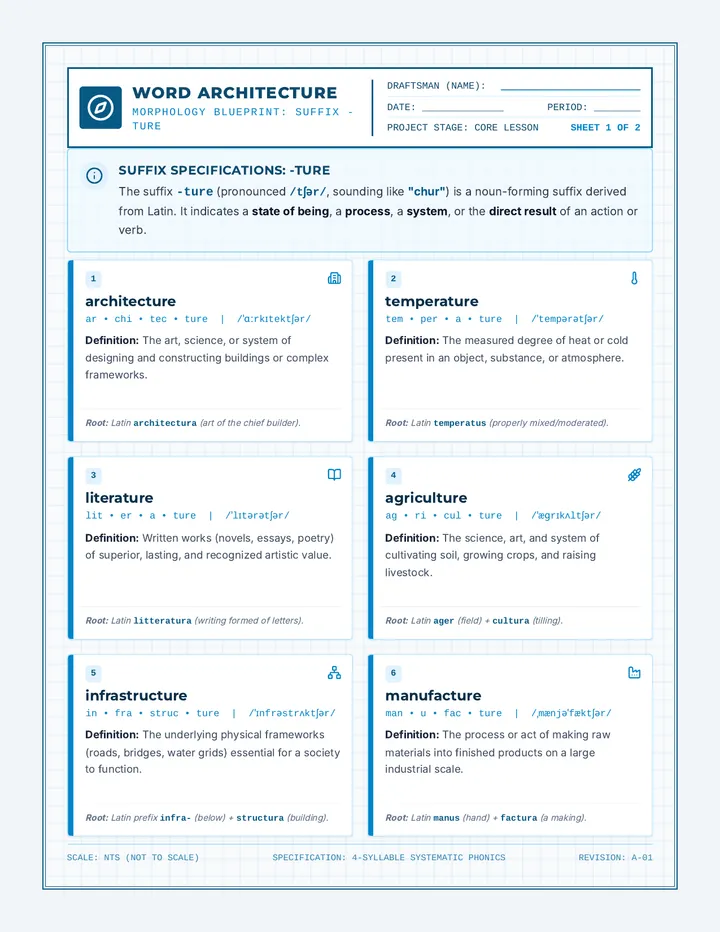
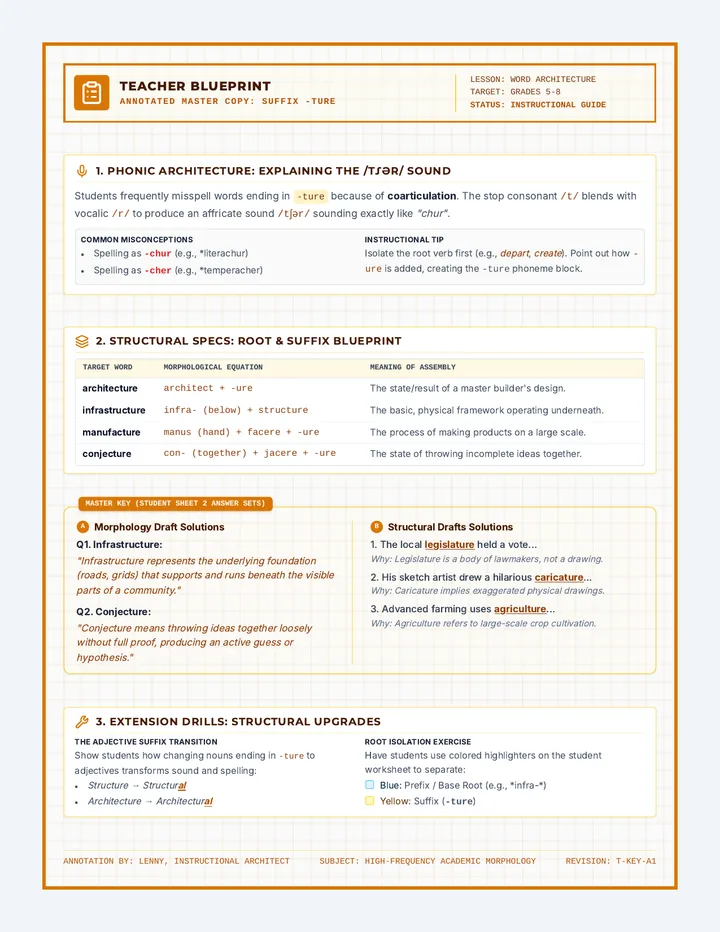
A middle school vocabulary lesson exploring 3-to-4 syllable academic words ending in the suffix -ture. Students examine pronunciation, morphological structure, definitions, and applications through a technical drafting/blueprint theme.
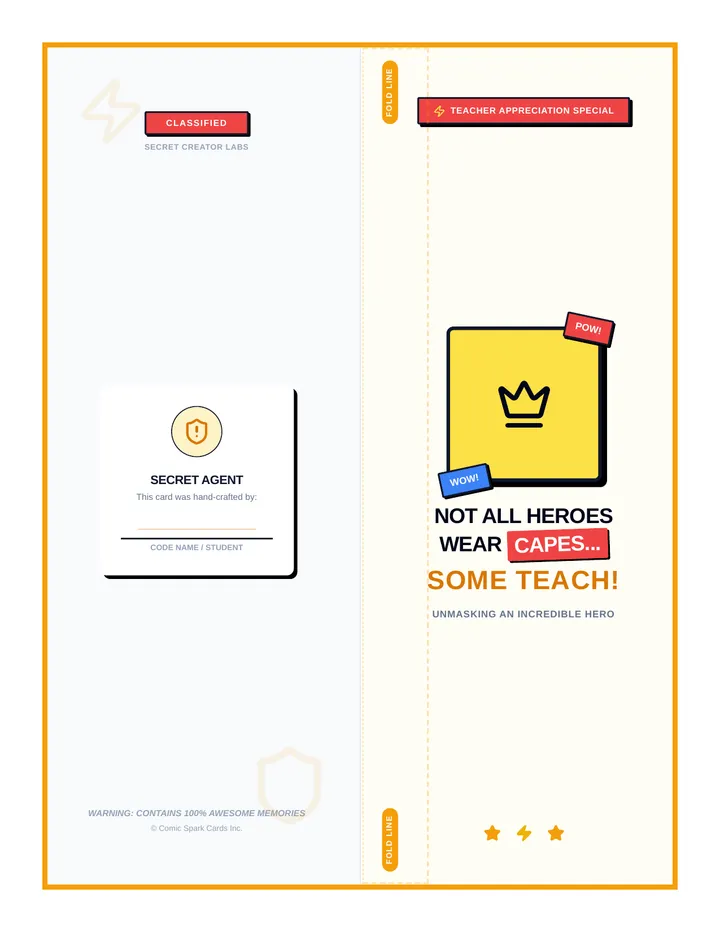
A comic-themed fold-in-half printable thank-you card. The front cover features an action-packed superhero 'Not all heroes wear capes... Some Teach!' design, the back has a top-secret creator stamp, and the inside features teacher superpower stat ratings, funny mission prompts, and a large lined letter bubble.
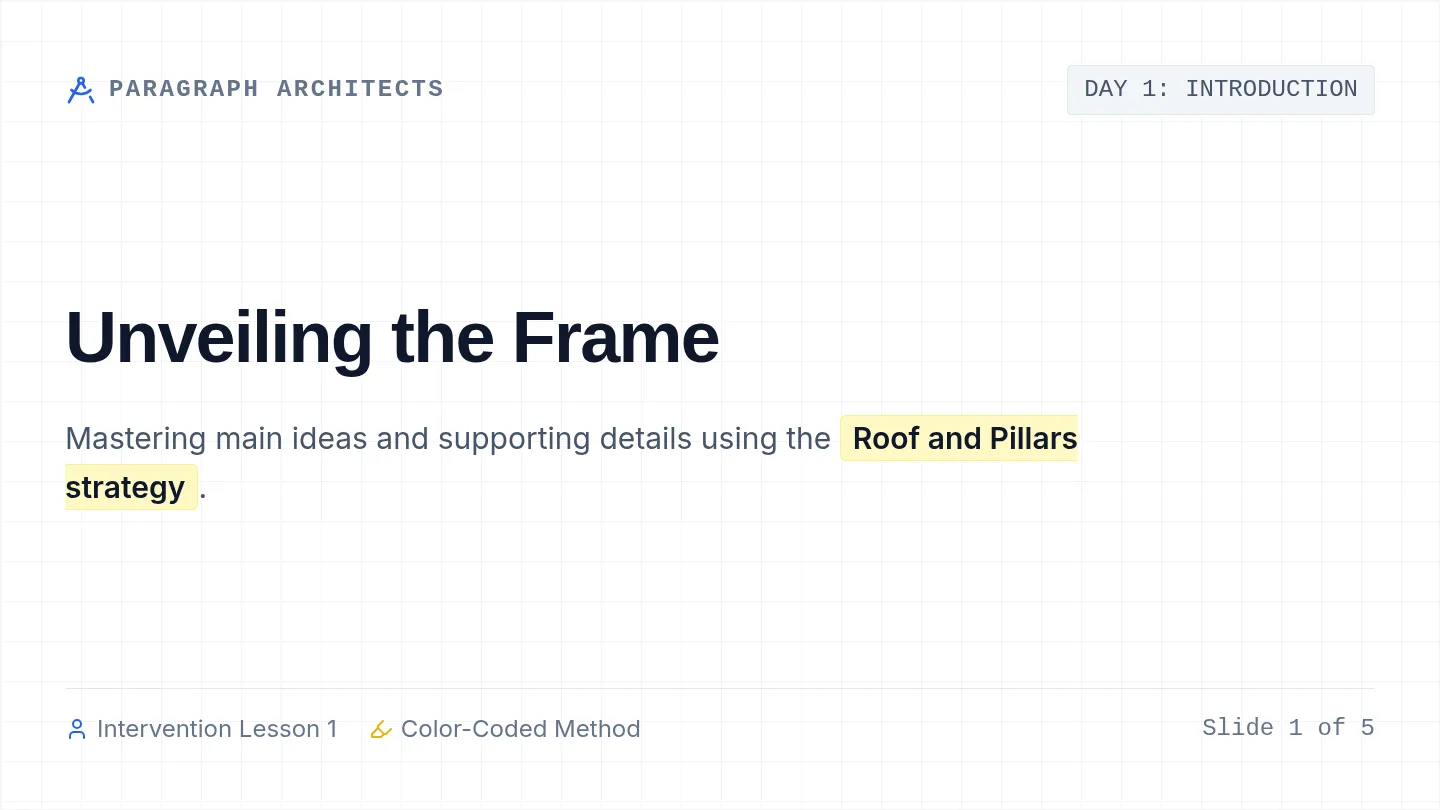
An intensive intervention lesson designed to help struggling readers master main idea identification using hands-on, color-coded highlighting strategies. Students learn to dismantle paragraph structures like blueprint architects, physically separating the 'roof' (main idea) from the 'supporting pillars' (details).
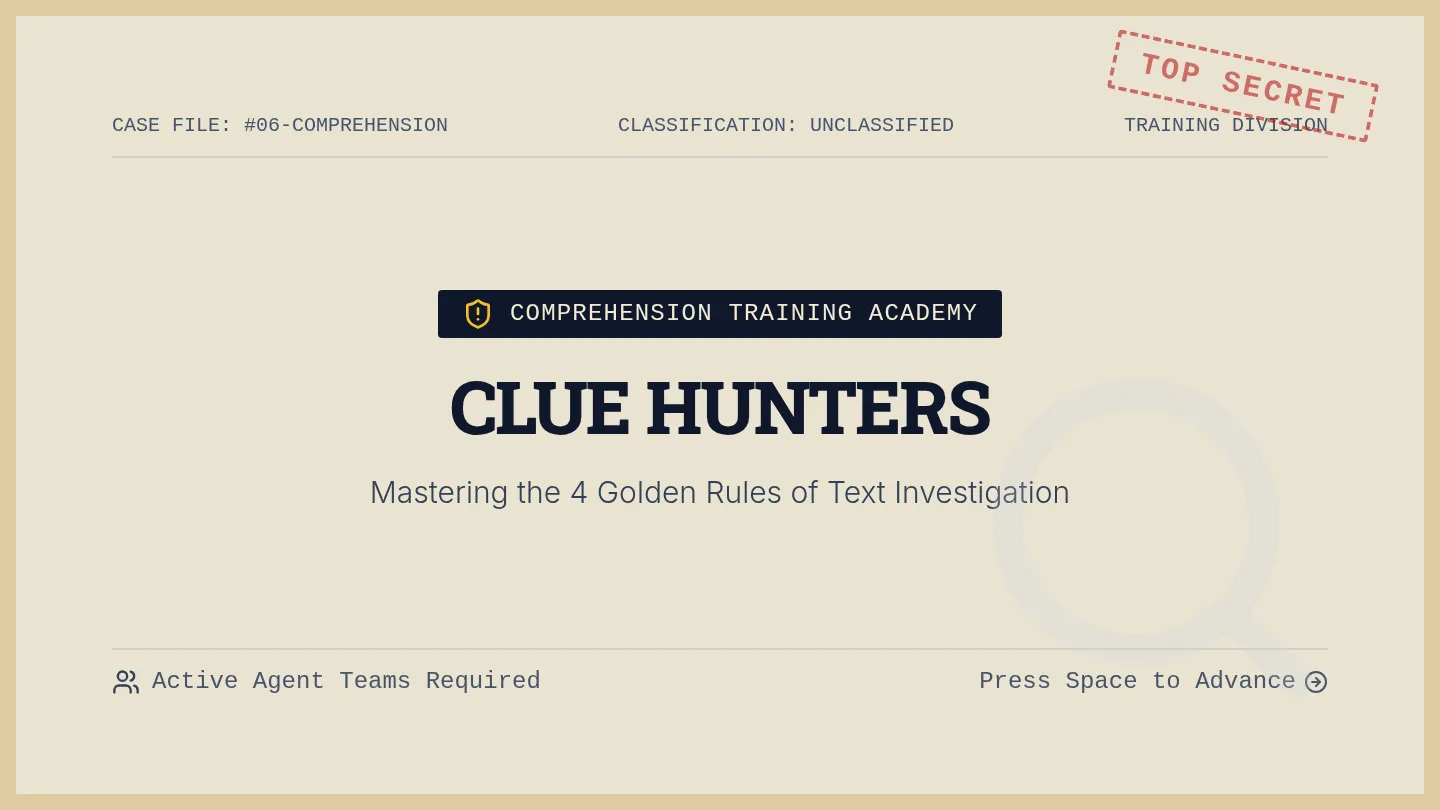
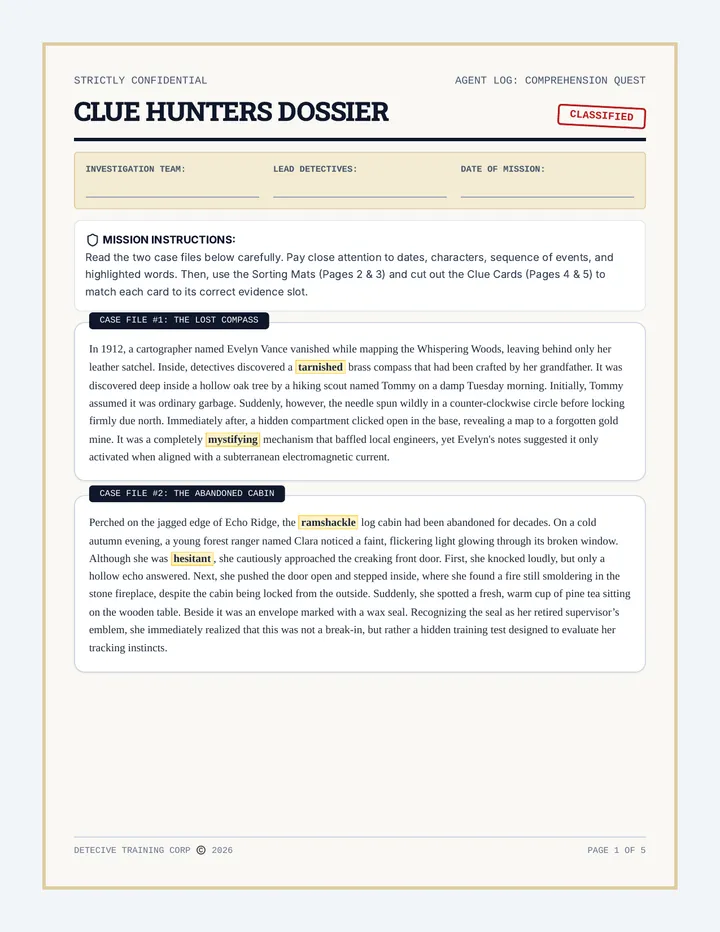
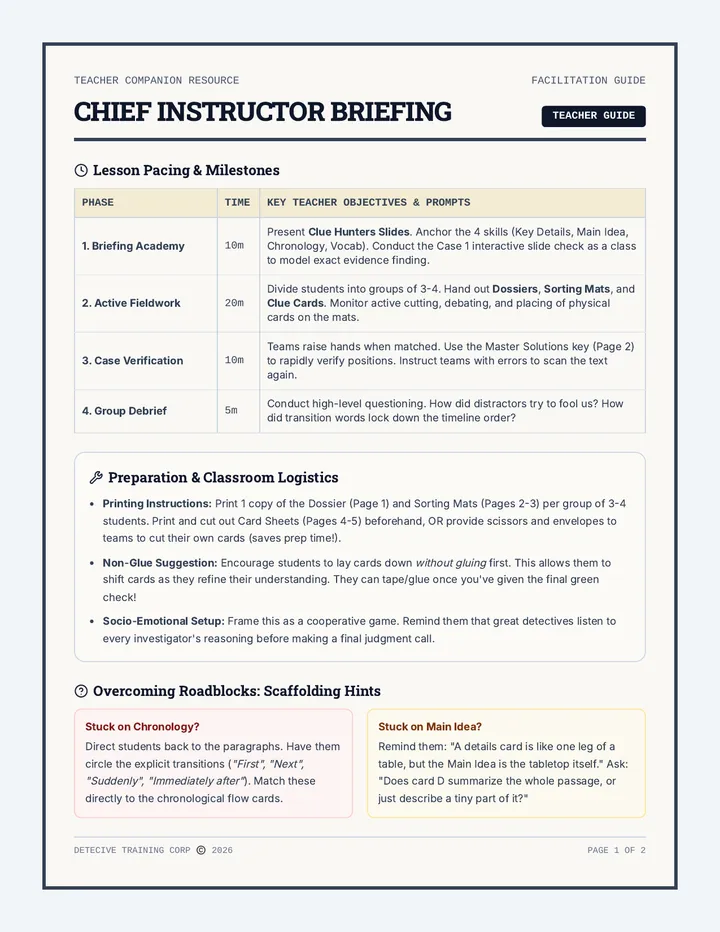
A hands-on, collaborative game-based lesson where students master core 6th-grade reading comprehension skills—finding key details, main ideas, sequencing, and vocabulary in context—by solving text-based mysteries using sorting mats and clue cards.
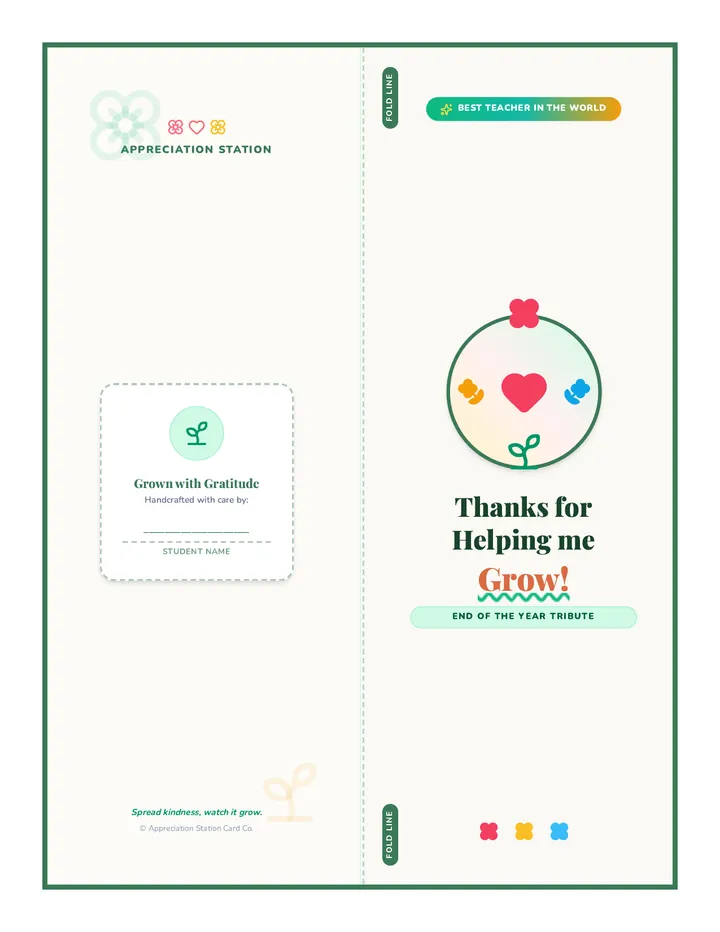
A botanical-themed fold-in-half printable thank-you card. The front cover features a 'Thanks for helping me grow!' botanical design, the back includes a customizable creator stamp, and the inside provides guided plant-themed prompts and structured message lines.