Students apply their refined editing skills to their own professional documents, using peer review to ensure zero-defect final drafts.
A structured reading intervention sequence at Douglas School combining targeted phonic lessons with the multisensory Nessy online literacy system.
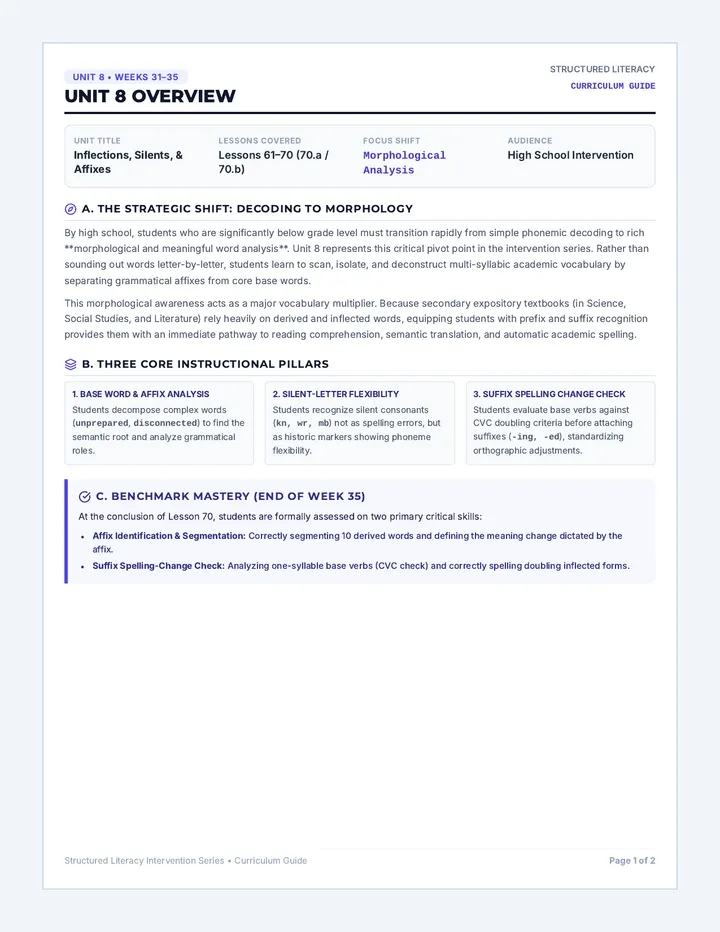
An introductory curriculum guide and scope and sequence for Unit 8 of the high school structured literacy intervention, outlining key phonetic, orthographic, and morphological targets.
An overall Unit 8 Teacher Guide and curriculum roadmap detailing the scope, sequence, spelling rules, and morphological shift for Weeks 31-35 (Lessons 61-70).
A structured high school reading intervention sequence focusing on silent consonants, orthographic markers, pluralization rules, and academic spelling structures.
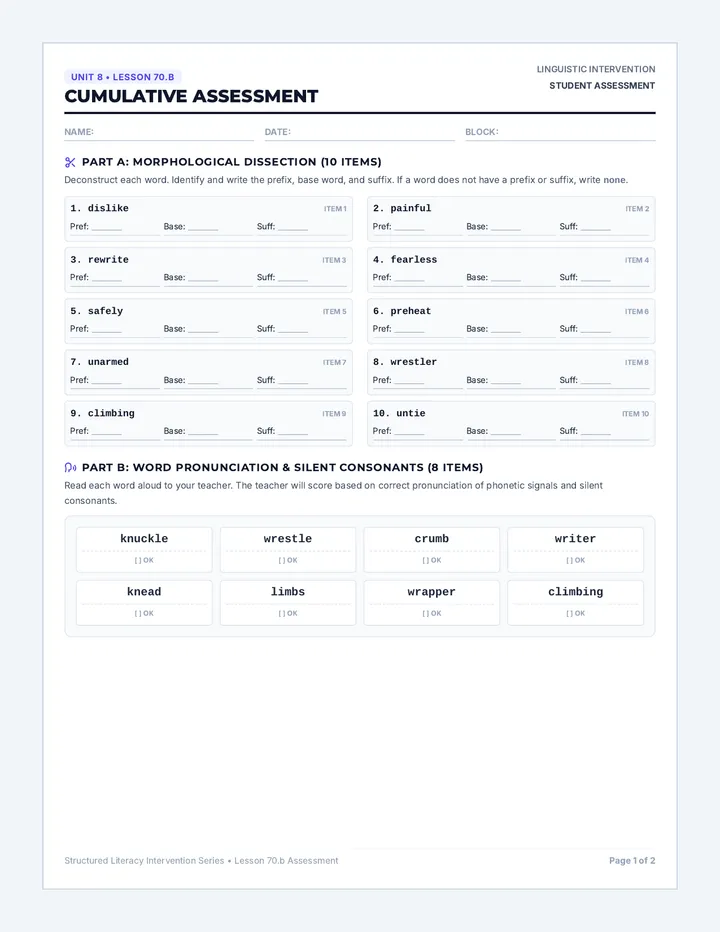
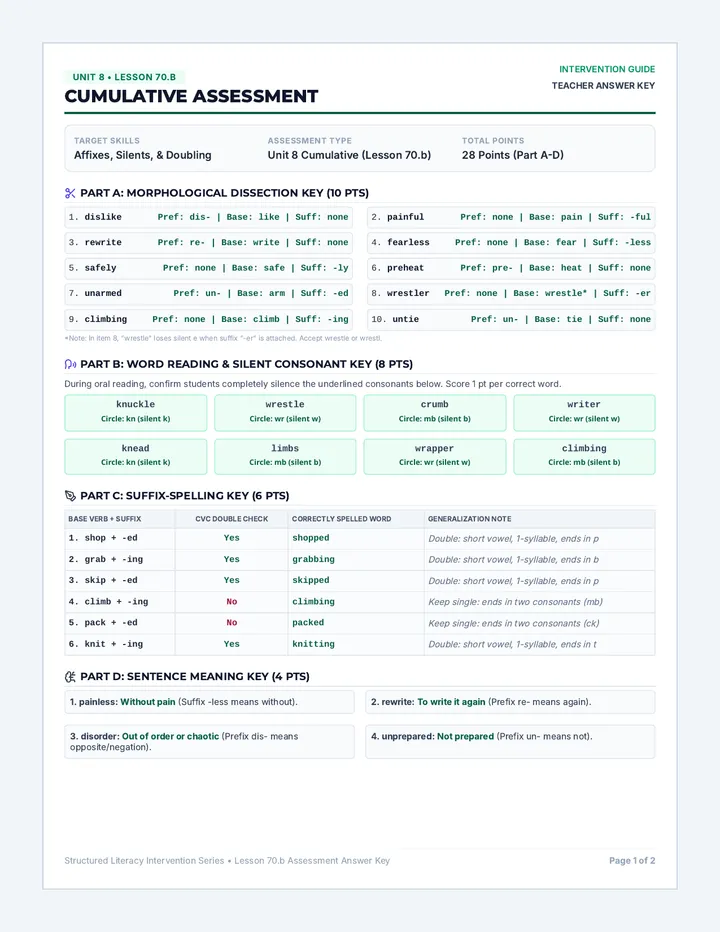
A formal cumulative assessment for Unit 8 (Lesson 70.b) evaluating student mastery of silent consonants, affixes, and the consonant doubling rule, with student-facing tests and a teacher-facing diagnostic data tracker.
A comprehensive 2-page teacher resource containing the complete answer key for the Unit 8 Assessment alongside an intuitive diagnostic data tracker to analyze student error patterns and determine targeted next steps.
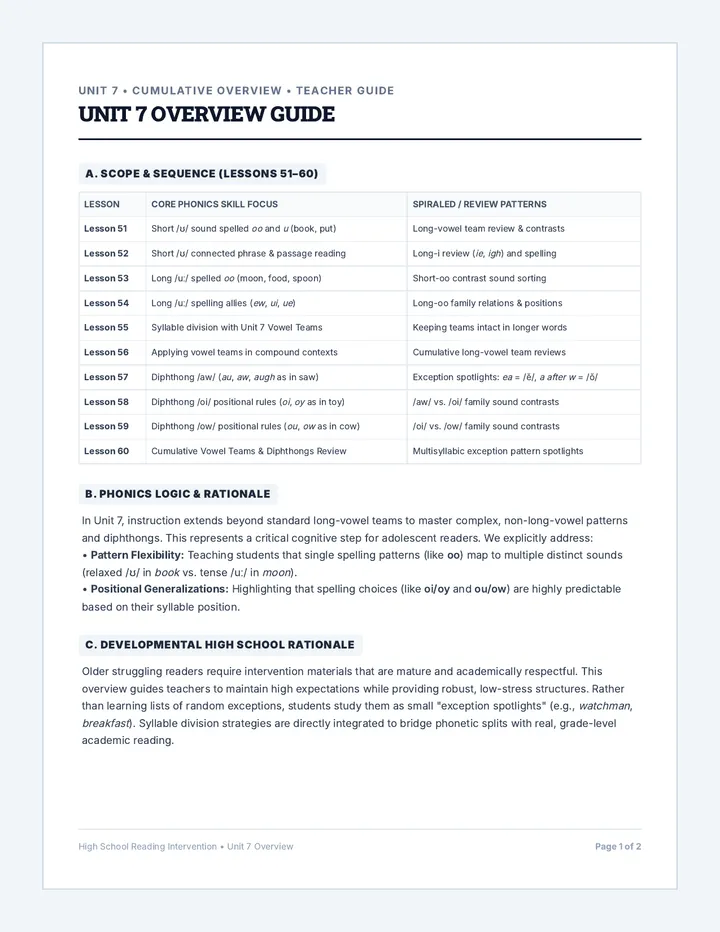
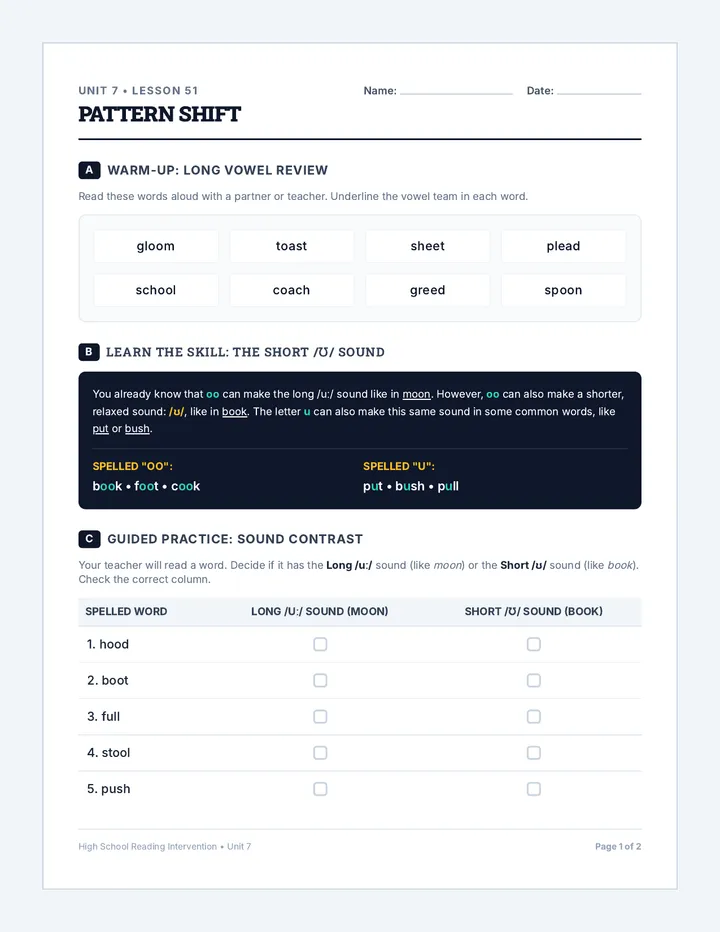
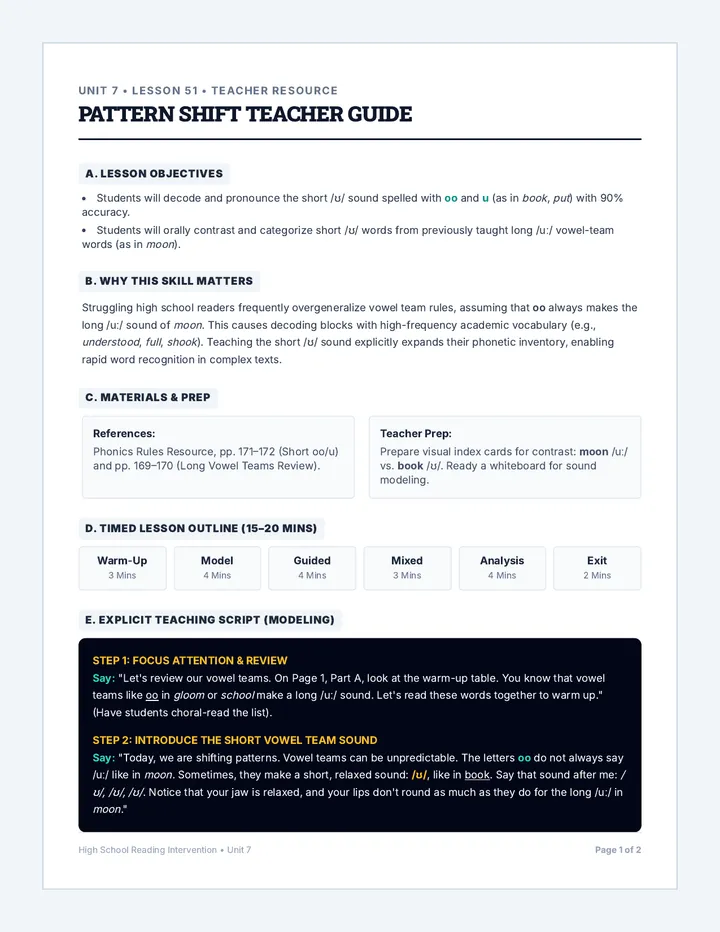
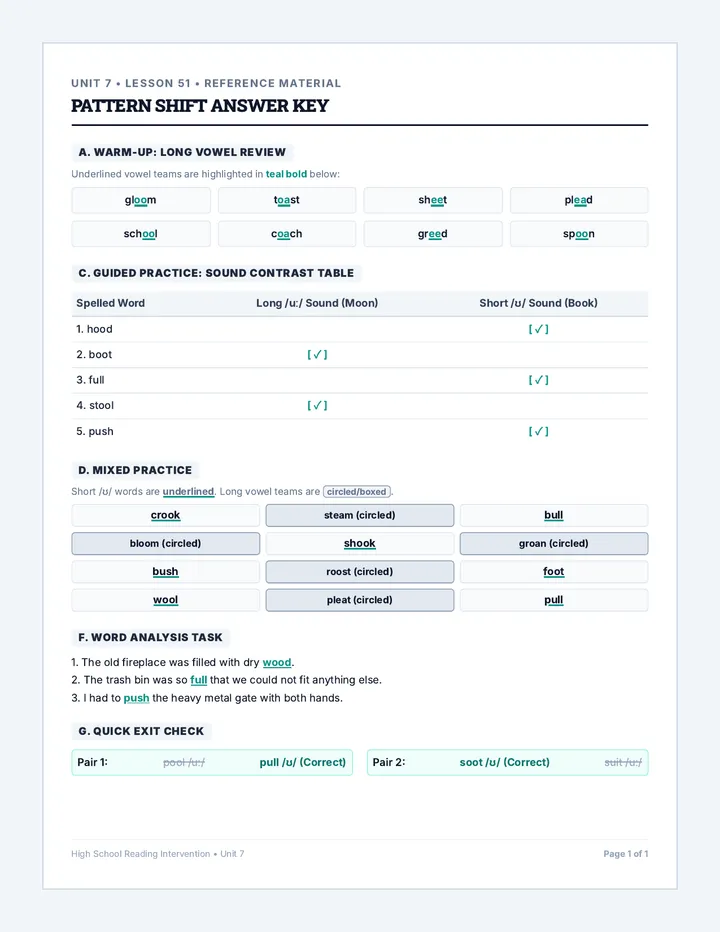
A phonics intervention unit for high school readers focusing on short oo patterns, sound contrasts, and spelling application.
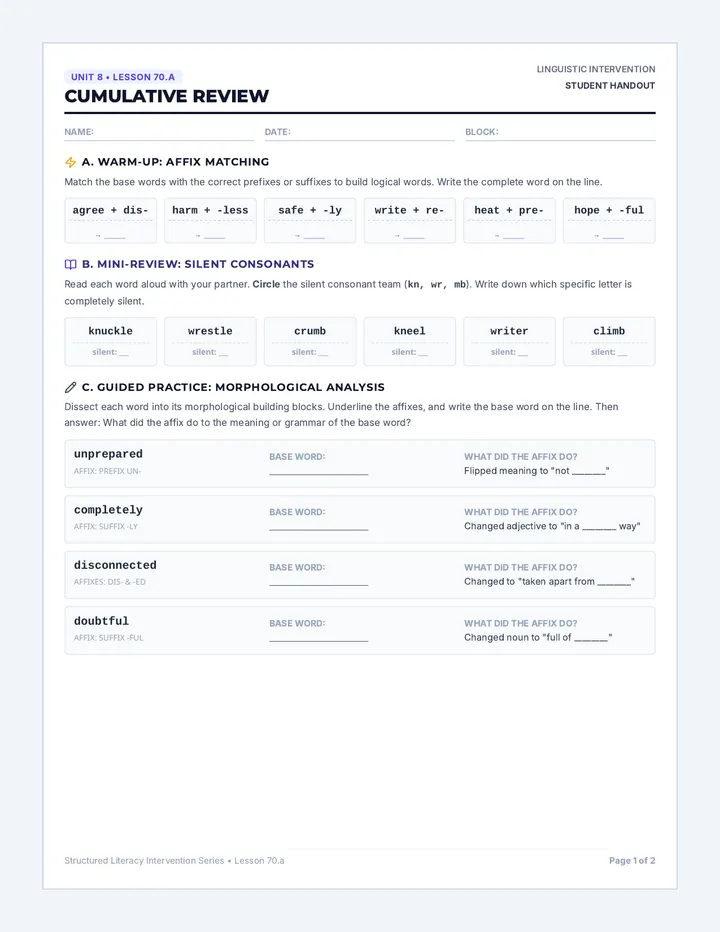
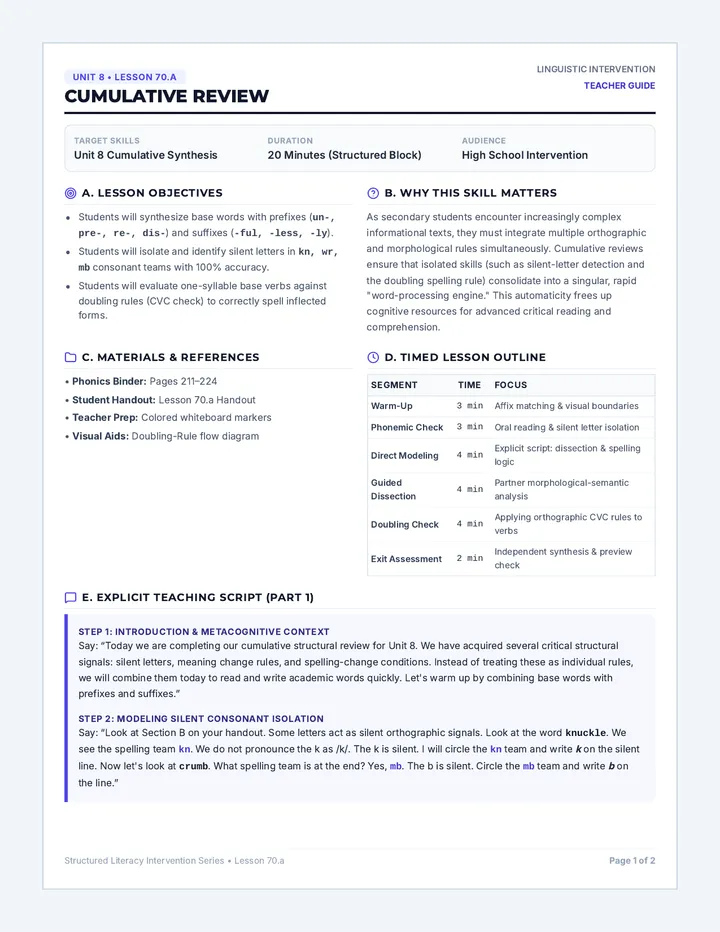
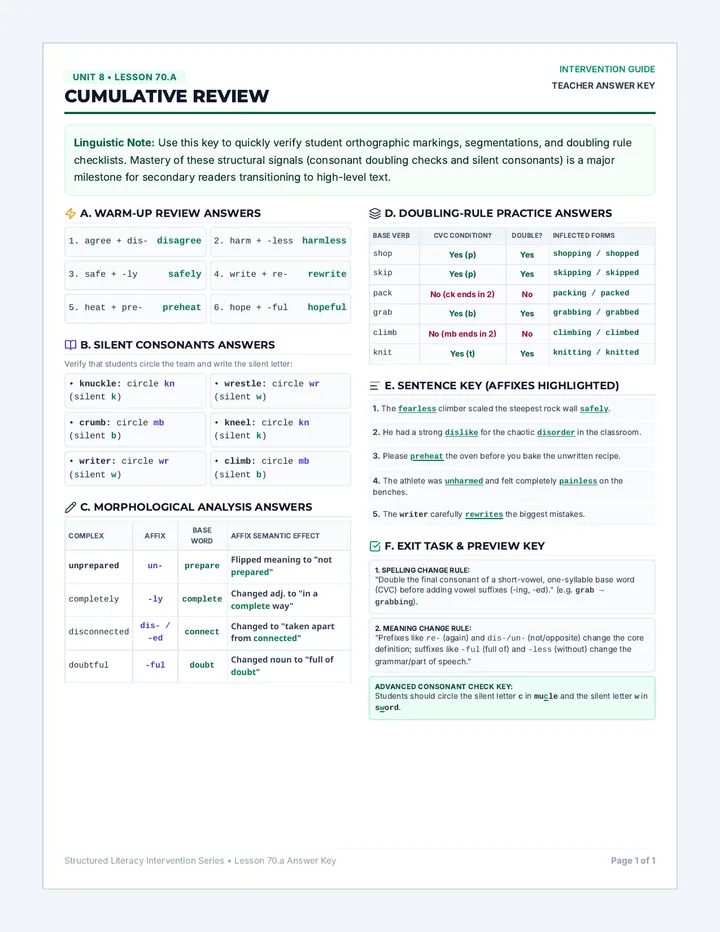
A cumulative review lesson for Unit 8, synthesizing all prefixes, suffixes, silent consonants, and spelling decision rules taught from Lesson 61 to 70.
A clean, 2-page printable cumulative student assessment evaluating mastery of Unit 8 targets: silent consonants, affix analysis, consonant doubling under CVC conditions, and morphological sentence comprehension.
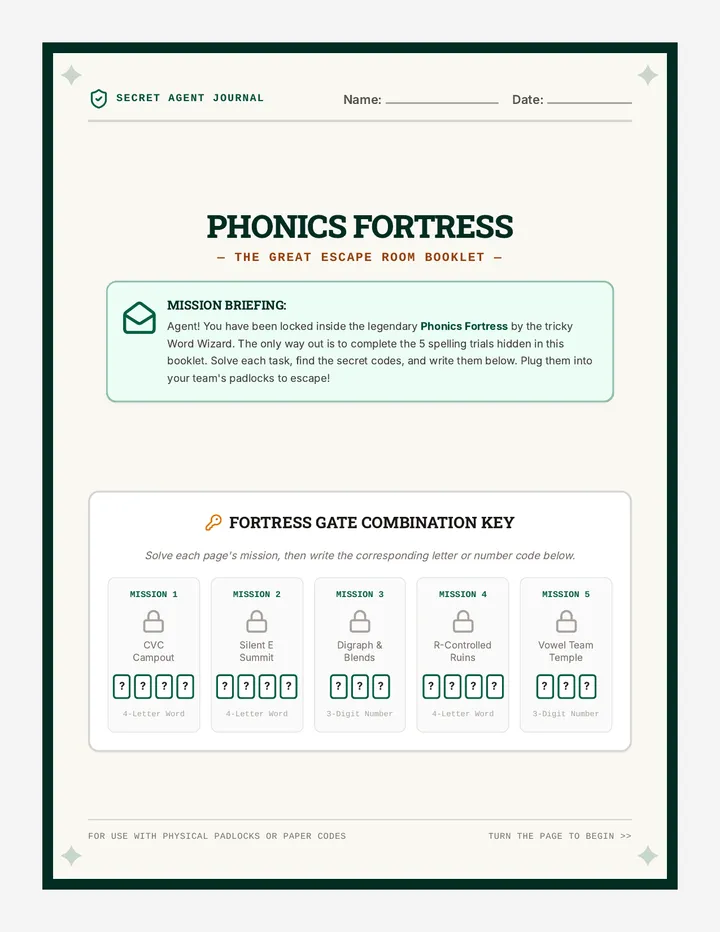
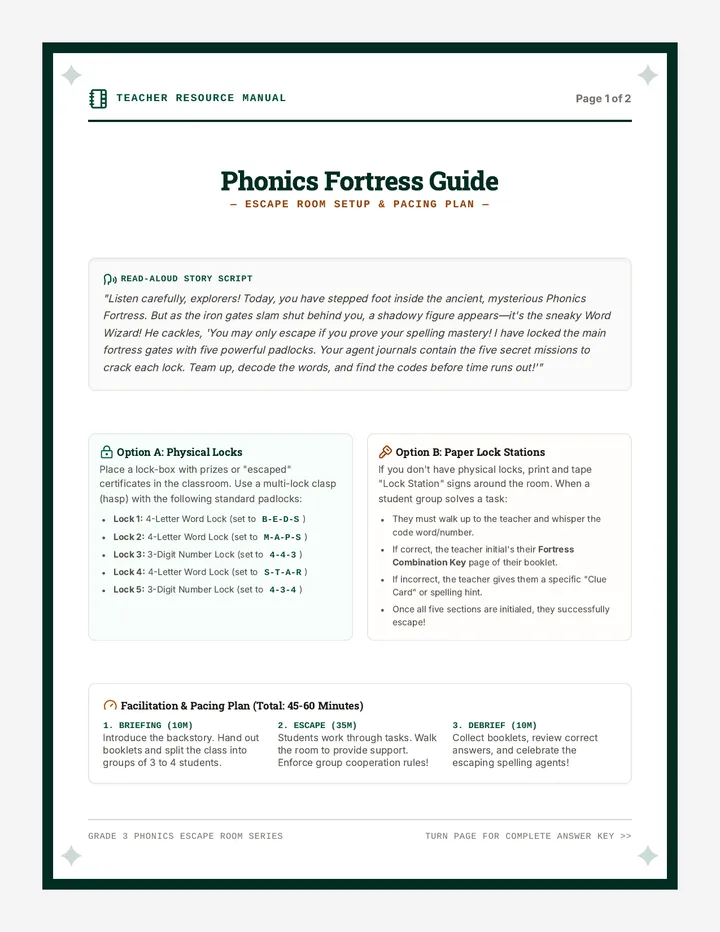
A comprehensive 5-day phonics breakout sequence where students complete daily independent spelling missions to crack codes. Covering CVC, Silent E, Digraphs/Blends, R-controlled vowels, and Vowel Teams, each day represents a new adventure challenge.
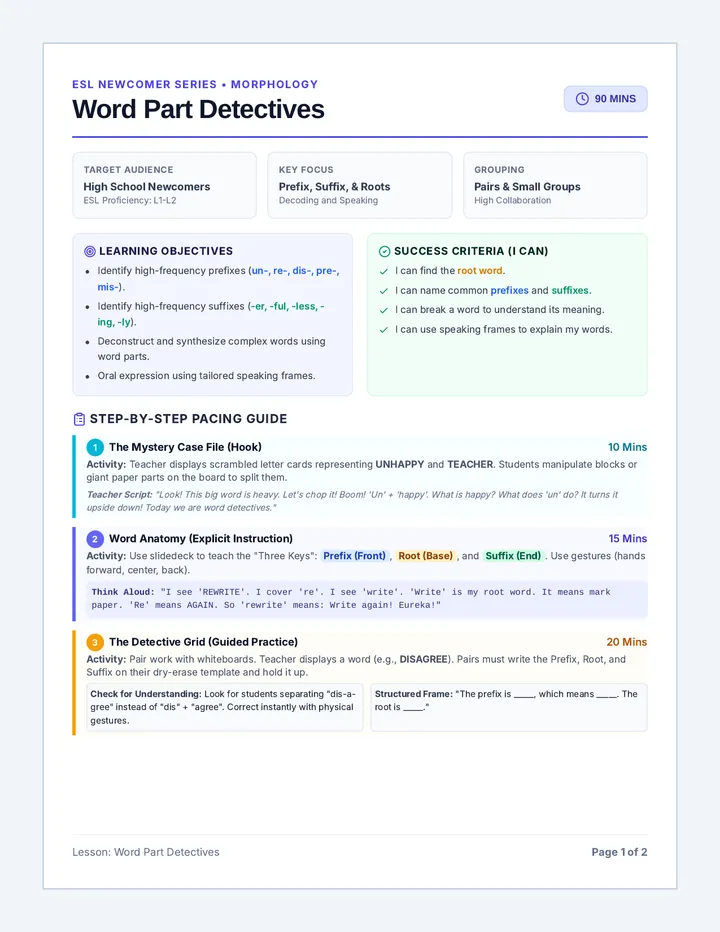
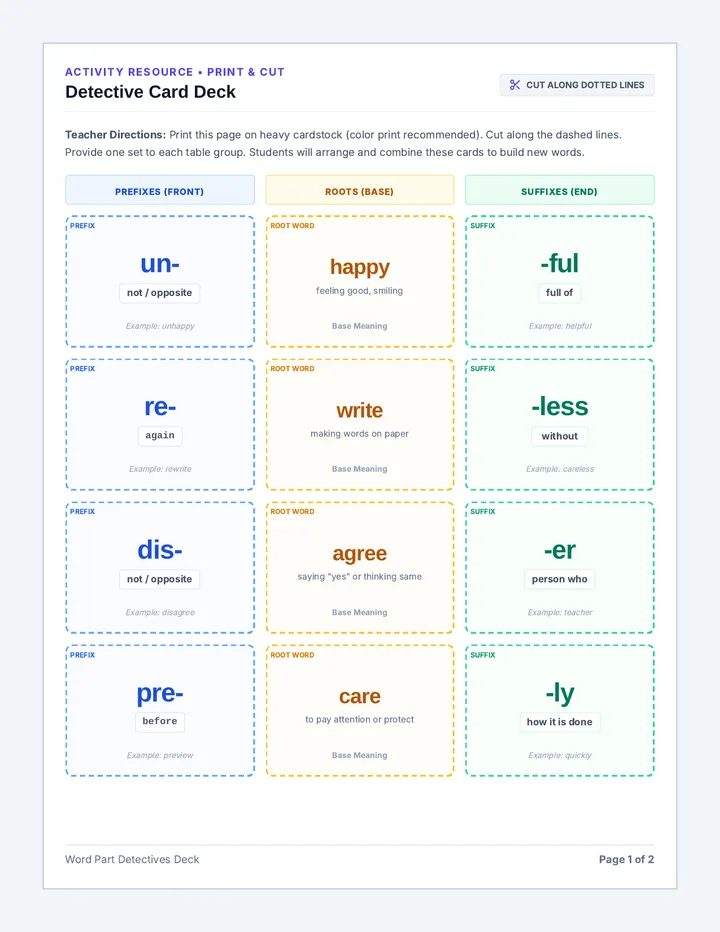
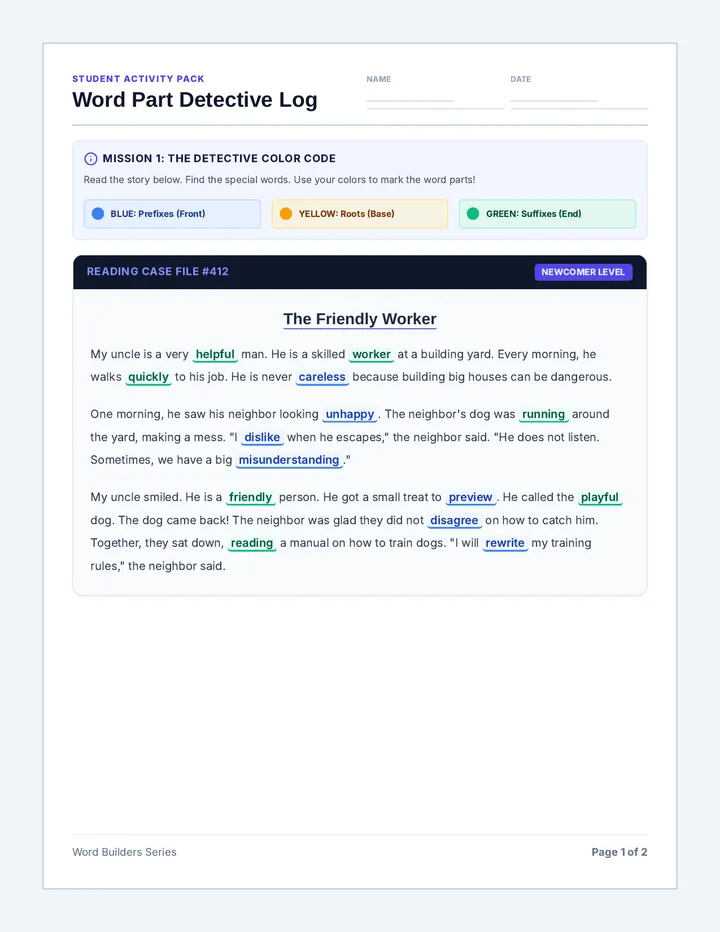
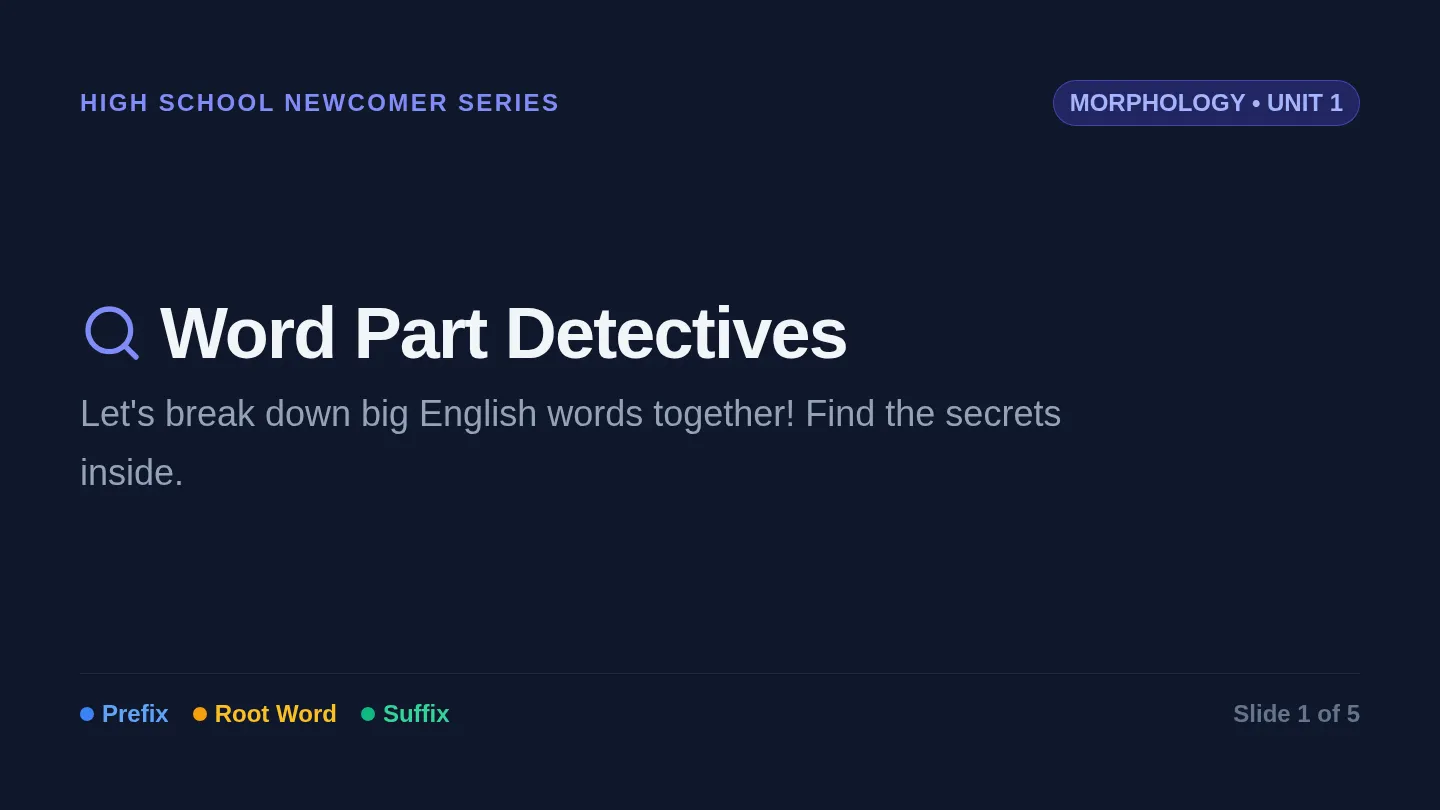
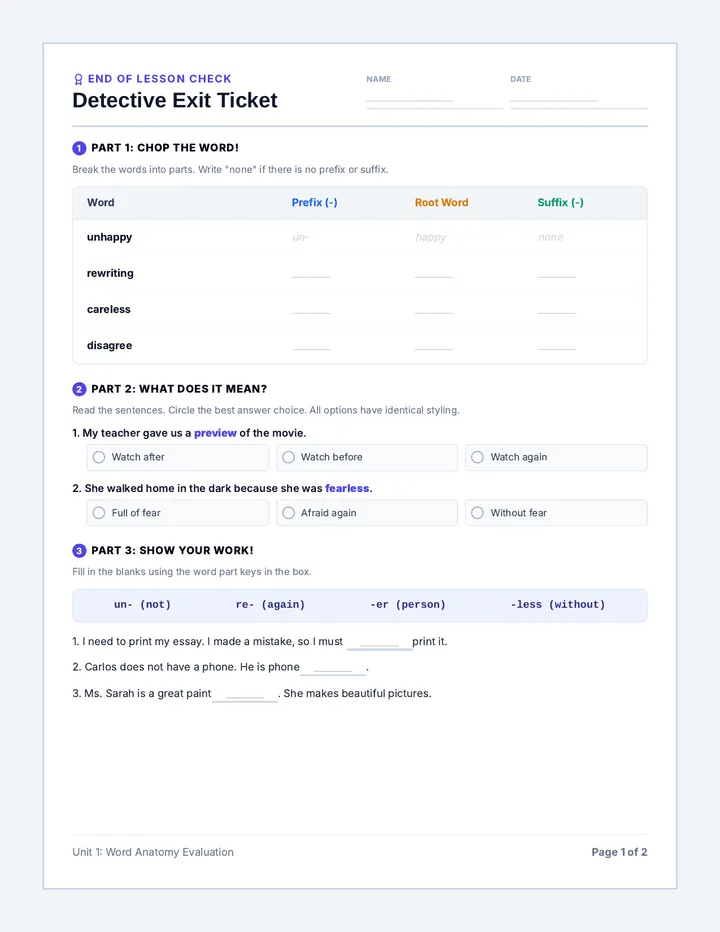
A foundational vocabulary and morphology unit designed specifically for high school newcomer ESL students. It focuses on breaking down unfamiliar English words into high-frequency prefixes, suffixes, and root words using heavy visual aids, scaffolded sentence stems, and highly collaborative activities.
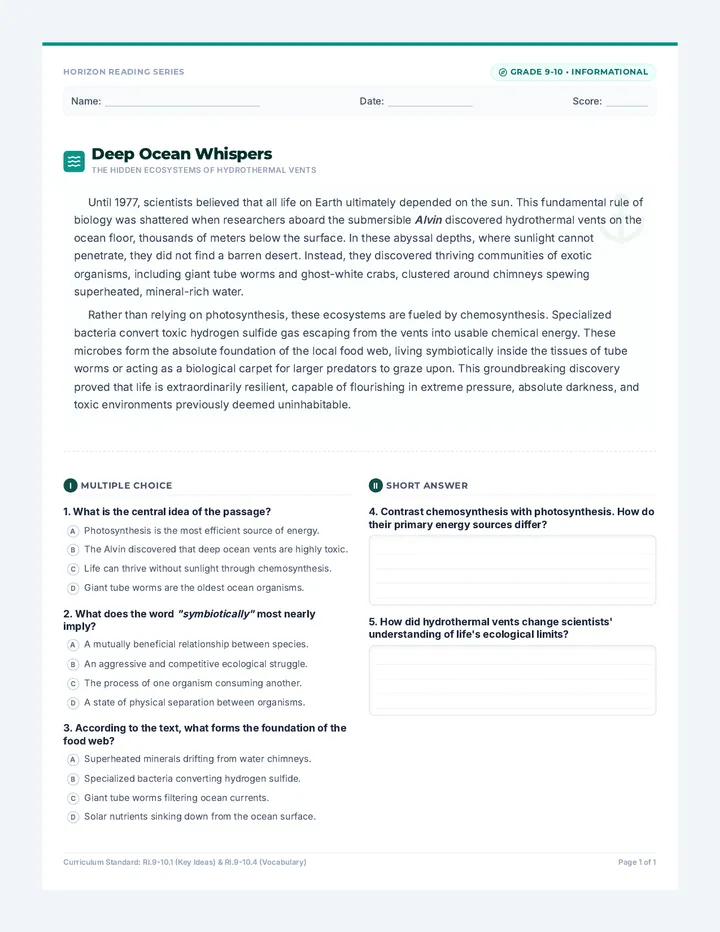
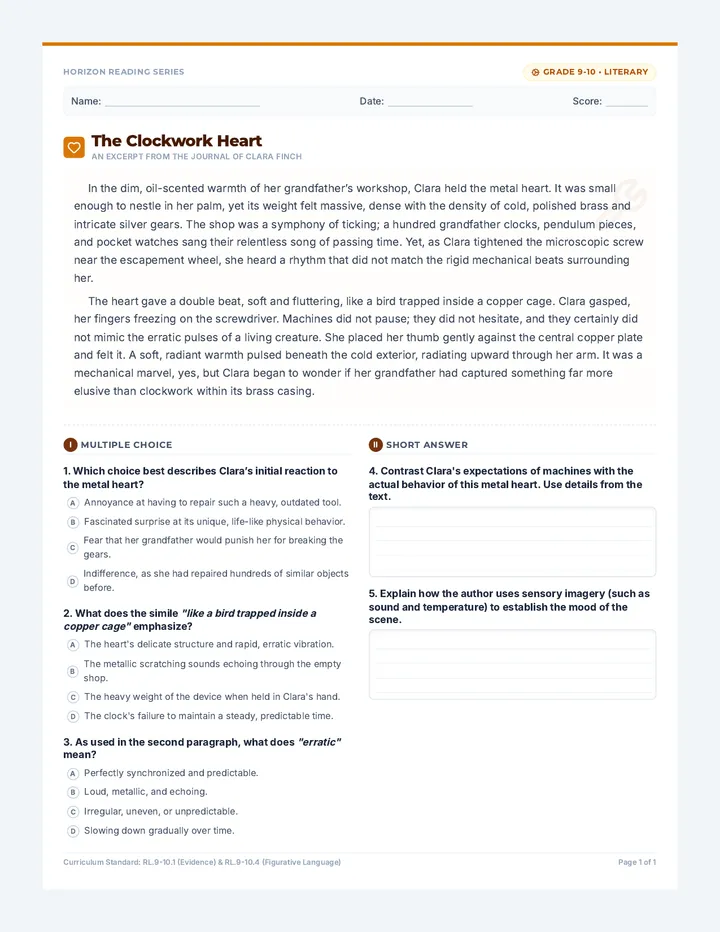
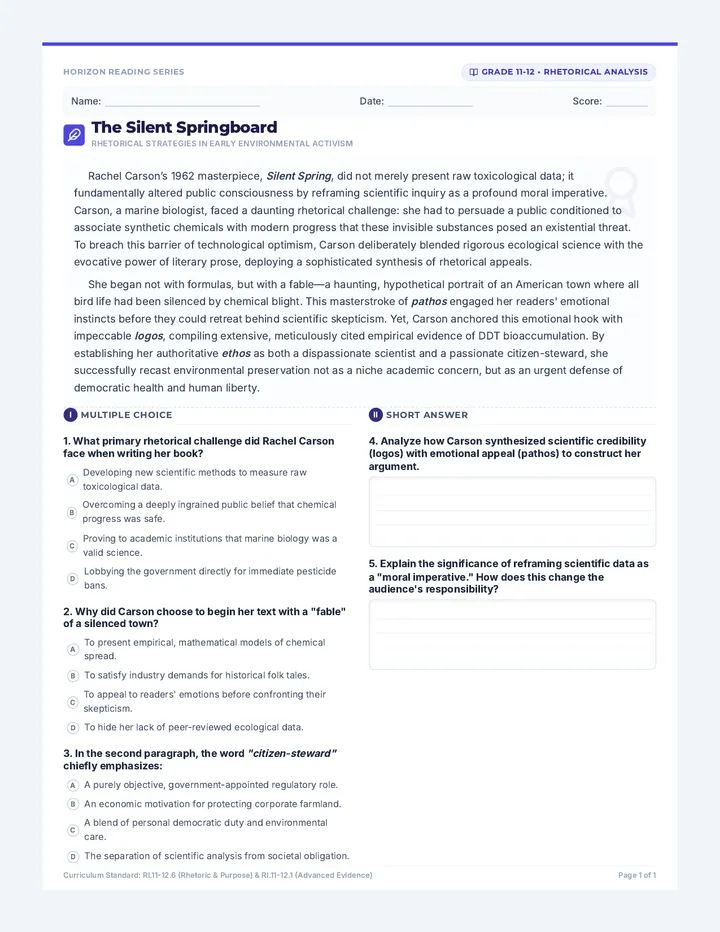
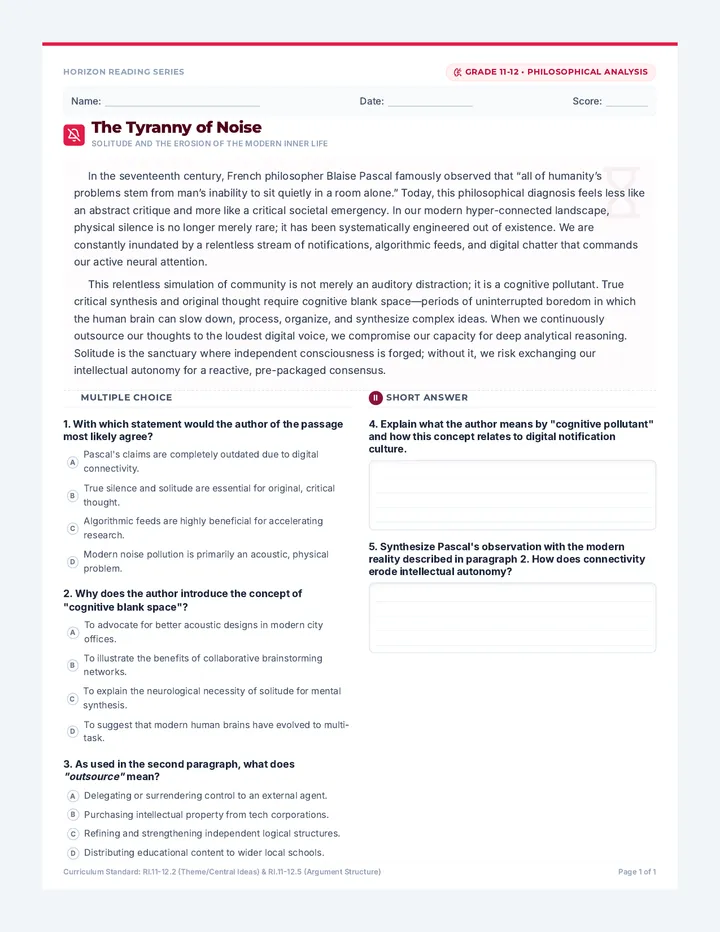
A cohesive, beautifully designed collection of reading comprehension worksheets spanning high school grades 9-12. Each single-page worksheet features a high-interest, curriculum-aligned text followed by three standards-aligned multiple-choice questions and two critical short-answer questions.