A creative lesson focused on teaching students how to structure a narrative using the Beginning, Middle, and End (BME) framework through an aviation-themed 'Plot Pilot' concept.
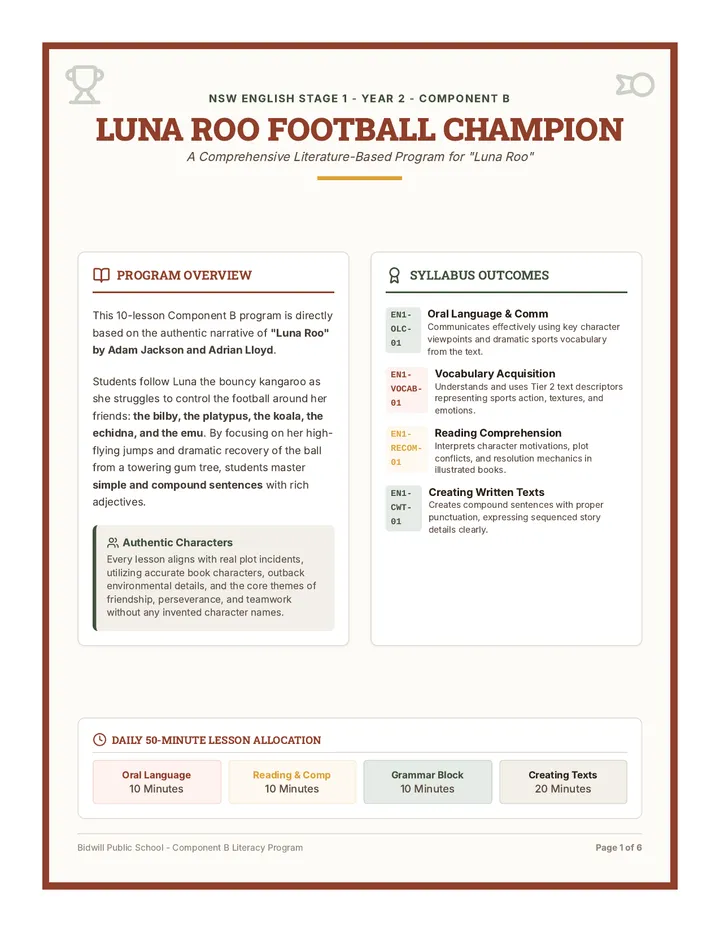
A 10-lesson Stage 1 Year 2 English Component B program based on the book 'Luna Roo' by Adam Jackson and Adrian Lloyd. The sequence explicitly teaches simple and compound sentences enriched with descriptive adjectives focused on Luna's outback soccer matches, animal teammates, and dusty playing fields.
A 2nd-grade reading-focused pull-out lesson for Multilingual Learners. All objectives are anchored in the Reading Domain, focusing on decoding adjectives, cross-linguistic cognate recognition, and text-based character inferences. Includes a visual anchor chart, bilingual graphic organizers, and a reading-based assessment.
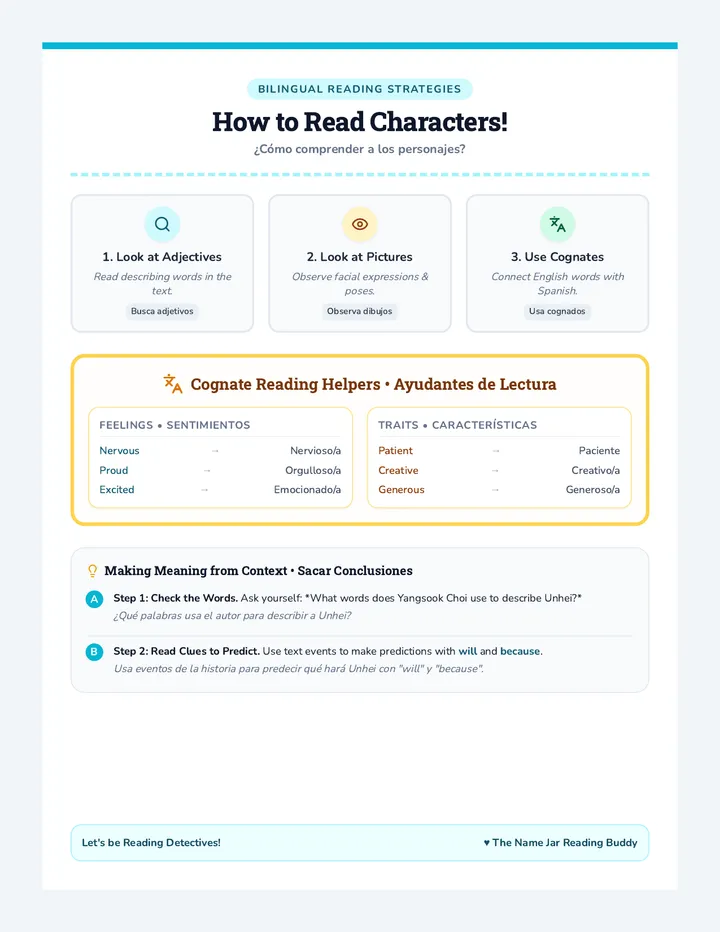
A 2-page visual support tool. Page 1 is a classroom-ready reading anchor chart helping students use adjectives and bilingual cognates to decode character emotions. Page 2 is a printable desk-mat reference with visual emojis, vocabulary guides, and prediction sentence starters.
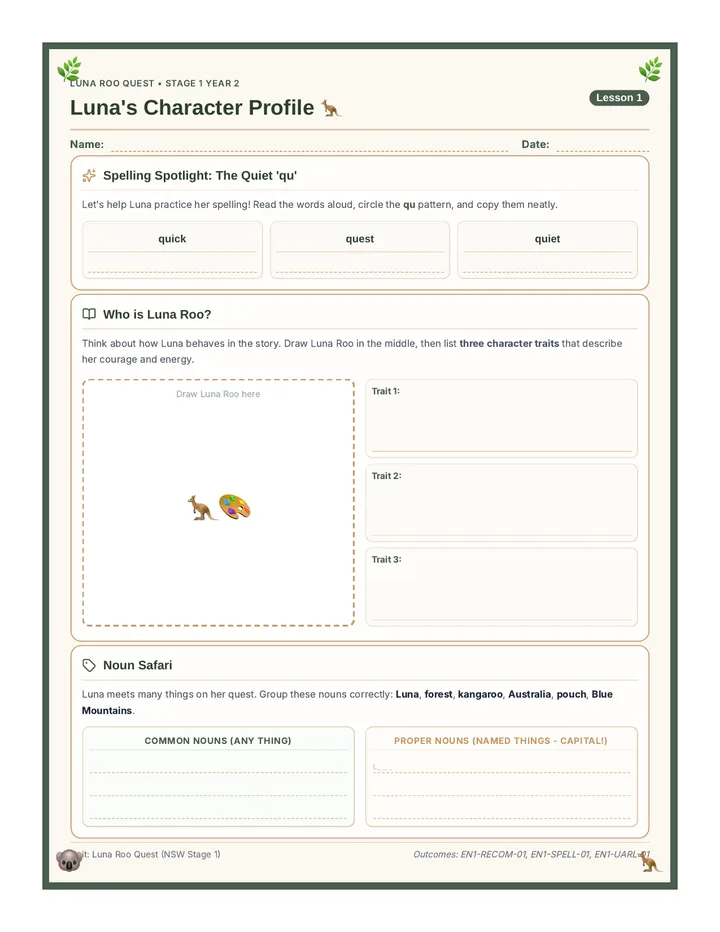
A 10-lesson English unit for NSW Year 2 Stage 1, focusing on the book 'Luna Roo'. Emphasises Component B: literature response, grammar, vocabulary, and text creation, integrating the spelling focus 'qu'.
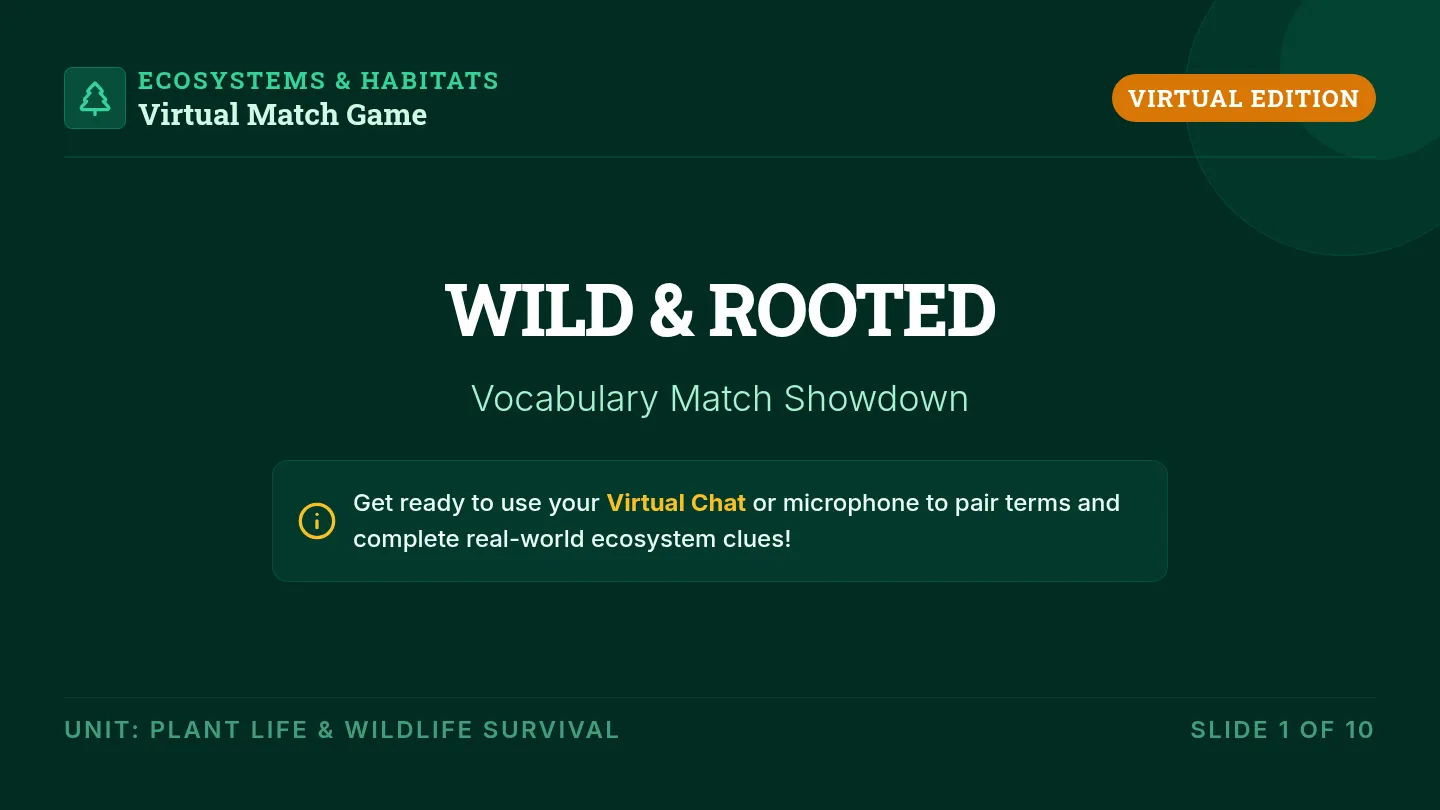
A highly engaging vocabulary lesson where students master key ecosystem and habitat terms through interactive pairing games and hands-on sentence completion.
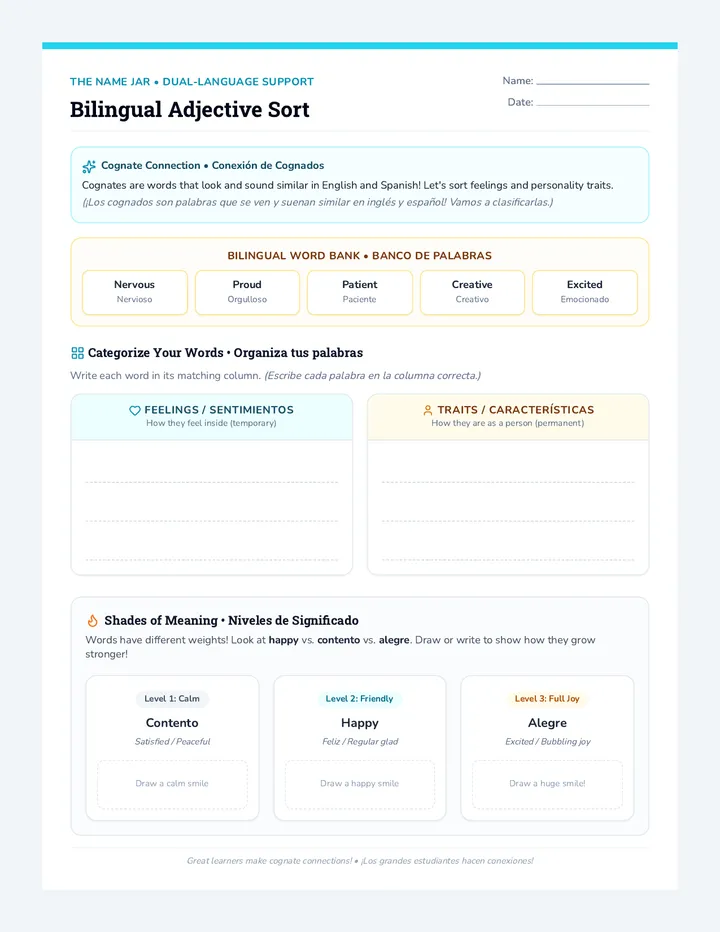
A 2-page bilingual graphic organizer. Page 1 contains a cognate word-sorting grid and a 'shades of meaning' activity comparing happy, contento, and alegre. Page 2 features a visual 'Name Jar' character portrait canvas with scaffolded dual-language sentence frames.
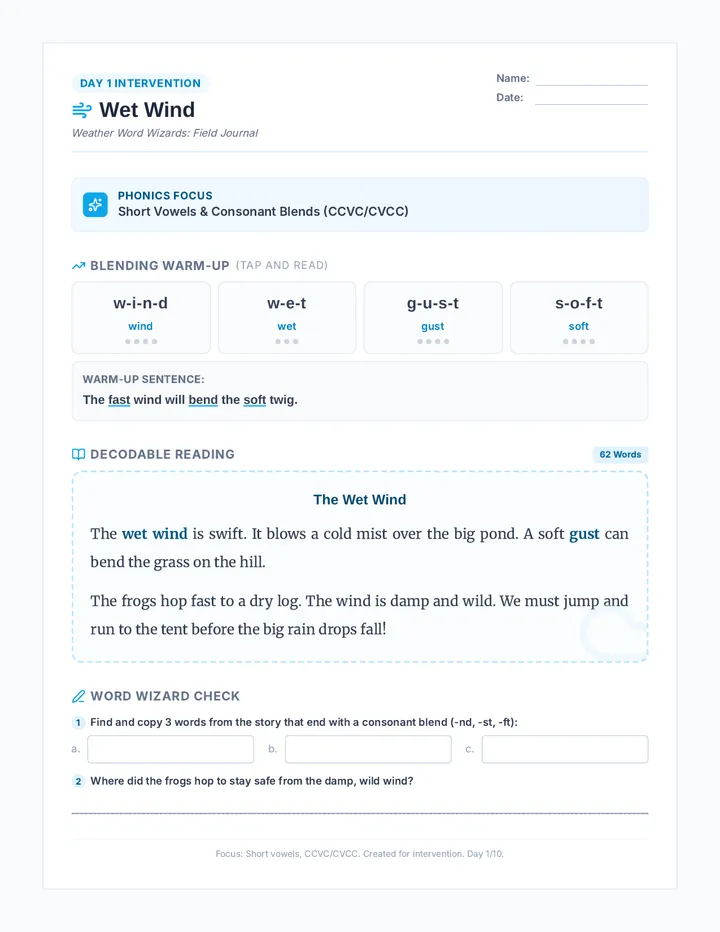
A 10-day reading intervention sequence focusing on phonics and decoding skills, connected by stories about weather and seasons. Each day introduces a specific phonetic pattern alongside an engaging, themed decodable text.
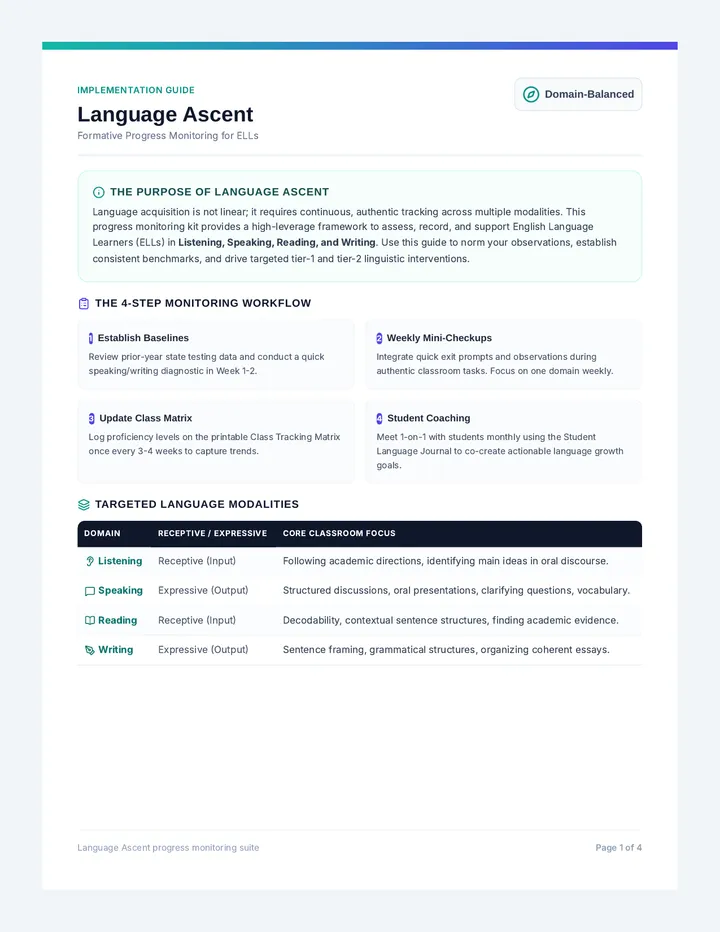
A comprehensive progress monitoring kit for English Language Learners (ELLs) across all four core language domains. Includes step-by-step teacher instructions, a printable class tracking matrix, a student self-monitoring journal, and quick formative assessment rubrics.
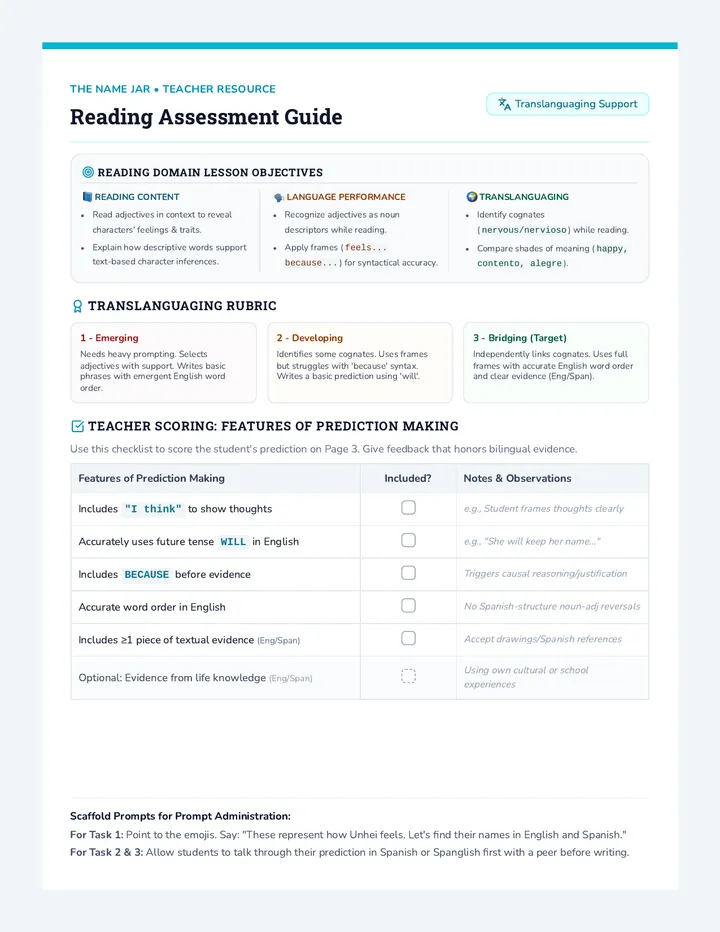
A 3-page printable assessment and teacher guide revised to explicitly display the newly specified reading content, language, and translanguaging objectives on the teacher's guide page, while maintaining student close-reading tasks.
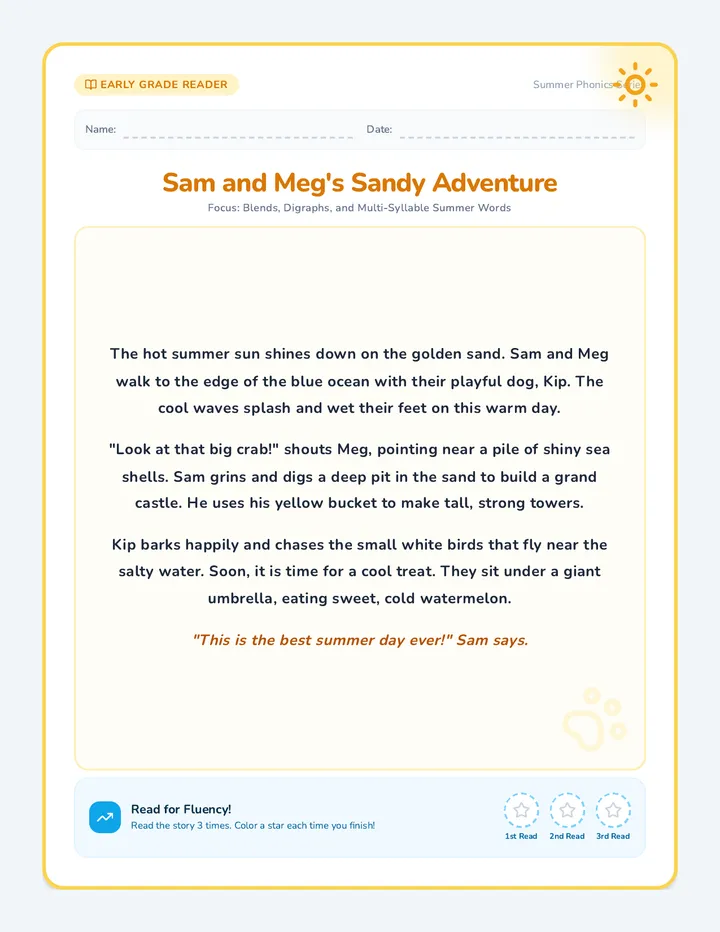
A collection of four engaging, summer-themed decodable reading comprehension worksheets for early readers (Grades K-2). Each passage features rich summer fiction, a fluency tracker, and comprehension questions with extra-large primary tri-lines.
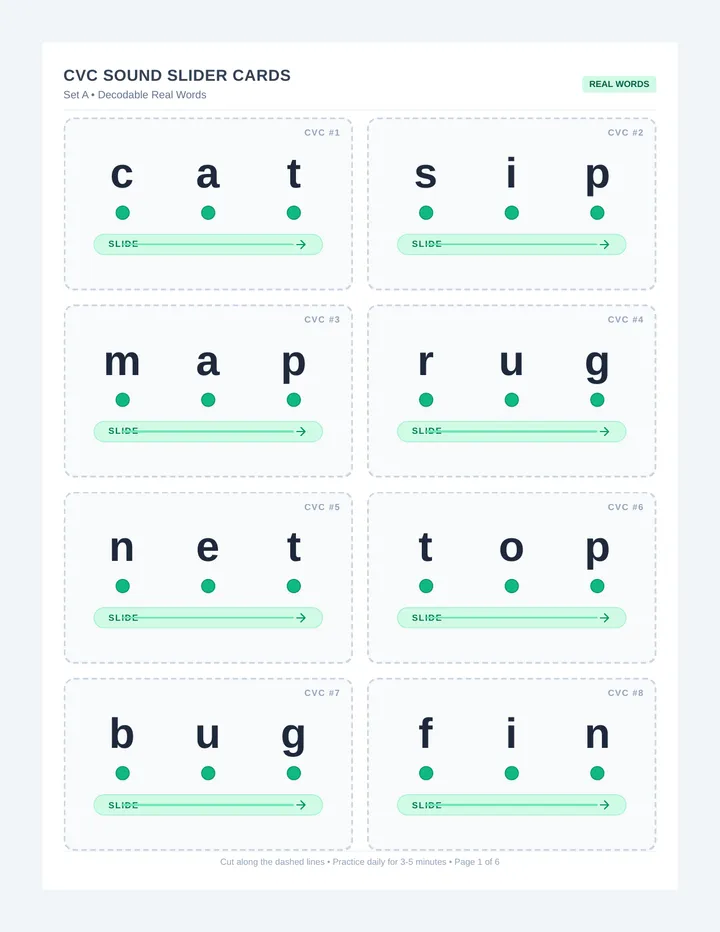
A focused foundational reading lesson centered on visual and physical blending strategies using CVC, CCVC, and CVCC flashcards with built-in blending cues and a corresponding data tracking system for educators and instructional assistants.
An interactive, screen-optimized slide deck designed for virtual classrooms. Features matching challenges with definitions and context clues for all seven vocabulary words, along with interactive rounds, virtual game mechanics, and a wildcard answer debrief slide.