A high-impact, 10-minute lesson designed to help 8th graders master participial phrases through structural analysis and creative writing.
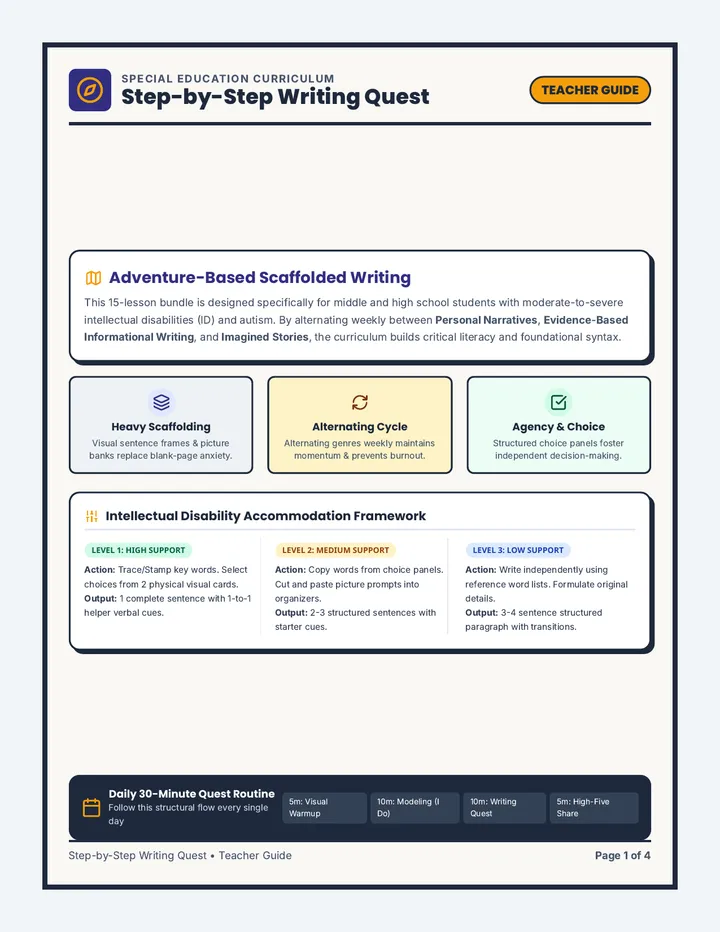
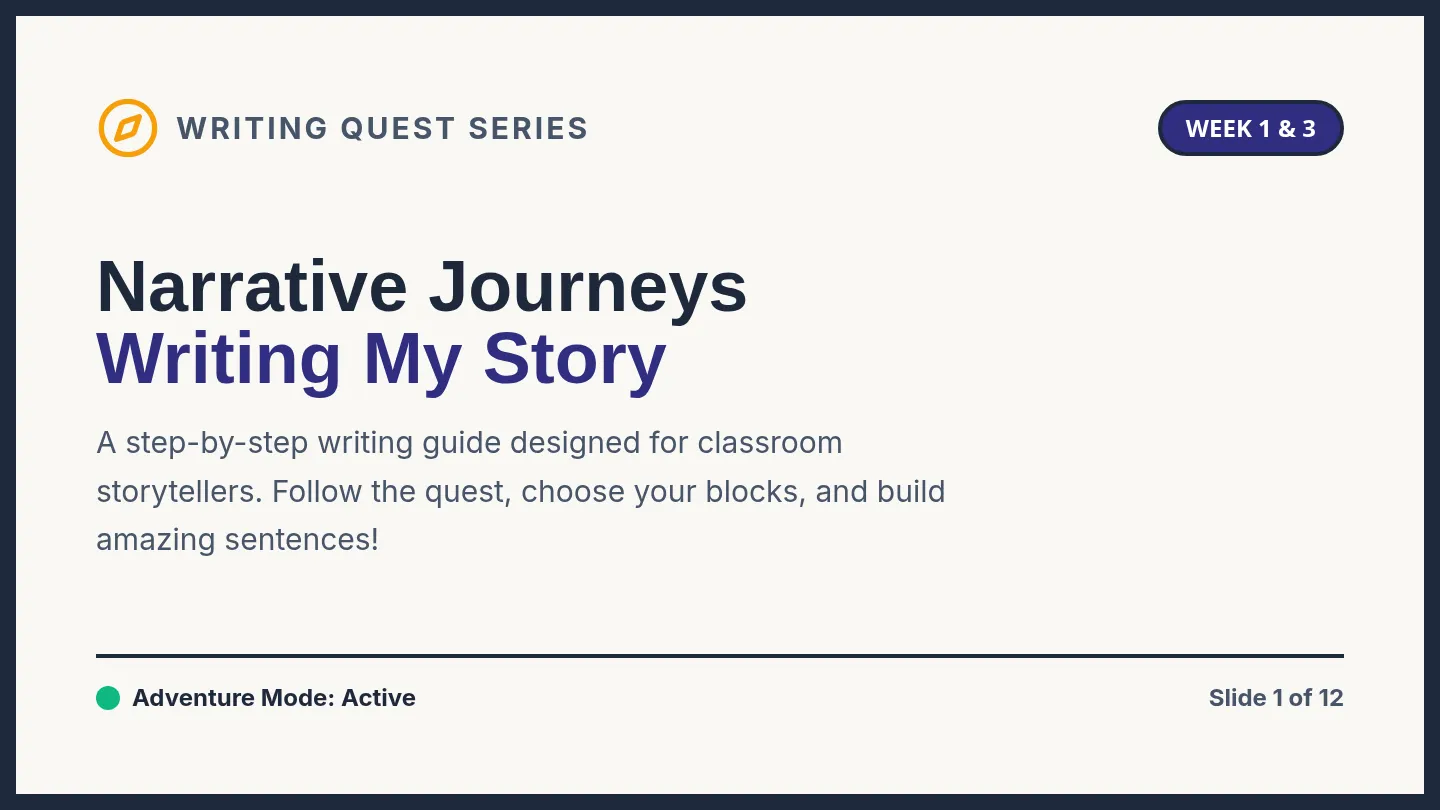
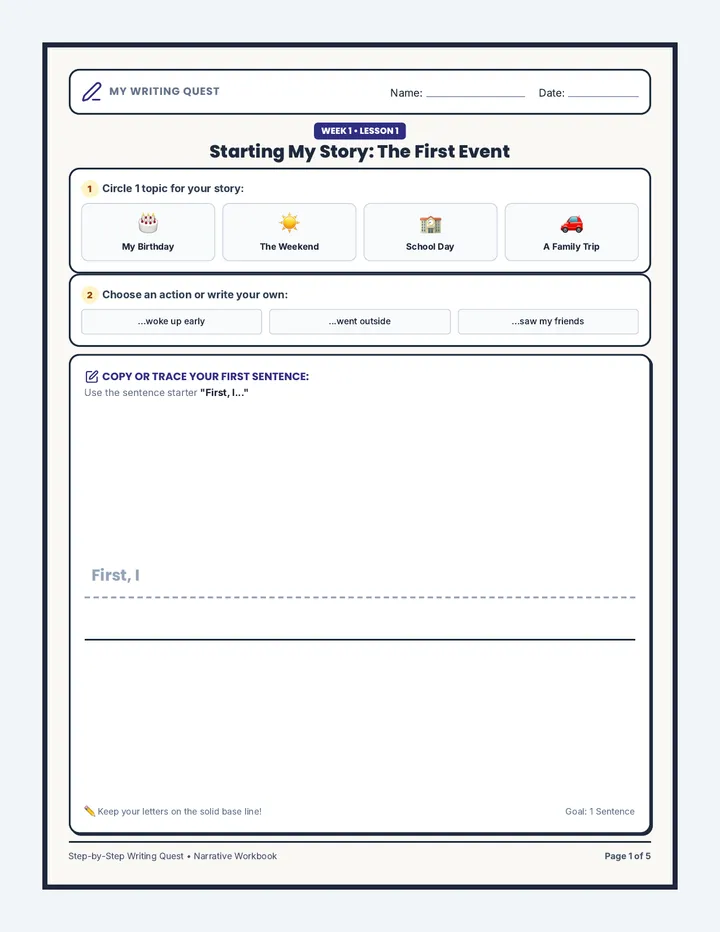
A comprehensive 15-lesson writing curriculum tailored for middle and high school students with intellectual disabilities. The sequence alternates weekly between personal narratives, evidence-based informational writing, and imagined stories, using heavy visual scaffolding, structured sentence frames, and clear graphic organizers.
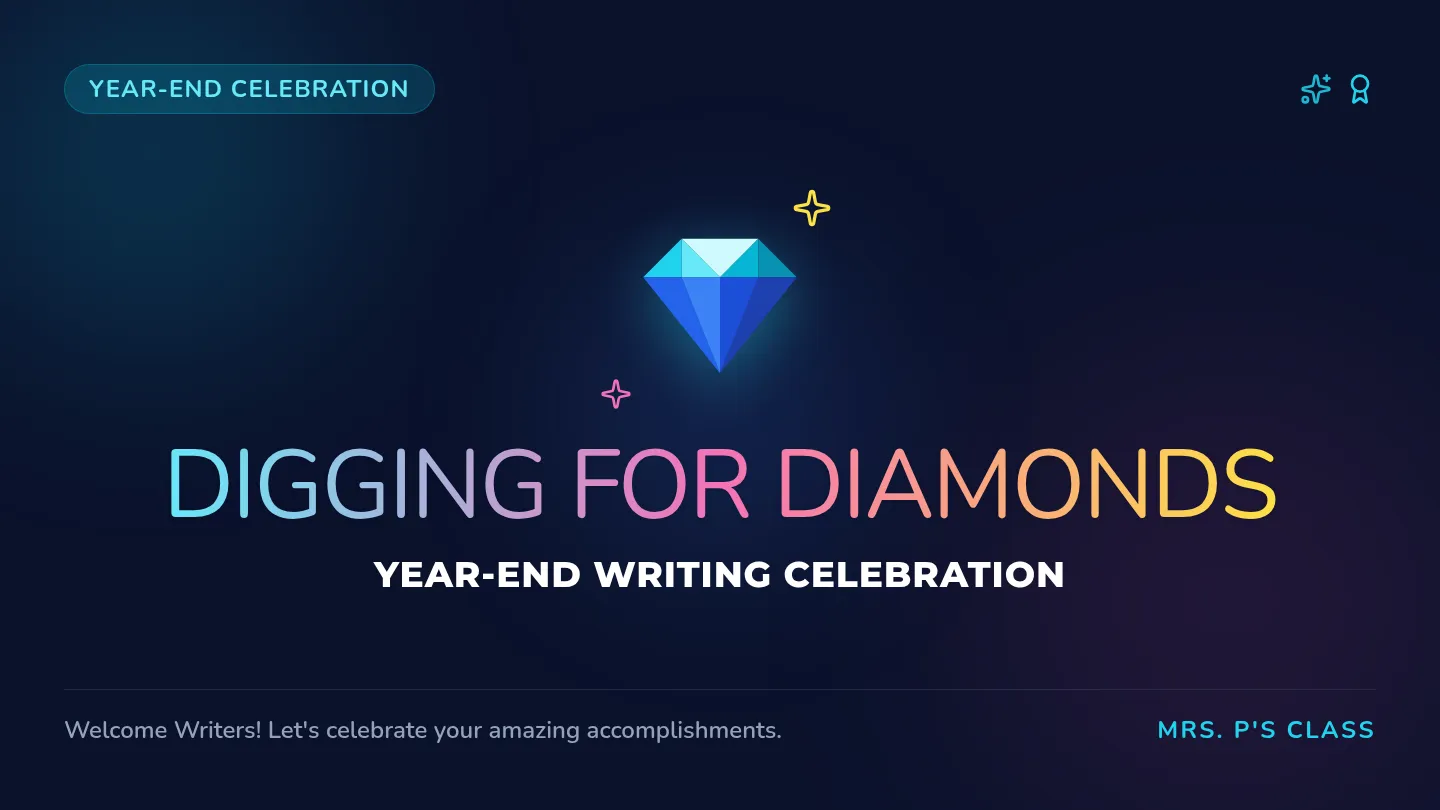
A year-end writing celebration and awards ceremony designed to recognize growth, effort, and accomplishments in writing.
A colorful, highly visual slide deck with a 'Digging for Diamonds' theme in the vibrant dark-neon style. Includes the Chelsea Market title font and a newly added blank custom template slide (Slide 8) so teachers can easily overlay their own custom prompts or notes.
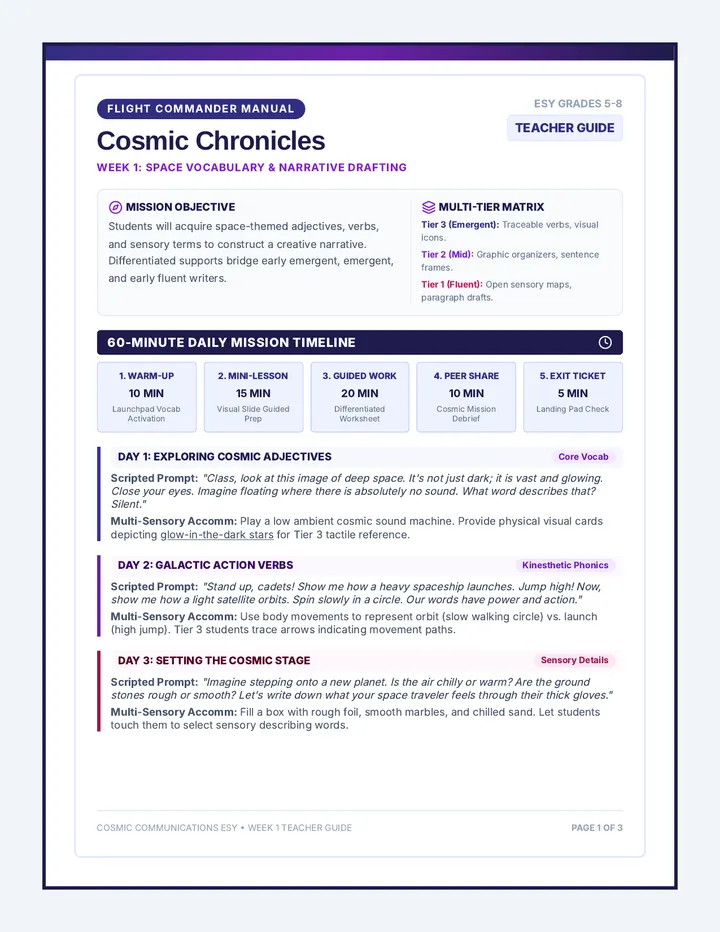
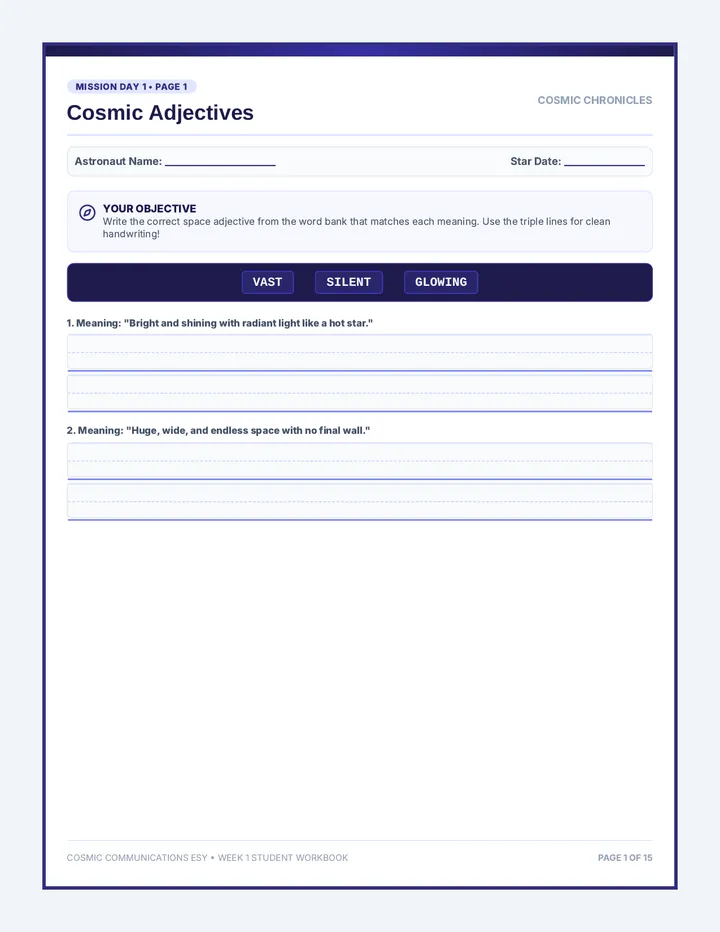
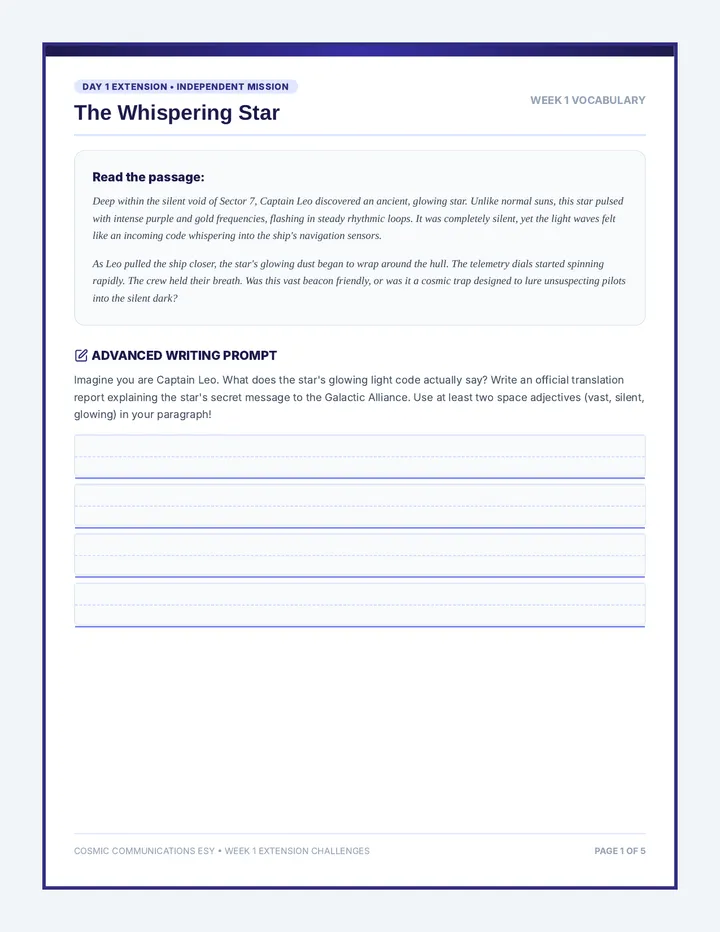
A comprehensive, space-themed 4-week Extended School Year (ESY) ELA curriculum designed for middle school students with disabilities (grades 5-8). It features daily scaffolded learning structures, differentiated materials spanning early emergent to early fluent readers, and visual sensory supports that make ELA skill acquisition accessible, engaging, and structured.
A celebratory end-of-year lesson designed to honor student writing growth, showcase final projects, award special honors, and guide students through meaningful reflections on their journey as writers.
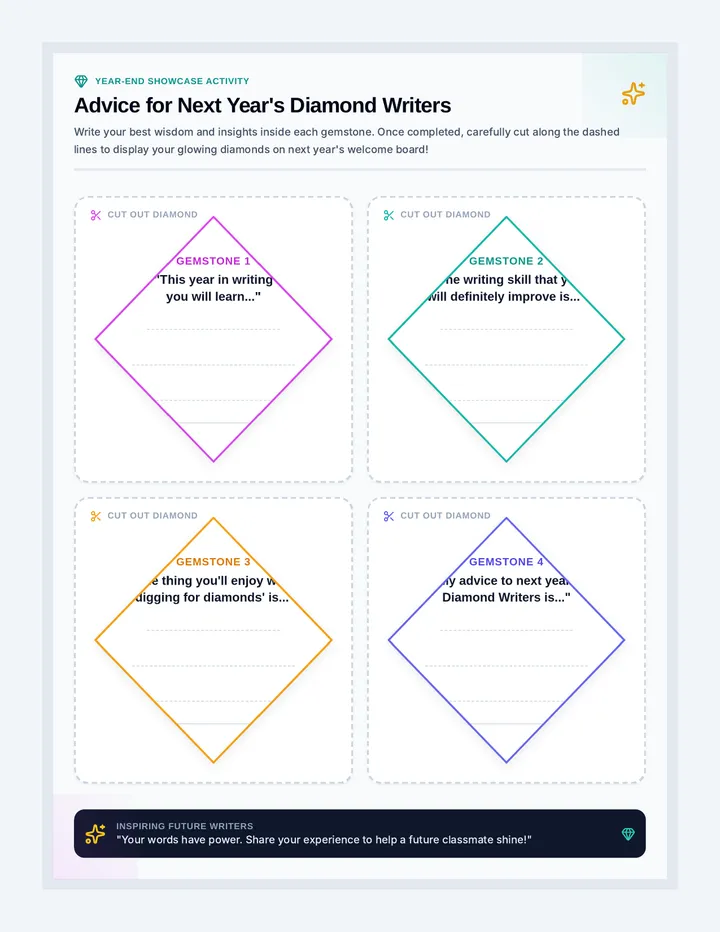
A printable year-end activity sheet featuring four large, beautiful cutout diamonds with ample writing space for students to share wisdom and advice with next year's incoming writers.
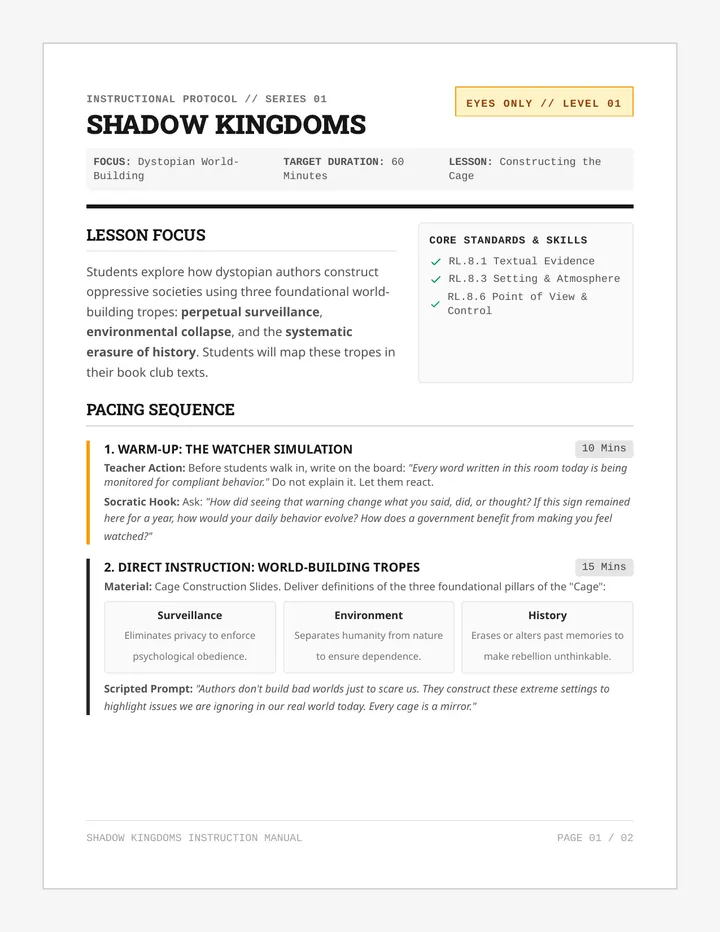
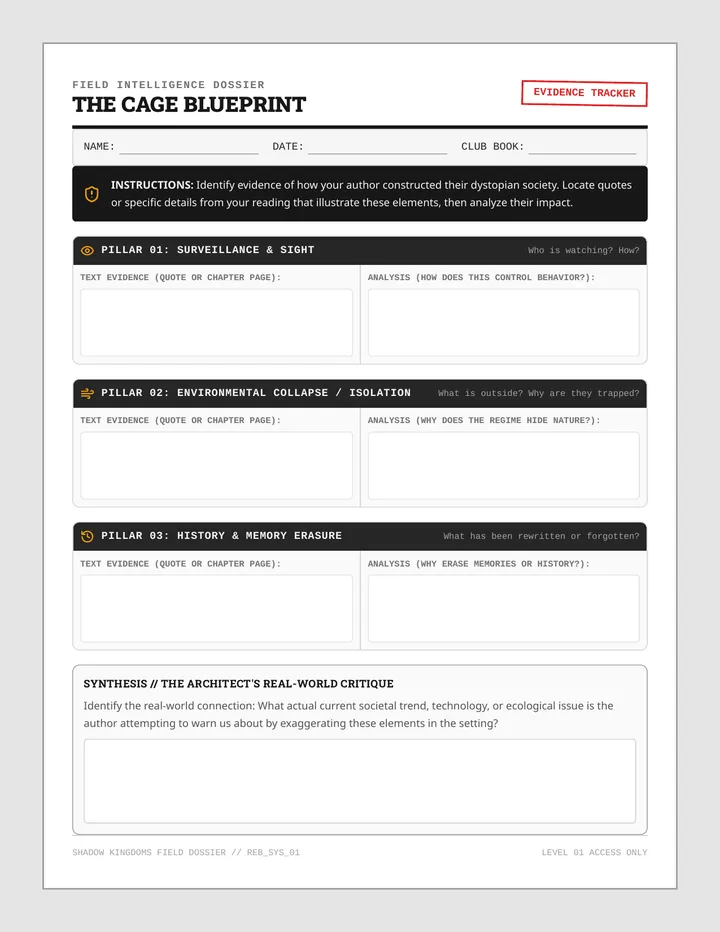
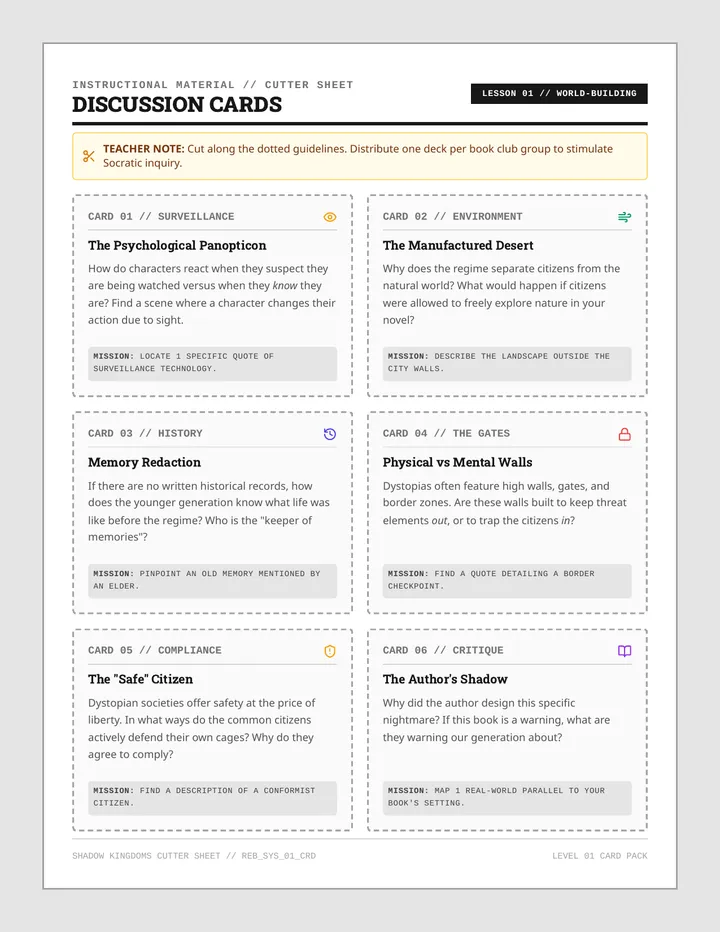
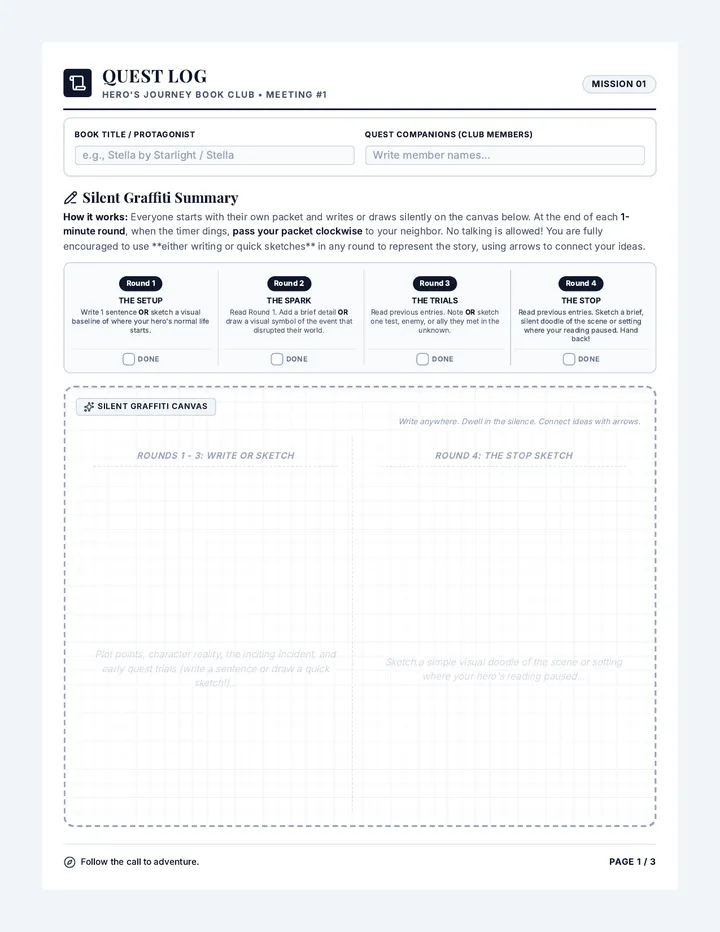
A comprehensive book-club companion unit designed to guide students through the dark alleys of dystopian literature. Through three thematic lessons, students deconstruct propaganda, analyze world-building, track protagonist rebellion, and explore authors' real-world critiques.
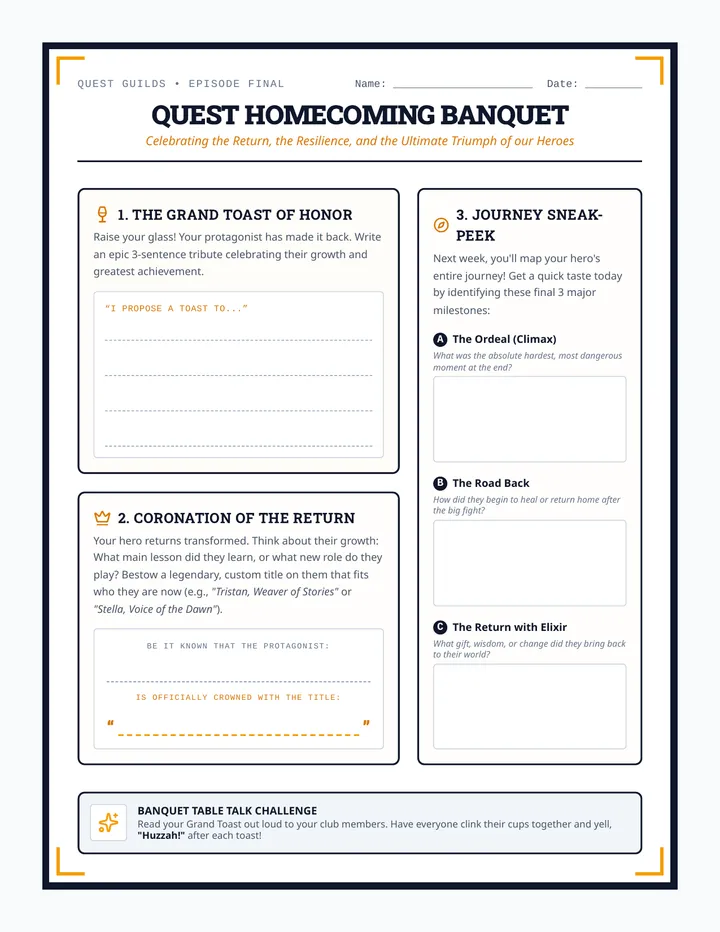
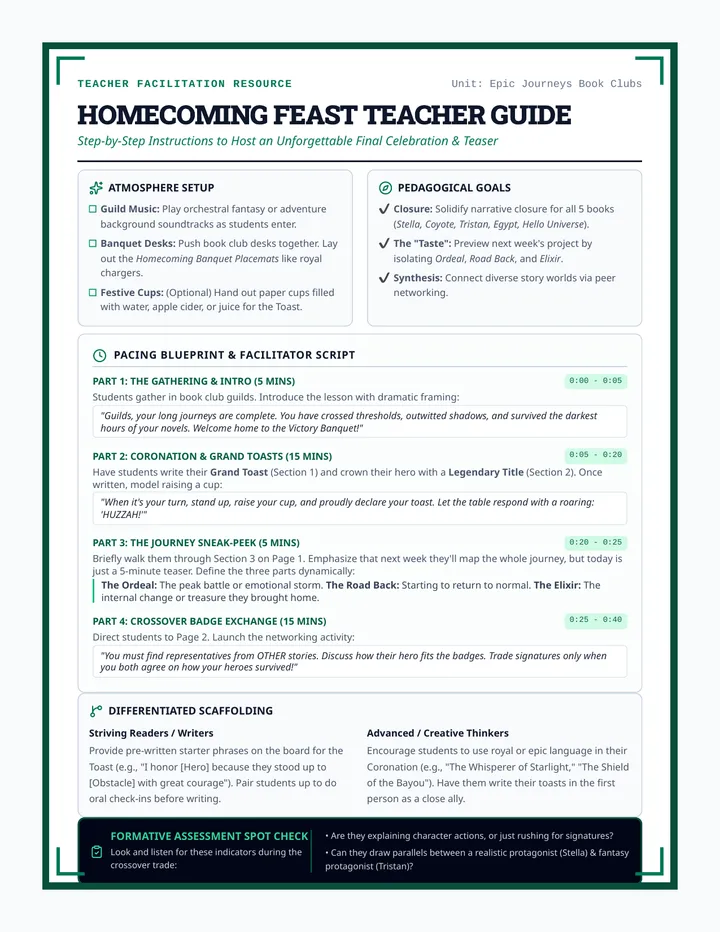
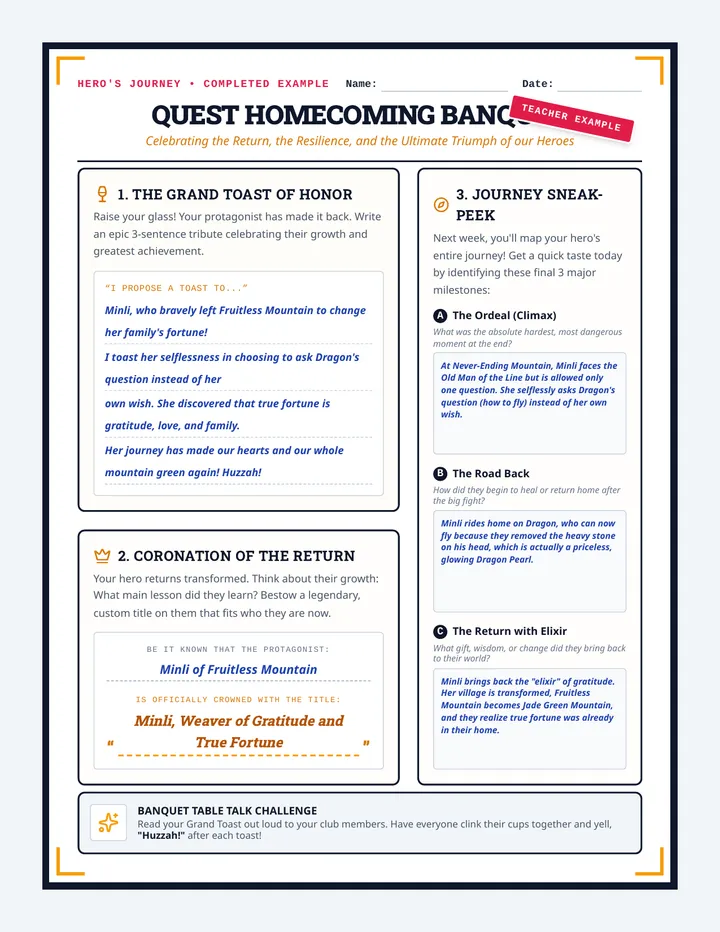
The celebratory final meeting of the book clubs, designed as a festive victory banquet. Students commemorate their protagonist's return through a grand ceremonial toast, active crossover badge trading with other groups, and a high-interest 5-minute teaser of the Hero's Journey mapping project.
A highly visual, vibrant presentation for the year-end writing celebration, designed to excite students, present awards, and guide reflections with geometric diamond motifs.
A multi-week novel study sequence structured around the Hero's Journey framework, featuring five engaging books (The Red Pyramid, Tristan Strong, Hello Universe, Coyote Sunrise, Stella by Starlight). Incorporates creative, gamified, and role-play activities to sustain student engagement and deepen literary analysis.
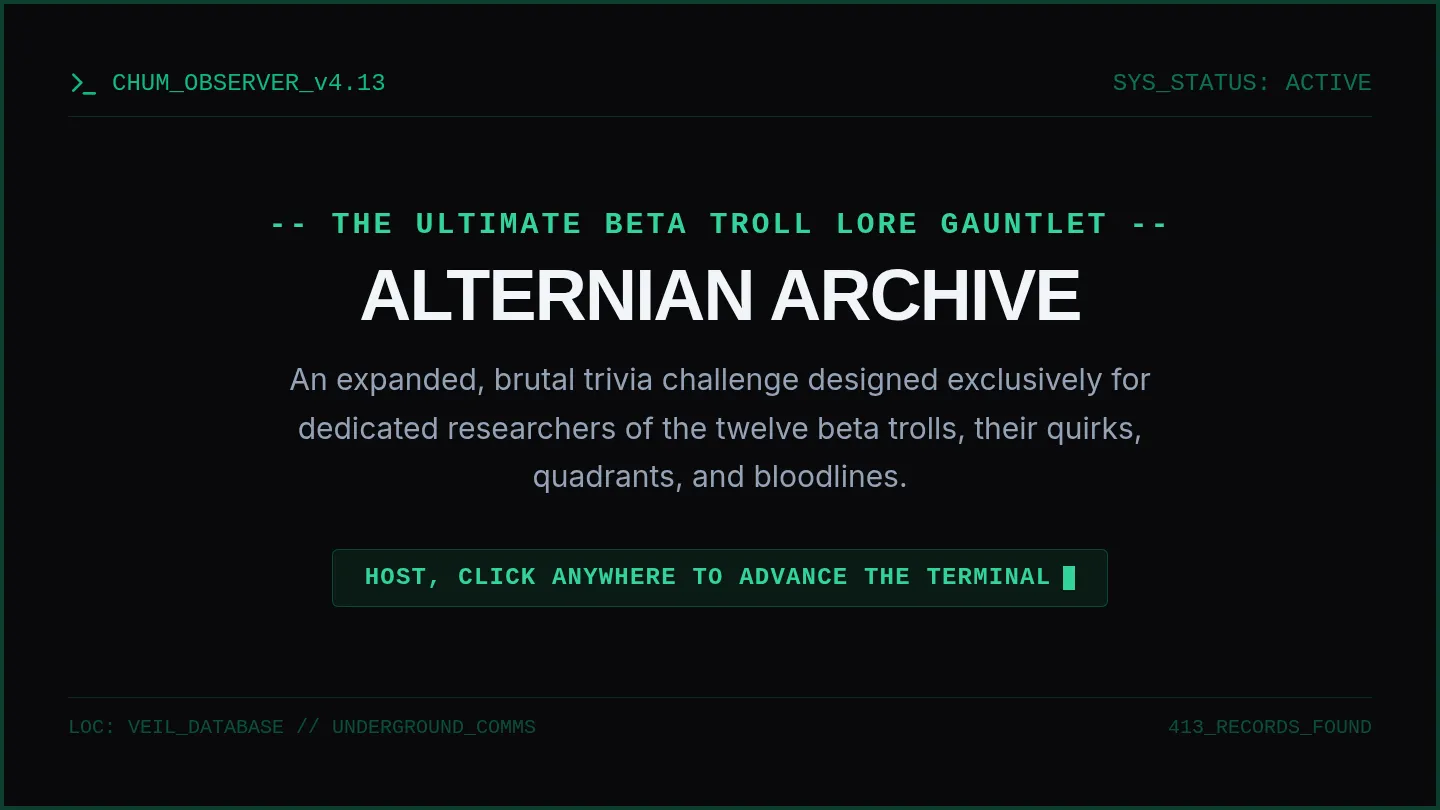
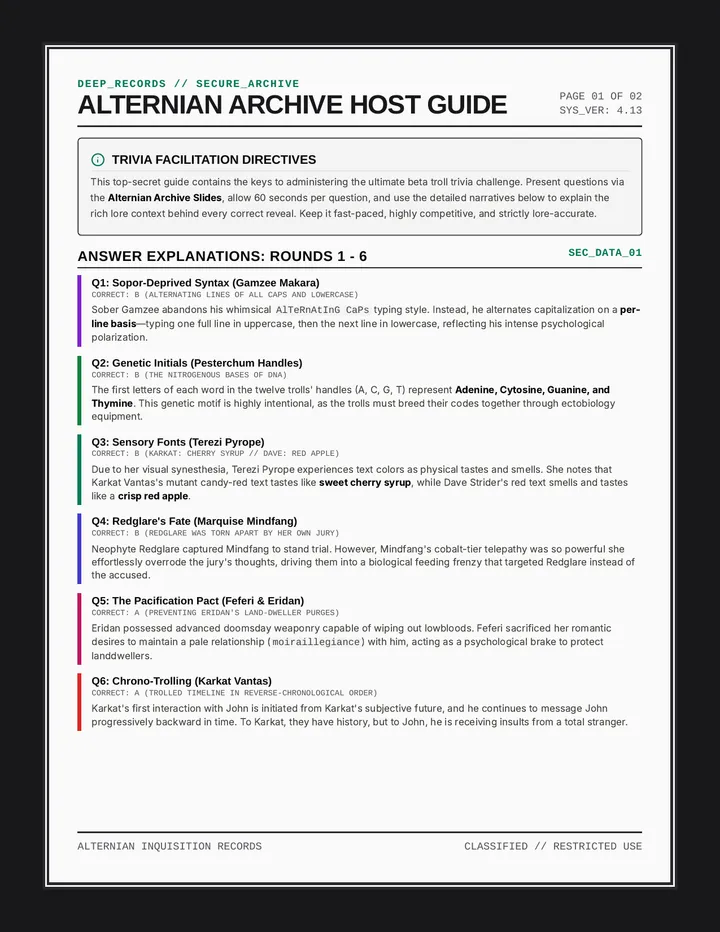
A high-intensity, visually striking trivia showdown centered on the deep-cut lore of the Homestuck Beta Trolls. Designed specifically for dedicated fans, this lesson challenges students with complex questions on relationships, quirks, and Alternian history.
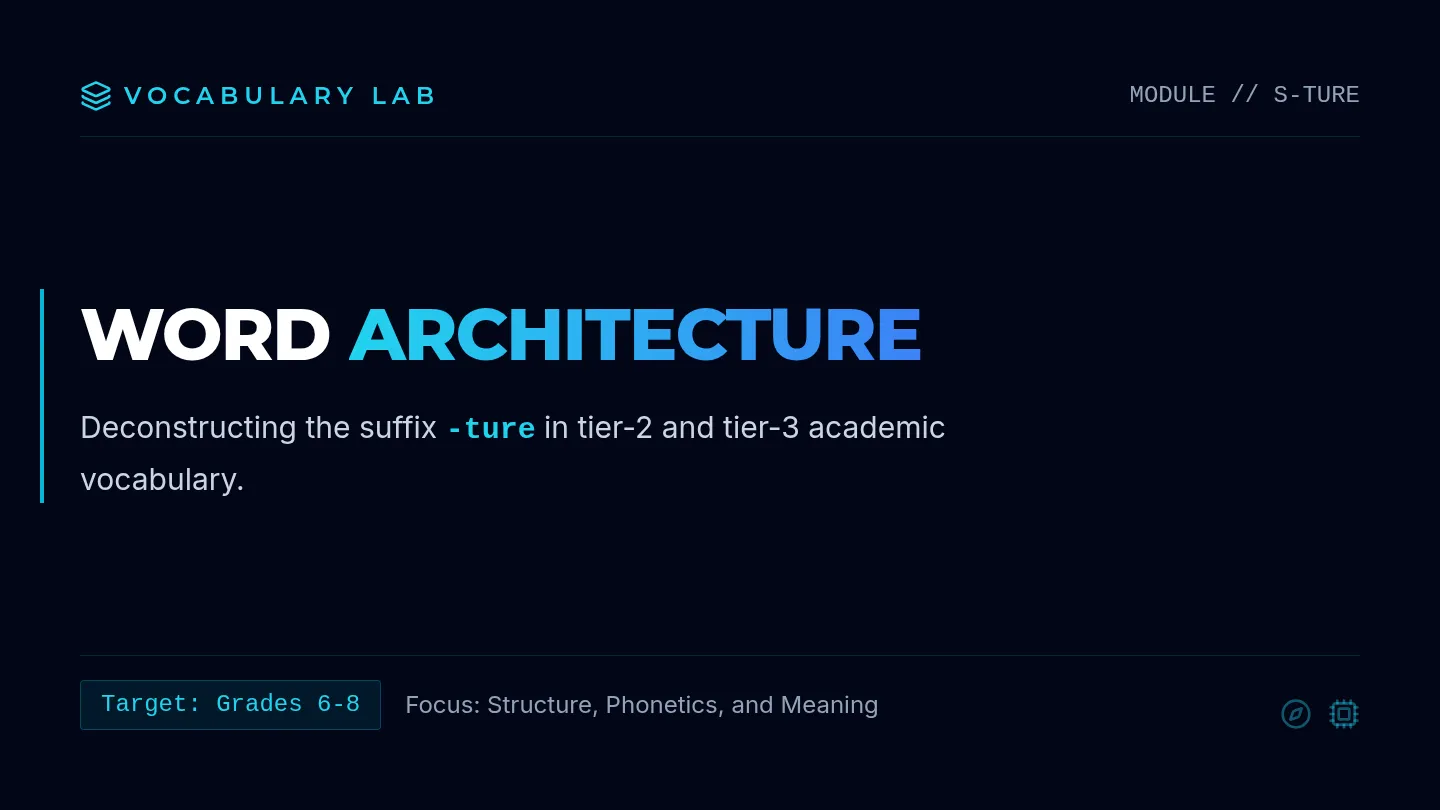
An interactive slide presentation for middle school students on the suffix '-ture'. It features academic tier-2 and tier-3 vocabulary like architecture, miniature, and caricature, and covers origin, pronunciation rules, syllable stress, guided classroom activities, and an exit ticket. All text sizes are strictly 24px (text-2xl) or larger.