A guide and template for teachers to streamline communication with parents, ensuring updates are professional, clear, and effective.
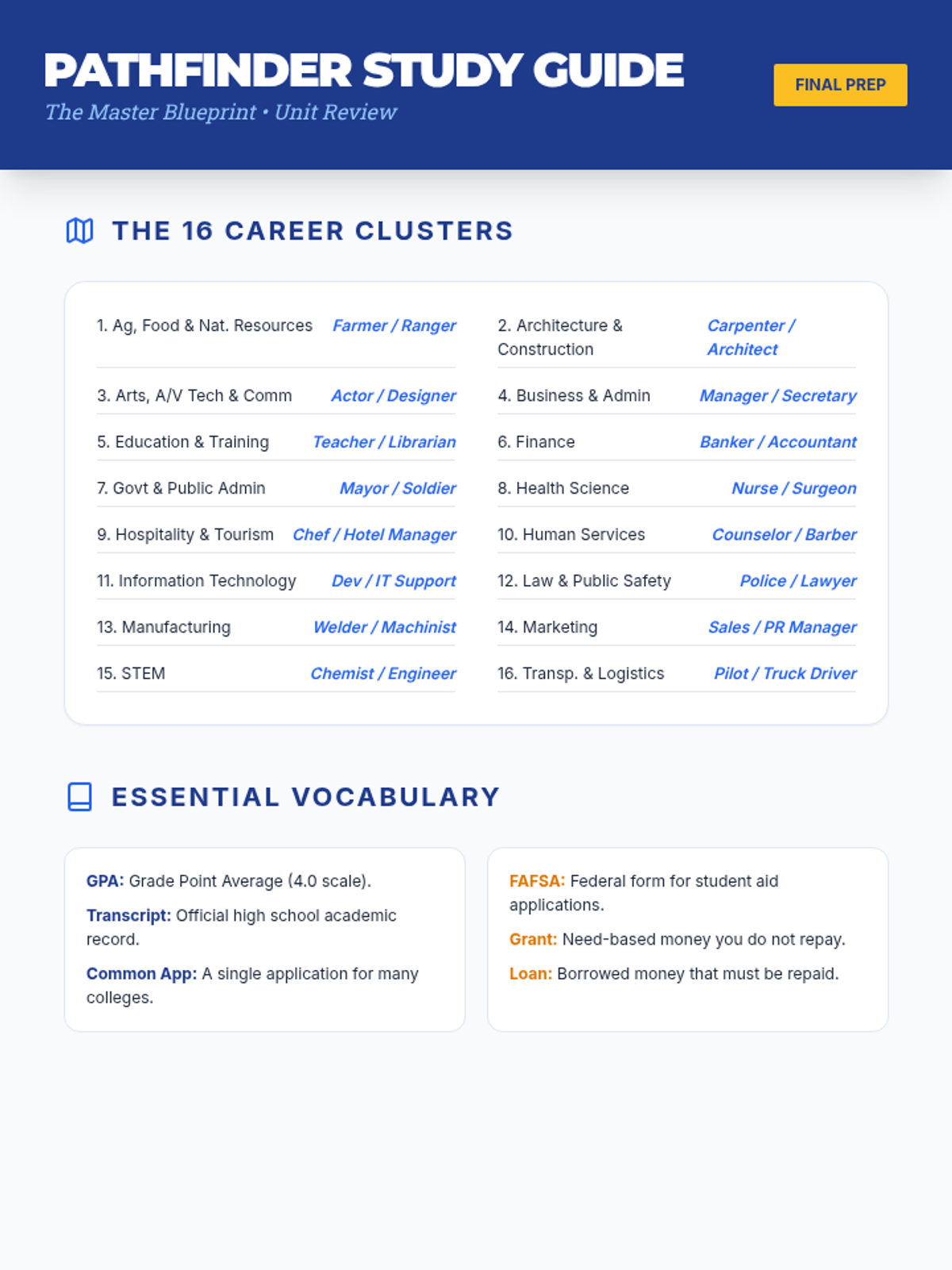
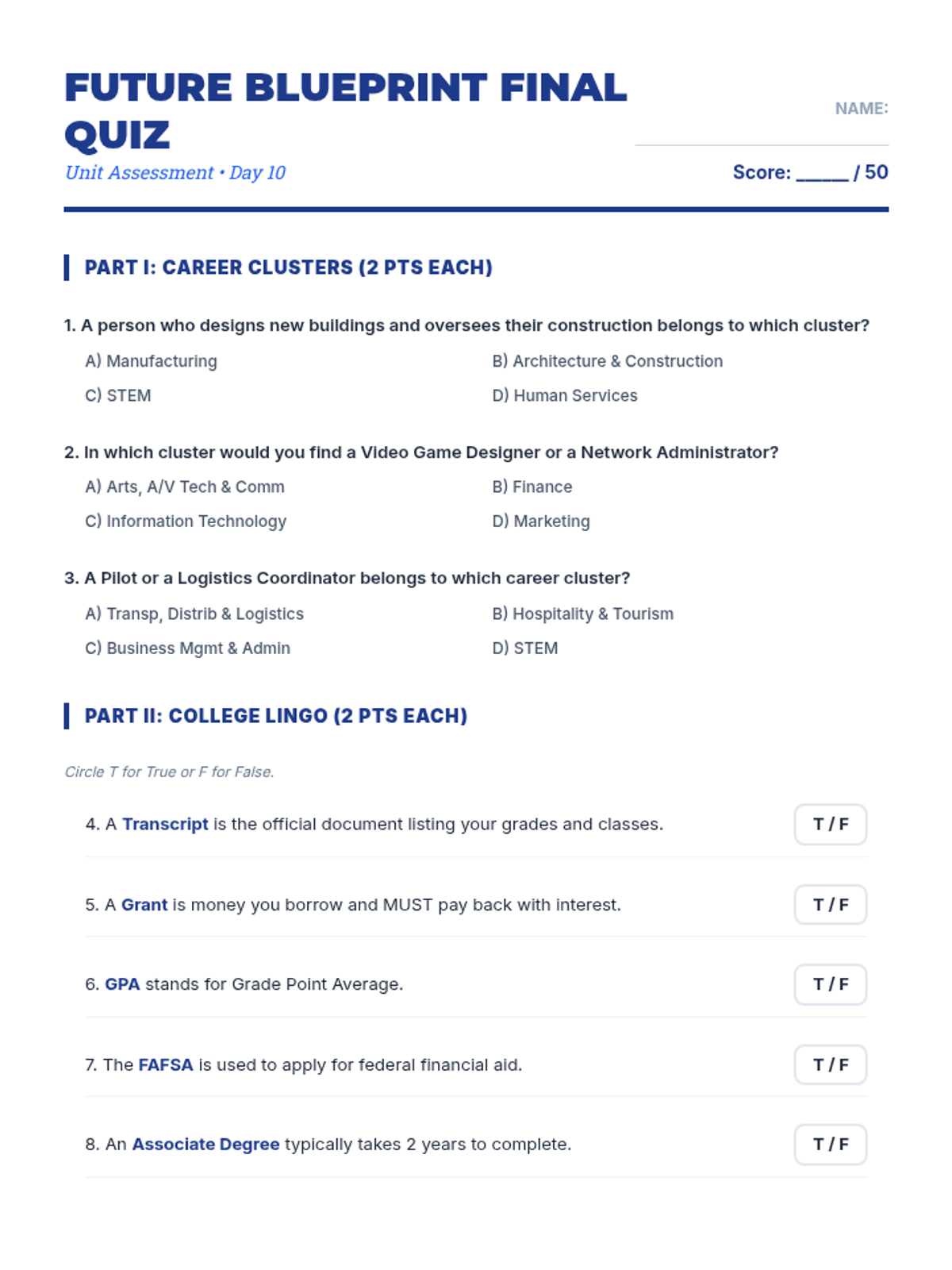
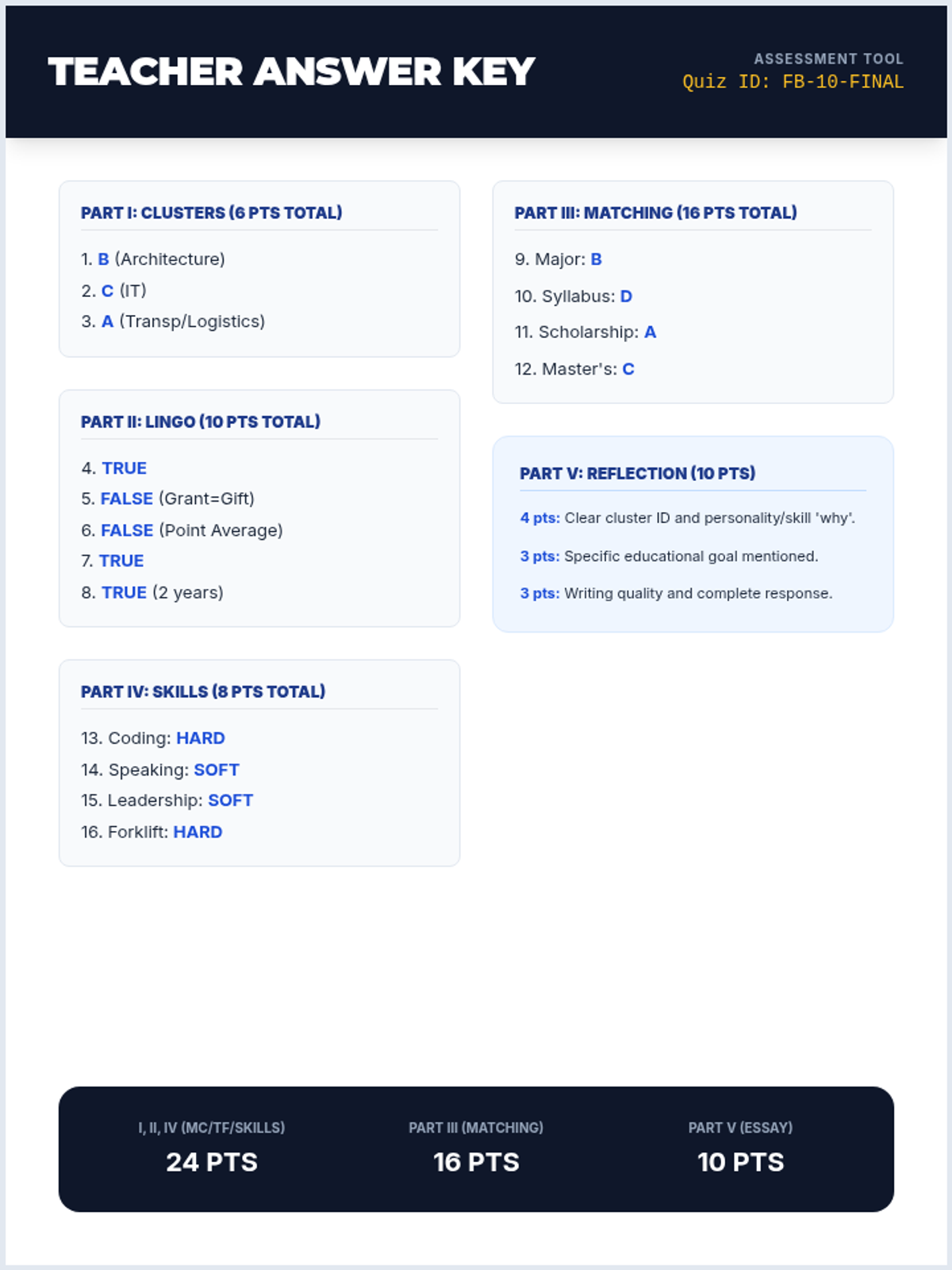
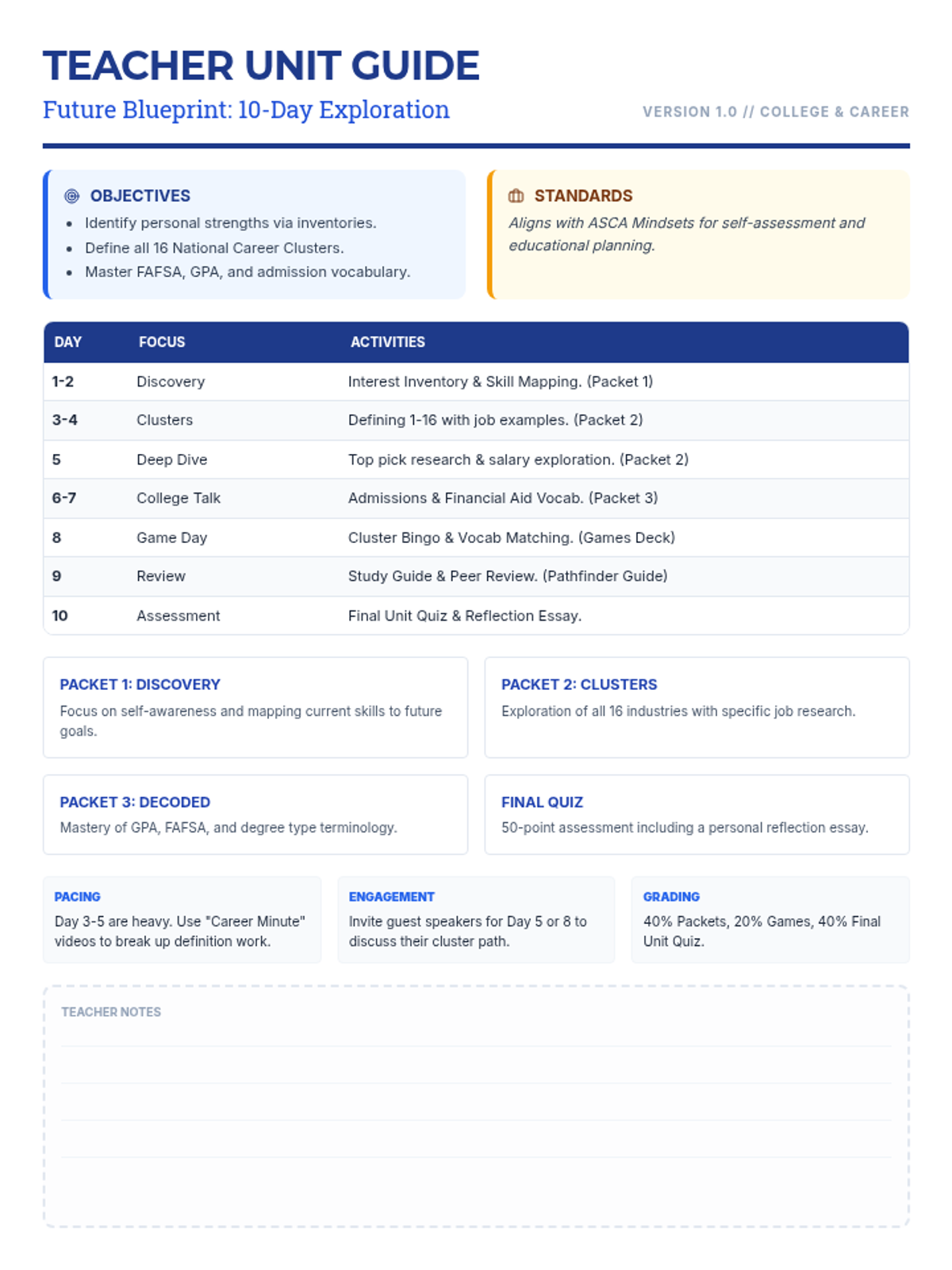
A final review using the study guide followed by a formal assessment of the unit's key concepts.
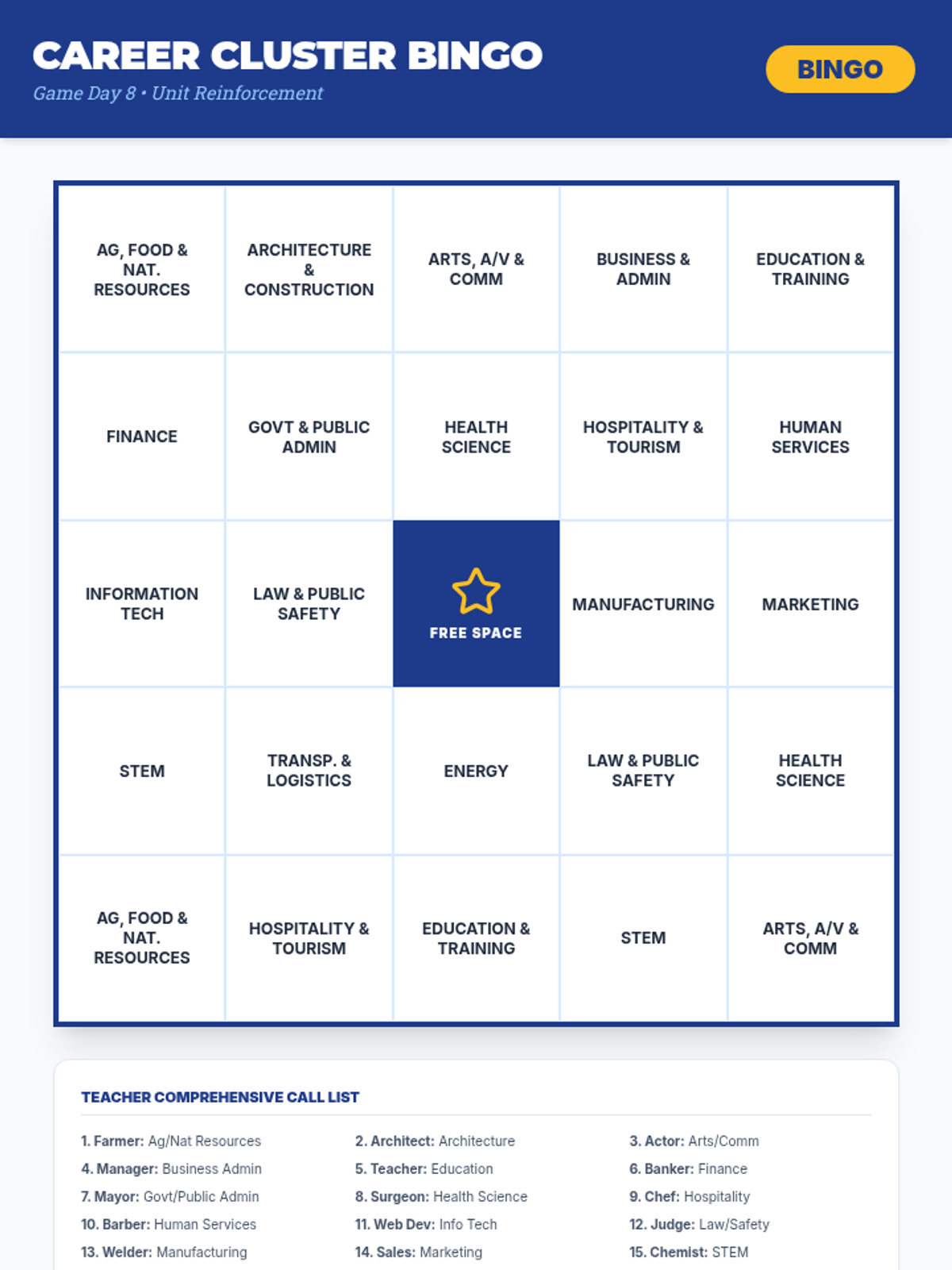
An interactive day of games and collaborative activities to reinforce learning of clusters and college terminology.
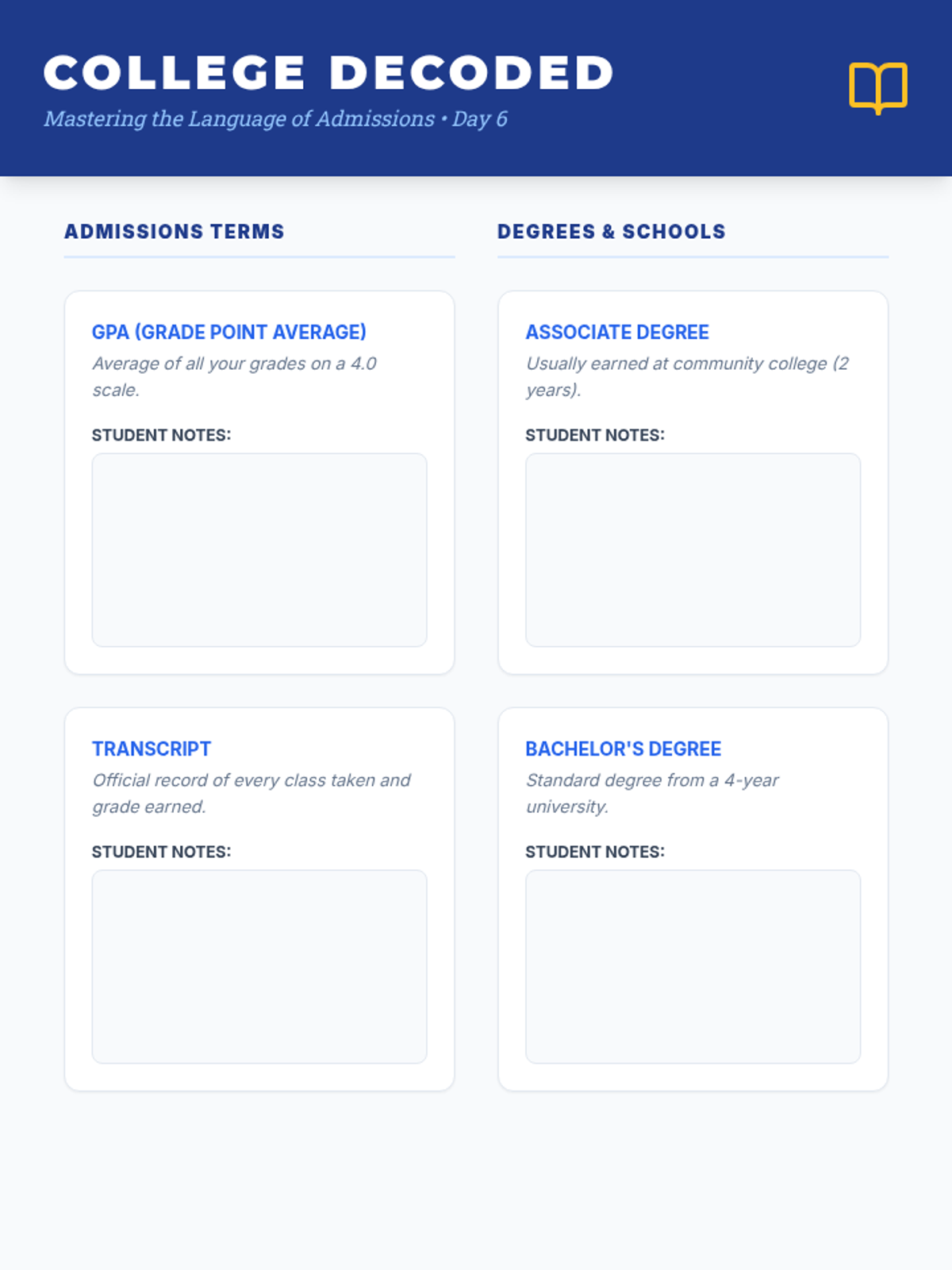
Demystifies the college application process by teaching essential vocabulary like FAFSA, GPA, transcripts, and different degree types.
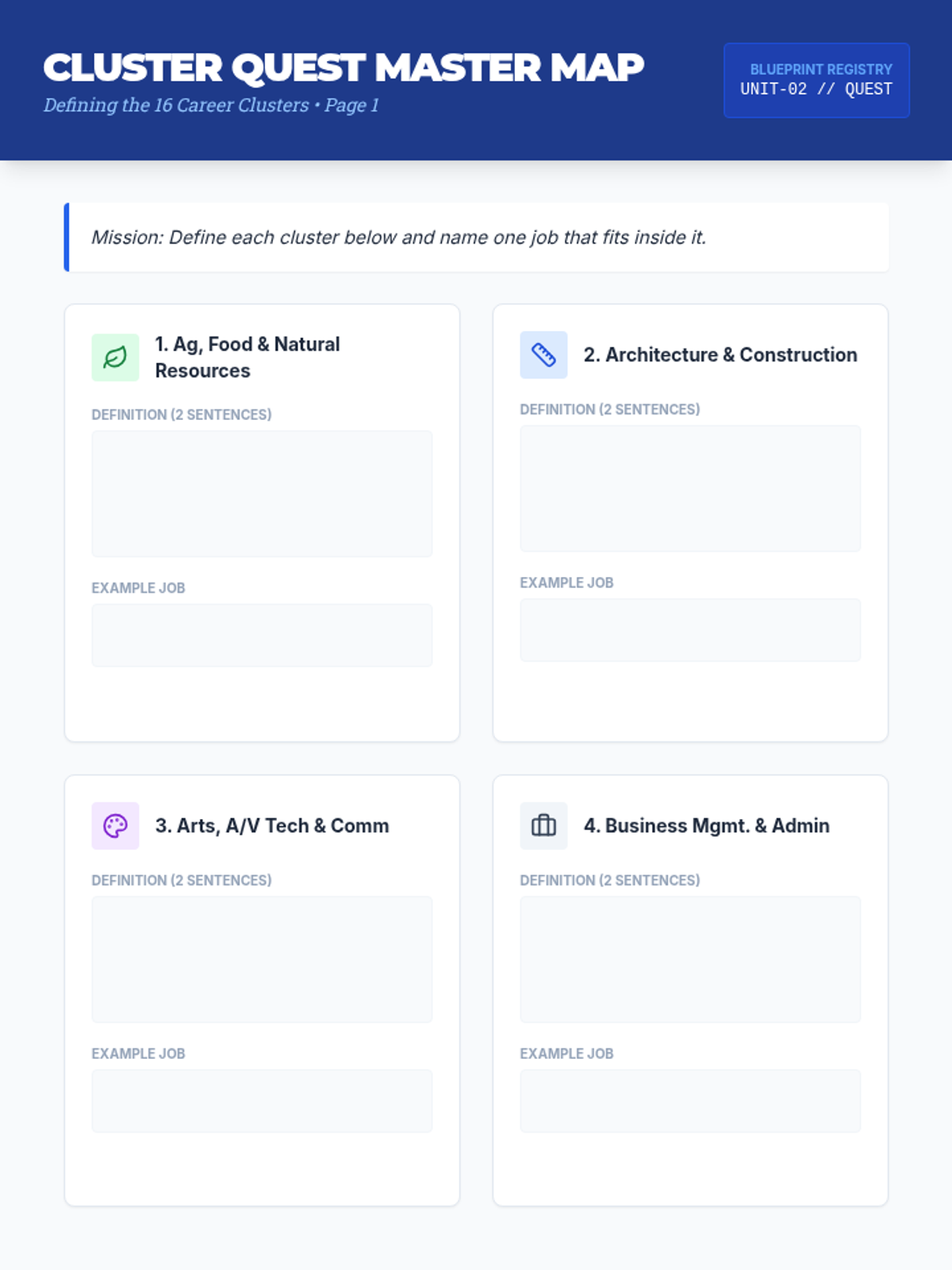
An in-depth exploration of the 16 National Career Clusters, helping students define and categorize different professional industries.
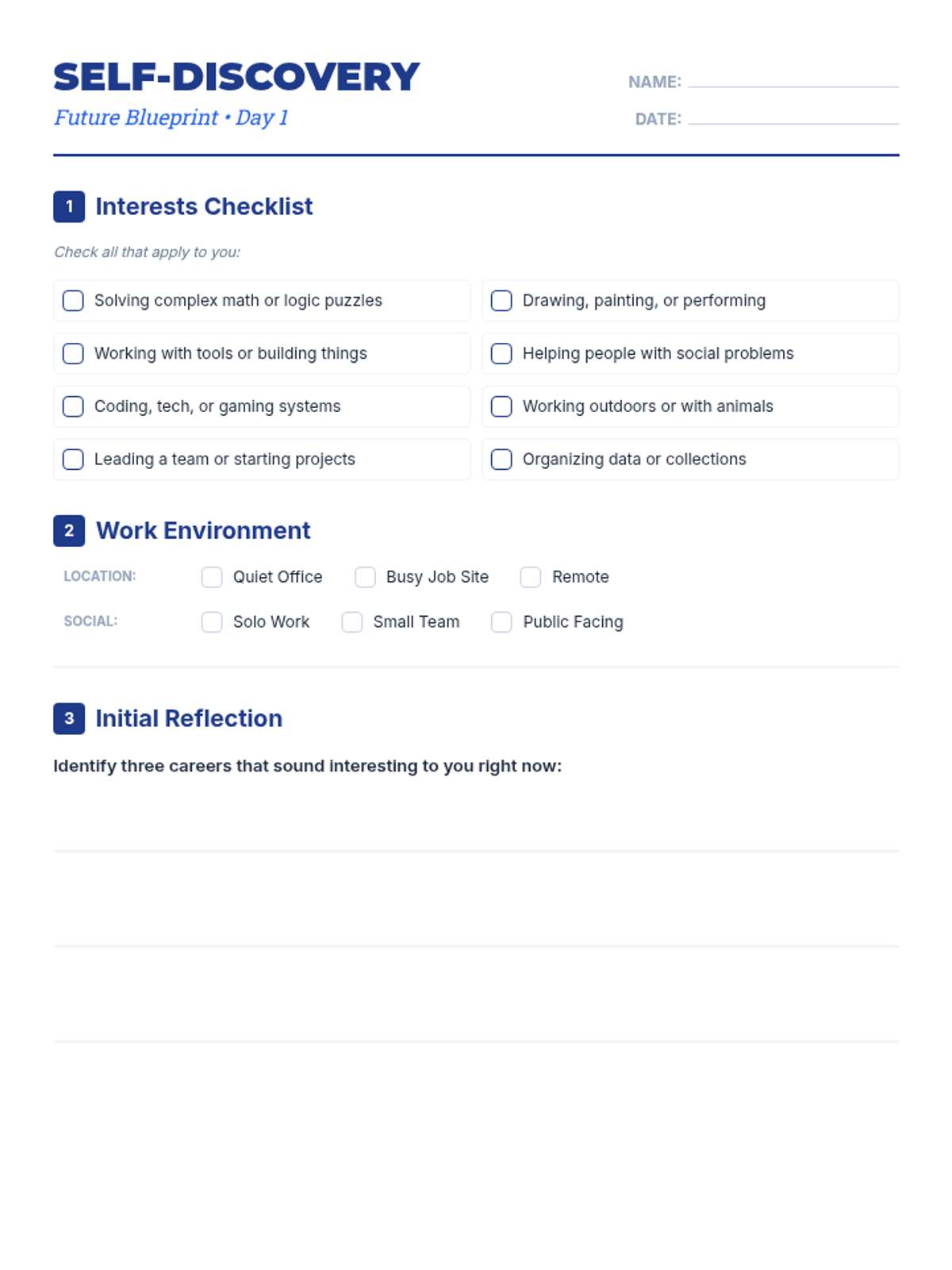
Focuses on student self-reflection, interest inventories, and matching personal strengths to potential career paths.
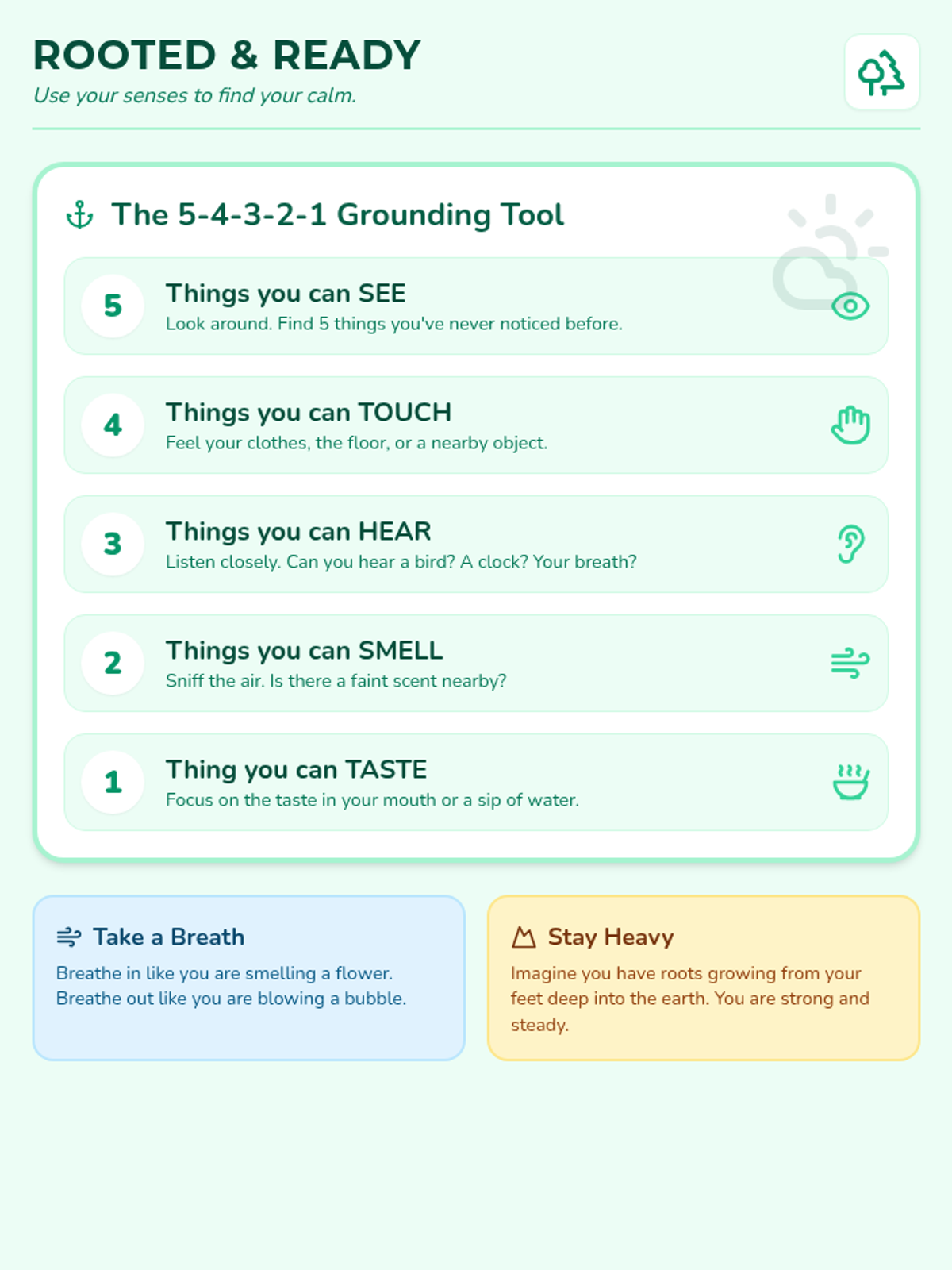
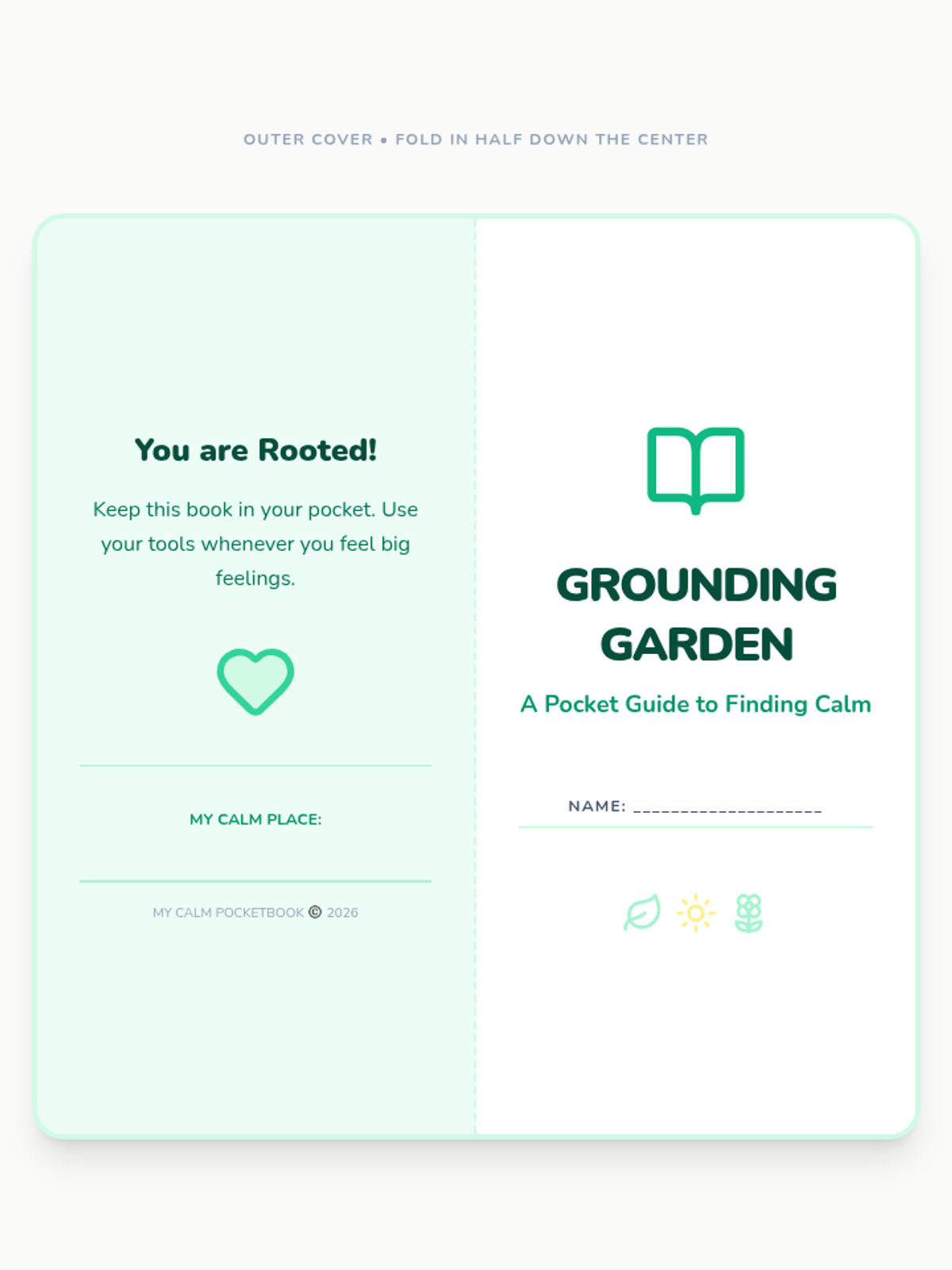
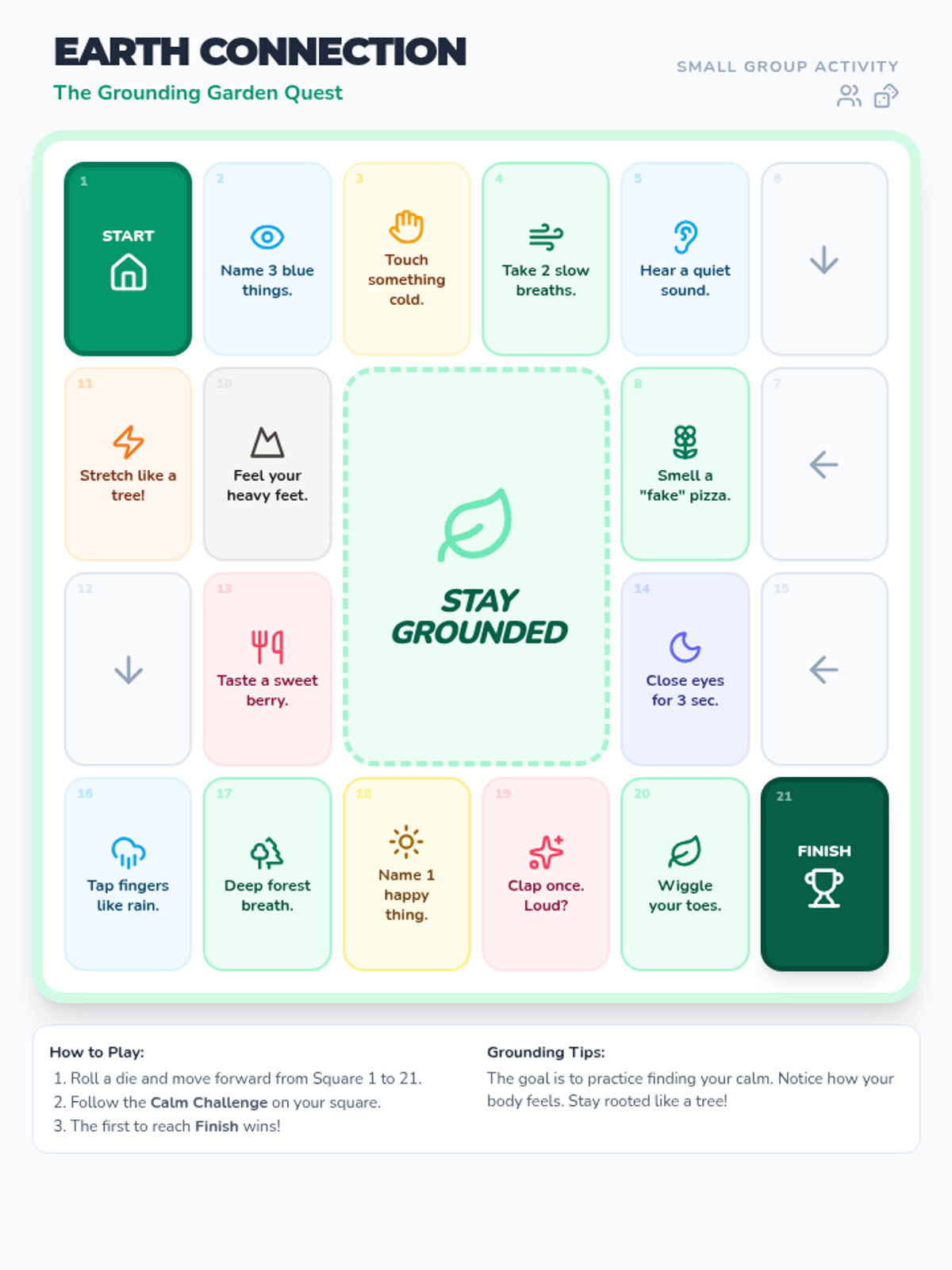
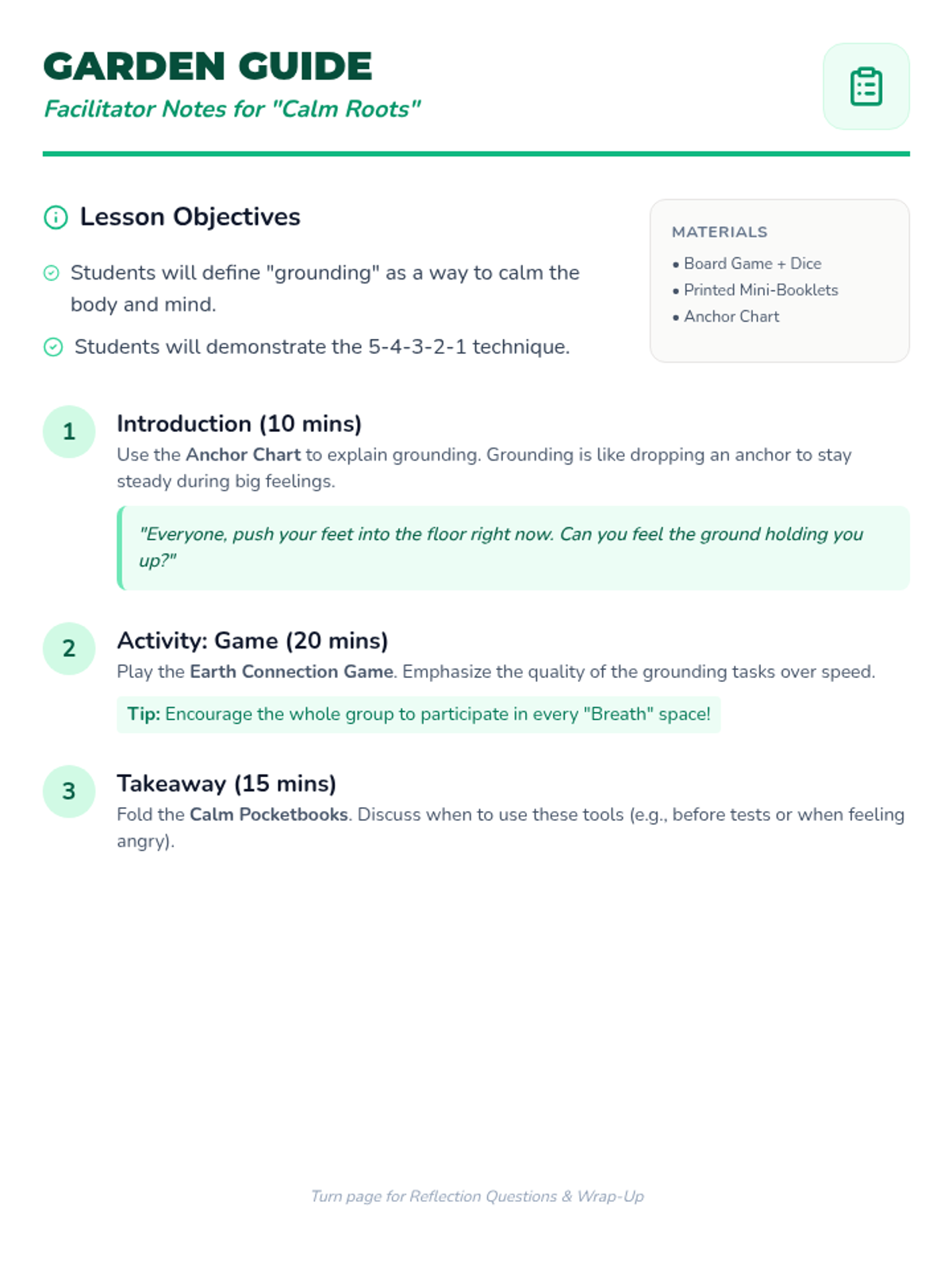
This lesson introduces students to grounding exercises through a nature-themed board game, a take-home booklet, and a classroom anchor chart. Students will learn the 5-4-3-2-1 technique and other sensory strategies to manage stress.
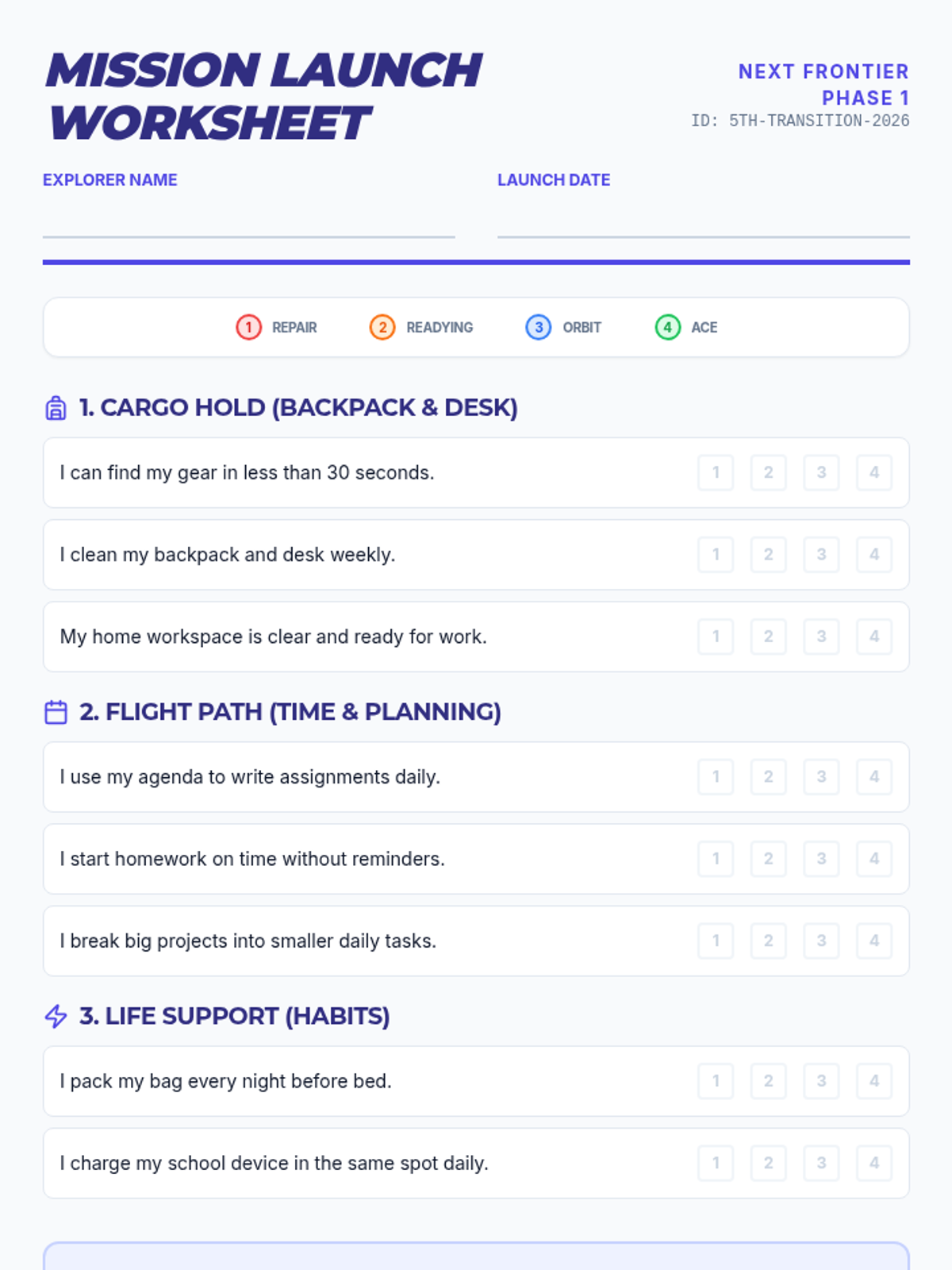
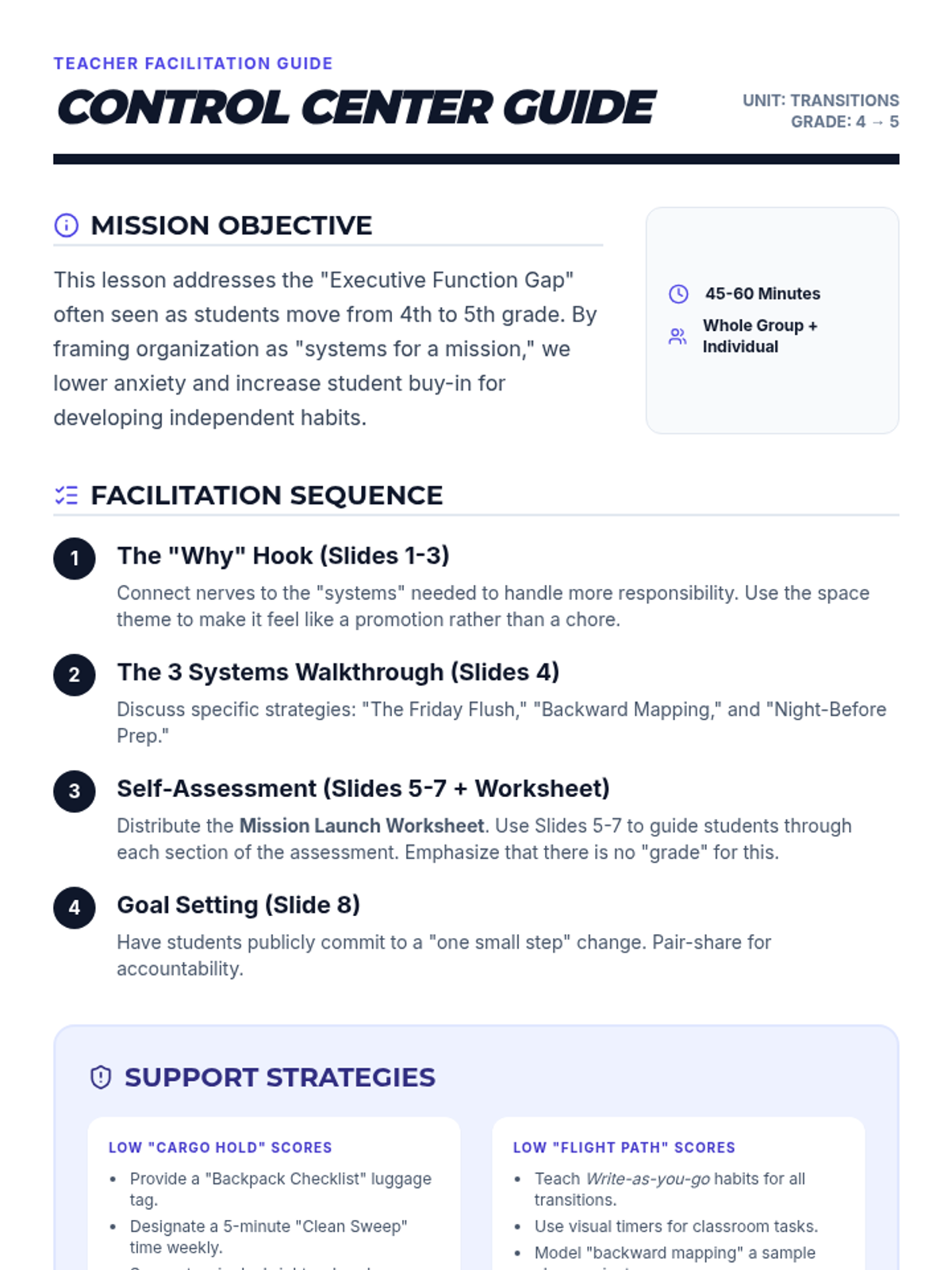
A transition-focused lesson designed to help 4th graders assess and improve their organizational habits before entering 5th grade. Students reflect on their current systems and set goals for the increased independence of the next grade level.
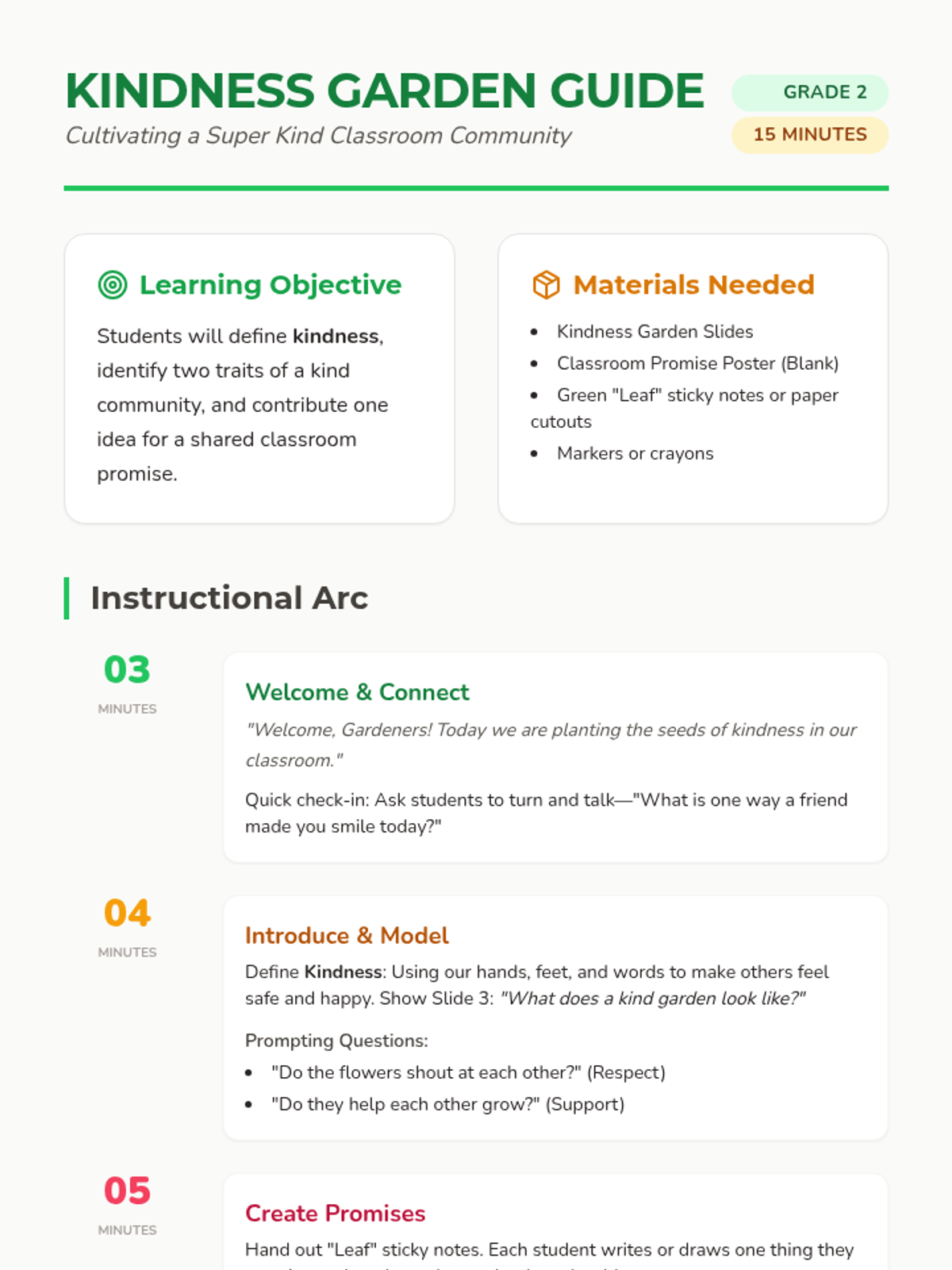
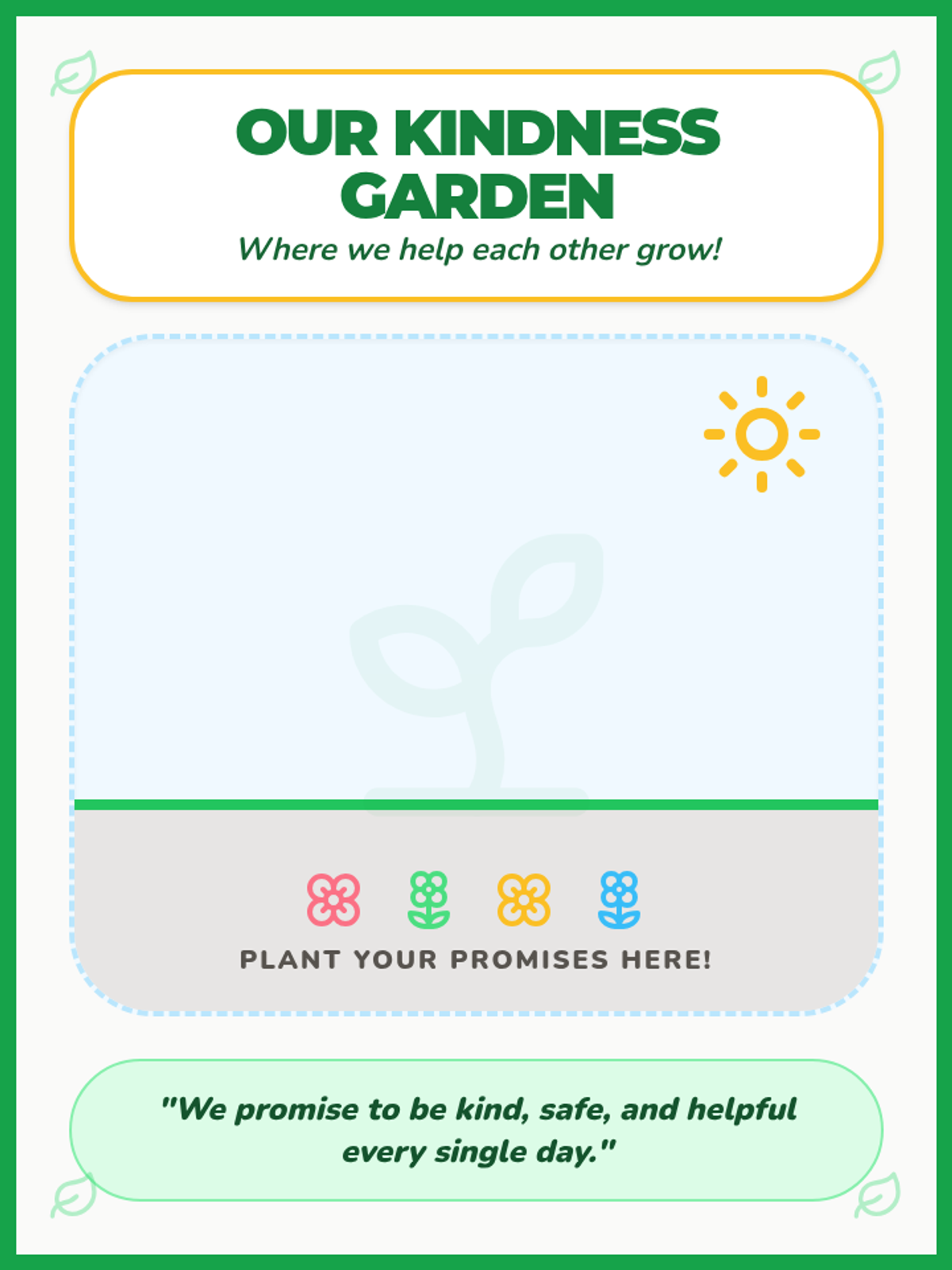
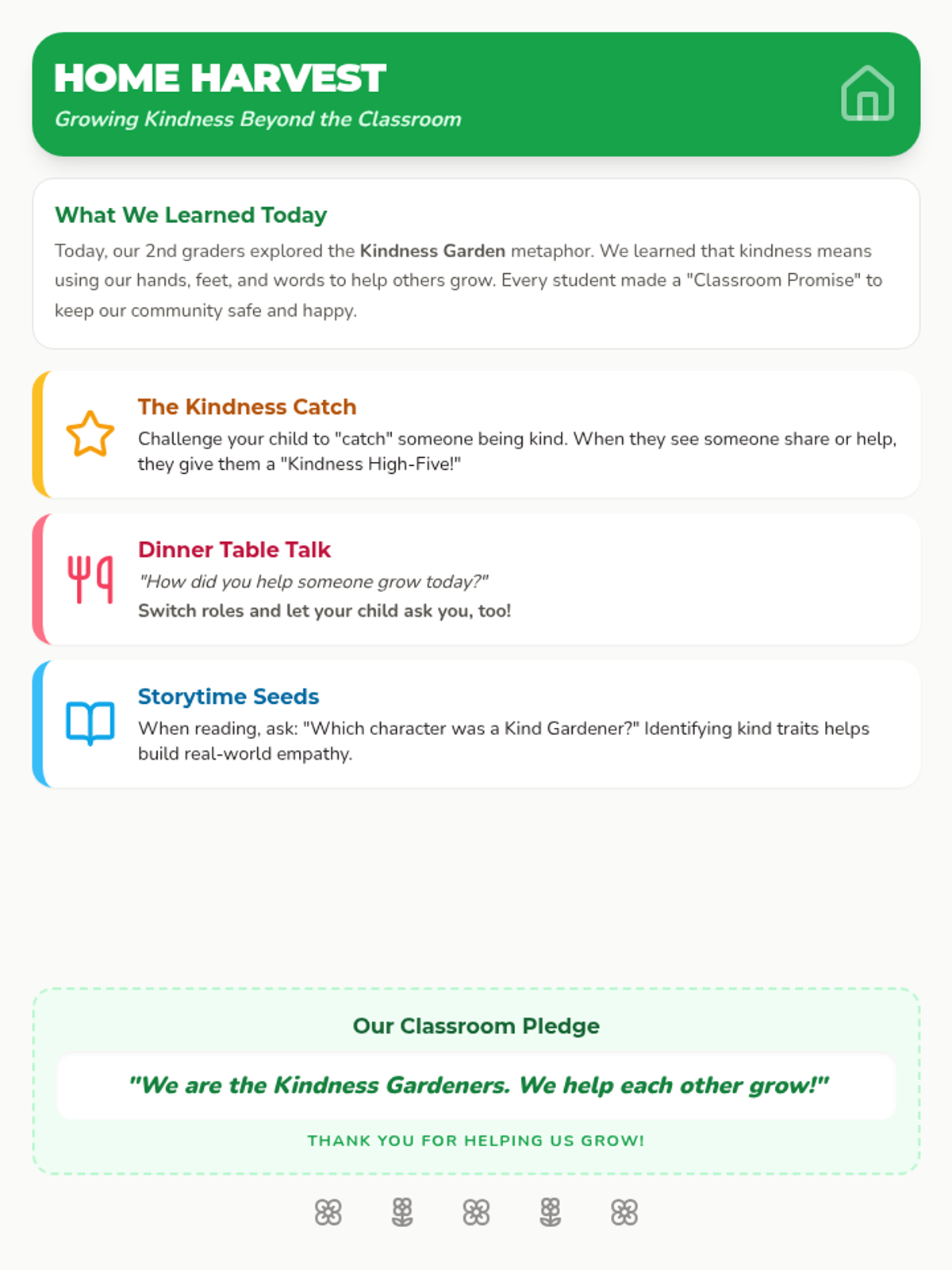
A short, high-energy lesson for 2nd graders to define kindness and collaboratively create a set of classroom promises using a garden metaphor.
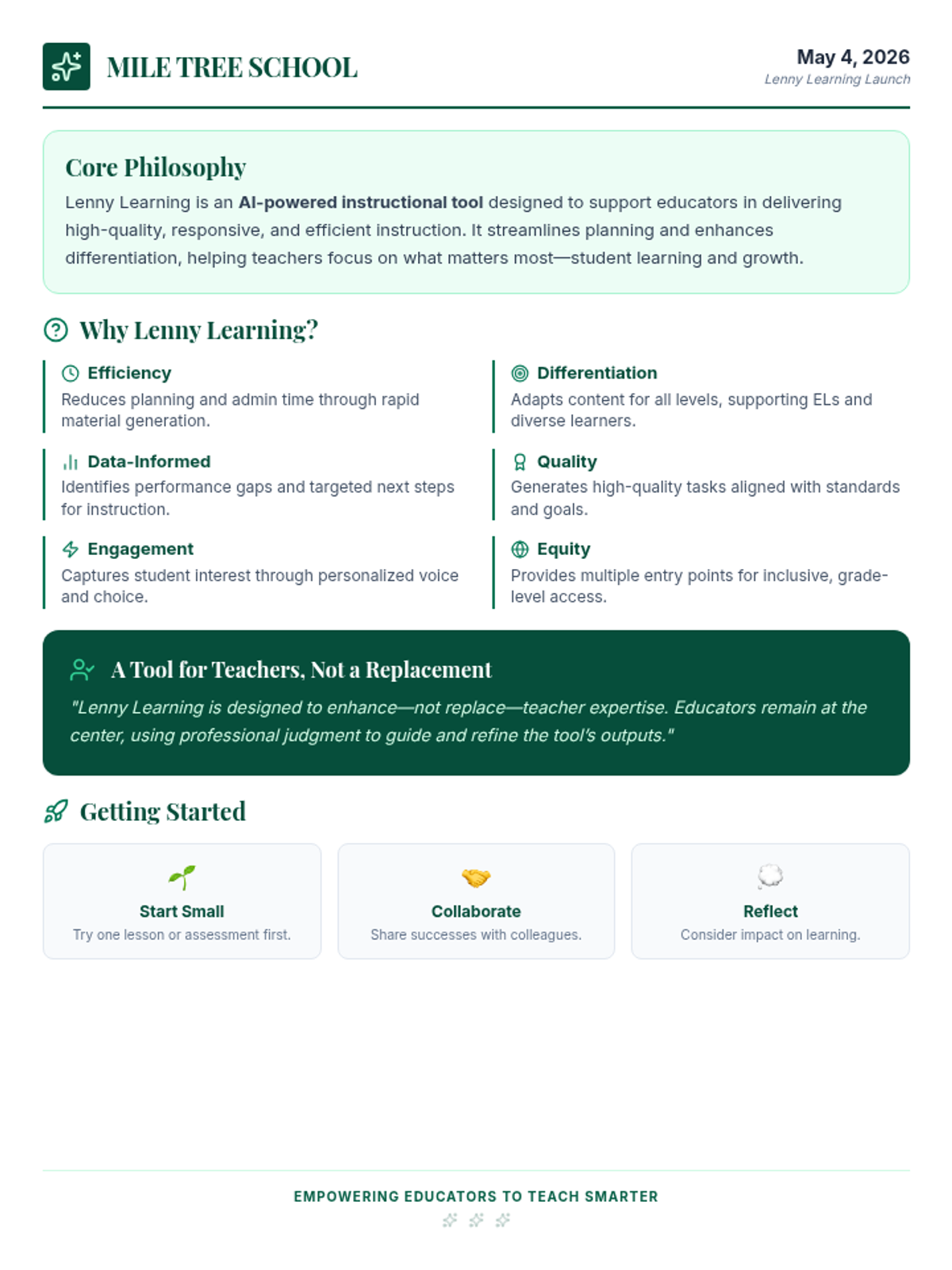
A professional staff presentation introducing Lenny Learning to educators at Mile Tree School, highlighting efficiency, differentiation, and student engagement.
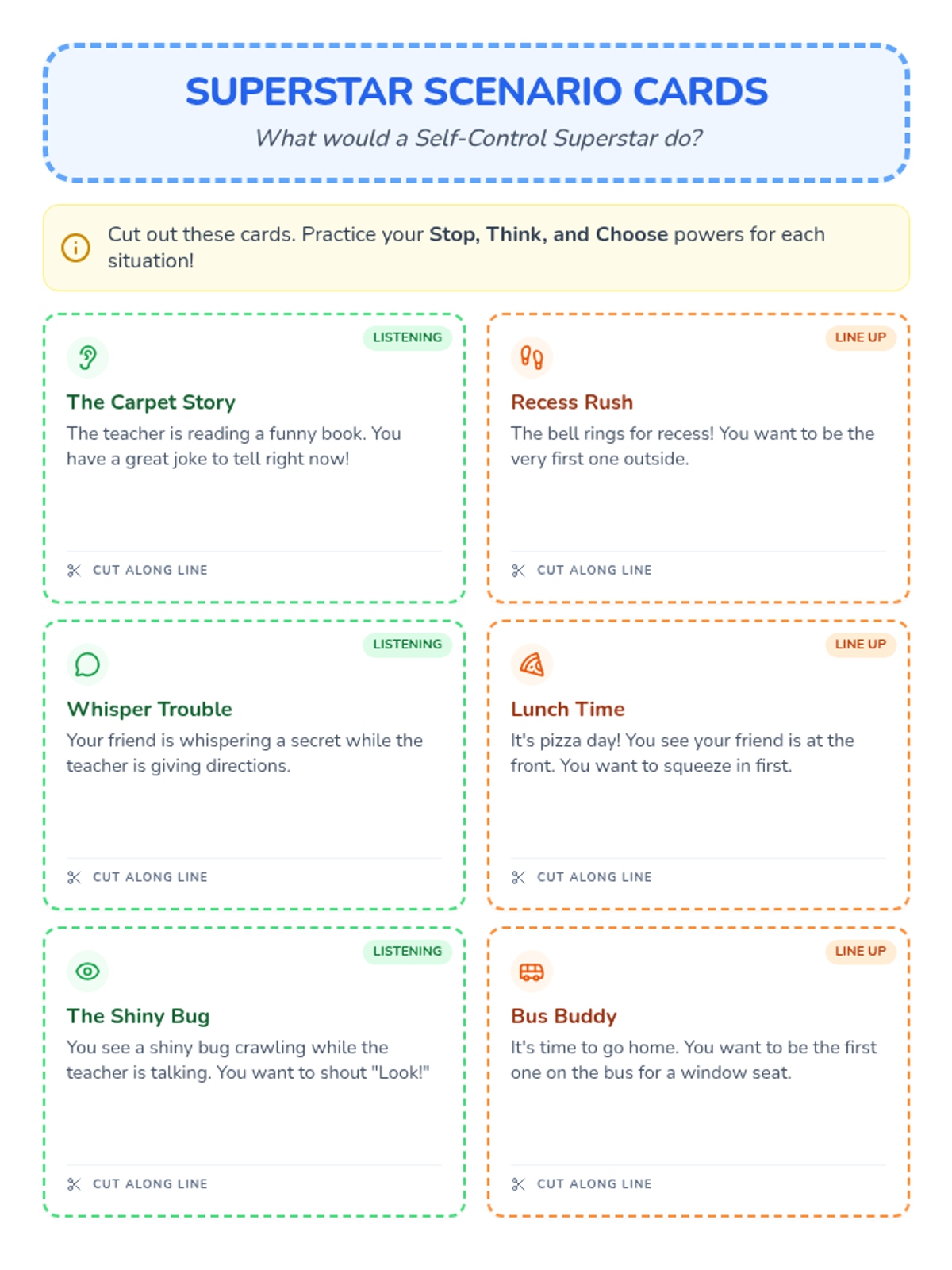
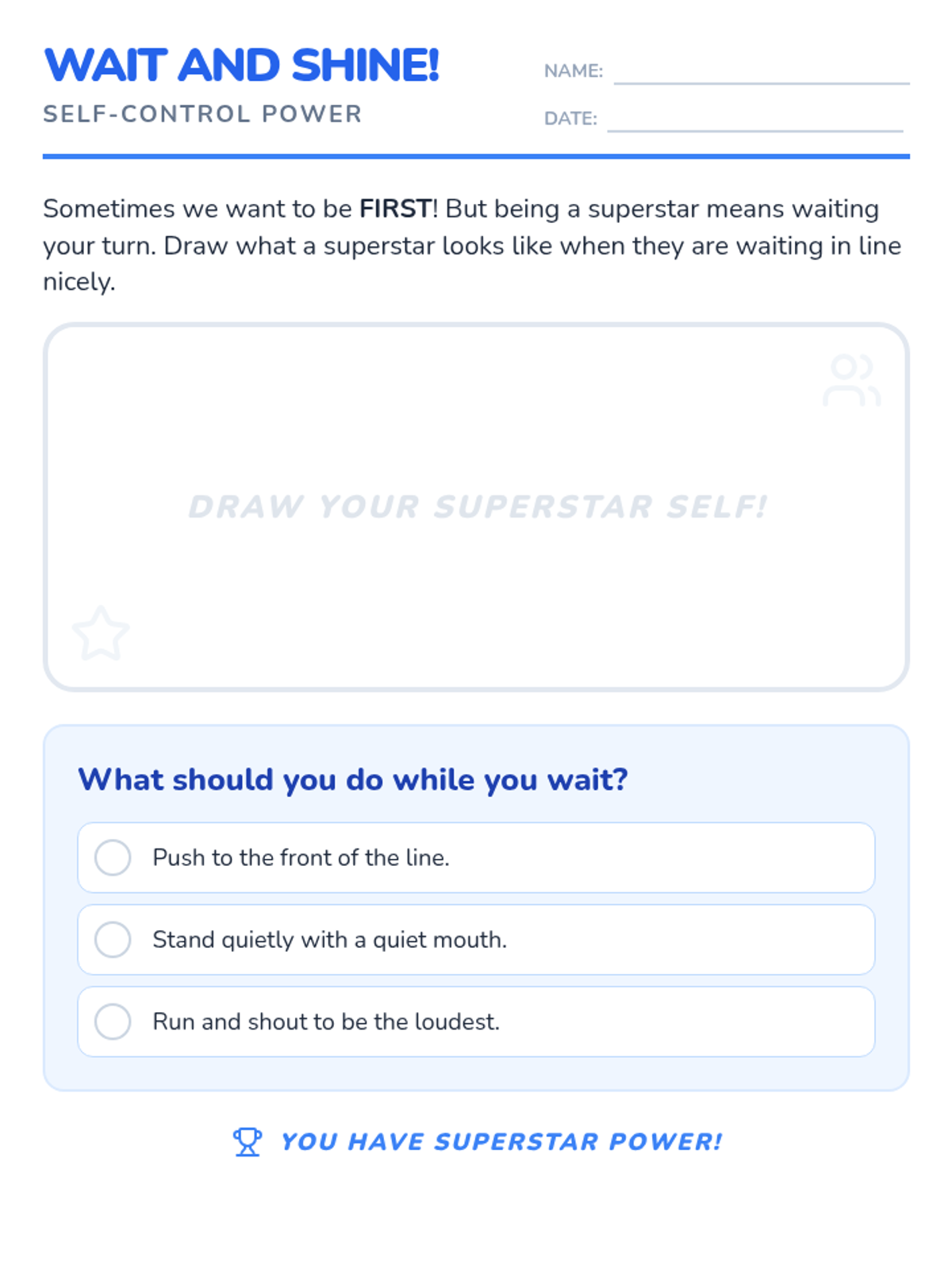
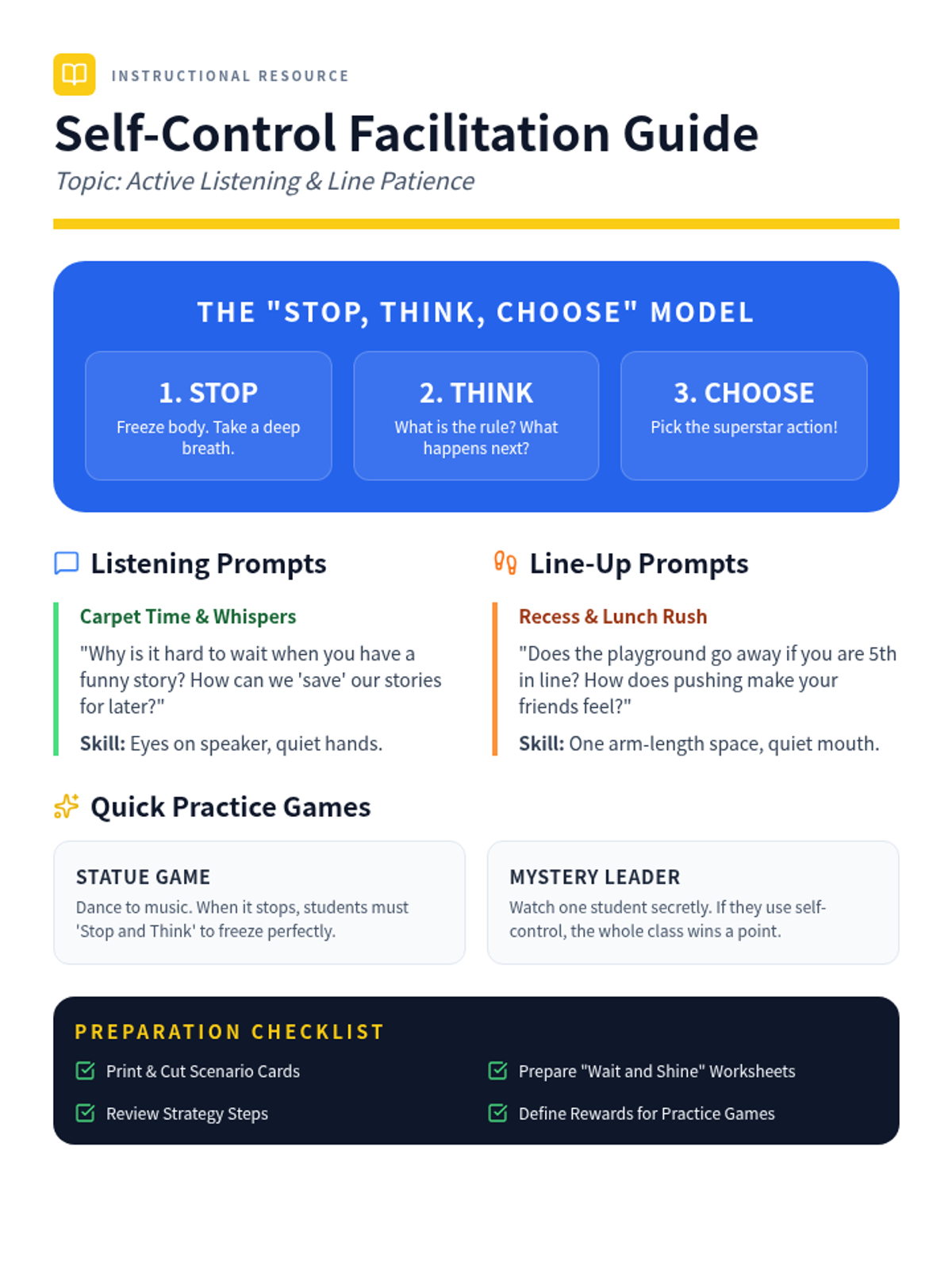
A lesson designed to help kindergarteners develop self-control skills specifically focused on active listening and managing the urge to be first in line. through role-play and reflection.
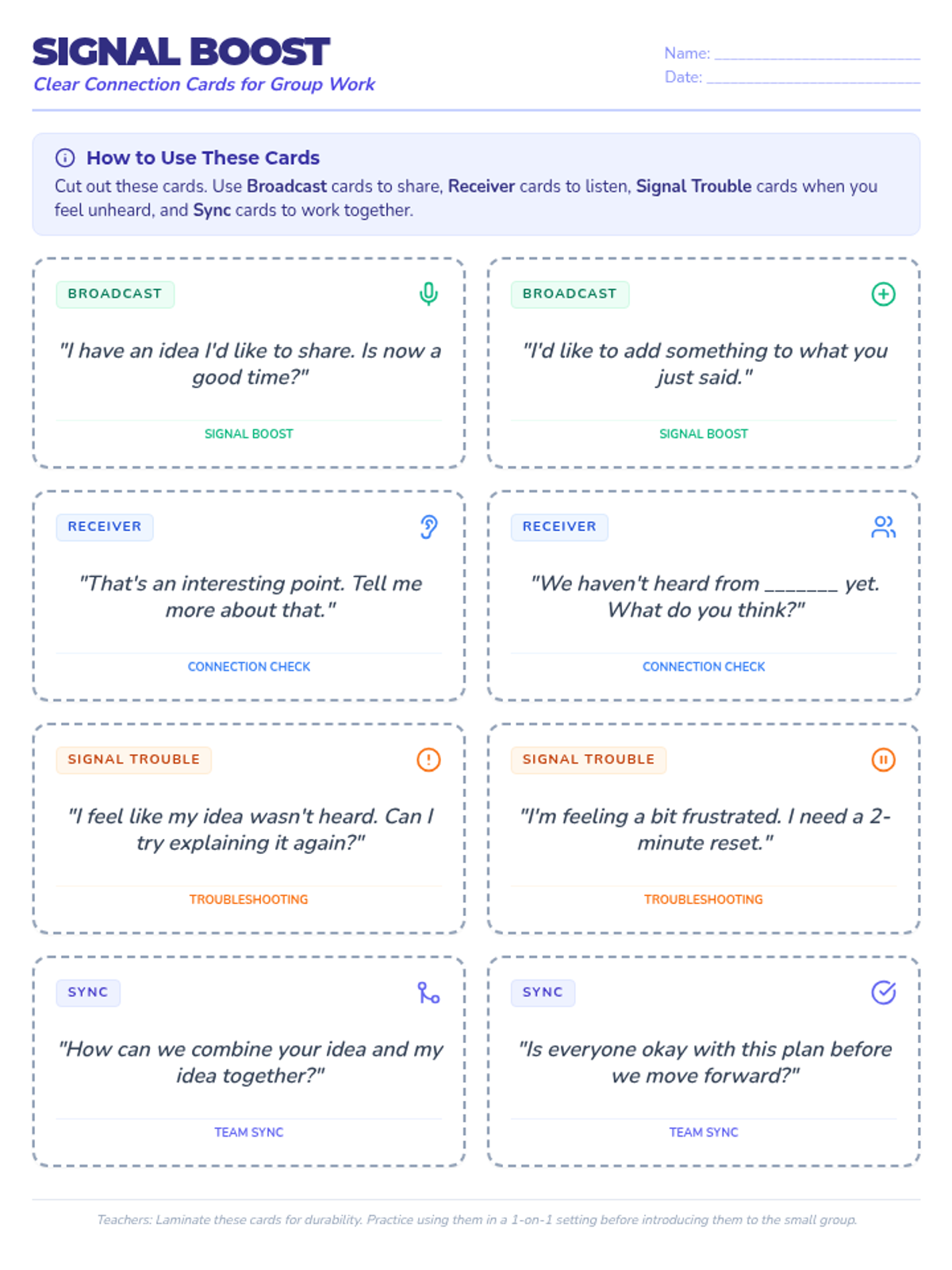
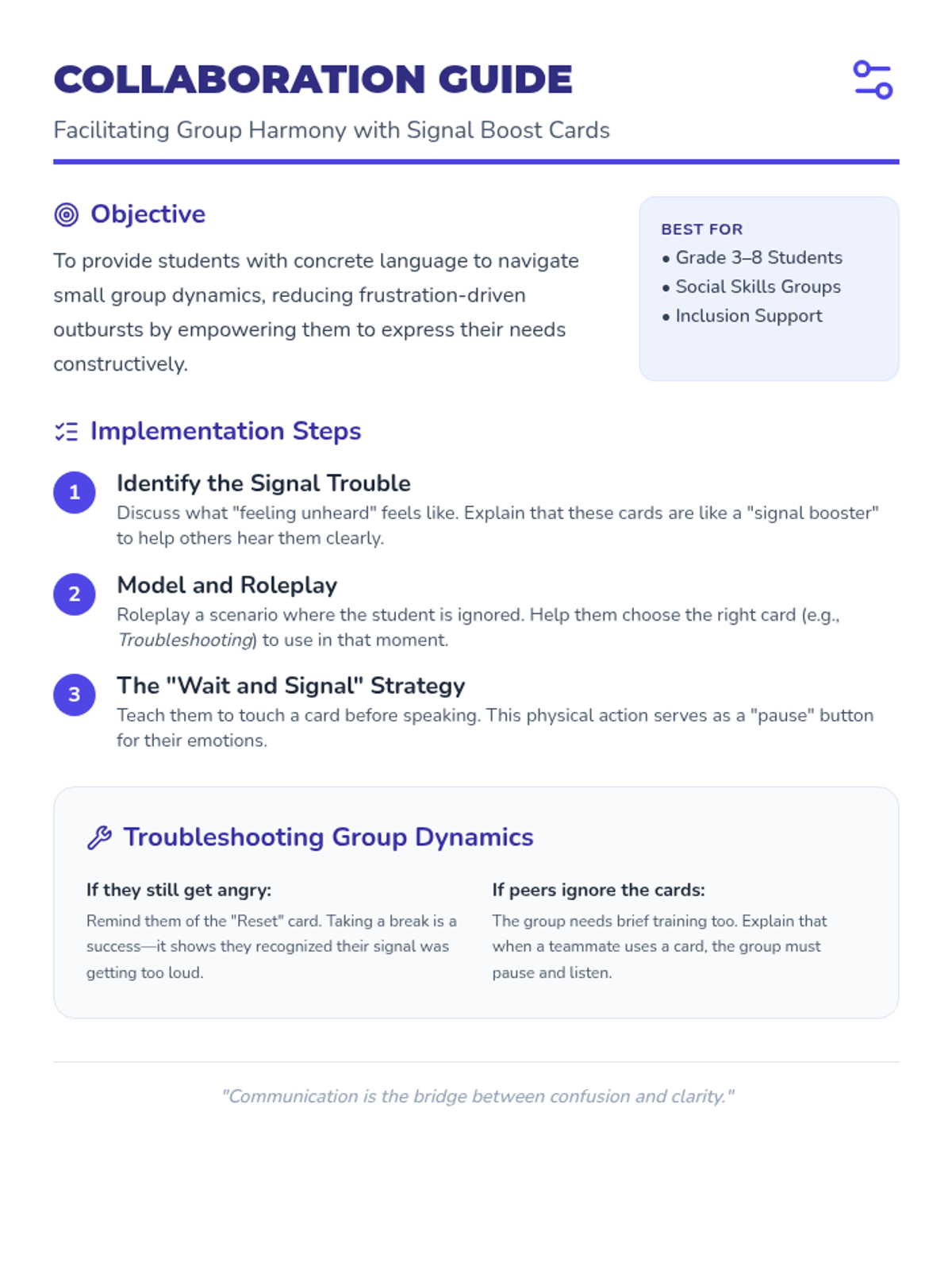
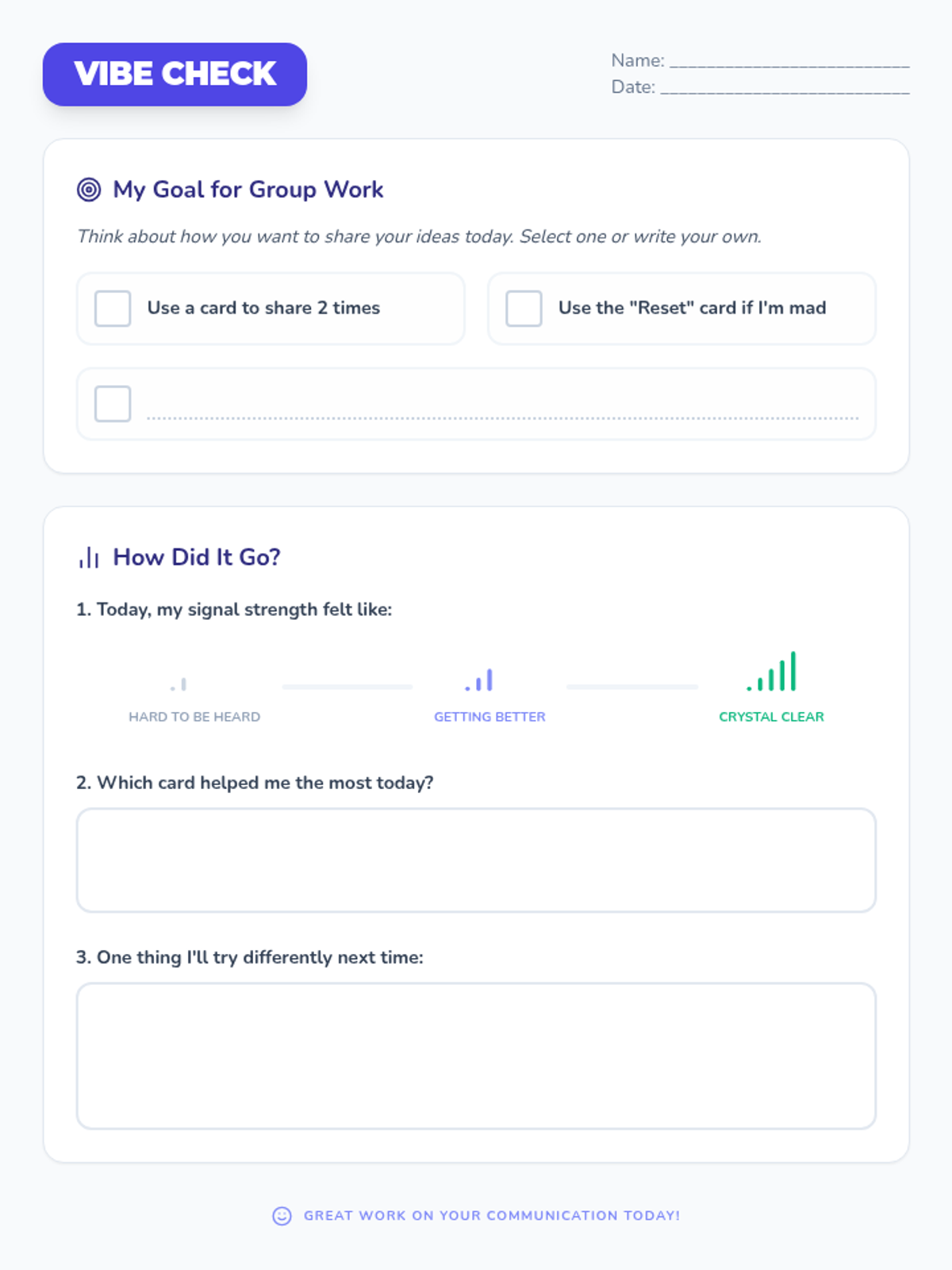
This lesson provides tools for students who struggle with collaborative group work, focusing on clear communication and managing frustration when feeling unheard.
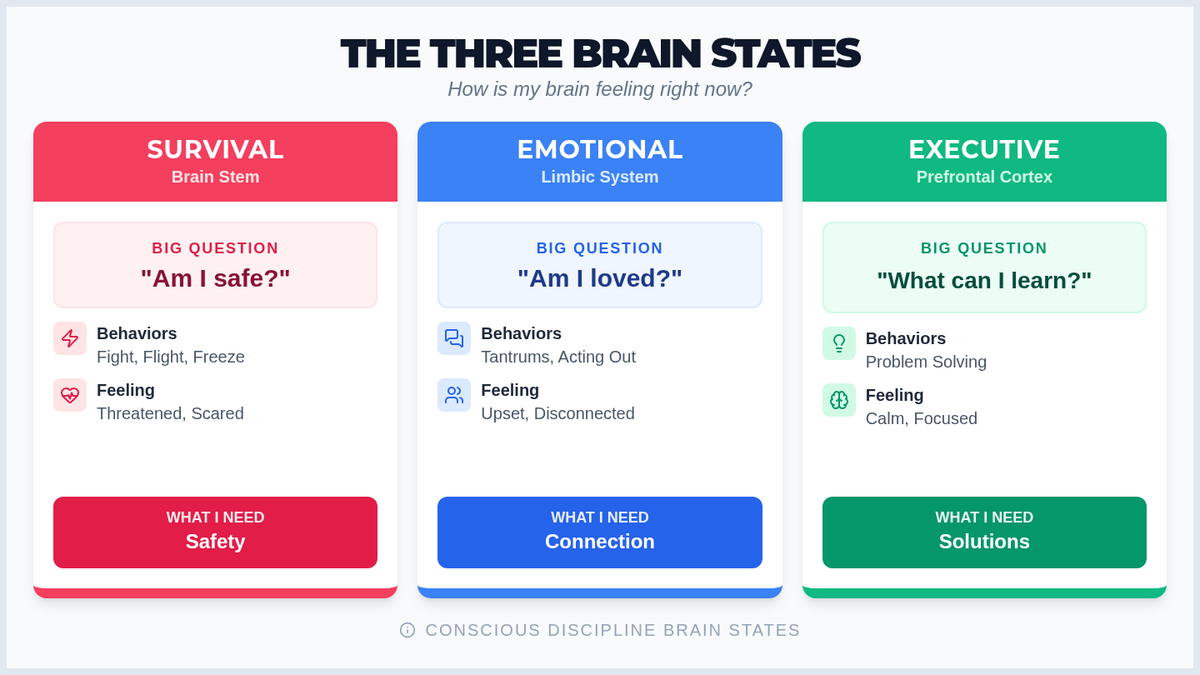
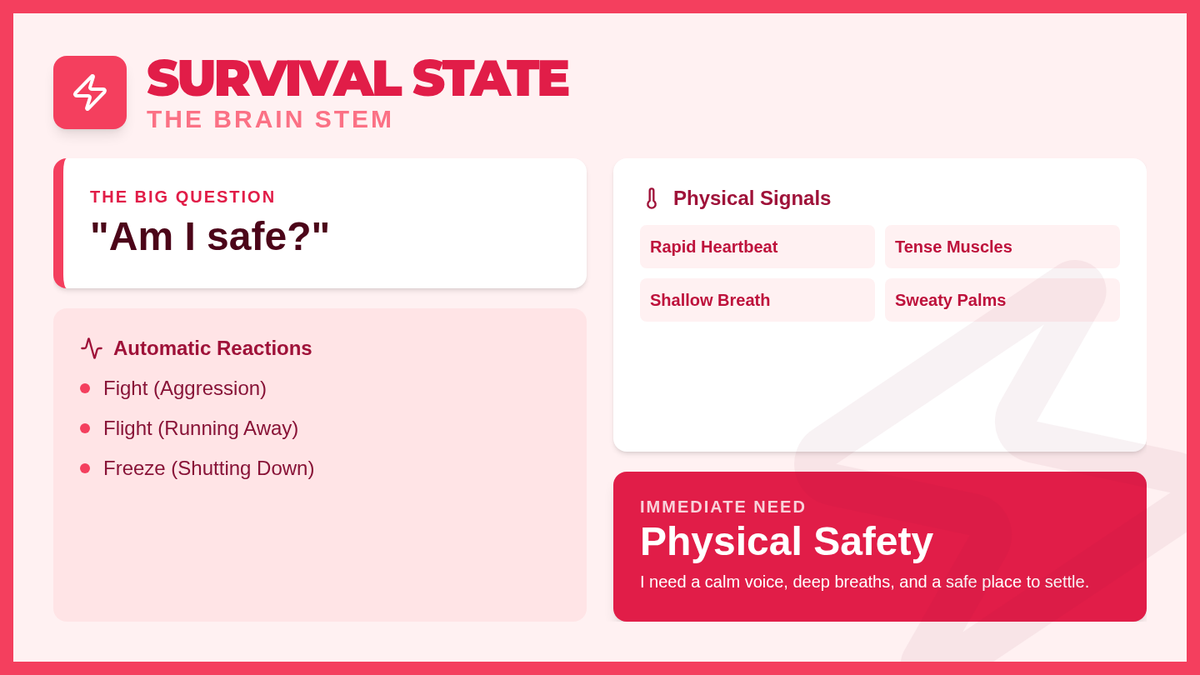
A lesson introducing the three brain states of Conscious Discipline to help students understand their emotions and behaviors.
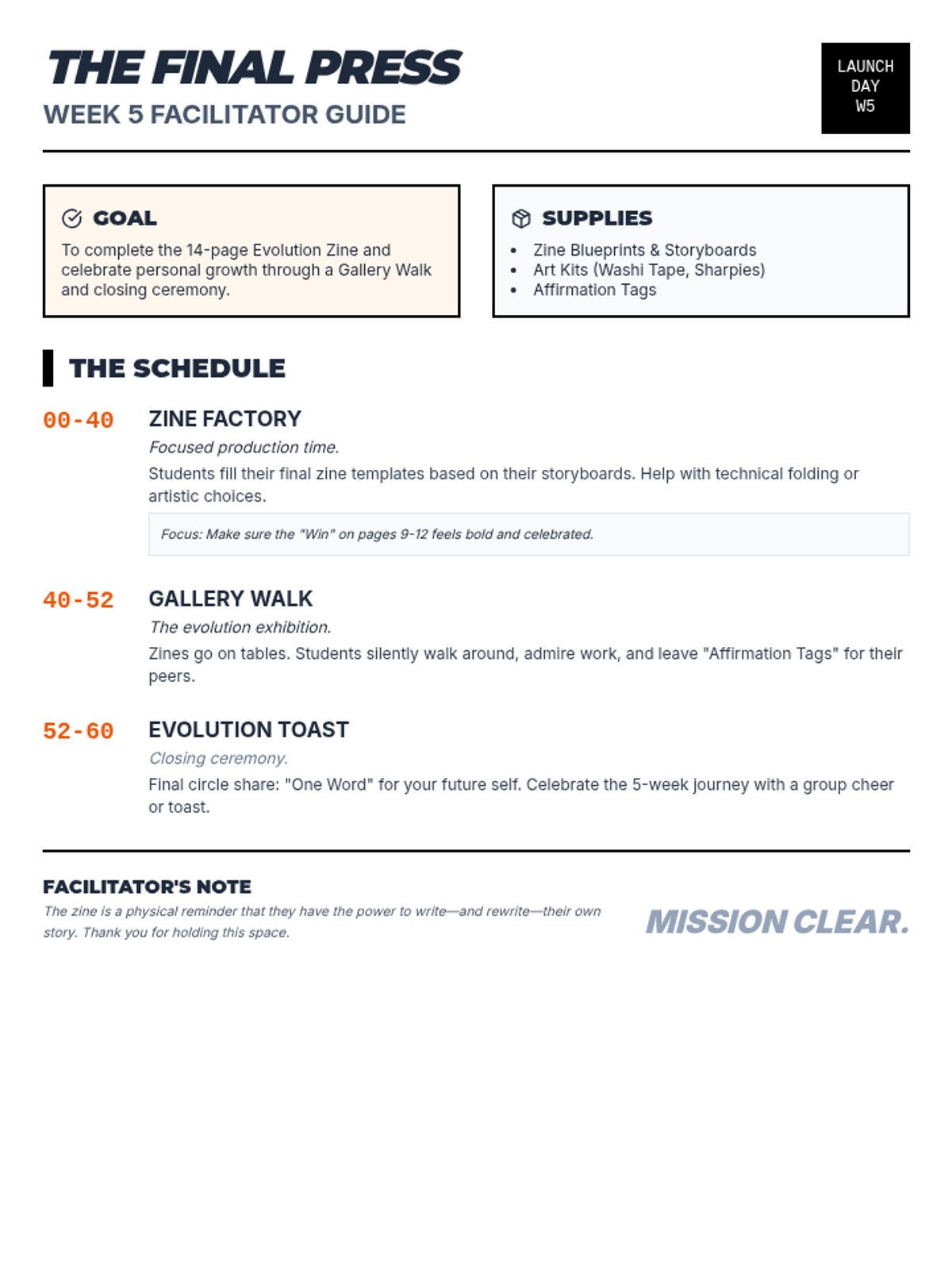
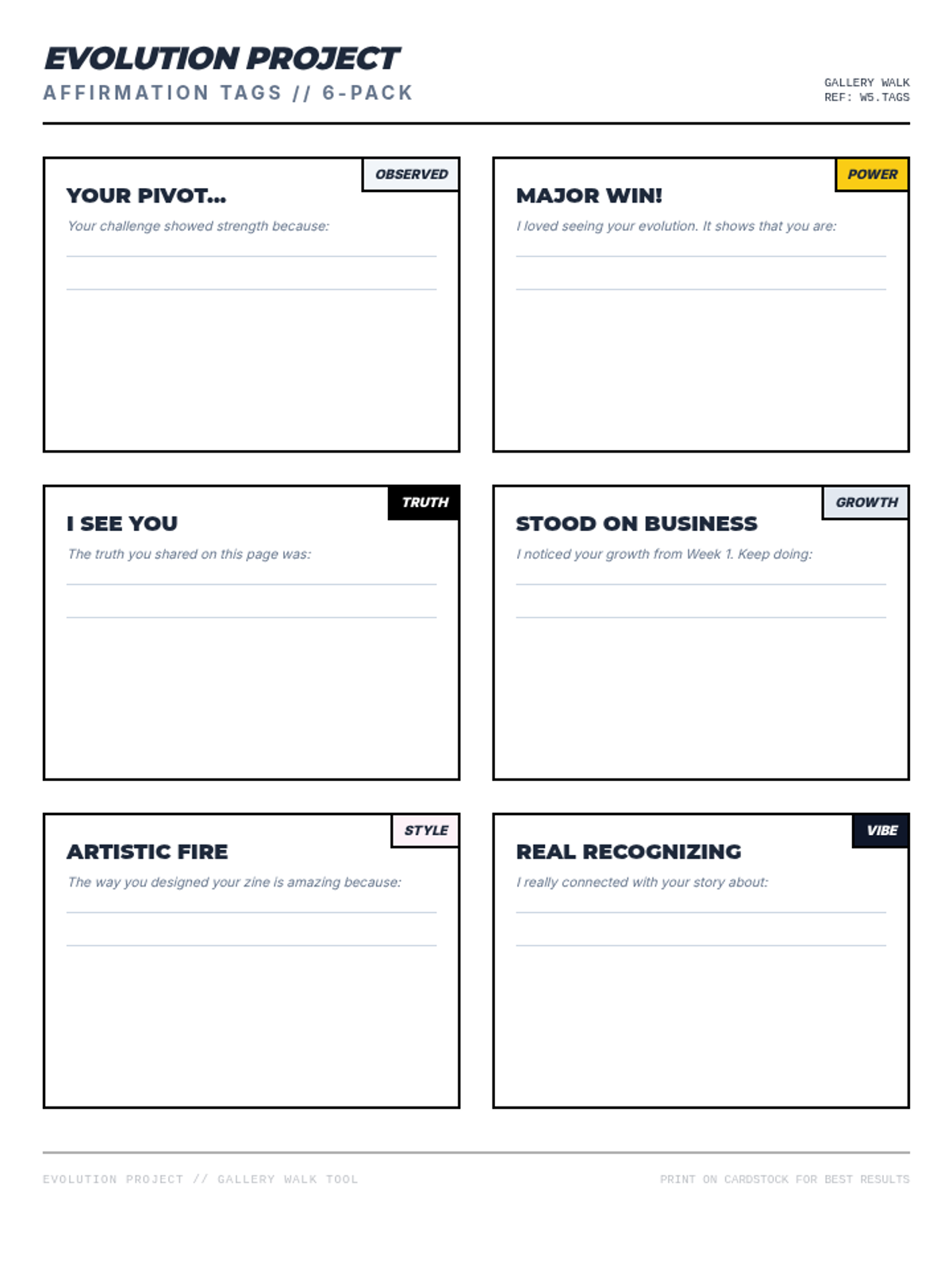
The final production phase where students assemble, decorate, and share their completed Evolution Zines in a celebratory atmosphere.
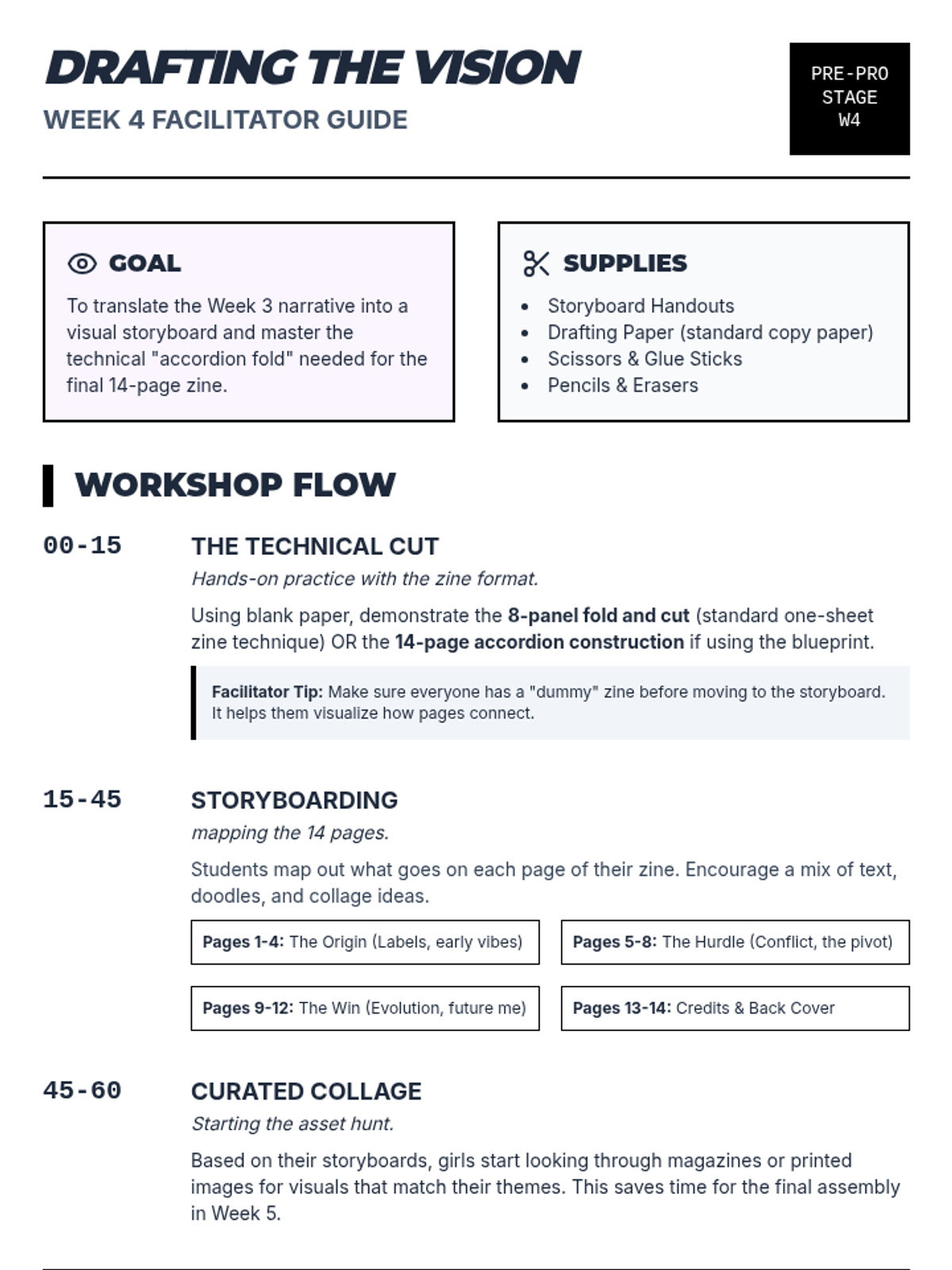
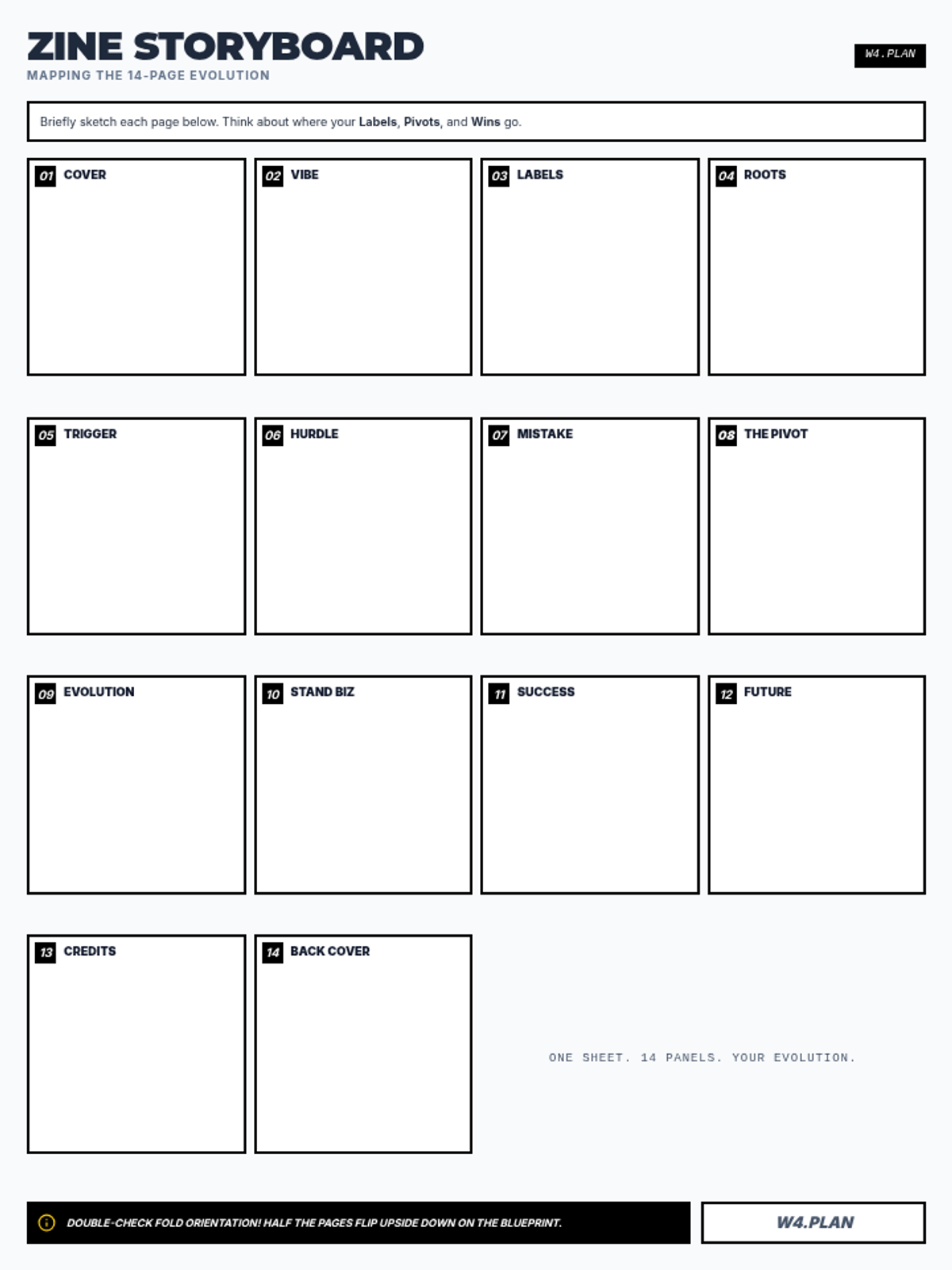
The technical and creative bridge where students translate their written stories into a visual 14-page storyboard and prepare their final zine layouts.
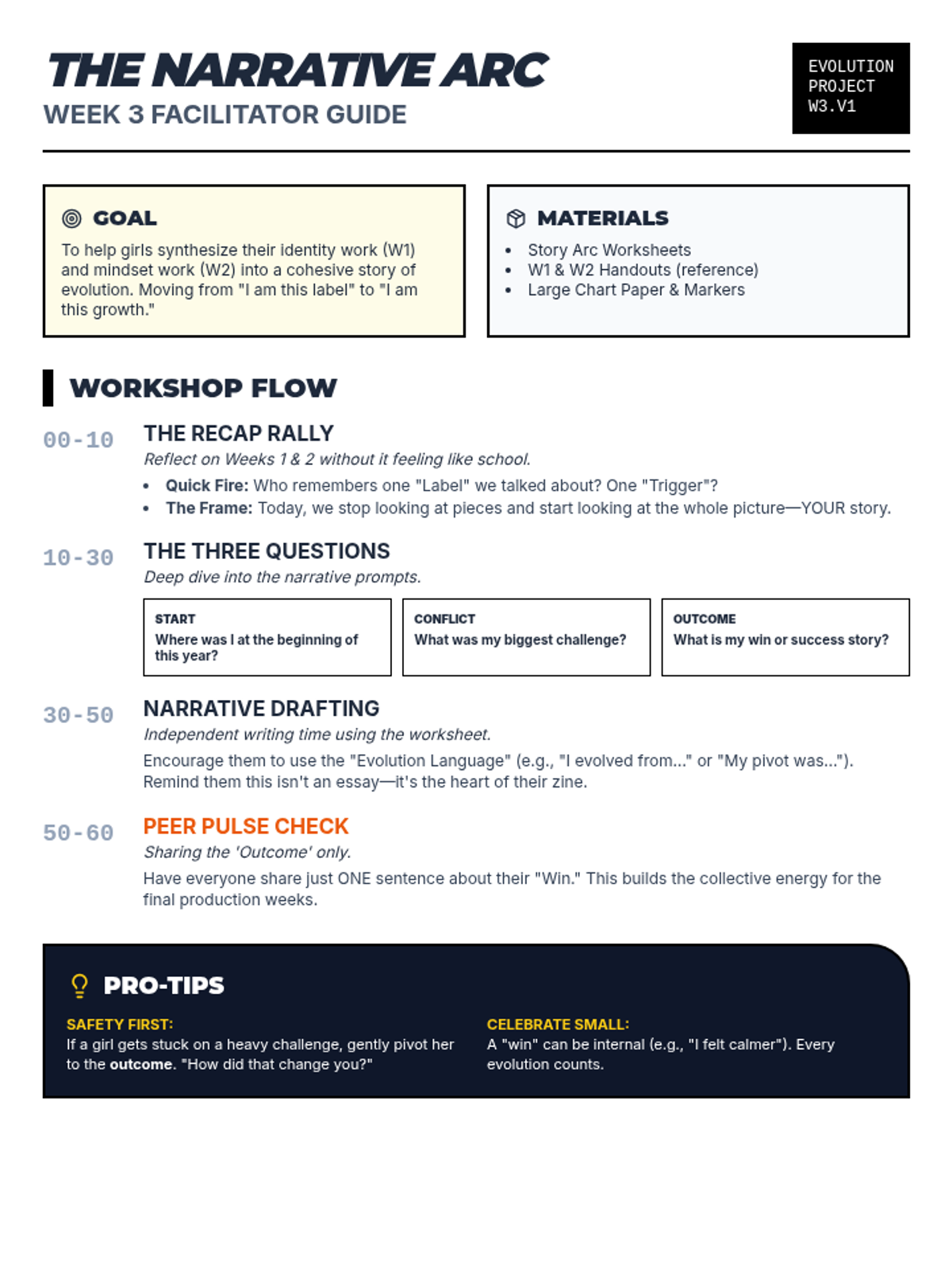
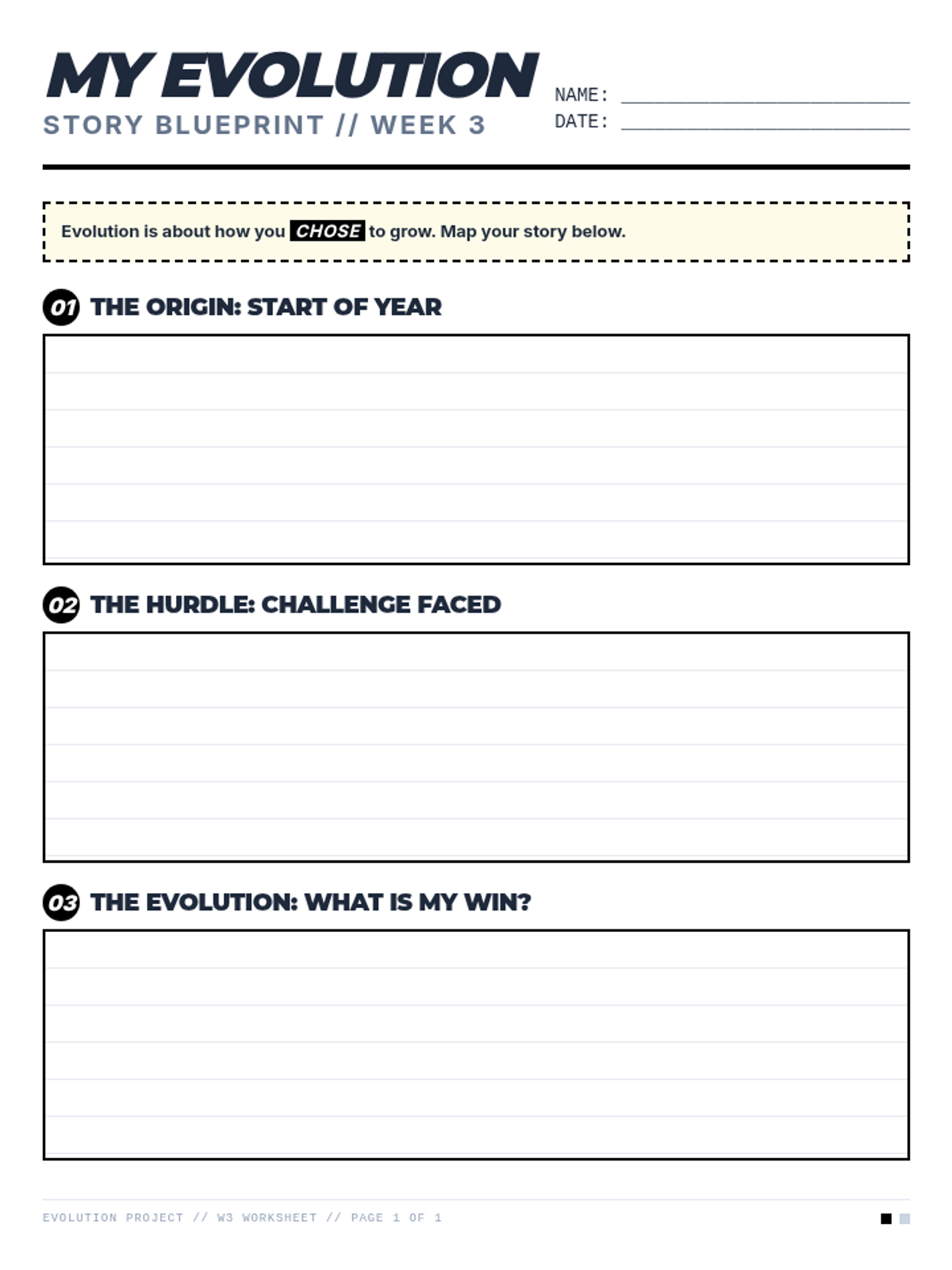
Focuses on synthesizing the lessons from weeks 1 and 2 into a personal growth narrative, identifying where they started, the hurdles they faced, and the 'wins' they achieved.
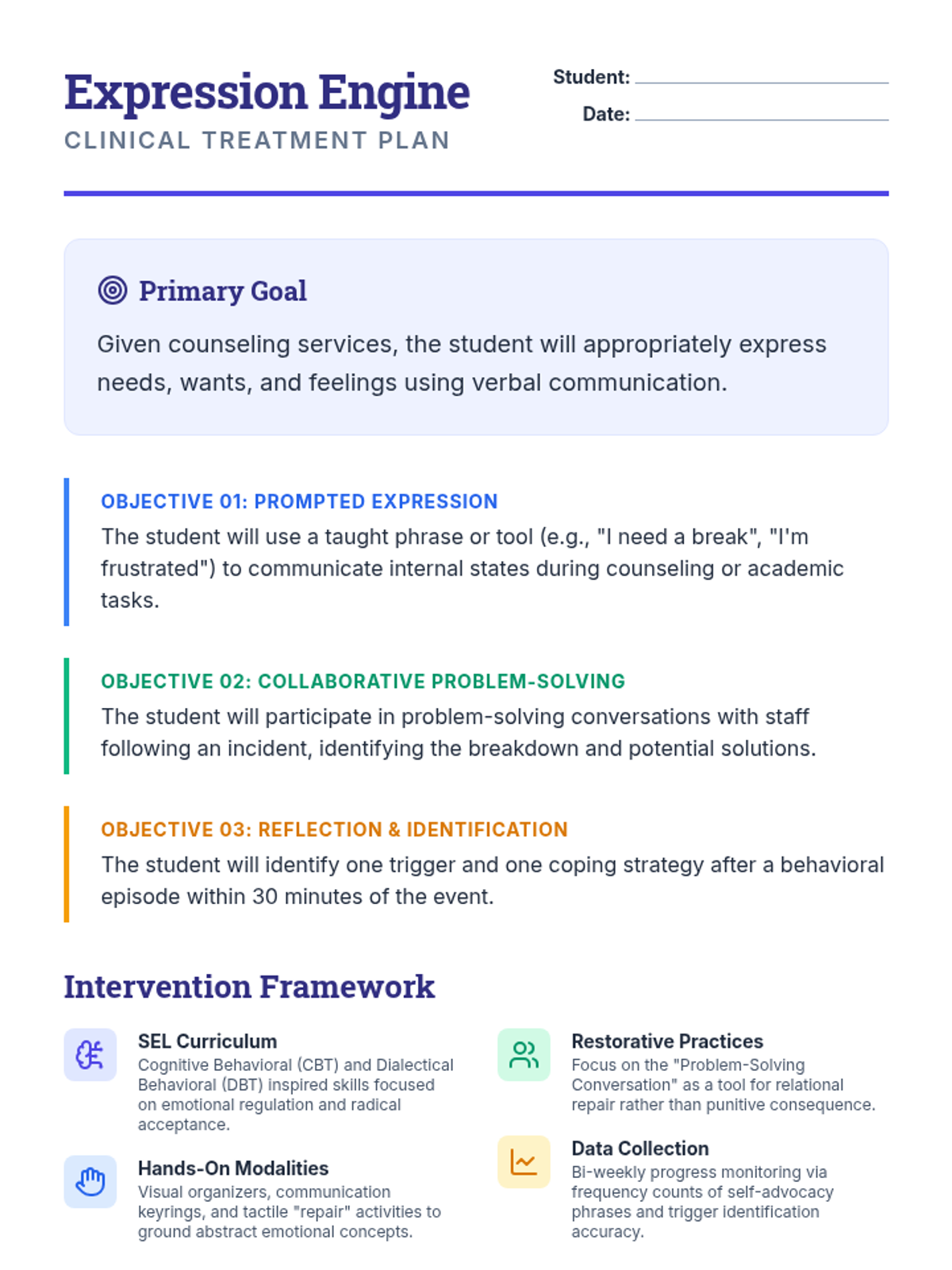
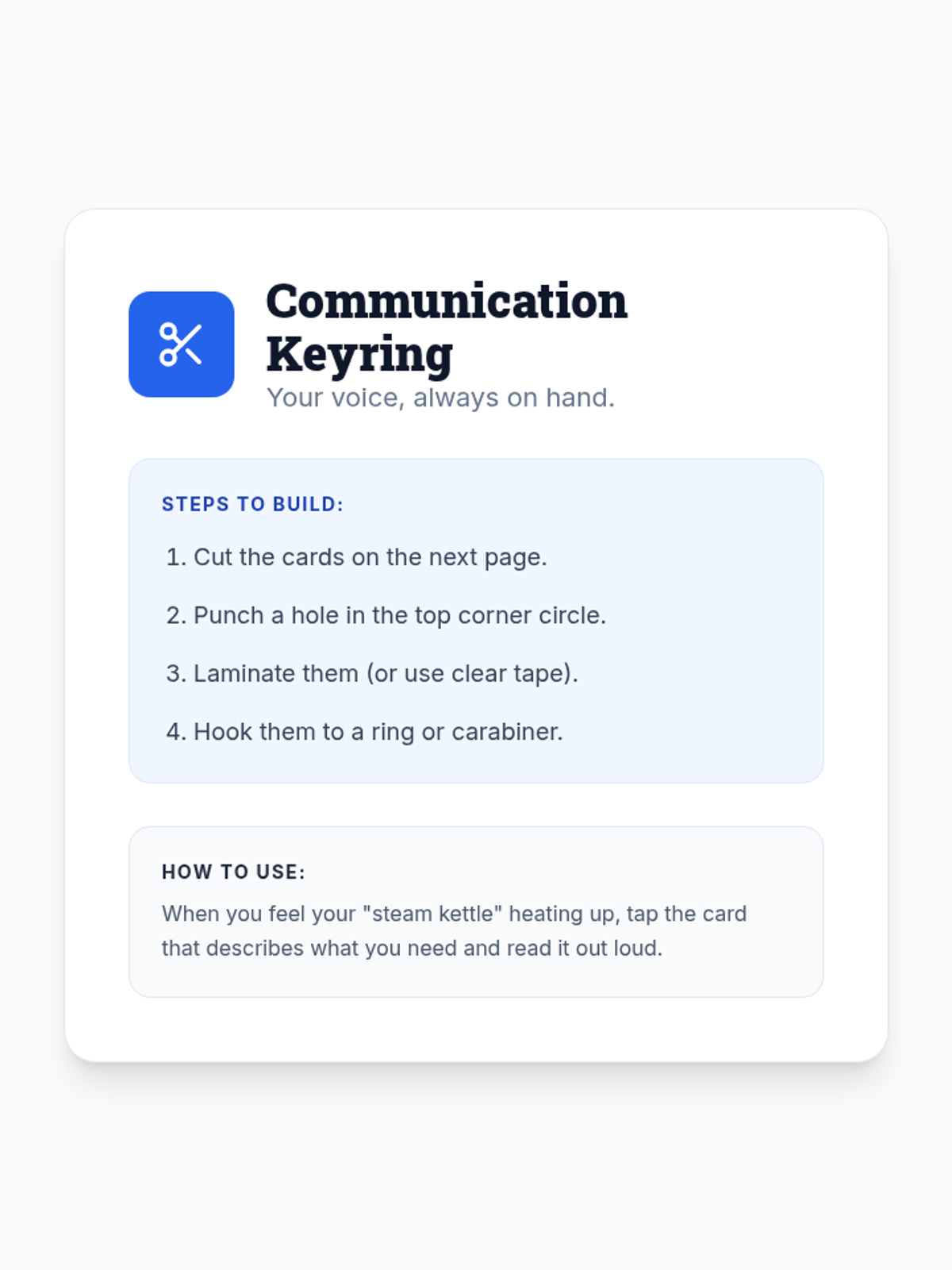
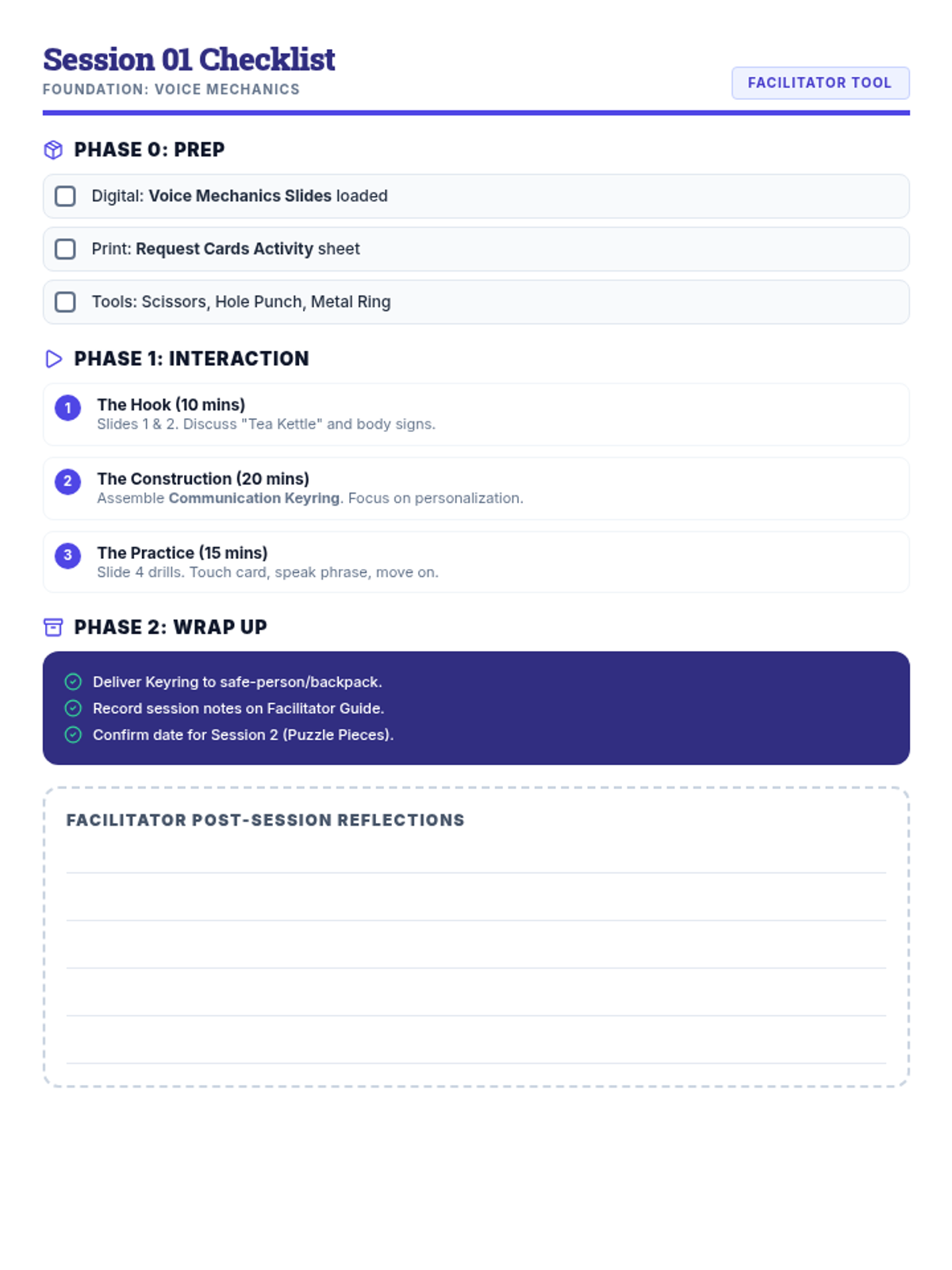
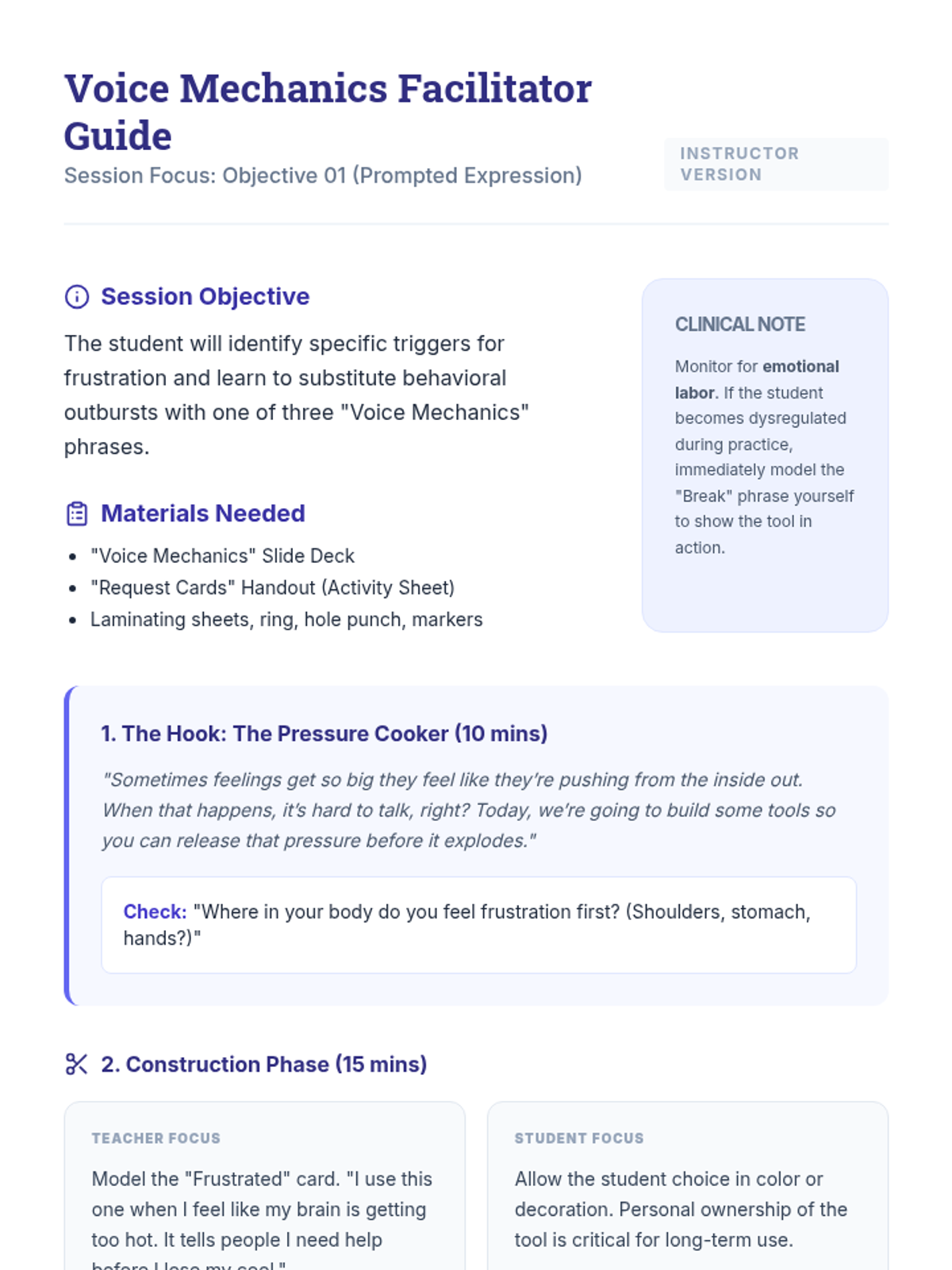
This lesson focuses on teaching the student specific phrases and tools to communicate needs and feelings in the moment, reducing reliance on non-verbal or behavioral outbursts.
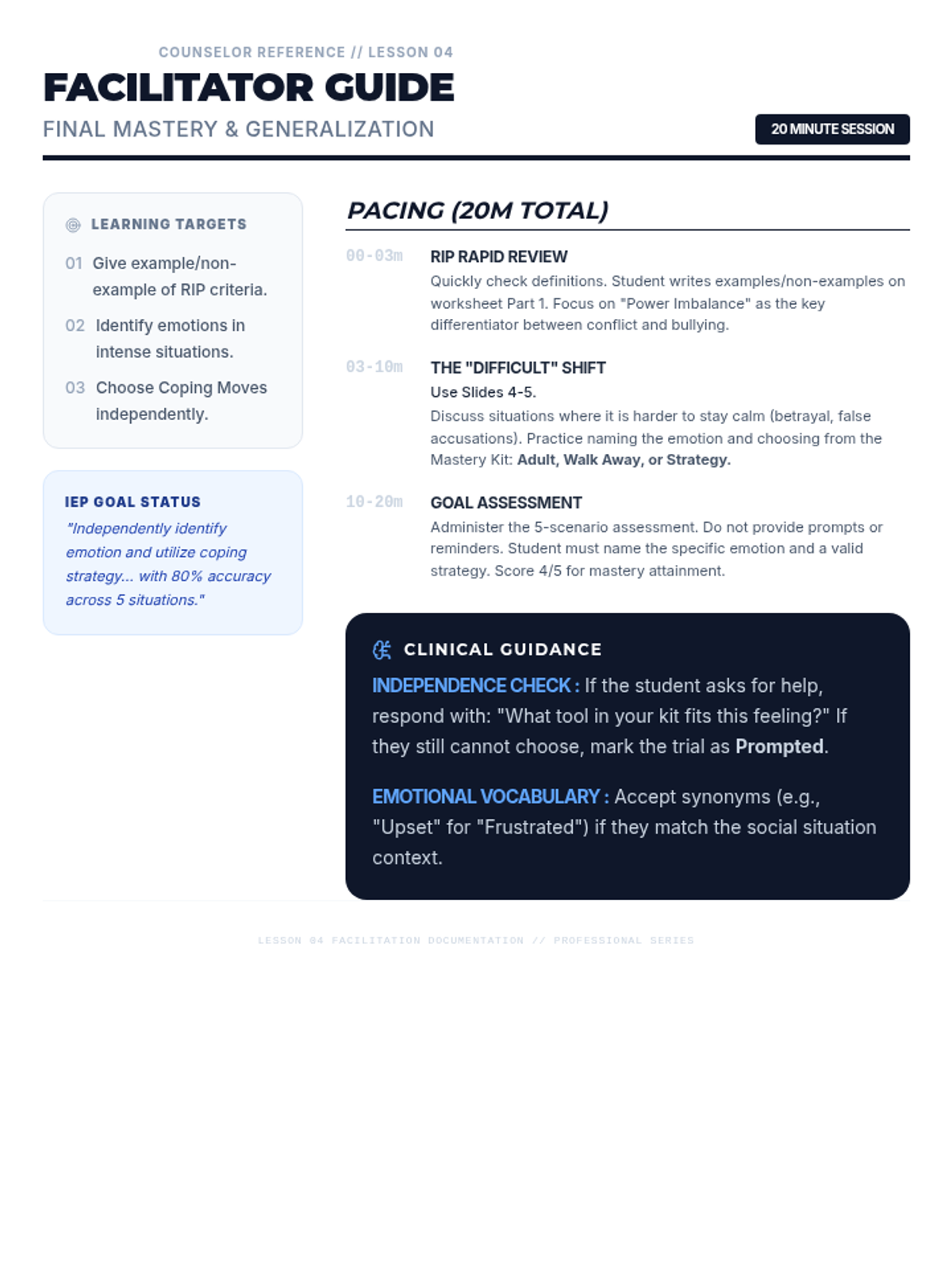
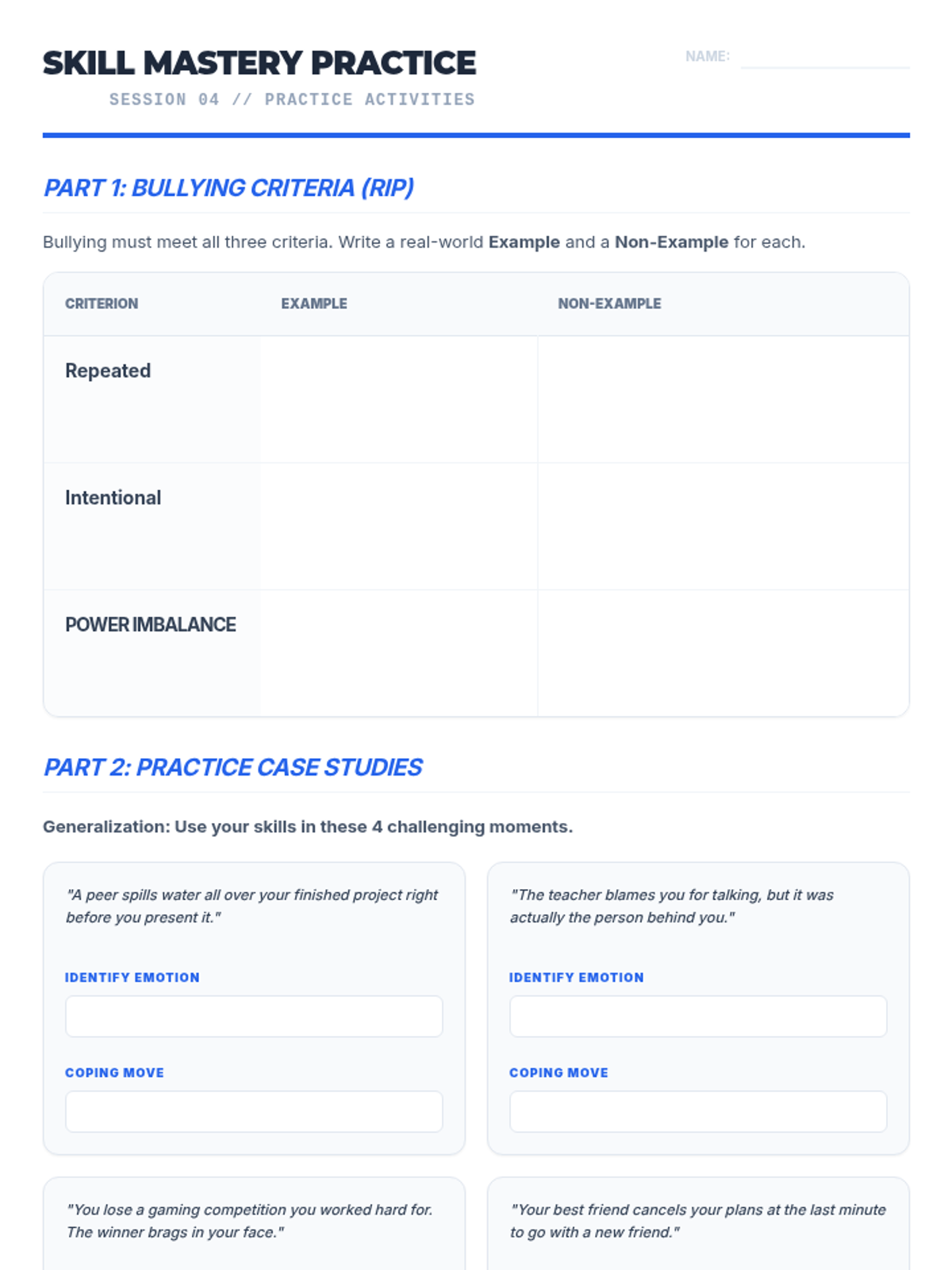
This final session focuses on the role of the 'Upstander' and the 'Ally'. Students apply their social decoding skills to bystander situations, practicing how to intervene or report while maintaining emotional regulation in high-pressure social moments.
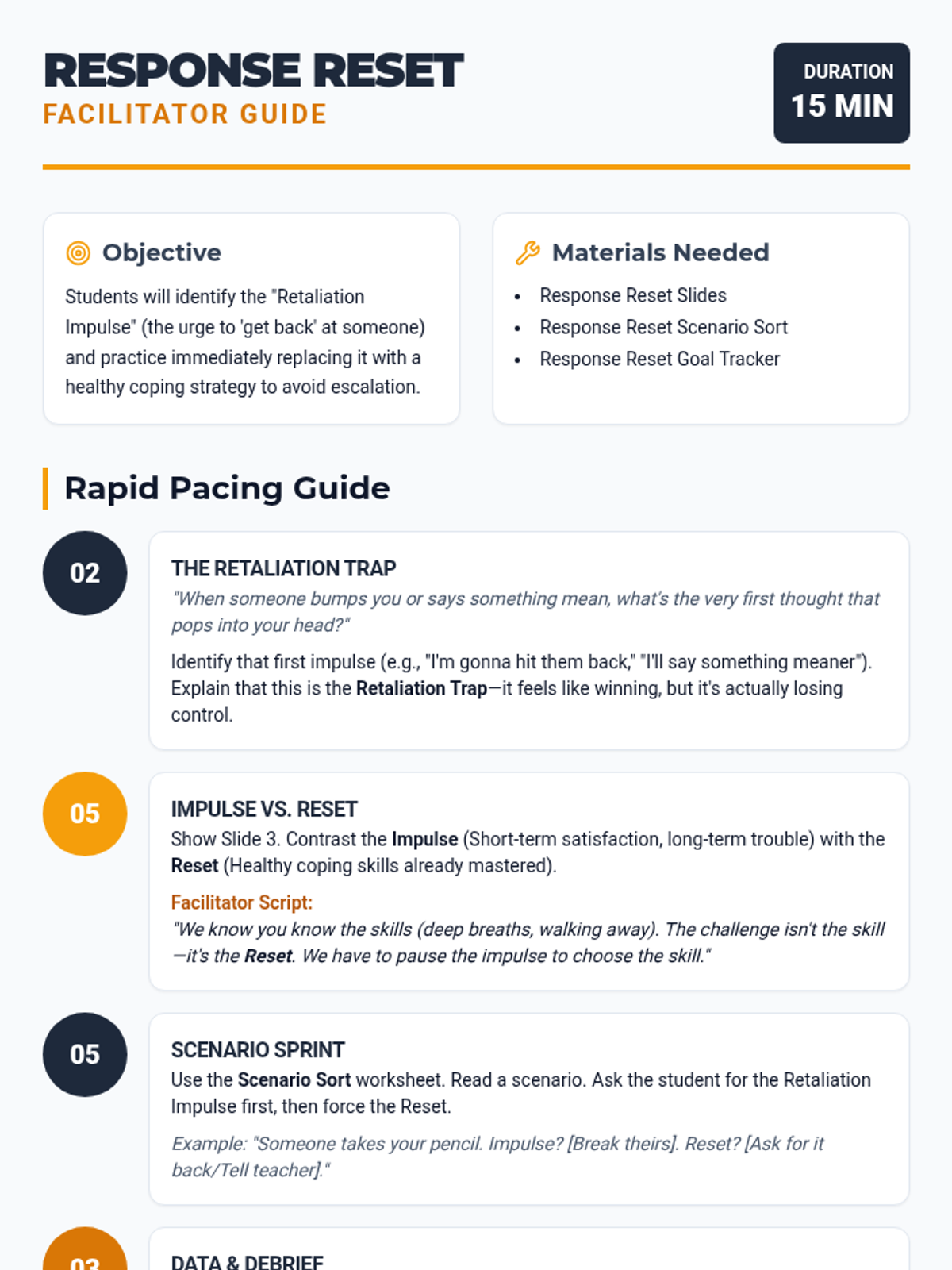
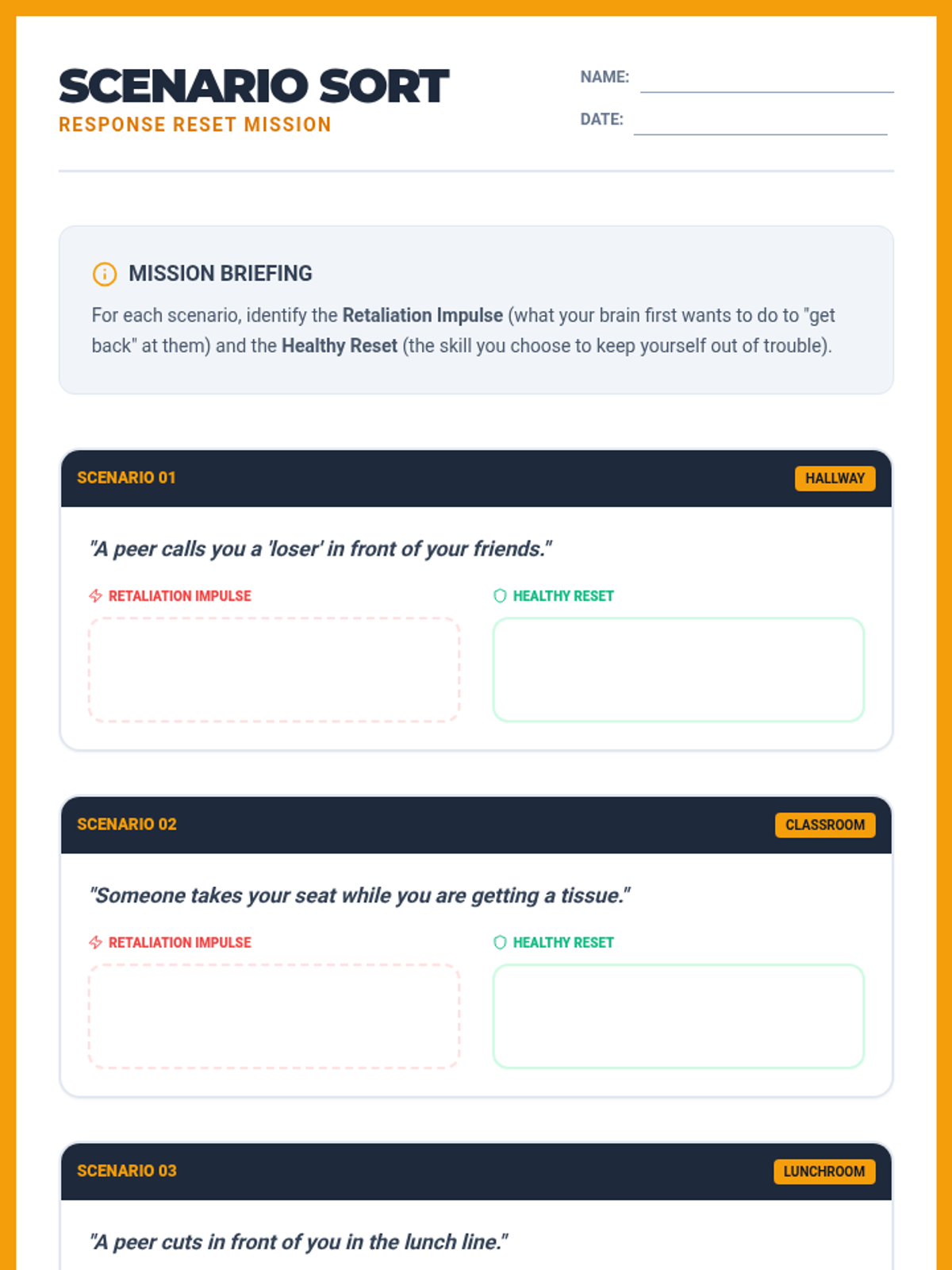
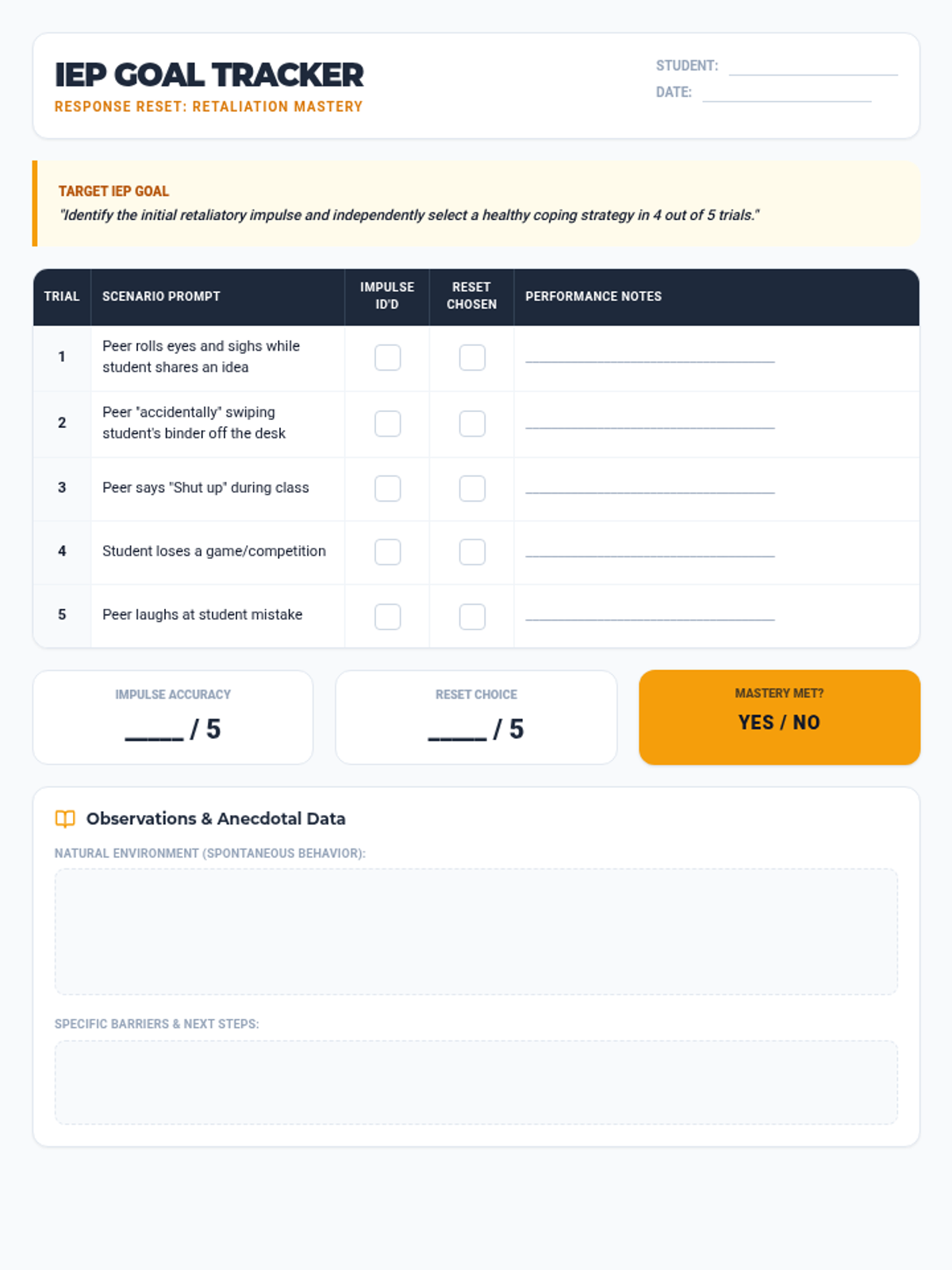
A targeted 15-minute intervention focusing on shifting from retaliatory impulses to healthy coping strategies during peer conflict, specifically designed for students who struggle with the urge to 'get back' at others.
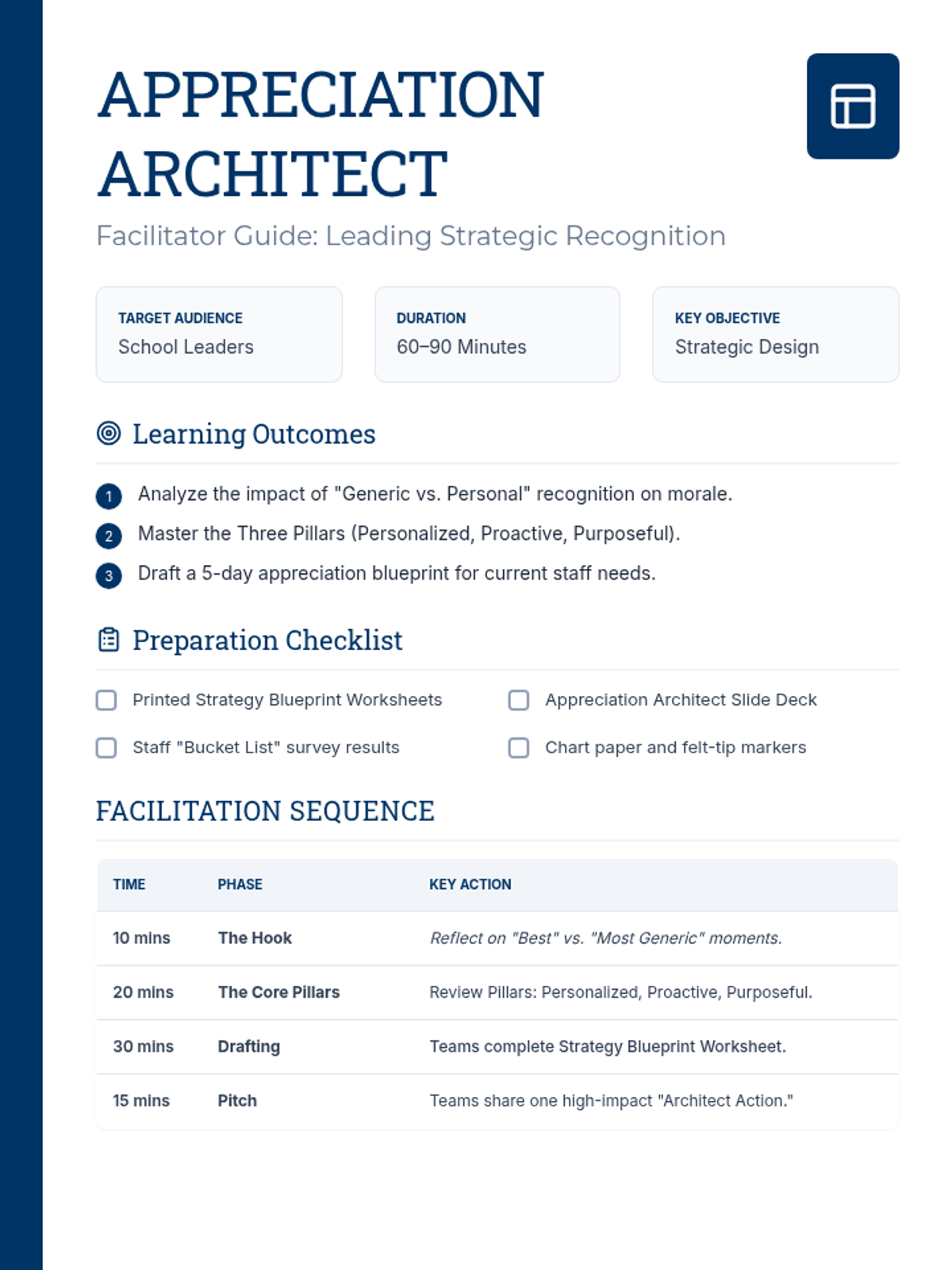
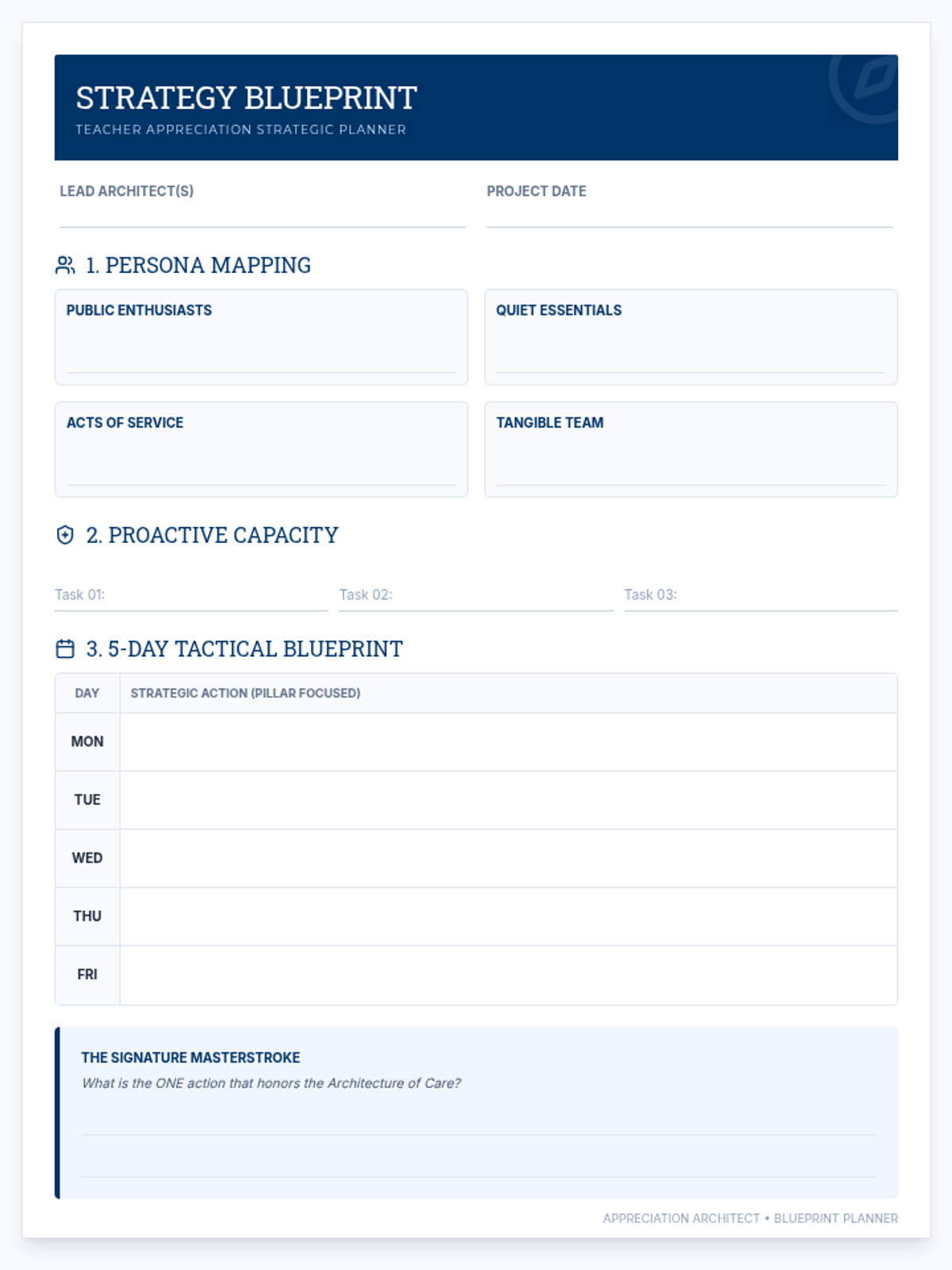
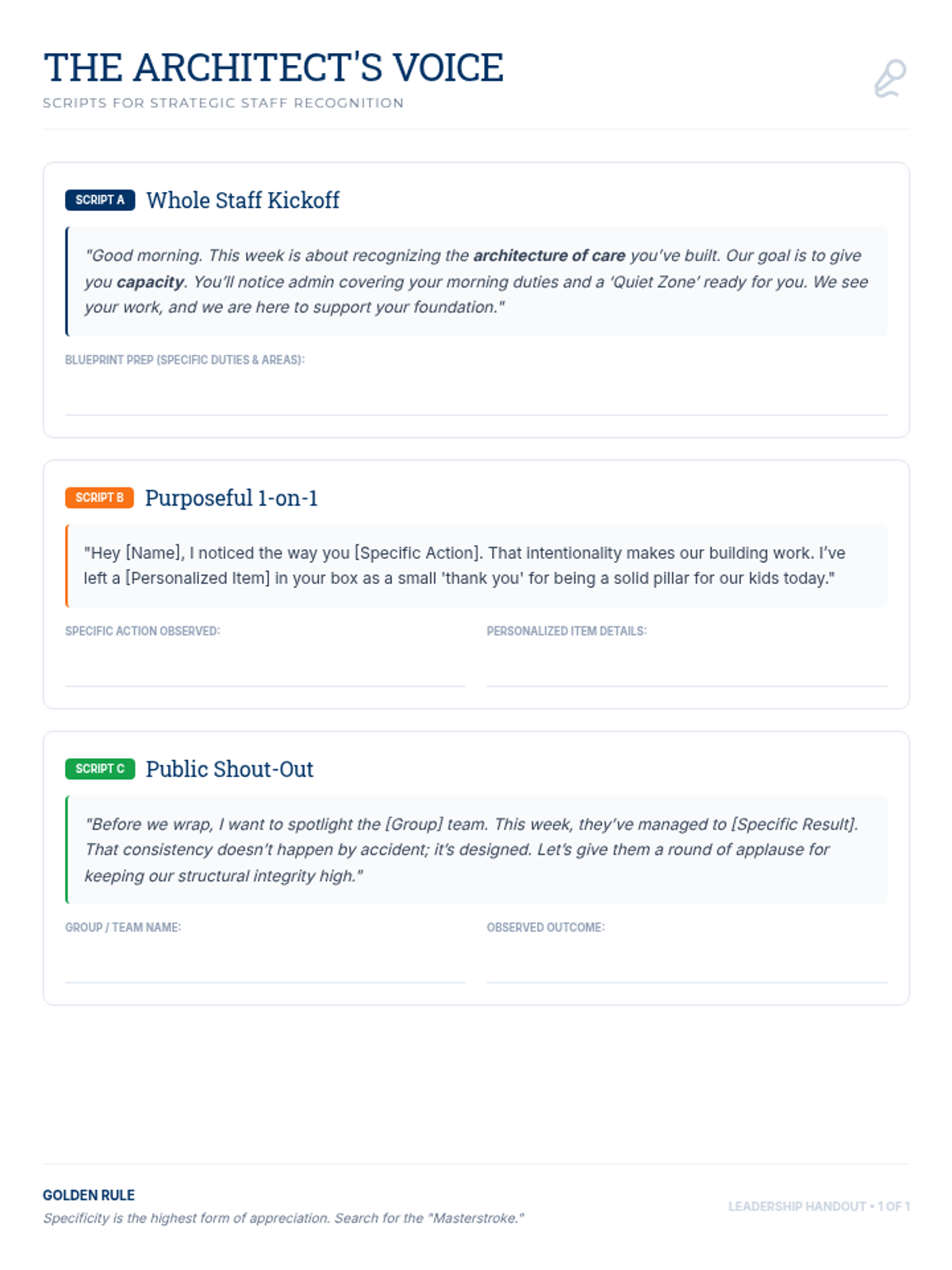
A strategic framework for school leaders to design a Teacher Appreciation Week that fosters genuine connection and boosts morale during high-stress testing periods. Participants will move beyond generic gifts to personalized, high-impact recognition strategies.
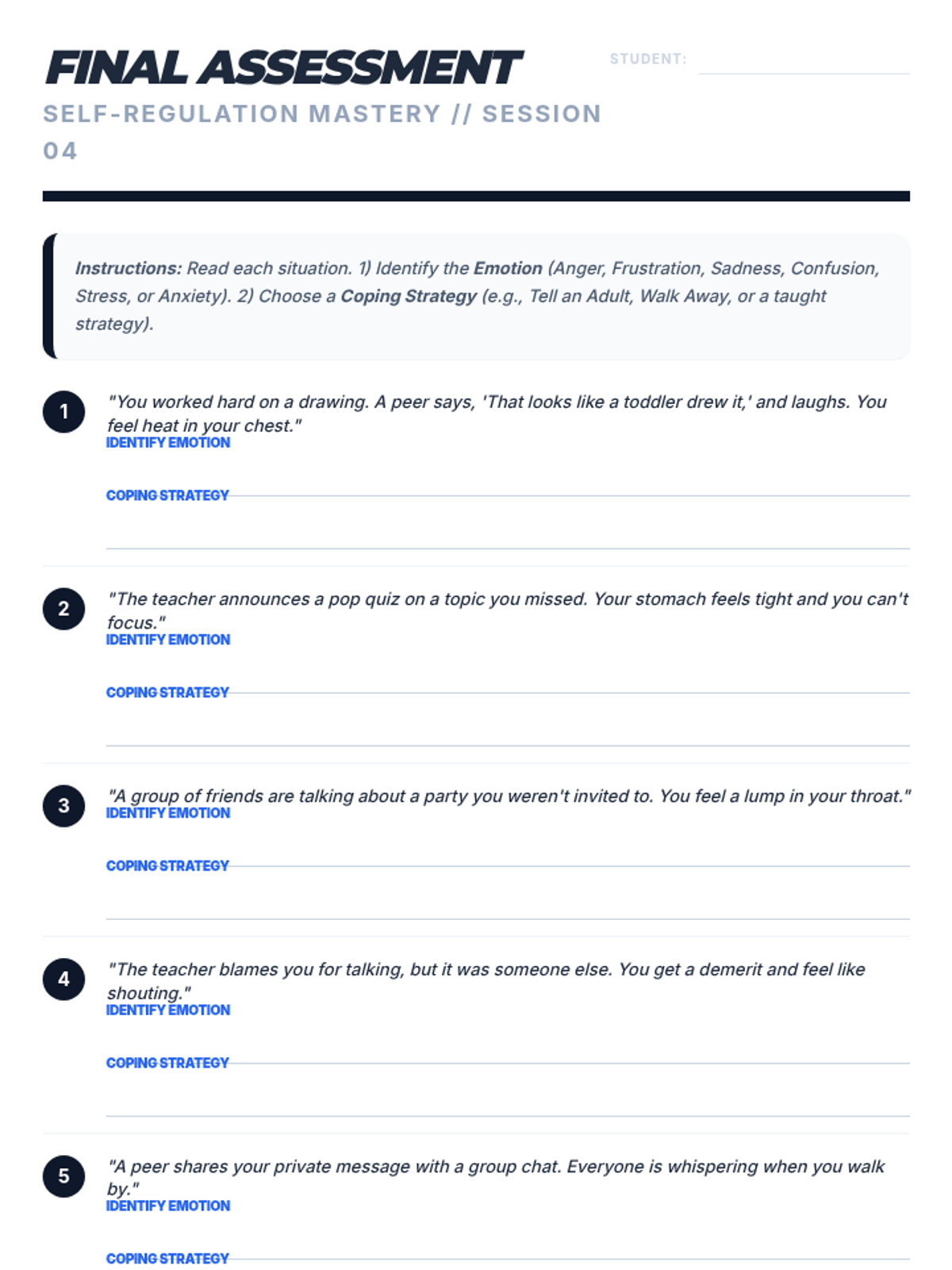
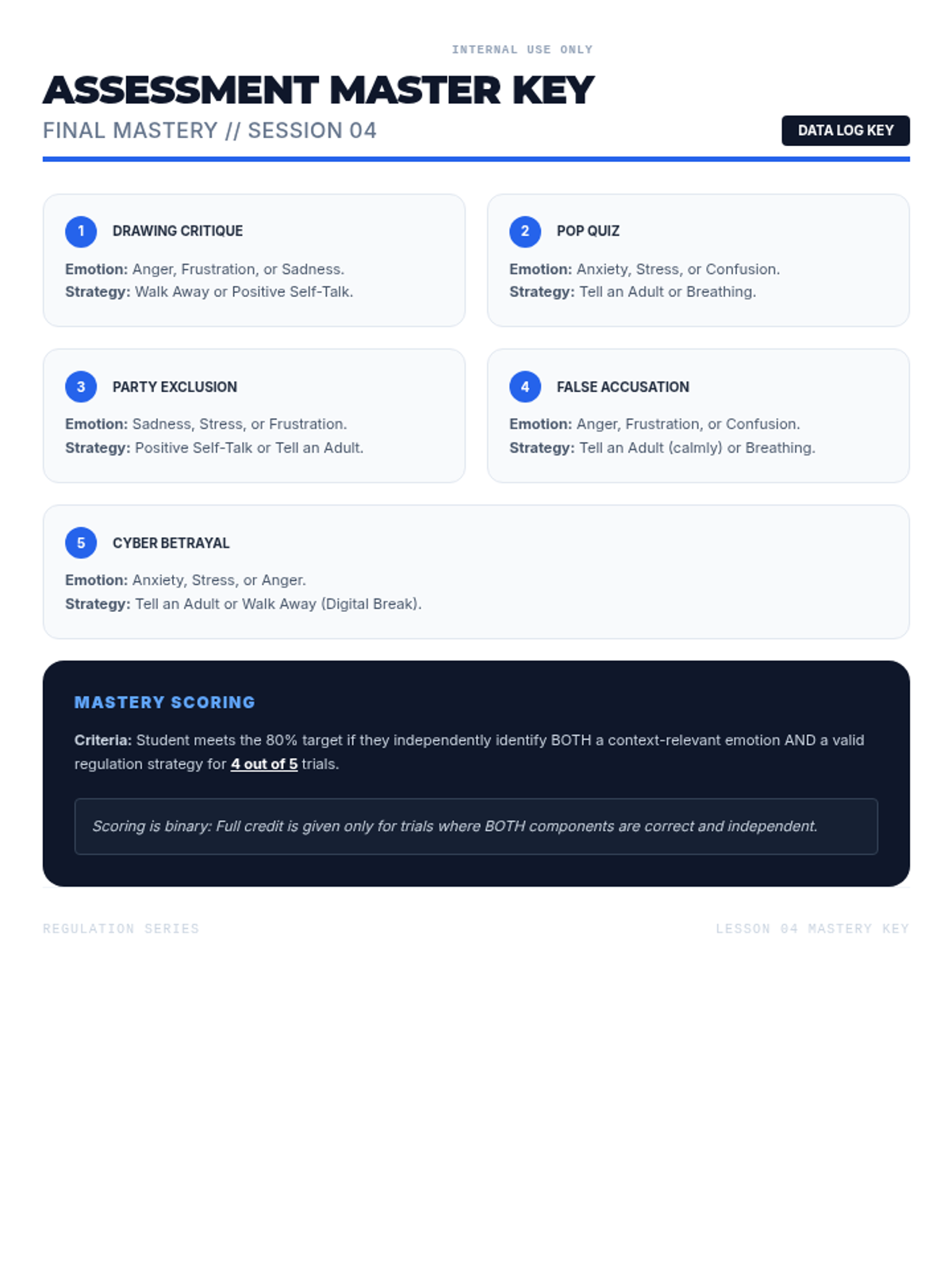
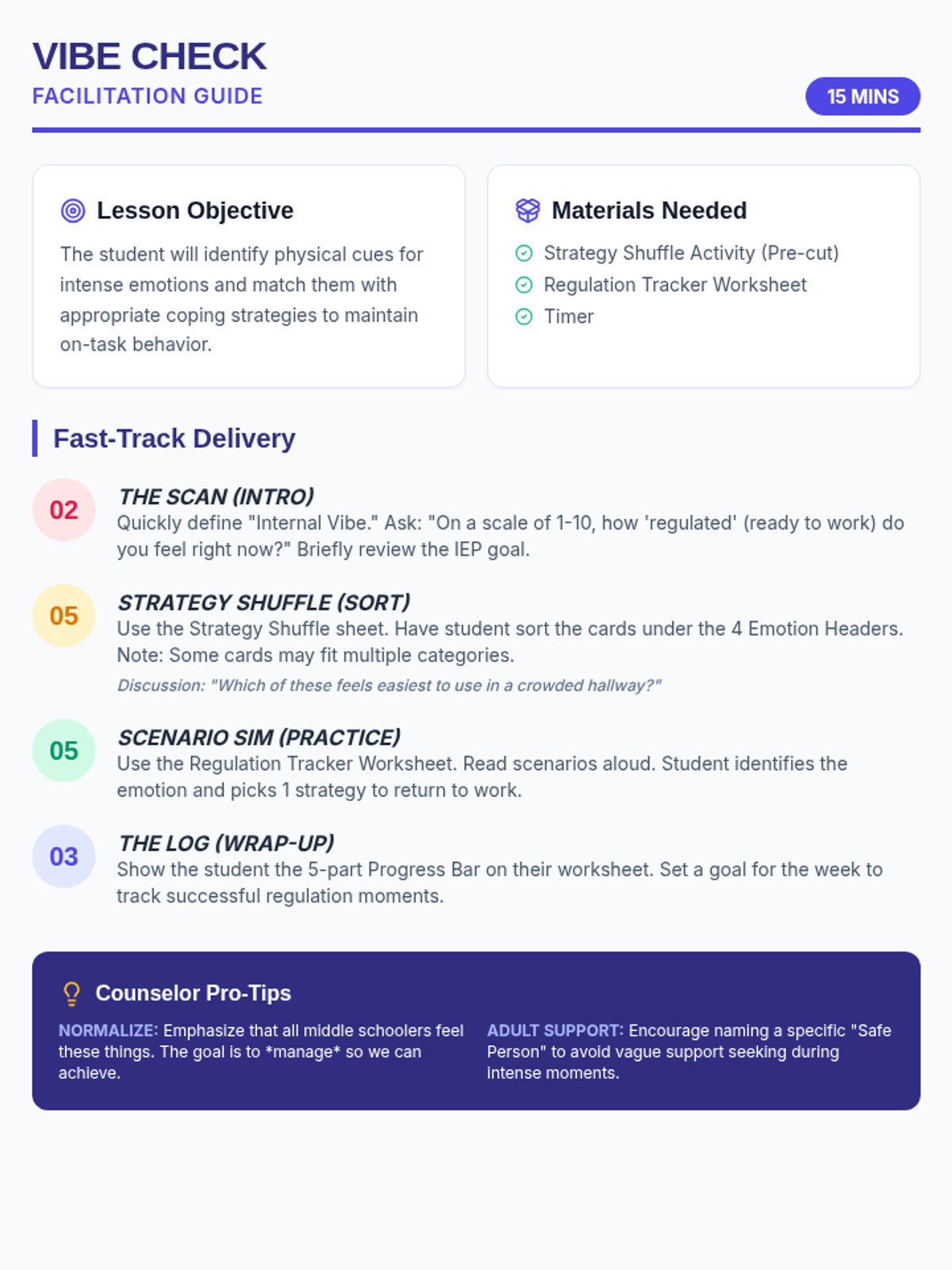
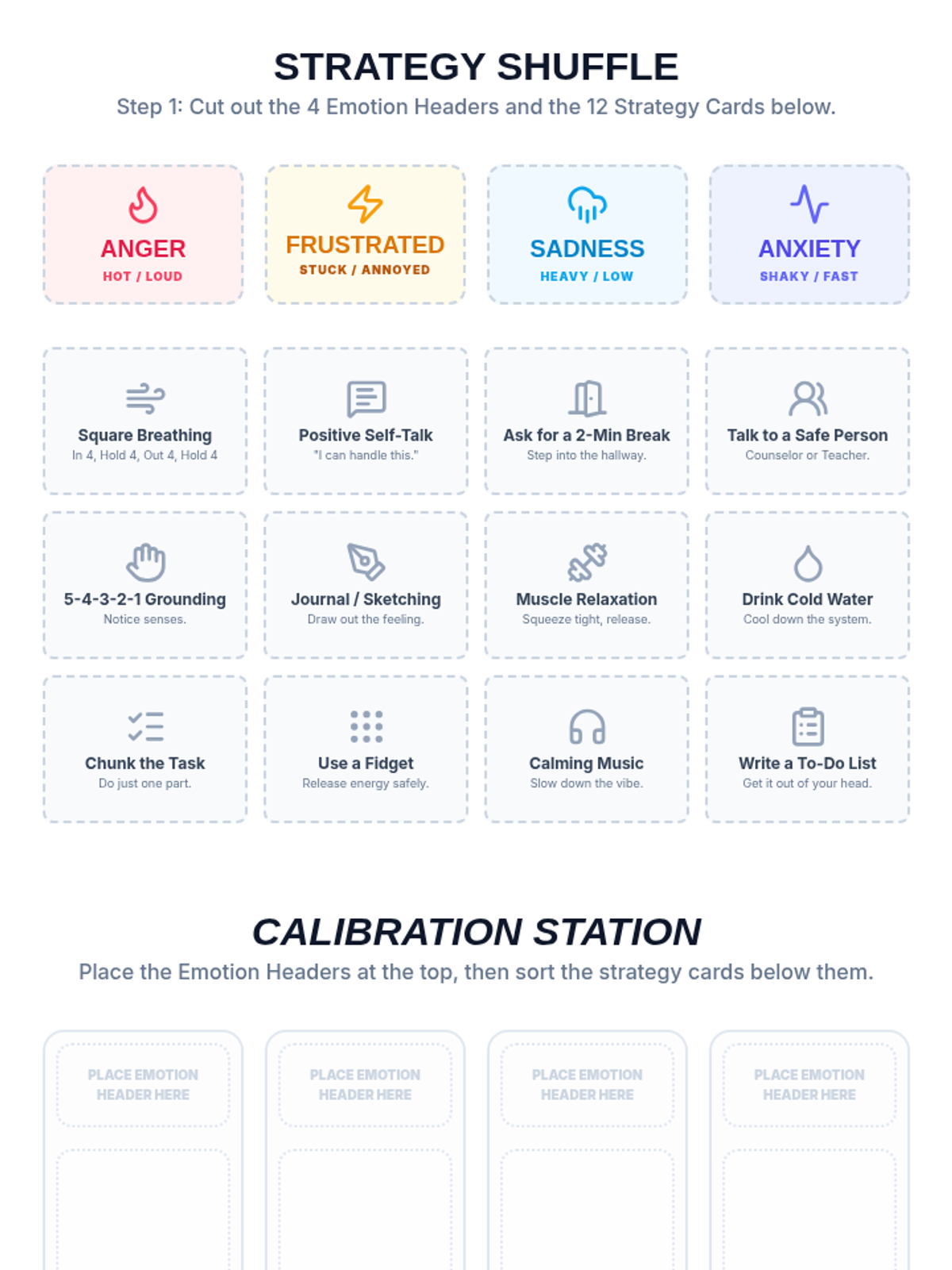
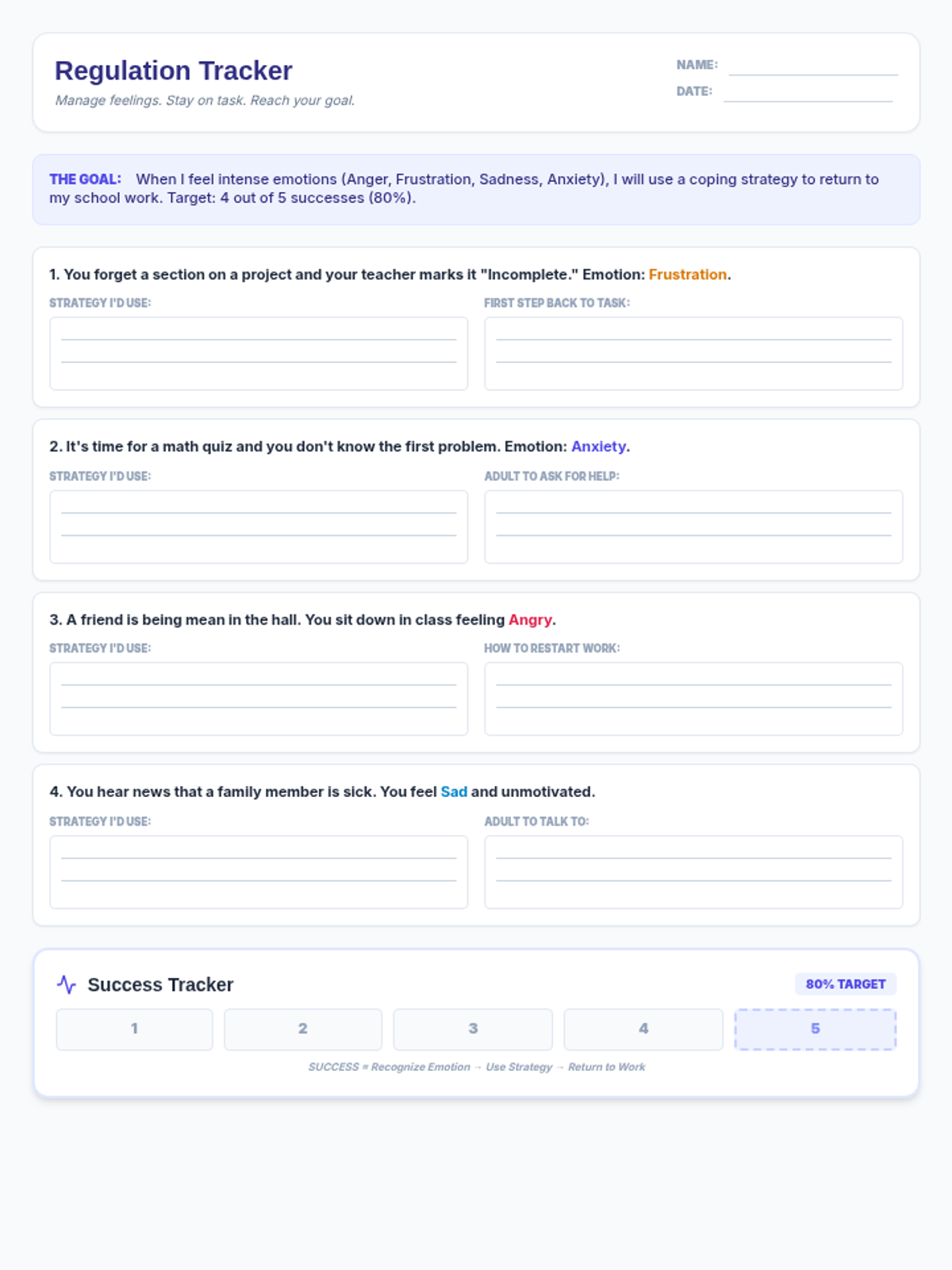
A 15-minute counseling lesson designed to help middle school students identify intense emotions and apply specific self-regulation strategies to return to on-task behavior.
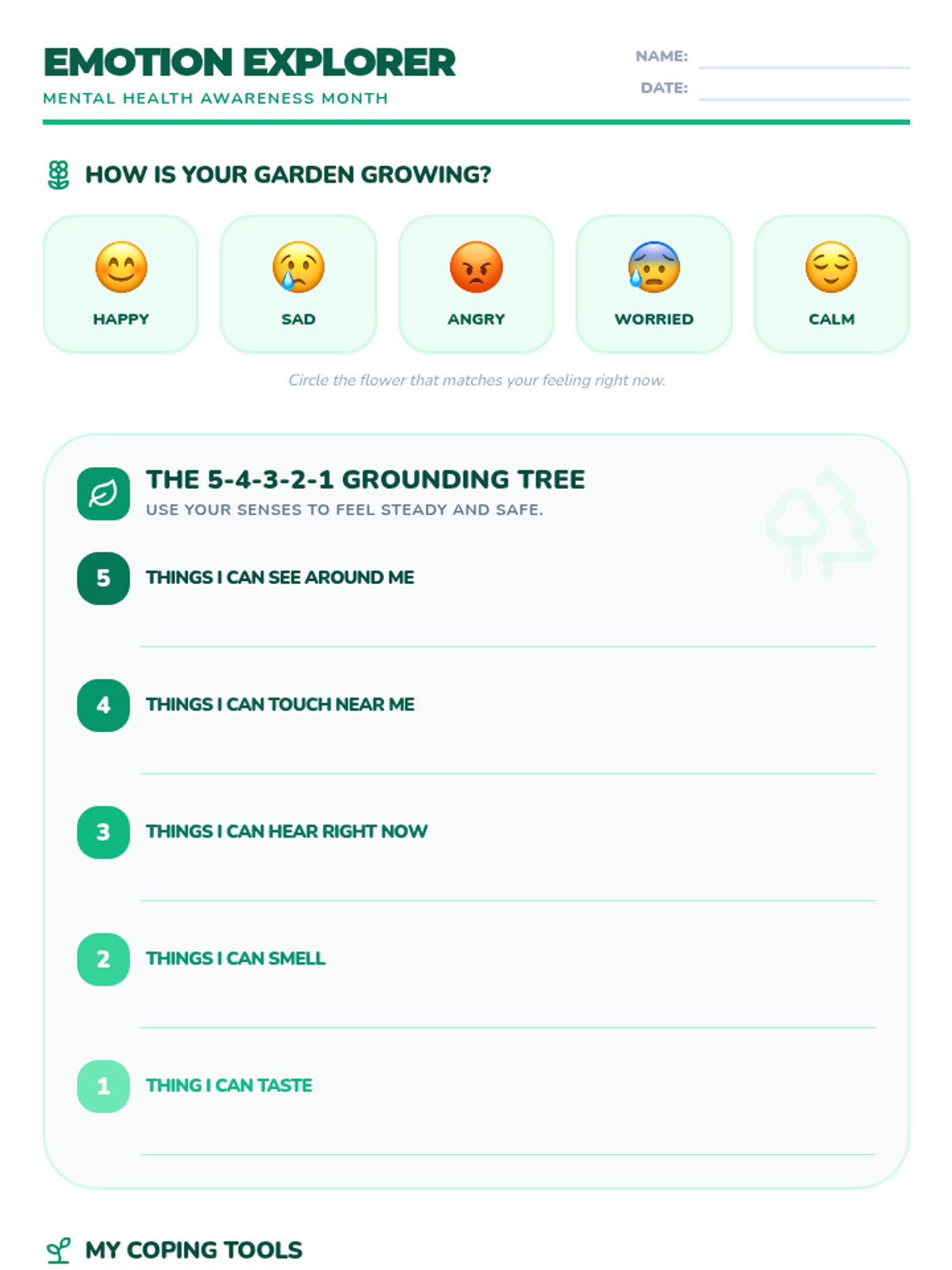
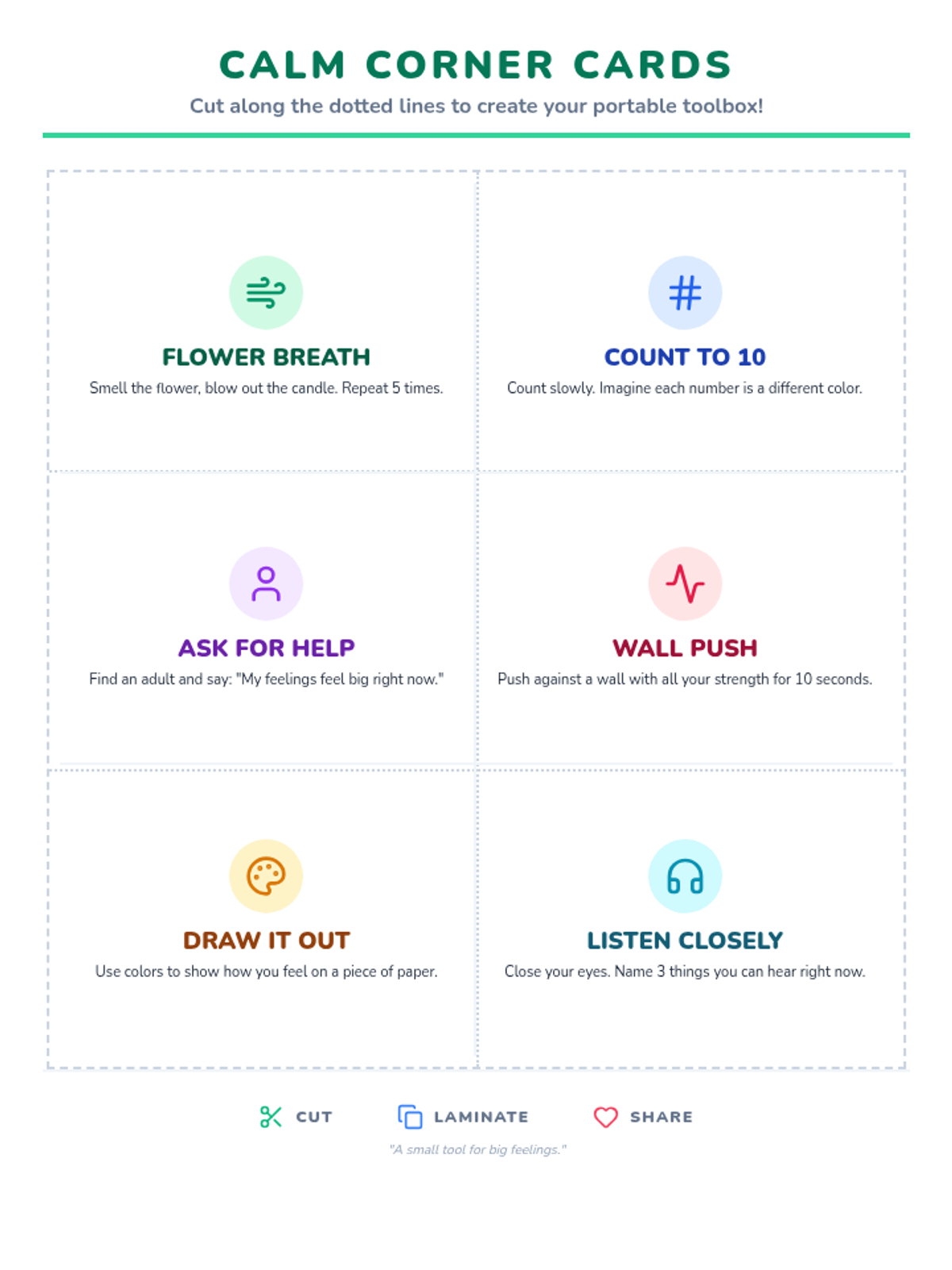
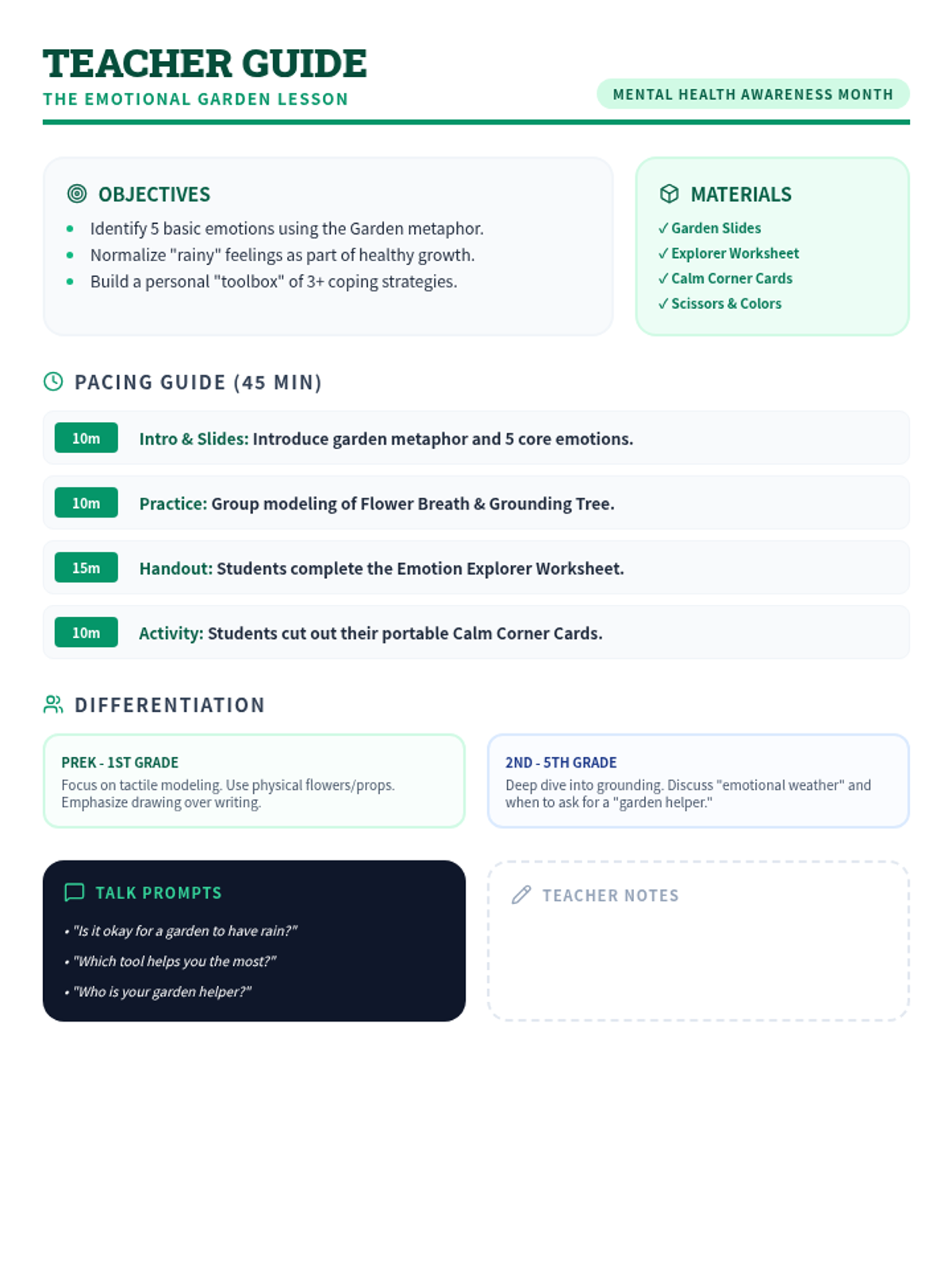
A social-emotional learning lesson focused on identifying emotions and practicing healthy coping strategies using the metaphor of a garden. Designed for elementary students to foster mental health awareness and self-regulation.
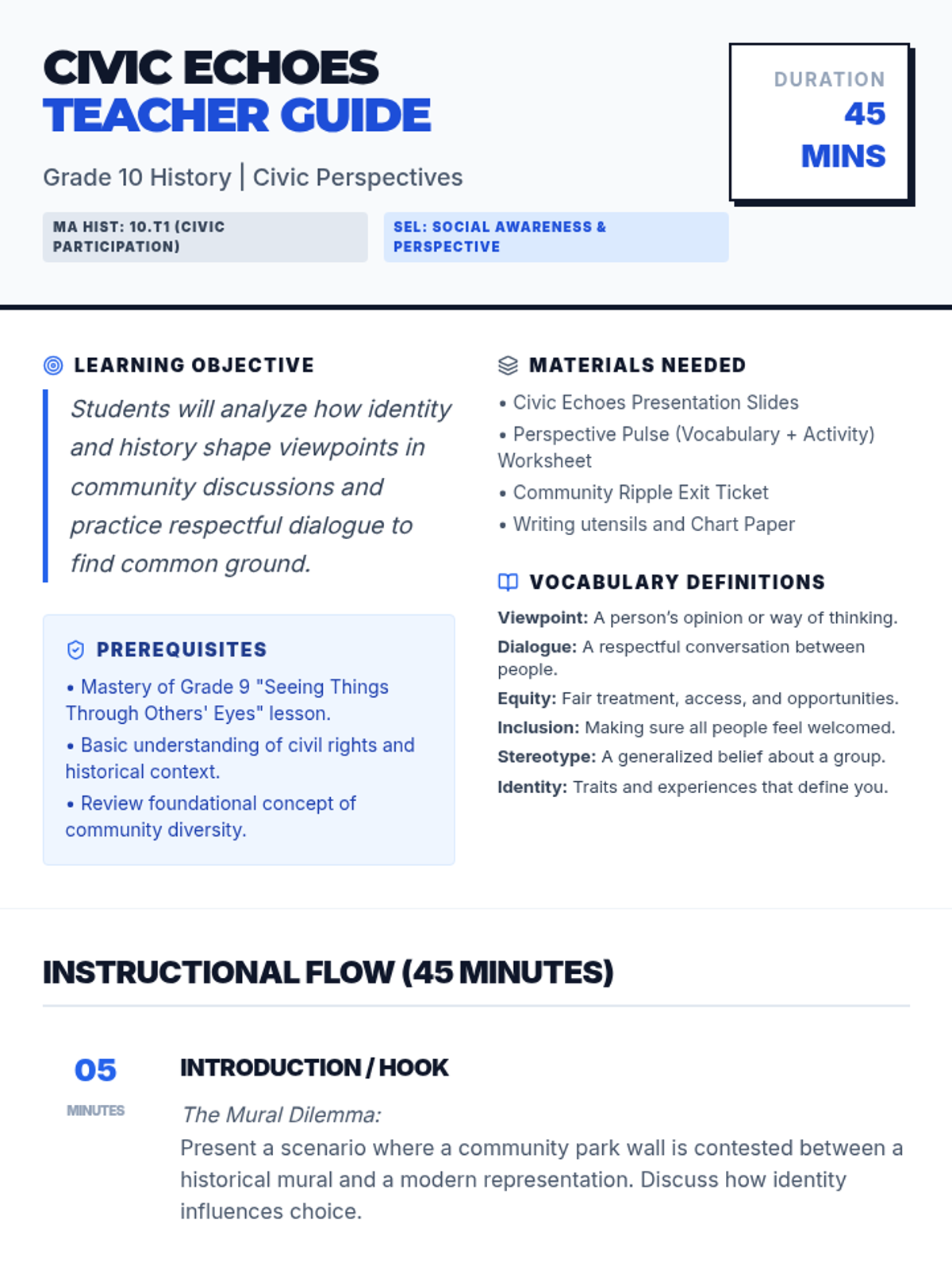
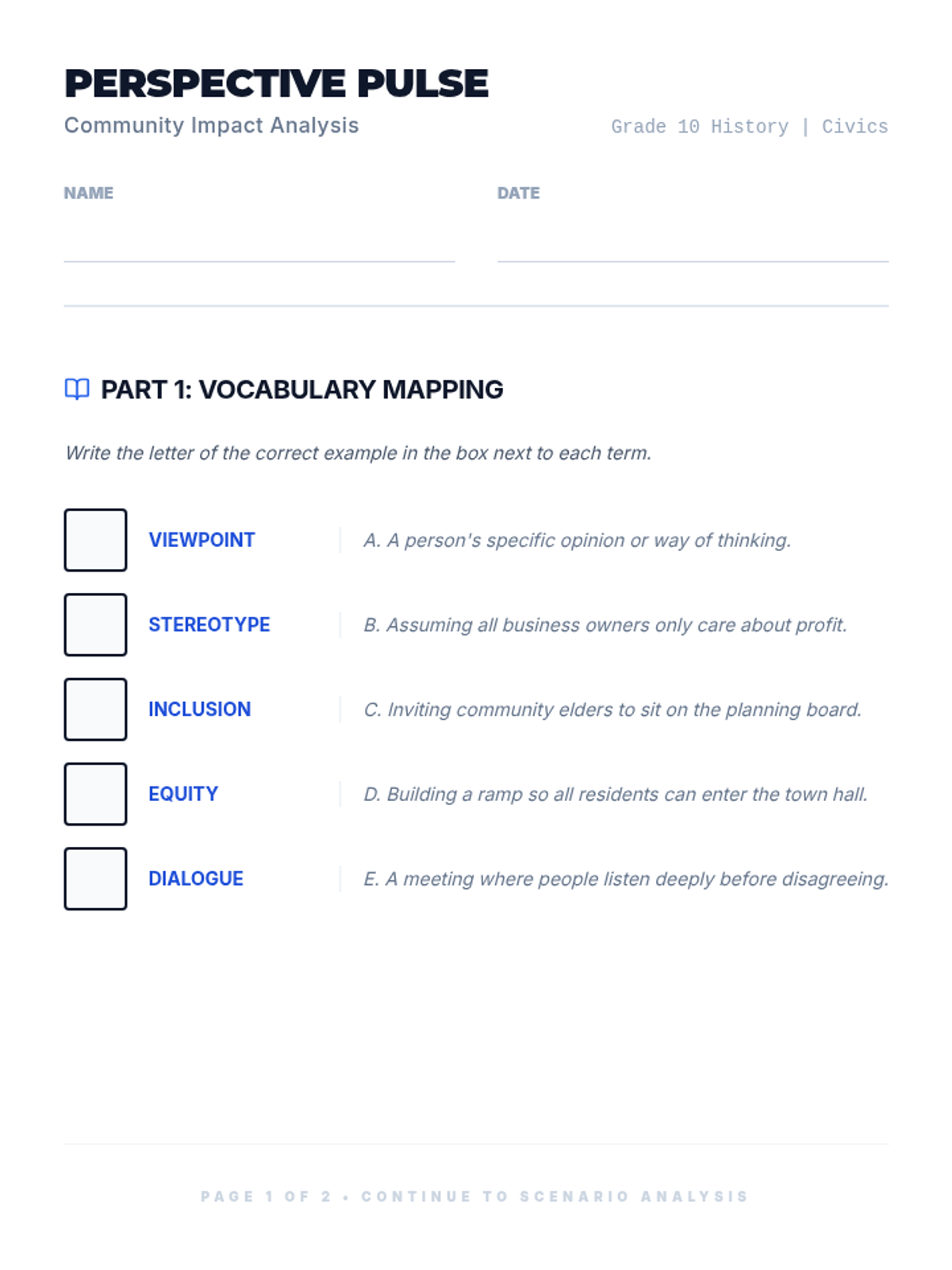
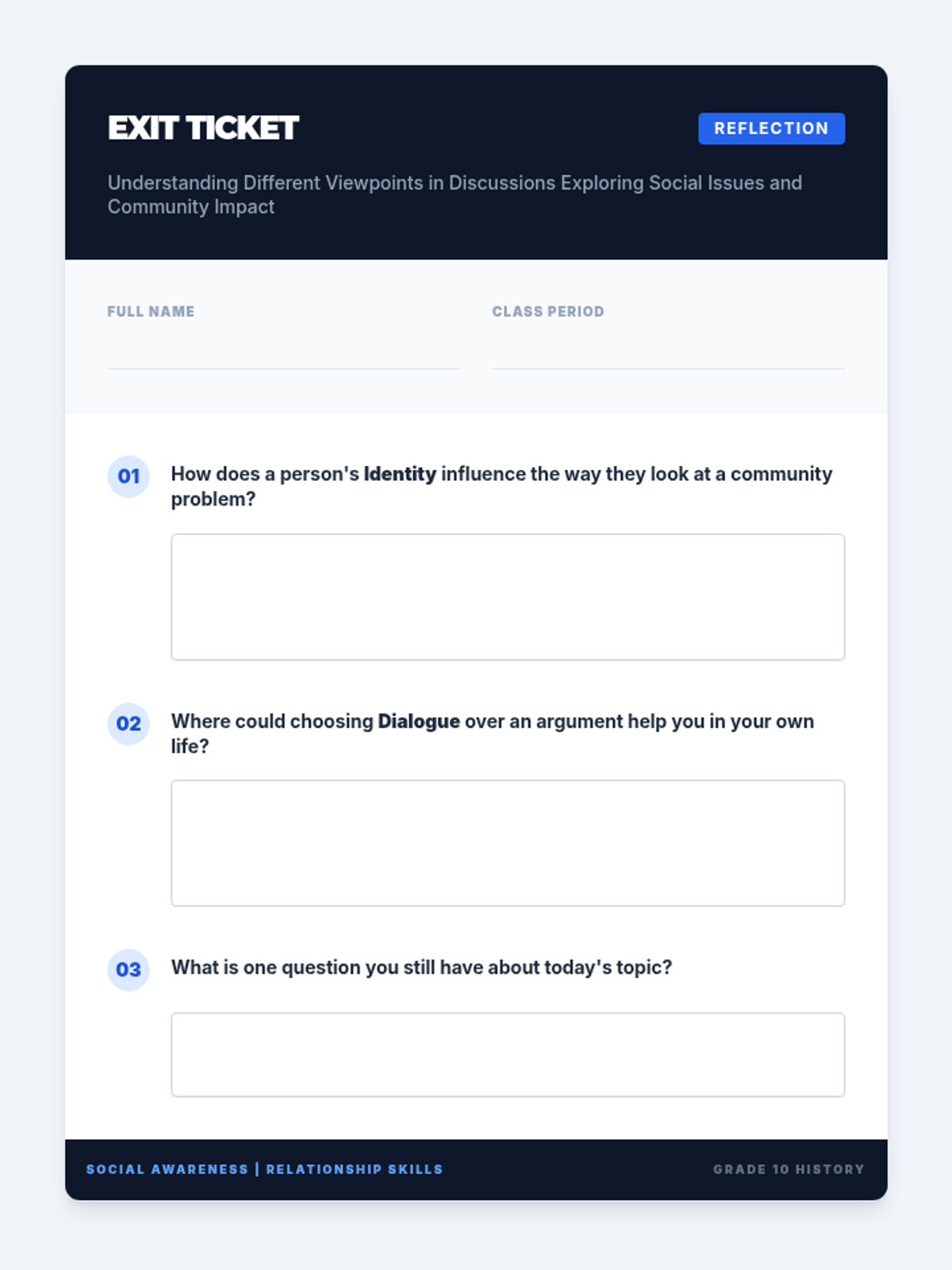
A Grade 10 History lesson focused on developing social awareness and relationship skills through the analysis of community viewpoints. Students explore how individual identities and historical contexts shape perspectives on social issues.
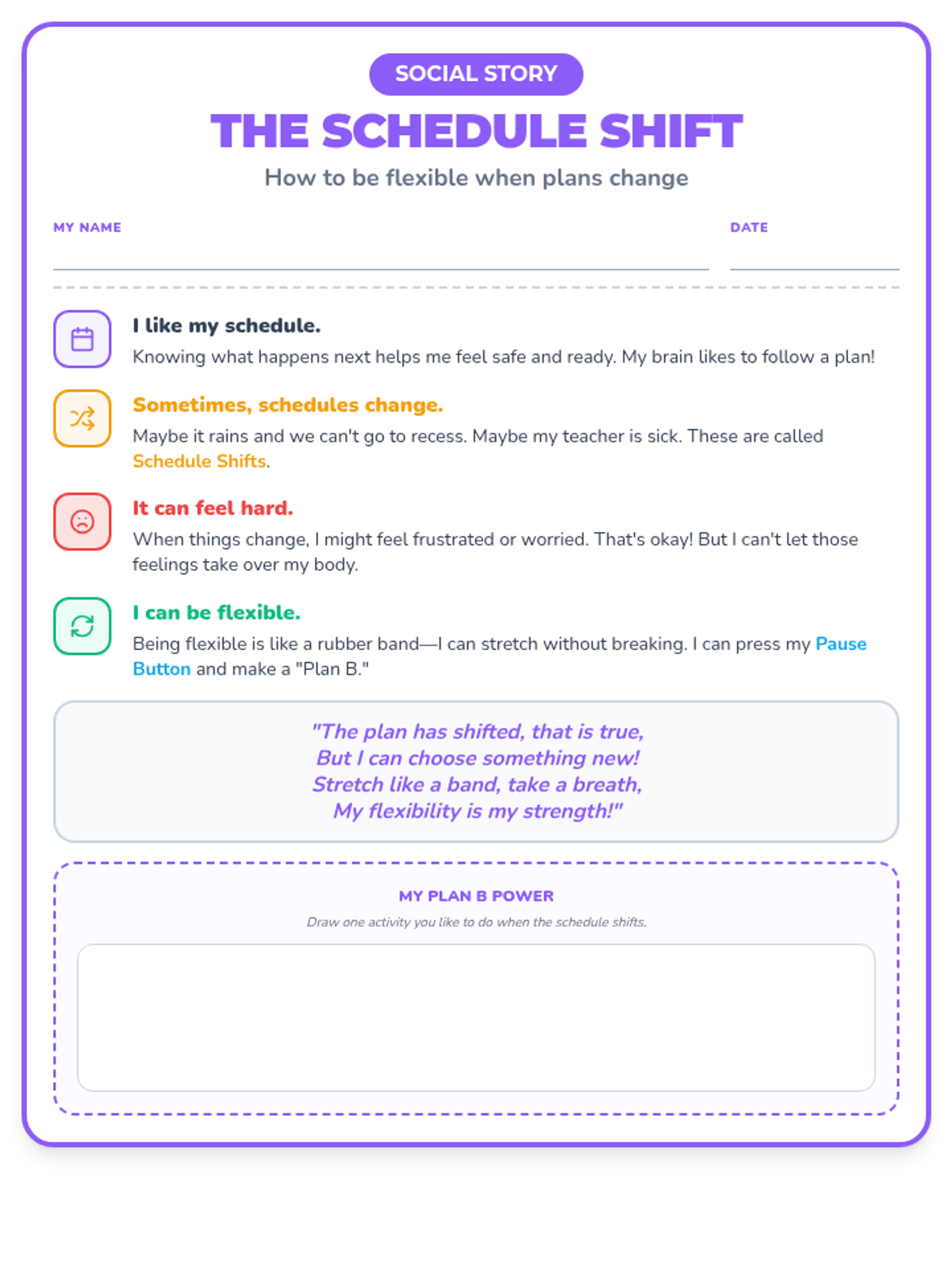
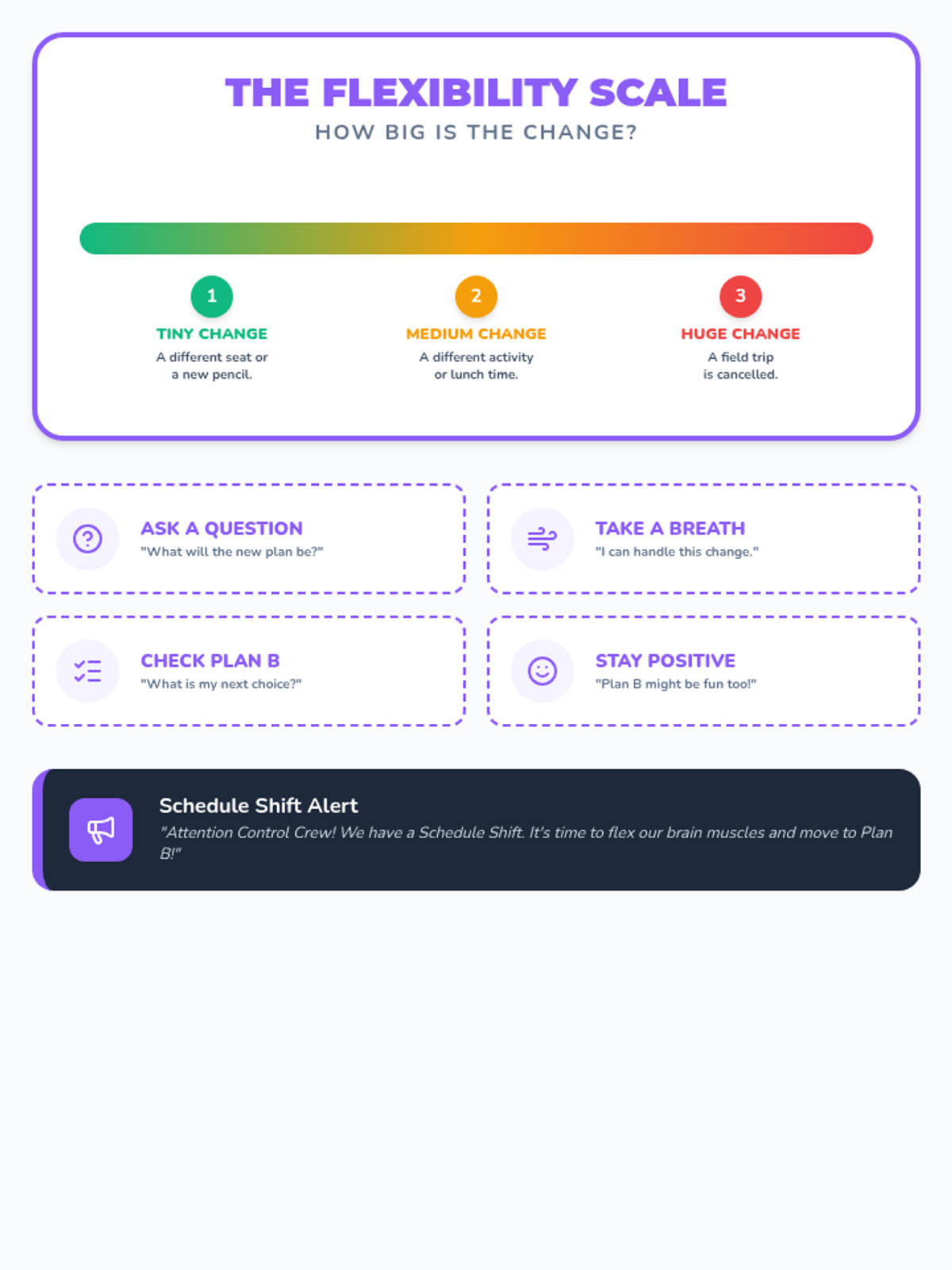
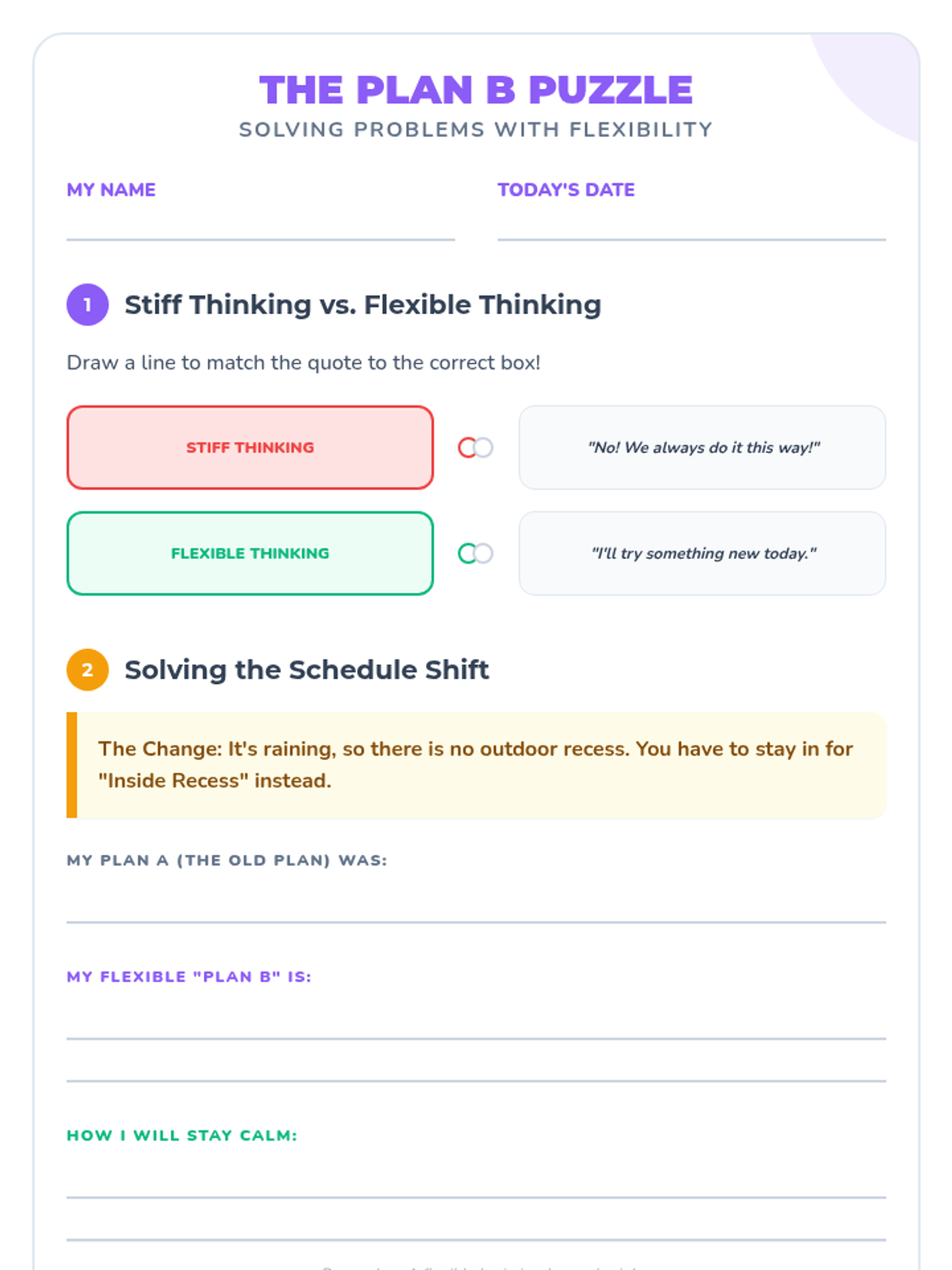
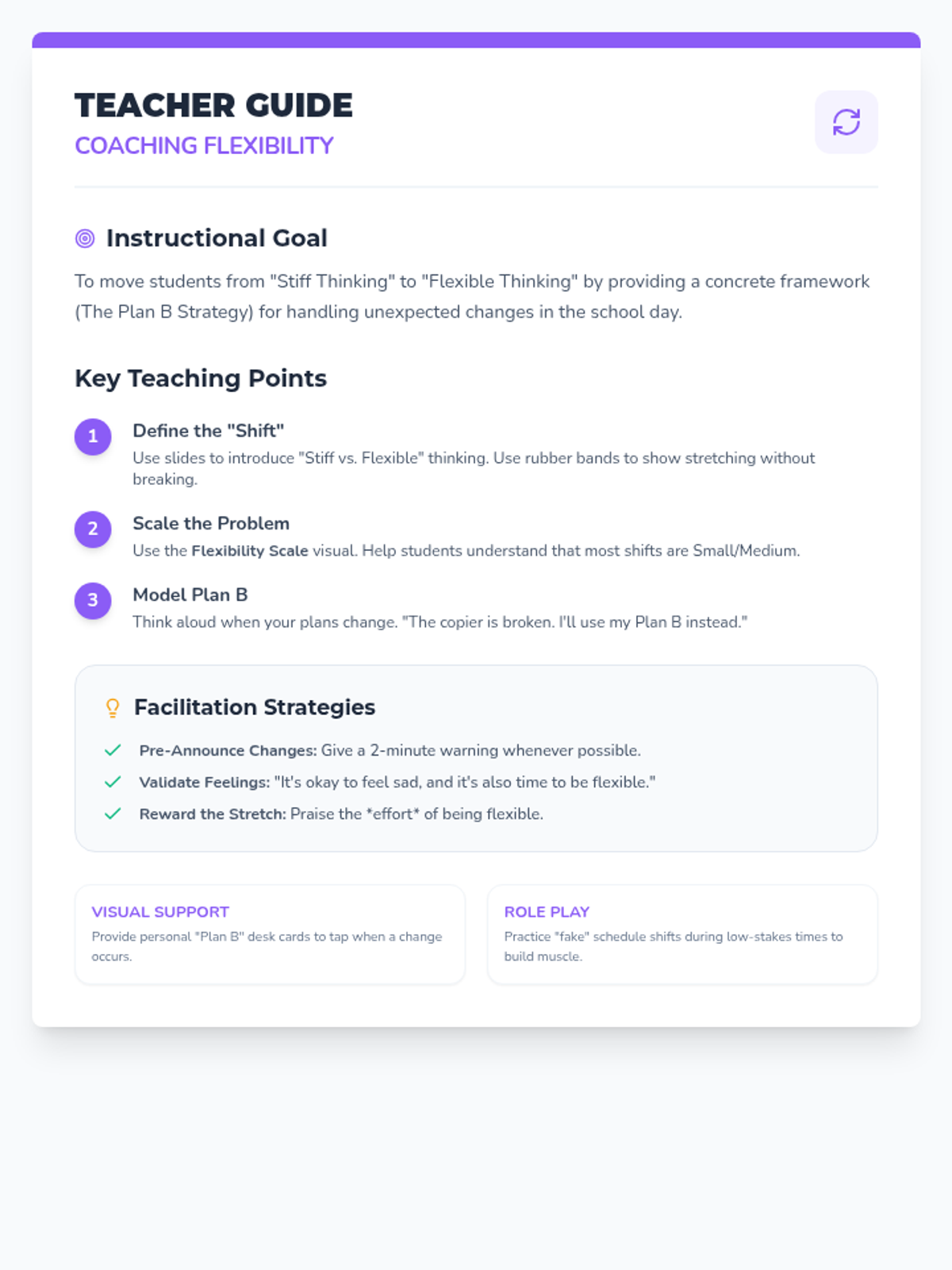
A lesson focused on developing flexibility and coping strategies for unexpected changes in routines and schedules.
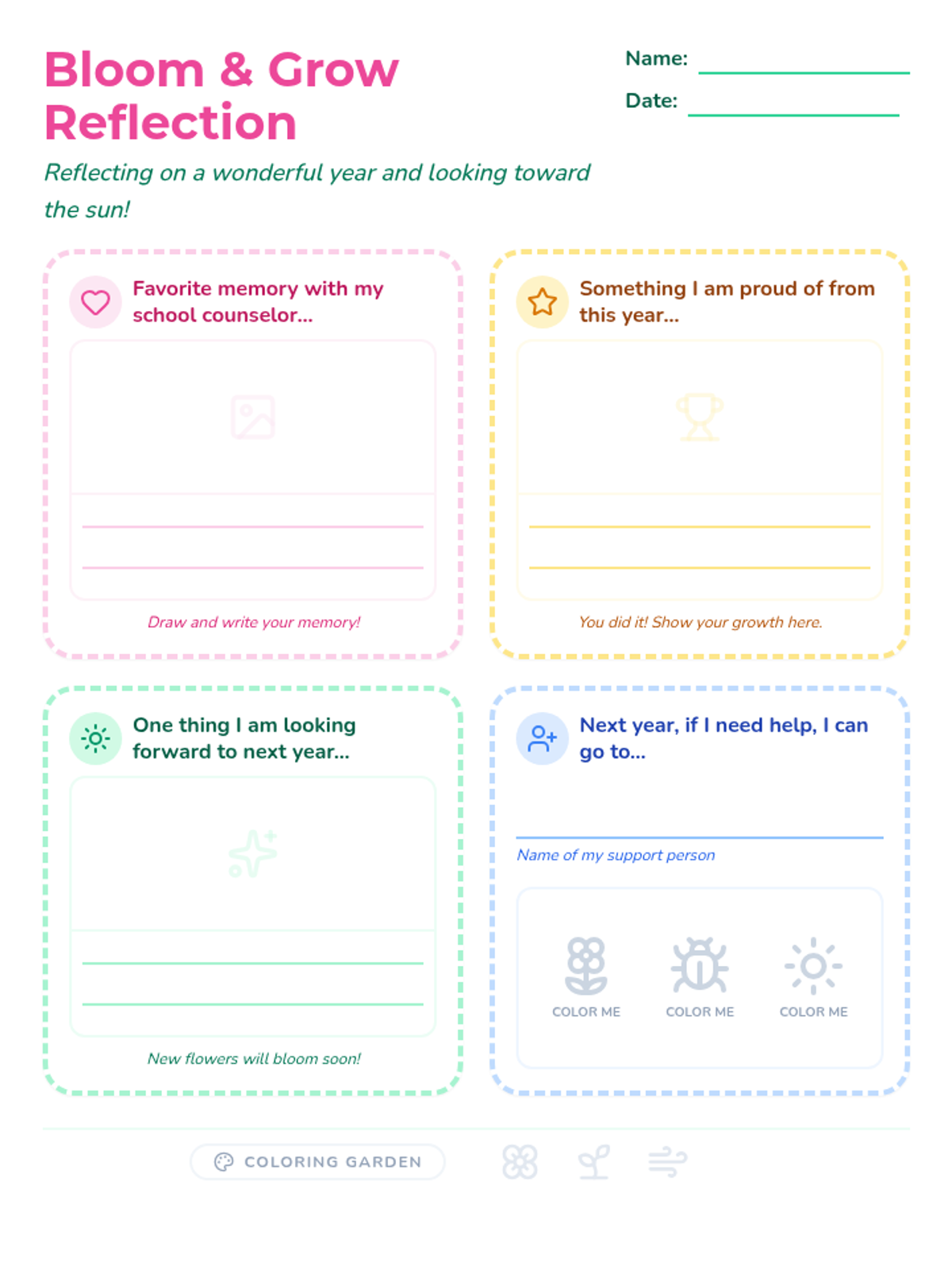
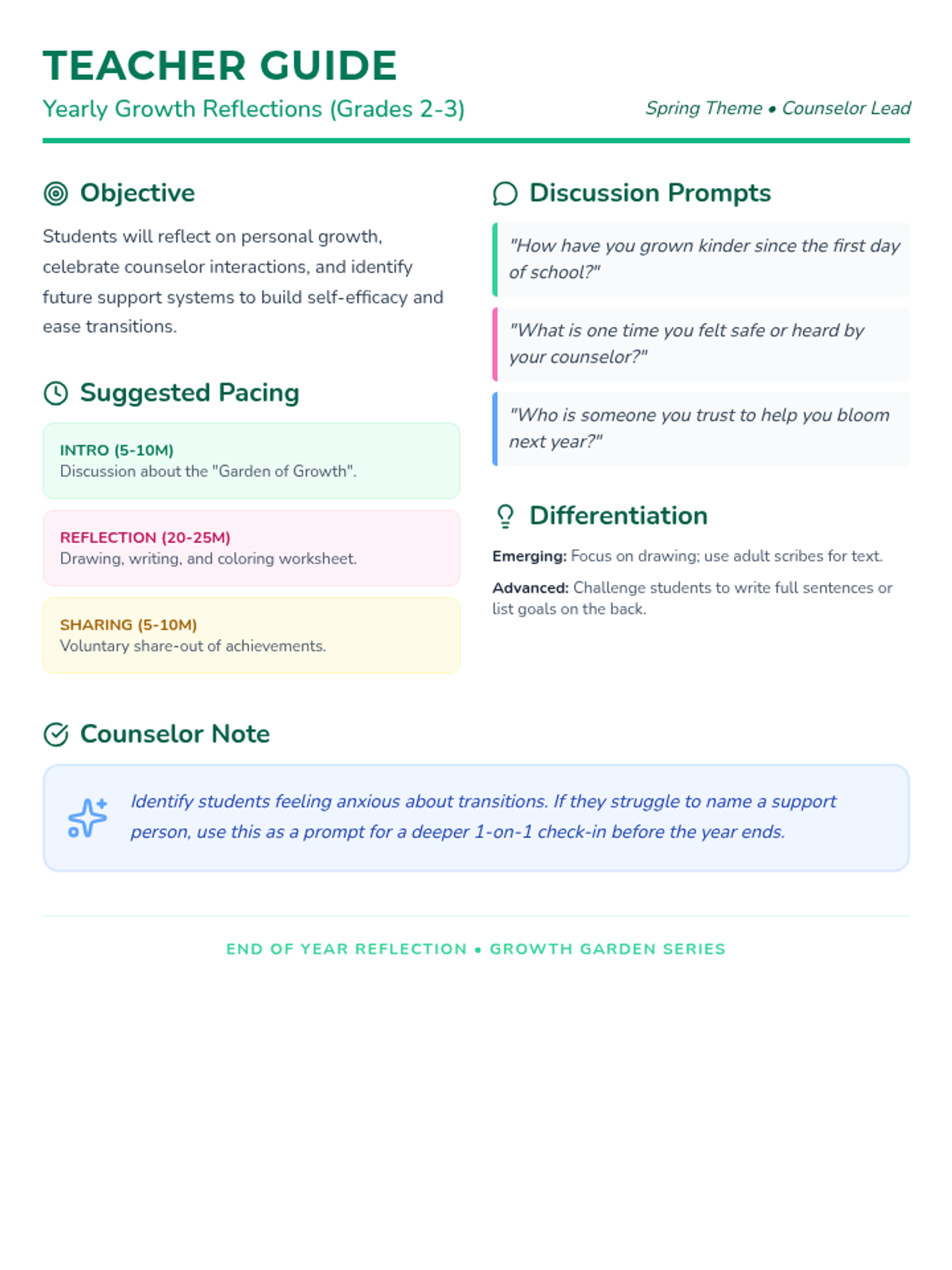
A reflection lesson for 2nd and 3rd grade students to celebrate their achievements and look forward to the upcoming year with a school counselor's guidance.
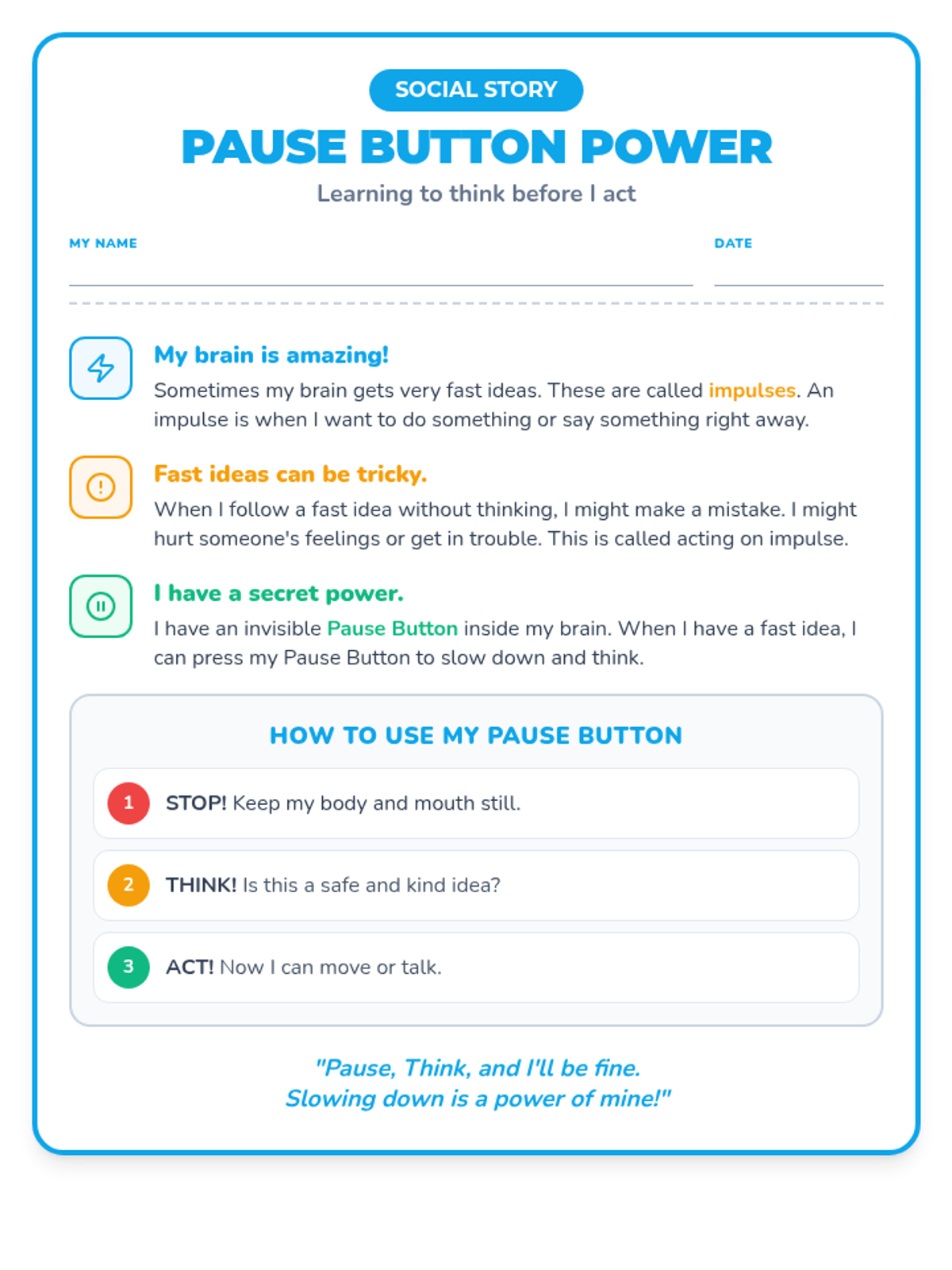
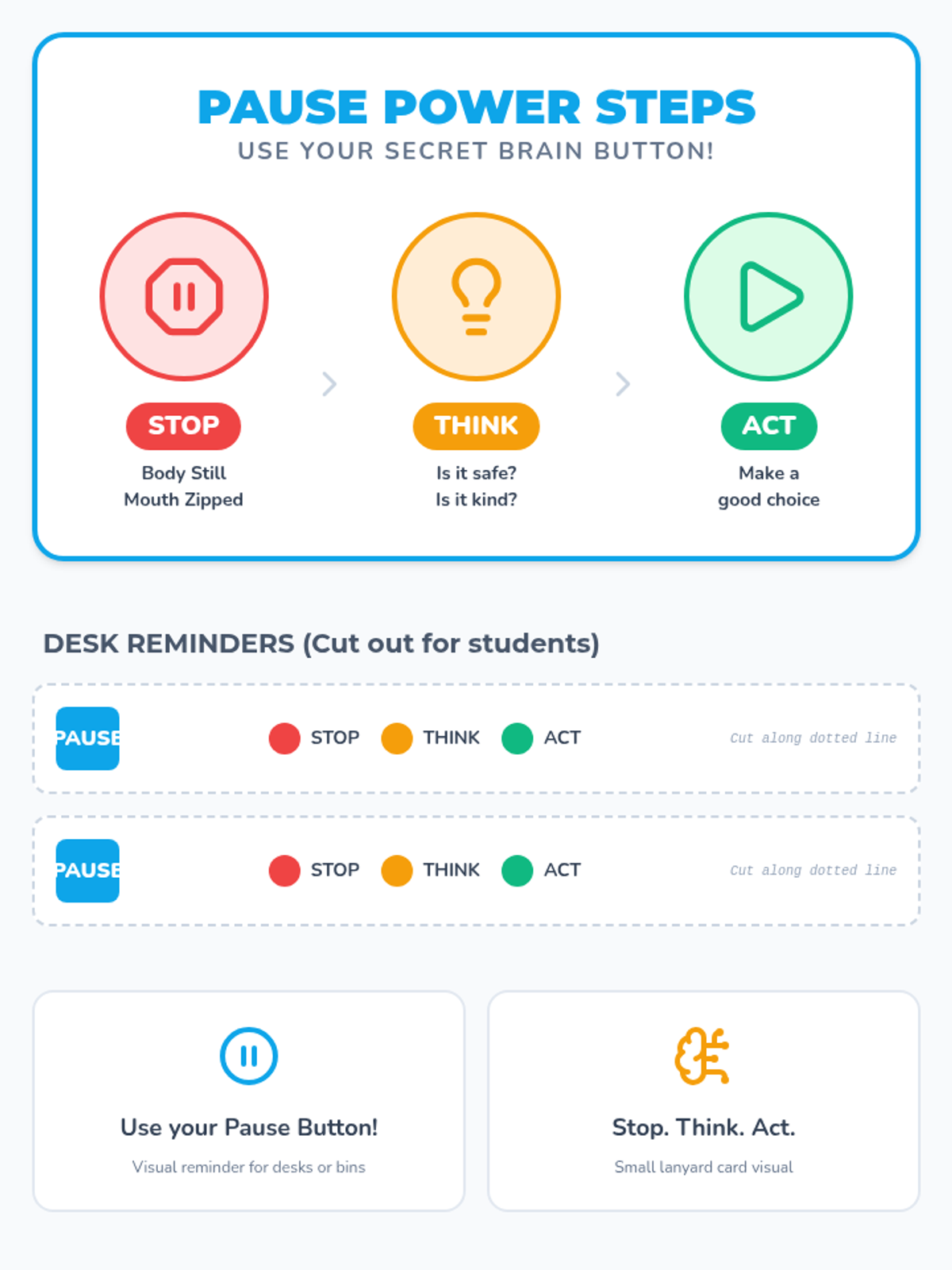
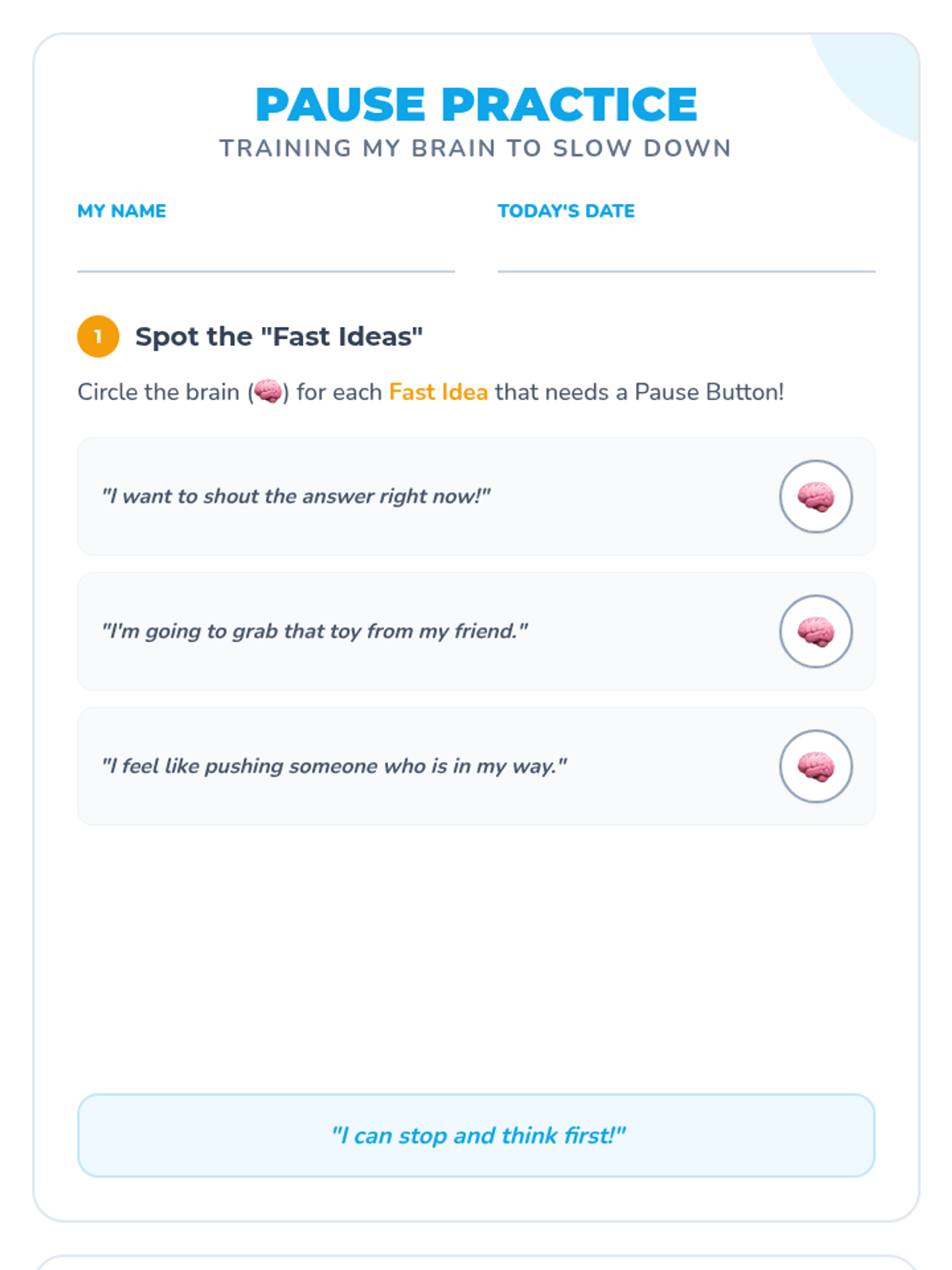
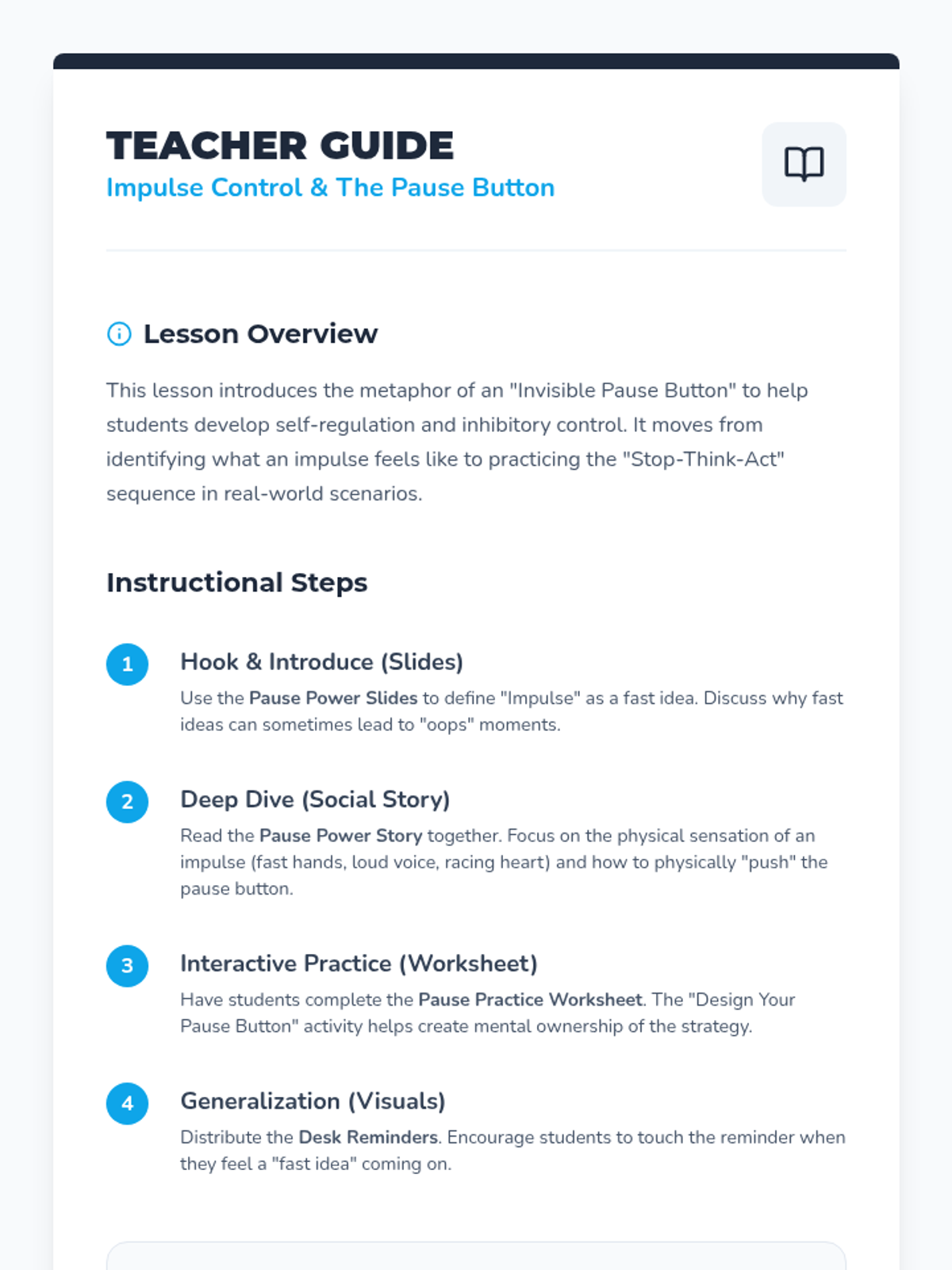
A lesson designed to help students develop impulse control by introducing the 'Pause Button' metaphor, providing a social story, visual reminders, and practice scenarios.
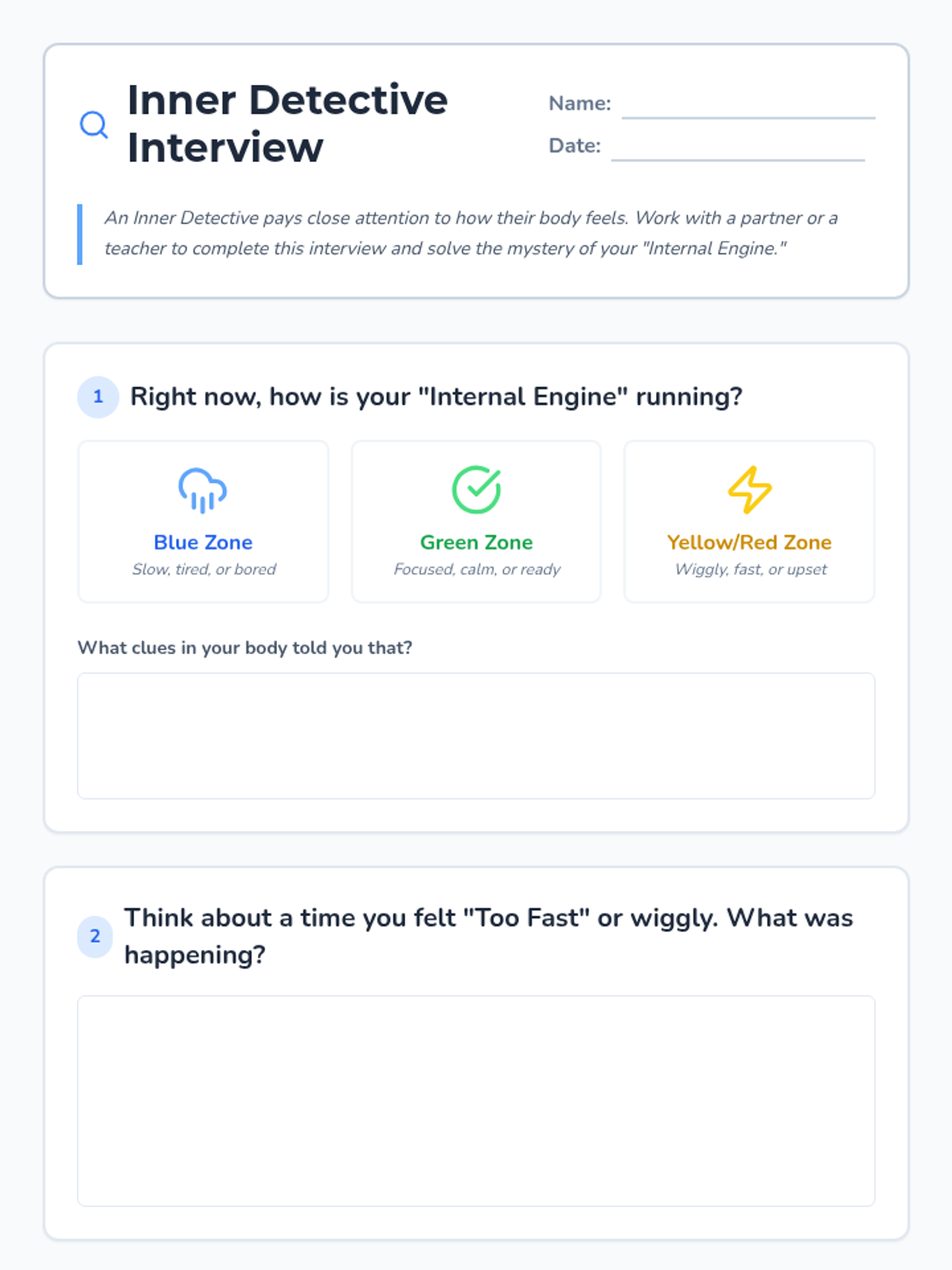
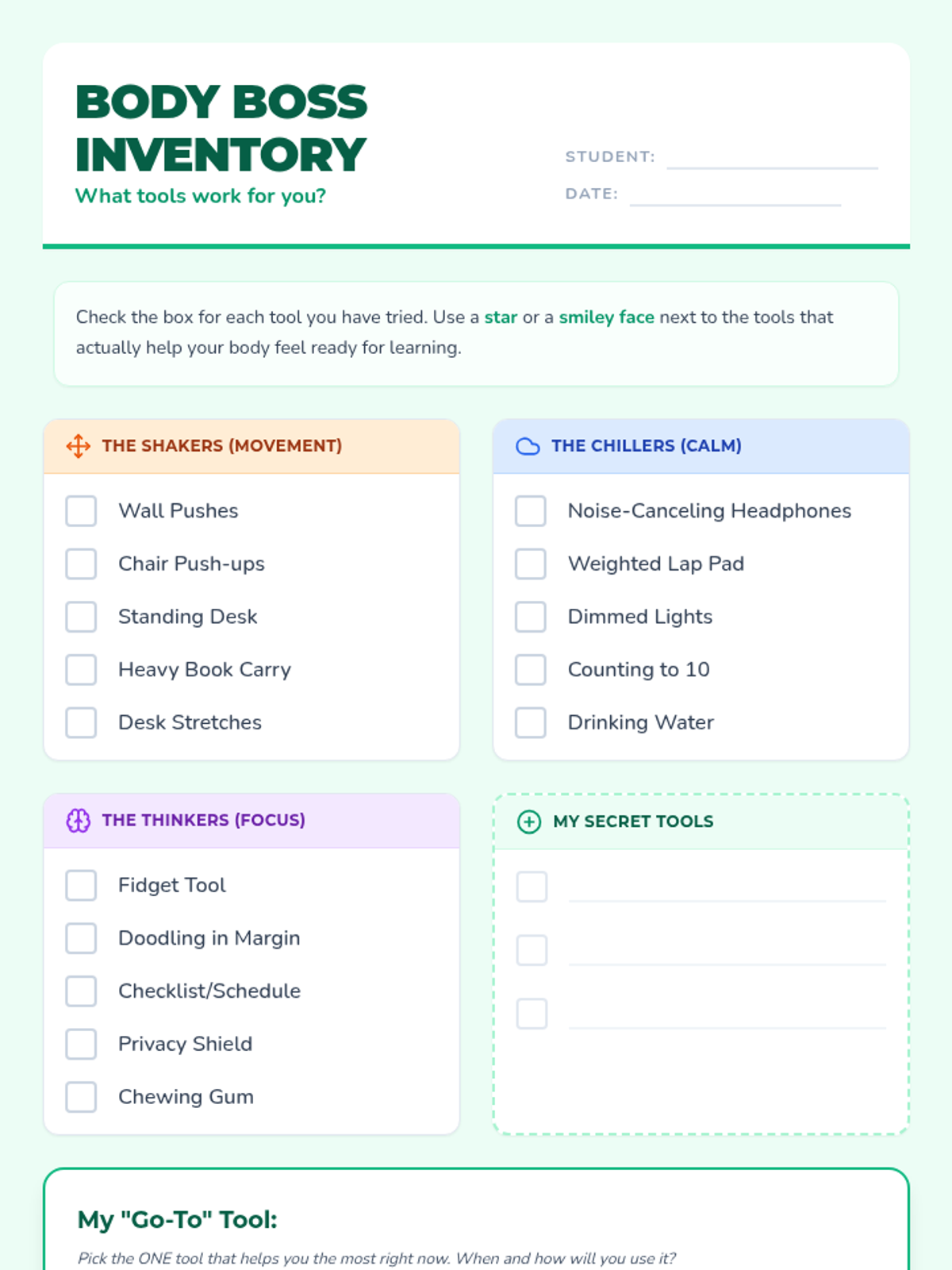
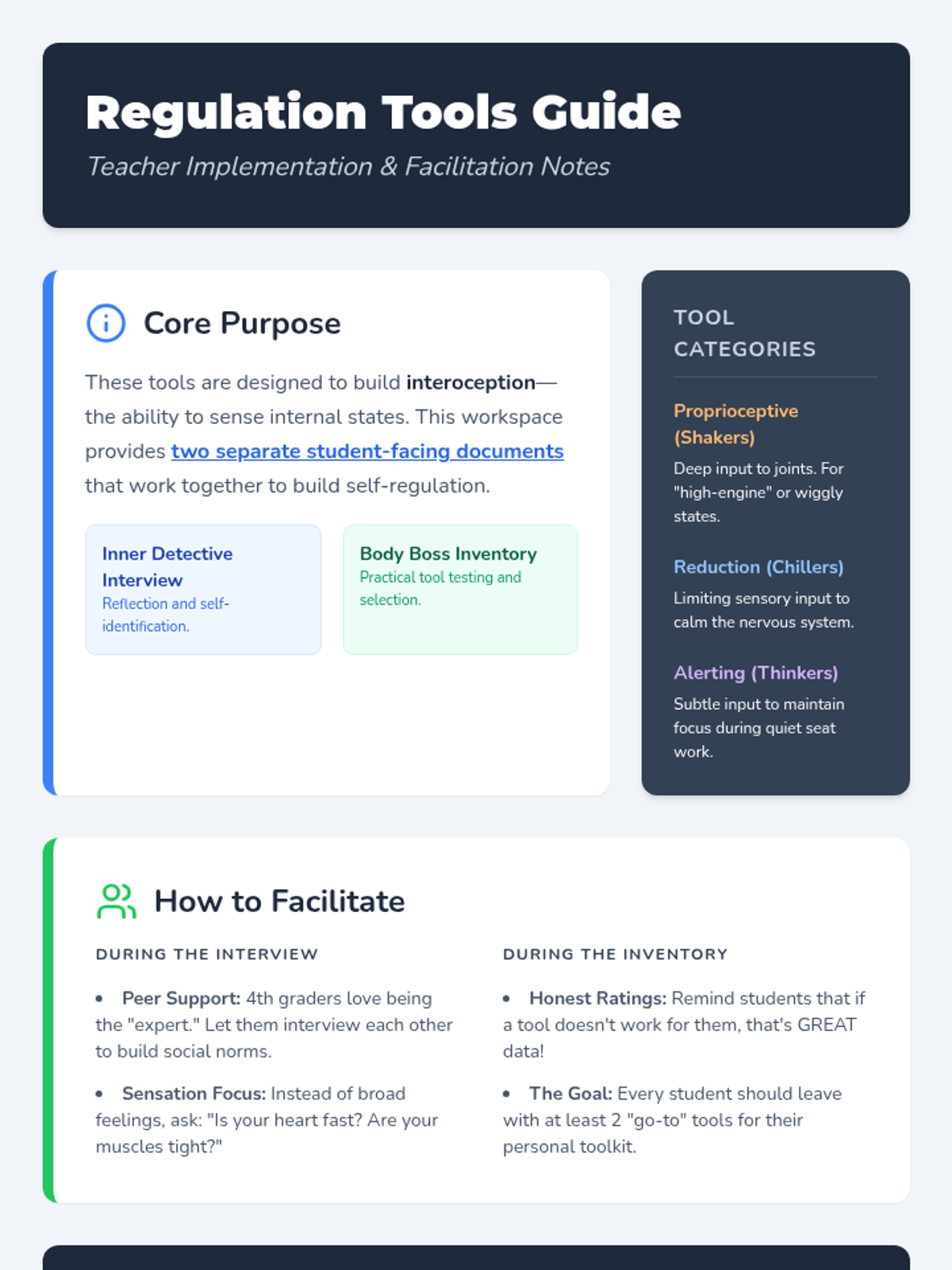
A set of tools designed to help 4th graders identify their physical sensations and discover school-appropriate regulation strategies. The materials include an interview guide and an inventory checklist to build self-awareness and a personal 'tool kit' for emotional regulation.
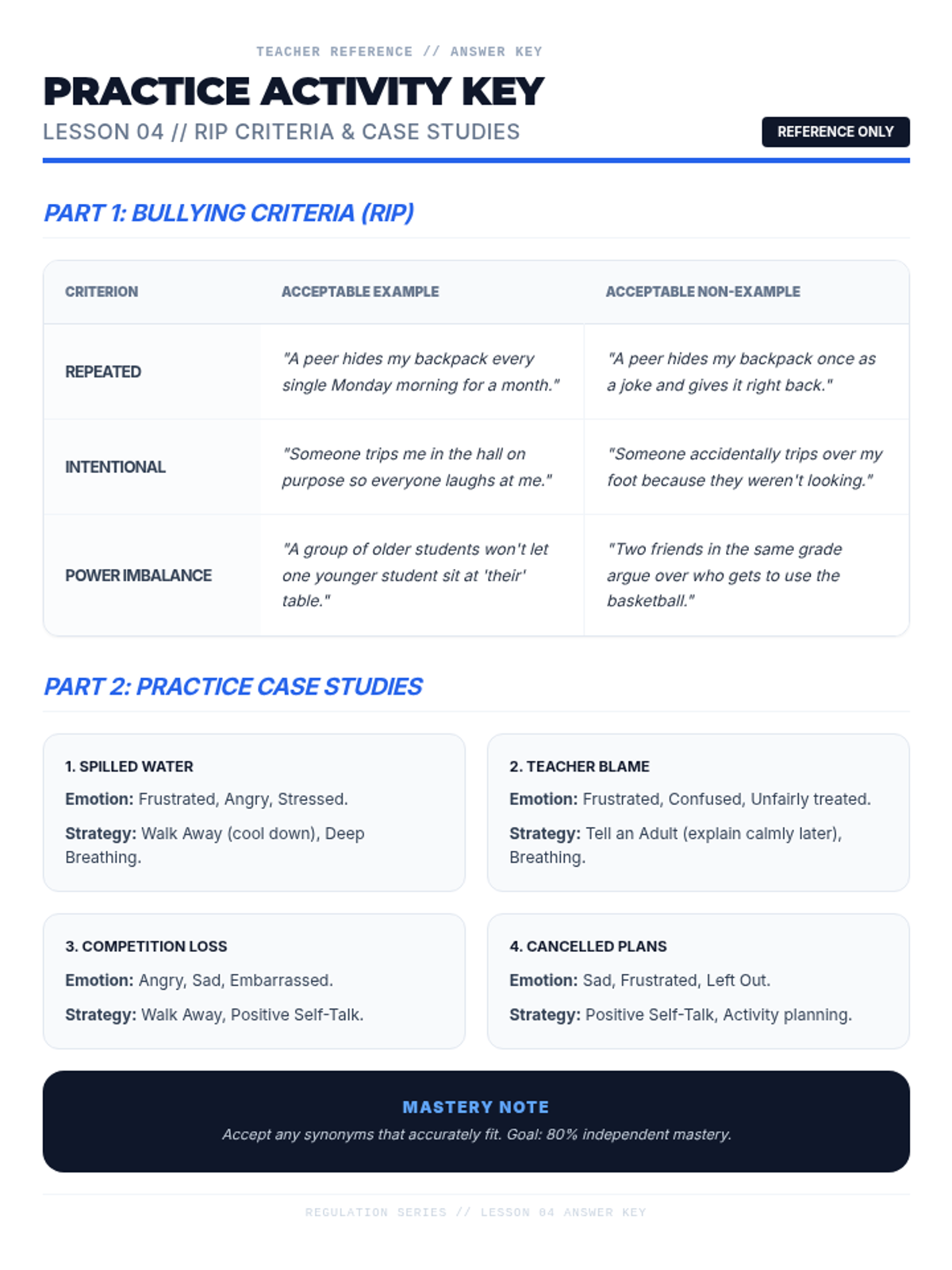
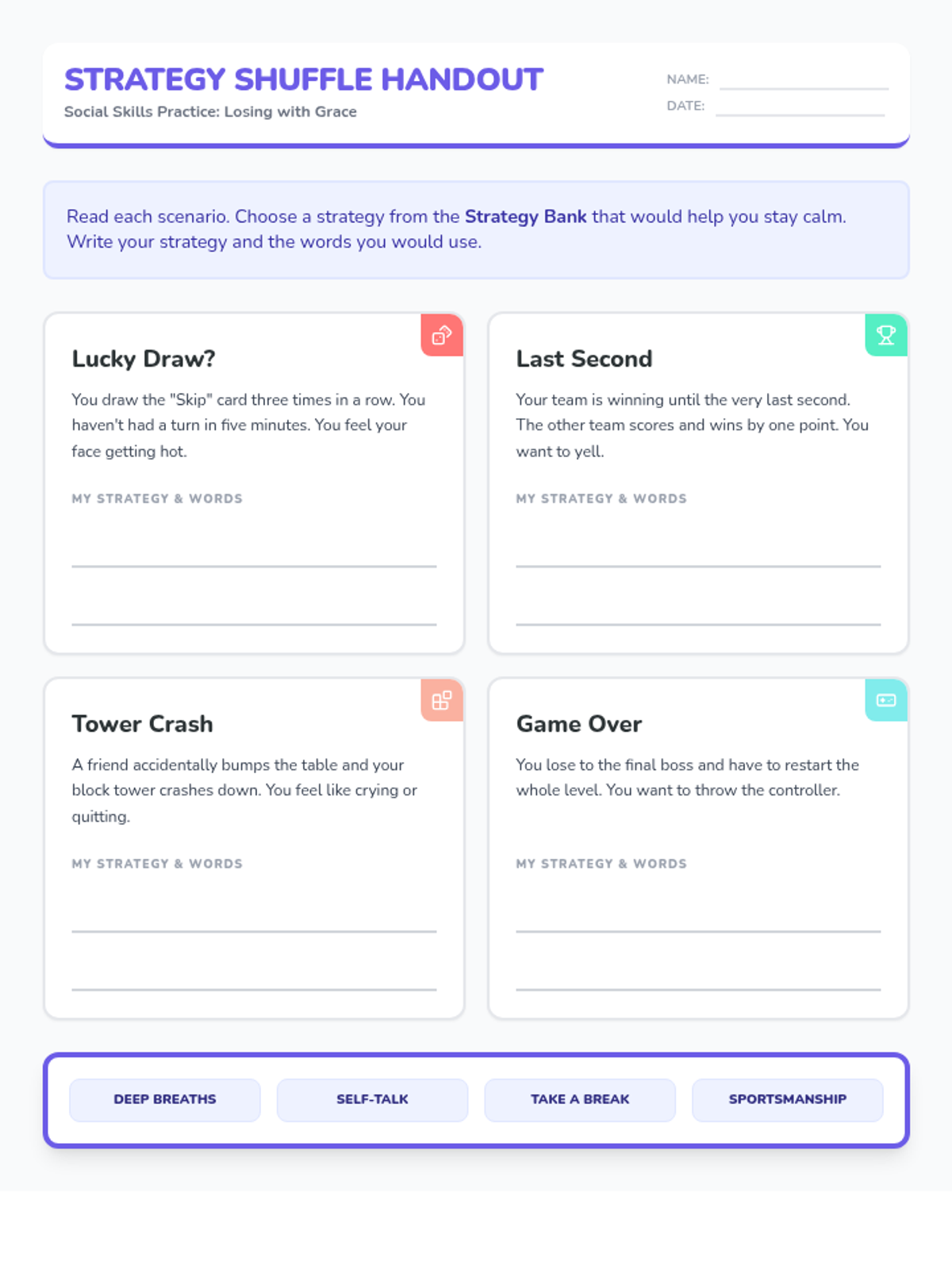
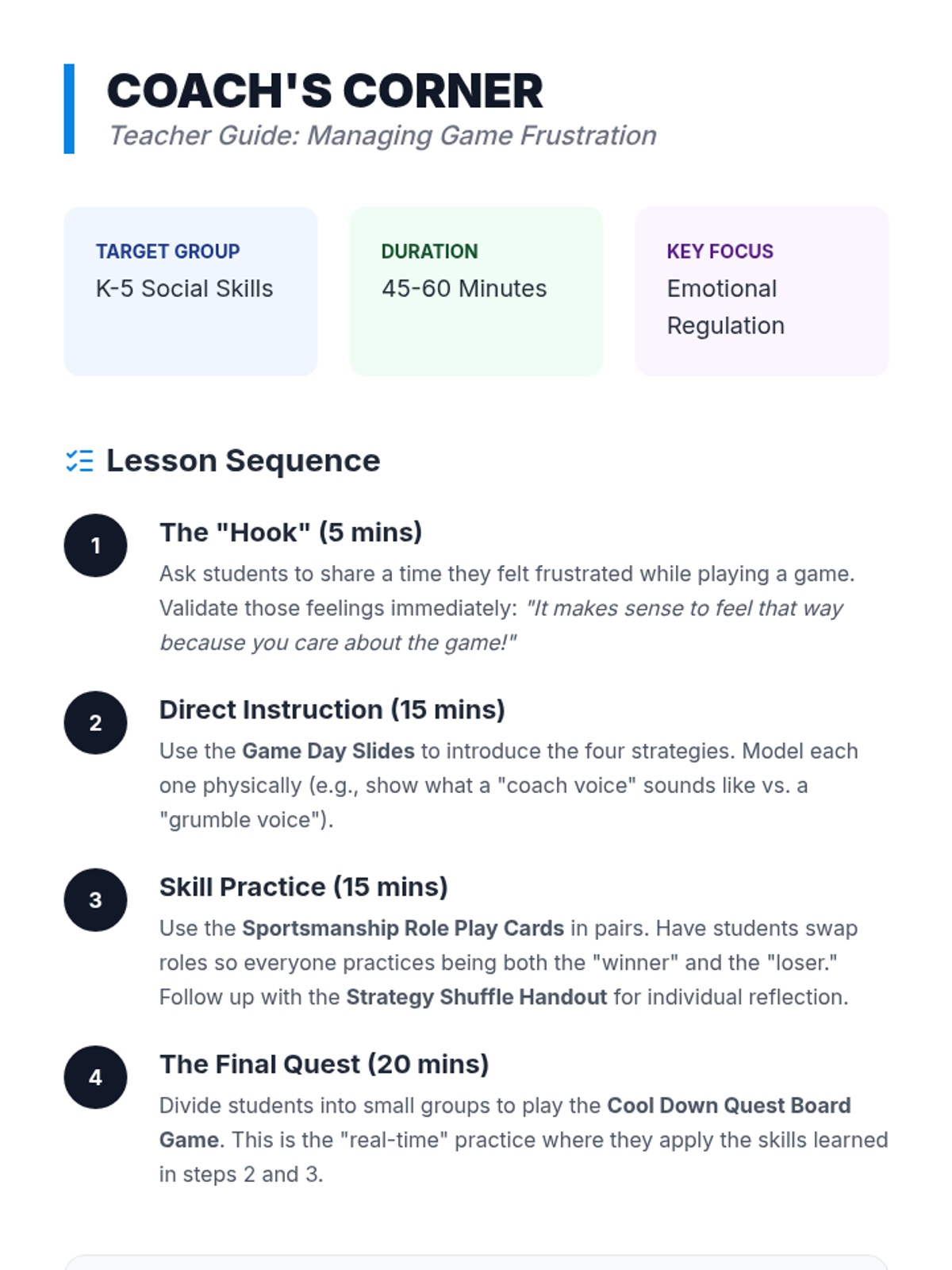
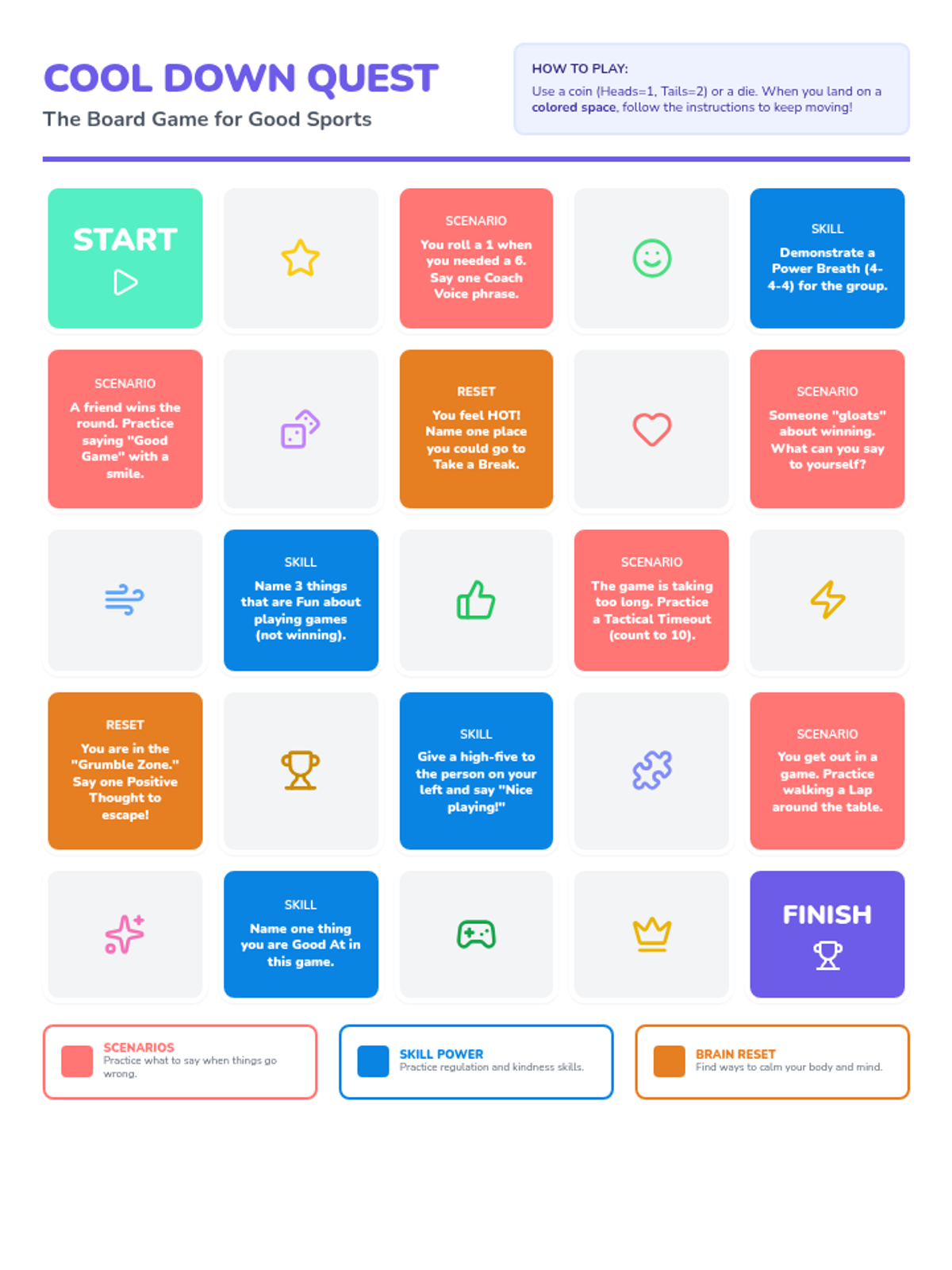
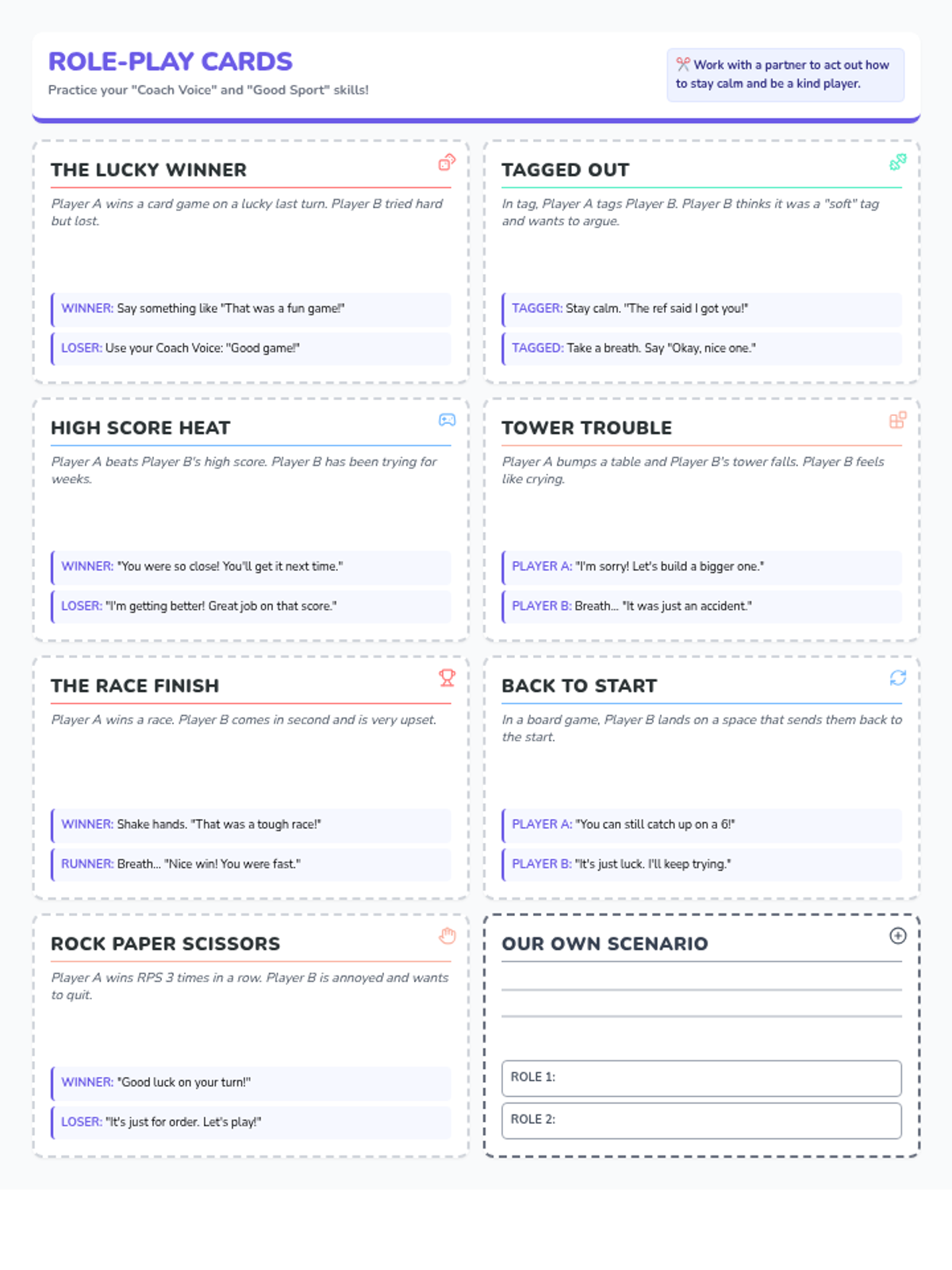
A social skills lesson focused on emotional regulation and sportsmanship, teaching students how to handle losing a game using positive self-talk, deep breathing, and taking breaks.
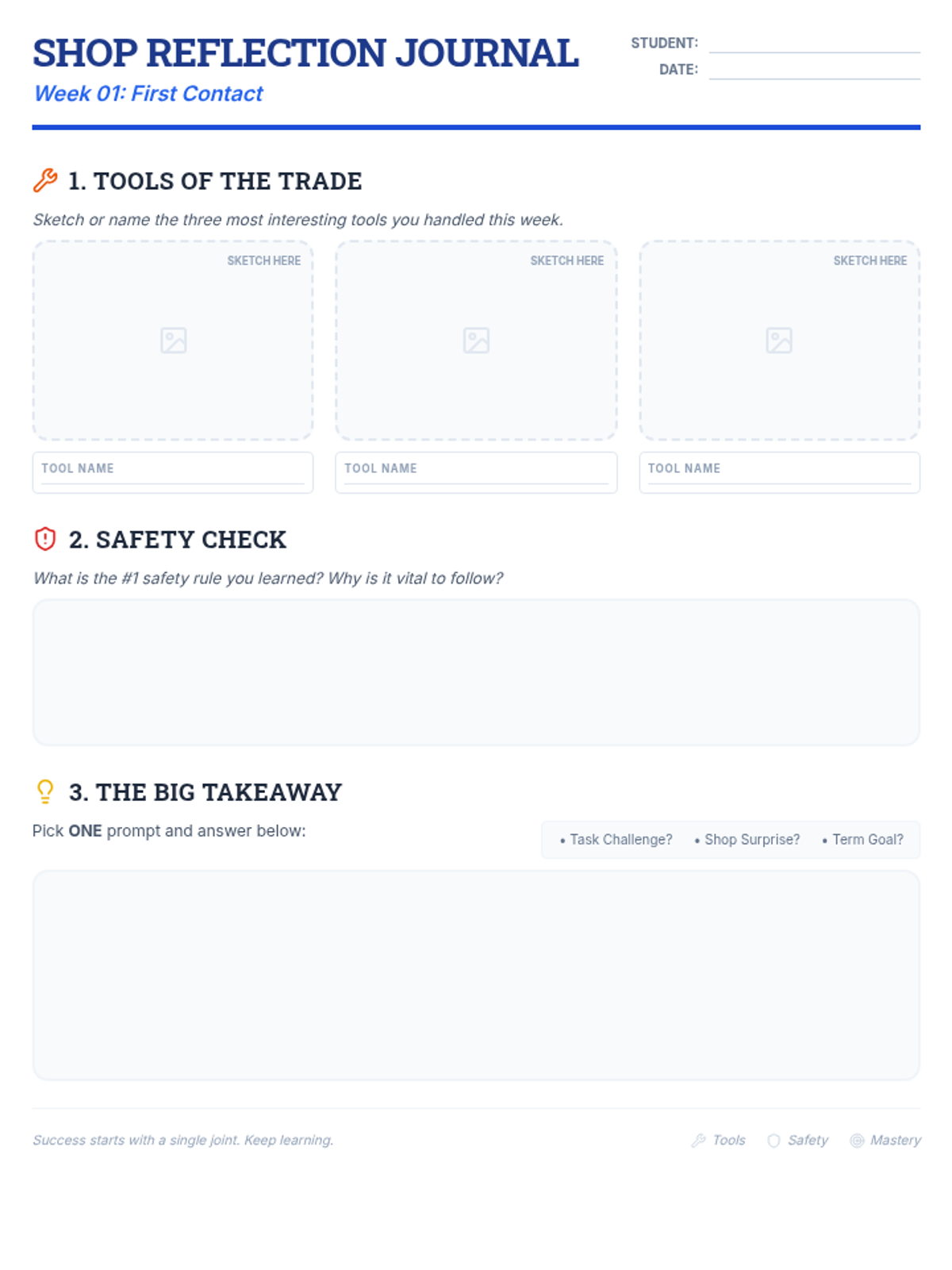
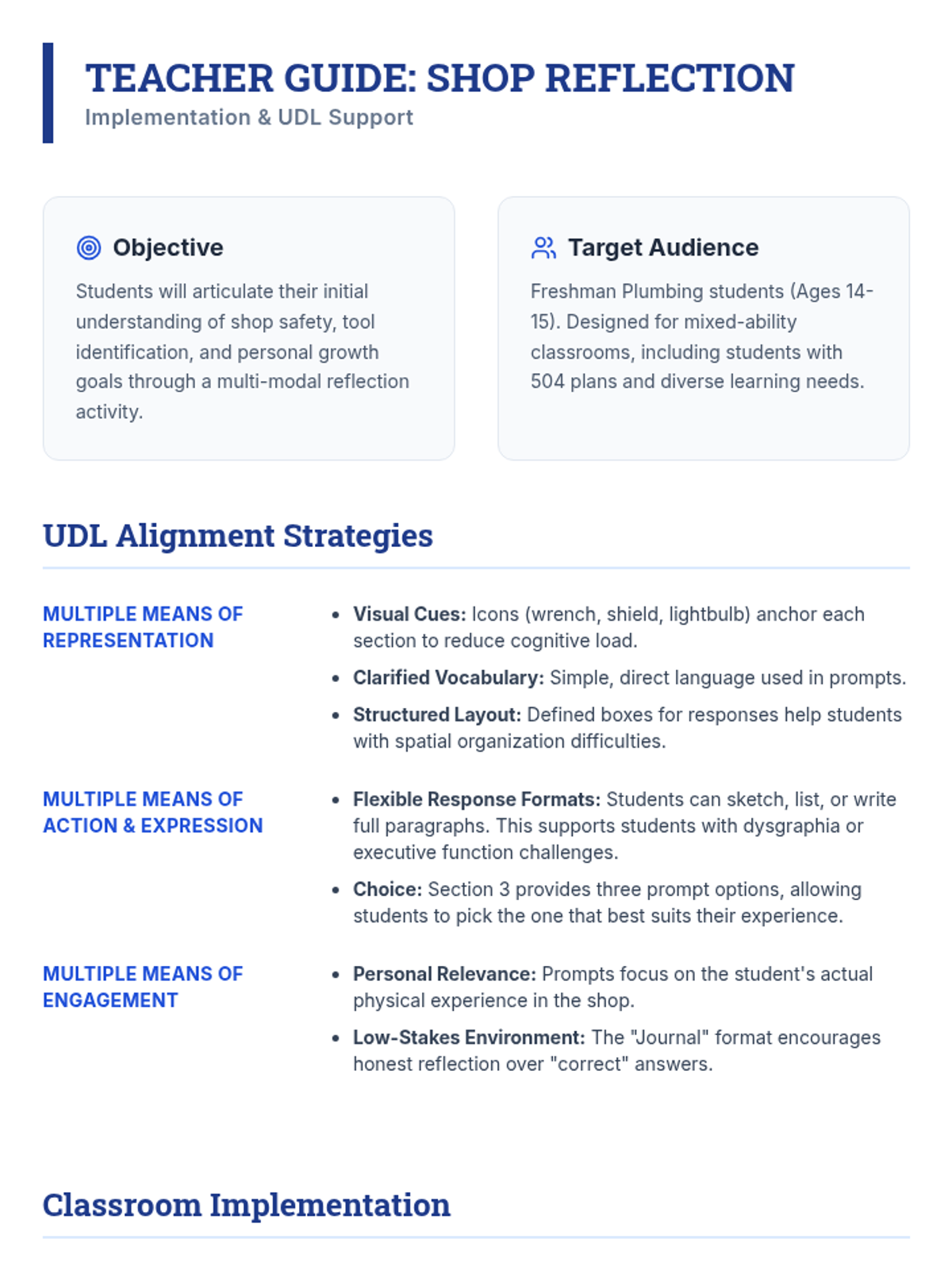
A reflective writing lesson designed for freshman plumbing students to process their first week in the shop. It utilizes UDL principles to provide multiple pathways for students to demonstrate their learning and engagement with shop culture and safety.
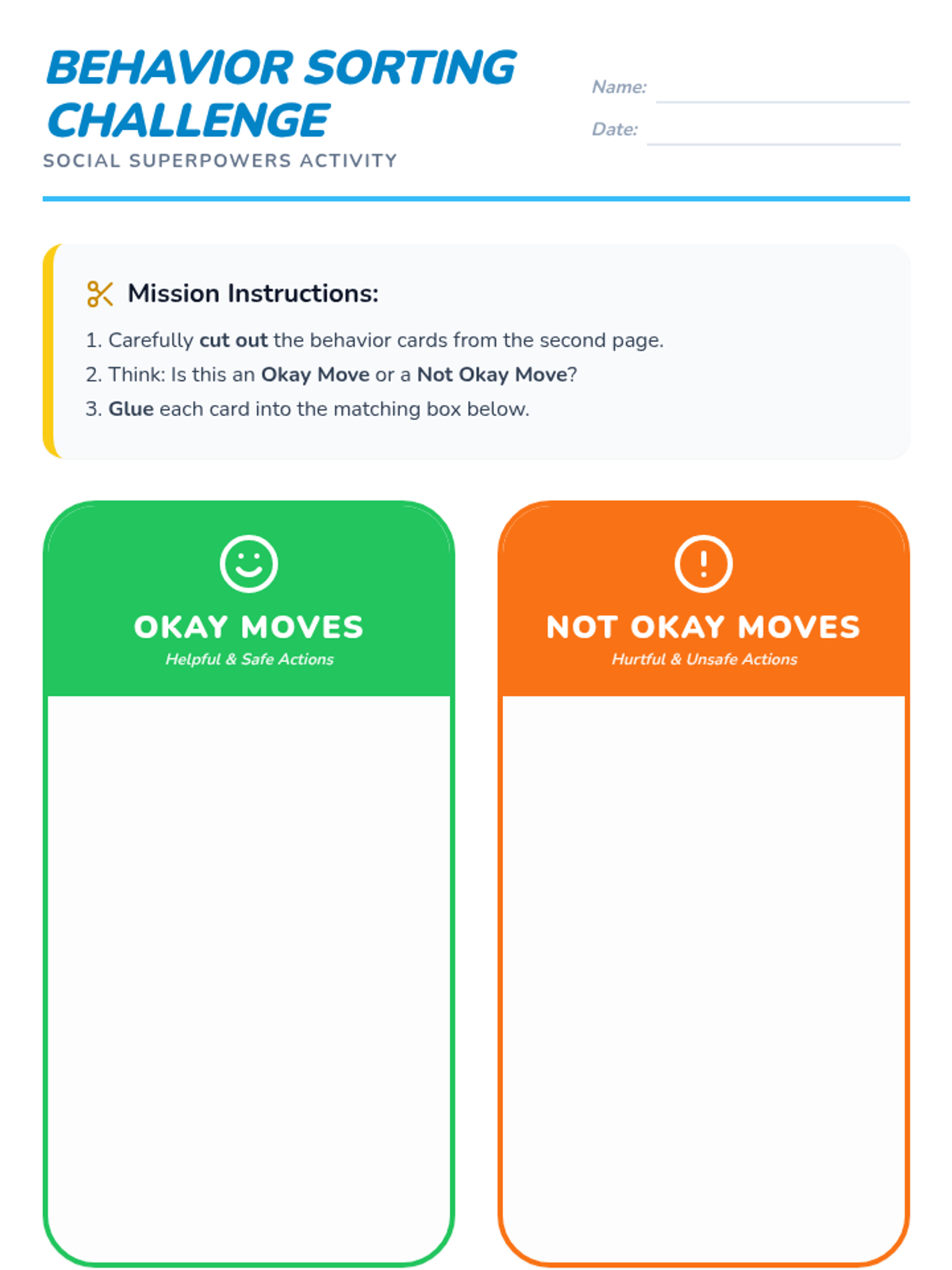
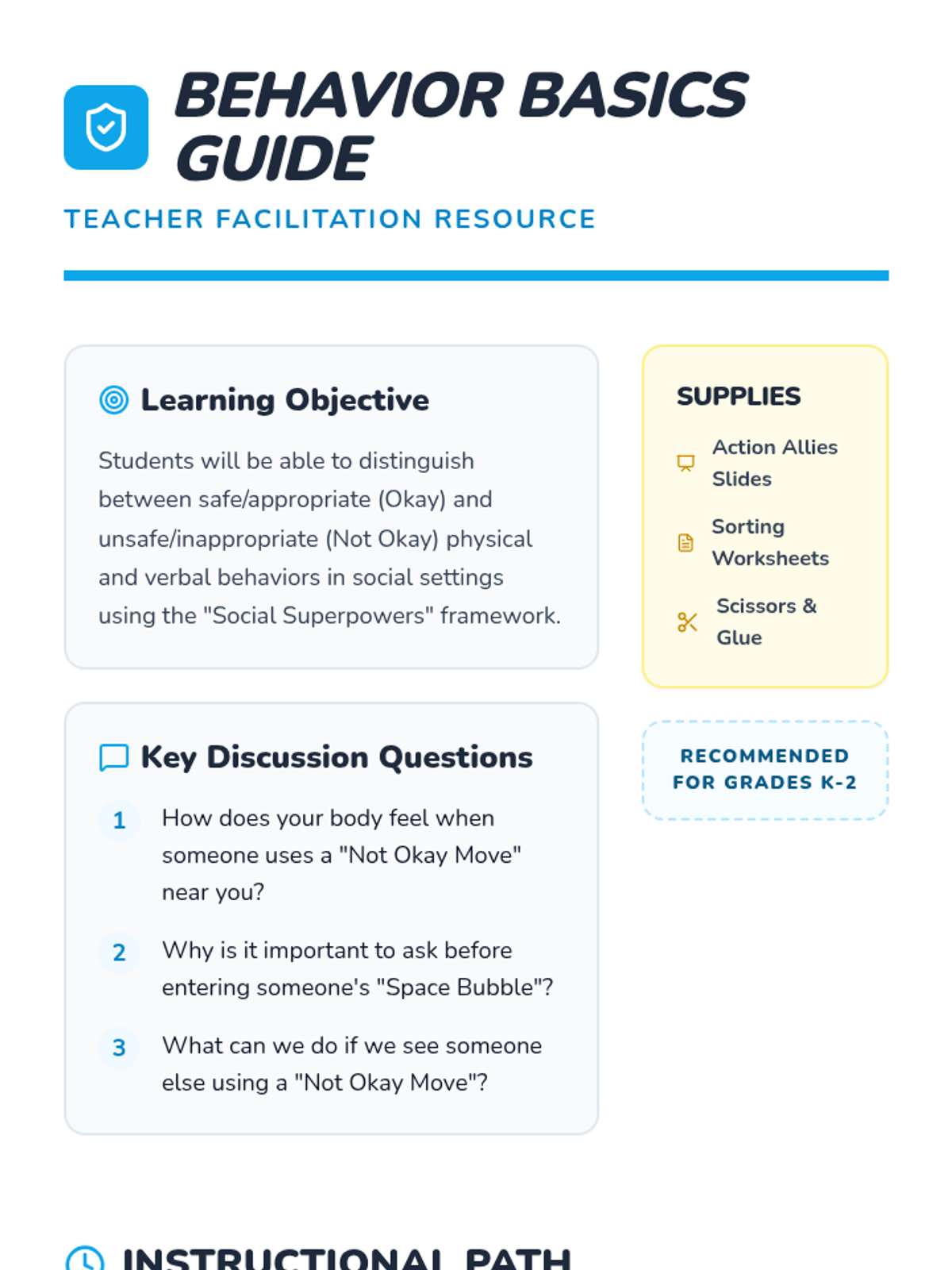
A social-emotional learning lesson focused on identifying and sorting positive vs. negative physical and verbal behaviors. Students will explore how their actions affect others through interactive slides and a hands-on sorting activity.
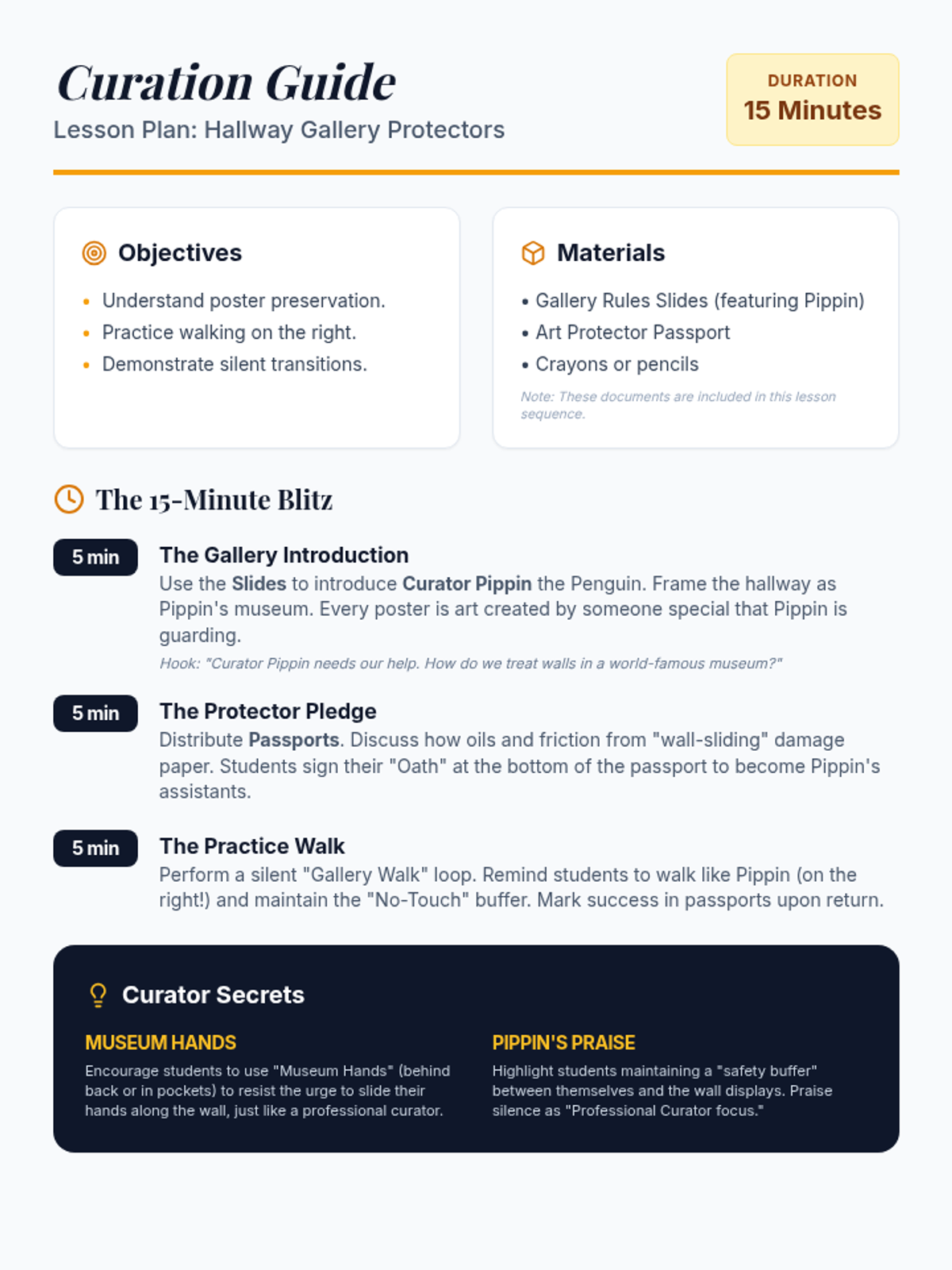
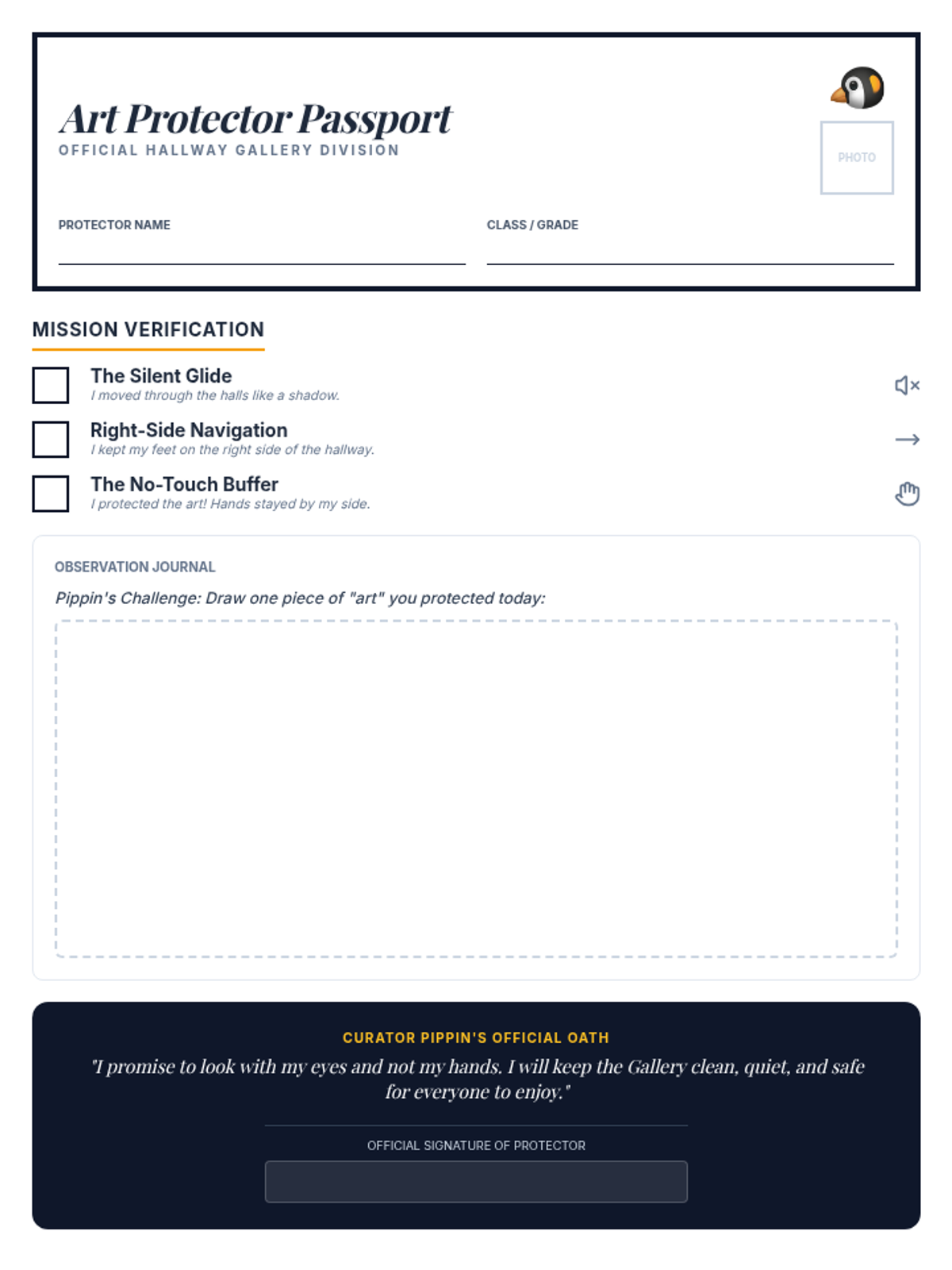
A 15-minute lesson focused on hallway etiquette, specifically protecting posters, walking on the right, and maintaining silence. Students learn to treat the school halls like an art gallery where they are the 'protectors' of the displays.
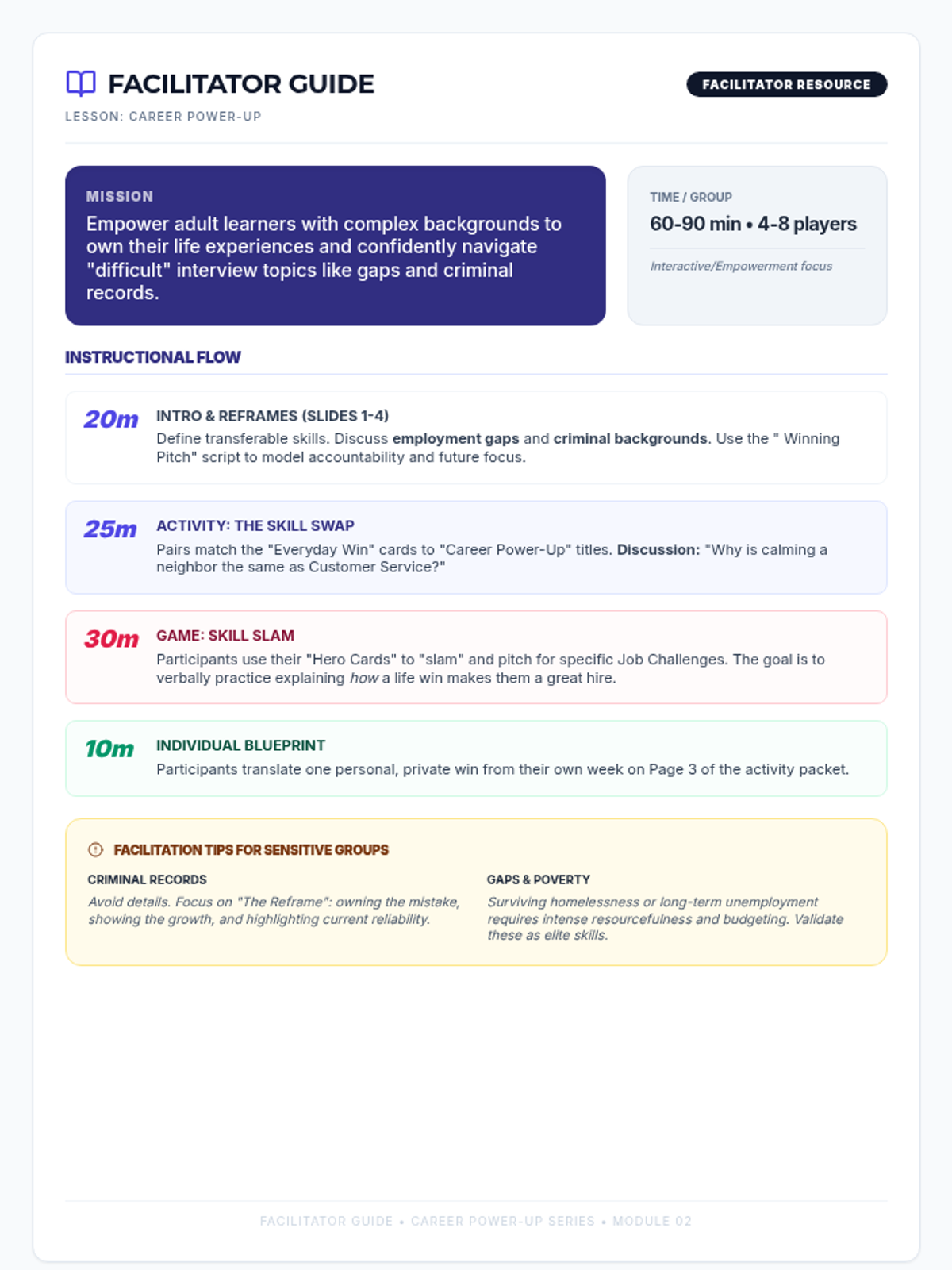
A lesson focused on teaching participants how to analyze and 'decode' job descriptions to identify key requirements and hidden expectations.
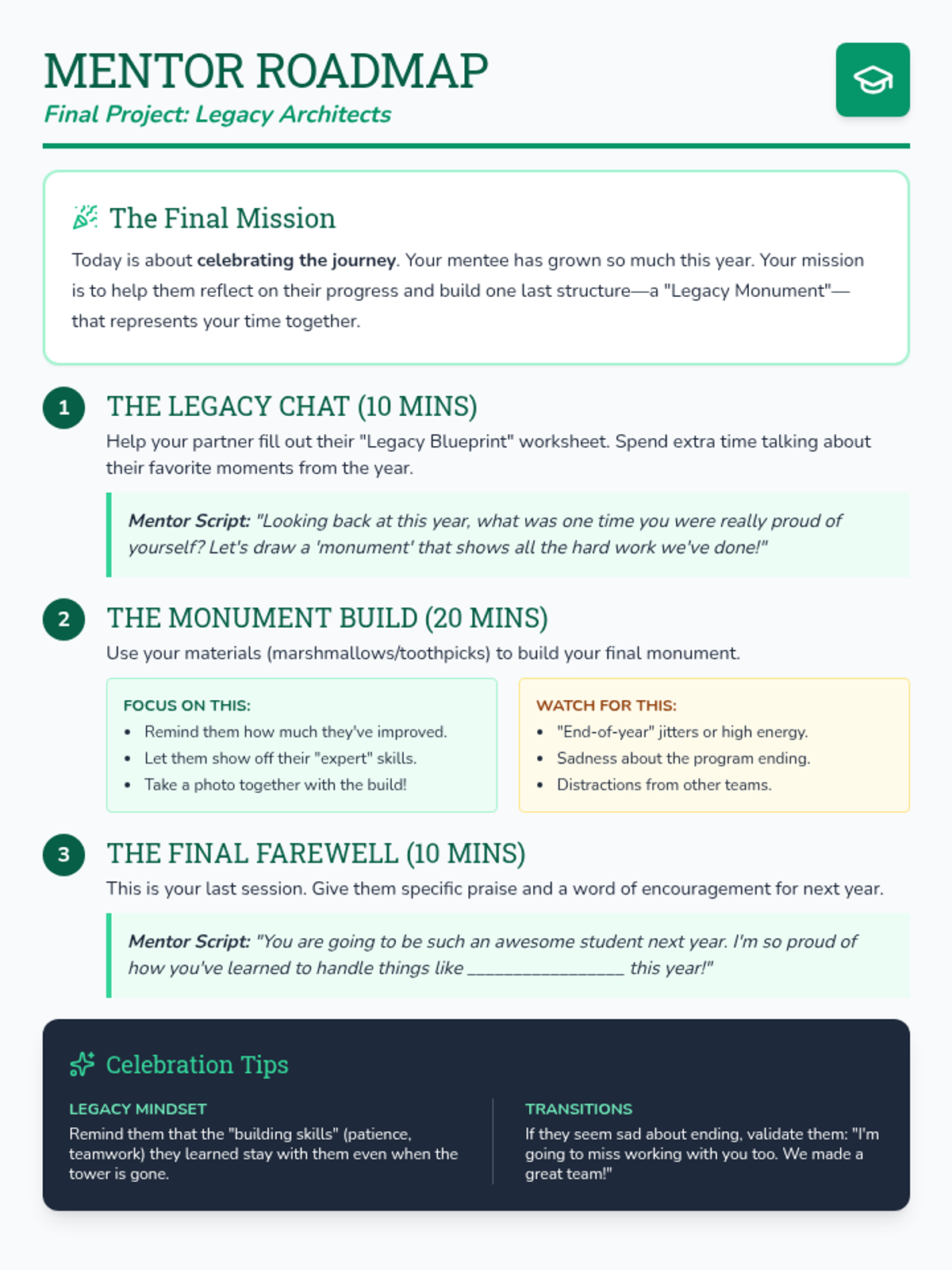
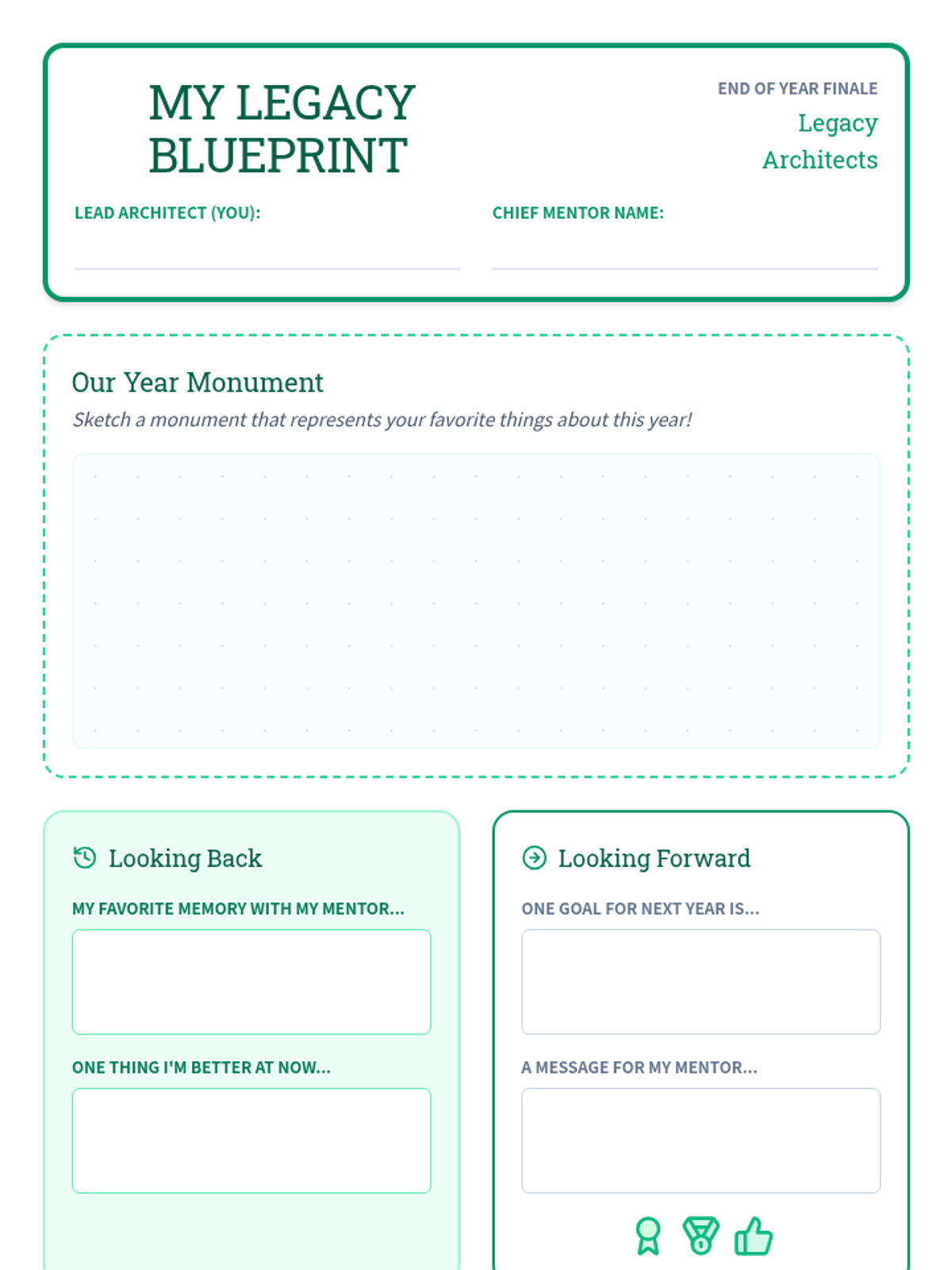
A celebratory end-of-year lesson where high school mentors and elementary mentees reflect on their growth and build a final "Legacy Monument" together to honor their partnership.
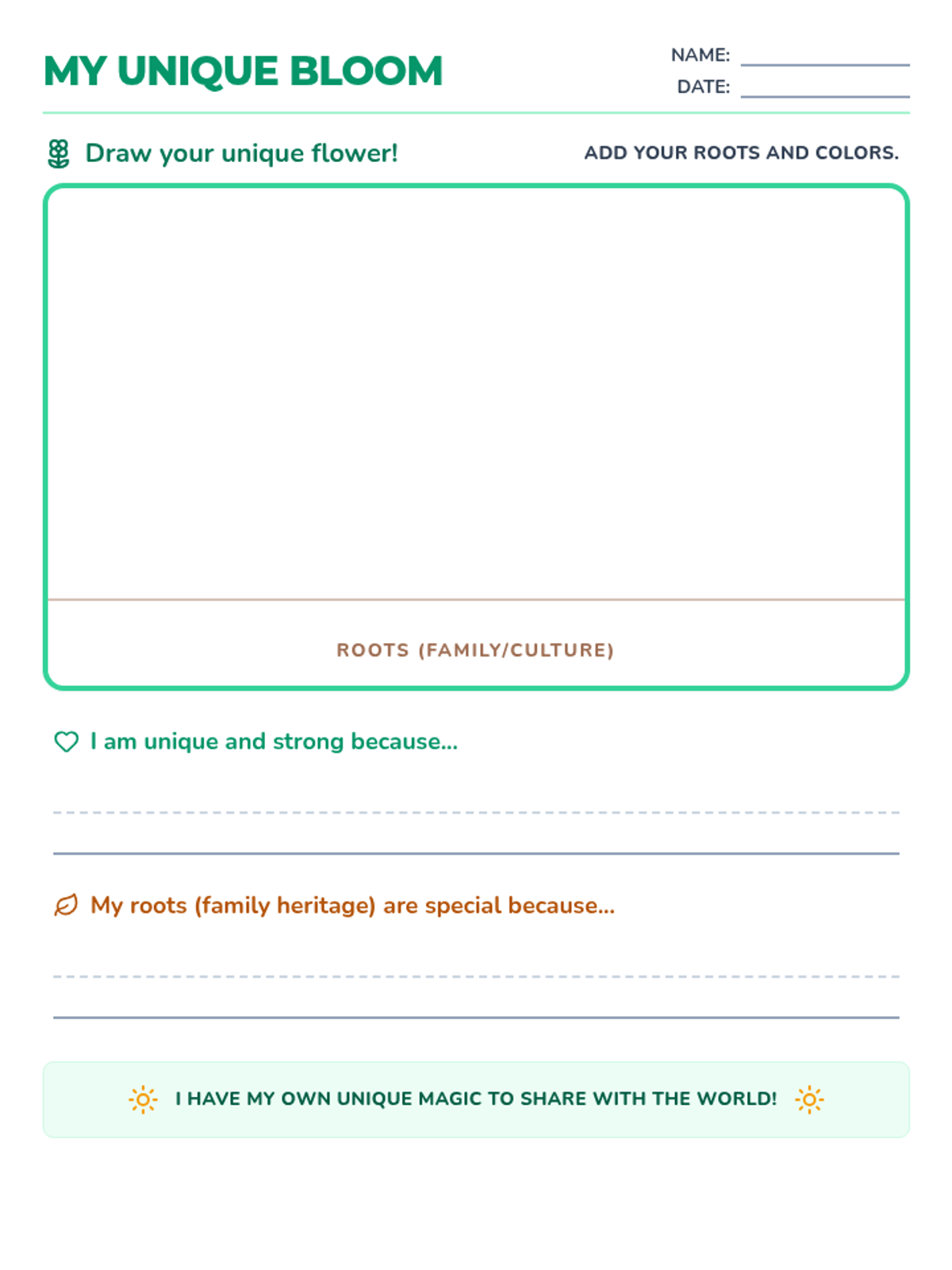
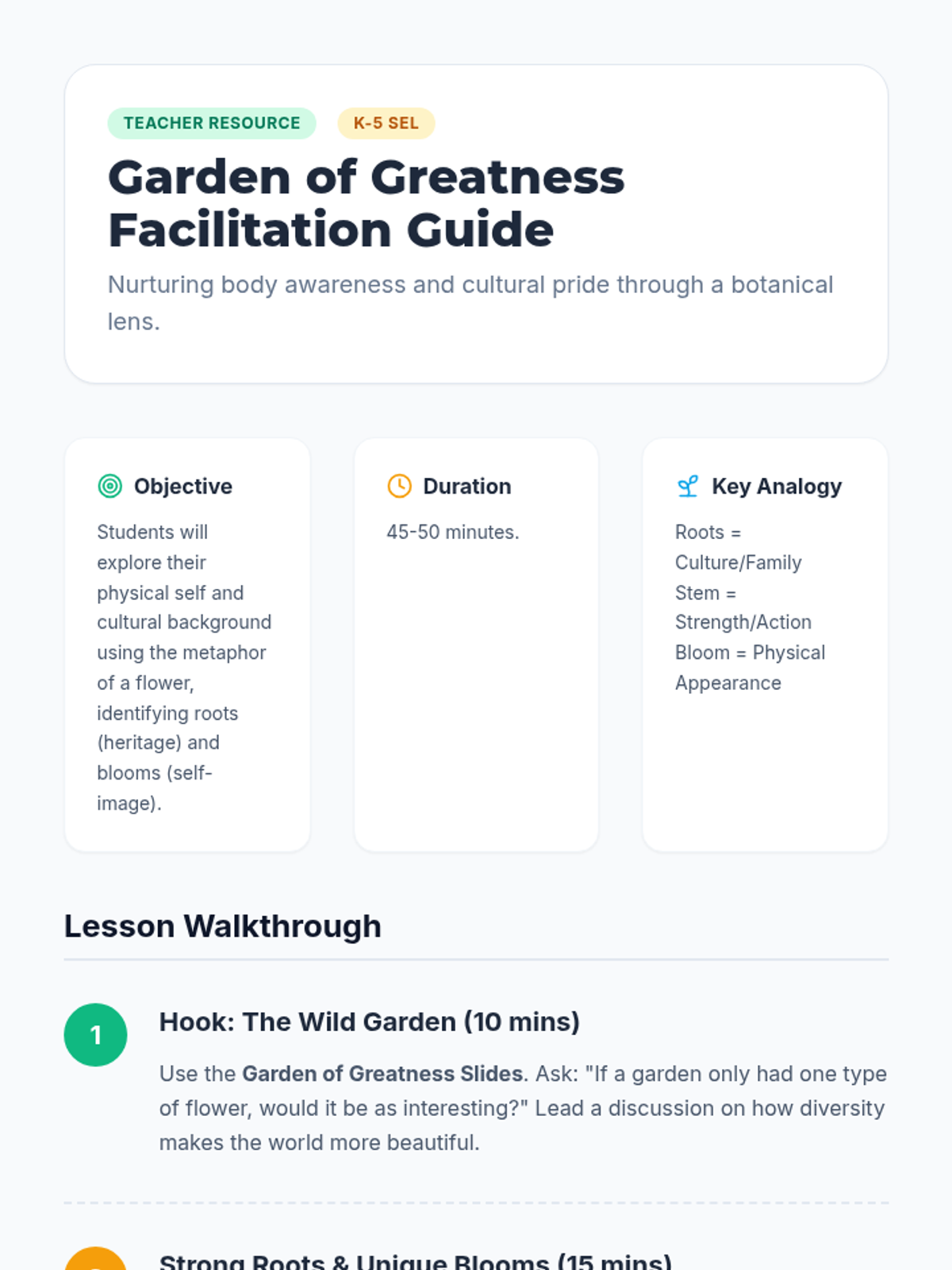
A lesson exploring body awareness and self-image through the lens of cultural diversity and personal uniqueness, using a garden analogy.
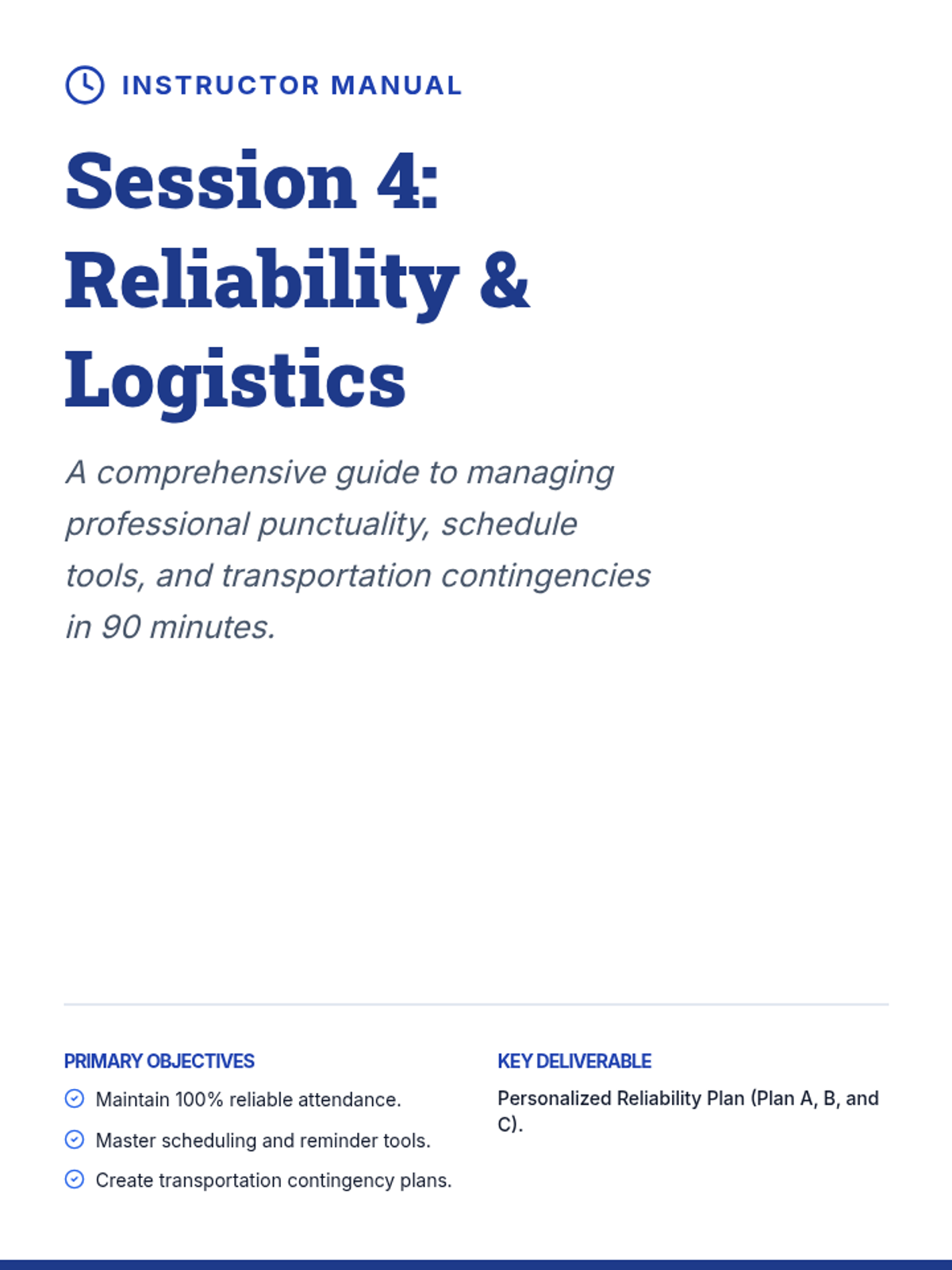
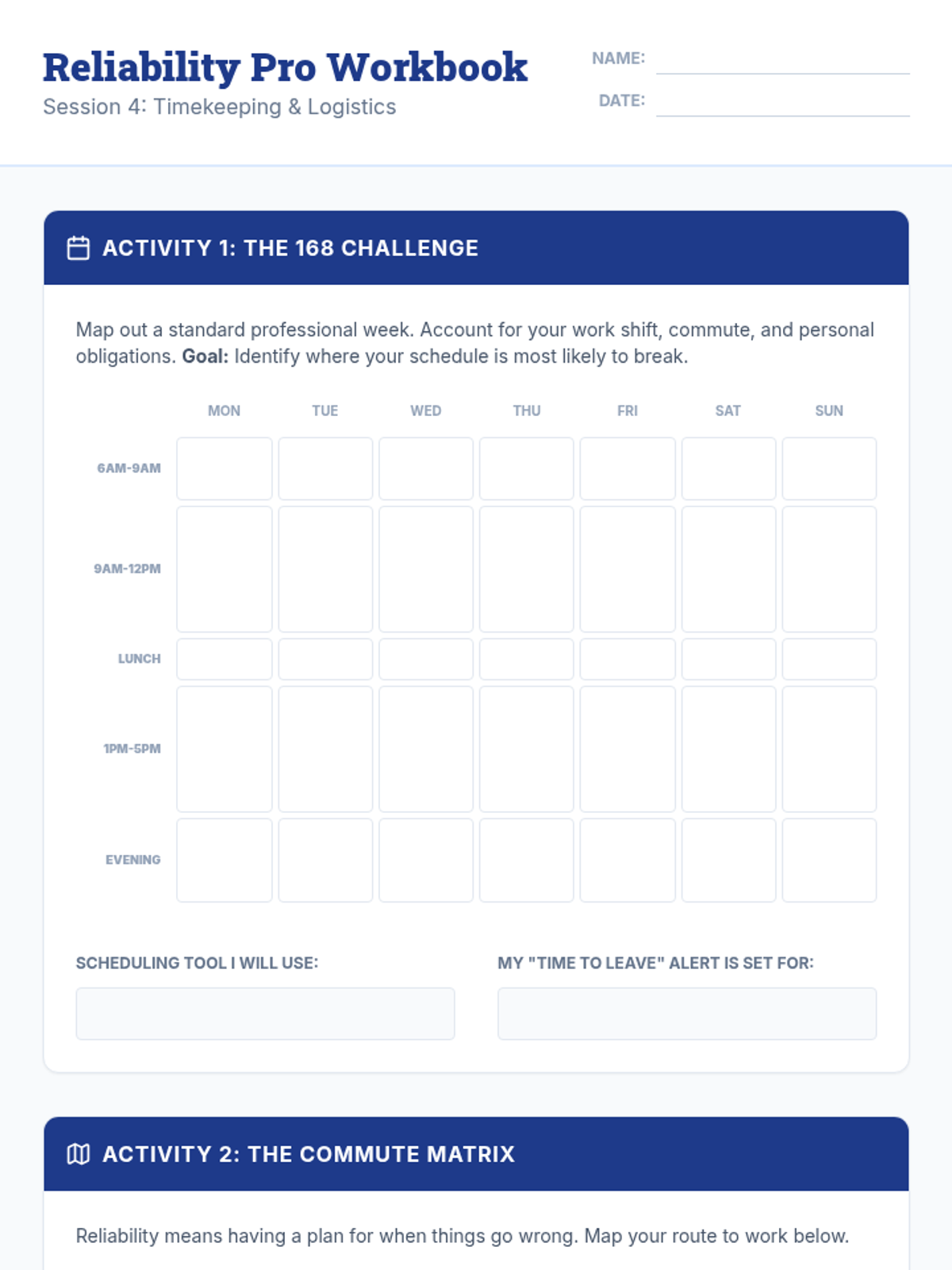
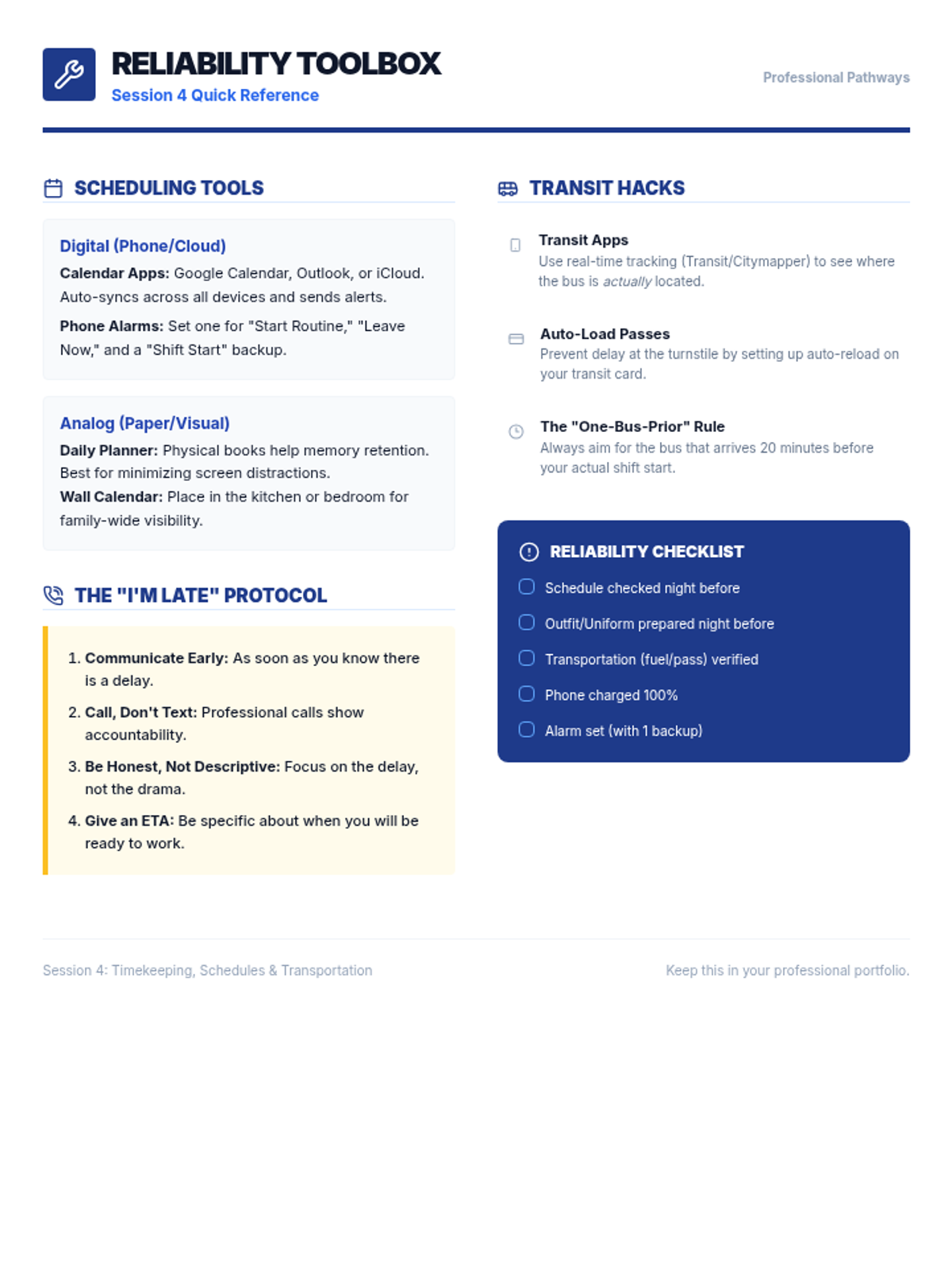
A comprehensive session focused on professional time management, schedule tools, and transportation planning to ensure workplace reliability.
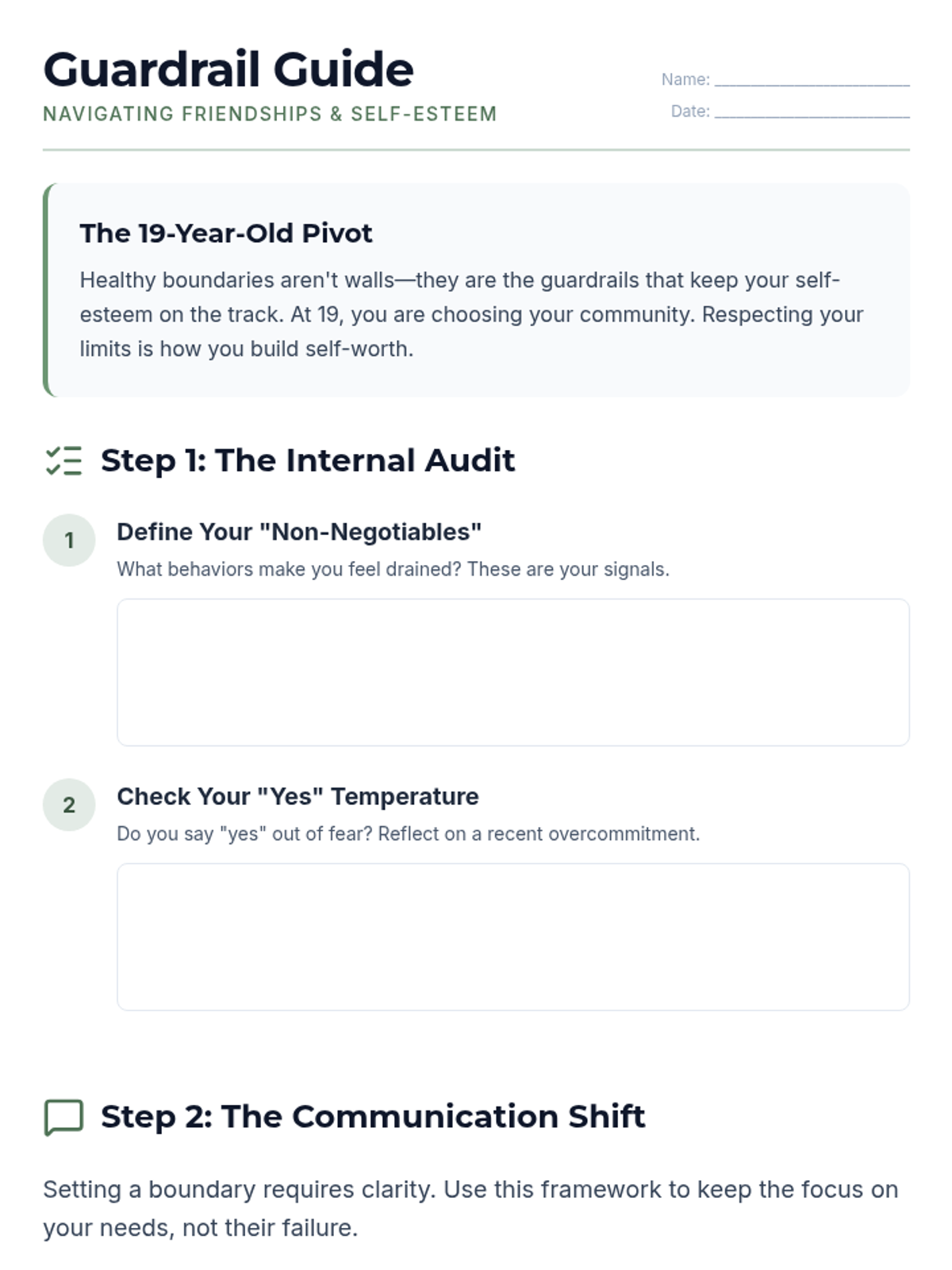
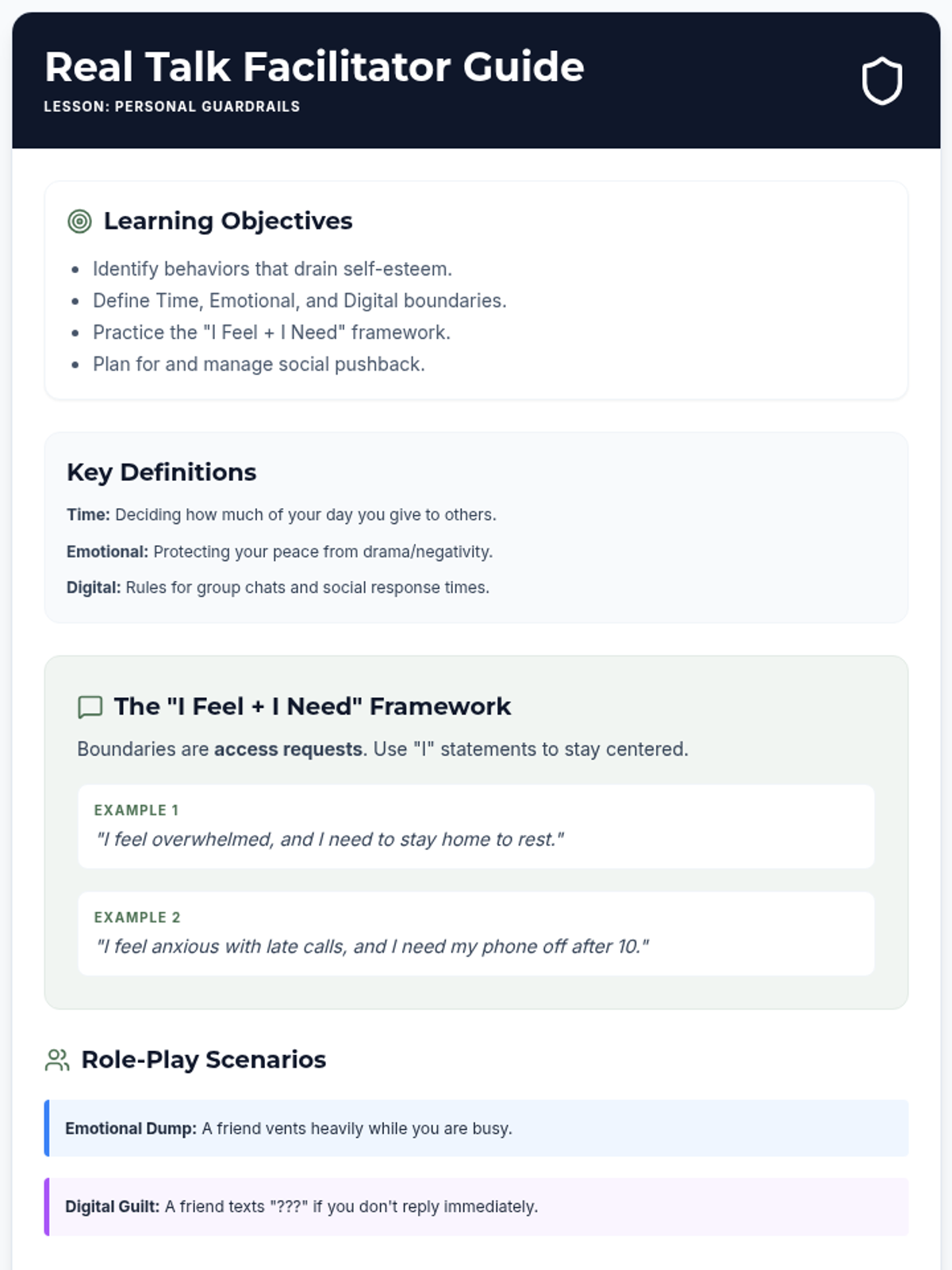
Practical strategies for 19-year-olds to define personal limits and build self-esteem through healthy friendship dynamics.
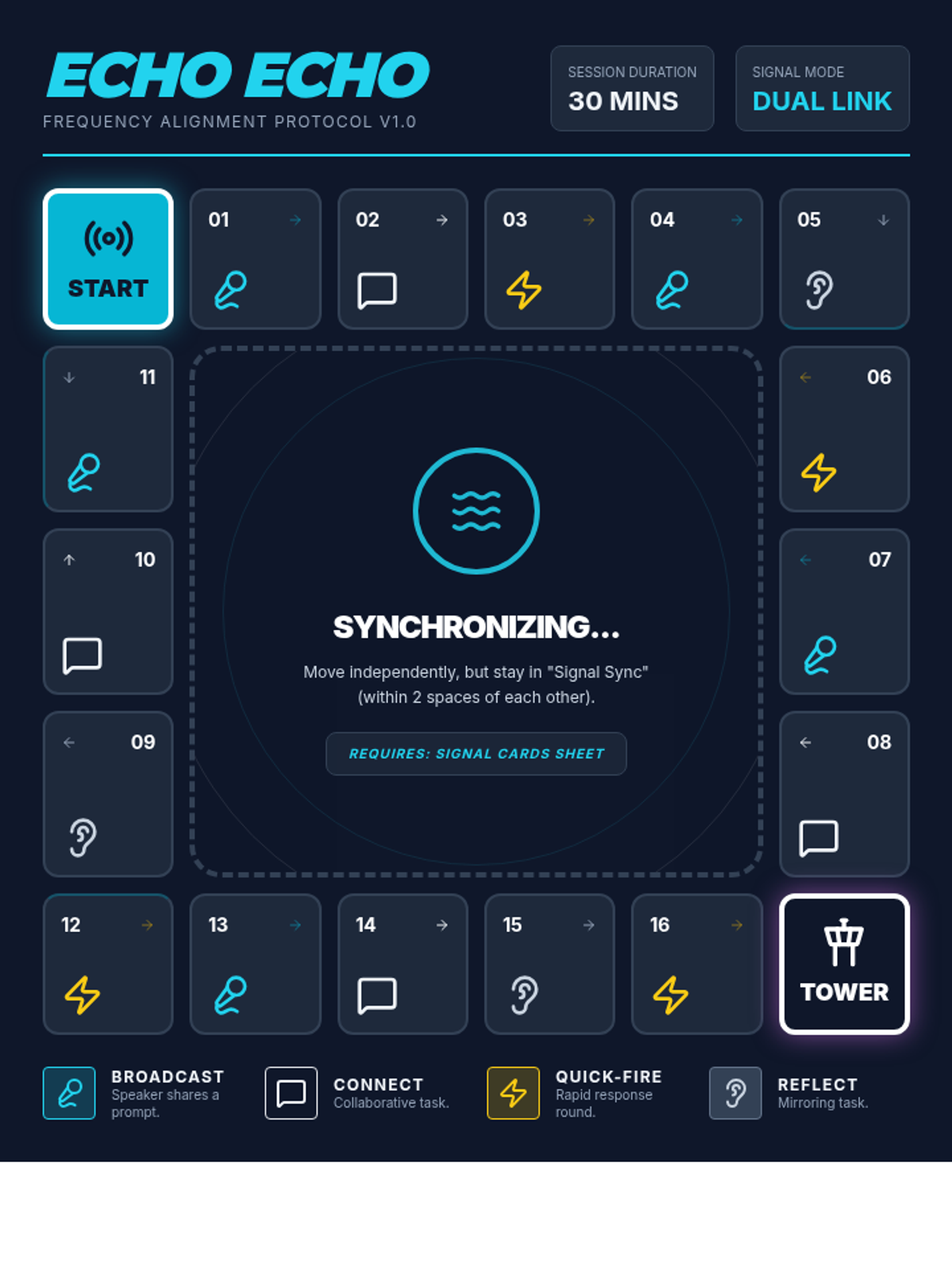
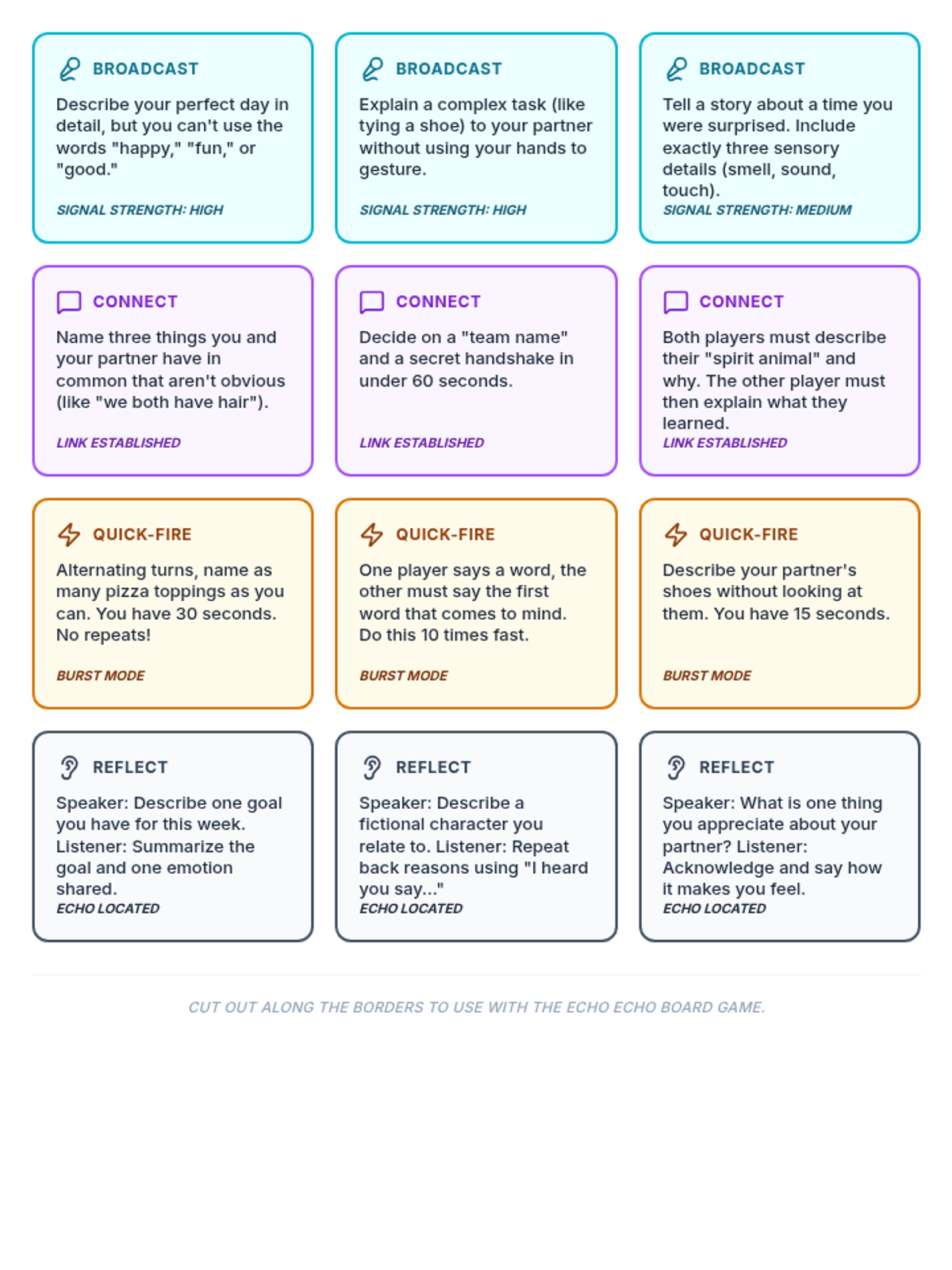
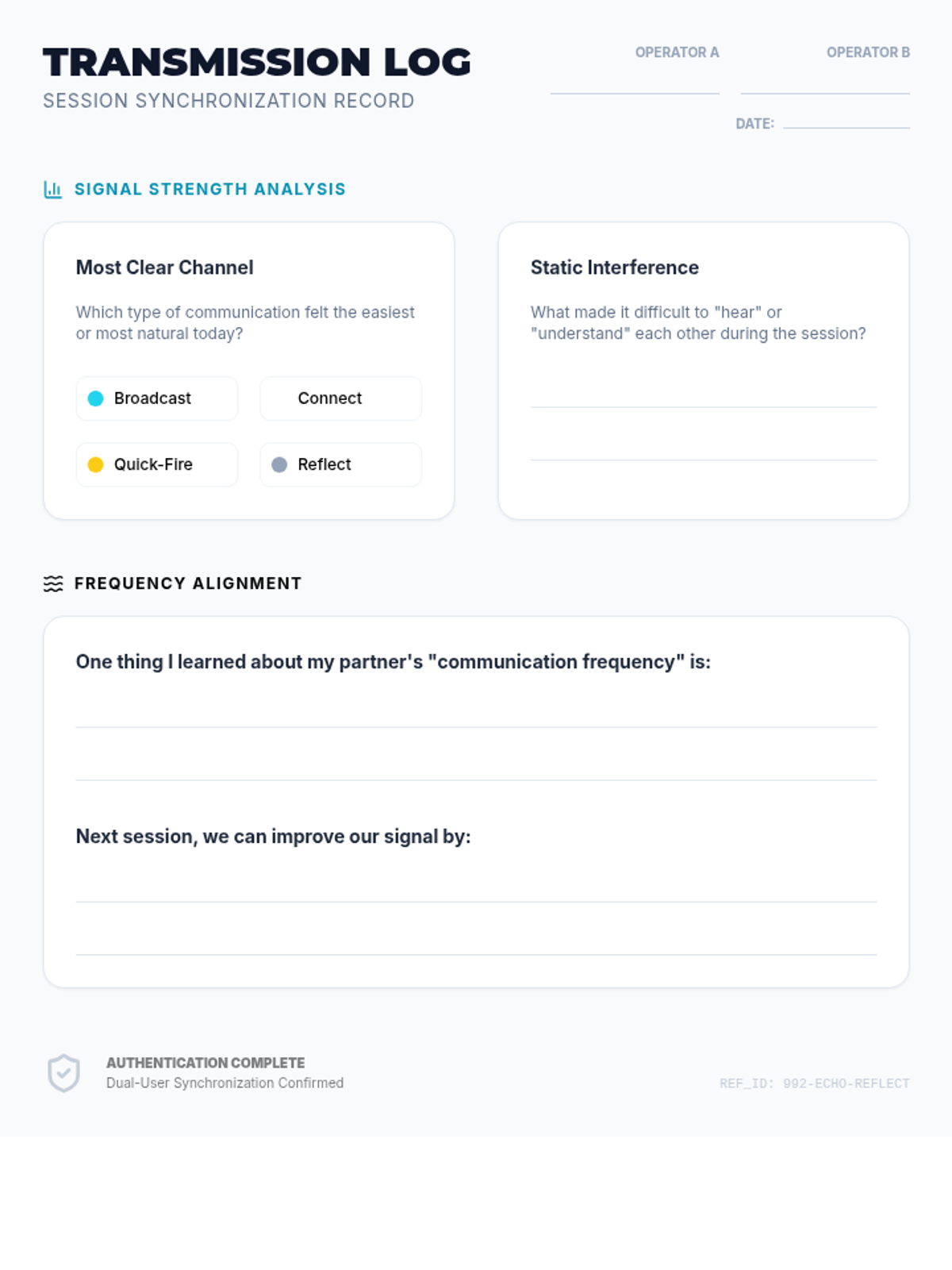
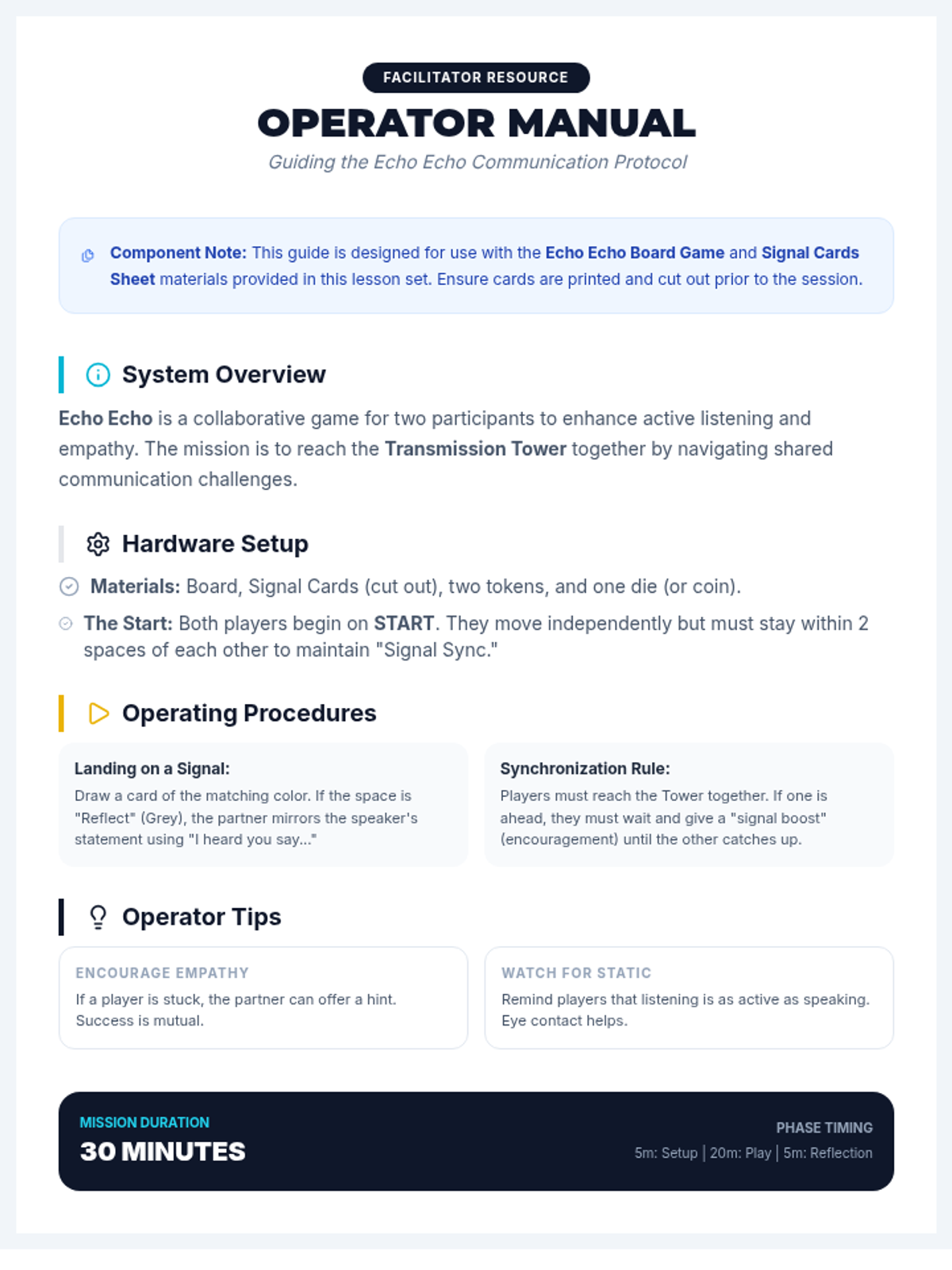
A collaborative board game designed for two players to improve active listening, empathy, and clear expression through shared challenges and deep-dive prompts.
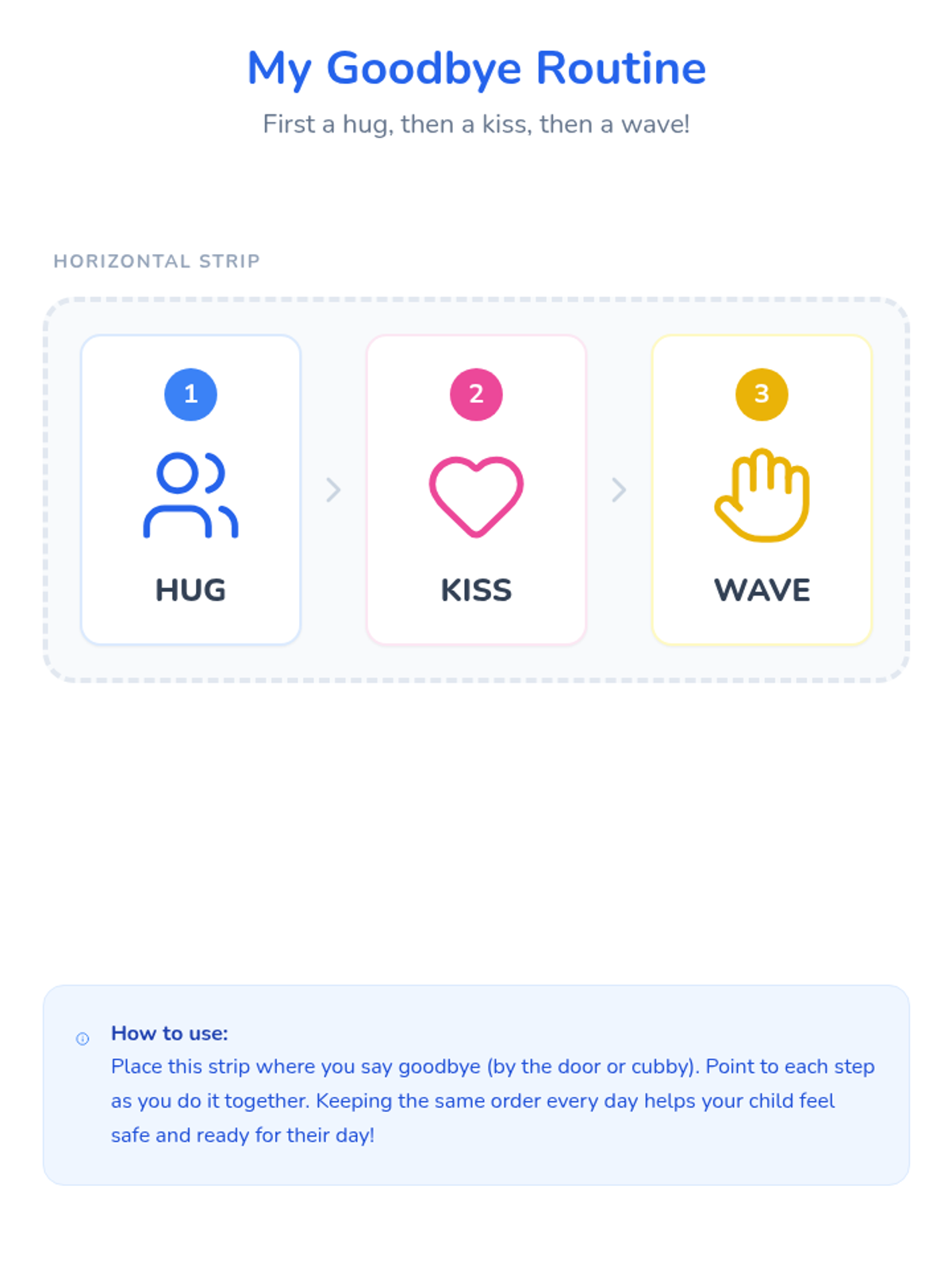
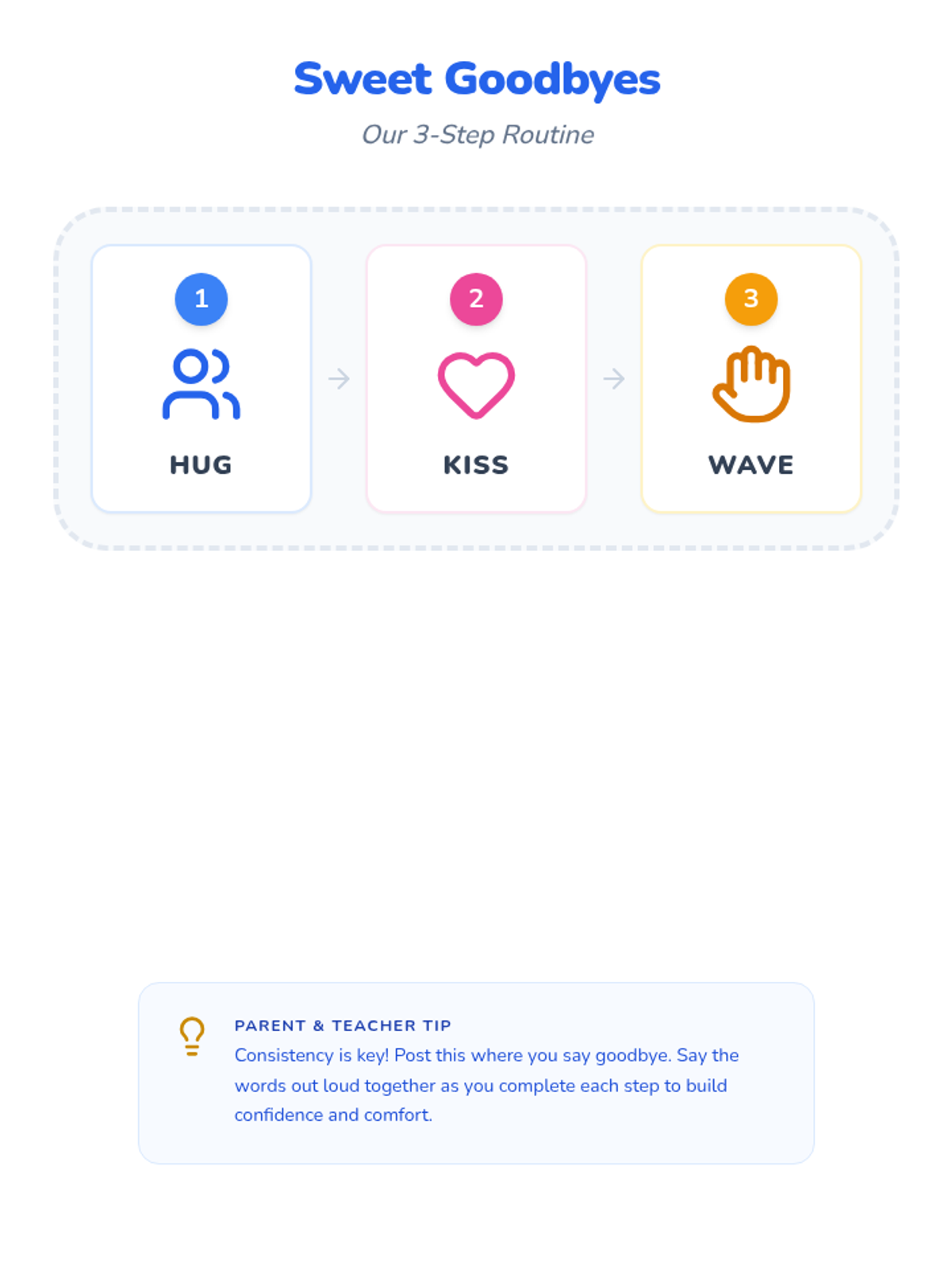
A simple visual guide to help children navigate the transition of saying goodbye using a three-step routine: hug, kiss, and wave.
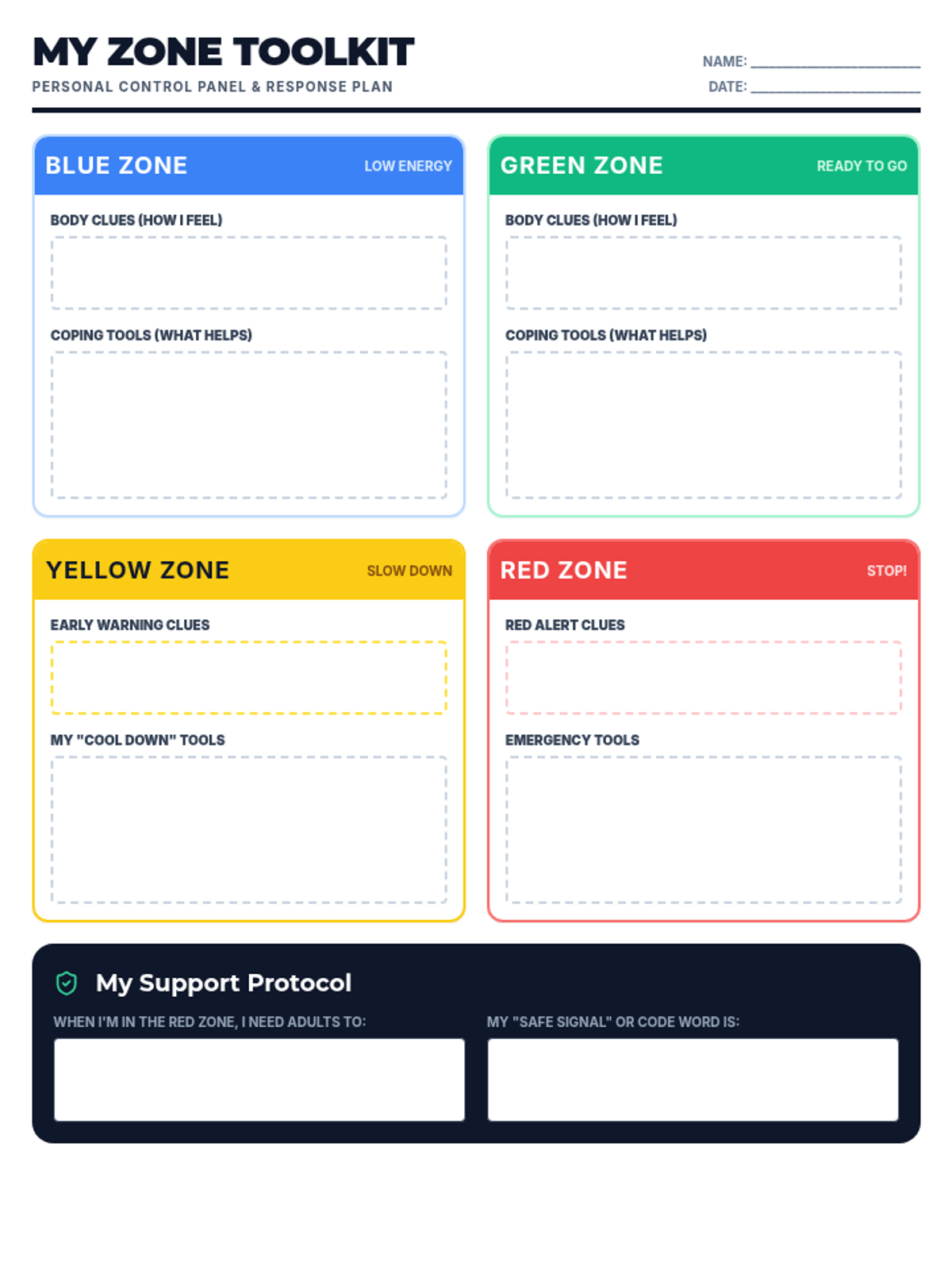
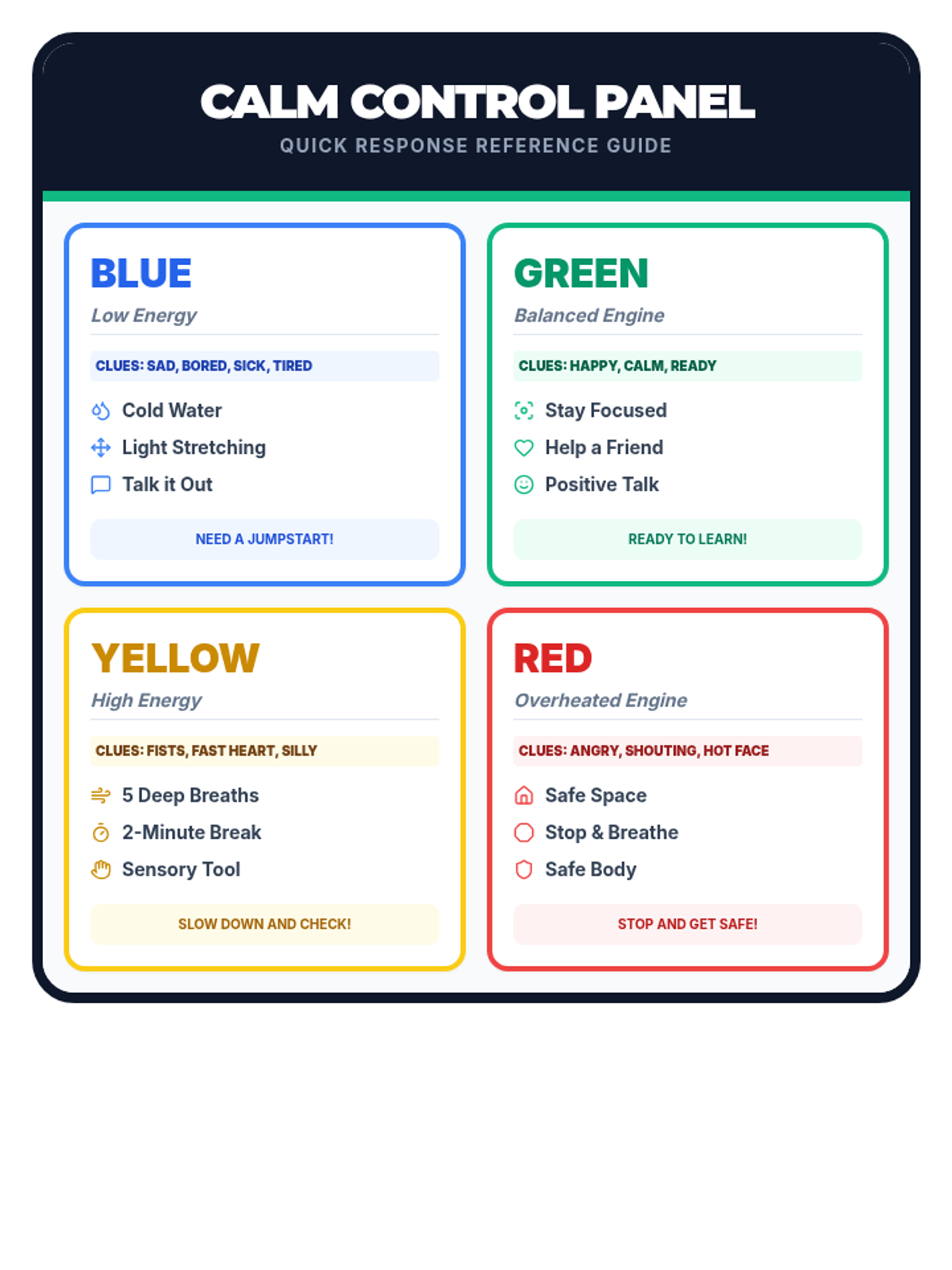
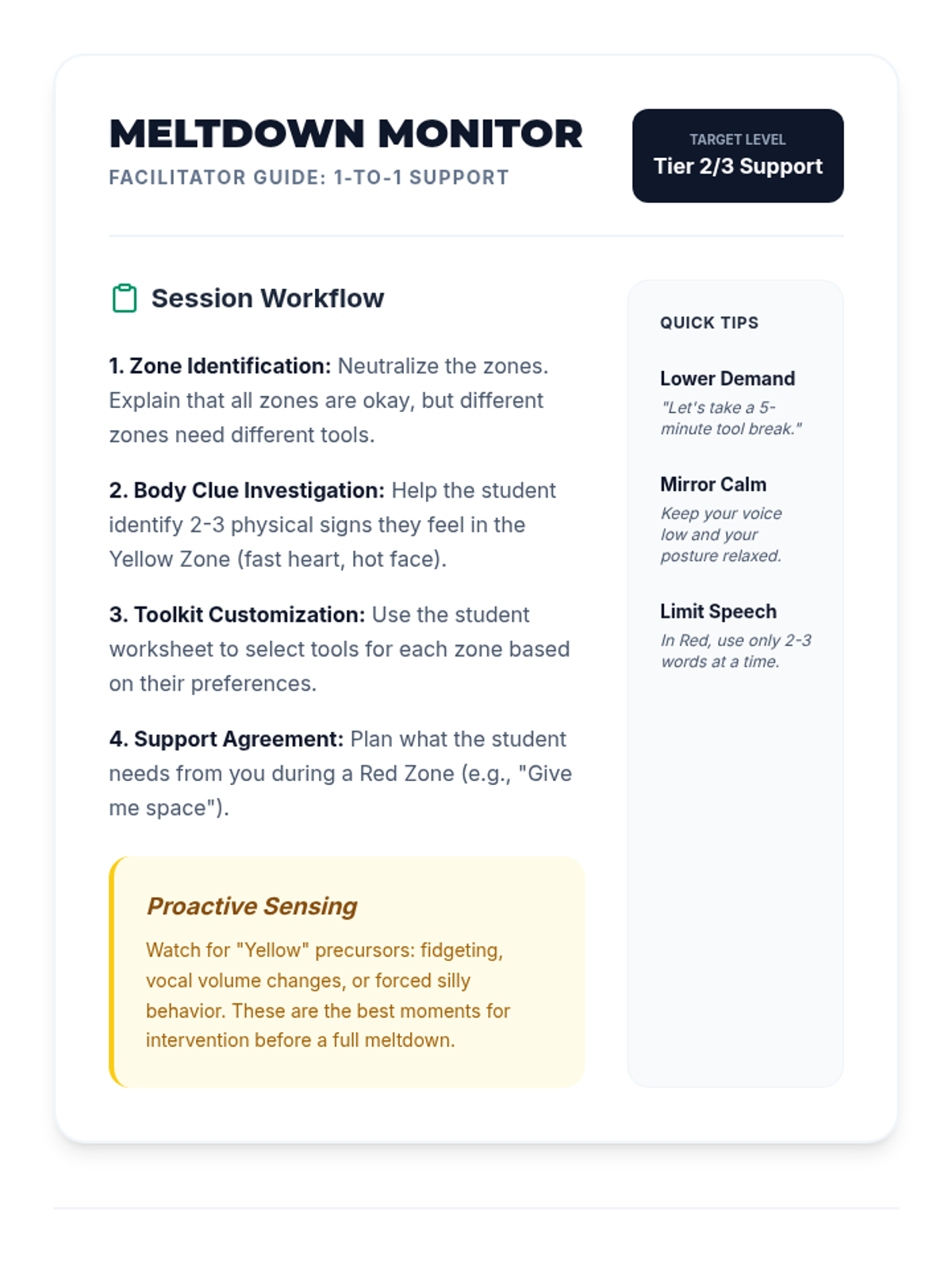
A comprehensive 1-to-1 toolkit for identifying emotional zones, recognizing early body clues of meltdowns, and building a personalized repertoire of coping strategies.
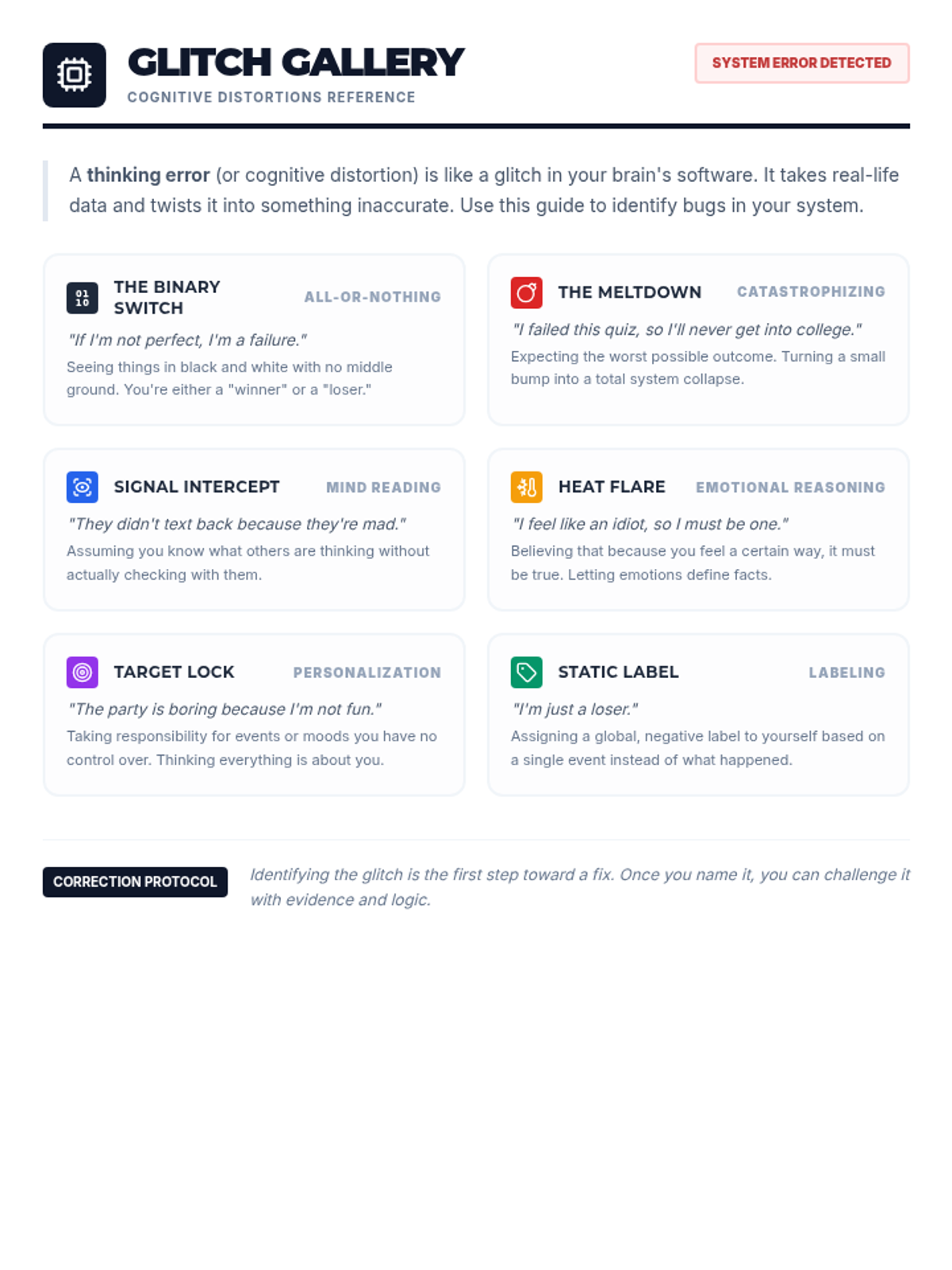
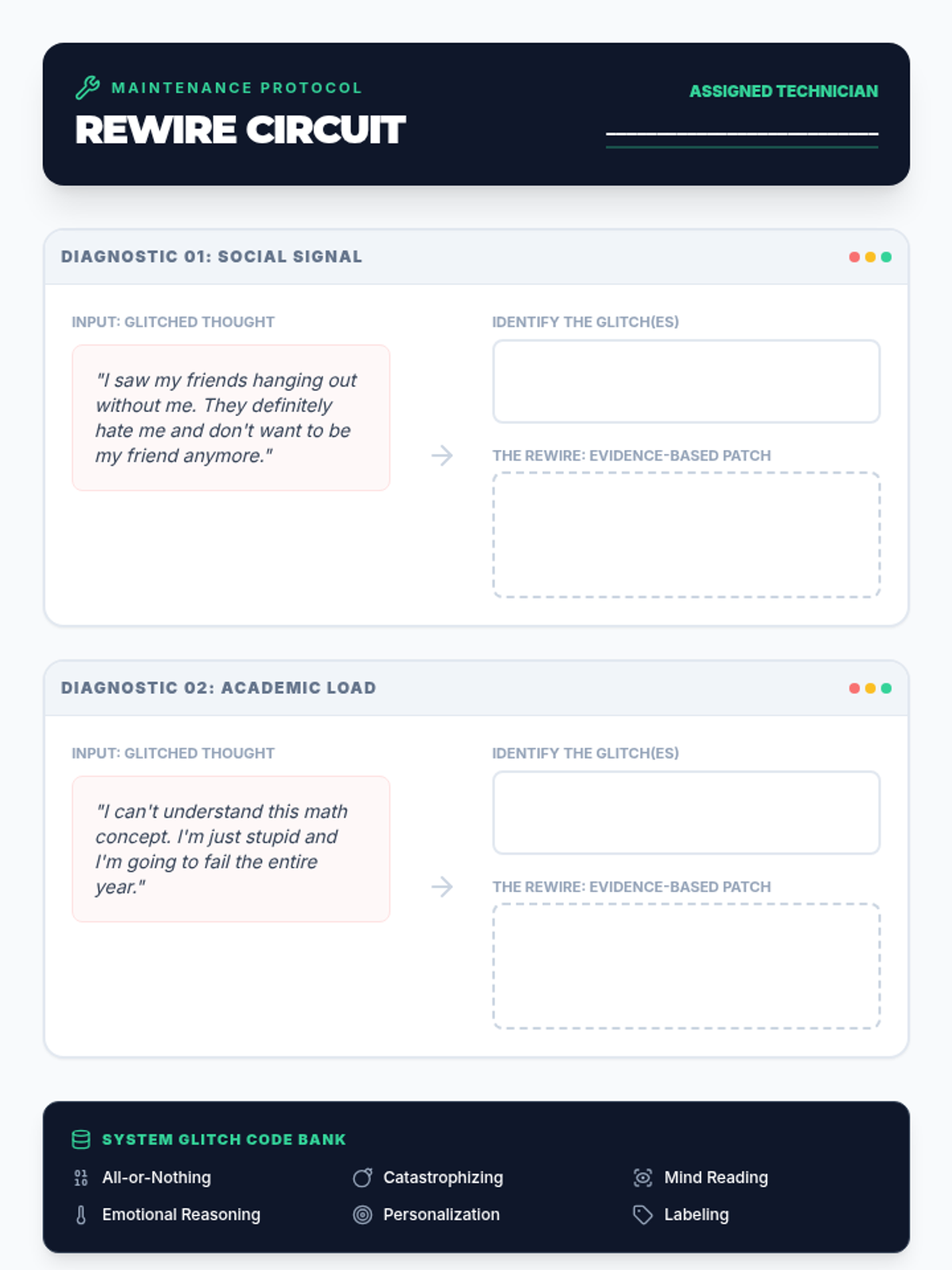
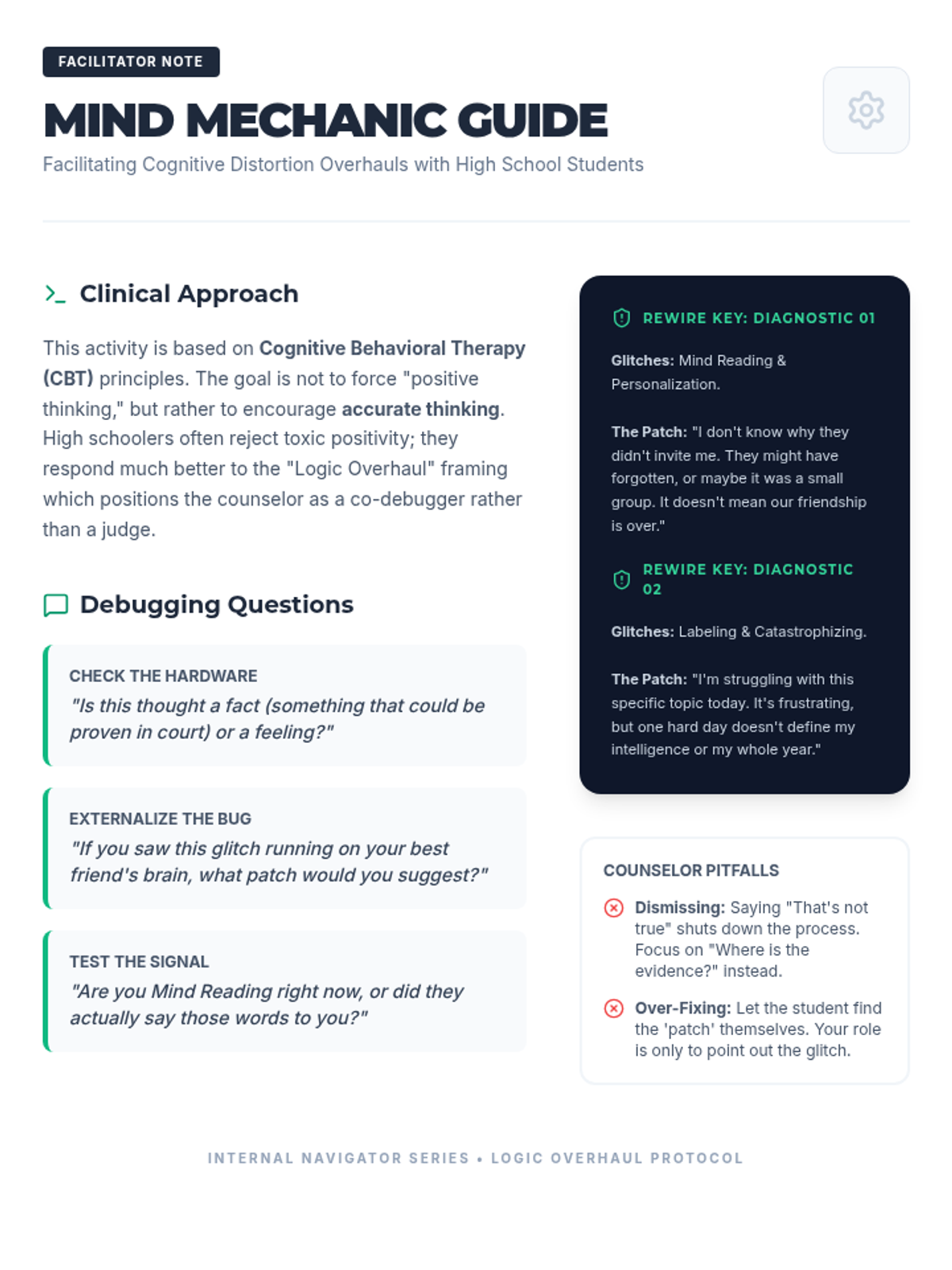
A counseling lesson helping students identify and challenge cognitive distortions (thinking errors) using a 'digital repair' theme to make CBT concepts accessible and engaging.
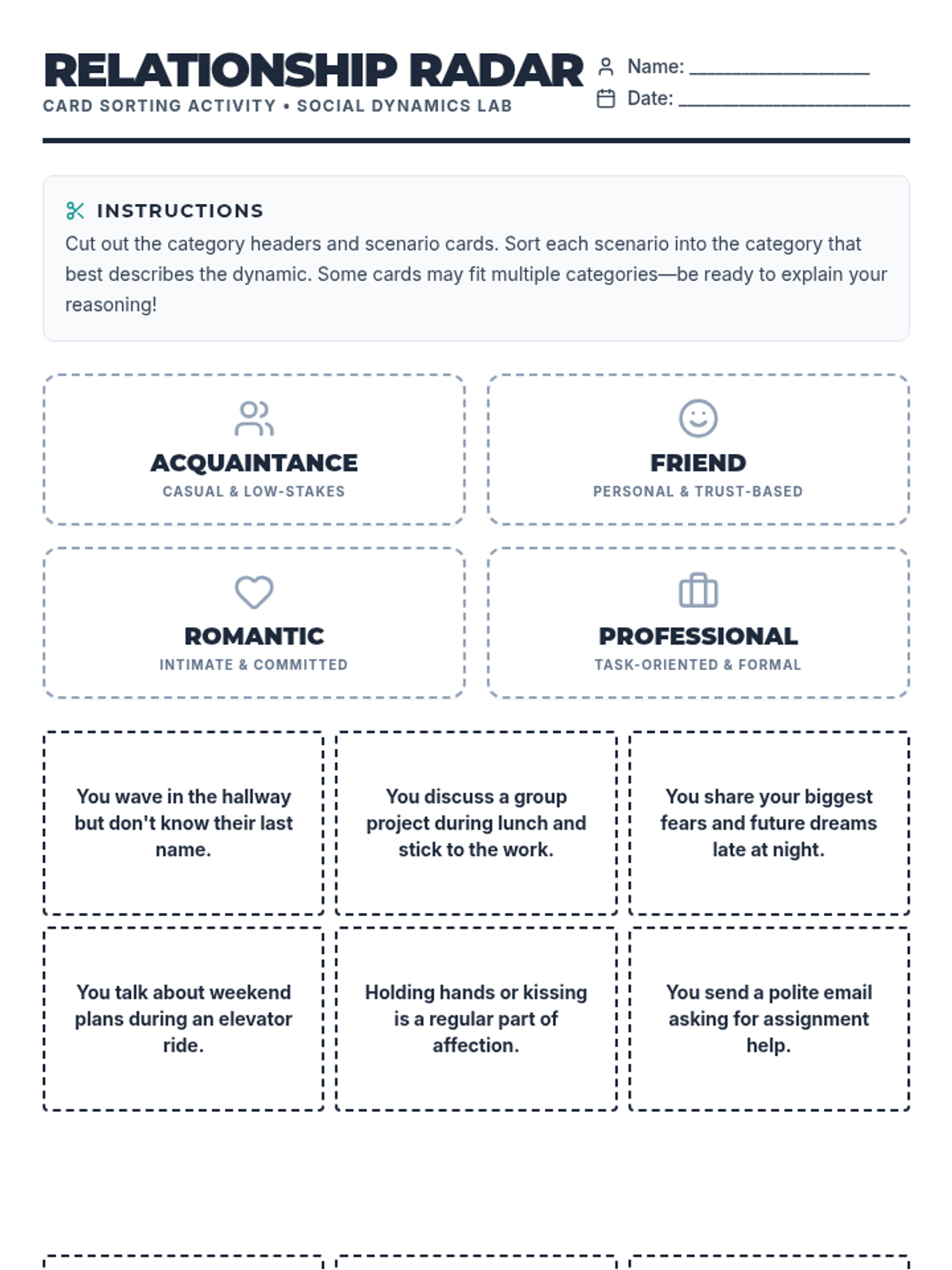
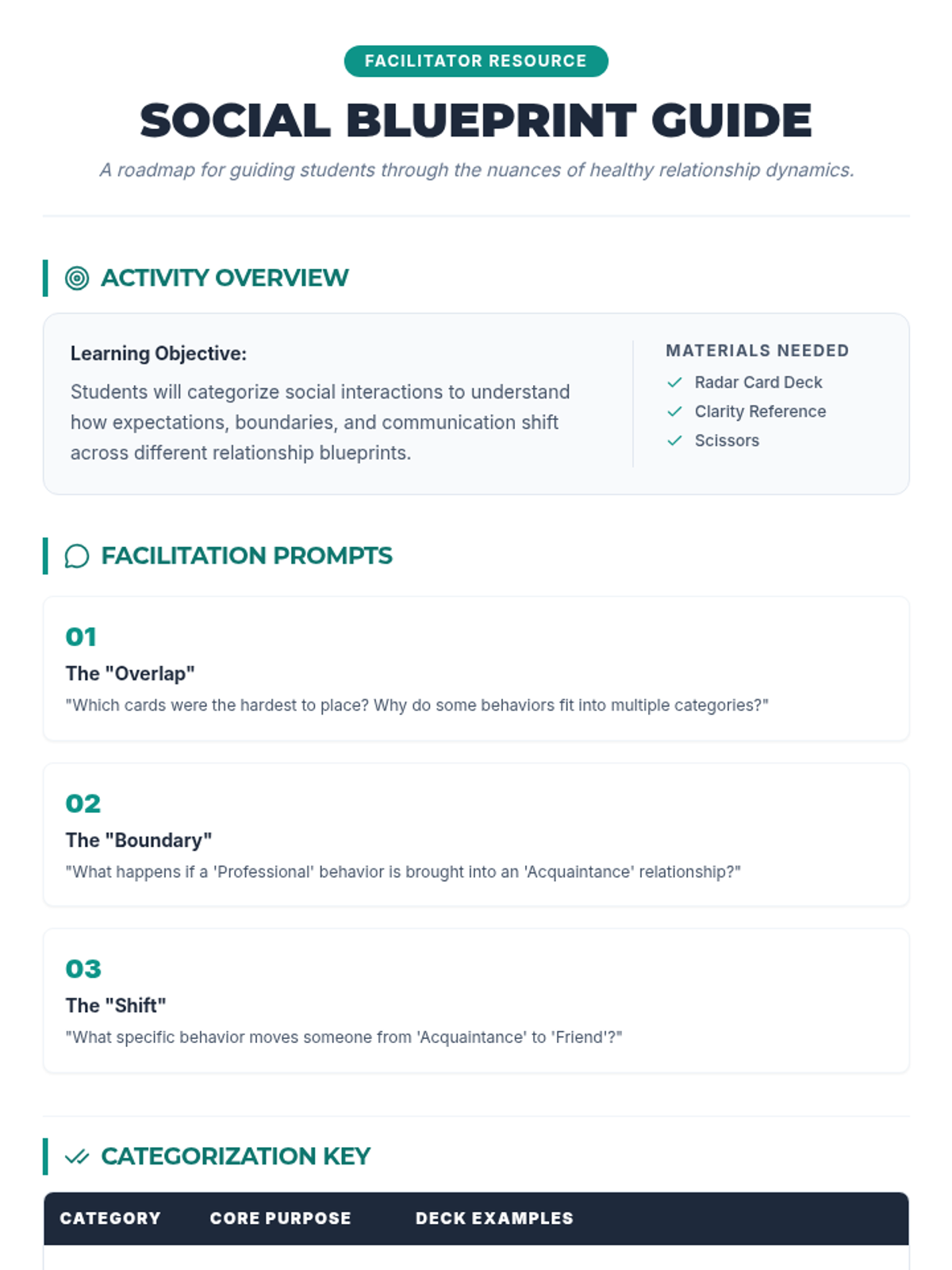
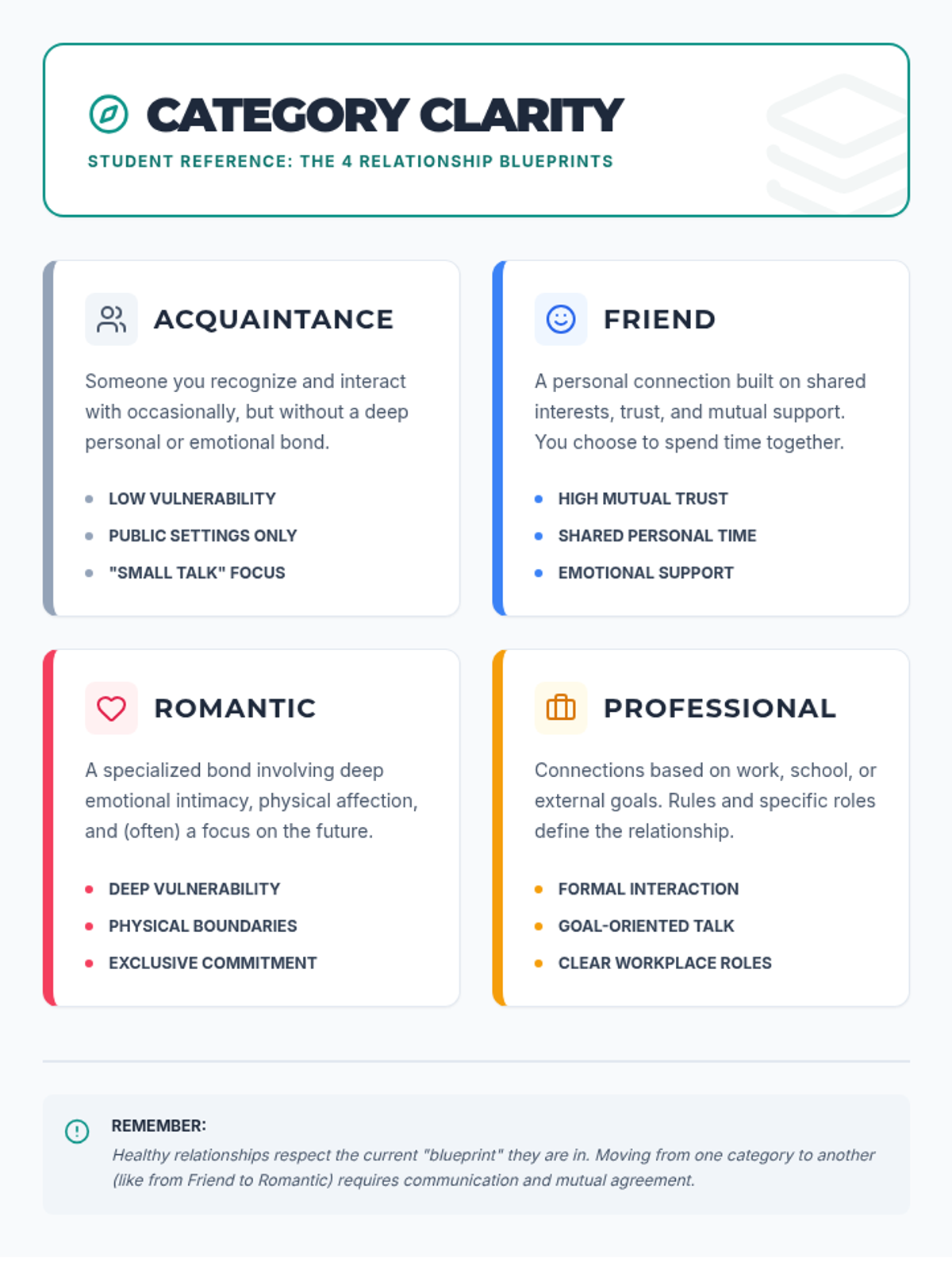
A lesson exploring the nuances between different types of relationships (acquaintance, friend, romantic, and professional) using a card-sorting activity to identify healthy boundaries and expectations for each.
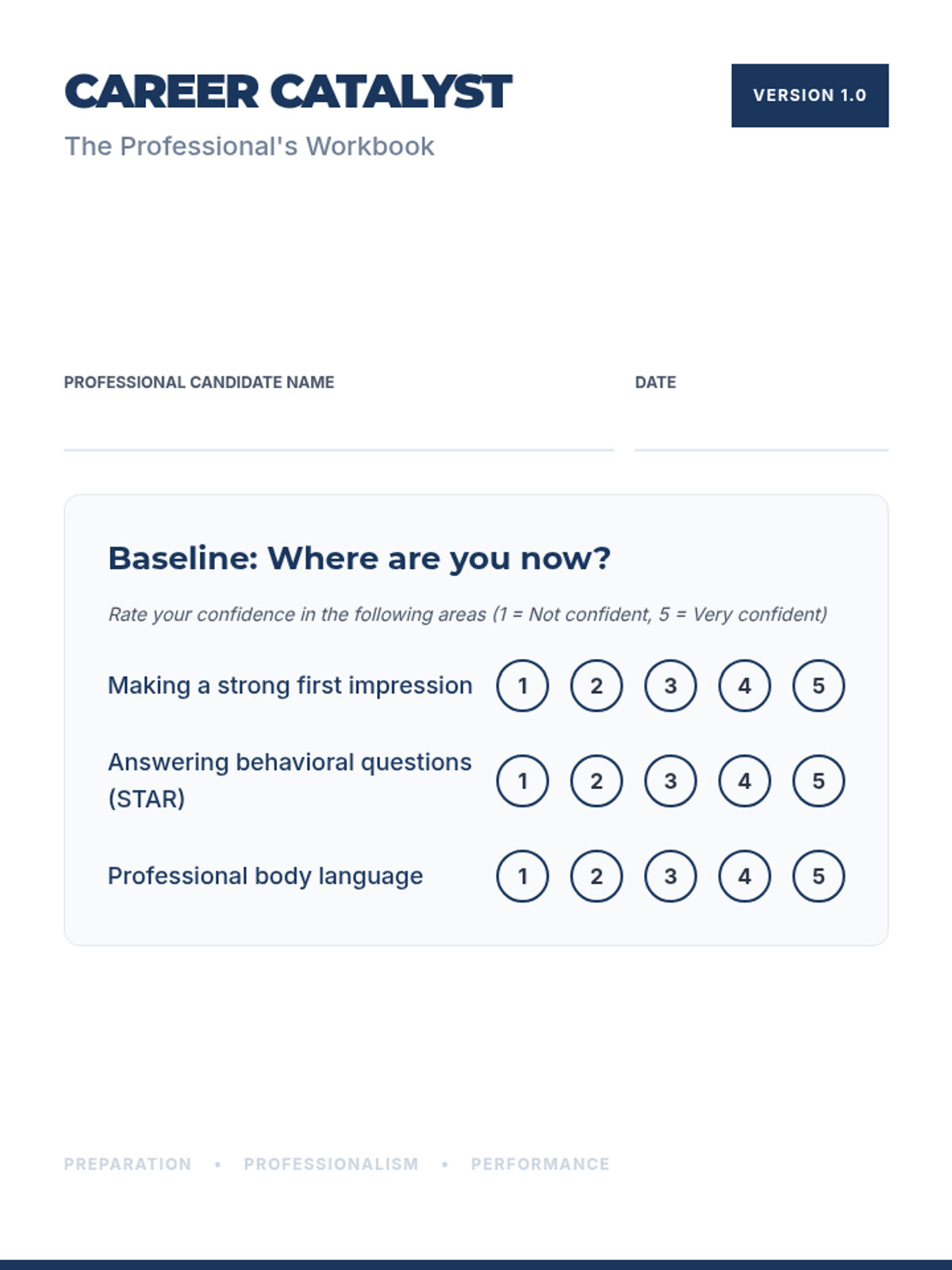
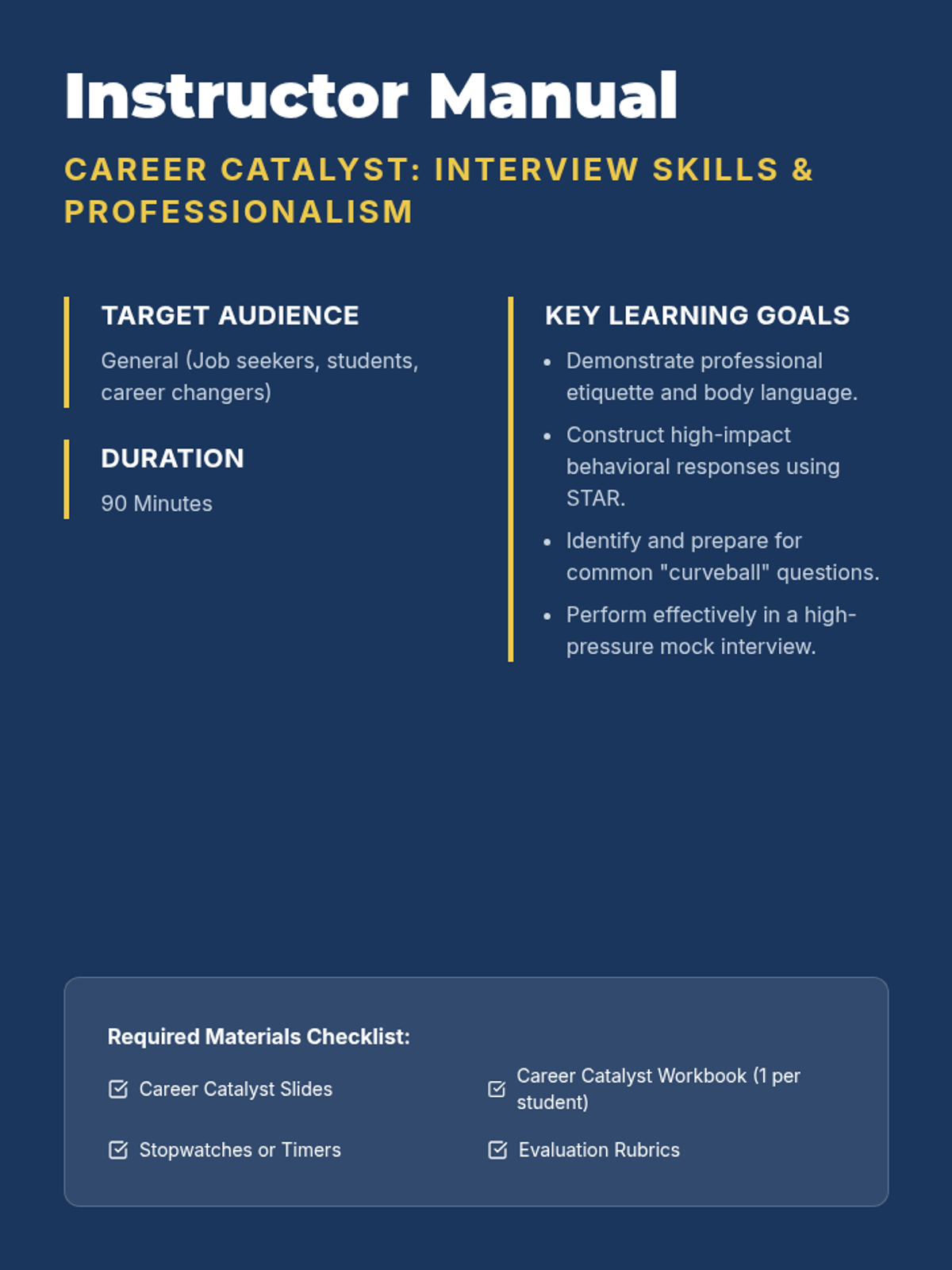
A comprehensive 90-minute lesson covering first impressions, the STAR method for behavioral questions, and professional etiquette for job seekers.
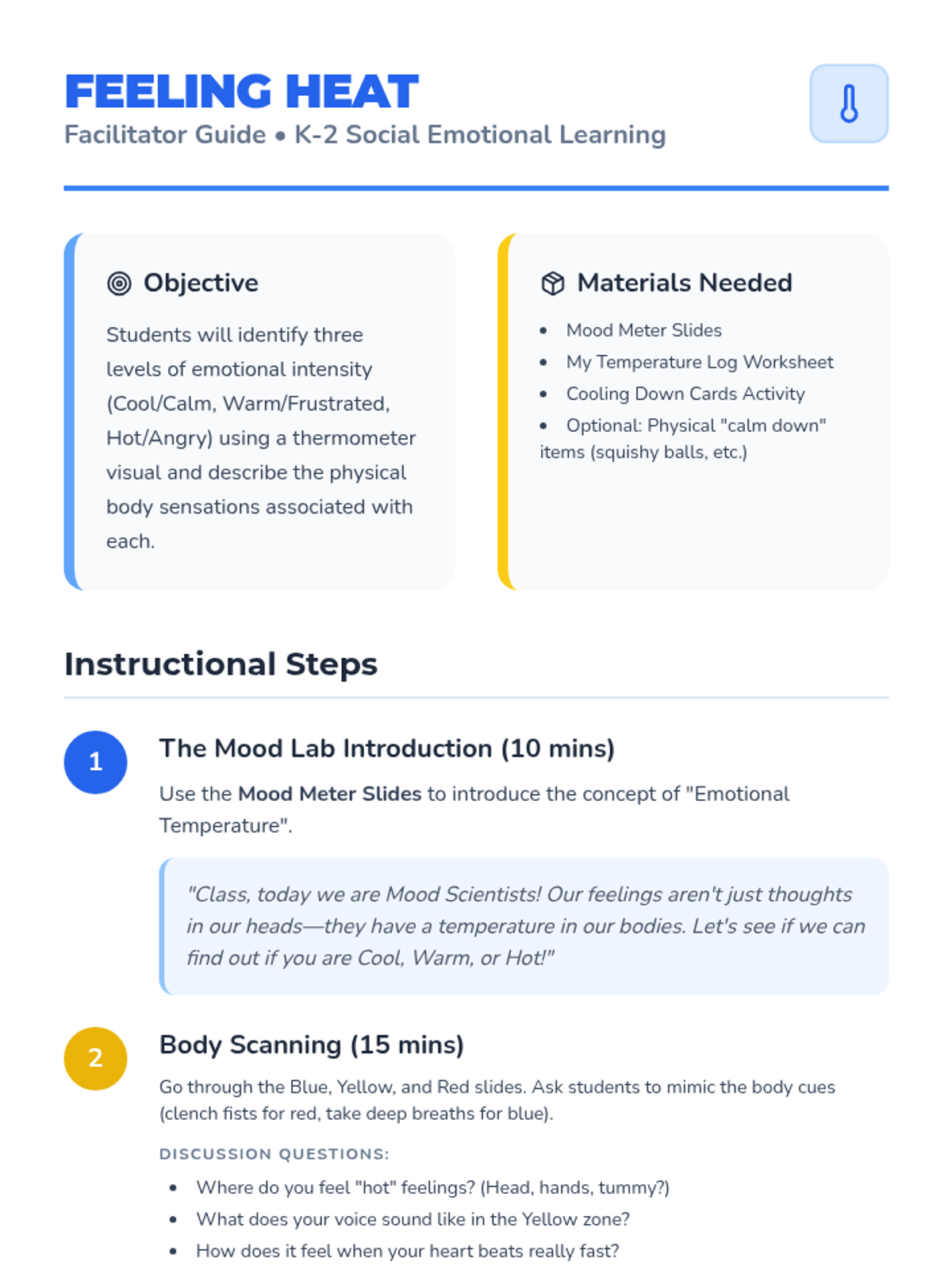
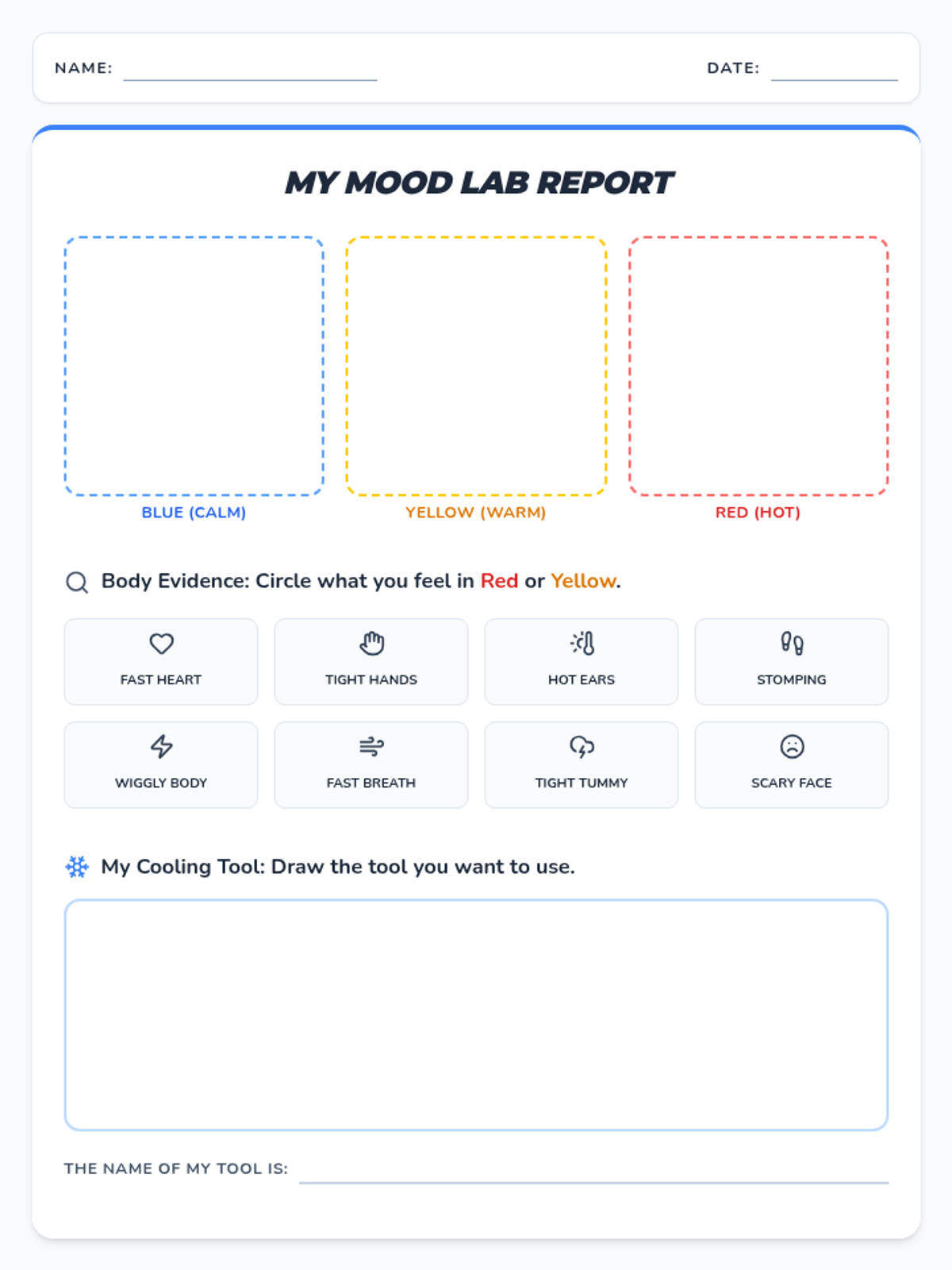
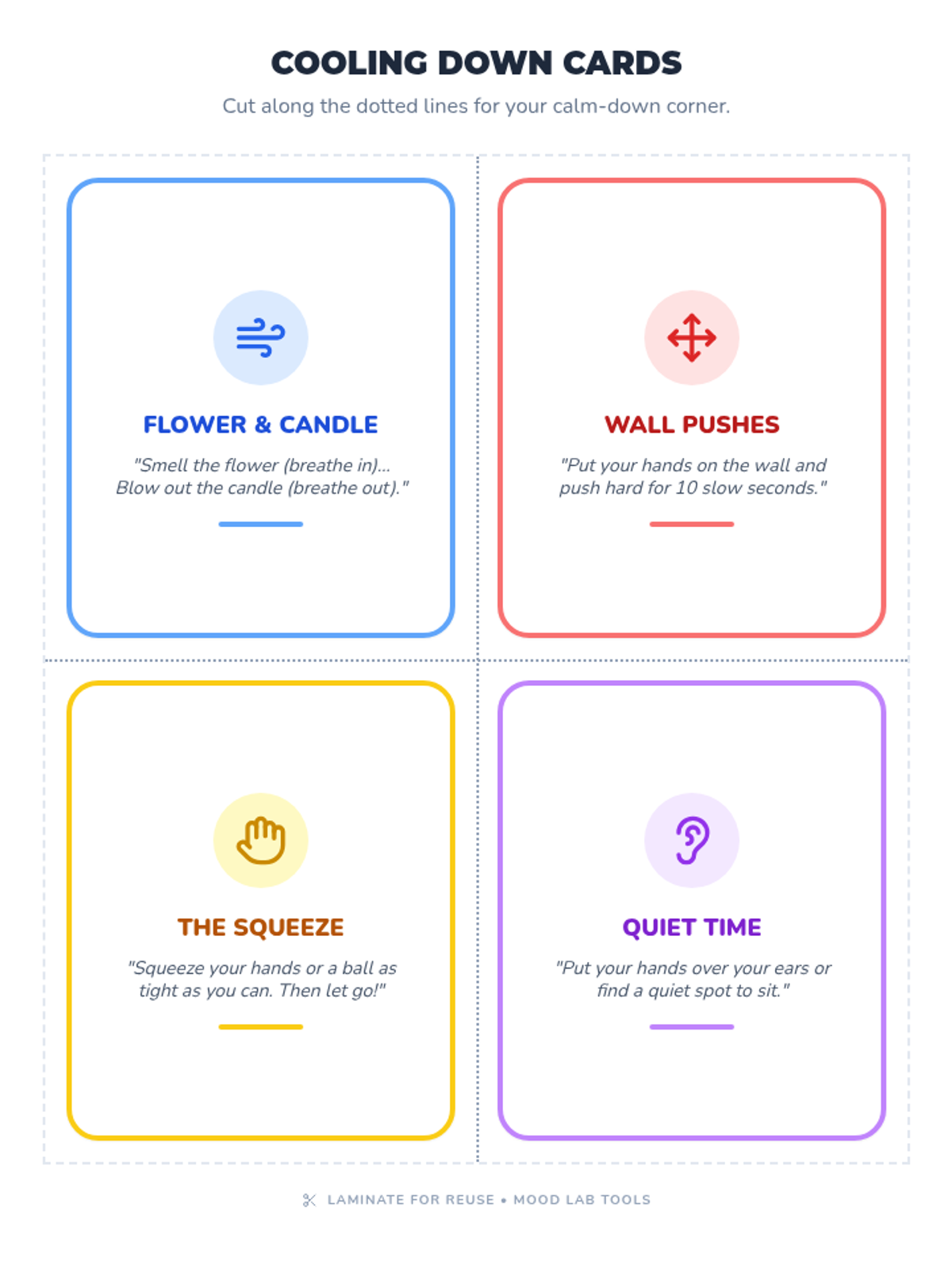
A K-2 social-emotional learning lesson that teaches students to recognize the intensity of their emotions using a thermometer visual. Students identify physical body signals for different emotional states and explore sensory strategies for self-regulation.