A lesson introducing the three brain states of Conscious Discipline to help students understand their emotions and behaviors.
Using a regulated brain to communicate needs and solve social or academic problems effectively.
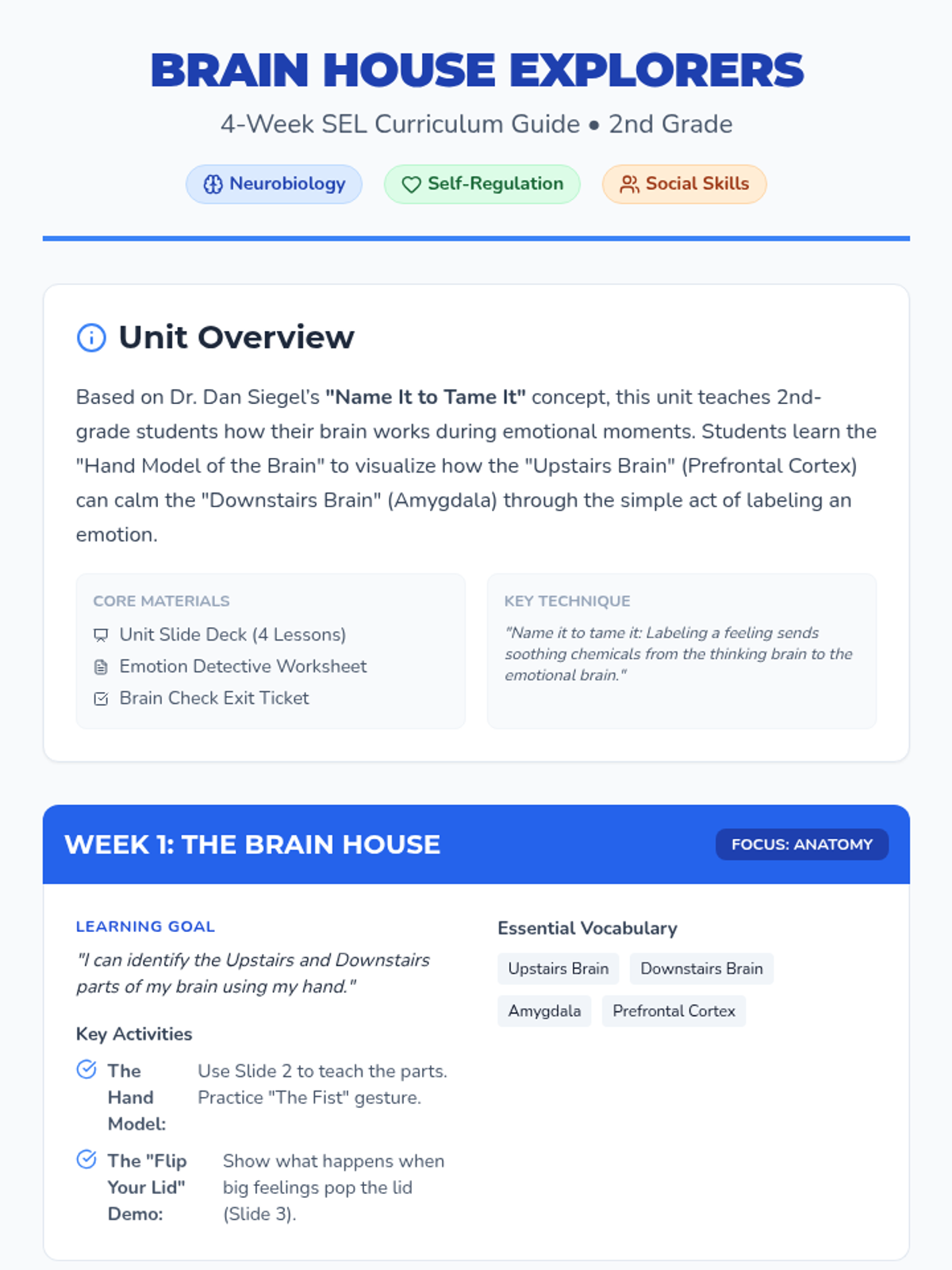
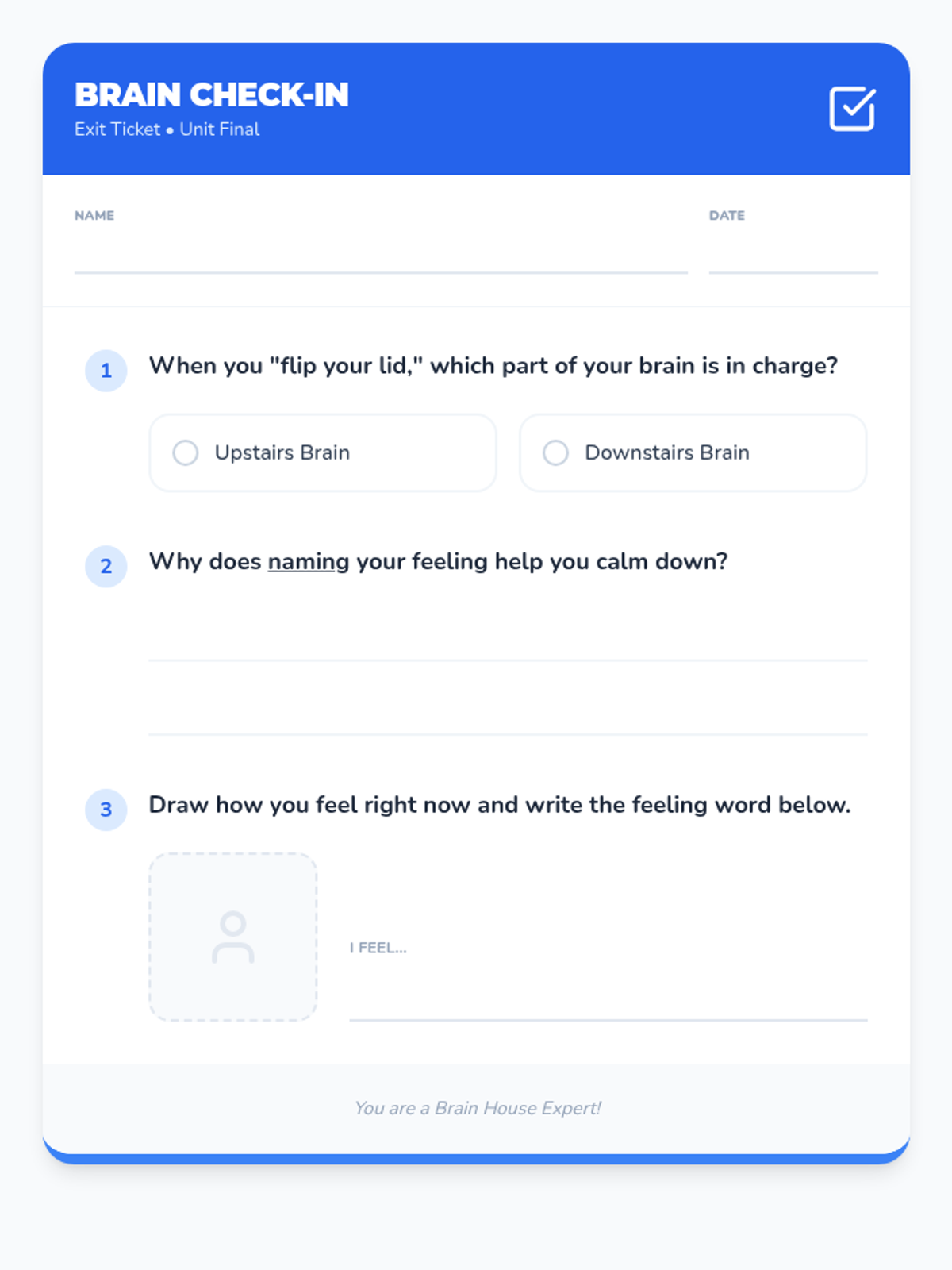
Connecting naming feelings to the brain's calming response, practicing the 'Name It to Tame It' technique.
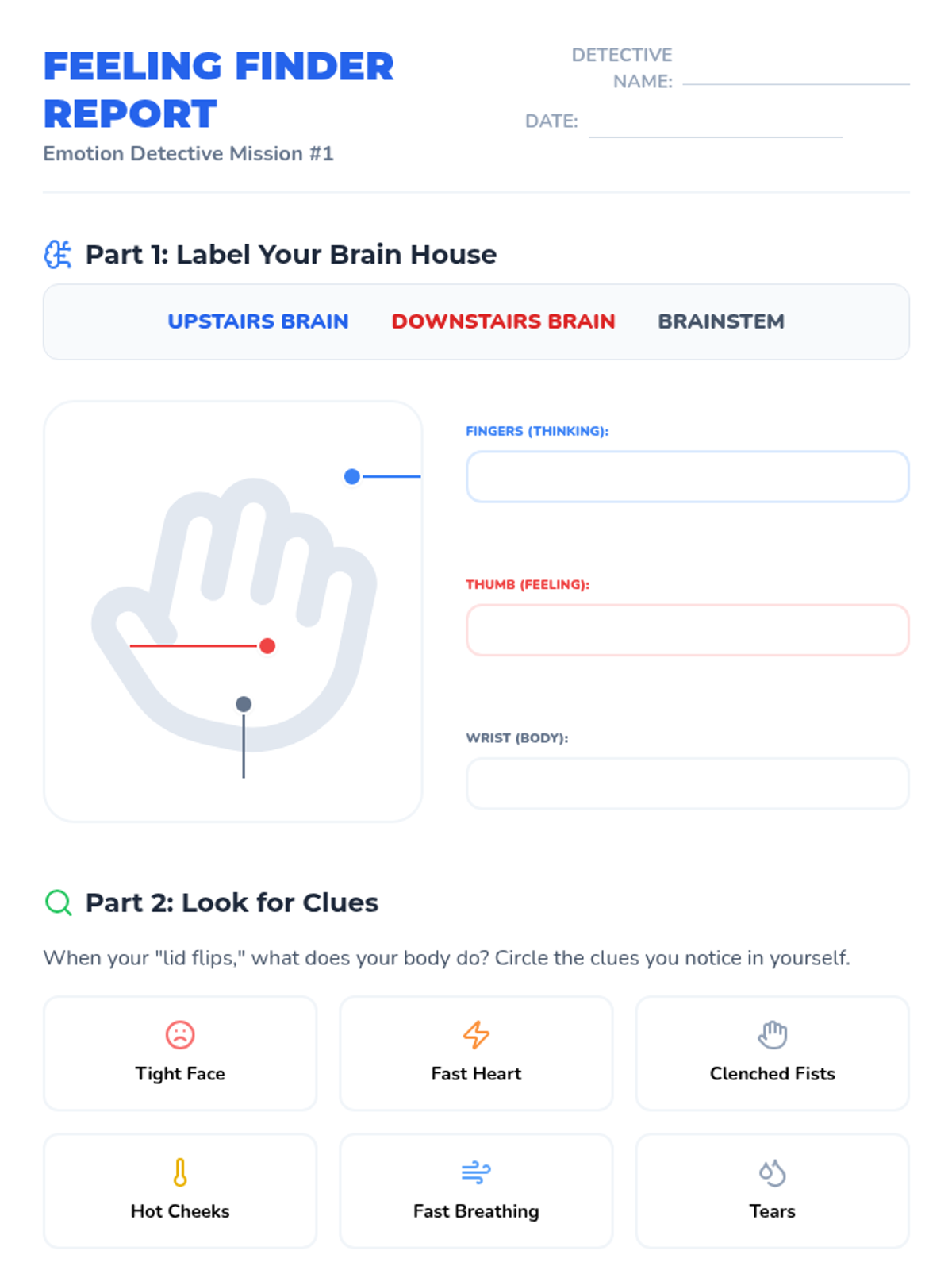
Focused on expanding emotional vocabulary and learning how to identify physical signals in the body that match big feelings.
Introduce the hand model of the brain, identifying the 'Upstairs' (thinking) and 'Downstairs' (feeling) parts of the brain house.
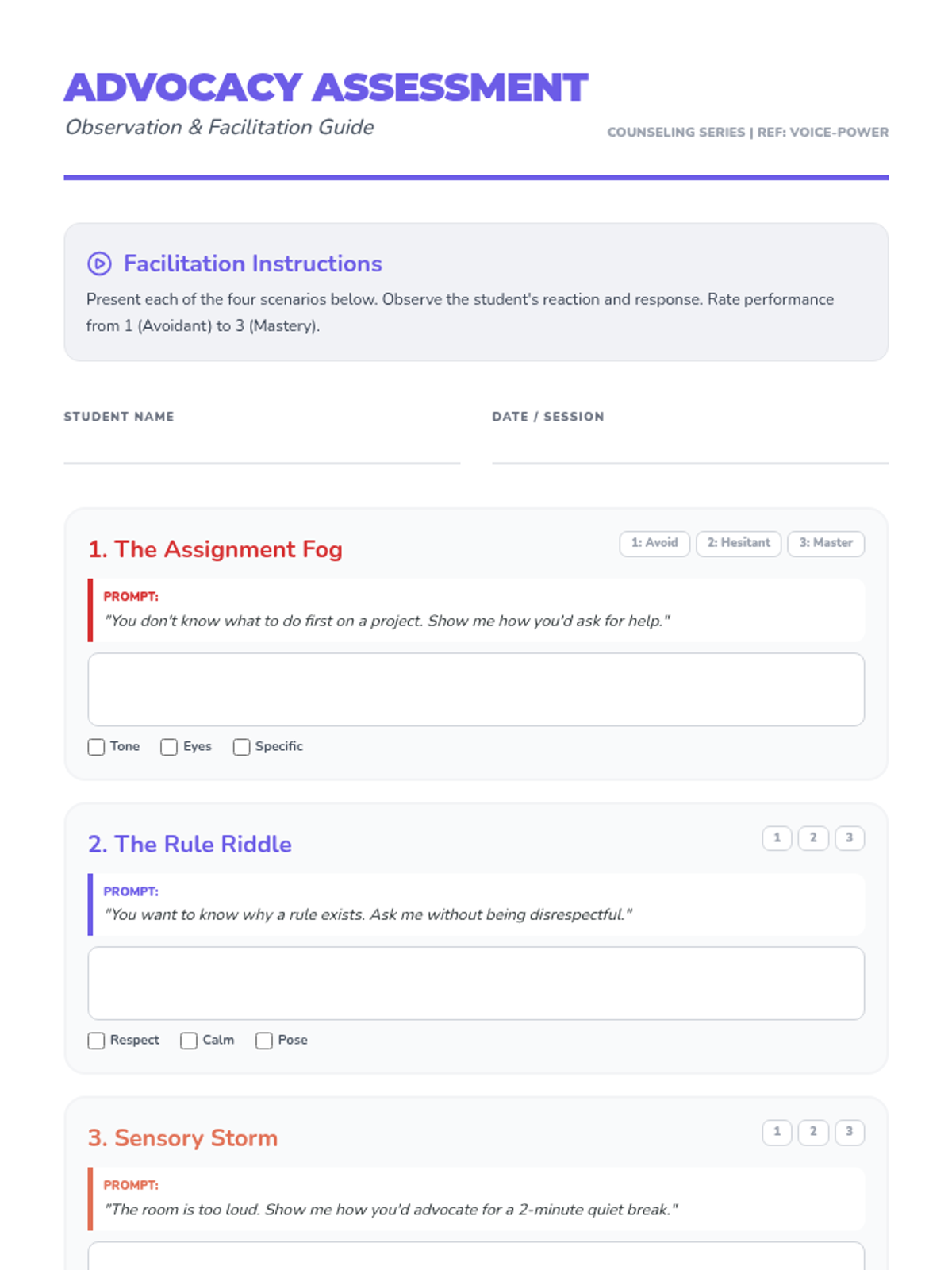
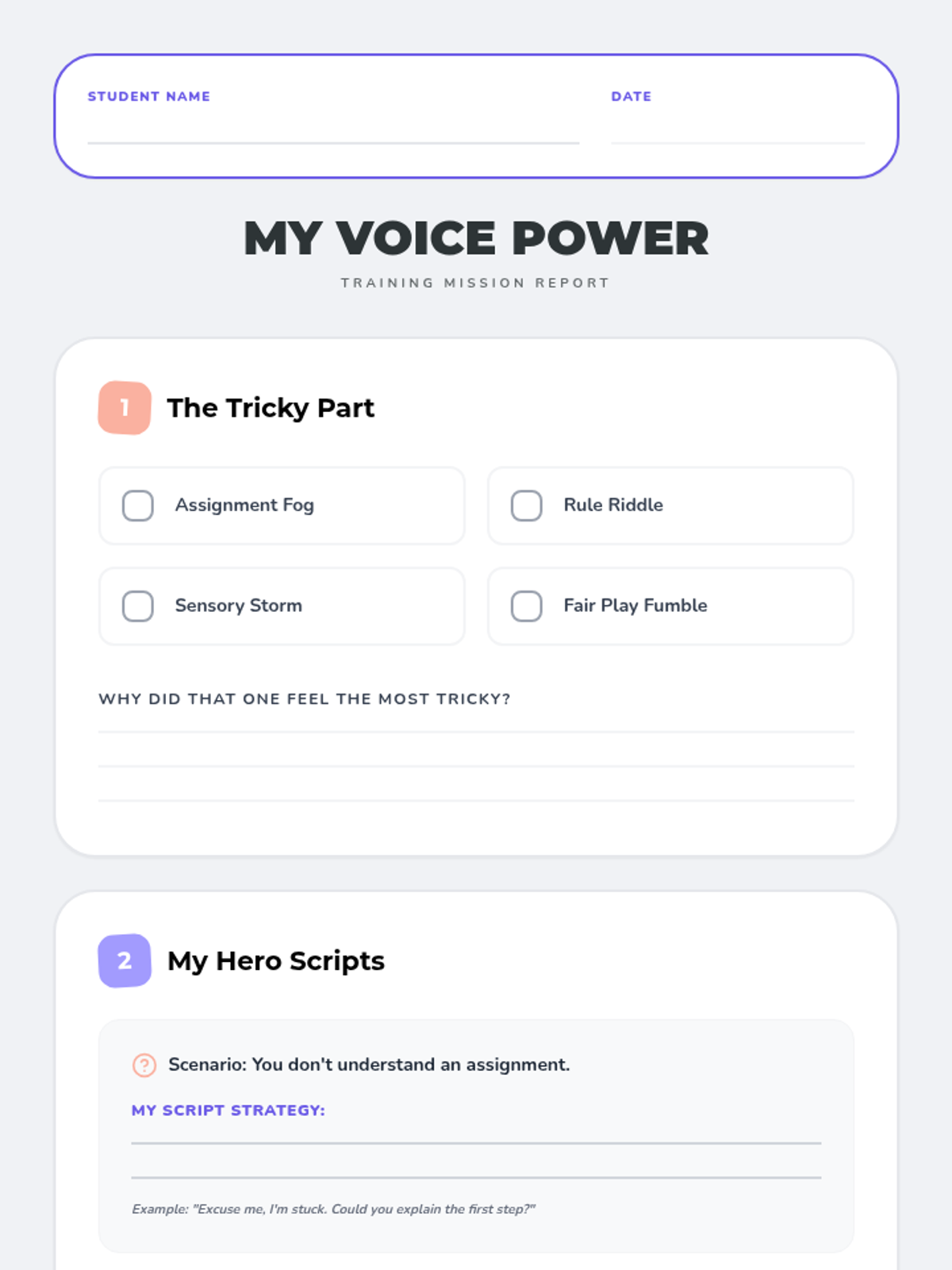
A quick, interactive lesson designed to assess and practice self-advocacy skills in challenging classroom scenarios. Students learn to identify when they need help and practice speaking up clearly and confidently.
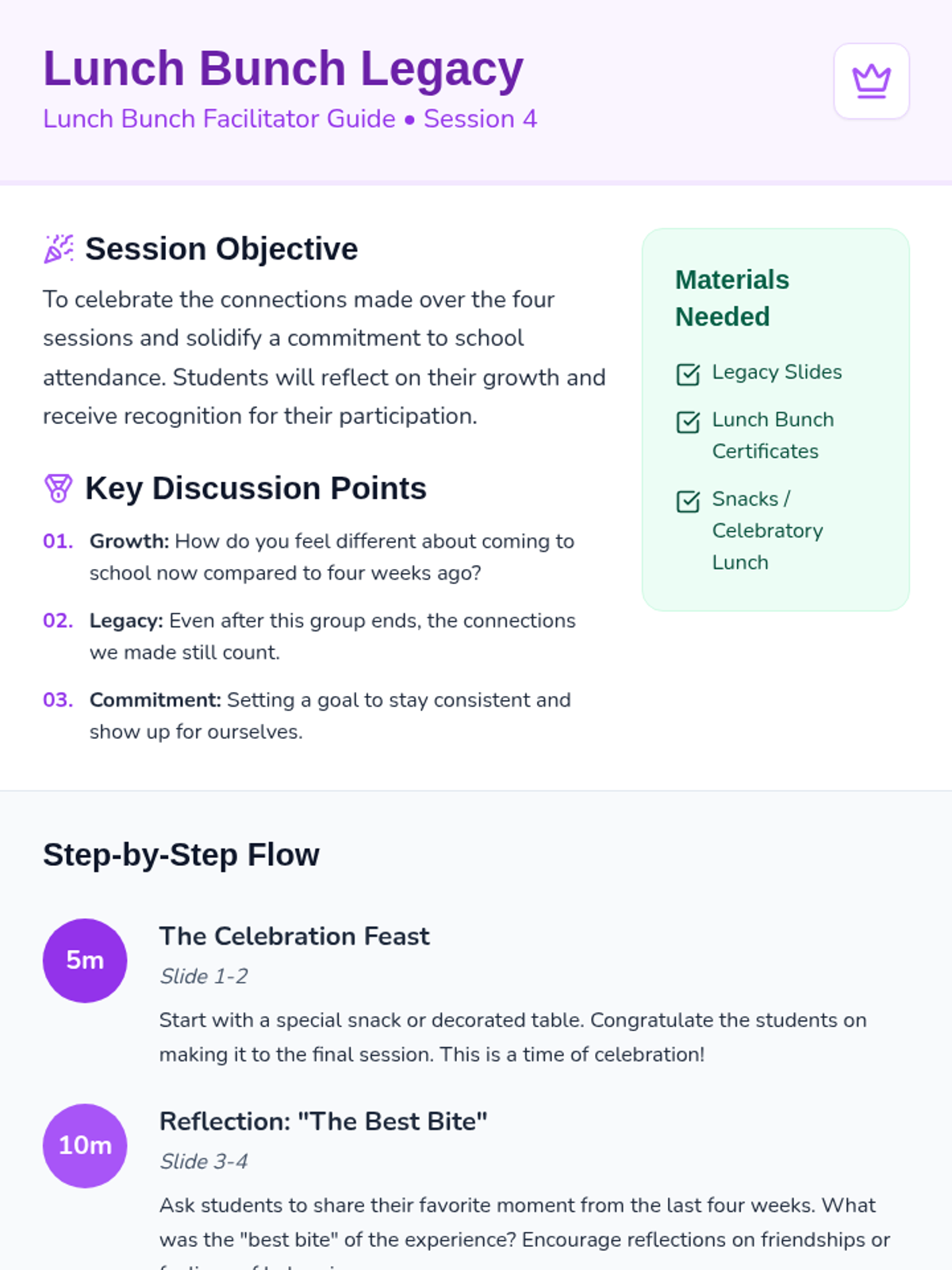
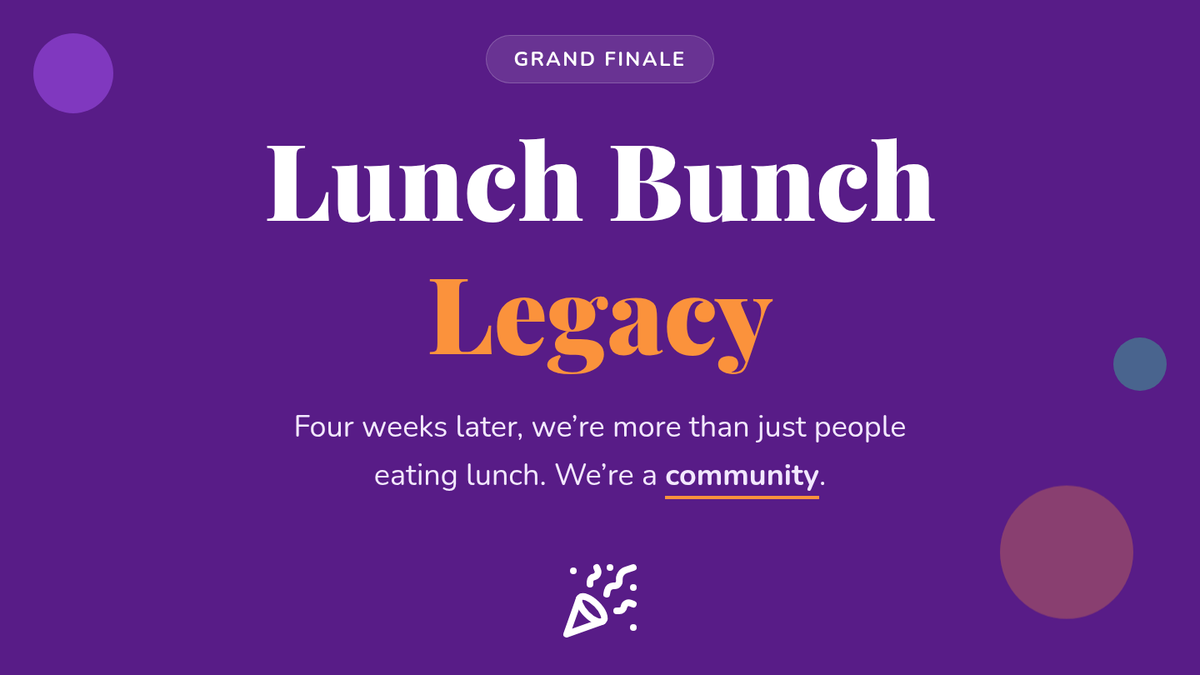
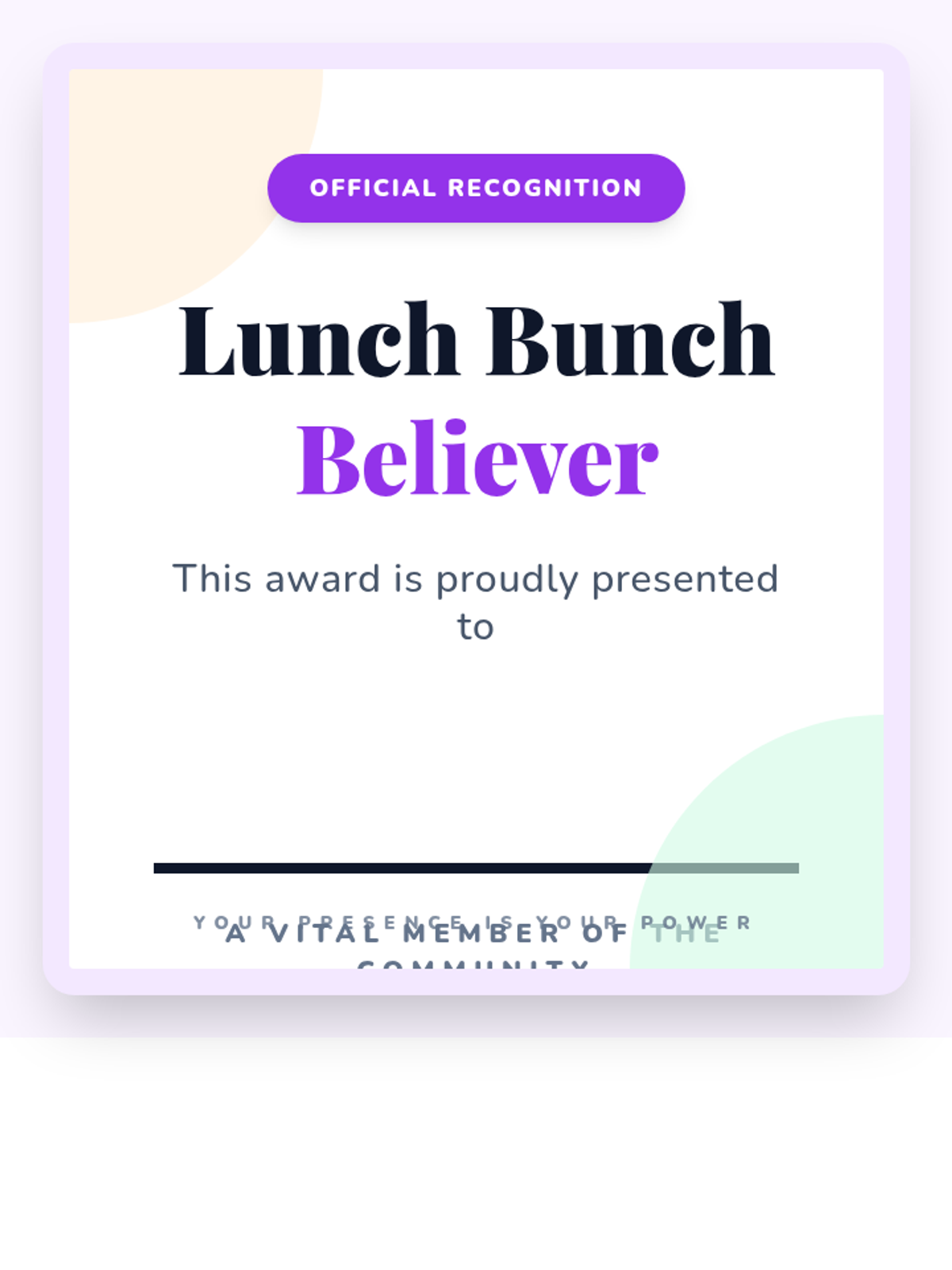
A final celebration of the community built, where students reflect on their growth and commit to showing up for themselves and each other.
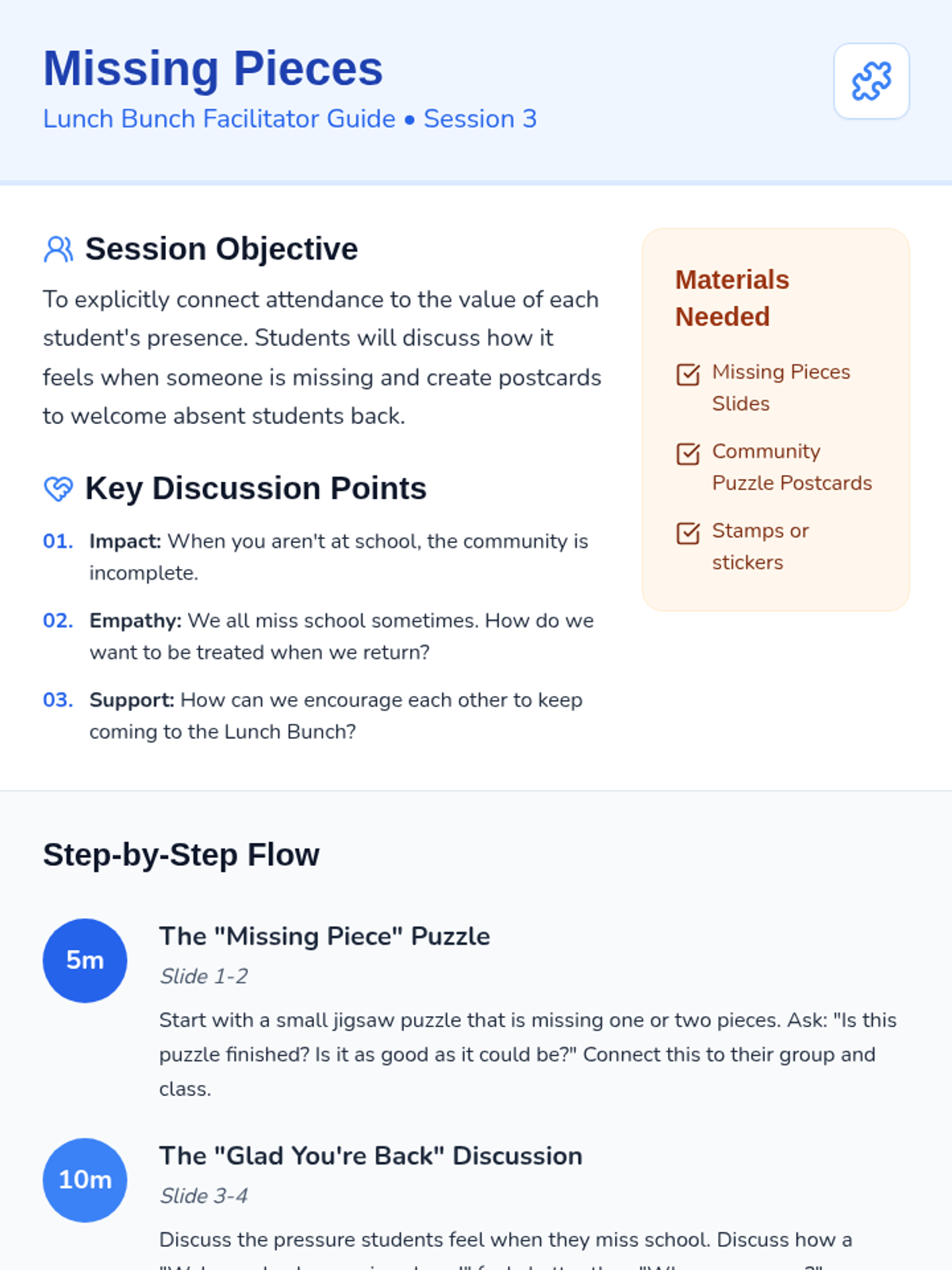
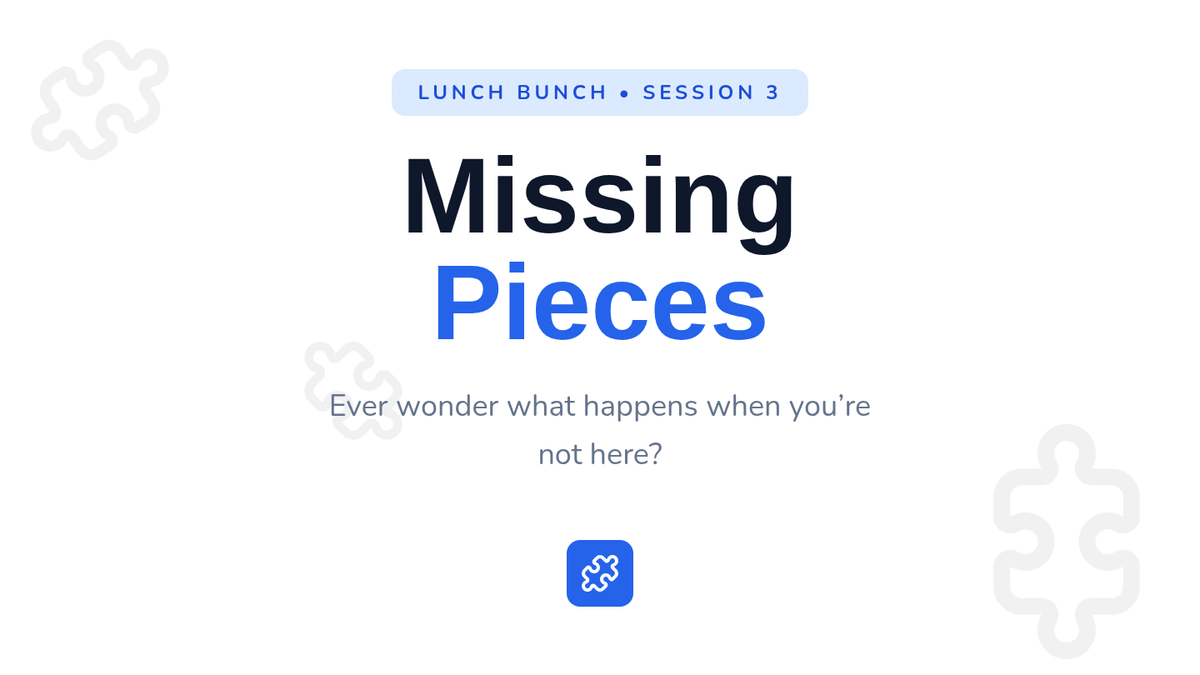
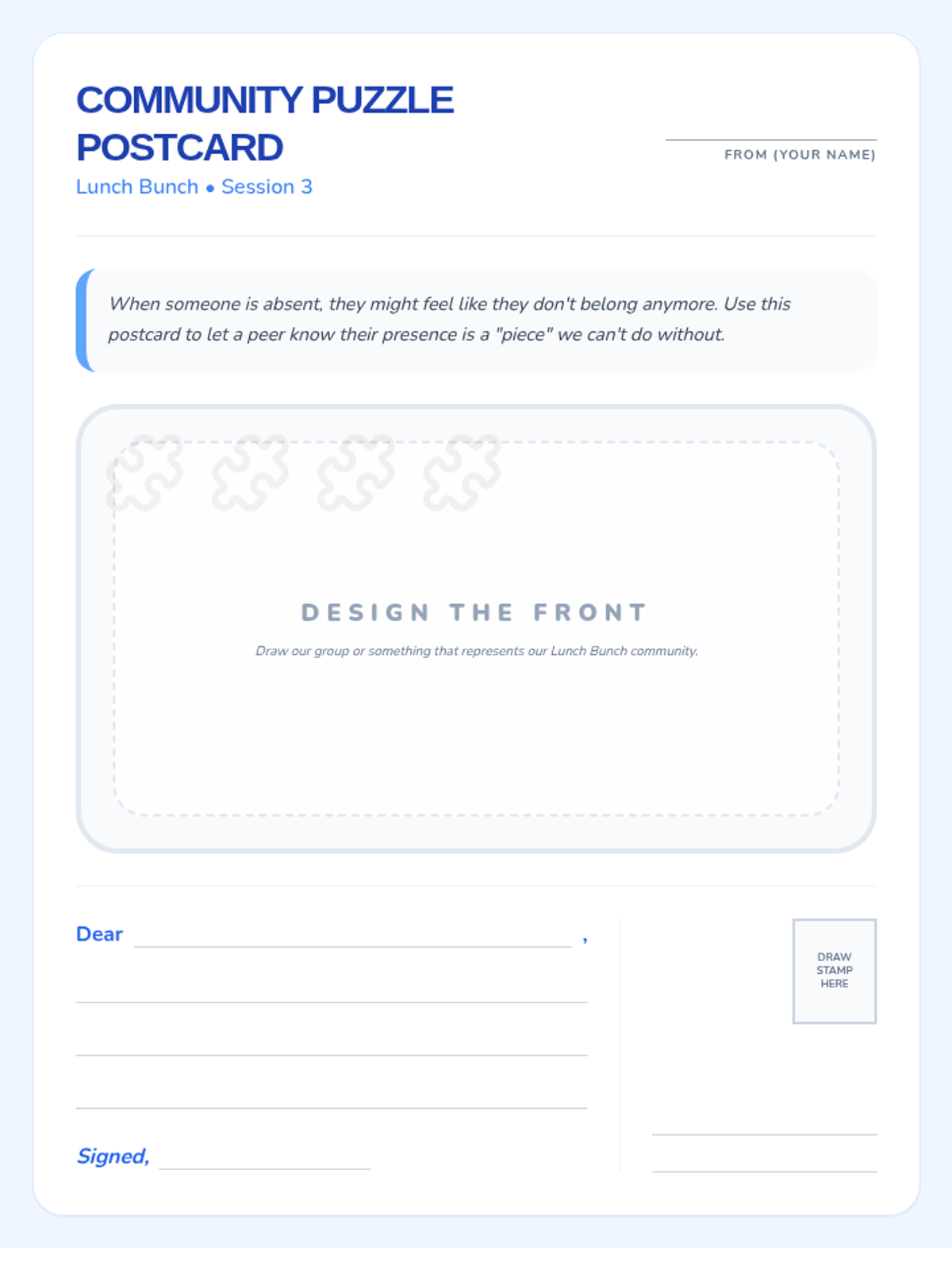
This lesson addresses attendance directly by discussing why every person matters to the group and how their absence is felt by others.
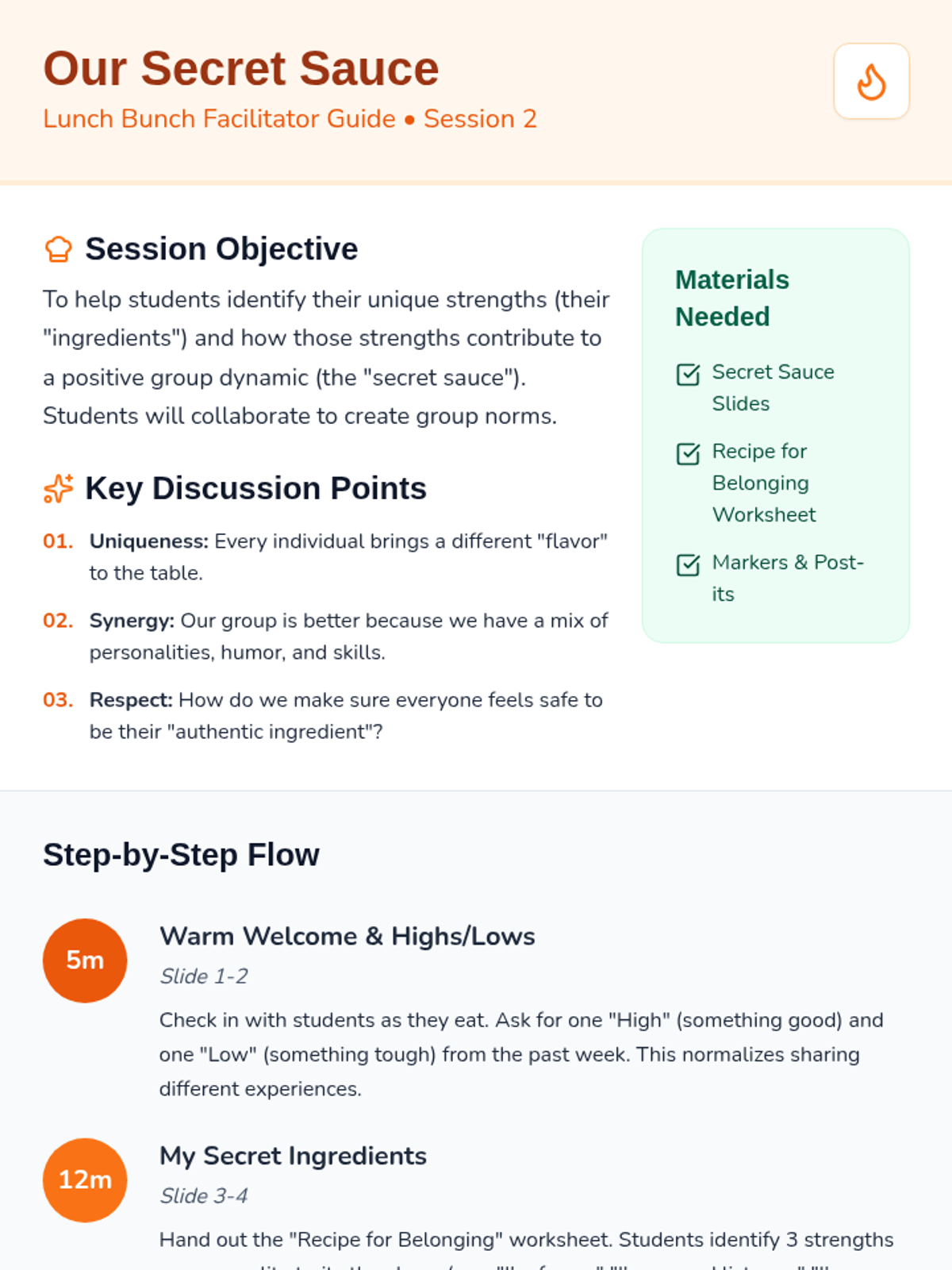
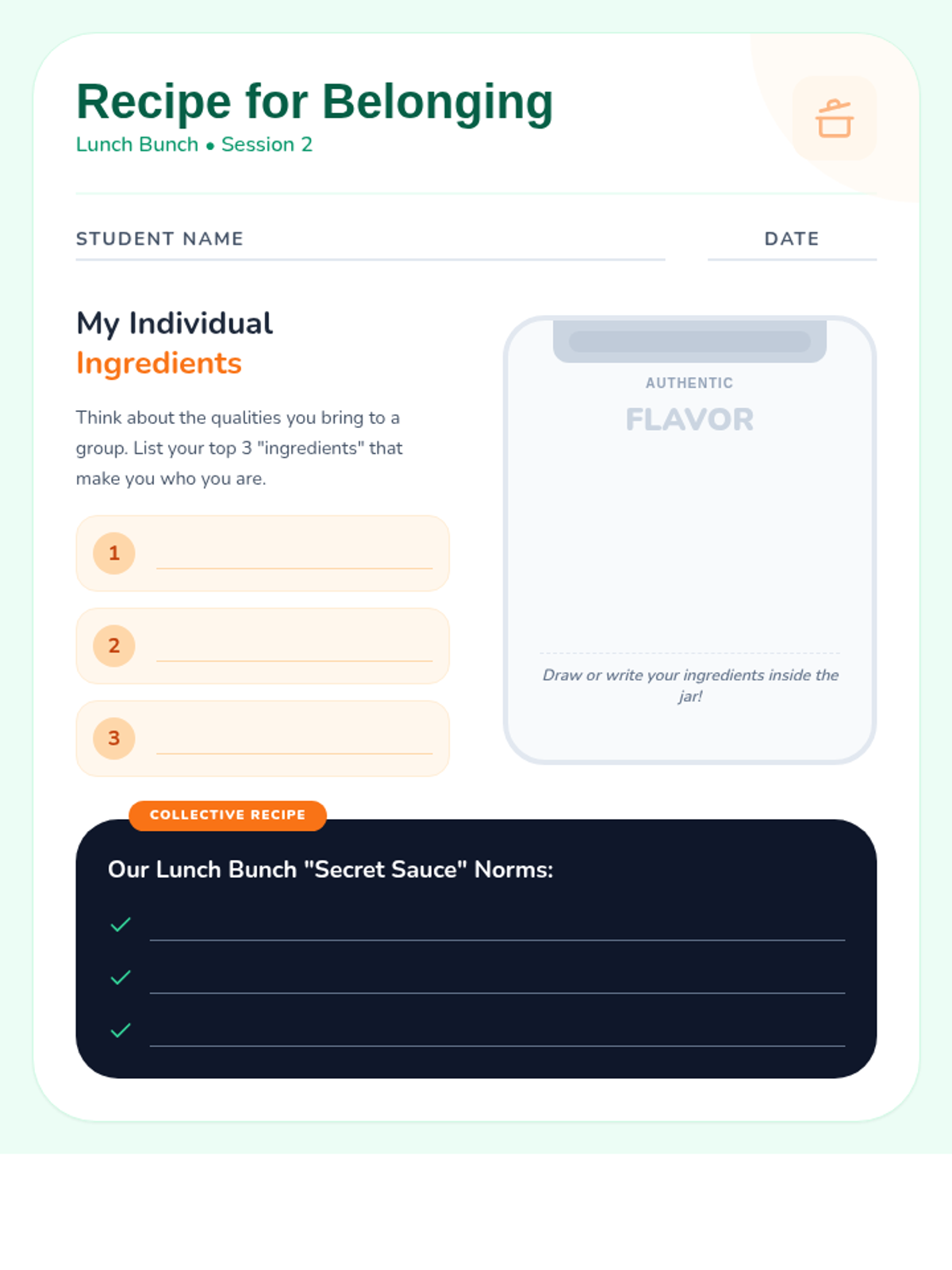
Students explore the unique qualities they bring to the group and collaboratively define what makes their lunch bunch community special.
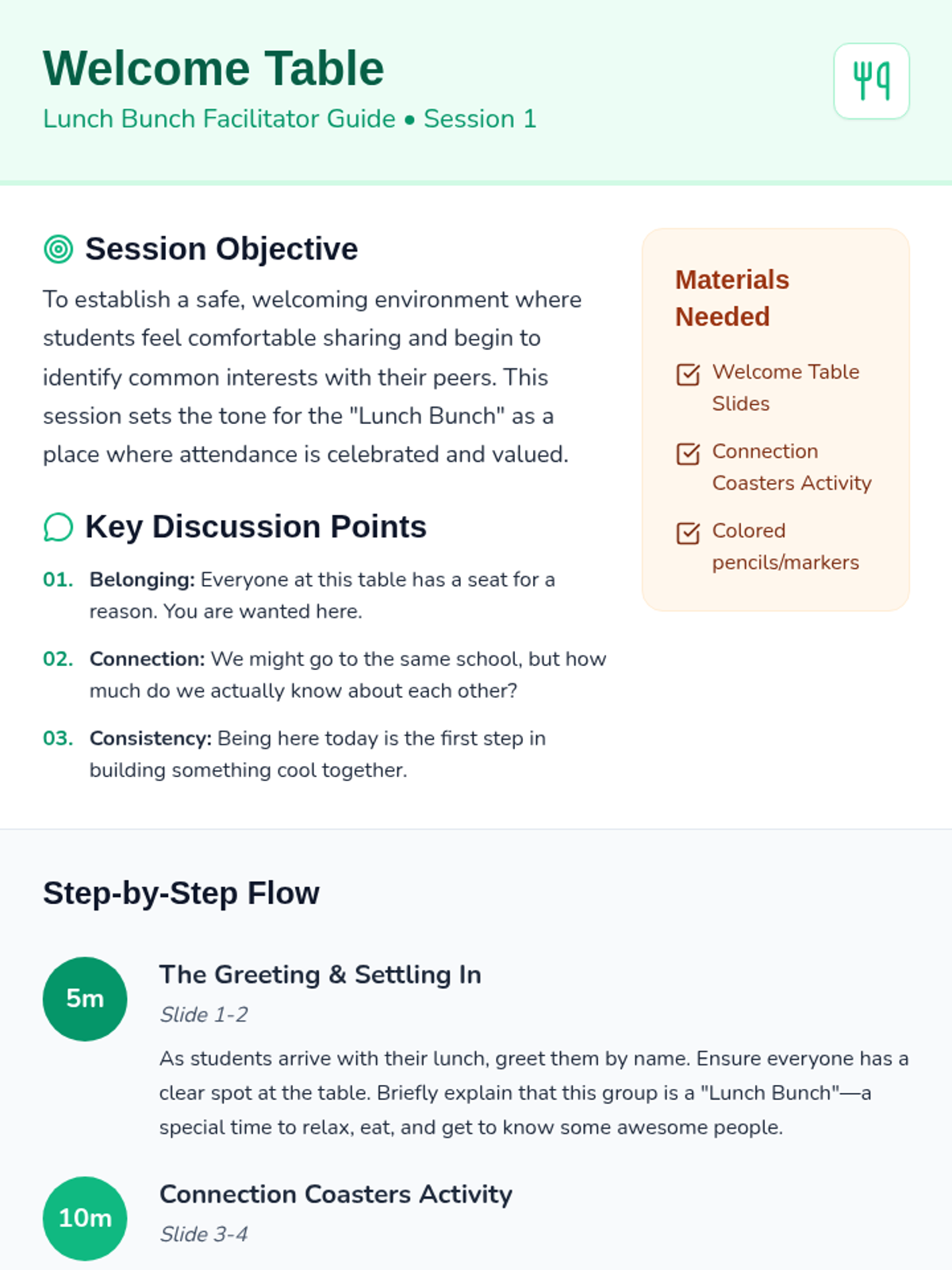
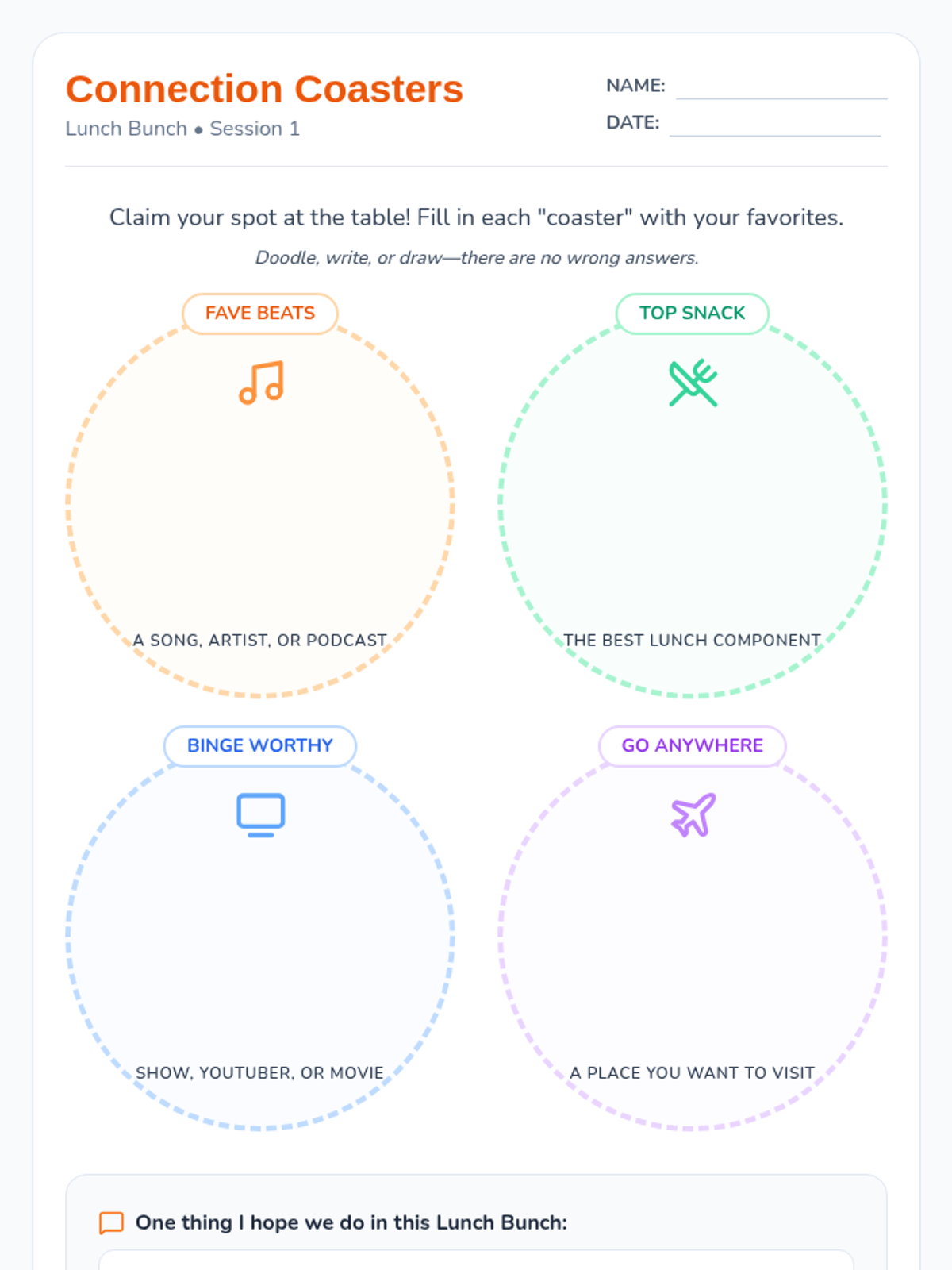
The opening session focuses on breaking the ice, establishing a safe lunch environment, and helping students find common ground with their peers.
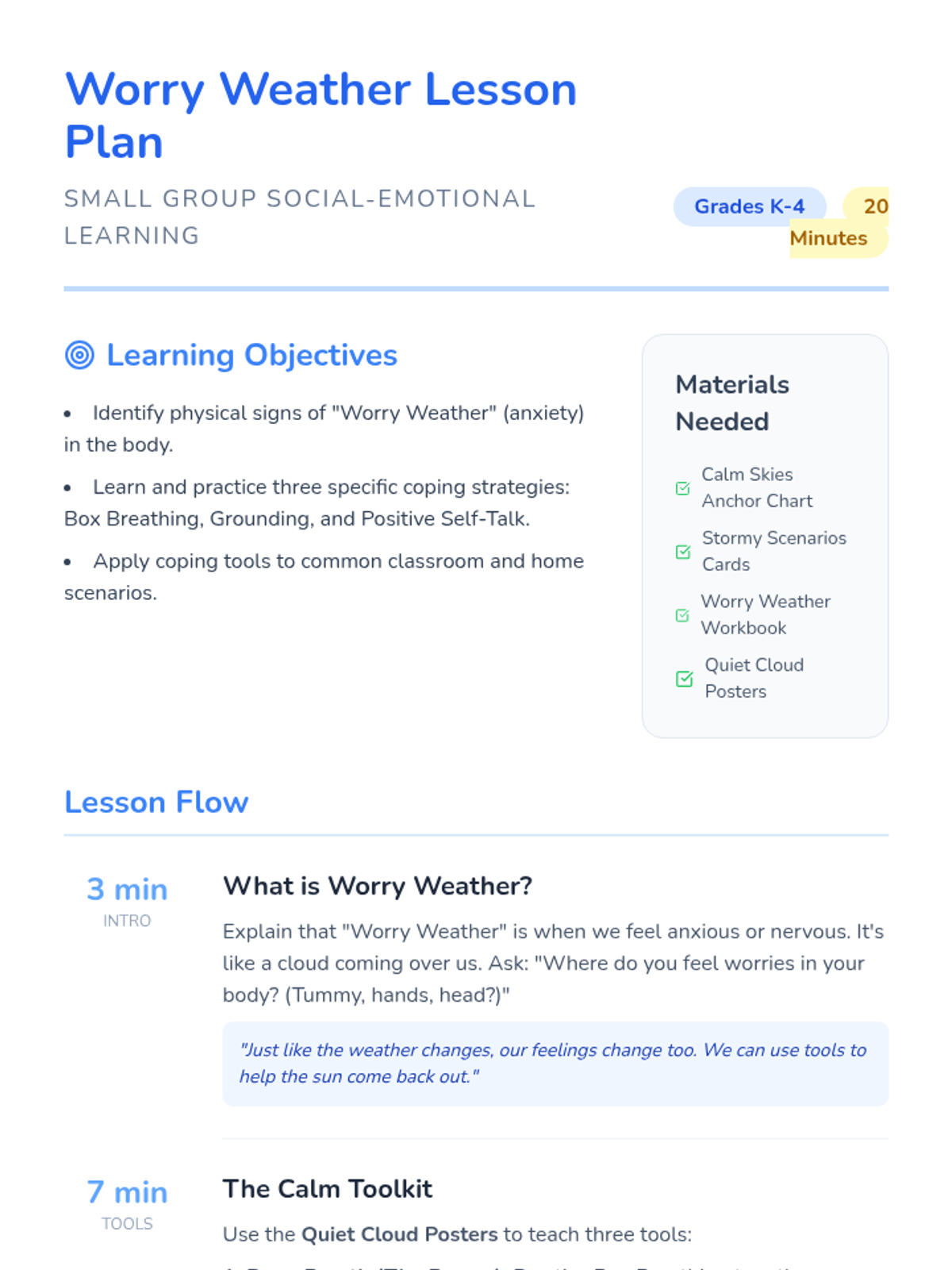
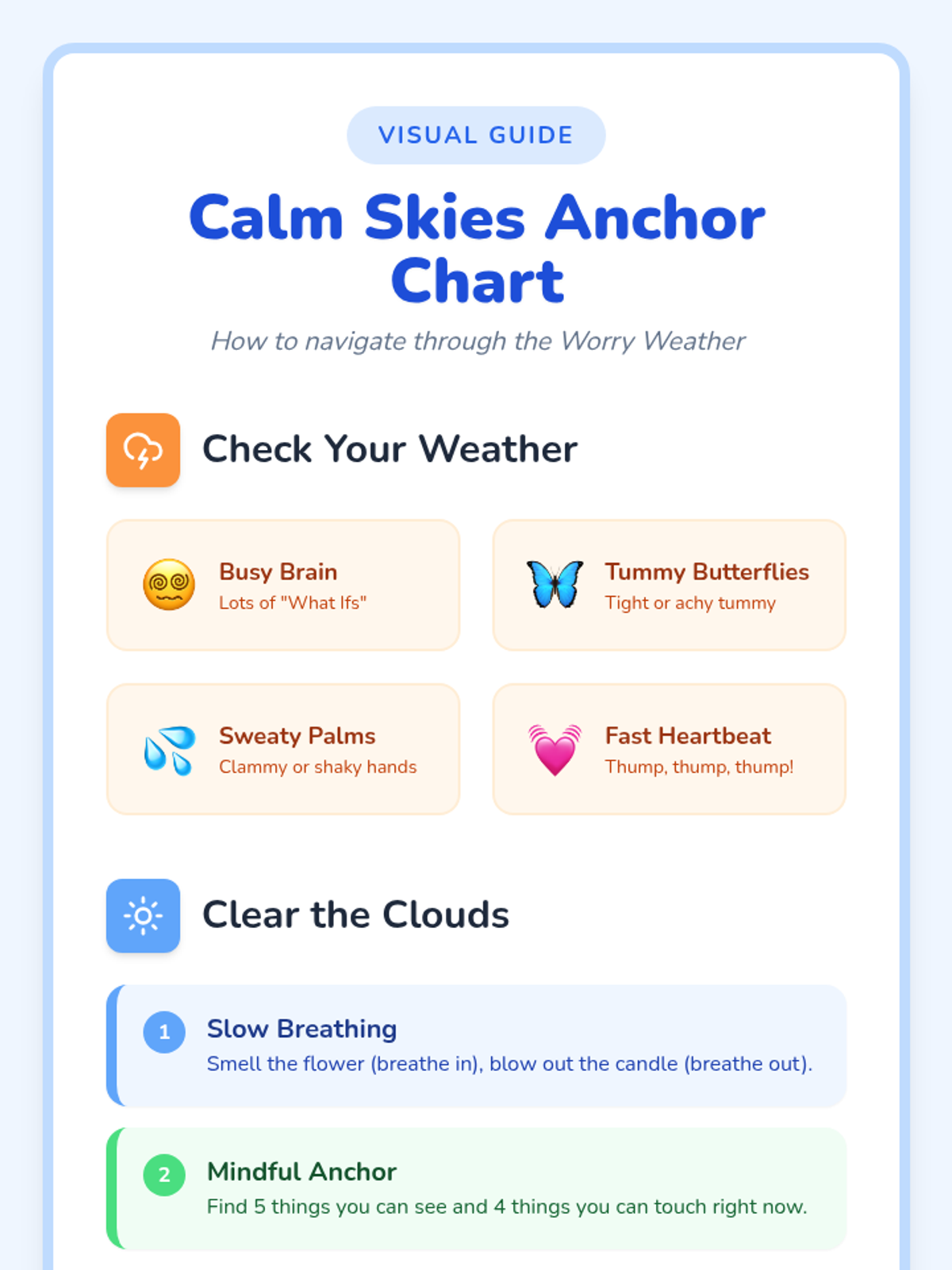
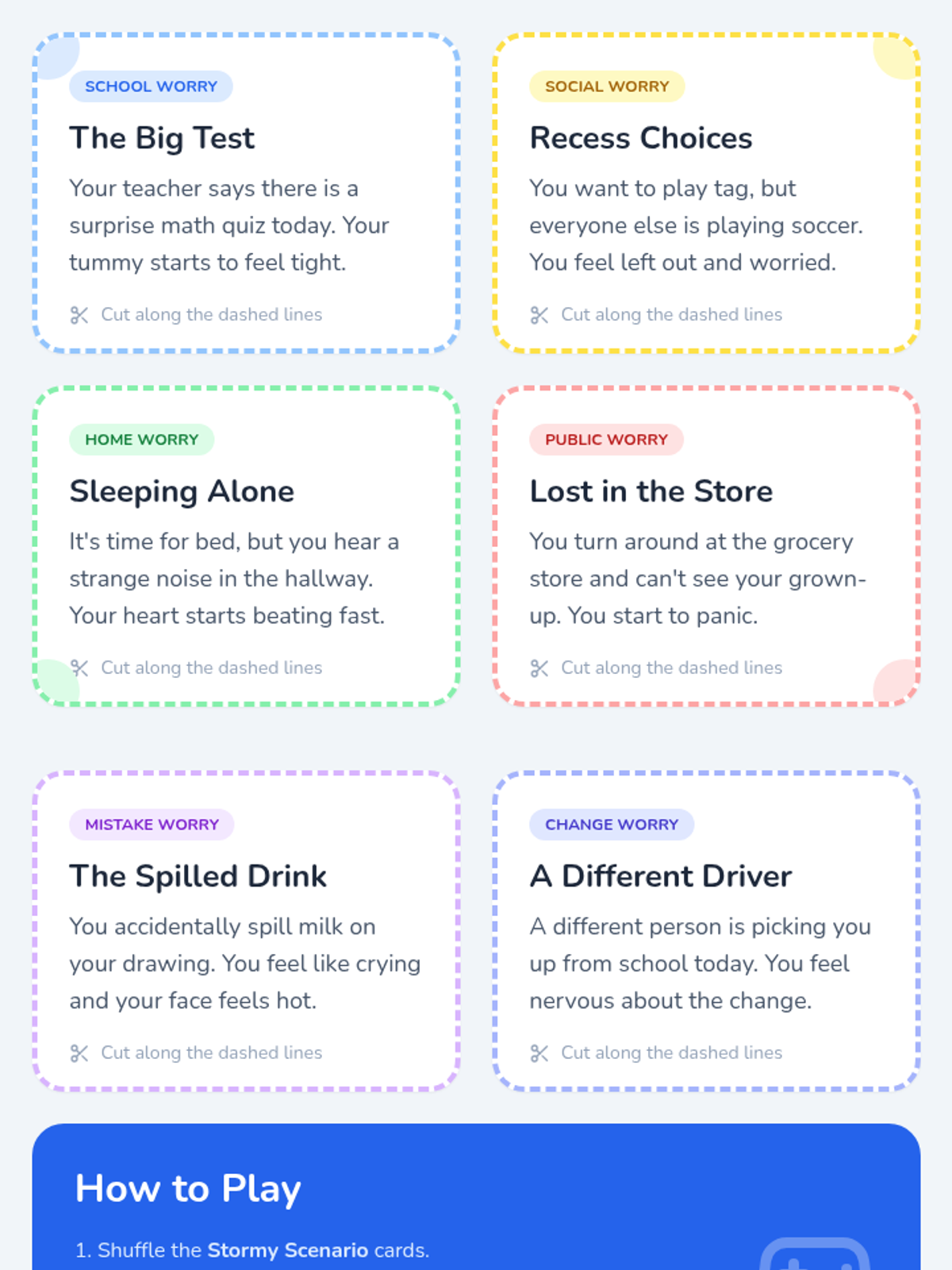
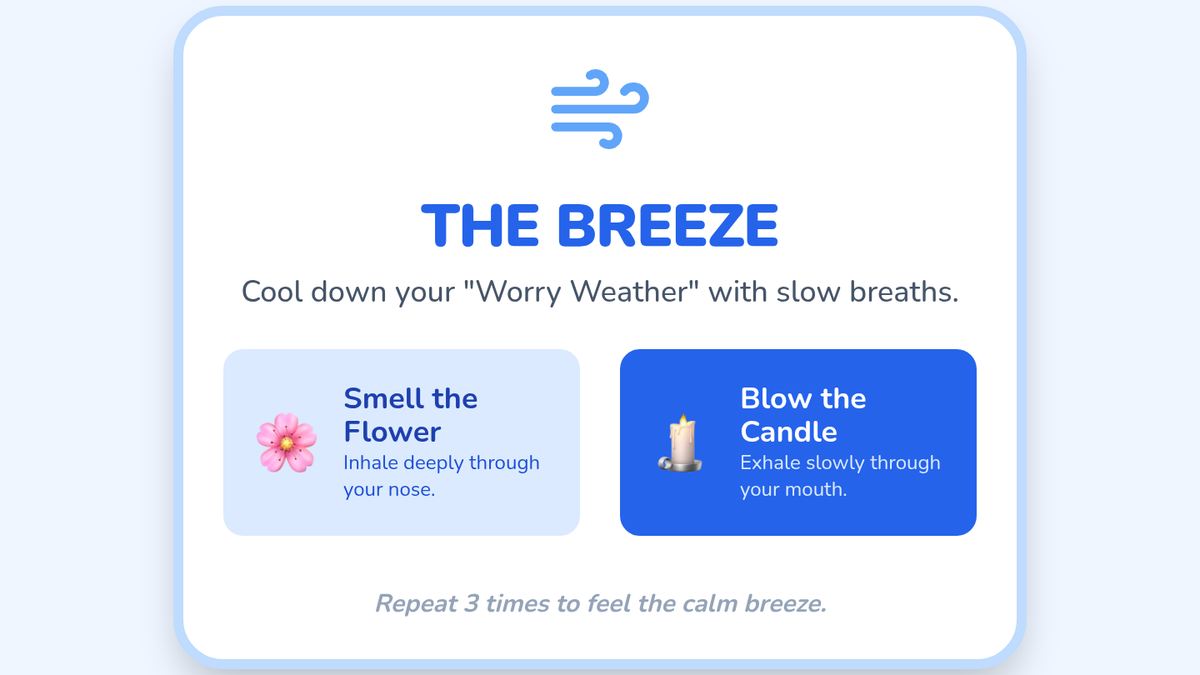
A small group social-emotional learning lesson for K-4 students focused on identifying anxiety triggers and practicing coping strategies using a weather-based metaphor.
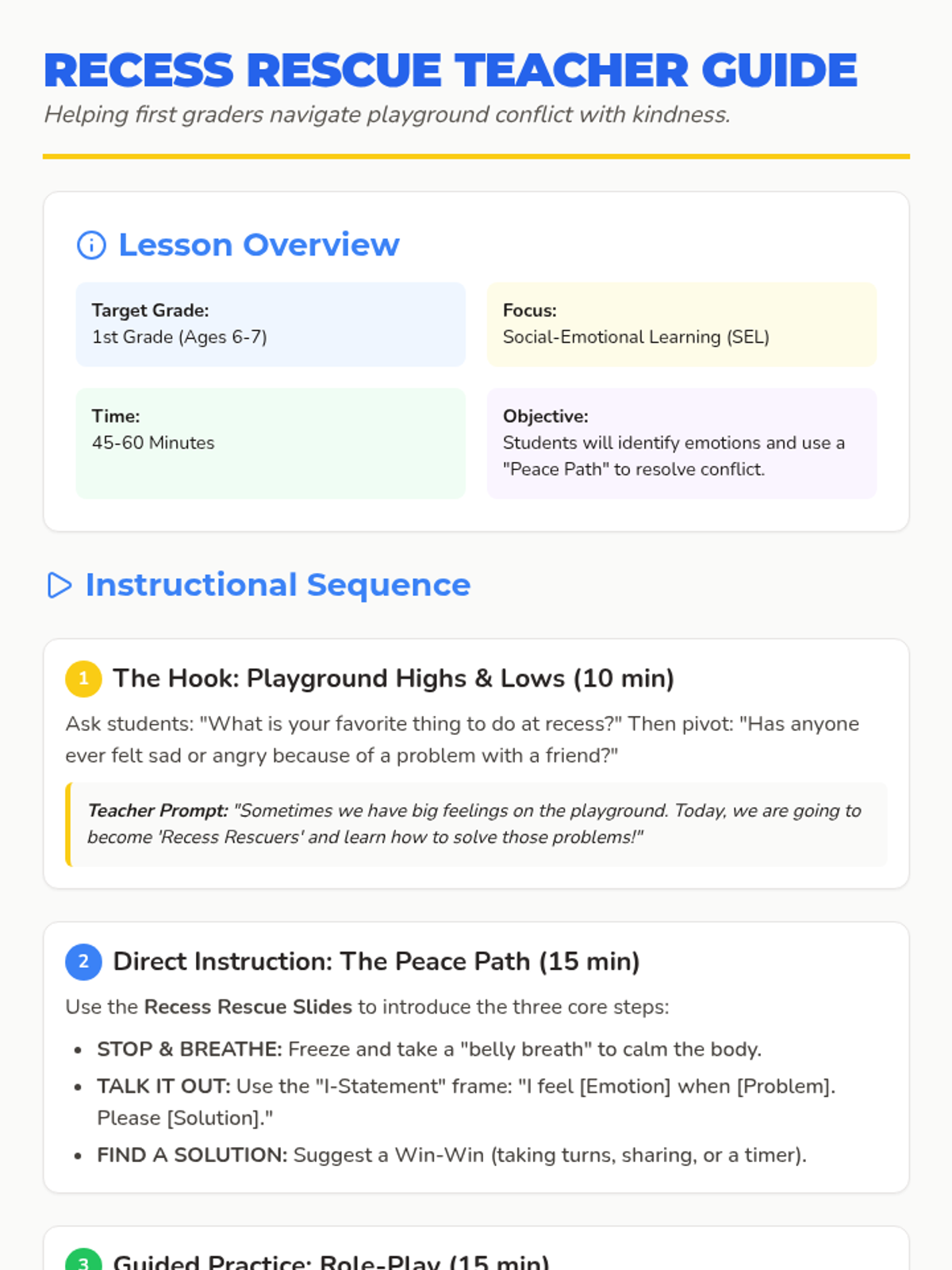
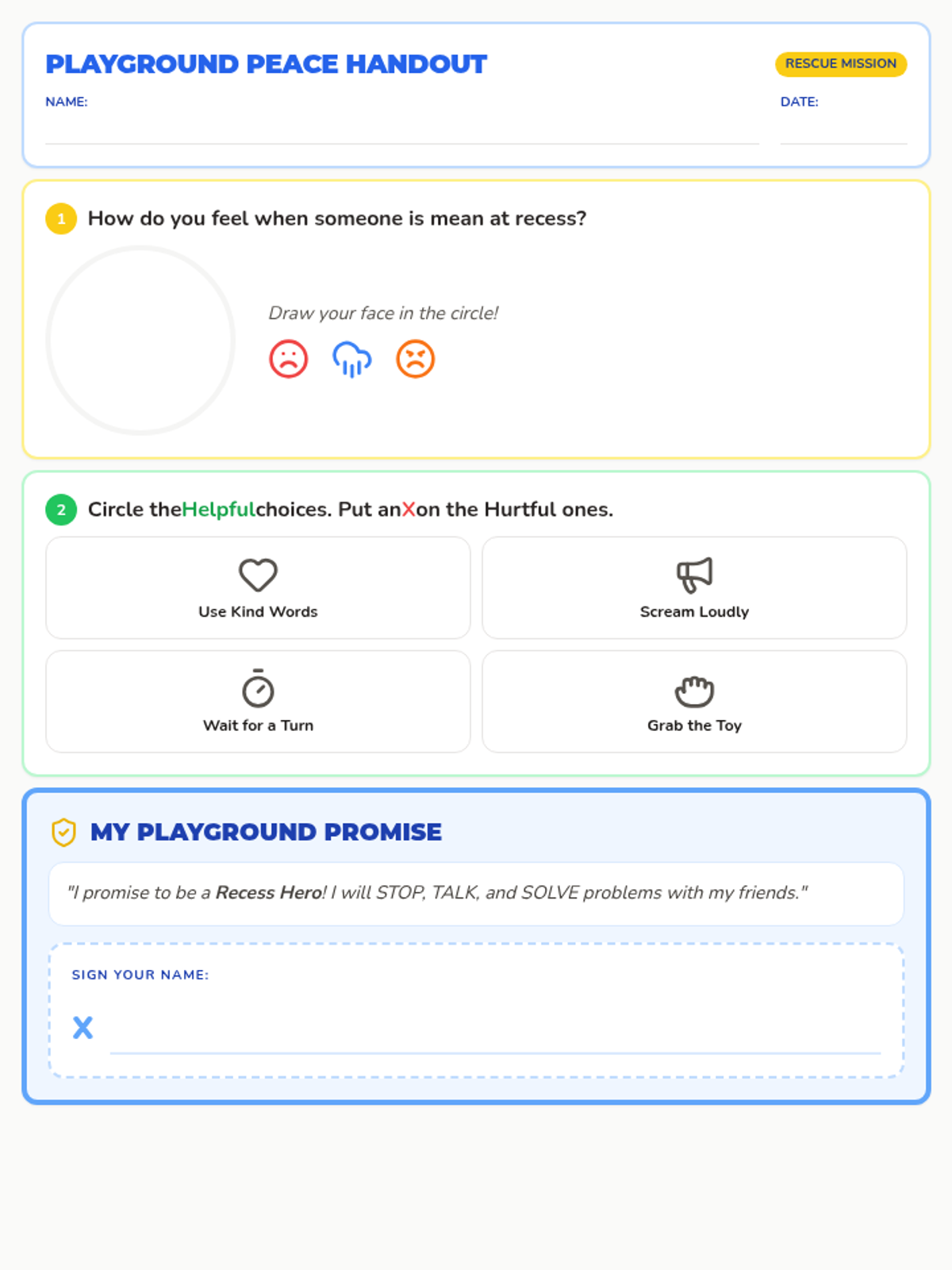
A lesson designed to help first graders navigate playground conflicts by identifying their emotions and learning simple, actionable steps for peaceful play.