A lesson focused on the art of persuasion by practicing the skill of playing 'devil's advocate' to strengthen counter-argument skills. Students will use task cards to challenge popular opinions and build robust rebuttals.
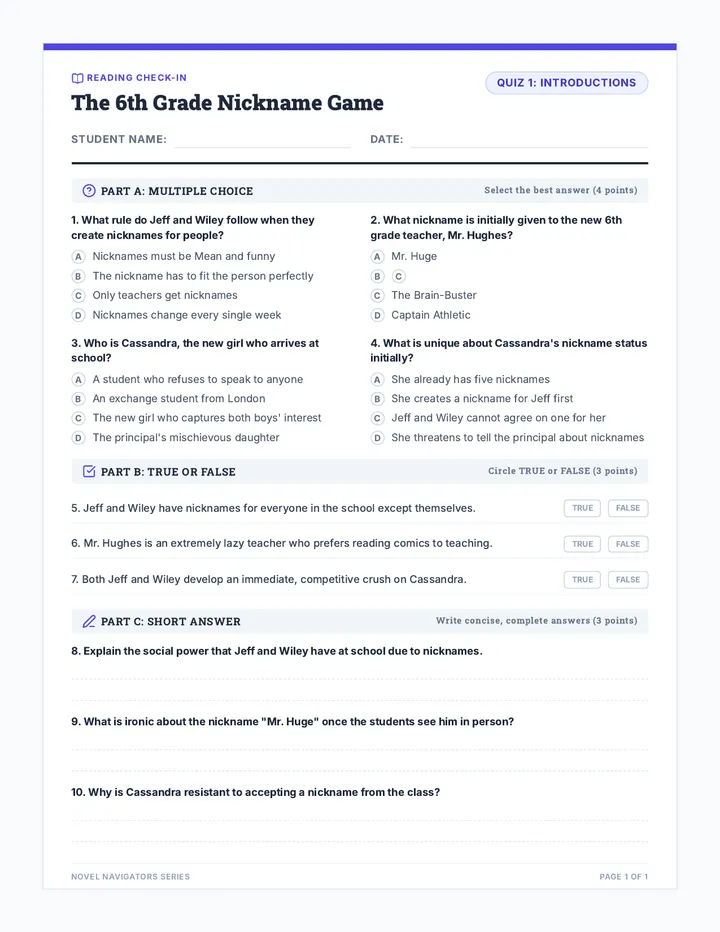
A comprehensive set of reading comprehension check-in quizzes for five popular middle-grade novels. Each novel features two specialized quizzes—one focusing on initial character introductions and the other on major plot resolutions.
A comprehensive TSIA2 ELAR Reading preparation module designed to align with the core college-readiness benchmarks. Includes a rigorous 15-question practice exam spanning literary analysis, informational text structure, vocabulary-in-context, and paired-passage synthesis, complete with a detailed teacher rationale key.
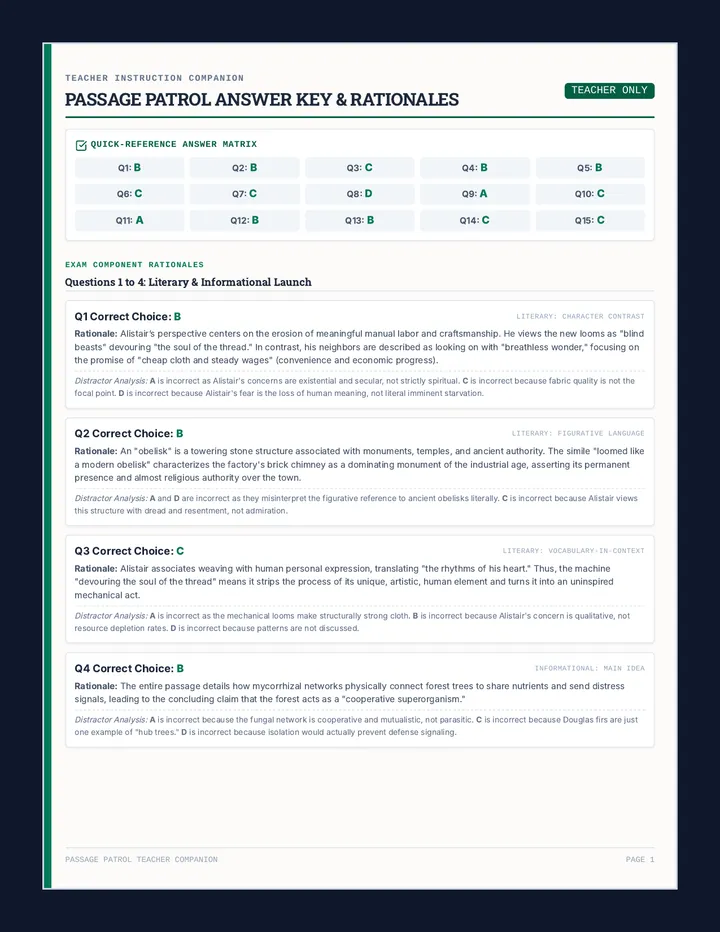
A detailed teacher answer key and rationale guide for the Passage Patrol Practice Test. Includes a quick-reference grading matrix followed by comprehensive, step-by-step rationales explaining why the correct options are correct and why the distractors are incorrect for all 15 questions.
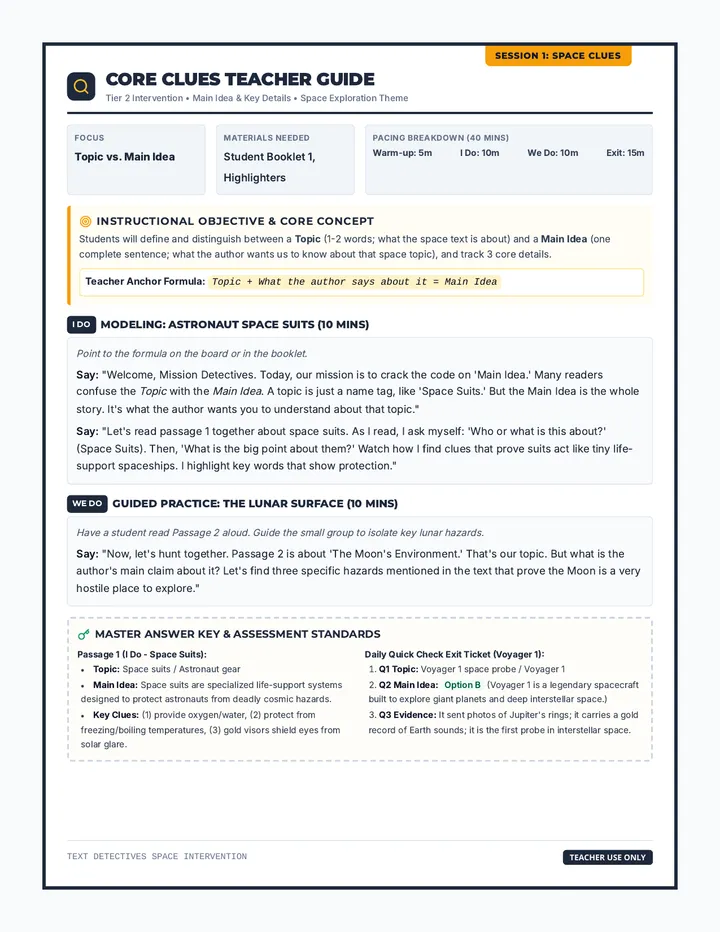
A Tier 2 reading comprehension intervention sequence designed for sixth-grade students. This three-session program utilizes a structured, scaffolded approach to help students identify key details, filter out distracting information, and craft precise main idea summaries.
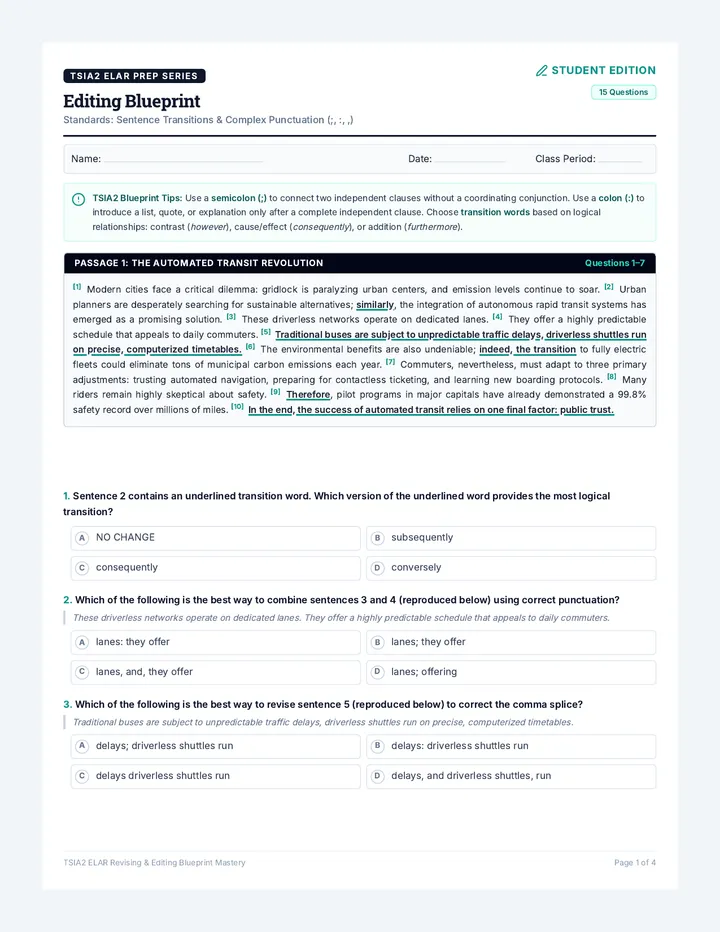
A targeted prep lesson designed to help students master the TSIA2 ELAR revising and editing standards. Focuses on sentence transition selection and complex punctuation (commas, semicolons, and colons) through realistic exam-style passages.
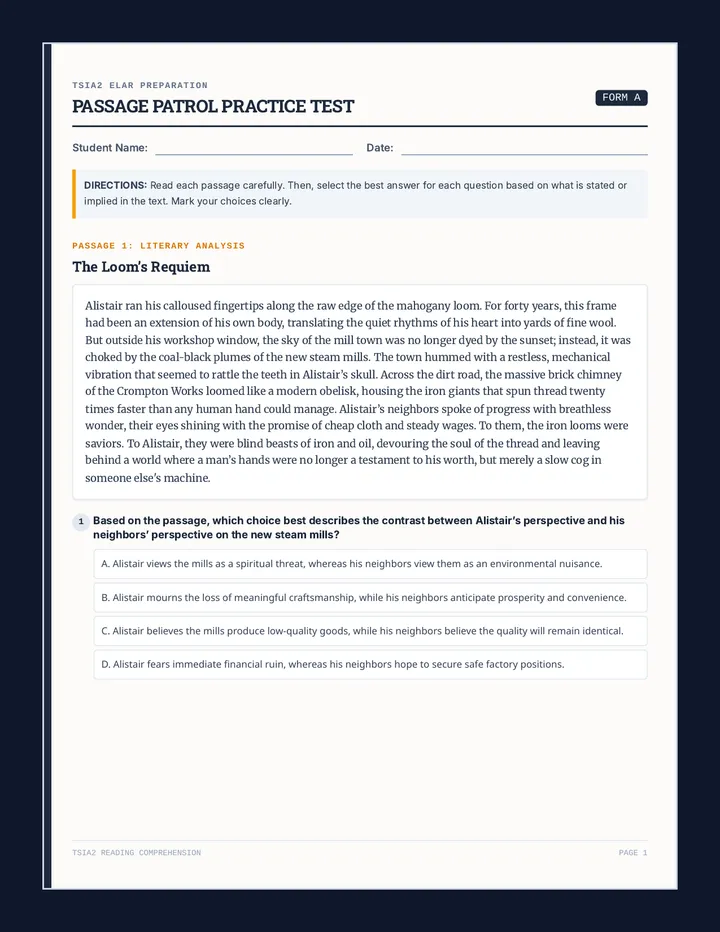
A rigorous 15-question TSIA2 Reading Practice Test featuring three high-quality passages: a literary narrative ('The Loom's Requiem'), an informational article ('The Underground Network'), and a paired-passage argument ('The Logistics Frontier' vs 'The Human Toll'). Designed to perfectly match the TSIA2 reading domains with beautifully styled, print-ready pages.
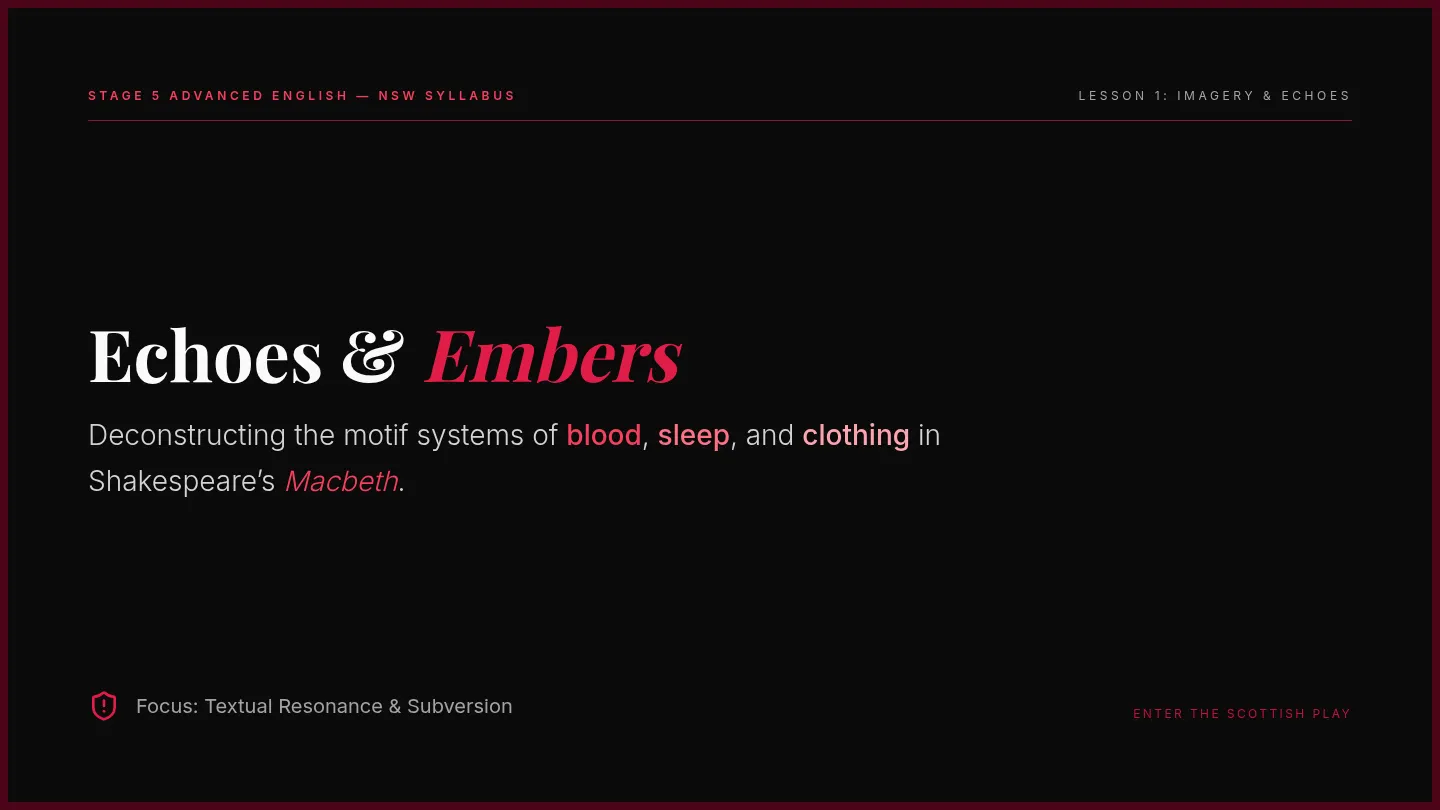
A high-rigour Stage 5 English unit for advanced Year 9 students in NSW. It explores Shakespeare's Macbeth through complex motif systems, psychological disintegration, and tragic subversion, culminating in creative writing and a formal Socratic seminar.
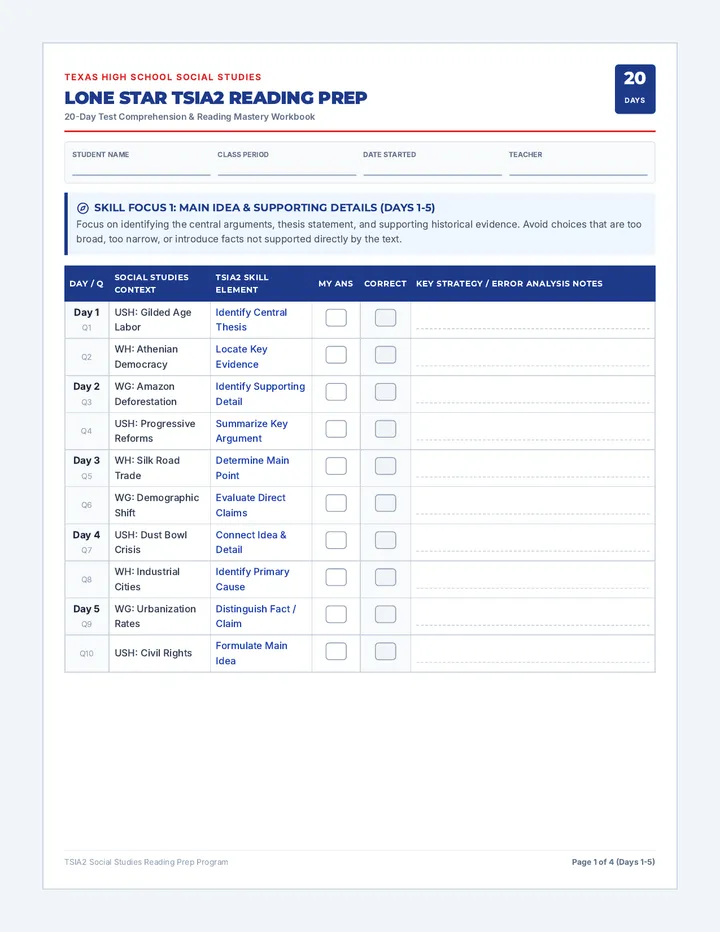
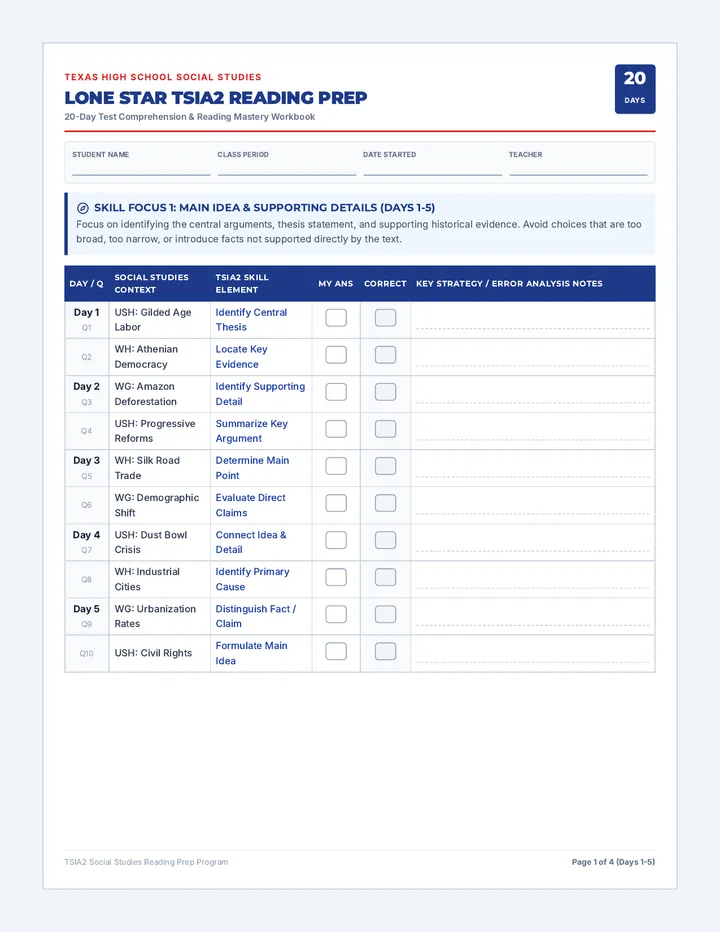
A comprehensive 20-day test preparation program combining Texas High School Social Studies content (US History, World History, and World Geography) with high-yield TSIA2 Reading comprehension skills, complete with daily warm-up slides and a highly-structured student tracking workbook.
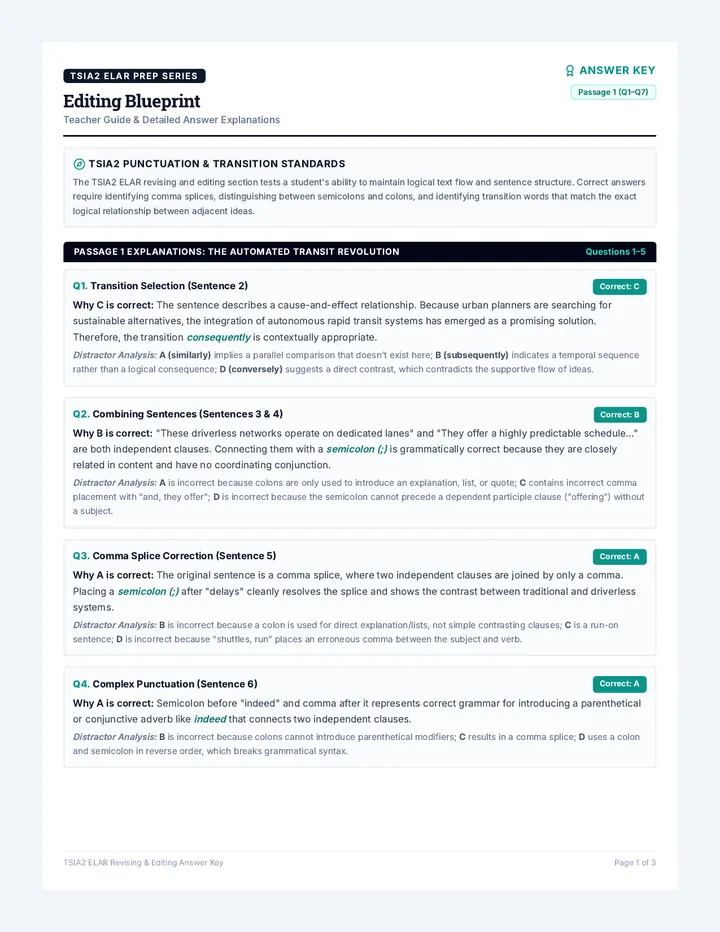
Complete teacher answer key for the TSIA2 Editing Worksheet. Provides correct options for all 15 questions along with in-depth grammatical explanations of transition logic and punctuation rules.
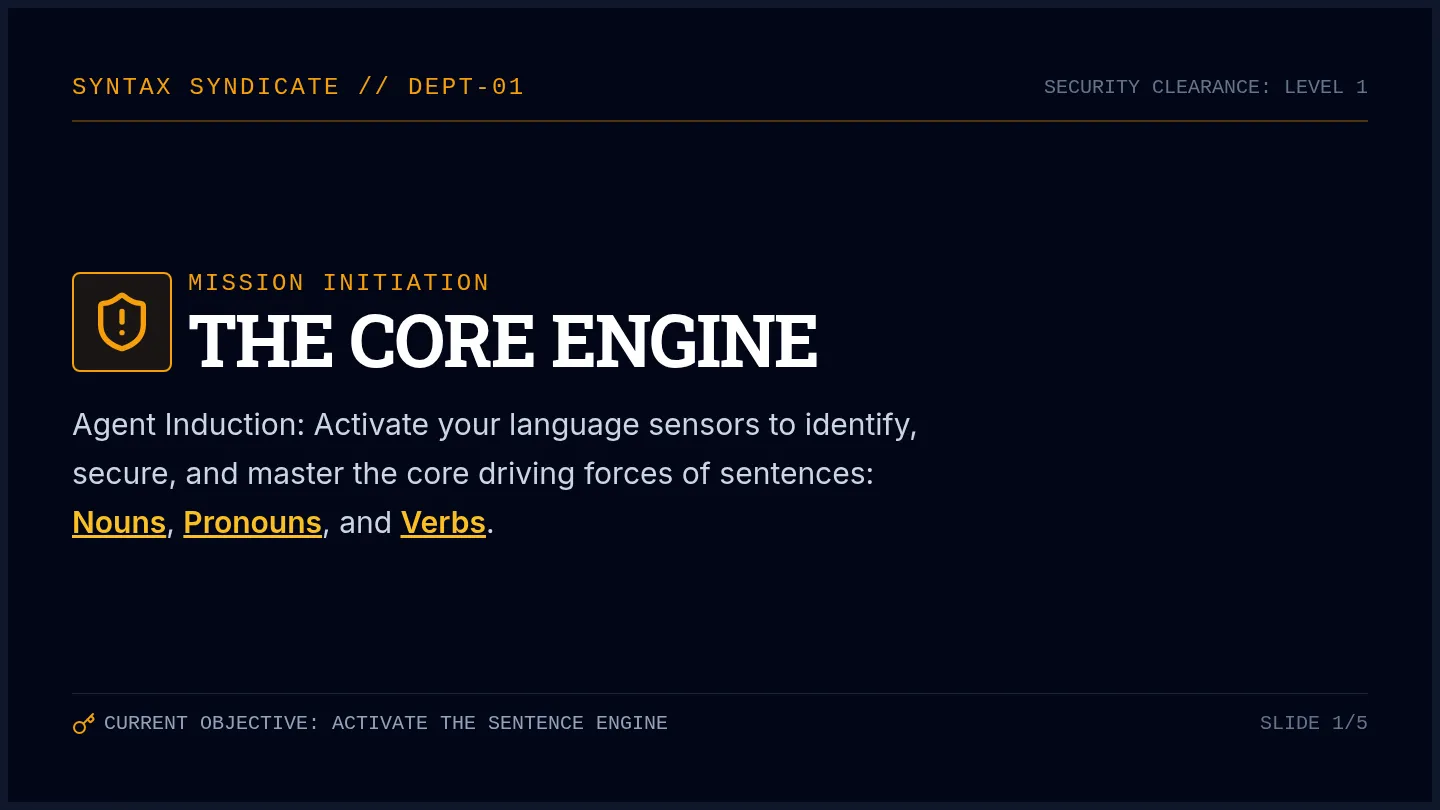
A spy-themed 4-day parts of speech review sequence for 6th and 7th graders. Students become secret agents in the 'Syntax Syndicate', cracking codes and completing missions to master nouns, pronouns, verbs, adjectives, adverbs, prepositions, conjunctions, and interjections, culminating in a collaborative classroom escape room.
A 15-question TSIA2 revising and editing worksheet covering complex punctuation (commas, semicolons, and colons) and logical sentence transition words. Includes two realistic, academic-style passages with numbered sentences.