A cumulative mastery competition with stations for error spotting, sentence building, and grammar fluency.
A math place value unit focusing on identifying digit values through the thousands place with interactive detective-themed worksheets and puzzles.
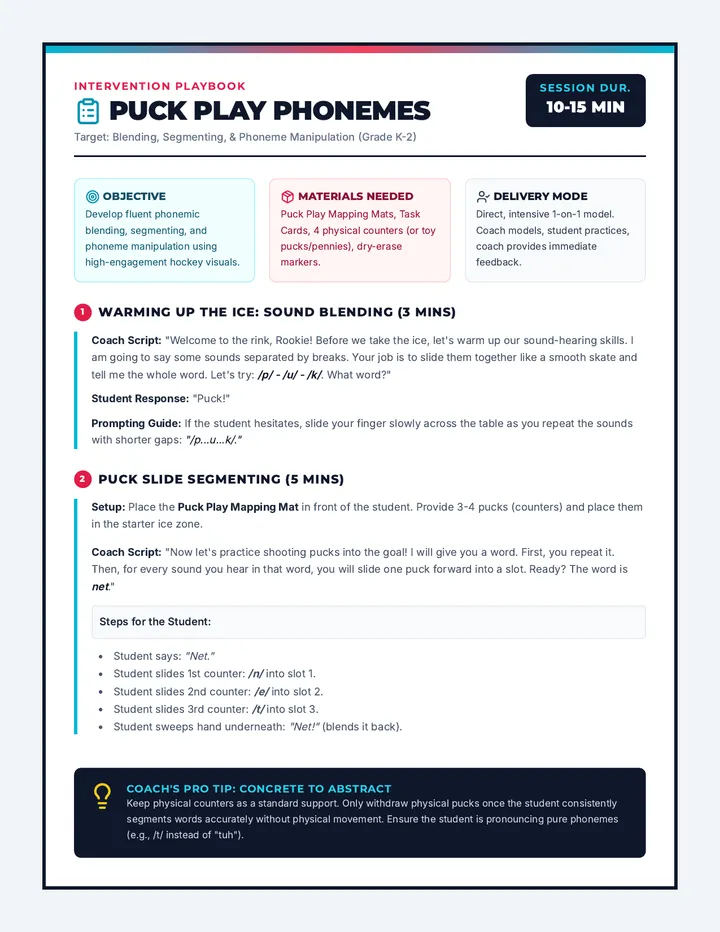
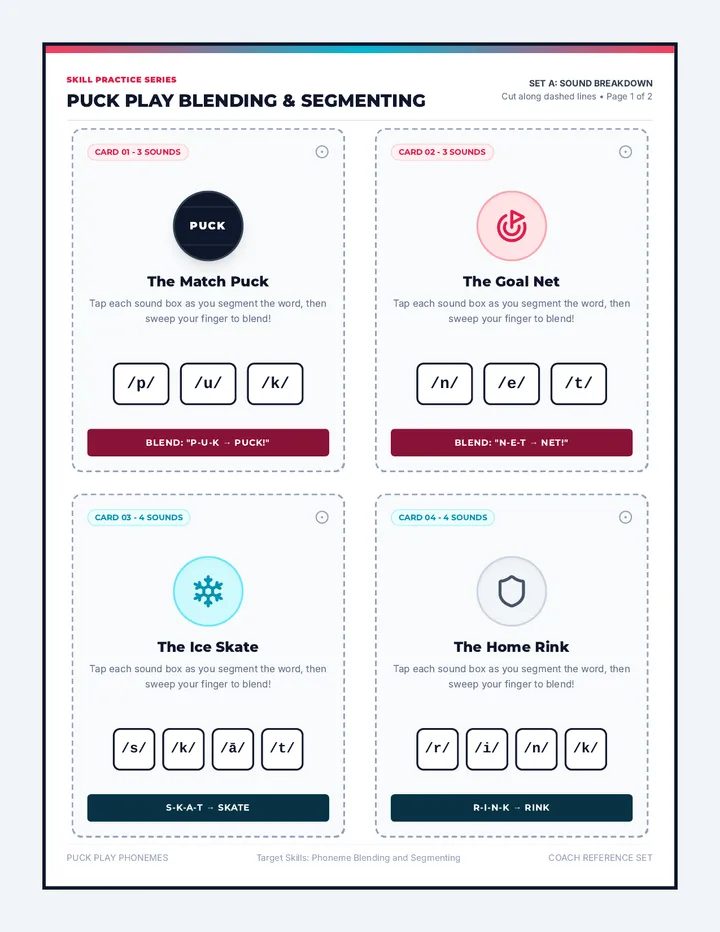
A hockey-themed one-on-one phonemic awareness intervention lesson focusing on blending, segmenting, and phoneme manipulation. Includes interactive sound-mapping mats, structured task cards, and an educator guide for seamless delivery.
A 2-page print-ready set of 8 interactive task cards (4 cards per page). Page 1 features Blending and Segmenting cards with individual sound boxes, and Page 2 features 'Sound Shootout' Phoneme Manipulation cards with step-by-step visual swap prompts.
A structured reading intervention sequence at Douglas School combining targeted phonic lessons with the multisensory Nessy online literacy system.
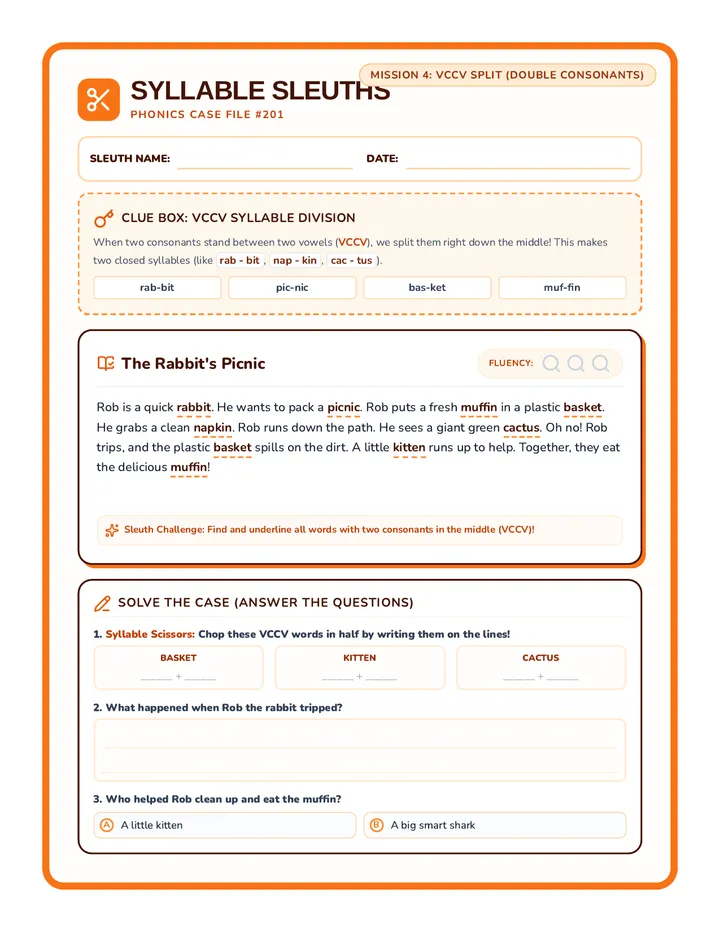
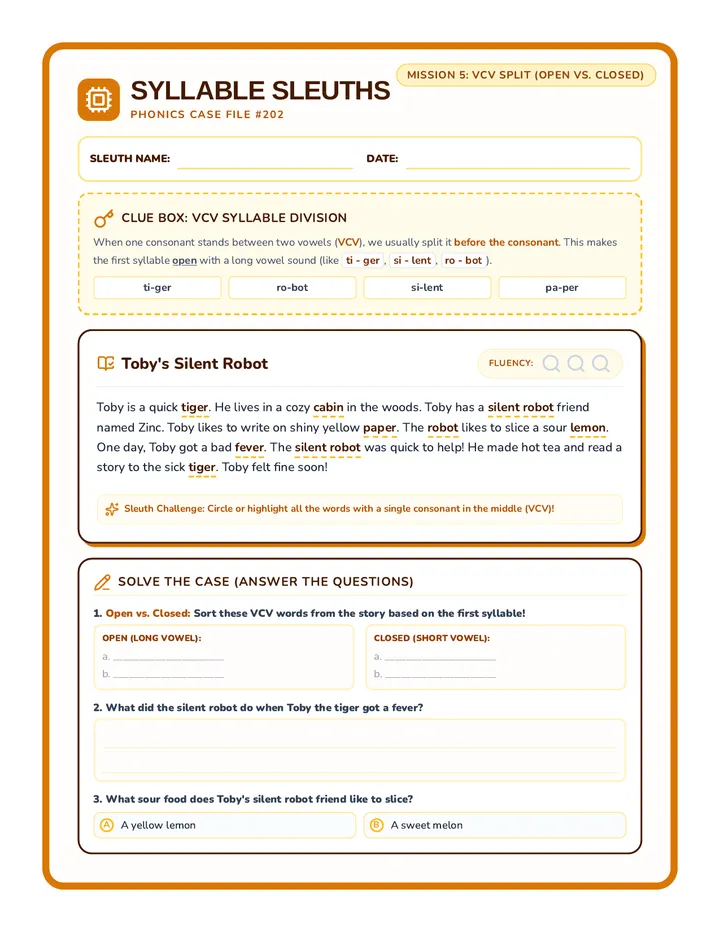
A structured, multi-part phonics intervention lesson focusing on compound words and syllable division rules (VCCV, VCV) for decoding 2-syllable and 3-syllable words.
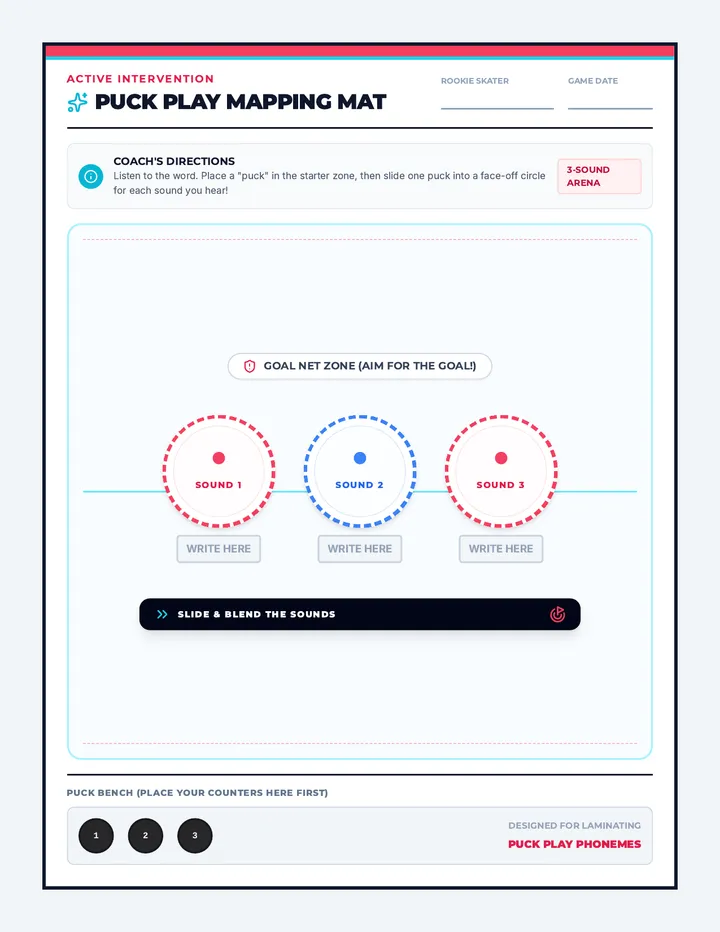
A 2-page print-ready student phoneme mapping mat. Page 1 features a 3-sound 'Ice Arena' mapping track, and Page 2 features a 4-sound 'Championship Rink' mapping track. Optimized for physical counters (pucks) and writing graphemes.
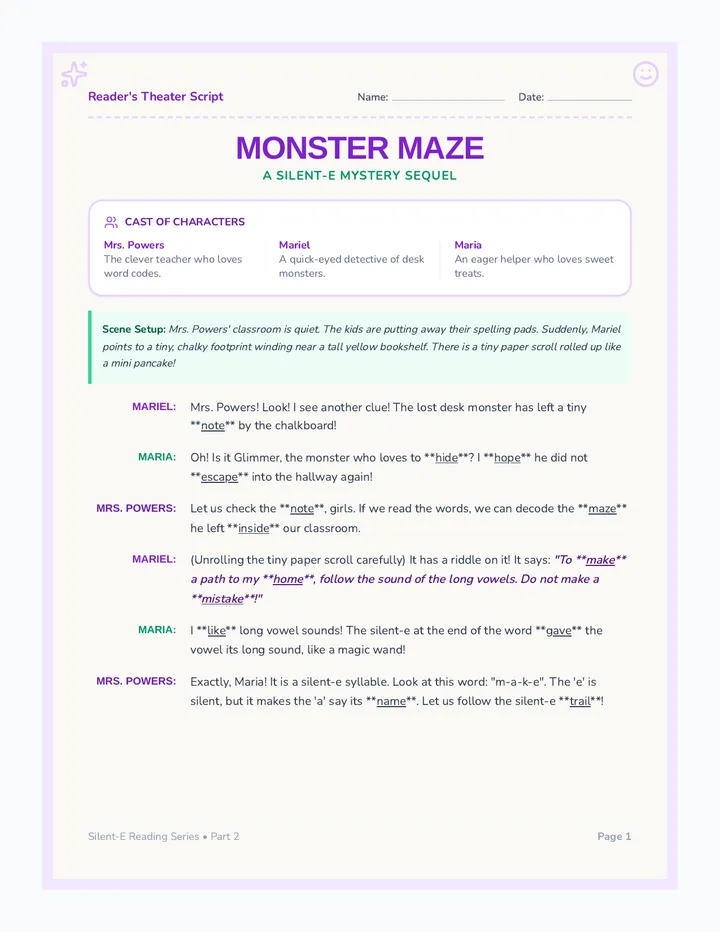
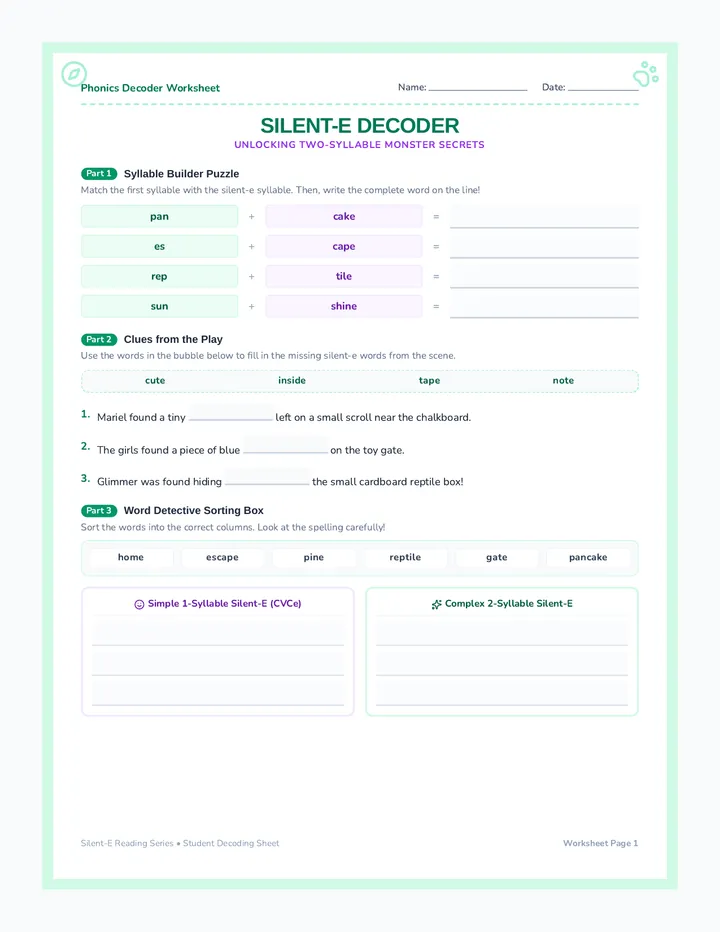
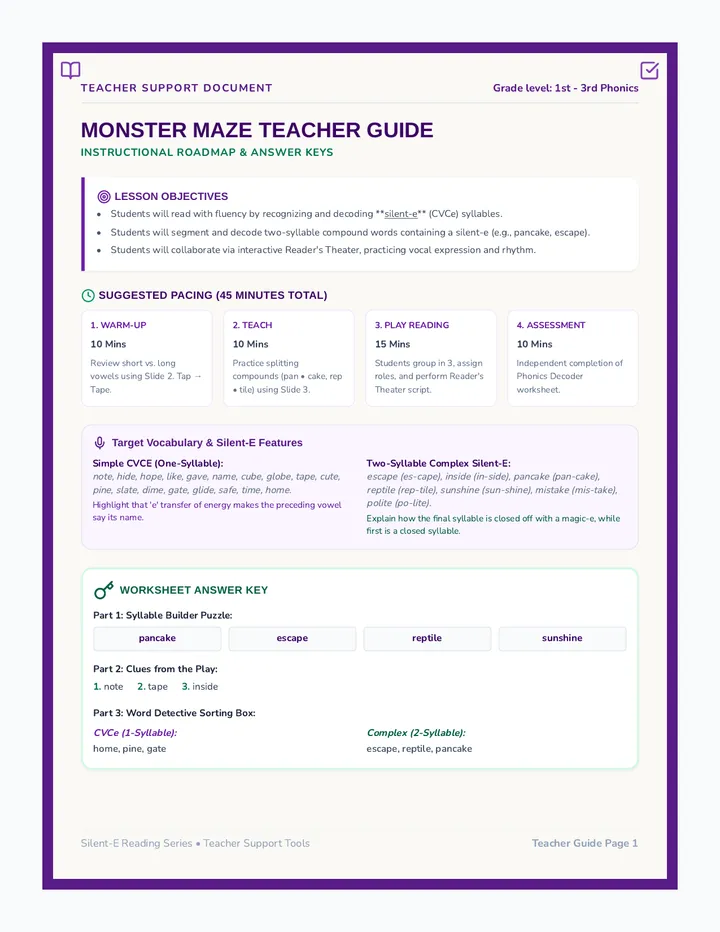
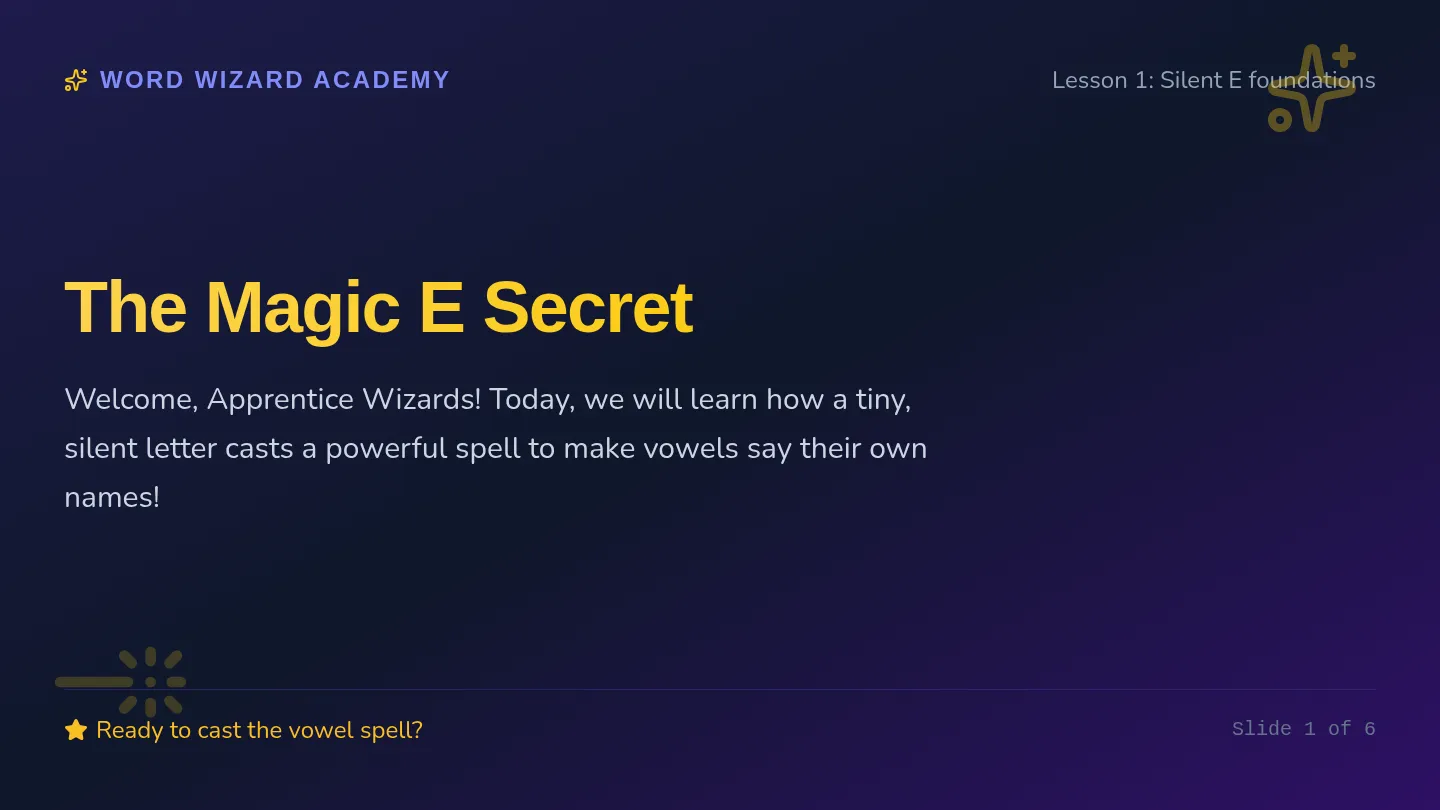
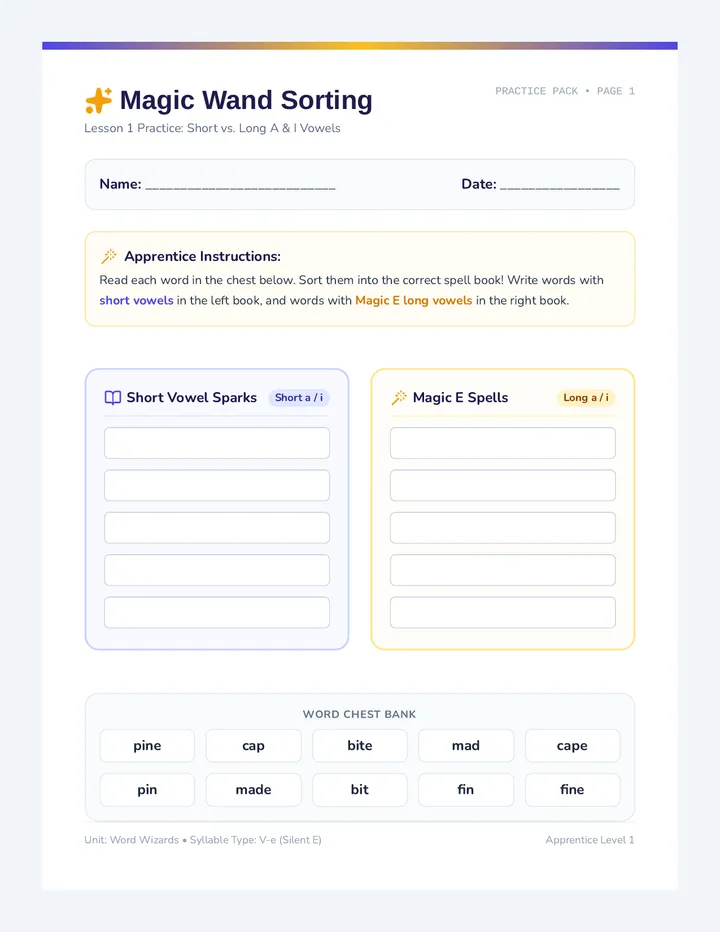
A 3-lesson phonics sequence focused on teaching Vowel-Consonant-e (V-e) syllables to late first and second graders. Using a whimsical 'Word Wizards' theme, it covers foundations, vowel expansion, and blends/digraphs, complete with guides, slides, practice pages, and assessments.
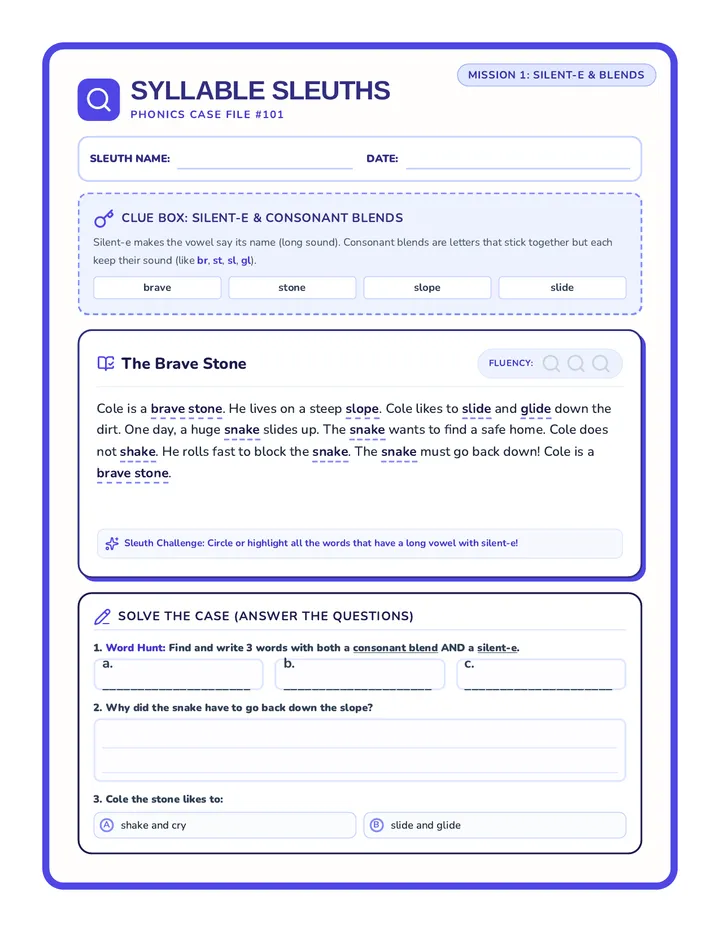
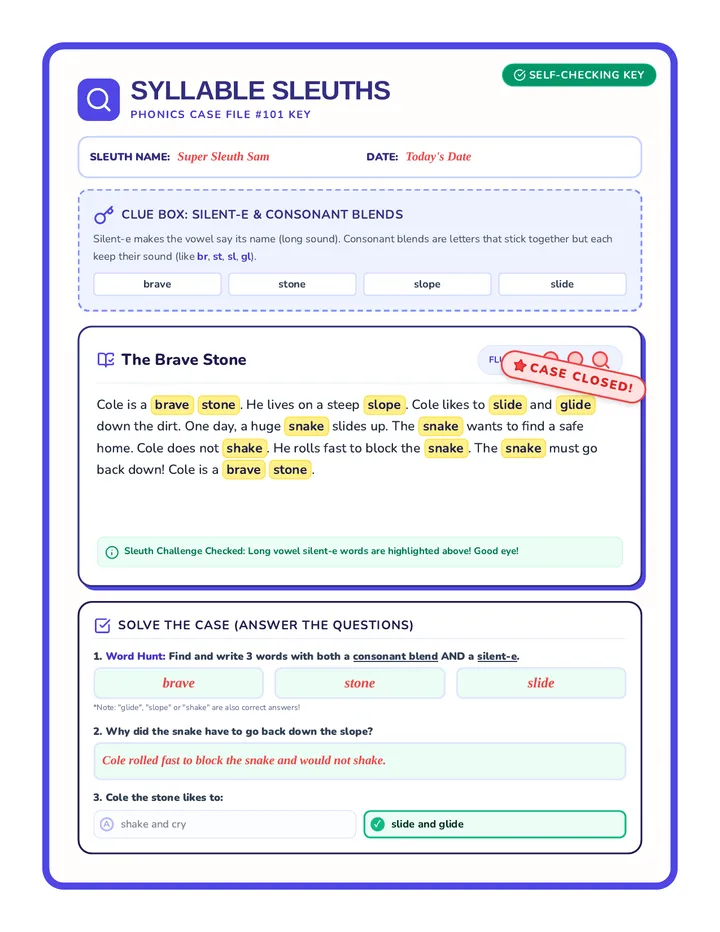
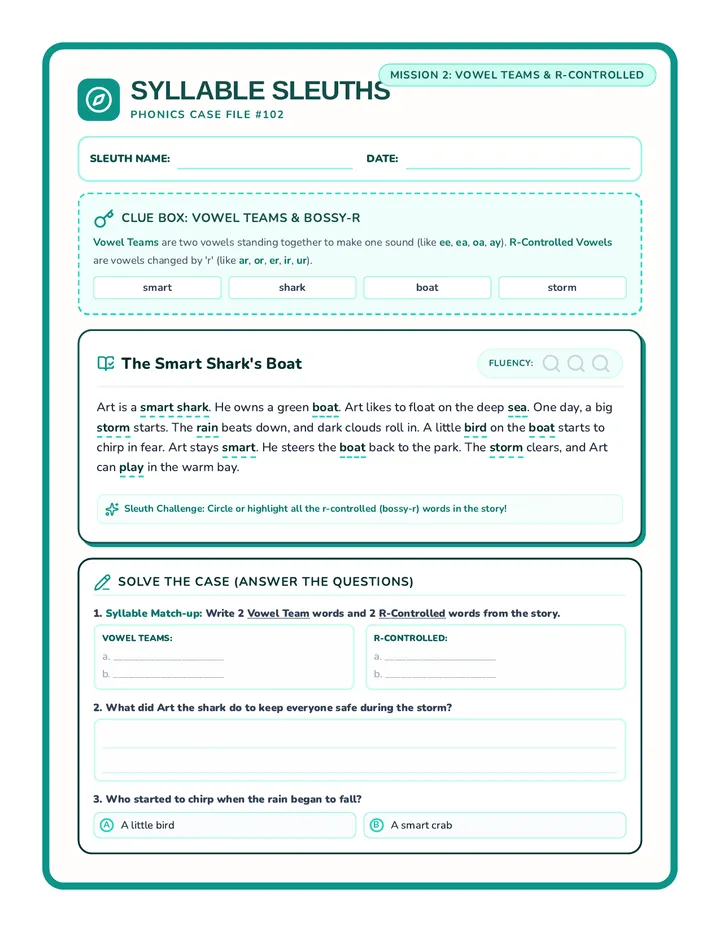
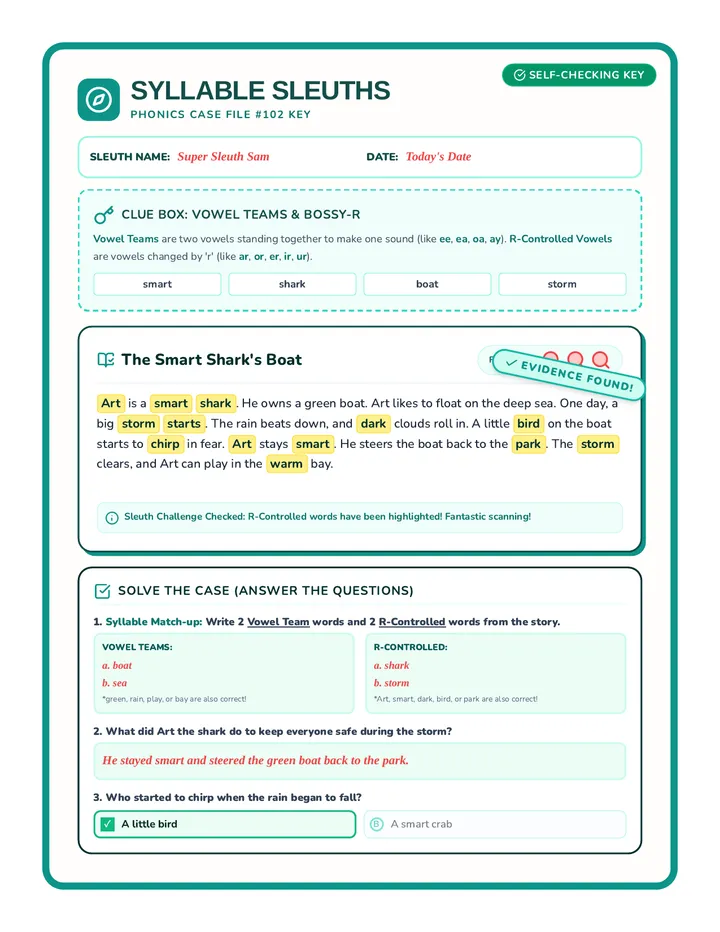
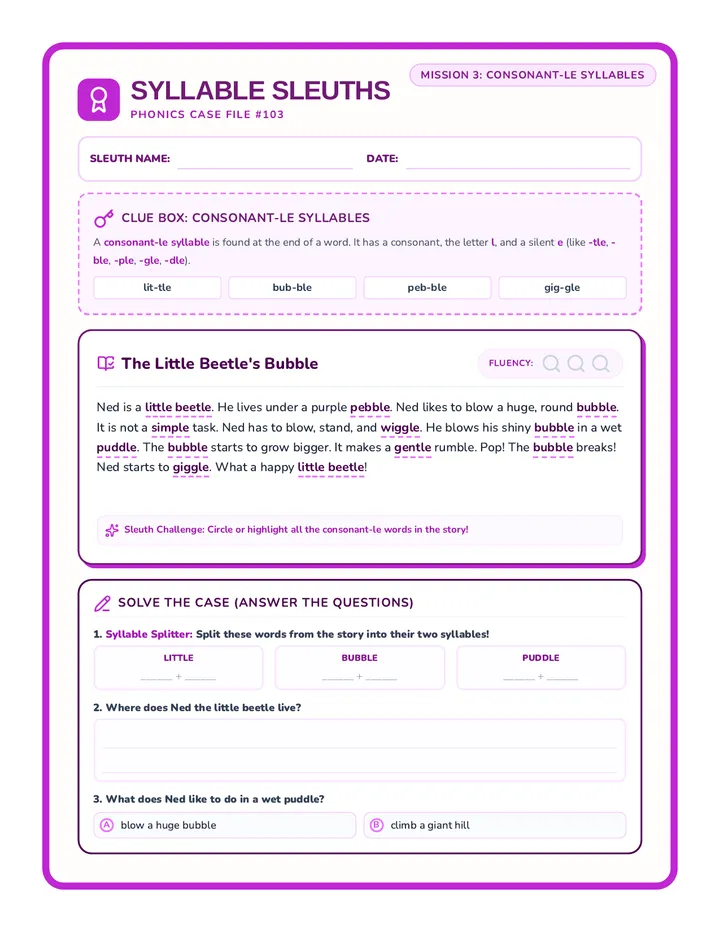
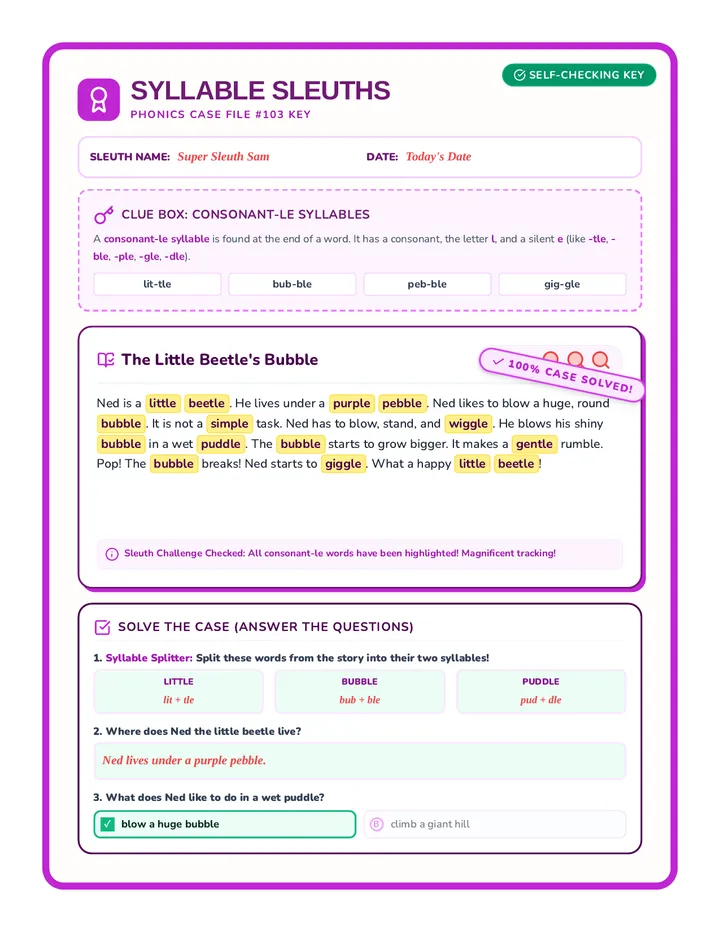
A highly structured, 3-part phonics intervention lesson focusing on advanced syllable types, consonant blends, silent-e, vowel teams, r-controlled vowels, and consonant-le syllables through decodable texts and self-checking materials.
A 2-page teacher-facing instructional guide and scripted playbook for delivering the Puck Play Phonemes intervention. Contains step-by-step scripts, curated hockey-themed word chains, and a diagnostic student progress-tracking chart.
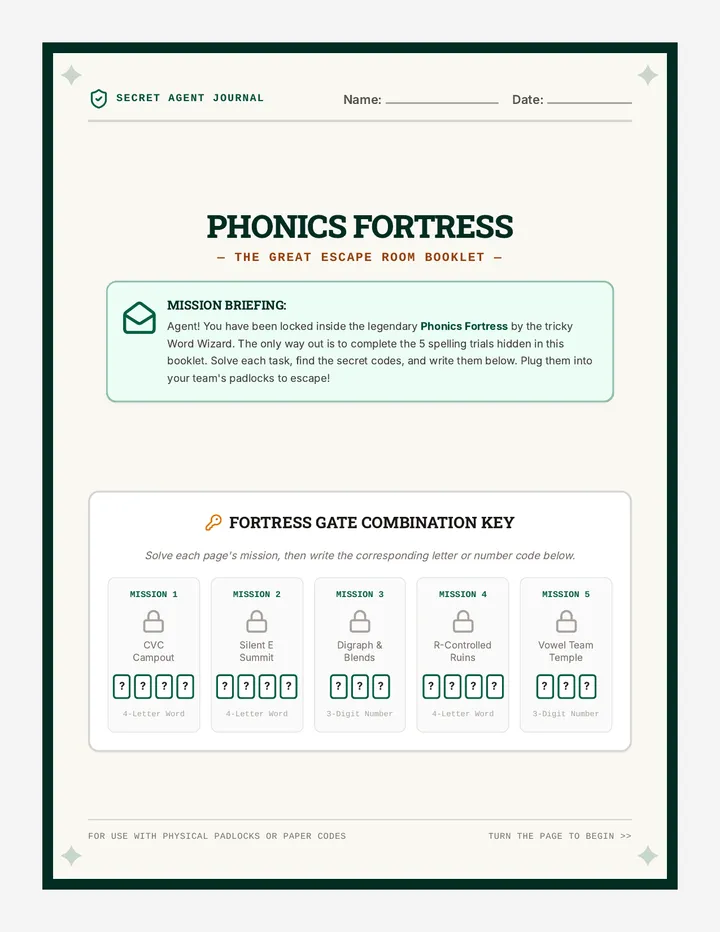
A comprehensive 5-day phonics breakout sequence where students complete daily independent spelling missions to crack codes. Covering CVC, Silent E, Digraphs/Blends, R-controlled vowels, and Vowel Teams, each day represents a new adventure challenge.
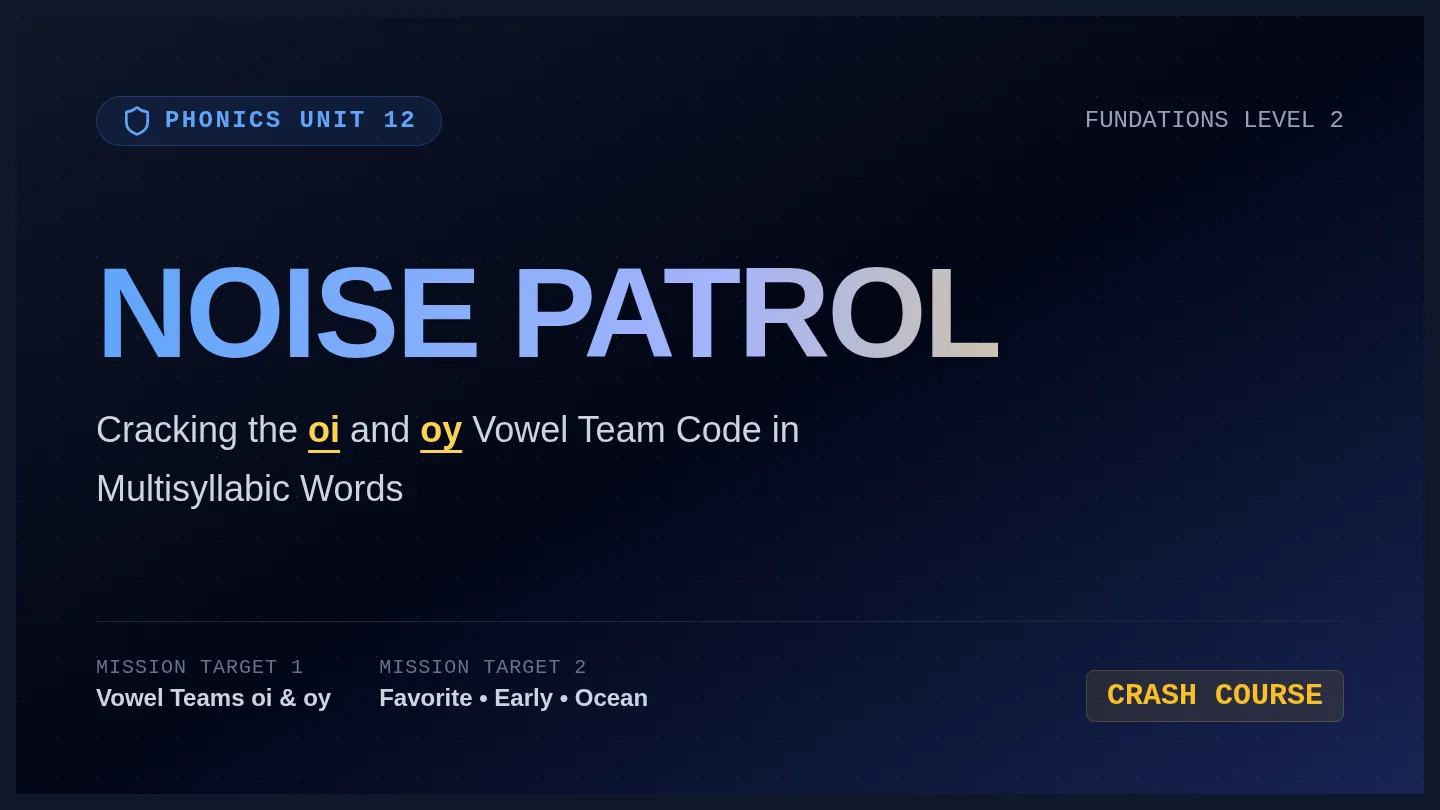
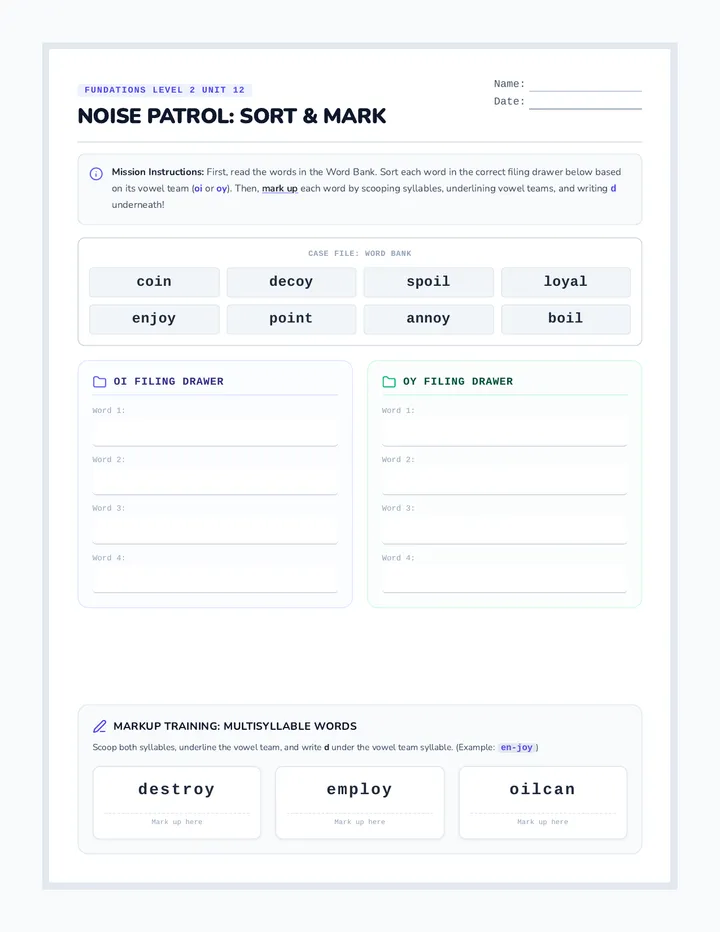
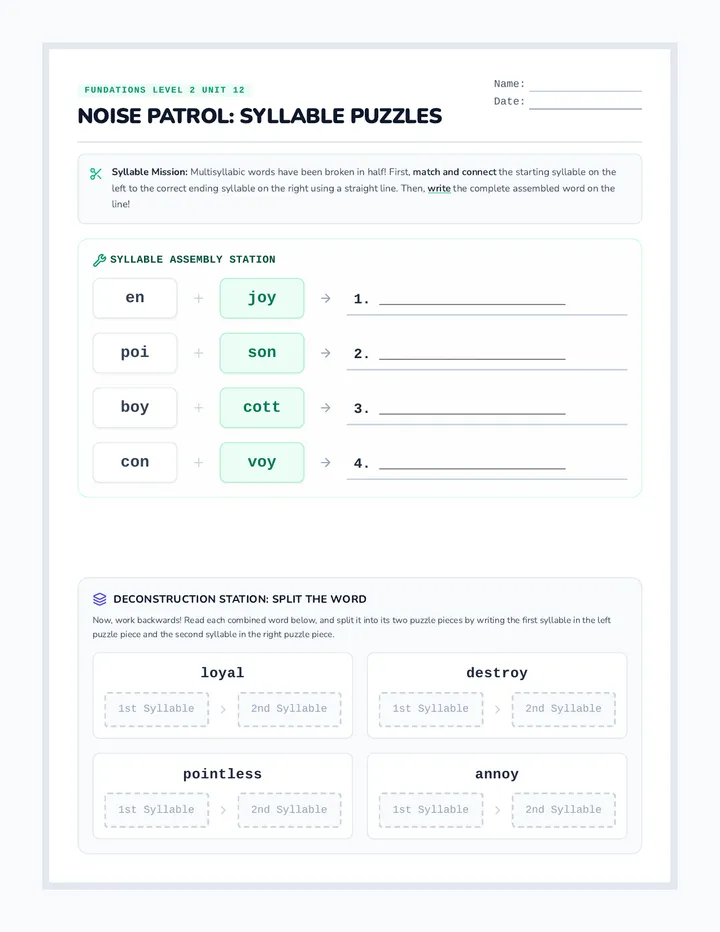
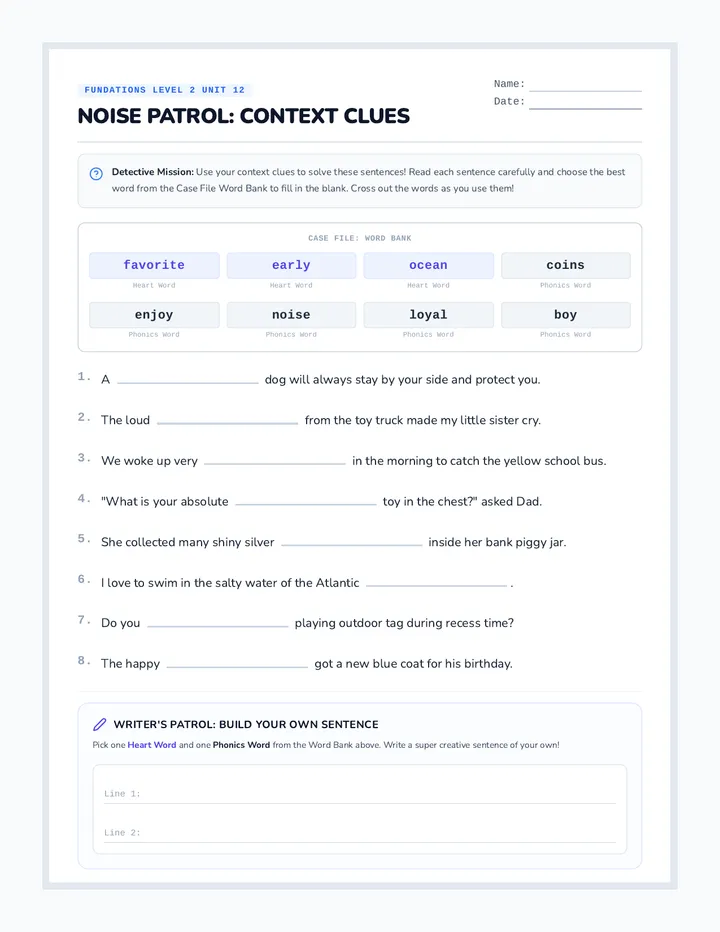
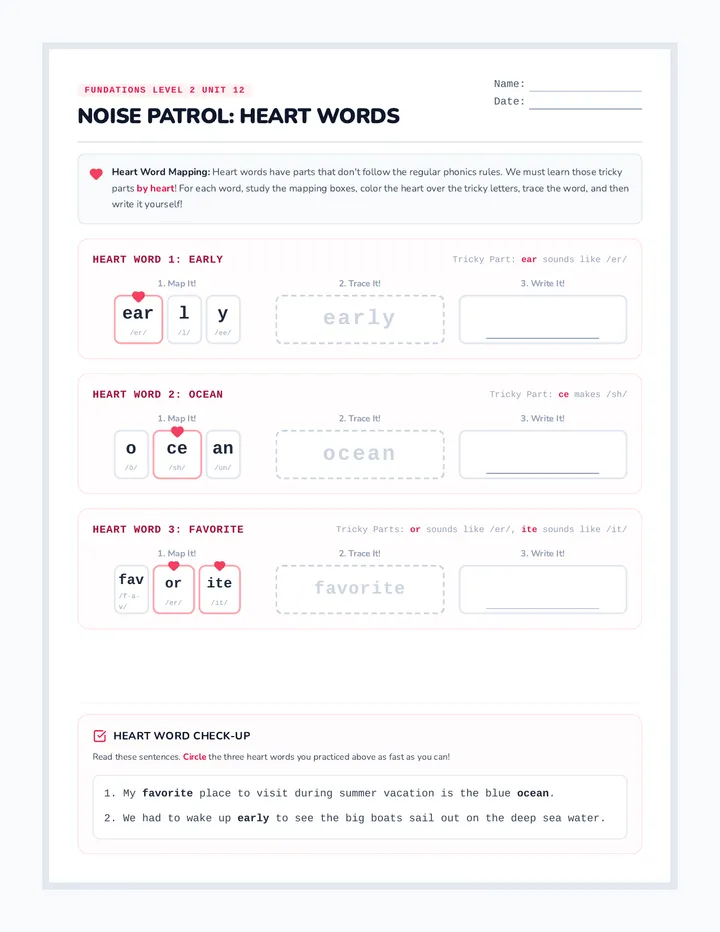
A high-impact phonics crash course for Fundations Level 2 Unit 12, focusing on vowel teams 'oi' and 'oy' in single and multisyllabic words, plus heart words 'favorite', 'early', and 'ocean'. Includes comprehensive slides and structured worksheets.
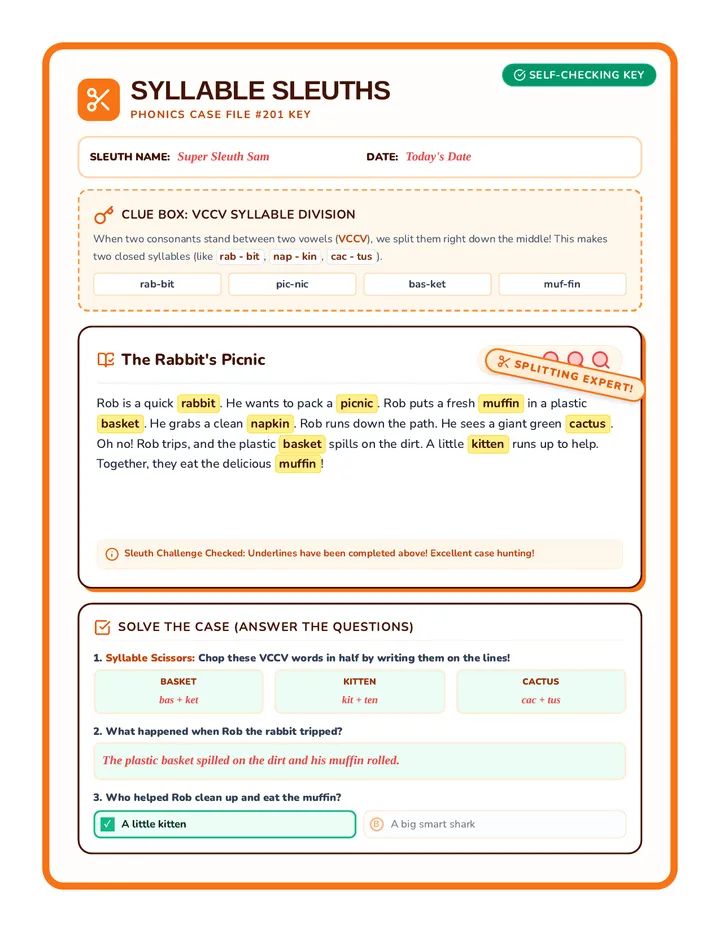
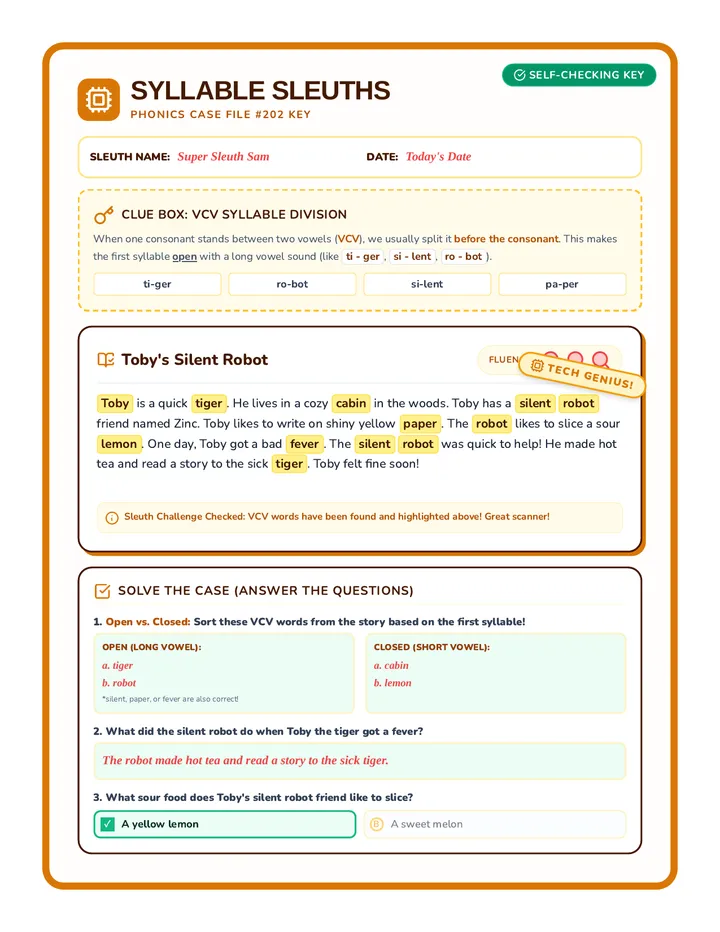
A self-checking child-friendly answer key for the Tiger Robot Worksheet. It displays correct answers in red handwriting style with detective-themed grade stamp.