A targeted grammar lesson for grades 4-6 focusing on identifying the true subject by eliminating distracting prepositional phrases, featuring a 'Grammar Surgery' theme.
A final assessment and review lesson for the novel Holes by Louis Sachar, focusing on character identification, plot sequencing, and thematic connections. Students will complete a comprehensive test after a visual review of the major story arcs.
A comprehensive exploration of the final chapters of Holes (43-50), focusing on the resolution of the curse, the reveal of the treasure, and the symbolic cleansing of Camp Green Lake.
A lesson focused on analyzing character motivations and causal relationships in chapters 36-42 of Louis Sachar's Holes, specifically during the ascent of Big Thumb.
A lesson exploring the history and cultural impact of ranch dressing based on a Newsela article, featuring a reading comprehension worksheet and answer key.
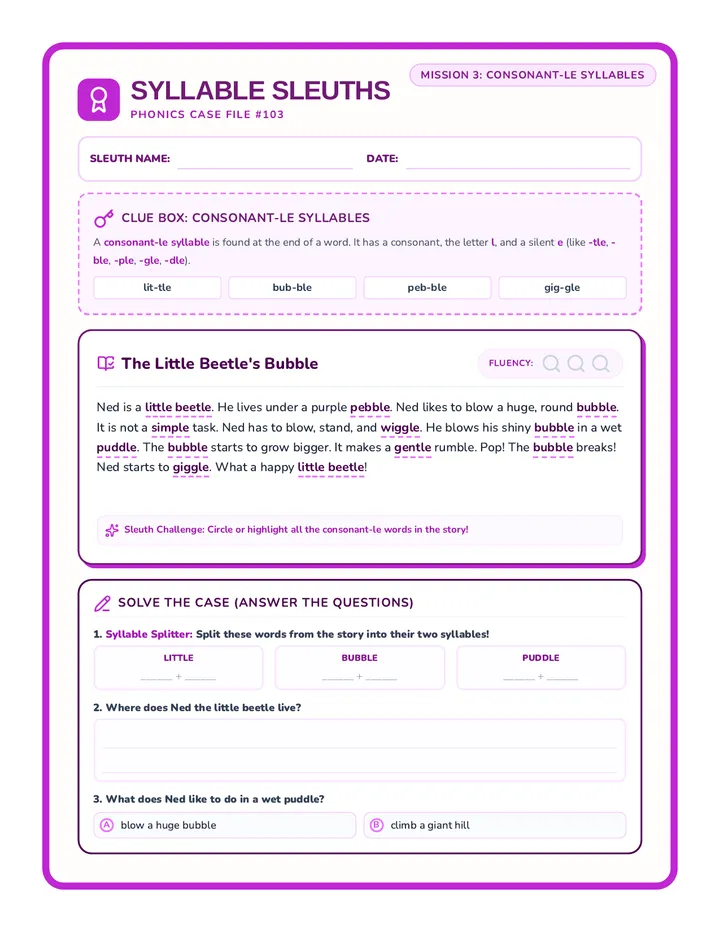
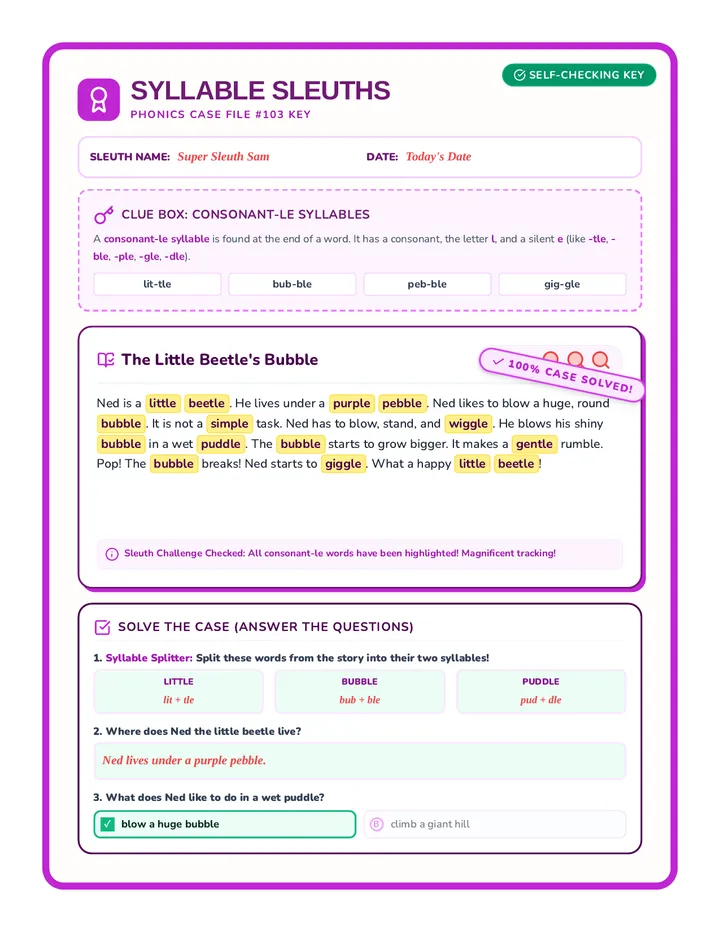
Mastering the final stable syllable 'Consonant-le' found at the end of multi-syllabic words.
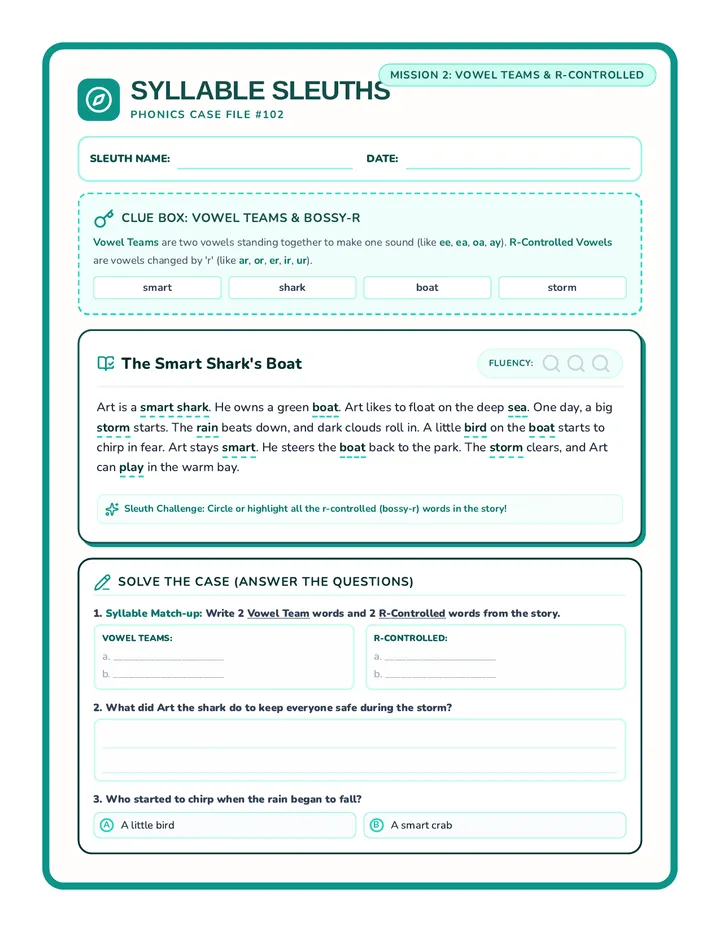
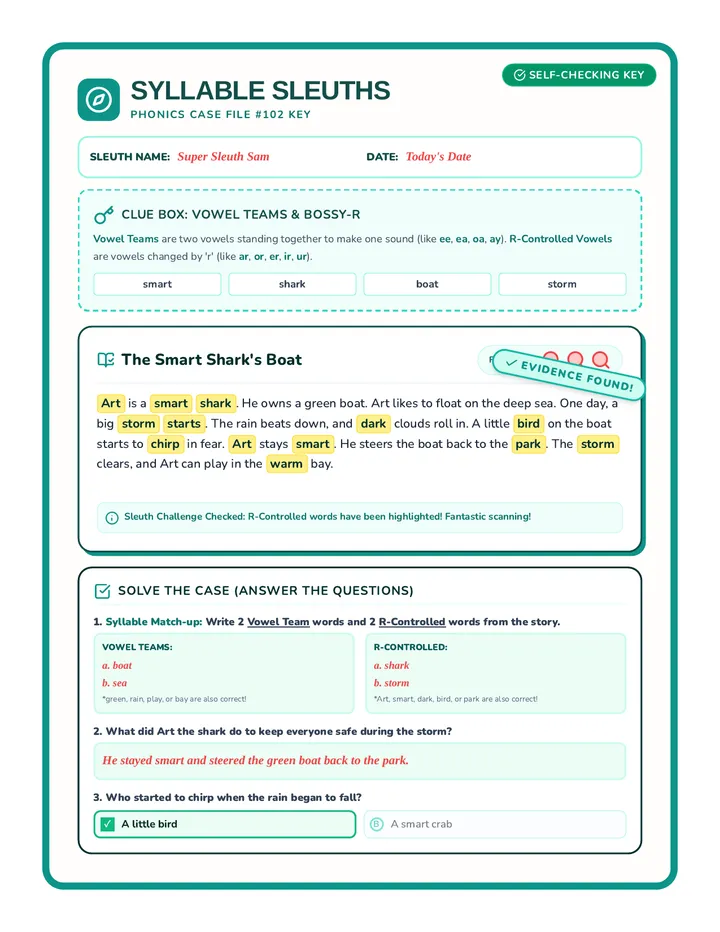
Analyzing how the 'Bossy R' influences the sound of the preceding vowel in R-controlled syllables.
Tracking down vowel teams where two vowels work together to create a specific long or unique vowel sound.
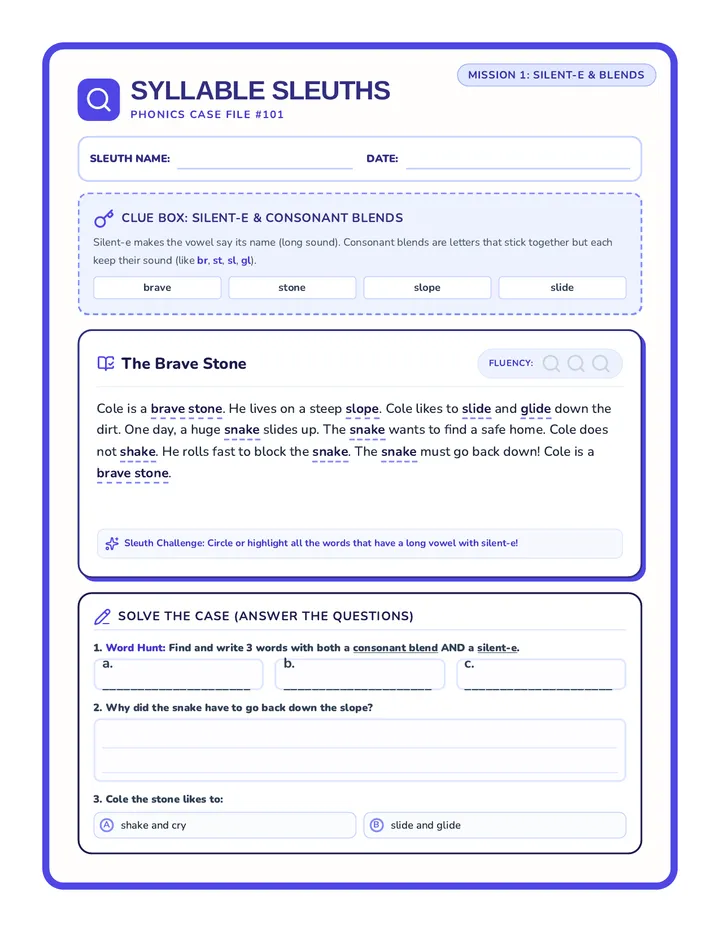
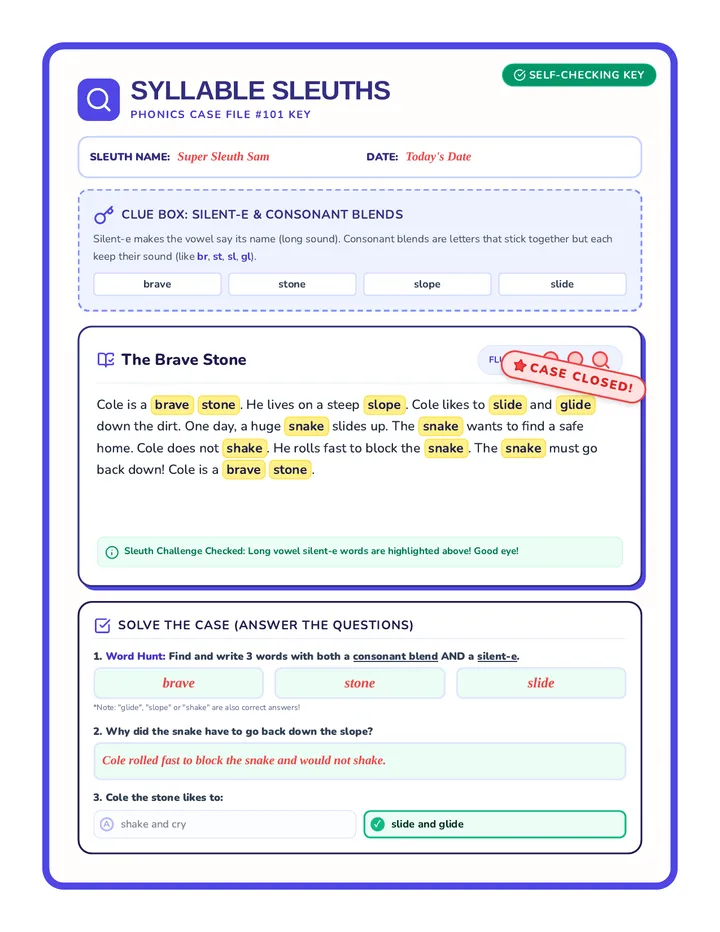
Deciphering the Magic E (VCe) pattern where a silent 'e' at the end of a syllable makes the preceding vowel long.
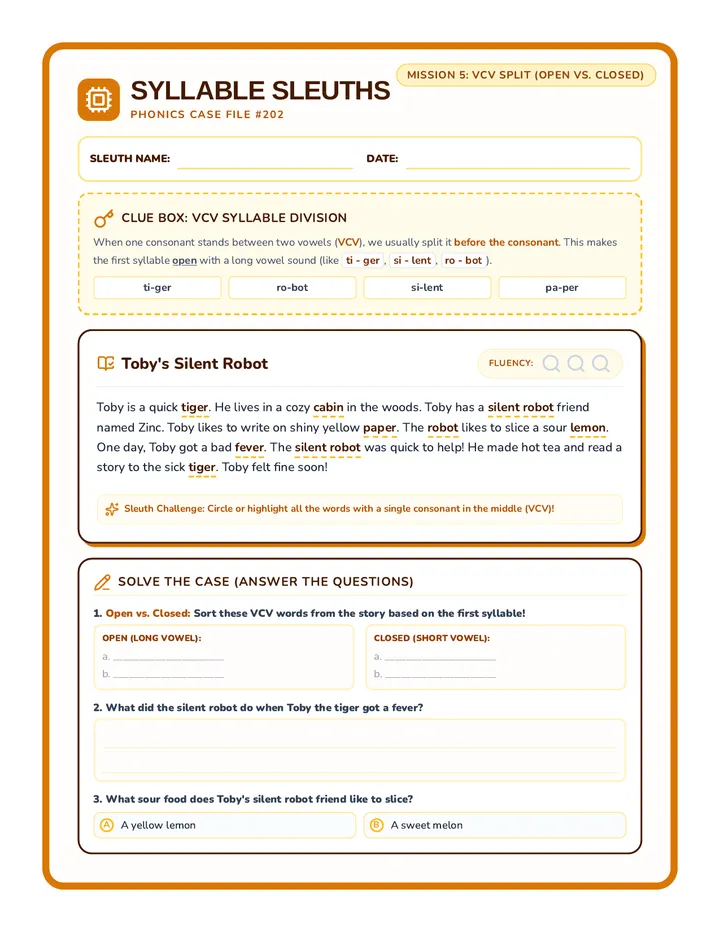
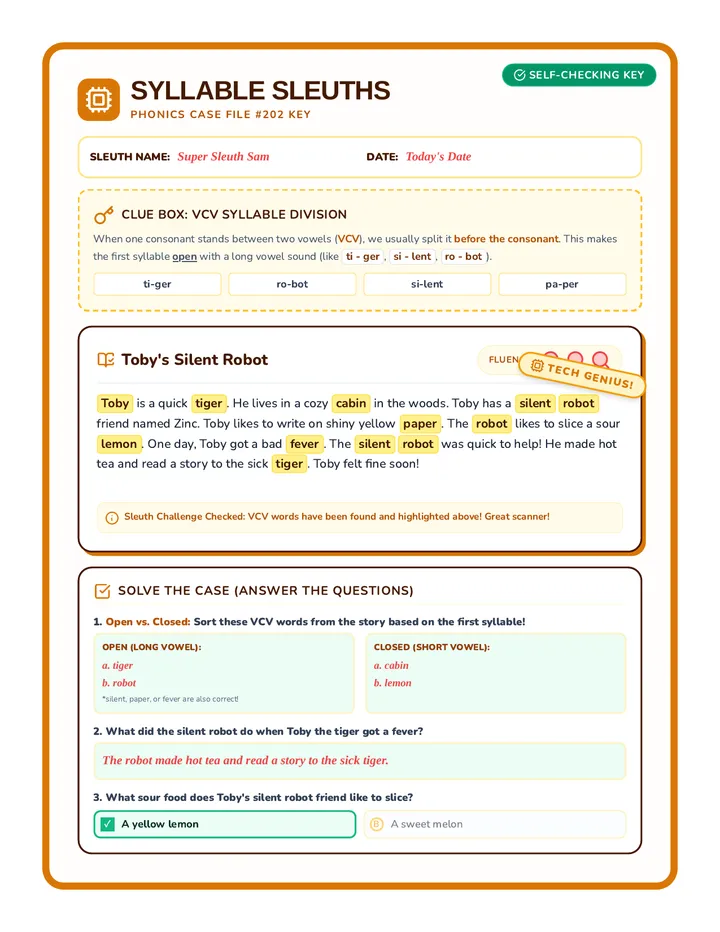
Exploring open syllables that end in a single vowel, which typically makes its long sound.
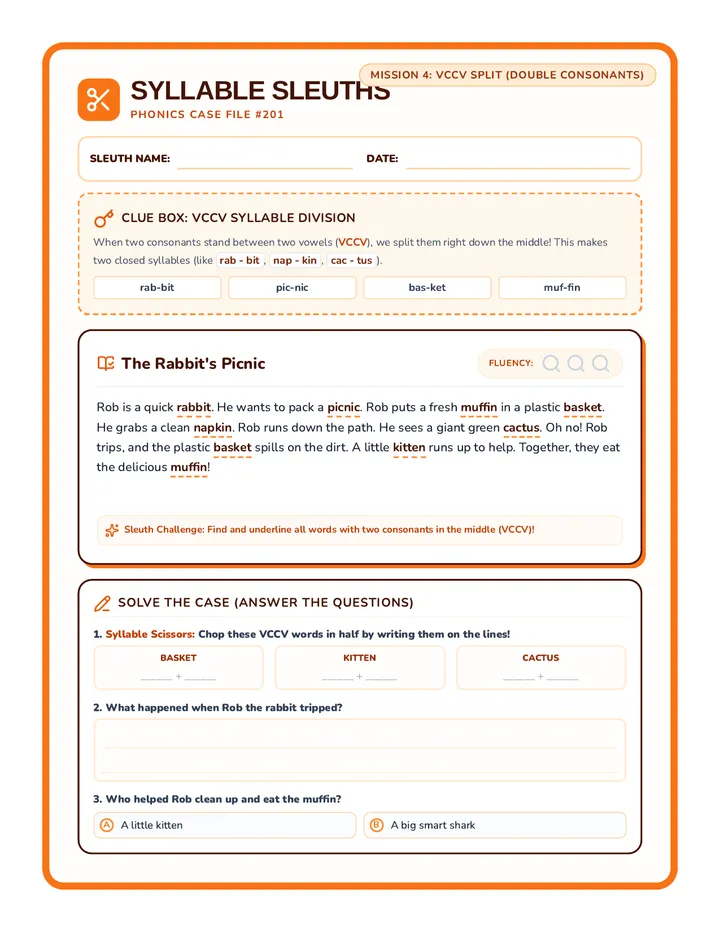
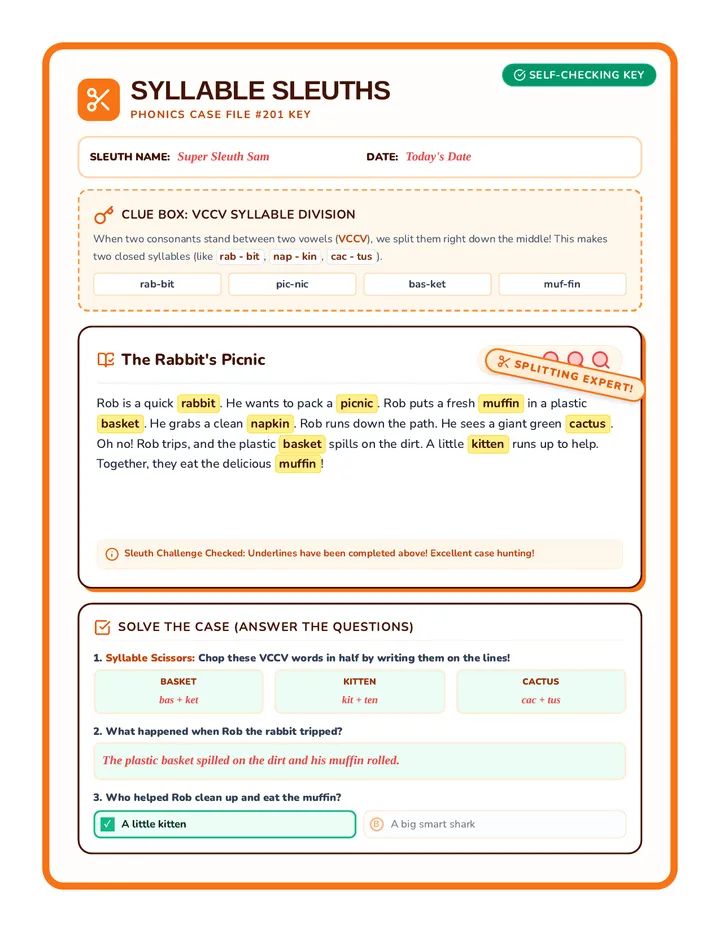
Investigation of closed syllables where a single vowel is followed by one or more consonants, resulting in a short vowel sound.
A comprehensive assessment on fairy tale elements and plot structures for elementary students, featuring two differentiated levels to meet specific grade-level standards.
A literature-based assessment focused on evidence-based reading, active strategy reflection, and identifying conflict and theme through the story of Donovan's social choices.
Students explore 10 common Greek and Latin roots, identifying their meanings and applying them to determine the definitions of complex academic vocabulary.
A middle school language arts lesson focused on mastering high-utility Tier 2 academic vocabulary and using context clues to determine meaning. Students act as 'Word Detectives' to investigate and decode complex texts.
A middle school vocabulary lesson focused on academic transition words, using a 'Bridge Builders' theme to illustrate how these words connect ideas in writing.
A sharp exploration of irony and sarcasm, teaching students to identify and create verbal, situational, and dramatic irony through engaging examples and analysis.
A lesson focused on chapters 29-35 of Louis Sachar's Holes, exploring the deepening friendship between Stanley and Zero as they face the challenges of the desert. Students will analyze character relationships, make inferences about their survival, and identify the central theme of loyalty.
A deep dive into context clue strategies using key vocabulary from chapters 21-28 of Holes, featuring multi-level support for diverse learners.
A collection of vocabulary-building resources designed for 4th-grade students with limited literacy. The lesson focuses on seven key academic terms: information, fact, alike, difference, type, discuss, and topic through visual and tactile activities.
This lesson focuses on chapters 14-20 of Louis Sachar's 'Holes', emphasizing the development of inferencing and predicting skills as students analyze character motivations and plot developments.
A lesson exploring figurative language in Chapters 7-13 of Louis Sachar's Holes, focusing on identifying and analyzing similes, metaphors, onomatopoeia, hyperbole, idioms, and personification through the lens of life at Camp Green Lake.
Deep dive into speculative worlds through 'Gathering Blue' and 'A Wrinkle in Time', followed by the unit assessment.
Investigating morality and language through 'Good Samaritan' and 'Jabberwocky'.
Analyzing integrity and peer pressure through 'The Magic Marker Mystery' and 'Scout’s Honor'.
Exploring cultural pressure and physical survival through 'Red Scarf Girl' and 'Hatchet'.
Introductory week focusing on emotional and familial limits through 'Eleven' and 'The Mighty Miss Malone'.
A focused exploration of cause and effect relationships in the opening chapters of Louis Sachar's 'Holes', covering Stanley's arrival at Camp Green Lake and the history of the Yelnats family curse.
A comprehensive lesson on adding suffixes to multi-syllabic words ending in a silent 'e', focusing on the rules for dropping or keeping the 'e' based on the suffix type.
A comprehensive ELA review packet designed for 5th graders following IAR testing, featuring a fun boho-pink aesthetic. The lesson covers key domains including poetry, figurative language, context clues, main idea, inferencing, summarizing, and grammar.
A comprehensive lesson on mastering subject pronouns (he, she, they) through the lens of a 'Secret Agent' investigation, focusing on replacing nouns and understanding singular/plural usage.
A targeted practice session focusing on RL.6.4 standards, including figurative language, connotative meanings, and the impact of word choice across three distinct text types.
A dynamic exploration of non-literal language tailored for a teen audience, focusing on similes, metaphors, personification, and hyperbole through modern, relatable examples.
A wrap-up activity for a Socratic Seminar where students reflect on their contributions, evaluate their peers' ideas, and self-assess their performance using an investigative 'Monster Mystery' theme.
A lesson focusing on identifying nouns, verbs, adjectives, adverbs, prepositions, conjunctions, and interjections using athletic and academic contexts.
A guide to understanding and using modern teen slang and contemporary idioms in everyday conversation.
A comprehensive grammar lesson for 4th and 5th graders on identifying and using subject pronouns (he, she, they) to improve sentence variety and clarity. Students will learn to 'swap' repetitive nouns for efficient pronouns in various contexts.
This lesson focuses on analyzing key literary elements—plot, character, setting, theme, point of view, tone, and figurative language—within a realistic fiction text. Students will read a short story and answer targeted comprehension questions to demonstrate their mastery of these elements.
A comprehensive lesson focused on identifying key details and determining the main idea in texts about social media safety and digital citizenship.
A lesson on making inferences using the 'Detective Agency' theme. Students learn to combine text evidence with background knowledge to uncover hidden meanings in short stories.
A guided review of chapters 9-13 of Prisoner B-3087, focusing on Yanek's transition to Plaszów Concentration Camp, the theme of survival, and the loss of identity.
A 4th-grade reading lesson focused on Patriots player Dametrious Crownover, targeting Wilson 6.2 patterns (v-c-e in multisyllabic words), academic vocabulary, and morphological analysis.
A pair of engaging recording sheets designed for students to track their reading on Epic!, featuring specific templates for both fiction and nonfiction texts.
A final assessment and review day where students demonstrate their mastery of identifying and analyzing all four text structures through a quick check and center activities.