A quick-fire 30-minute sub plan focusing on the 1-1-1 doubling rule for suffixes -ed, -er, -est, and -ing. Students act as 'Word Mechanics' to fix words before they leave the factory.
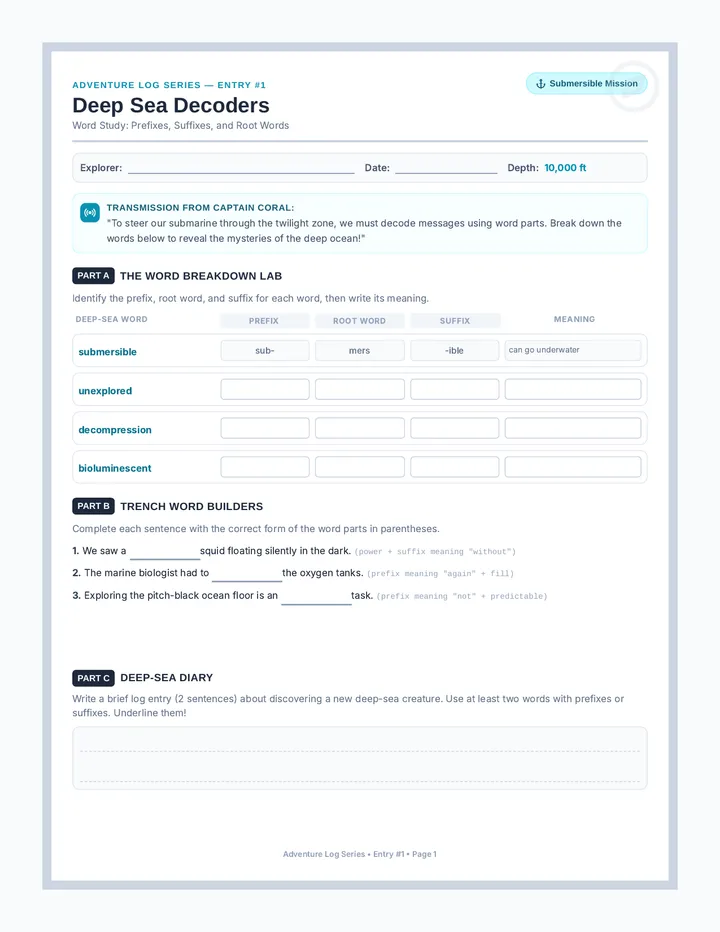
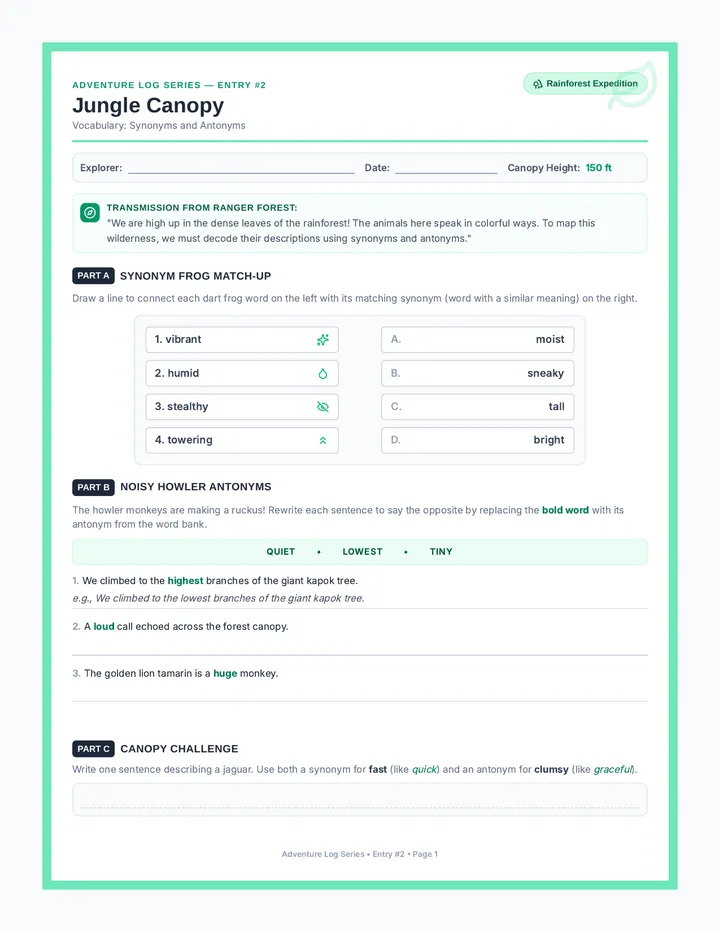
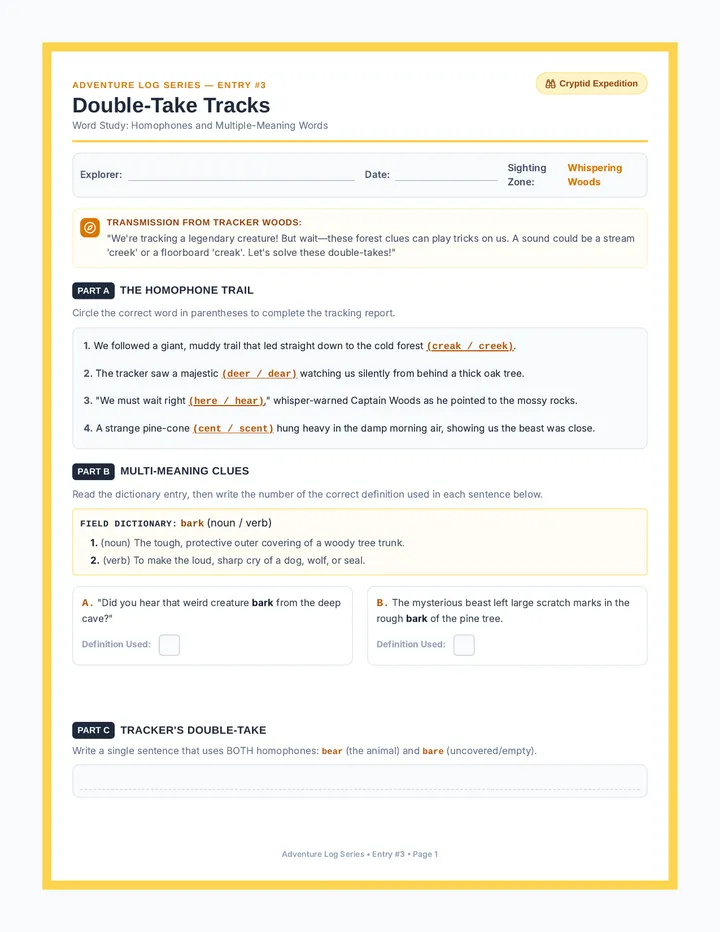
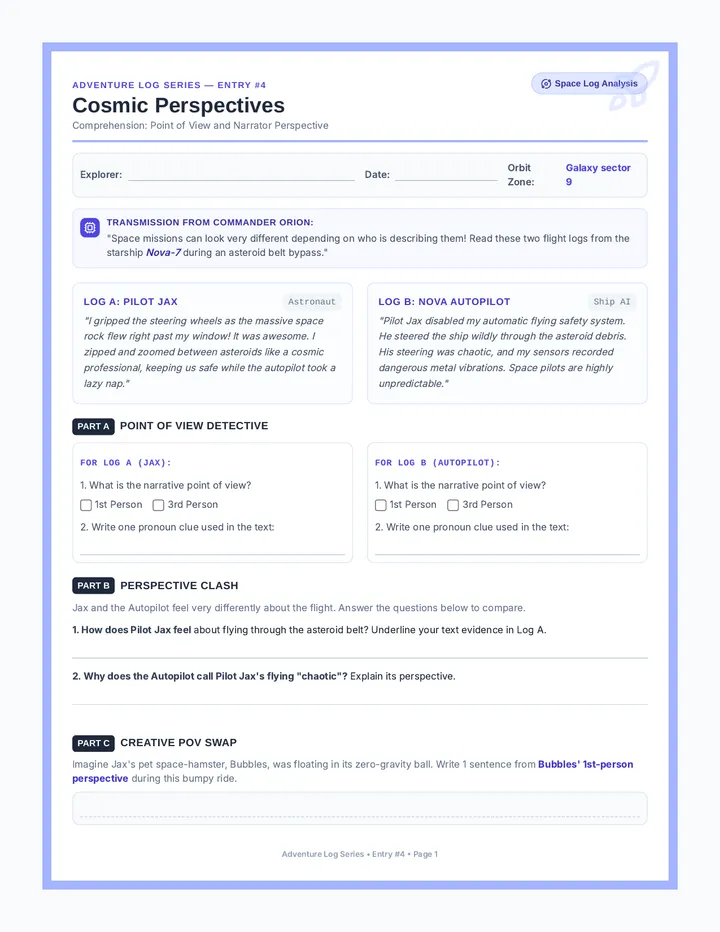
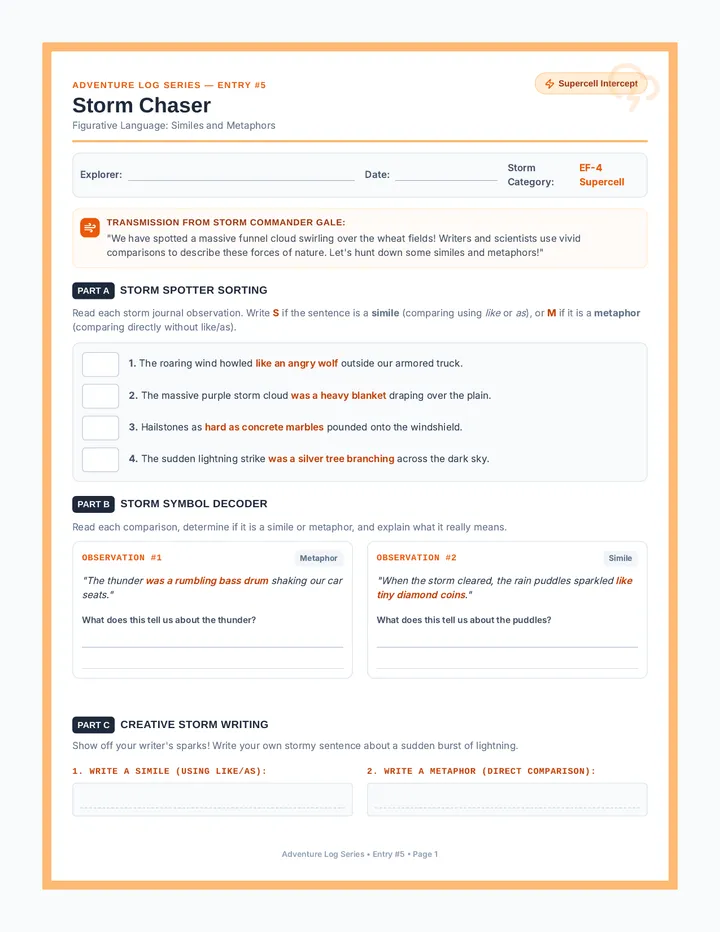
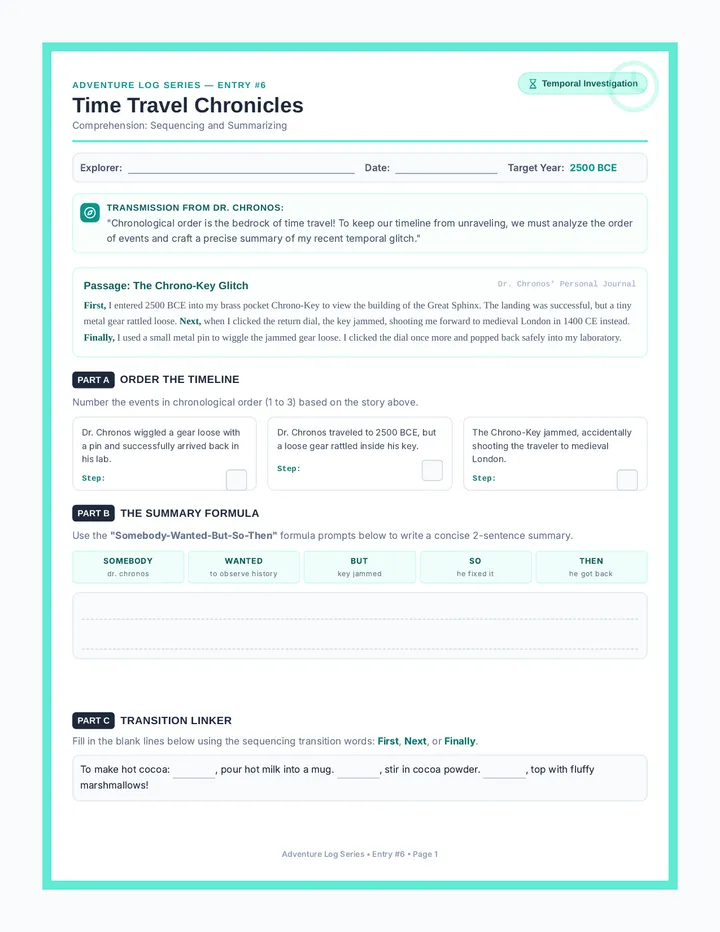
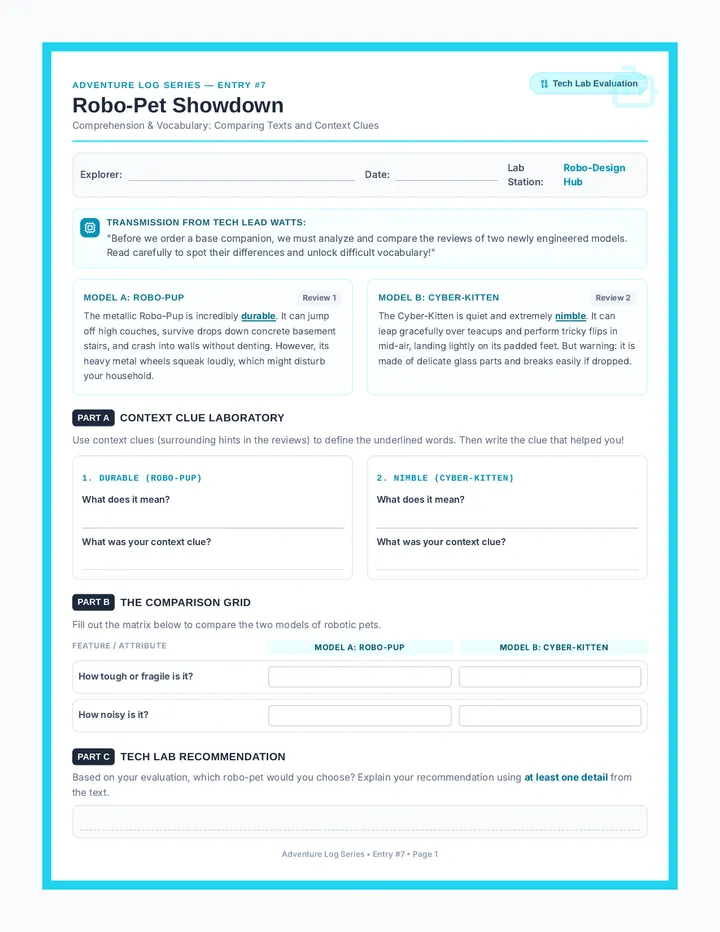
A comprehensive summer ELA bridge program for rising fourth graders, focusing on essential reading comprehension, vocabulary, and word study skills through engaging high-interest topics.
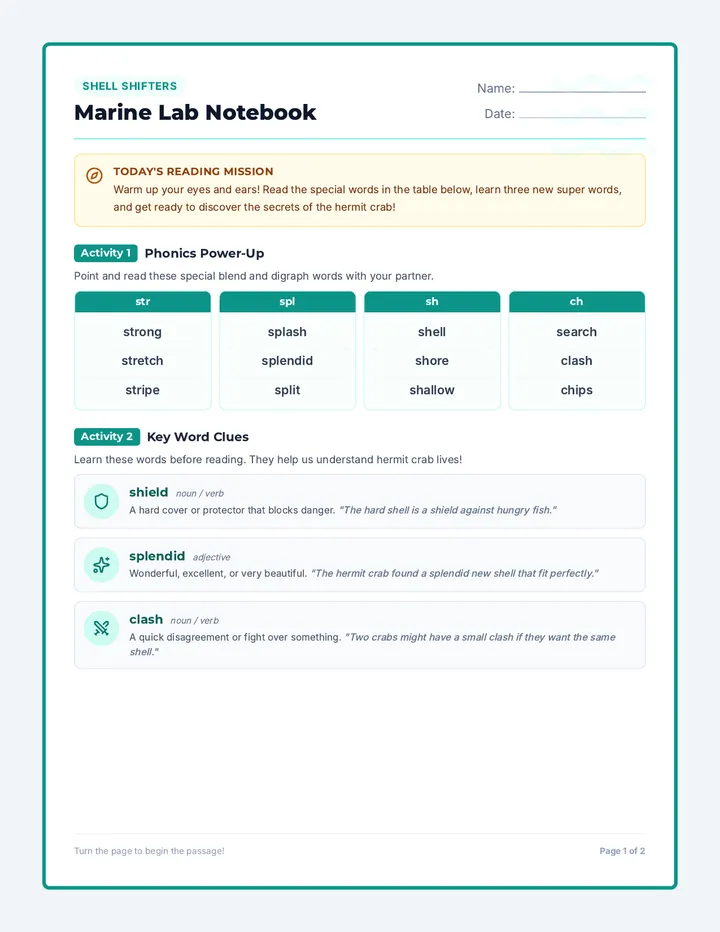
A 35-minute small group reading lesson designed for five 3rd-grade students who are below benchmark in decoding. The lesson focuses on consonant blends and digraphs (str, spl, sh, ch), fluency modeling, and identifying the main idea of a non-fiction text about hermit crabs.
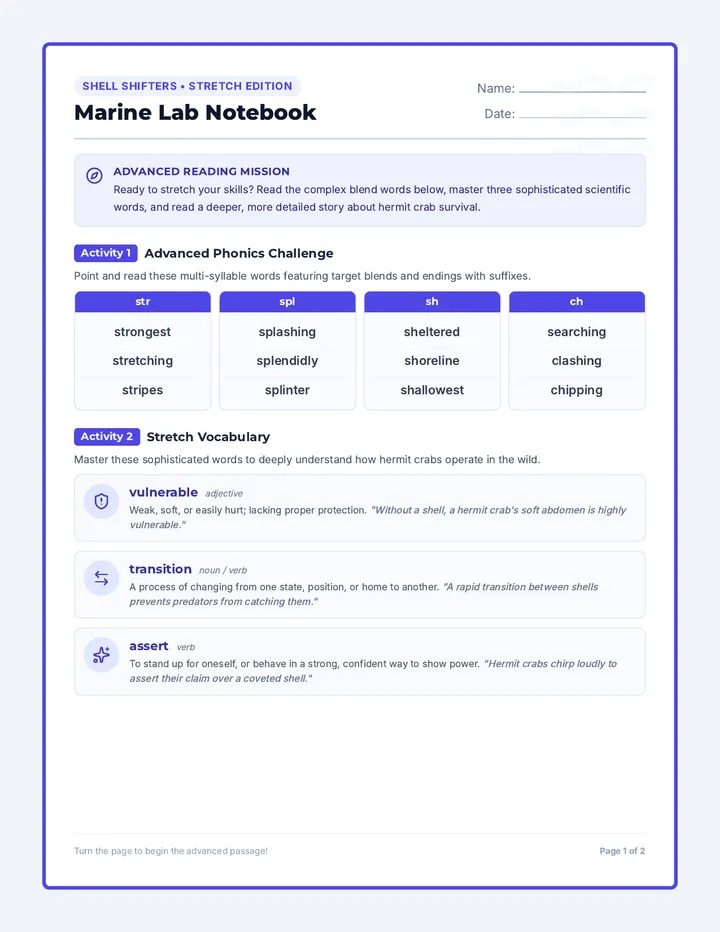
Stretch Reader for high-performing students in the Shell Shifters lesson. Features an advanced phonics grid, a complex vocabulary preview (vulnerable, transition, assert), a sophisticated 'Super Shells' non-fiction text, and the same comprehension check questions as the baseline reader.
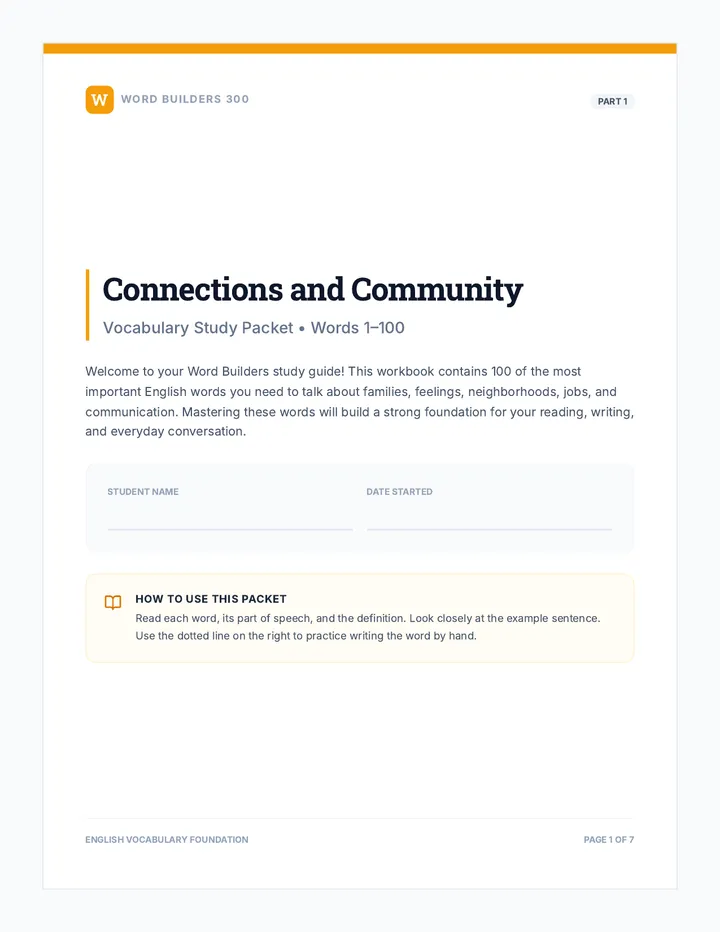
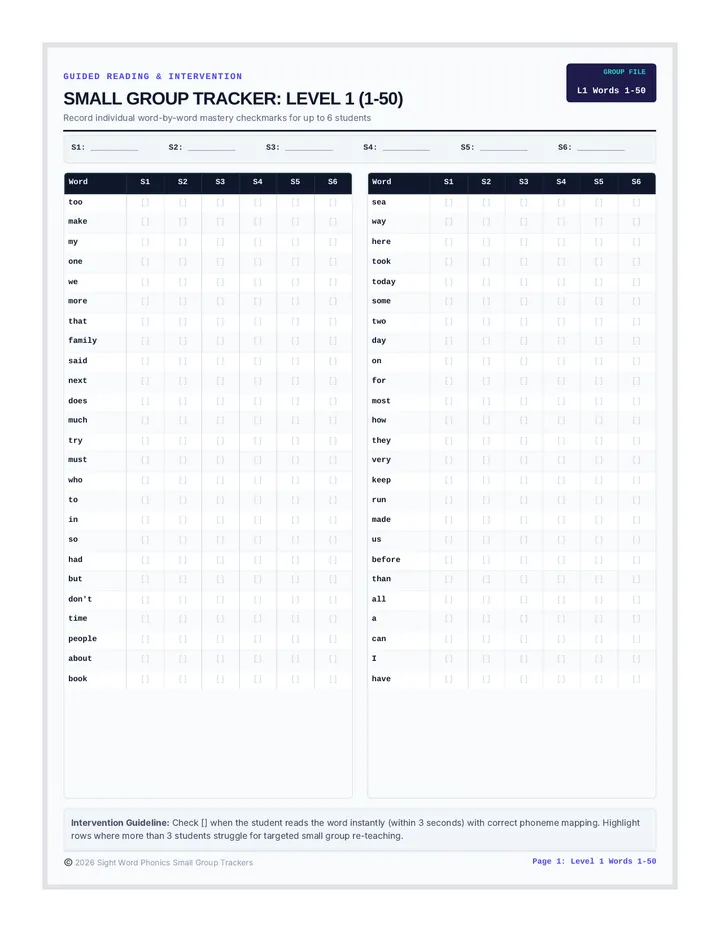
A comprehensive vocabulary mastery sequence designed to help English learners and early readers build a core foundation of 300 high-frequency words. Organized across three themed modules, each featuring a complete 100-word student study packet with definitions, contextual examples, and handwriting lines, paired with high-impact instructional presentation slides.
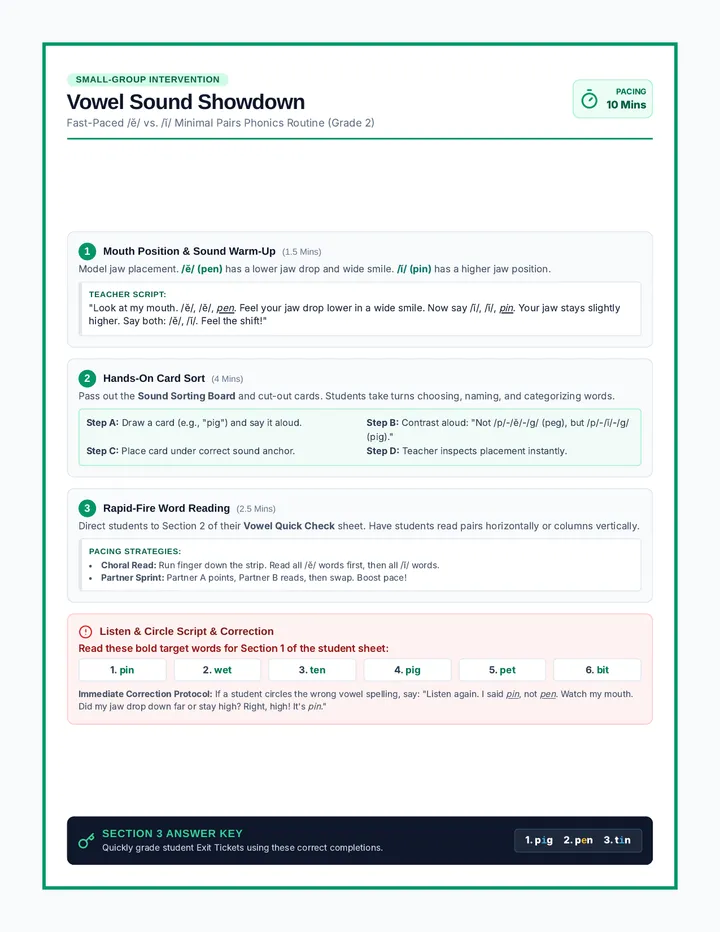
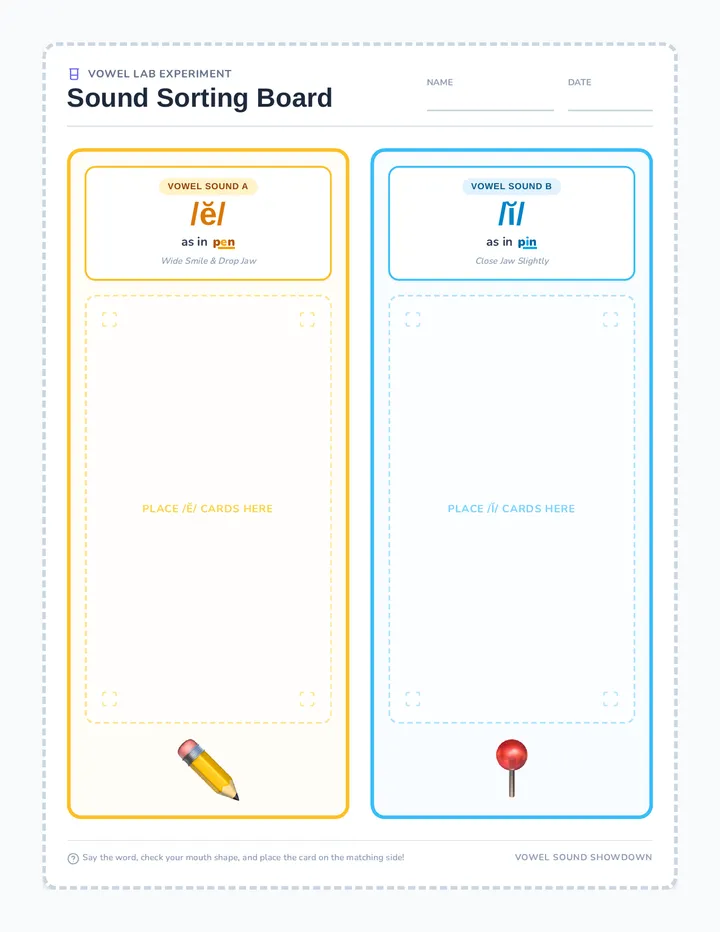
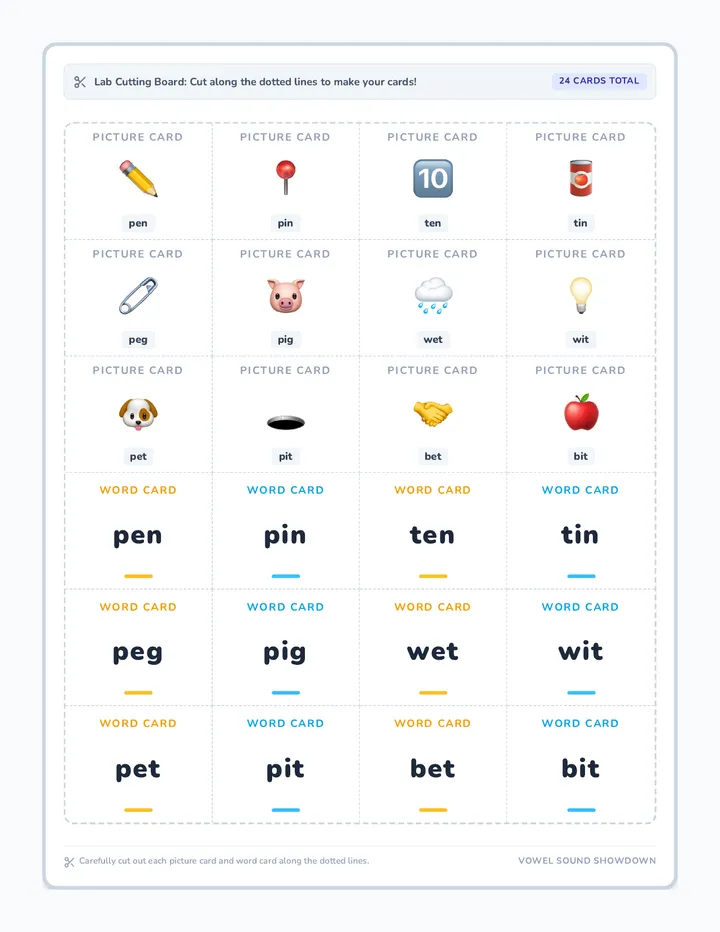
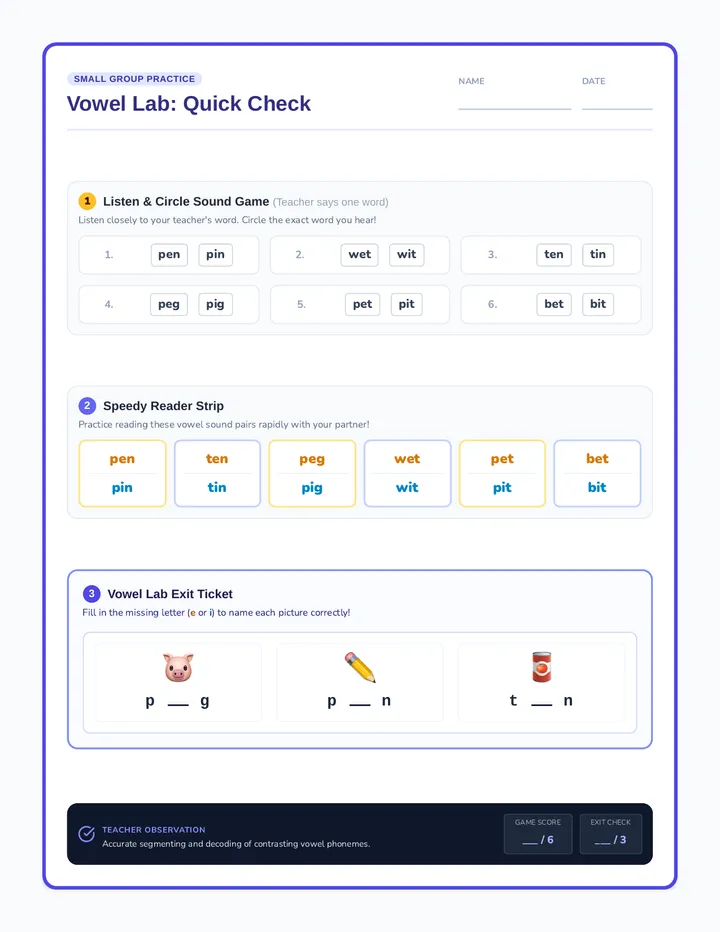
A targeted small-group phonics intervention designed to help second-grade students distinguish between short e (/ĕ/) and short i (/ĭ/) using high-impact minimal pair contrasts, hands-on sorting mats, and structured diagnostic routines.
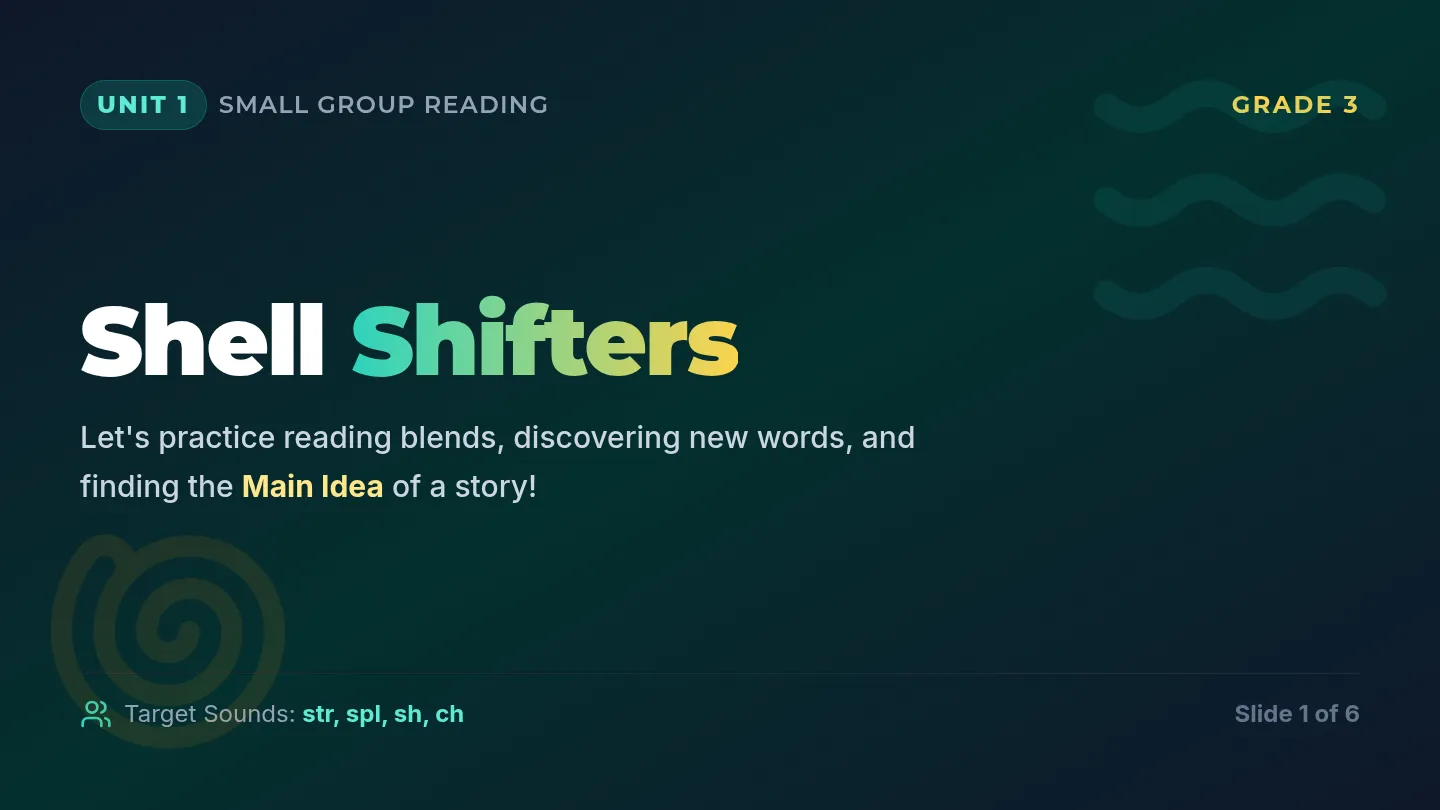
Instructional presentation slides for the Shell Shifters small group reading lesson. Includes interactive phonics grids, vocabulary spotlights, a visual fluency modeling demonstration slide, and a guided main idea map slide. All text meets the strict minimum size of 24px.
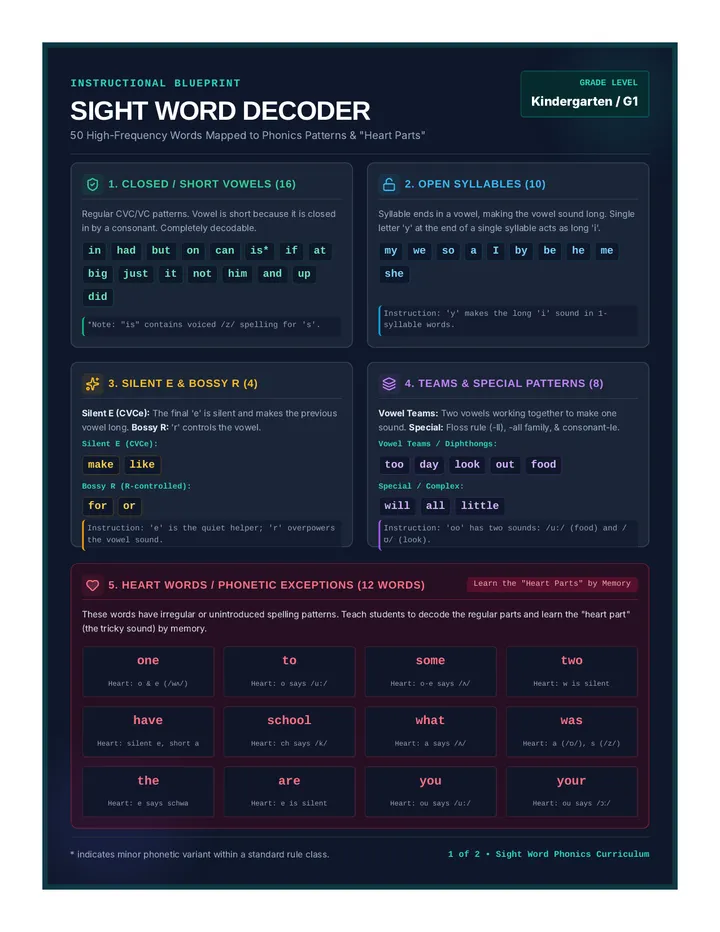
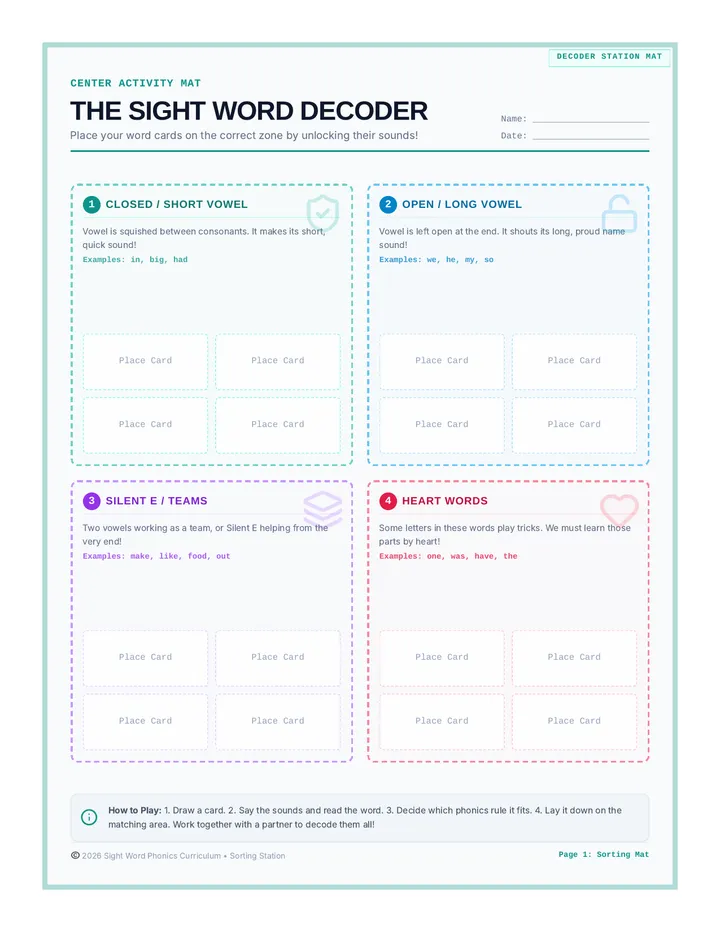
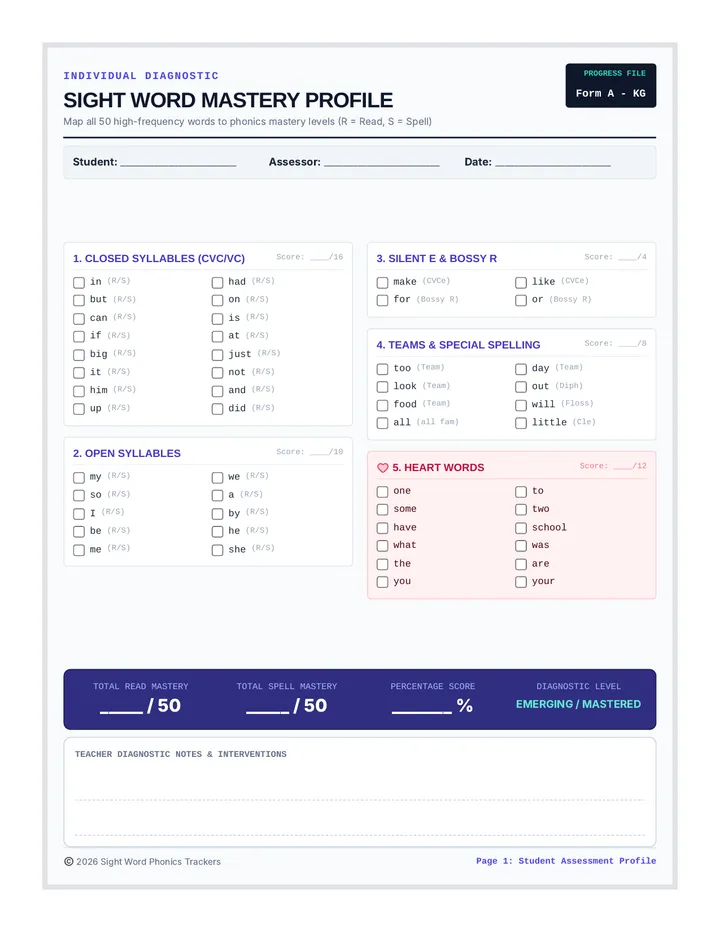
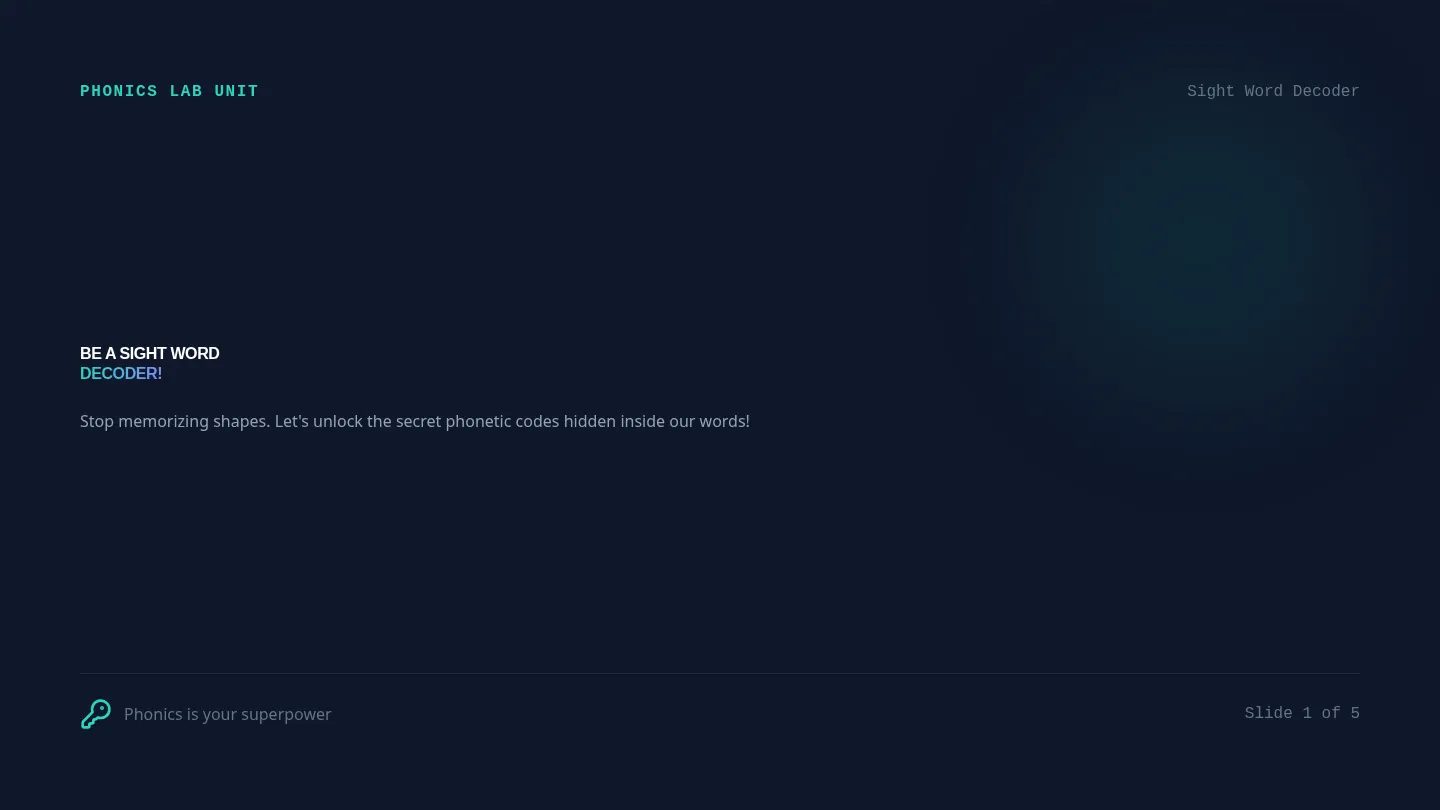
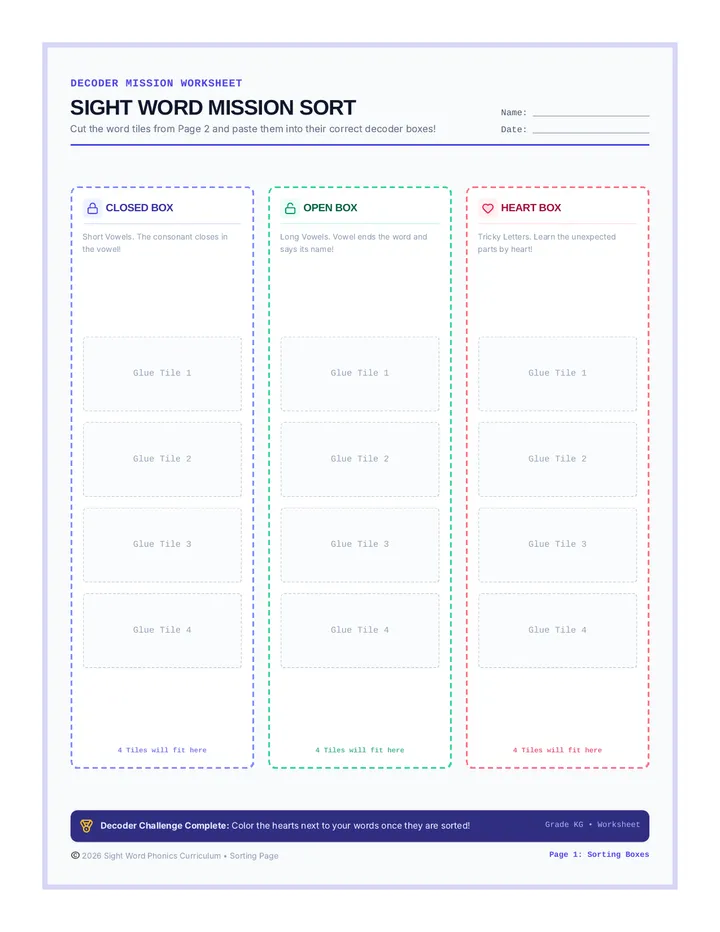
A 3-part comprehensive curriculum sequence mapping and teaching 150 high-frequency sight words phonetically. Includes three progressive mastery levels covering closed syllables, open syllables, silent E, vowel teams, r-controlled, and heart word decoding.
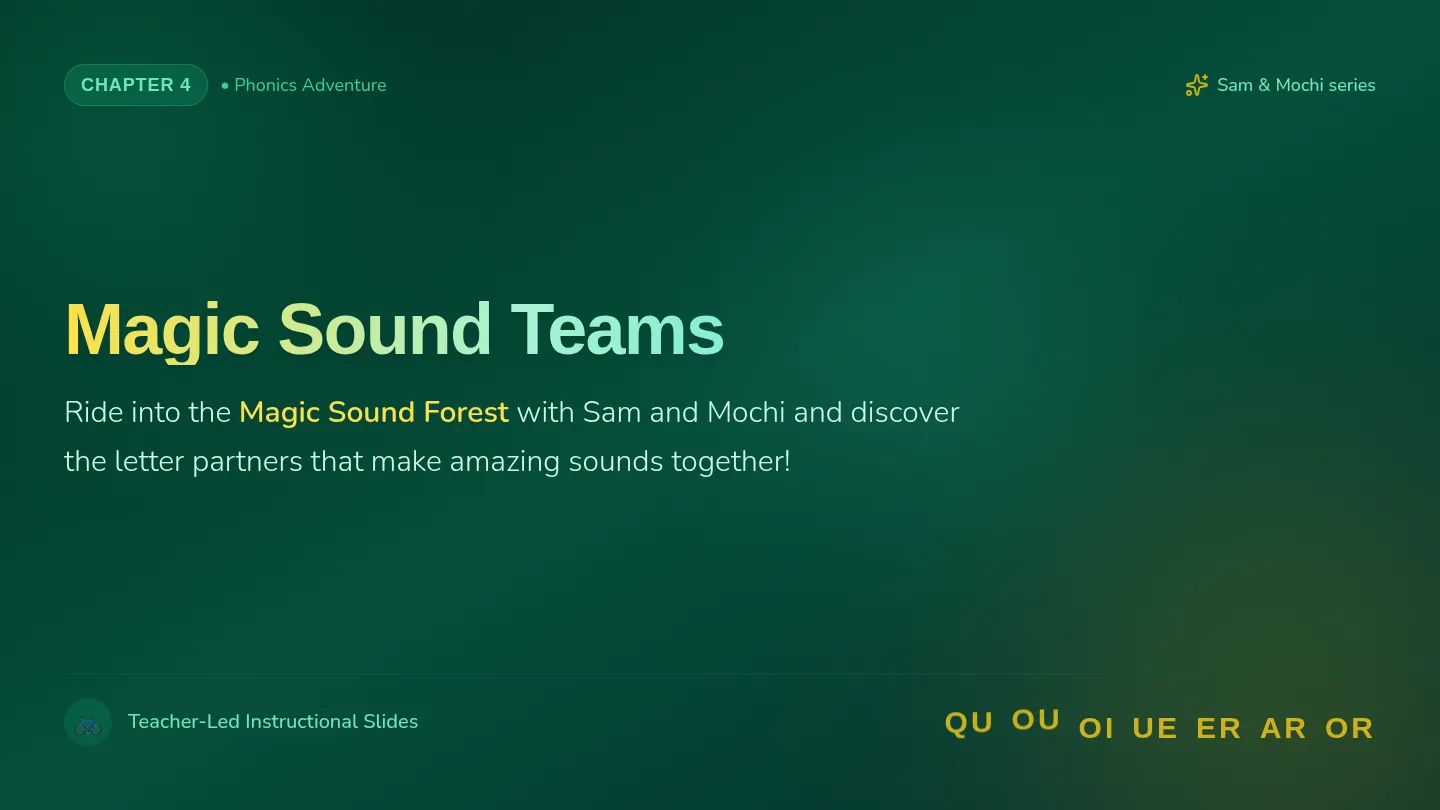
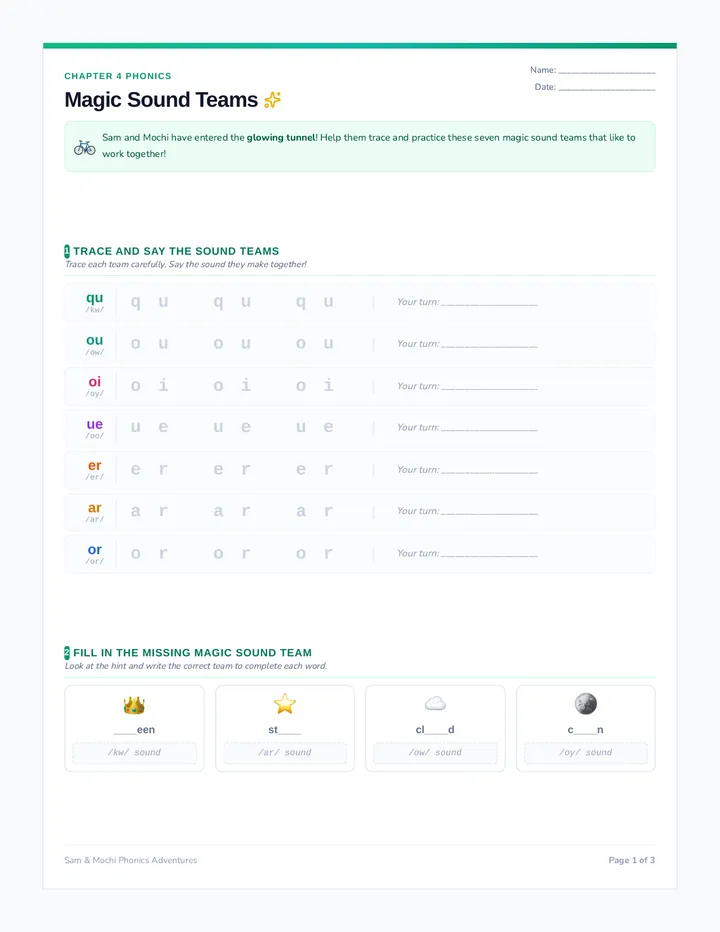
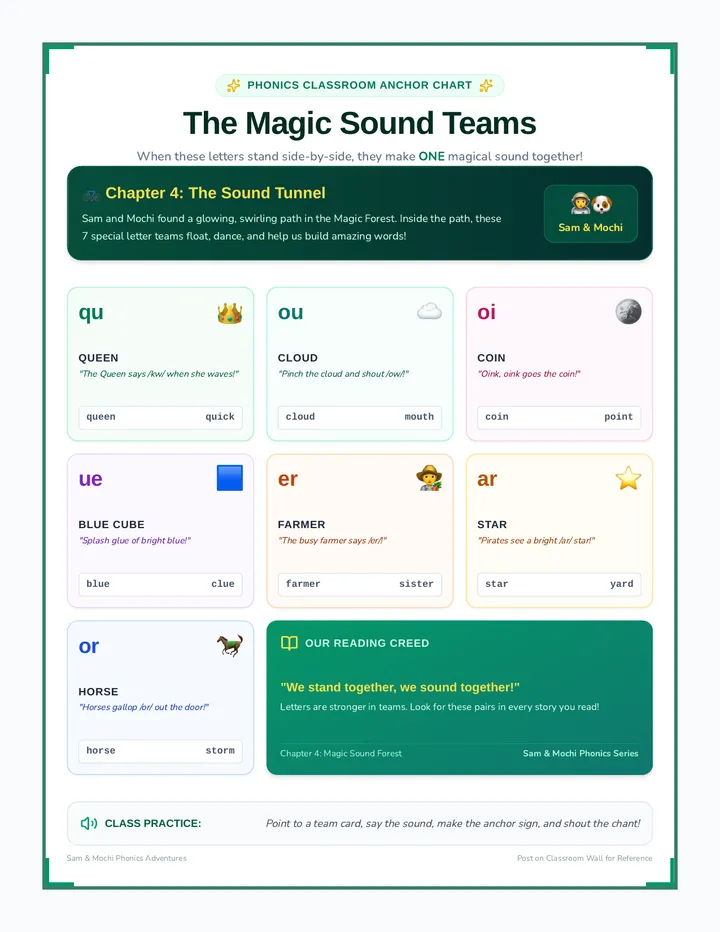
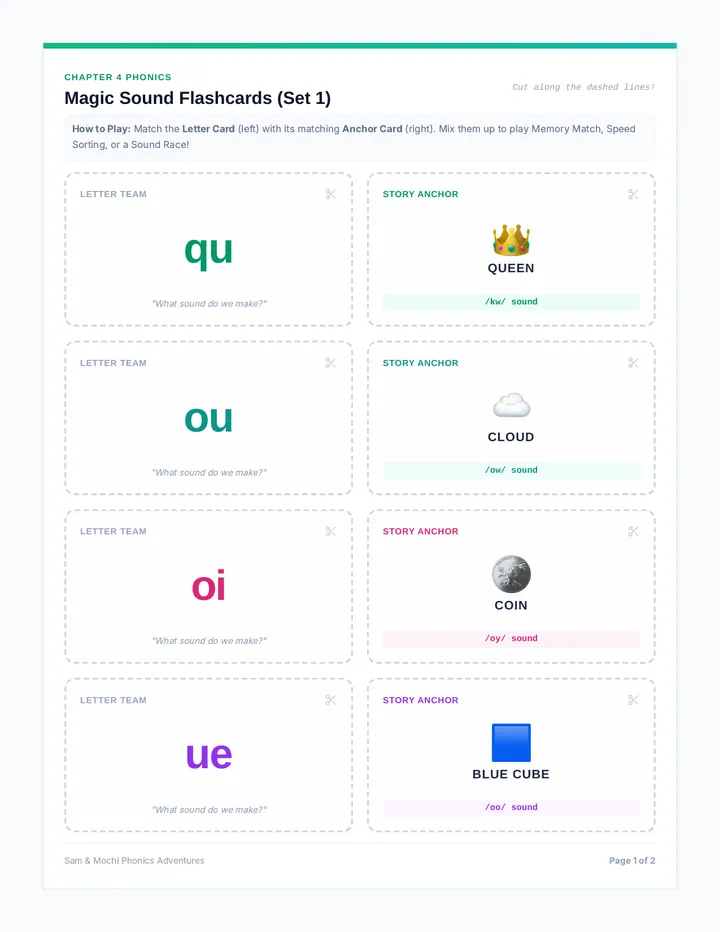
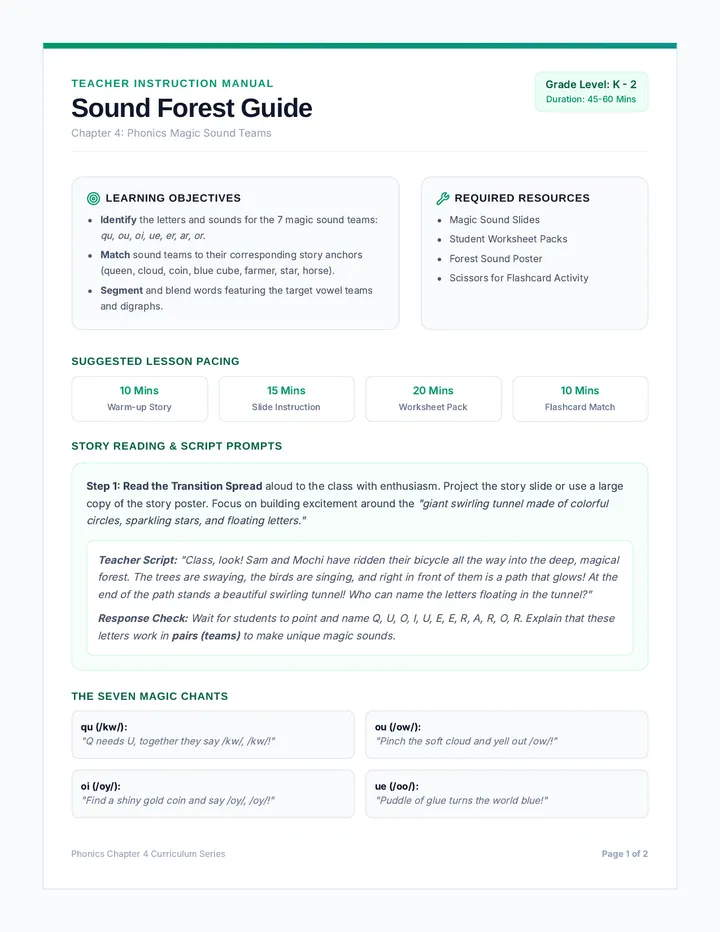
A comprehensive phonics lesson introducing seven magic sound teams (QU, OU, OI, UE, ER, AR, OR) through an engaging narrative with Sam and Mochi. Includes interactive teacher-led slides, a multi-page student activity worksheet, a printable story-based anchor chart, and phonics matching flashcards.
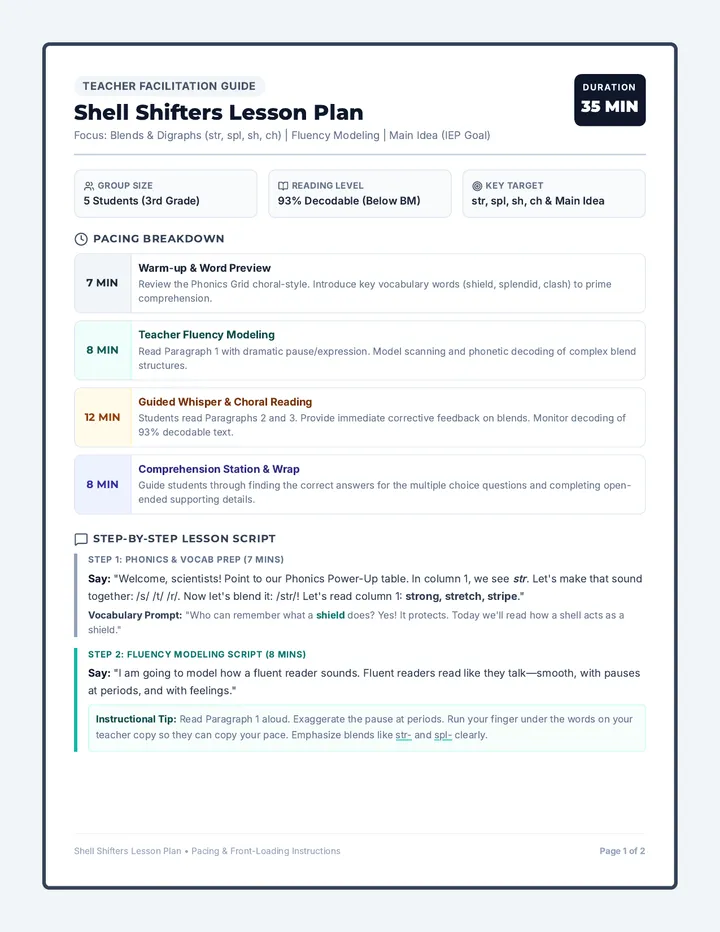
Comprehensive 2-page Teacher Guided Lesson Plan and Facilitation Guide for the Shell Shifters small group reading lesson. Includes 35-minute pacing, instructional scripts for fluency modeling, specific scaffold questions for IEP goals, and an answer key.
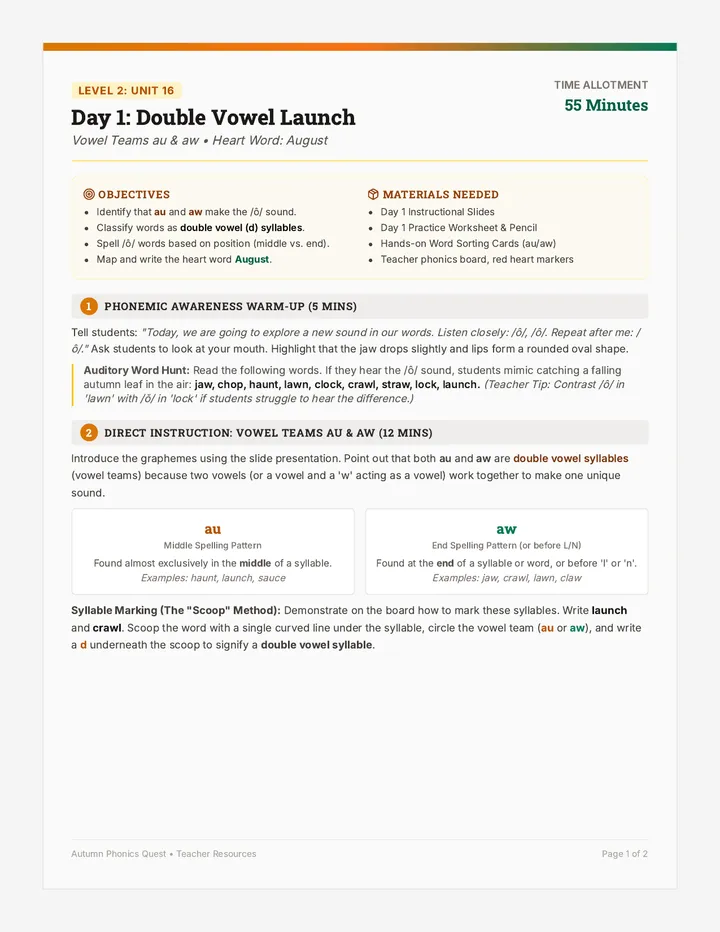
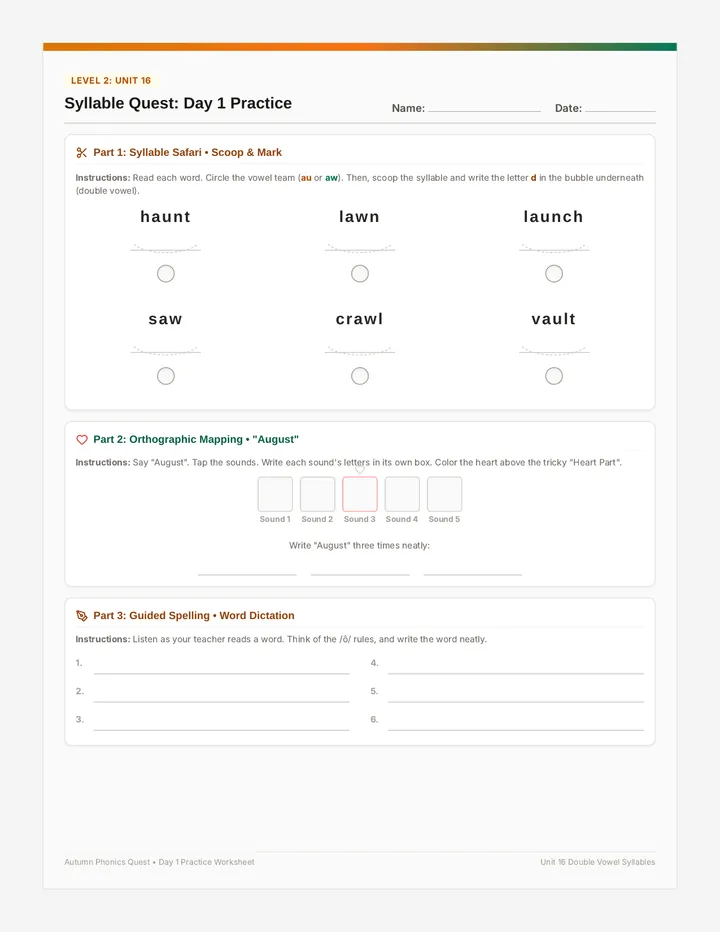
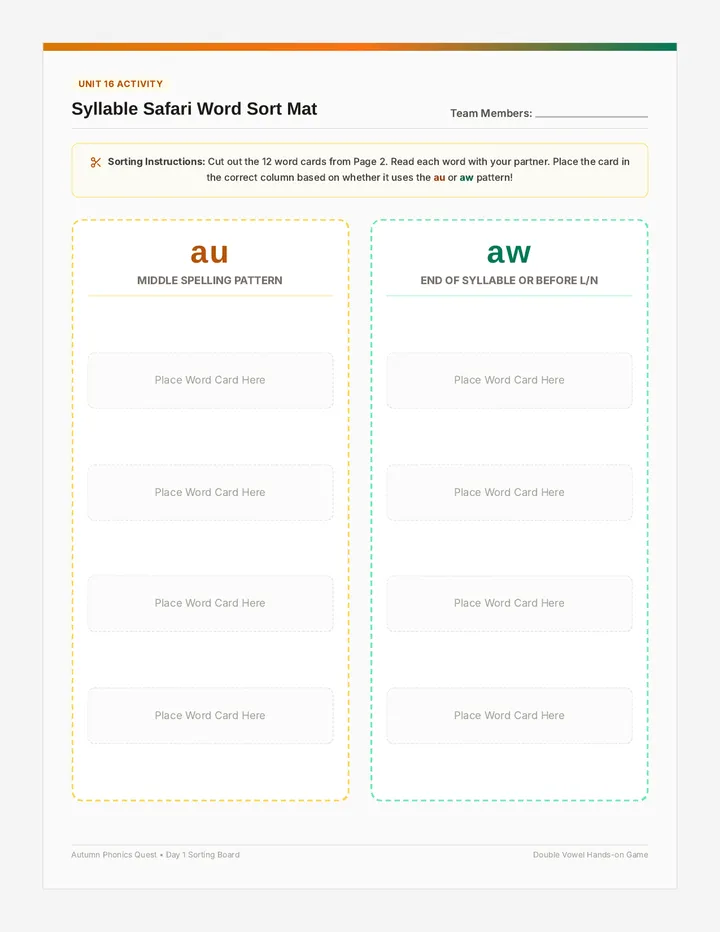
A comprehensive, two-day phonics sequence focusing on the double vowel syllable patterns au and aw, alongside orthographic mapping for the heart words August, laugh, and daughter.
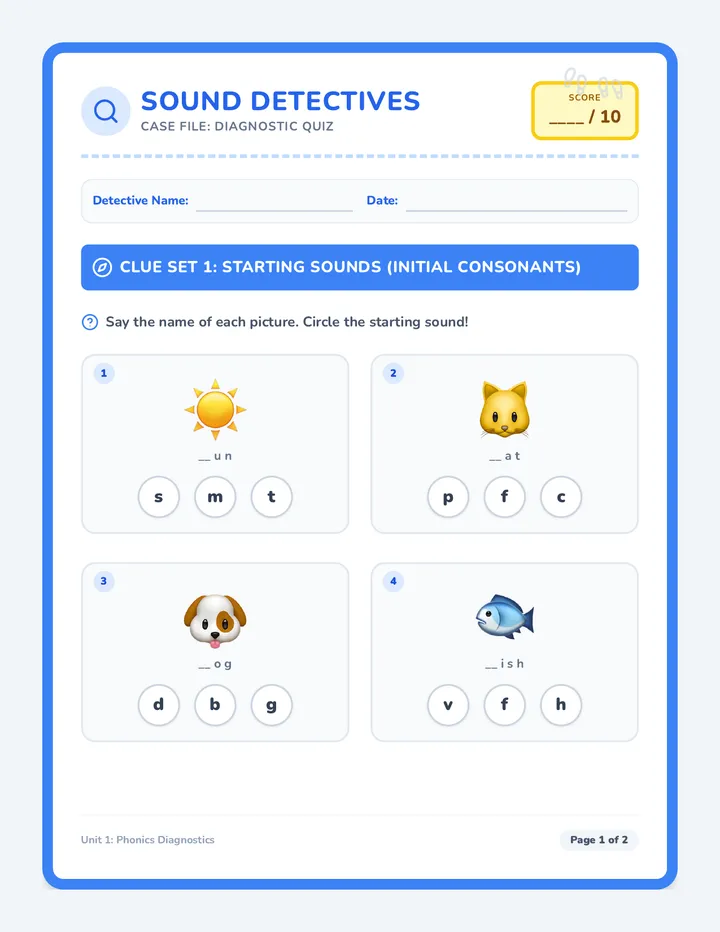
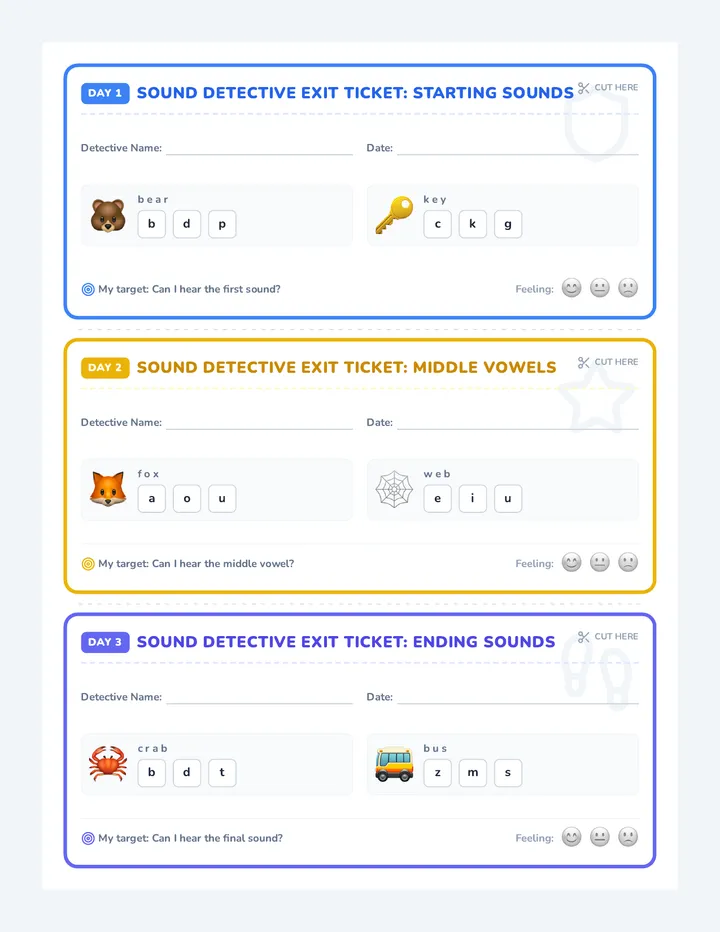
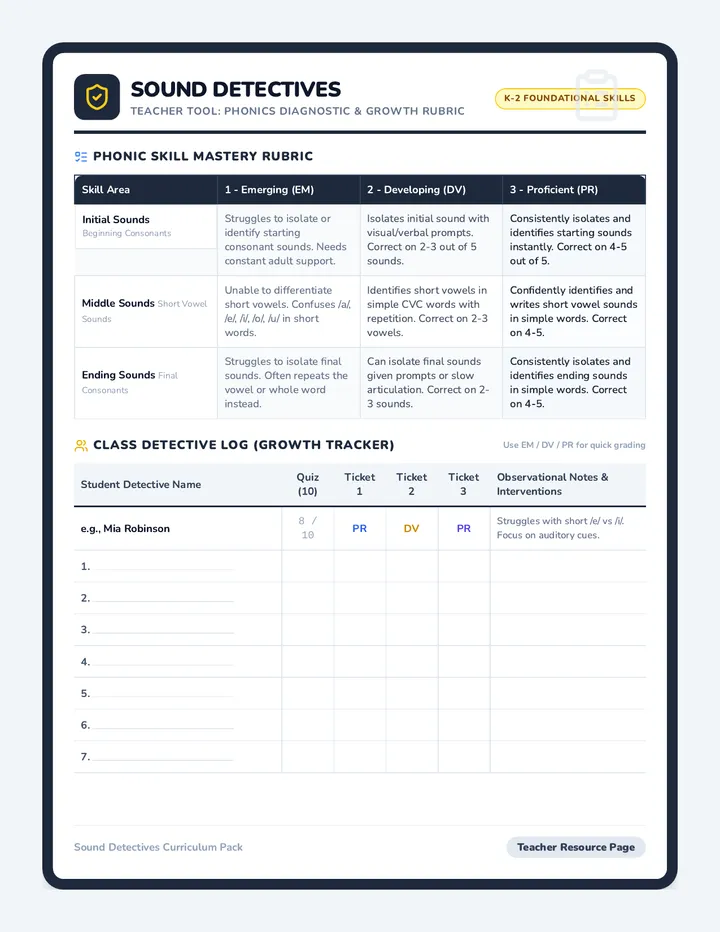
A phonics and phonemic awareness lesson focusing on identifying initial and final consonant sounds and short vowels. Designed for Early Elementary (K-2) with highly visual, engaging detective-themed assessment tools.
Student Reader for the Shell Shifters lesson. Includes a phonics grid for target blends (str, spl, sh, ch), a visual vocabulary preview, the 'Super Shells' non-fiction reading passage, and a structured post-reading section with multiple choice questions (main idea, conflict/resolution) and open-ended supporting details.