A college essay peer-review lesson focused on structure and mechanics, utilizing an 'Editorial Newsroom' theme. It includes feedback guidelines, a clear four-criterion rubric, and a reviewer response worksheet.
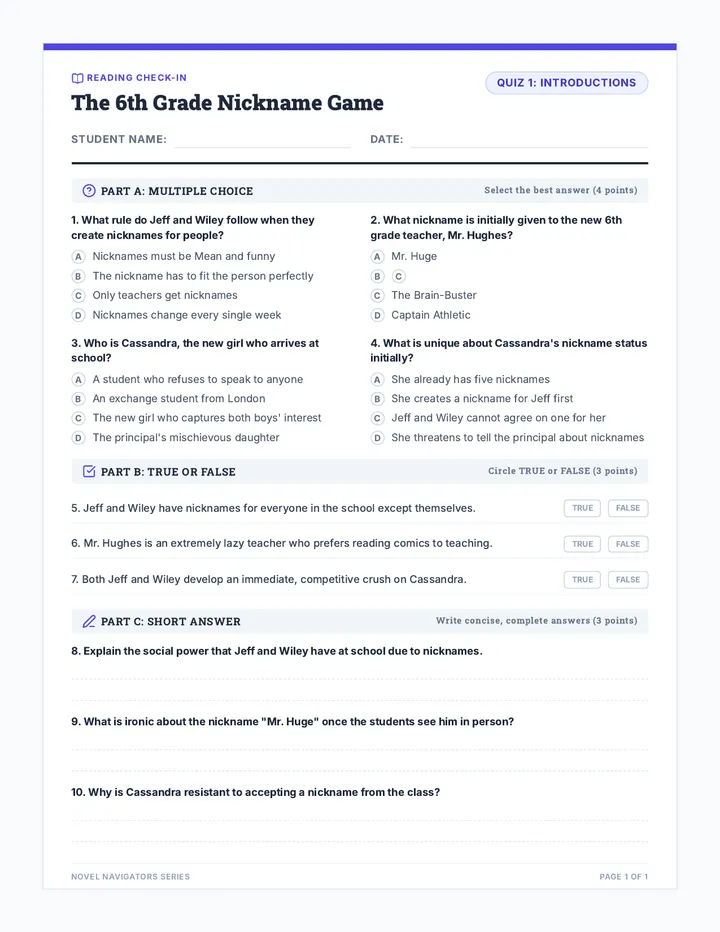
A comprehensive set of reading comprehension check-in quizzes for five popular middle-grade novels. Each novel features two specialized quizzes—one focusing on initial character introductions and the other on major plot resolutions.
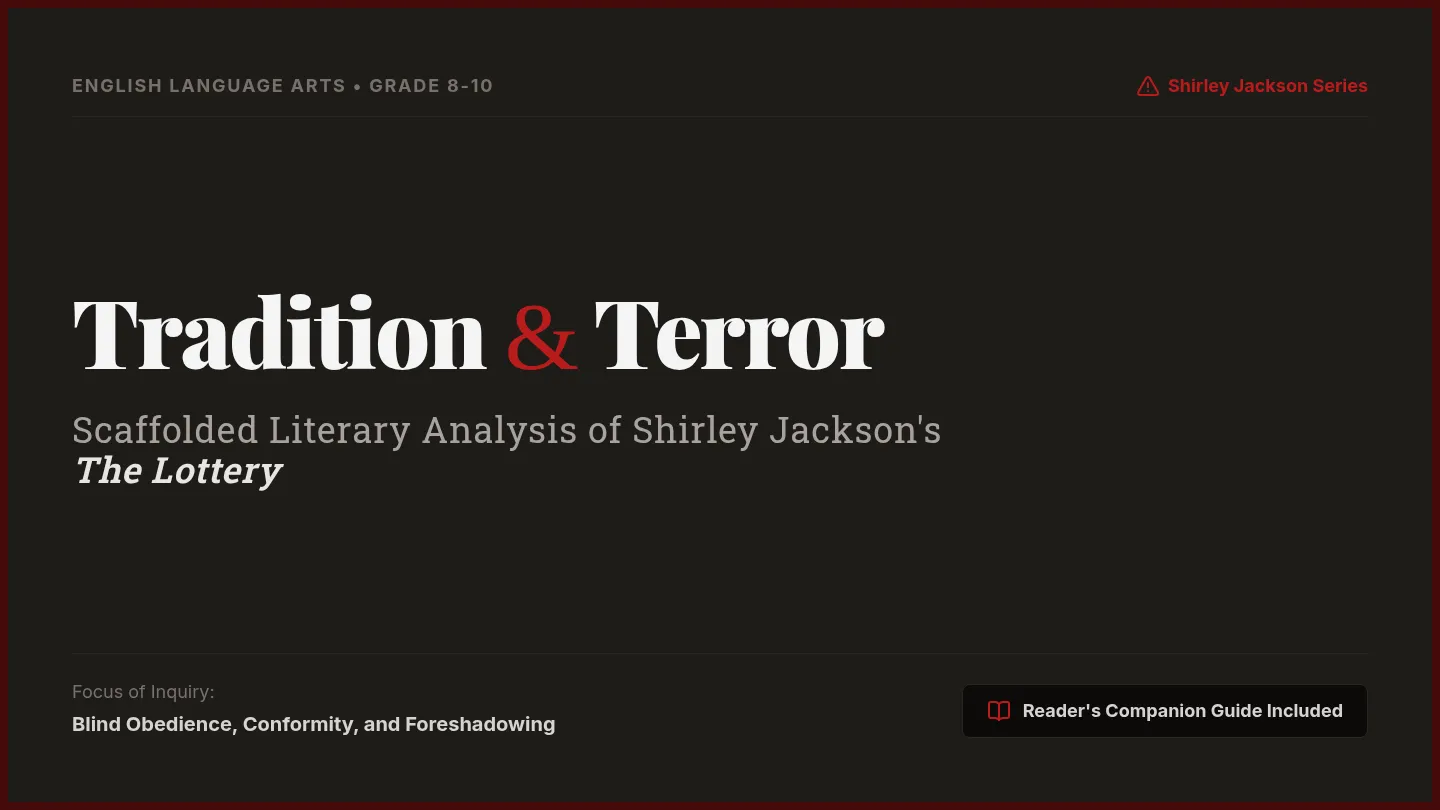
A scaffolded literary analysis of Shirley Jackson's classic short story 'The Lottery', exploring the themes of blind tradition and social conformity. This lesson bundle features interactive presentation slides, scaffolded worksheets with direct text chunks and sentence starter support, a targeted exit ticket, and a teacher's facilitation guide.
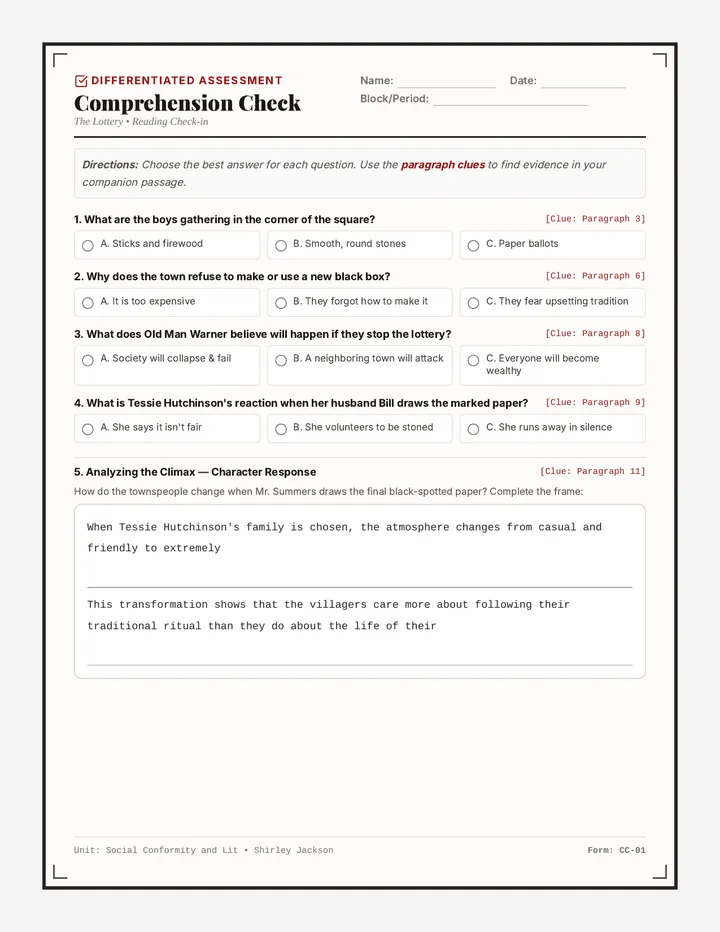
A differentiated 1-page comprehension check for 'The Lottery'. Features multiple-choice questions with reduced answer choices (3 options instead of 4), direct paragraph and line number clues, and a scaffolded short response prompt with writing lines.
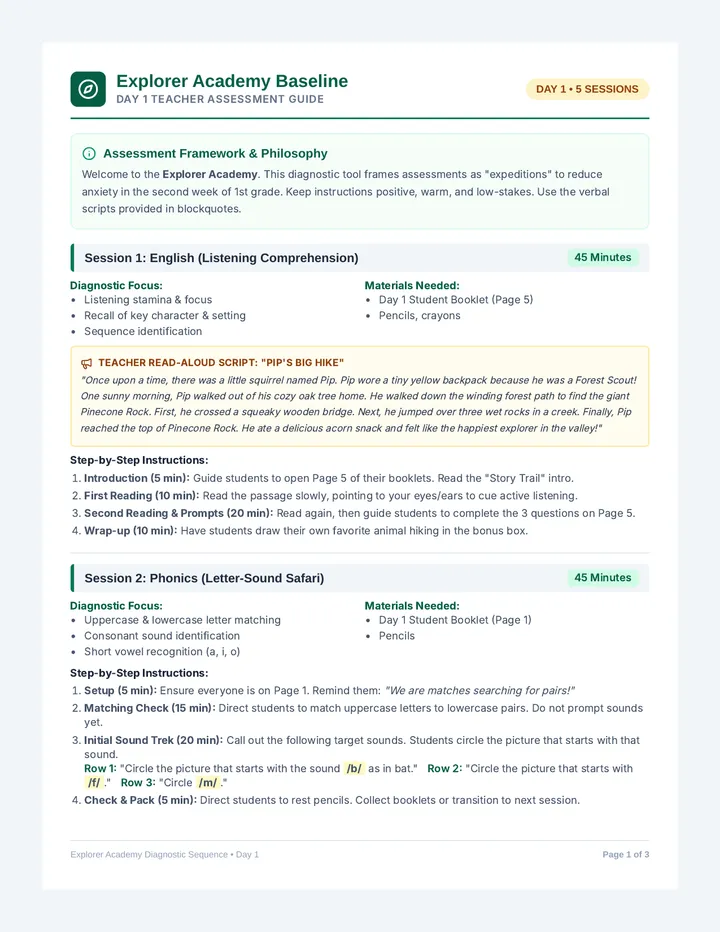
A comprehensive diagnostic assessment sequence designed for the second week of first grade. Spanning two days, it evaluates Kindergarten readiness and first-grade baseline performance across English, Phonics, Writing, Math, and Science in structured 45-minute sessions.
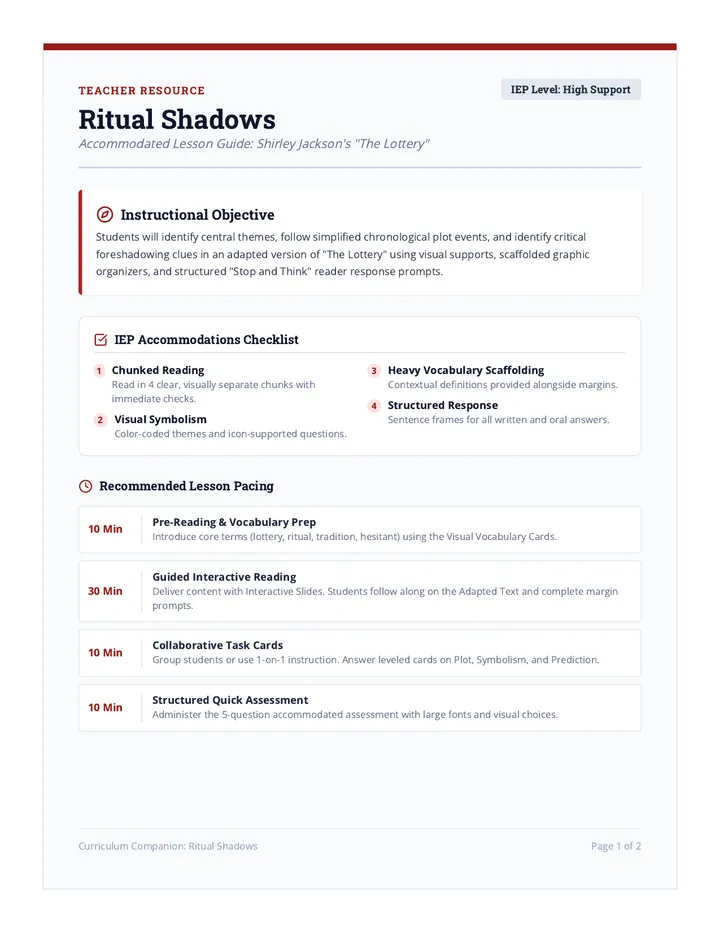
A highly supportive, adapted literature study of Shirley Jackson's 'The Lottery.' This lesson contains a simplified, guided text with margin prompts, interactive slide deck, heavy vocabulary scaffolding cards, leveled task cards, a structured assessment, and a comprehensive teacher guide.
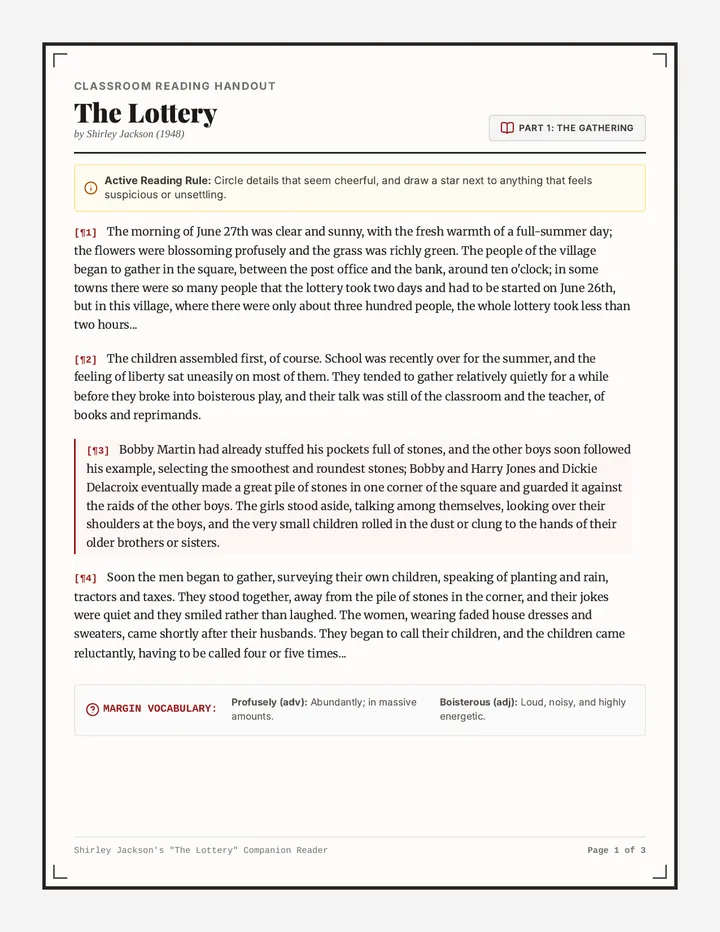
A 3-page printable Student Reading Handout containing key chronological passages from Shirley Jackson's 'The Lottery'. Features clear typography, paragraph numbers for easy reference, line-by-line annotations space, and vocabulary callouts for struggling readers.
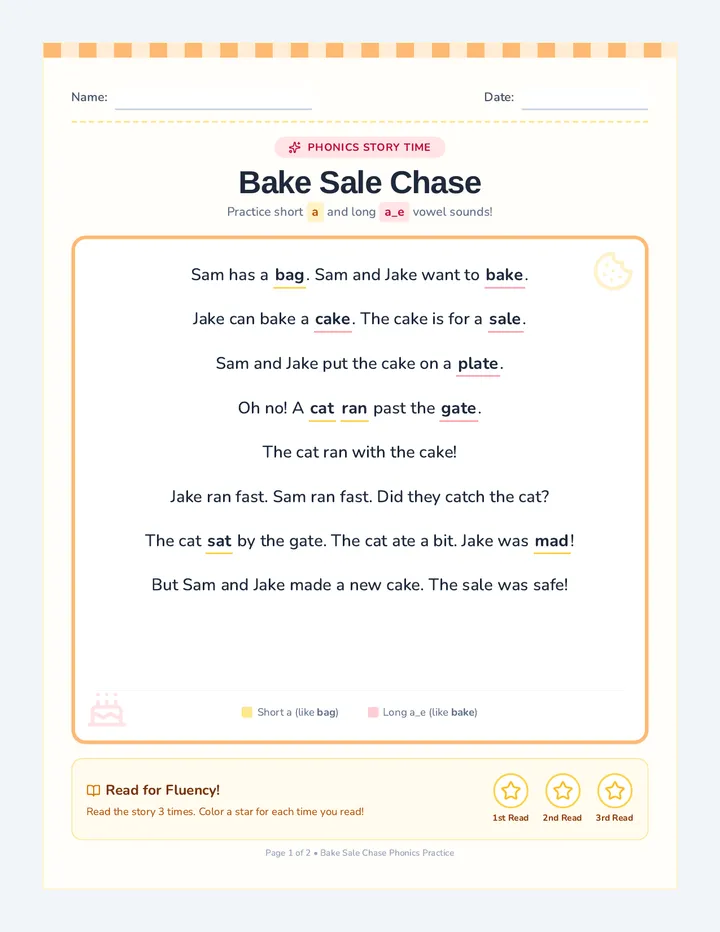
An engaging introductory phonics unit teaching first-grade students to identify, read, and write short and long vowel sounds with silent magic 'e'.
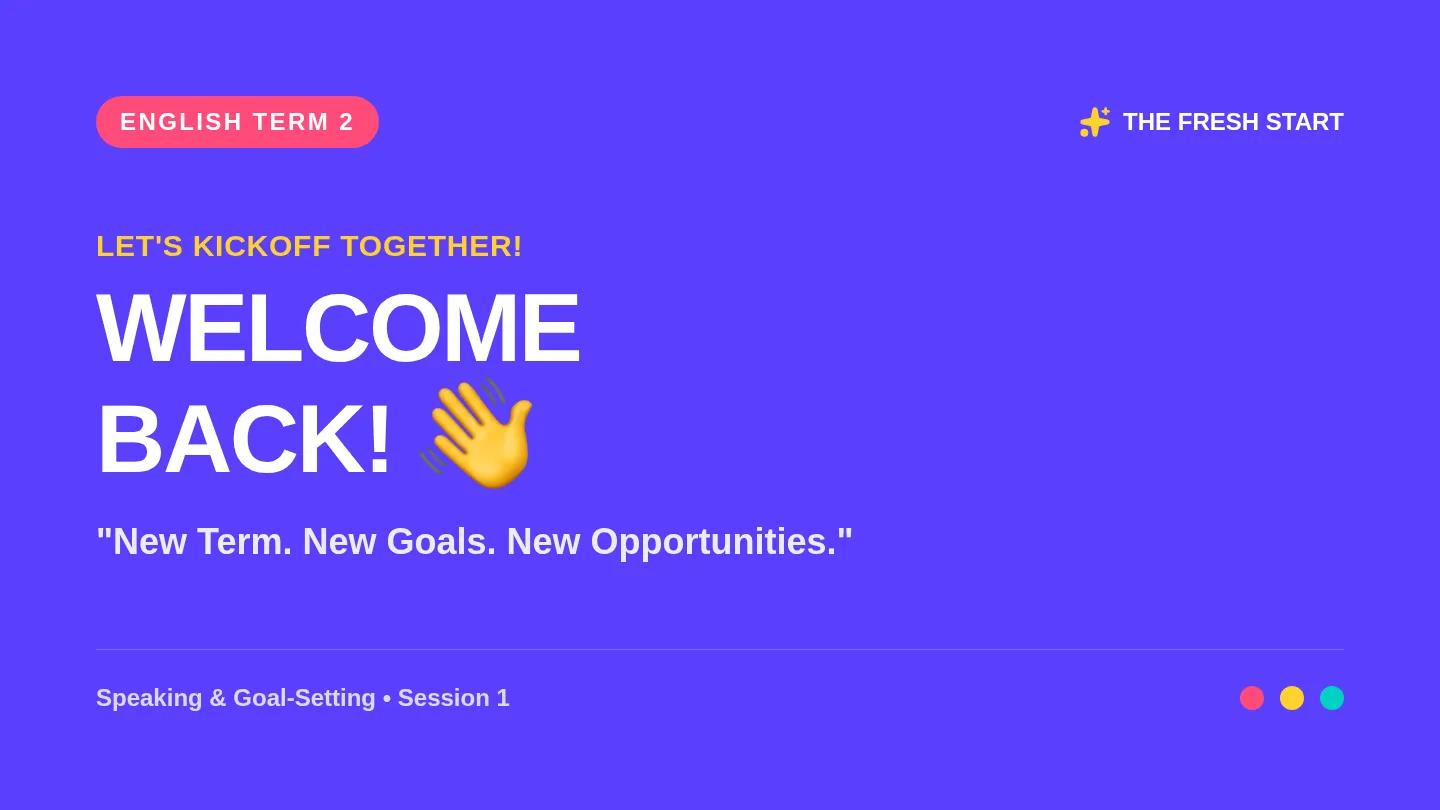
A welcoming, high-energy introductory lesson for English Term 2. Students reflect on their holiday experiences, practice active listening and speaking in a collaborative environment, and set personalized, actionable SMART goals for the new term.
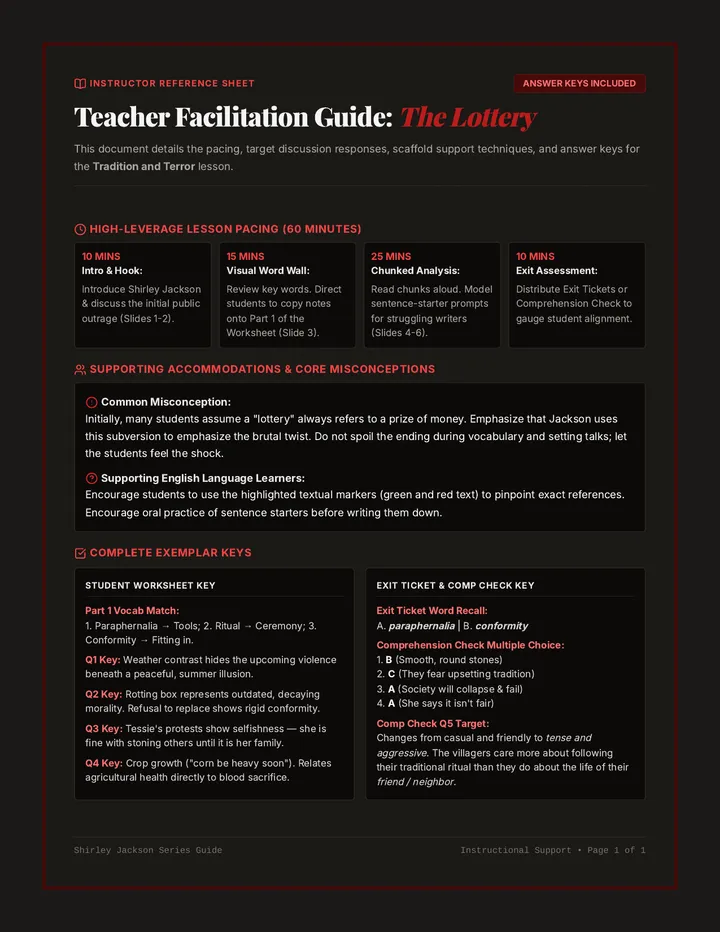
A comprehensive 1-page Teacher Facilitation Guide and Lesson Plan for teaching Shirley Jackson's 'The Lottery'. Features a clear 60-minute pacing guide, active teaching prompts, discussion scaffolding strategies, and a complete answer key for the student worksheets and exit ticket.
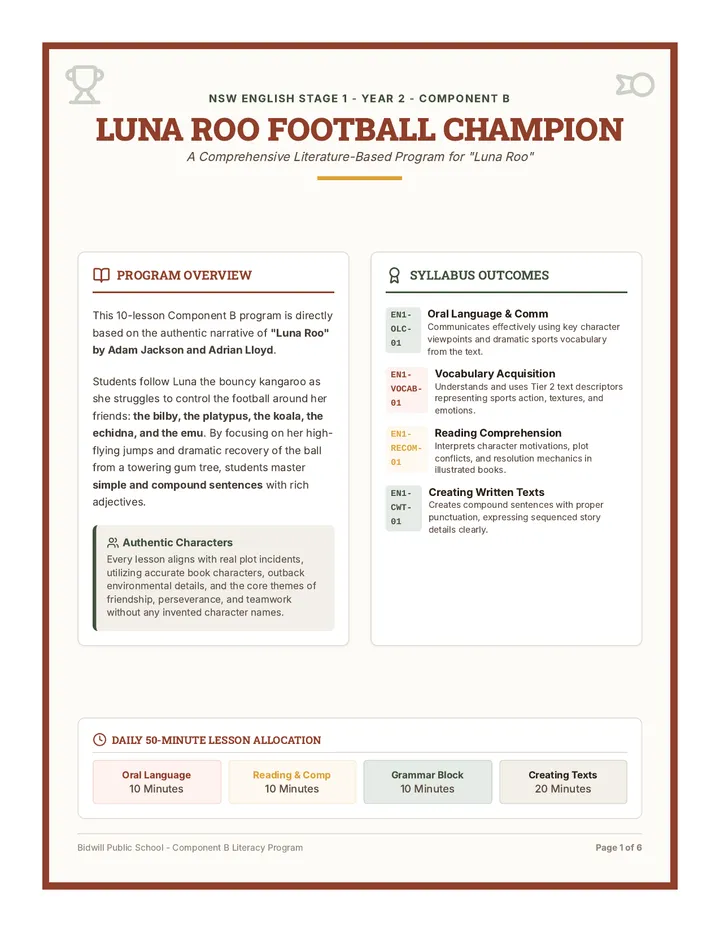
A 10-lesson Stage 1 Year 2 English Component B program based on the book 'Luna Roo' by Adam Jackson and Adrian Lloyd. The sequence explicitly teaches simple and compound sentences enriched with descriptive adjectives focused on Luna's outback soccer matches, animal teammates, and dusty playing fields.
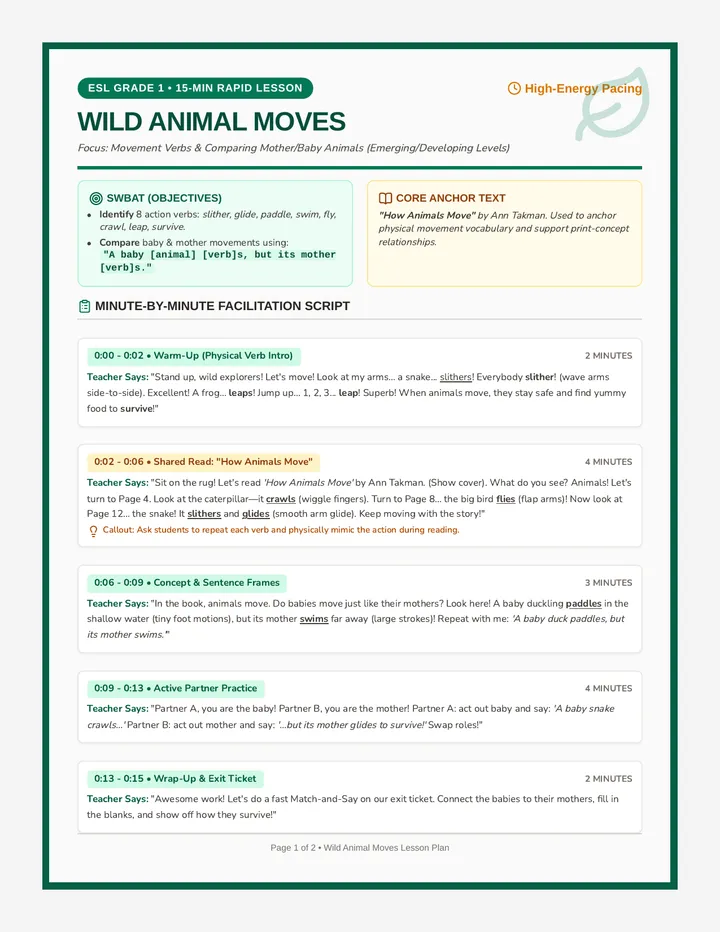
A rapid-fire, high-energy 15-minute ESL lesson for 1st graders focusing on animal movement verbs (slither, glide, paddle, swim, fly, crawl, leap, survive) and comparing baby animals to their mothers using scaffolded sentence frames.
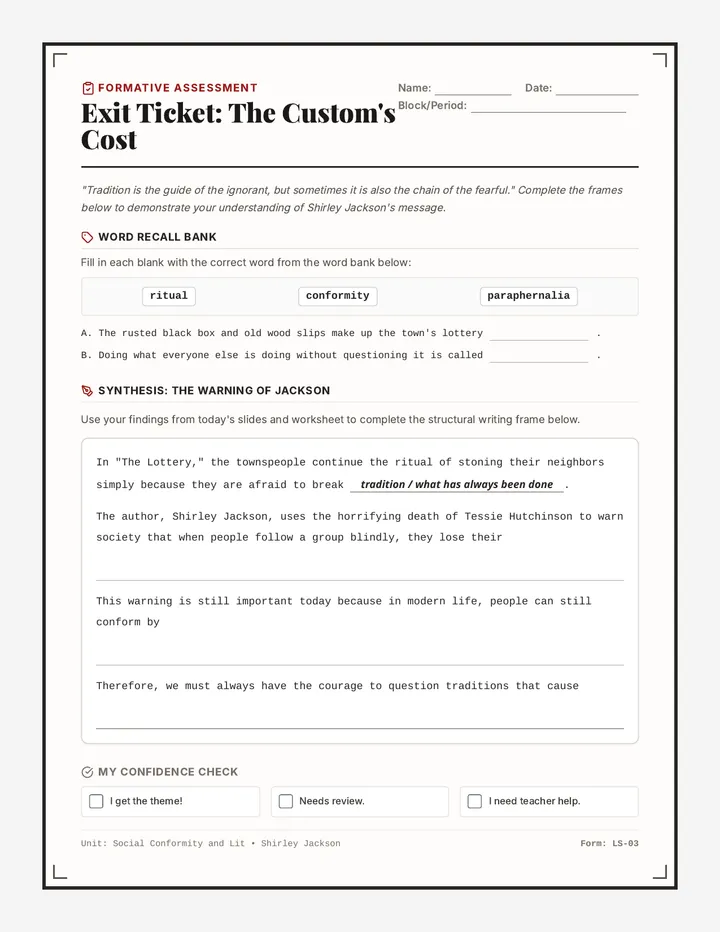
A scaffolded 1-page student Exit Ticket designed to assess comprehension of 'The Lottery'. Includes targeted sentence frames, a vocabulary recall section, and critical thinking writing prompts regarding the story's ultimate warning on blind conformity.