A hands-on lesson where students design and build a board game to master digital citizenship. Through a quest-themed hook and scenario-building activities, they explore cyberbullying, digital footprints, and online safety.
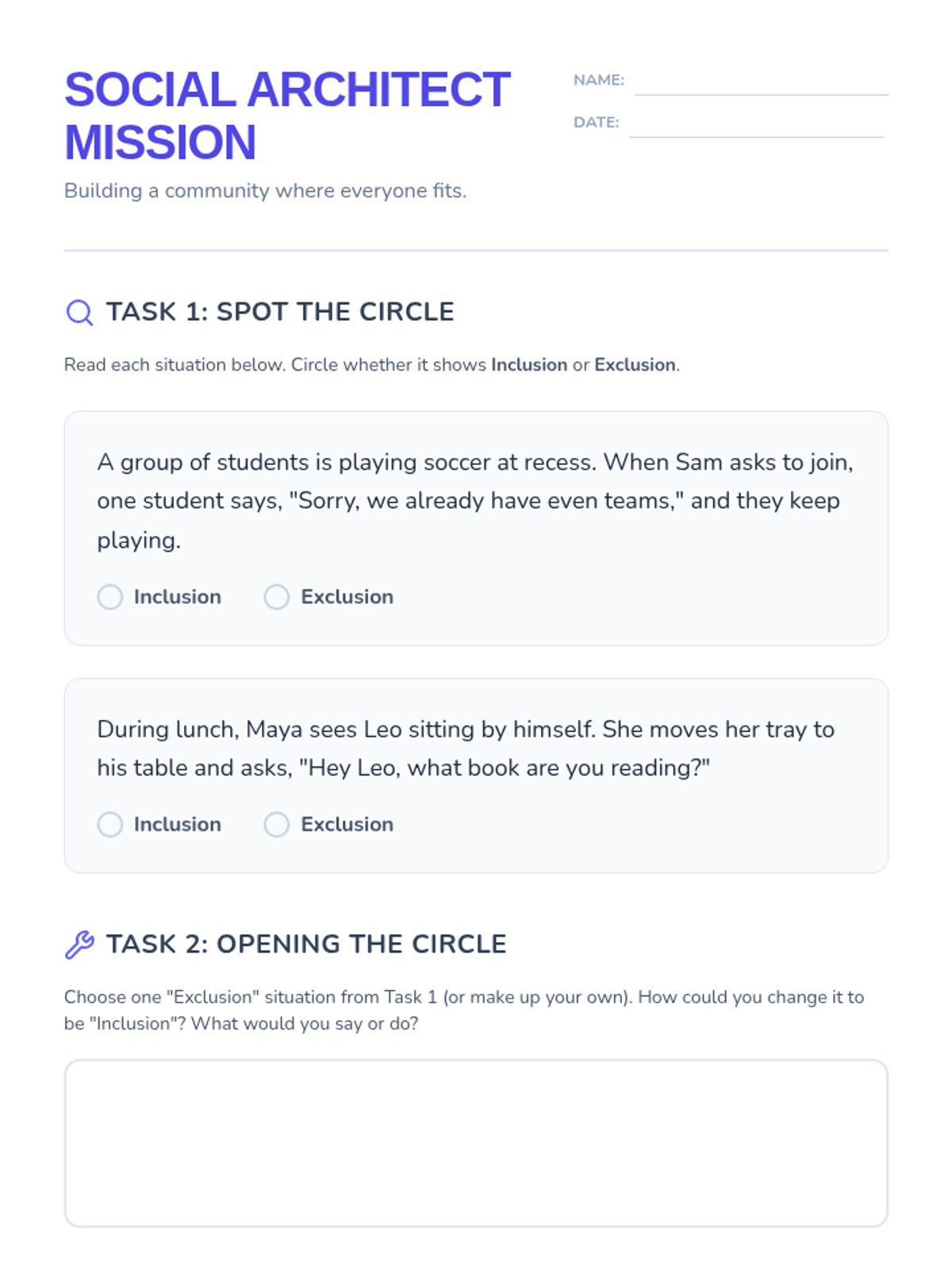
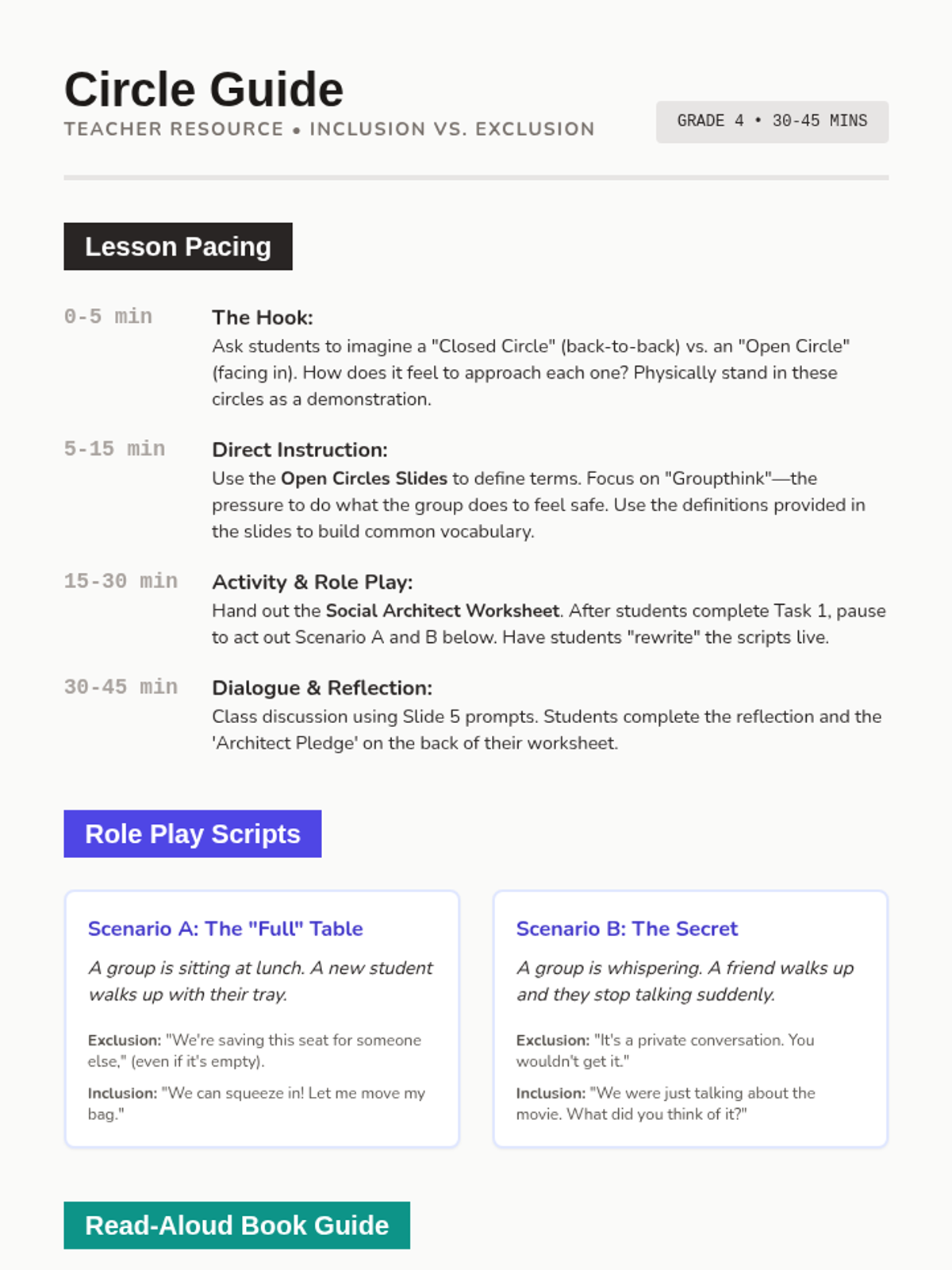
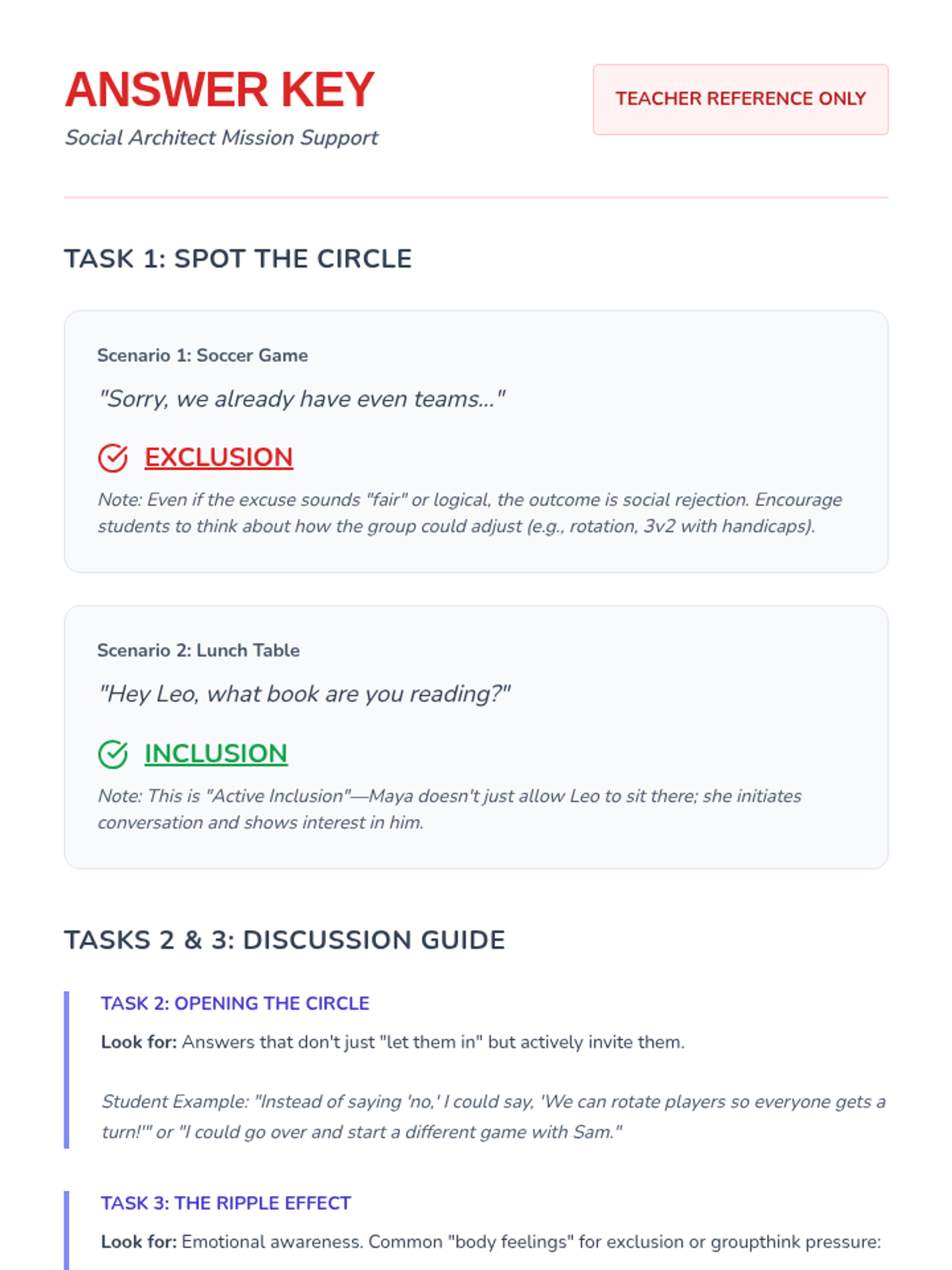
A social-emotional learning lesson for 4th graders exploring the definitions and impacts of inclusion and exclusion, focusing on empathy and breaking down 'groupthink' dynamics.
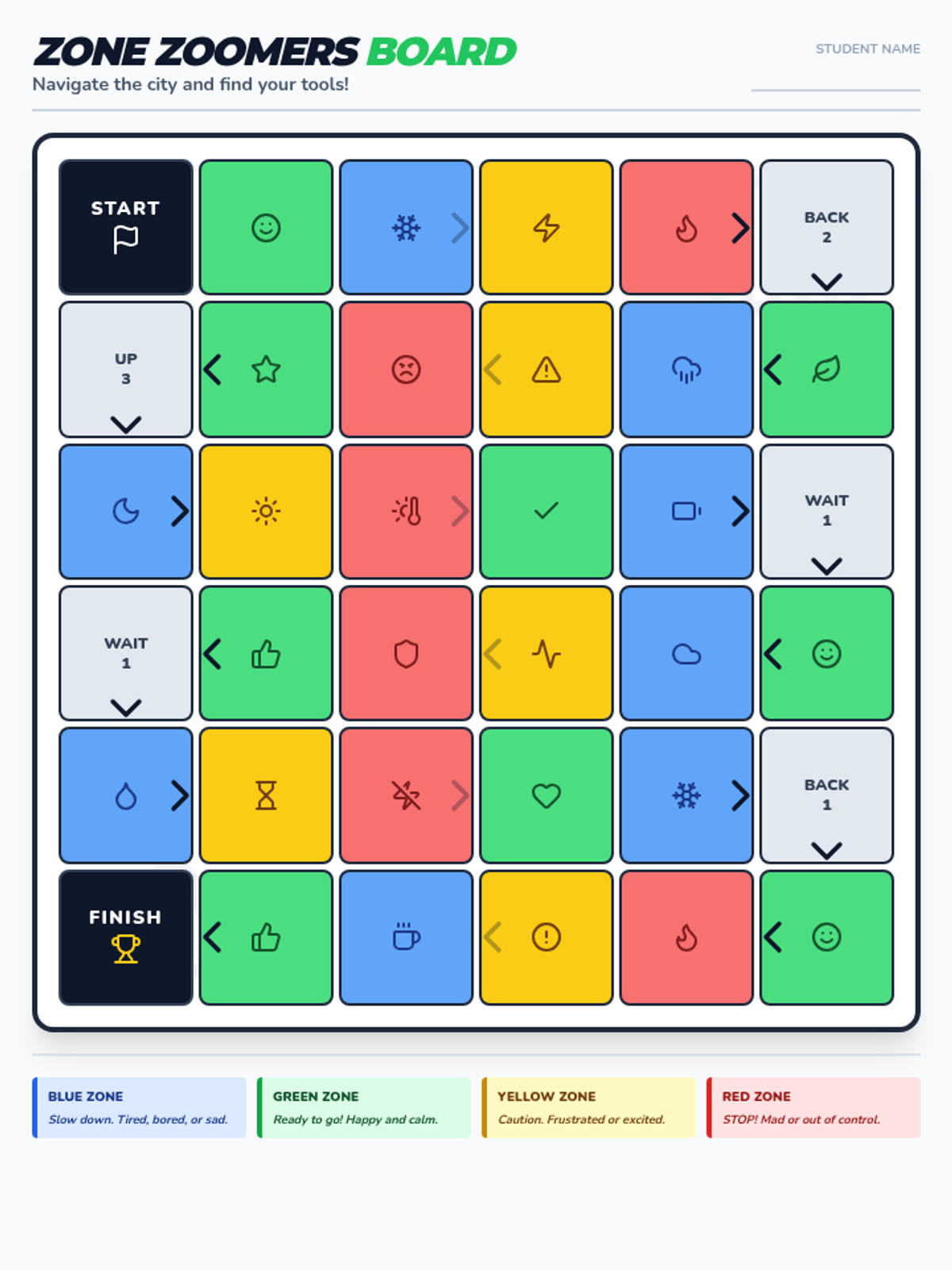
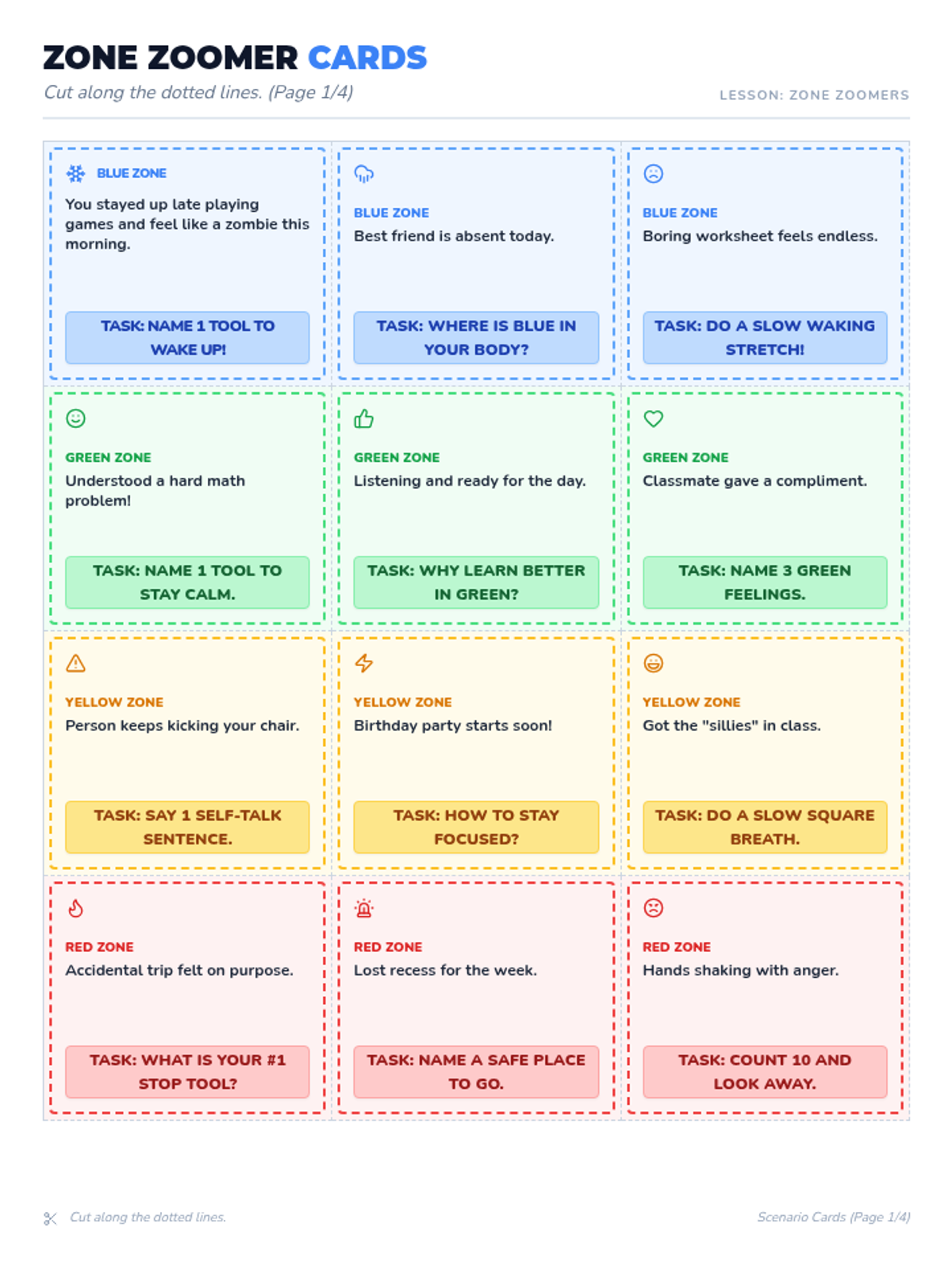
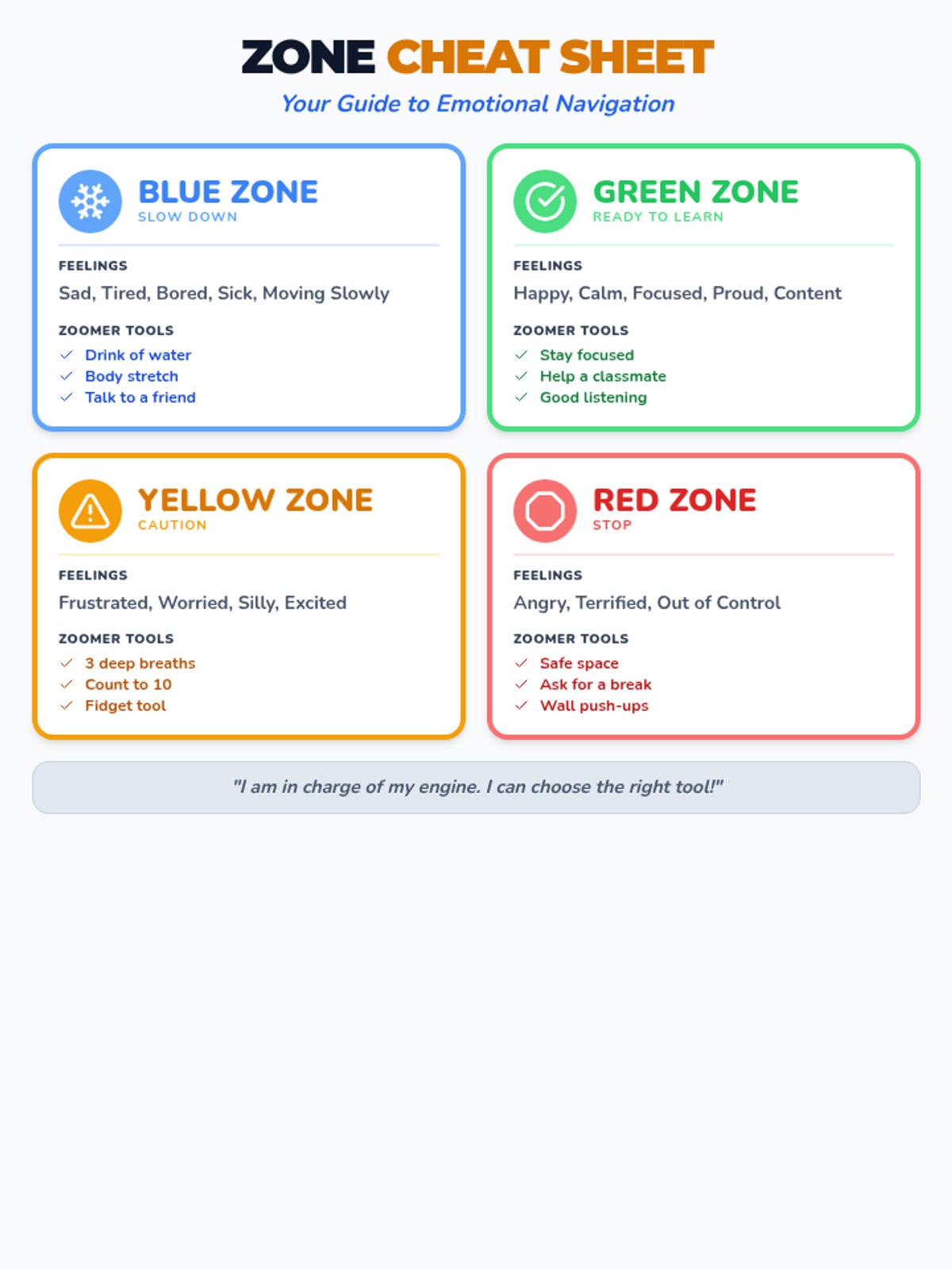
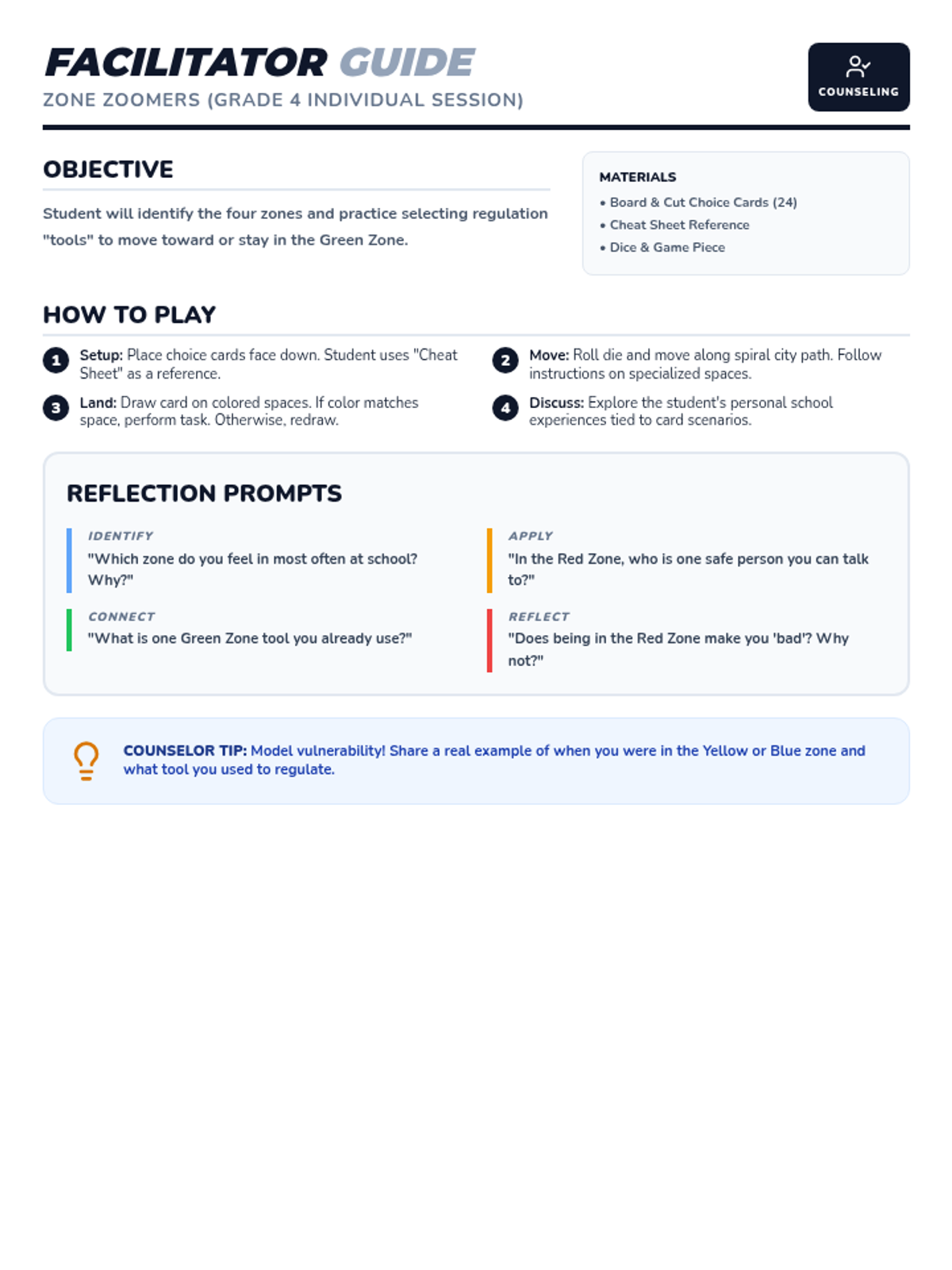
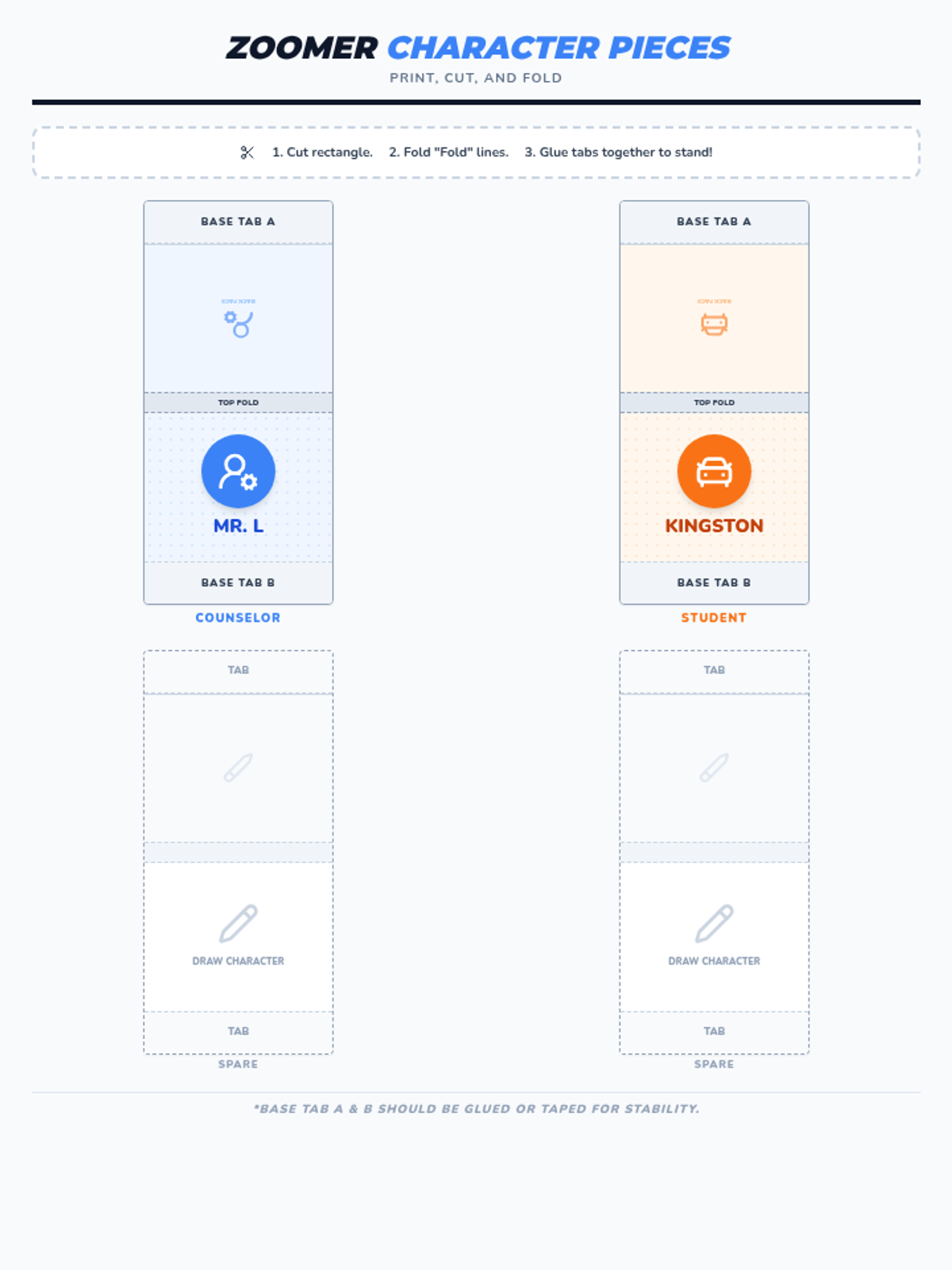
An individual counseling lesson using a board game to help 4th graders identify their emotional zones and practice regulation strategies.
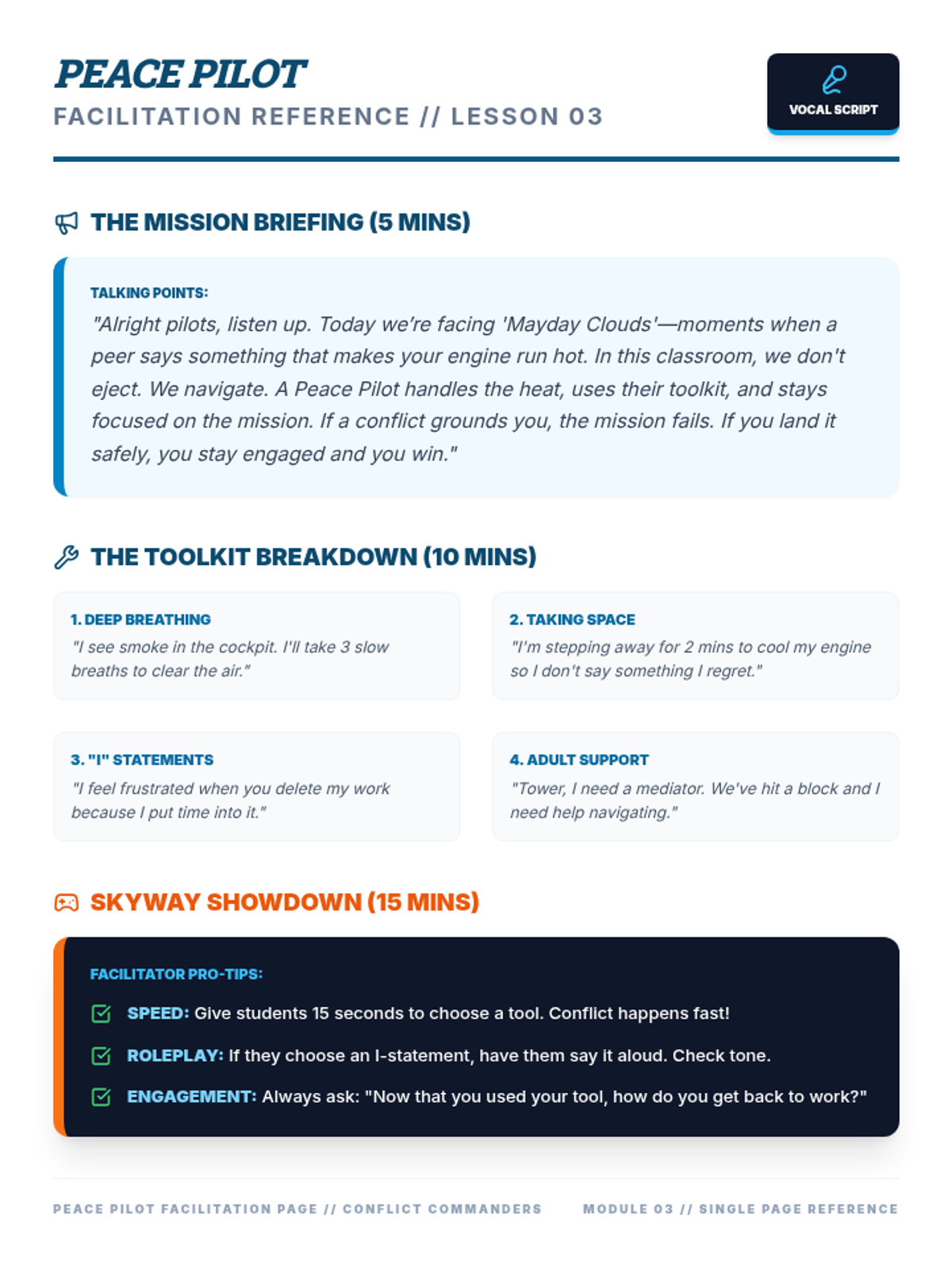
A lesson focusing on interpersonal conflict resolution strategies, teaching students how to navigate disagreements through negotiation and compromise to reach mutually beneficial outcomes.
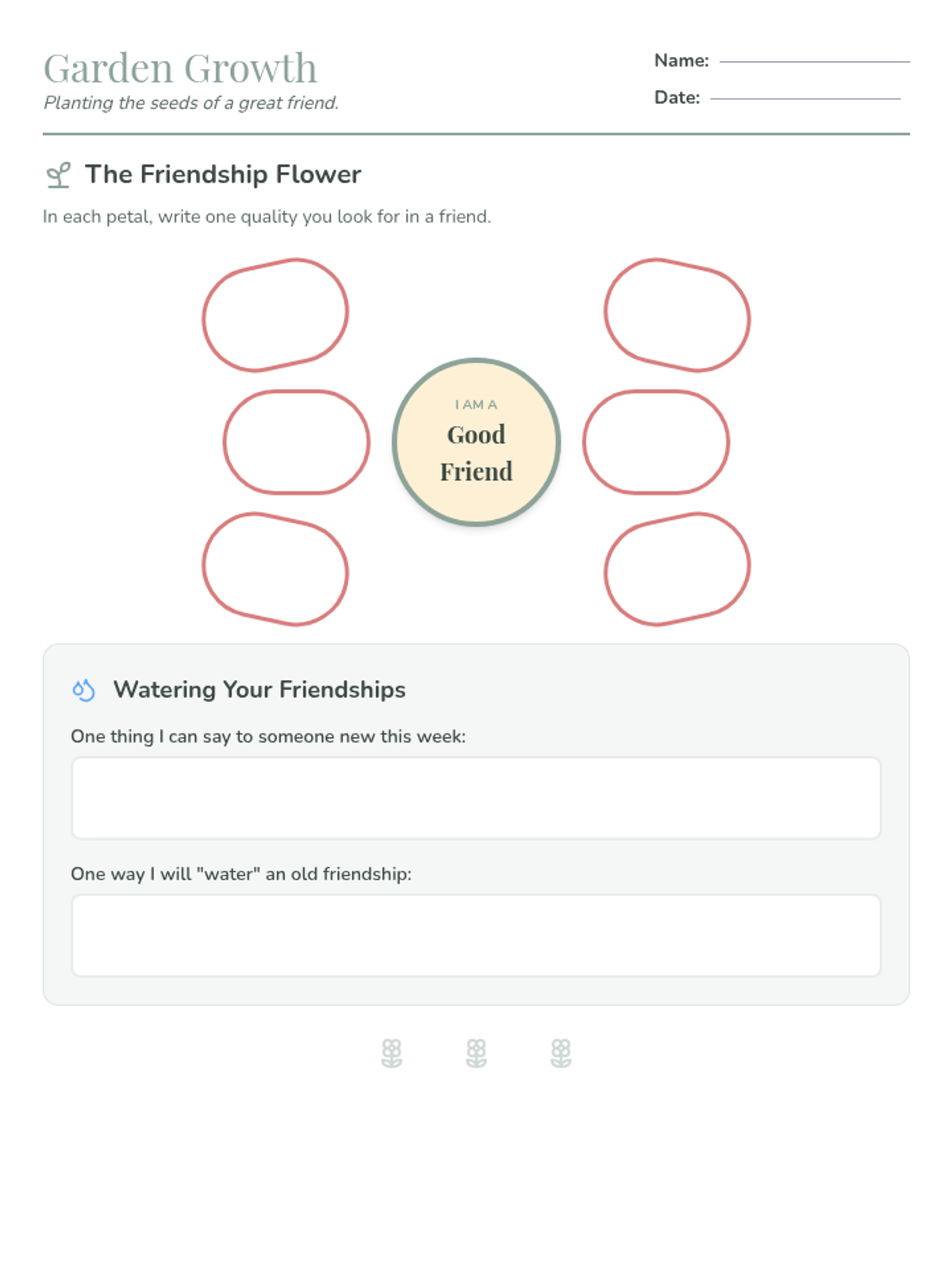
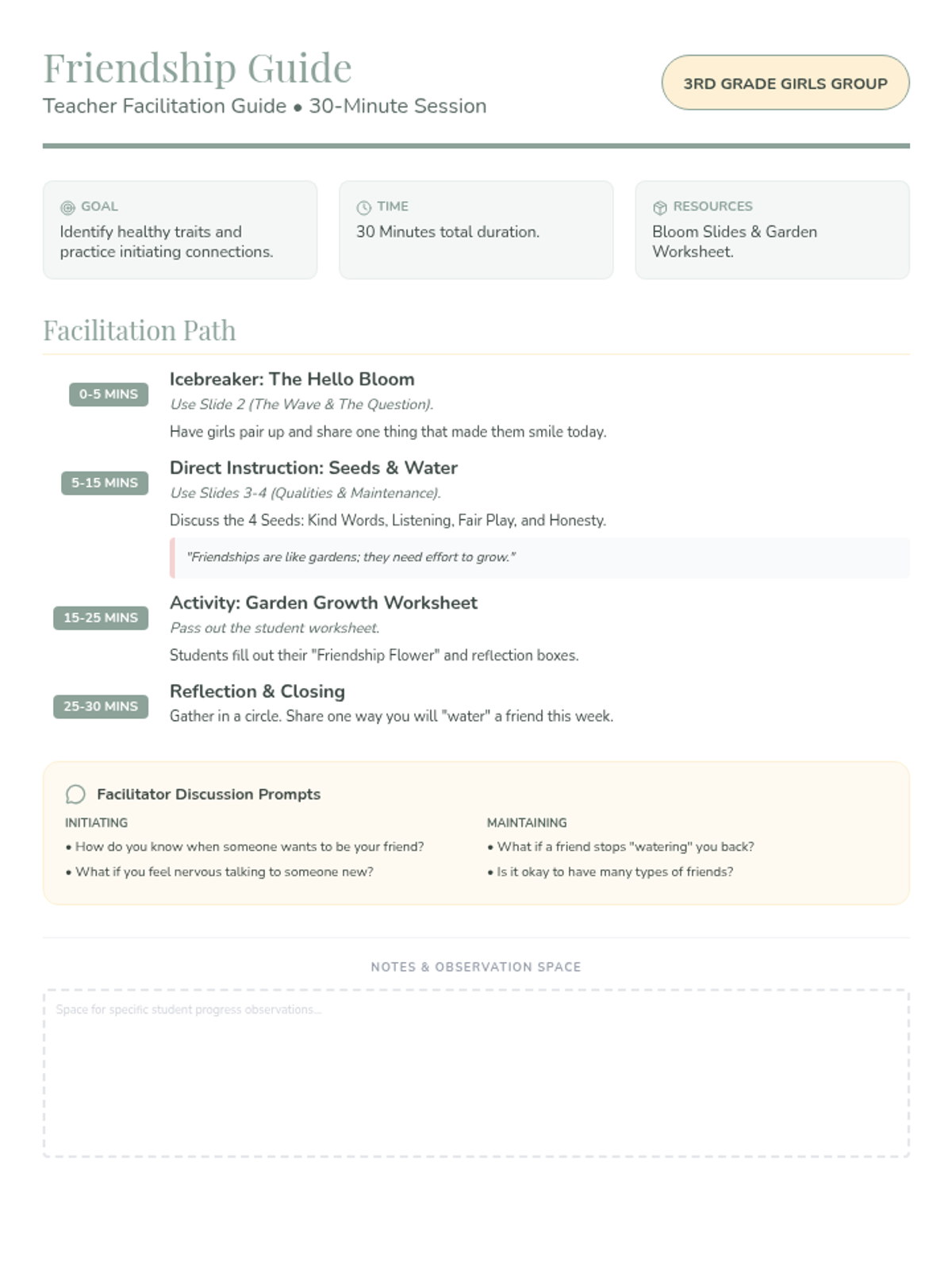
A 30-minute introductory session for 3rd-grade girls focused on identifying the qualities of a good friend and practicing conversational skills to build new connections.
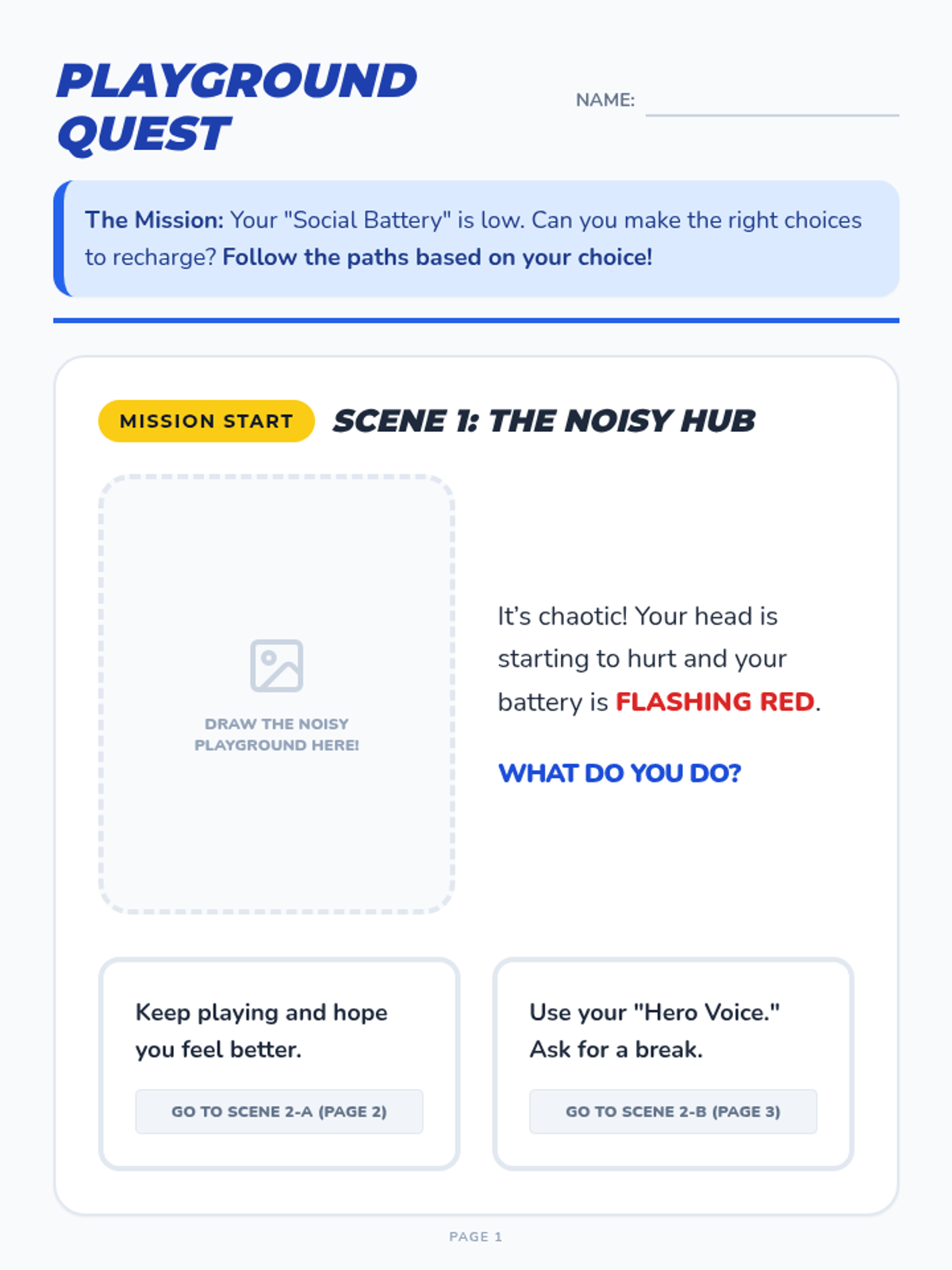
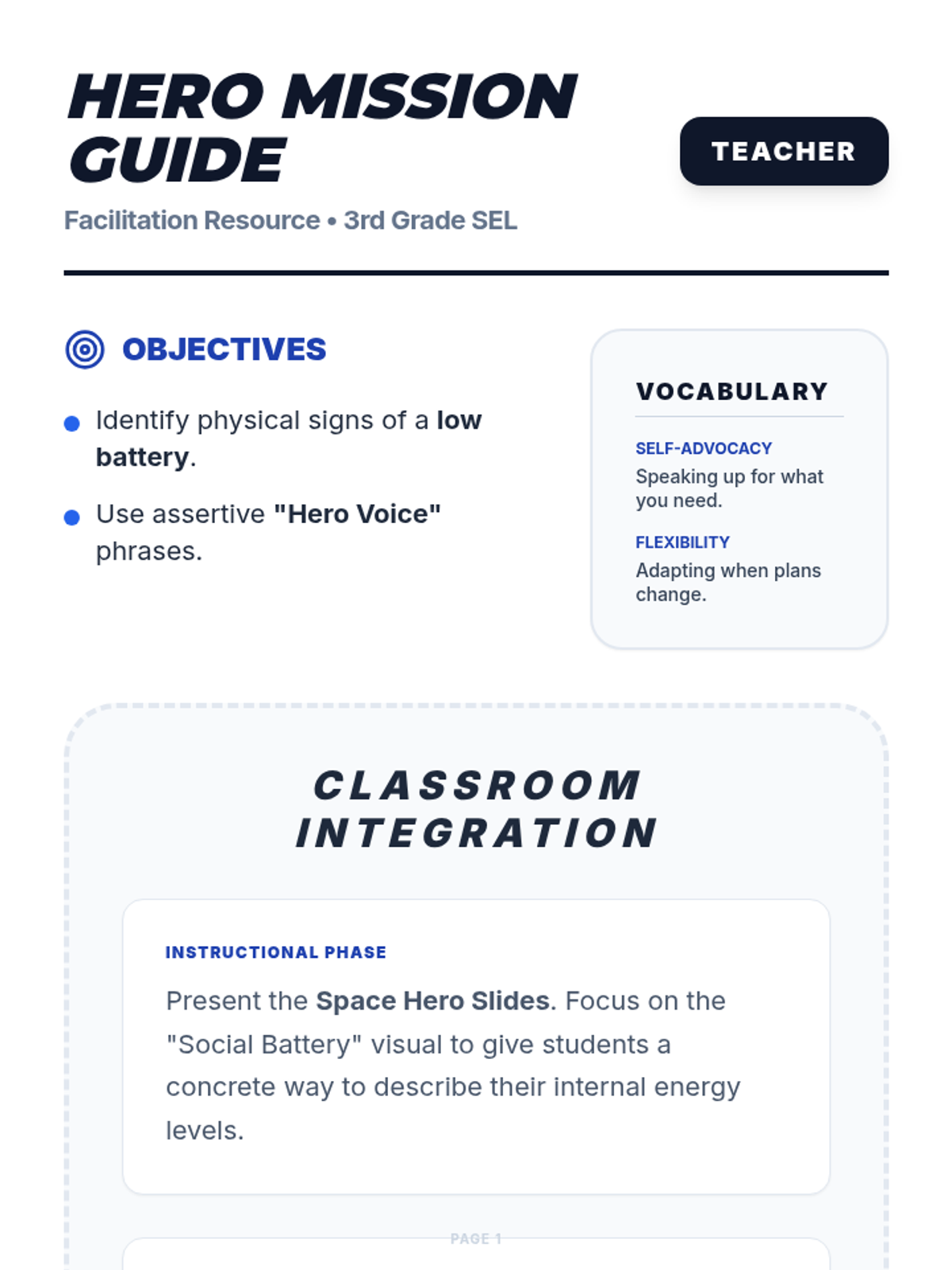
A lesson focused on teaching 3rd-grade students how to advocate for personal space and practice flexibility through an interactive comic-themed narrative.
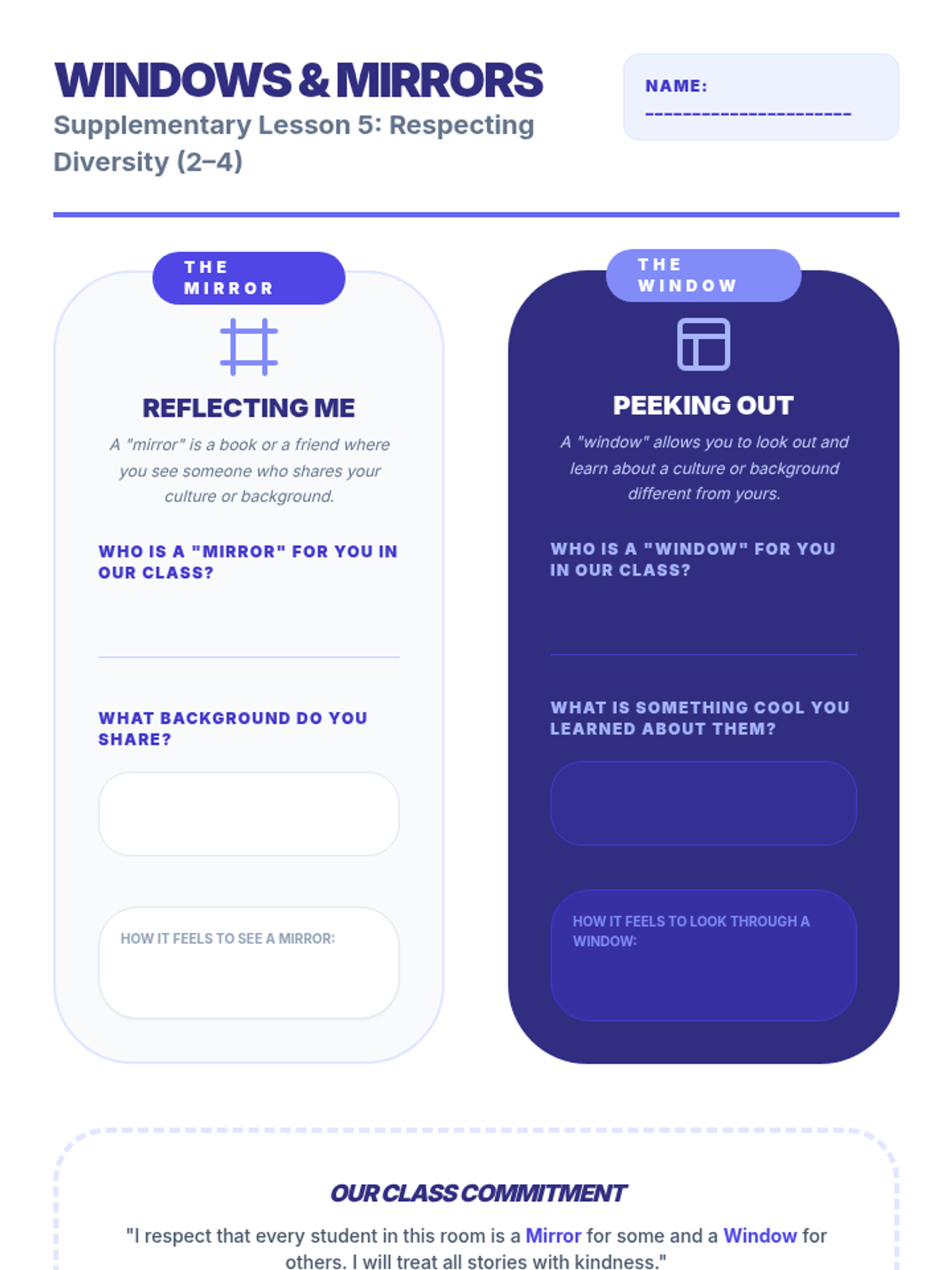
A lesson focused on recognizing and valuing the diverse backgrounds and experiences of classmates to build a more respectful community.
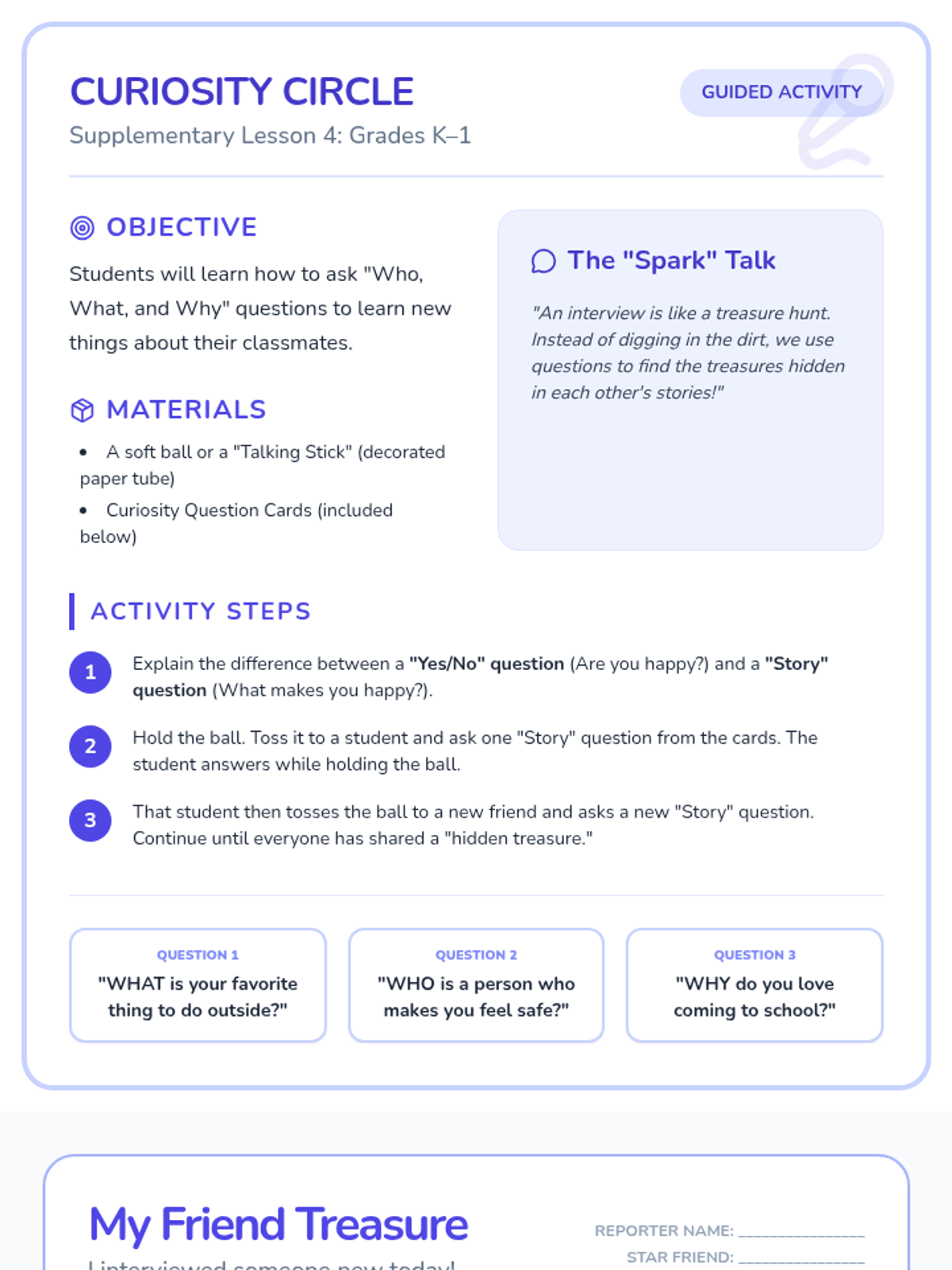
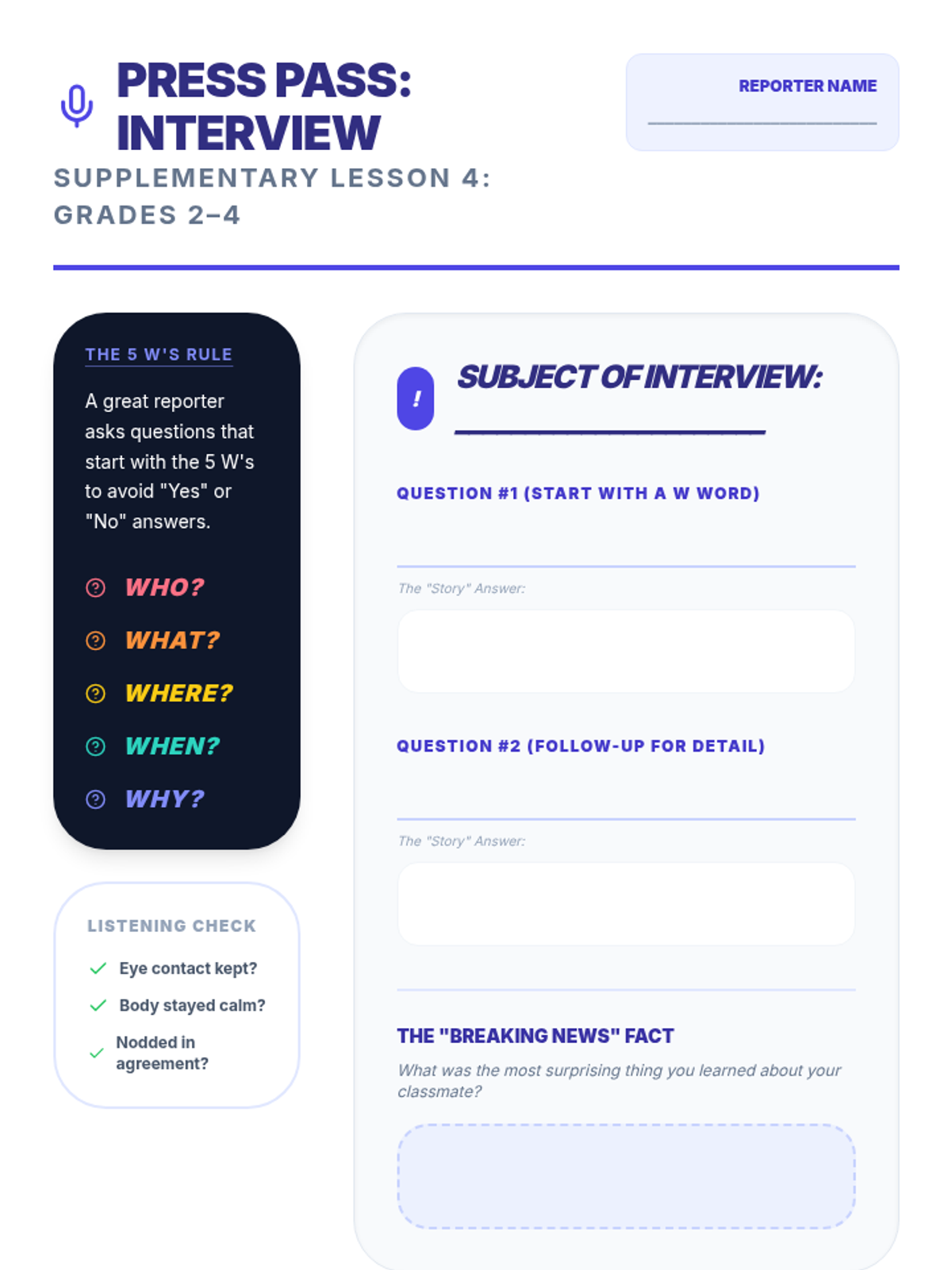
A skill-building lesson on how to ask open-ended questions and listen actively to learn about others in the community.
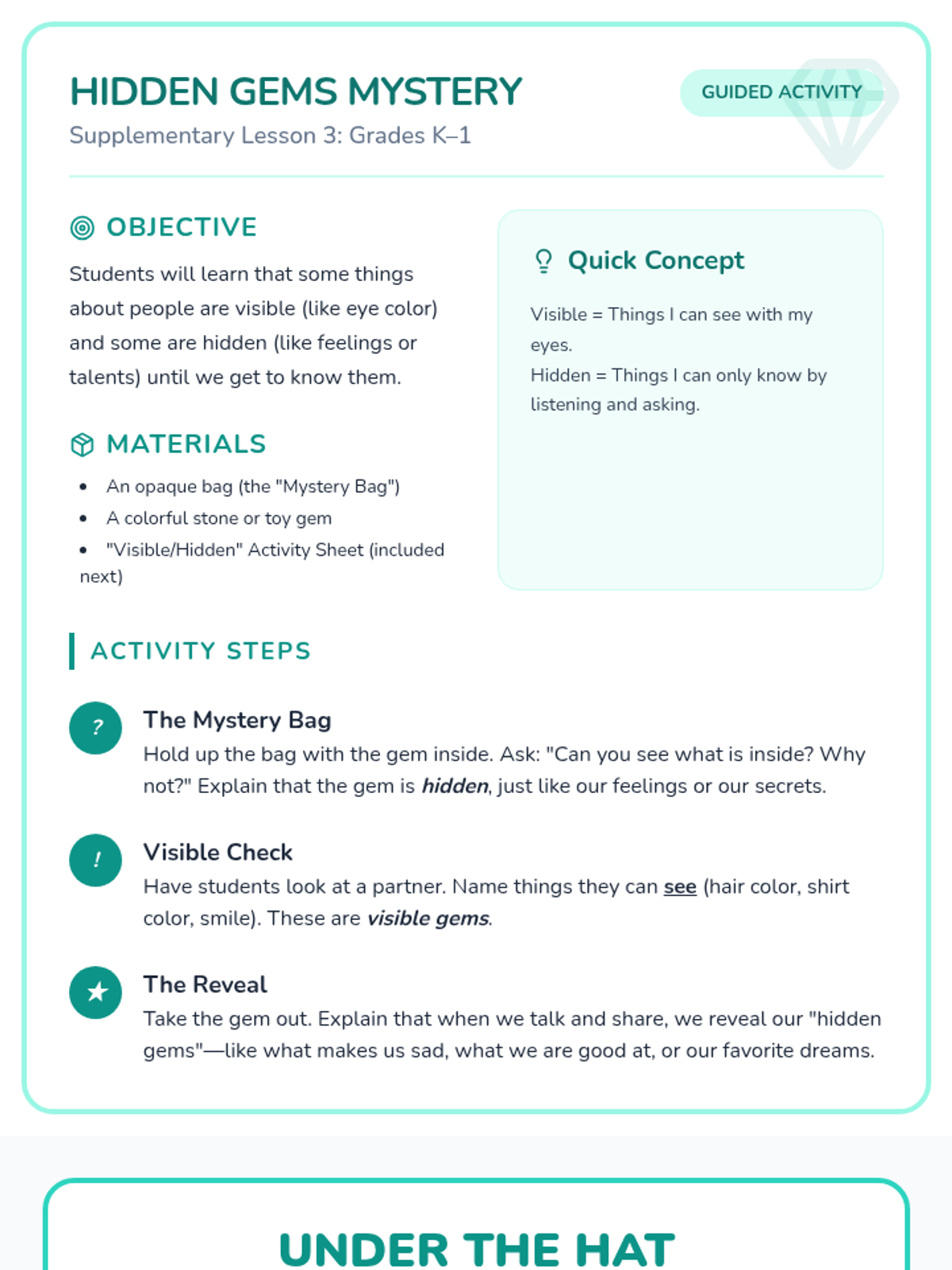
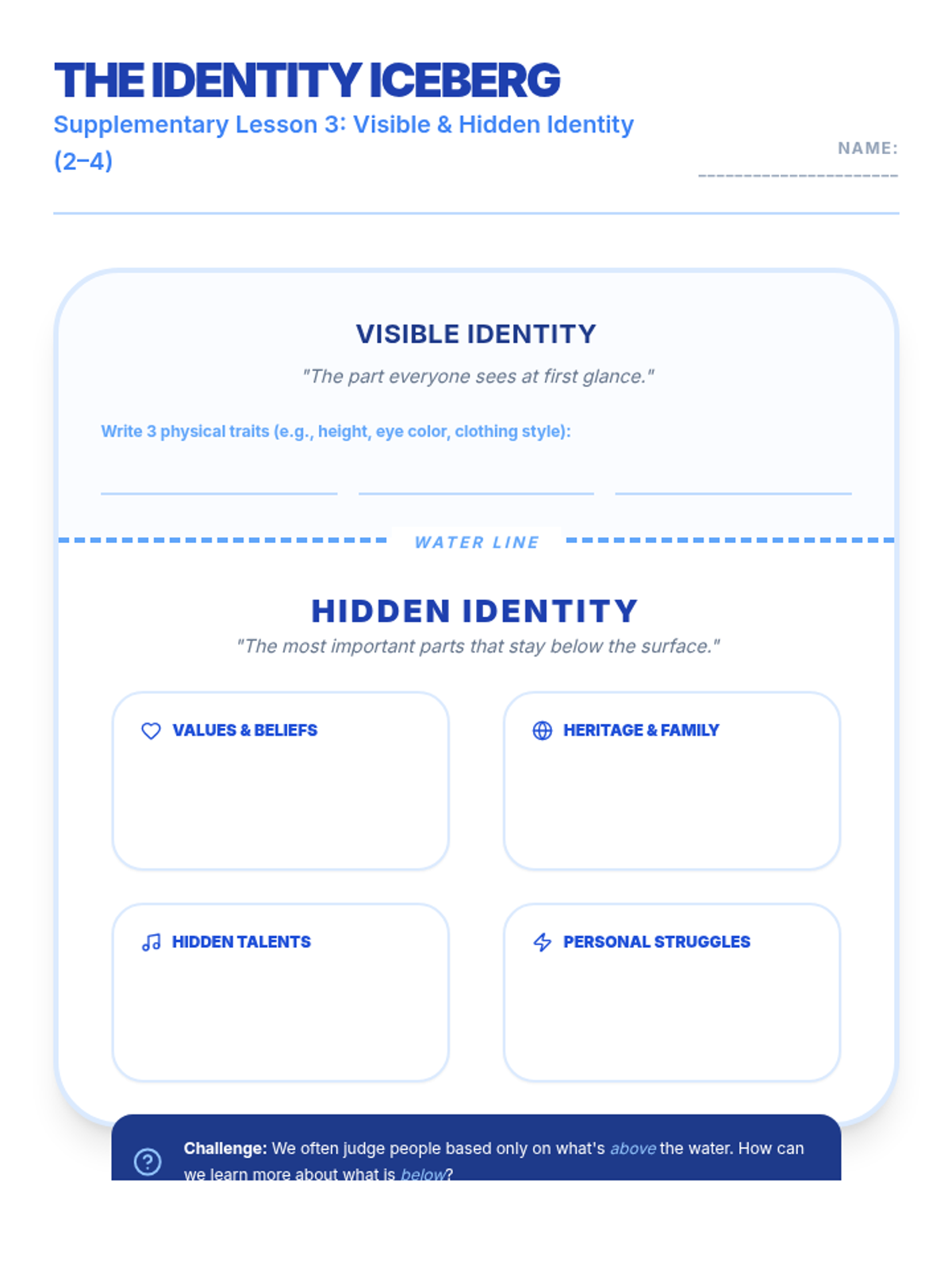
An exploration of the traits people can see and the qualities that are hidden underneath, fostering deeper understanding of self and others.
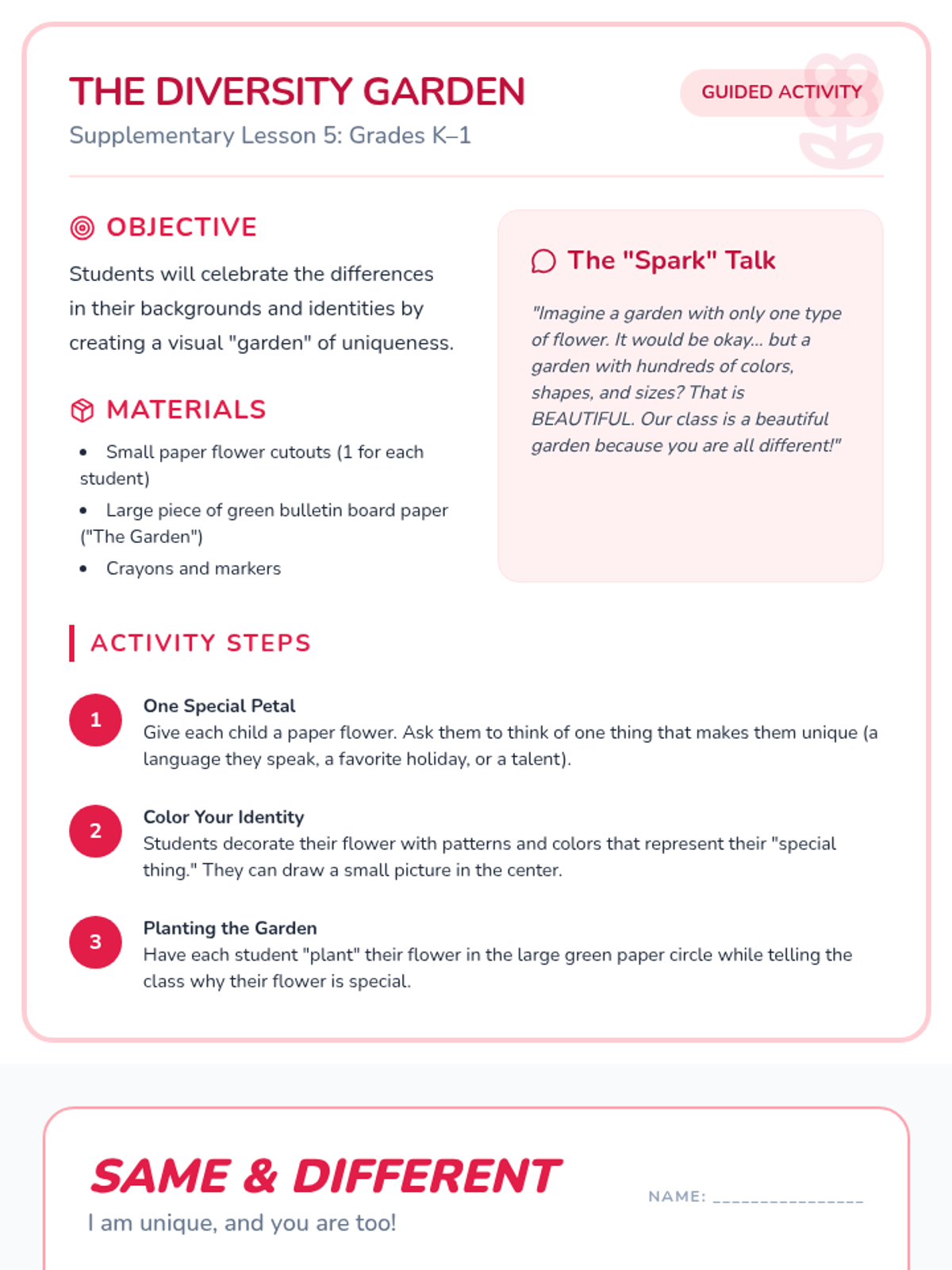
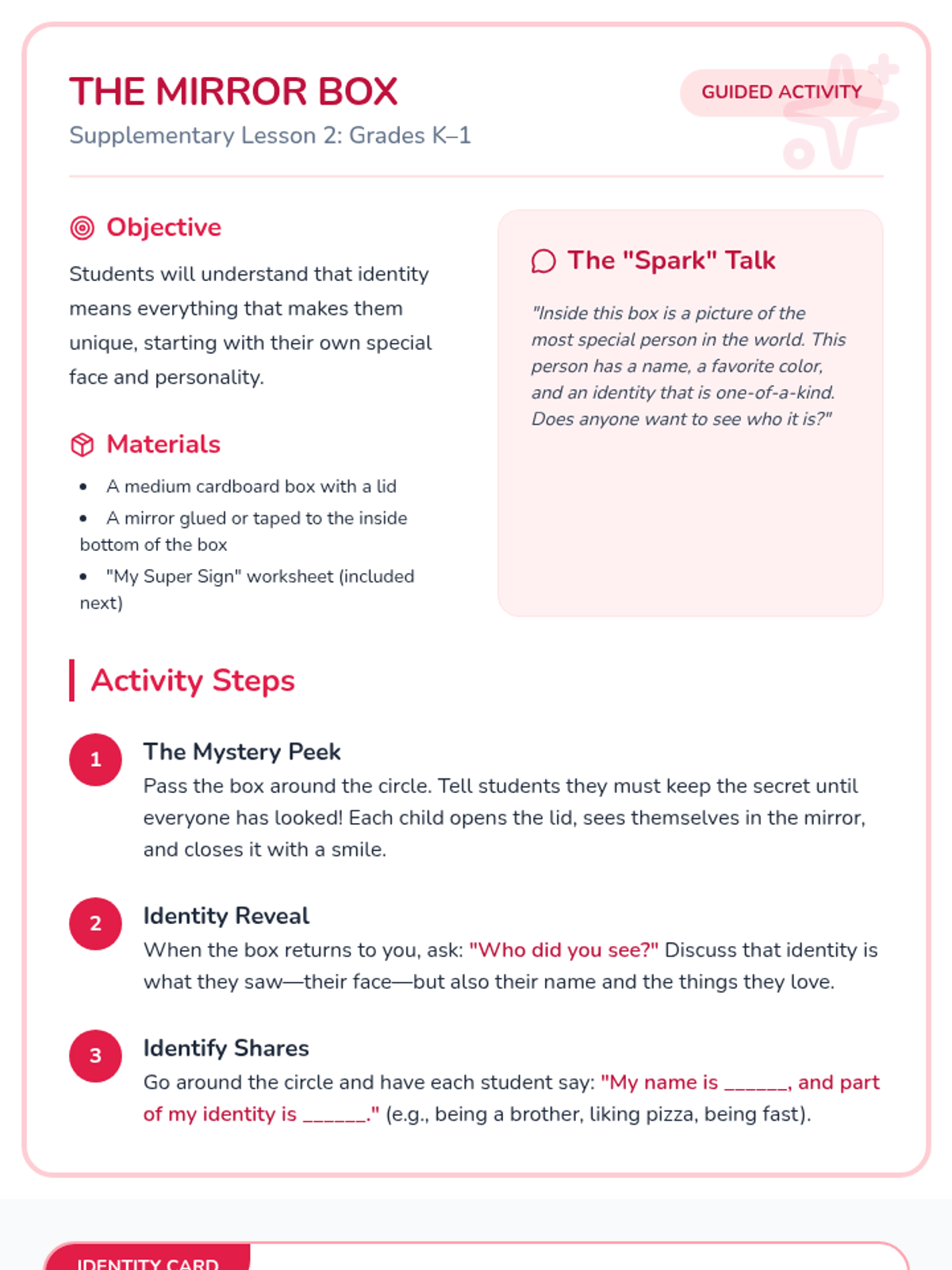
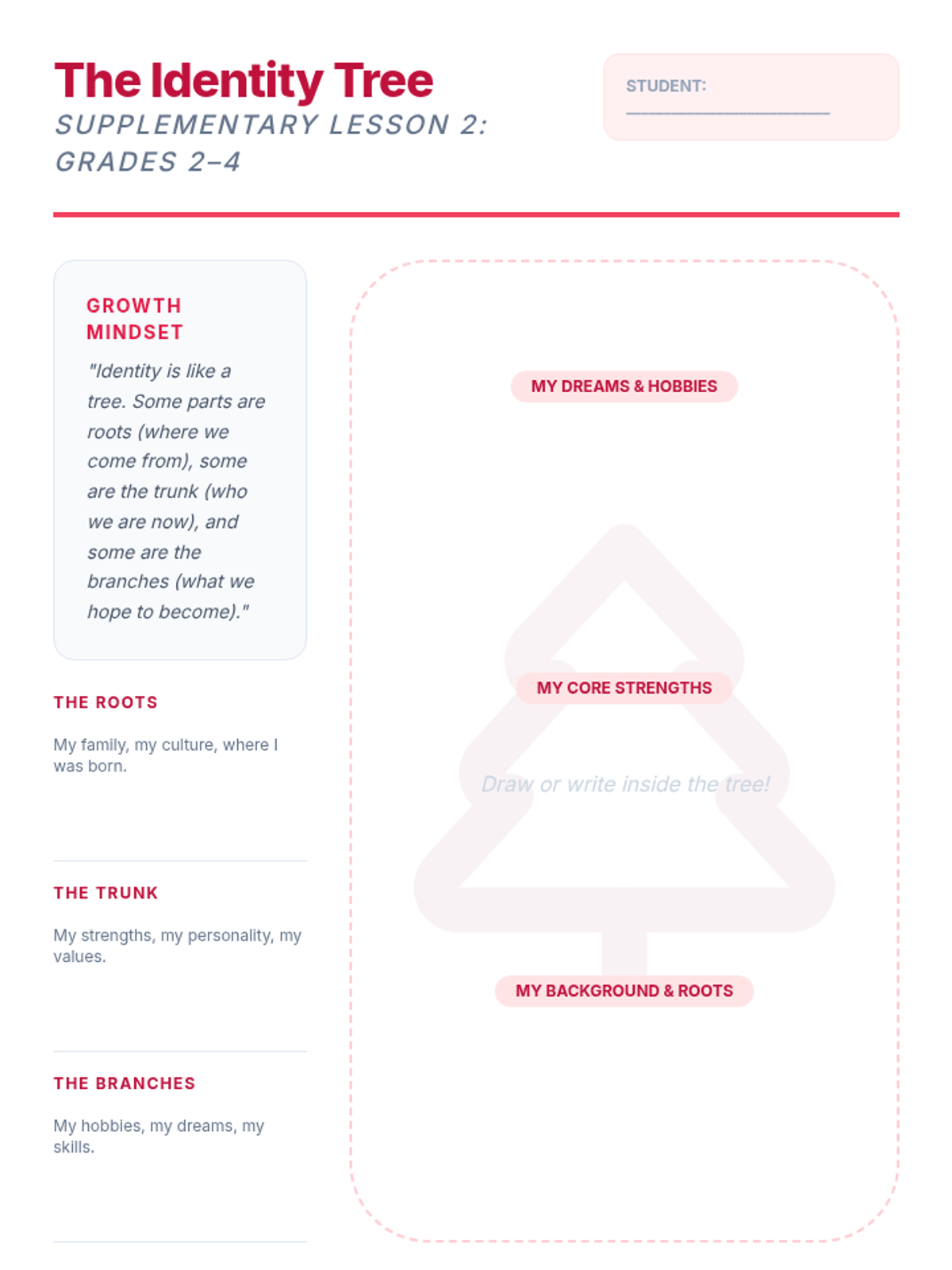
A lesson designed to help students identify and celebrate the unique traits that make up their individual identities.
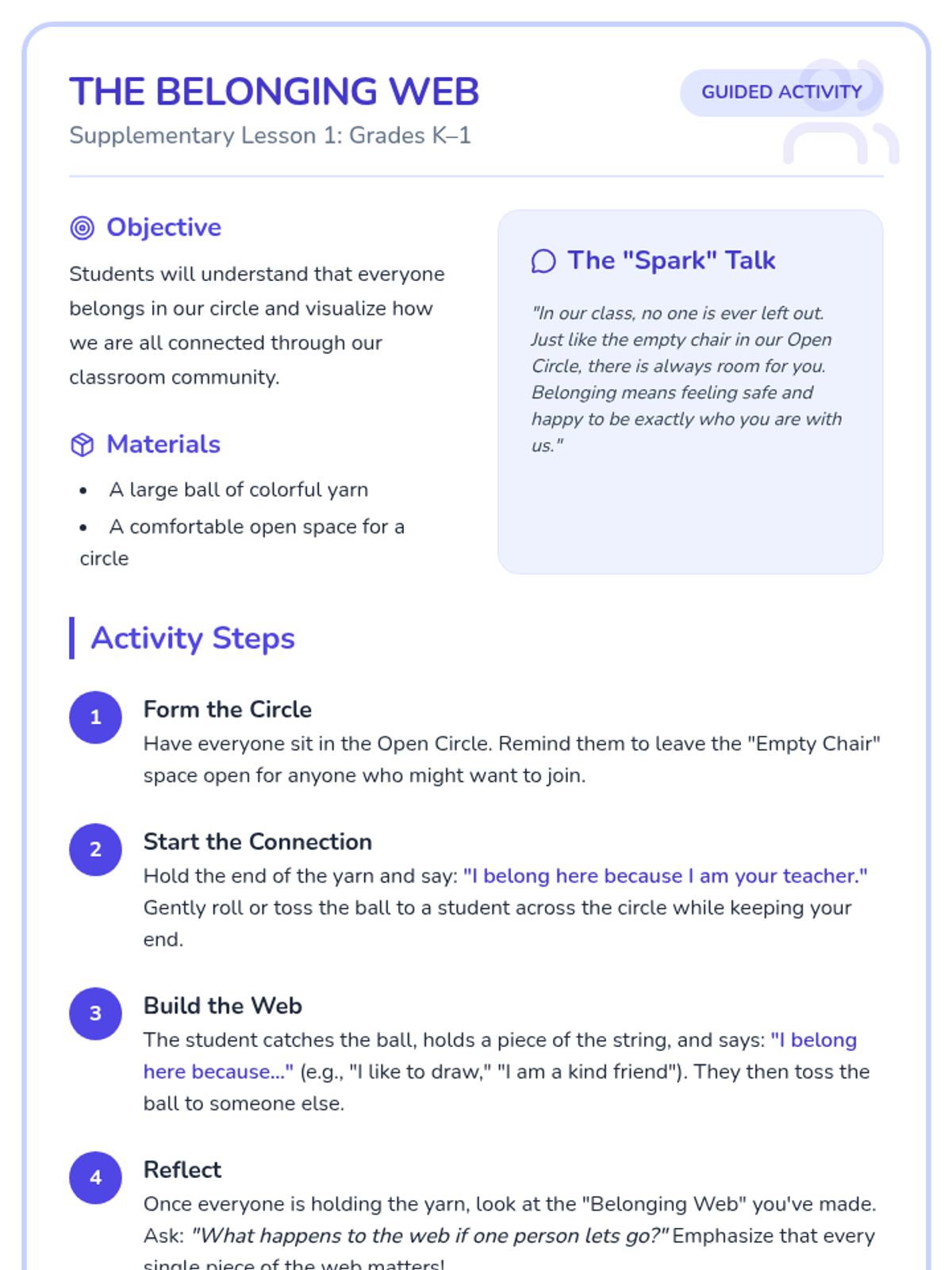
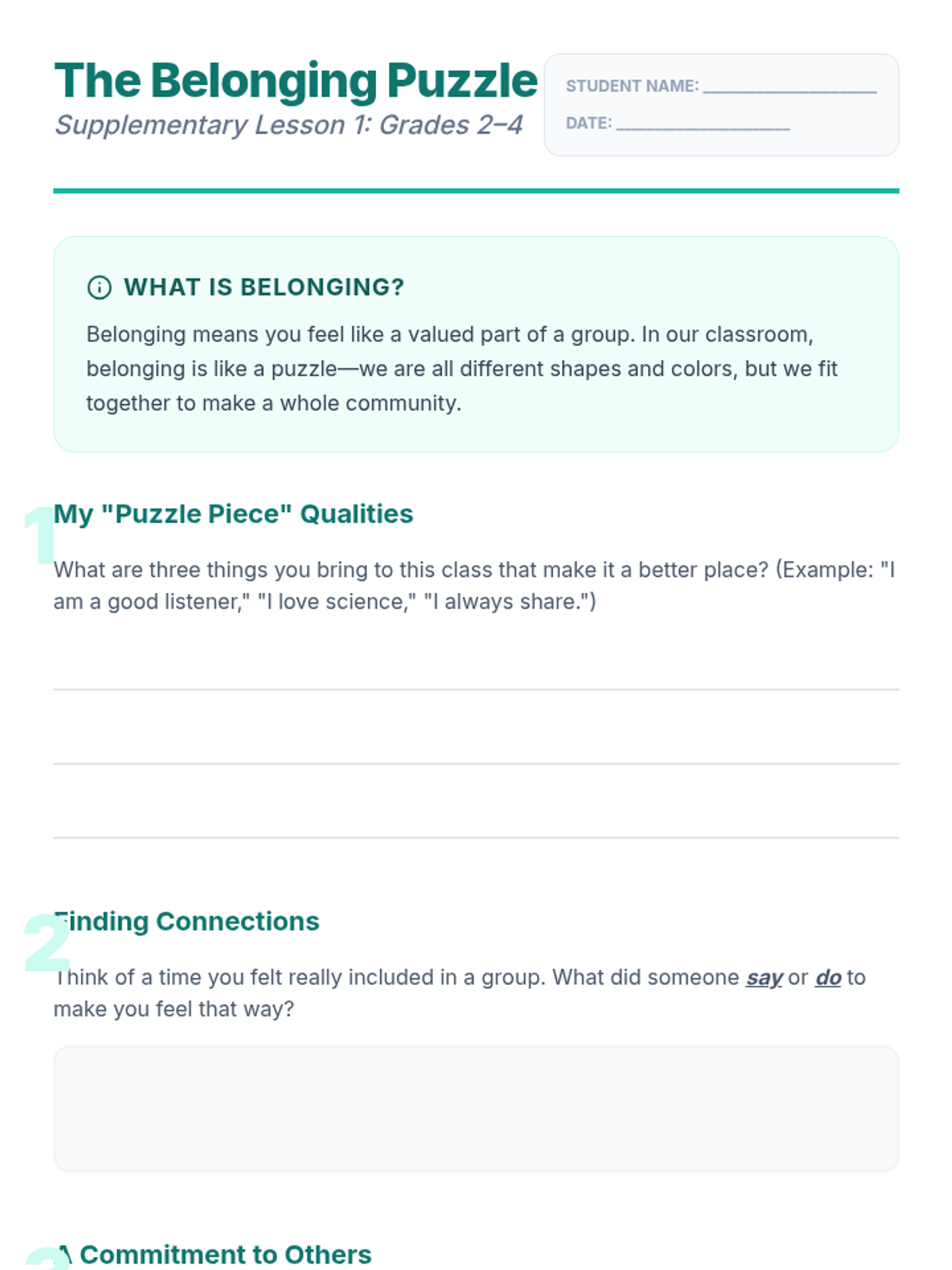
An introductory supplementary lesson exploring what it means to belong to a group and how students can make everyone feel included.
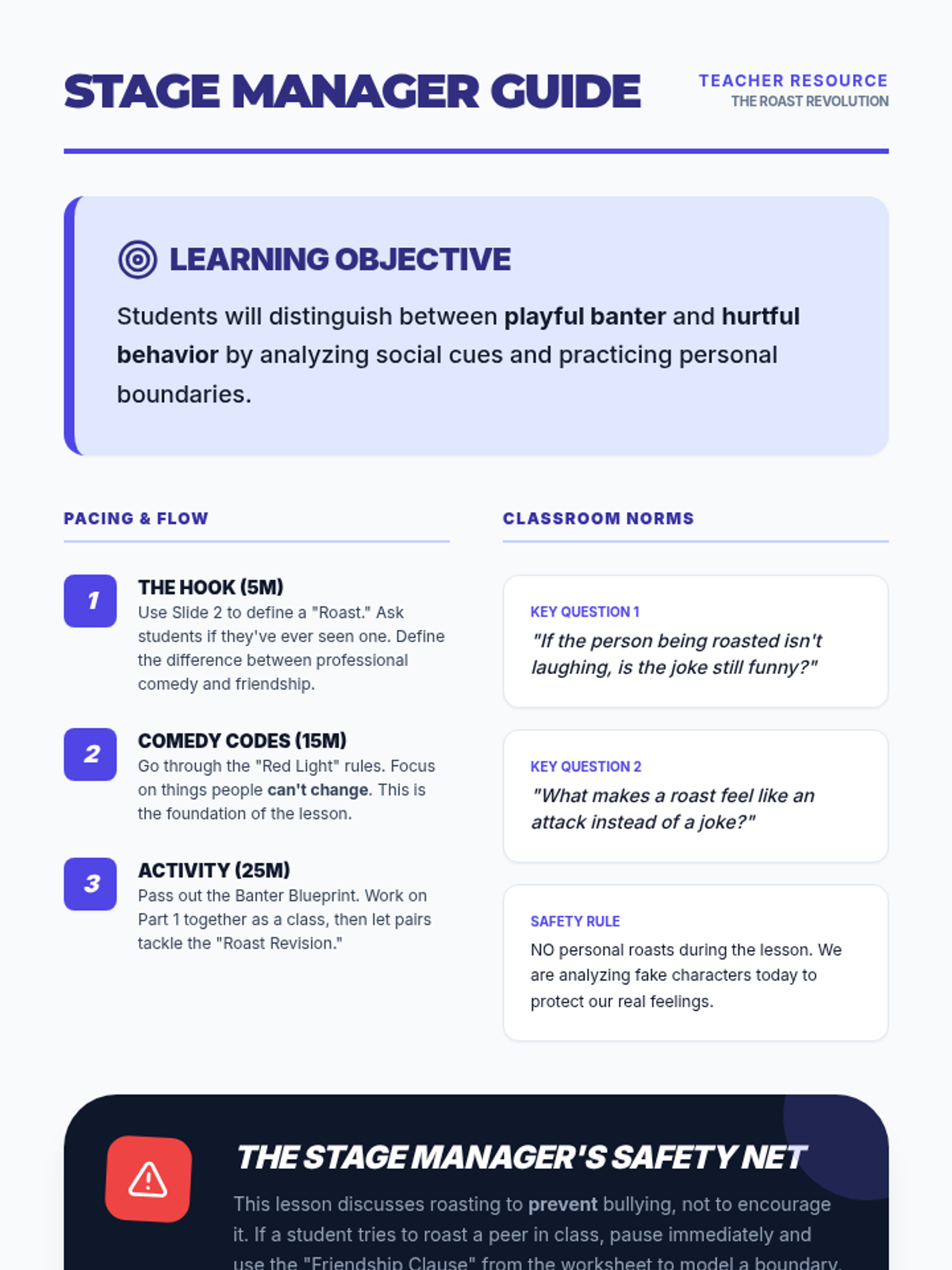
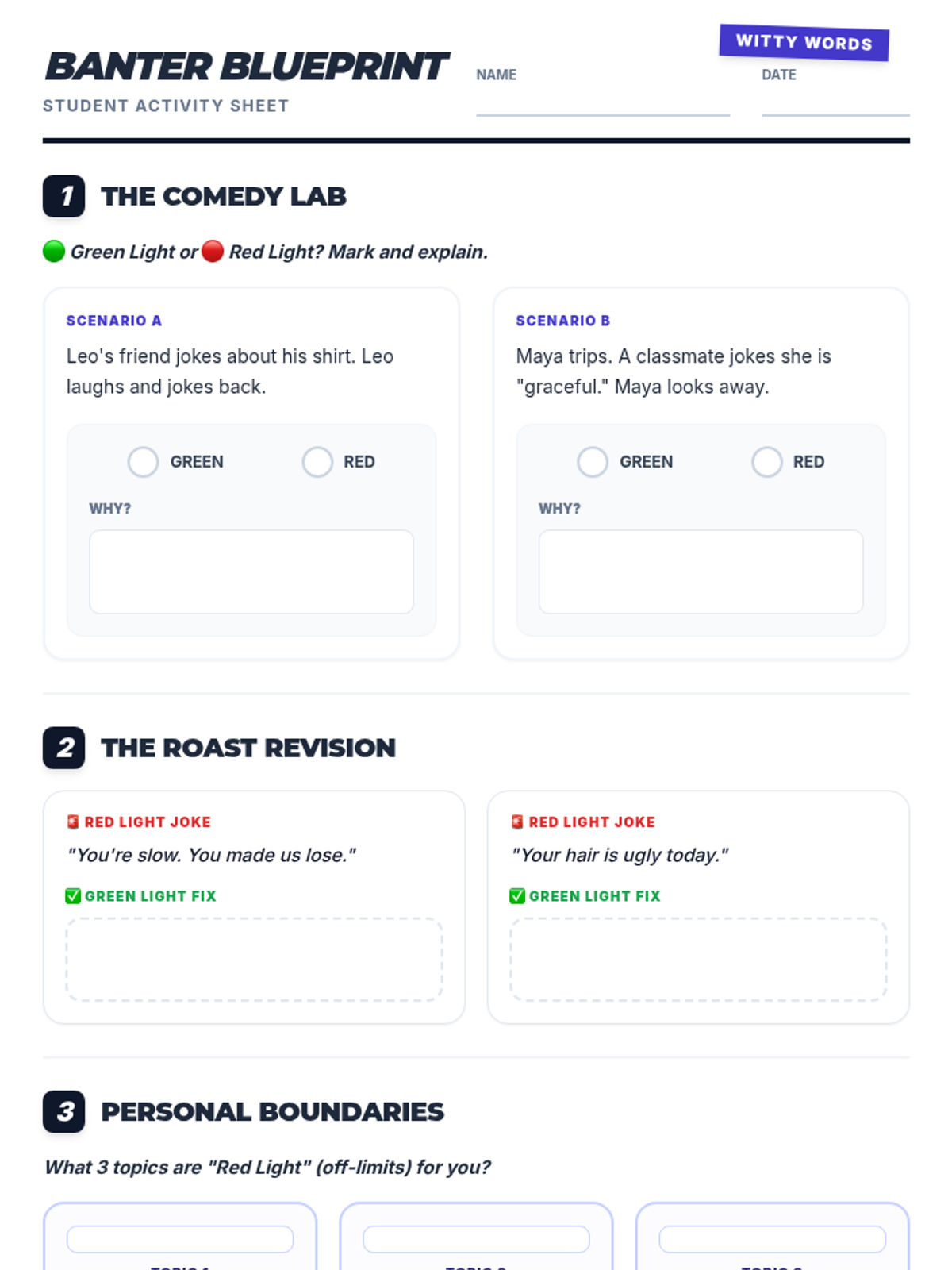
A social-emotional learning lesson for 4th and 5th graders that explores the boundary between playful banter and hurtful behavior. Students learn to identify 'friendly fire' humor and practice setting personal boundaries through the lens of a comedy workshop.
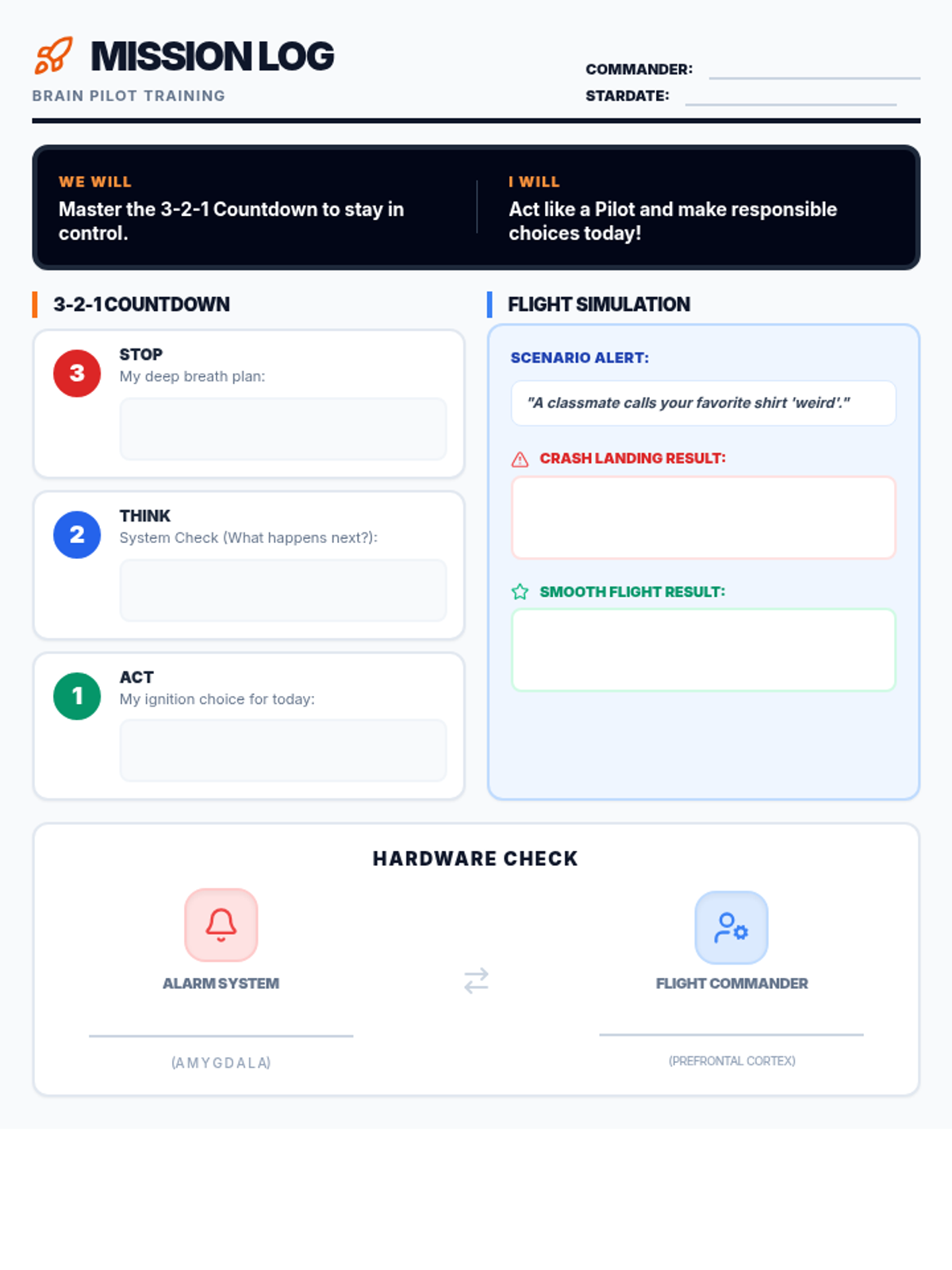
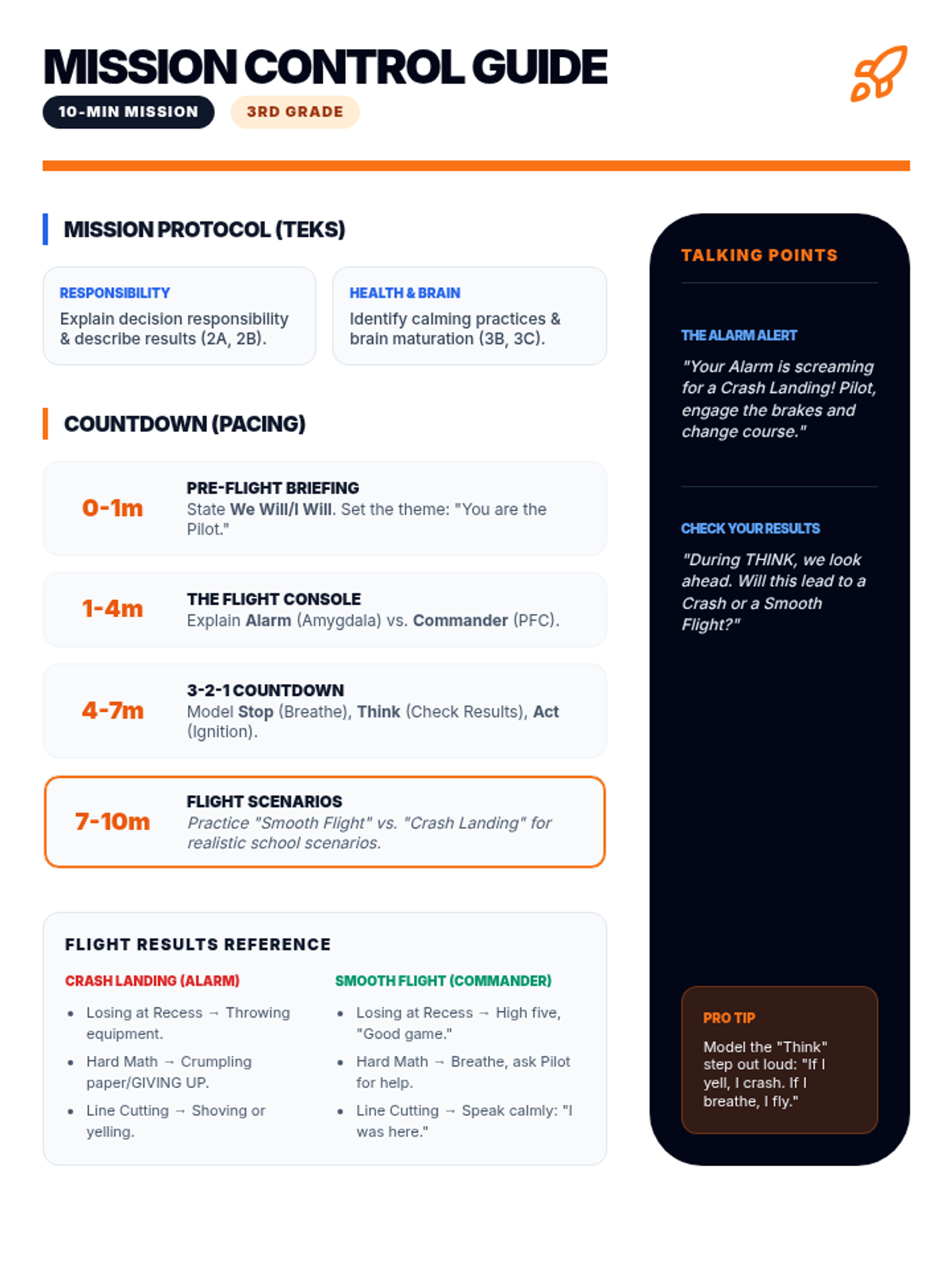
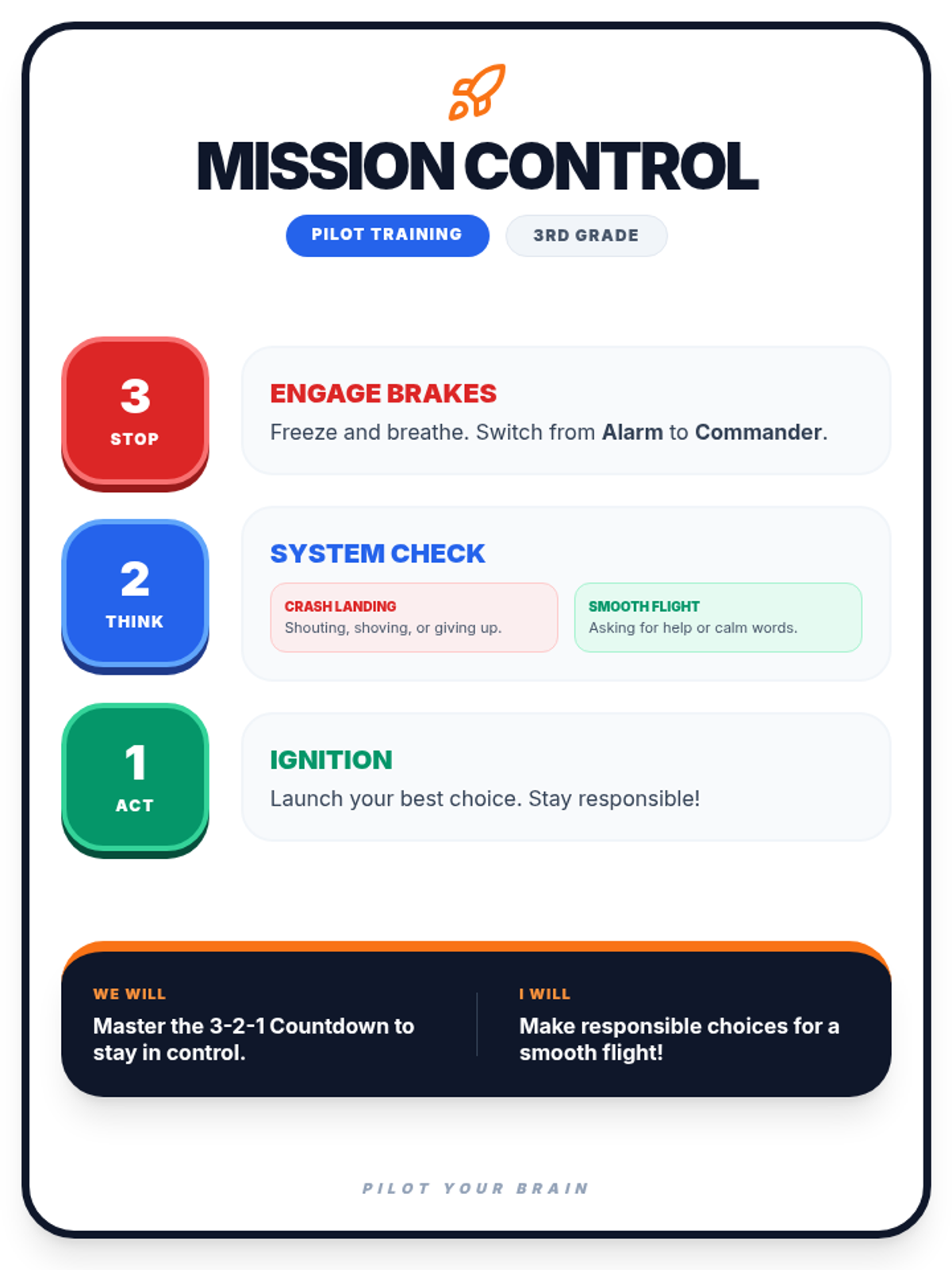
A fast-paced 10-minute lesson introducing the Stop, Think, Act model for self-regulation, connecting brain science with personal responsibility. Students learn to use their 'internal remote control' to manage emotions and make better choices.
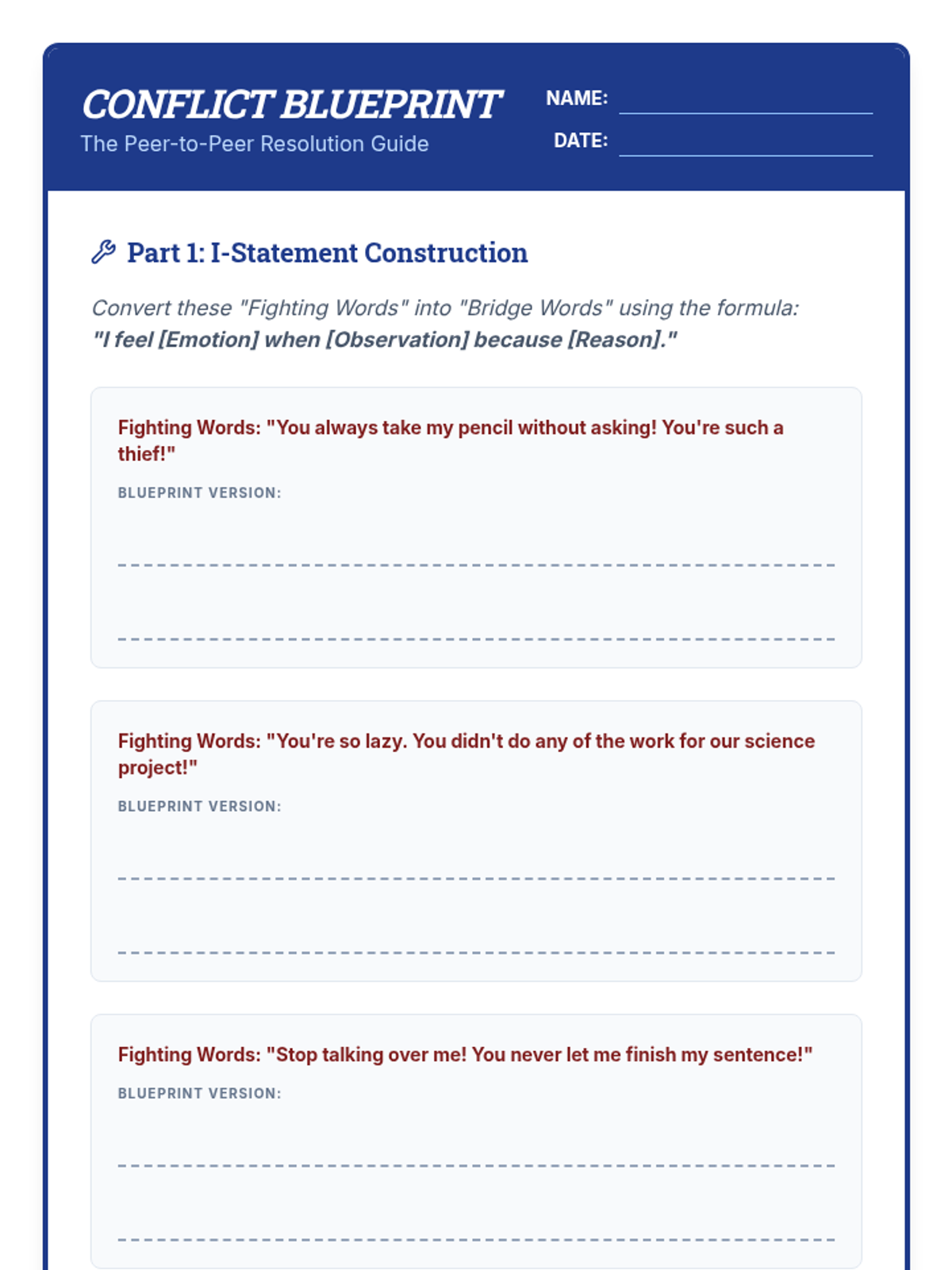
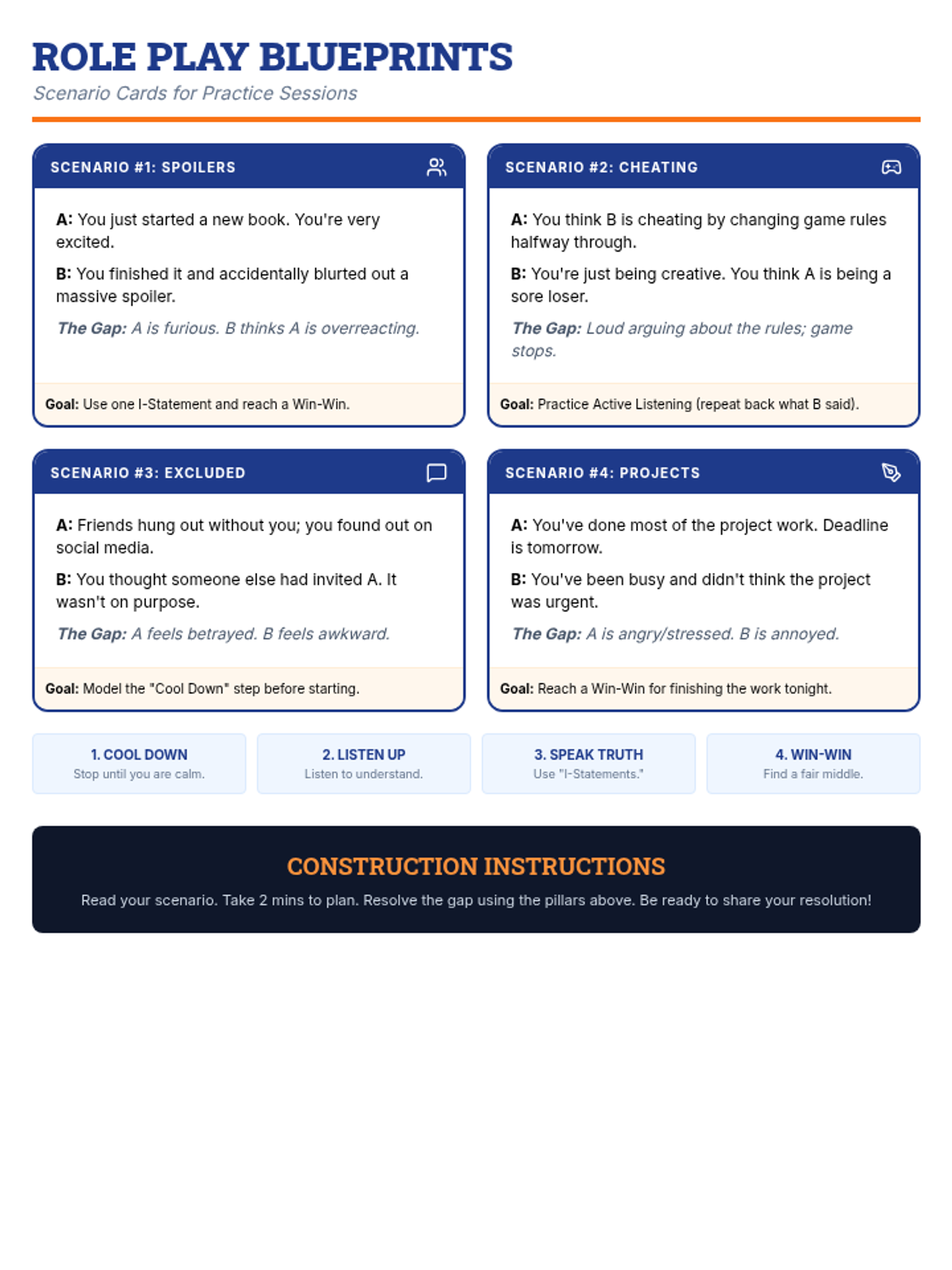
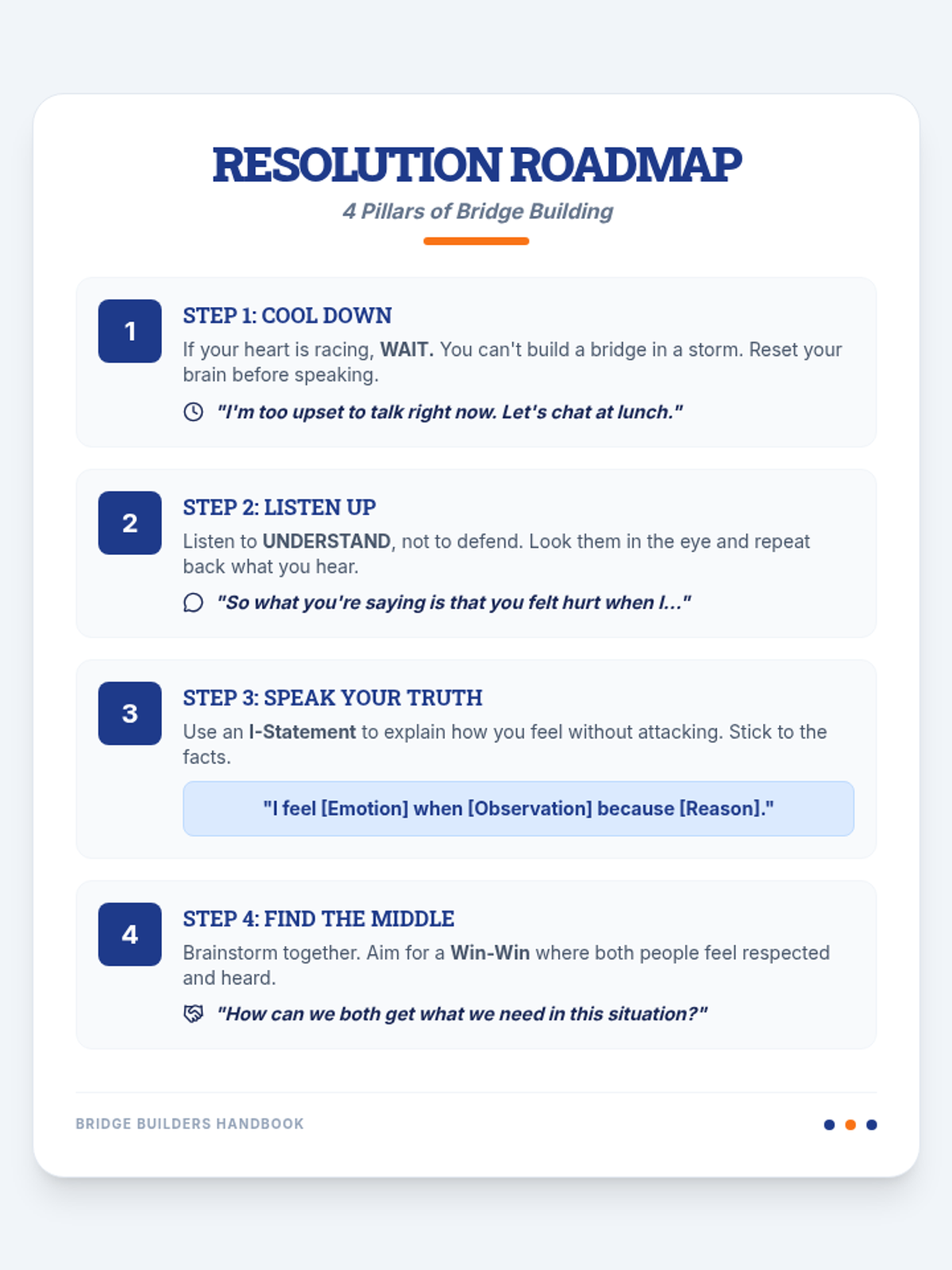
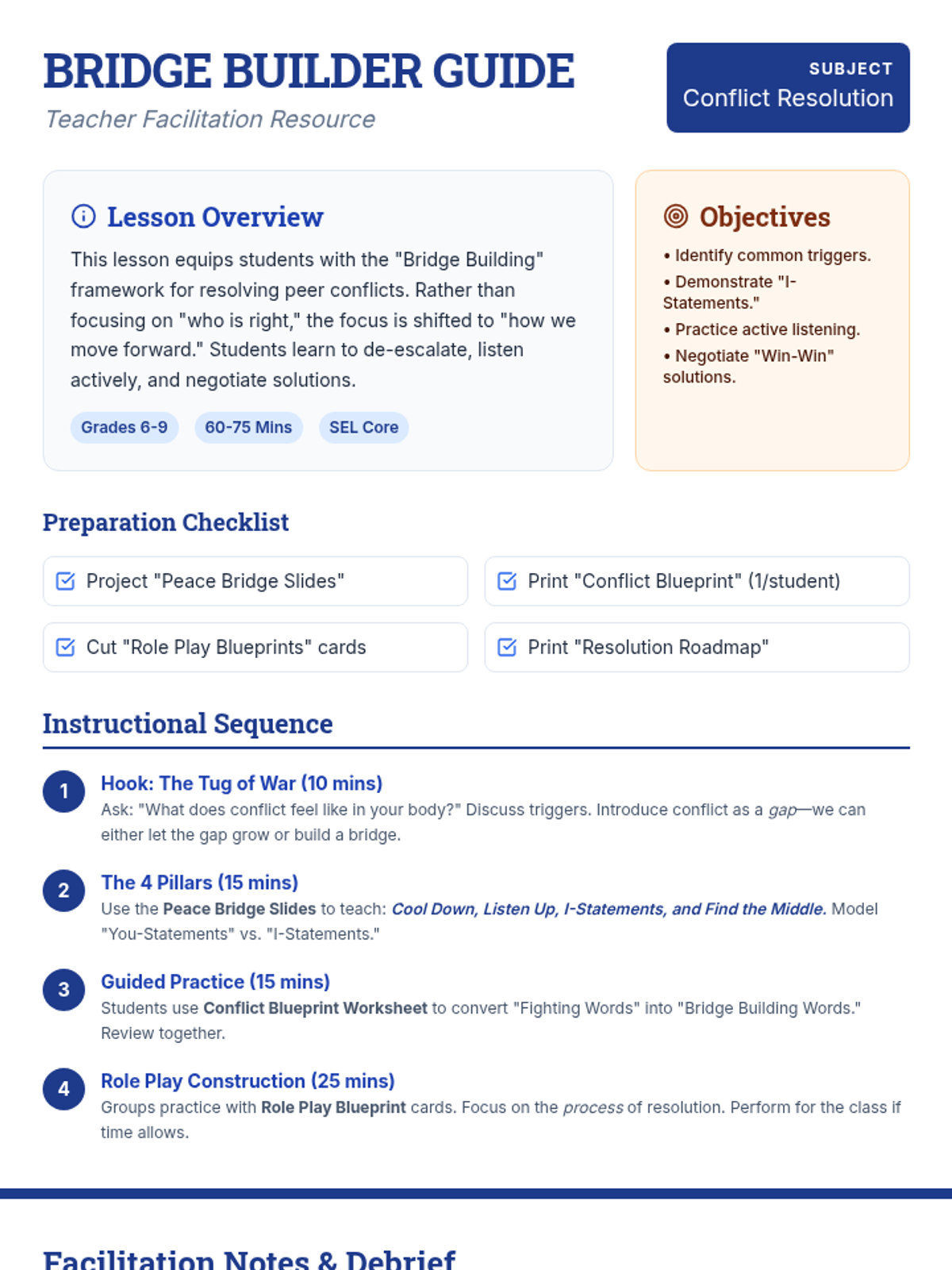
A comprehensive lesson on resolving peer-to-peer conflicts using structured communication strategies like I-statements, active listening, and win-win negotiation. Students will analyze real-world scenarios and practice resolution through role-play.
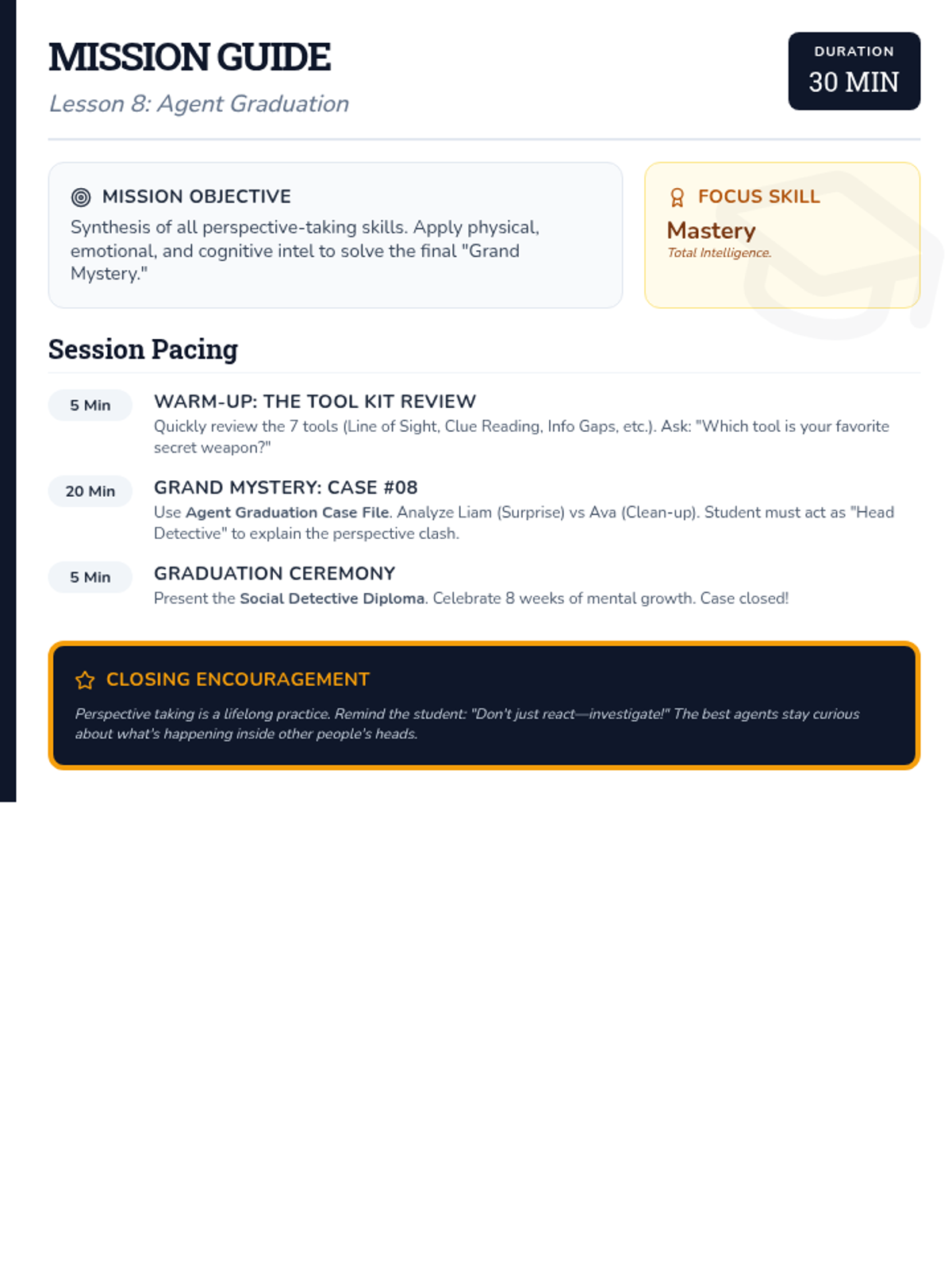
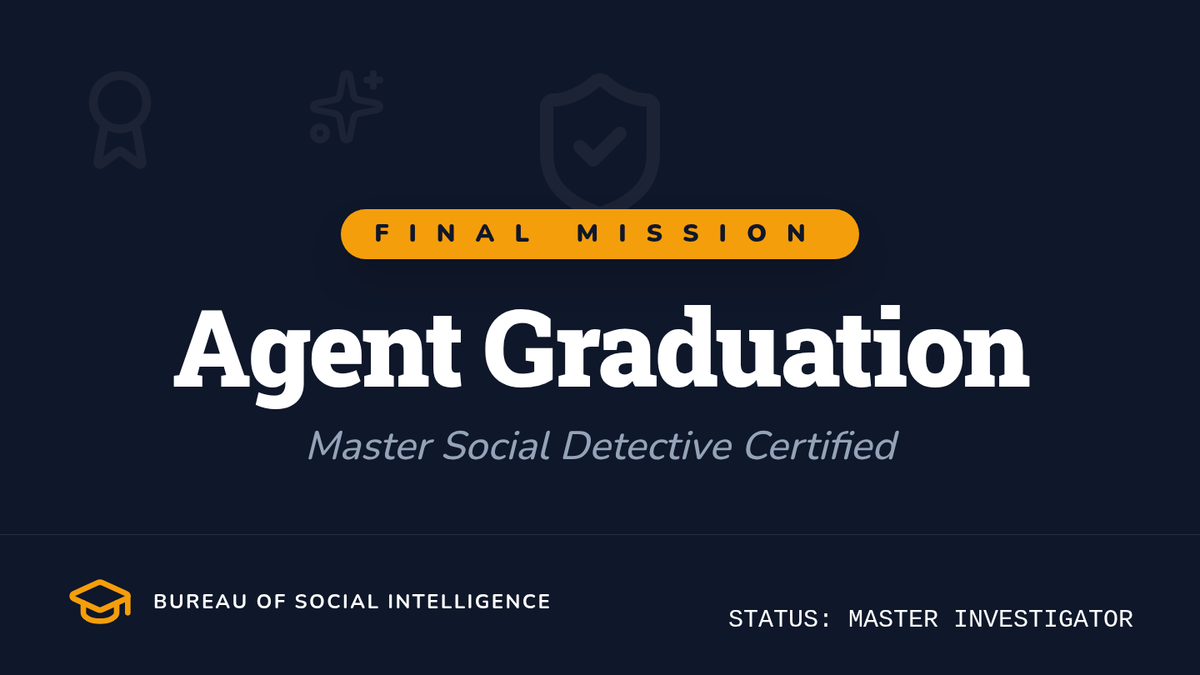
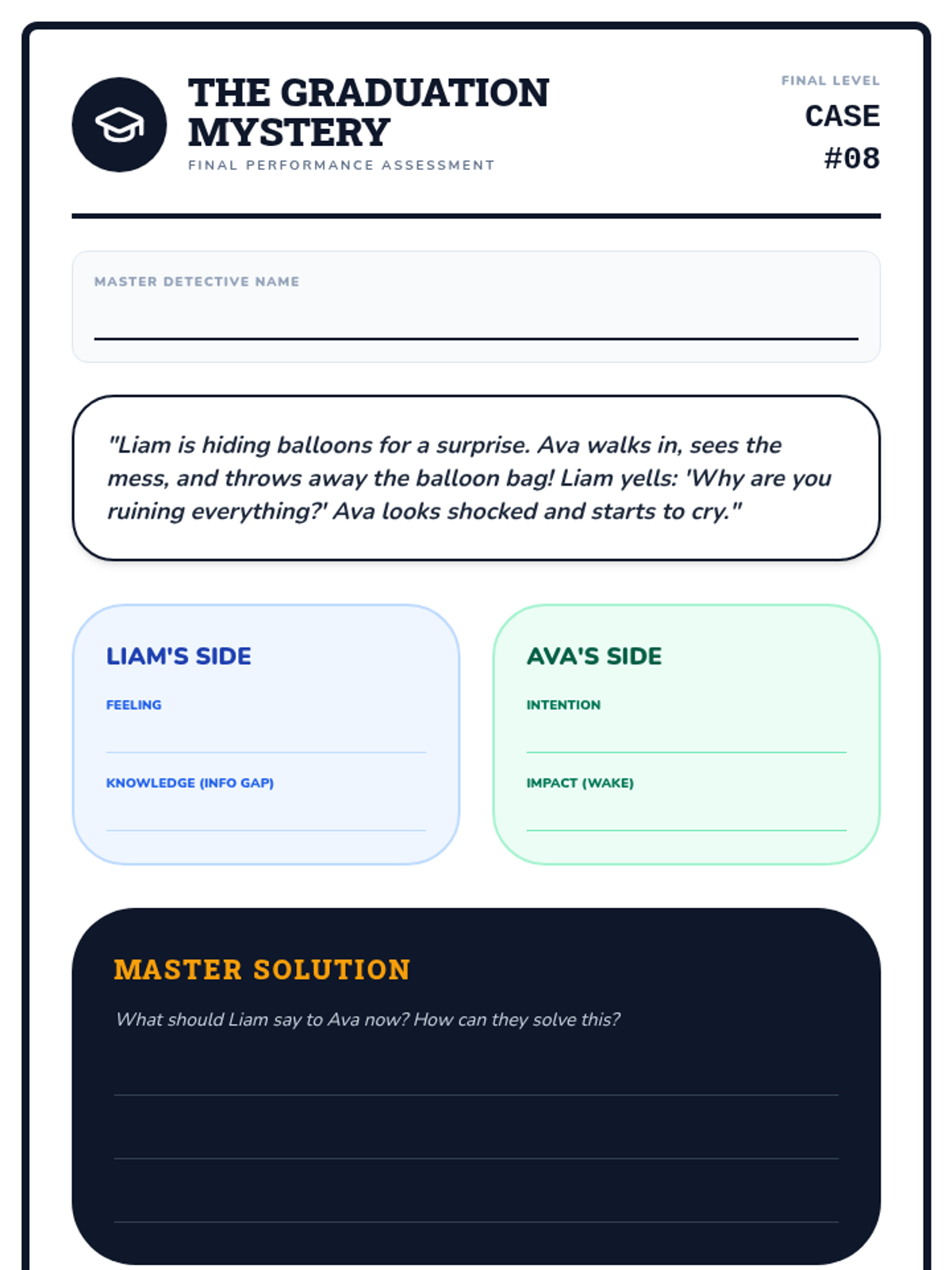
A final review and synthesis of all perspective-taking skills. Students solve a complex "Social Mystery" using all the tools in their detective kit.
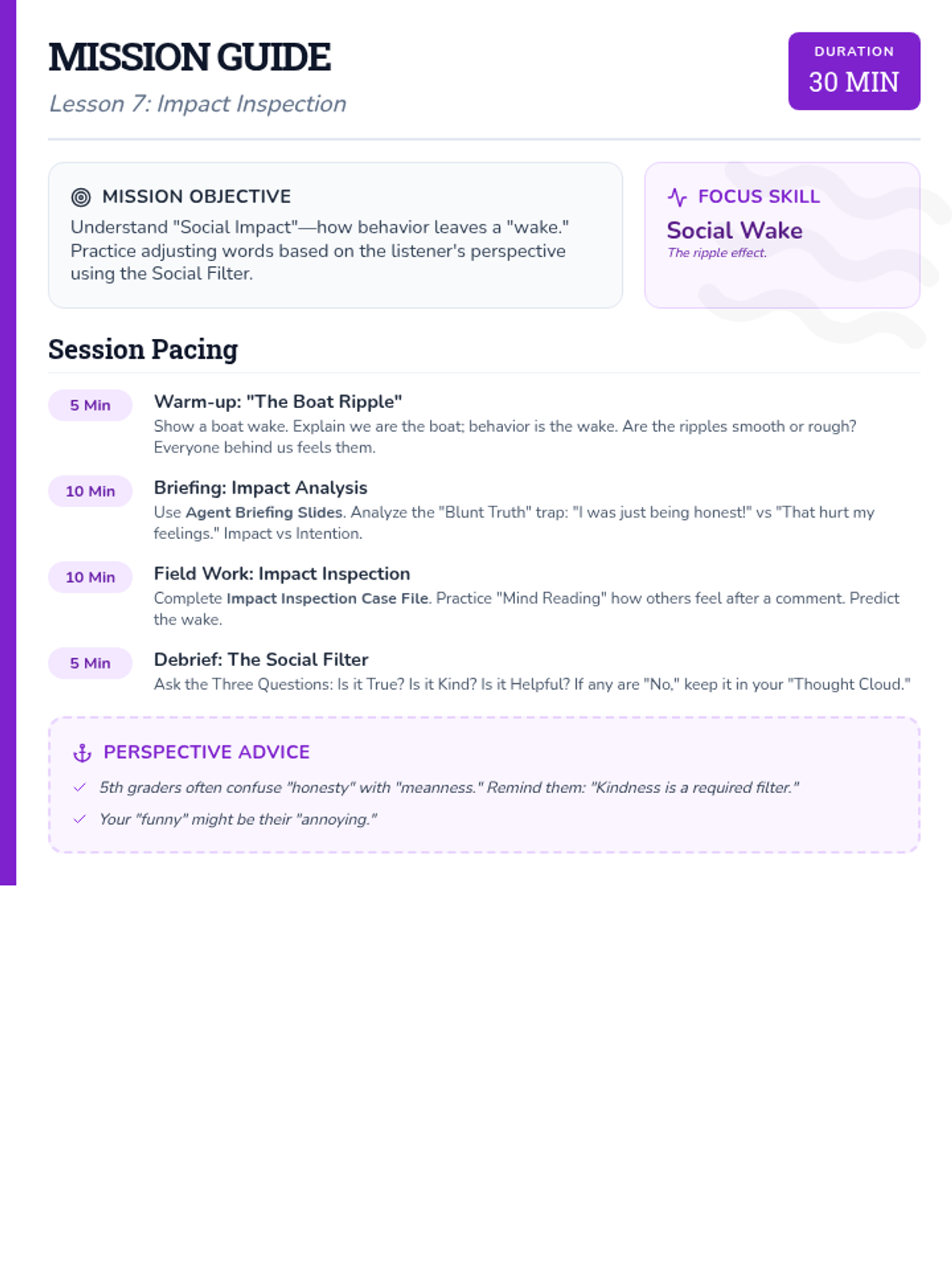
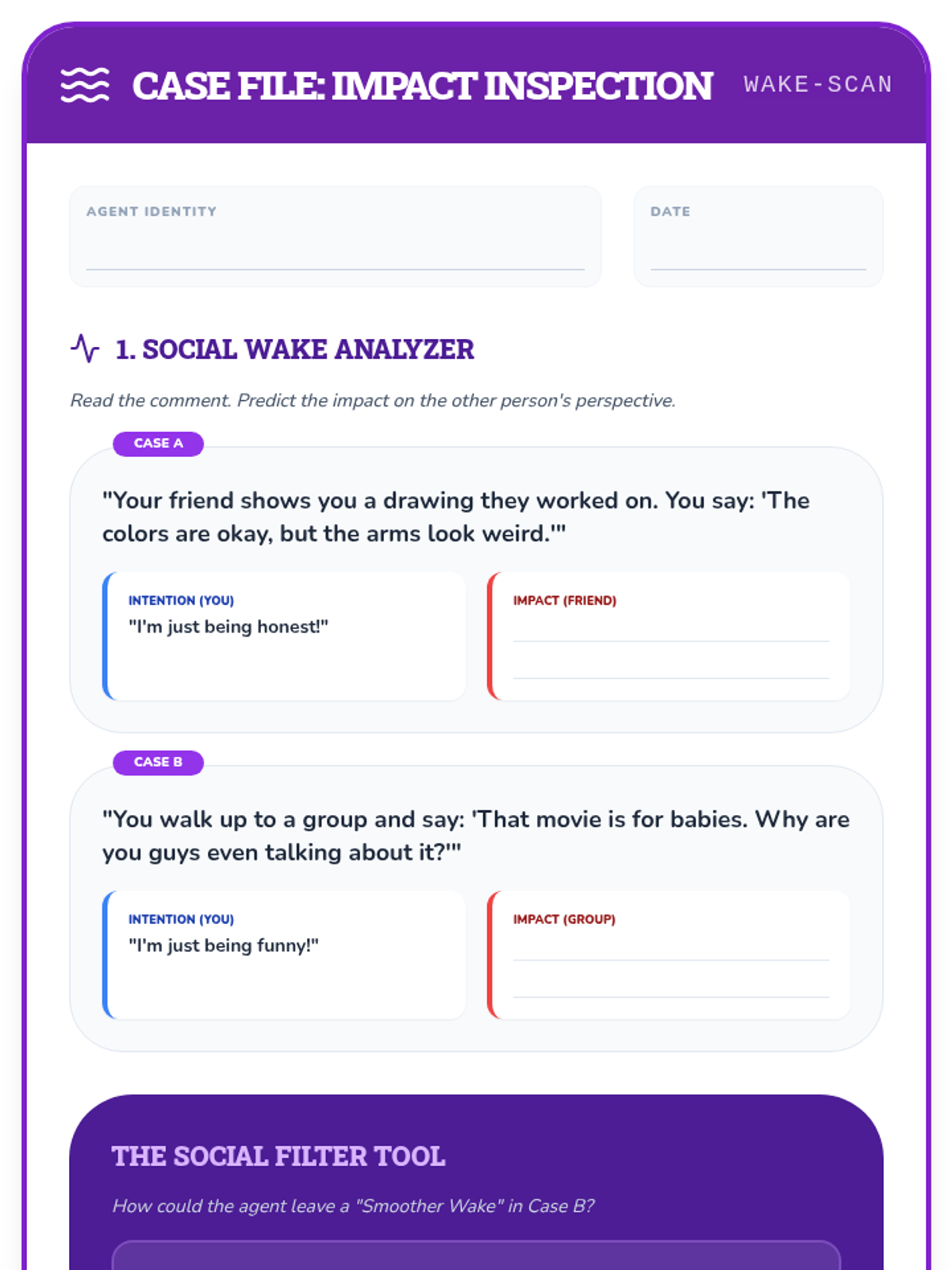
Understanding how our actions and words land on others. Focuses on the "social wake" we leave behind and adjusting behavior based on the listener's perspective.
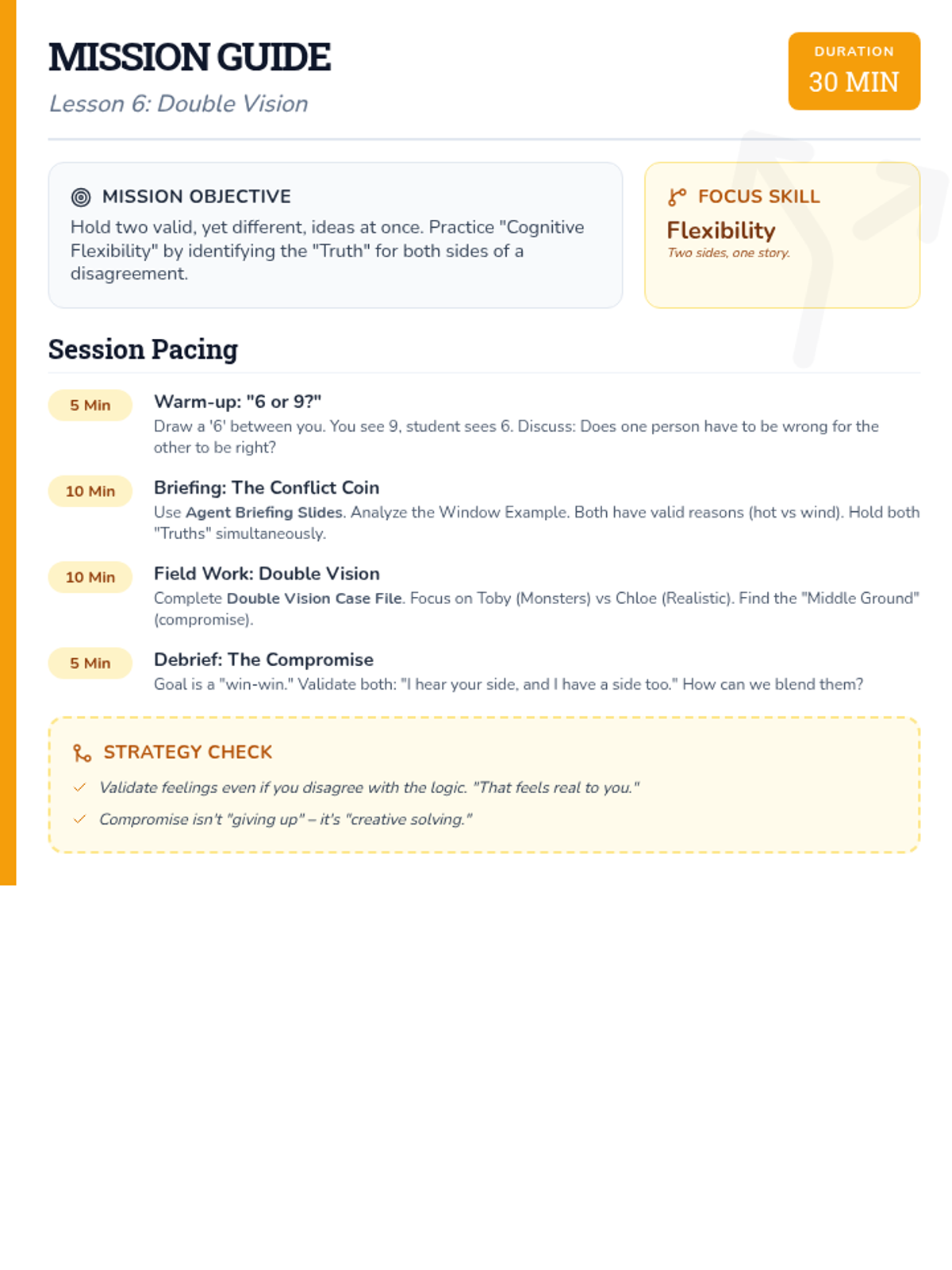
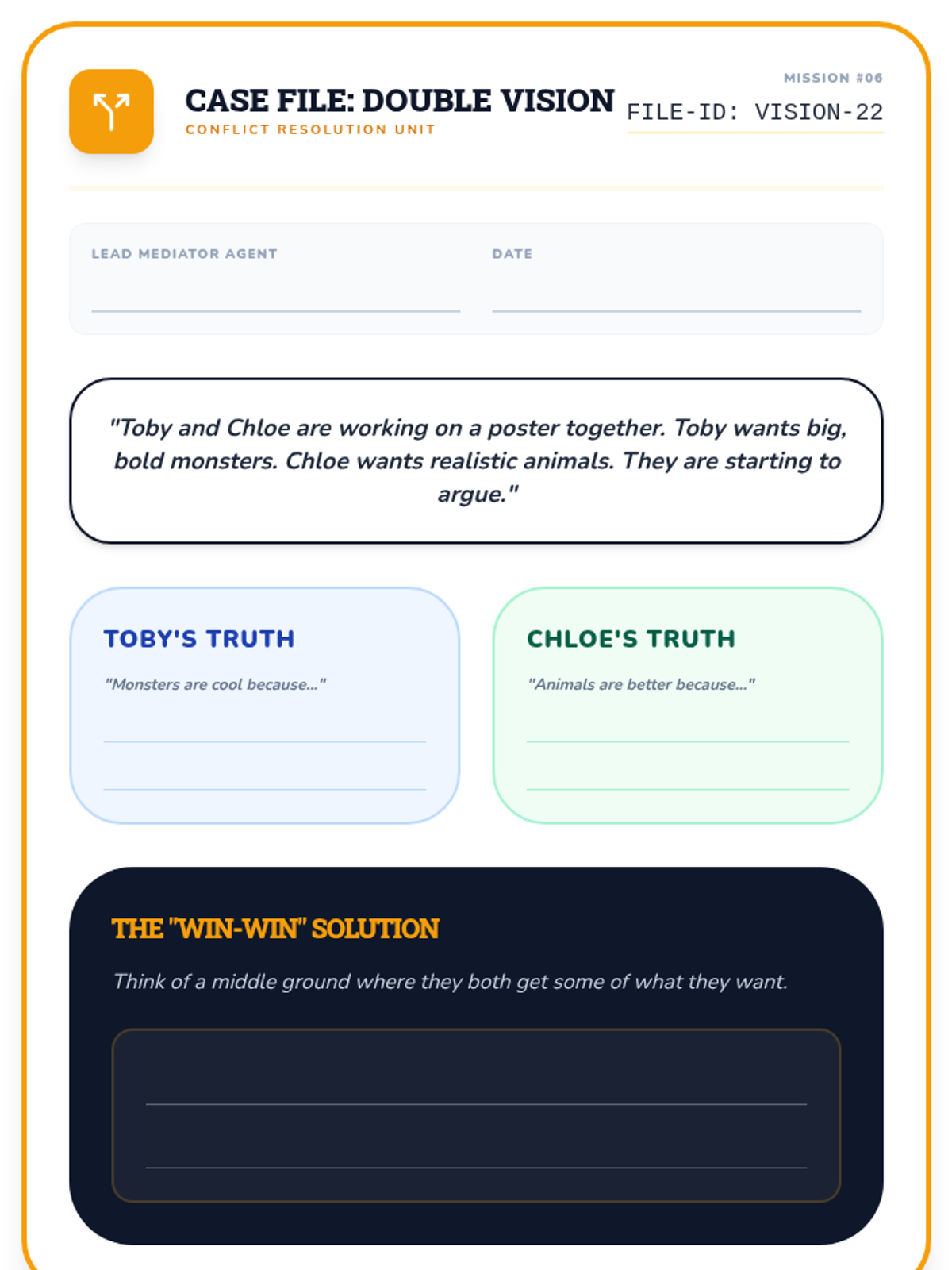
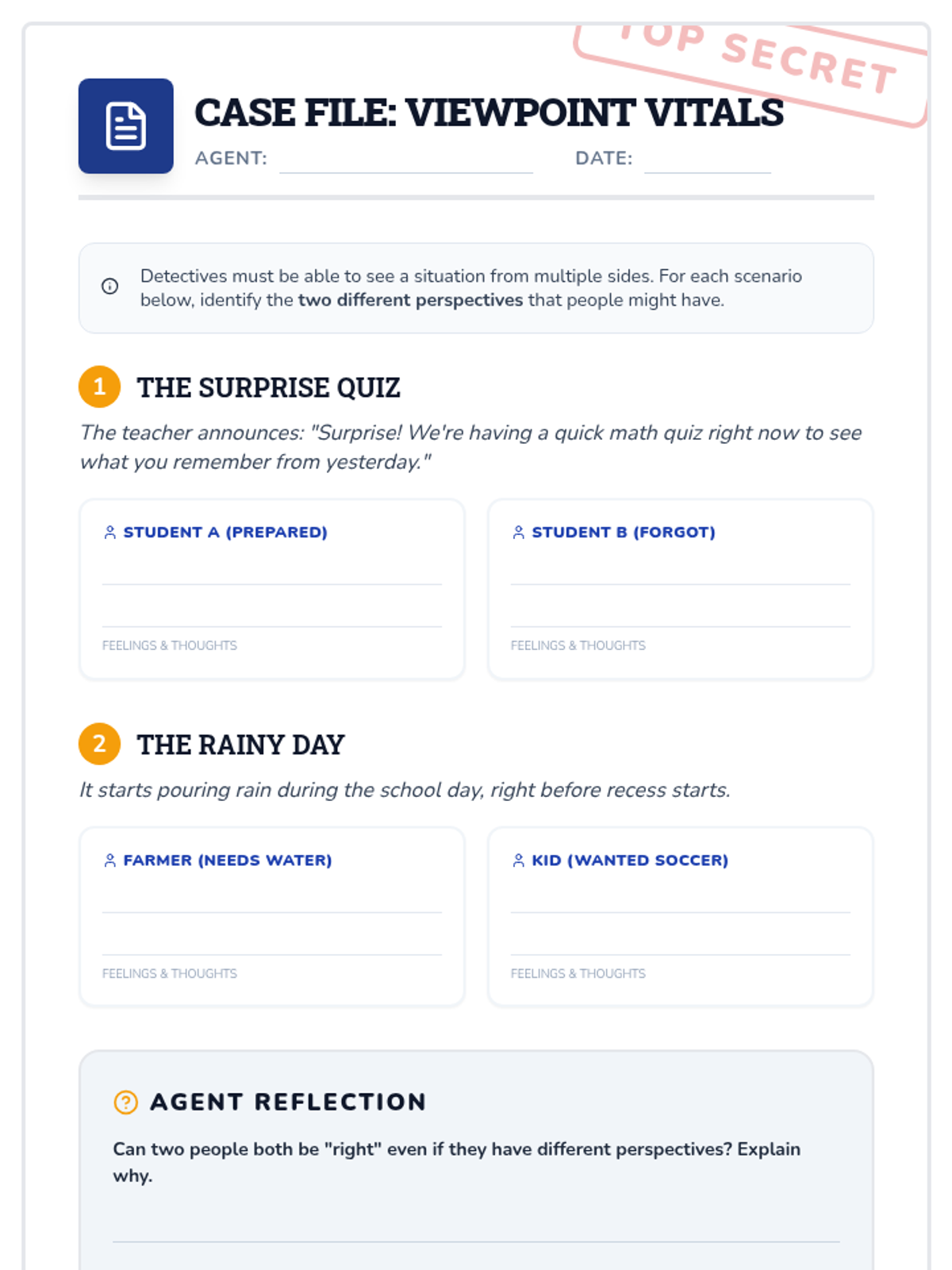
Analyzing social conflicts from two different sides. Students learn that two people can be "right" from their own perspectives even if they disagree.
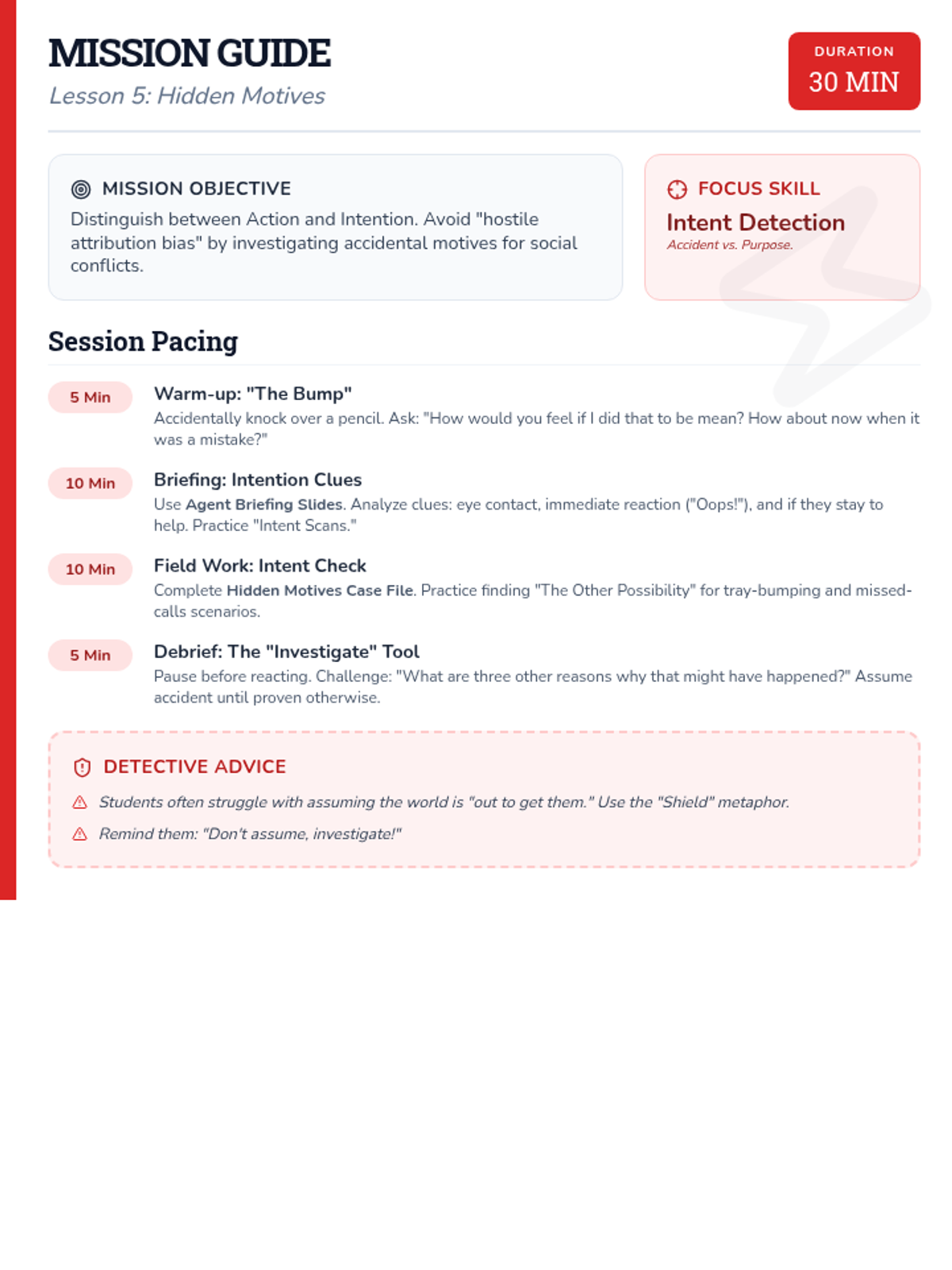
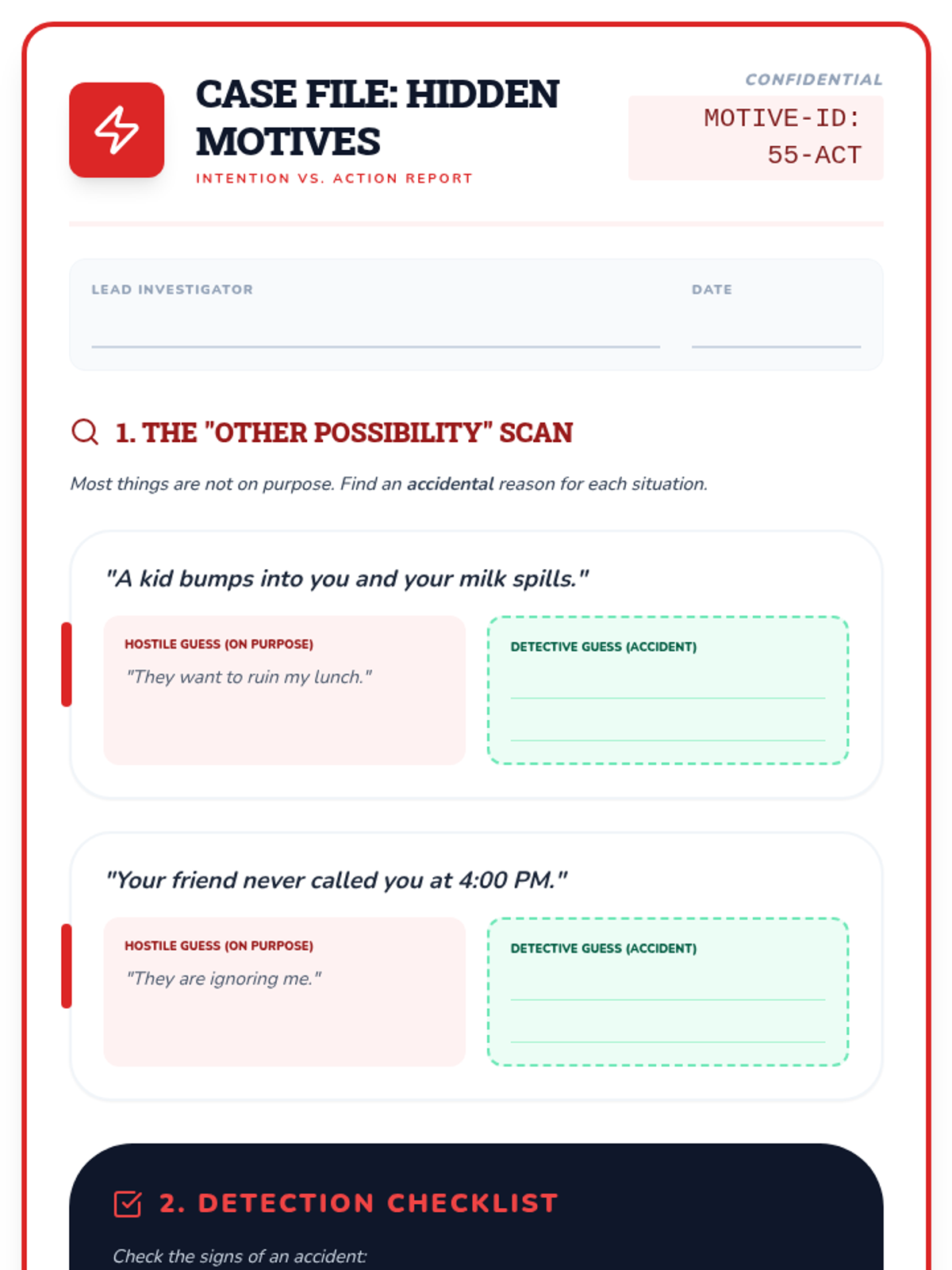
Distinguishing between what people do (actions) and why they do it (intentions). Helps students avoid jumping to negative conclusions by considering "accidental" vs. "on purpose."
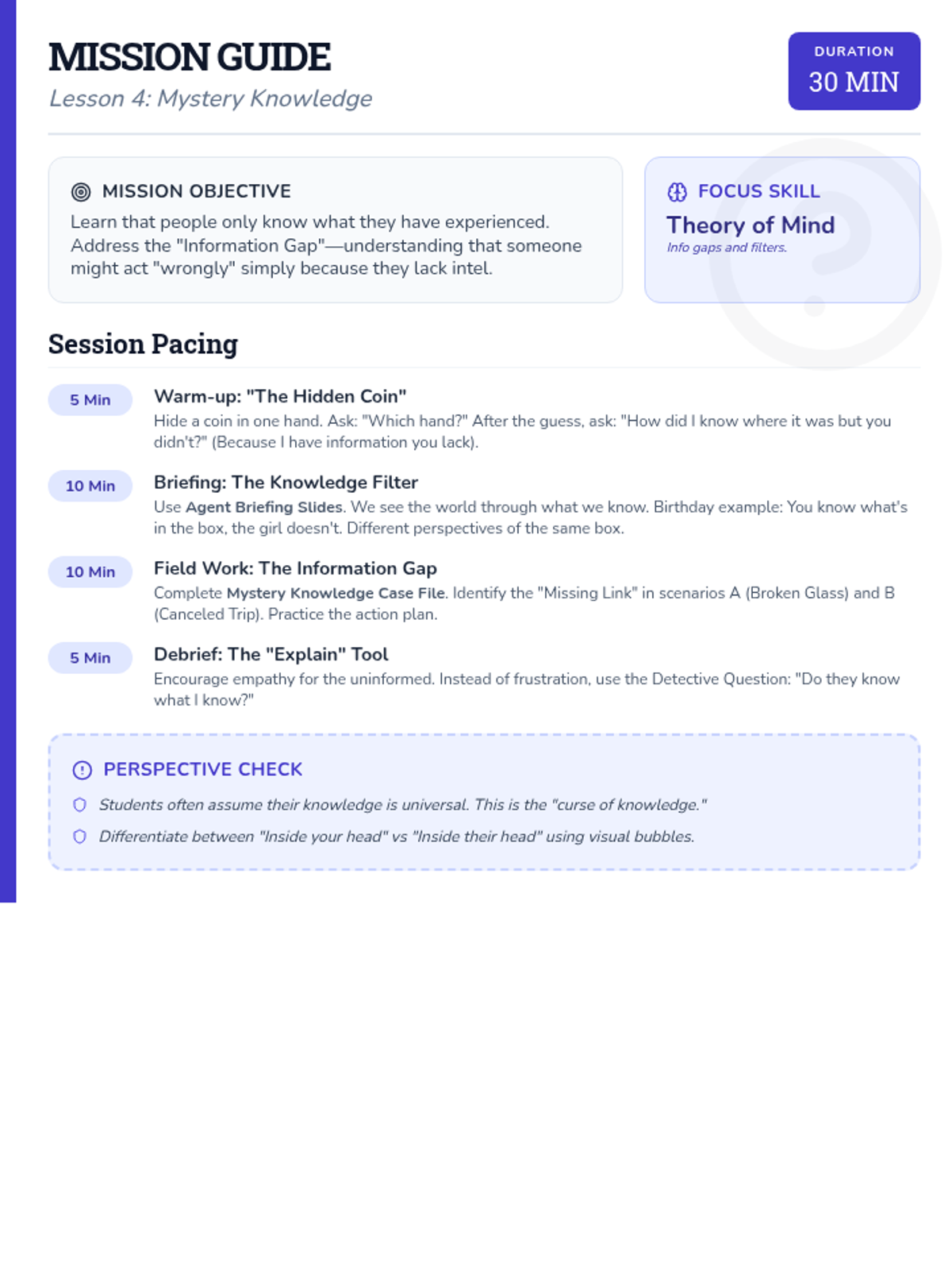
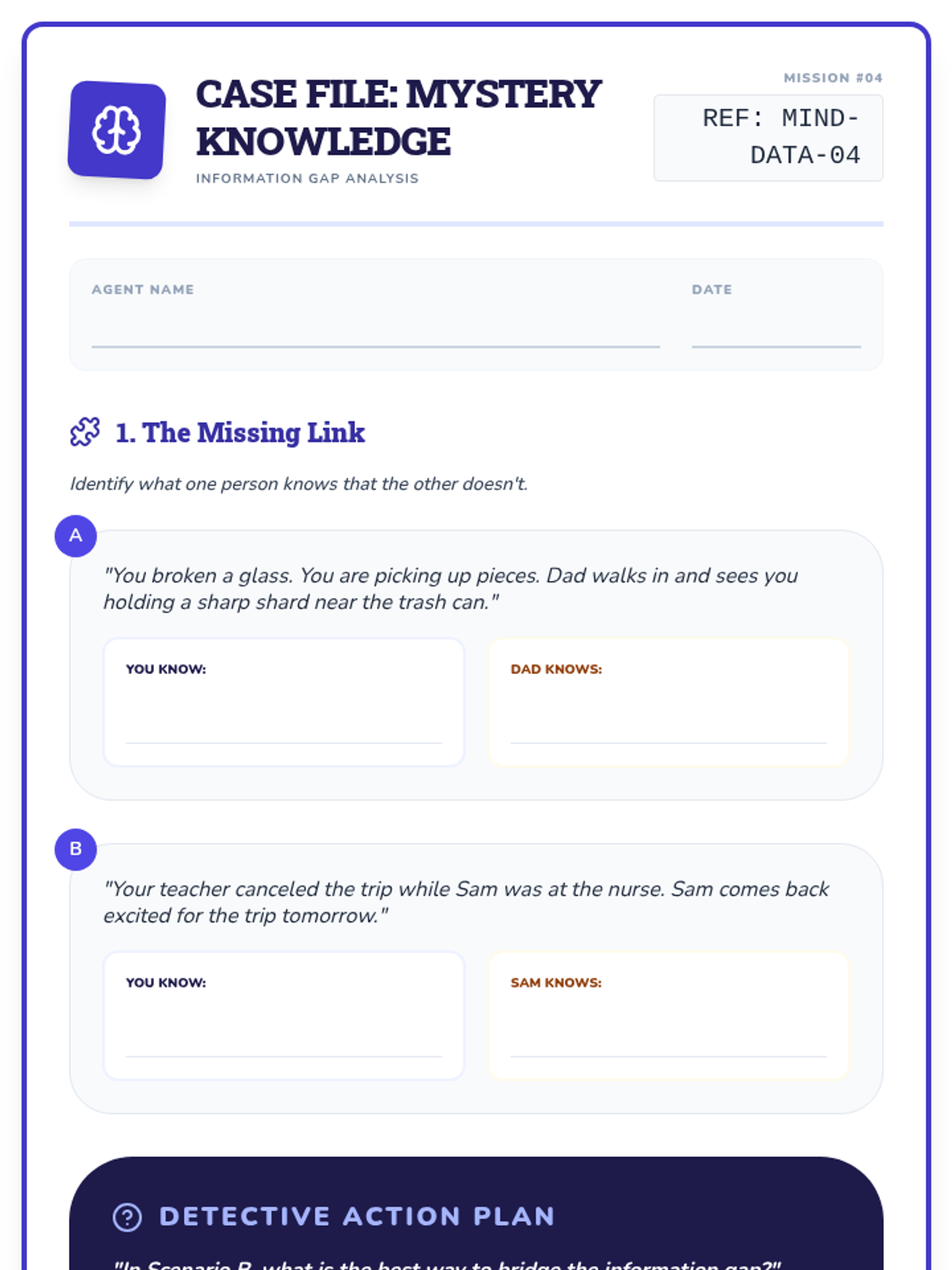
Exploring the "Theory of Mind" concept that people only know what they have experienced or been told. Analyzing situations where characters have different levels of information.
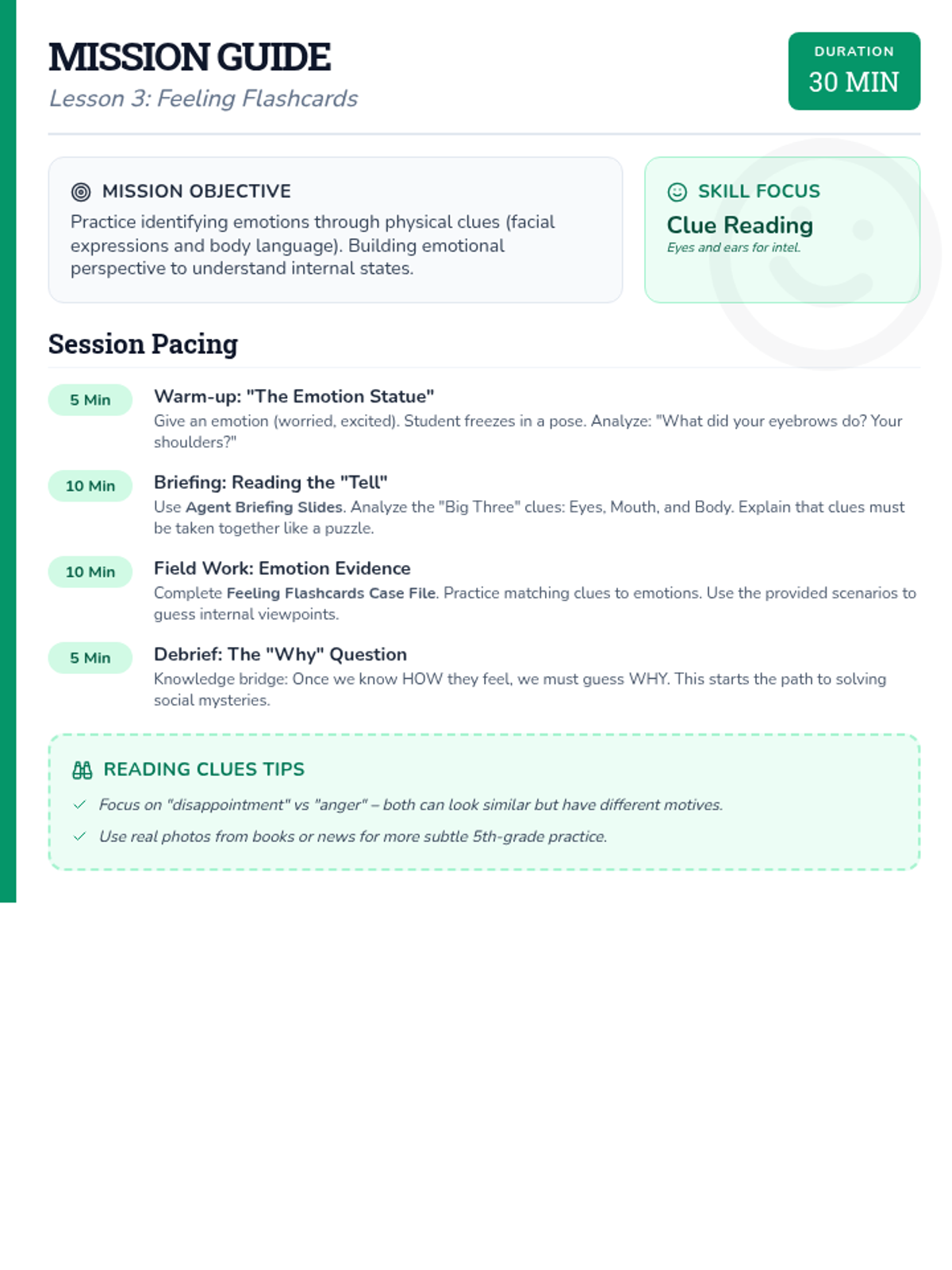
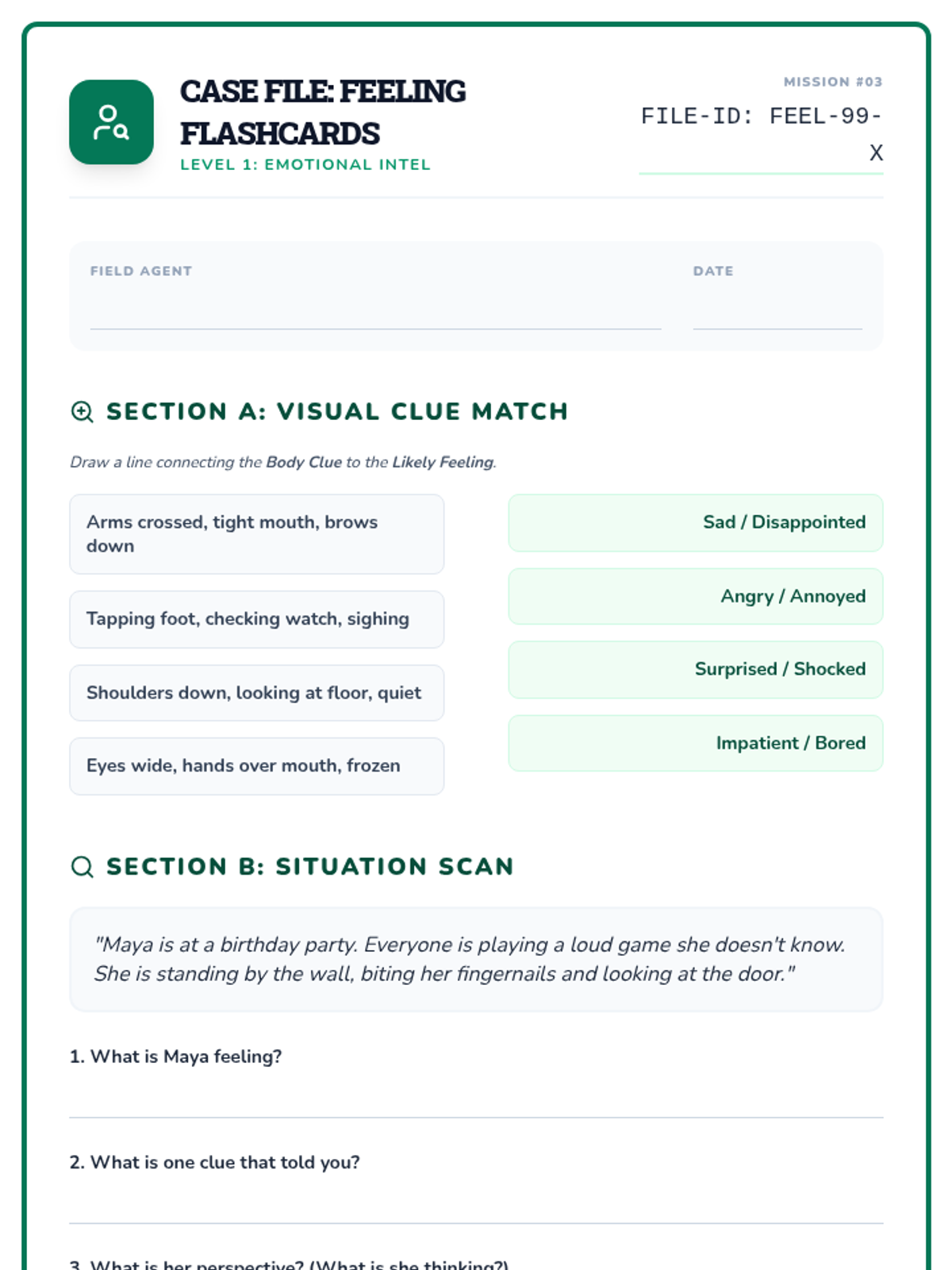
Identifying emotions through non-verbal cues. Students practice "reading" faces and body language to guess how others might be feeling in specific scenarios.
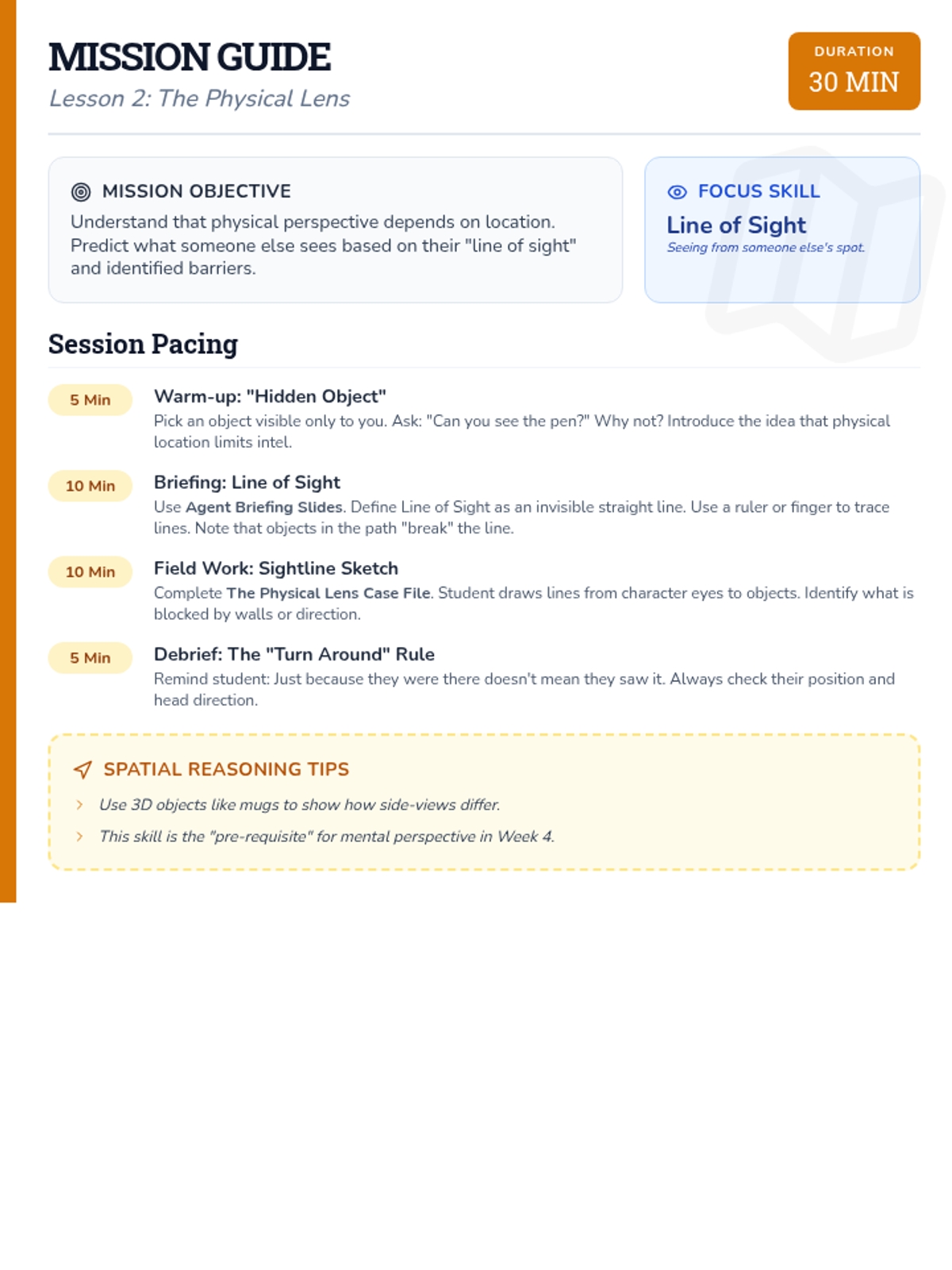
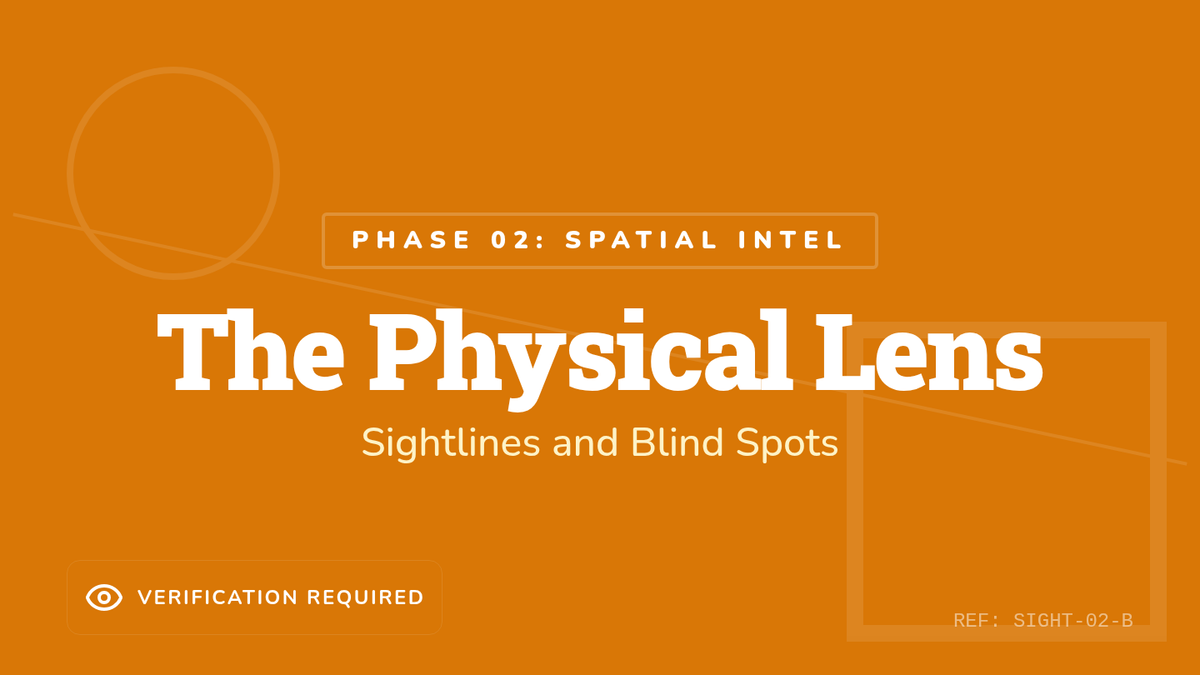
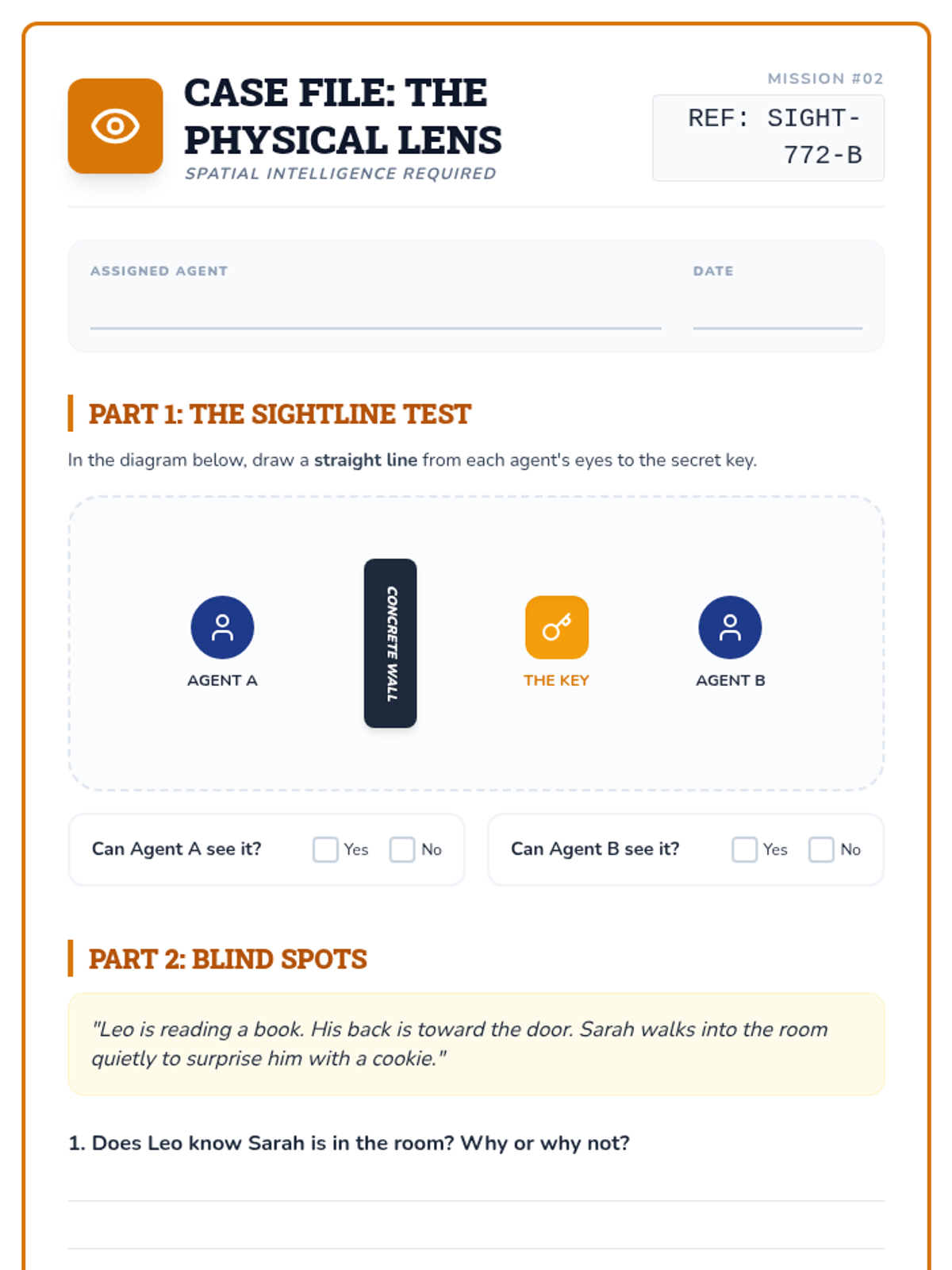
Focuses on physical perspective—understanding that what someone else sees depends on where they are standing. Includes activities on "Line of Sight."
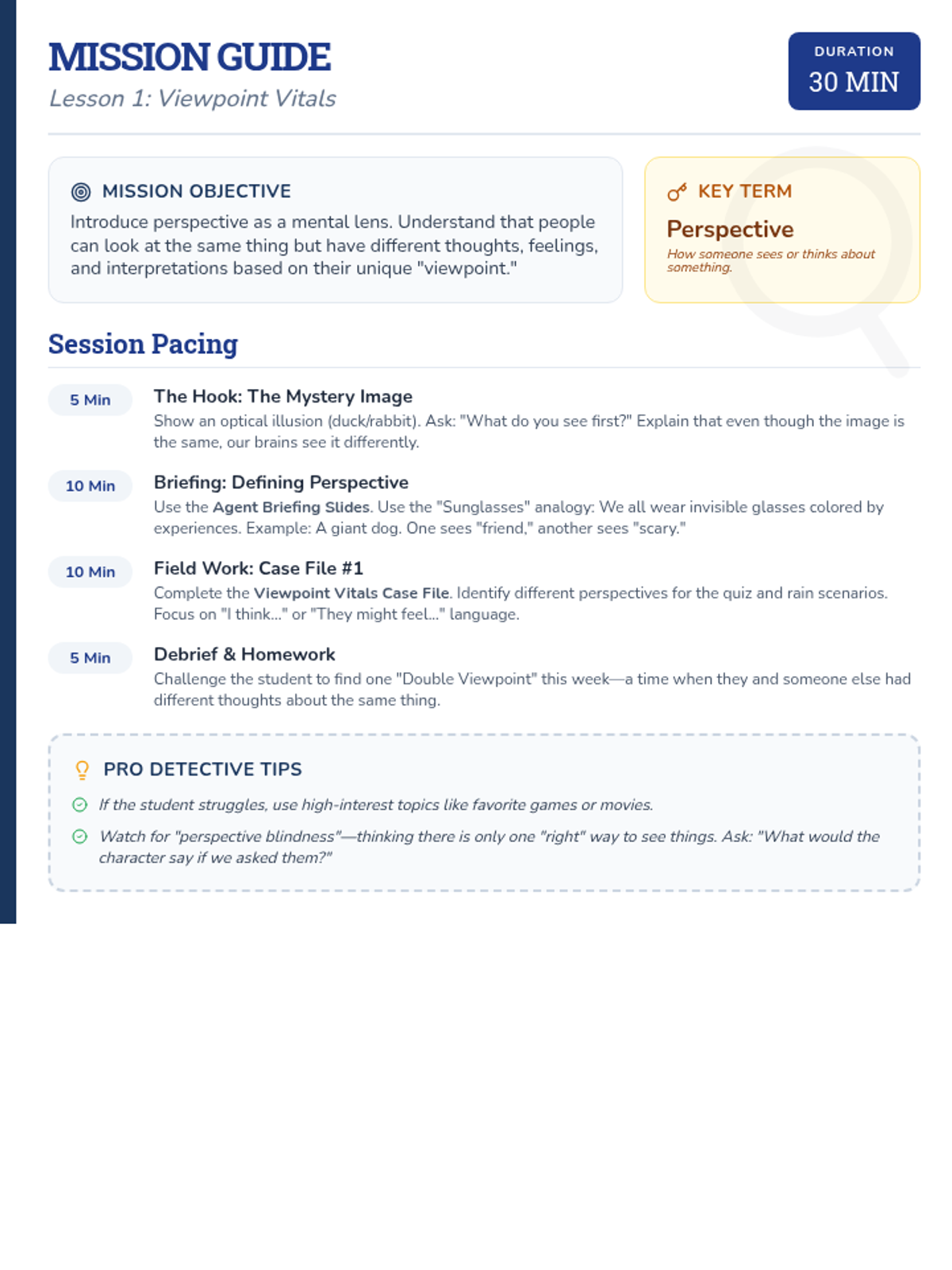
Introduction to the concept of perspective as a mental "viewpoint." Students learn that everyone sees the world through a unique lens based on their experiences and position.
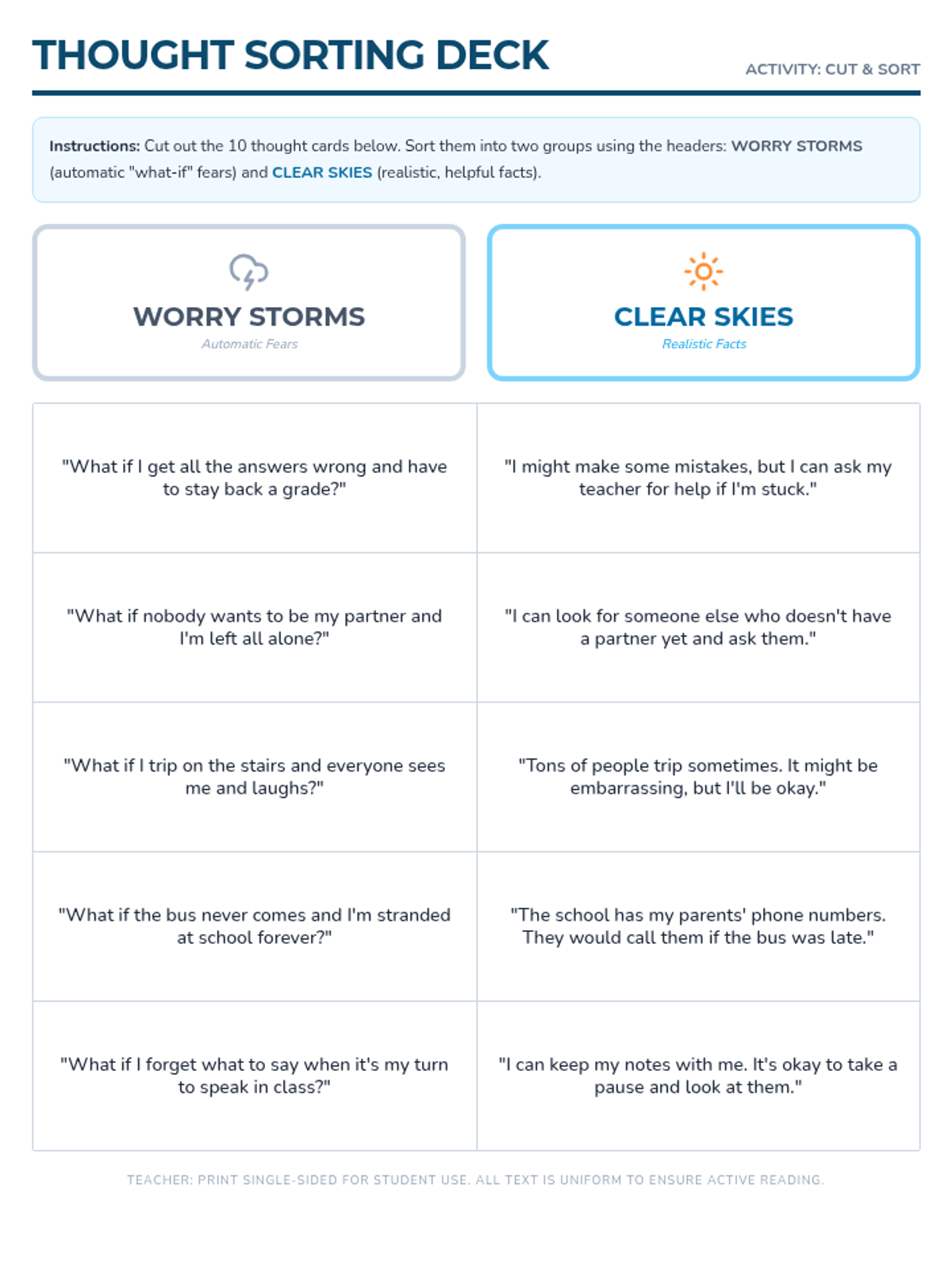
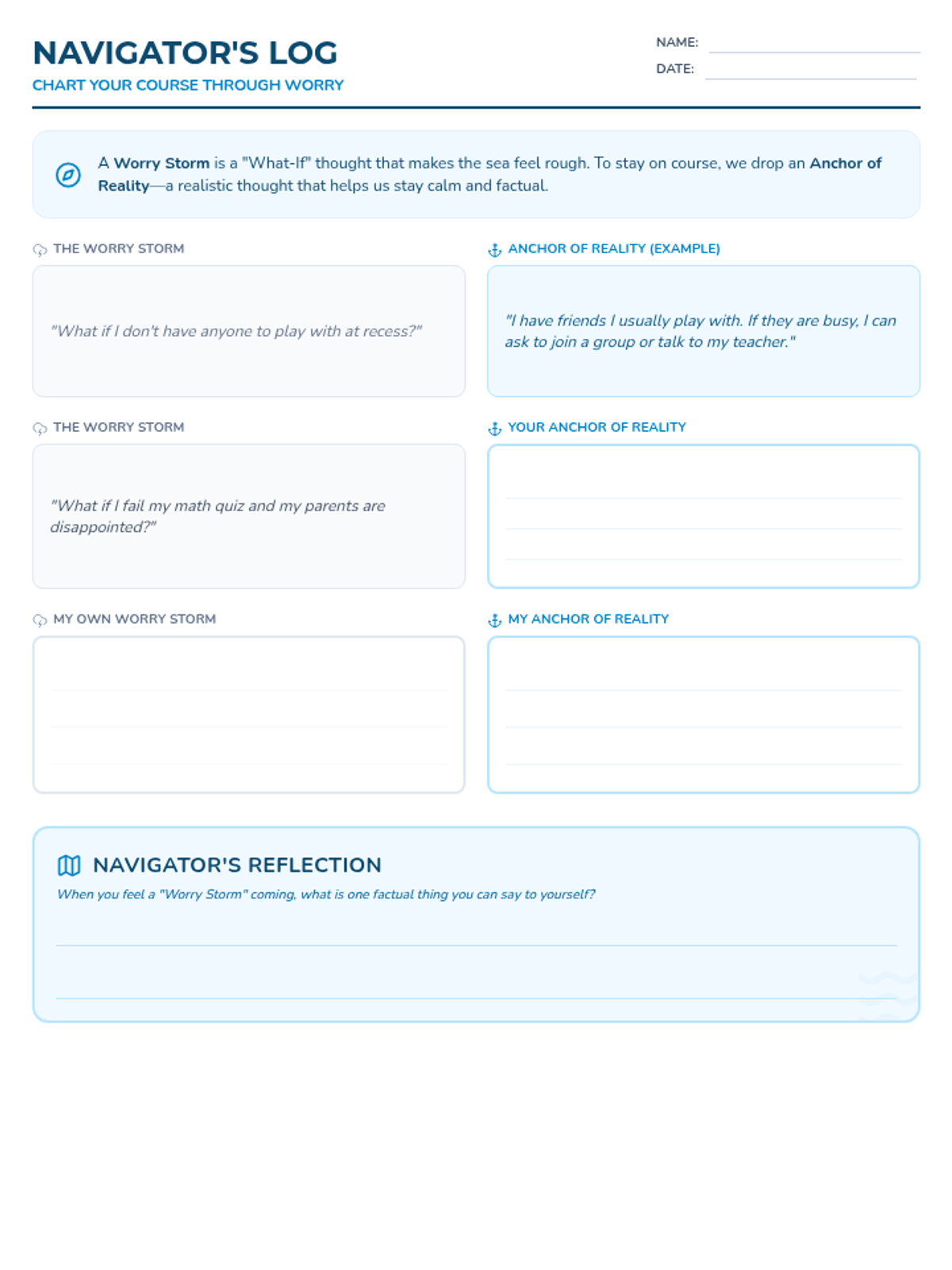
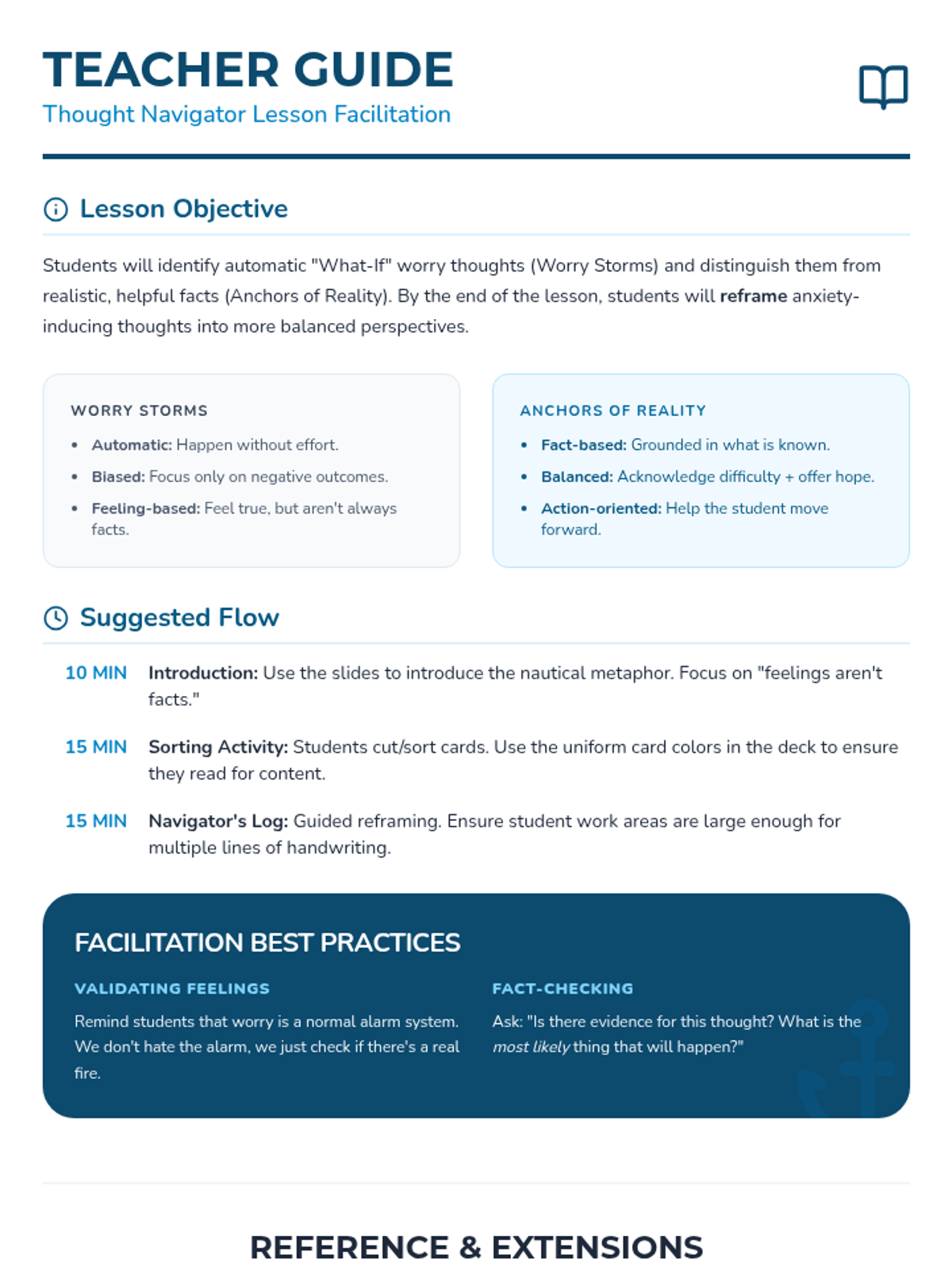
A lesson designed to help students identify automatic "what-if" worry thoughts and replace them with realistic, helpful alternatives using a maritime navigation theme.
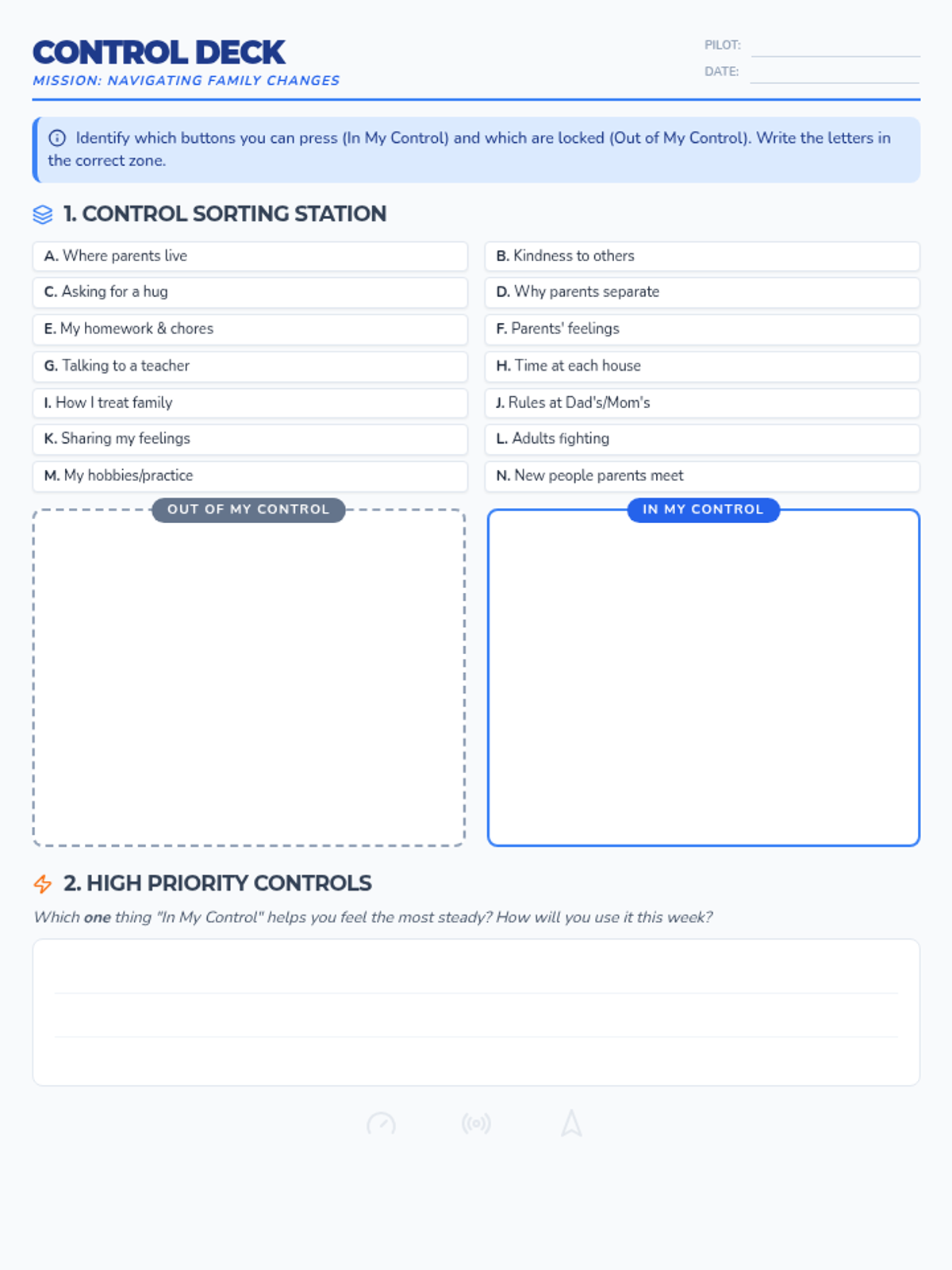
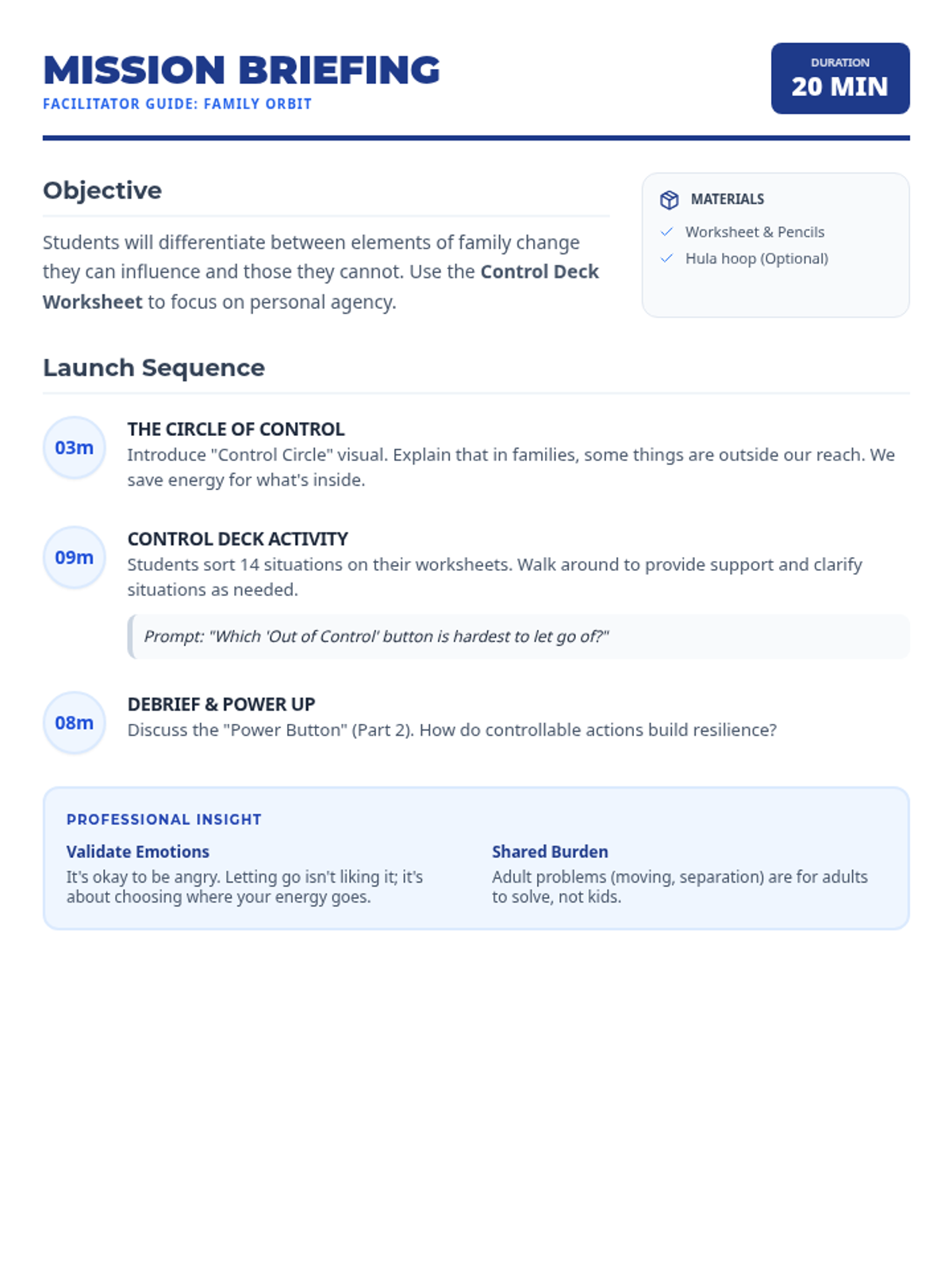
A short, high-impact 20-minute session for 4th graders to distinguish between controllable and uncontrollable factors during family changes. Students explore coping strategies by focusing their energy on what they can influence.
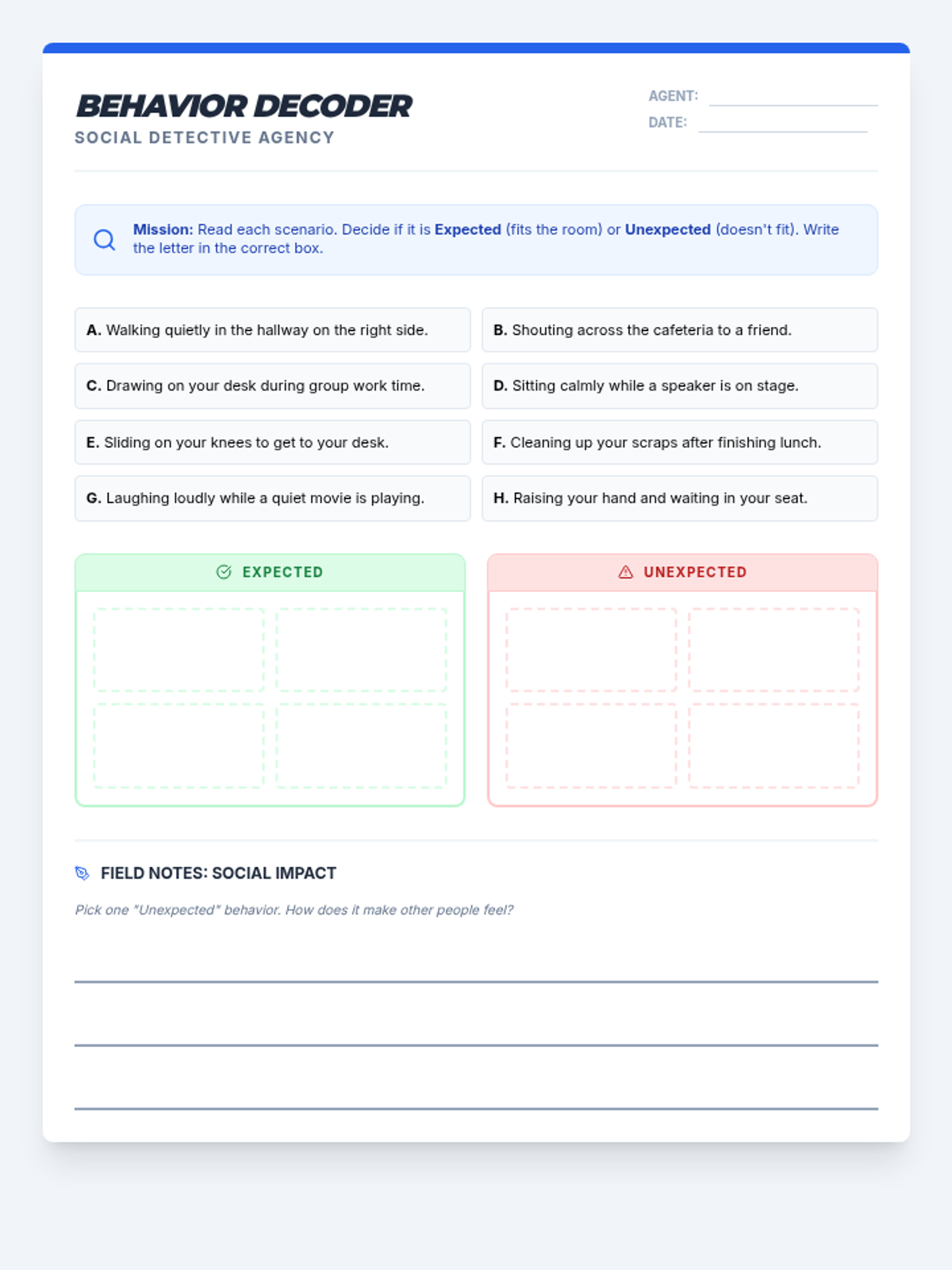
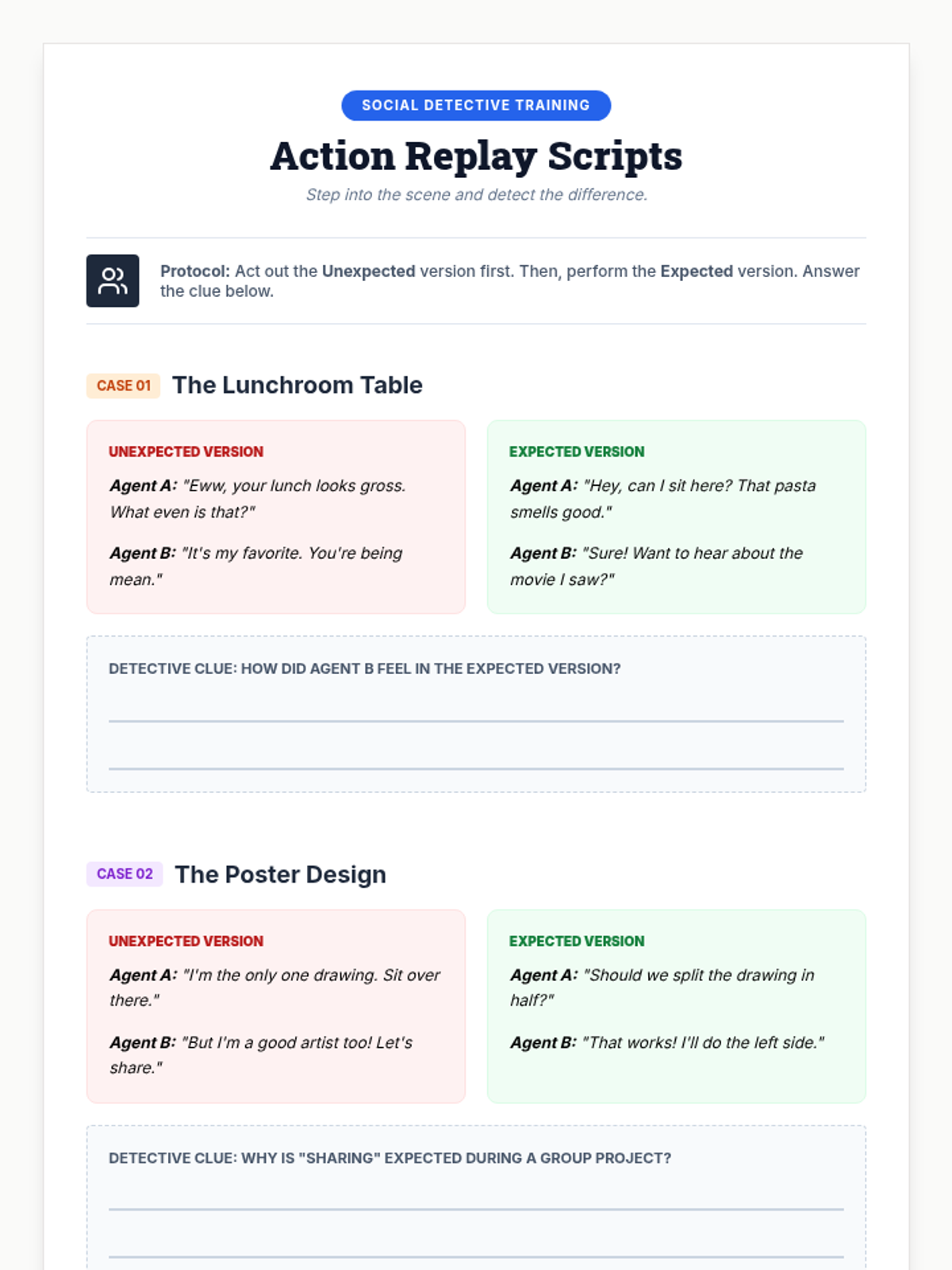
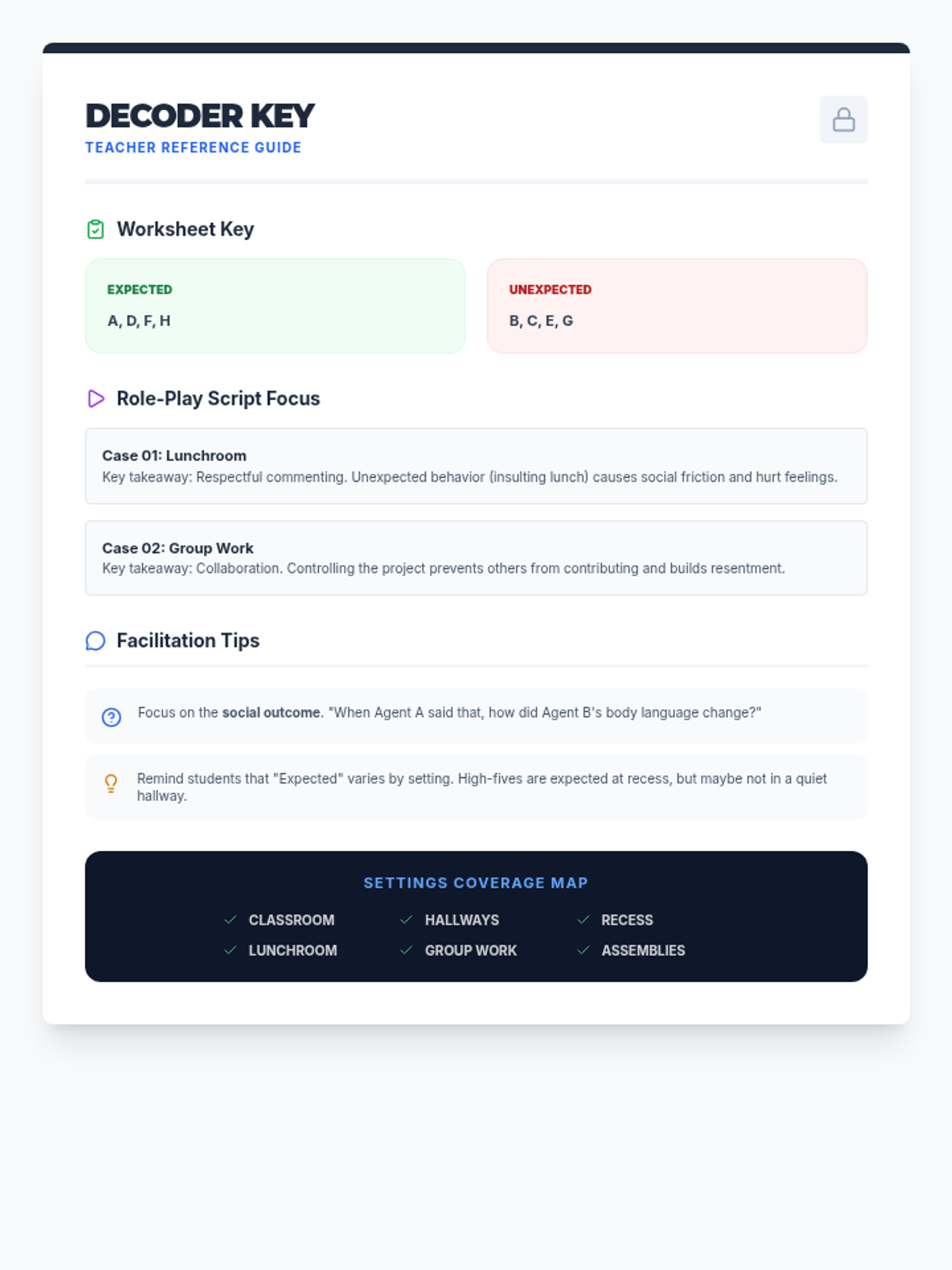
A social-emotional learning lesson where students become 'Social Detectives' to identify expected and unexpected behaviors across various school settings including the classroom, lunchroom, and assemblies.
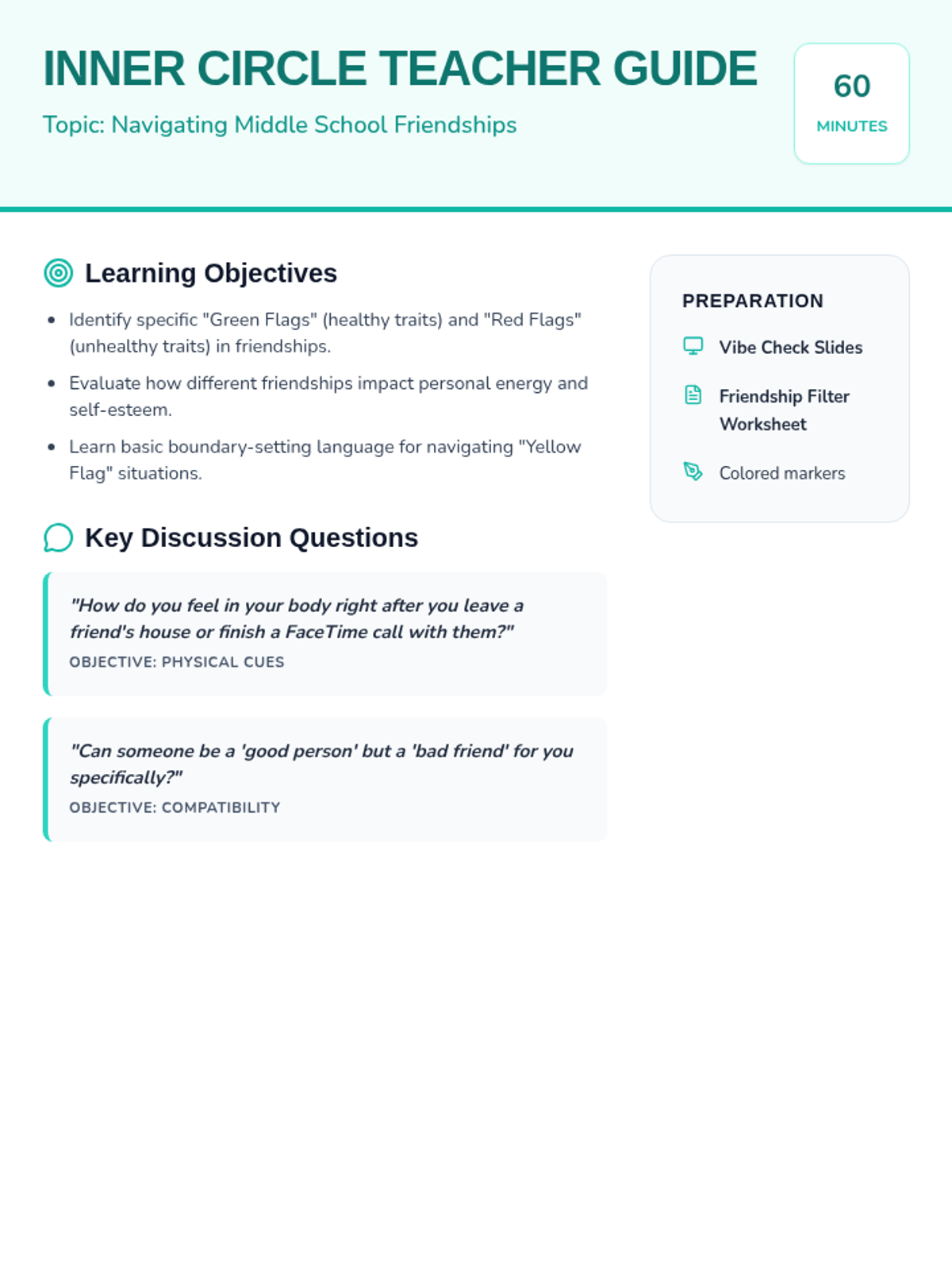
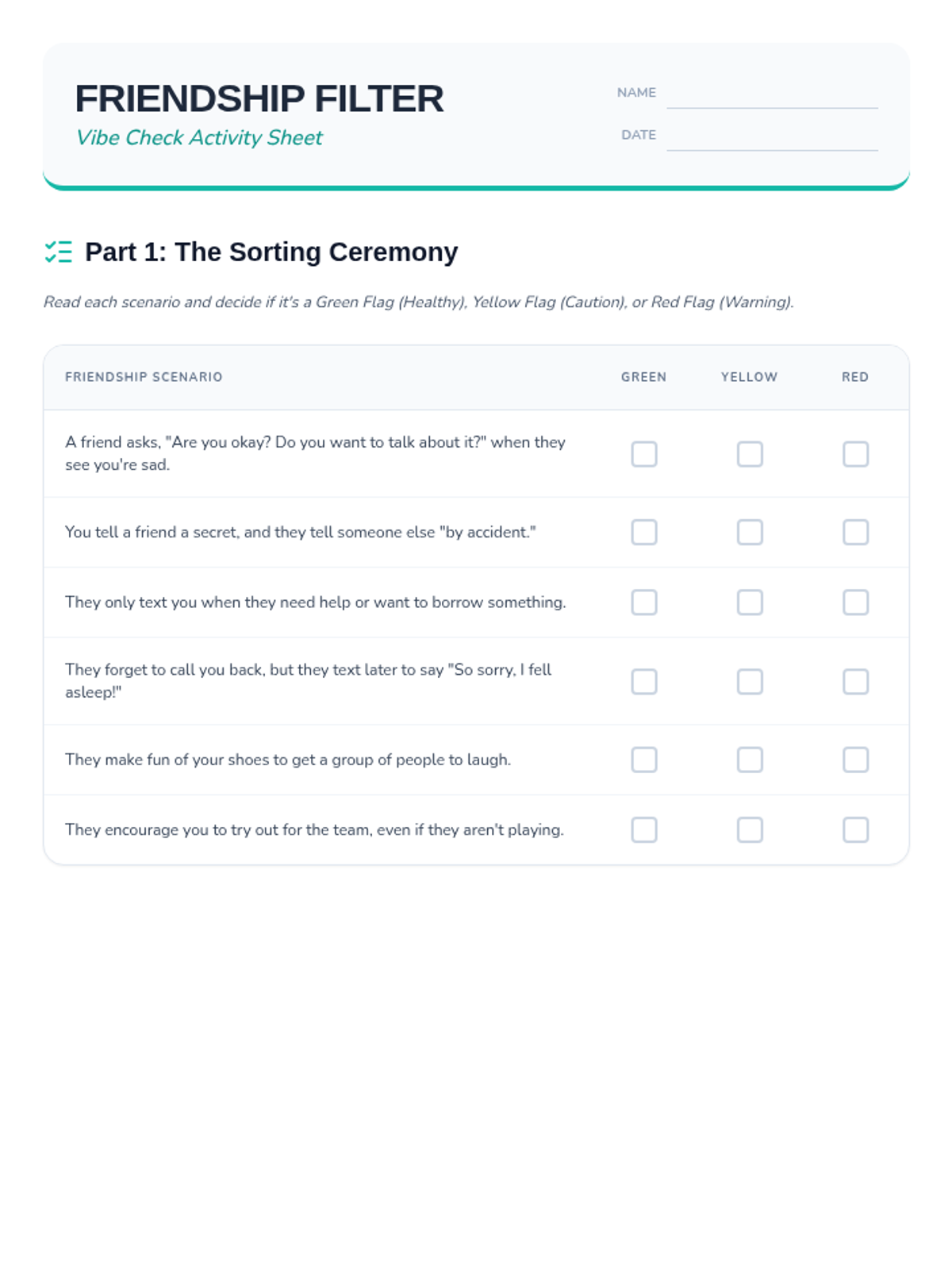
A comprehensive lesson for middle school students on identifying healthy vs. unhealthy friendship traits, focusing on 'green flags' and 'red flags'.
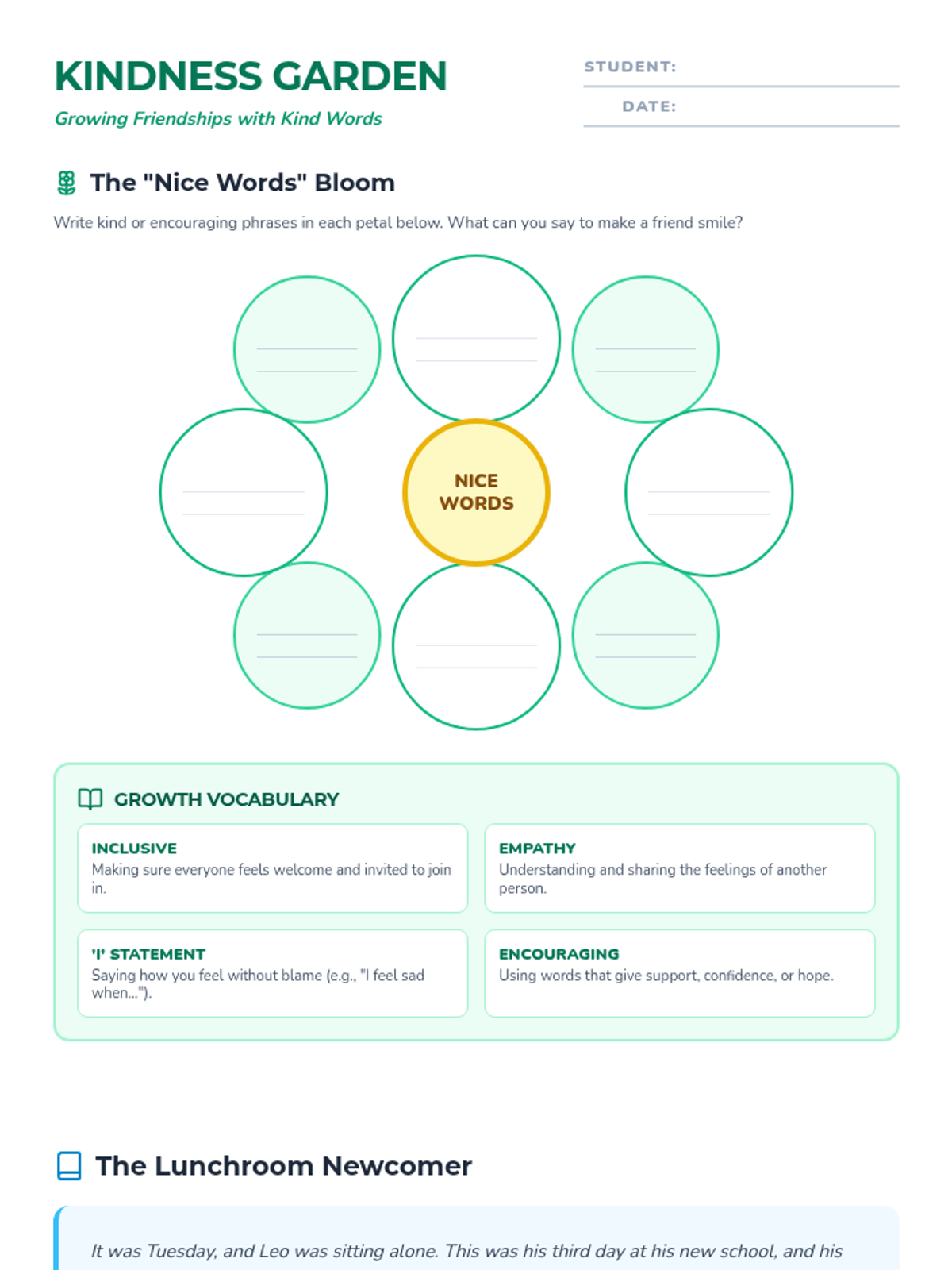
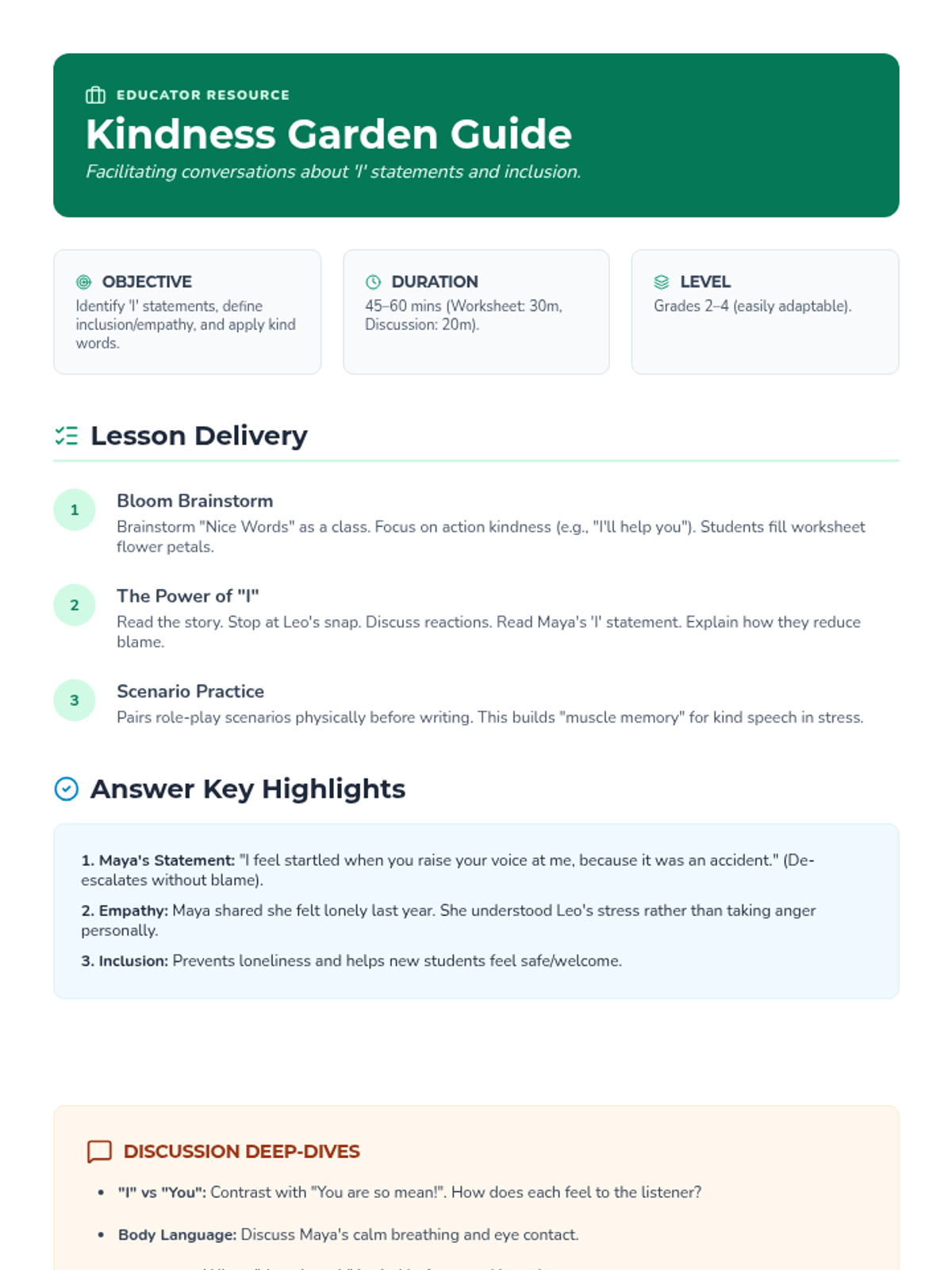
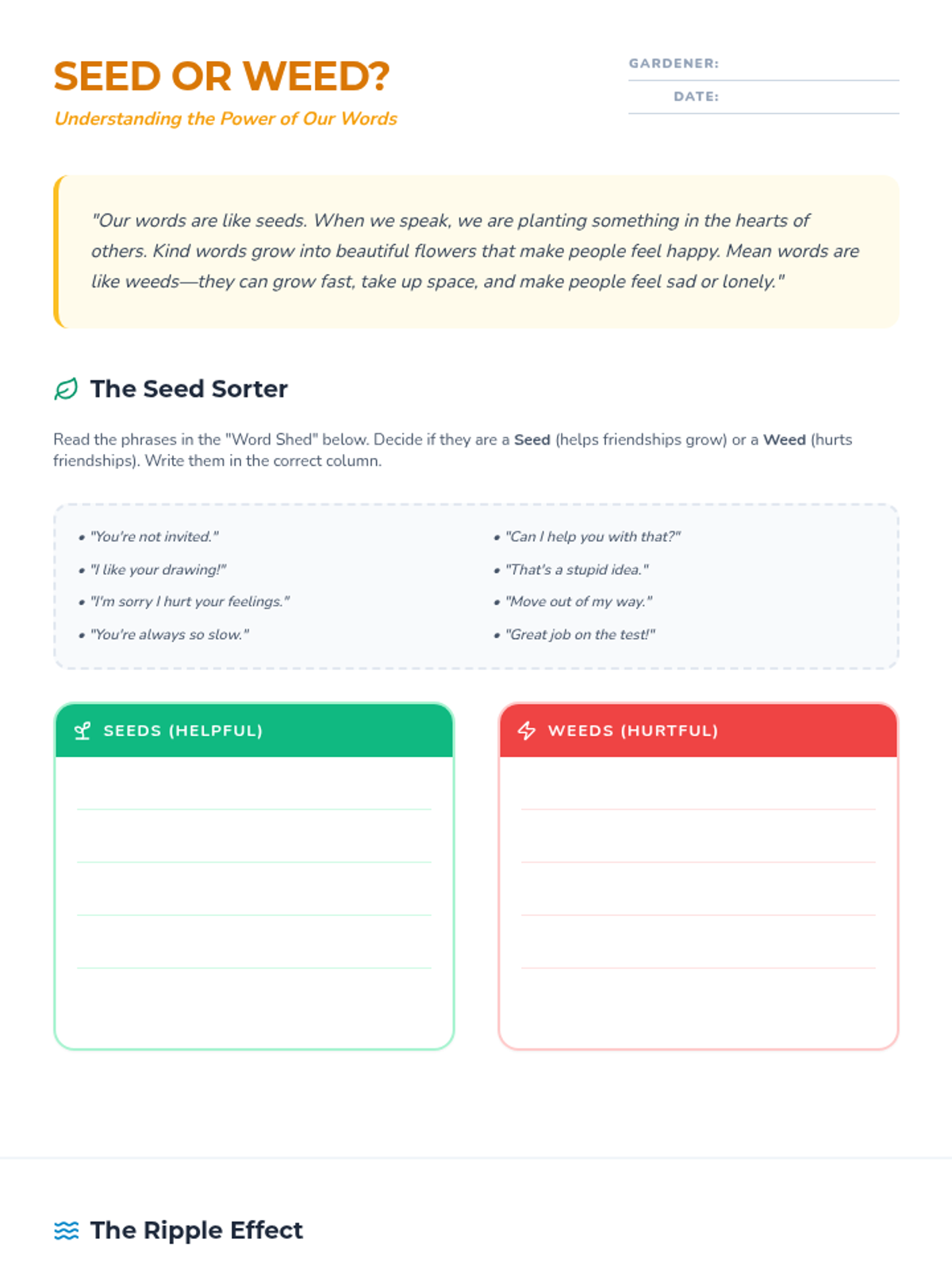
A social-emotional learning lesson focused on fostering inclusion, using 'I' statements for conflict resolution, and developing empathy through kind communication. Students will practice specific verbal strategies to build stronger friendships.
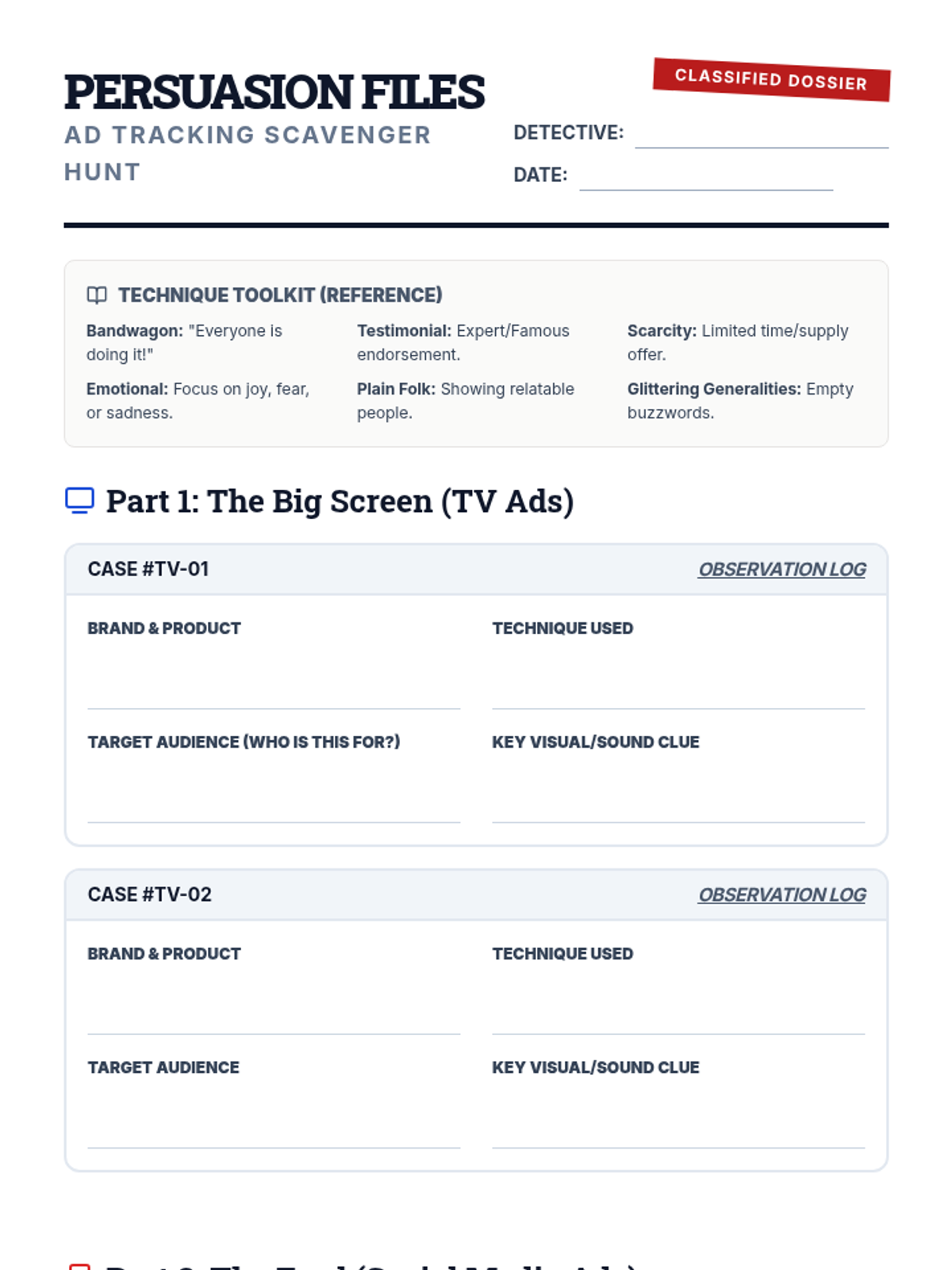
Students become 'Ad Detectives' to uncover the hidden persuasion tactics used in television and social media advertising. This lesson provides the tools and framework for a hands-on investigation of modern marketing strategies.
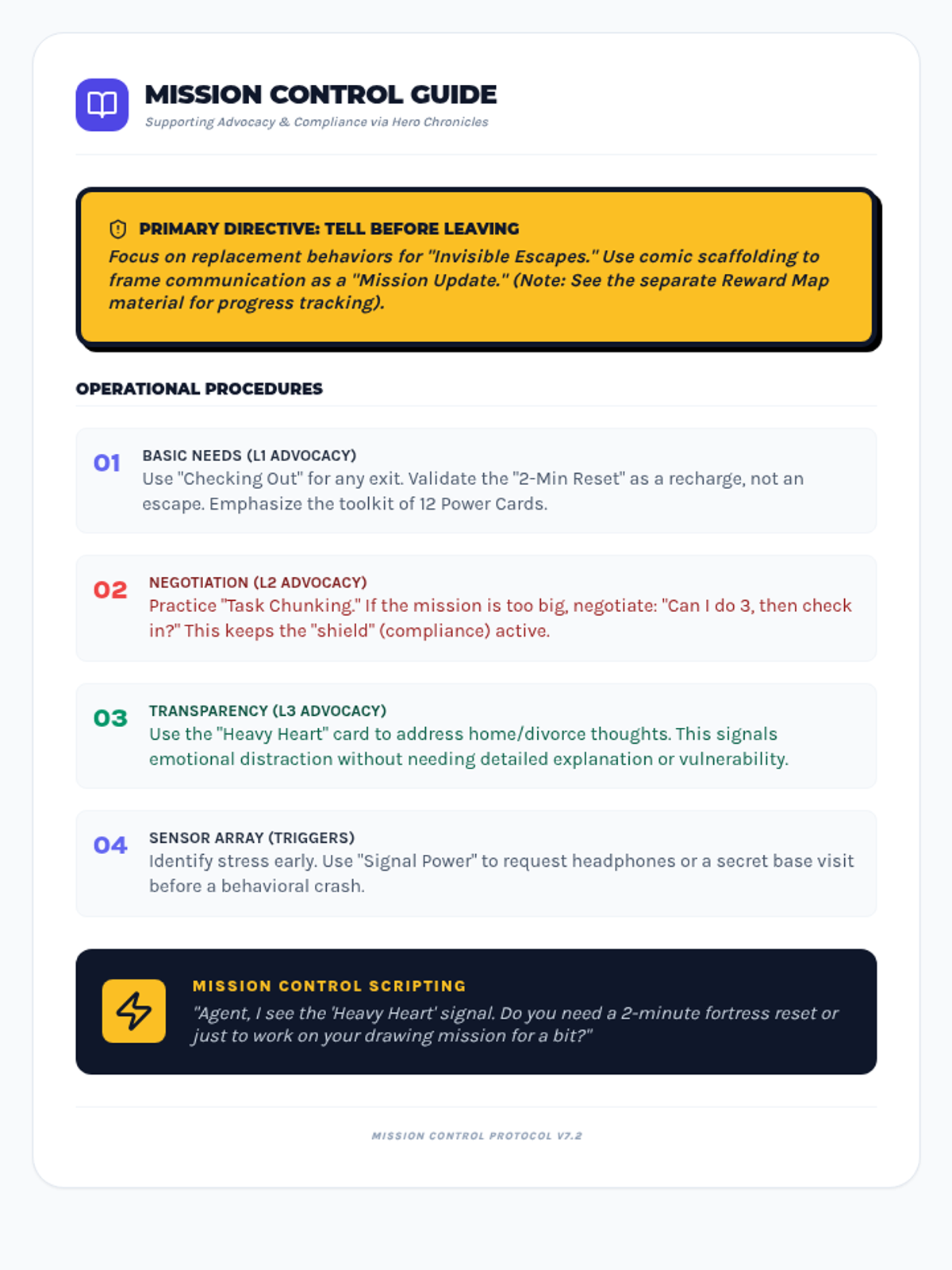
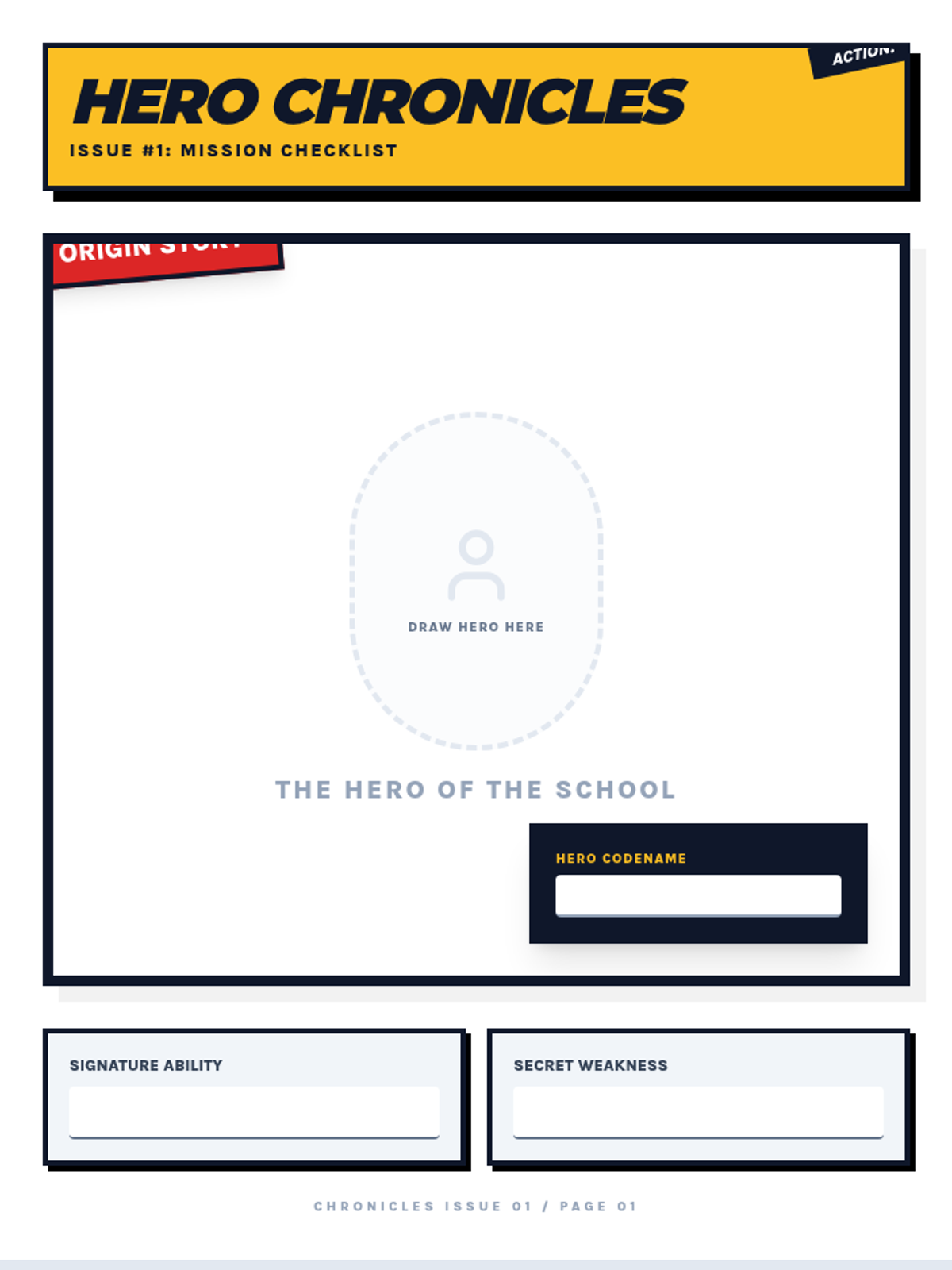
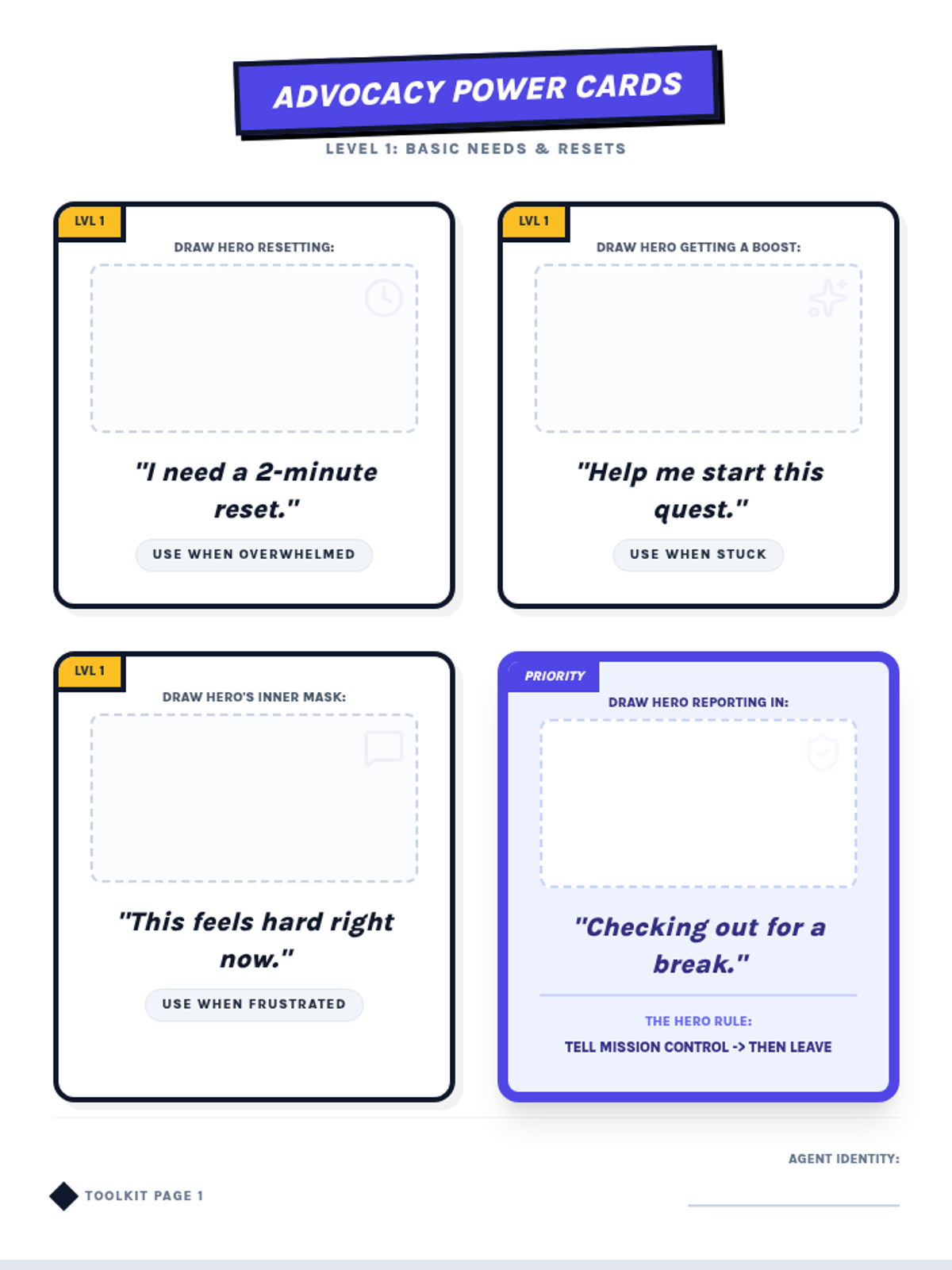
A creative character-design approach to building self-advocacy, task completion, and emotional expression for students who struggle with compliance or sharing feelings.
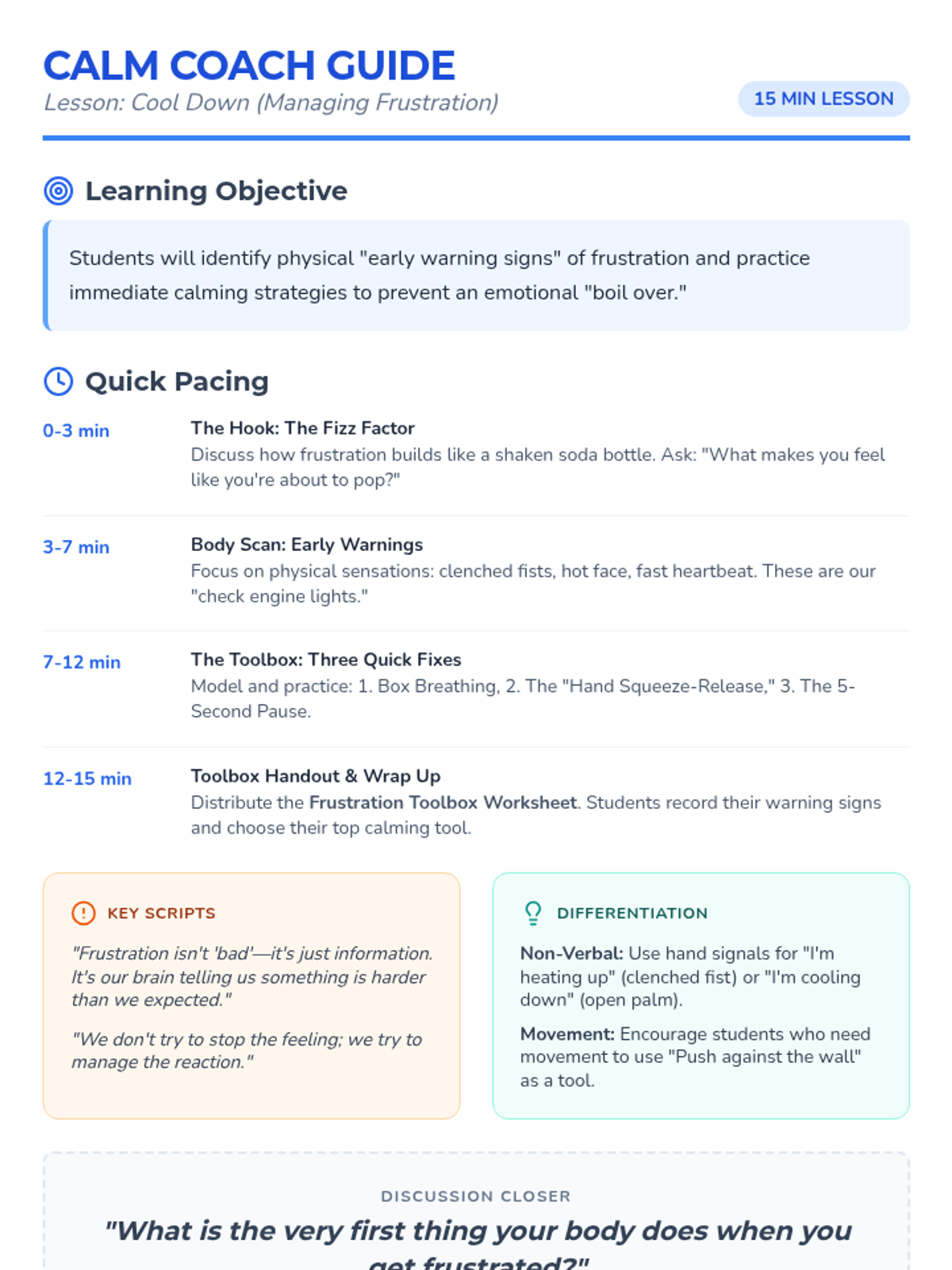
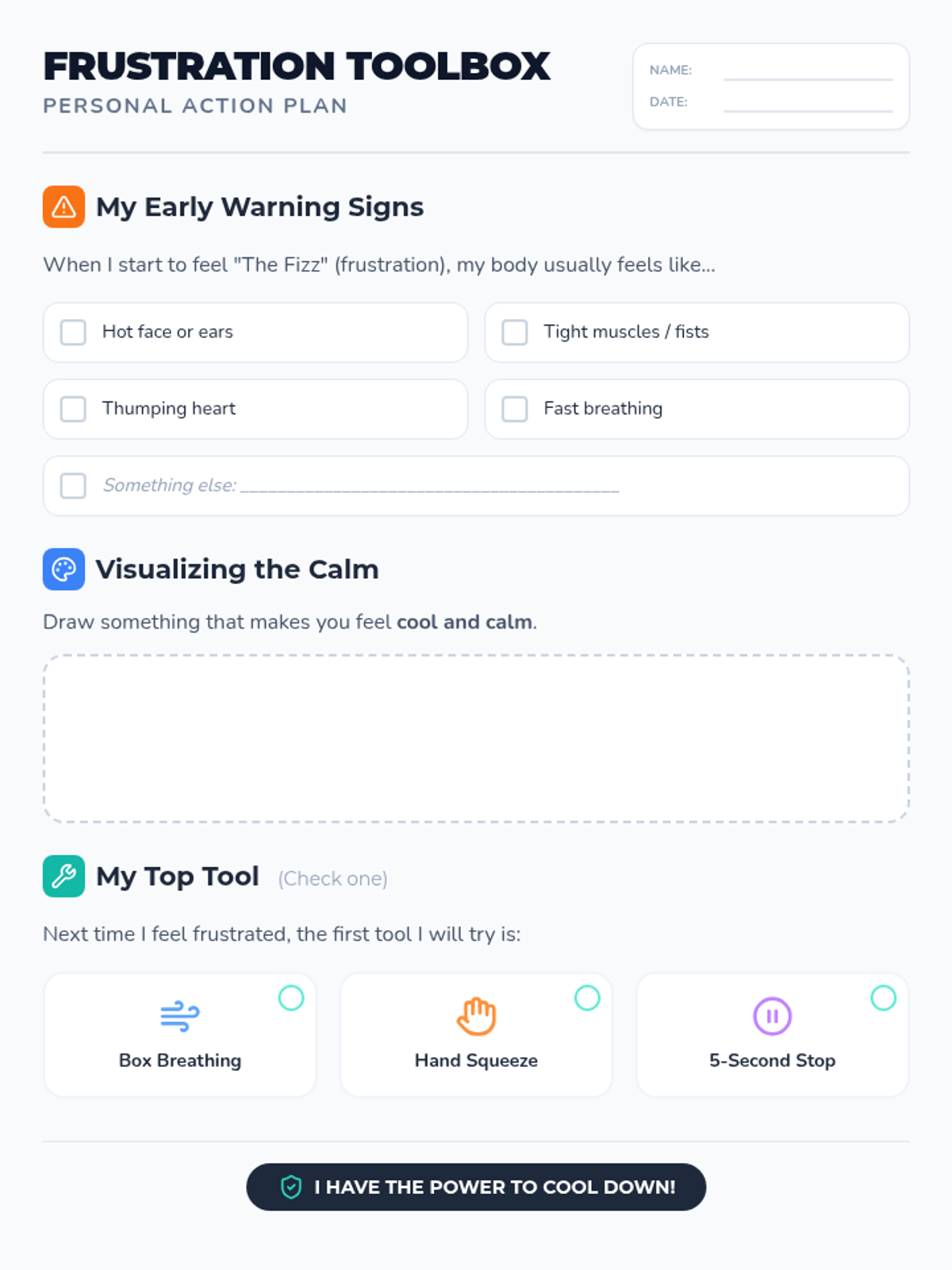
A quick, high-impact 15-minute lesson focused on identifying the physical signs of frustration and implementing immediate 'cool down' strategies. Students learn to recognize their 'boiling point' and build a personal toolbox of calming techniques.
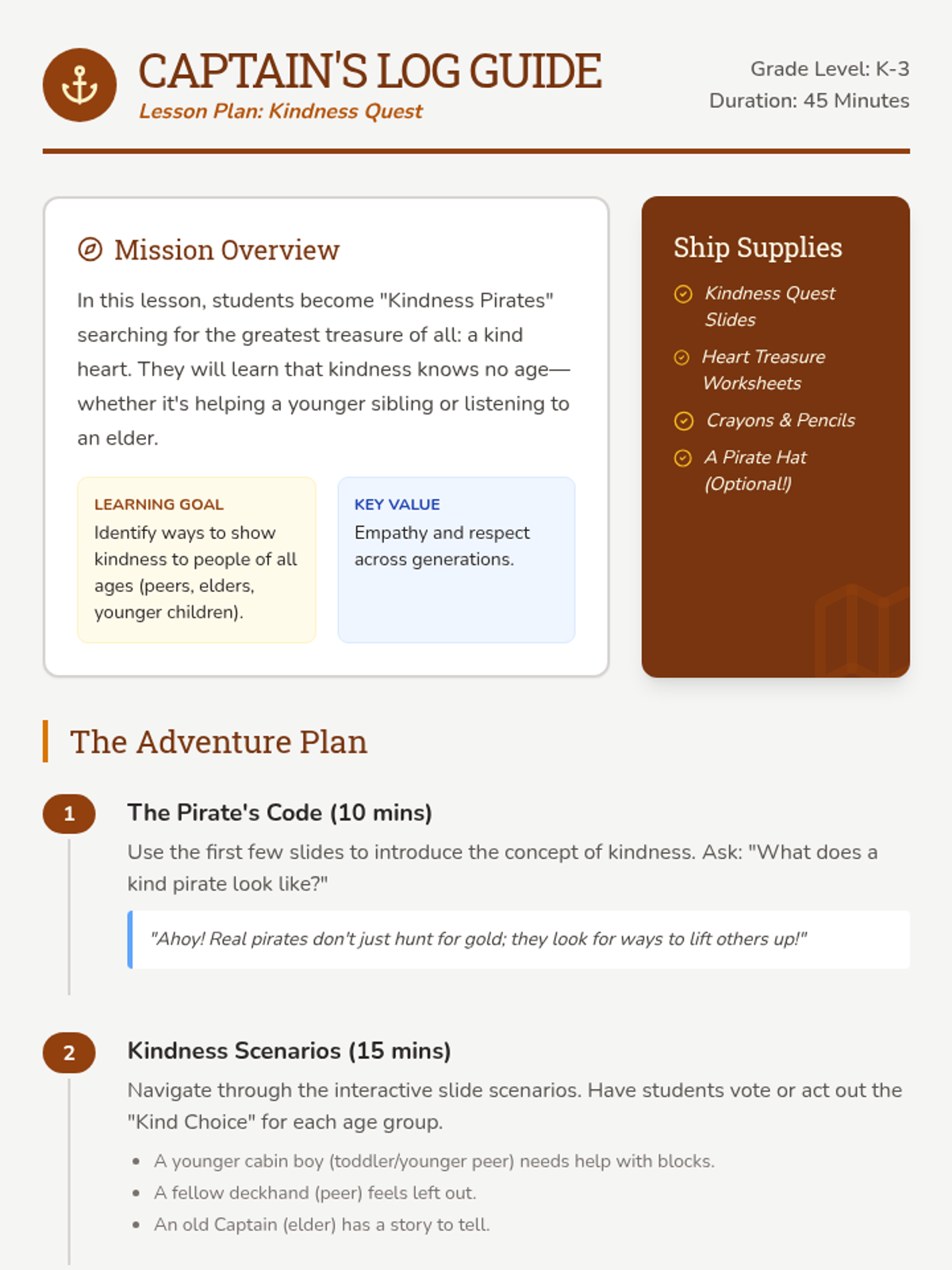
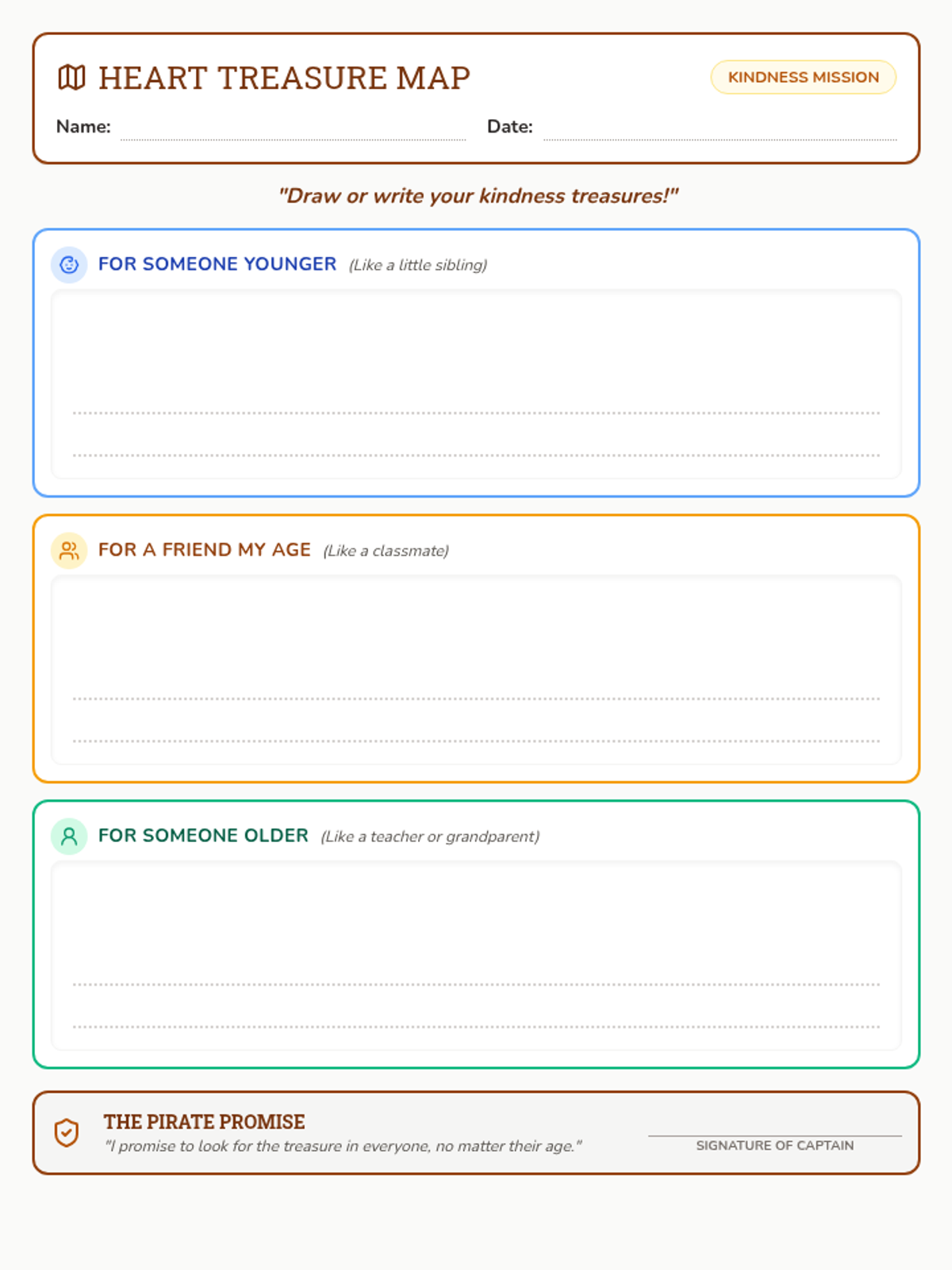
A pirate-themed adventure focusing on showing kindness to everyone, regardless of their age, through the "Code of Kindness."
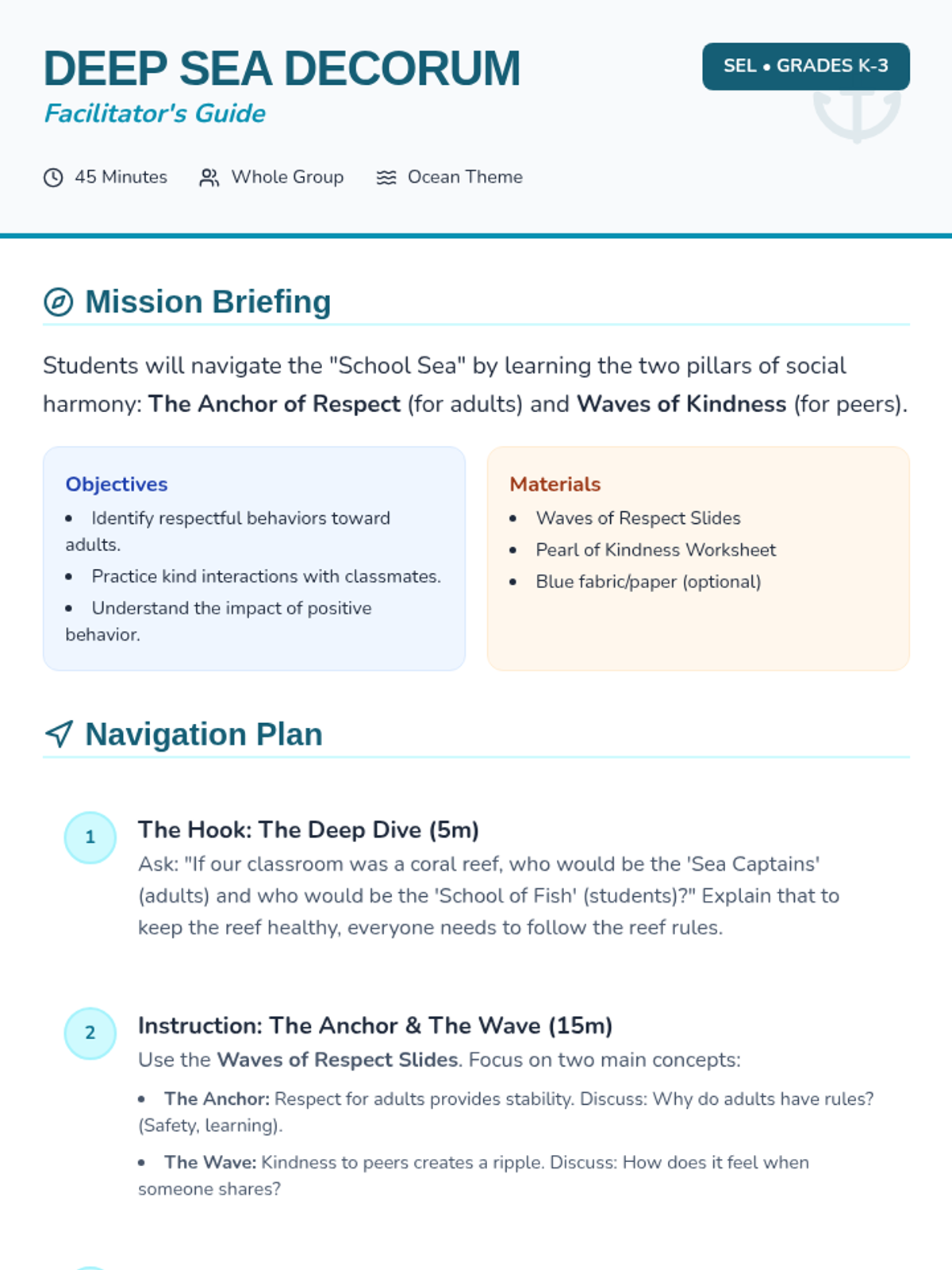
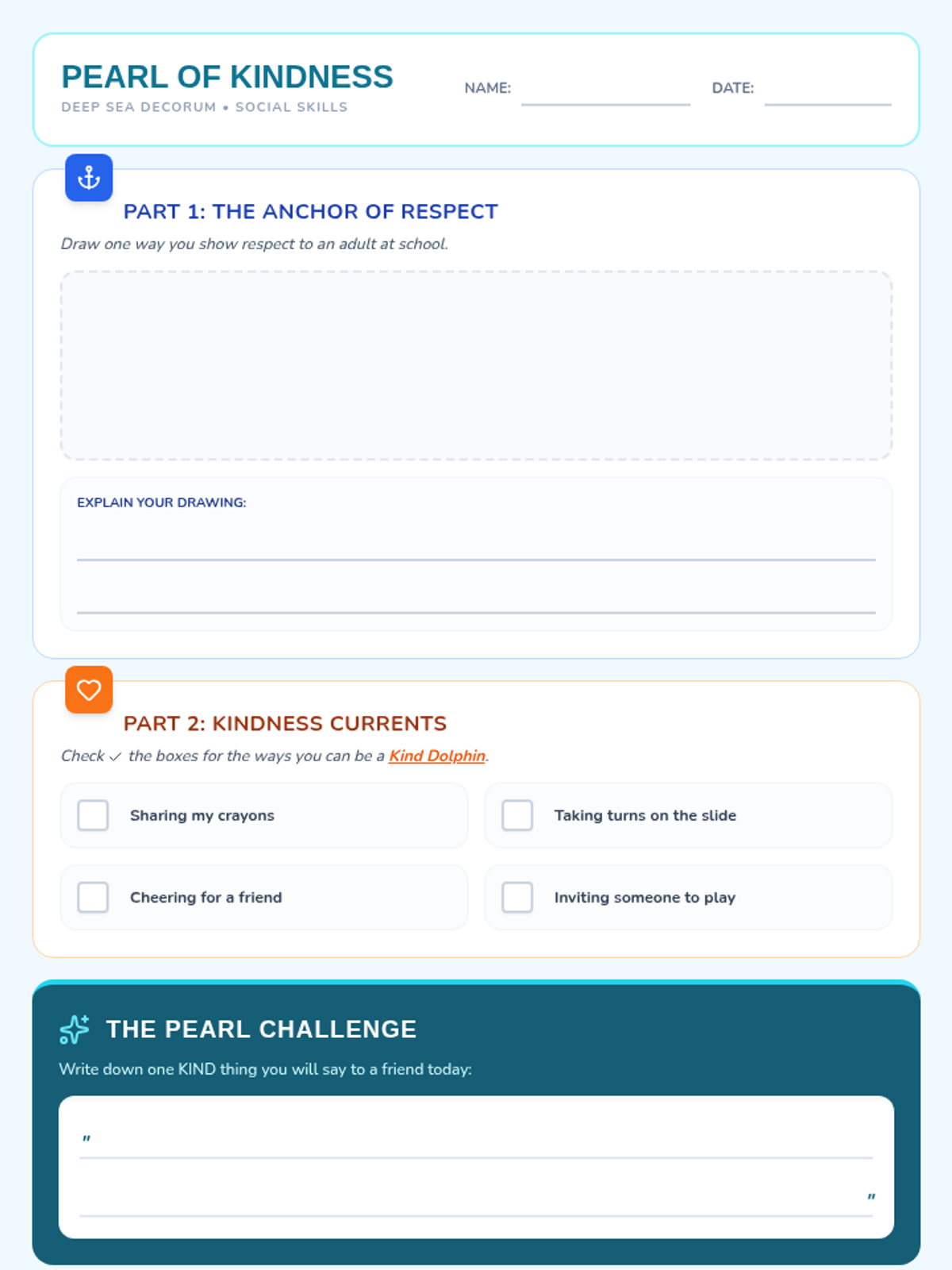
A comprehensive lesson on social-emotional learning focused on respecting adults and being kind to peers, set in a vibrant underwater world. Students explore 'The Anchor of Respect' and 'Waves of Kindness' through interactive discussion and creative activities.
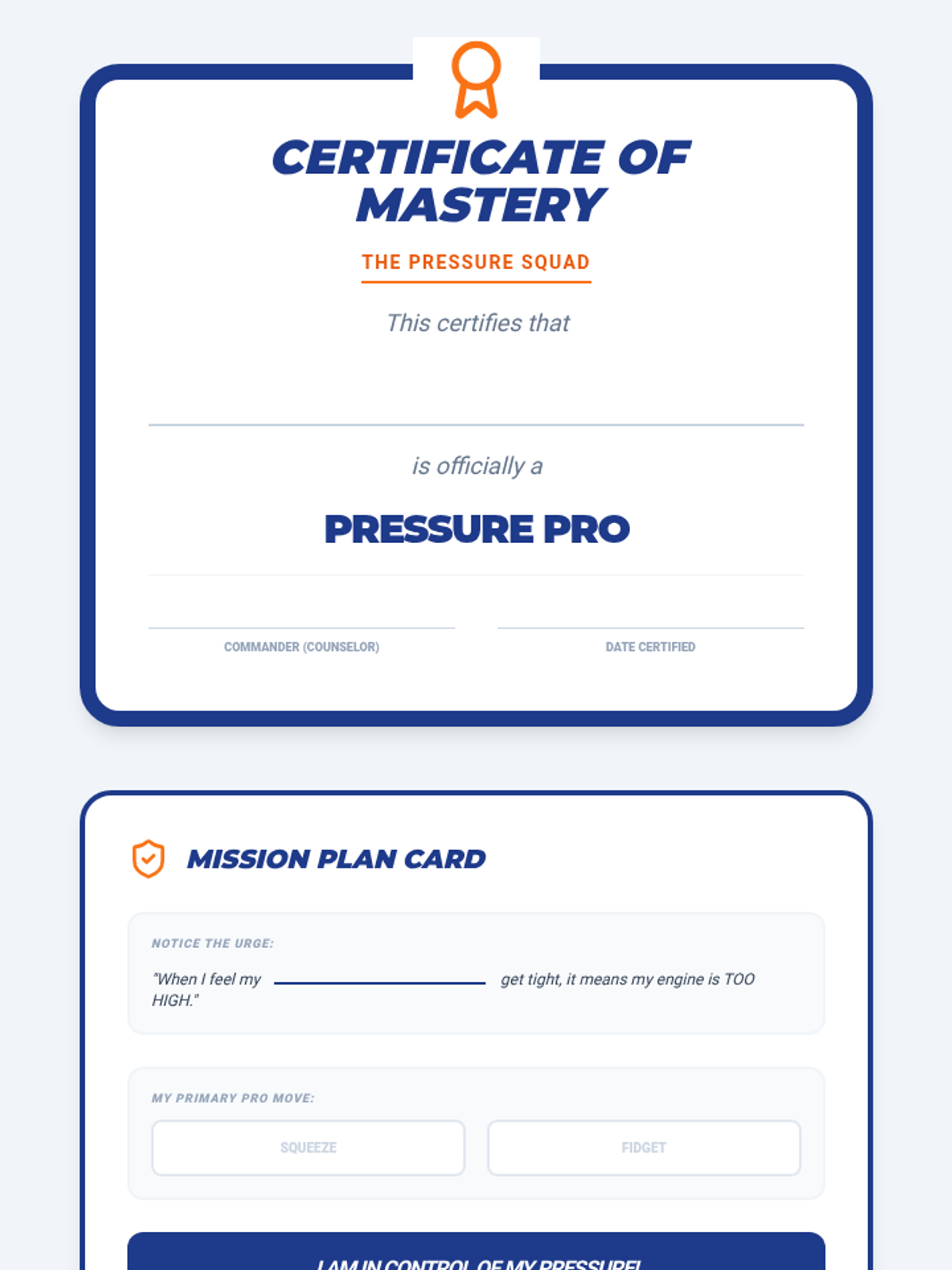
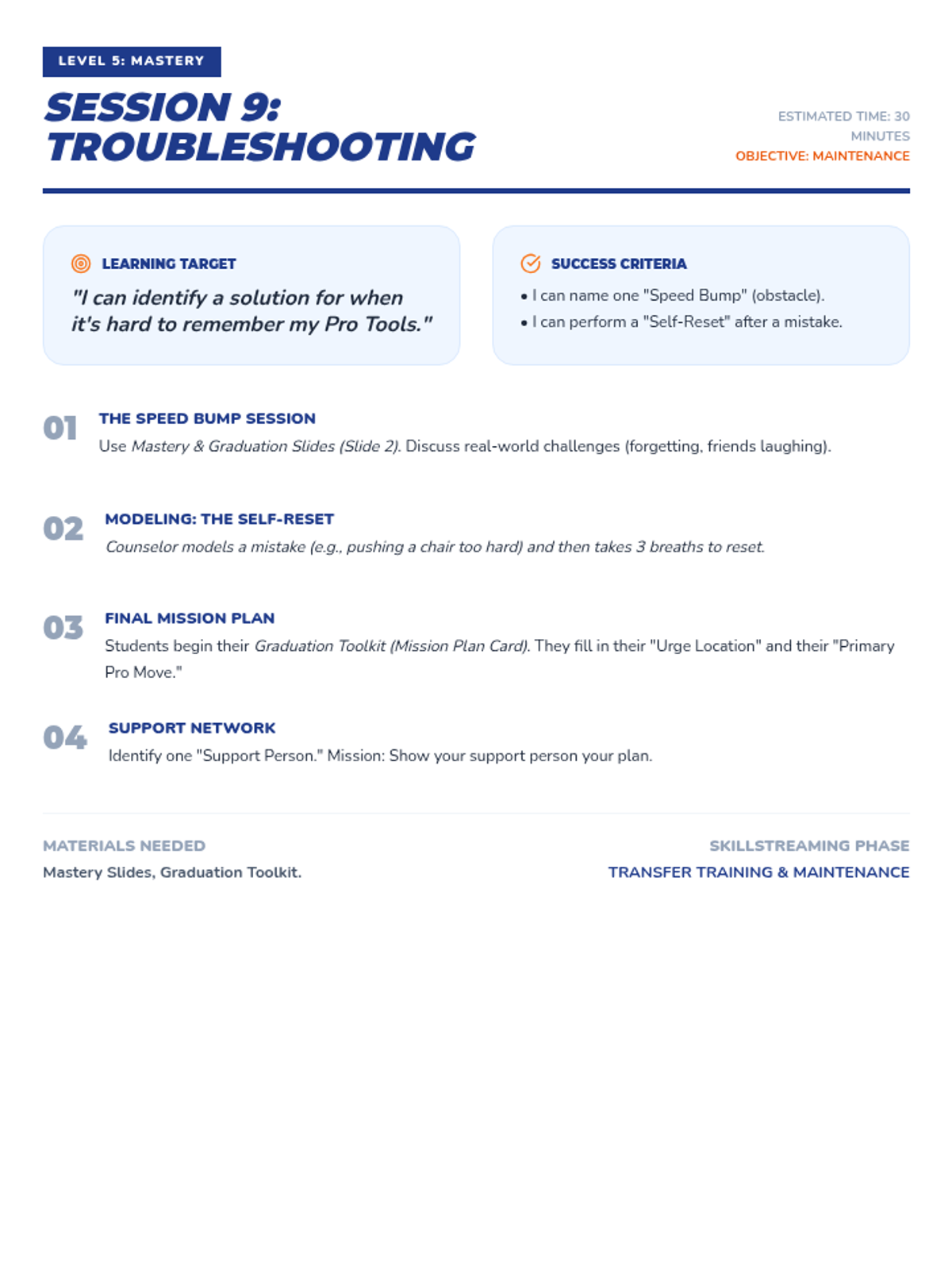
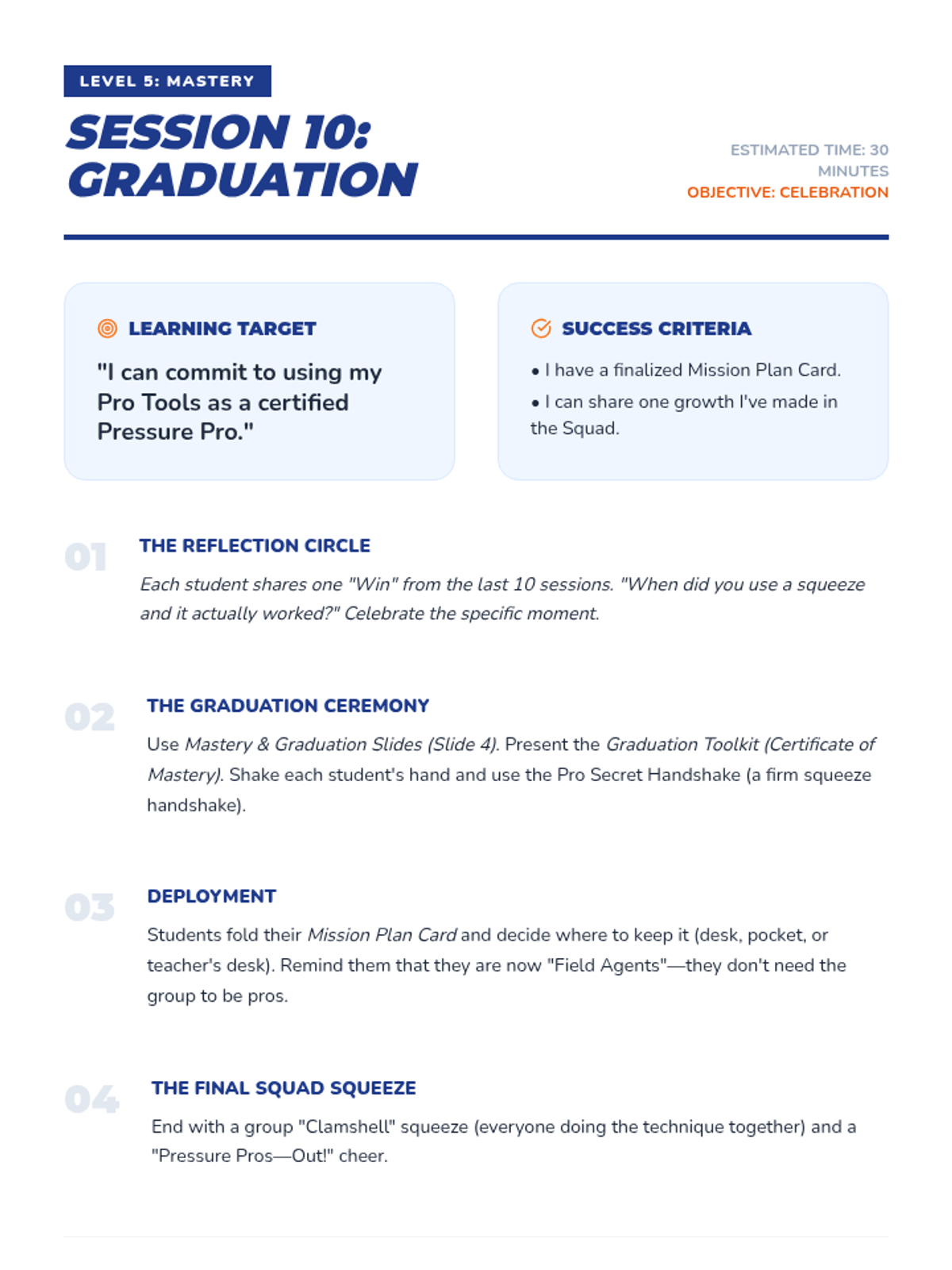
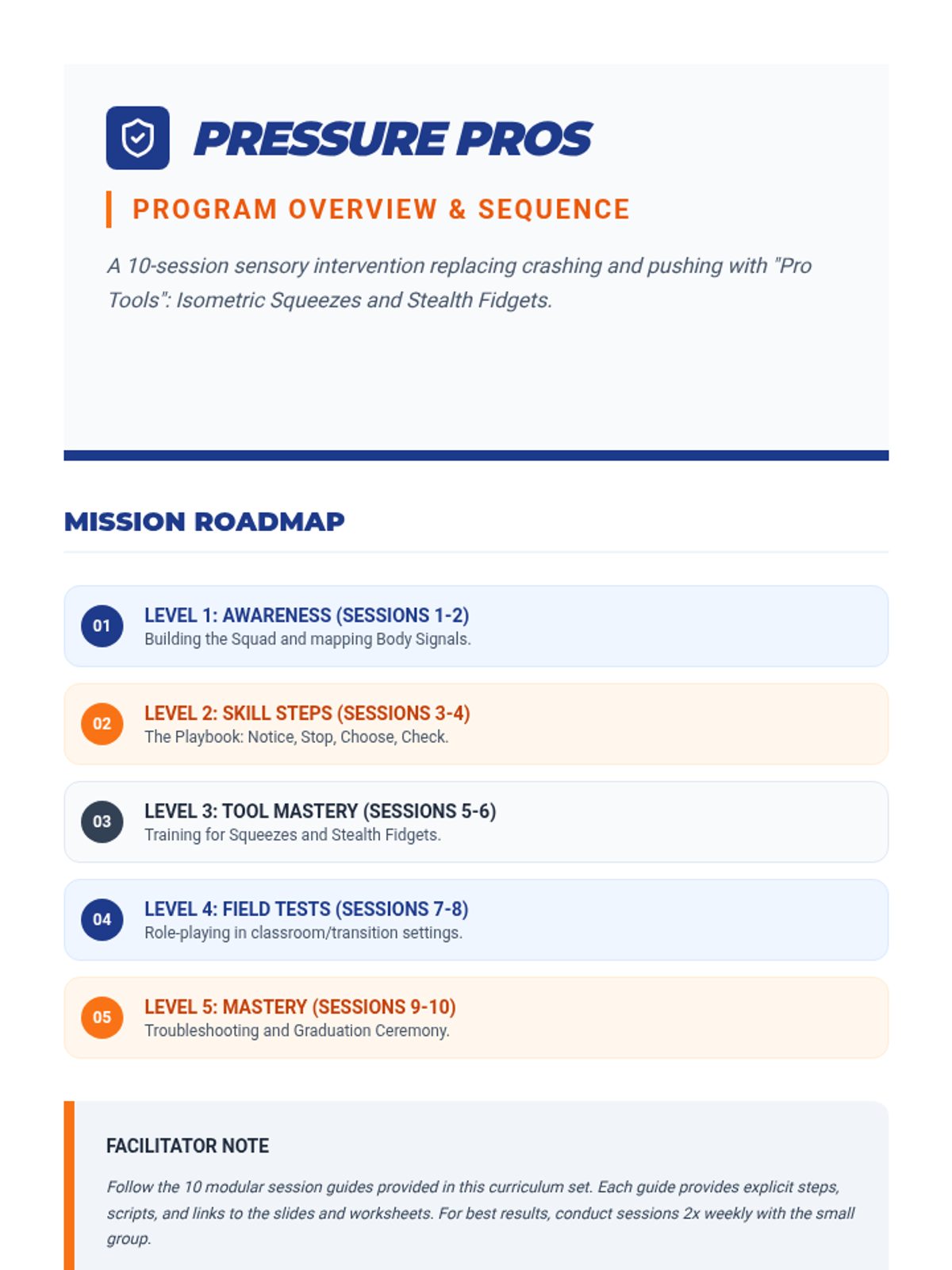
Troubleshooting challenges and finalizing individual regulation plans. Sessions 9 and 10 focus on maintenance, generalization, and graduation.
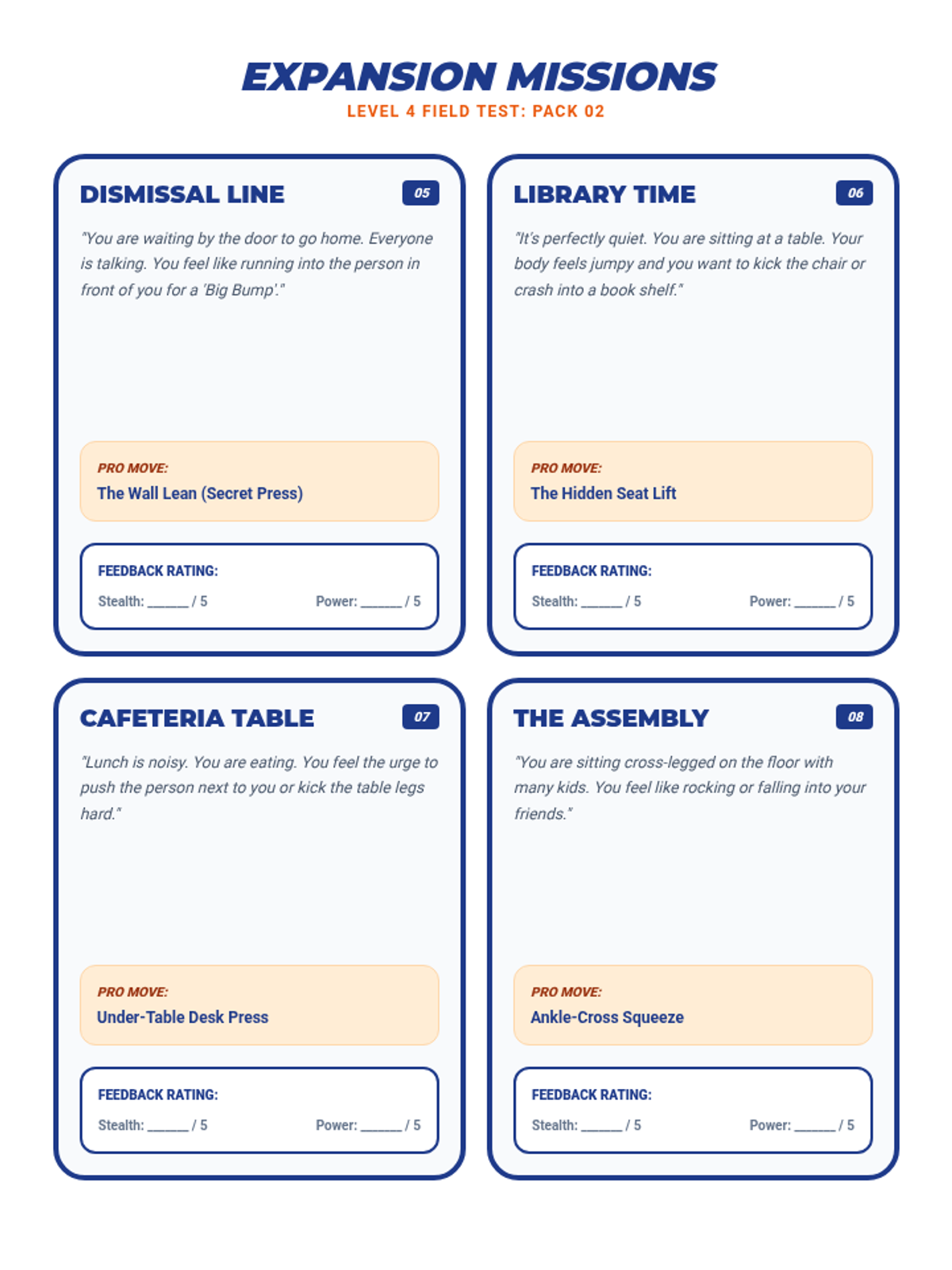
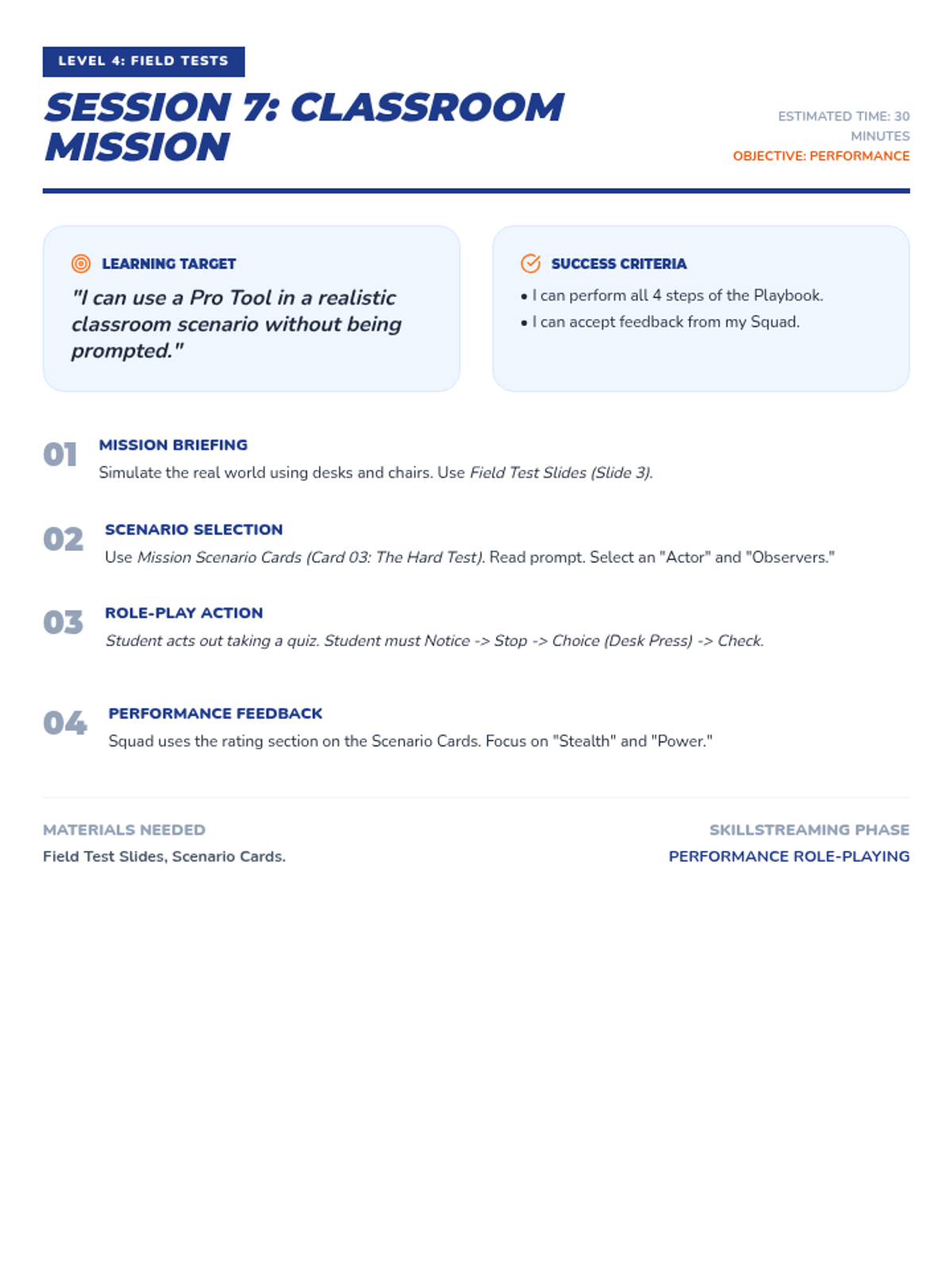
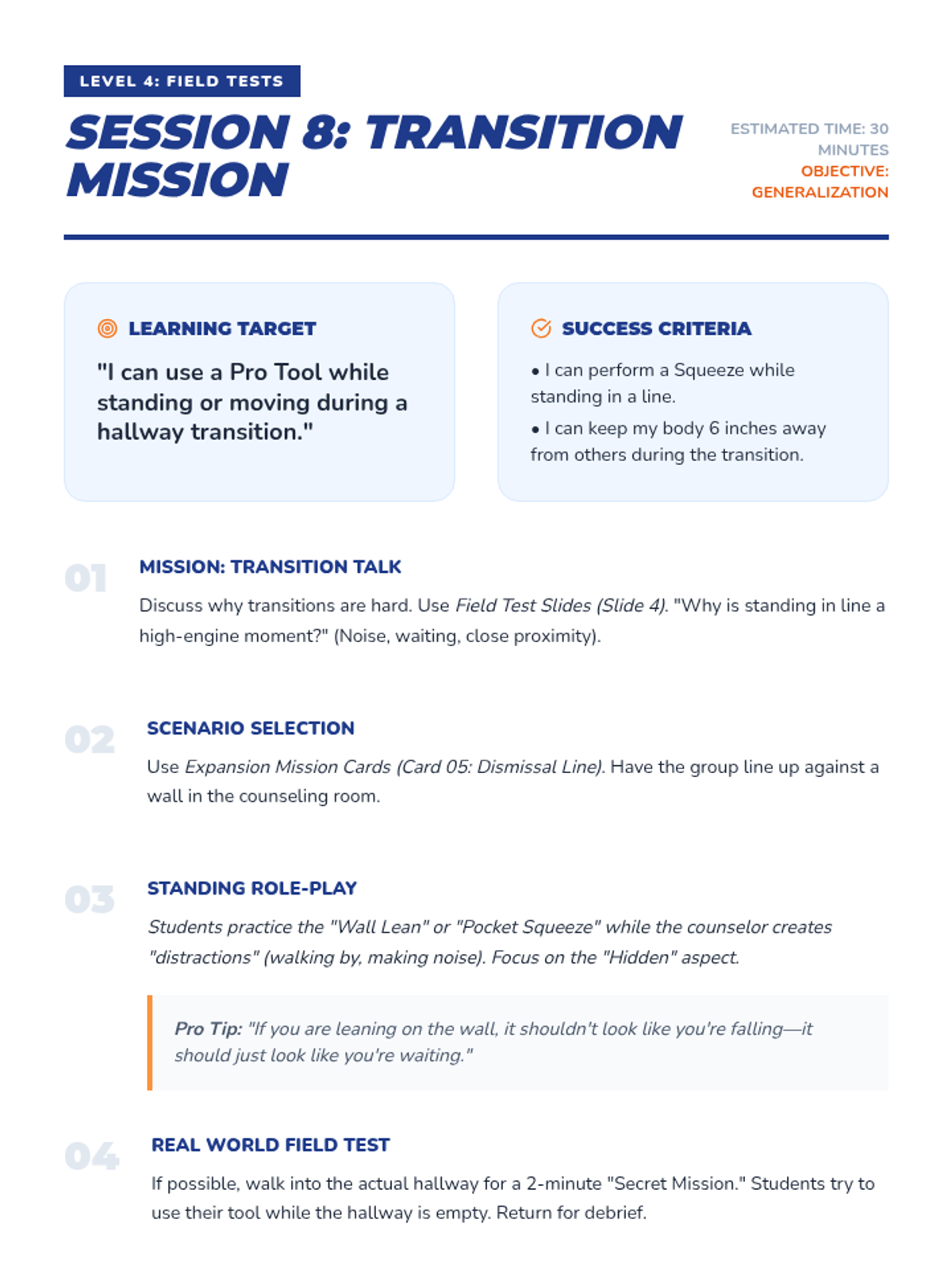
Applying the skills to real-world scenarios through intensive role-playing and performance feedback. Sessions 7 and 8 focus on classroom and transition environments.
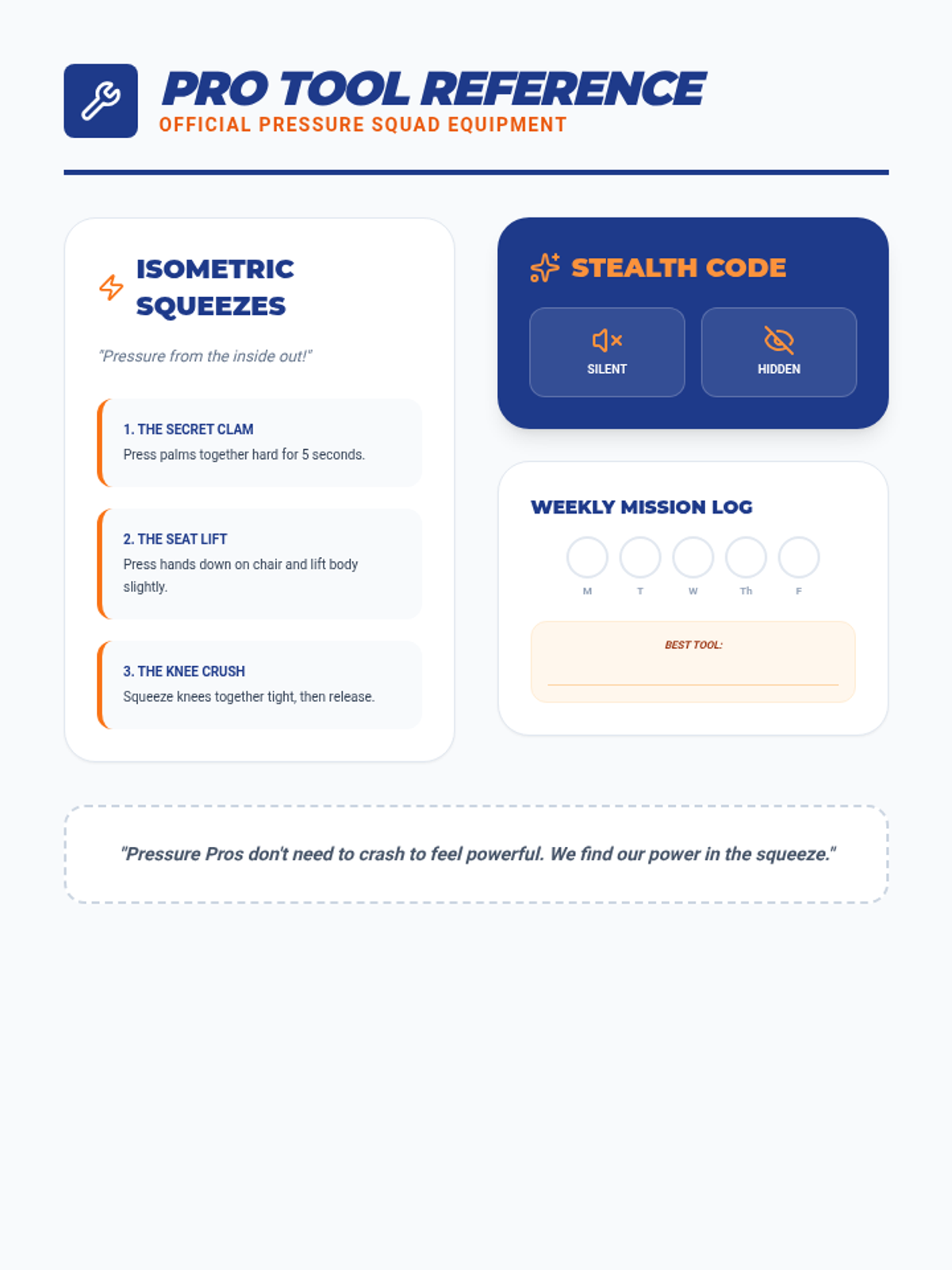
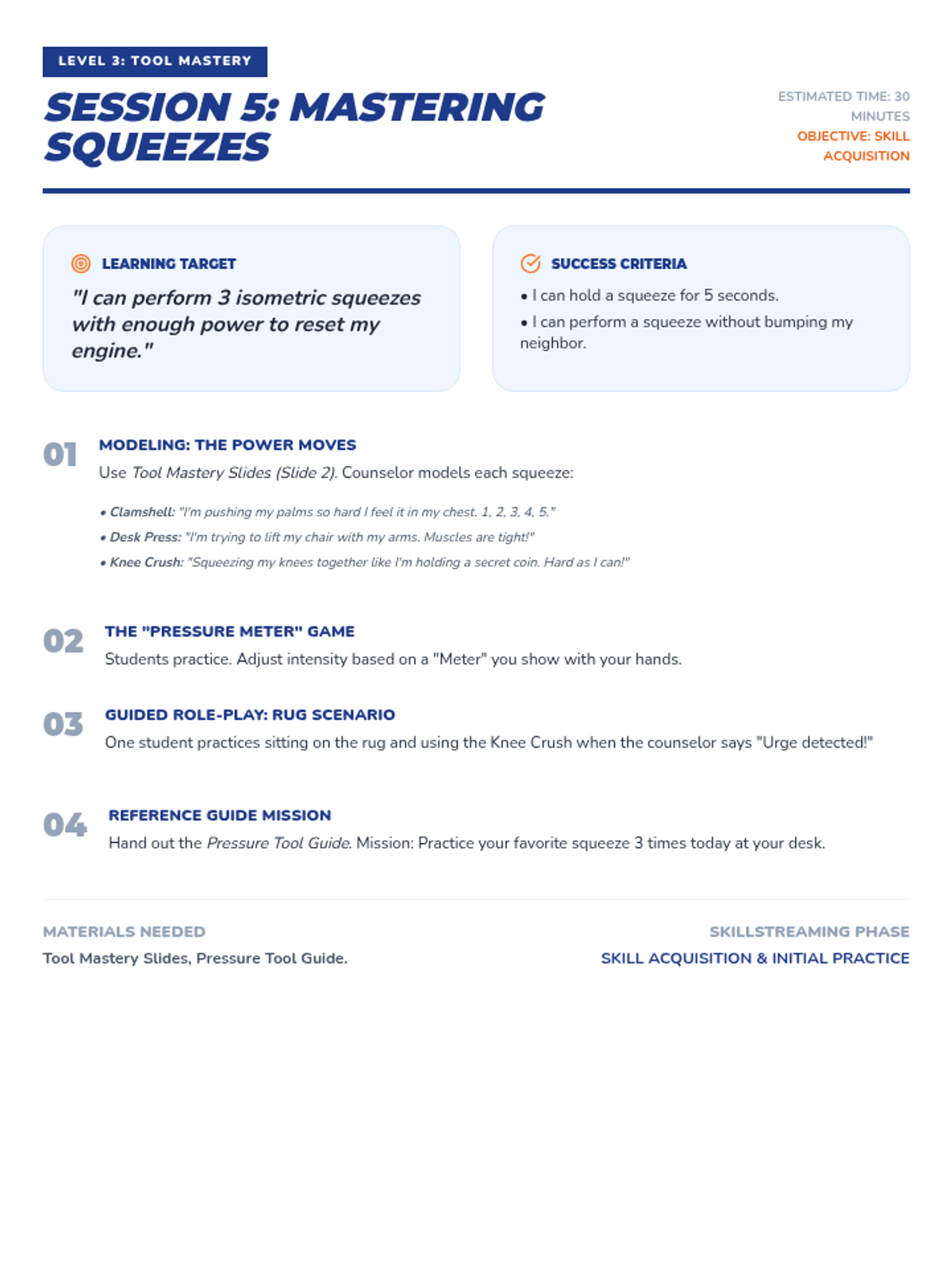
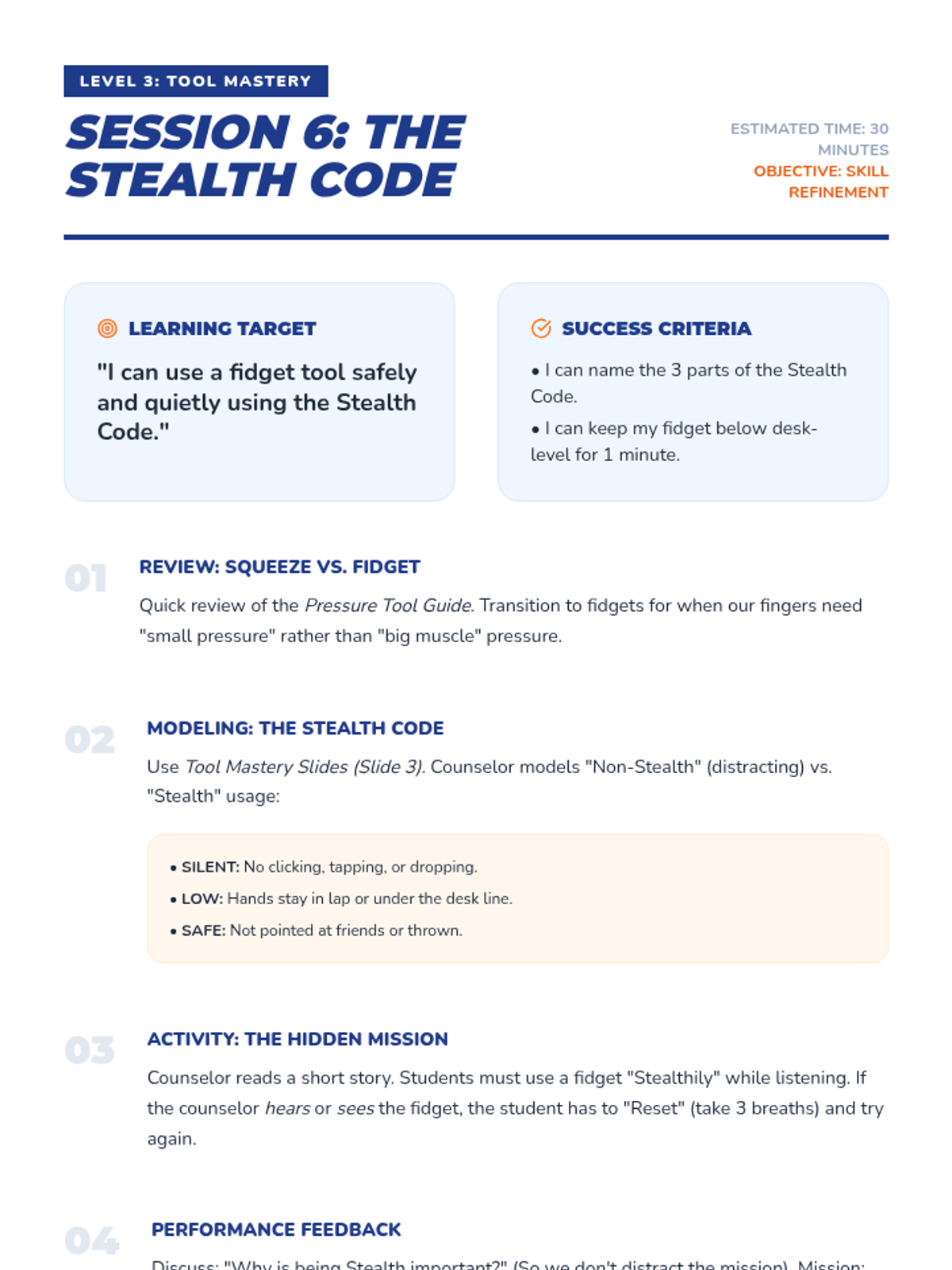
Focused practice on the replacement behaviors: isometric muscle squeezes and appropriate fidget use. Sessions 5 and 6 provide structured modeling and initial role-playing.
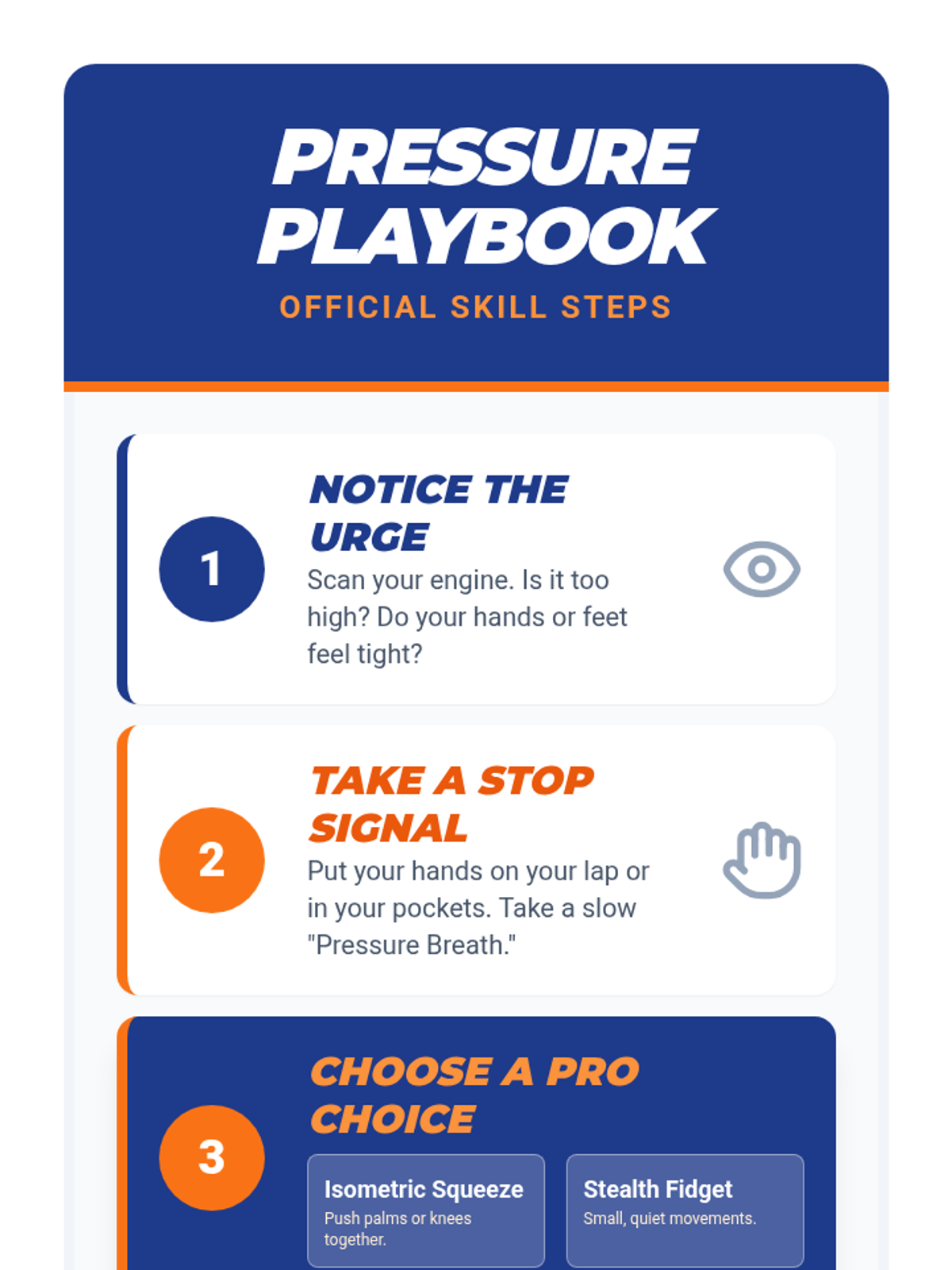
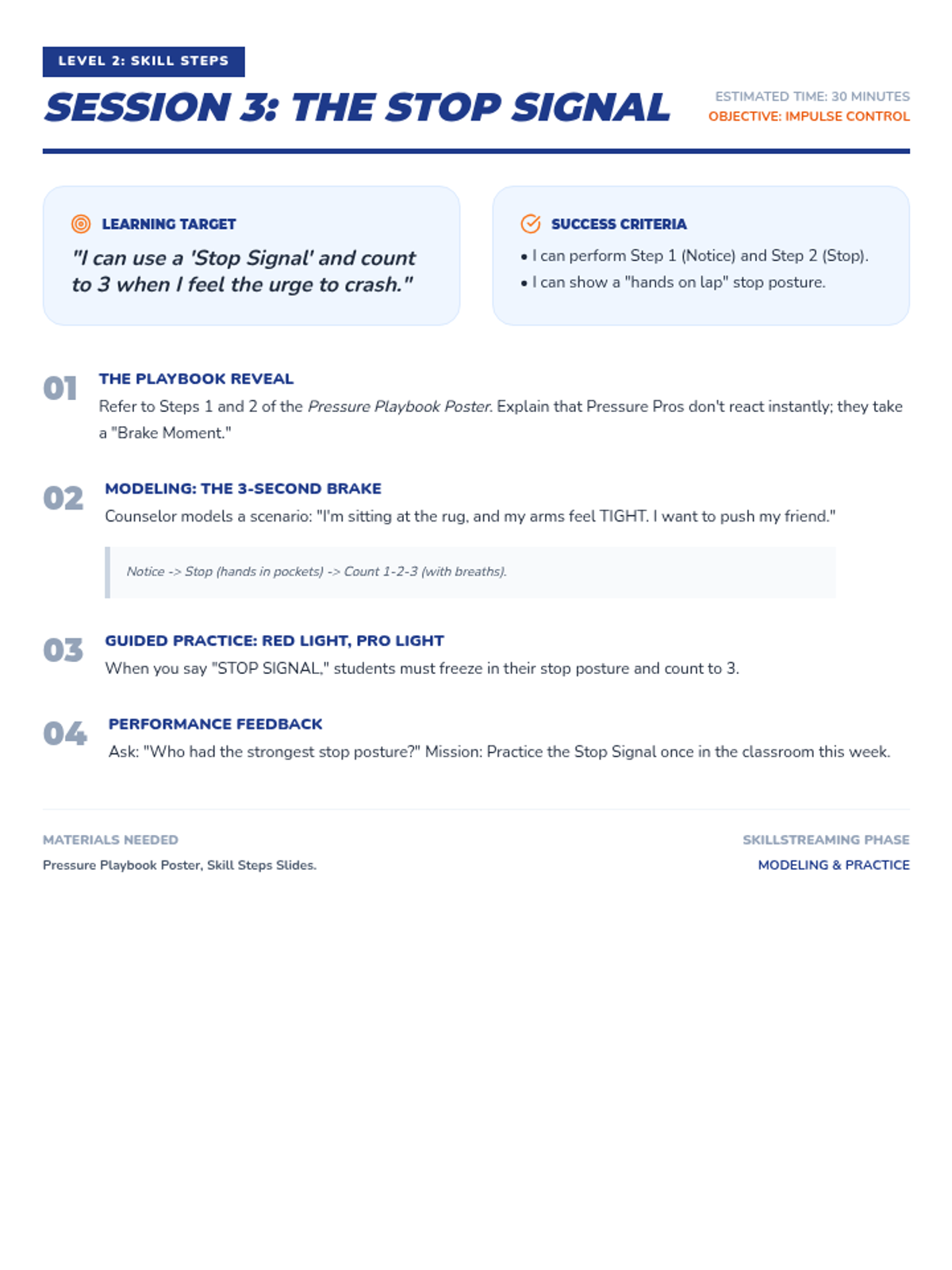
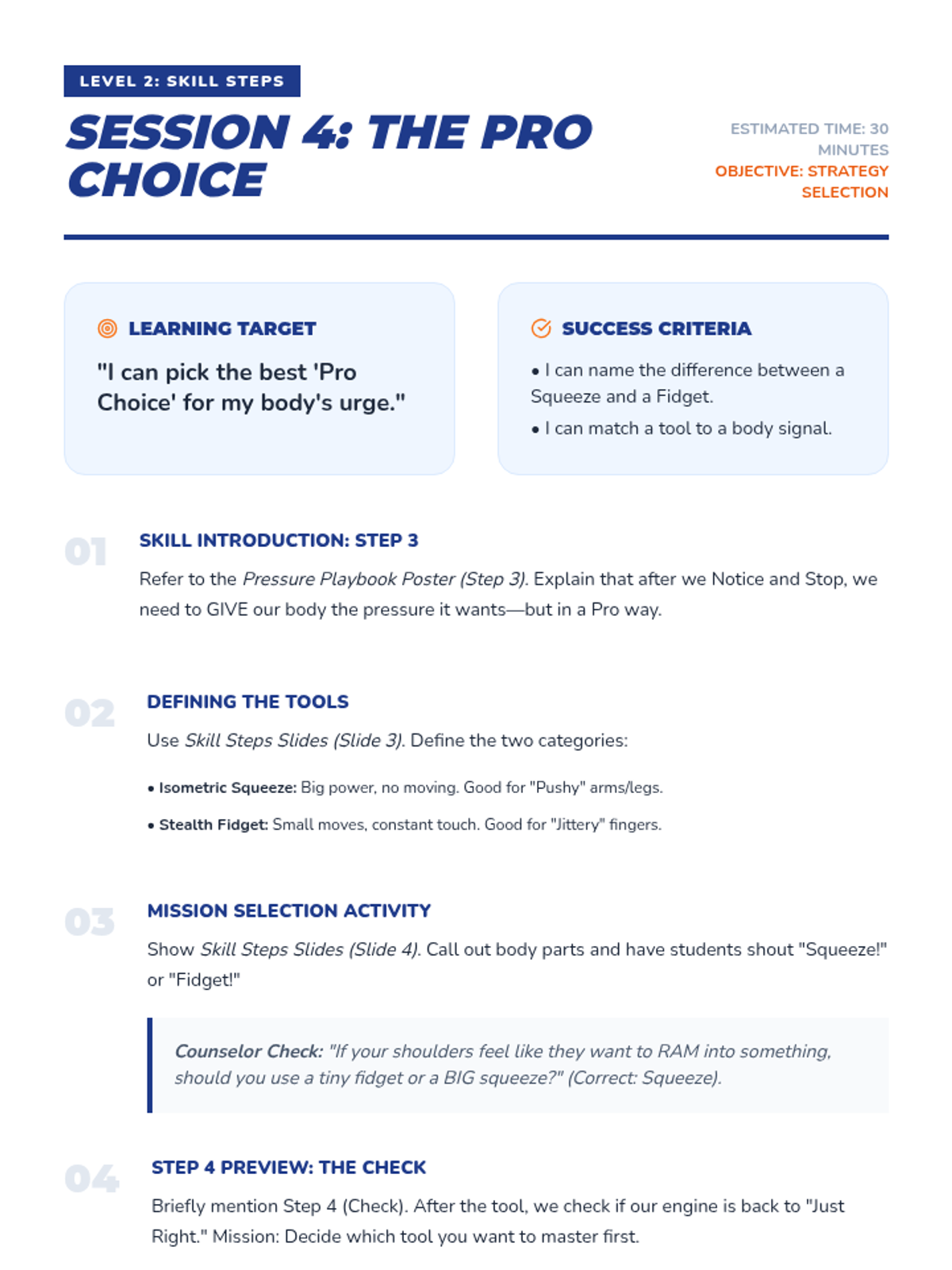
Introduction of the specific SkillStreaming steps for self-regulation and selecting functionally equivalent replacement behaviors. Sessions 3 and 4 focus on the 'Stop Signal' and 'Pro Choice'.
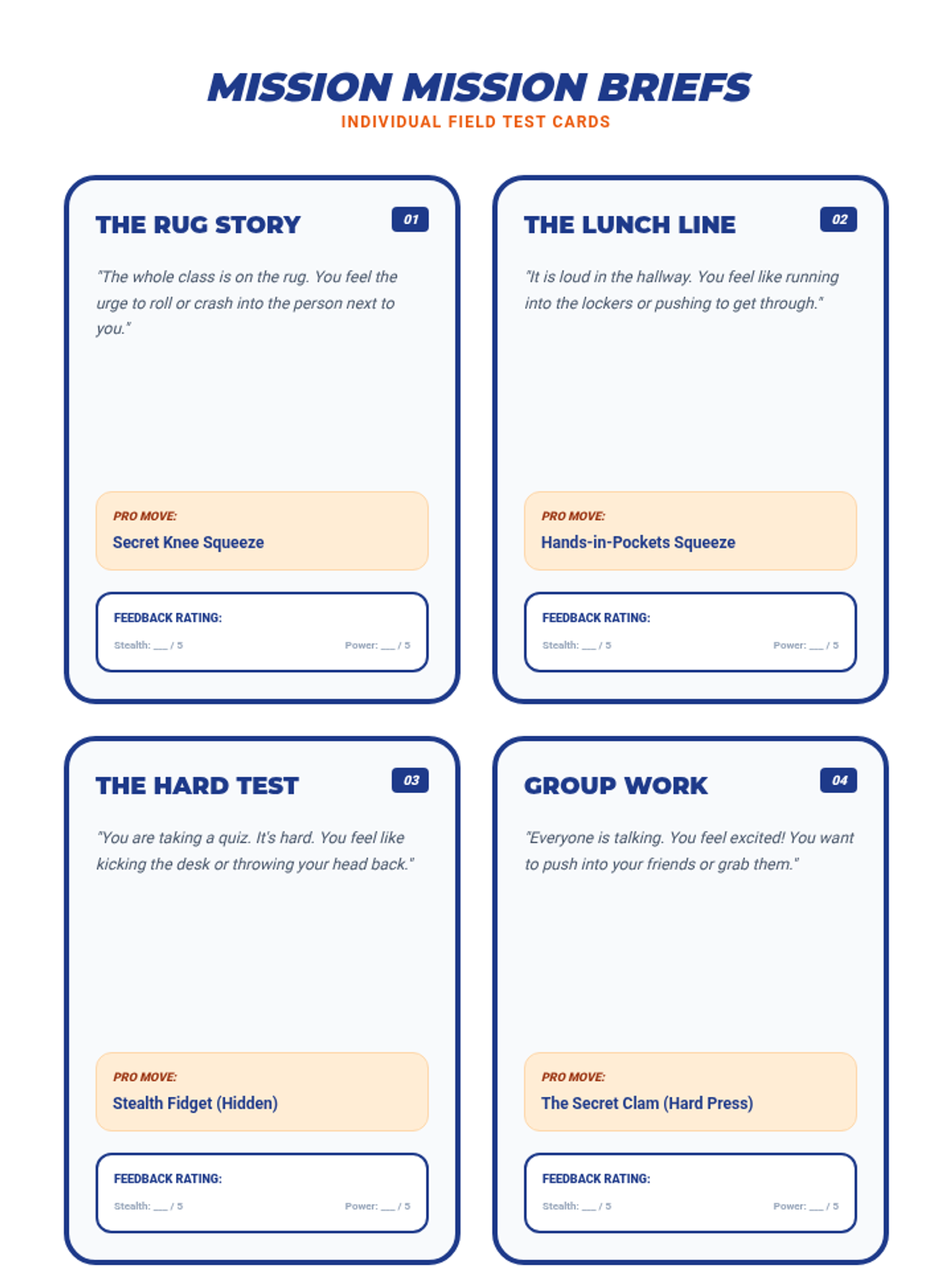
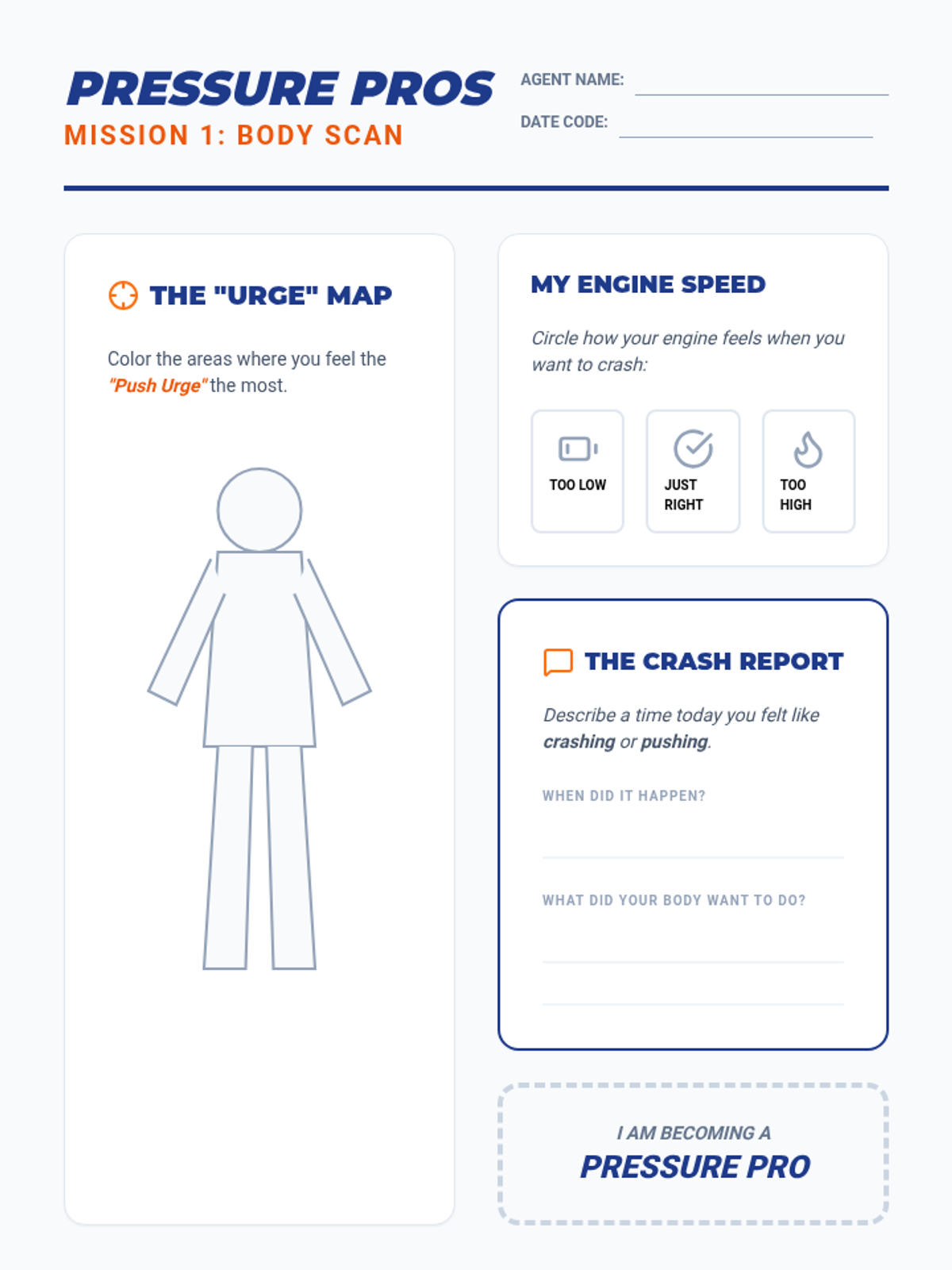
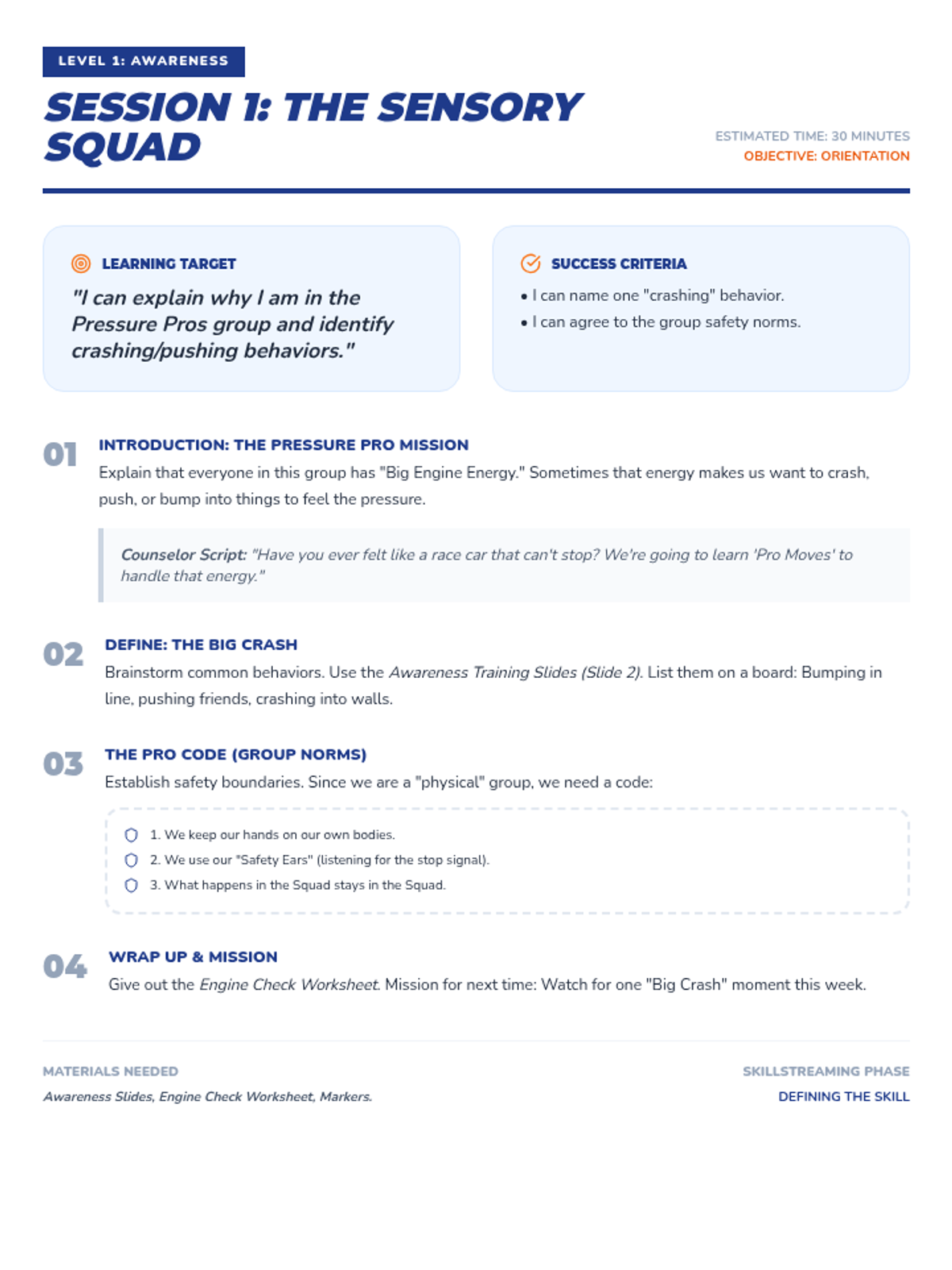
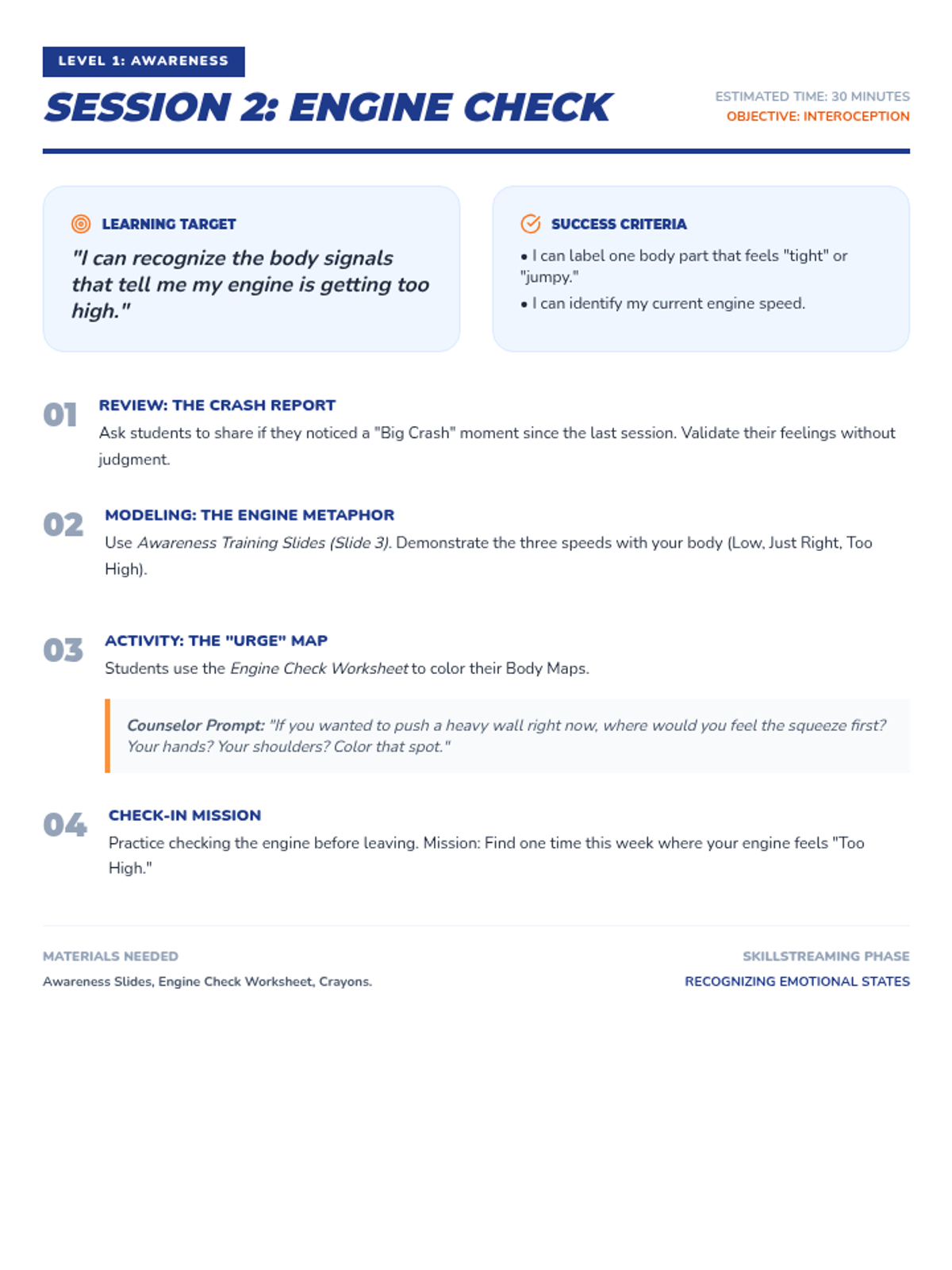
Introduction to the sensory seeking behaviors and building awareness of the internal 'urge' to crash or push. Sessions 1 and 2 focus on defining the group purpose and identifying body signals.
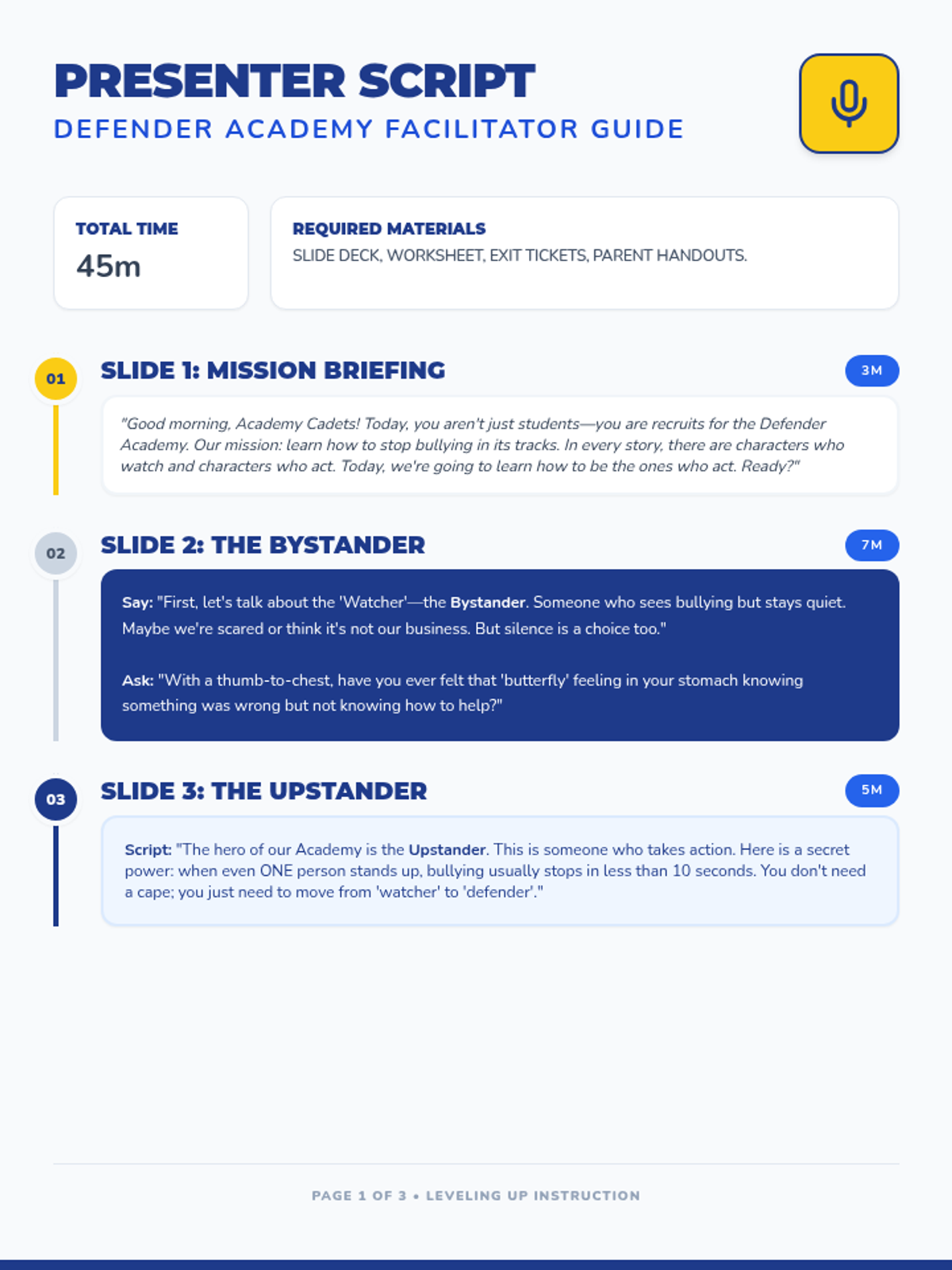
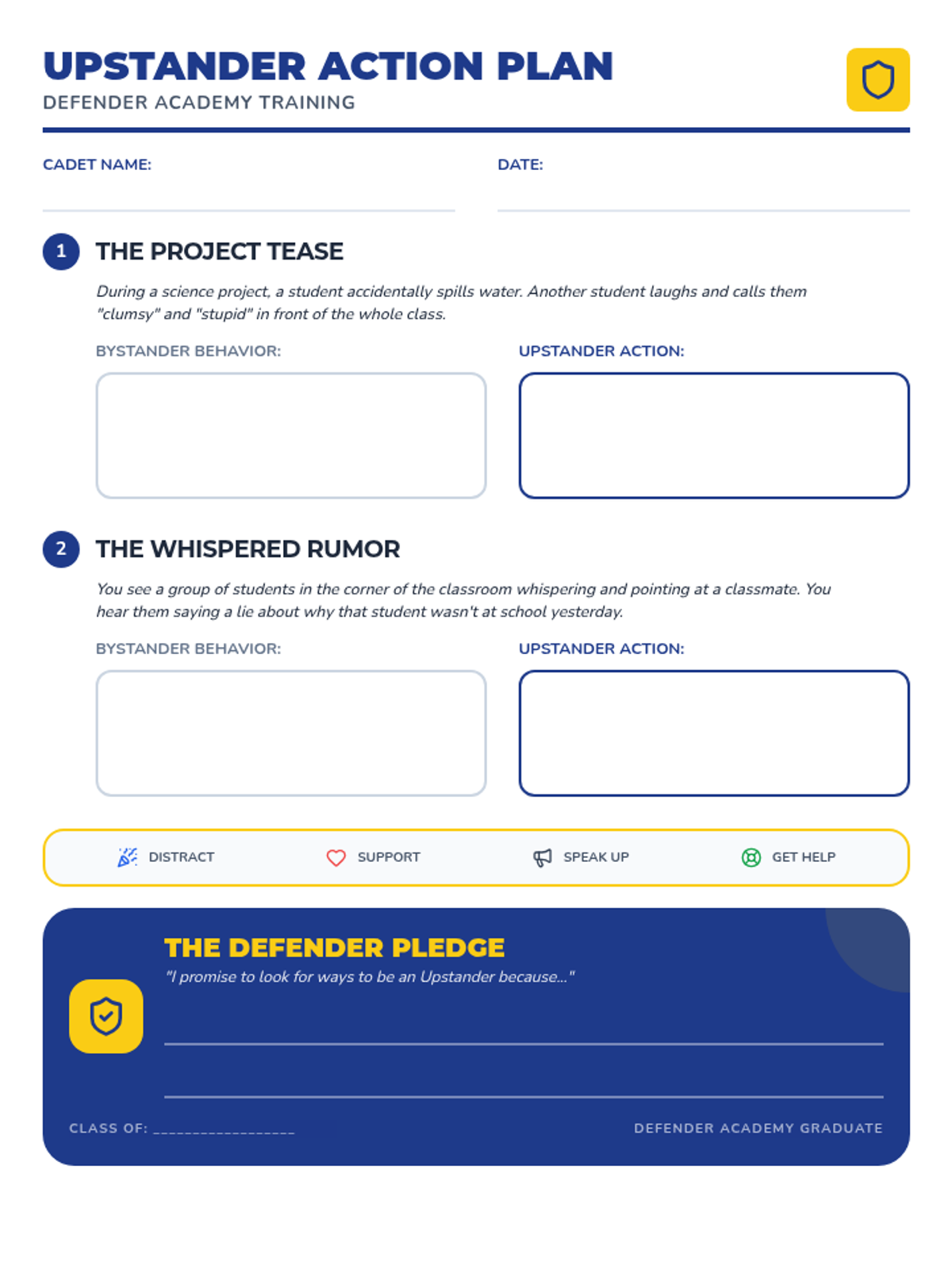
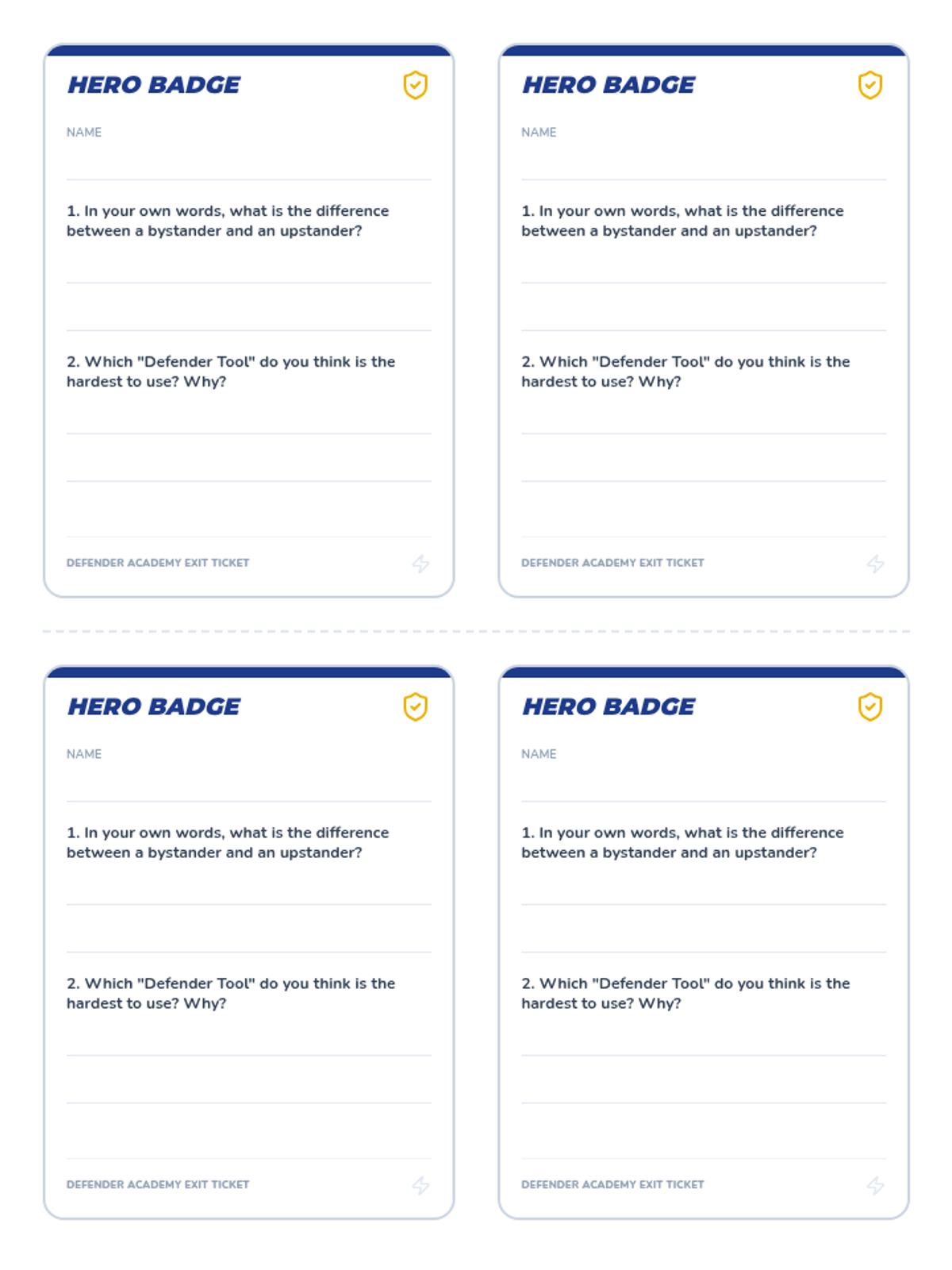
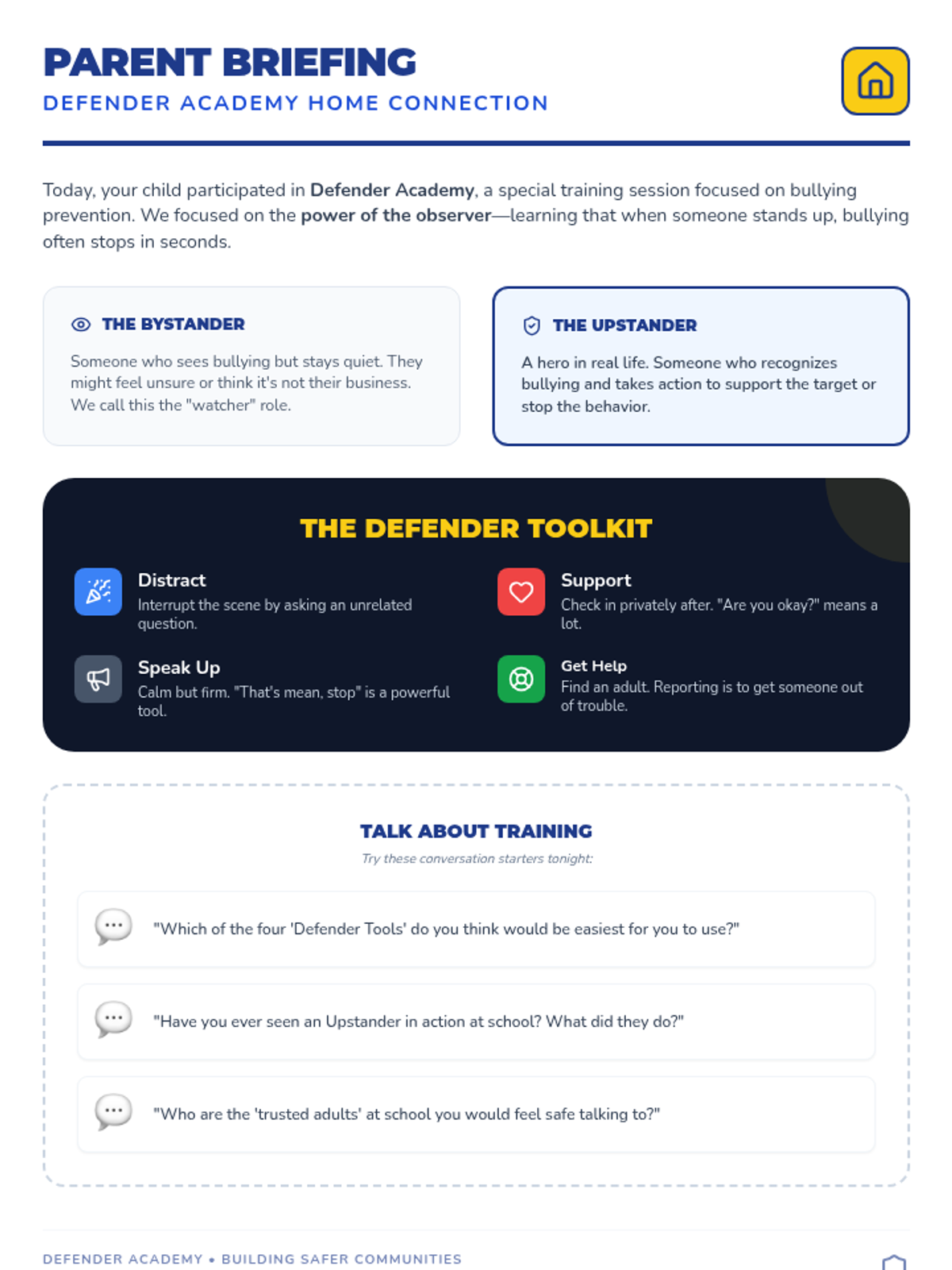
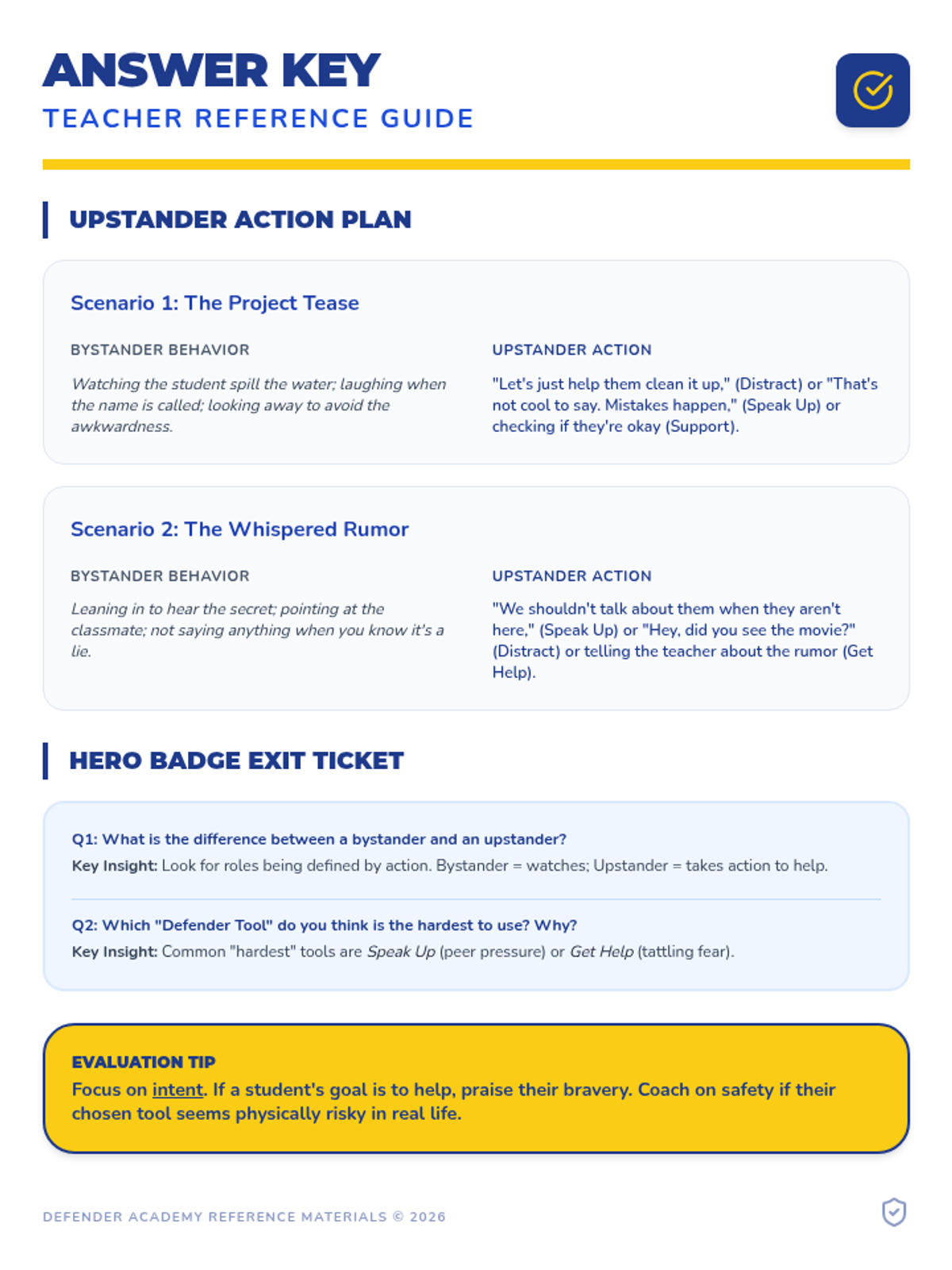
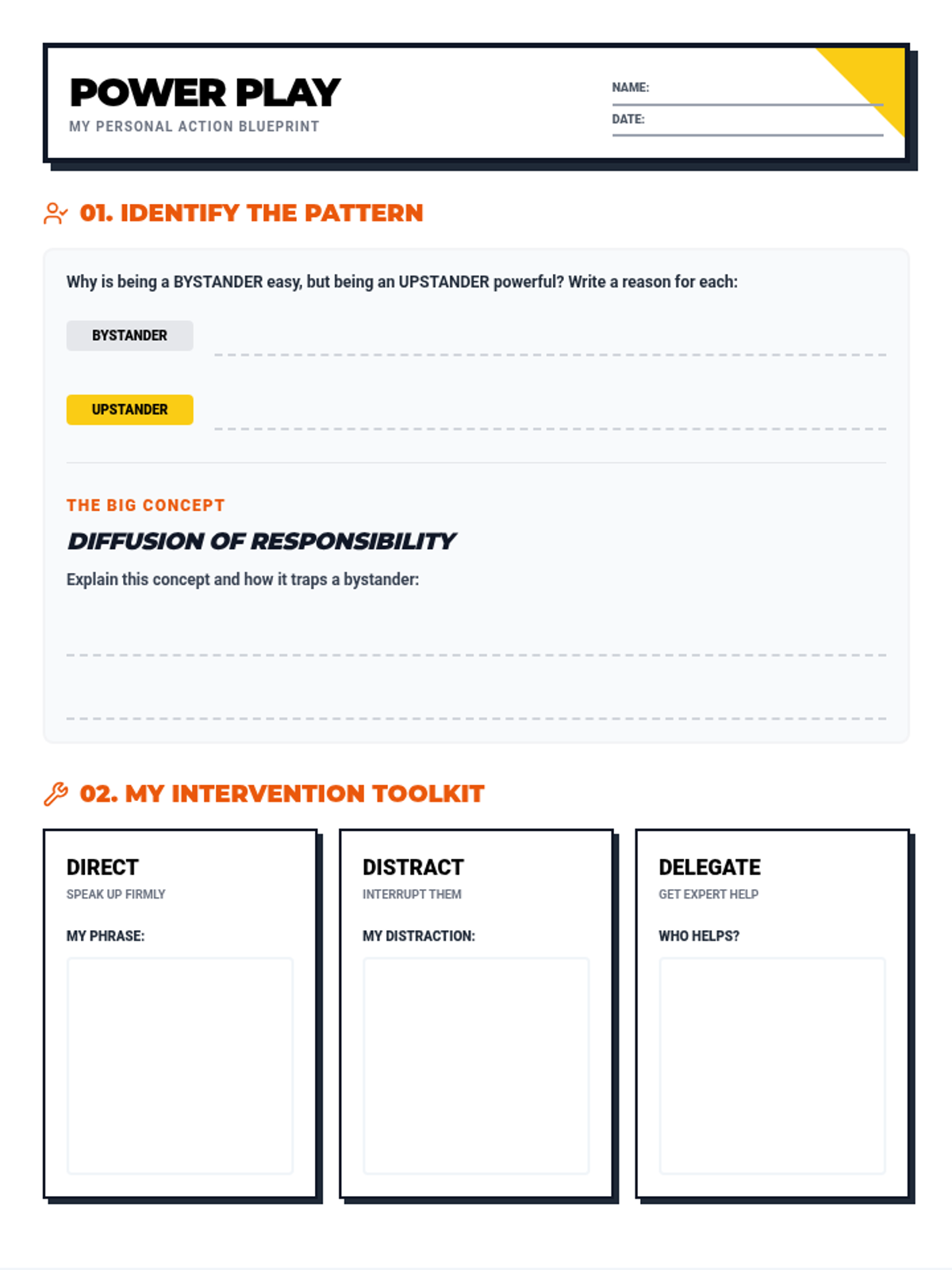
An interactive lesson teaching 4th graders the difference between bystanders and upstanders through 'Defender Academy' training scenarios and actionable strategies.
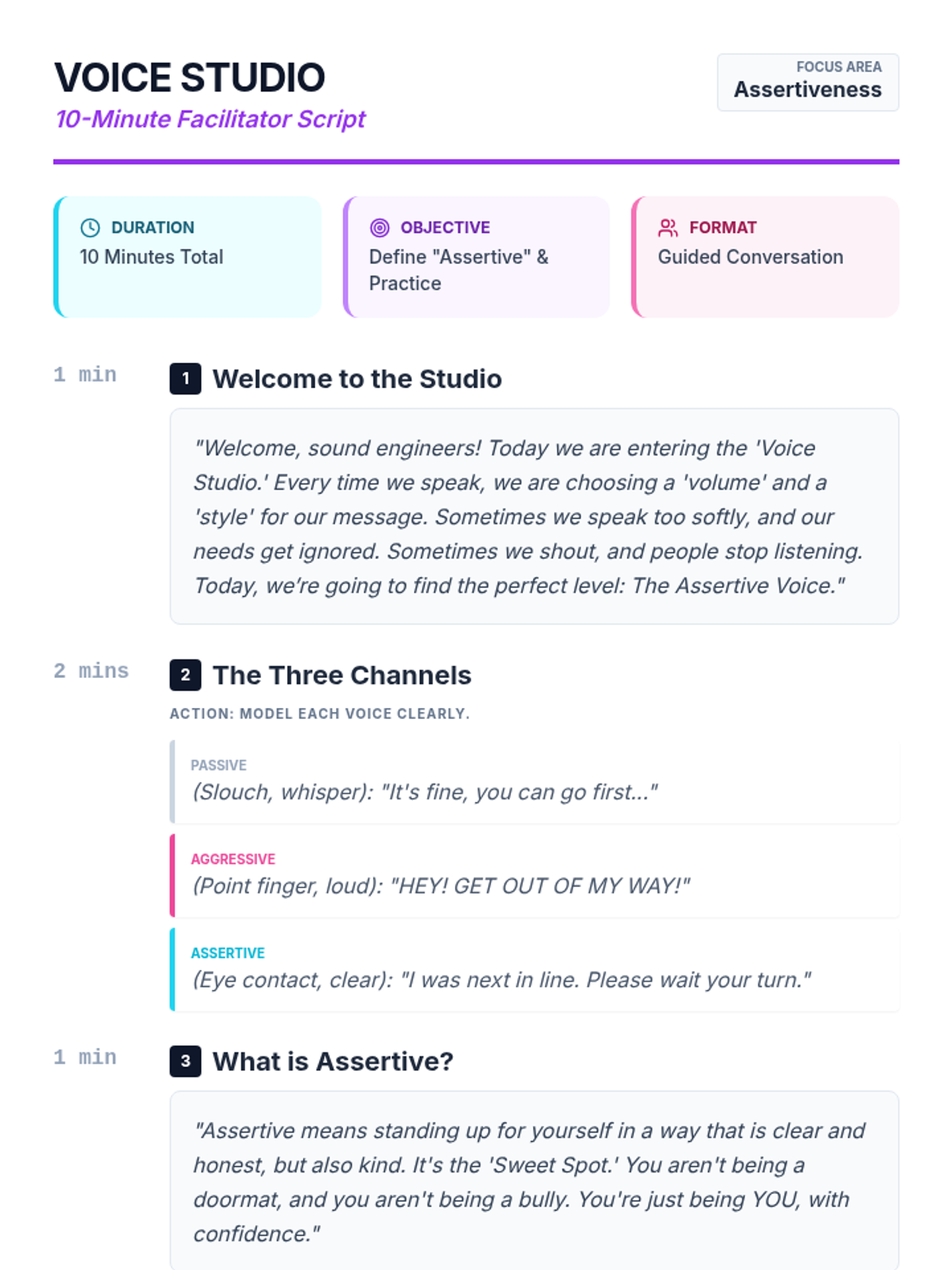
A 10-minute interactive session focused on understanding and practicing assertiveness through the metaphor of a 'Voice Studio'. Students learn to distinguish between passive, aggressive, and assertive communication styles.
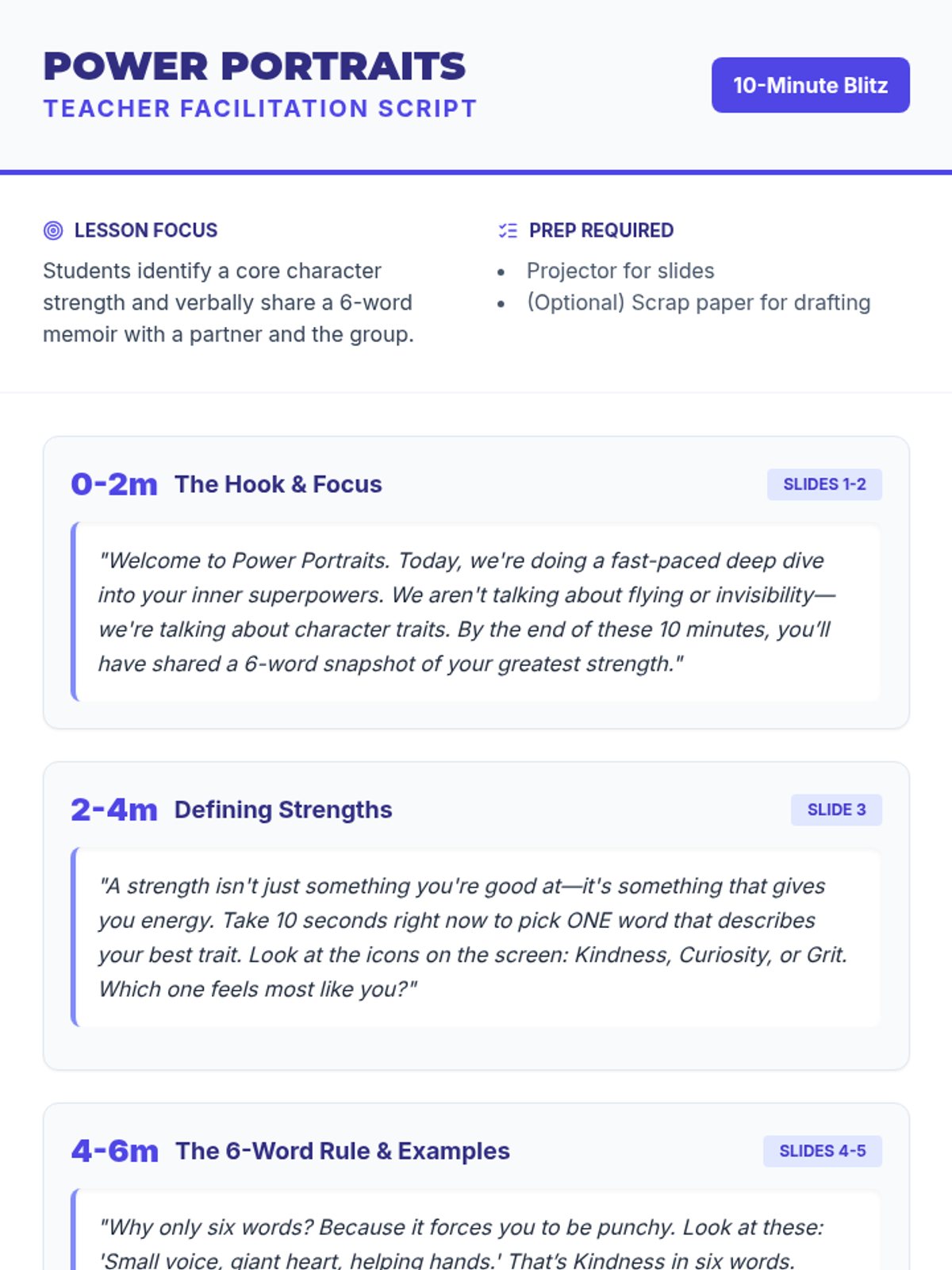
A quick 10-minute session focused on identifying personal character strengths and crafting a concise 6-word memoir to celebrate them.
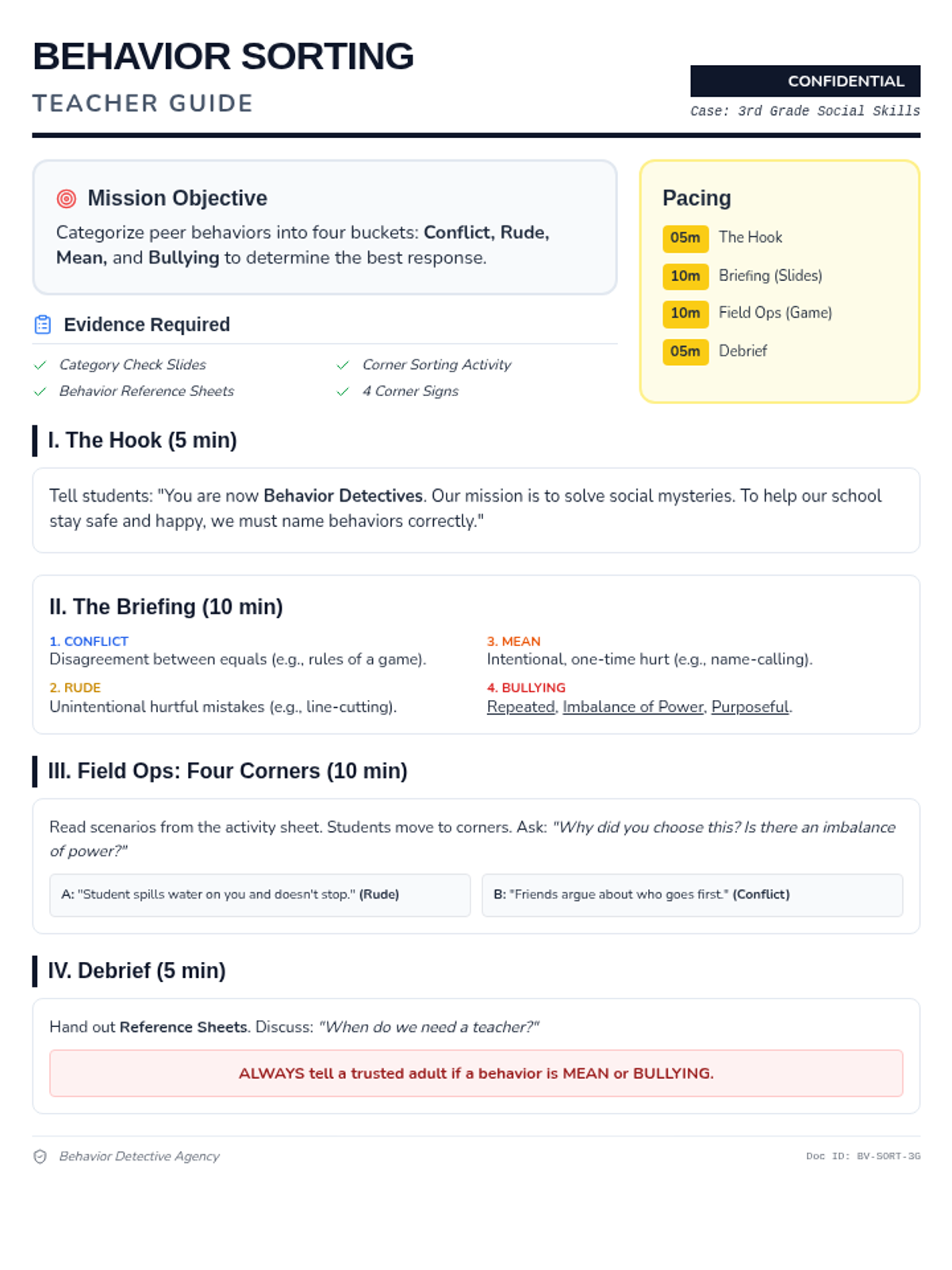
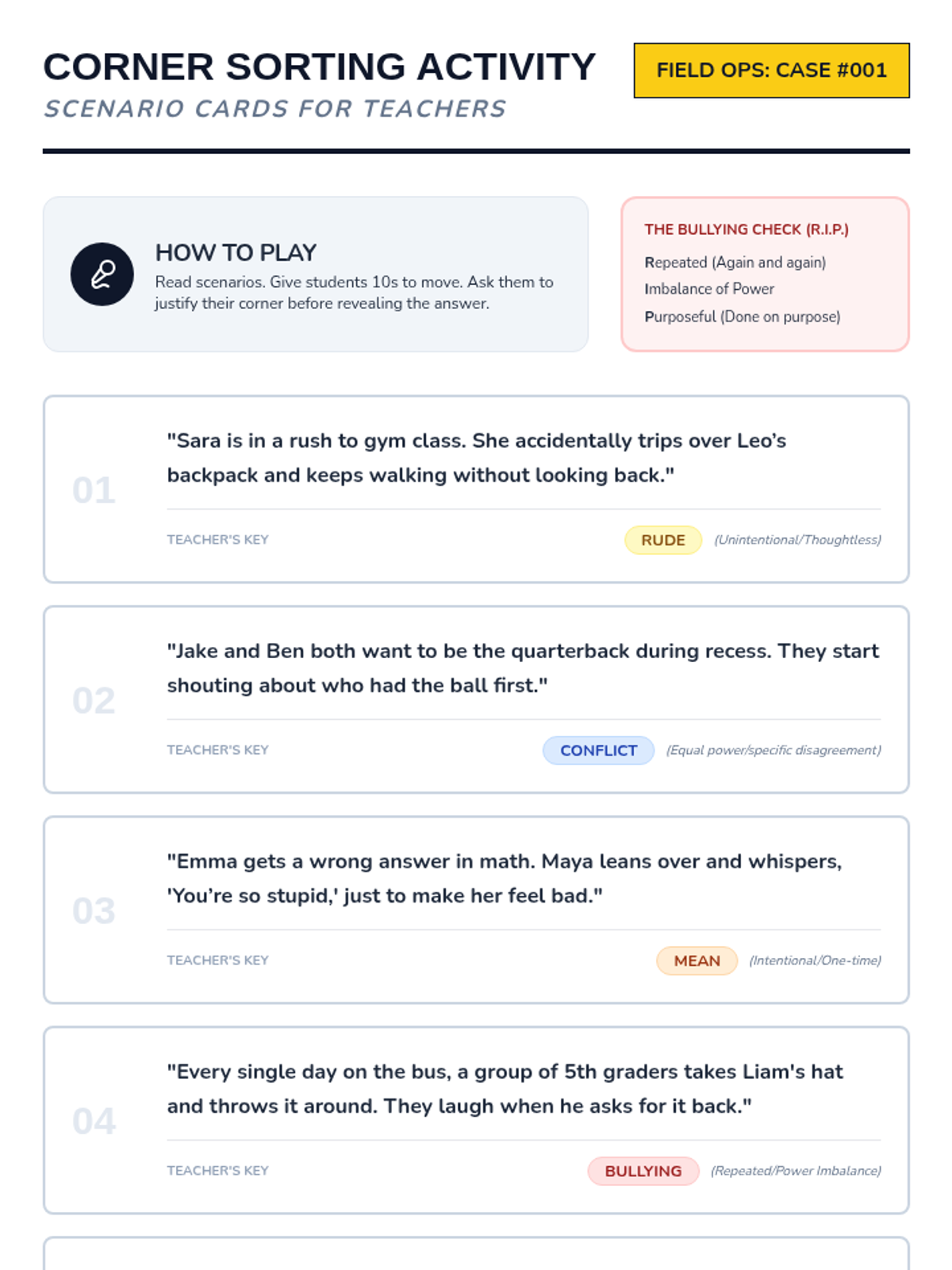
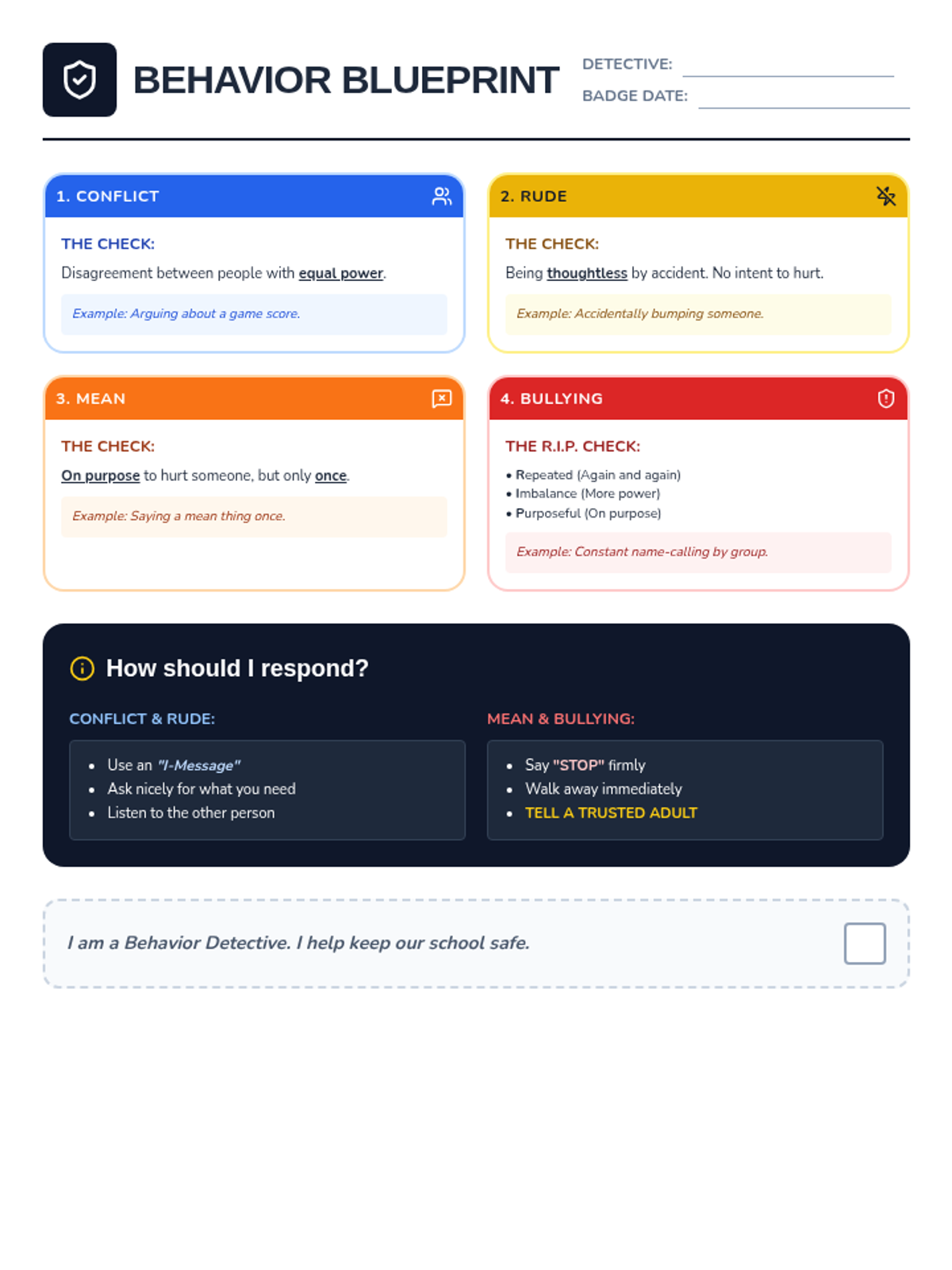
A 30-minute lesson where students learn to distinguish between conflict, rudeness, meanness, and bullying through a 'Behavior Detective' framework. Includes definitions, interactive scenarios, and a reference guide for appropriate responses.
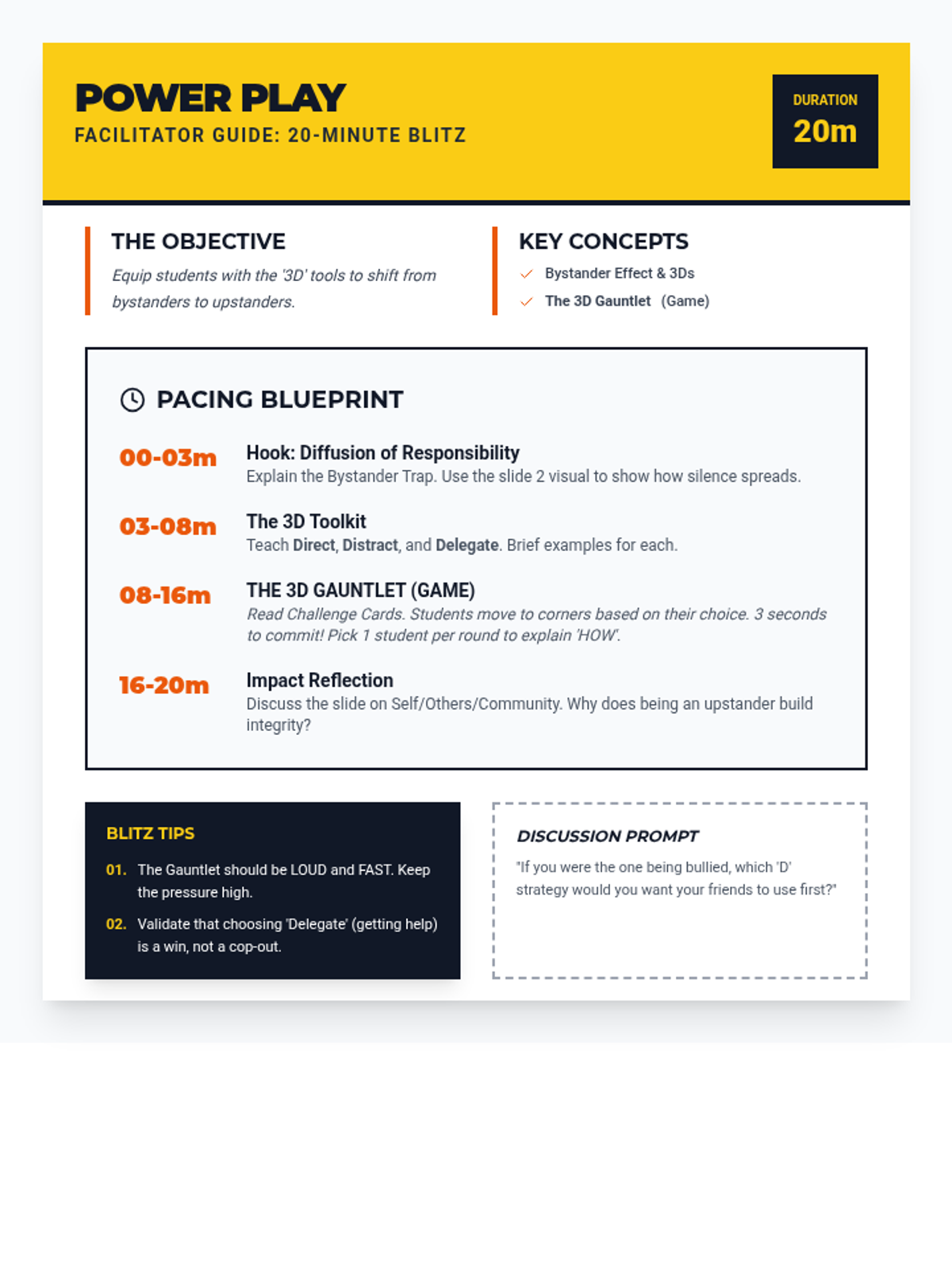
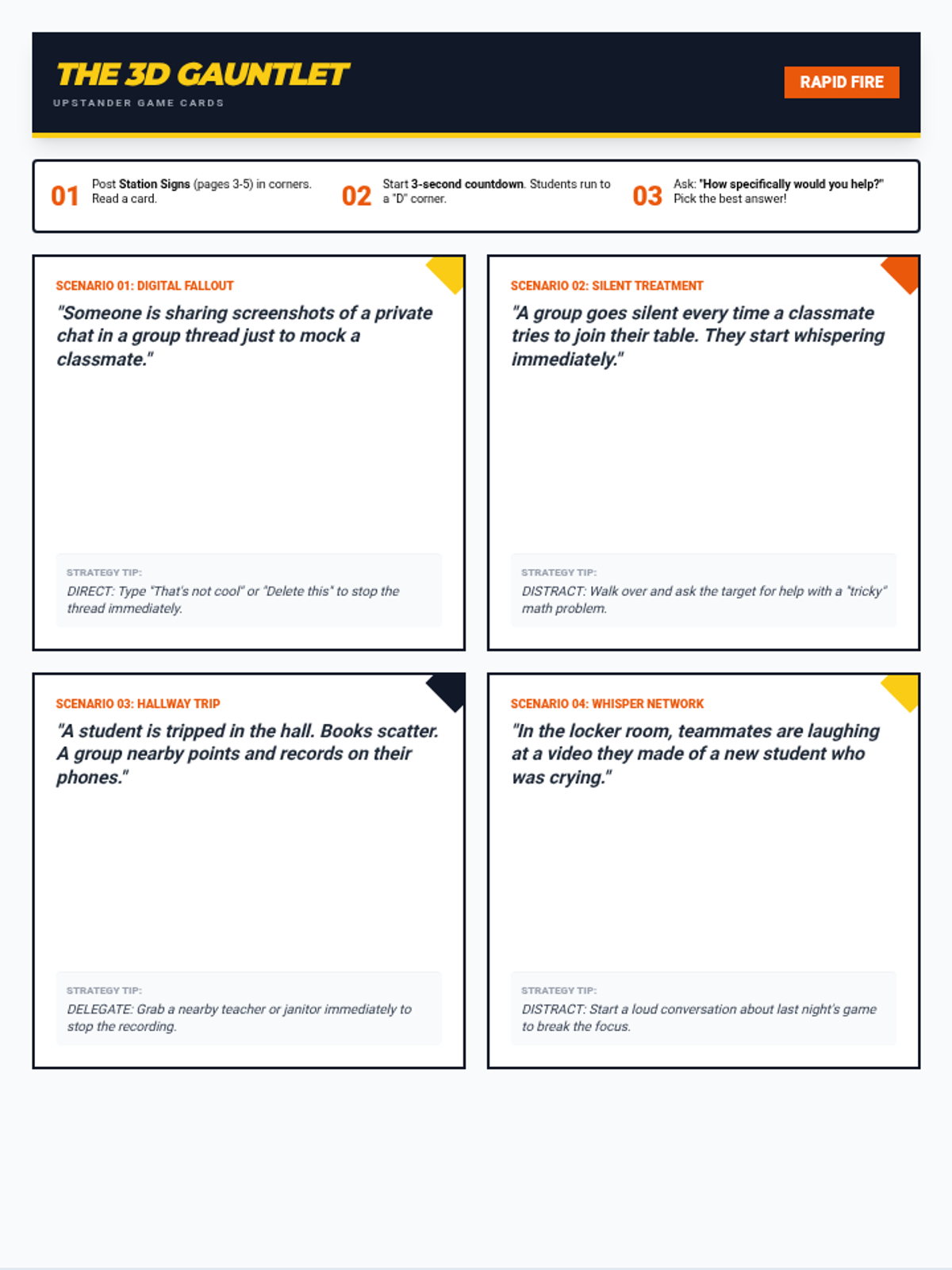
A high-impact 20-minute session for middle schoolers focusing on conflict resolution strategies and the critical role of being an upstander rather than a bystander. Students will learn the '3D' strategy for intervention and practice analyzing social scenarios.
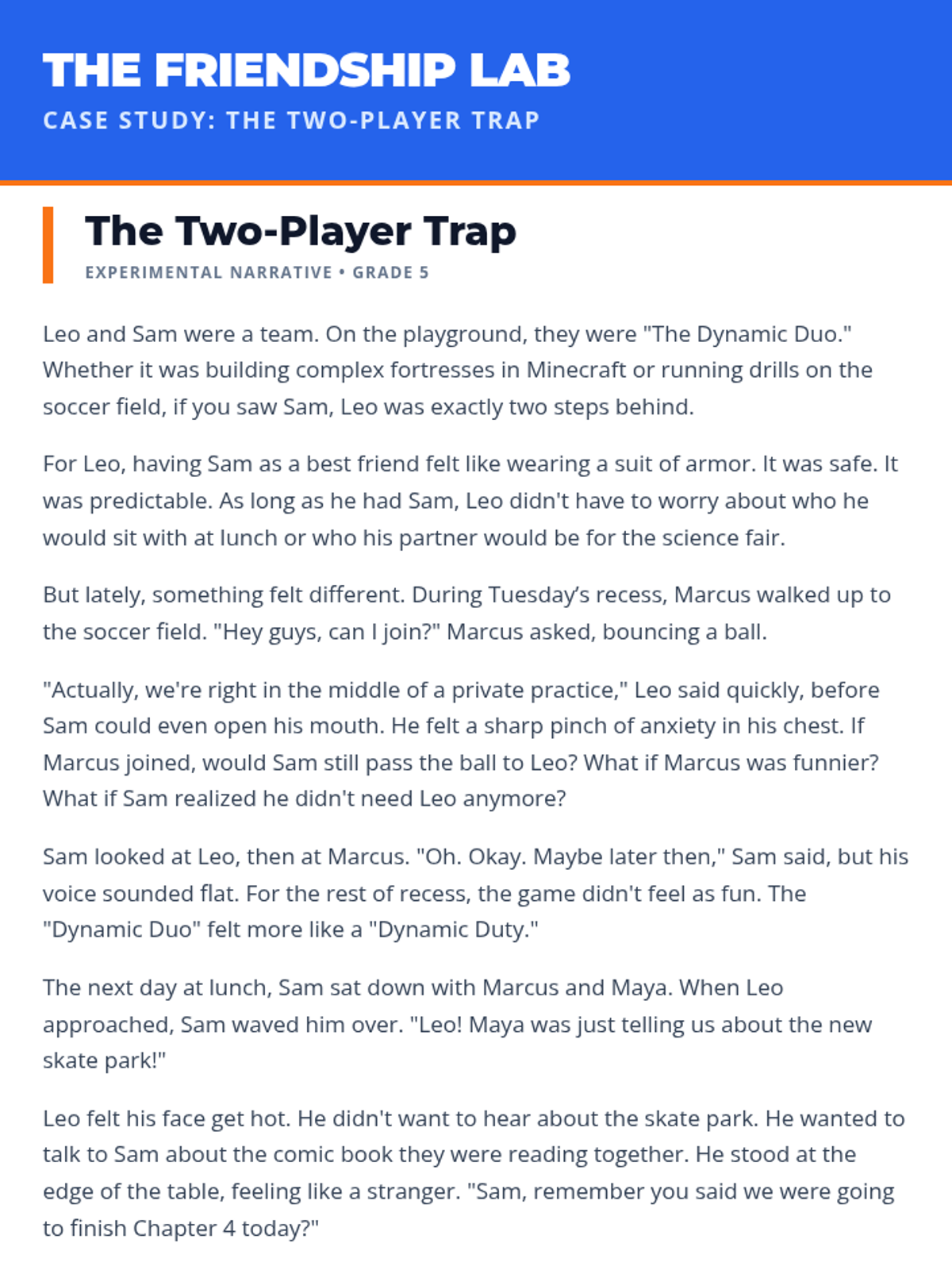
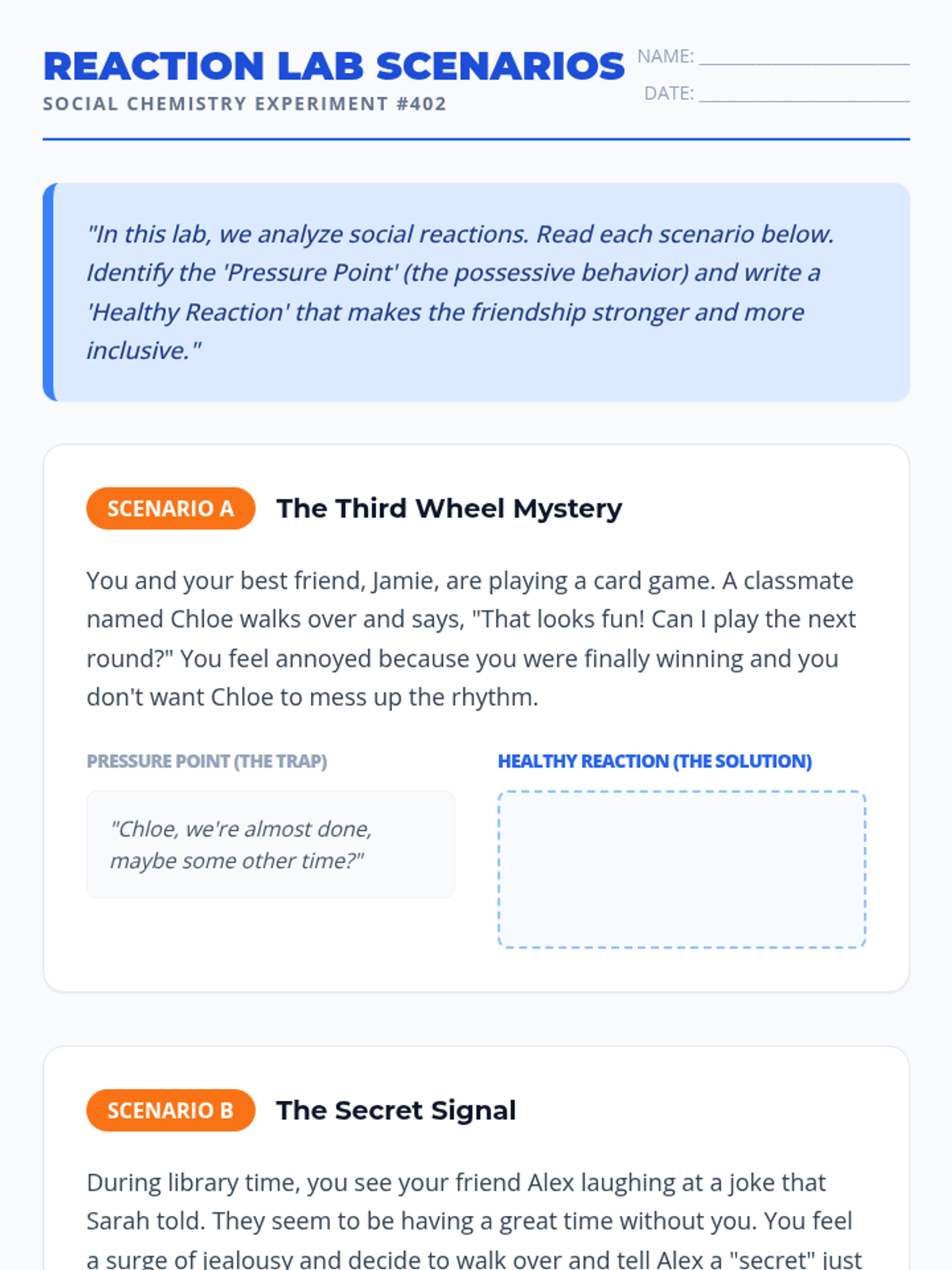
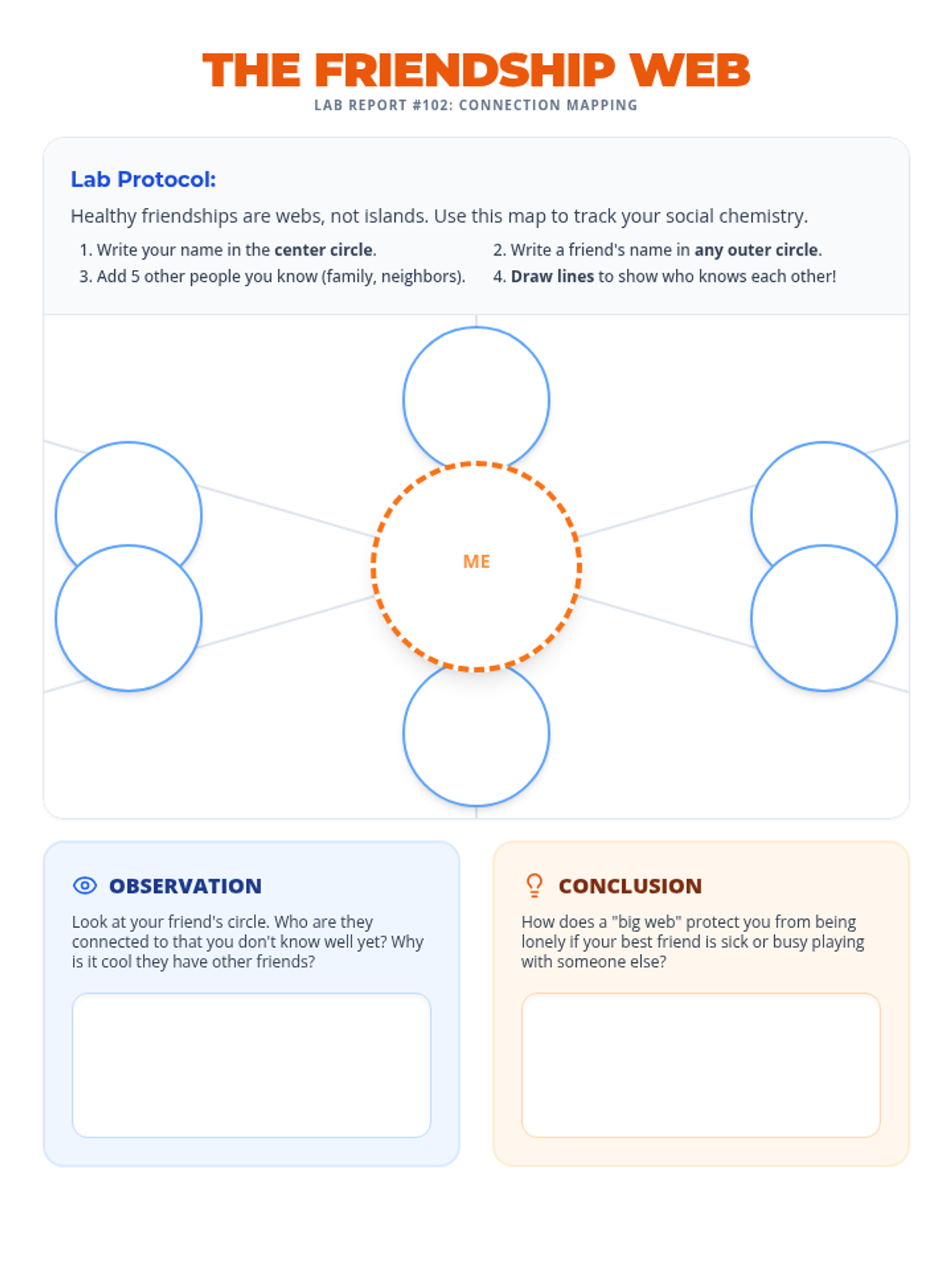
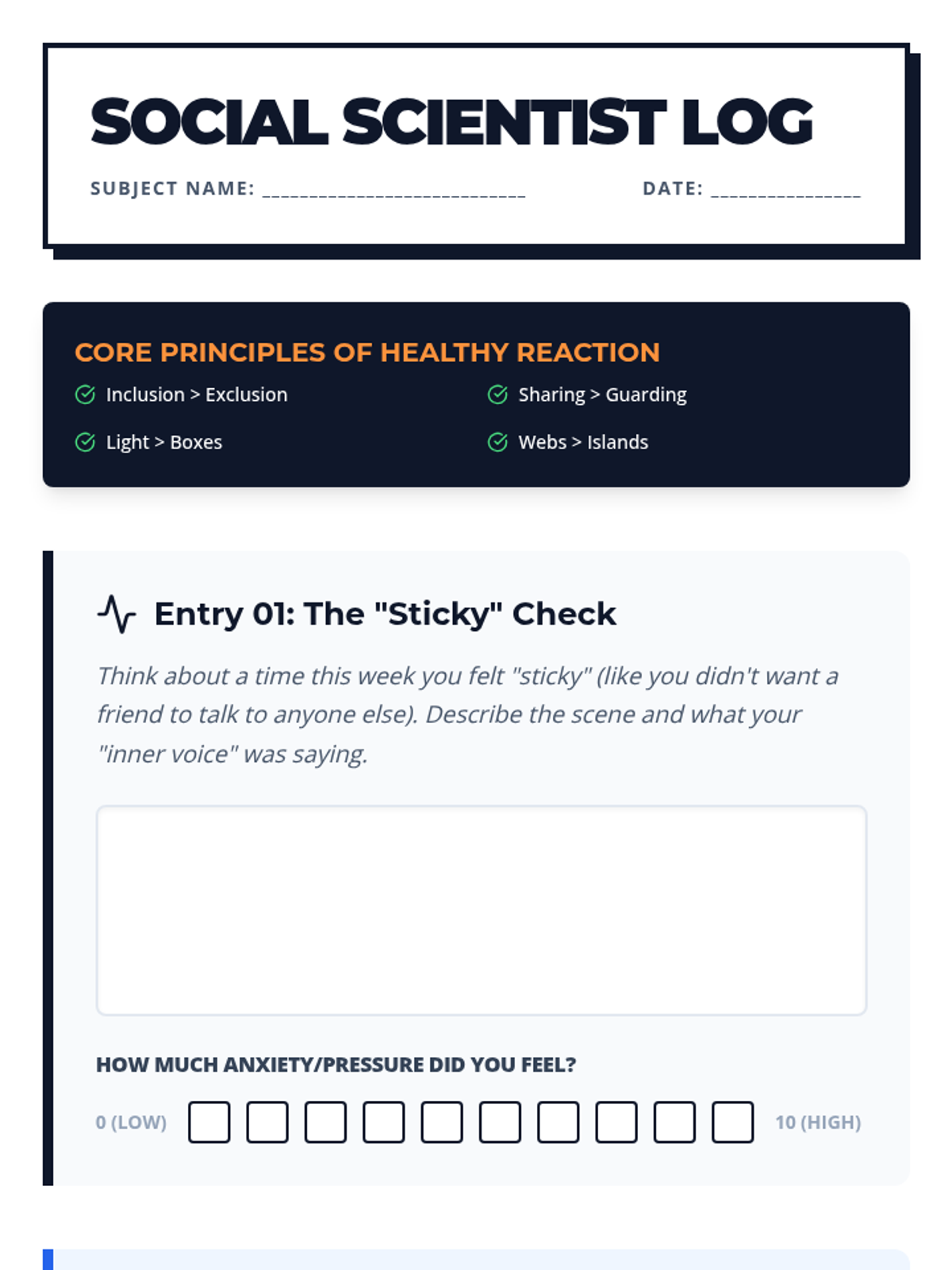
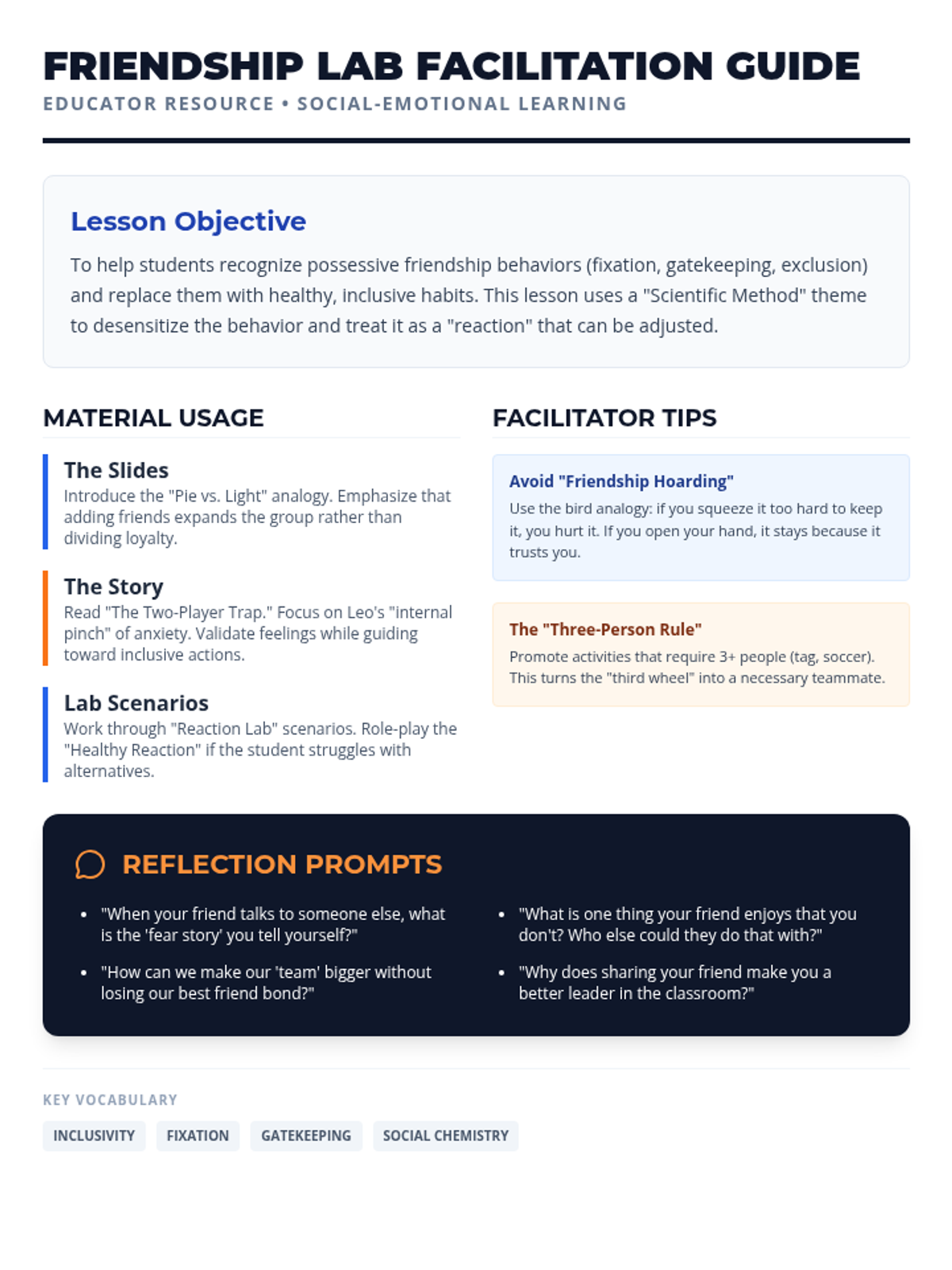
A social-emotional learning lesson designed to help students understand the difference between healthy, inclusive friendships and possessive or fixated behaviors. Through a 'Friendship Lab' theme, students analyze social 'reactions' and learn the value of expanding their social circles.
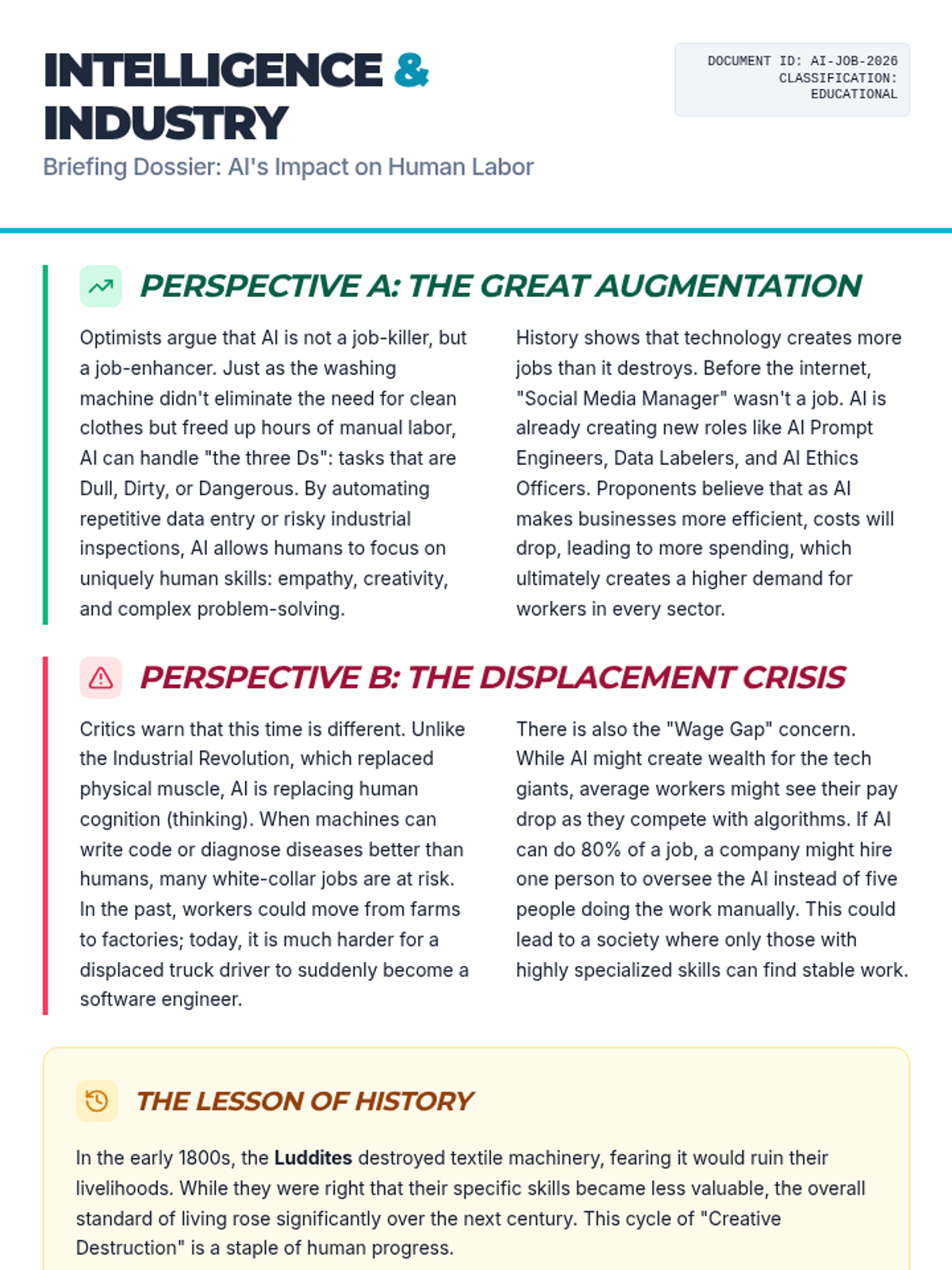
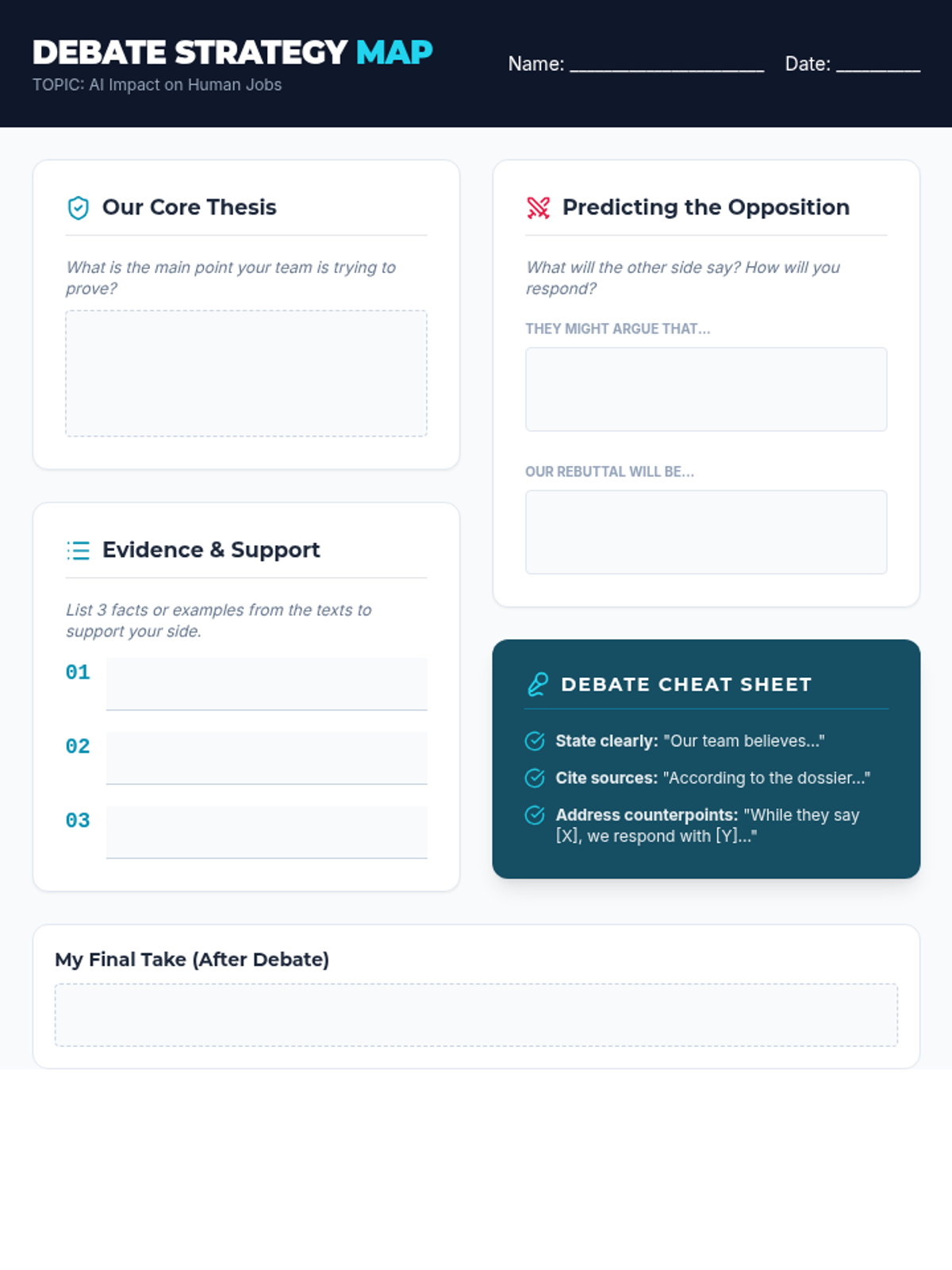
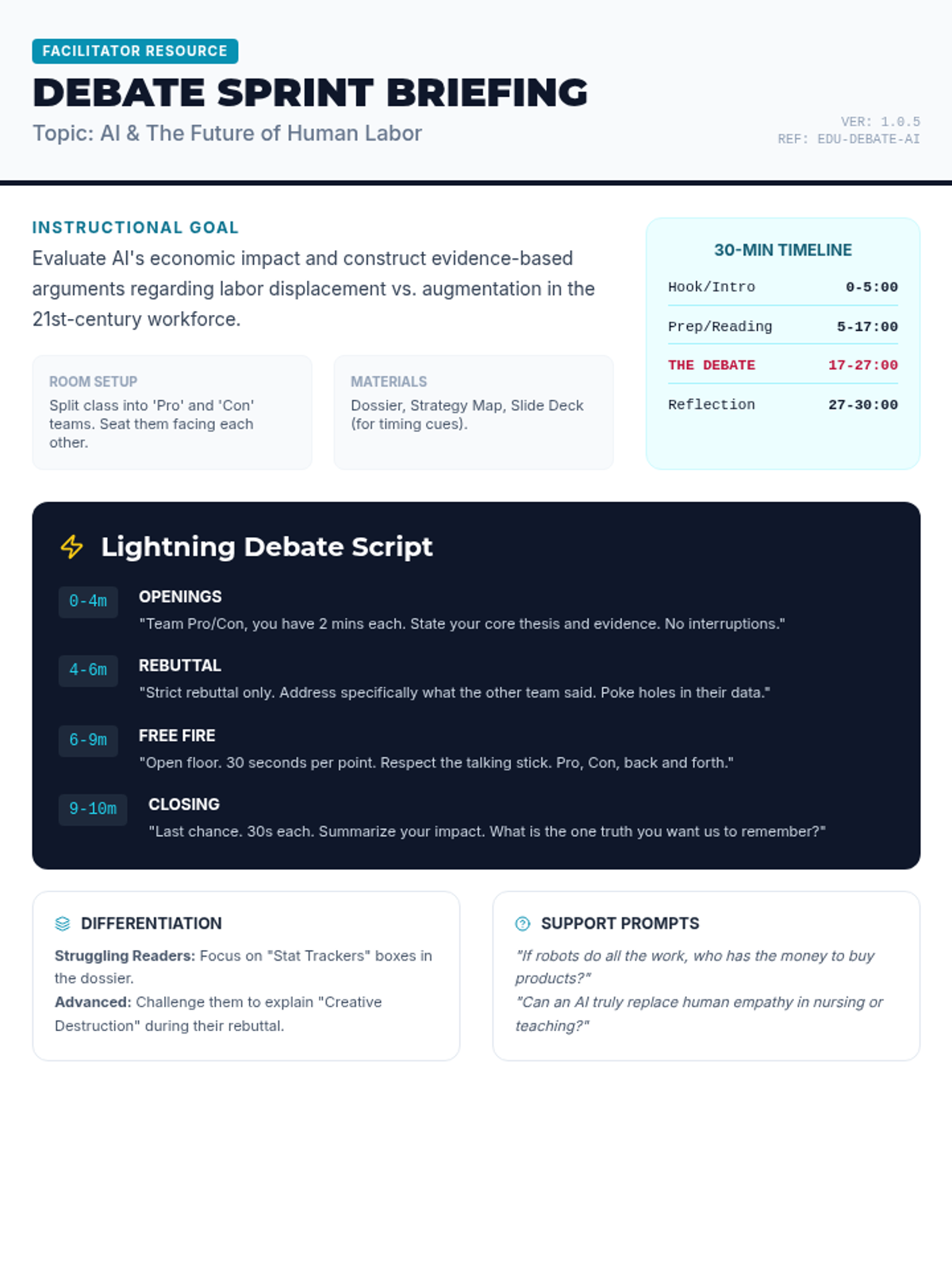
A fast-paced, 30-minute debate activity where students explore the complex impact of Artificial Intelligence on the future of human employment. Students analyze evidence, prepare arguments, and engage in a structured 'lightning' debate.
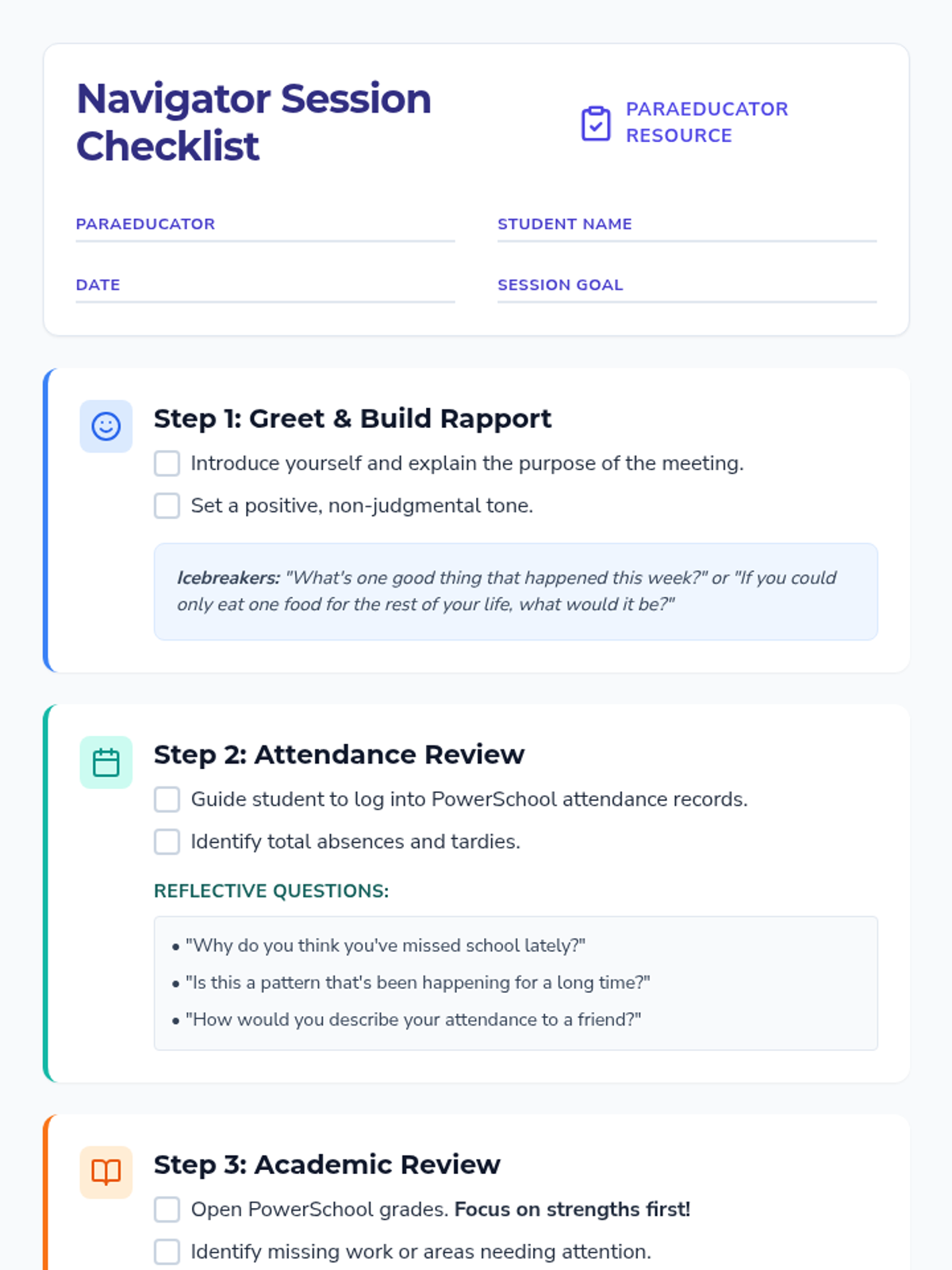
A structured check-in process for paraeducators to support 5th and 6th grade students with attendance and academic goal-setting. Includes a facilitation guide for the educator and a visual presentation for the student.
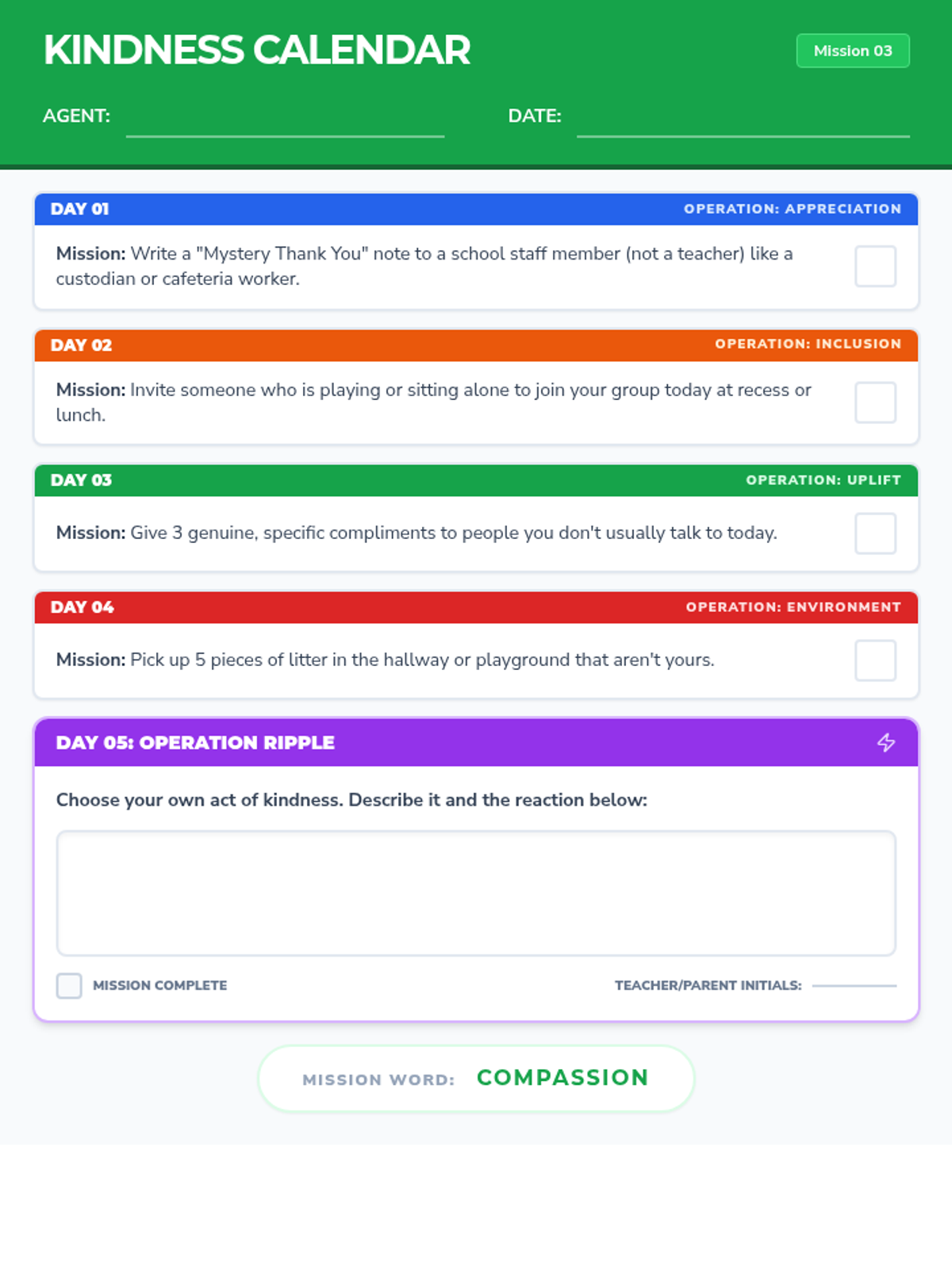
Students identify ways to improve school culture and execute a week-long kindness initiative.
Students learn about animal shelter needs and create a guide for making enrichment items for local pets.