A lesson focused on recognizing and valuing the diverse backgrounds and experiences of classmates to build a more respectful community.
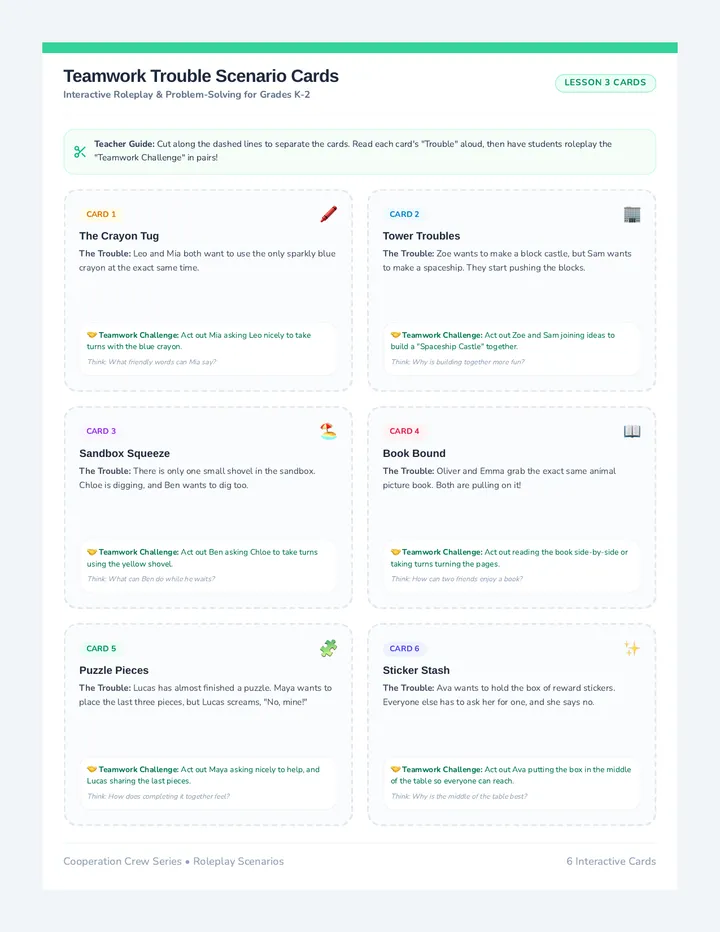
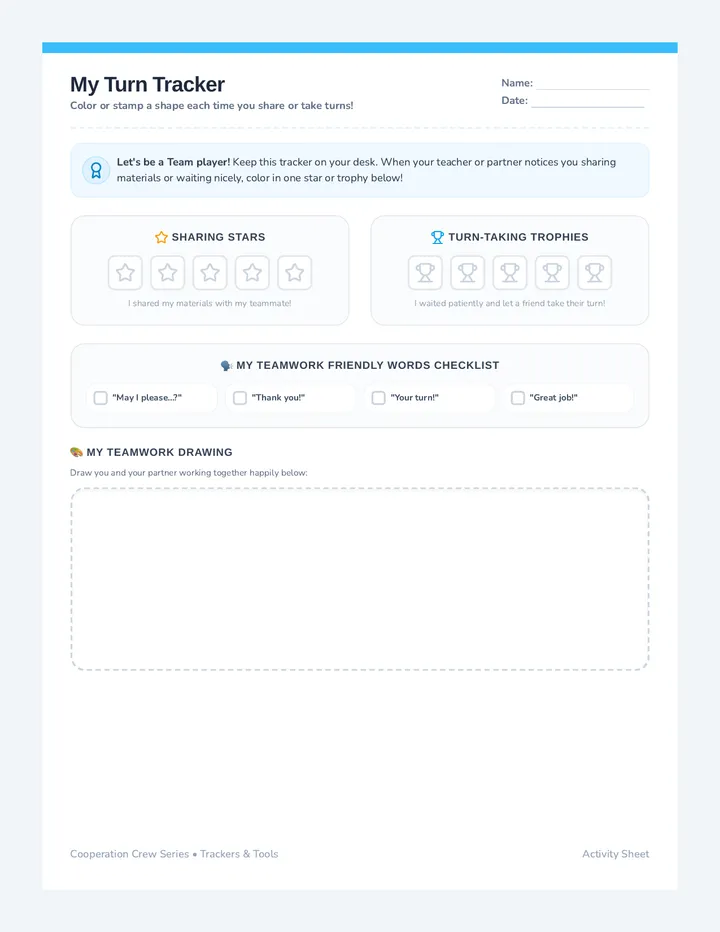
A lesson focused on collaborative behaviors and classroom community through a hands-on sentence building activity.
This lesson helps young students learn how to maintain their own emotional regulation and make positive choices even when their peers are experiencing emotional outbursts or disruptive behavior. It focuses on the 'lighthouse' metaphor—being a steady light during someone else's storm.
A comprehensive lesson on identifying and choosing healthy coping skills for students in grades K-4, featuring differentiated activities for younger and older learners.
A high-energy, superhero-themed lesson designed to teach 1st graders practical strategies for staying focused and managing distractions in the classroom.
A review of all skills learned in the unit. Students earn their "Forest Scout" status by demonstrating each of the five core skills through a series of fun forest-themed challenges.
Focuses on making and keeping friends through kind words and actions with Felix the Fox. Students learn how to join a group and say kind things to their peers.
Teaches the concepts of sharing and taking turns using Sammy and Sassy the Squirrels. Students practice using "I want" statements and waiting for a timer or natural break.
Focuses on personal space and keeping hands to self using the metaphor of a hedgehog's space bubble. Students practice asking for permission before touching others or their belongings.
Teaches self-regulation strategies, specifically deep breathing, through the character of Barnaby the Bear. Students learn how to identify "big feelings" and use the "Calm Down Cave" technique.
Focuses on whole-body listening and following multi-step directions using the character of Willow the Wise Owl. Students practice identifying what a good listener looks like and sounds like.
An elementary restorative justice lesson where students learn to identify specific social harms and use a 'toolkit' of actions to repair relationships beyond simple apologies.
A set of resources designed to help students process behavioral incidents through reflection, identifying impact, and planning better choices.