Students become 'Ad Detectives' to uncover the hidden persuasion tactics used in television and social media advertising. This lesson provides the tools and framework for a hands-on investigation of modern marketing strategies.
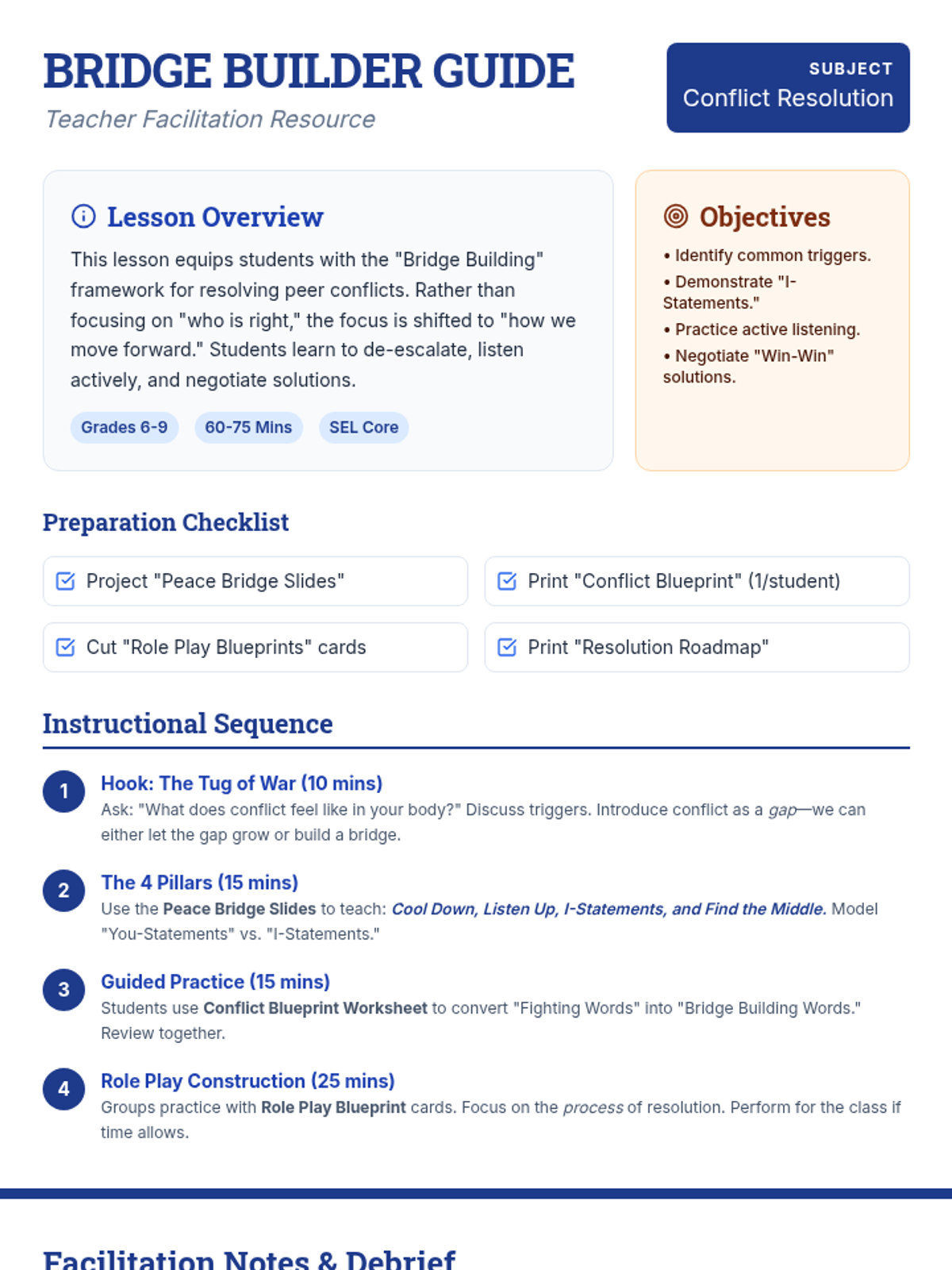
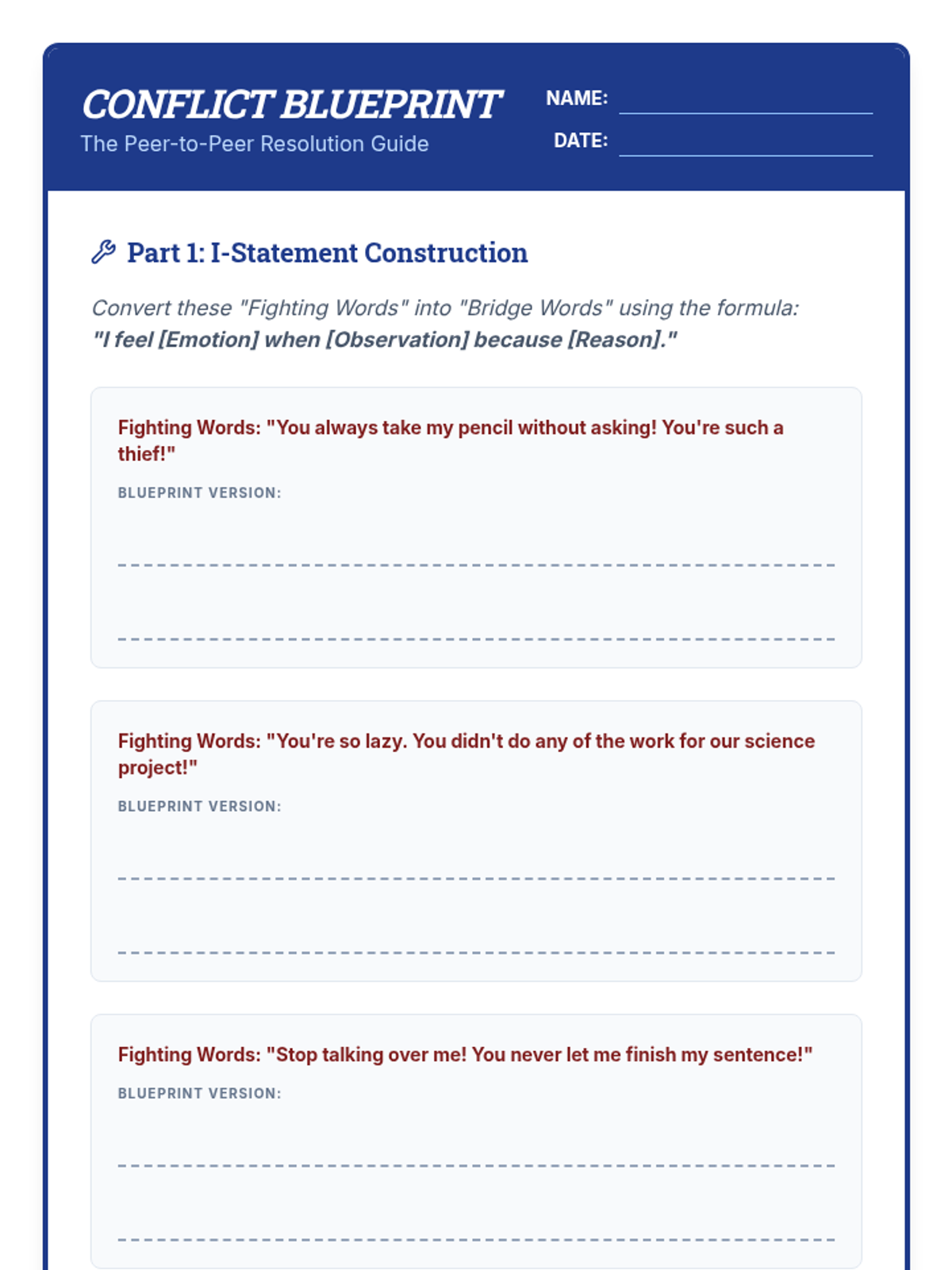
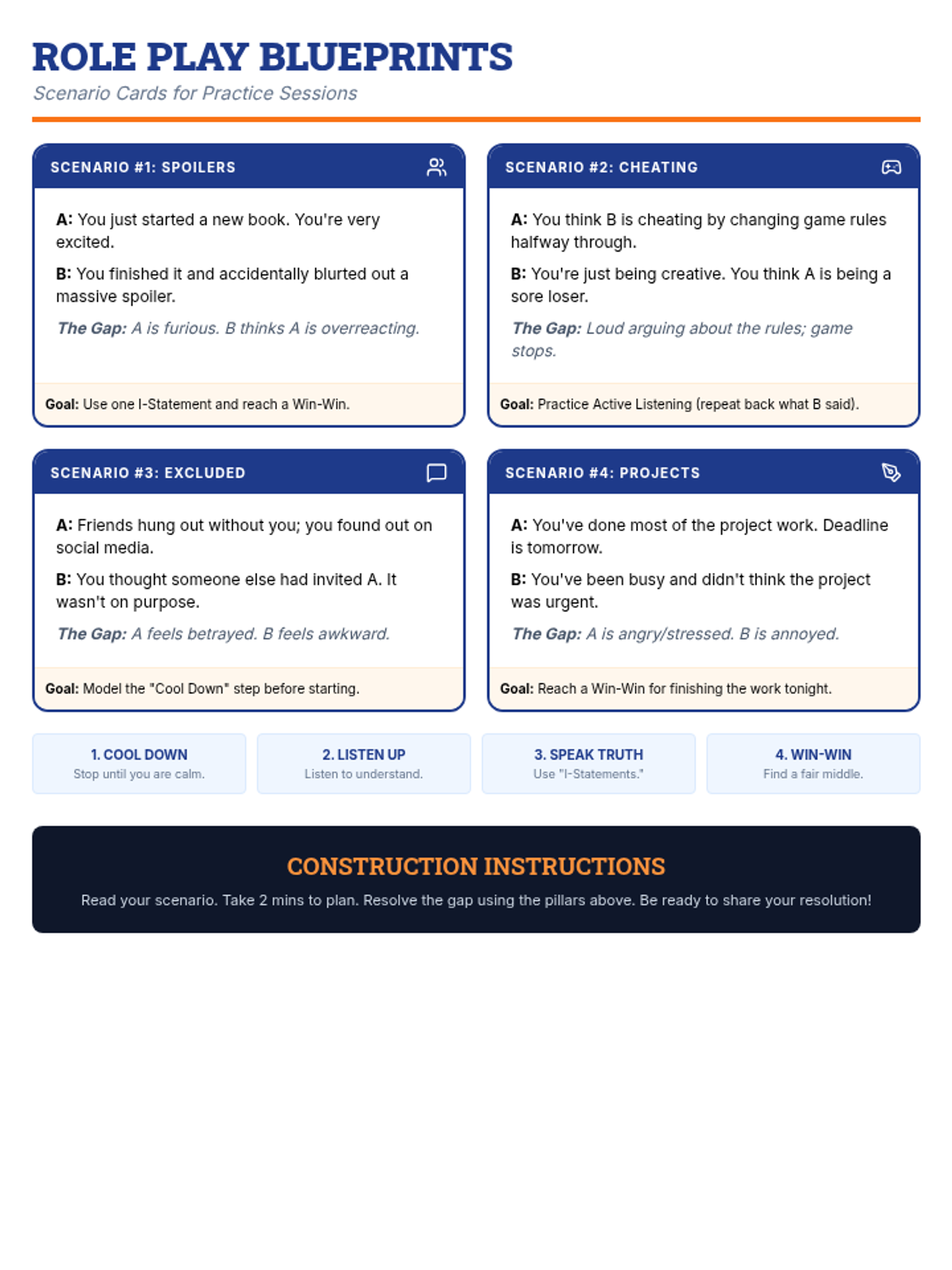
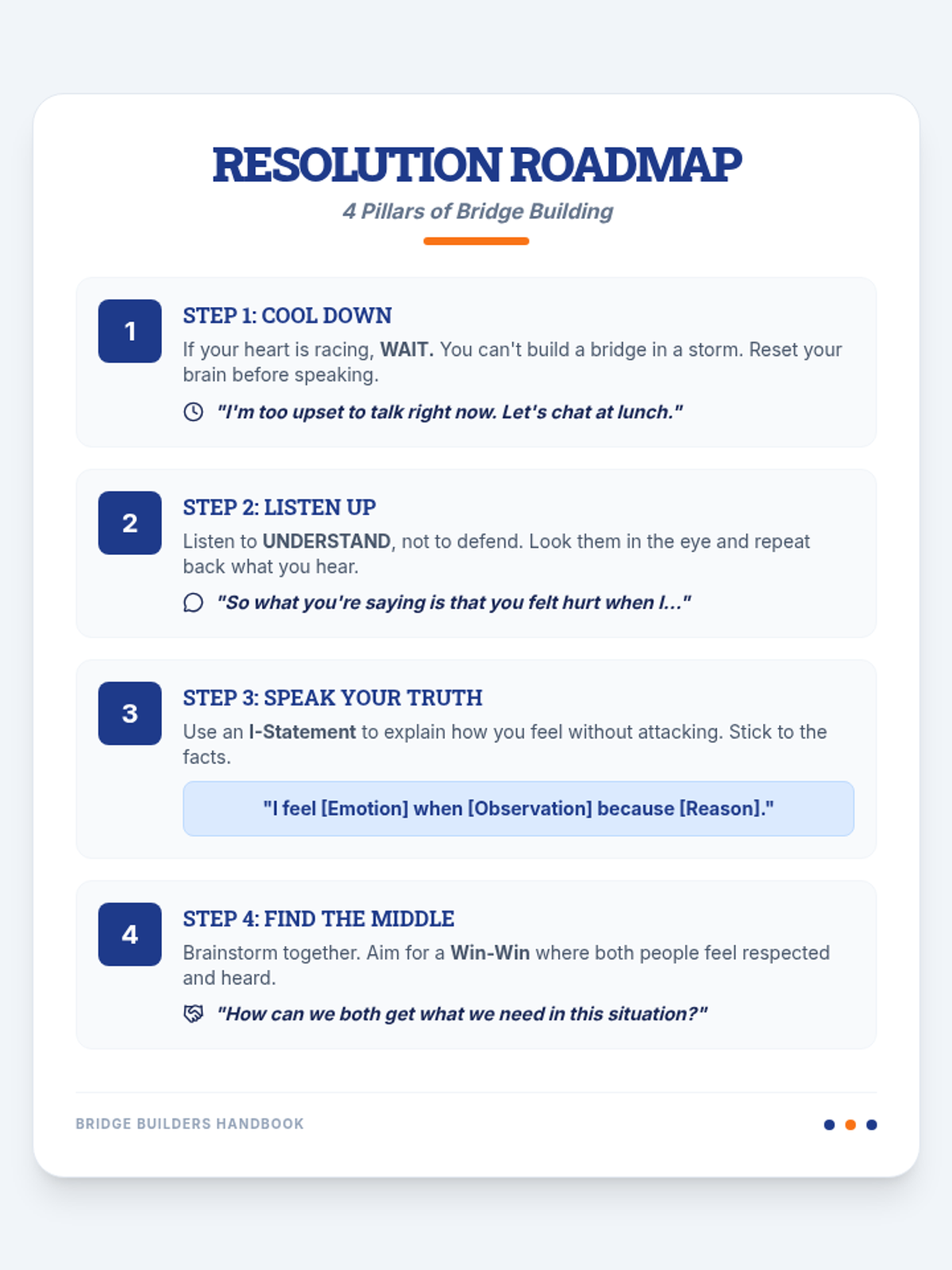
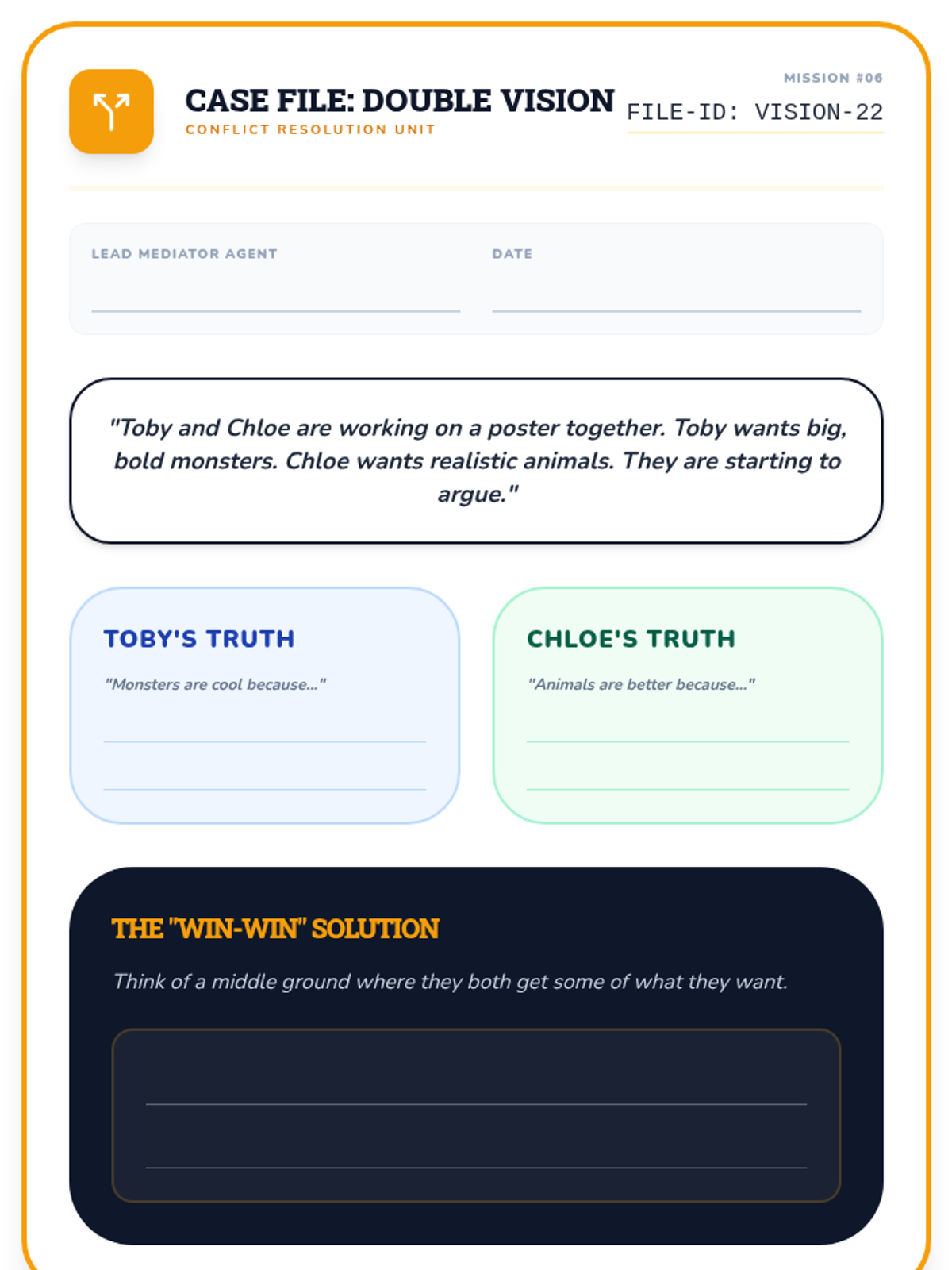
A comprehensive lesson on resolving peer-to-peer conflicts using structured communication strategies like I-statements, active listening, and win-win negotiation. Students will analyze real-world scenarios and practice resolution through role-play.
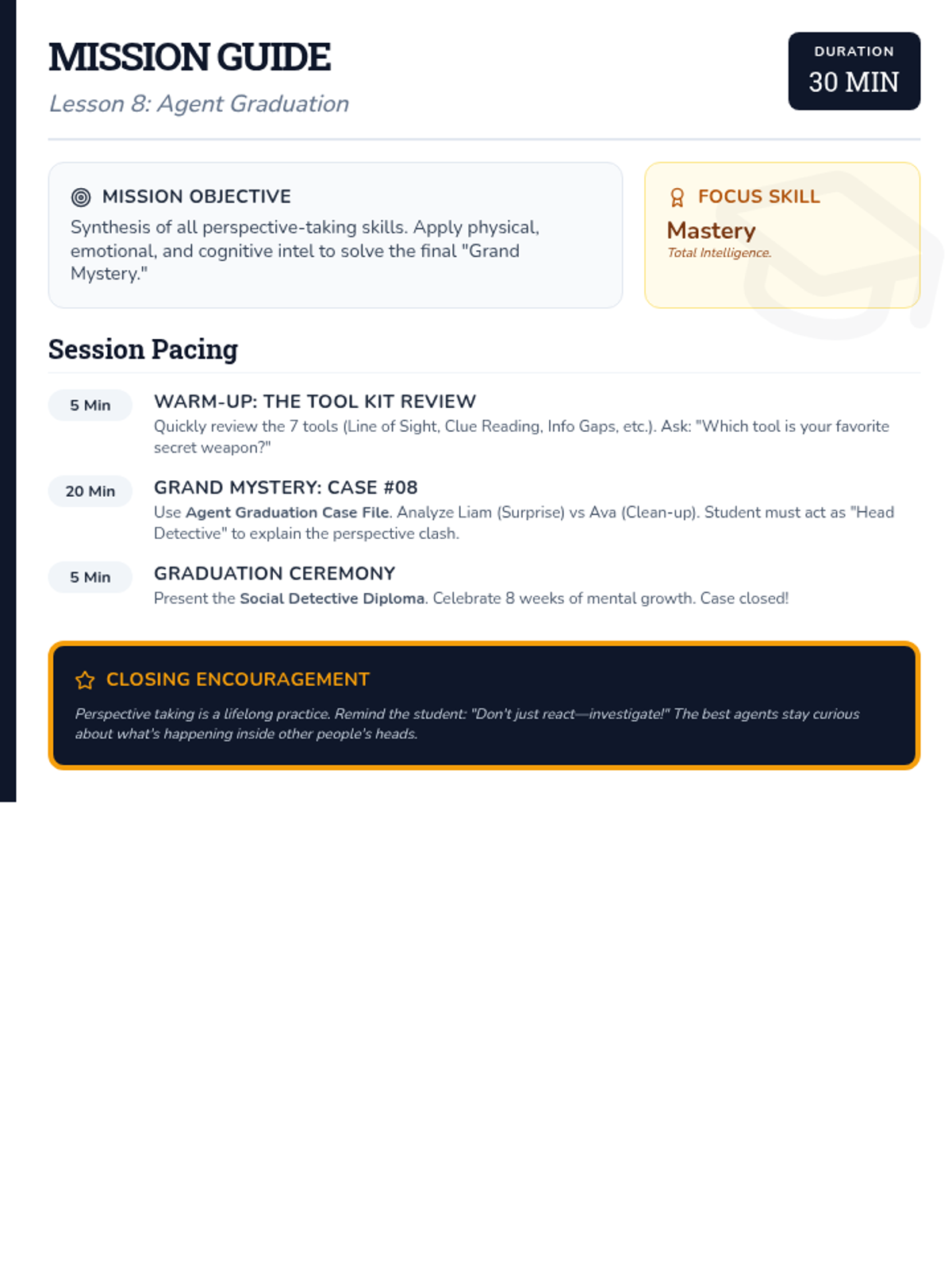
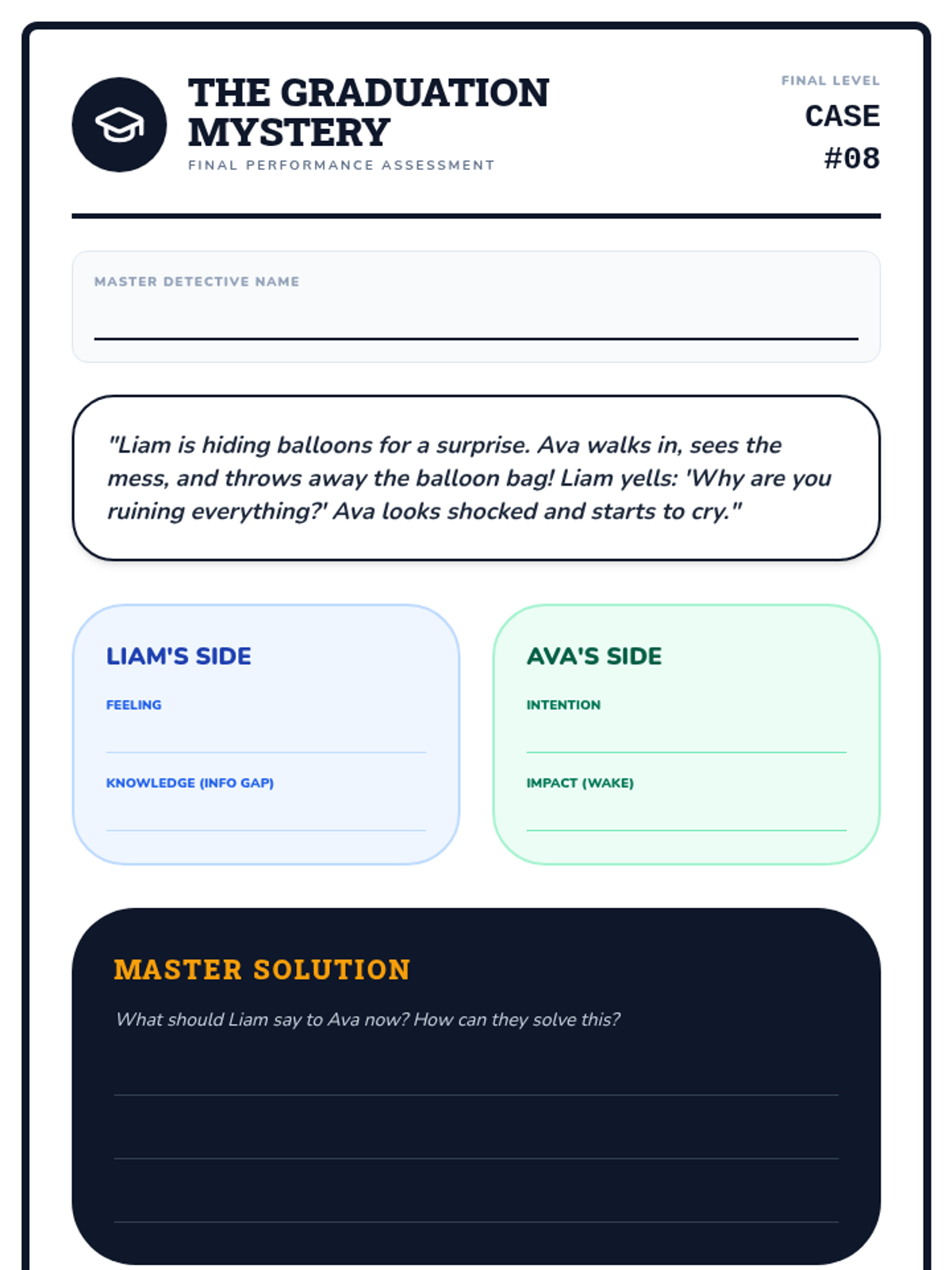
A final review and synthesis of all perspective-taking skills. Students solve a complex "Social Mystery" using all the tools in their detective kit.
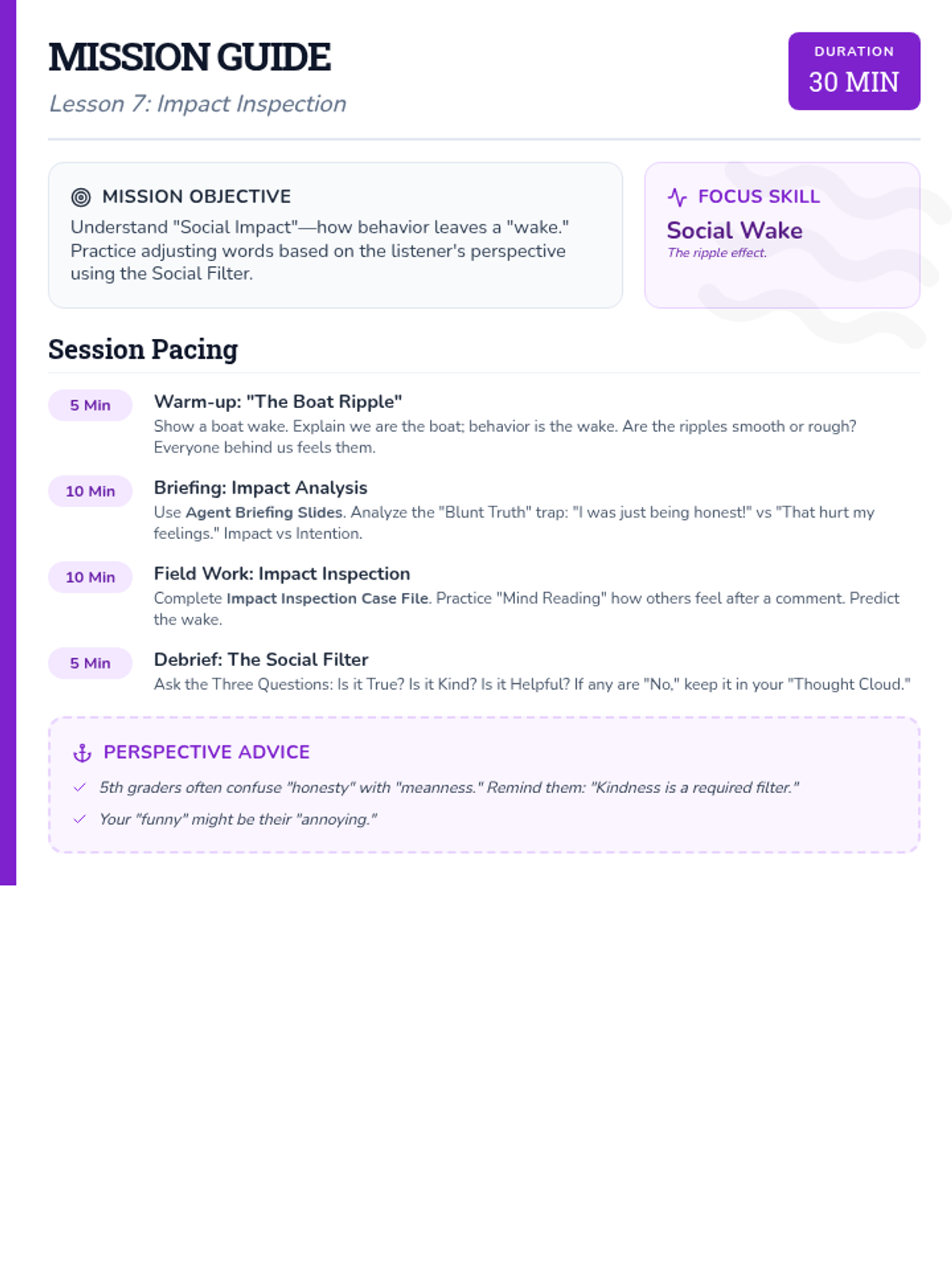
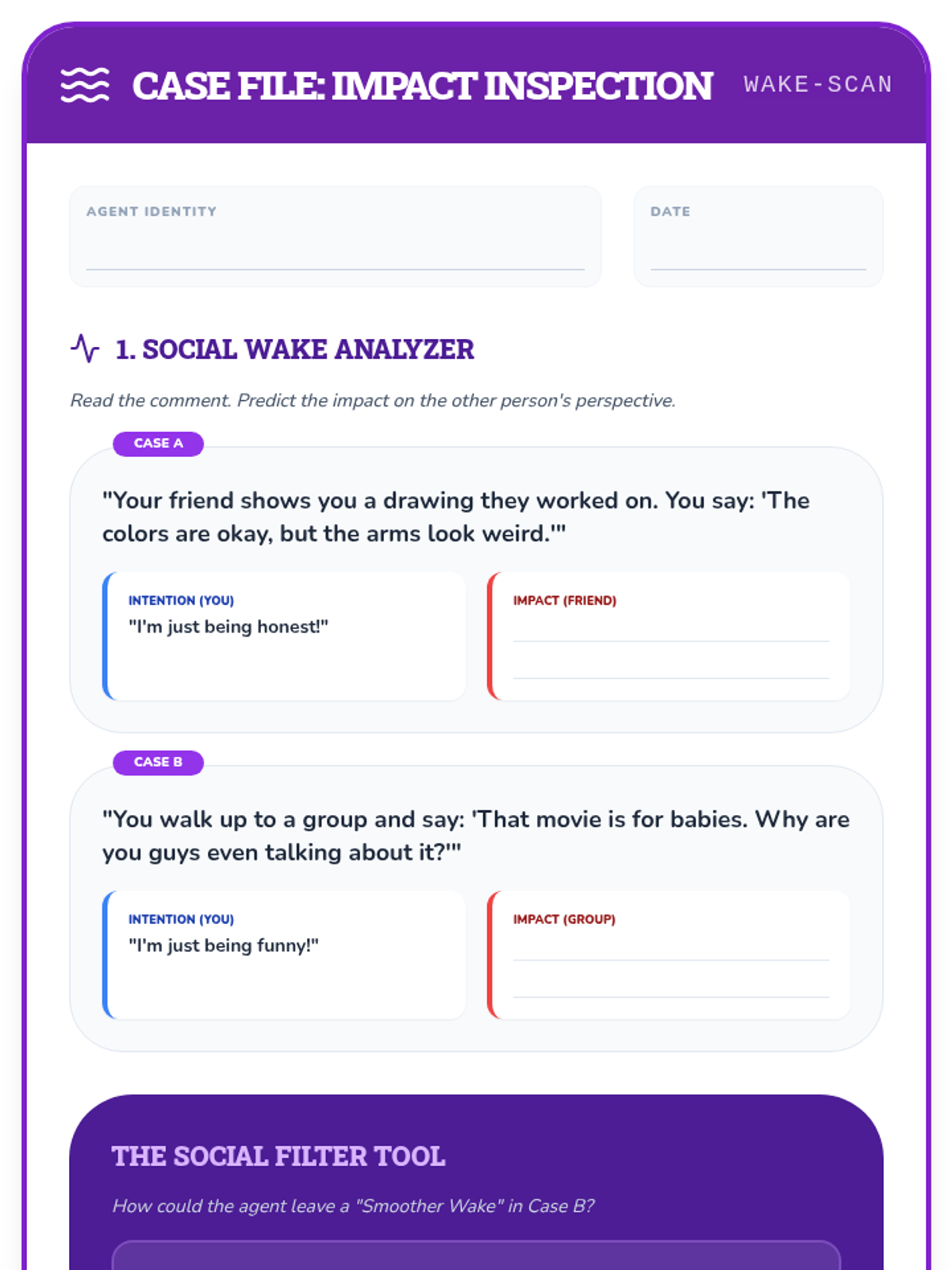
Understanding how our actions and words land on others. Focuses on the "social wake" we leave behind and adjusting behavior based on the listener's perspective.
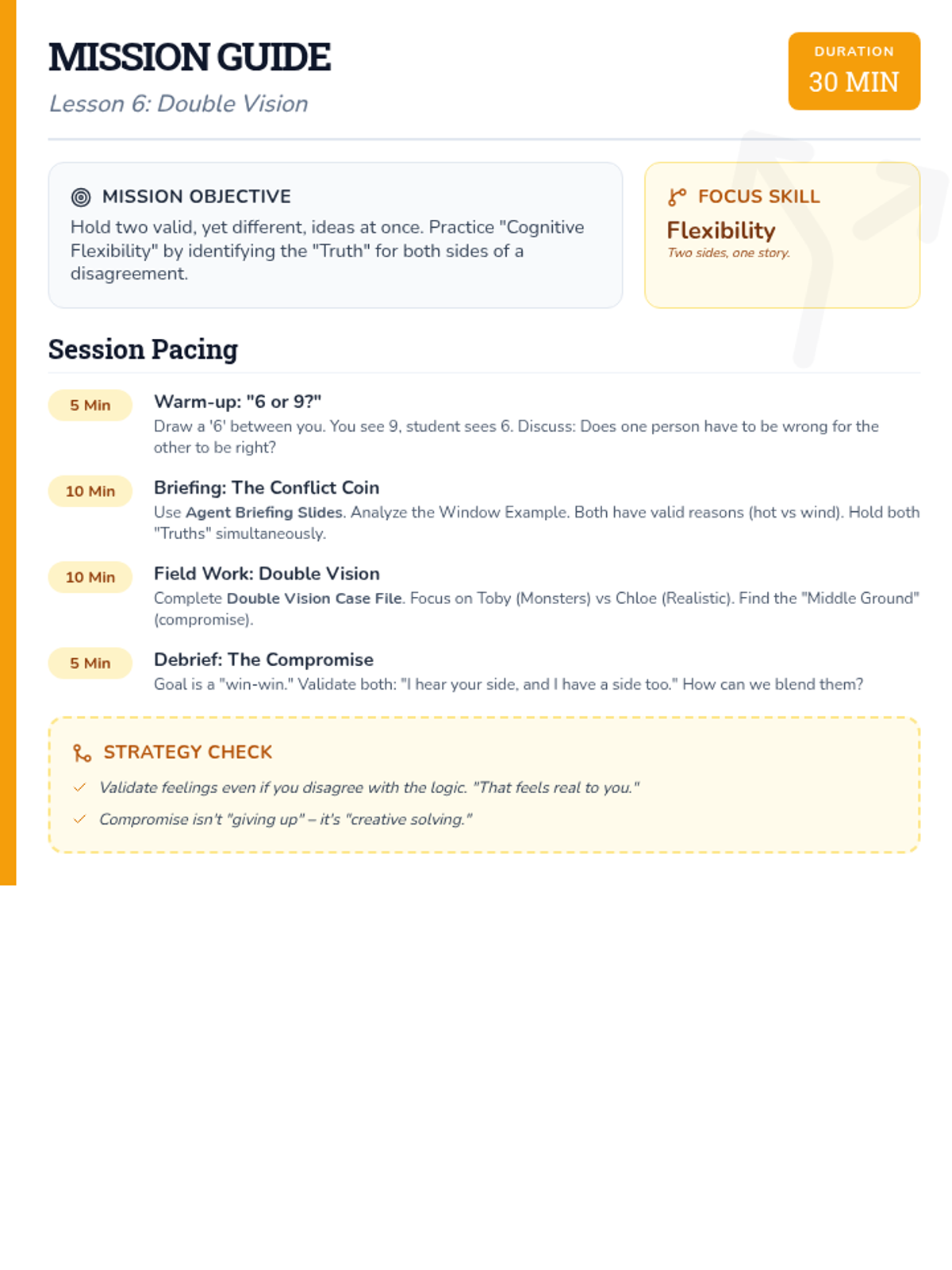
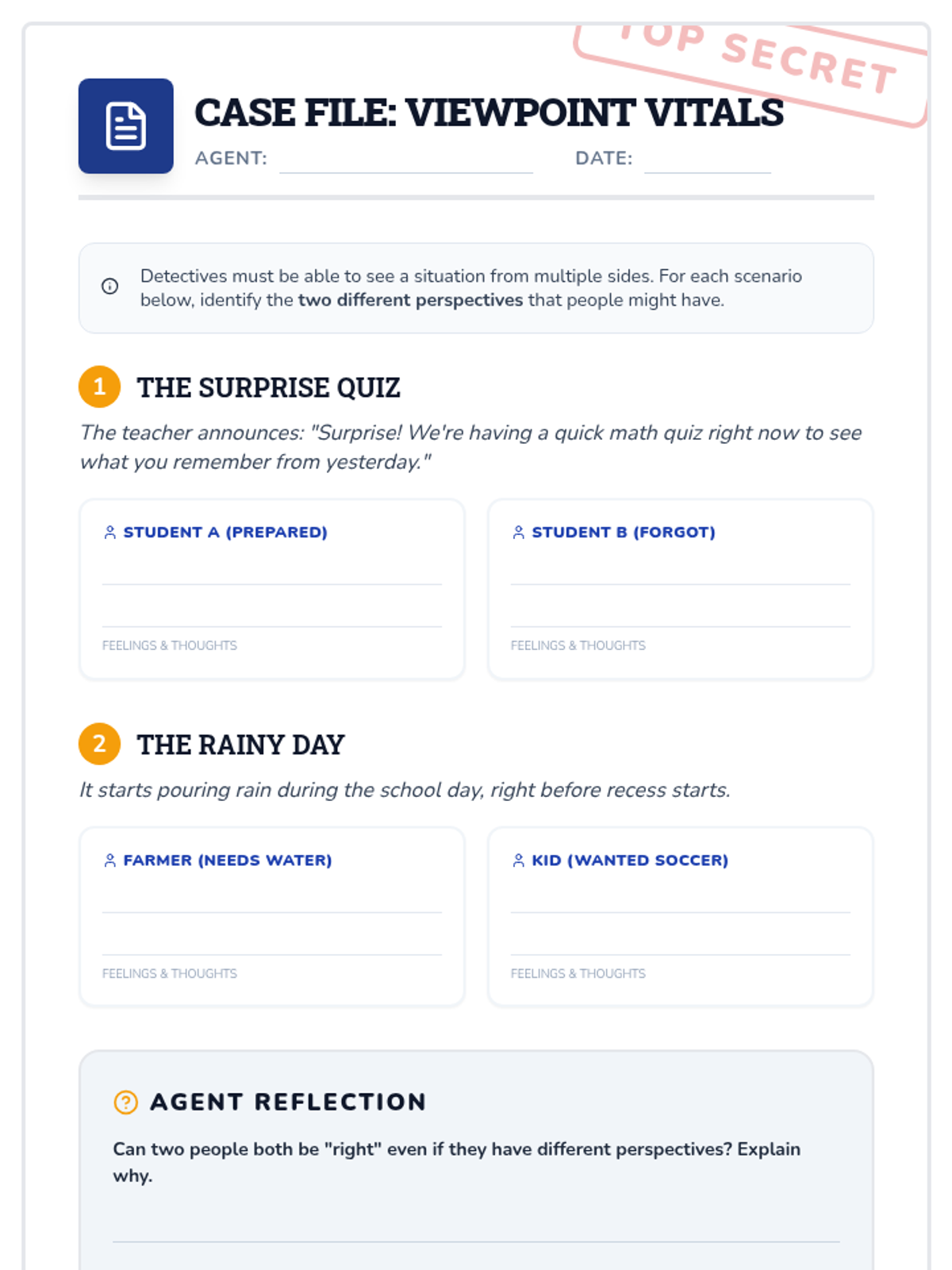
Analyzing social conflicts from two different sides. Students learn that two people can be "right" from their own perspectives even if they disagree.
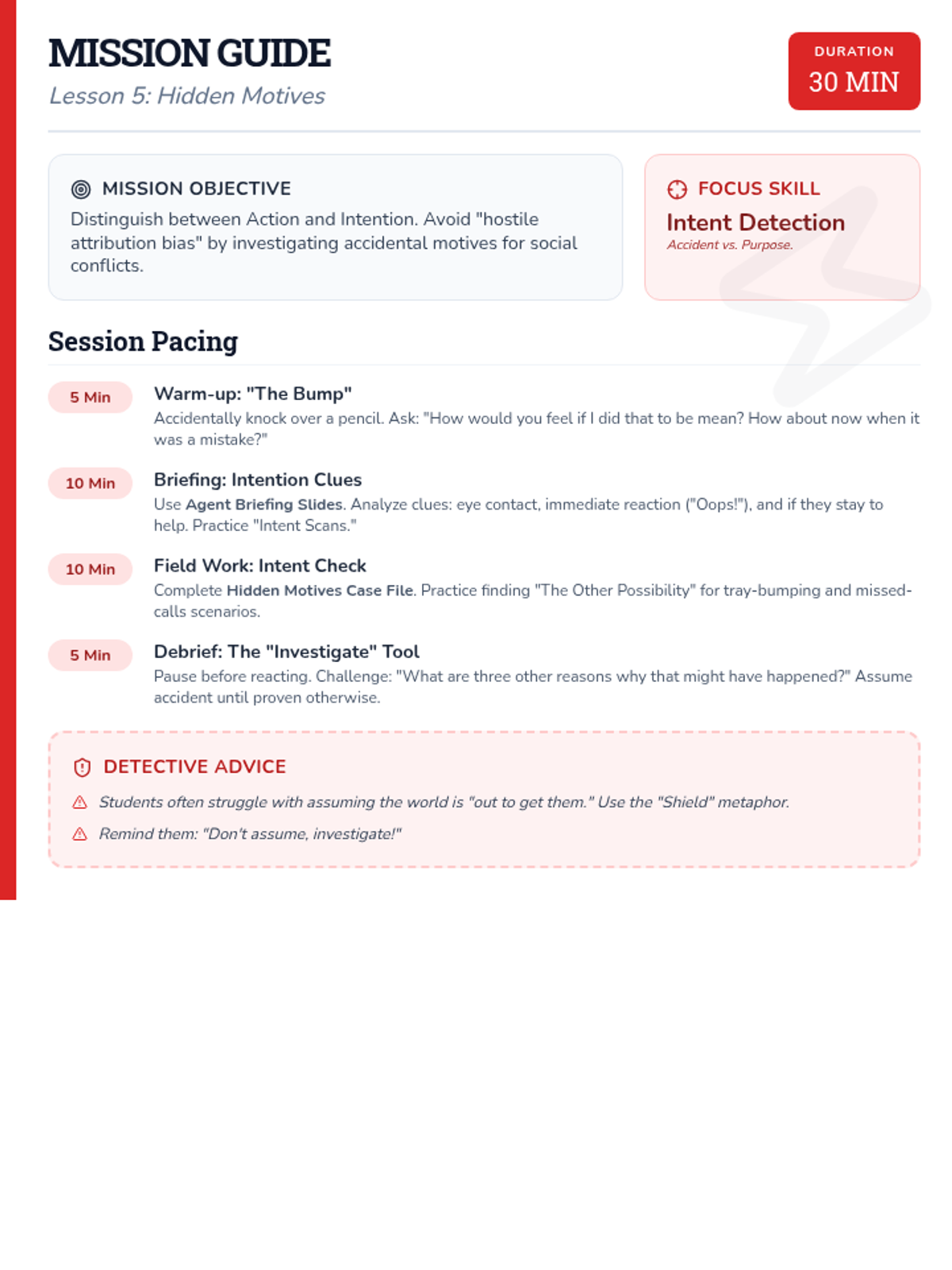
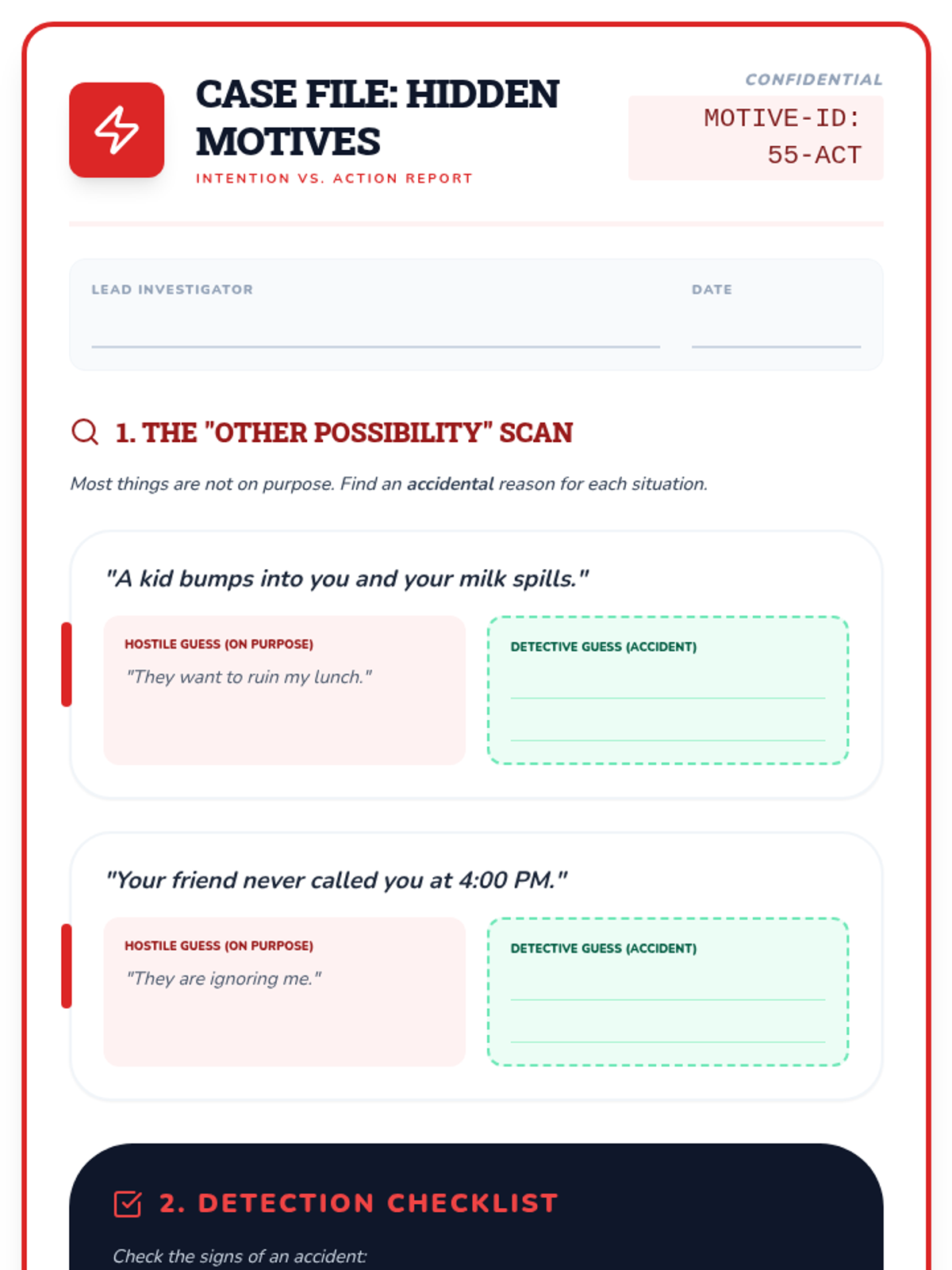
Distinguishing between what people do (actions) and why they do it (intentions). Helps students avoid jumping to negative conclusions by considering "accidental" vs. "on purpose."
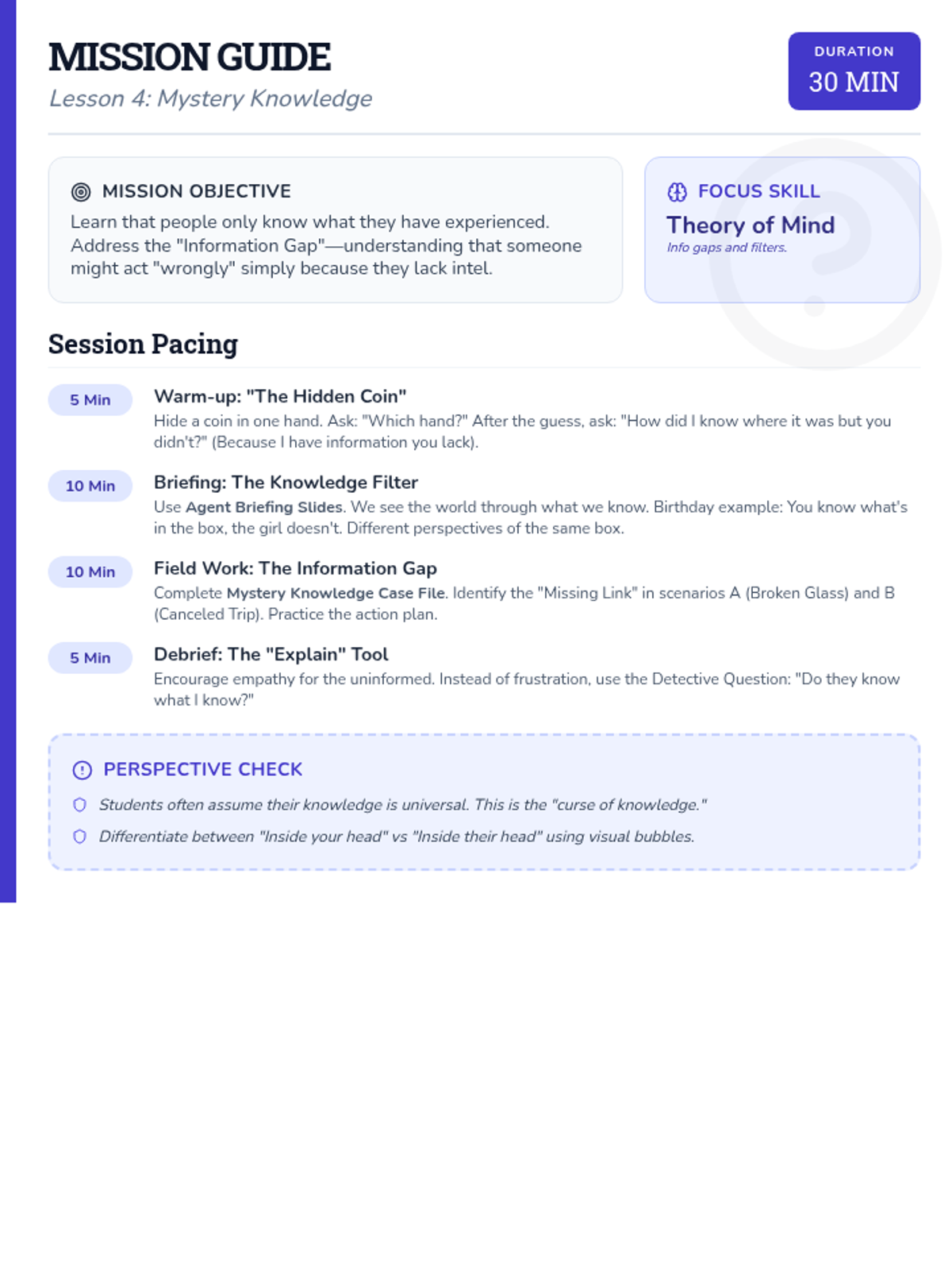
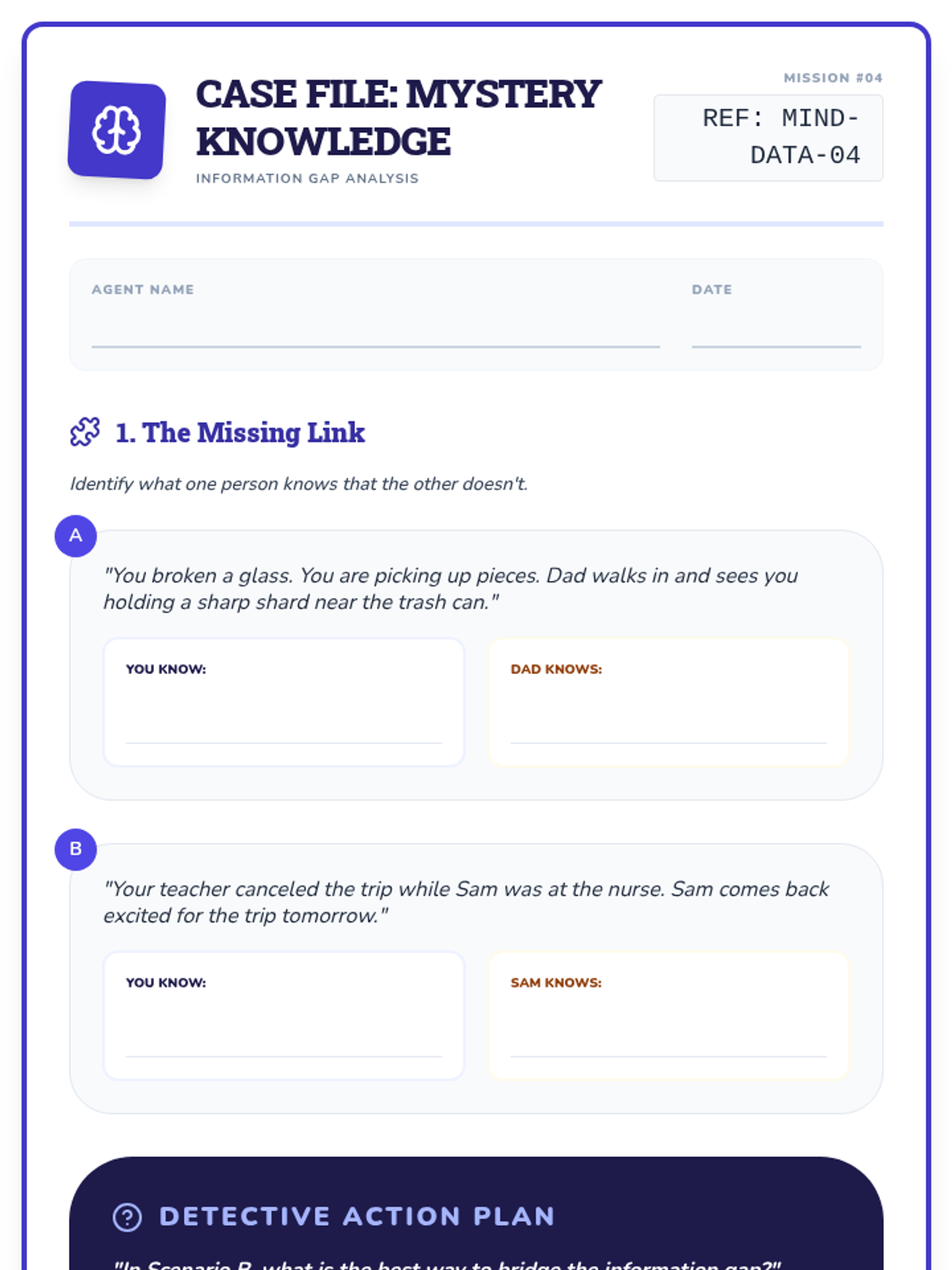
Exploring the "Theory of Mind" concept that people only know what they have experienced or been told. Analyzing situations where characters have different levels of information.
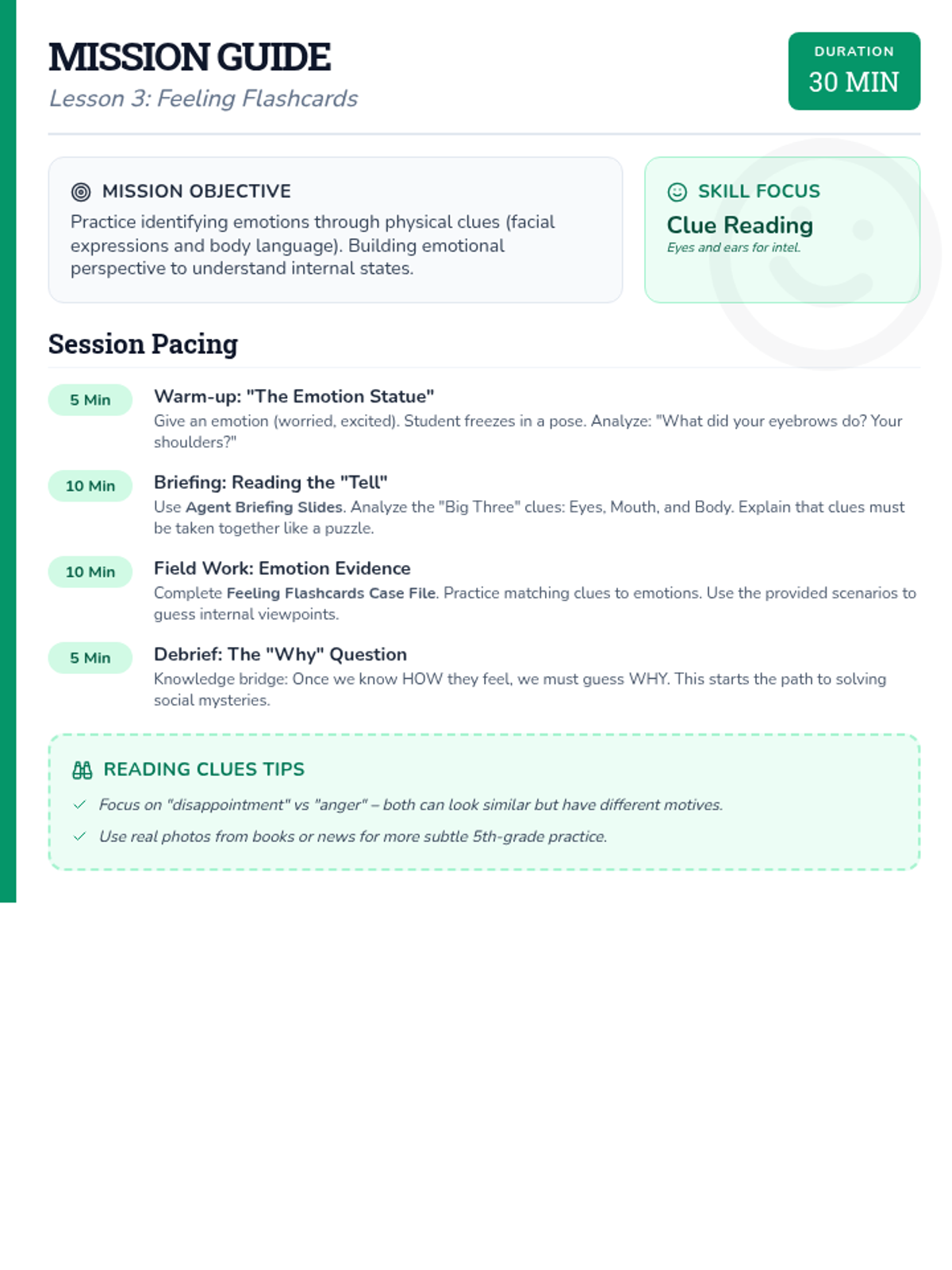
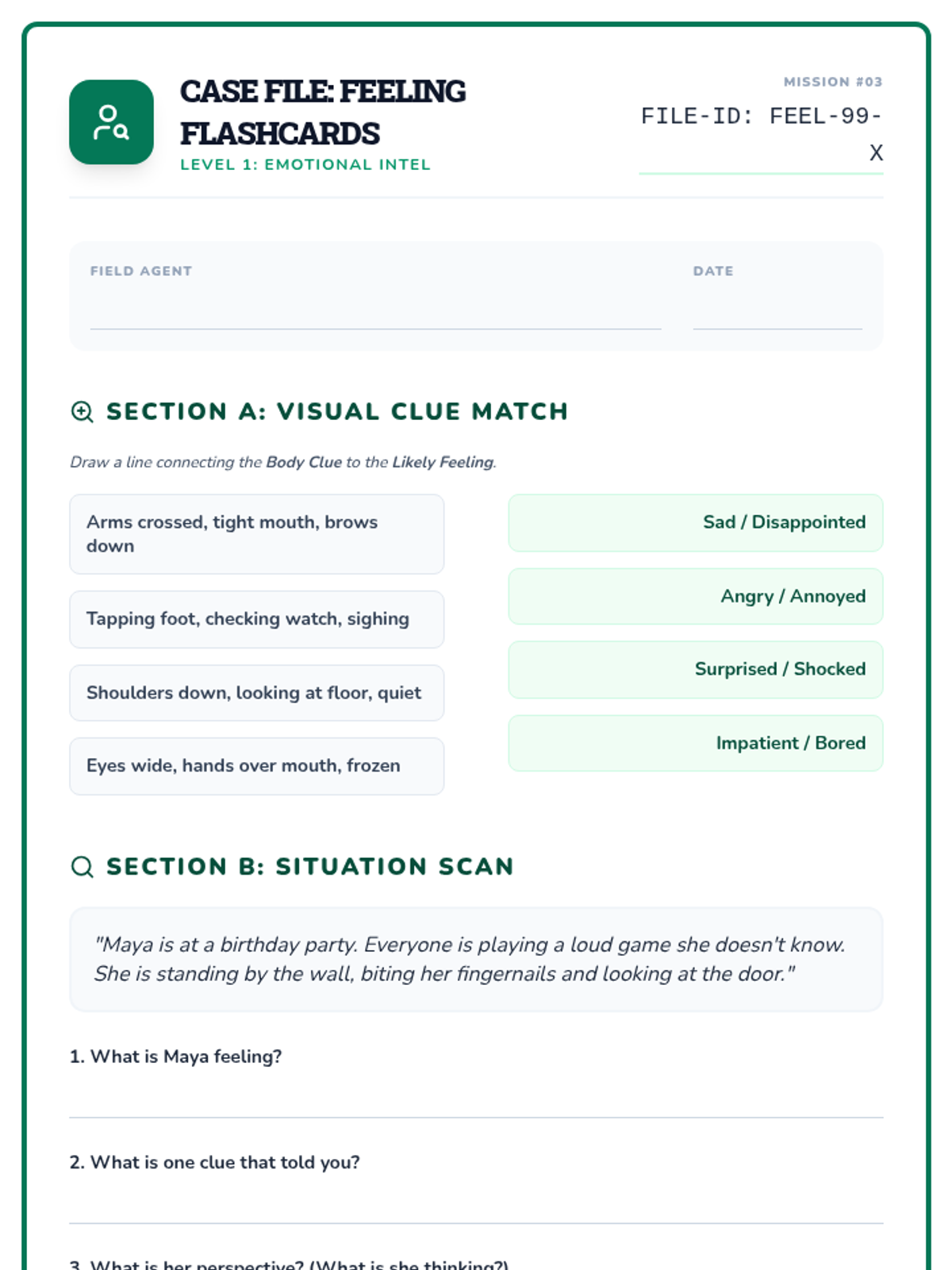
Identifying emotions through non-verbal cues. Students practice "reading" faces and body language to guess how others might be feeling in specific scenarios.
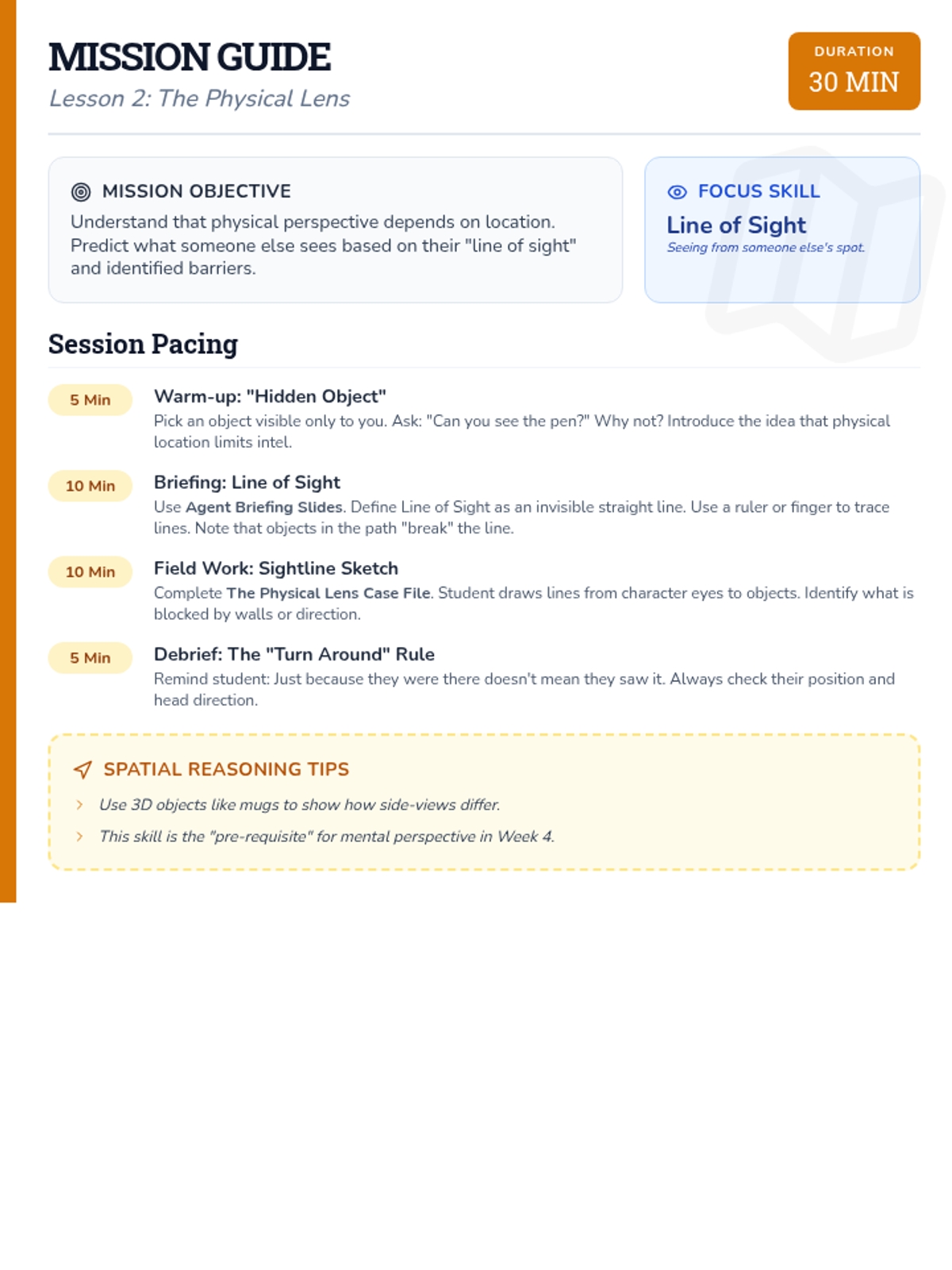
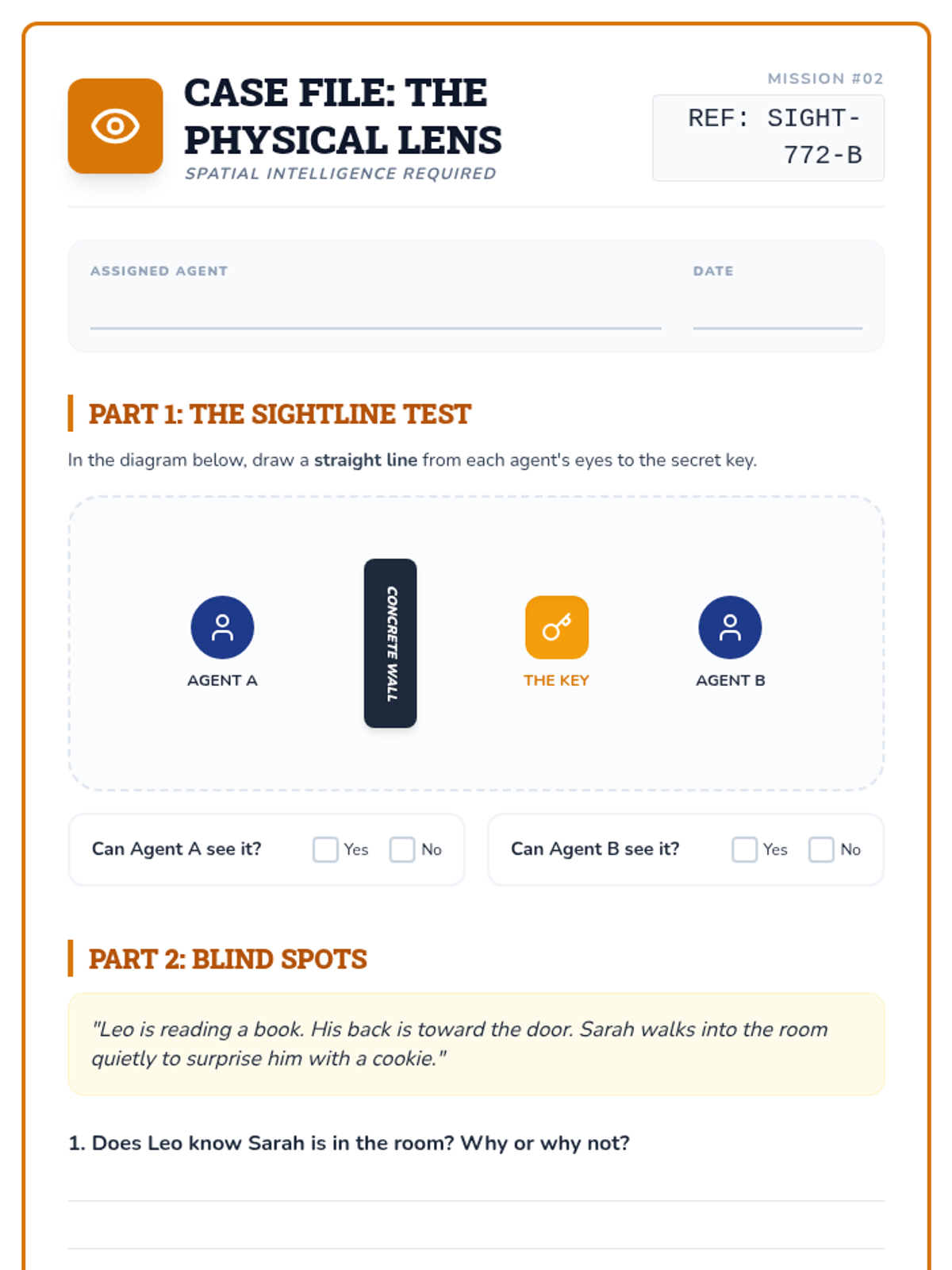
Focuses on physical perspective—understanding that what someone else sees depends on where they are standing. Includes activities on "Line of Sight."
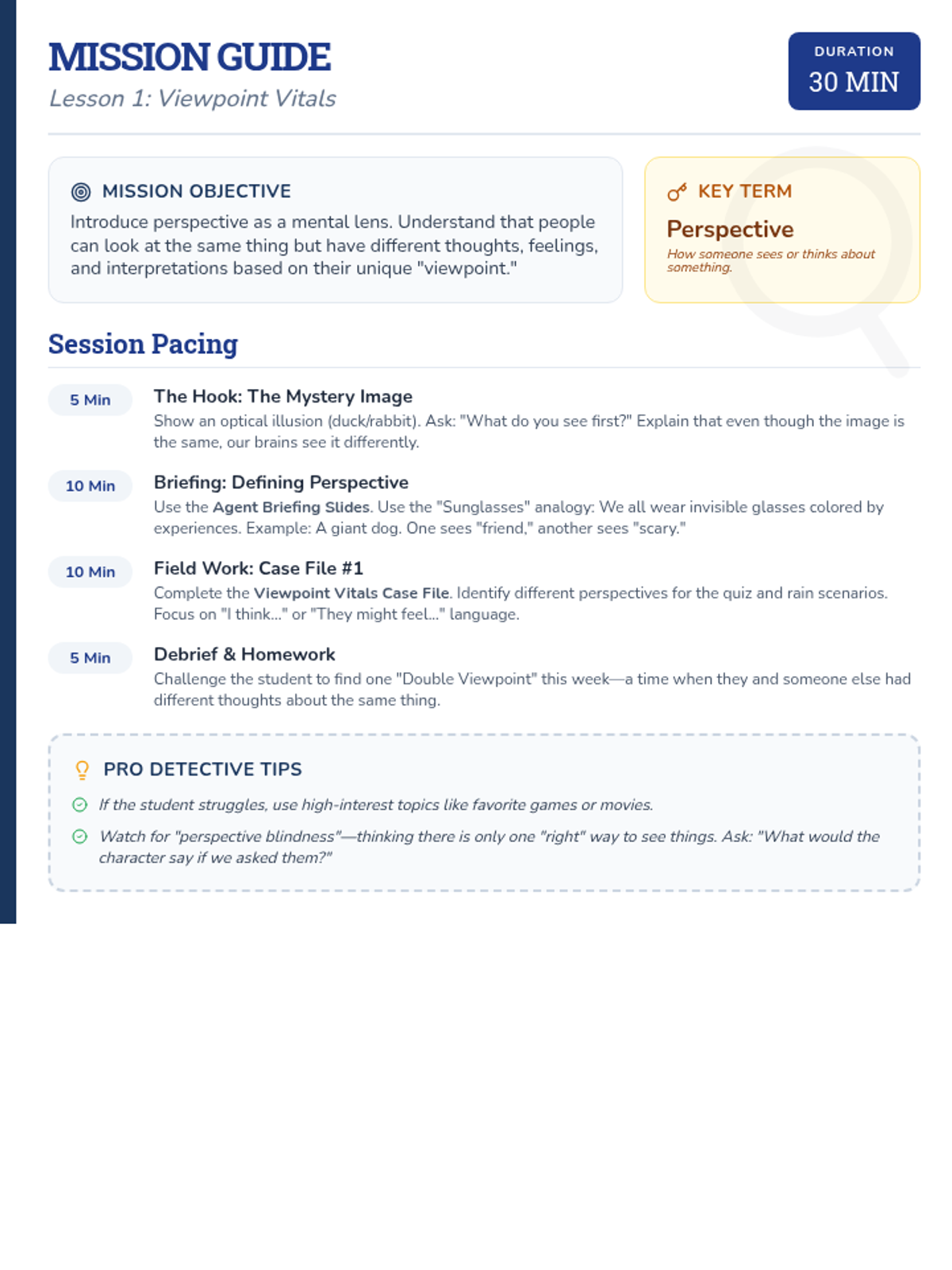
Introduction to the concept of perspective as a mental "viewpoint." Students learn that everyone sees the world through a unique lens based on their experiences and position.
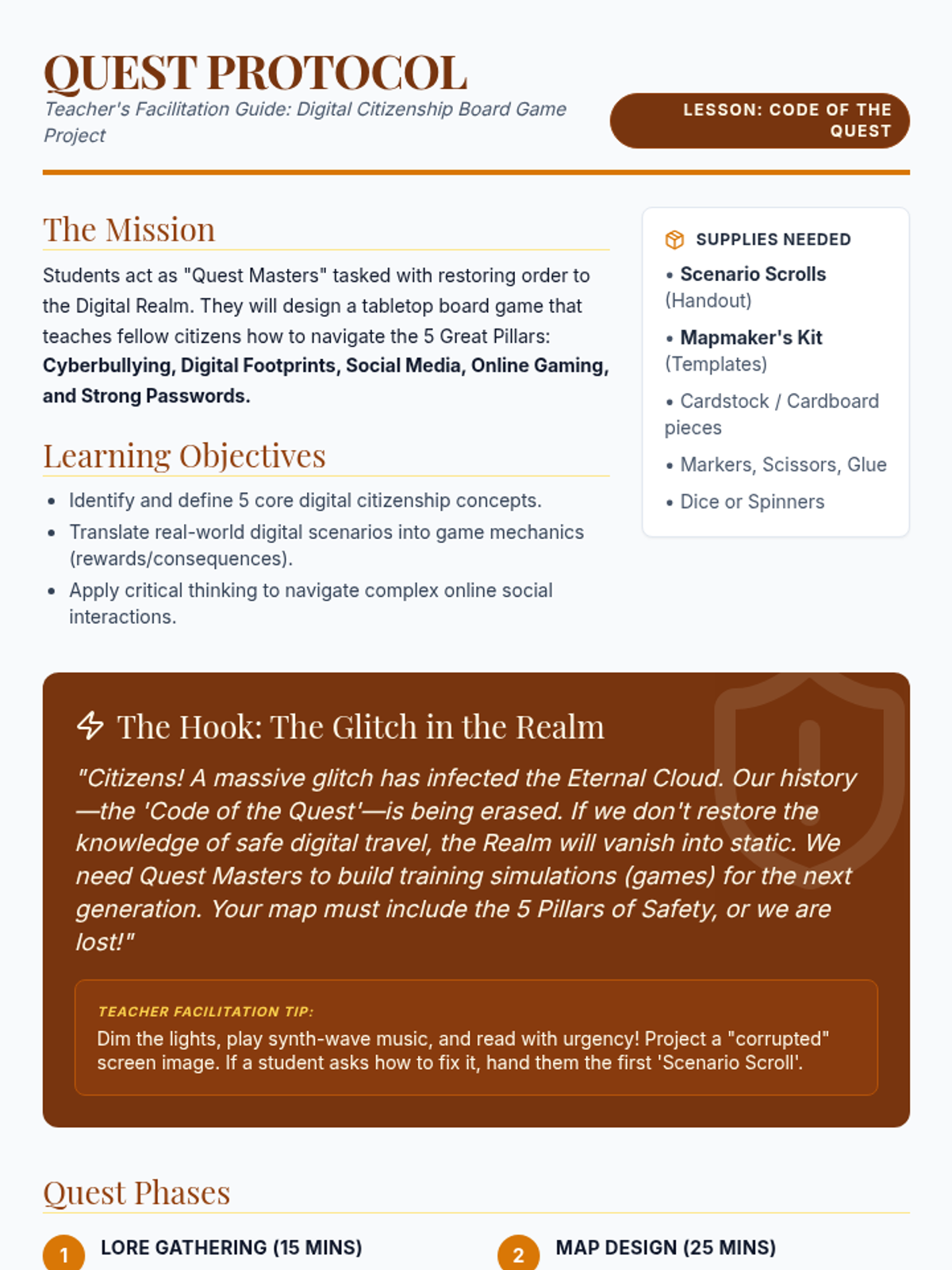
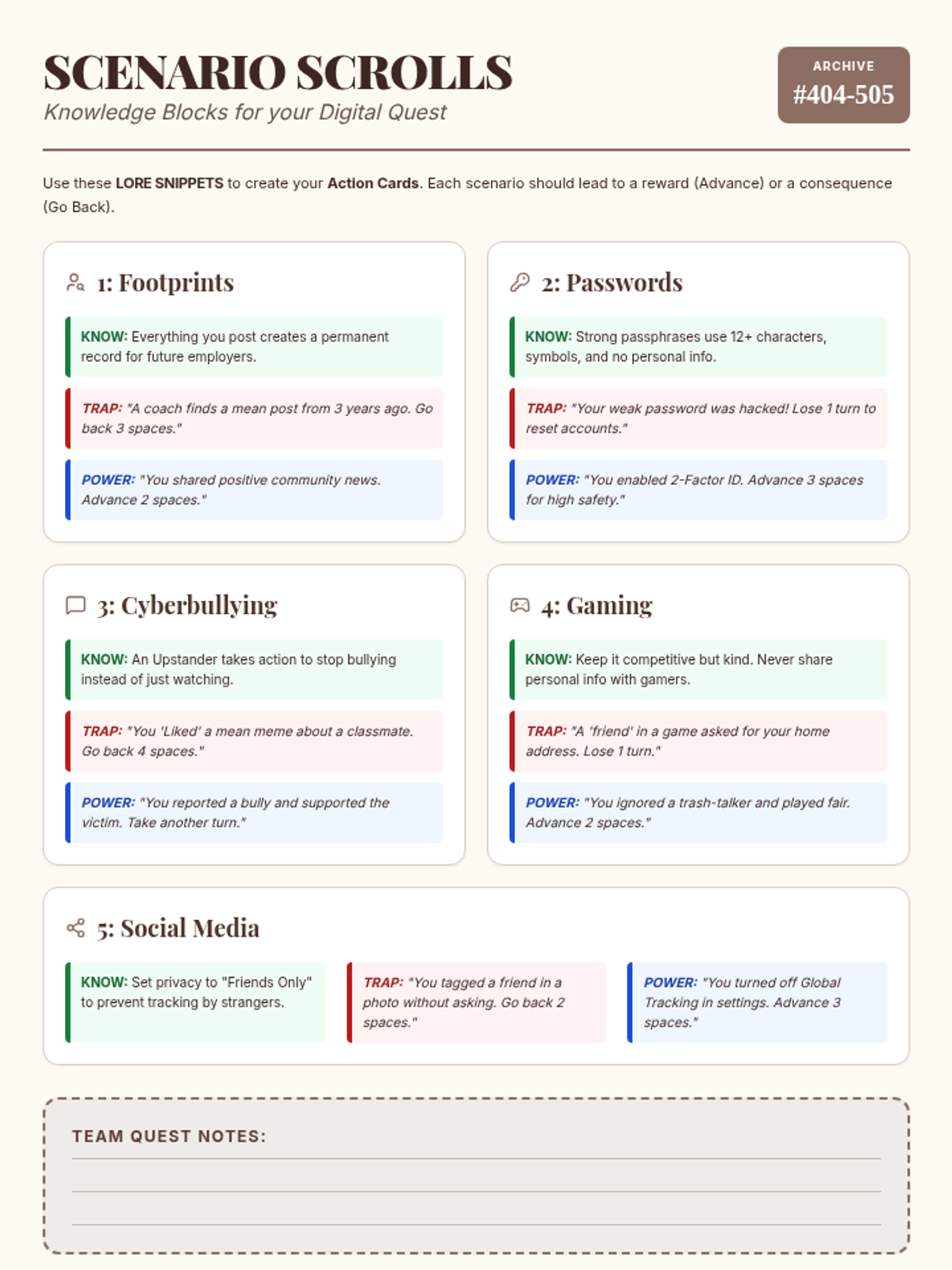
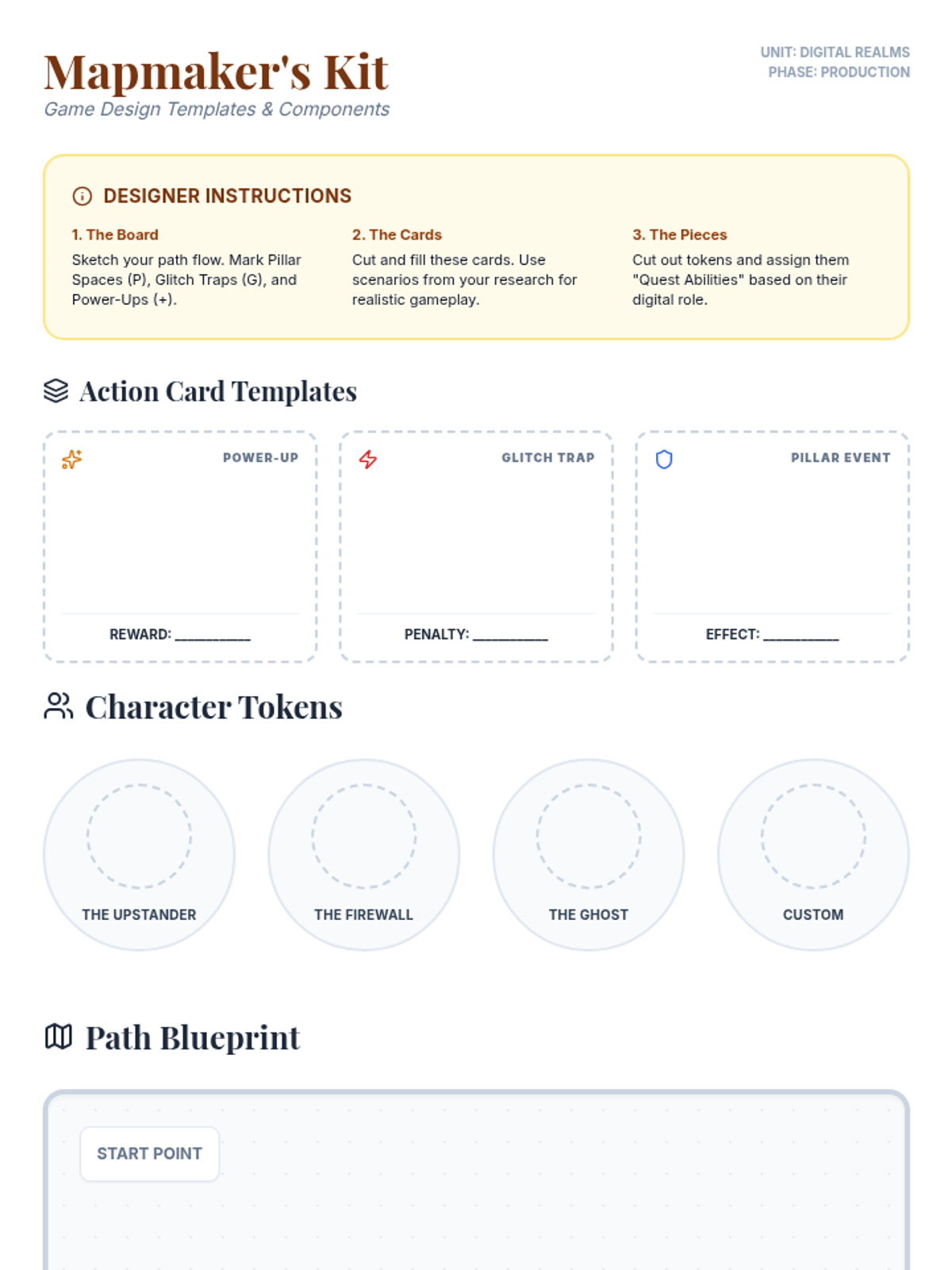
A hands-on lesson where students design and build a board game to master digital citizenship. Through a quest-themed hook and scenario-building activities, they explore cyberbullying, digital footprints, and online safety.
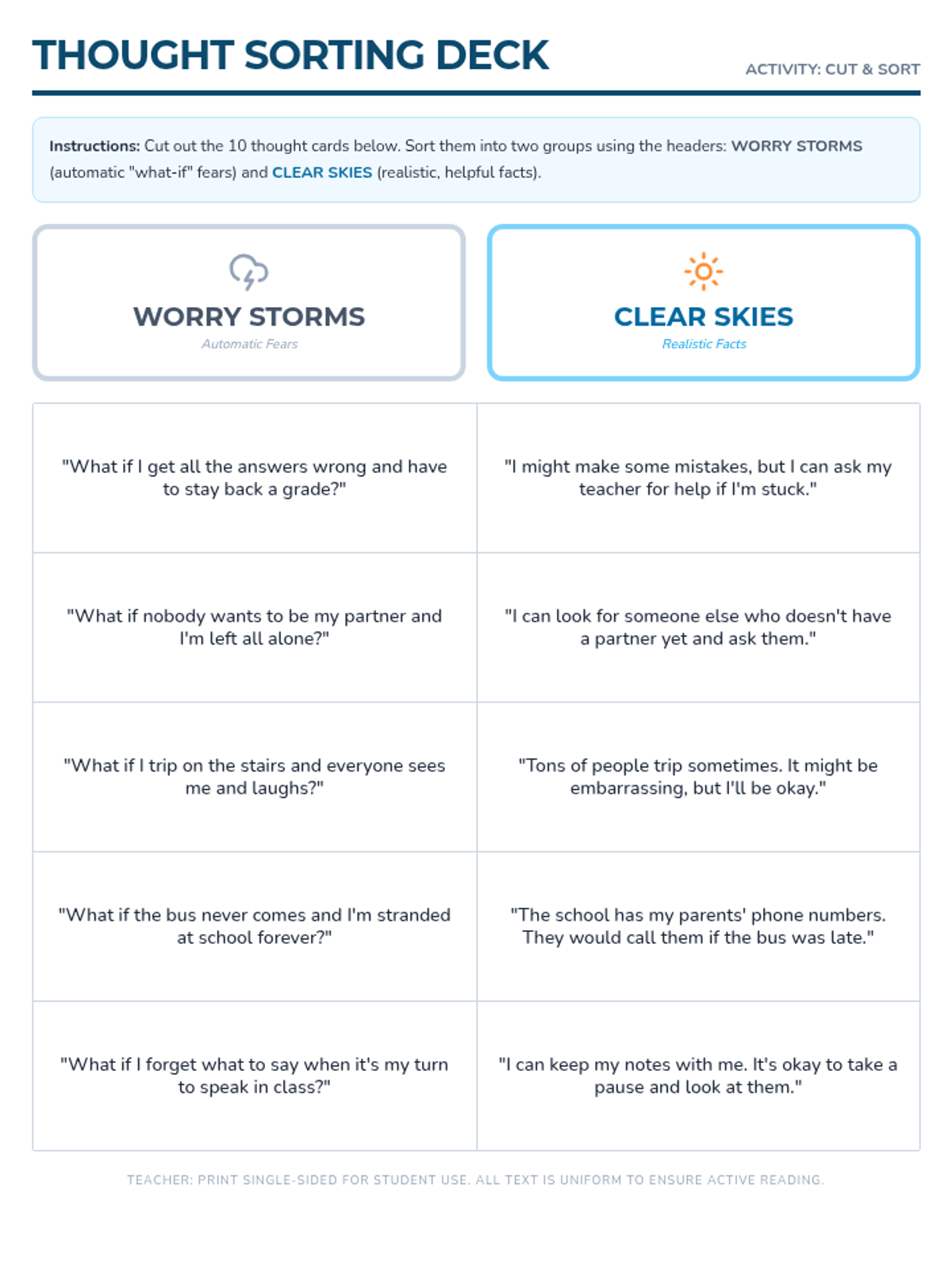
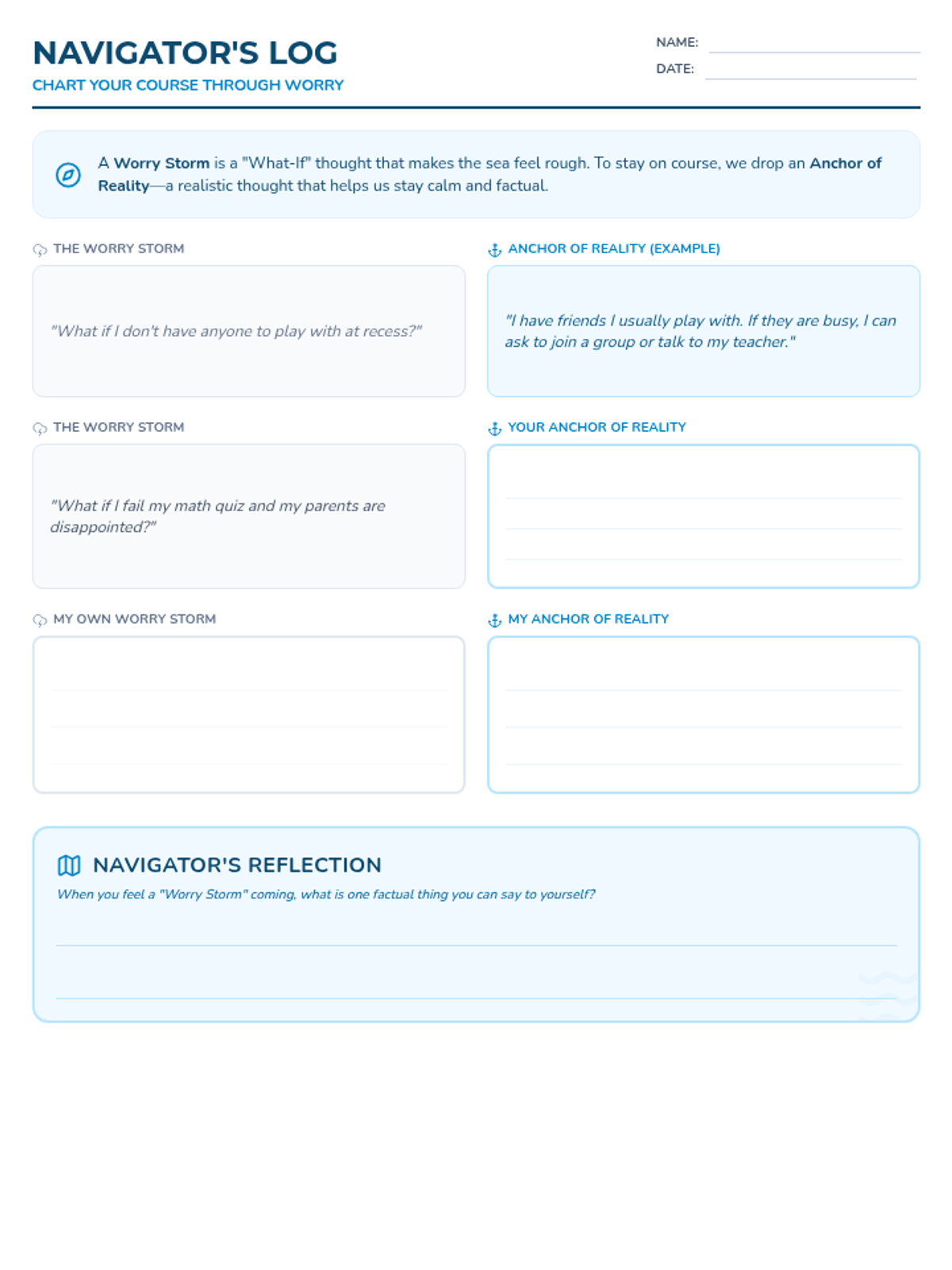
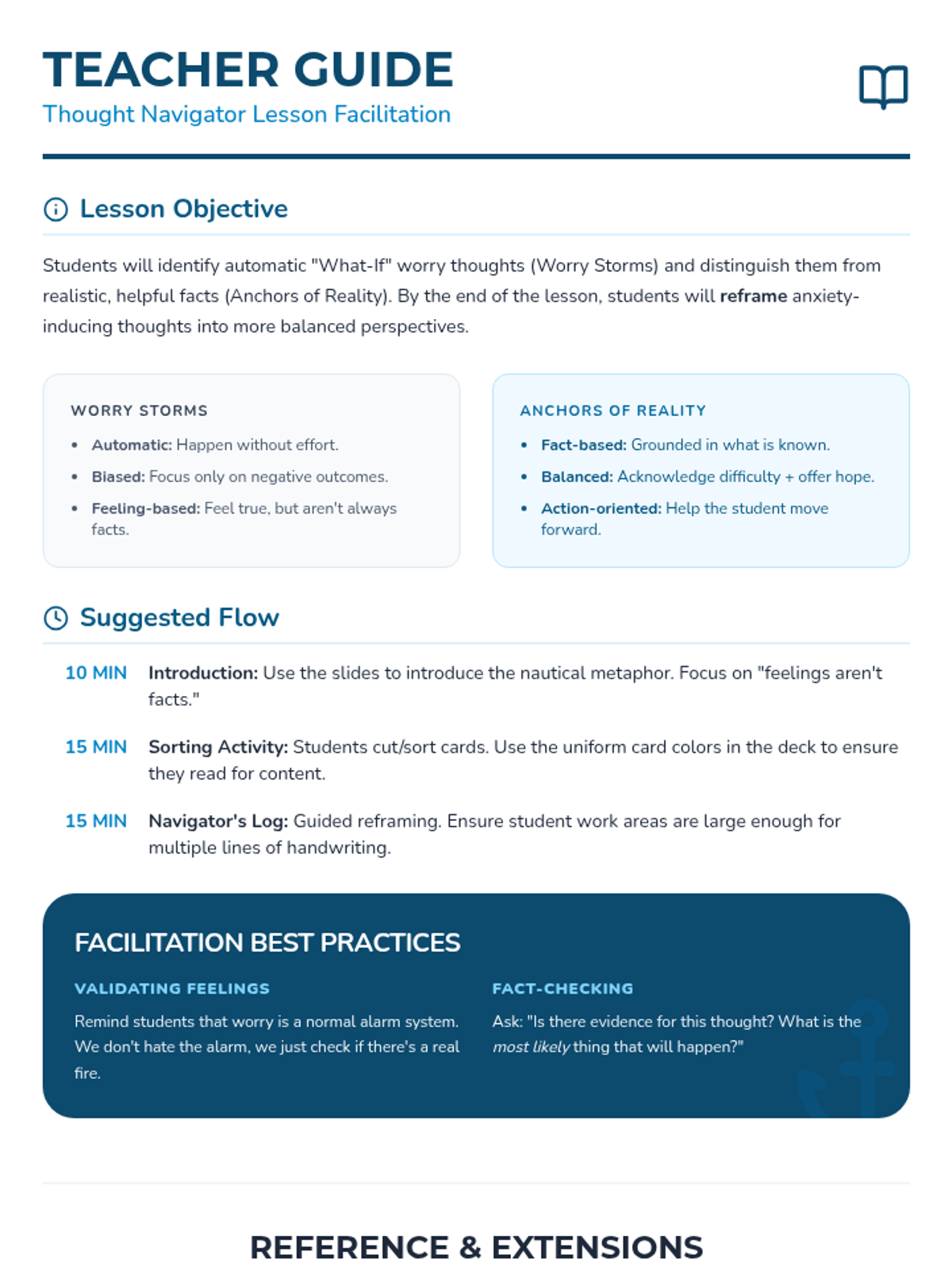
A lesson designed to help students identify automatic "what-if" worry thoughts and replace them with realistic, helpful alternatives using a maritime navigation theme.
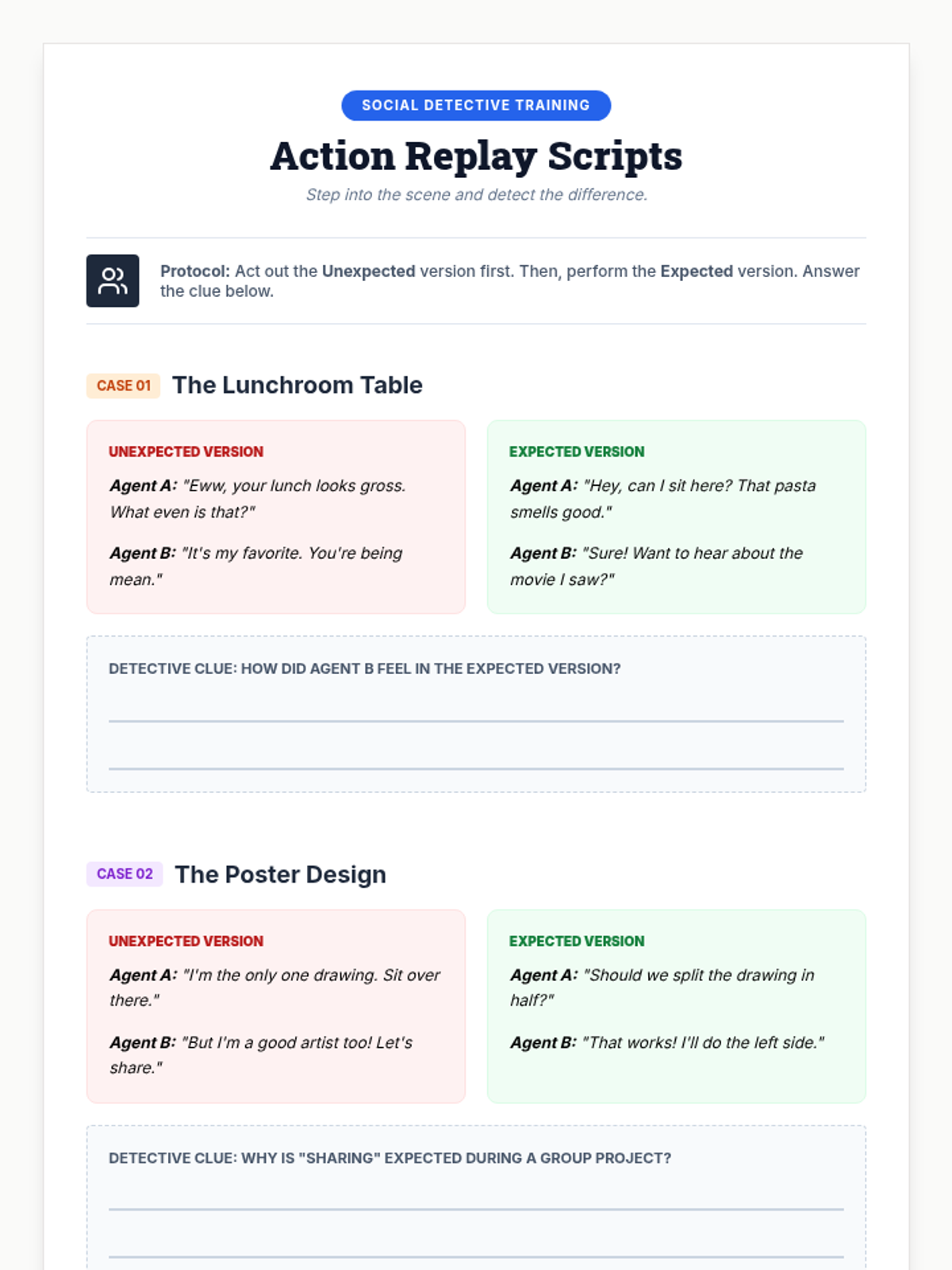
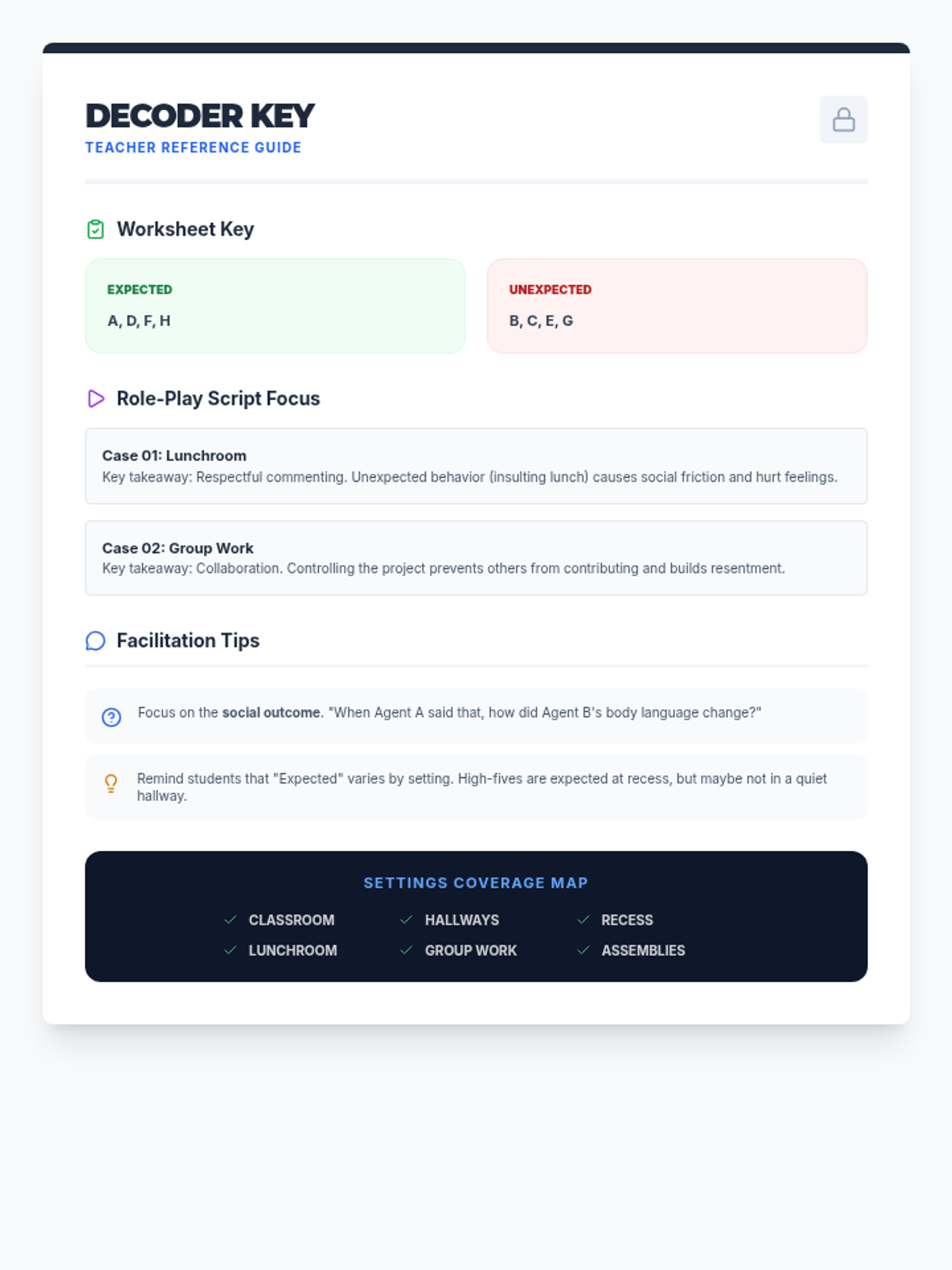
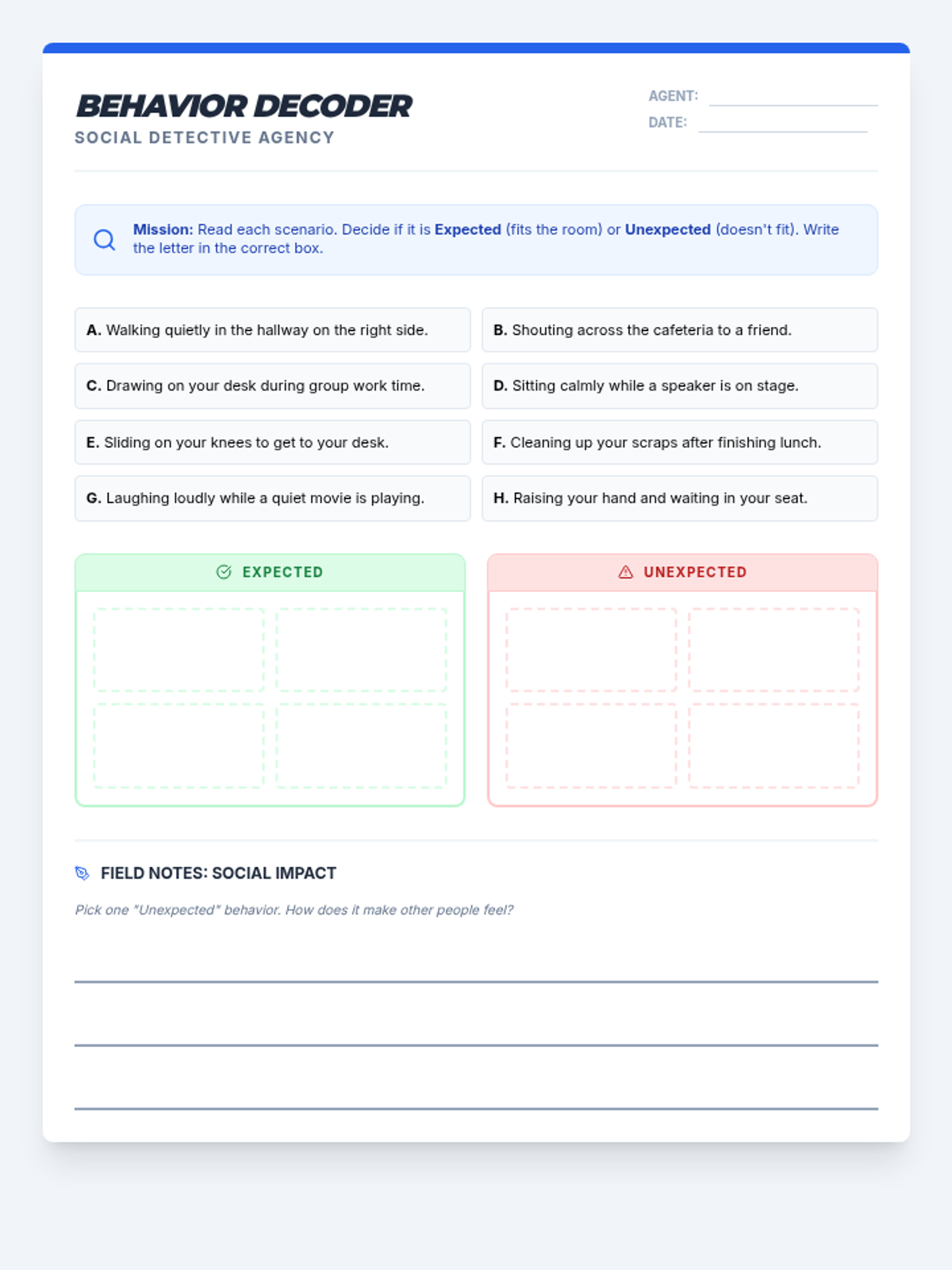
A social-emotional learning lesson where students become 'Social Detectives' to identify expected and unexpected behaviors across various school settings including the classroom, lunchroom, and assemblies.
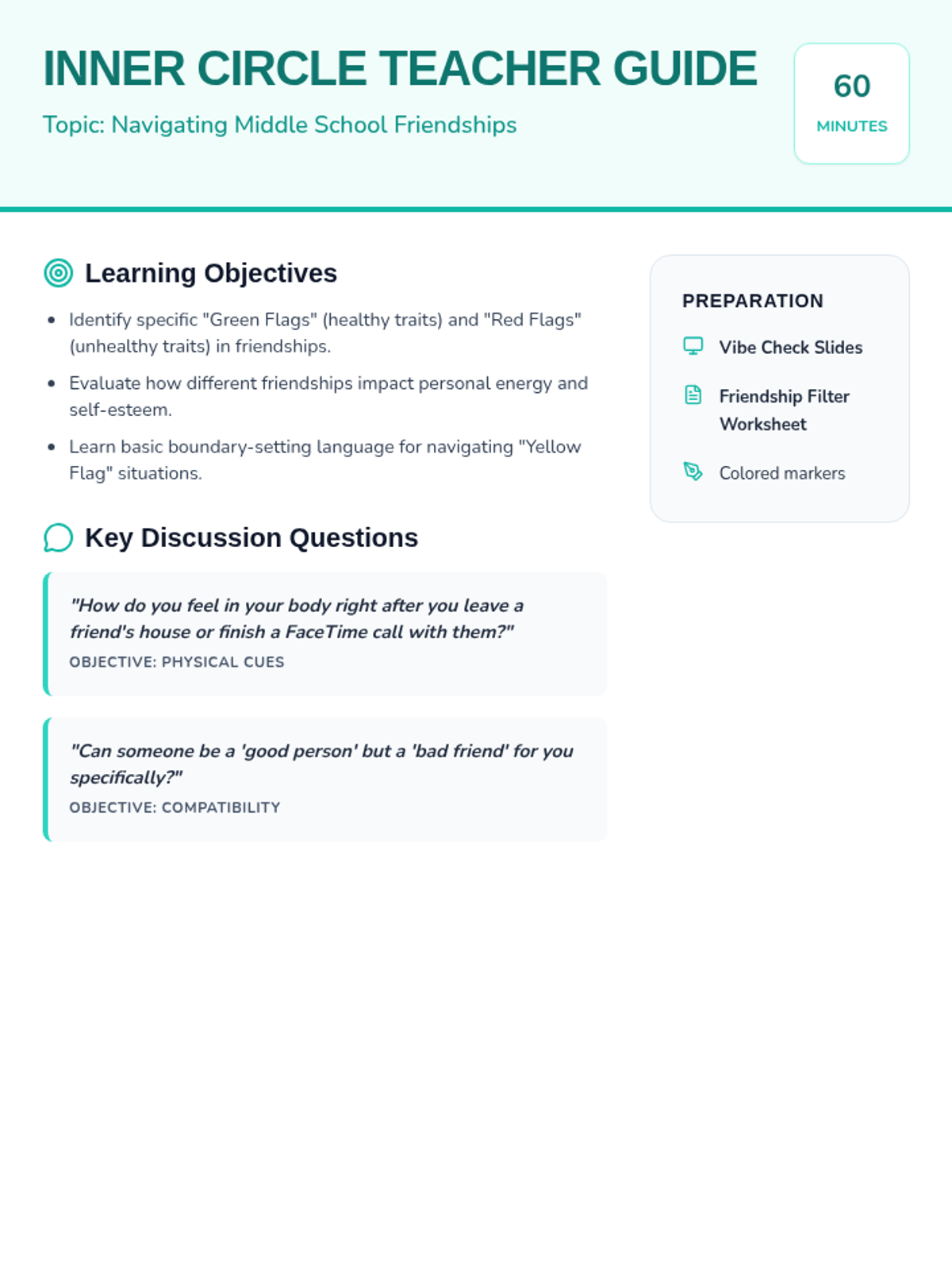
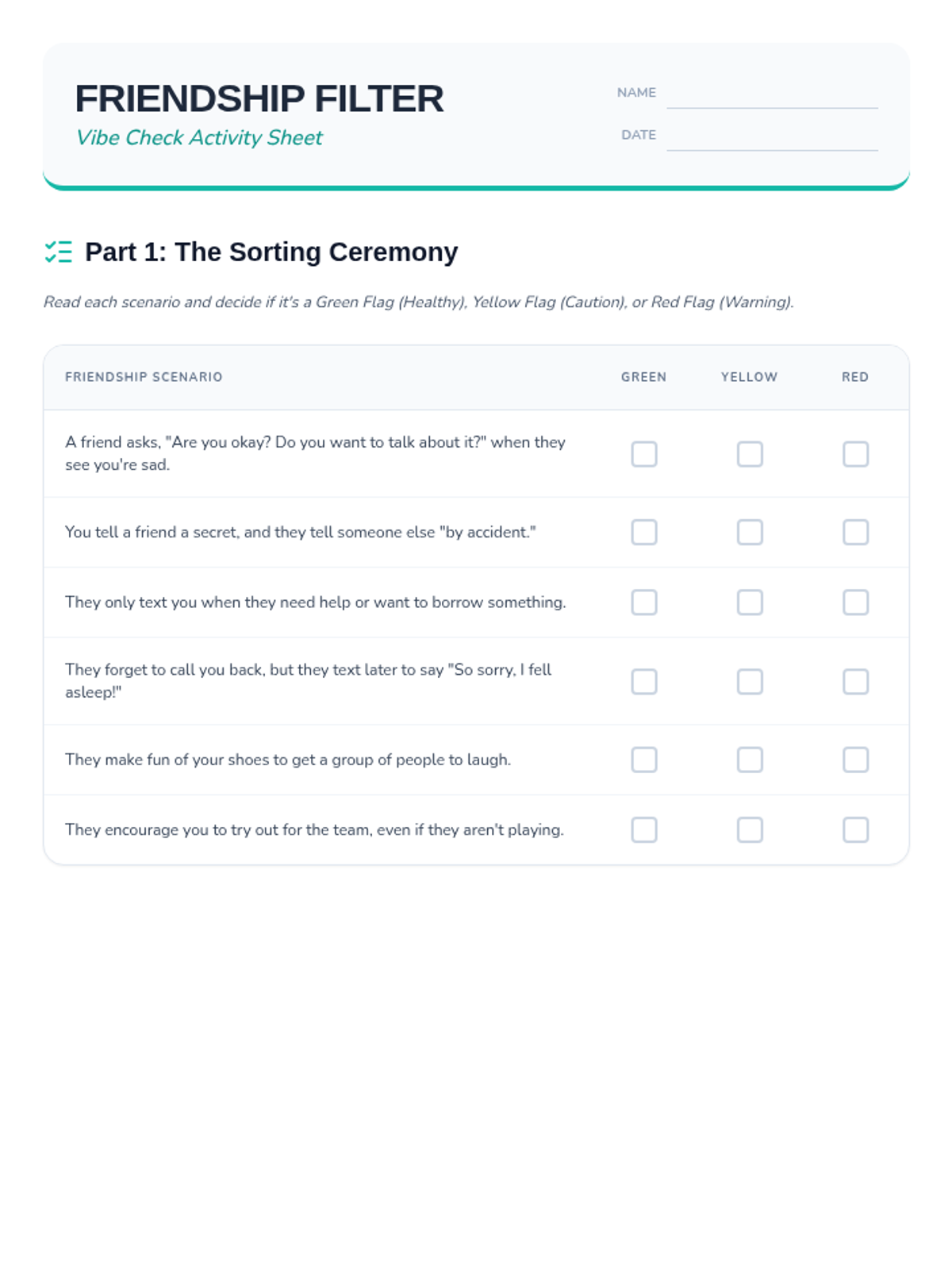
A comprehensive lesson for middle school students on identifying healthy vs. unhealthy friendship traits, focusing on 'green flags' and 'red flags'.
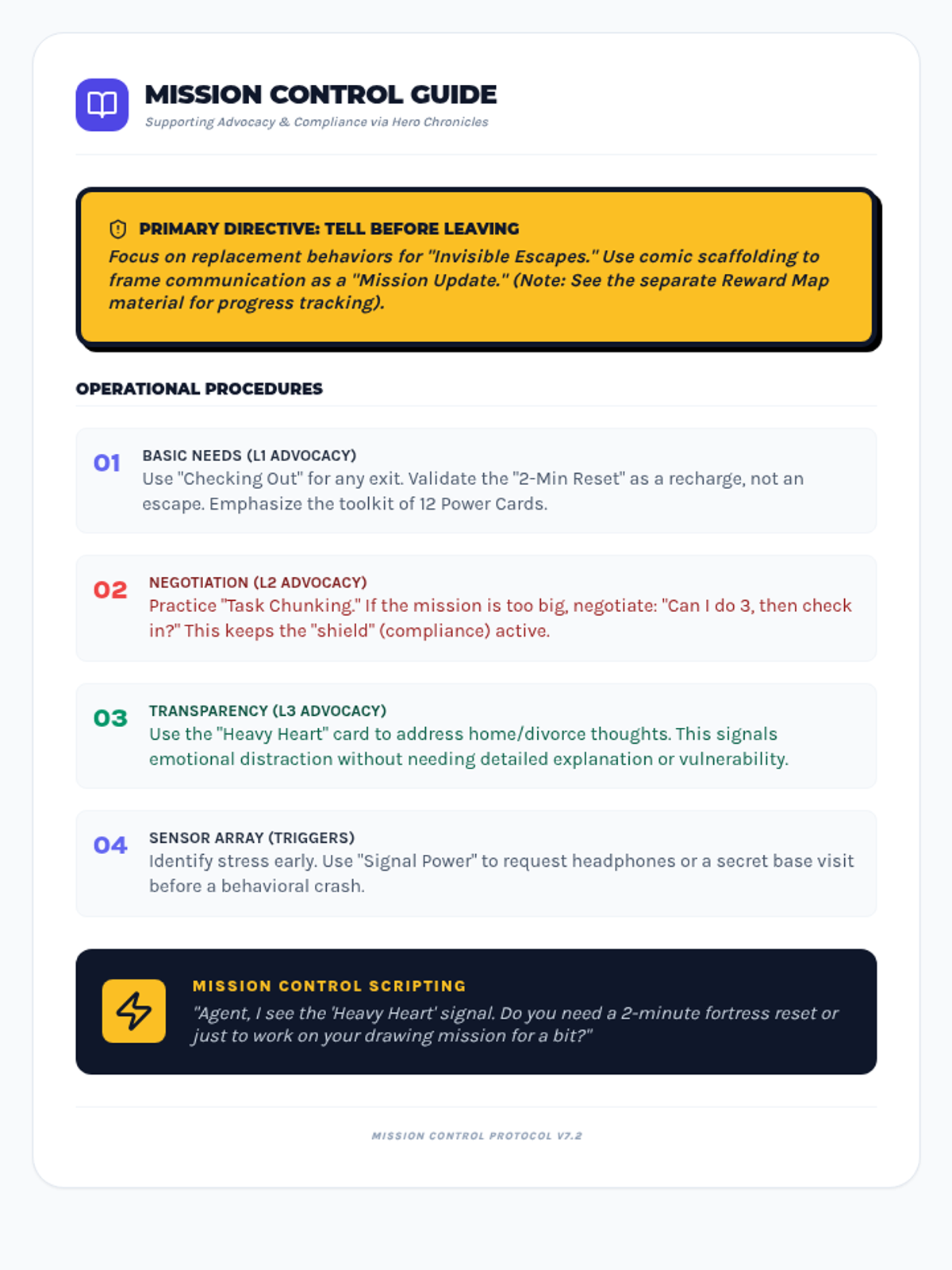
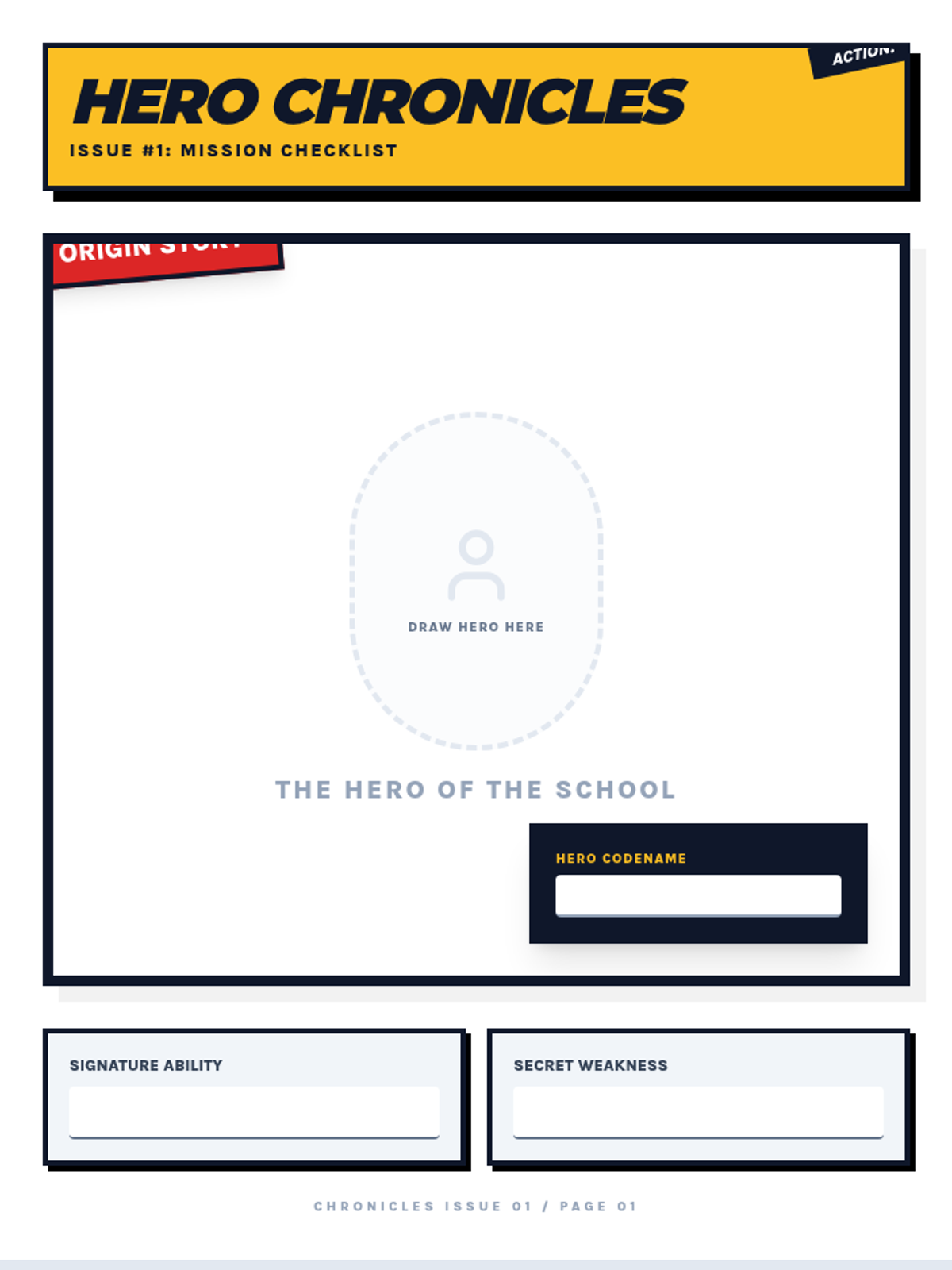
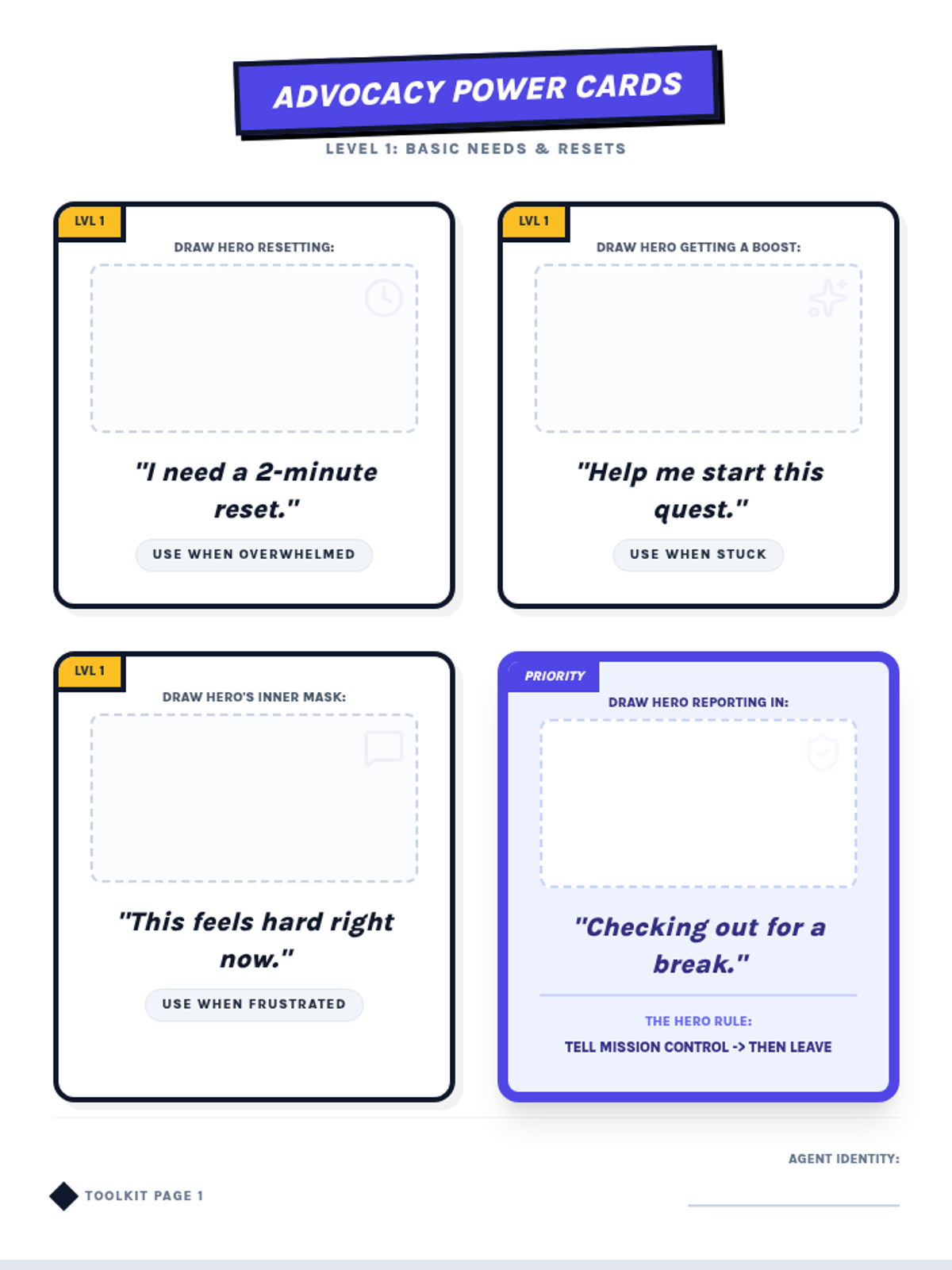
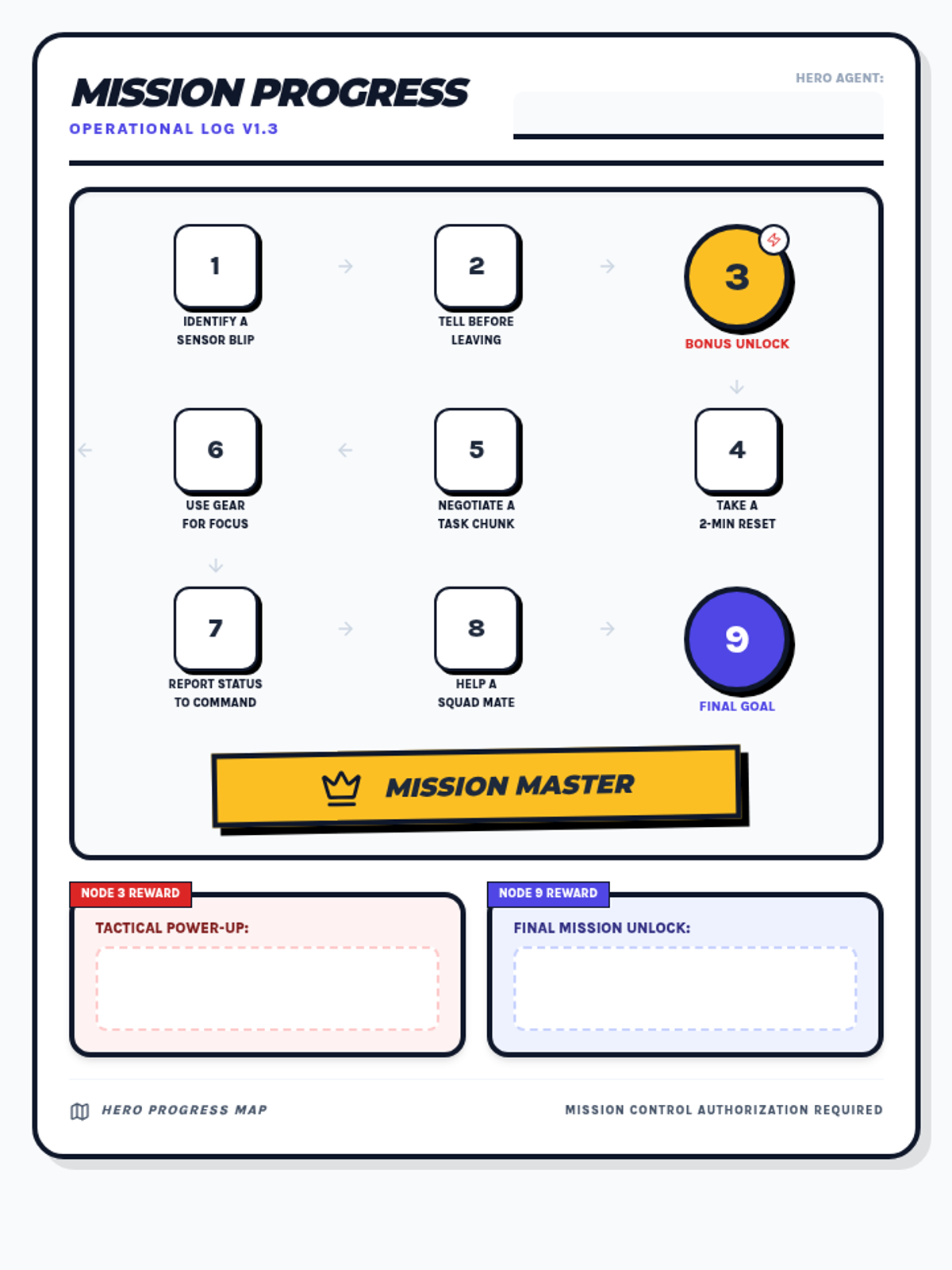
A creative character-design approach to building self-advocacy, task completion, and emotional expression for students who struggle with compliance or sharing feelings.
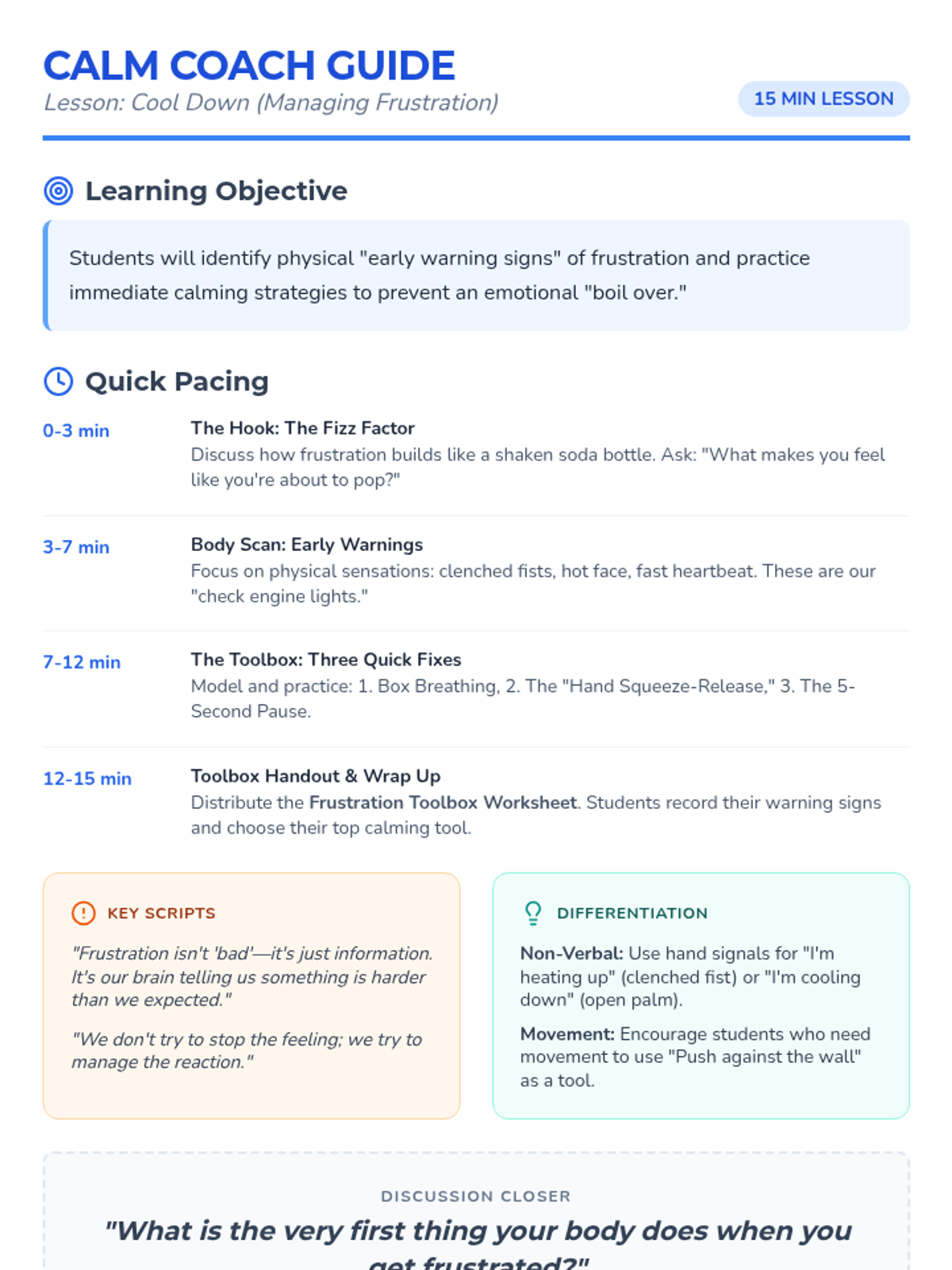
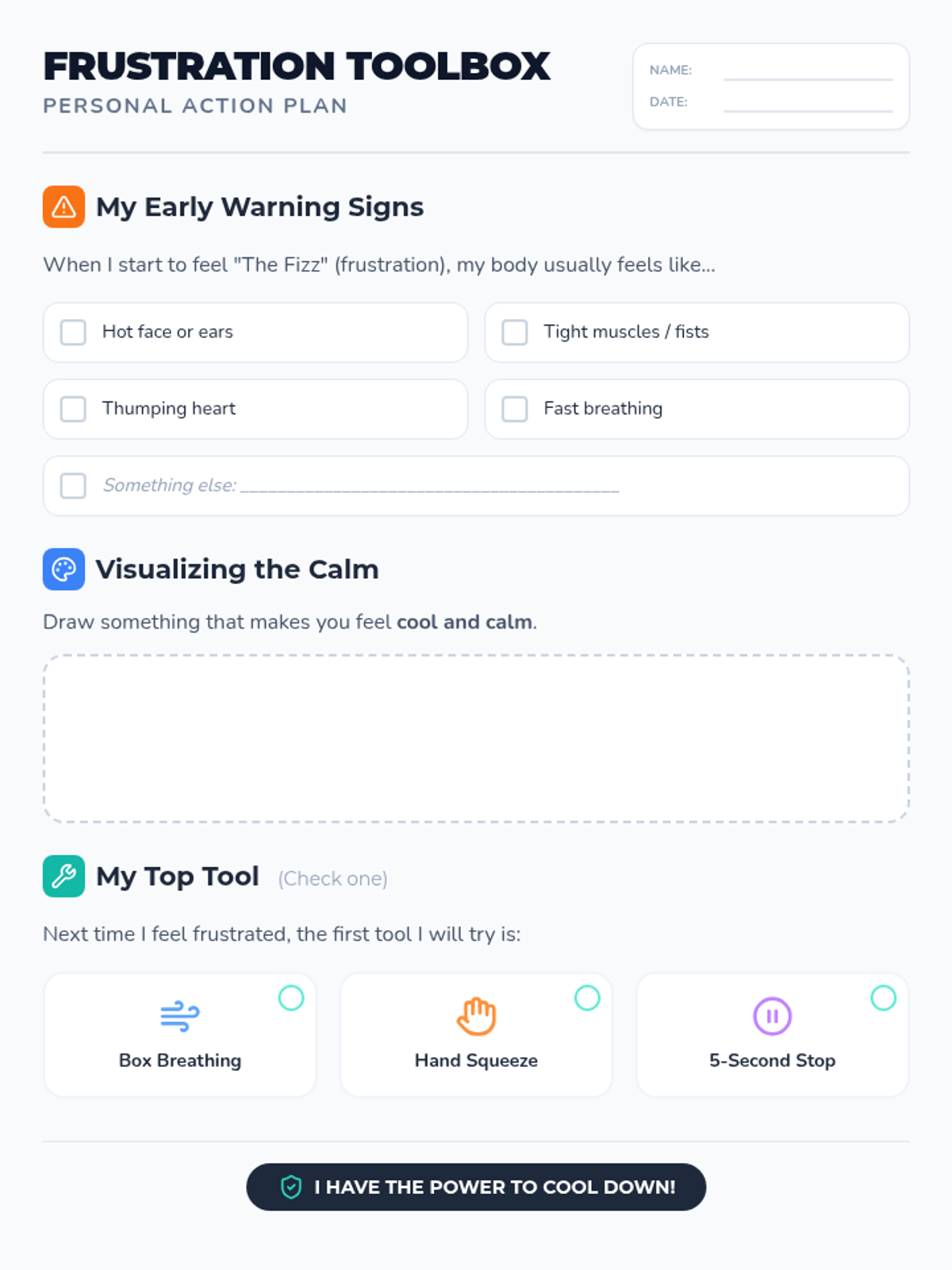
A quick, high-impact 15-minute lesson focused on identifying the physical signs of frustration and implementing immediate 'cool down' strategies. Students learn to recognize their 'boiling point' and build a personal toolbox of calming techniques.
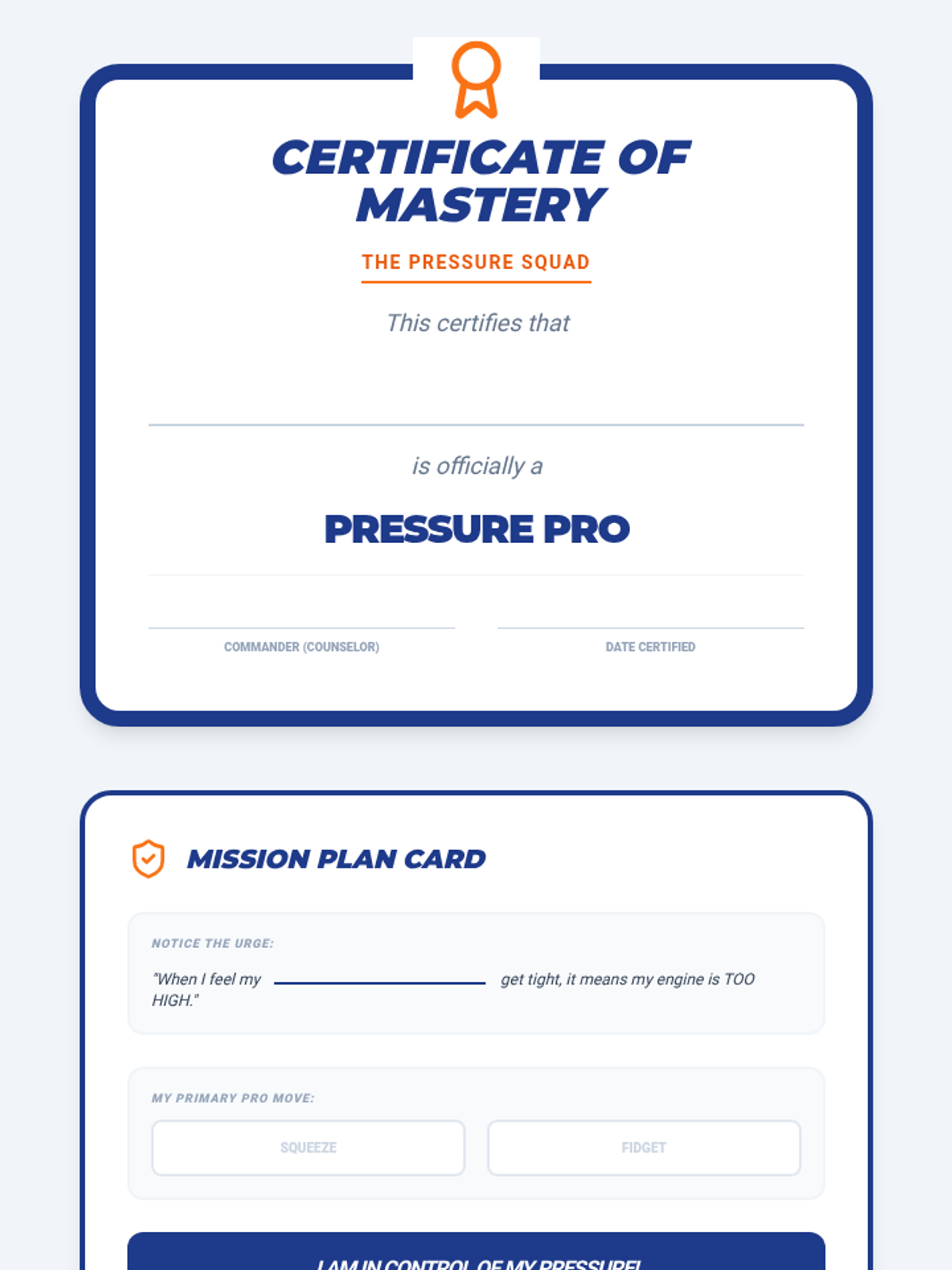
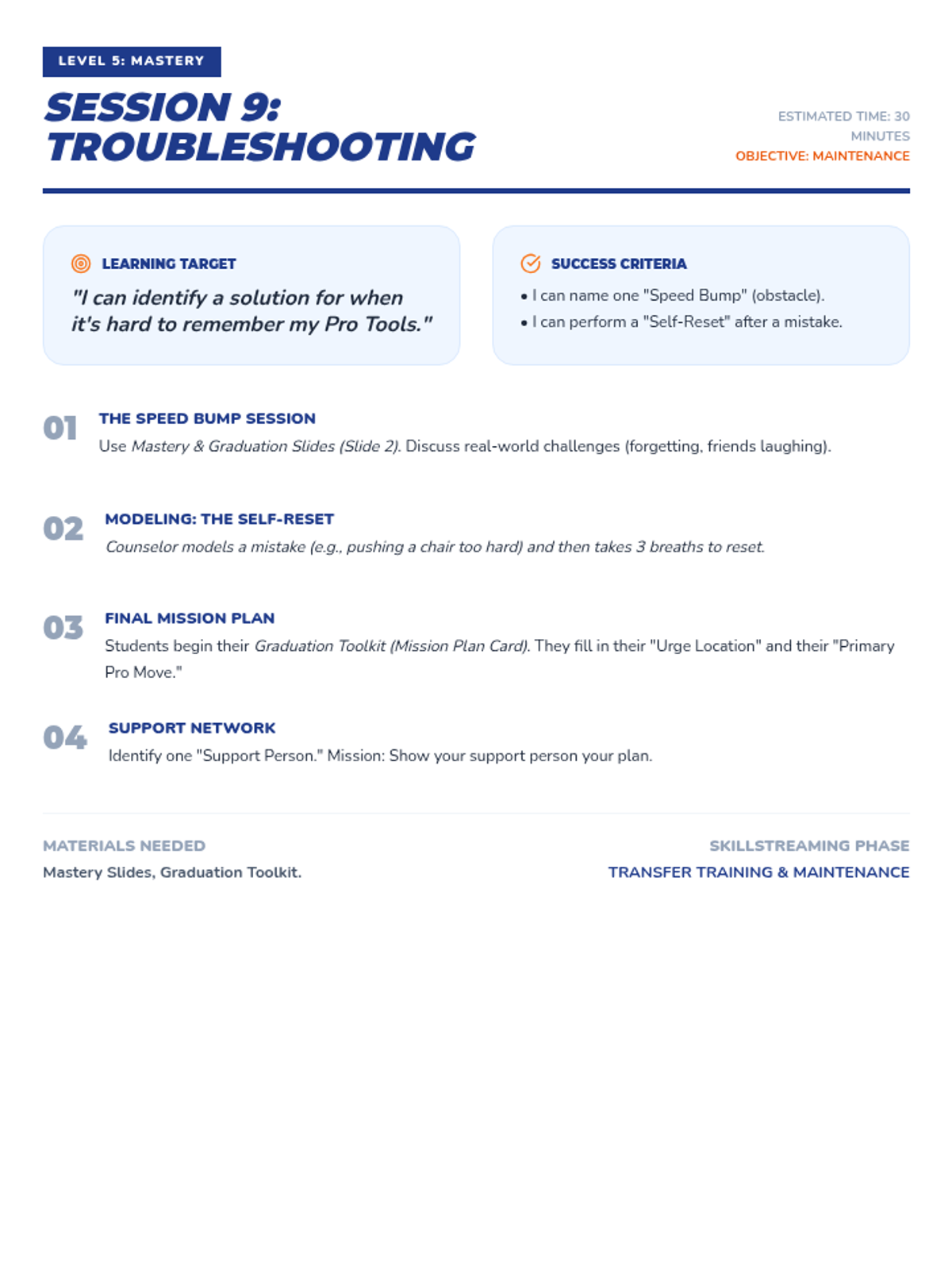
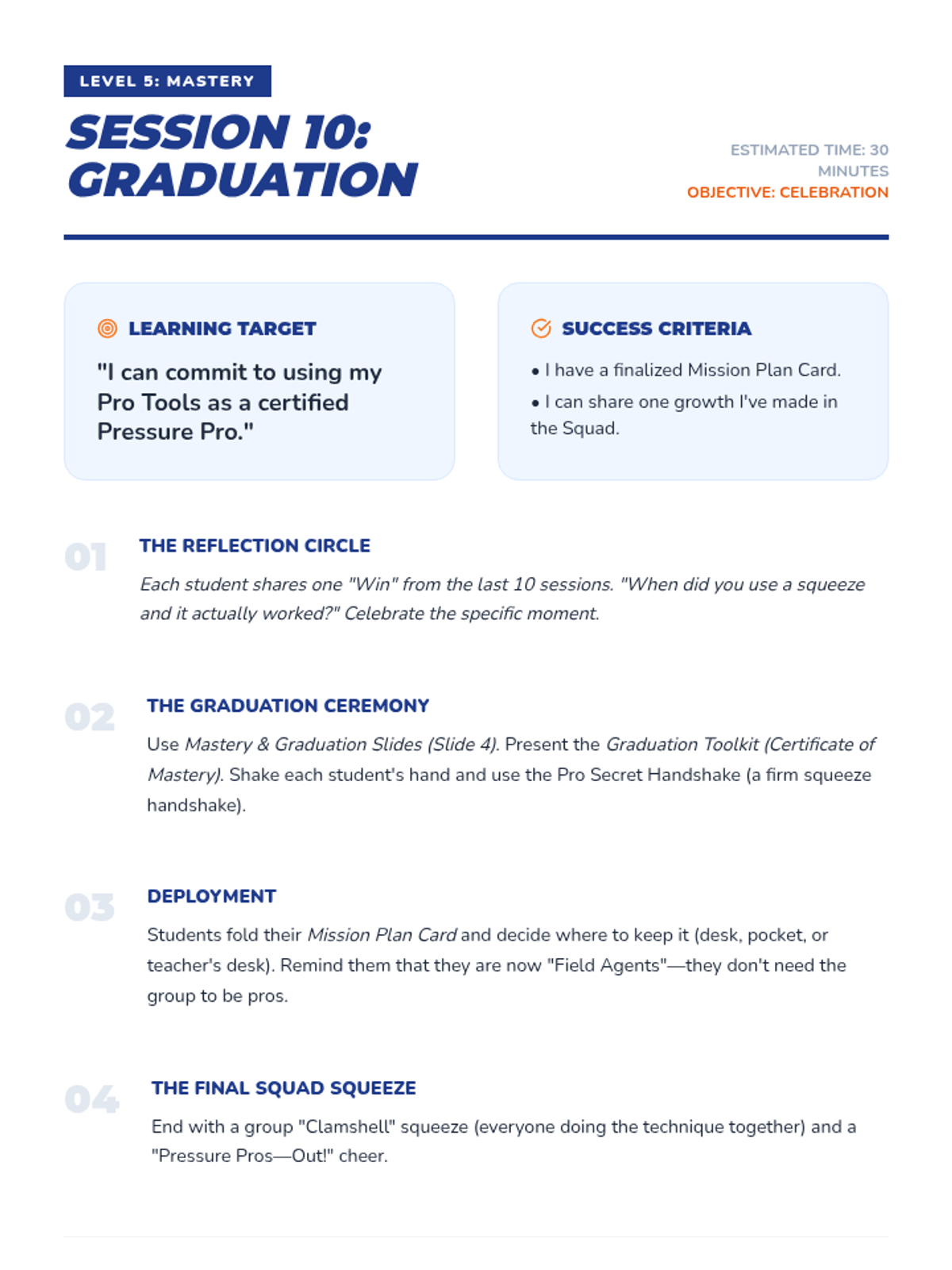
Troubleshooting challenges and finalizing individual regulation plans. Sessions 9 and 10 focus on maintenance, generalization, and graduation.
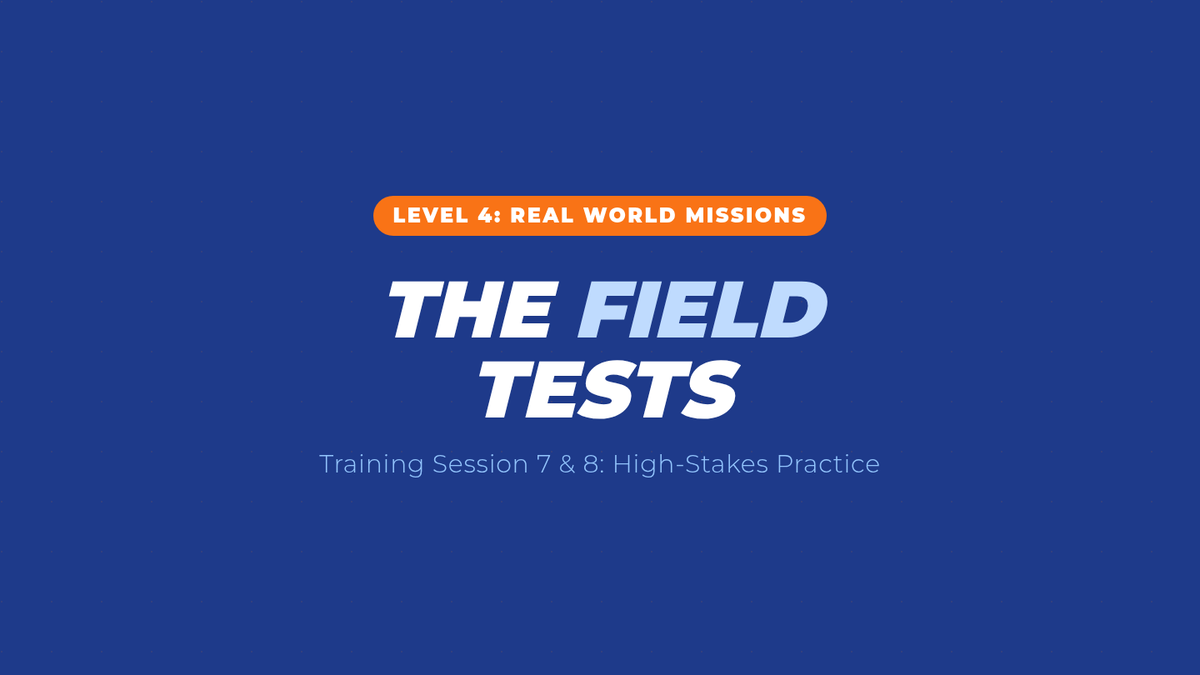
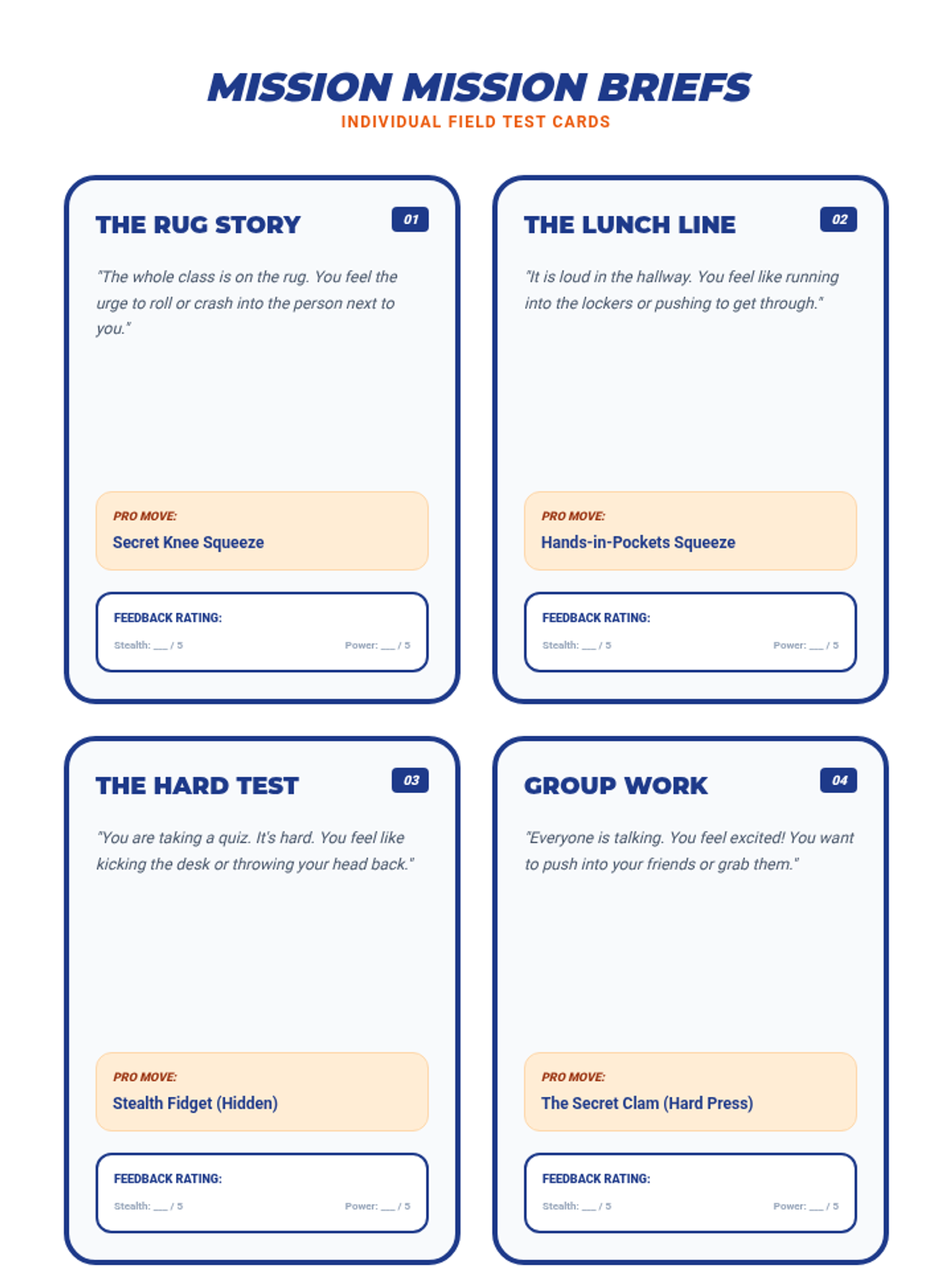
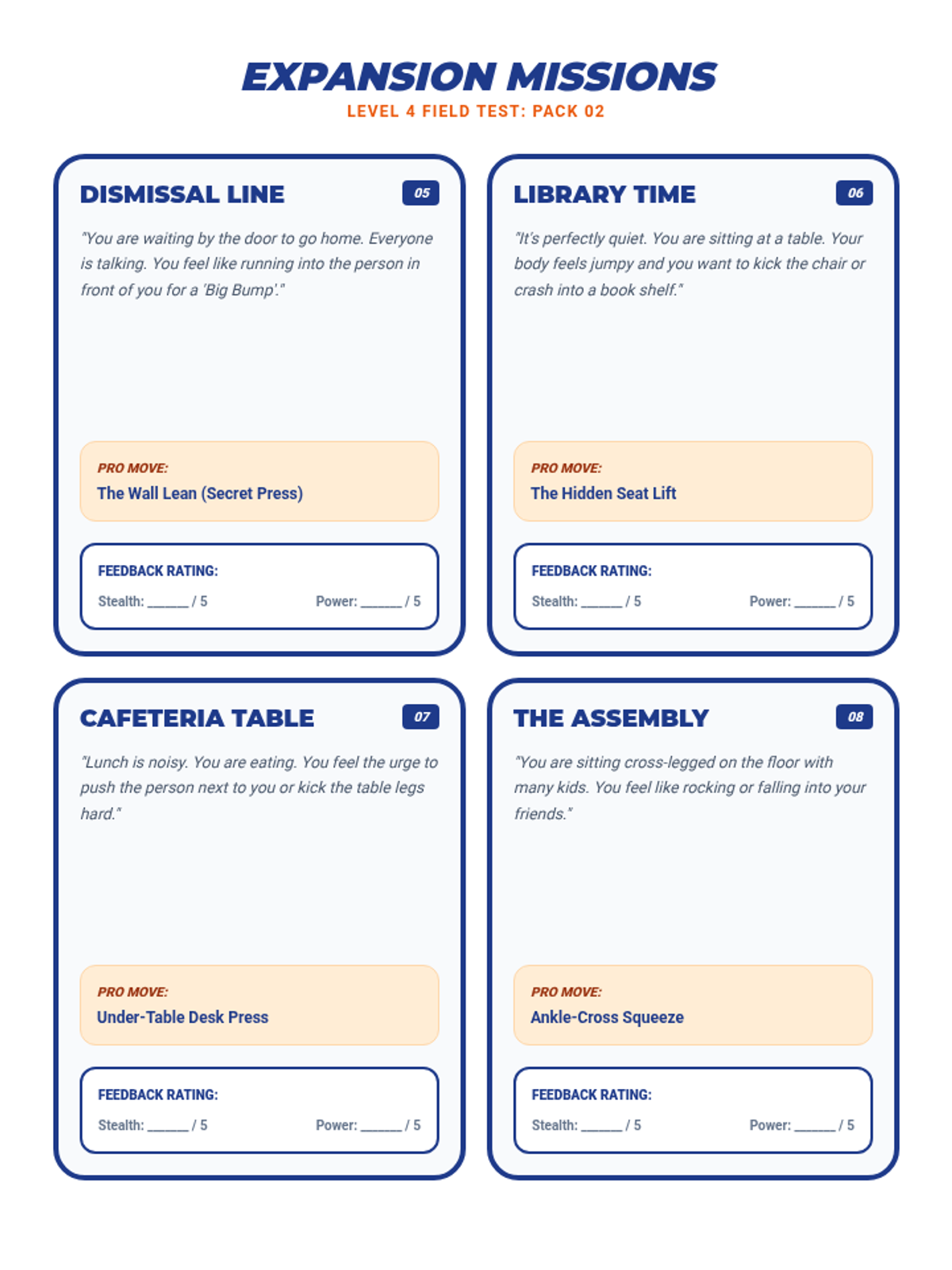
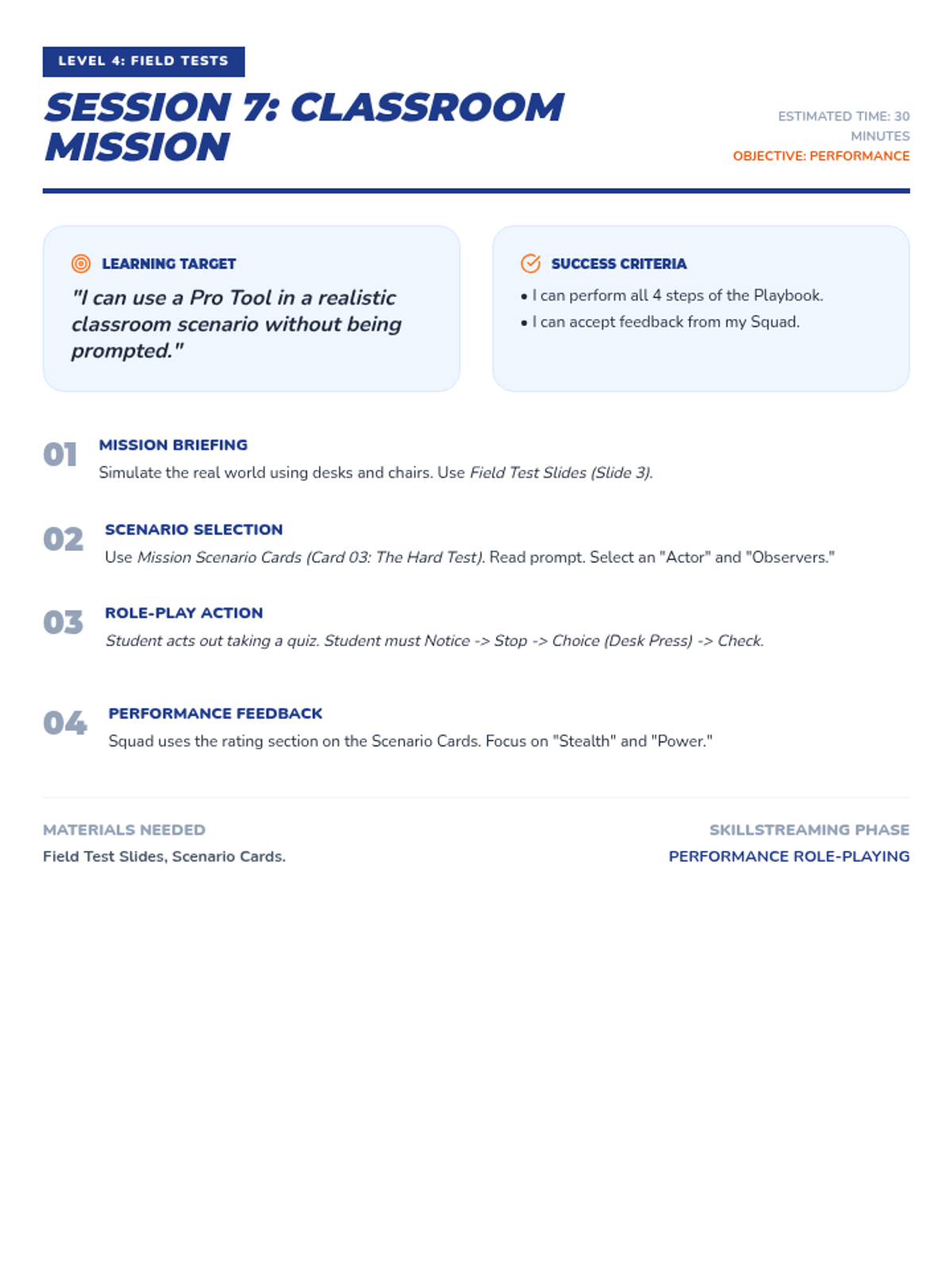
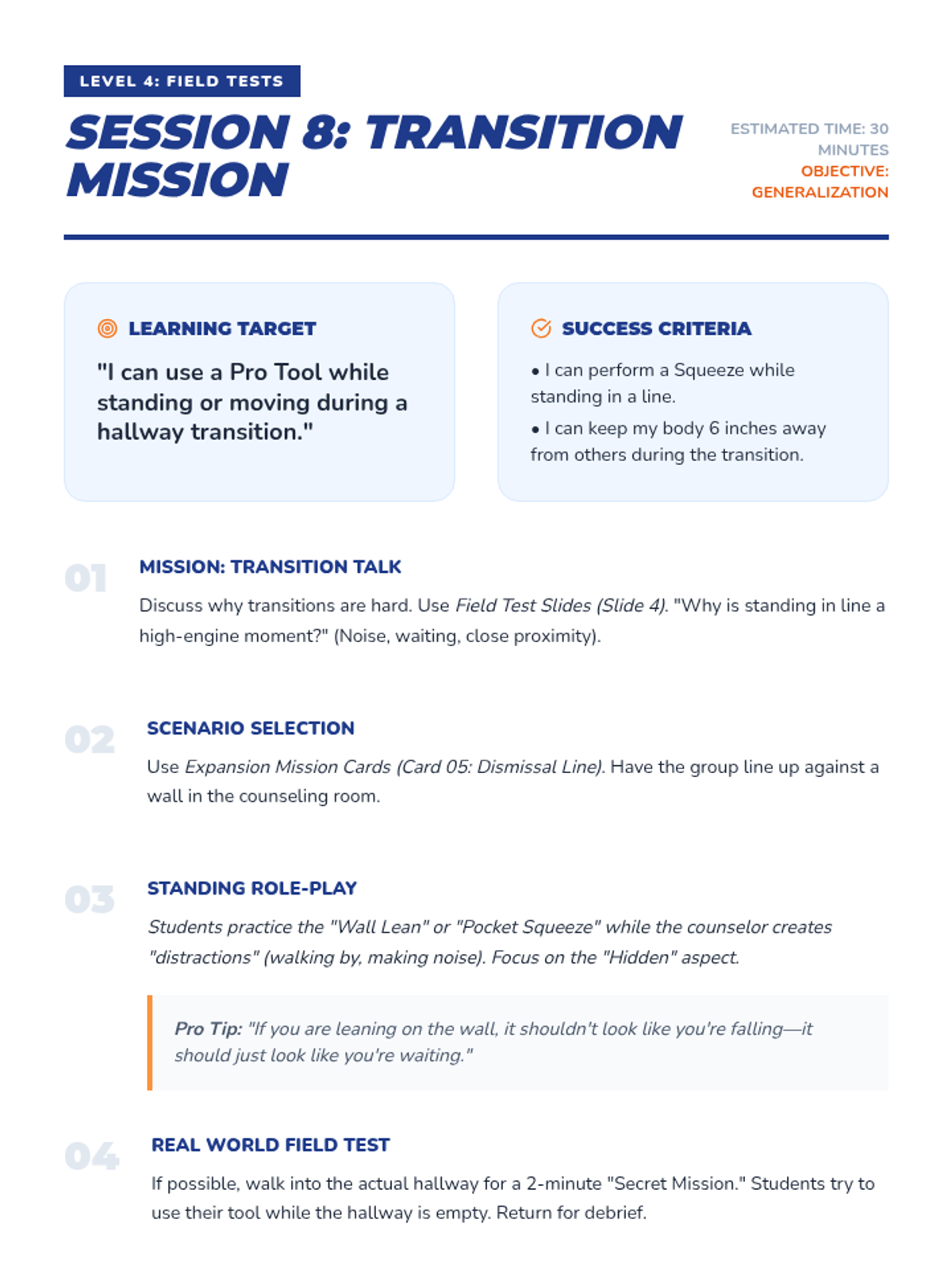
Applying the skills to real-world scenarios through intensive role-playing and performance feedback. Sessions 7 and 8 focus on classroom and transition environments.
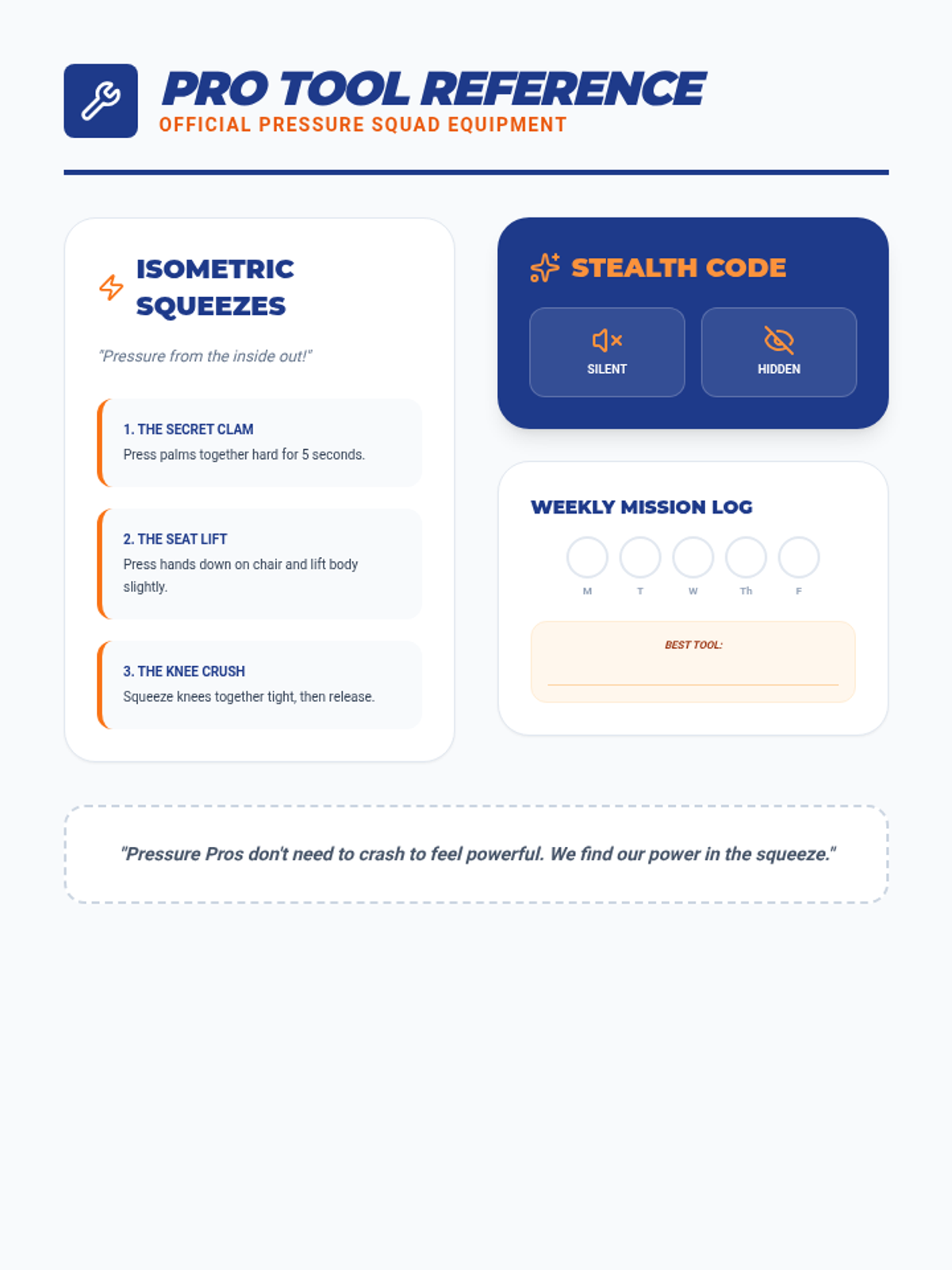
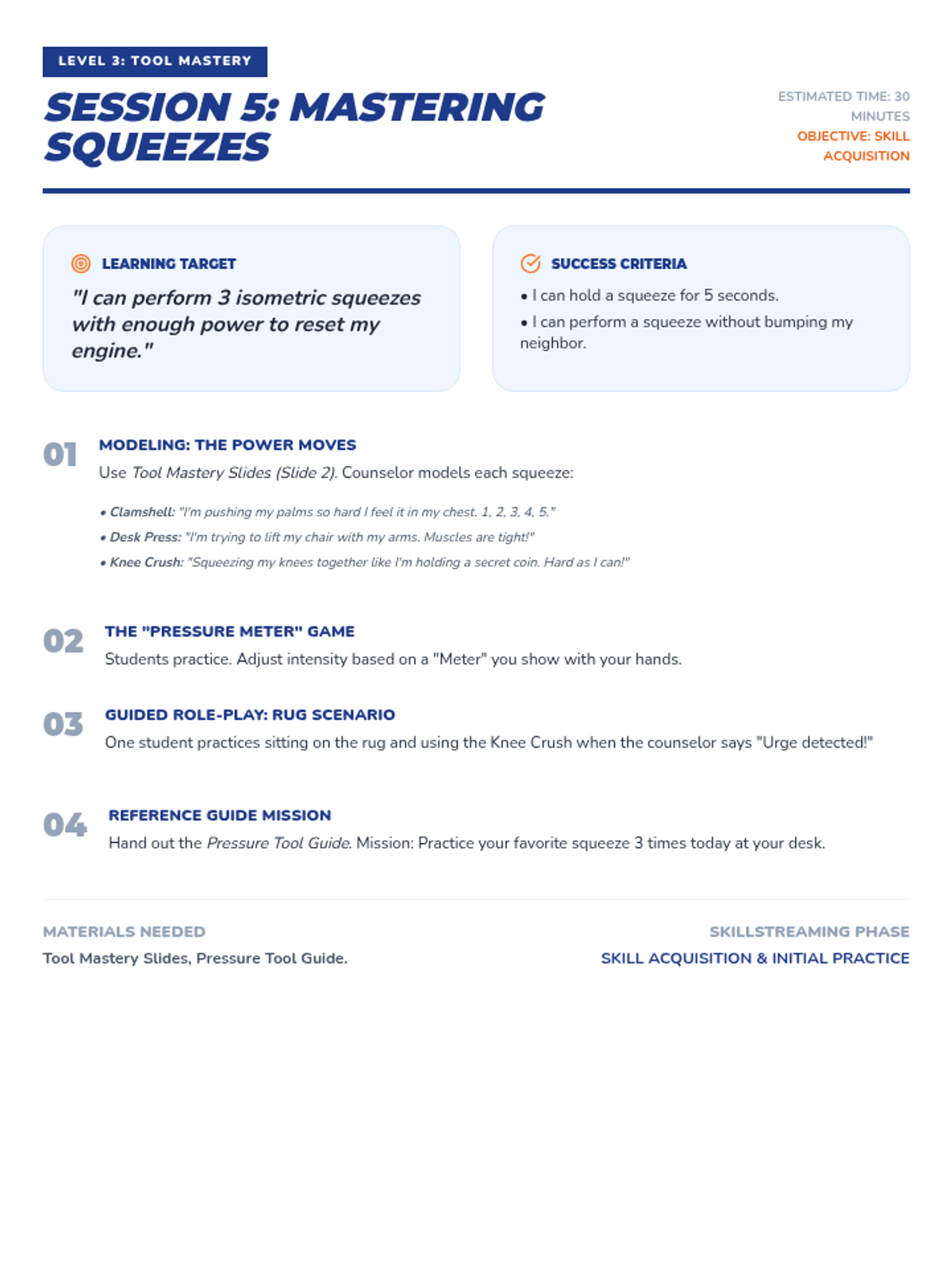
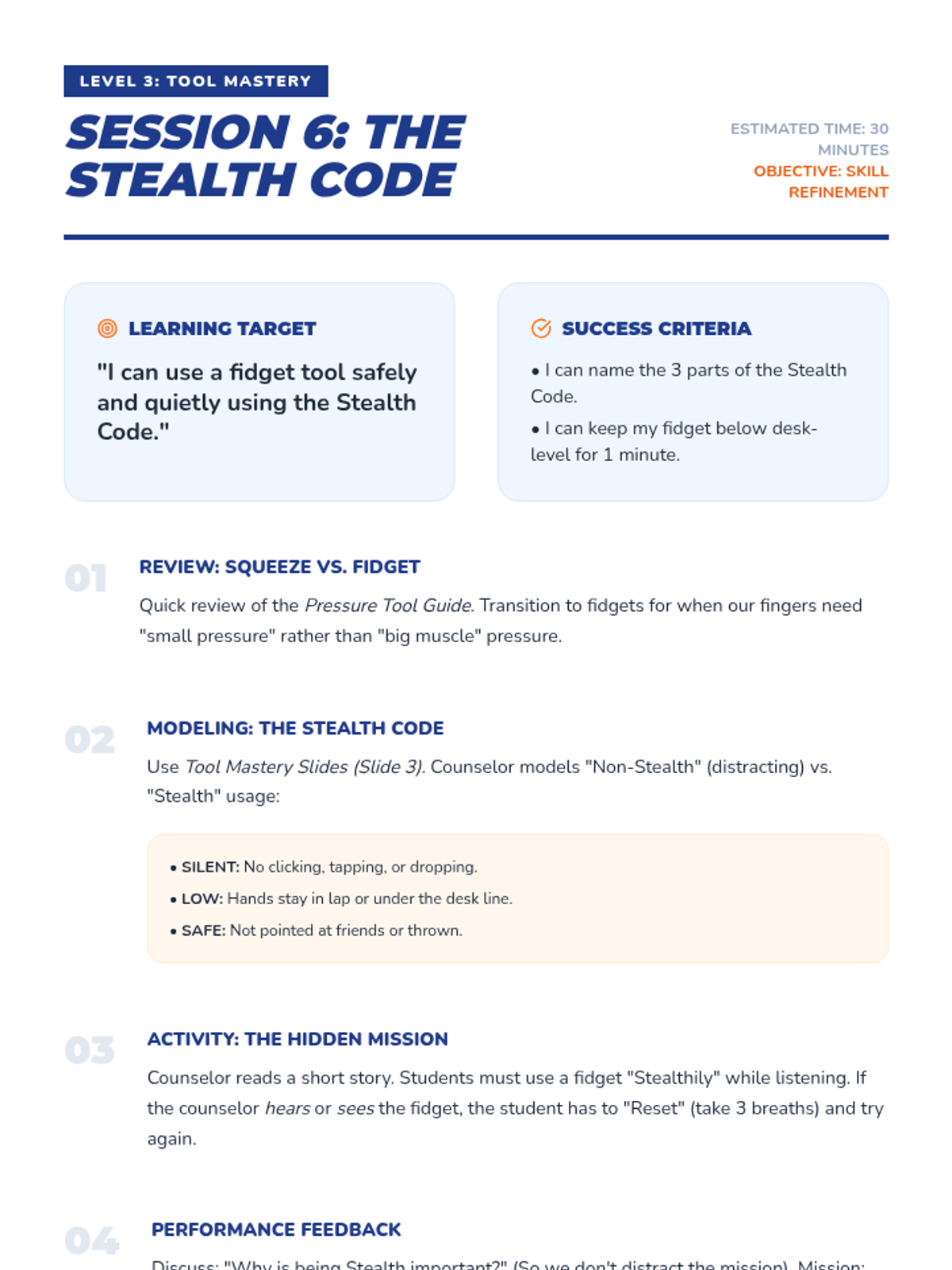
Focused practice on the replacement behaviors: isometric muscle squeezes and appropriate fidget use. Sessions 5 and 6 provide structured modeling and initial role-playing.