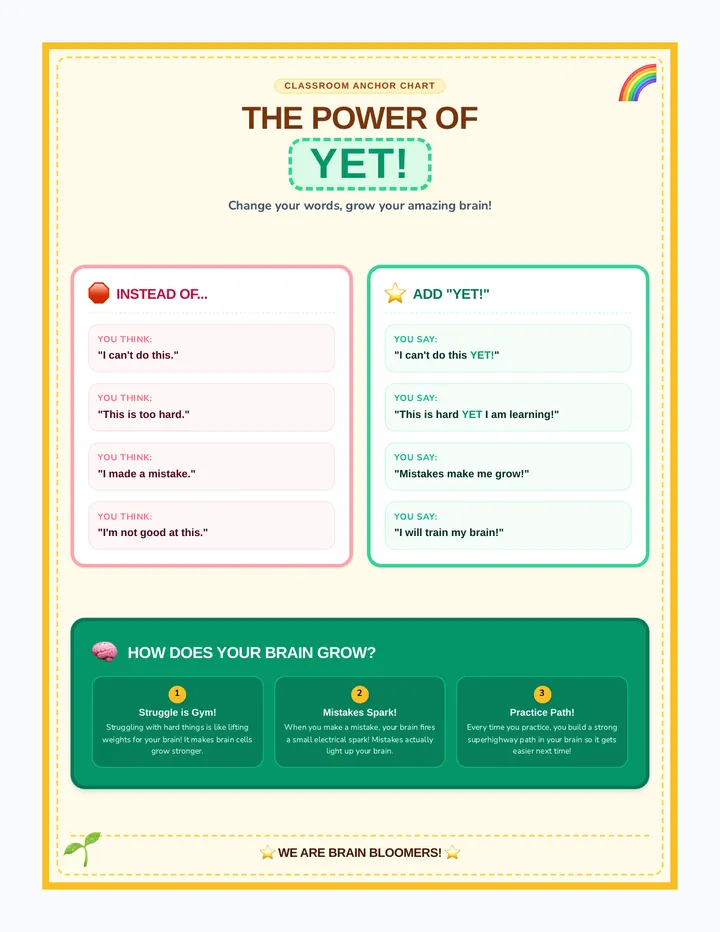
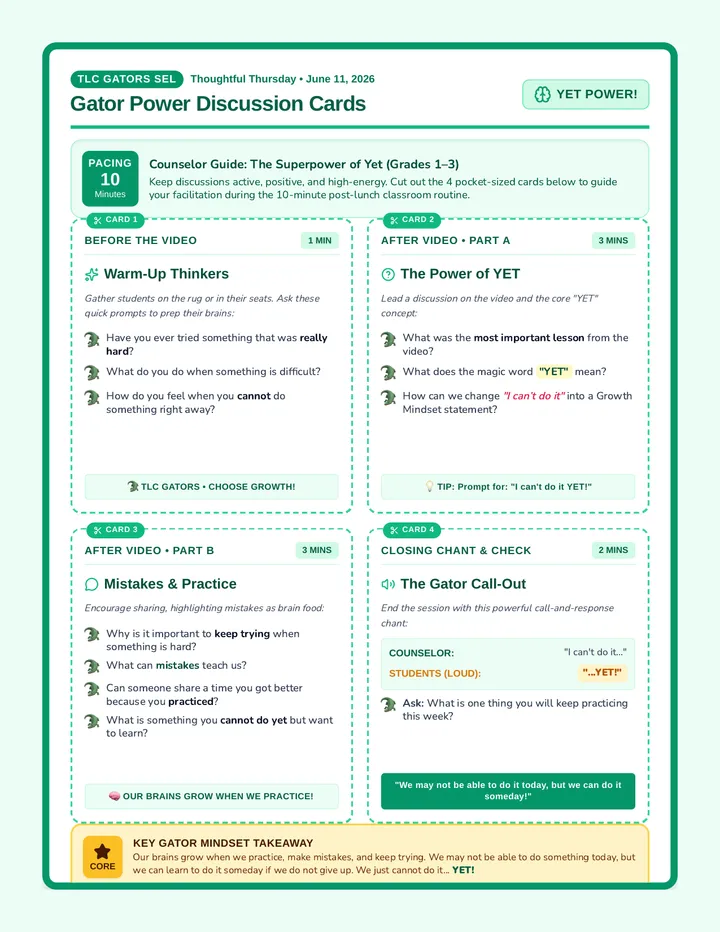
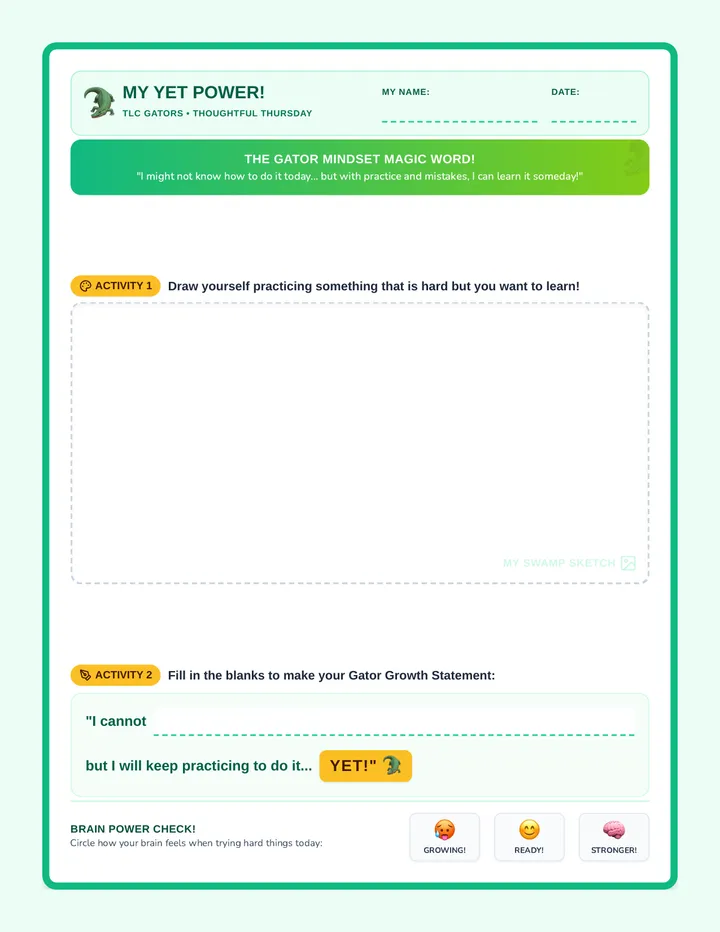
A 10-minute interactive session focused on understanding and practicing assertiveness through the metaphor of a 'Voice Studio'. Students learn to distinguish between passive, aggressive, and assertive communication styles.
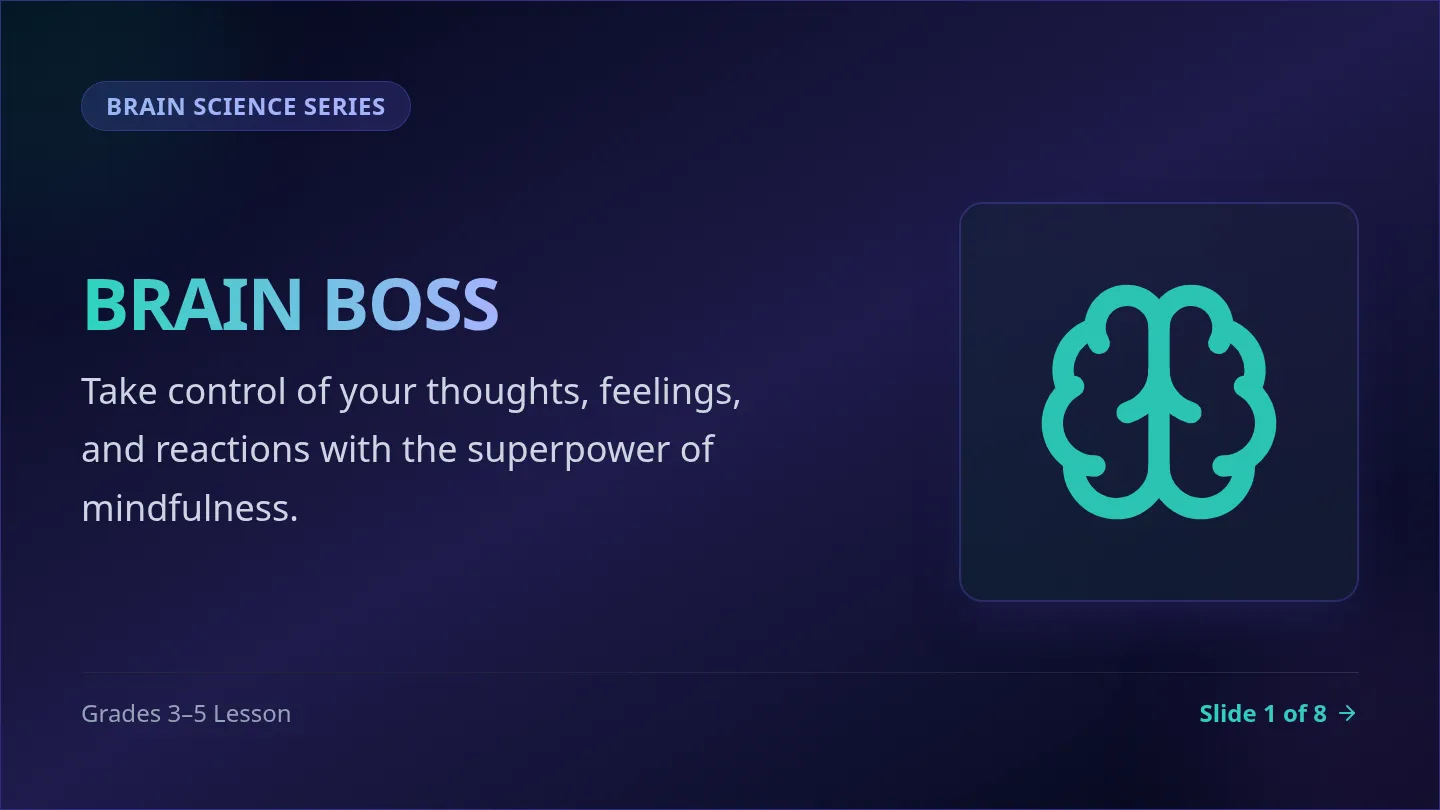
Troubleshooting challenges and finalizing individual regulation plans. Sessions 9 and 10 focus on maintenance, generalization, and graduation.
Applying the skills to real-world scenarios through intensive role-playing and performance feedback. Sessions 7 and 8 focus on classroom and transition environments.
Focused practice on the replacement behaviors: isometric muscle squeezes and appropriate fidget use. Sessions 5 and 6 provide structured modeling and initial role-playing.
Introduction of the specific SkillStreaming steps for self-regulation and selecting functionally equivalent replacement behaviors. Sessions 3 and 4 focus on the 'Stop Signal' and 'Pro Choice'.
Introduction to the sensory seeking behaviors and building awareness of the internal 'urge' to crash or push. Sessions 1 and 2 focus on defining the group purpose and identifying body signals.
An interactive lesson teaching 4th graders the difference between bystanders and upstanders through 'Defender Academy' training scenarios and actionable strategies.
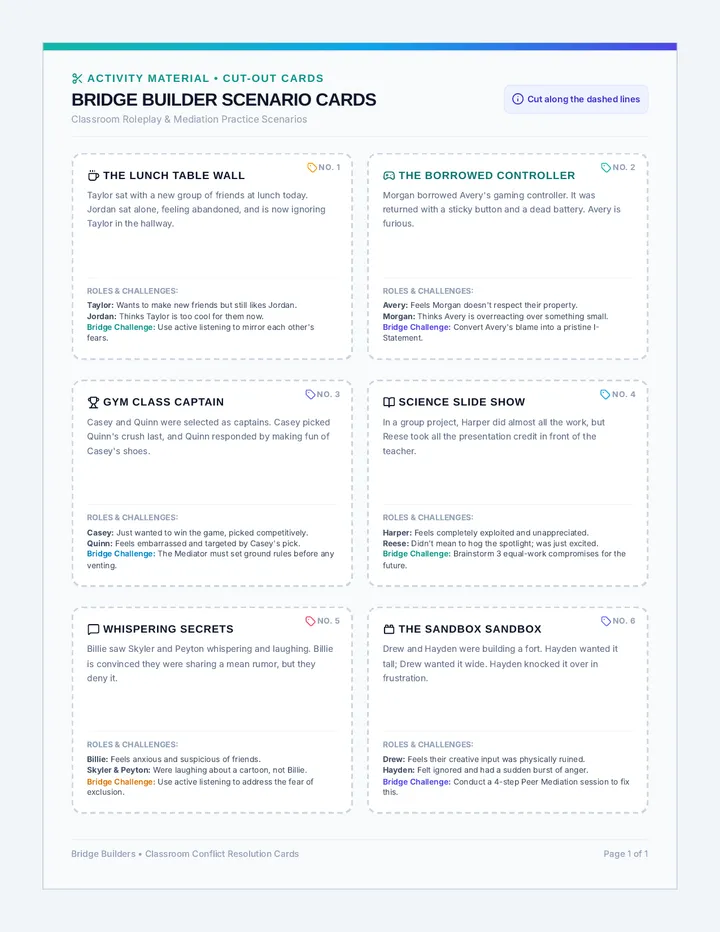
A marine-themed lesson for second graders focusing on respect for adults and using kind words with peers through interactive scenarios and a sorting activity.
Session 10 applies the full skill to a social/emotional trigger and celebrates mastery.
Session 9 applies the full skill to an academic trigger (difficult work).
Session 8 integrates all 6 steps into a single continuous behavioral flow with guided practice.
Session 7 focuses on the final step: the "clean comeback" and returning to tasks independently.
Session 6 focuses on step 5: selecting and using a calming tool from the toolkit.
Session 5 focuses on steps 3 and 4: determining problem size and naming the emotion.
Session 4 focuses on the first two steps of the Pause Power framework: walking to the spot and taking 5 breaths.
Session 3 introduces the functional replacement behavior: using a physical break card to initiate a regulation break.
Session 2 focuses on identifying internal physical cues that indicate a meltdown is starting.
The first session of the Pause Power intervention focused on identifying personal "hot buttons" and introducing the bird mascot.