Students synthesize their claims, reasons, and evidence into a cohesive paragraph. The lesson introduces a graphic organizer to structure the flow of writing and emphasizes a strong concluding sentence.
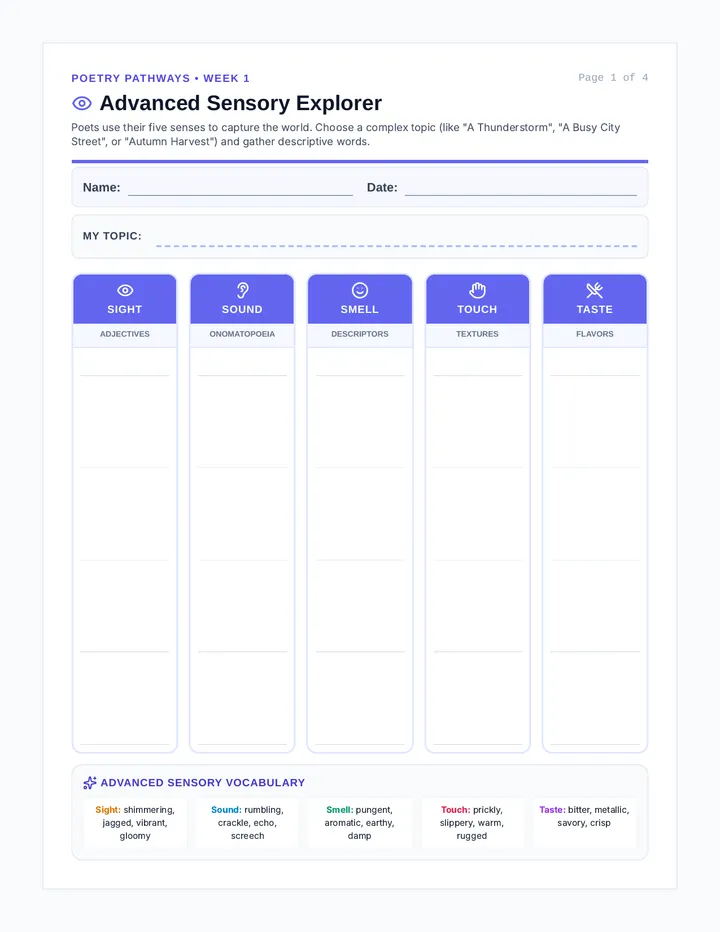
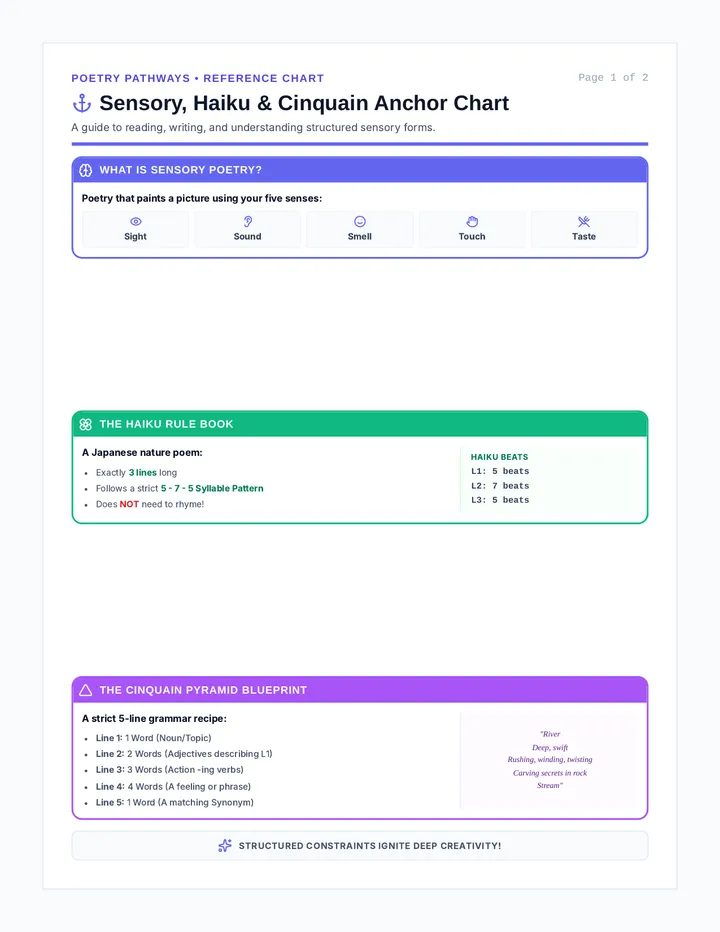
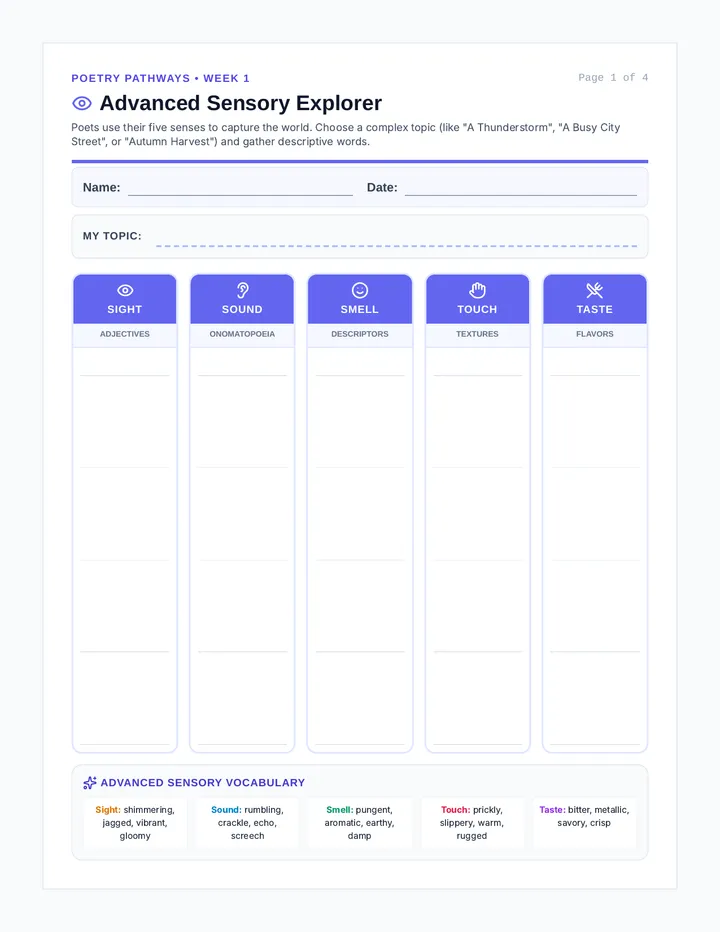
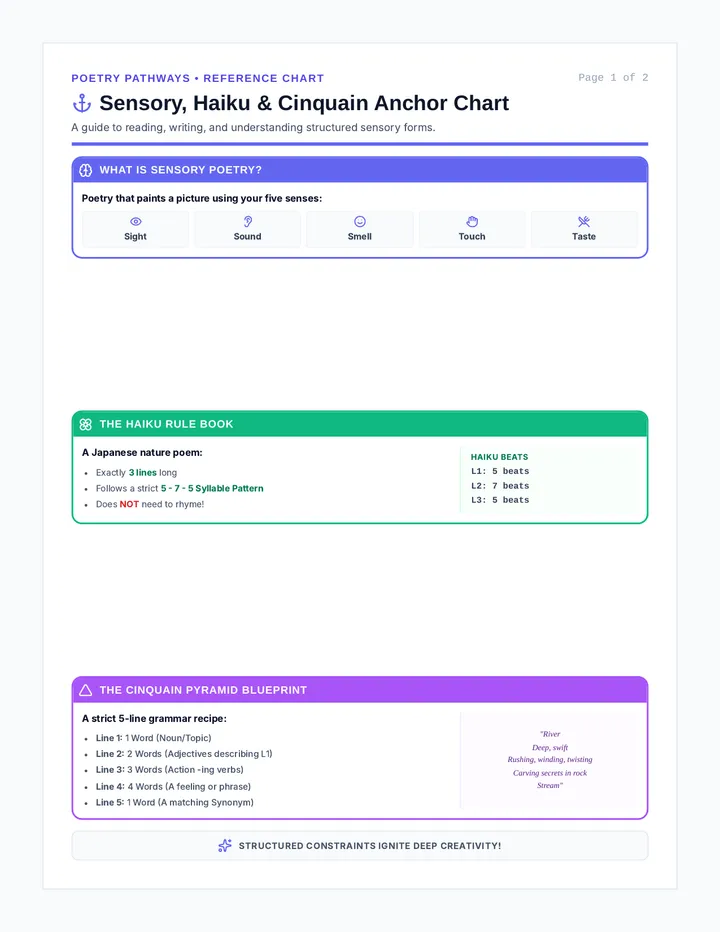
A comprehensive 4-week poetry curriculum designed for students requiring high structure and visual supports. It covers diverse poetry types (Haiku, Color, Acrostic, Couplets, Concrete, Free Verse, and Metaphor/Simile) with scaffolds like word banks, sentence frames, and graphic organizers.
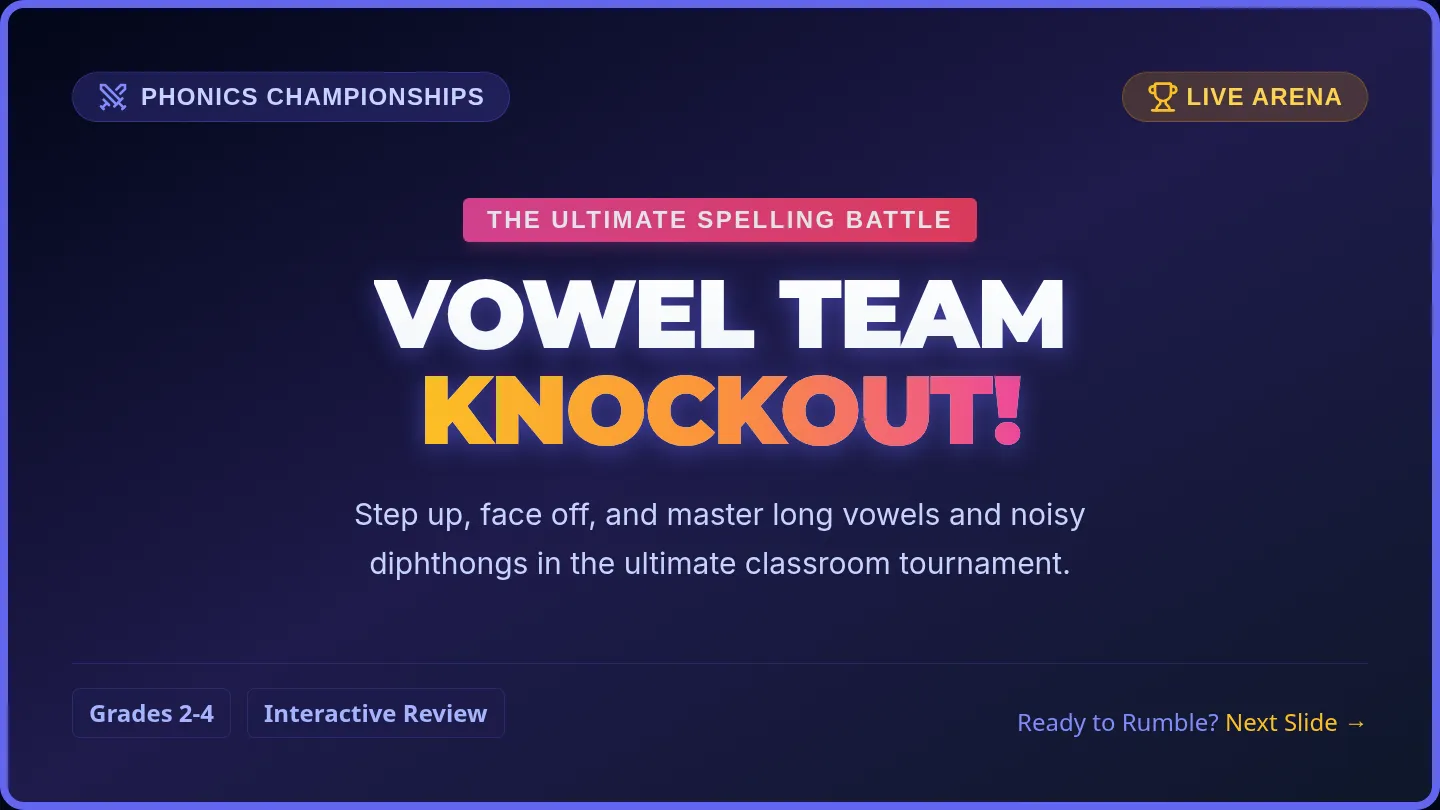
An energetic classroom phonics lesson where students compete in a friendly Knockout tournament to master vowel teams and diphthongs. Includes interactive instructional and gameplay slides, plus a student tracking sheet.
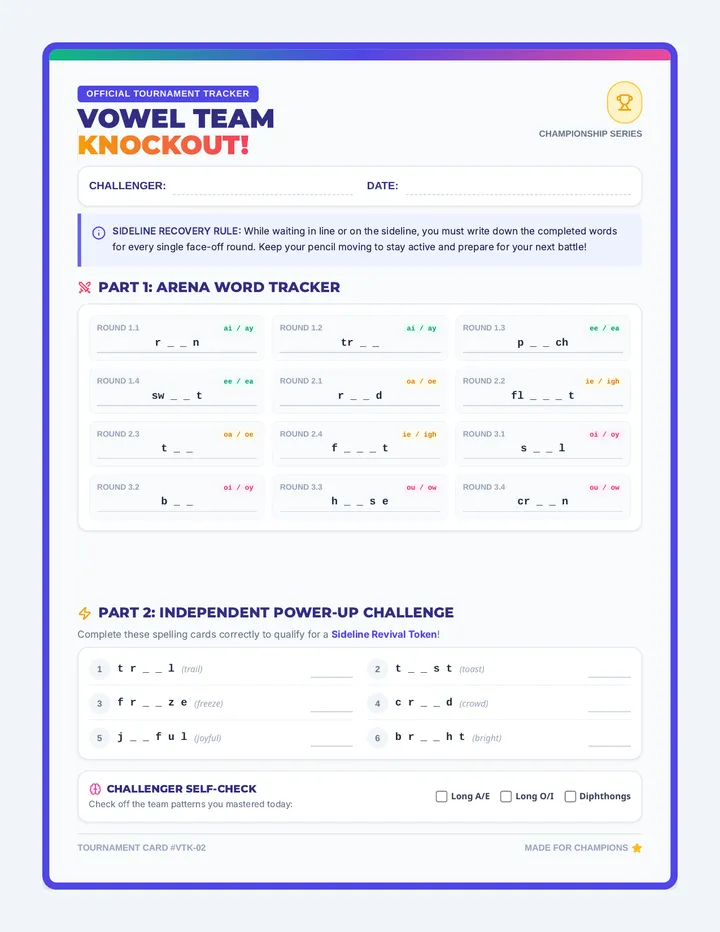
A printable 1-page student tournament sheet to keep all students actively spelling and engaged during the game. Includes Name/Date fields, a live face-off word tracker, and independent spelling challenges to earn back into the game.
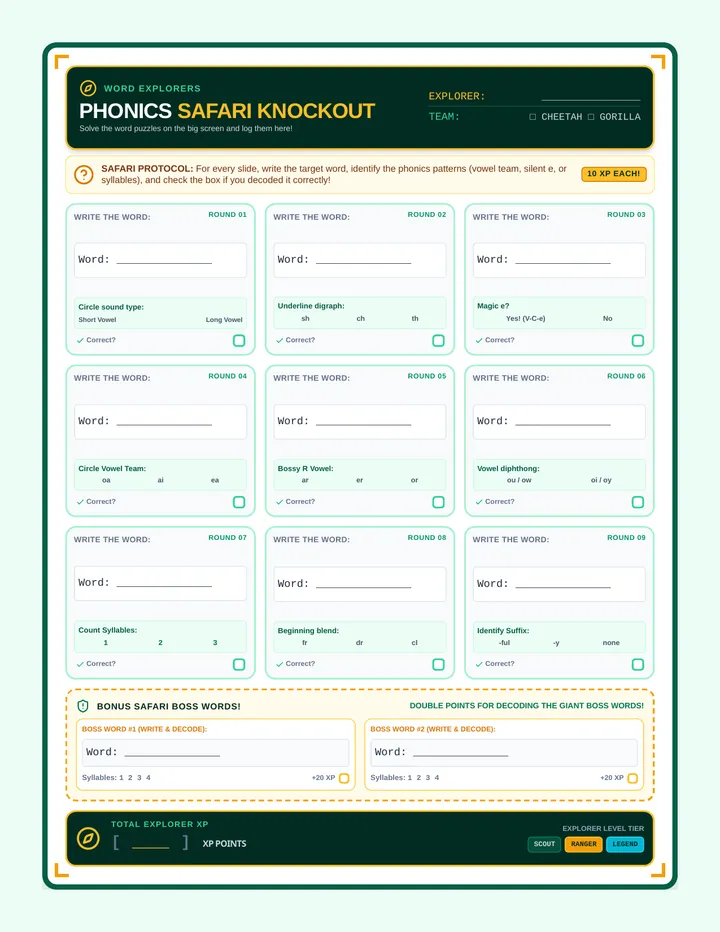
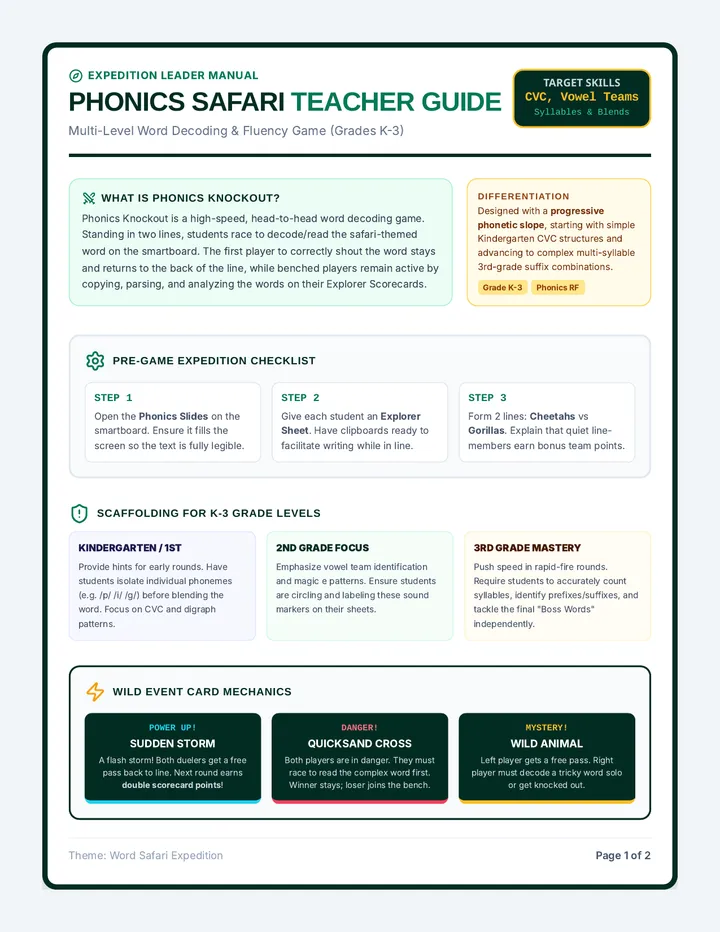
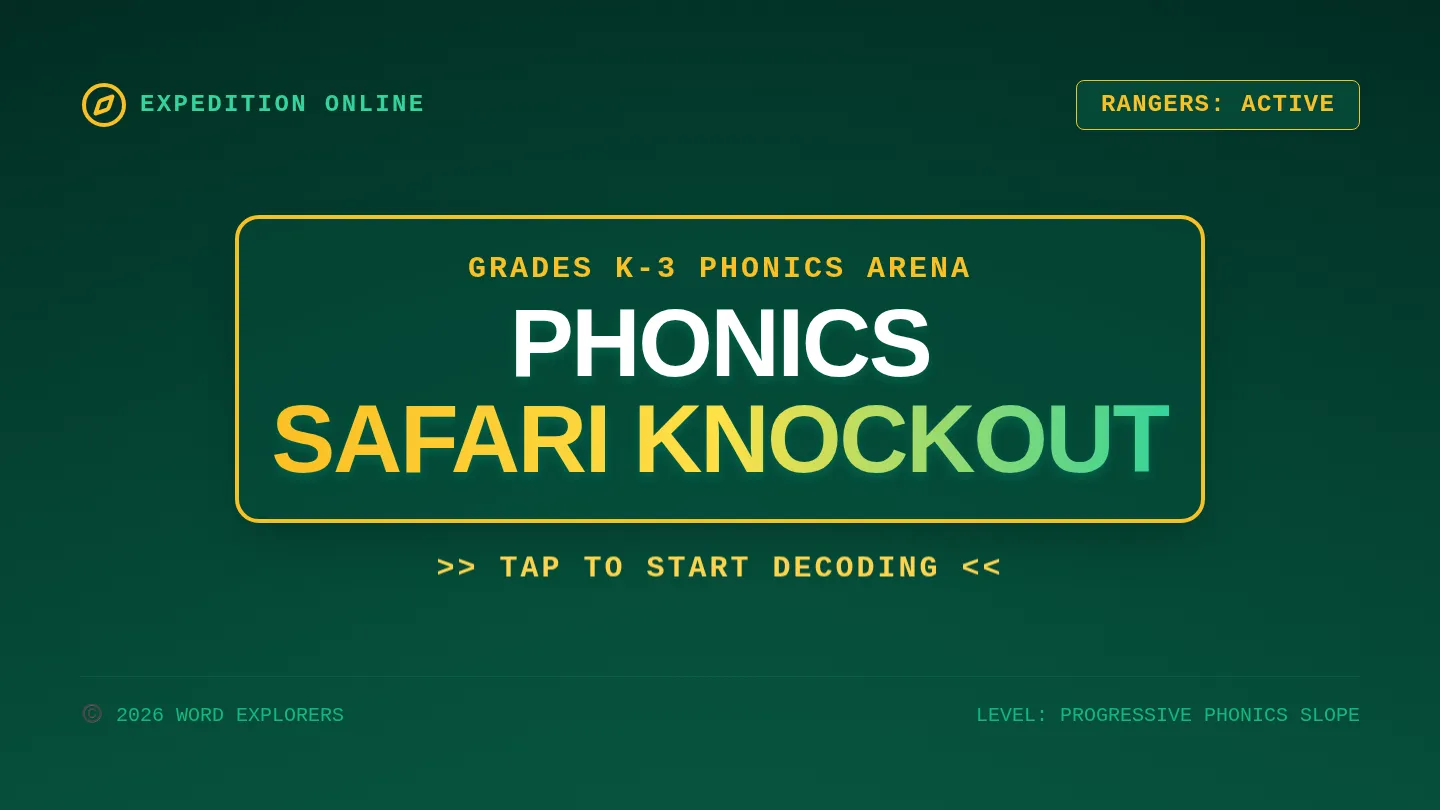
A high-energy, wild safari-themed classroom game for K-3 students focusing on key phonics skills including CVC words, silent 'e', vowel teams, and multi-syllable decoding. This lesson includes a widescreen smartboard presentation, a teacher facilitation guide with word keys, and an active-participation student tracker sheet.
Interactive, high-energy 15-slide presentation designed for modeling, guided review, and live classroom gameplay of Vowel Team Knockout. Includes rule slides, targeted warm-ups for all focus patterns, 8 interactive face-off challenge rounds, special event slides (Double Trouble, Free Pass), and a final showdown arena.
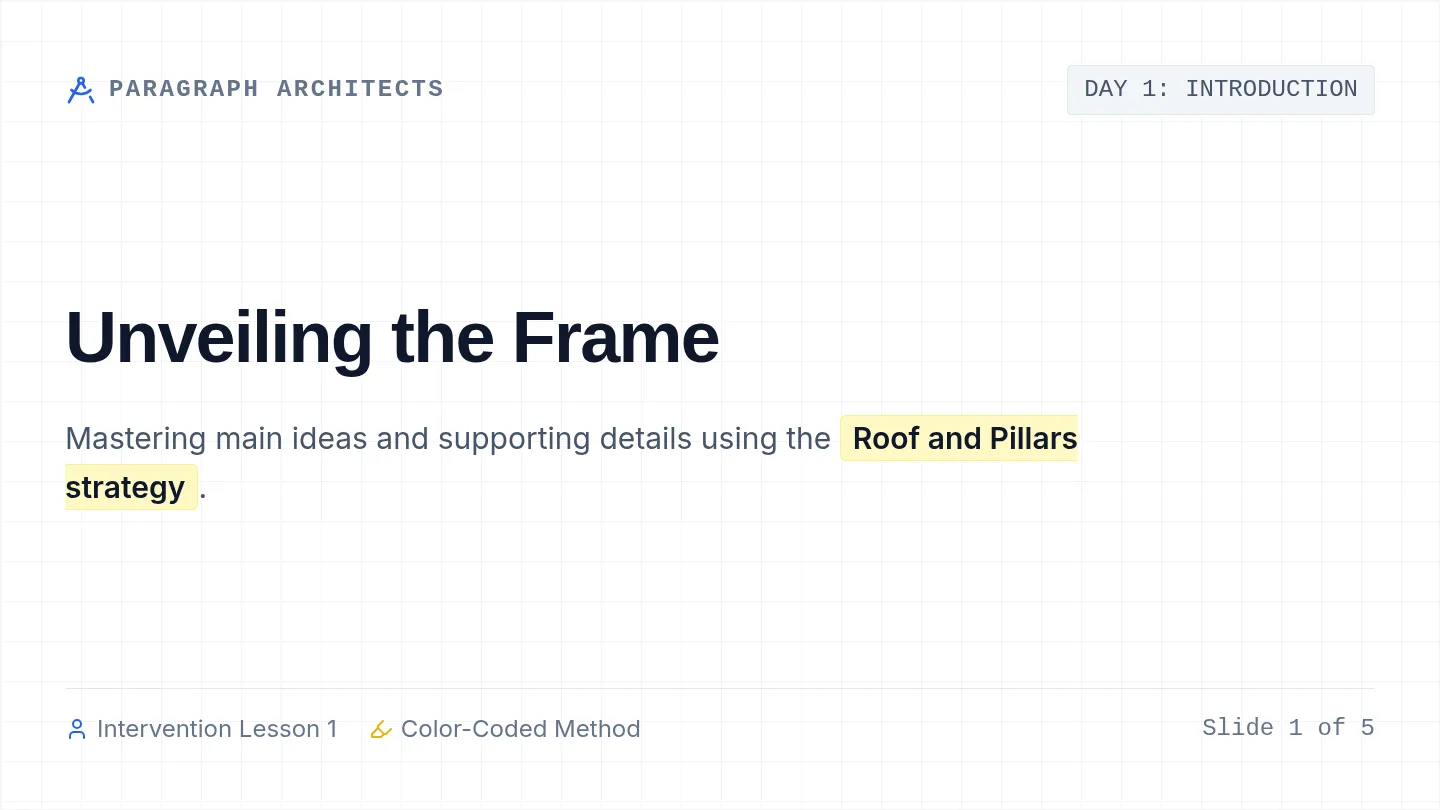
An intensive intervention lesson designed to help struggling readers master main idea identification using hands-on, color-coded highlighting strategies. Students learn to dismantle paragraph structures like blueprint architects, physically separating the 'roof' (main idea) from the 'supporting pillars' (details).
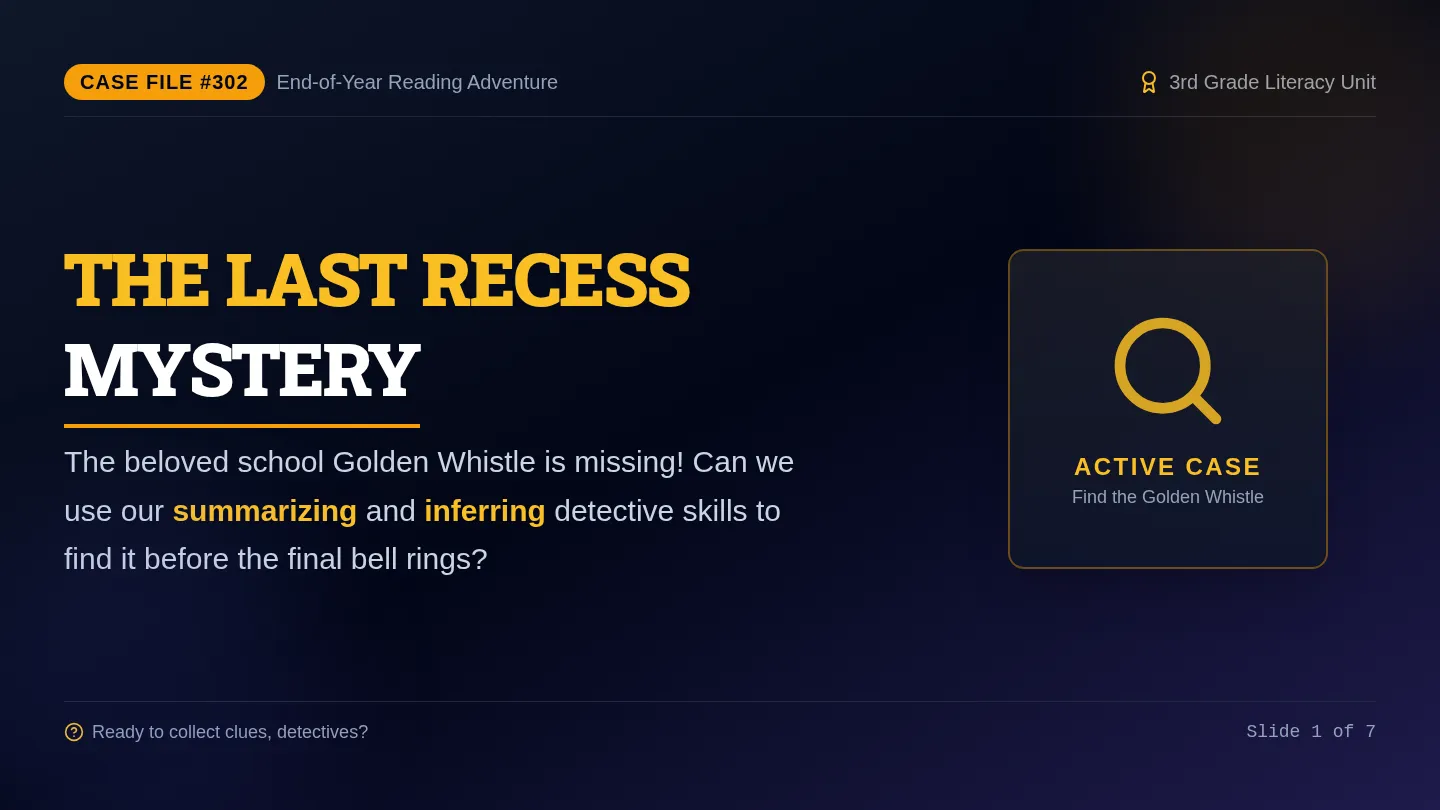
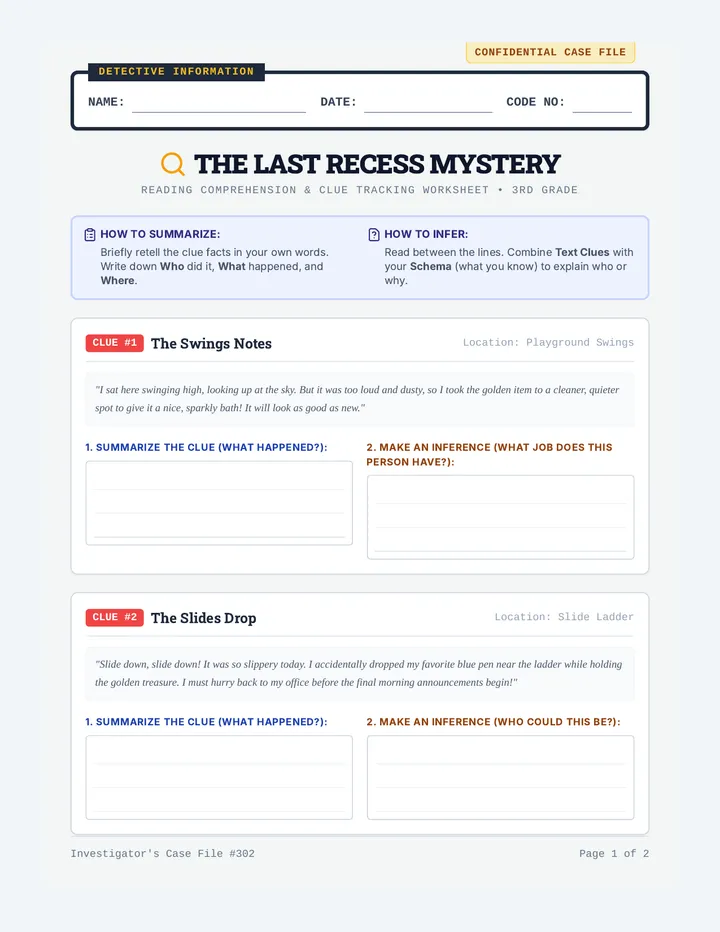
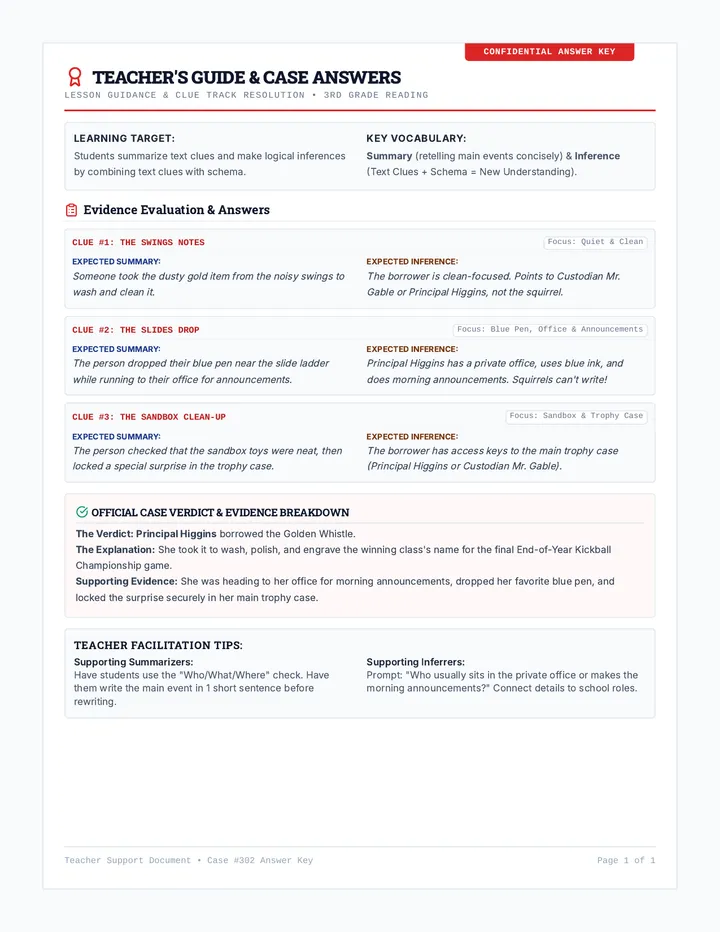
A third-grade reading lesson centered on an end-of-year mystery. Students learn and practice summarizing and making inferences by examining clues around the playground to locate a missing playground item before the last recess ends.
A 15-slide widescreen smartboard presentation designed for classroom-wide play. It features rich jungle styling, word-decoding challenges (CVC, silent e, vowel teams), and high-excitement events like 'Sudden Storm' and 'Quicksand Crossing' showdowns.
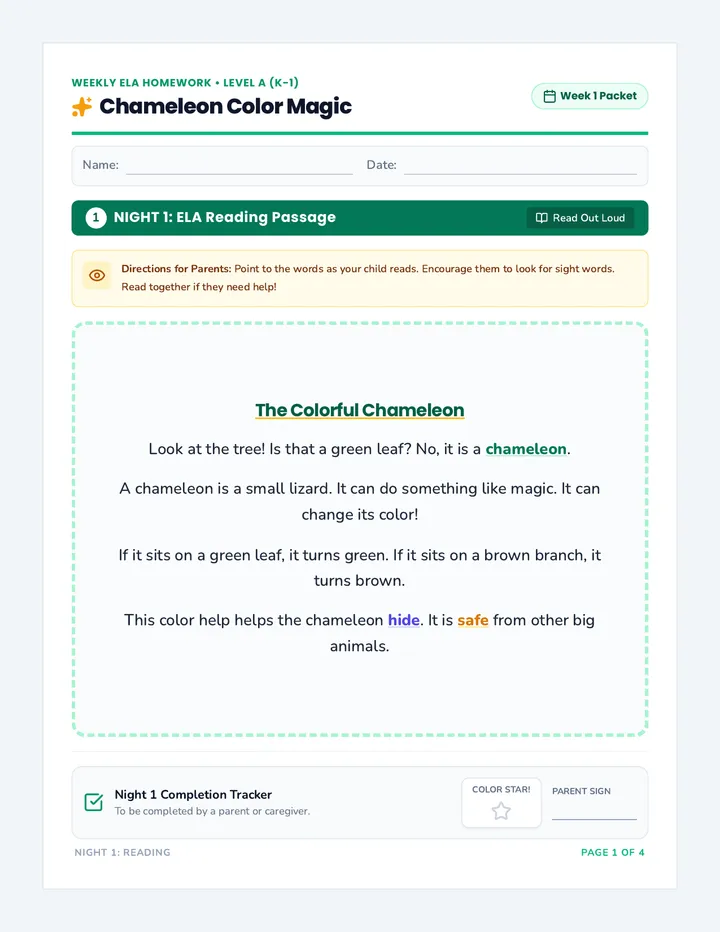
Weekly ELA homework packets focused on high-interest animal adaptations for elementary students (K-5). Each packet contains four nights of structured work: Night 1 (Reading), Night 2 (Vocabulary), Night 3 (Comprehension Activity), and Night 4 (Comprehension Questions), customized with visual icons, sentence frames, and simplified tracking guides for varying reading levels.
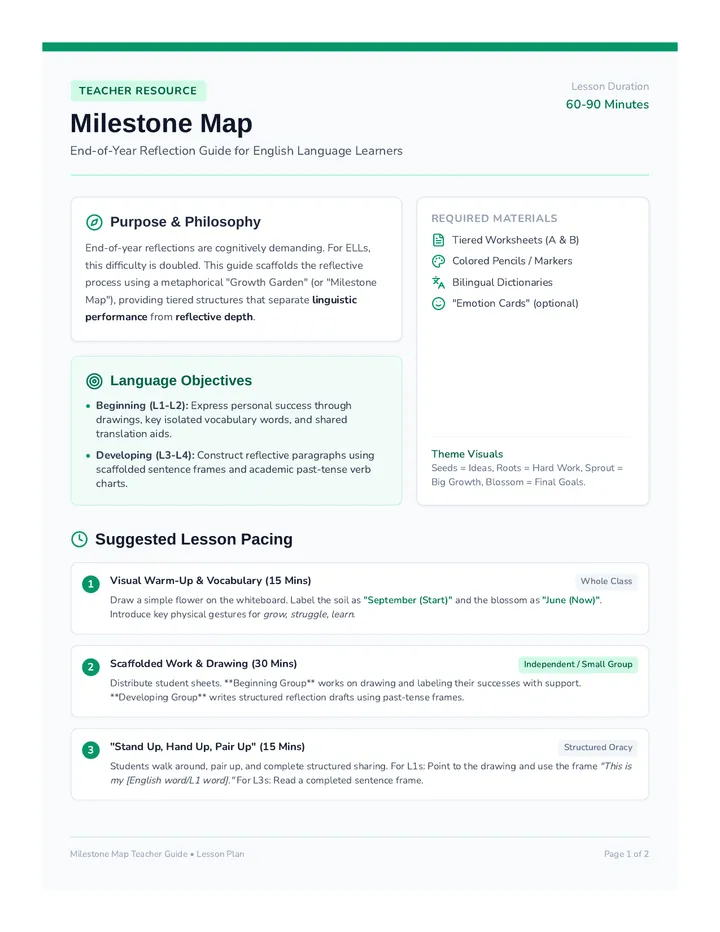
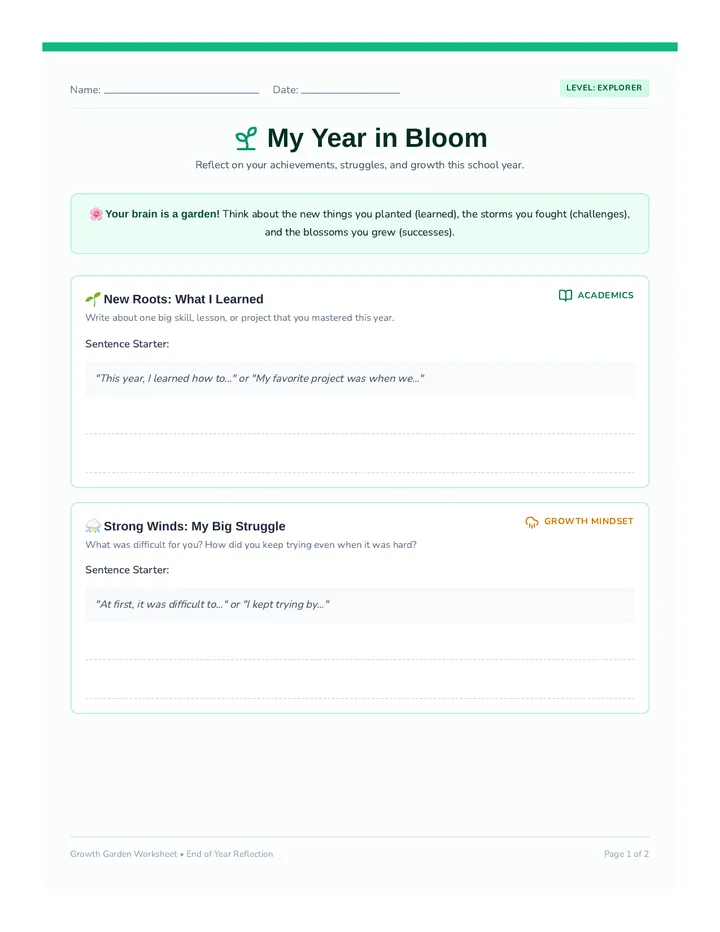
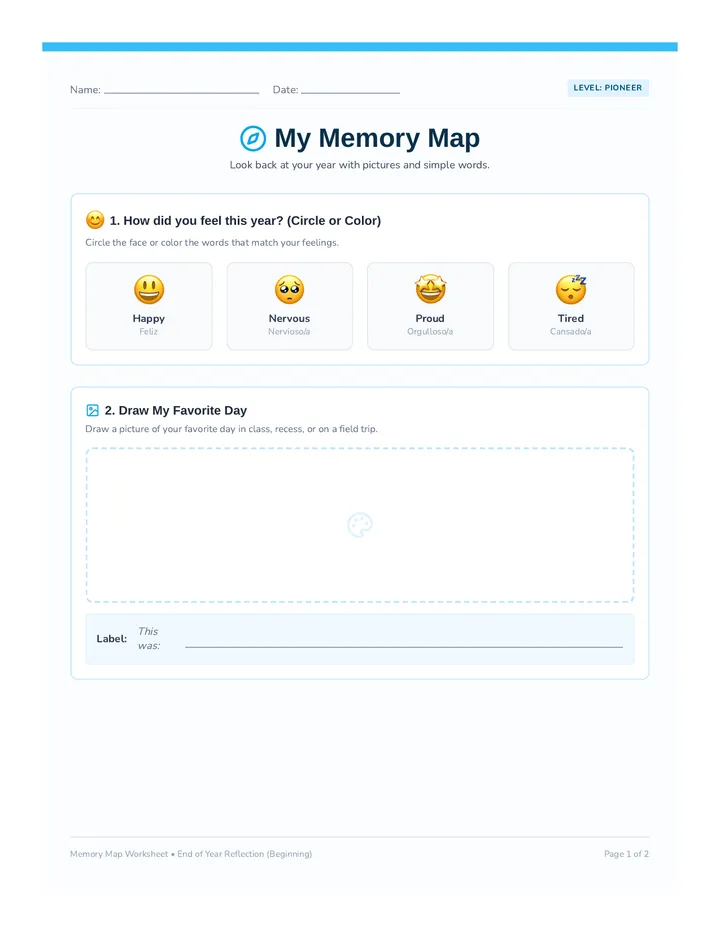
An end-of-year reflection lesson designed specifically for English Language Learners, featuring tiered worksheets for Beginning/Entering and Developing/Expanding levels, supported by a detailed facilitator guide.
A 2-page teacher facilitation guide containing game rules, smartboard setup steps, explanation of special power-up slides, a master answer key for all rounds, and classroom management strategies.