Students review the core principles of subject-verb agreement, focusing on singular vs. plural subjects and the specific 's' ending rule for third-person singular verbs through a fast-paced game.
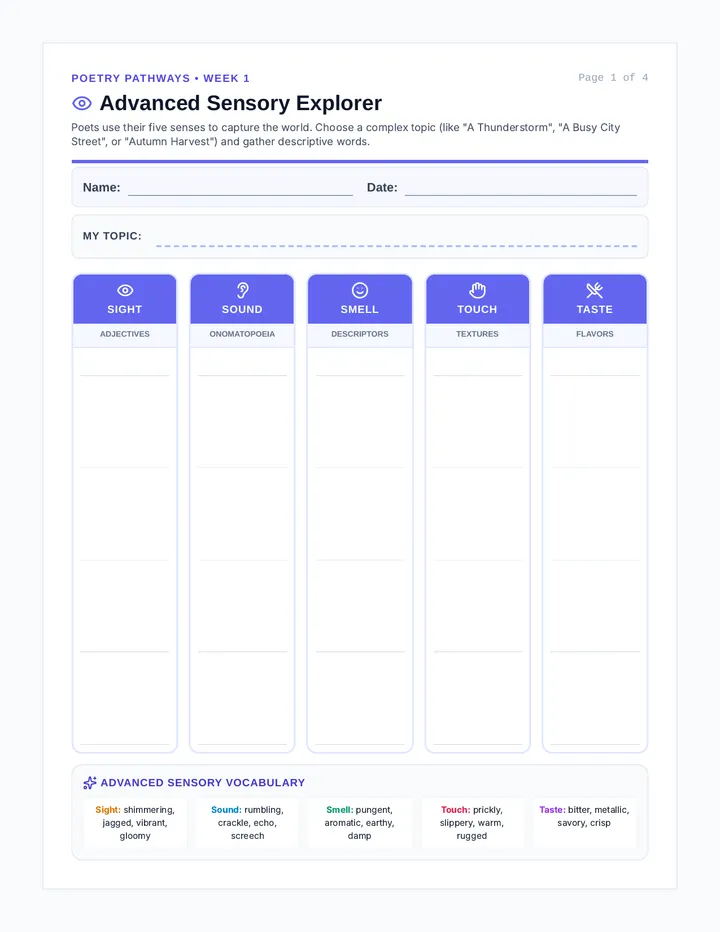
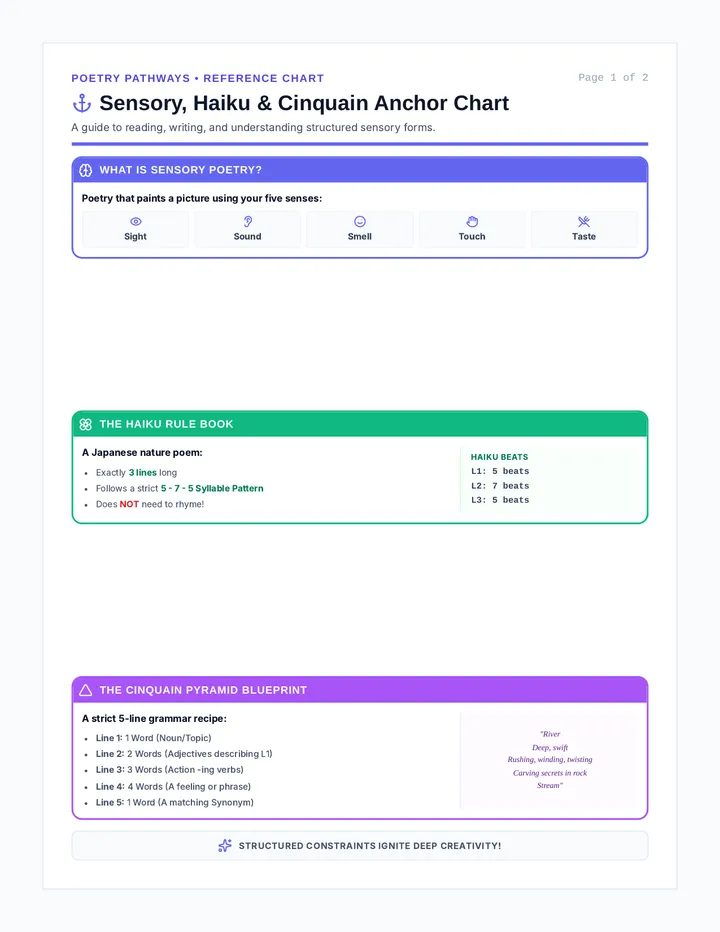
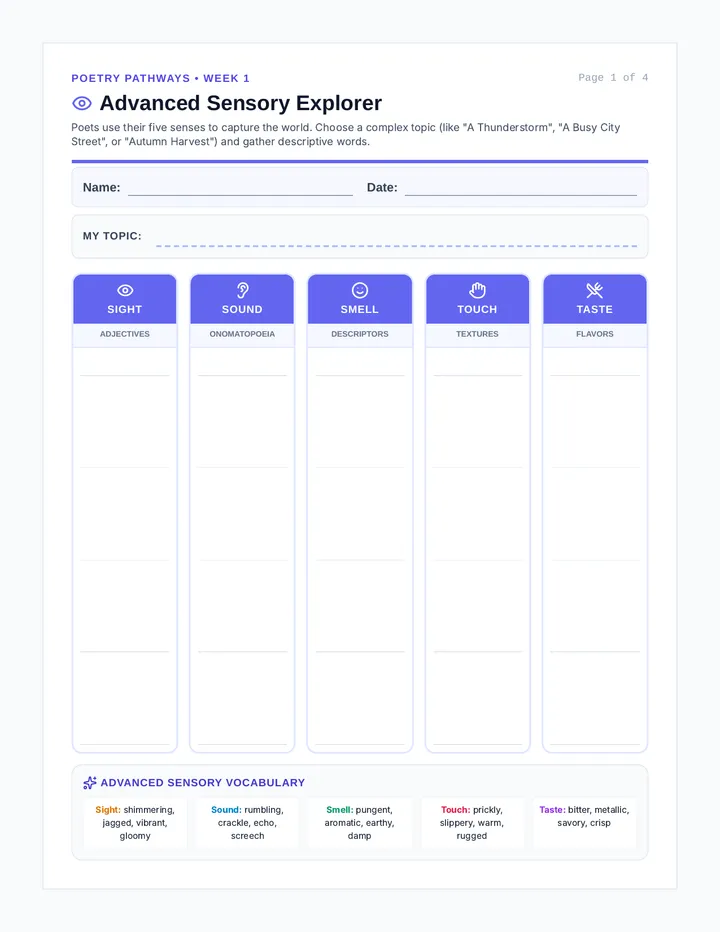
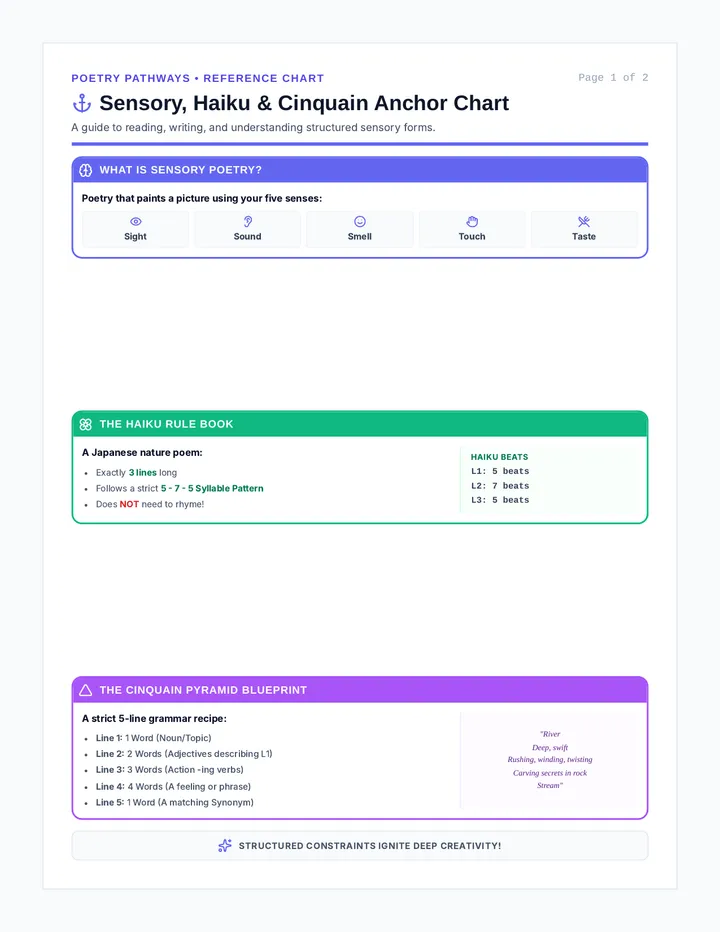
A comprehensive 4-week poetry curriculum designed for students requiring high structure and visual supports. It covers diverse poetry types (Haiku, Color, Acrostic, Couplets, Concrete, Free Verse, and Metaphor/Simile) with scaffolds like word banks, sentence frames, and graphic organizers.
A year-end writing celebration and awards ceremony designed to recognize growth, effort, and accomplishments in writing.
A colorful, highly visual slide deck with a 'Digging for Diamonds' theme in the vibrant dark-neon style. Includes the Chelsea Market title font and a newly added blank custom template slide (Slide 8) so teachers can easily overlay their own custom prompts or notes.
A celebratory end-of-year lesson designed to honor student writing growth, showcase final projects, award special honors, and guide students through meaningful reflections on their journey as writers.
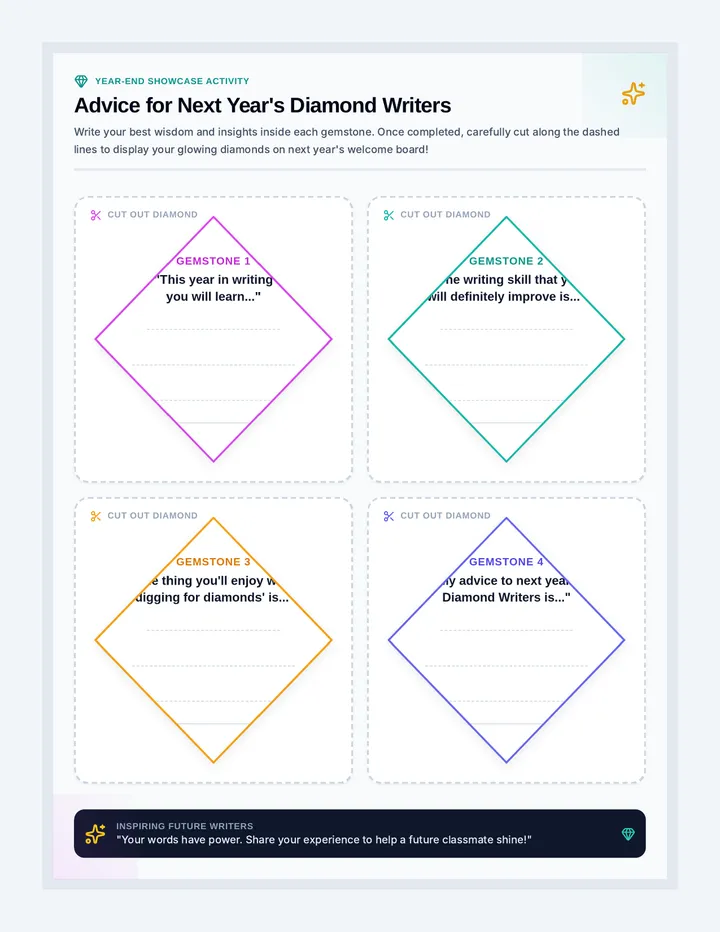
A printable year-end activity sheet featuring four large, beautiful cutout diamonds with ample writing space for students to share wisdom and advice with next year's incoming writers.
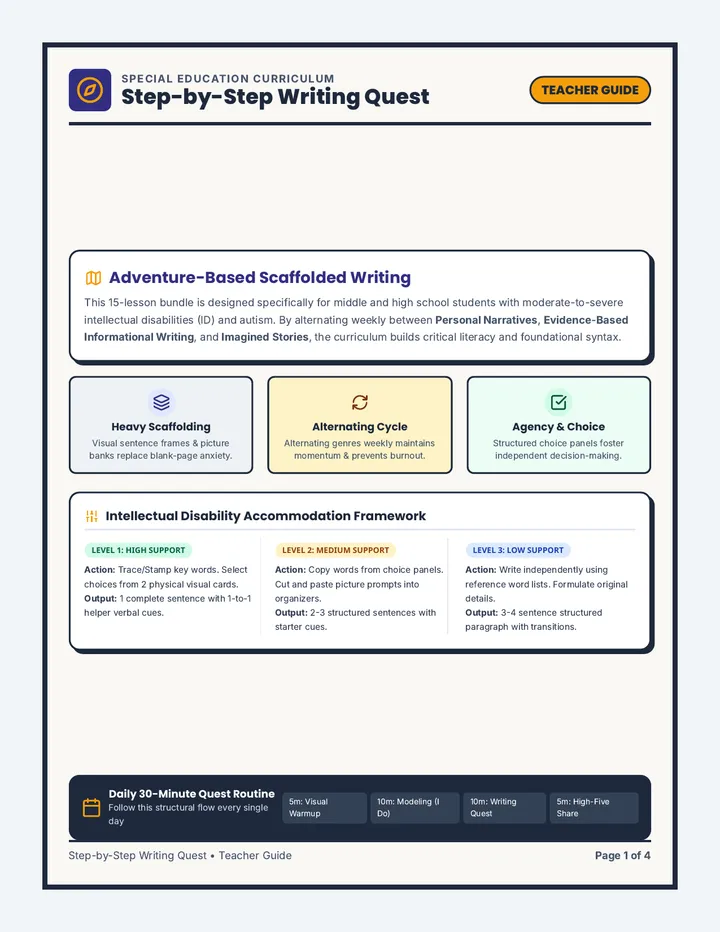
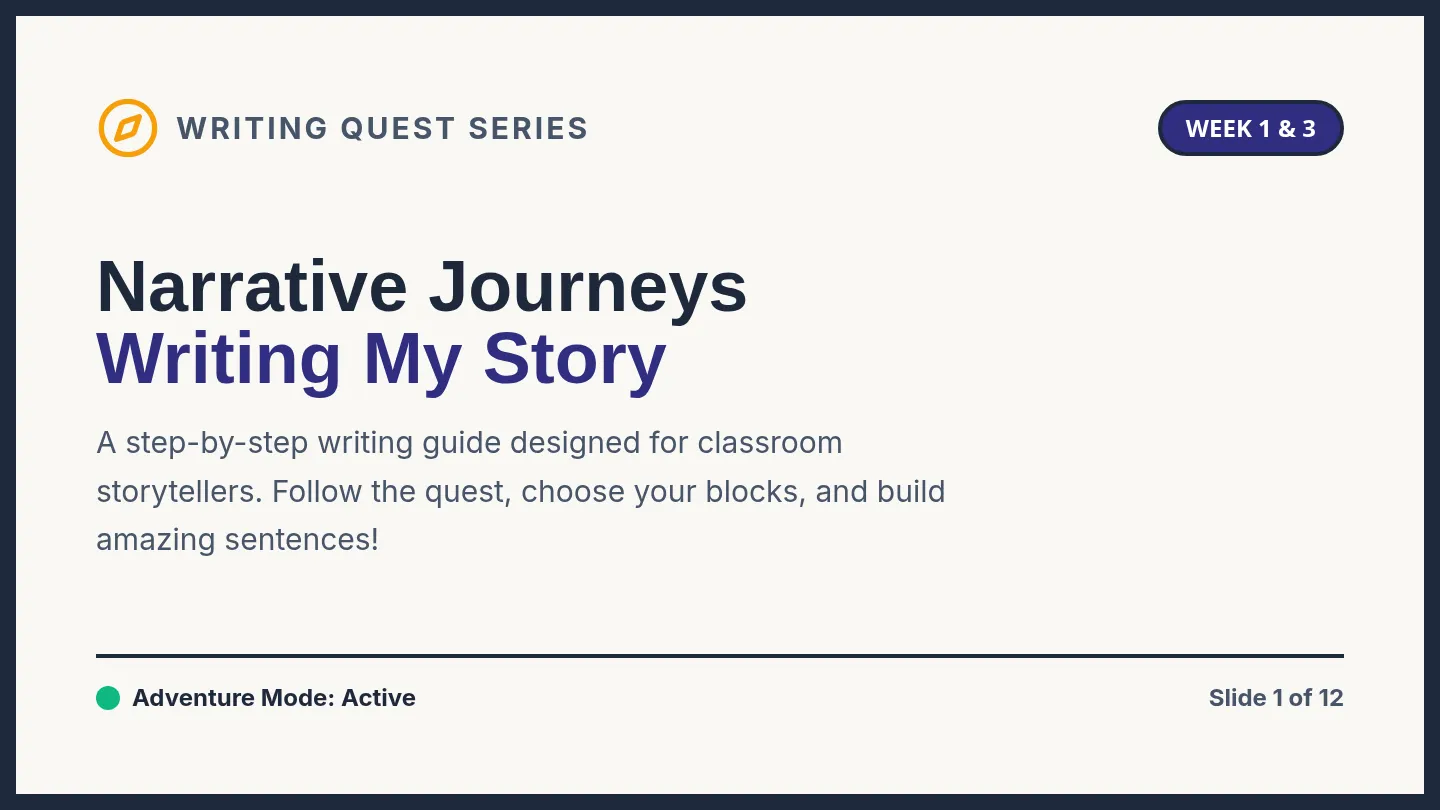
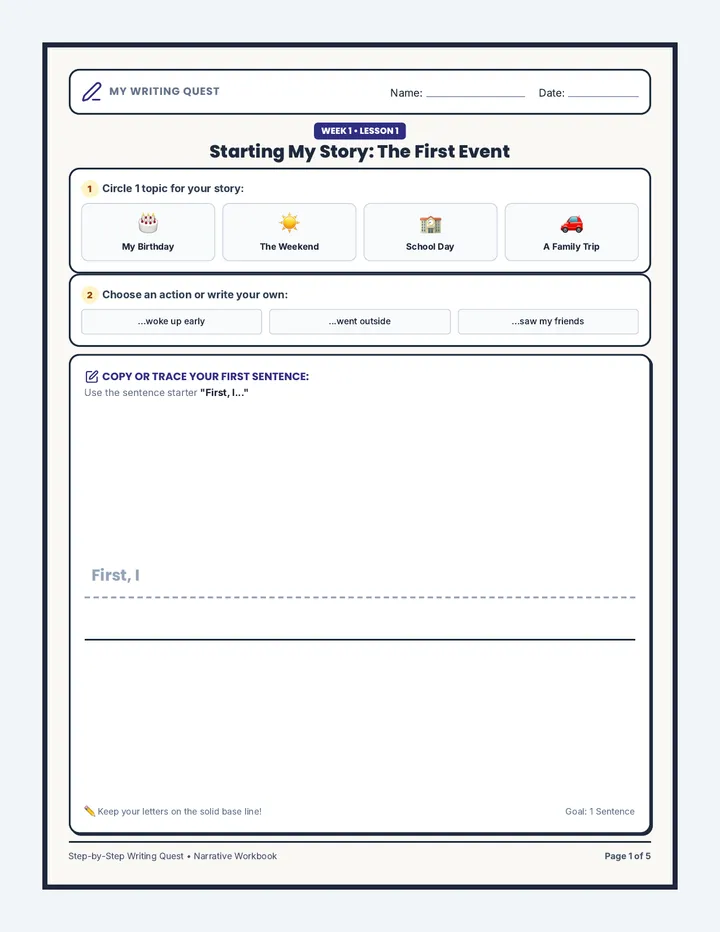
A comprehensive 15-lesson writing curriculum tailored for middle and high school students with intellectual disabilities. The sequence alternates weekly between personal narratives, evidence-based informational writing, and imagined stories, using heavy visual scaffolding, structured sentence frames, and clear graphic organizers.
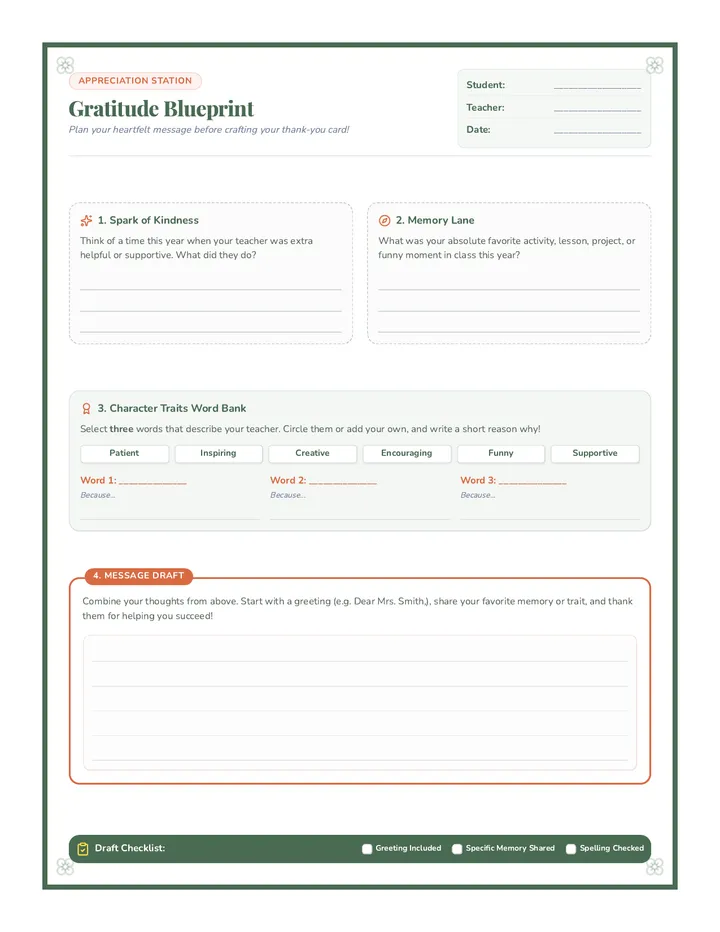
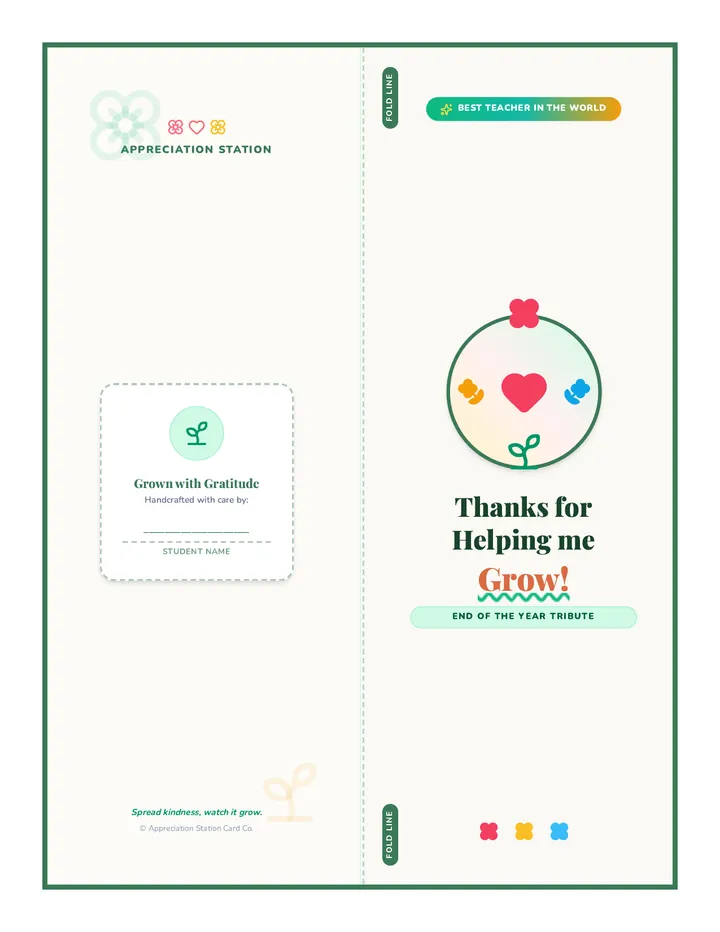
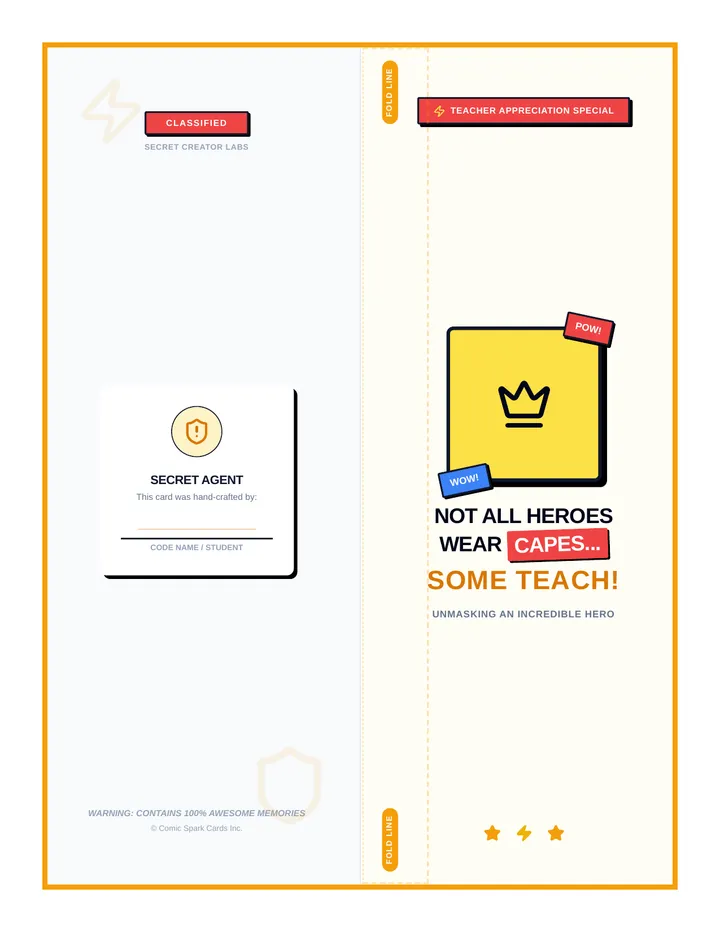
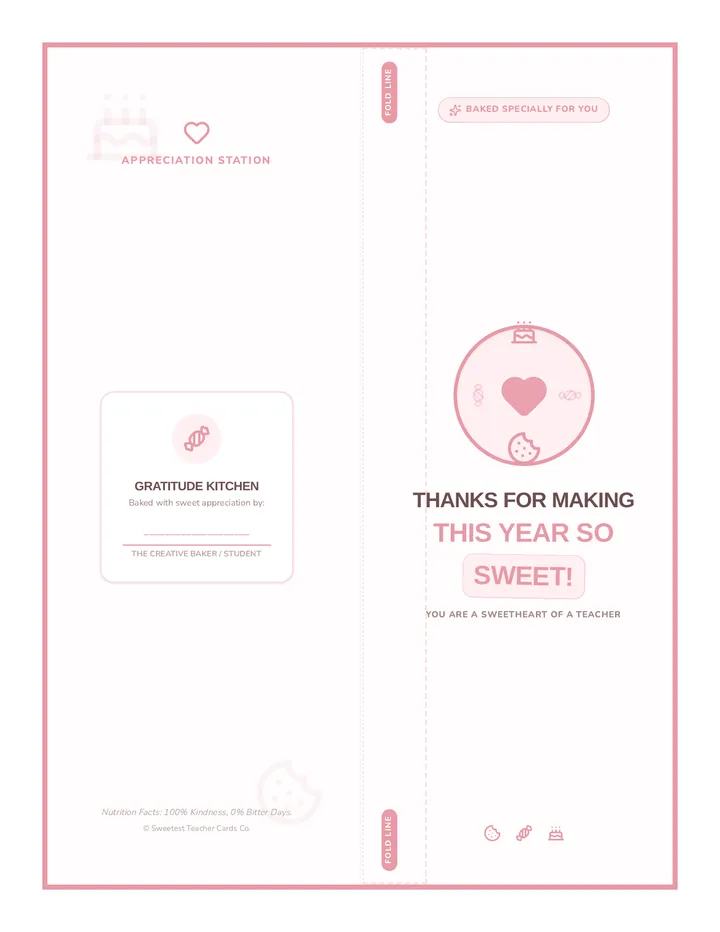
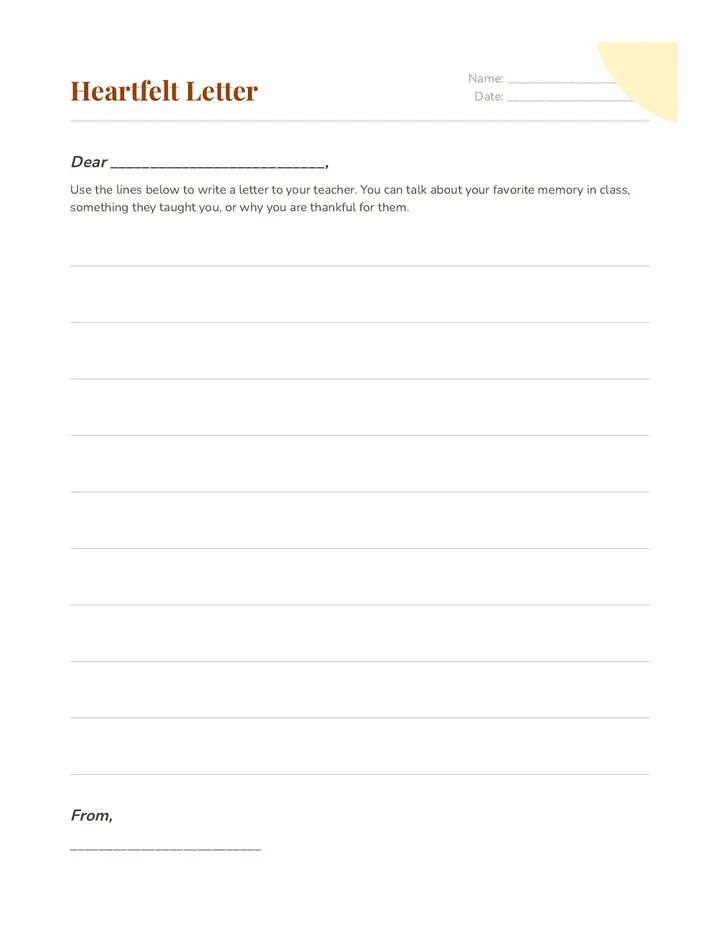
A complete end-of-the-year thank-you card crafting lesson. Students brainstorm specific memories and acts of kindness, draft their messages, and assemble beautifully styled, fold-in-half appreciation cards for their teachers.
A highly visual, vibrant presentation for the year-end writing celebration, designed to excite students, present awards, and guide reflections with geometric diamond motifs.
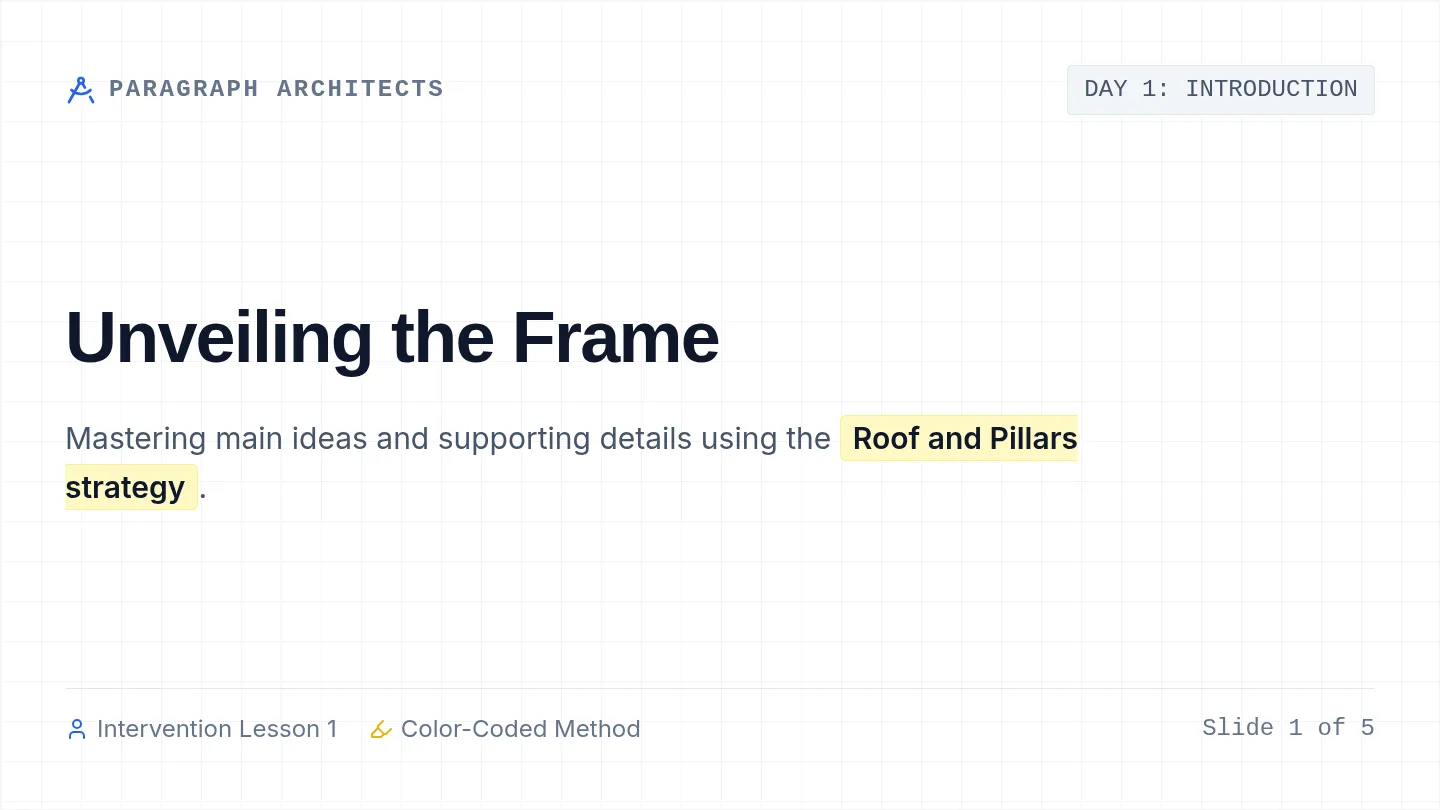
An intensive intervention lesson designed to help struggling readers master main idea identification using hands-on, color-coded highlighting strategies. Students learn to dismantle paragraph structures like blueprint architects, physically separating the 'roof' (main idea) from the 'supporting pillars' (details).
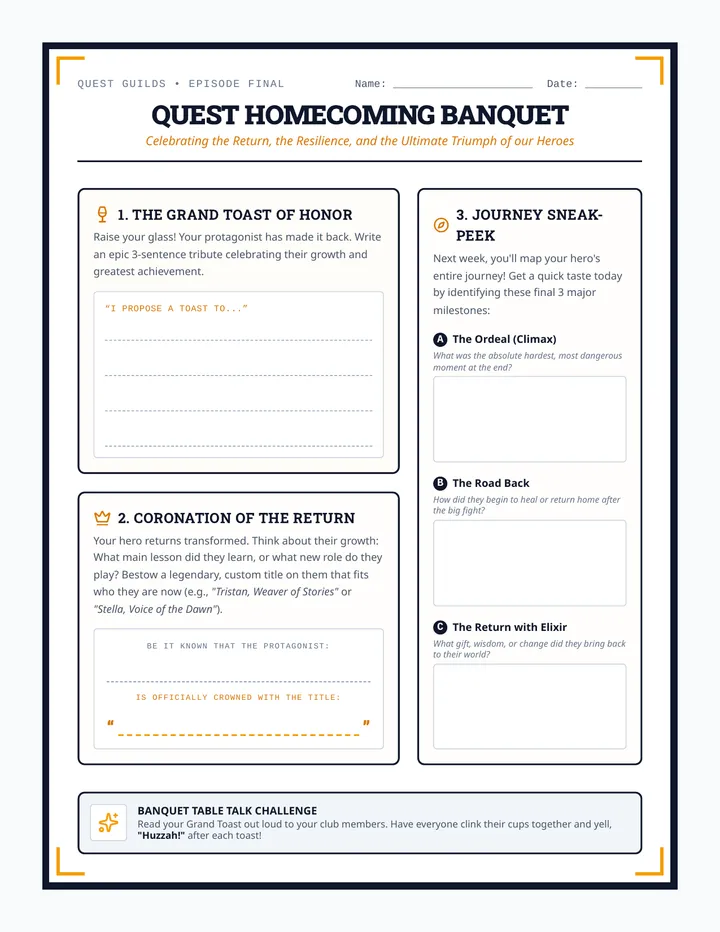
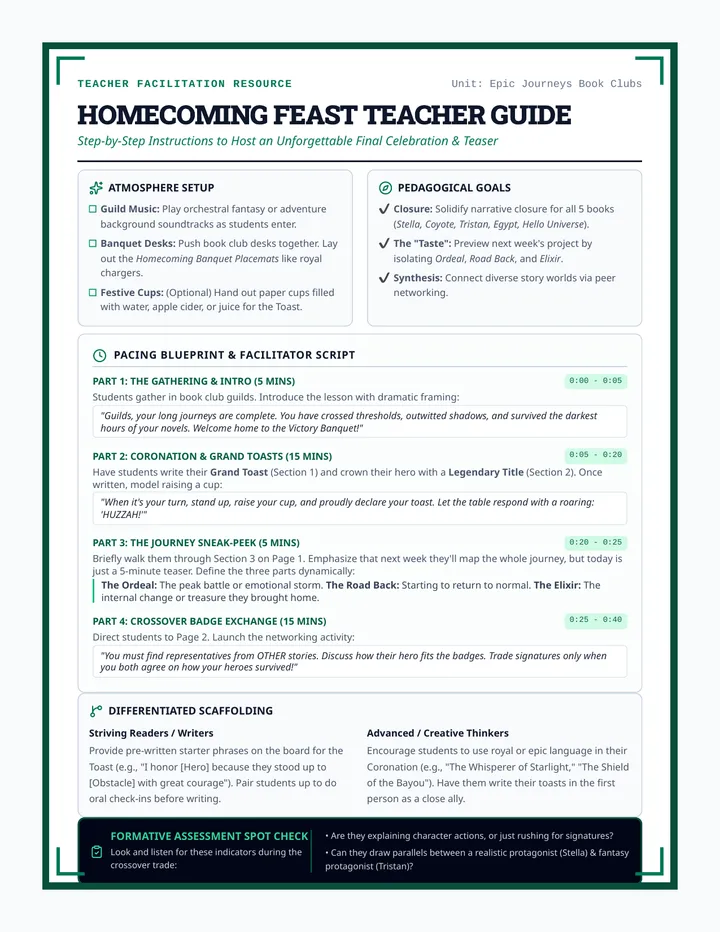
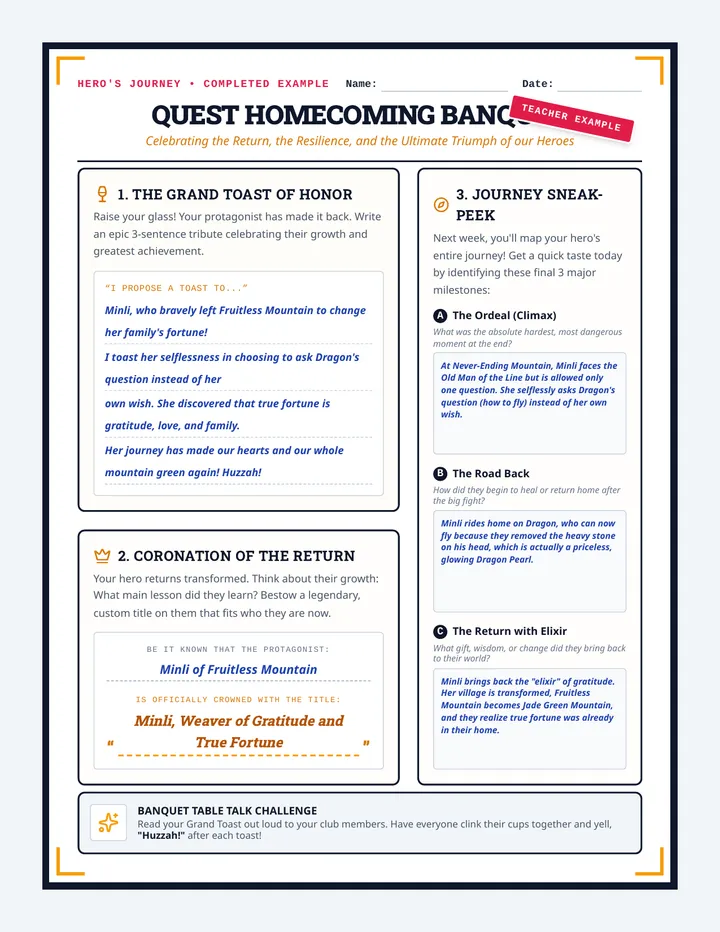
The celebratory final meeting of the book clubs, designed as a festive victory banquet. Students commemorate their protagonist's return through a grand ceremonial toast, active crossover badge trading with other groups, and a high-interest 5-minute teaser of the Hero's Journey mapping project.
A set of three creative thank-you note templates including a traditional letter, an acrostic poem, and printable postcards for Teacher Appreciation Week.