Lenny.com
Explore
Create
ActivitiesNewMathEnglish Language ArtsScience & EngineeringSocial StudiesGlobal LanguagesHealth & Physical EducationSpecial EducationCounseling & Life SkillsArts & CreativityESL
Lenny.com
Lenny.com
Explore
Create
ActivitiesNewMathEnglish Language ArtsScience & EngineeringSocial StudiesGlobal LanguagesHealth & Physical EducationSpecial EducationCounseling & Life SkillsArts & CreativityESL
Lenny.com
Lenny.com

Solutions

Lenny for EducatorsLenny for SchoolsLenny for Districts

Product

ExploreSign inCreateSupportAbout

Resources

Getting startedMTSS Acceleration Program

© 2026 Lenny Learning Inc.

TermsPrivacyAccessibility
LinkedInInstagramX
Lenny

Topic Sentences

Identification and construction of main idea statements that unify paragraph content. Examines effective placement, clarity, and alignment with overarching thesis goals.

English Language ArtsPhonics & Reading FoundationsLetter IdentificationLearn Letters A-ZLowercase and Uppercase LettersConsonants and VowelsLetter-Sound AssociationsLetter-Sound Associations: LowercaseLetter-Sound Associations: UppercaseBeginning and Ending SoundsRhymingBlending And SegmentingShort VowelsShort Vowel SoundsConsonant BlendsConsonant DigraphsBlends, Digraphs, and TrigraphsDigraphs, Blends, and Silent LettersLong Vowel SoundsLong Vowel PatternsShort and Long VowelsShort and Long Vowel PatternsSilent EVowel SoundsVowel TeamsR-Controlled VowelsDiphthongs: Oi, Oy, Ou, OwVariant VowelsVariant, Diphthong, And R Vowel PatternsSoft G And CSight WordsIrregular WordsWord RecognitionSyllablesSyllable TypesTwo-Syllable WordsMultisyllabic WordsPhoneme ManipulationDecodable TextsVocabularyAction WordsQuestion WordsNouns and AdjectivesClassify WordsCompound WordsSynonyms and AntonymsHomophonesHomophones and HomonymsShades of MeaningContext CluesPrefixes and SuffixesGreek and Latin RootsAnalogiesIdioms and AdagesForeign Words and ExpressionsWord Choice and UsageReference SkillsReading ComprehensionRead-Along Literary TextsRead-Along Informational TextsReality vs. FictionStory ElementsCharacterSequenceMain IdeaCause And EffectCompare And ContrastReading StrategiesText StructureAuthor's PurposeAuthor's Purpose And ToneAuthor's PerspectivePoint Of ViewThemeInference And ThemeInference And AnalysisPoetry ElementsLiterary DevicesAnalyzing LiteratureAnalyzing Informational TextsComparing TextsAudience, Purpose, And ToneBusiness DocumentsNovel StudyNonfiction Book StudyGrammar & MechanicsSentencesNounsVerbsAdjectivesPronounsCapitalizationPunctuationContractionsConjunctionsPrepositionsArticlesAdjectives And AdverbsVerb TypesVerb TensePronouns And AntecedentsPronoun TypesSubject-Verb AgreementDirect And Indirect ObjectsSentences, Fragments, And Run-OnsPhrases And ClausesCommasSemicolons, Colons, And CommasDashes, Hyphens, And EllipsesSpellingAbbreviationsFormattingVerb Tense And MoodMisplaced ModifiersWritingDescriptive DetailsCreative WritingOpinion WritingTopic SentencesOrganizing WritingLinking WordsSentence VarietyIntroductions And ConclusionsPersuasive And Opinion WritingExpository WritingPersuasive StrategiesDeveloping And Supporting ArgumentsTopic Sentences And Thesis StatementsSummarizingResearch SkillsEditing And RevisingActive And Passive Voice=Writing Clearly And ConciselyDebate & Public SpeakingPublic Speaking BasicsPersuasive TechniquesClaims and EvidenceTypes of ArgumentsReasoning TypesLogical FallaciesTopic ResearchOrganizing EvidenceDebate Speech OrganizationAttacking and Defending ArgumentsClash and EngagementImpact CalculusQuestioning and Cross-ExaminationCritical ThinkingInformal LogicFormal LogicInductive Reasoning

Videos

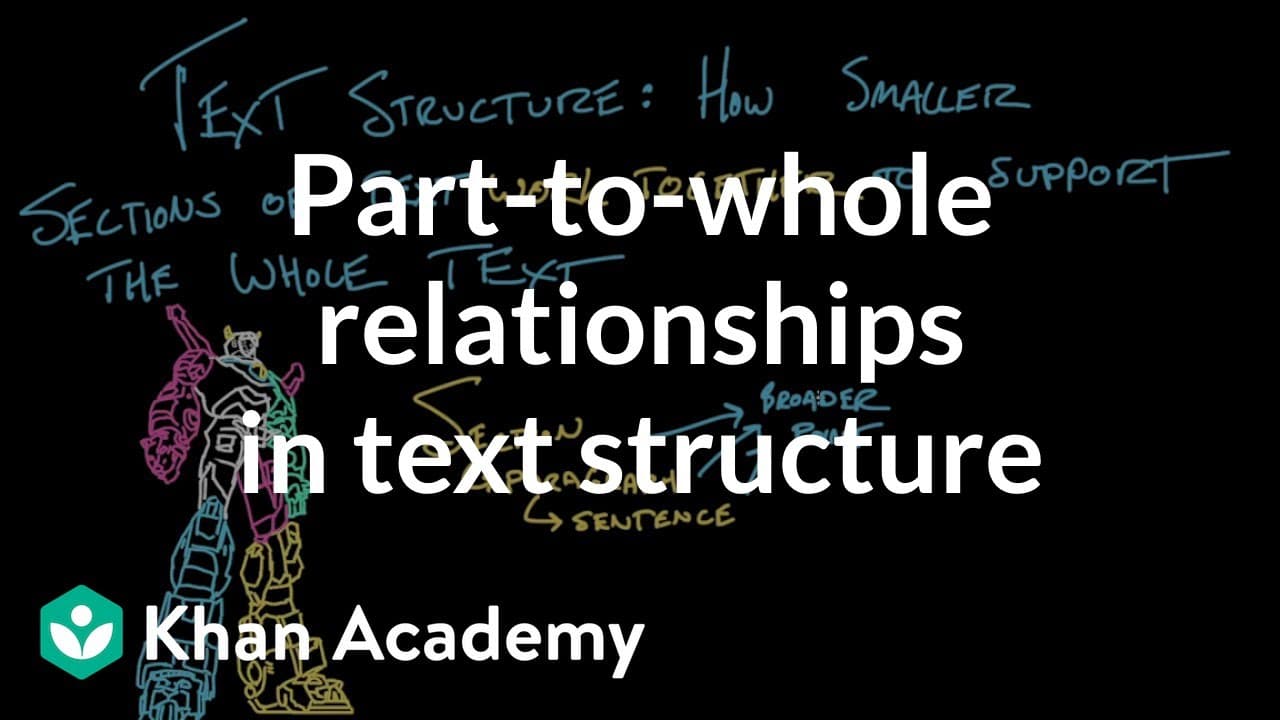
Using Giant Robots to Explain Text Structure

Using Giant Robots to Explain Text Structure

This engaging educational video uses a unique analogy—a giant battle robot named Voltron—to explain the abstract concept of text structure. The narrator demonstrates how smaller sections of a text (sentences and paragraphs) function like the individual limbs and pilots of a robot: distinct parts that must coordinate perfectly to support the text's central purpose. This metaphorical approach simplifies the complex idea of part-to-whole relationships in writing. The video transitions from the robot analogy to a concrete analysis of an informational article about 10th-century Japanese samurai armor (O-yoroi). By dissecting specific sections of the text, such as the descriptions of the cuirass (breastplate) and kusazuri (skirt), the narrator illustrates how specific details—like a gap in the armor for a bow—directly support the article's main idea that this armor was designed for mounted archers. Teachers can use this video to introduce or reinforce standards regarding informational text analysis and structure. The memorable "battle robot" comparison provides a persistent mental model for students struggling to see how individual paragraphs serve a broader argument. It effectively bridges the gap between sentence-level comprehension and holistic text analysis, making it an excellent resource for language arts instruction.

Khan AcademyKhan Academy

4mins 43s

Building Your Essay Around a Strong Thesis Statement

Building Your Essay Around a Strong Thesis Statement

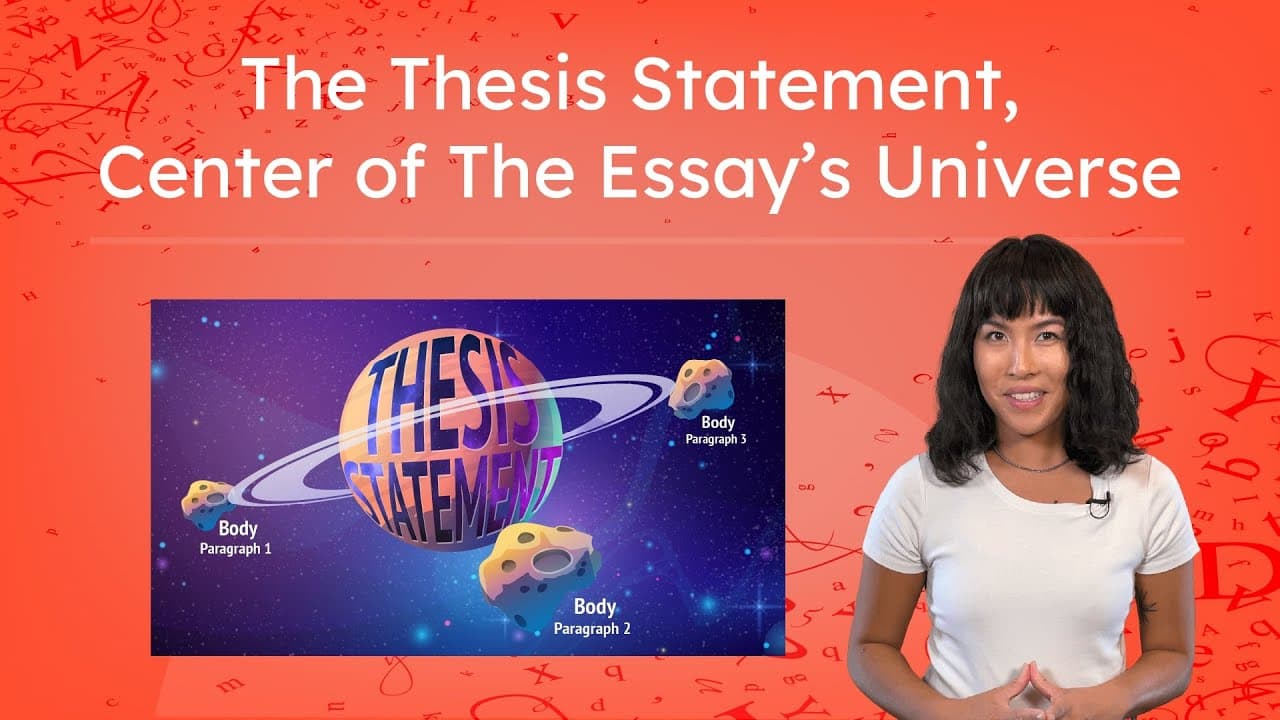
This engaging video lesson uses an extended metaphor of a solar system to explain the relationship between a thesis statement and the body paragraphs of an essay. The narrator guides students through the definition of a thesis statement, emphasizing that it must be the central argument around which the rest of the paper revolves. The video breaks down the criteria for a strong thesis—specifically that it must be arguable and specific—and demonstrates how to construct one using Sandra Cisneros's novel "The House on Mango Street" as a case study. The content dives deep into the structural mechanics of essay writing, showing how a thesis statement serves as a roadmap for the entire paper. It explicitly models how to extract key points from a thesis to create distinct topic sentences for body paragraphs. Through a step-by-step example, the host shows how specific experiences of the protagonist, Esperanza, translate into focused arguments for individual paragraphs, effectively teaching students how to outline their writing before they even begin drafting. This resource is highly valuable for high school English classrooms as it demystifies the abstract concept of "essay flow." By visualizing the thesis as a planet and body paragraphs as moons, it provides a concrete mental model for organization. The video includes built-in pause points for reflection, checks for understanding, and a "growth mindset" check-in, making it an excellent interactive tool for introducing literary analysis essays or argumentative writing units.

Miacademy & MiaPrep Learning ChannelMiacademy & MiaPrep Learning Channel

9mins 51s

Body Building: How to Write Strong Body Paragraphs

Body Building: How to Write Strong Body Paragraphs

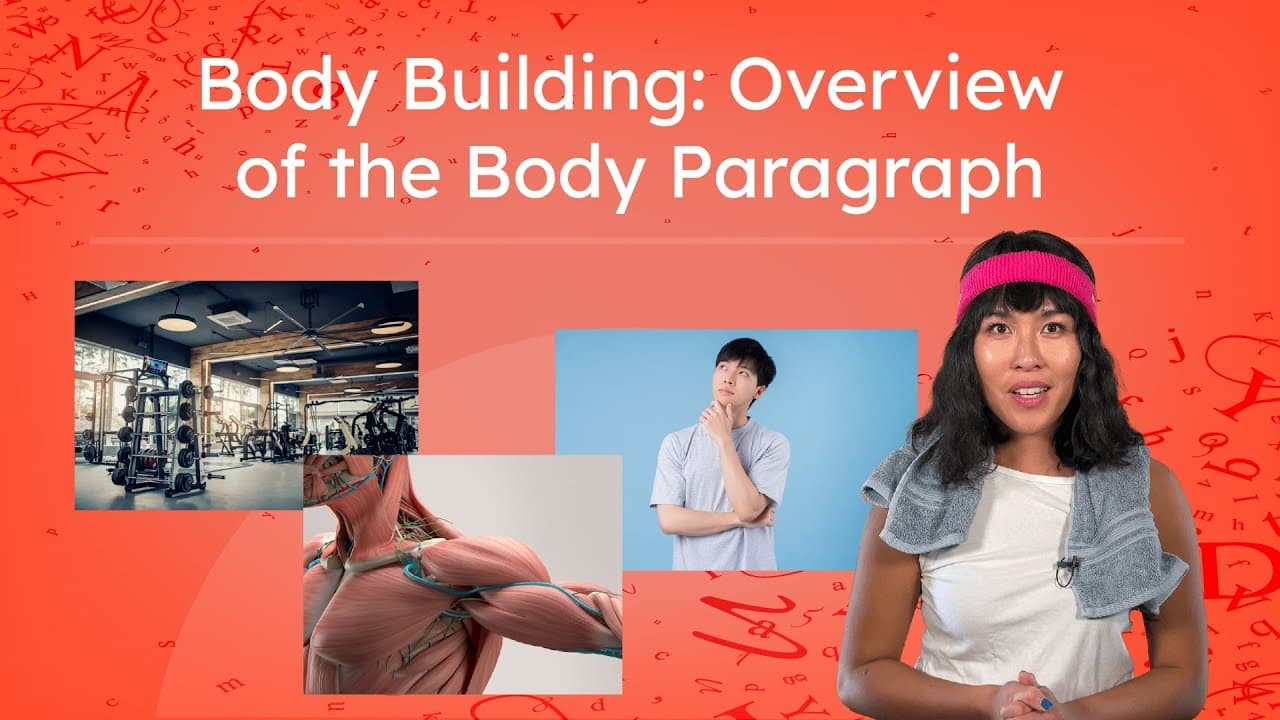
This engaging video lesson uses a clever "body building" gym metaphor to teach high school students how to construct strong, cohesive body paragraphs for academic essays. Hosting from a virtual gym, the instructor breaks down the anatomy of a body paragraph into five essential components: the Topic Sentence, Evidence, Explanation, Analysis, and Conclusion. The video builds upon previous lessons about thesis statements, showing students exactly how to flesh out the "skeleton" of their essay structure with robust content.

Miacademy & MiaPrep Learning ChannelMiacademy & MiaPrep Learning Channel

10mins 32s

How to Explain and Analyze Evidence in Essays

How to Explain and Analyze Evidence in Essays

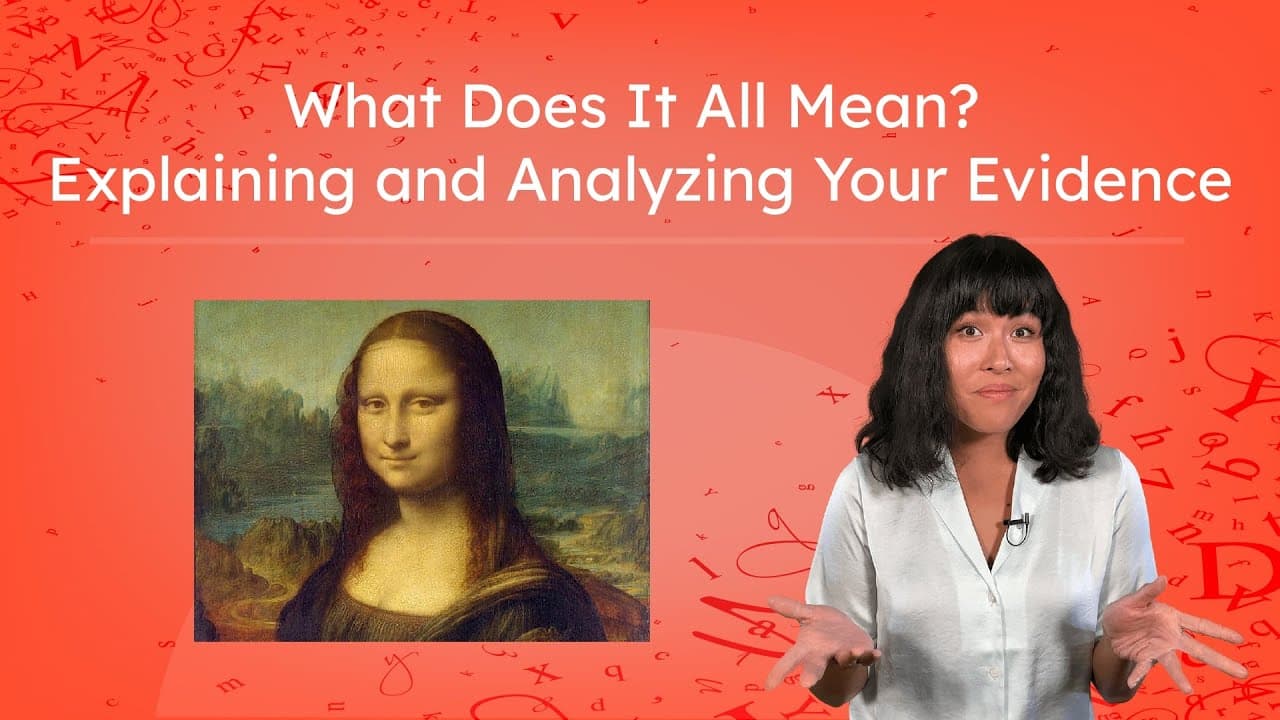
This educational video clarifies the critical distinction between explaining evidence and analyzing it within high school essay writing. Using a humorous opening skit with the Mona Lisa, the presenter illustrates the difficulty of "reading minds," drawing a parallel to how readers cannot understand a writer's argument unless it is explicitly communicated. The video uses a practical example regarding the pros and cons of space exploration to model the writing process step-by-step, moving from selecting evidence to drafting a claim, and finally constructing a body paragraph that includes both explanation and analysis.

Miacademy & MiaPrep Learning ChannelMiacademy & MiaPrep Learning Channel

6mins 47s

How to Outline and Write a Comparative Essay

How to Outline and Write a Comparative Essay

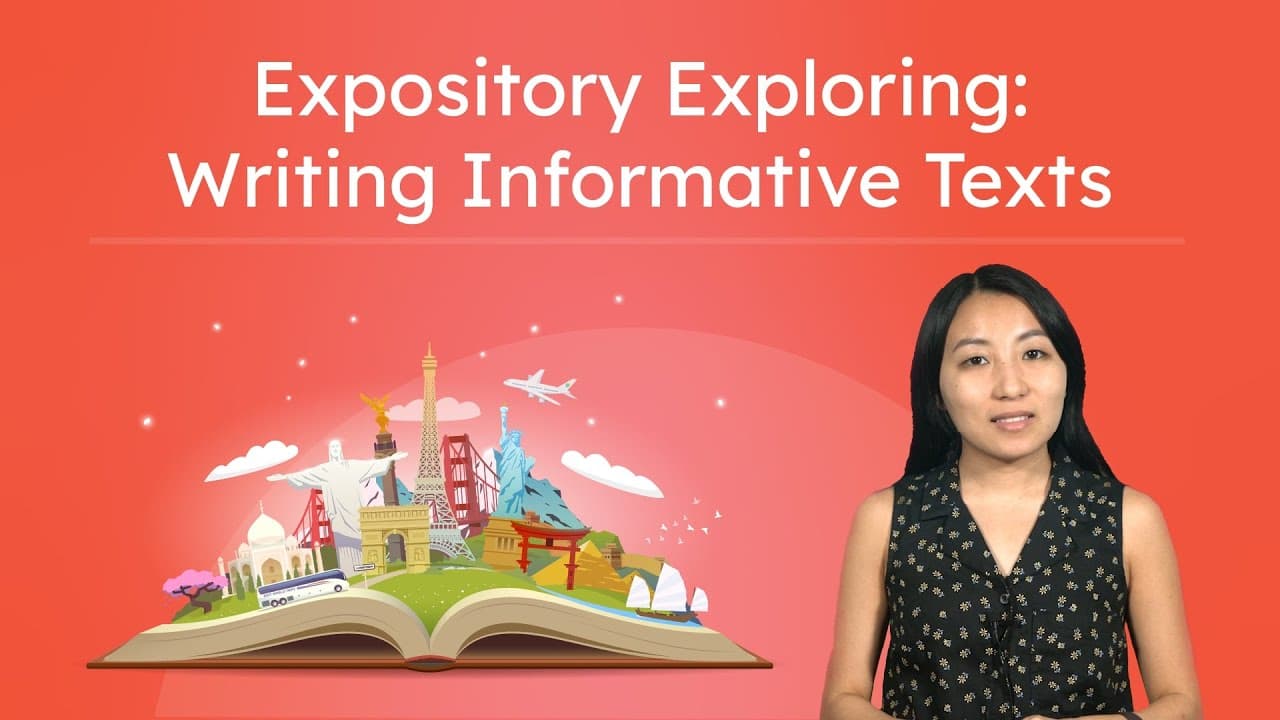
This educational video guides students through the process of writing an informative comparative essay, using the specific example of comparing traditional Korean music (Gugak) with modern K-pop. The lesson takes place in the fictional setting of "Informatown," where the host explains how to take raw information—in this case, a fact sheet about South Korean music—and transform it into a structured, cohesive text. The video emphasizes the importance of planning before writing, using analogies like drawing outlines to explain the concept. The content covers the complete writing lifecycle: selecting the appropriate text type based on the data (comparative), grouping information logically to form body paragraphs, creating a structured outline with Roman numerals, and drafting the essay with attention to topic sentences, transitions, and hooks. It specifically breaks down the structure of an essay into an introduction (hook, background, central idea), body paragraphs (grouped by theme rather than just listing facts), and a conclusion. The video models each step, providing clear examples of how to turn bullet points into flowing prose. For educators, this video serves as an excellent model for a writing workshop. It scaffolds the writing process by breaking it down into manageable chunks, making the often-daunting task of essay writing approachable. By using a culturally relevant and engaging topic (K-pop), it captures student interest while teaching fundamental literacy skills such as synthesizing information, organizing ideas hierarchically, and using transitional phrases to improve flow. The video includes built-in pause points for student practice, making it ready-to-use for direct instruction.
Miacademy & MiaPrep Learning ChannelMiacademy & MiaPrep Learning Channel

11mins 27s

How to Find the Main Idea and Key Details

How to Find the Main Idea and Key Details

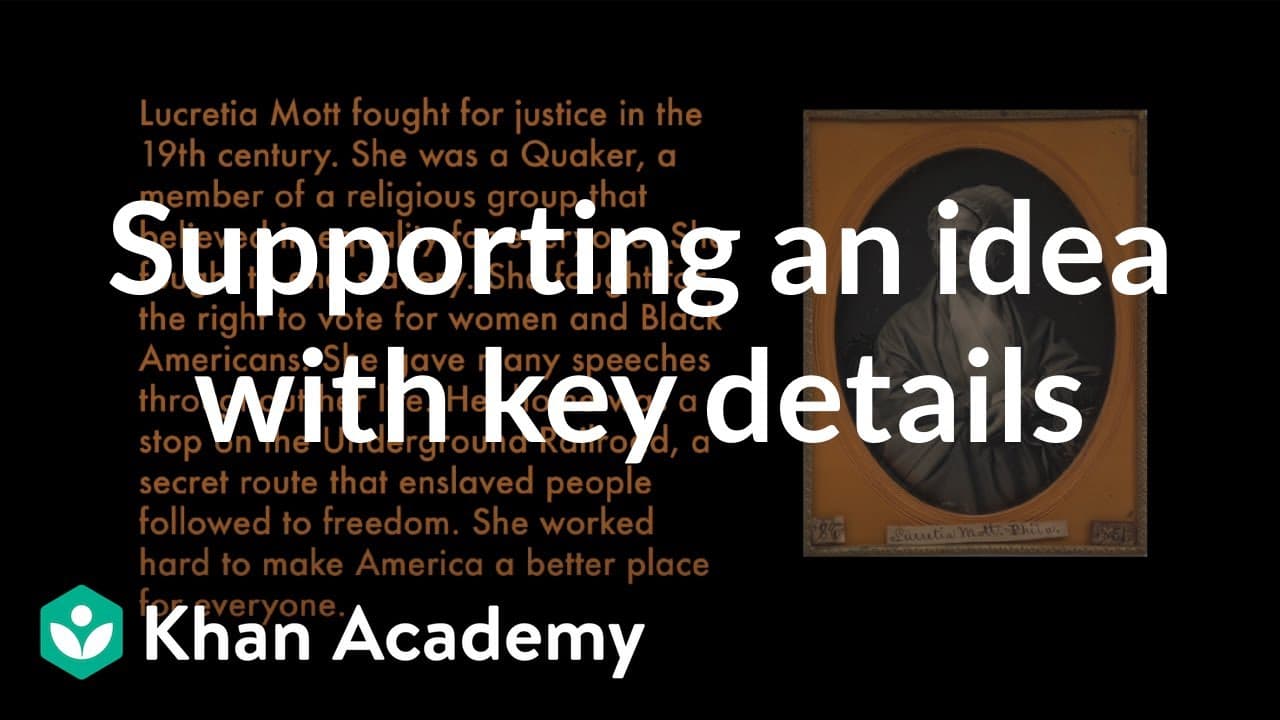
This educational video uses a clear and accessible "house building" analogy to teach students how to identify the main idea and key details in a text. The narrator explains that just as walls support a roof, key details support the main idea of a passage; without them, the argument (or house) falls down. The video breaks the process into three actionable steps: identifying the topic, determining what the author is saying about the topic (the main idea), and finding specific details that prove that statement true. The video applies these concepts to a short biographical text about Lucretia Mott, a 19th-century activist. The narrator models critical thinking by evaluating every sentence in the text to determine if it acts as a "strong wall" that supports the main idea of Mott fighting for justice. Interestingly, the video demonstrates that not every fact in a text is a key detail, showing students how to distinguish between general background information and specific textual evidence. This resource is highly valuable for upper elementary classrooms focusing on reading comprehension and informational text analysis. It provides a concrete visualization for abstract concepts and models the exact thought process students should use when analyzing nonfiction. It also serves as a cross-curricular resource, briefly introducing historical content regarding the abolitionist and women's suffrage movements.

Khan AcademyKhan Academy

3mins 58s

Materials

Gatsby Loathsome Character Blueprint

Gatsby Loathsome Character Blueprint

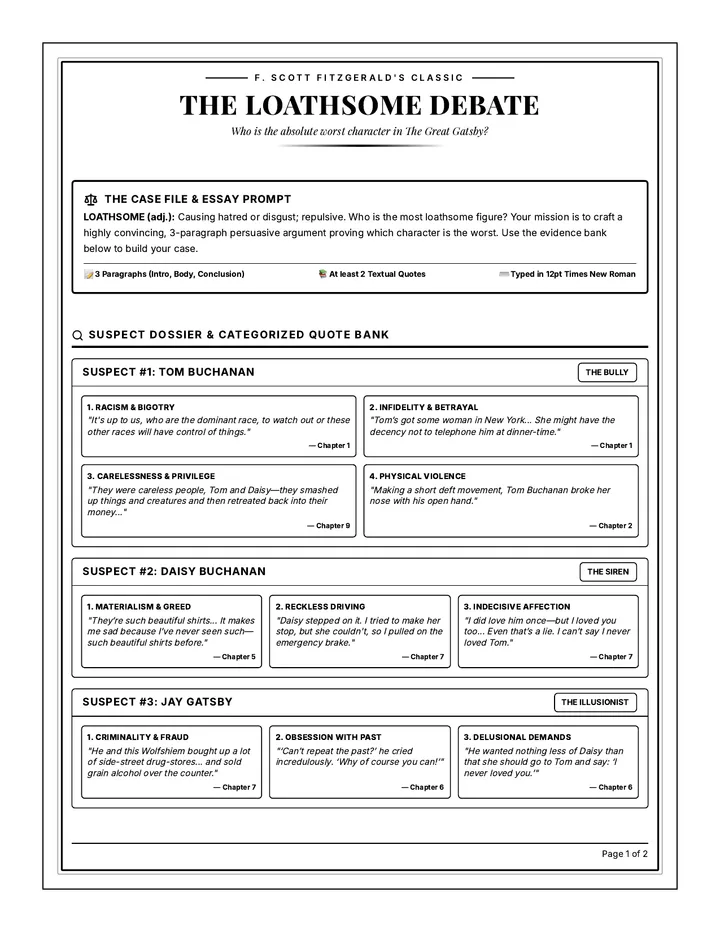
A two-page printable graphic organizer and quote bank in a high-contrast black-and-white theme with zero color or gray fills. Page 1 presents the 'Suspect Dossier' with clear borders, white backgrounds, and pure black text, while Page 2 features the highly structured essay outline and sentence starters with solid black-and-white print-friendly writing guides and page numbers.

KR

Kirstin Reed

Eleven Central Idea Bilingual Guide

Eleven Central Idea Bilingual Guide

A 2-page bilingual English-Spanish graphic organizer and sentence stems guide for Sandra Cisneros's 'Eleven'. Designed for entering ENL students, it scaffolds identifying the topic, distinguishing important vs. less important details, finding commonalities, explaining textual support, and drafting a complete central idea.

AD

Angelina Damone

Void Analysis Rubric

Void Analysis Rubric

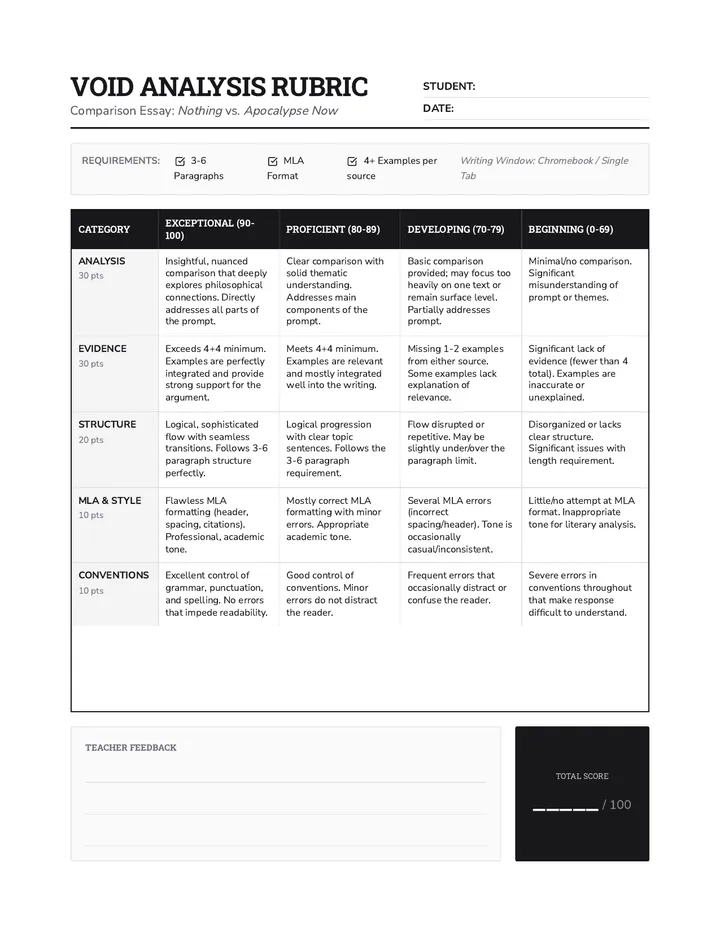
A revised 2-page rubric and prompt sheet for a comparative analysis of 'Nothing' and 'Apocalypse Now'. Page 1 features a detailed 100-point rubric with sections for teacher feedback and final scoring; Page 2 provides the five thematic writing prompts for student reference.

EH

Erin Hofmann

Research Paper Editing Checklist

Research Paper Editing Checklist

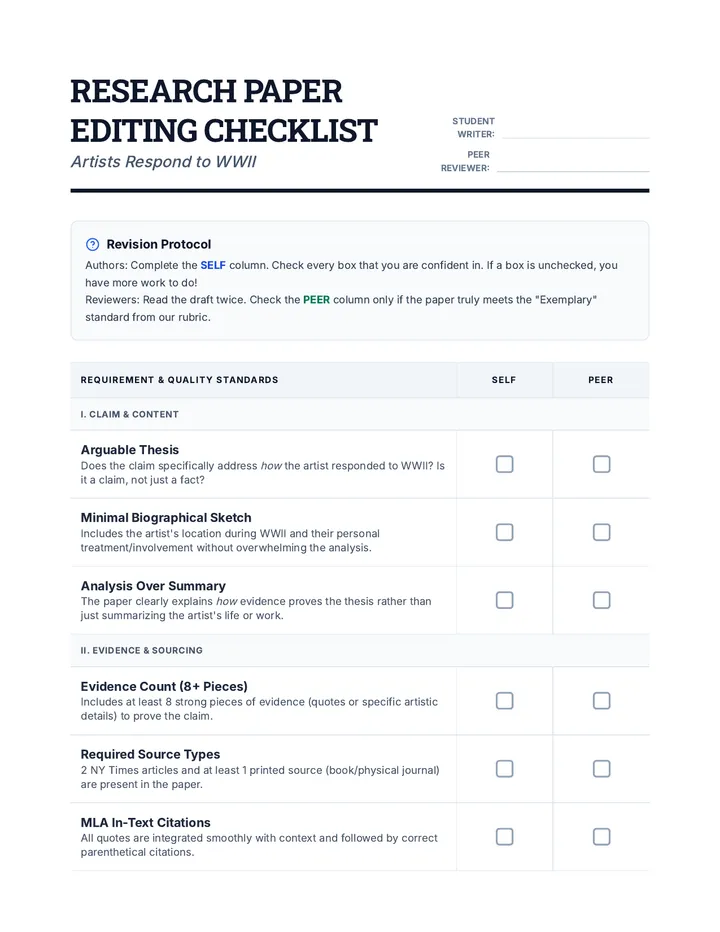
A comprehensive self and peer editing checklist for the WWII Artists research paper. The "MLA Format & Length" requirement has been updated to specify that 6 sources are required for the standard research paper.

F

fgraham

STAAR Revising Editing Anchor Chart

STAAR Revising Editing Anchor Chart

A two-page STAAR and TEKS aligned 7th Grade RLA anchor chart and student notebook insert covering revising (structure, thesis, transitions, ARMS) and editing (sentence boundaries, FANBOYS, AAAWWUUBBIS, CUPS, and high-frequency STAAR question stems).

AS

Adrienne Synatschk

Sweet Main Idea Anchor Chart

Sweet Main Idea Anchor Chart

A bakery-themed anchor chart and graphic organizer that uses a donut as a visual metaphor for nonfiction structure. It includes a complete example about donuts and a student practice area with dotted handwriting lines to guide student responses.

J

JESSICA.STEPHENS

Sequences

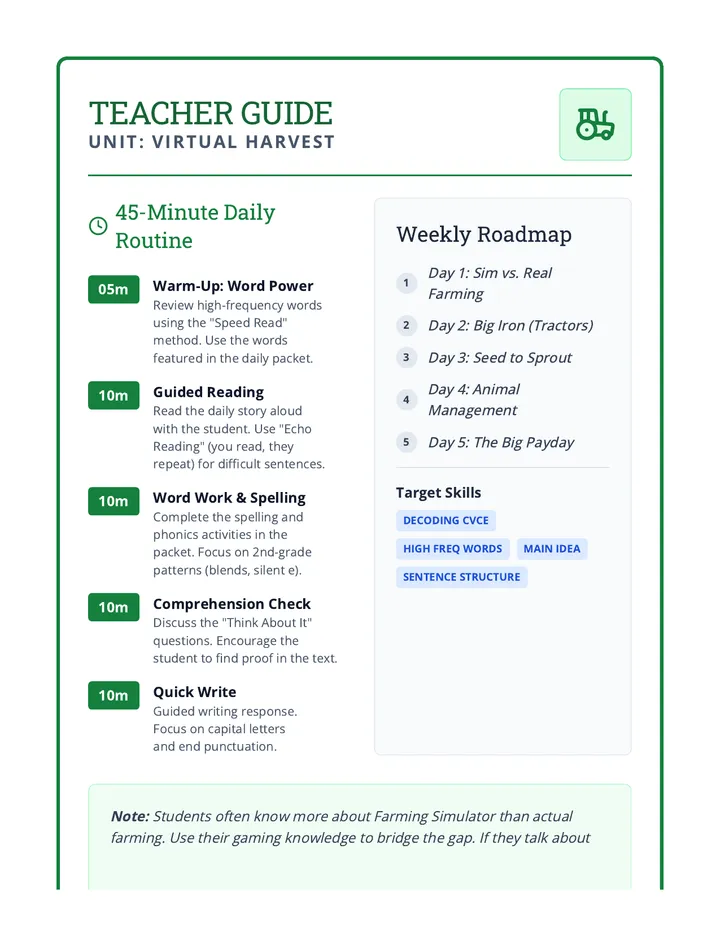
Virtual Harvest Teacher Guide

Digital Dirt

A 5-day reading comprehension and writing unit for struggling readers, blending the world of Farming Simulator with real-world agriculture. Focuses on 2nd-grade level literacy skills within a high-interest 5th-grade context.

CM

carley Martin

30
Echo Showdown Quiz

Statement Chasers

A writing sequence focused on the 'Echo Method'—teaching students to transform writing prompts into strong topic statements by reusing prompt keywords.

KB

Krista Bodkin

18
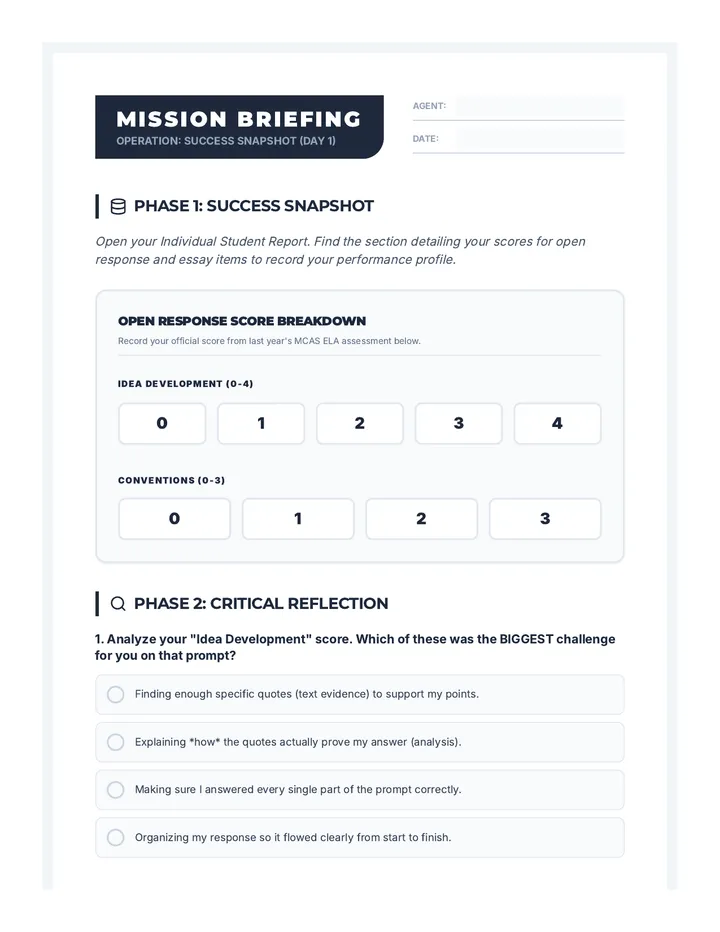
Mission Briefing Worksheet

Mastery Mission

A project-based learning unit designed to help middle school students analyze their past MCAS ELA performance, deconstruct scoring rubrics, and create a personalized strategy playbook for upcoming assessments. Students move from 'investigating' their scores to 'rebooting' their responses and 'finalizing' their test-taking toolkit.

M

mhbutterworth

18
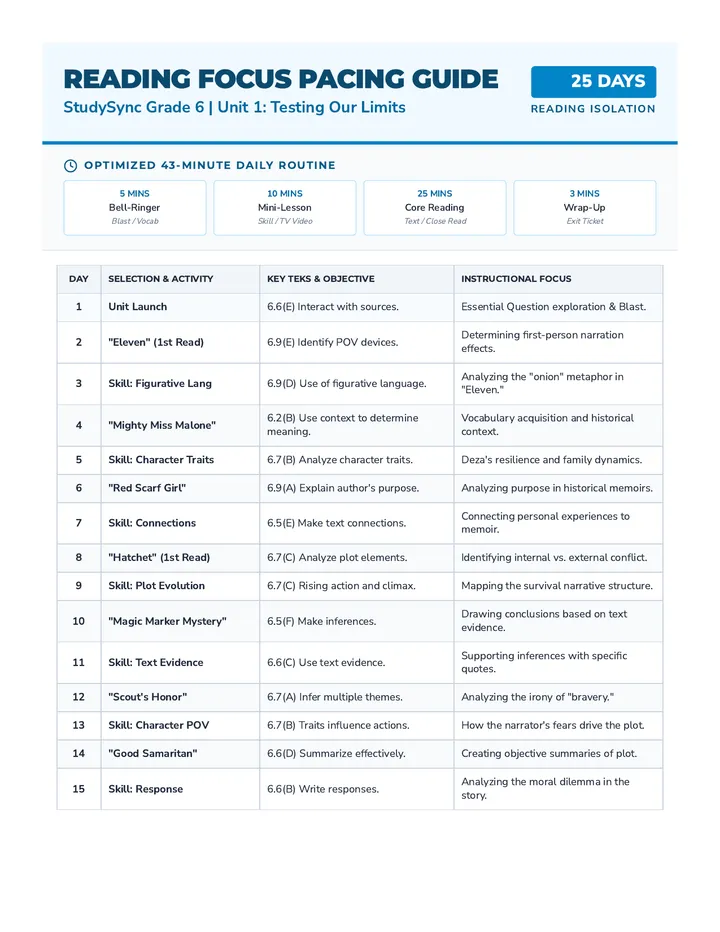
Reading Focus Pacing Guide

Testing Our Limits Unit

A 25-day comprehensive unit for StudySync Grade 6 that explores the theme of courage and resilience through isolated reading and writing tracks, aligned to ELA TEKS.

DM

Dawn Mustian

79
Burger Builder Slides

Paragraph Foundations

A foundational paragraph writing unit designed for early writers and SpEd students to master core paragraph structures through narrative, opinion, and informational writing with heavy visual scaffolding.

E

ecreamer

23
Detective Entry Exam Assessment

Defense Detectives

A 10-session Tier 2 intervention for 4th-grade students focused on vocabulary and comprehension, aligned with EL Education Module 2 (Animal Defenses). Students act as 'Defense Detectives' to investigate how animals survive in the wild.

S

svallely

29