Students synthesize their skills by creating and sharing a 5-slide digital biography presentation.
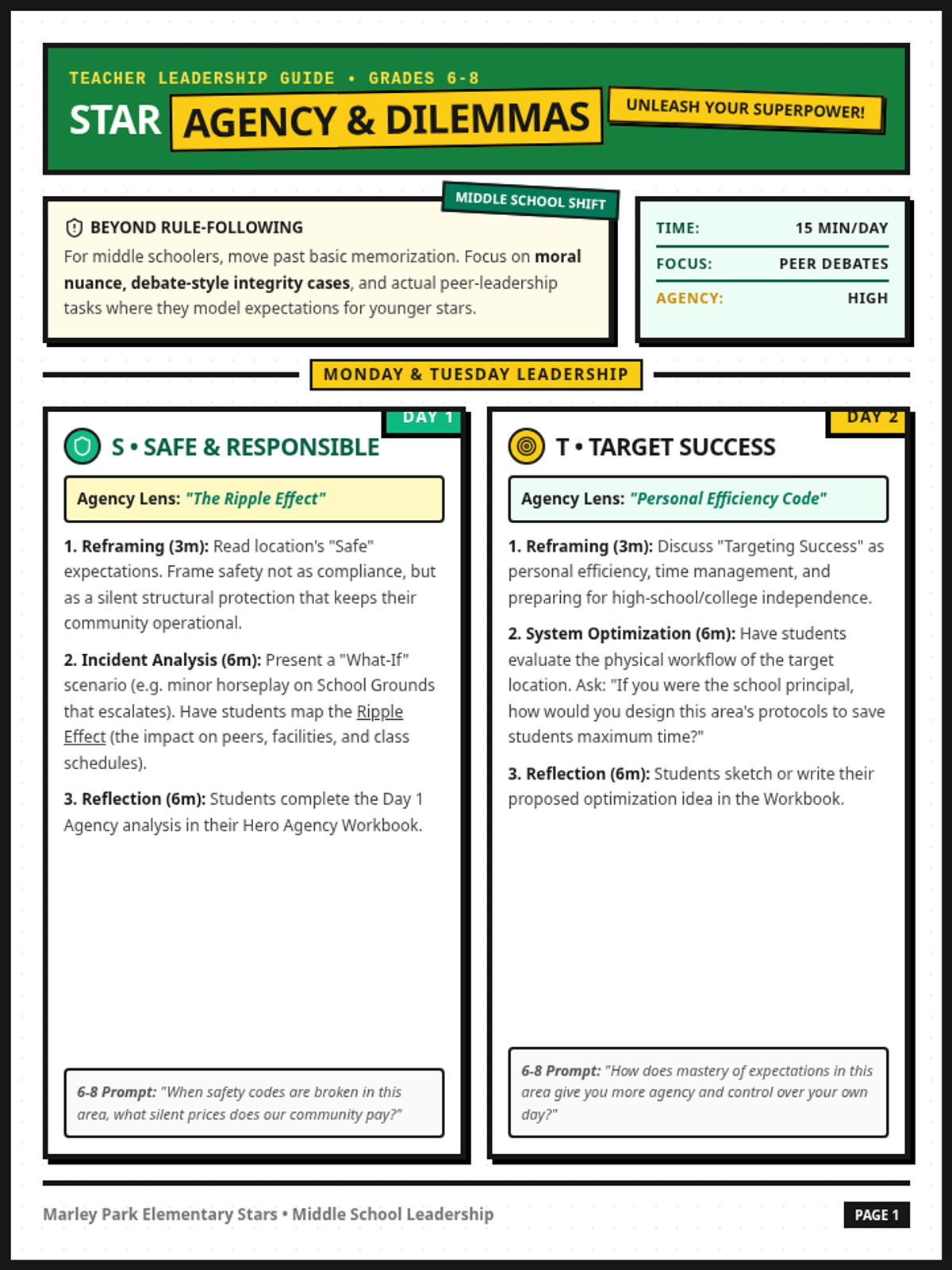
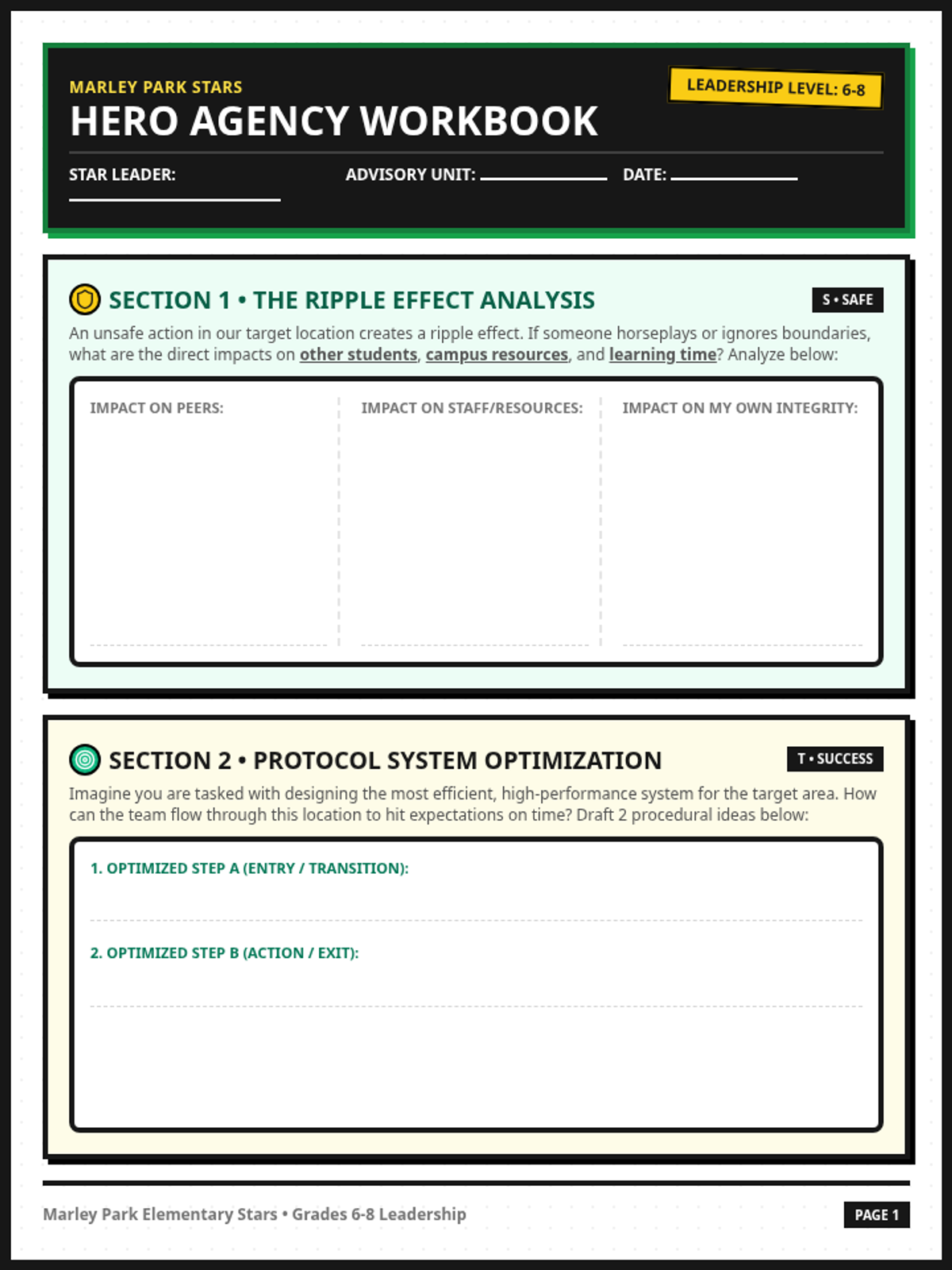
A universal 5-day lesson set for middle school (grades 6-8) that leverages peer leadership, debate-style moral dilemmas (exploring the nuance of integrity), and self-guided agency projects to cultivate respect and responsibility across campus.
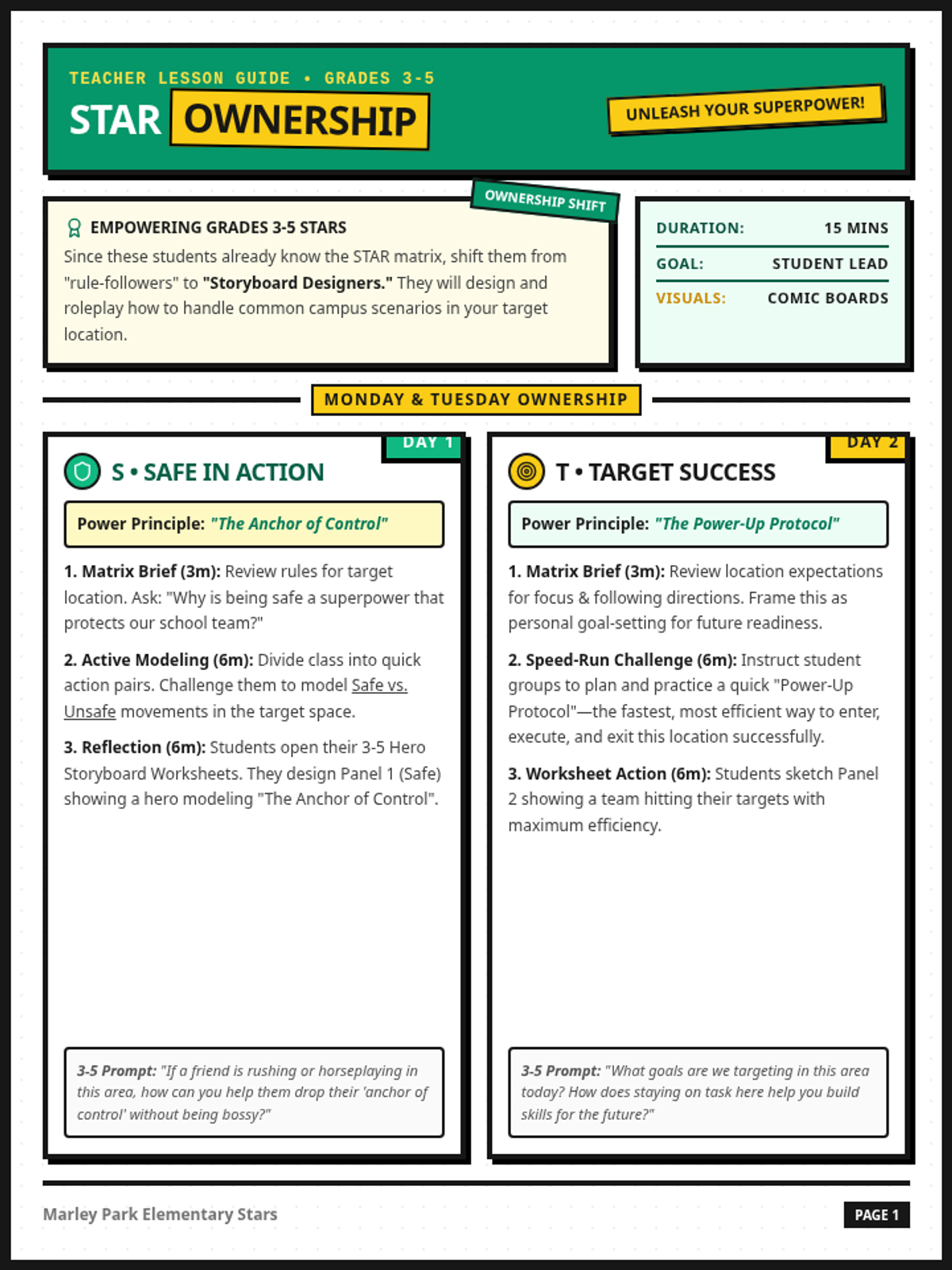
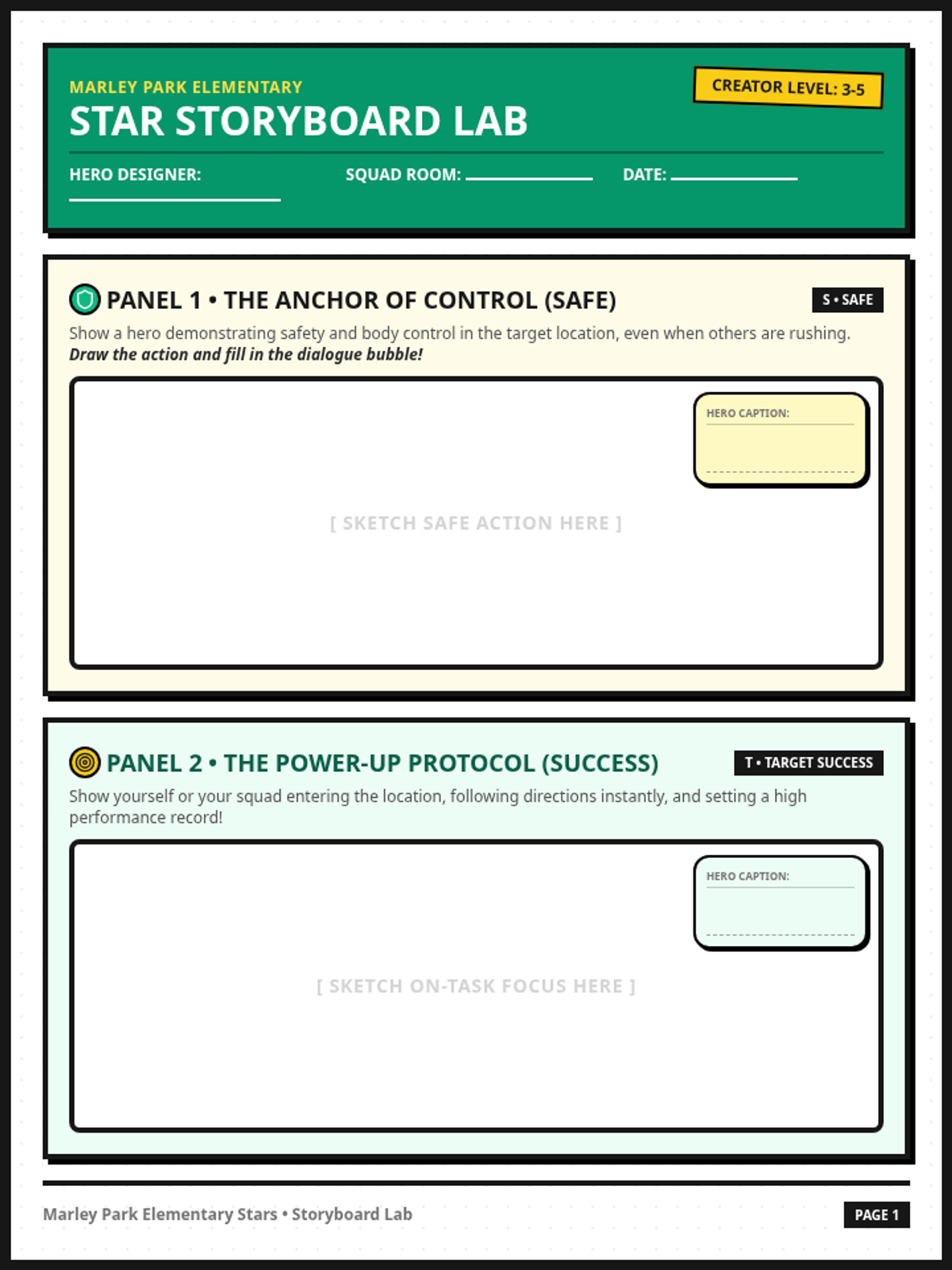
A universal 5-day lesson set for grades 3-5 that shifts focus toward student ownership, comic storyboard creation, and scenario-based problem solving to understand STAR expectations in any school setting.
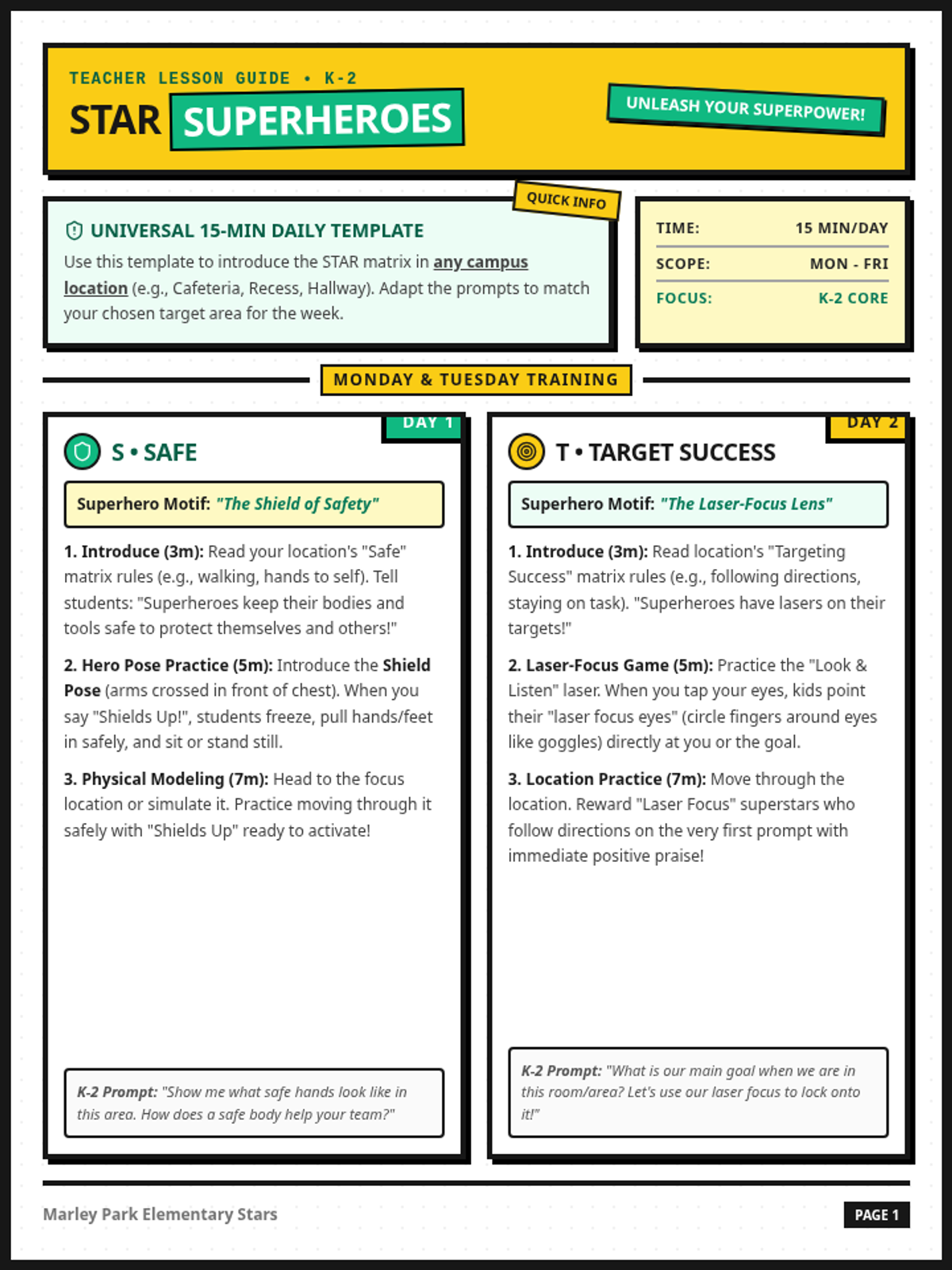
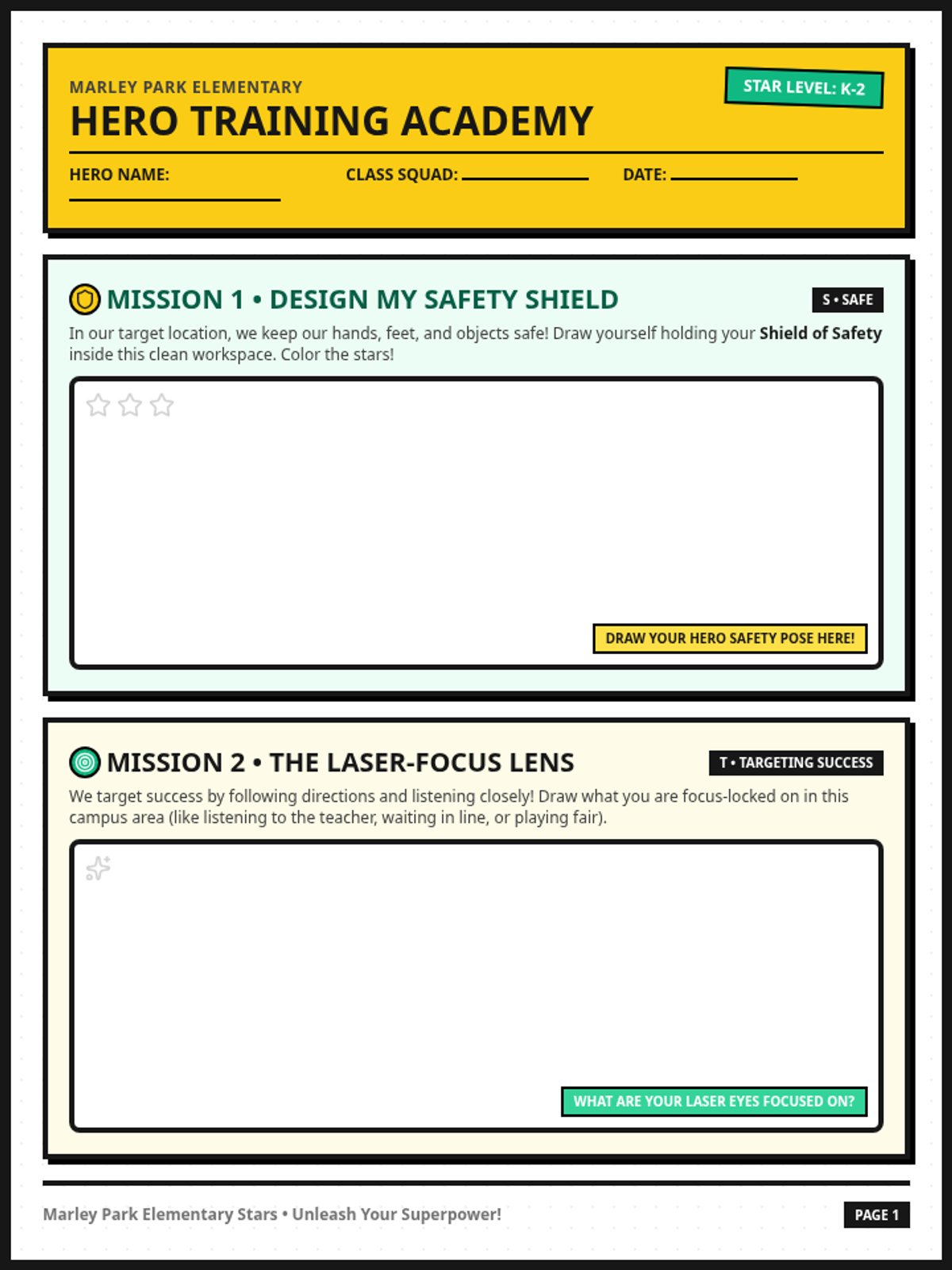
A universal 5-day lesson set for K-2 students focused on introducing STAR expectations (Safe, Targeting Success, Acting with Integrity, Respectful & Responsible) in any campus location through physical modeling, simple superhero analogies, and an interactive superhero-themed student activity guide.
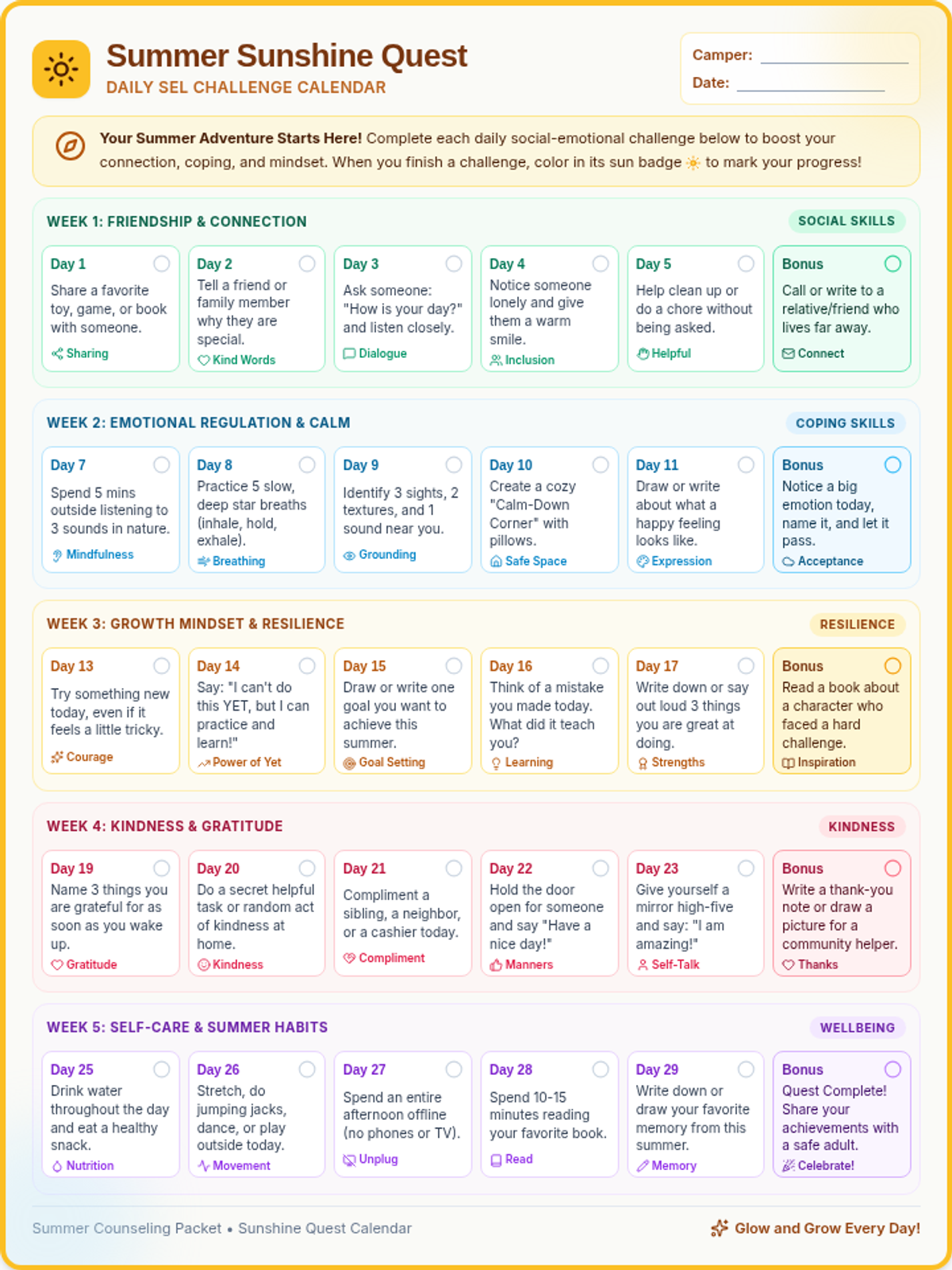
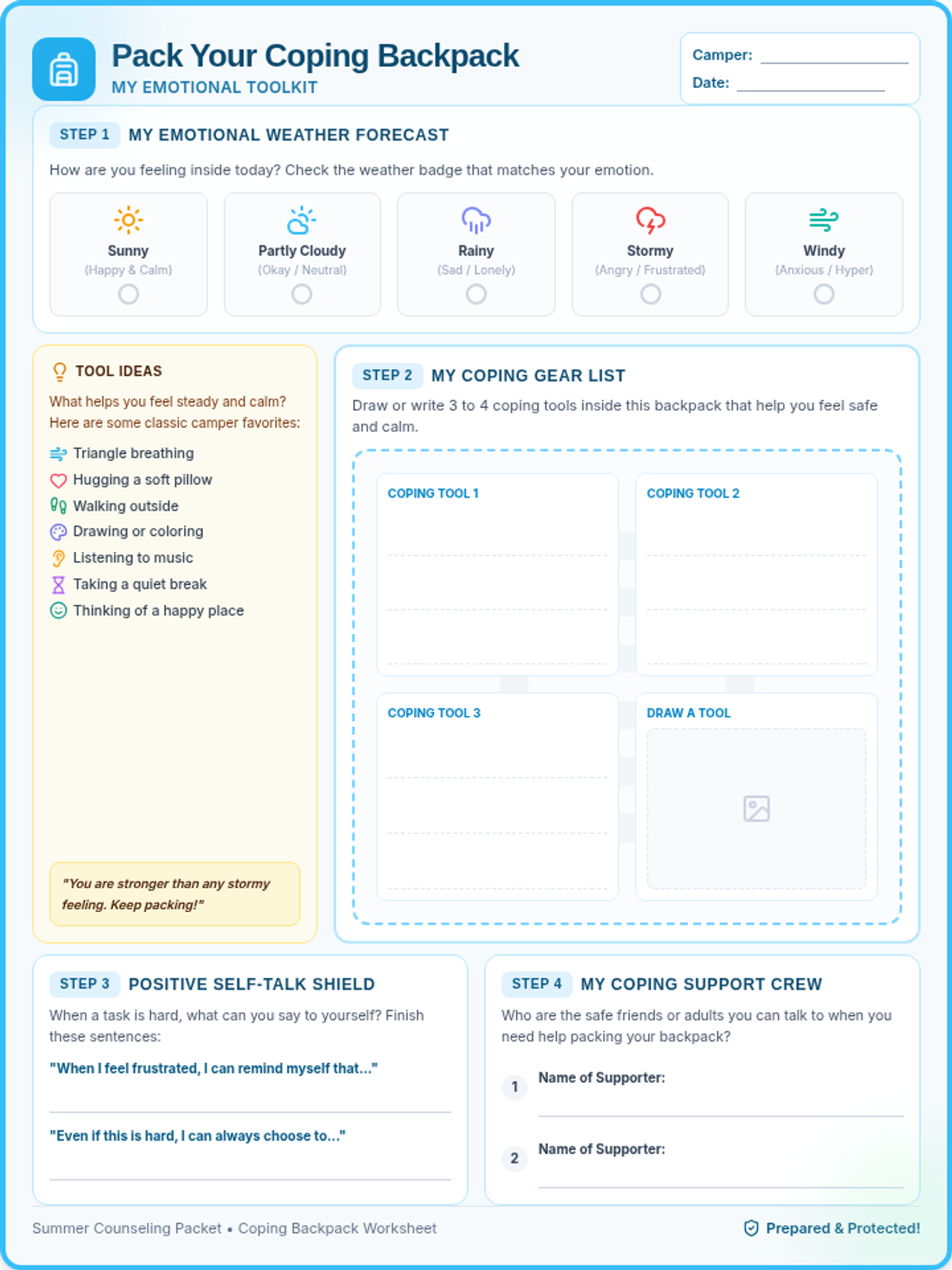
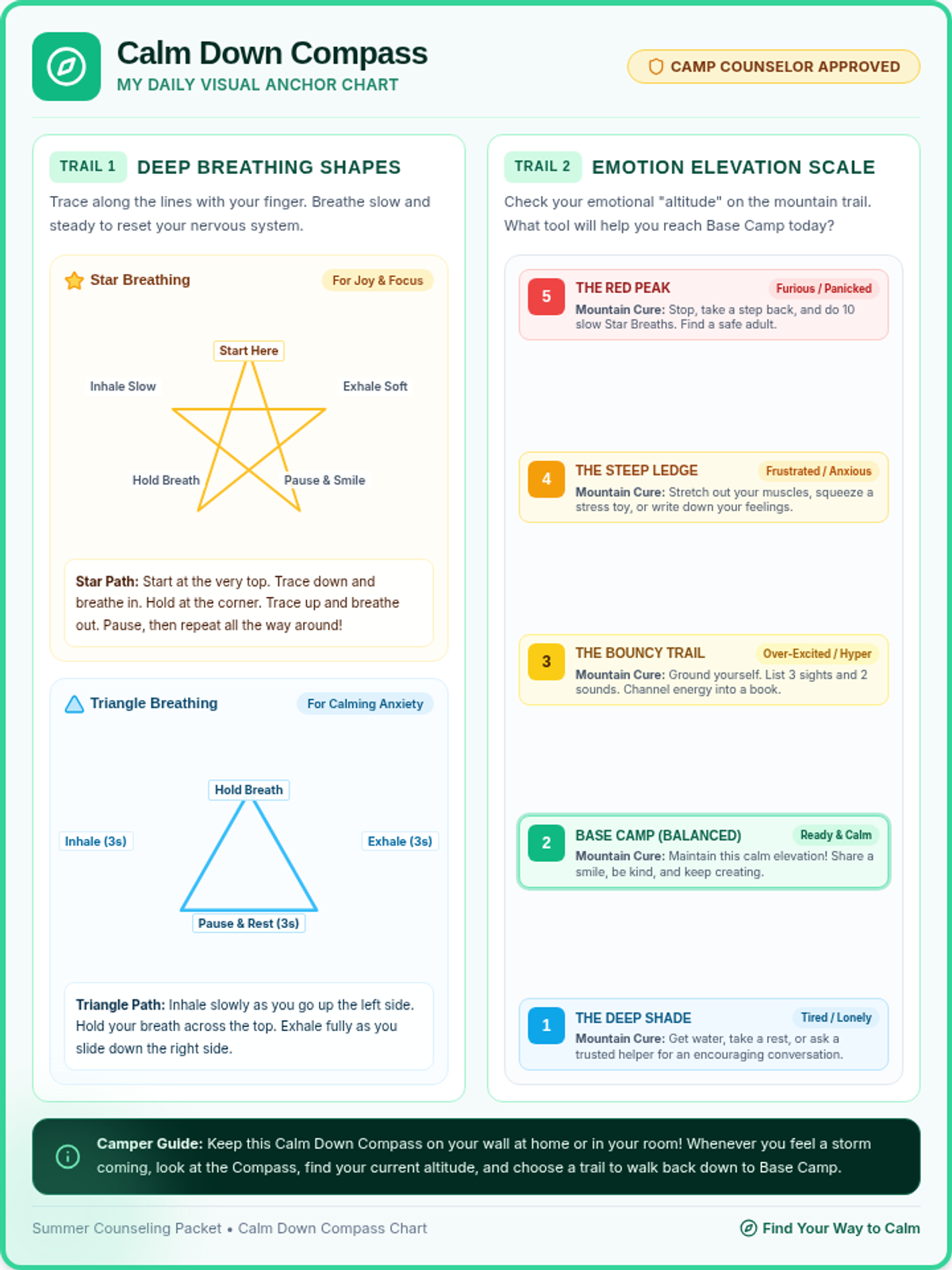
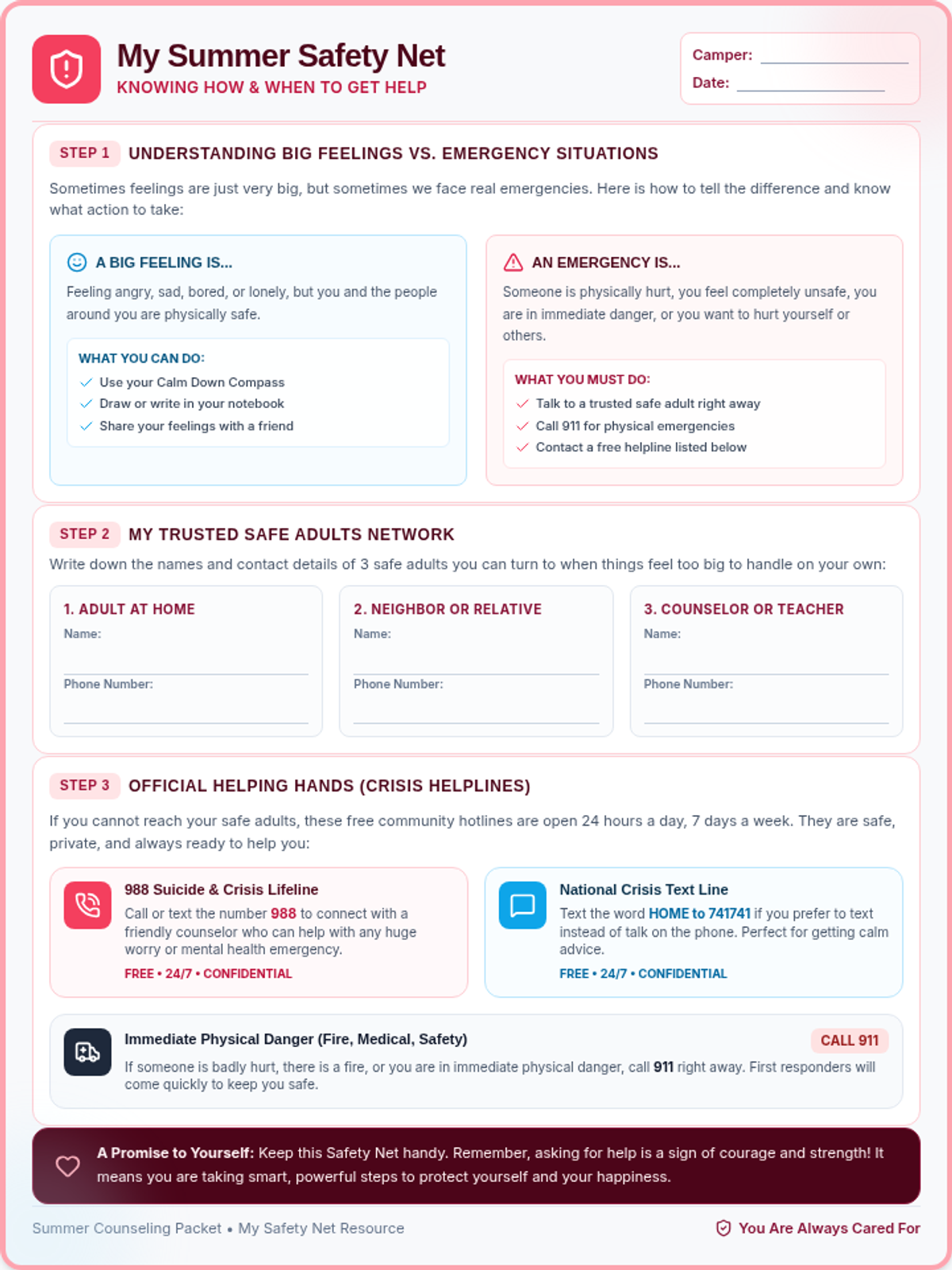
A comprehensive summer counseling packet containing daily SEL challenge calendars, coping skill worksheets, deep breathing visual anchor charts, and a safety net resource for getting help in emergencies.
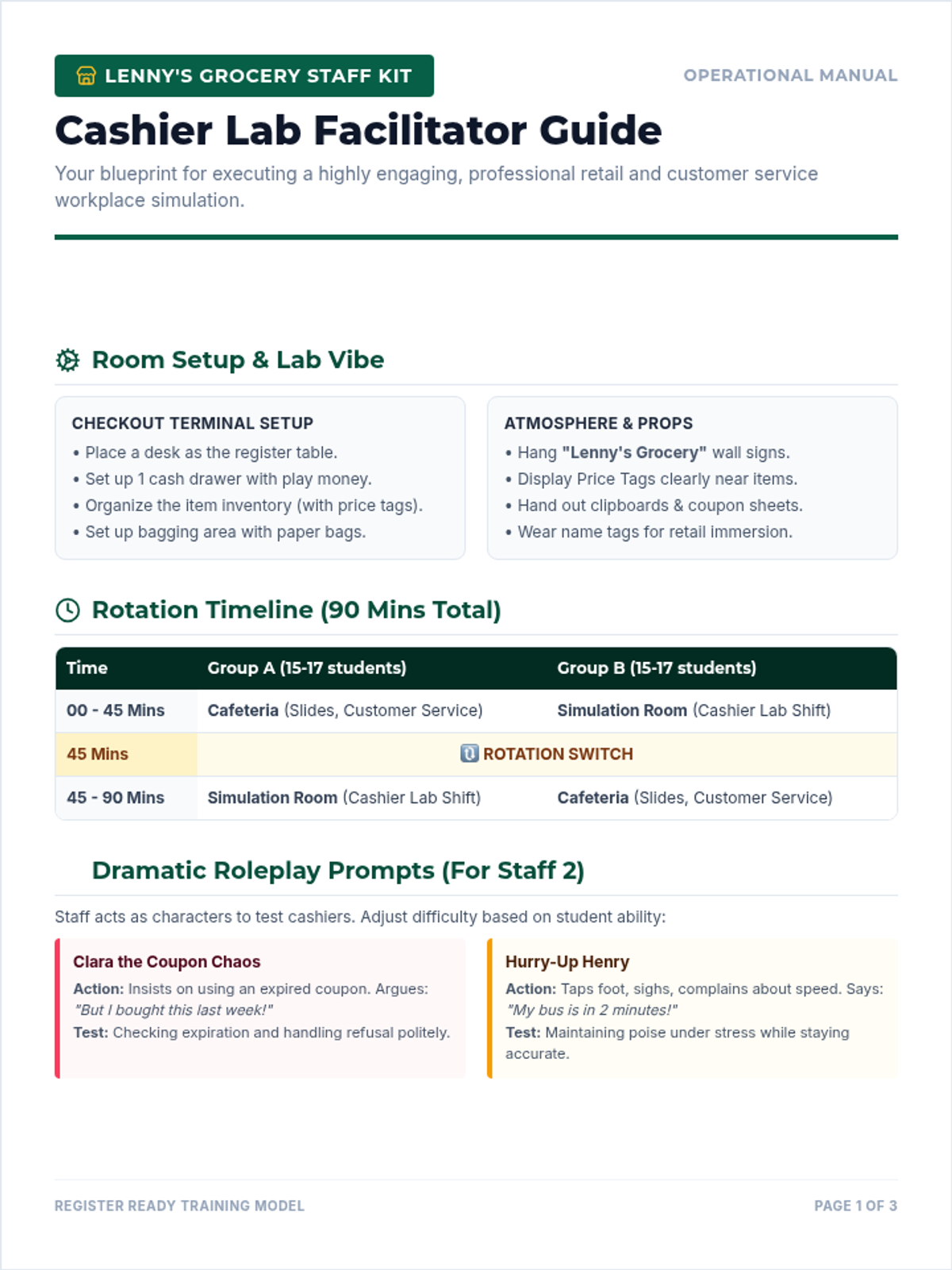
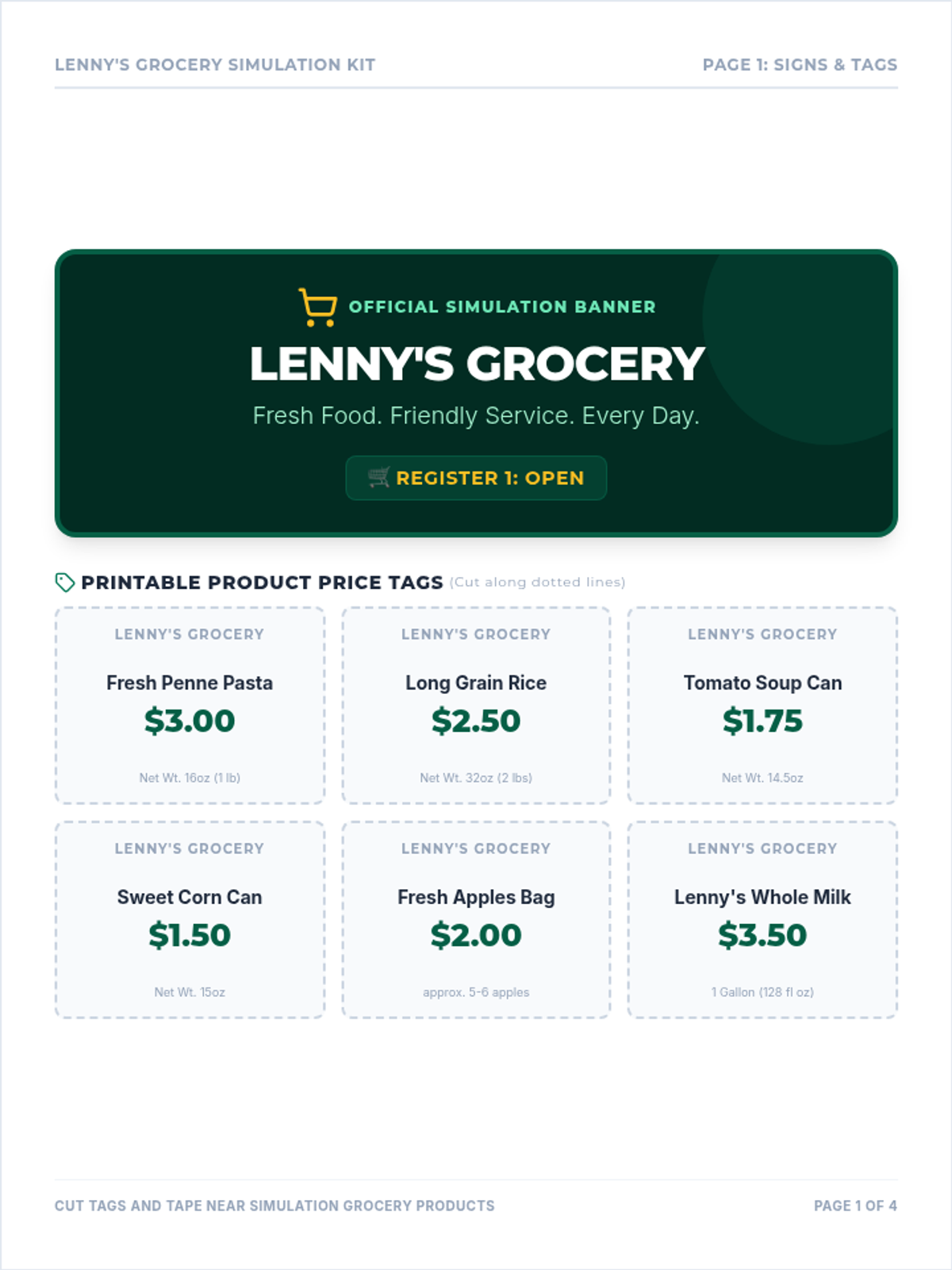
A dynamic rotation lesson where students split between a multimedia classroom training and a realistic, hands-on grocery checkout simulation.
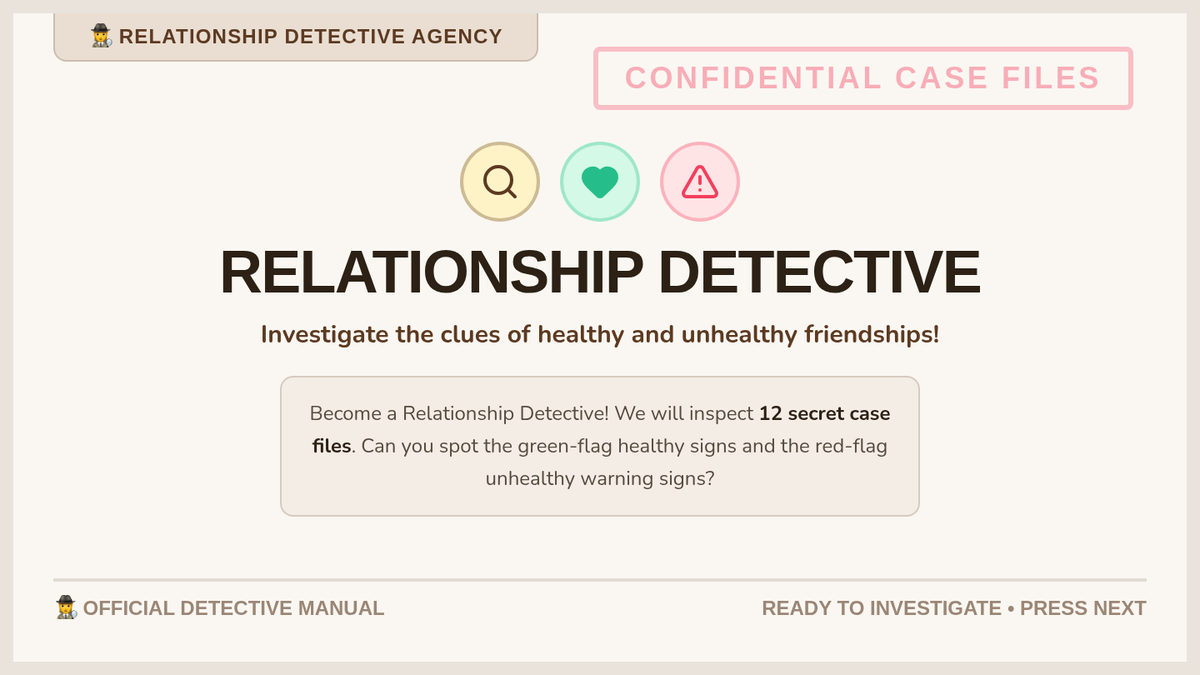
A highly visual, engaging interactive lesson where students act as 'Relationship Detectives' to investigate 12 friendship case files, sorting healthy green-flag behaviors from unhealthy red-flag behaviors.
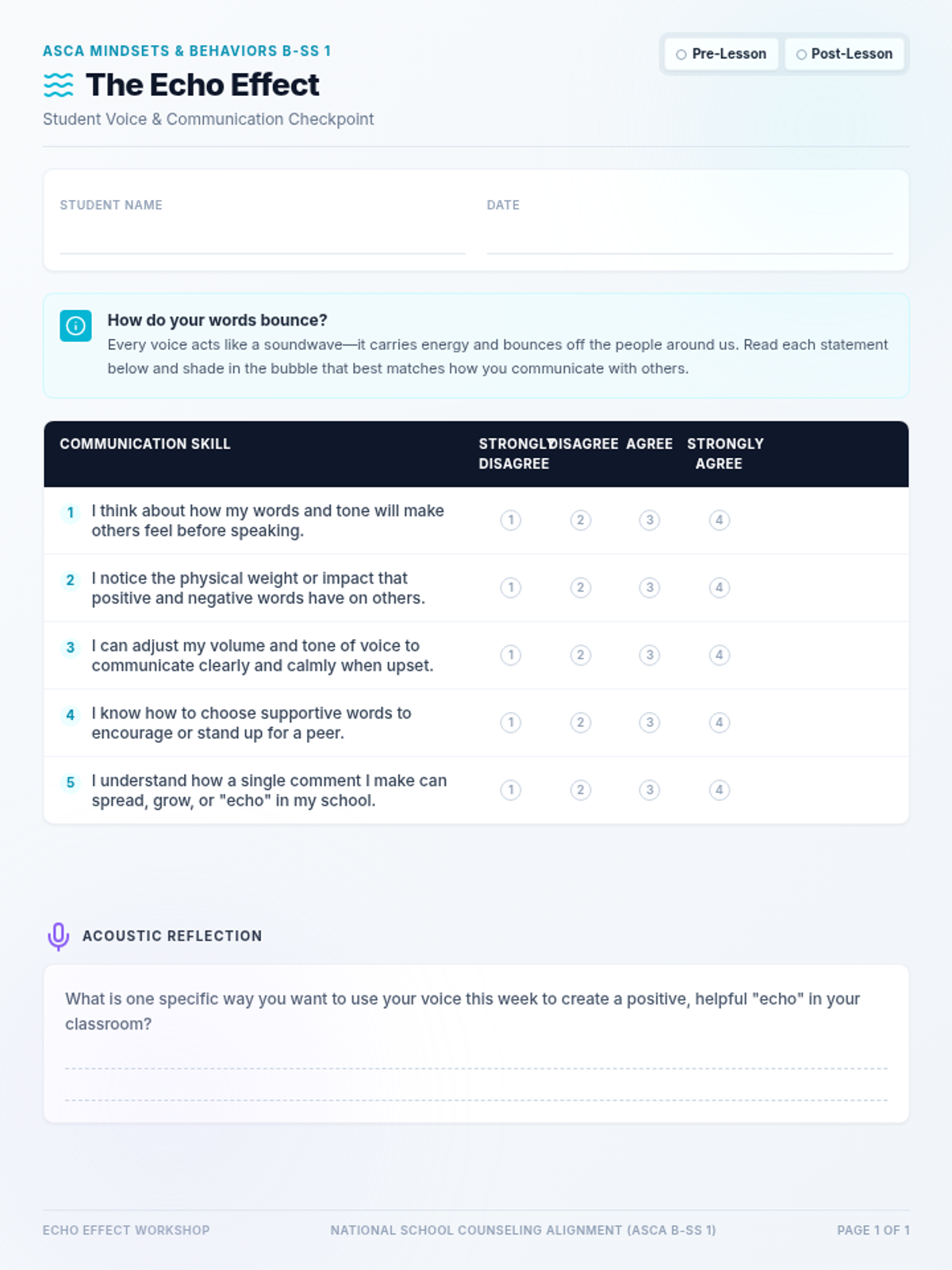
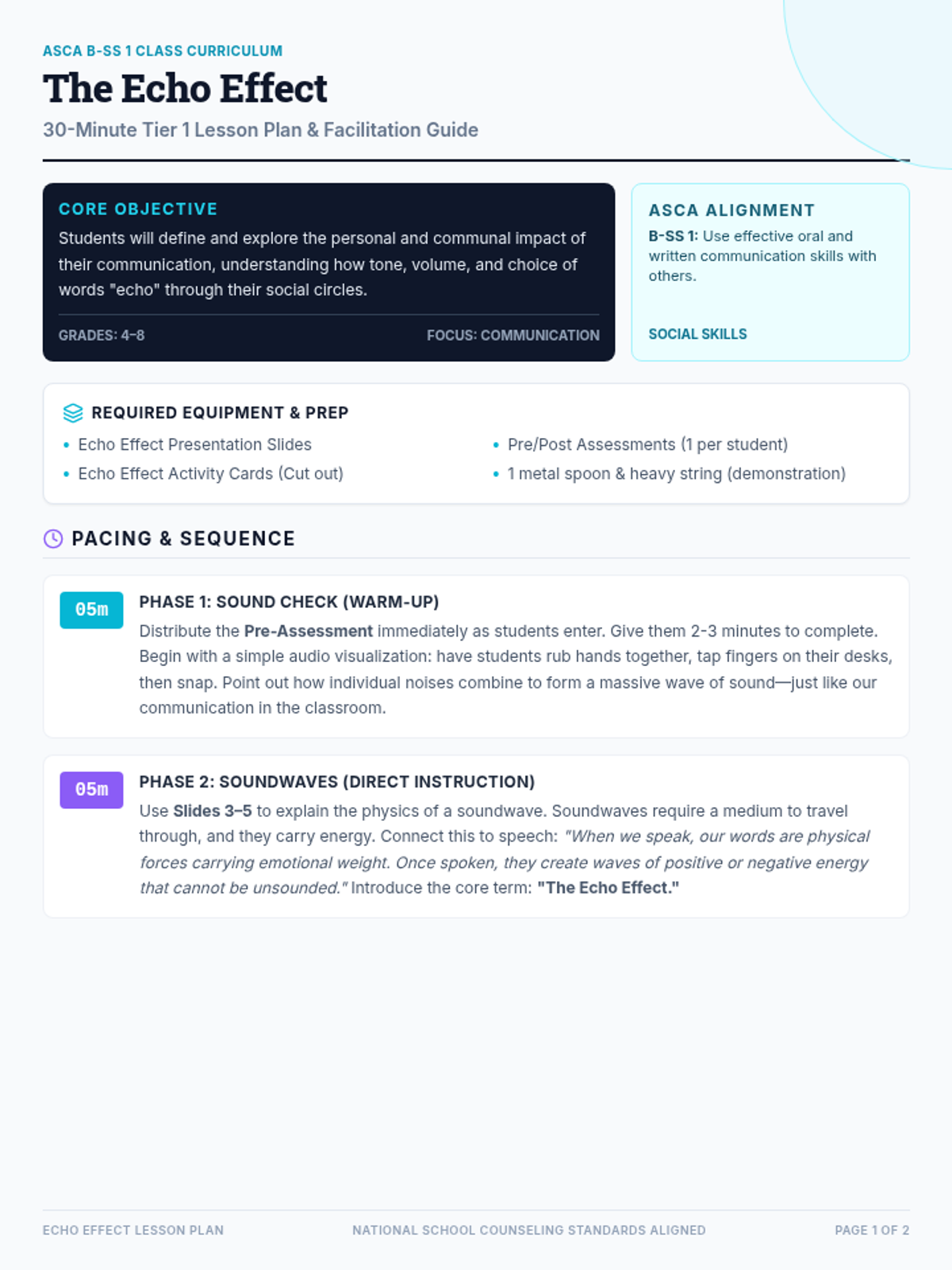
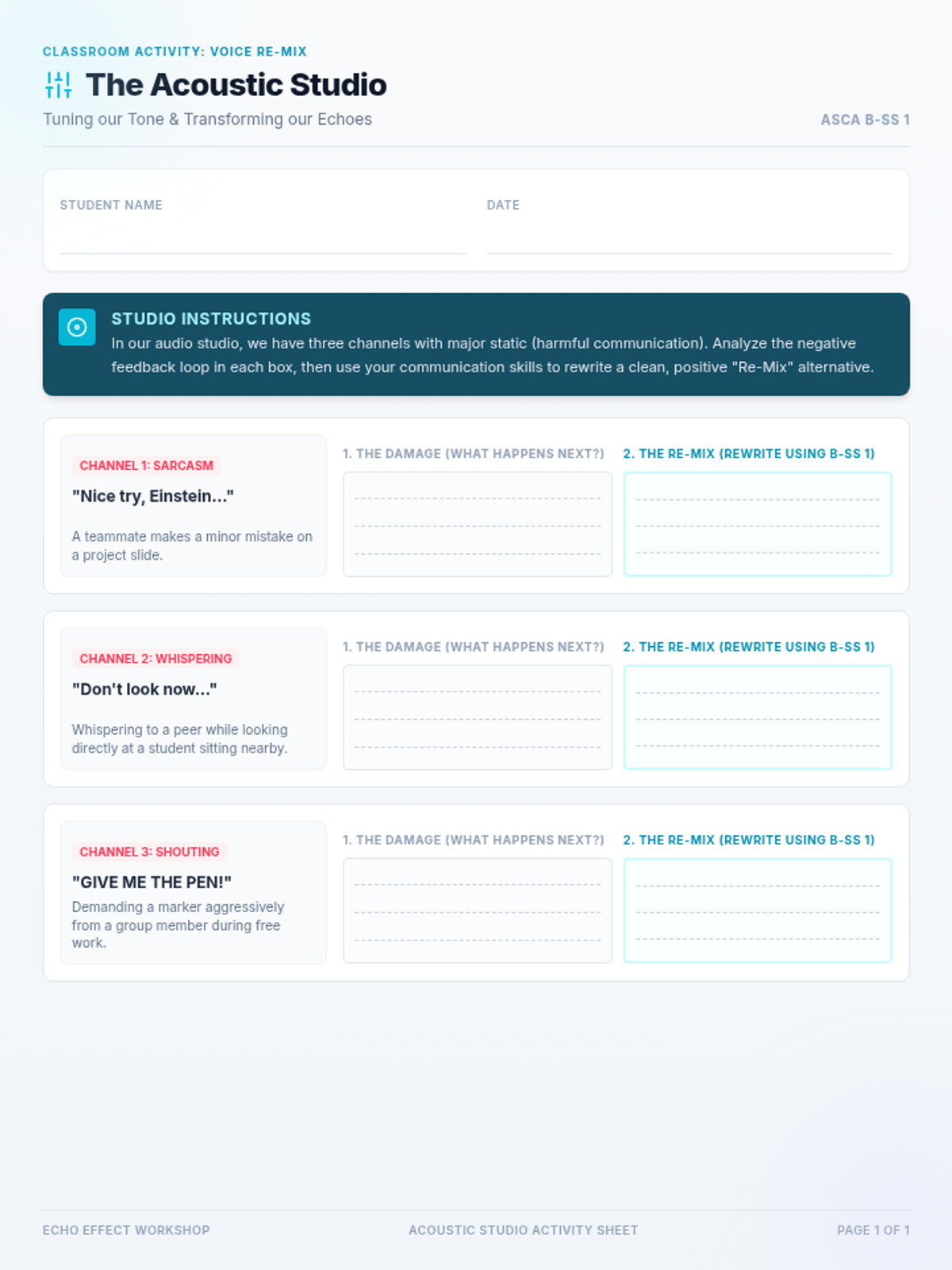
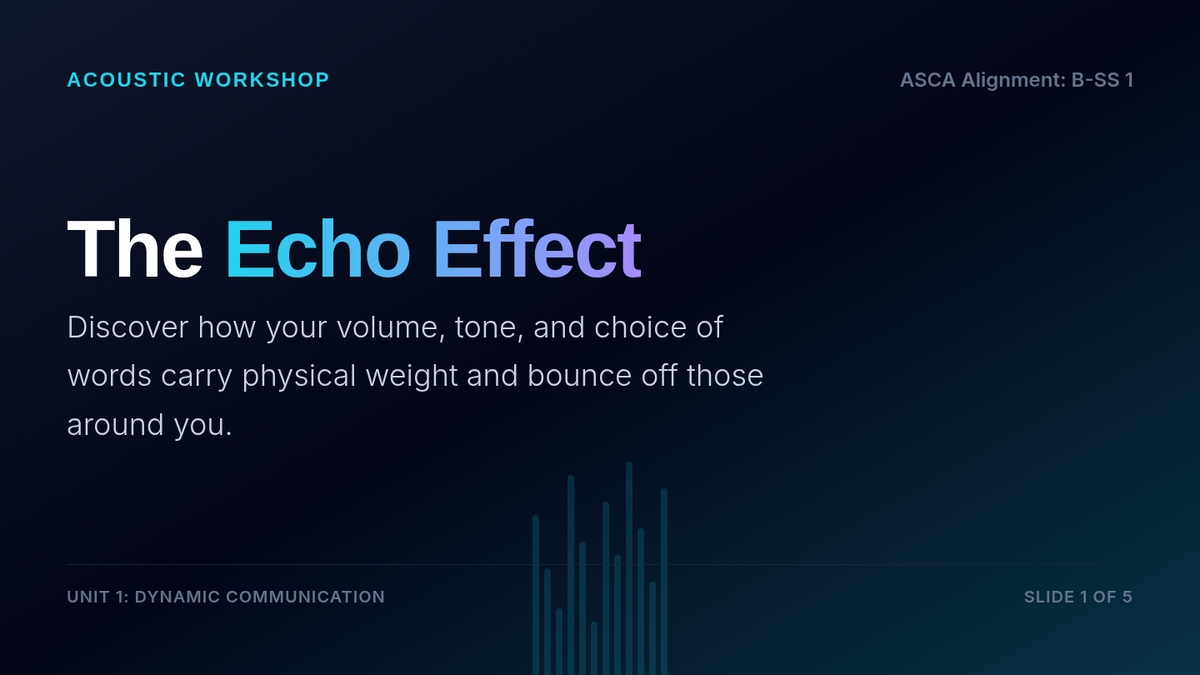
A Tier 1 classroom lesson designed to teach students how their words and voice carry weight, impact others, and echo through their social environments. Aligned with ASCA Mindsets & Behaviors B-SS 1 (effective oral and written communication).
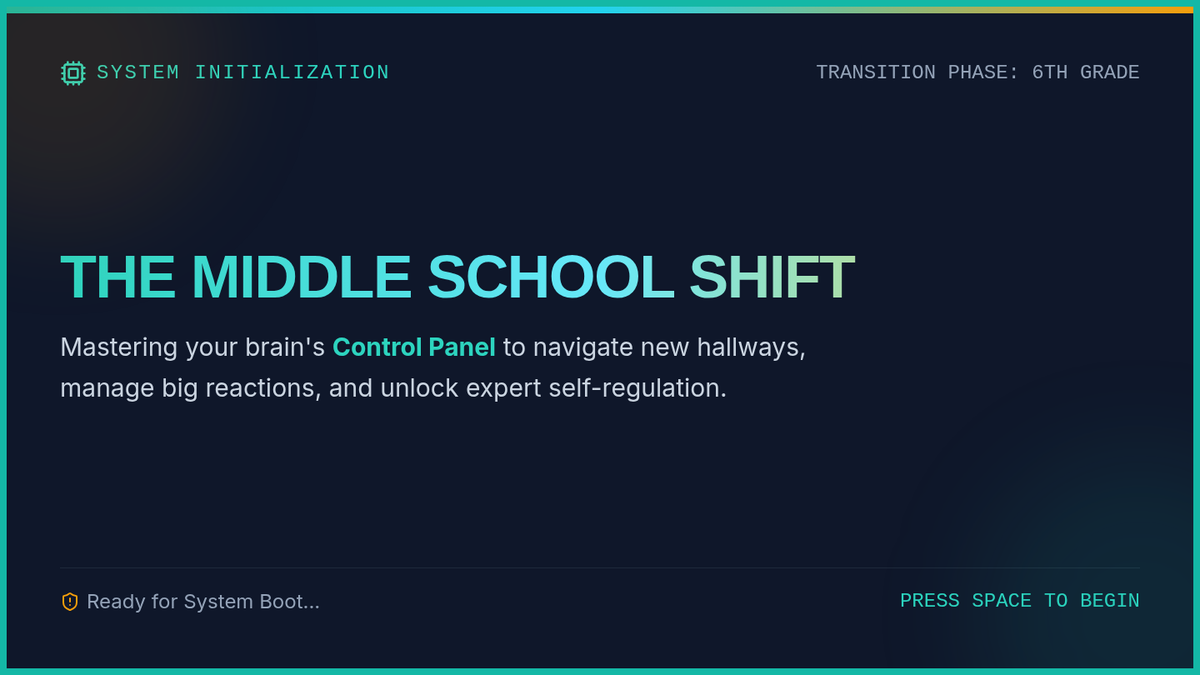
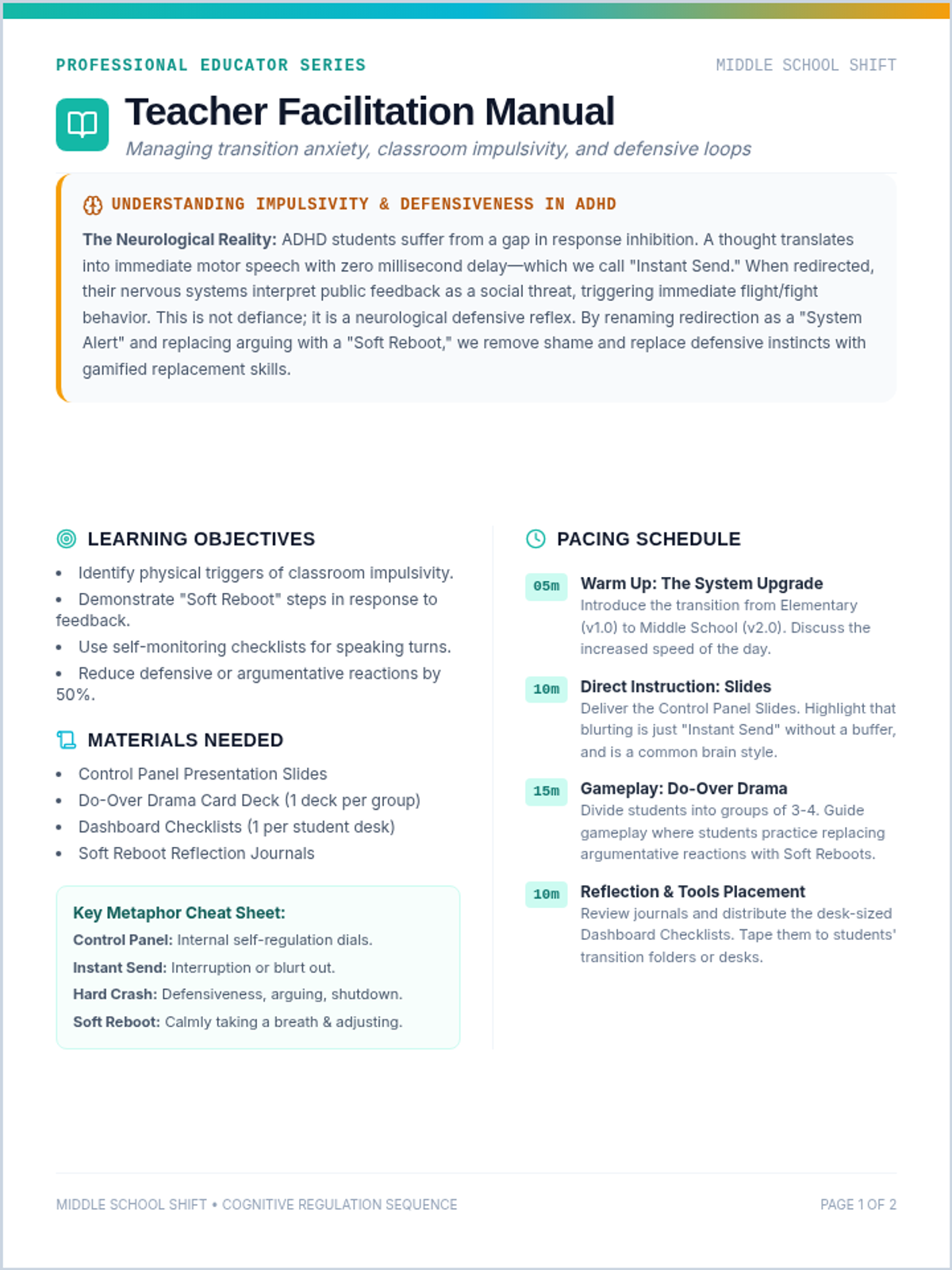
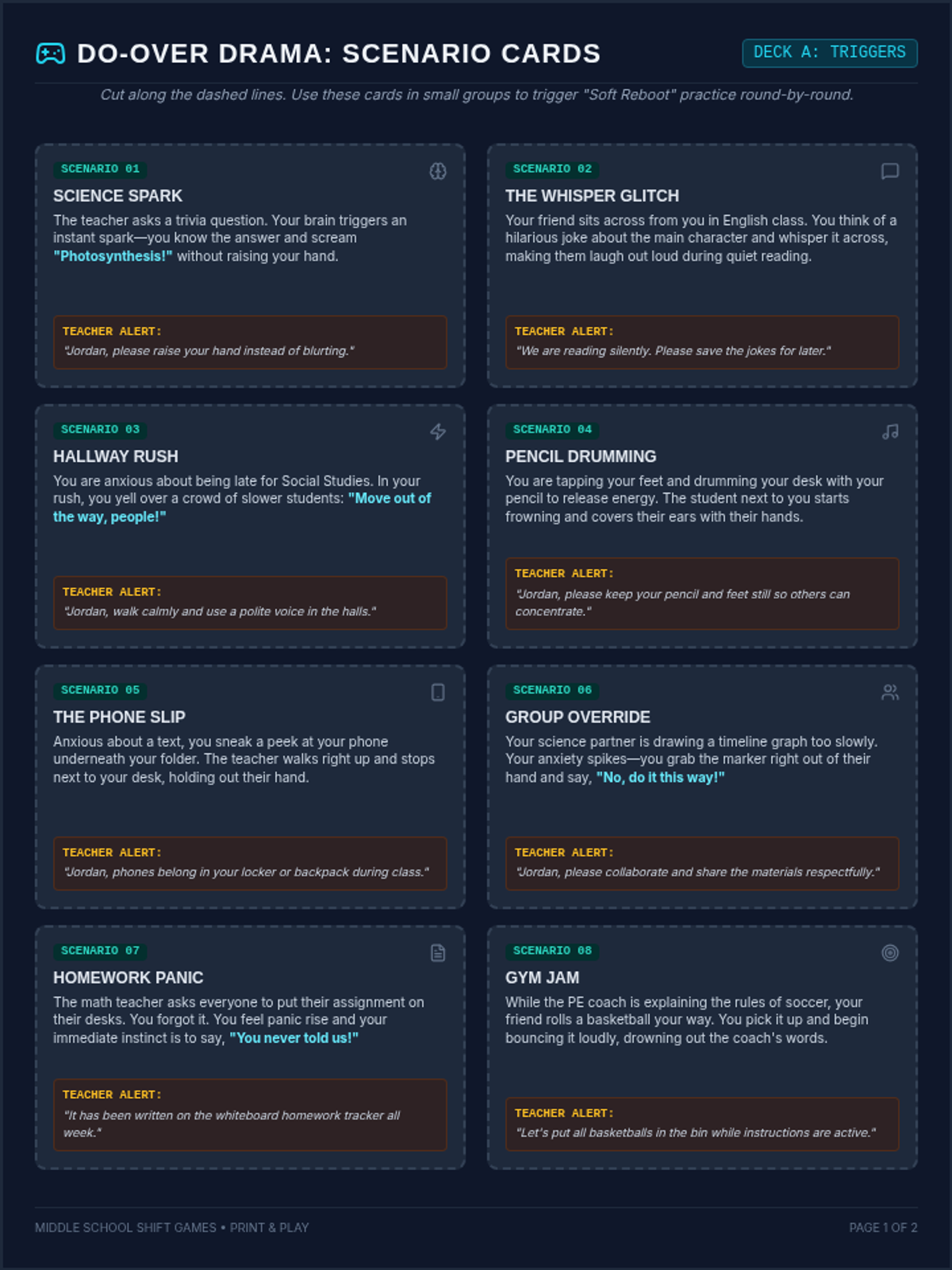
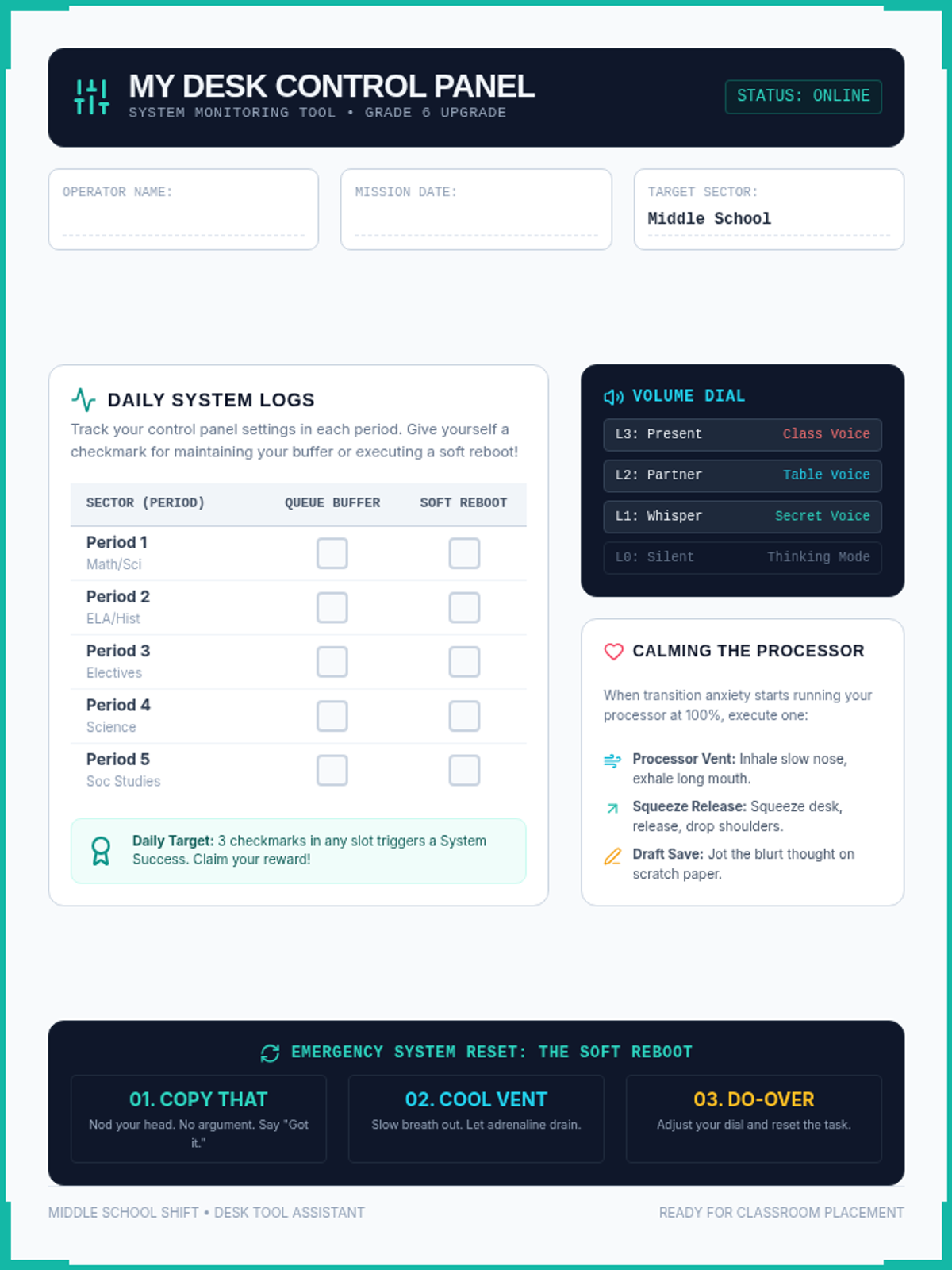
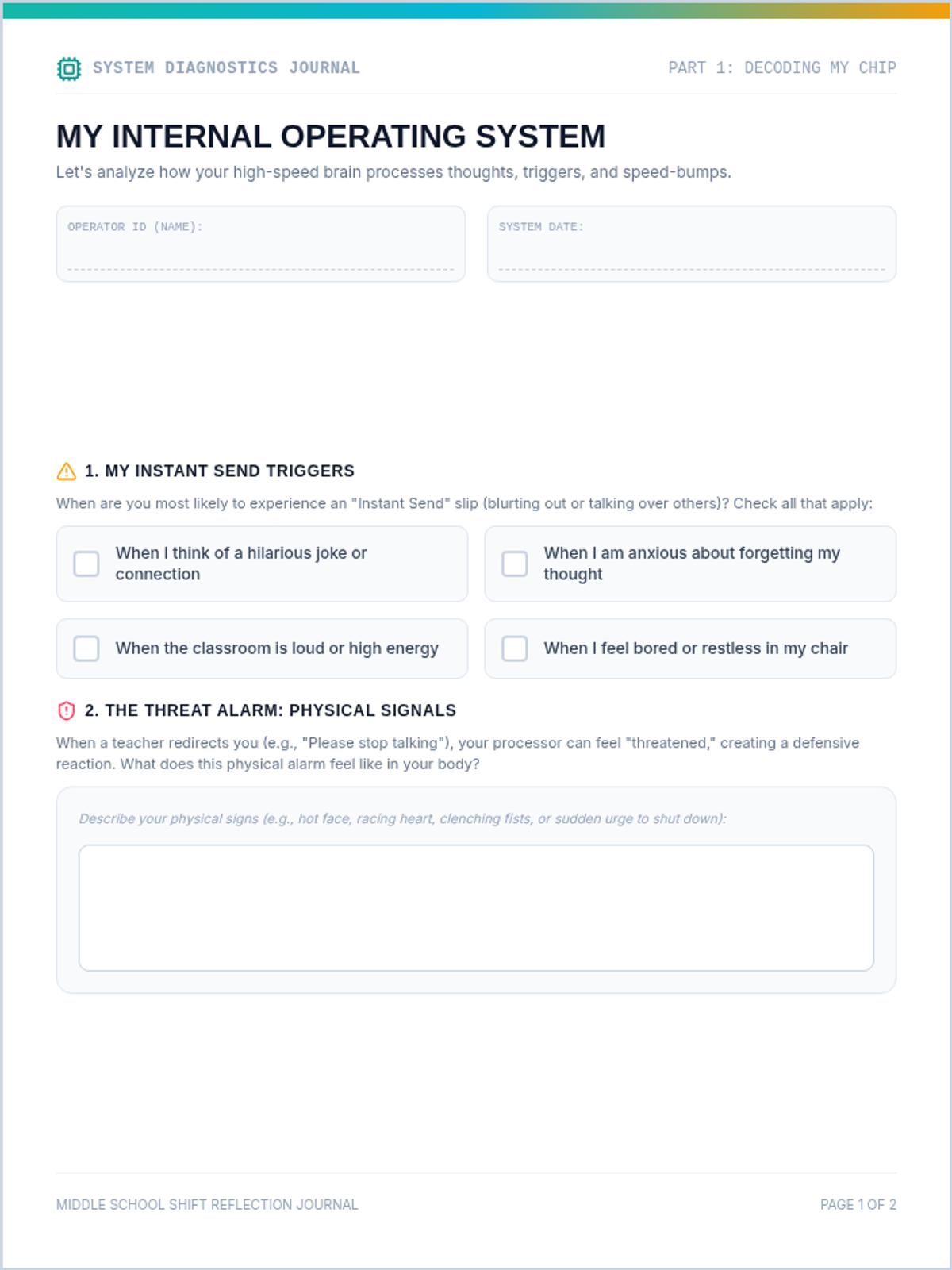
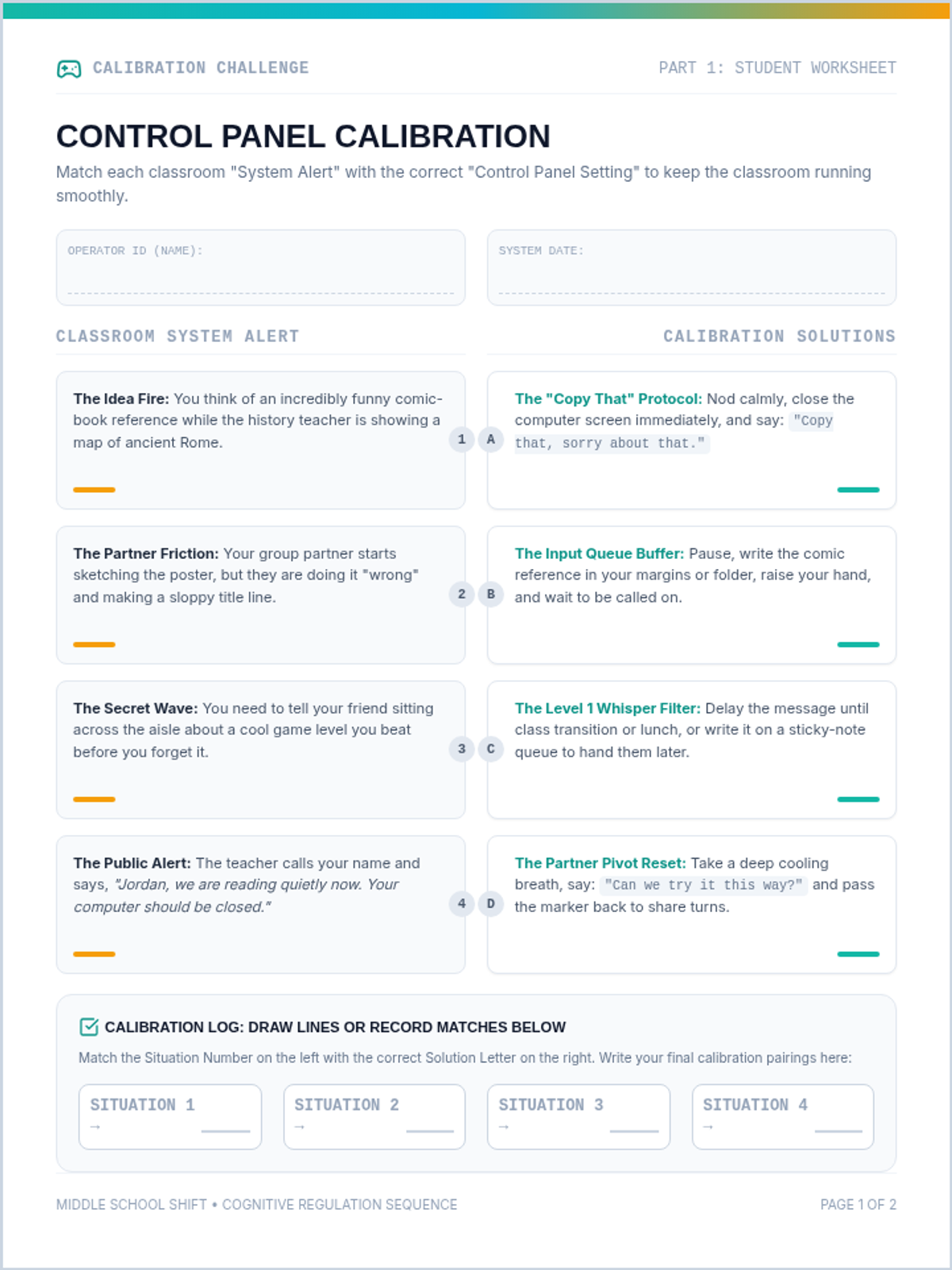
A high-impact social-emotional learning lesson designed for anxious and ADHD students transitioning to middle school. It introduces the 'Control Panel' metaphor to manage the impulse to blurt, talk over others, and react defensively, replacing shame with actionable self-regulation strategies, visual aids, and low-stakes role-play games.
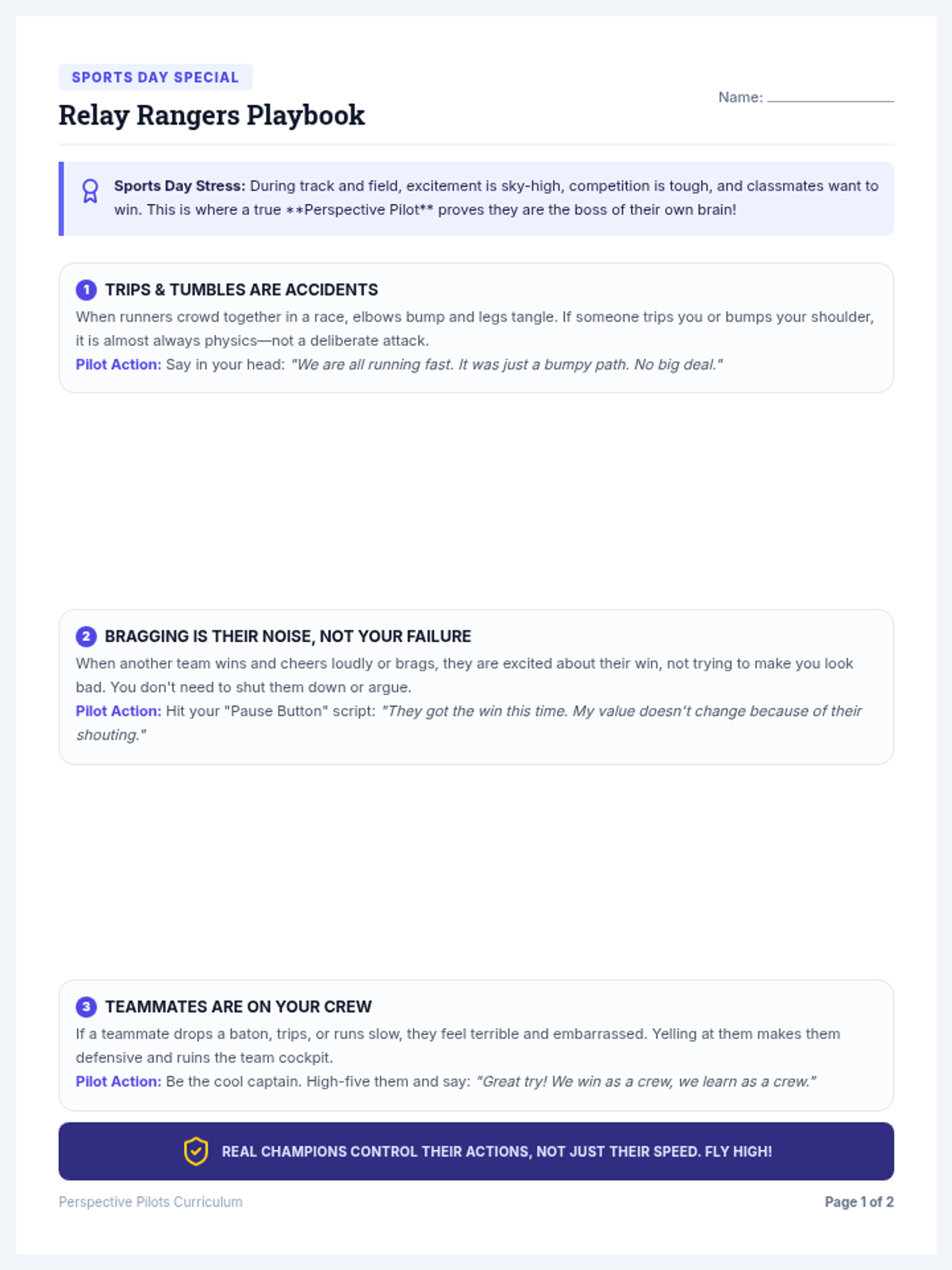
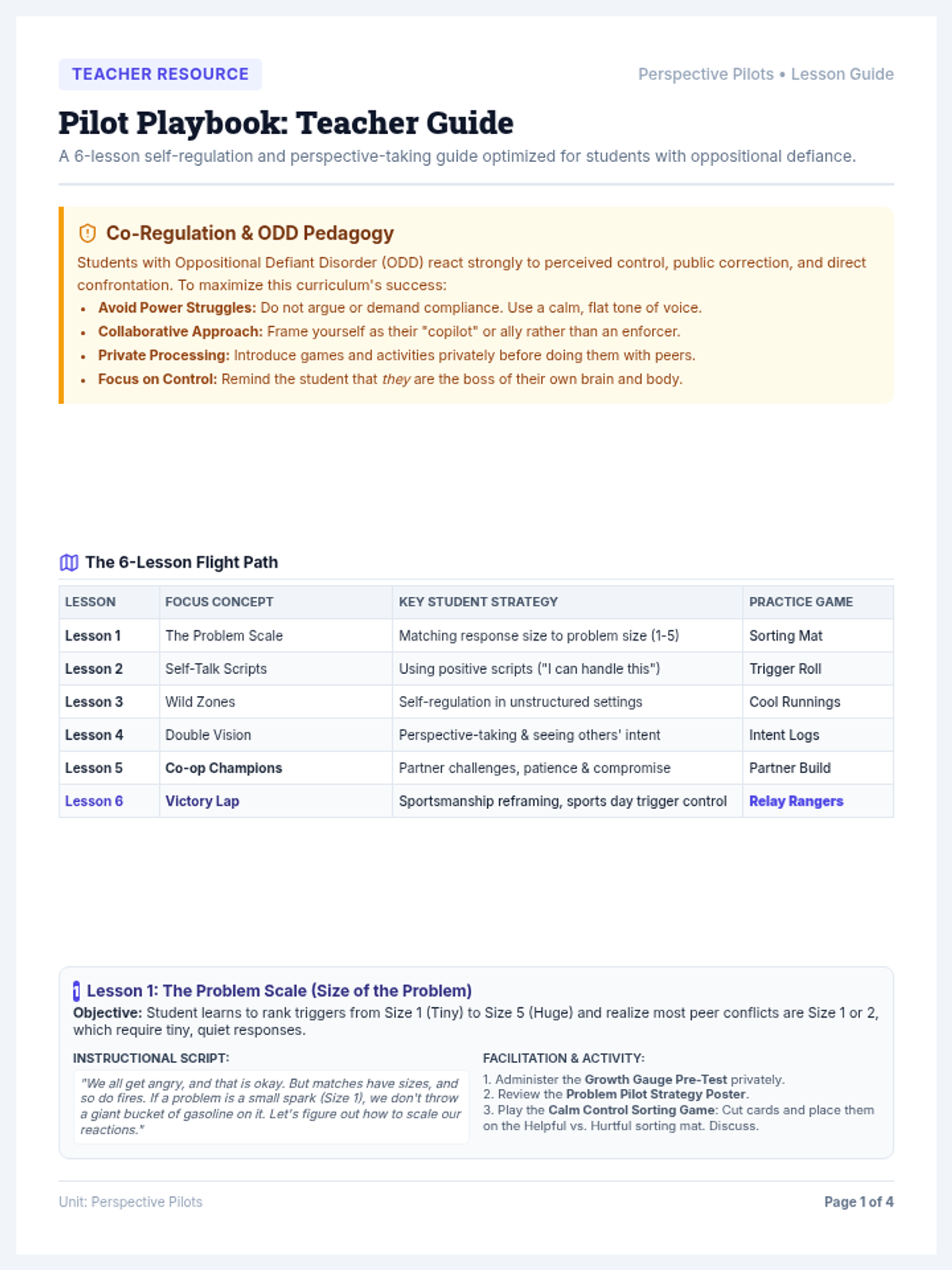
Navigating team competition, sportsmanship, and unexpected outcomes during a Track and Field Sports Day.
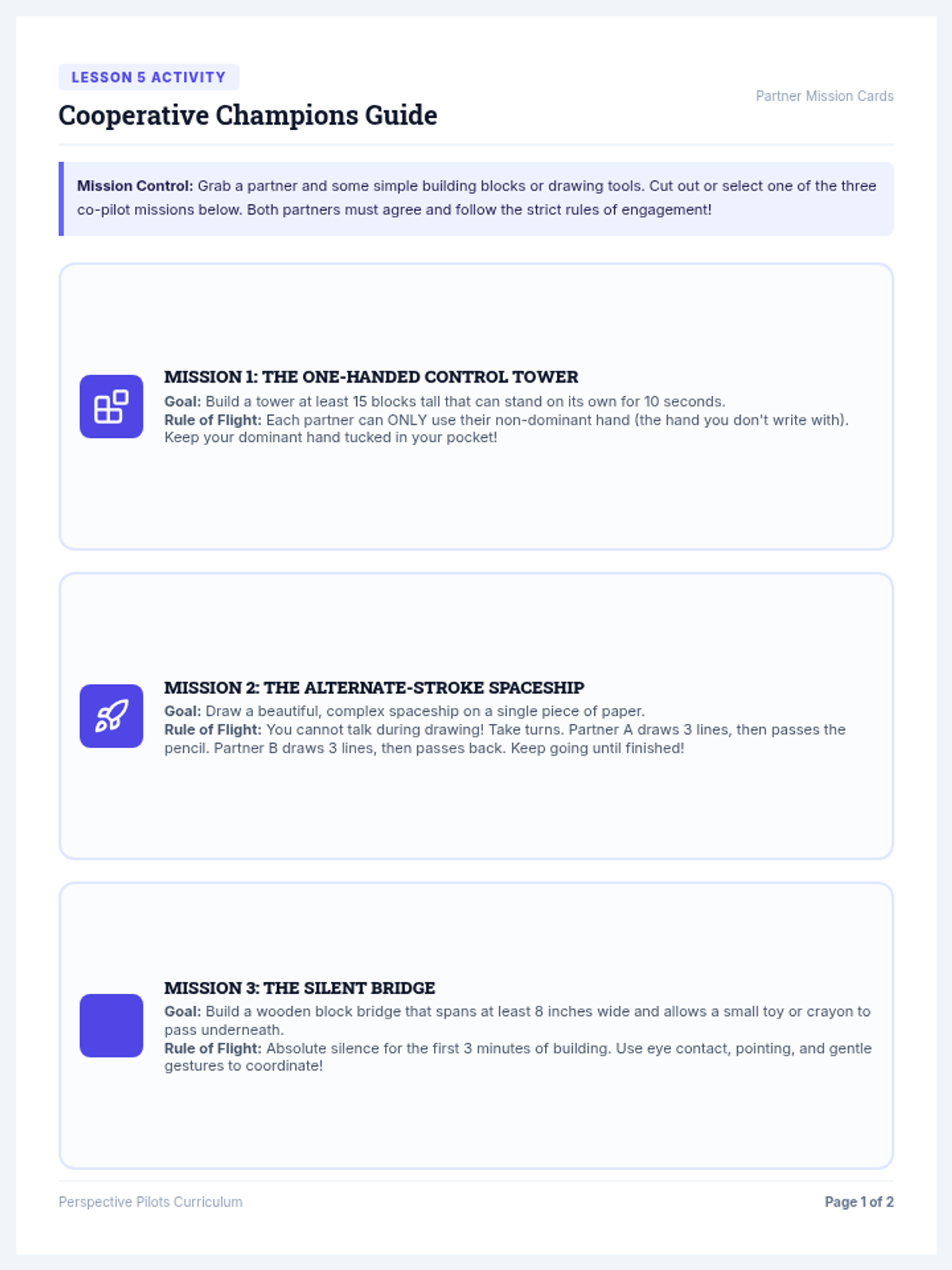
Applying emotional regulation and perspective-taking through cooperative building challenges, self-reflection, and a final assessment.
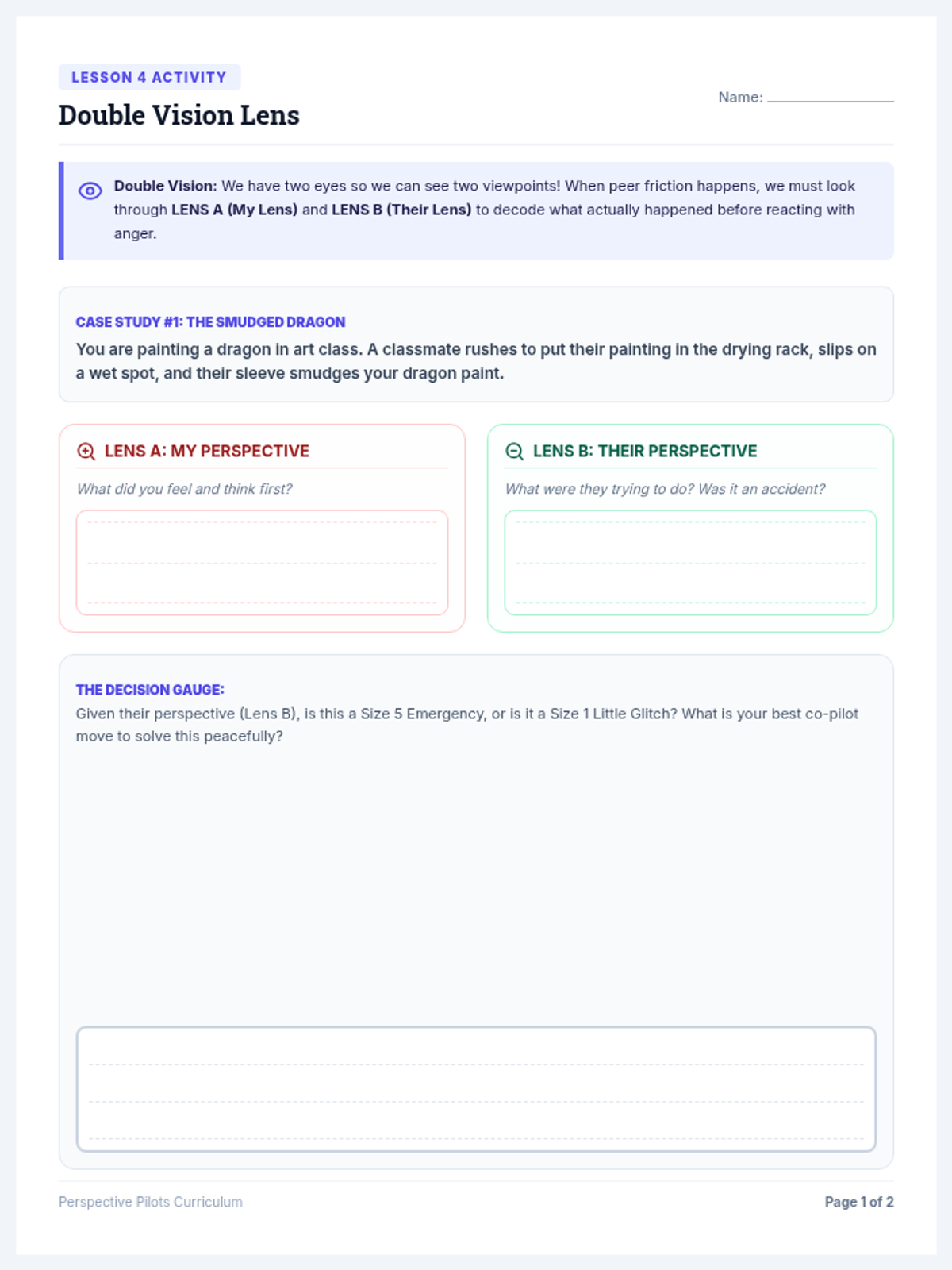
Developing perspective-taking skills to understand peers' perspectives and motivations during conflicts.
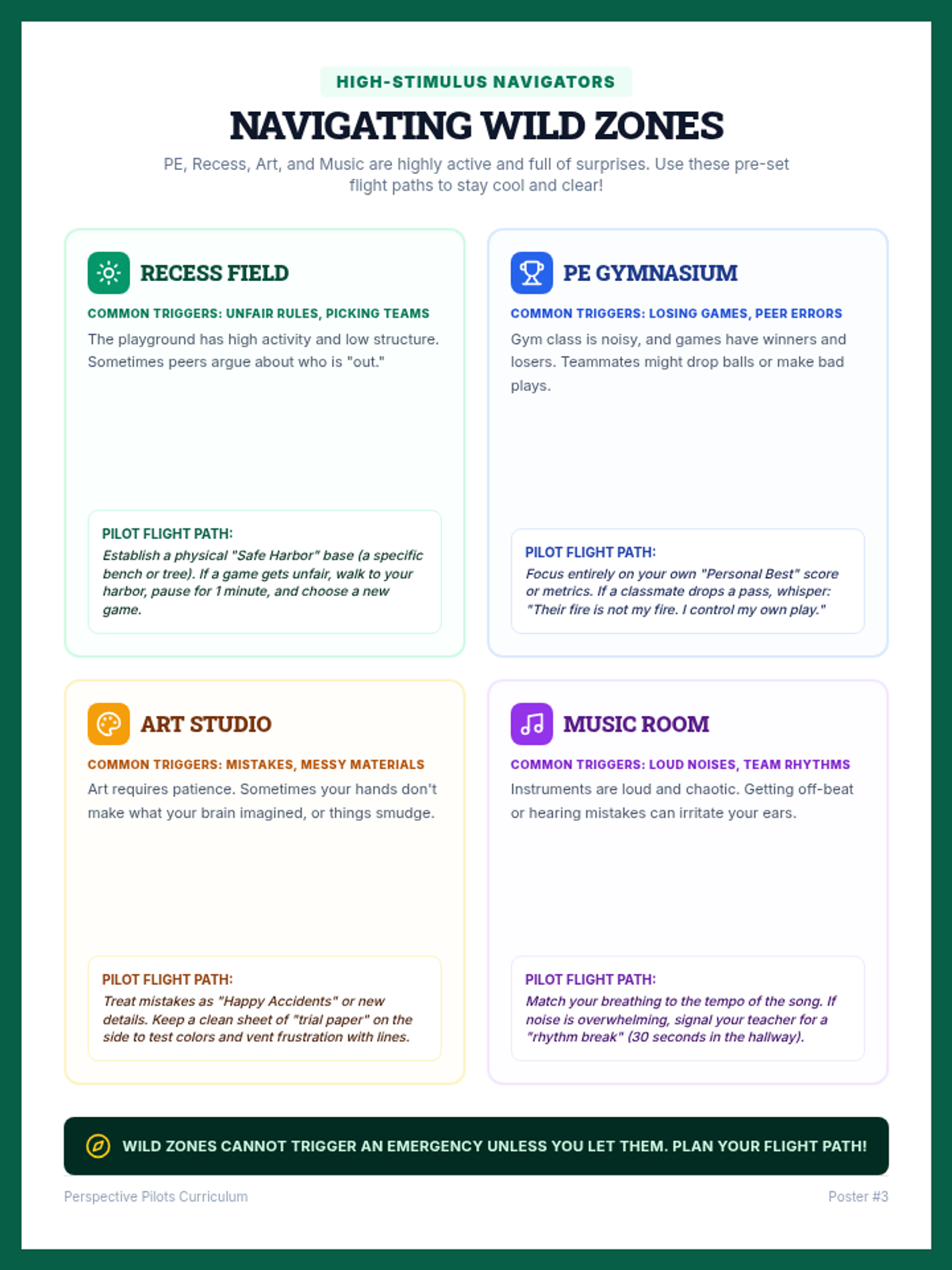
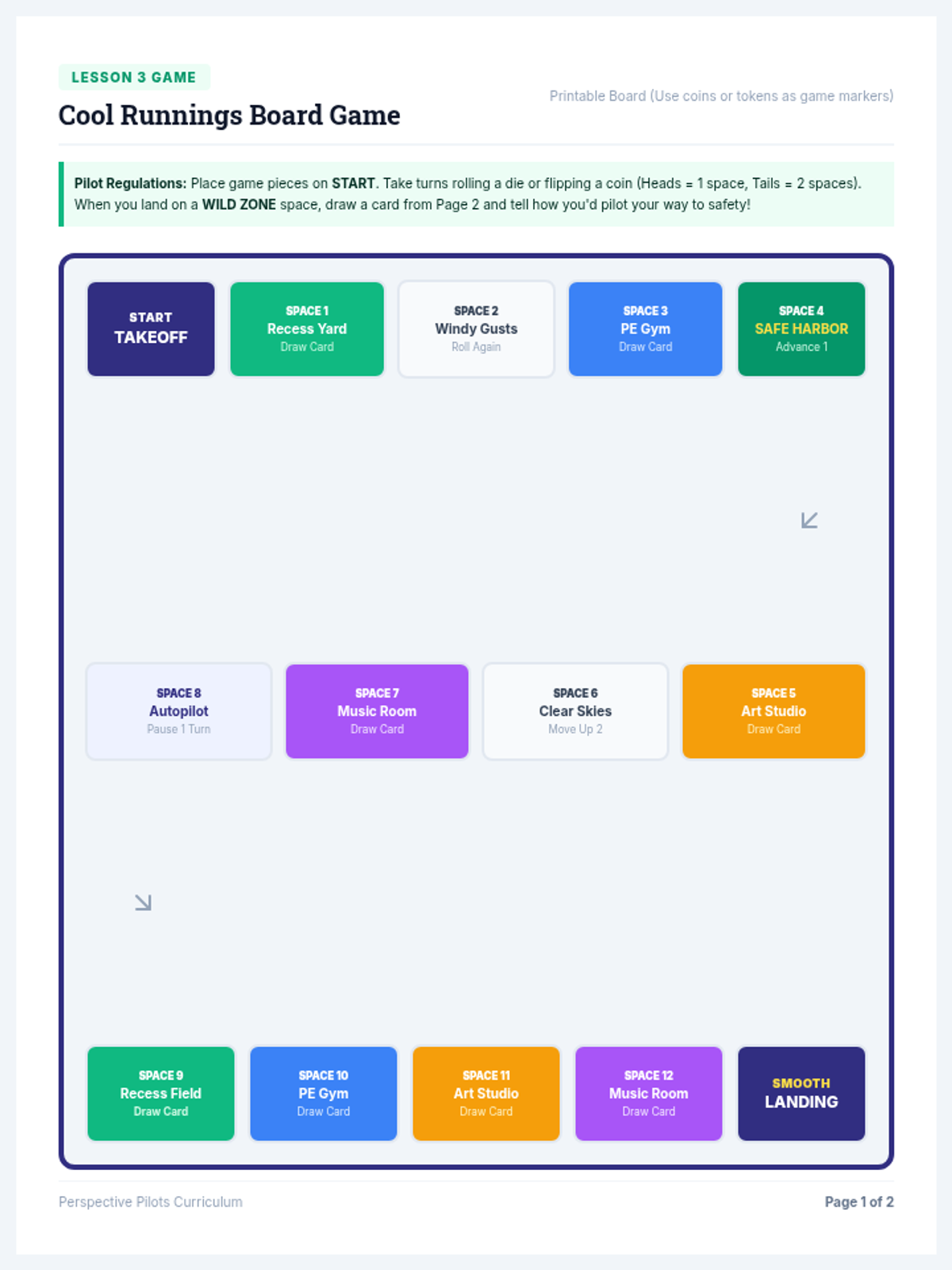
Navigating unstructured settings like recess, PE, art, and music using targeted emotional regulation strategies and a board game.
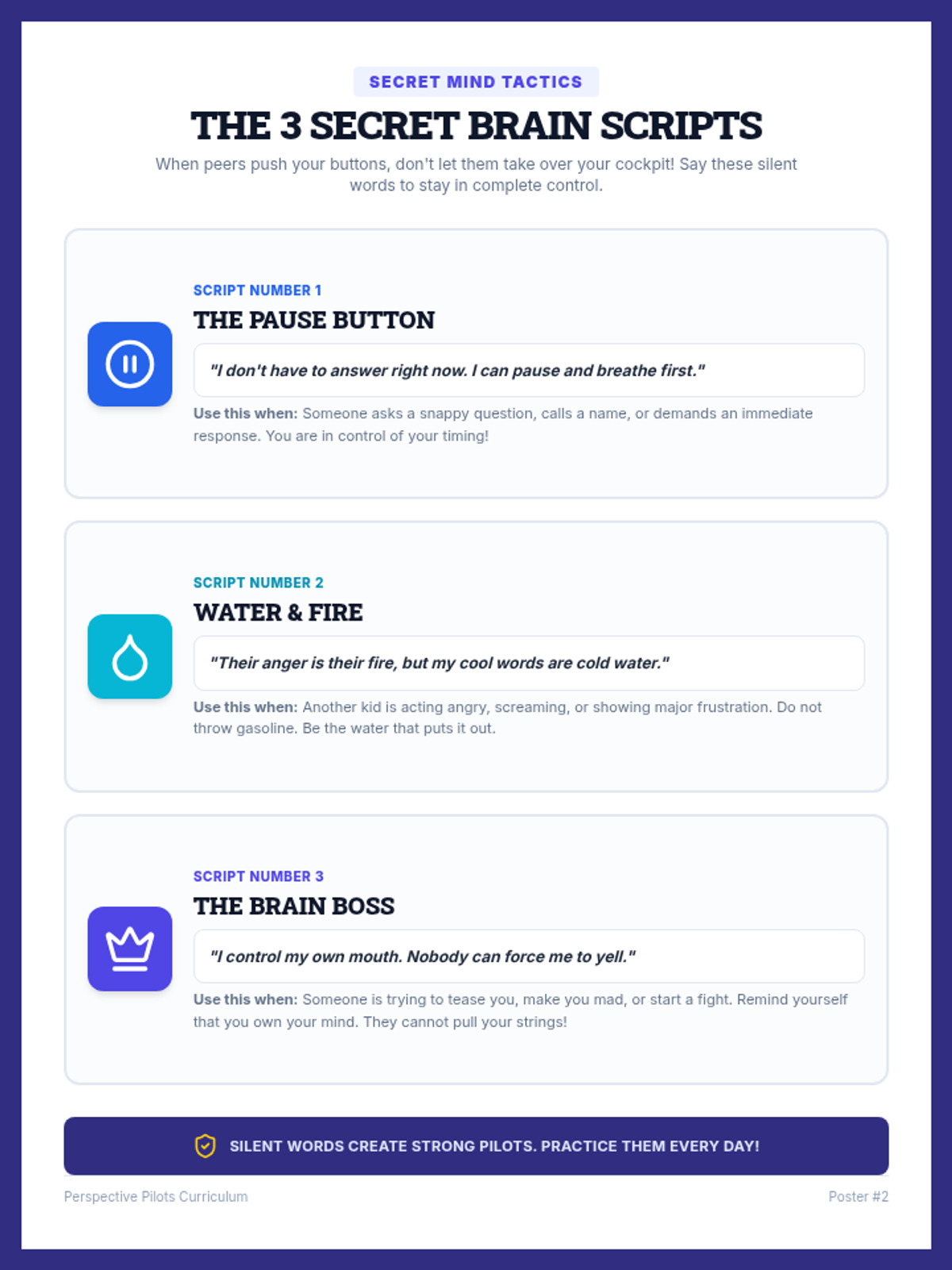
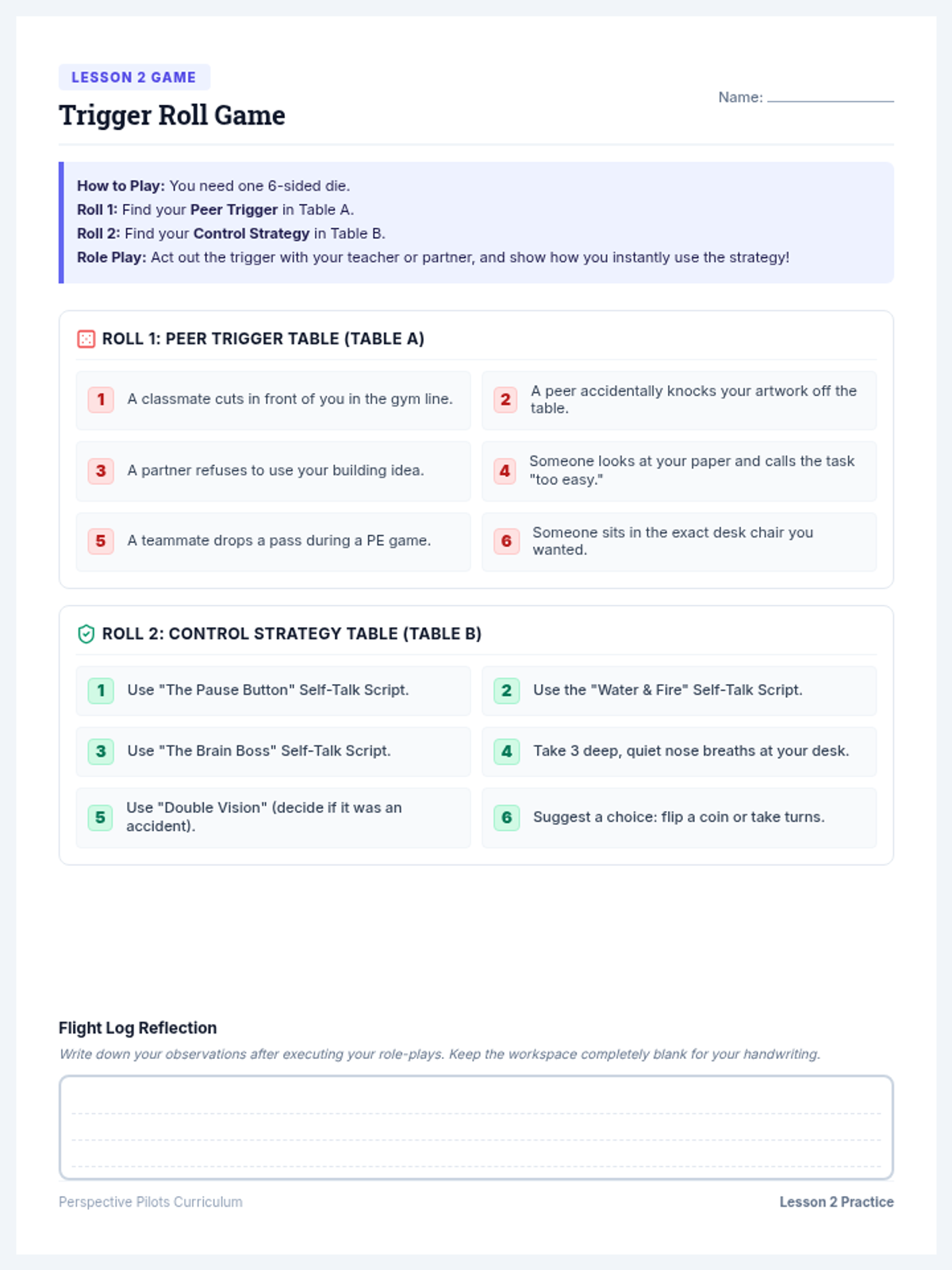
Teaching positive self-talk scripts and a role-play dice game to self-soothe before reacting to peer frustration.
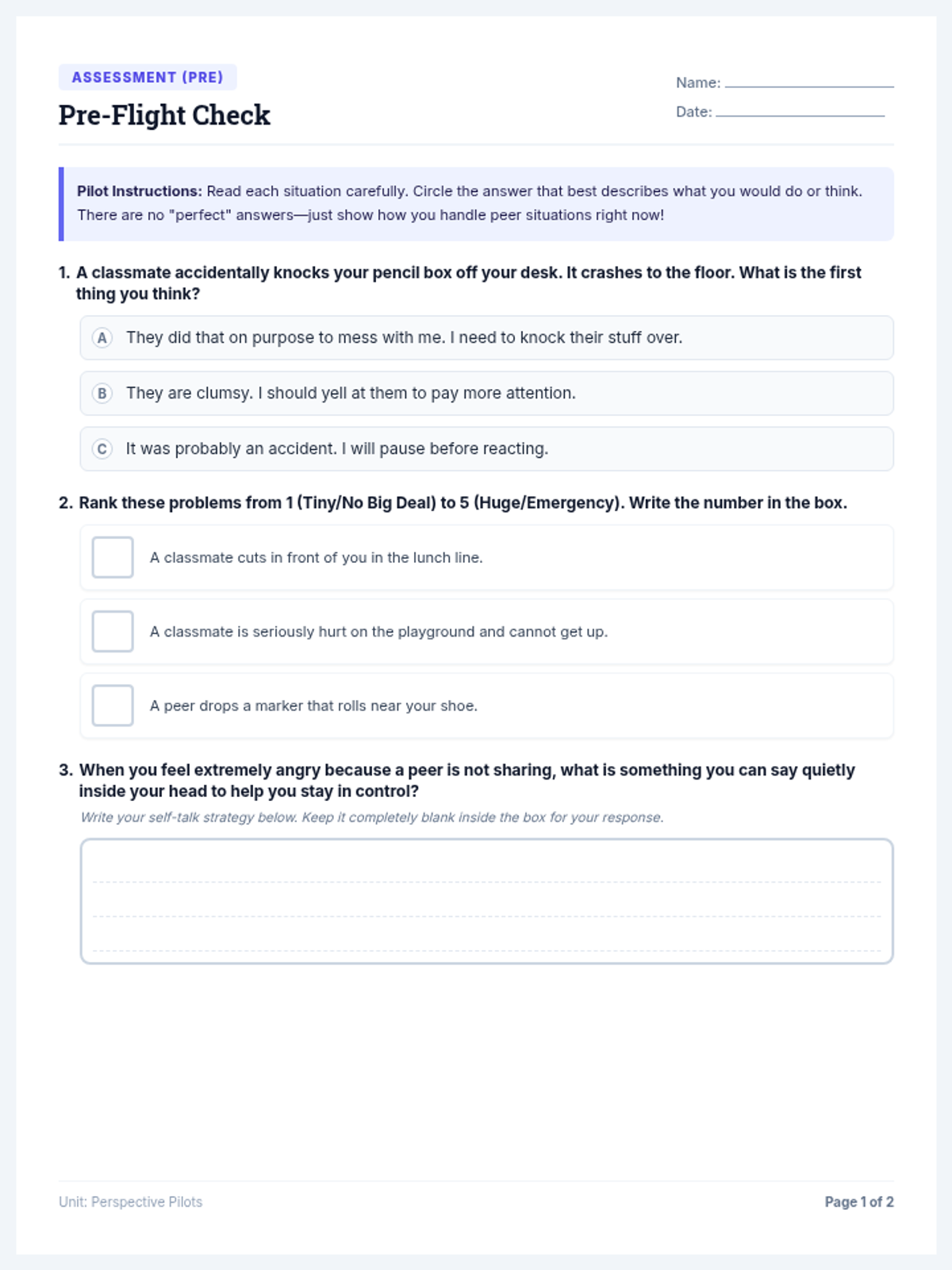
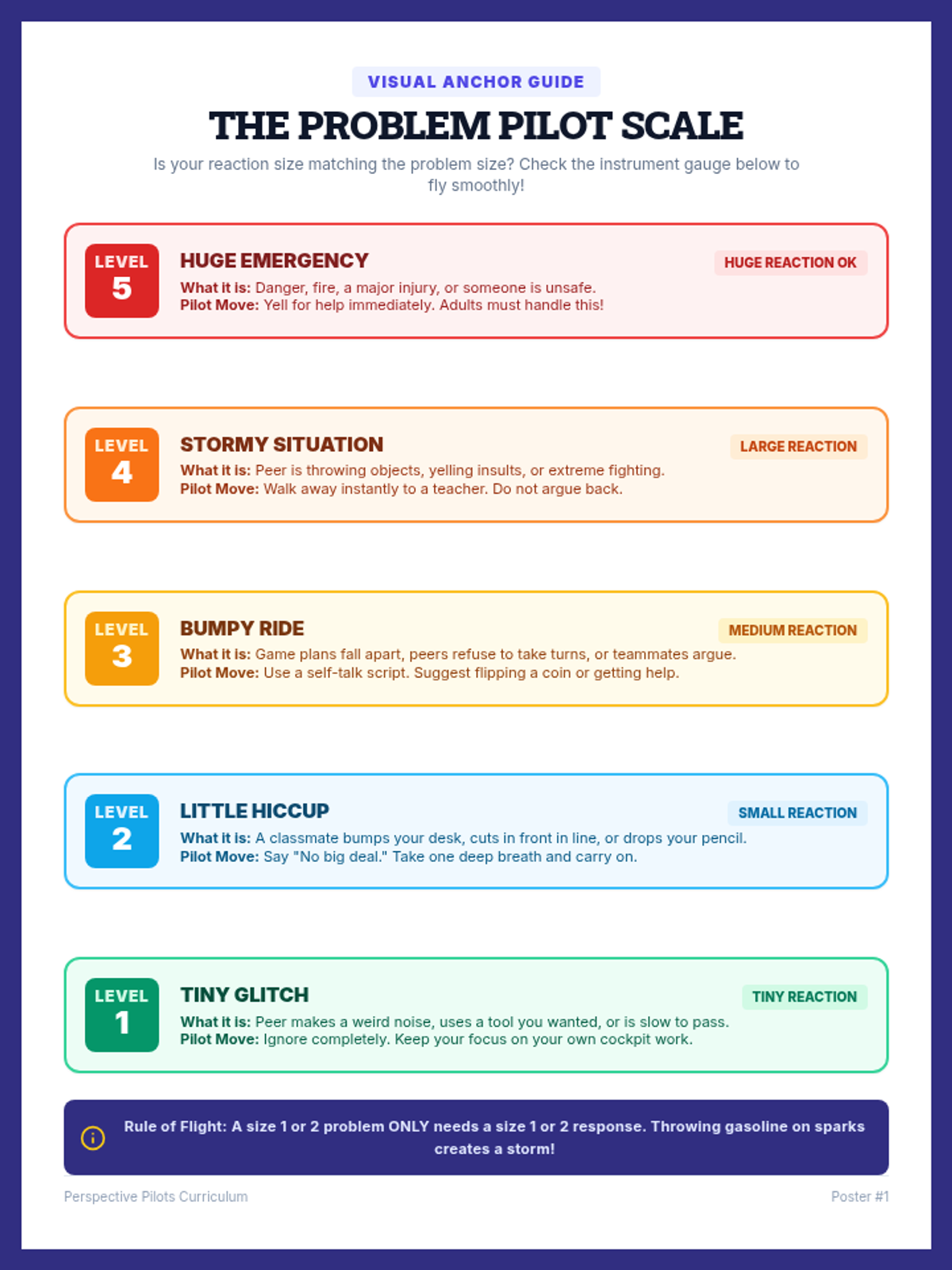
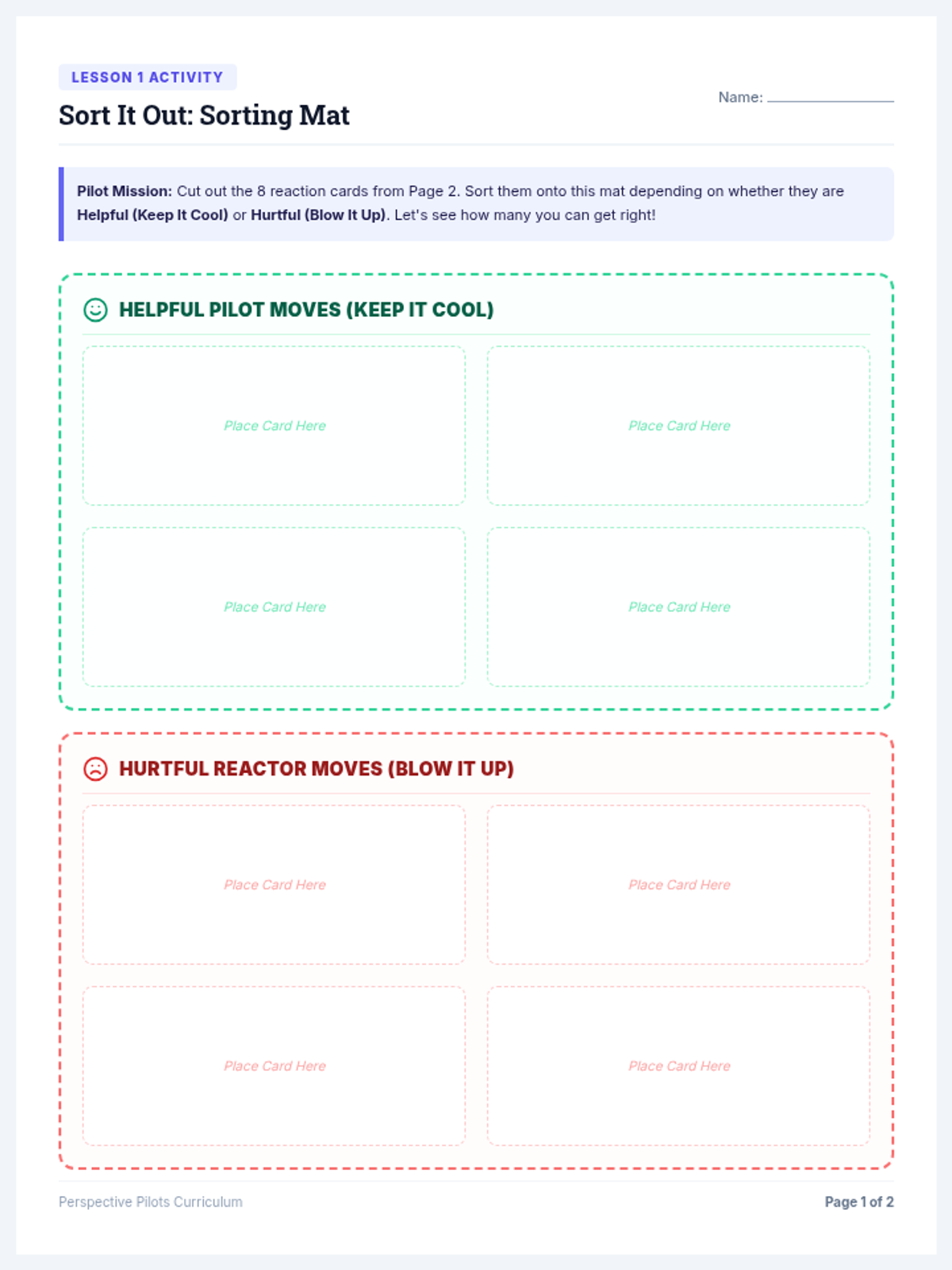
Introducing the concept of 'Size of the Problem' and matching reaction size, using sorting games and assessment tools.
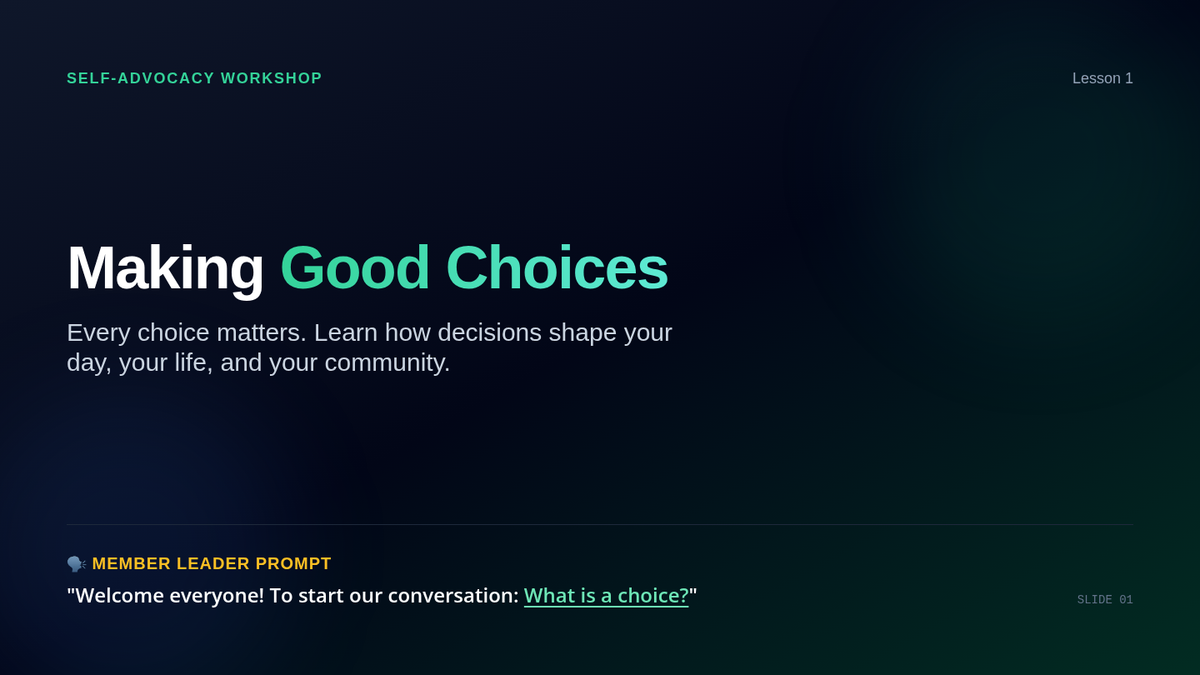
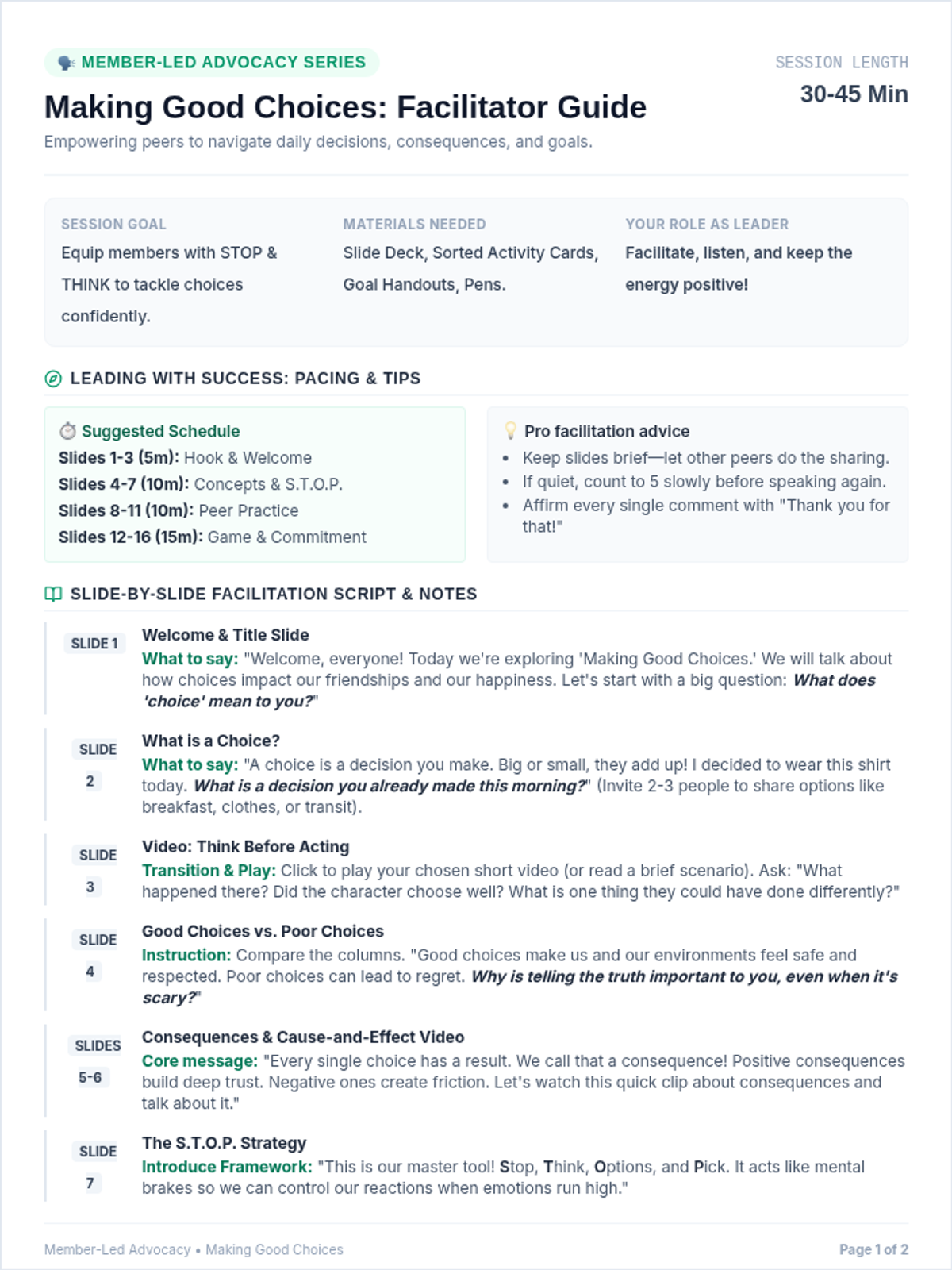
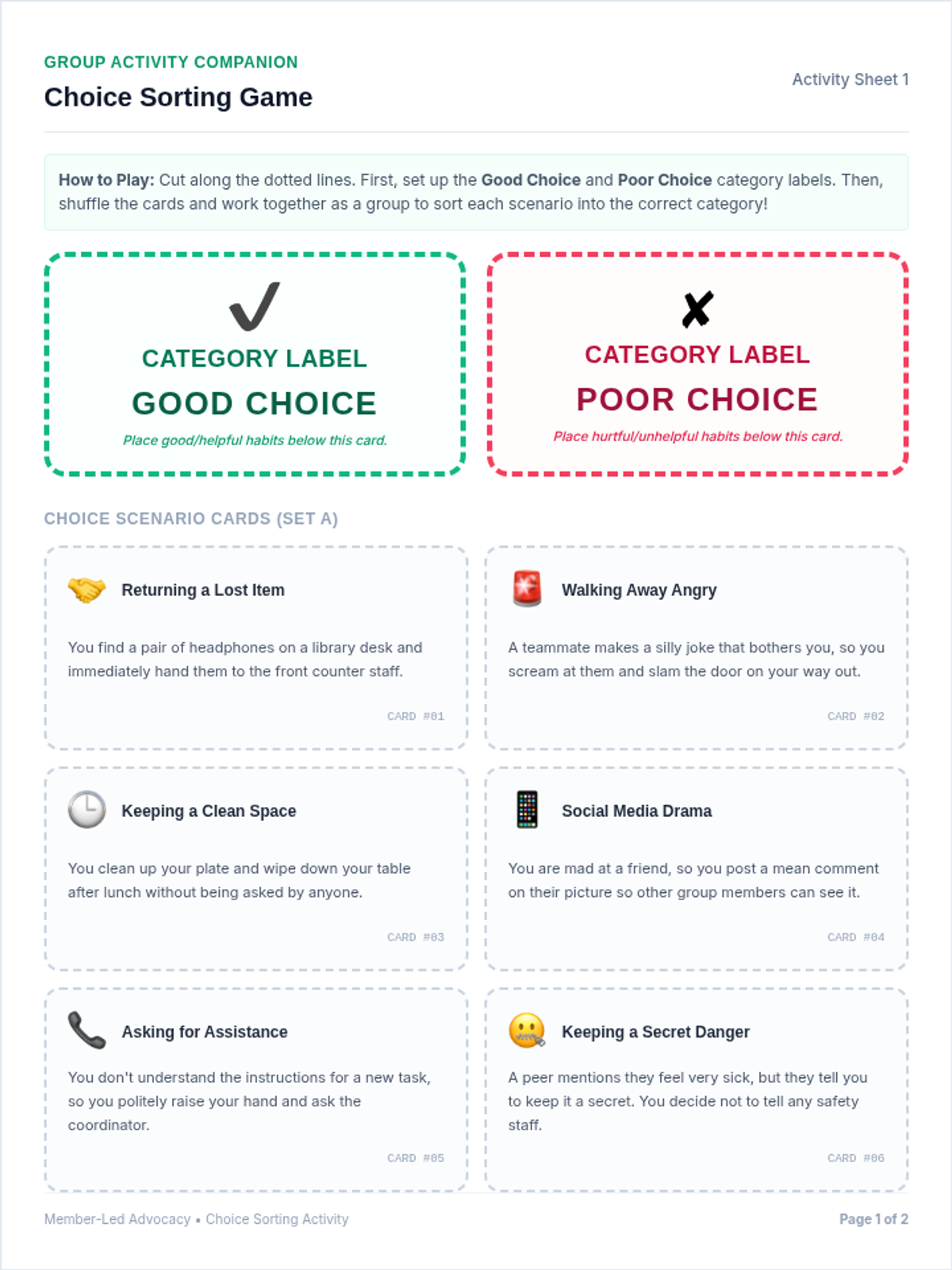
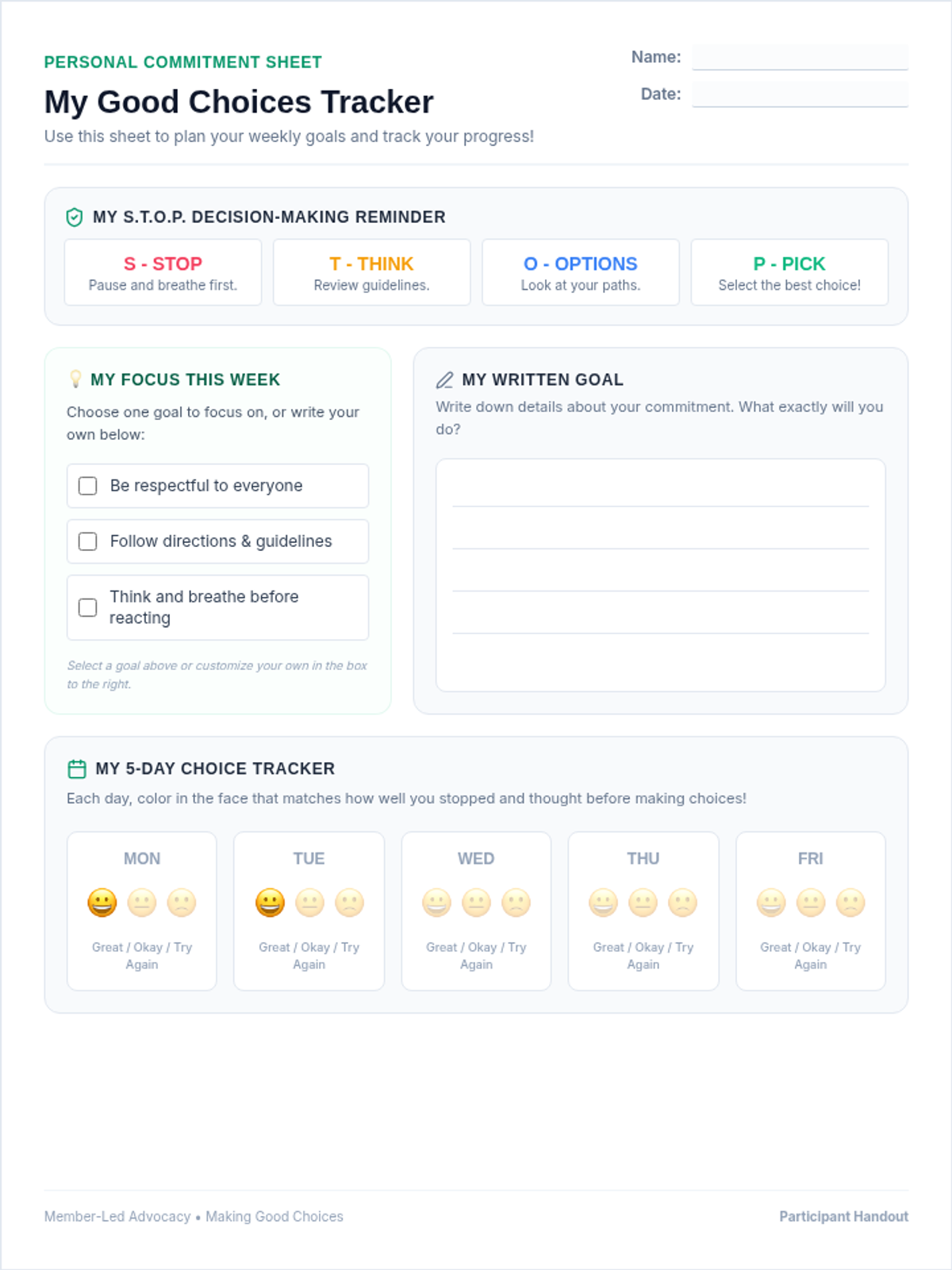
An interactive, peer-led advocacy lesson designed to empower members to lead discussions on personal choices, consequences, decision-making strategies, and peer influence.
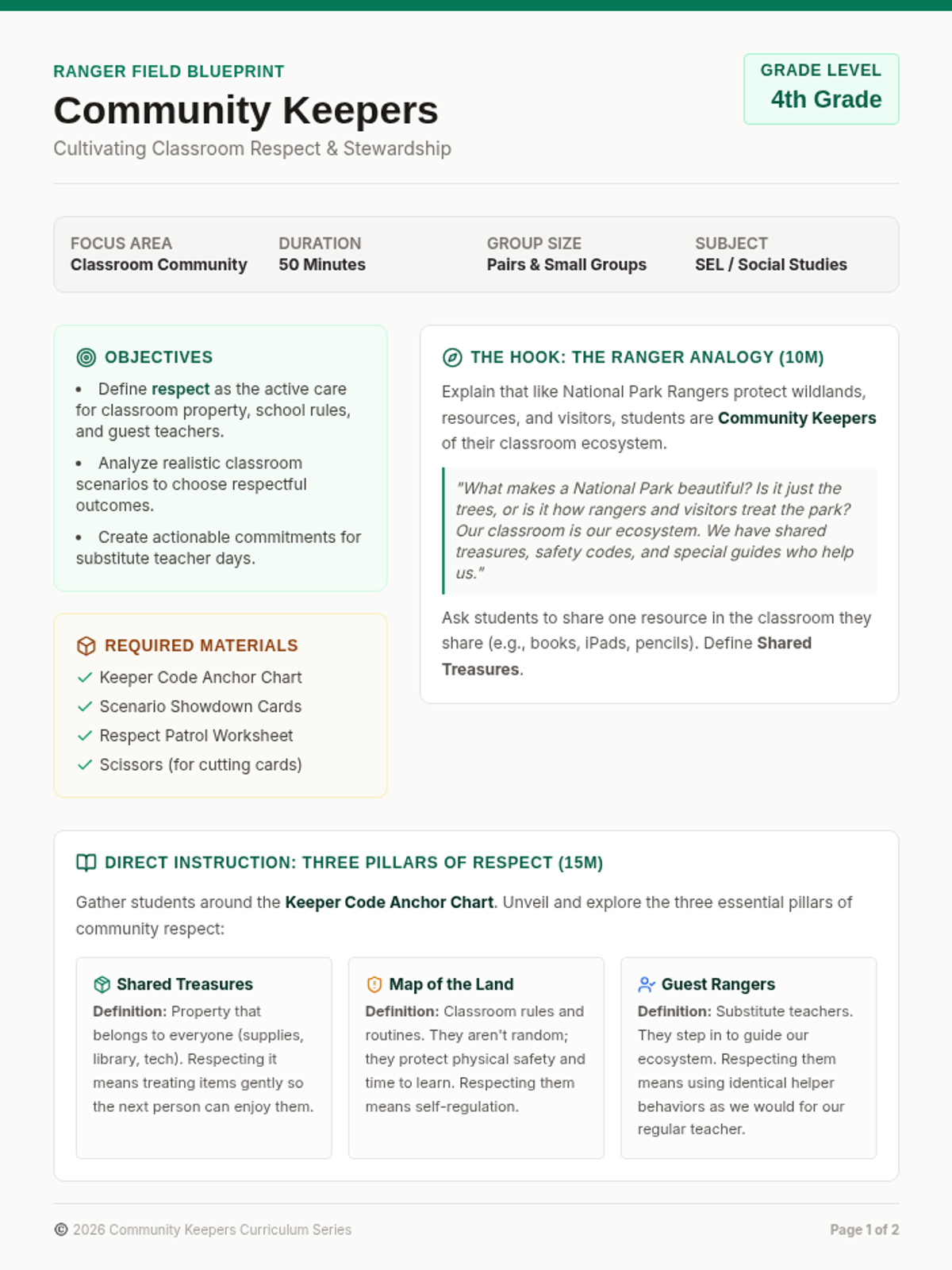
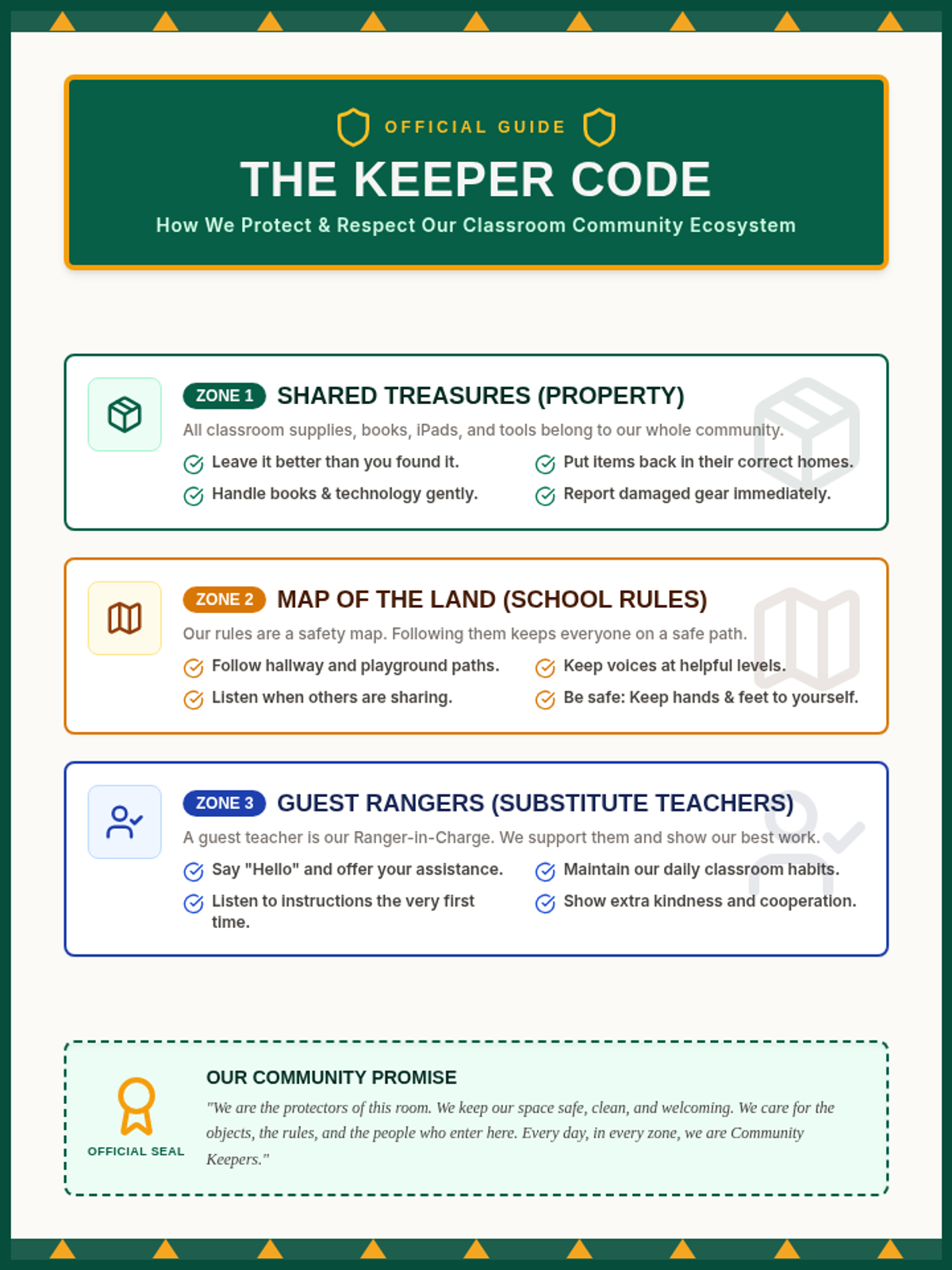
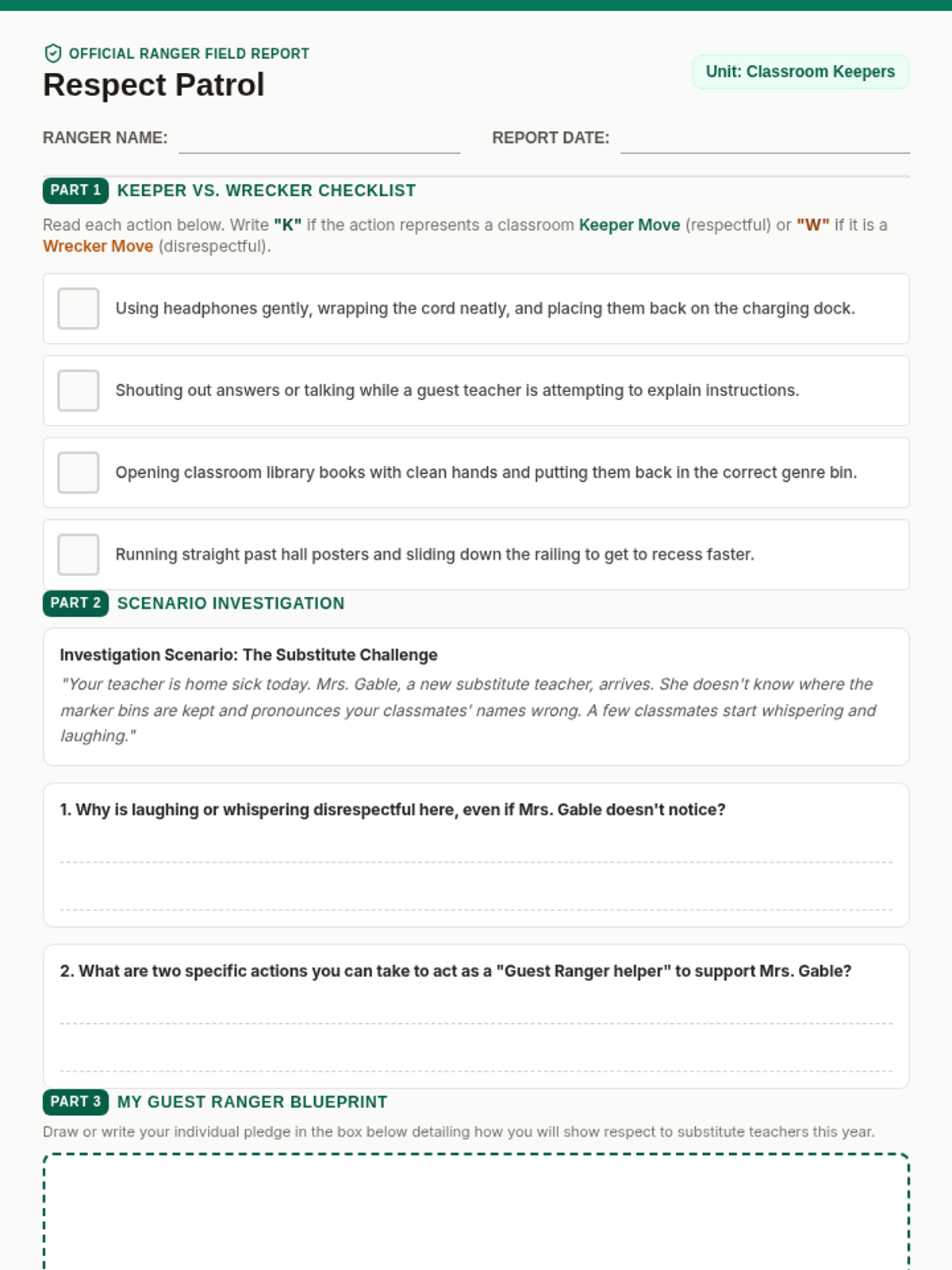
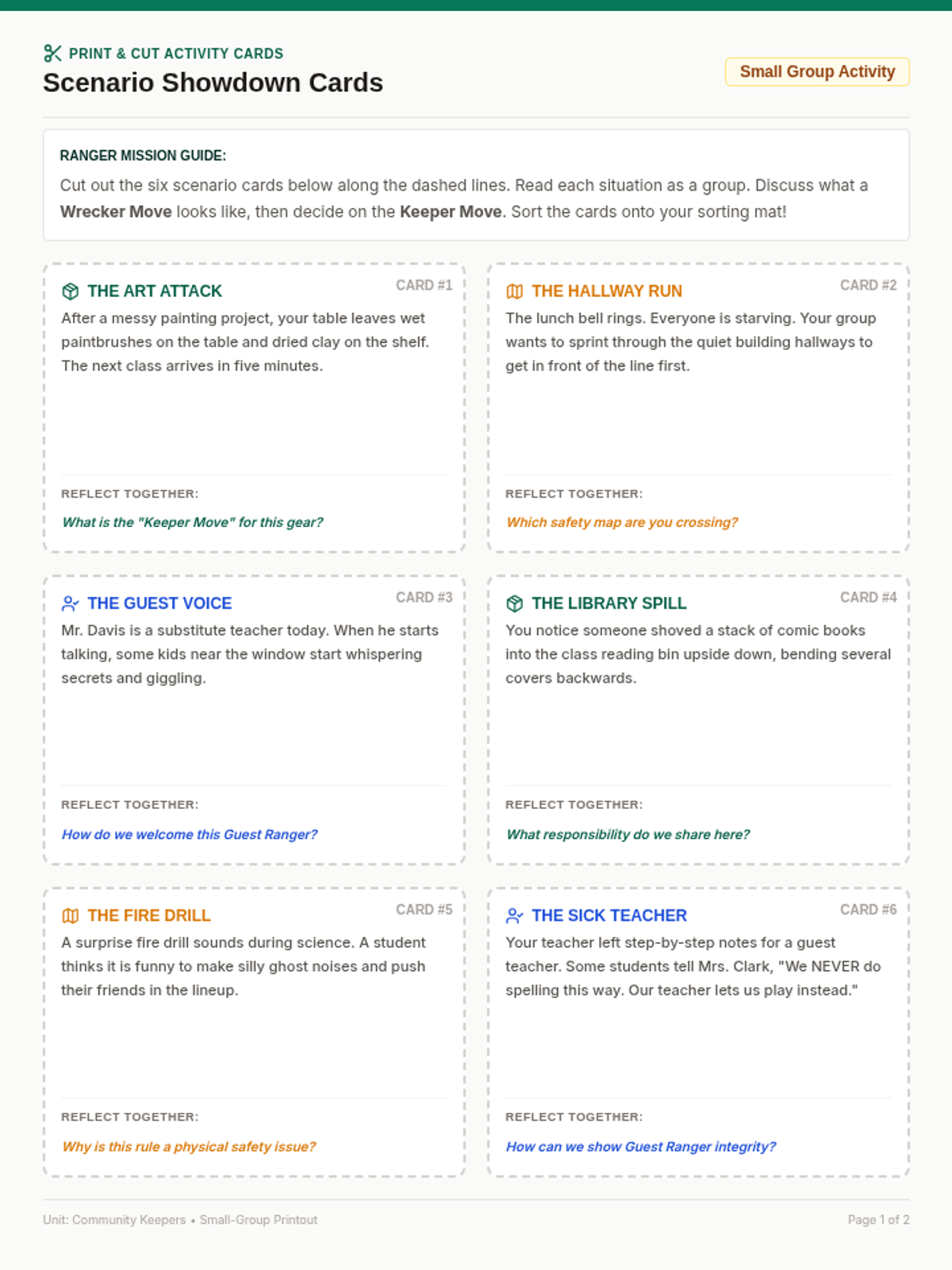
A complete fourth-grade character education lesson focused on building classroom respect. Students explore shared property care, school rules, and substitute teacher etiquette through hands-on roleplay and sorting activities.
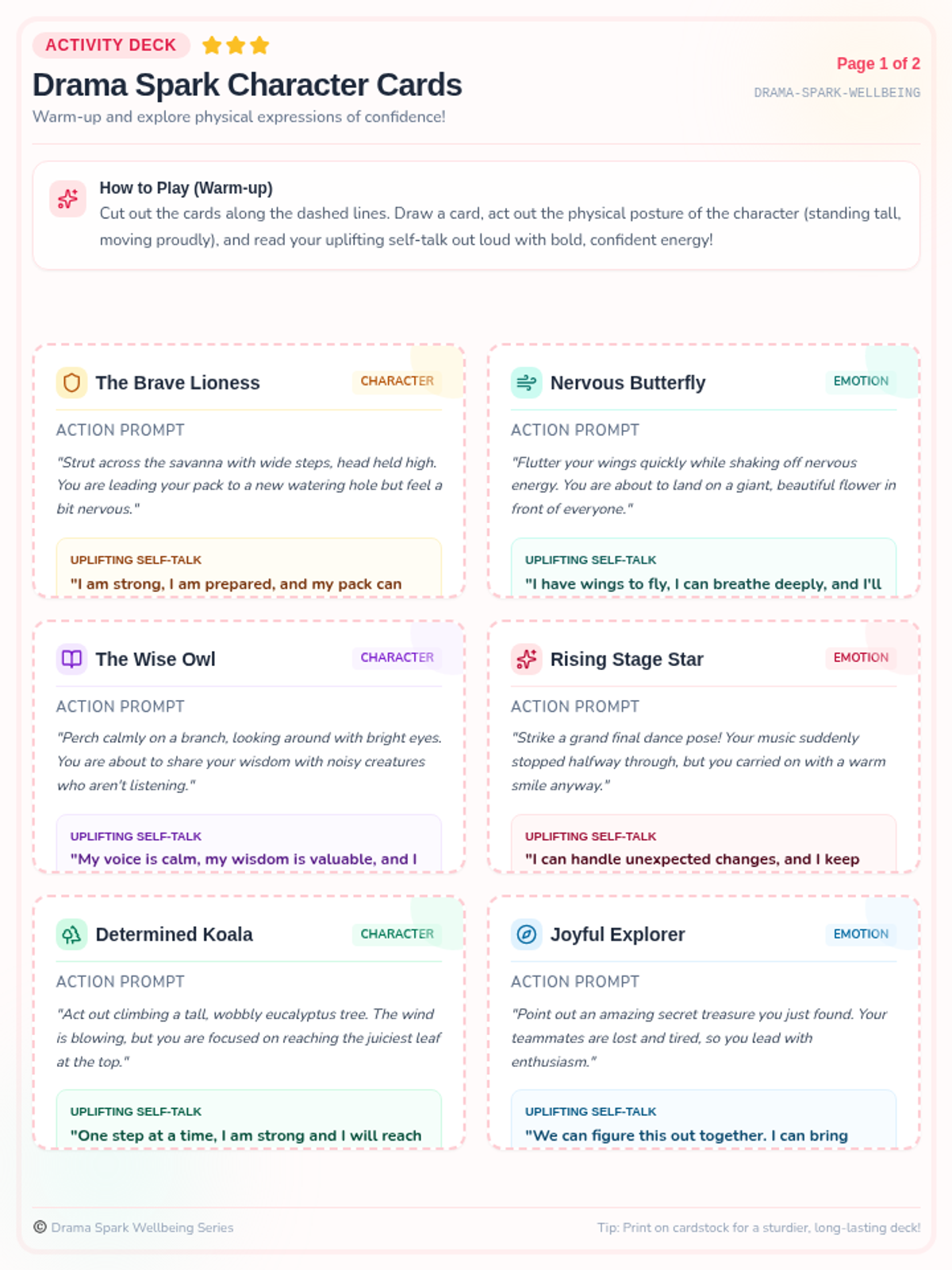
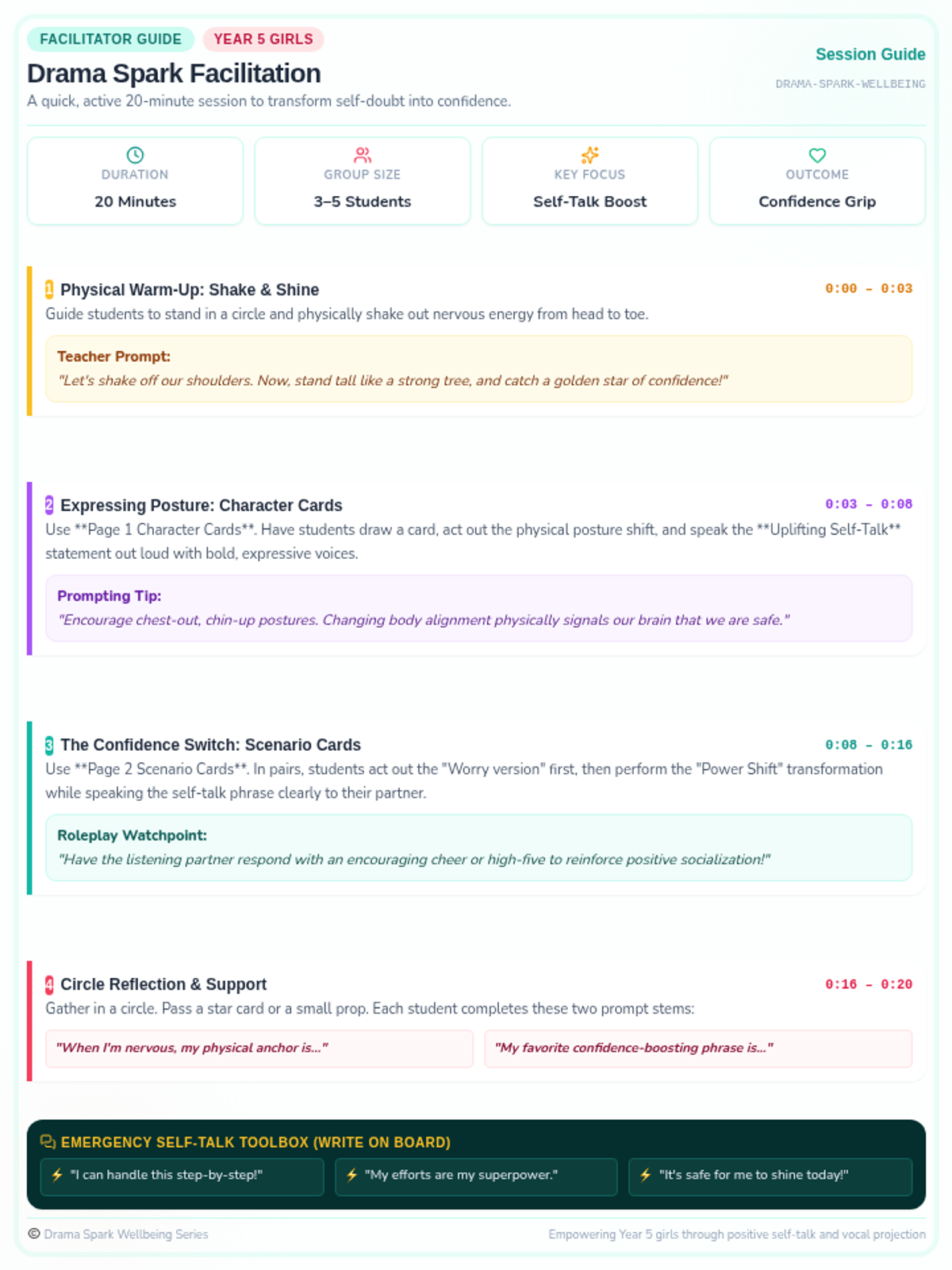
A 20-minute active drama-based wellbeing session designed for Year 5 girls to build confidence, practice uplifting self-talk, and support peers through roleplay and creative scenario cards.
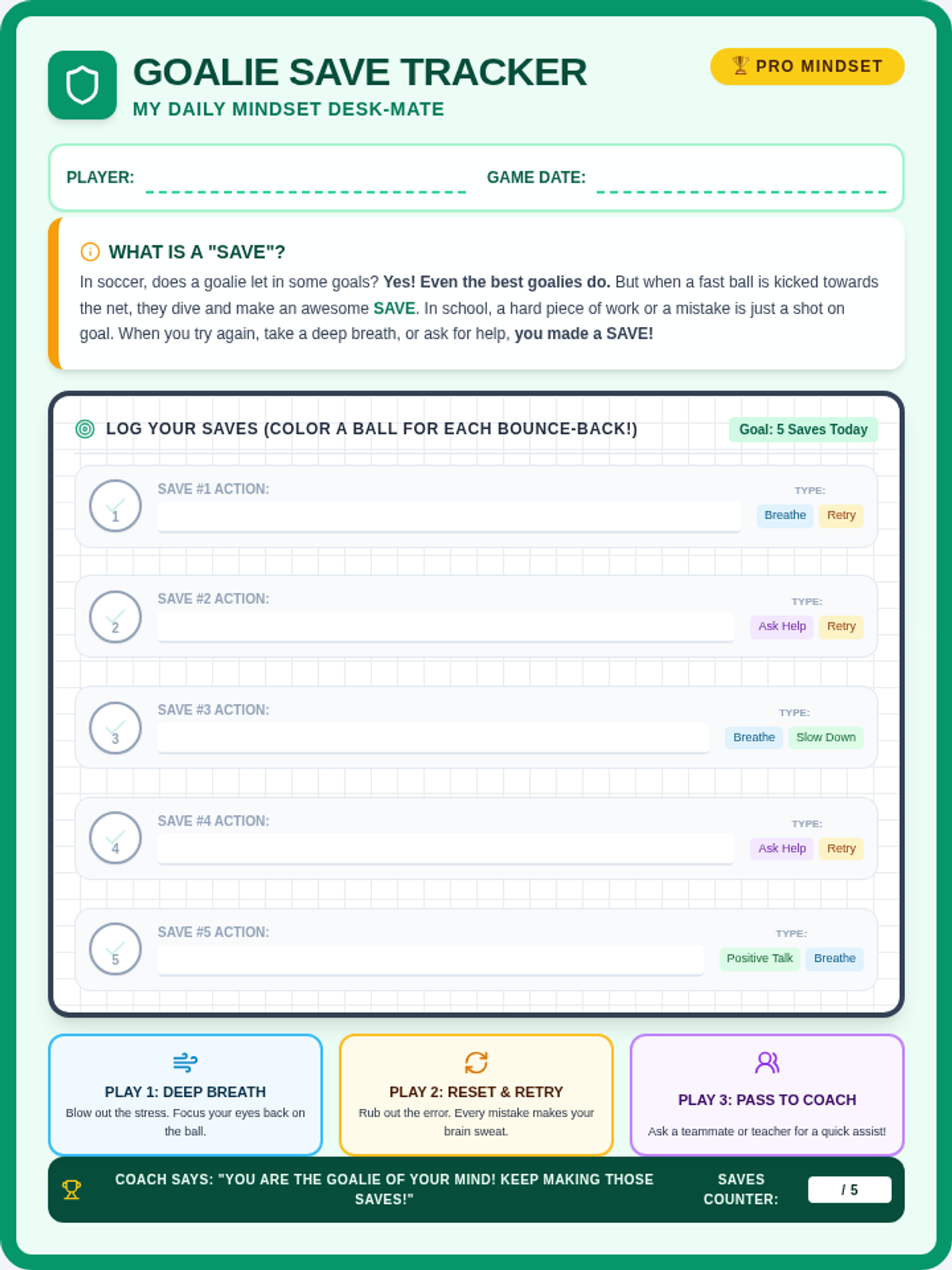
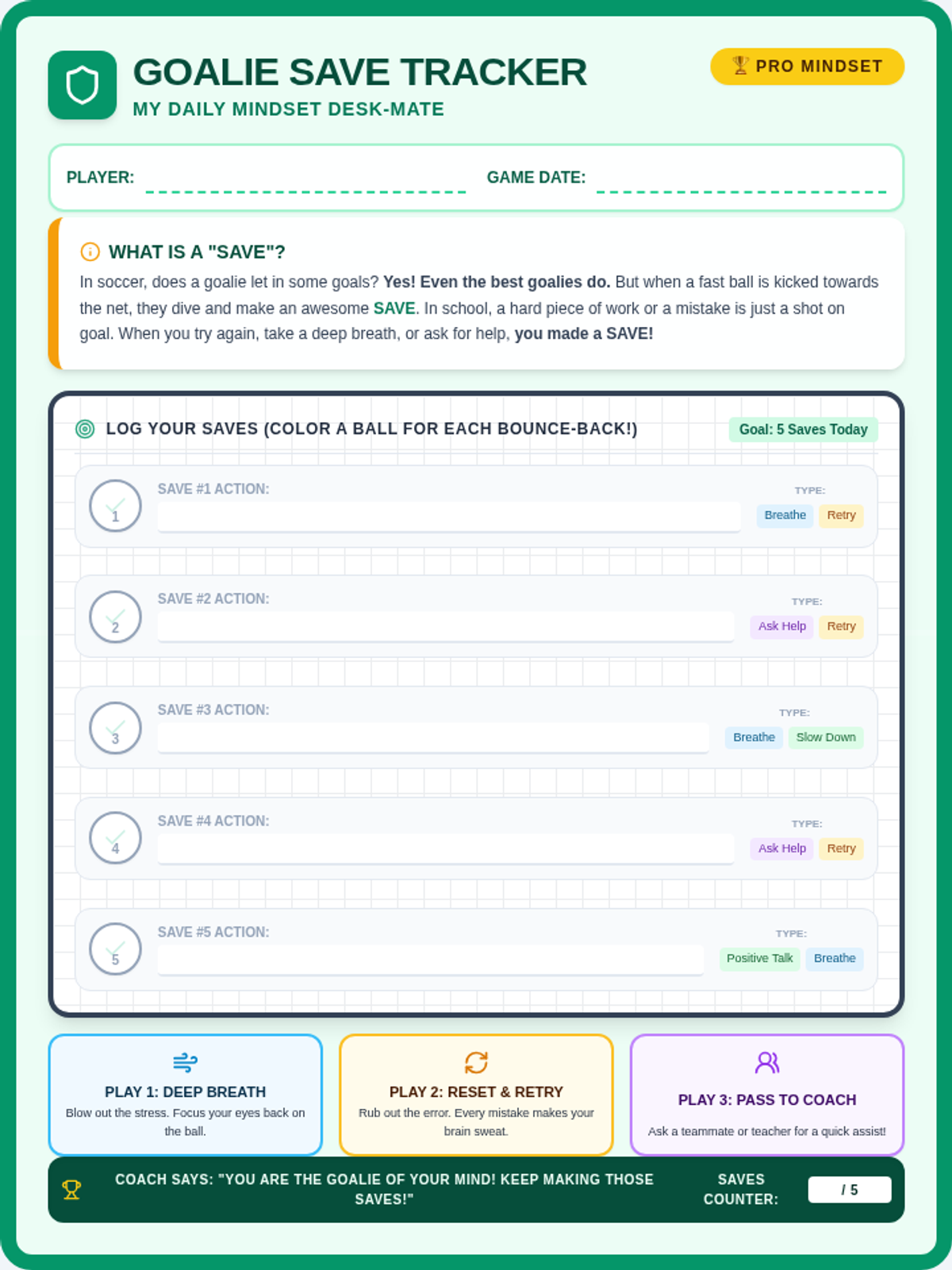
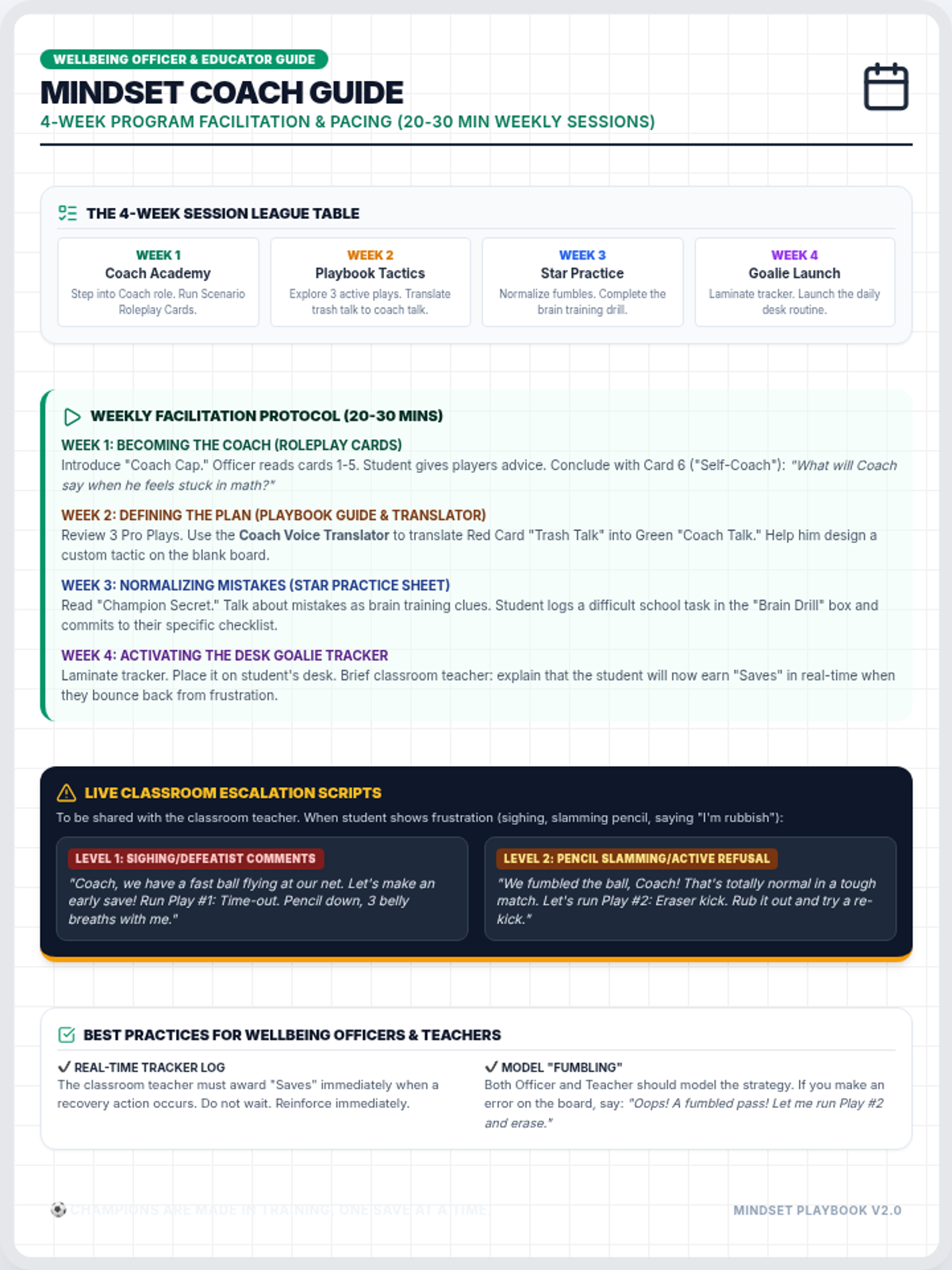
Week 4 of the Wellbeing program. Launches the daily desk-mate tracker routine in the live classroom, establishing goal-setting and long-term reinforcement of coping saves.
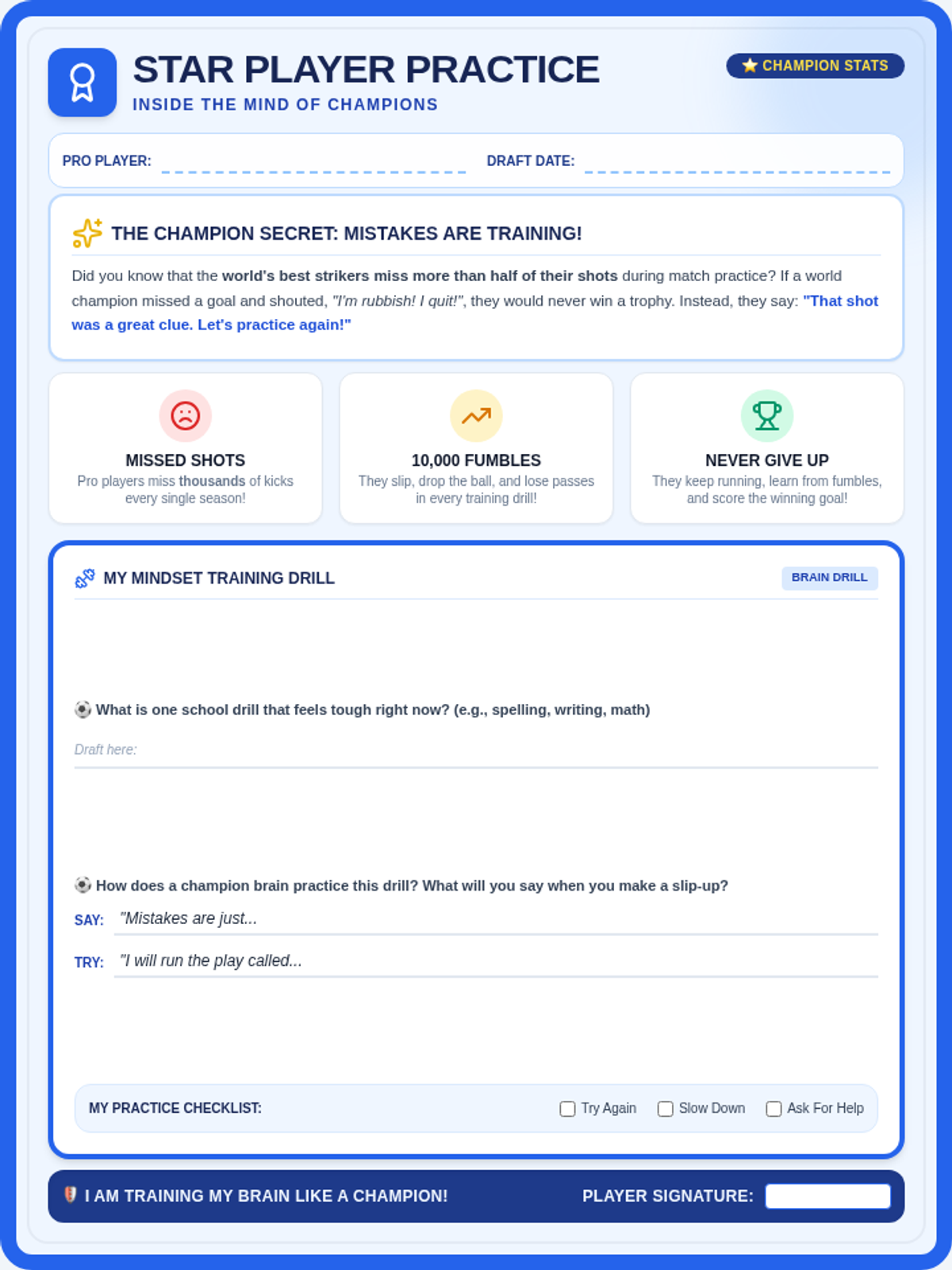
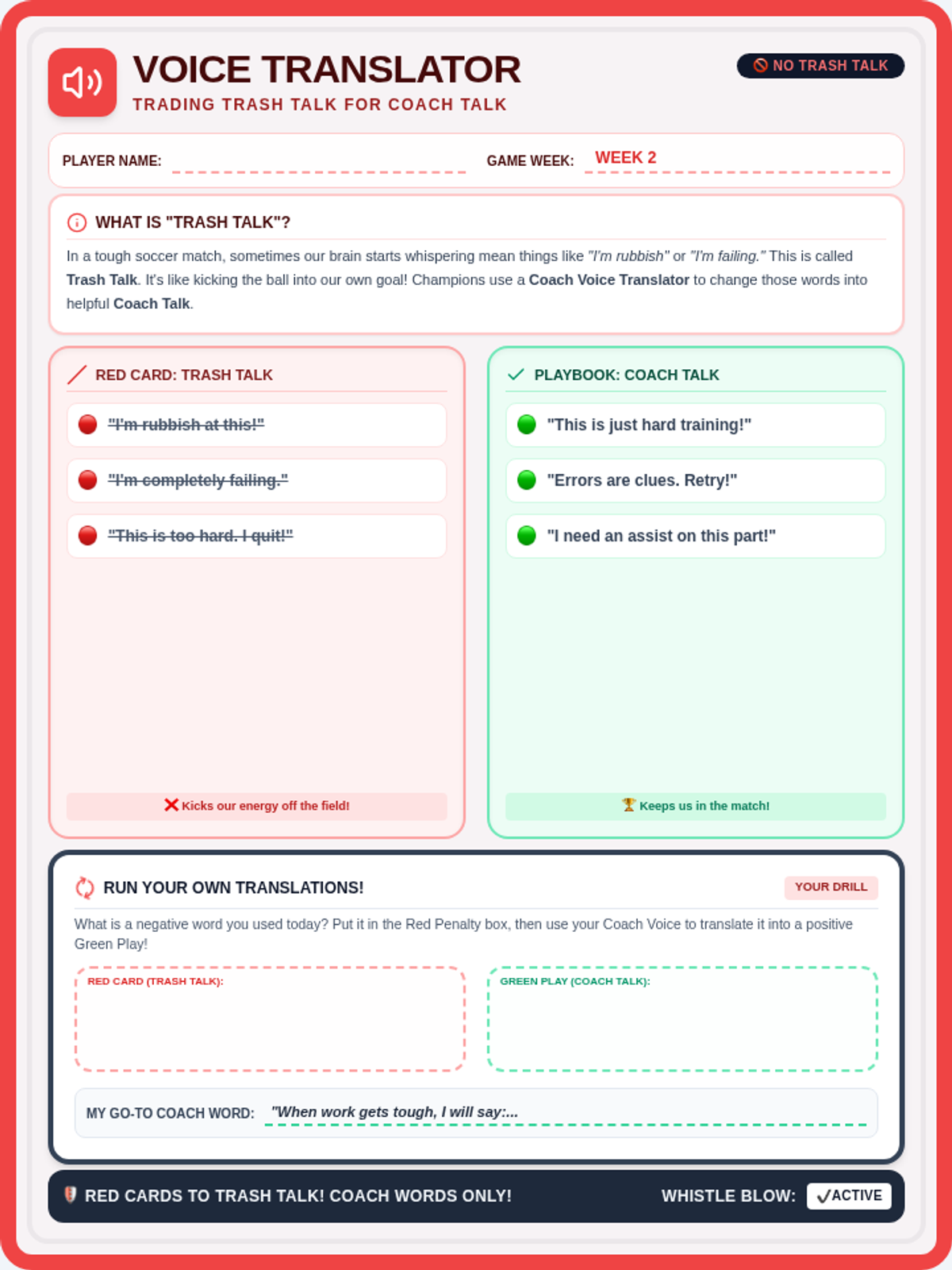
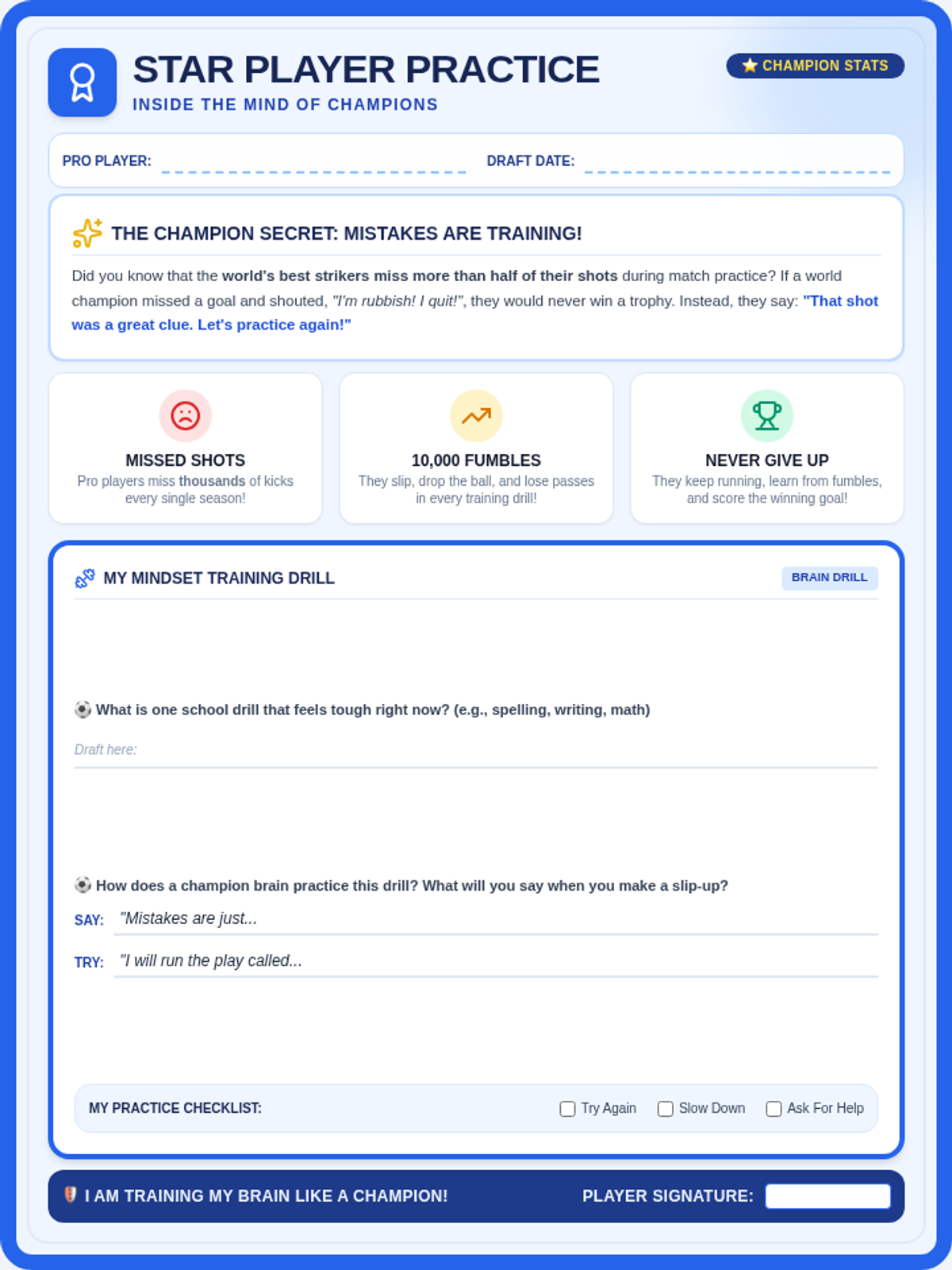
Week 3 of the Wellbeing program. Normalizes error-making by comparing student struggles to professional soccer players fumbling, failing, and practicing daily to train their brains.
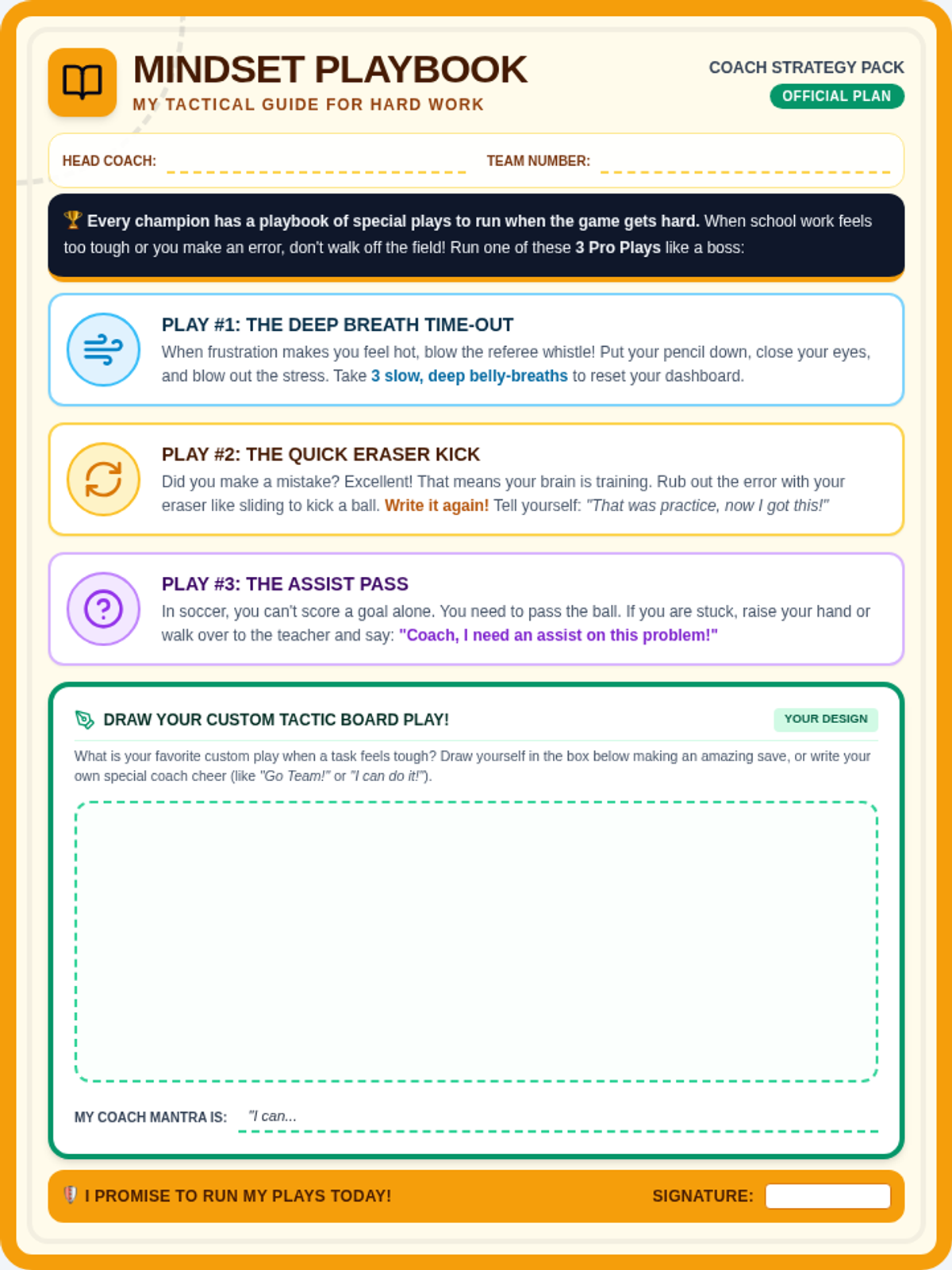
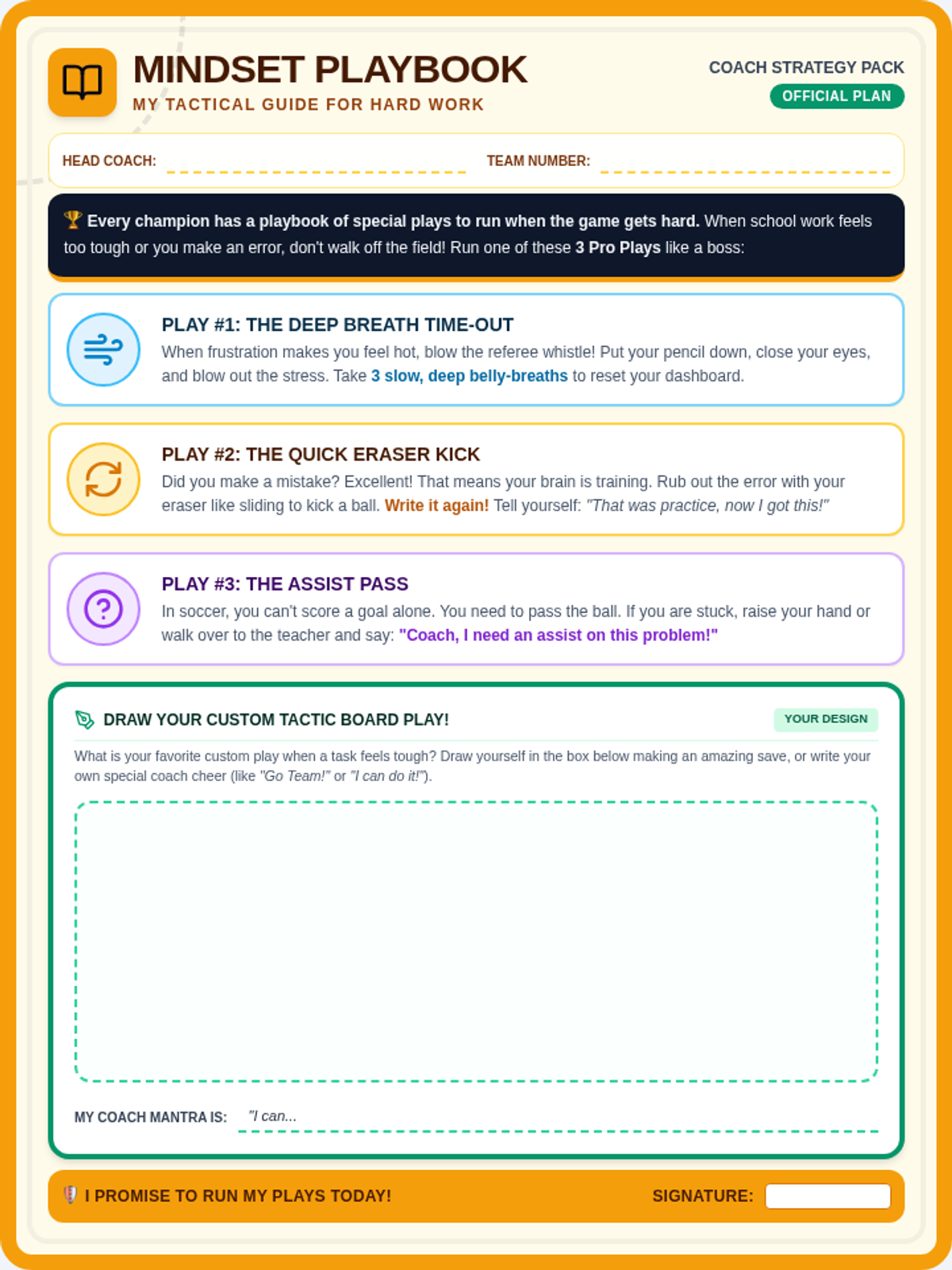
Week 2 of the Wellbeing program. The student learns to formulate a personal action plan by designing specific, physicalized tactical 'plays' to run when academic frustration hits.
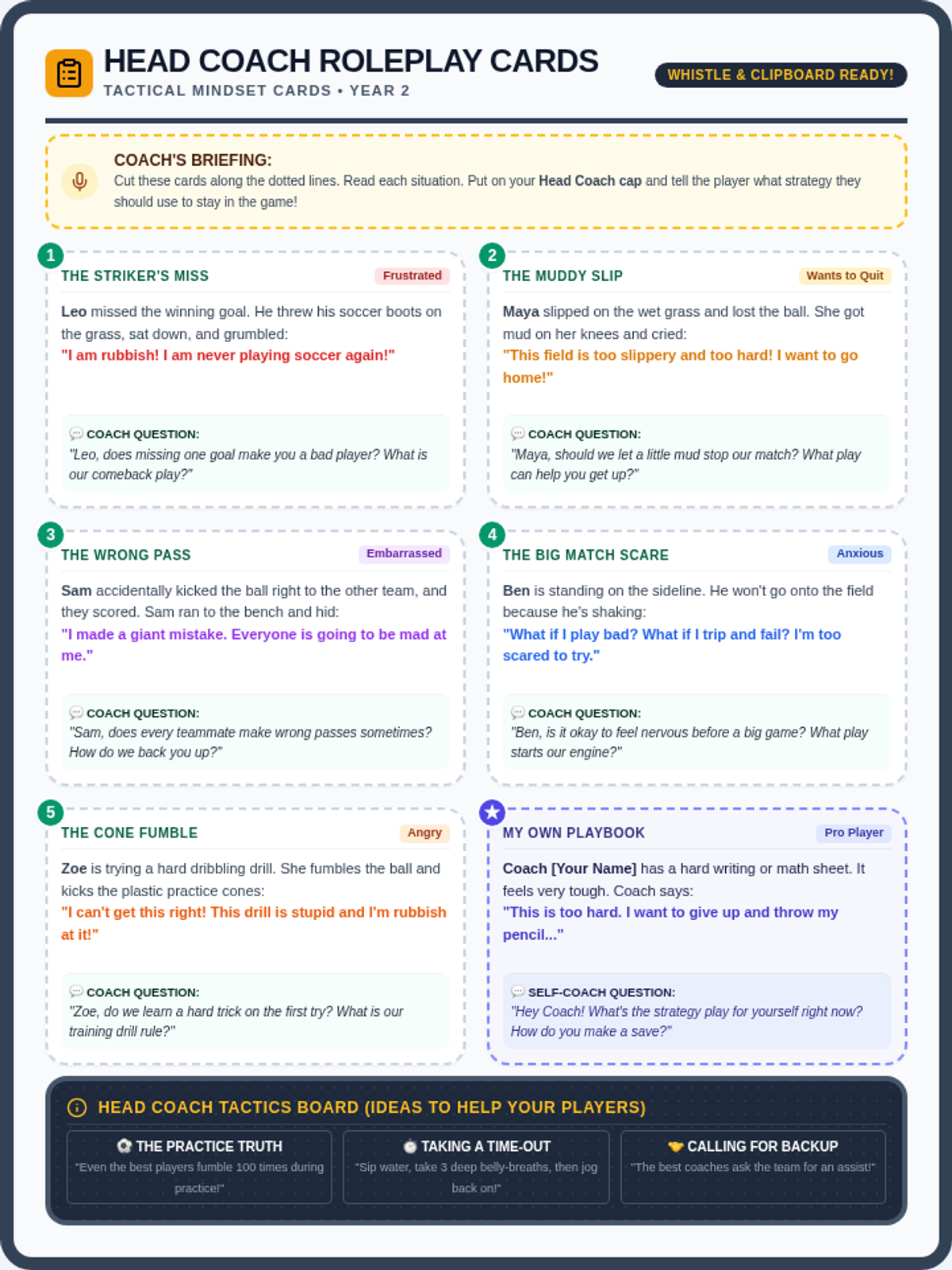
Week 1 of the Wellbeing program. The student takes on the role of the Head Coach to analyze soccer players who want to quit, building externalized positive self-talk and perspective.
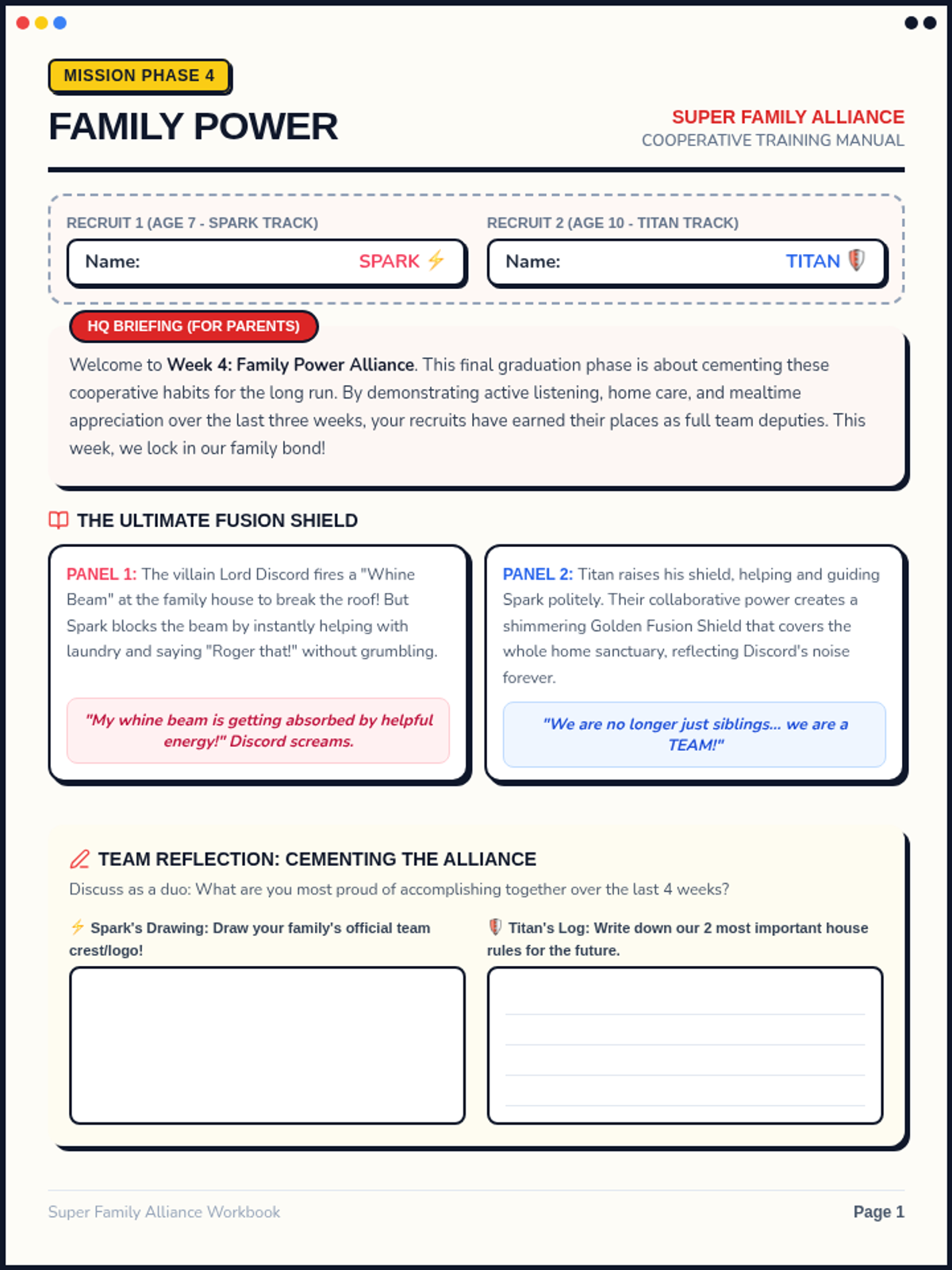
Week 4 focuses on being a cooperative part of the family team, celebrating growth, and locking in the long-term habits of the Super Family Alliance.
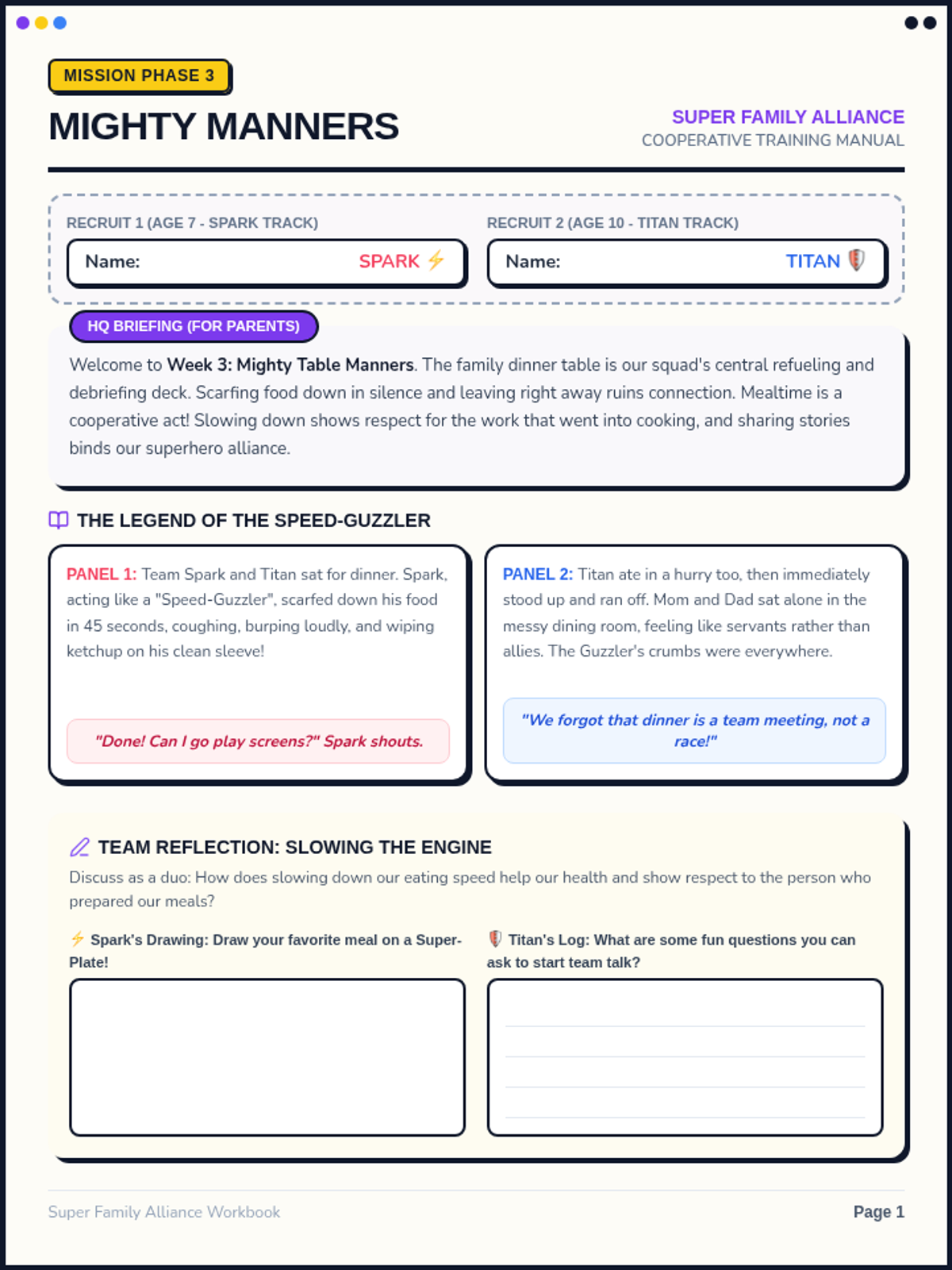
Week 3 focuses on table manners, appreciative dining, and ending the habit of scarfing down food. It emphasizes mealtime as a cooperative team-building space.
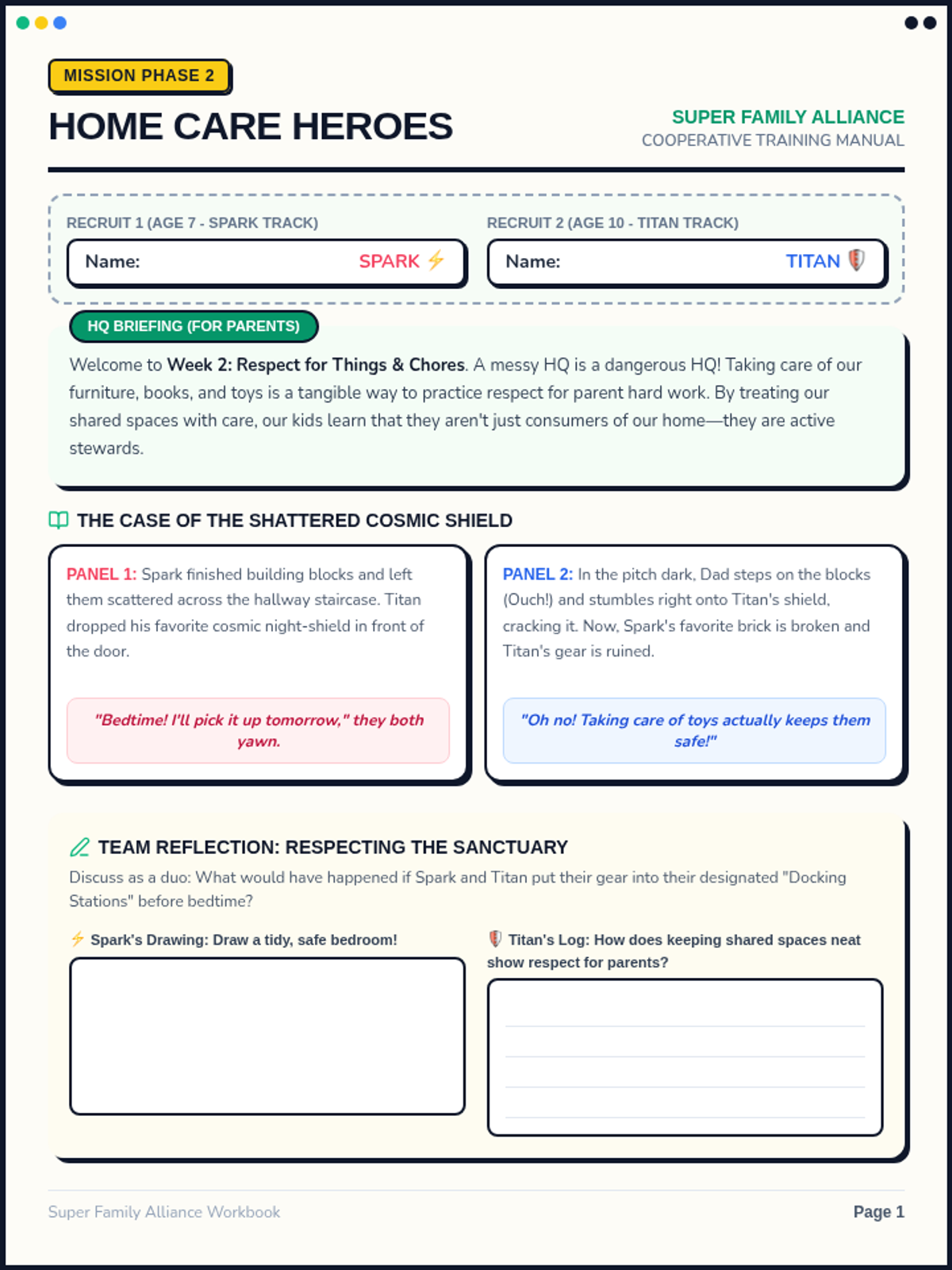
Week 2 focuses on respect for things (possessions, furniture, the home) and taking pride in doing chores as a way of caring for the sanctuary.
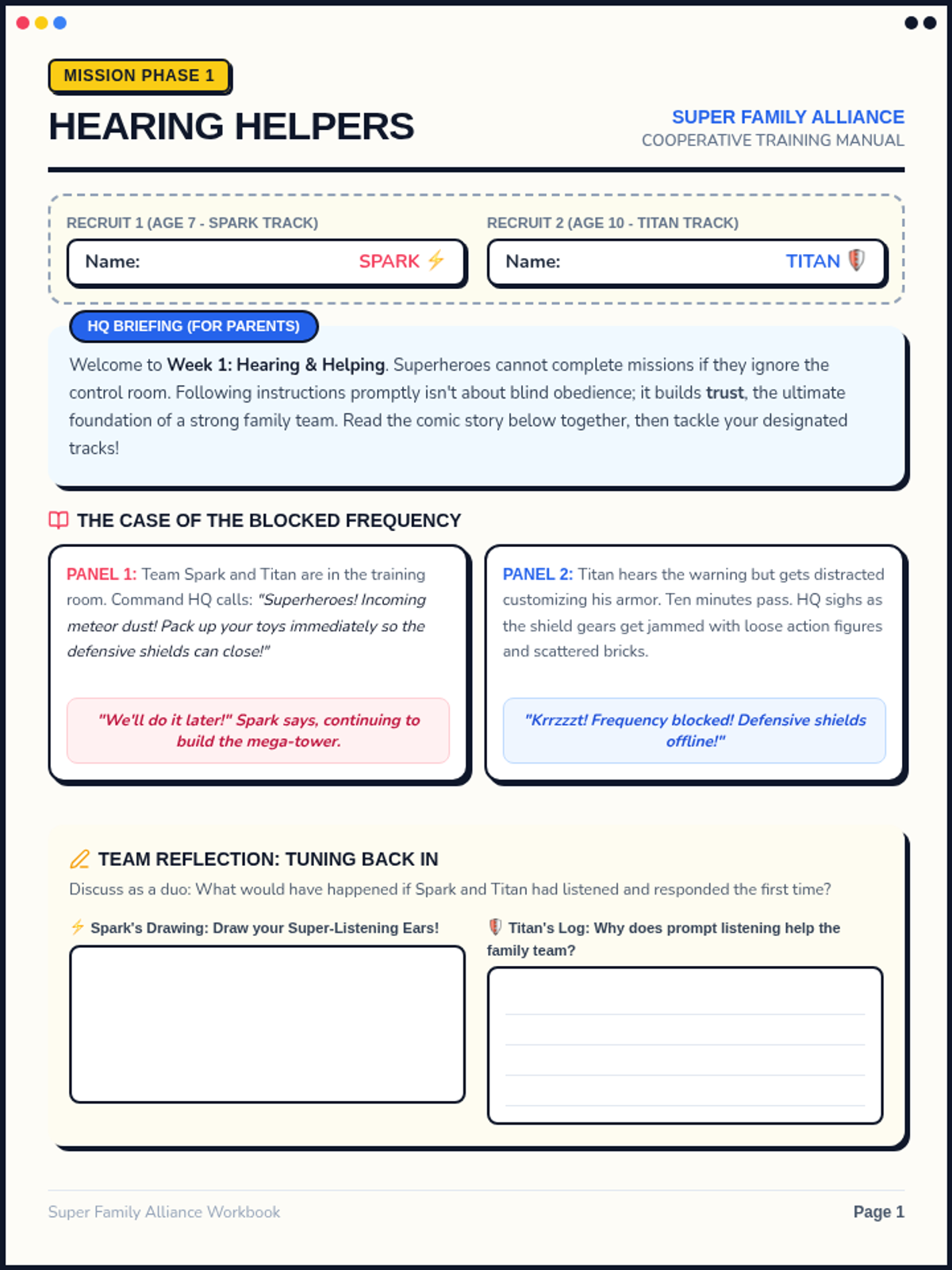
Week 1 focuses on active listening, respecting parental guidance, and following directions promptly. It establishes the baseline for the Super Family Alliance.
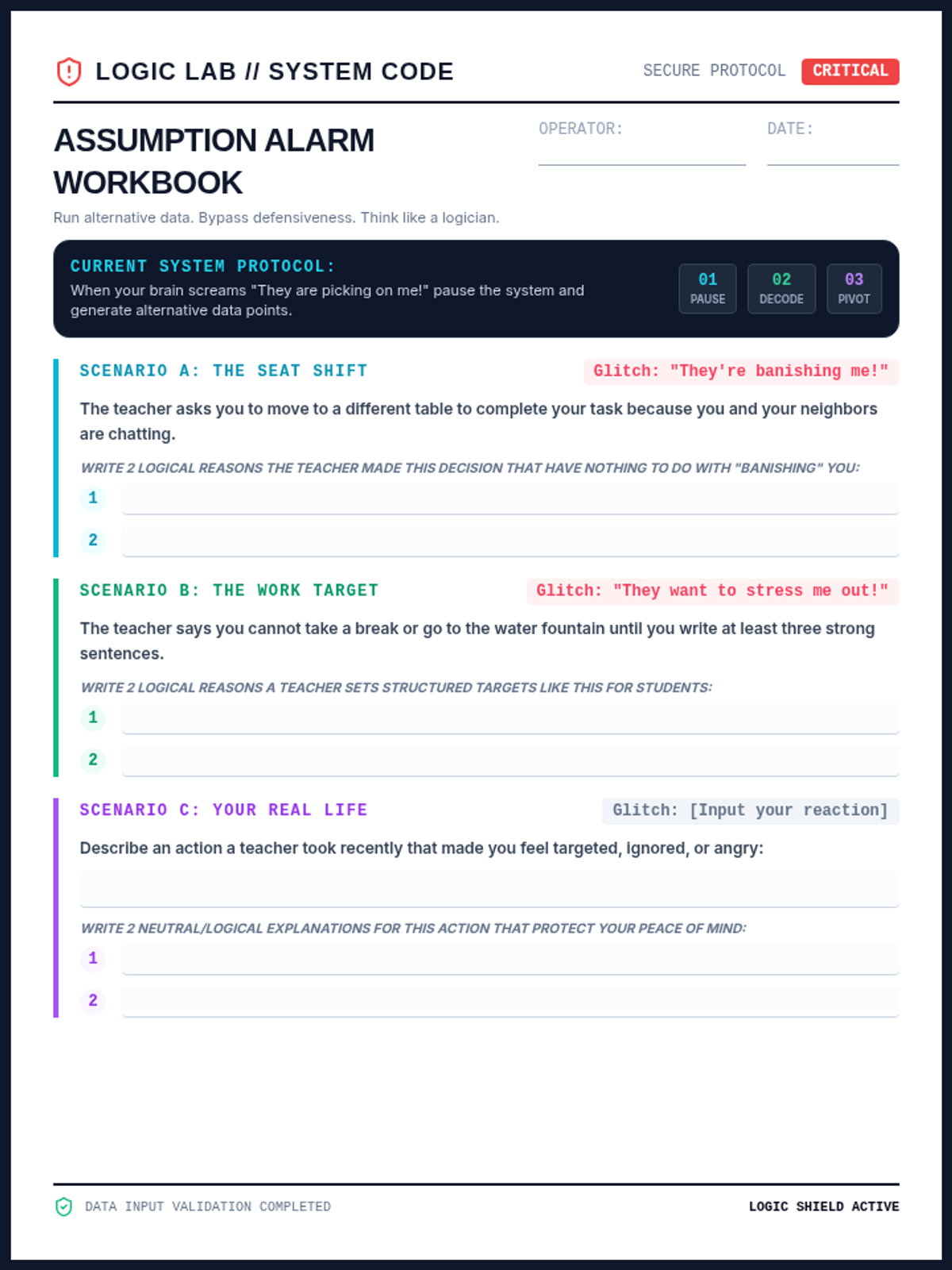
A sharp, logic-forward 1-to-1 session designed to help a student break down negative assumptions, understand the logical purpose of school rules, and develop alternative explanations for teacher actions.
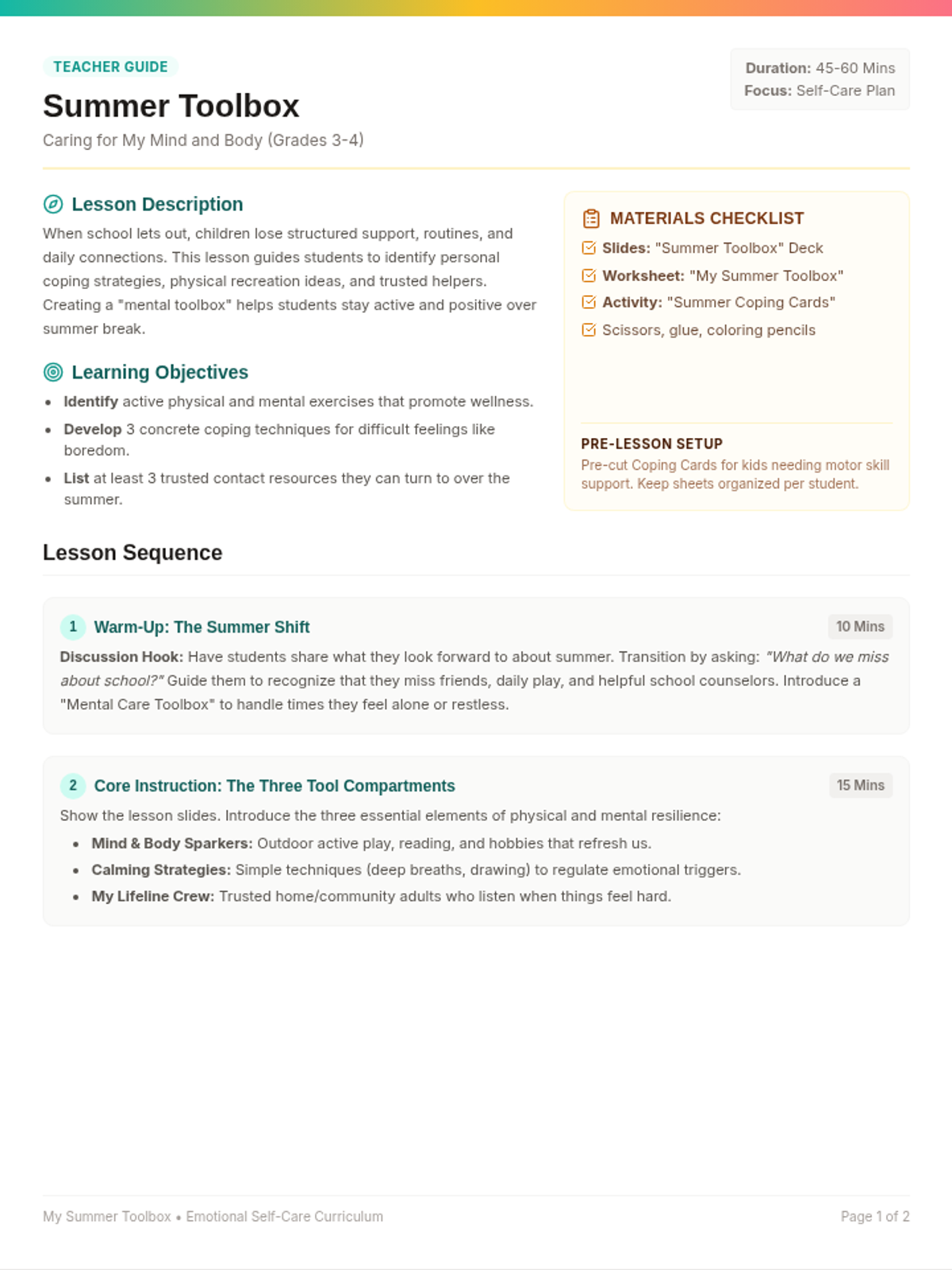
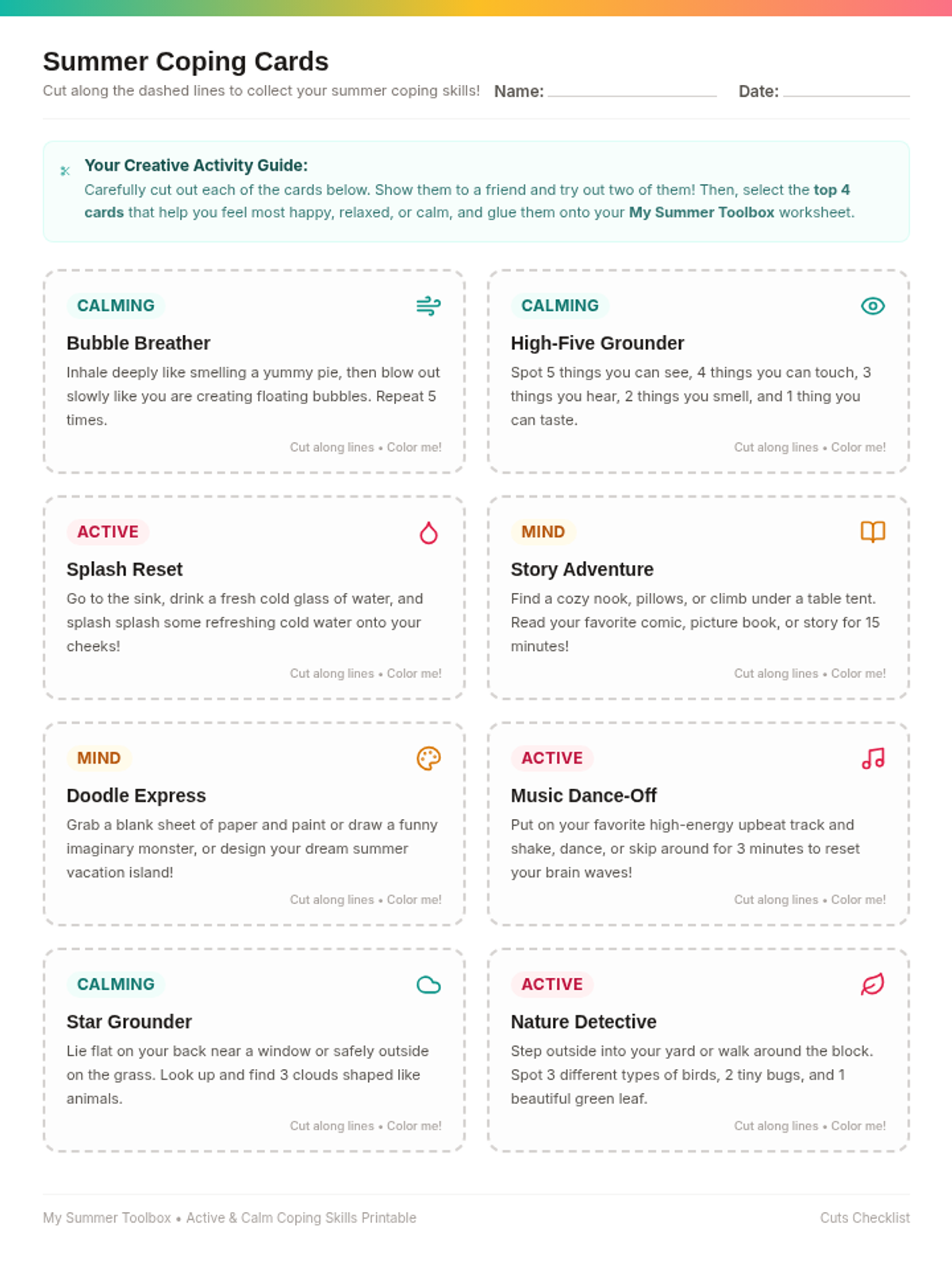
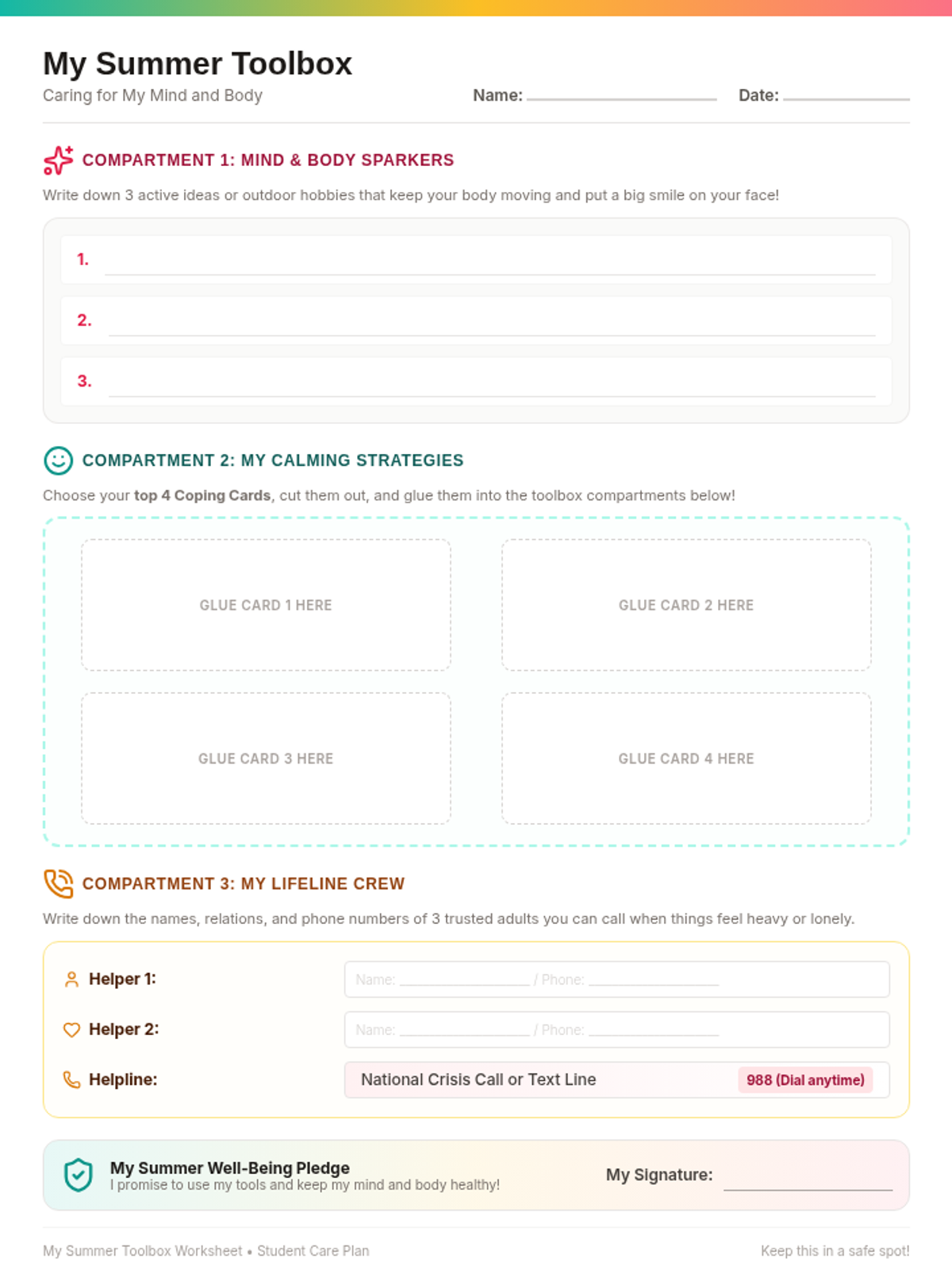
A comprehensive lesson plan designed for 3rd-4th graders to build their own emotional and physical self-care plan for the summer. It includes a teacher lesson plan, presentation slides, an interactive coping strategies activity, and a personal toolbox worksheet.
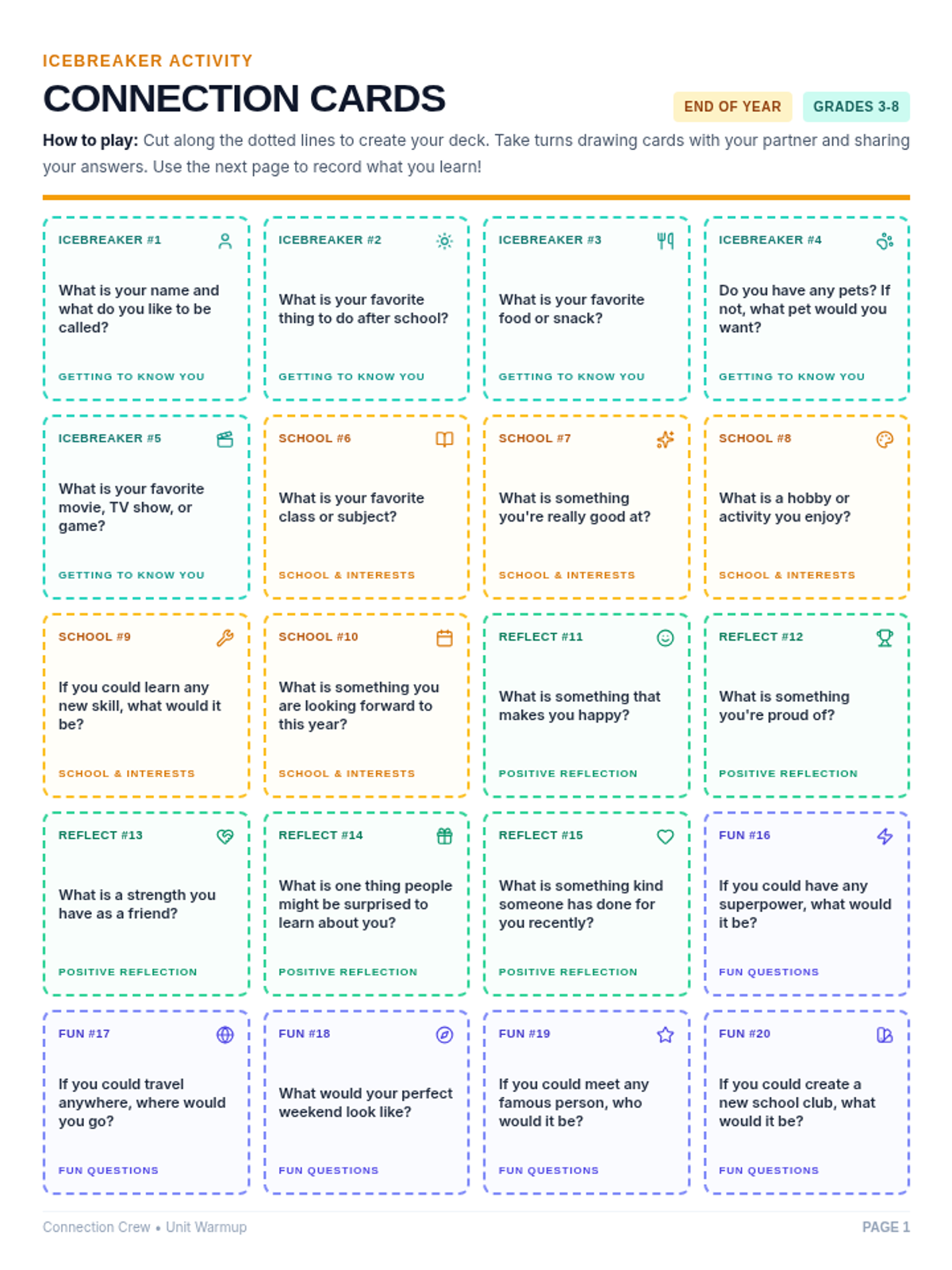
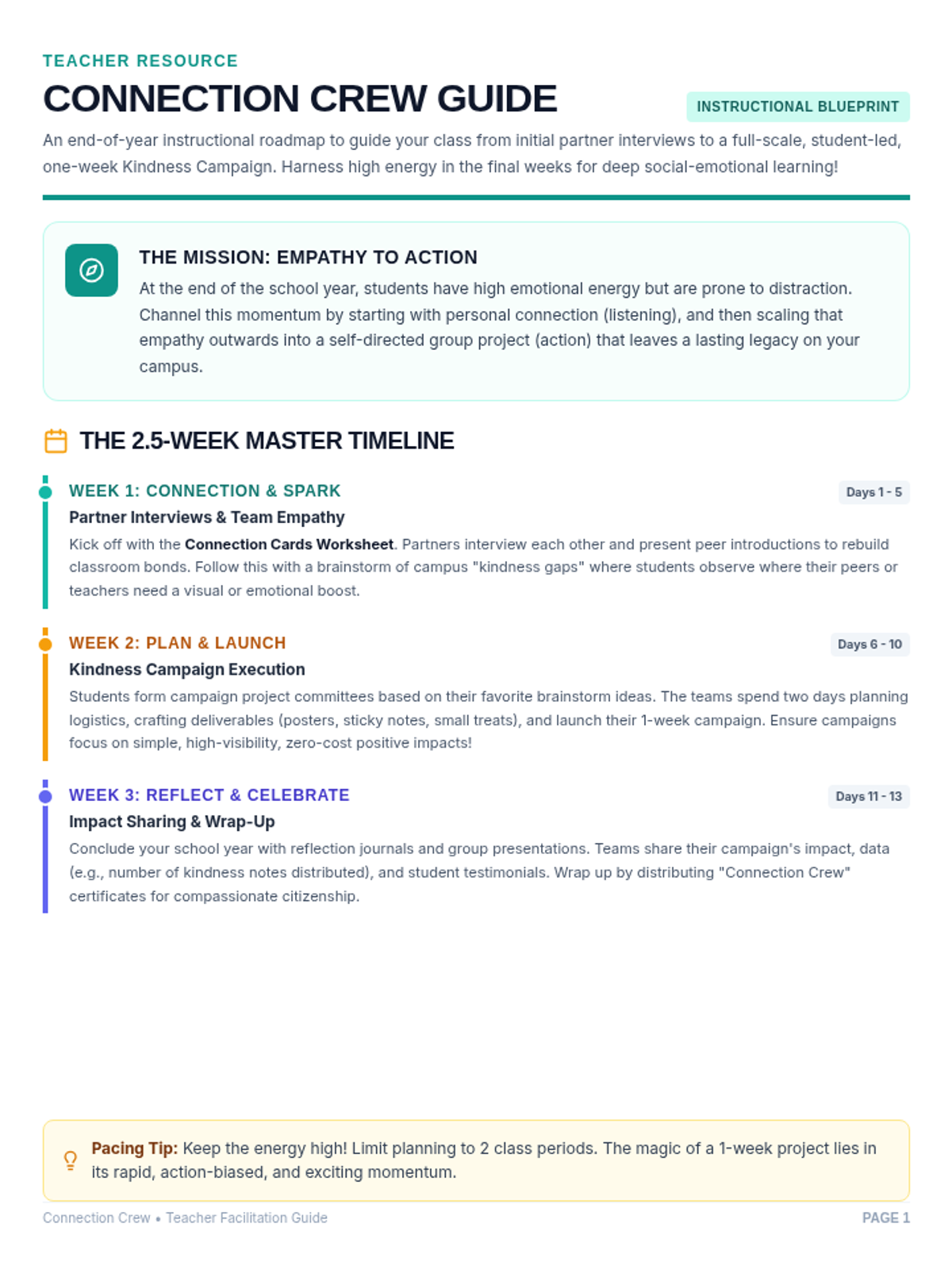
A quick-start end-of-year lesson plan and printable materials that utilize partner interviews to spark connection and transition students into planning a week-long Kindness Campaign.
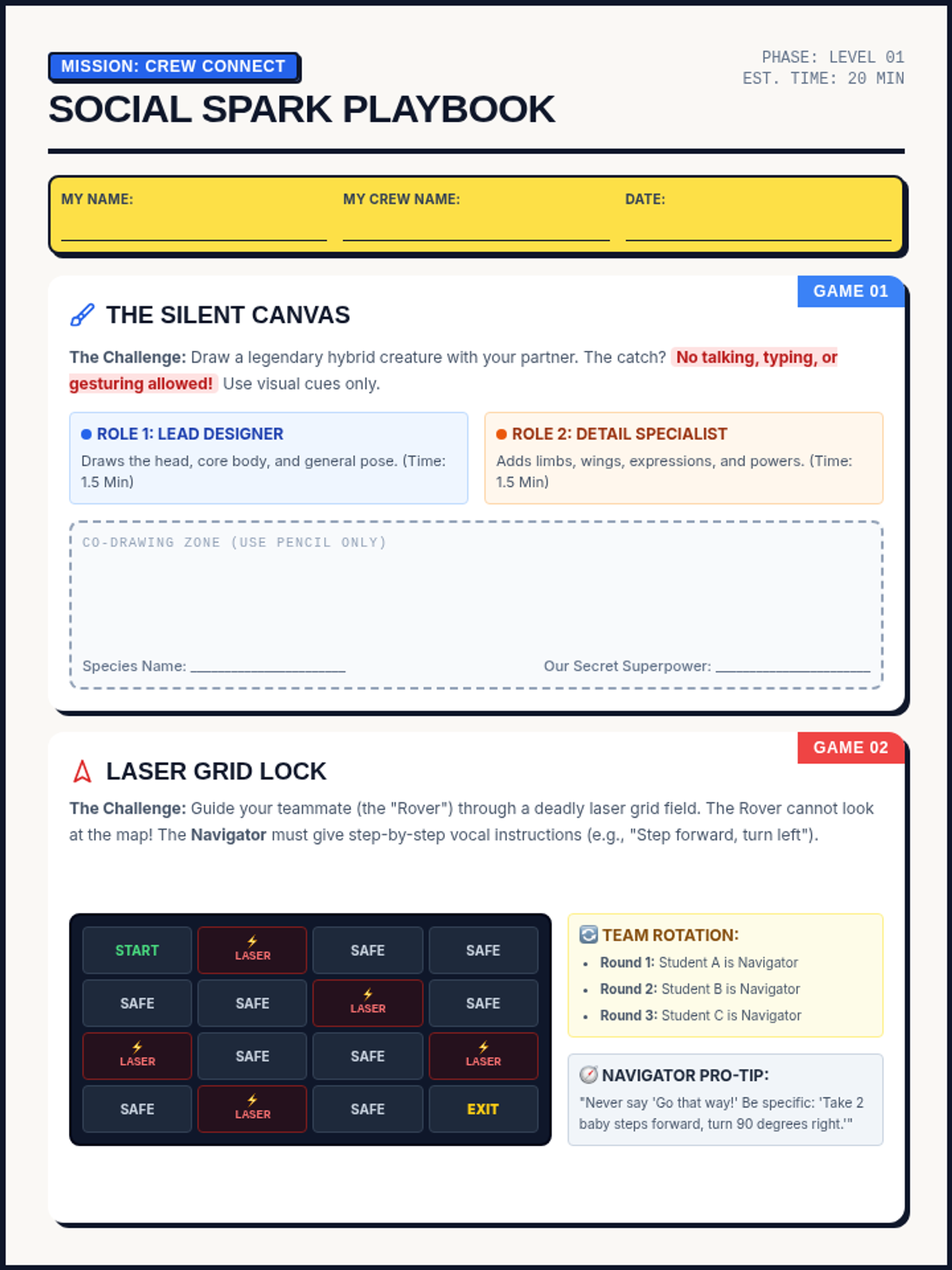
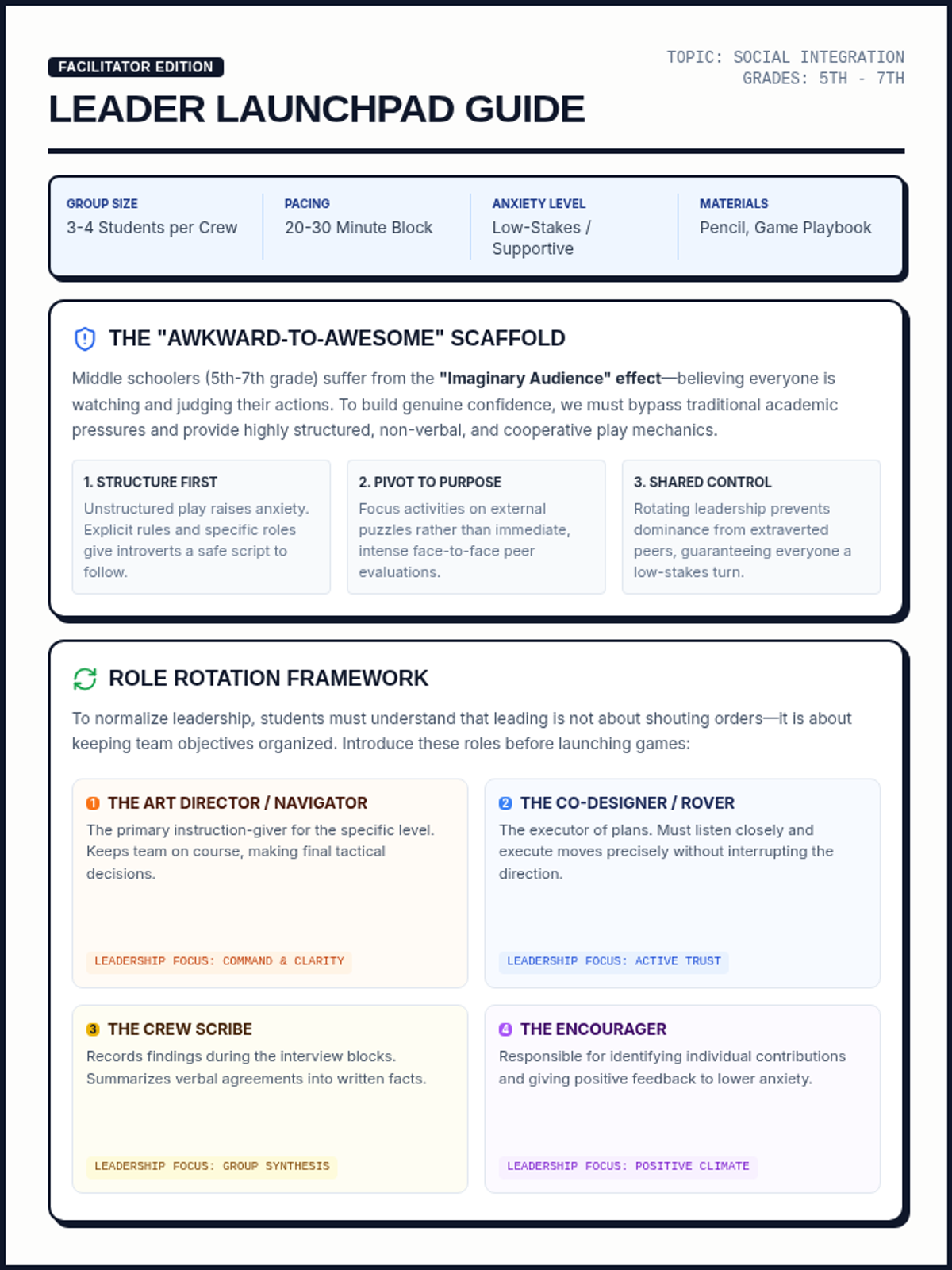
A targeted social-skills and leadership lesson designed for 5th-7th graders to build confidence, reduce social anxiety, and practice low-stakes peer leadership. The materials provide step-by-step, highly collaborative team-building games with rotational leadership roles and reflection prompts.
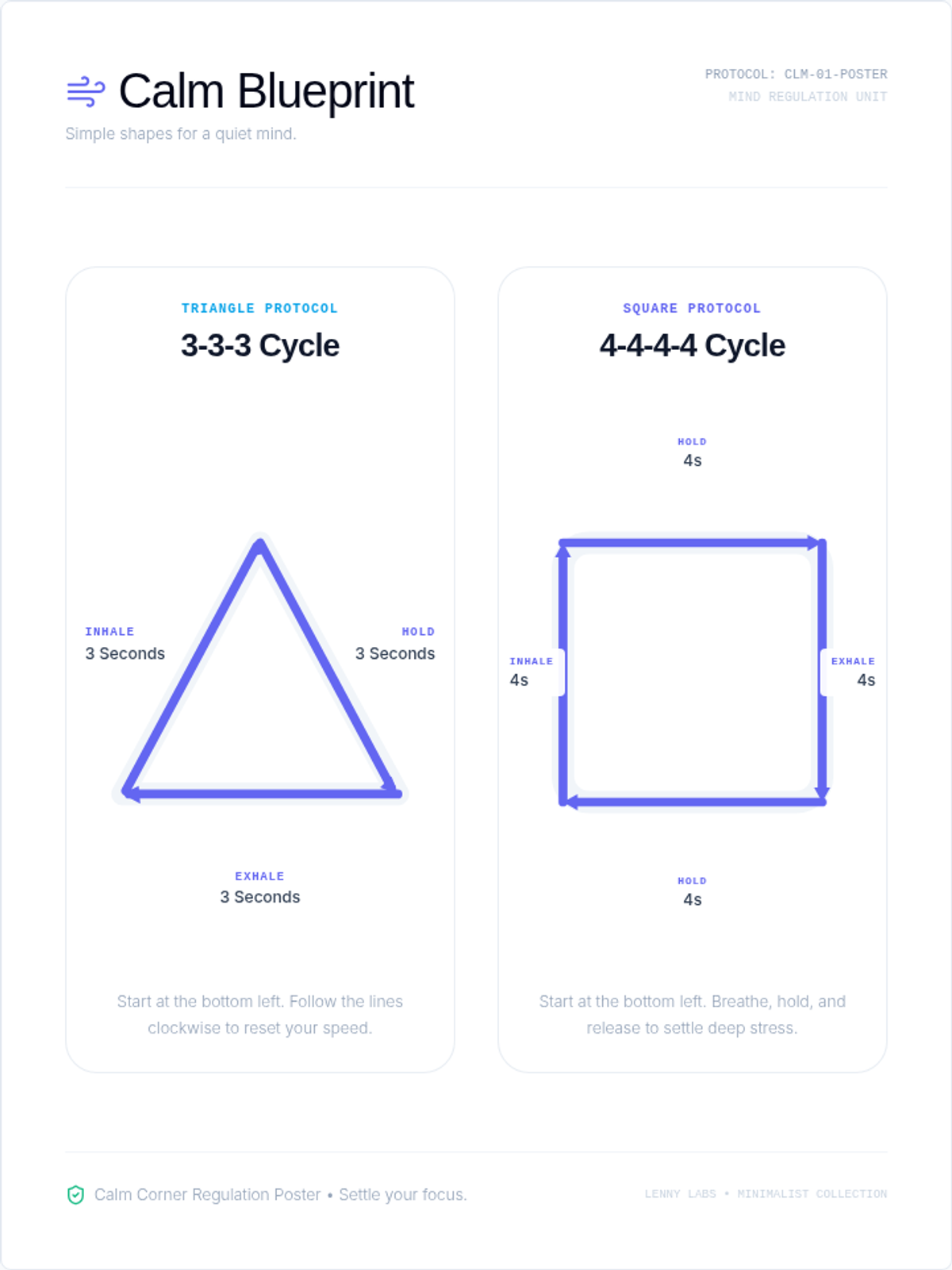
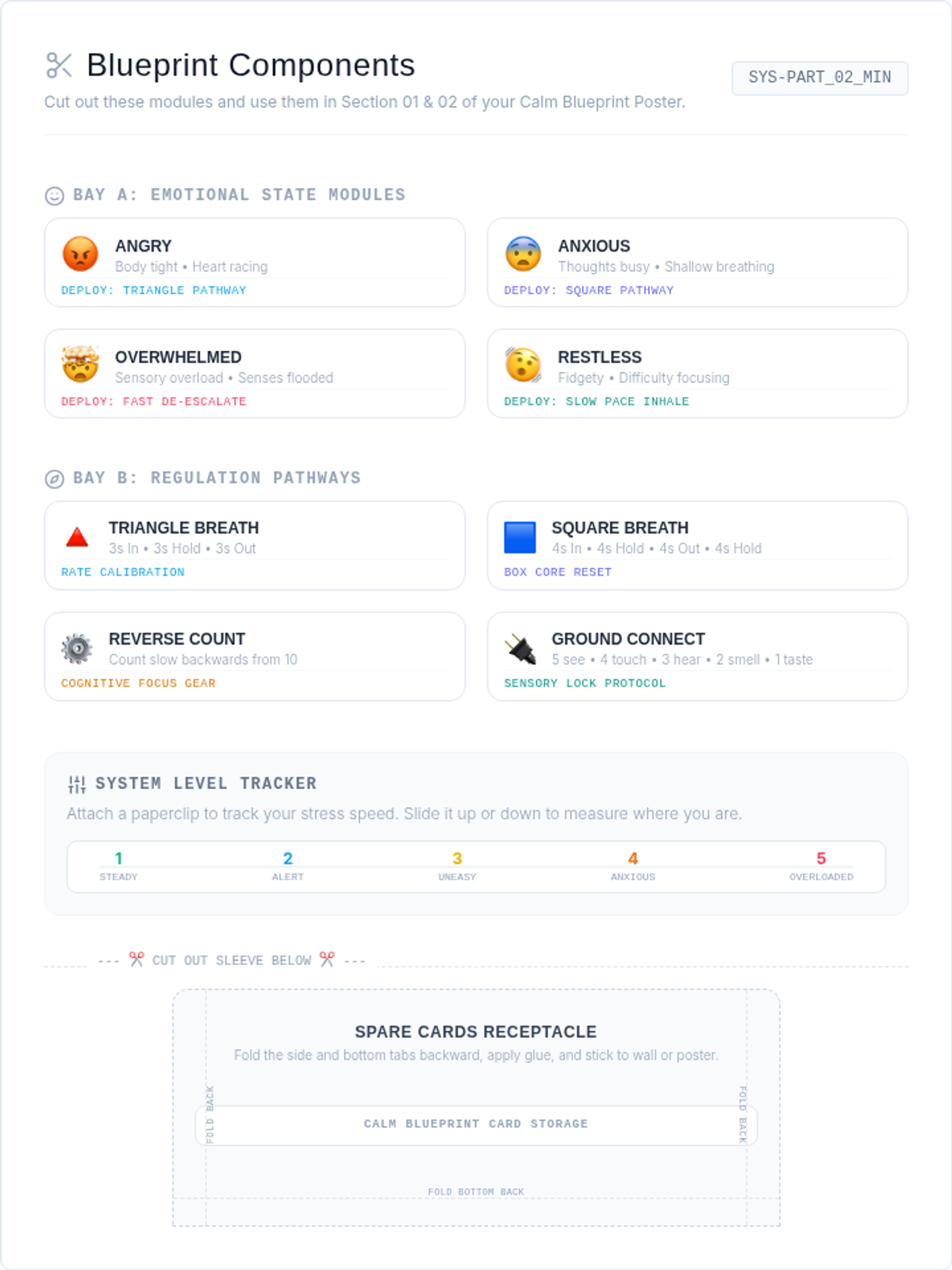
An interactive mental engineering toolkit that teaches children deep breathing exercises using concrete shapes. Students use the visual anchor chart and movable feeling/strategy blueprints to regulate their emotions.
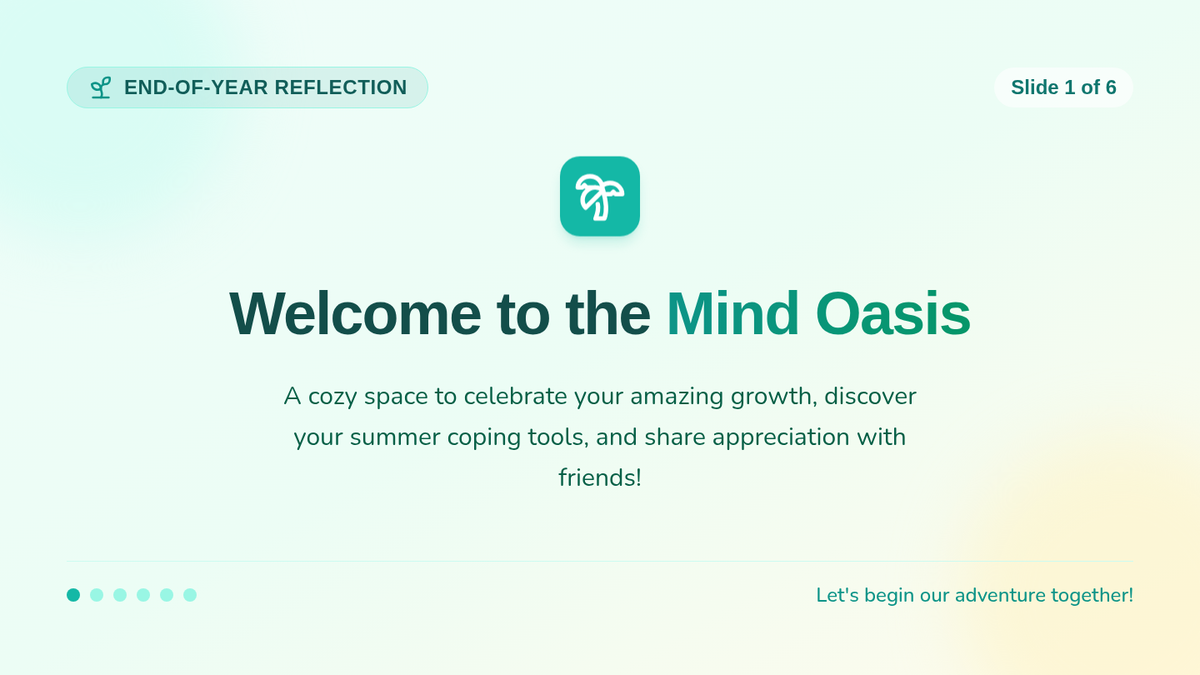
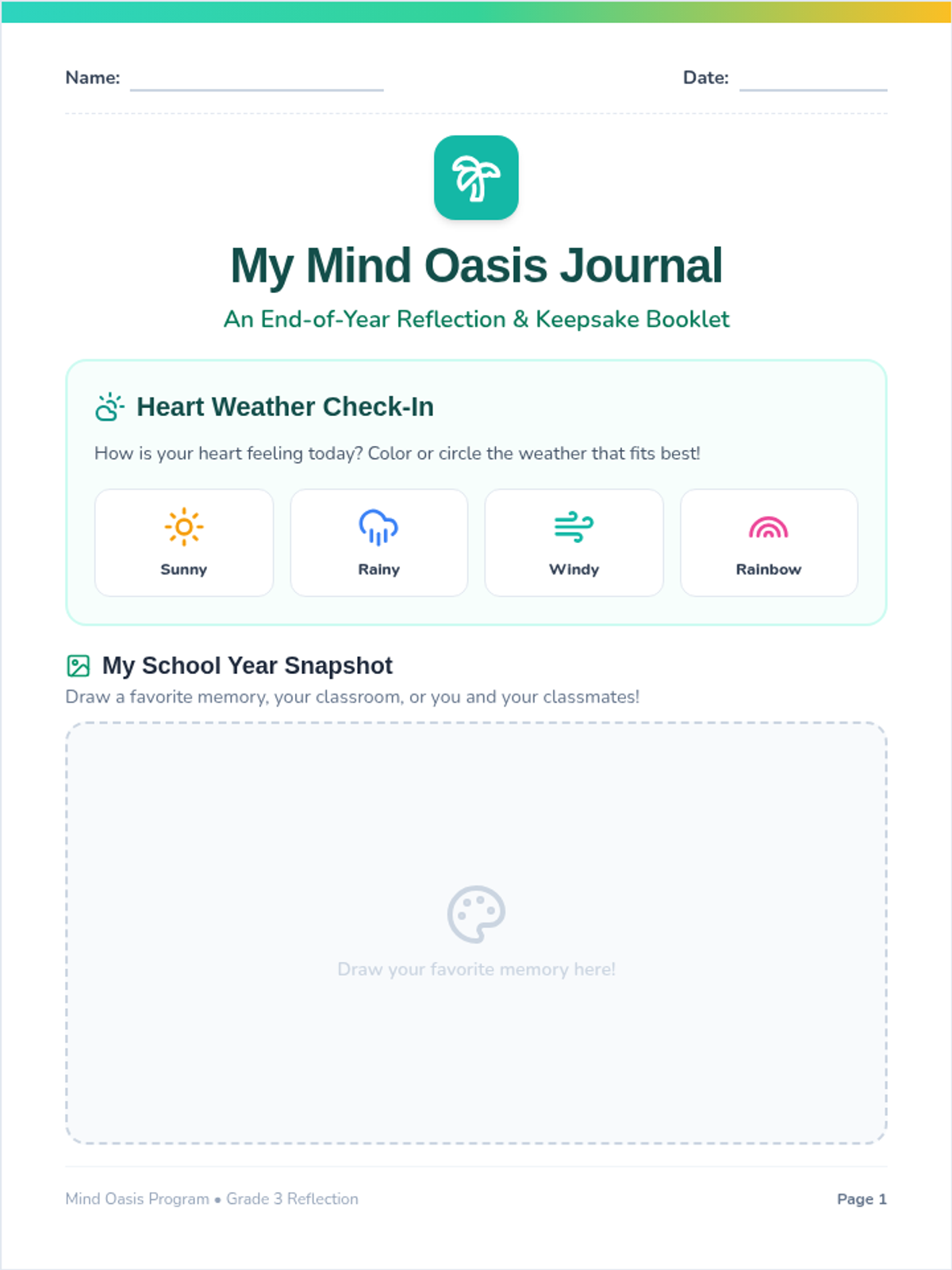
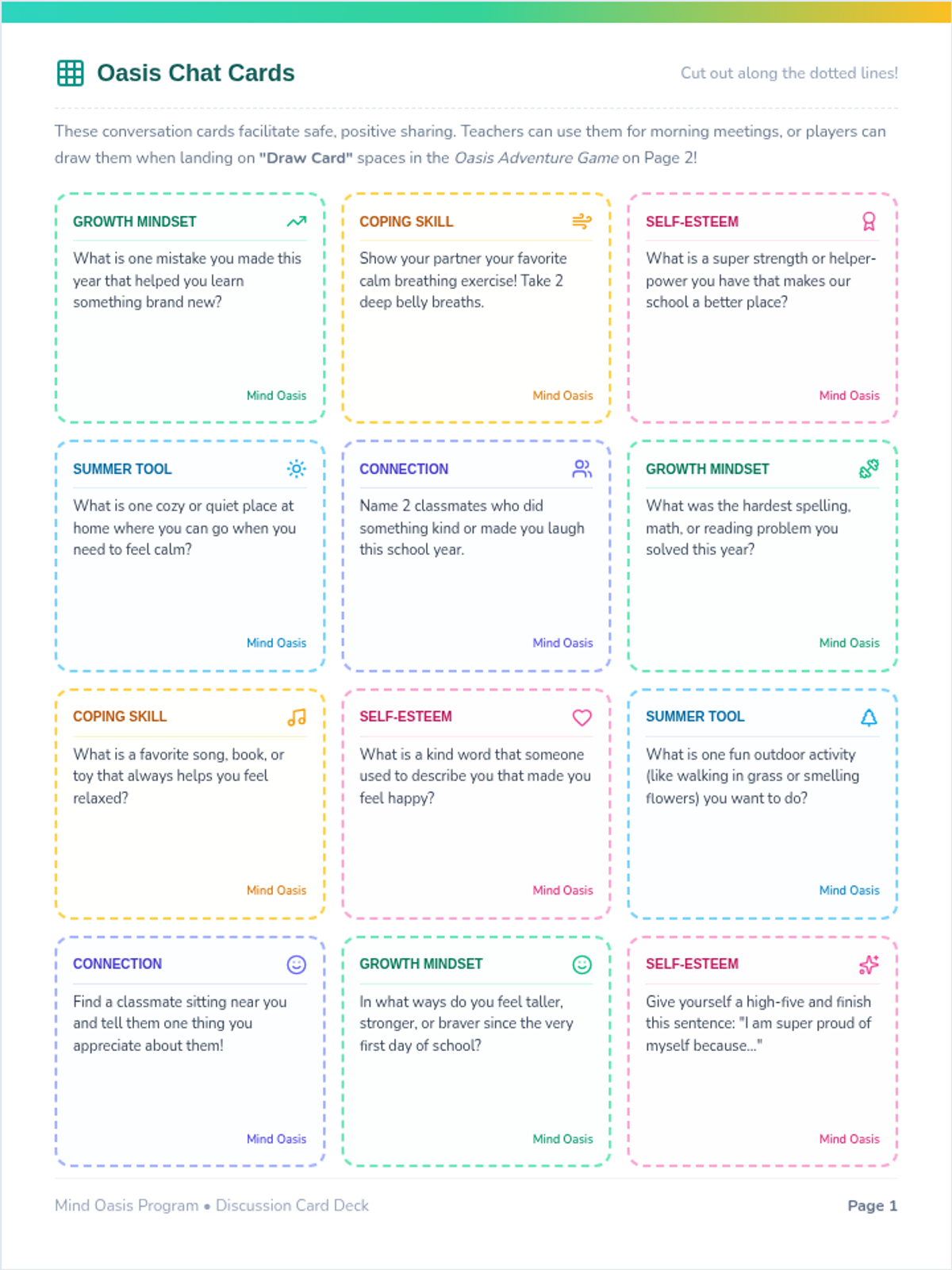
An end-of-school-year mental health lesson for 8-year-olds. It includes guided slides for class reflection, an interactive printable keepsake journal to track emotional growth, and a printable board game with discussion cards to foster positive peer connection and summer coping strategies.
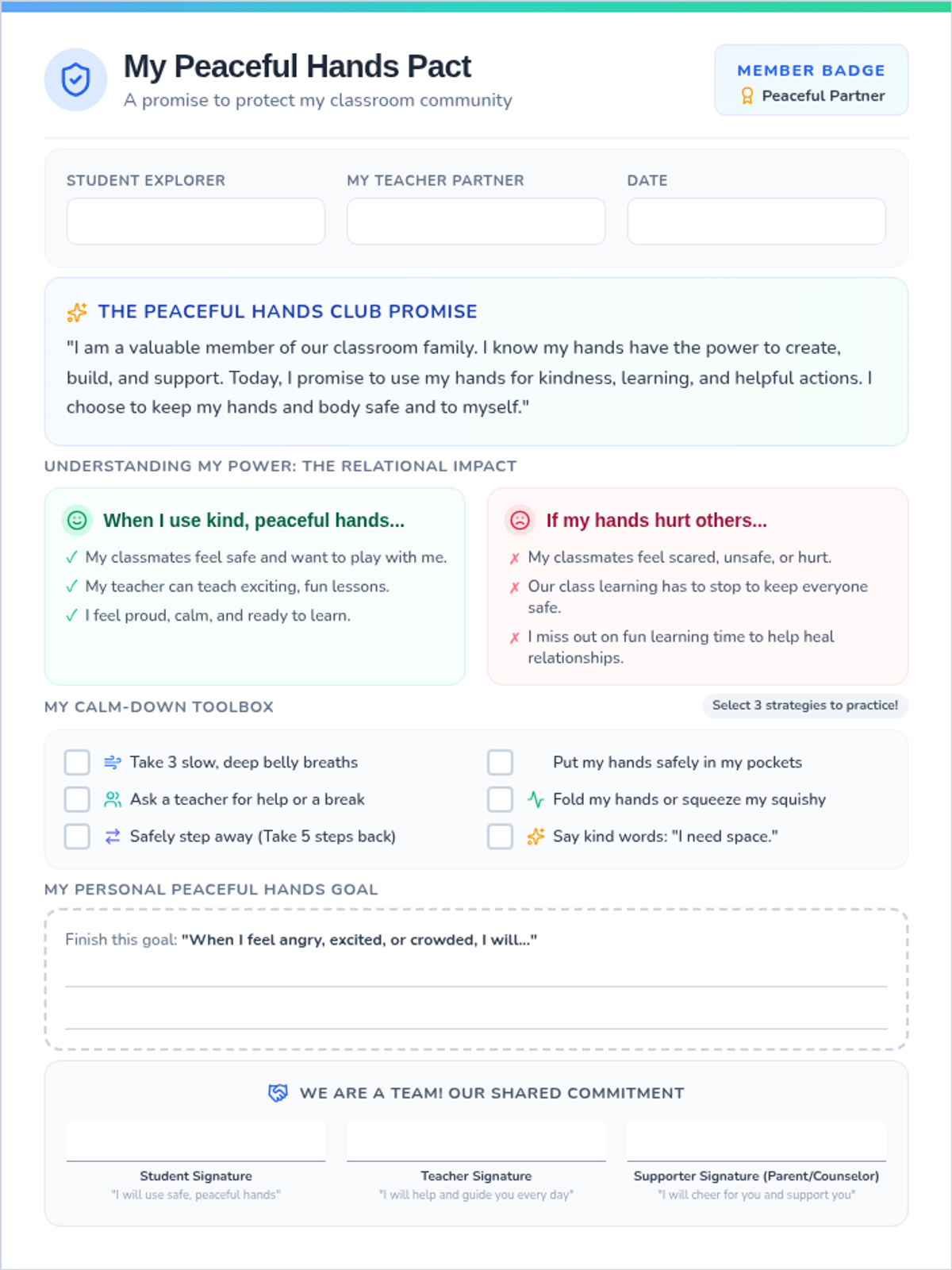
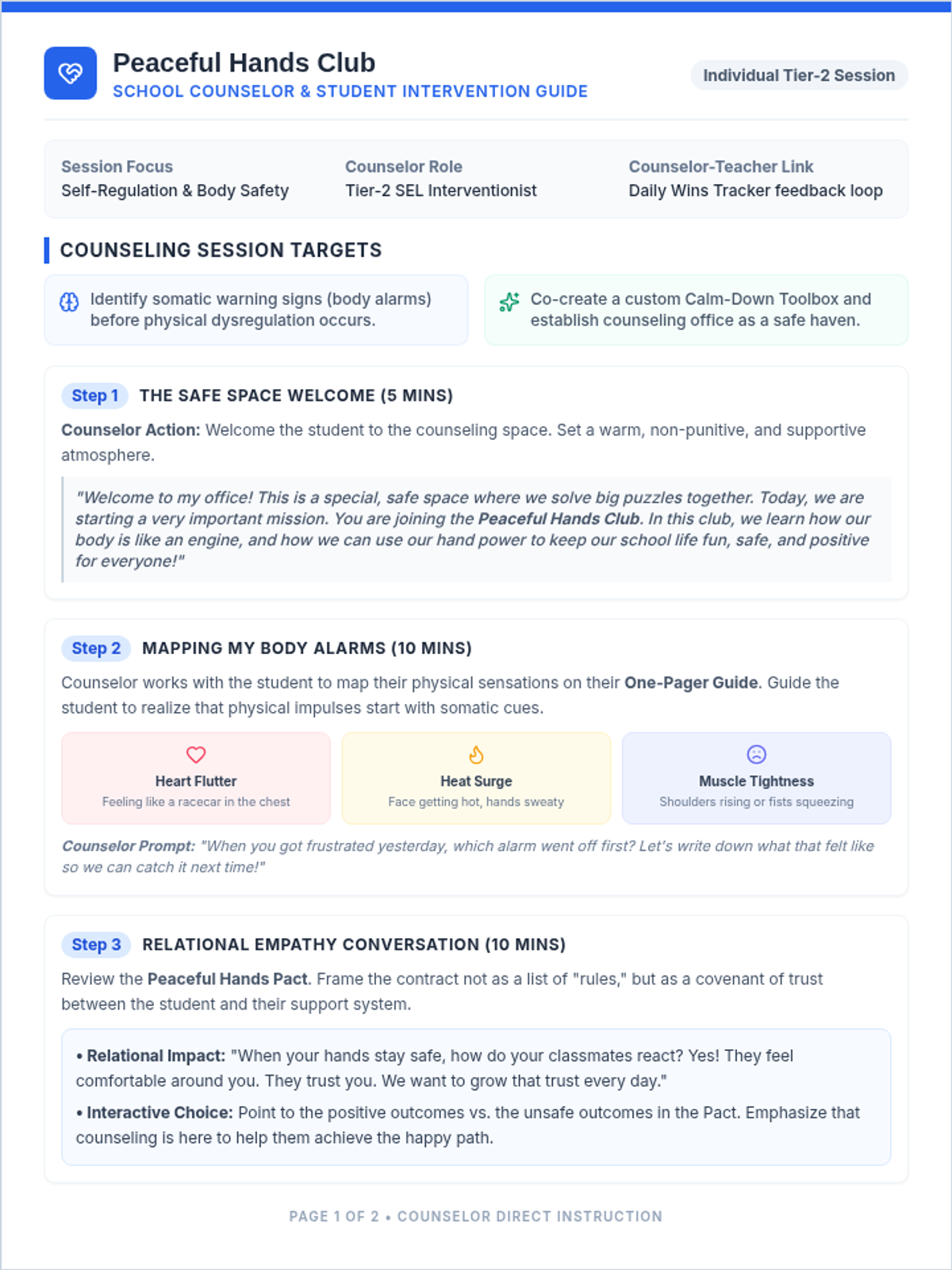
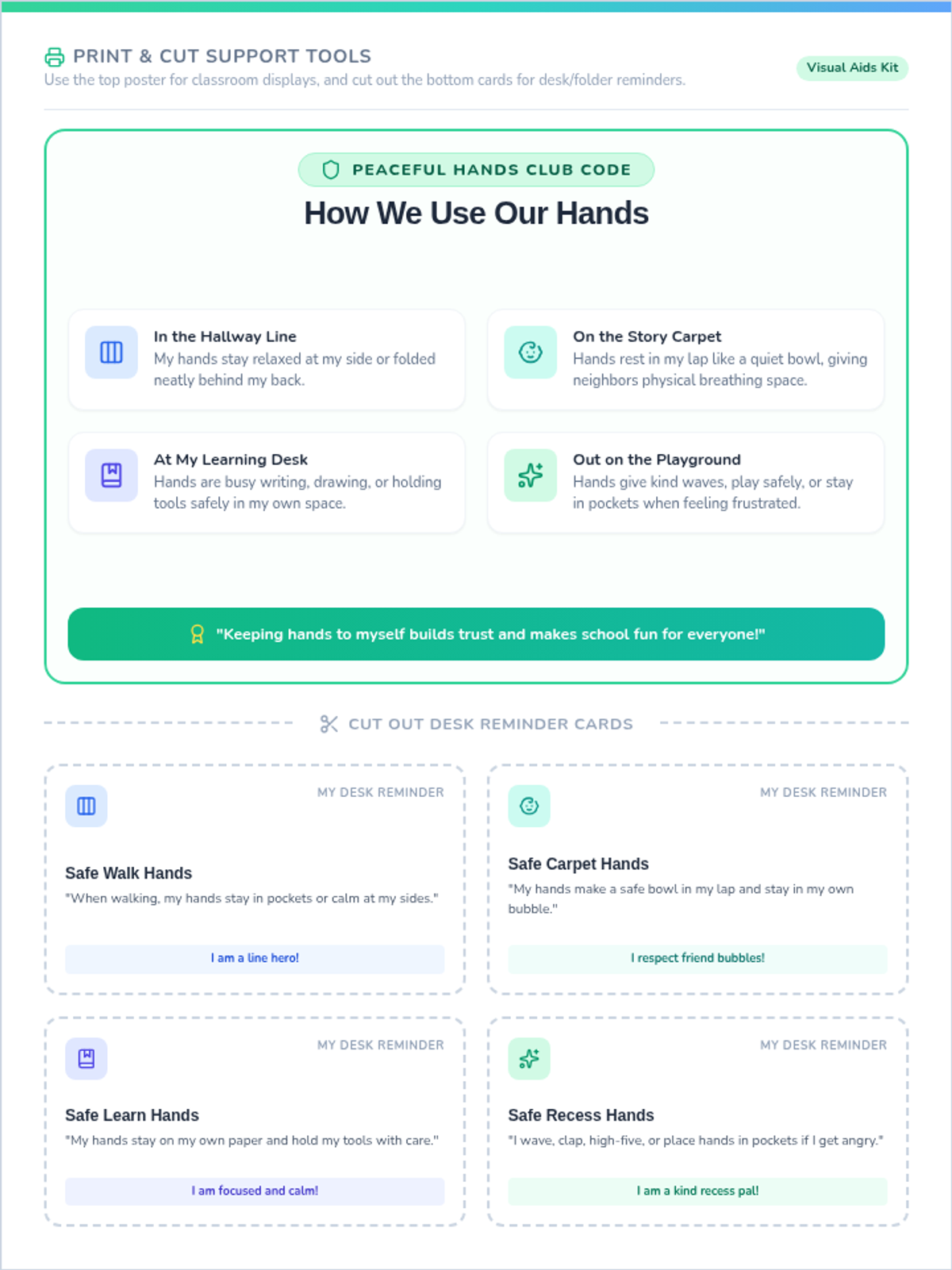
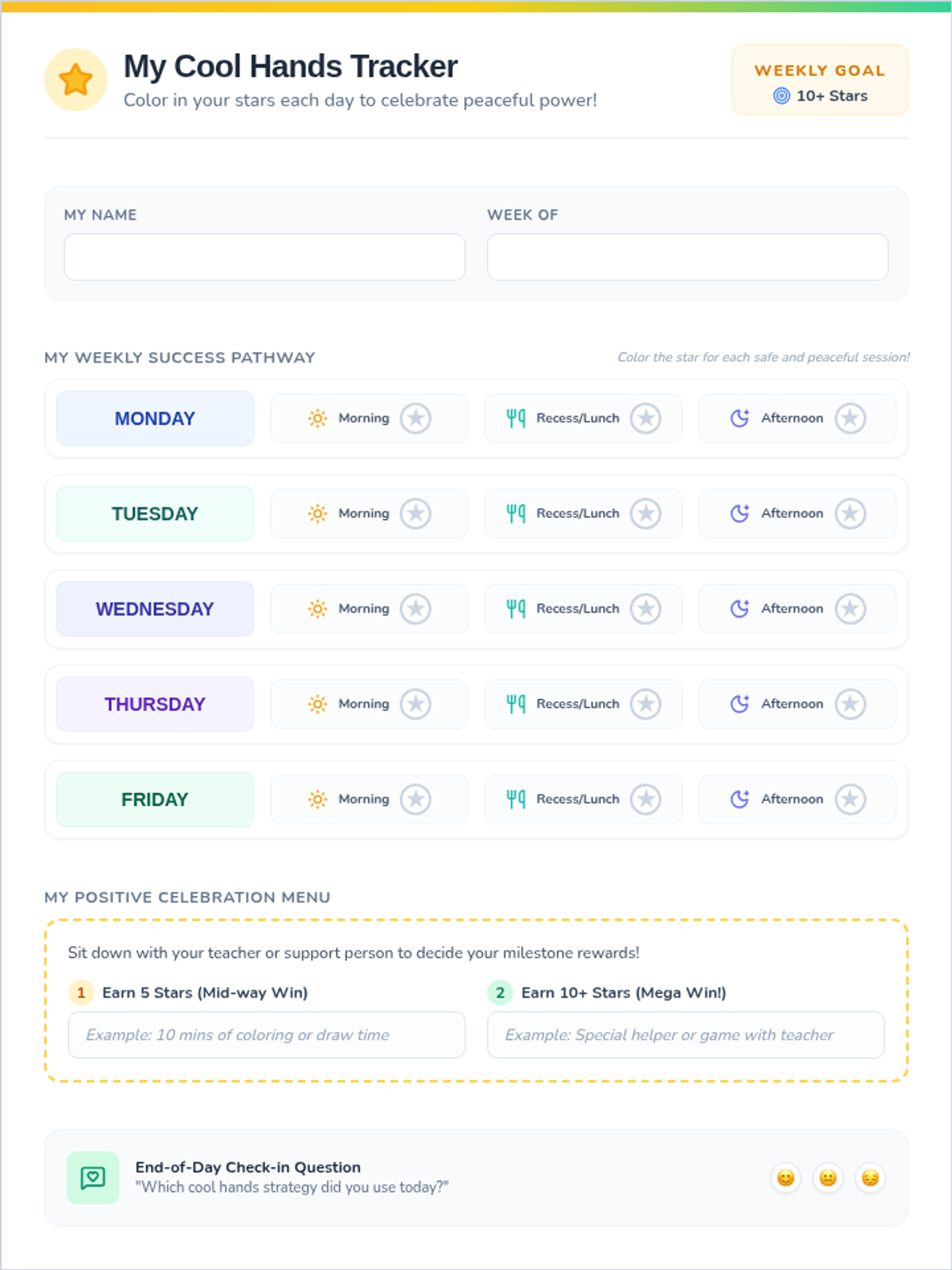
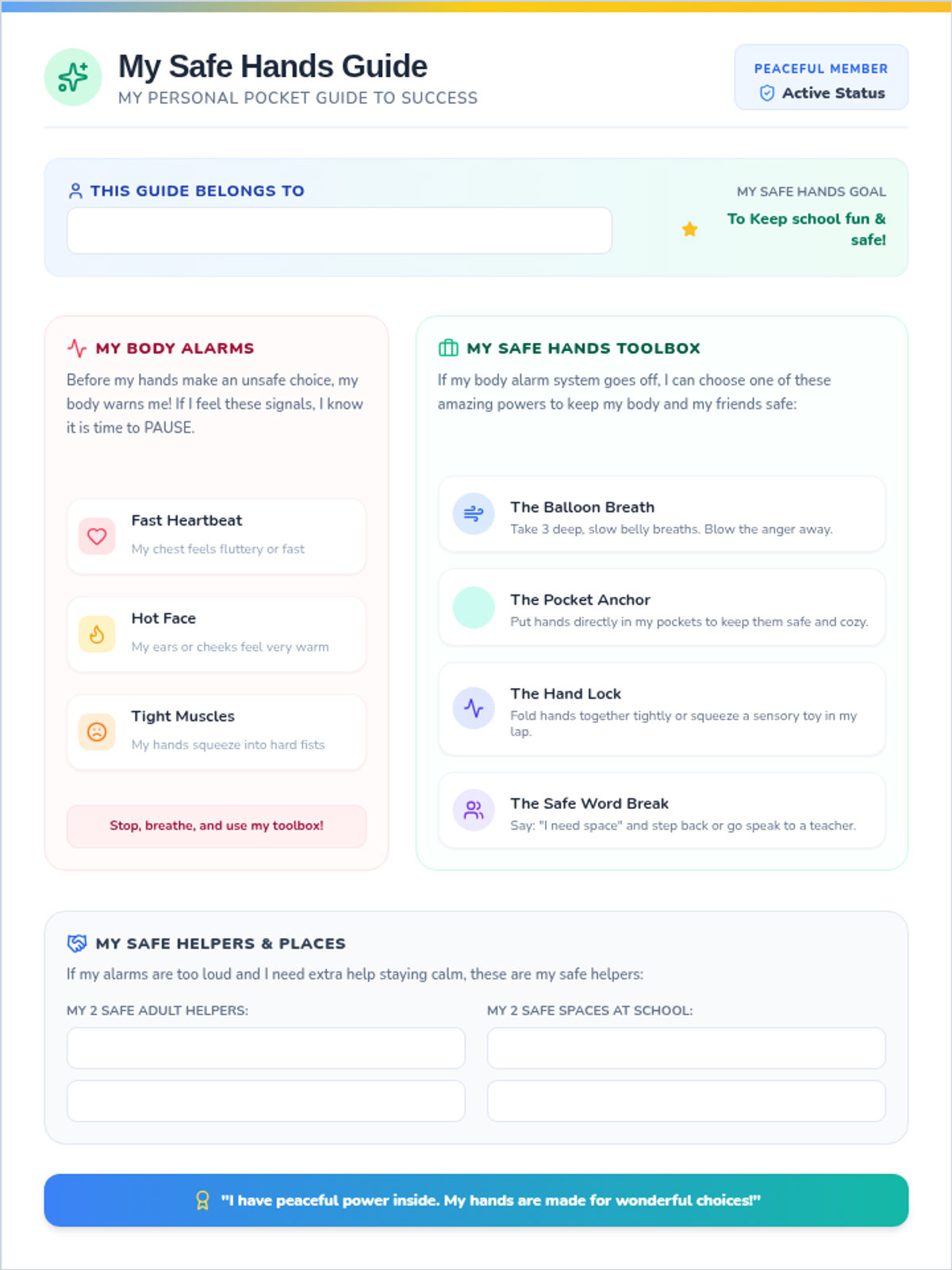
An intensive social-emotional intervention kit designed for lower elementary students to promote self-regulation and keep hands to themselves. This kit includes a relational behavior contract, an interactive lesson plan with role-play scenarios, visual aids, and a daily progress tracker.
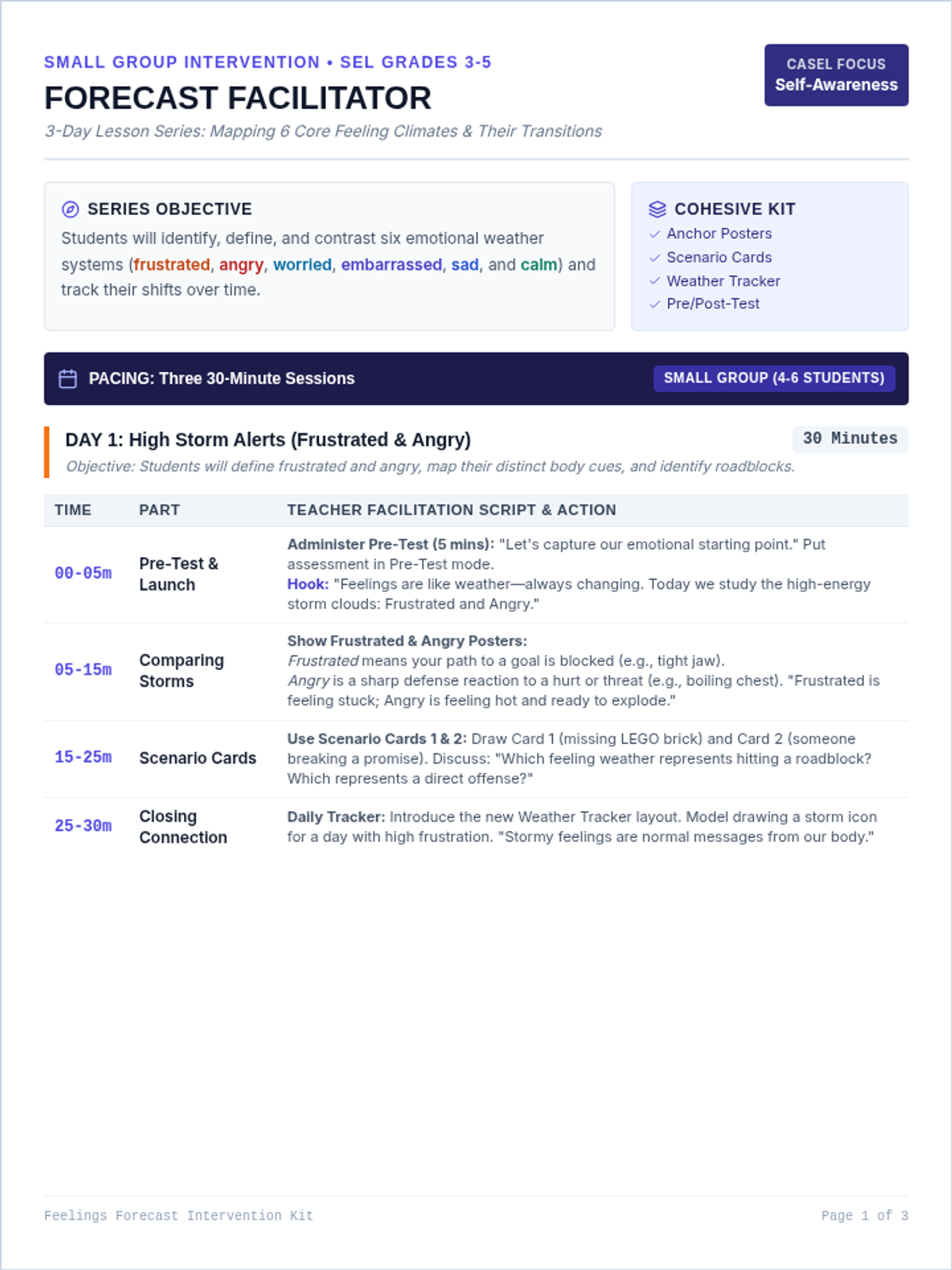
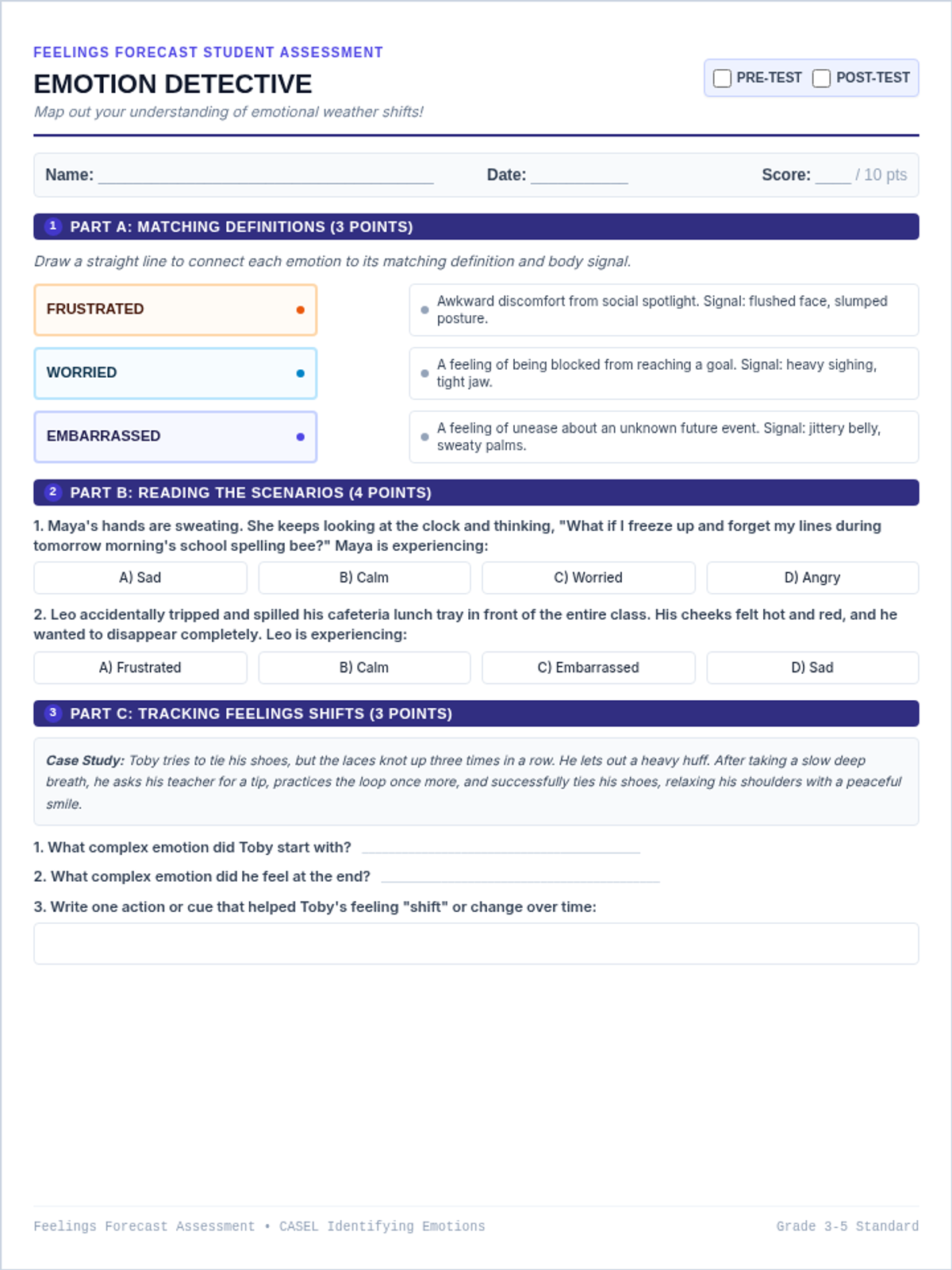
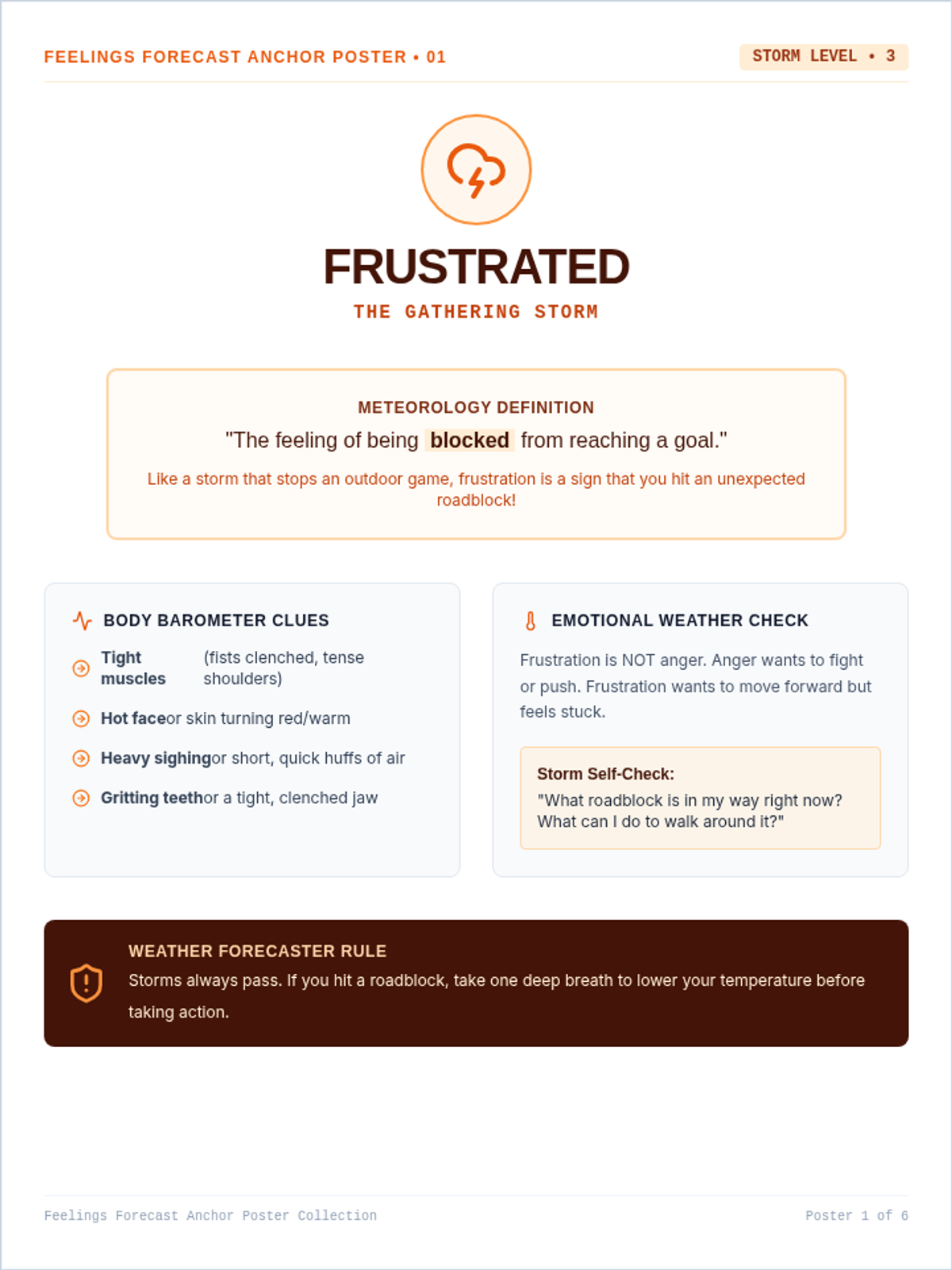
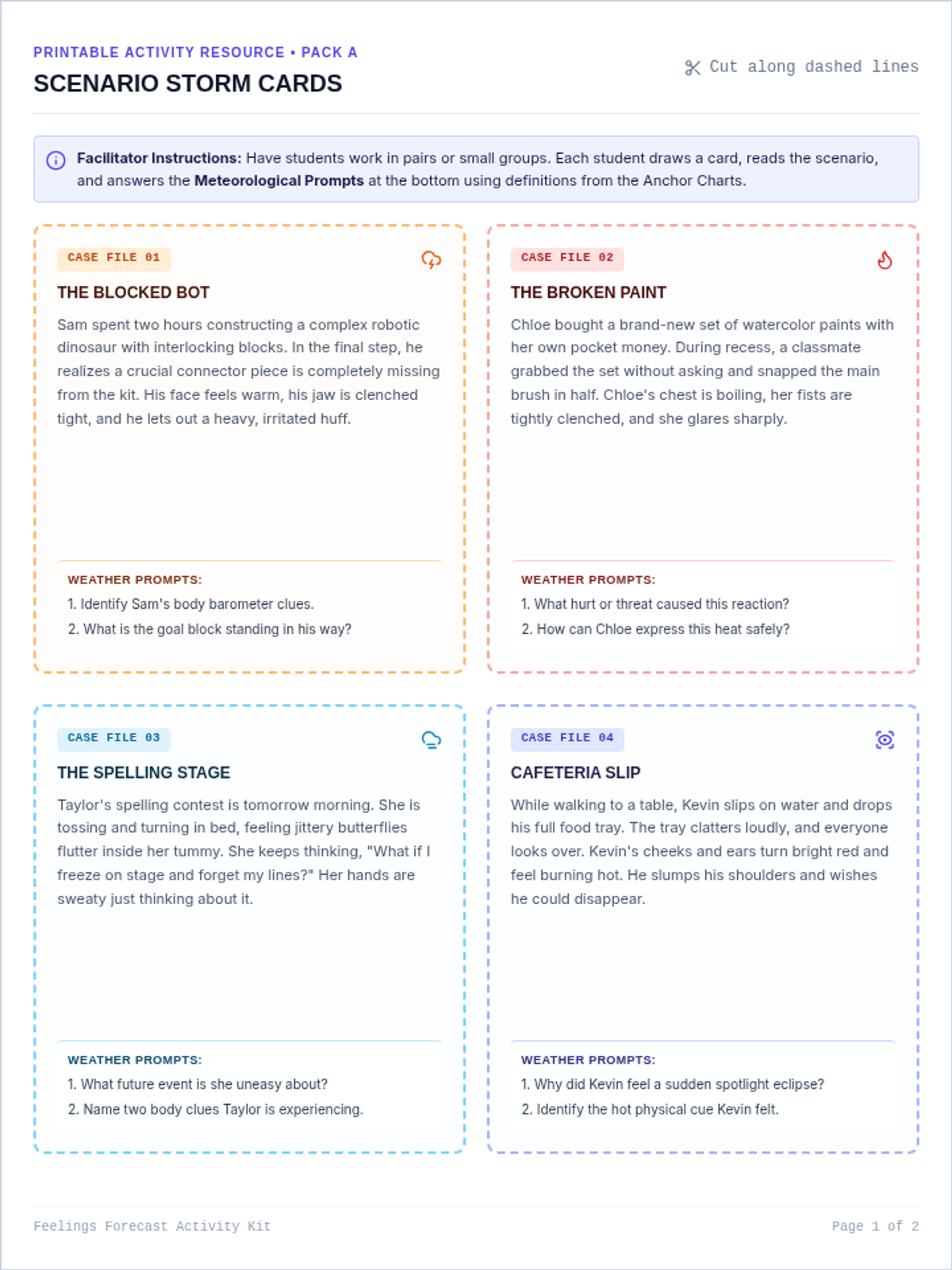
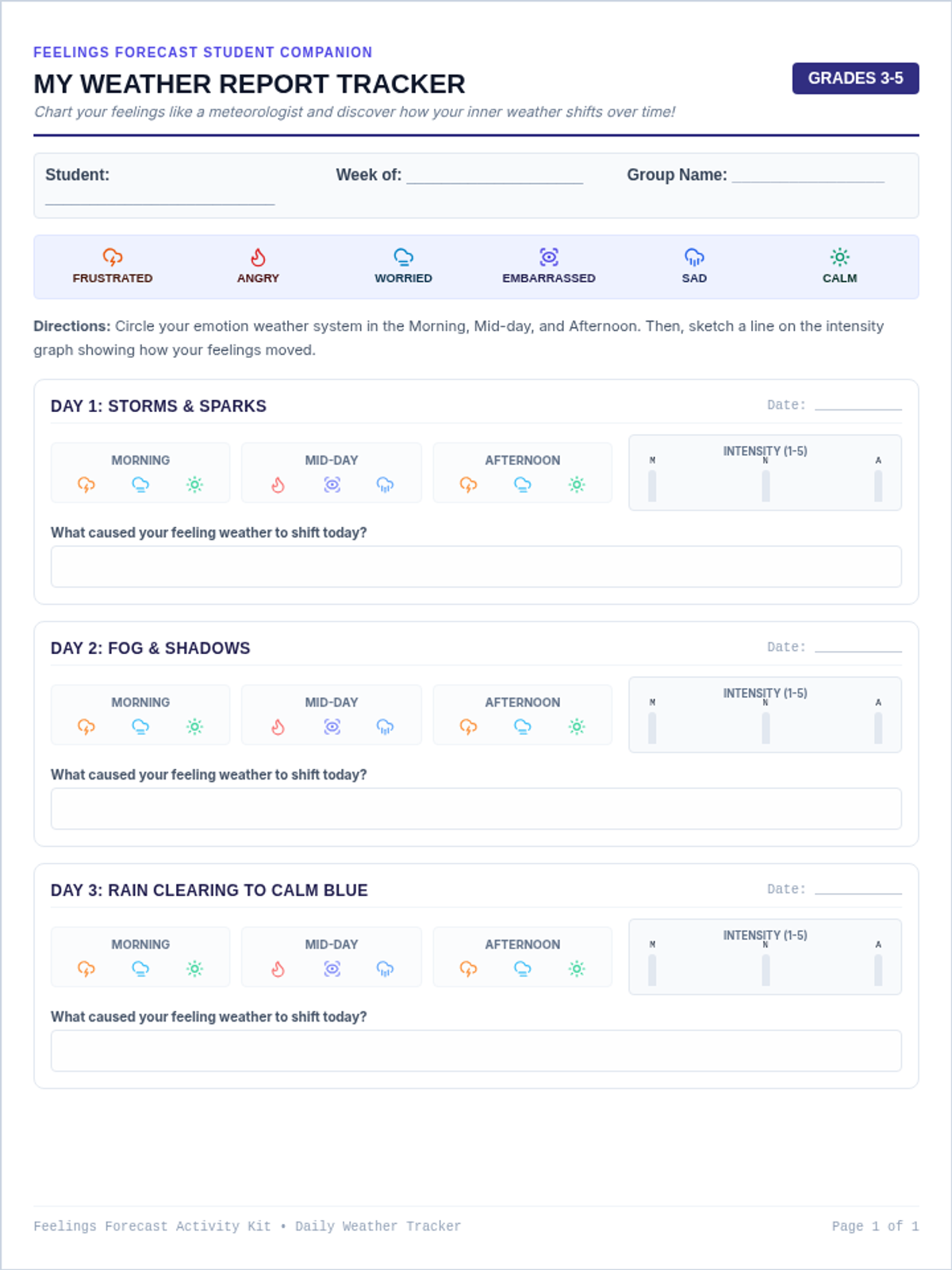
A 3-5 day small group social-emotional learning lesson series designed for upper elementary students (grades 3-5) to identify complex emotions (frustrated, angry, worried, embarrassed, sad, and calm) and explore how feelings change over time, using a meteorological weather-tracking theme.
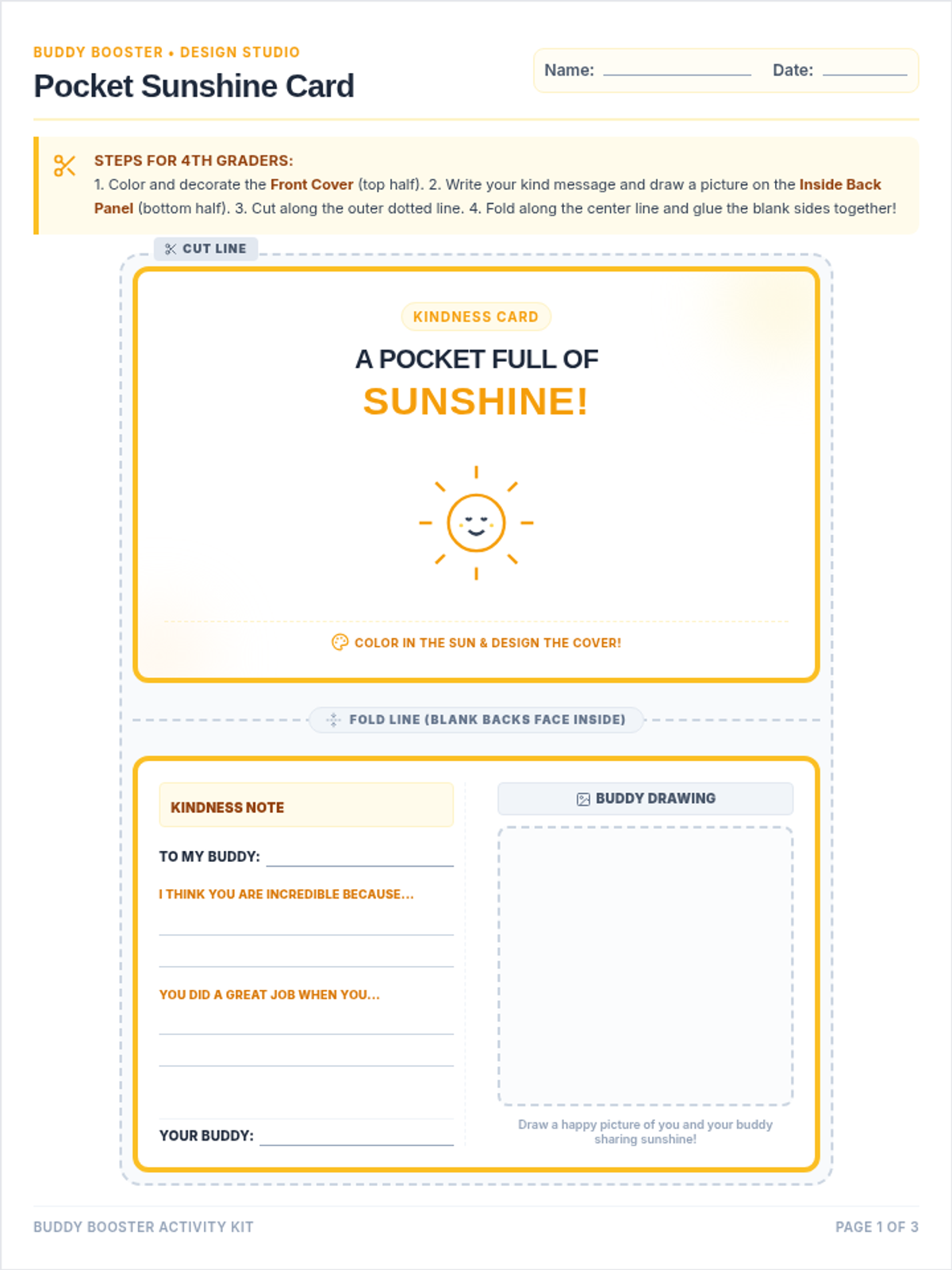
A lesson where fourth-grade students design and write personalized encouragement cards for their kindergarten buddies to build confidence and foster a positive school community.
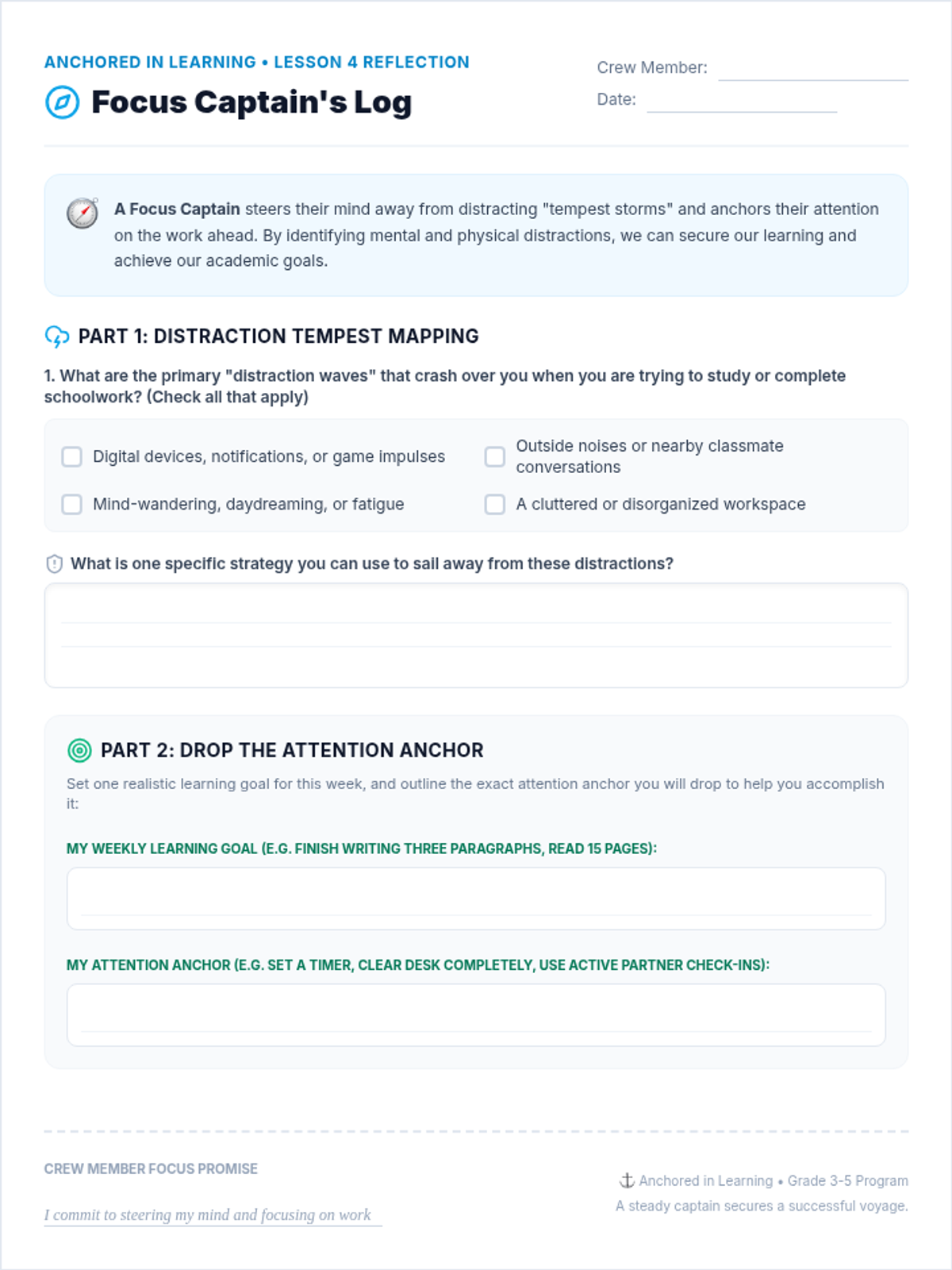
Lesson 4 of the SEL sequence. A complete, ready-to-go 15-minute lesson for 3rd-5th Grade students on focusing attention, managing digital/mental distractions, and anchoring executive attention.
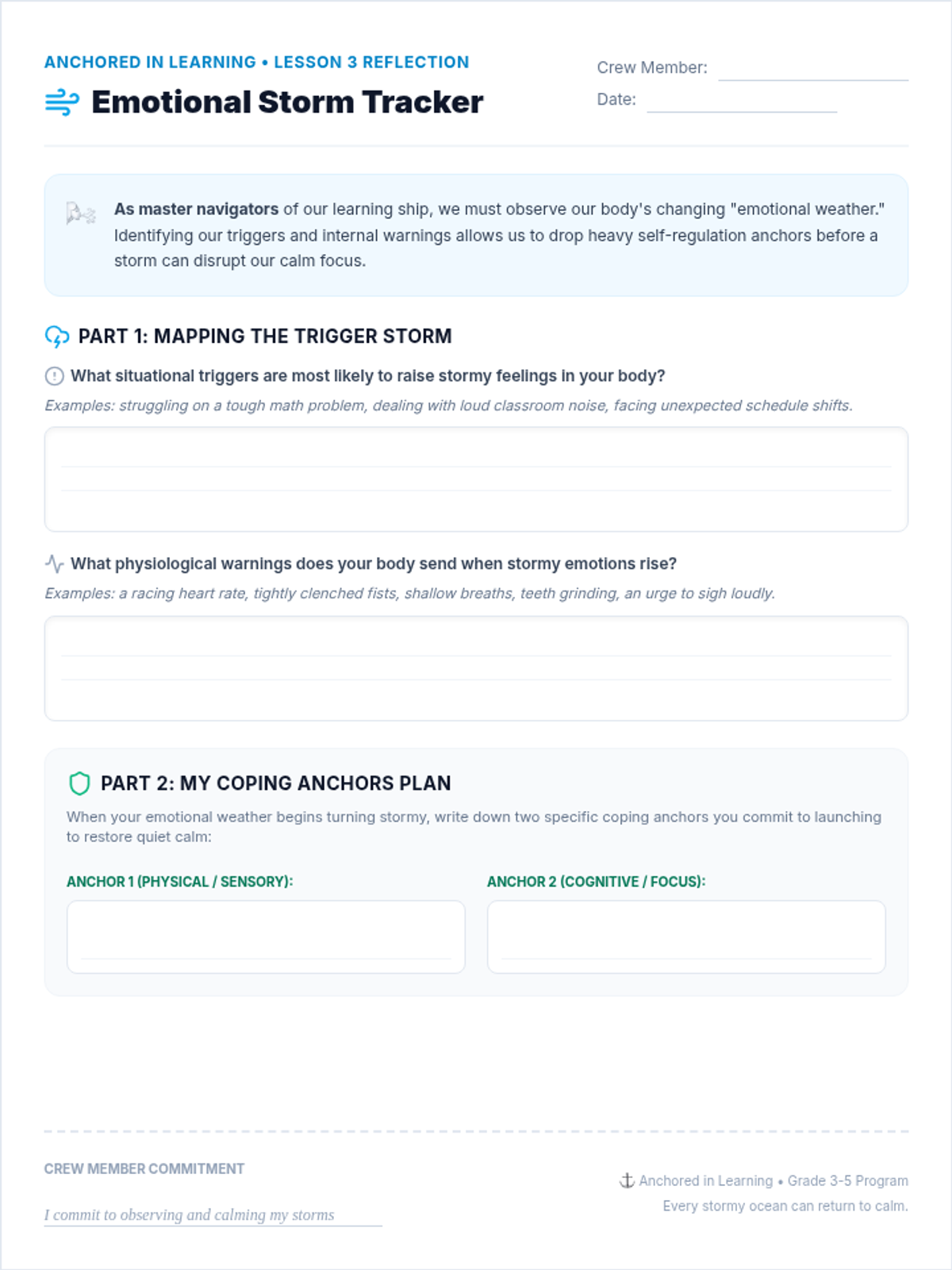
Lesson 3 of the SEL sequence. A complete, ready-to-go 15-minute lesson for 3rd-5th Grade students on emotional self-regulation, recognizing trigger storms, and physical calming strategies.
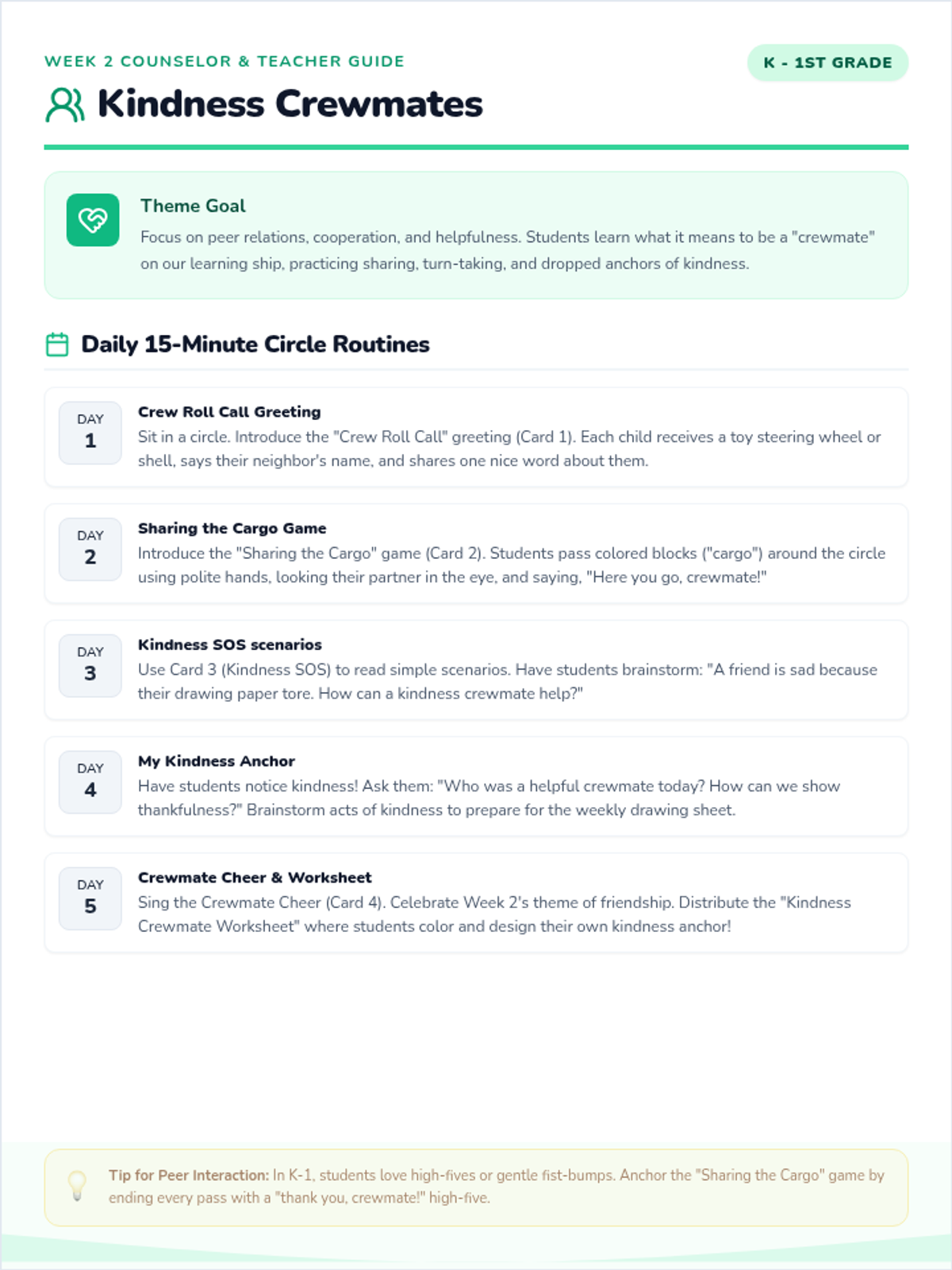
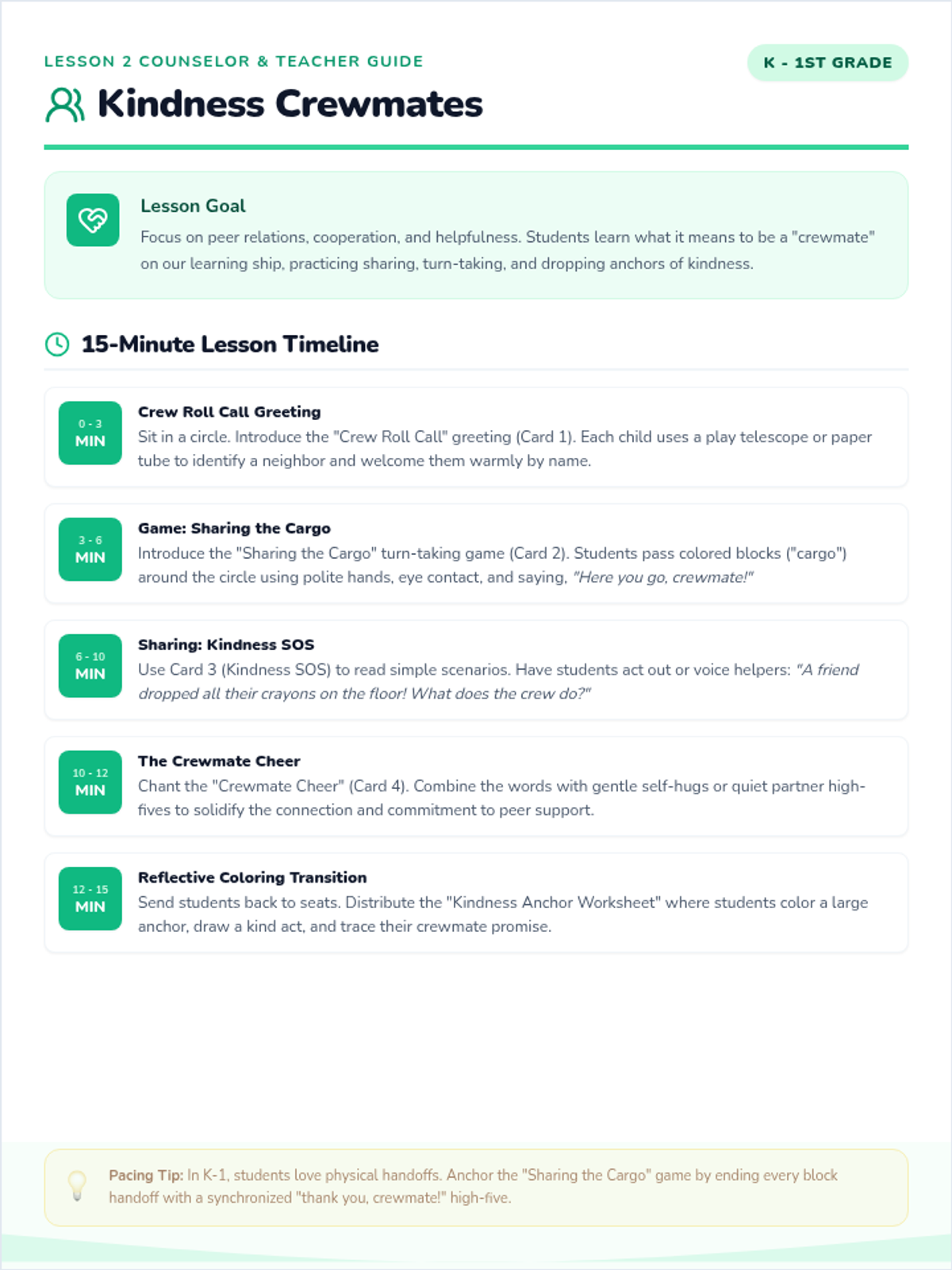
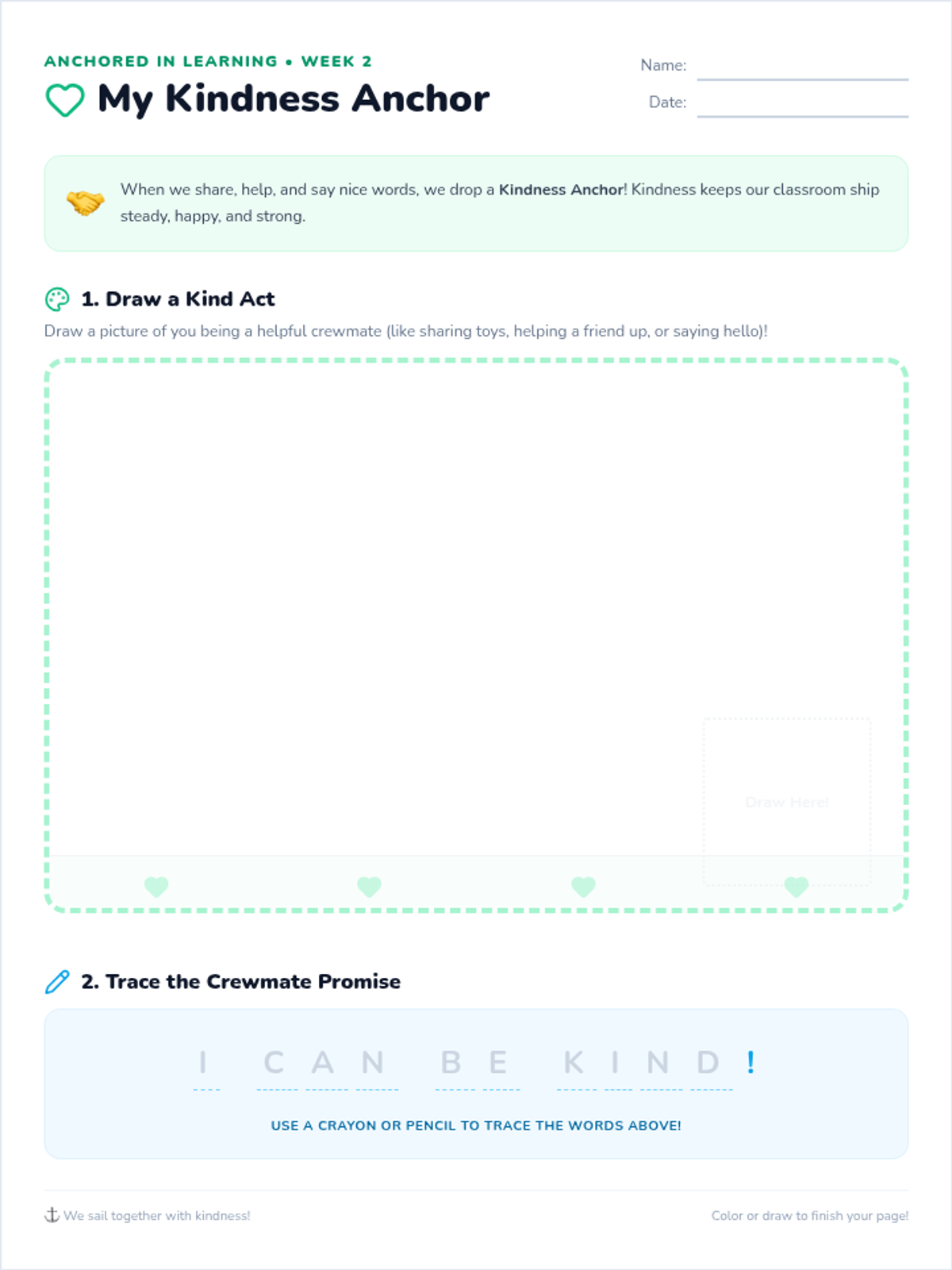
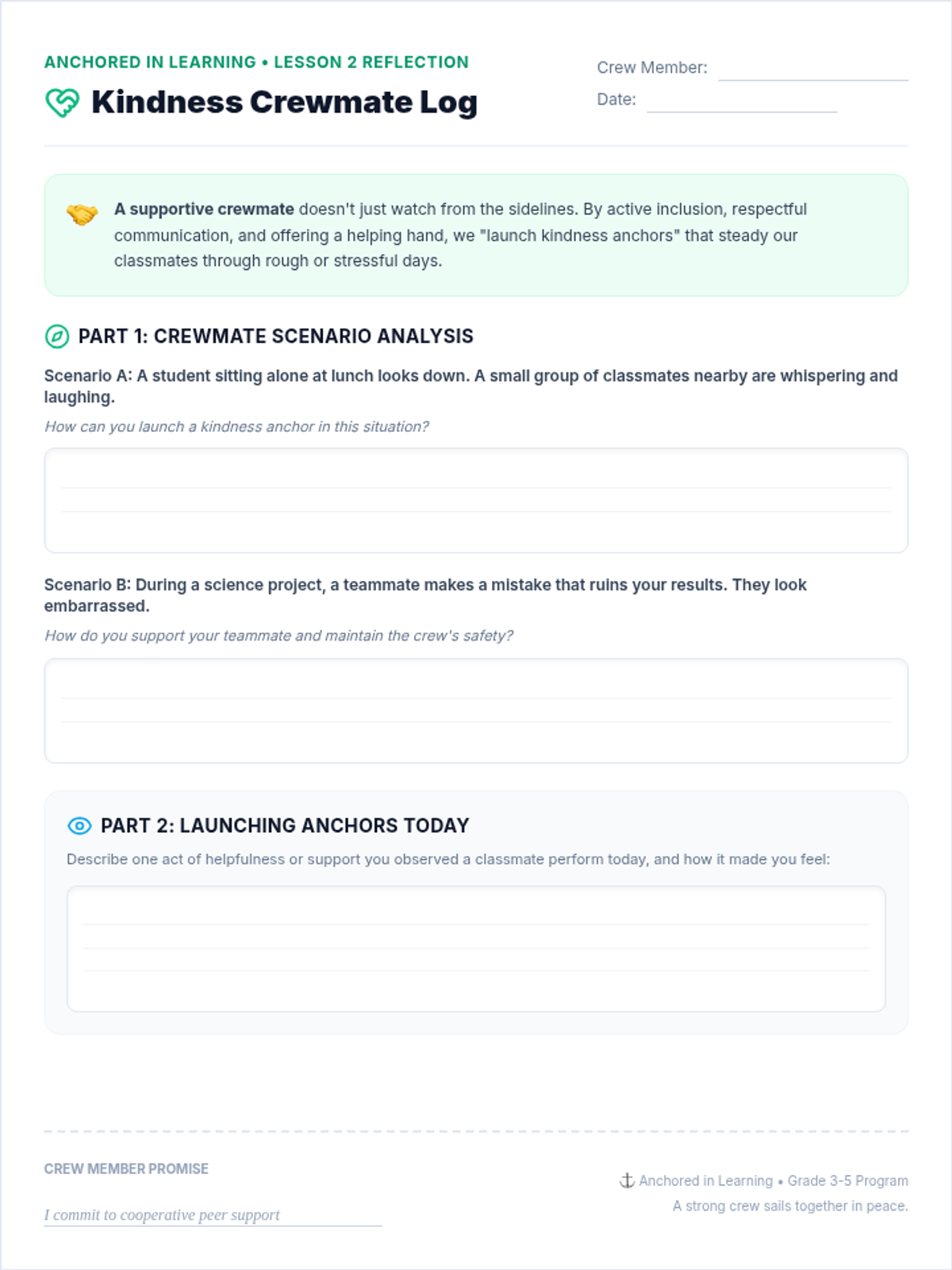
Lesson 2 of the SEL sequence. A complete, ready-to-go 15-minute lesson for 3rd-5th Grade students on cooperative peer relations, active inclusion, and launching kindness anchors.
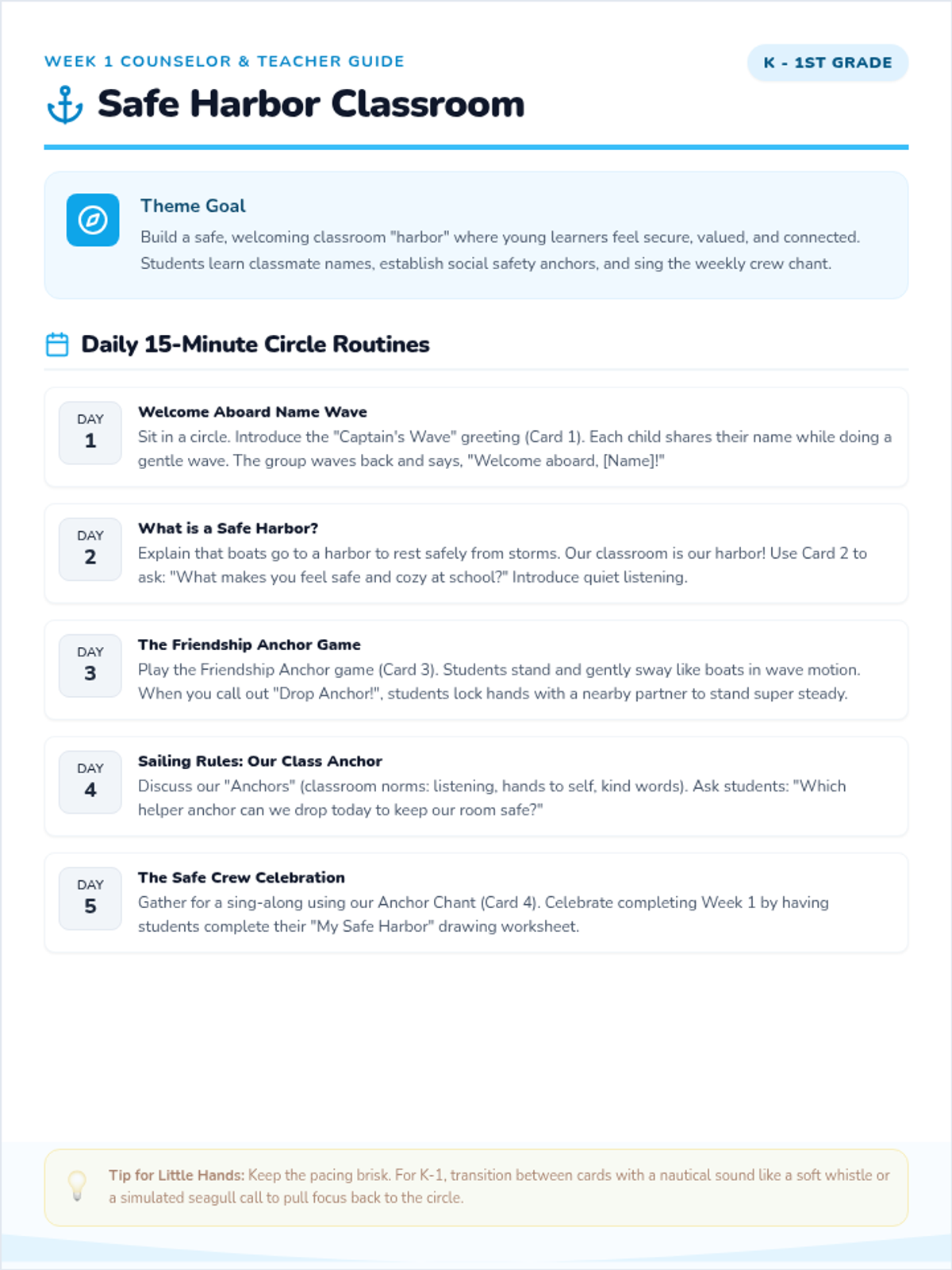
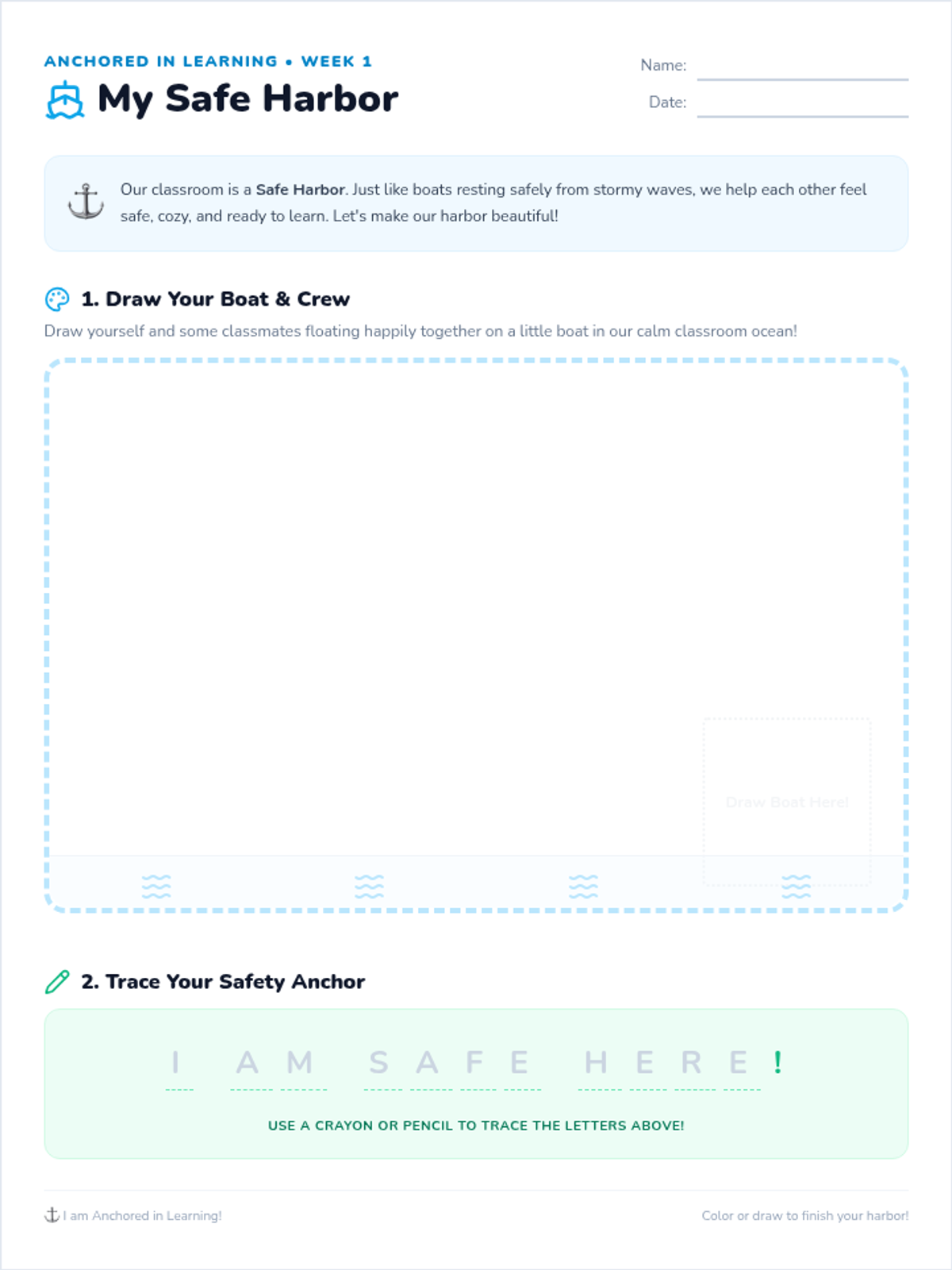
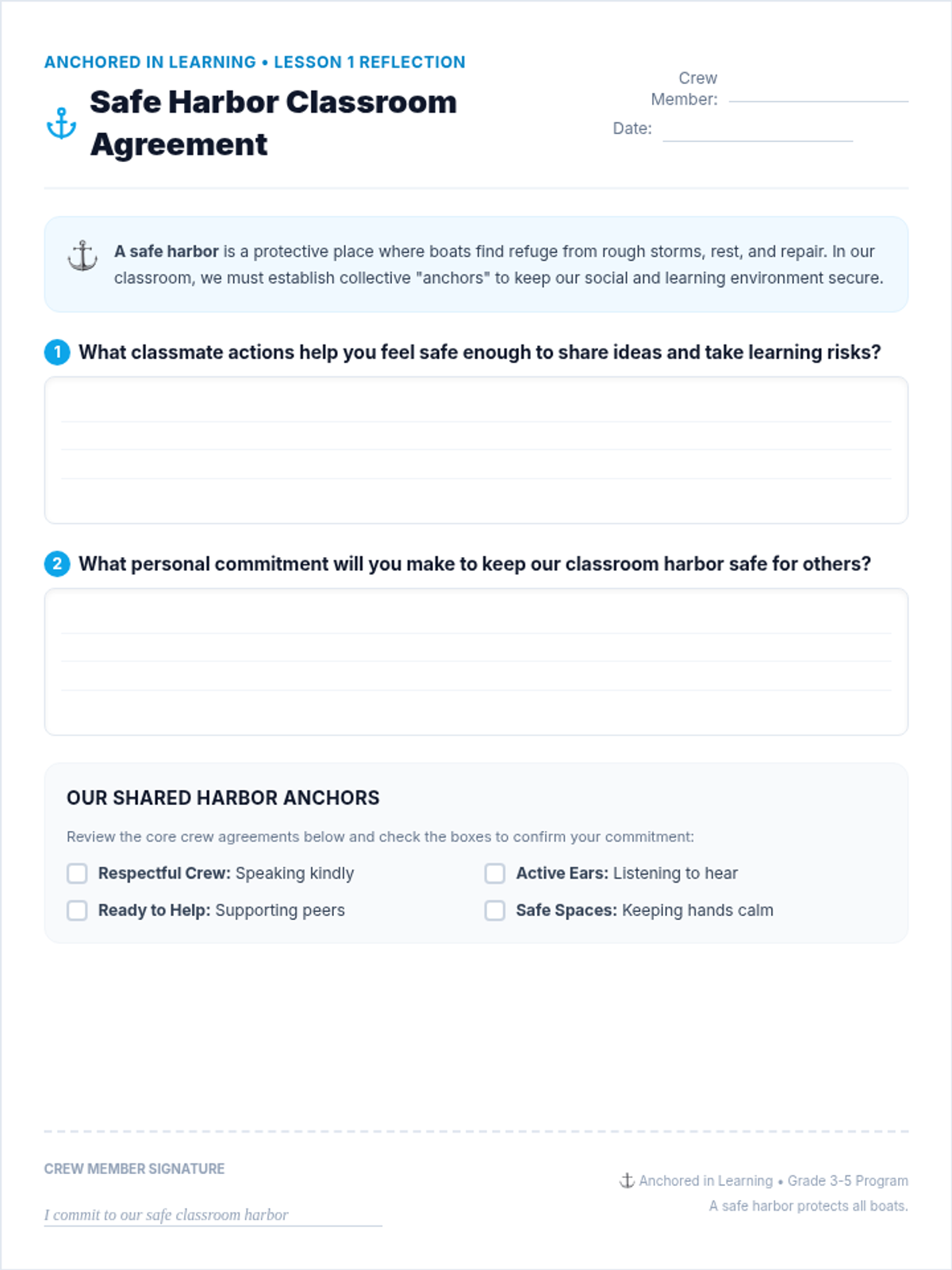
Lesson 1 of the SEL sequence. A complete, ready-to-go 15-minute lesson for 3rd-5th Grade students on building an emotionally safe classroom harbor and establishing mutual support anchors.
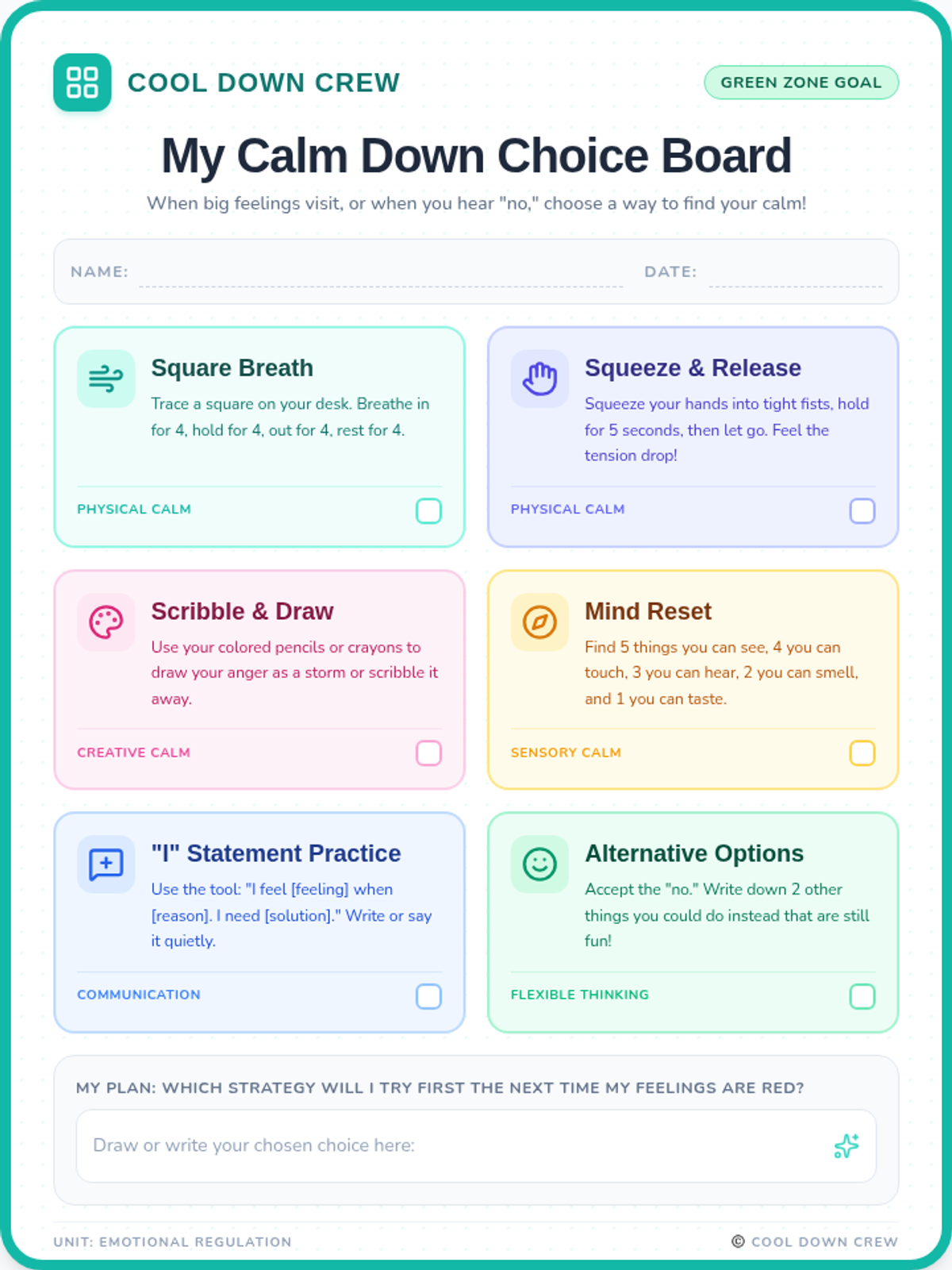
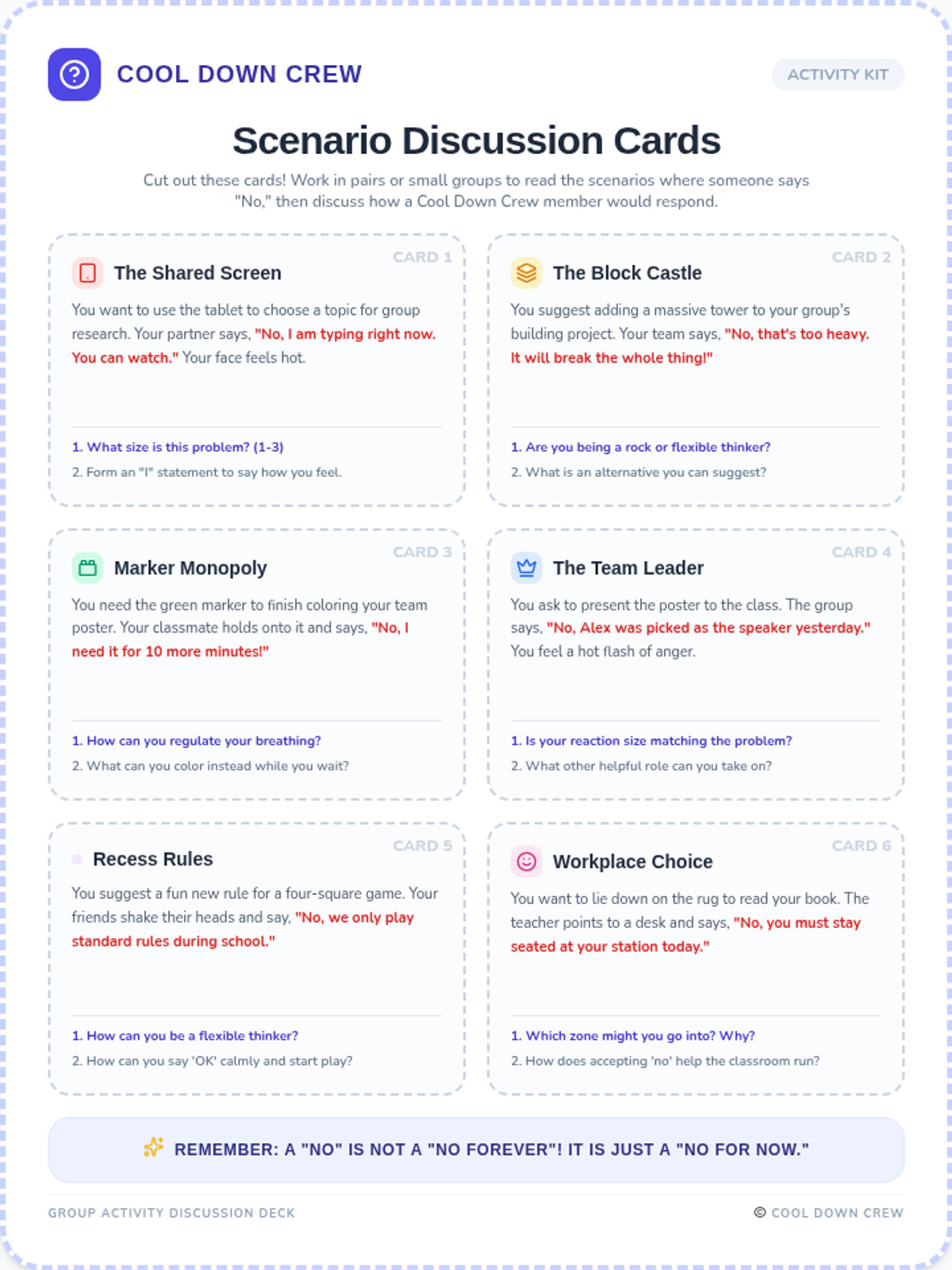
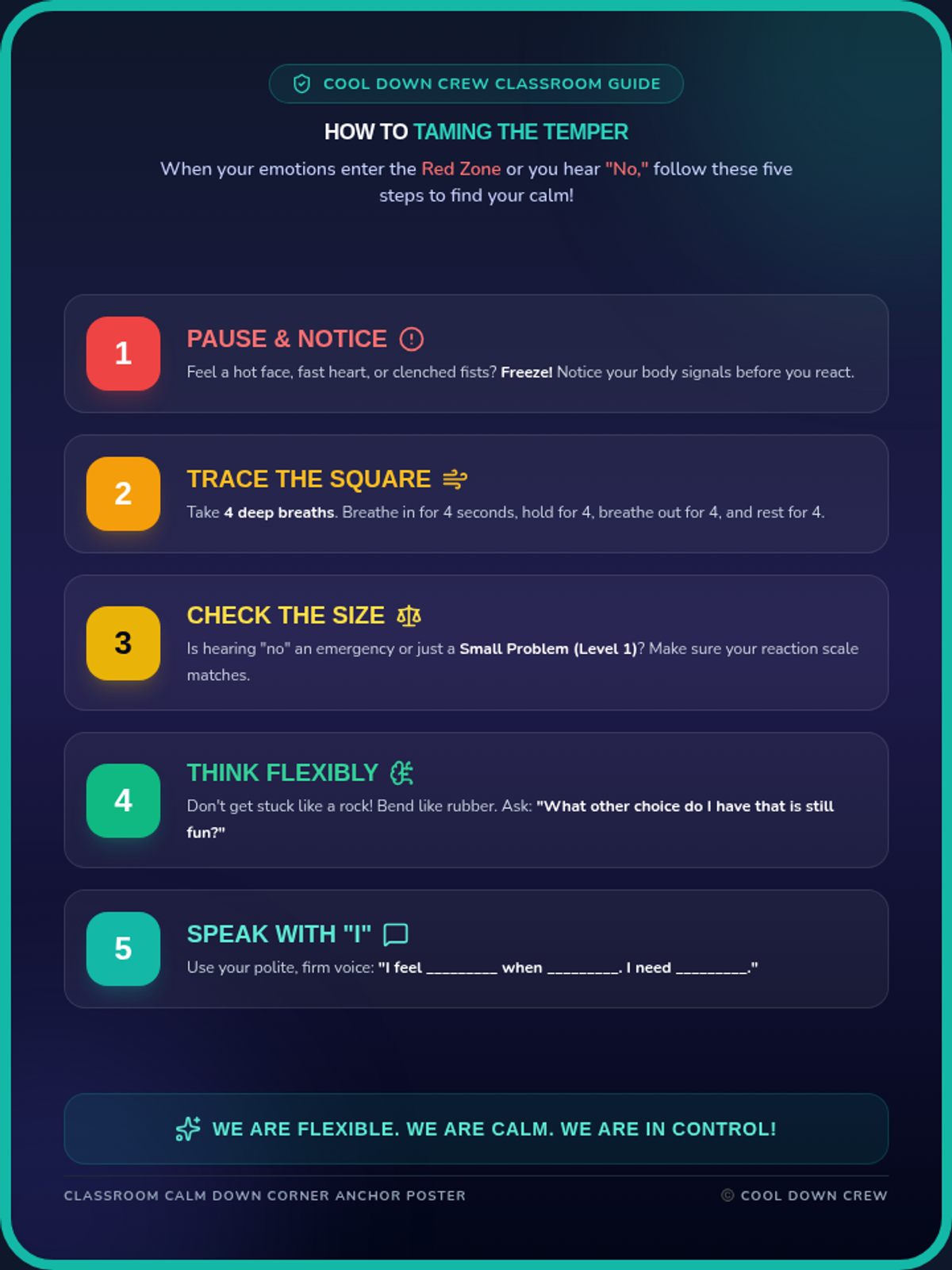
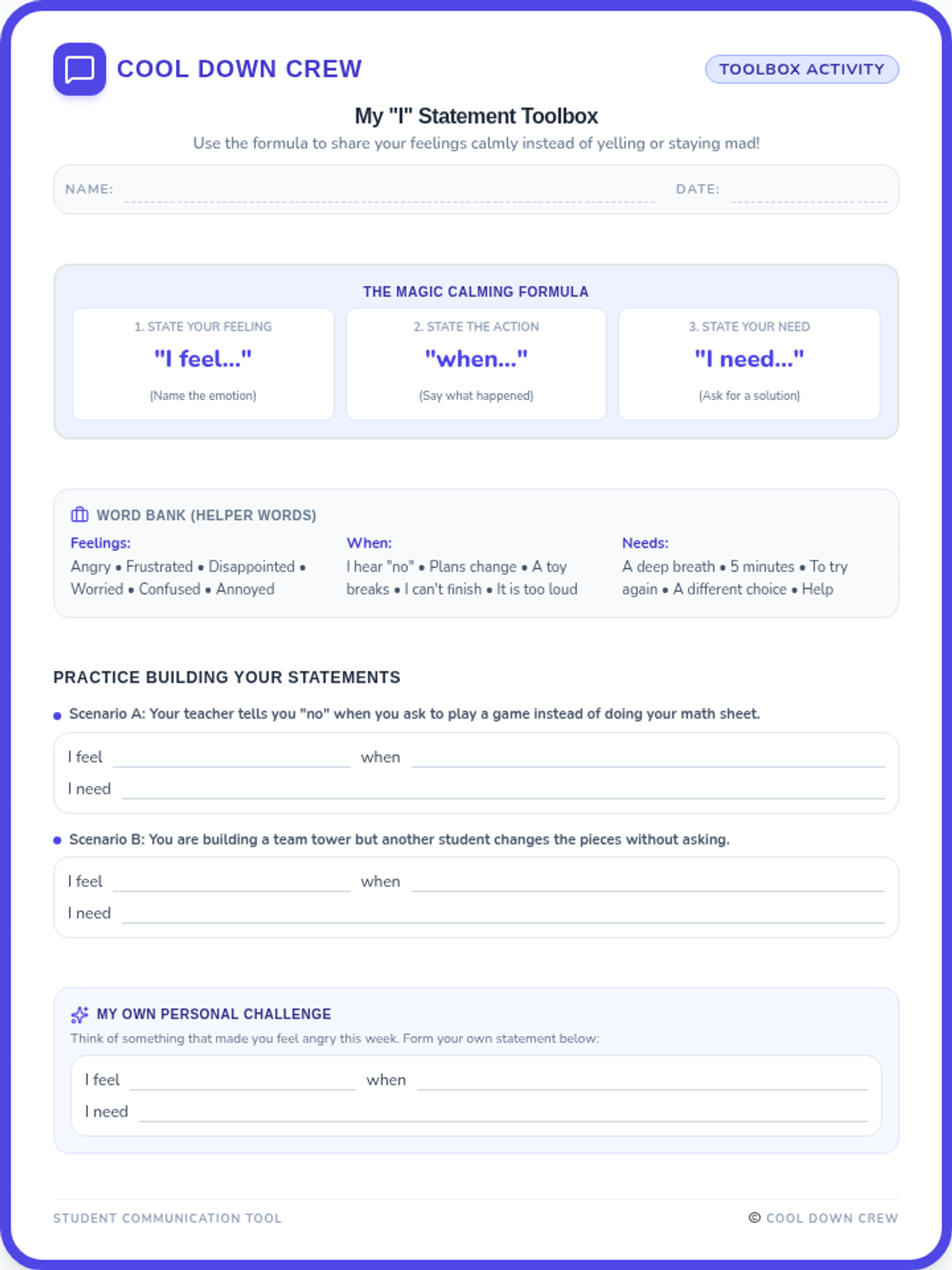
A specialized individual social-emotional learning lesson designed for 1-on-1 telehealth or therapy sessions. Helps individual students recognize the Red Zone, regulate big reactions to "no" using the Size of the Problem scale, practice at-home coping strategies, and use "I" statements constructively over screen-share.
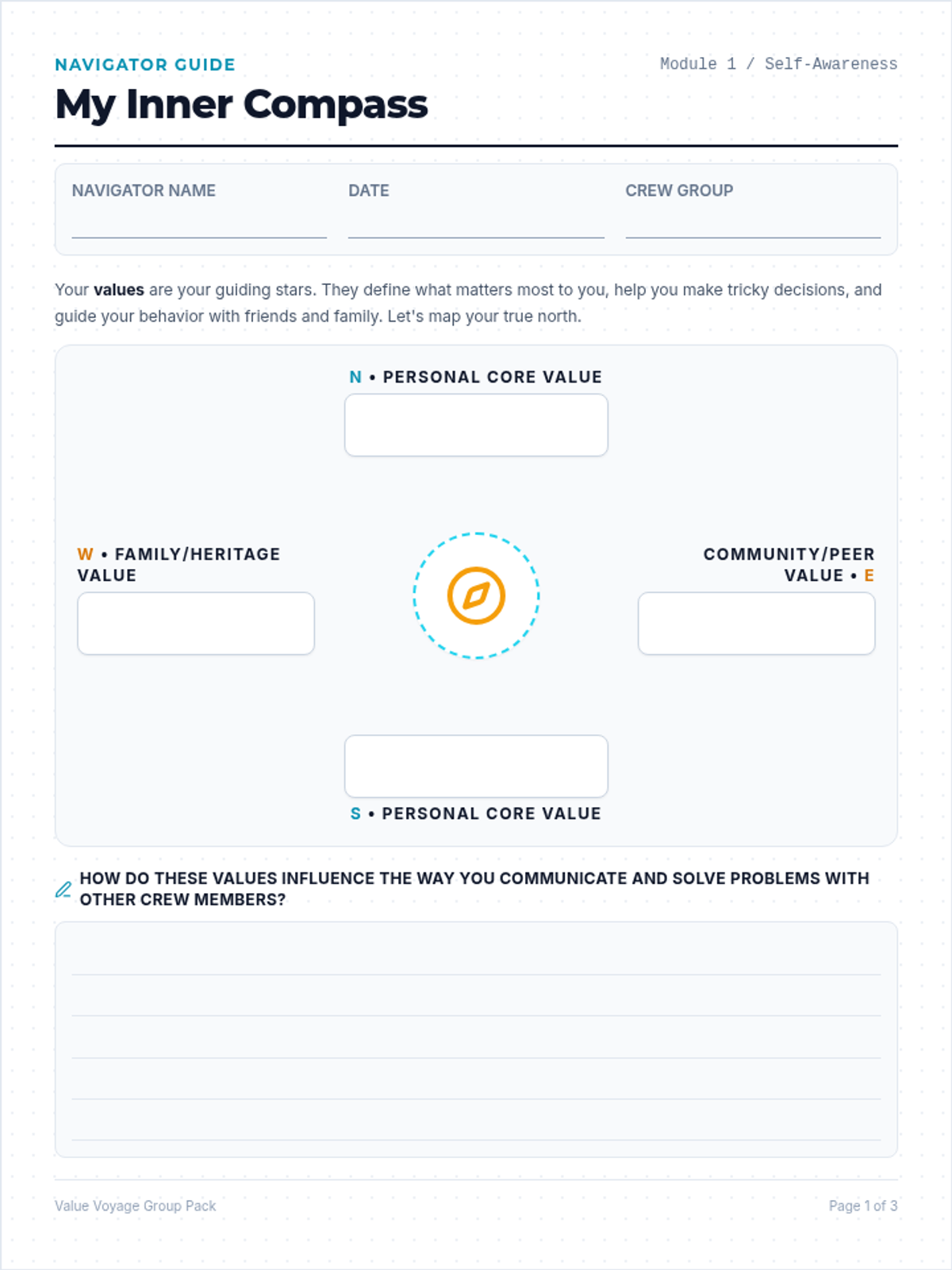
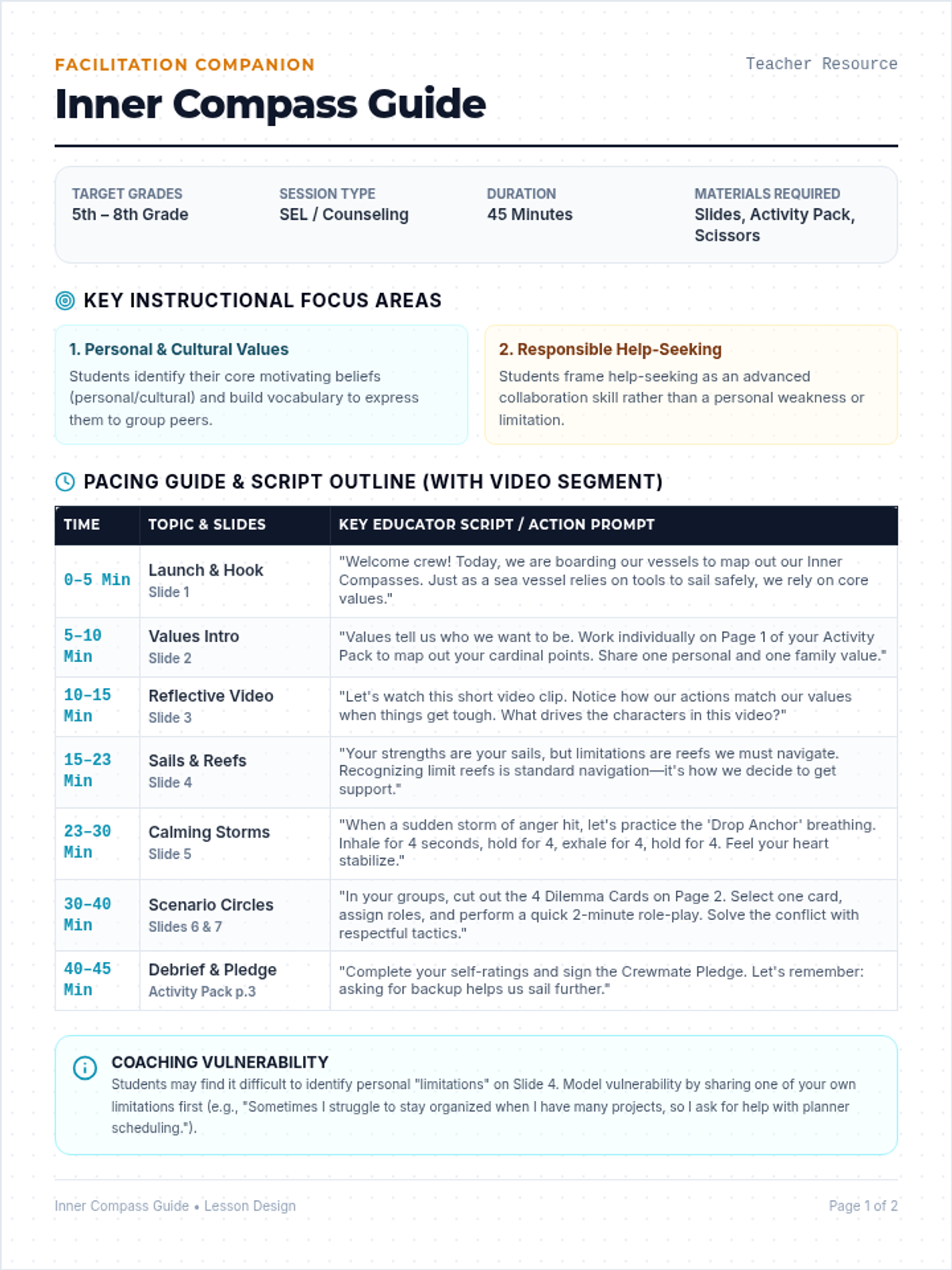
A lesson focused on developing student self-awareness, personal and cultural values, and positive social interaction skills through interactive presentations and structured small-group activities.
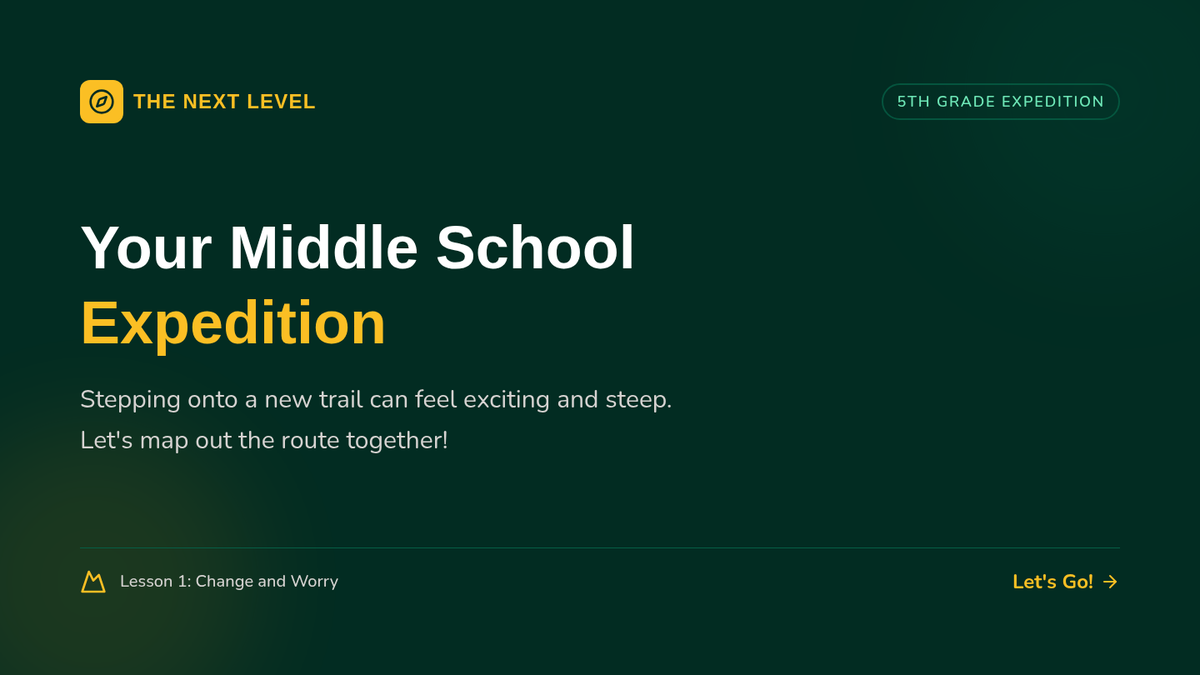
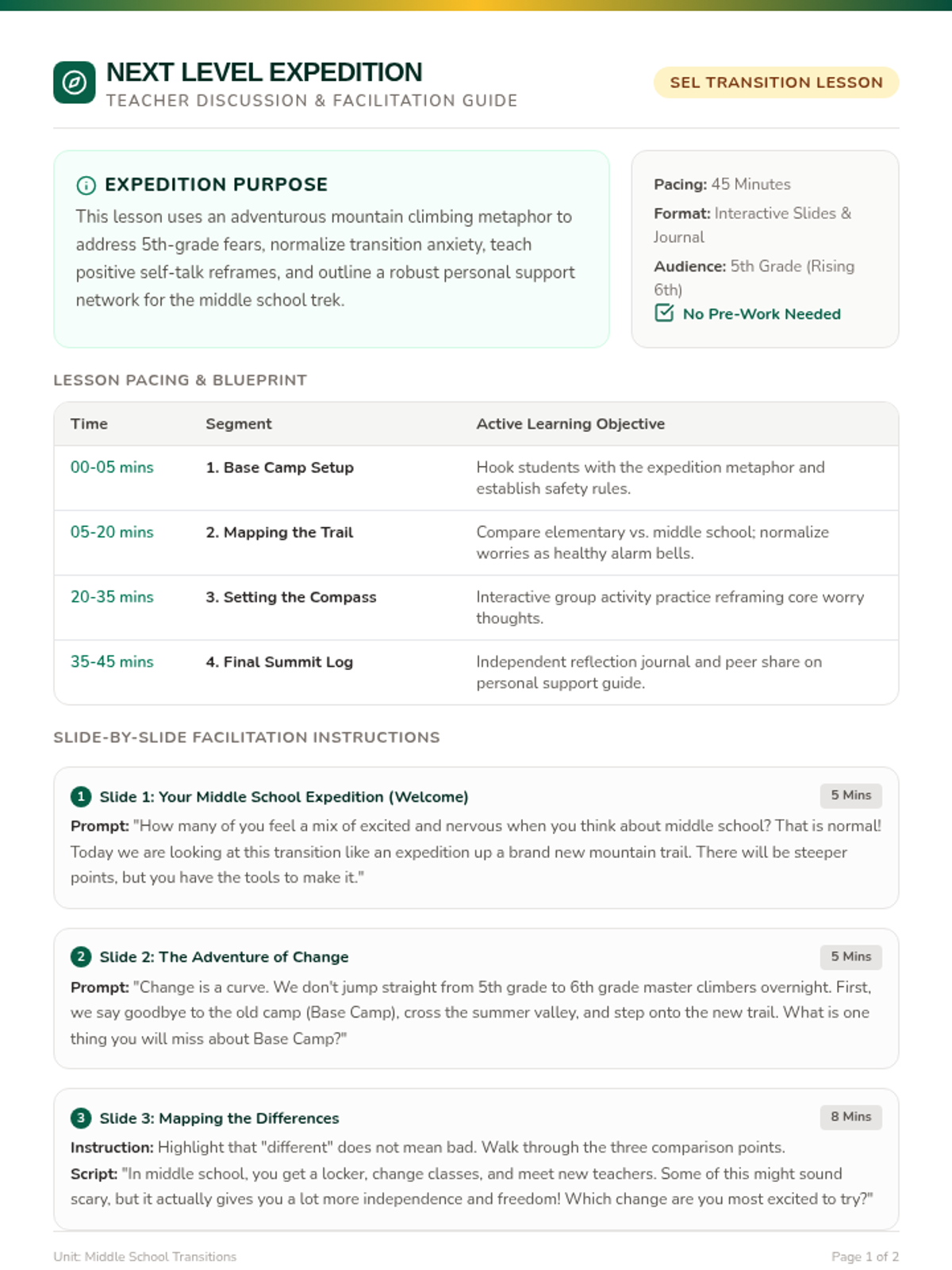
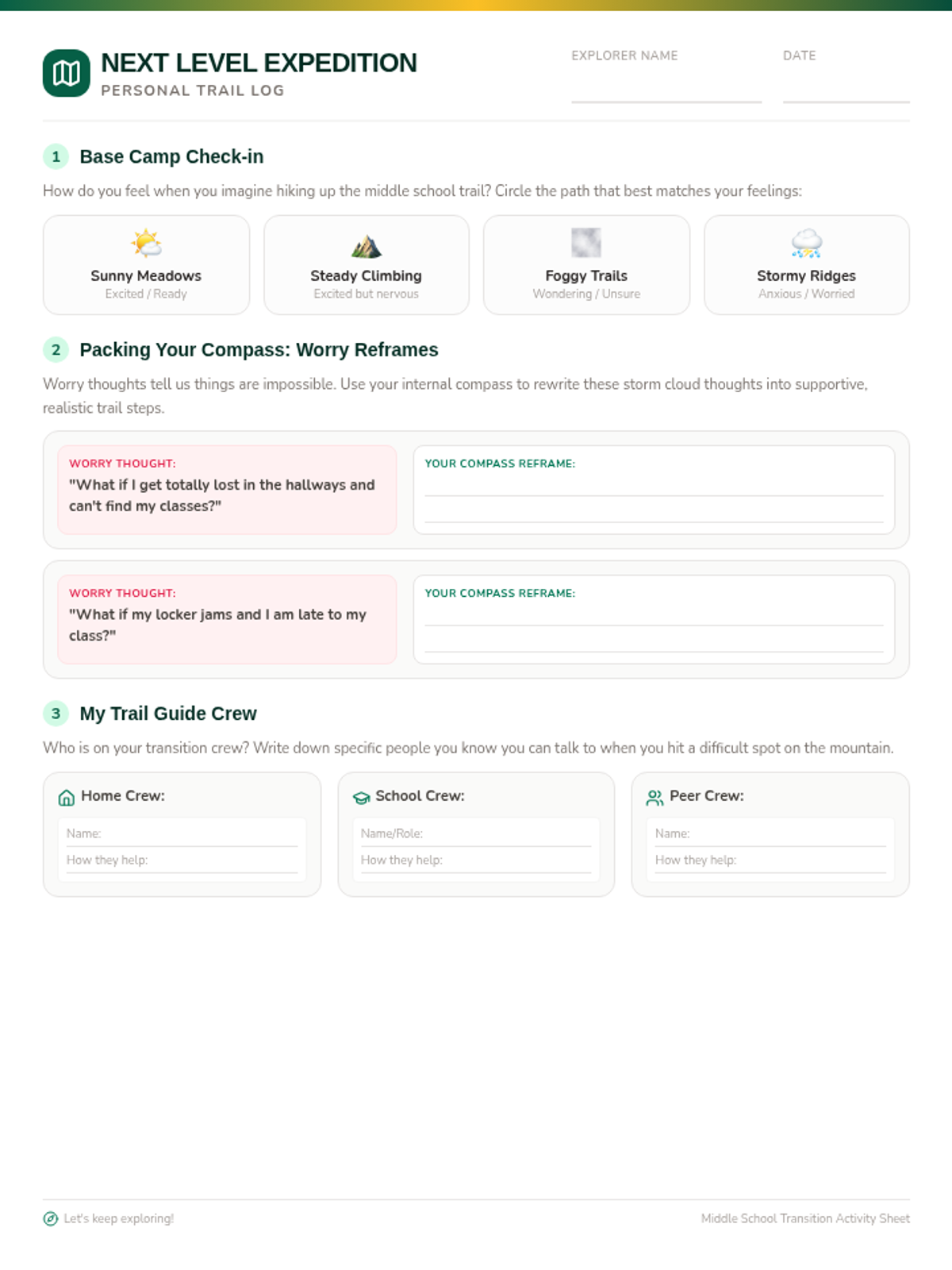
An SEL lesson designed to help 5th-grade students navigate the transition to middle school. Through an expedition-themed journey, students explore worrying thoughts, practice positive self-talk, and build resilience for the path ahead.
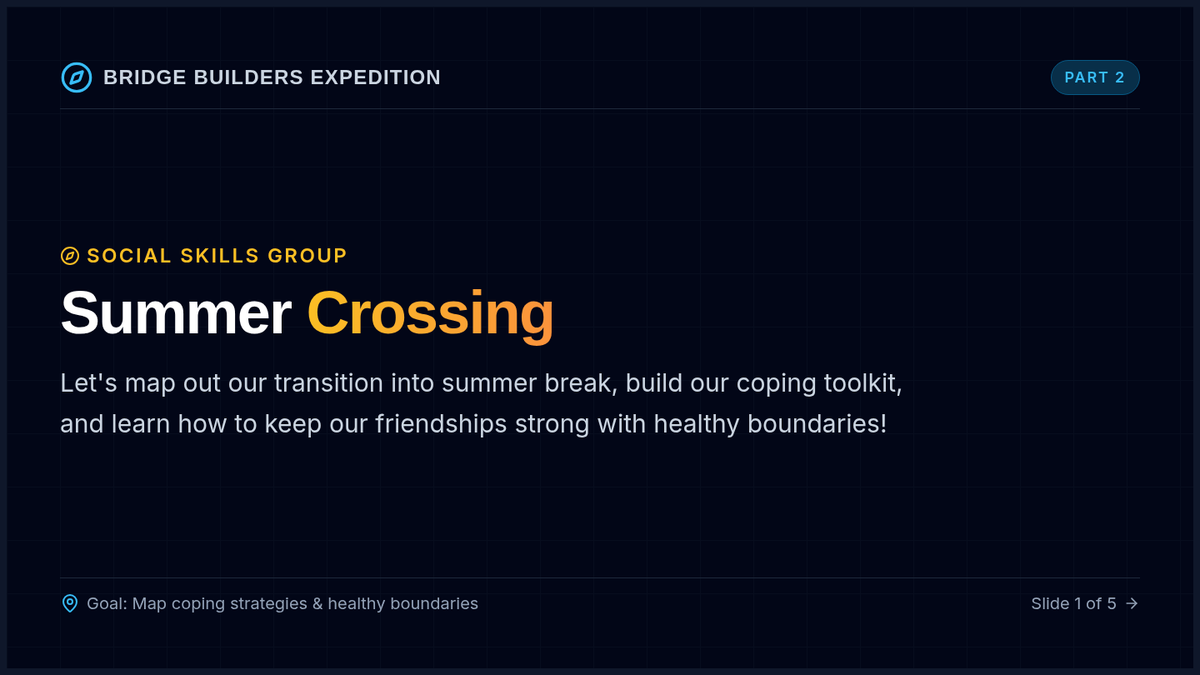
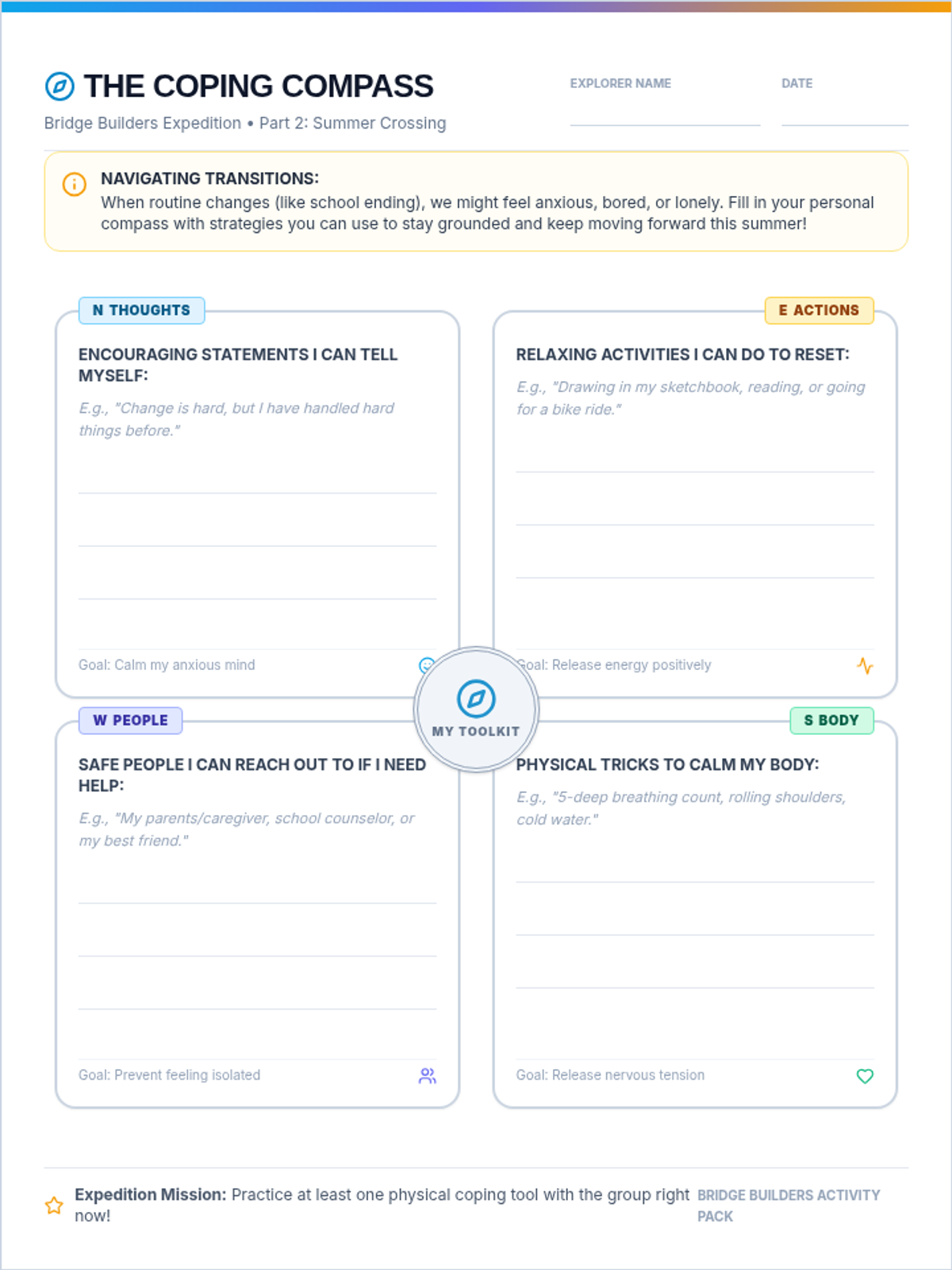
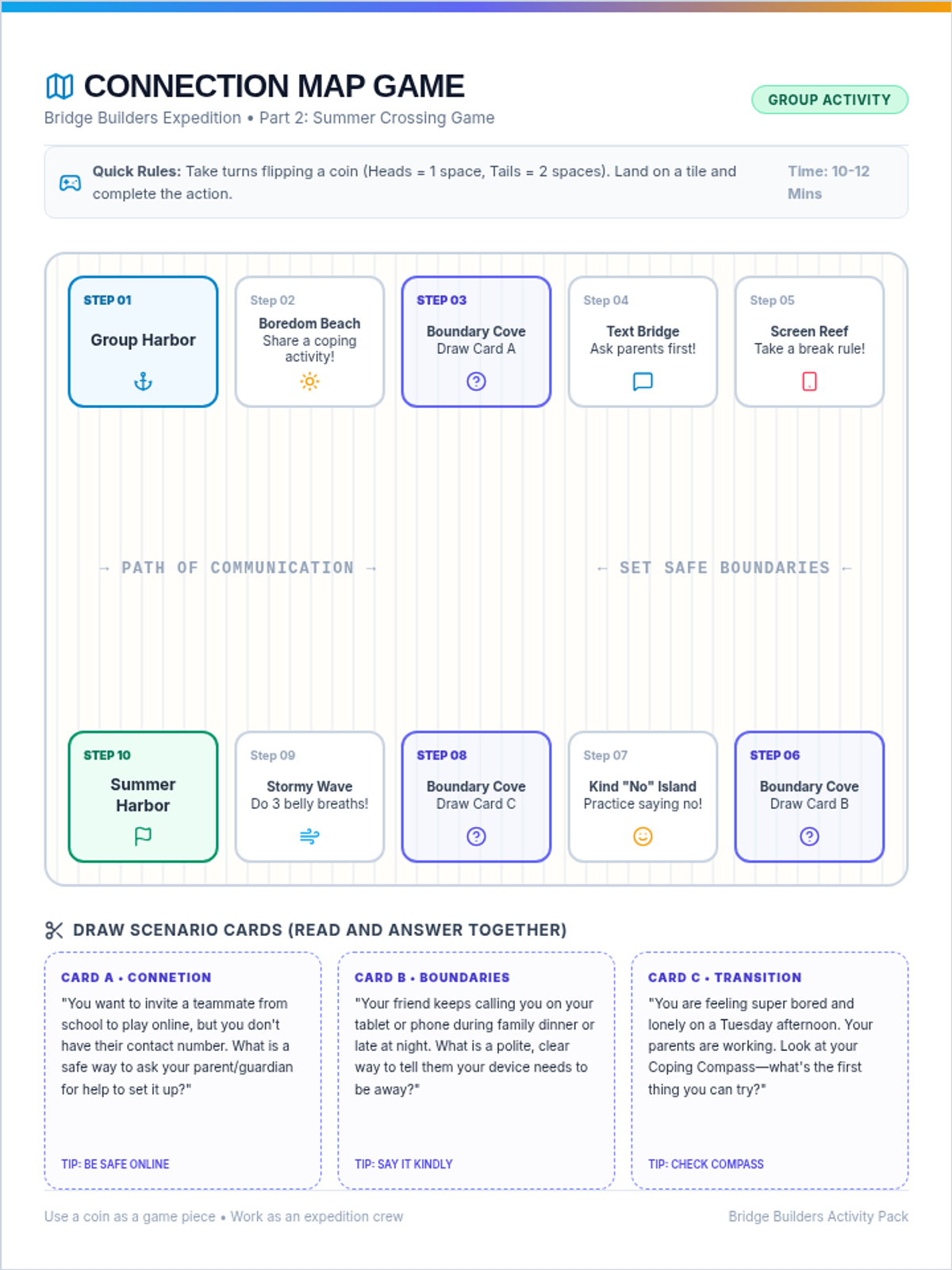
Part 2 of the Bridge Builders social skills group. Focuses on managing change and transition anxiety, setting healthy boundaries, and planning how to stay connected over the summer.
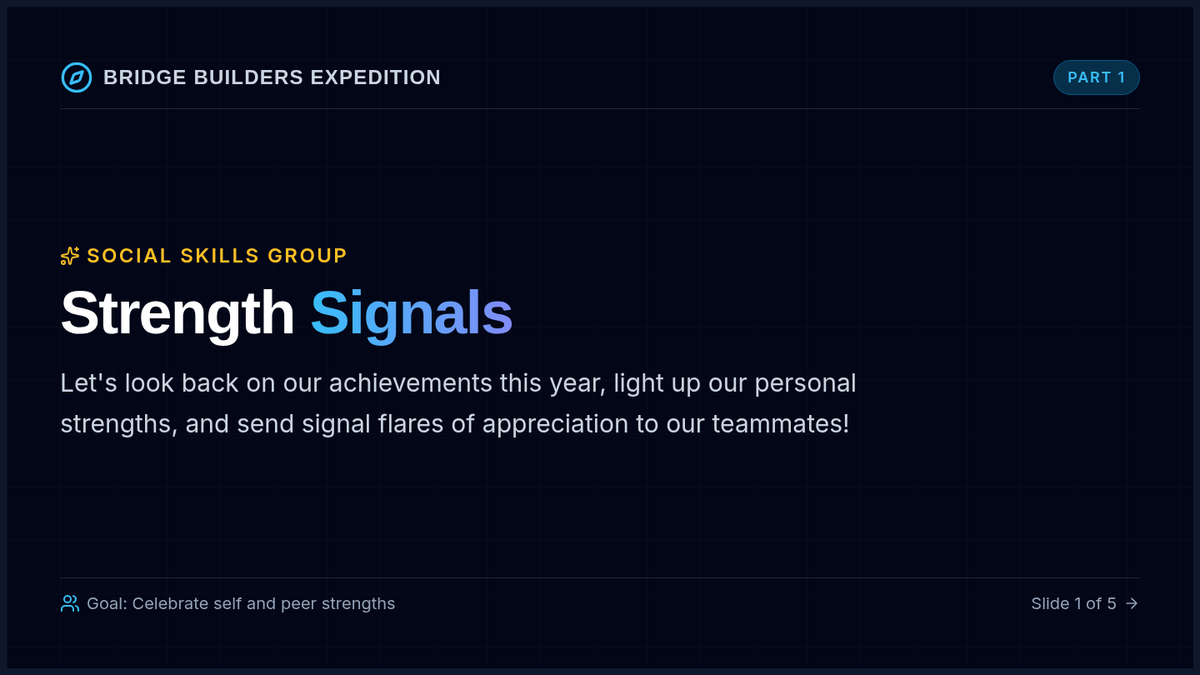
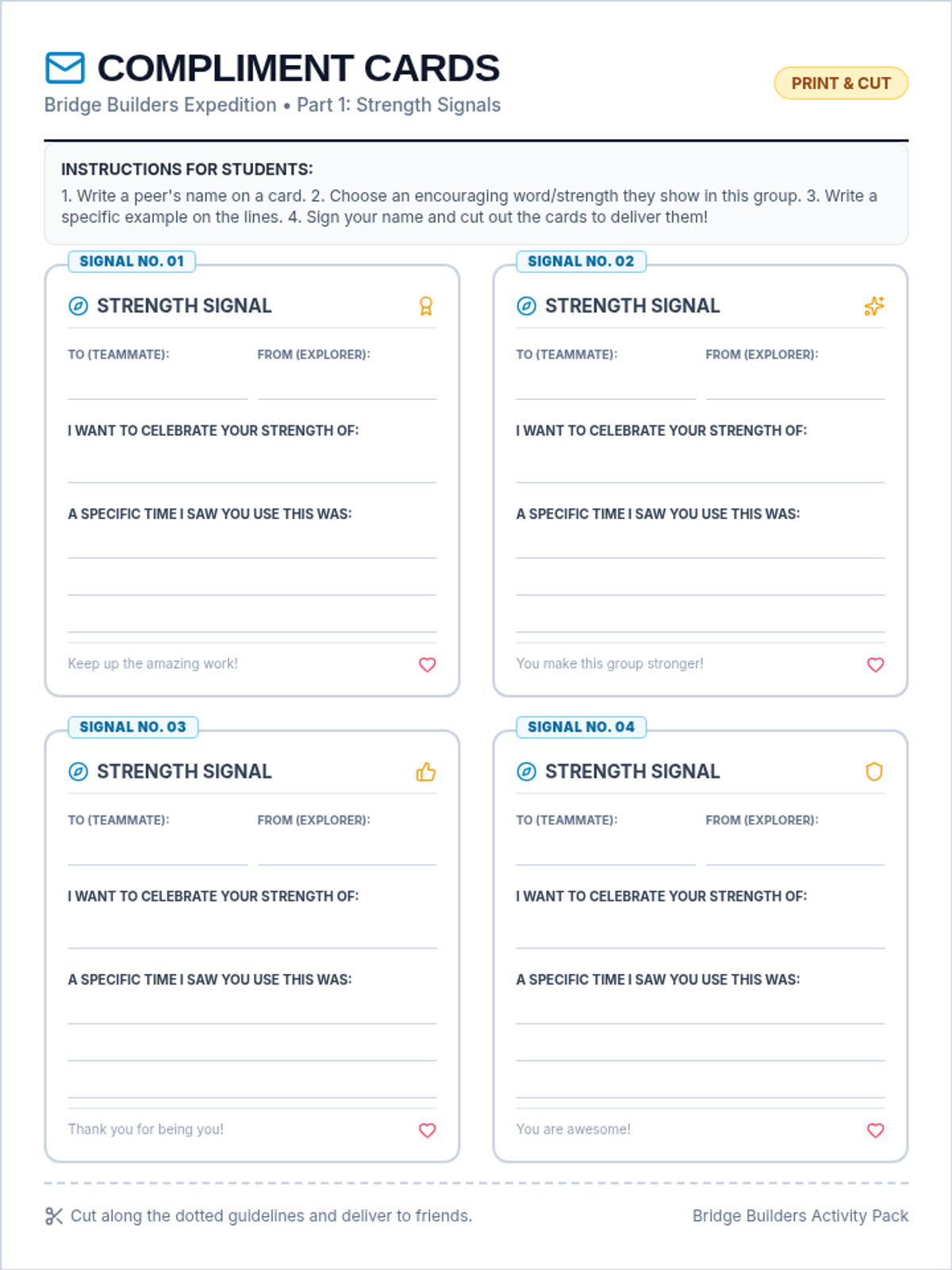
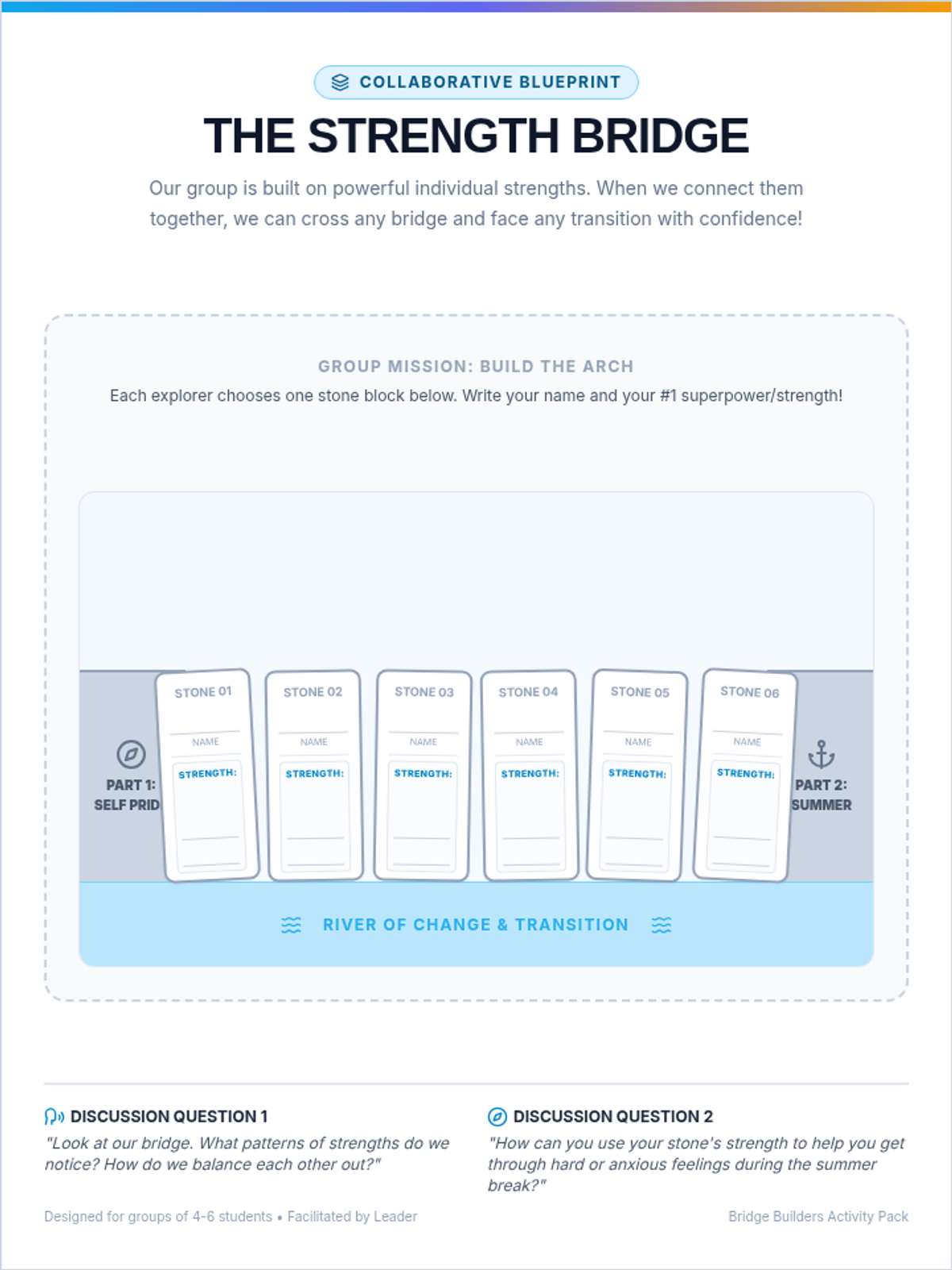
Part 1 of the Bridge Builders social skills group. Focuses on boosting self-esteem by identifying personal strengths and providing positive peer feedback through collaborative activities.
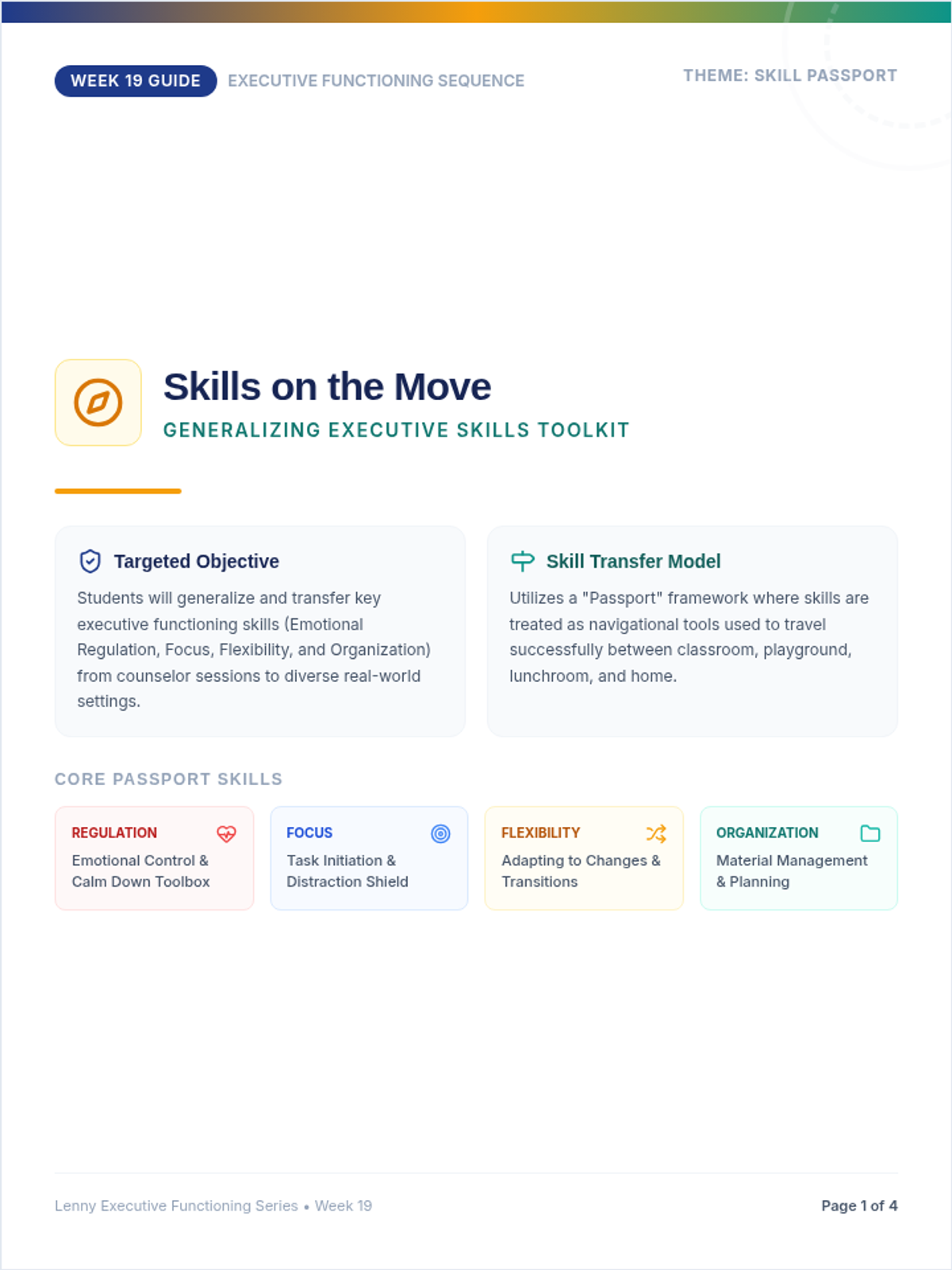
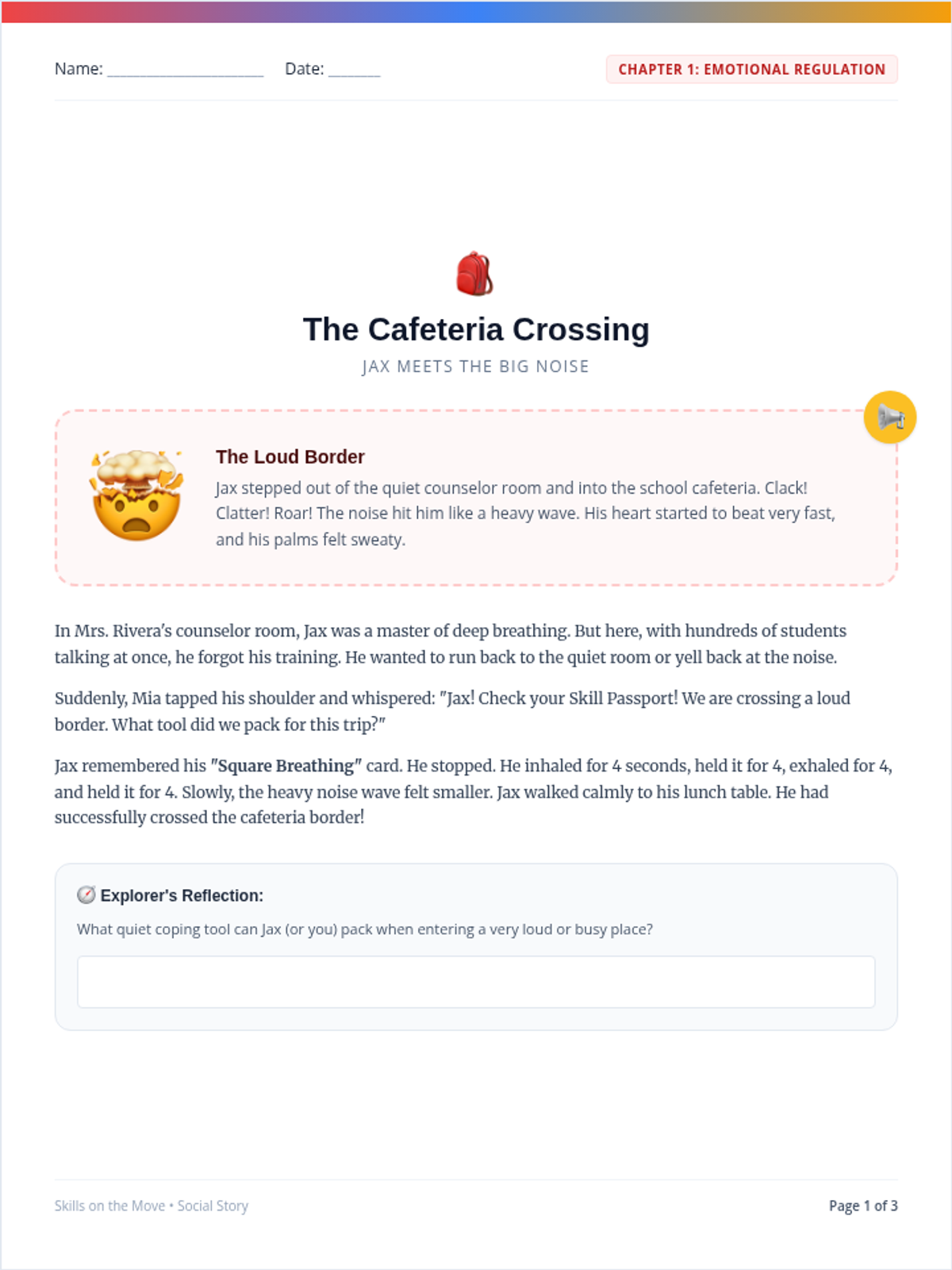
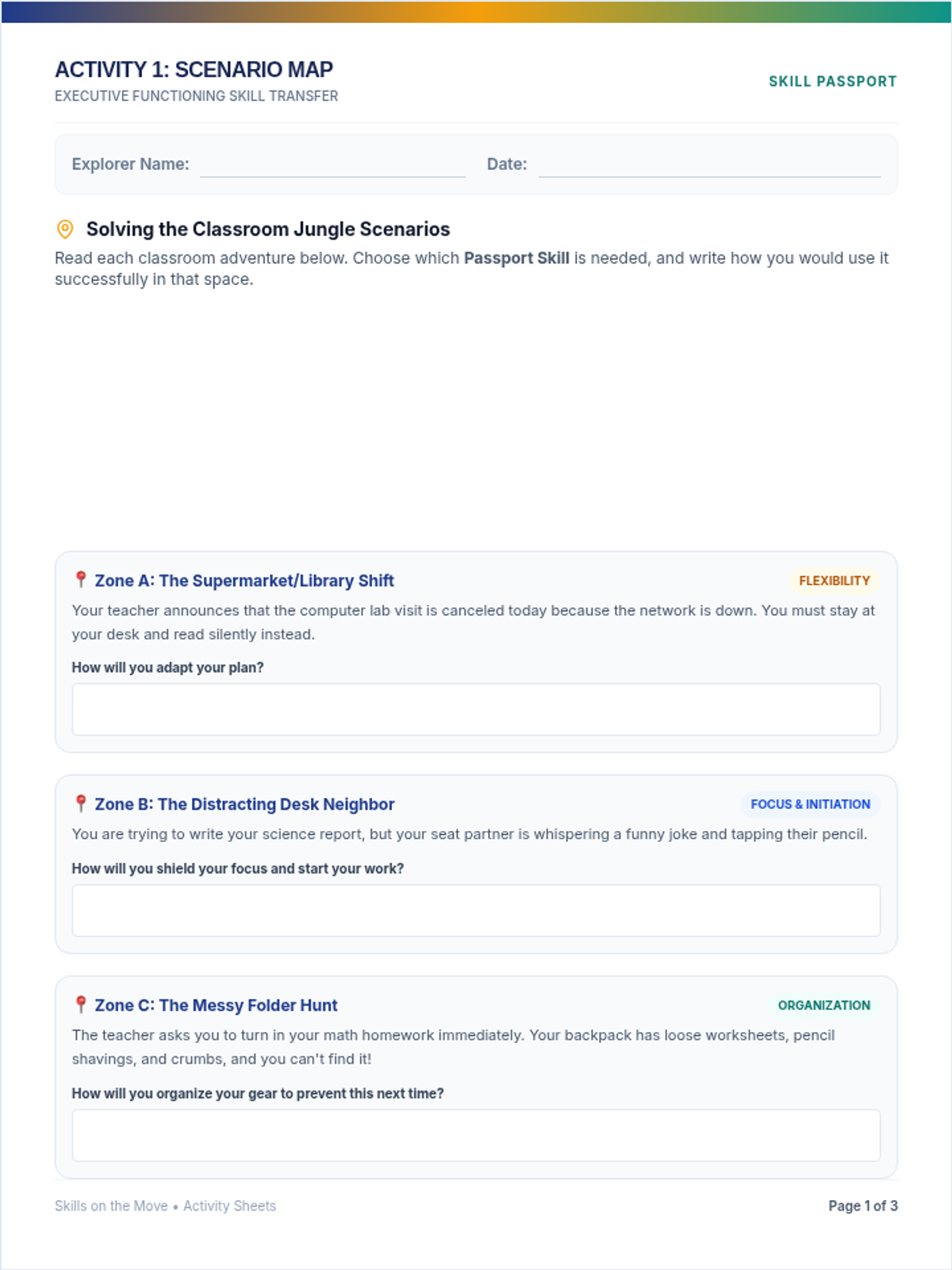
A comprehensive lesson designed to help students generalize and transfer their executive functioning skills—including emotional regulation, focus, flexibility, and organization—across various settings.
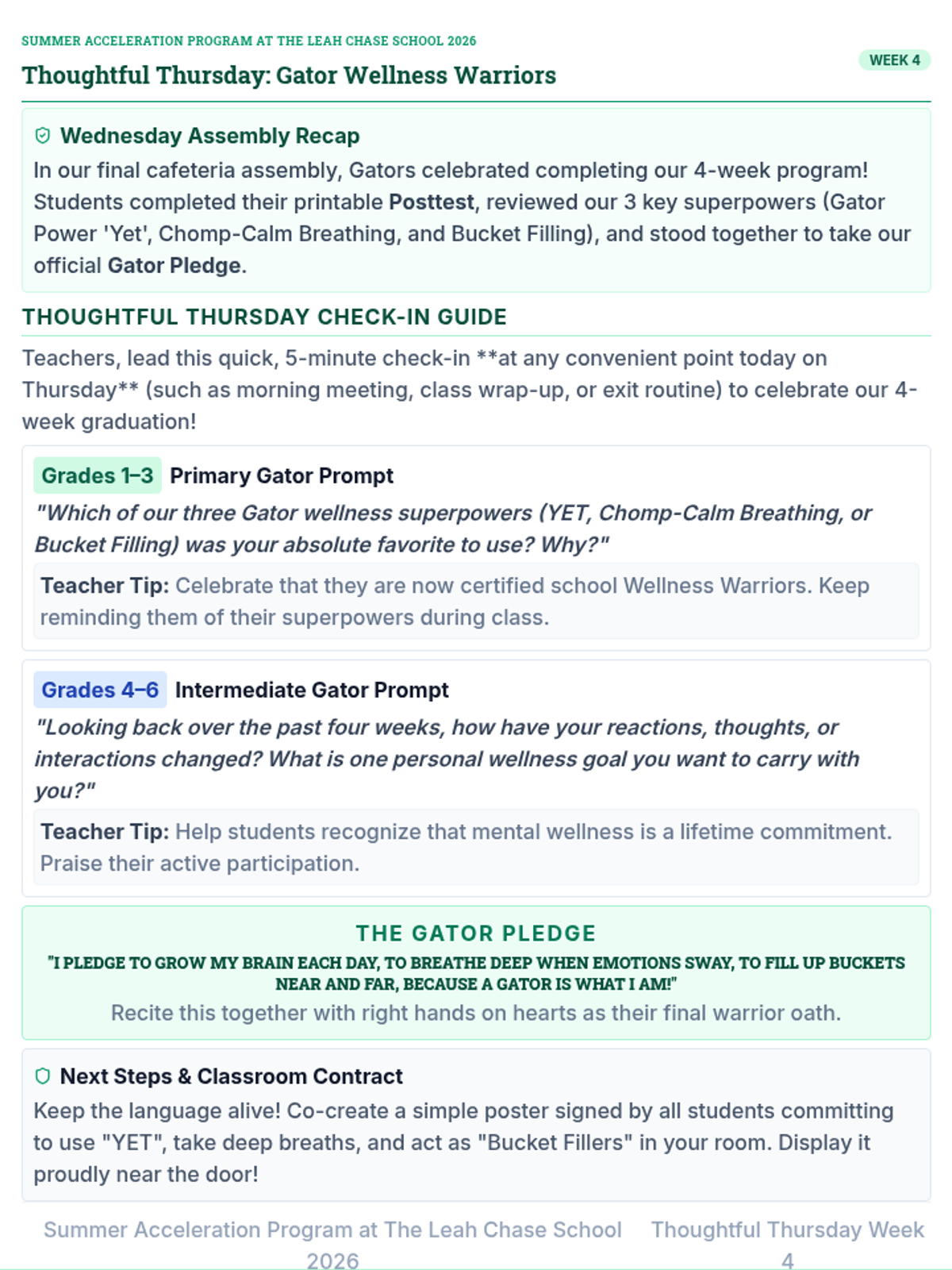
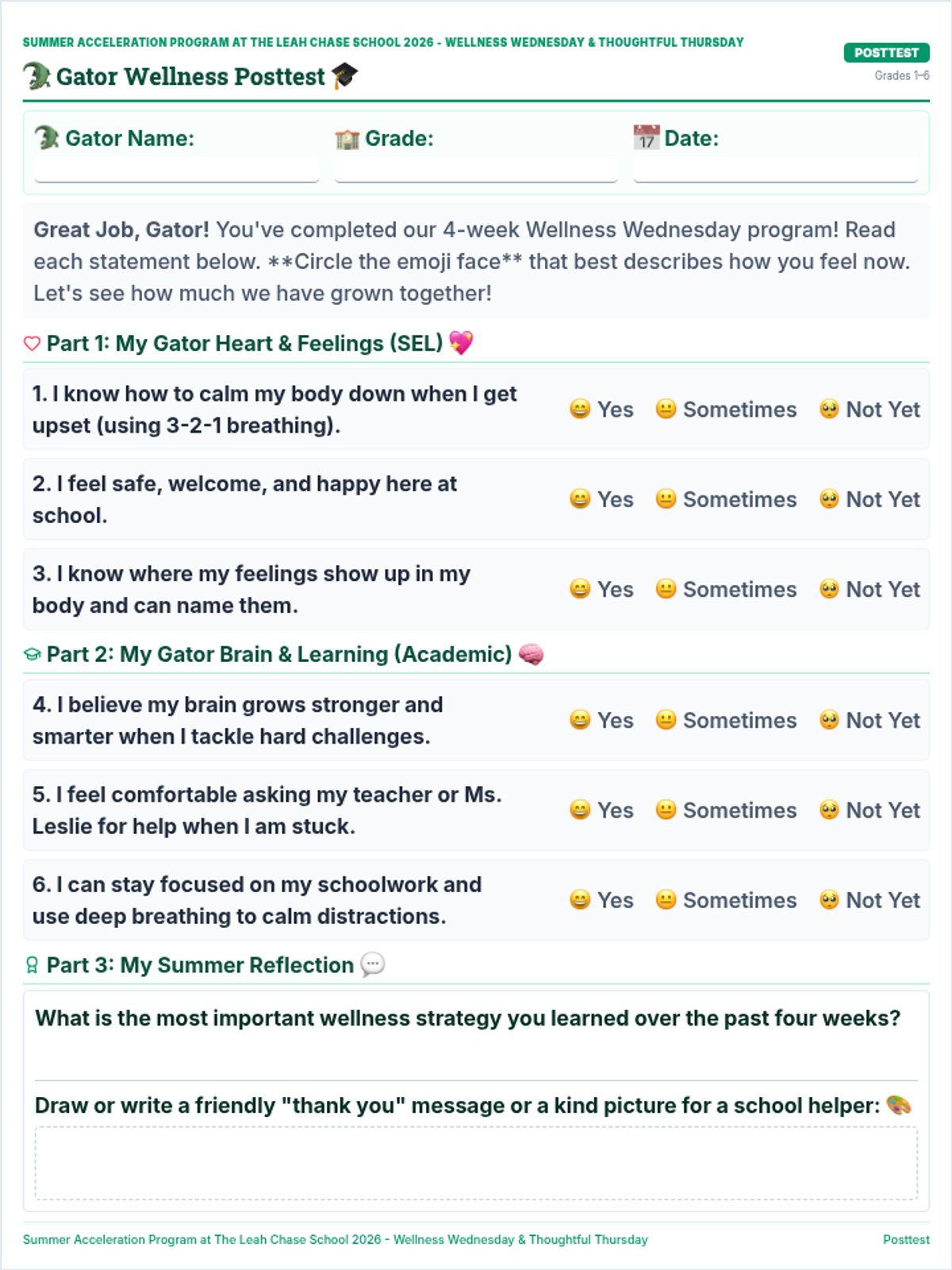
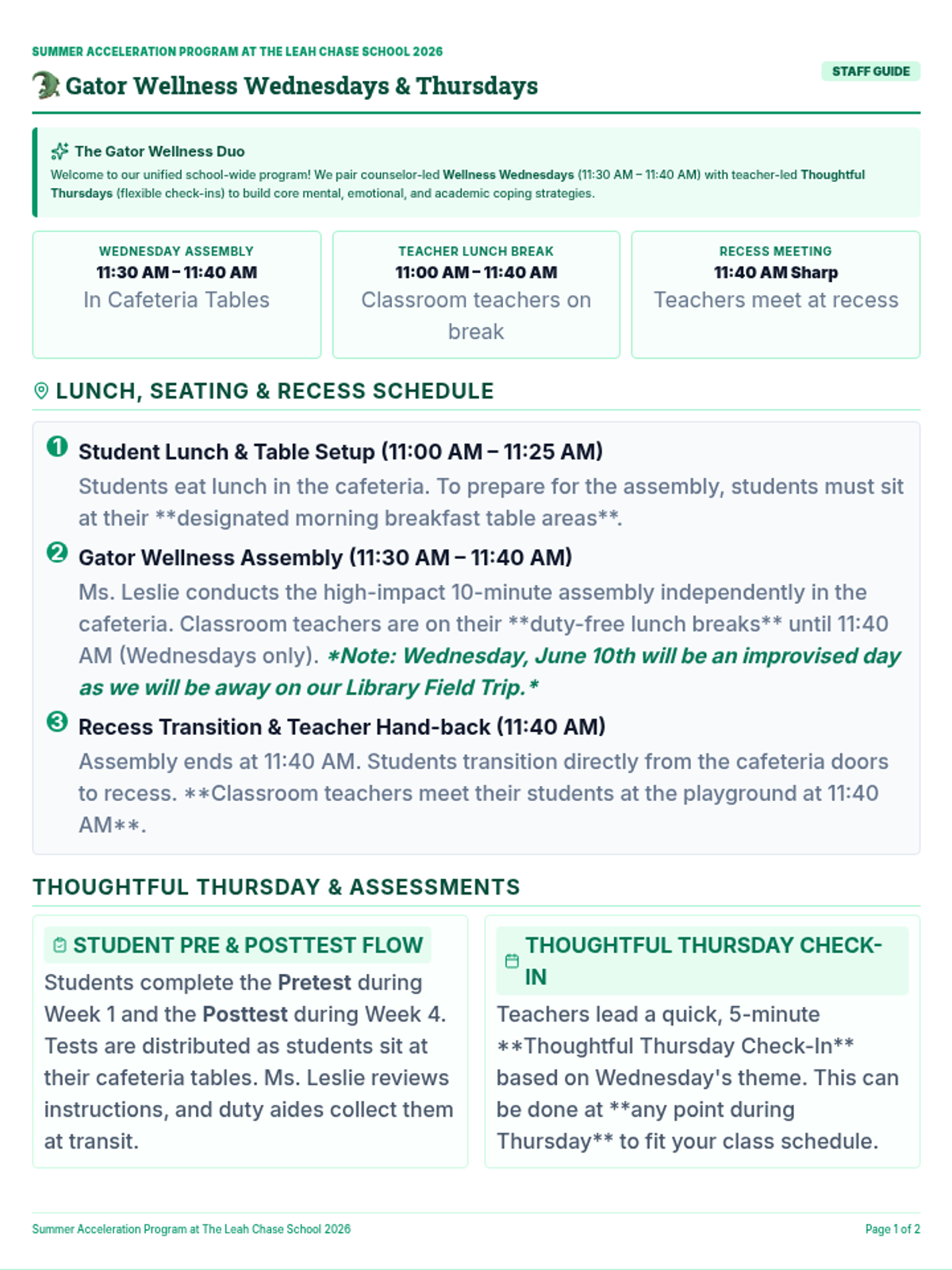
Week 4 of Wellness Wednesdays, celebrating student growth, reflecting on coping strategies, and completing the school-wide post-assessment.
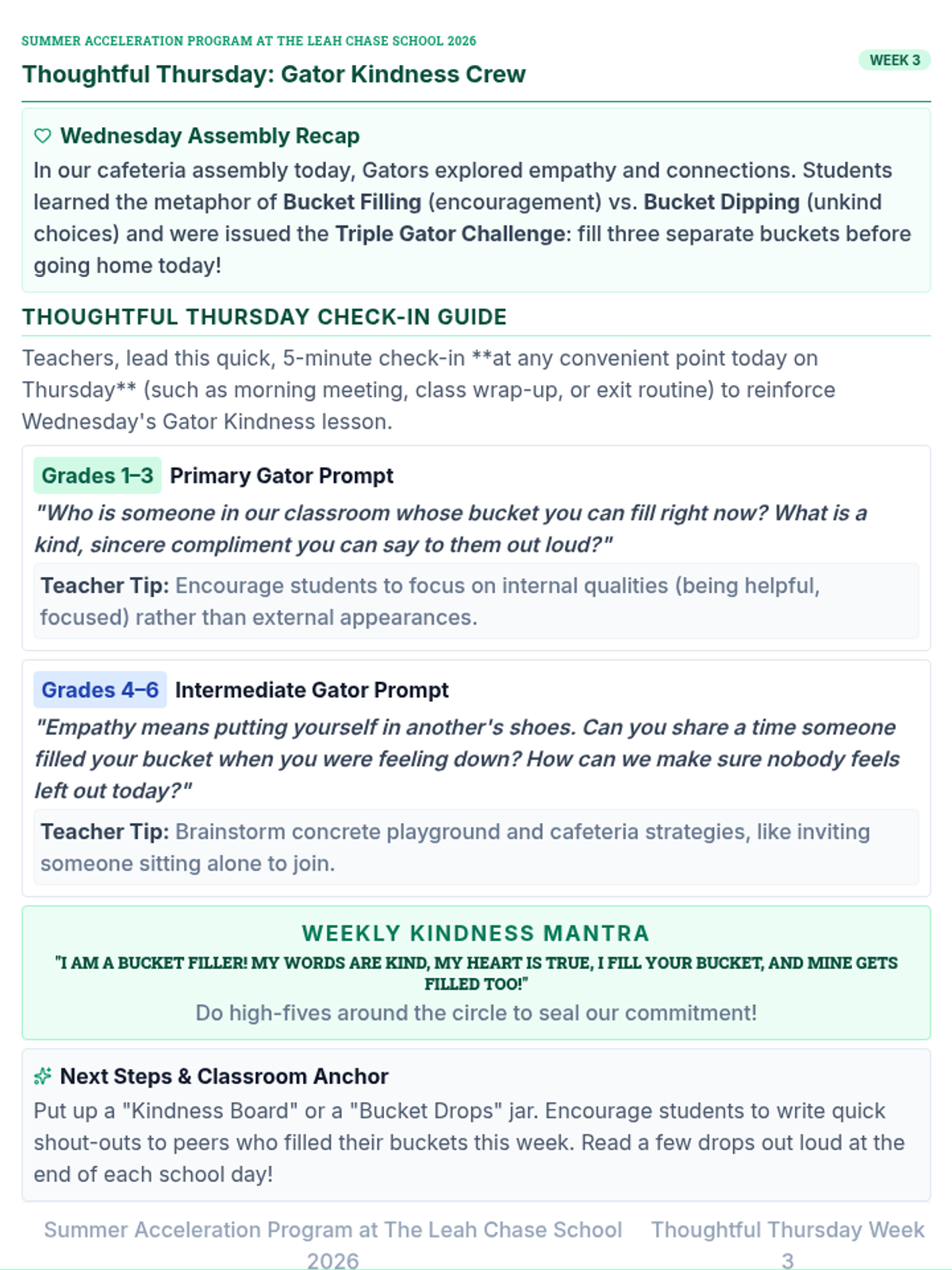
Week 3 of Wellness Wednesdays, exploring empathy, kindness, filling buckets, and building strong, supportive school relationships.
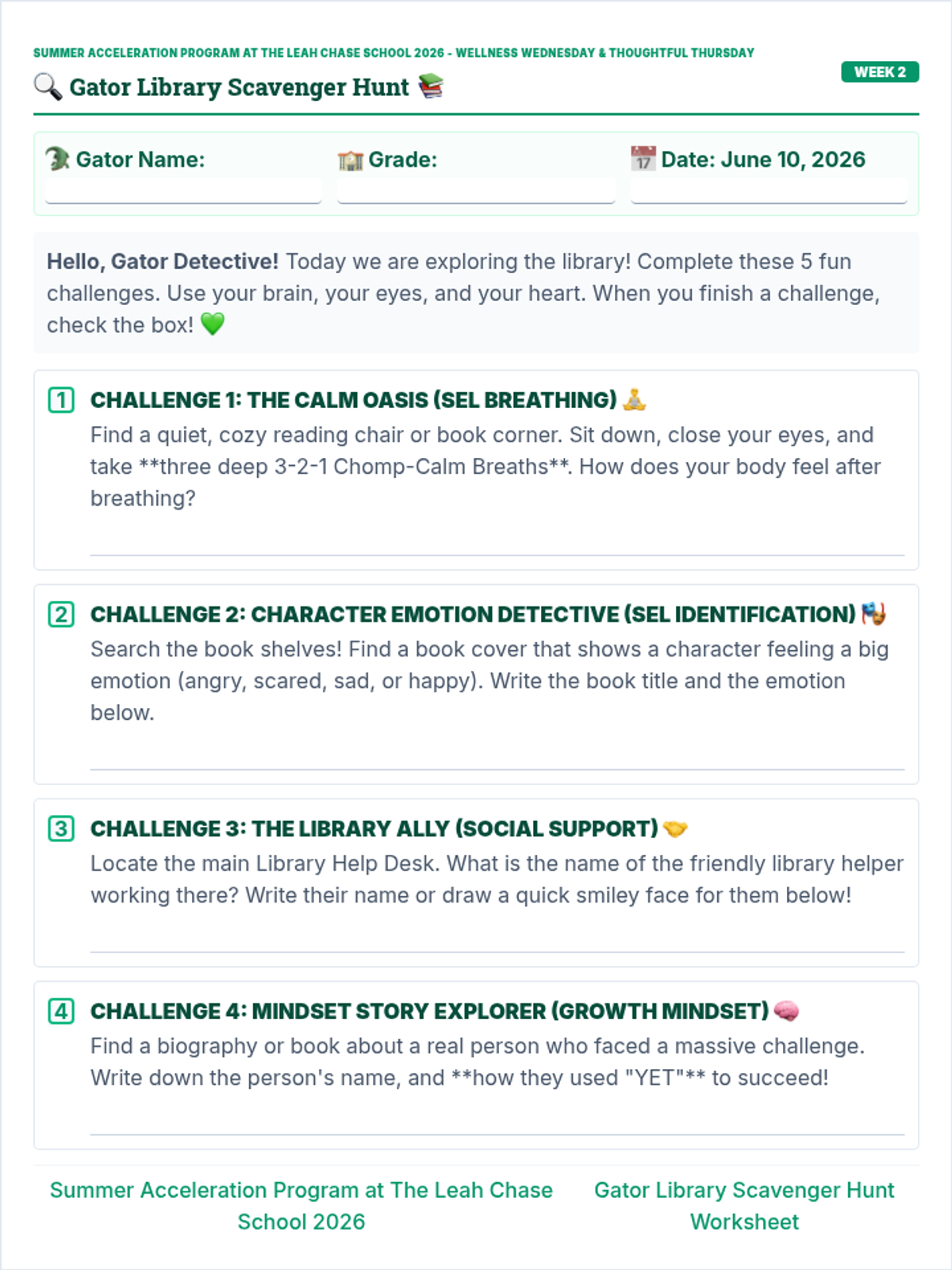
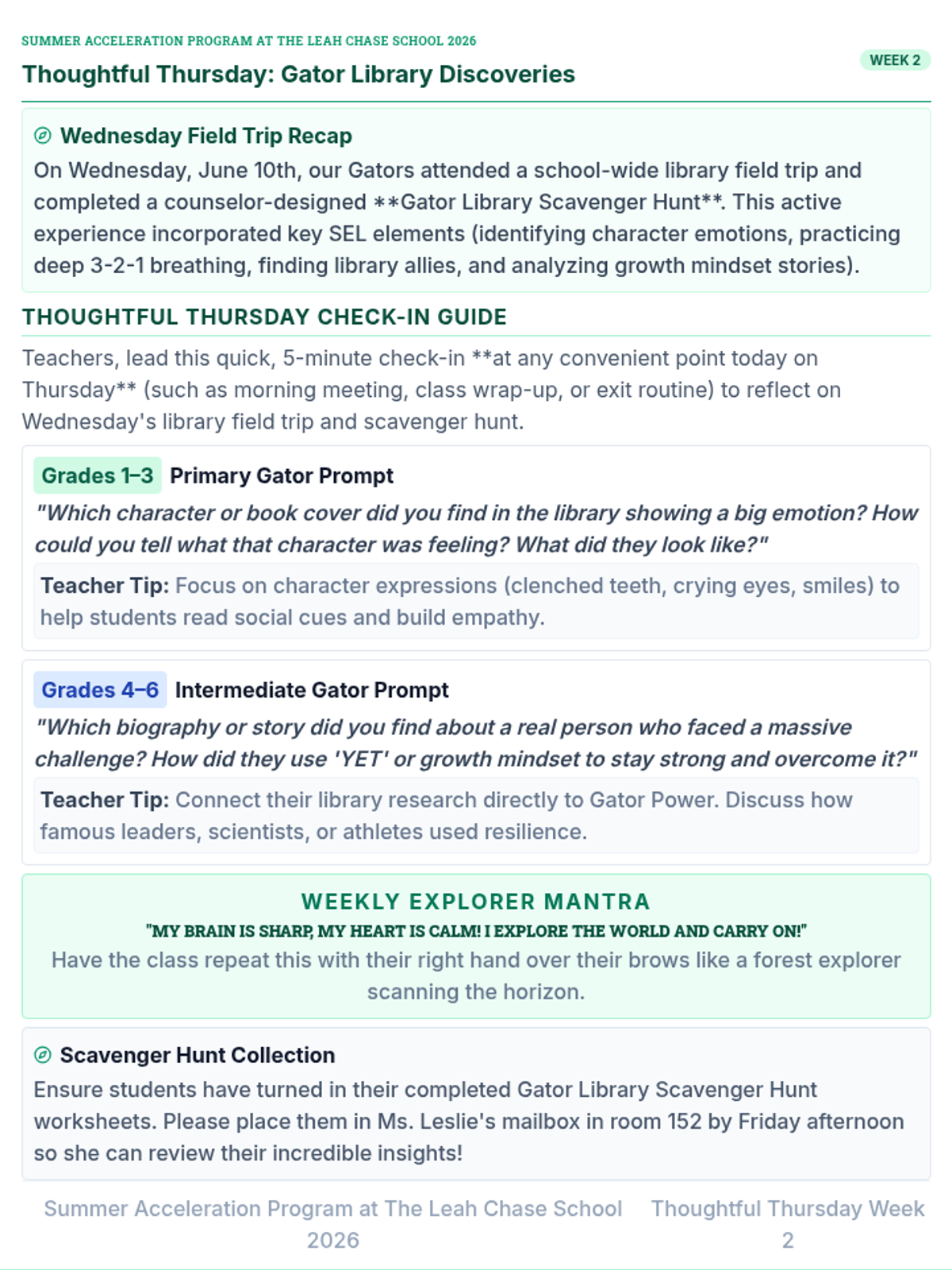
Week 2 of Wellness Wednesdays, teaching students to identify big emotions, understand physical responses, and apply calming strategies.
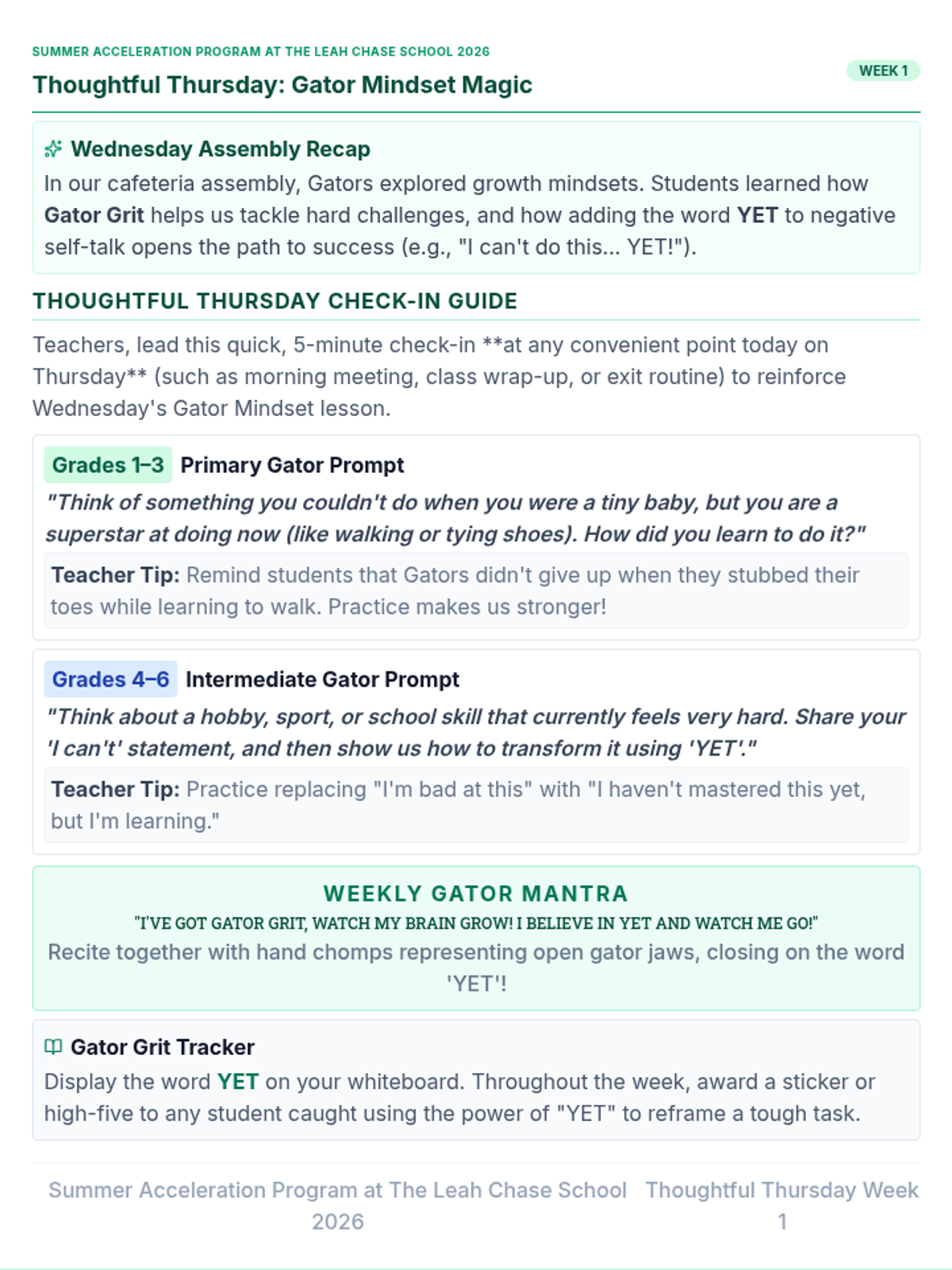
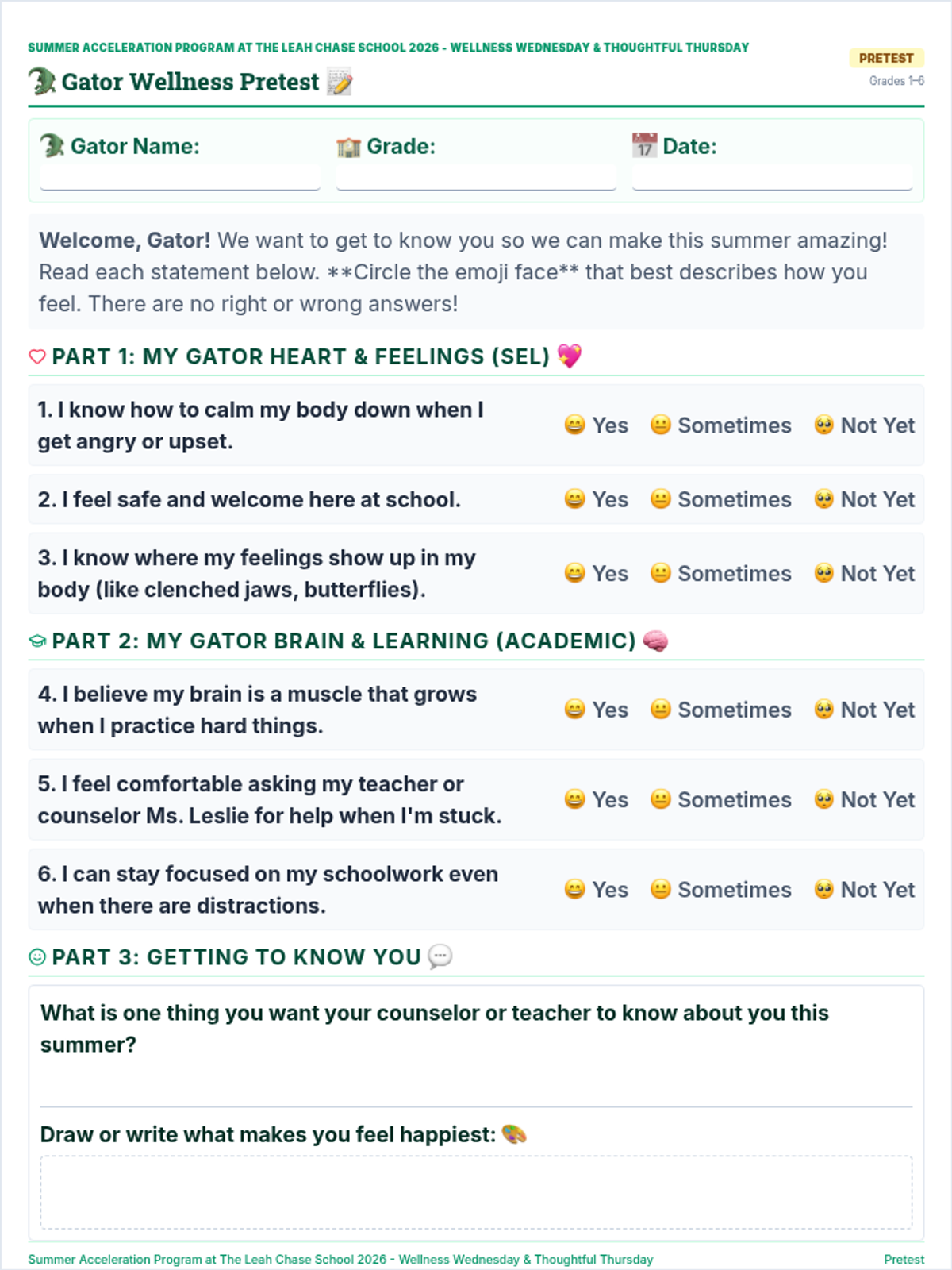
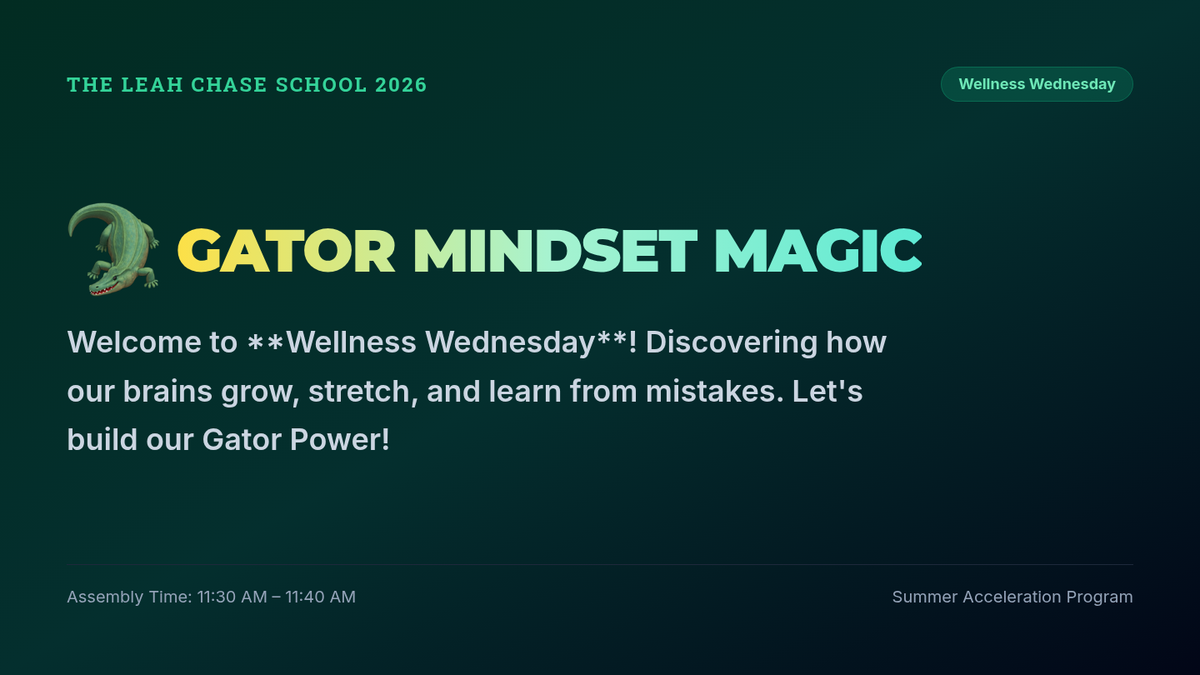
Week 1 of Wellness Wednesdays, introducing the growth mindset, the power of 'yet', and administering the school-wide student pre-assessment.
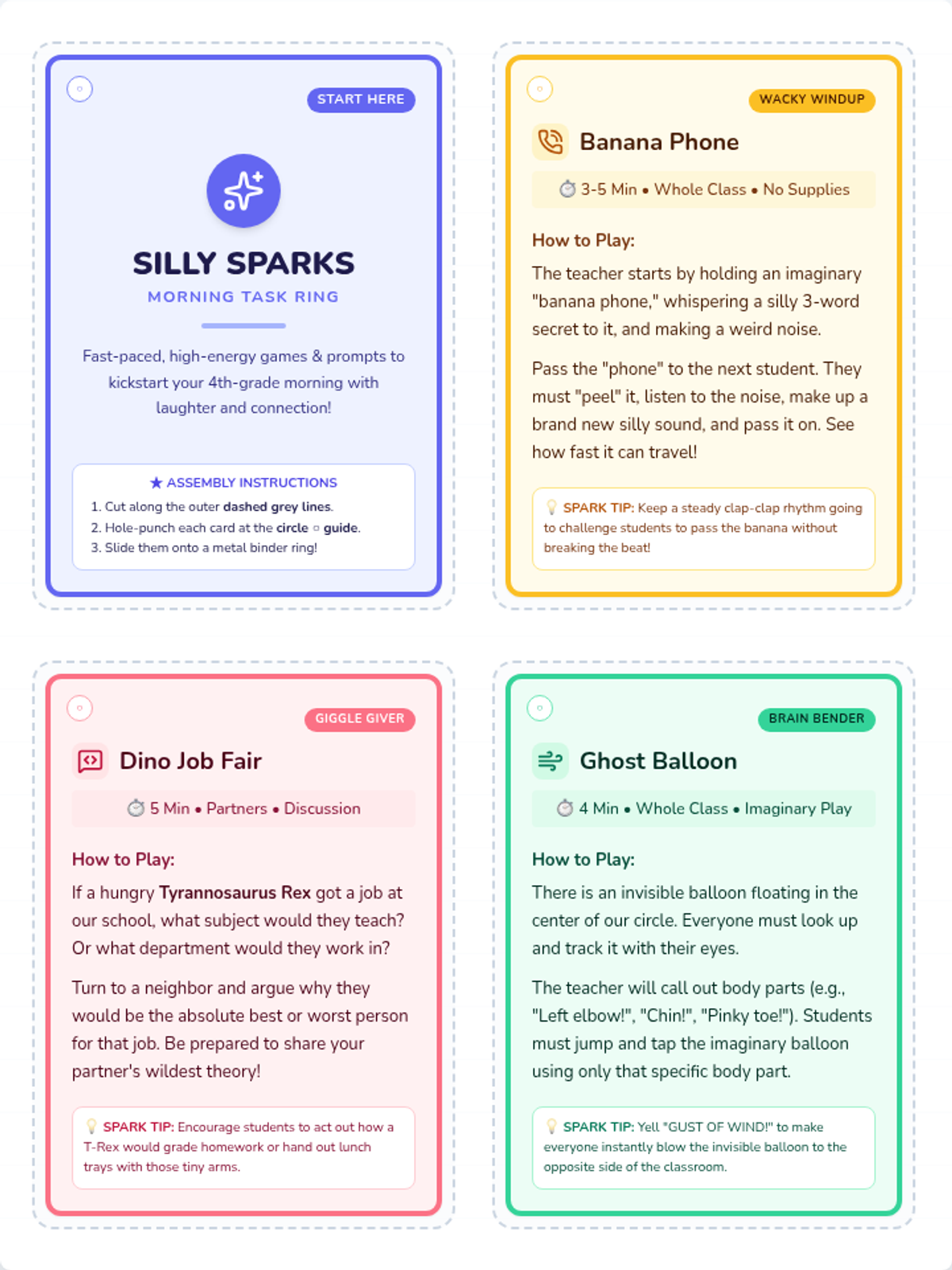
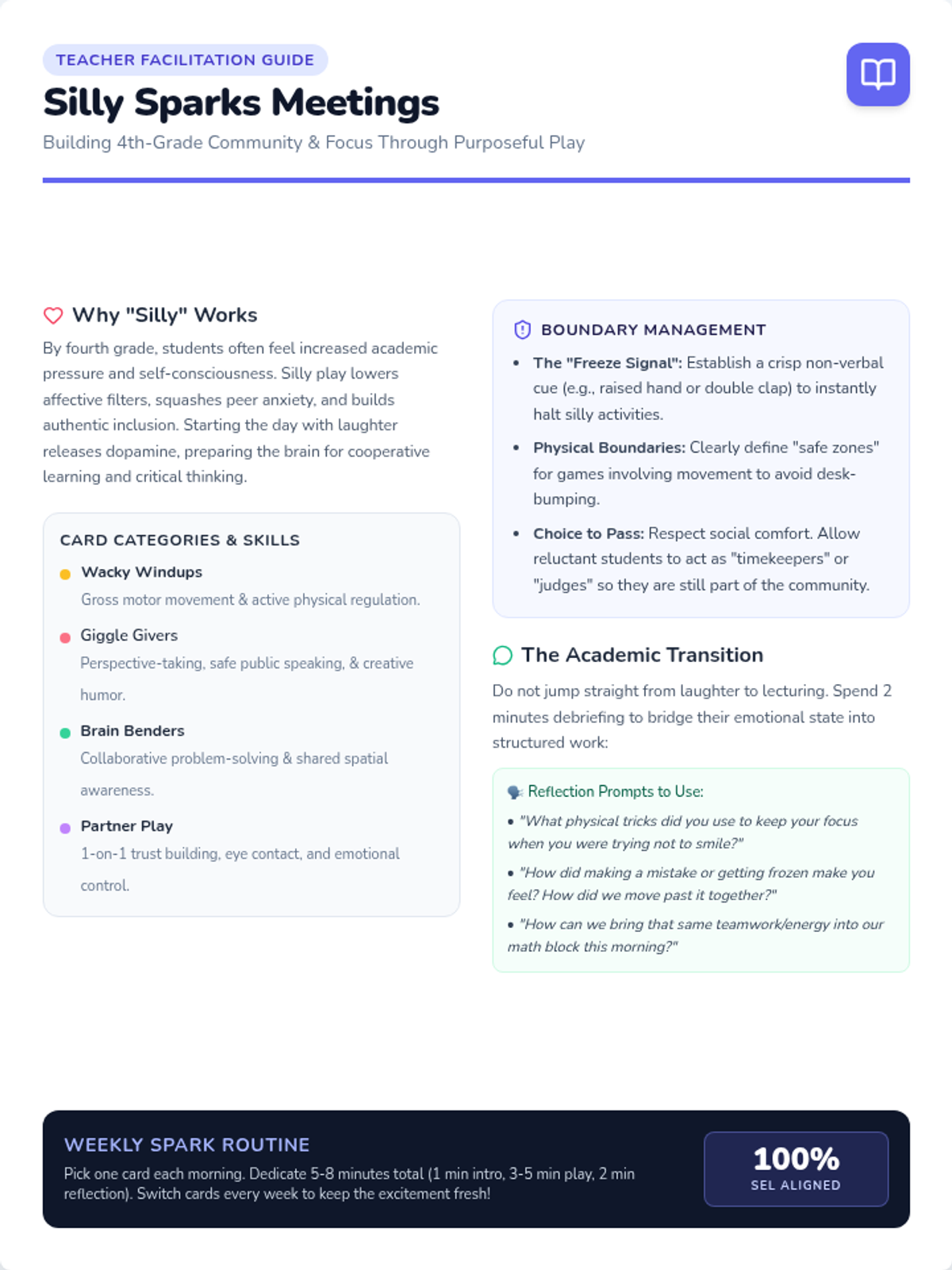
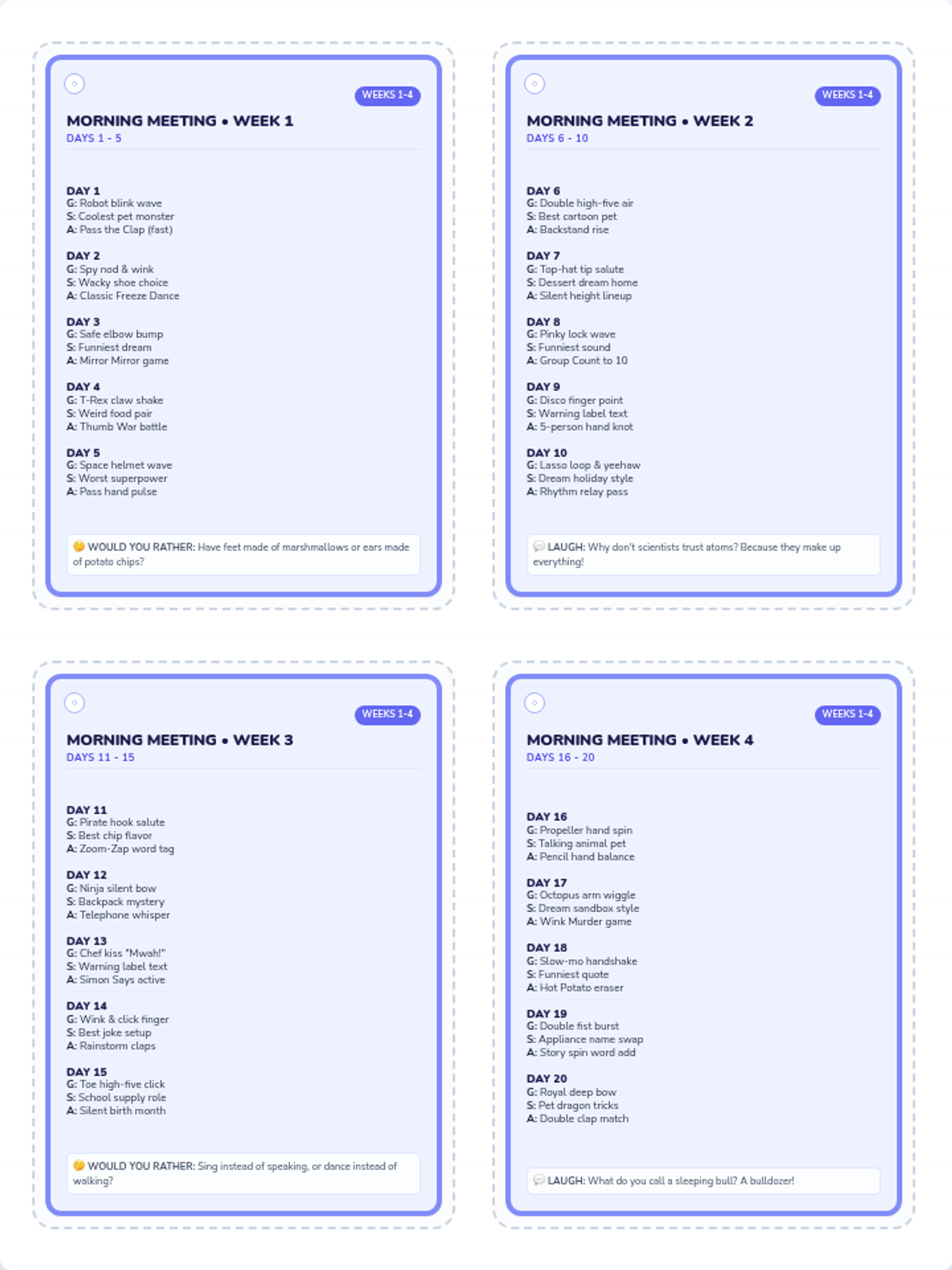
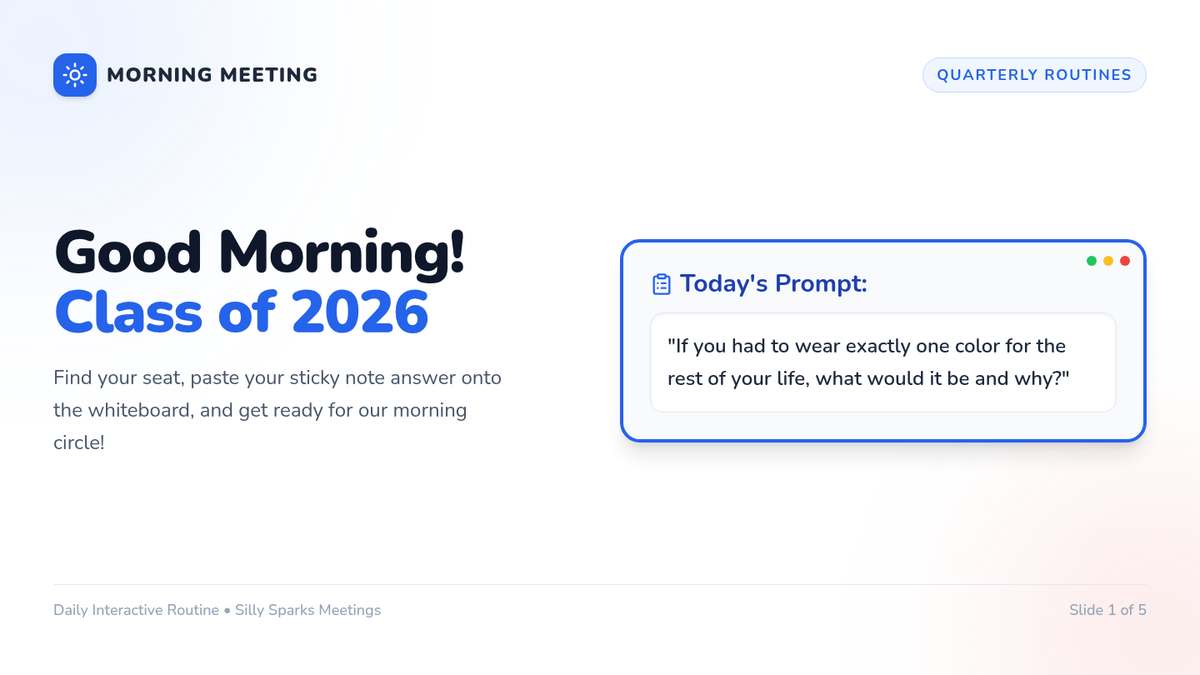
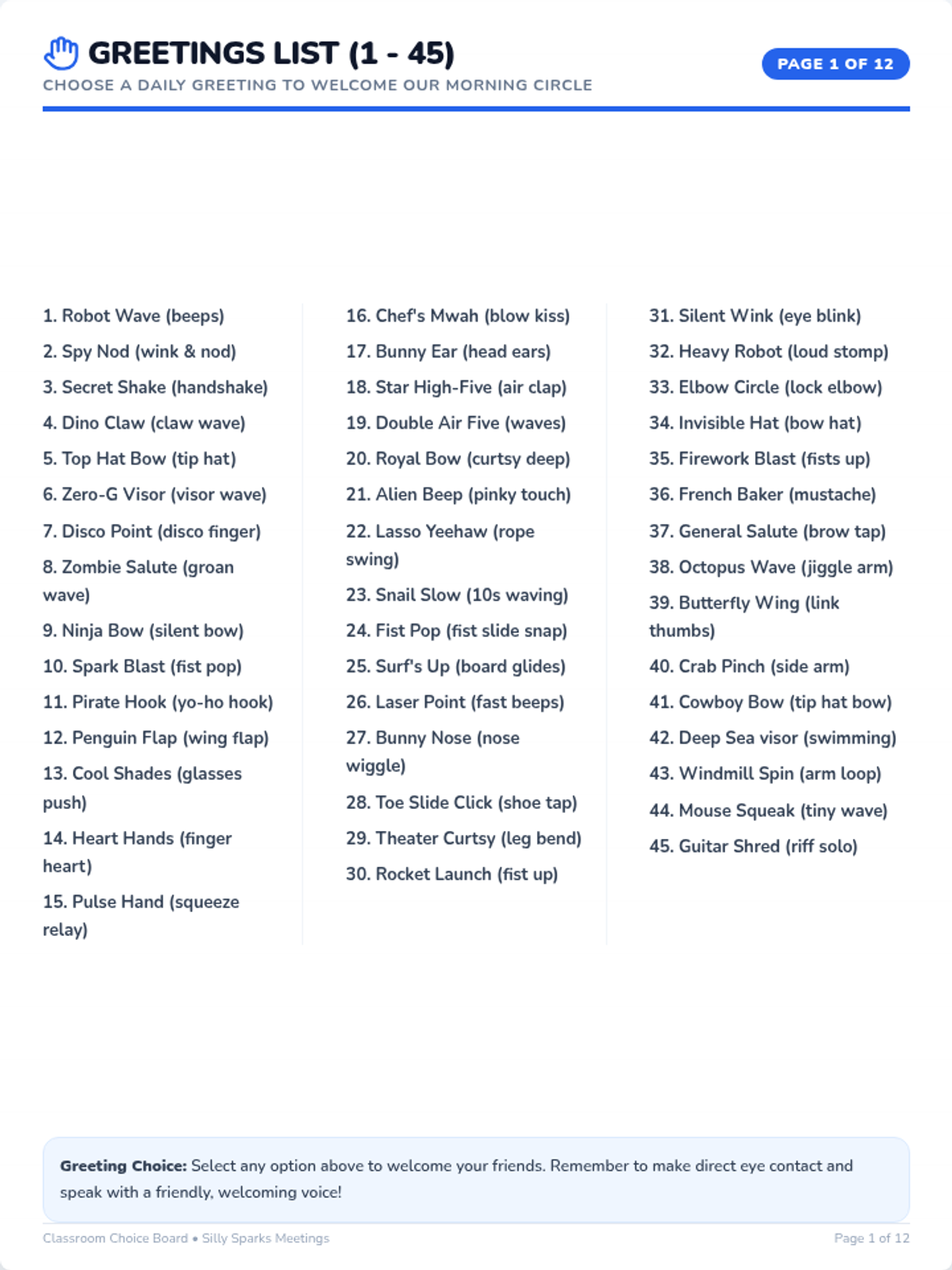
A collection of high-energy, silly, and collaborative morning meeting materials designed to spark joy, laughter, and classroom community in fourth grade.
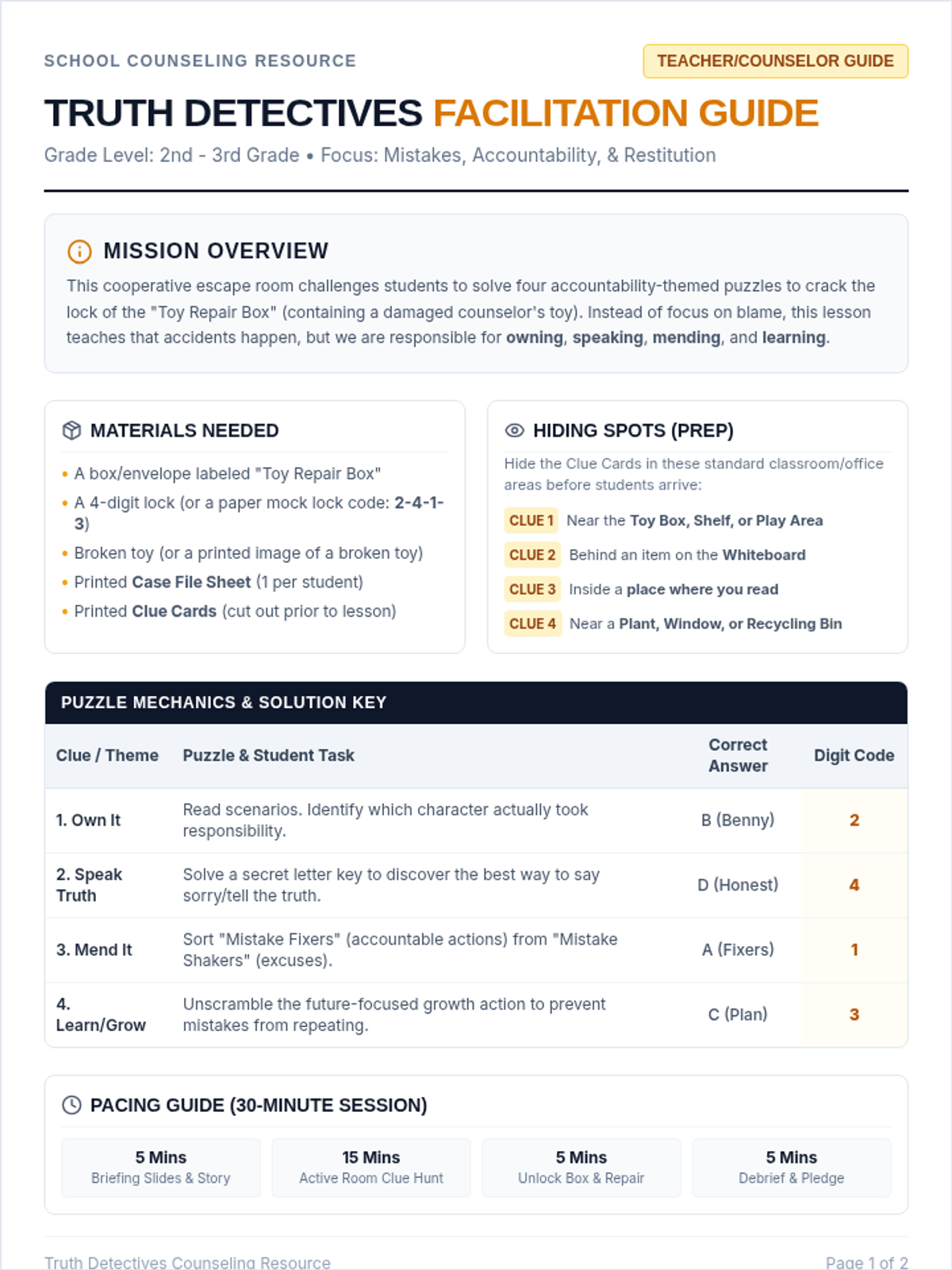
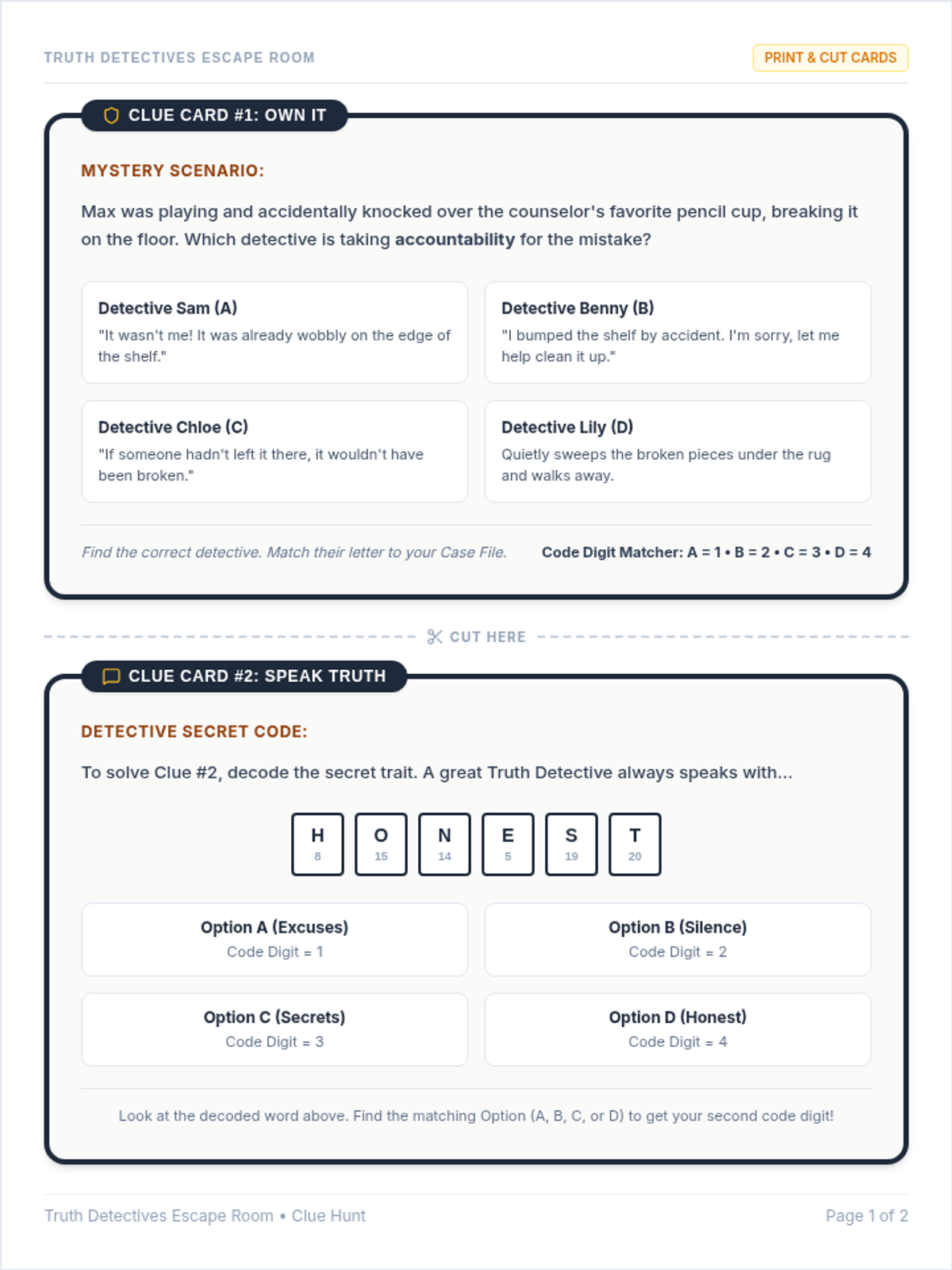
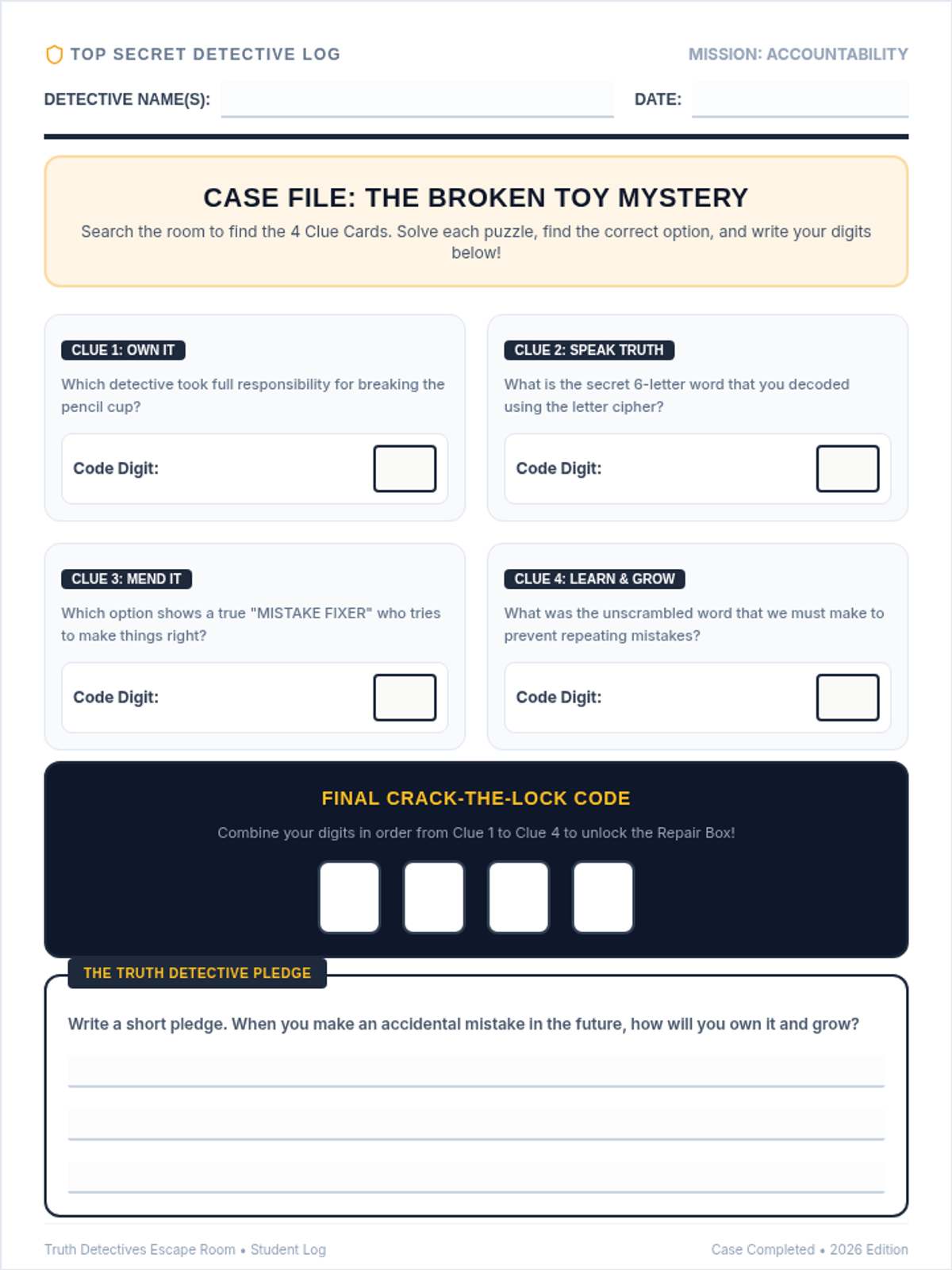
A collaborative counseling escape room for 2nd and 3rd grade students to learn about accountability. Students solve puzzles related to 'The Broken Toy Mystery' to learn how to admit mistakes, tell the truth, and repair damage.