A sharp, logic-forward 1-to-1 session designed to help a student break down negative assumptions, understand the logical purpose of school rules, and develop alternative explanations for teacher actions.
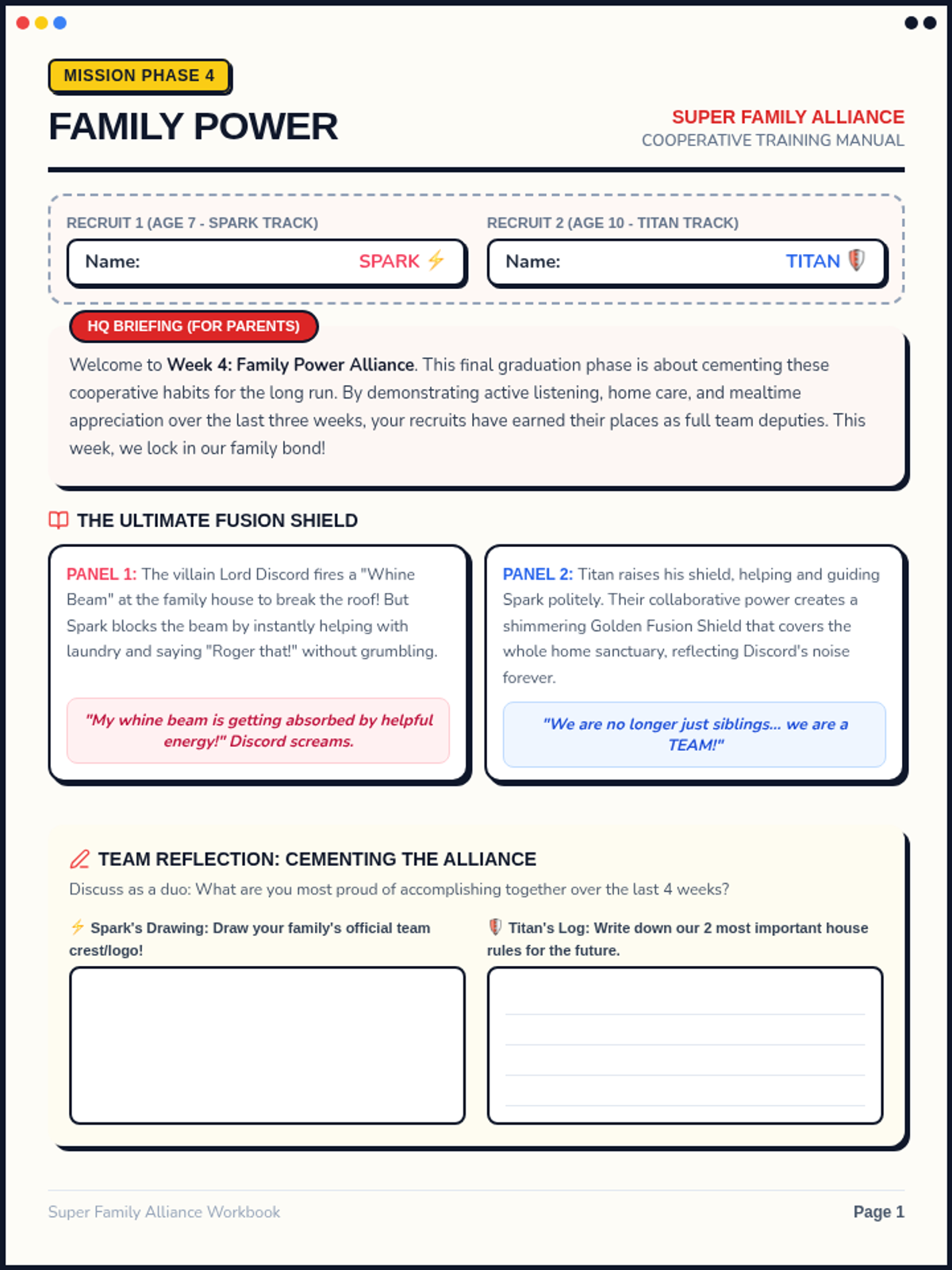
Week 4 focuses on being a cooperative part of the family team, celebrating growth, and locking in the long-term habits of the Super Family Alliance.
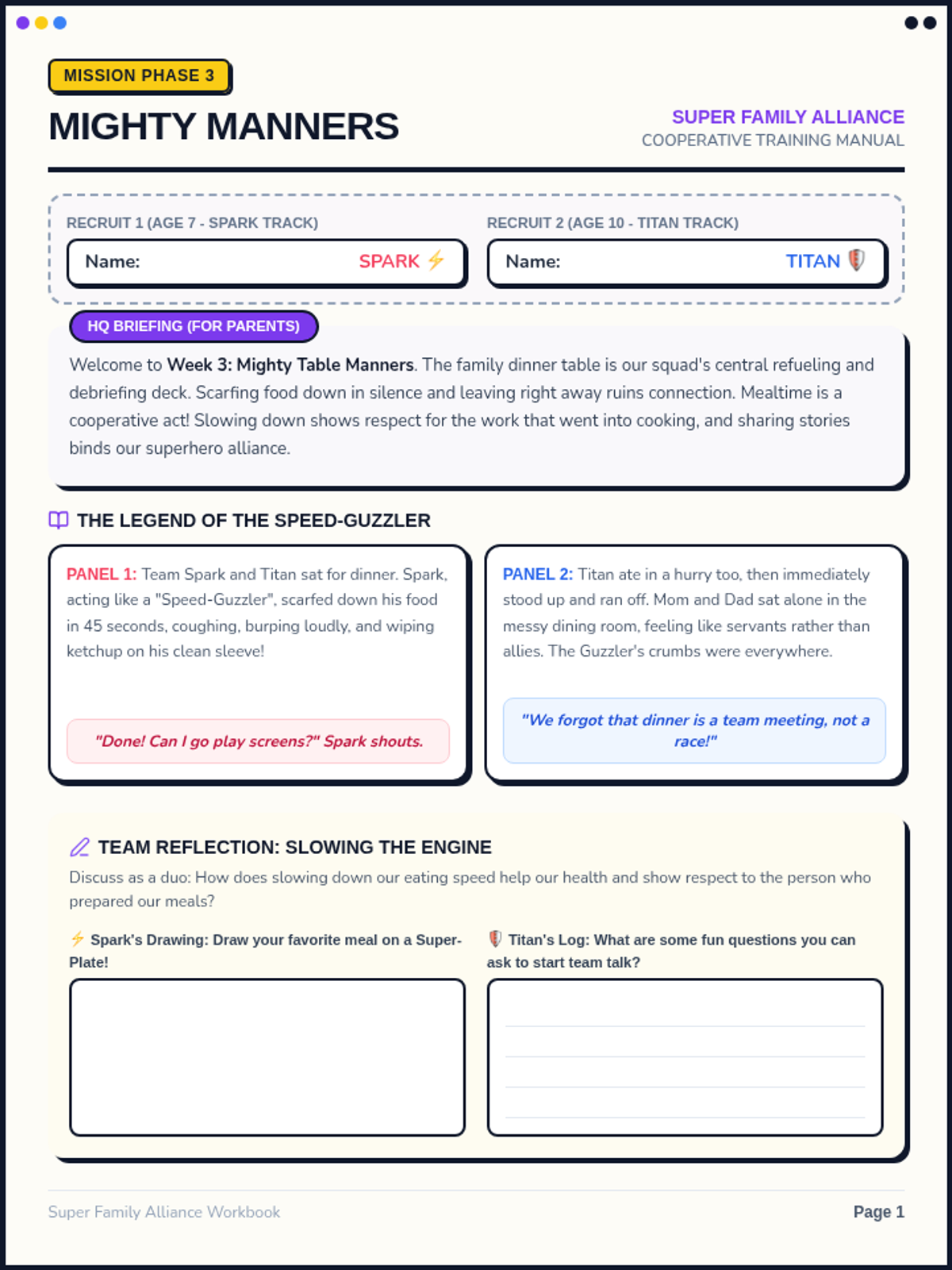
Week 3 focuses on table manners, appreciative dining, and ending the habit of scarfing down food. It emphasizes mealtime as a cooperative team-building space.
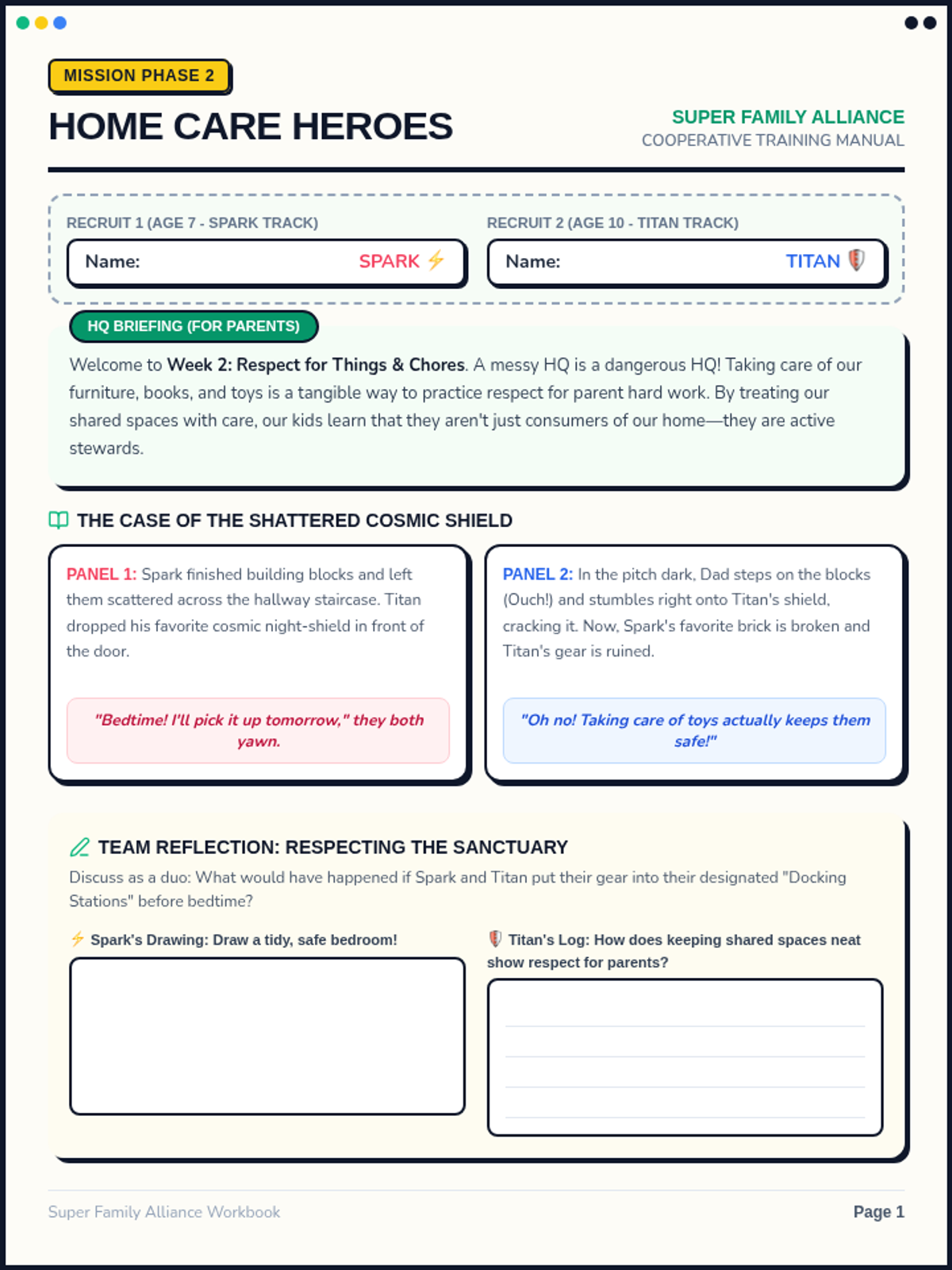
Week 2 focuses on respect for things (possessions, furniture, the home) and taking pride in doing chores as a way of caring for the sanctuary.
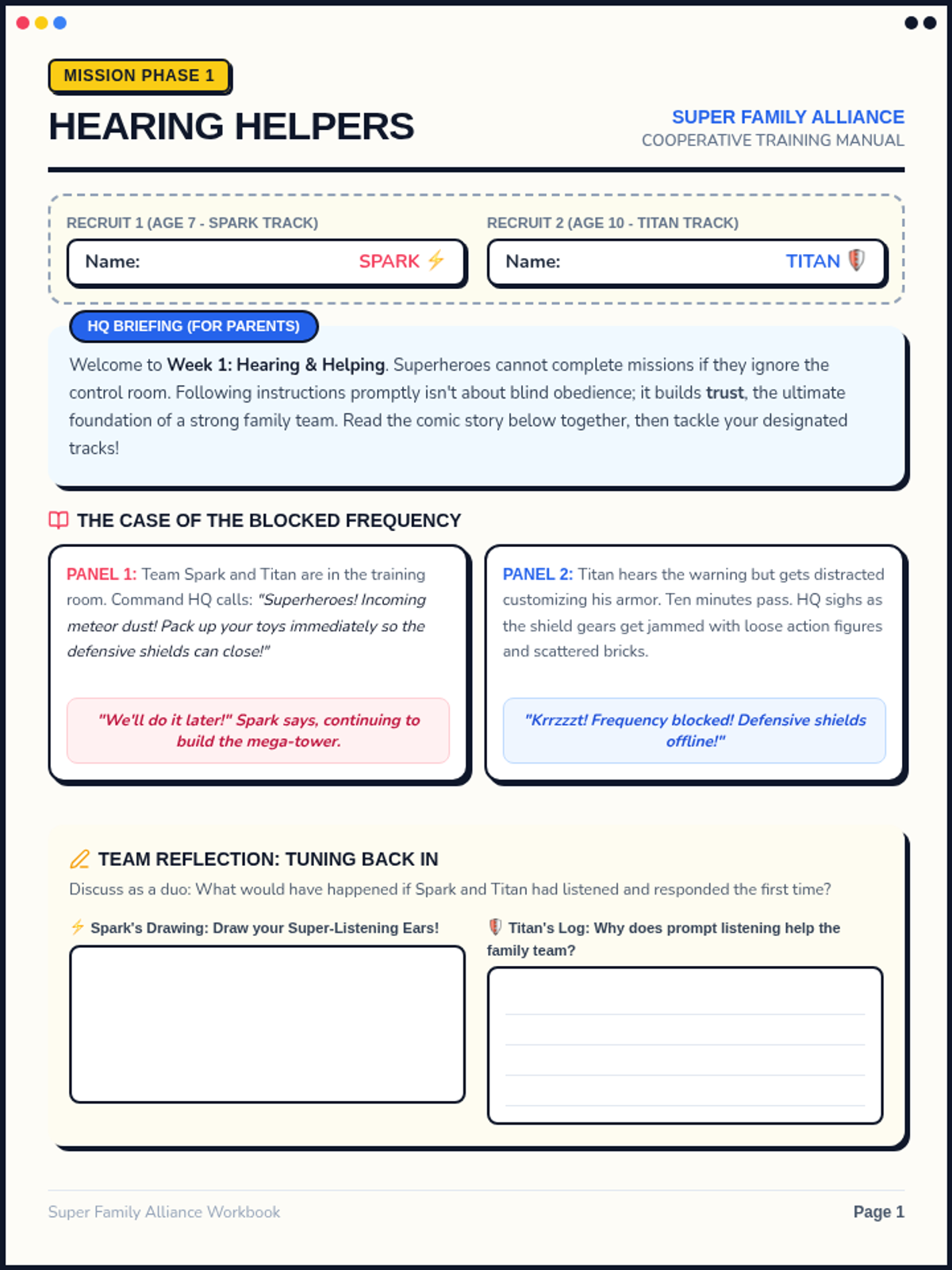
Week 1 focuses on active listening, respecting parental guidance, and following directions promptly. It establishes the baseline for the Super Family Alliance.
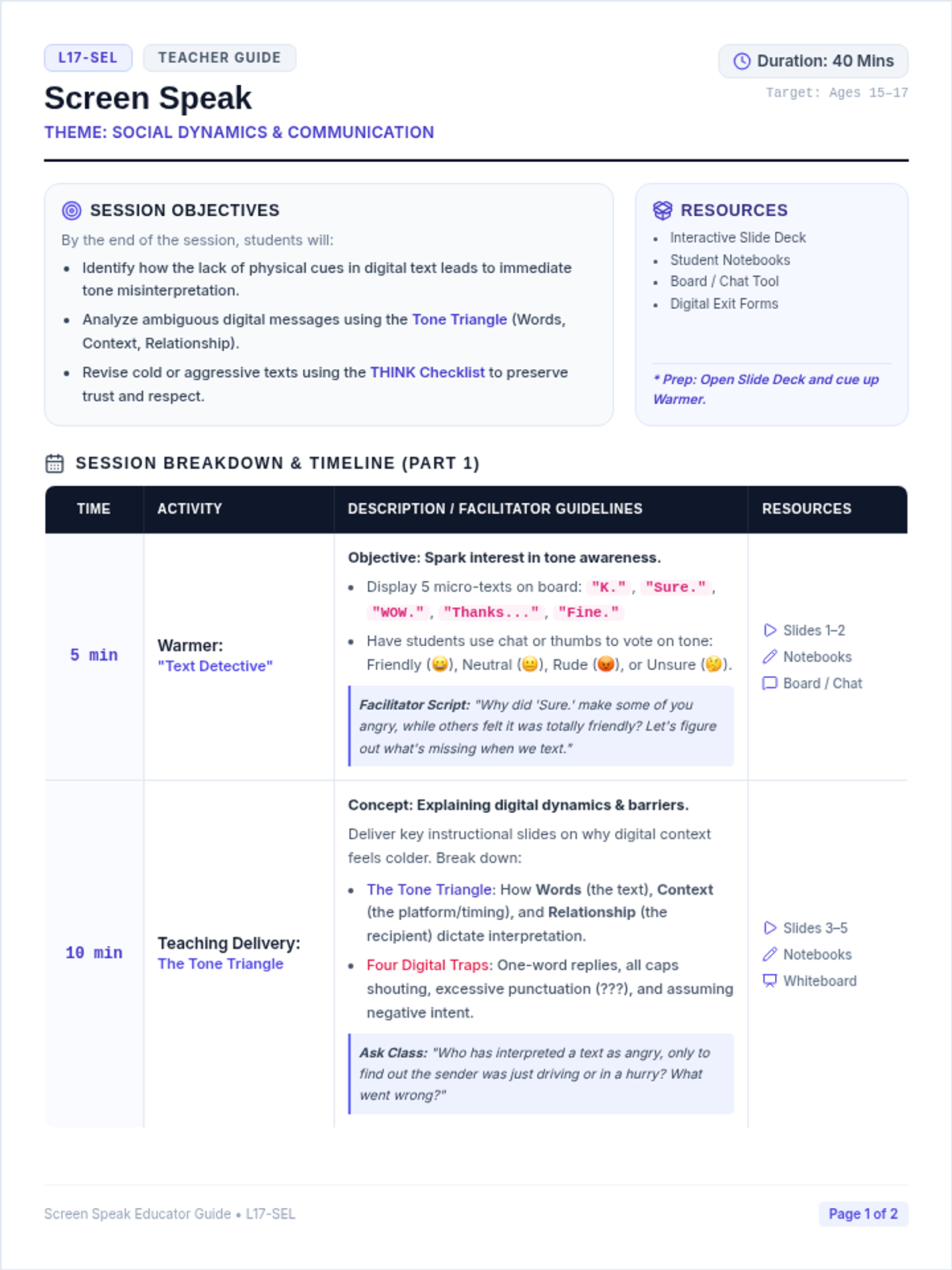
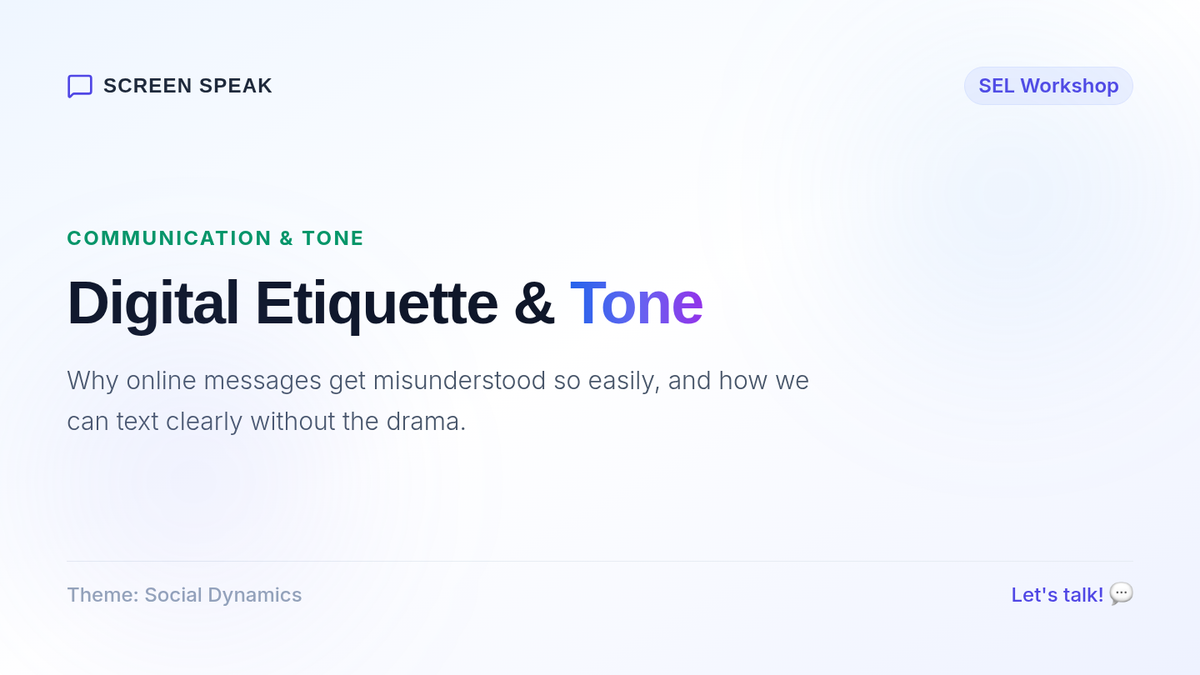
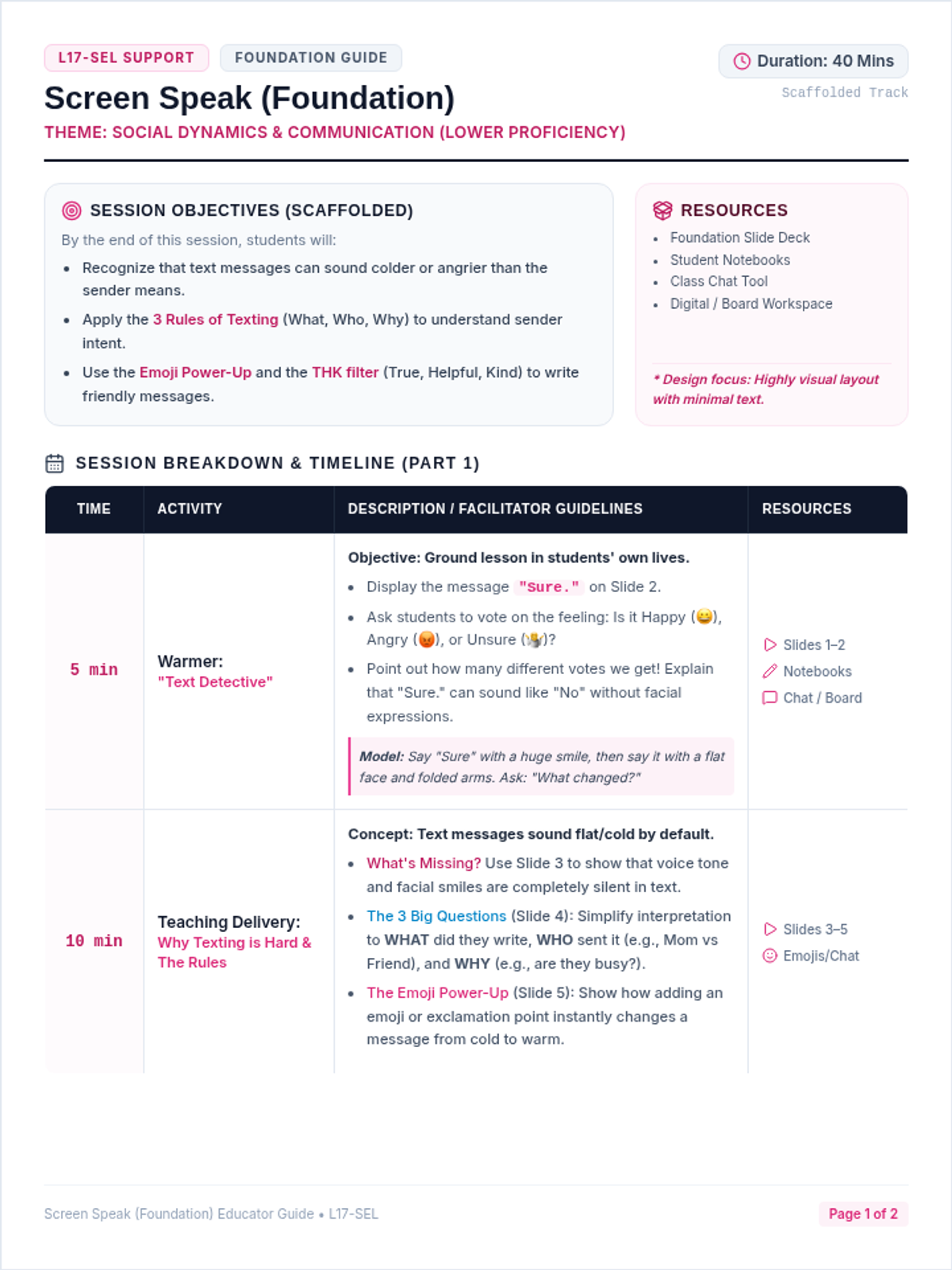
A comprehensive SEL lesson bundle on digital etiquette, tone misinterpretation, and respectful online communication for teens aged 13-17. Includes an interactive slide deck and an elegant table-formatted teacher facilitation guide.
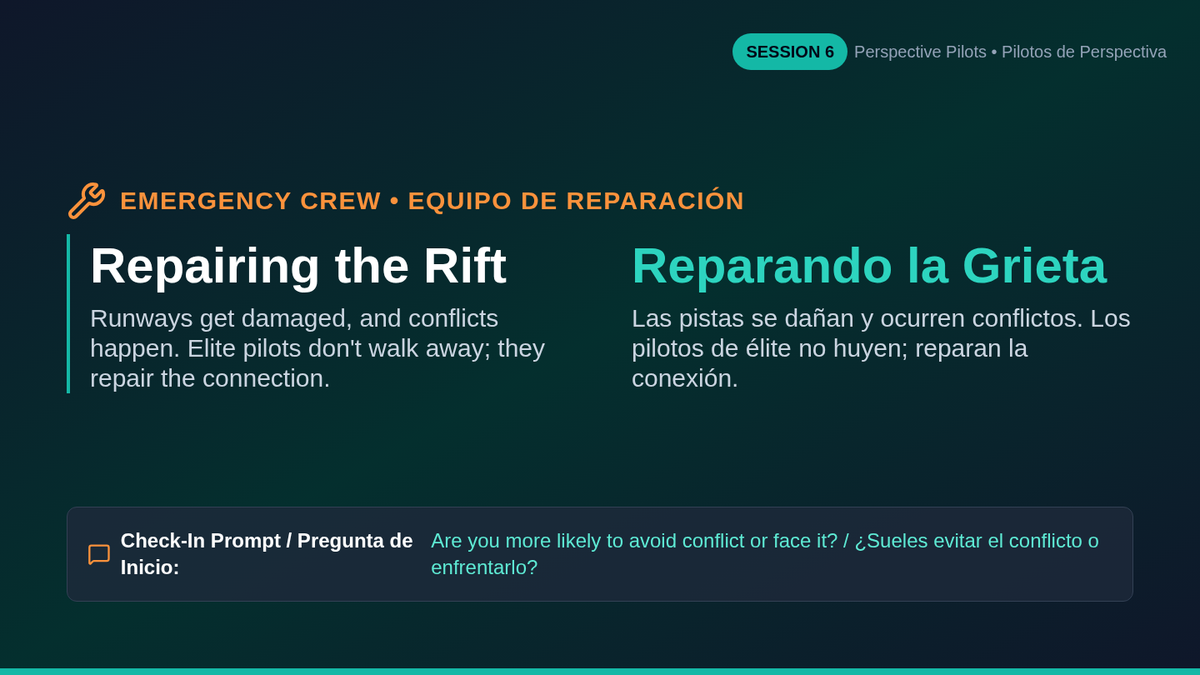
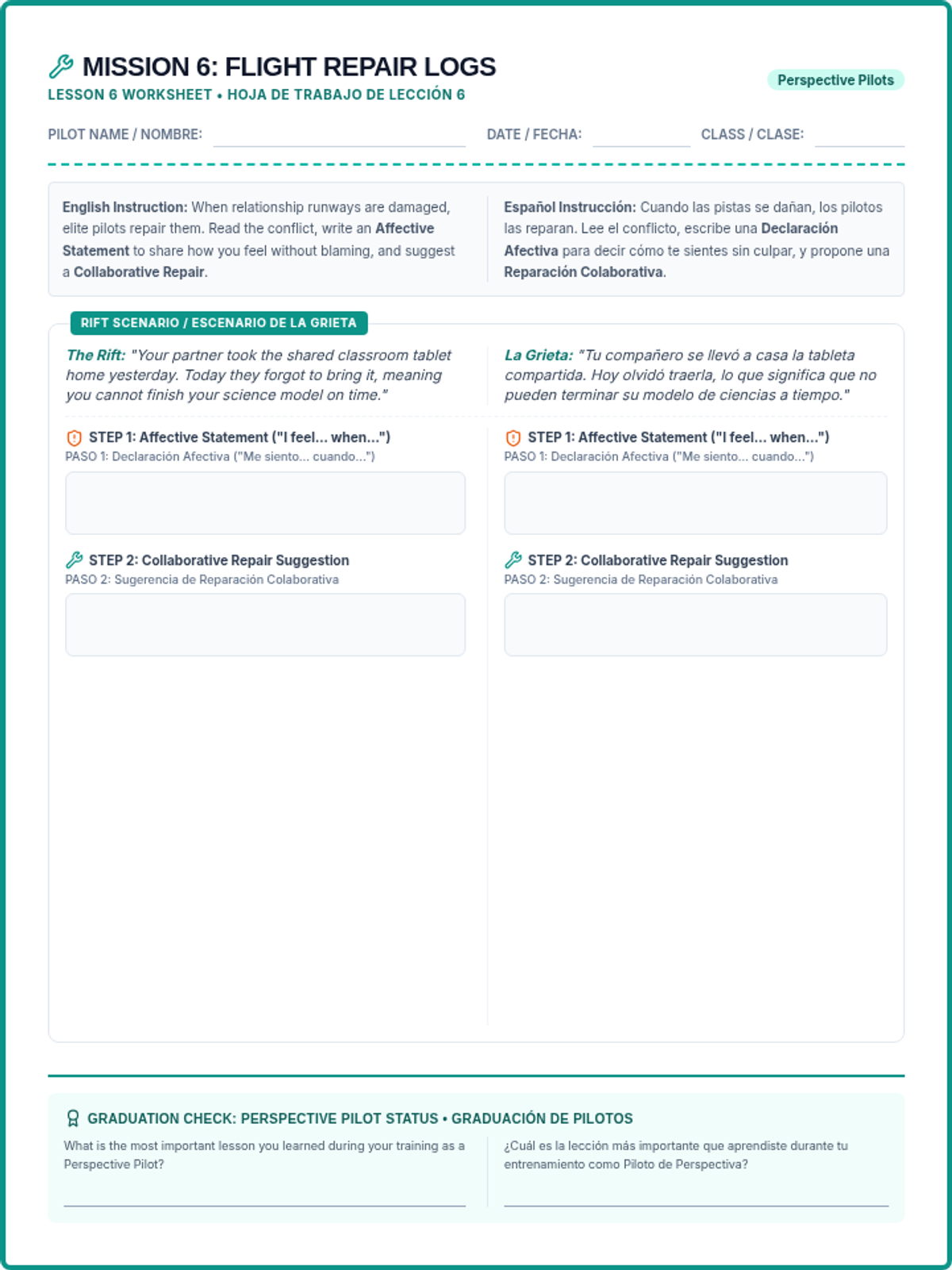
Introduces students to restorative conflict resolution, learning how to repair trust and rebuild connections using affective statements. Includes slides and an active workbook.
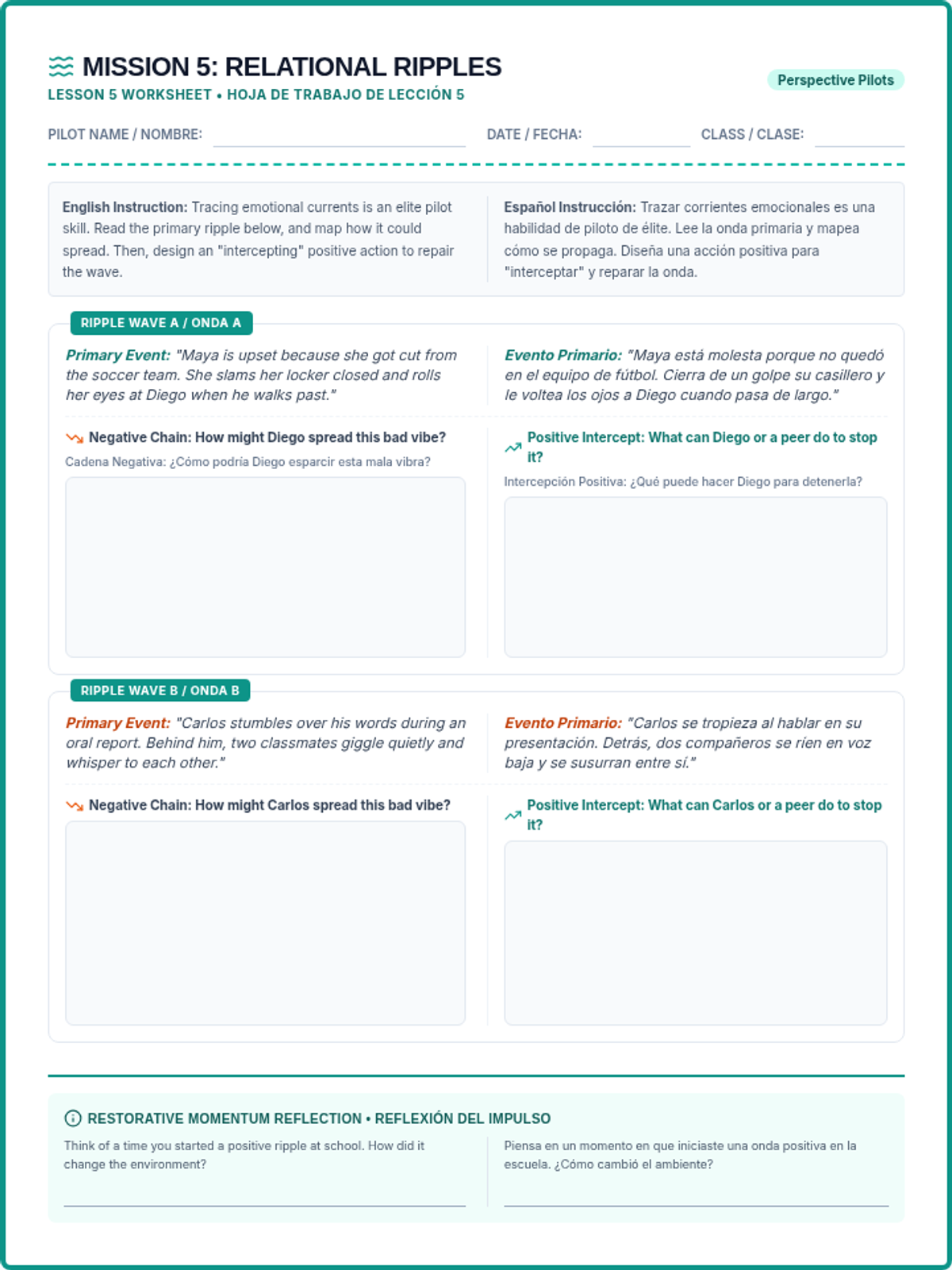
Explores how our actions and words create a ripple effect of emotions on peers. Features interactive presentation slides and a relational mapping worksheet.
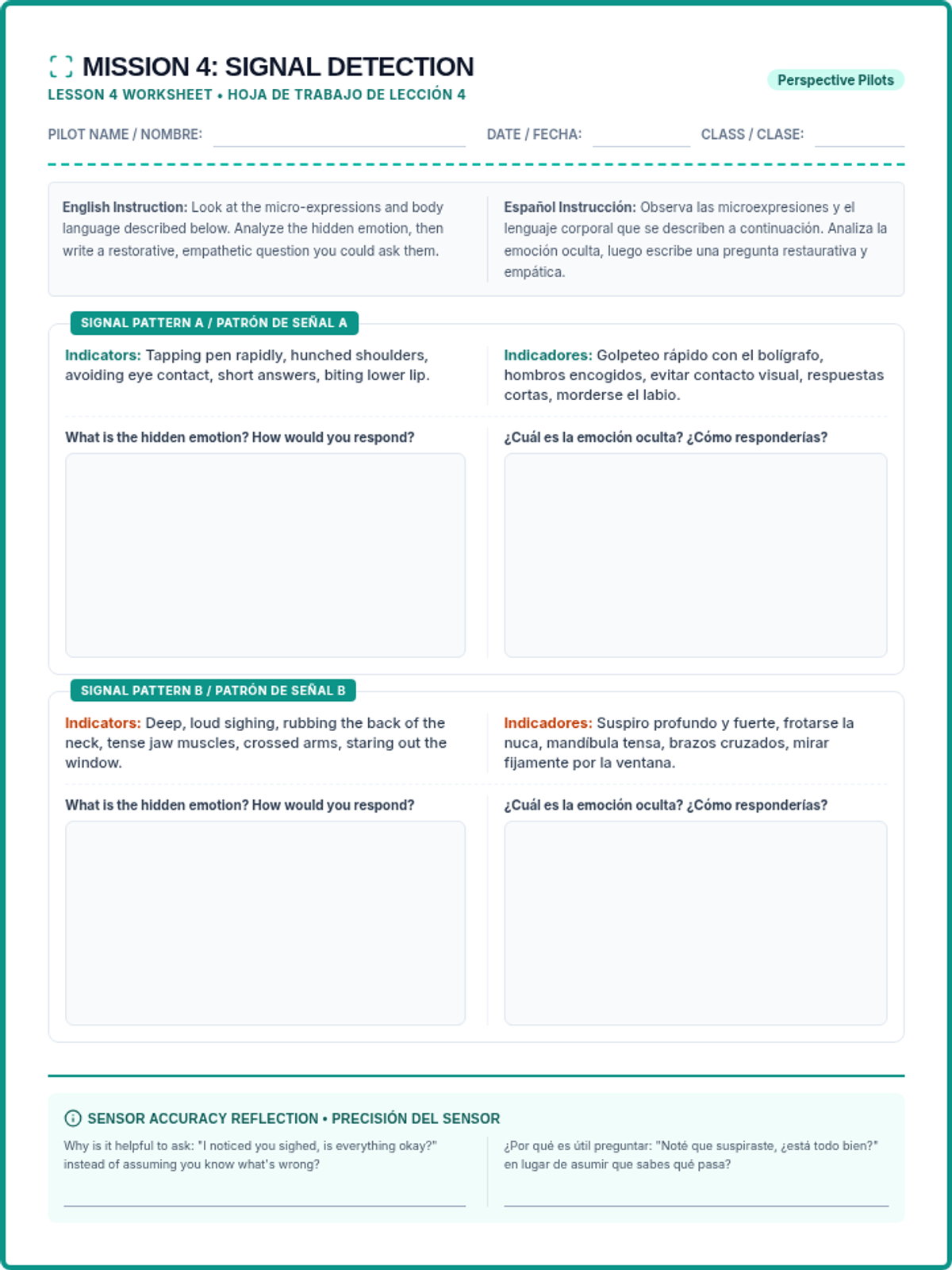
Focuses on social awareness by teaching students how to read micro-expressions and body language. Includes presentation slides and an observational worksheet.
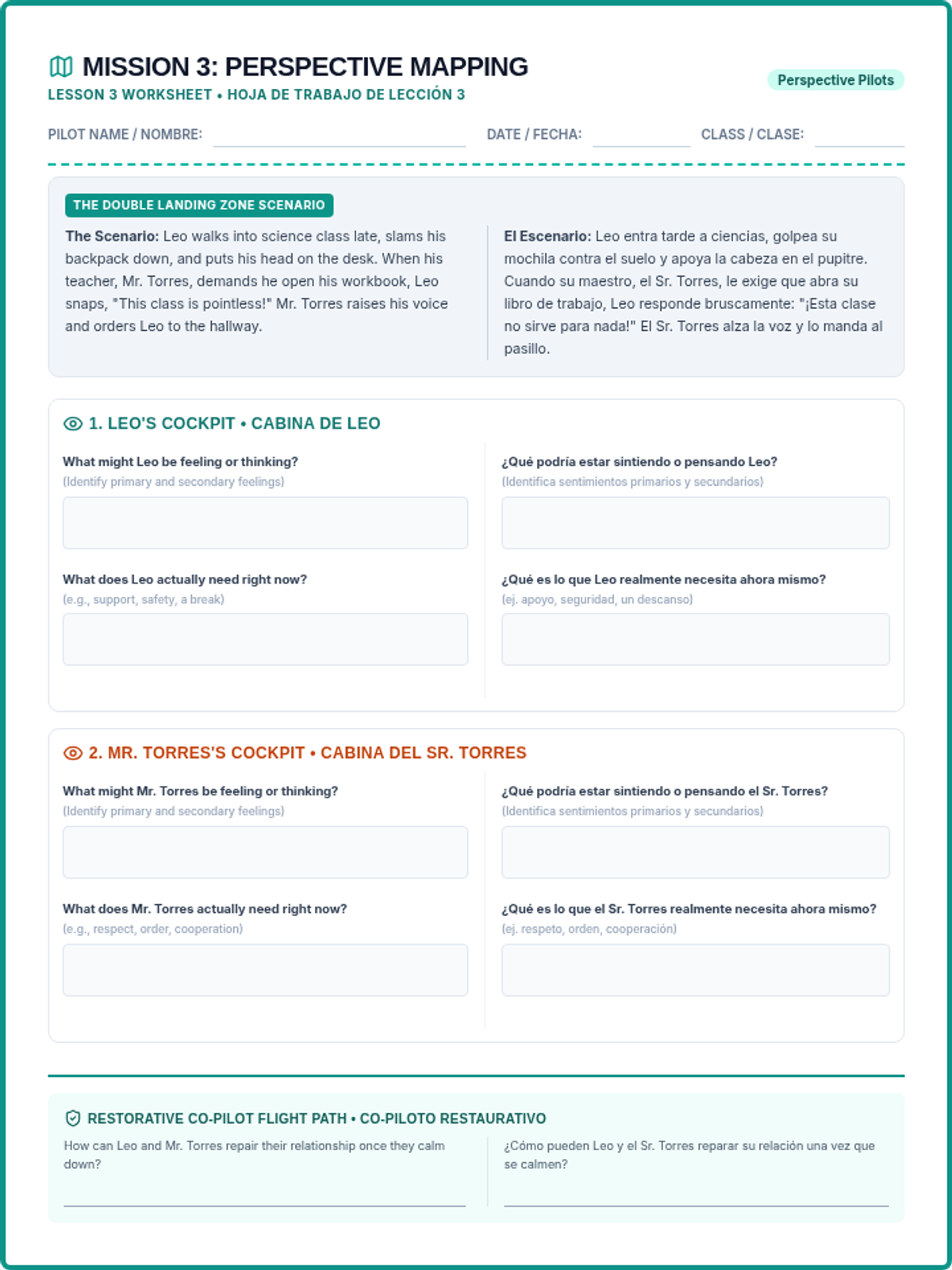
Teaches perspective-taking and social awareness through diverse real-world school scenarios. Includes interactive presentation slides and a perspective mapping worksheet.
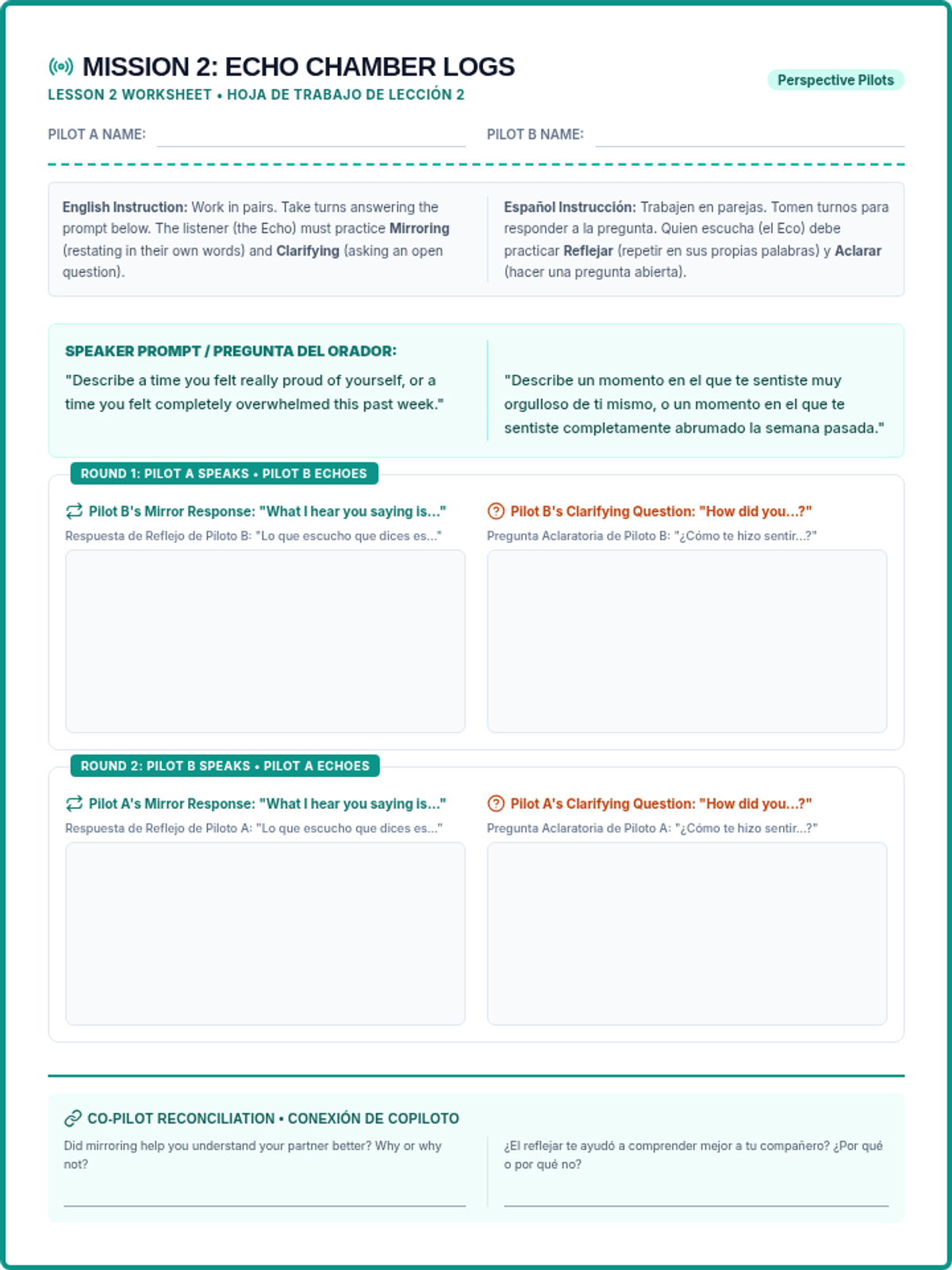
Teaches active listening and restorative communication, recognizing personal biases. Includes interactive presentation slides and a partner active listening worksheet.
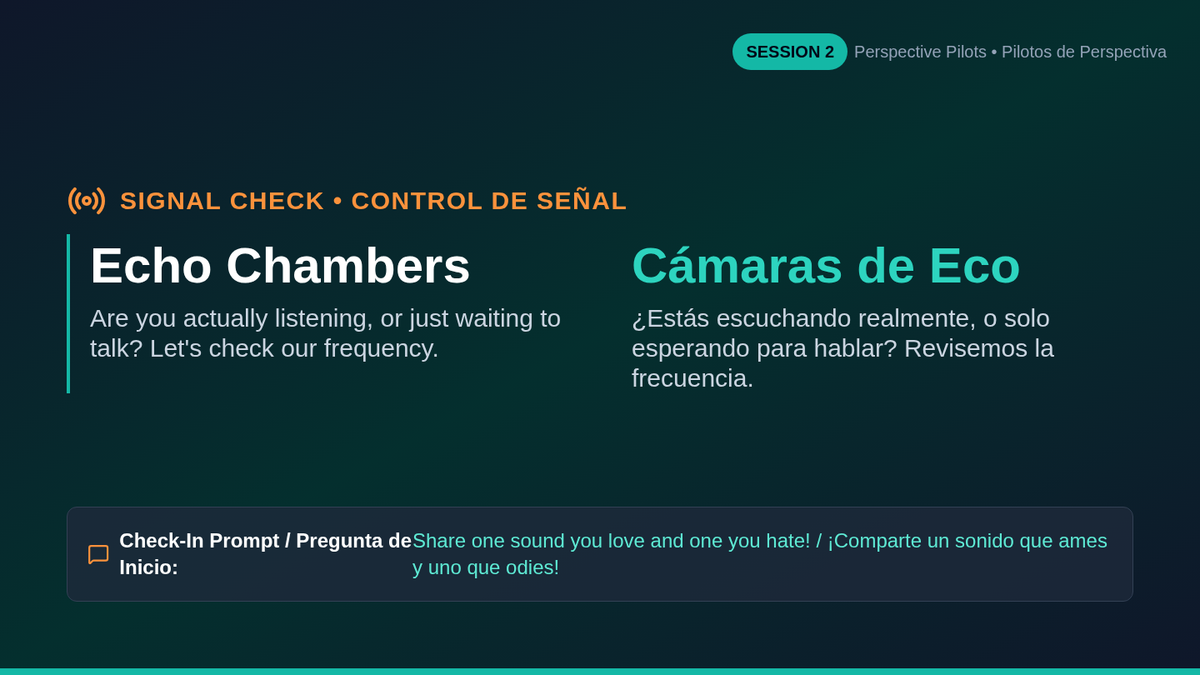
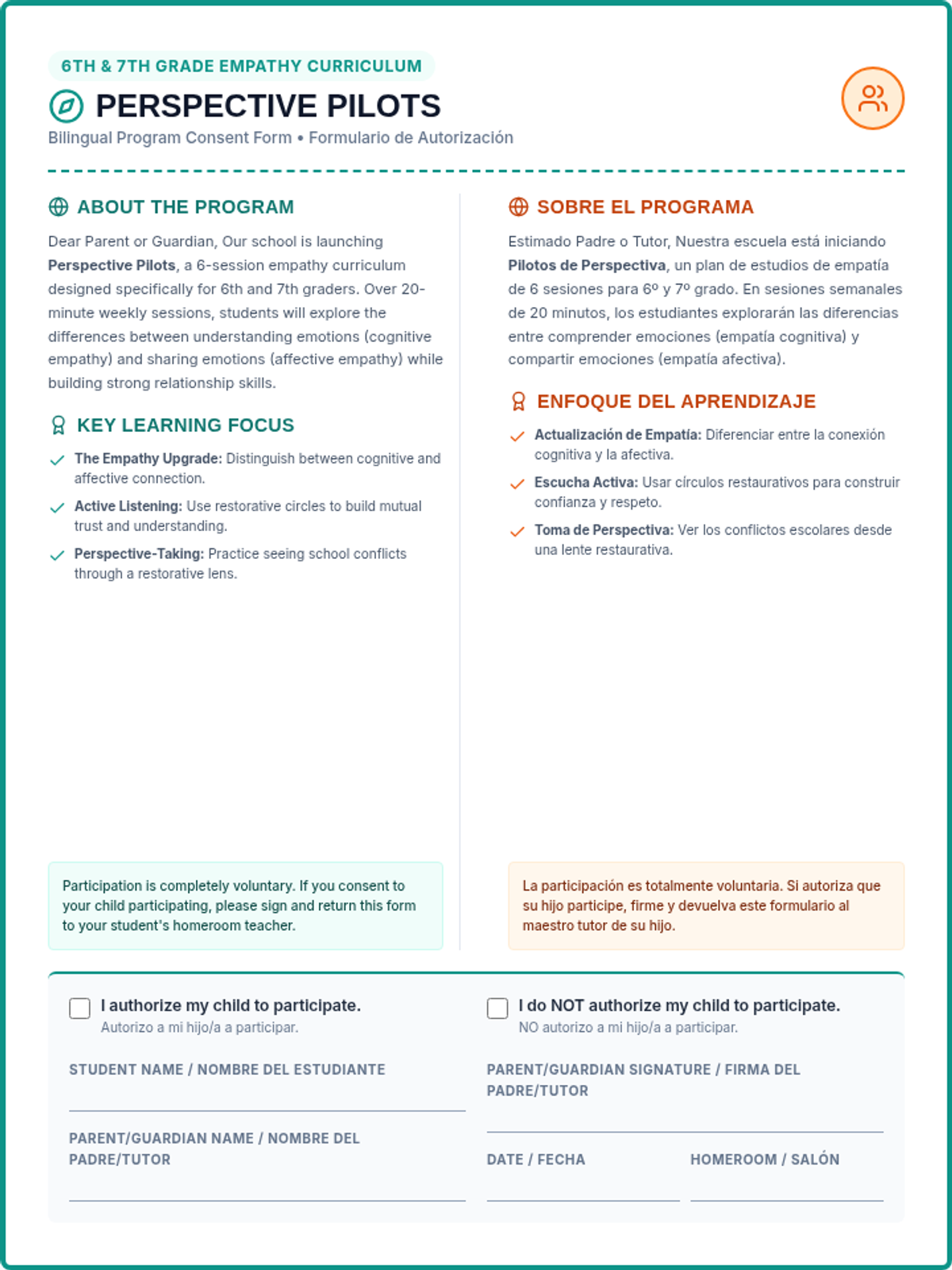
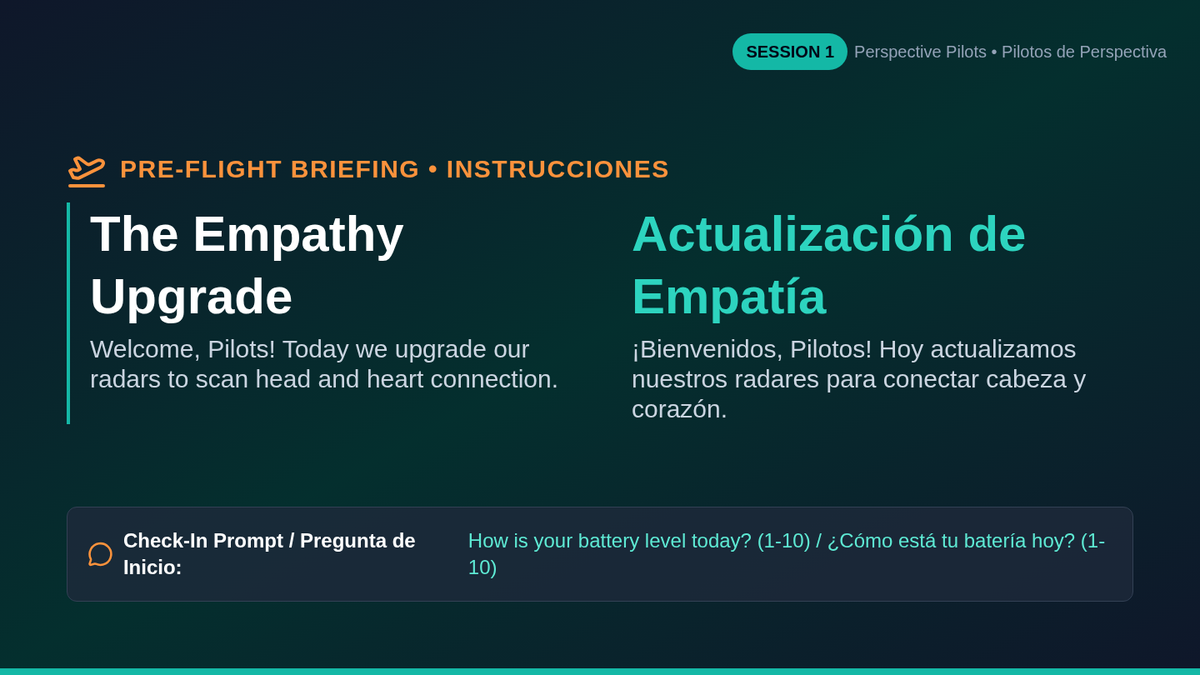
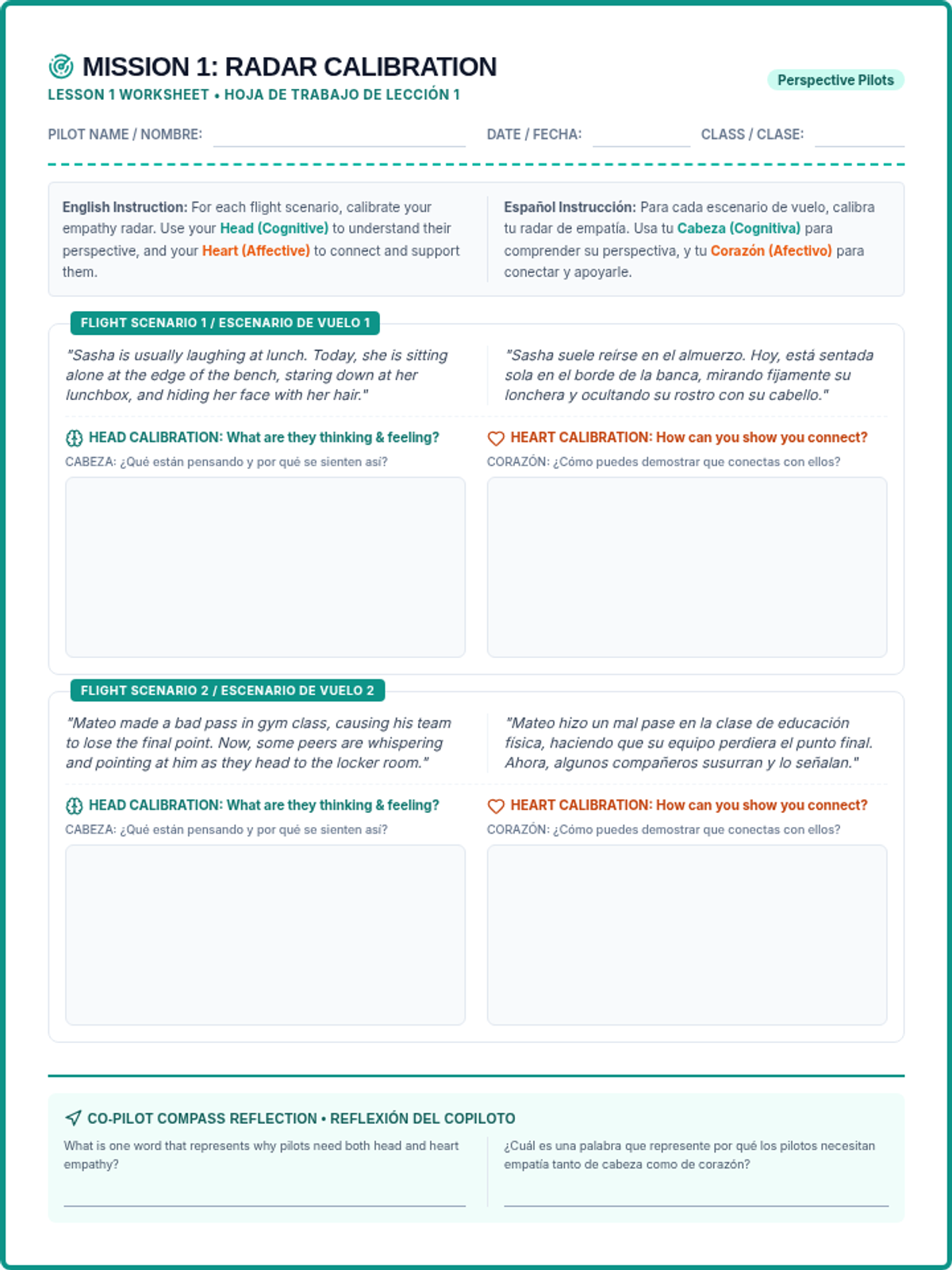
Introduces 6th and 7th graders to cognitive vs. affective empathy. Includes a bilingual parent permission slip, interactive presentation slides, and an active skill-building worksheet.
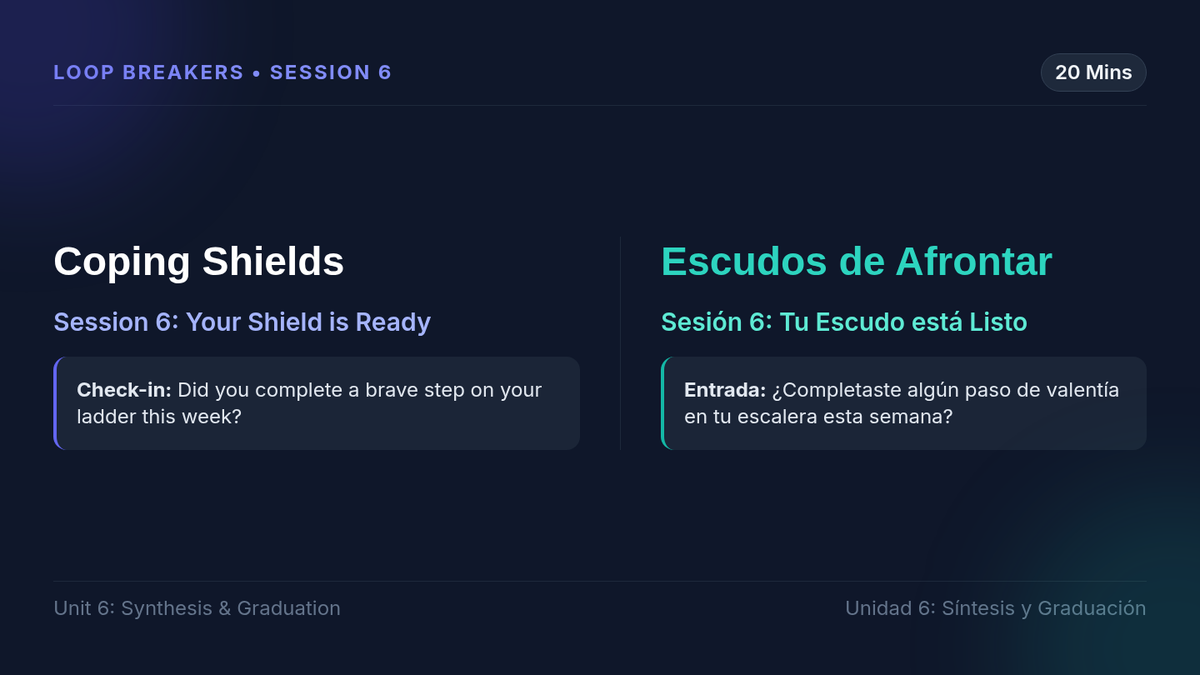
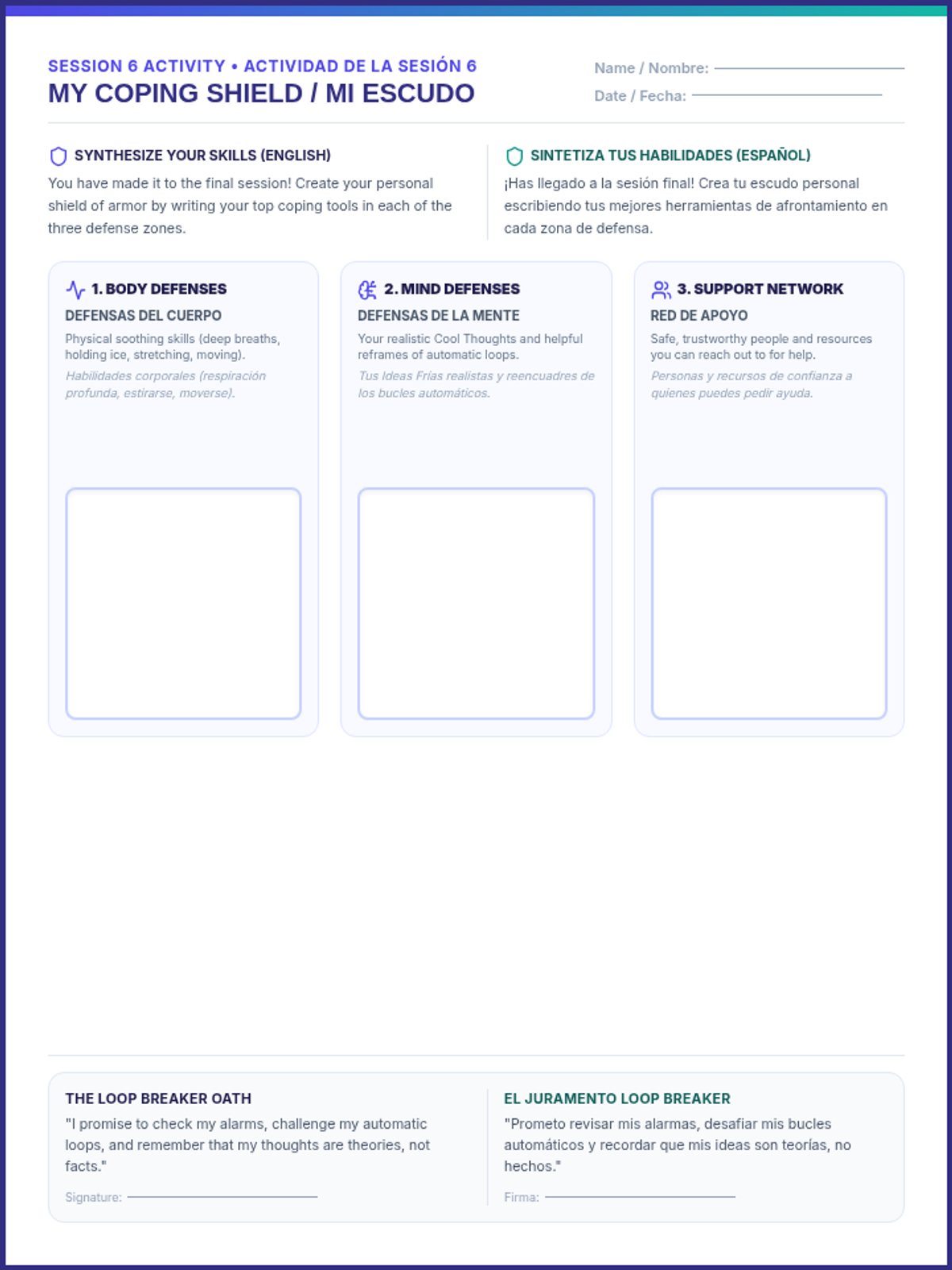
Students synthesize their learning into a personalized, visual coping plan that integrates cognitive reframing, physical soothing, and supportive resources.
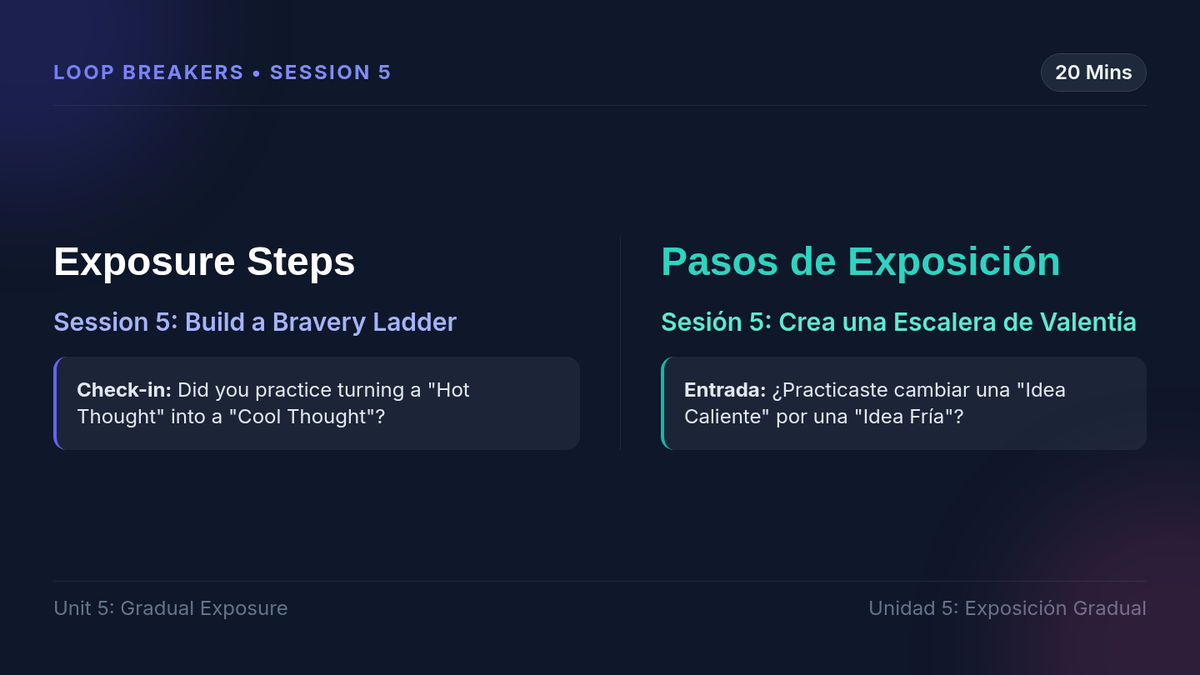
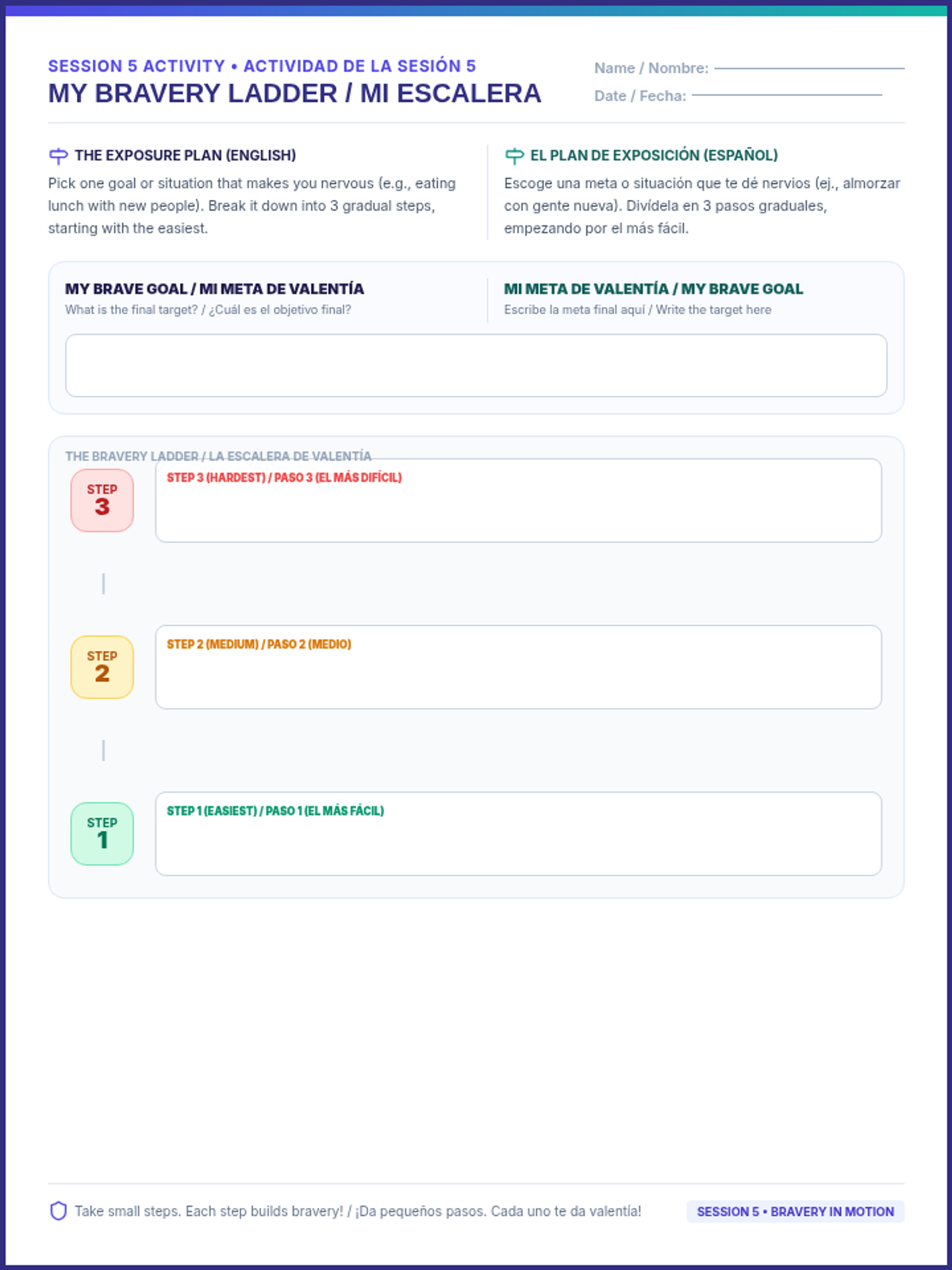
Students design a personalized 'bravery ladder' to face anxious situations gradually and build confidence through safe exposure.
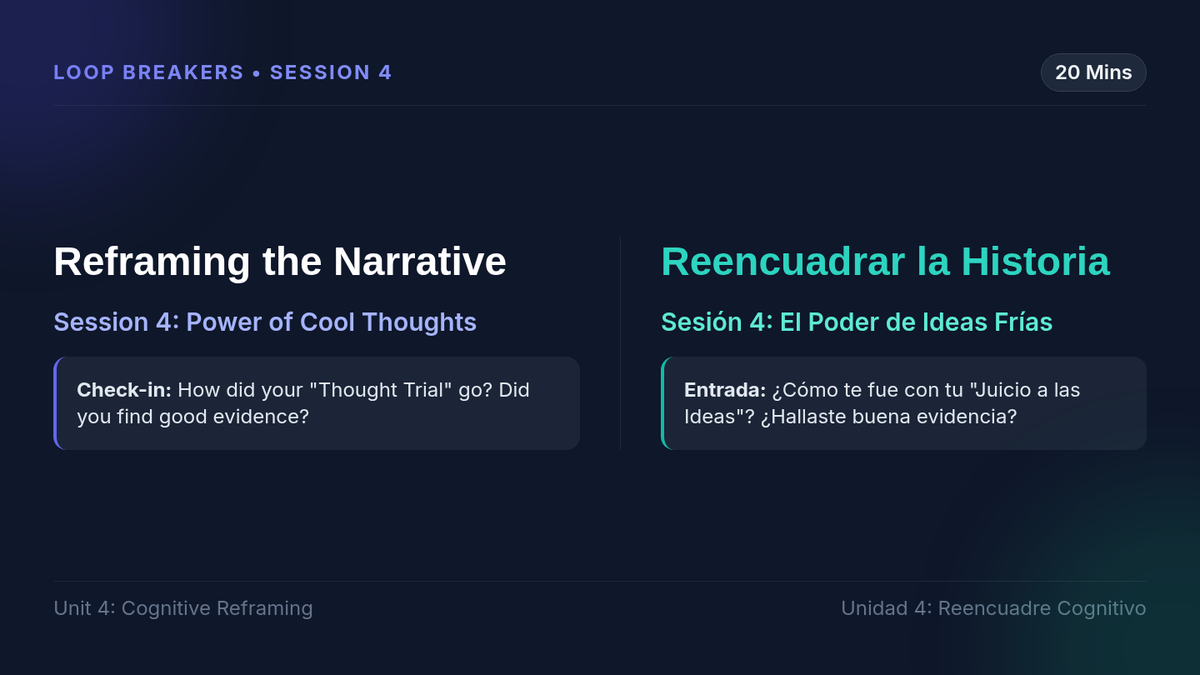
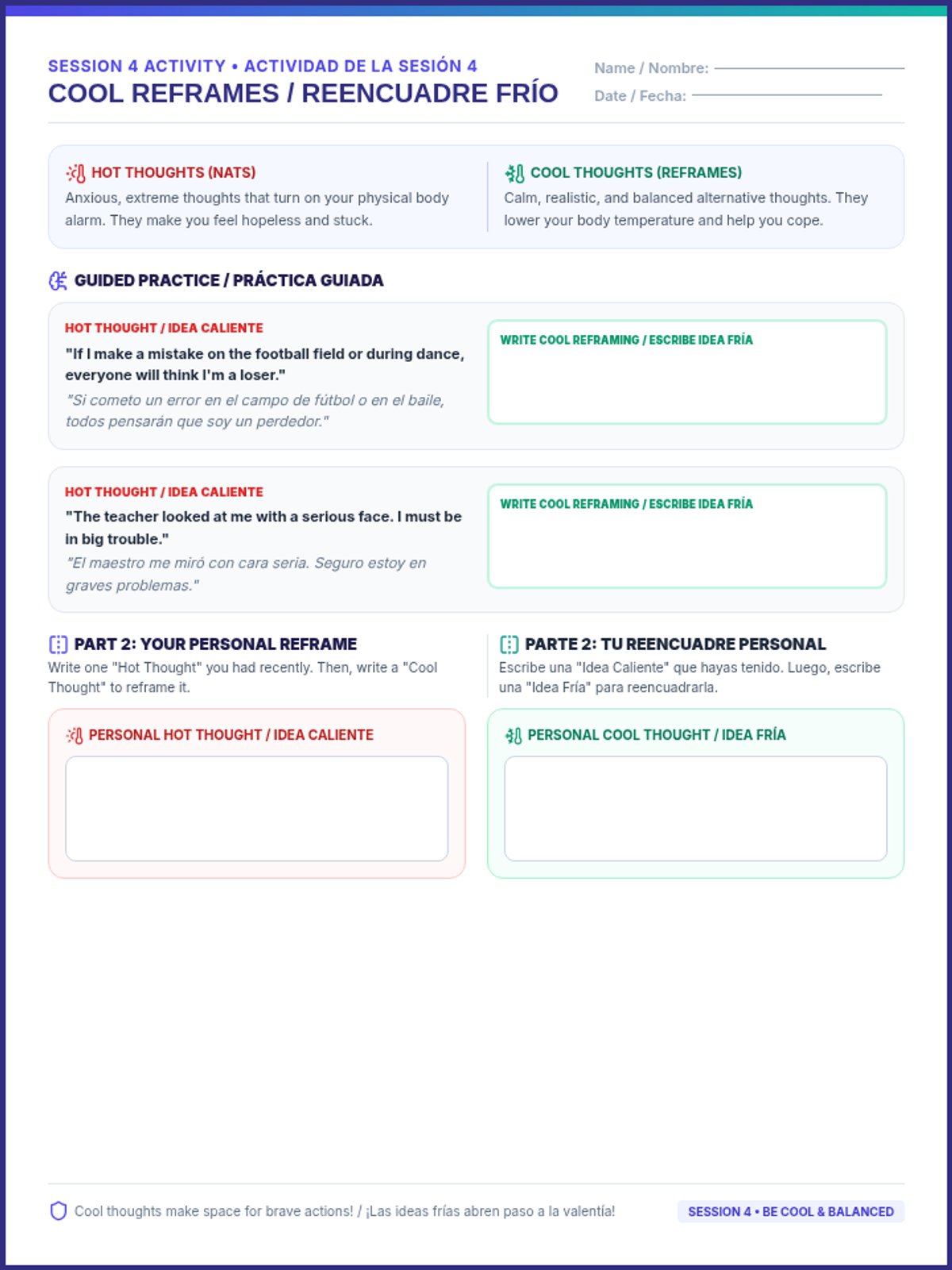
Students practice transforming automatic anxious thoughts into realistic, balanced, and constructive coping thoughts.
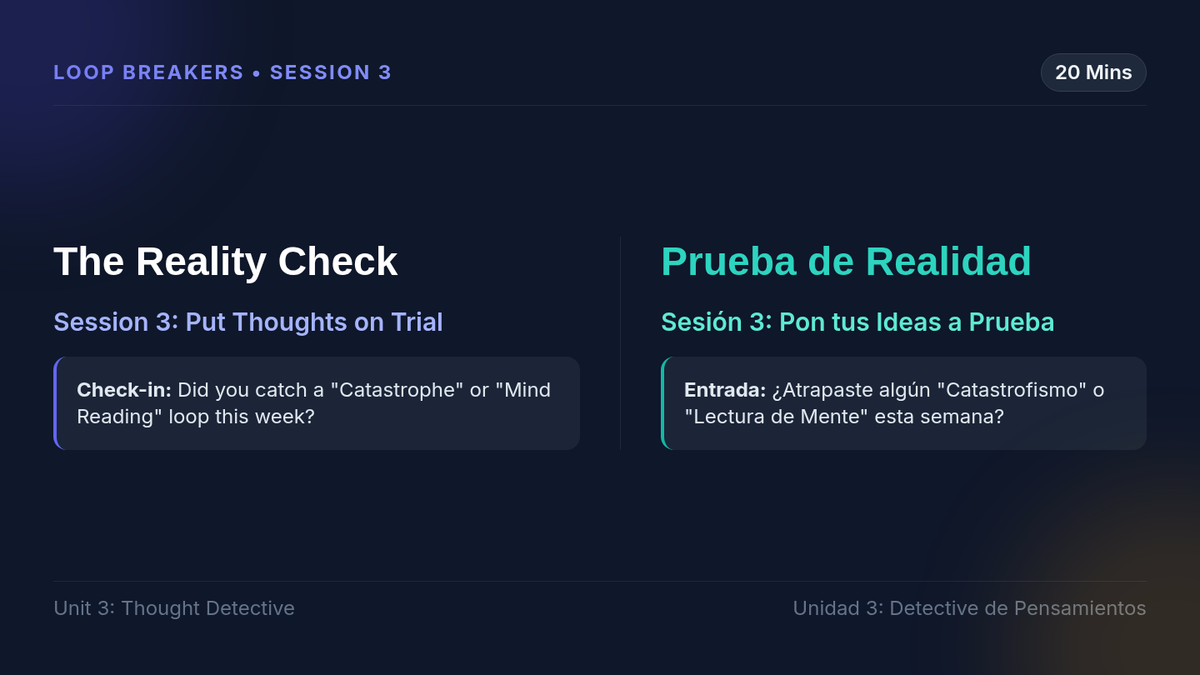
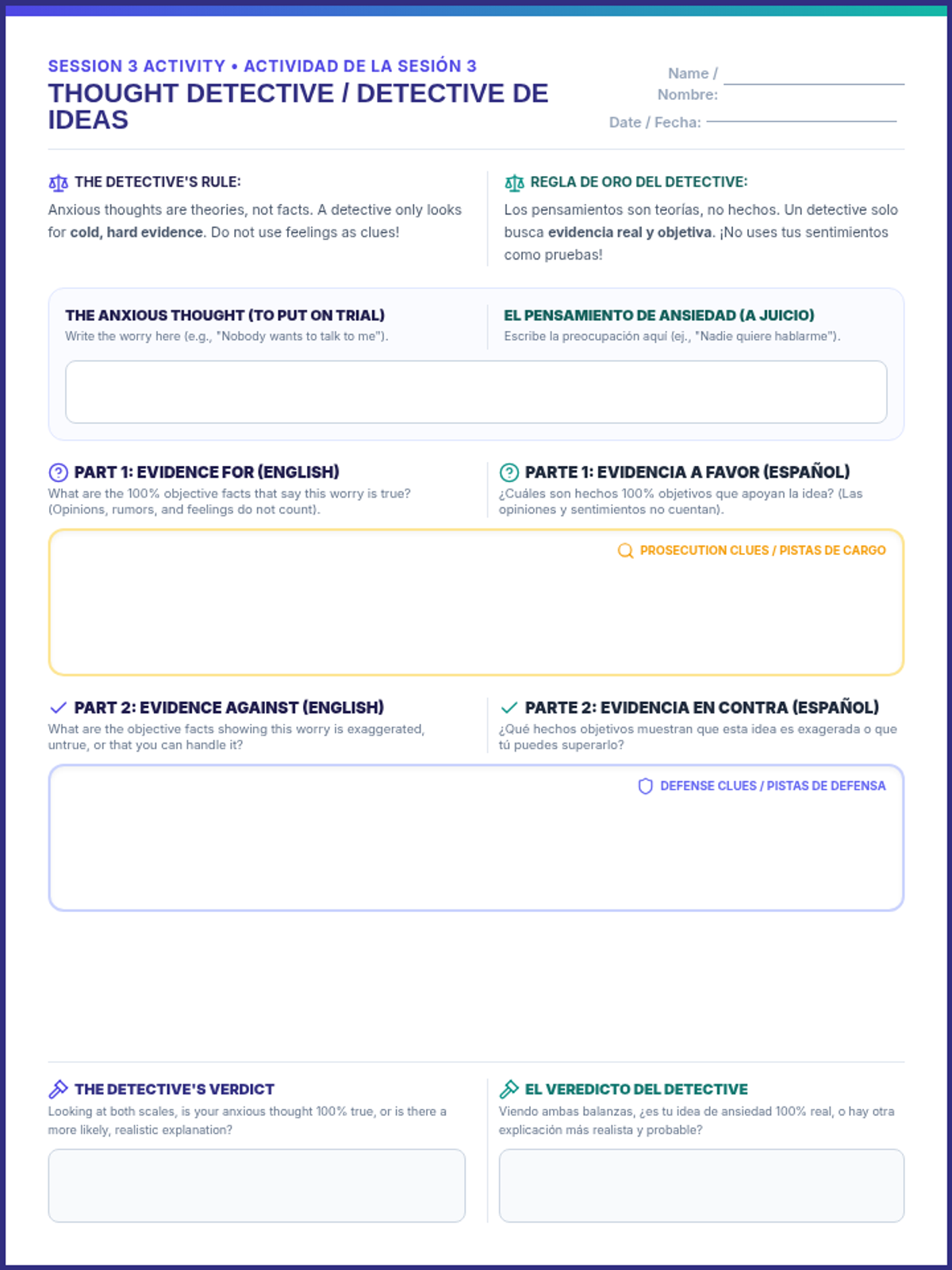
Students act as thought detectives, learning to examine objective evidence for and against their anxious thoughts instead of accepting them as facts.
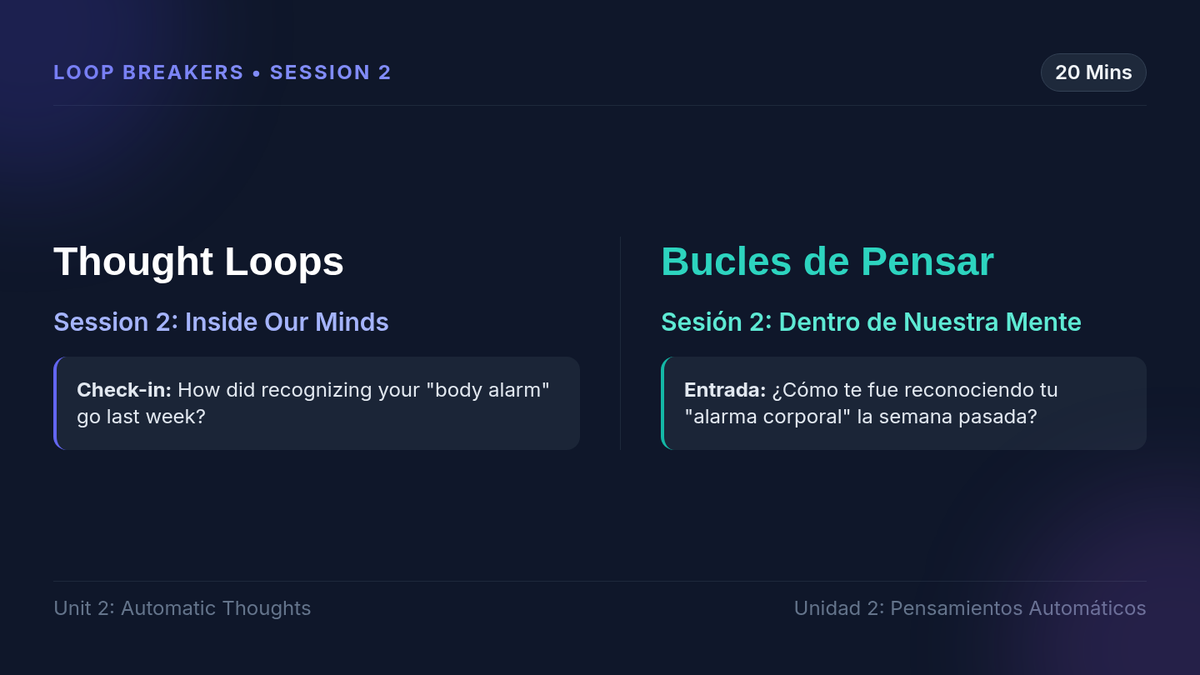
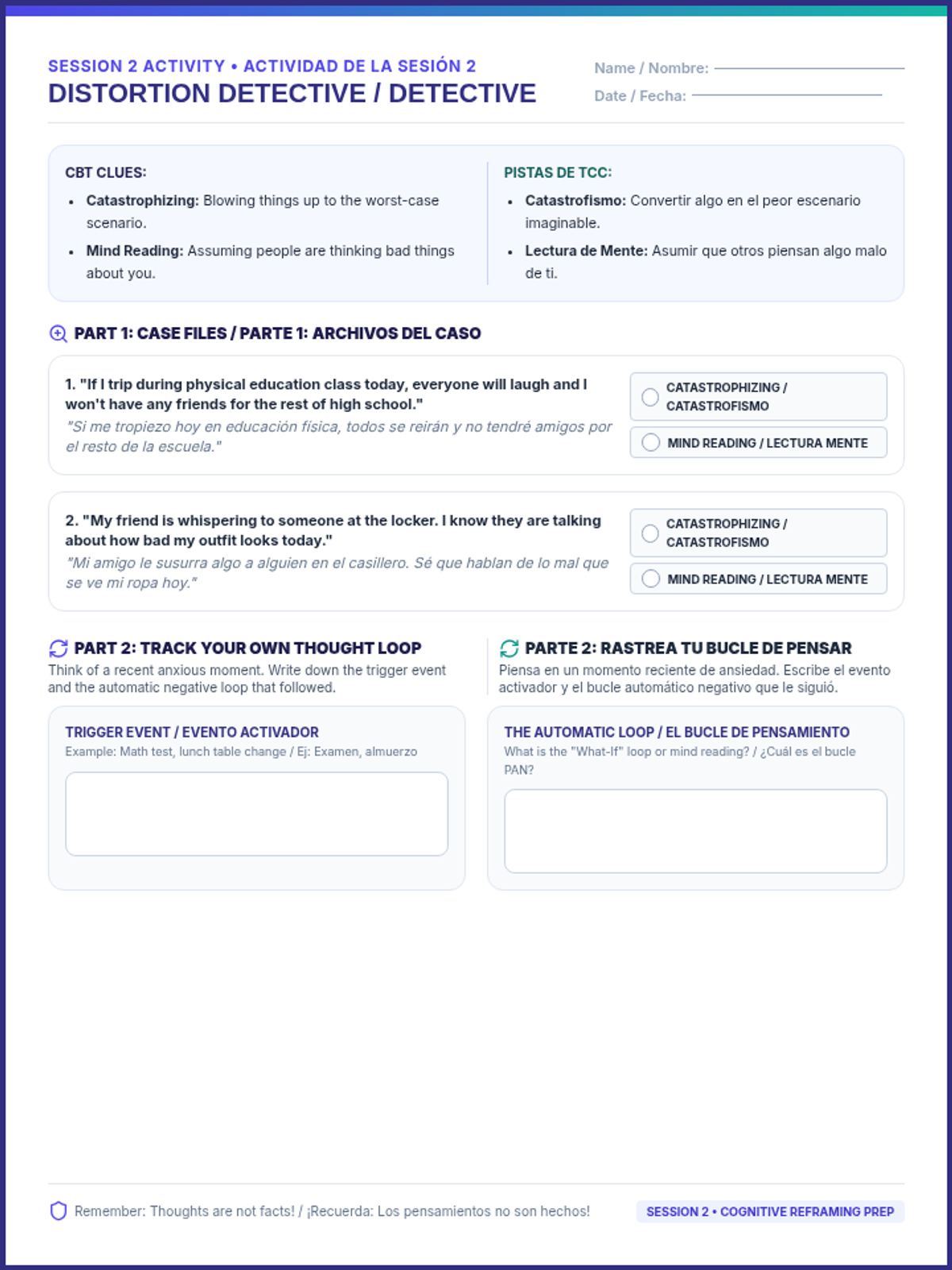
Students learn to identify negative automatic thoughts (NATs) and recognize common cognitive distortions like catastrophizing and mind reading.