A complete toolkit for organizing a school field trip, including student interest forms, registration packets, and permission slips. Designed to simplify the logistics for teachers while engaging students in the excitement of the upcoming adventure.
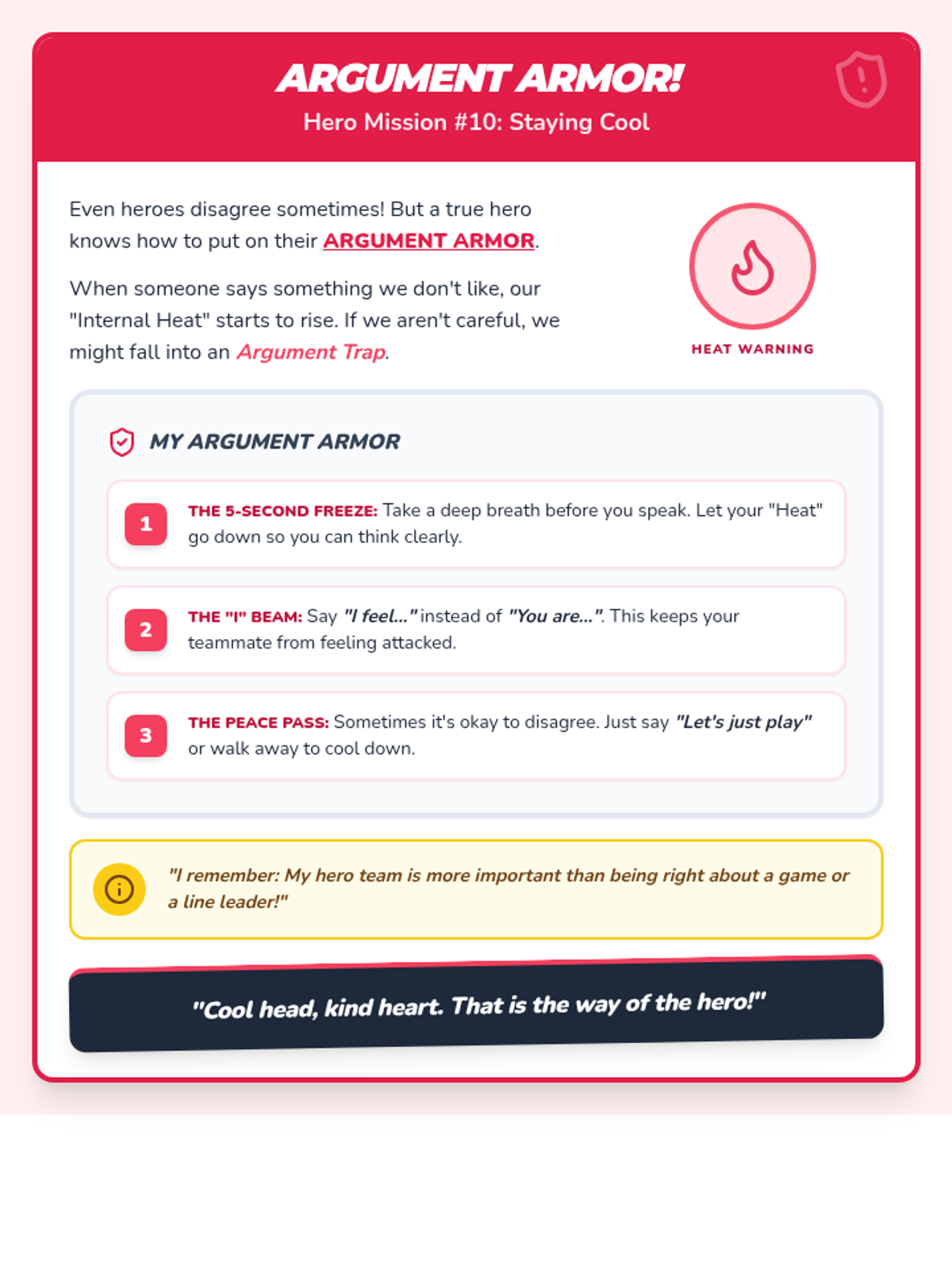
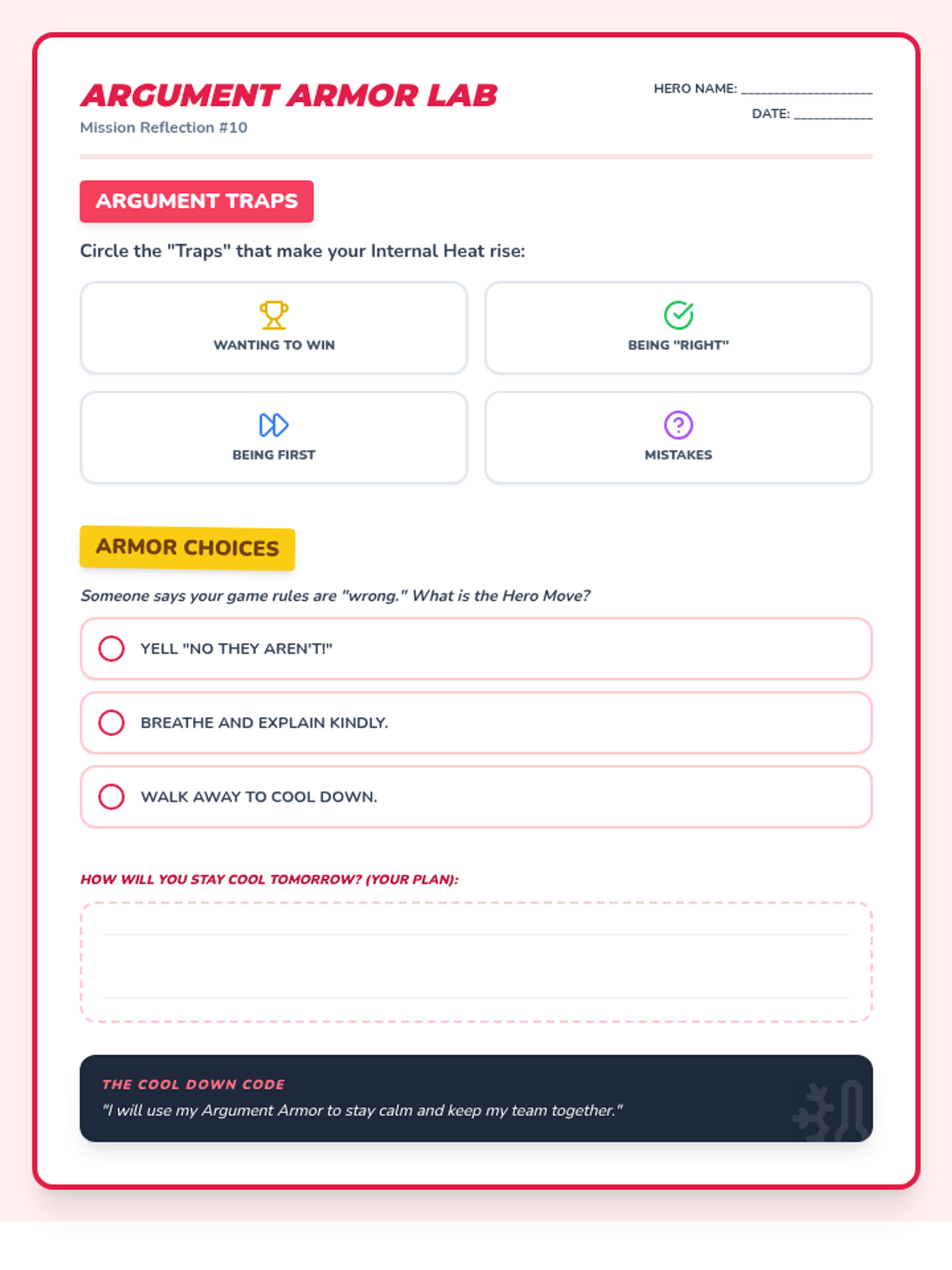
Introduction to 'Argument Armor' - techniques for staying cool when someone disagrees or makes a mistake. Students learn to avoid 'Argument Traps' and use de-escalation strategies to keep the hero team together.
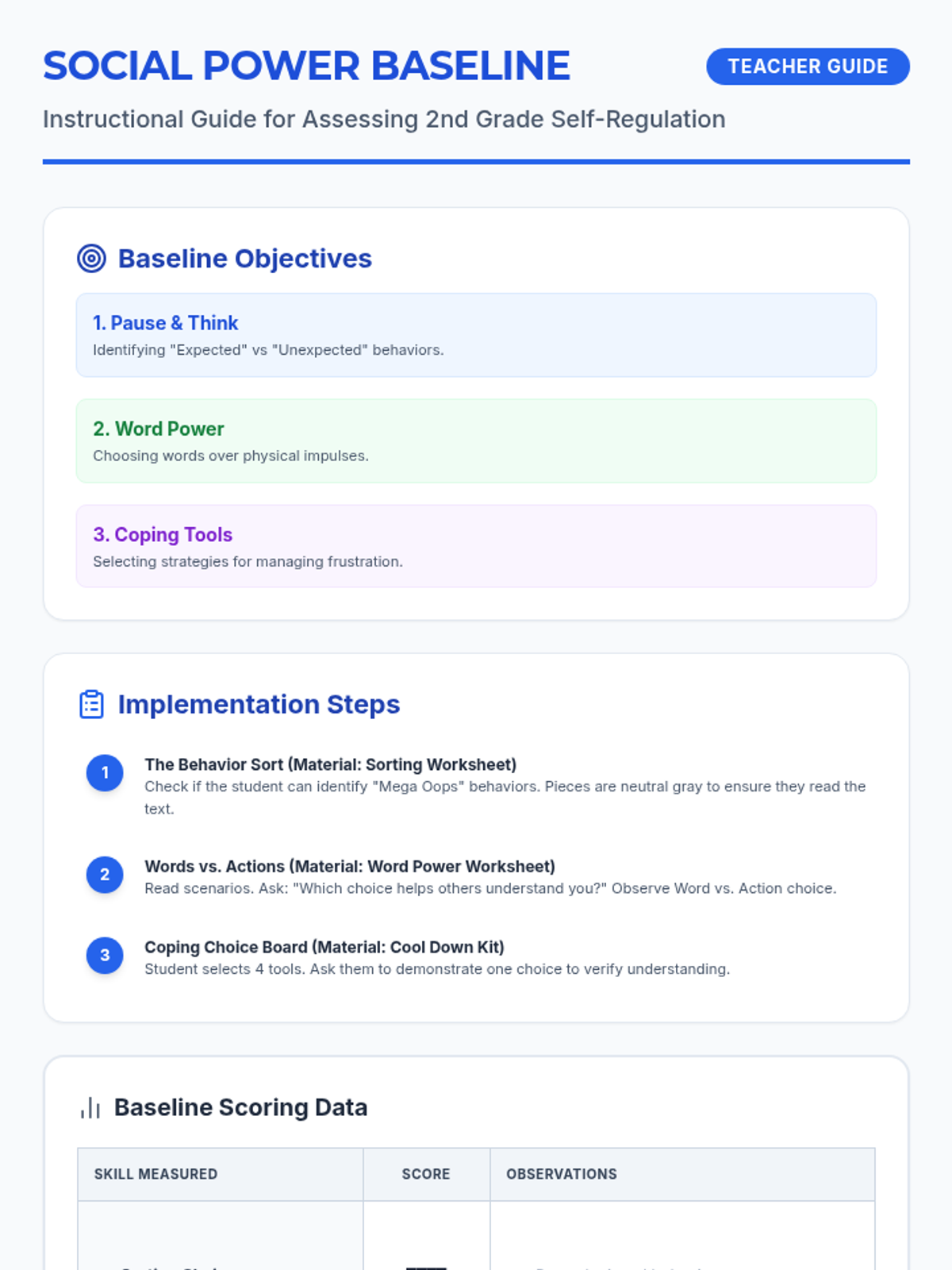
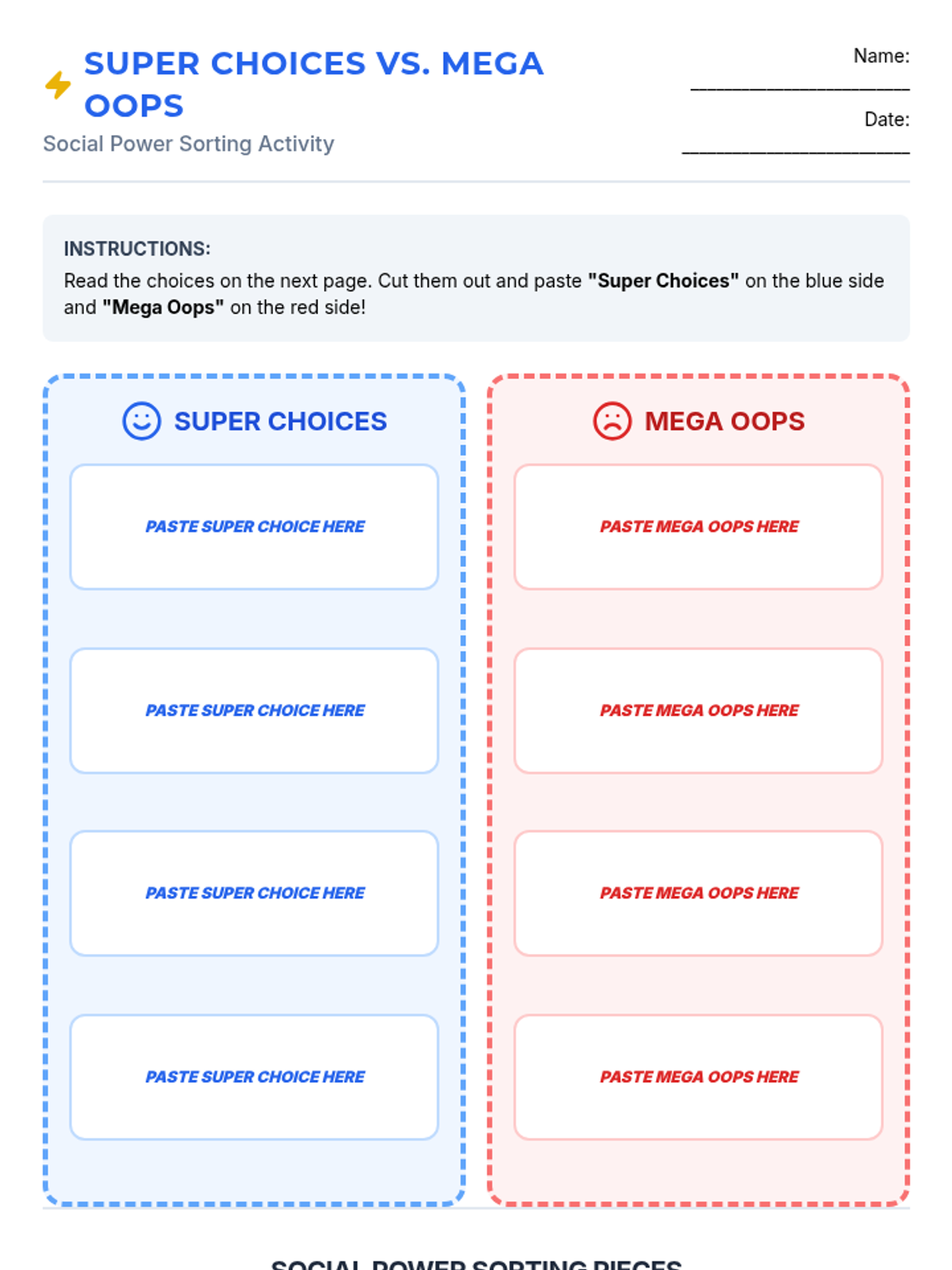
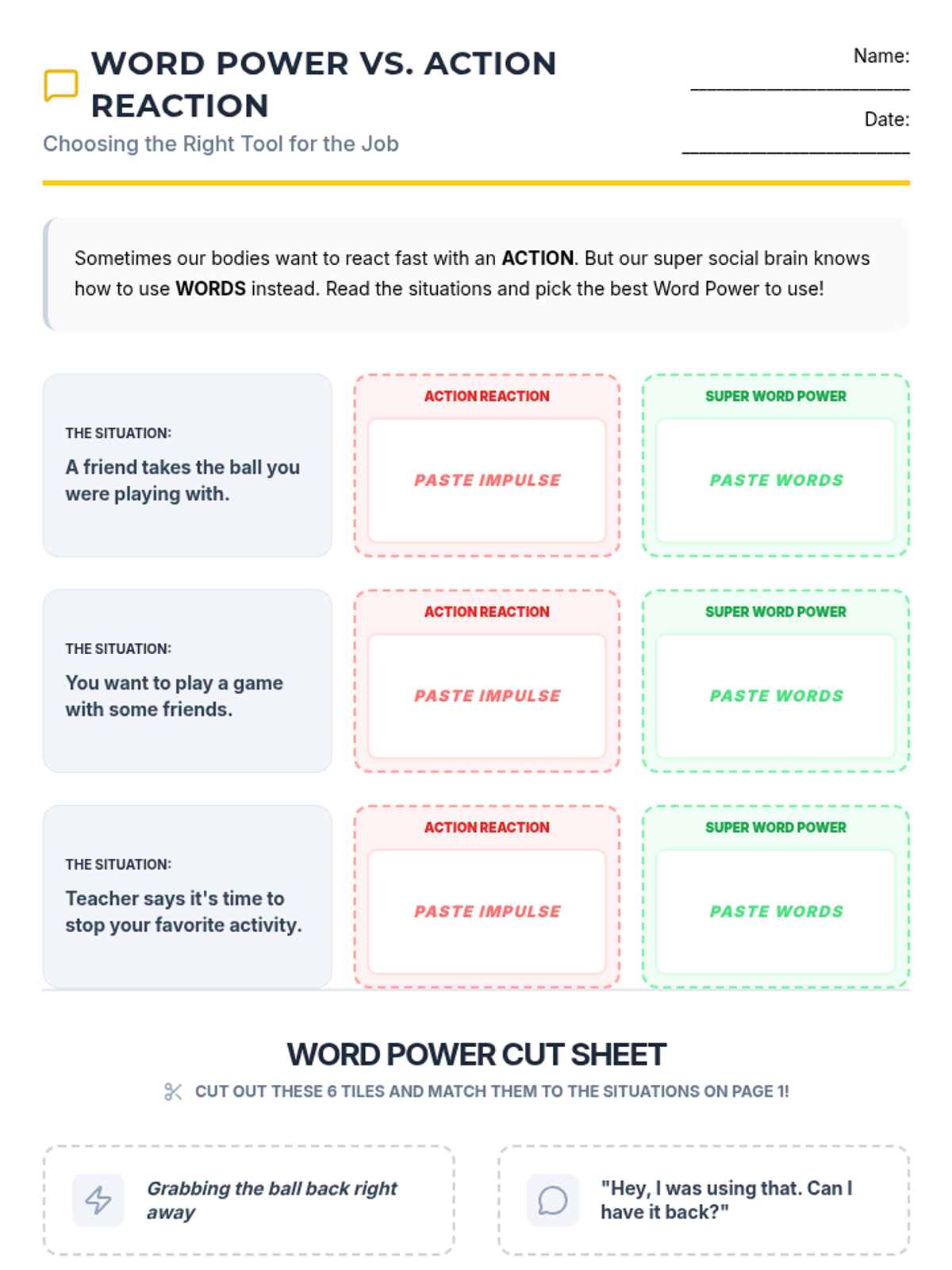
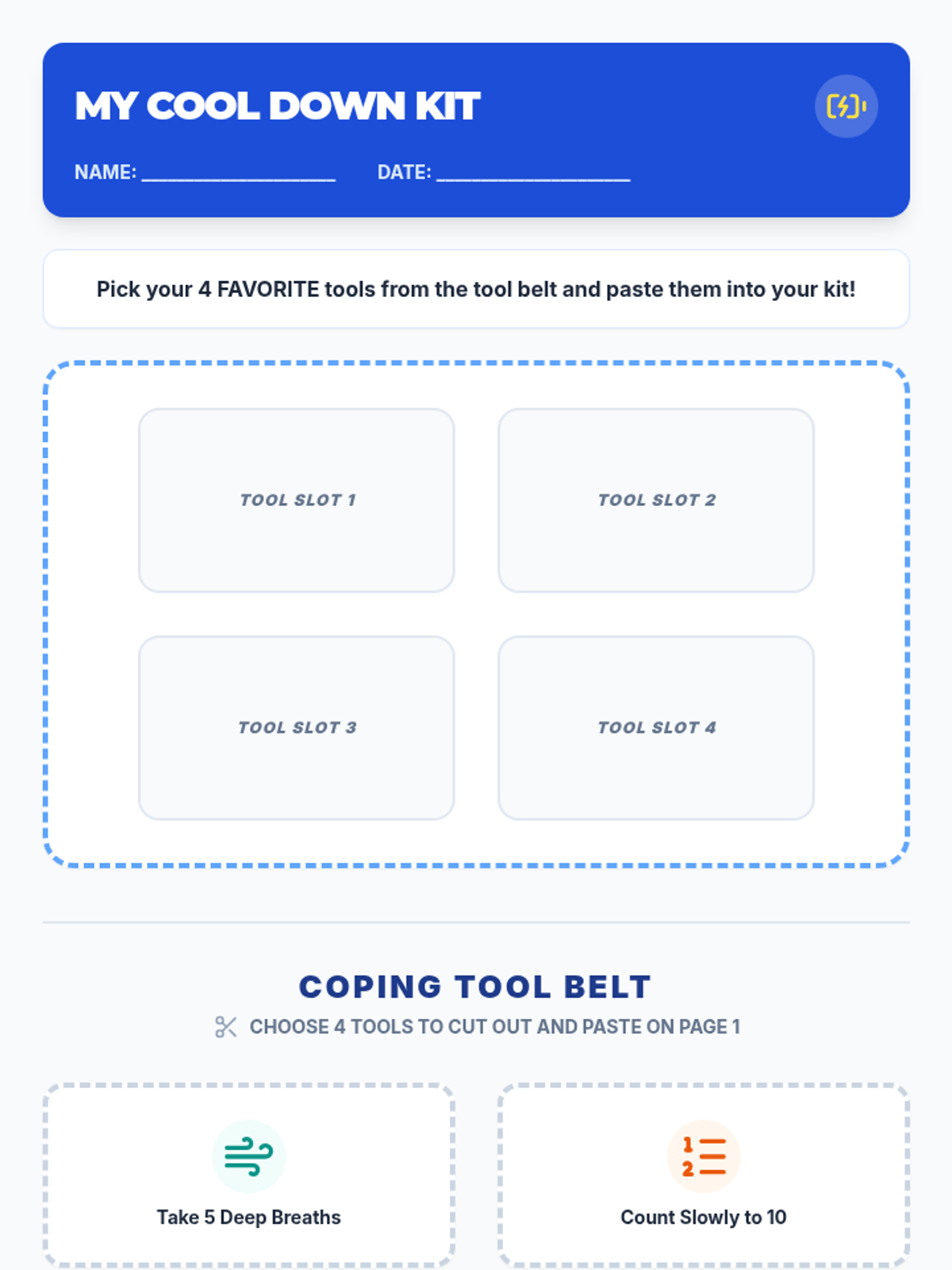
This lesson provides a comprehensive baseline assessment for second-grade students on key social-emotional skills: pausing before responding, using words instead of actions, and selecting coping strategies. Through interactive cut-and-paste activities, educators can observe a student's current understanding of expected vs. unexpected behaviors and self-regulation tools.
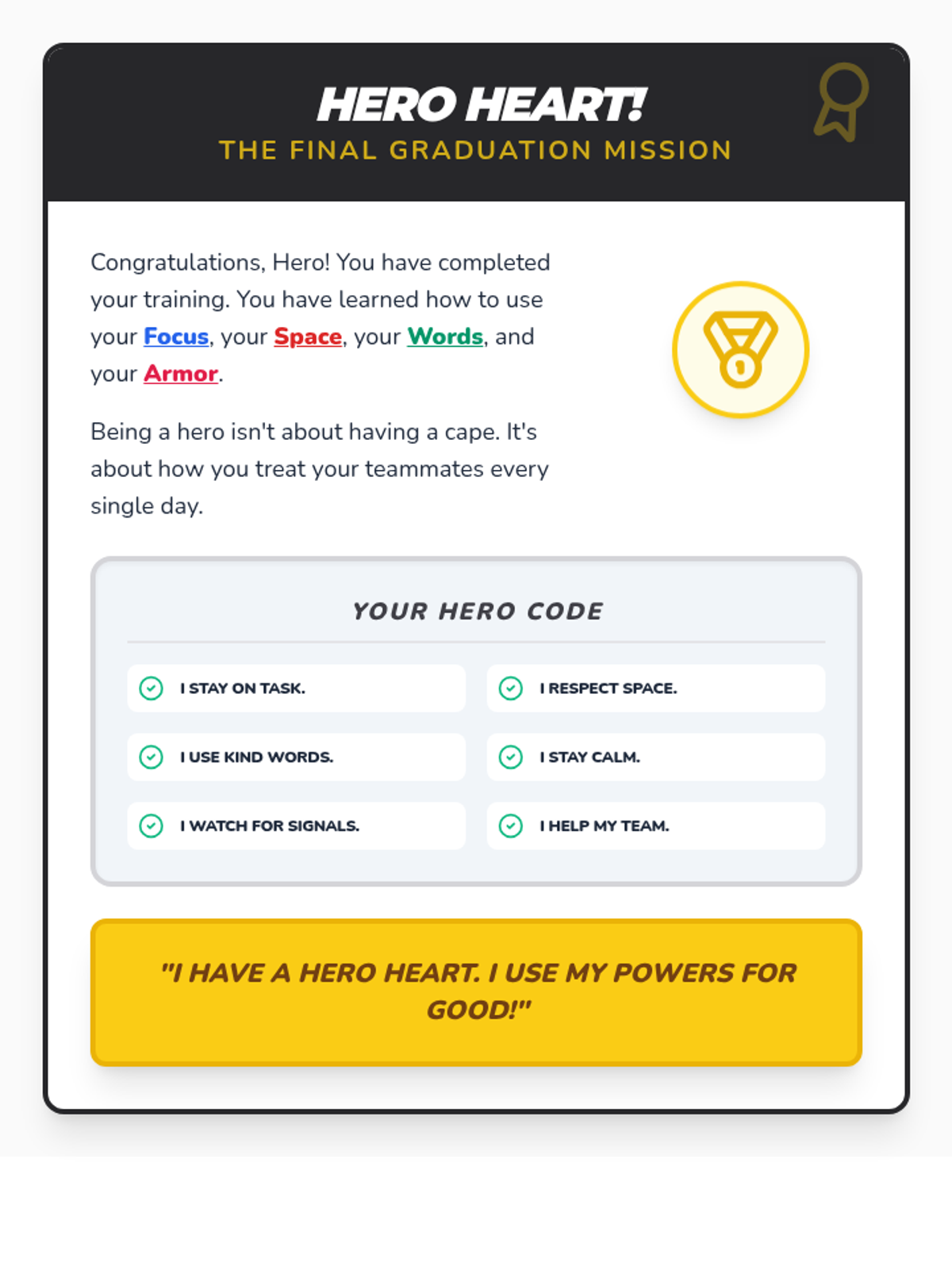
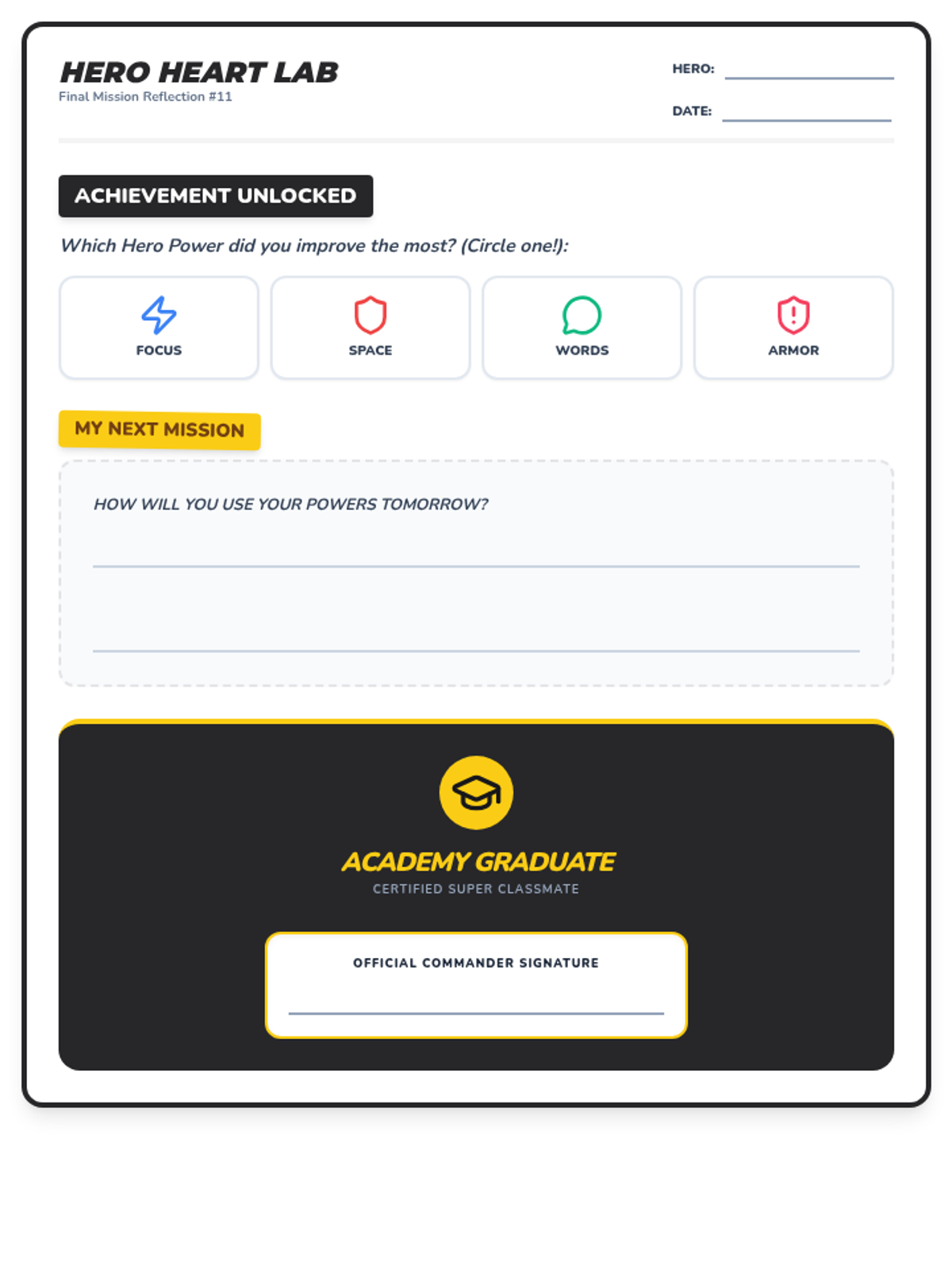
The 'Hero Heart' graduation - reviewing all skills and reflecting on their progress. Students create a personalized 'Hero Code' to continue using their skills.
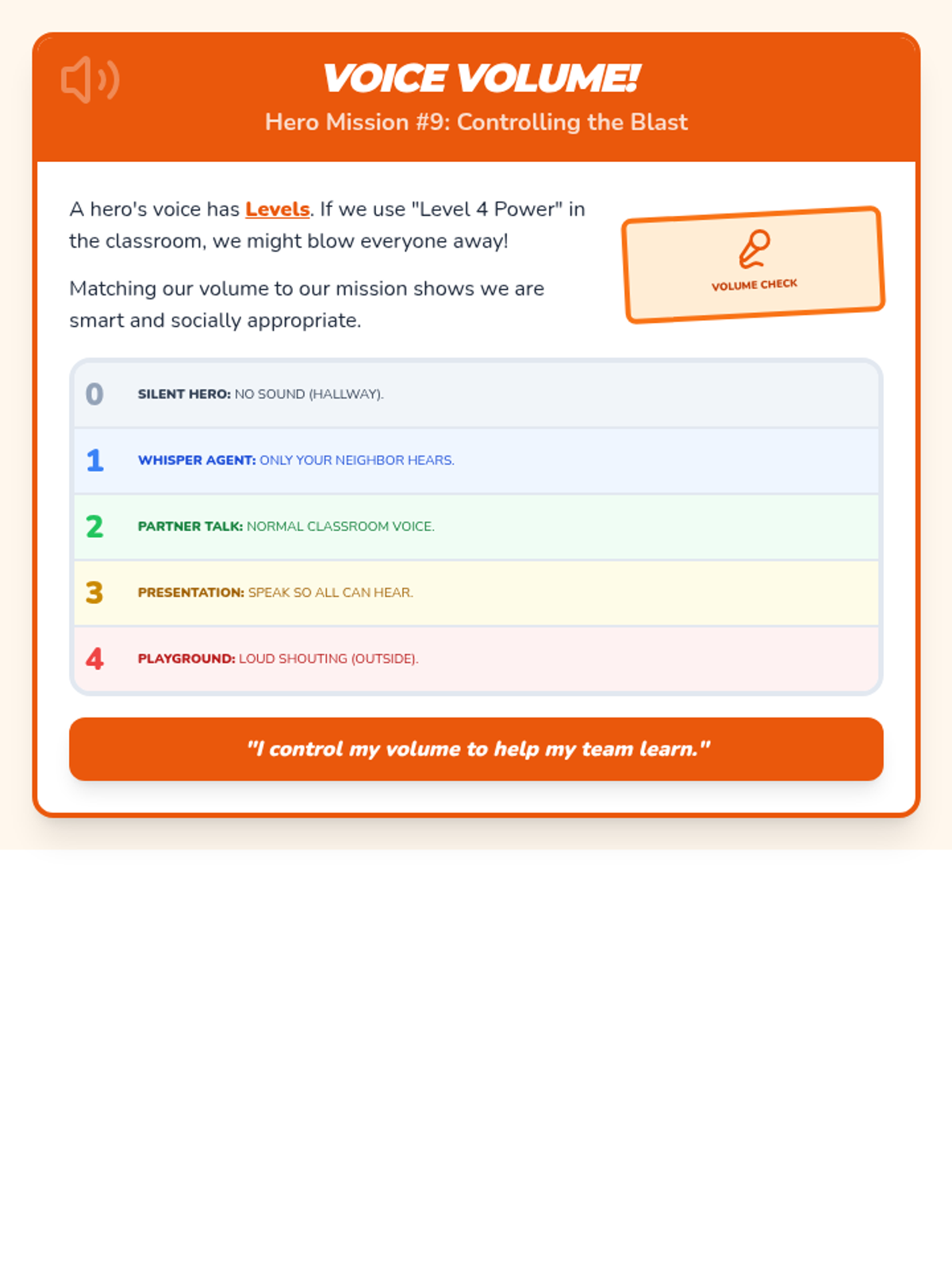
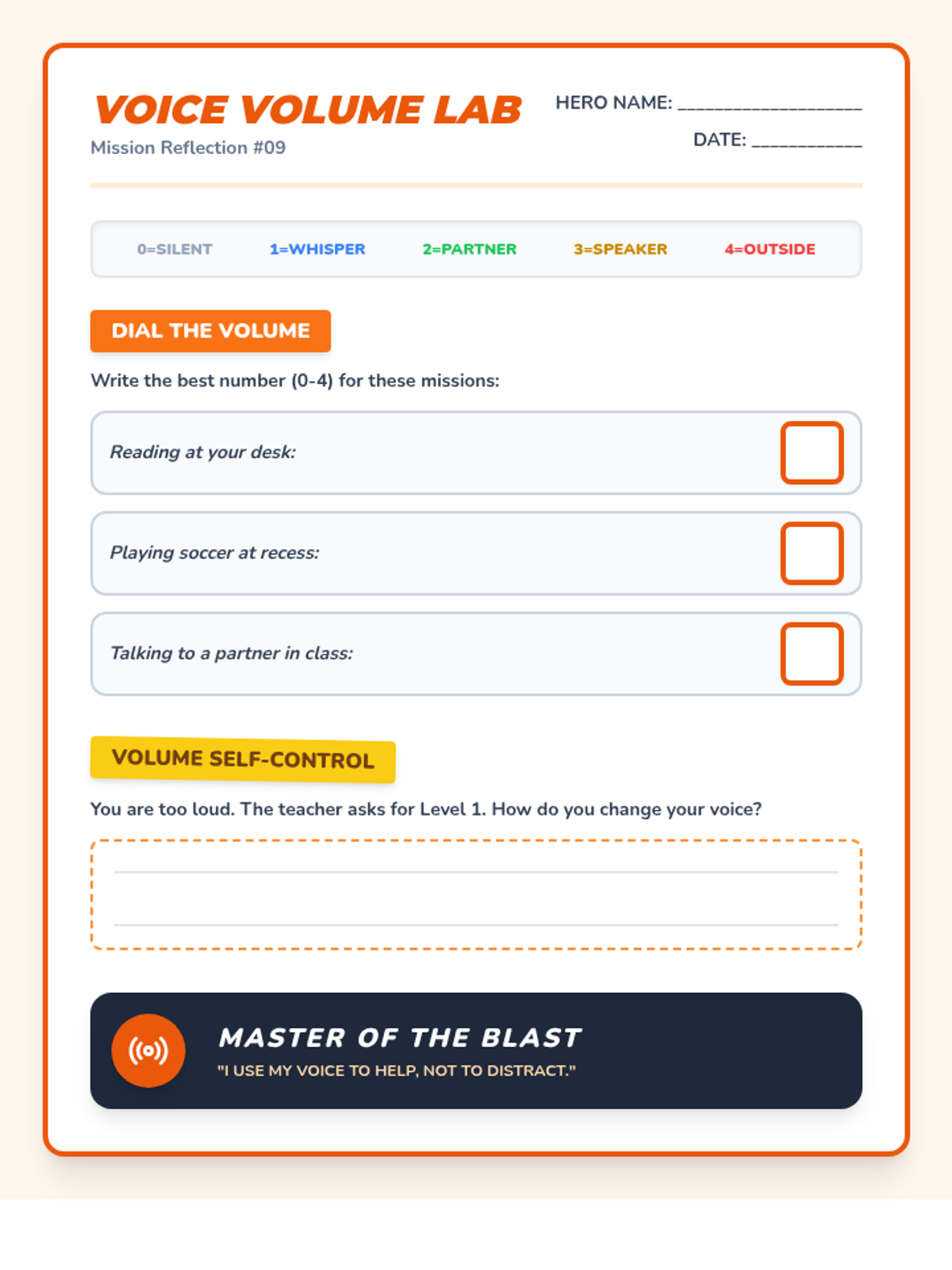
Mastering 'Voice Volume' levels from 0 (Silent) to 4 (Outside). Students learn which volume power is appropriate for different classroom missions.
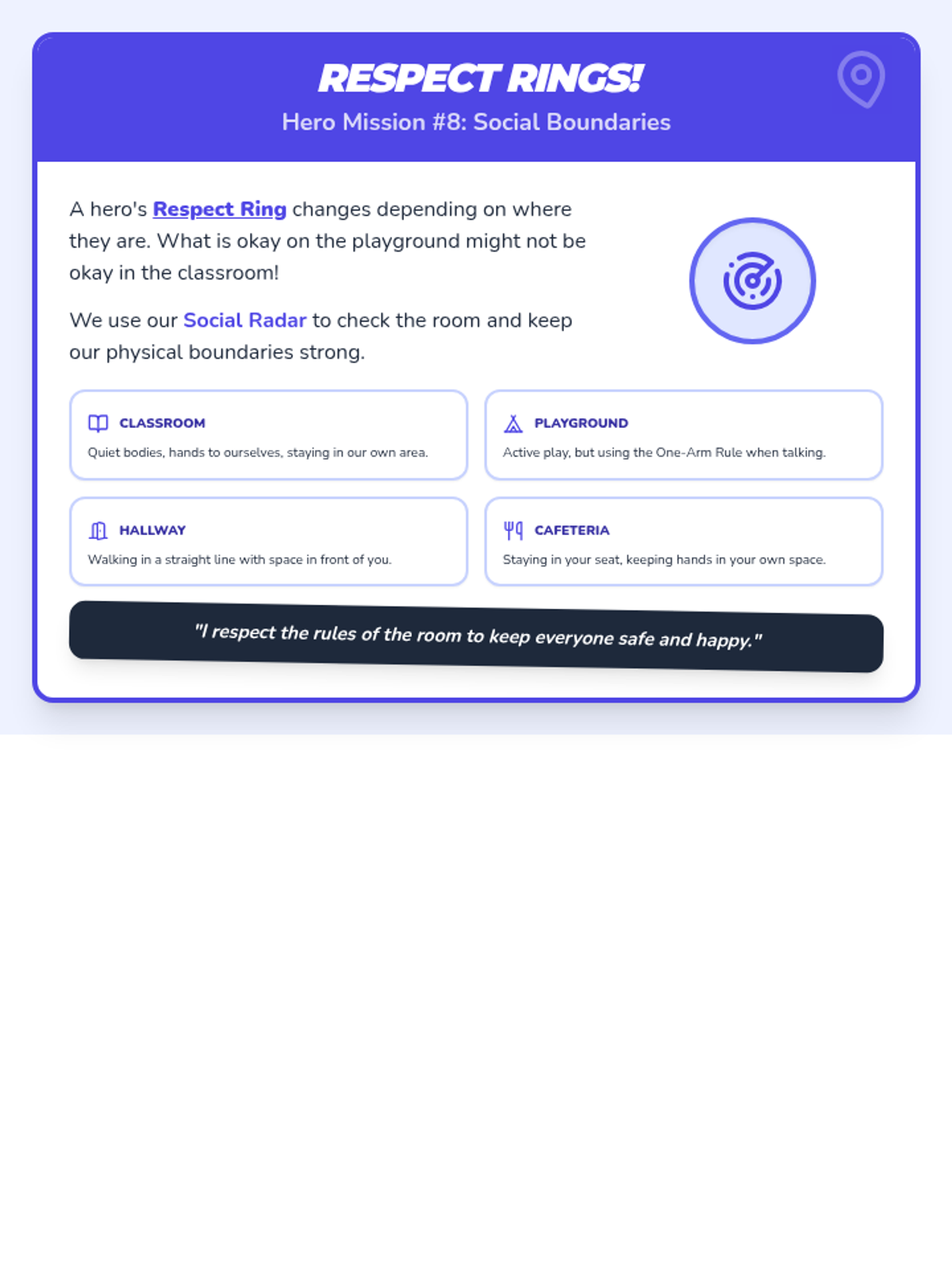
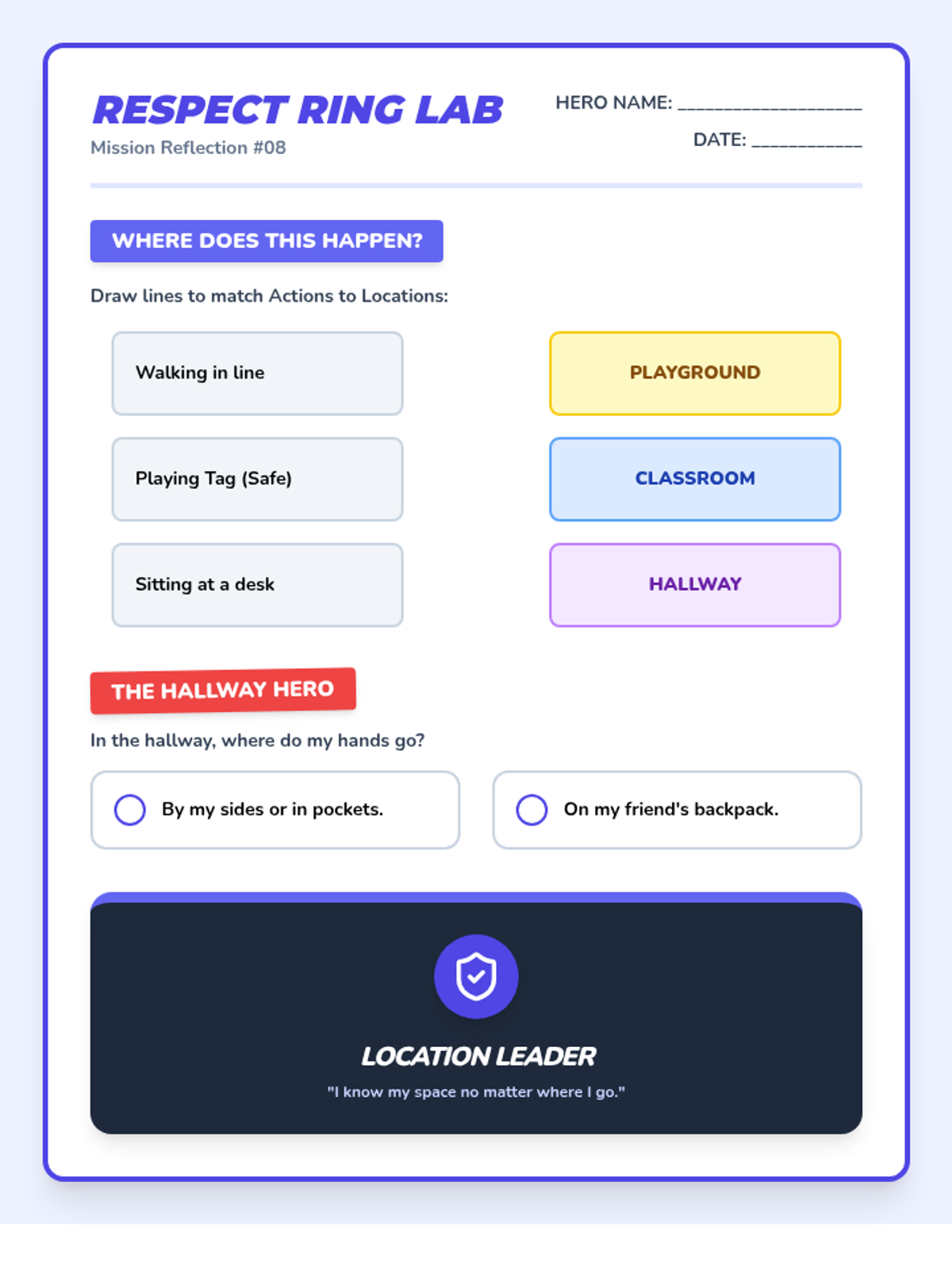
Practicing 'Respect Rings' - the specific social rules of the classroom, hallway, and playground. Focuses on physical boundaries during active play like recess.
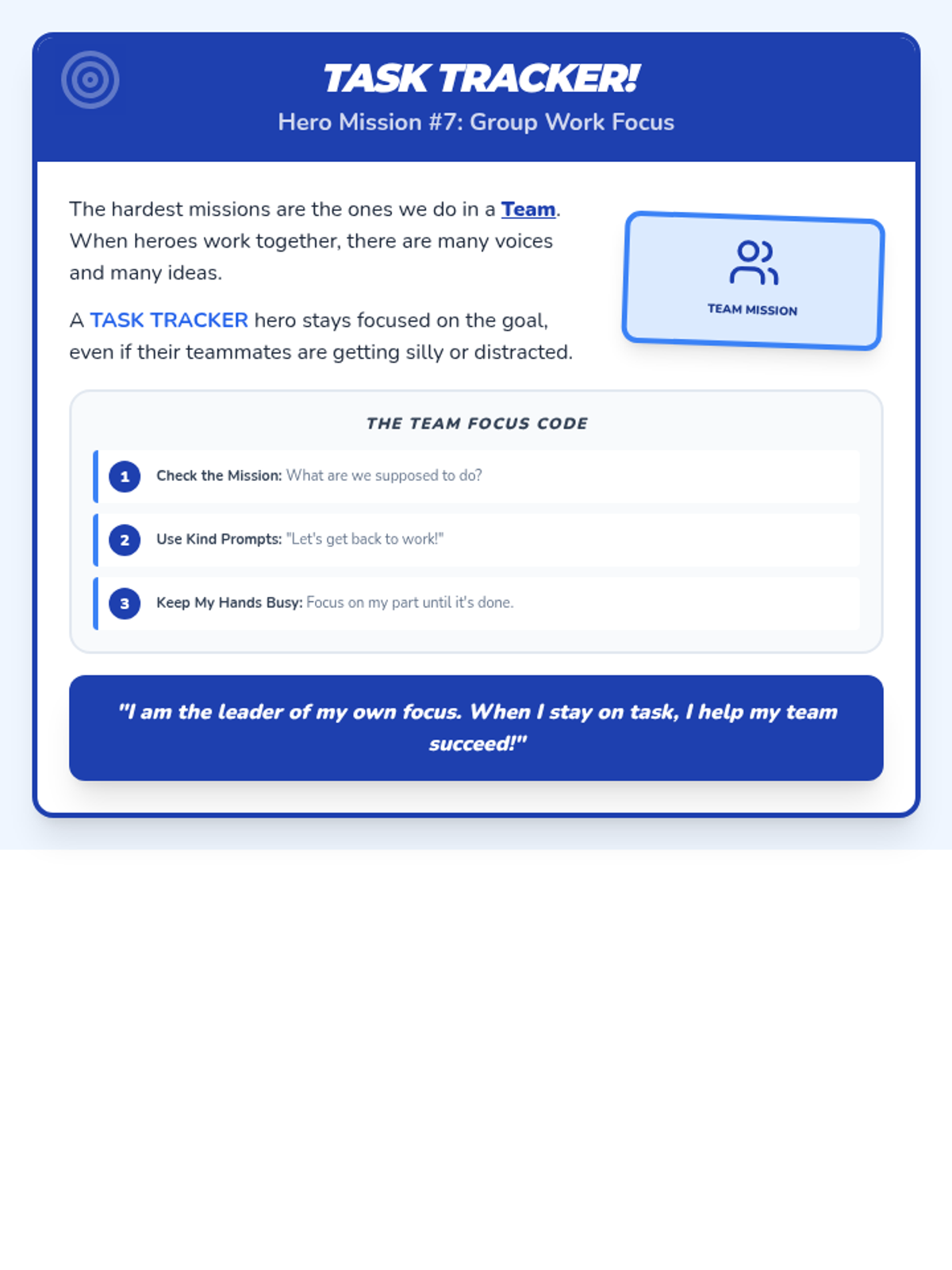
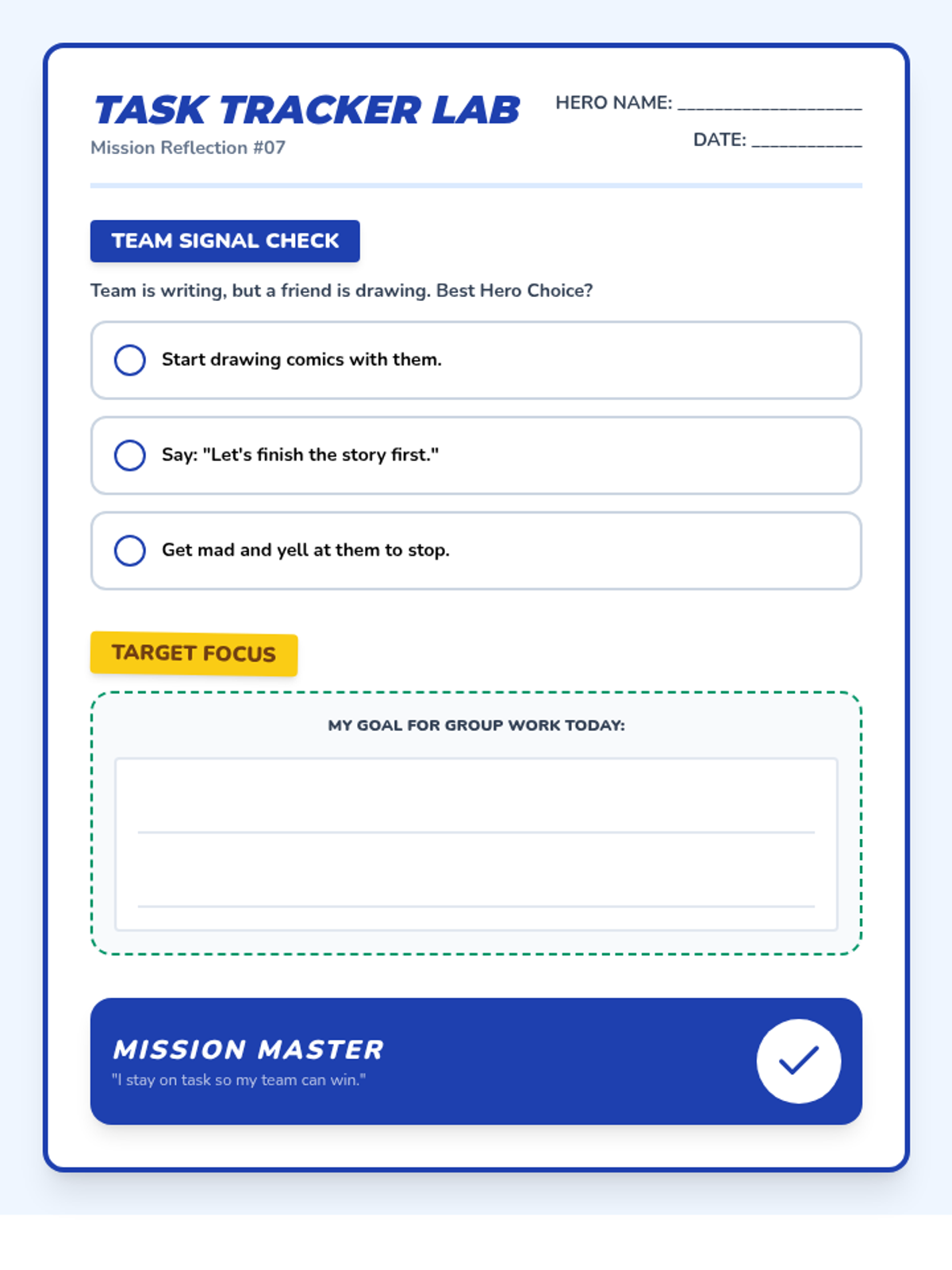
The 'Task Tracker' challenge - applying focus skills to group work and collaborative projects. Focuses on being a 'Team Player' by staying on task even when others are talking.
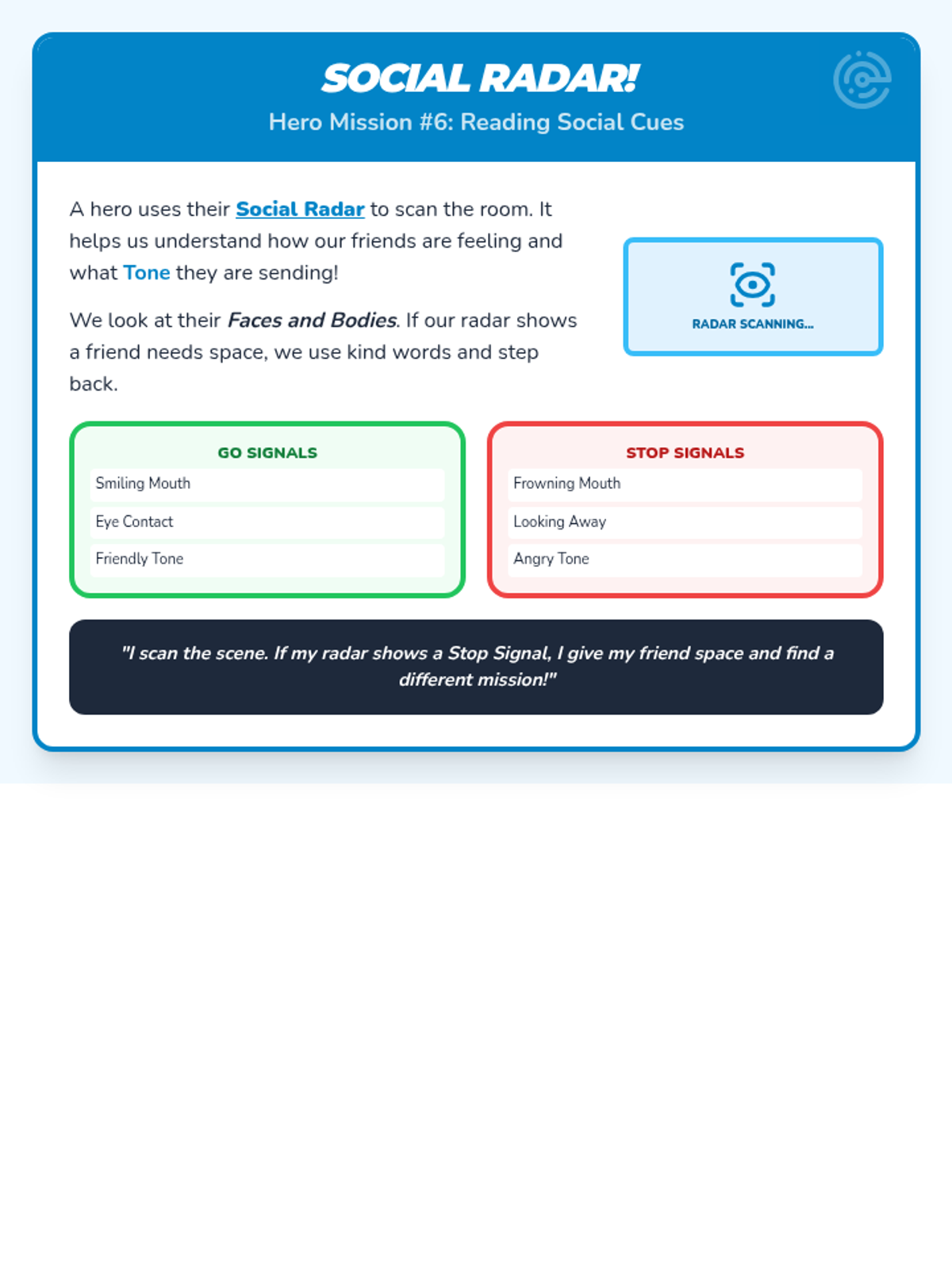
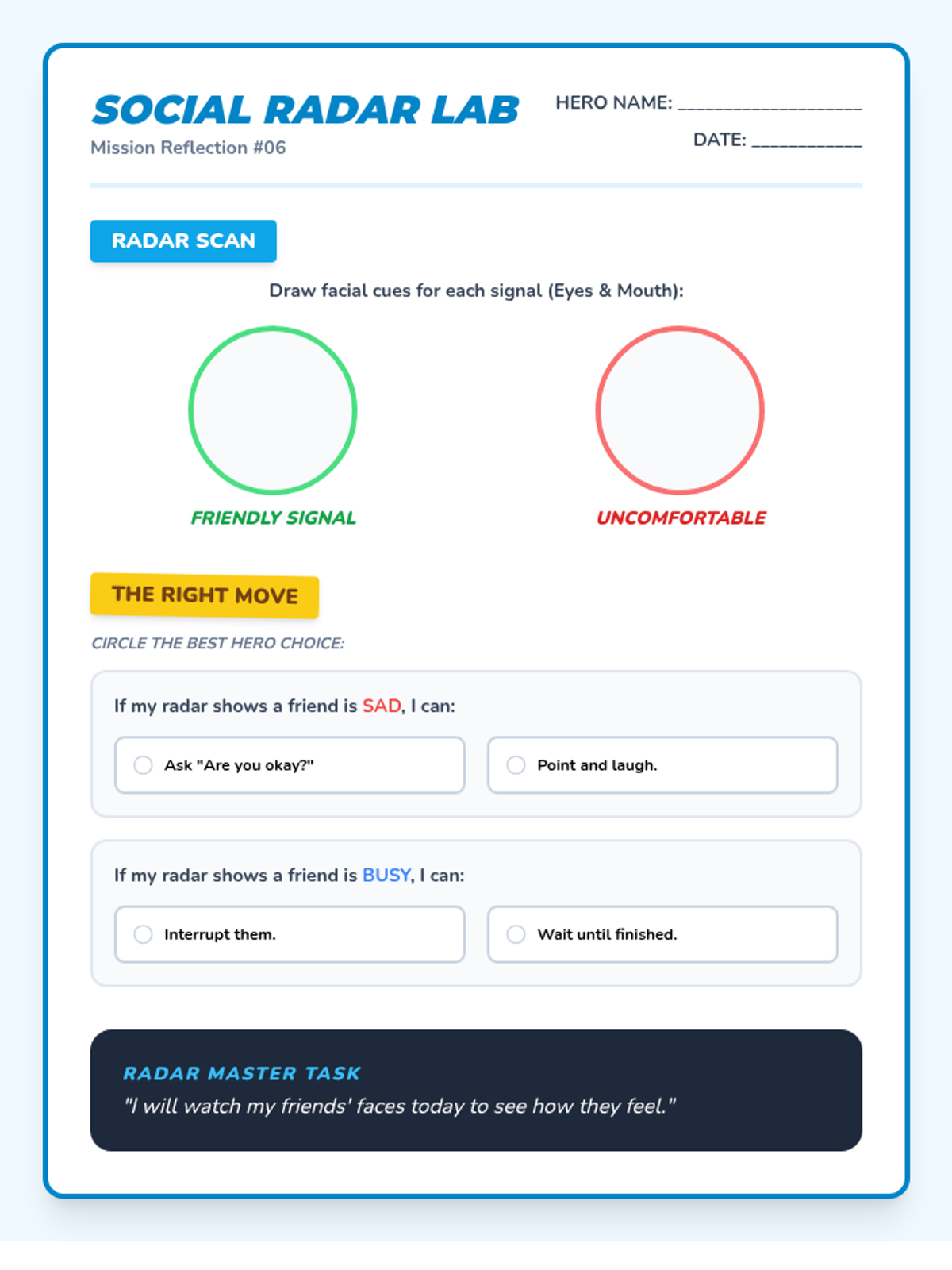
Developing 'Social Radar' to read the room and understand social appropriateness. Students learn to look for 'Go' and 'Stop' signals in their friends' faces and bodies.
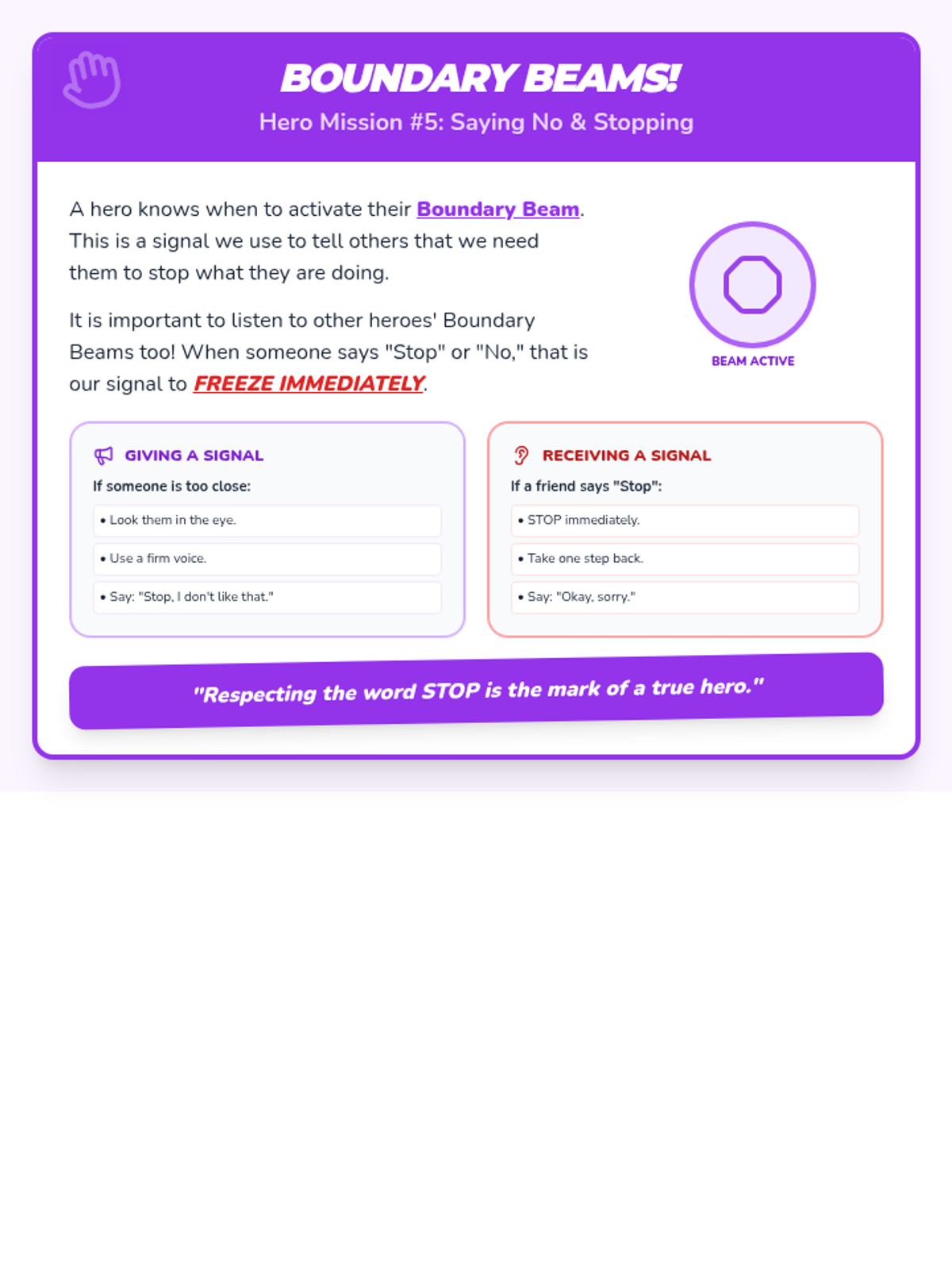
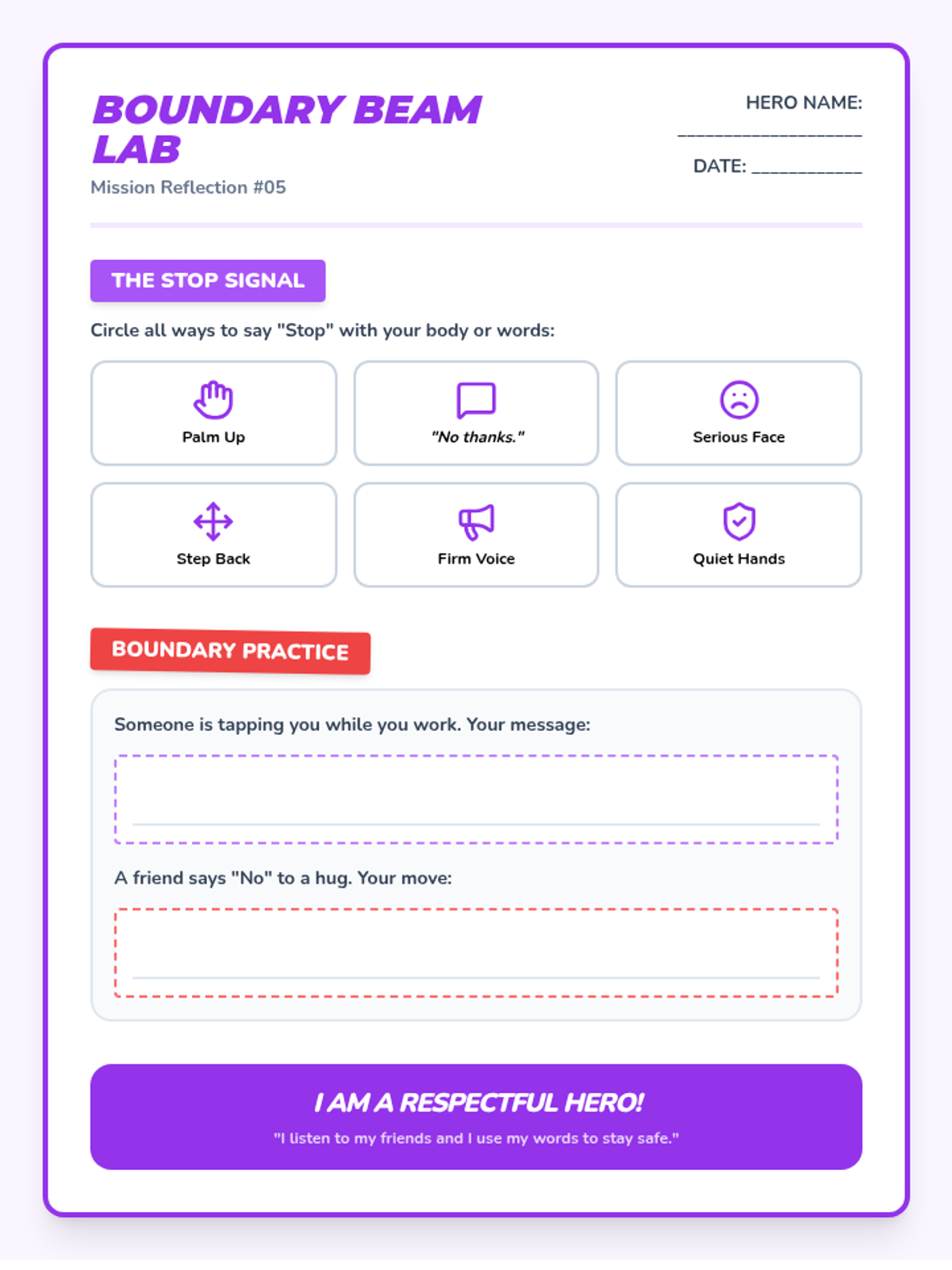
Learning 'Boundary Beams' - how to ask for space and how to listen when a friend says 'no' or 'stop'. Focuses on respecting the word 'stop' immediately.
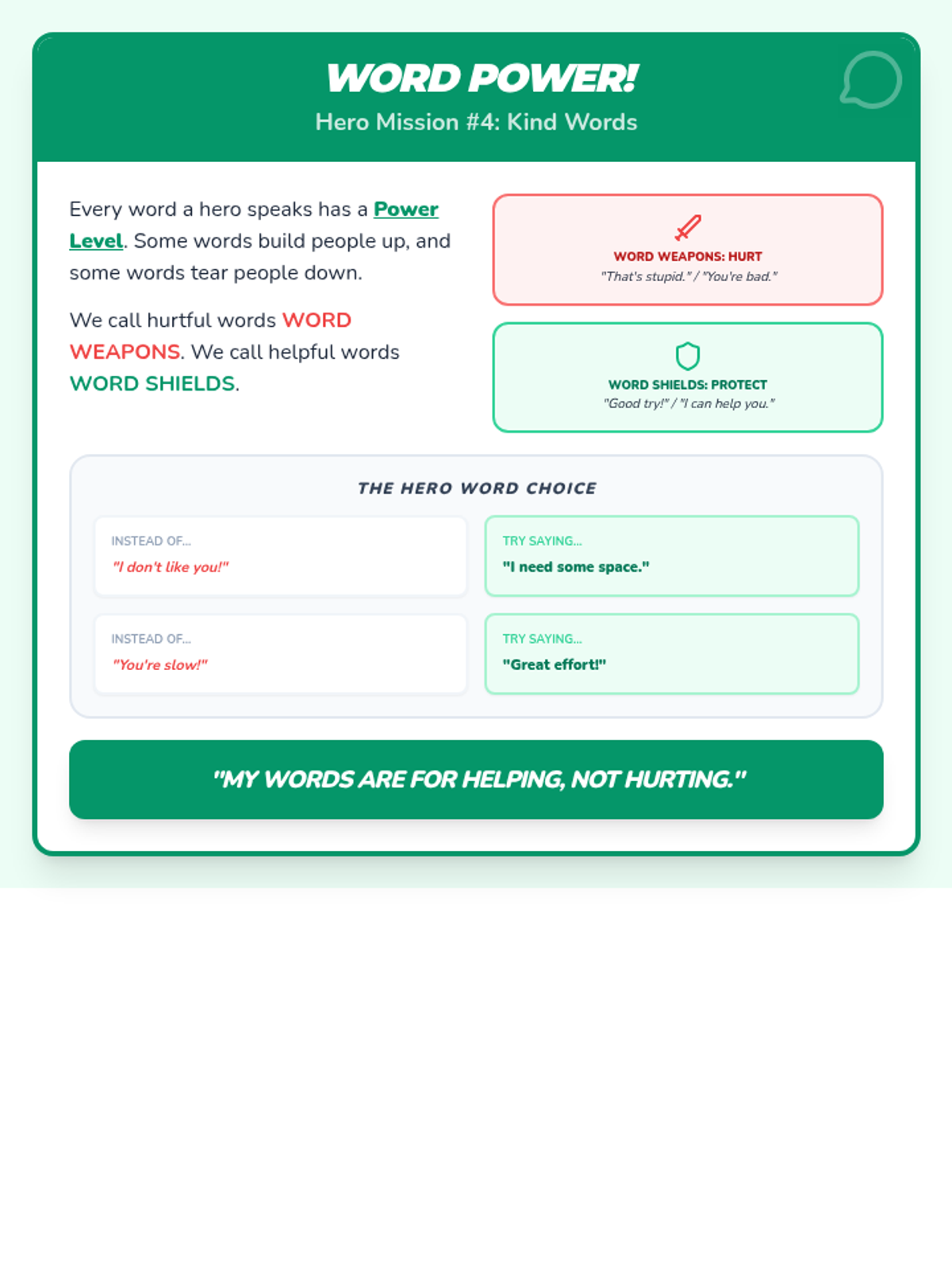
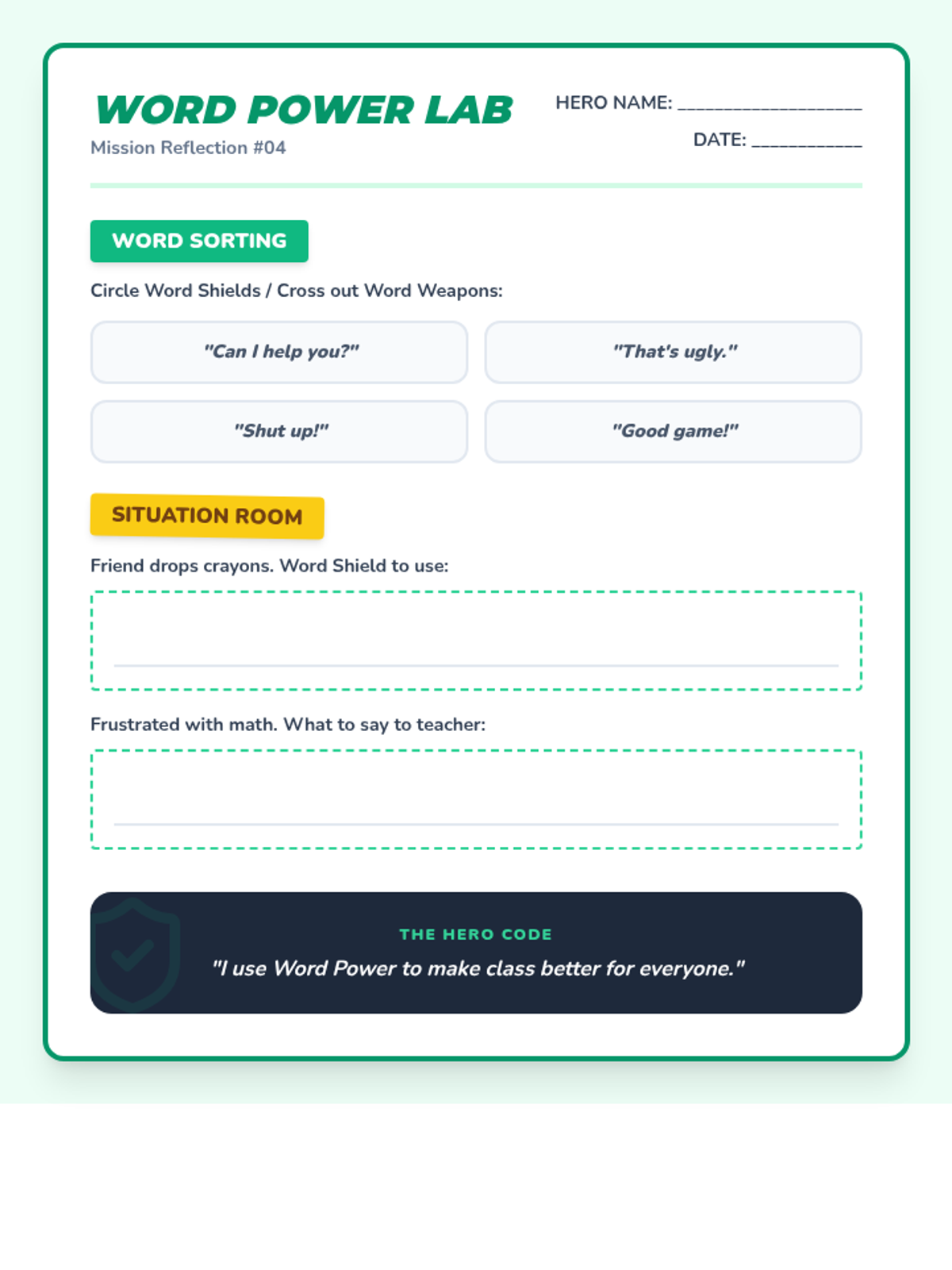
Using 'Word Power' to build others up. Students distinguish between 'Word Weapons' (hurtful) and 'Word Shields' (supportive) and practice kind phrases for 2nd-grade situations.
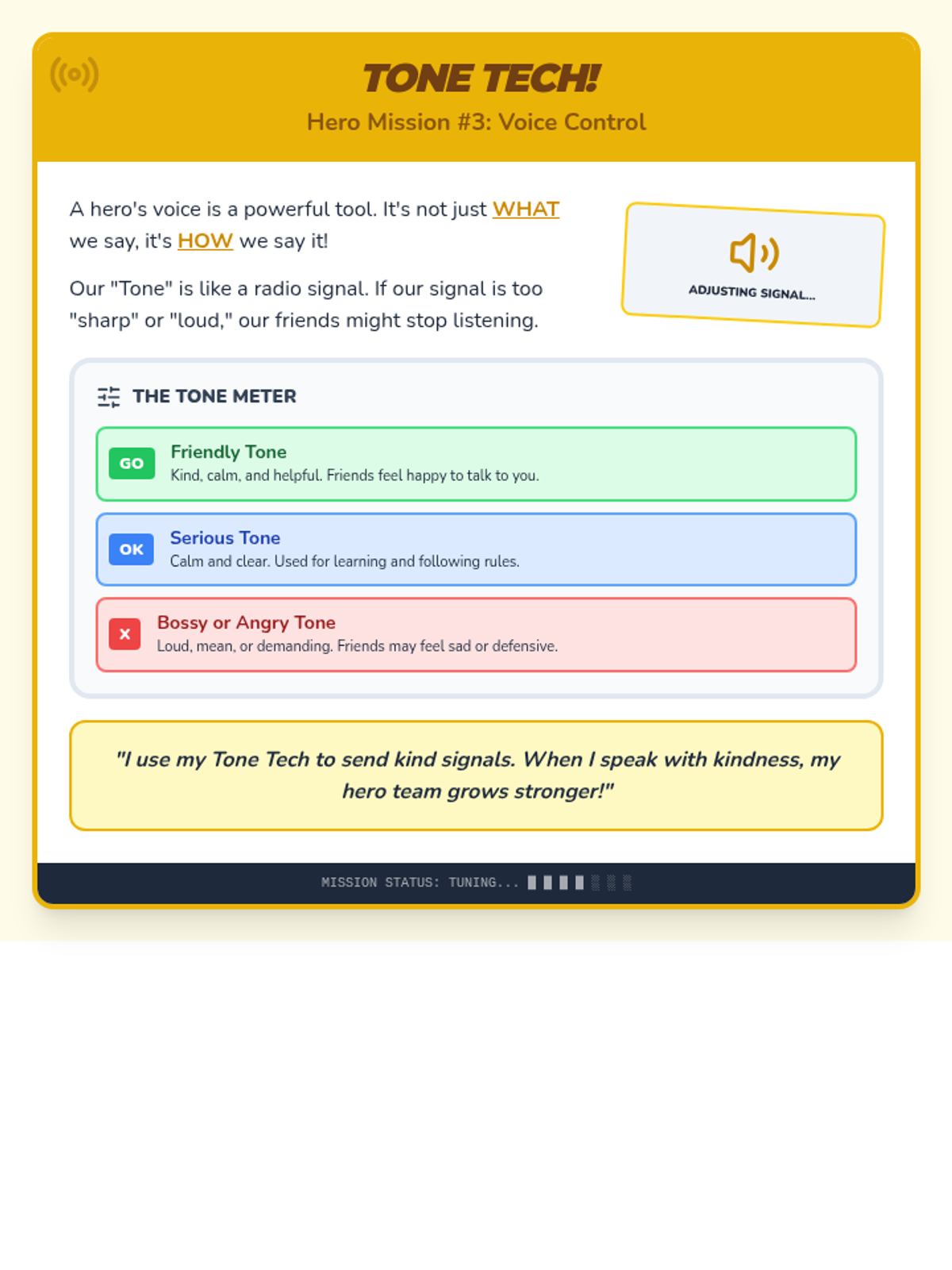
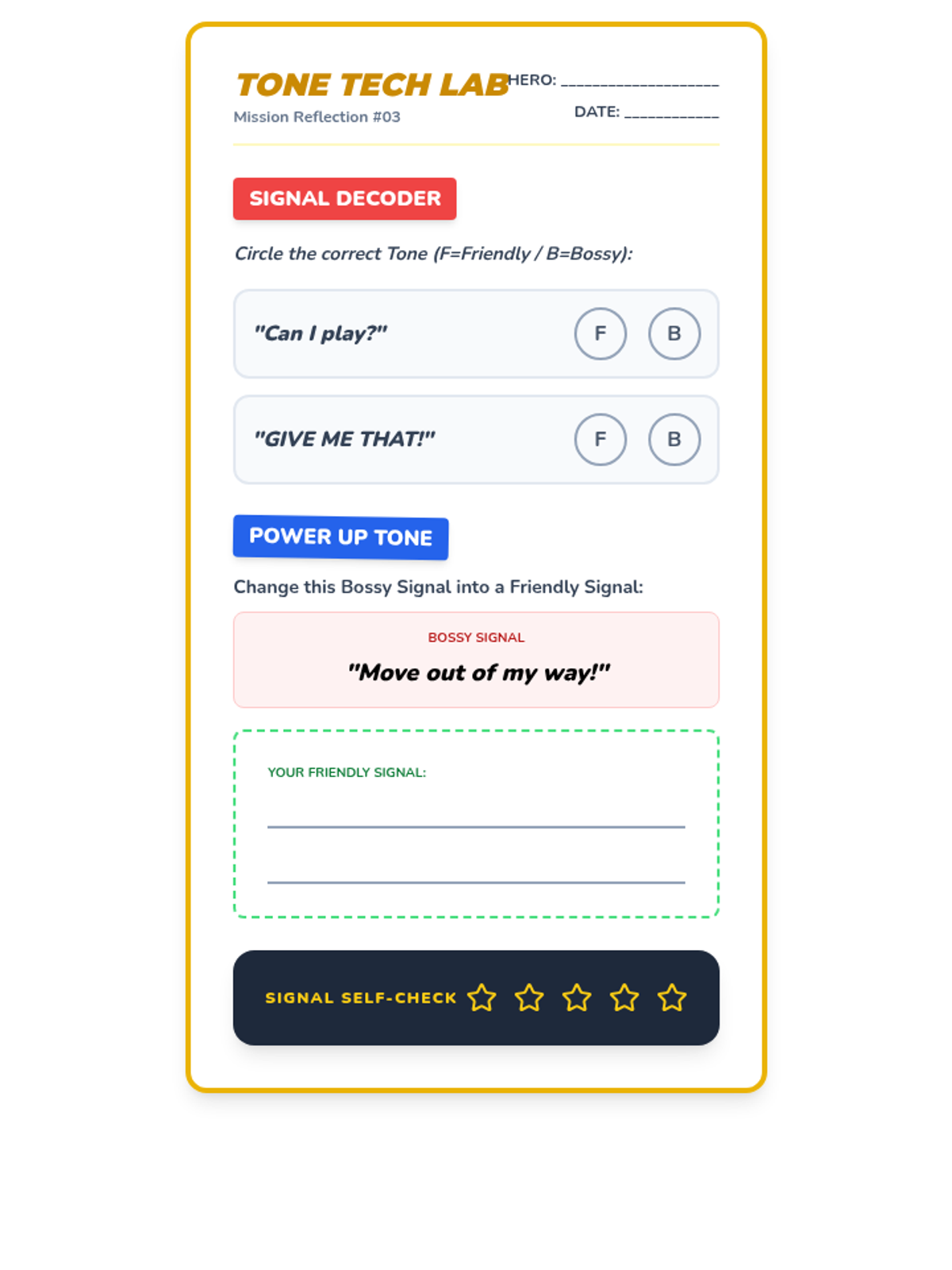
Focusing on 'Tone Tech' - learning how the way we say words matters as much as the words themselves. Students practice identifying 'Friendly', 'Angry', and 'Bossy' tones.
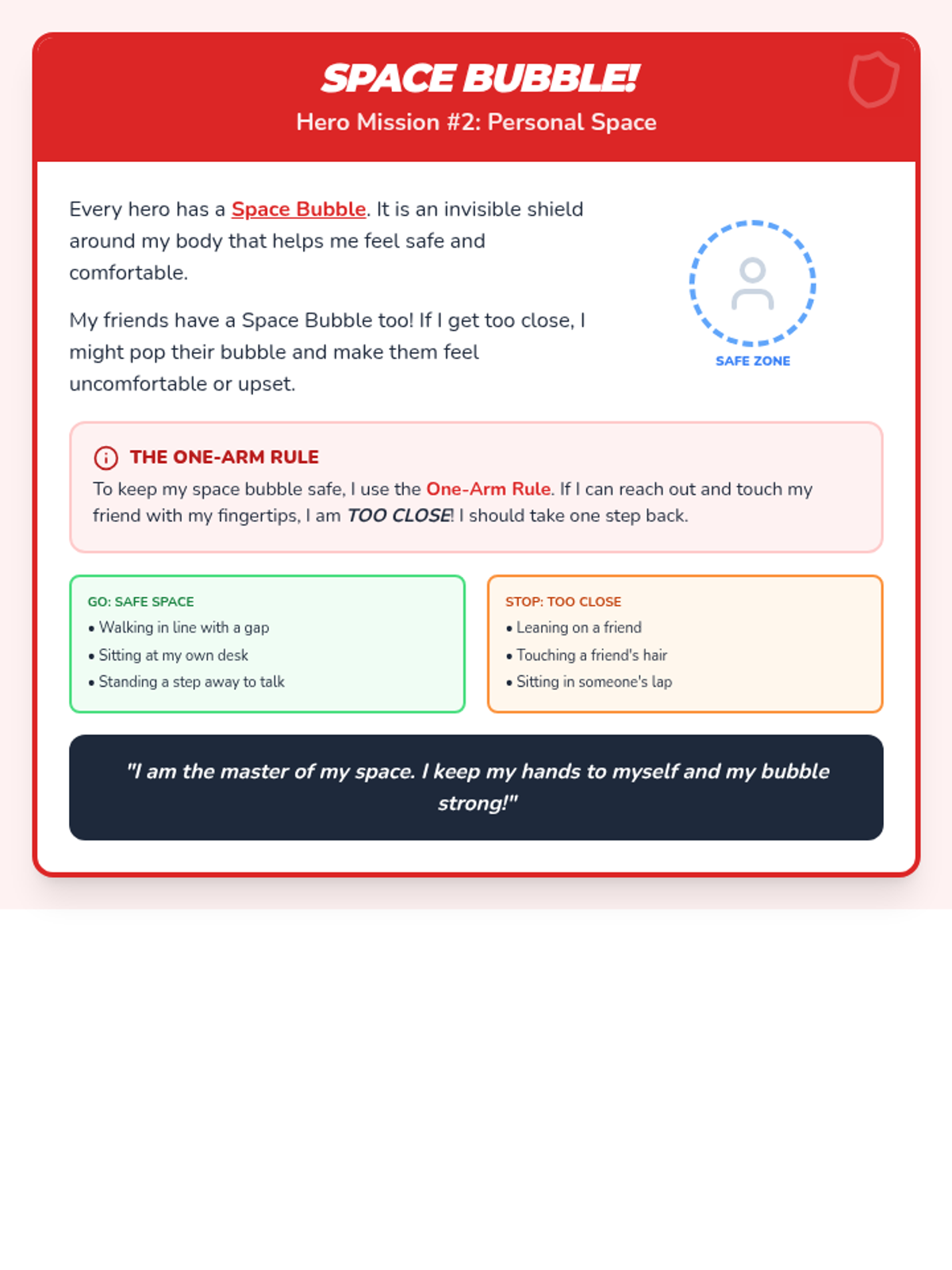
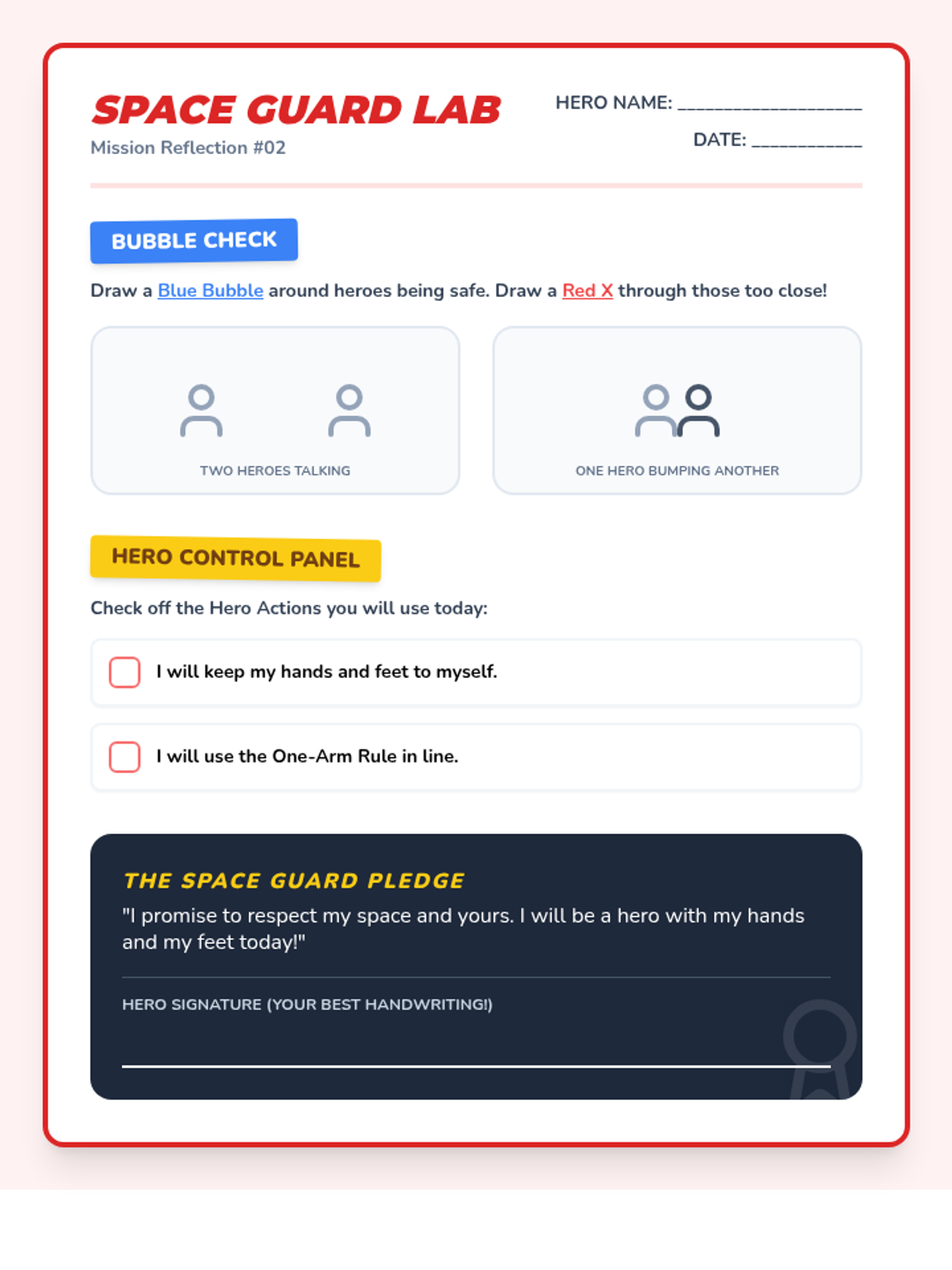
Introduction to 'The Space Bubble' - understanding personal boundaries and the 'One-Arm Rule' to keep themselves and others comfortable. Students practice identifying when they are too close to a friend.
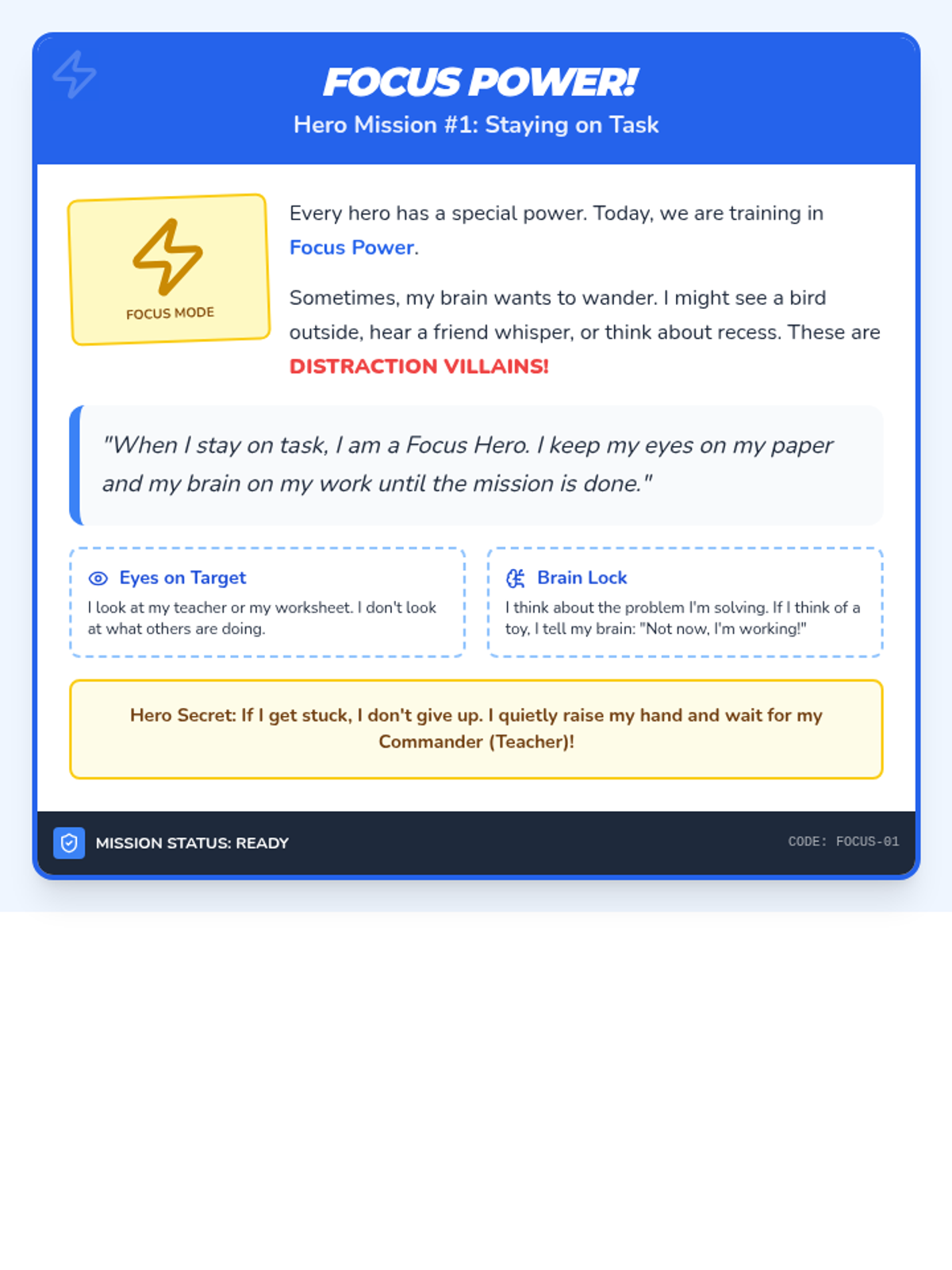
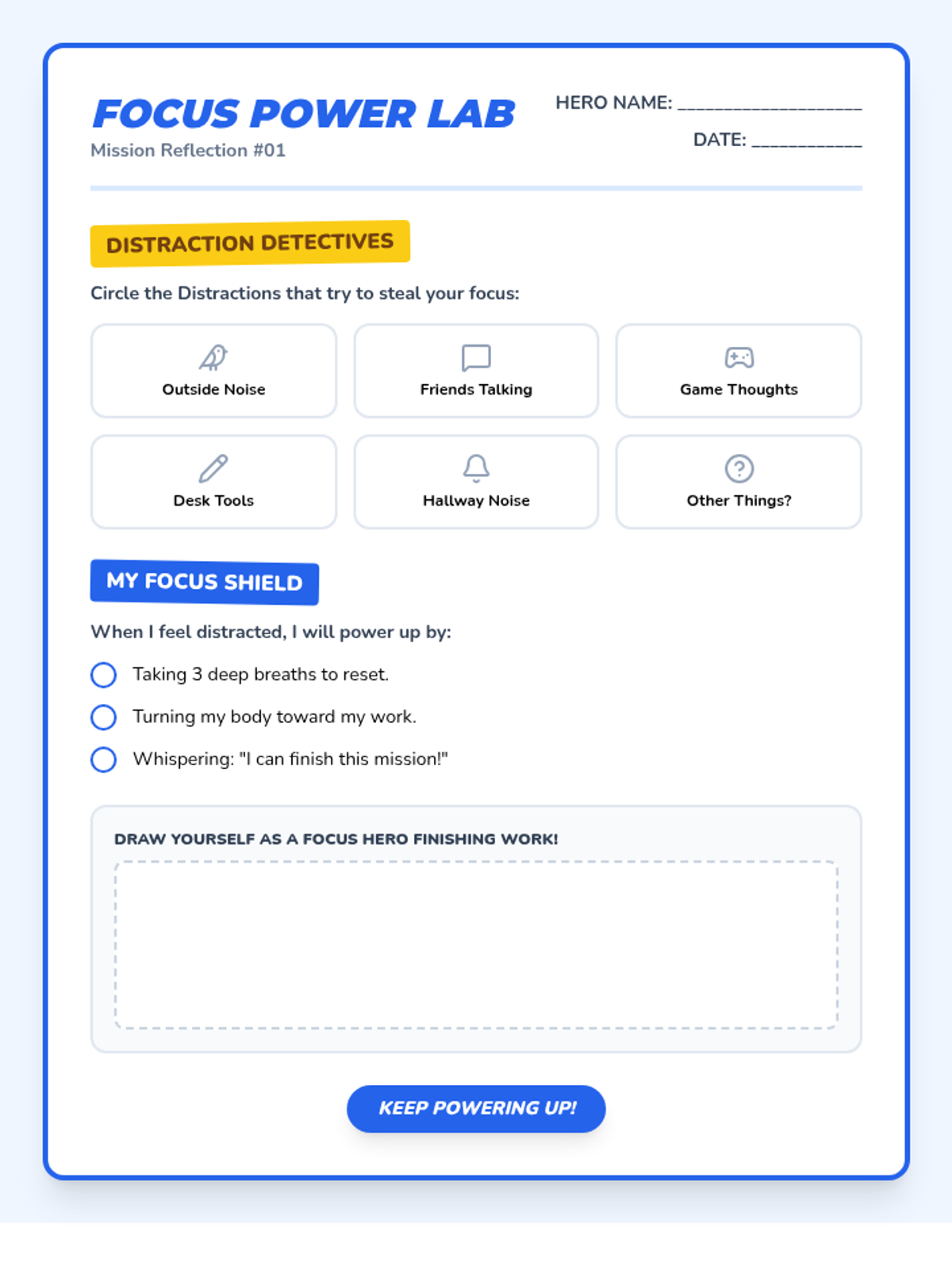
Introduction to 'Focus Power' - techniques for staying on task, identifying distractions, and using 'Tunnel Vision' to complete missions. Students learn how to ignore distractions and keep their eyes on their work.
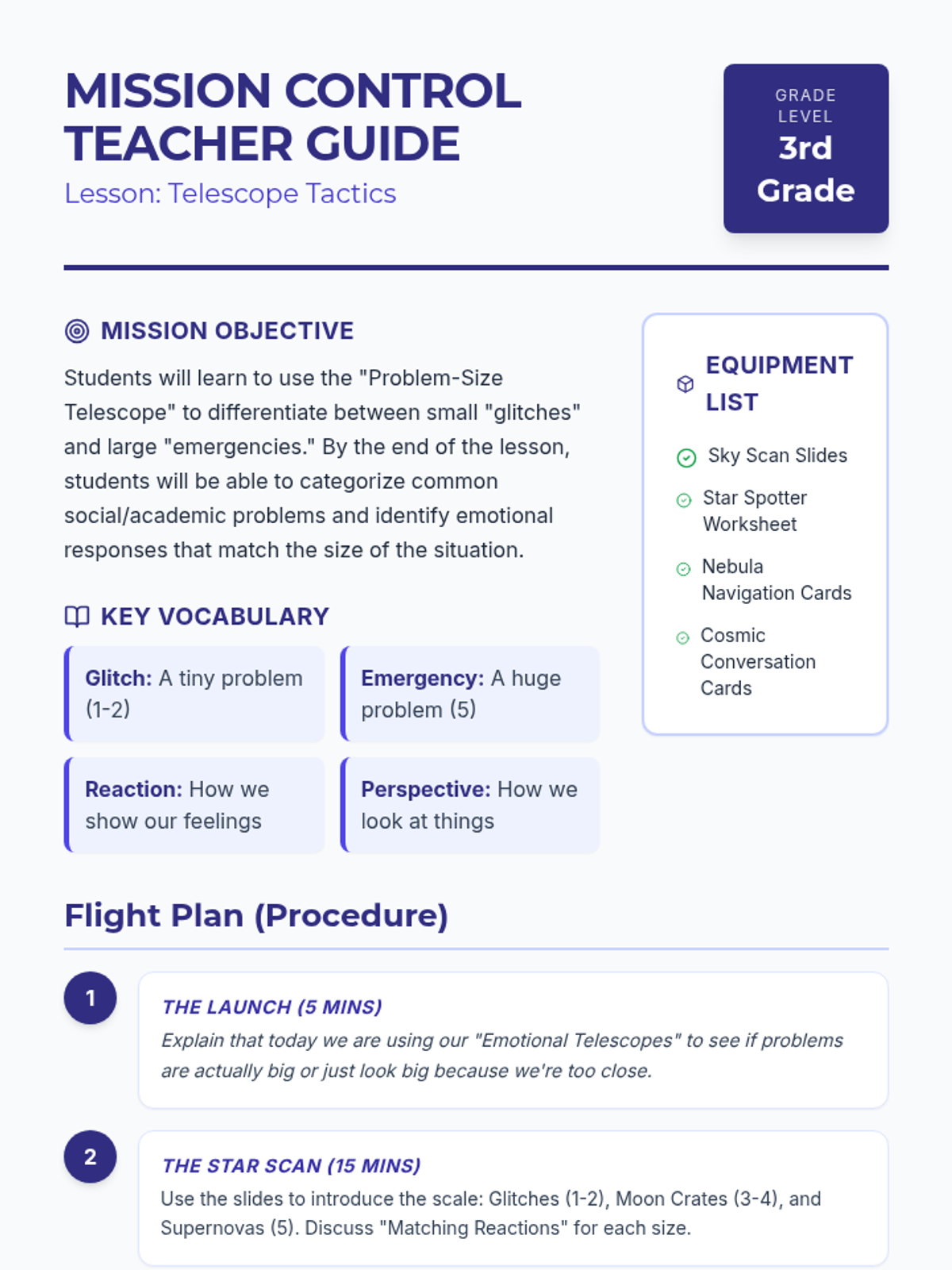
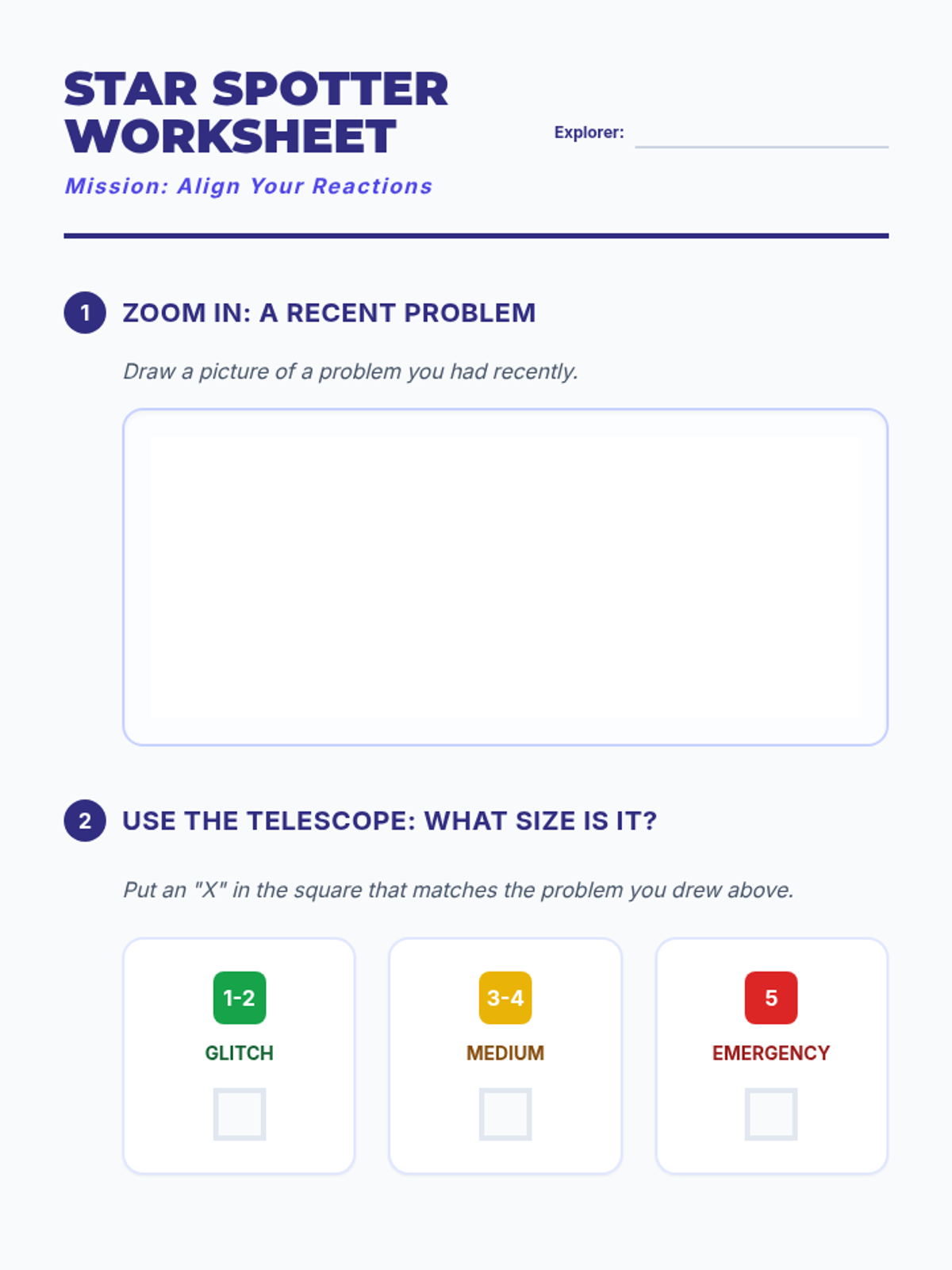
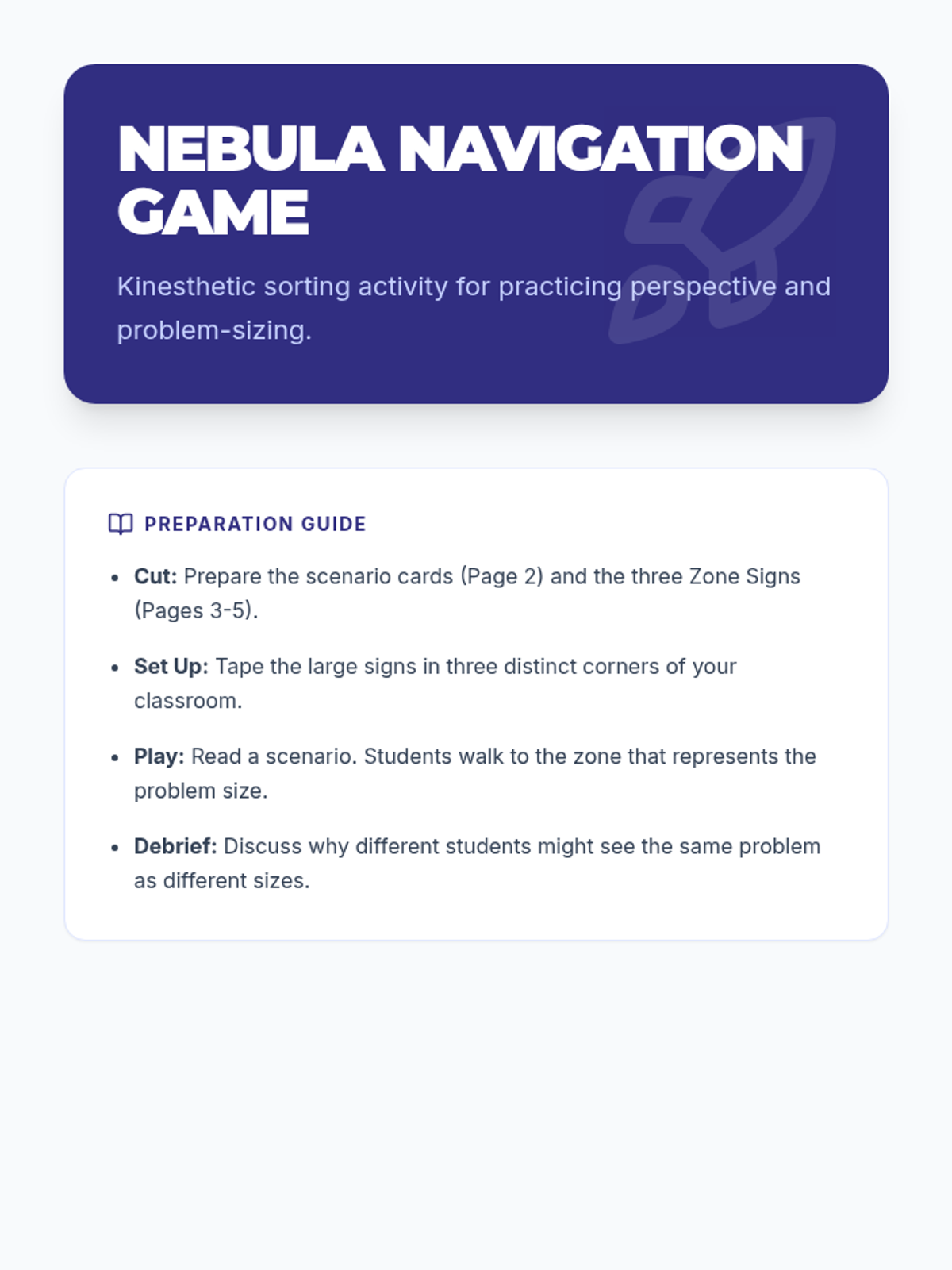
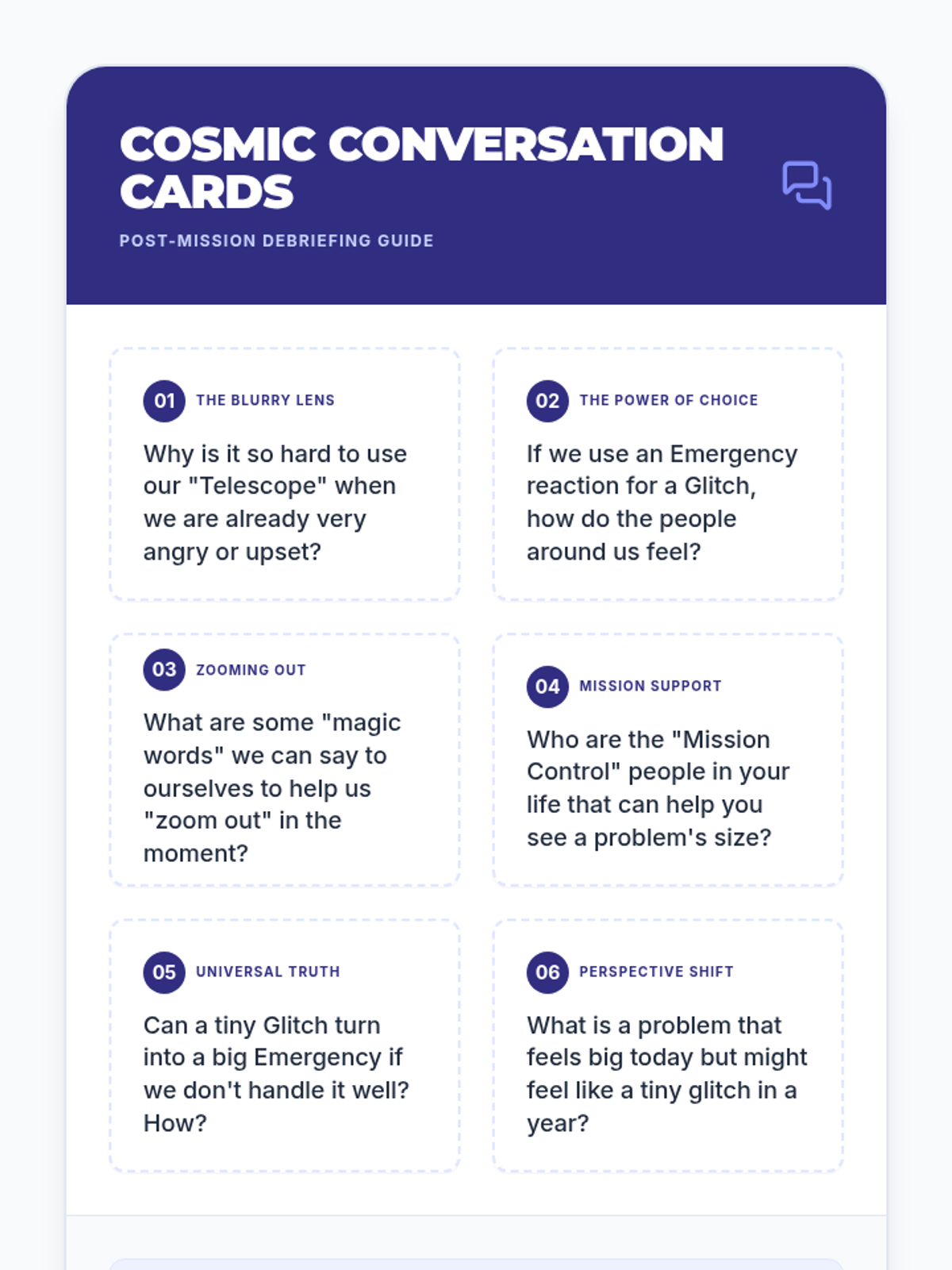
A social-emotional learning lesson for 3rd graders that uses a telescope metaphor to help students categorize problems by size and match their emotional reactions accordingly.
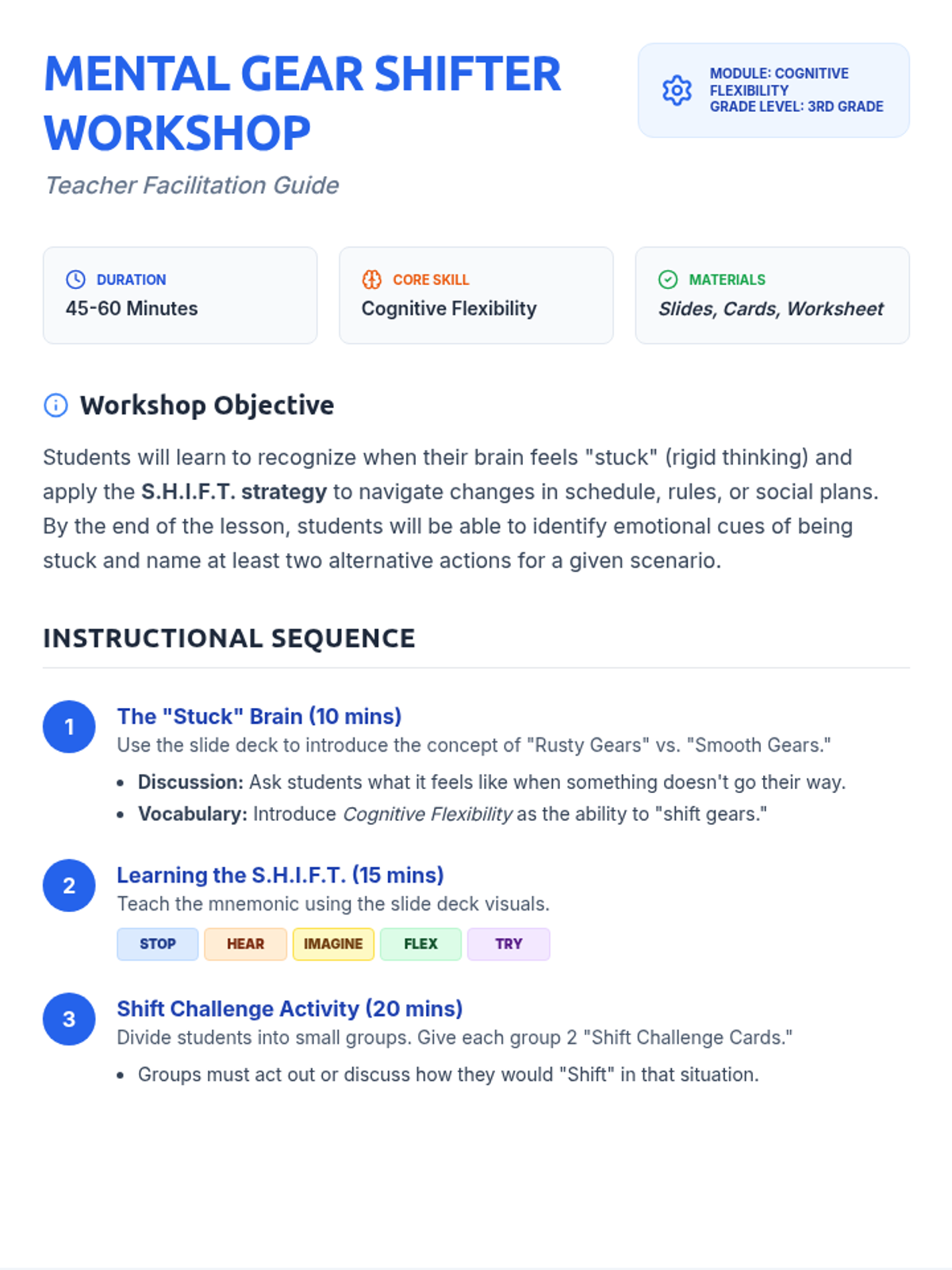
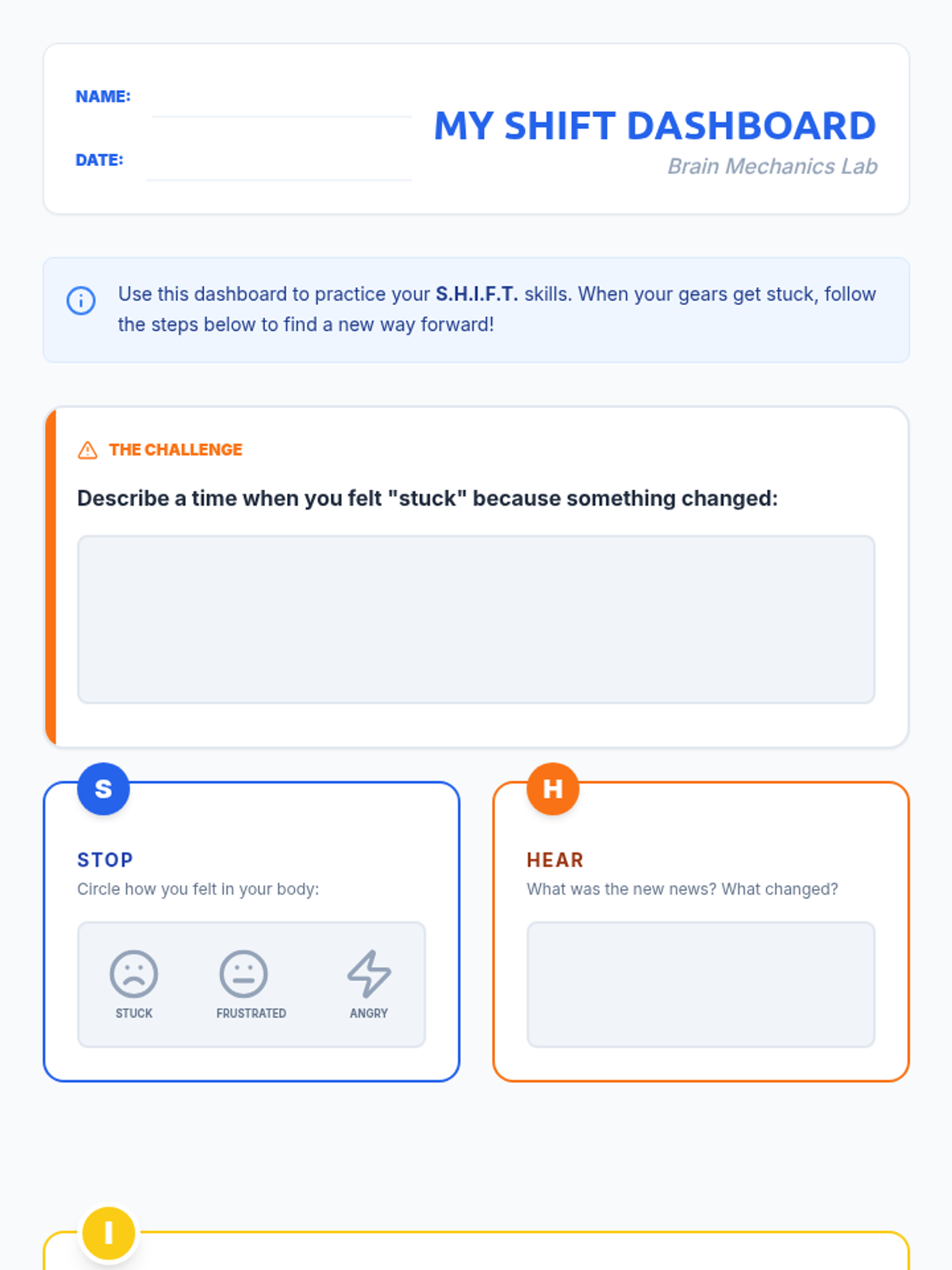
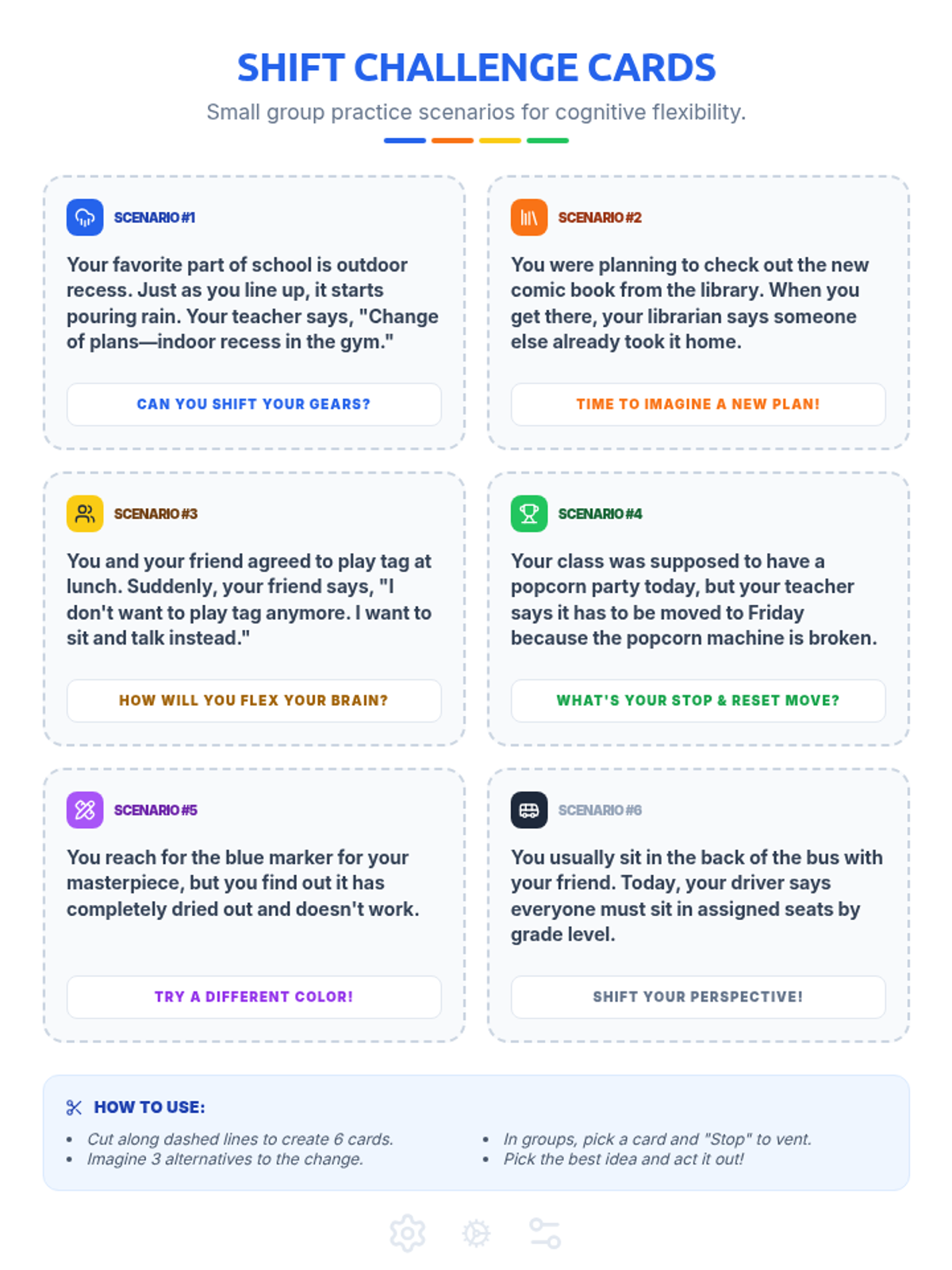
A workshop on cognitive flexibility for 3rd graders, teaching the S.H.I.F.T. strategy to help students navigate changes, obstacles, and transitions without getting 'stuck' in frustration.
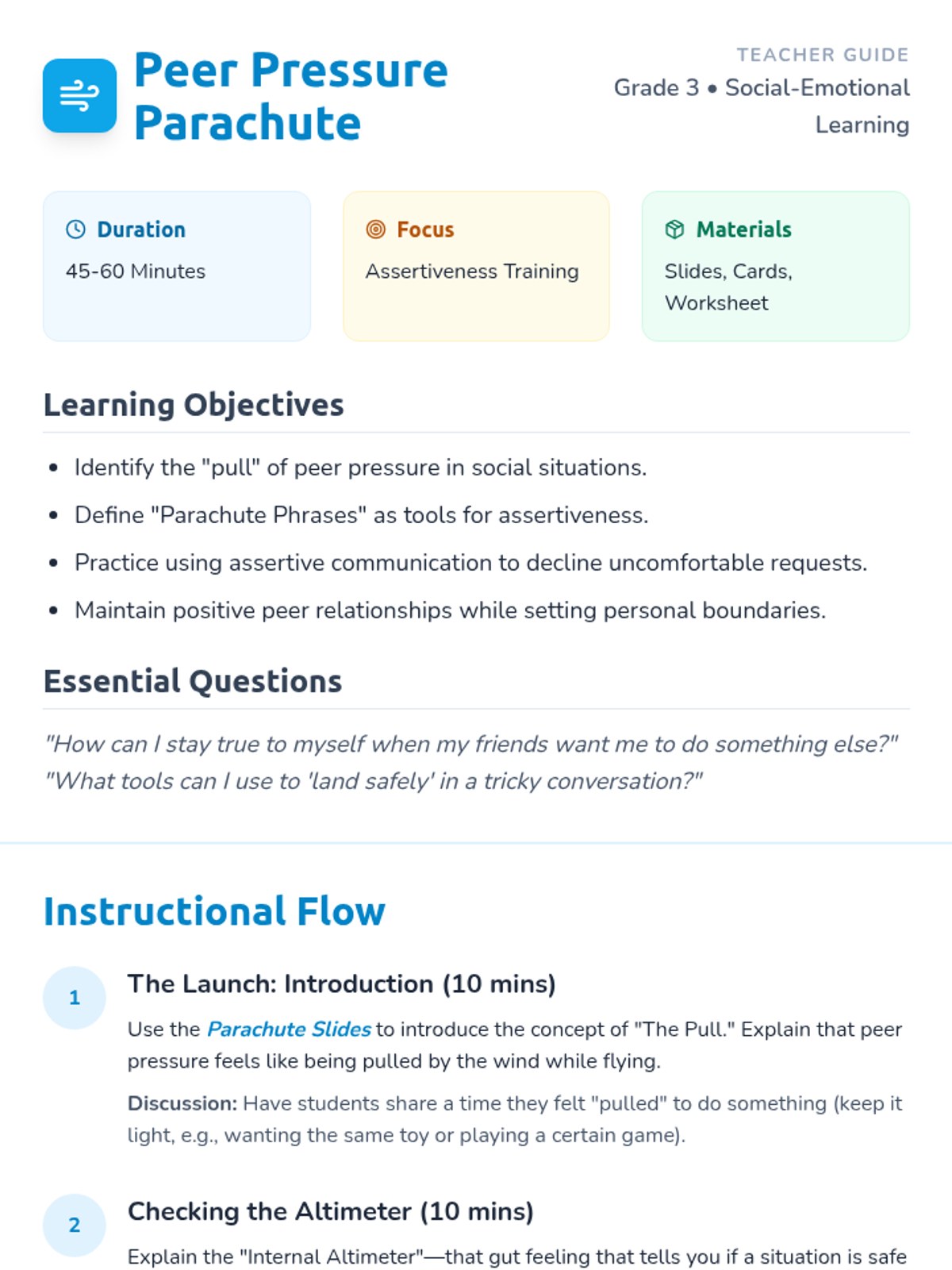
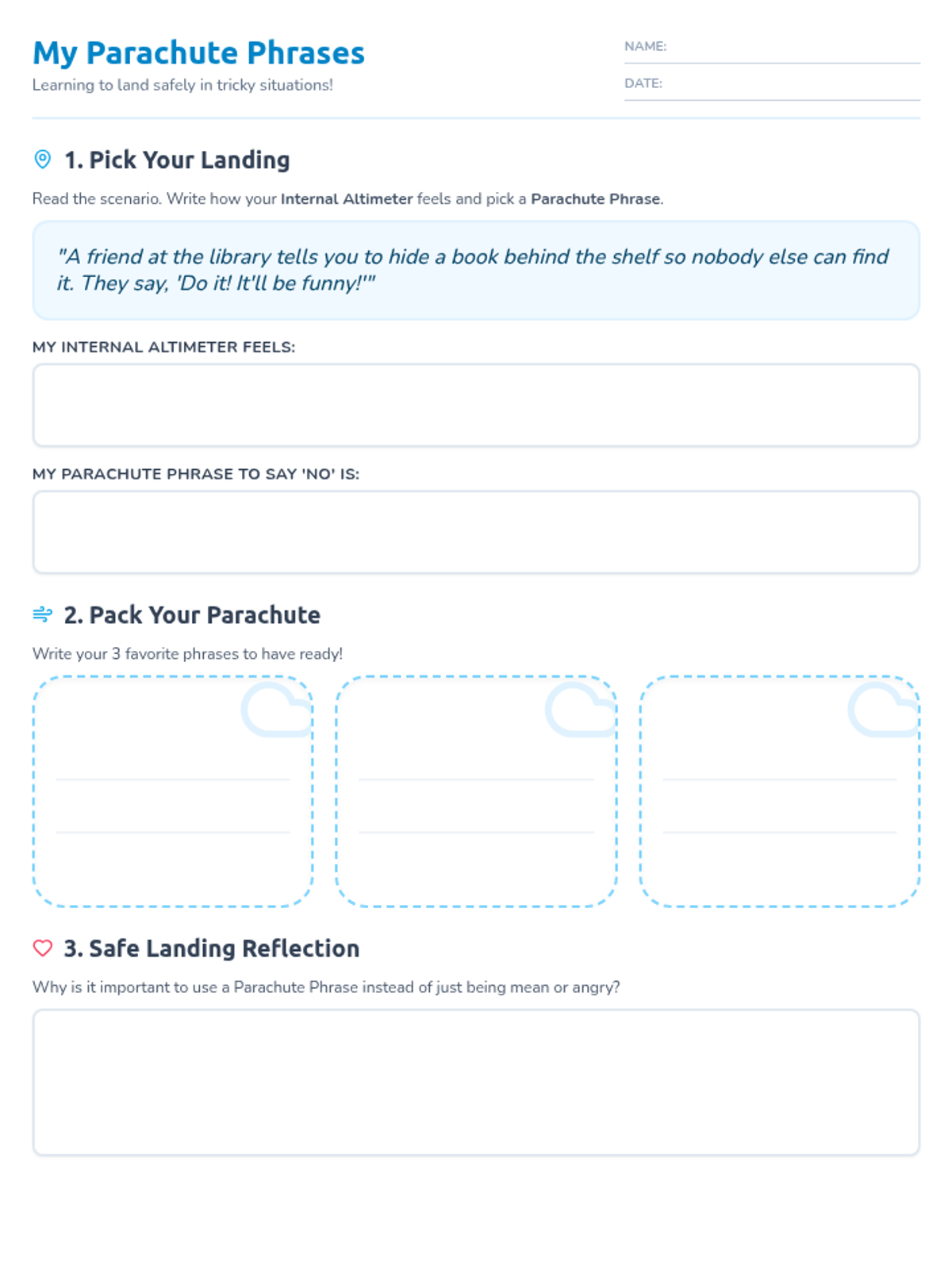
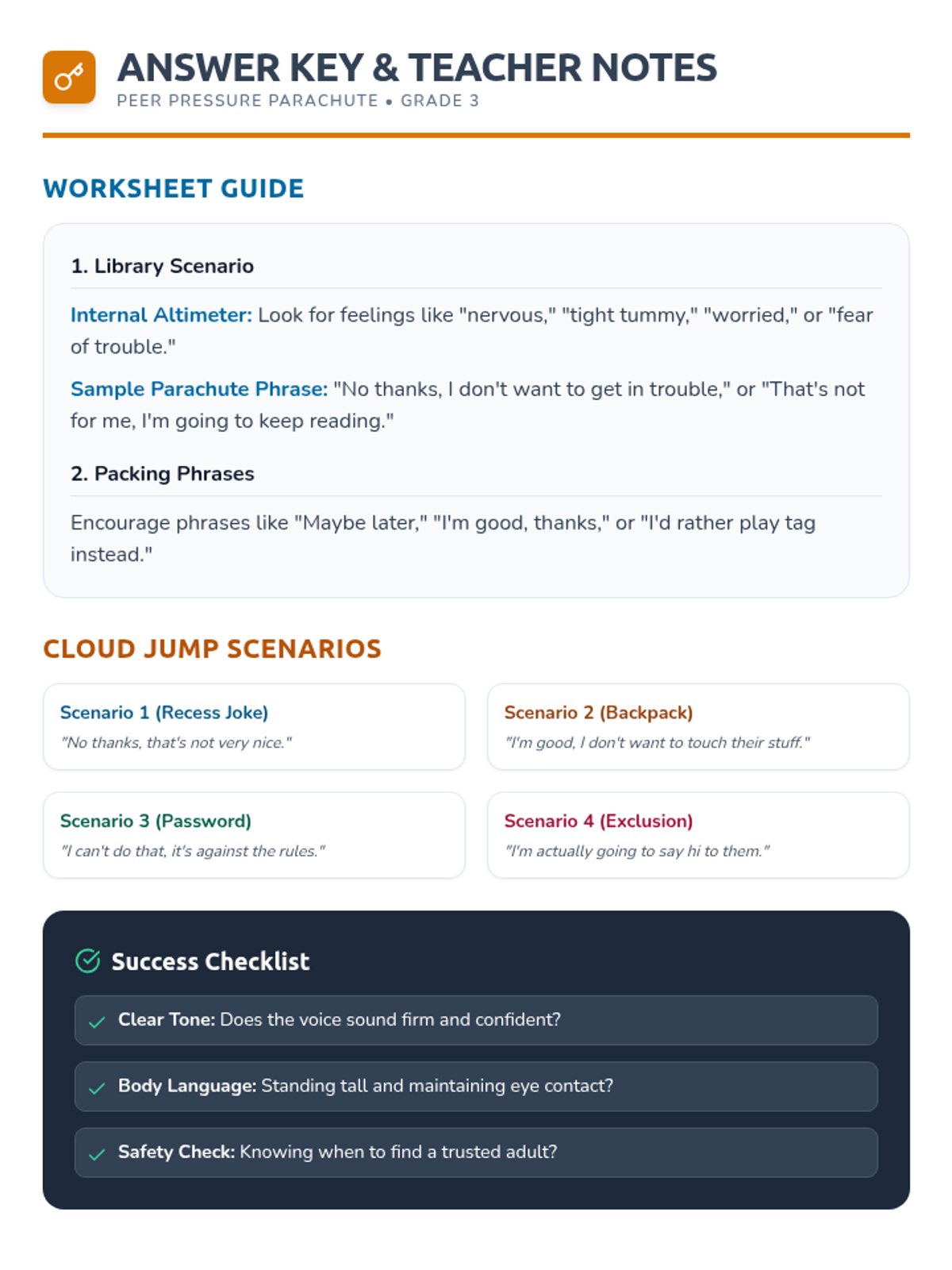
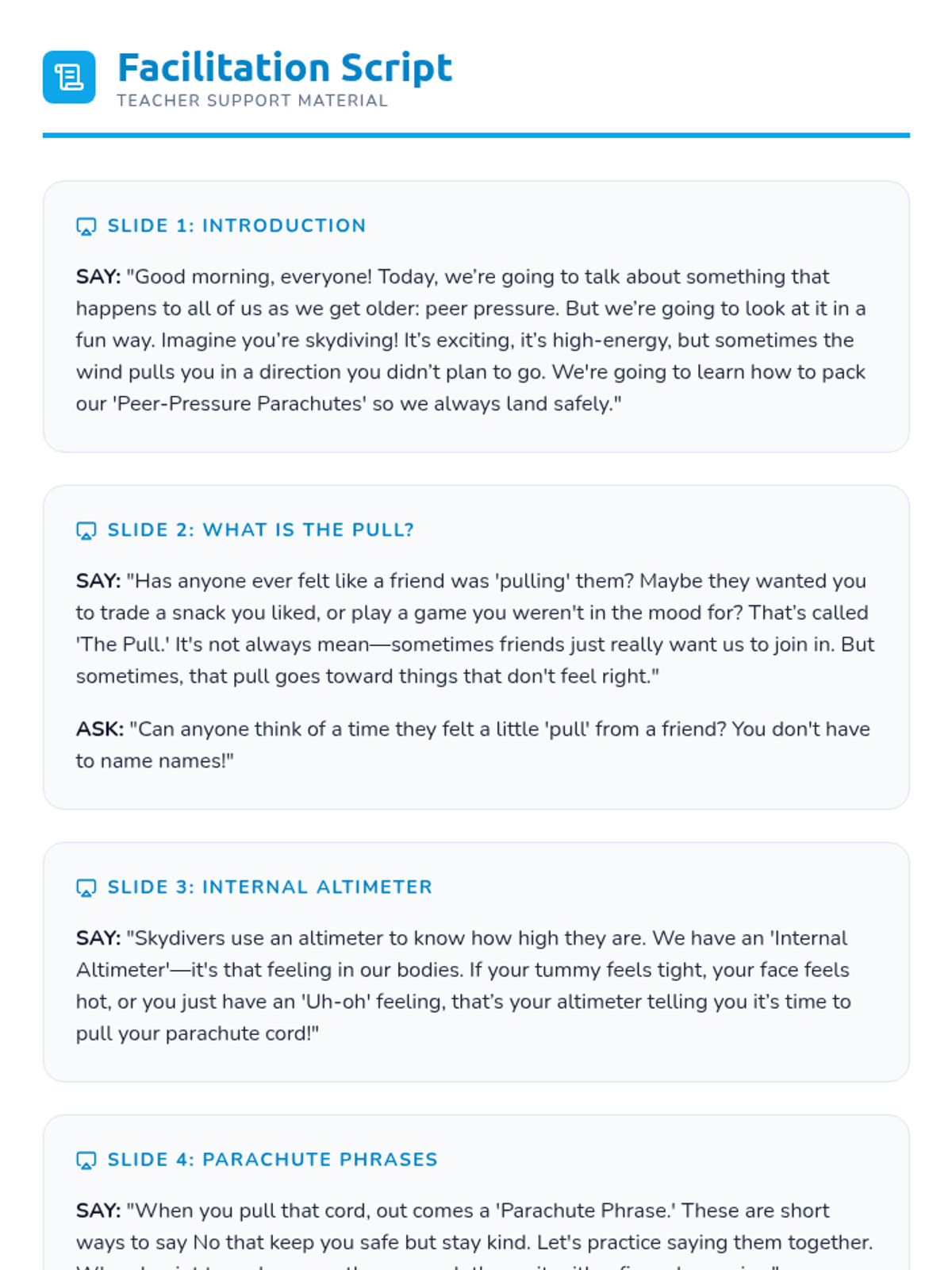
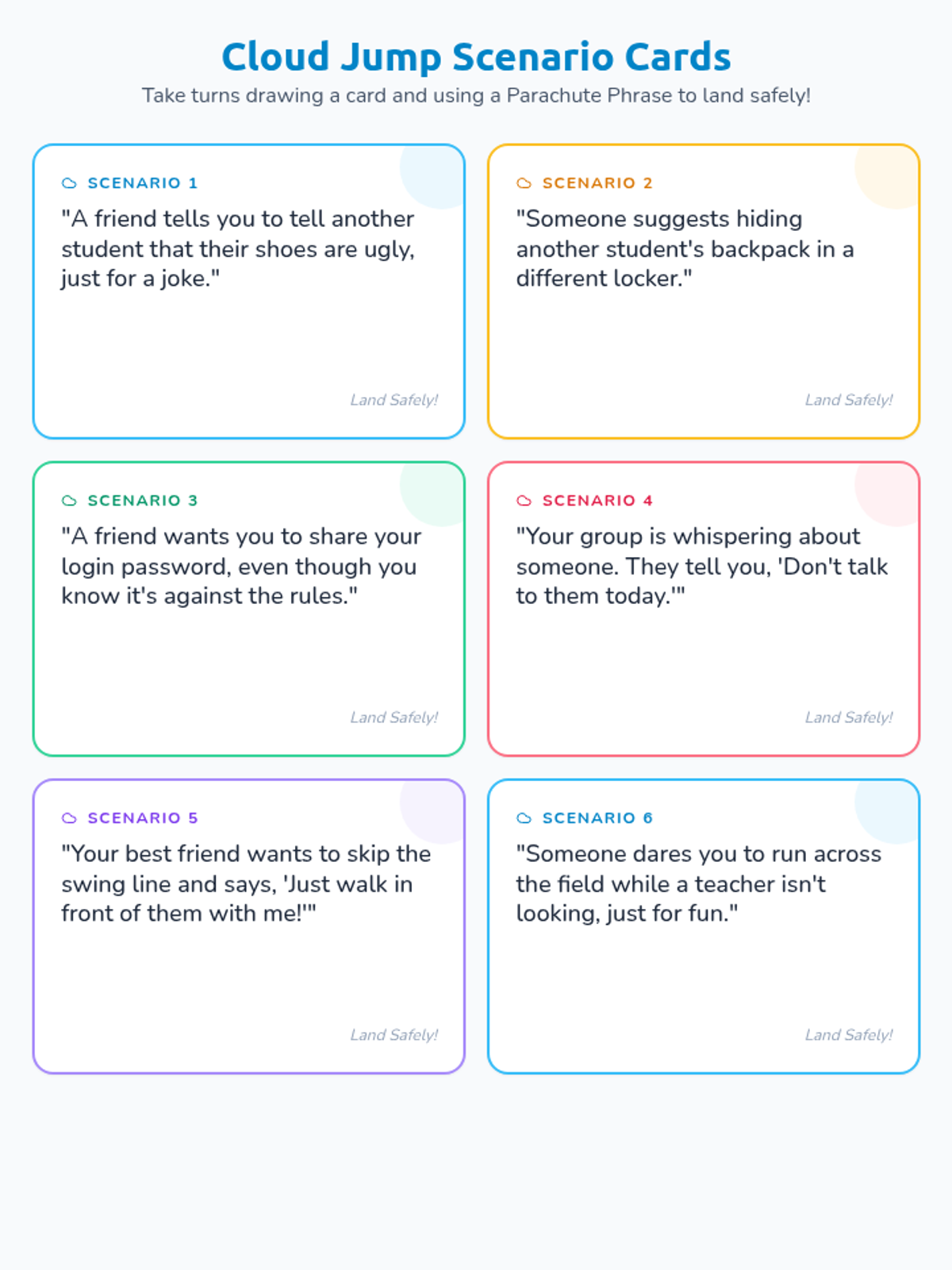
This lesson teaches 3rd graders to identify peer pressure as a 'pull' and equips them with 'parachute phrases'—assertive communication tools—to navigate social pressure while maintaining friendships. Students will engage in role-play, a scenario-based game, and reflective writing.
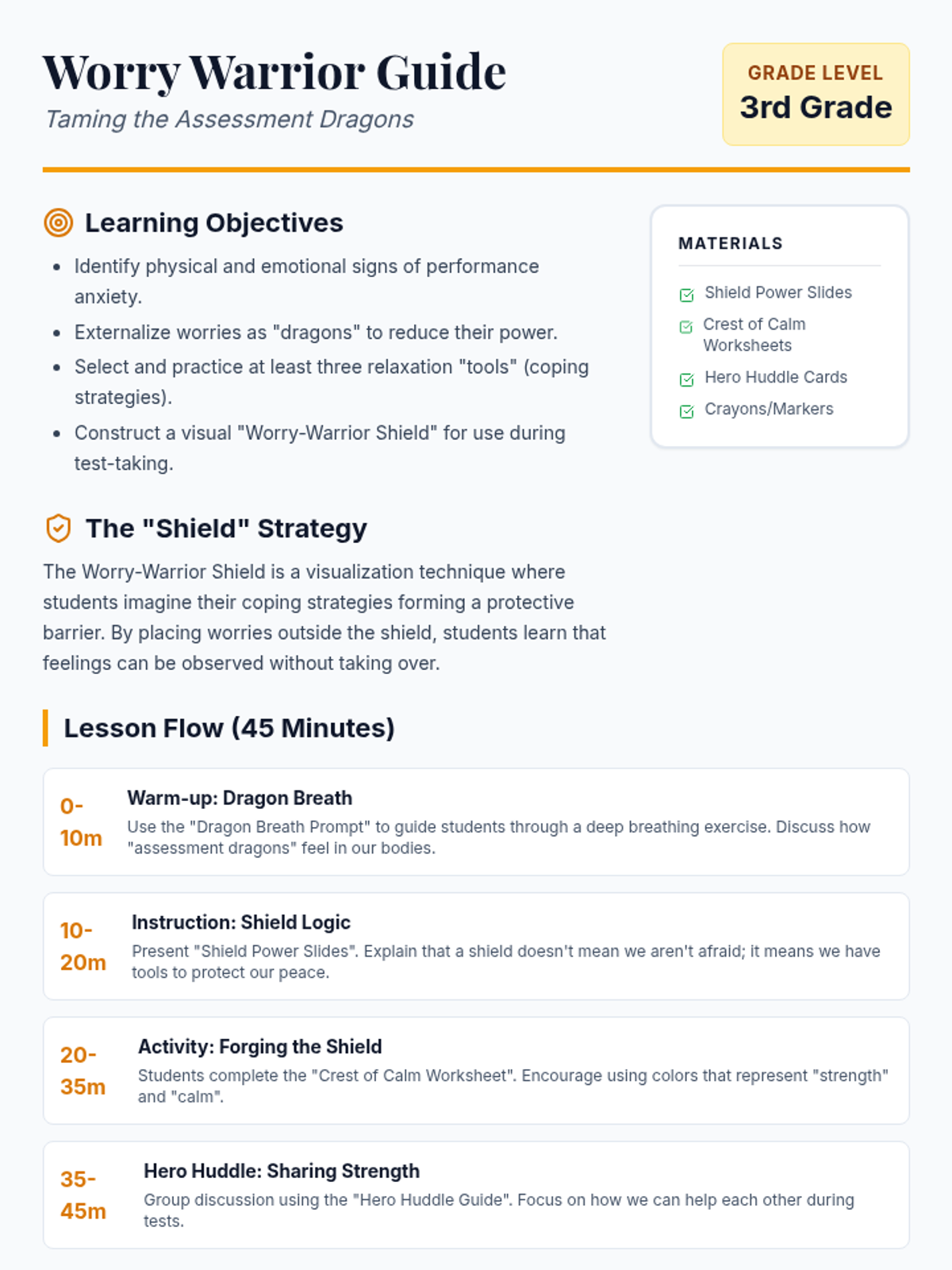
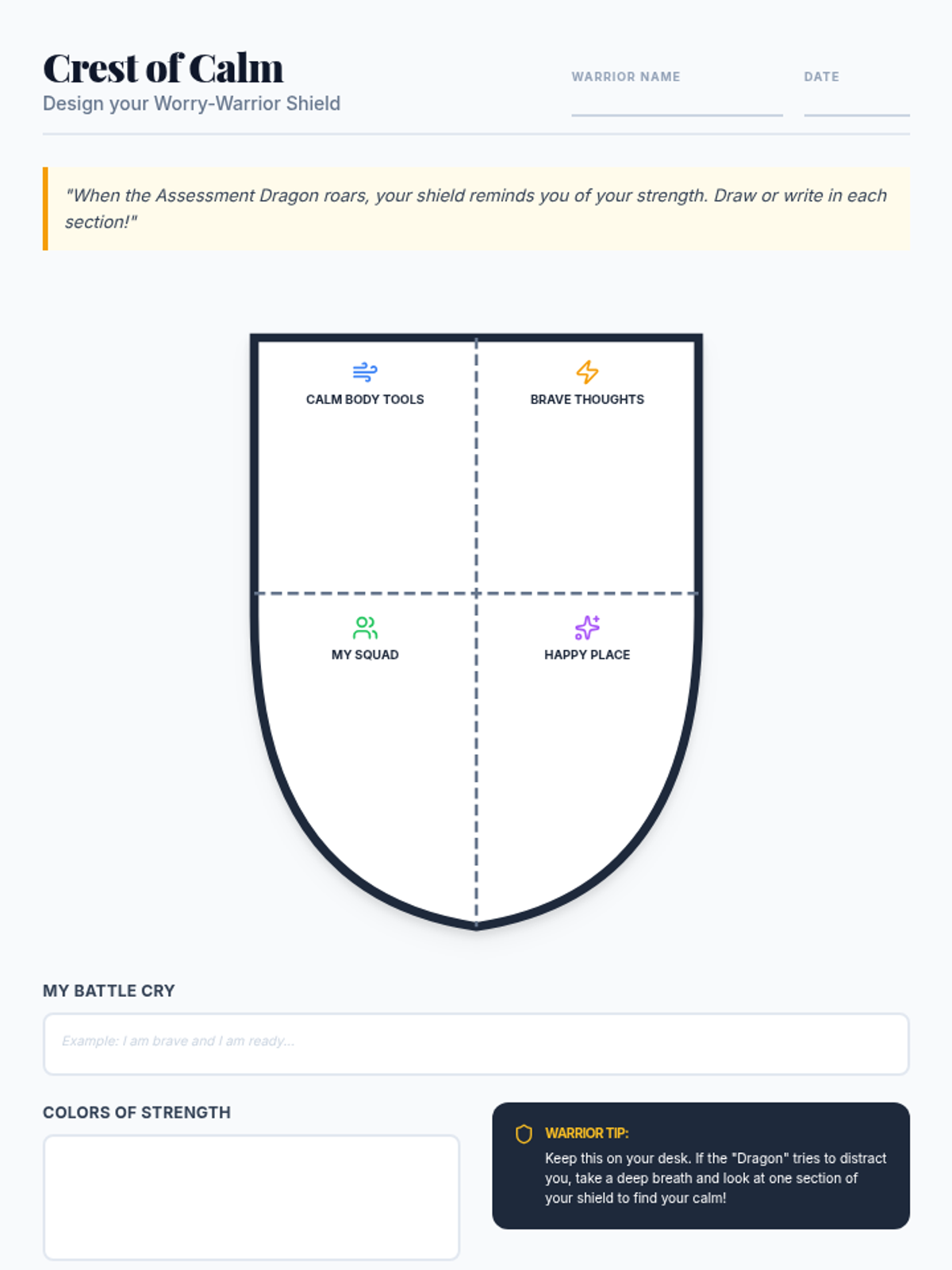
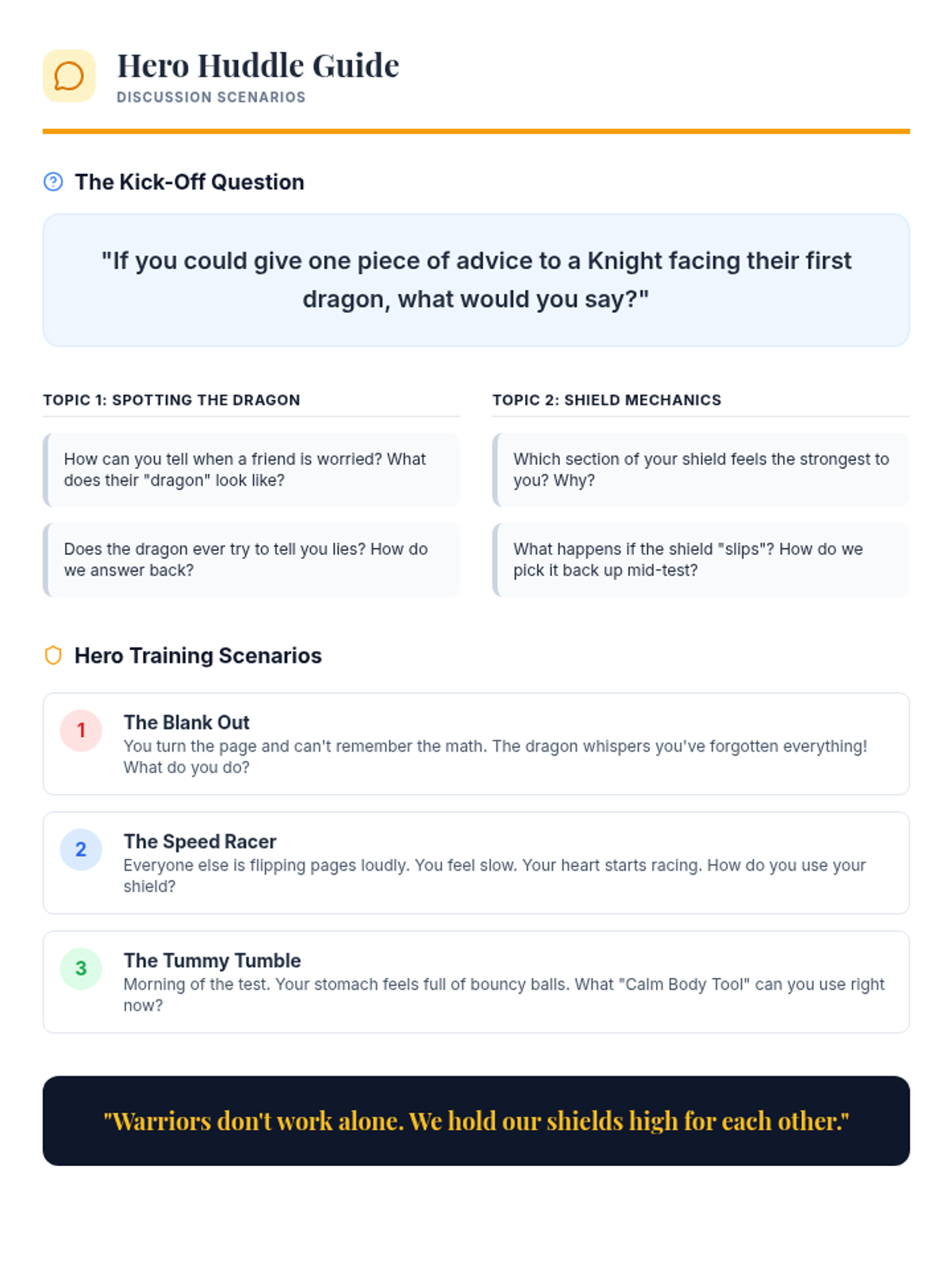
This lesson empowers 3rd graders to combat performance anxiety using the 'Worry-Warrior Shield' visualization. Students identify stressors, learn relaxation techniques, and create a physical shield of coping strategies to build resilience before assessments.
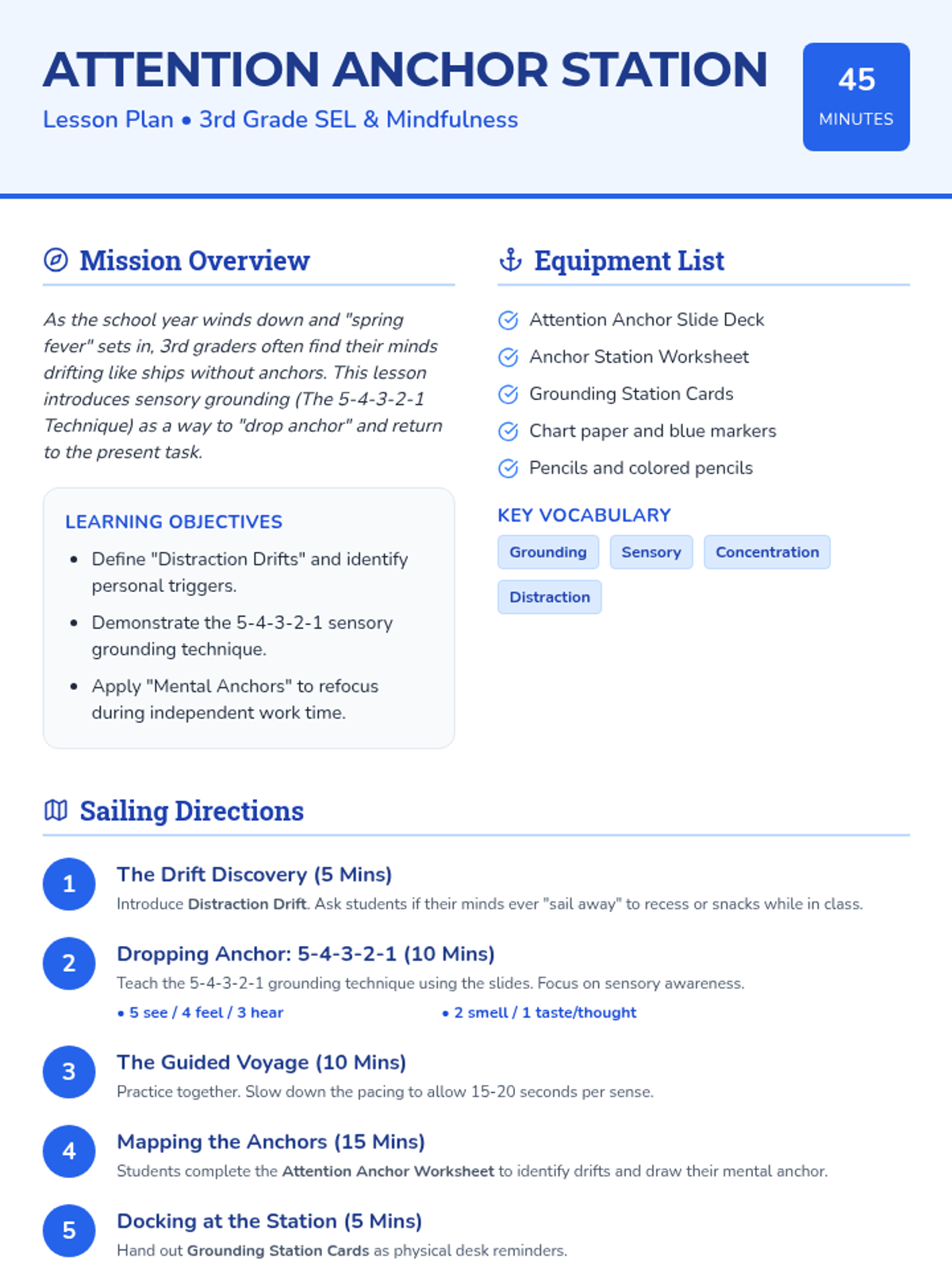
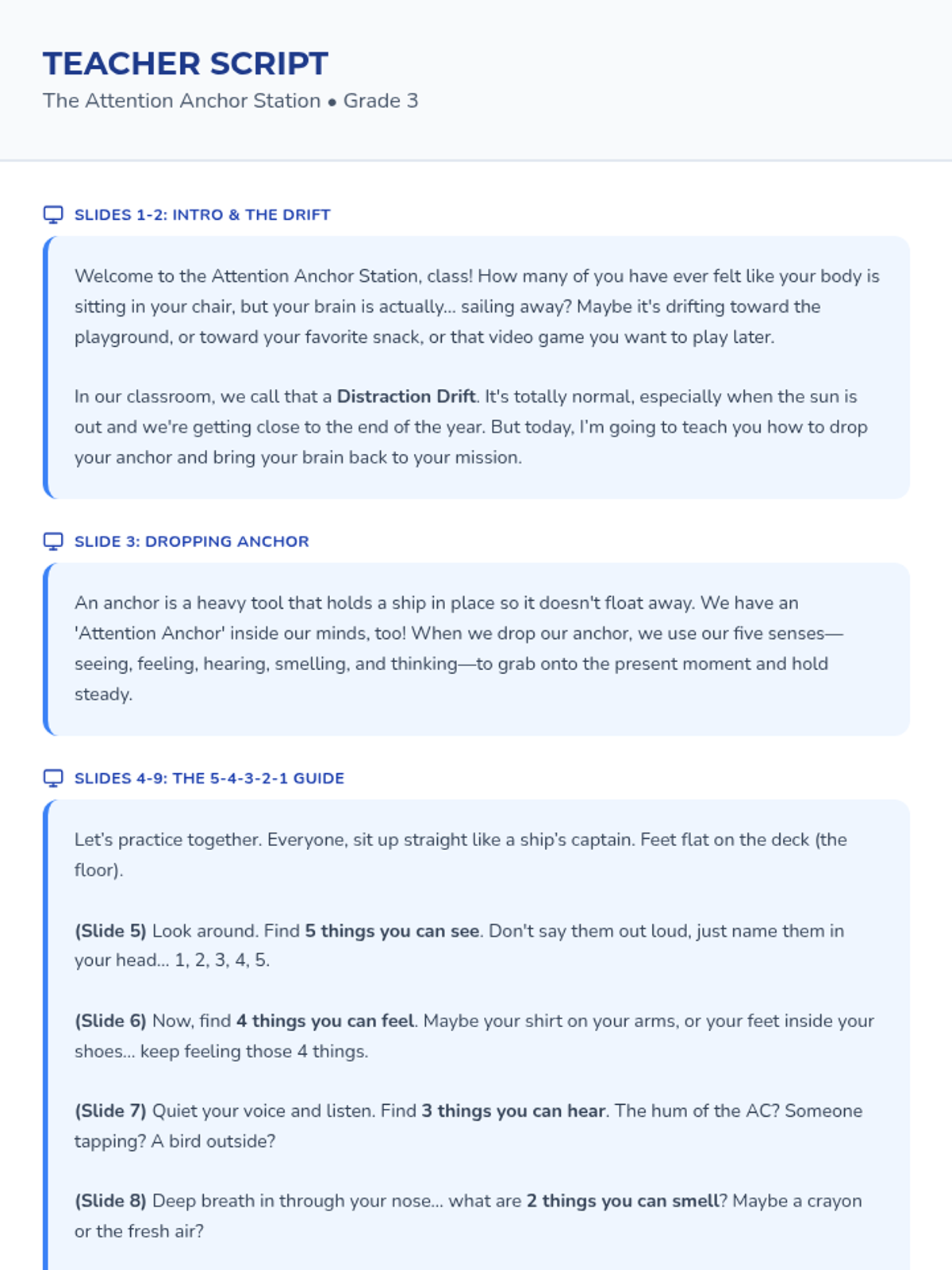
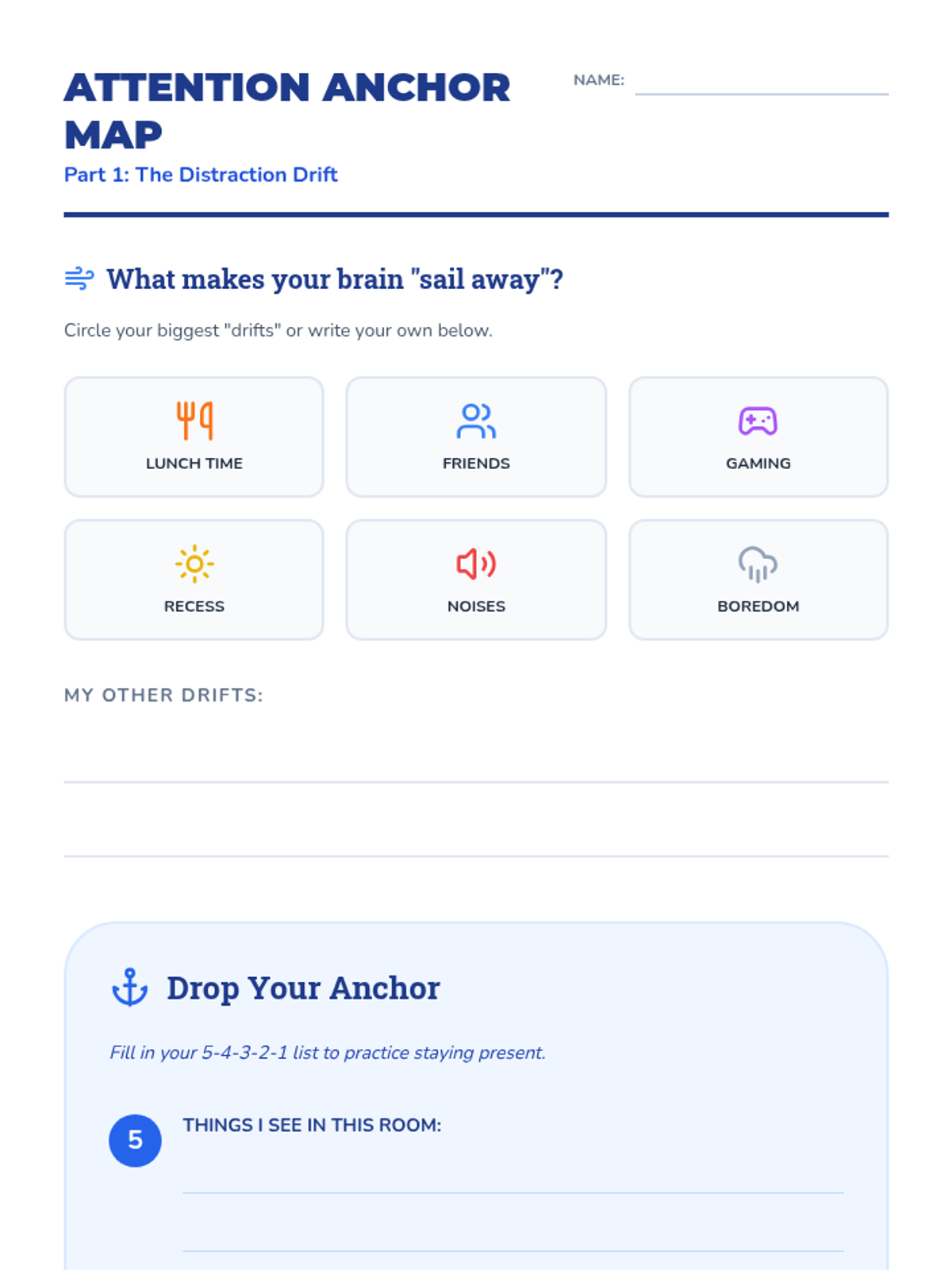
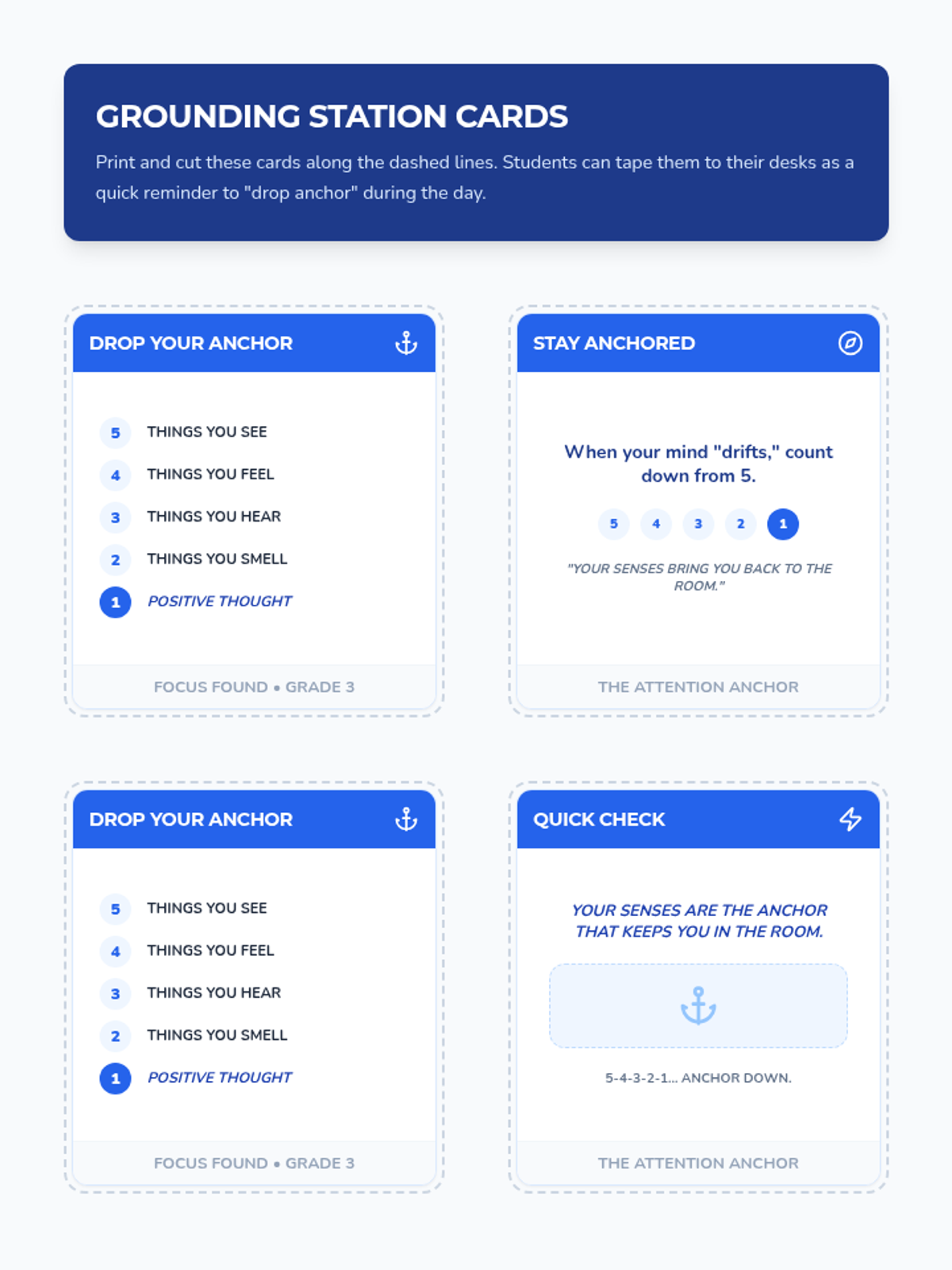
A lesson for 3rd graders on sensory grounding techniques to manage distractions and build focus during high-energy school days, using a nautical 'anchor' theme.
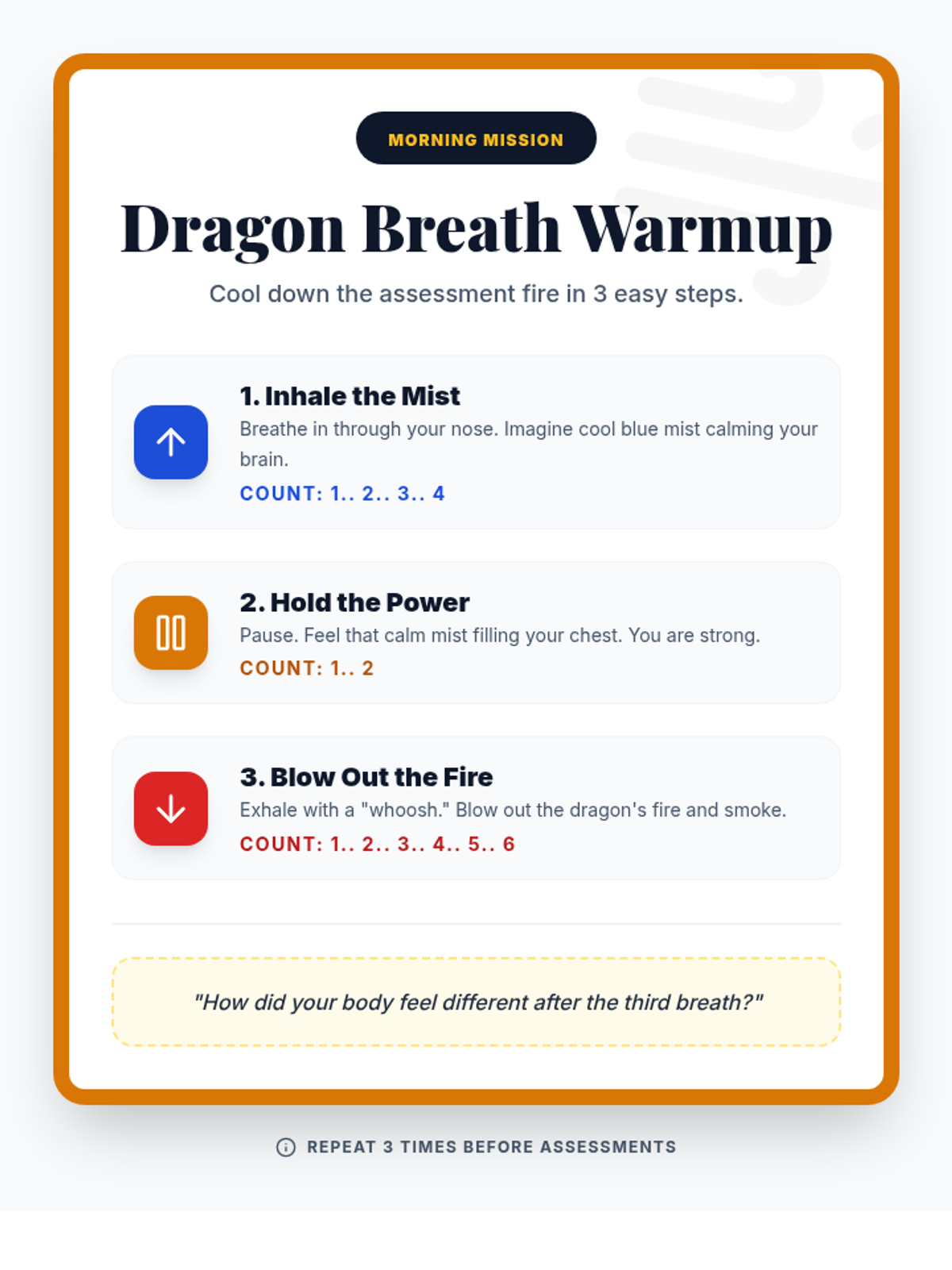
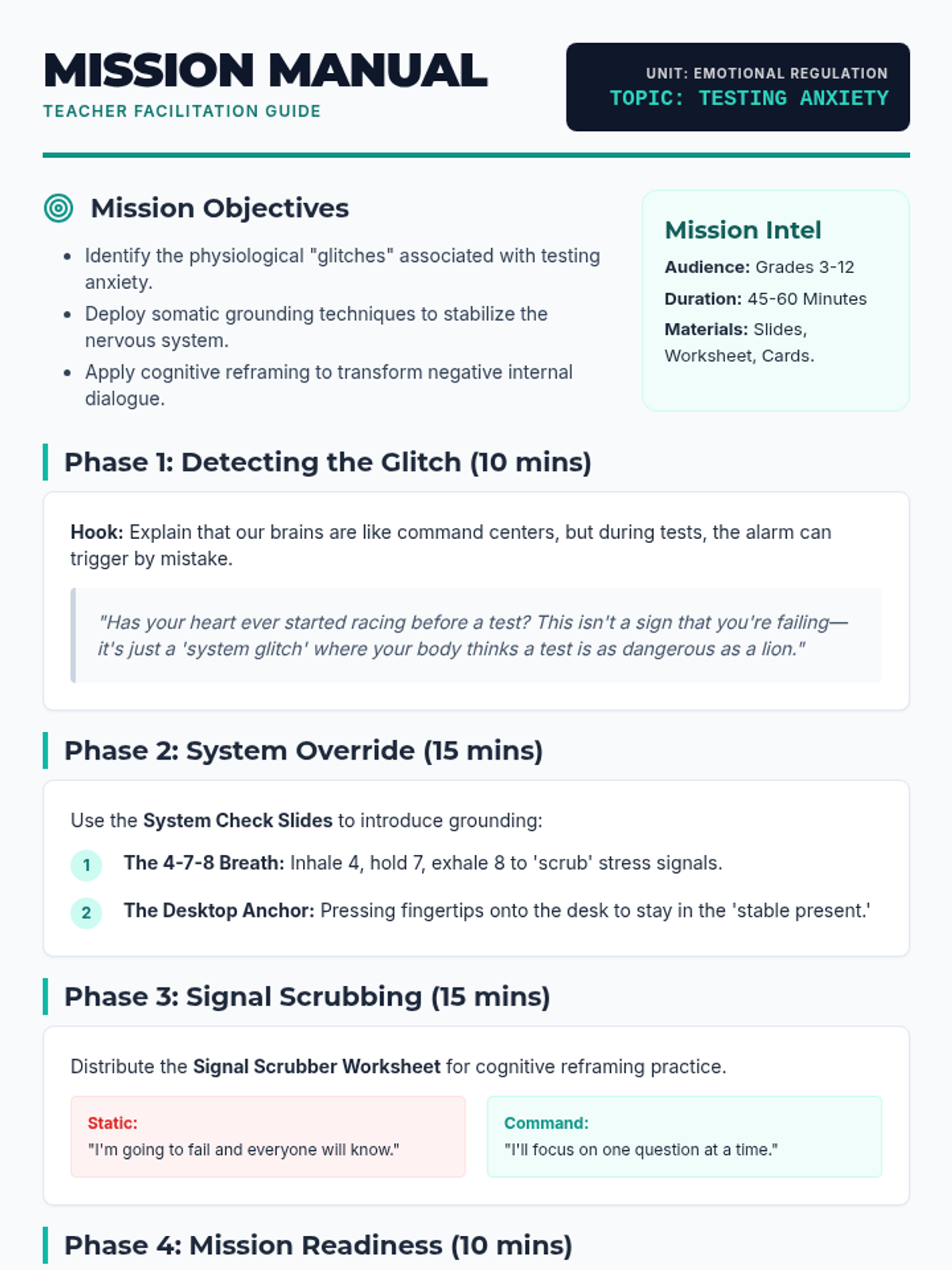
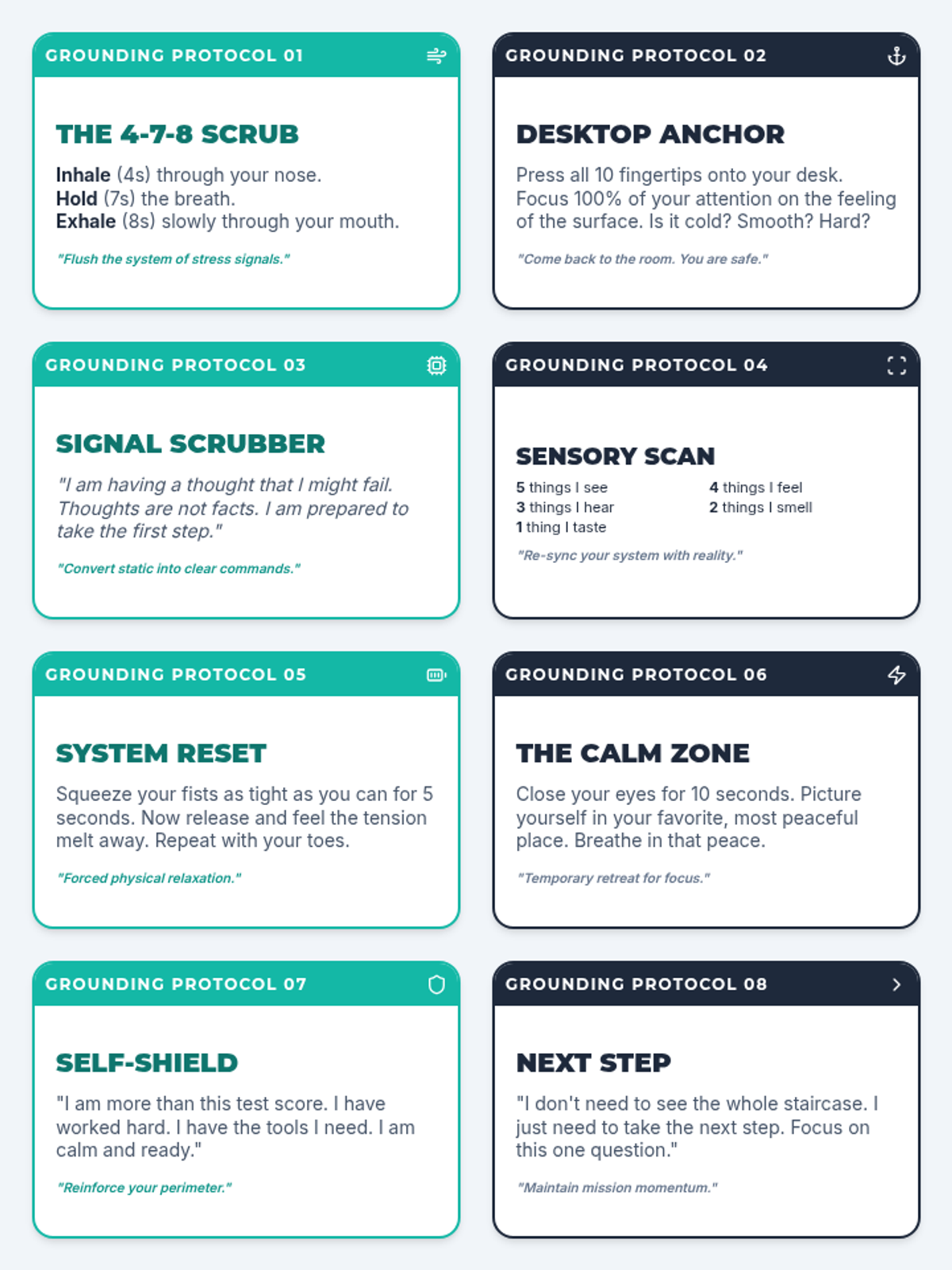
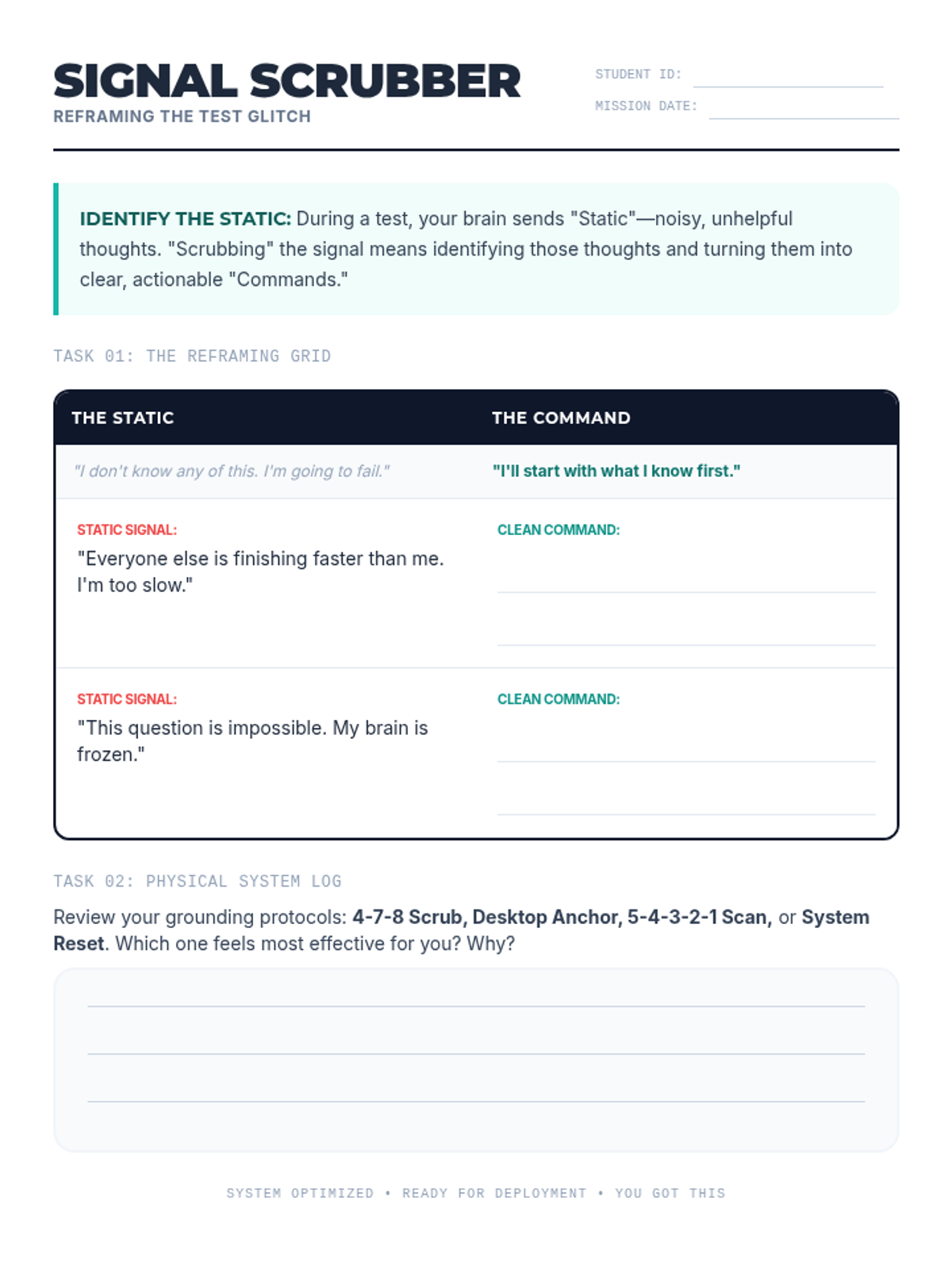
A comprehensive social-emotional learning lesson designed to help students navigate testing anxiety using mindfulness, somatic grounding, and cognitive reframing. This lesson equips students with 'micro-moments' of calm to regain control during high-stakes assessments.
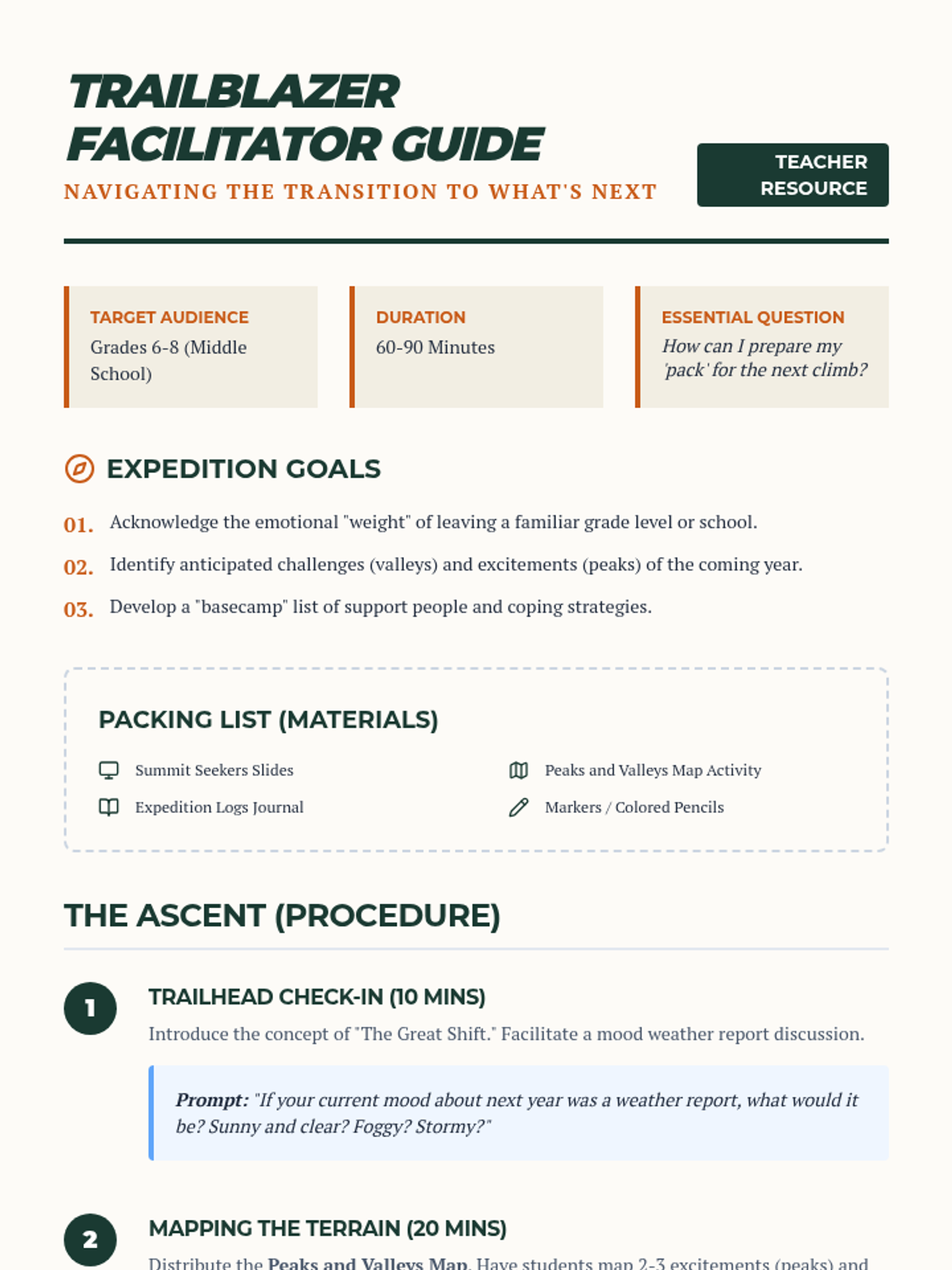
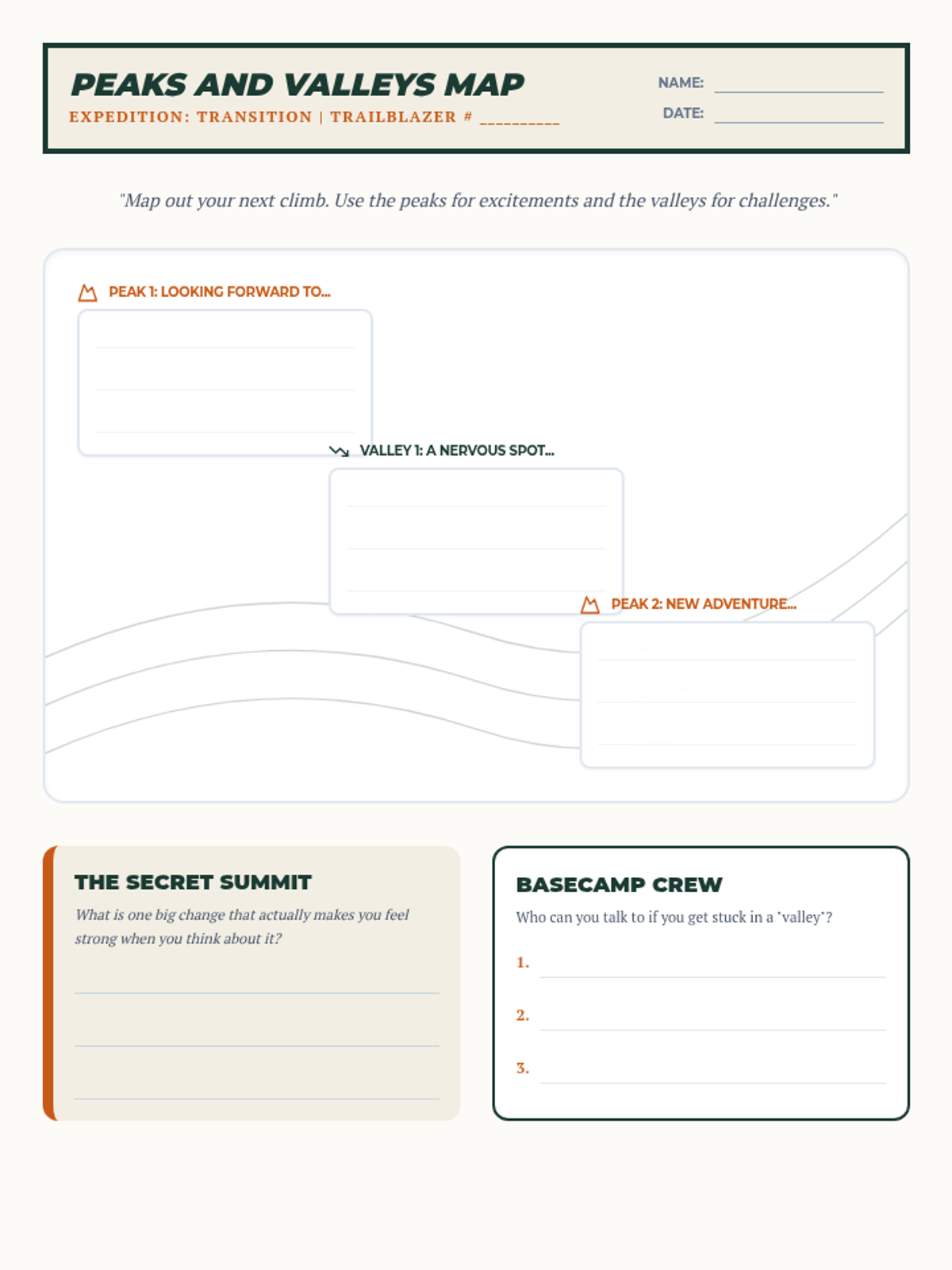
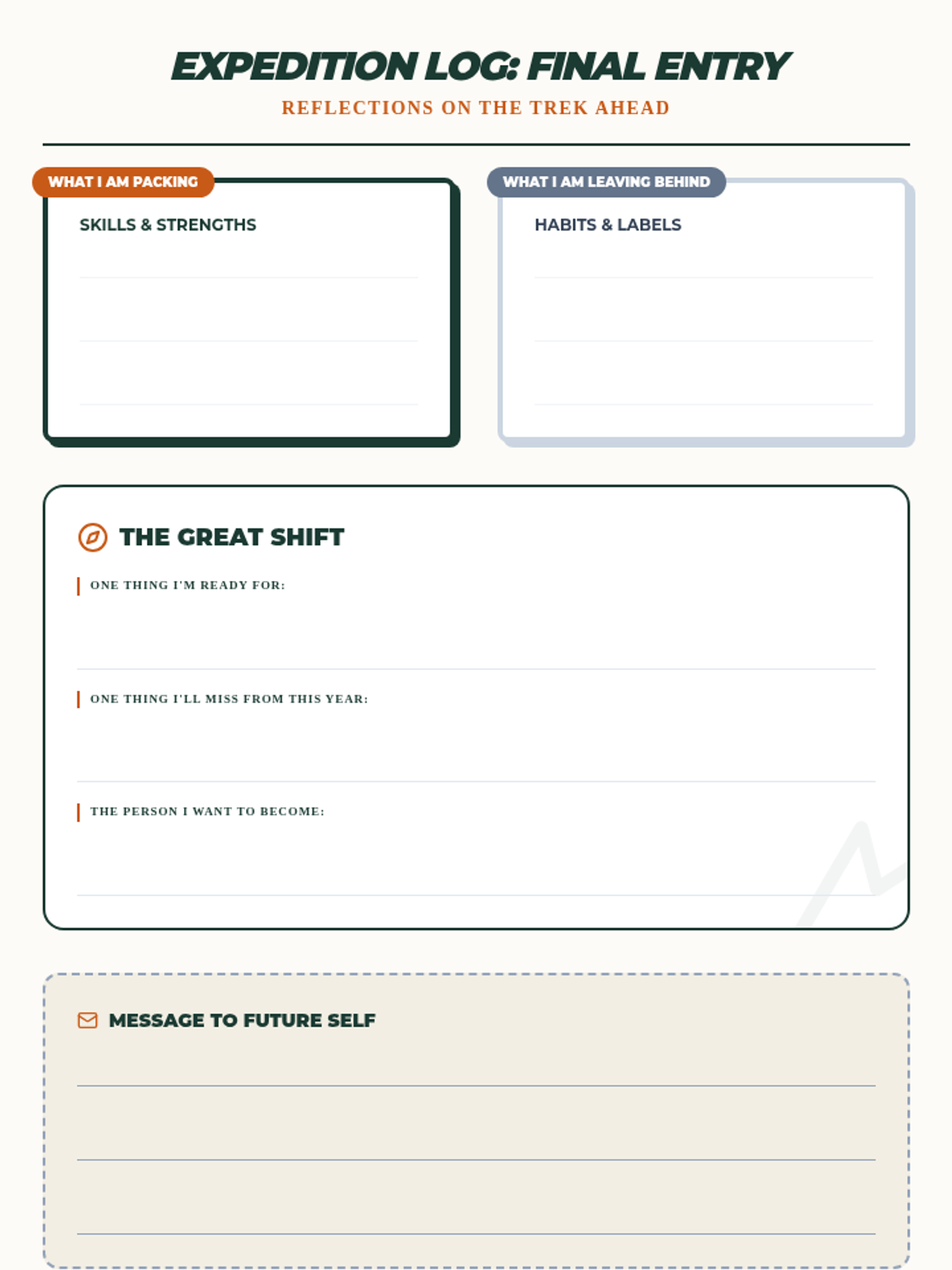
A workshop designed to help middle school students process the emotional transition to high school or the next grade level through reflective mapping and psychological readiness exercises.
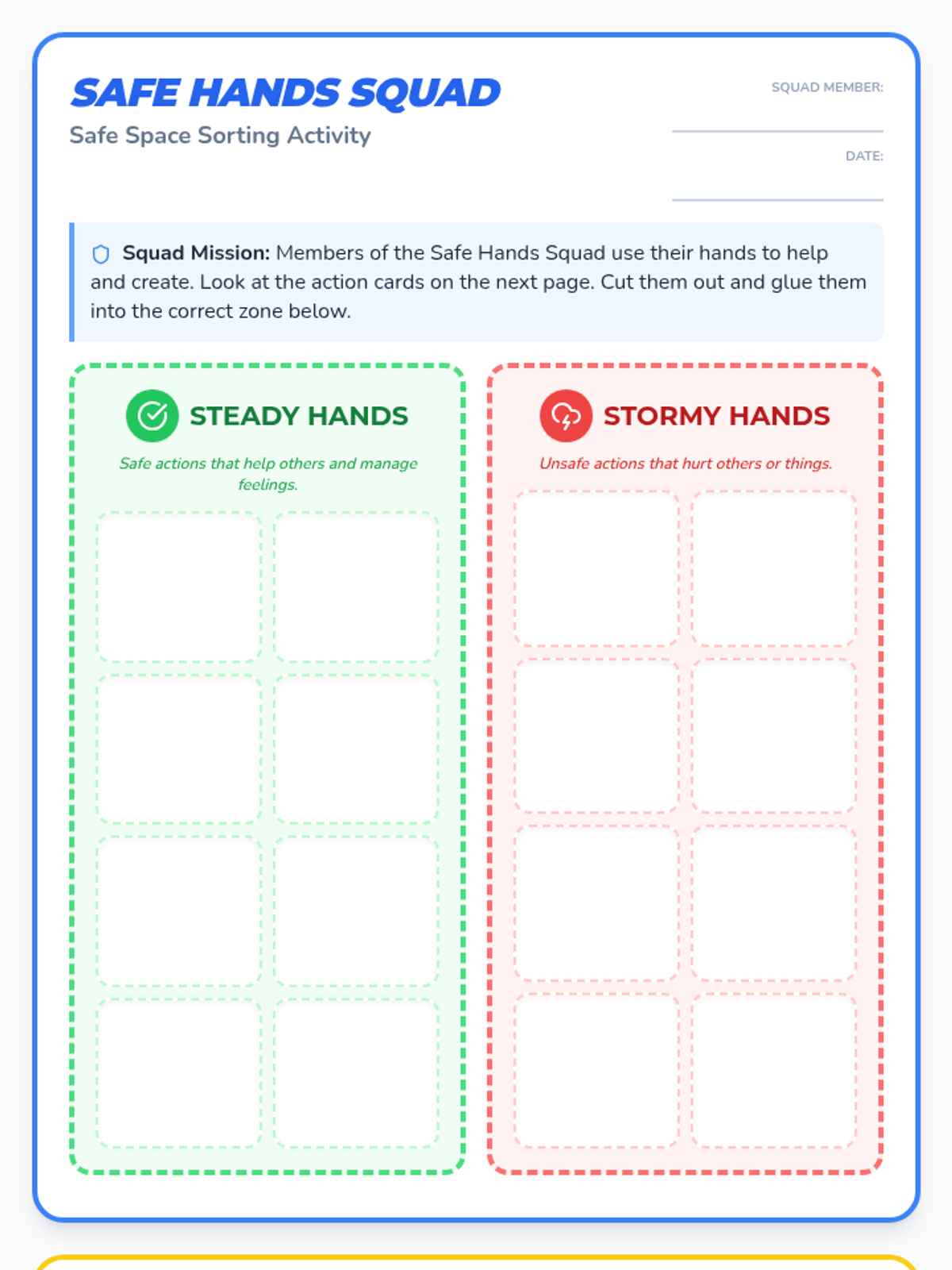
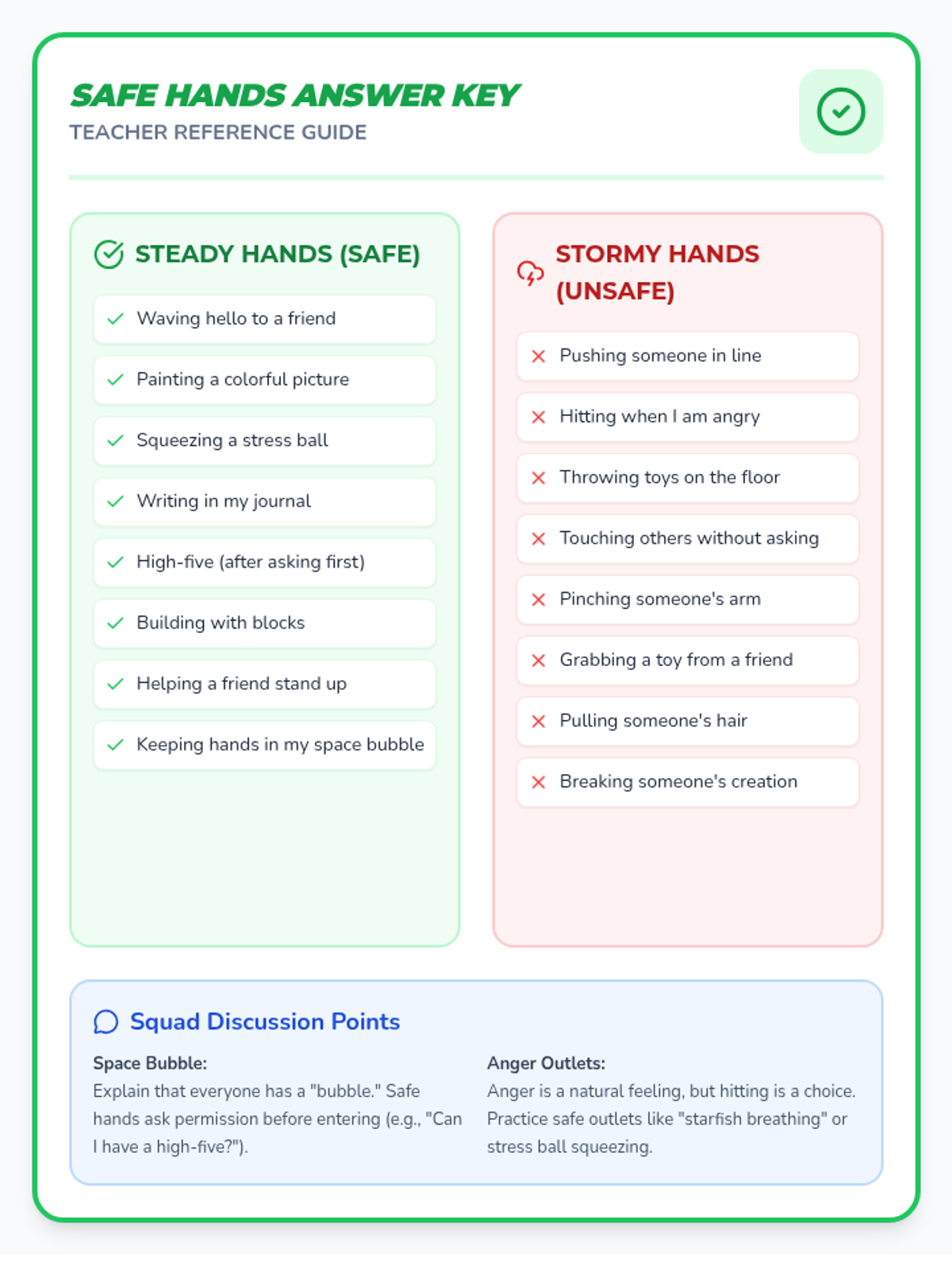
A lesson focused on teaching students how to use their hands safely, respect personal boundaries, and manage strong emotions like anger through a hands-on sorting activity.
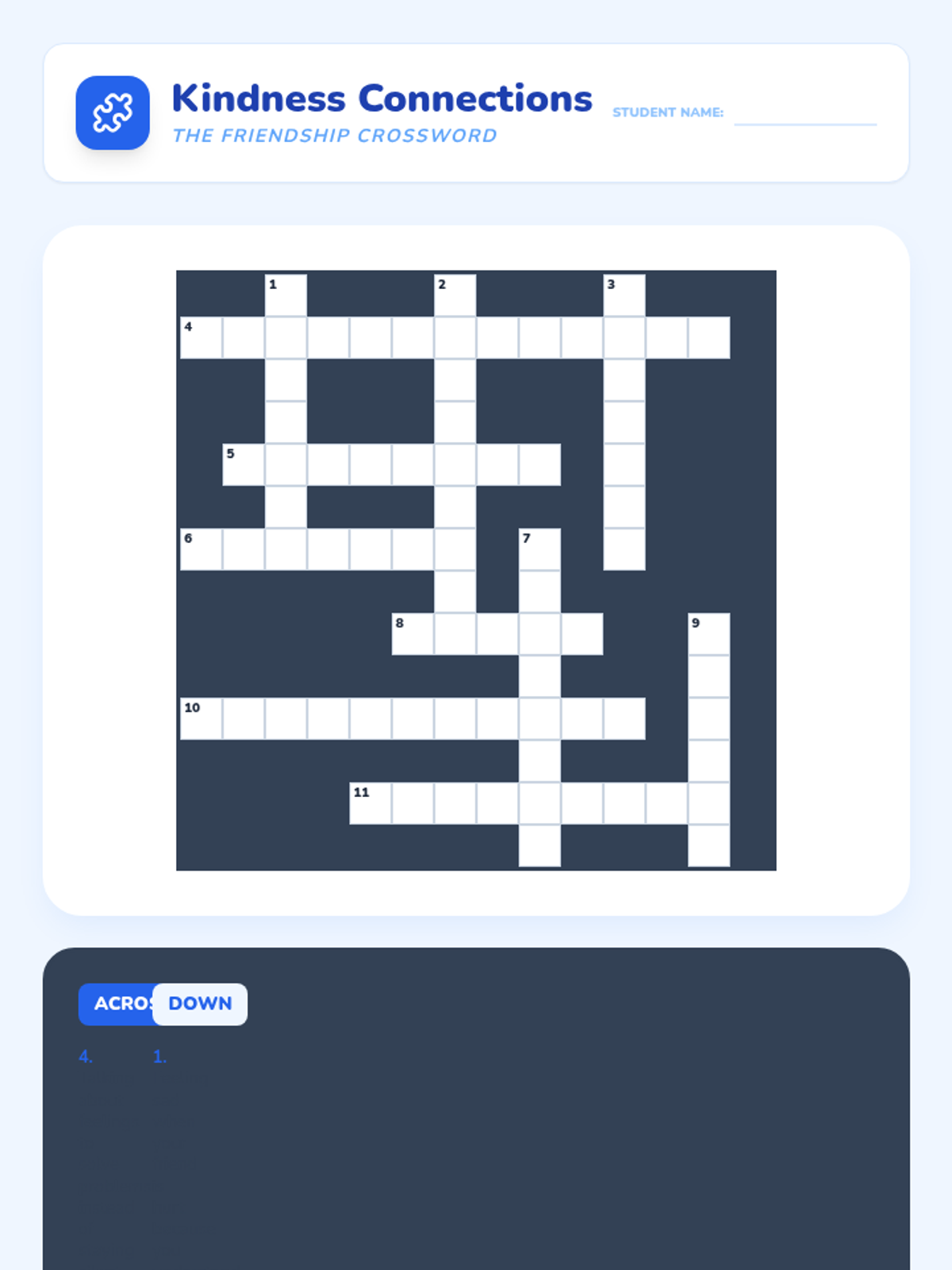
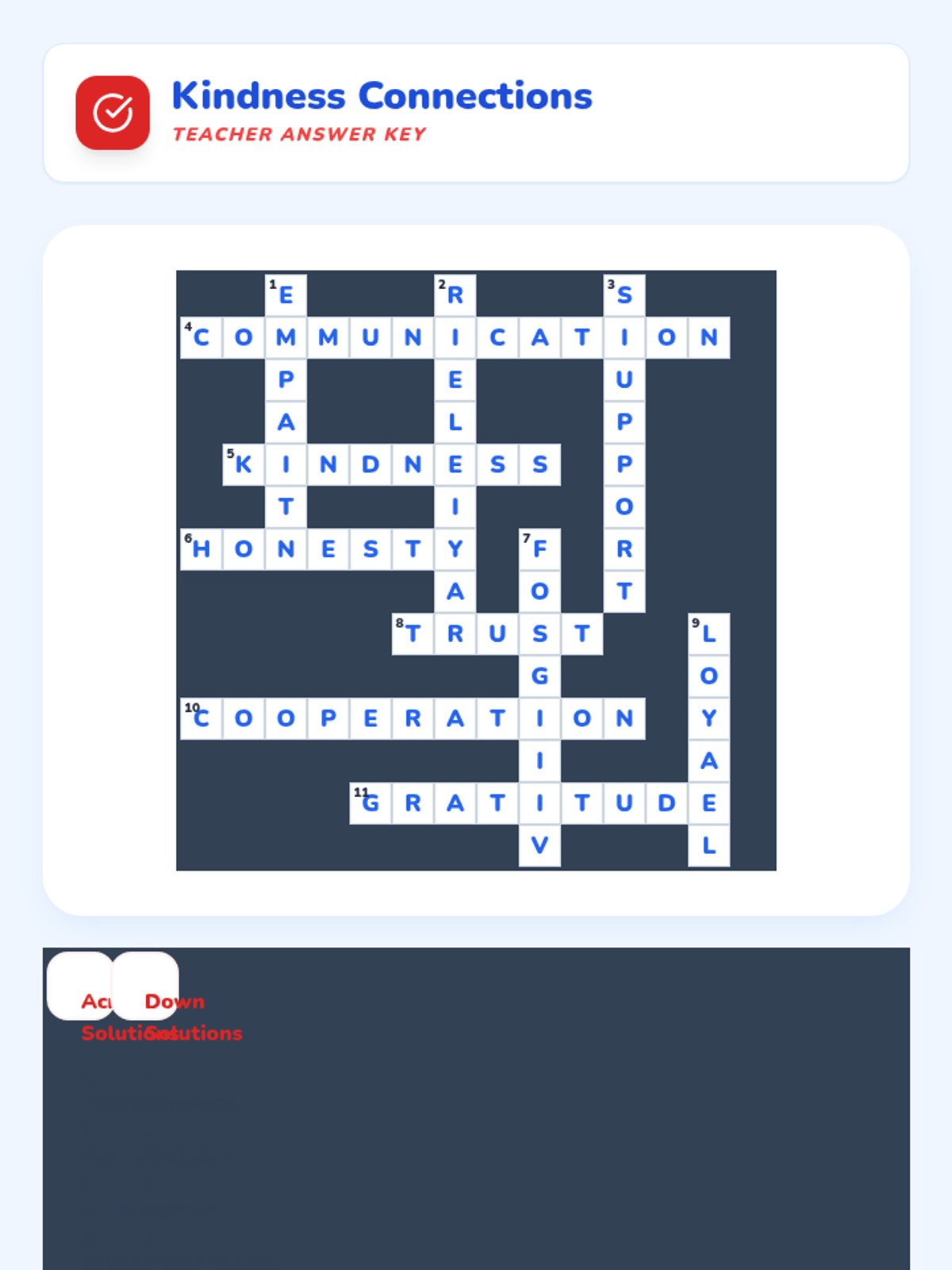
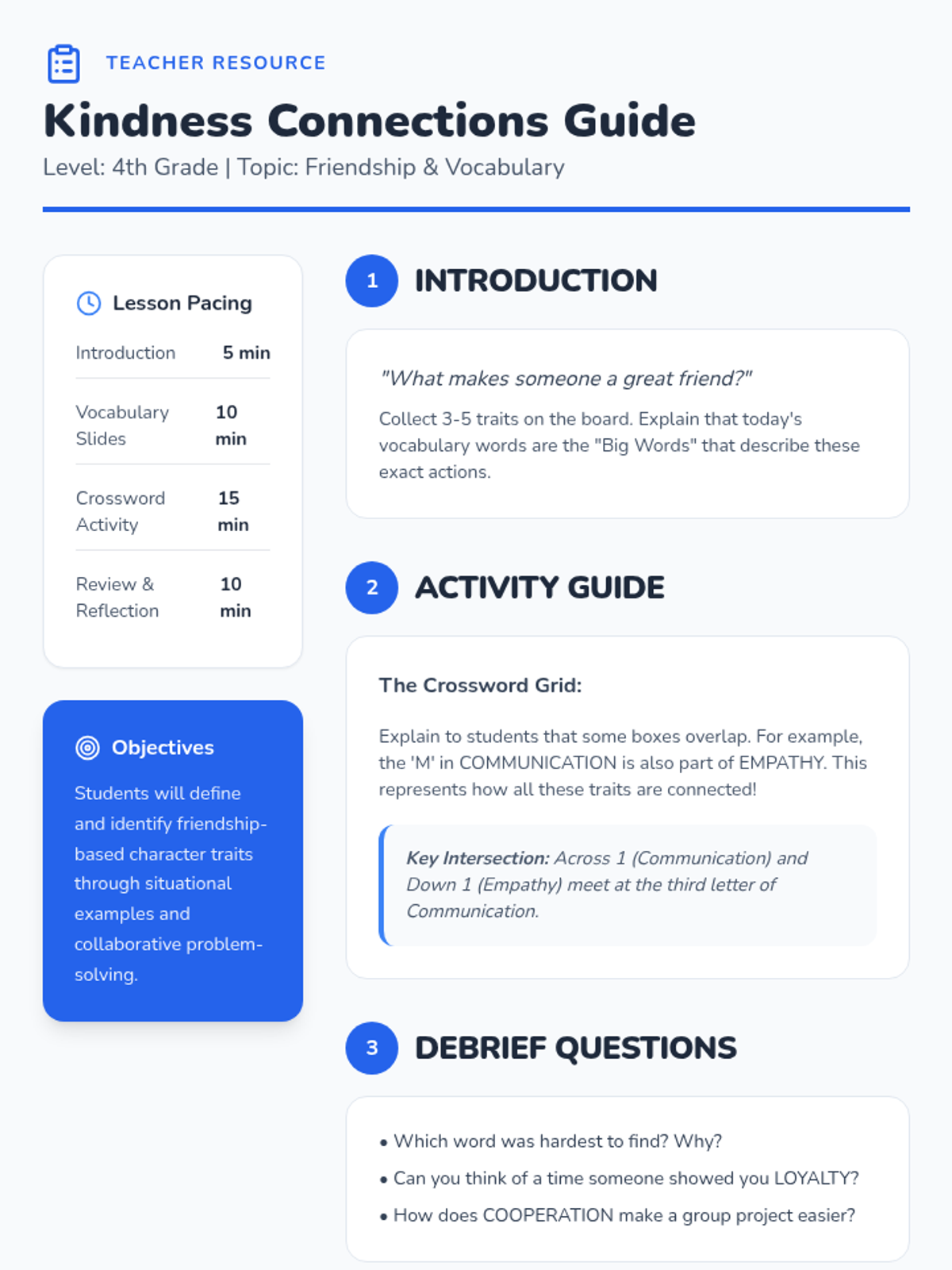
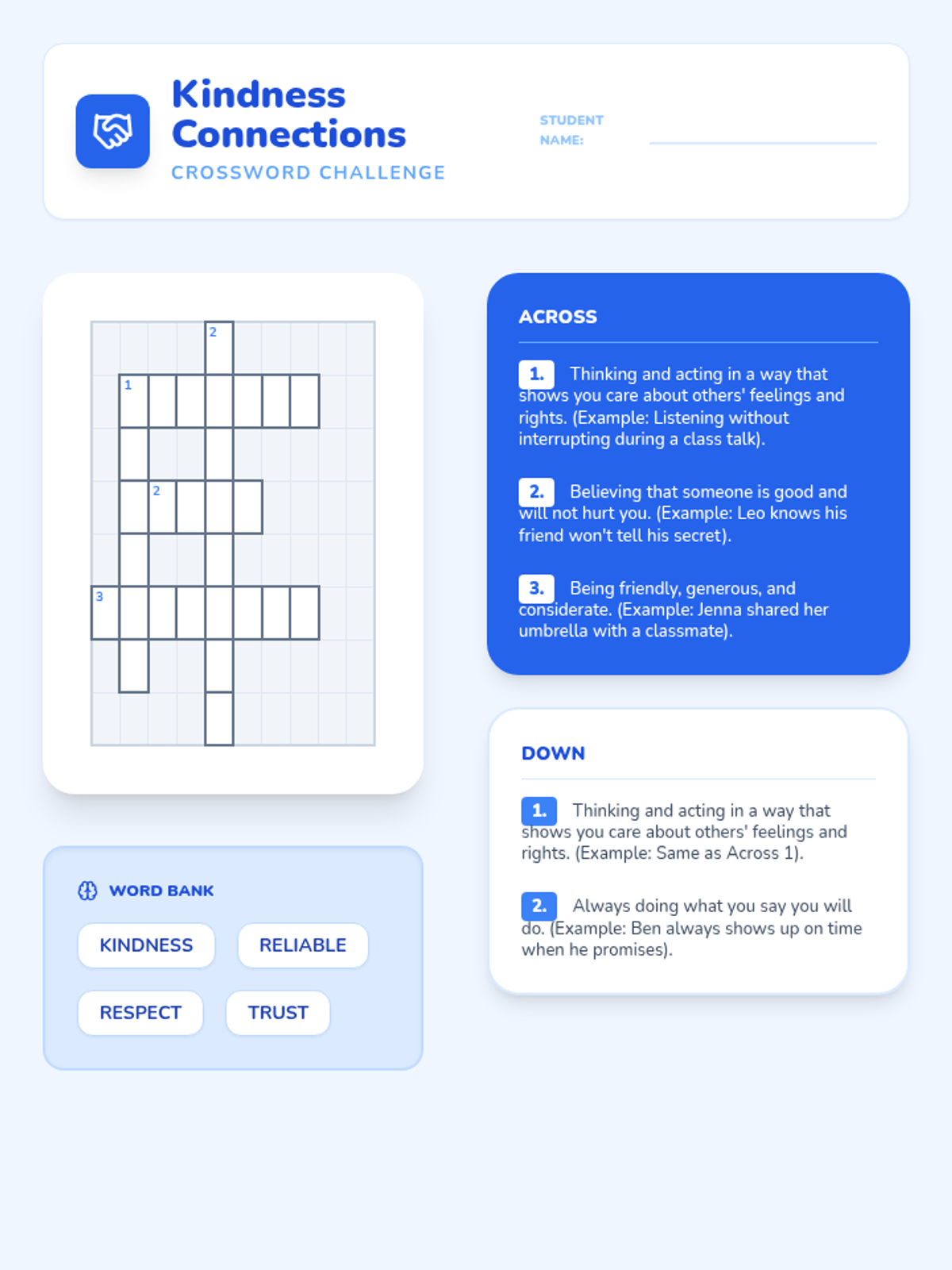
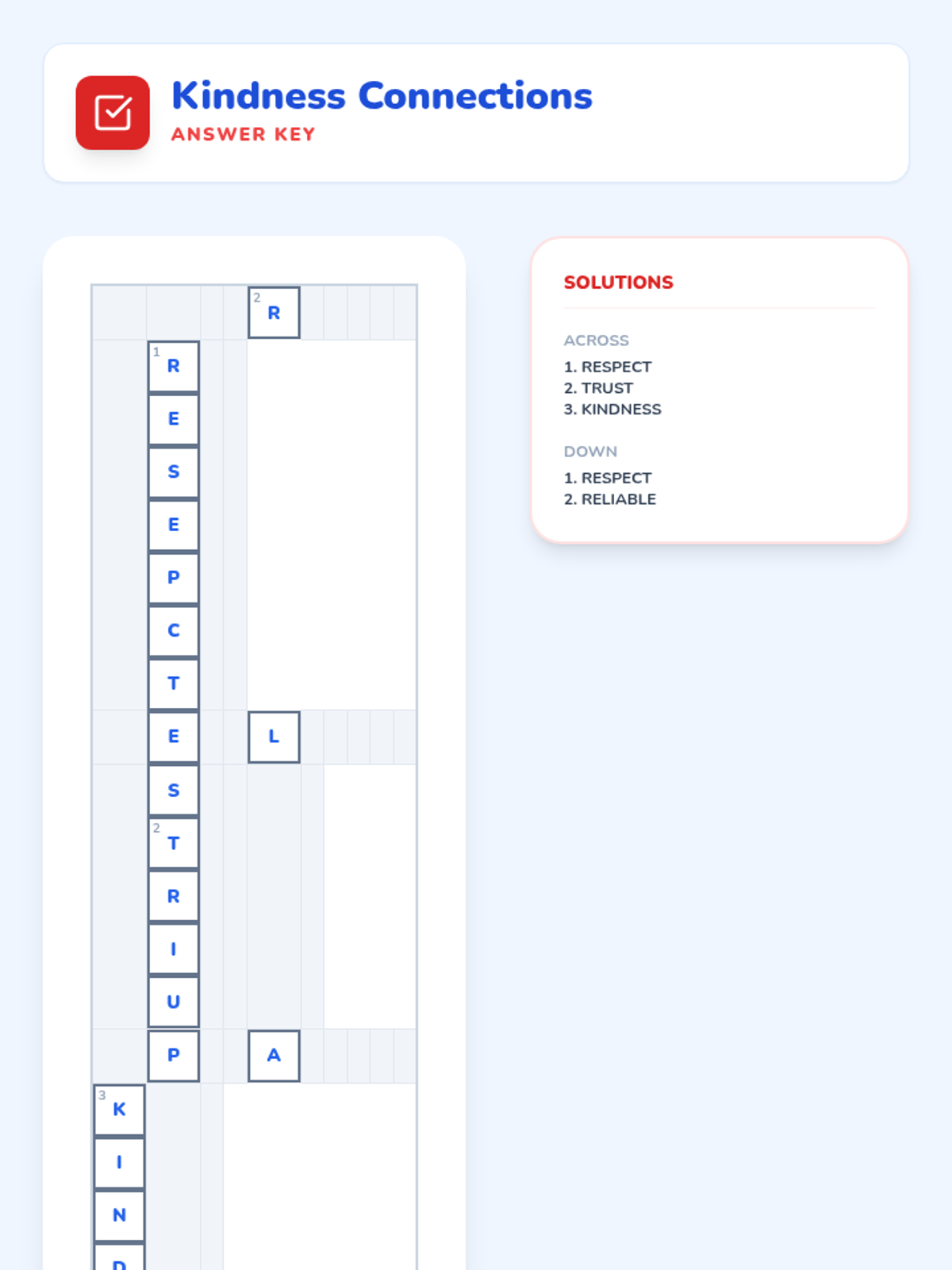
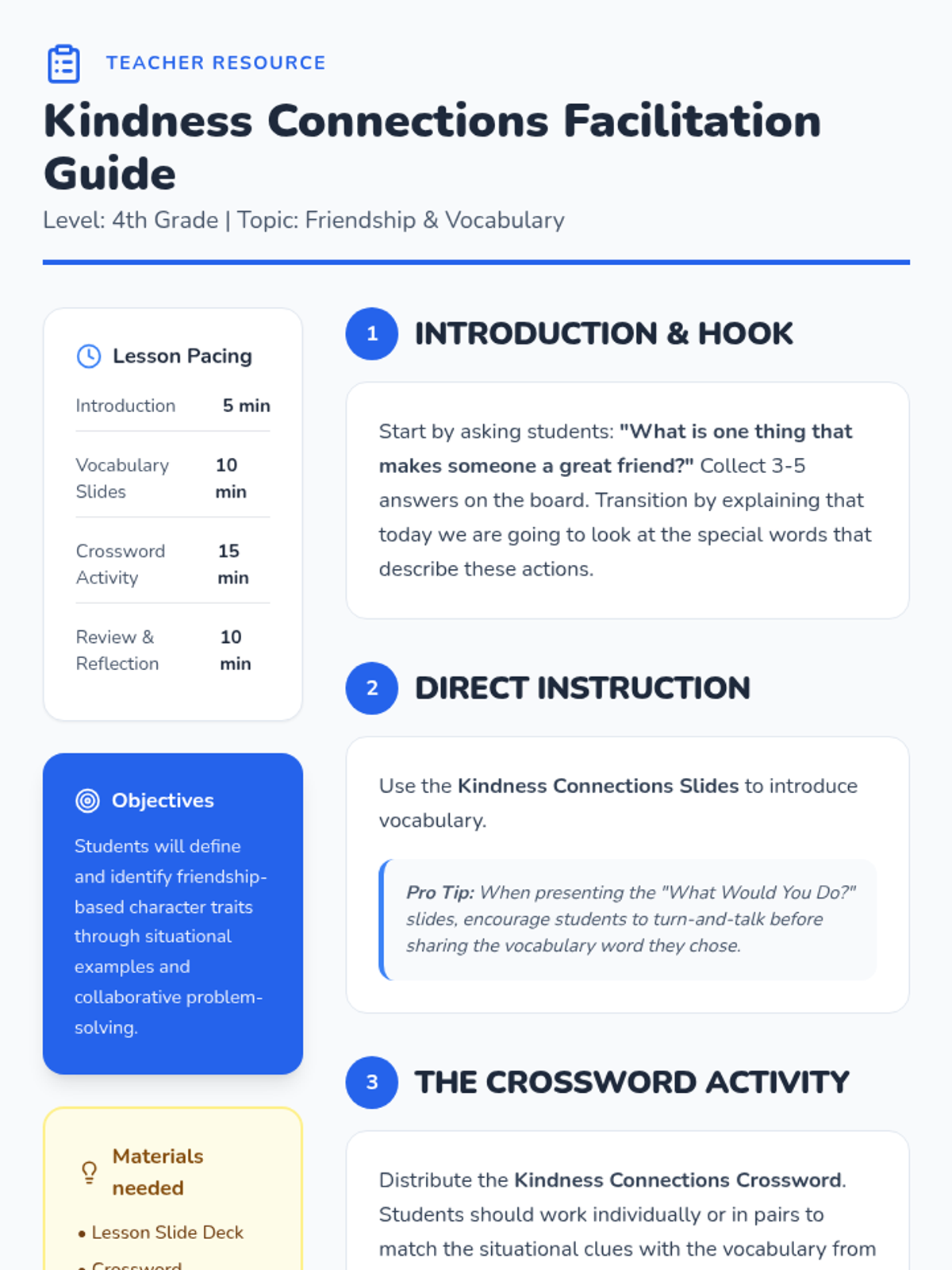
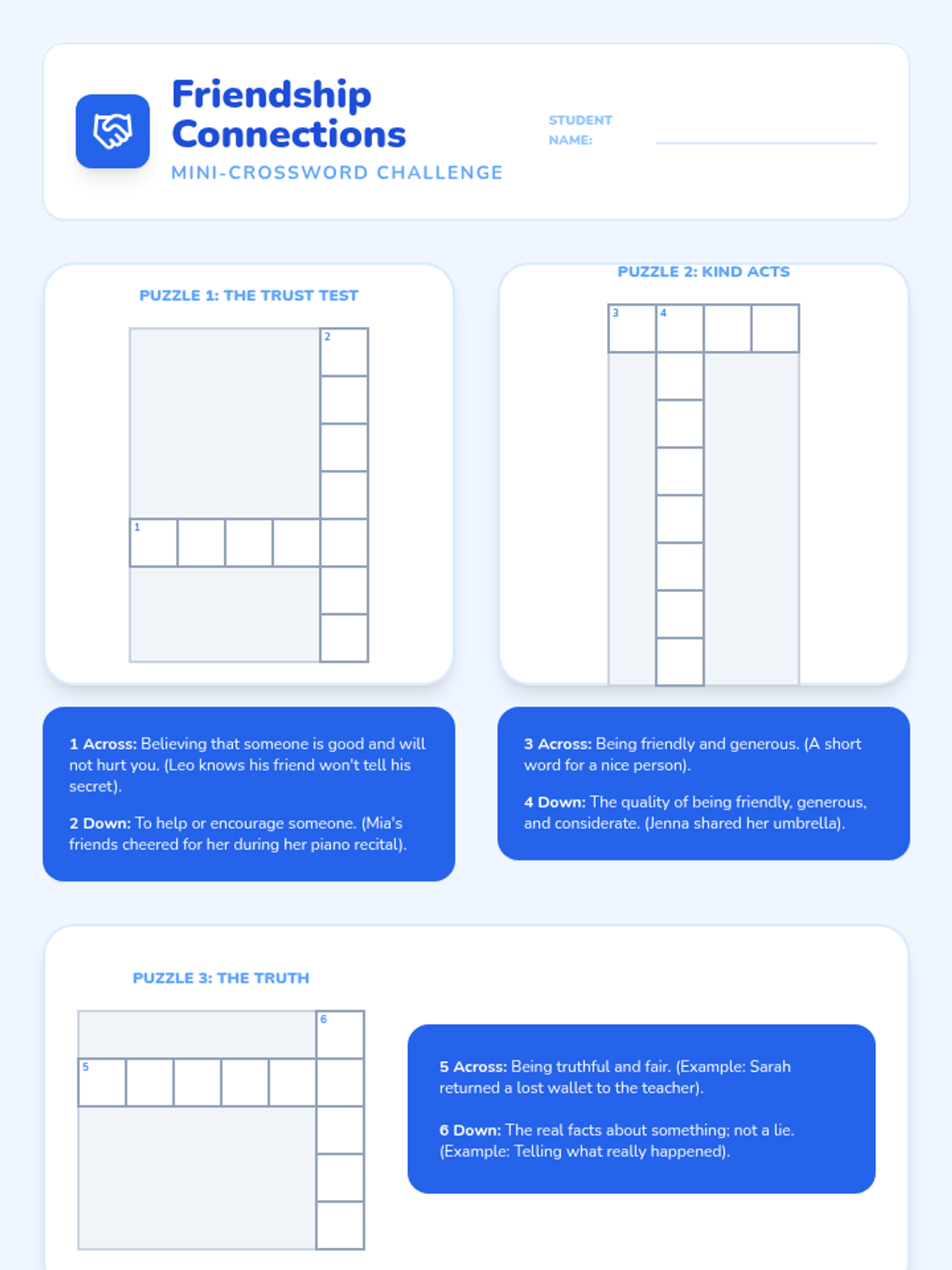
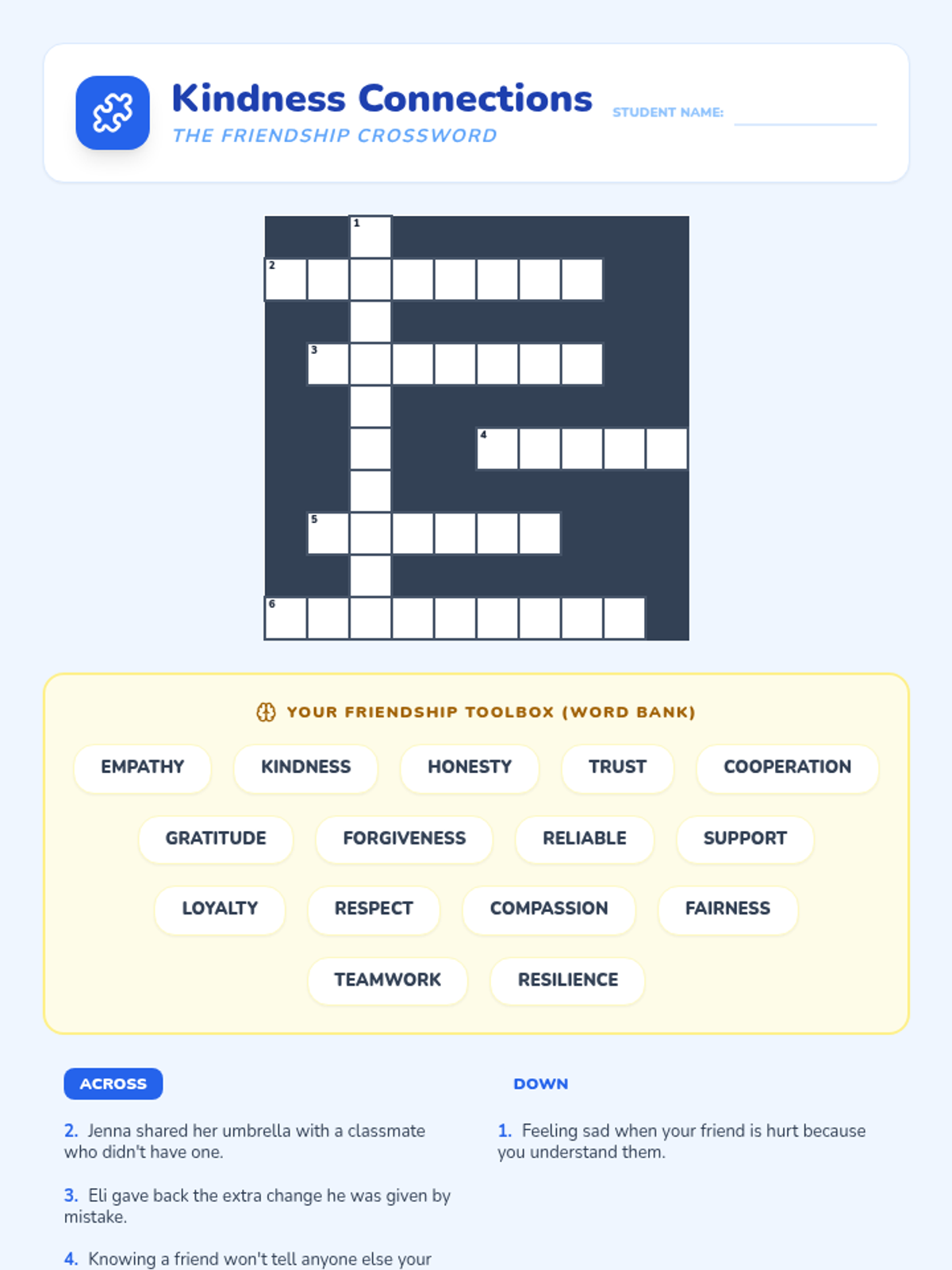
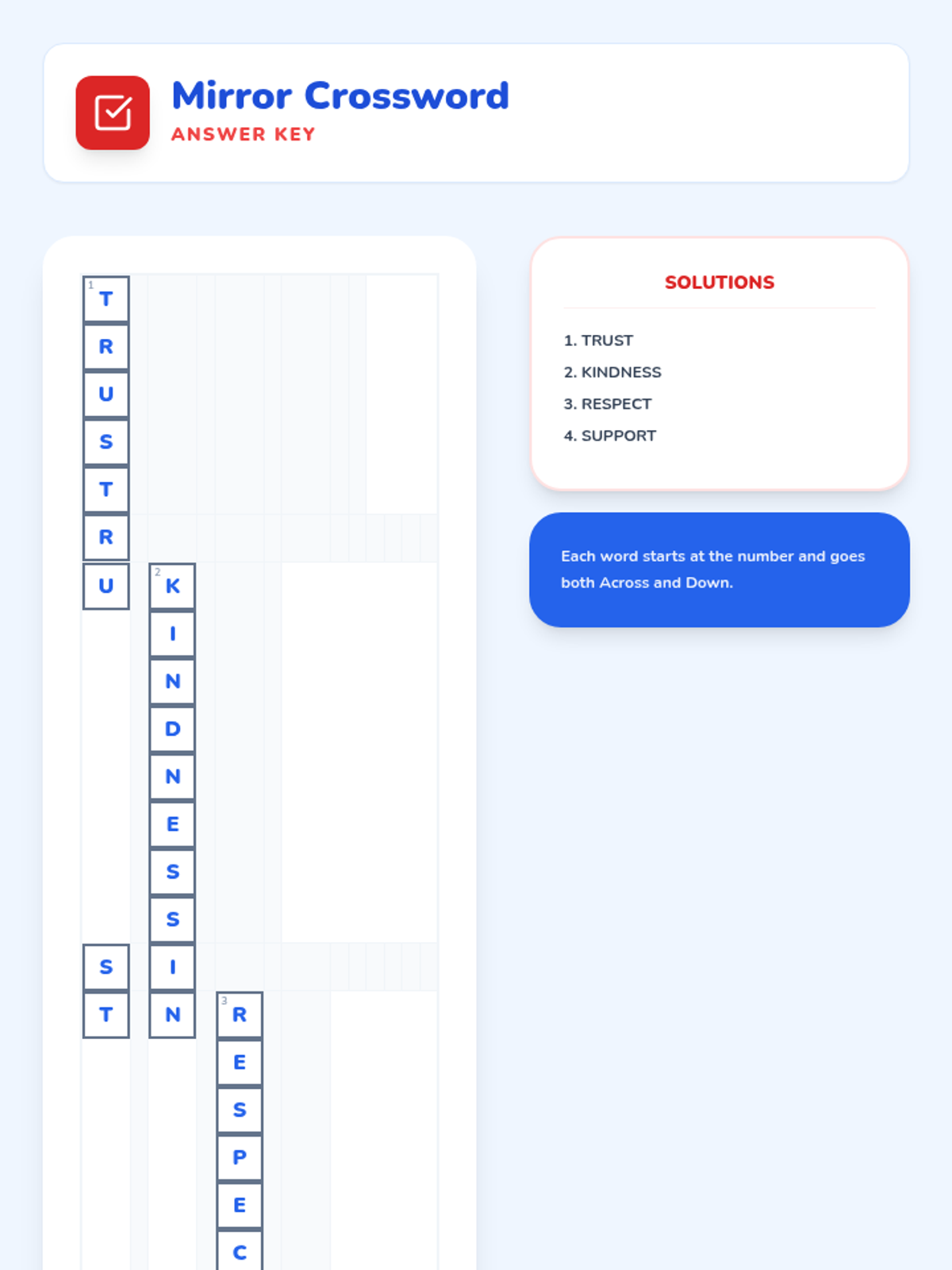
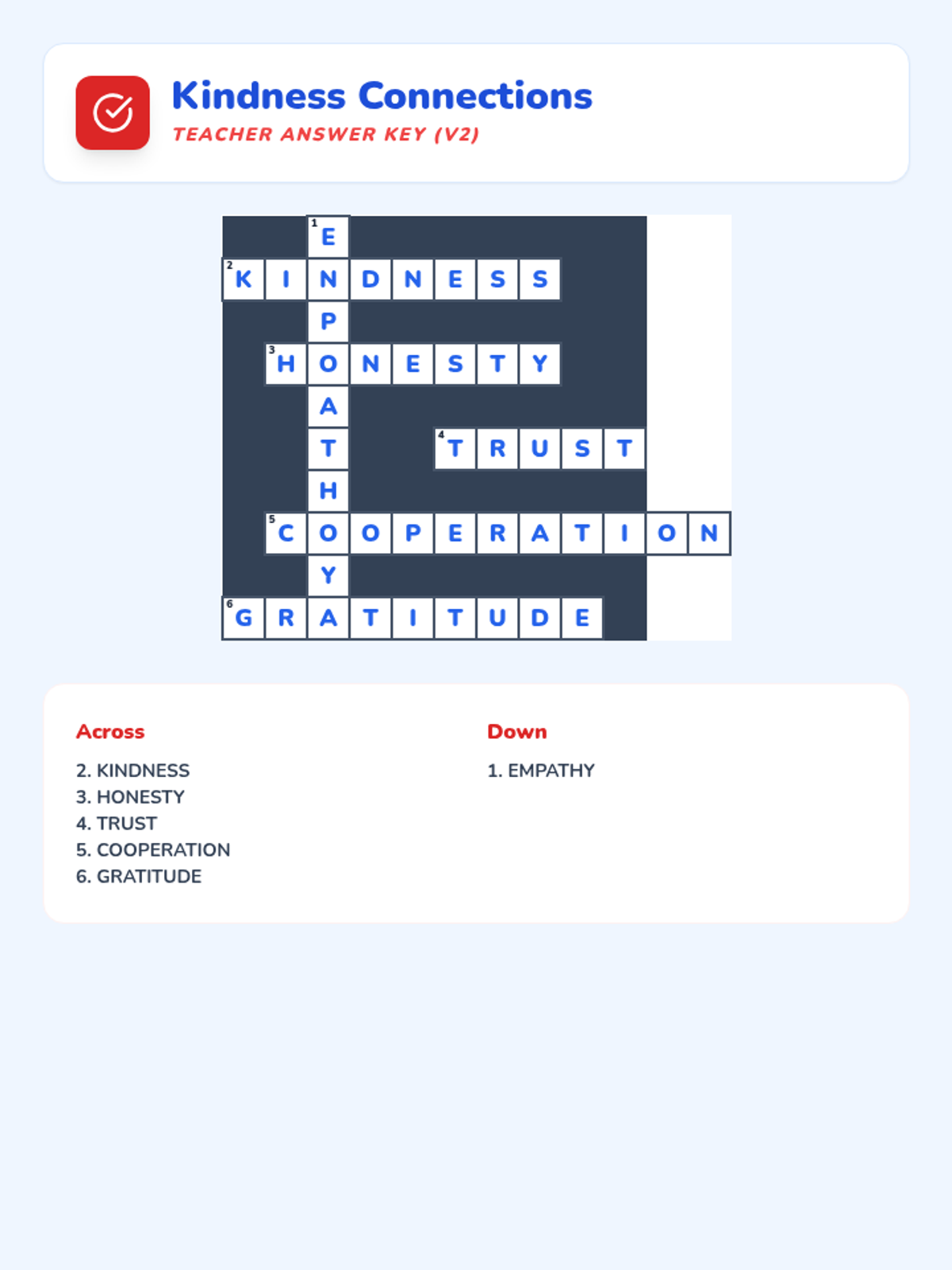
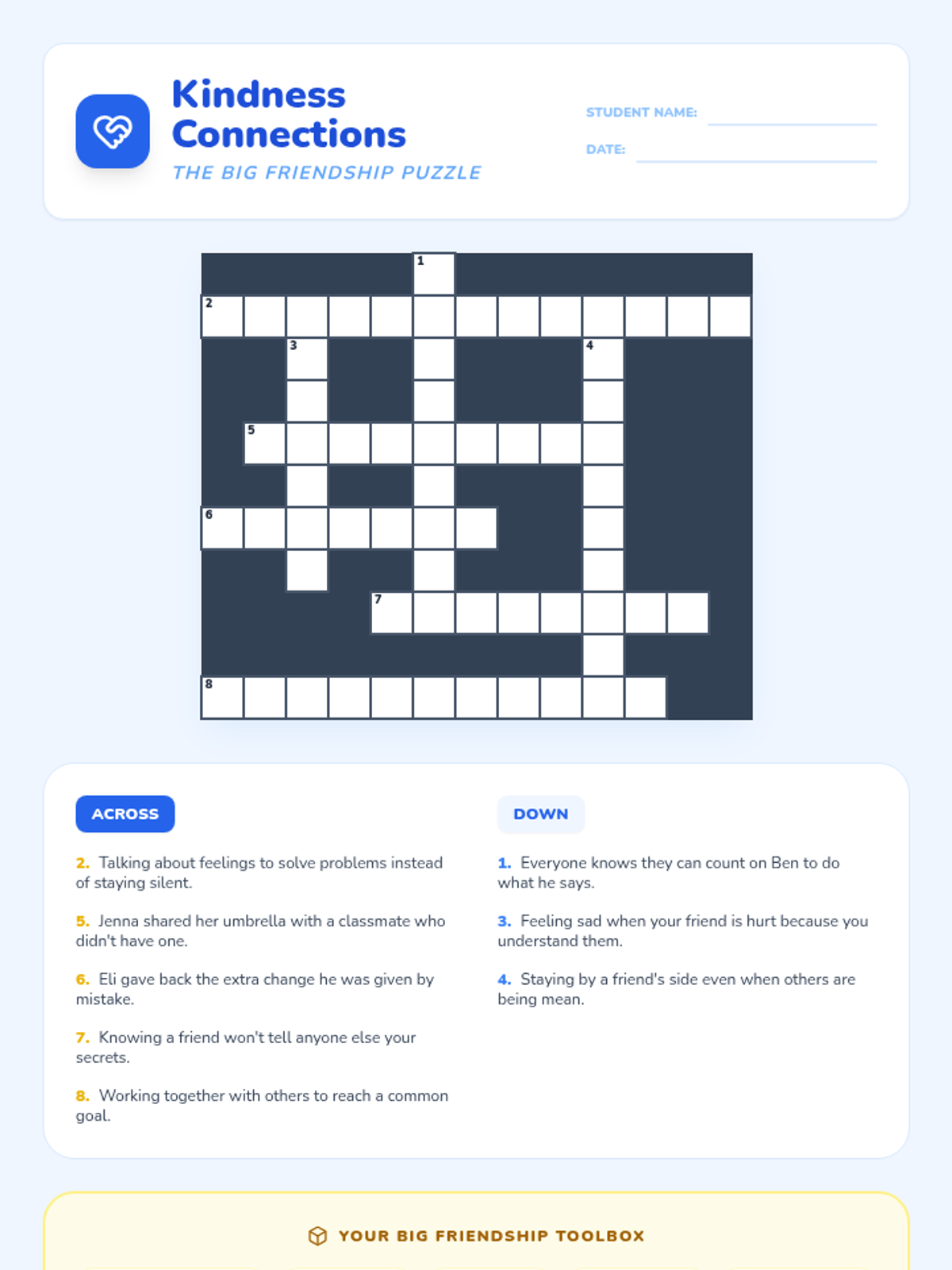
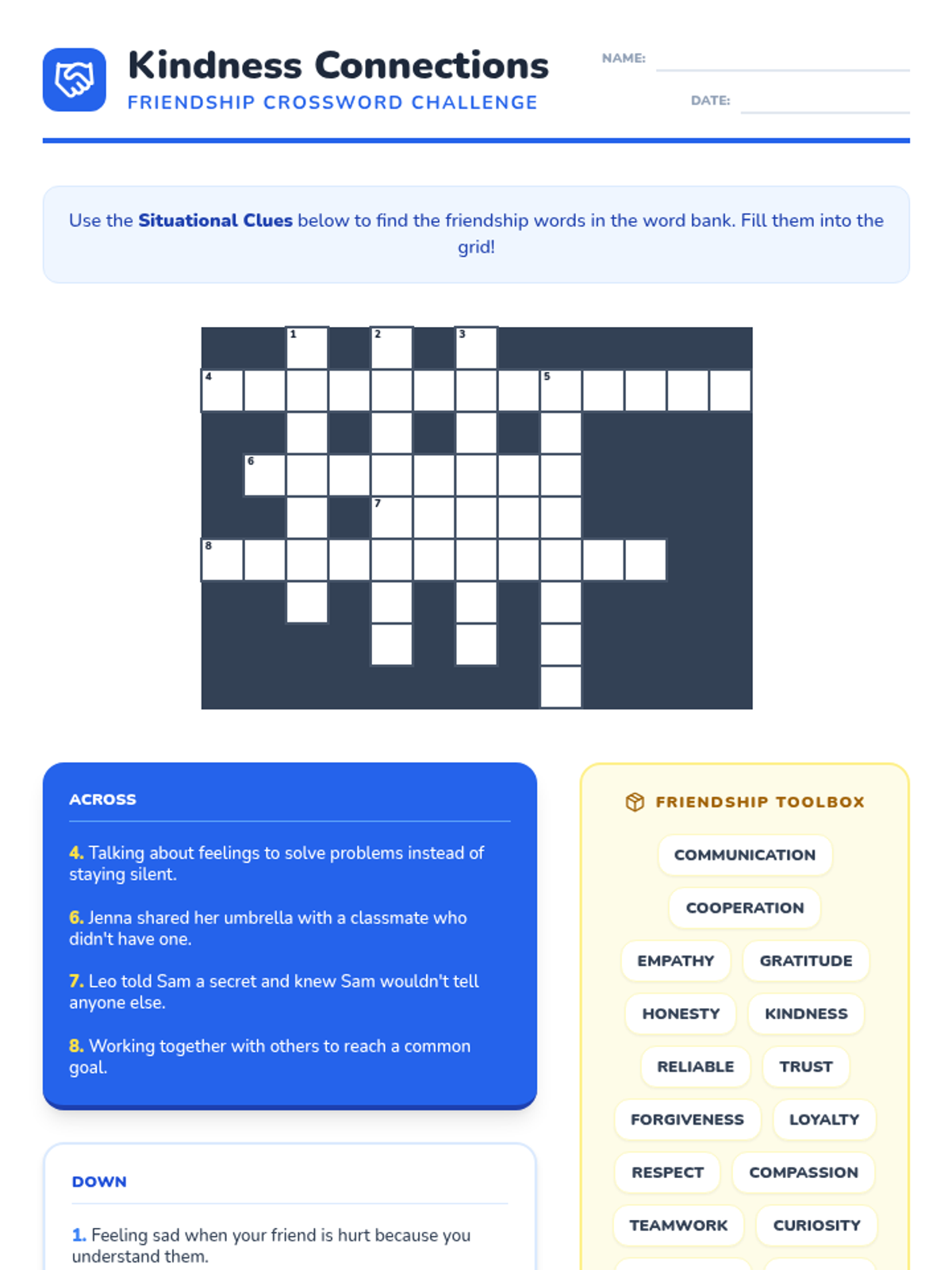
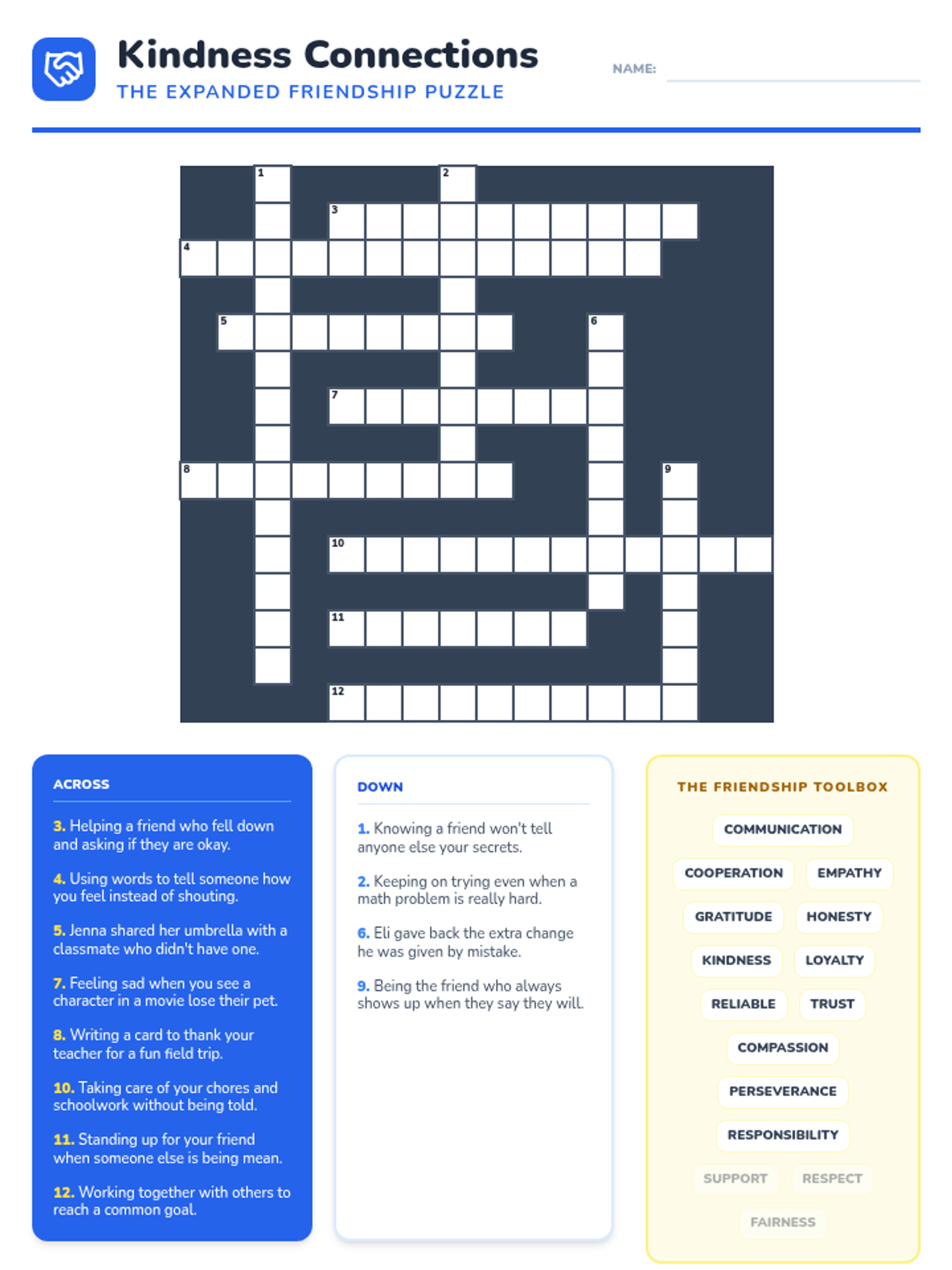
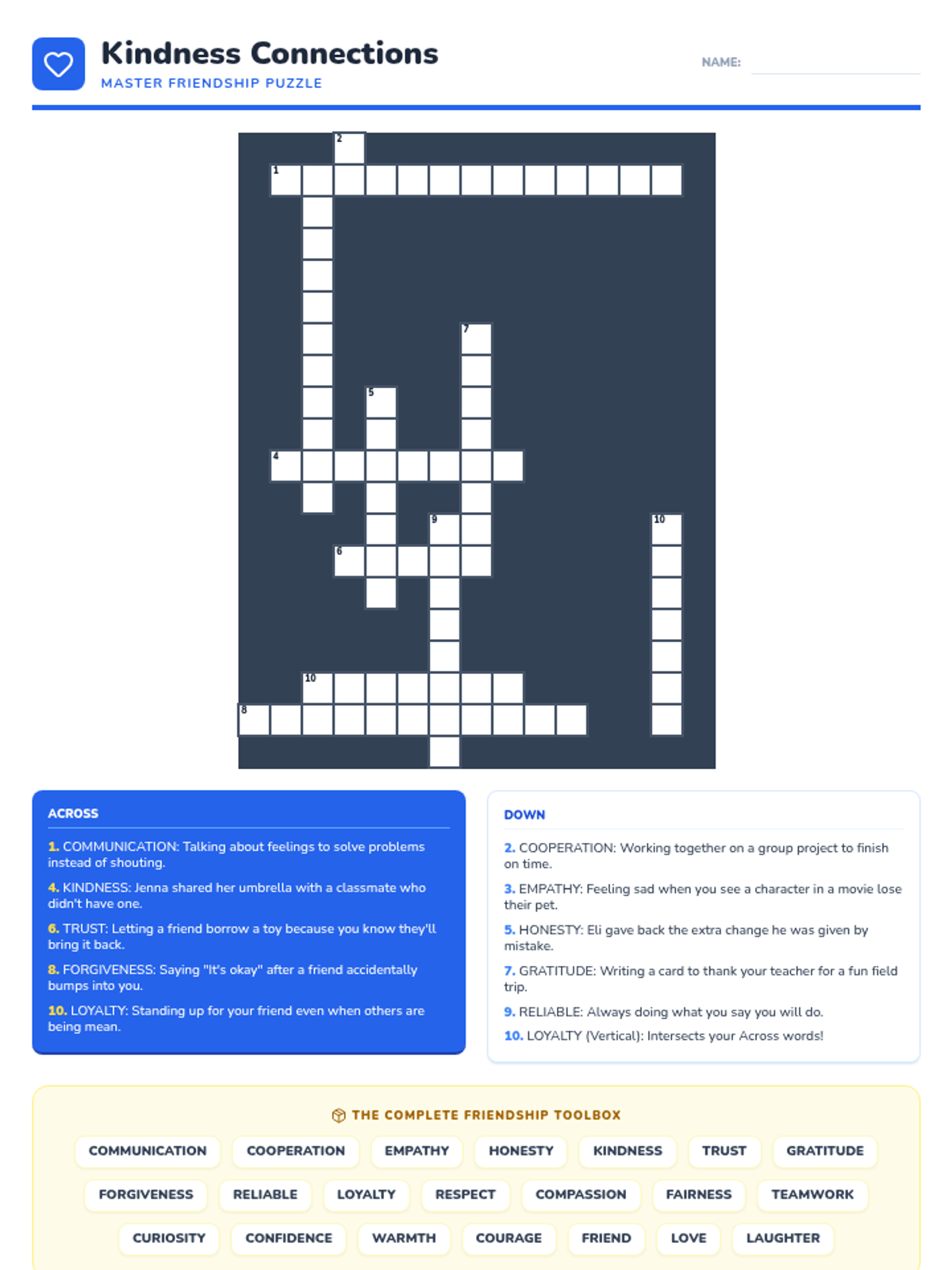
A character-building lesson for 4th graders focused on friendship vocabulary and positive behavioral traits. Students define and apply terms like empathy, honesty, and cooperation through situational practice and a crossword puzzle.
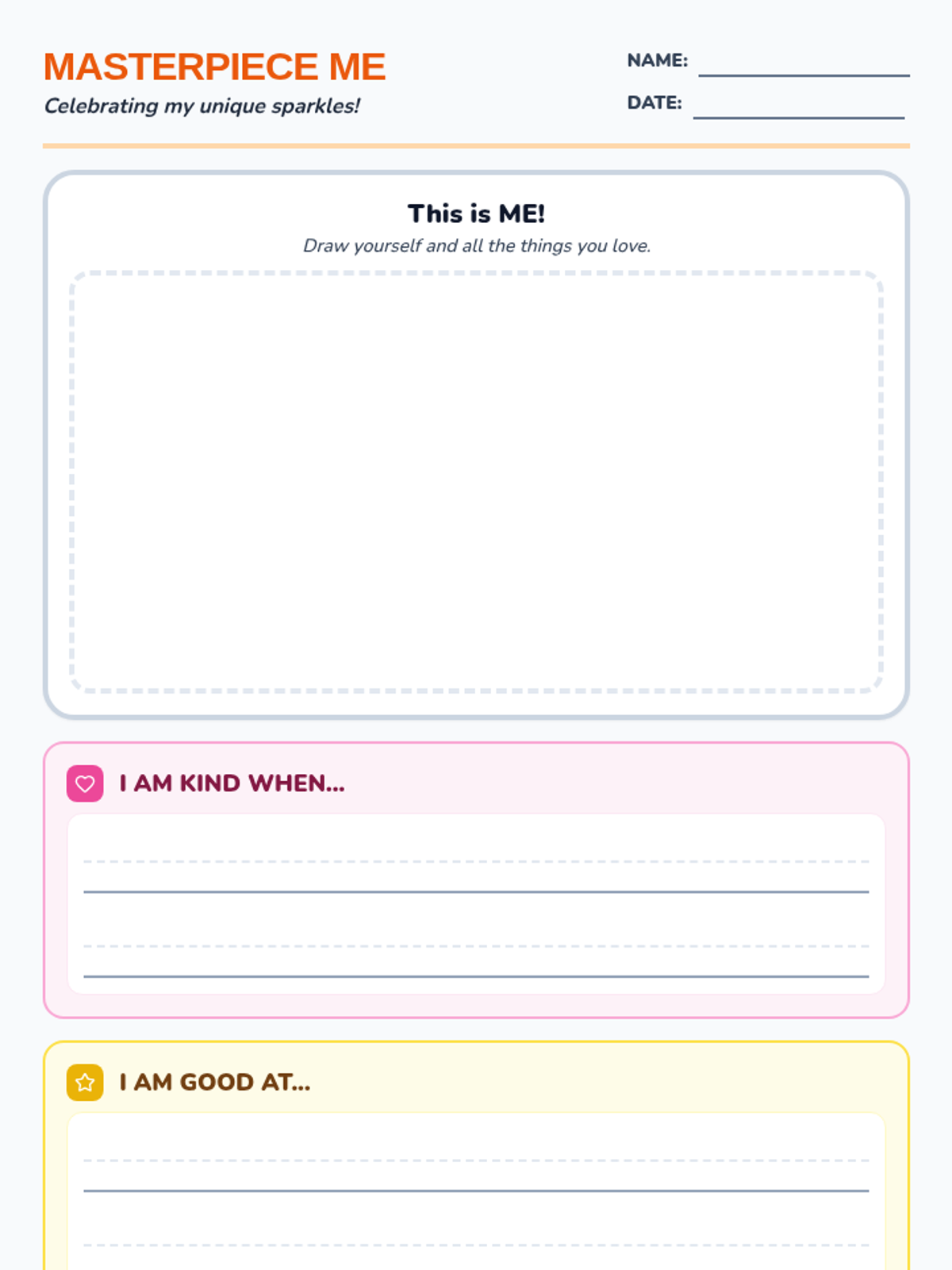
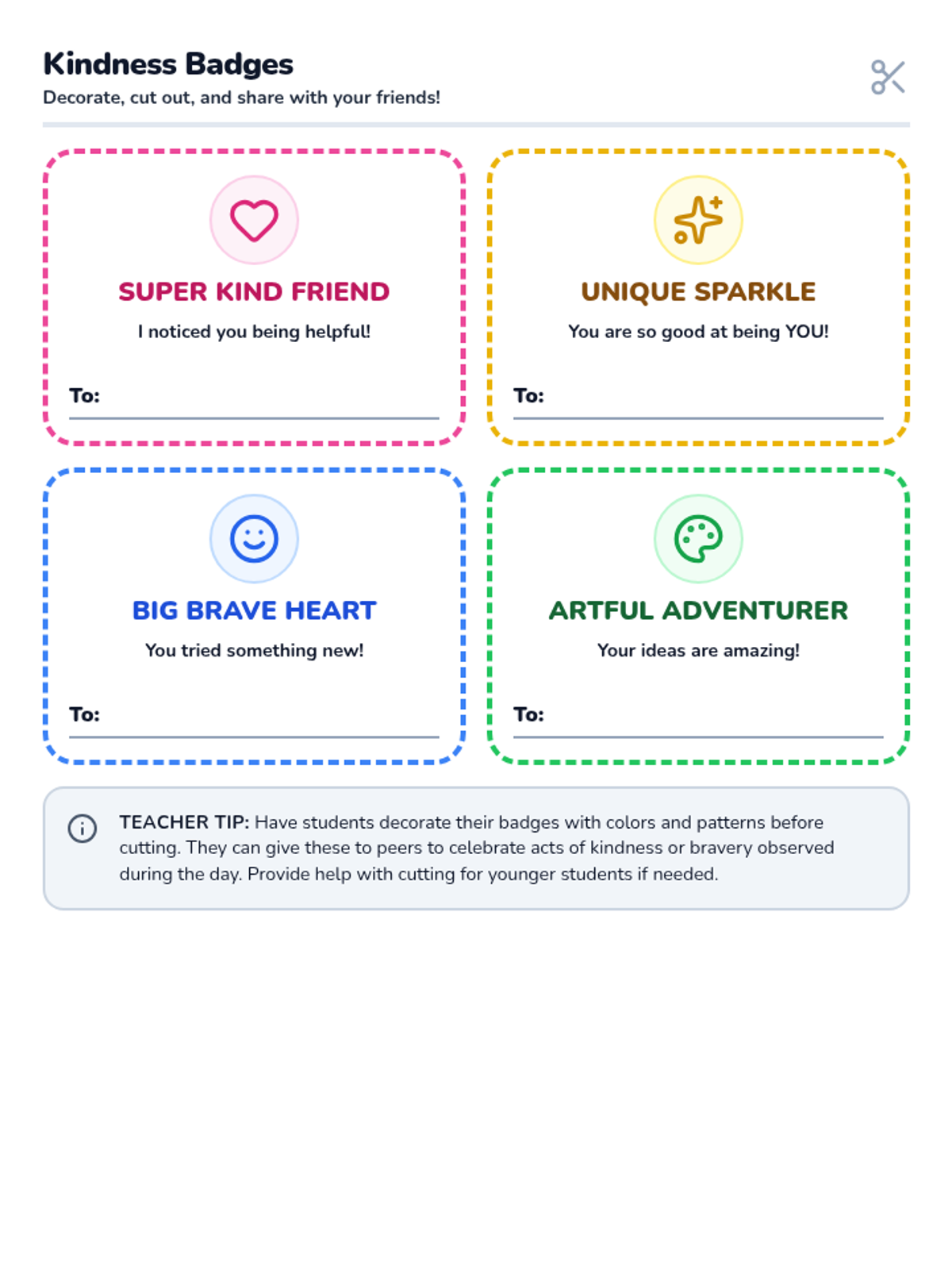
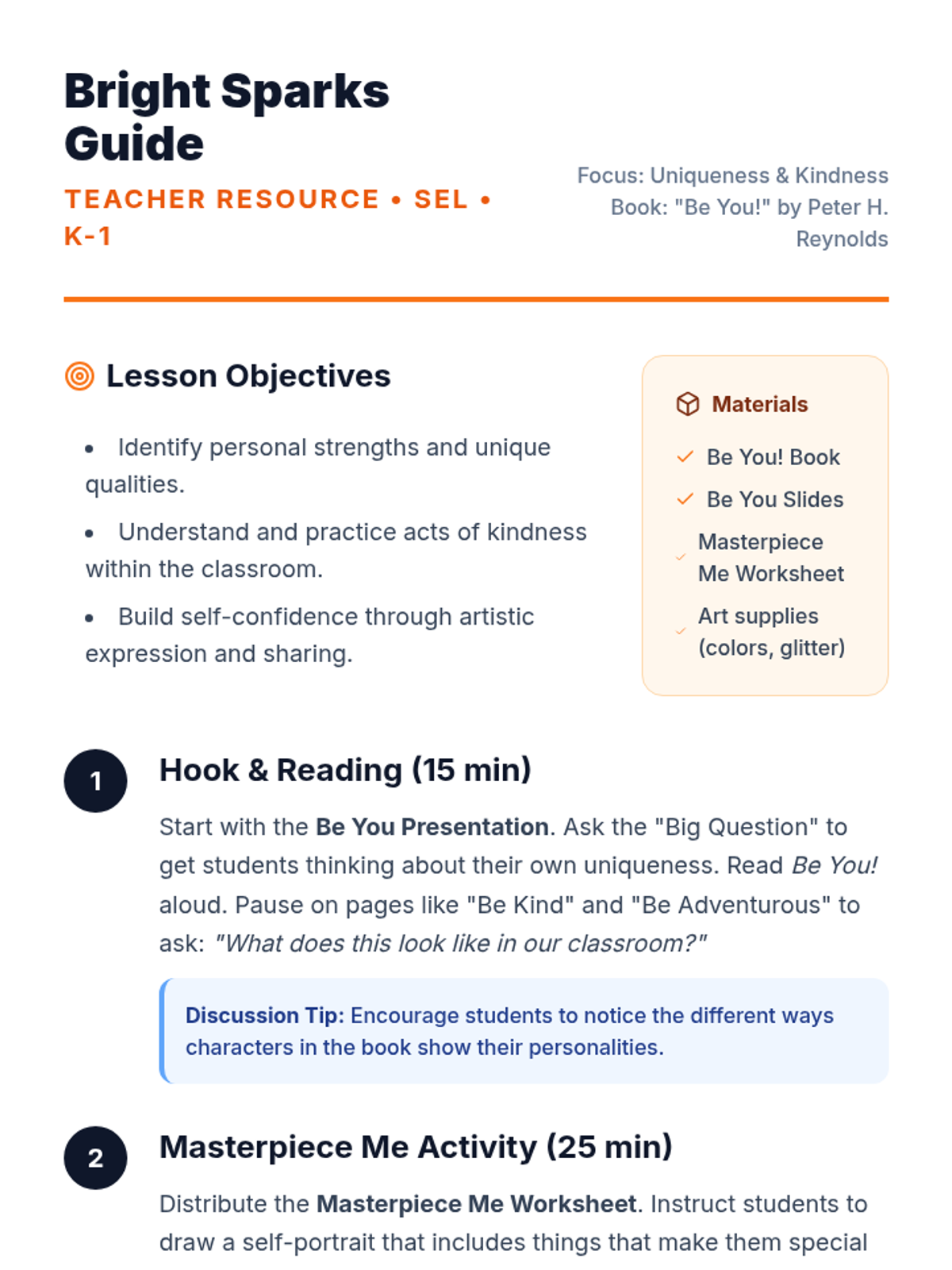
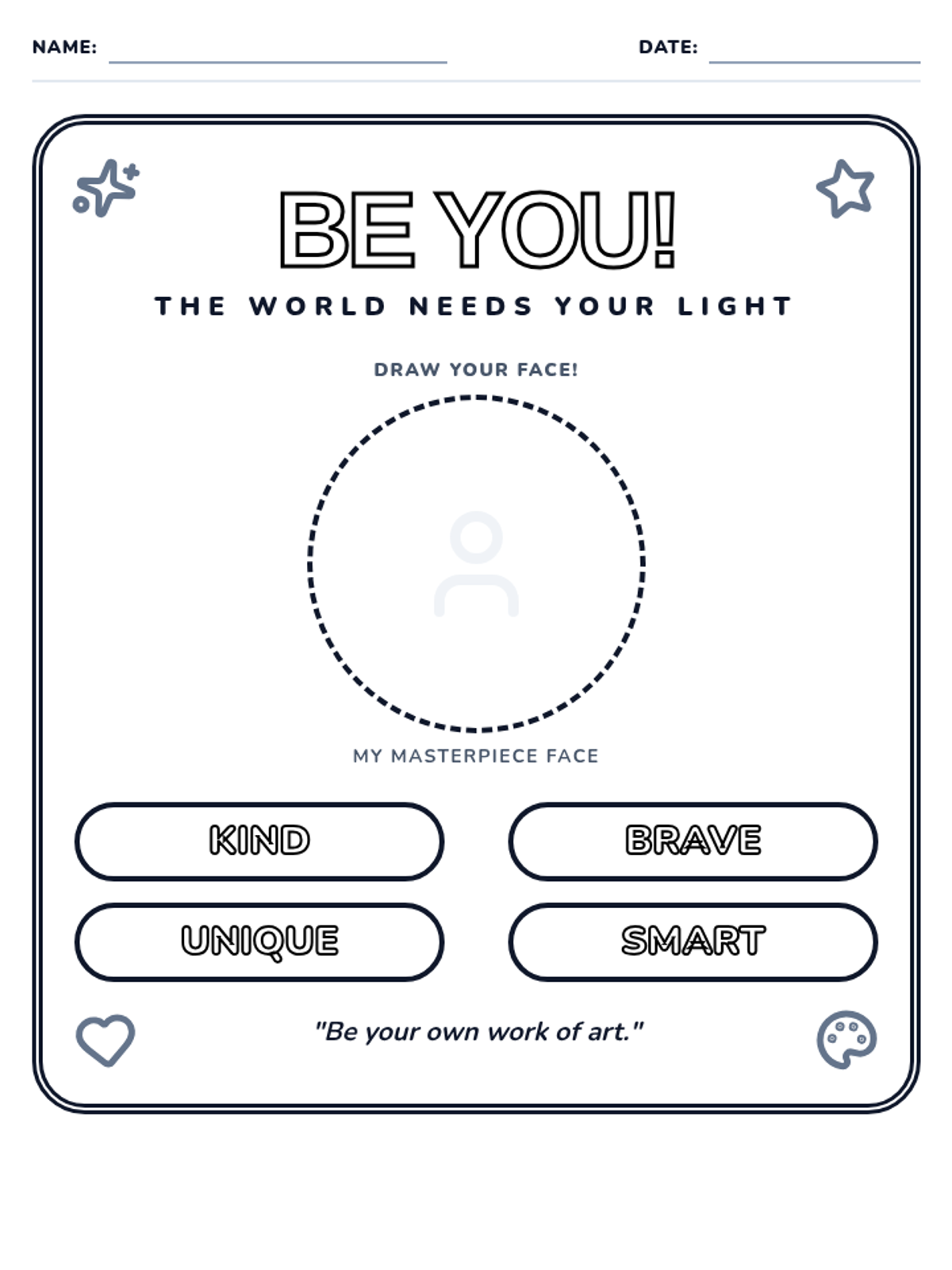
A social-emotional learning lesson for Kindergarten and 1st grade centered on Peter H. Reynolds' book 'Be You!', focusing on celebrating individual strengths, kindness, and personal uniqueness.
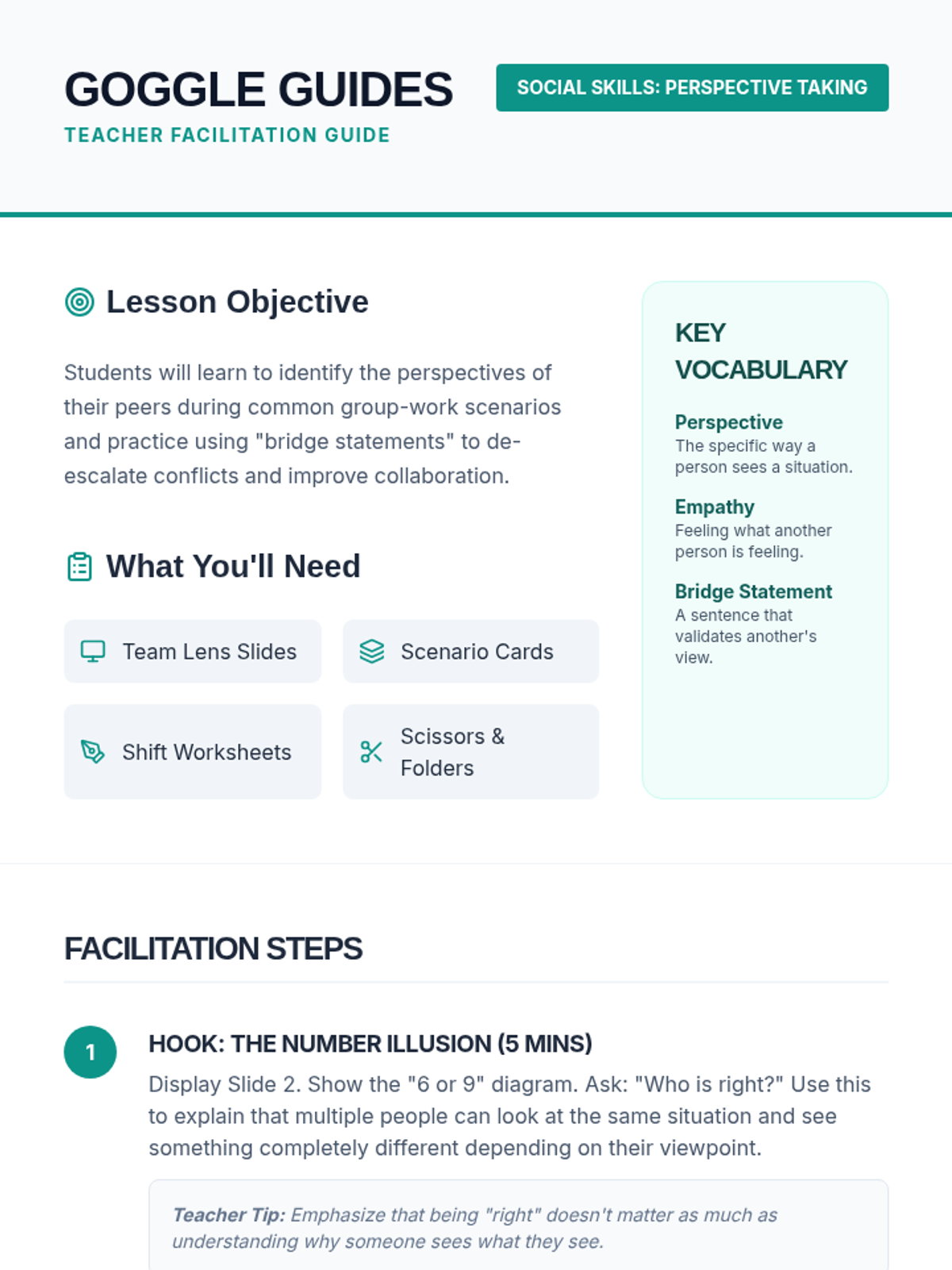
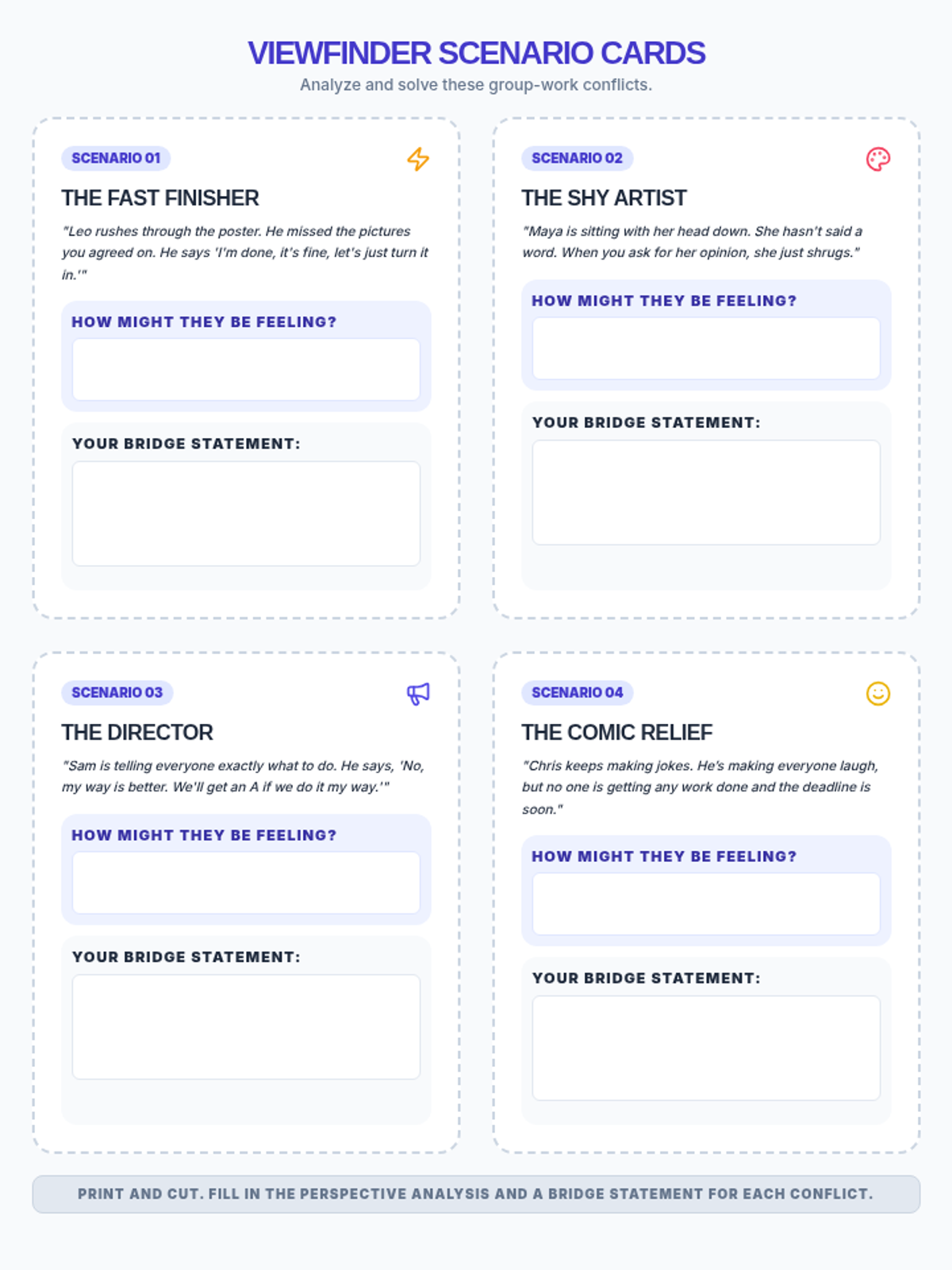
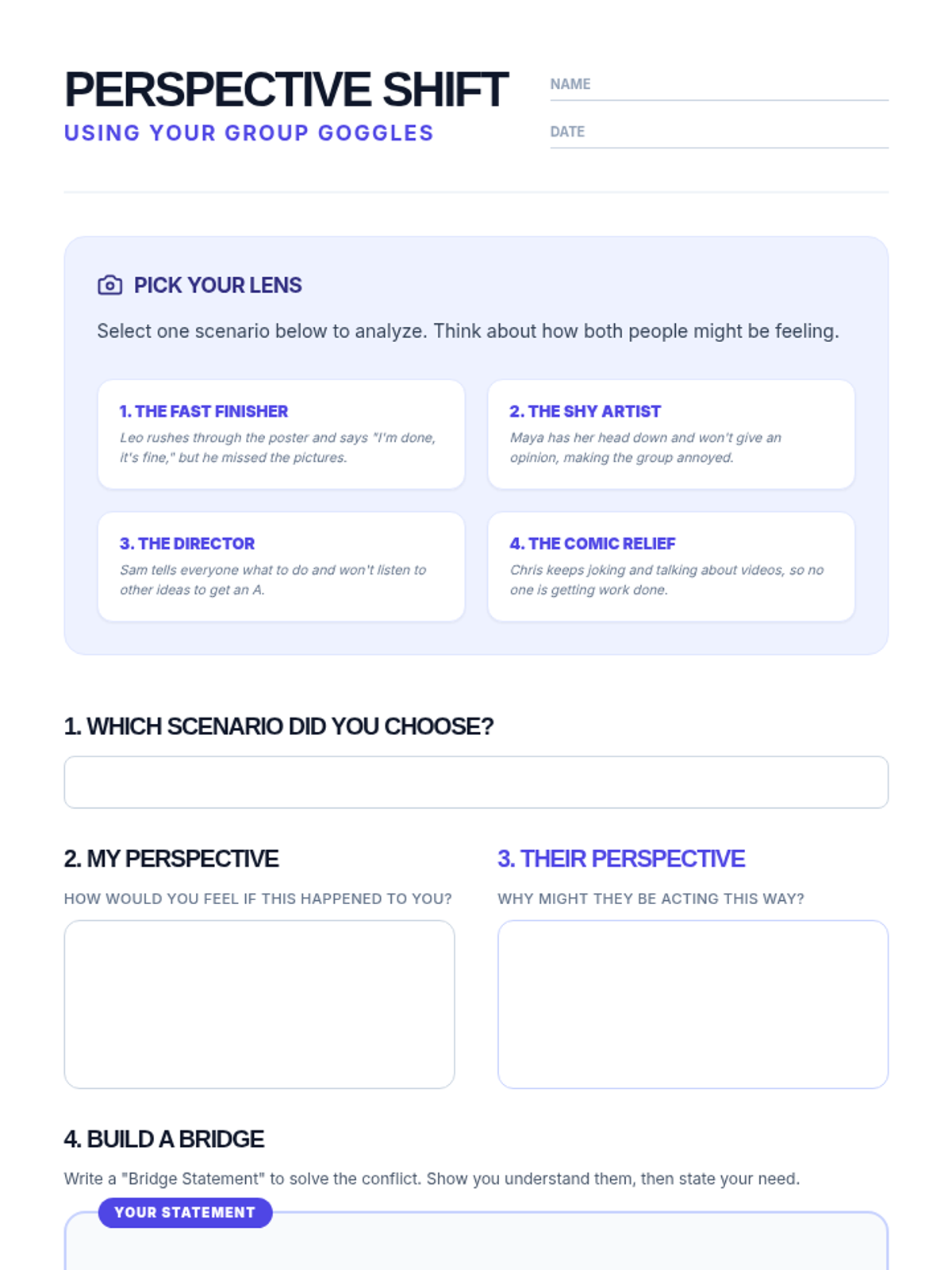
A social skills lesson focused on perspective-taking during school group work, helping students understand different points of view and resolve conflicts collaboratively.
A lesson focused on understanding and applying positive character traits and friendship values through situational practice. Students explore vocabulary words like empathy, honesty, and cooperation through a crossword puzzle and interactive discussion.
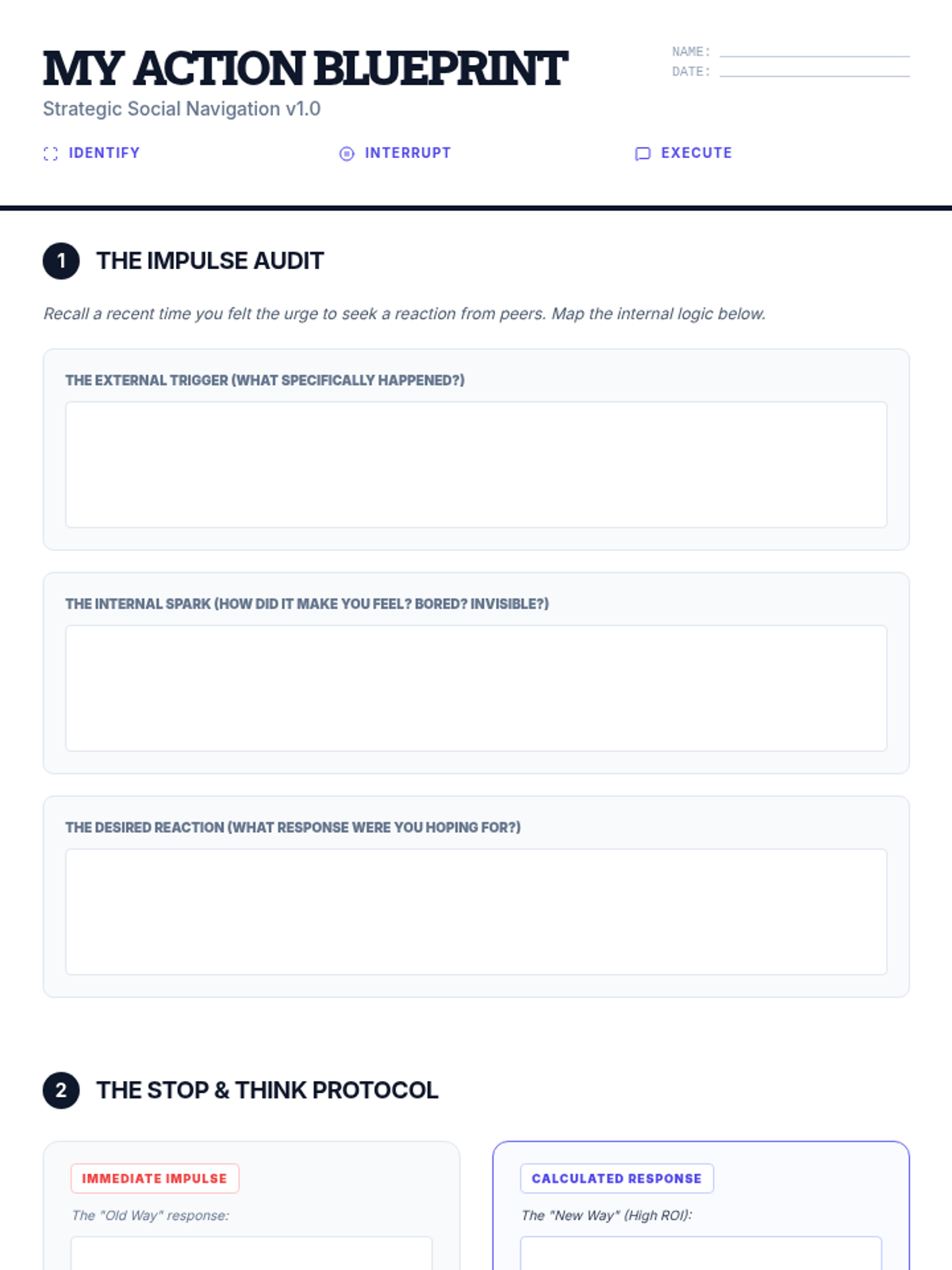
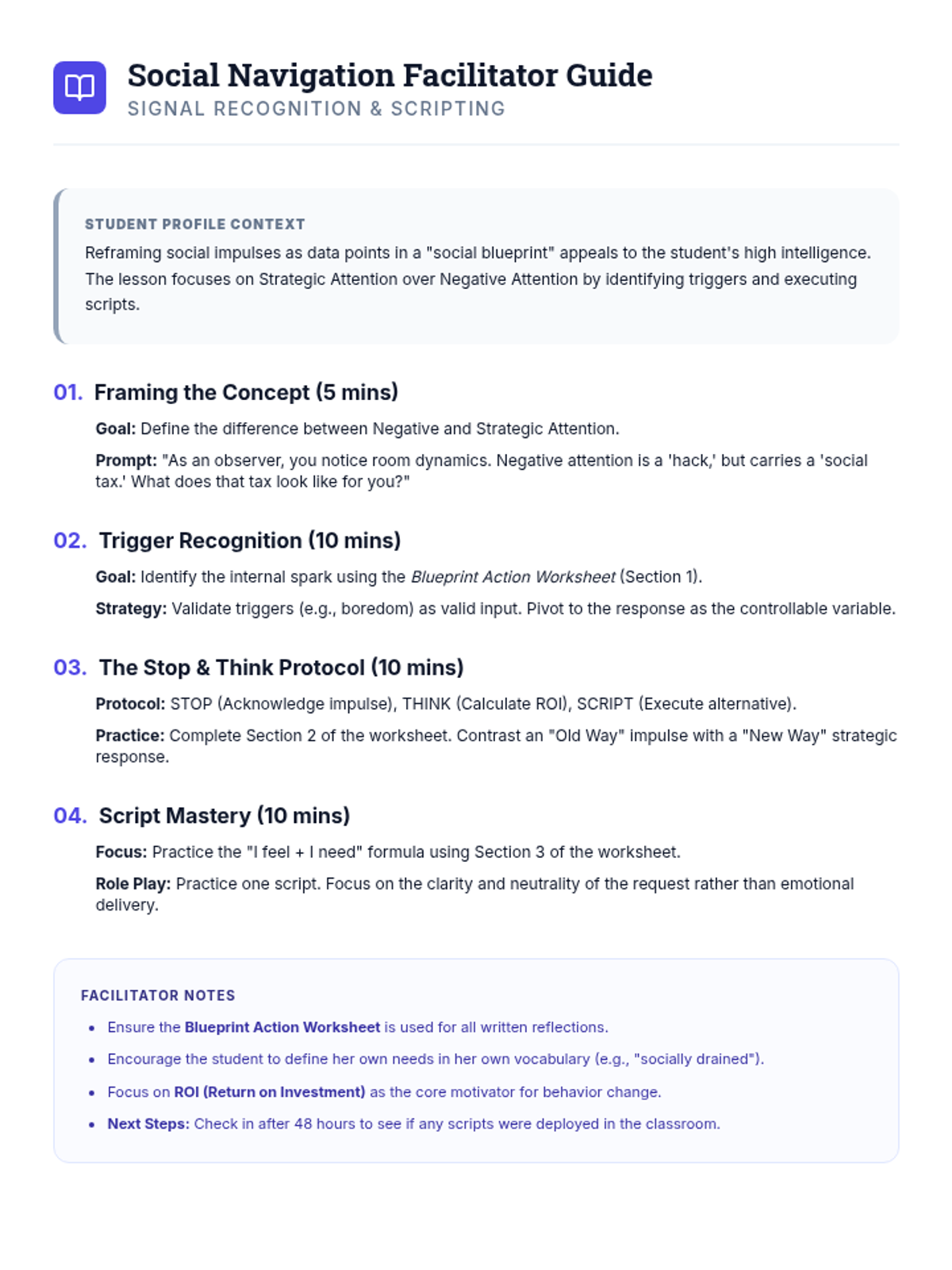
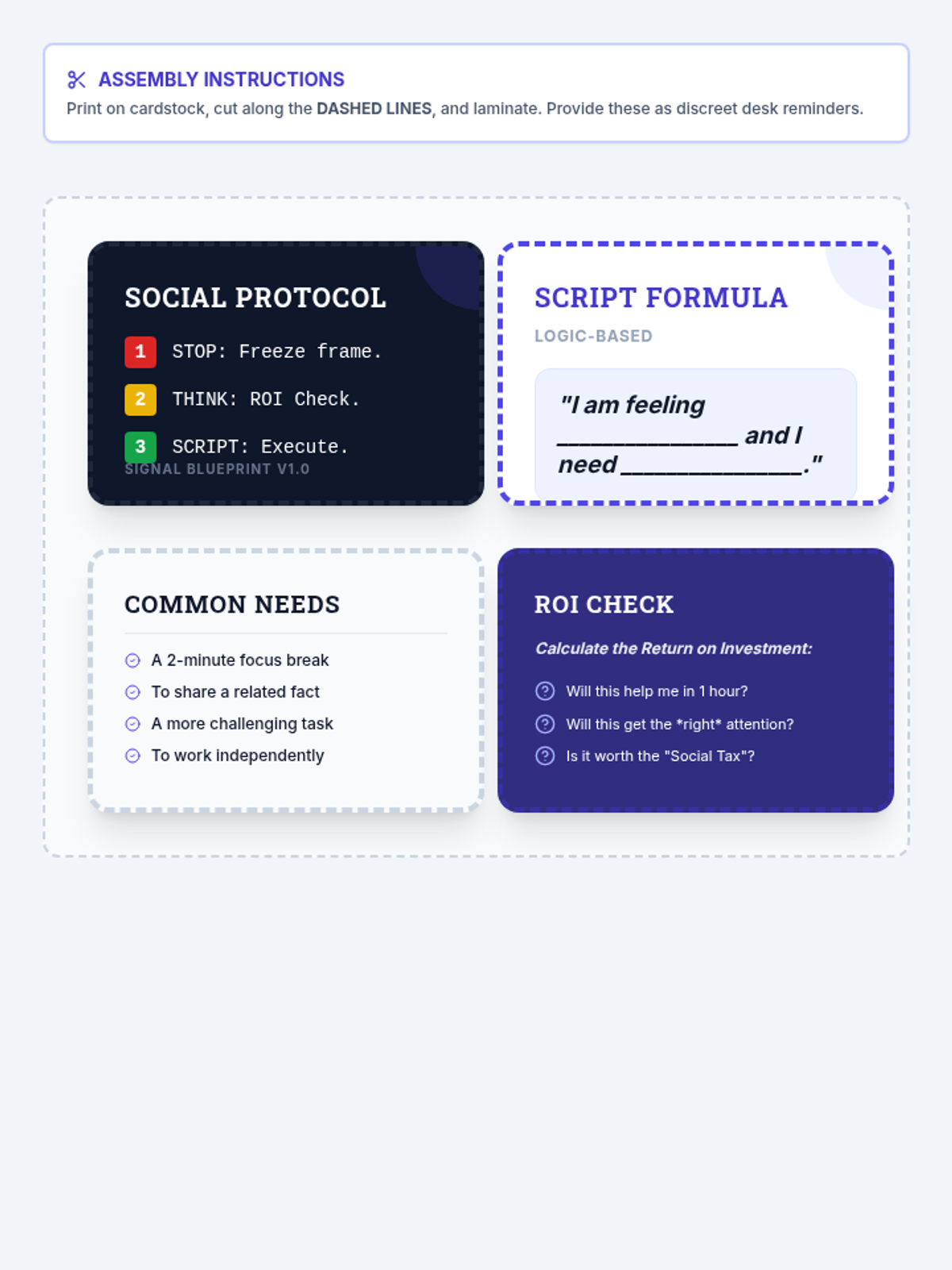
A mini-lesson designed for an intelligent 9th-grade student to identify social triggers, practice the 'Stop and Think' strategy, and use scripts for healthy communication.
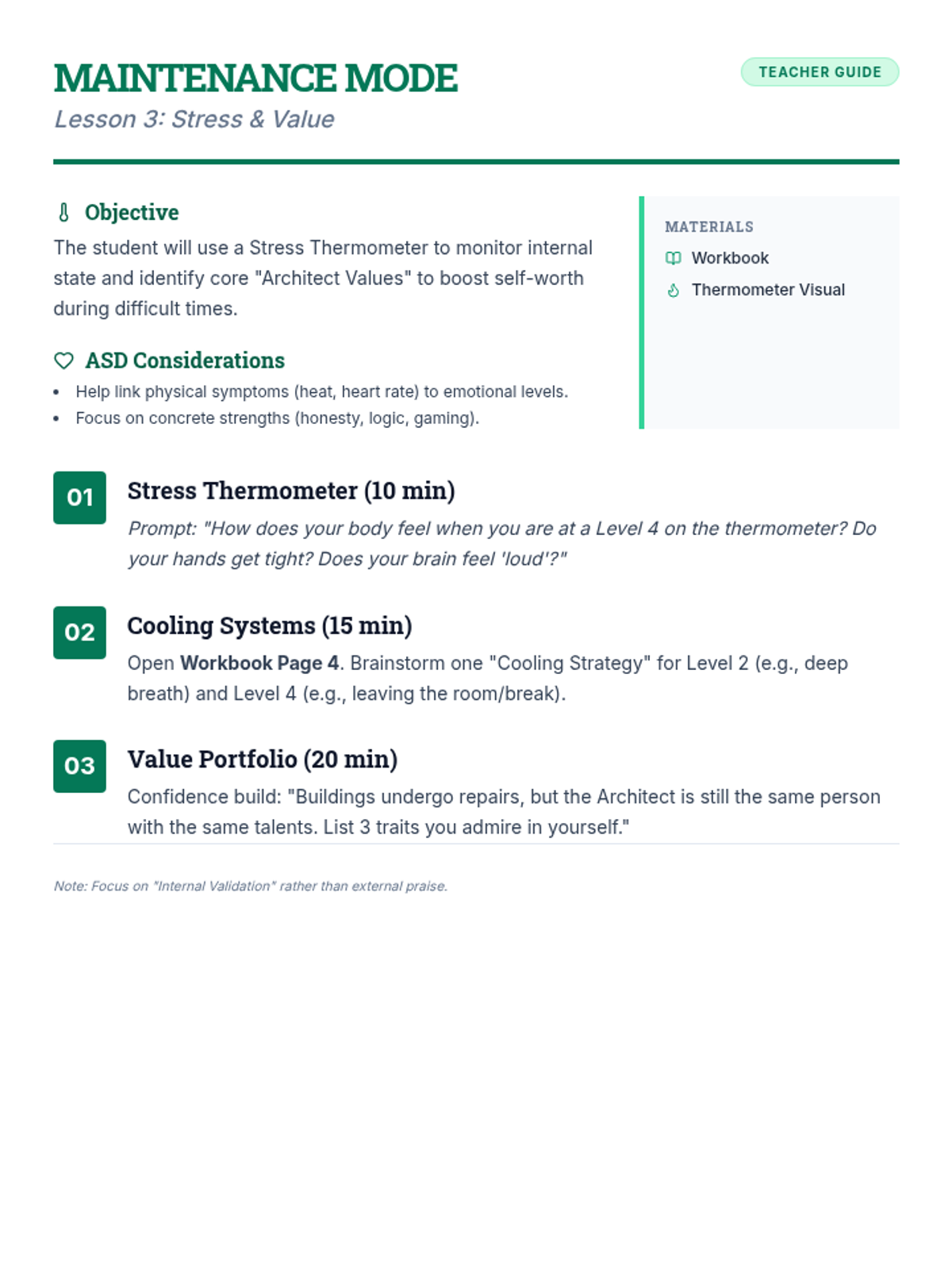
Focuses on self-regulation using a stress thermometer and identifying personal strengths to build a sustainable resilience plan.
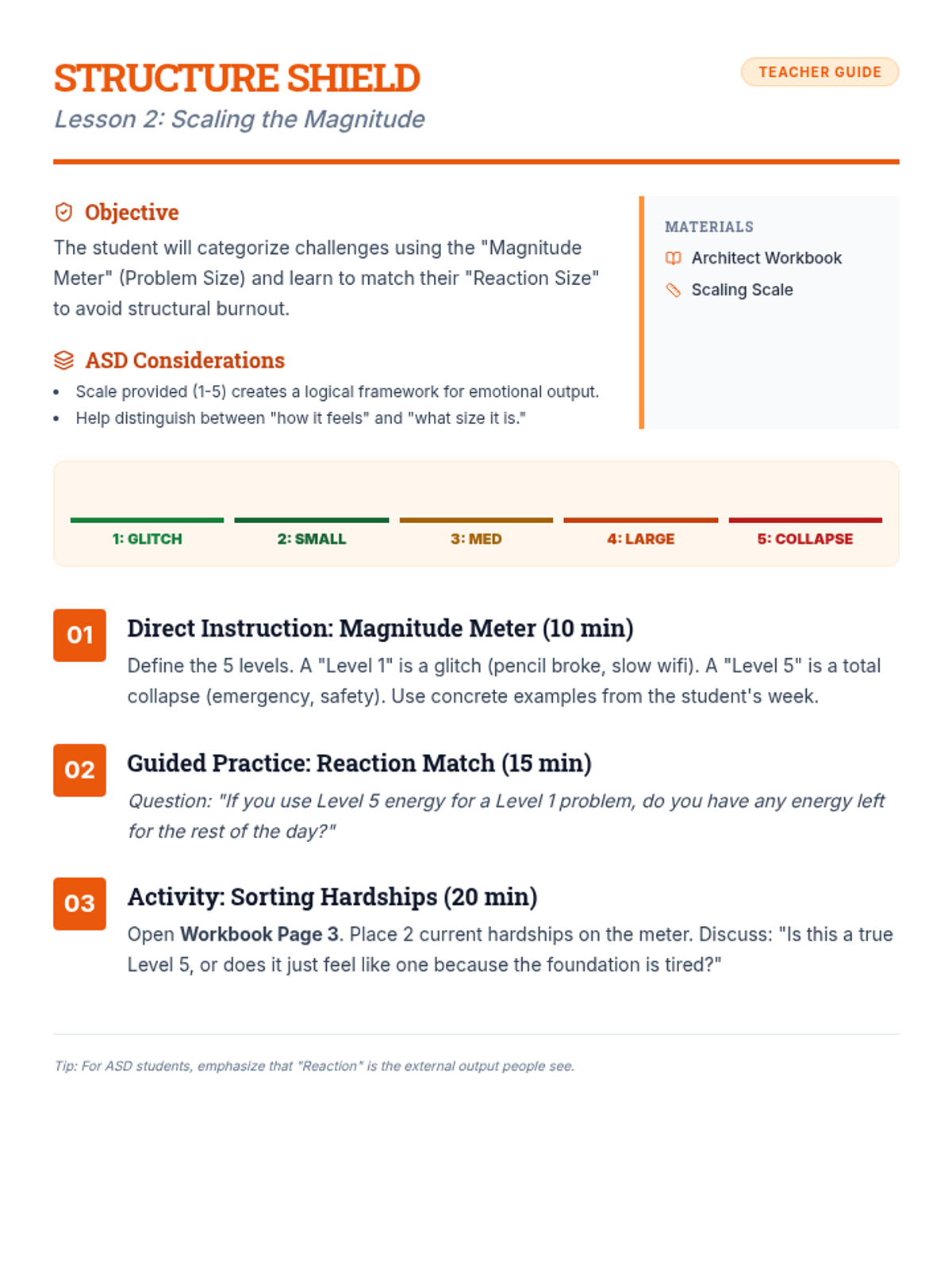
Teaches the student to categorize problems by size and align their emotional reactions appropriately using the Magnitude Meter.
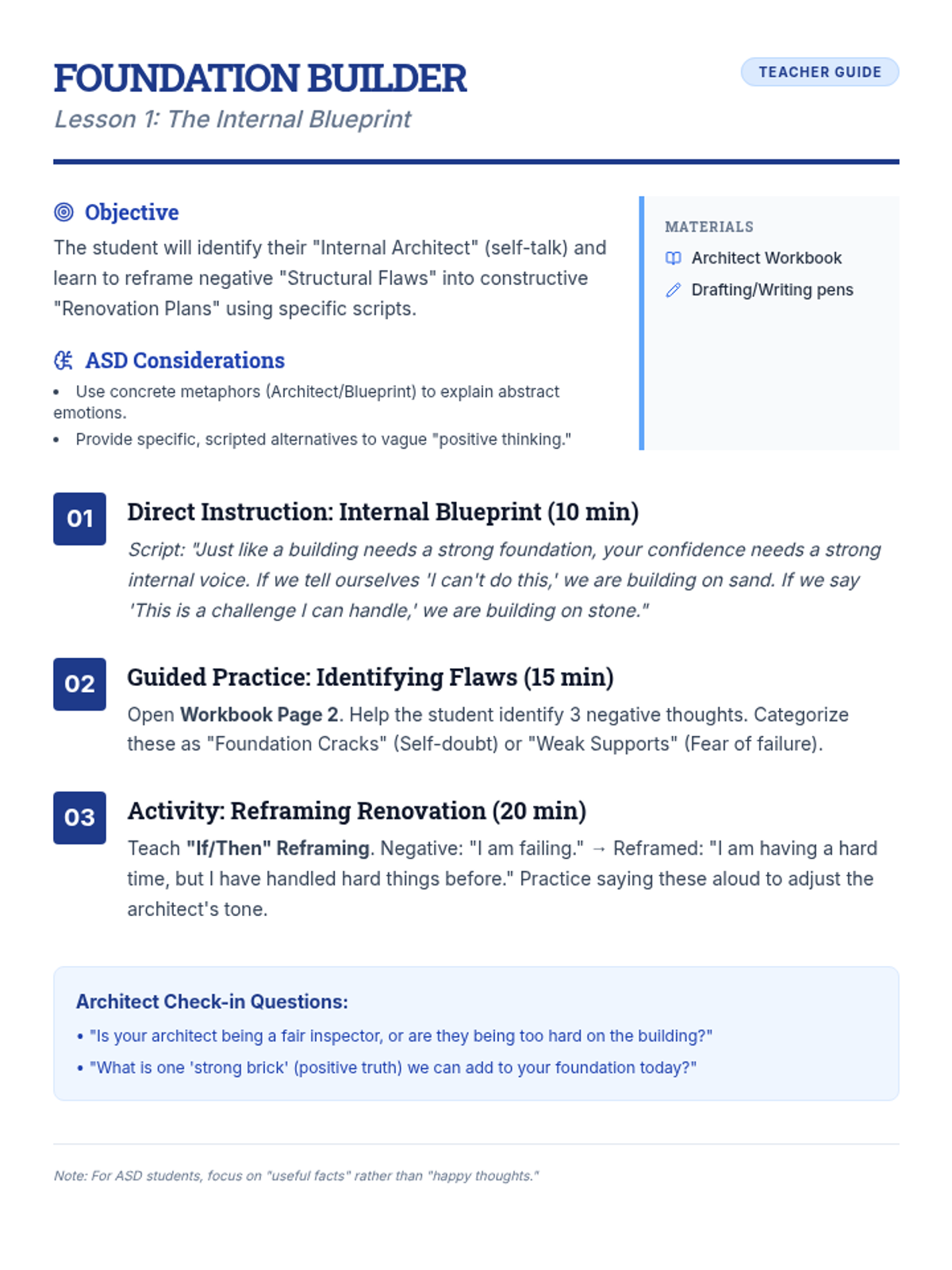
Focuses on identifying internal dialogue and using reframing techniques to shift from negative to constructive thinking.
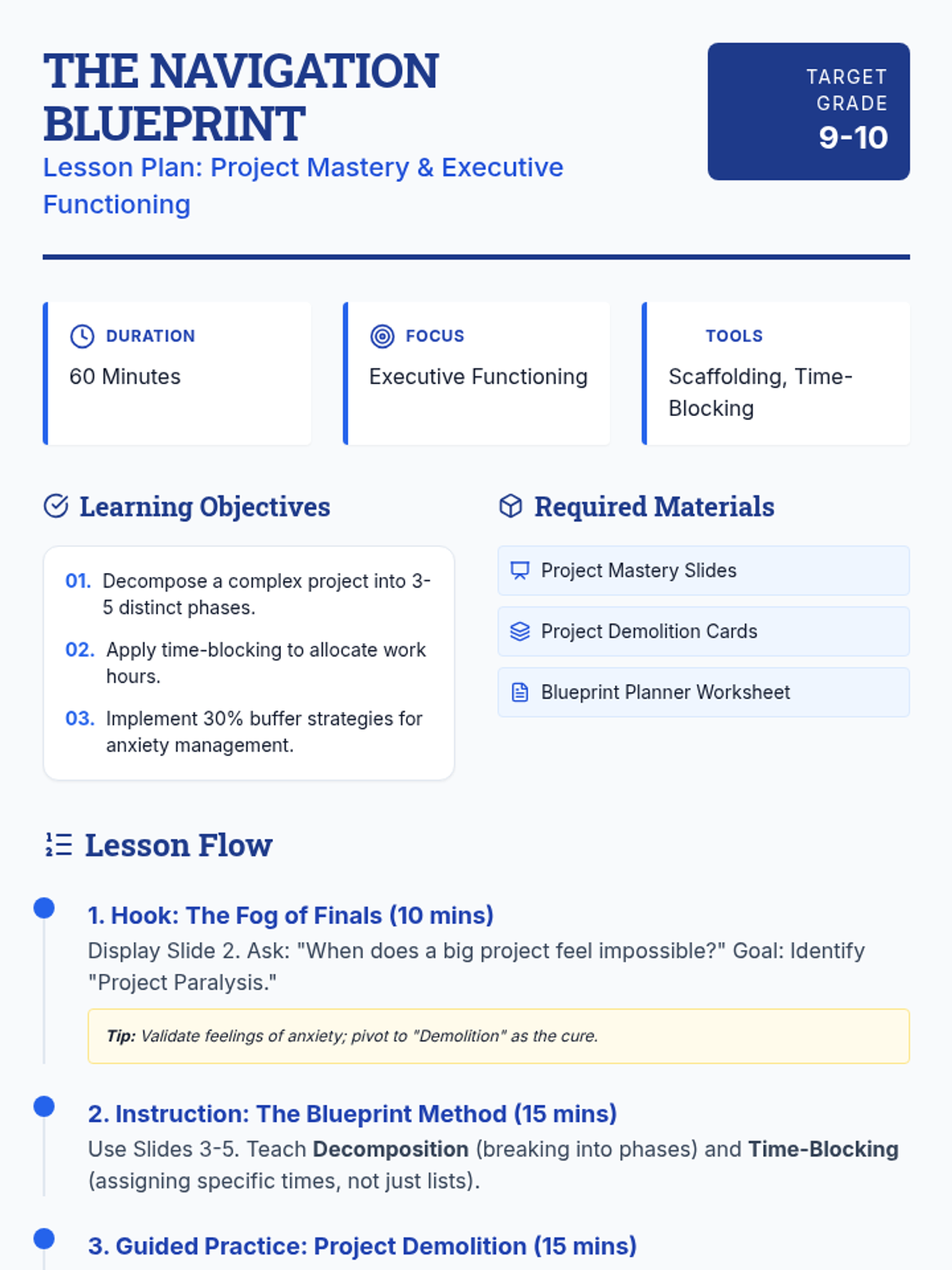
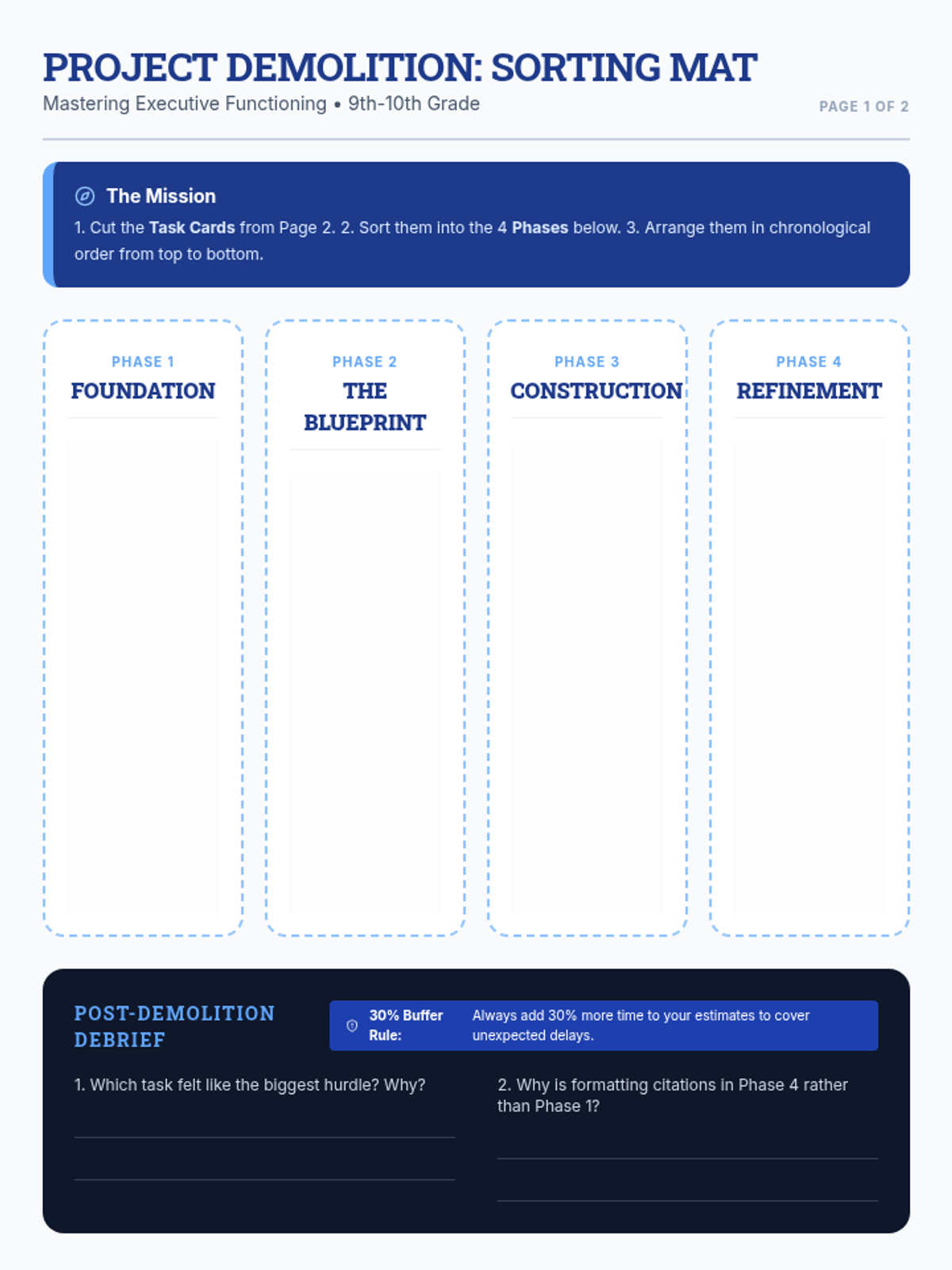
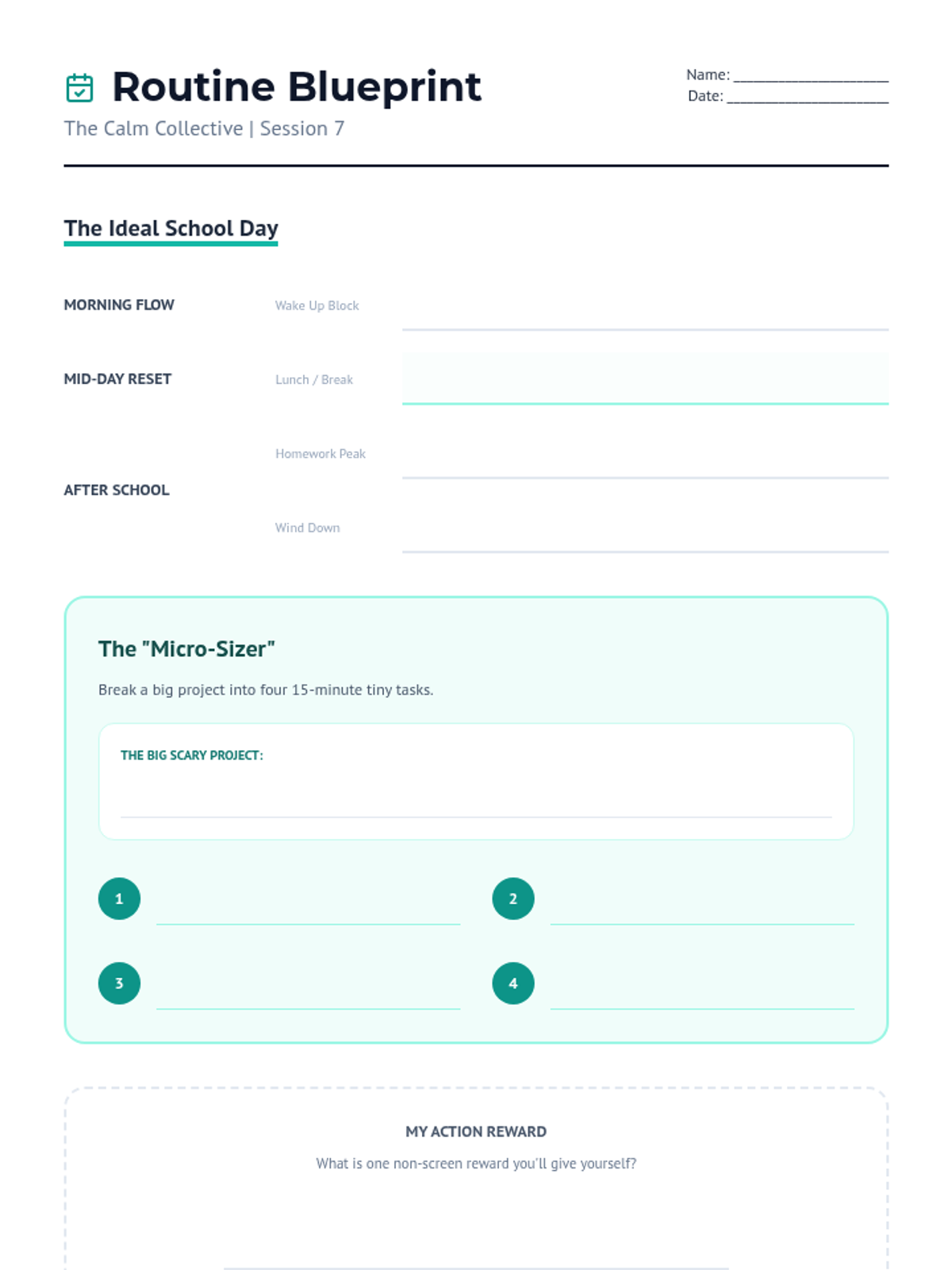
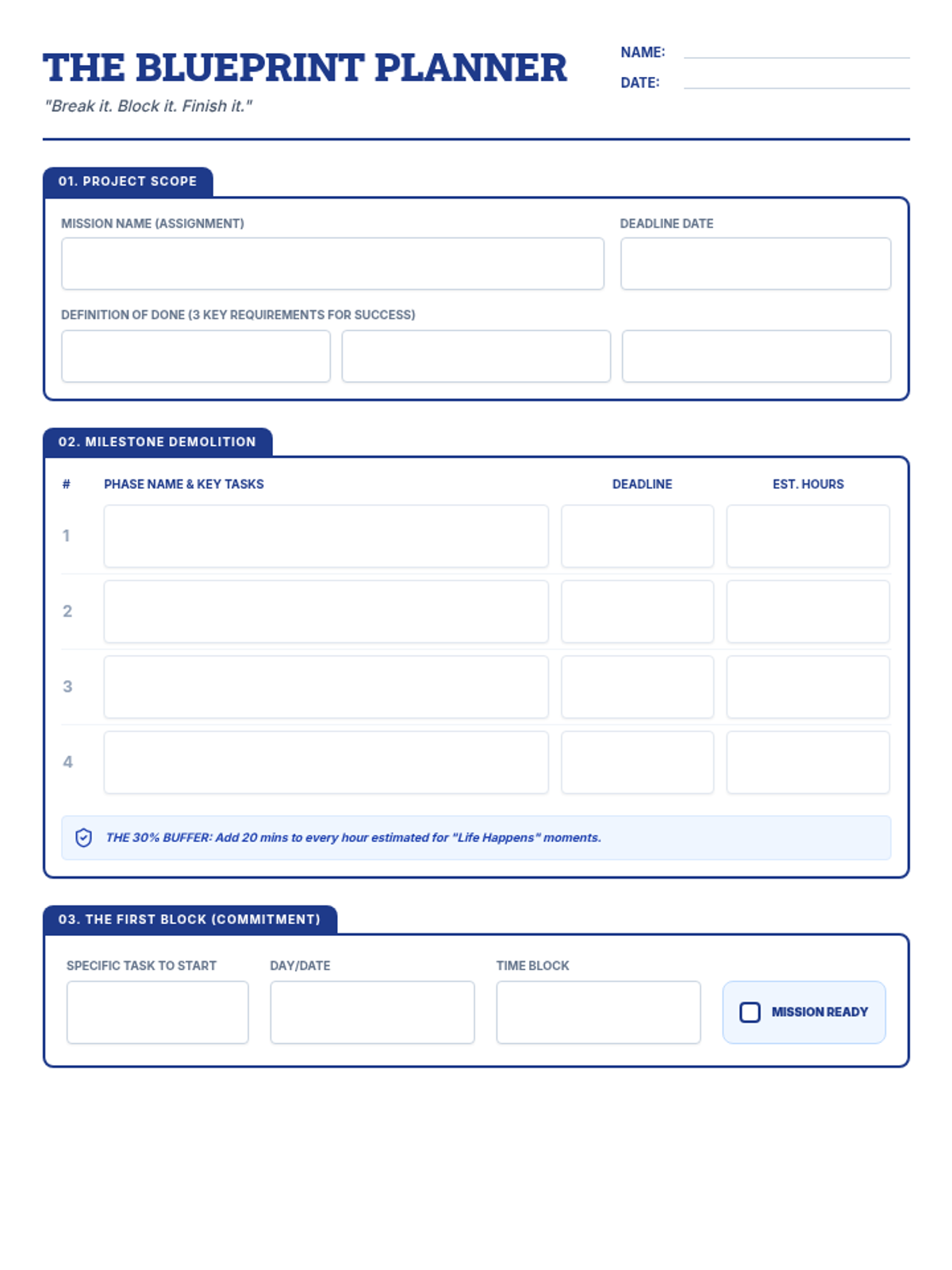
This lesson equips 9th and 10th-grade students with executive functioning skills to tackle complex high school projects. Through visual decomposition and time-blocking techniques, students learn to transform overwhelming assignments into clear, manageable blueprints for success.
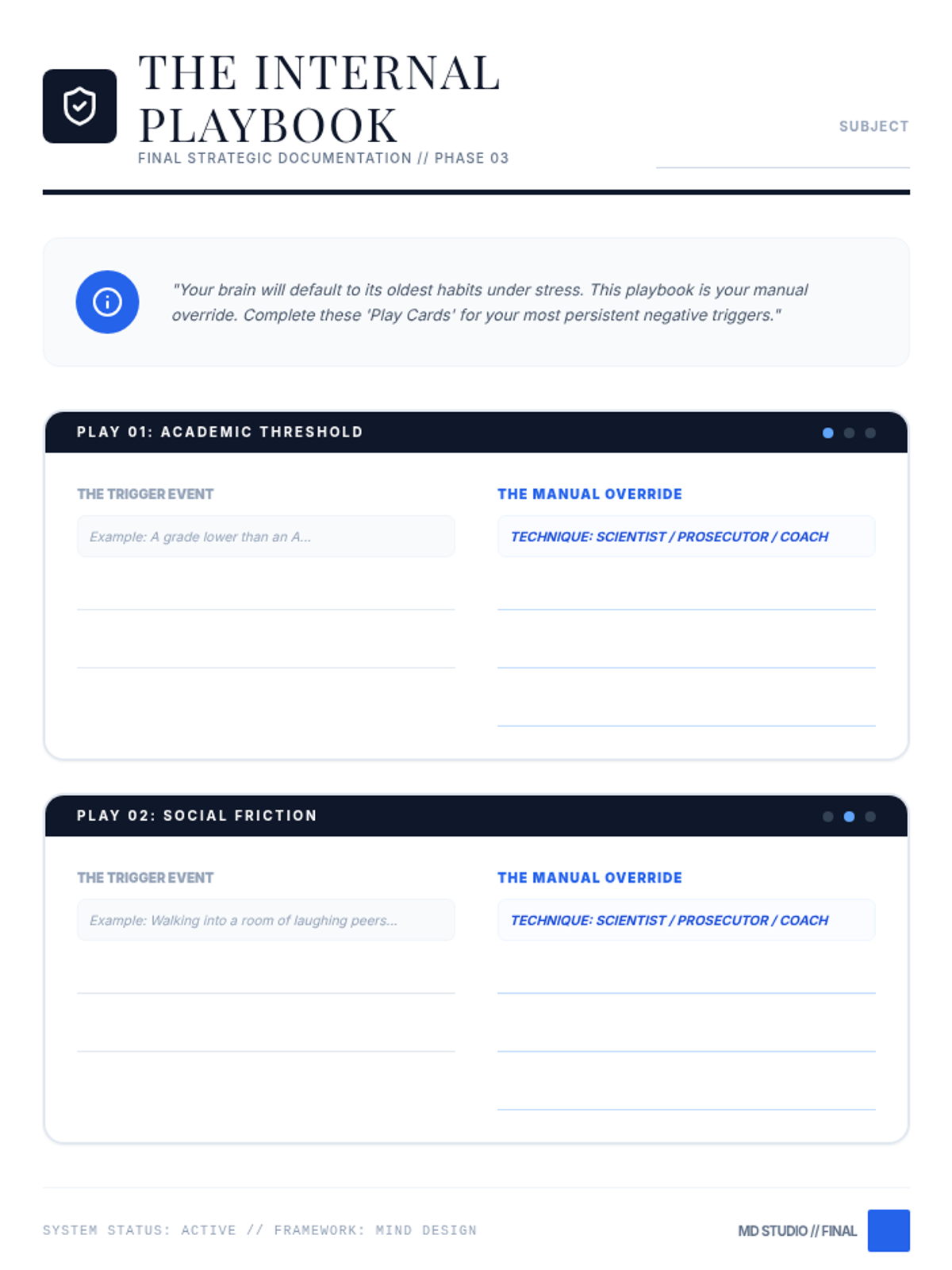
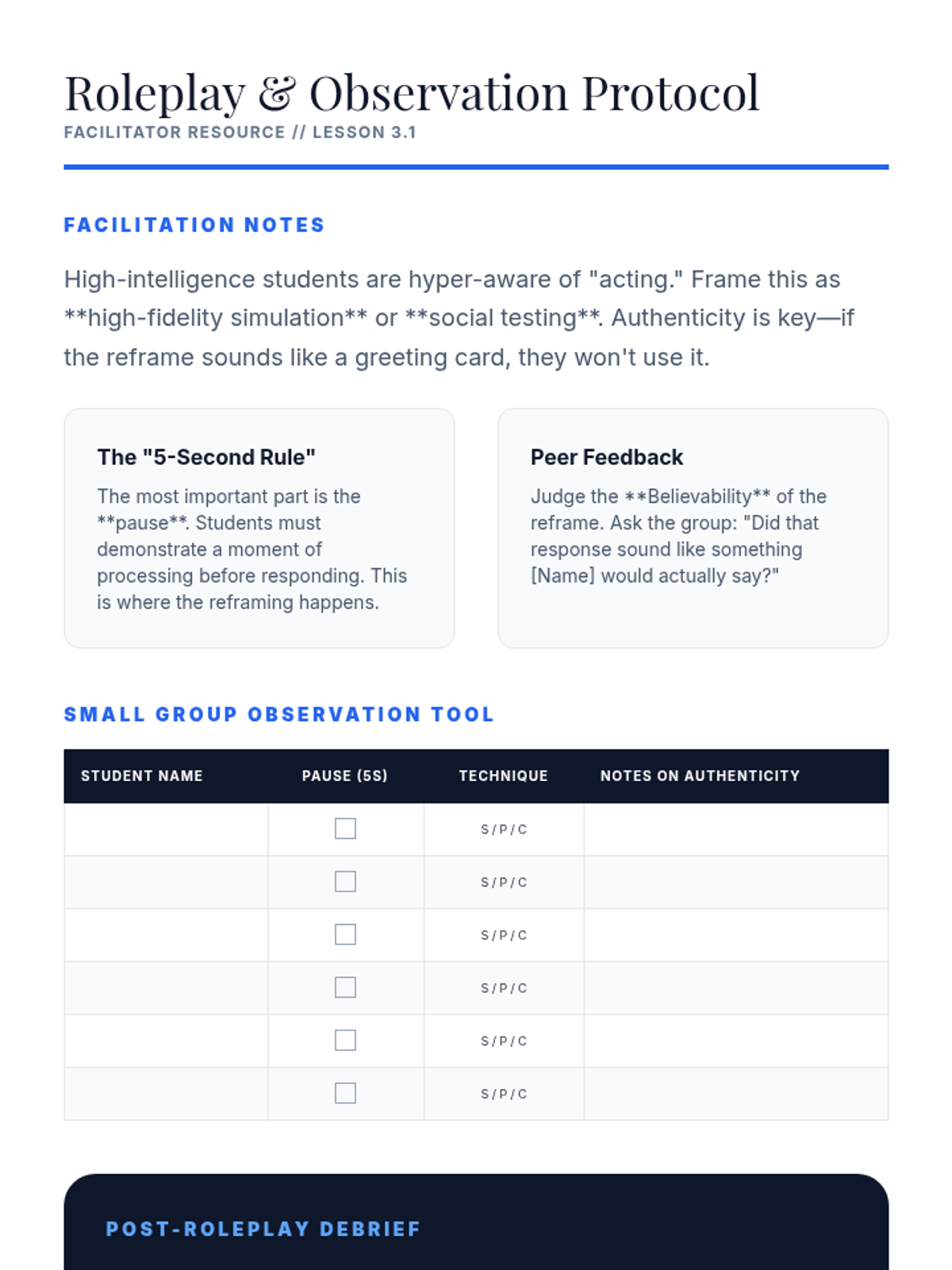
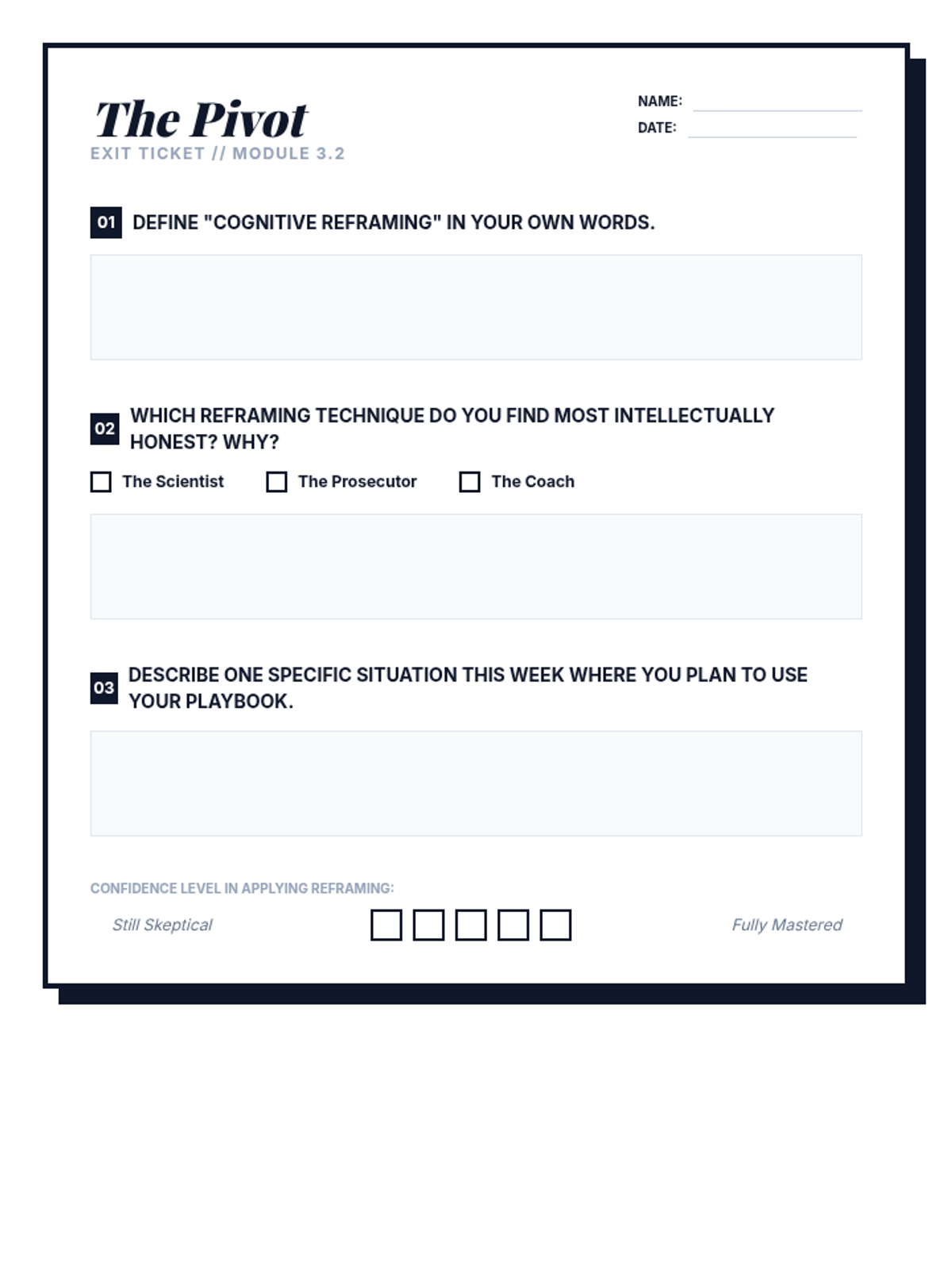
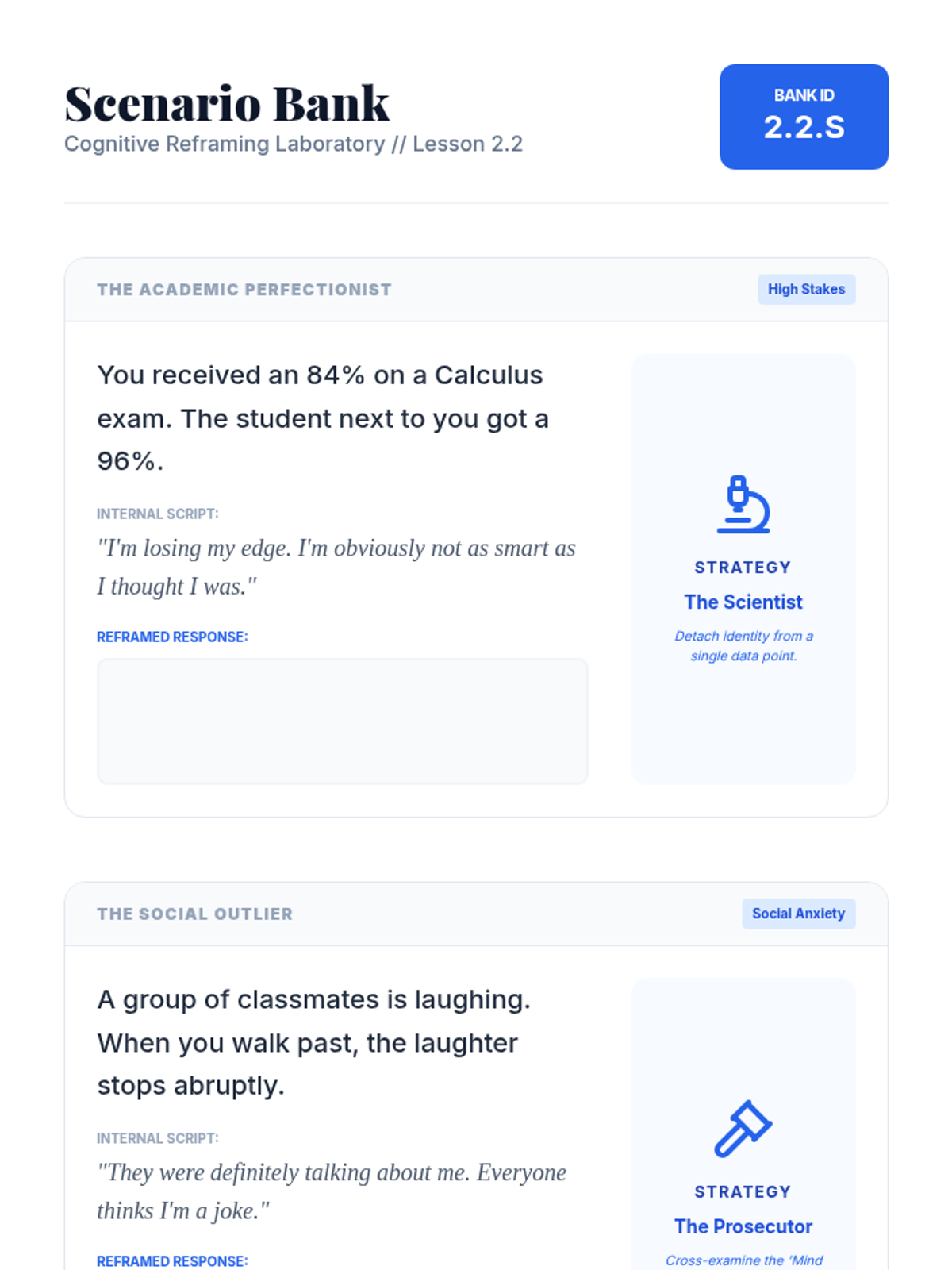
Application of reframing techniques through high-stakes social and academic scenarios, featuring role-play practice and the creation of a personalized mental playbook.
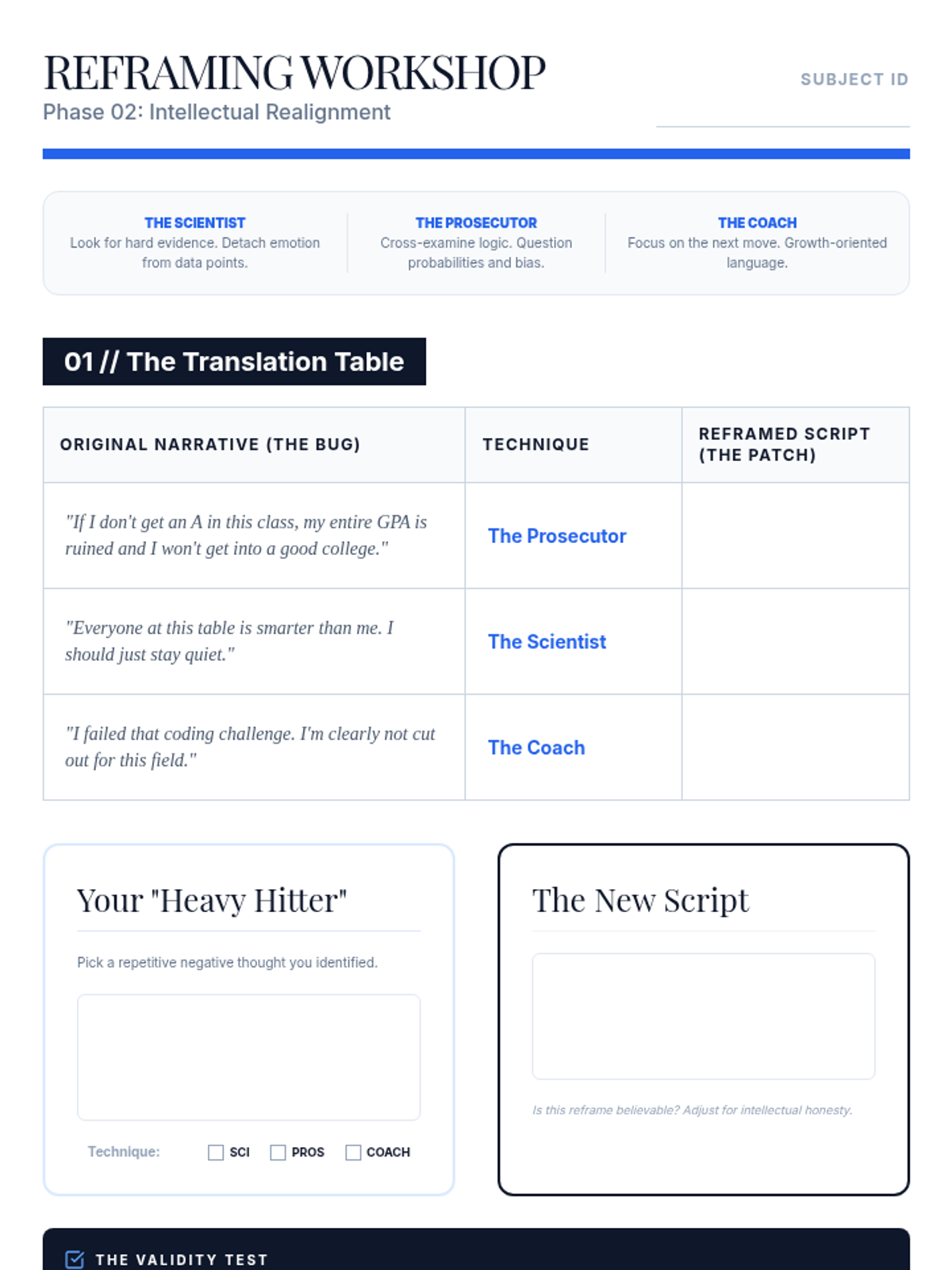
Interactive workshop teaching three core reframing strategies: The Scientist (evidence-based), The Prosecutor (logic-checking), and The Coach (action-oriented).
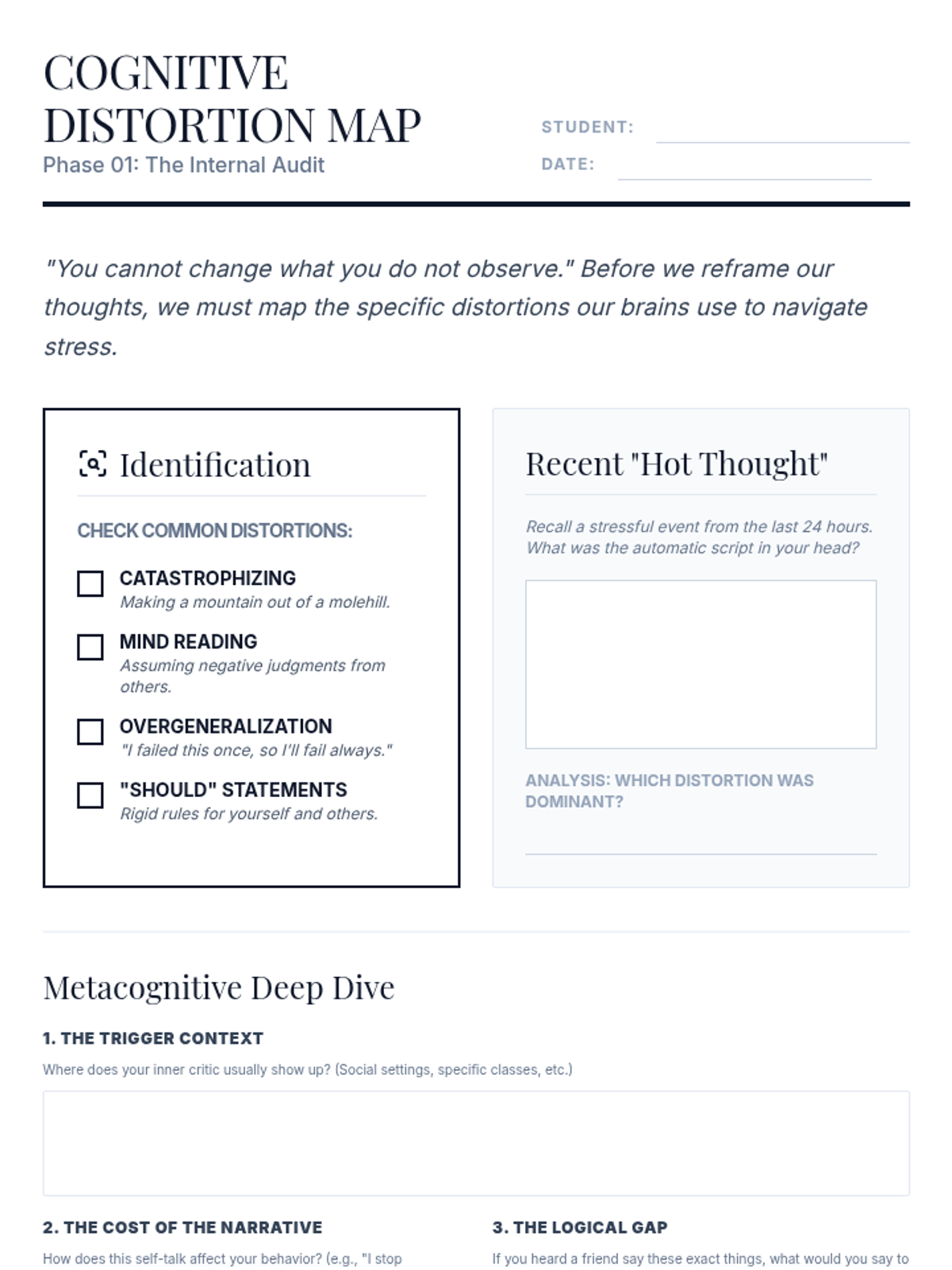
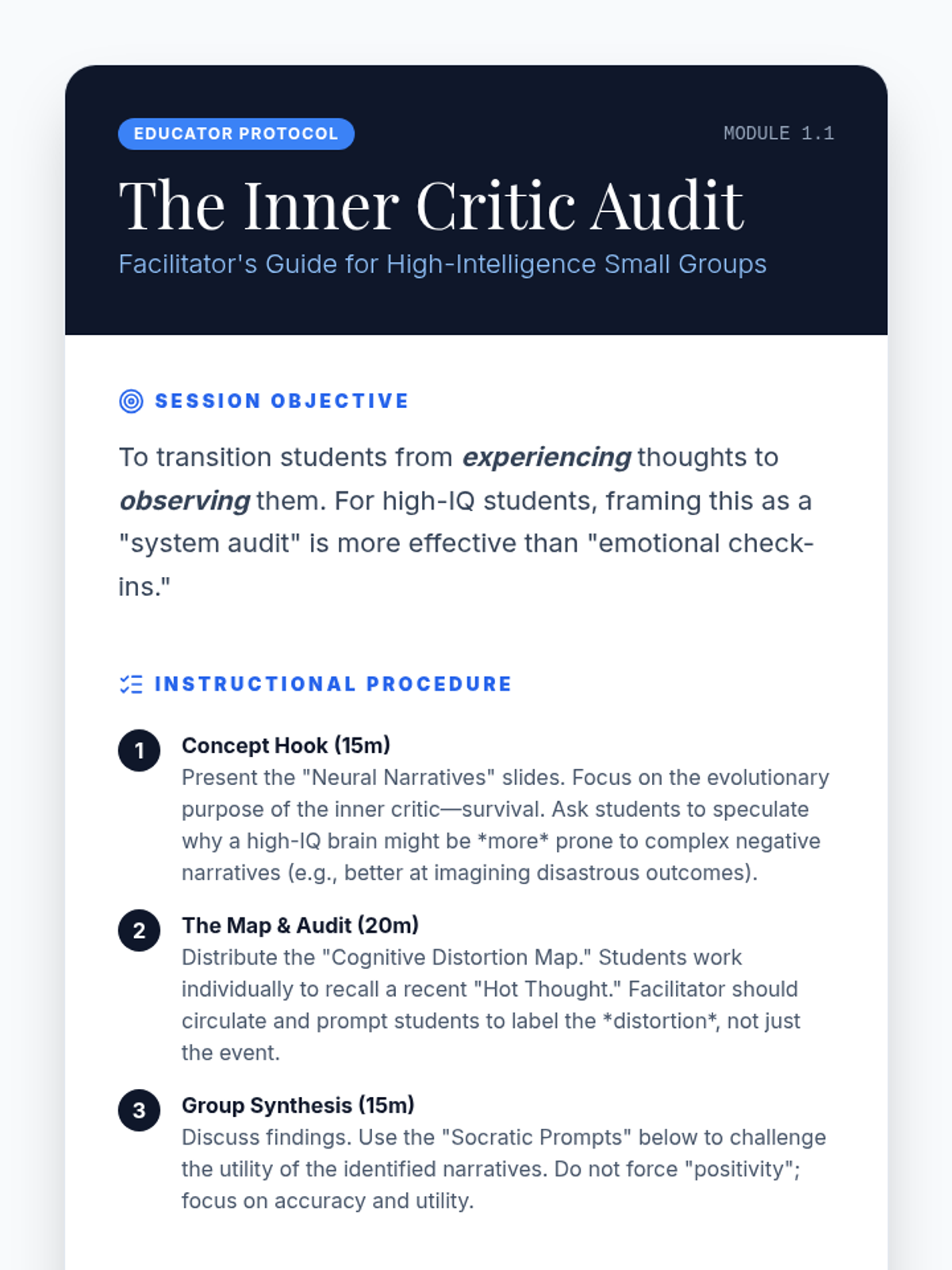
An exploration into the mechanics of the 'Inner Critic,' identifying specific cognitive distortions such as catastrophizing and black-and-white thinking through a psychological lens.
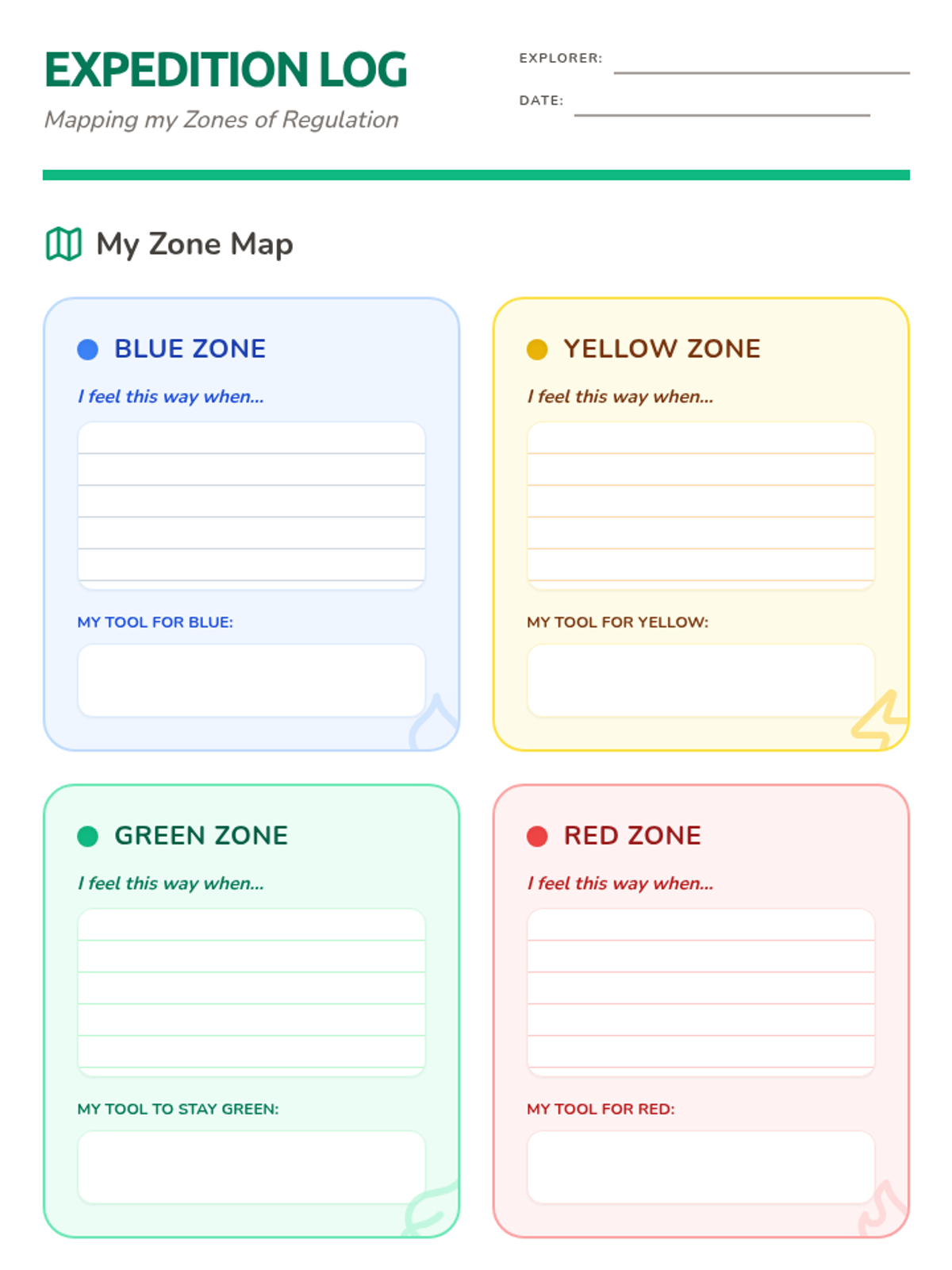
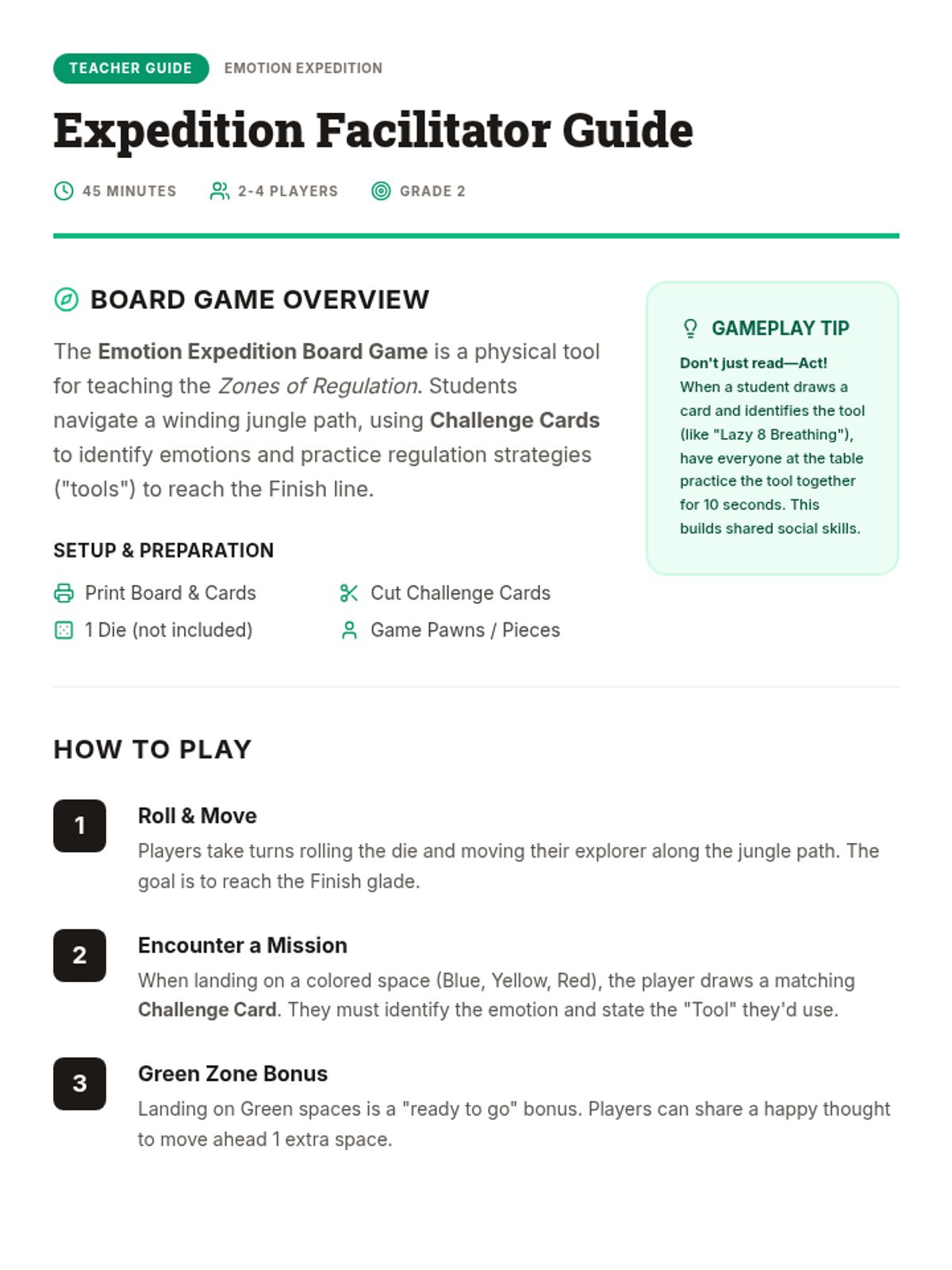
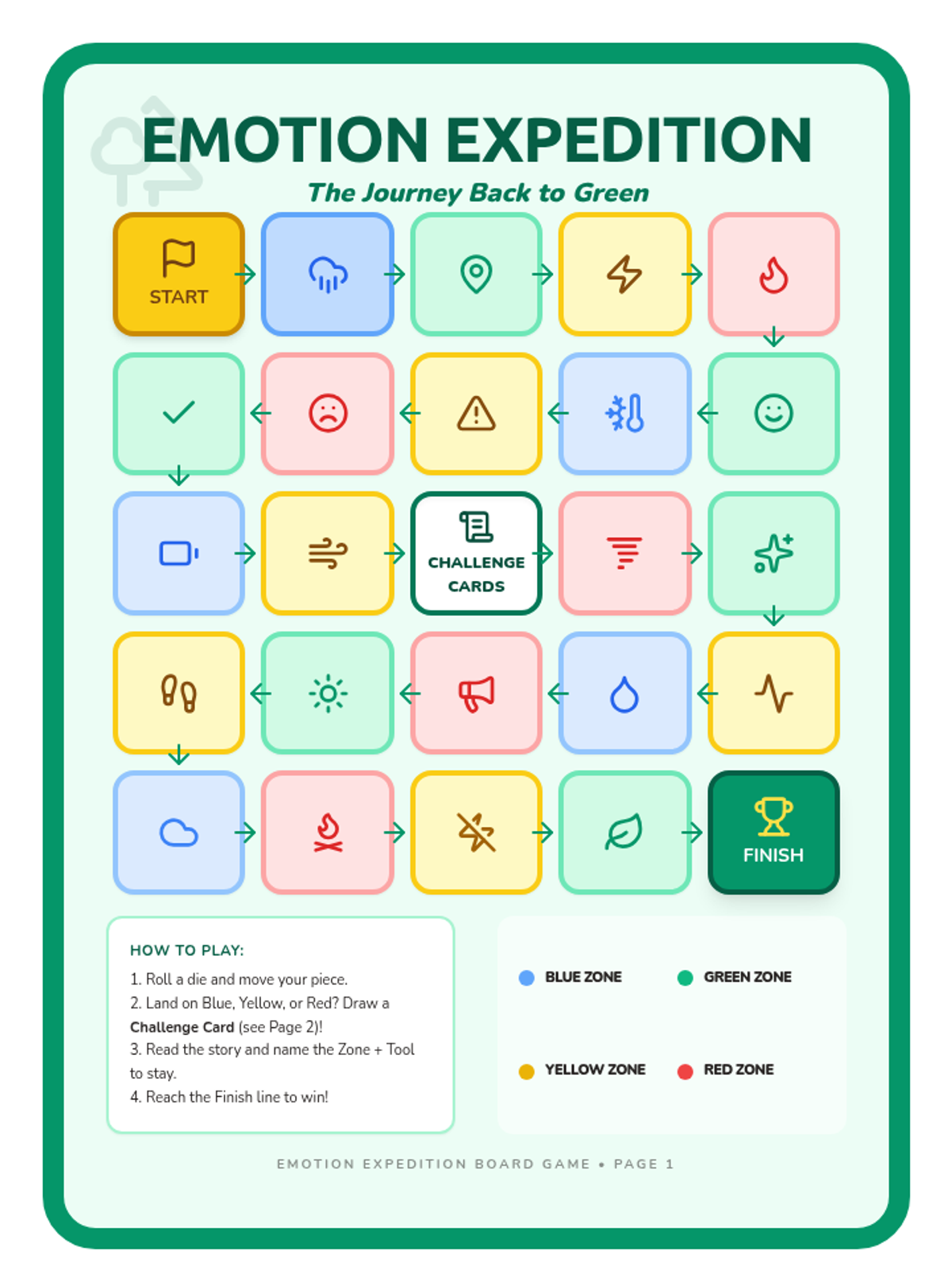
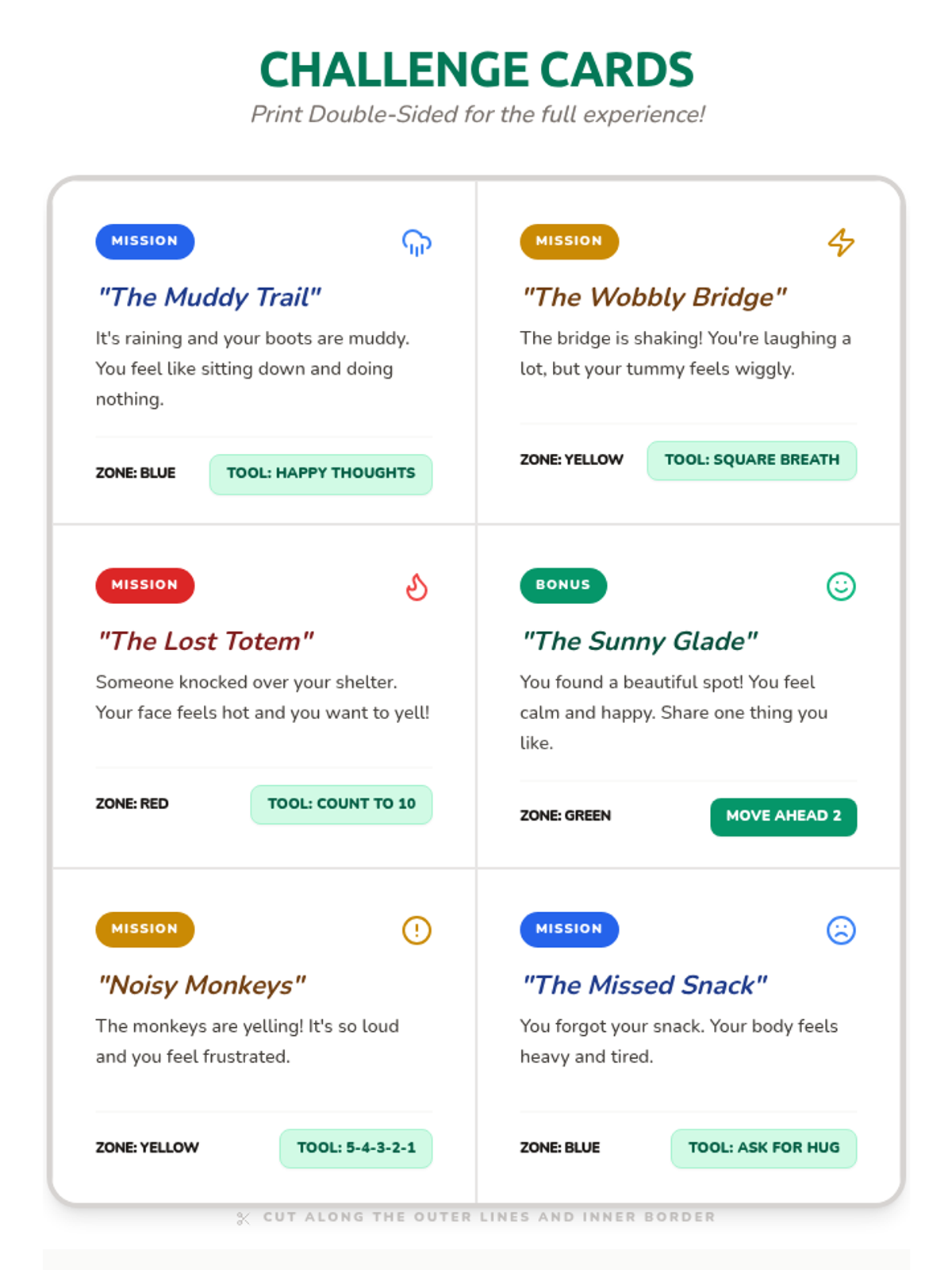
A jungle-themed board game where students practice identifying their emotional zones and selecting coping strategies through a series of printable scenario cards.
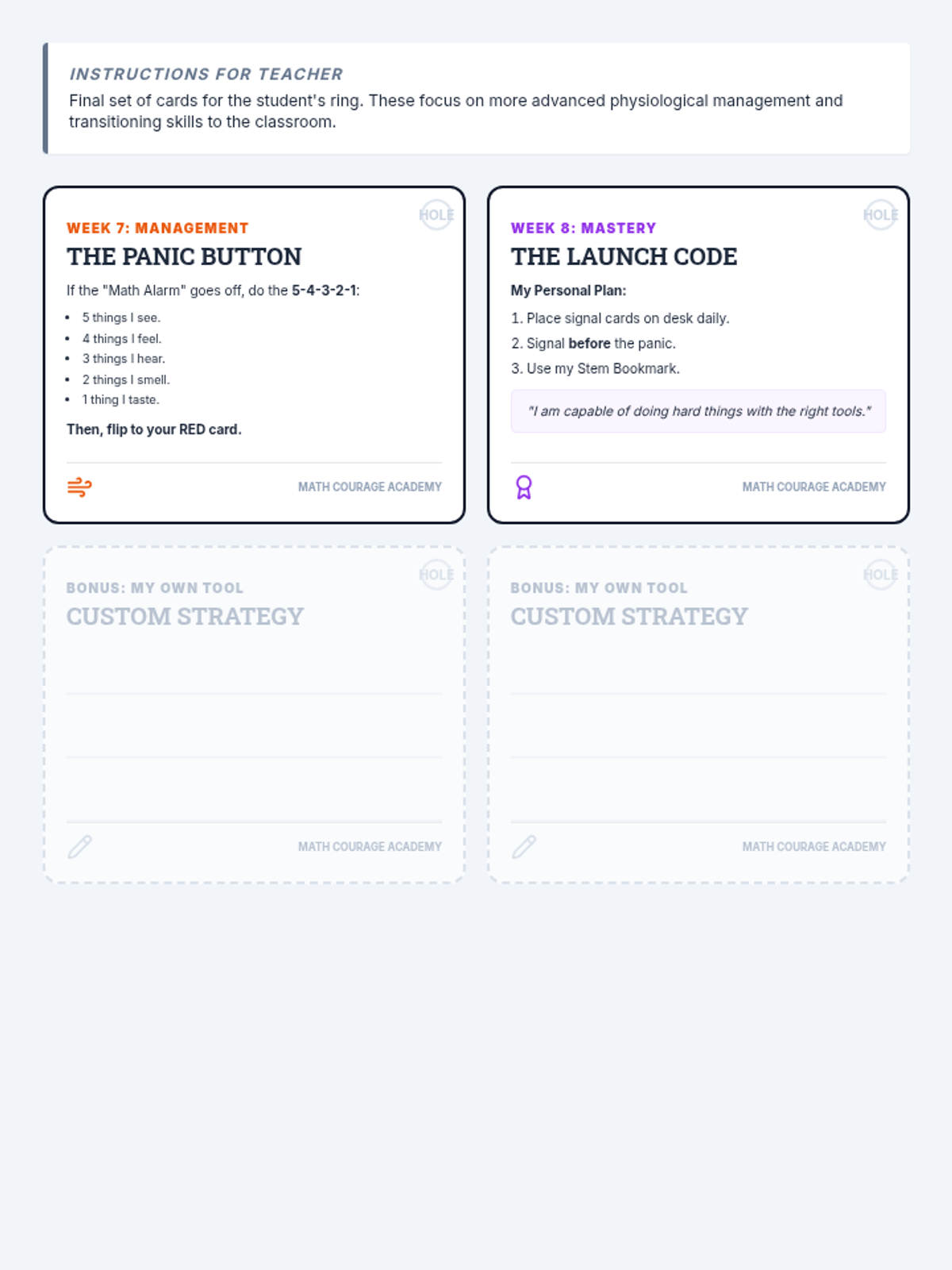
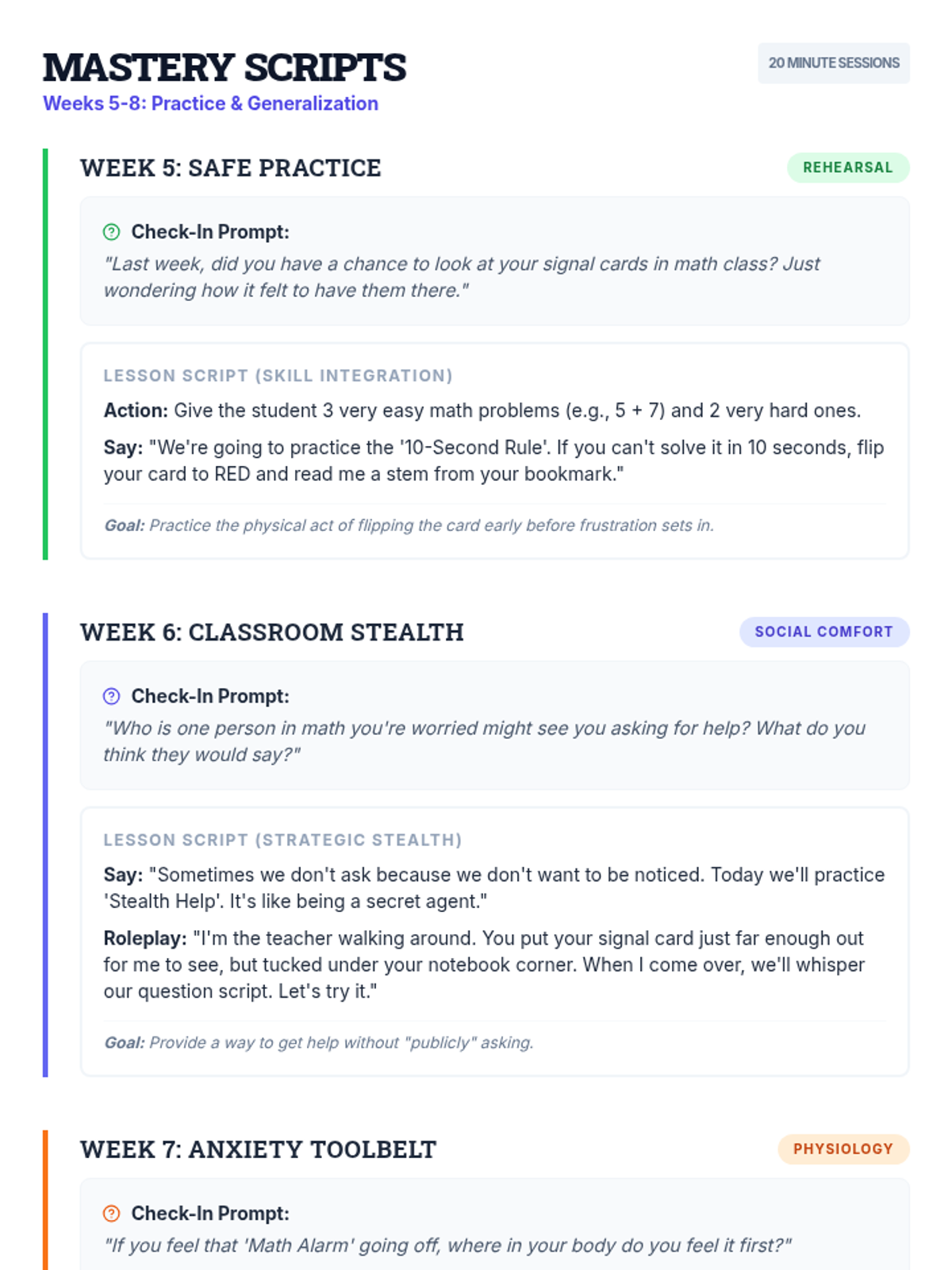
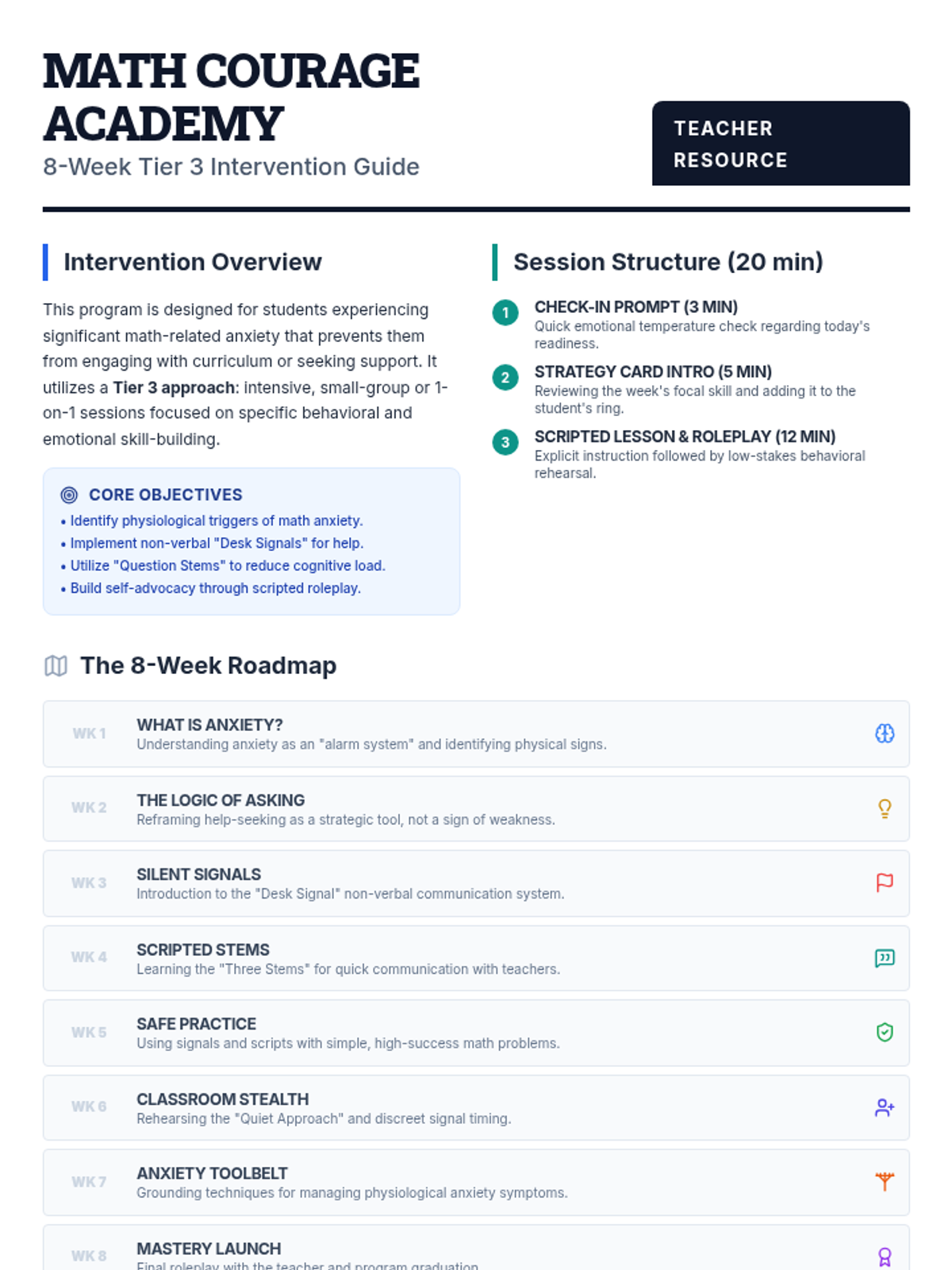
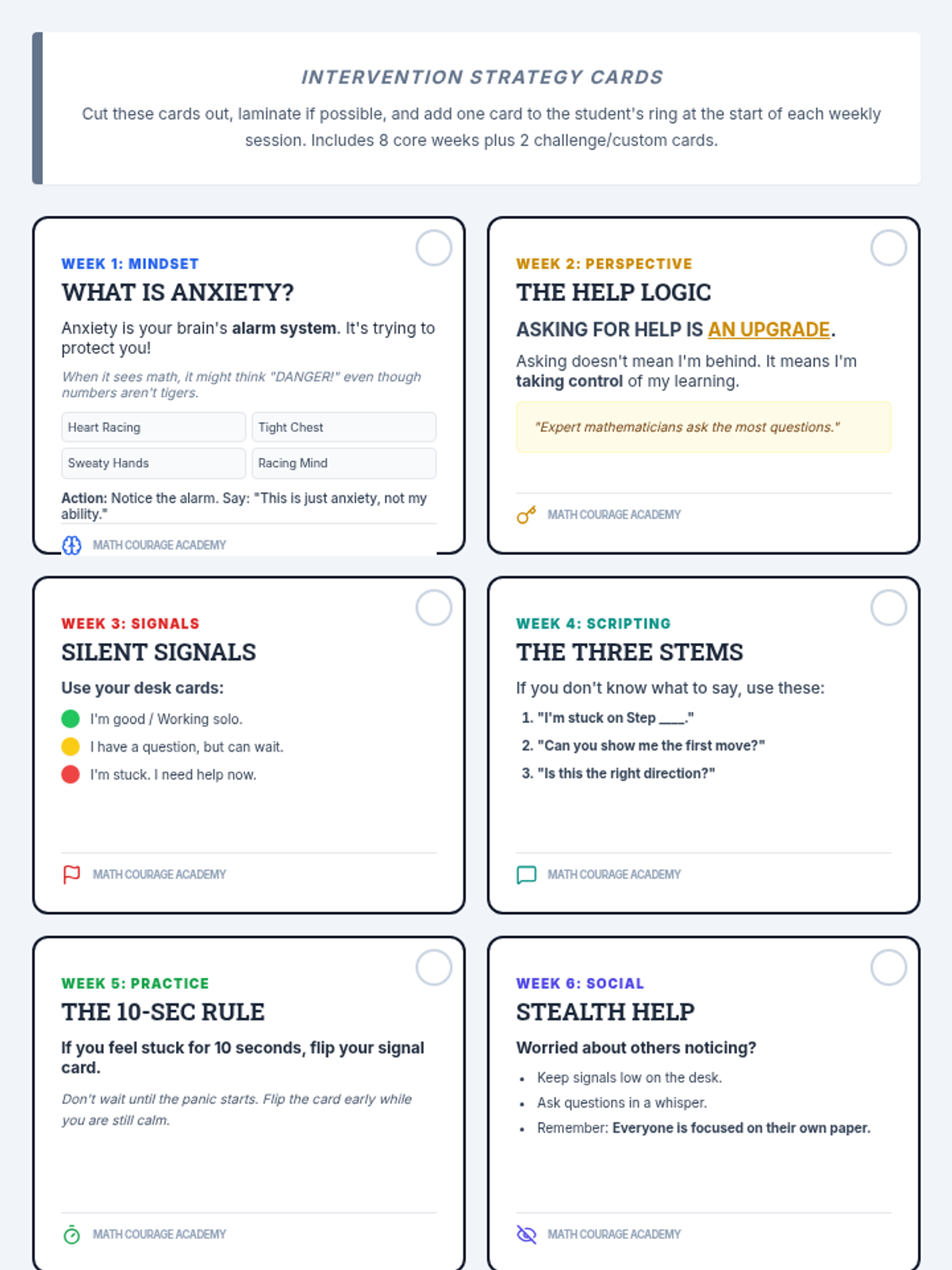
The final four weeks focus on rehearsing help-seeking behaviors through roleplay, managing physiological anxiety symptoms, and transitioning these skills into the actual math classroom.
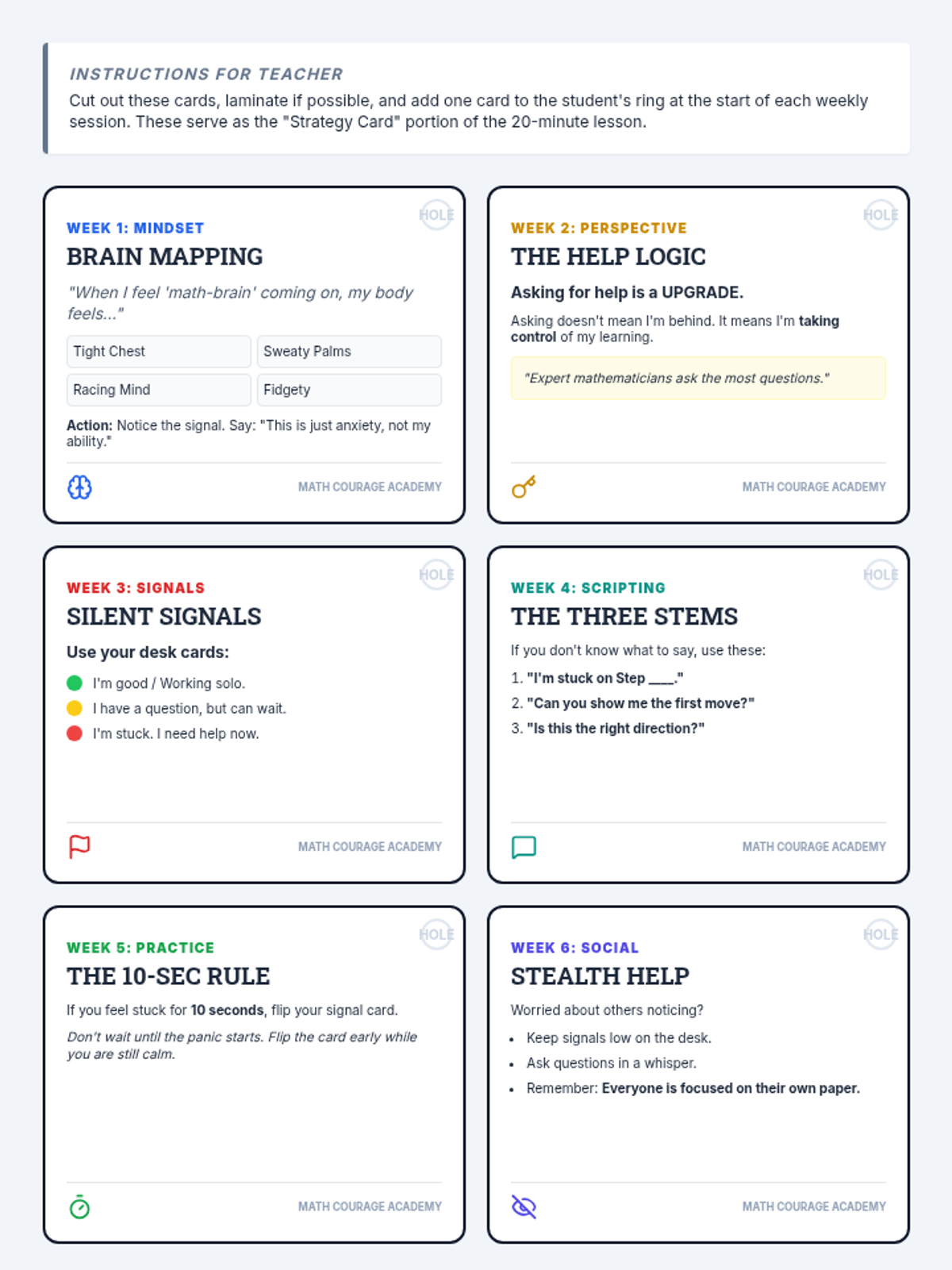
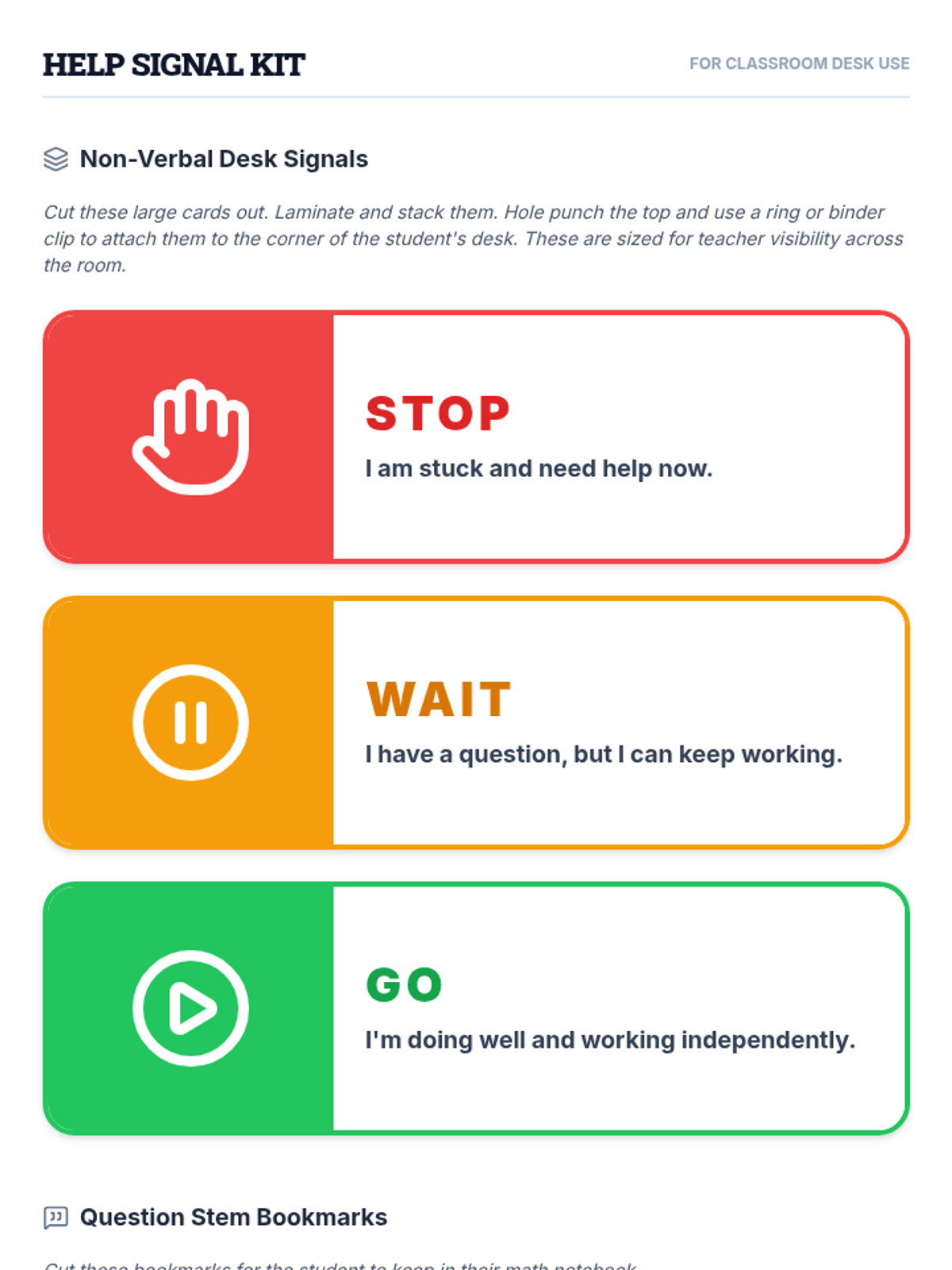
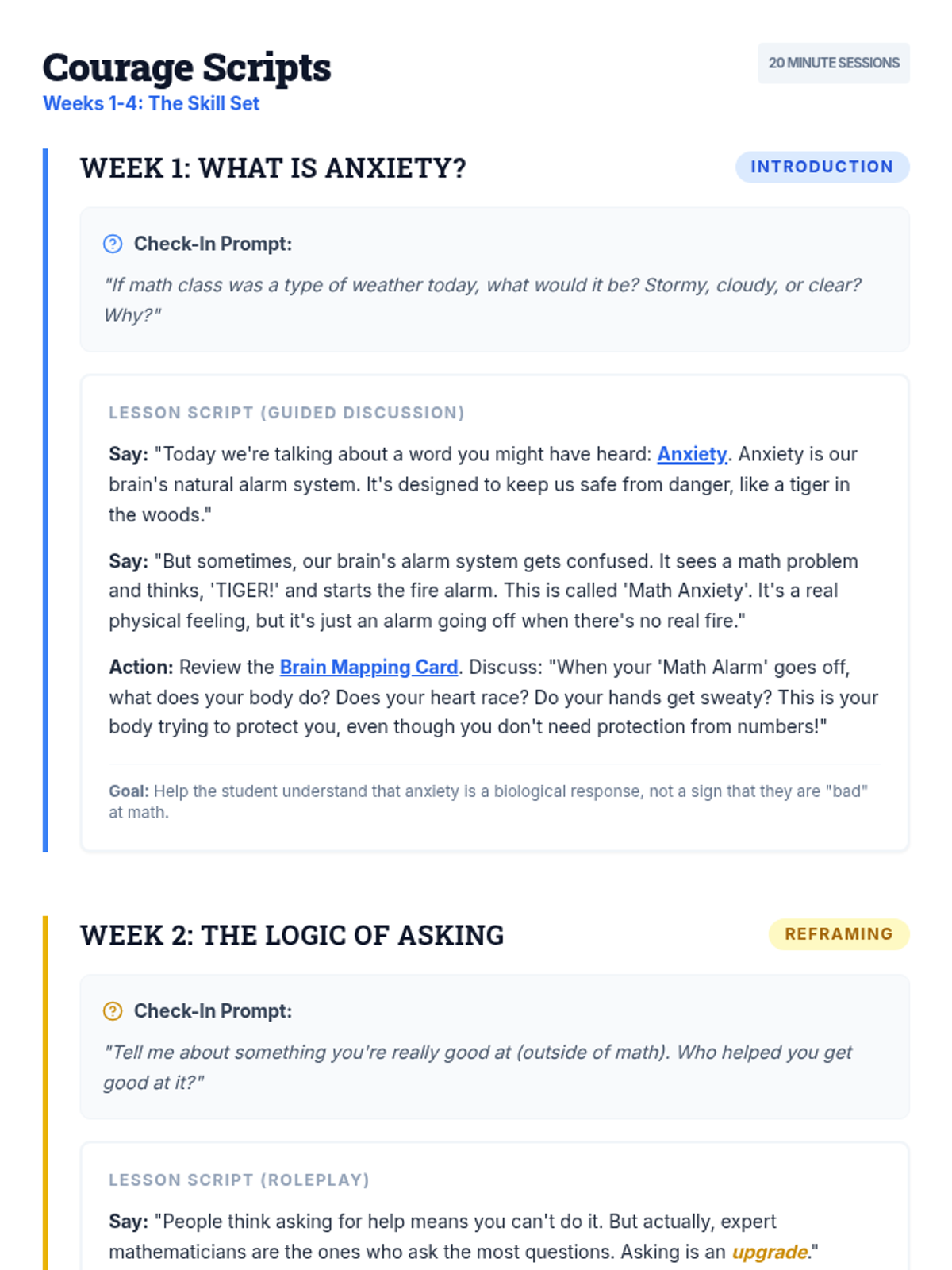
The first four weeks of the intervention focus on identifying anxiety triggers, reframing help-seeking as a skill, and introducing the non-verbal signal system and question stems.
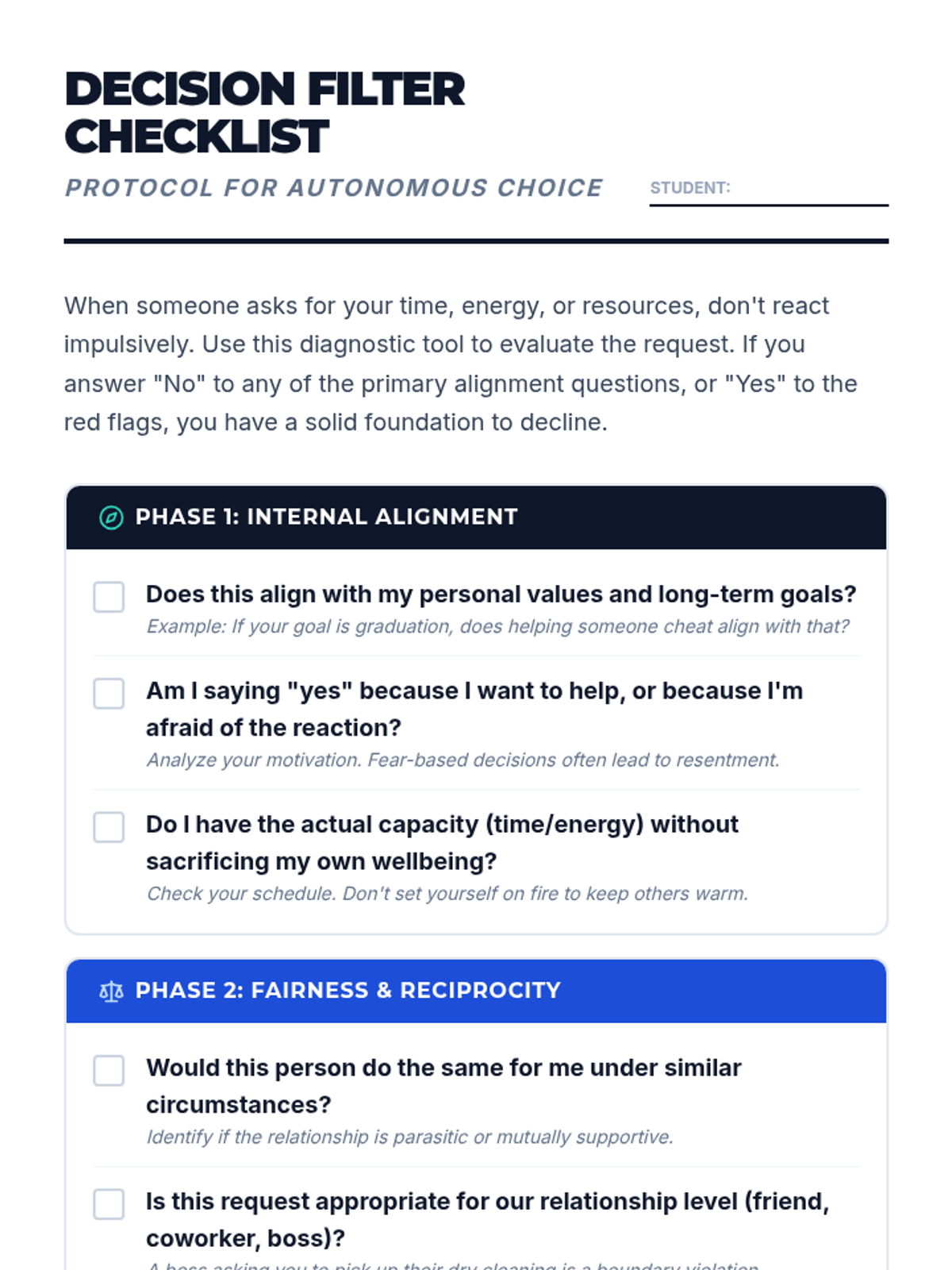
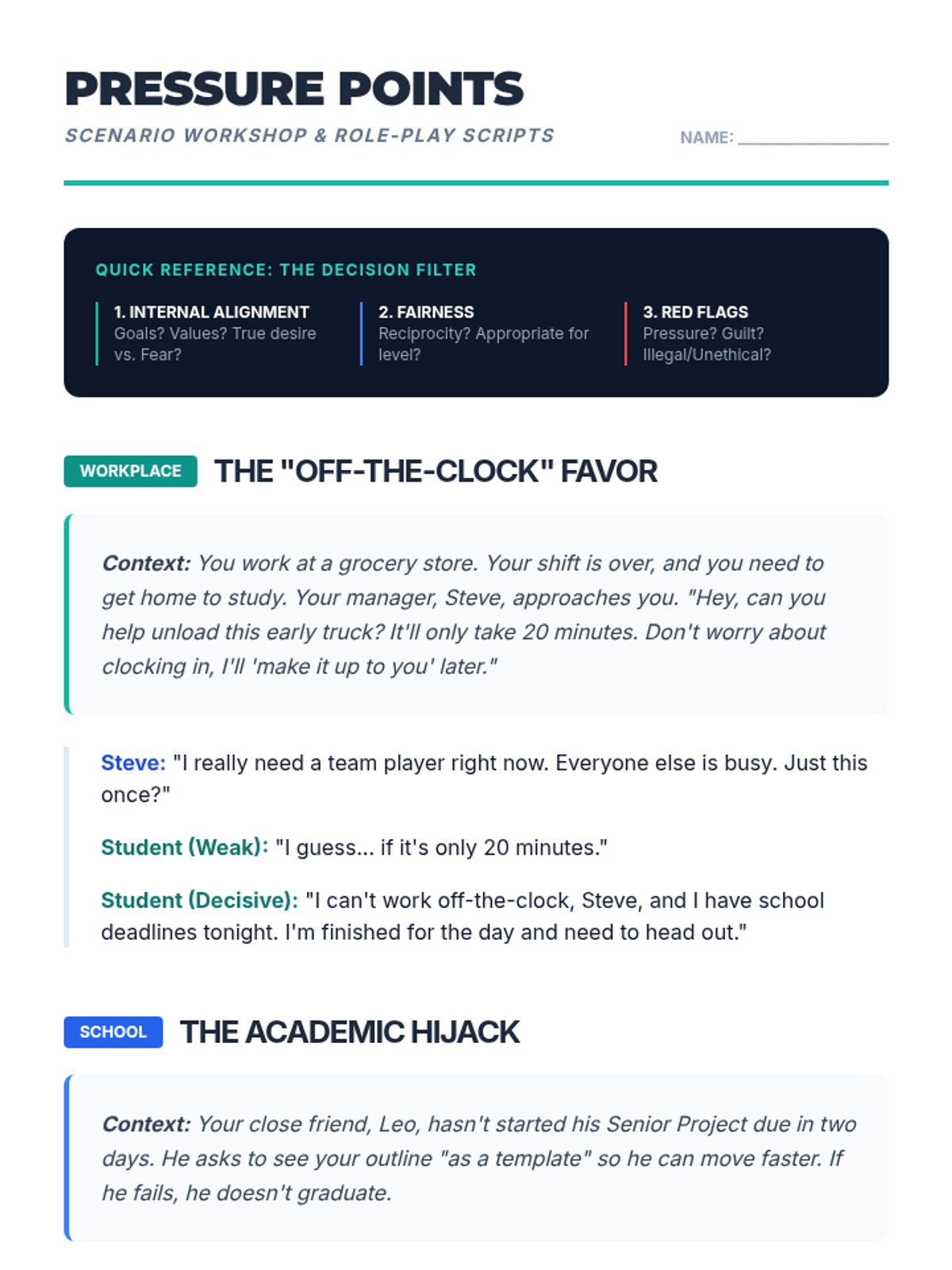
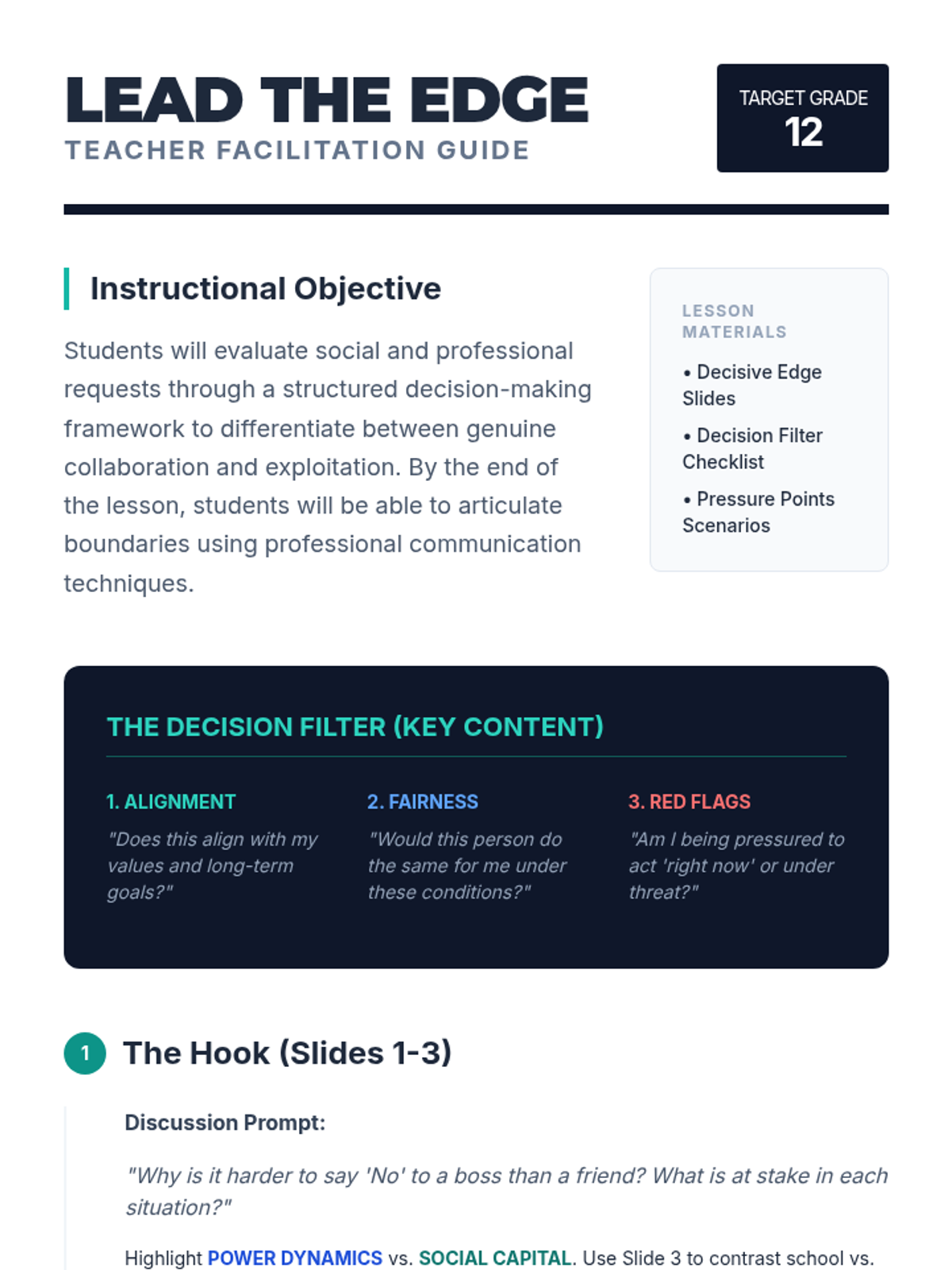
A high-school level lesson focused on empowering students to make autonomous decisions in the face of peer pressure and workplace exploitation. Includes a decision-making framework, a practical checklist, and realistic role-play scenarios for school and professional settings.
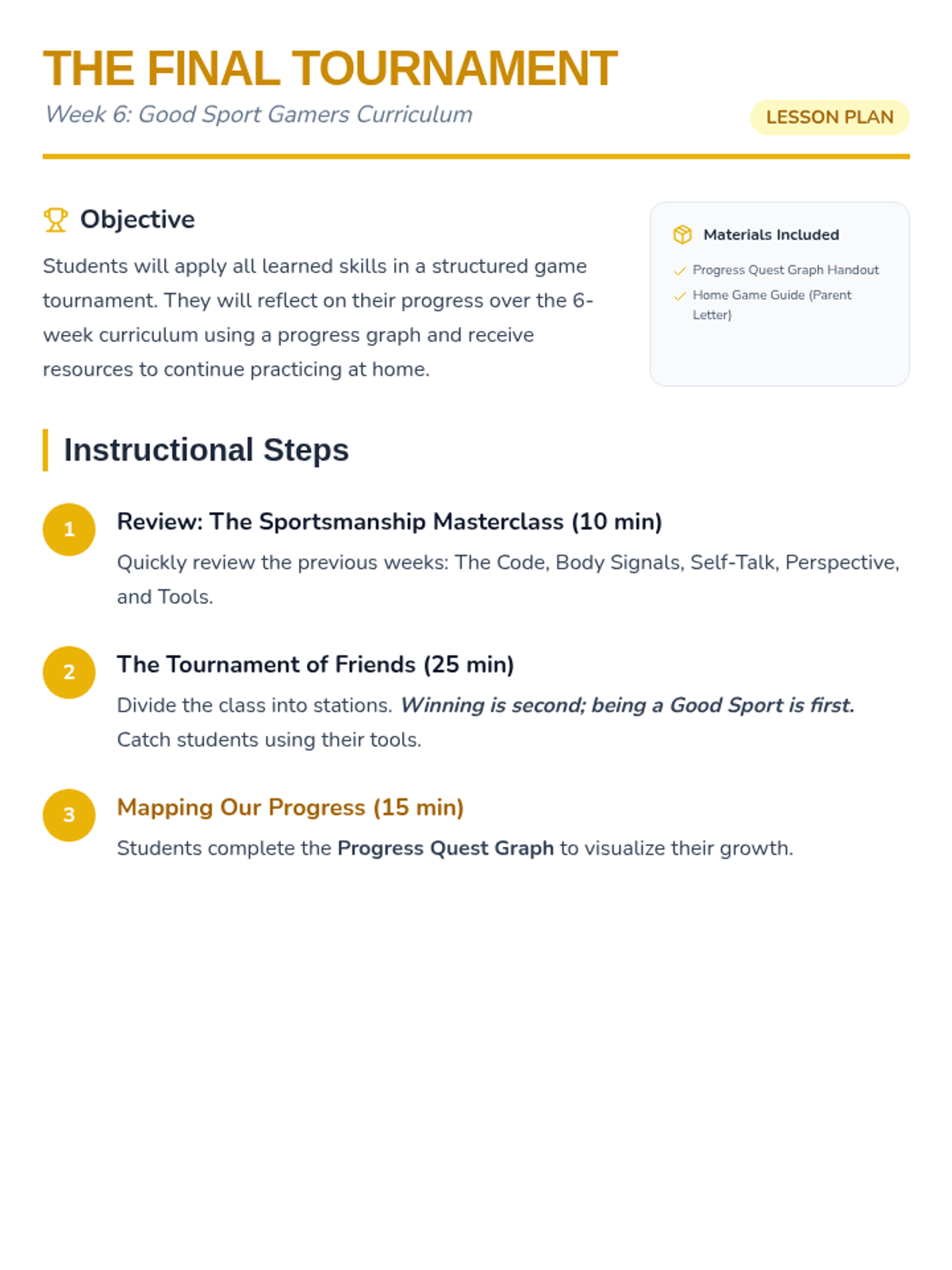
Consolidating skills through real-world practice, tracking progress over time, and extending learning to the home environment.
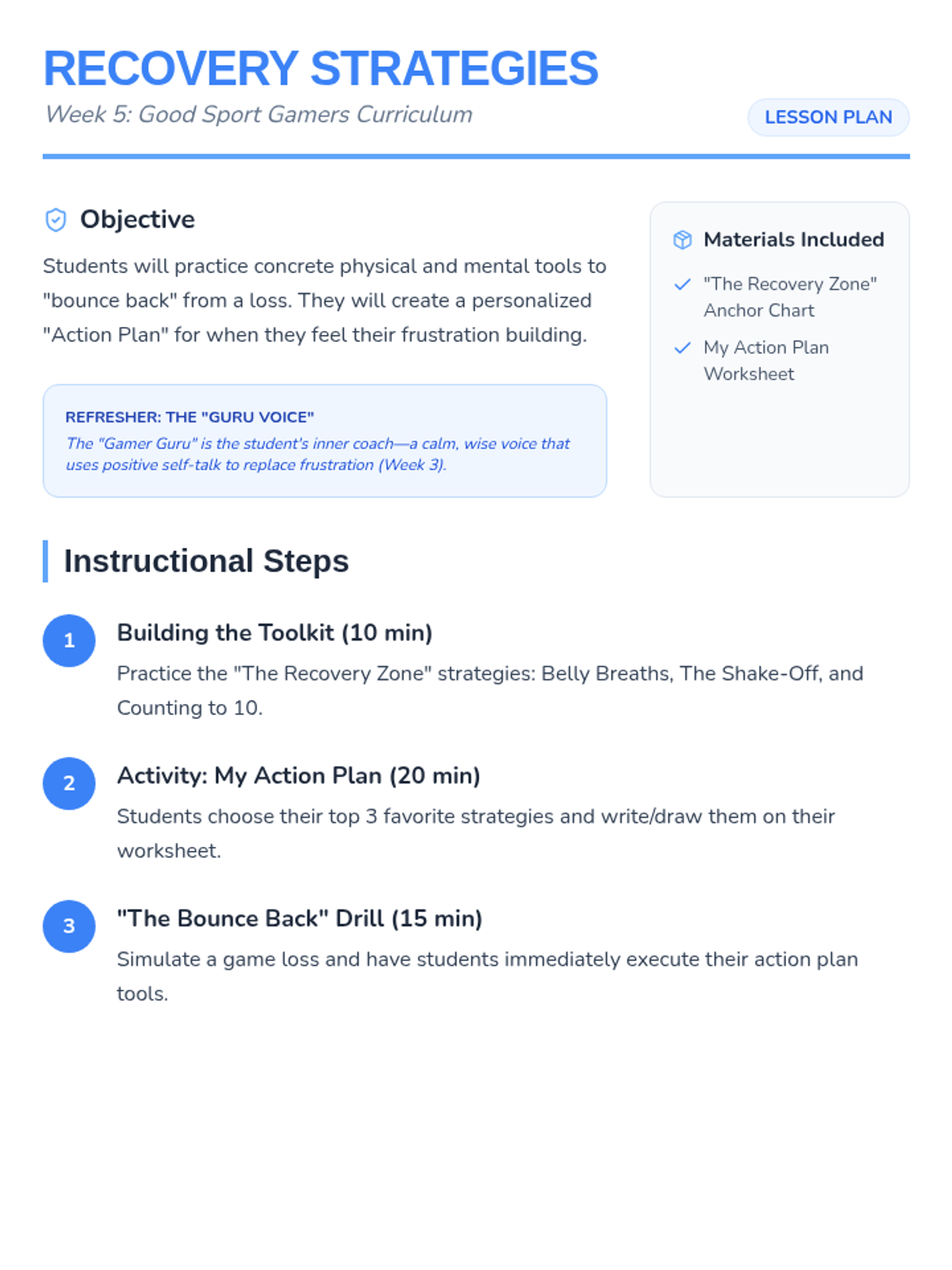
Building a personalized toolkit of strategies to calm down quickly and rejoin the group after a difficult moment.
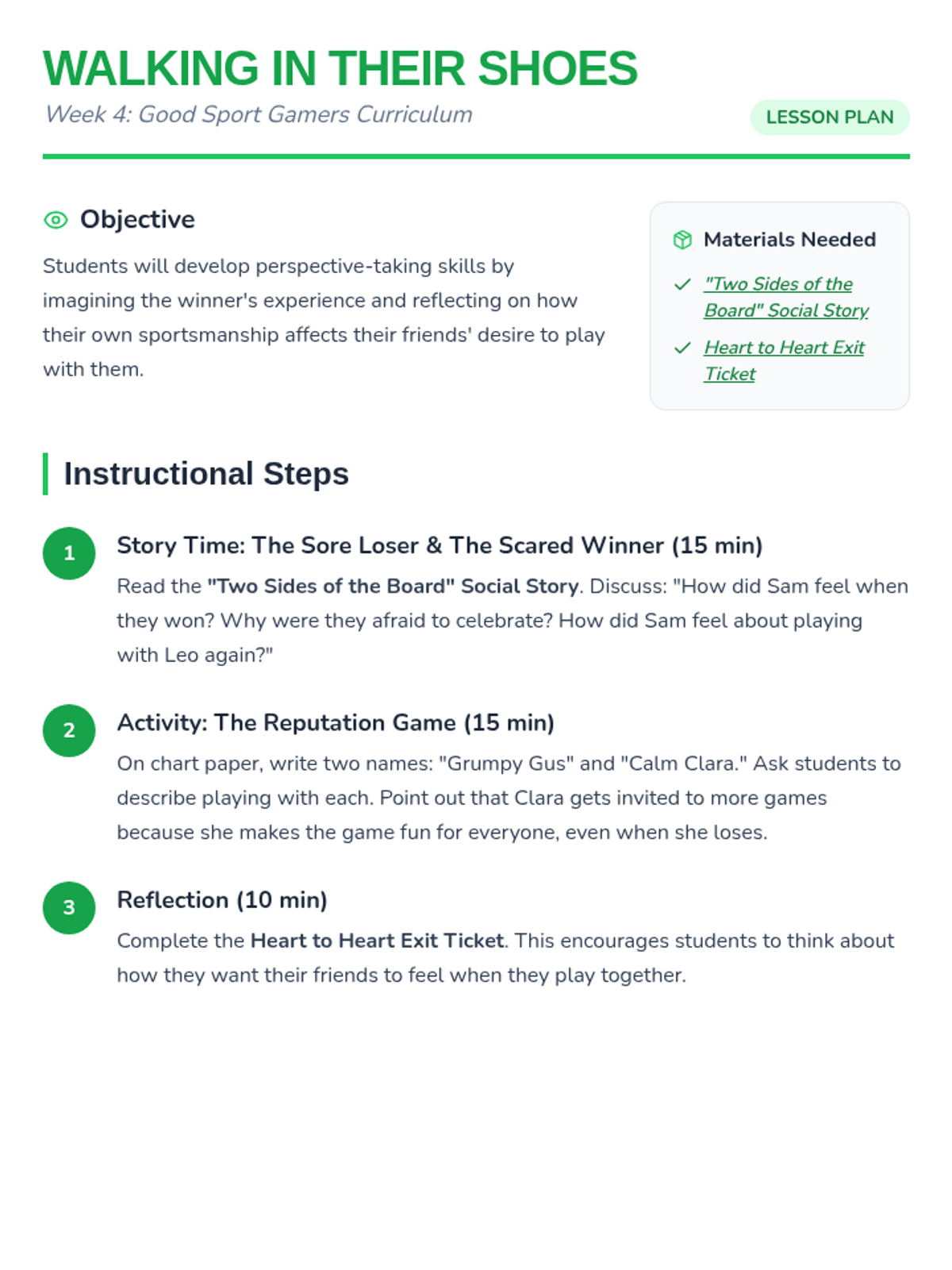
Understanding the winner's experience and the impact of one's behavior on friends and peers.
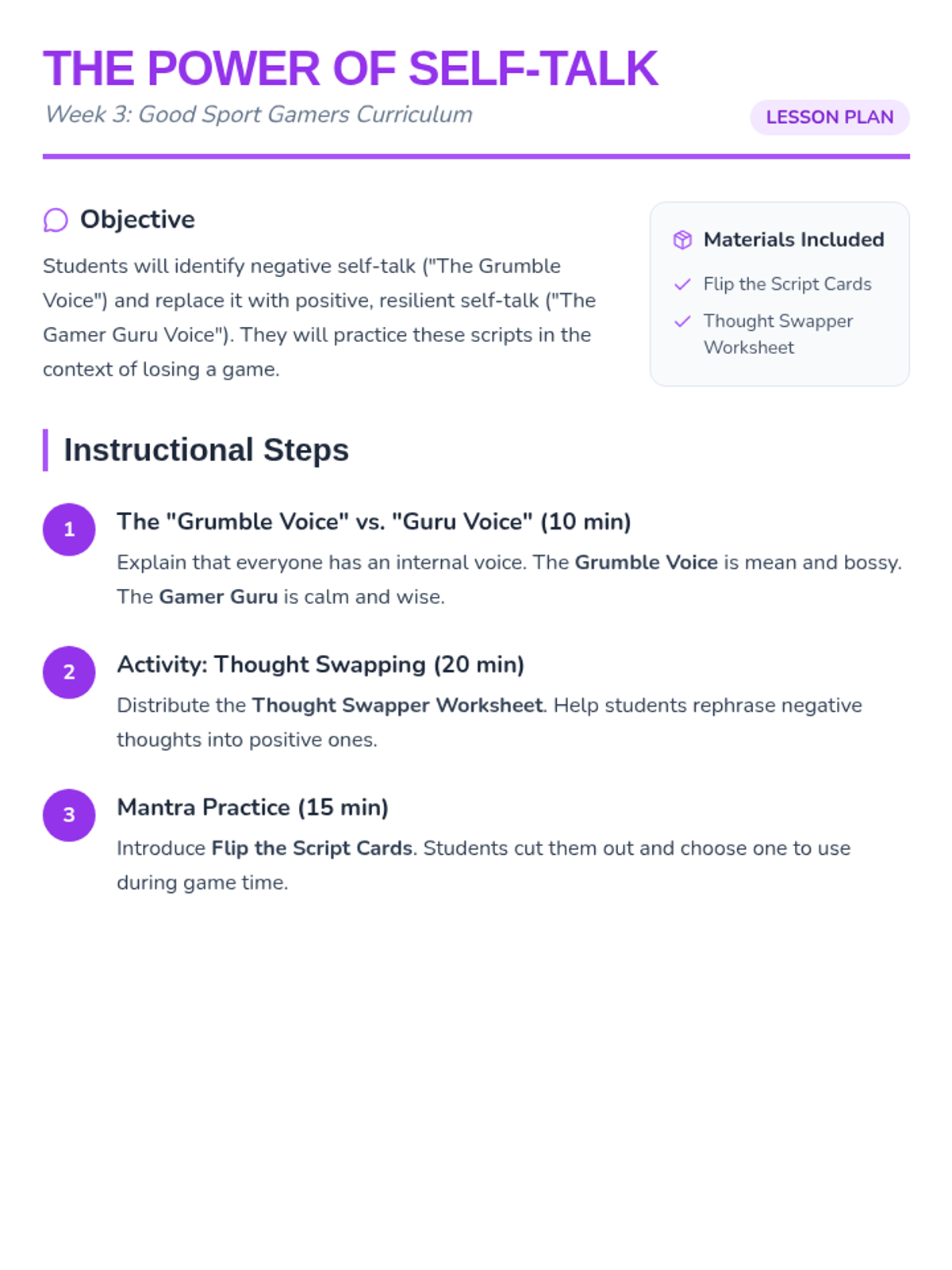
Teaching specific internal dialogues to reframe disappointment and maintain a positive attitude after a loss.
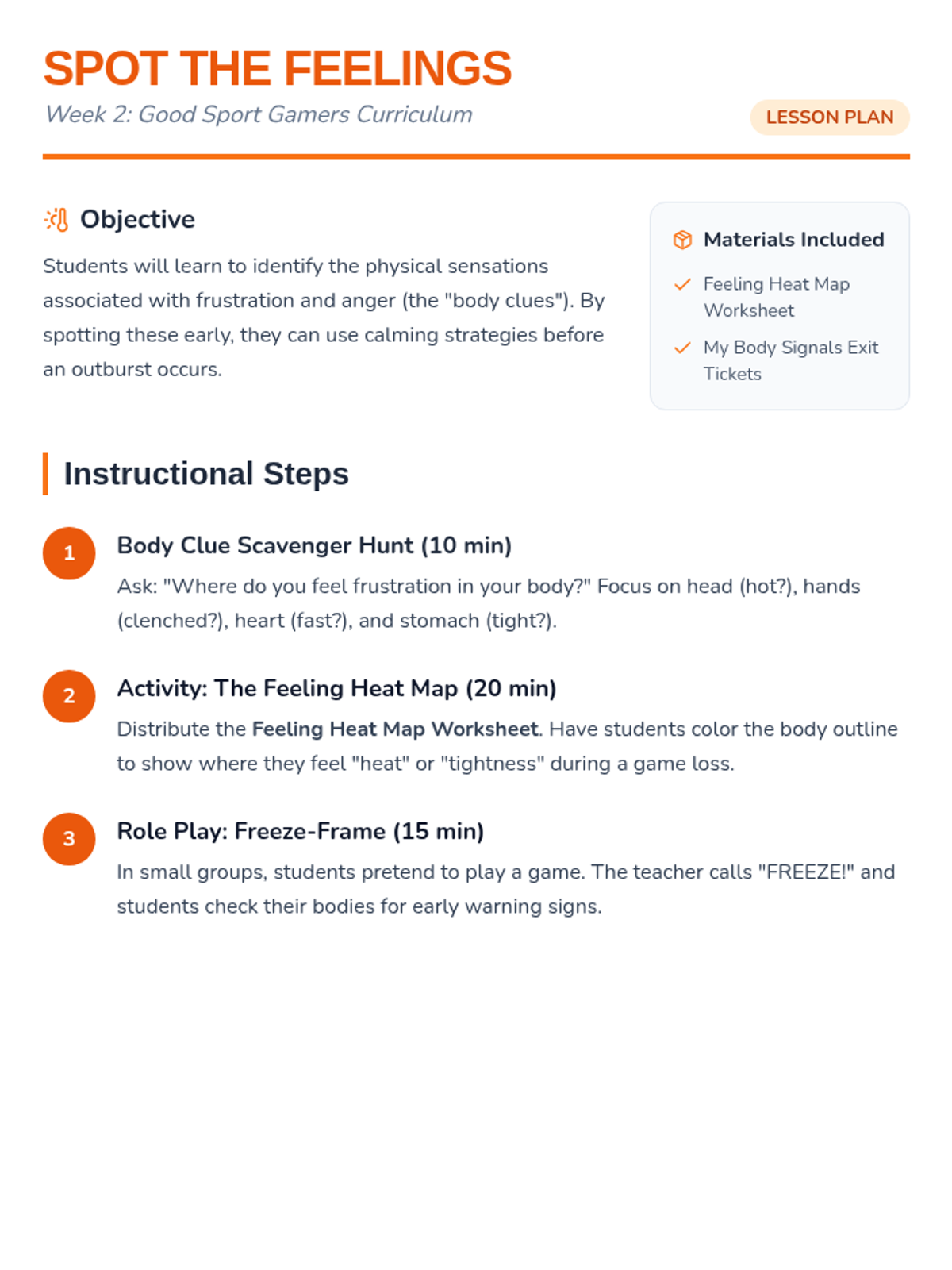
Identifying physical sensations and early warning signs of frustration to prevent emotional outbursts during competitive play.
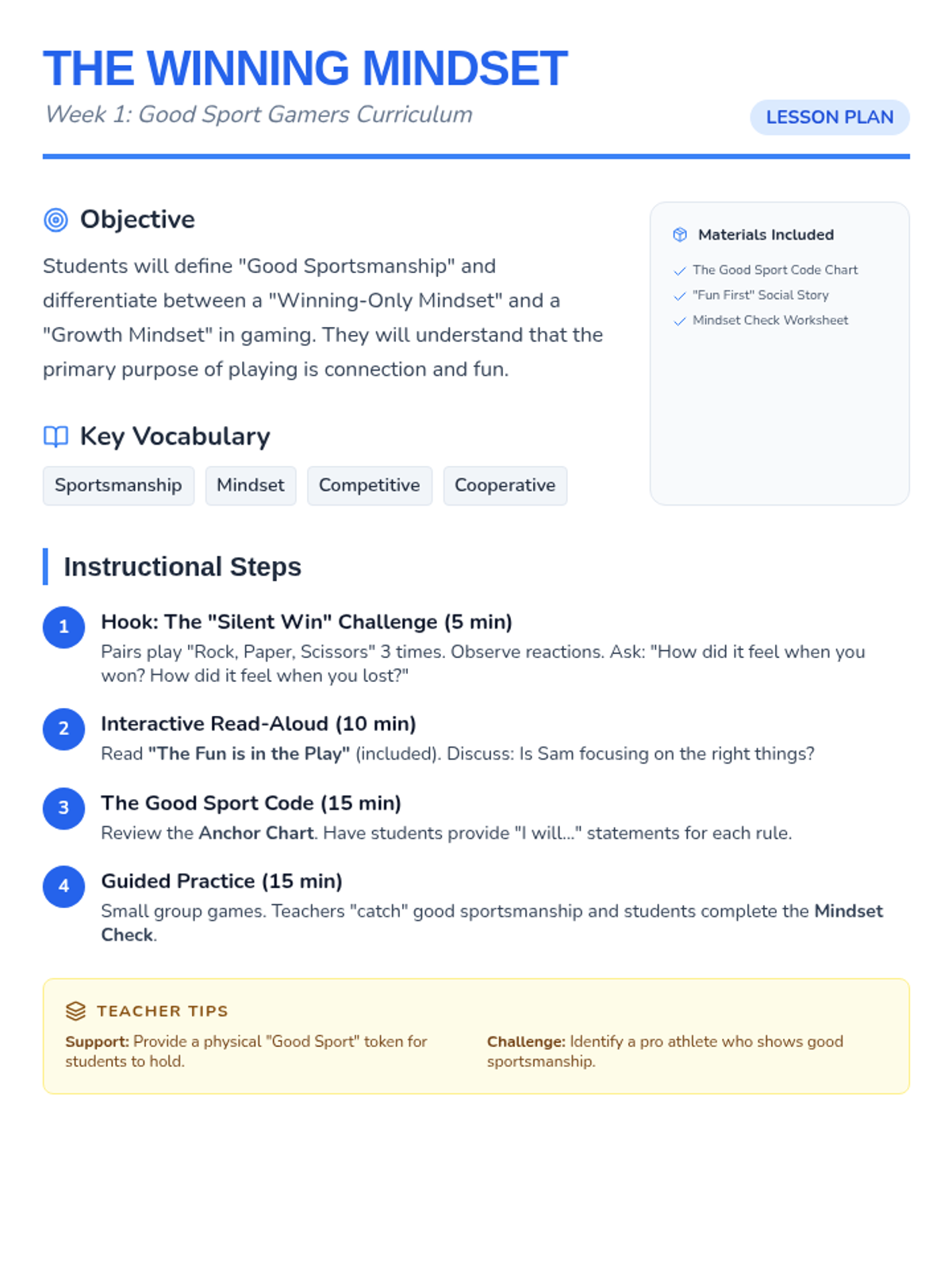
Introduction to the concept of fair play and shifting focus from winning to the enjoyment of the game itself.
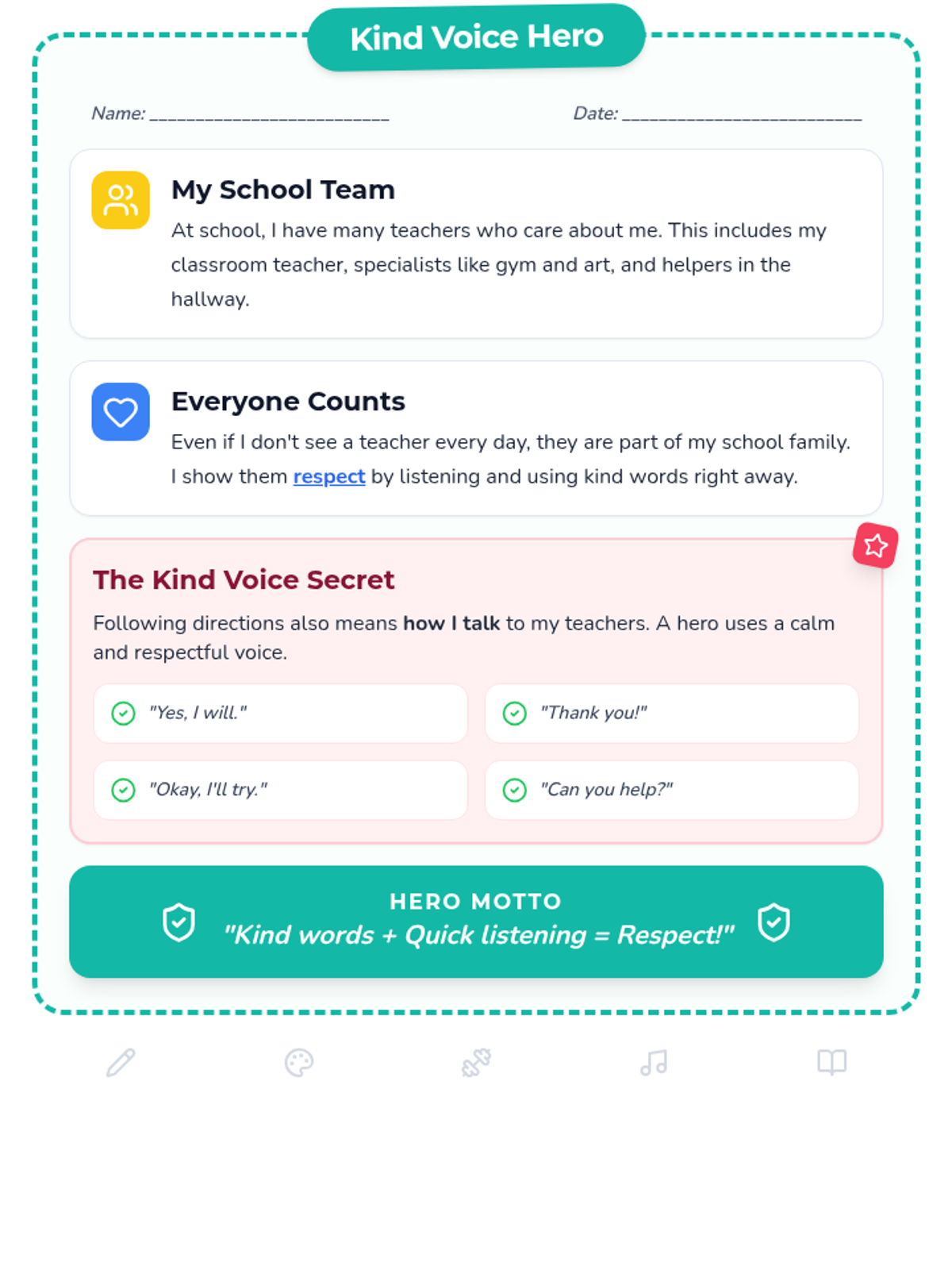
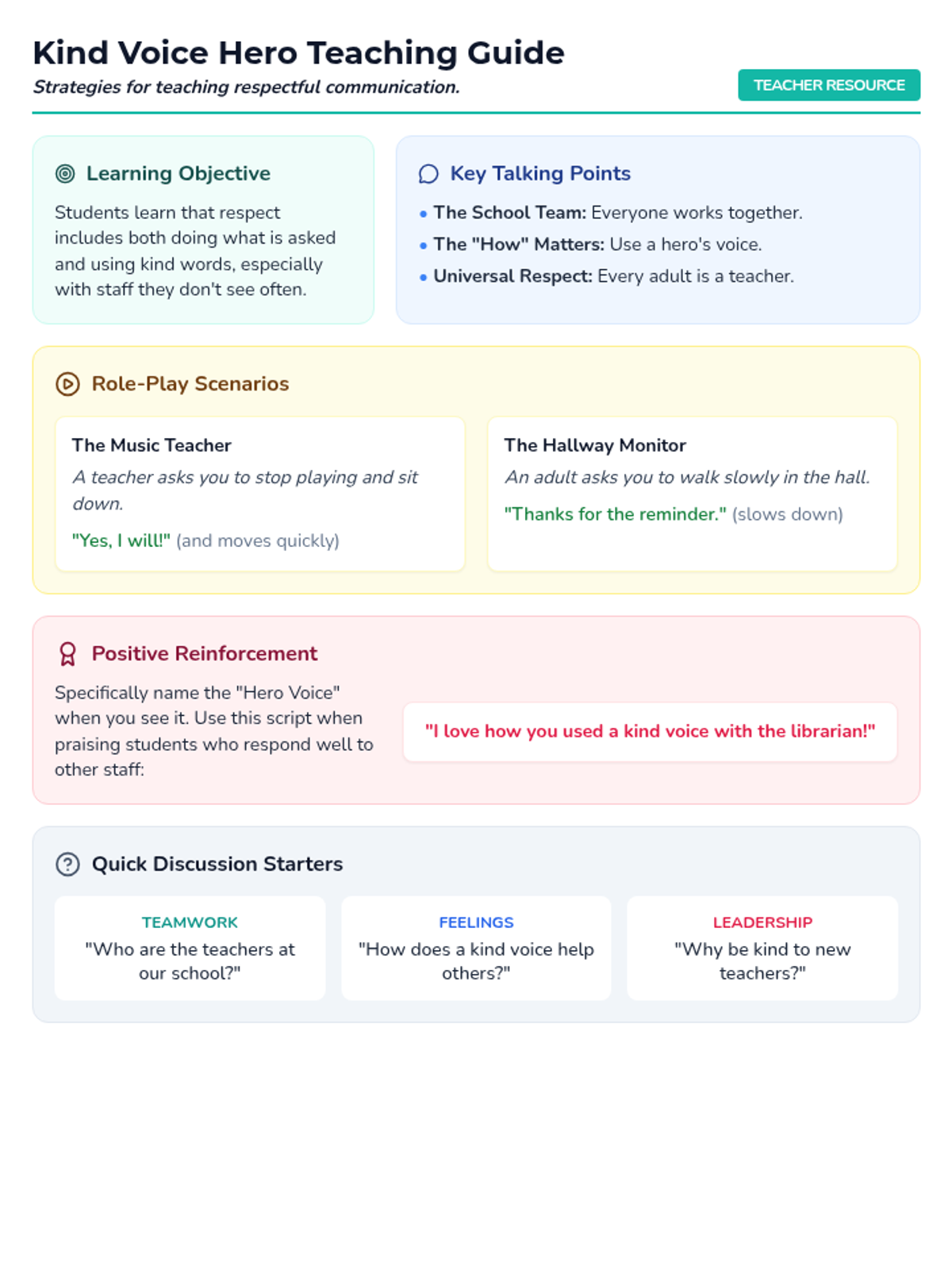
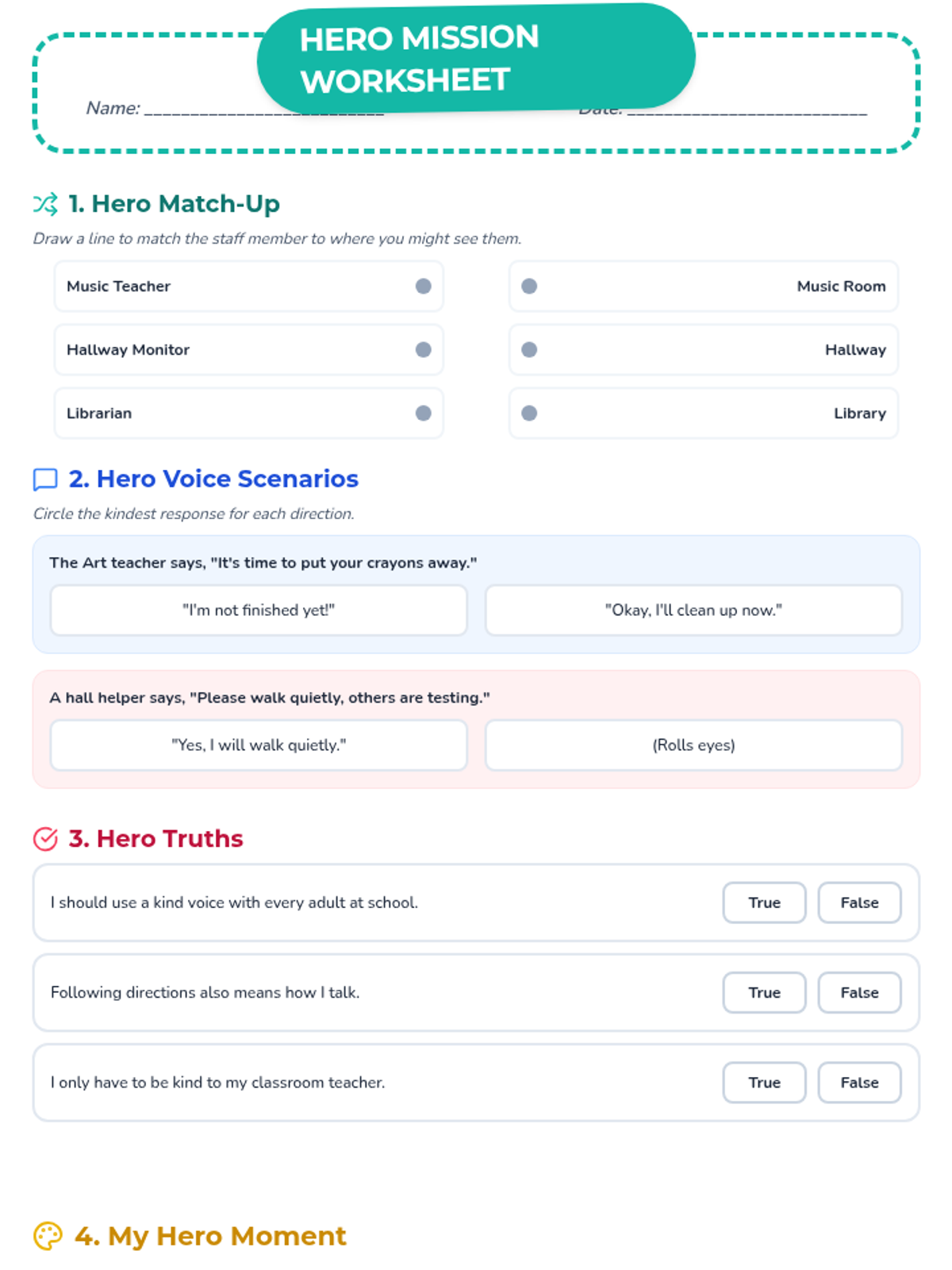
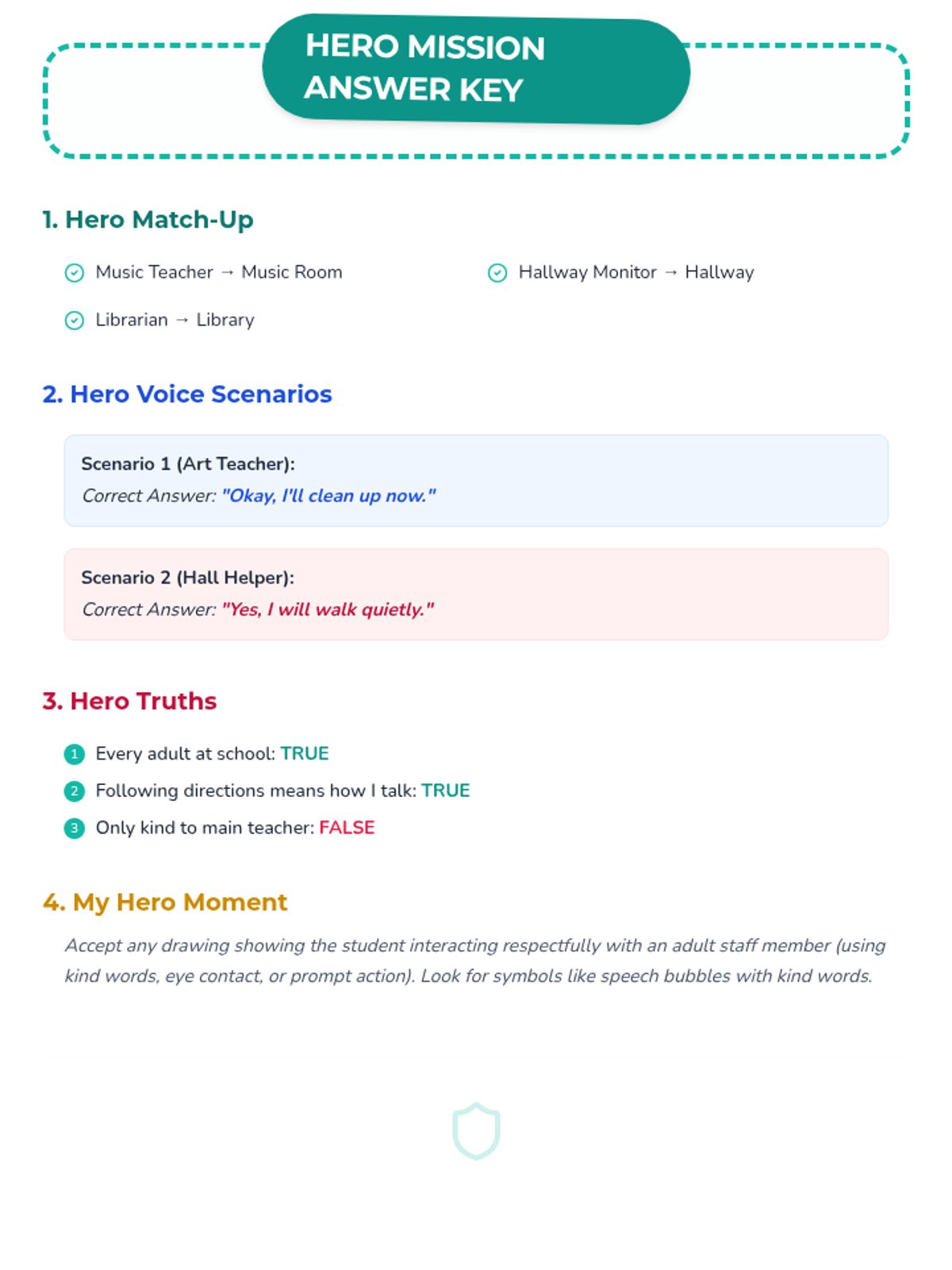
A social story and anchor chart resource designed for 2nd-grade students to promote respectful communication and cooperation with all school staff. This lesson emphasizes that following directions includes using kind words, regardless of how often a student interacts with a particular teacher.
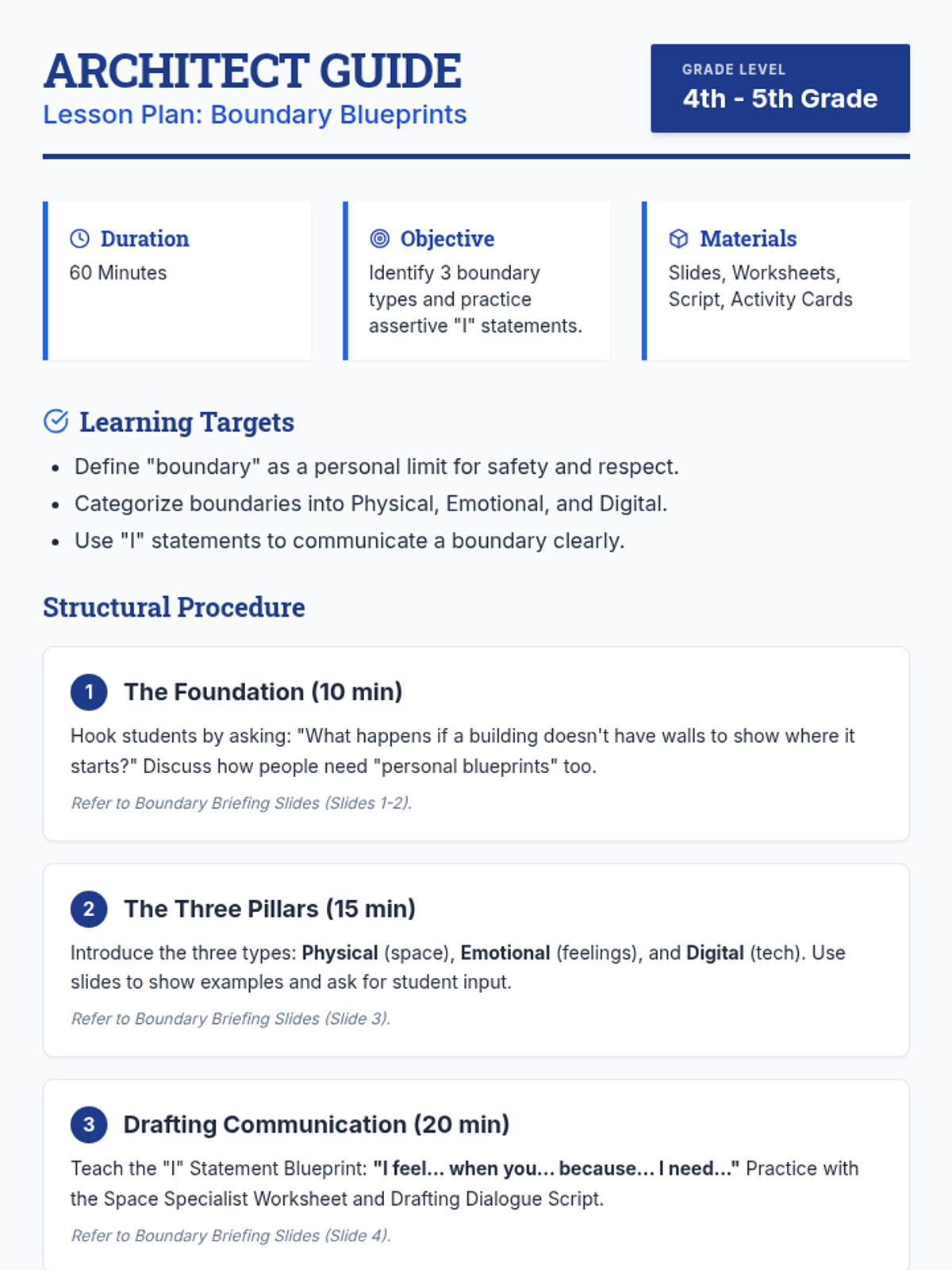
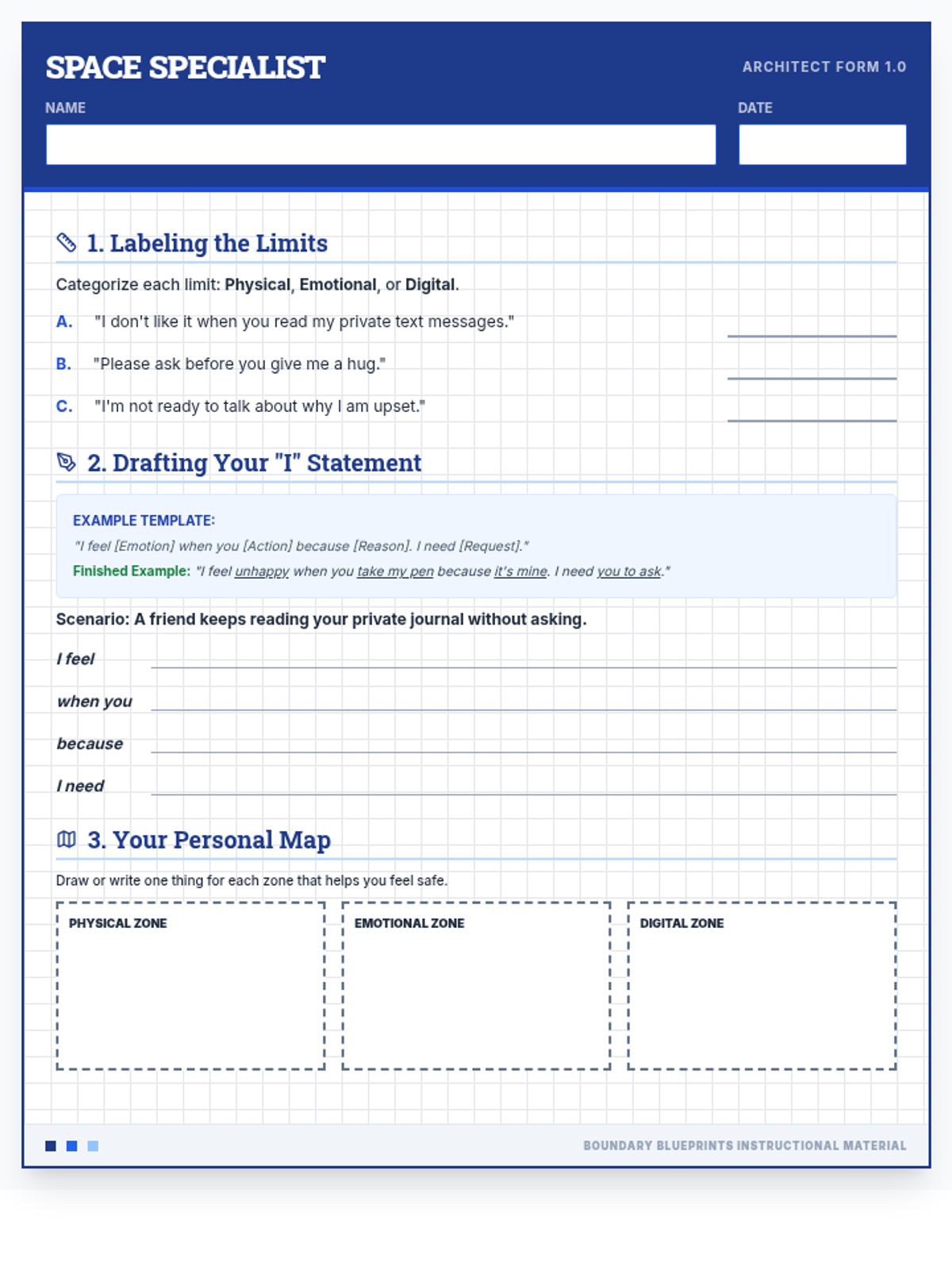
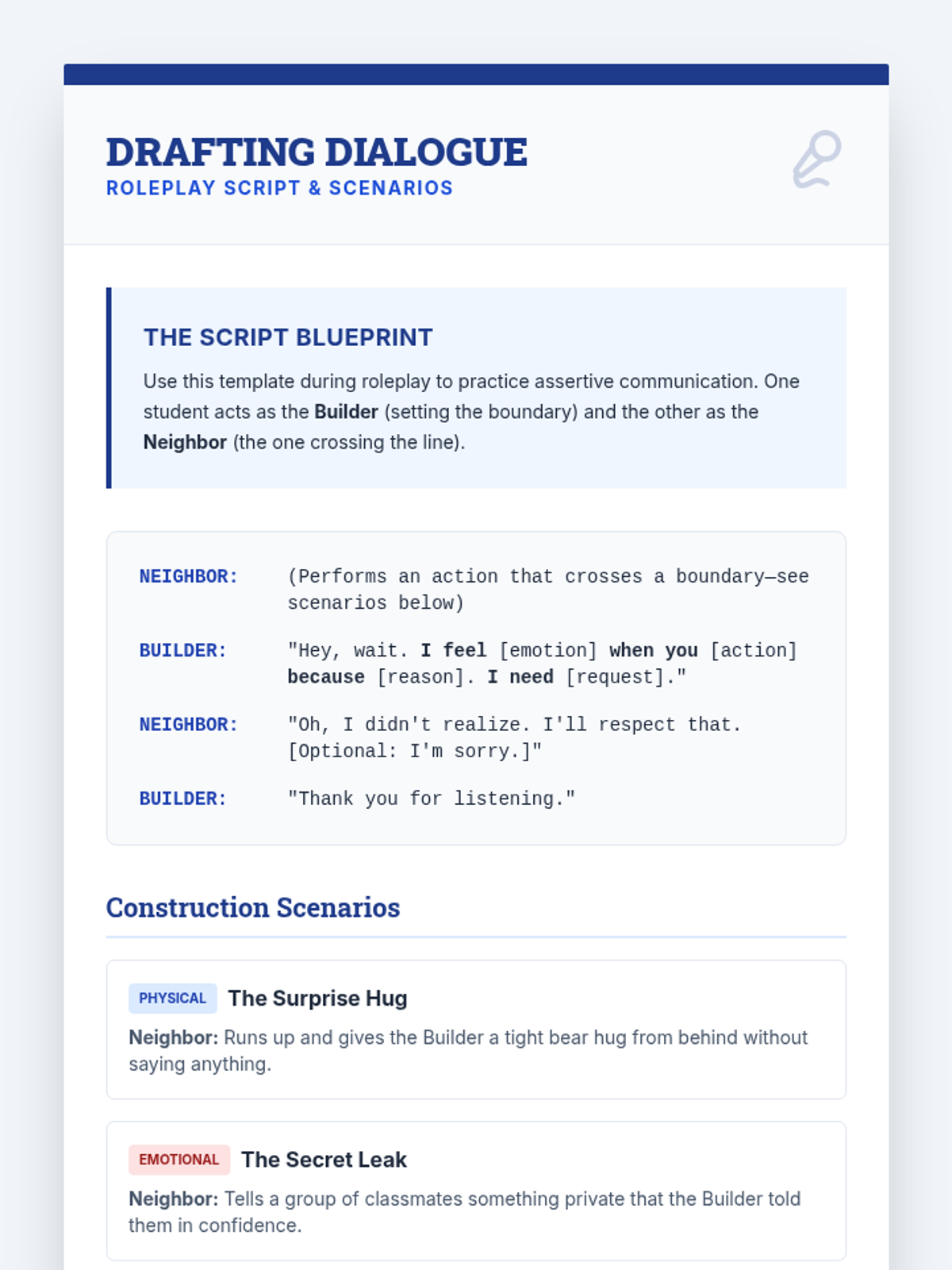
A comprehensive lesson for 4th and 5th graders on identifying and communicating physical, emotional, and digital boundaries using an architectural blueprint theme. Students learn to build healthy relationship structures through assertive communication and mutual respect.
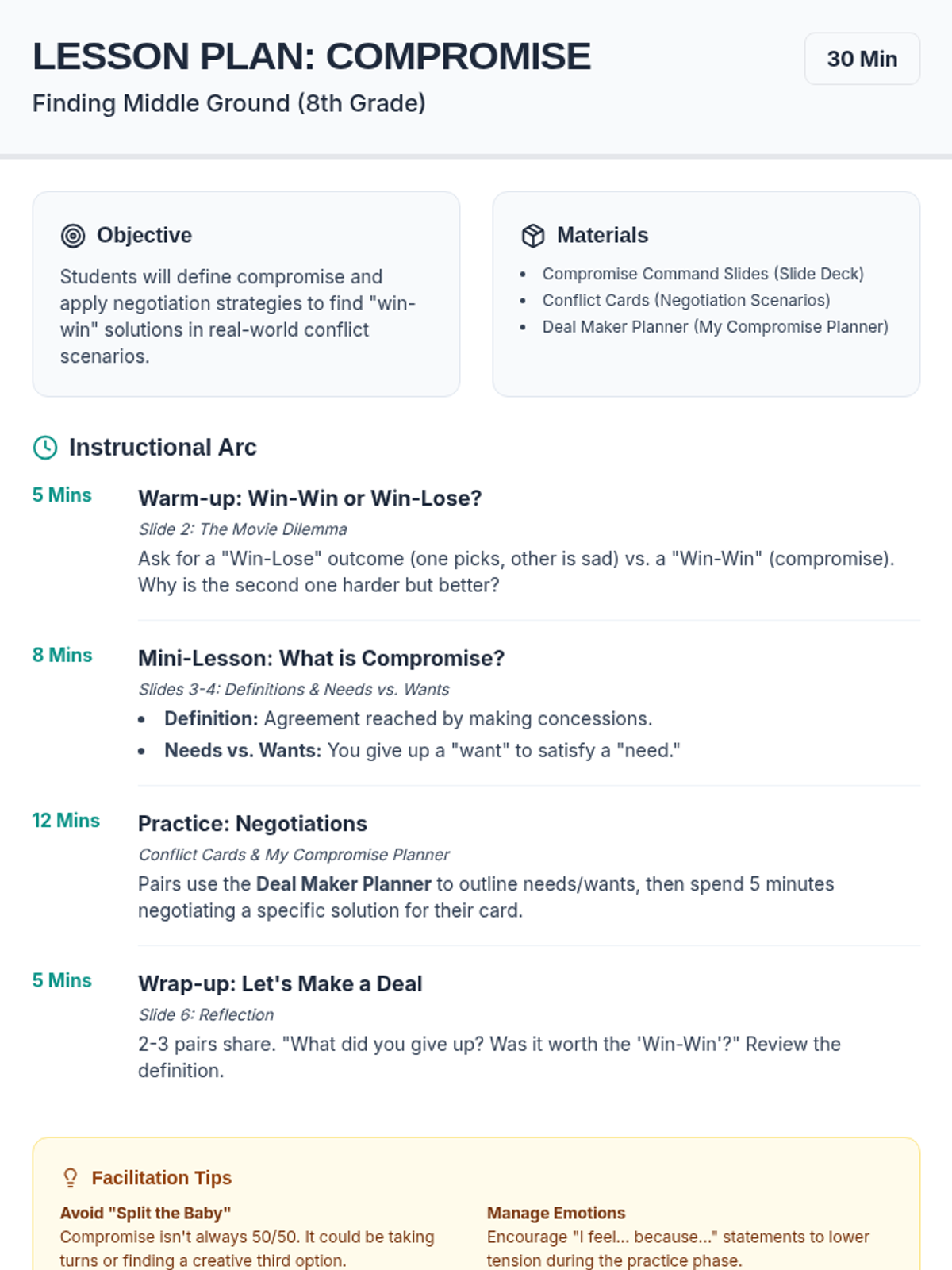
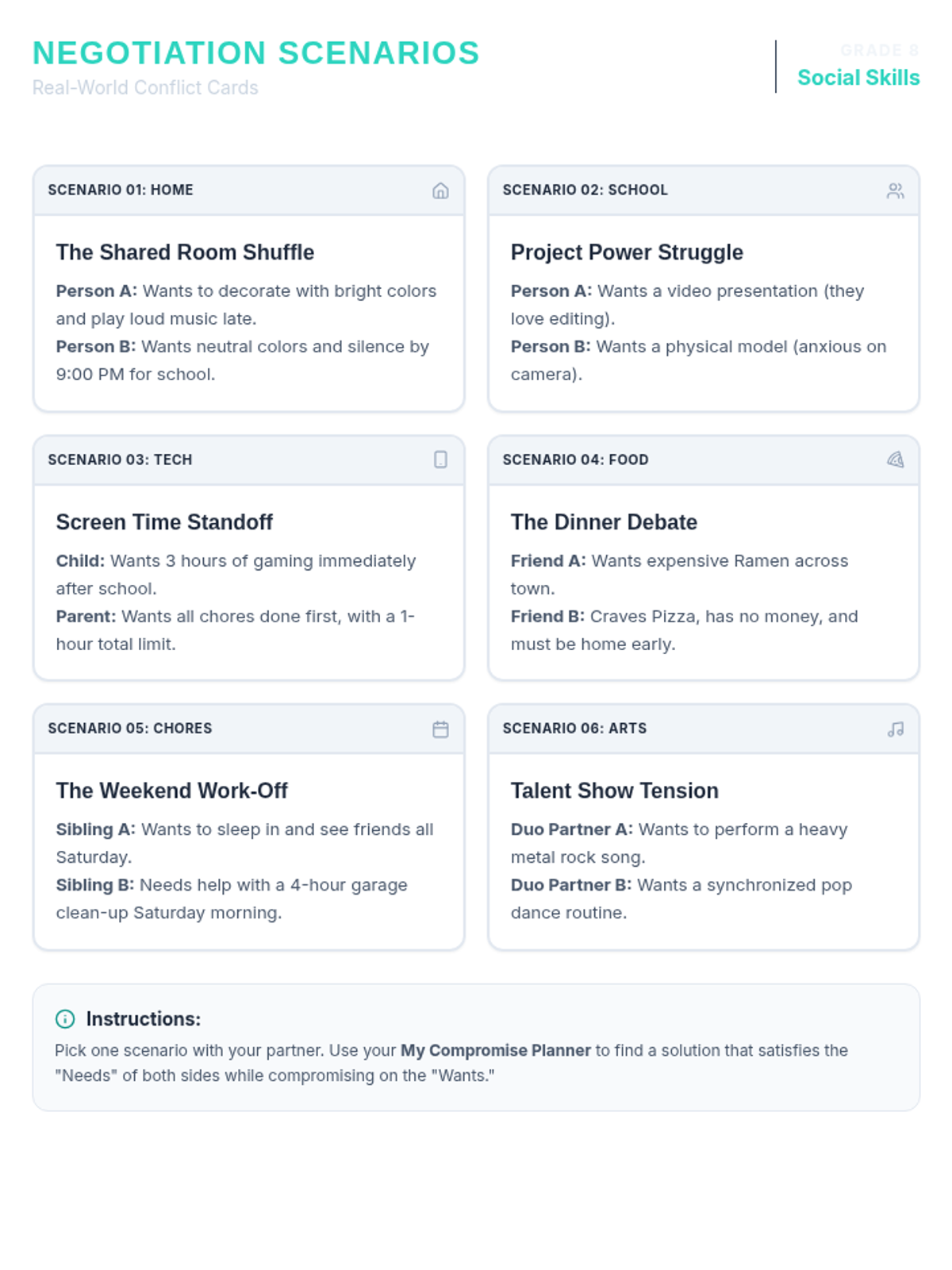
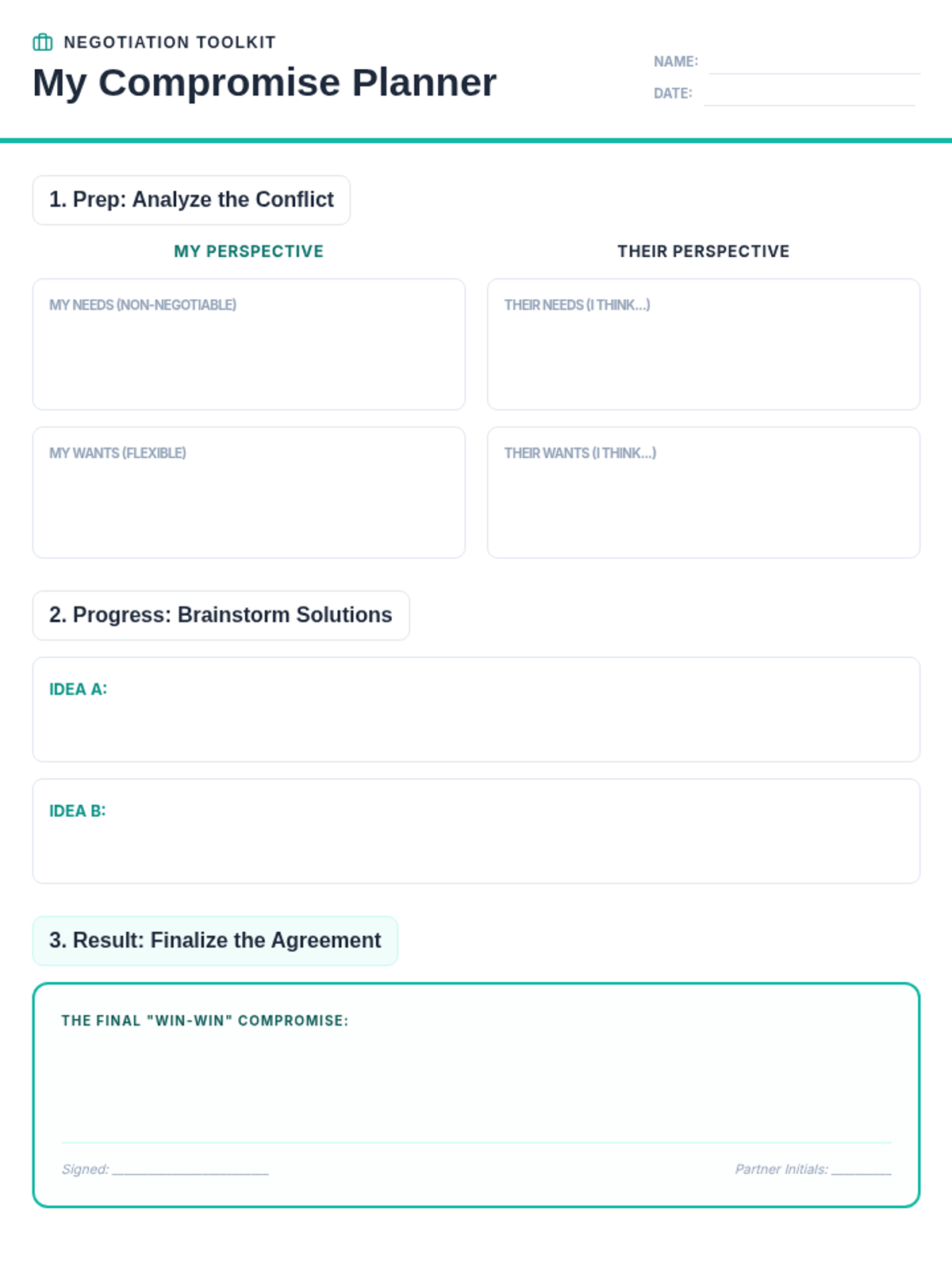
An interactive 8th-grade lesson on the art of compromise and negotiation. Students learn to navigate conflicts by seeking 'win-win' outcomes through practical scenarios and a structured planning tool.
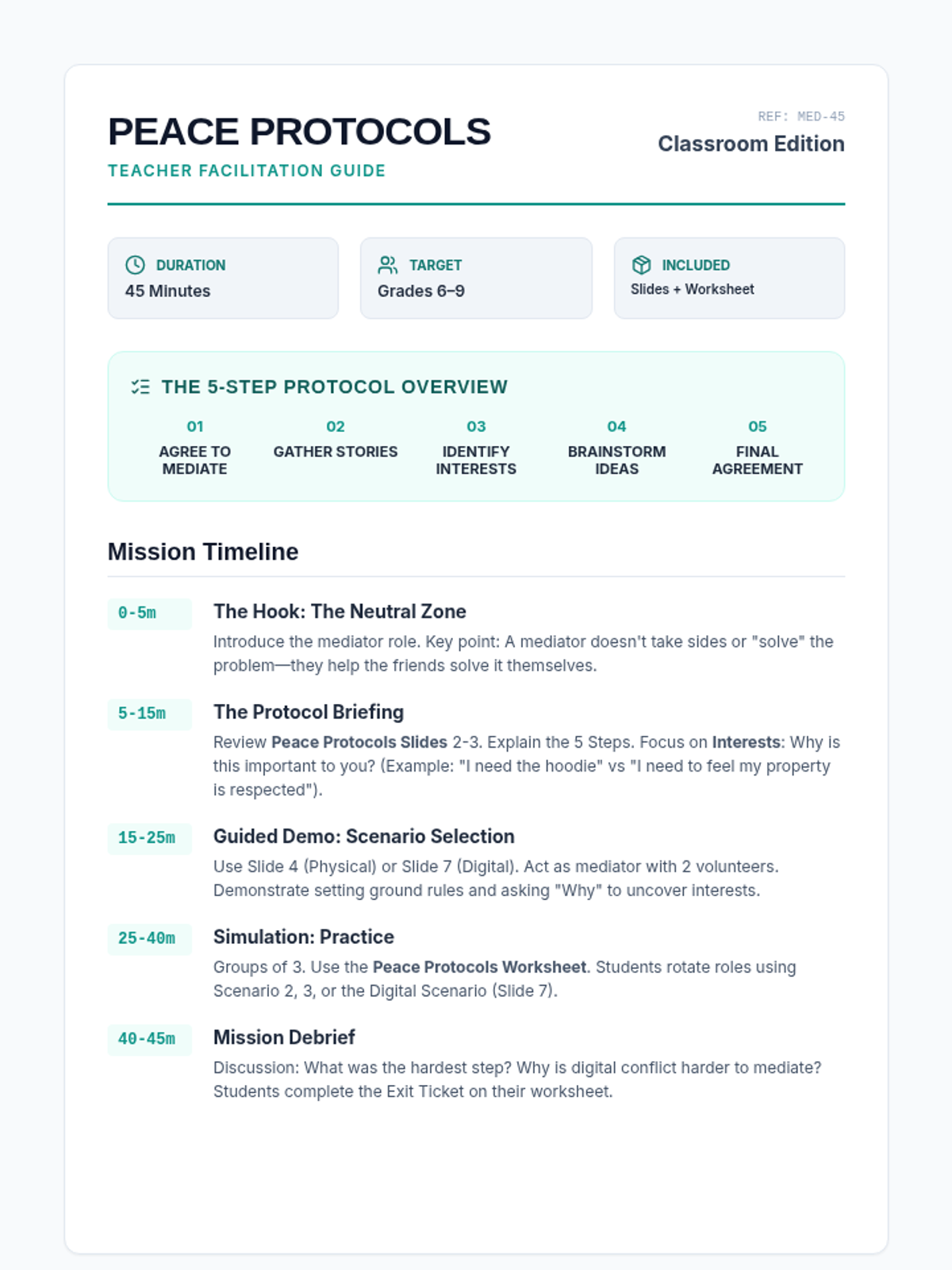
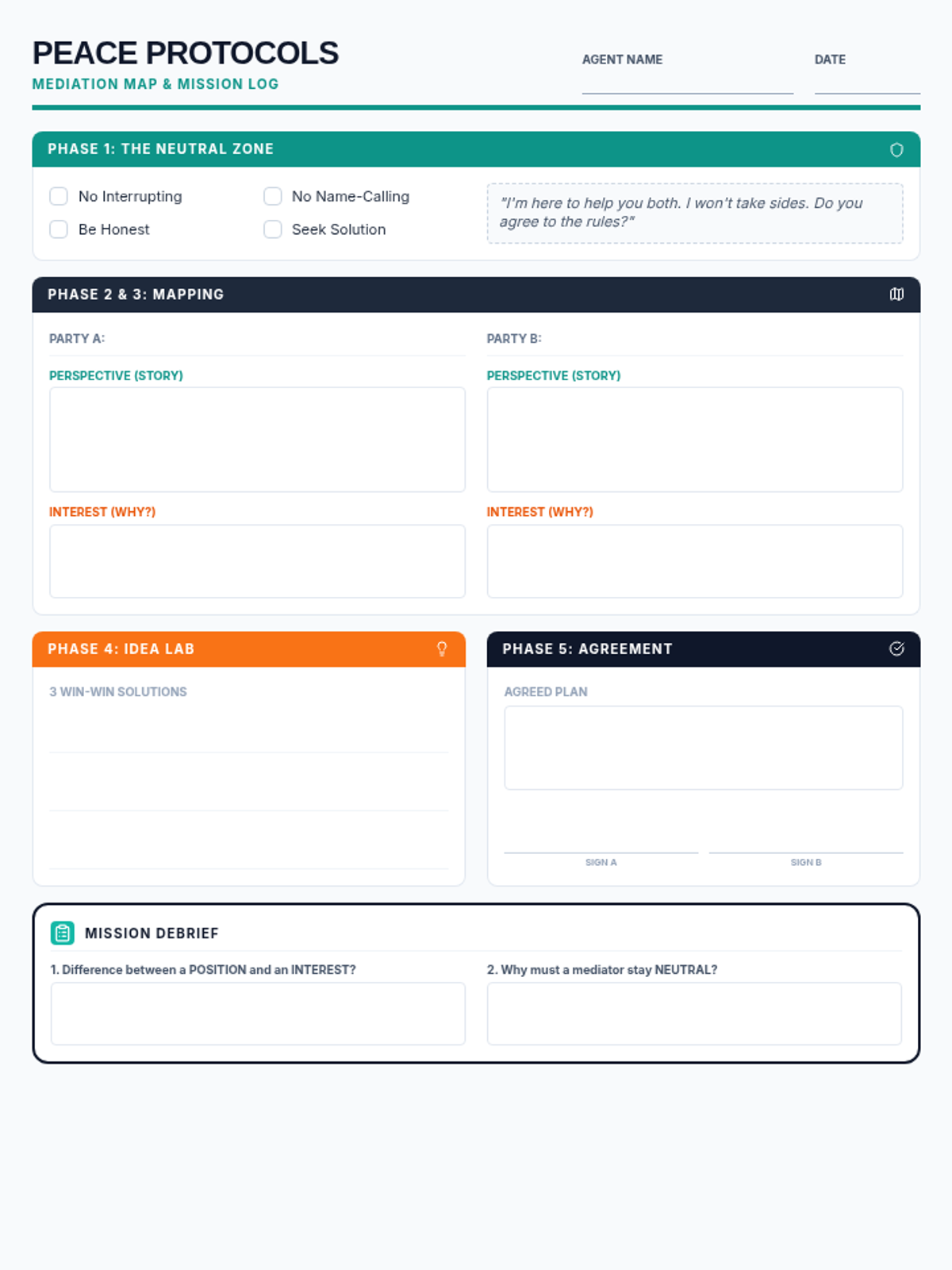
A comprehensive 45-minute lesson teaching students the five essential steps of peer mediation through direct instruction and role-play scenarios.
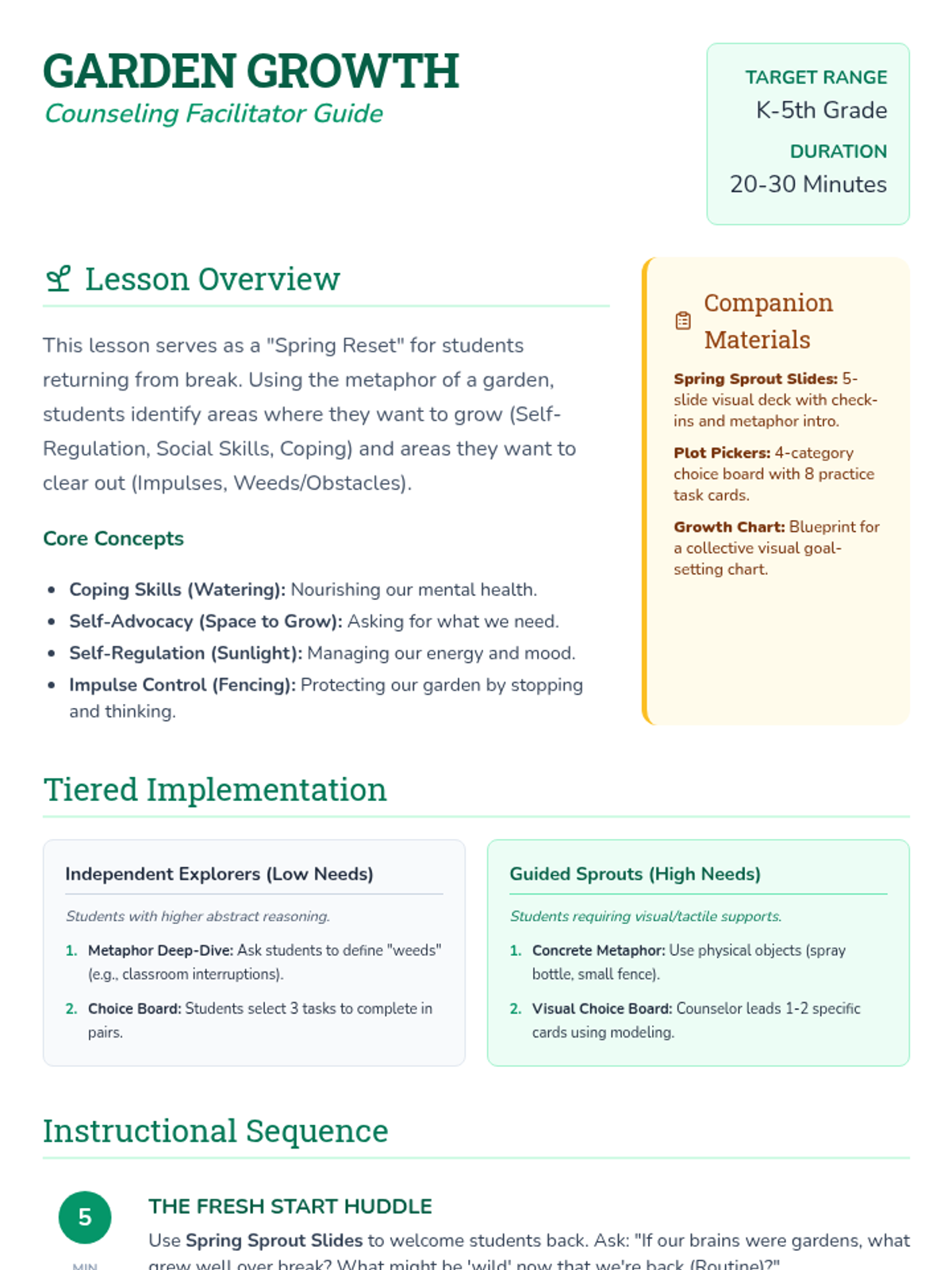
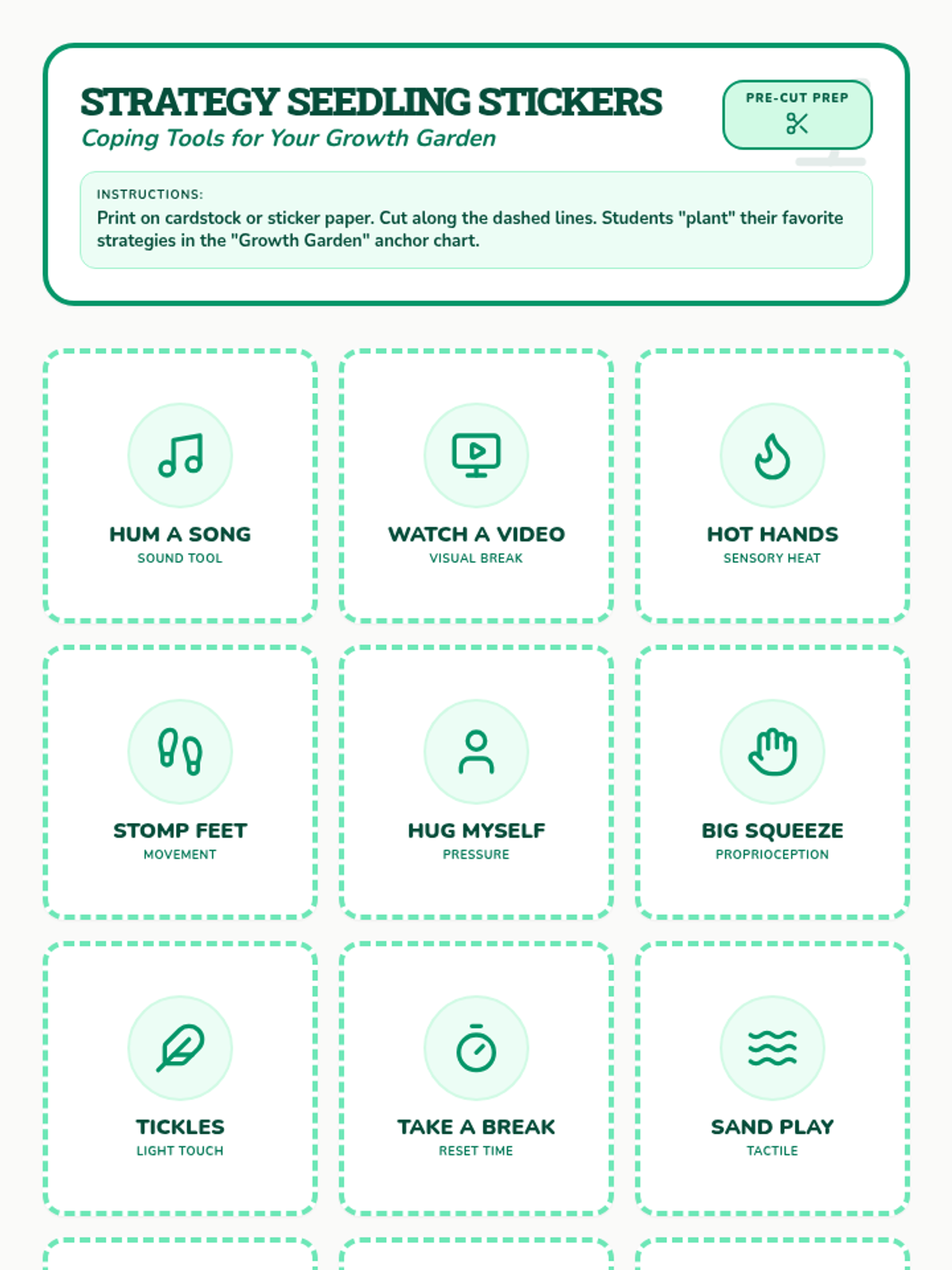
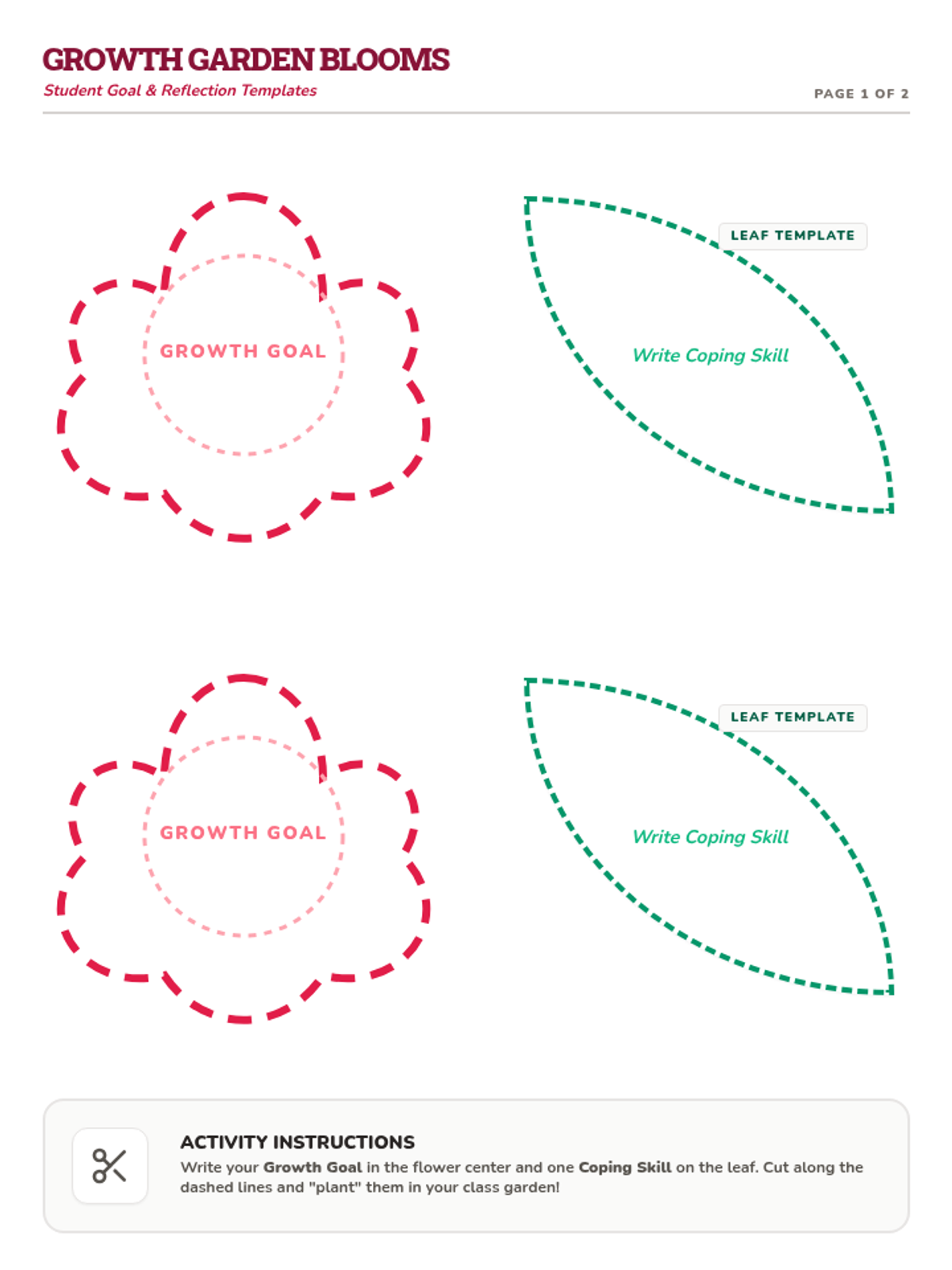
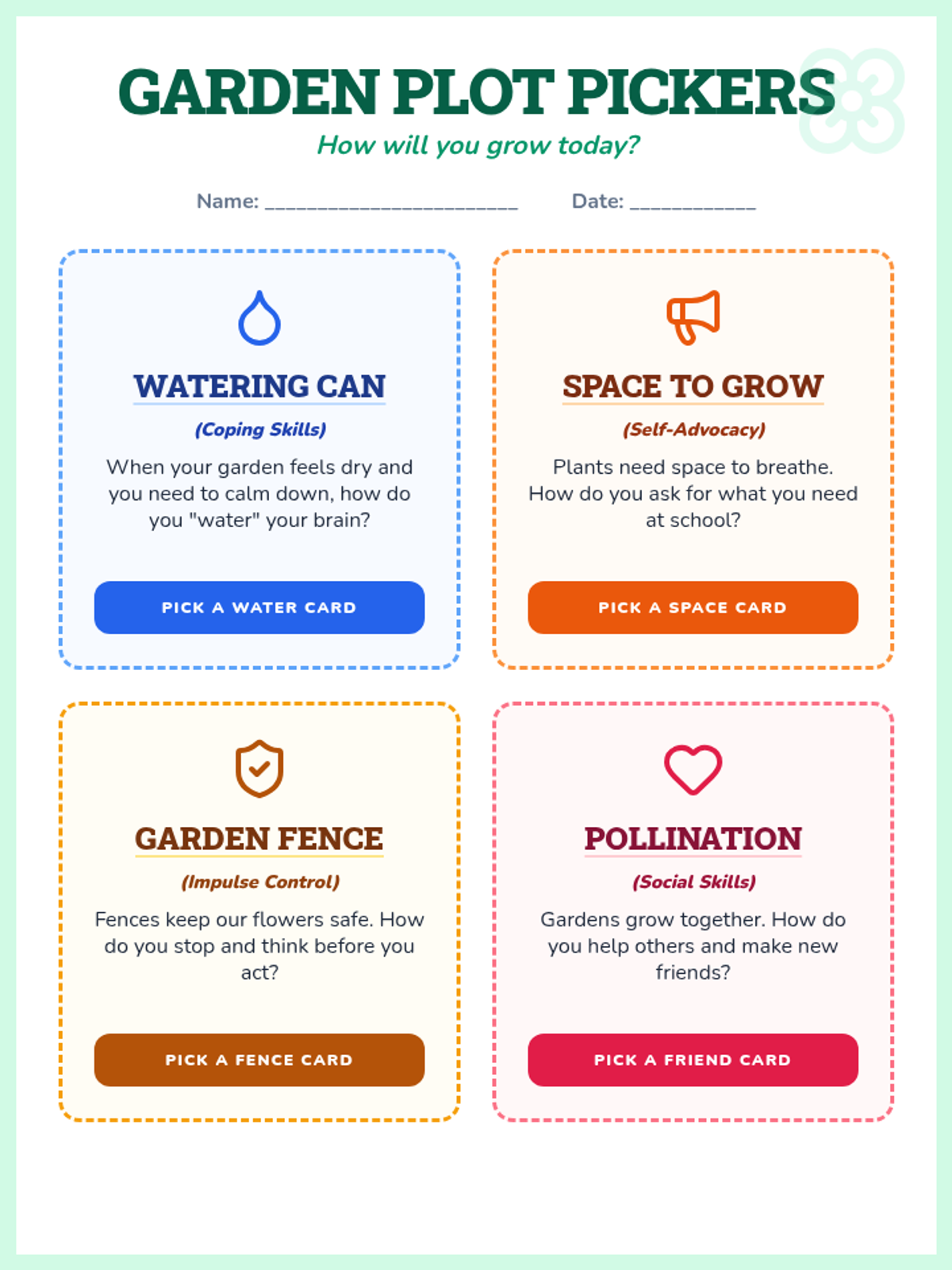
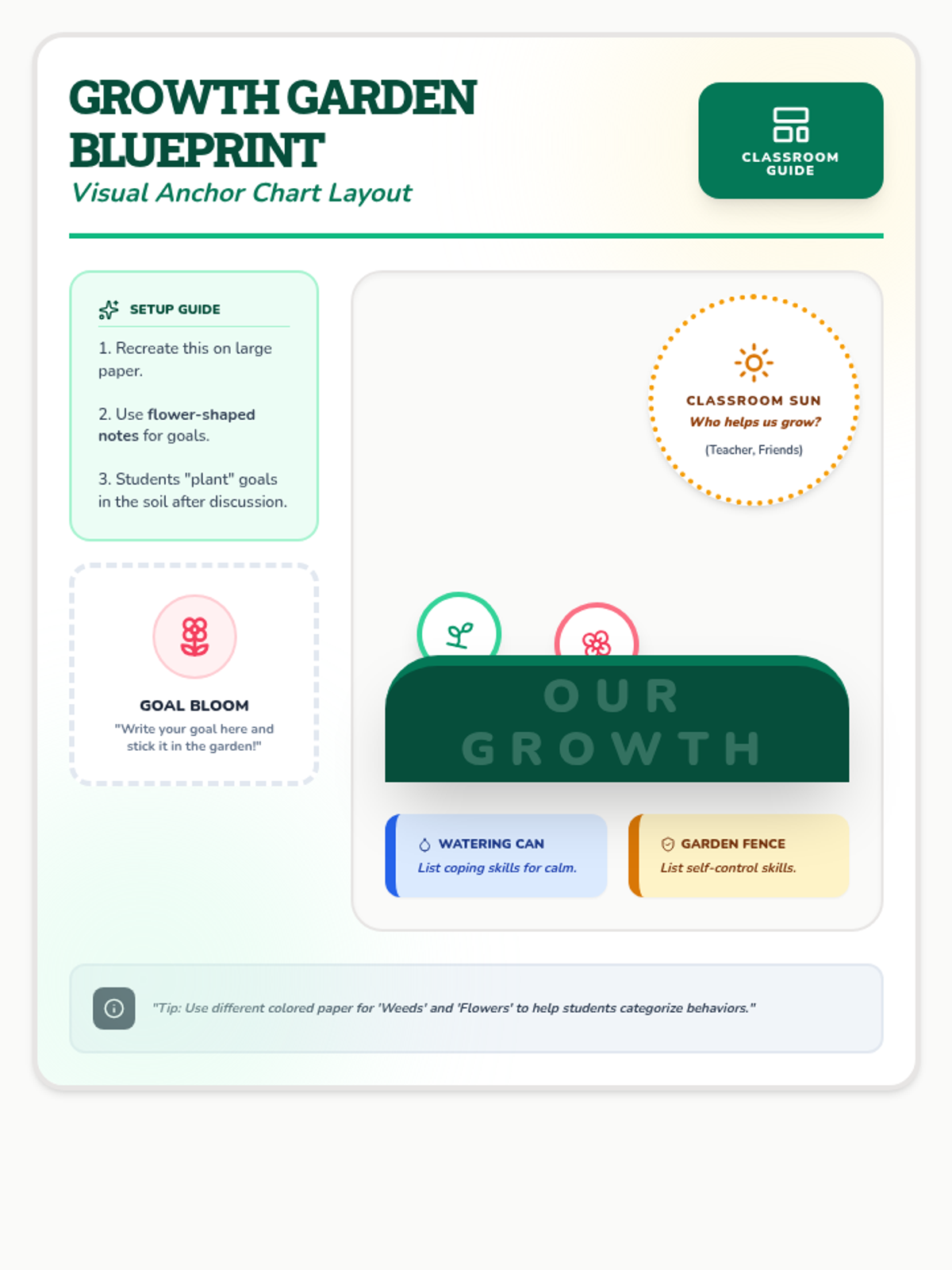
A botanical-themed counseling lesson designed for K-5 students returning from Spring Break. This lesson uses a garden metaphor to address coping skills, self-advocacy, and self-regulation through tiered activities and discussion.
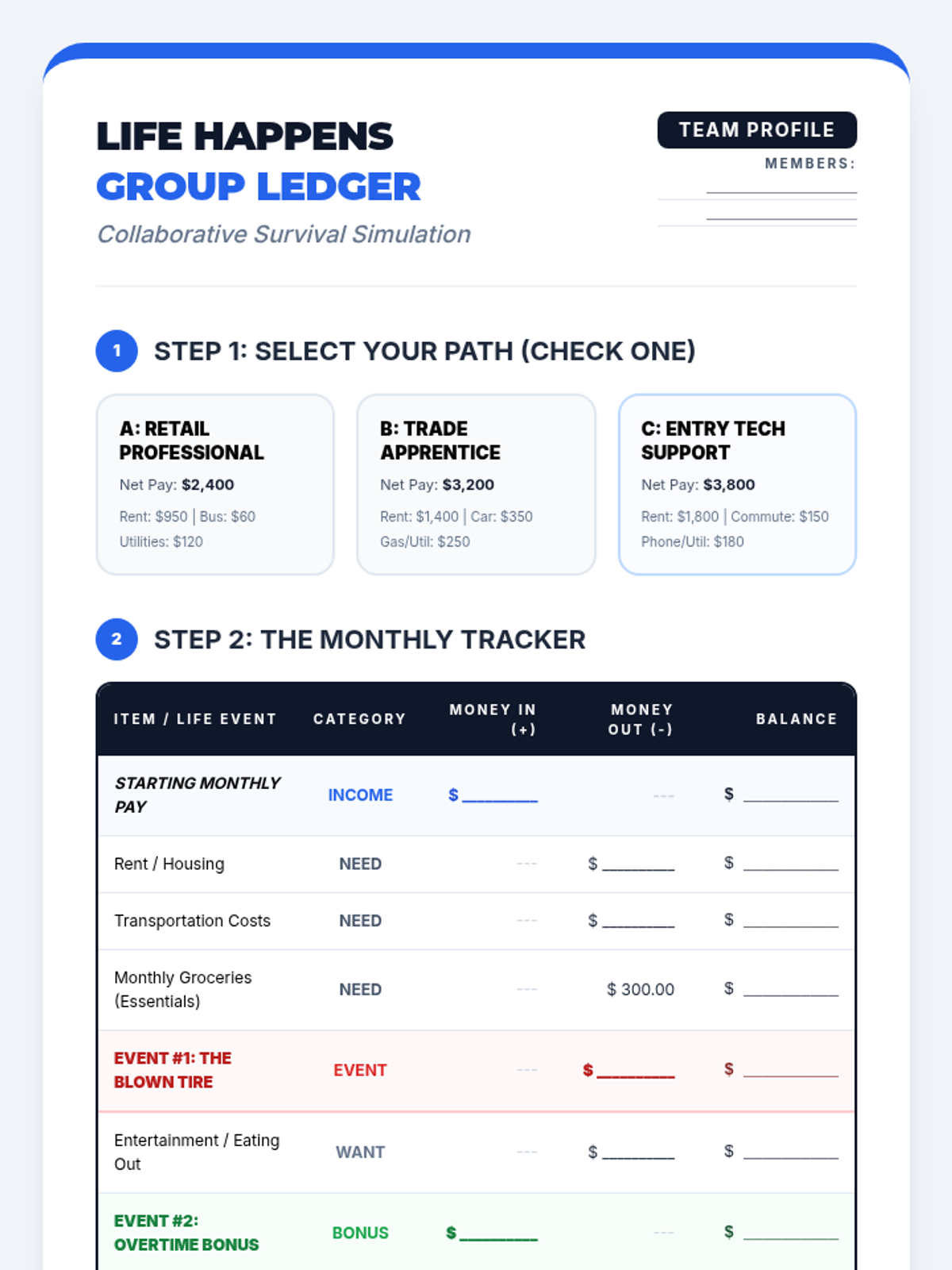
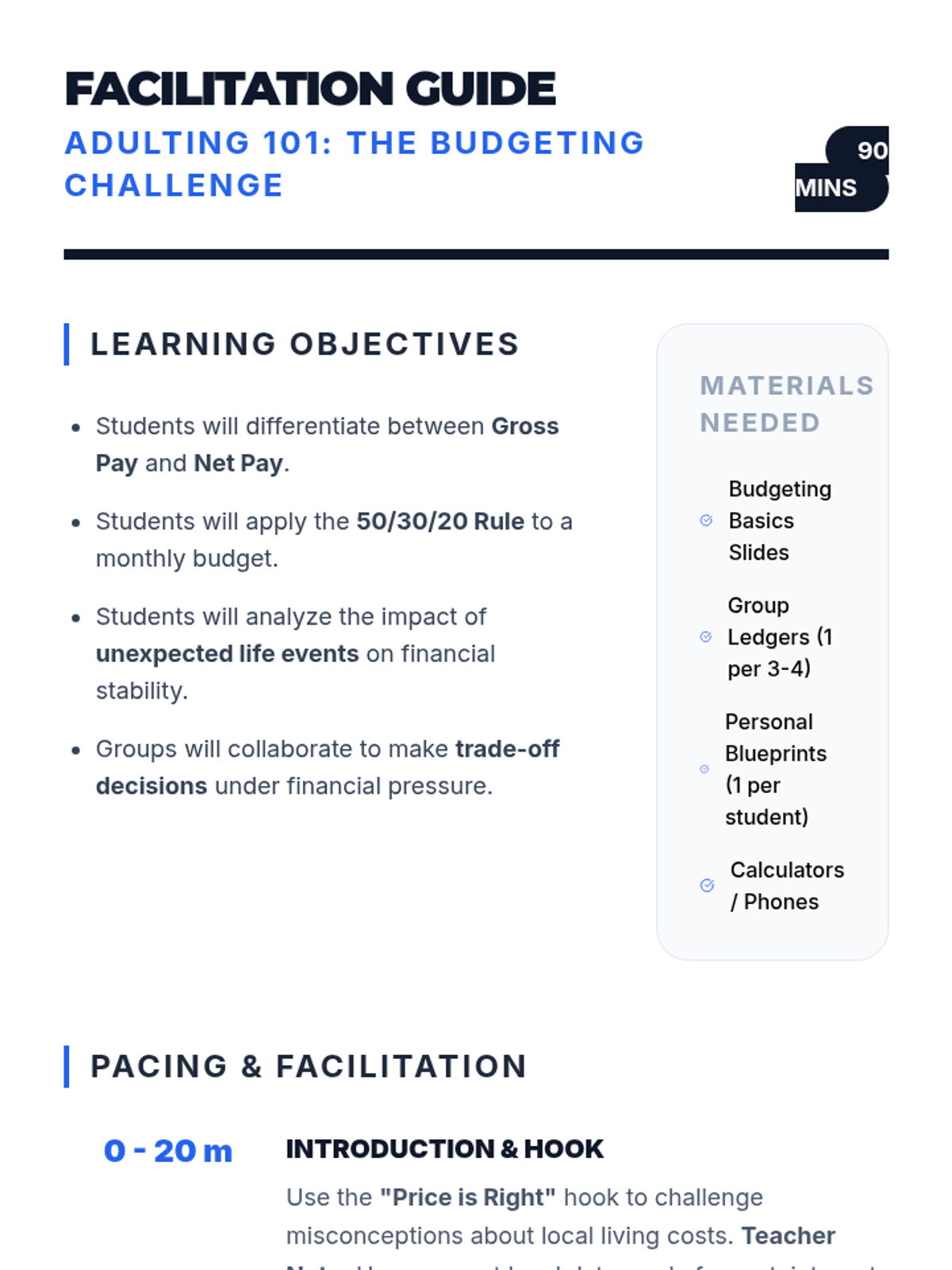
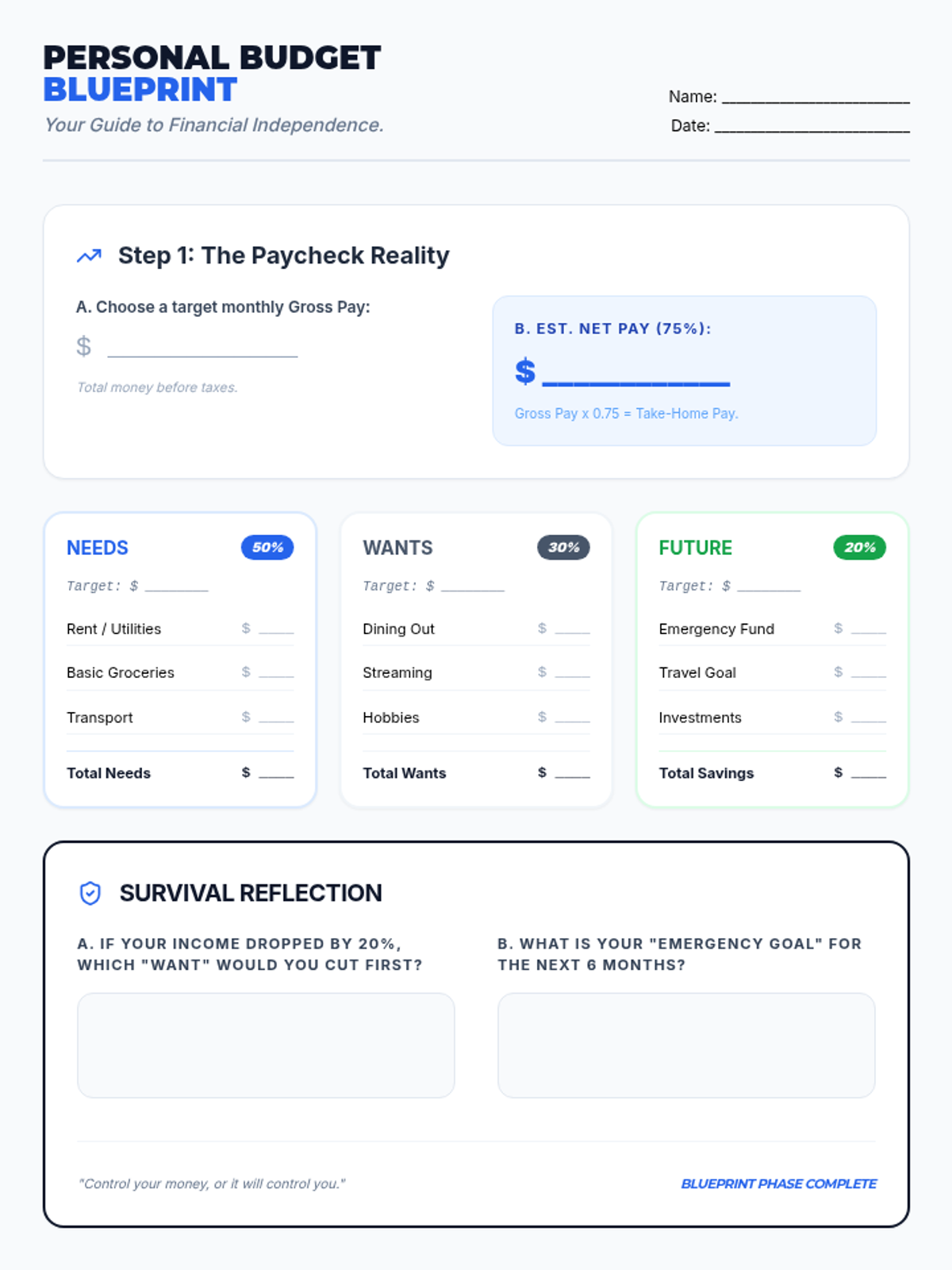
A 90-minute workshop on financial survival where students navigate a 'Life Happens' group simulation to understand income, taxes, and unexpected costs.
Students will apply their tools to future academic and personal stressors. This session focuses on time management, goal setting, and creating a proactive plan for high-stress periods.
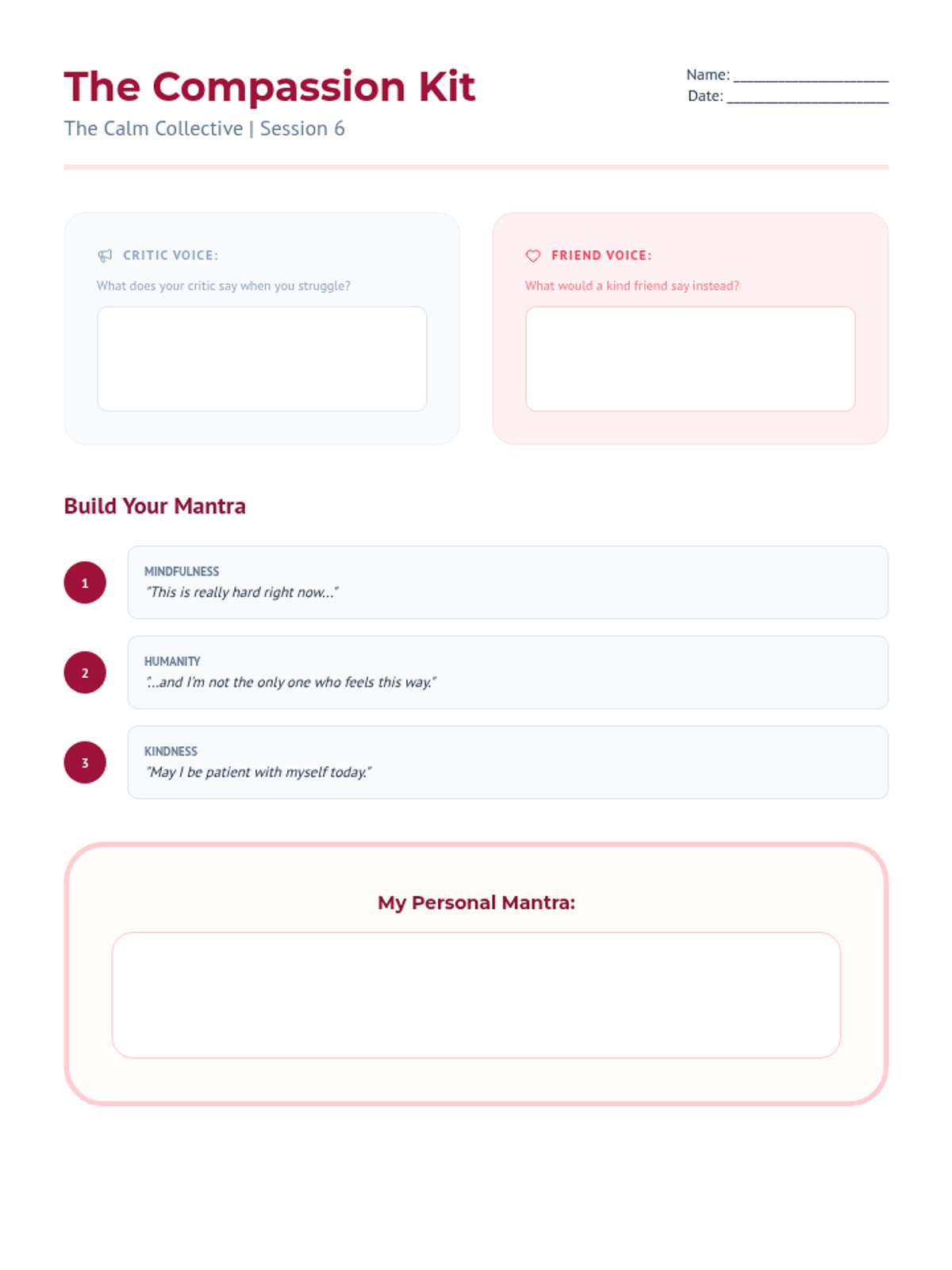
Addressing perfectionism and self-criticism, this session introduces self-compassion as a tool for resilience. Students will practice kindness toward themselves and challenge the 'inner critic'.