A foundational lesson for early childhood students to explore community helpers and the specific vocabulary associated with their tools and roles.
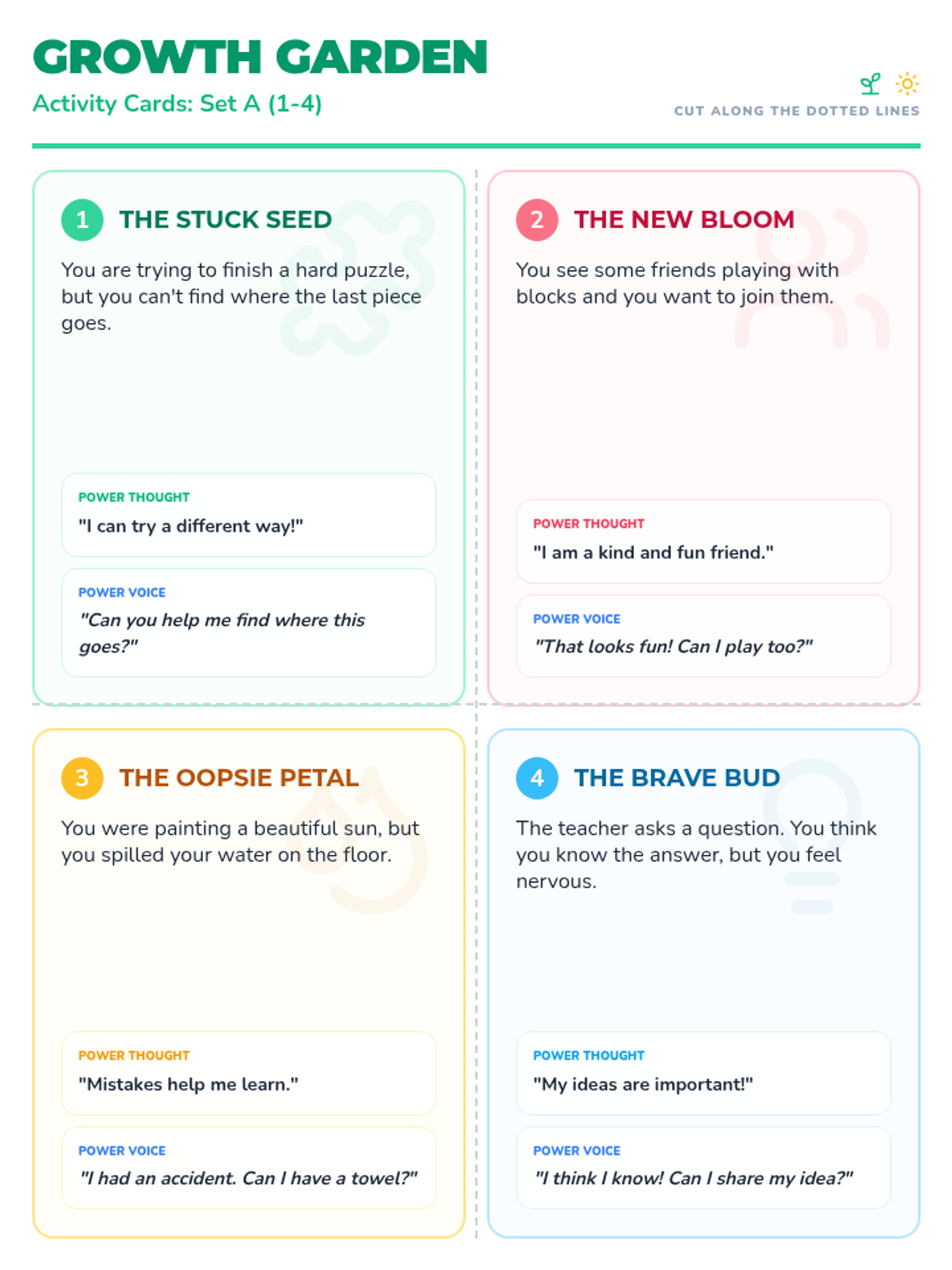
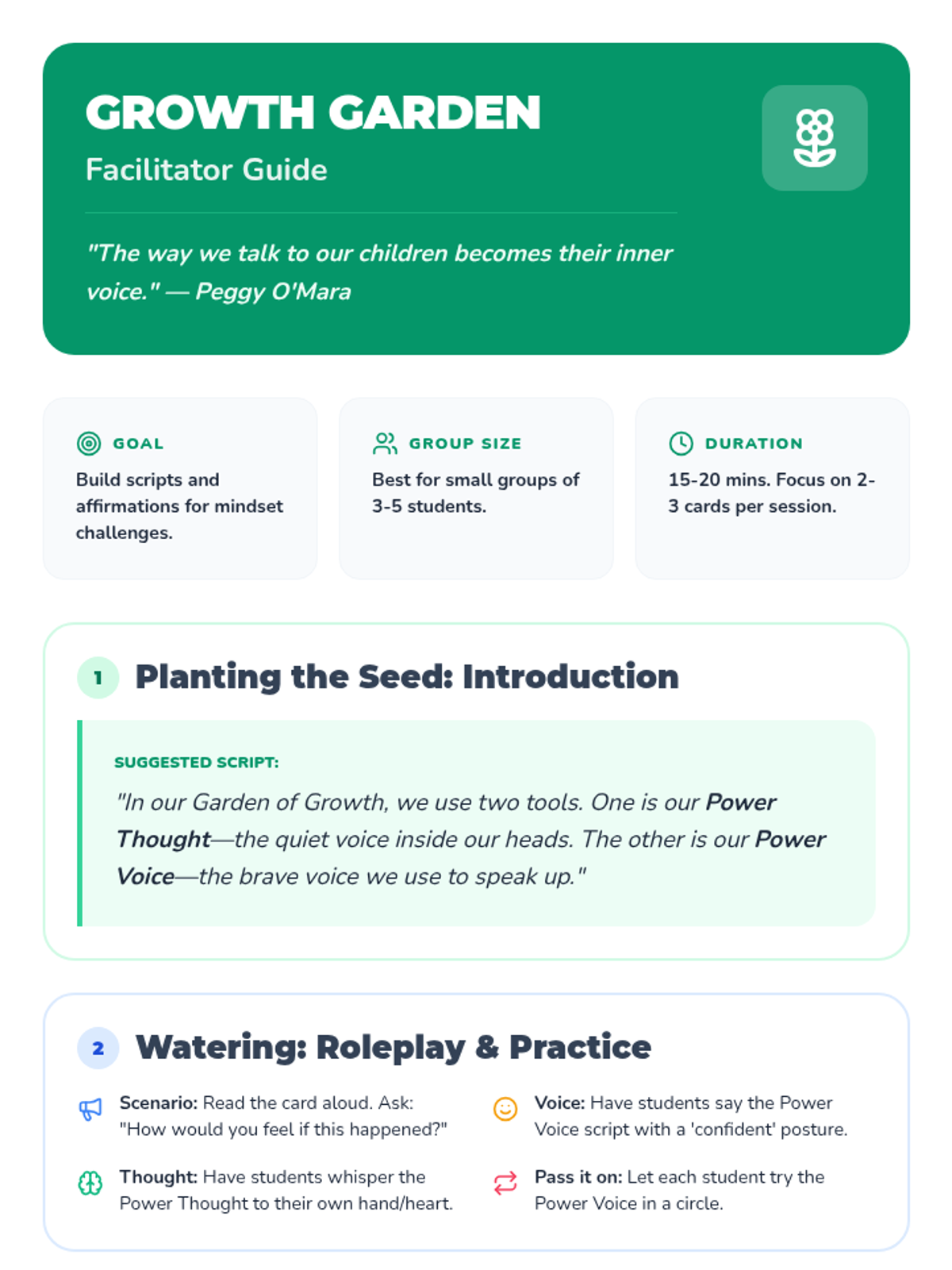
A small-group social-emotional learning lesson for kindergarteners focused on building confidence through positive self-talk and the courage to speak up in various social and academic scenarios.
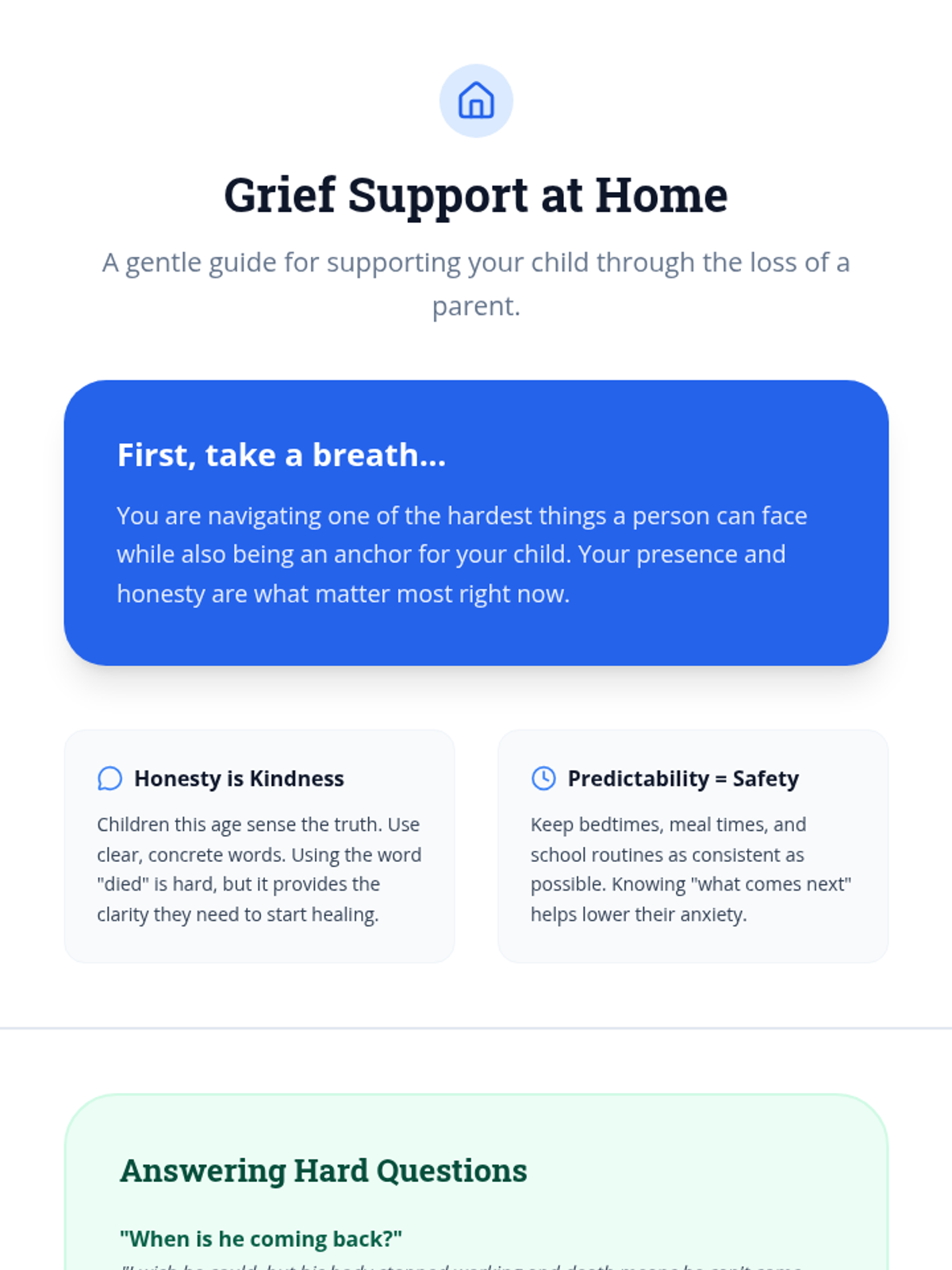
A sensitive and developmentally appropriate lesson for a young child experiencing the loss of a parent. It uses a 'Heart Garden' metaphor to explain death, process emotions, and build coping skills.
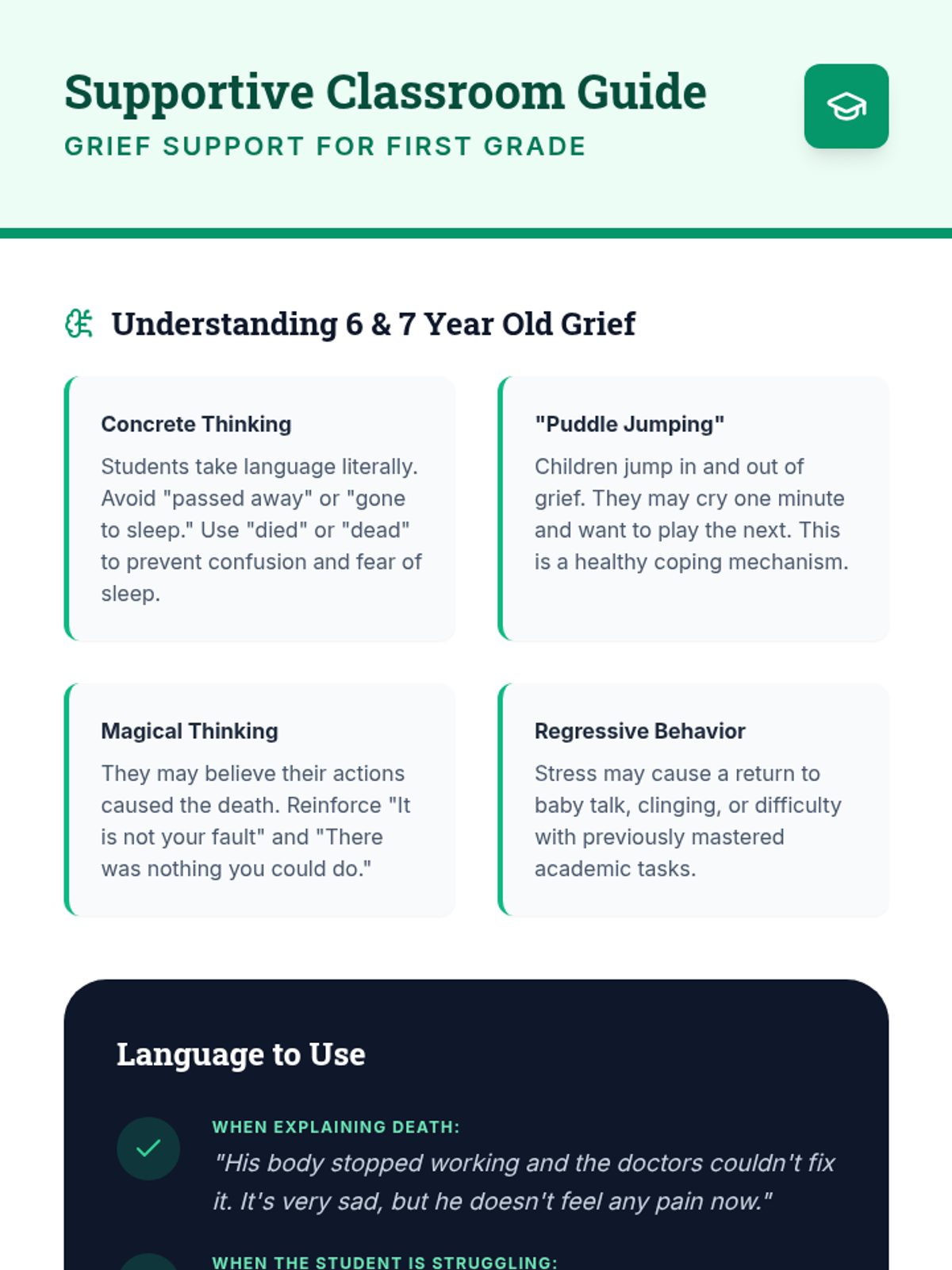
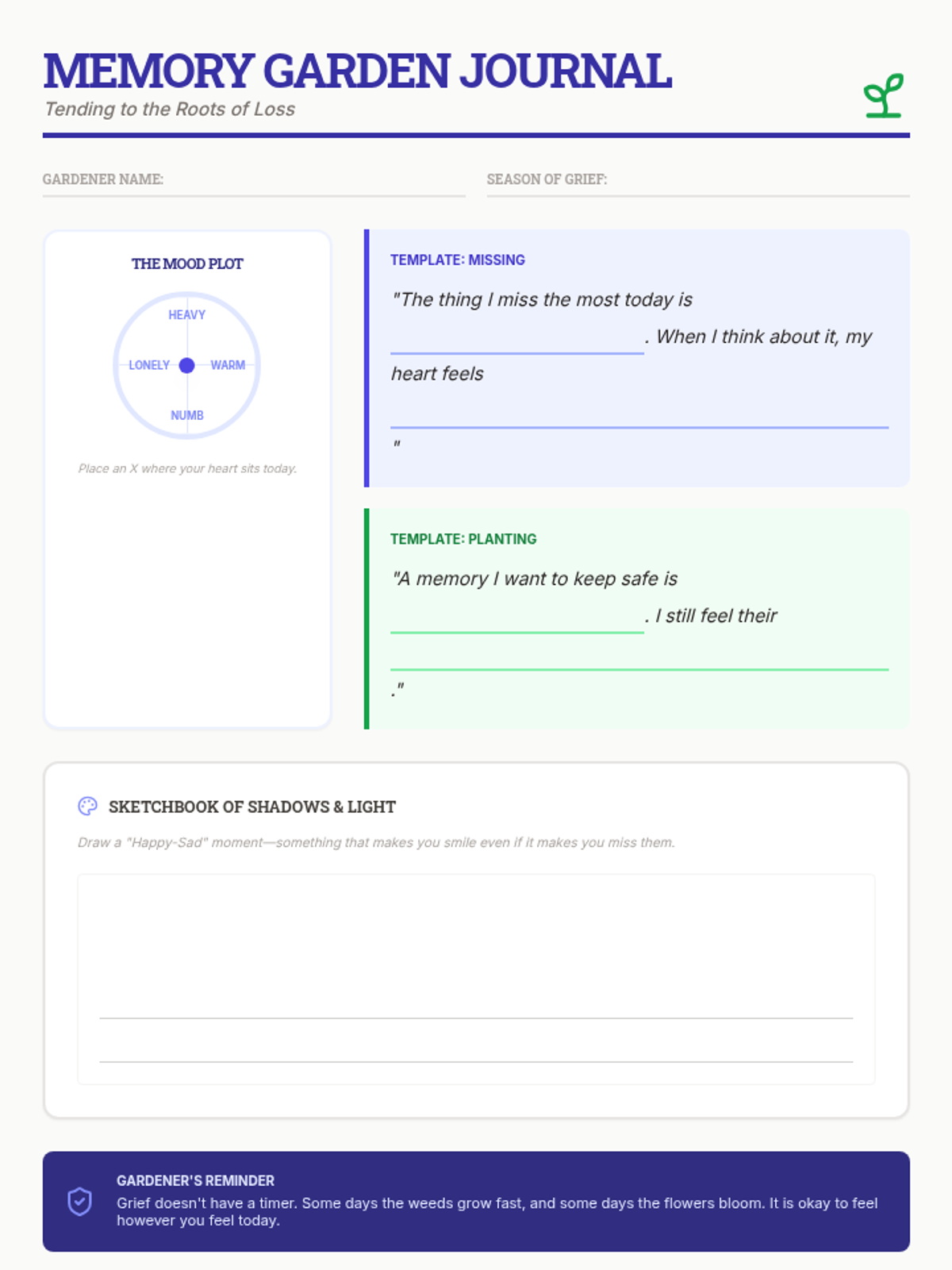
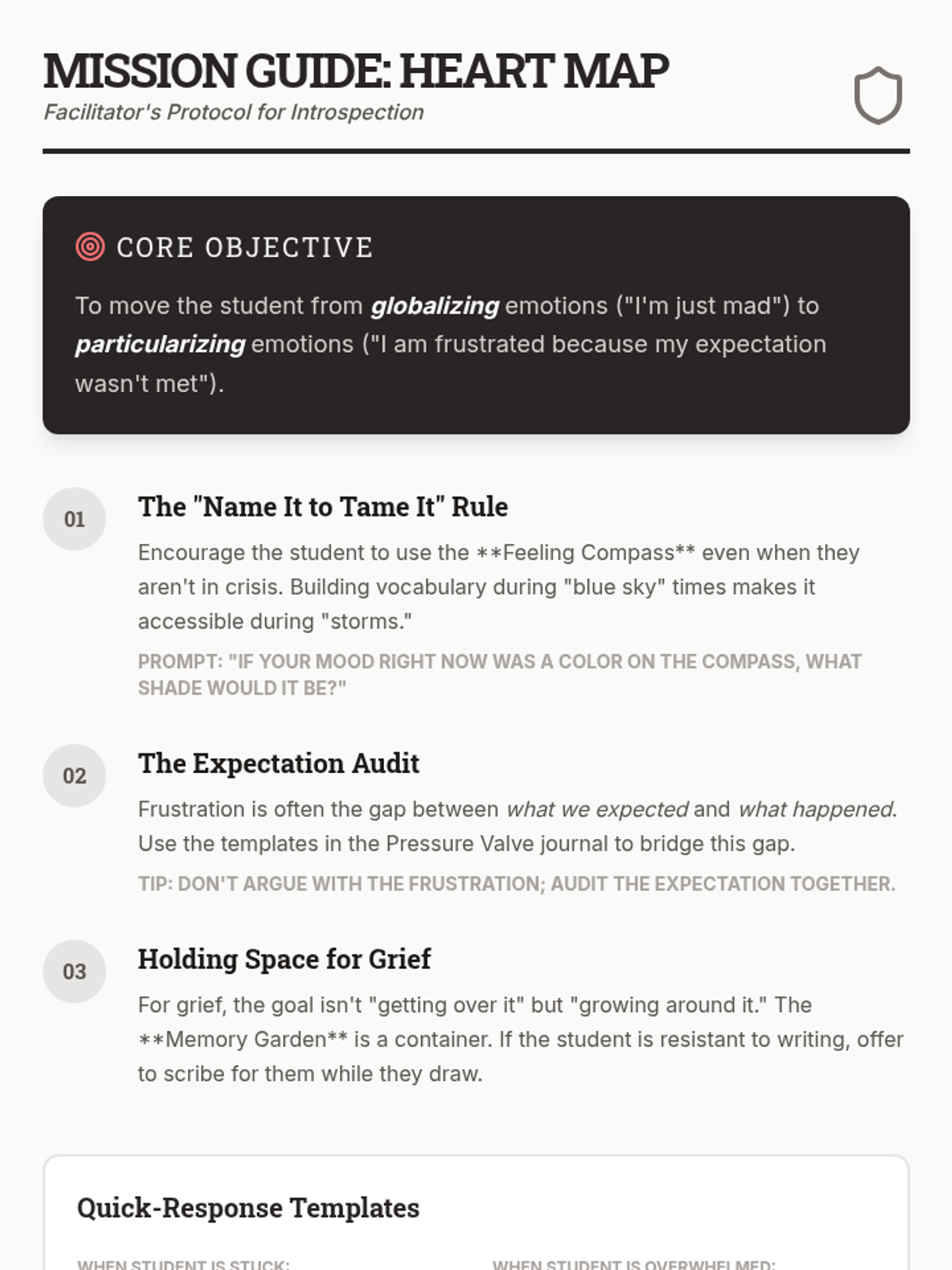
Gently guides students through the complexities of grief using 'Memory Garden' prompts to help them process loss and preserve meaningful memories.
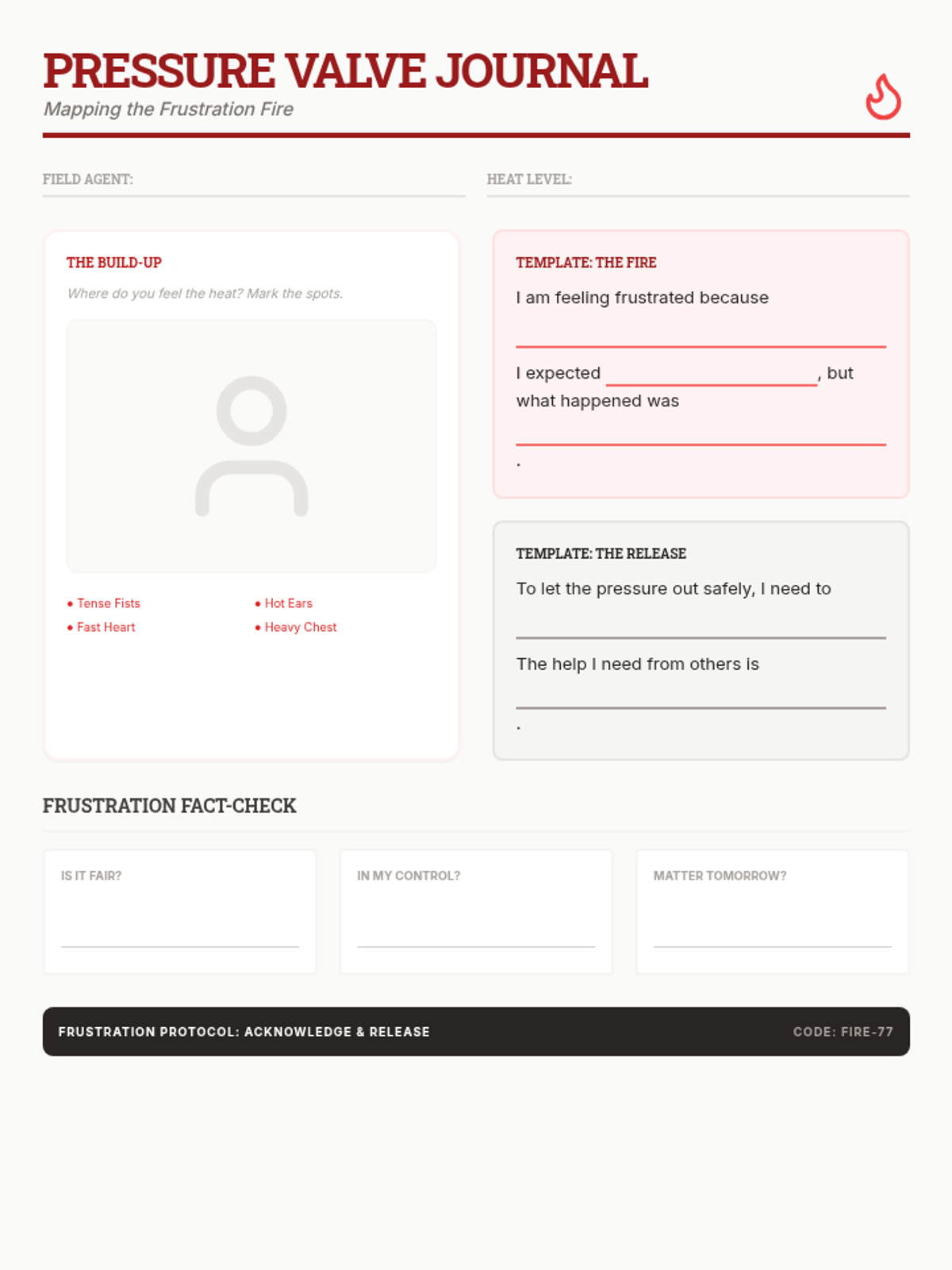
Explores the physical and emotional sensations of frustration, providing 'Pressure Valve' templates to help students articulate their needs and boundaries.
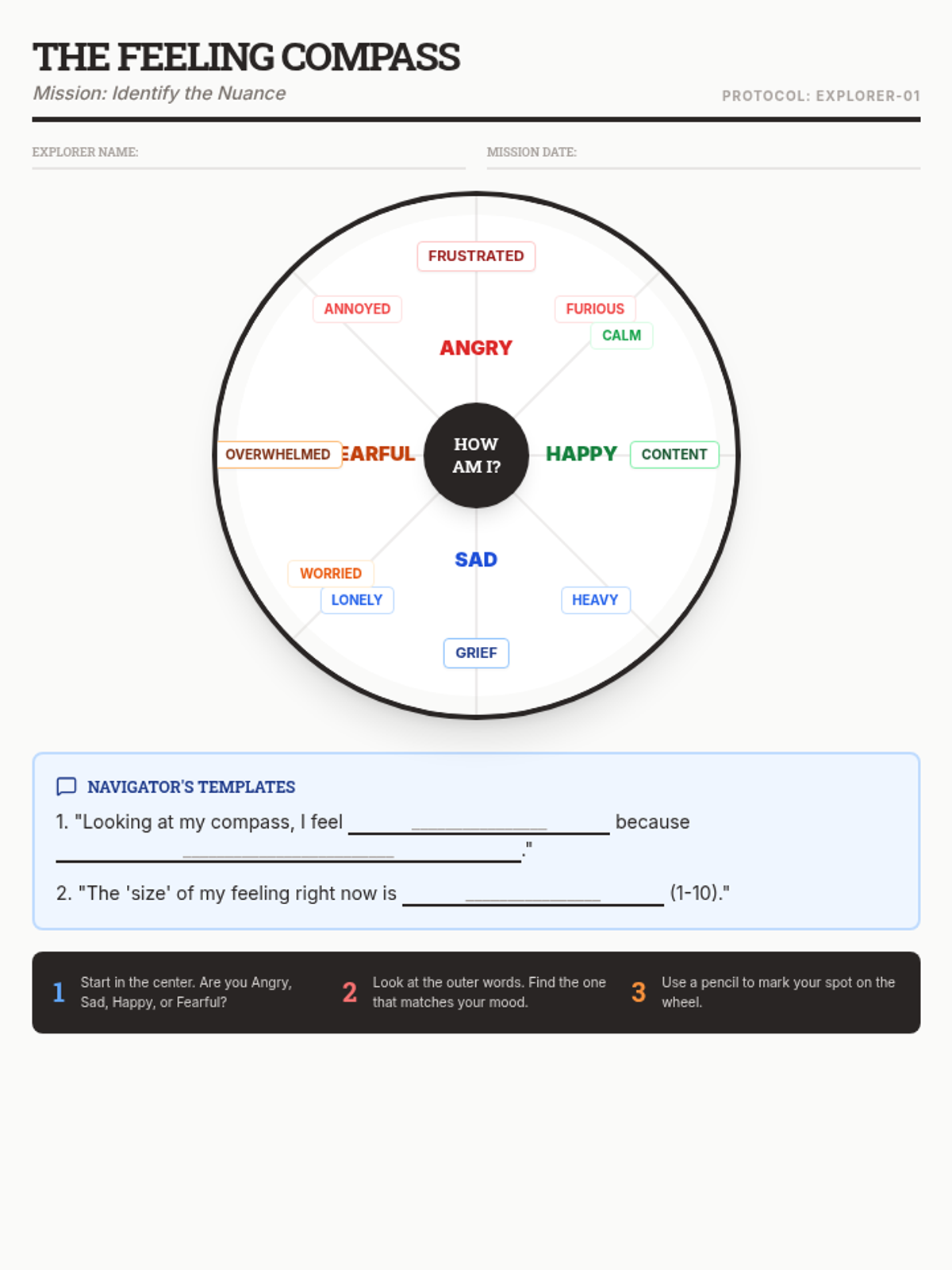
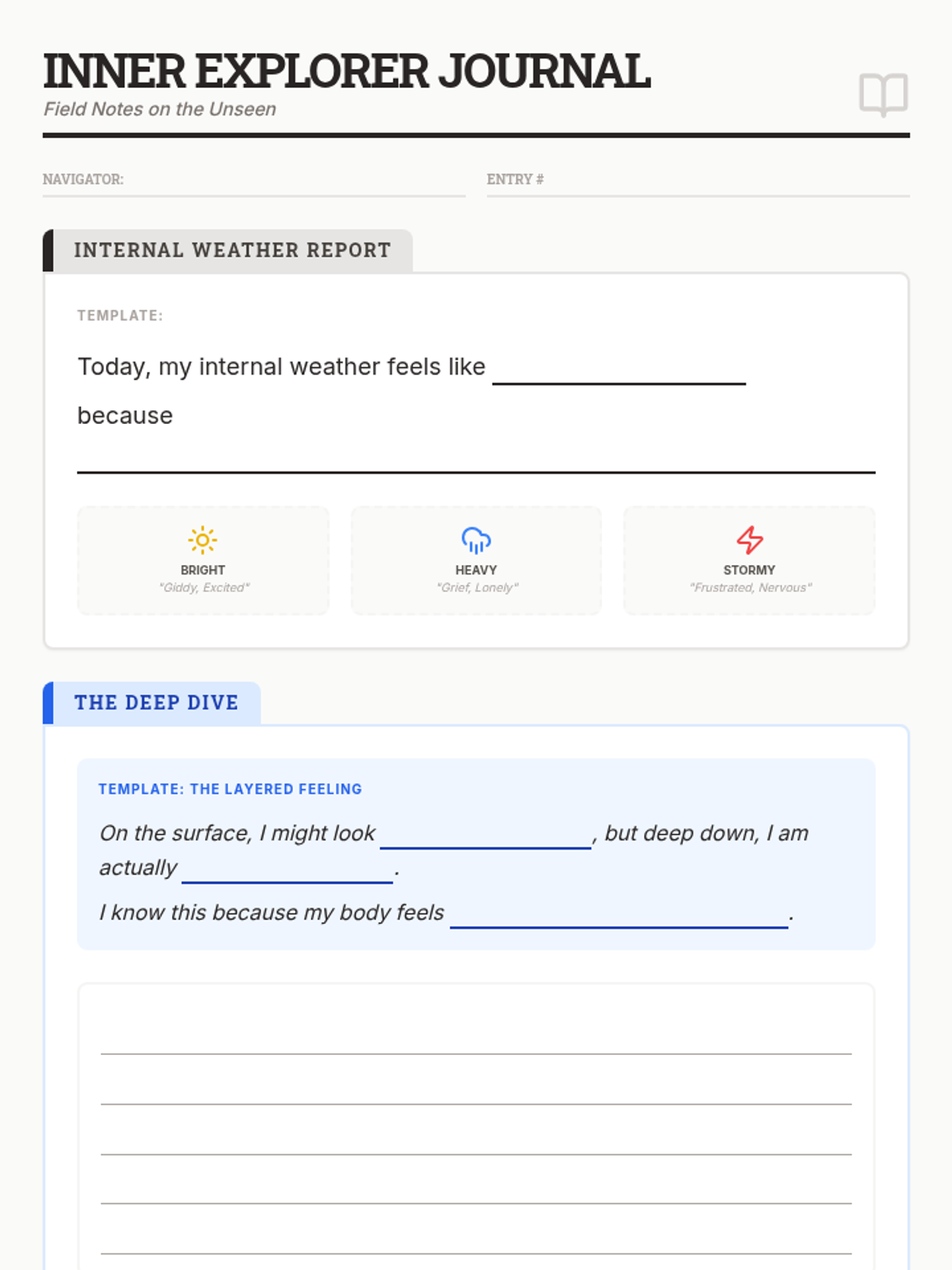
Introduces the concept of emotional mapping and uses a specialized 'Feeling Compass' to help students identify the nuances of their internal landscape.
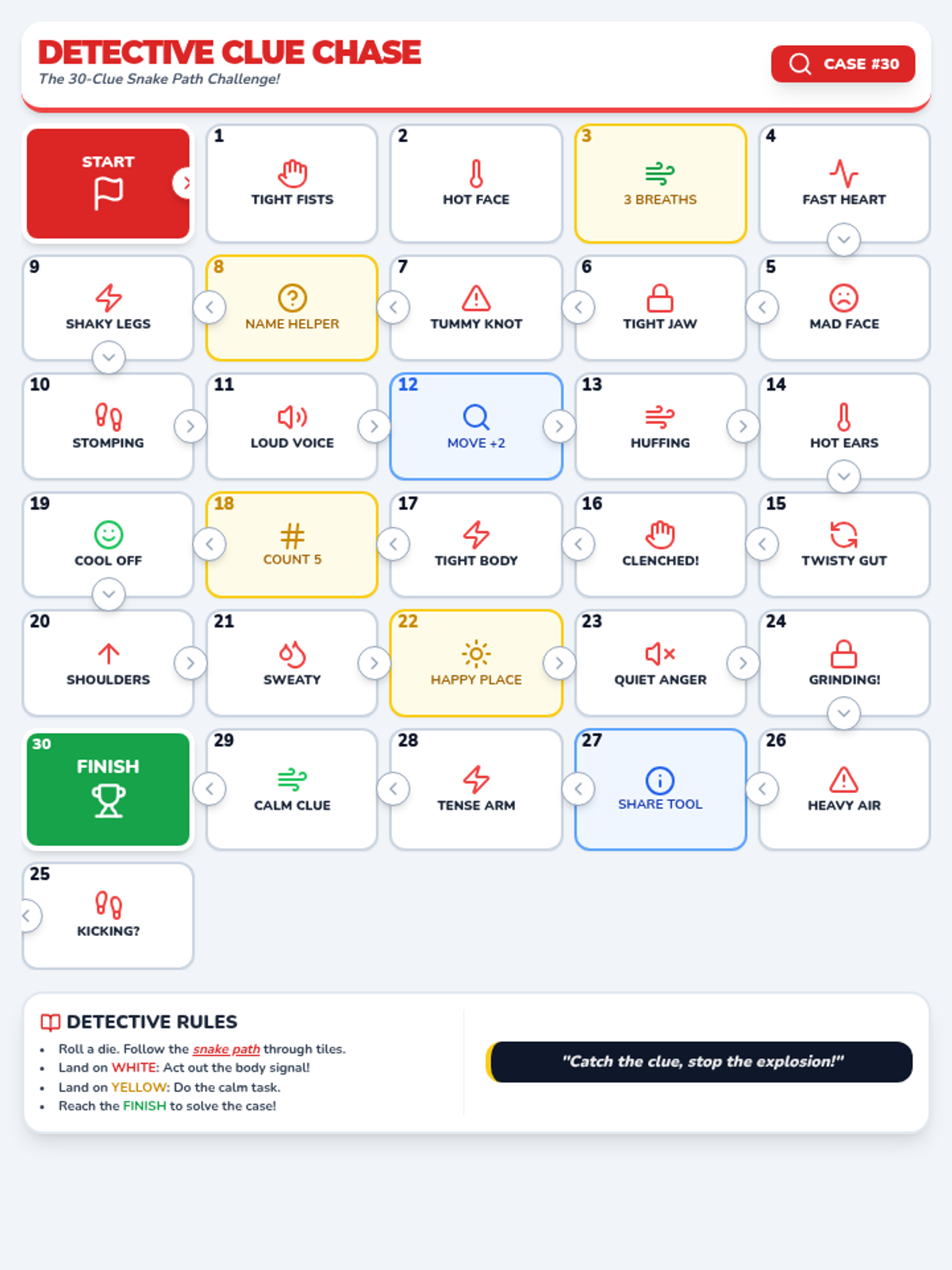
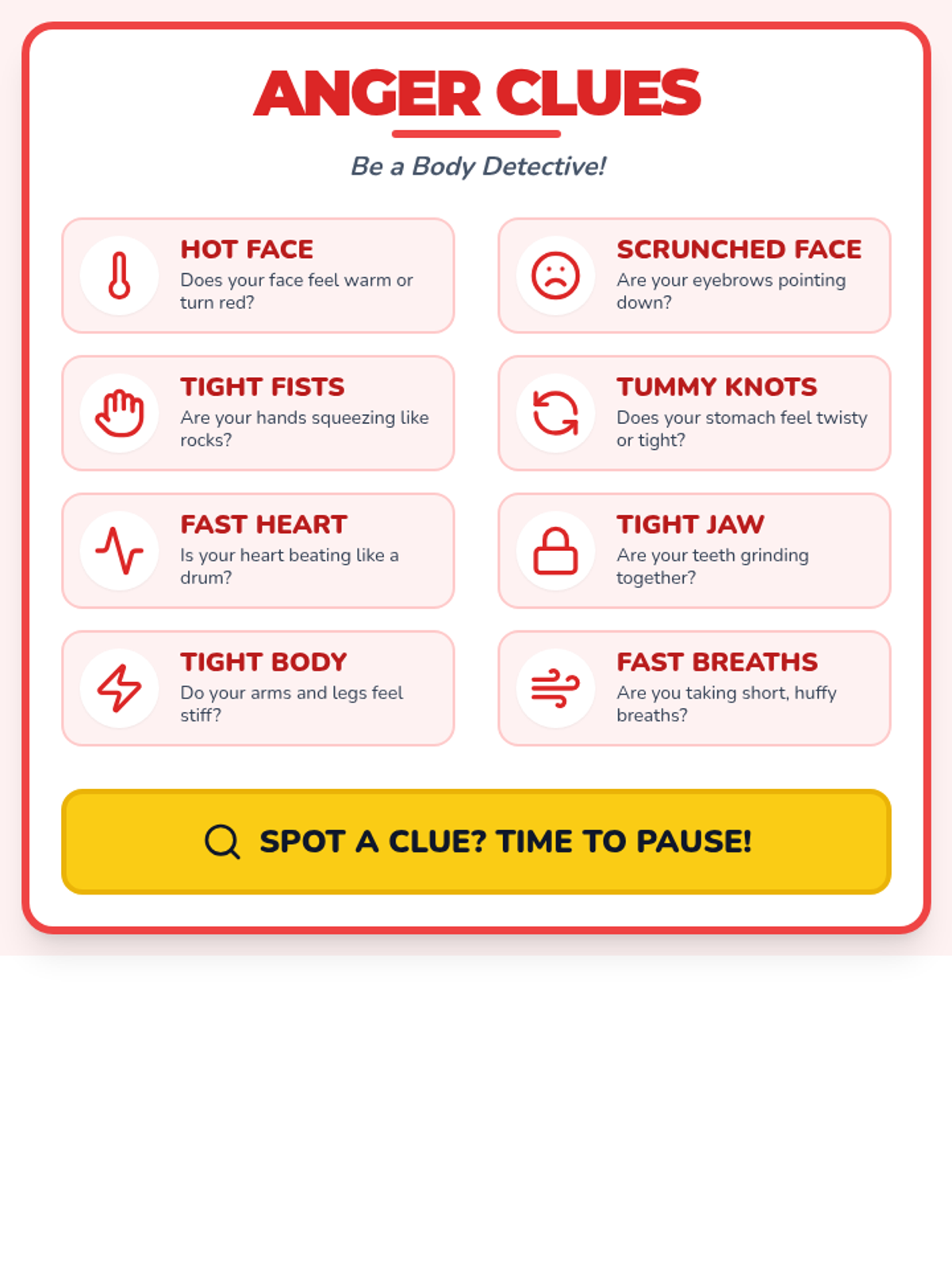
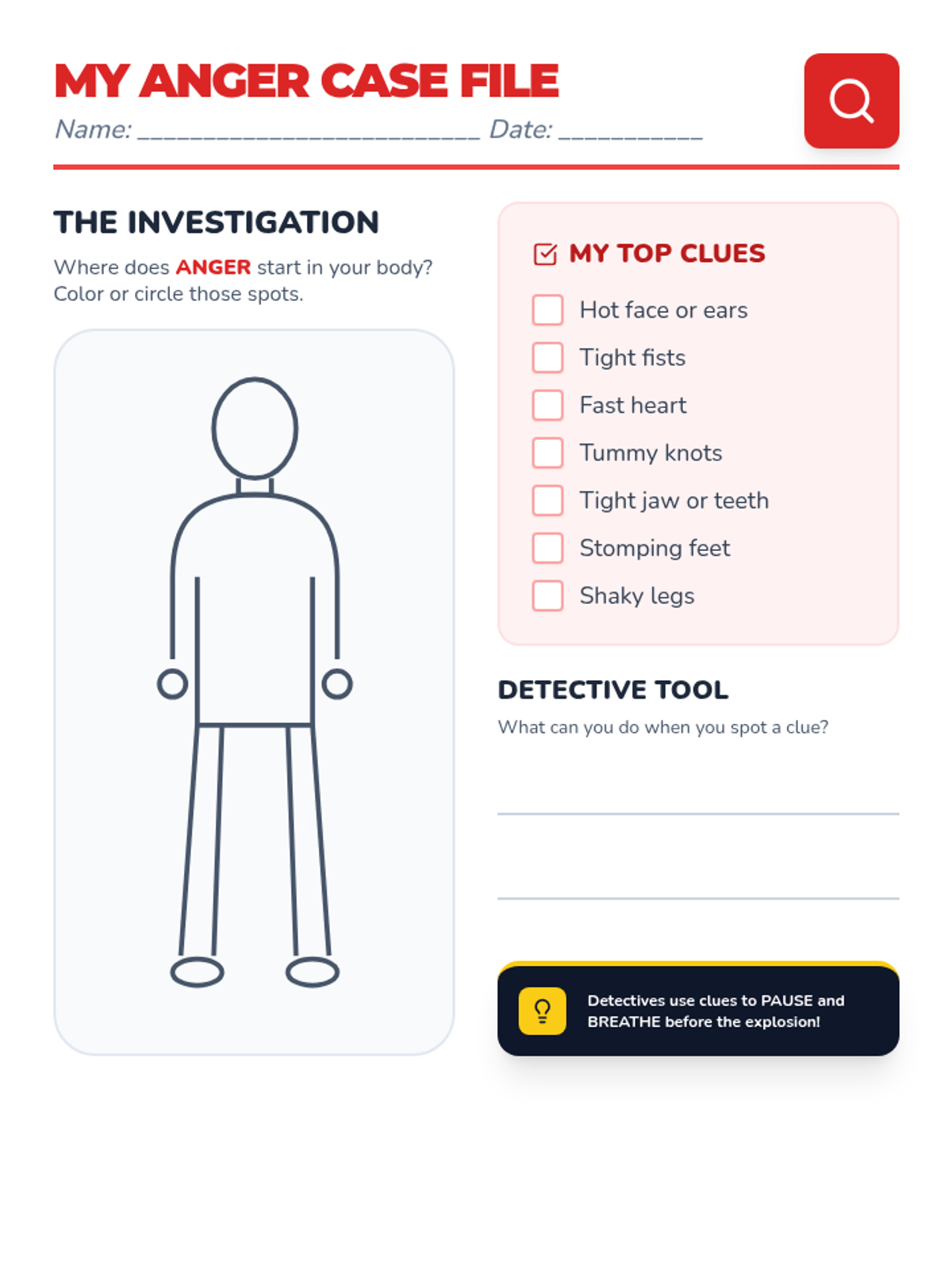
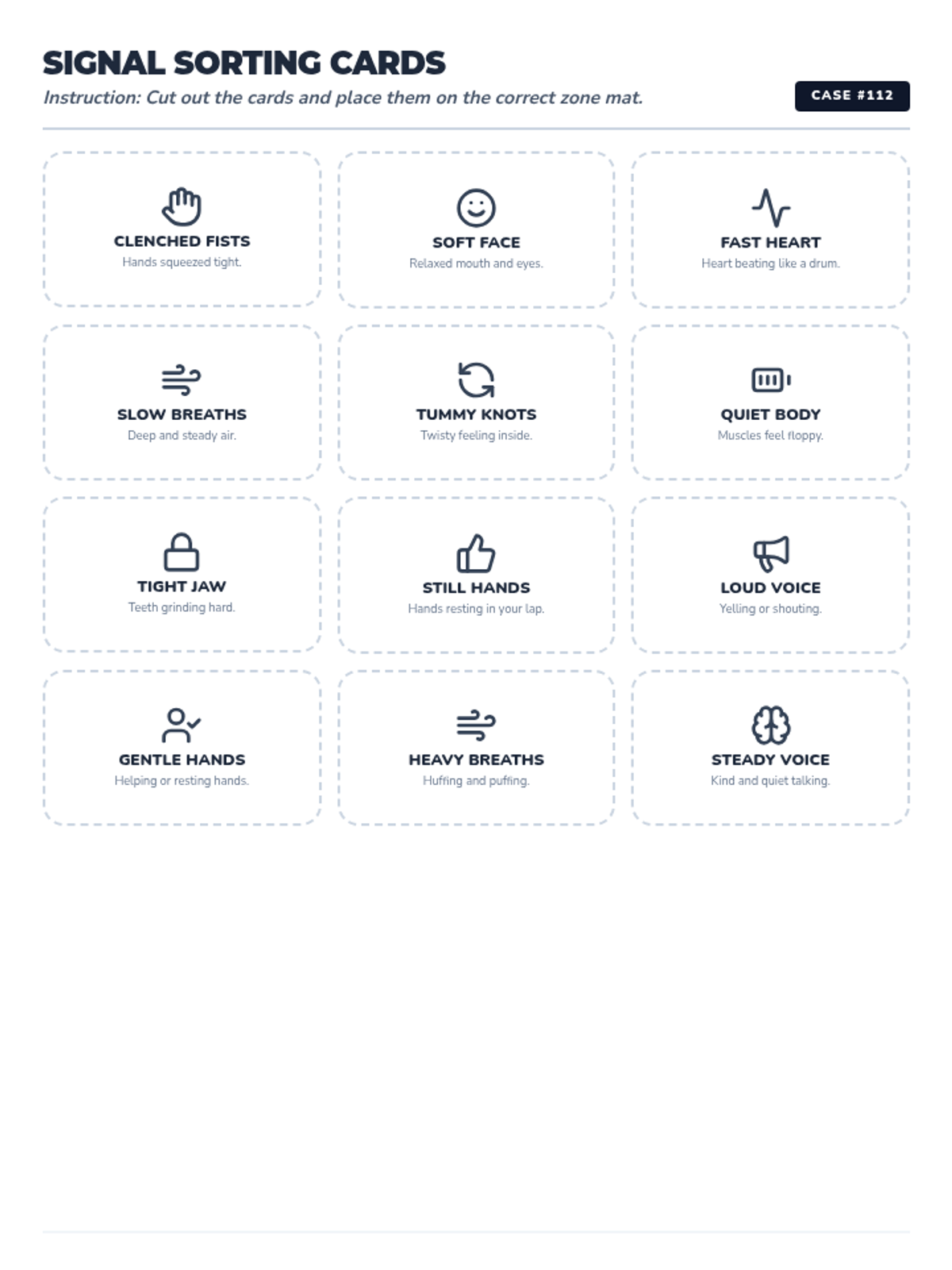
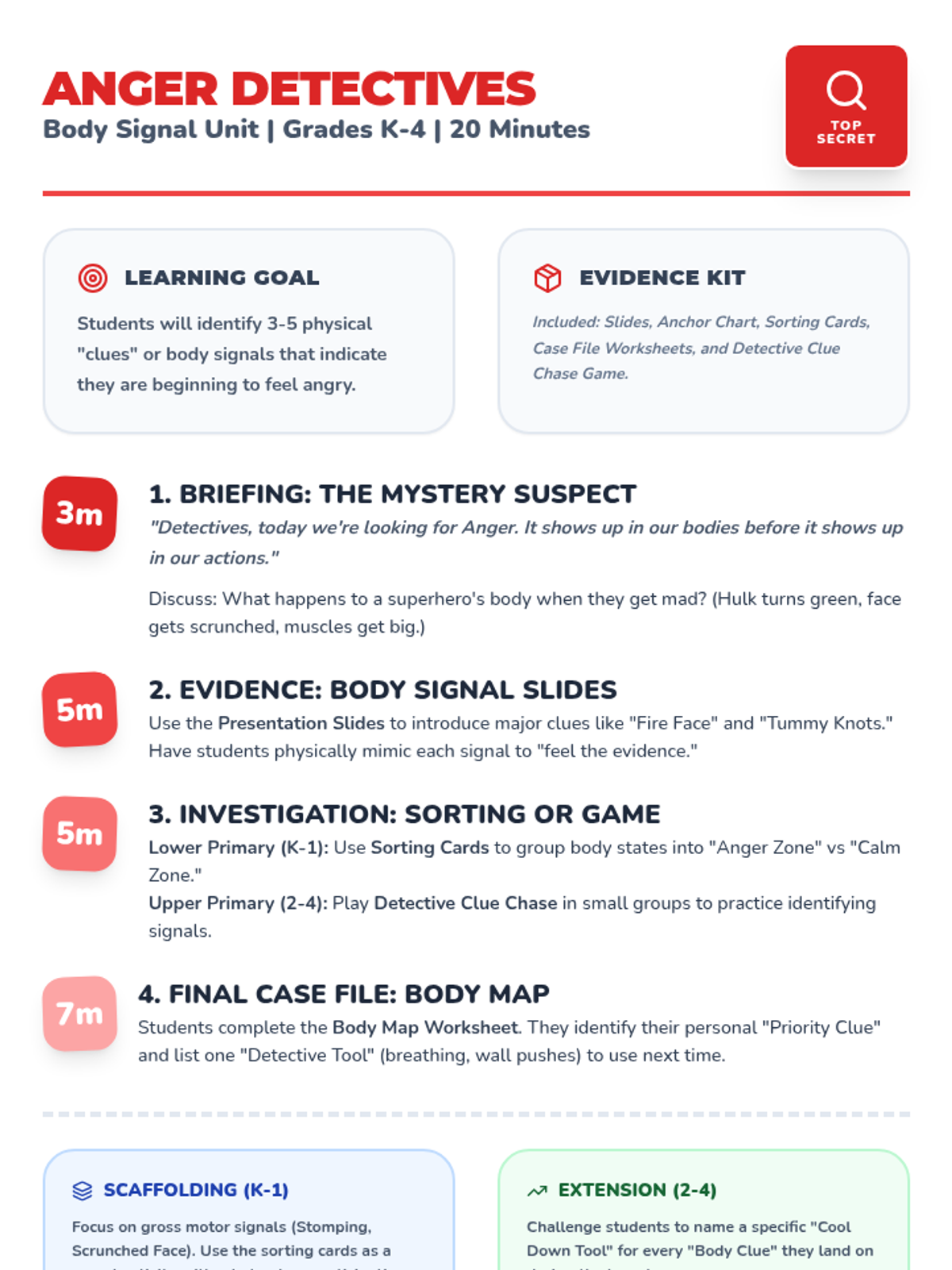
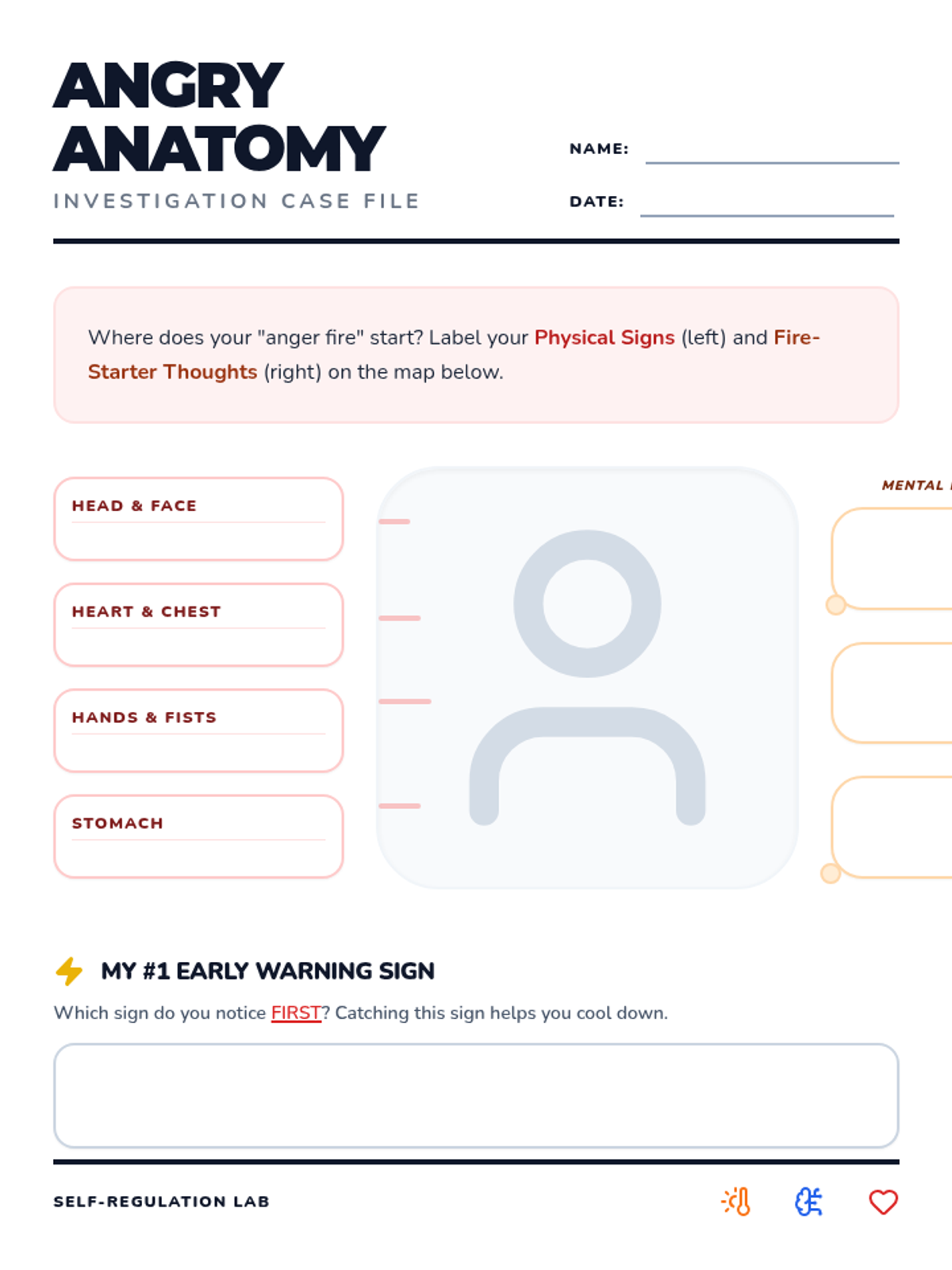
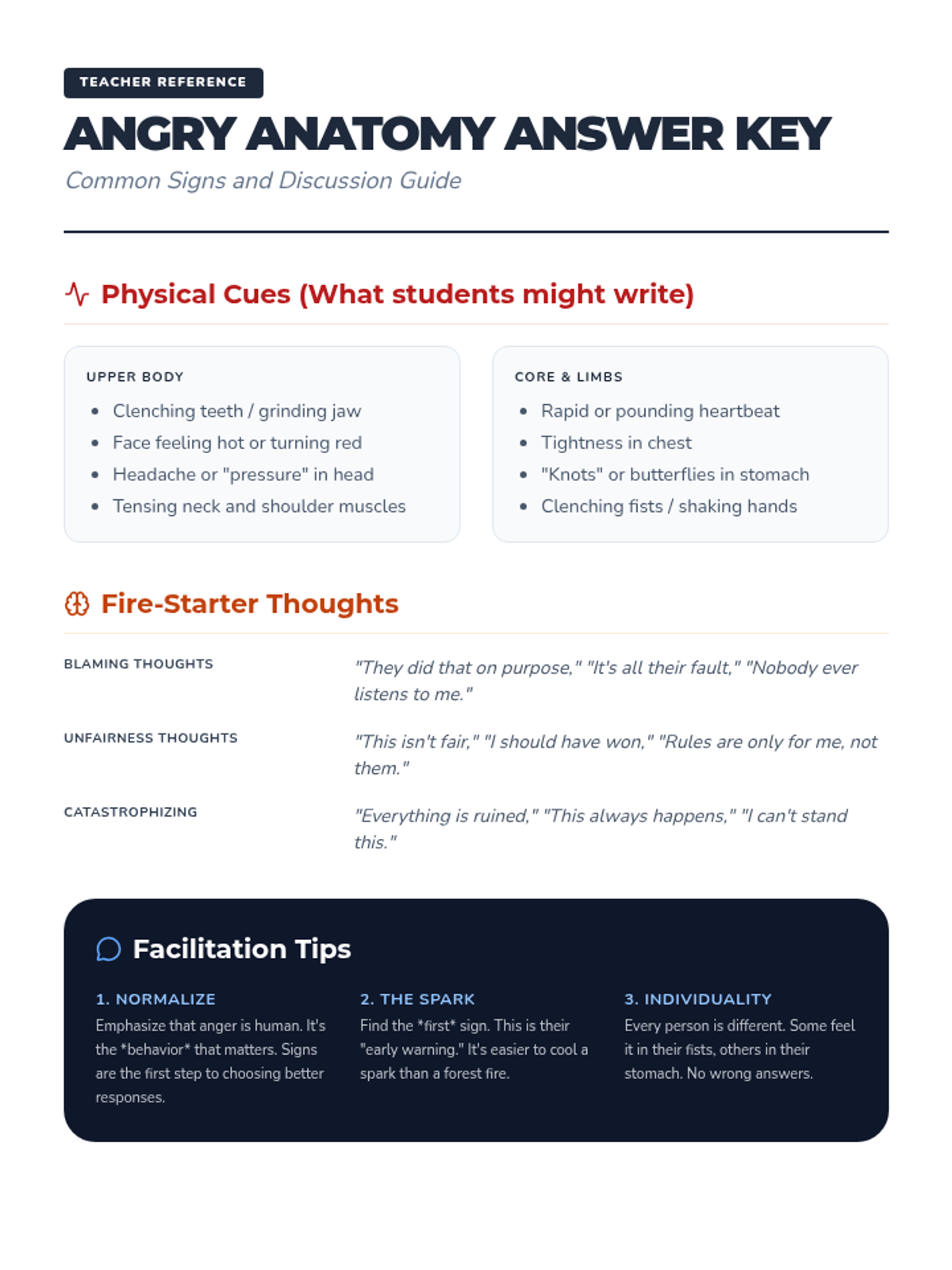
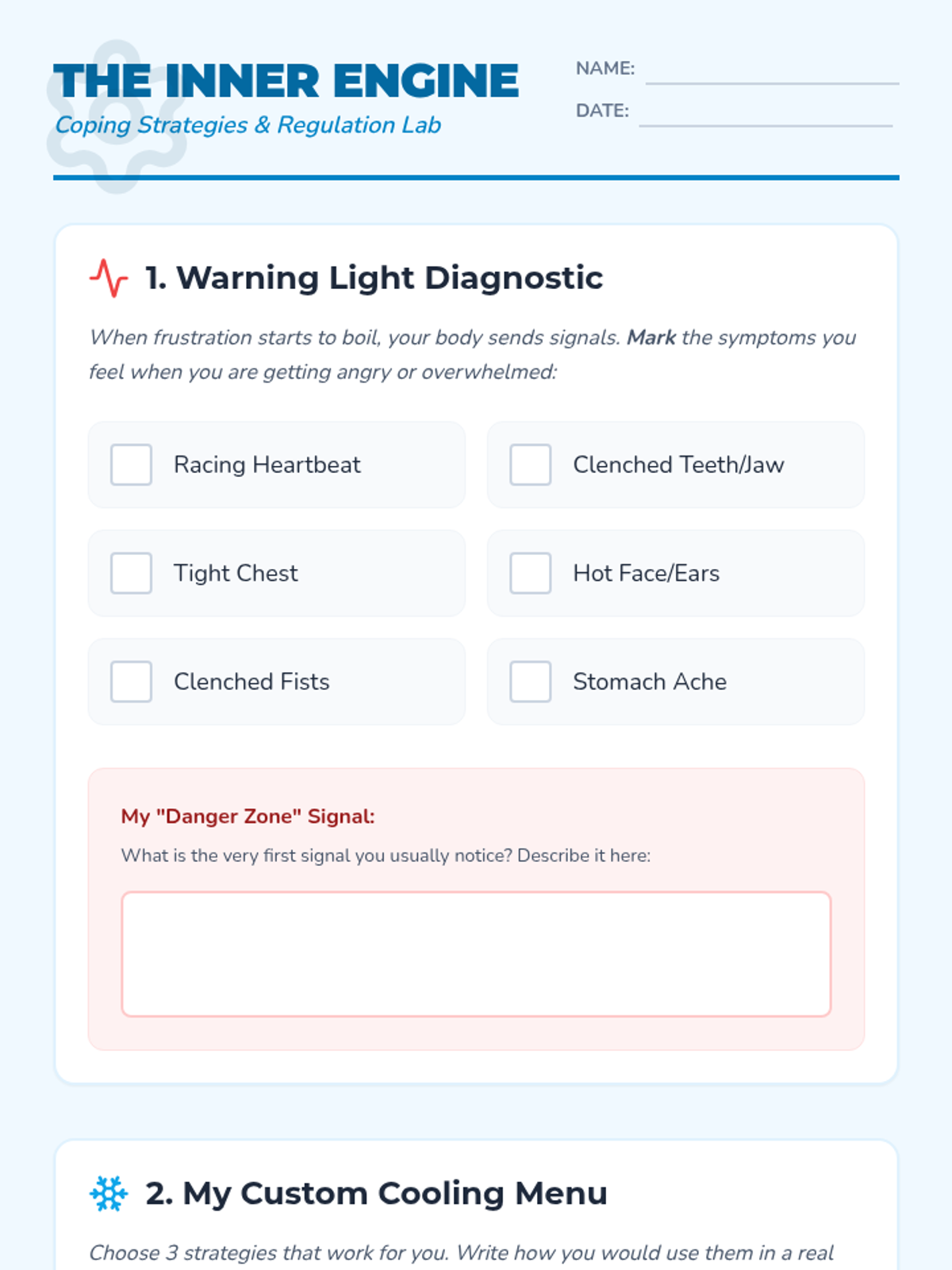
A 20-minute SEL lesson for grades K-4 focused on identifying physical warning signs of anger before they escalate. Students act as 'Anger Detectives' to spot body clues like racing hearts, clenched fists, and hot faces.
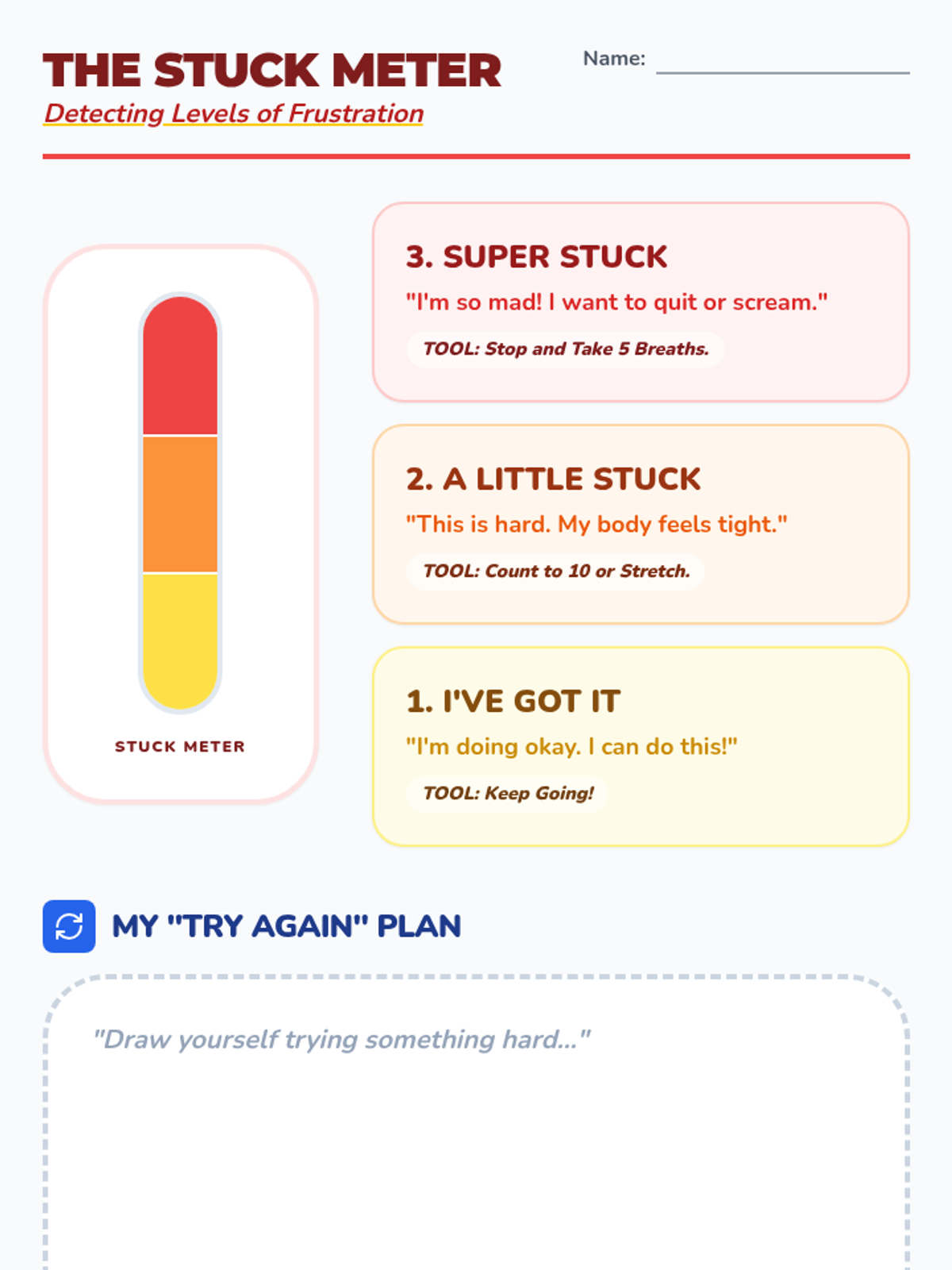
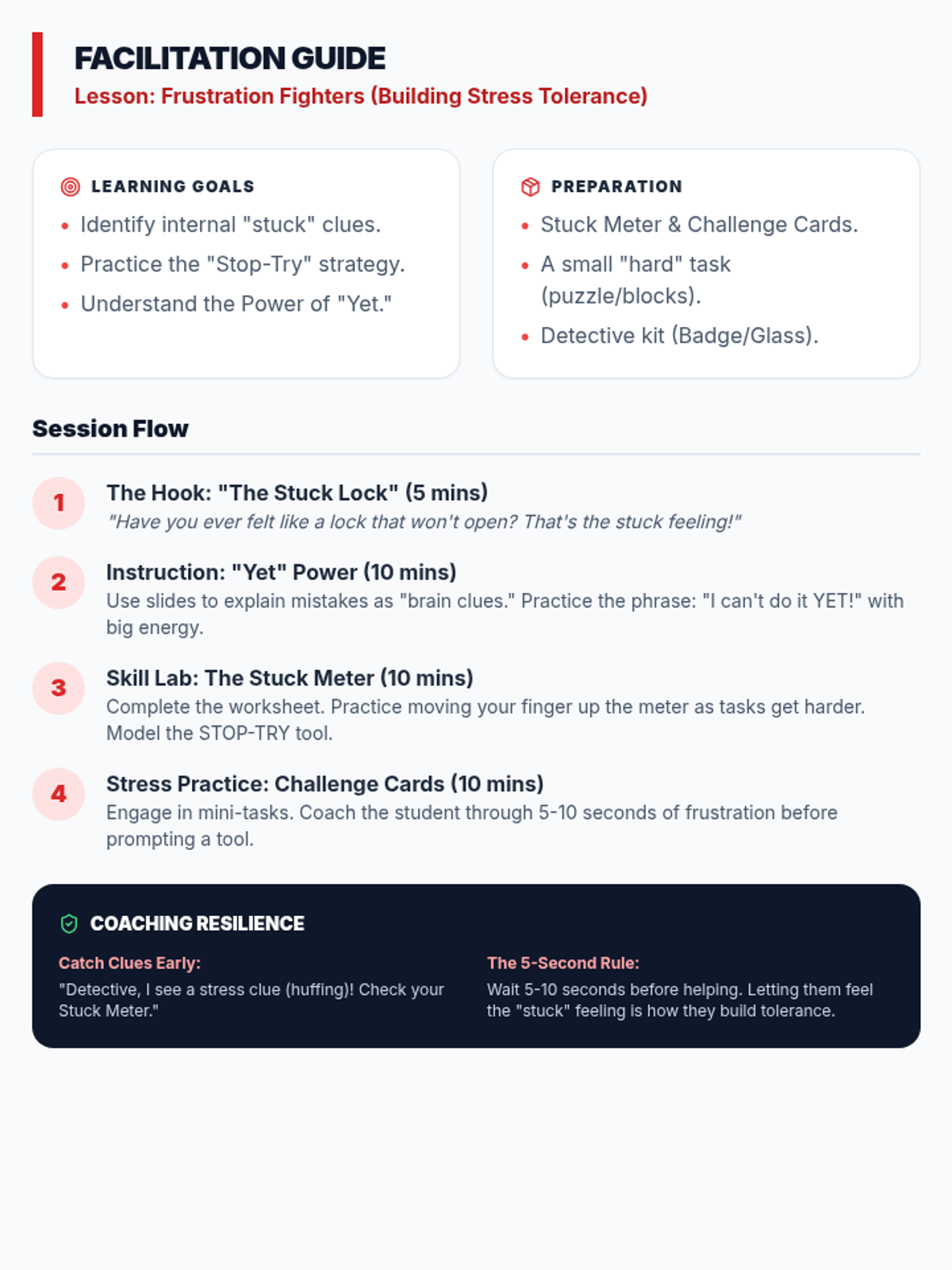
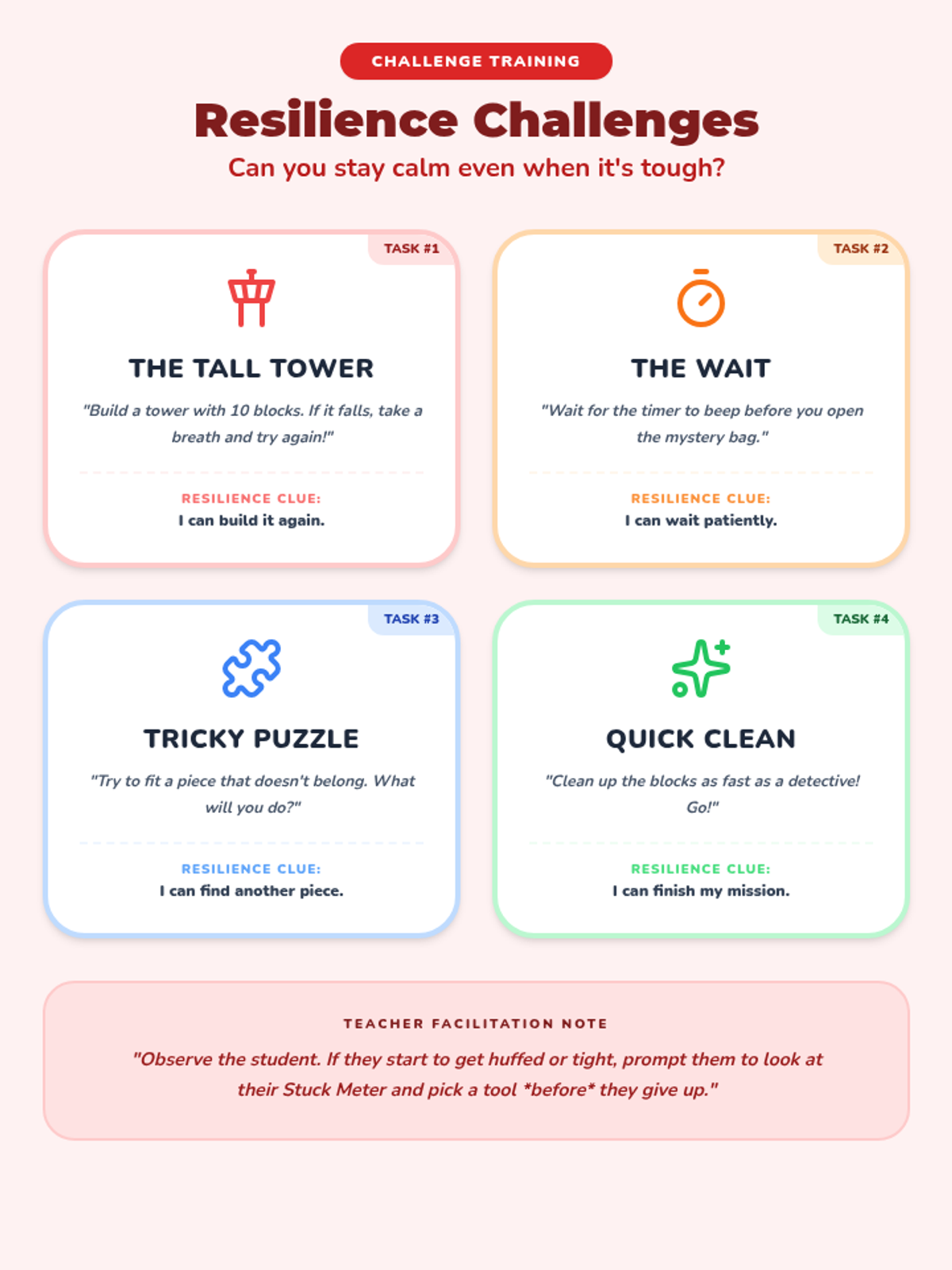
A lesson focused on building stress tolerance and resilience. Students learn to identify the 'stuck' feeling of frustration and practice positive self-talk and 'try again' strategies.
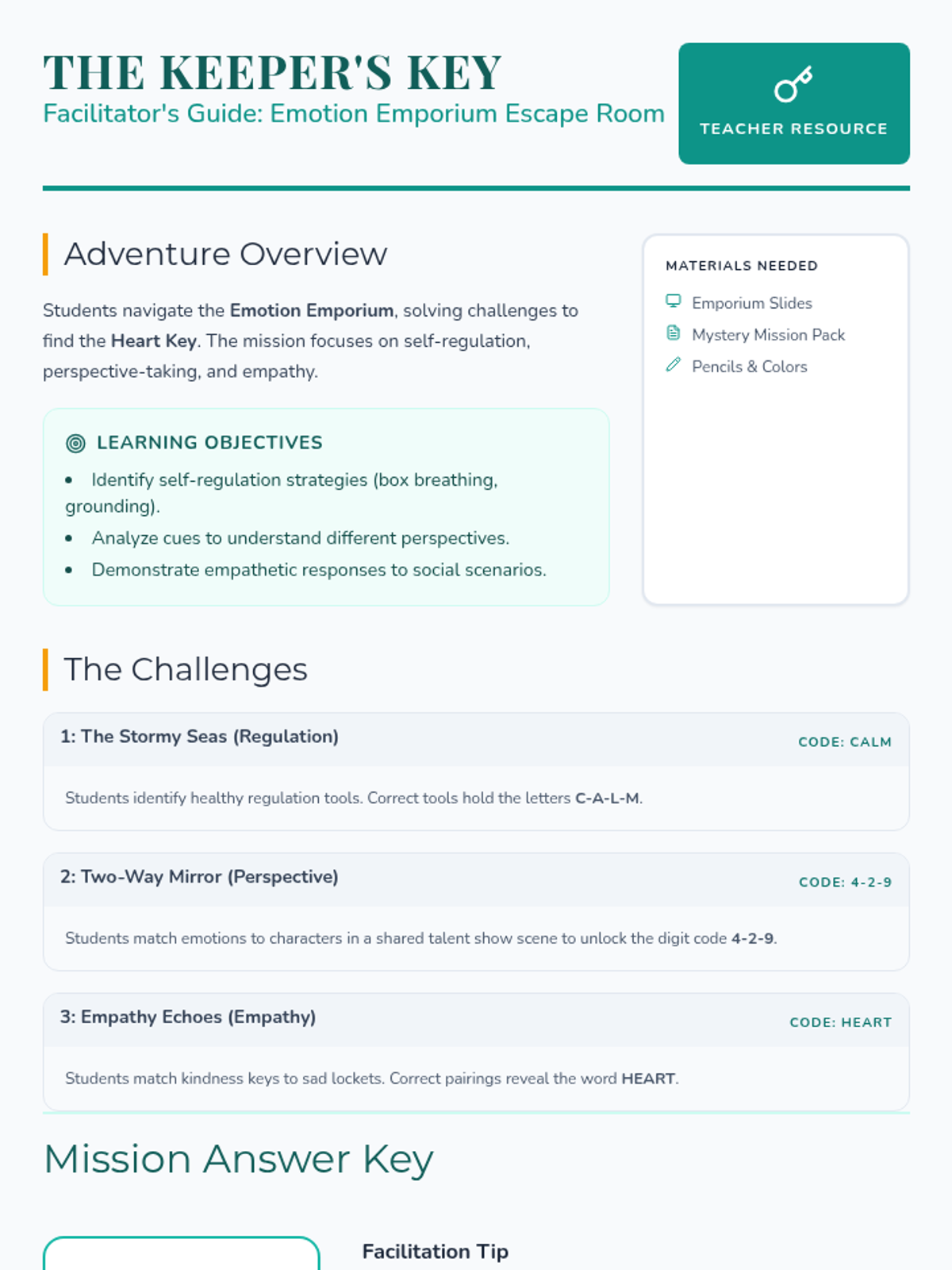
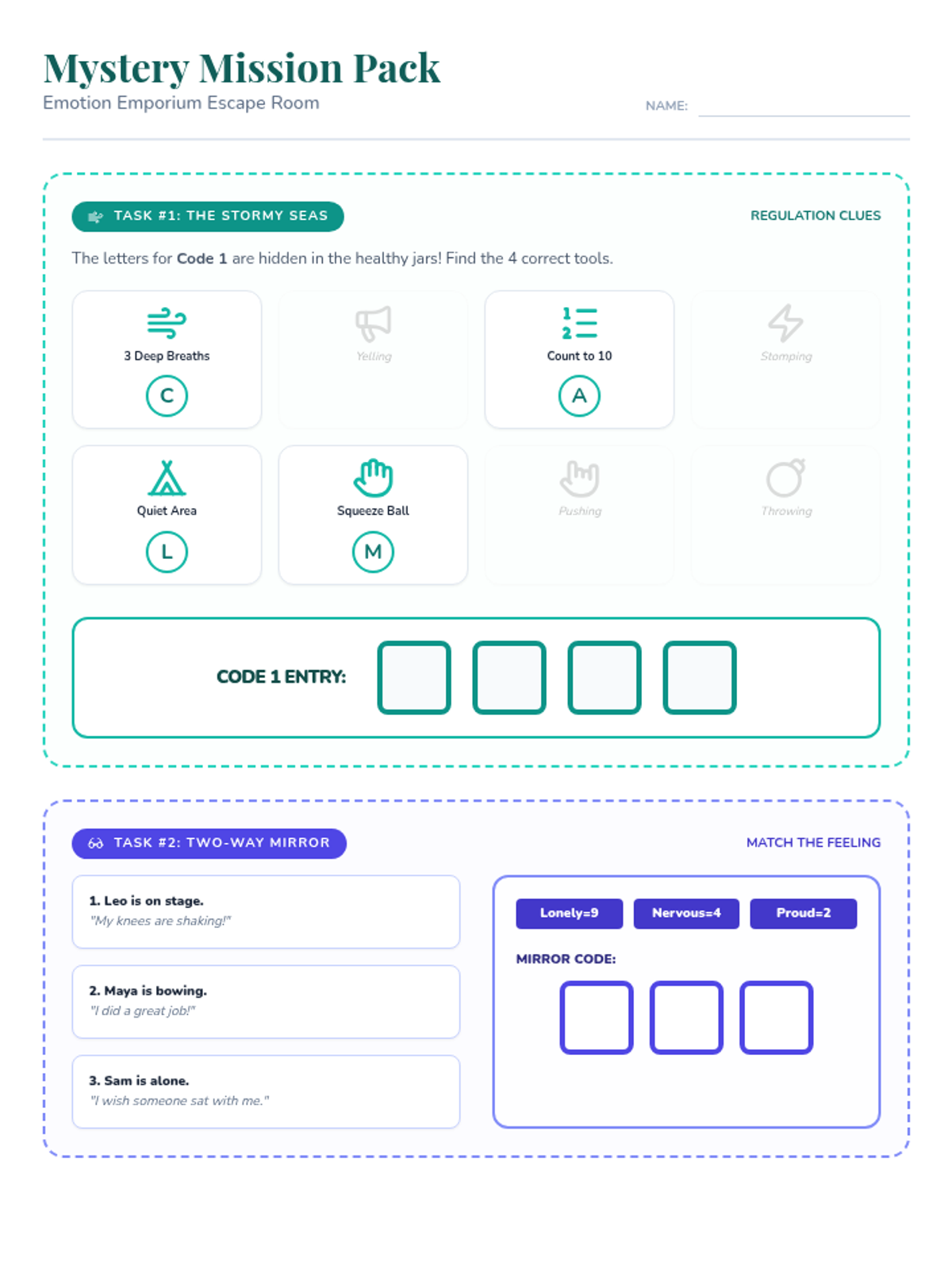
An immersive SEL escape room where students navigate the 'Emotion Emporium' to recover the Heart Key by mastering self-regulation and empathy. Students work together to solve visual puzzles and perspective-taking challenges.
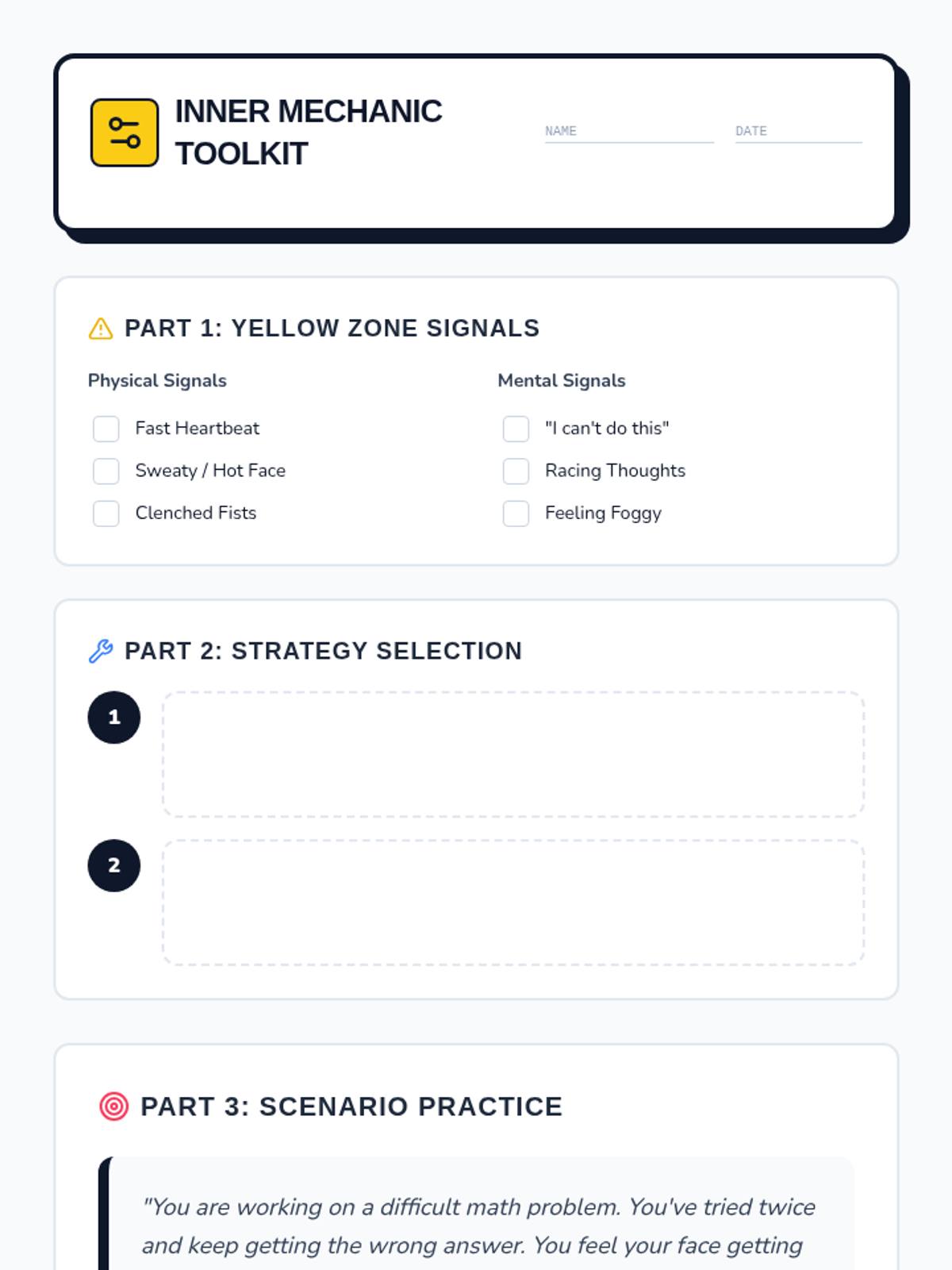
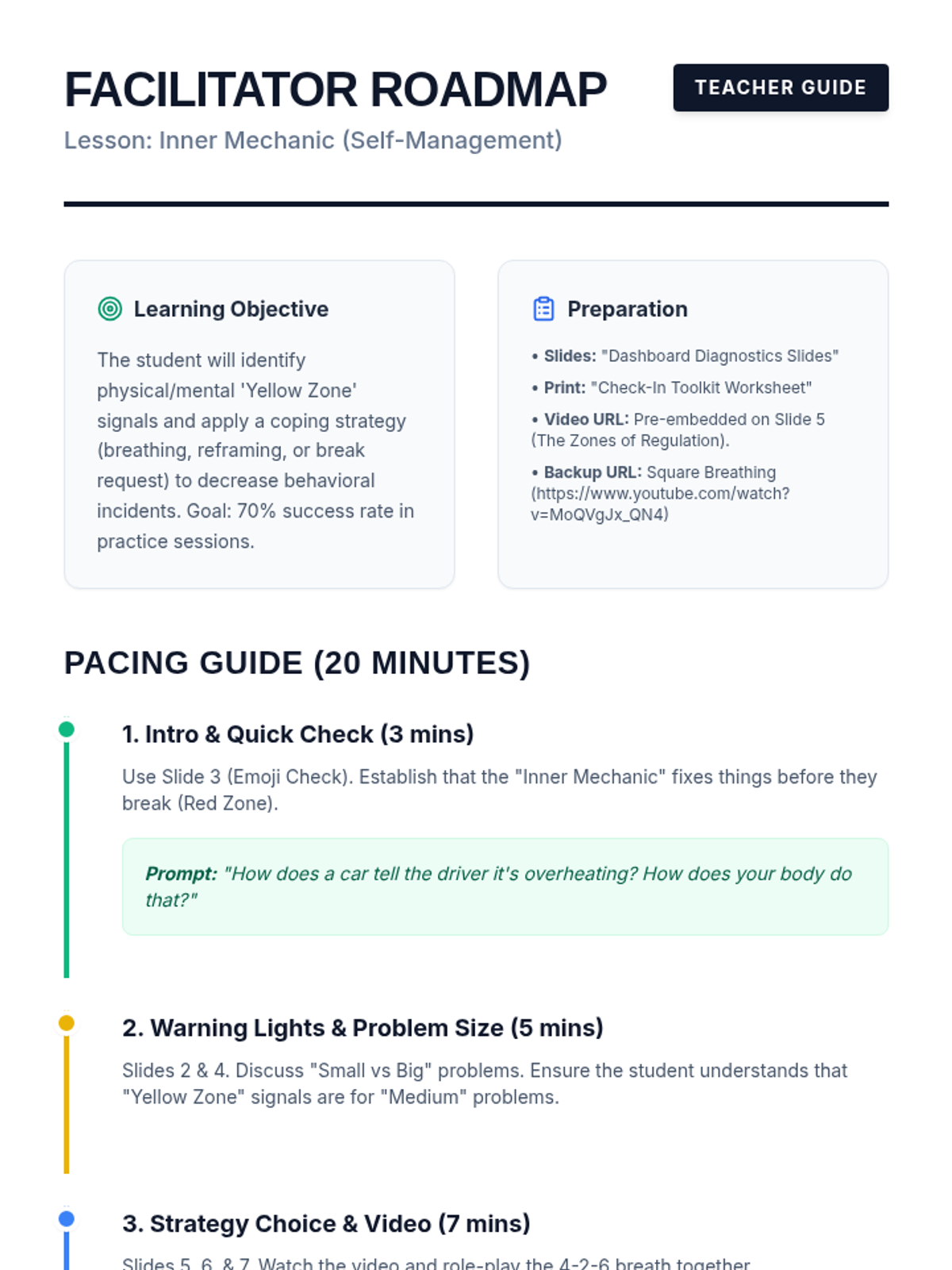
A lesson designed to help students identify their 'Yellow Zone' physical signals and implement self-regulation strategies like deep breathing and mental reframing before escalating to the 'Red Zone'. Students will build a personal dashboard of coping tools and practice applying them to real-world scenarios.
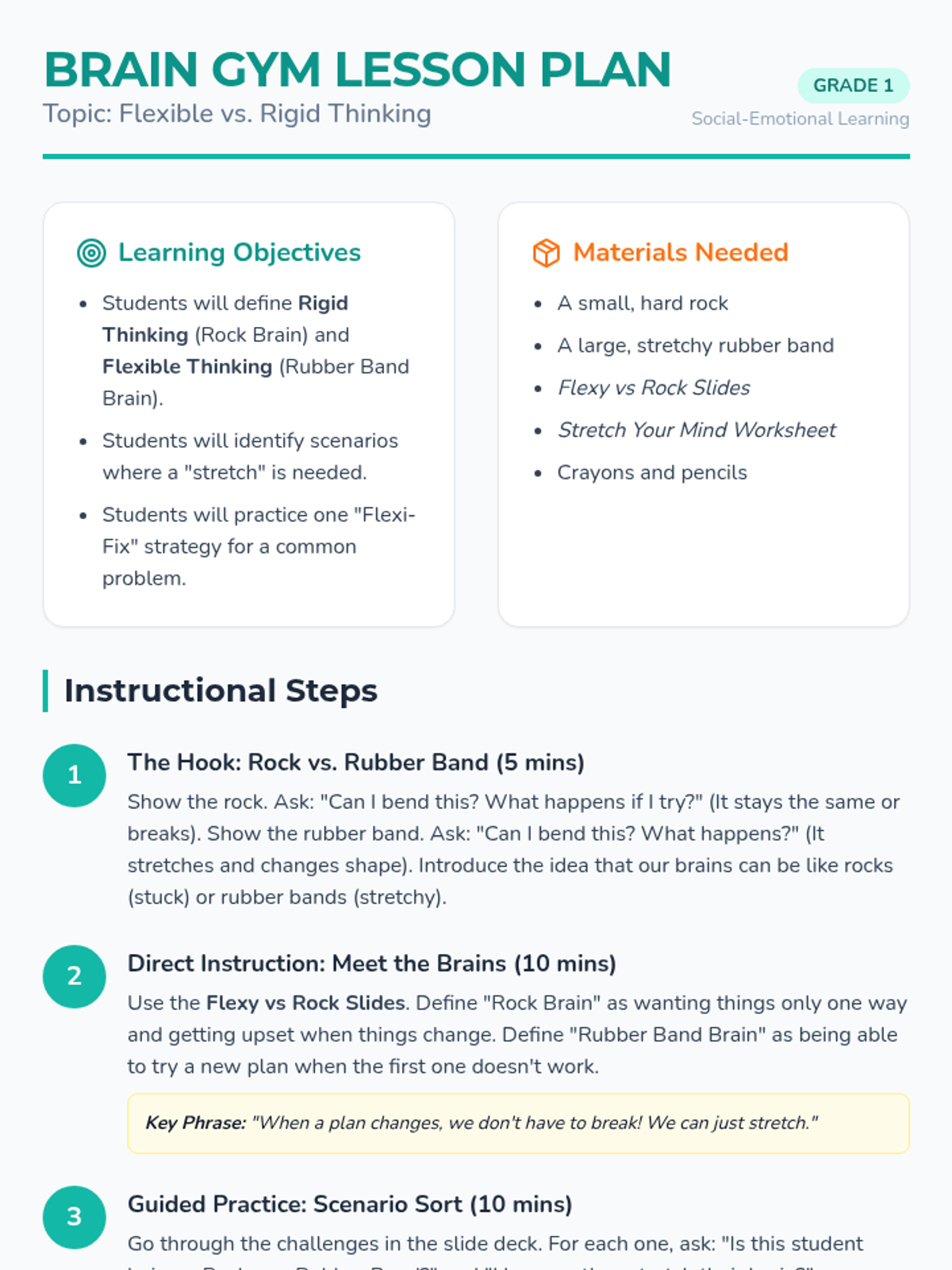
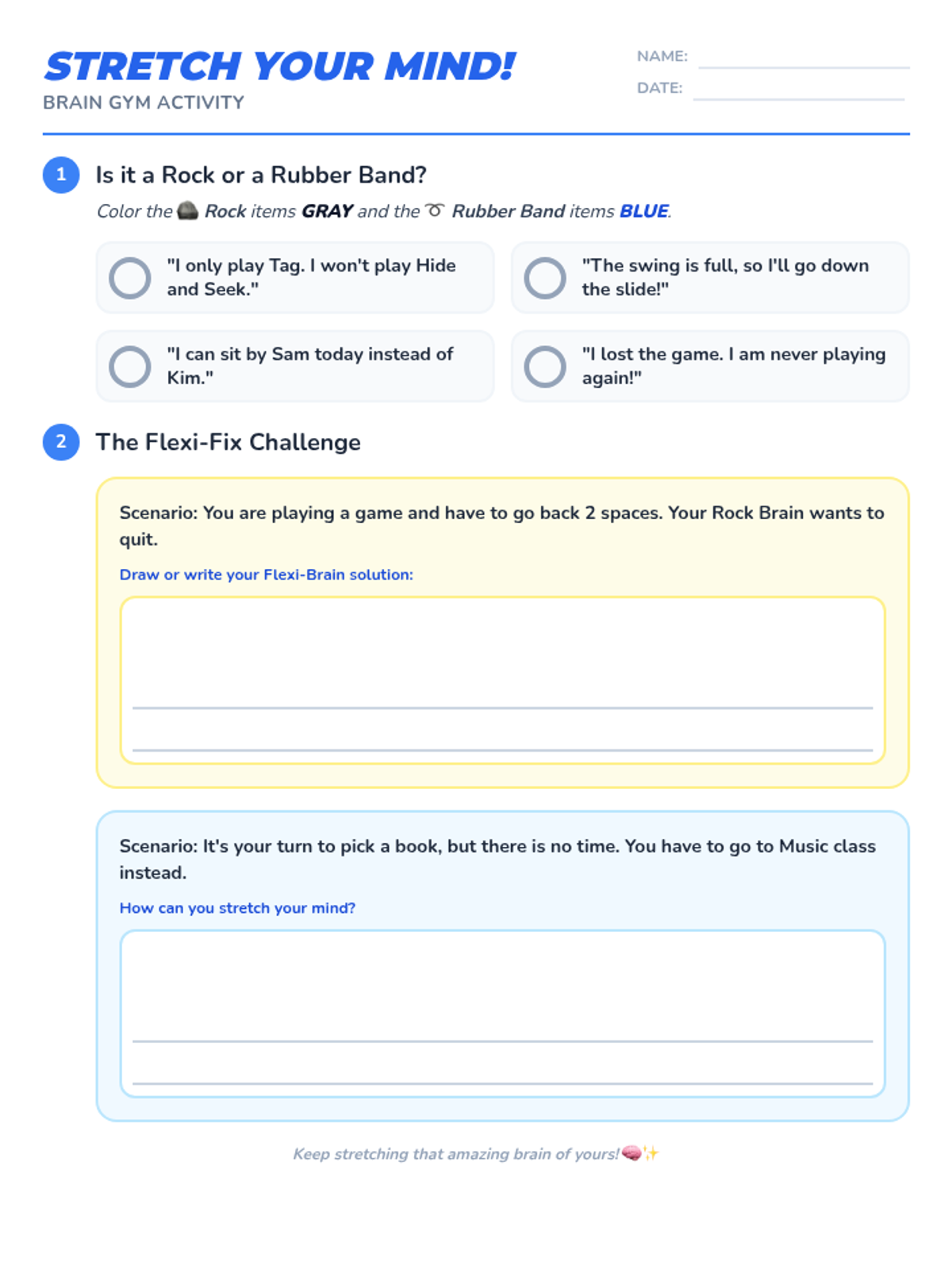
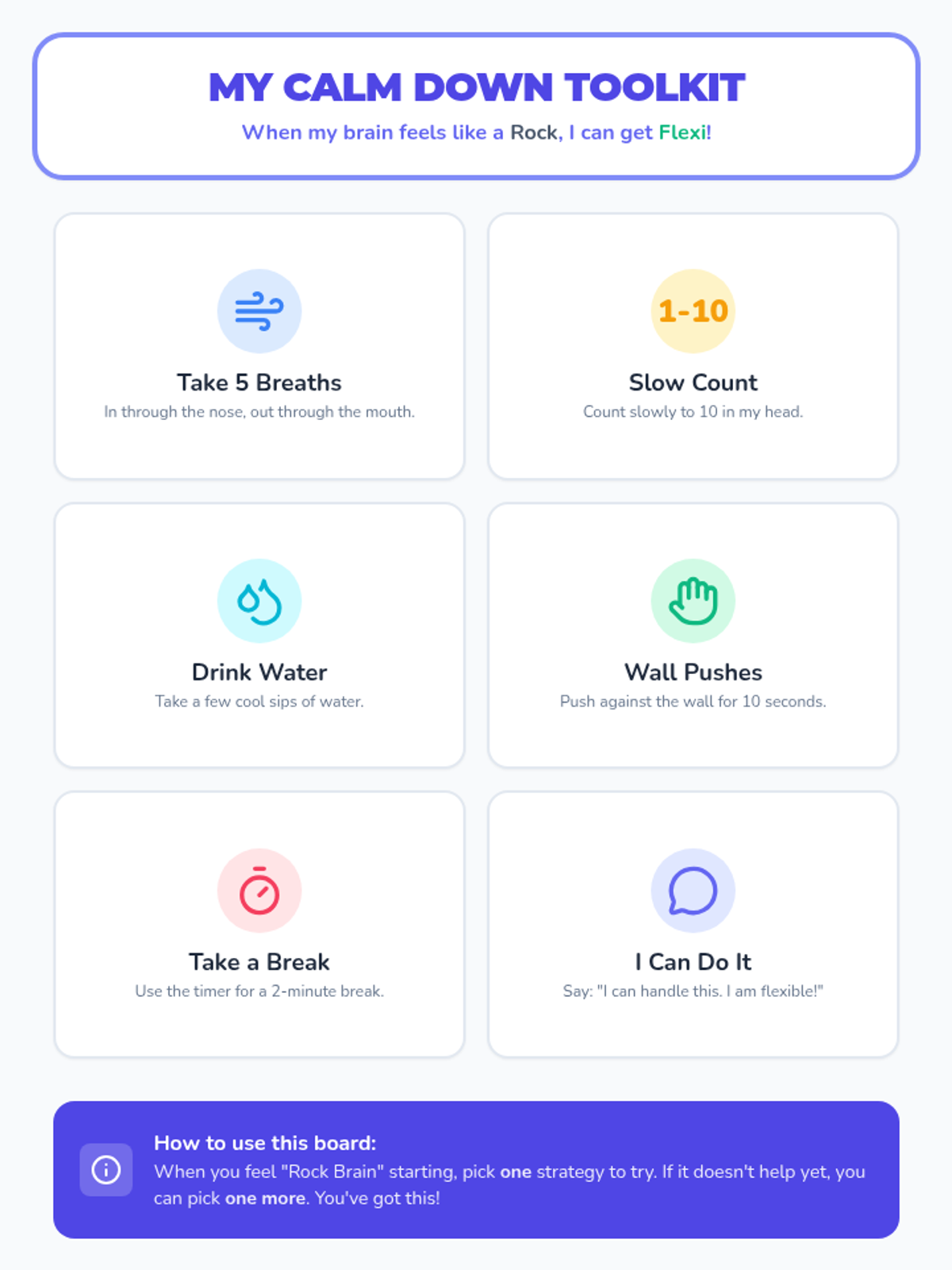
A social skills lesson for 1st graders introducing the concept of flexible vs. rigid thinking using the 'Rock vs. Rubber Band' analogy. Students learn to identify stuck thinking and practice stretching their brains to find solutions.
A lesson focused on helping students recognize the early physical and mental warning signs of anger to improve emotional self-regulation.
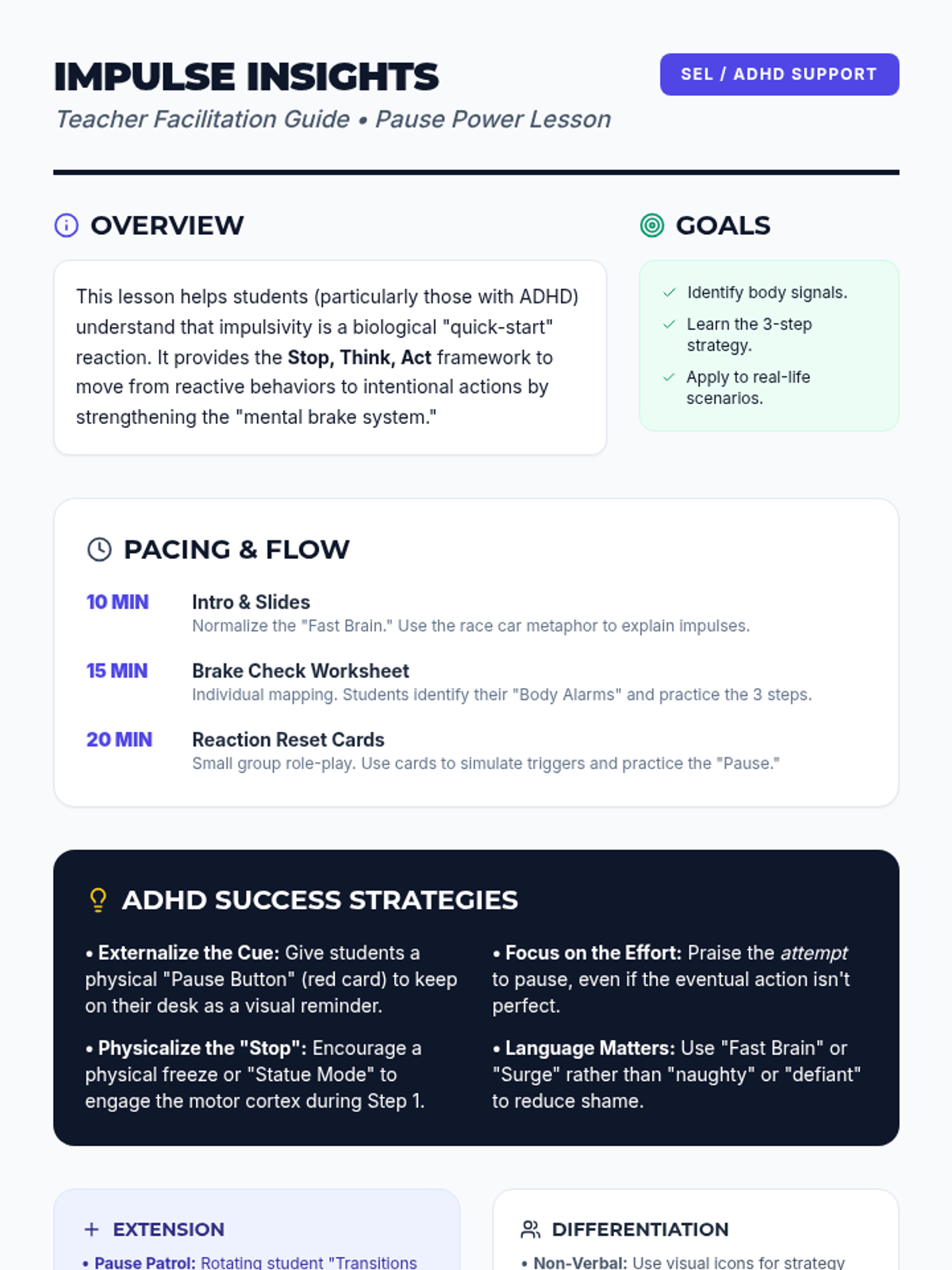
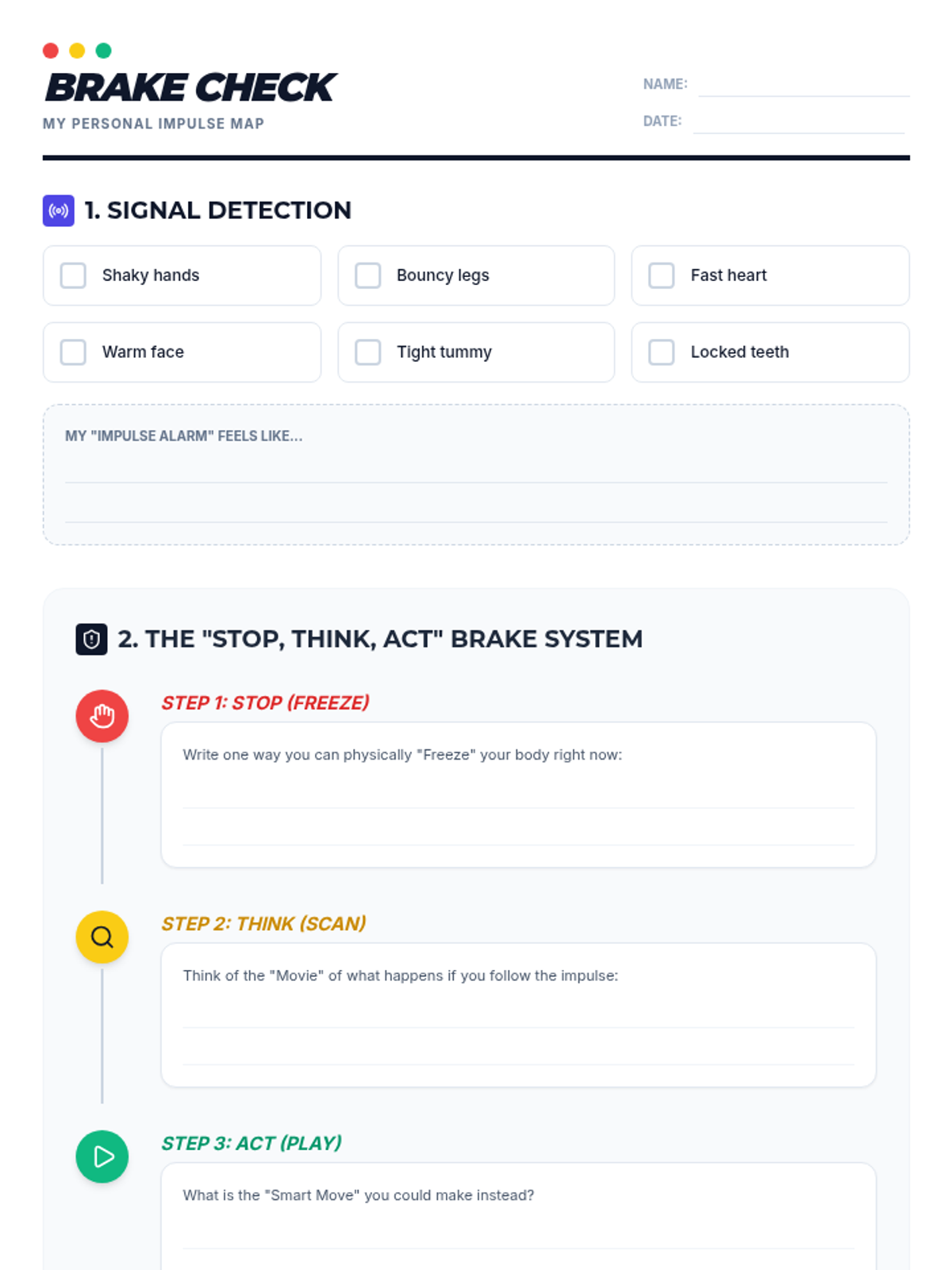
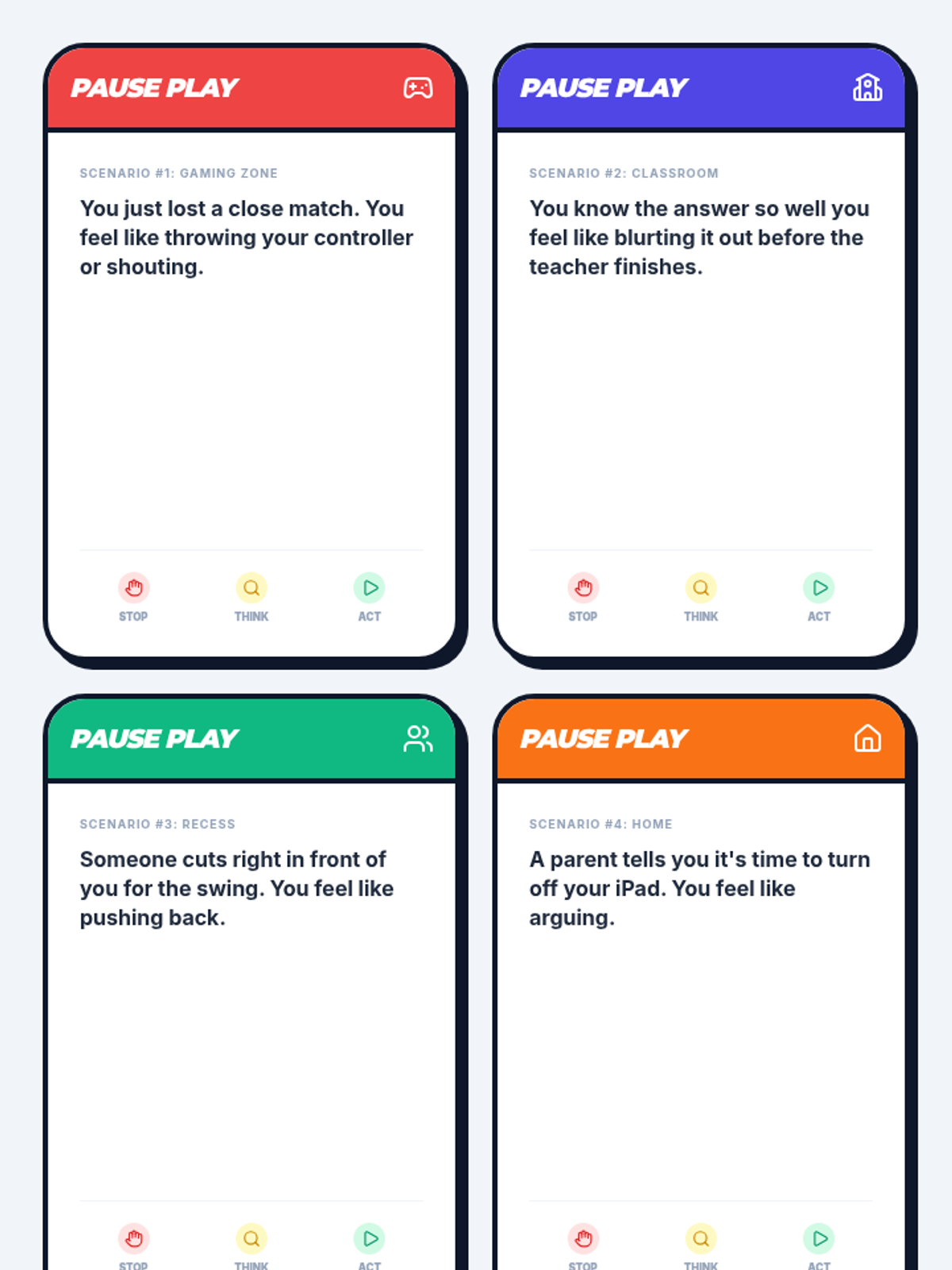
A lesson designed for students with ADHD to recognize impulsive urges and implement the 'Stop, Think, Act' strategy using a 'Pause Button' mental model. Students will explore common triggers and practice thoughtful decision-making through scenarios.
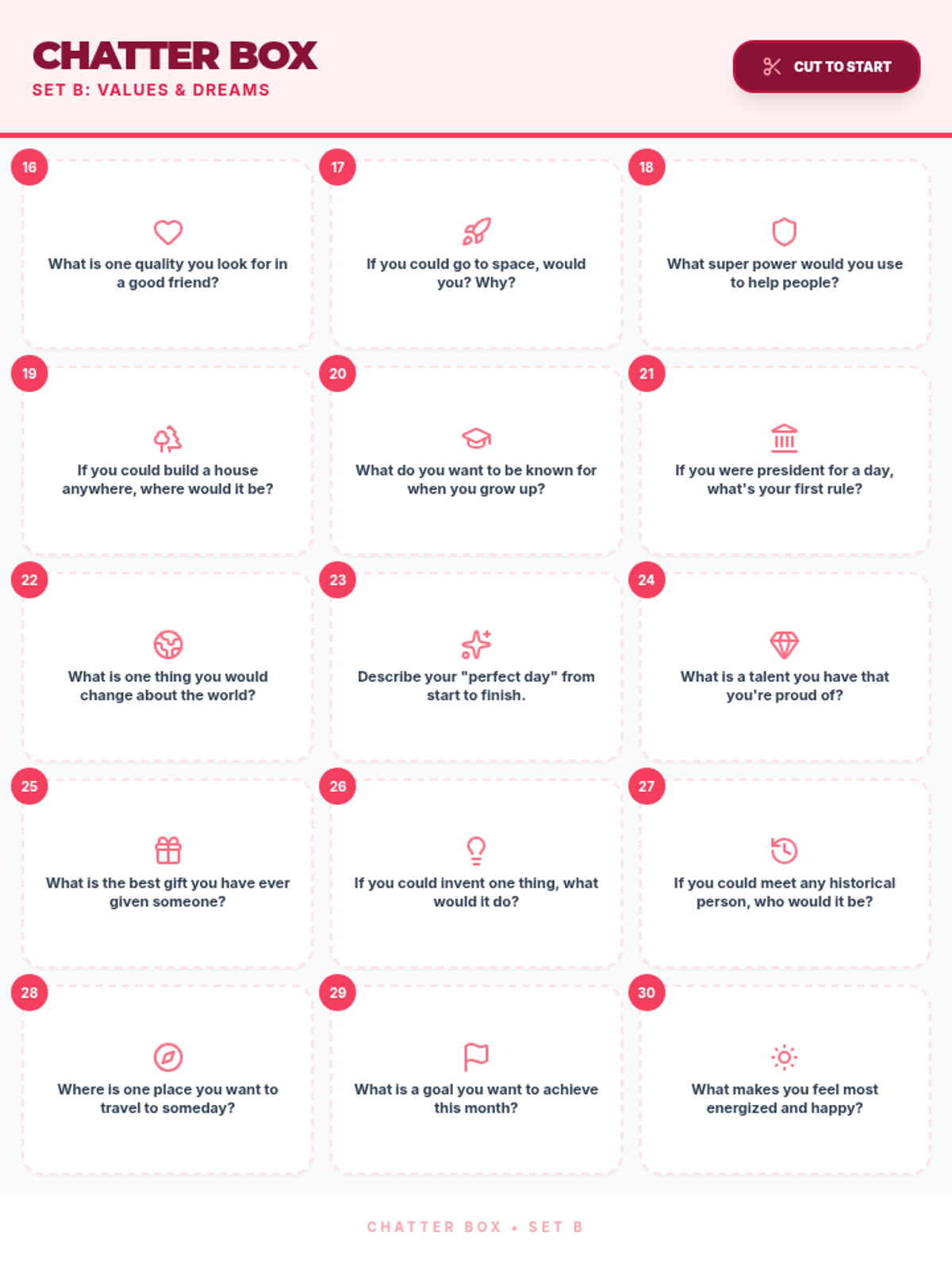
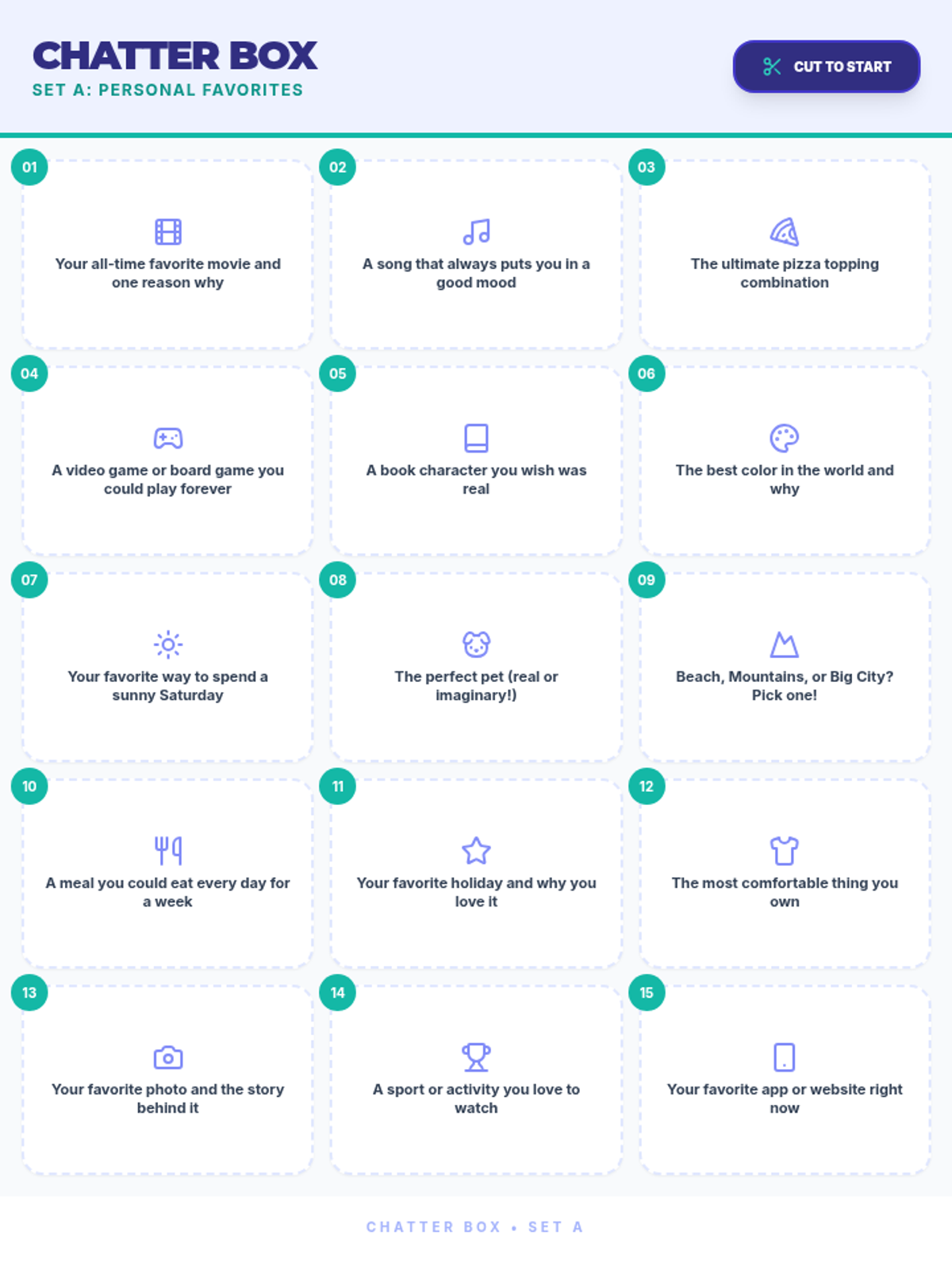
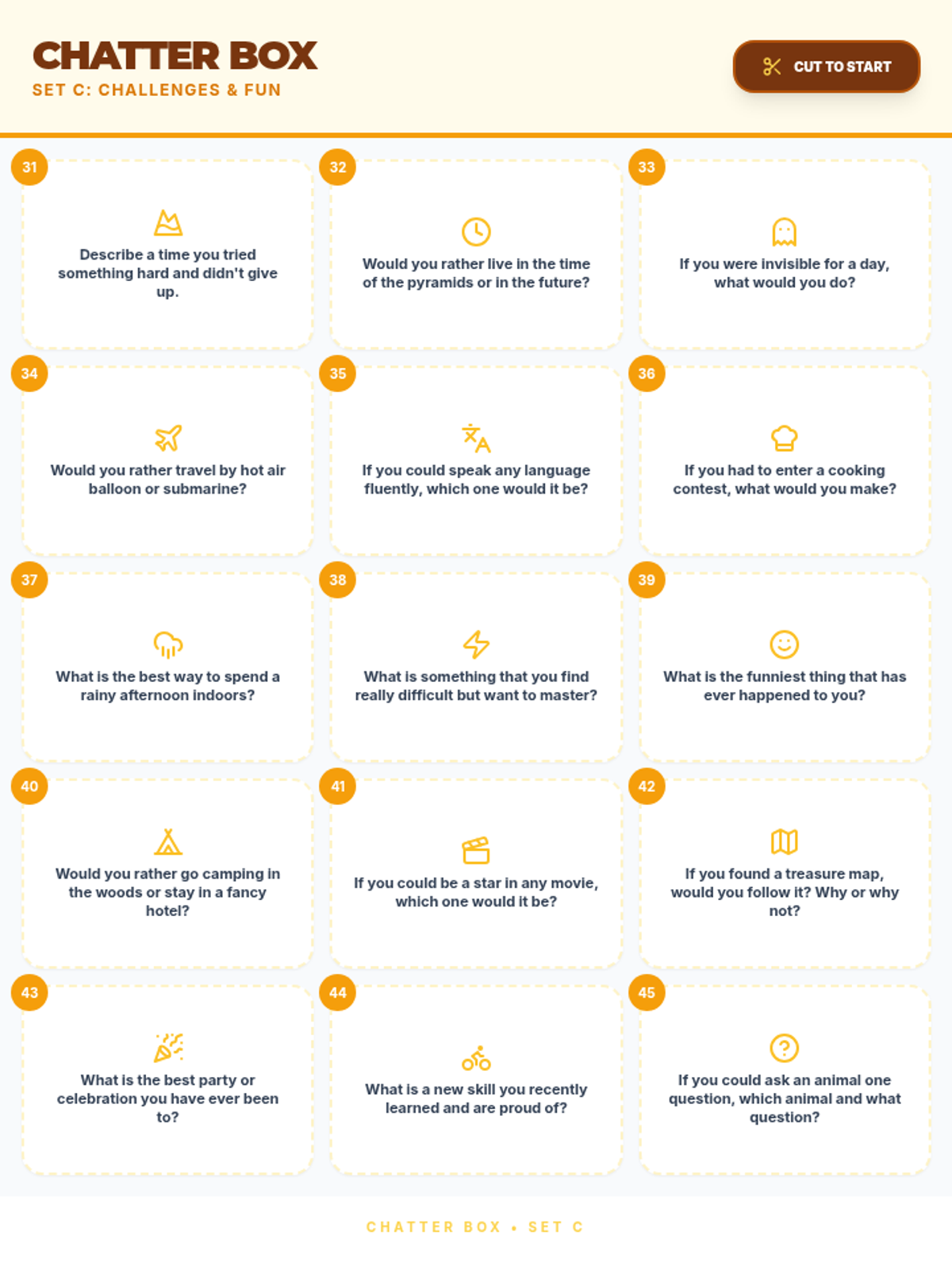
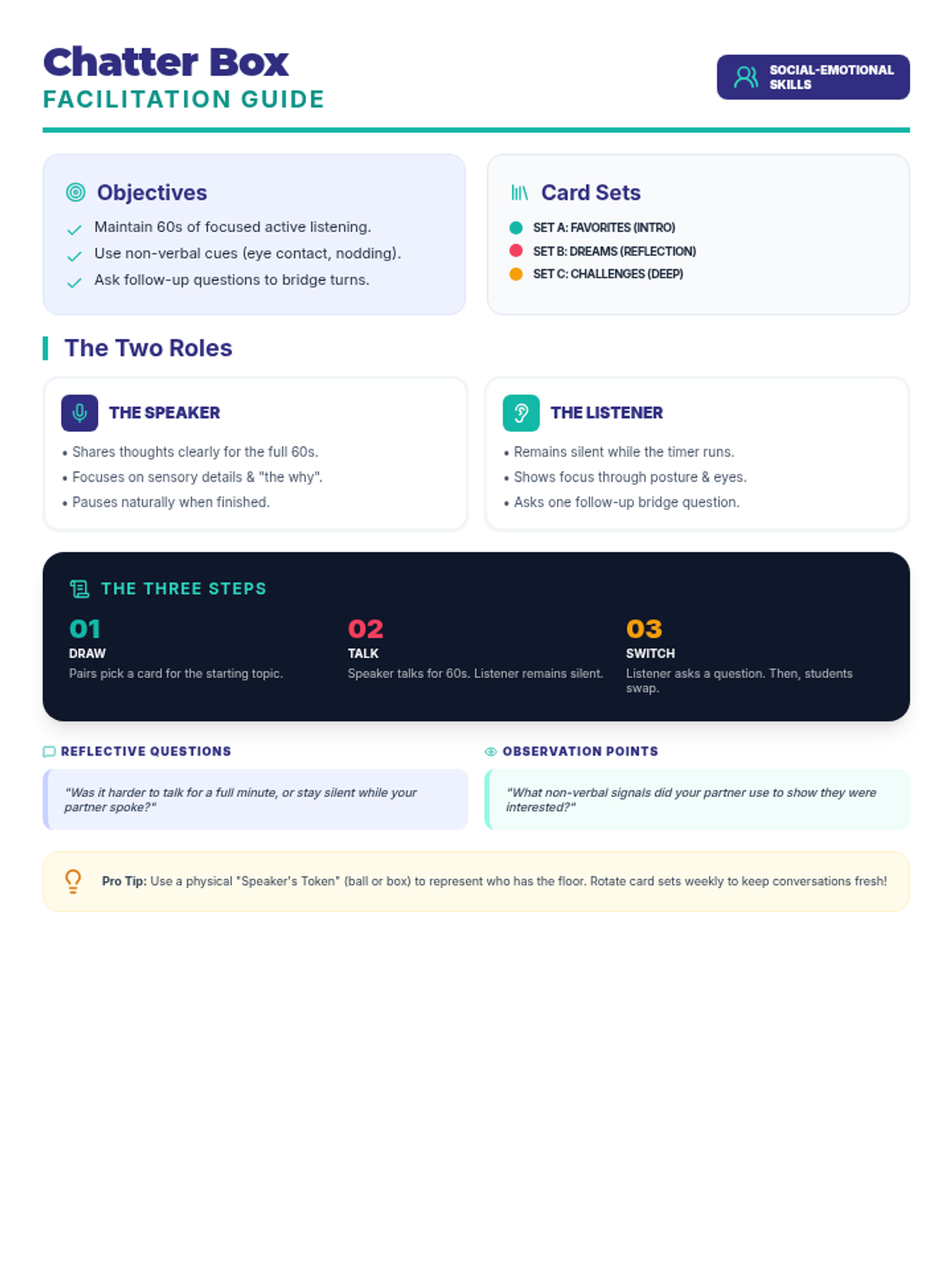
A comprehensive lesson on conversational turn-taking using themed prompt cards to build social-emotional skills and active listening.
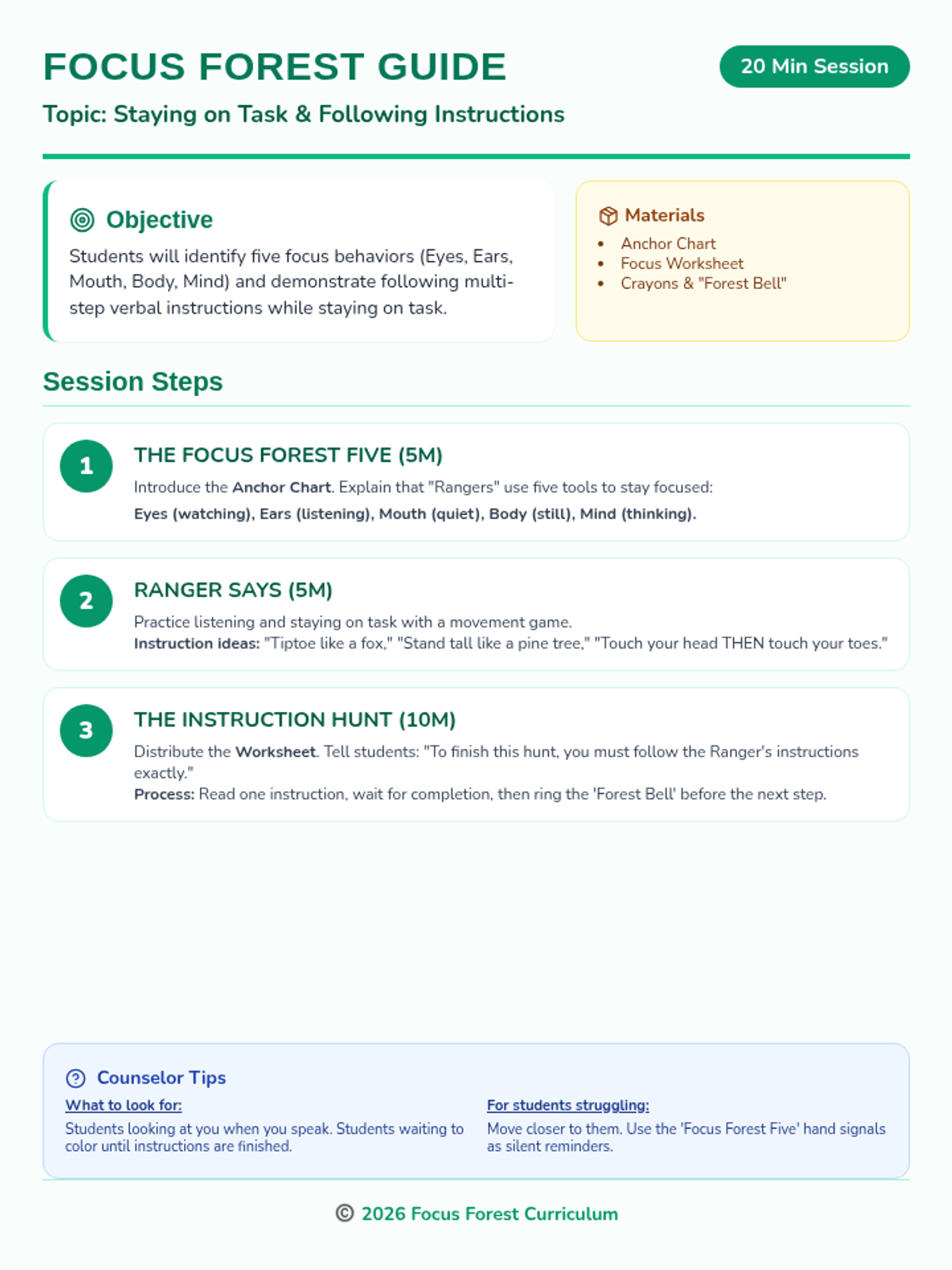
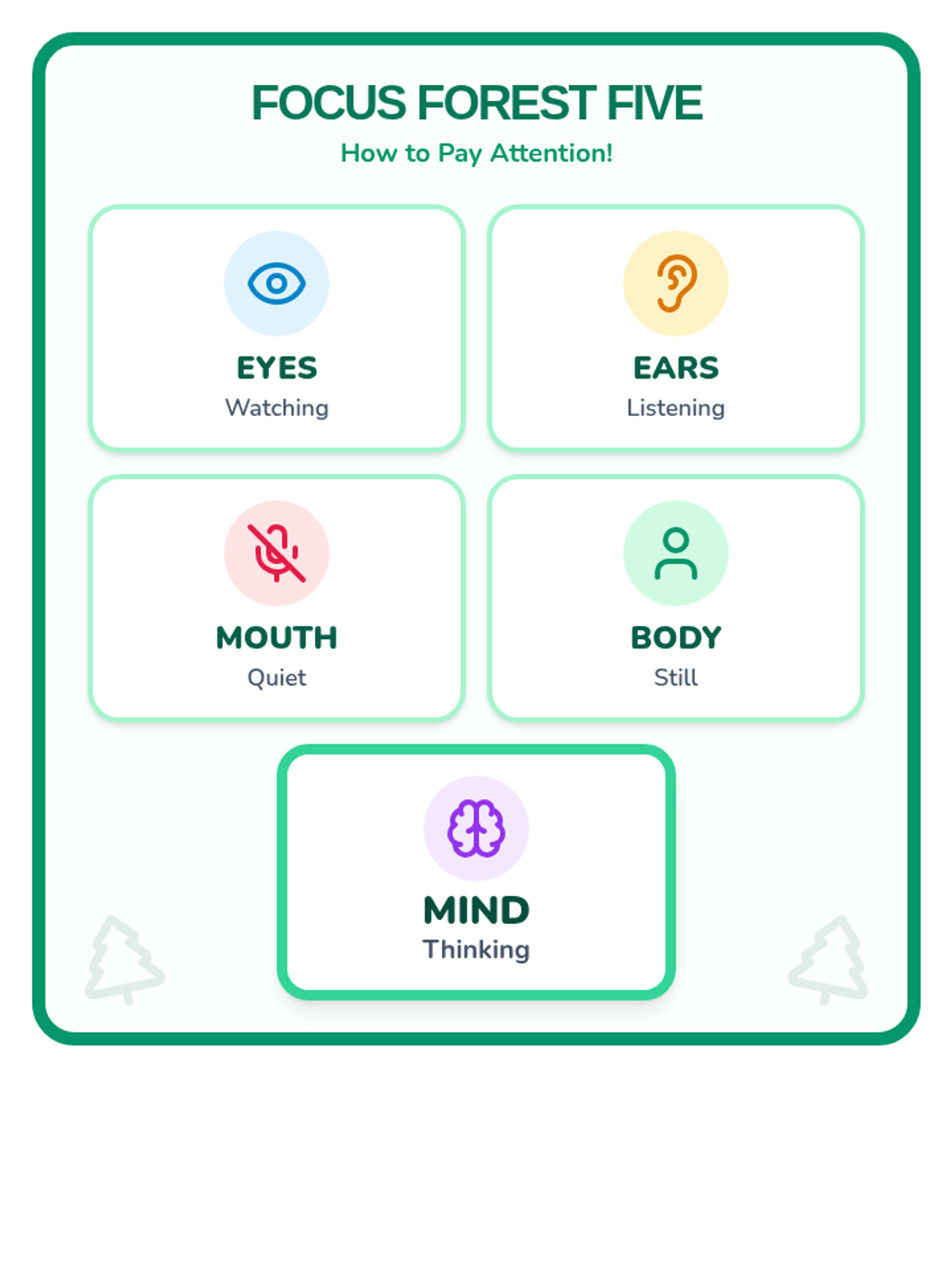
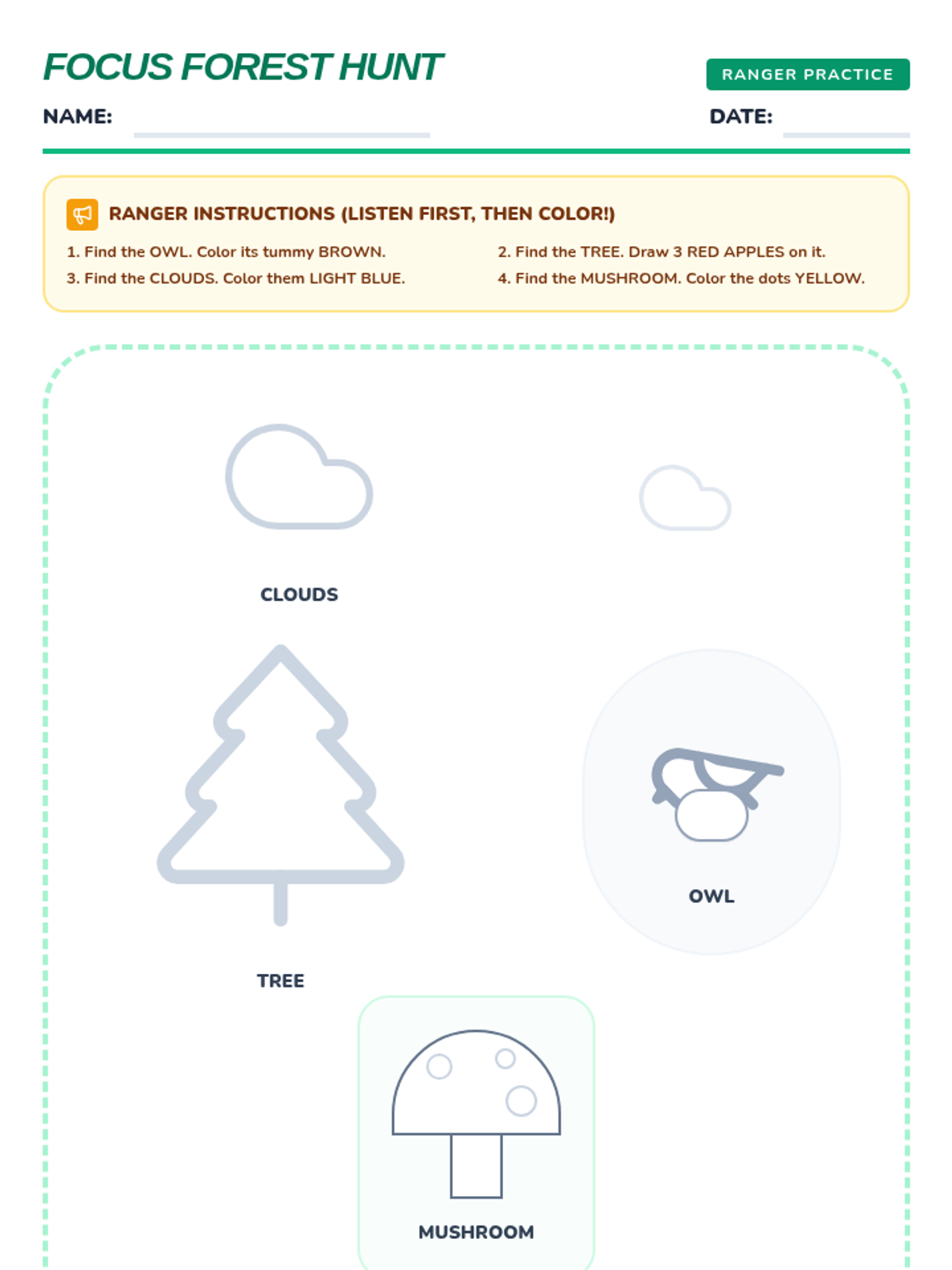
A 20-minute kindergarten counseling session focused on developing attention skills through the 'Focus Forest' theme, emphasizing listening and staying on task.
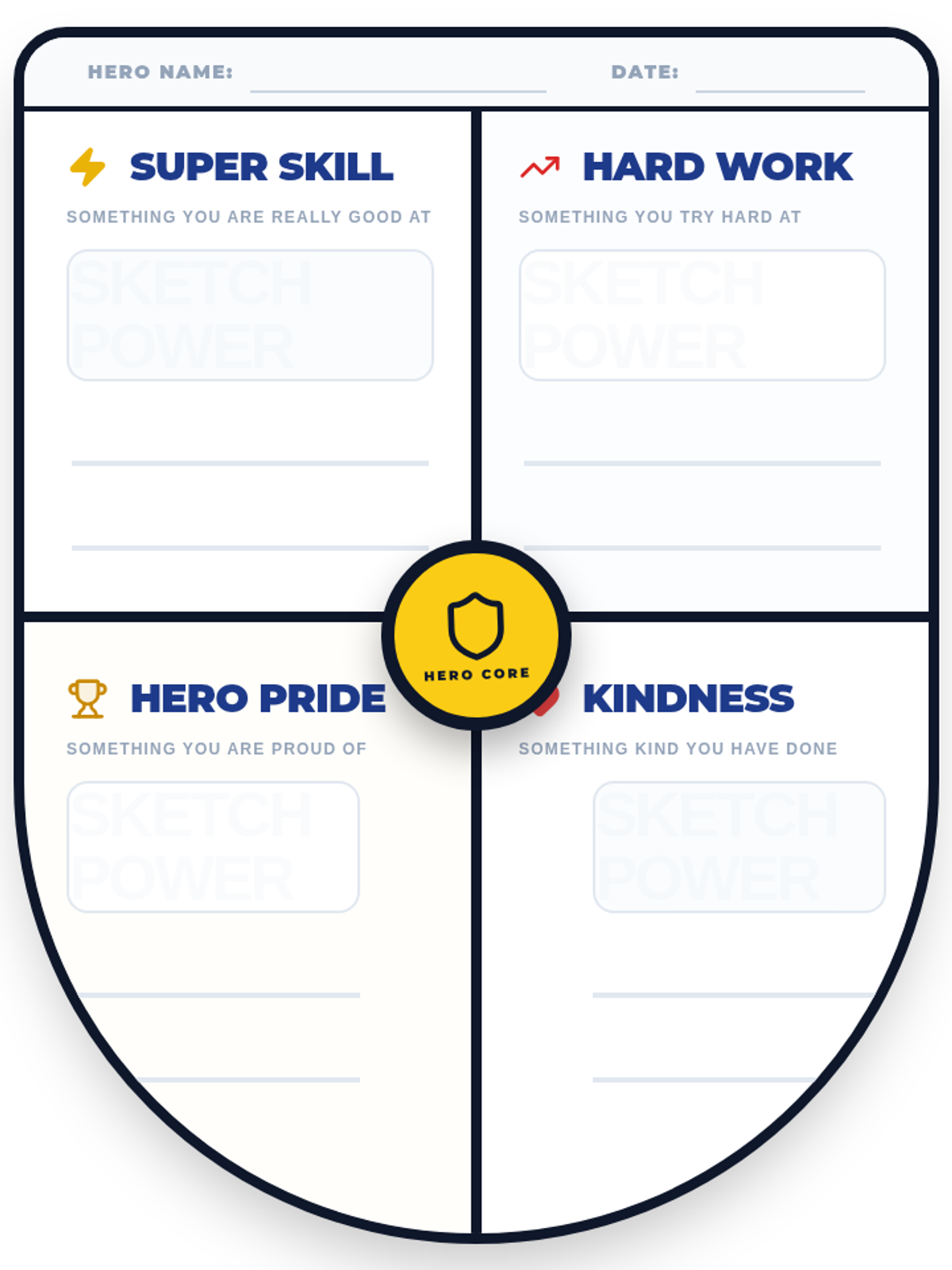
A lesson focused on self-reflection and identifying personal strengths through a superhero lens, encouraging students to recognize their own 'superpowers' in skills, effort, pride, and kindness.
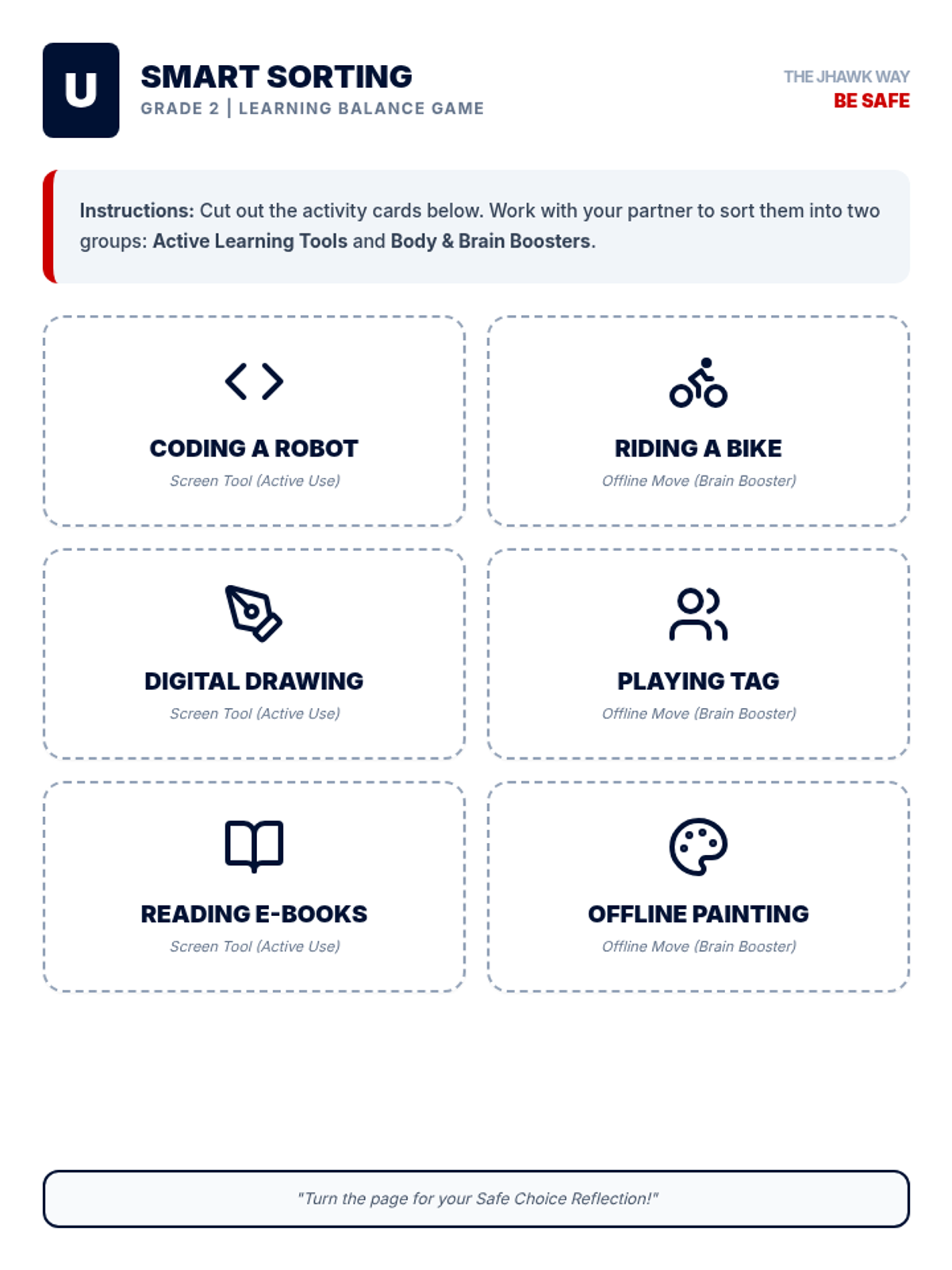
A 15-20 minute lesson for 2nd graders to differentiate between Chromebook tools and battery-free fun using the 'Digital Balance Dash' and sorting activities.
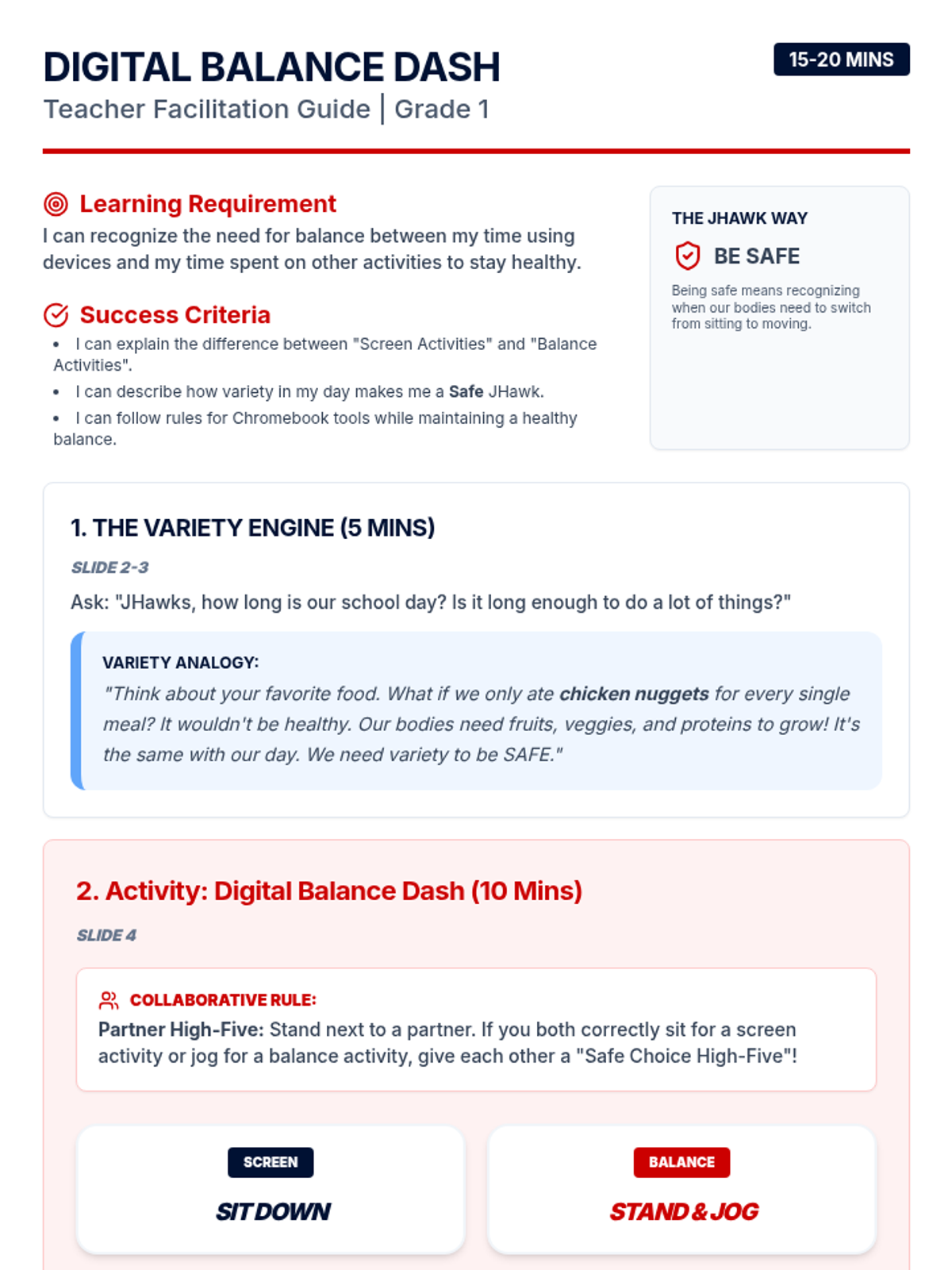
A 15-20 minute lesson for 1st graders using the 'Digital Balance Dash' to explore variety in daily activities and the importance of moving our bodies to stay safe.
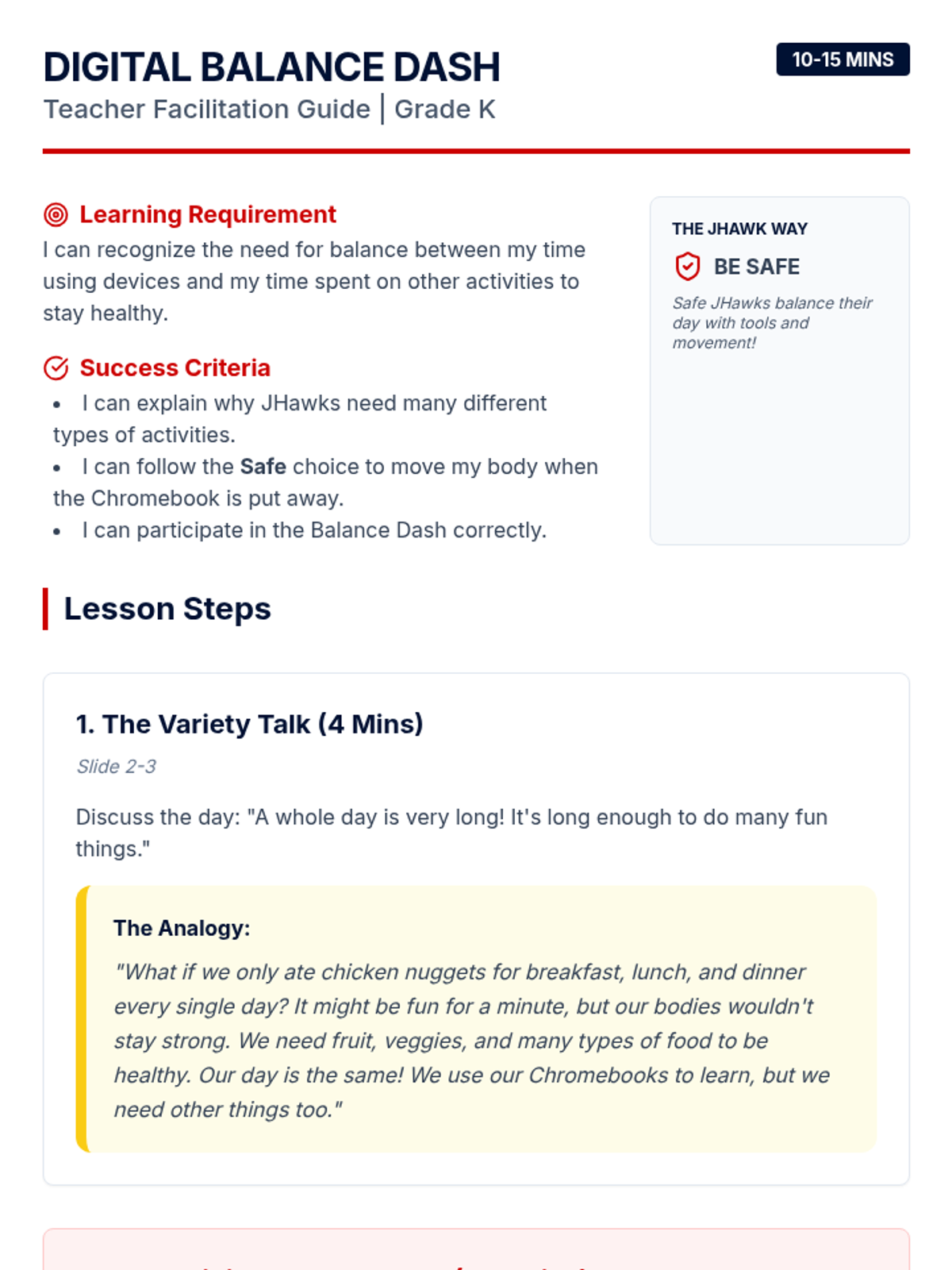
A 10-15 minute lesson for Kindergarteners introducing the 'Digital Balance Dash' using a food variety analogy to explain why we balance Chromebook time with movement.
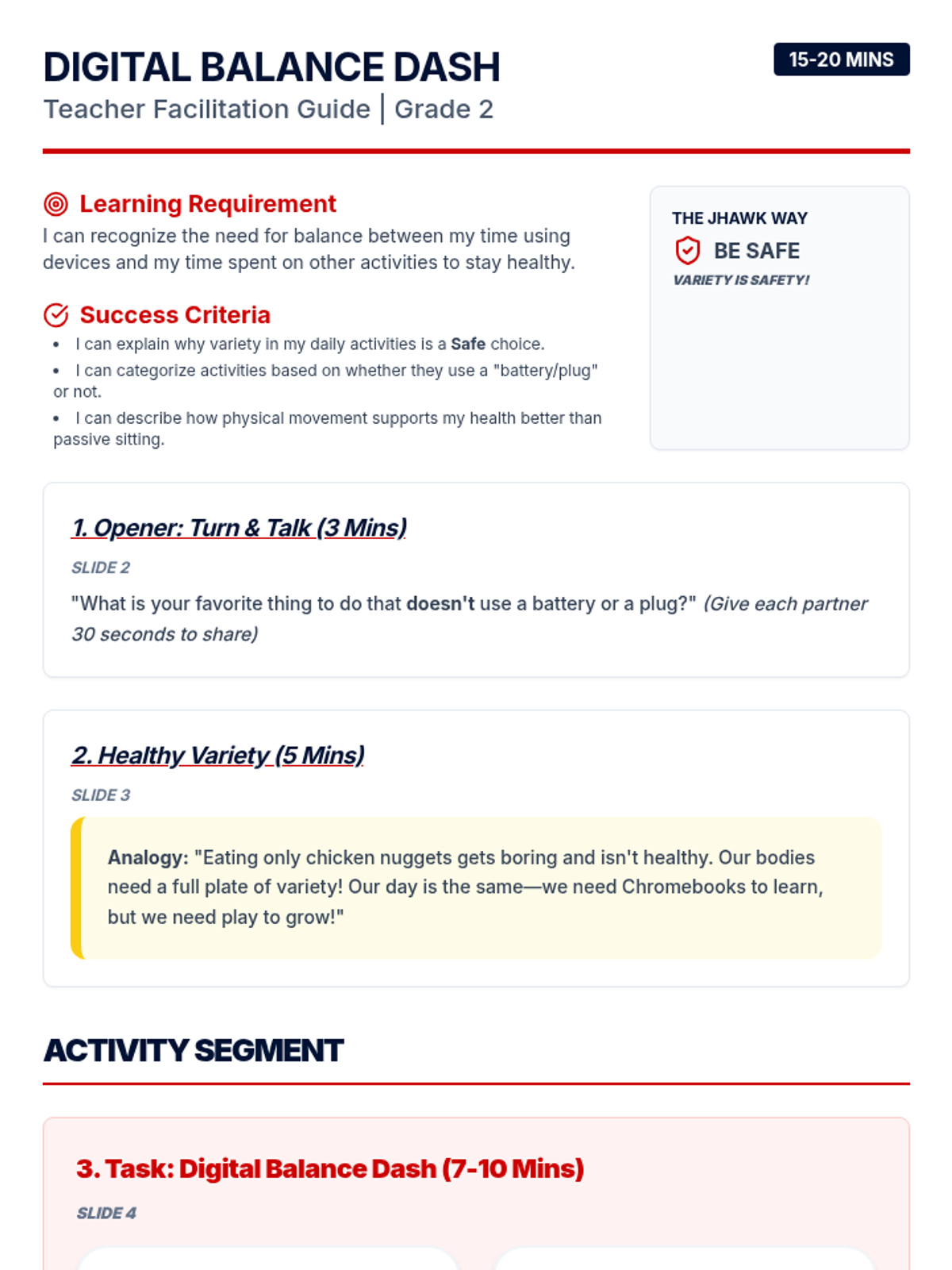
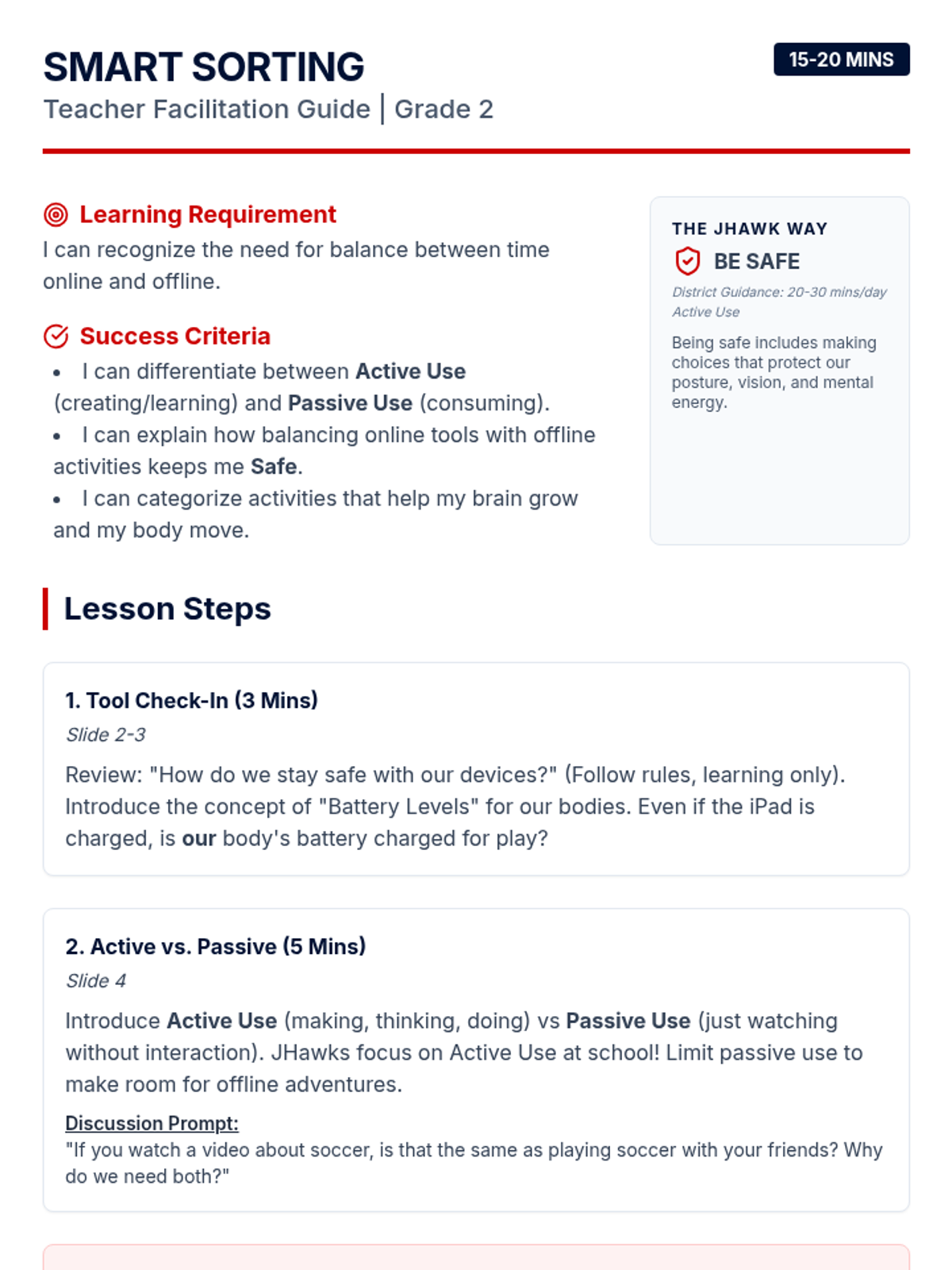
A 15-20 minute lesson for 2nd graders to differentiate between active learning tools and passive consumption while practicing safe balance habits.
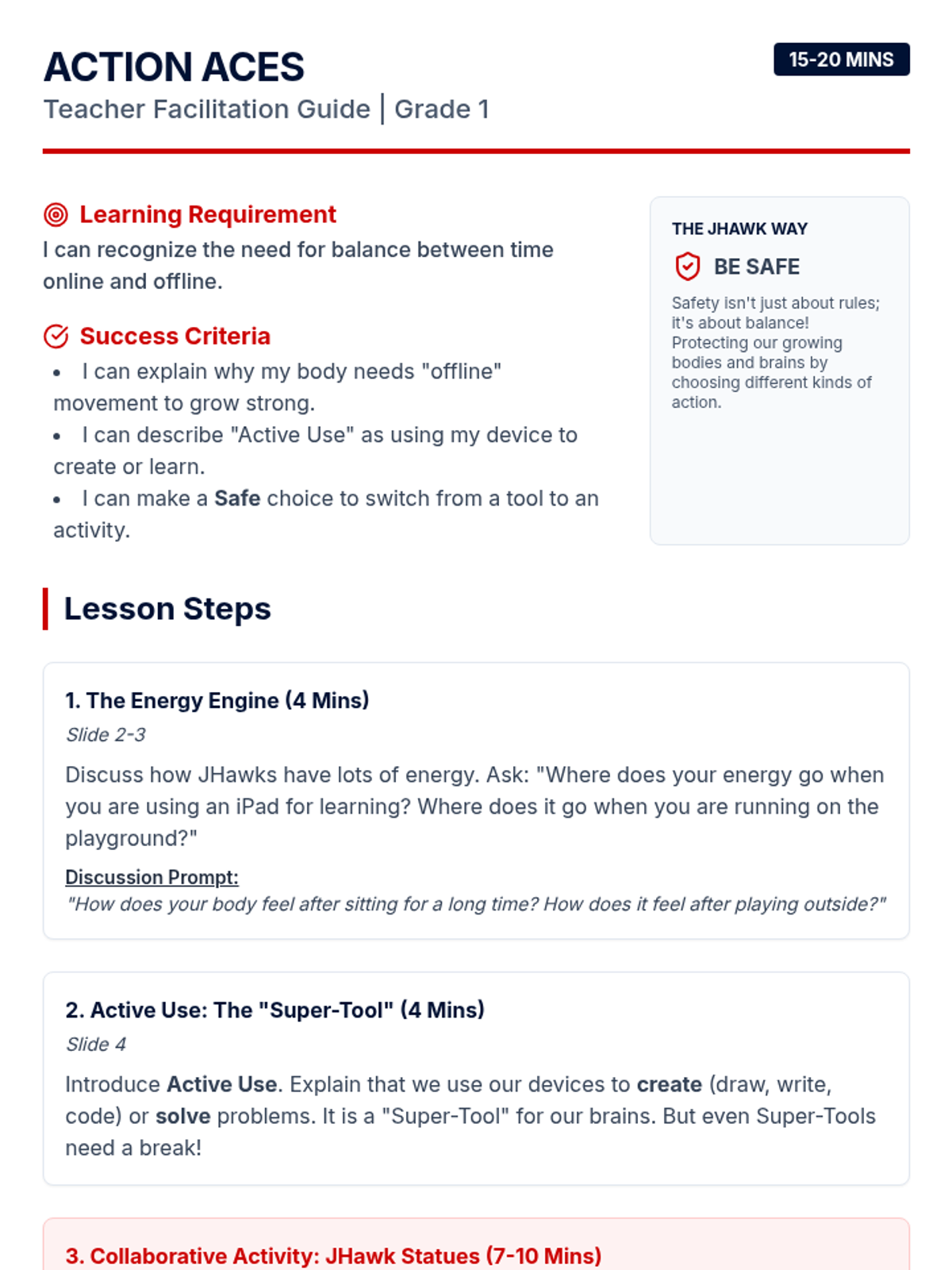
A 15-20 minute lesson for 1st graders focusing on 'Active Use' of technology as a learning tool and the importance of offline play for a healthy JHawk lifestyle.
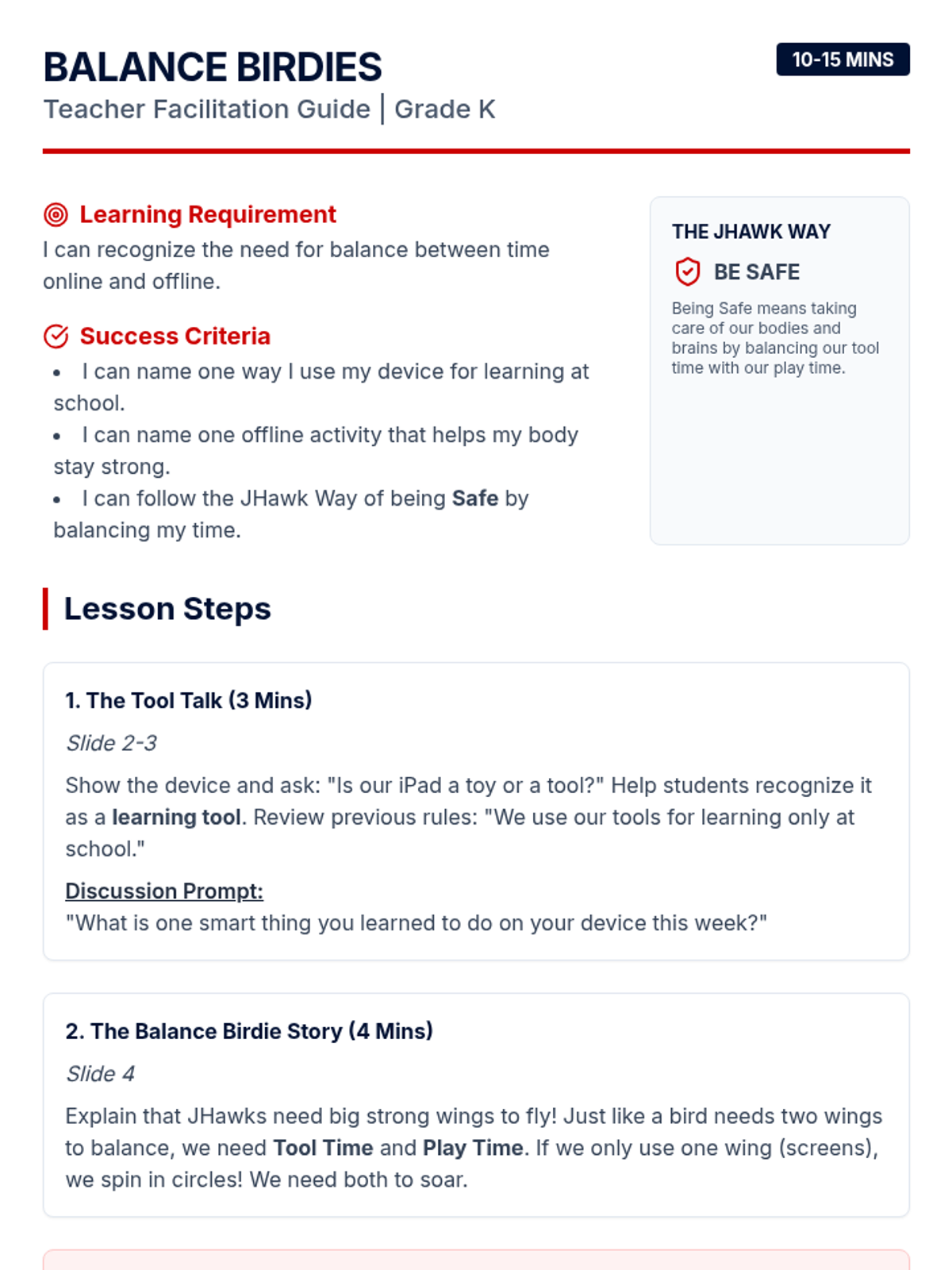
A 10-15 minute lesson for Kindergarteners to learn the importance of balancing 'sitting and learning' on devices with 'moving and playing' to stay safe and healthy.
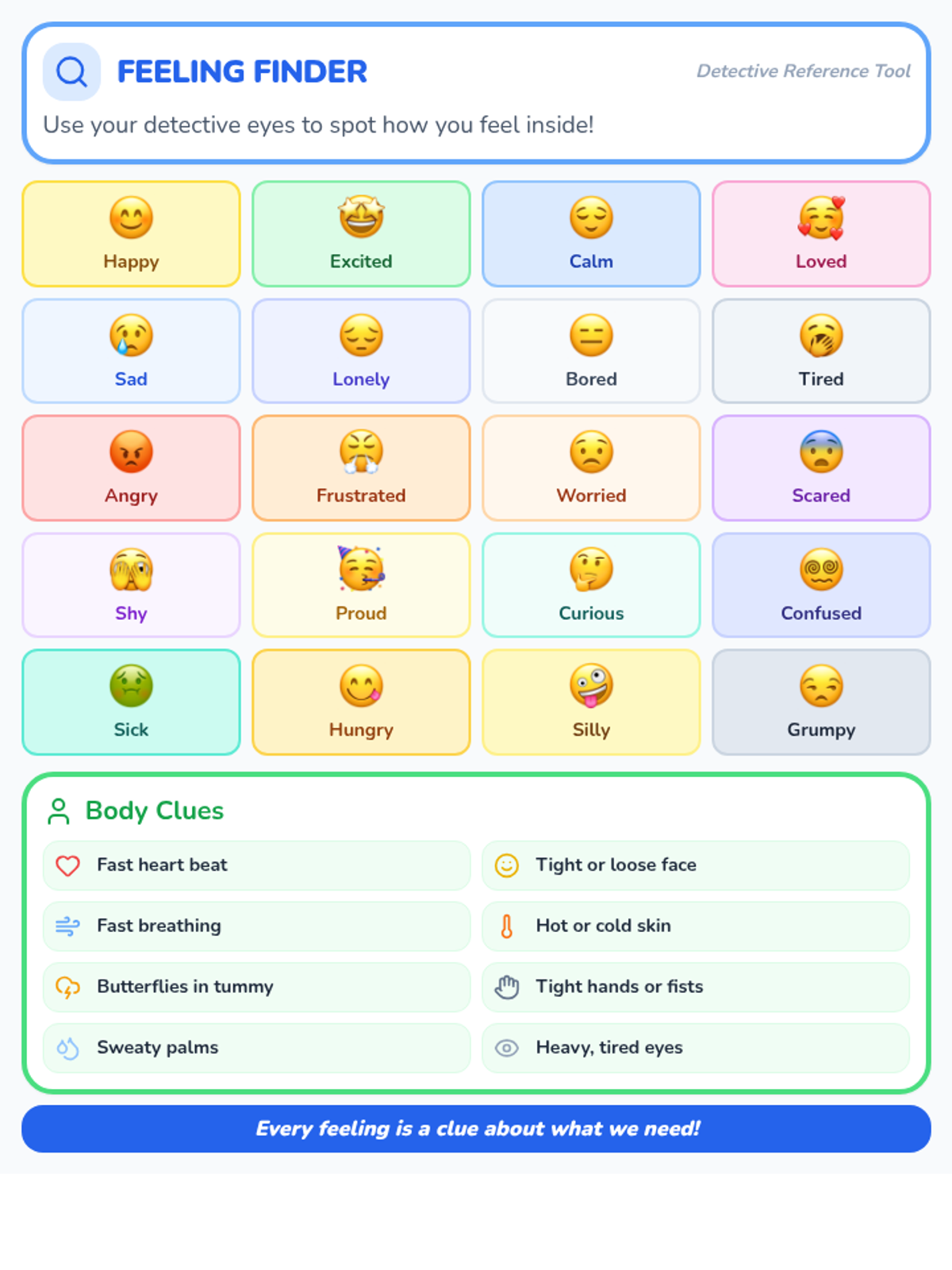
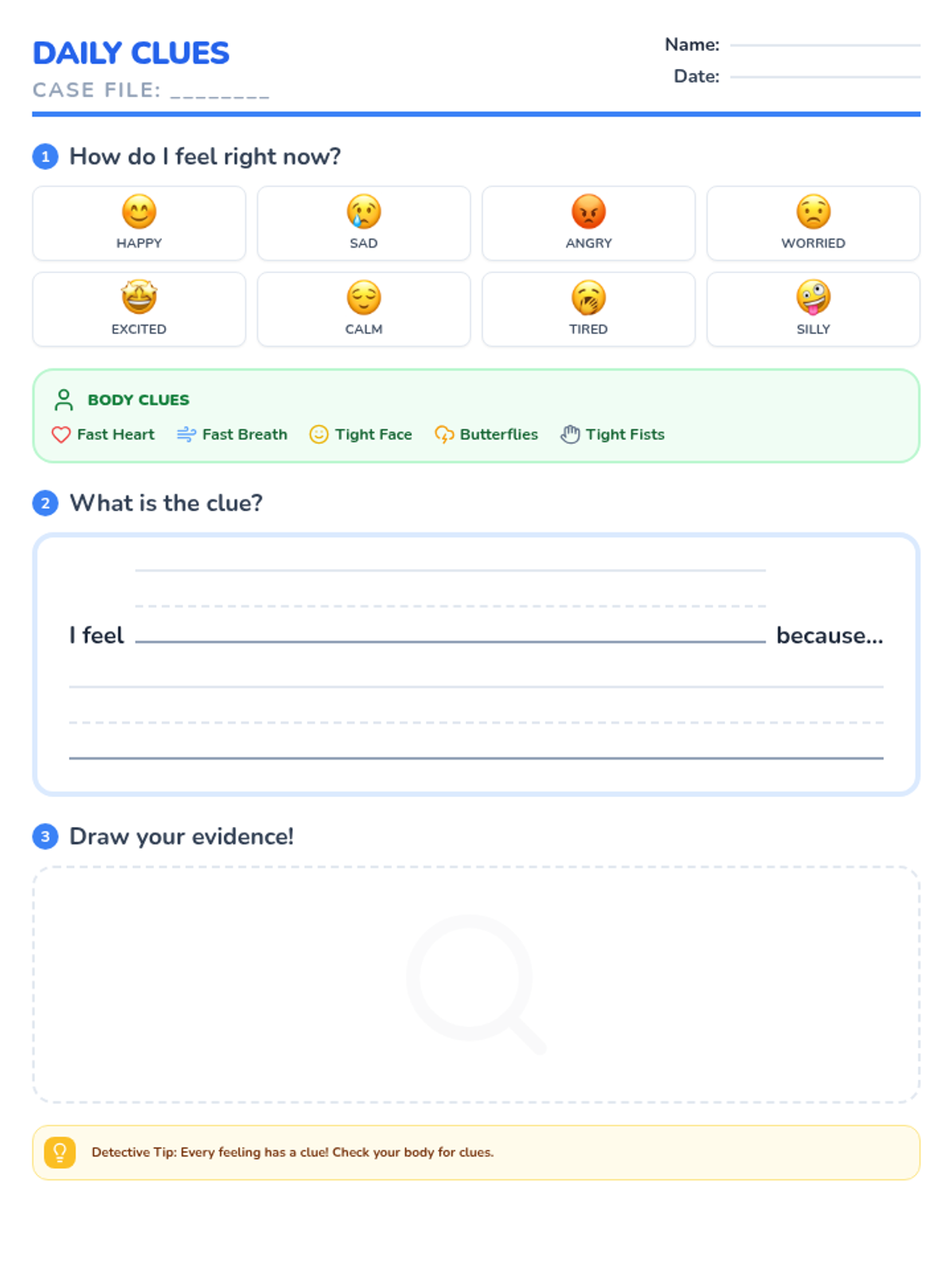
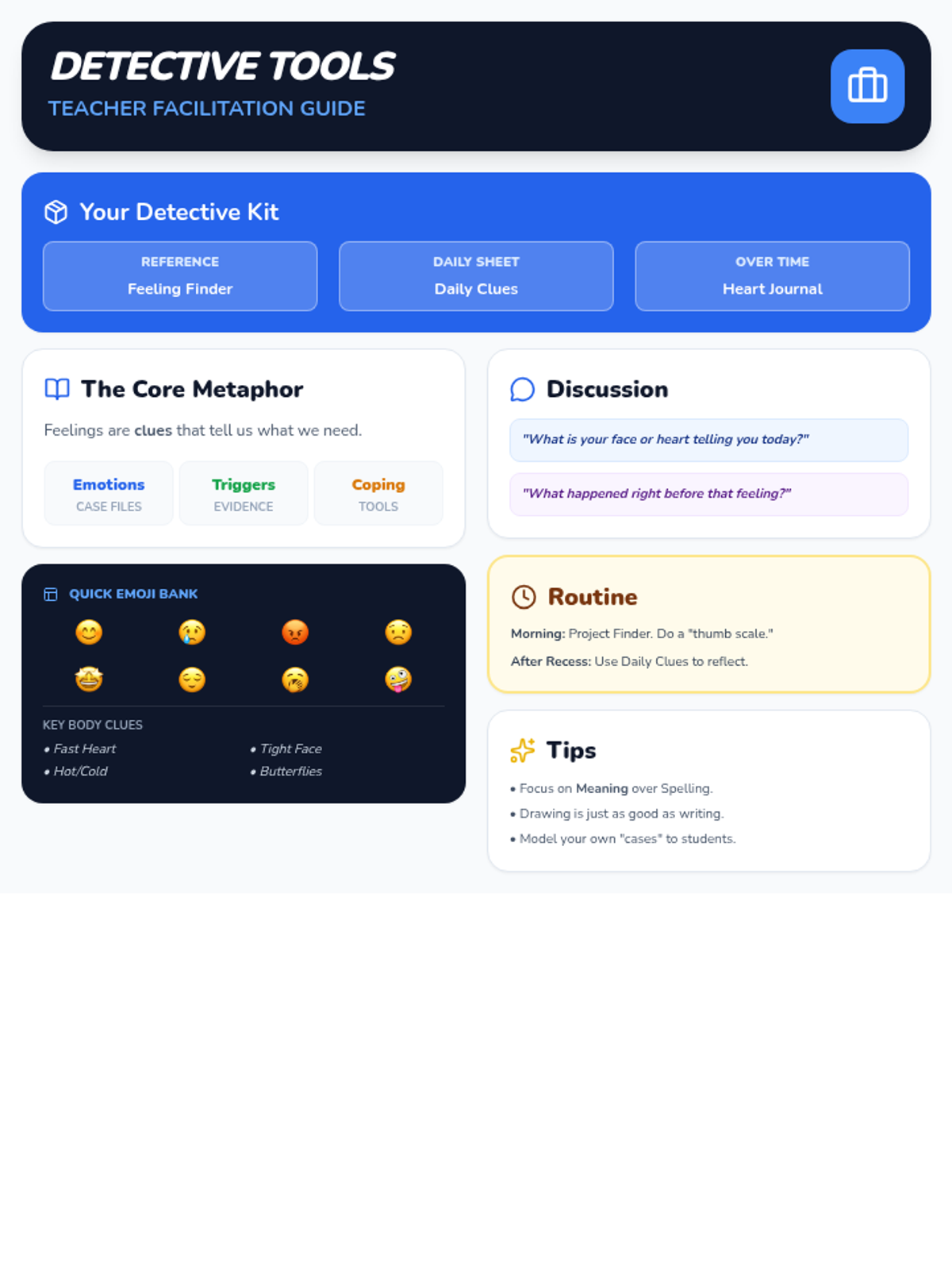
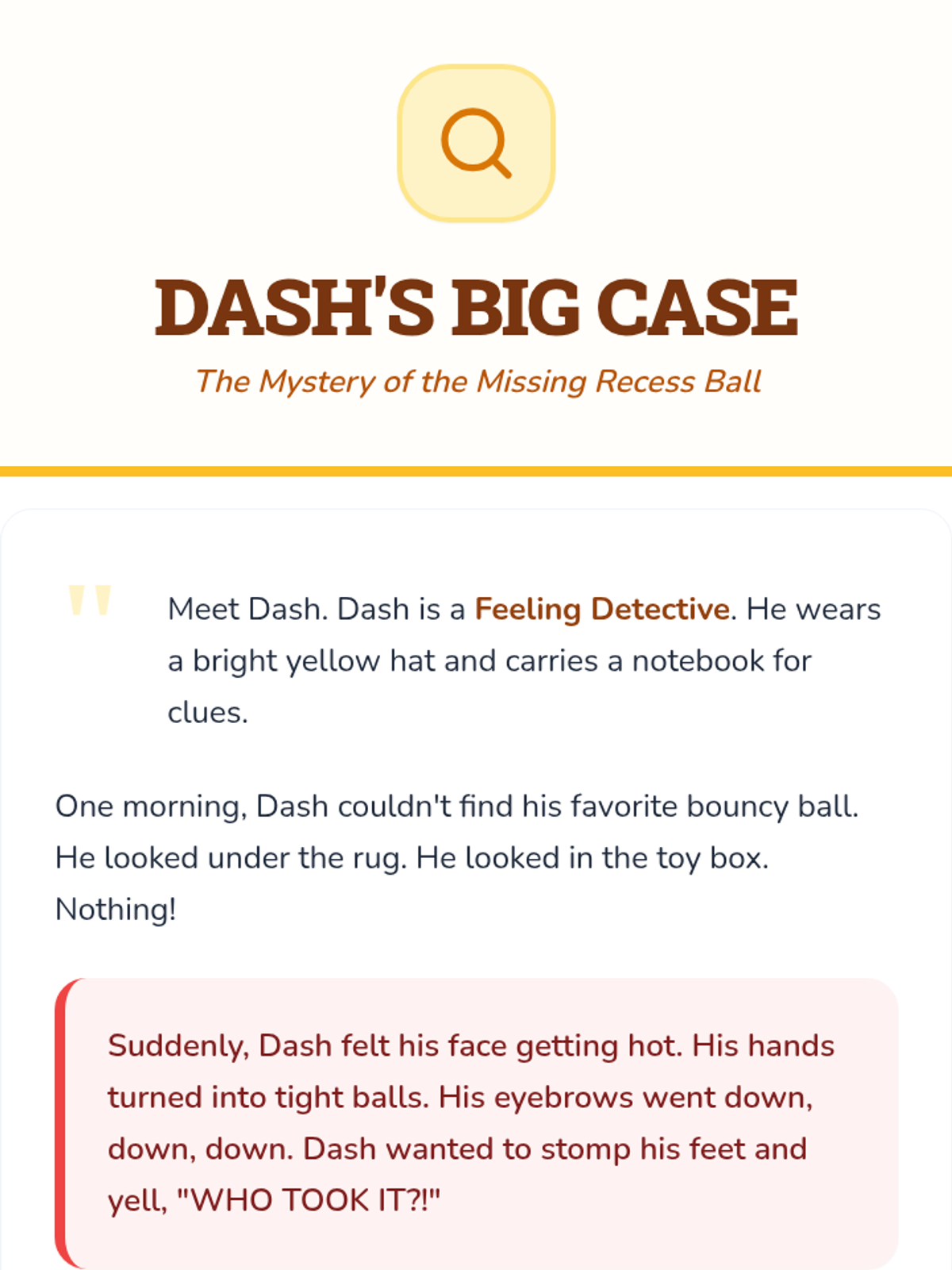
A social-emotional learning lesson designed to help first graders identify, name, and understand their emotions and the situations that trigger them. Students use the 'Feeling Detective' metaphor to observe their own emotional states and develop self-awareness.
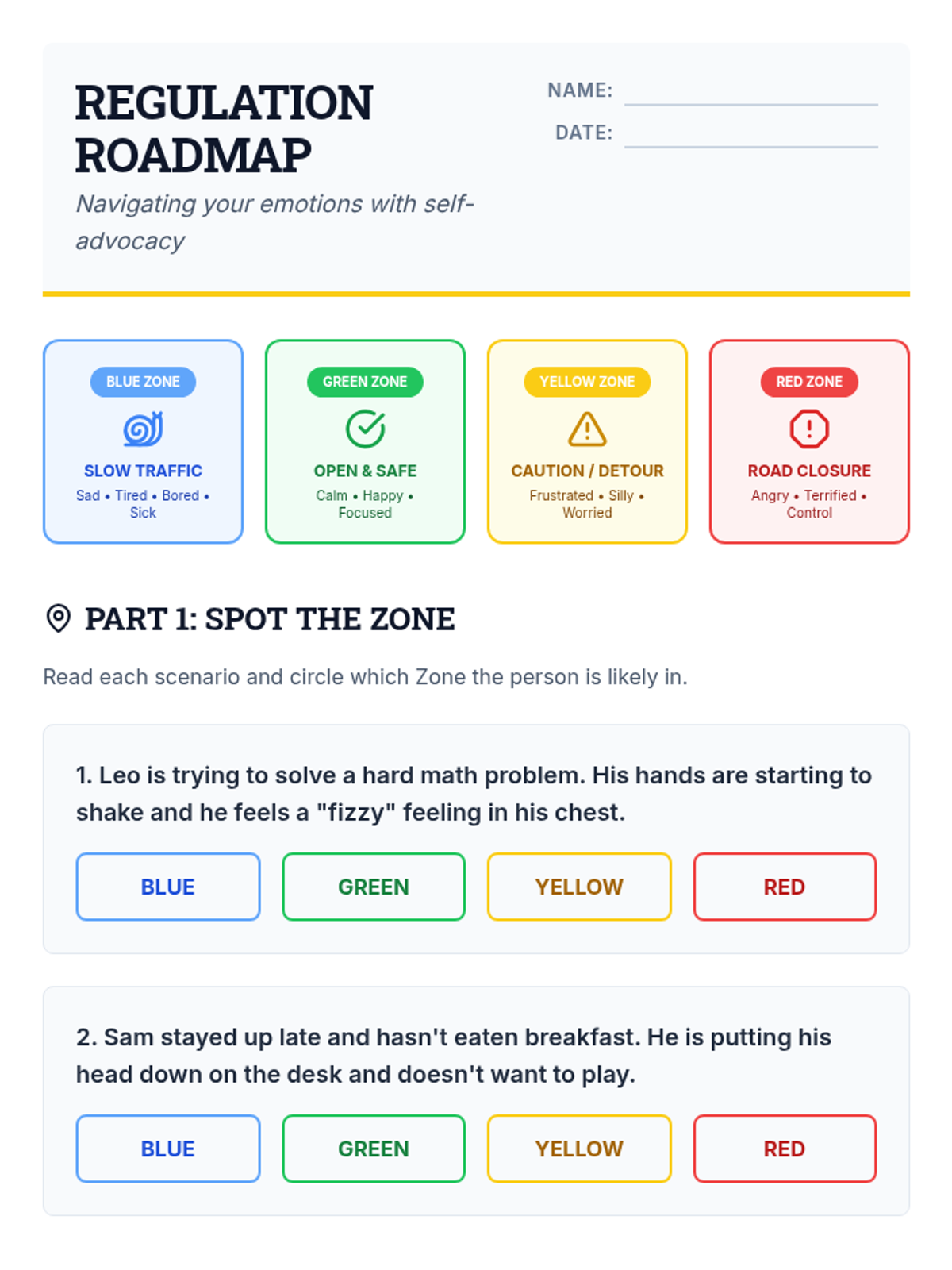
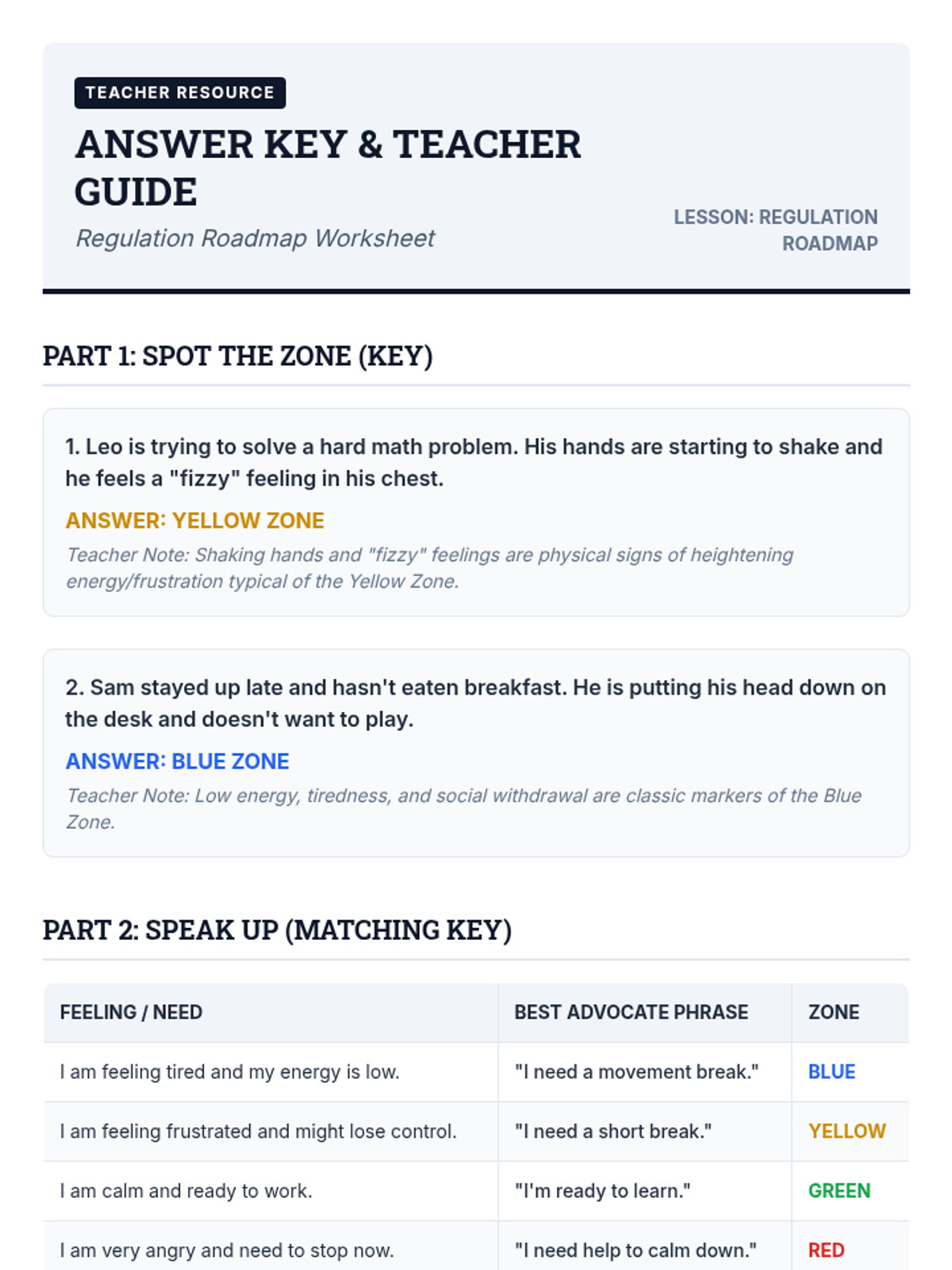
A lesson introducing the Zones of Regulation framework using a construction zone analogy, focusing on identifying emotions and using self-advocacy phrases to manage them.
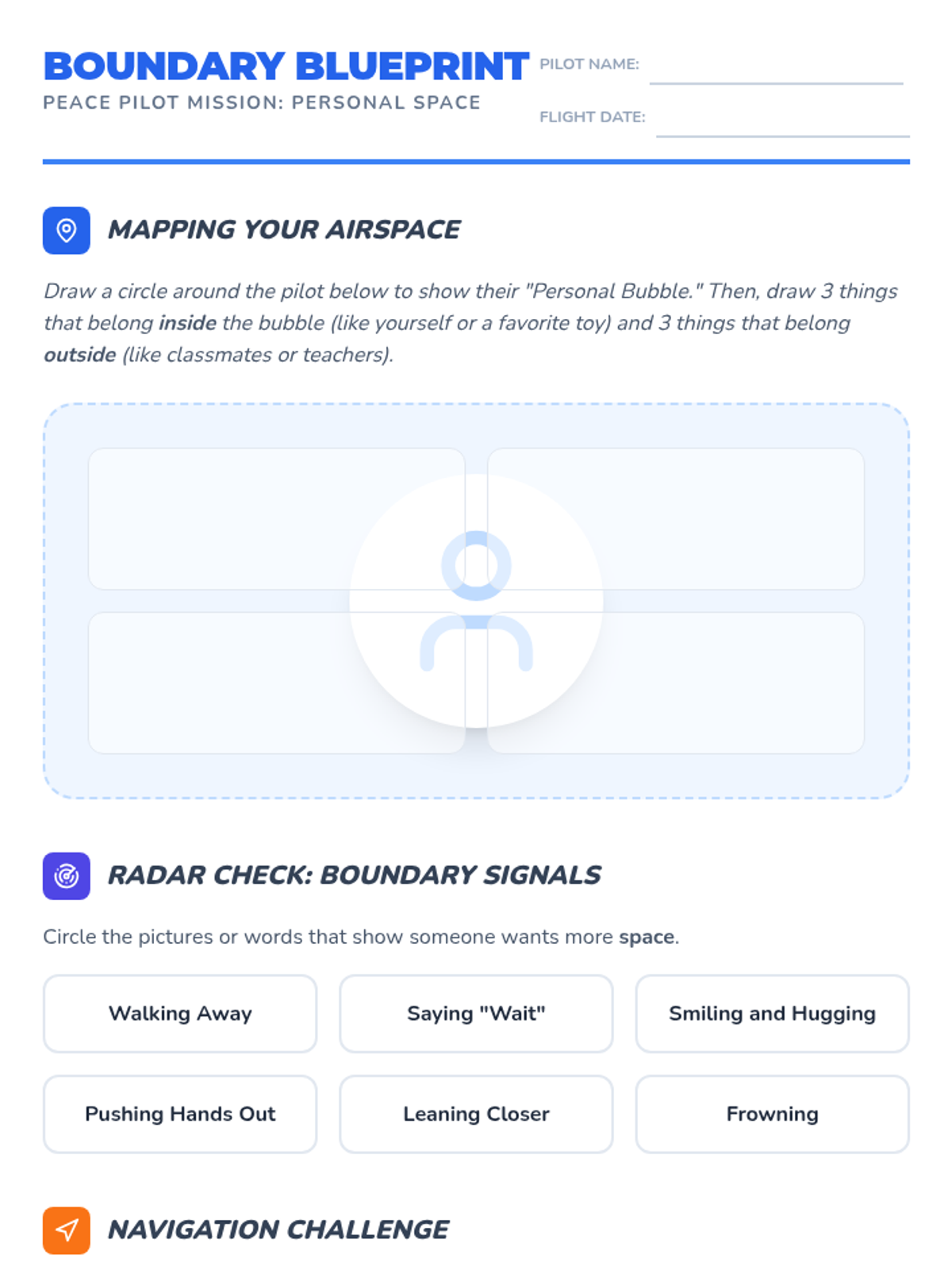
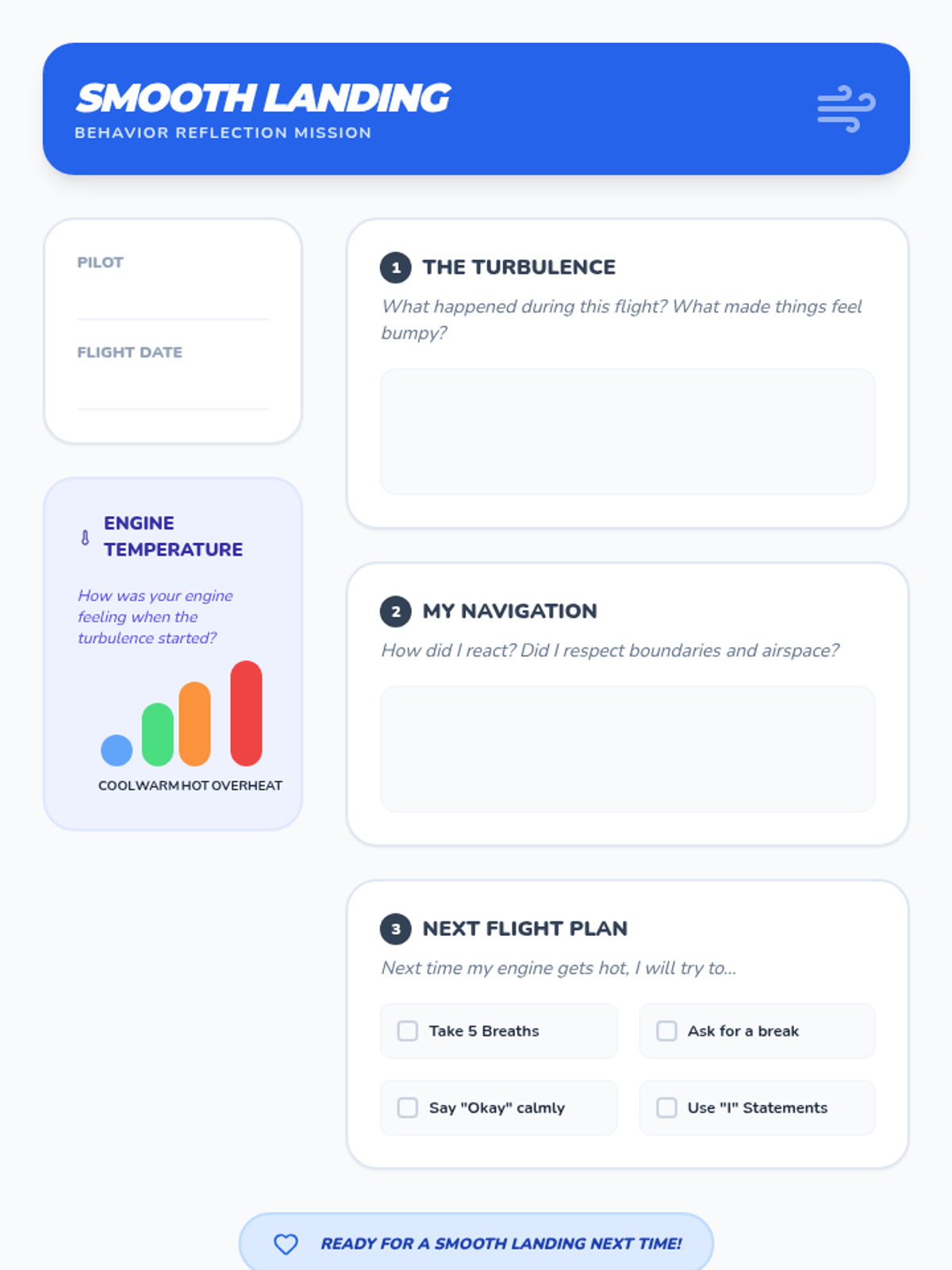
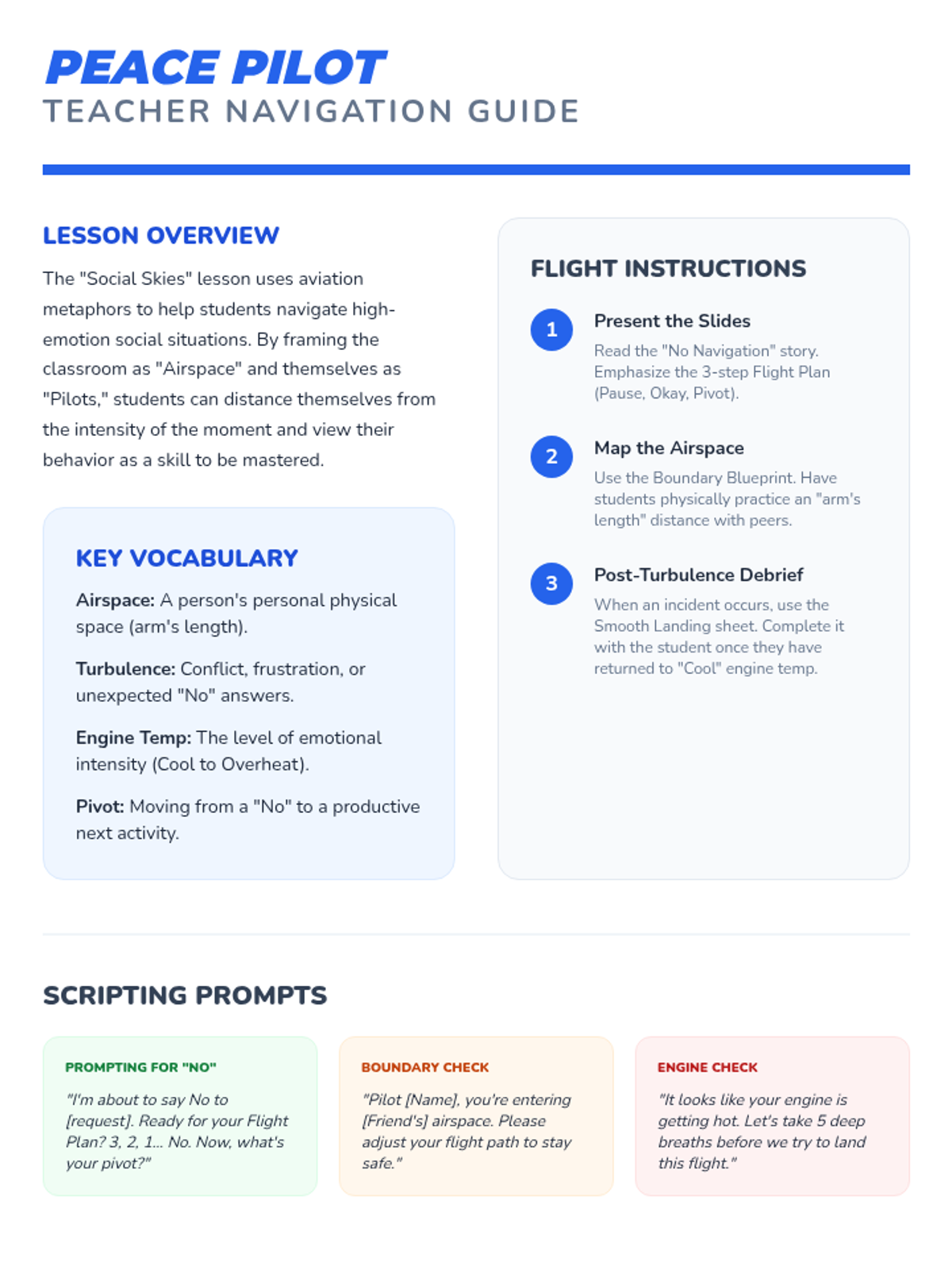
A social-emotional learning lesson focused on accepting 'no', respecting personal space boundaries, and reflecting on behavioral choices. Students learn to navigate social challenges with the 'Peace Pilot' framework for staying calm and respectful.
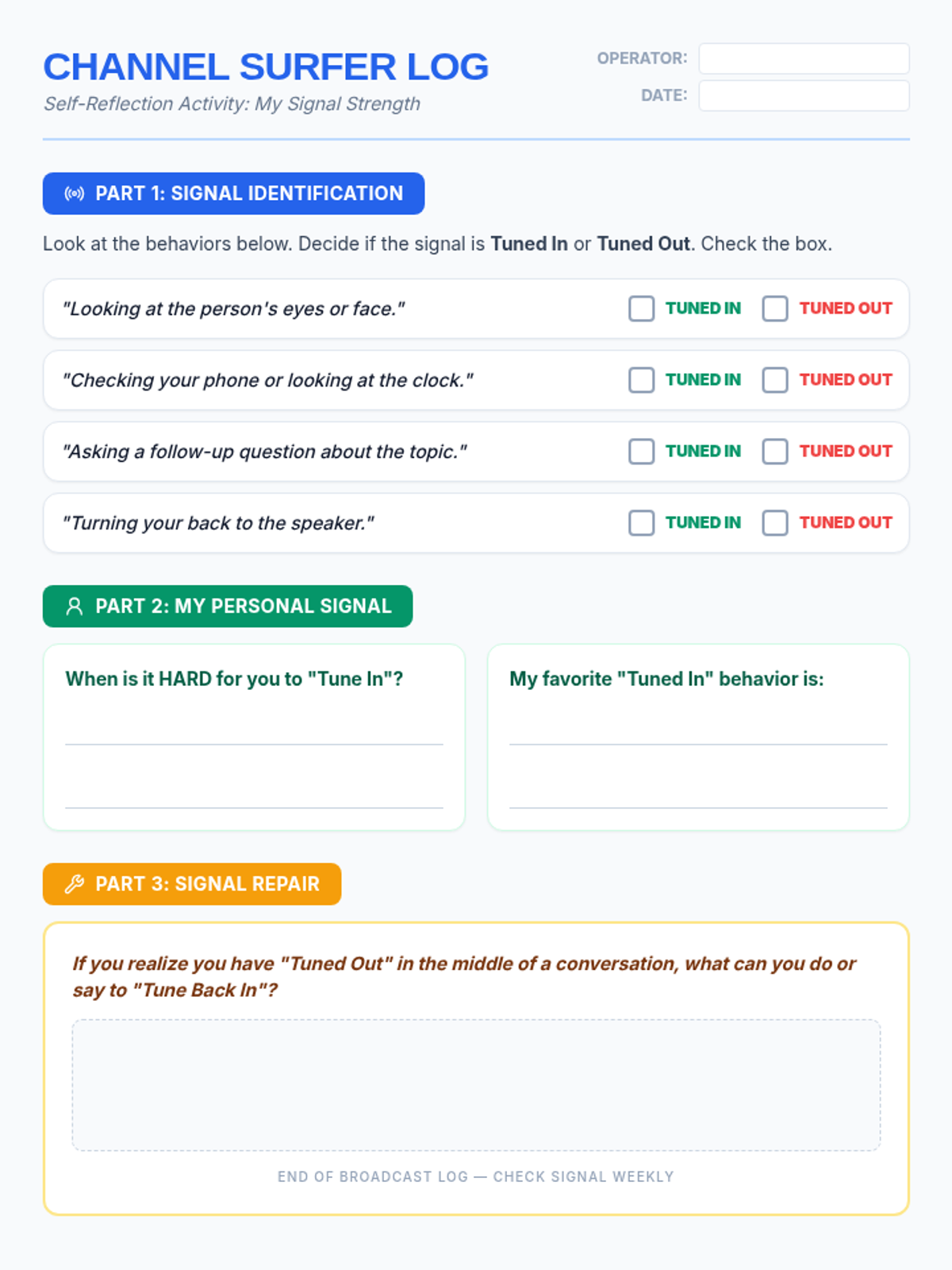
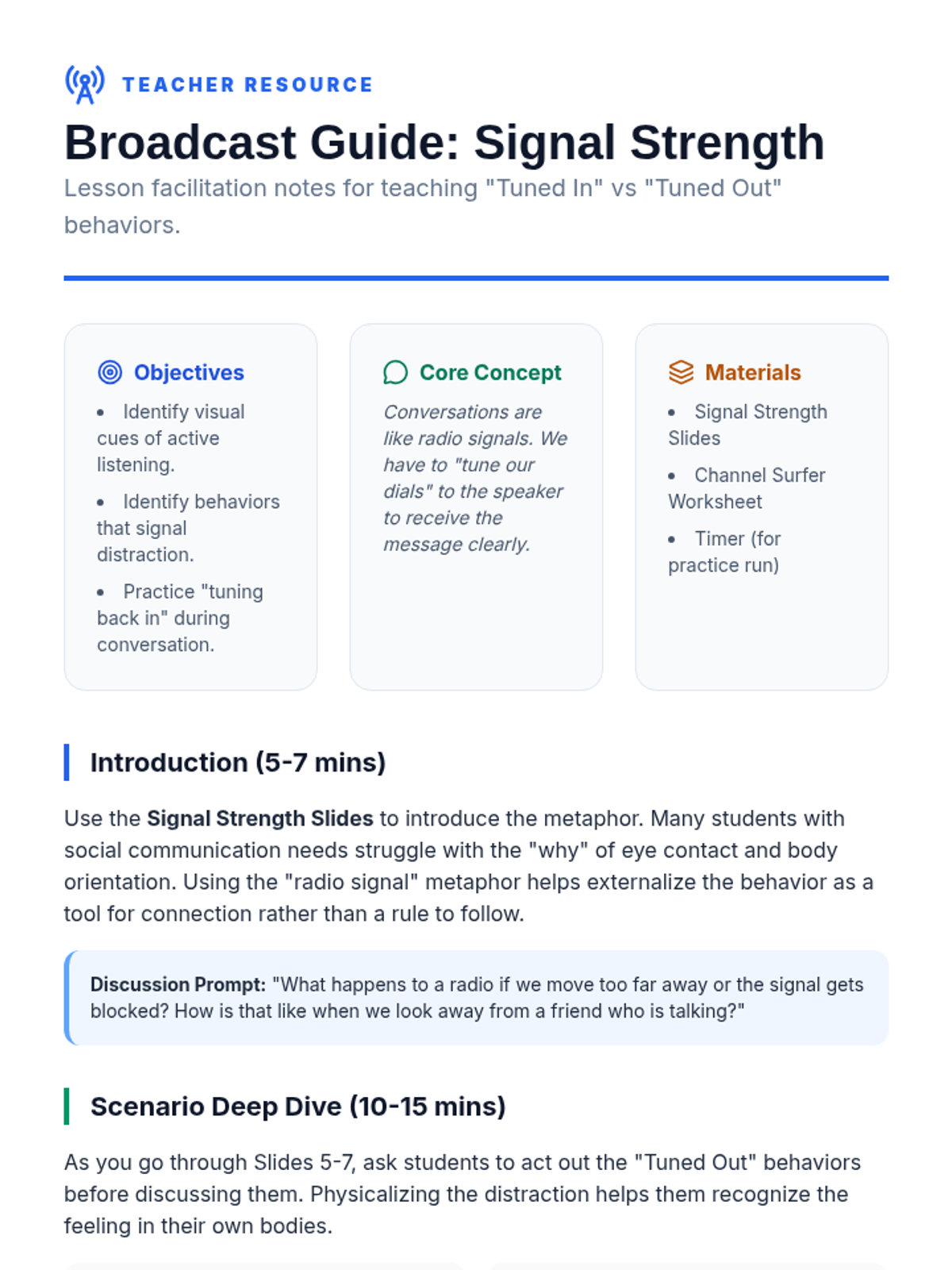
A social skills lesson for speech therapy sessions focusing on identifying and practicing 'tuned in' vs 'tuned out' behaviors using a radio/broadcast signal metaphor.
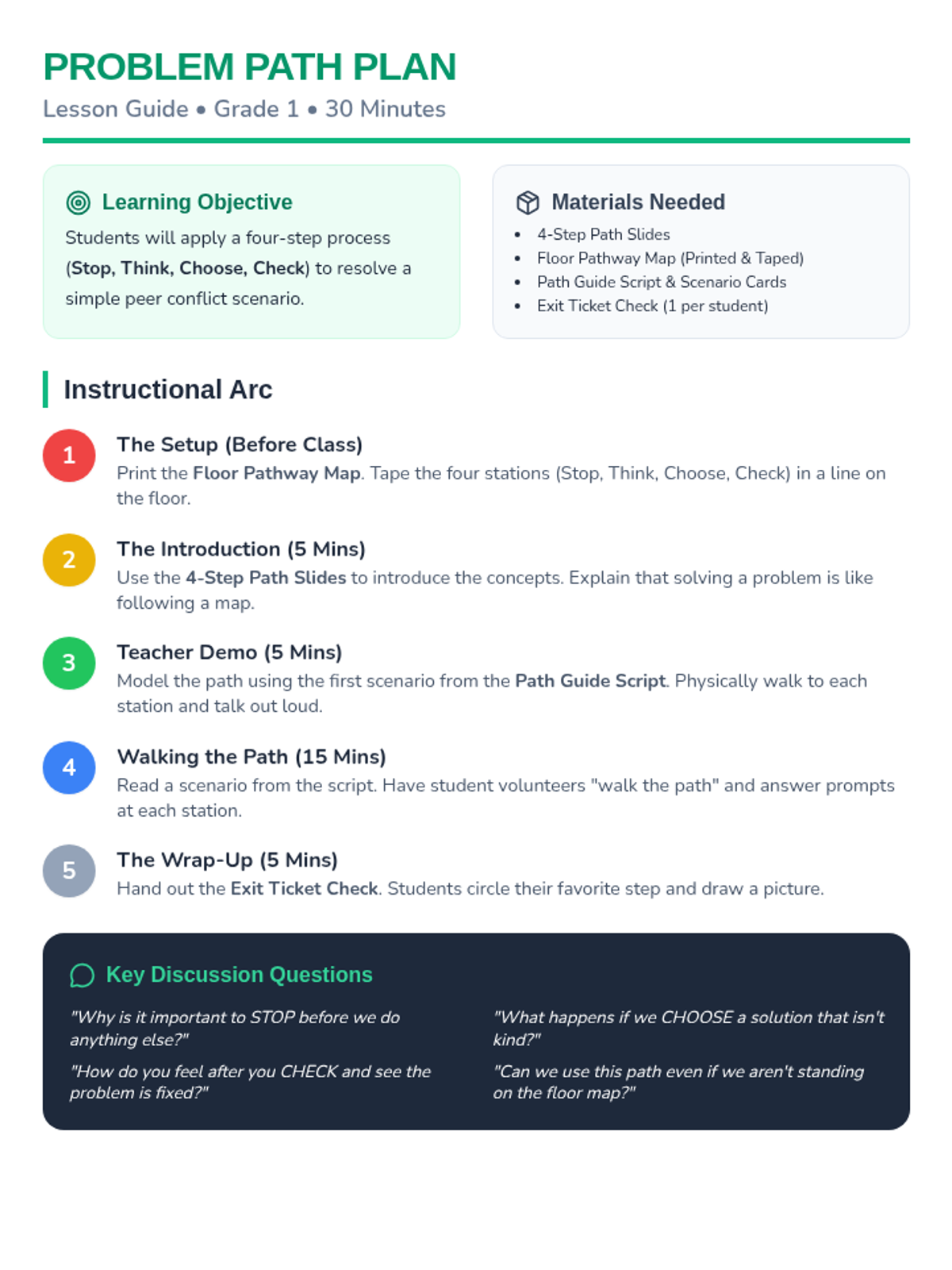
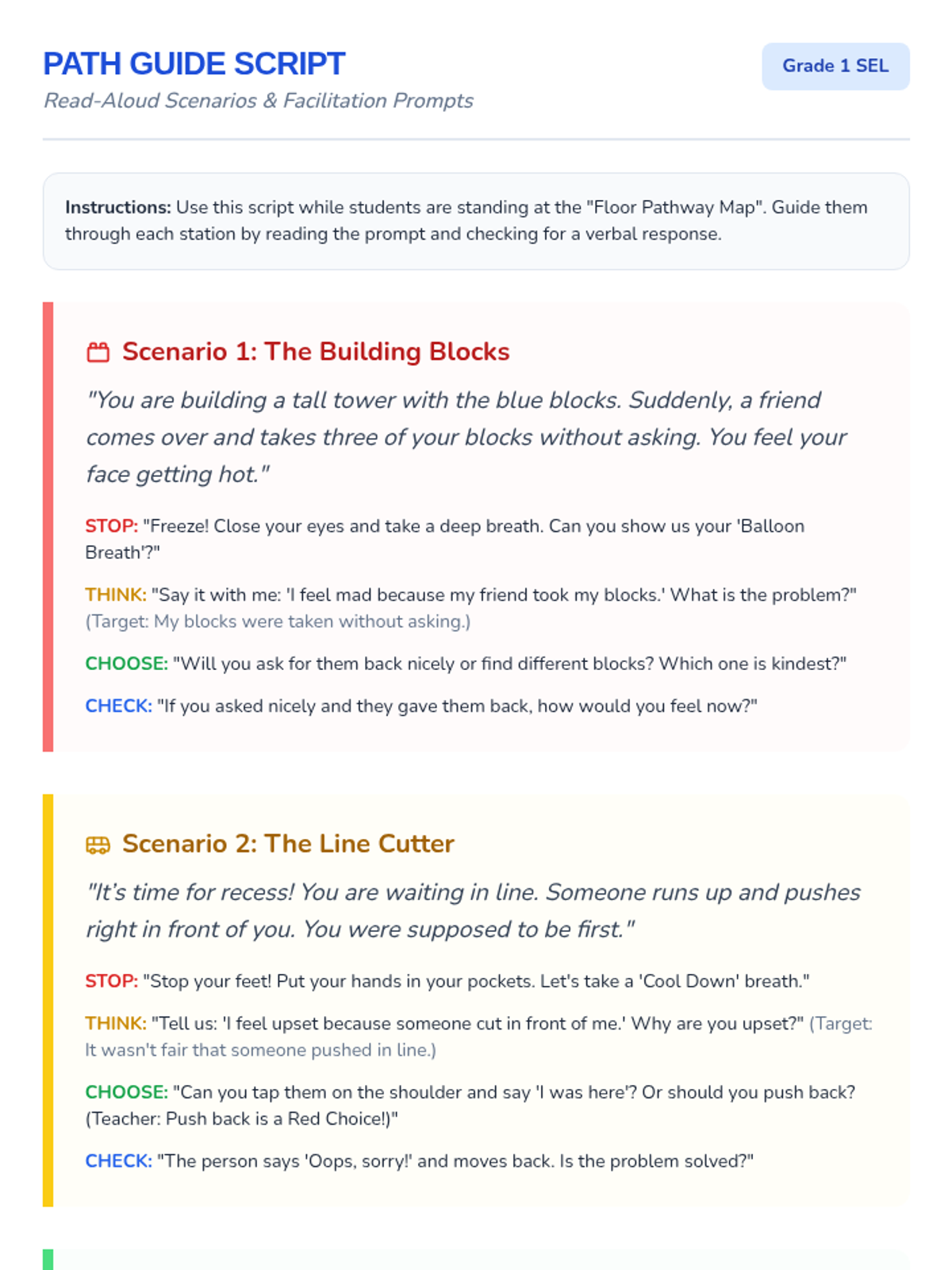
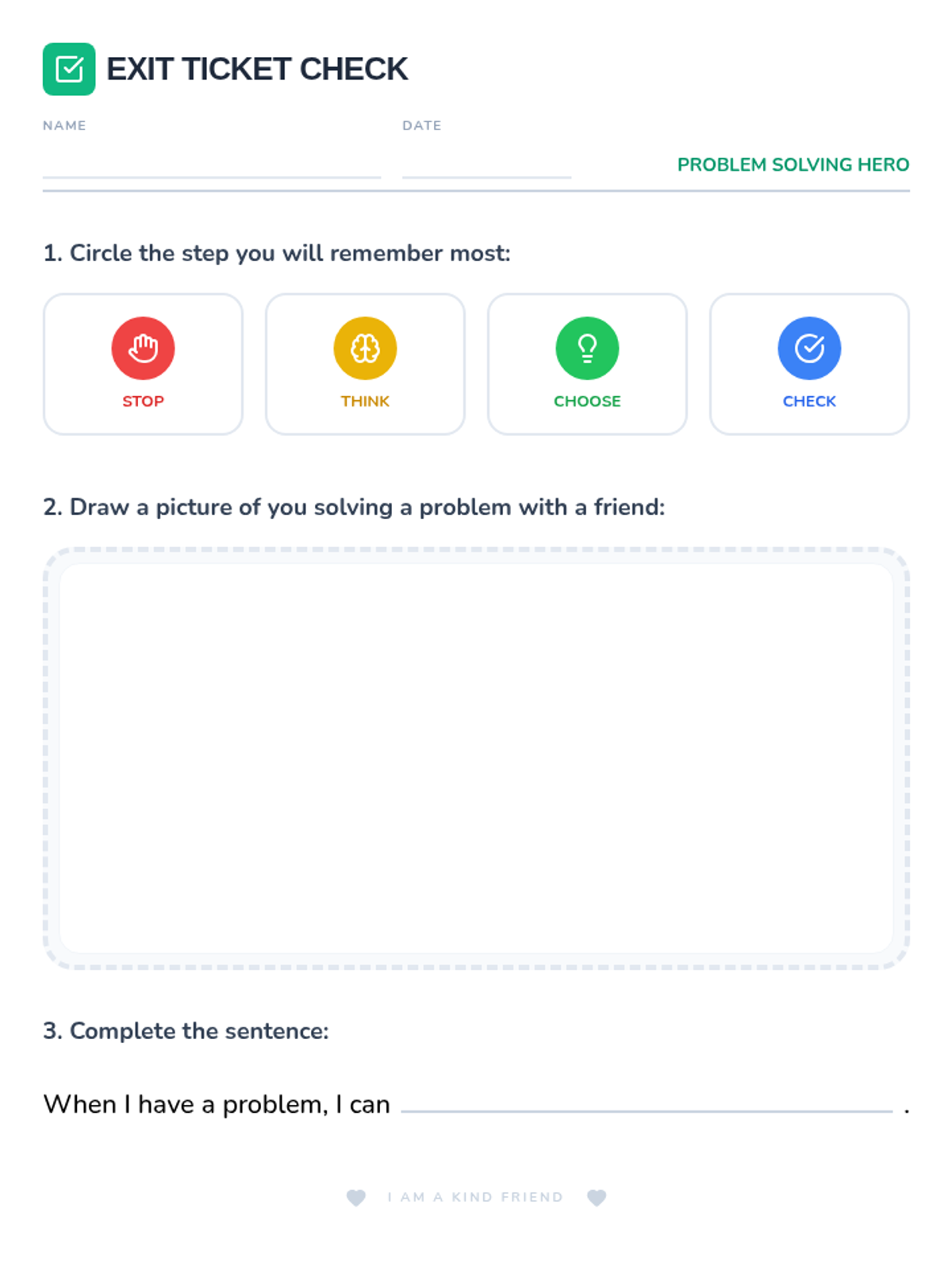
A 30-minute social-emotional learning lesson for 1st graders focused on a four-step conflict resolution process (Stop, Think, Choose, Check). Students engage in a kinesthetic activity walking a physical path to practice solving common peer conflicts.
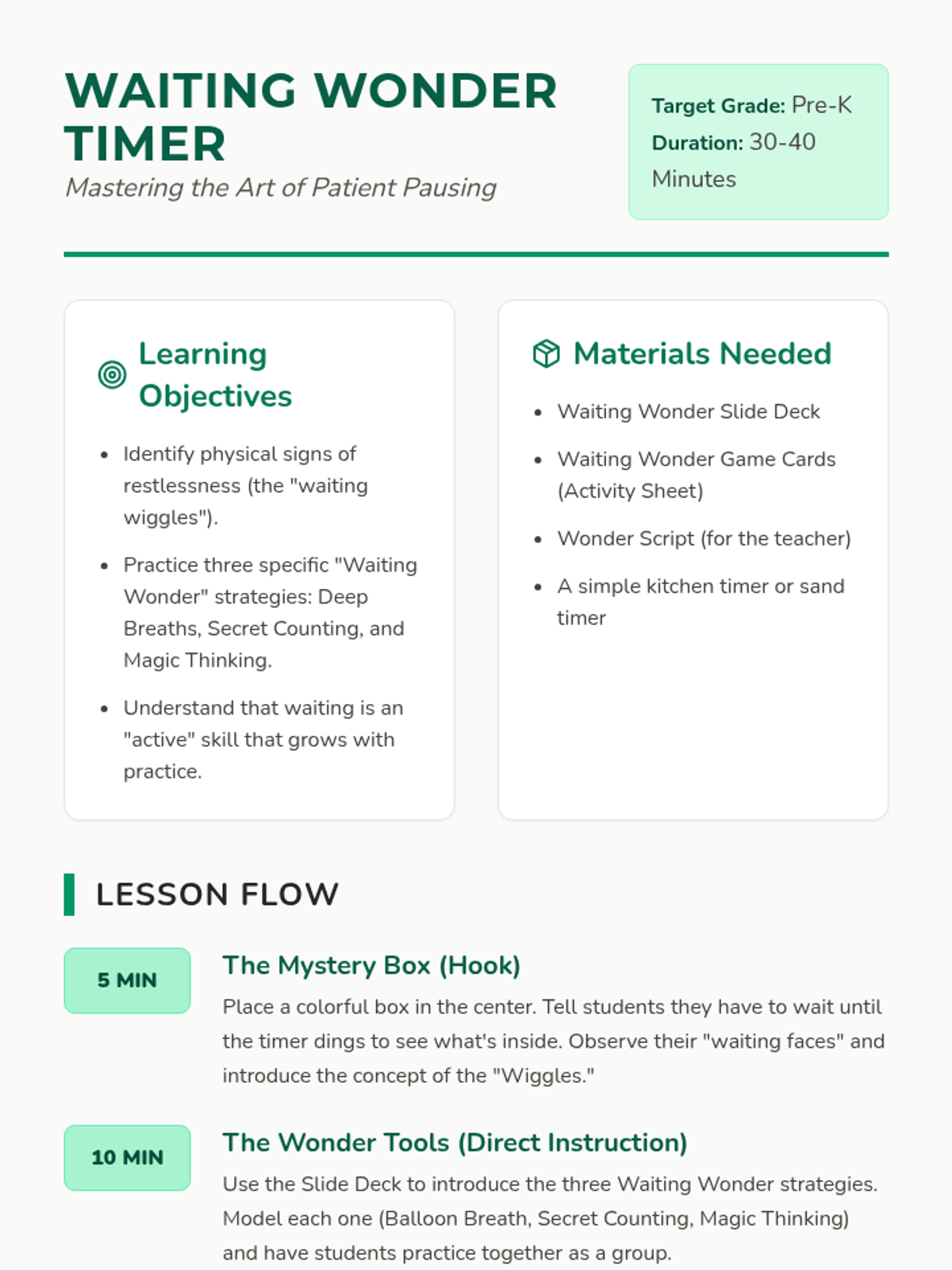
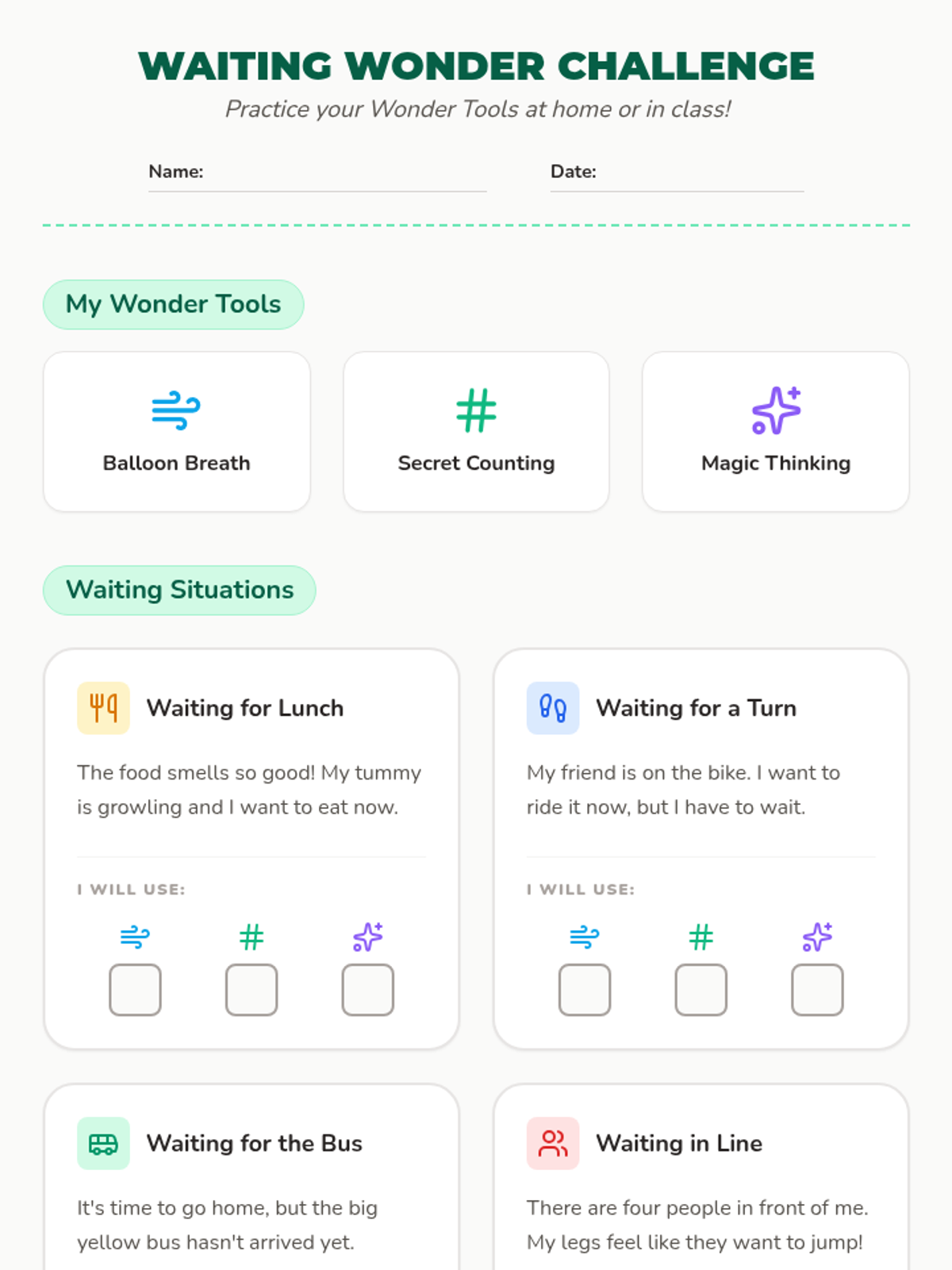
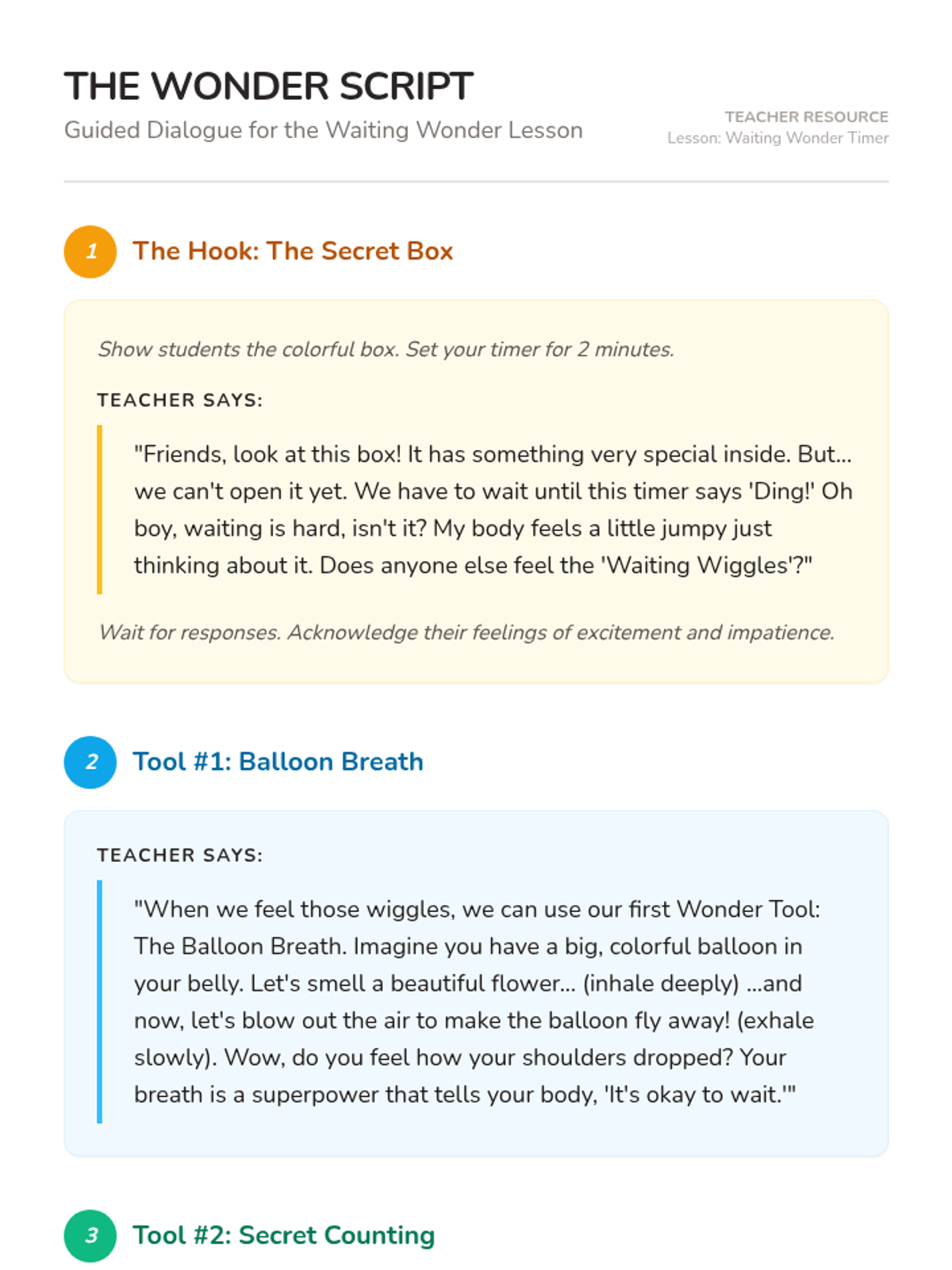
A lesson designed to help Pre-K students develop patience and self-control through mindful waiting strategies during busy transitions.
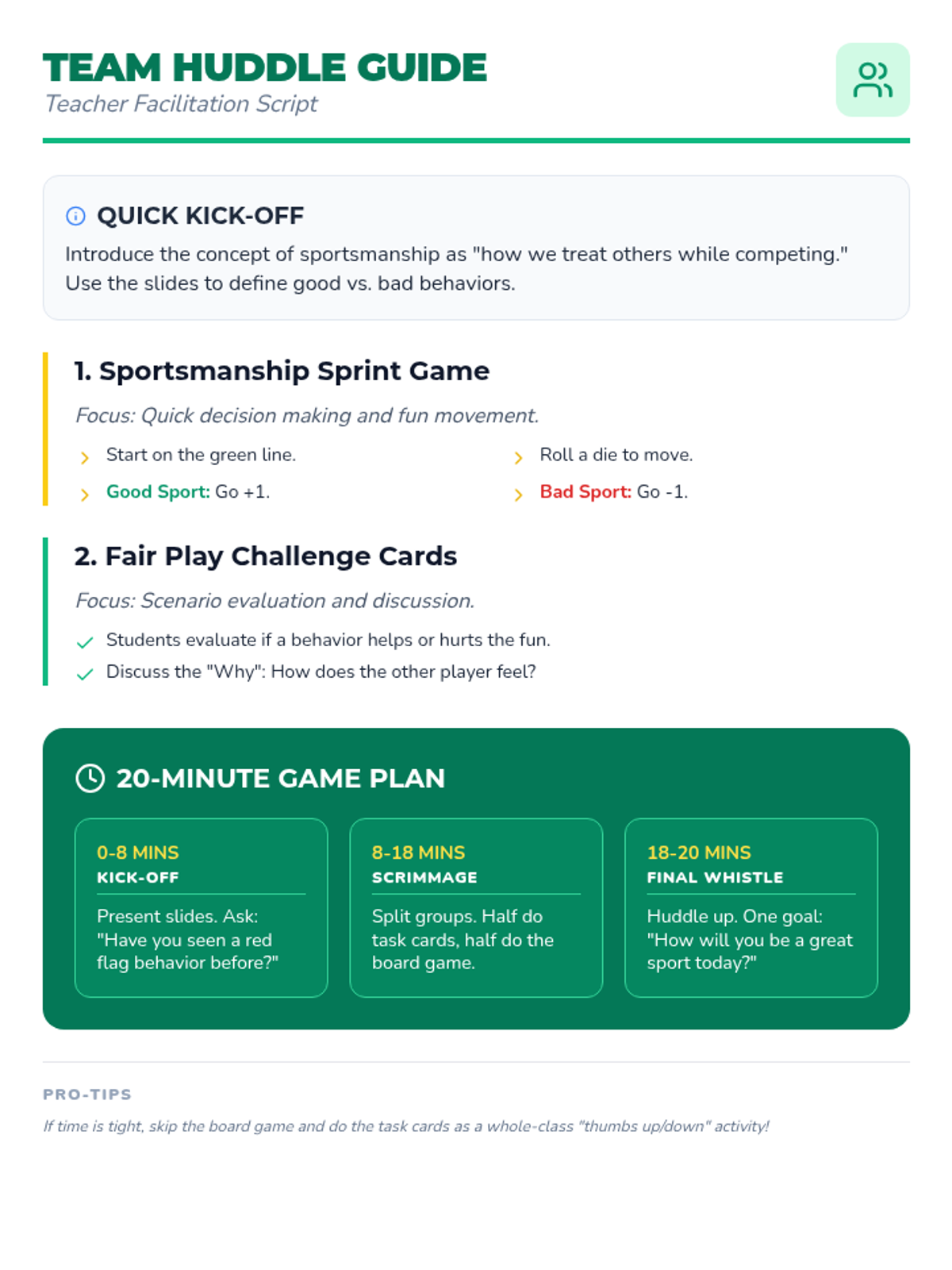
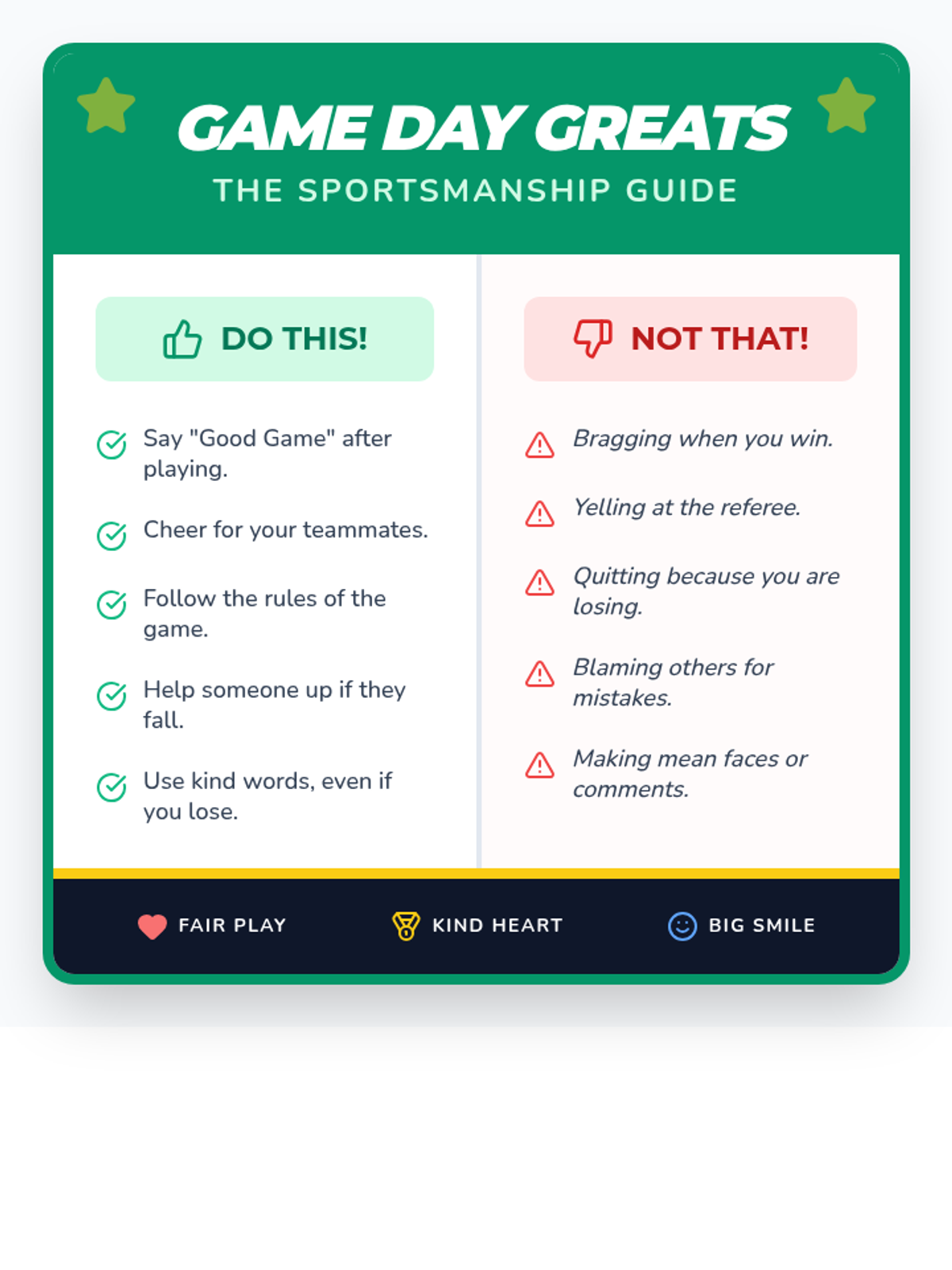
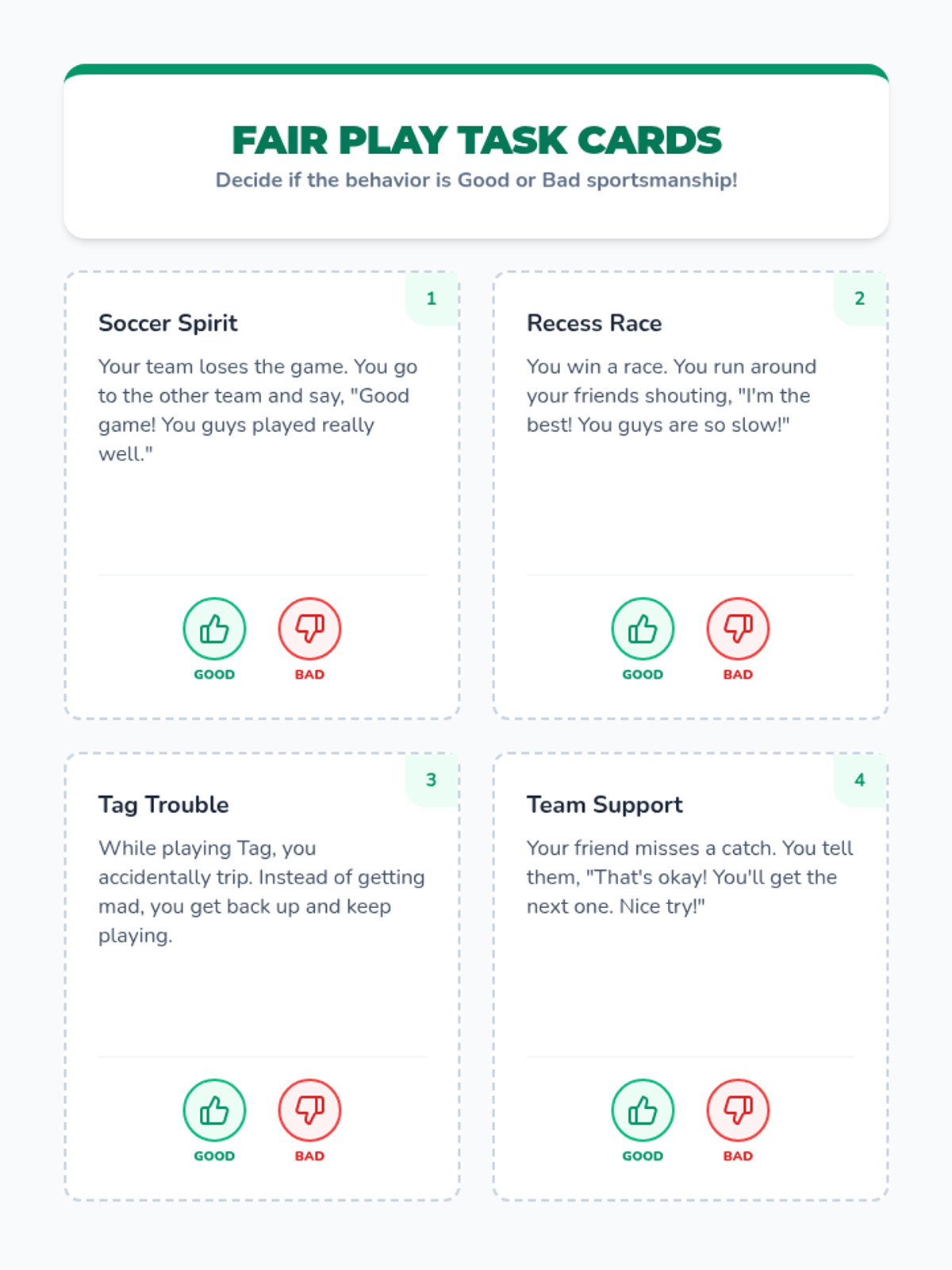
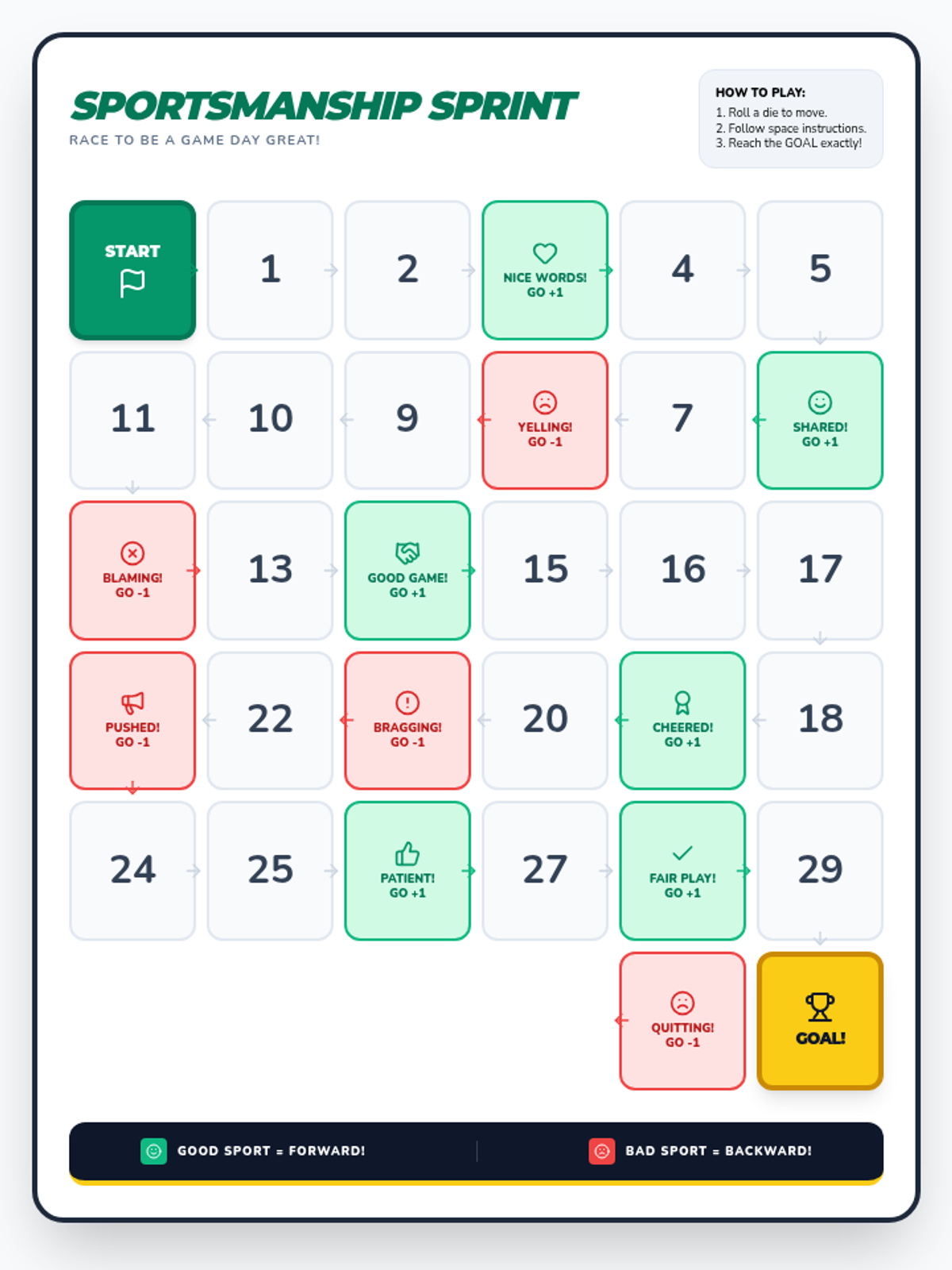
A high-energy, 20-minute lesson on sportsmanship, focusing on how to be a 'Game Day Great' by handling wins and losses with grace. Includes slides, a small group guide, an anchor chart, task cards, and a board game.
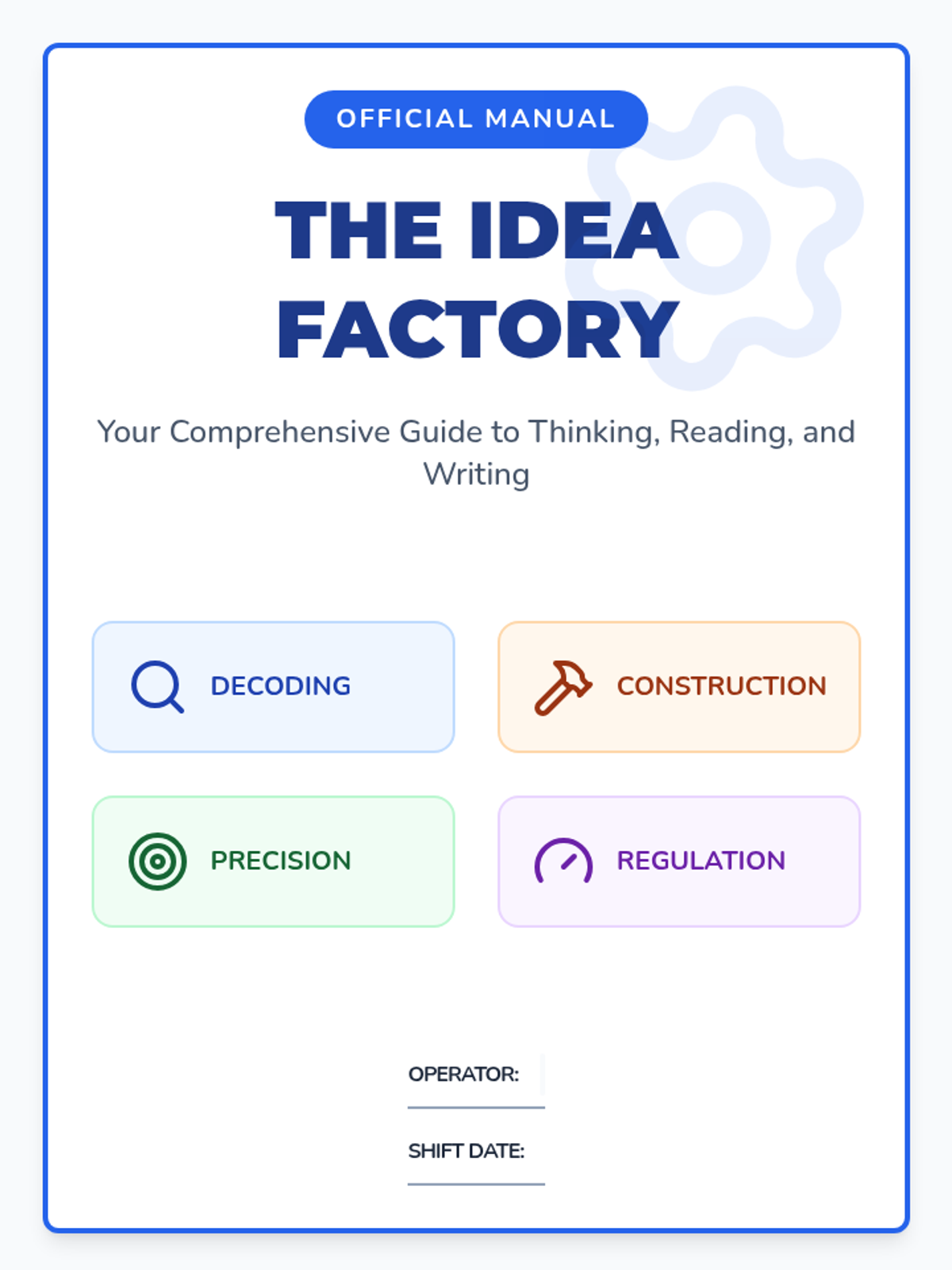
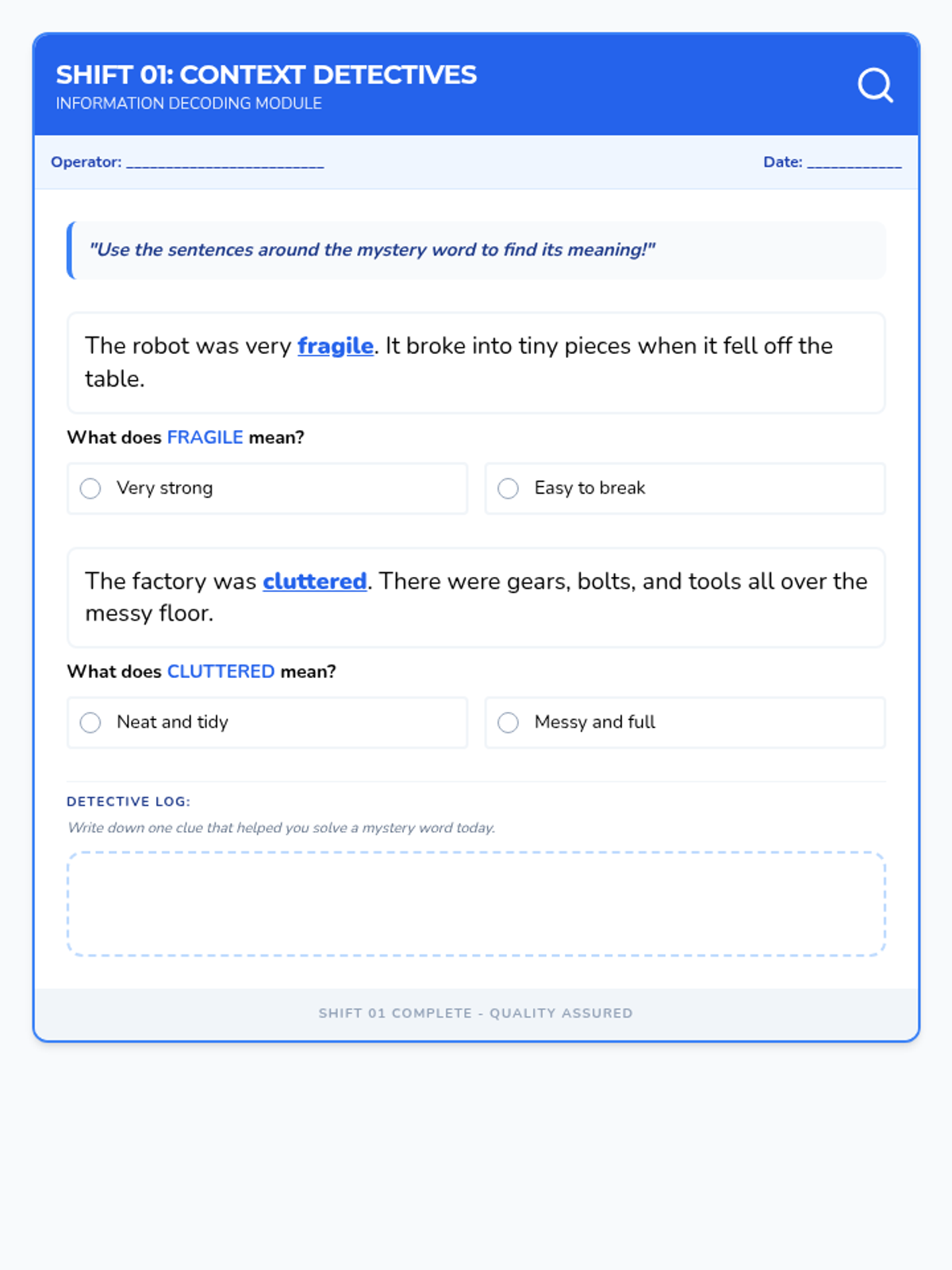
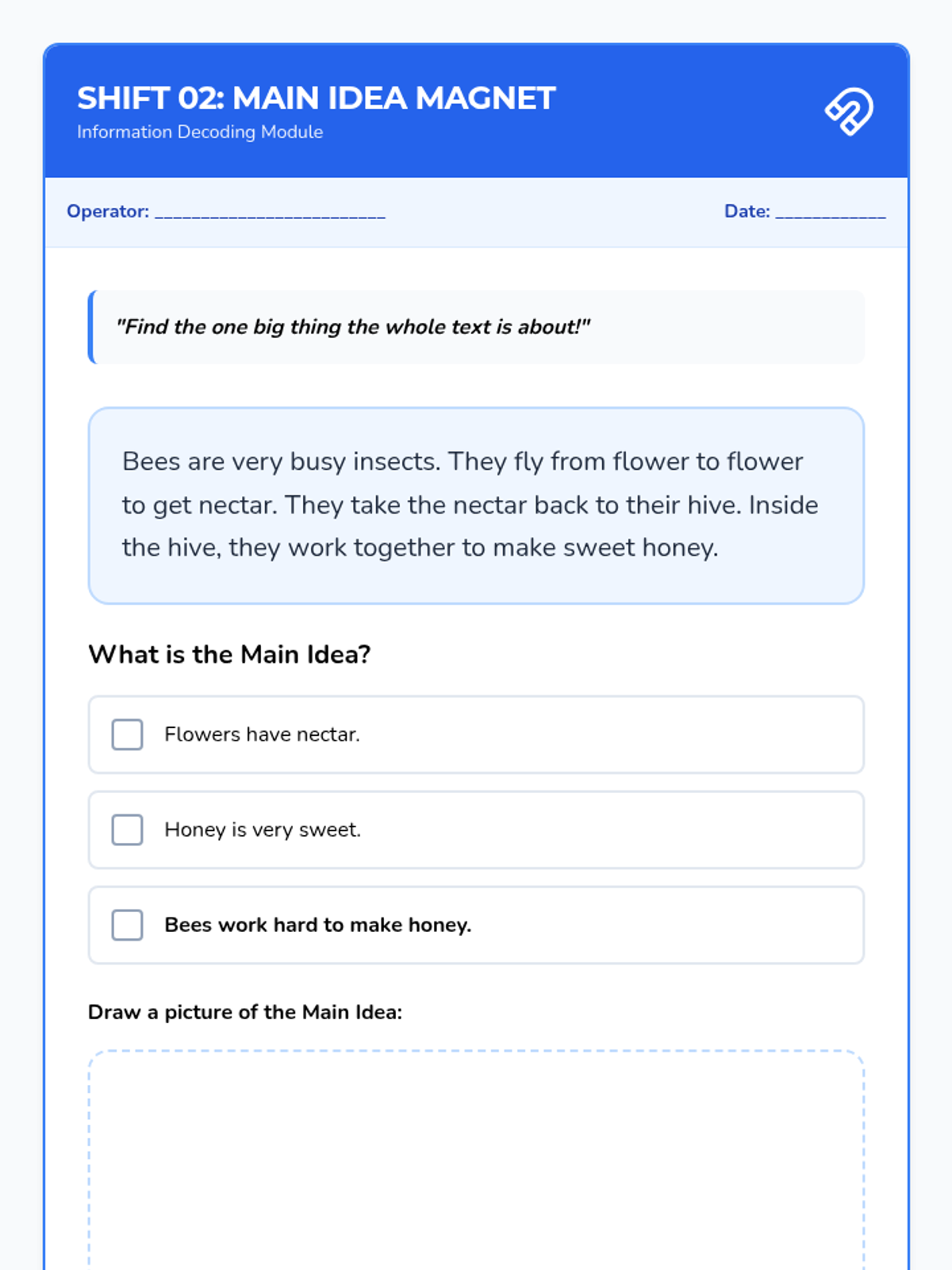
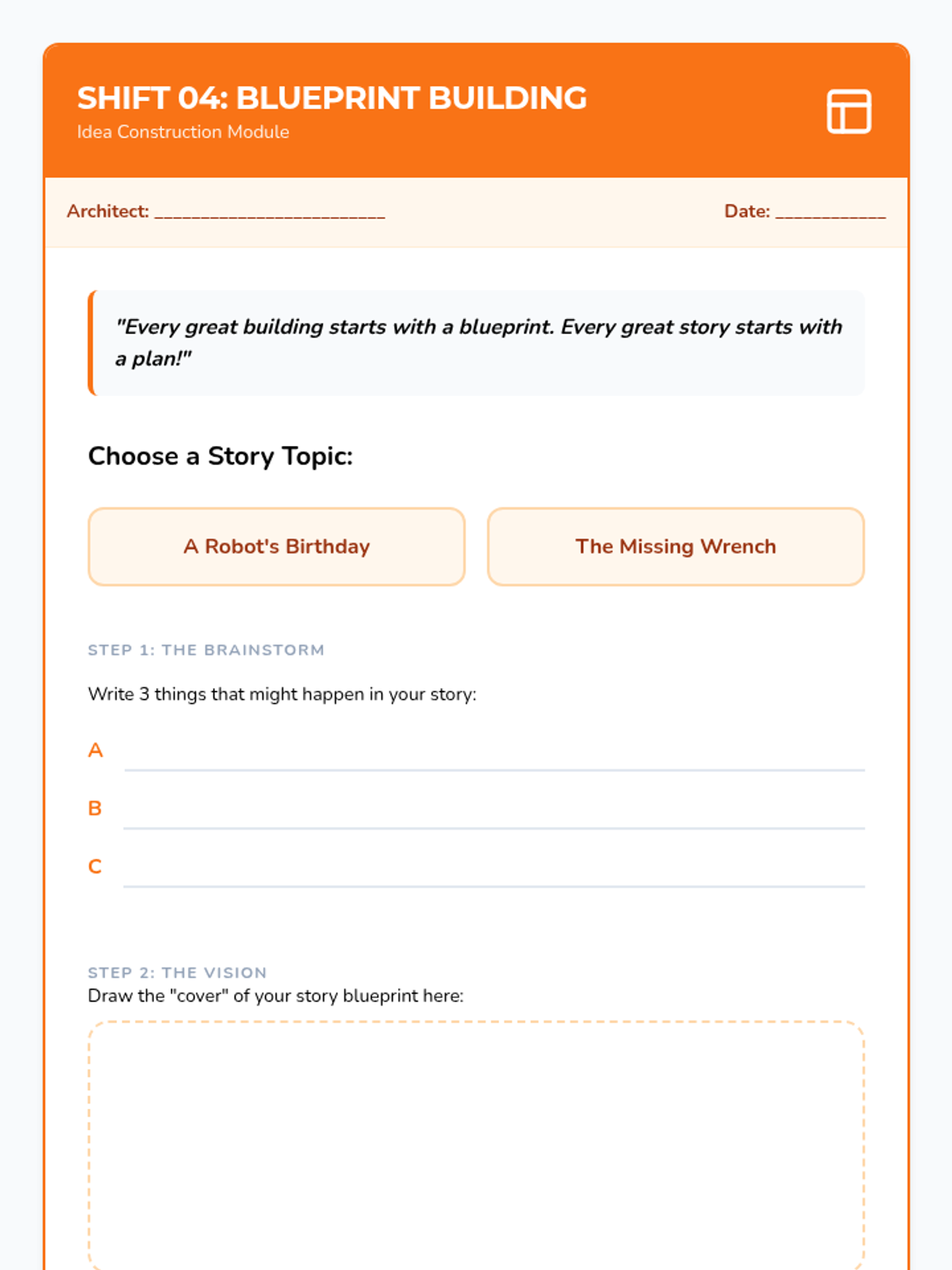
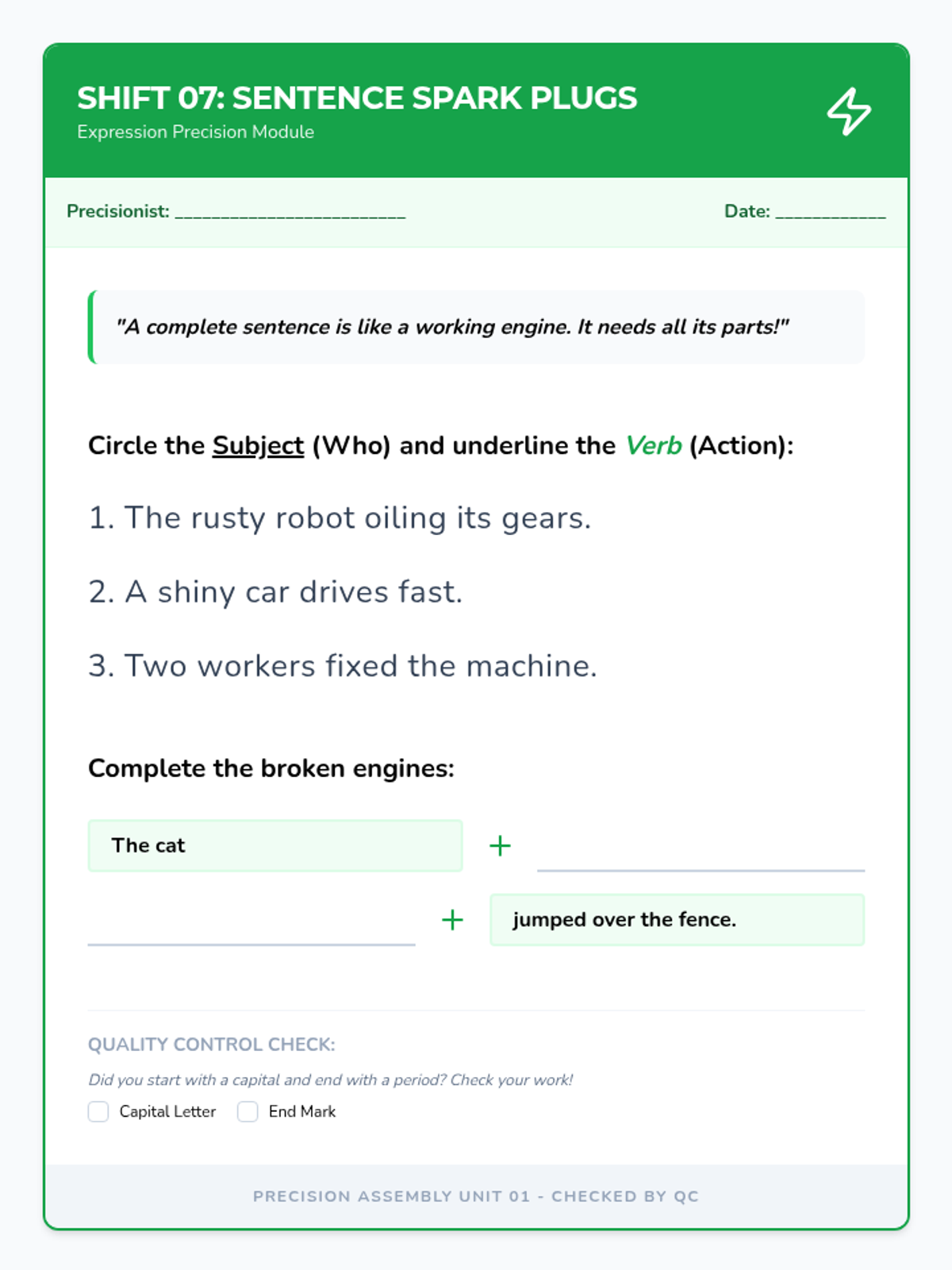
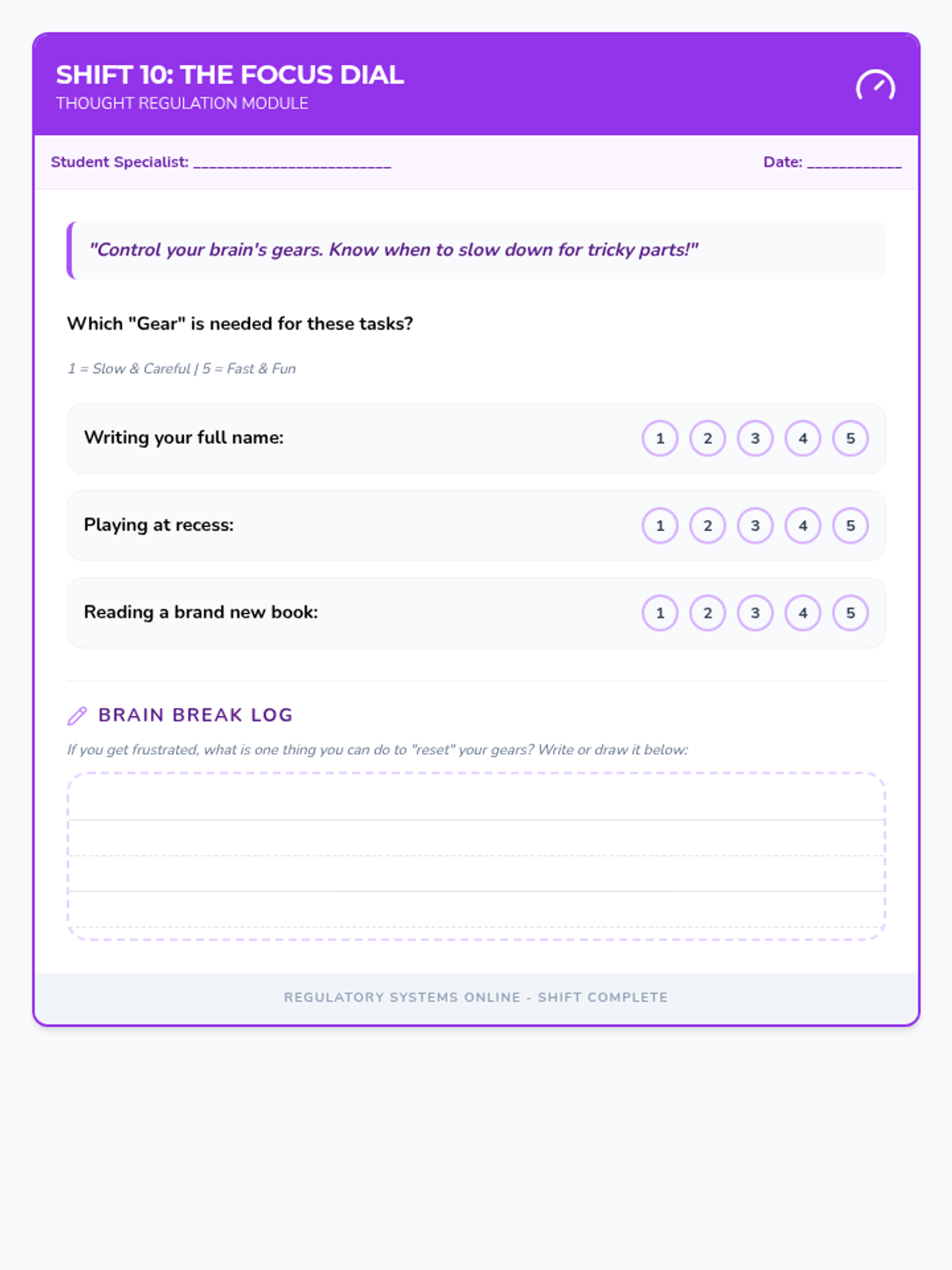
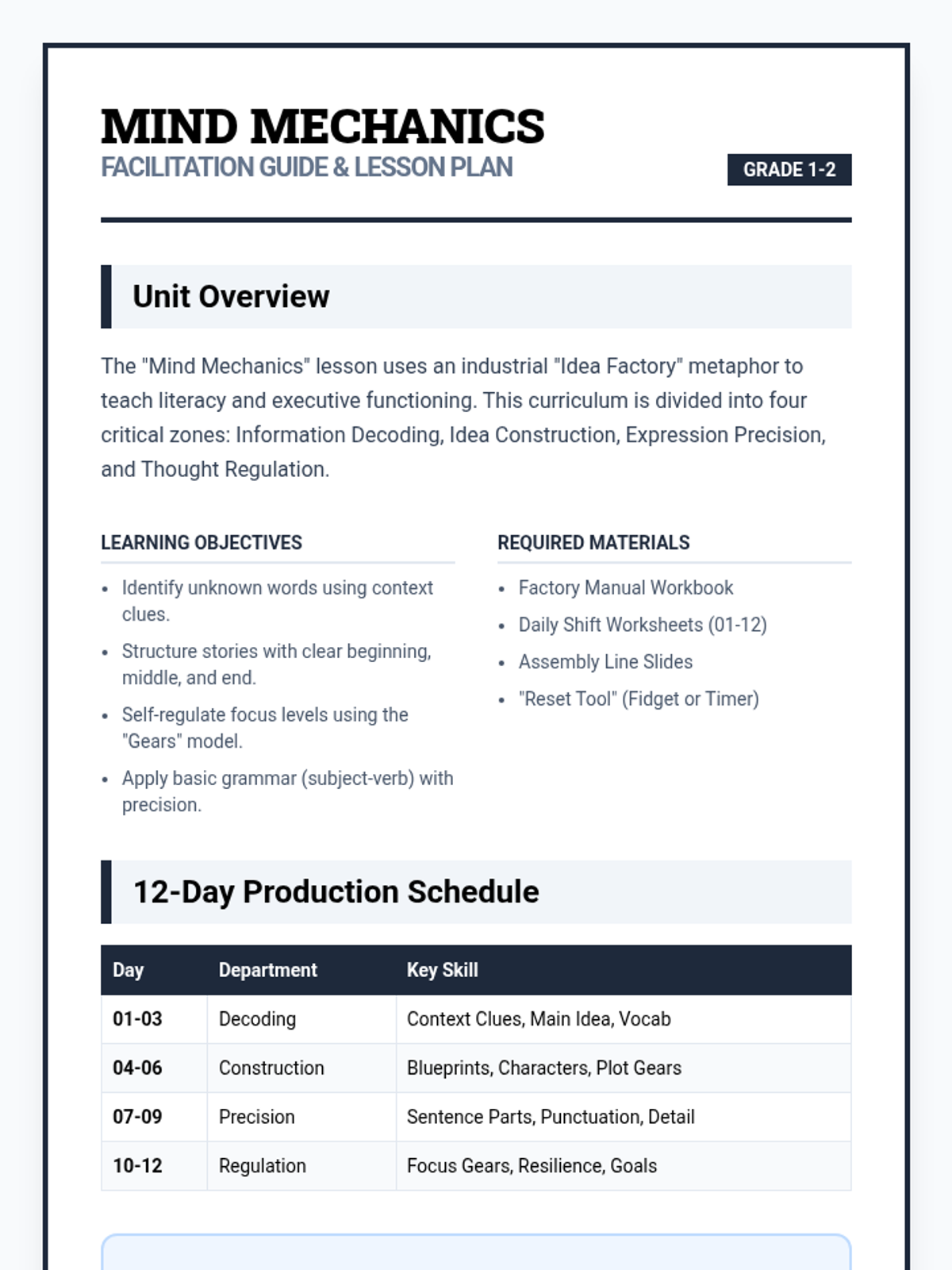
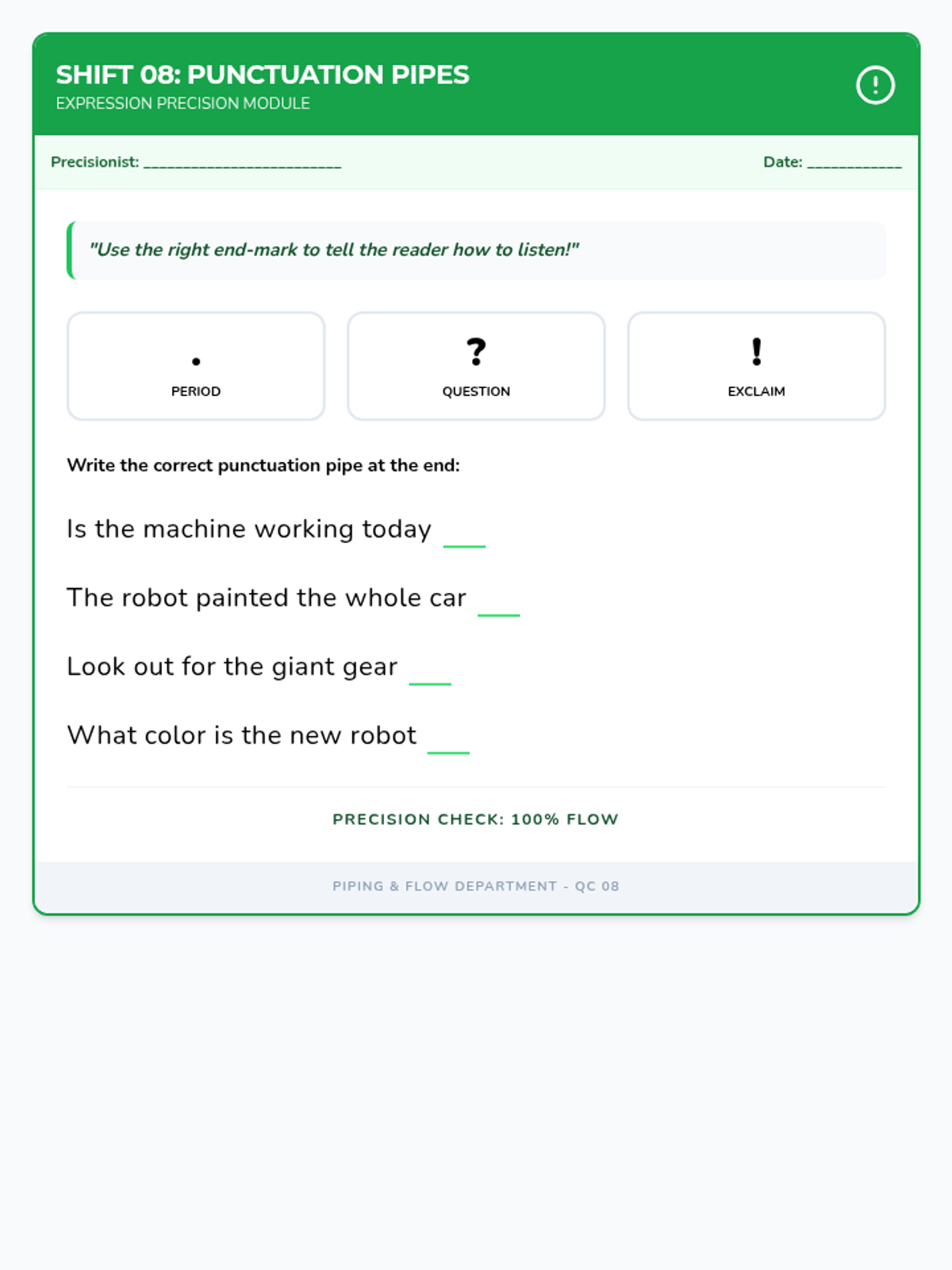
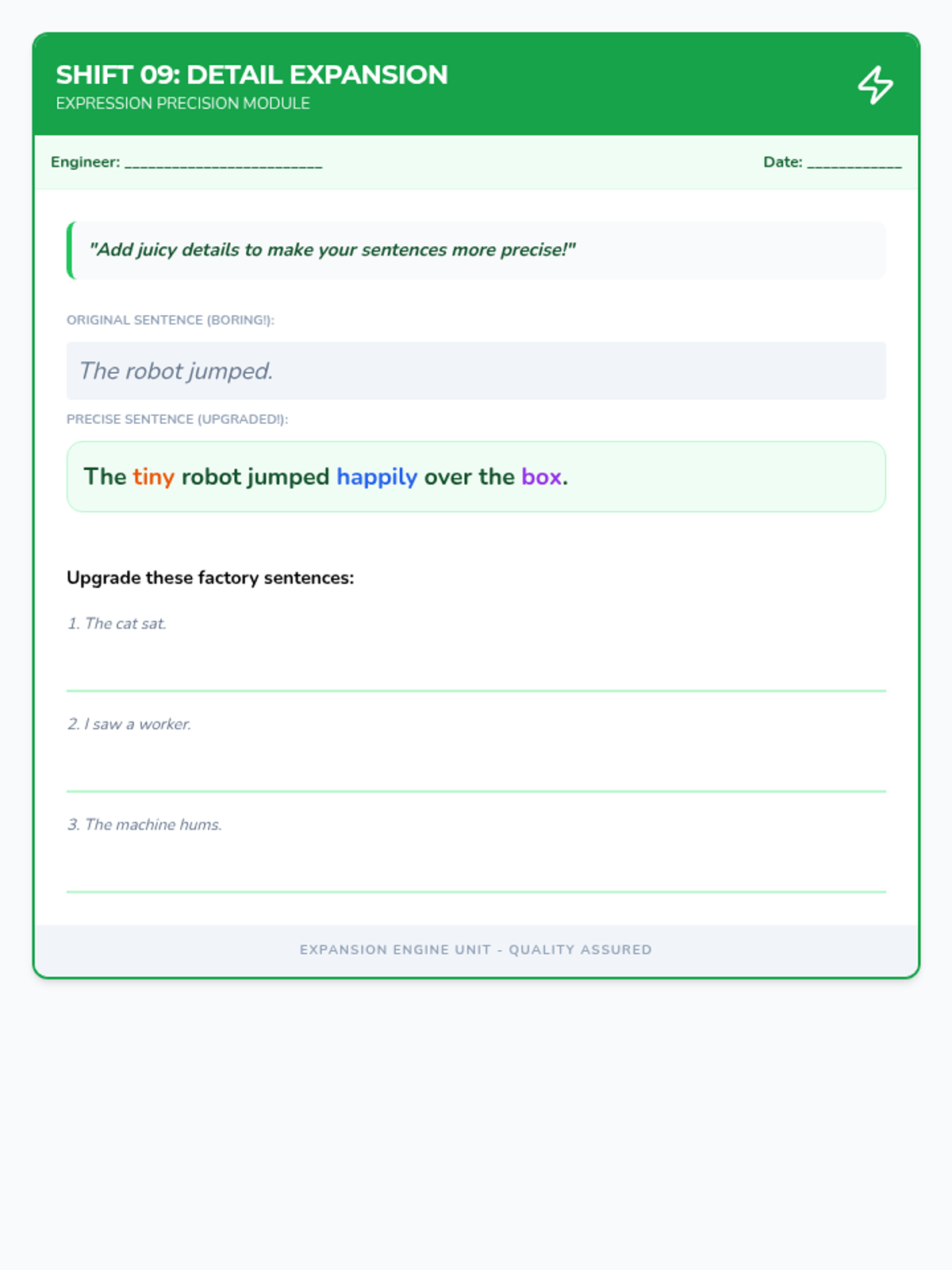
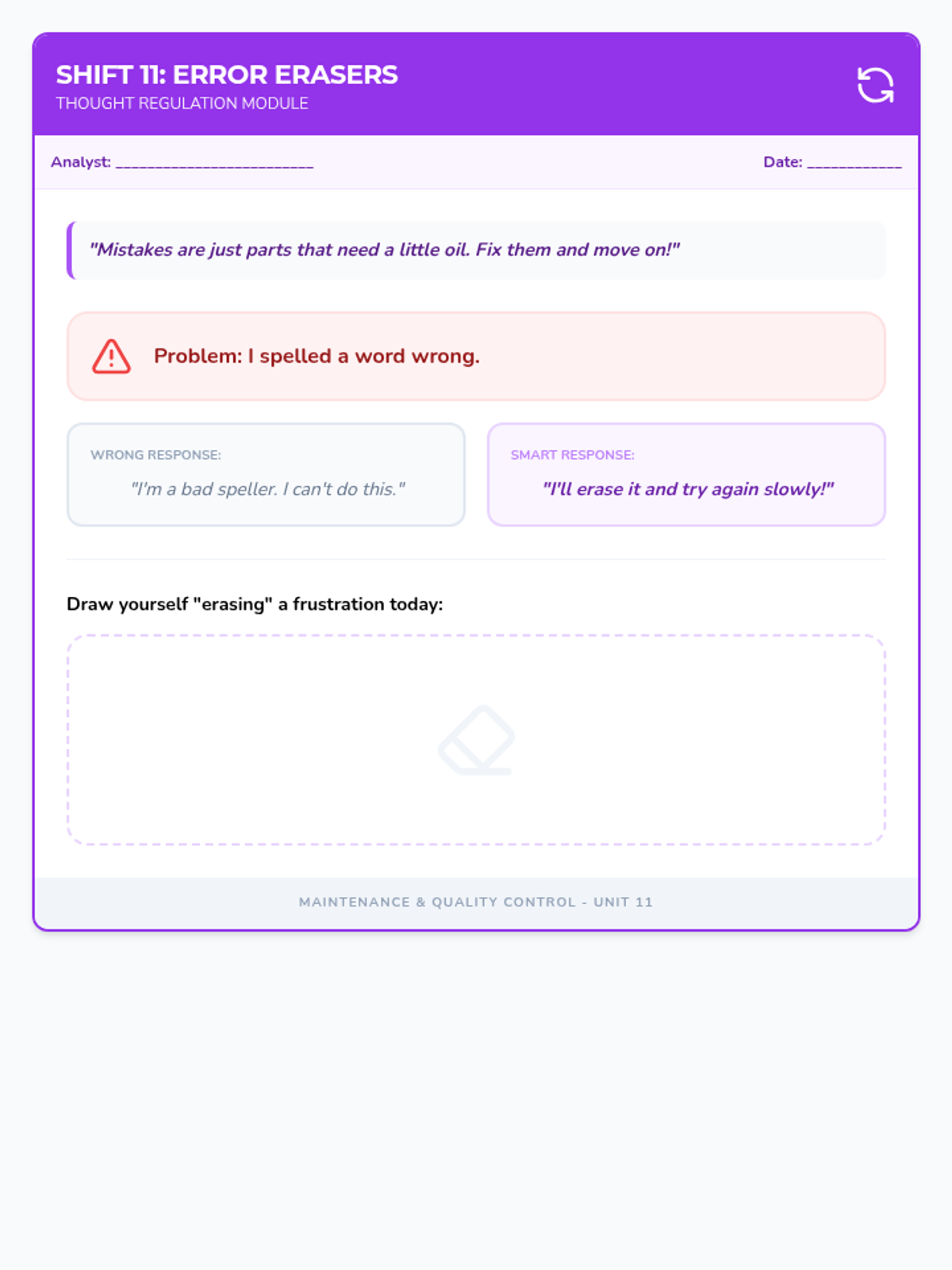
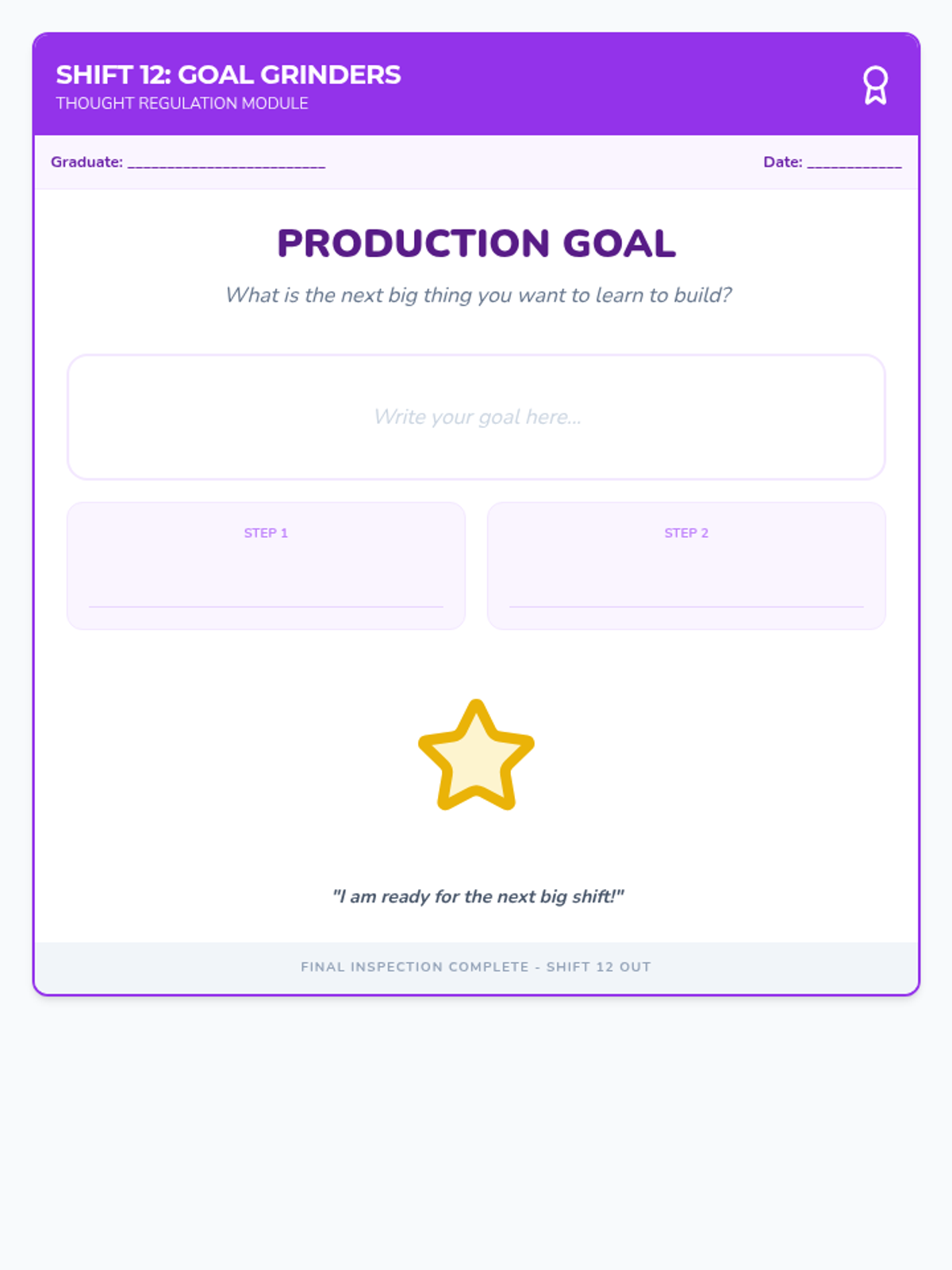
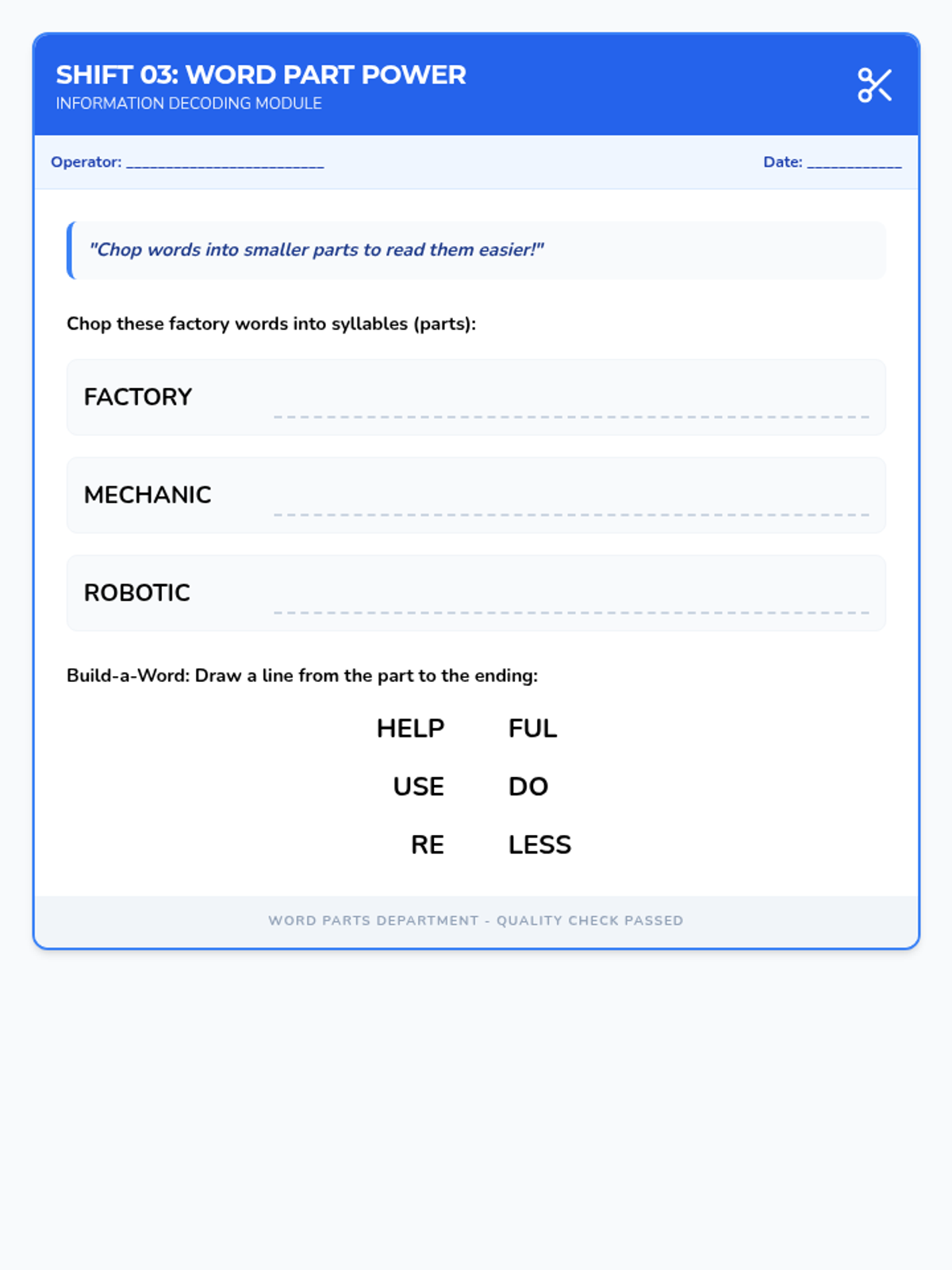
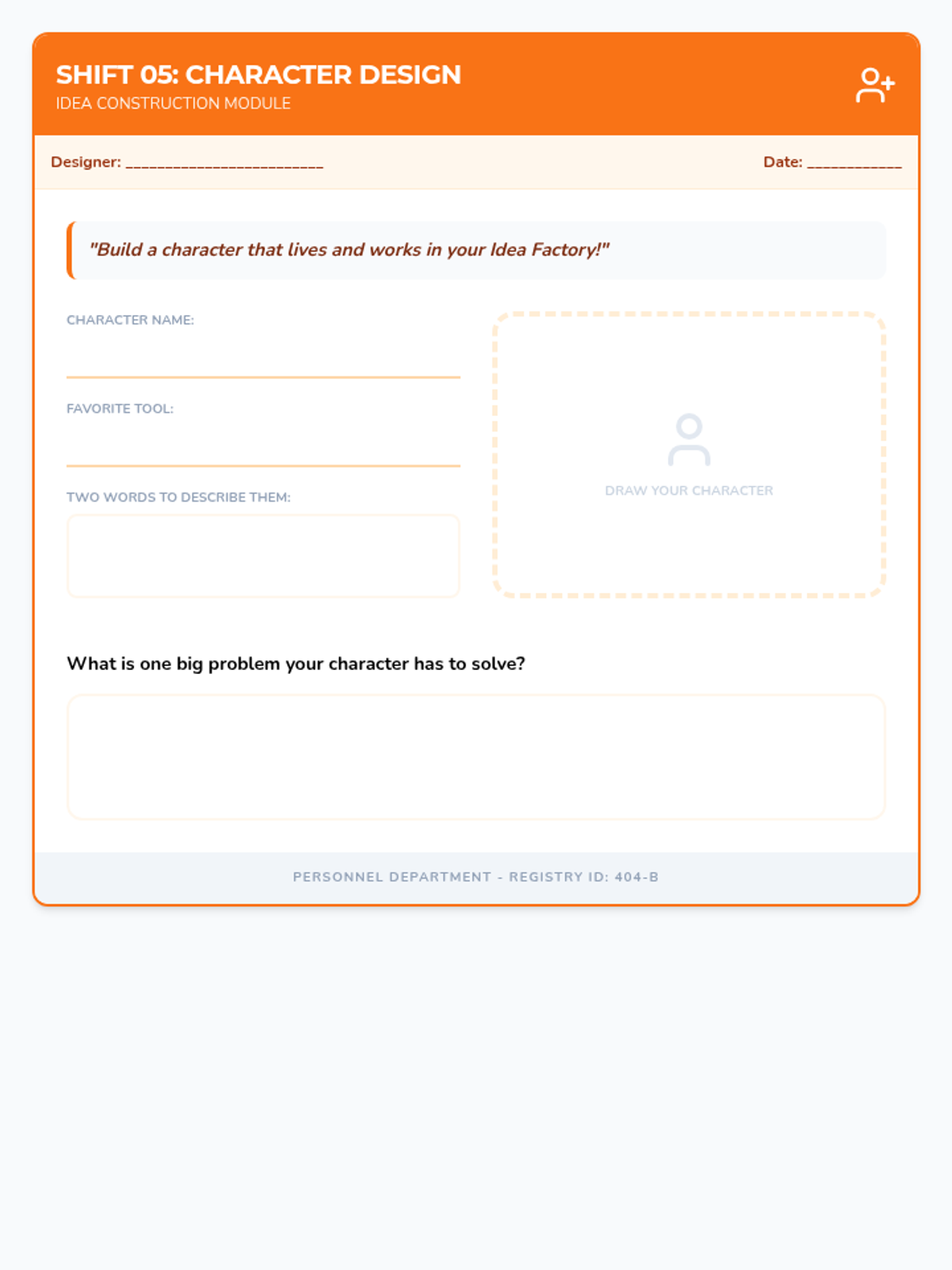
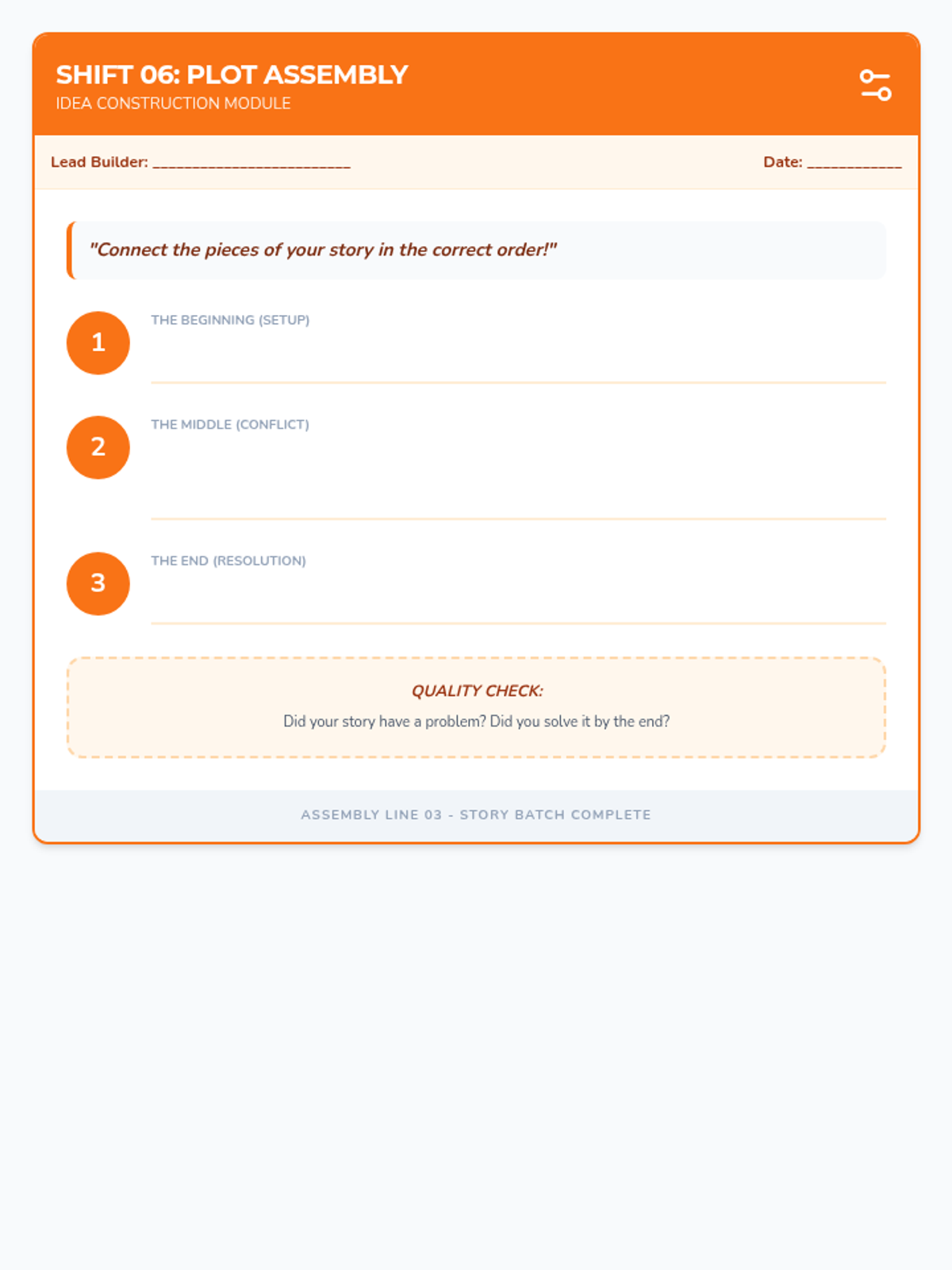
A series of activities and practices designed to build foundational reading comprehension, writing structure, and cognitive focus skills through the metaphor of a productive factory.
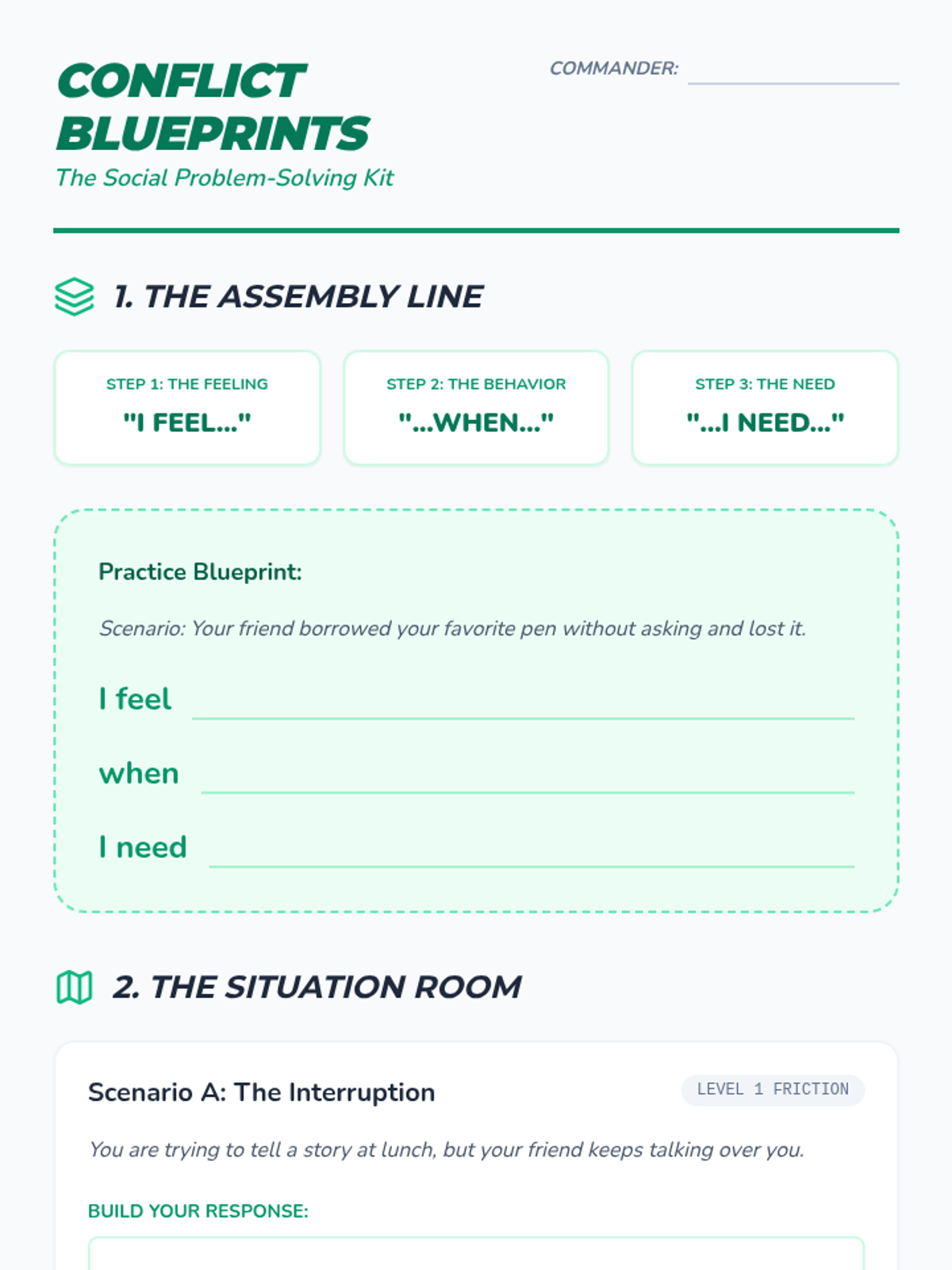
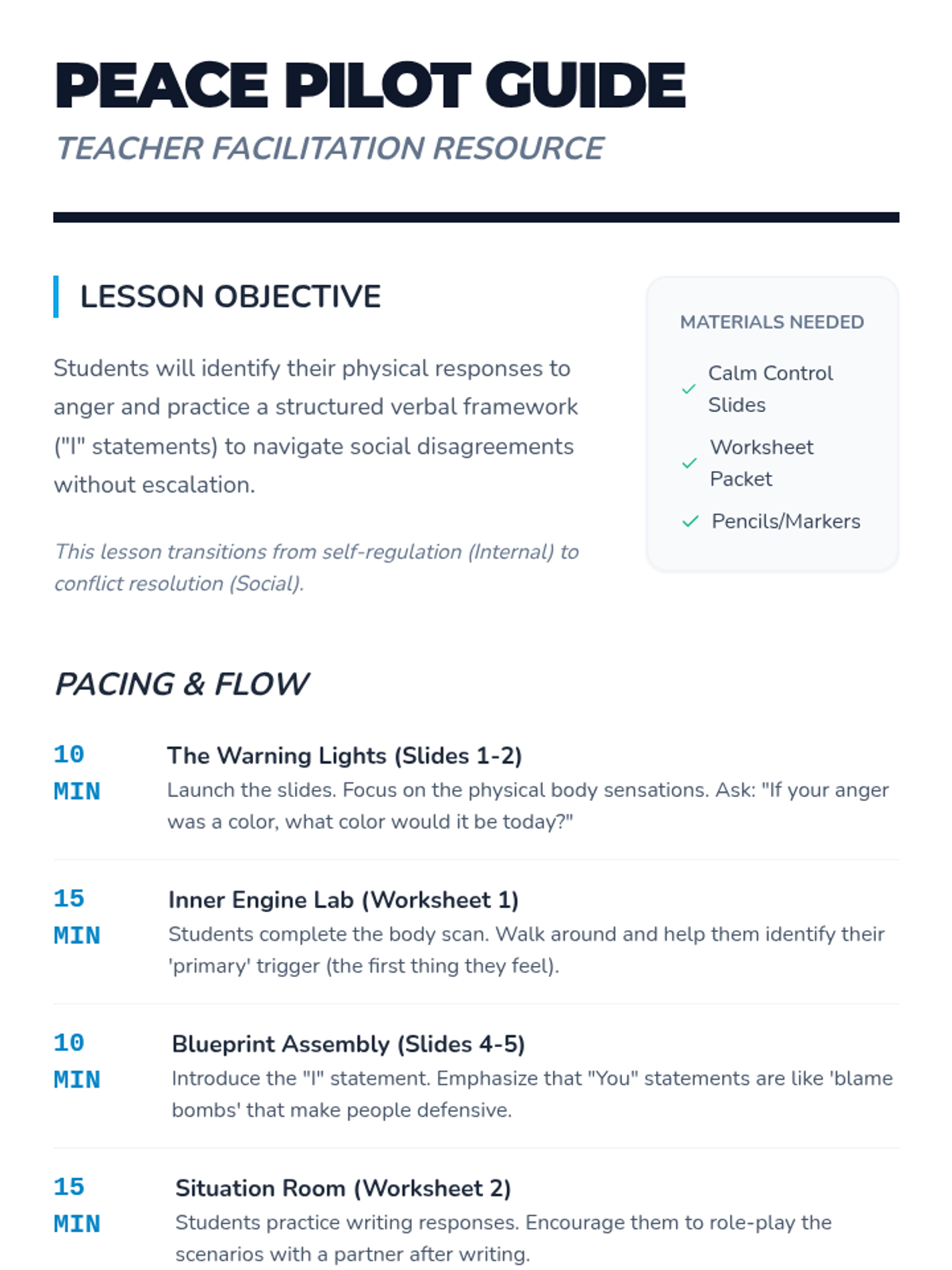
This lesson covers the physical sensations of frustration and provides a structured framework for navigating social conflicts using 'I' statements and perspective-taking.
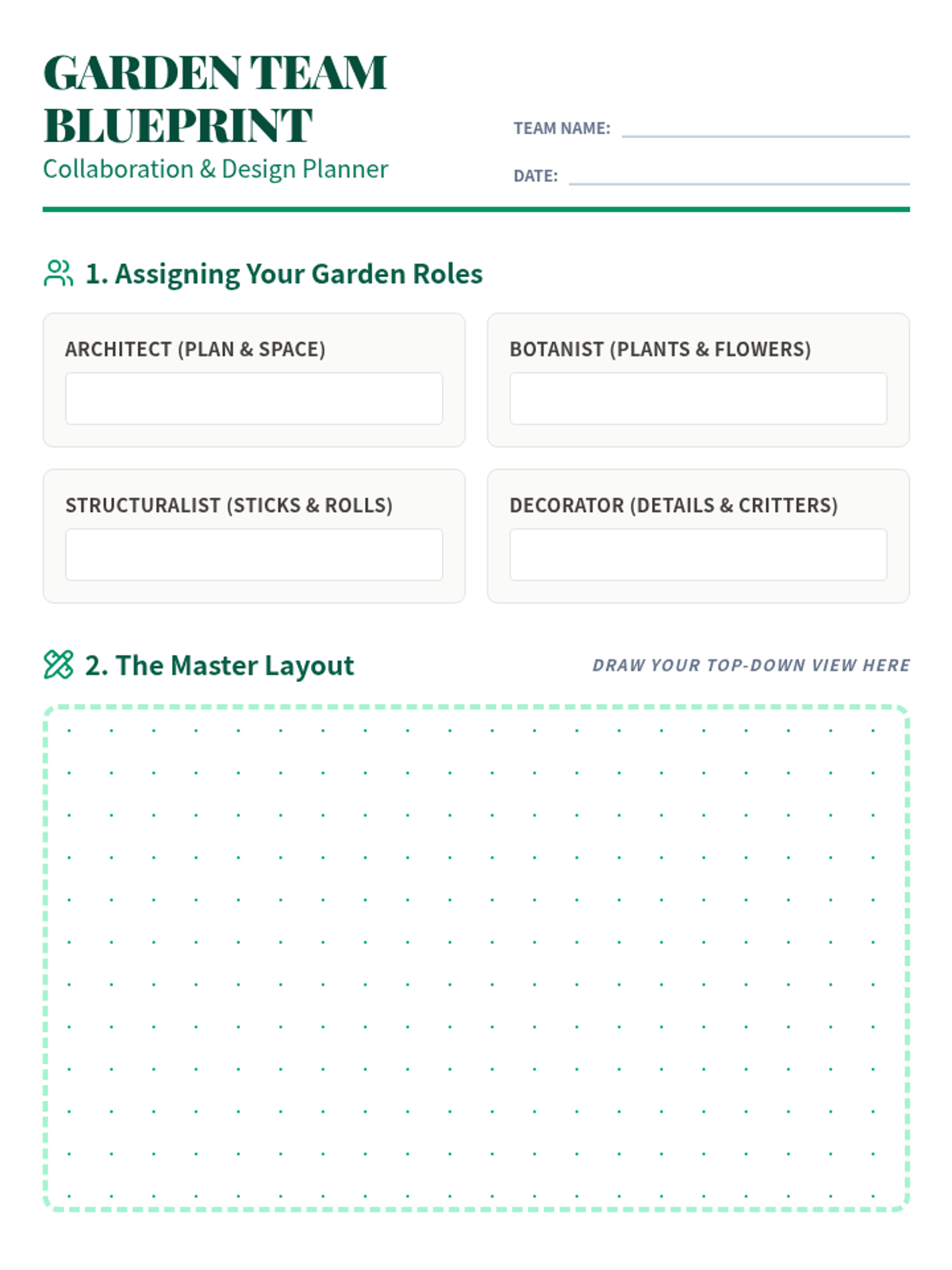
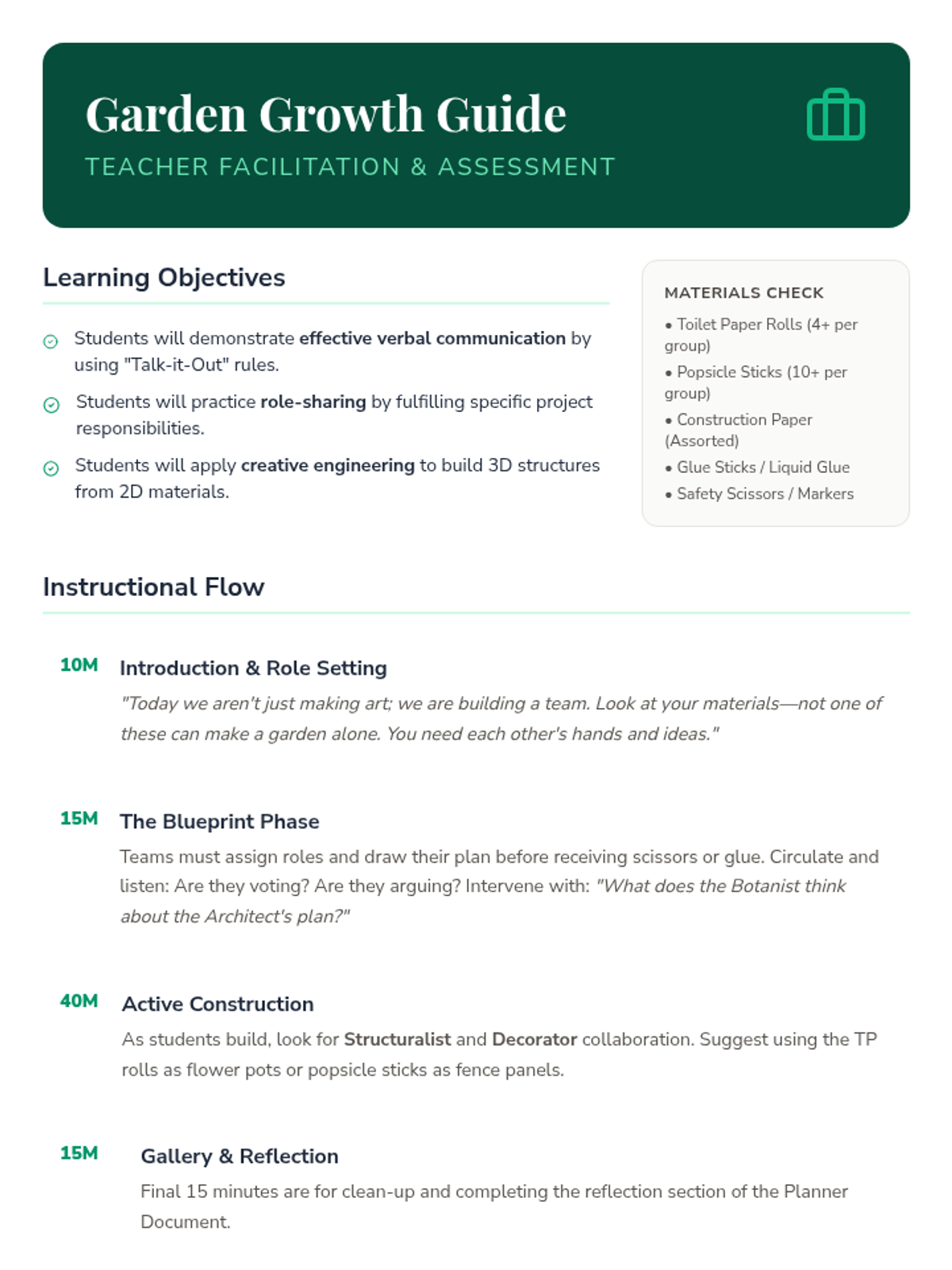
A collaborative hands-on project where students use recycled materials to build a spring garden while practicing effective communication and role-sharing.
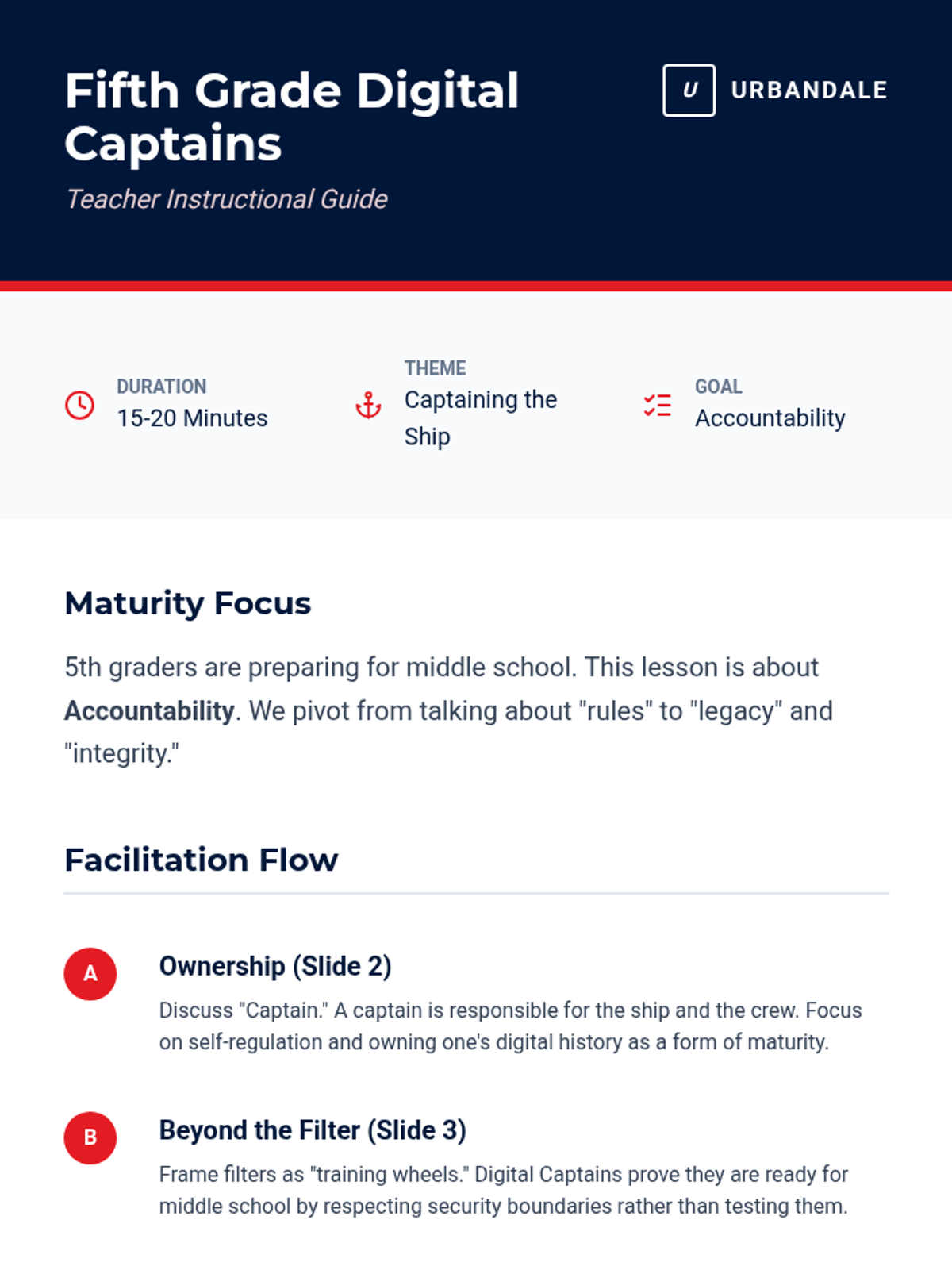
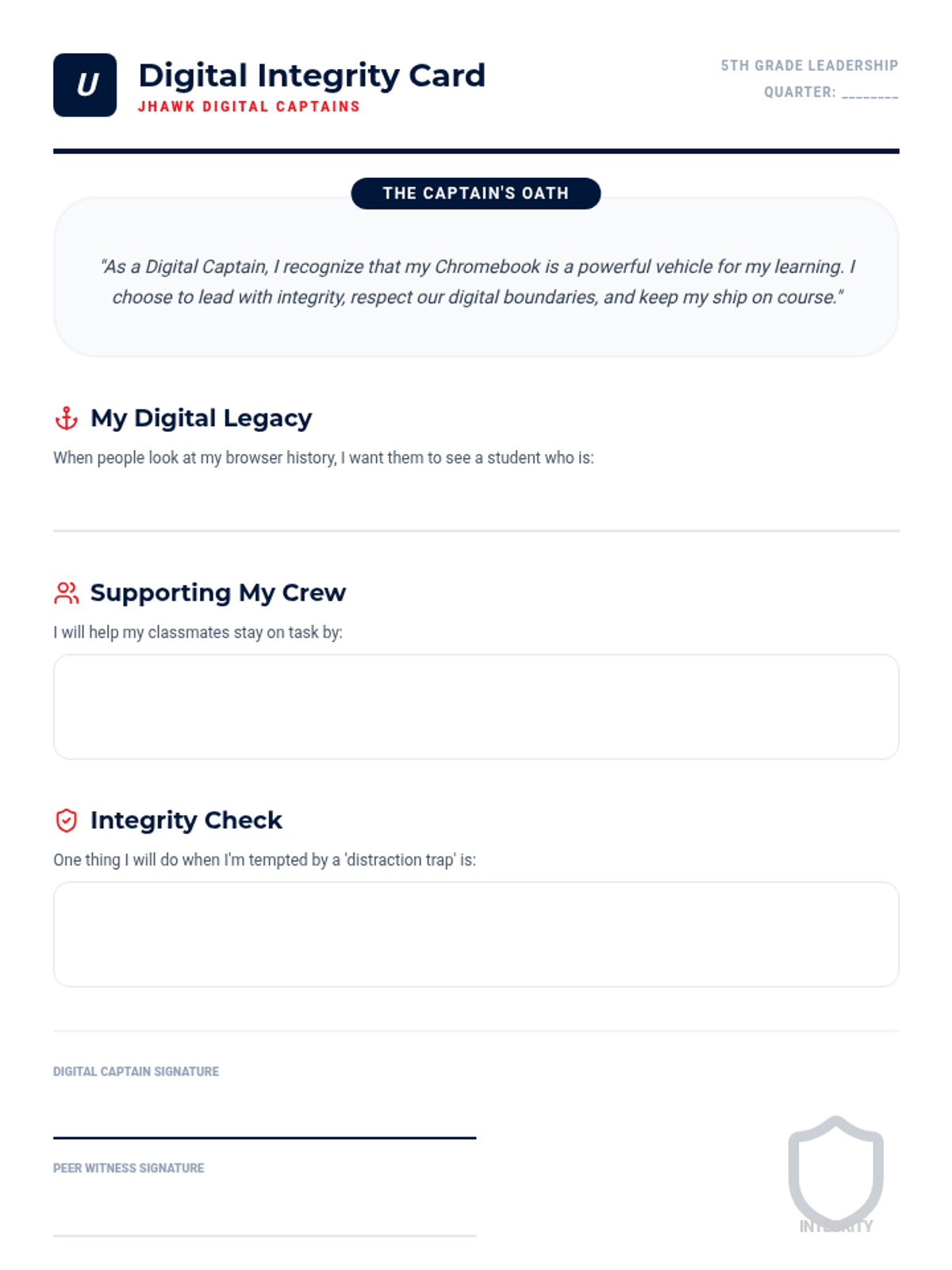
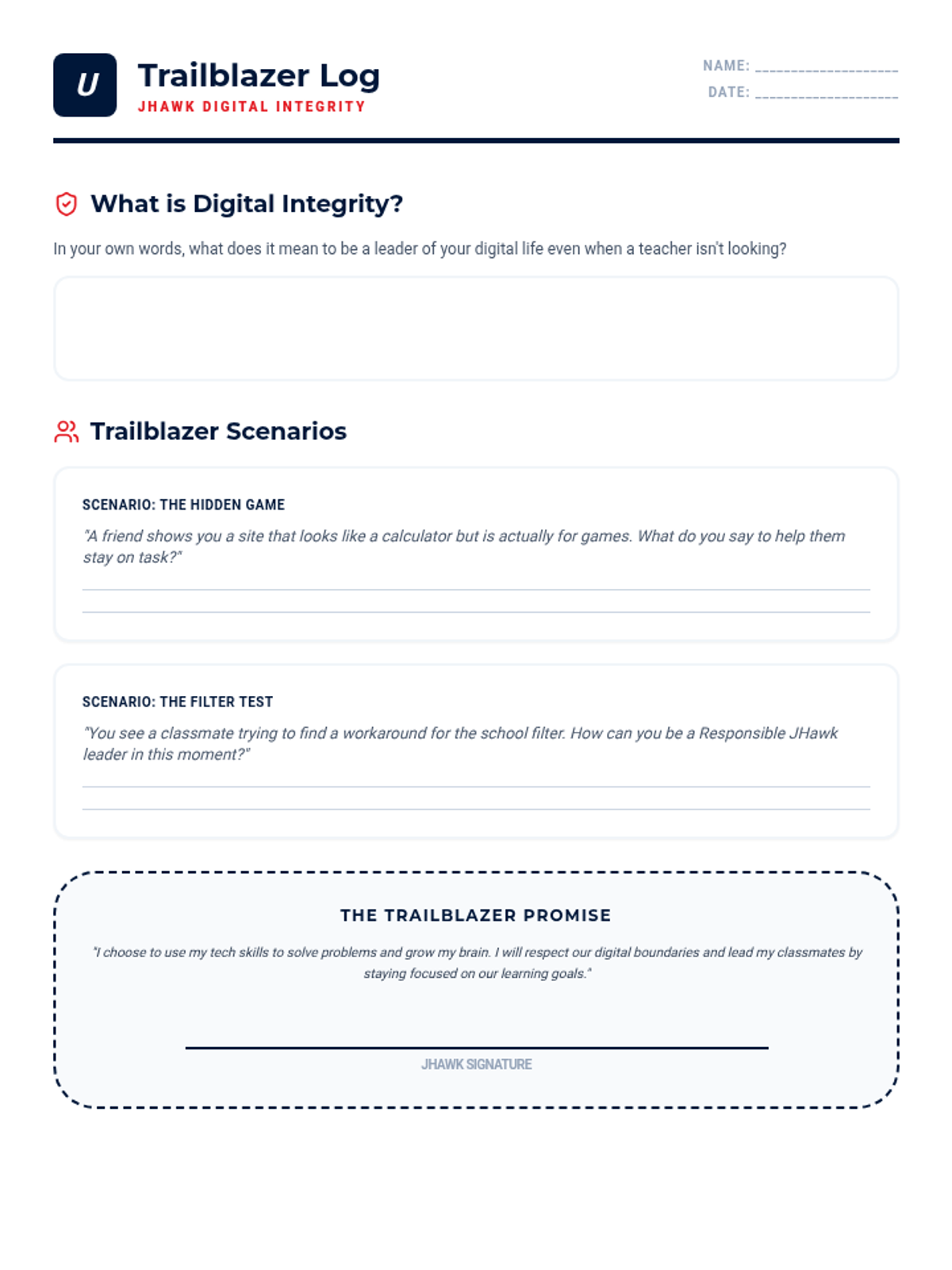
Empowers 5th graders to lead by example, discussing the importance of academic integrity and resisting the urge to bypass school filters.
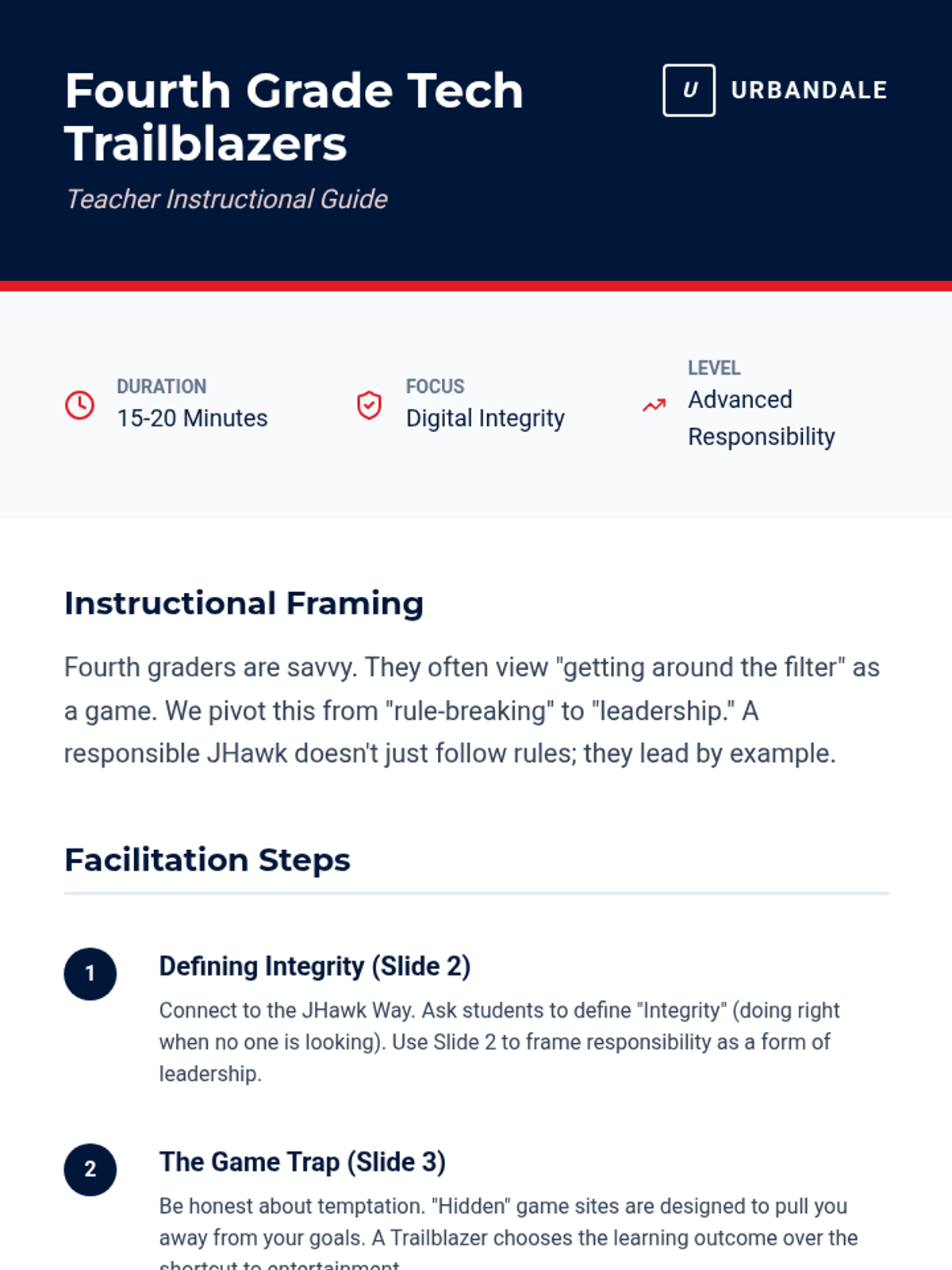
Addresses the specific challenges of 4th graders, focusing on avoiding game websites and maintaining focus on assigned tasks.
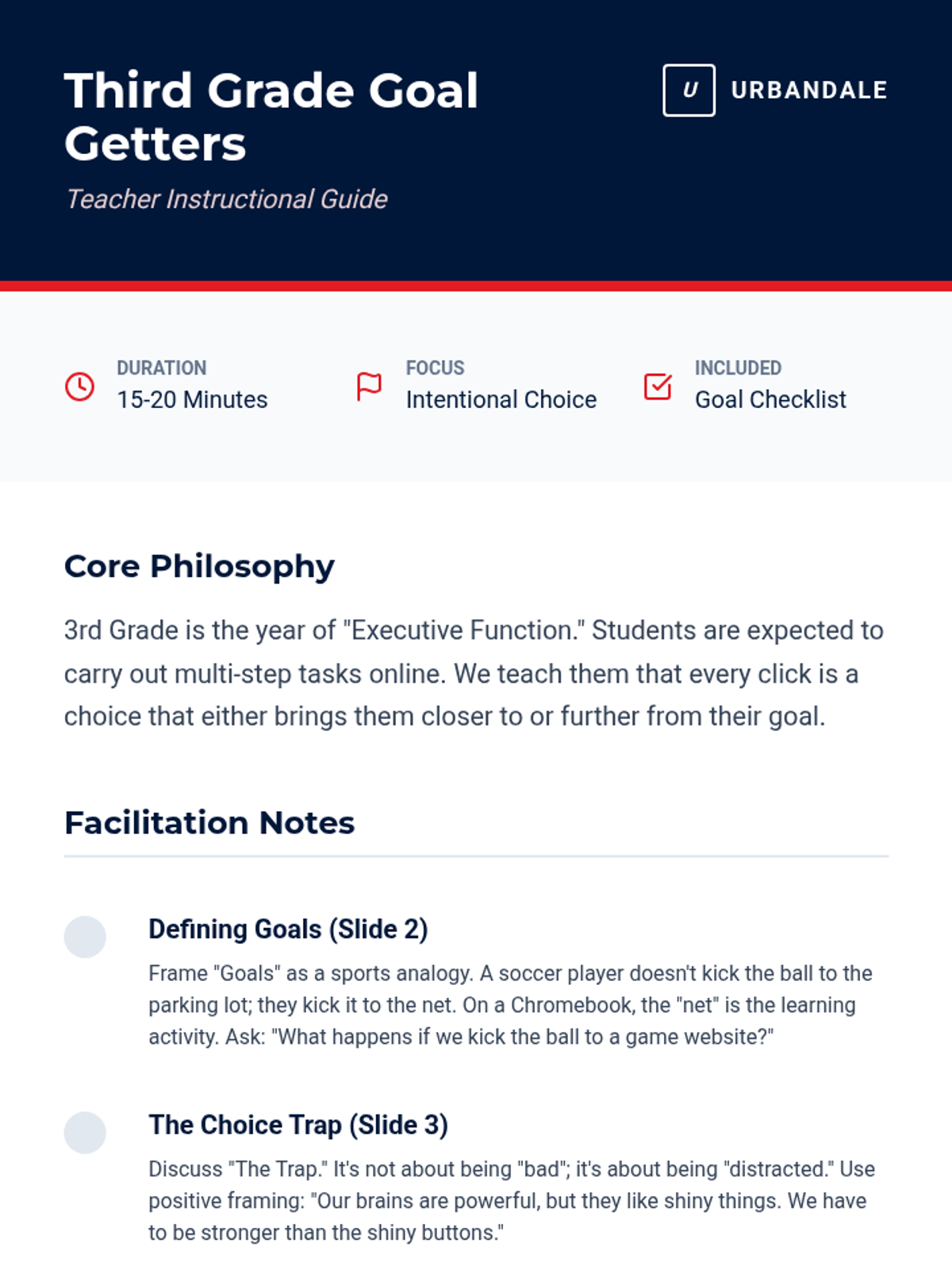
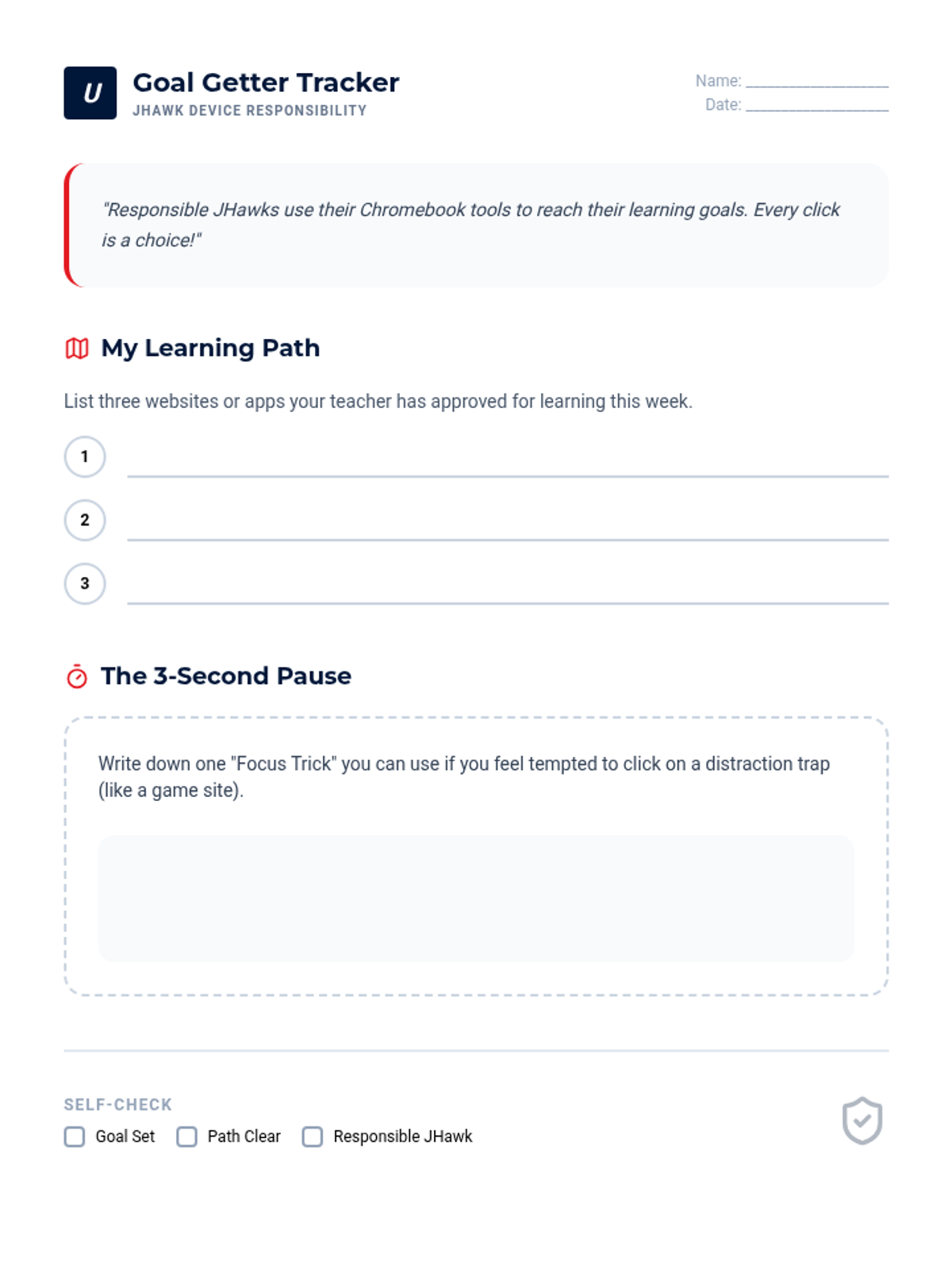
Helps 3rd graders identify common online distractions and practice making responsible choices that align with their learning goals.
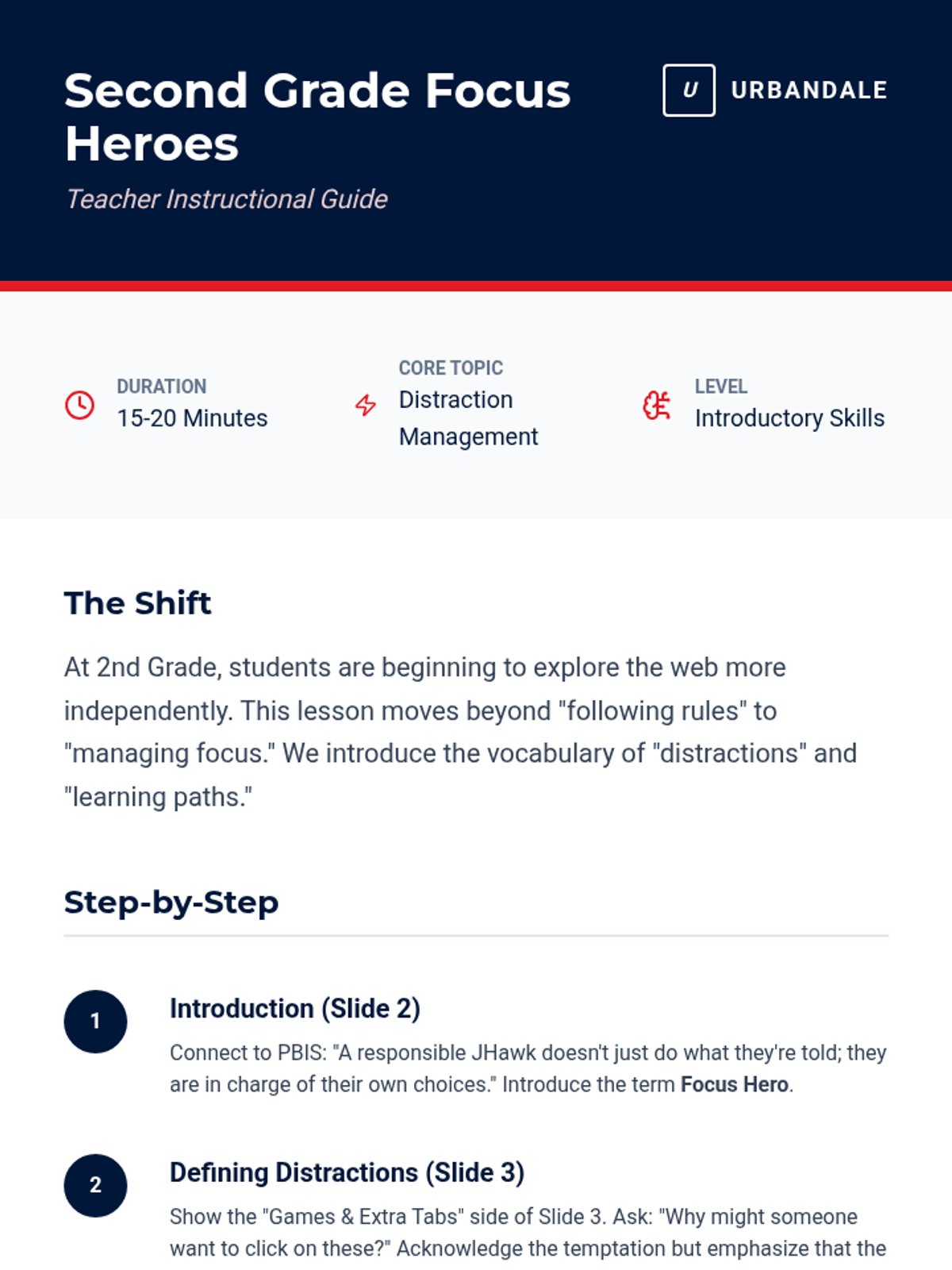
Introduces 2nd graders to the idea of managing digital distractions and staying on task during learning time.
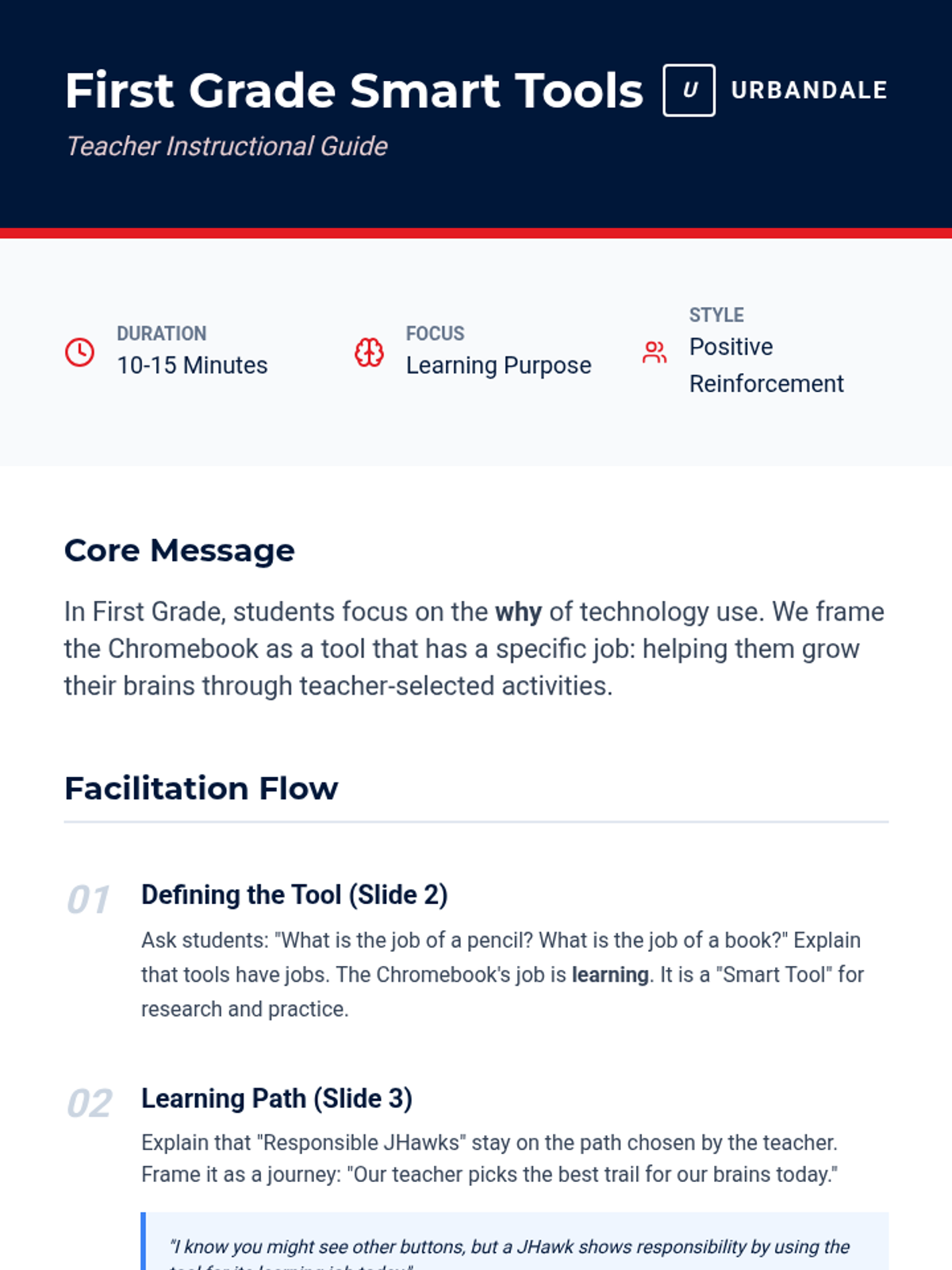
Reinforces the 'Tool not Toy' concept for 1st graders, emphasizing the JHawk Way of being Responsible with school technology.
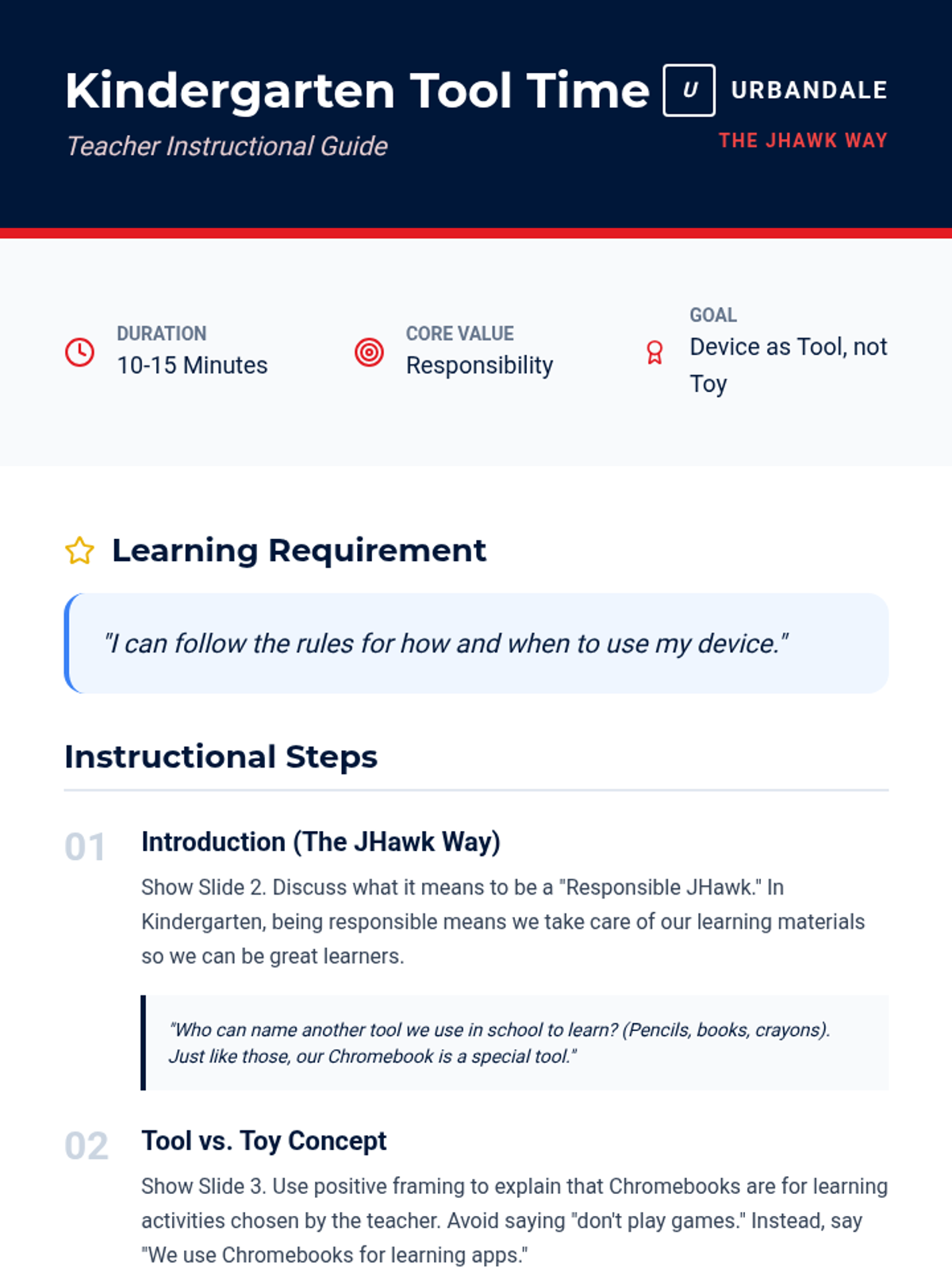
Introduces Kindergarteners to the concept that Chromebooks are learning tools, not toys, focusing on following teacher directions for when to use them.
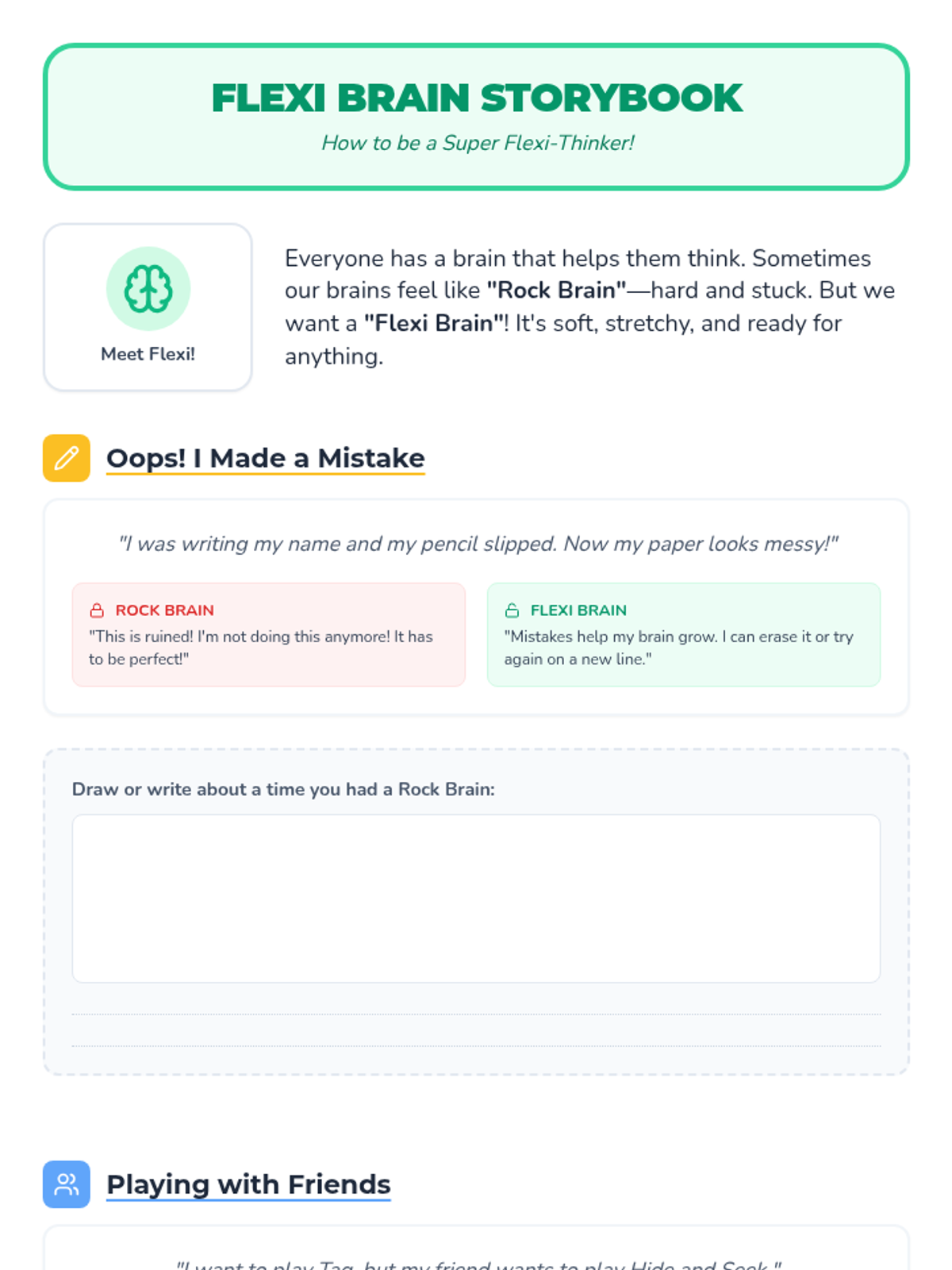
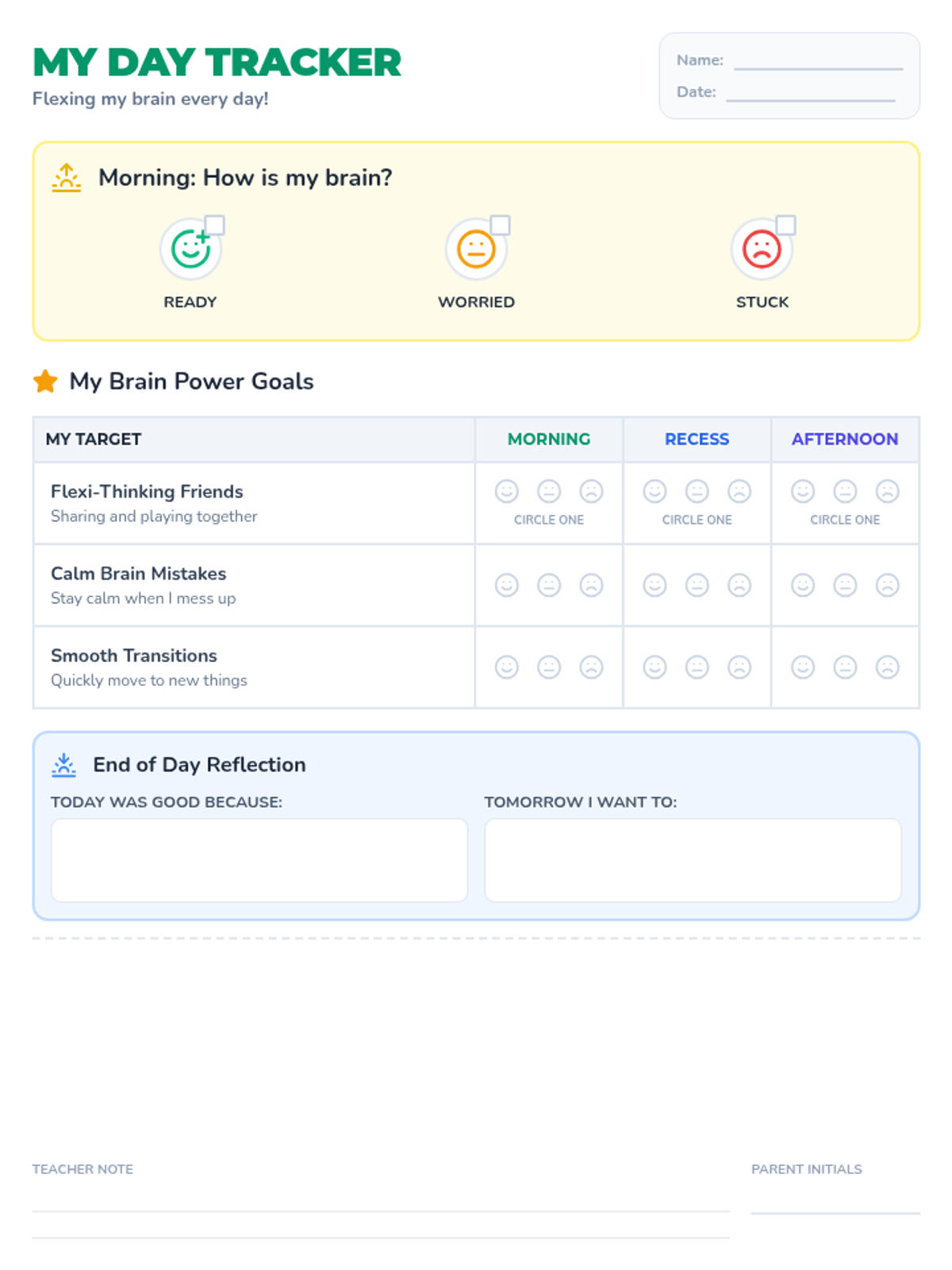
A set of resources designed to help 1st-grade students understand flexible thinking and manage anxiety through social narratives, daily tracking, and visual coping strategies.
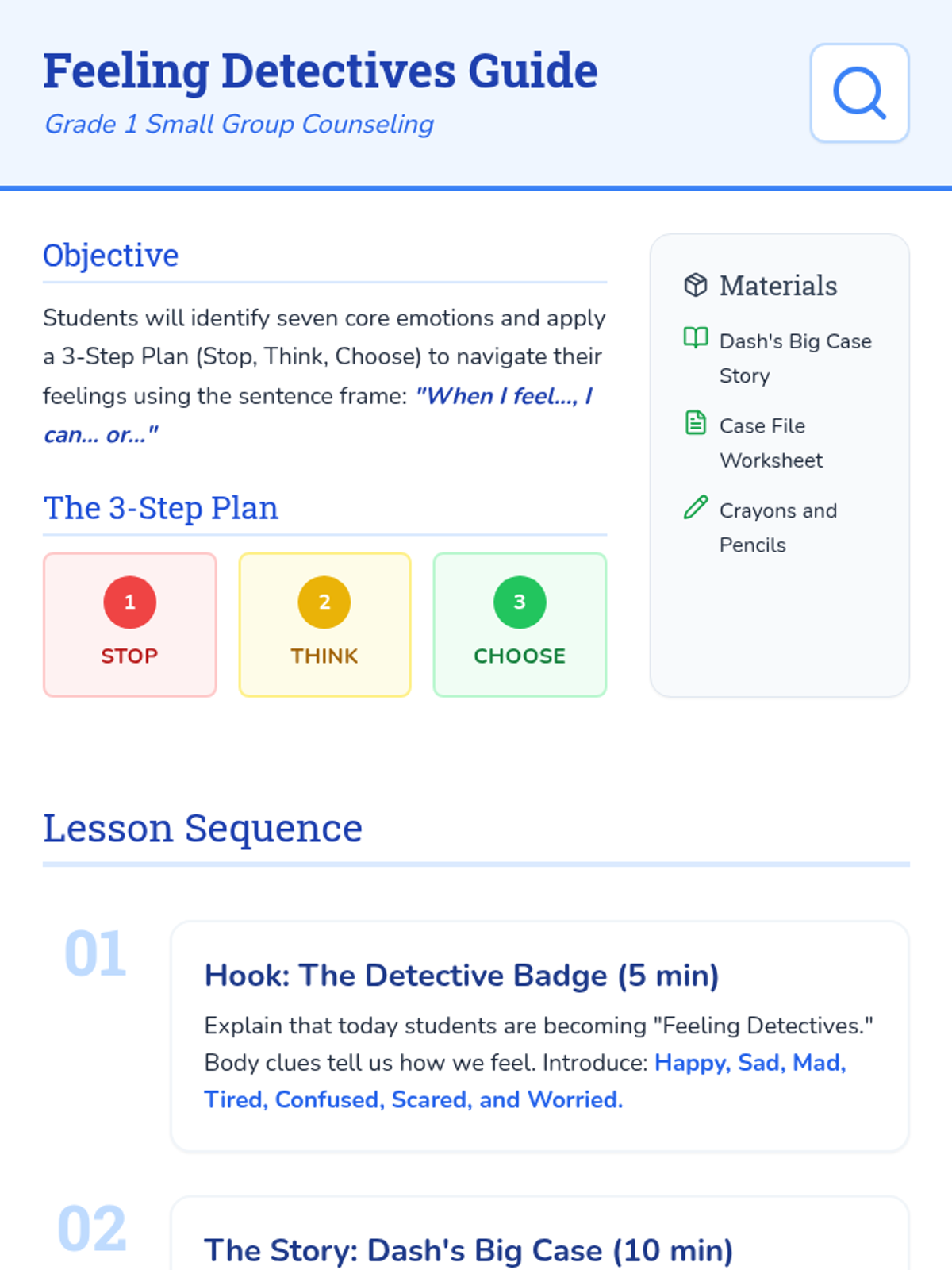
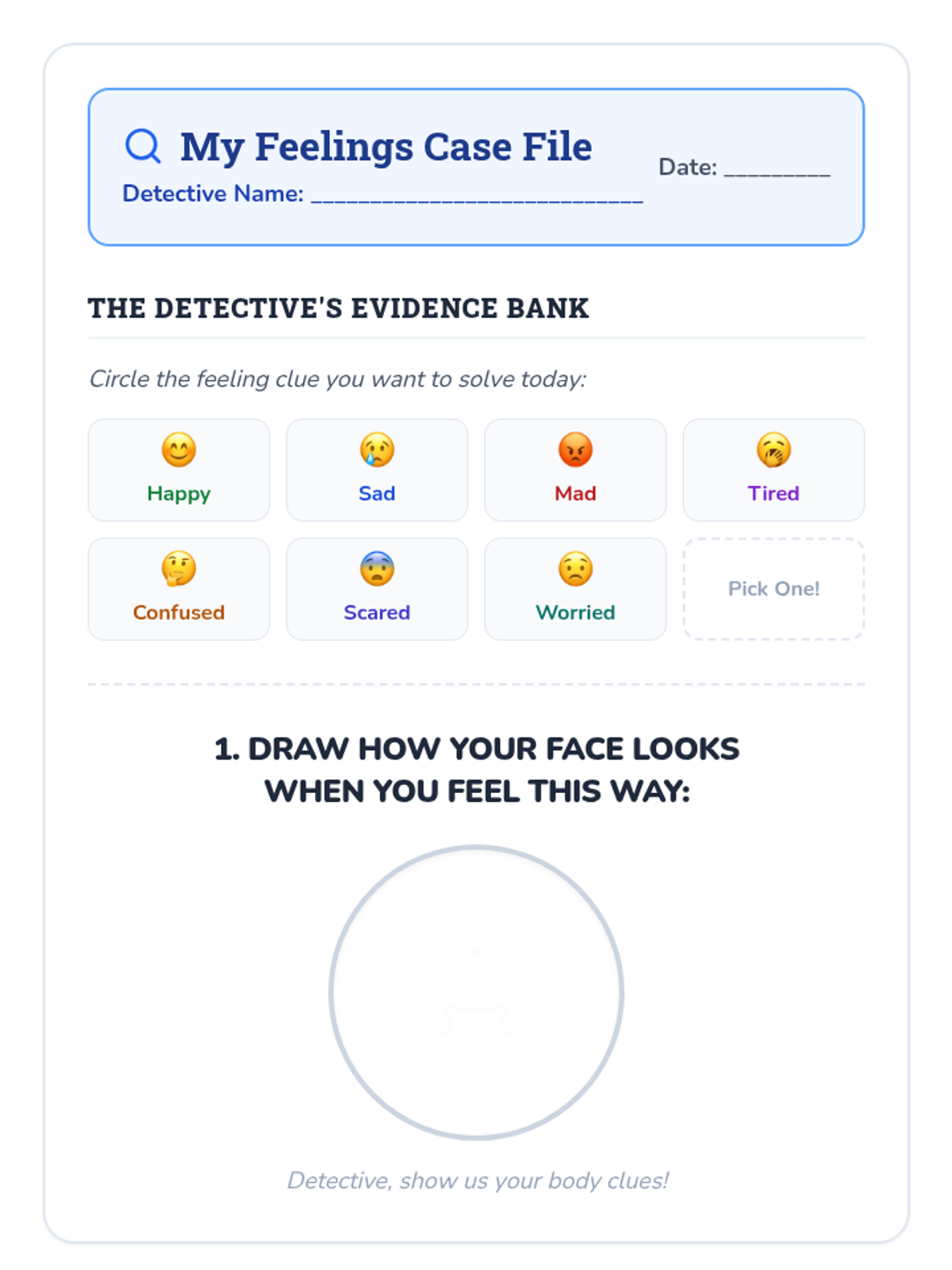
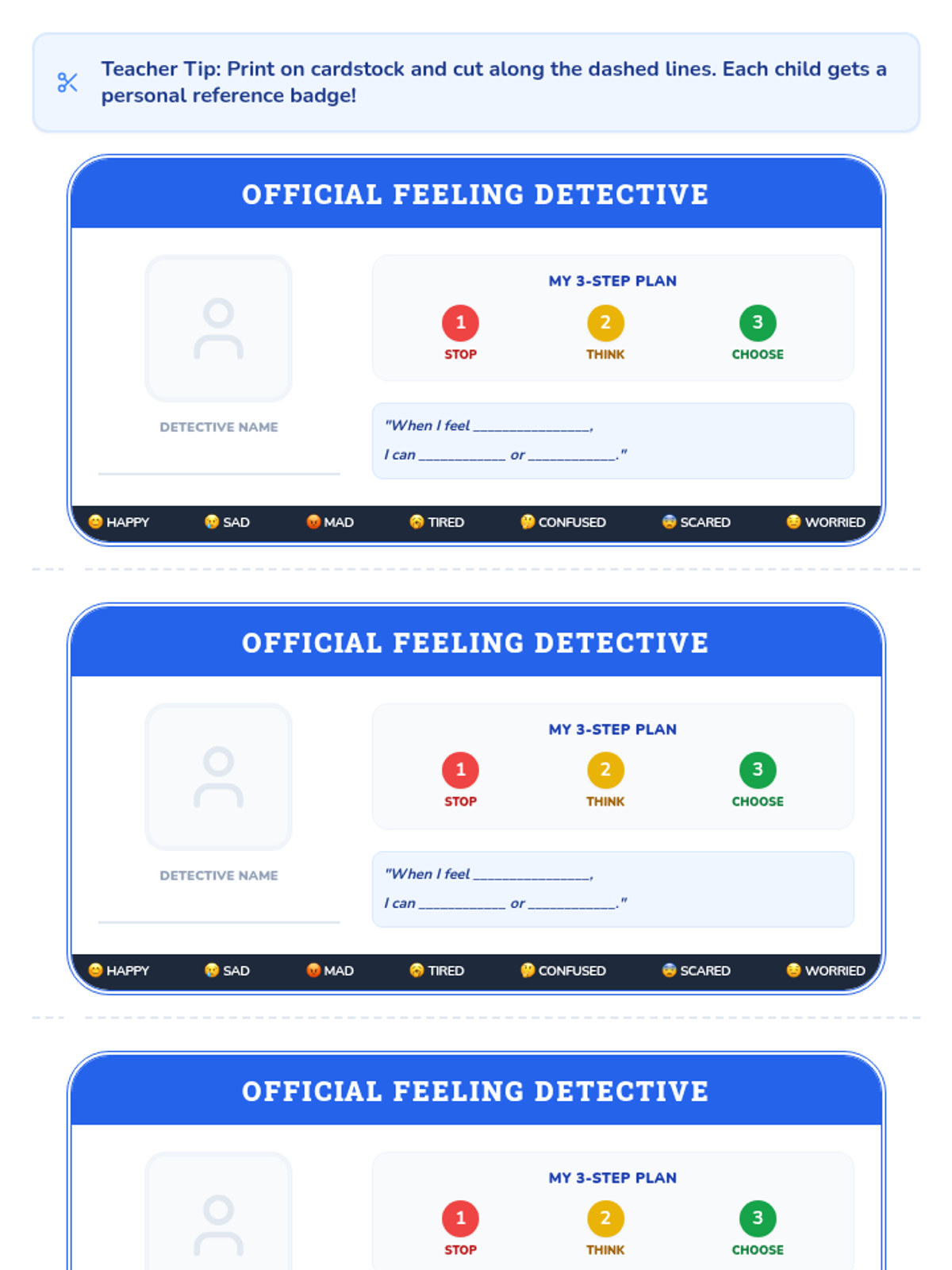
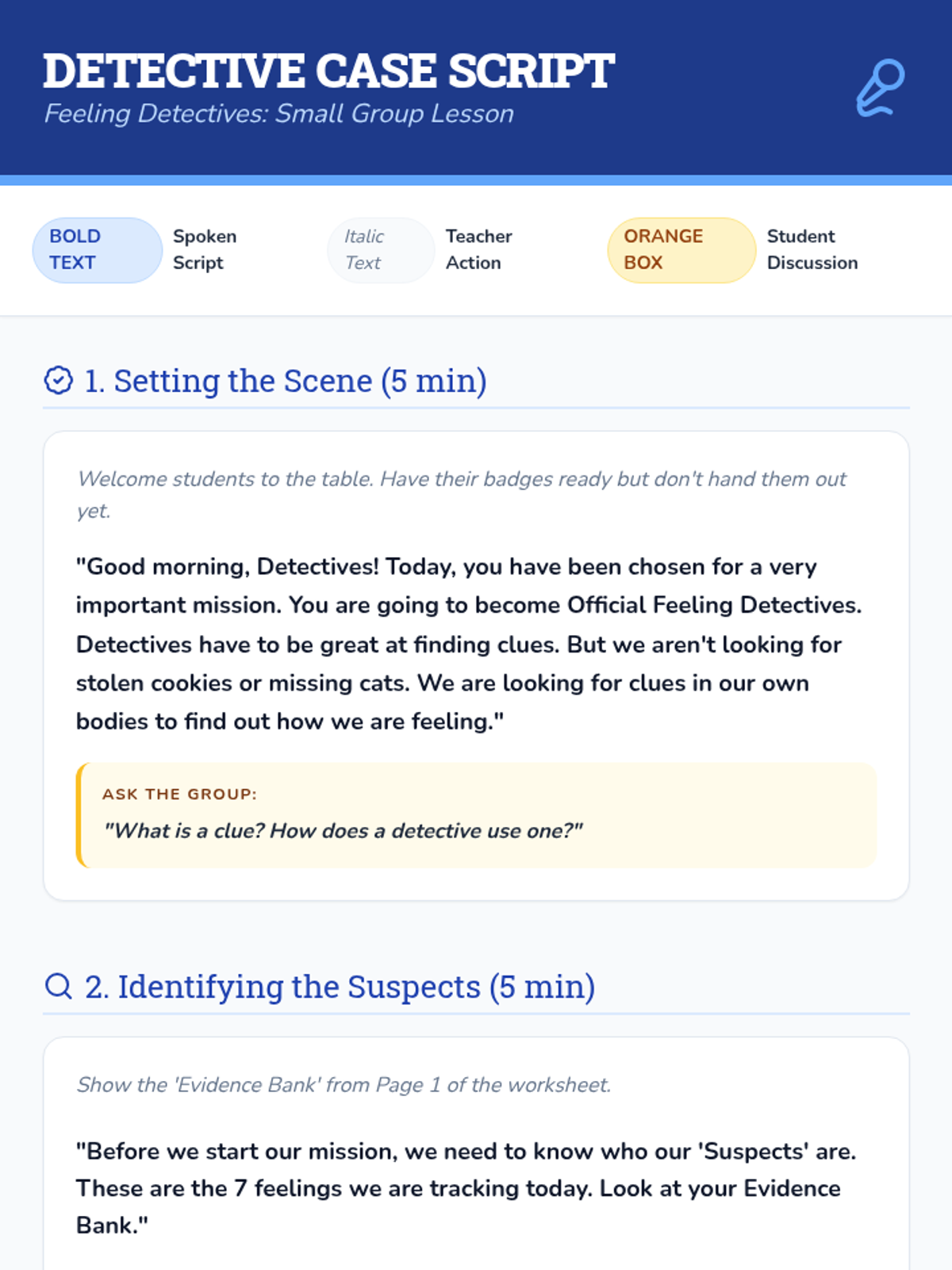
A small group counseling lesson focused on identifying emotions and implementing a 3-step self-regulation plan. Students learn to navigate feelings like happy, sad, mad, tired, confused, scared, and worried using a detective-themed strategy.
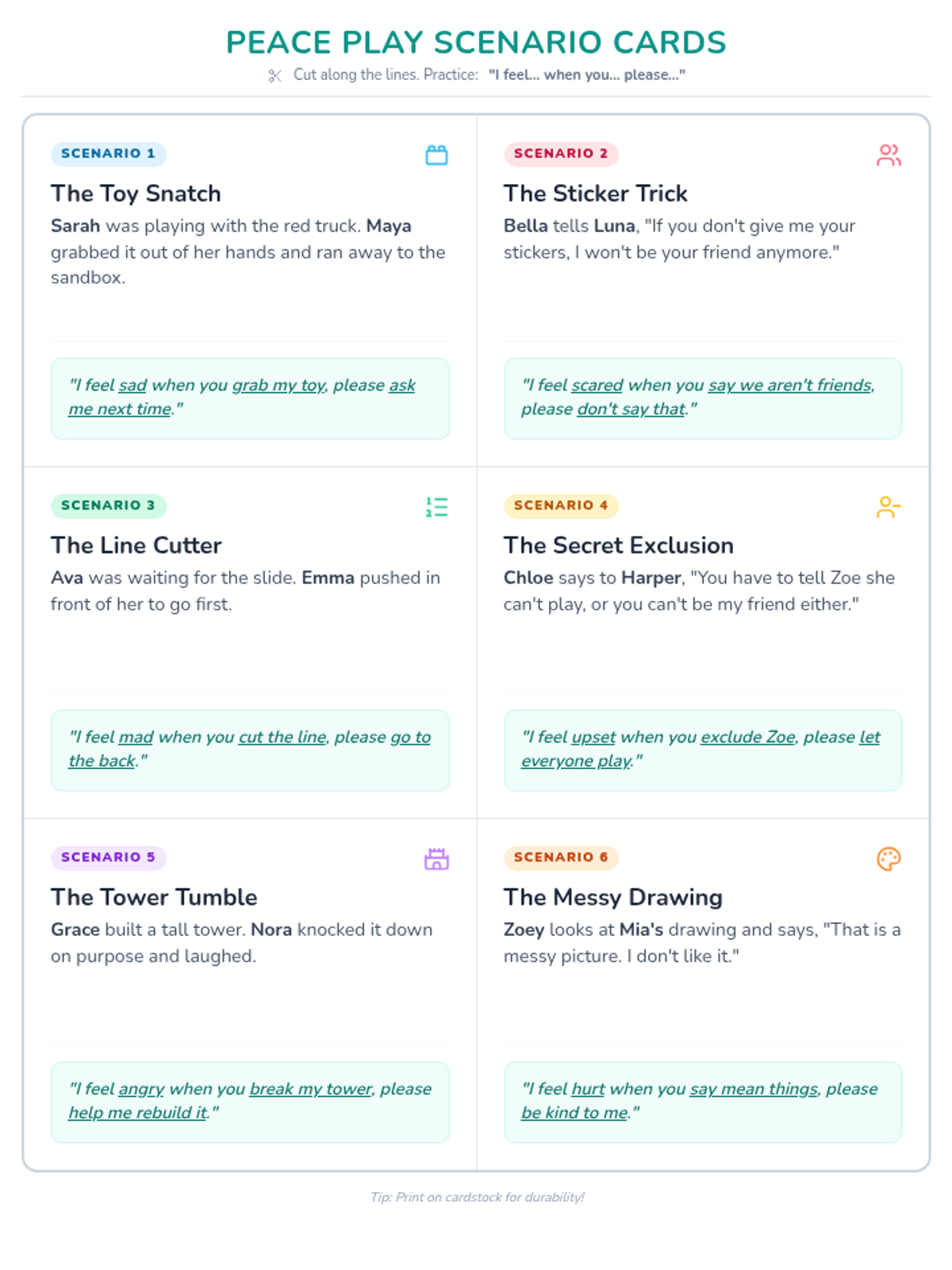
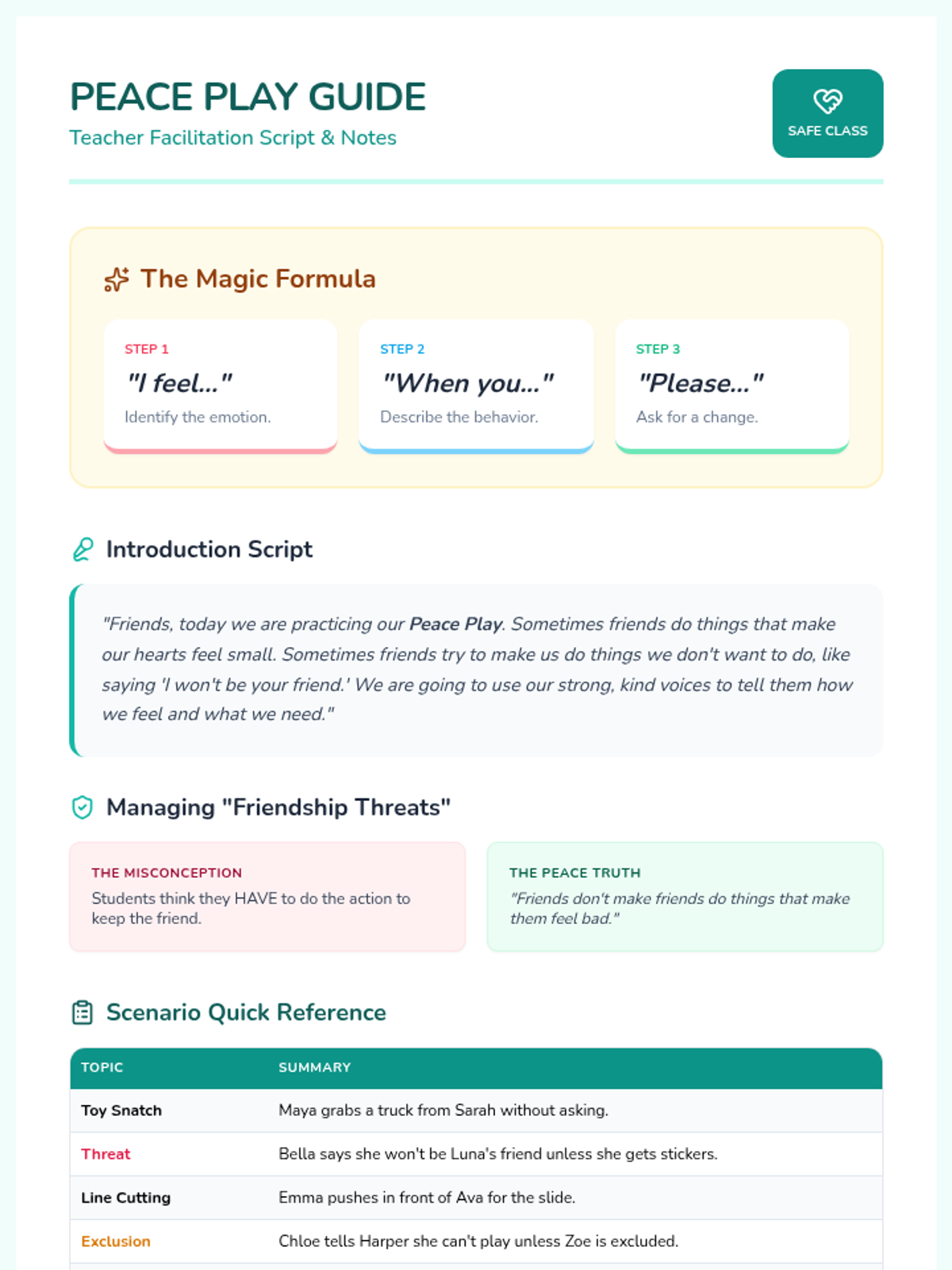
A collection of role-play scenarios and teacher guidance designed to help kindergarten students practice conflict resolution using 'I-statements' and navigate peer pressure.
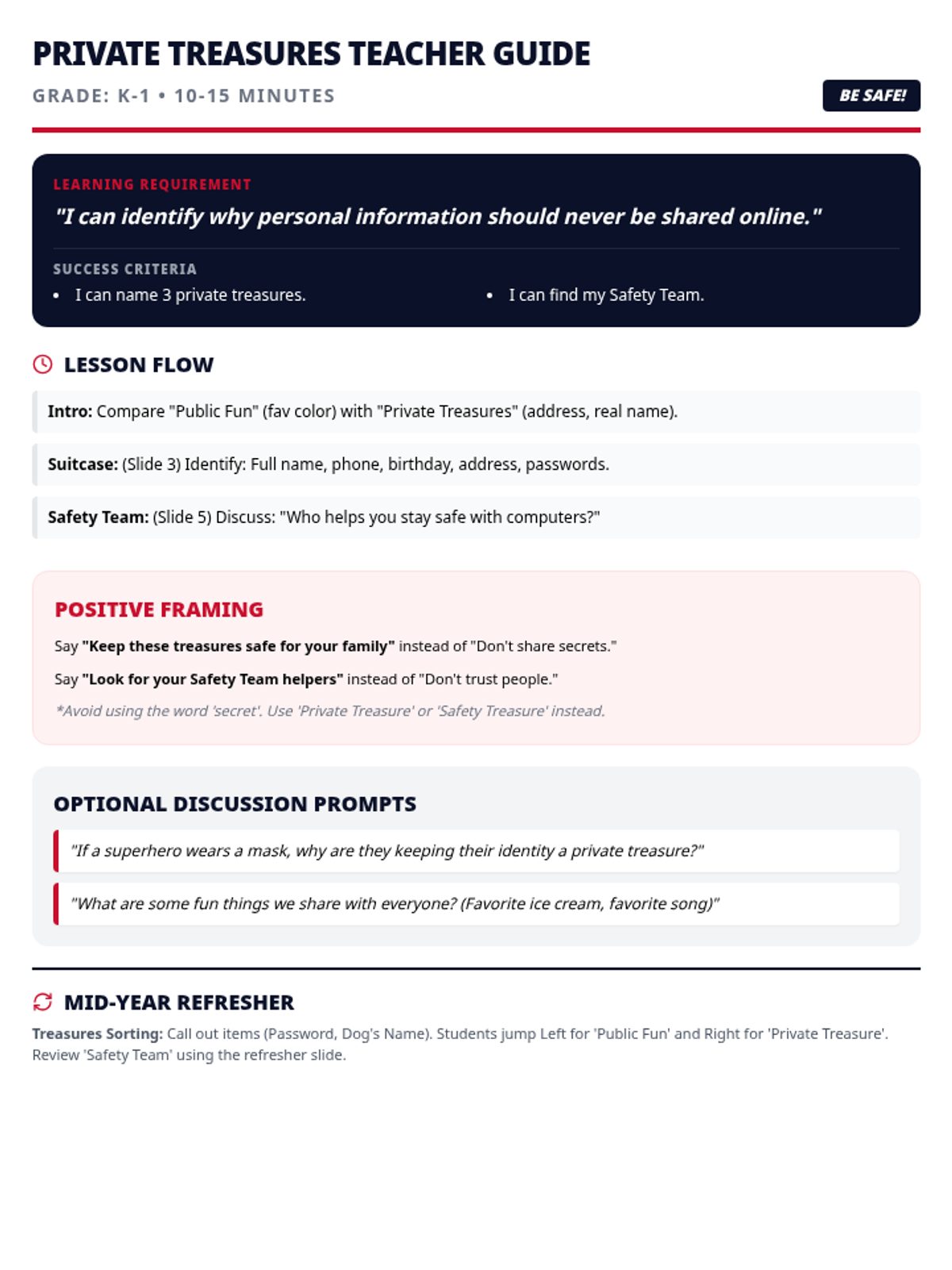
A 10-15 minute introductory lesson for K-1 students on identifying and protecting private information using the JHawk Way of being safe. Includes partner activities and positive framing for early learners.
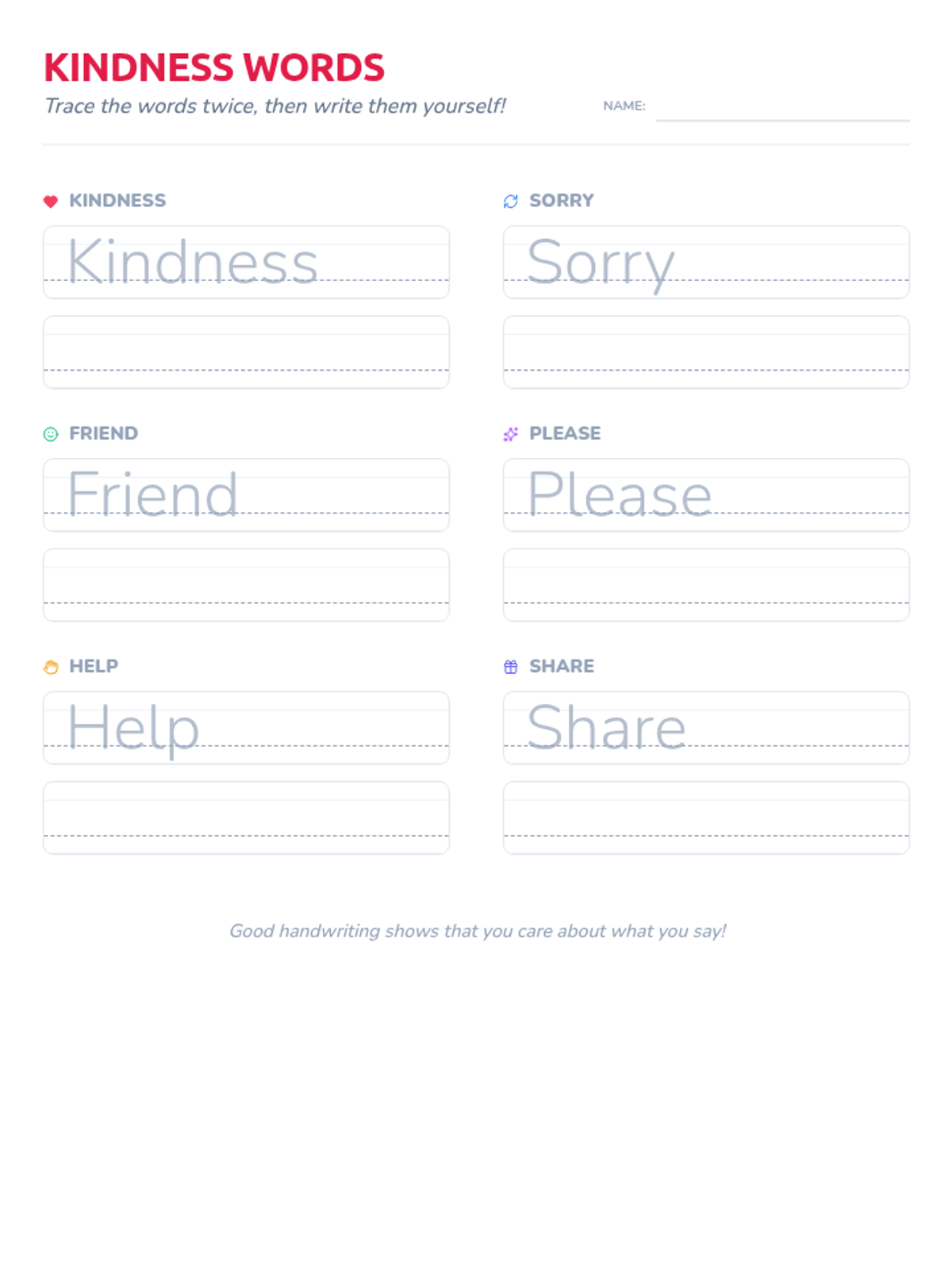
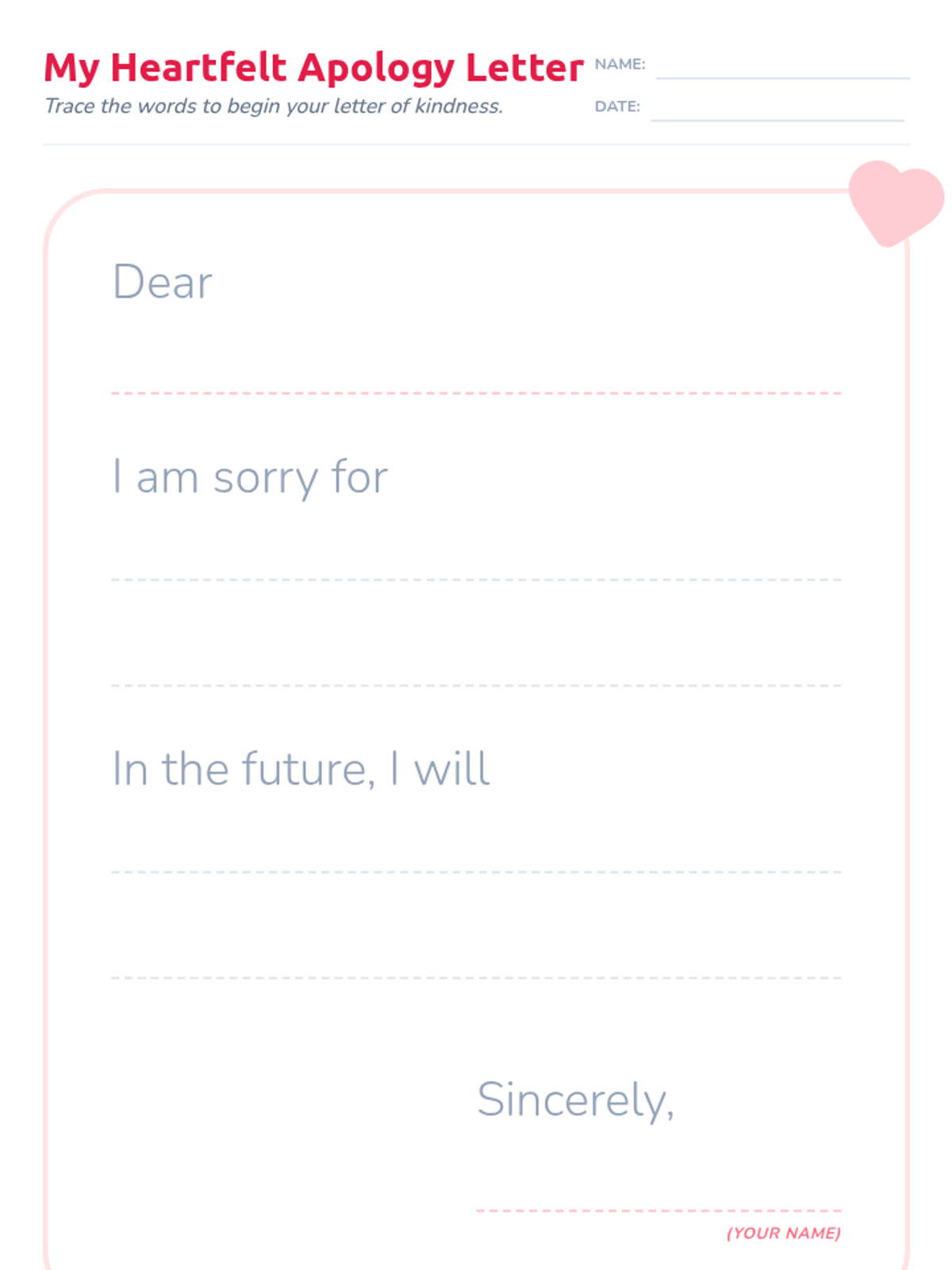
A handwriting and social-emotional learning lesson focusing on kind words and sincere apologies through tracing and writing practice.
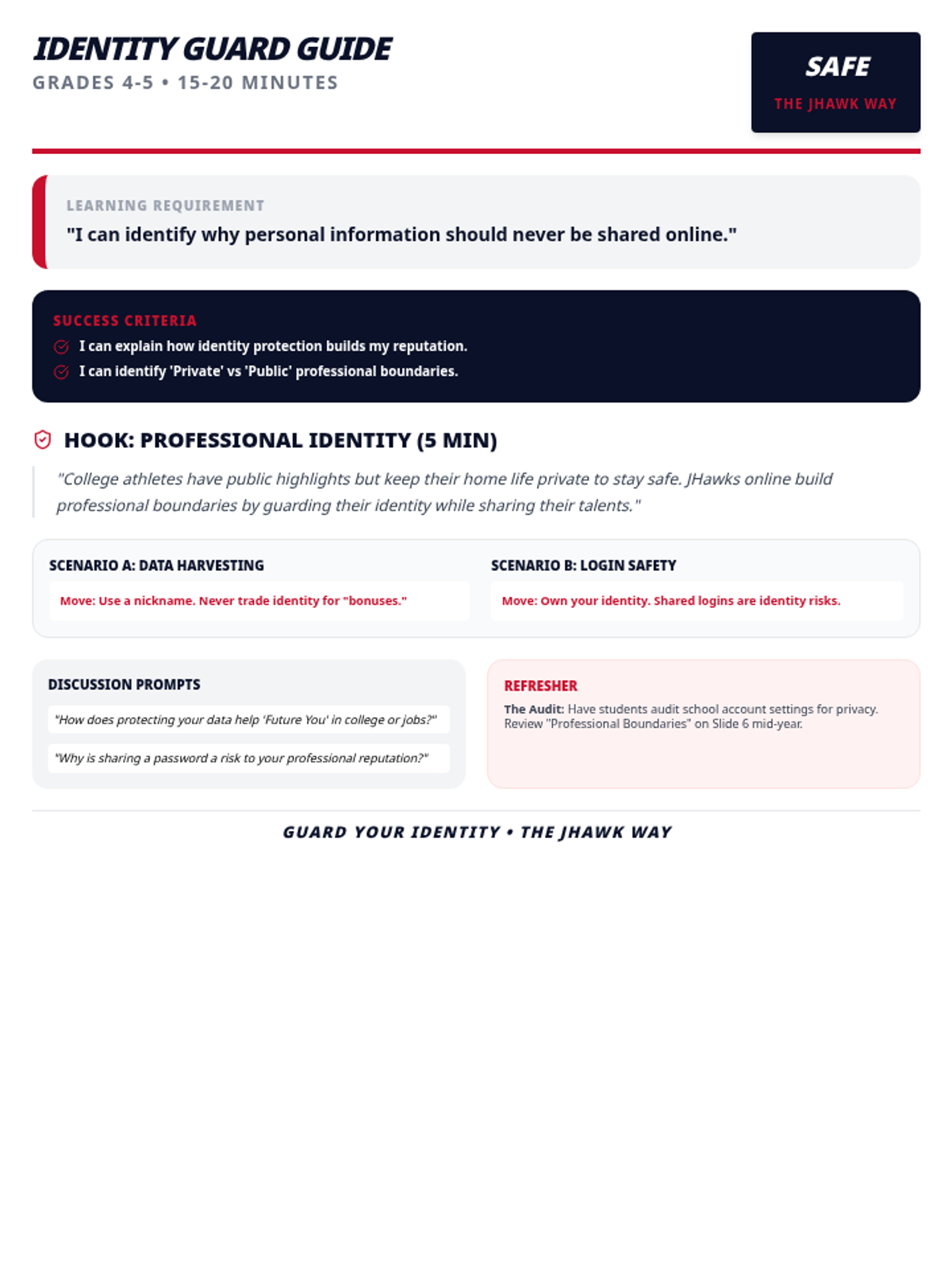
A 15-20 minute lesson for 4-5 students on identity protection and the importance of a secure digital footprint. Students analyze scenarios to practice being safe and professional online.
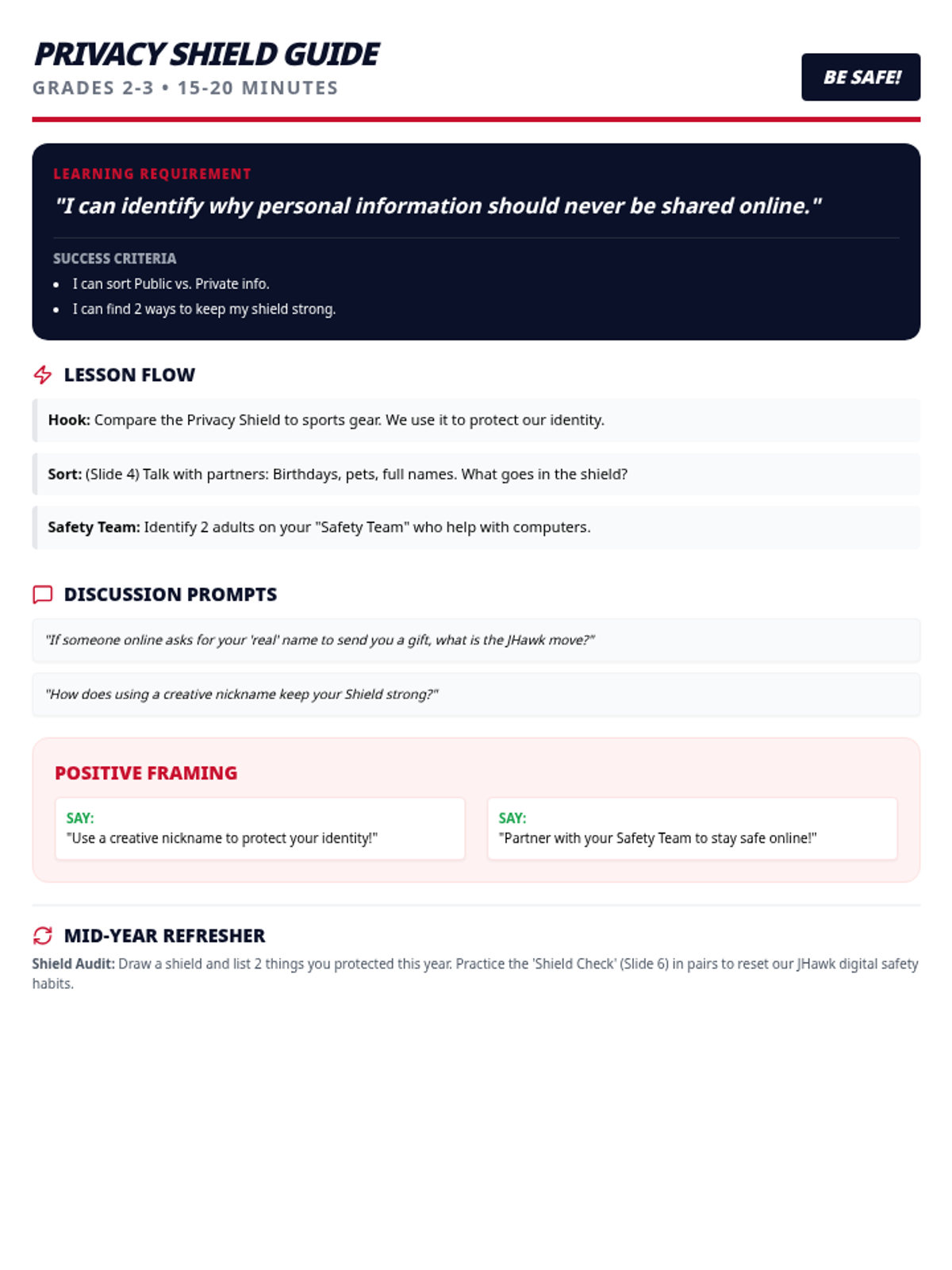
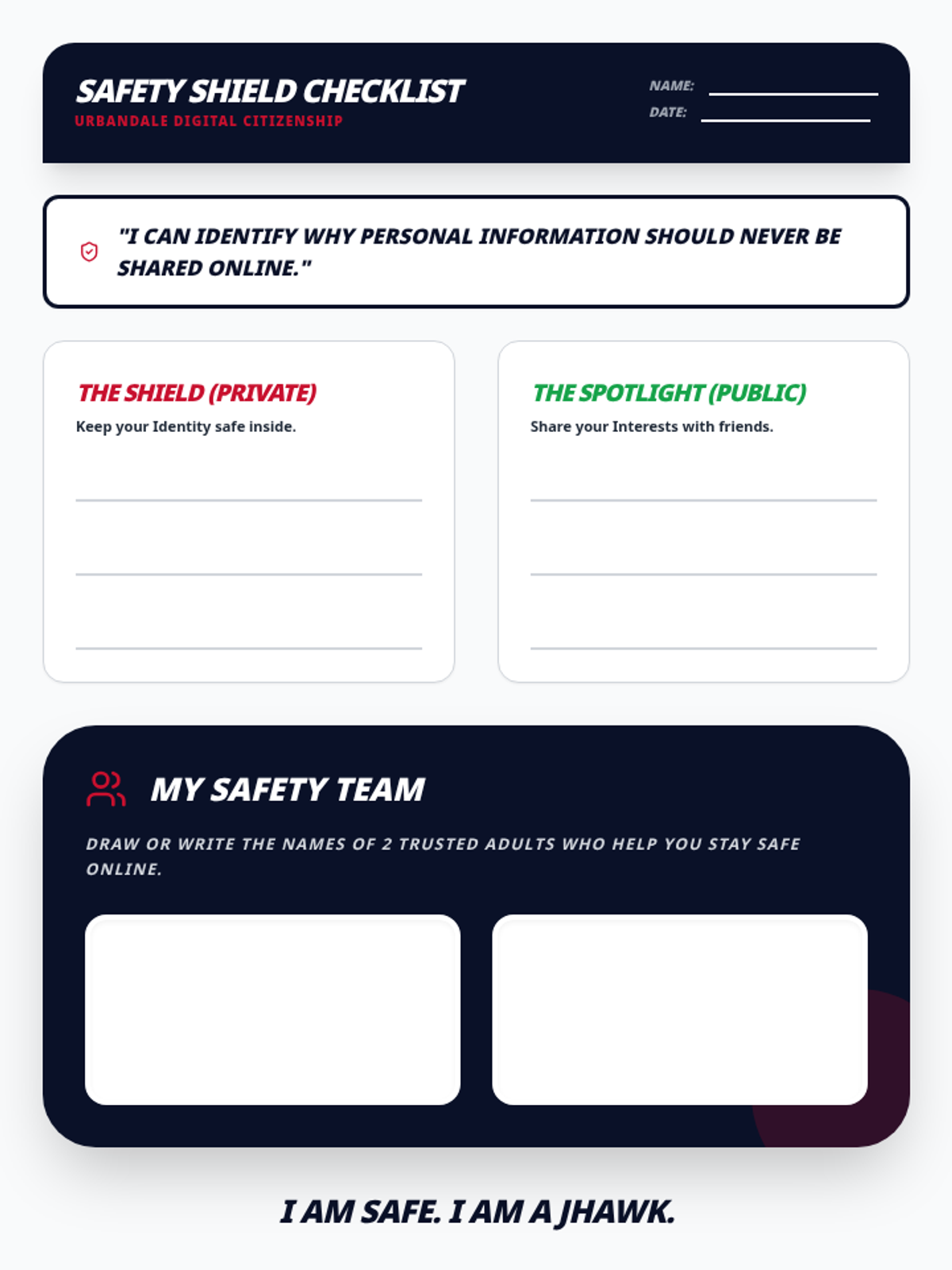
A 15-20 minute lesson for 2-3 students on building a 'Privacy Shield' to protect their identity online while staying safe and responsible. Features collaborative sorting activities and JHawk Way connections.
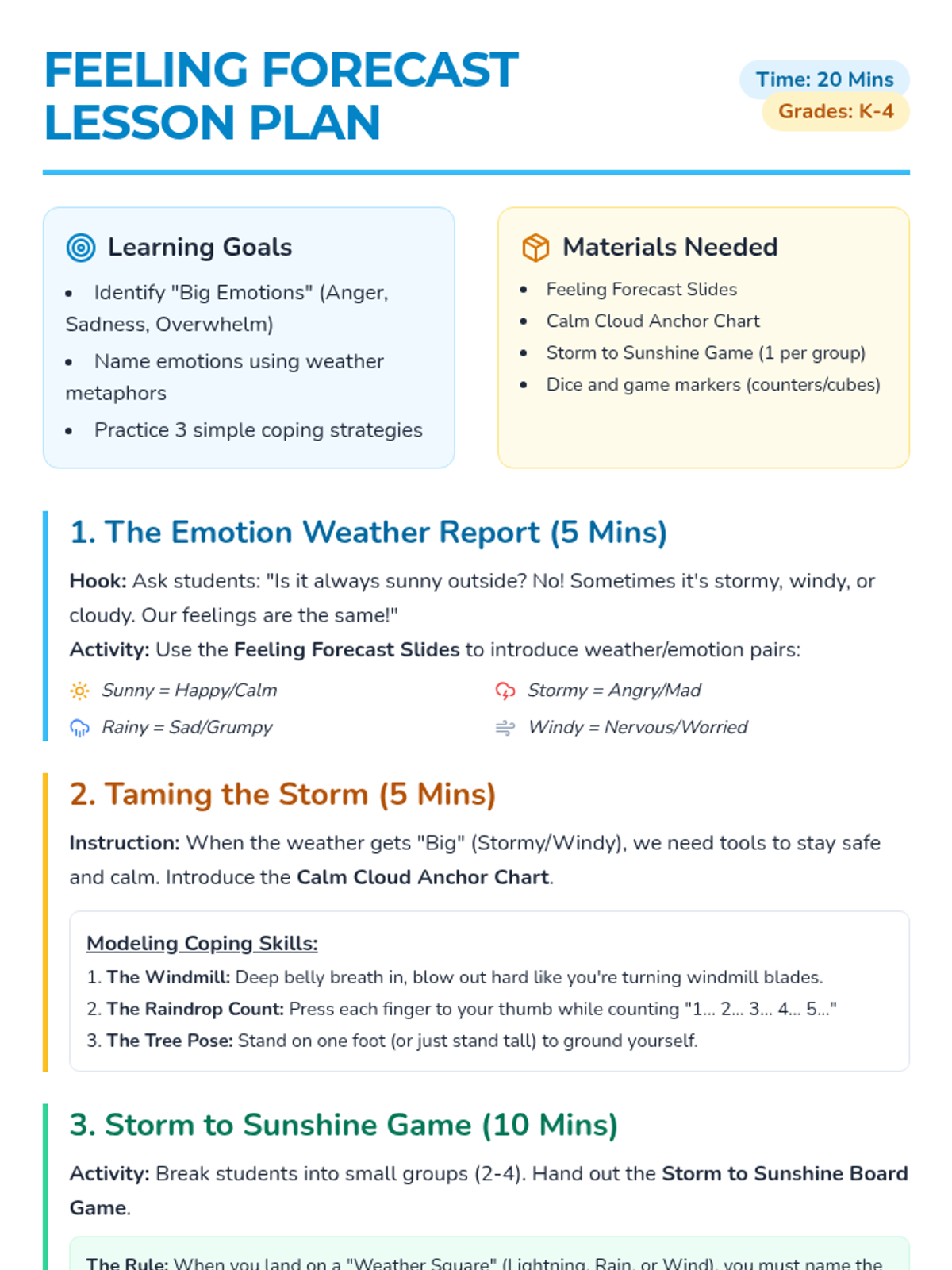
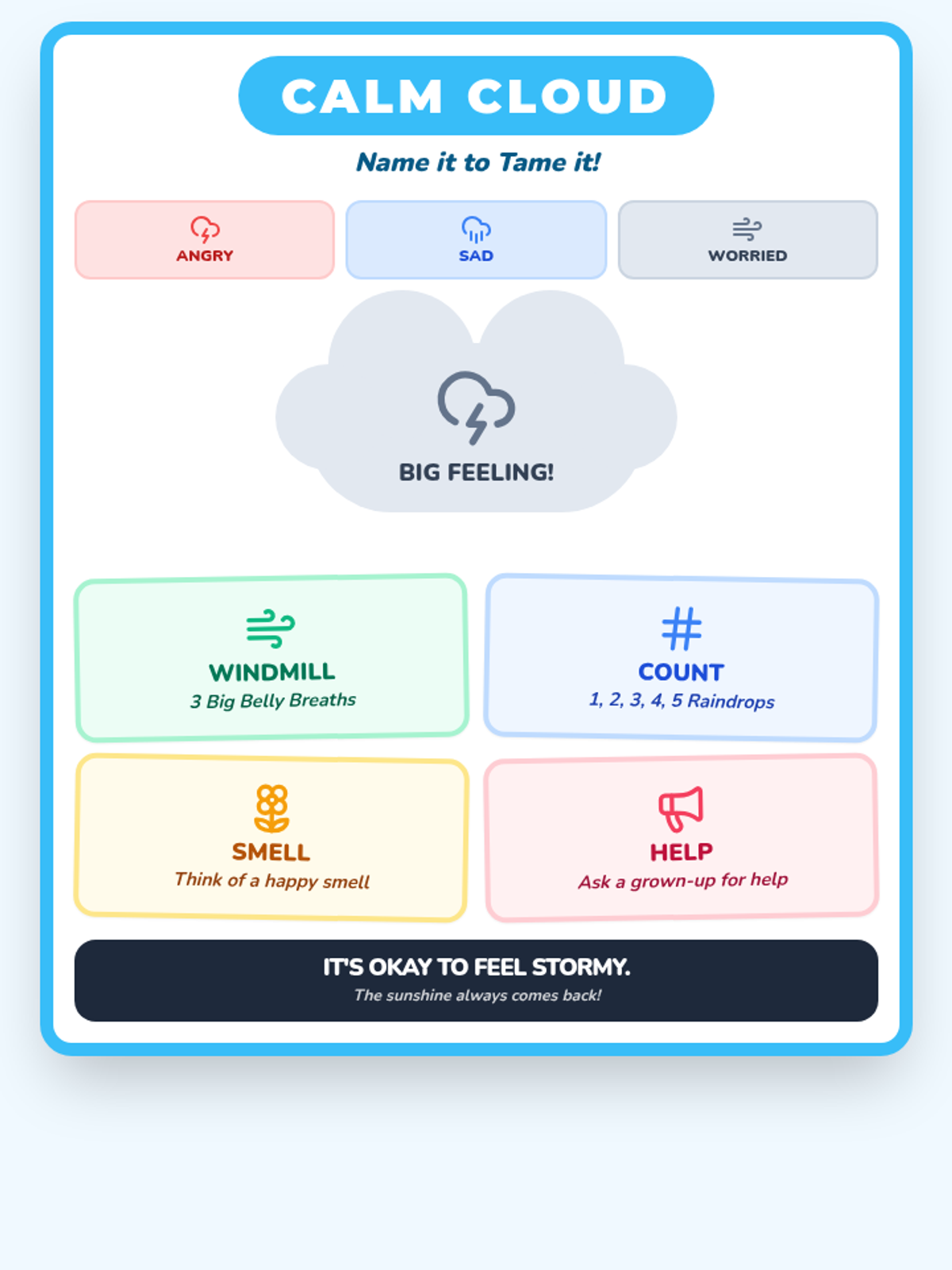
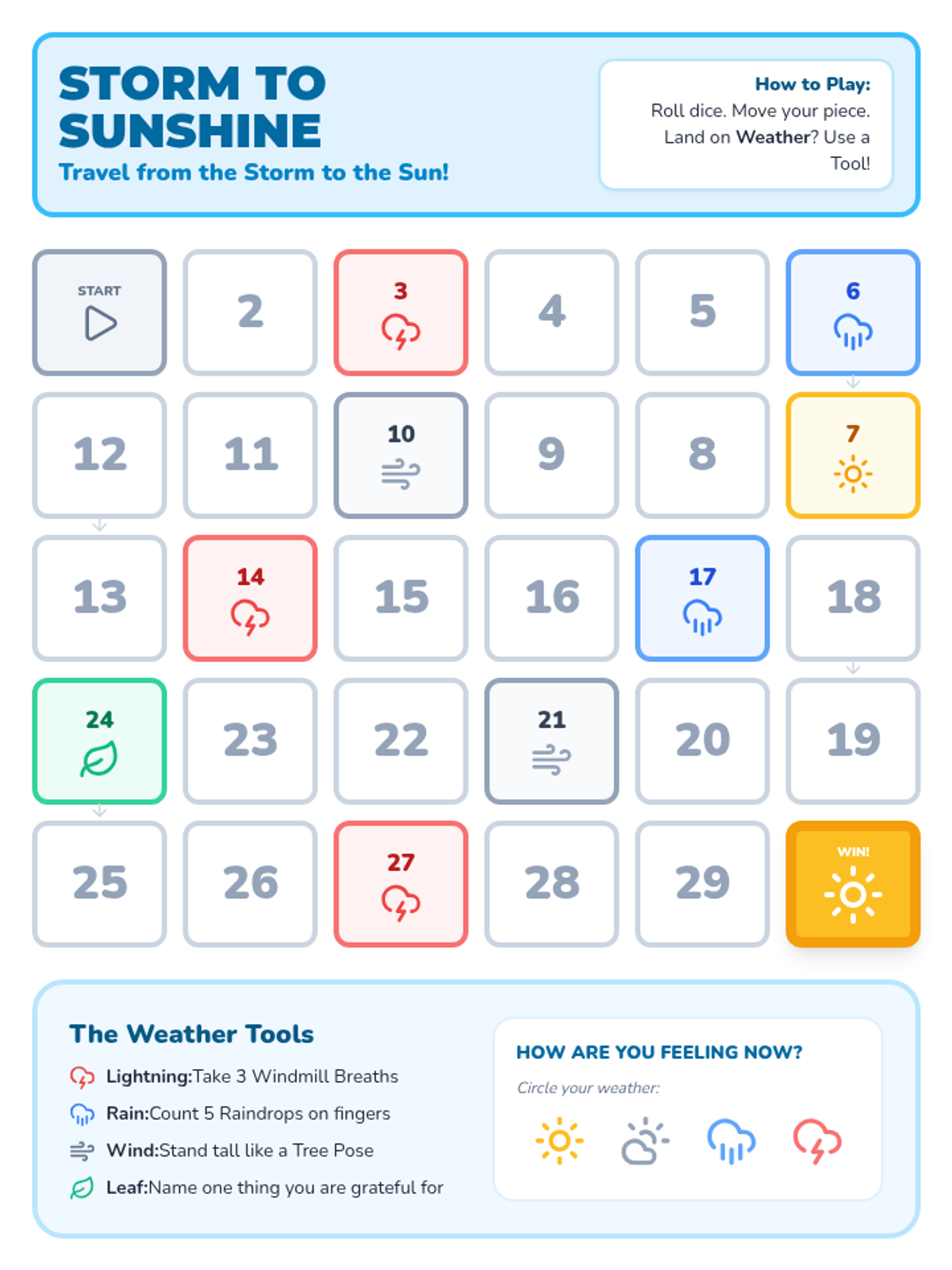
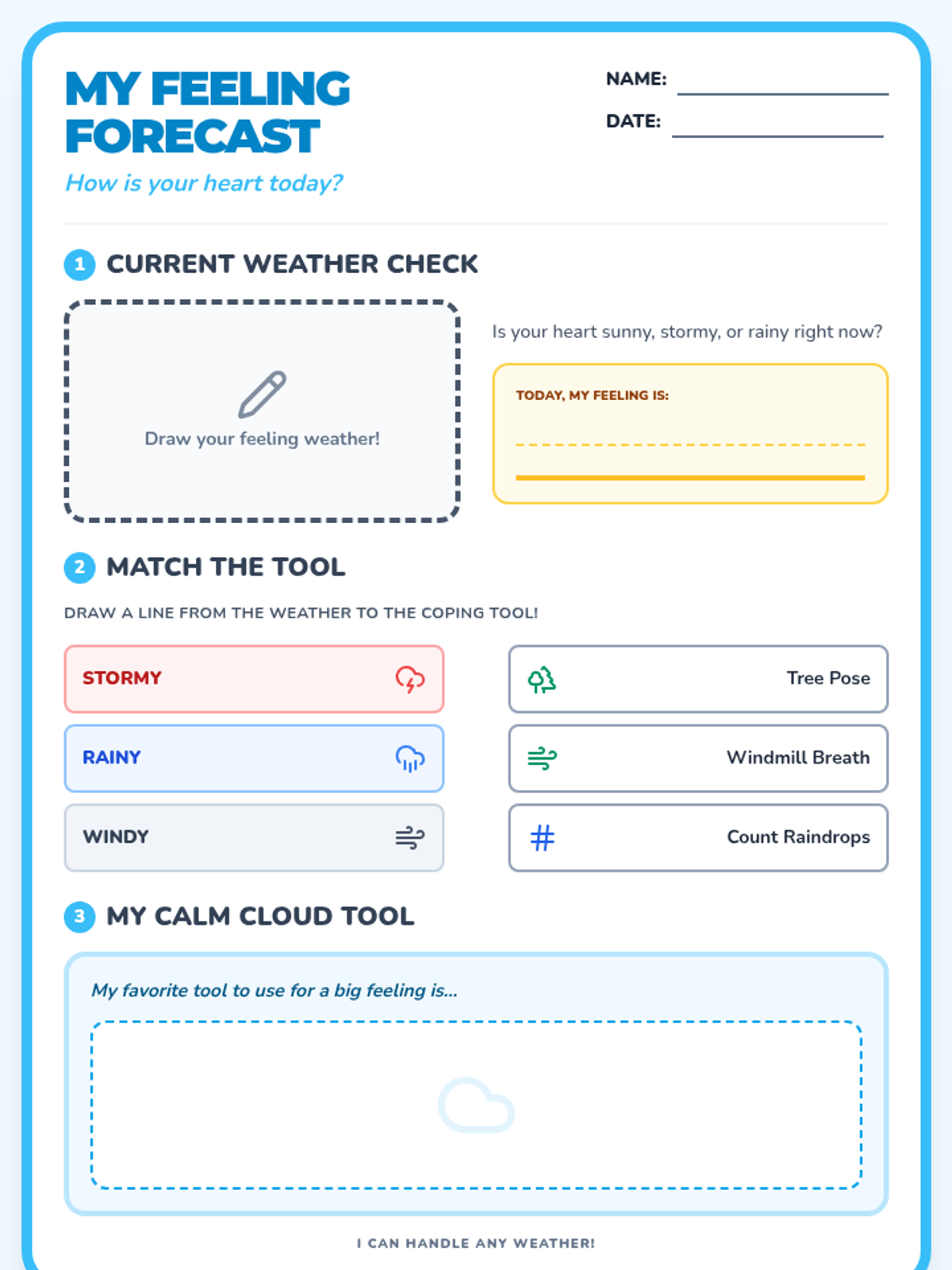
A 20-minute interactive lesson for grades K-4 focused on identifying 'big' emotions and practicing simple coping strategies using a weather-themed metaphor.
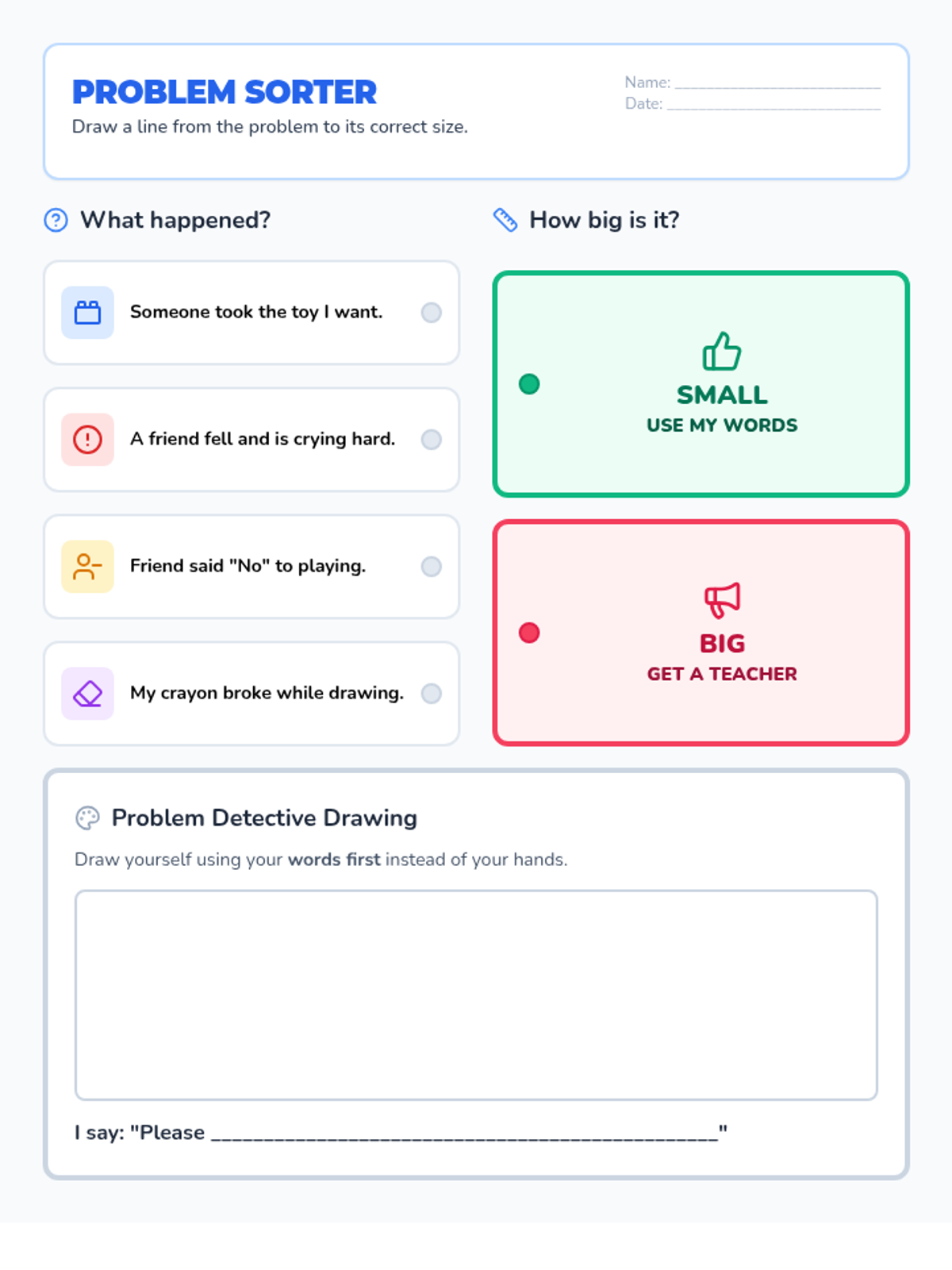
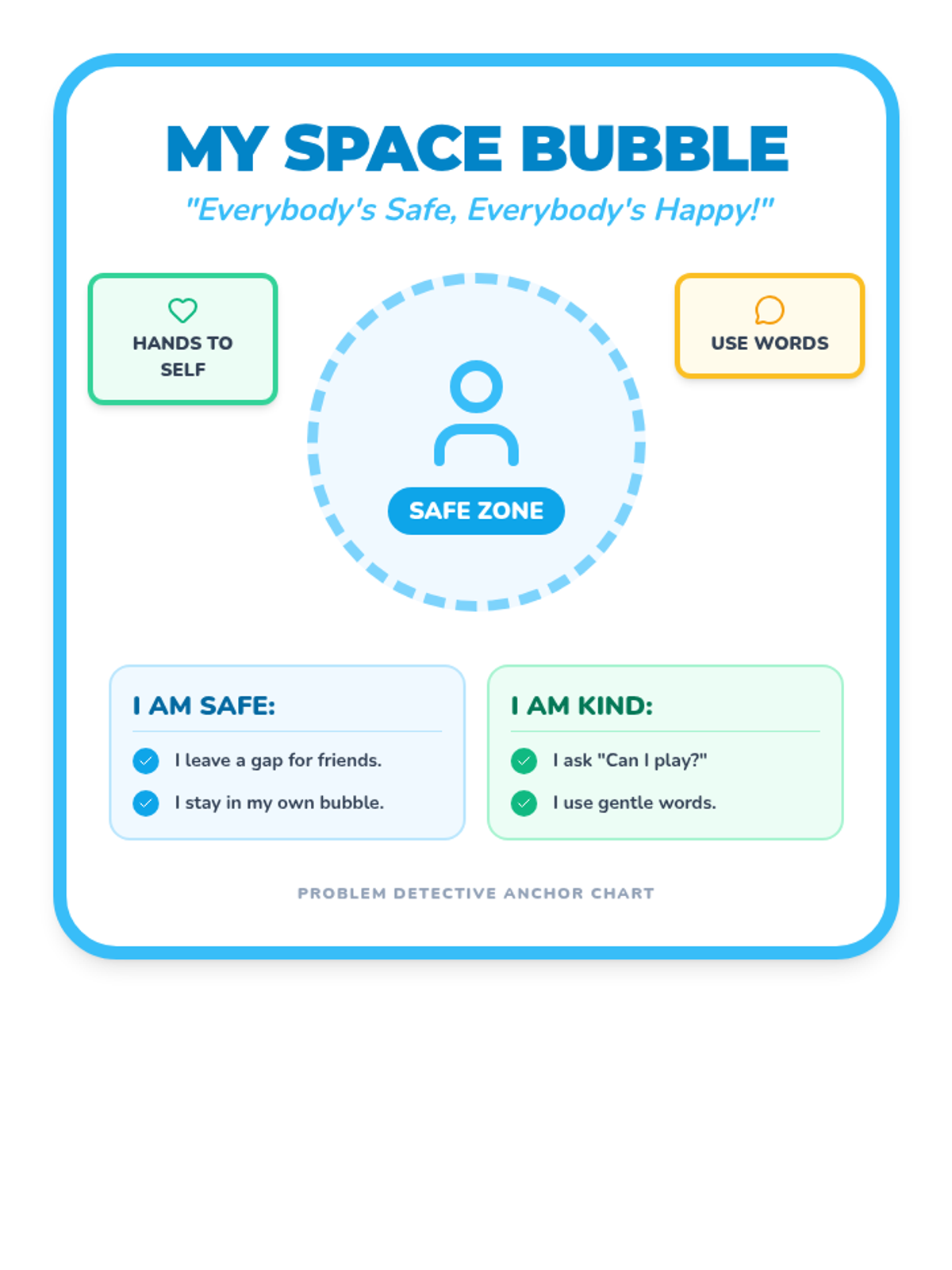
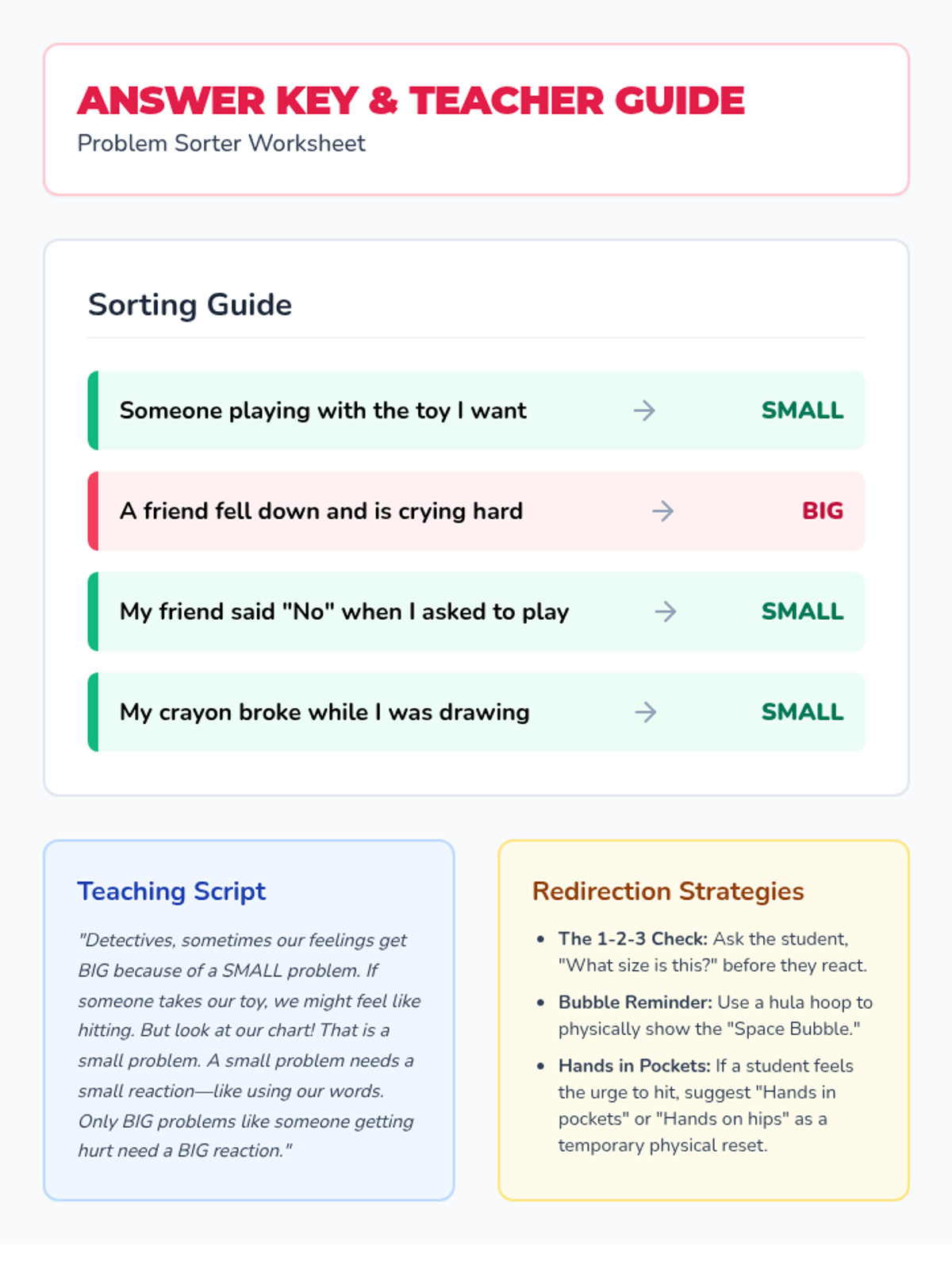
This lesson introduces kindergarteners to the concept of the 'Size of the Problem.' Through visual aids and sorting activities, students learn to distinguish between small glitches (like sharing issues) and big emergencies, helping them choose appropriate emotional and physical responses, particularly regarding personal space and keeping hands to self.
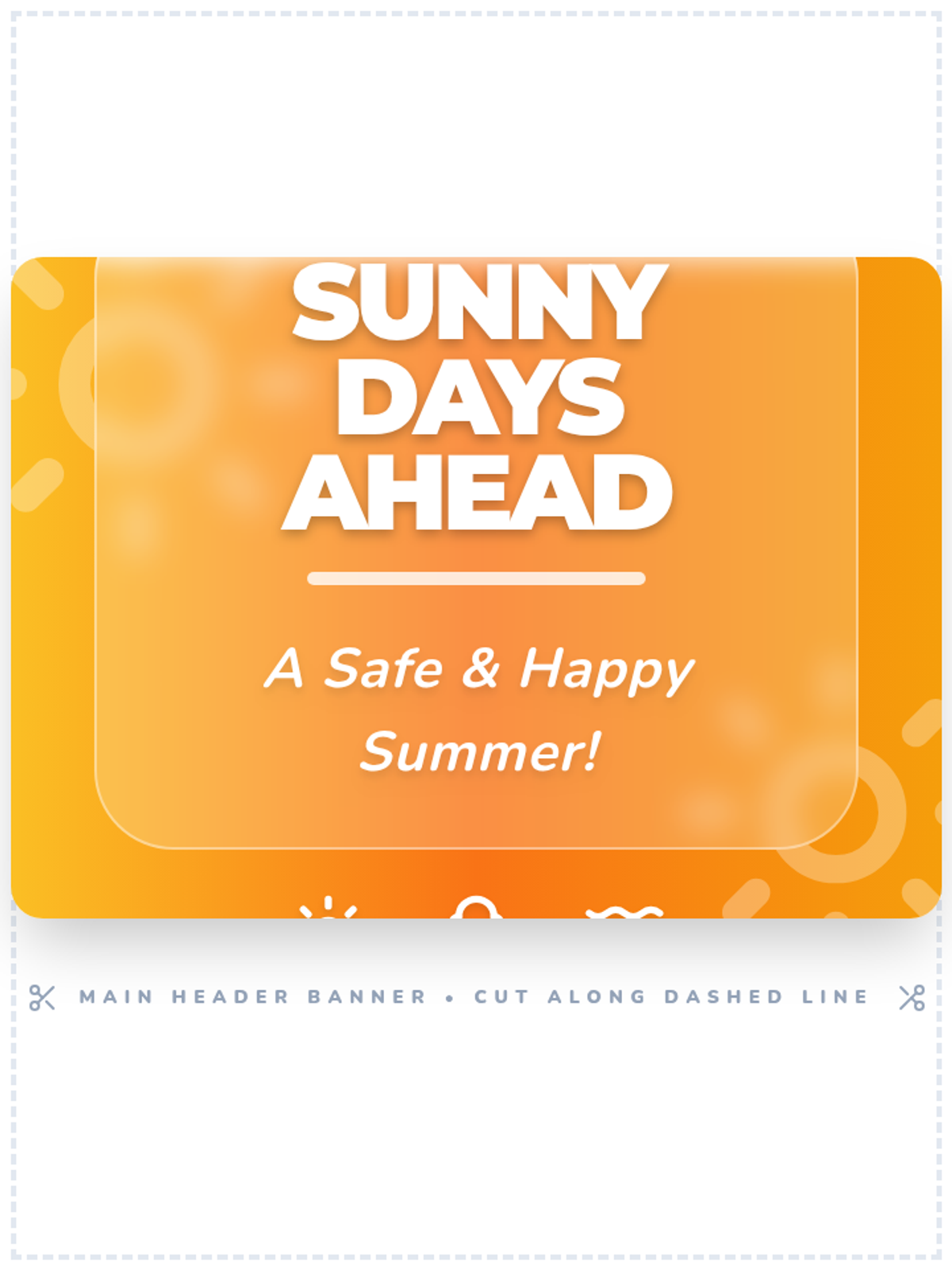
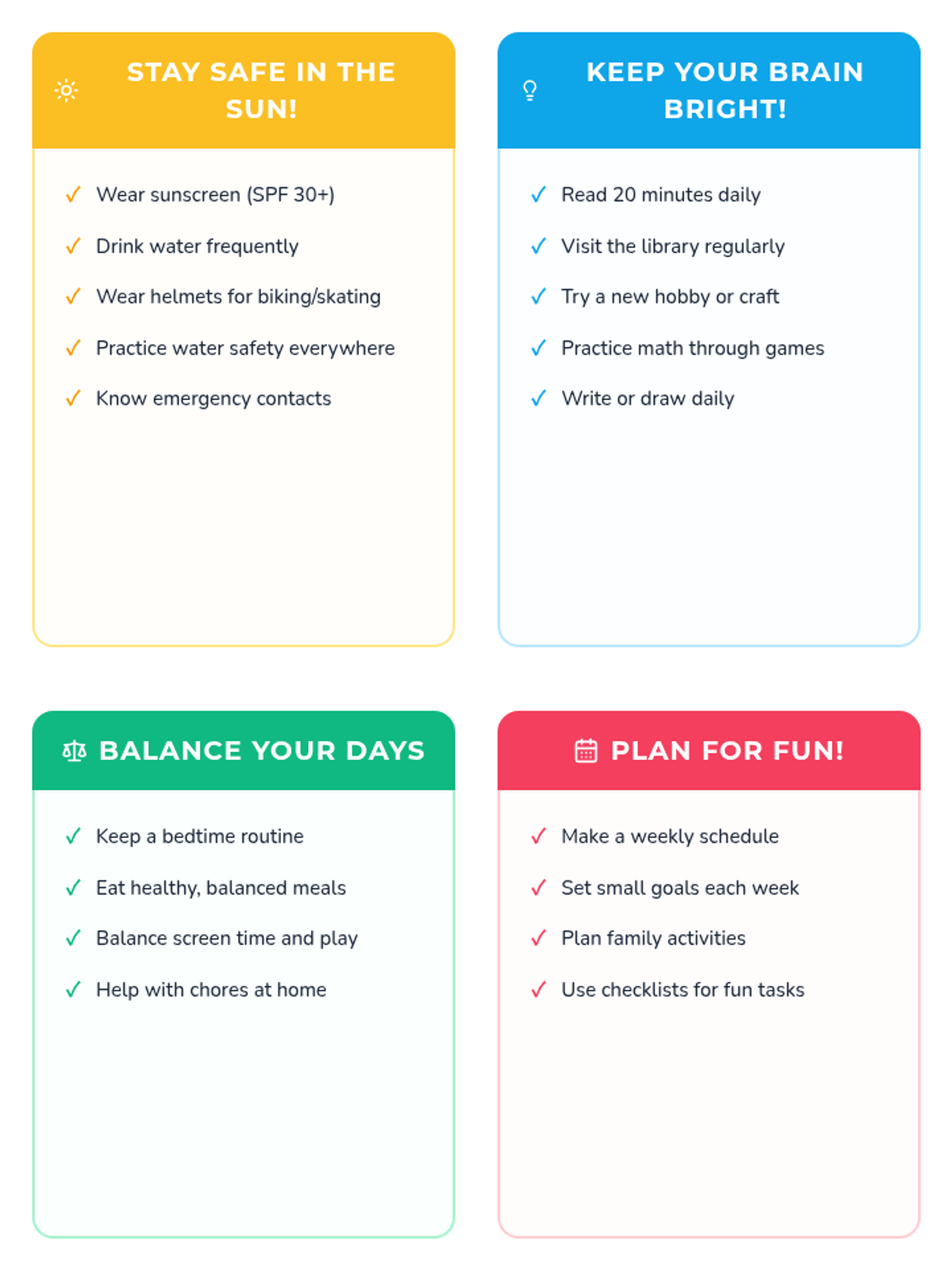
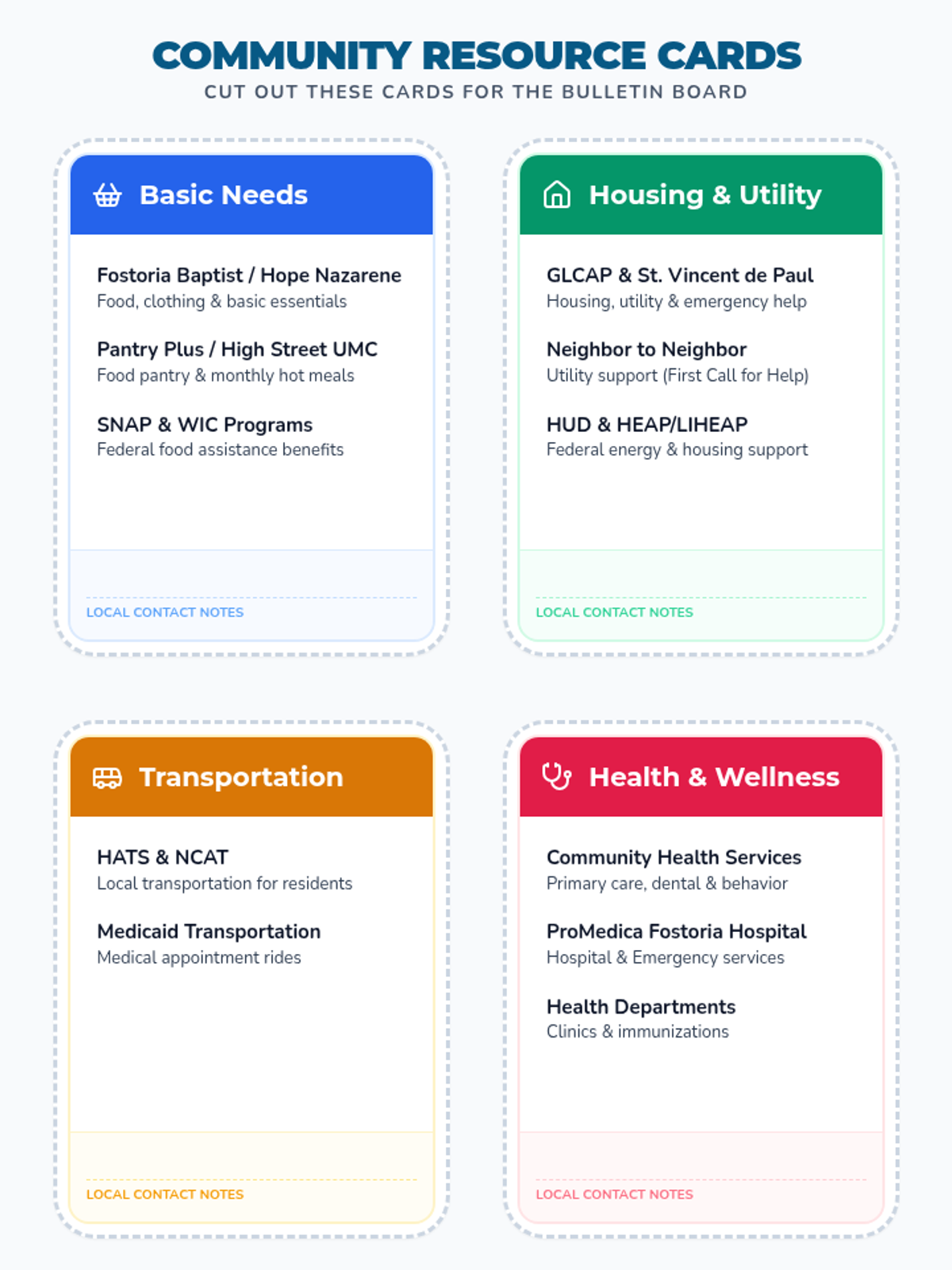
A collection of printable banners, headers, advice cards, and community resource listings to create an engaging summer-themed bulletin board.
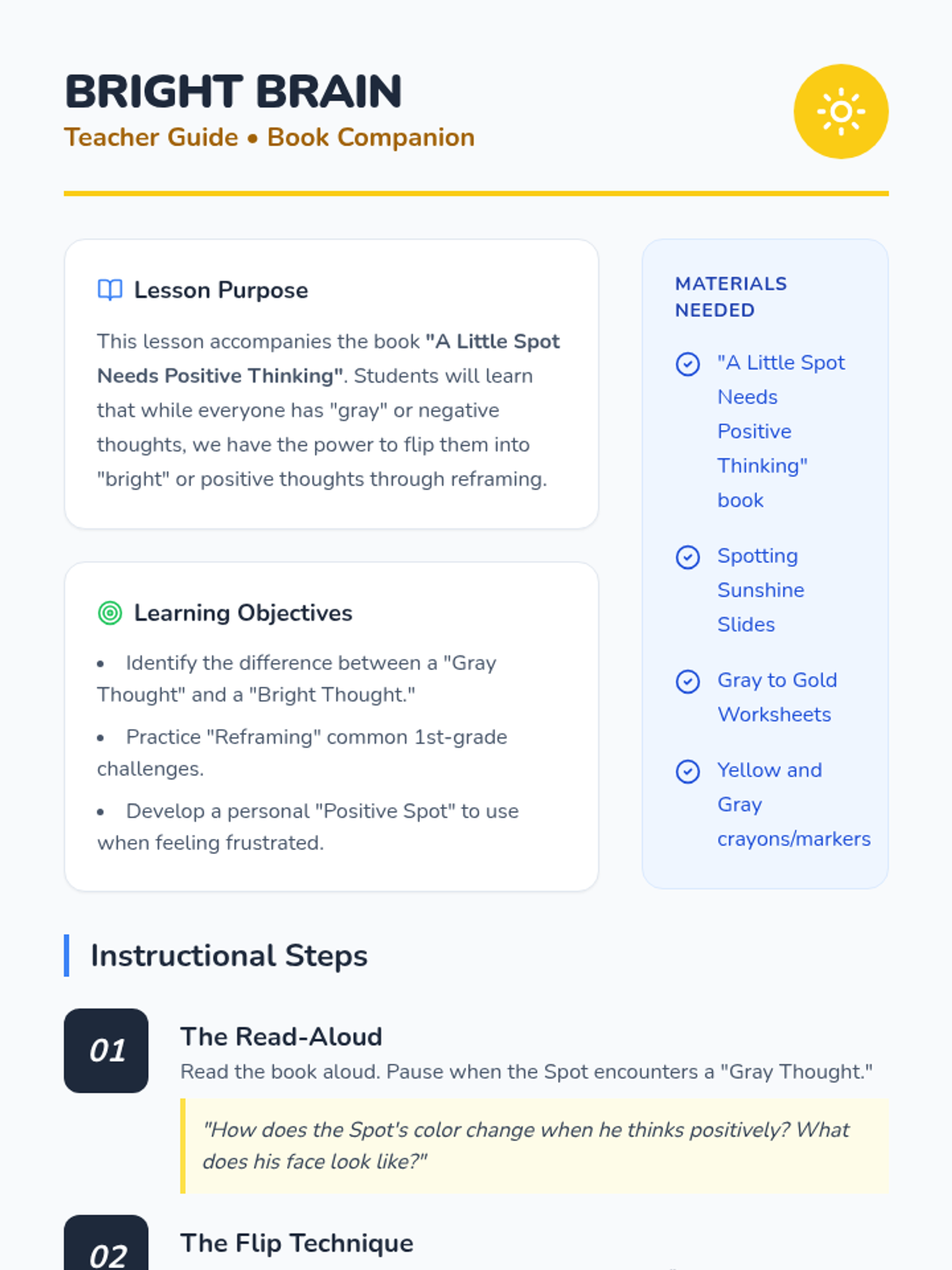
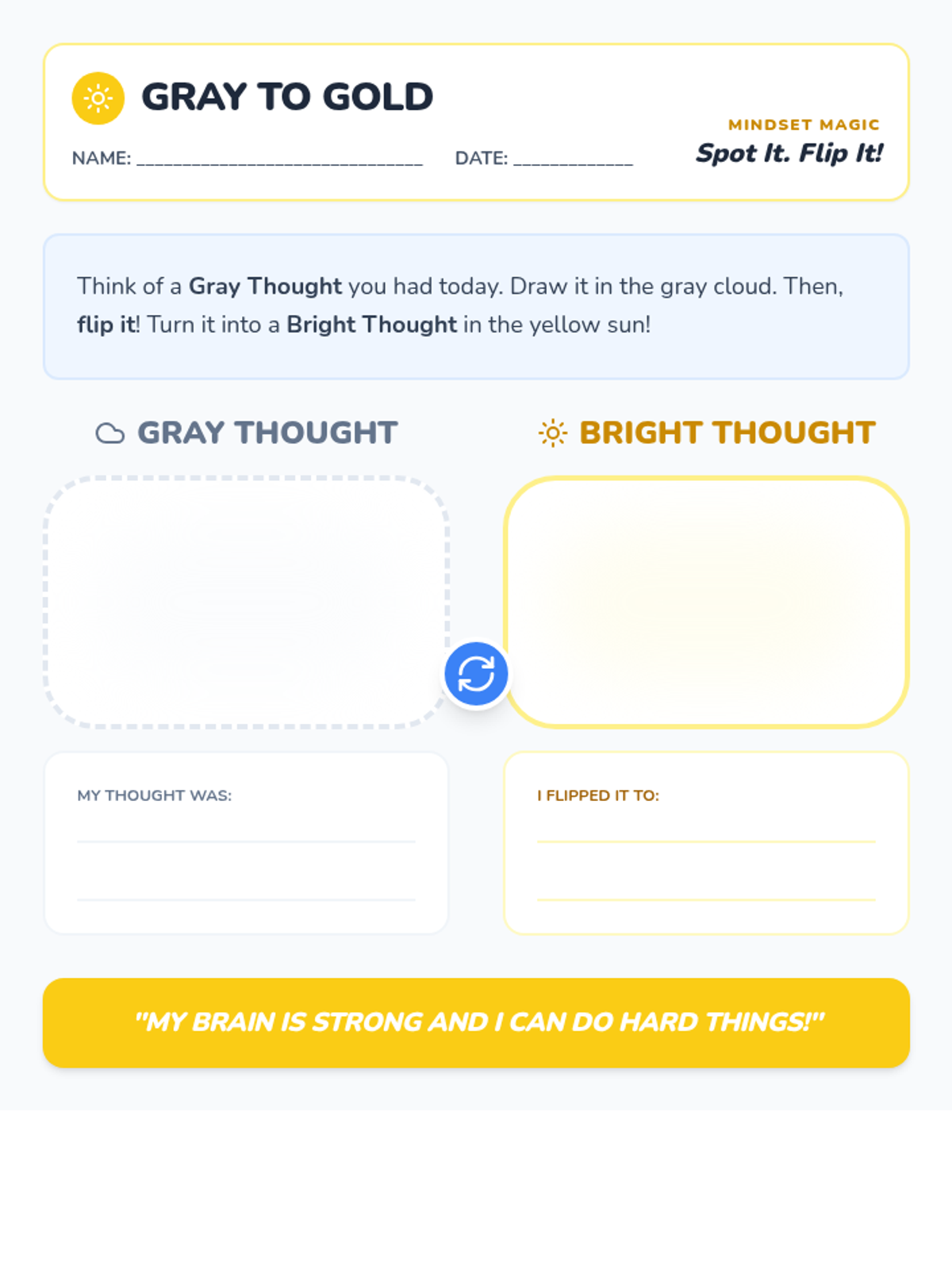
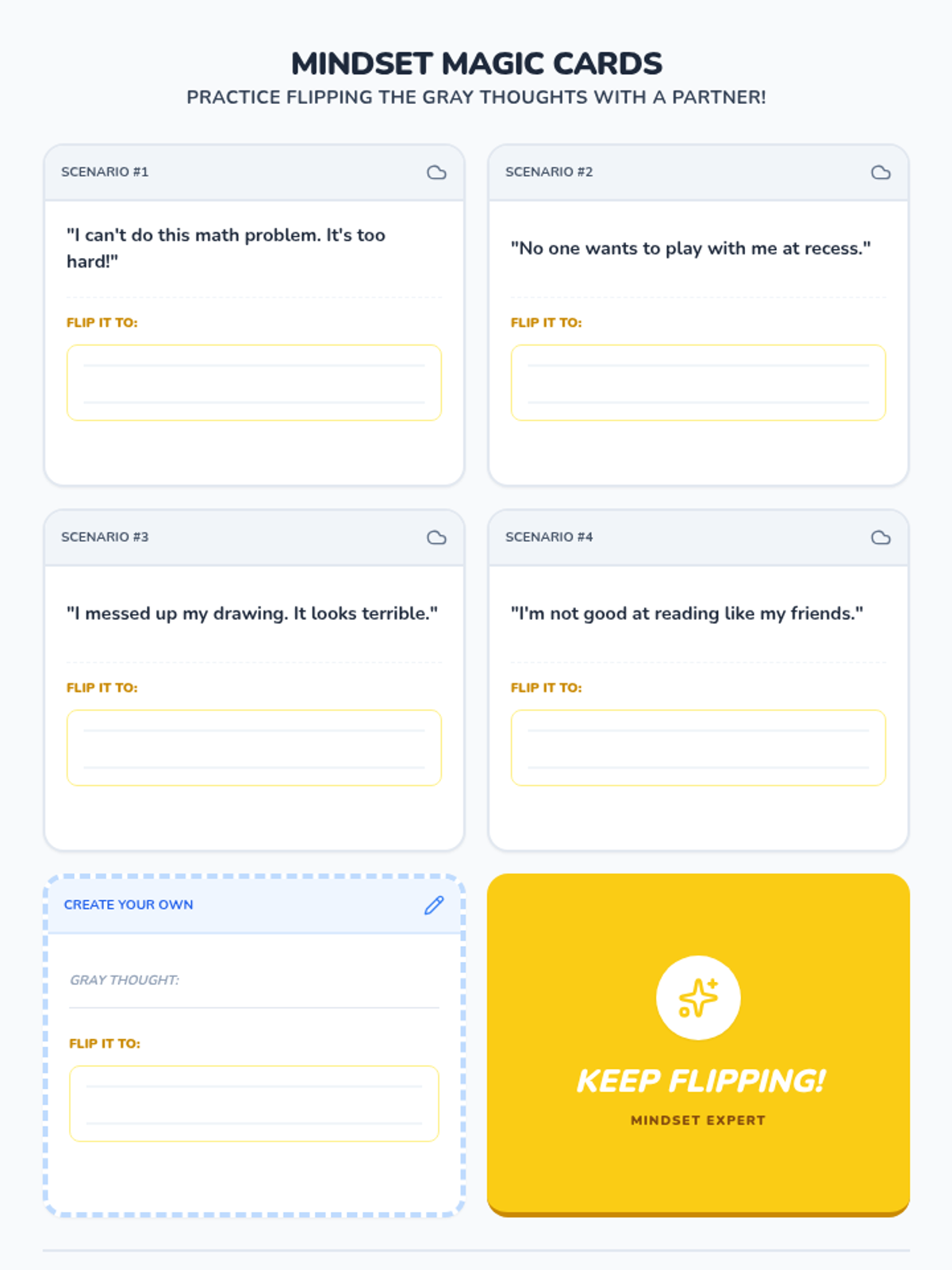
A lesson based on 'A Little Spot Needs Positive Thinking' that teaches 1st graders how to identify negative 'gray' thoughts and reframe them into positive 'bright' ones using simple, visual strategies.
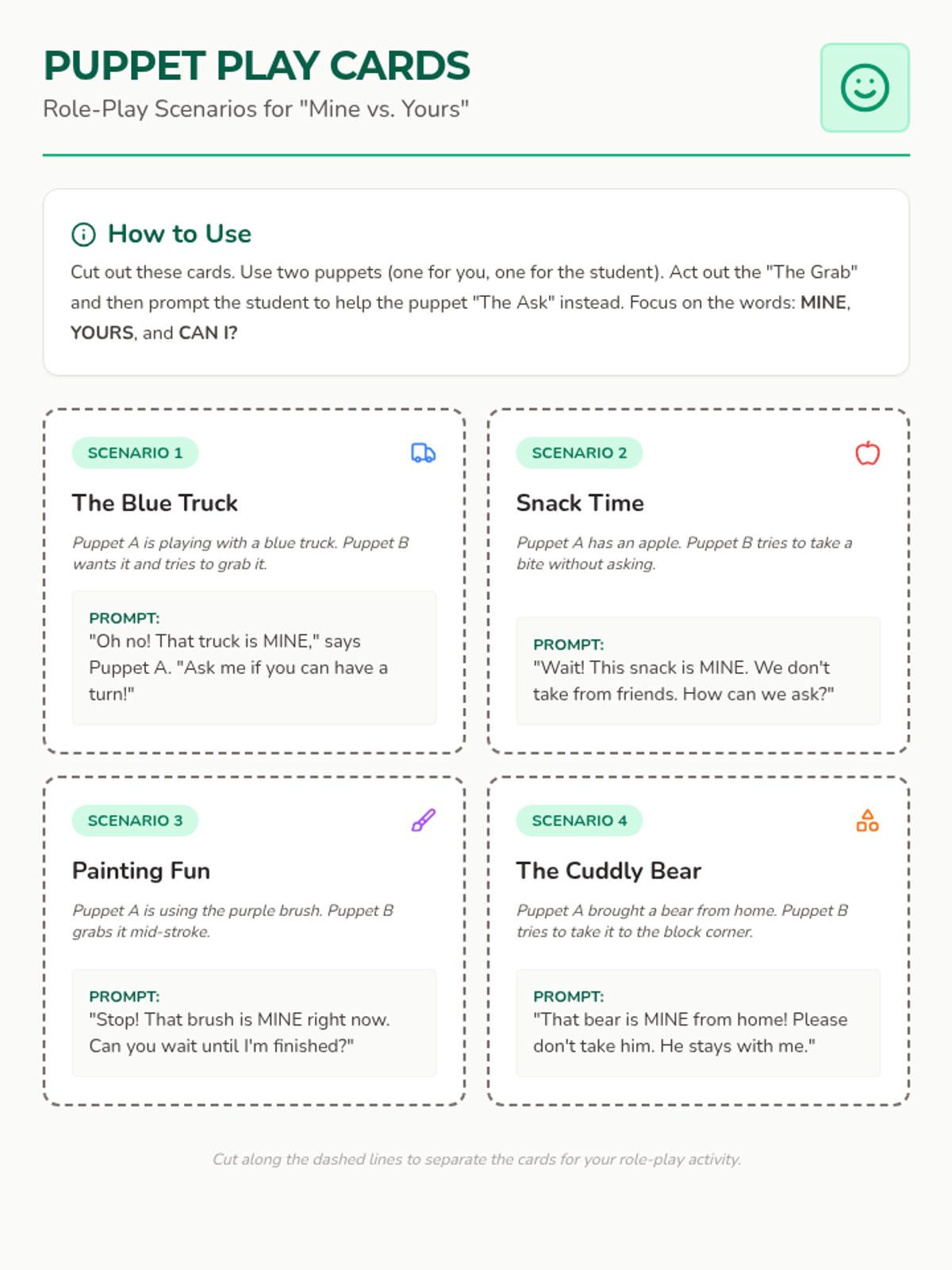
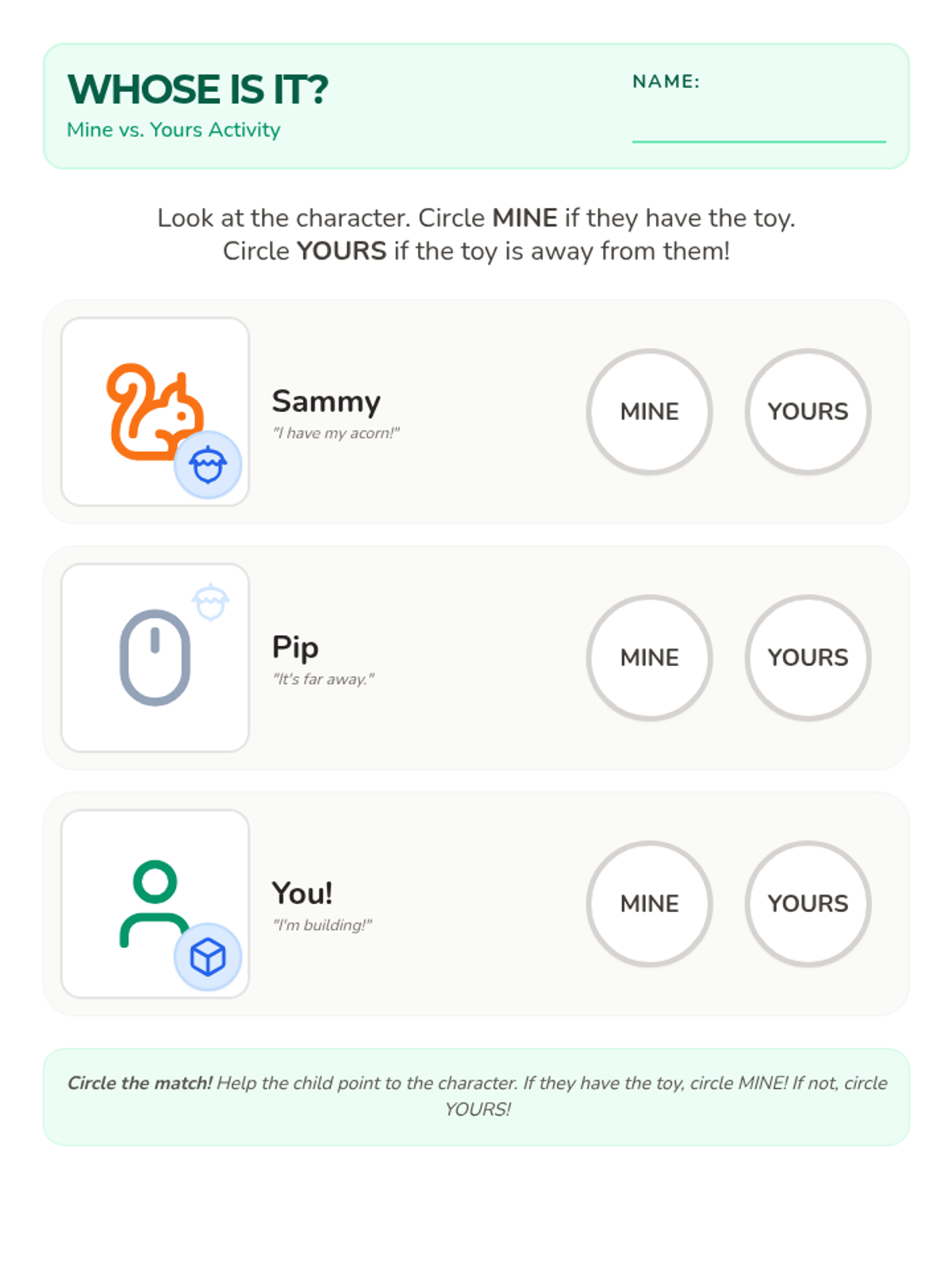
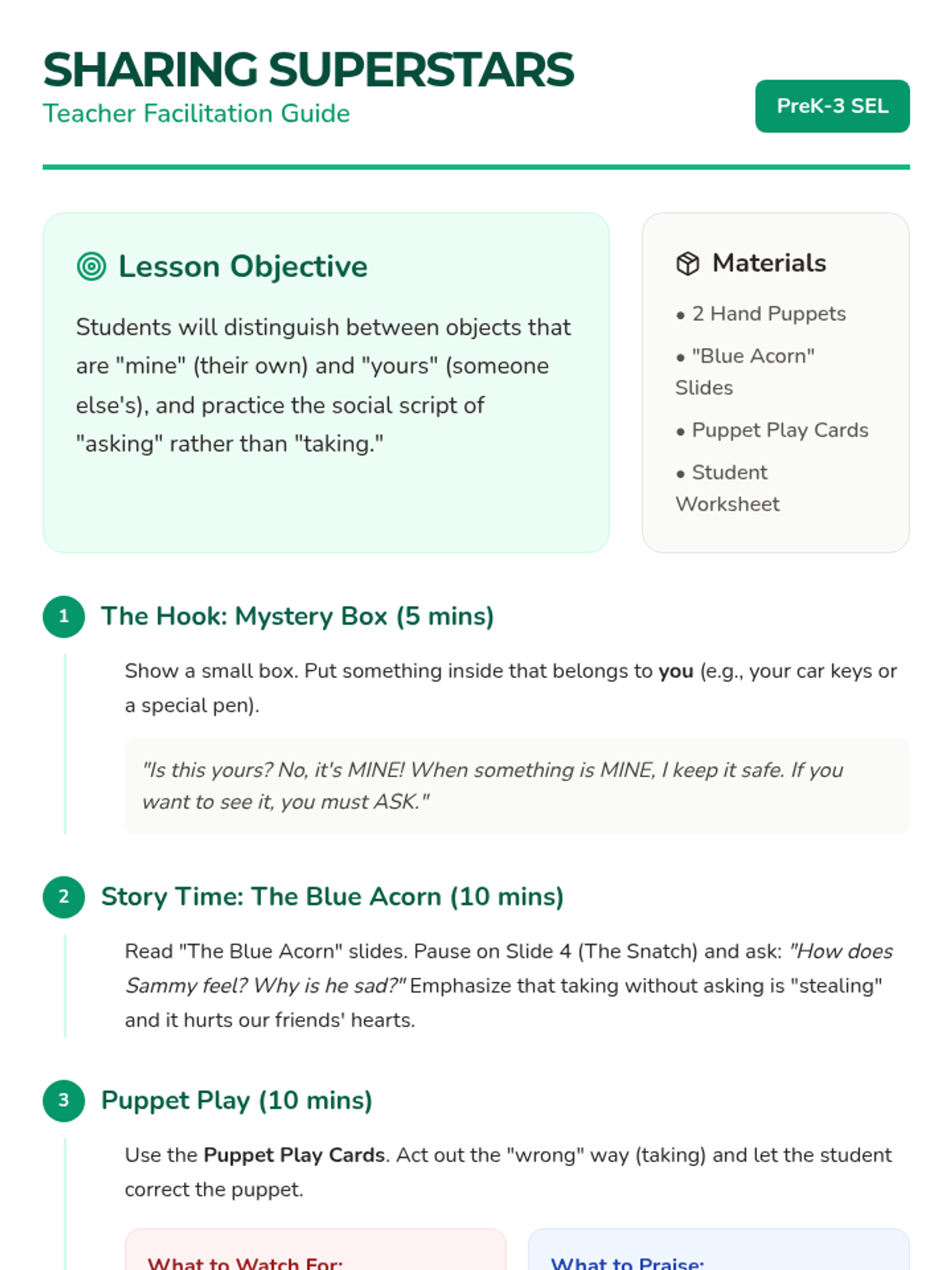
A gentle social-emotional lesson for toddlers focusing on the difference between 'mine' and 'yours', featuring a story about a squirrel and puppet-based role-play scenarios.
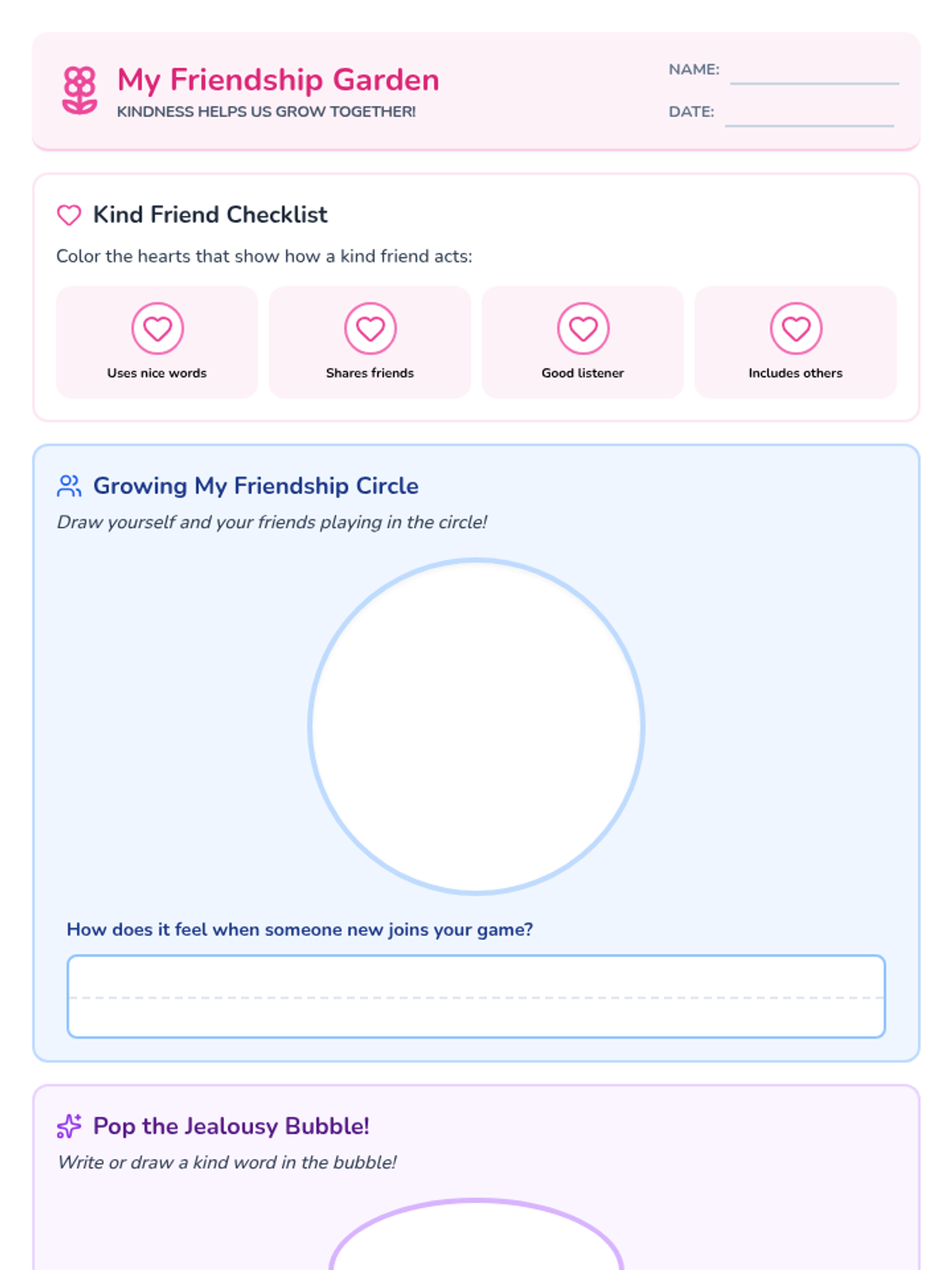
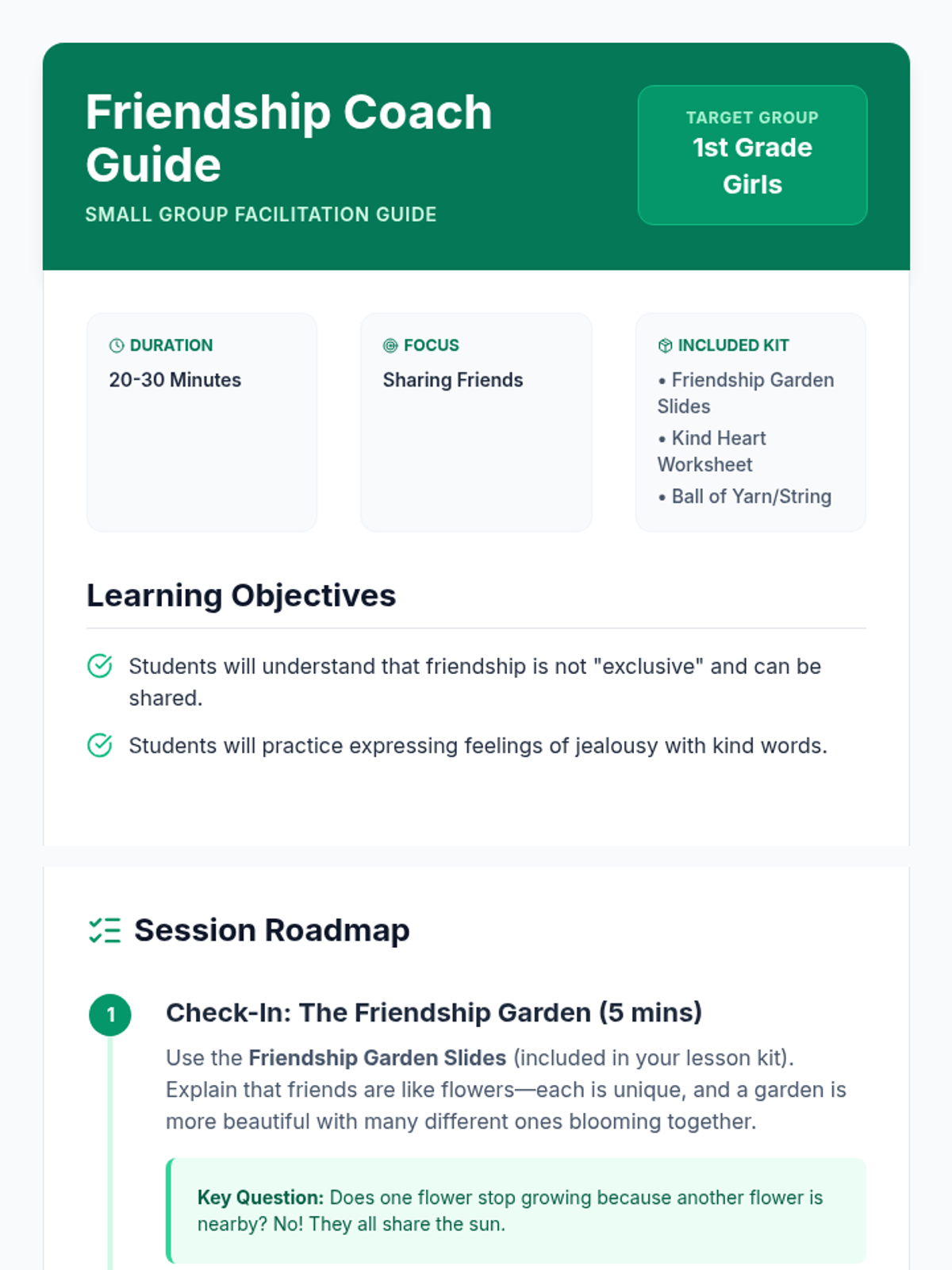
A small group guidance lesson for first-grade girls focused on managing jealousy, sharing friends, and practicing kindness in social circles.