Students learn to balance screen time with 'green time' activities like playing outside, reading, and moving.
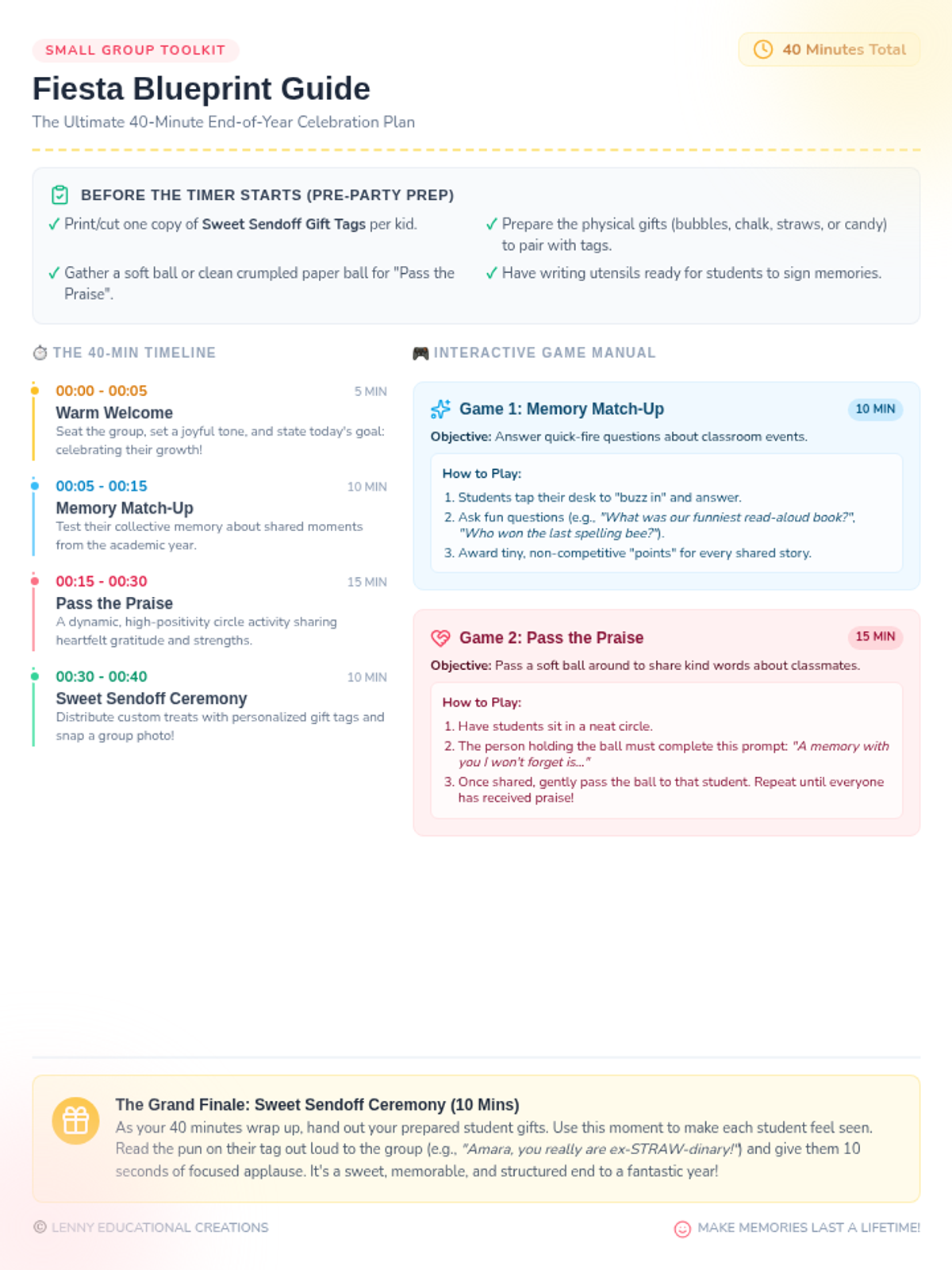
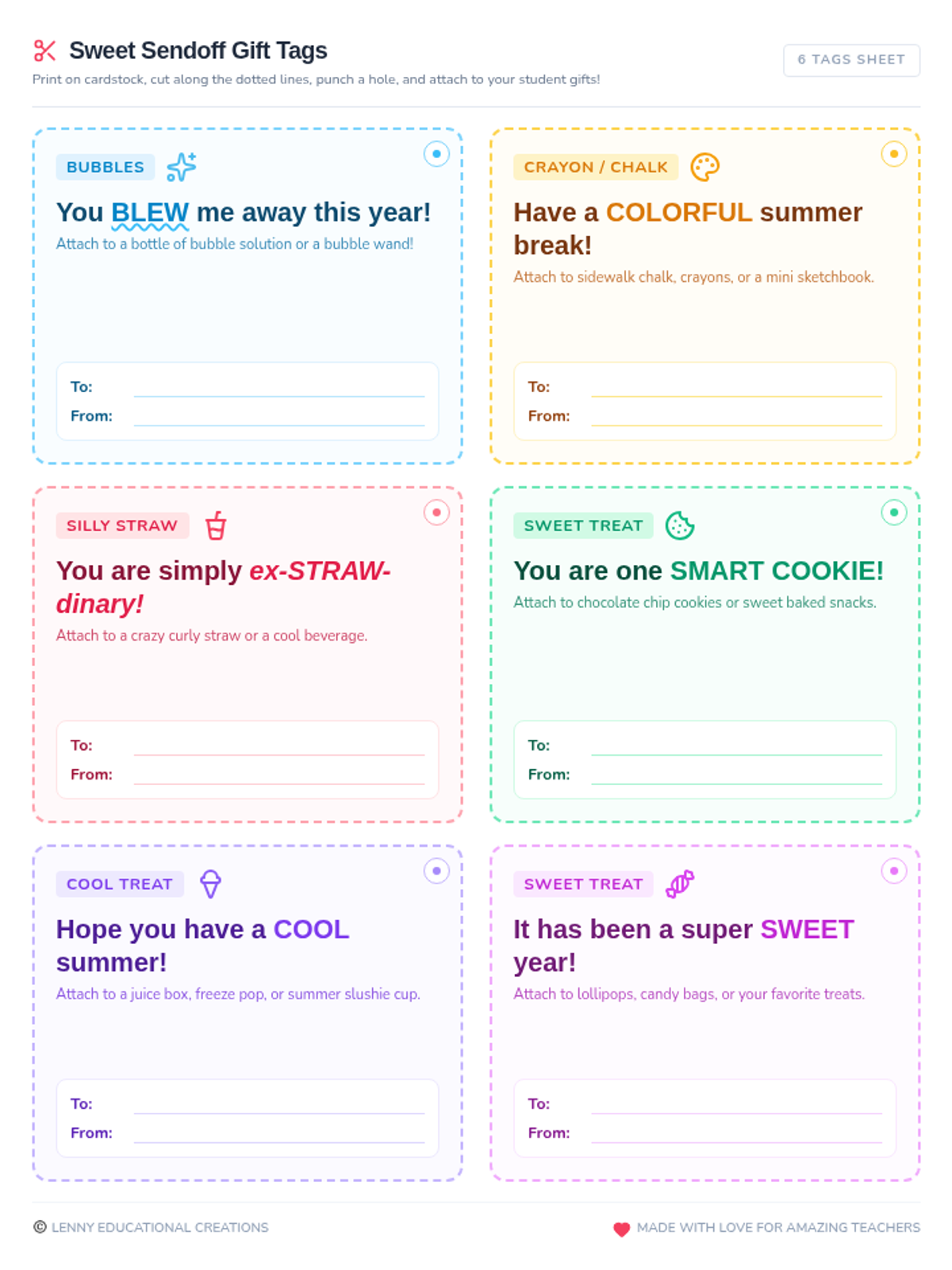
A complete toolkit for hosting a memorable, structured 40-minute end-of-year small group celebration, including a step-by-step party schedule, interactive games, and printable themed gift tags.
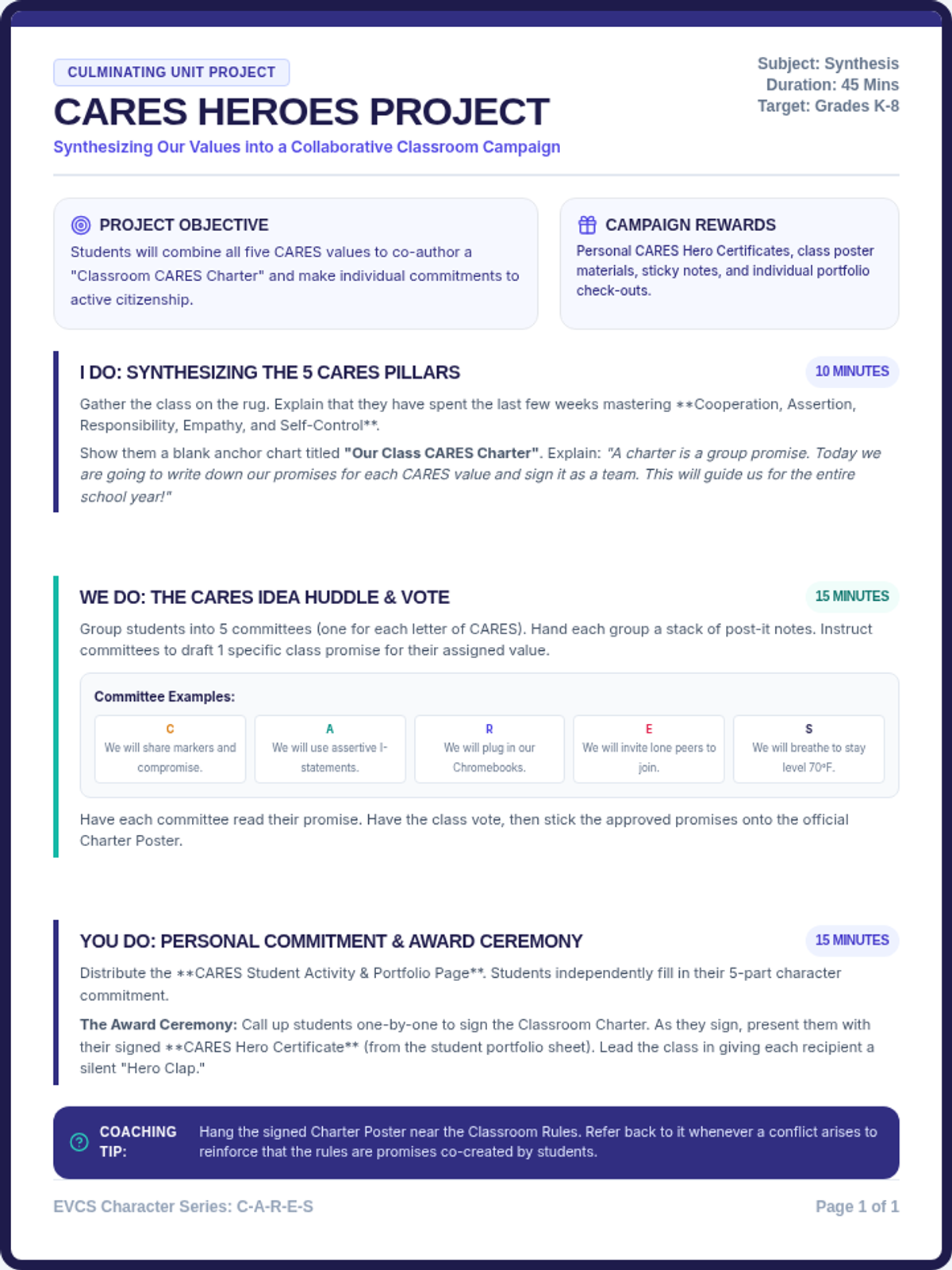
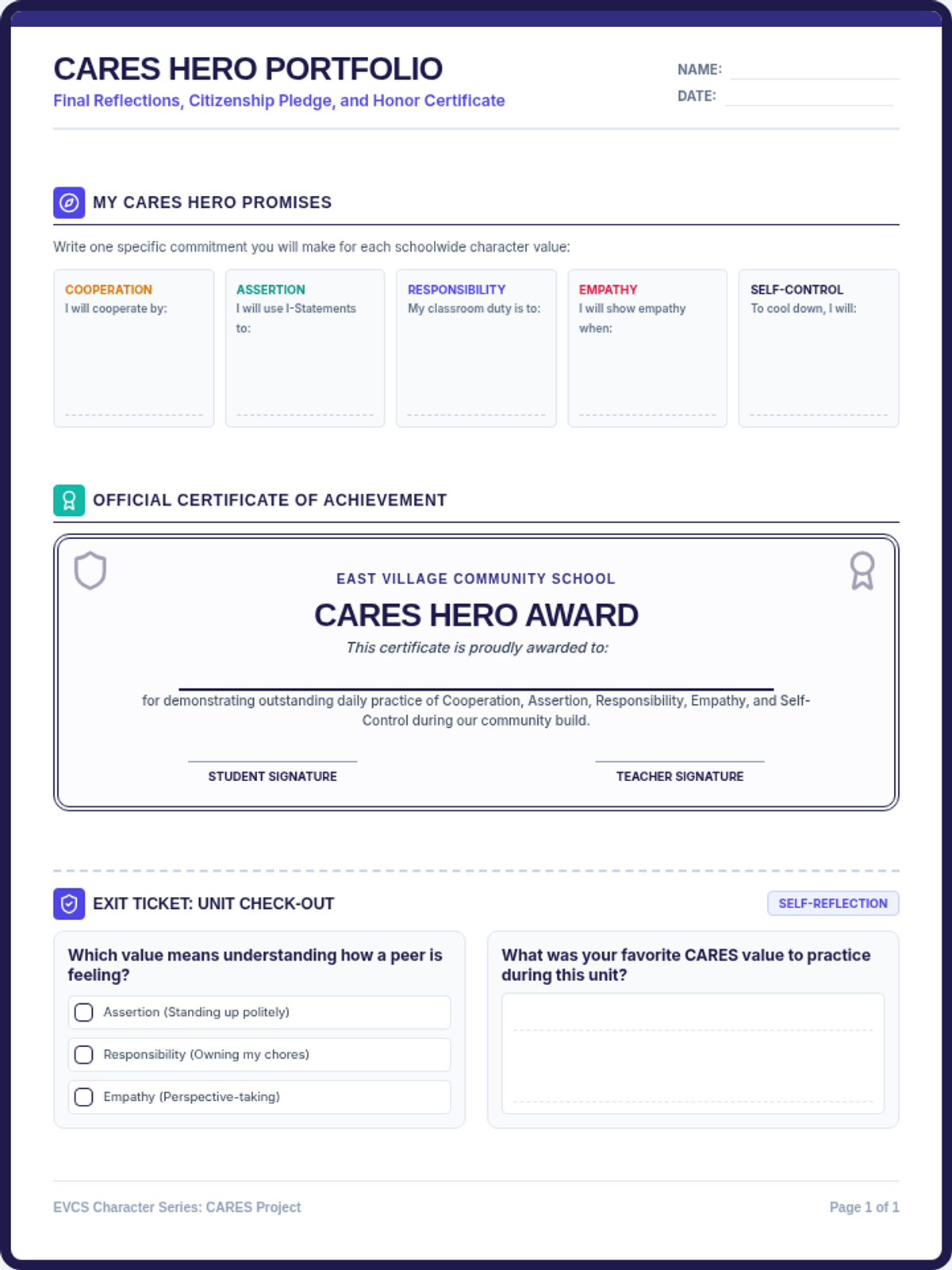
A culminating reflection and community project lesson where students synthesize all five CARES values. Students create a class pledge, award certificates, and design a community action project to show their learning.
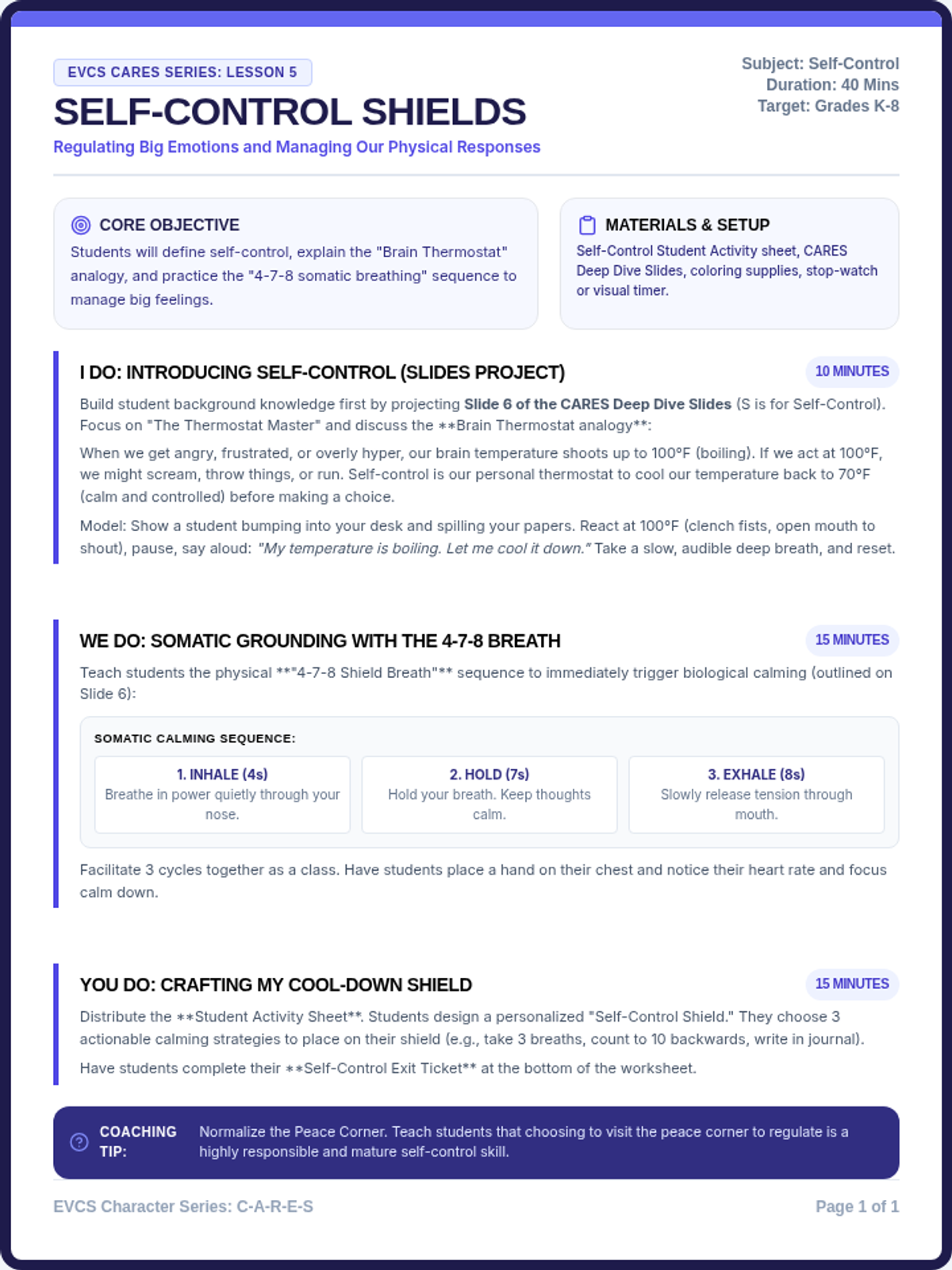
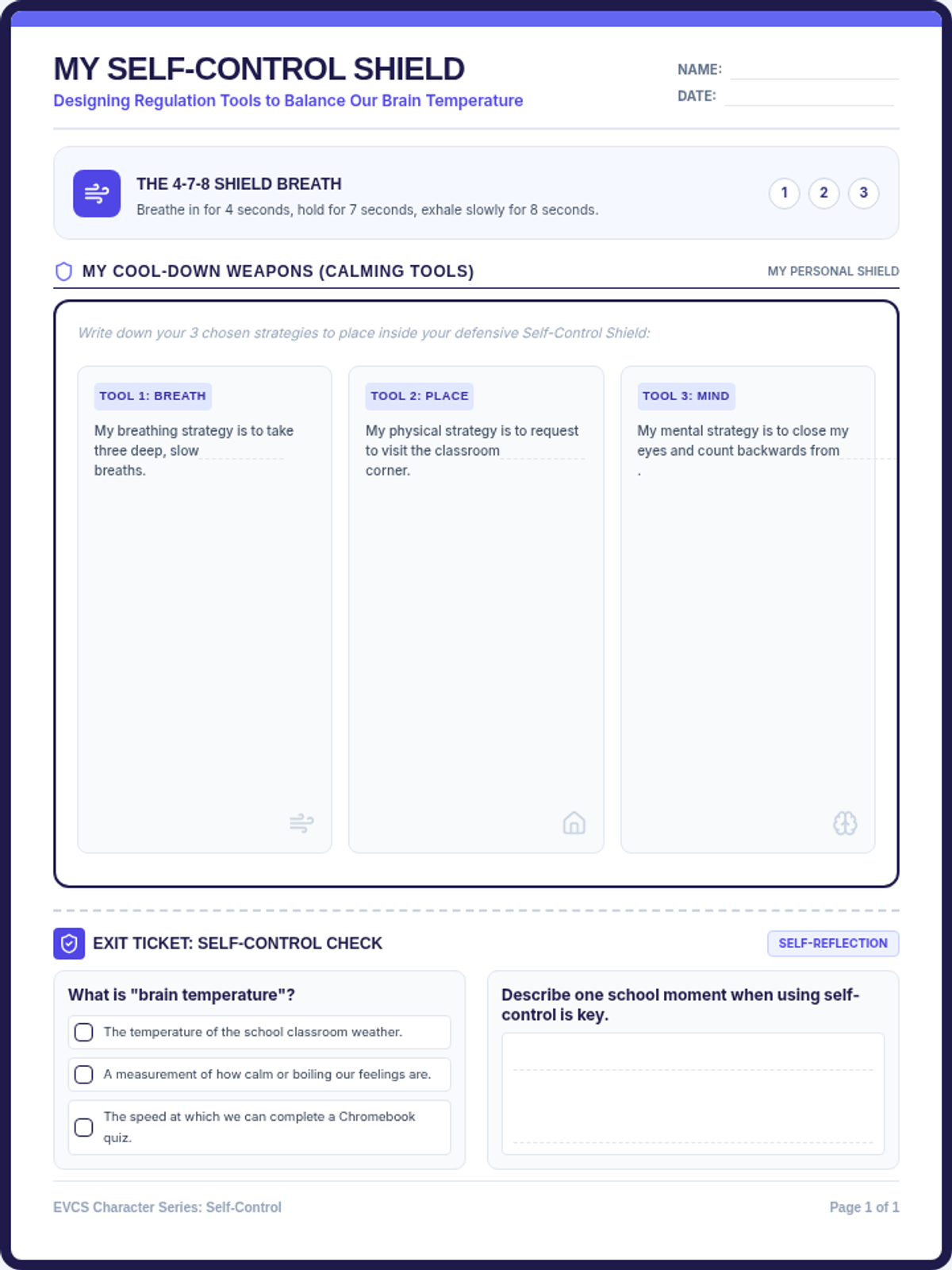
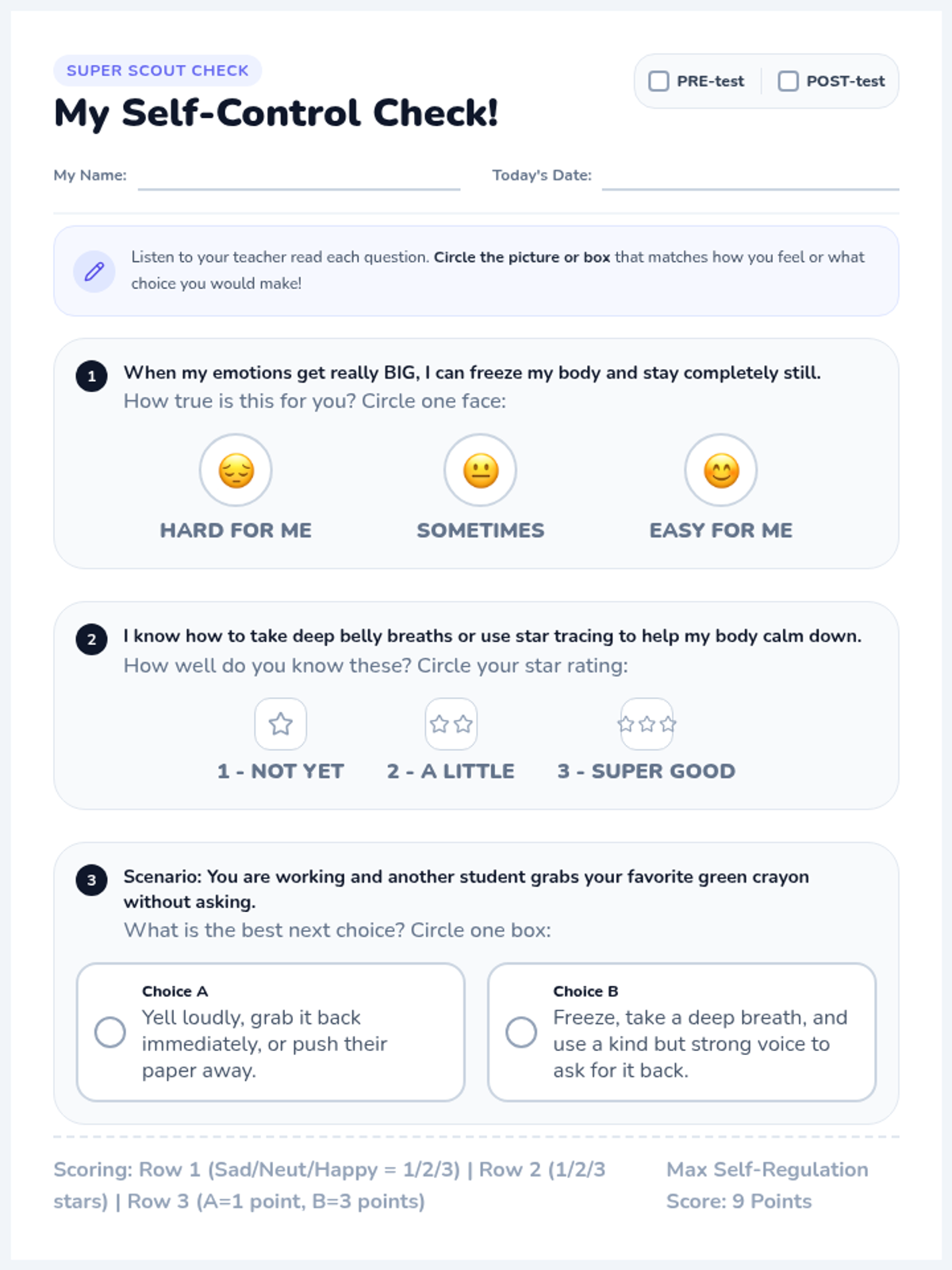
A social-emotional learning lesson centered on self-control, emotional regulation, and mindfulness. Students practice somatic grounding and cool-down techniques to manage big emotions in real-time.
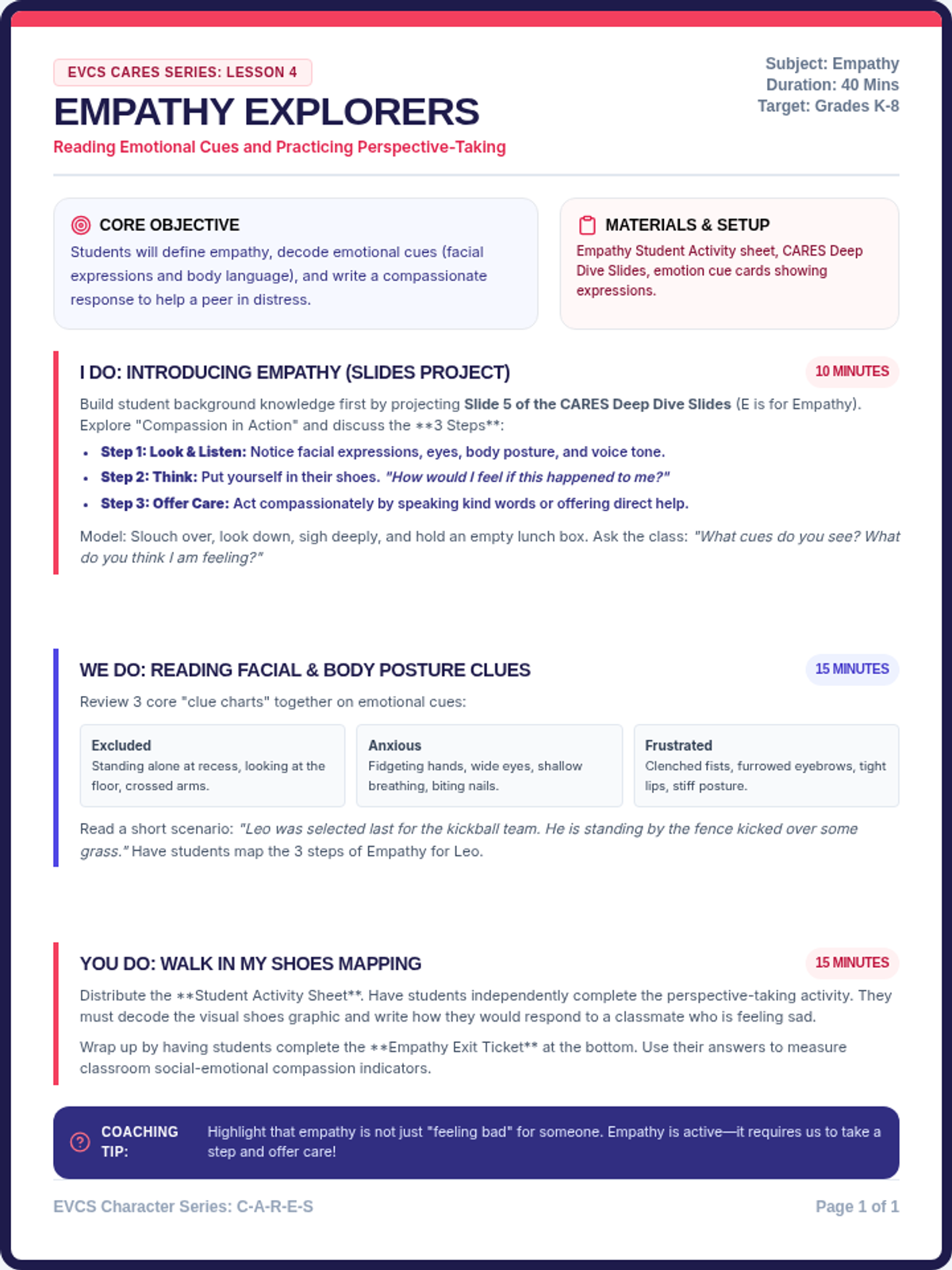
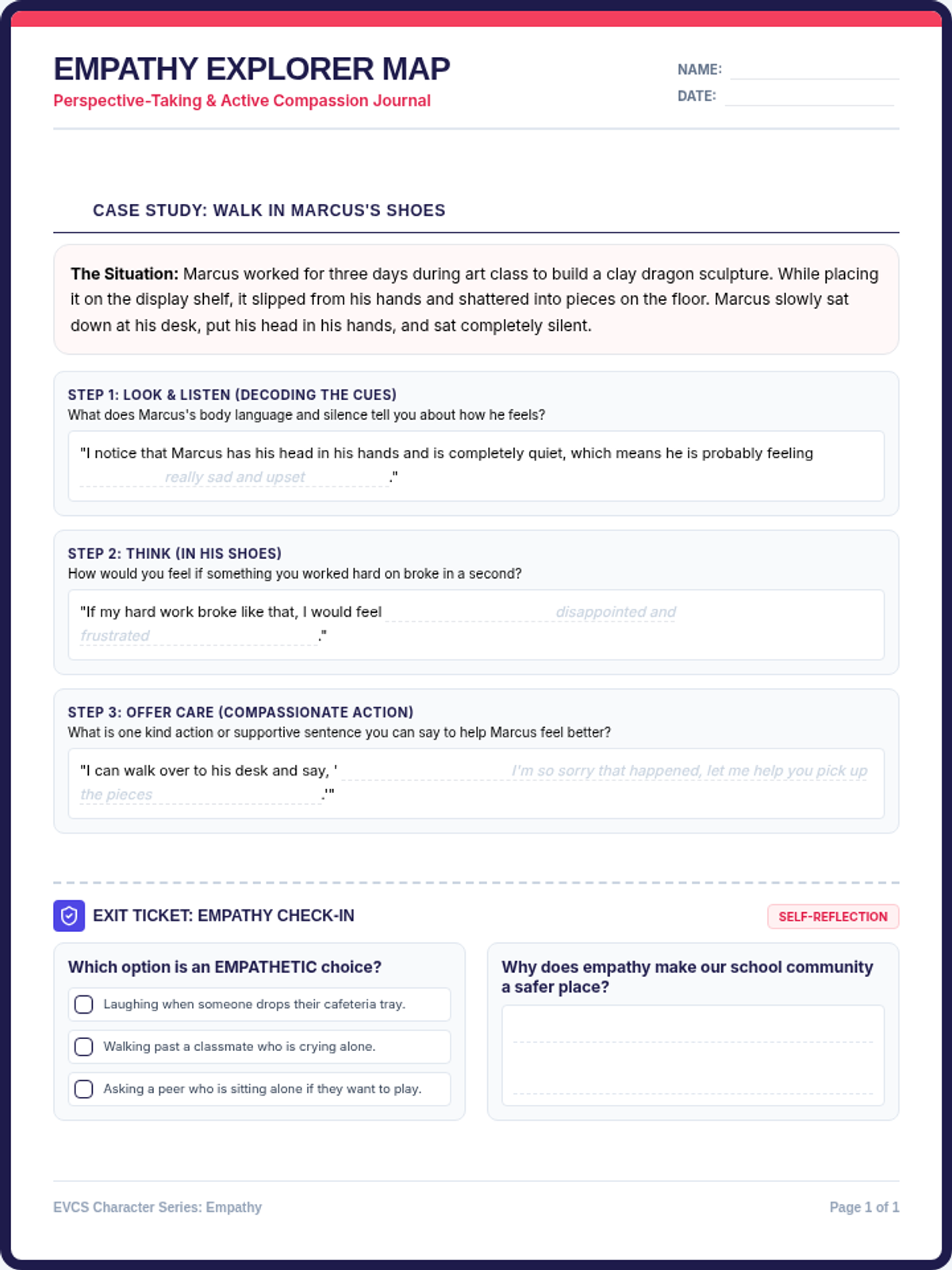
A social-emotional learning lesson on empathy, active compassion, and perspective-taking. Students learn to recognize emotional cues in others and practice walking in someone else's shoes to solve social dilemmas.
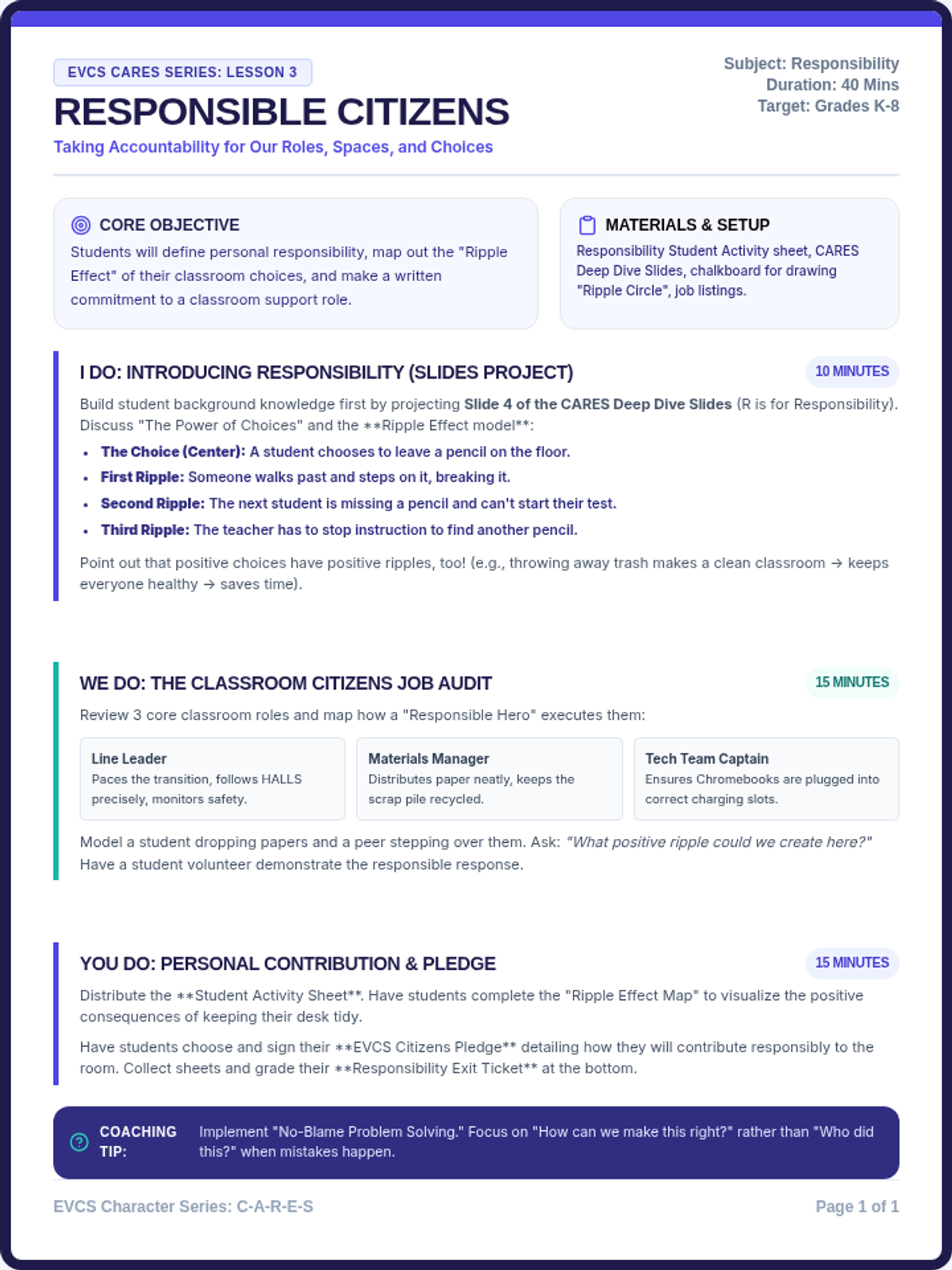
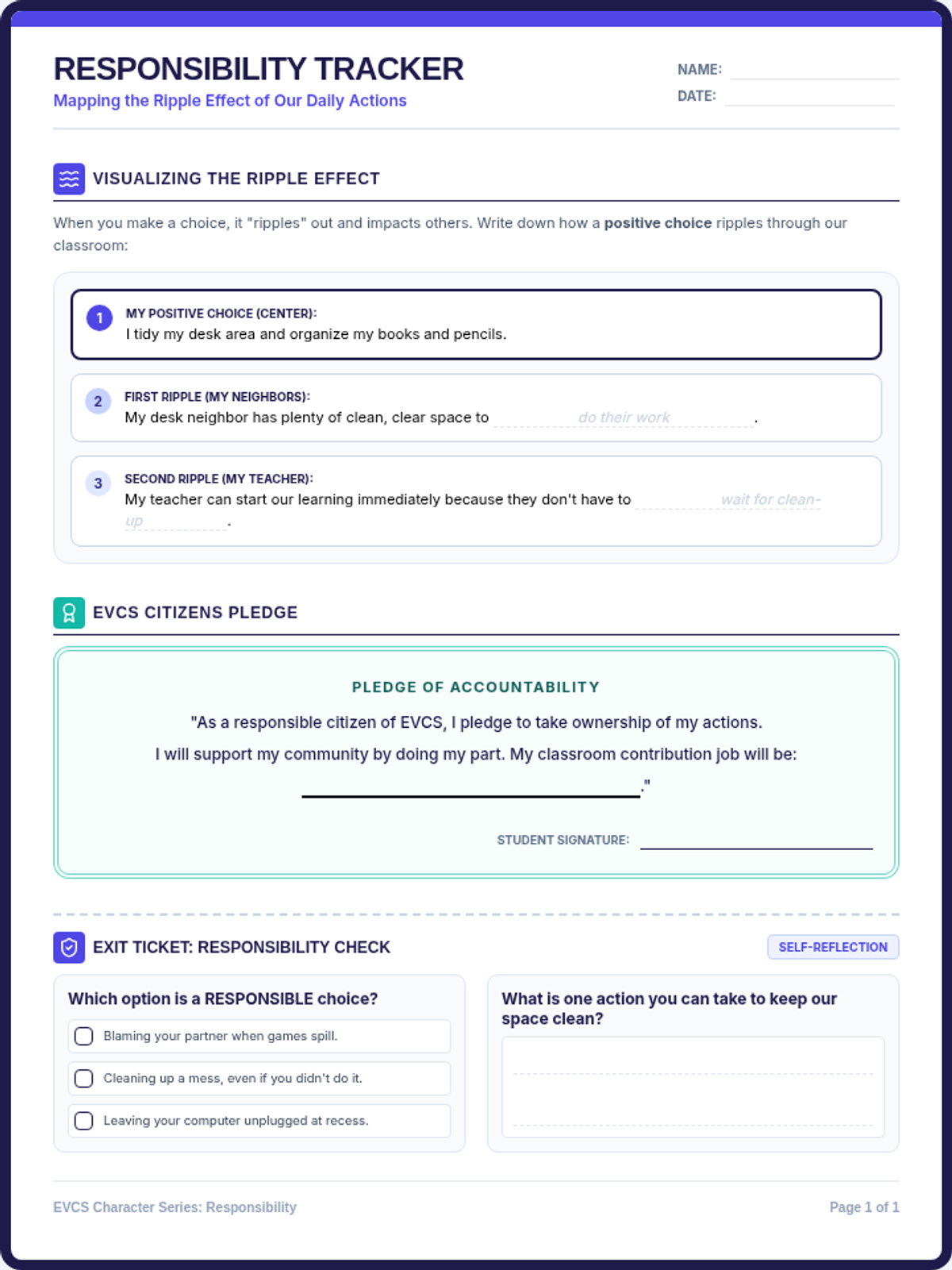
A social-emotional learning lesson teaching personal accountability, civic responsibility, and classroom roles. Students identify how their individual choices affect the safety and success of the whole community.
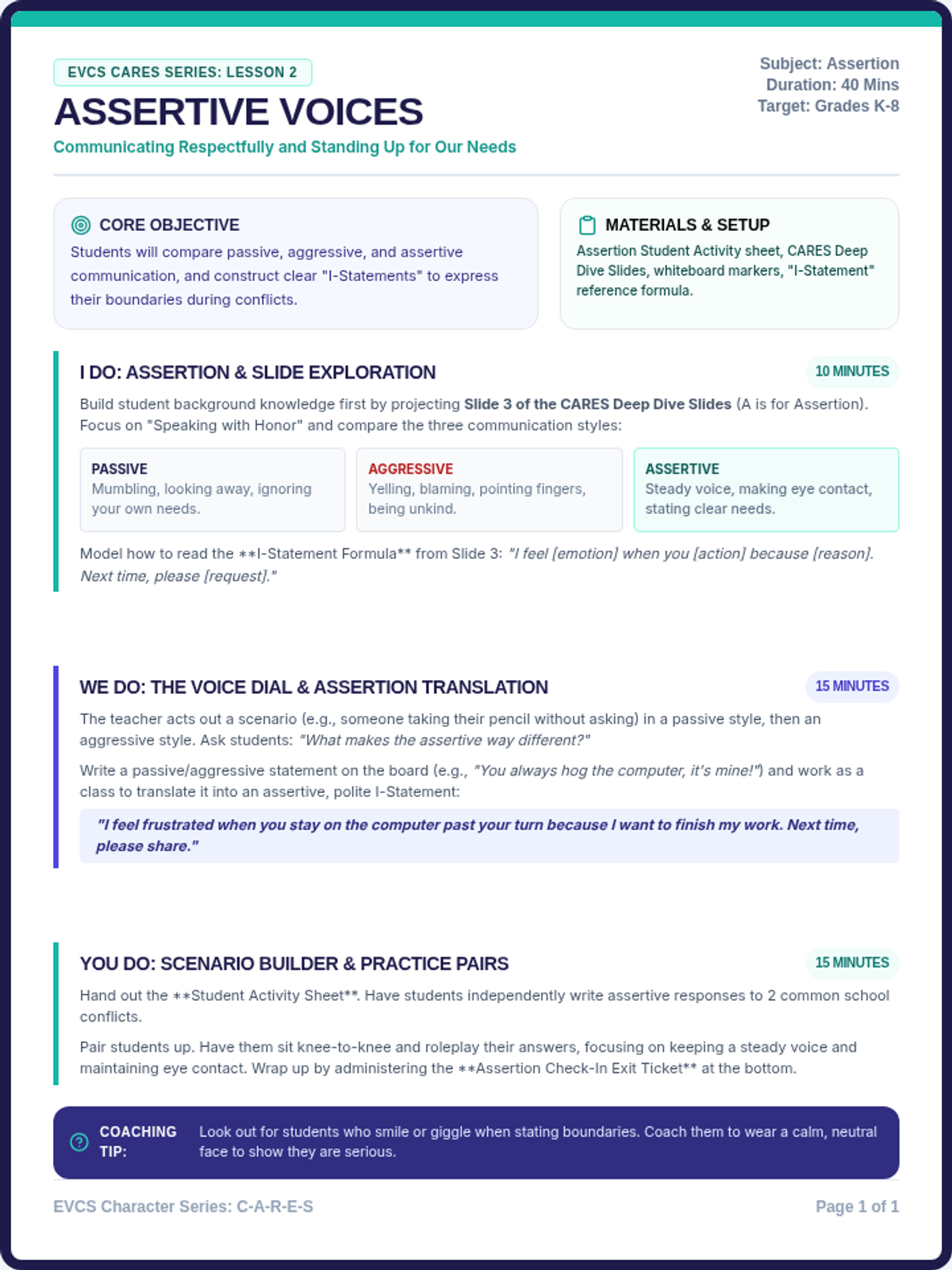
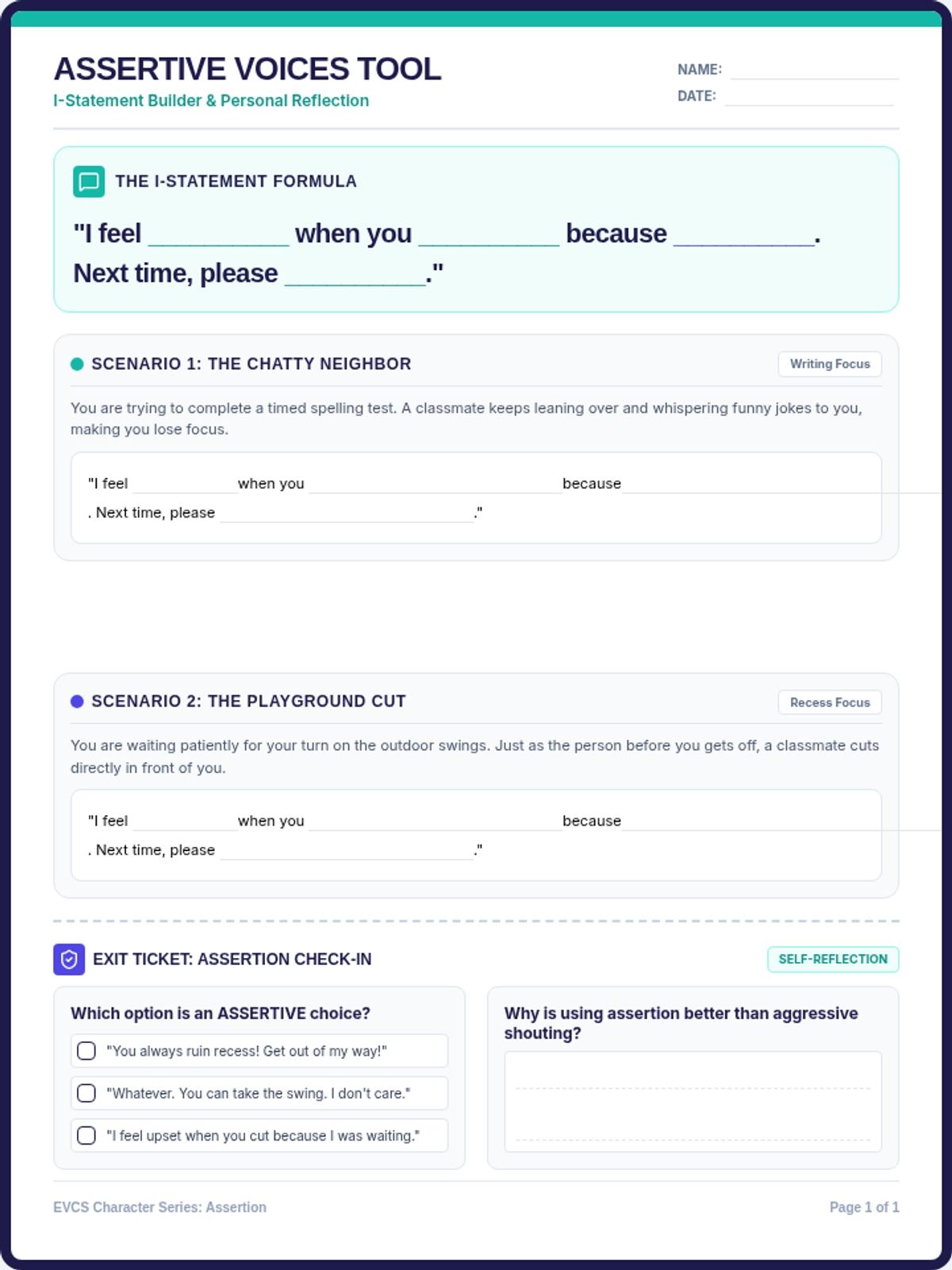
A social-emotional learning lesson focused on assertive communication, active listening, and setting respectful boundaries. Students practice using "I-Statements" to express their needs and opinions respectfully.
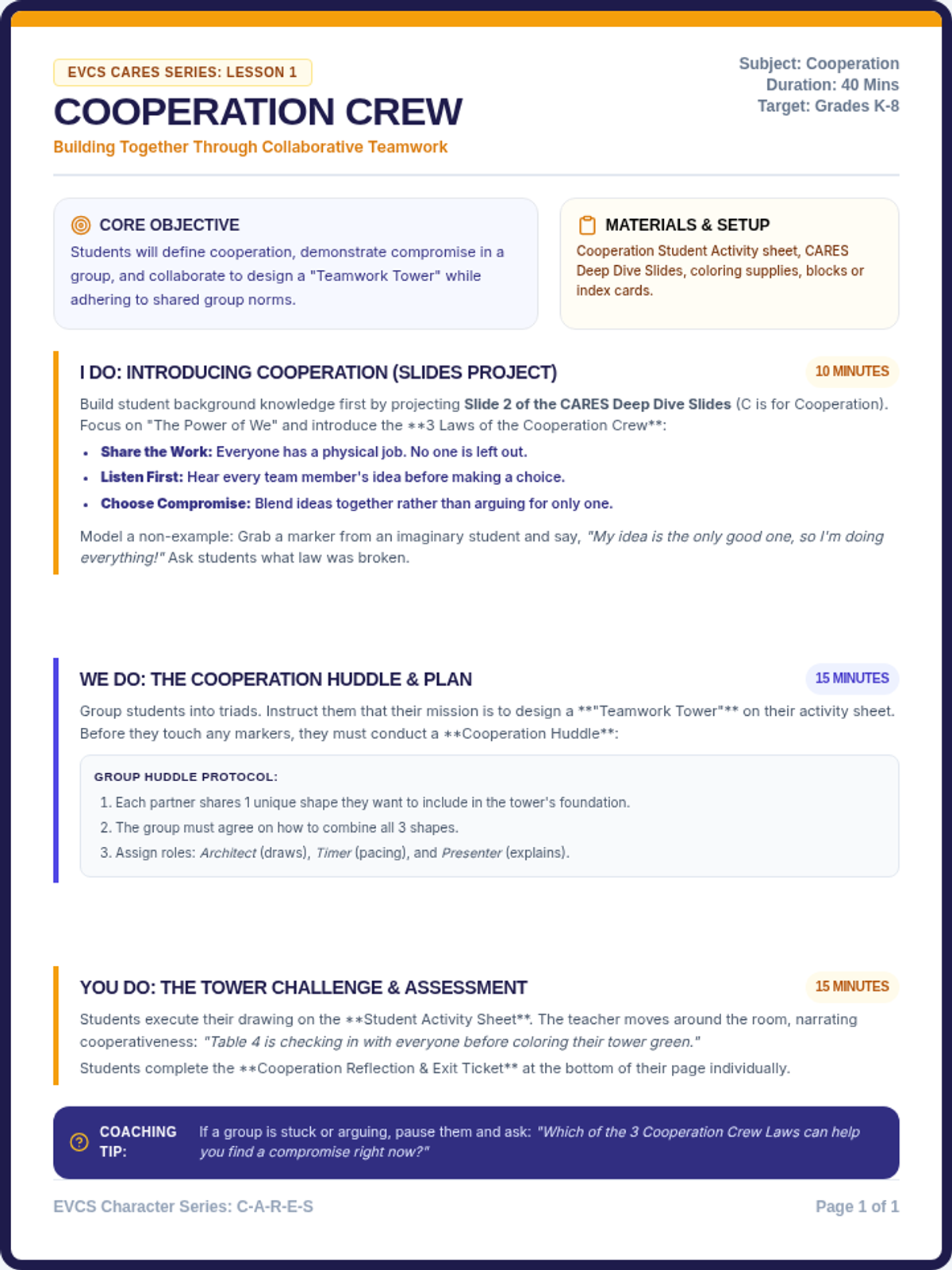
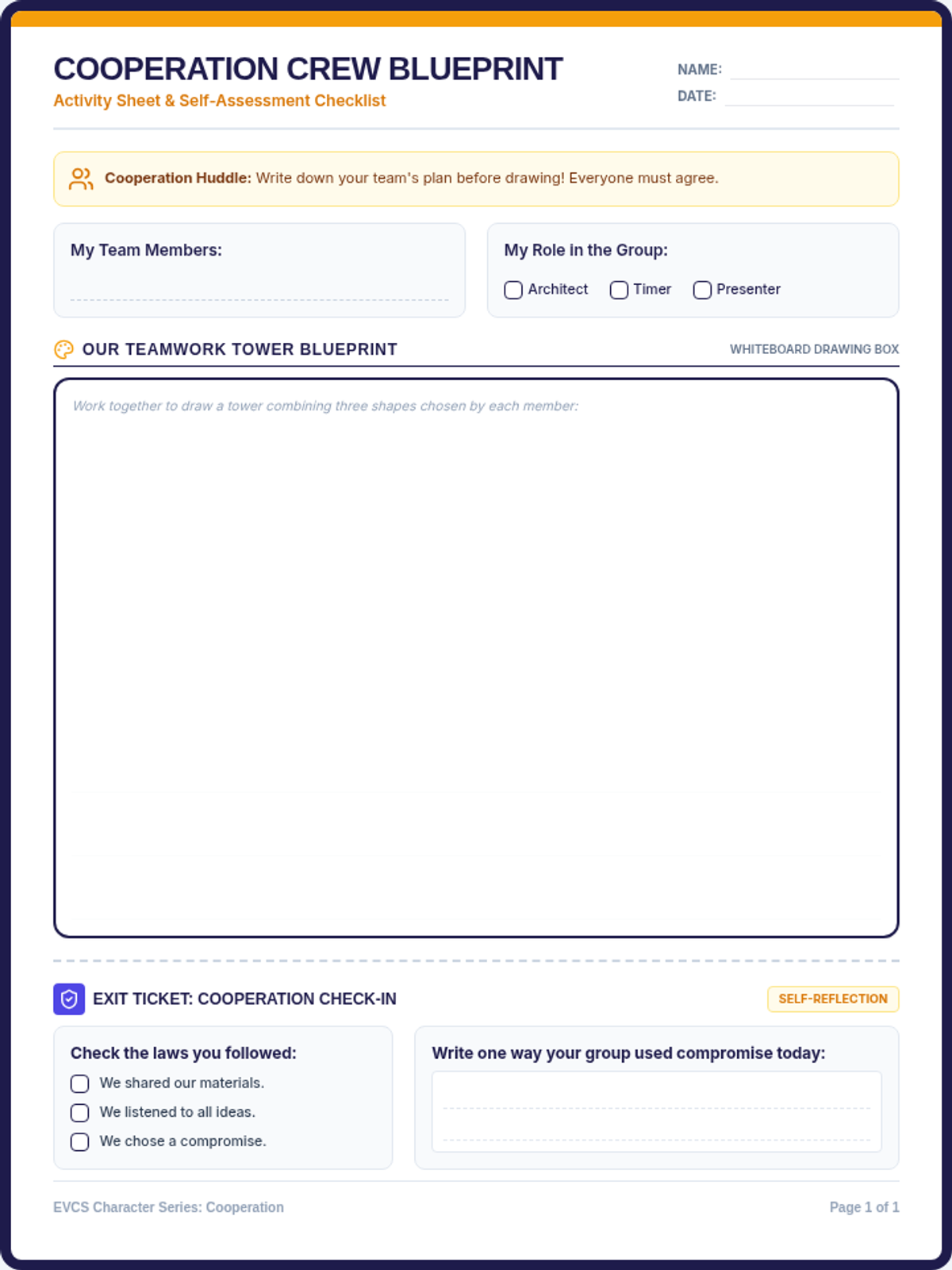
A social-emotional learning lesson focusing on cooperation, collaborative problem solving, and group agreement. Students explore how to share ideas, compromise, and build together as a team.
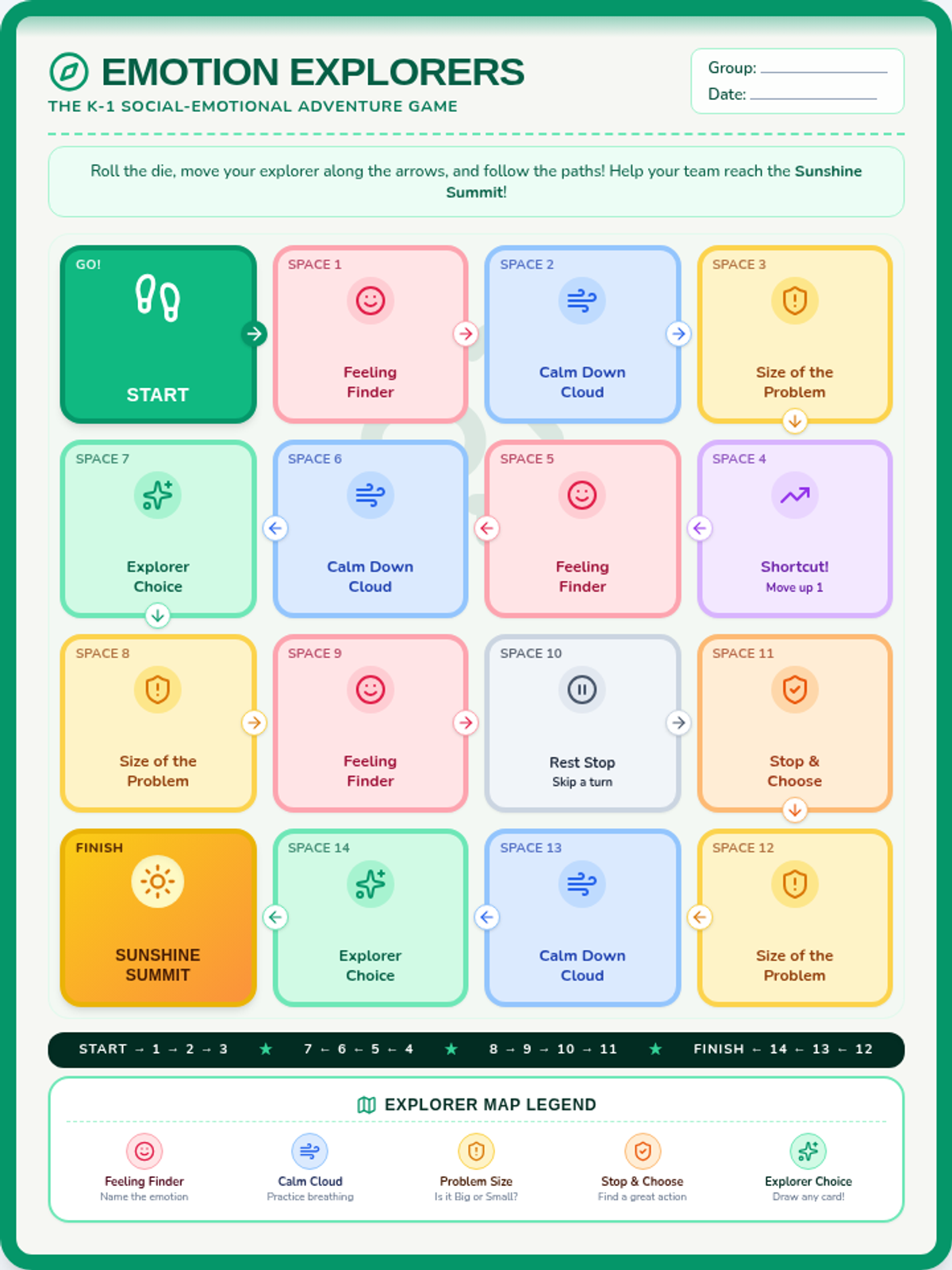
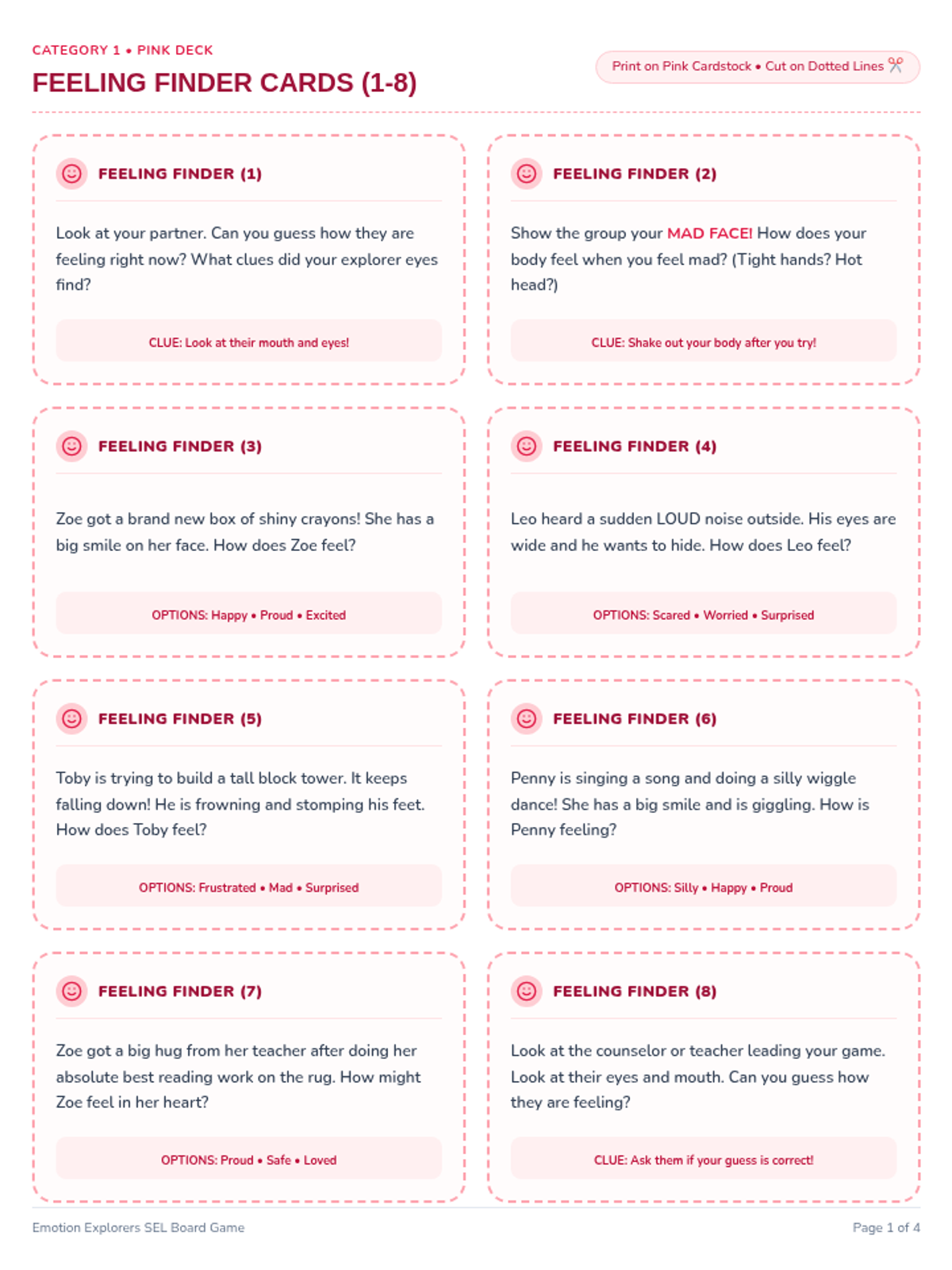
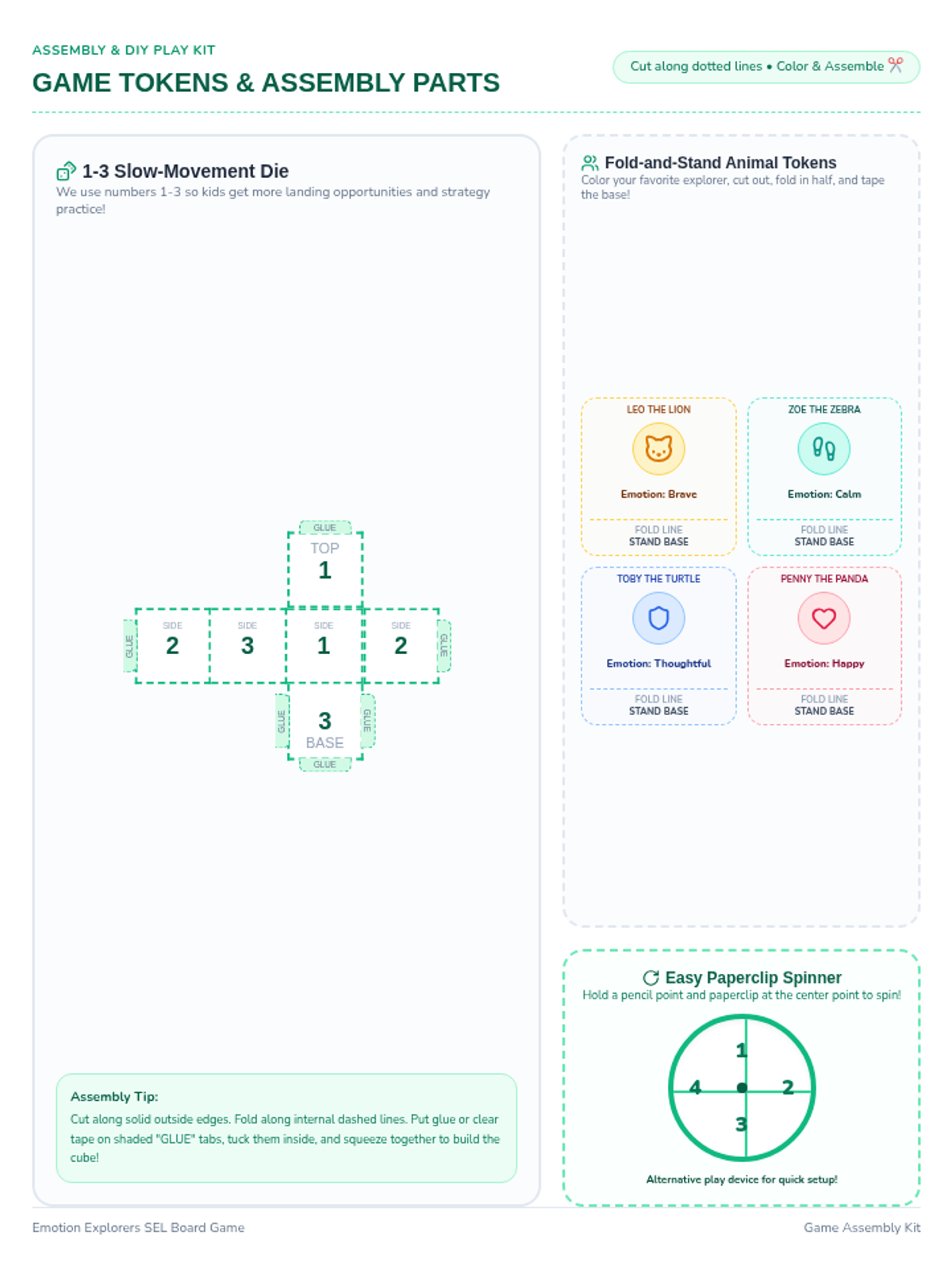
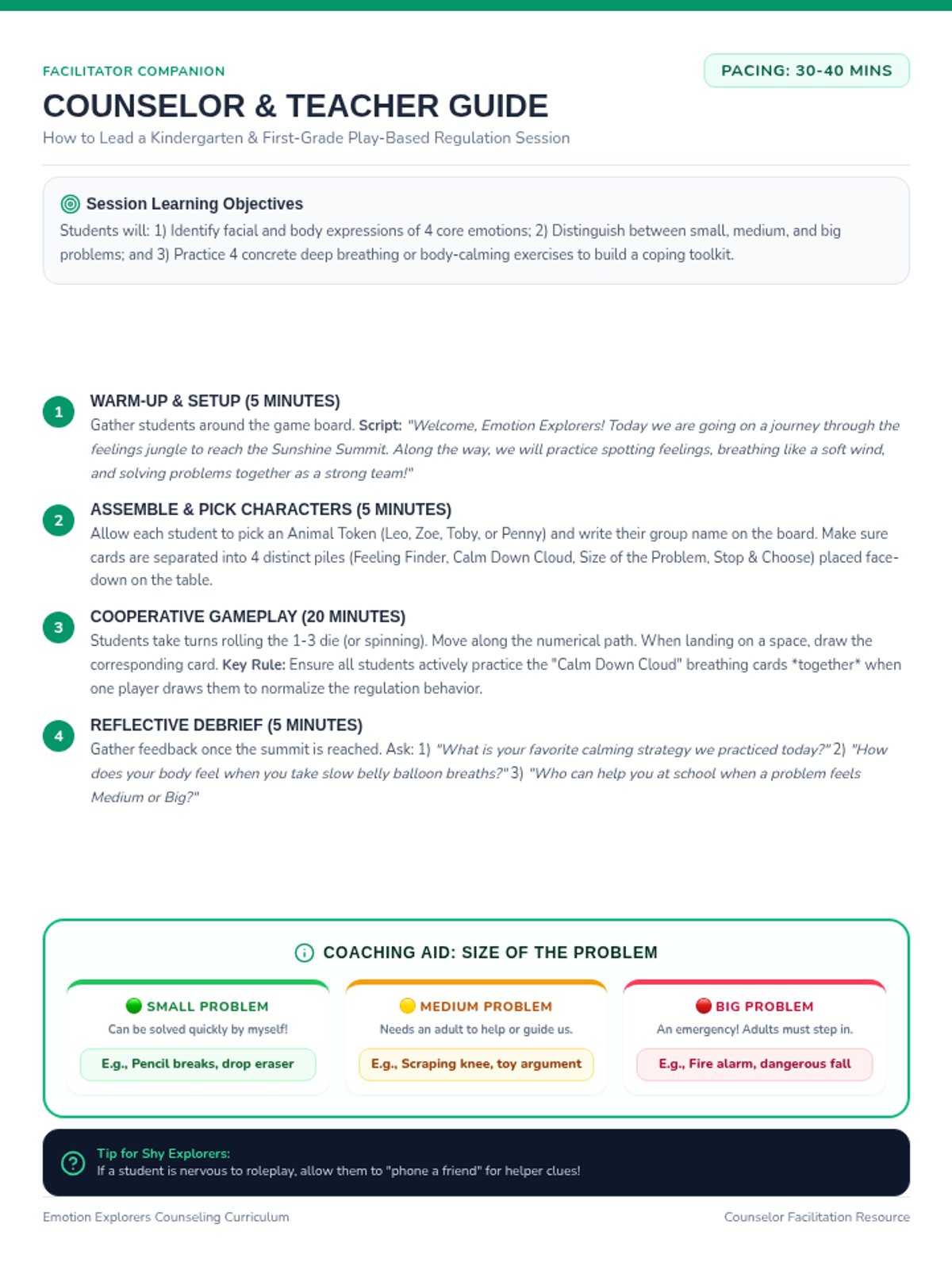
An interactive SEL board game session for Kindergarten and First-Grade students, focusing on identifying emotions, understanding the size of problems, and practicing calming breathing strategies. Includes a printable game board, situation cards, assembly parts, and a comprehensive counselor guide.
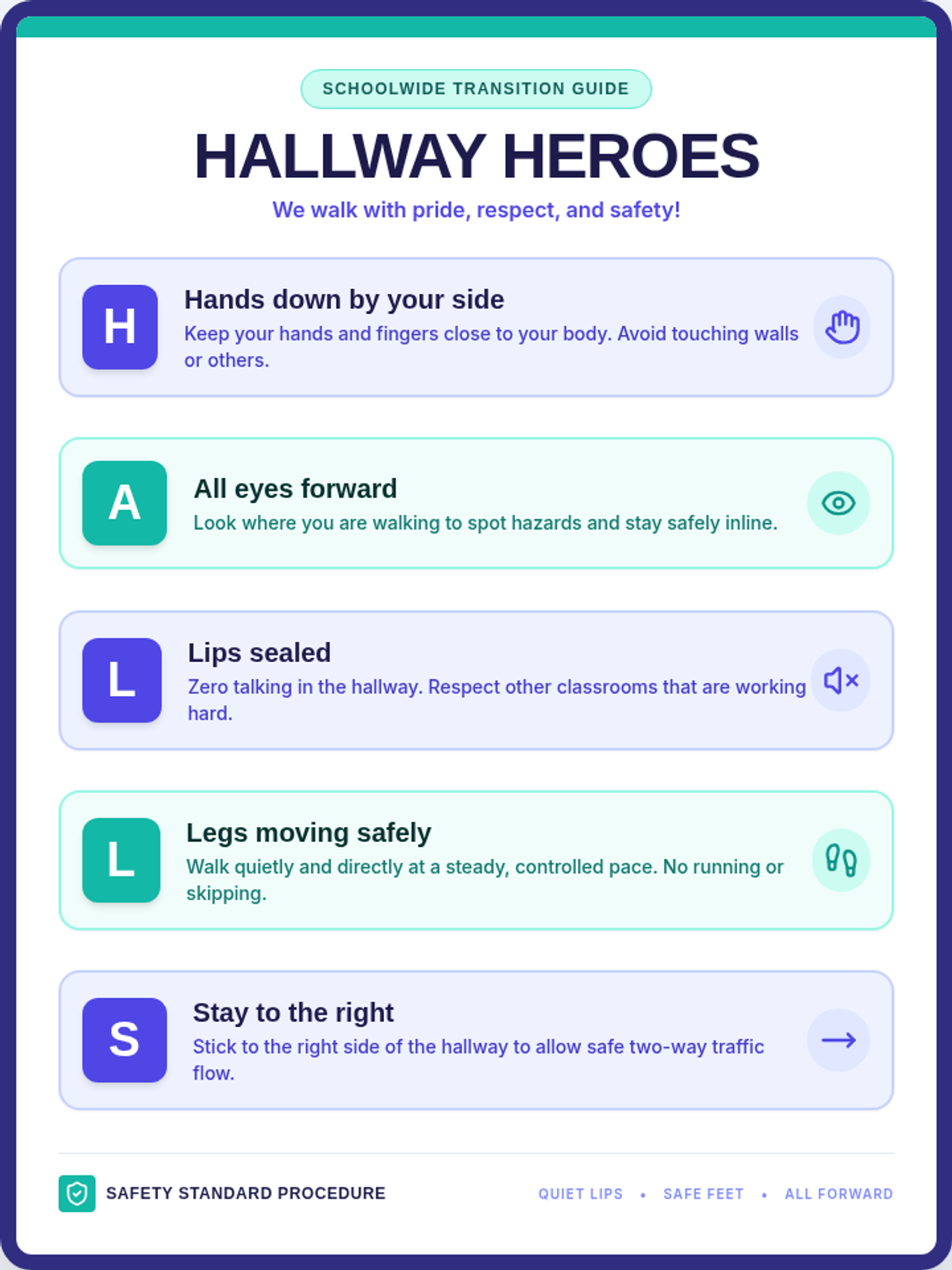
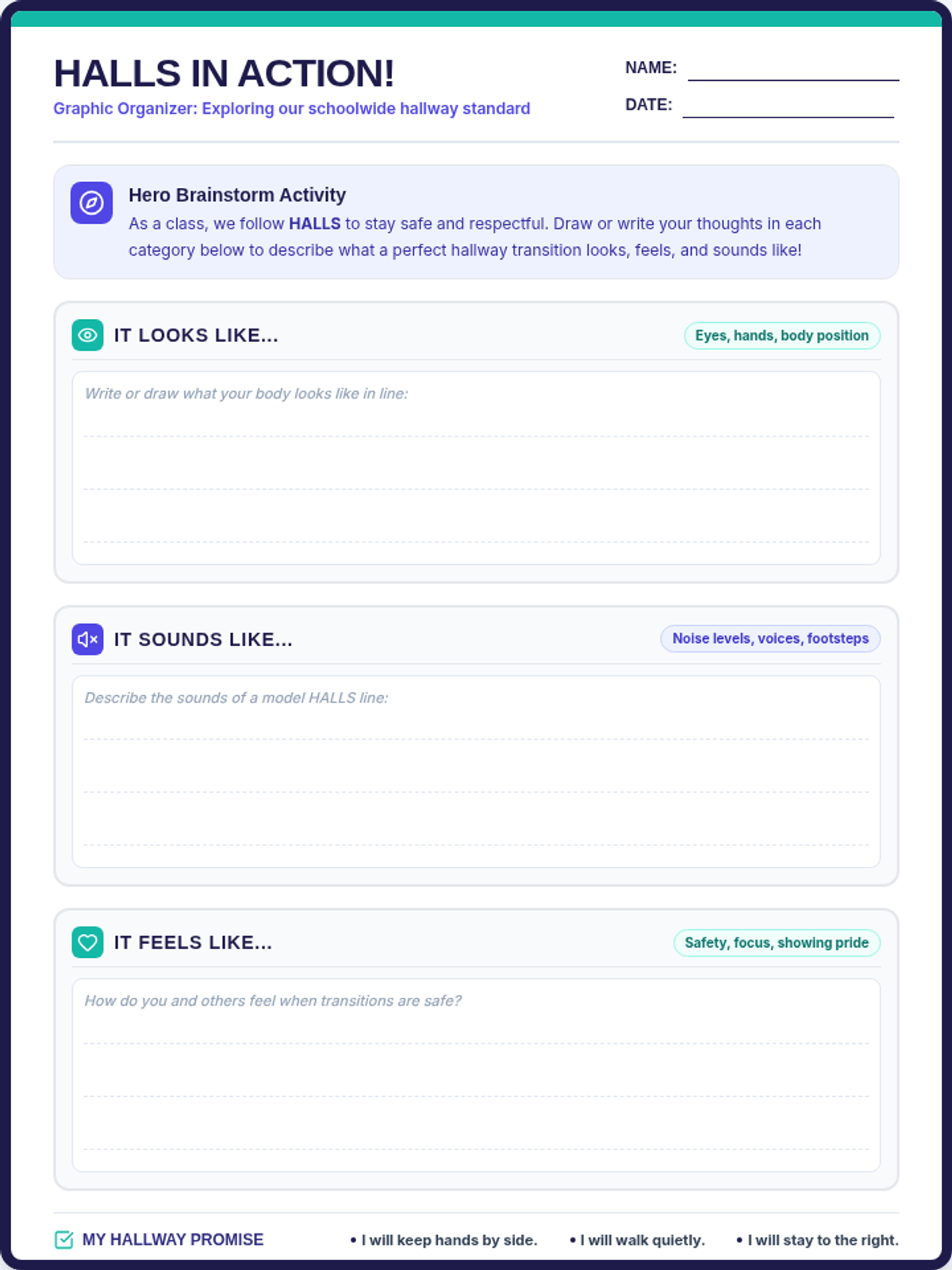
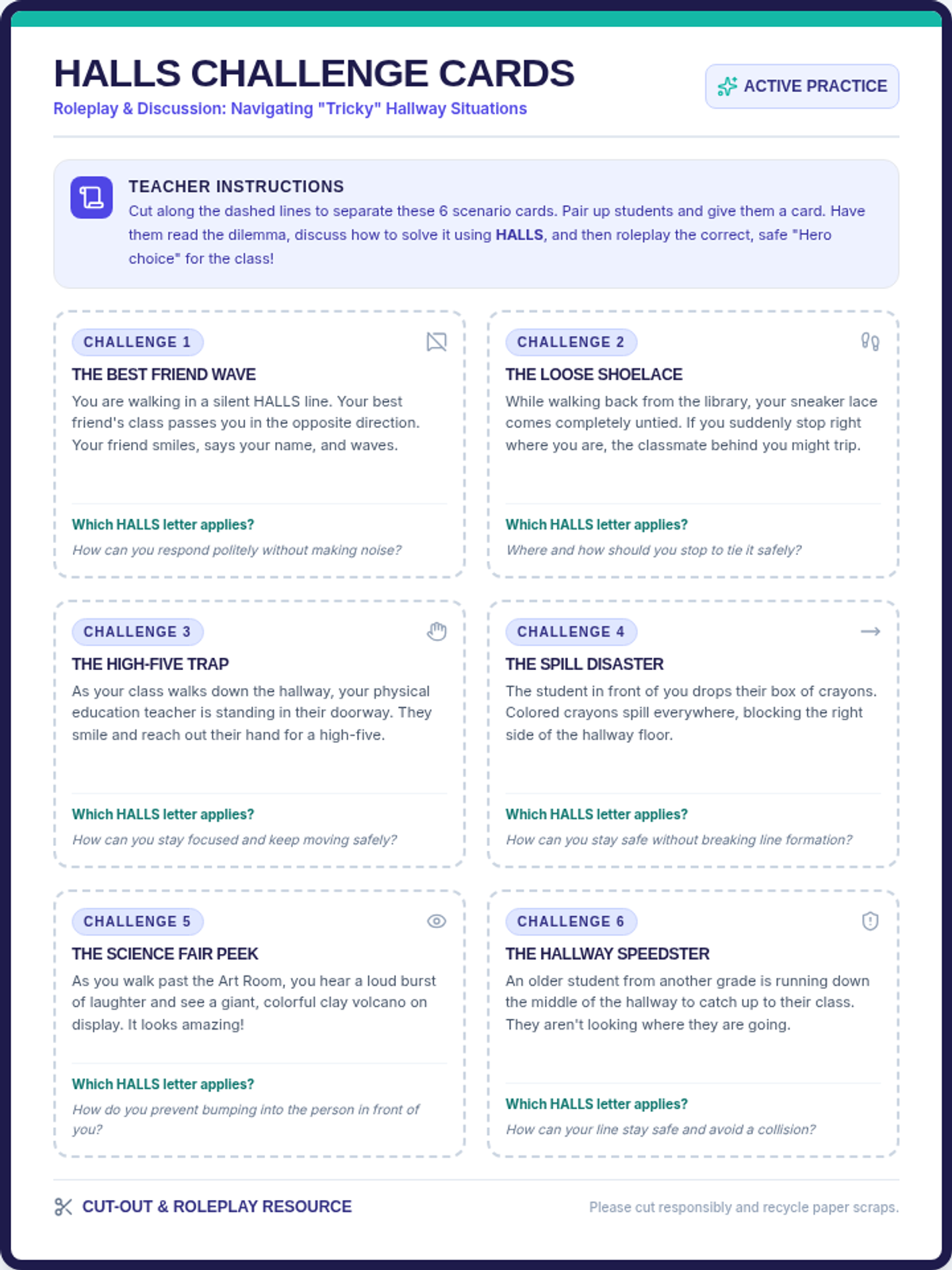
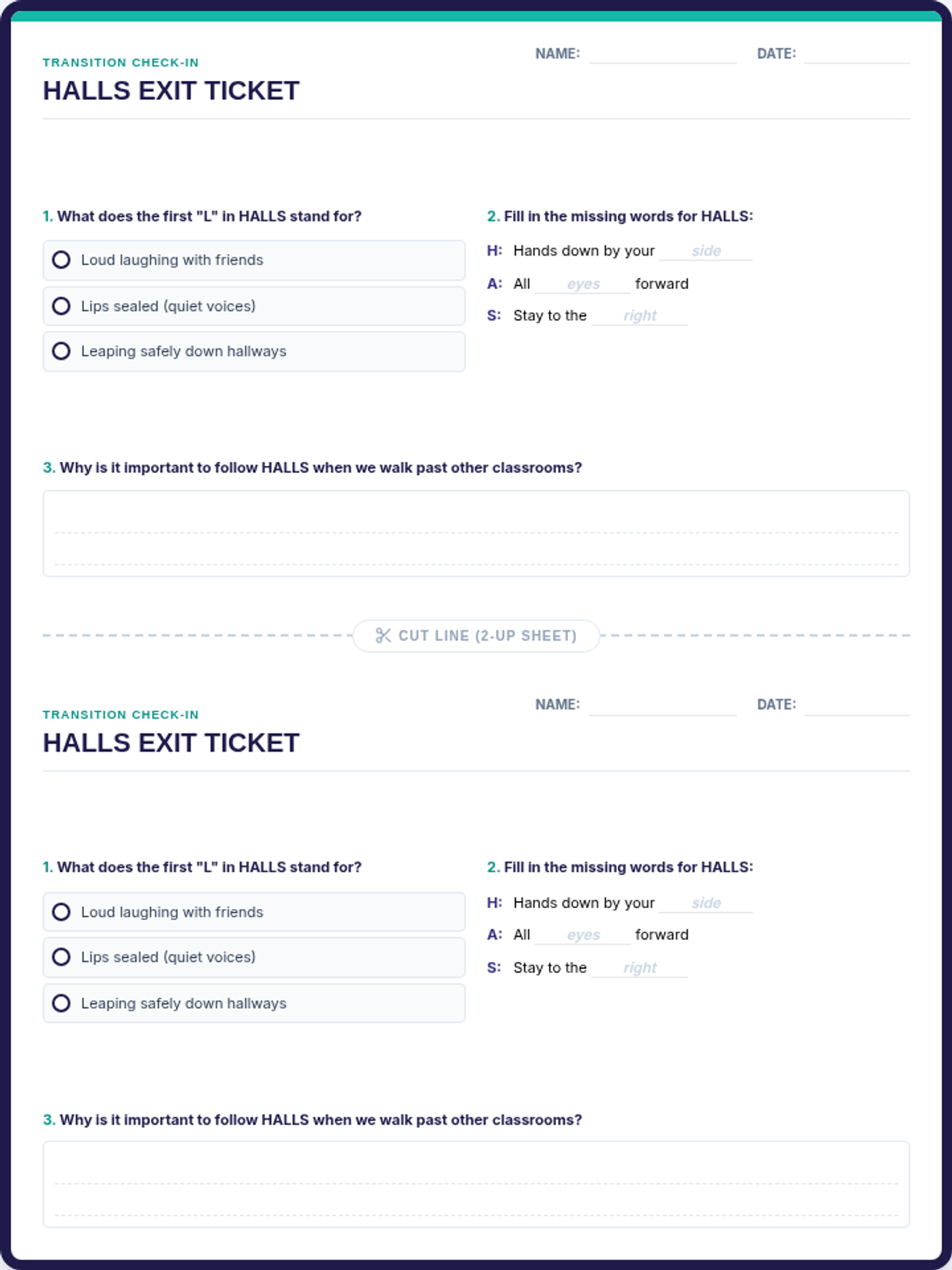
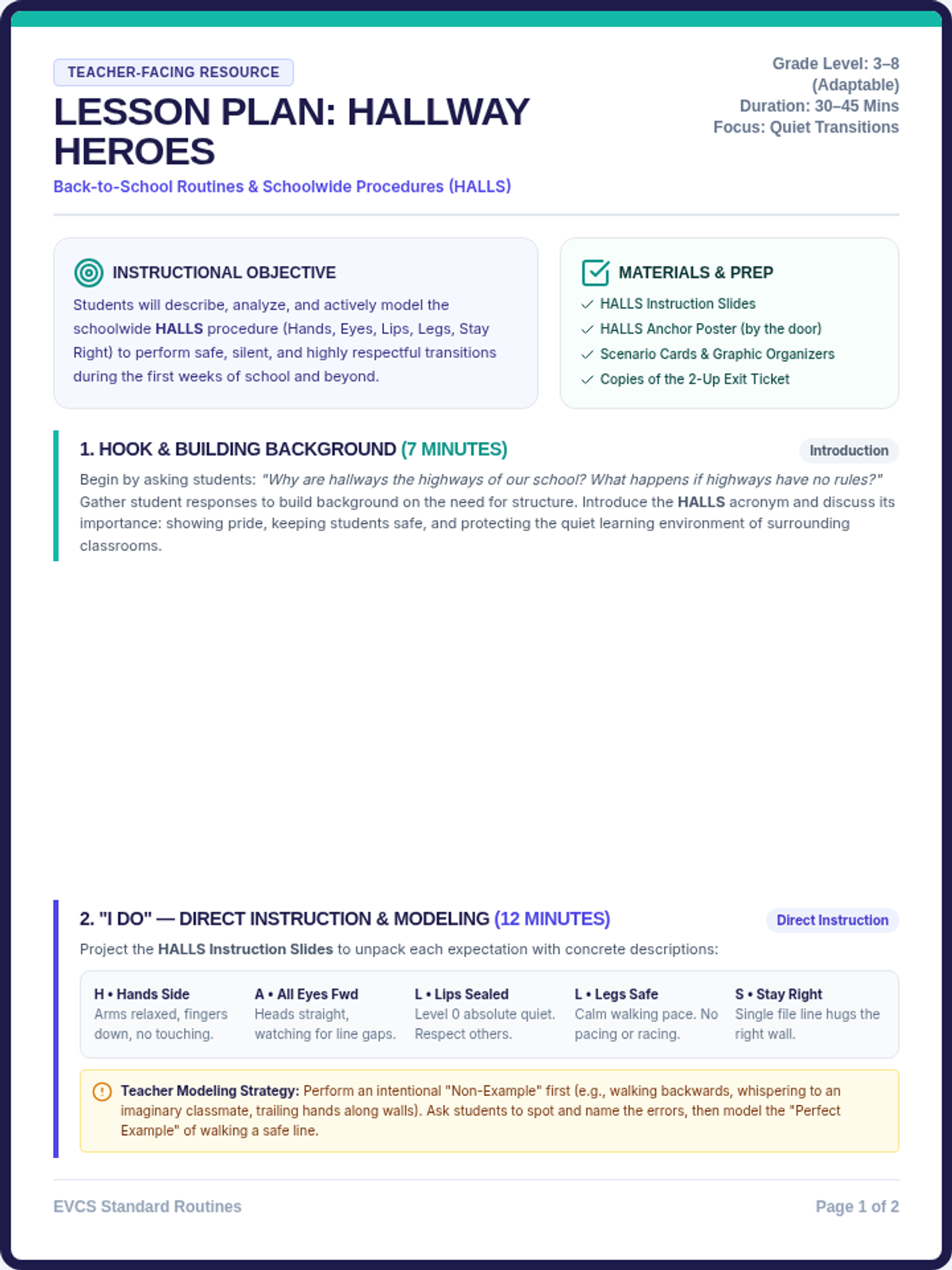
A beginning-of-the-year lesson teaching students the schoolwide HALLS procedure for safe and respectful hallway transitions. This lesson covers explicit teacher modeling, interactive student roleplay, and self-assessment of the HALLS expectations.
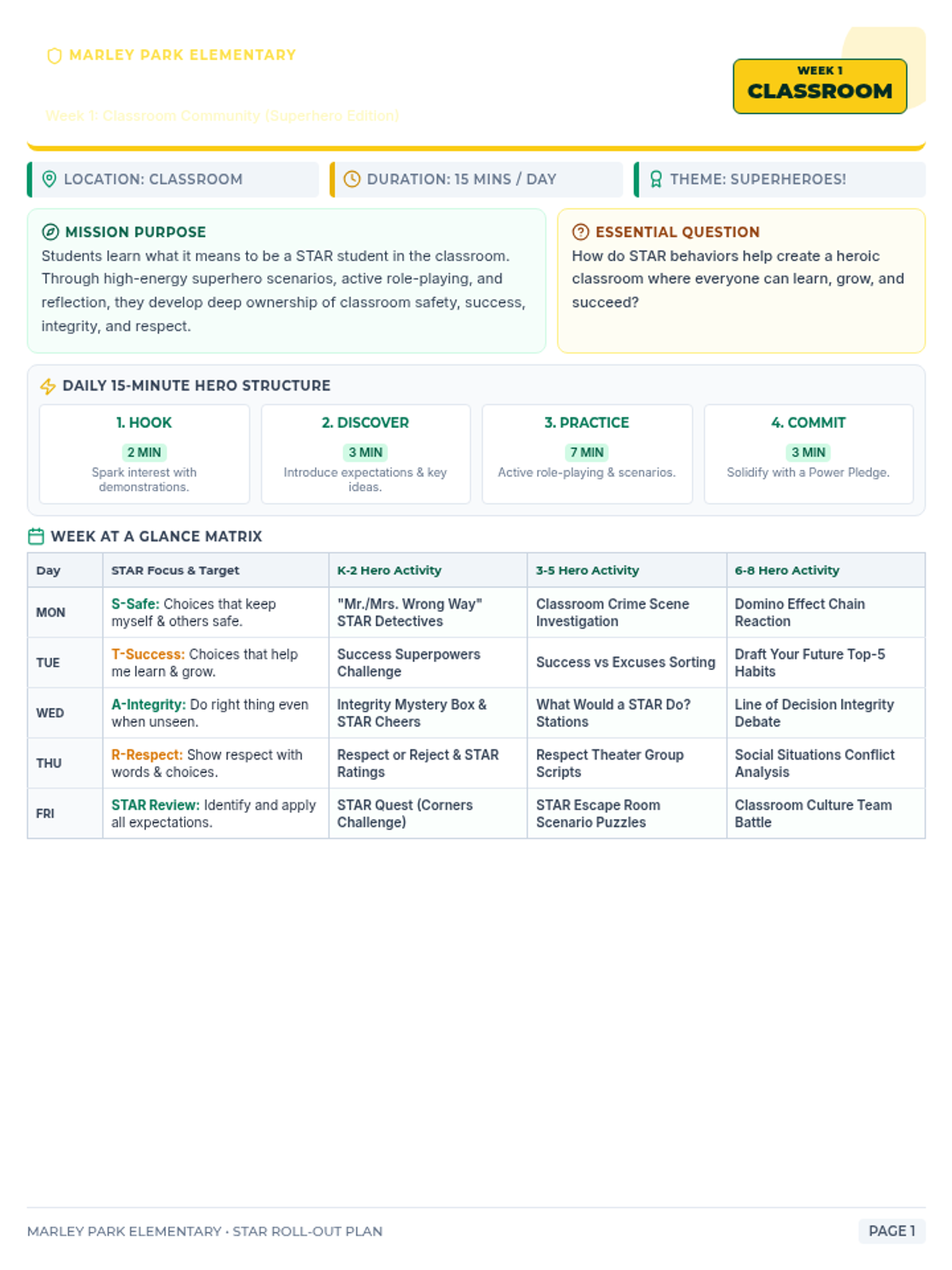
A comprehensive classroom expectations rollout for Week 1 of the school year. Includes a teacher guide and three separate grade-band slide decks (K-2, 3-5, 6-8) designed with a Marley Park green and yellow superhero theme.
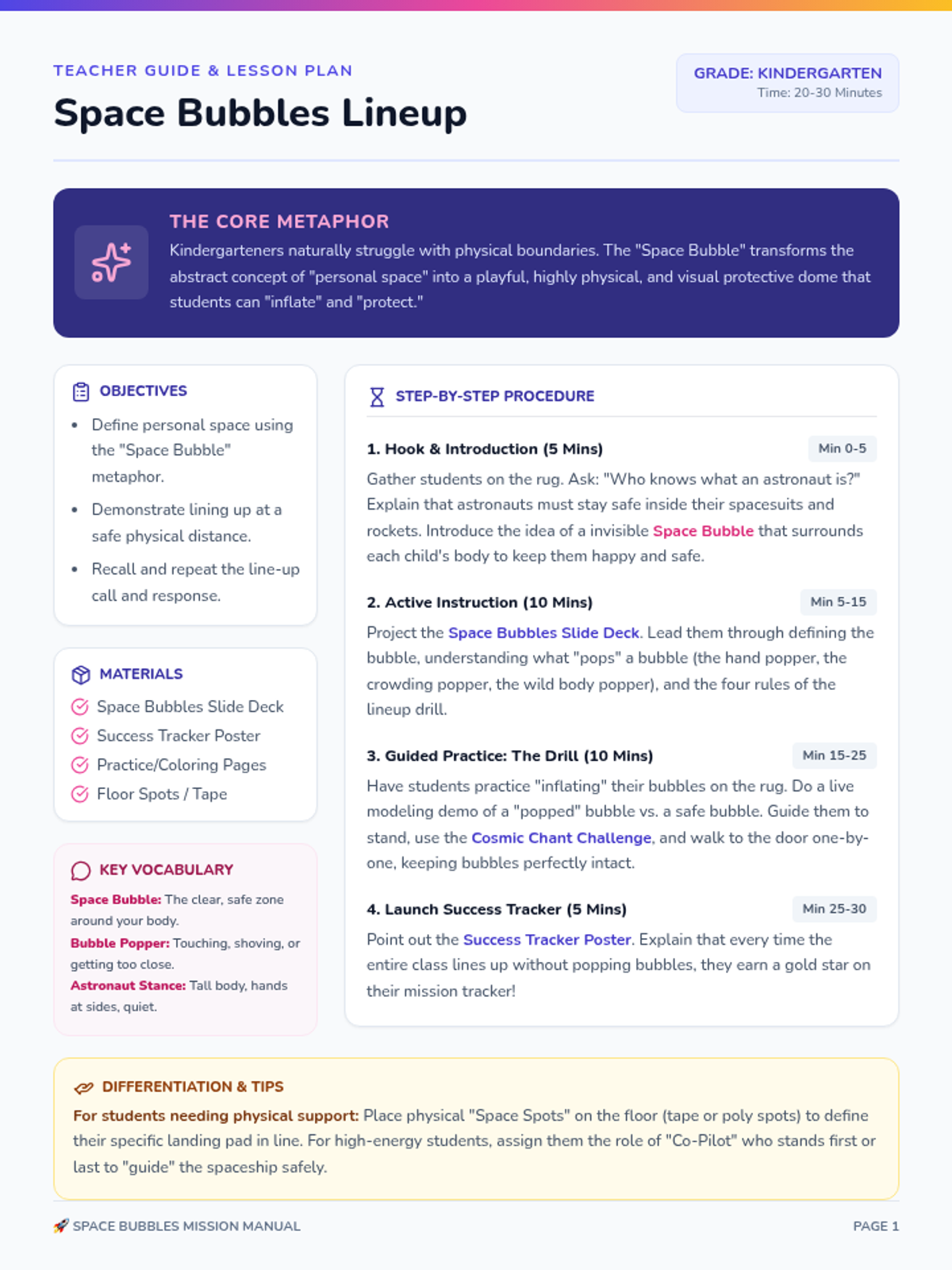
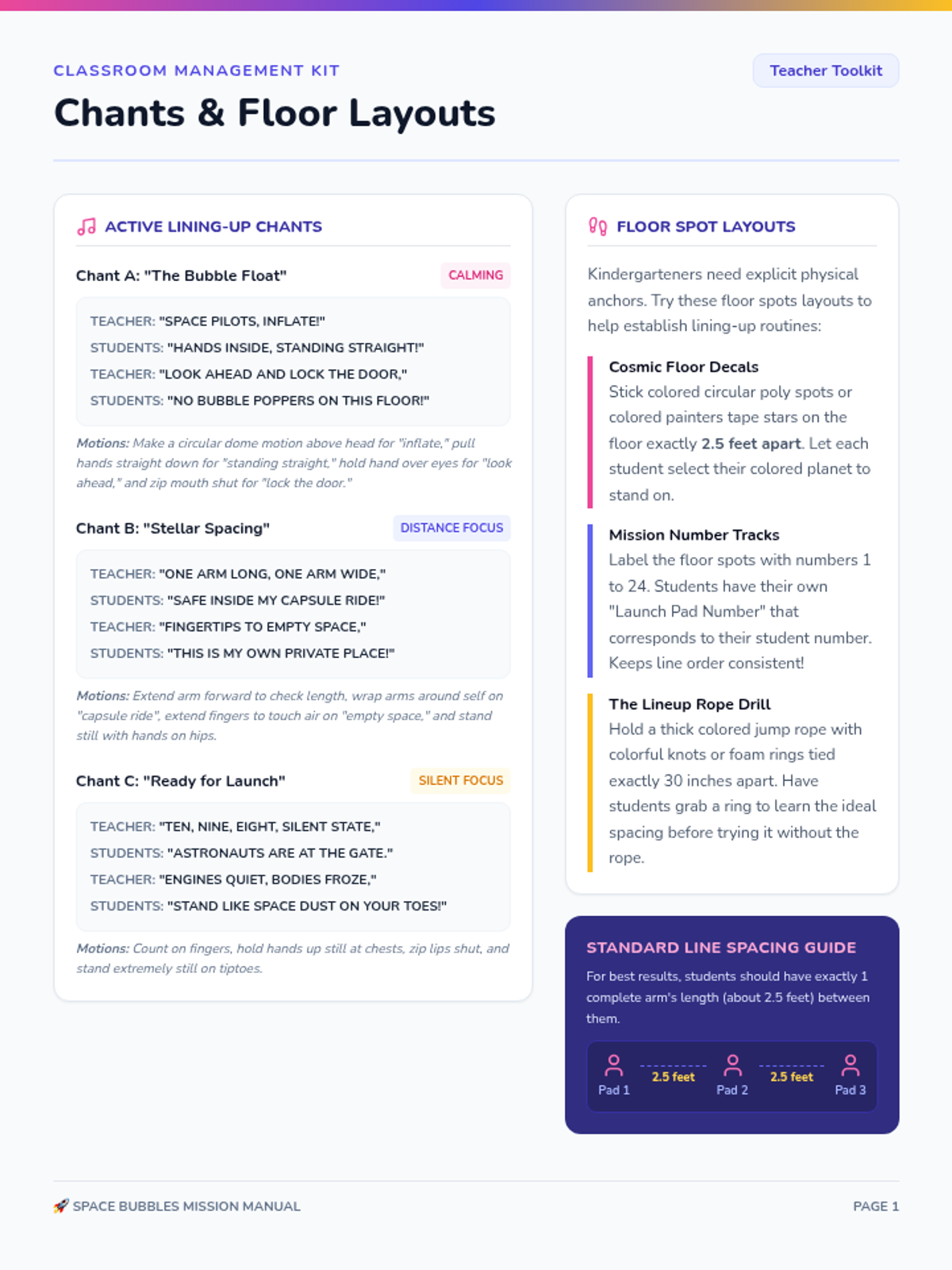
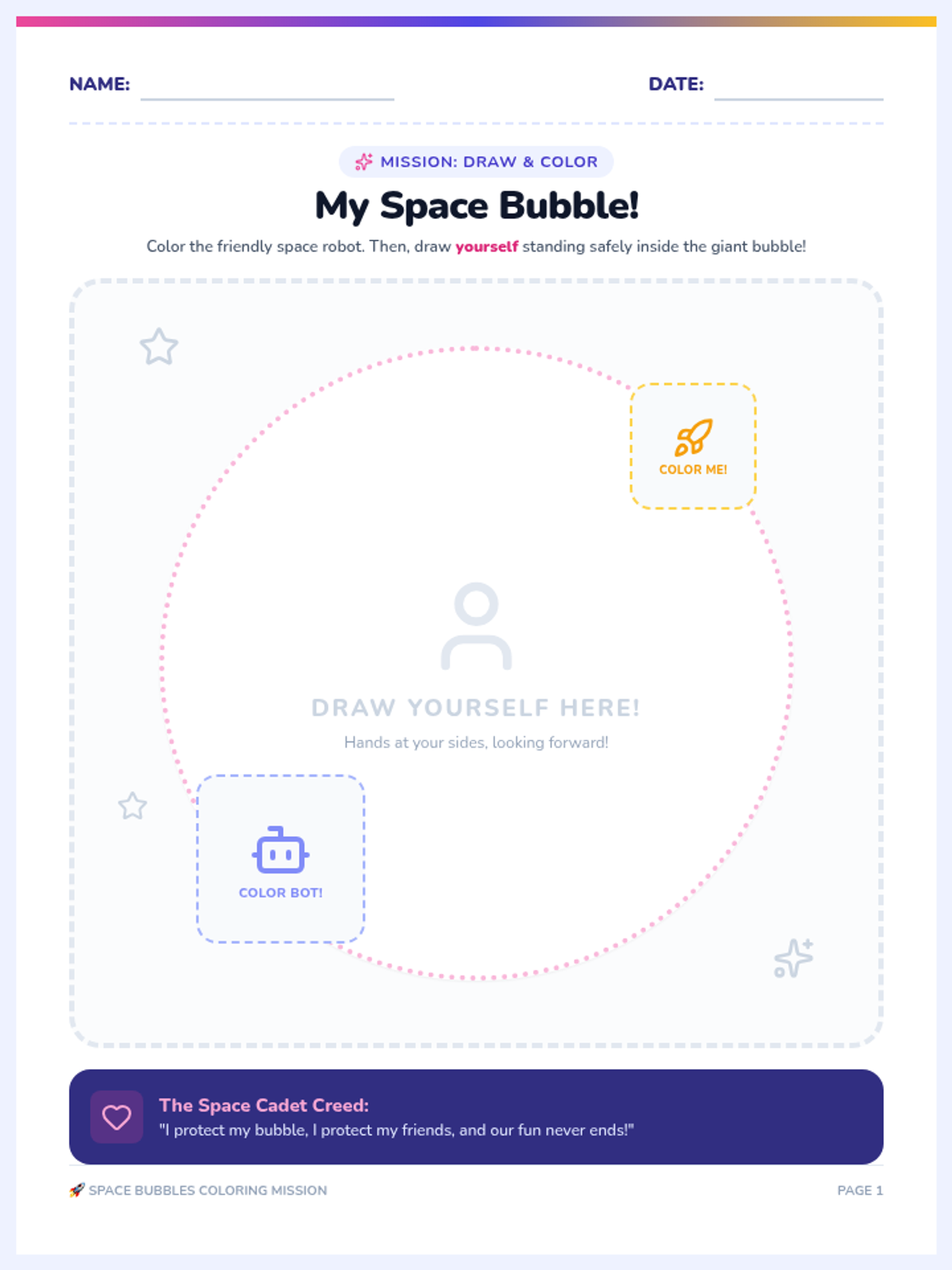
A comprehensive kindergarten classroom management lesson that uses the fun metaphor of space bubbles to teach students how to line up, respect personal space, keep hands to themselves, and maintain physical distance.
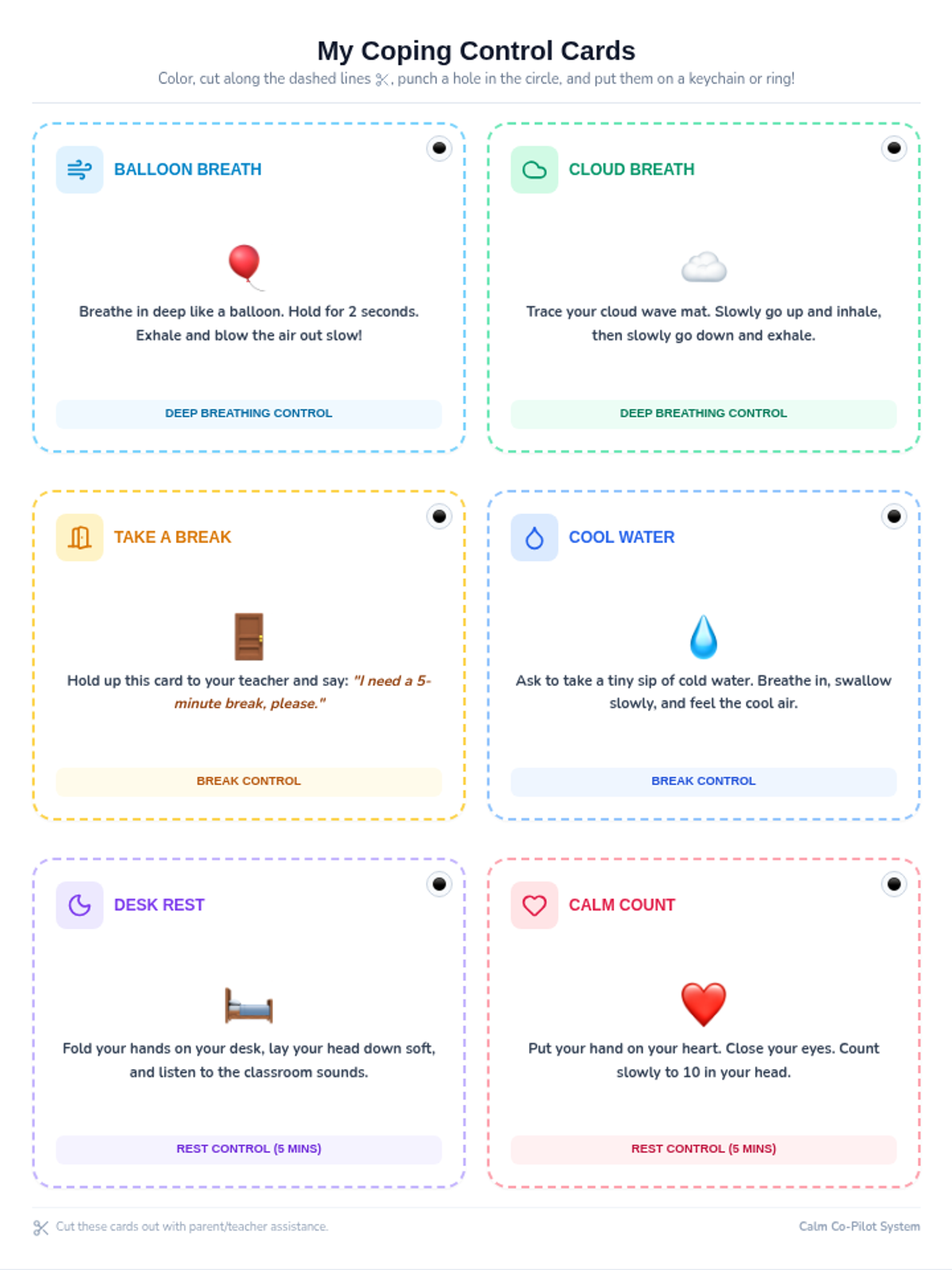
Day 4 of the Calm Co-Pilots intervention. A final review where students assemble their personal Calm Kit, practice choosing a strategy with adult prompting, and complete the post-assessment.
Day 3 of the Calm Co-Pilots intervention. Focuses on requesting a 5-minute break and practicing structured rest using sensory supports, cards, and timers with adult prompts.
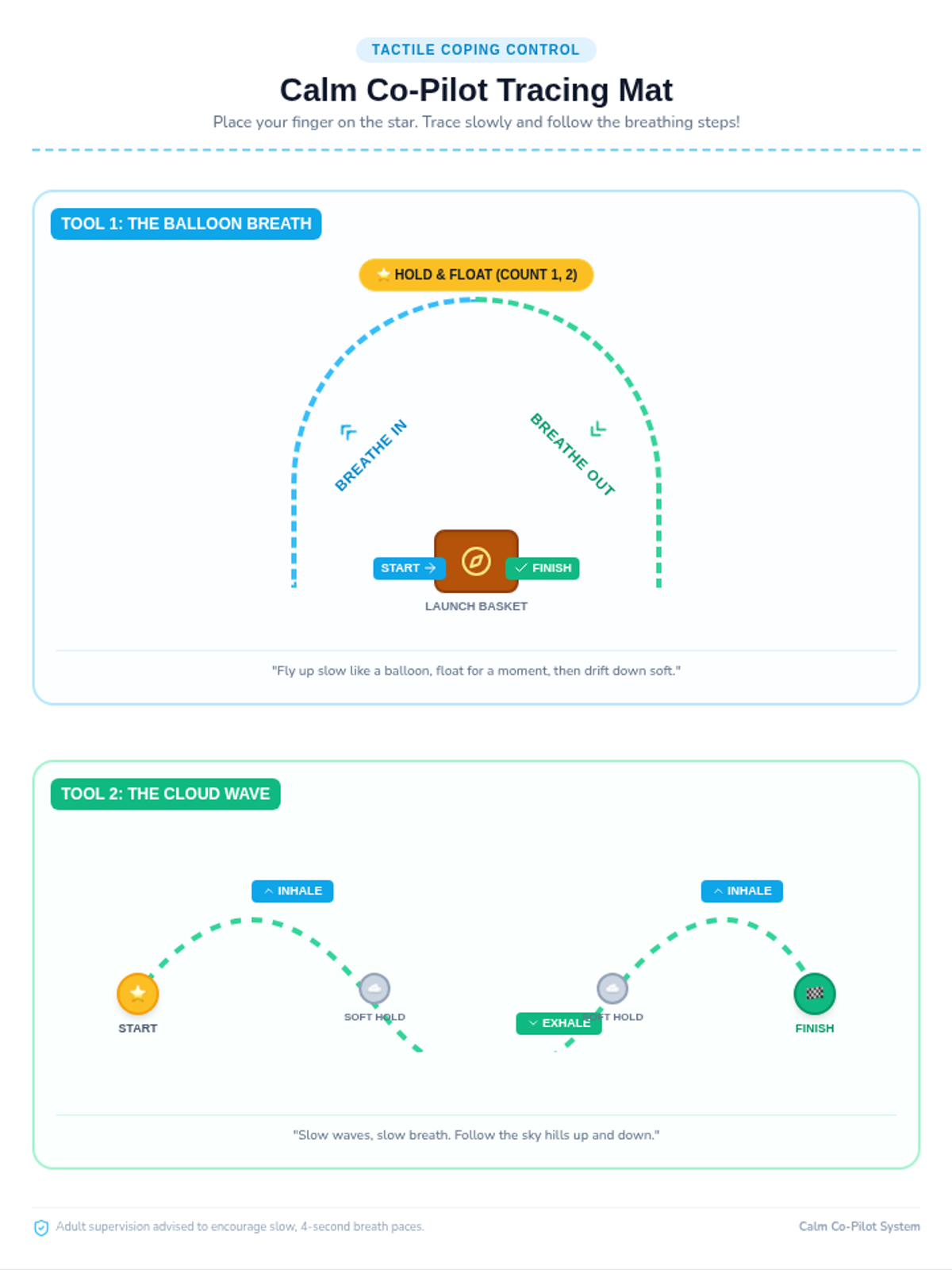
Day 2 of the Calm Co-Pilots intervention. Focuses on deep breathing using physical, tactile tracing mats to anchor their focus and regulate their physical response to big emotions.
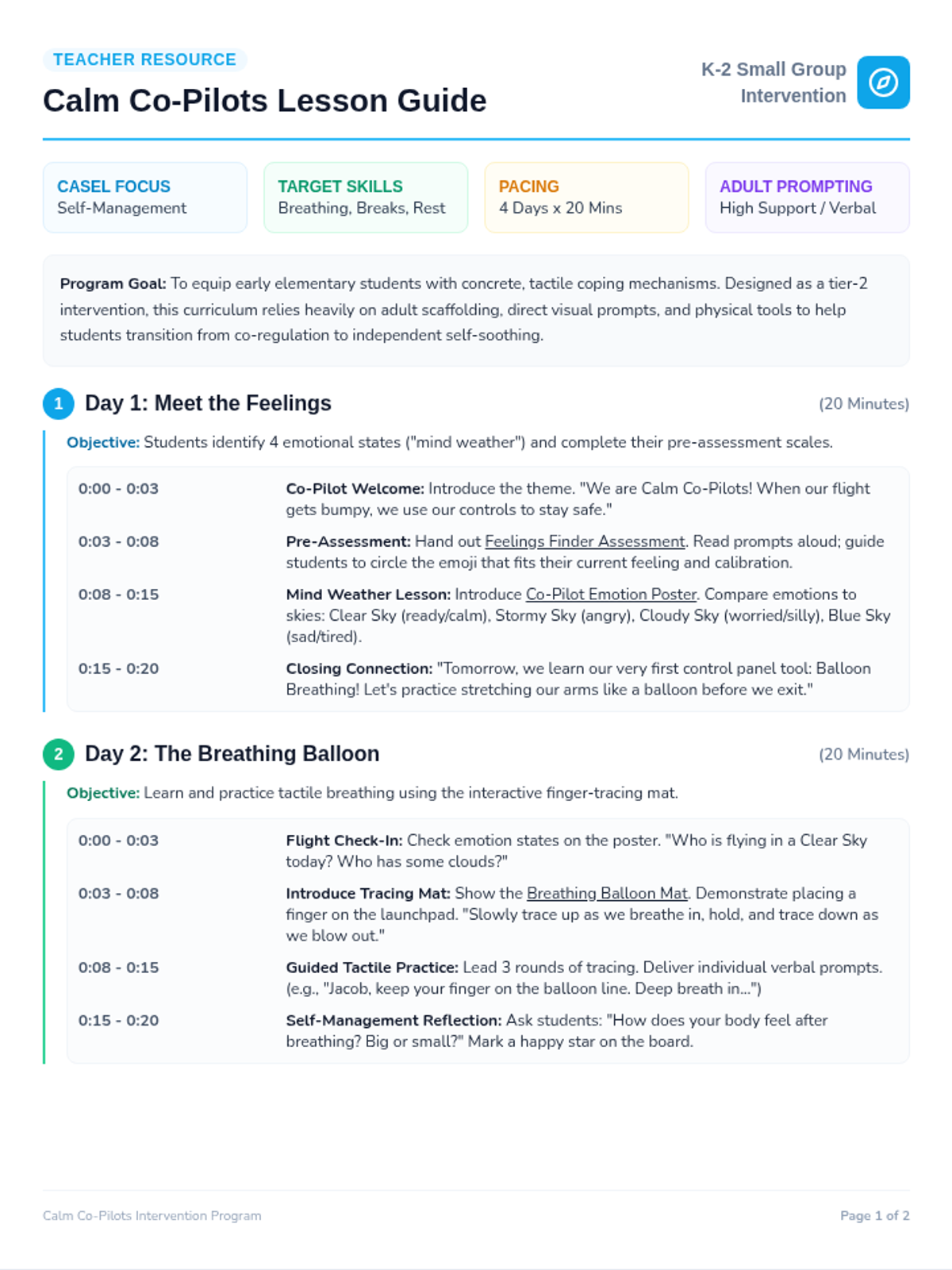
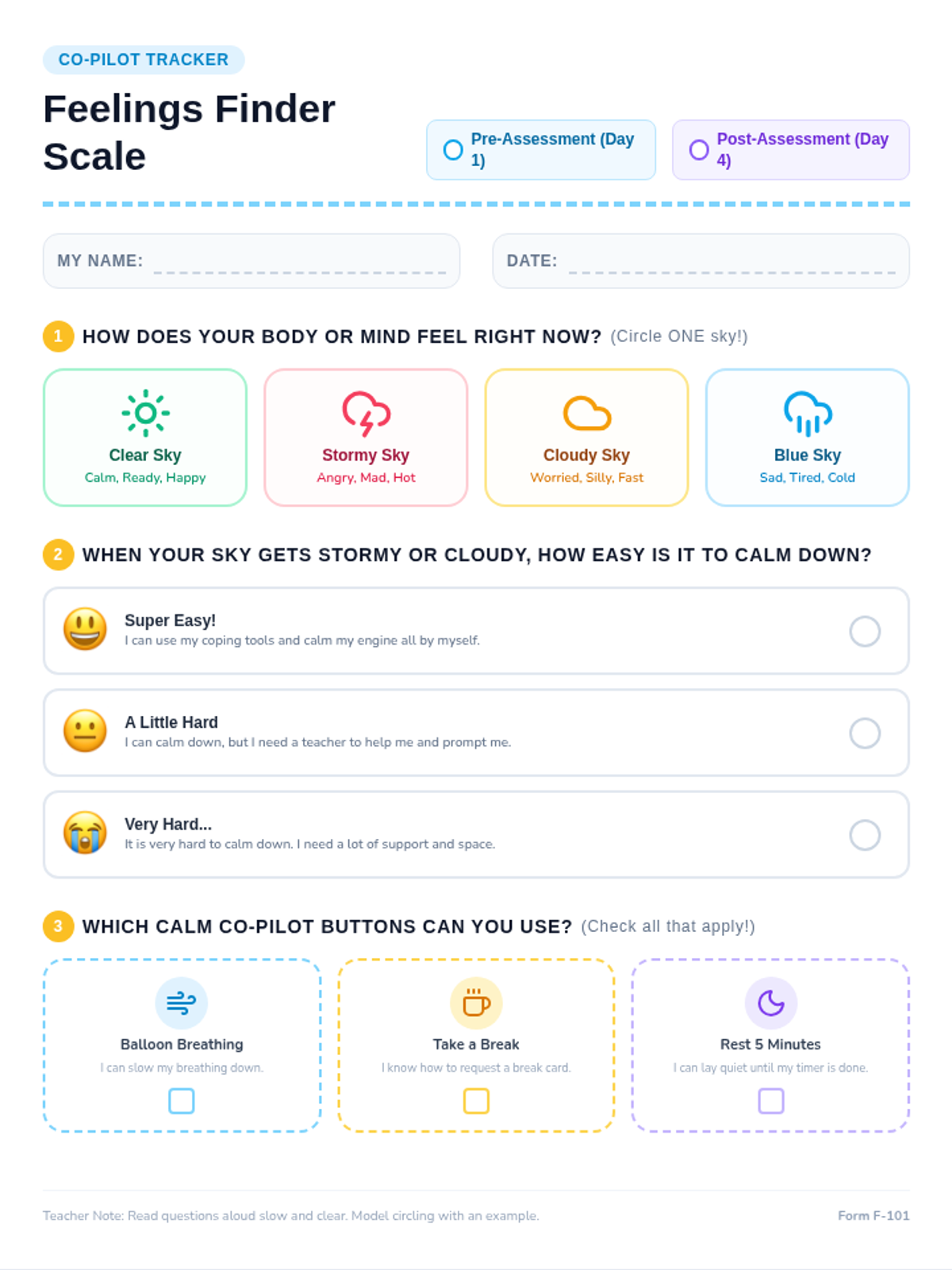
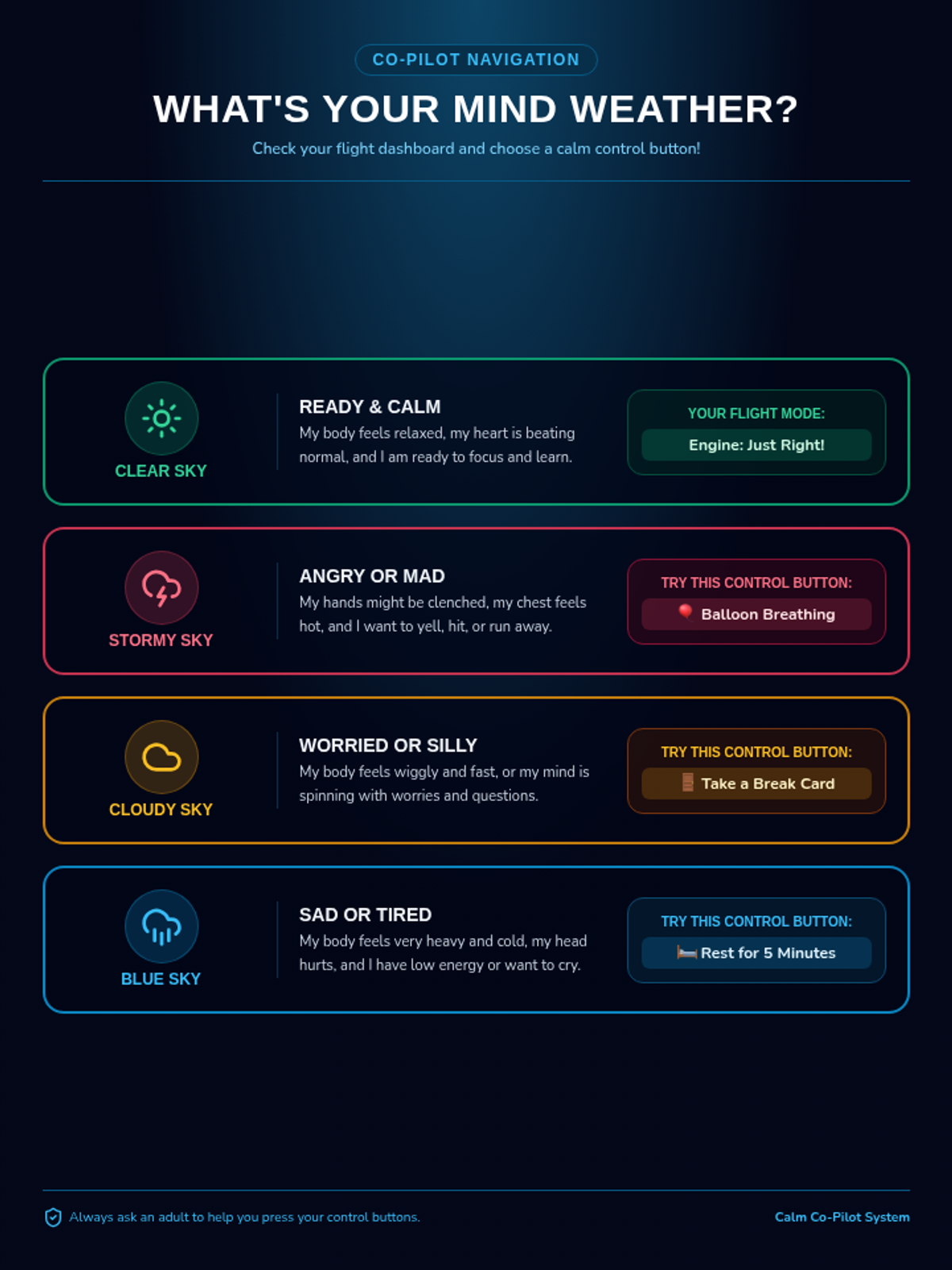
Day 1 of the Calm Co-Pilots intervention. Students explore different emotional states, complete their pre-assessment, and learn to identify when their engines are running too hot, too cold, or just right.
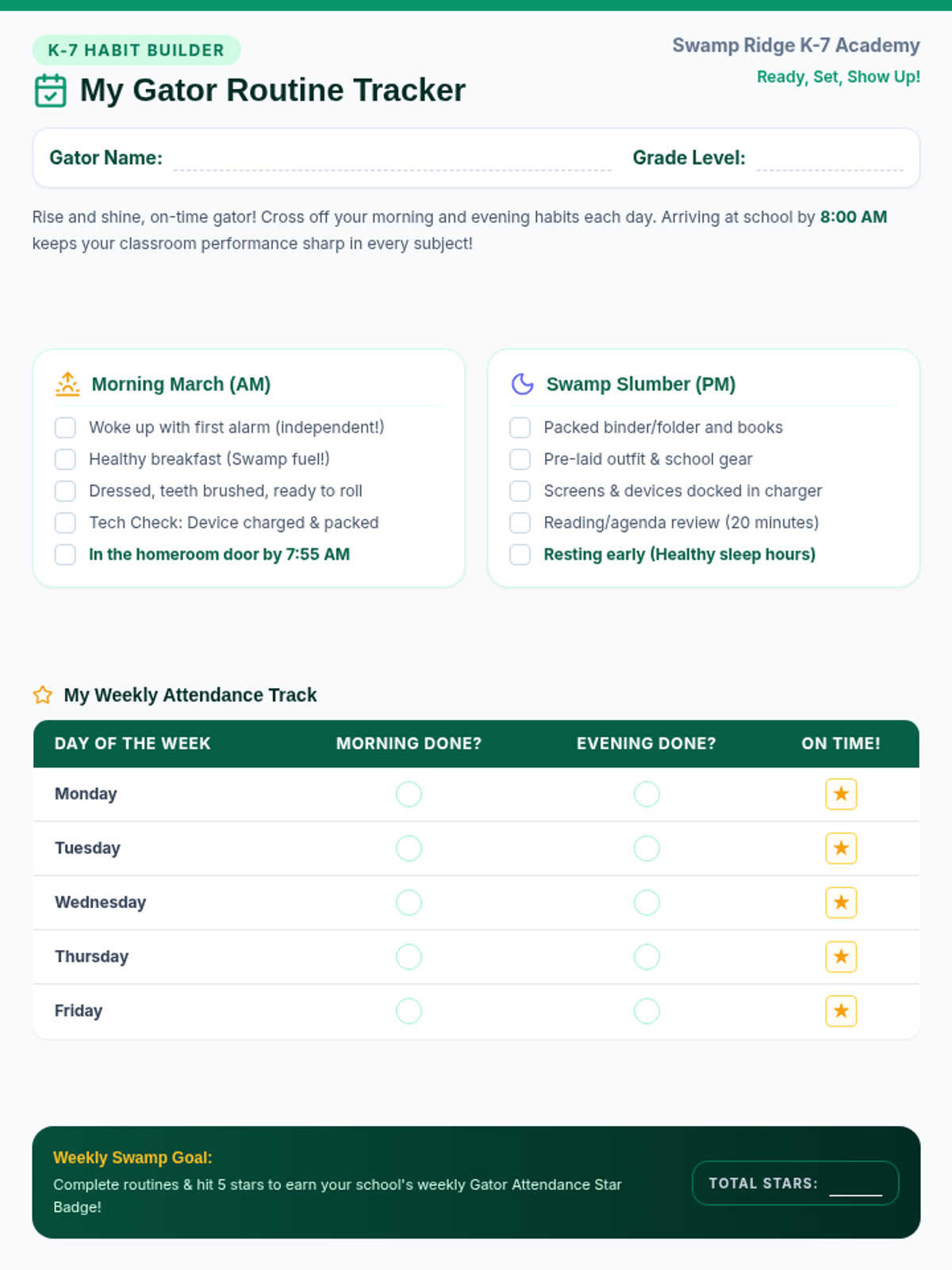
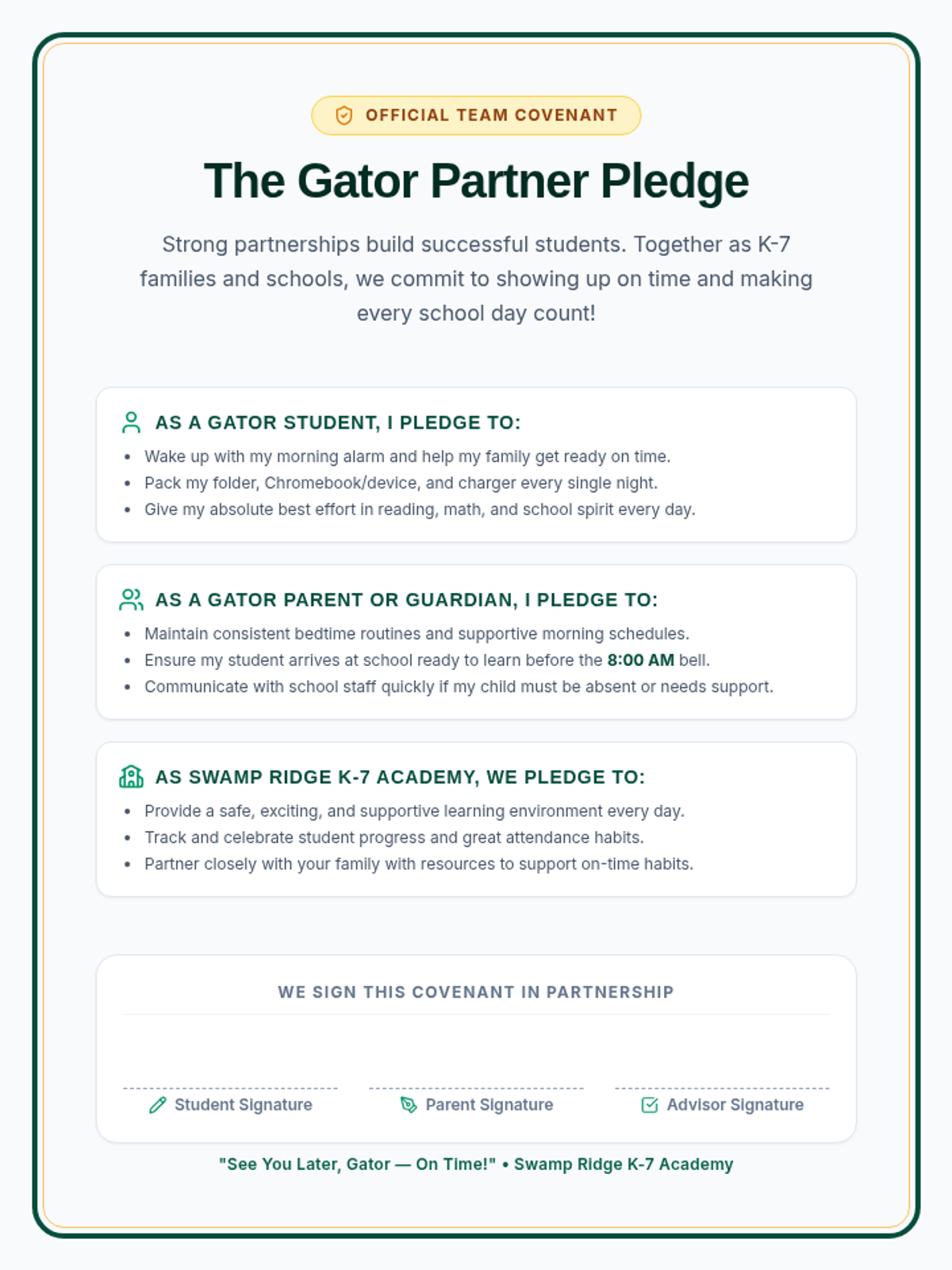
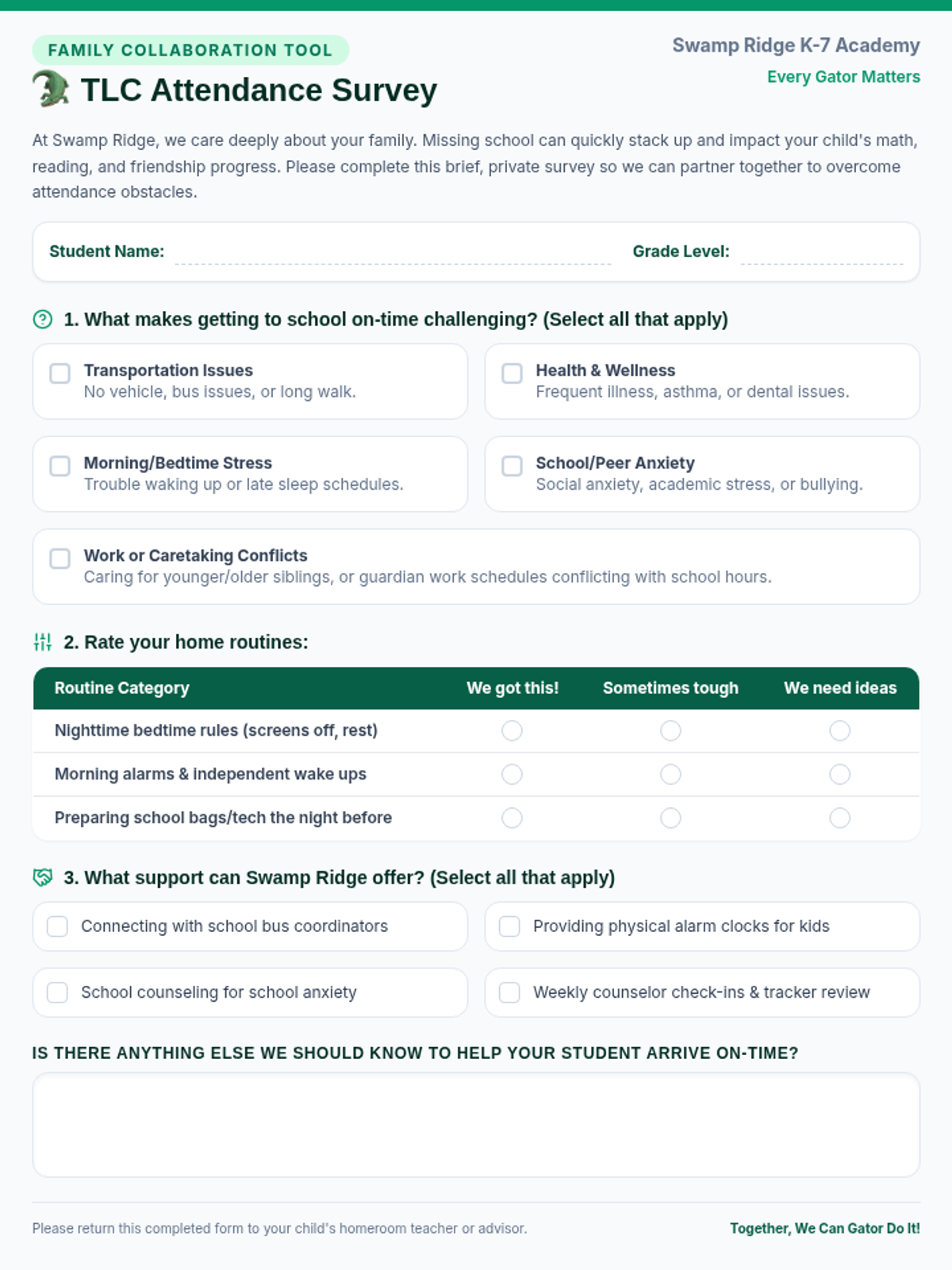
A family-focused guide to building daily routines and understanding the academic impact of school attendance. Includes a presentation for parent meetings, a student-friendly routine tracker, and a family partnership pledge.
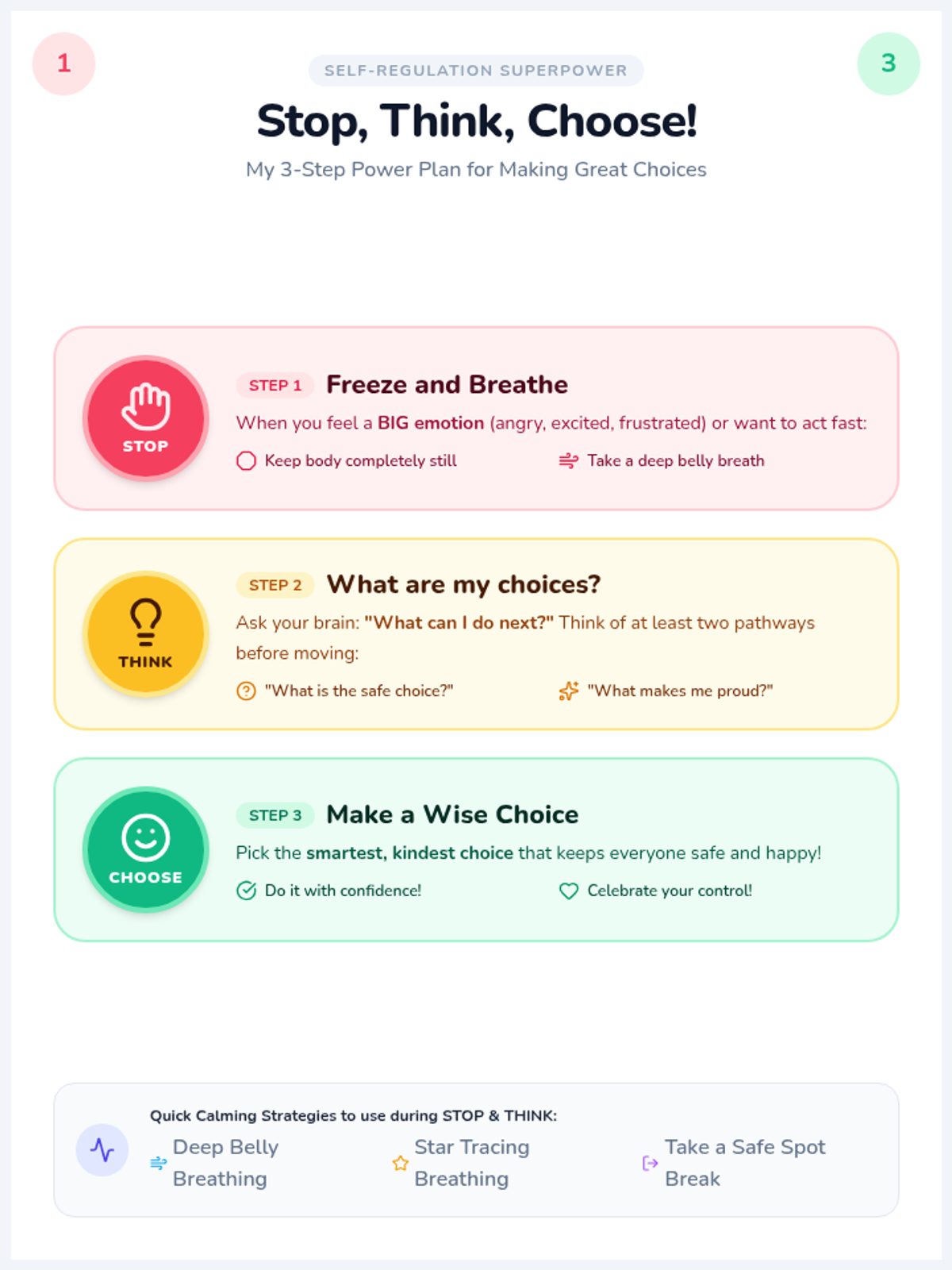
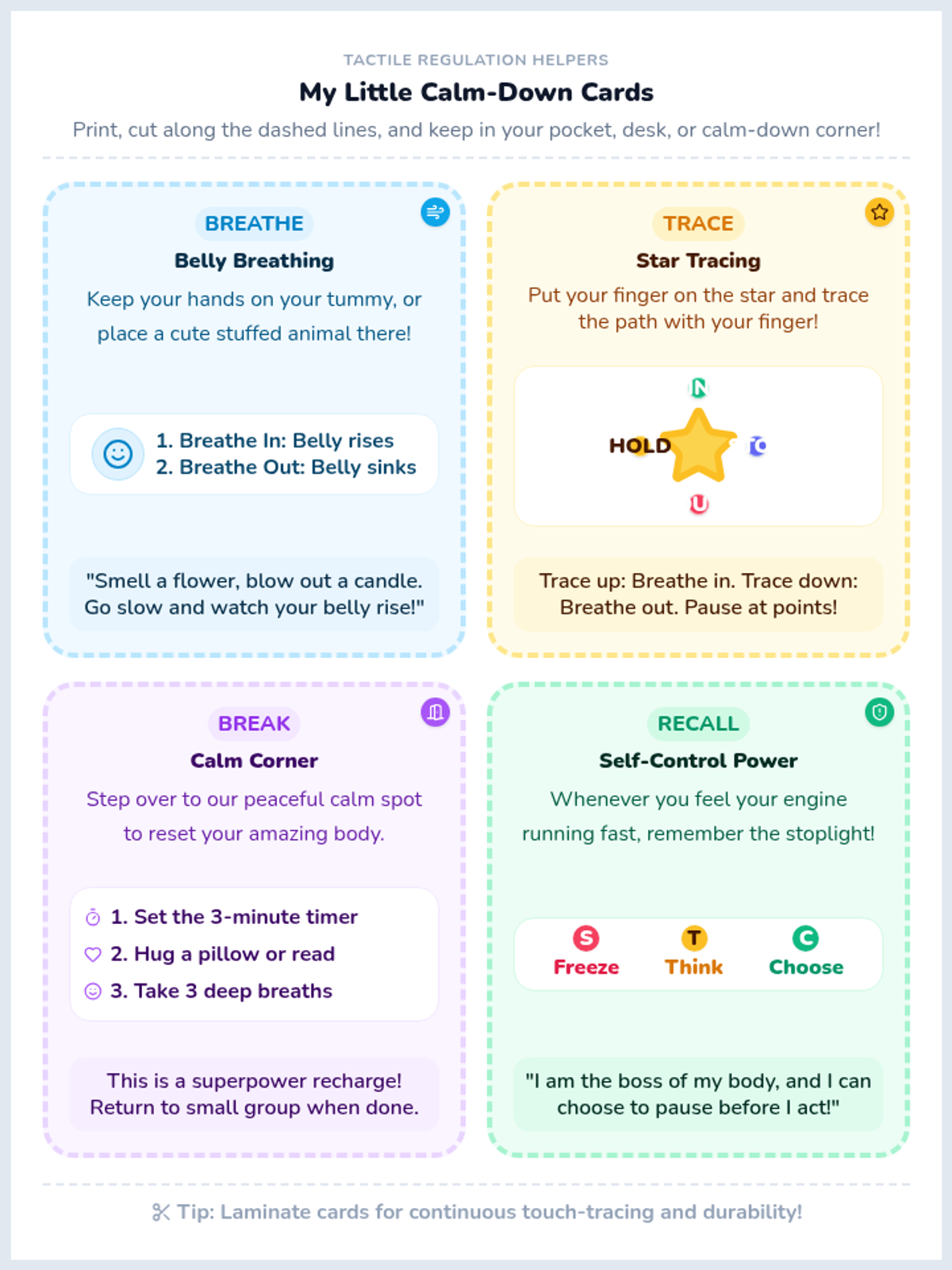
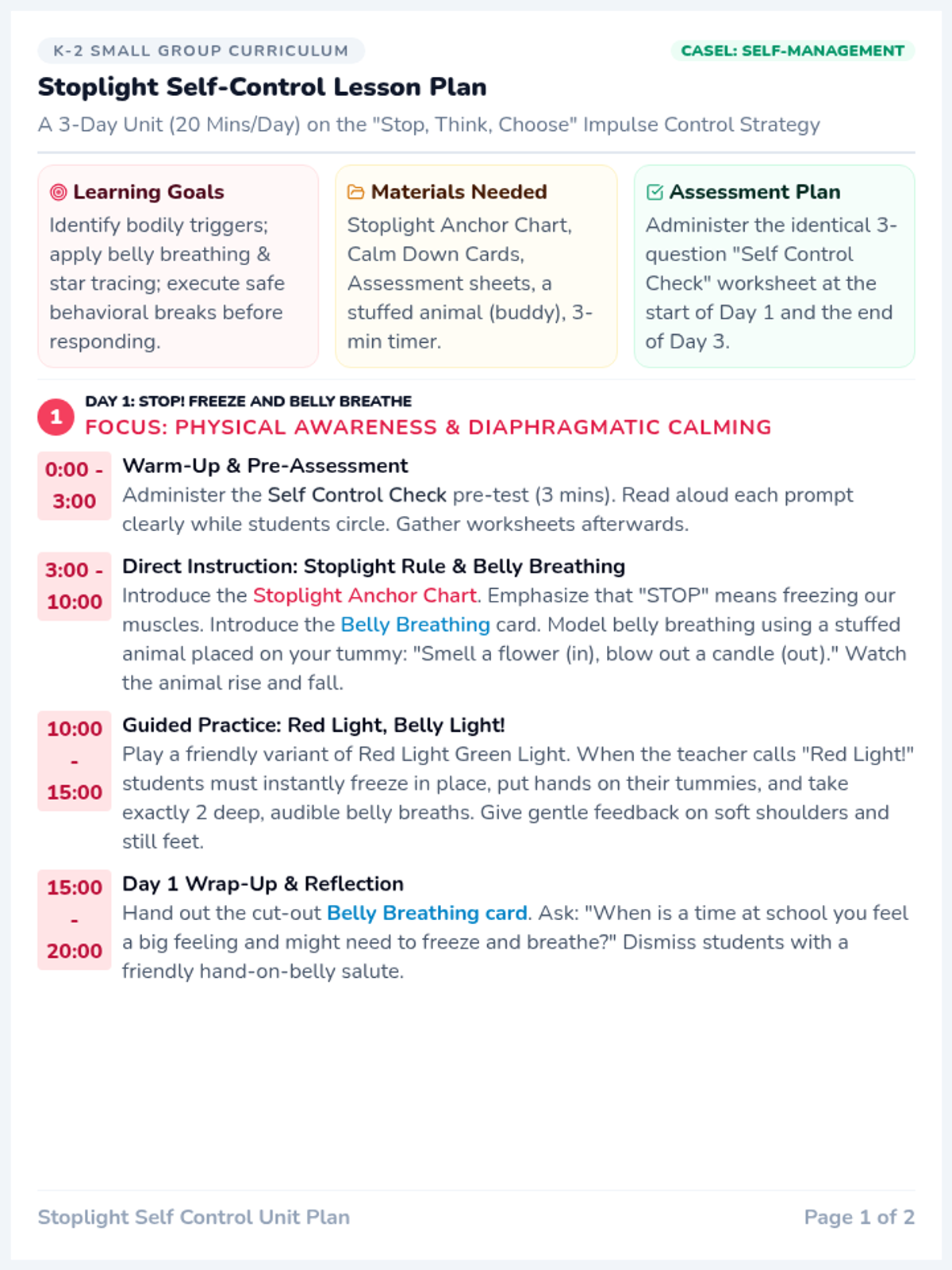
A comprehensive 3-day small group unit for grades K-2 focusing on the 'Stop, Think, Choose' strategy. Students learn self-management skills including deep belly breathing, star tracing, and taking physical calm-down breaks.
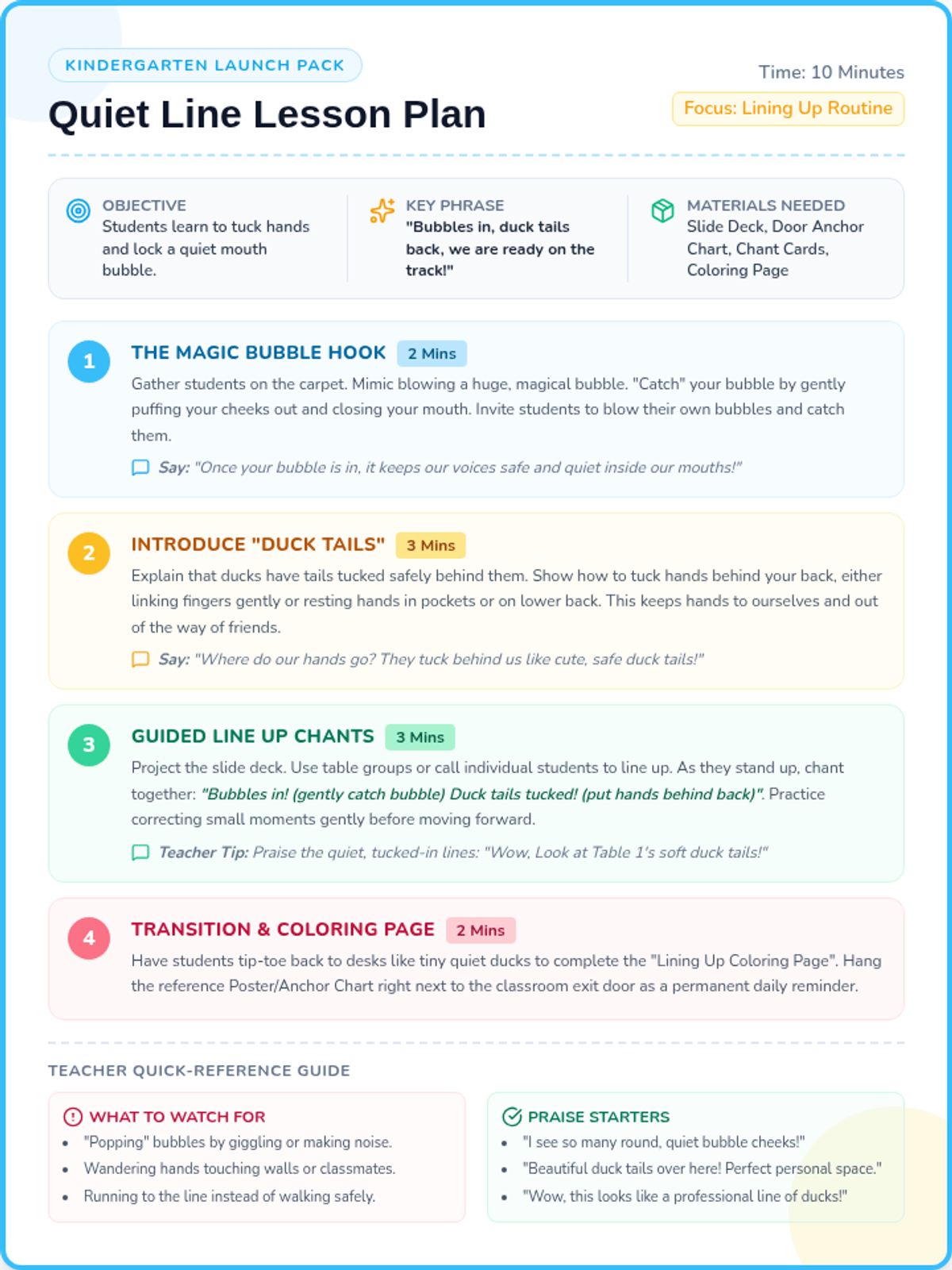
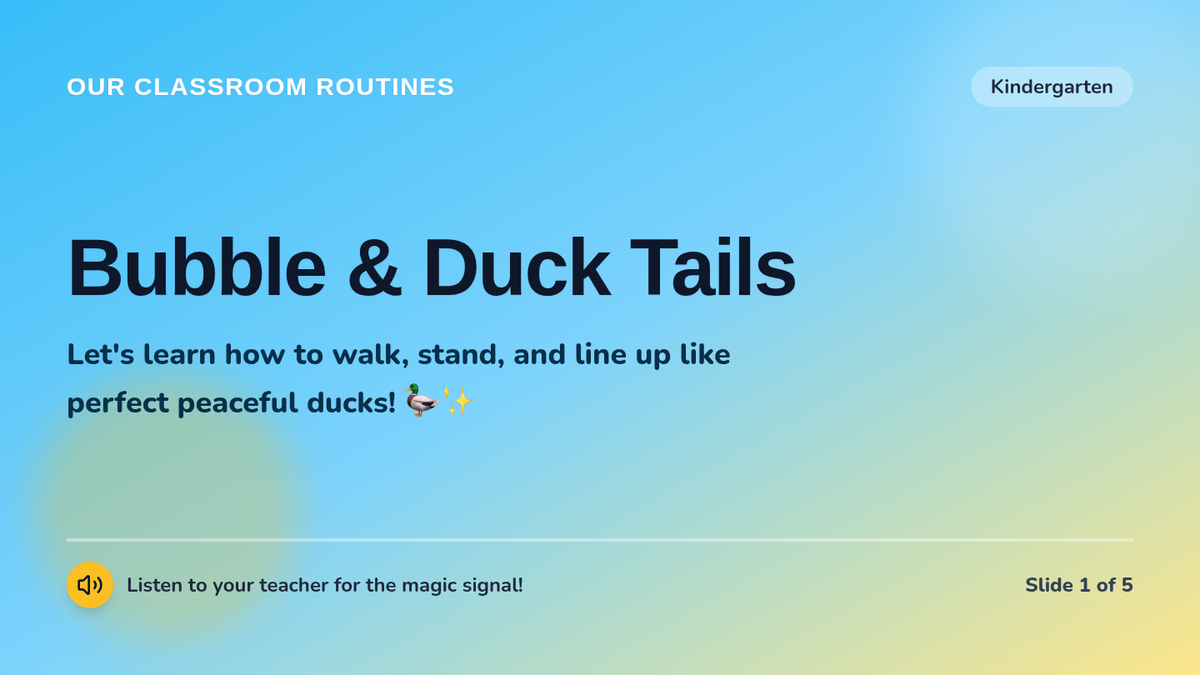
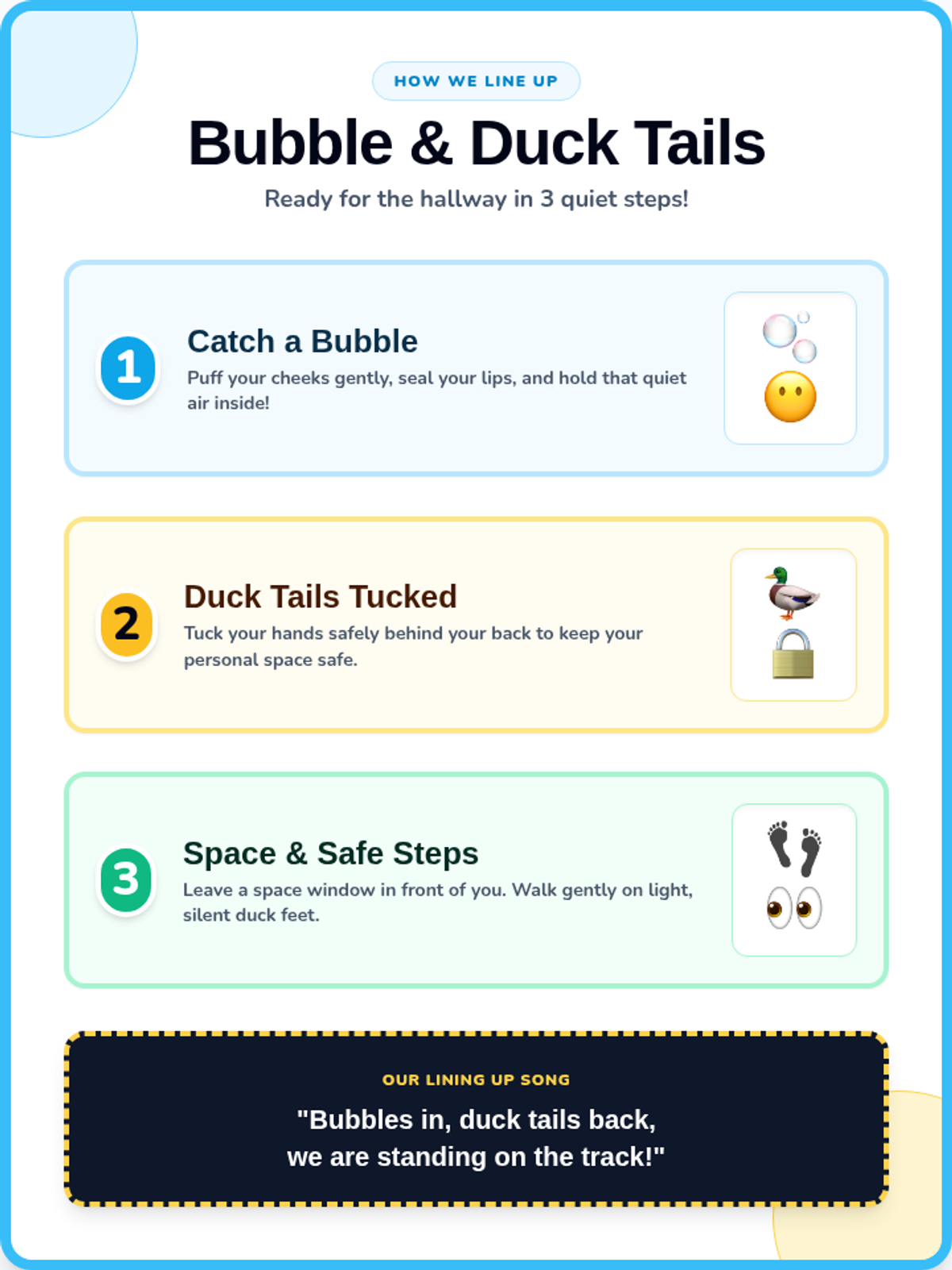
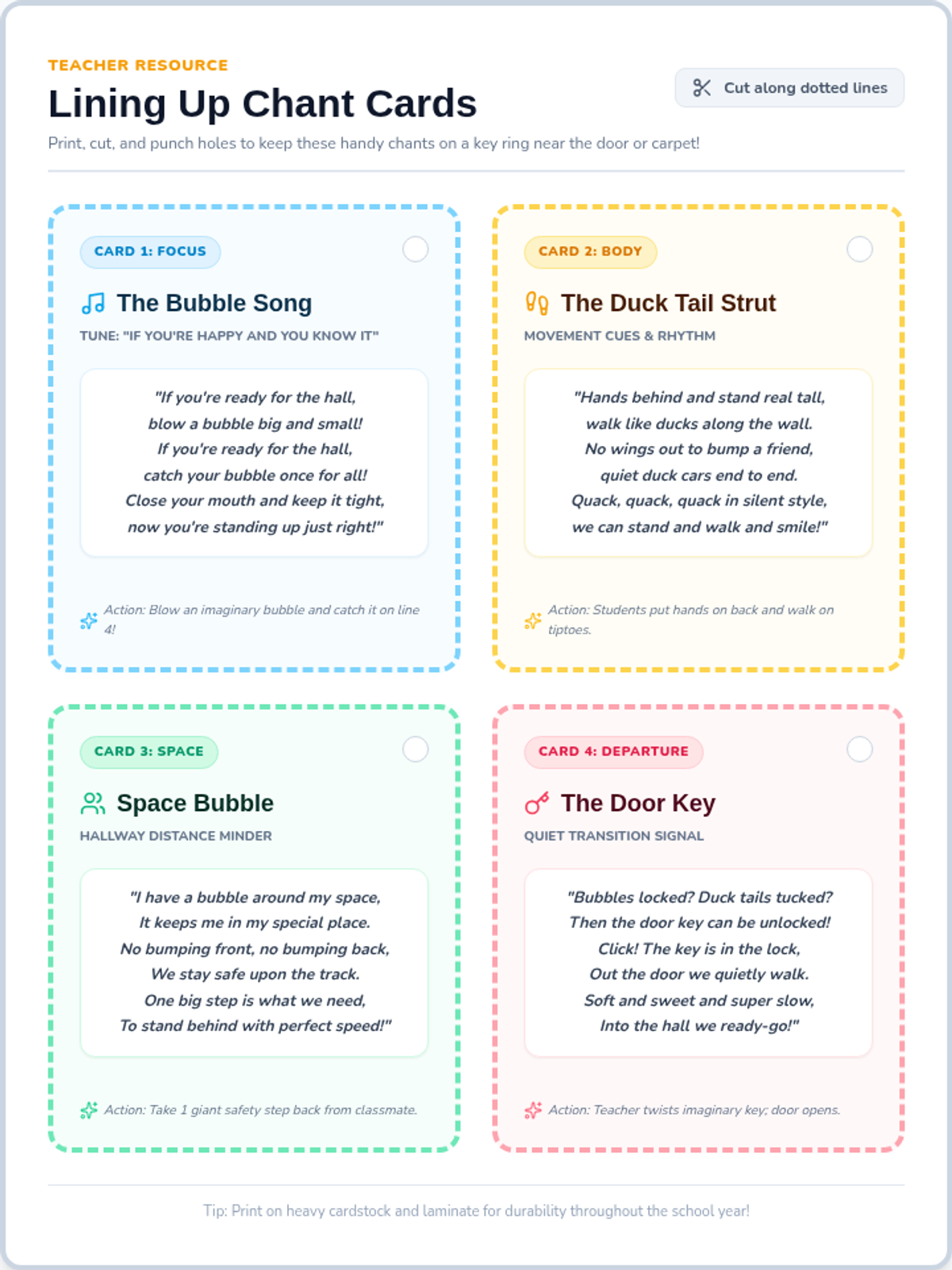
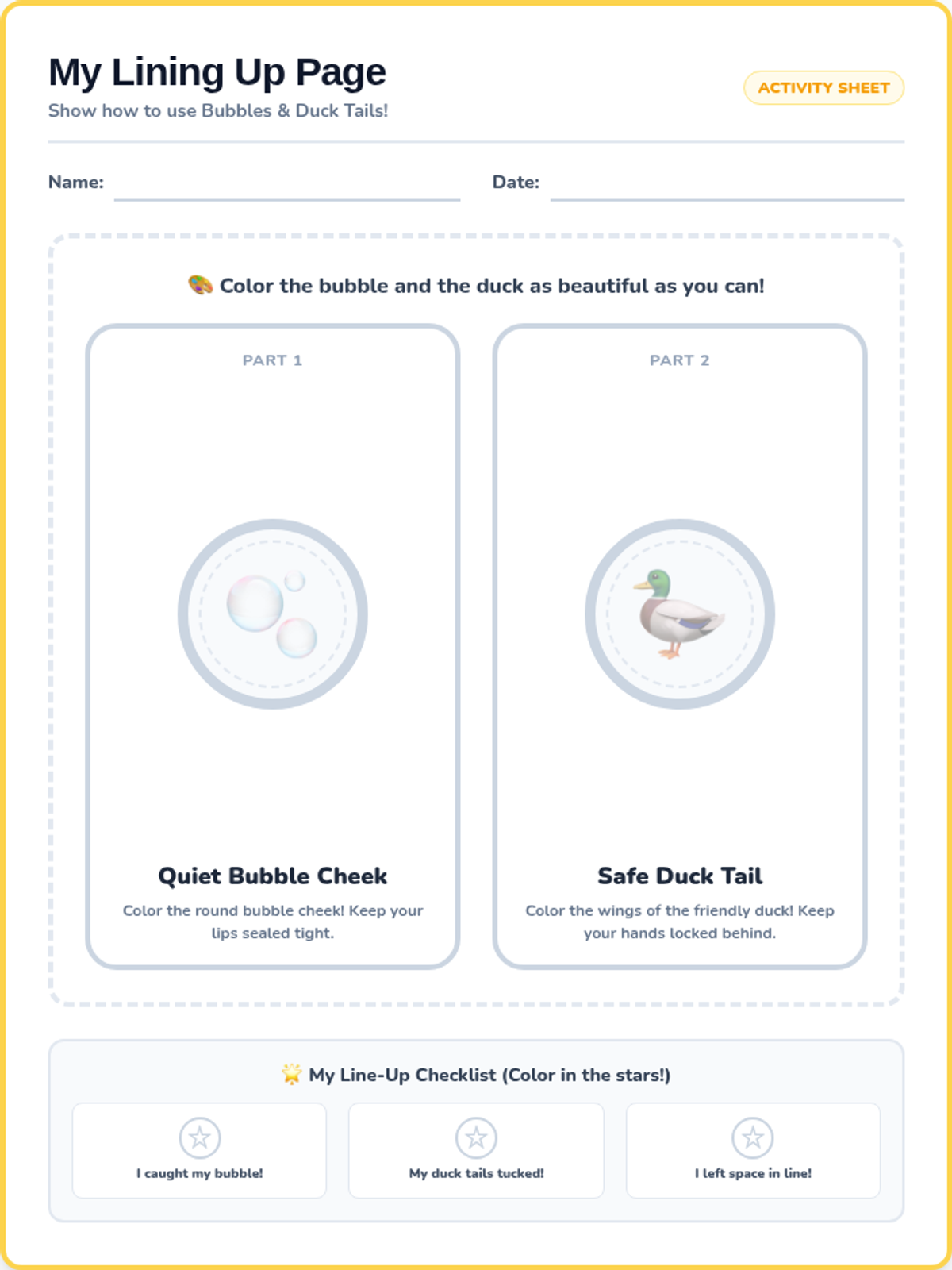
A structured mini-lesson and activities for kindergarteners to master the 'Bubble and Duck Tails' lining up routine at the start of the school year.
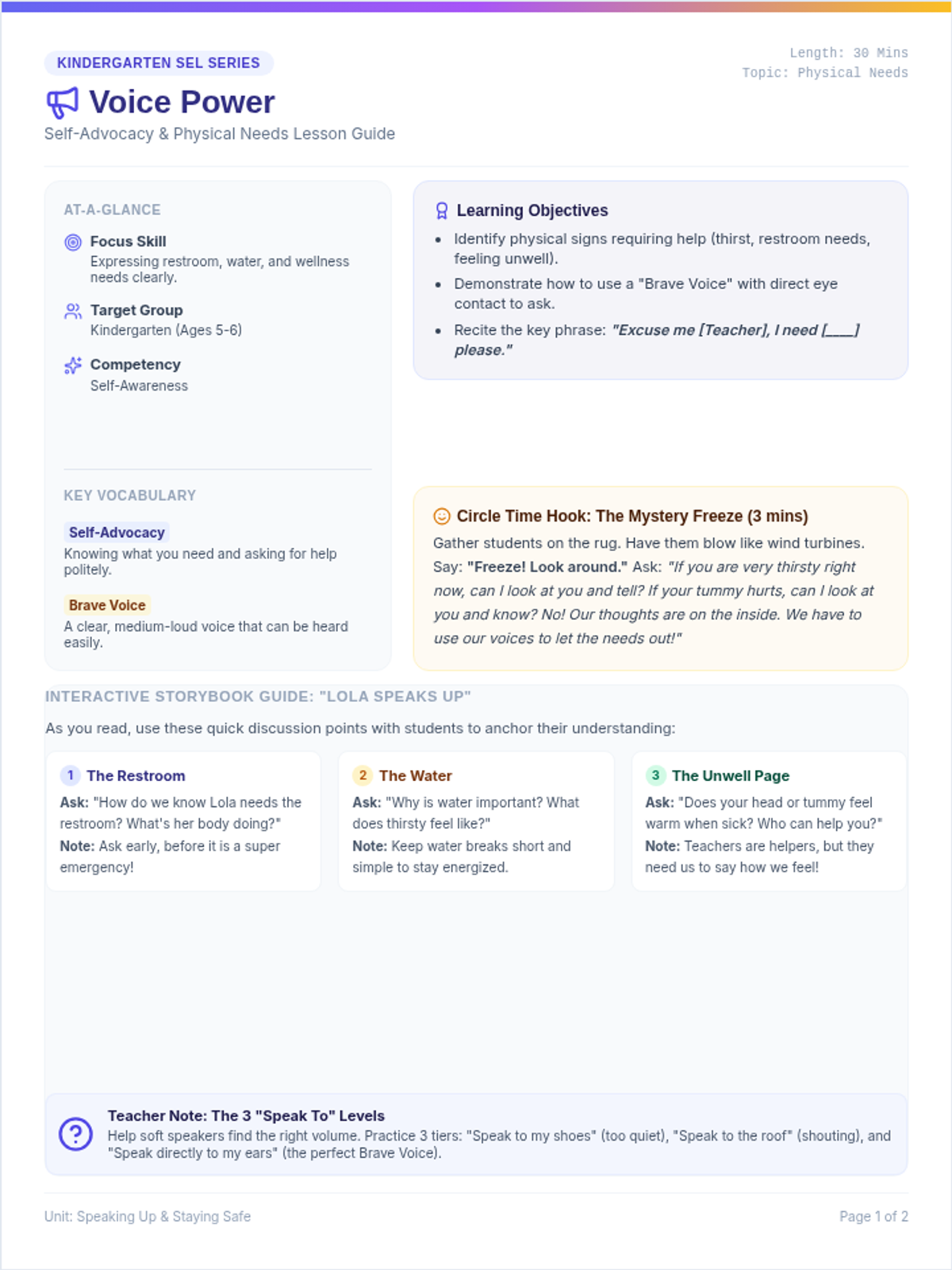
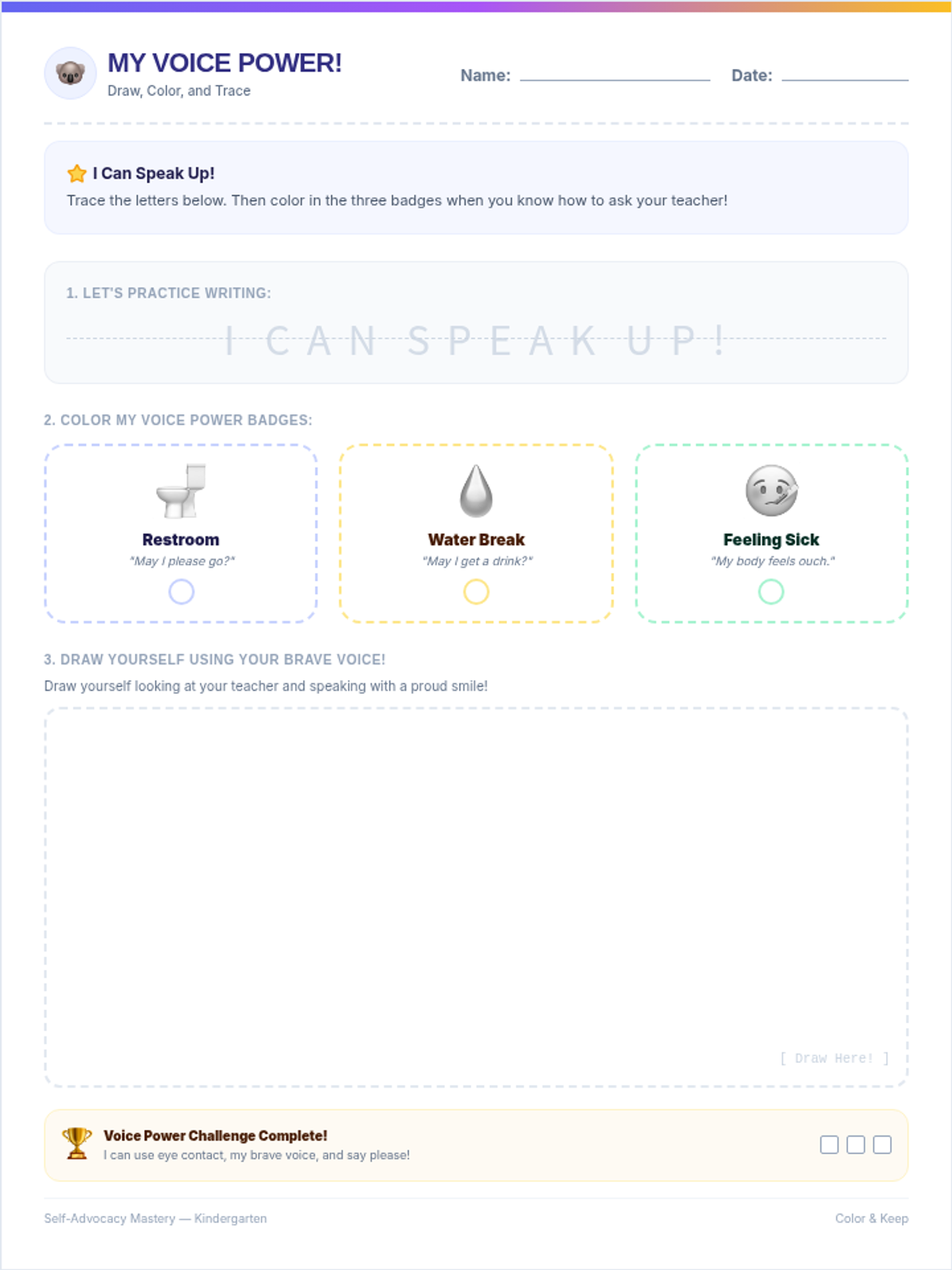
A social-emotional learning lesson for Kindergarteners focused on self-advocacy. Students learn how to speak up to their teacher about basic physical needs like water, restroom breaks, and feeling unwell through an engaging storybook and interactive discussion.
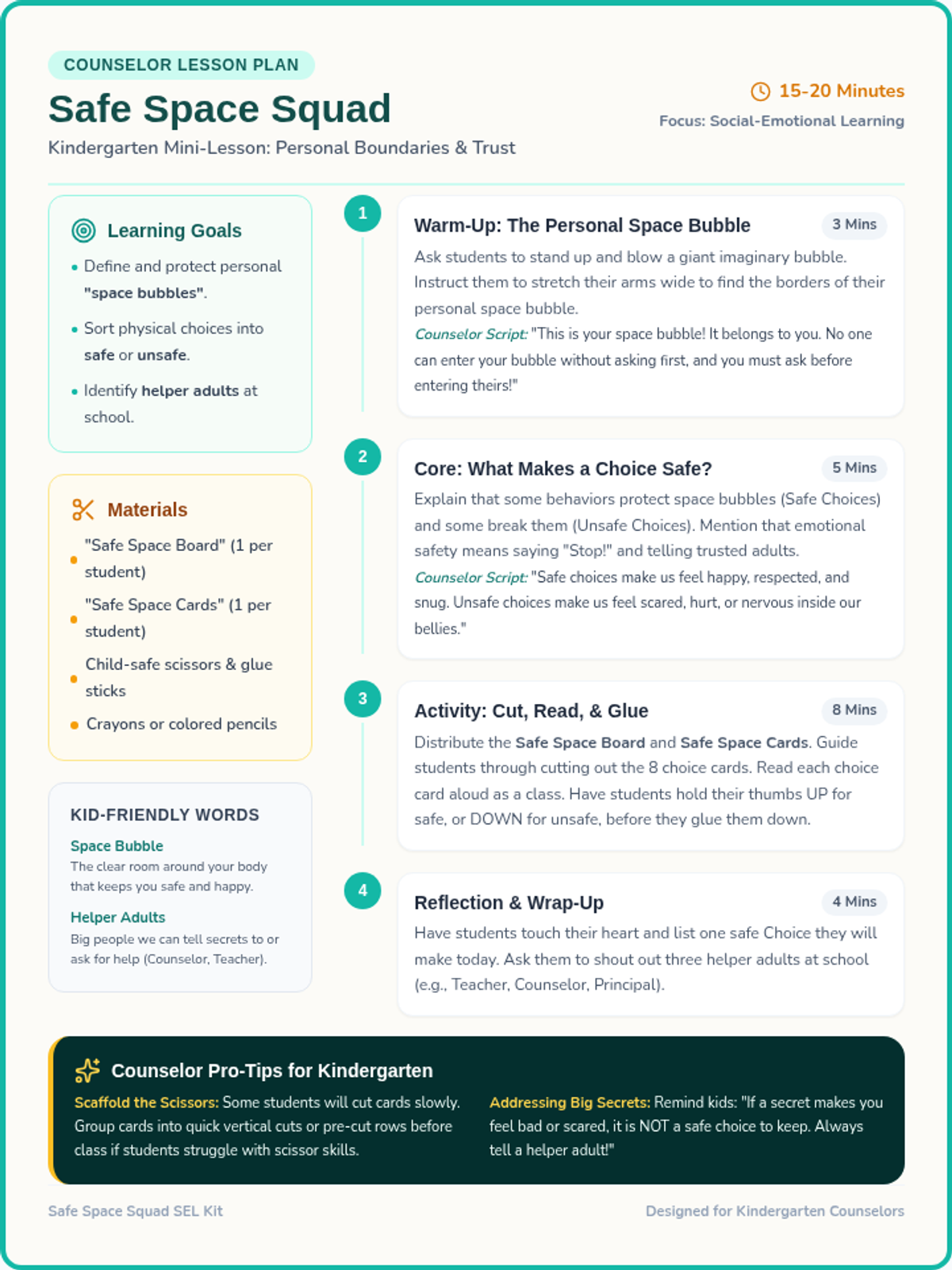
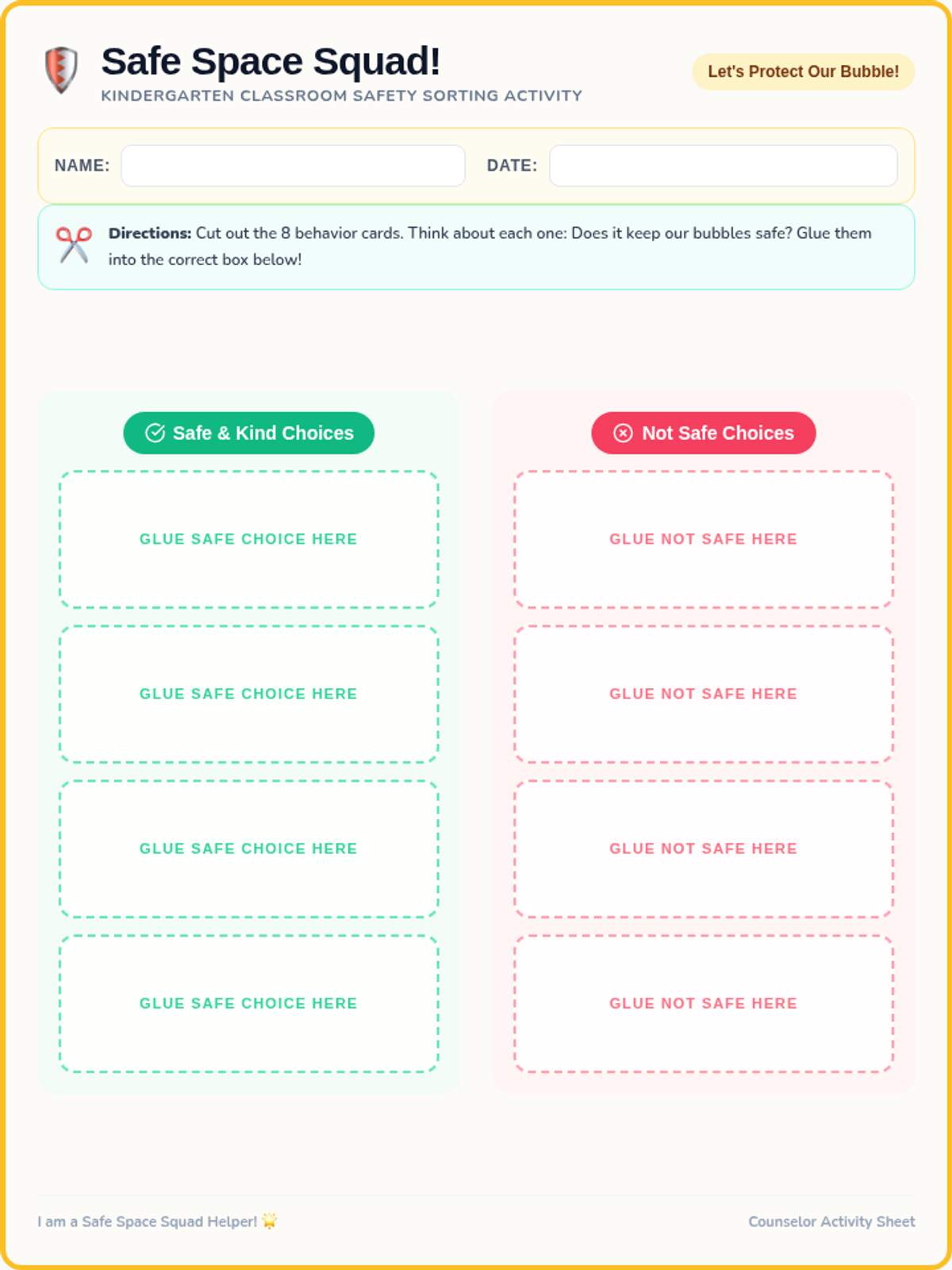
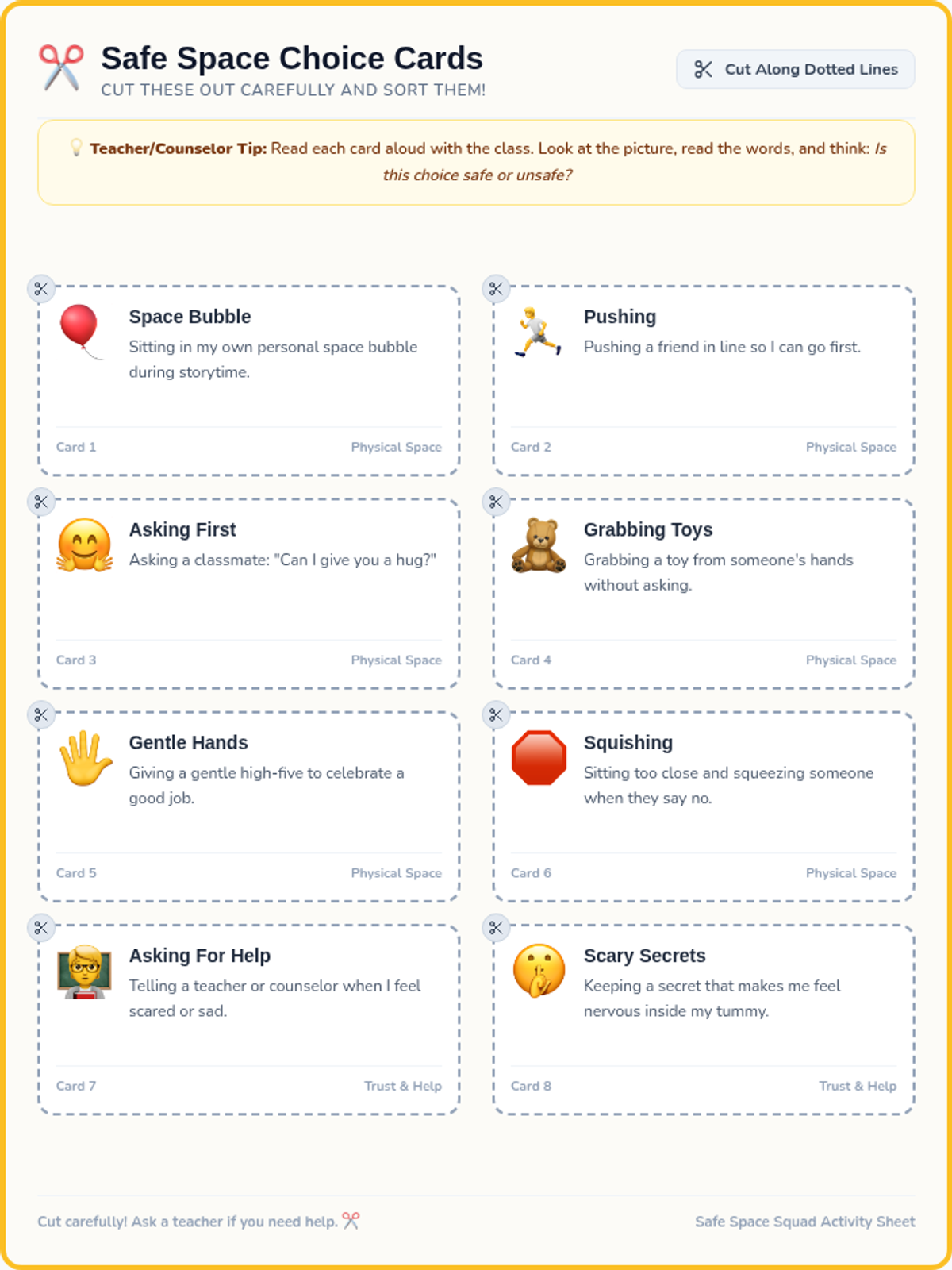
A counselor-led mini-lesson on classroom safety, physical boundaries, and emotional trust for kindergarten students, featuring a visual cut-and-paste sorting activity.
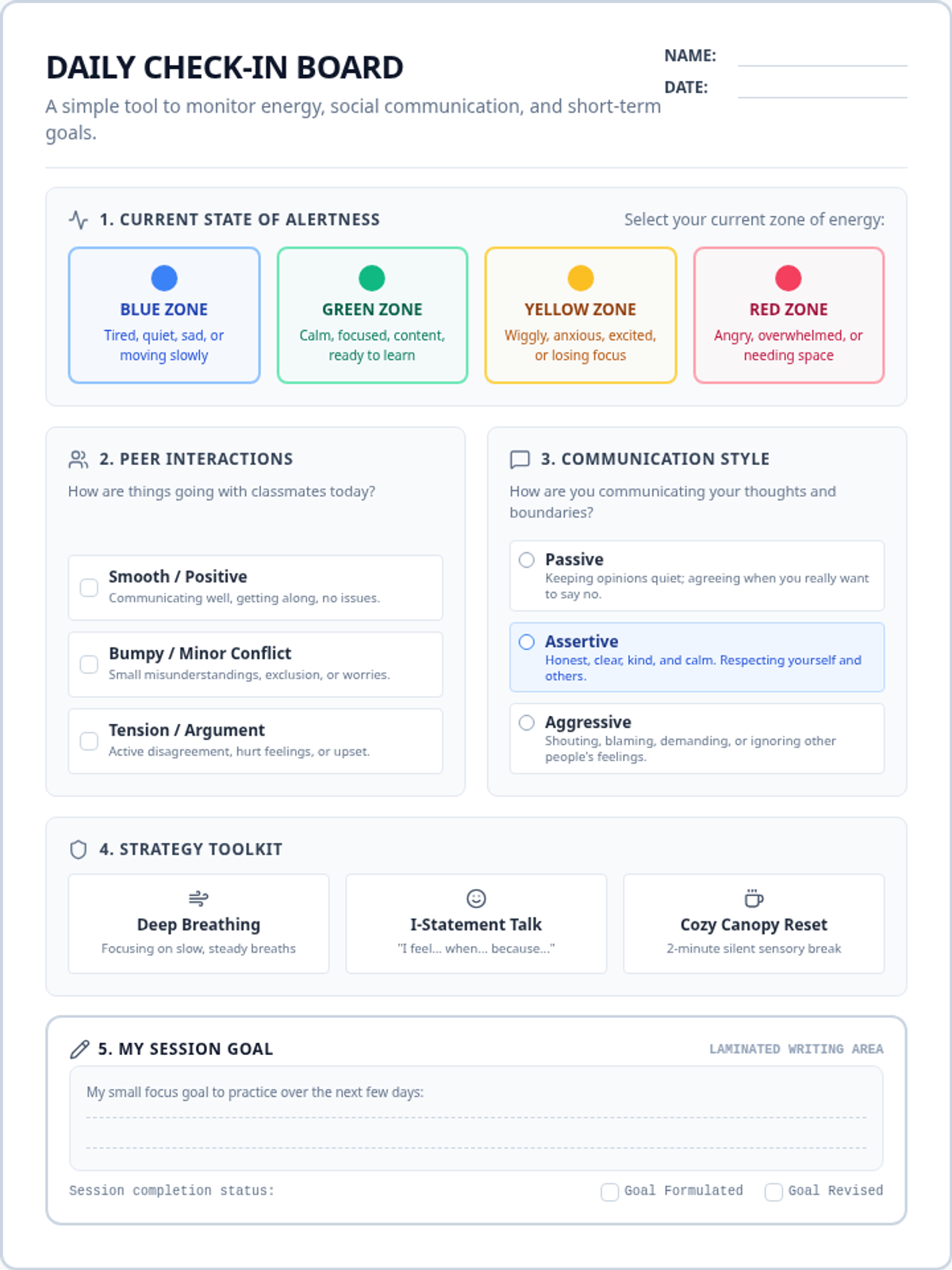
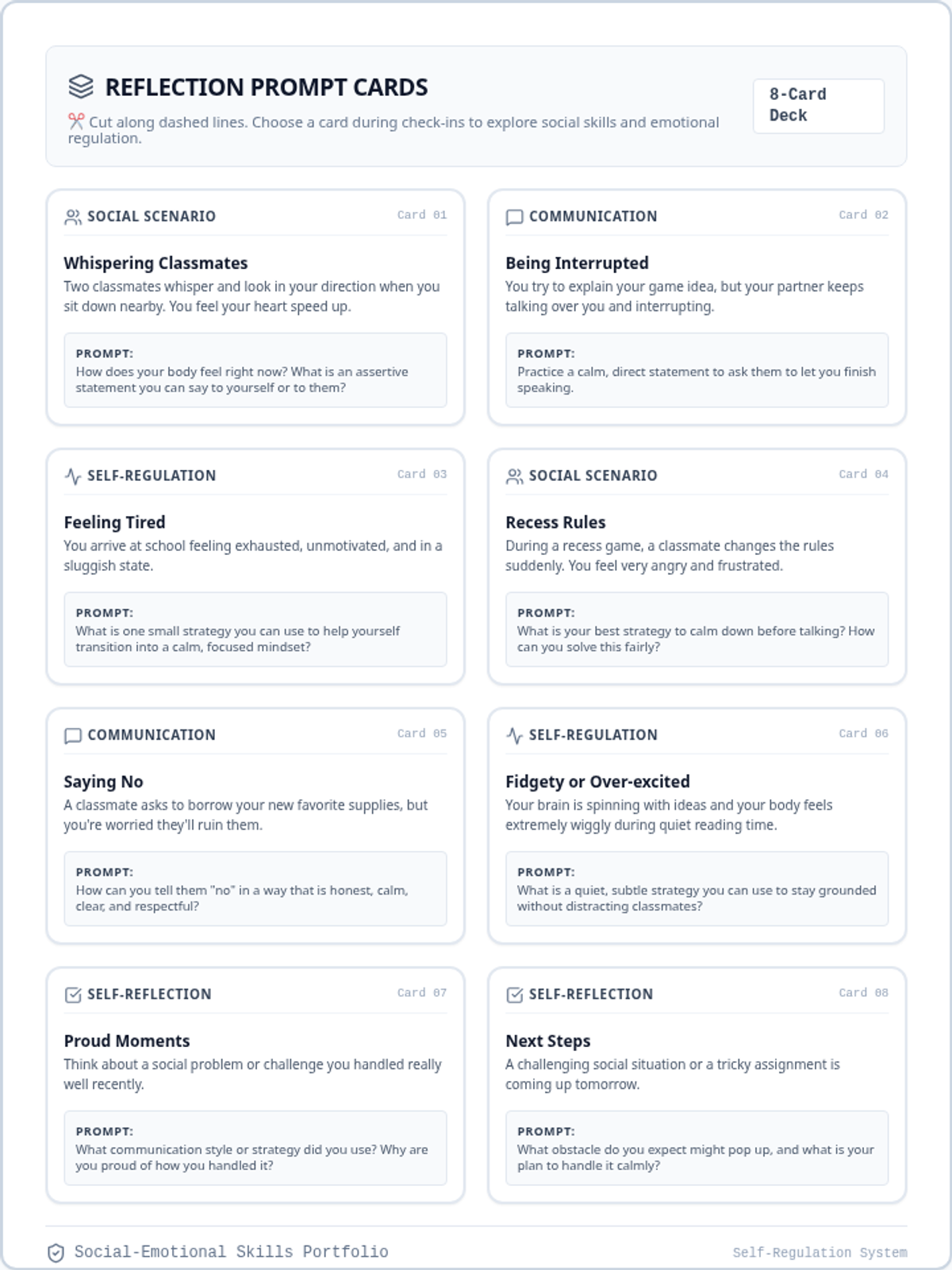
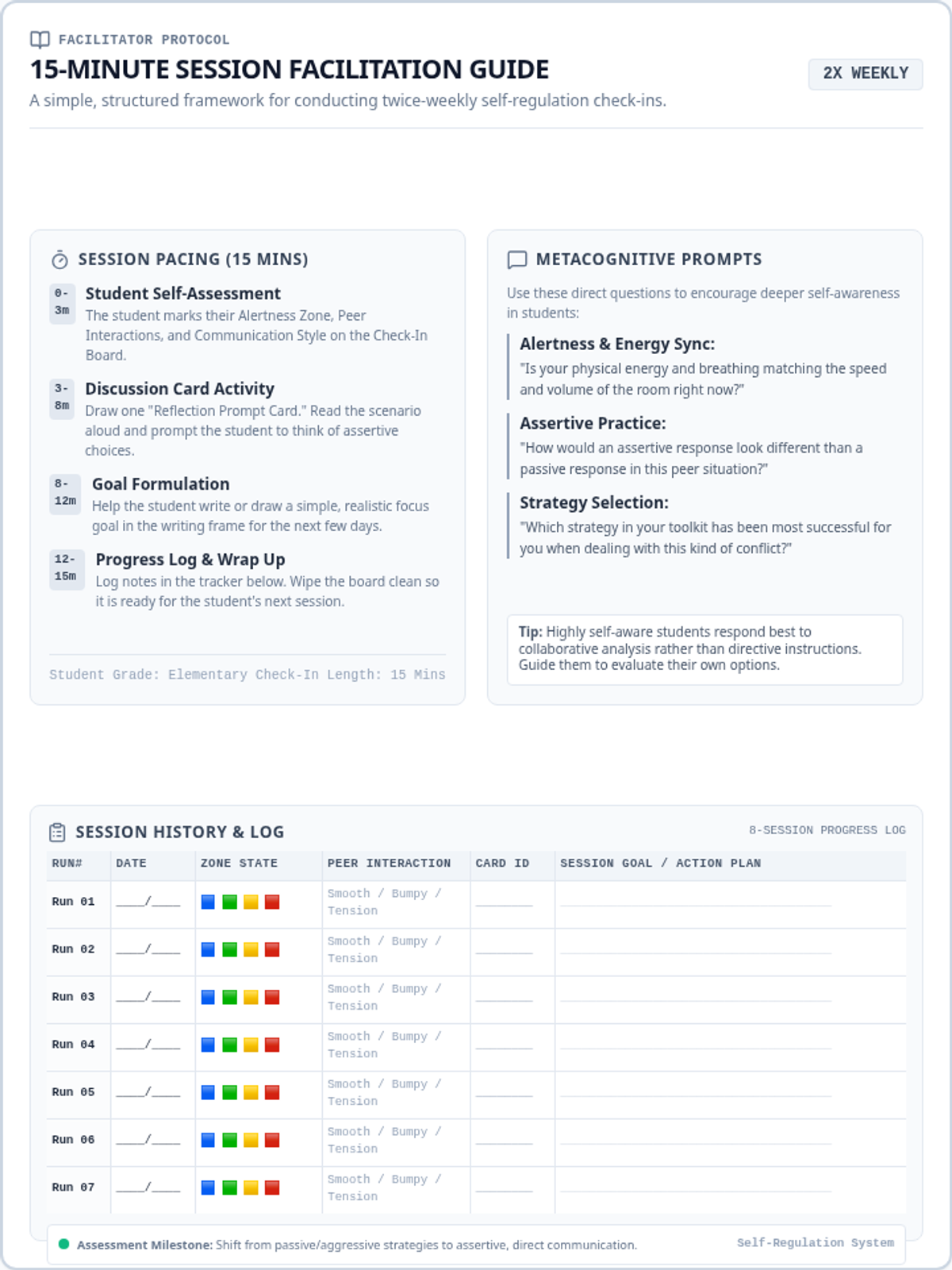
A clean, straightforward self-regulation and social communication support system for rapid 1-on-1 check-ins. Features a visual tracking sheet, scenario cards, and a facilitation guide.
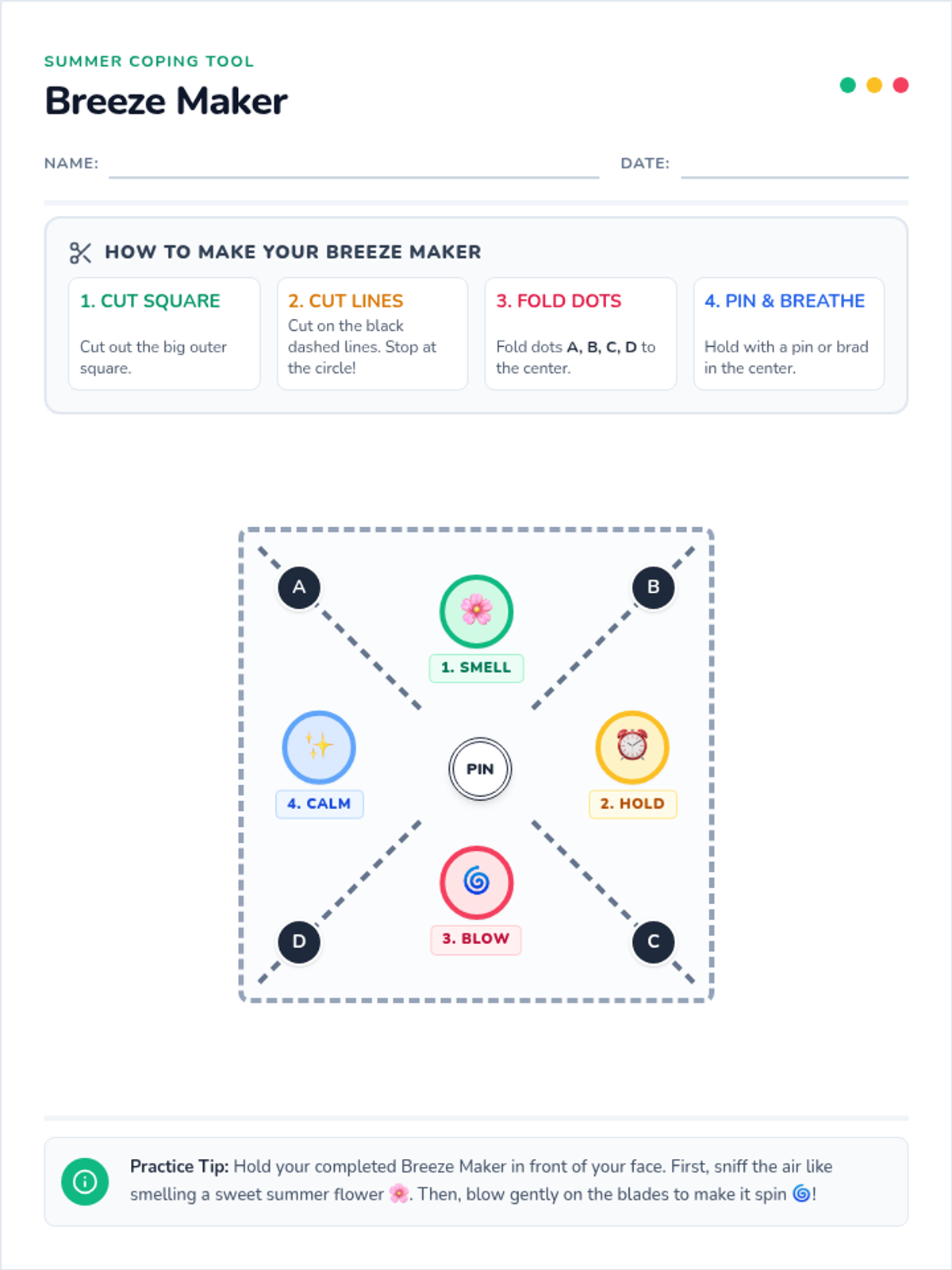
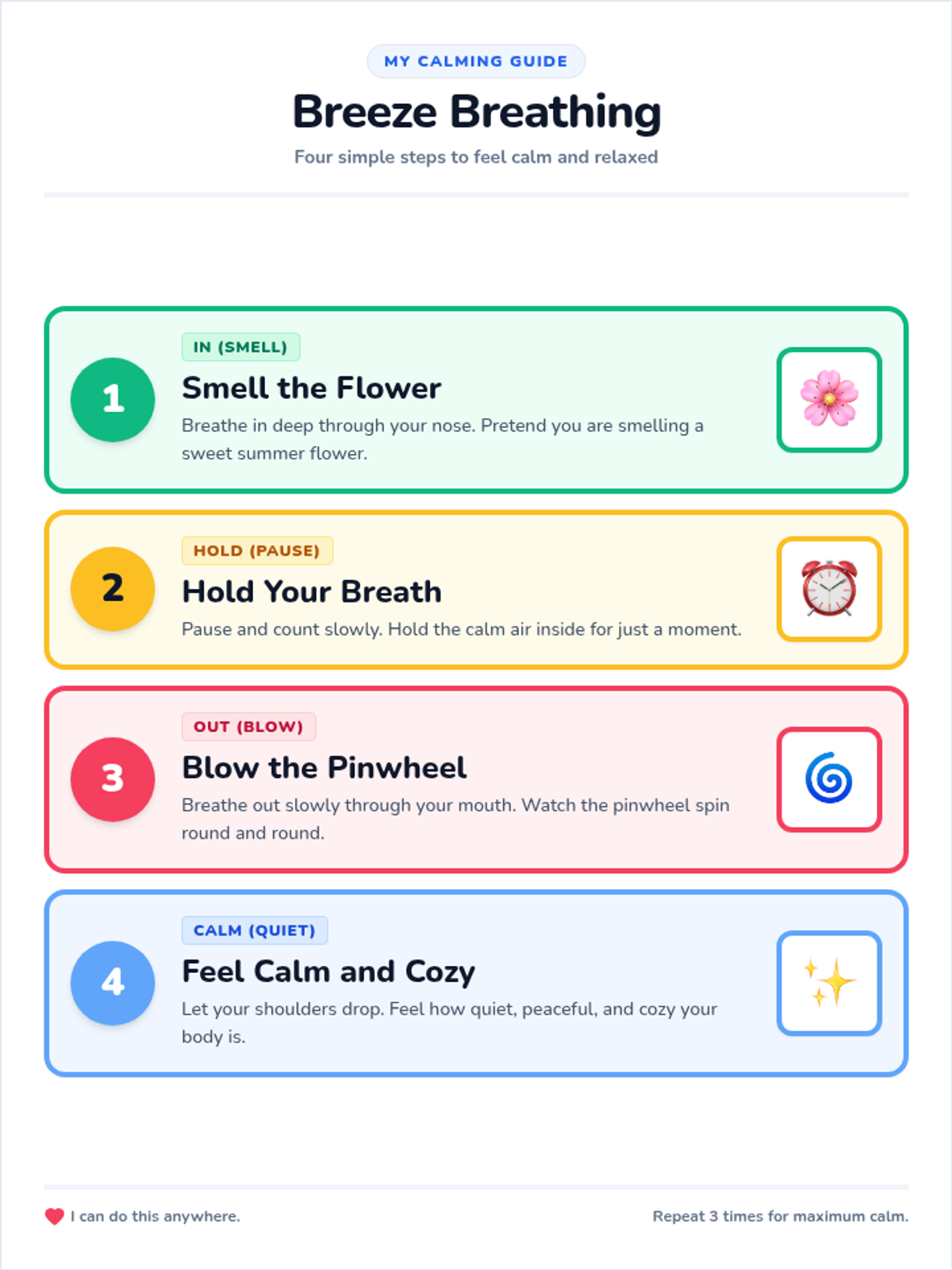
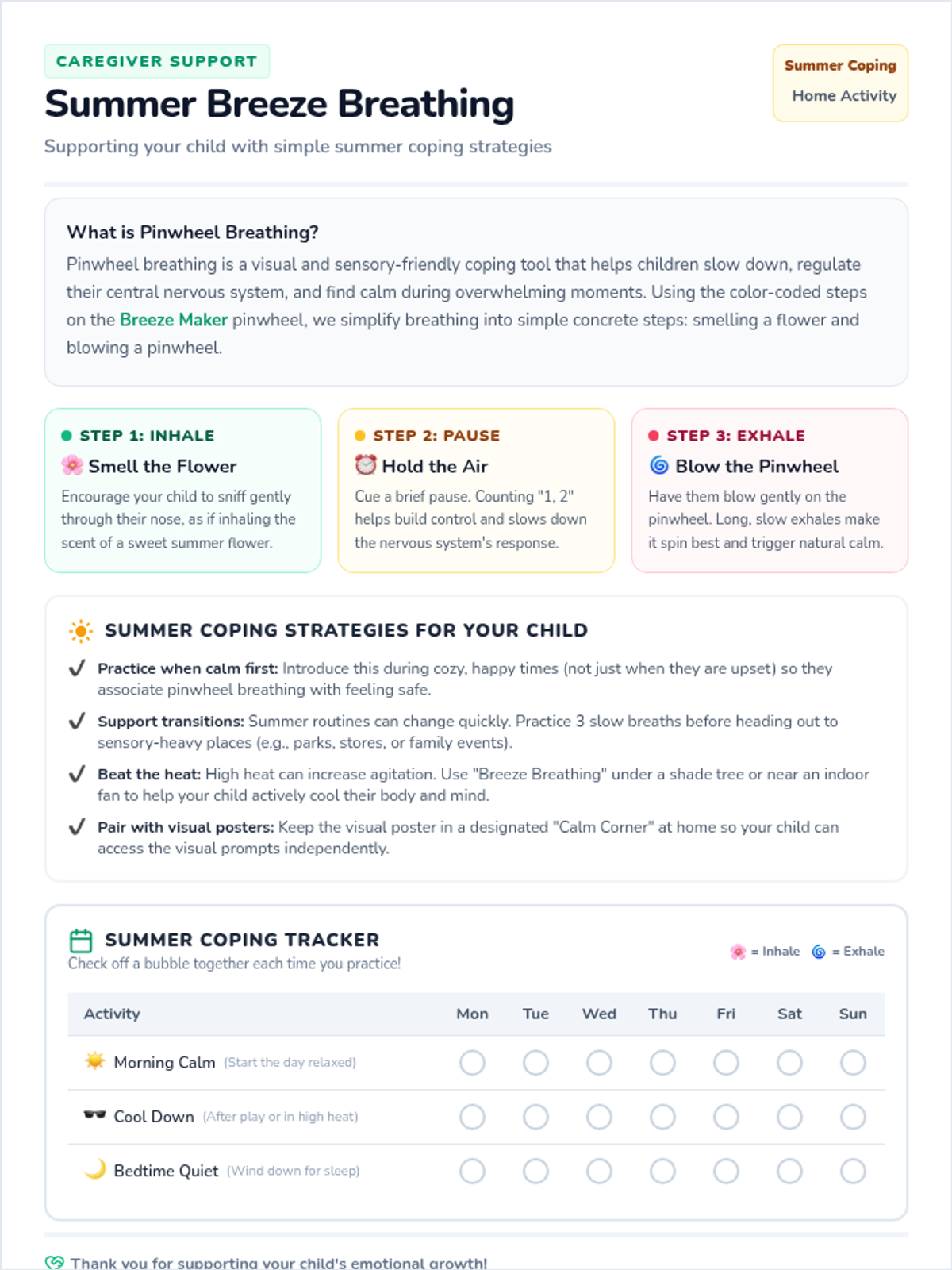
A specialized coping skills bundle featuring simplified pinwheel craft templates, visual step-by-step posters, and a practical parent guide to support low-cognitive students in practicing pinwheel breathing for summer stress management.
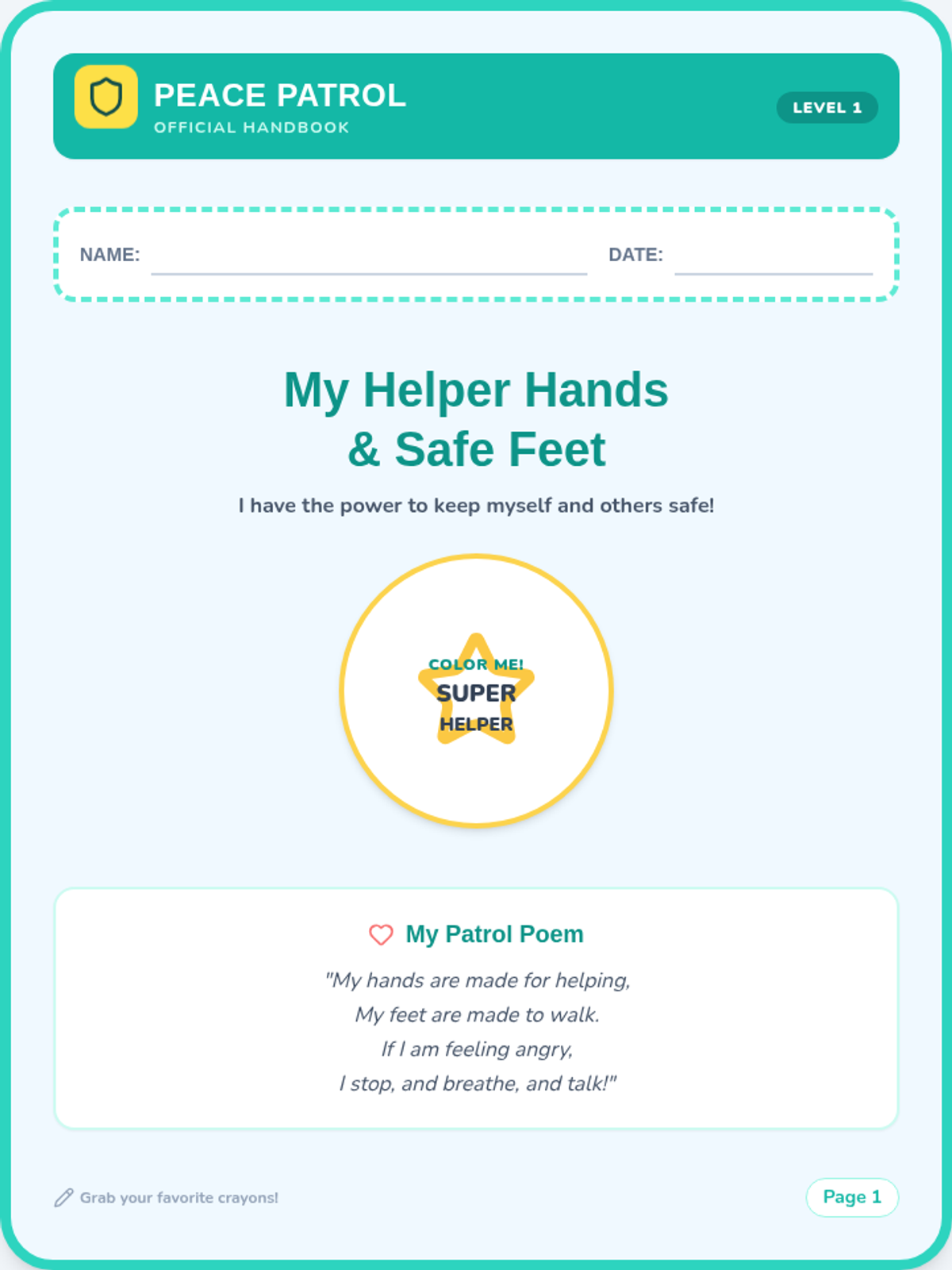
A lesson for kindergarten and early elementary students to learn and practice keeping their hands and feet to themselves, focusing on positive safe alternatives and self-regulation.
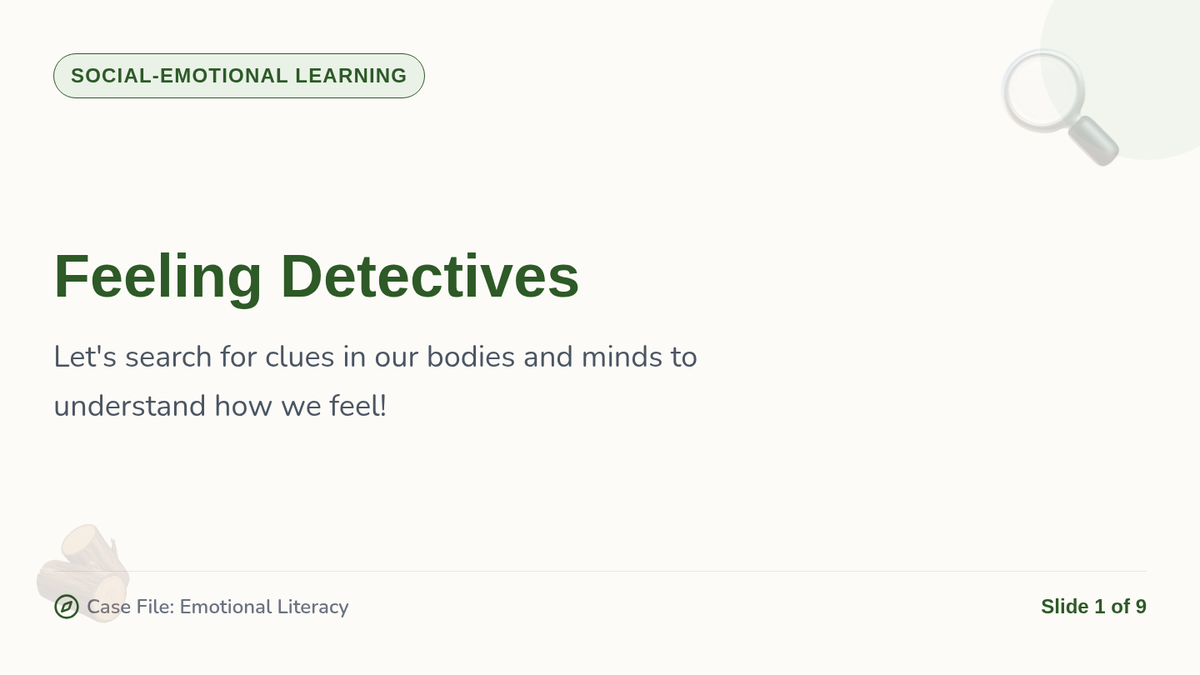
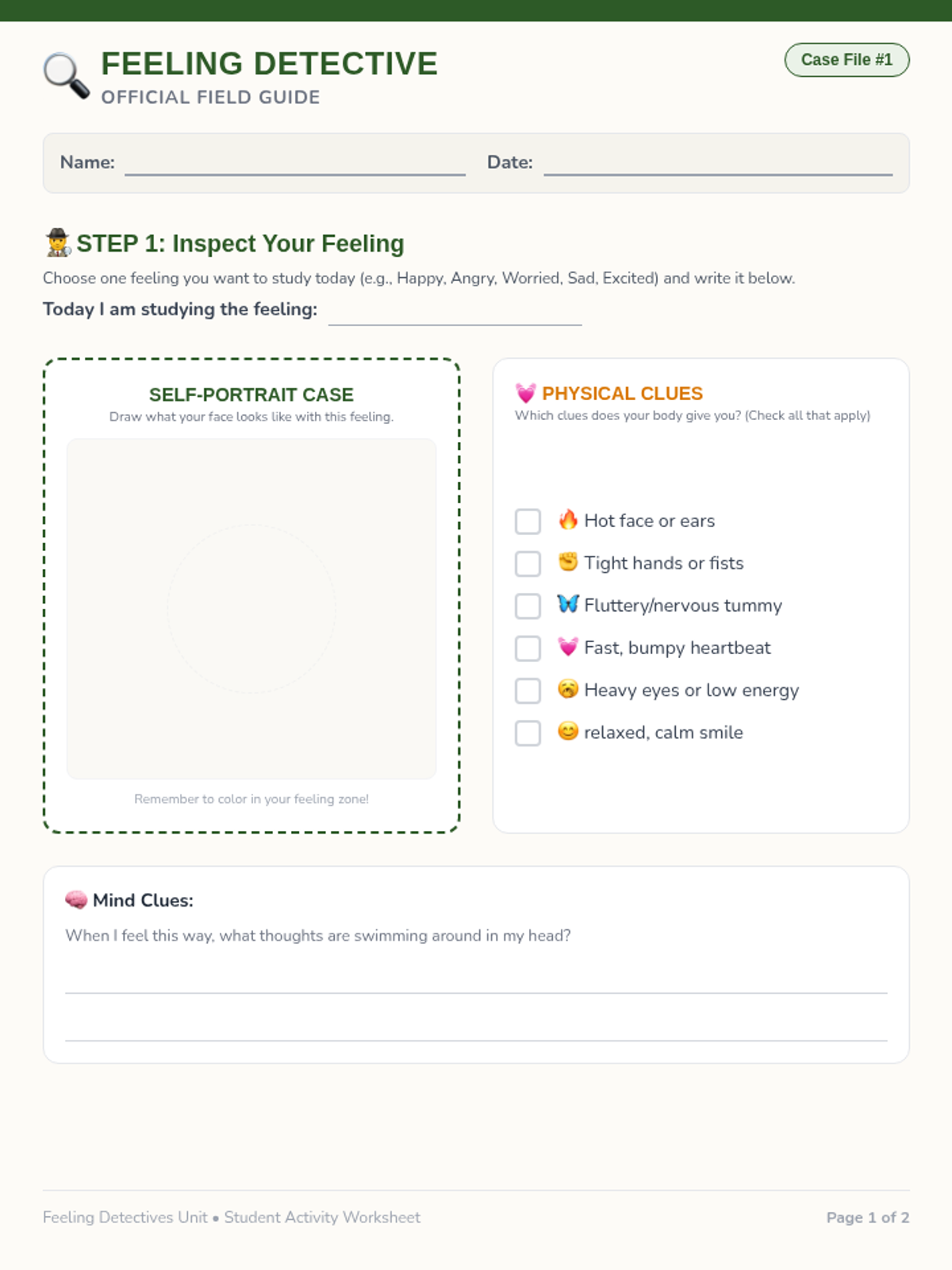
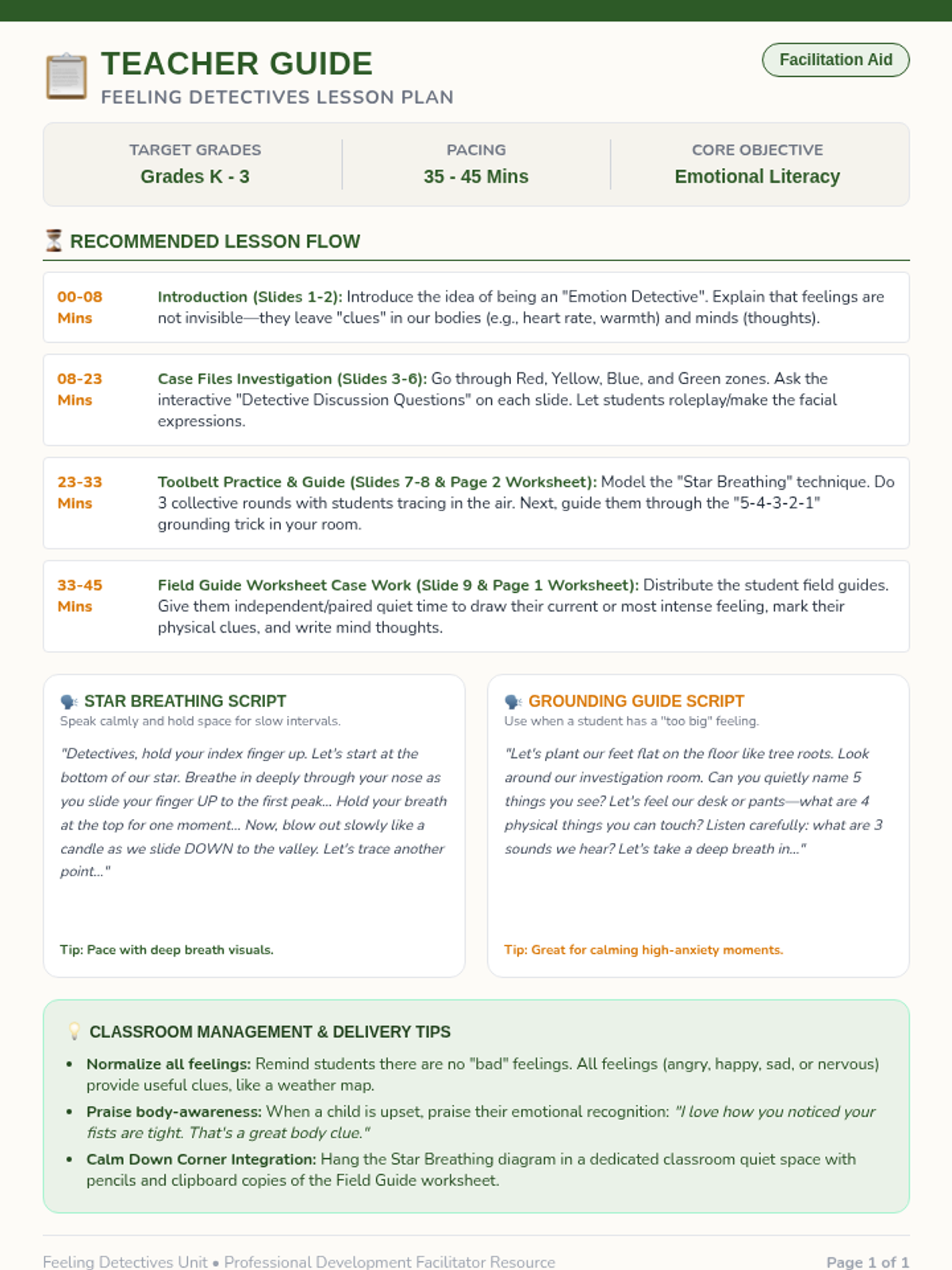
An introductory social-emotional learning lesson designed for elementary students to help them identify, label, and regulate their emotions through interactive exploration, guided breathing, and grounding techniques.
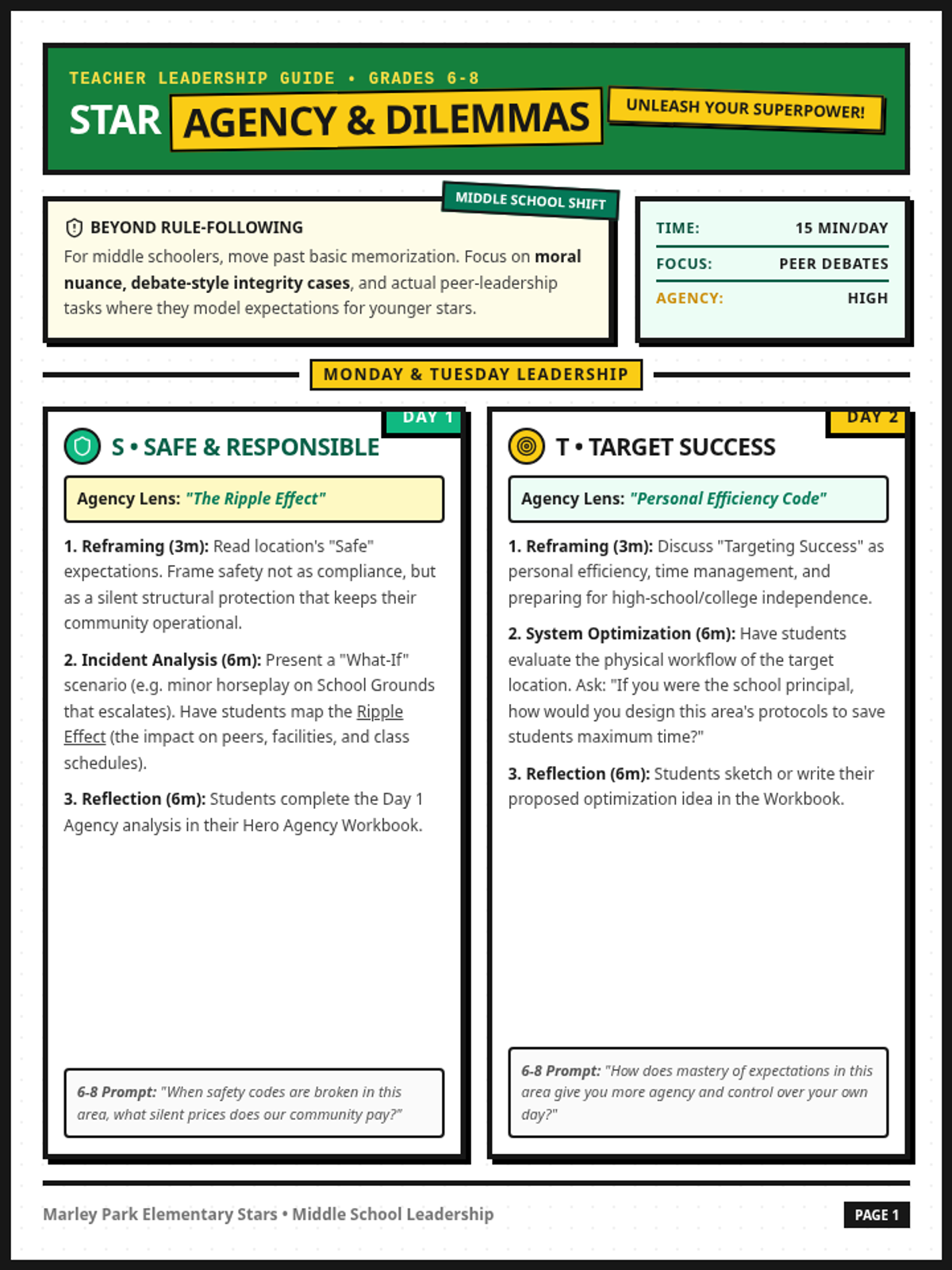
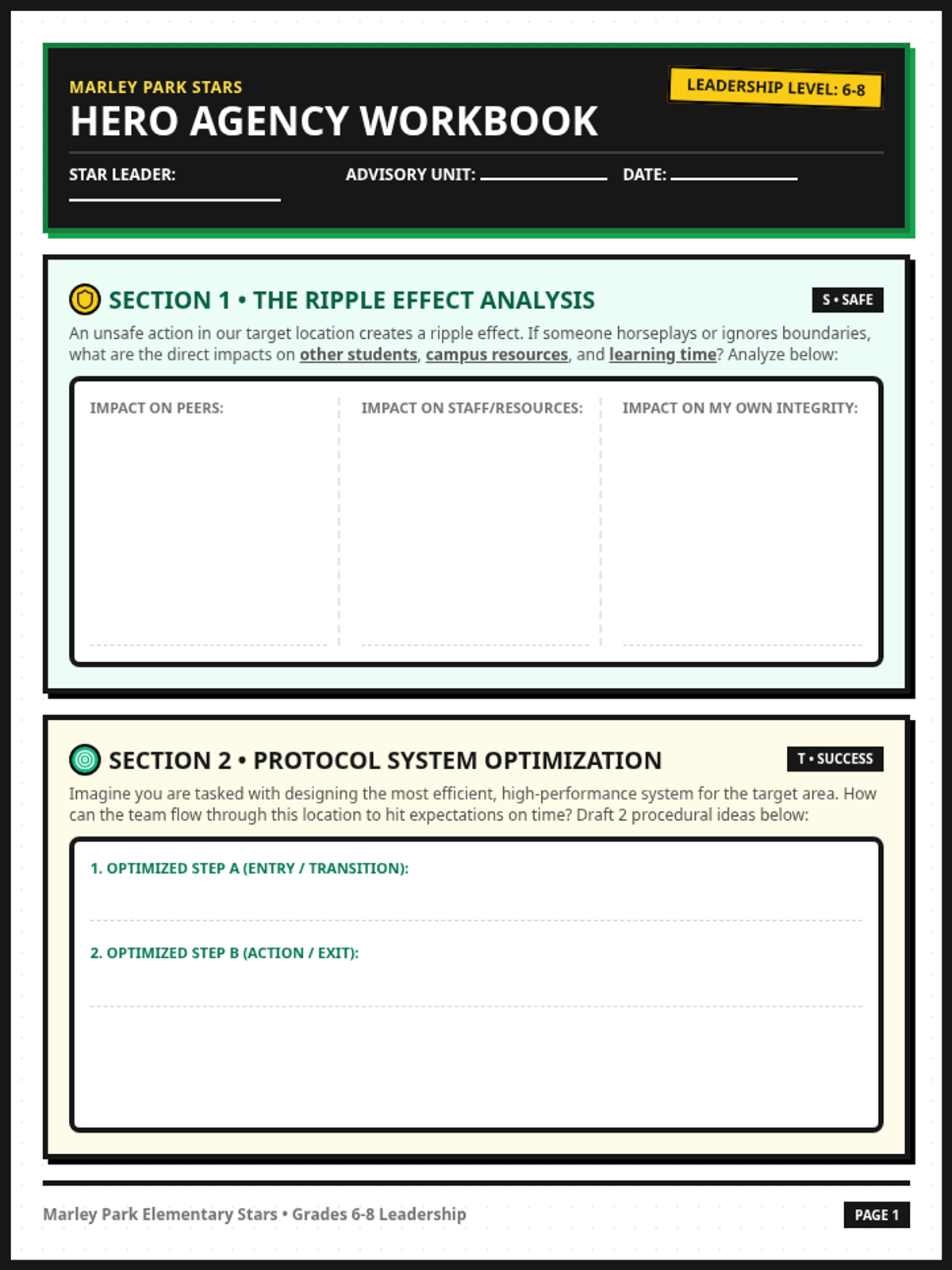
A universal 5-day lesson set for middle school (grades 6-8) that leverages peer leadership, debate-style moral dilemmas (exploring the nuance of integrity), and self-guided agency projects to cultivate respect and responsibility across campus.
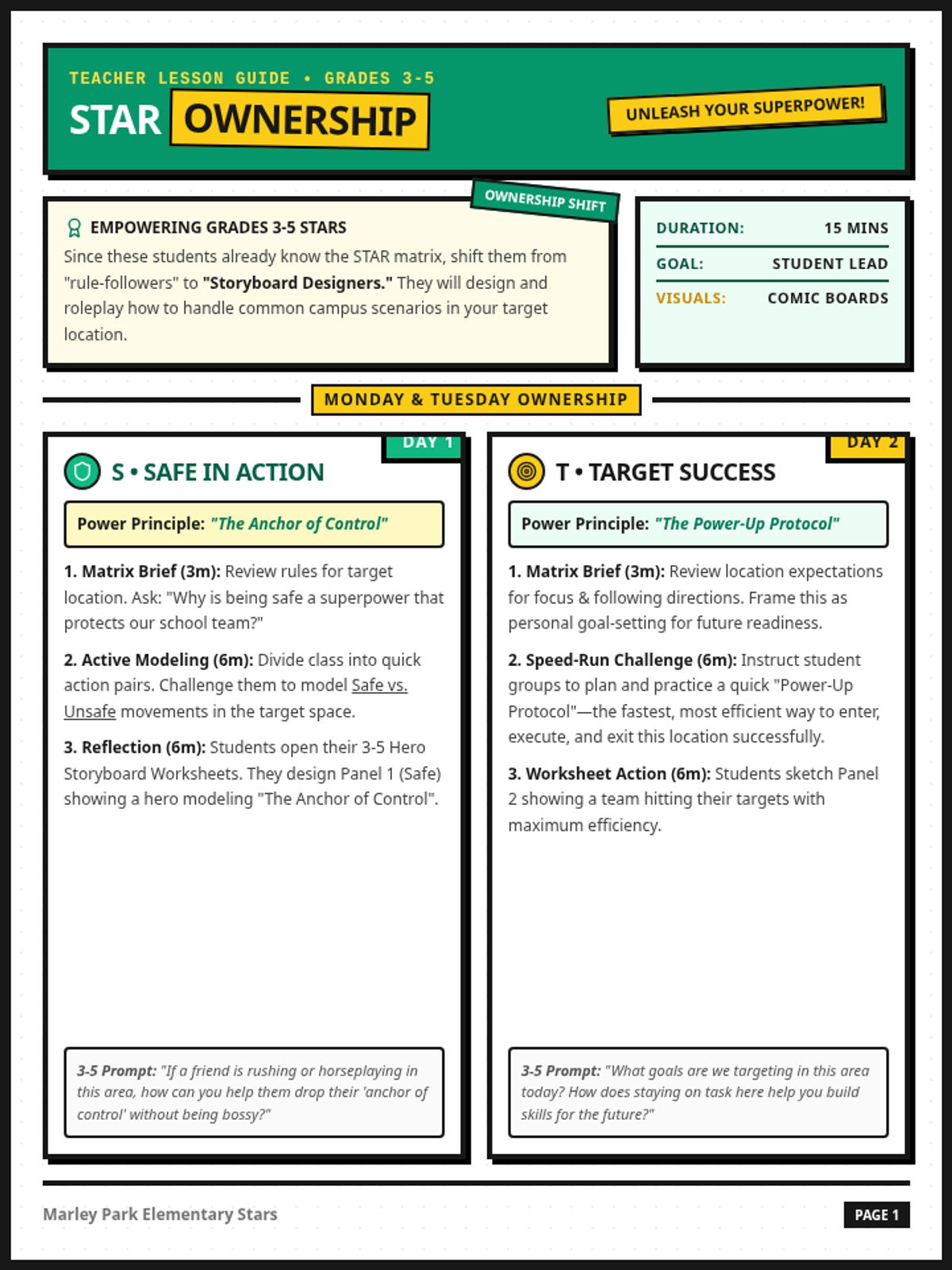
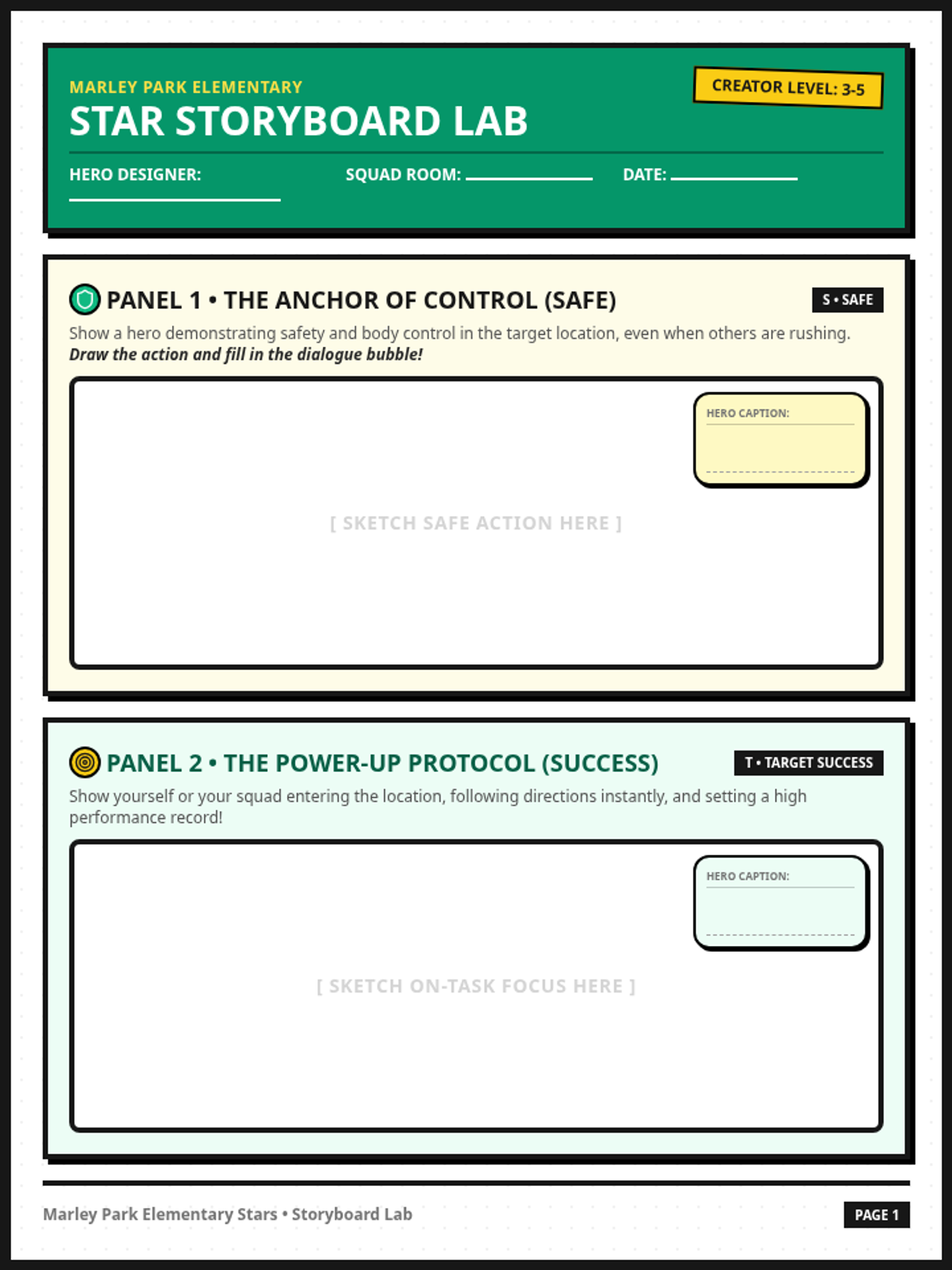
A universal 5-day lesson set for grades 3-5 that shifts focus toward student ownership, comic storyboard creation, and scenario-based problem solving to understand STAR expectations in any school setting.
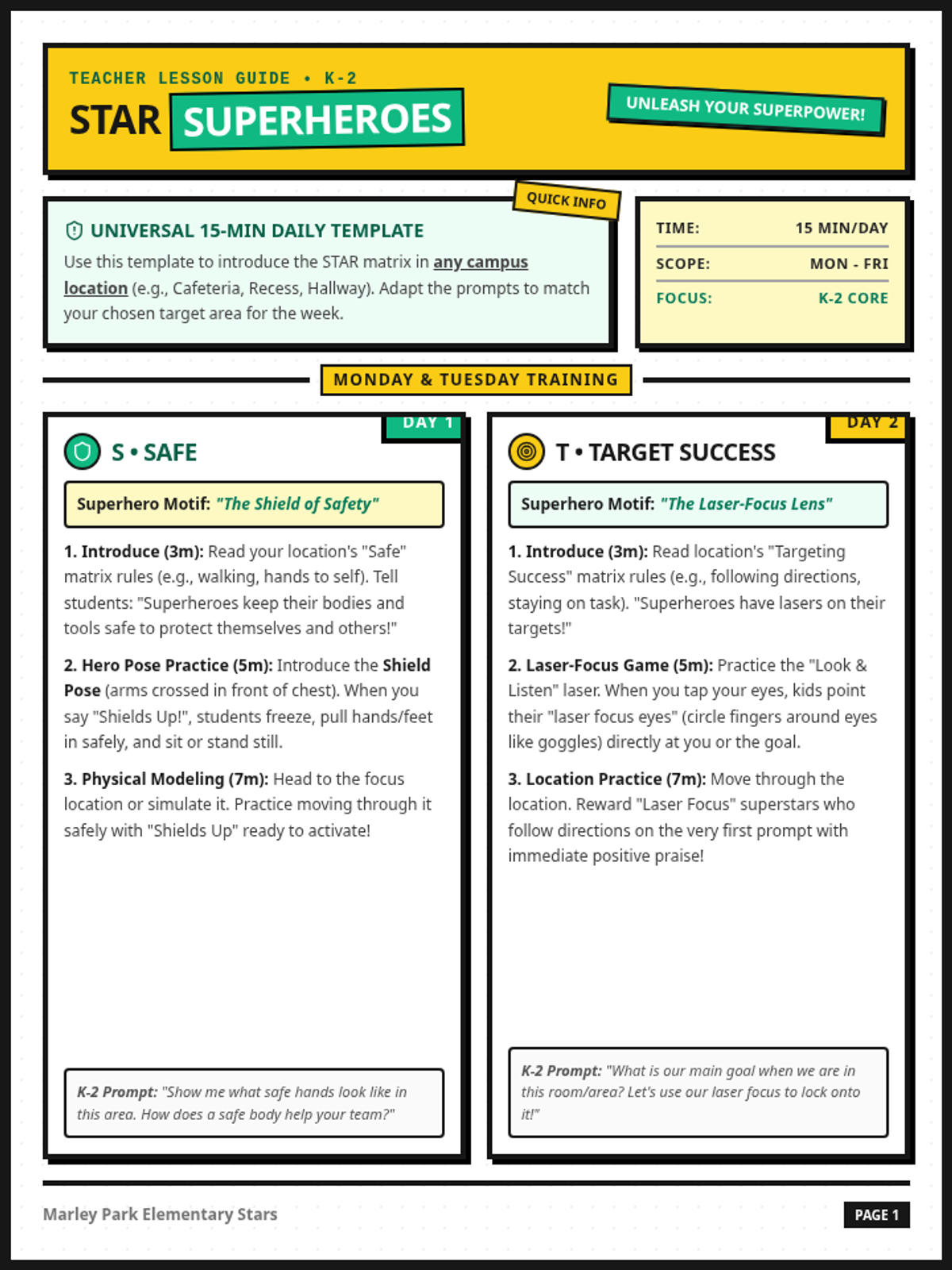
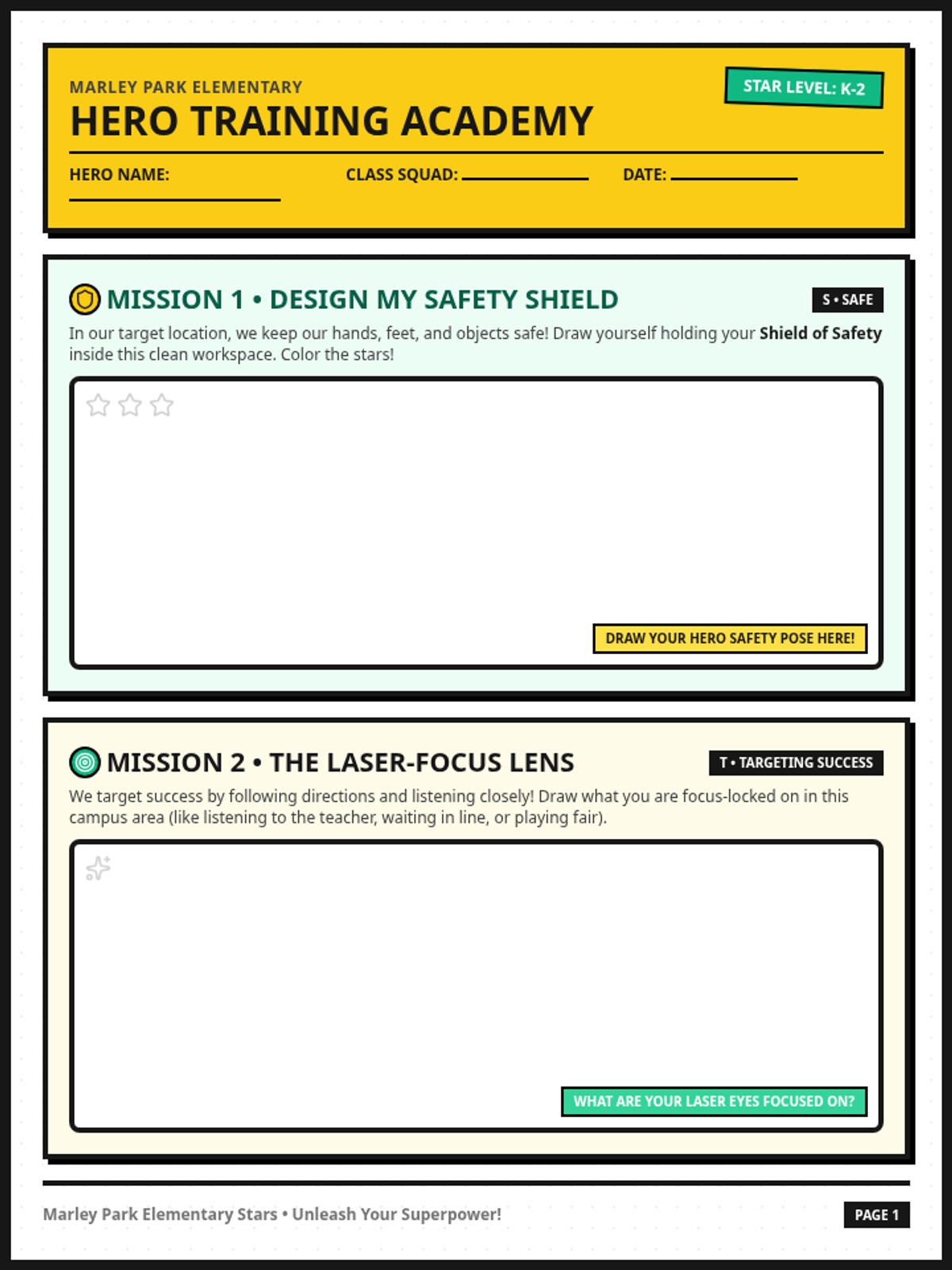
A universal 5-day lesson set for K-2 students focused on introducing STAR expectations (Safe, Targeting Success, Acting with Integrity, Respectful & Responsible) in any campus location through physical modeling, simple superhero analogies, and an interactive superhero-themed student activity guide.
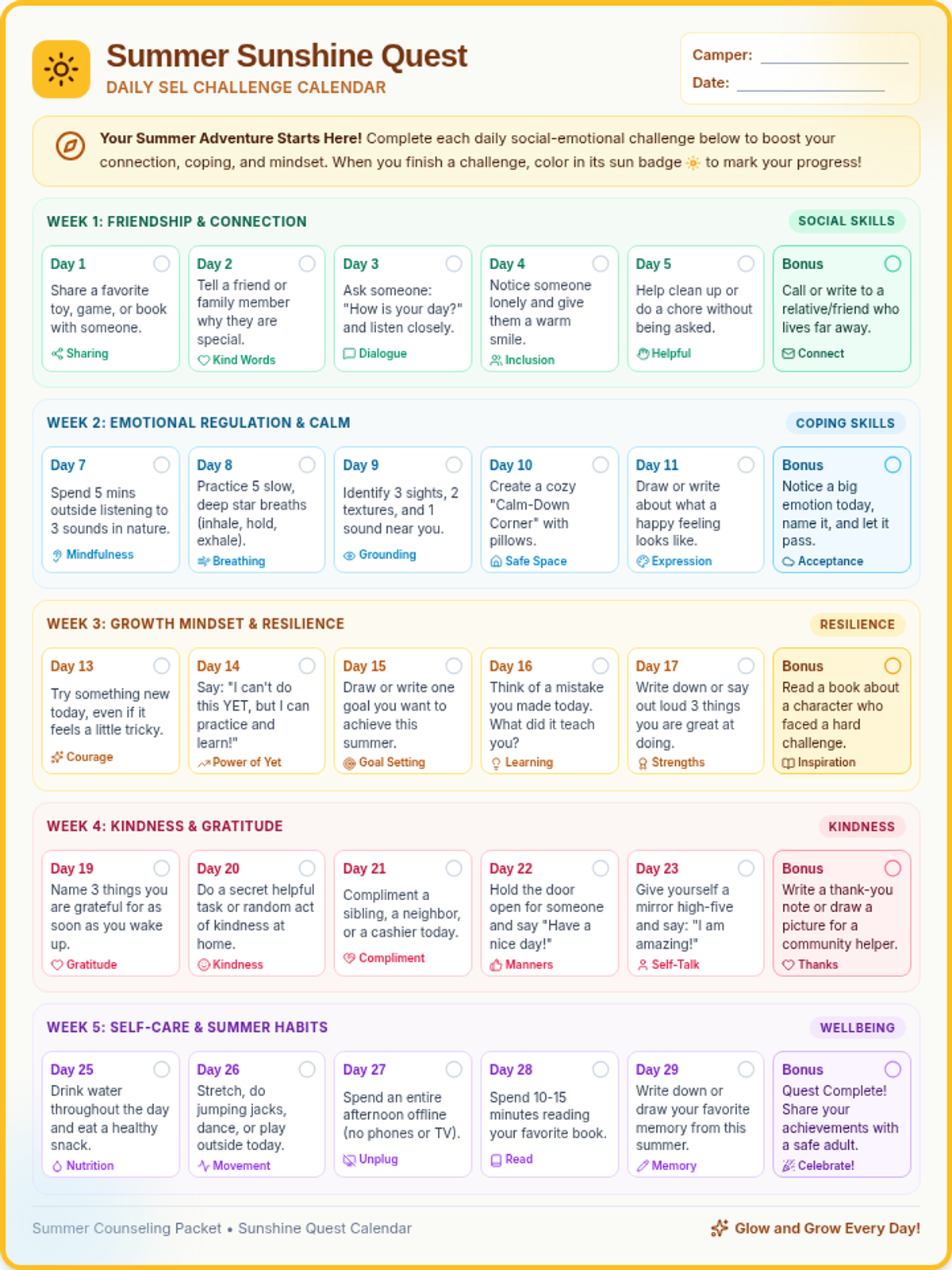
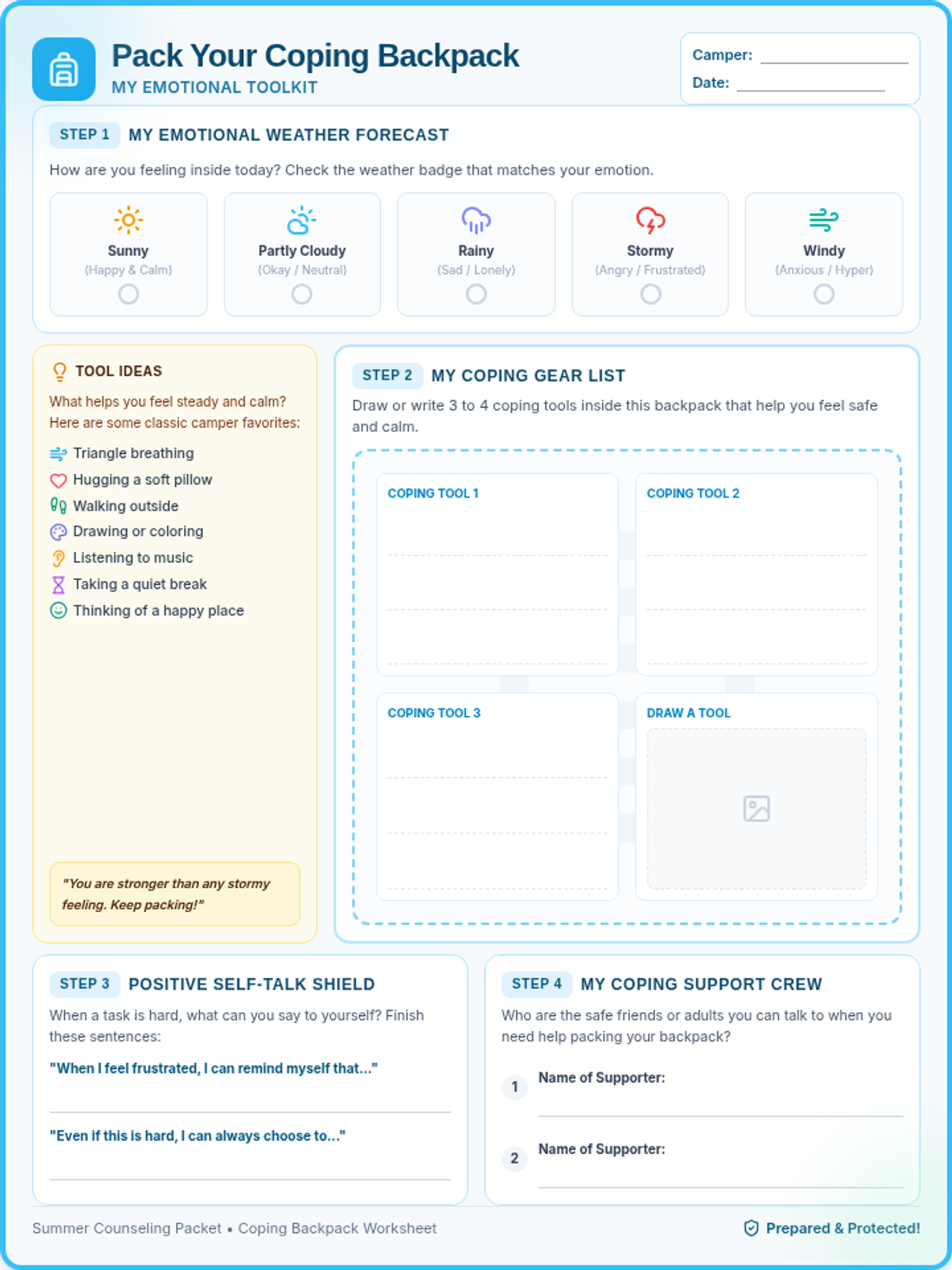
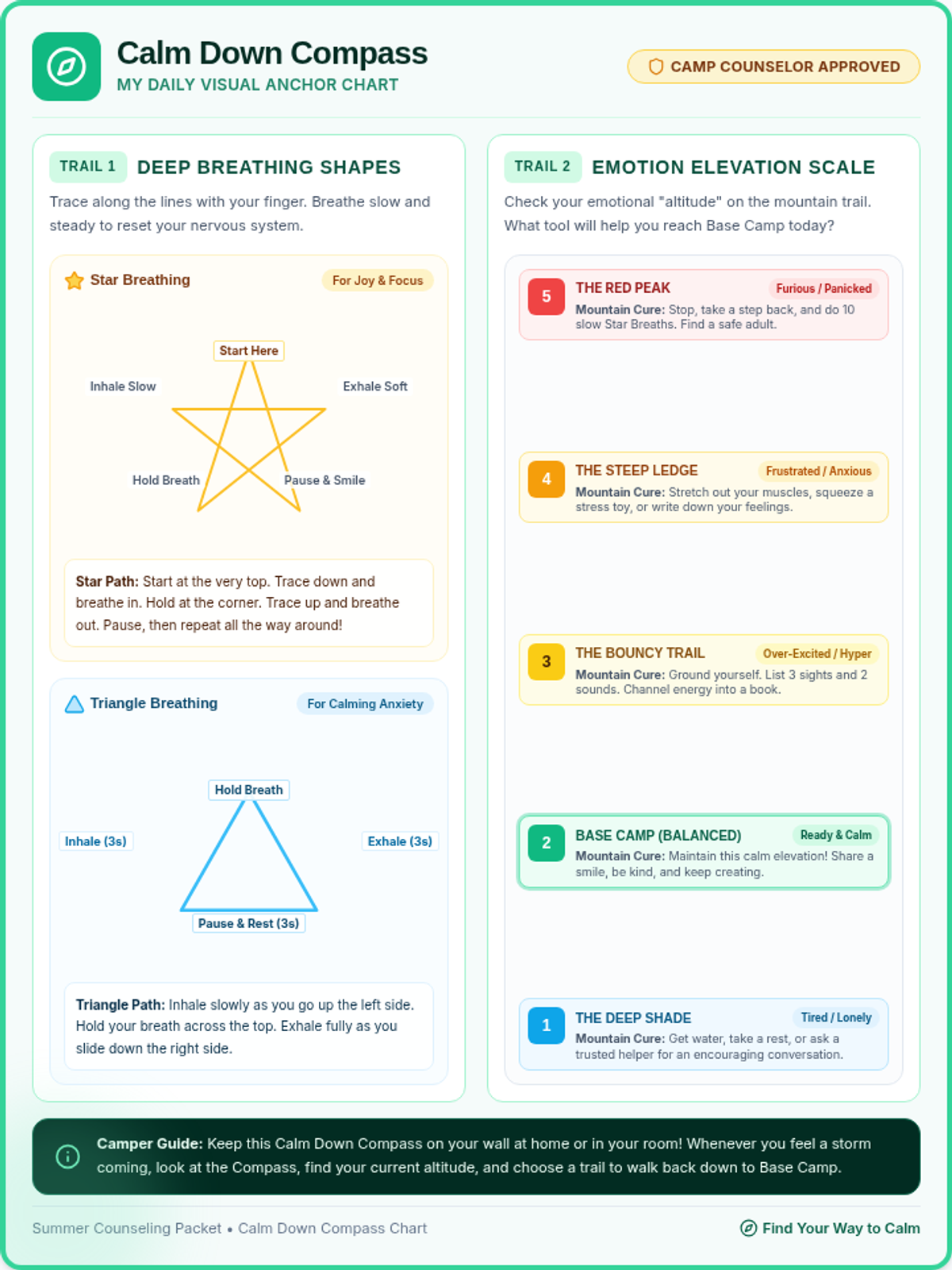
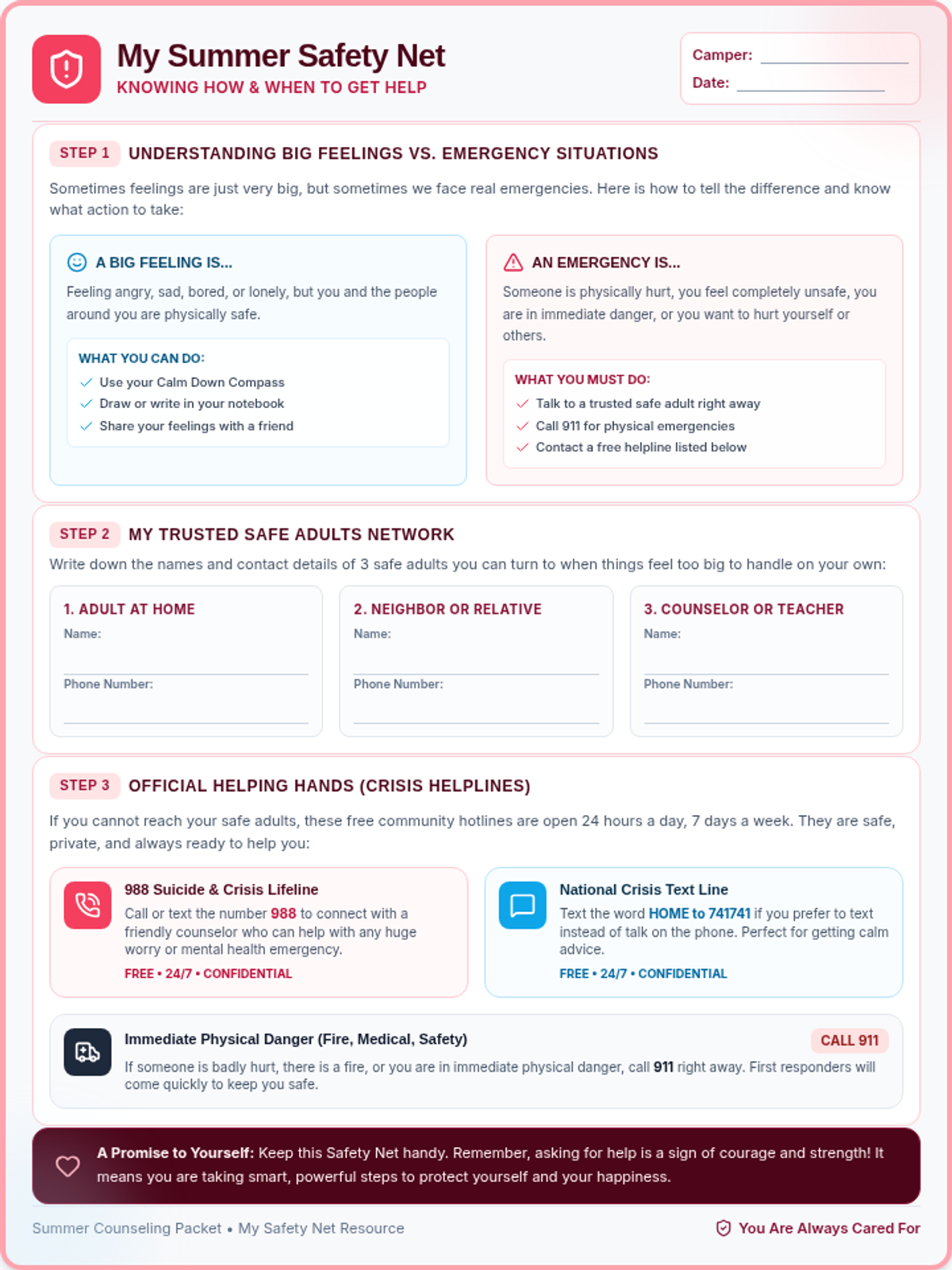
A comprehensive summer counseling packet containing daily SEL challenge calendars, coping skill worksheets, deep breathing visual anchor charts, and a safety net resource for getting help in emergencies.
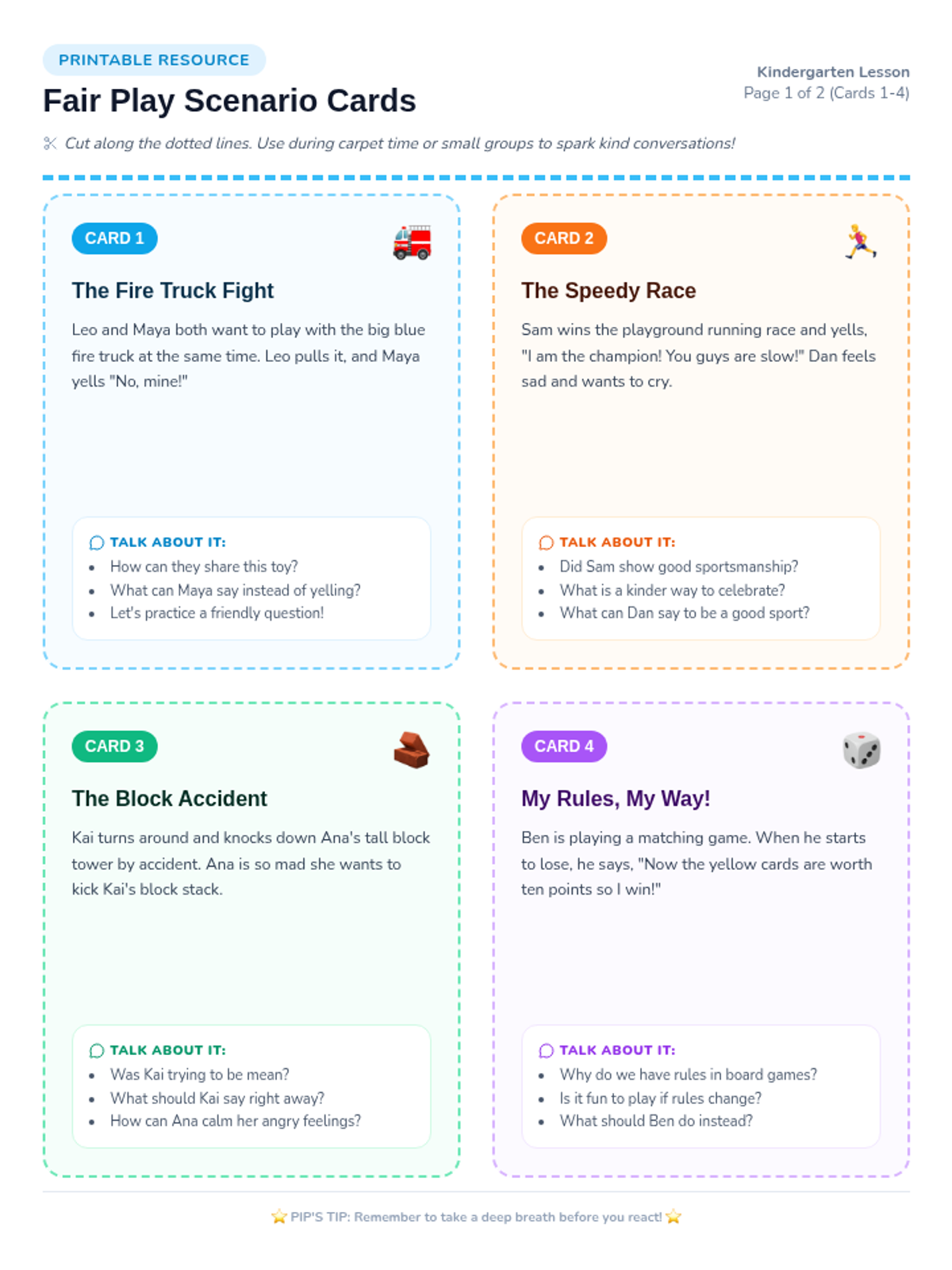
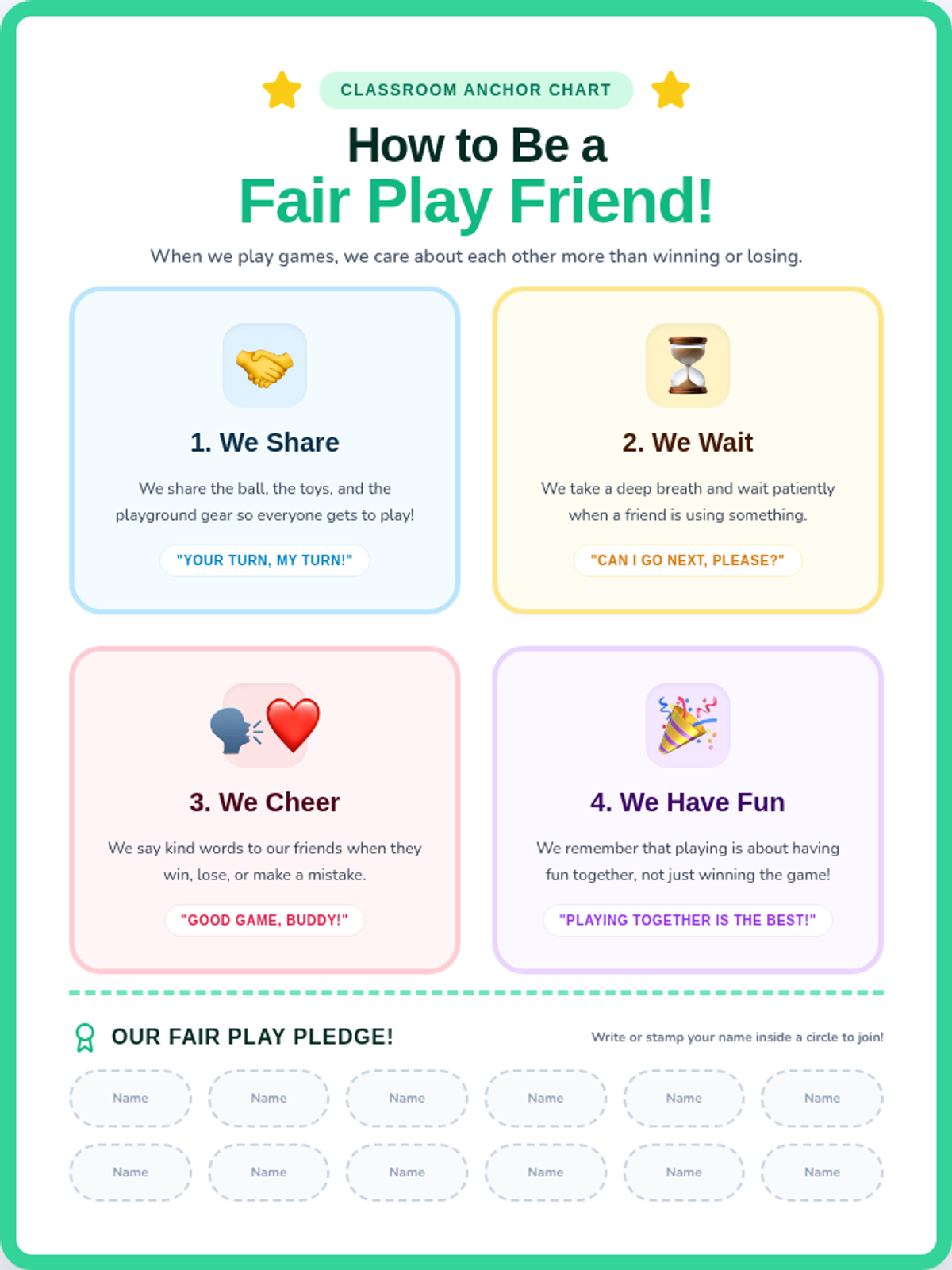
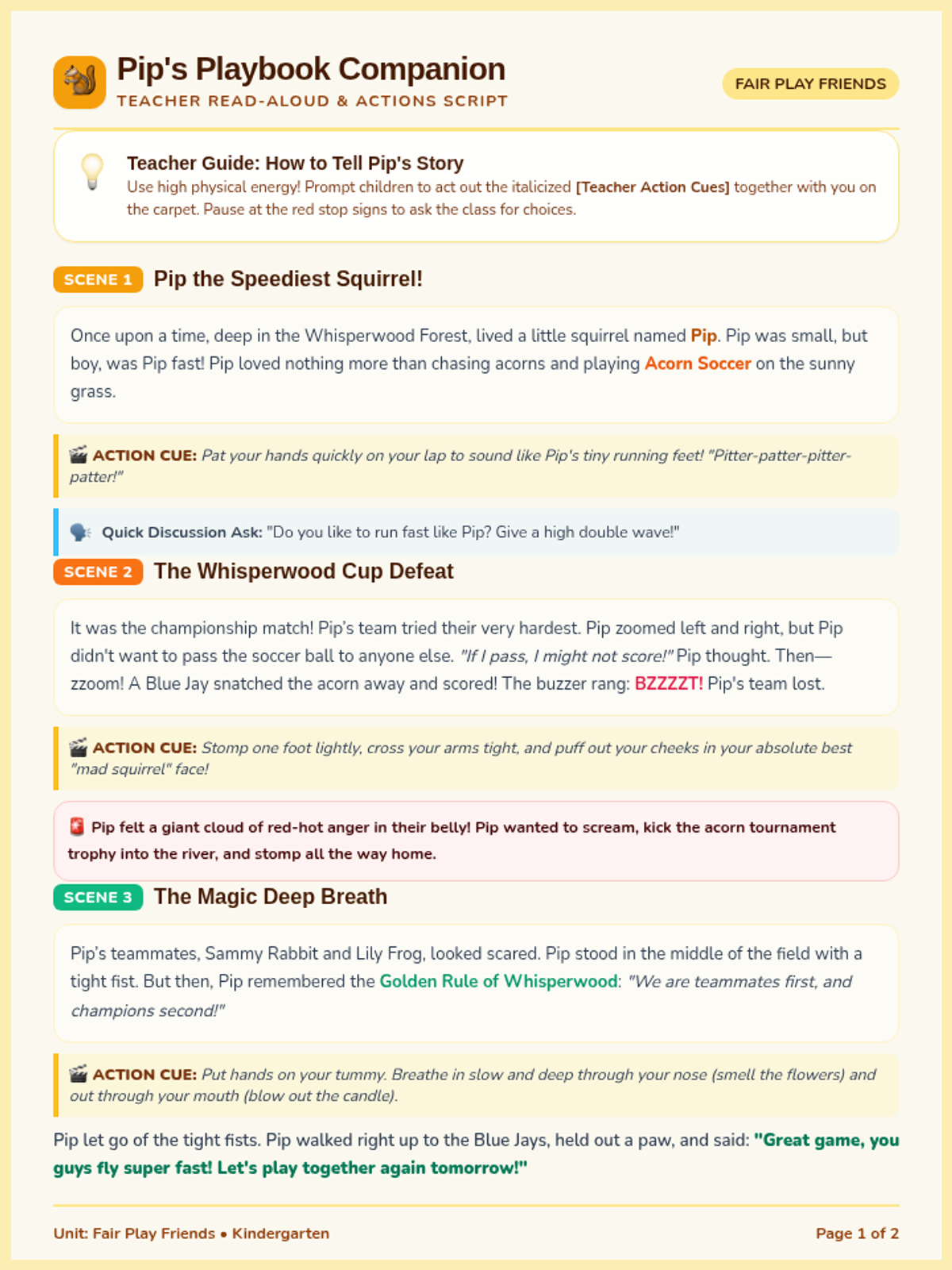
A 30-minute interactive lesson for Kindergarteners focusing on the fundamentals of good sportsmanship, including sharing, taking turns, and handling winning or losing with grace. It features a character-driven story, a movement-based voting game, small-group scenario discussion cards, and a visual anchor chart.
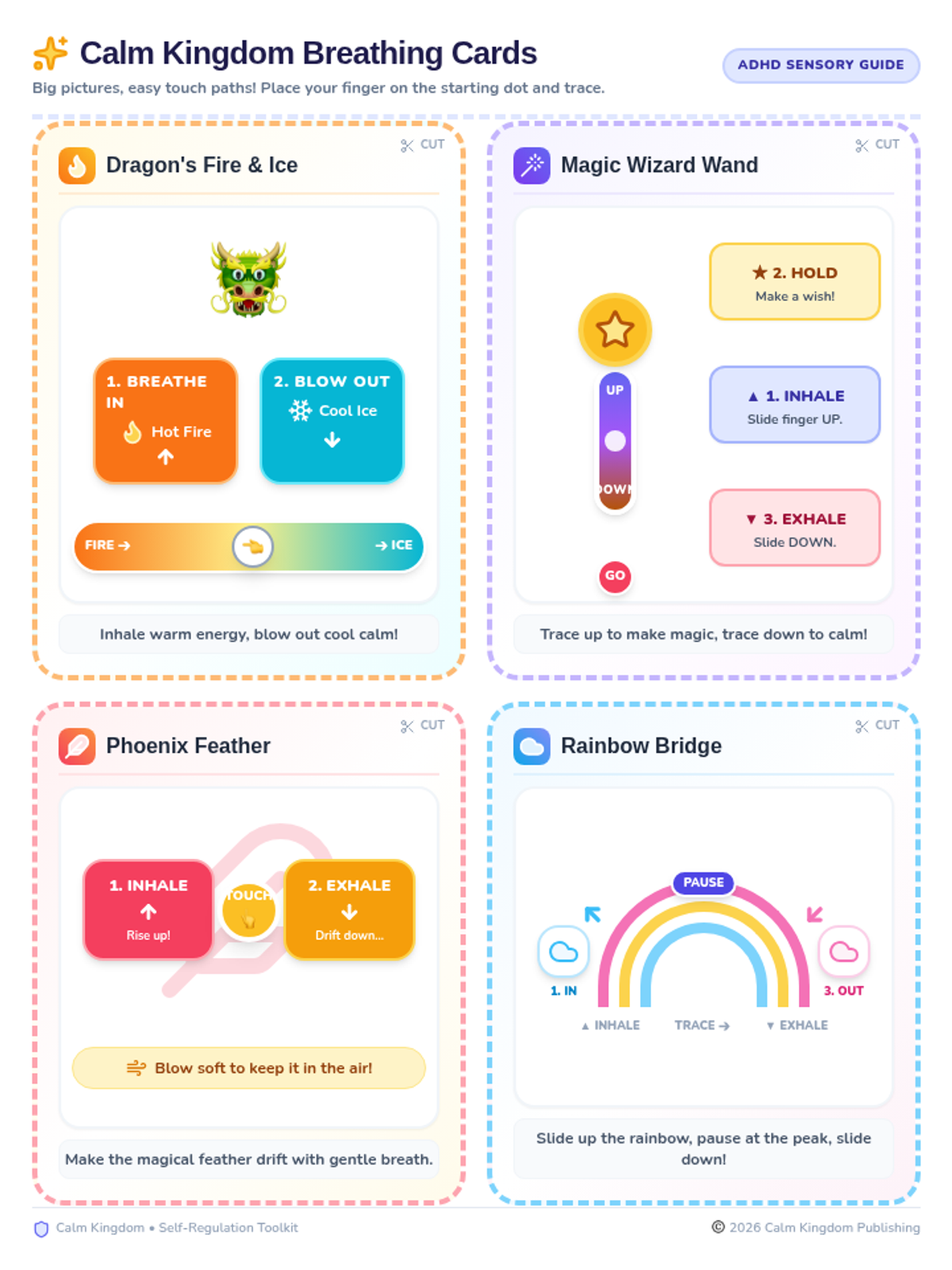
A fantasy-themed self-regulation and mindfulness resource designed for early elementary students to practice calming strategies and sensory breathing exercises.
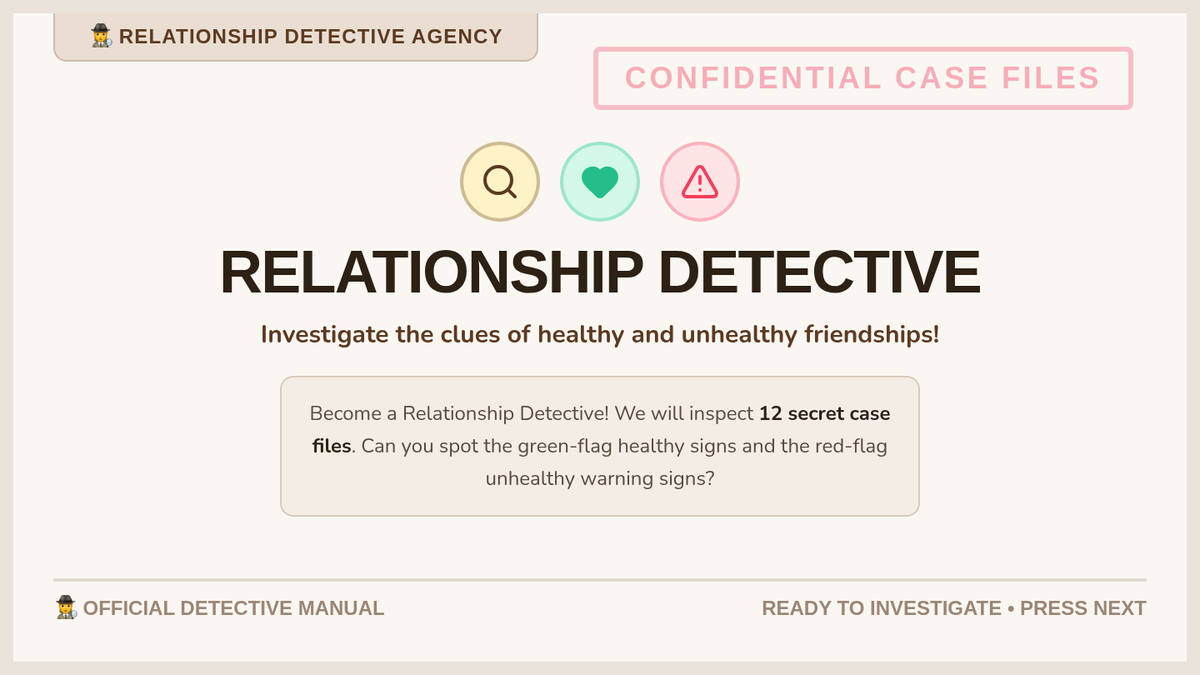
A highly visual, engaging interactive lesson where students act as 'Relationship Detectives' to investigate 12 friendship case files, sorting healthy green-flag behaviors from unhealthy red-flag behaviors.
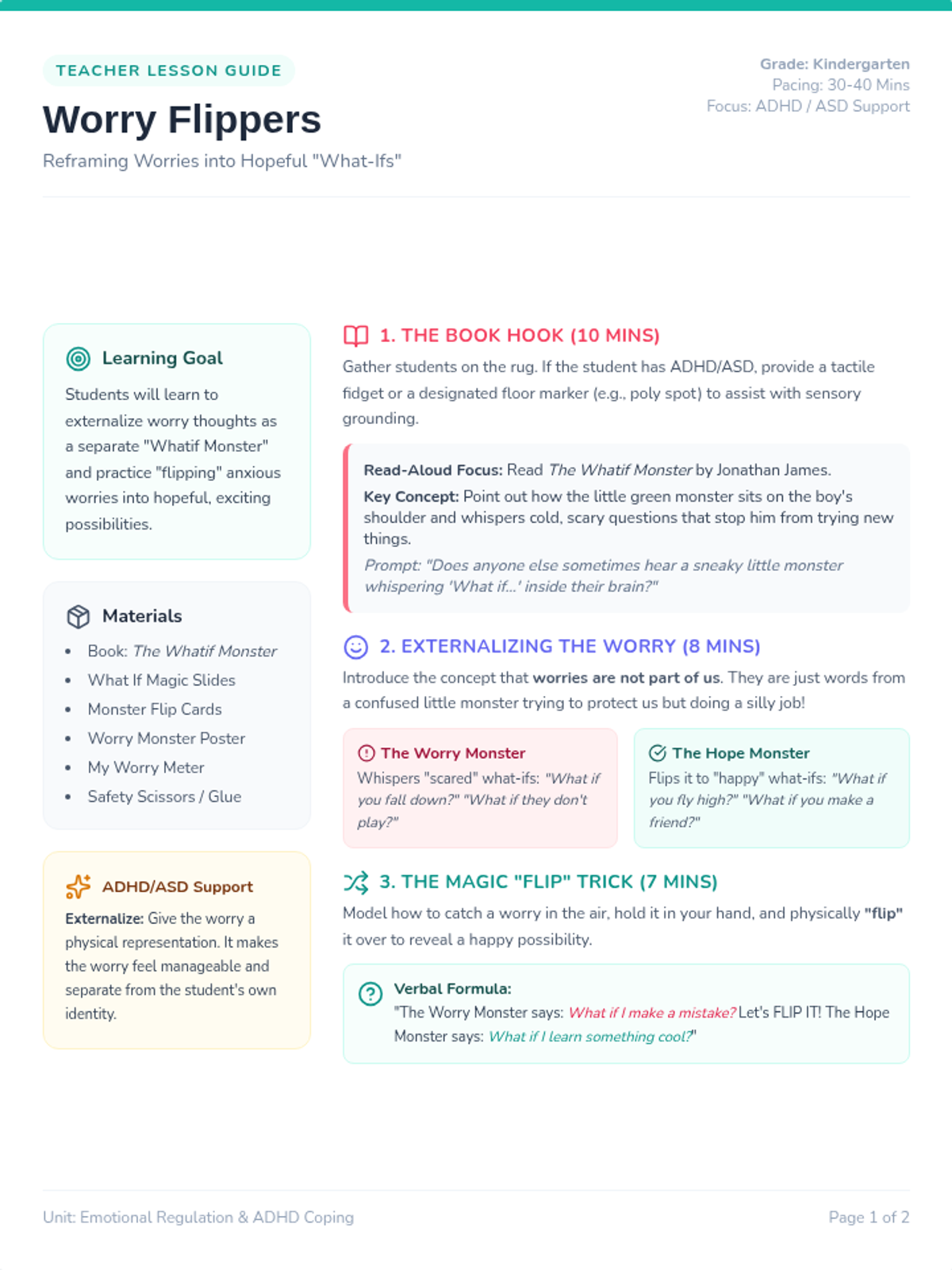
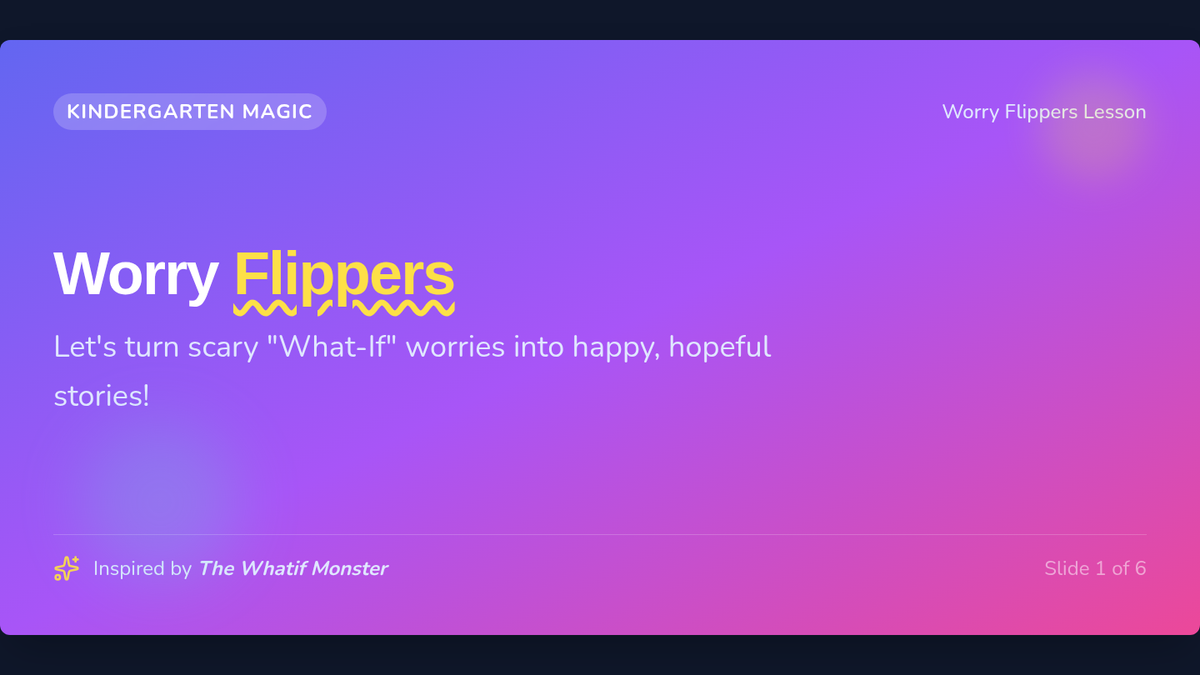
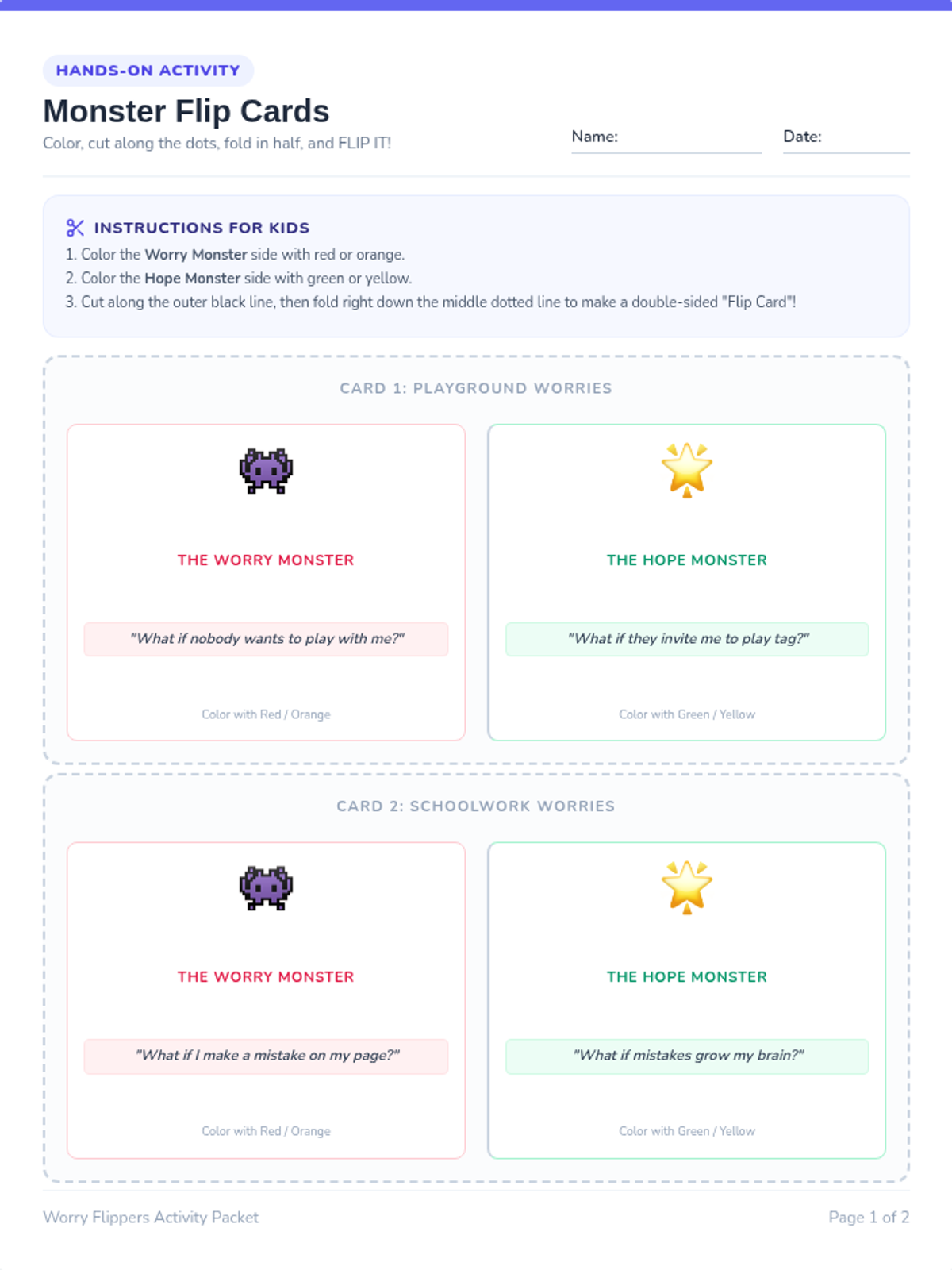
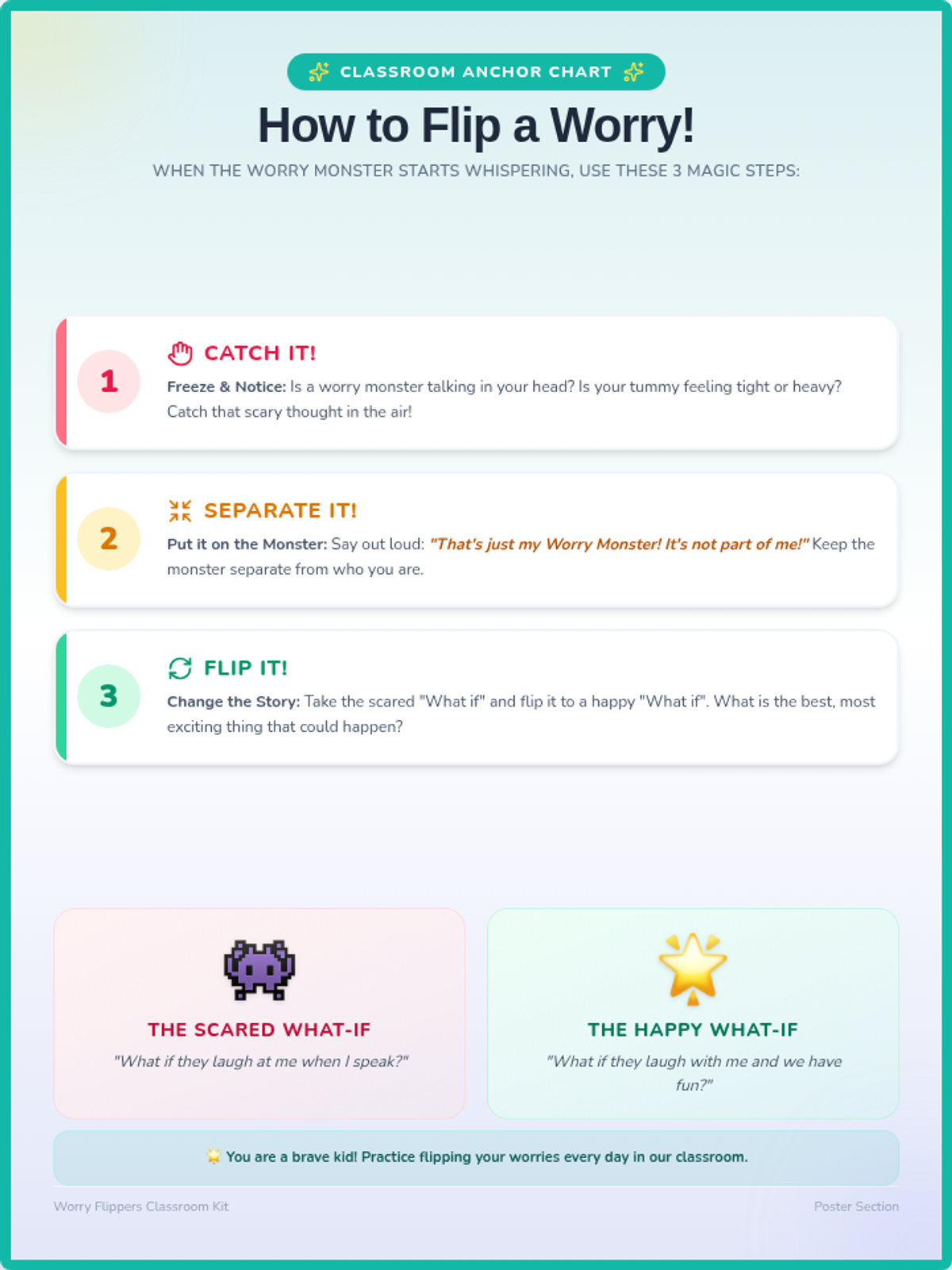
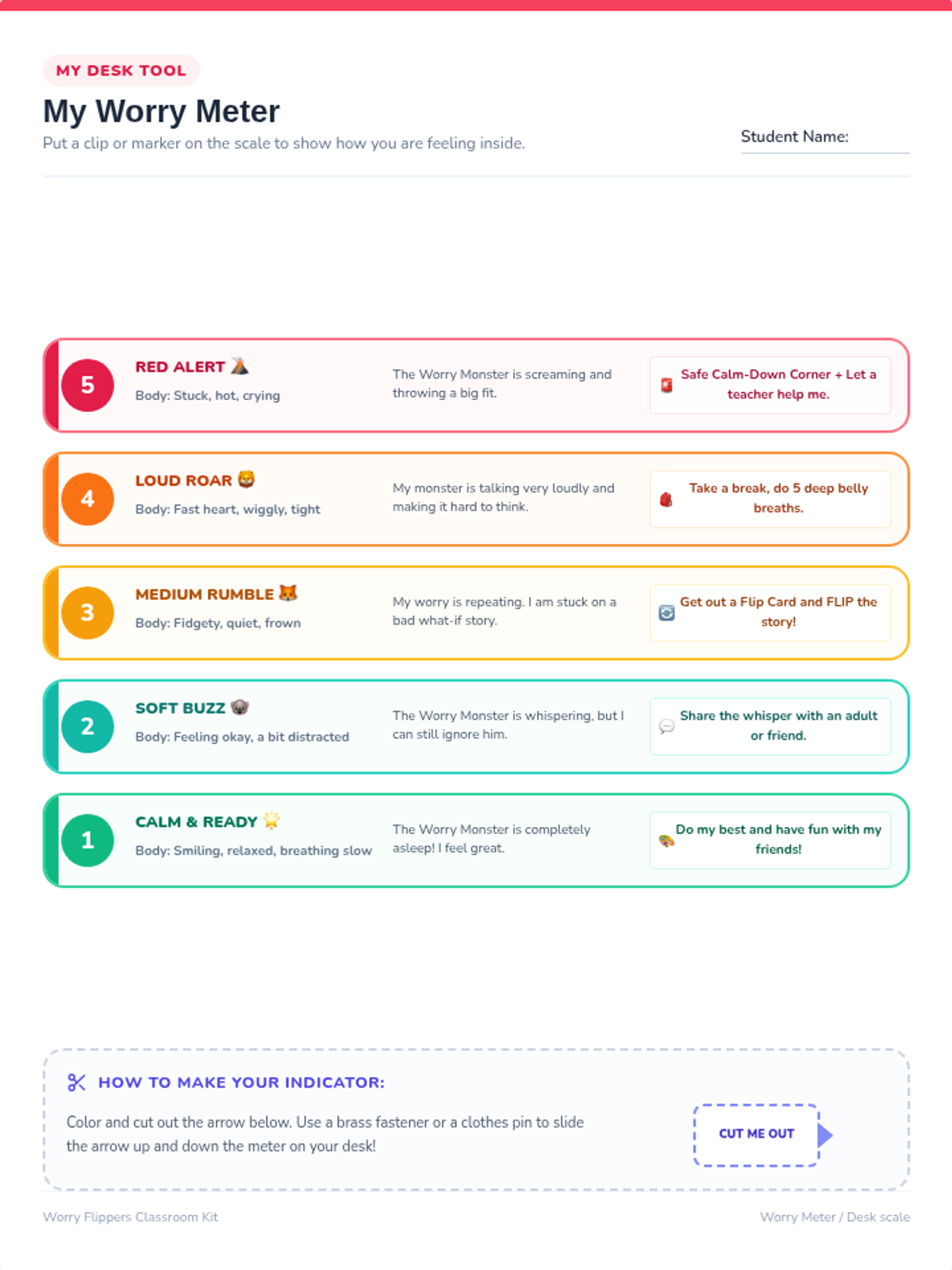
A supportive kindergarten lesson designed to help students with ADHD and spectrum tendencies externalize their worries and reframe them into hopeful 'What Ifs' using 'The Whatif Monster' book. Includes high-visual presentation, a hands-on sorting activity, an anchor chart poster, and a personalized worry meter.
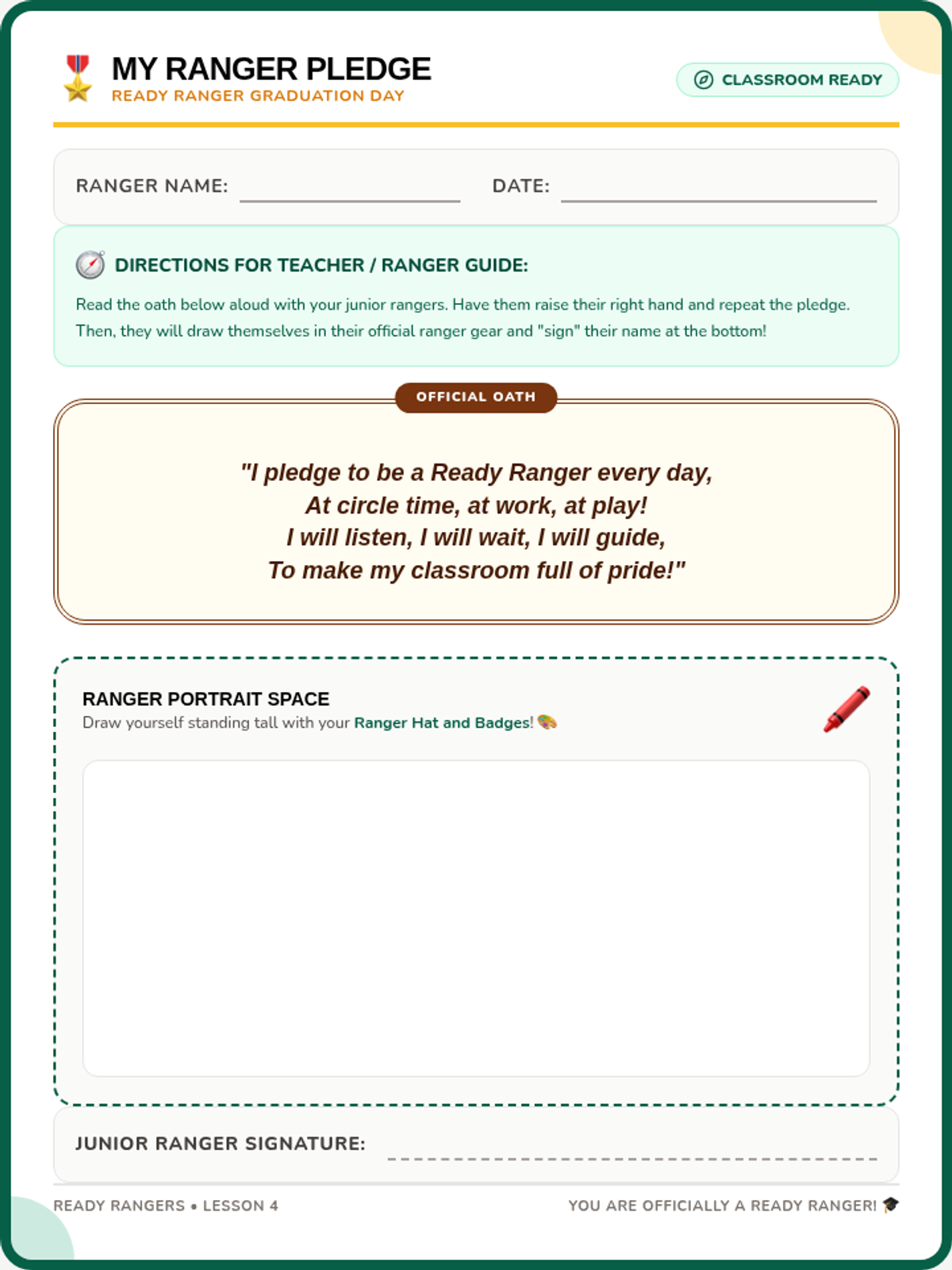
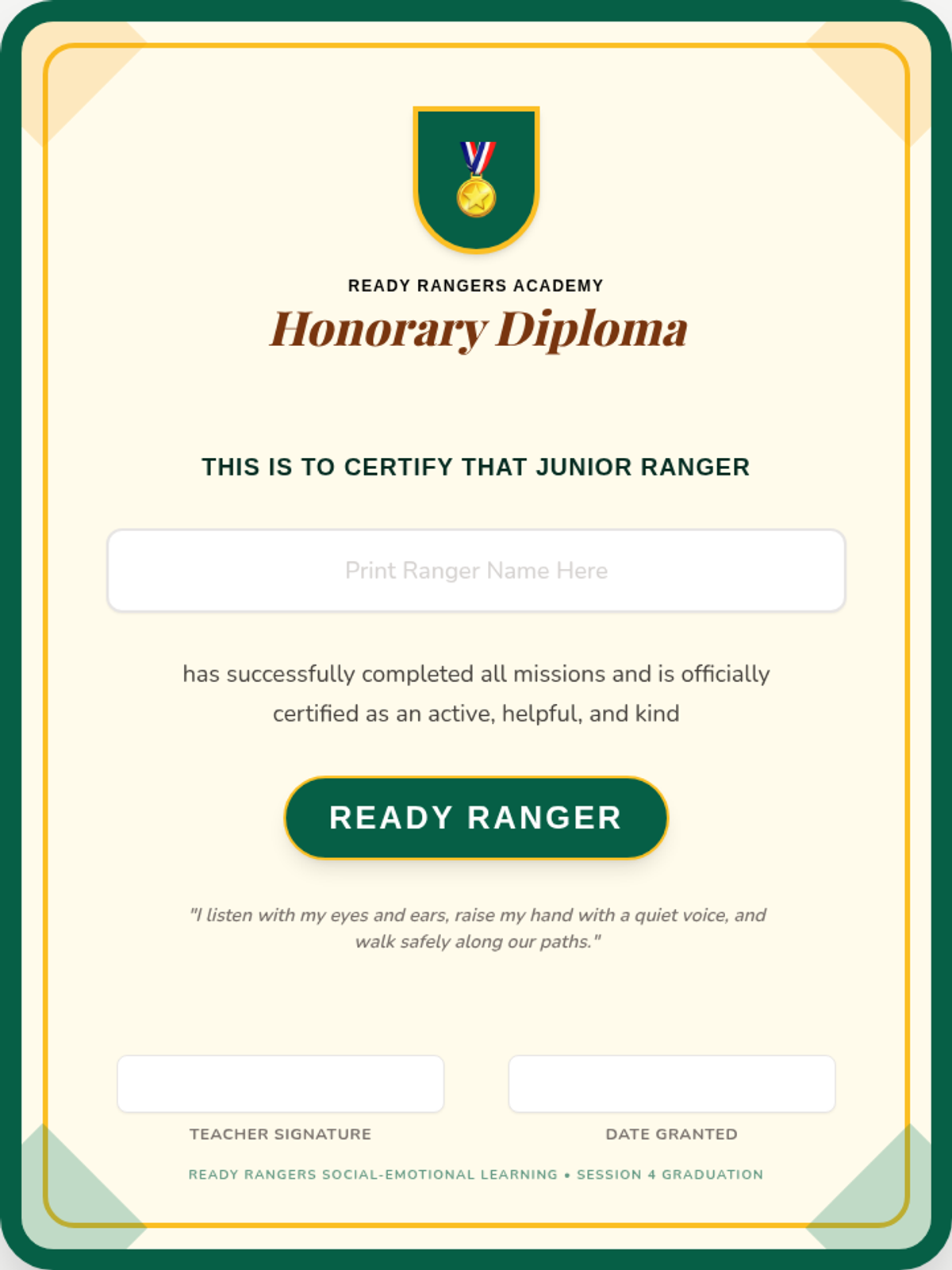
A celebratory final session where students review all three ranger skills, sign a Ranger Pledge, and receive their graduation certificates.
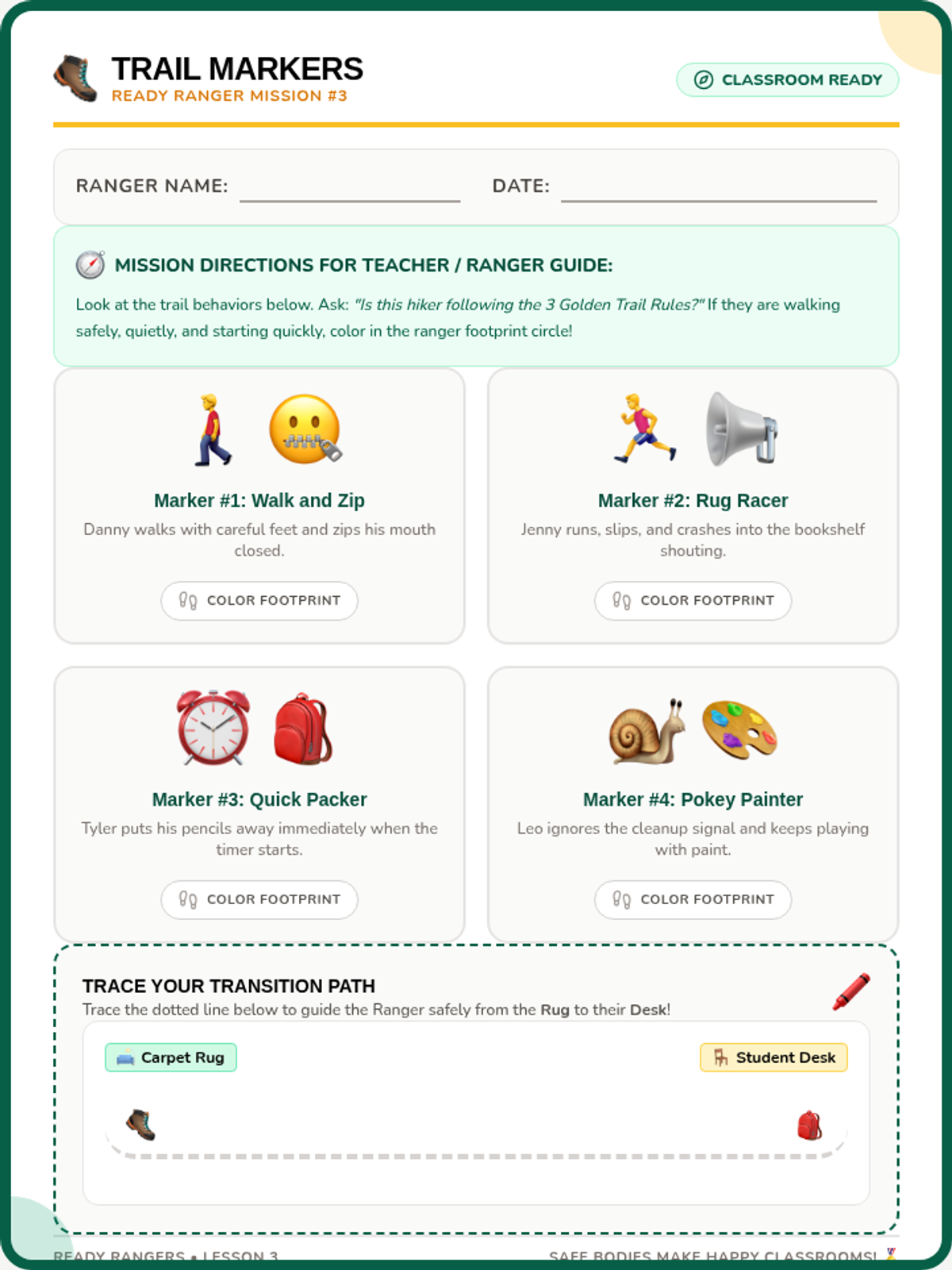
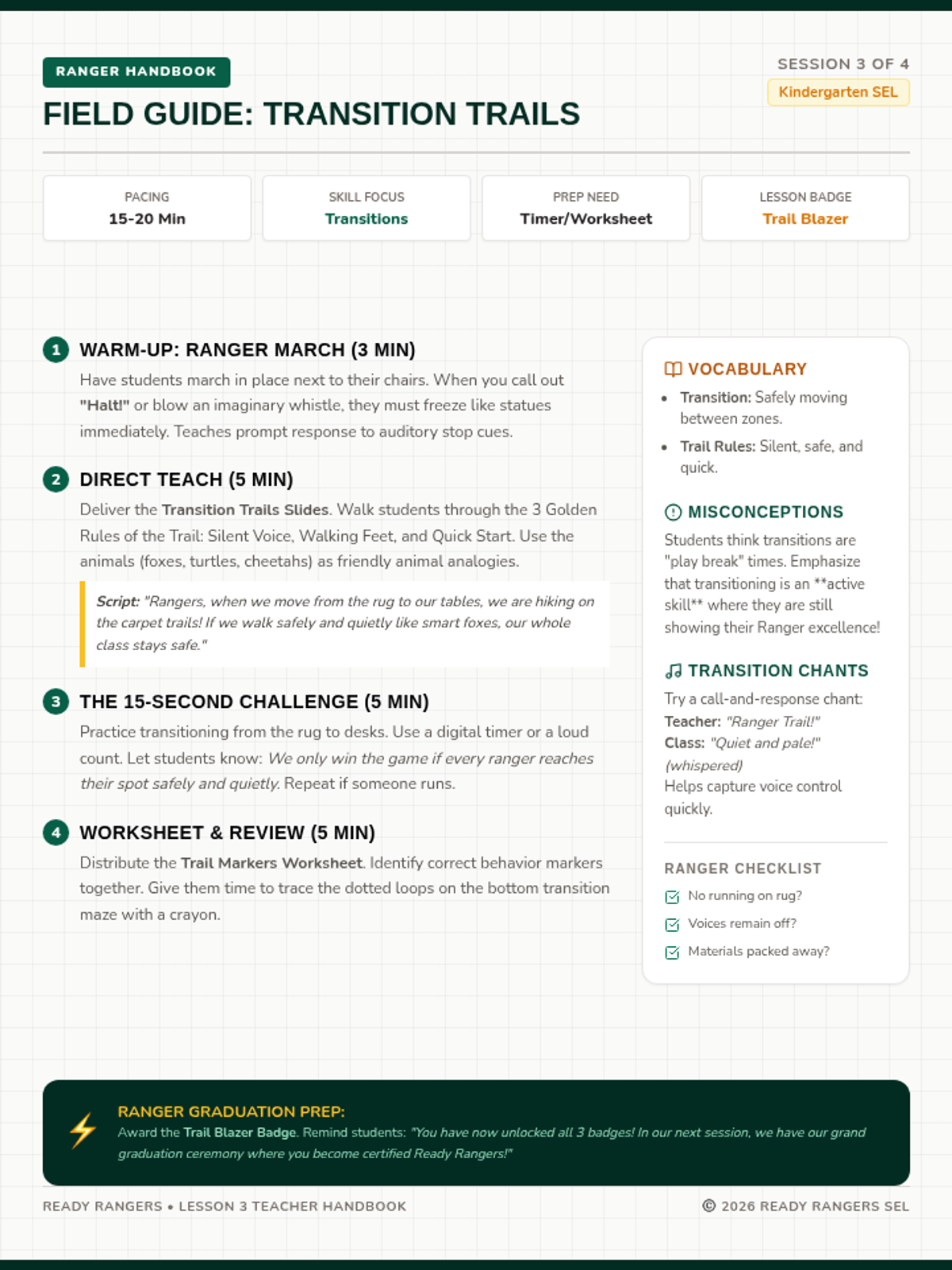
Students practice moving safely, quickly, and quietly between activities using the concept of classroom ranger trails.
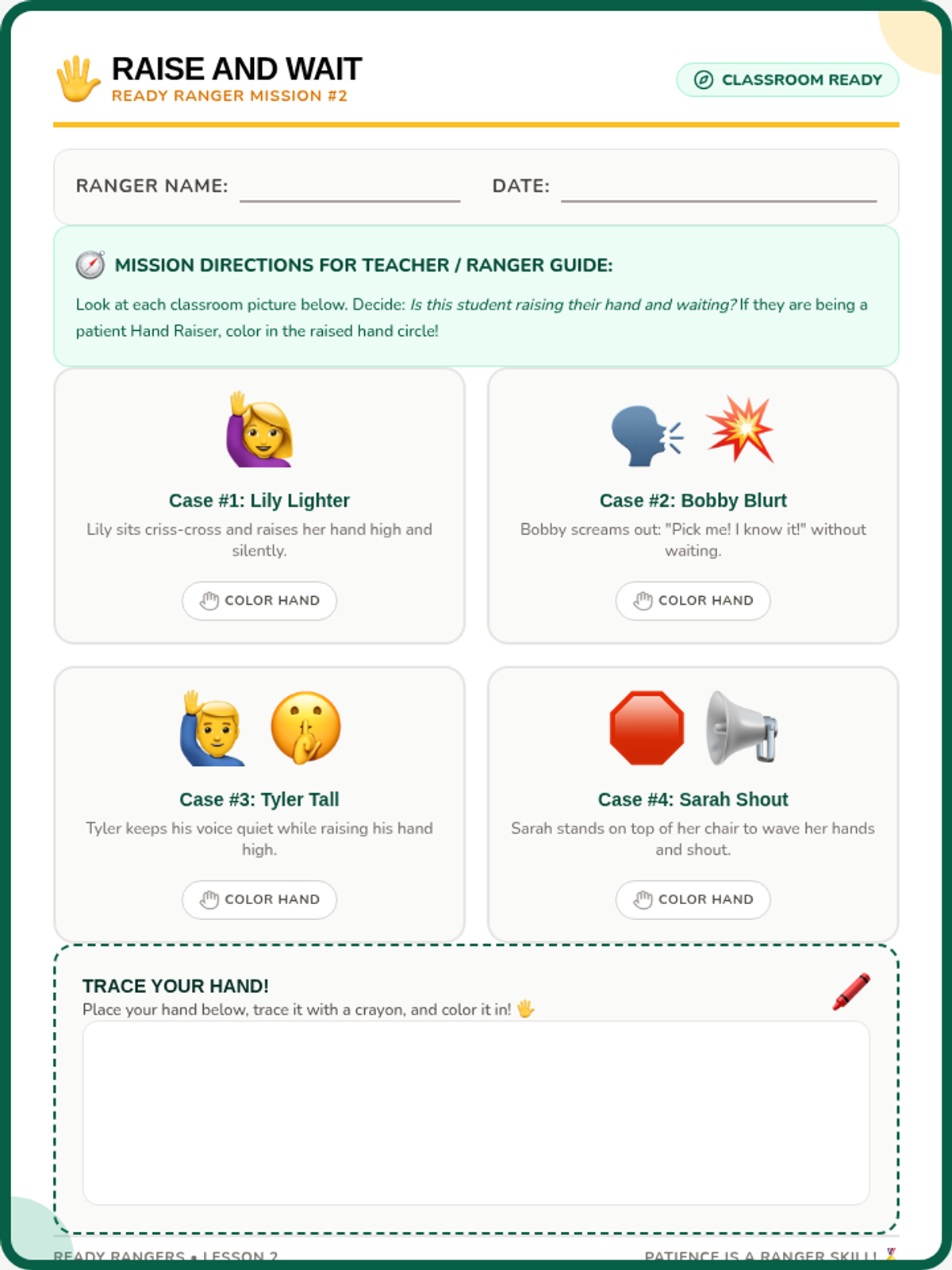
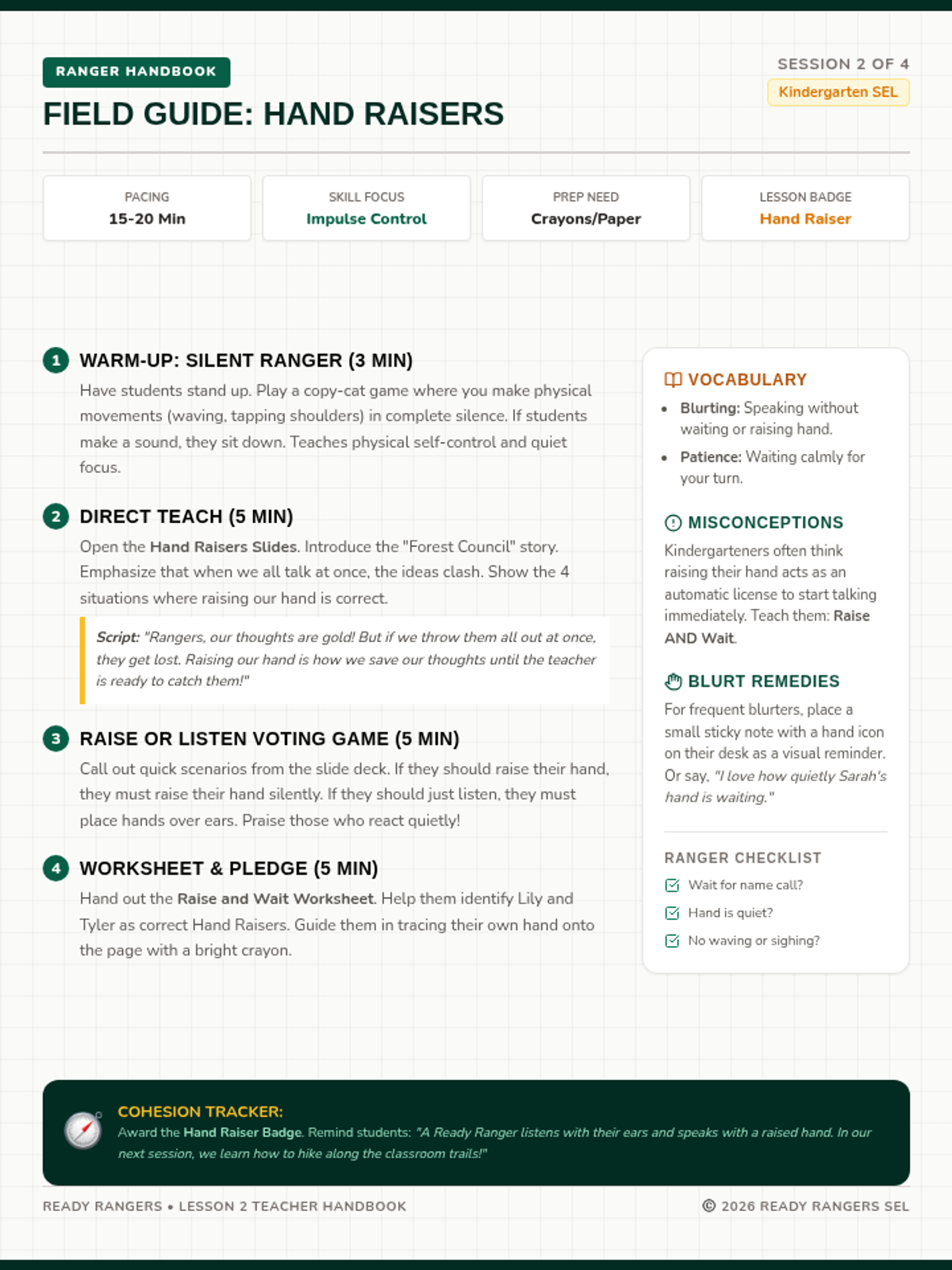
Students learn when and how to raise their hands to speak or ask for help, practicing impulse control and patience.
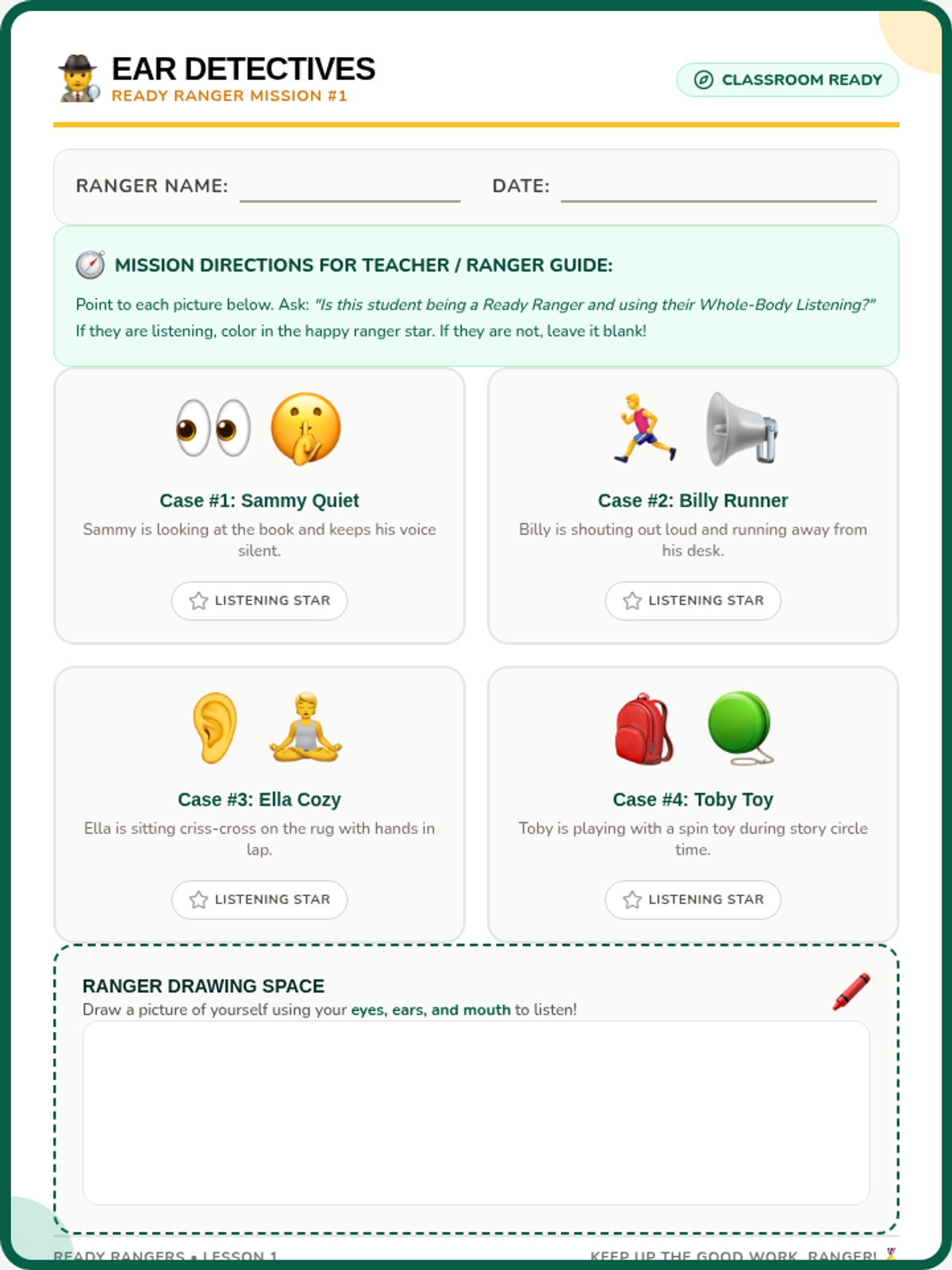
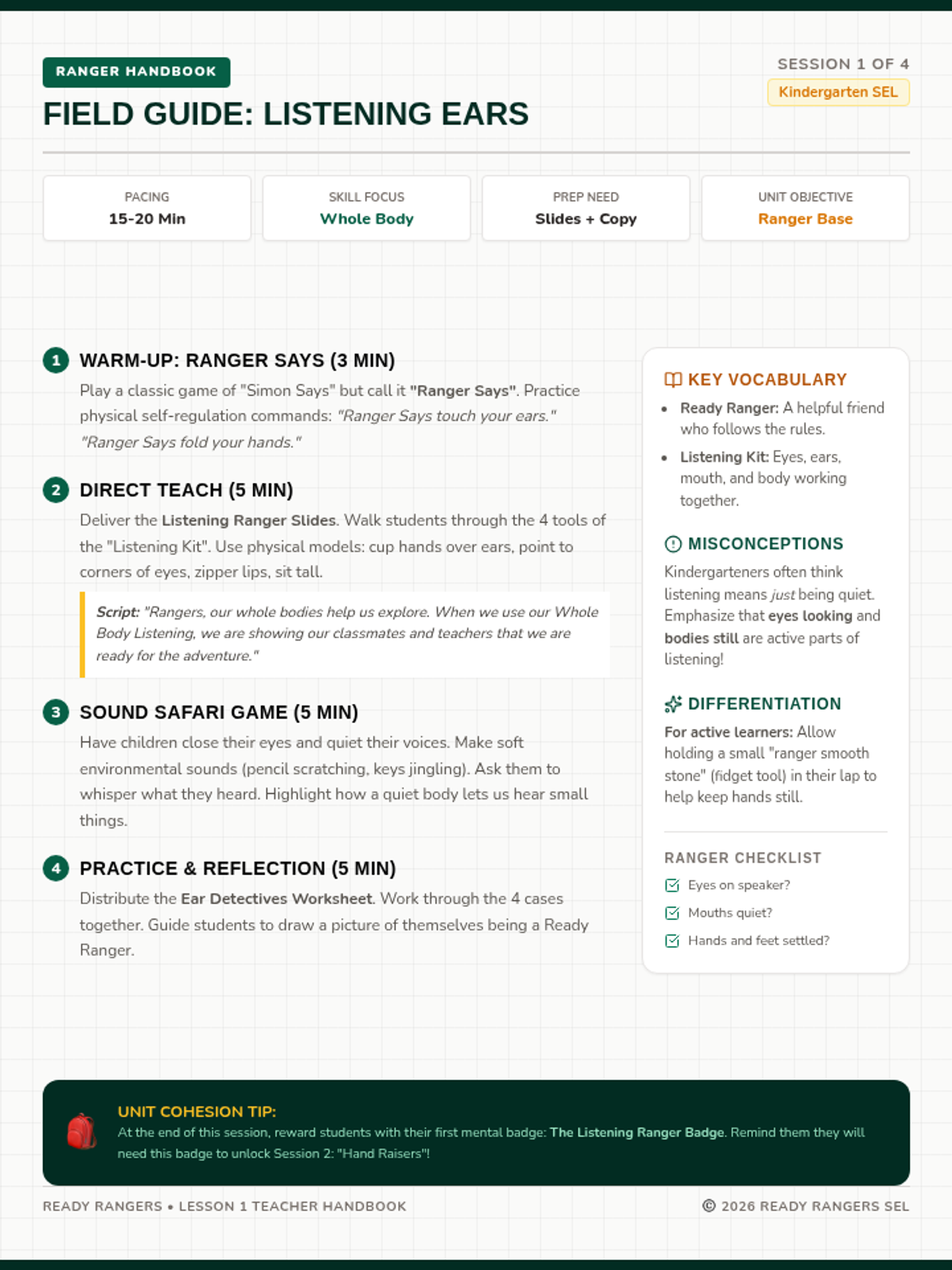
Students learn the concept of whole-body listening (eyes watching, ears listening, mouth quiet, body still) through a ranger-themed adventure.
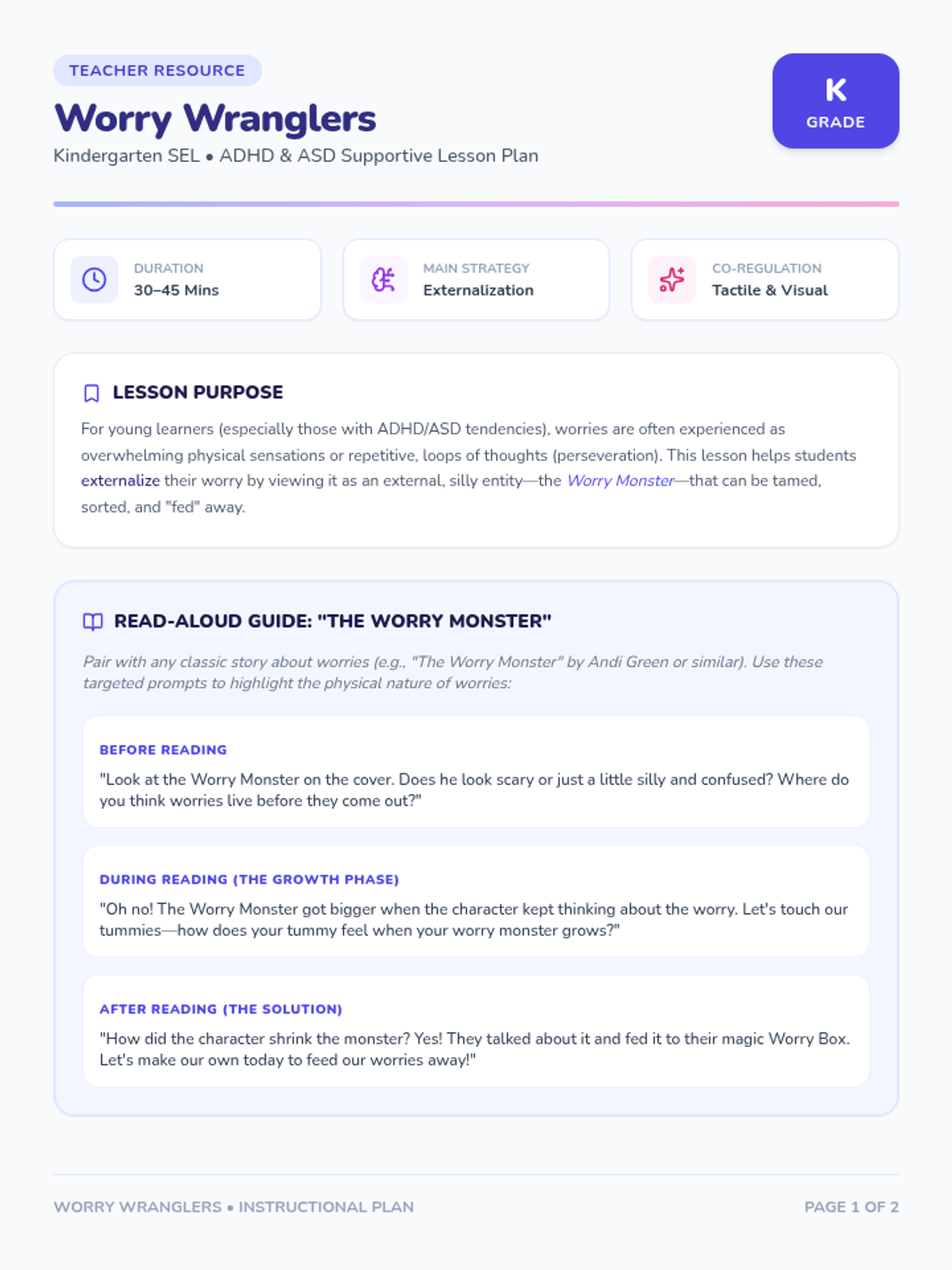
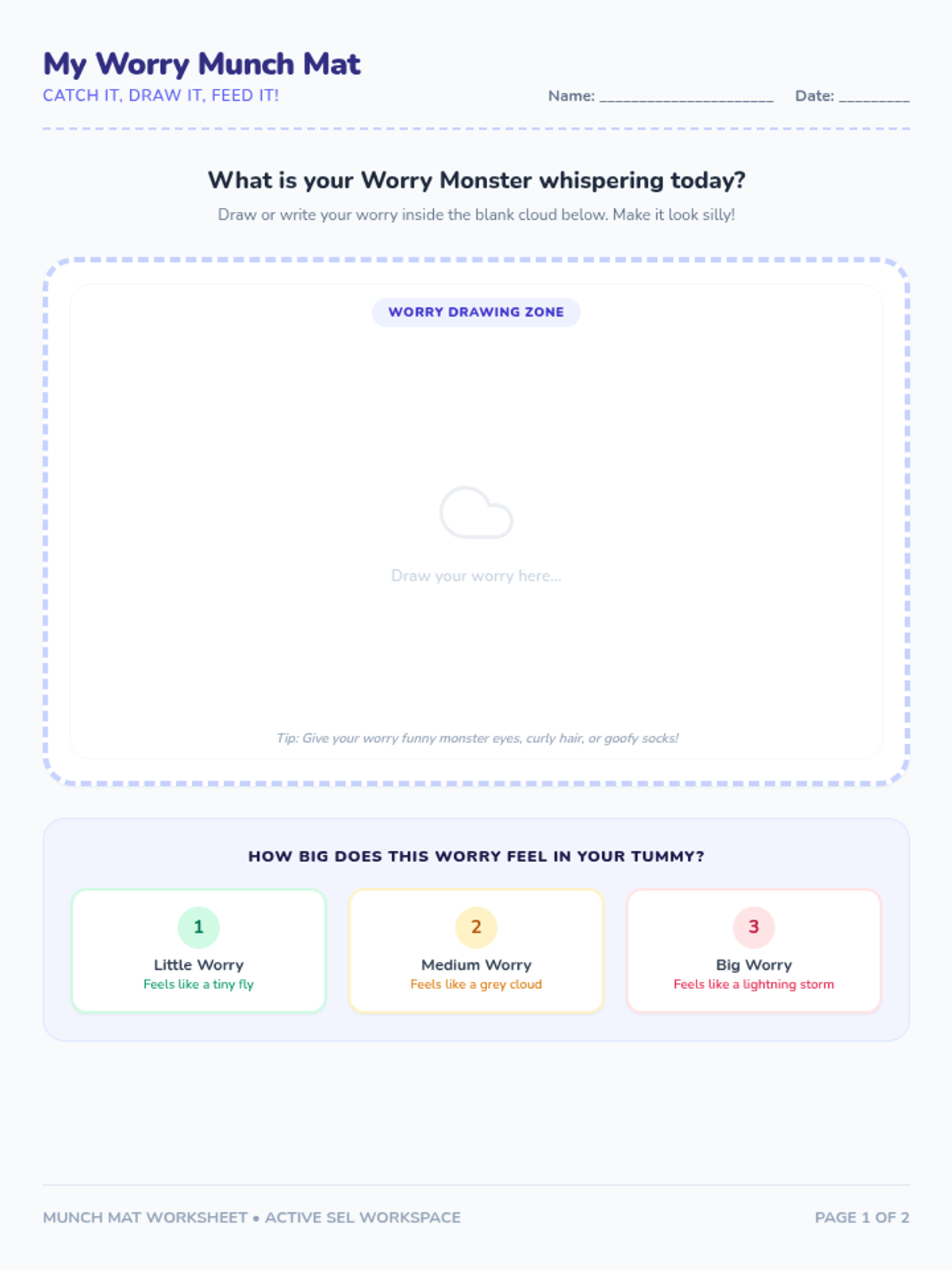
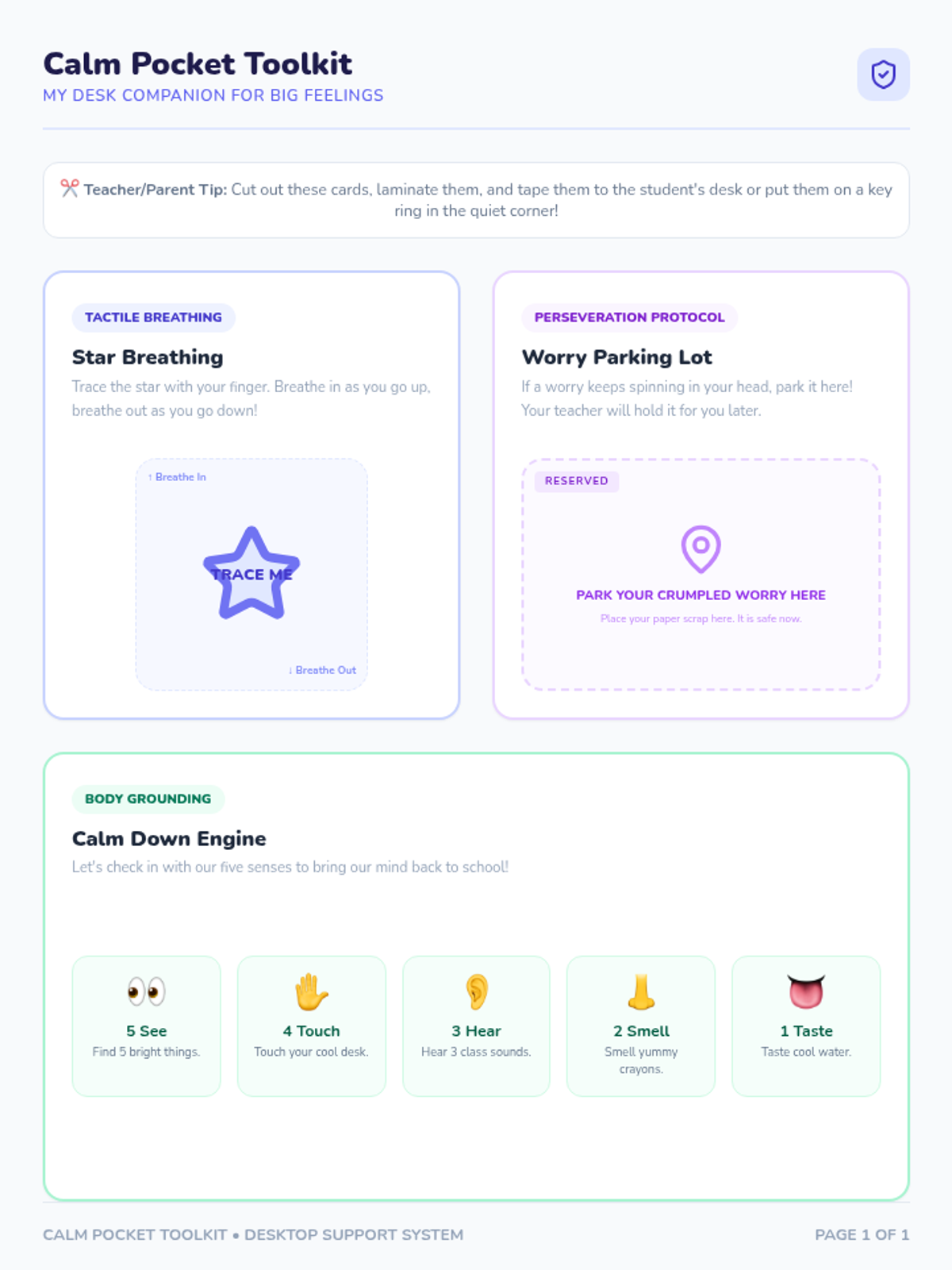
A comprehensive socio-emotional lesson designed for kindergarteners, particularly those with ADHD and autism-spectrum tendencies. The lesson focuses on externalizing anxiety through the 'Worry Monster' concept, featuring a read-aloud guide, a tactile 'feeding' coping strategy, and cognitive-behavioral tools to stop perseveration.
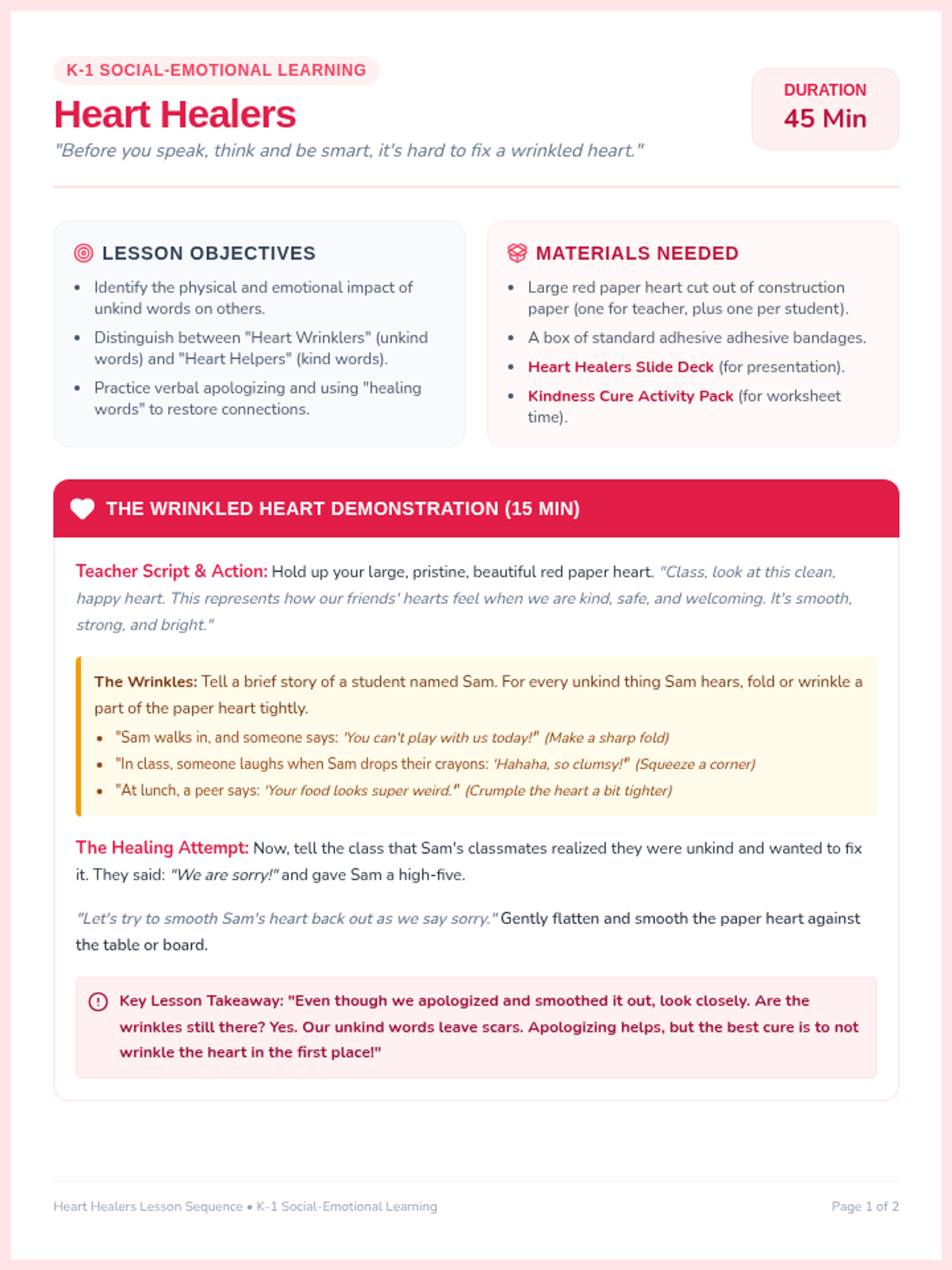
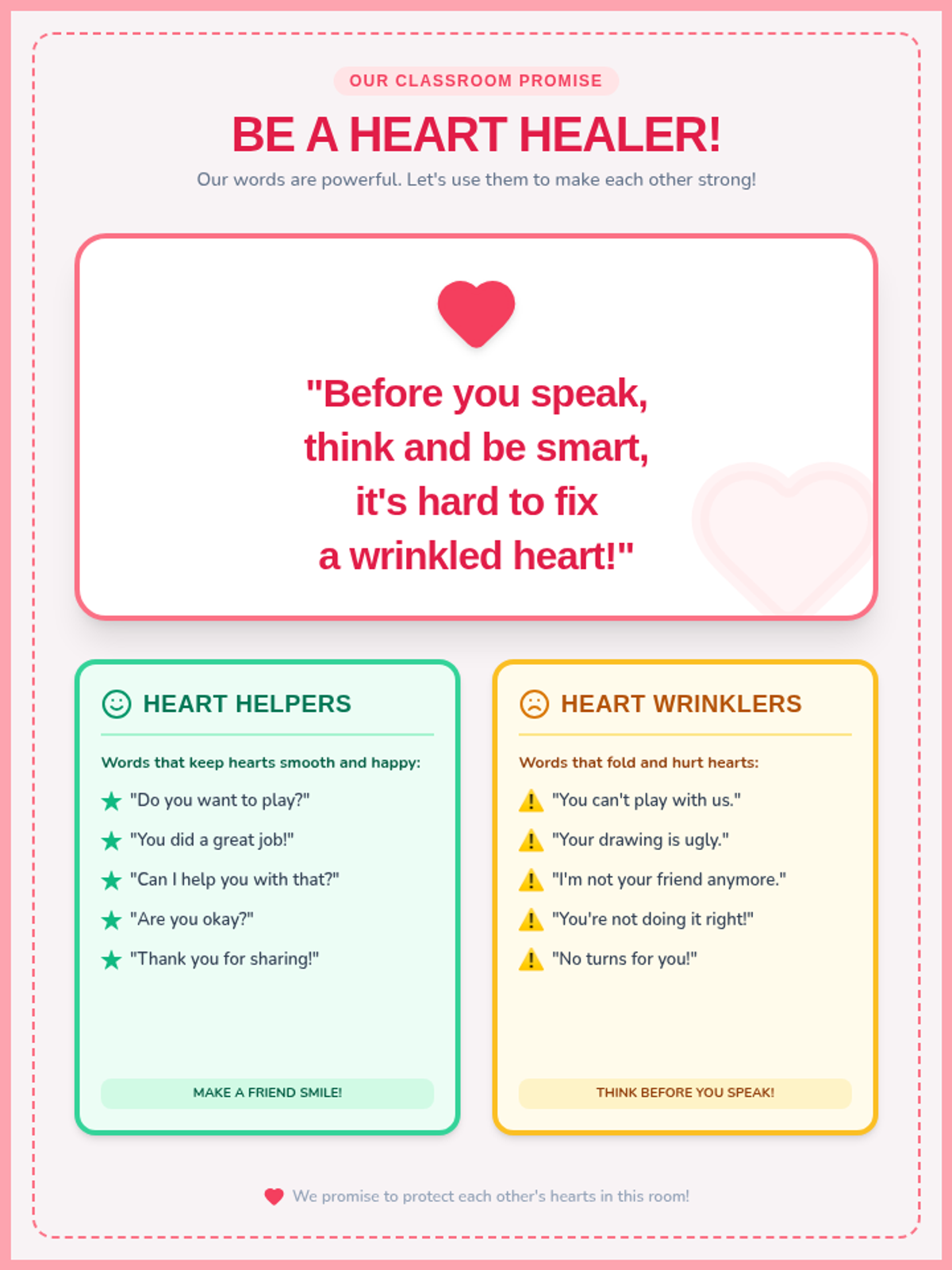
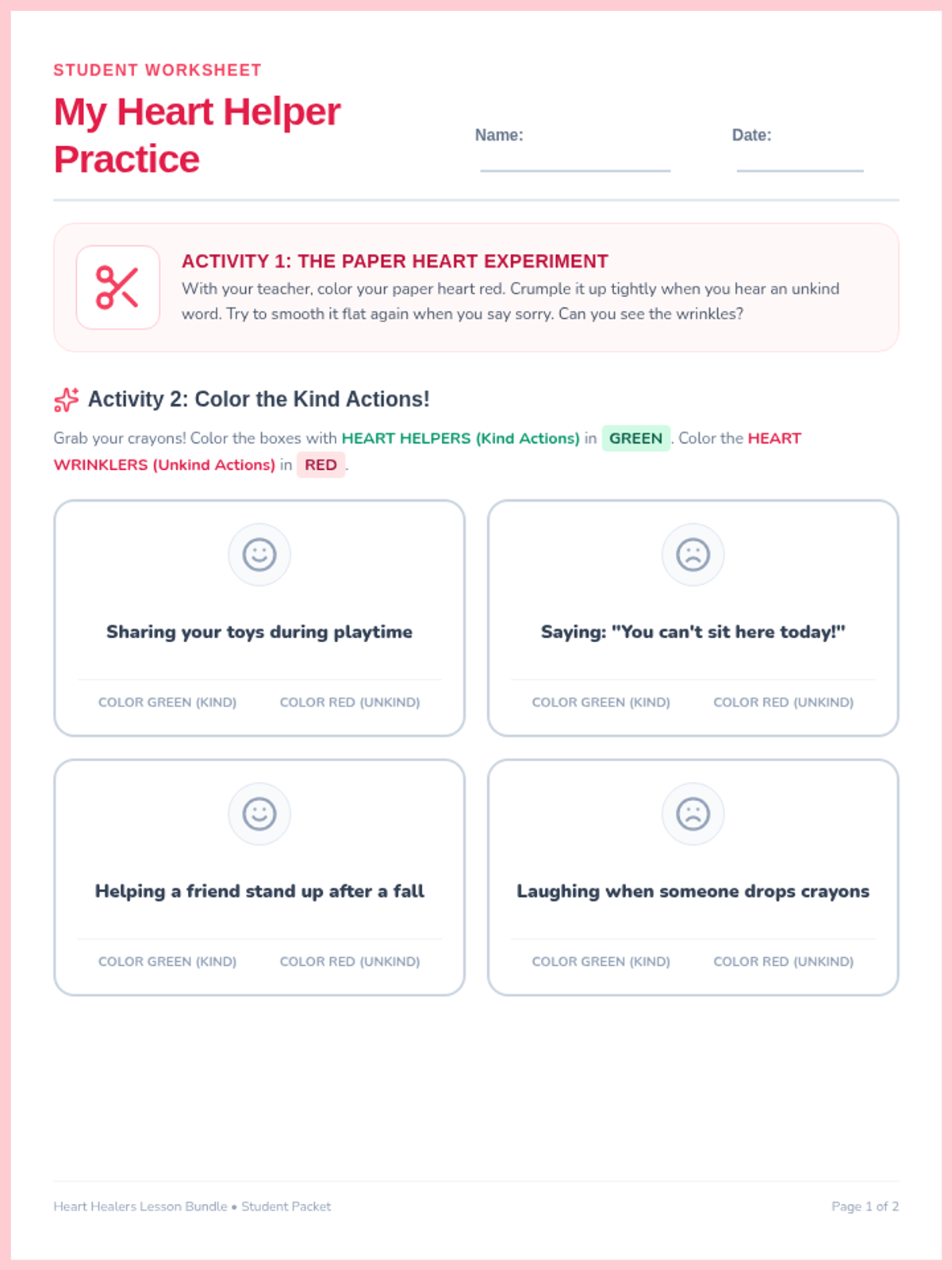
A heart-centered social-emotional learning lesson for K-1 students using the powerful 'Wrinkled Heart' paper metaphor. Students learn how unkind words physically affect others and practice using kind words to heal and protect hearts.
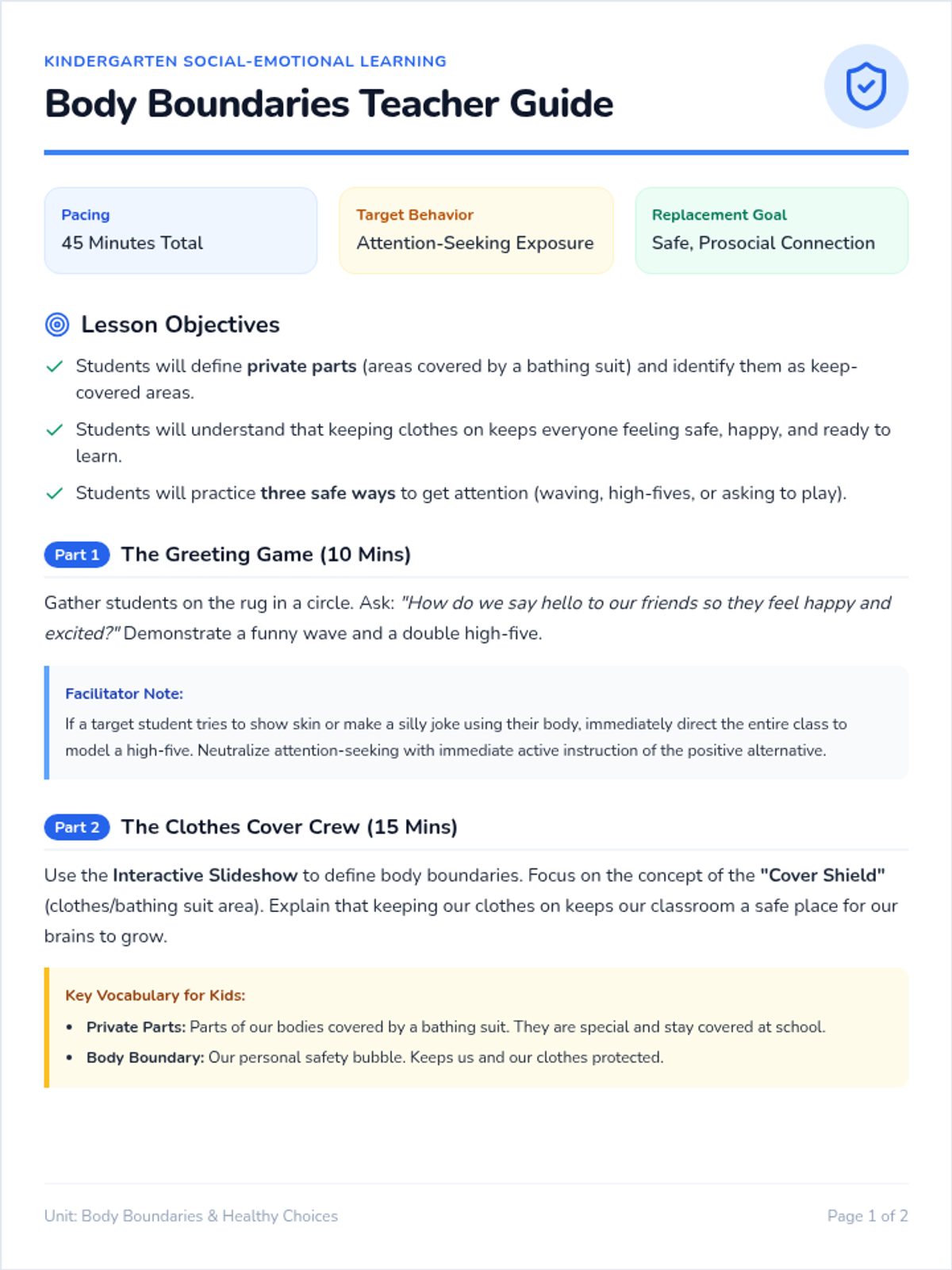
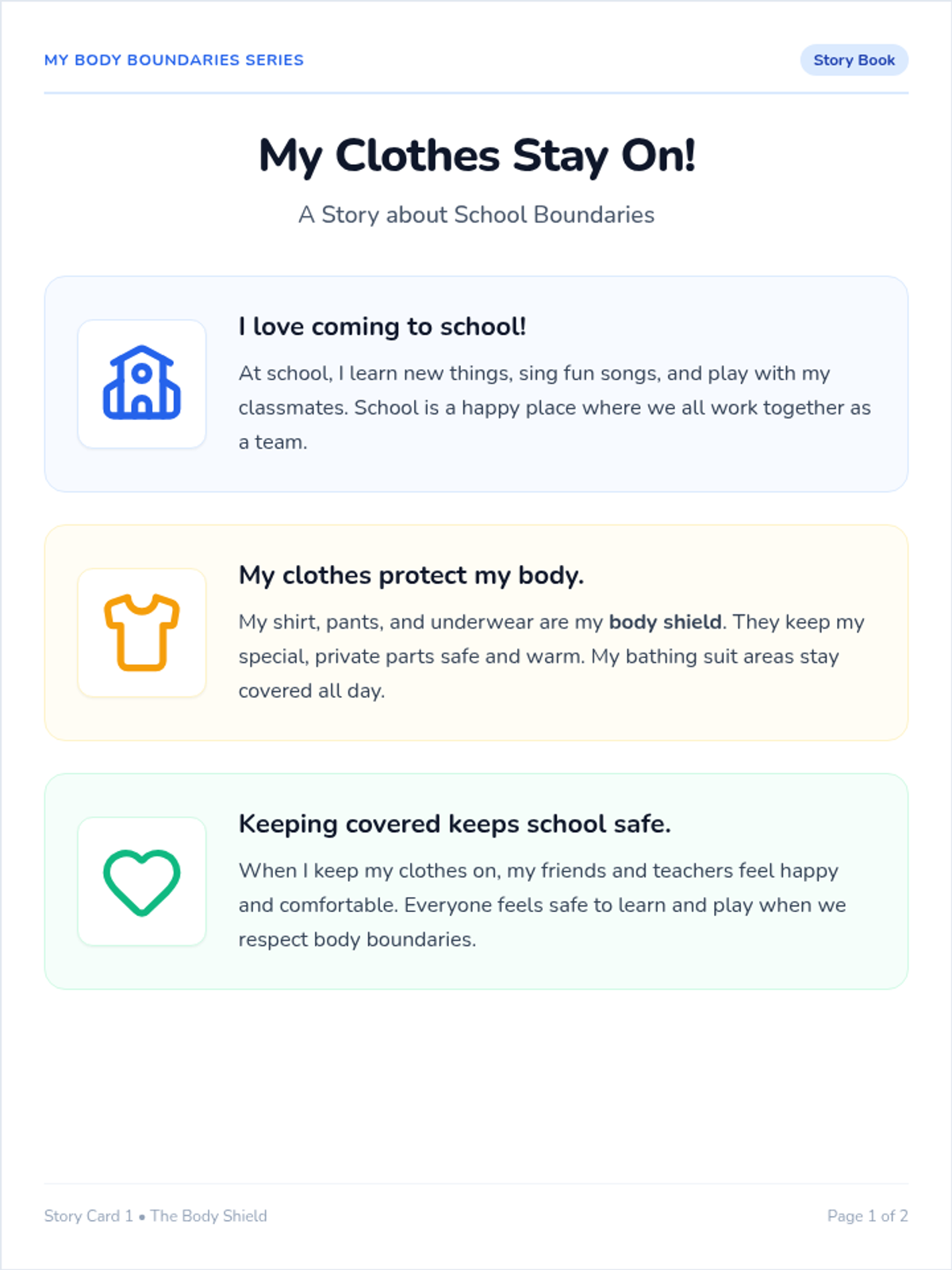
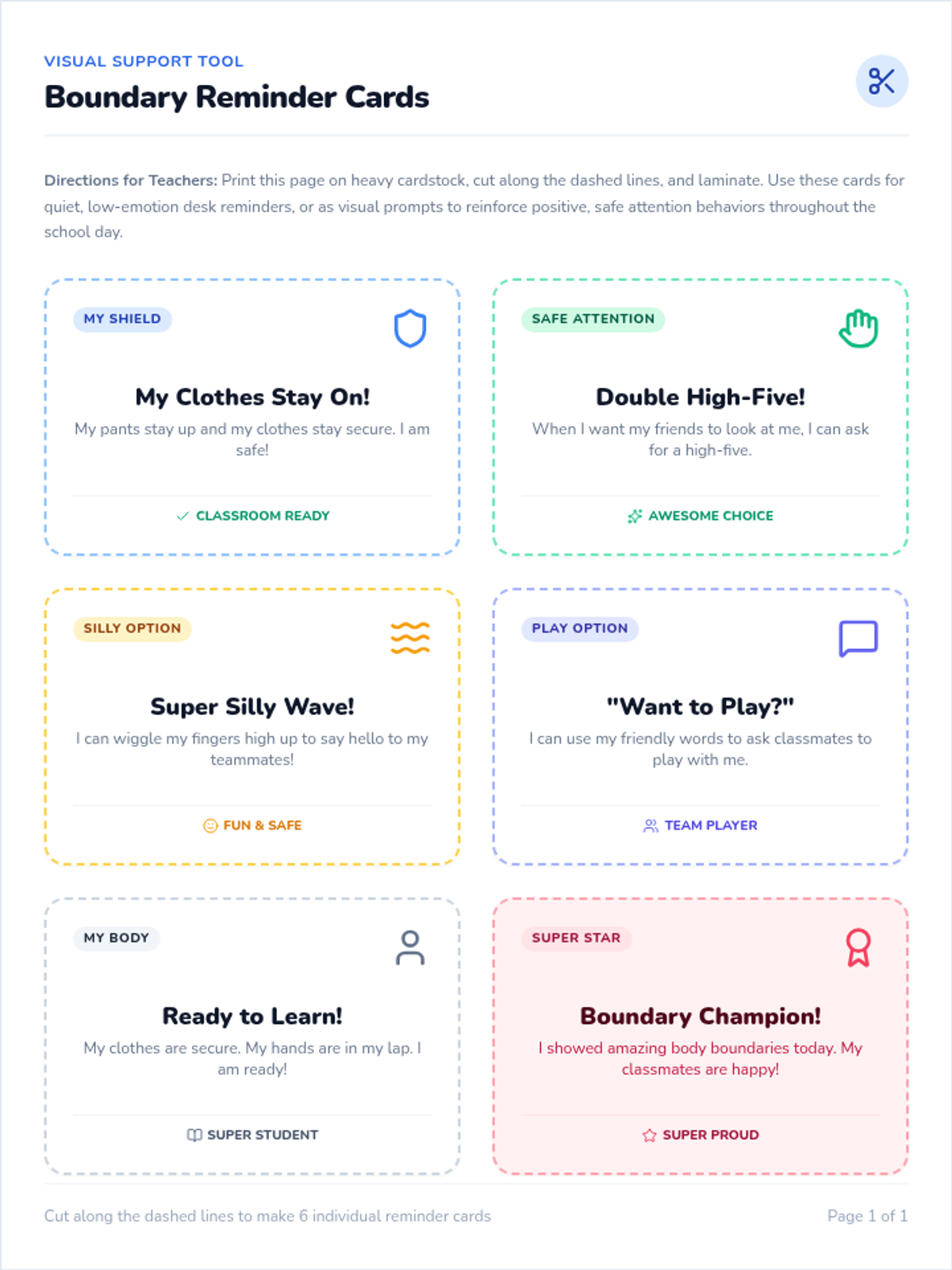
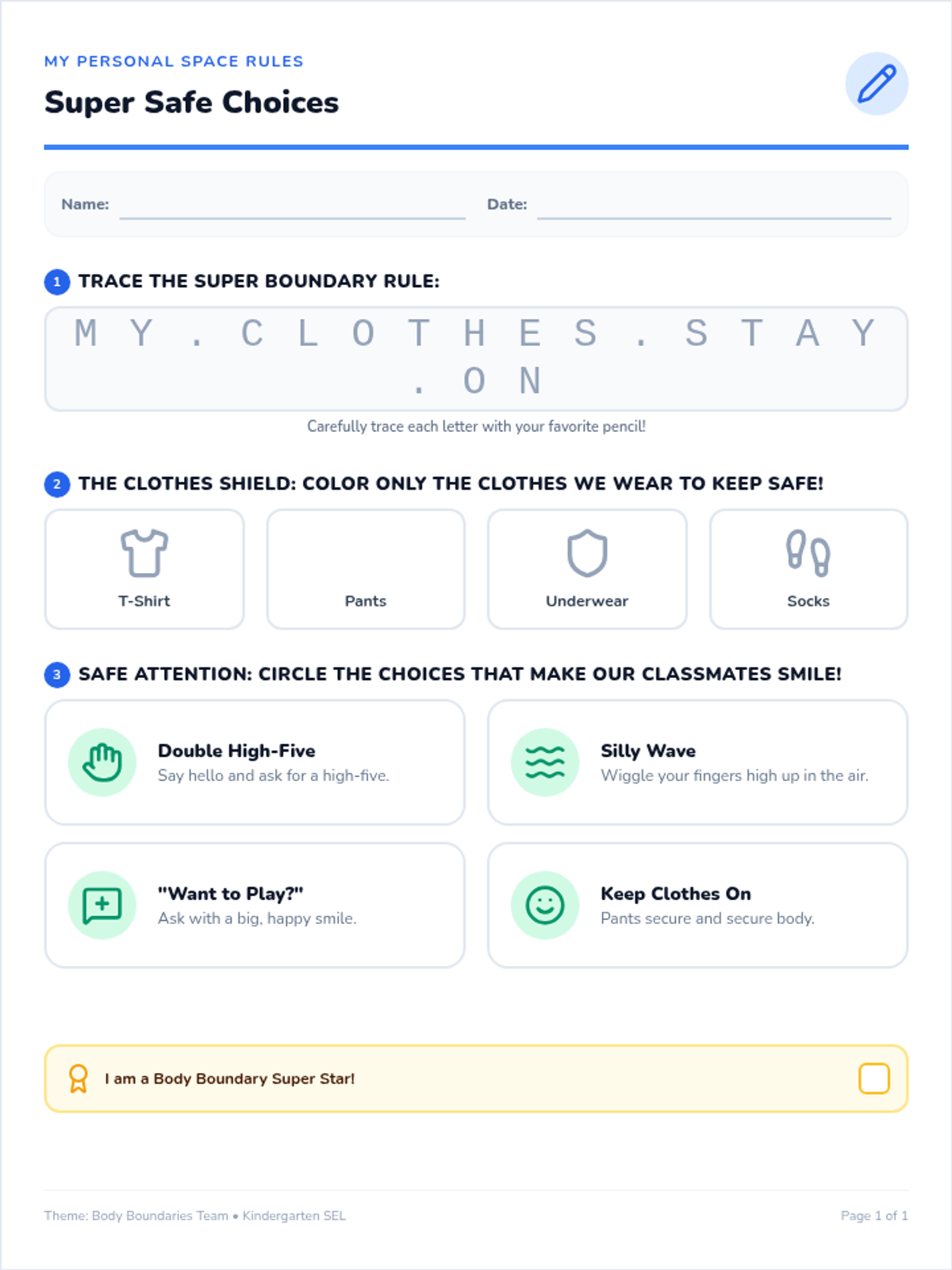
A positive, proactive kindergarten lesson designed to address attention-seeking private part exposure by teaching clear body boundaries and positive ways to get attention.
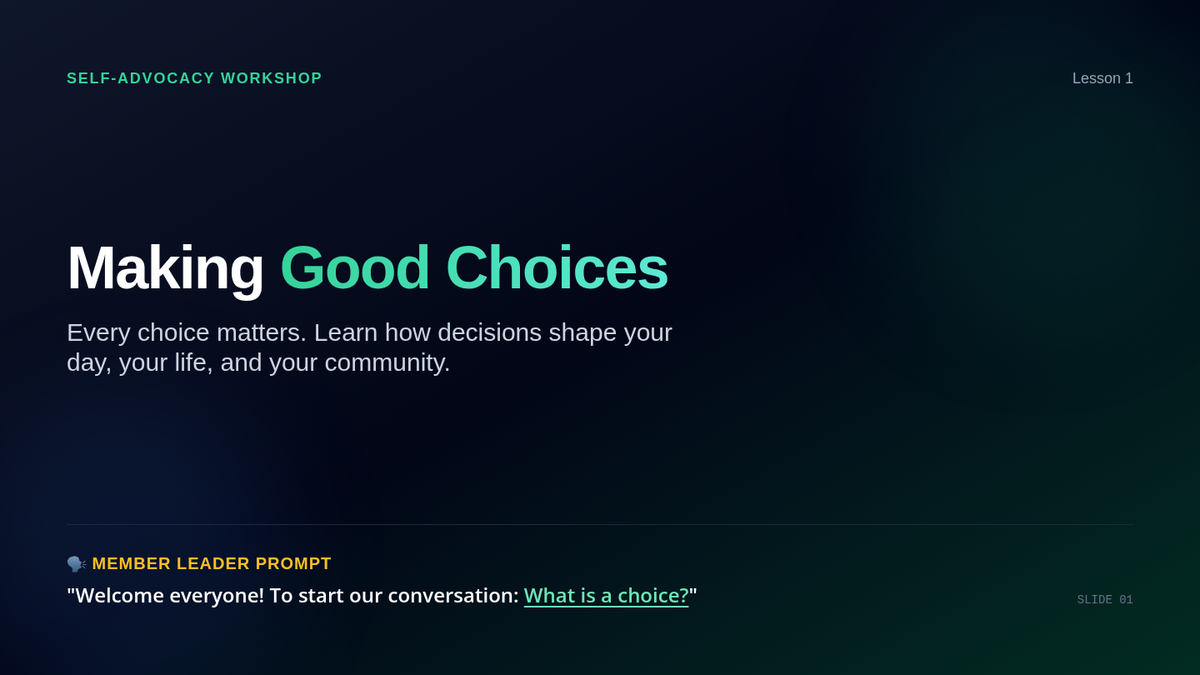
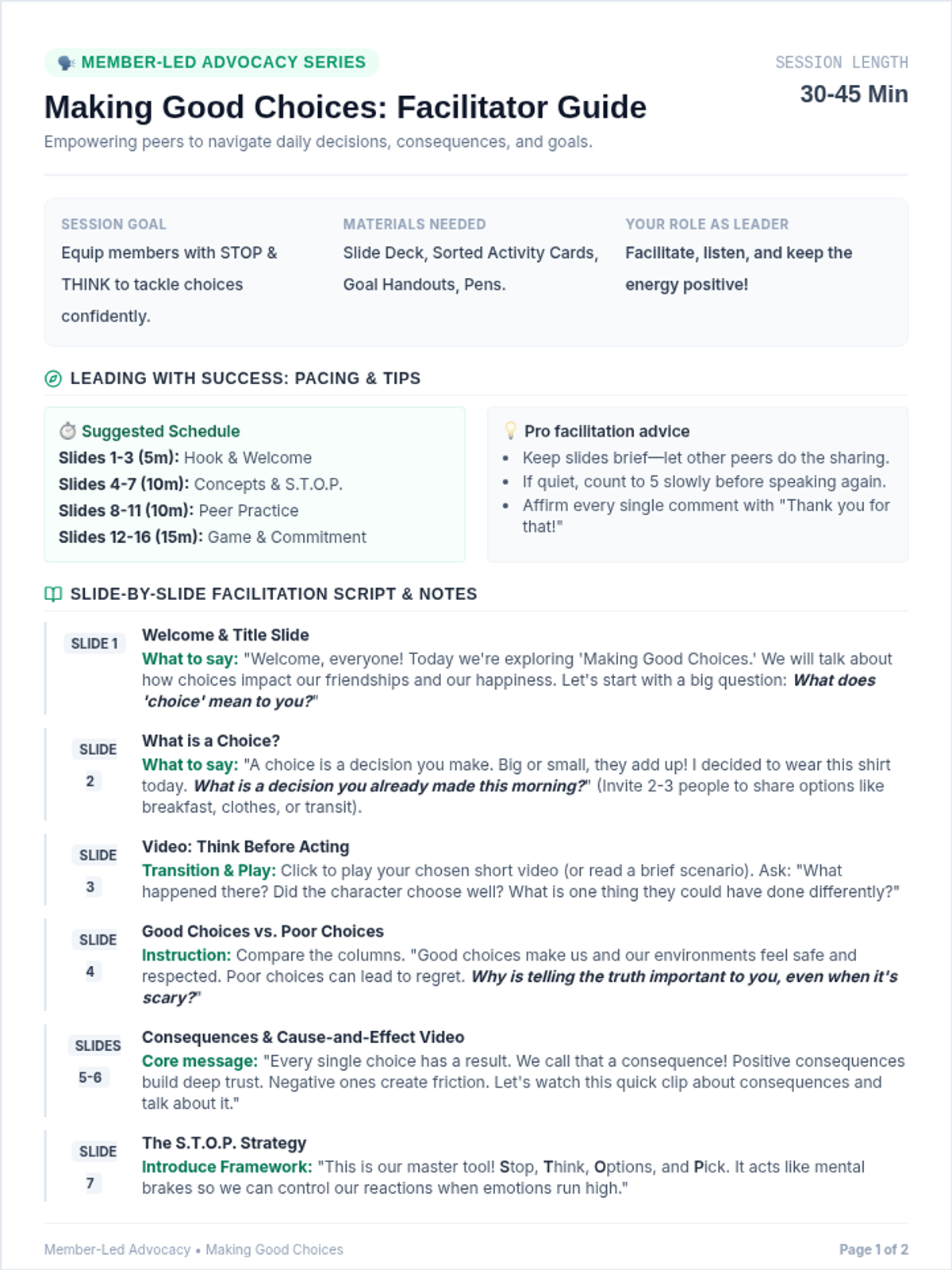
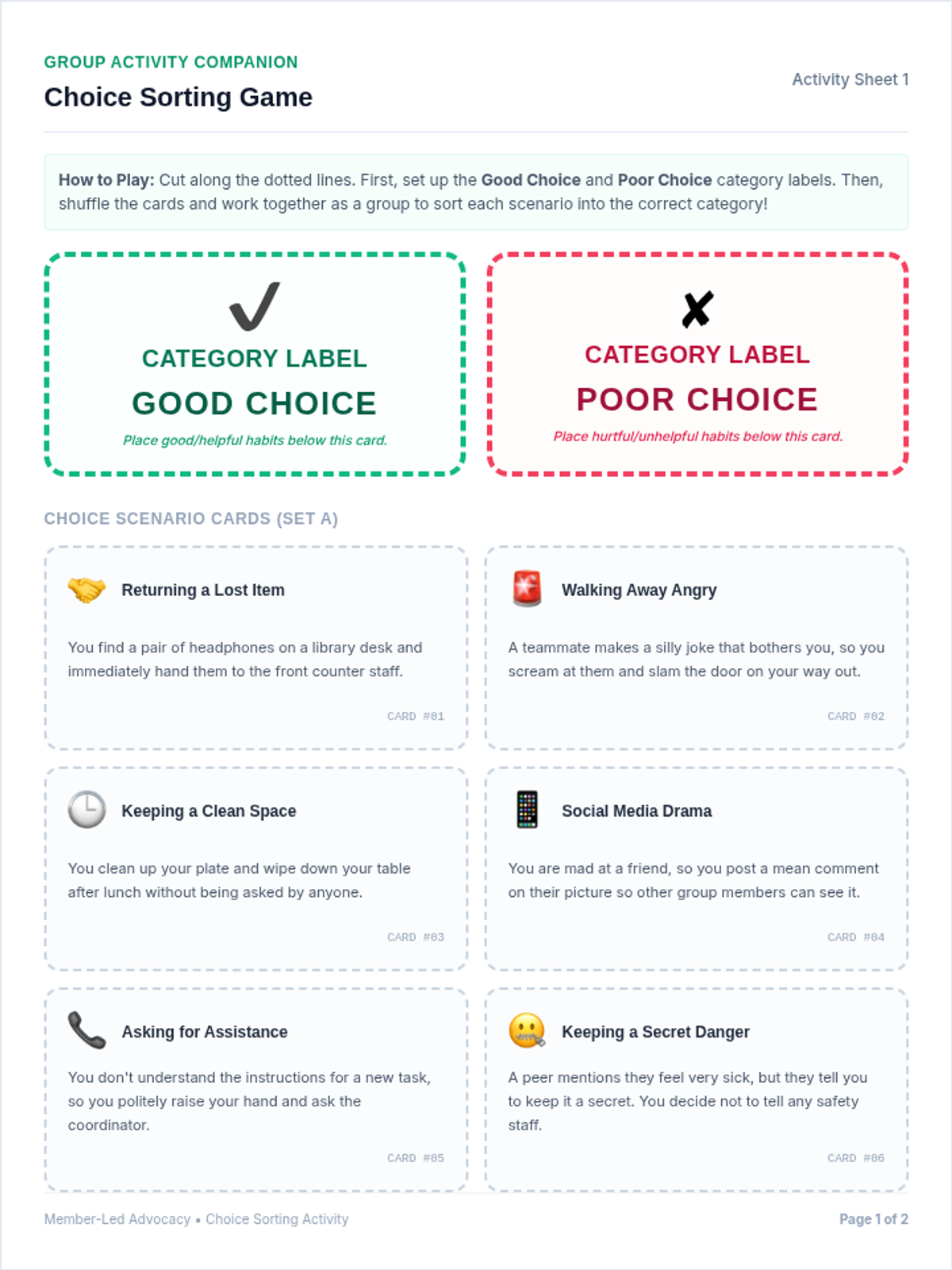
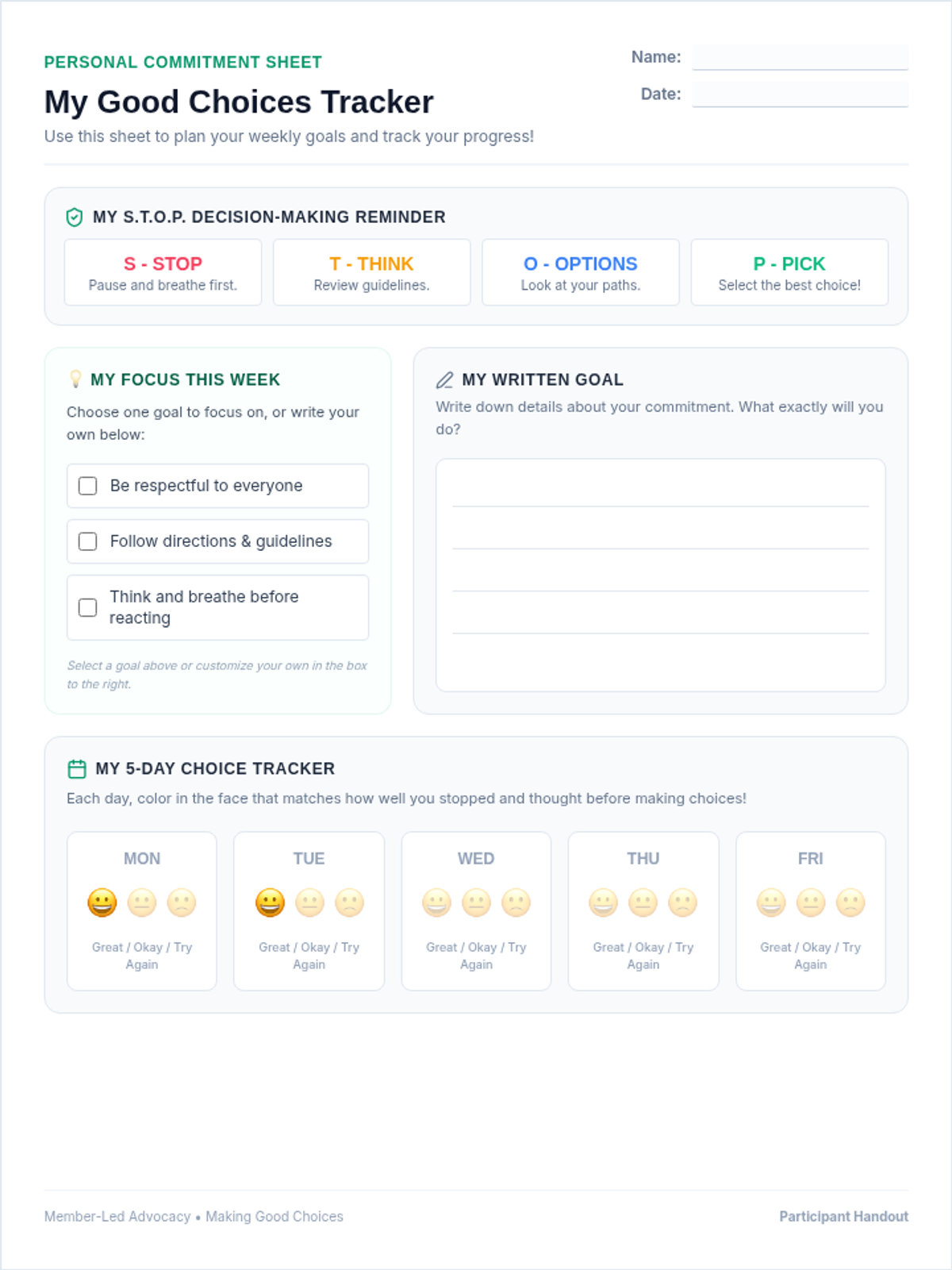
An interactive, peer-led advocacy lesson designed to empower members to lead discussions on personal choices, consequences, decision-making strategies, and peer influence.
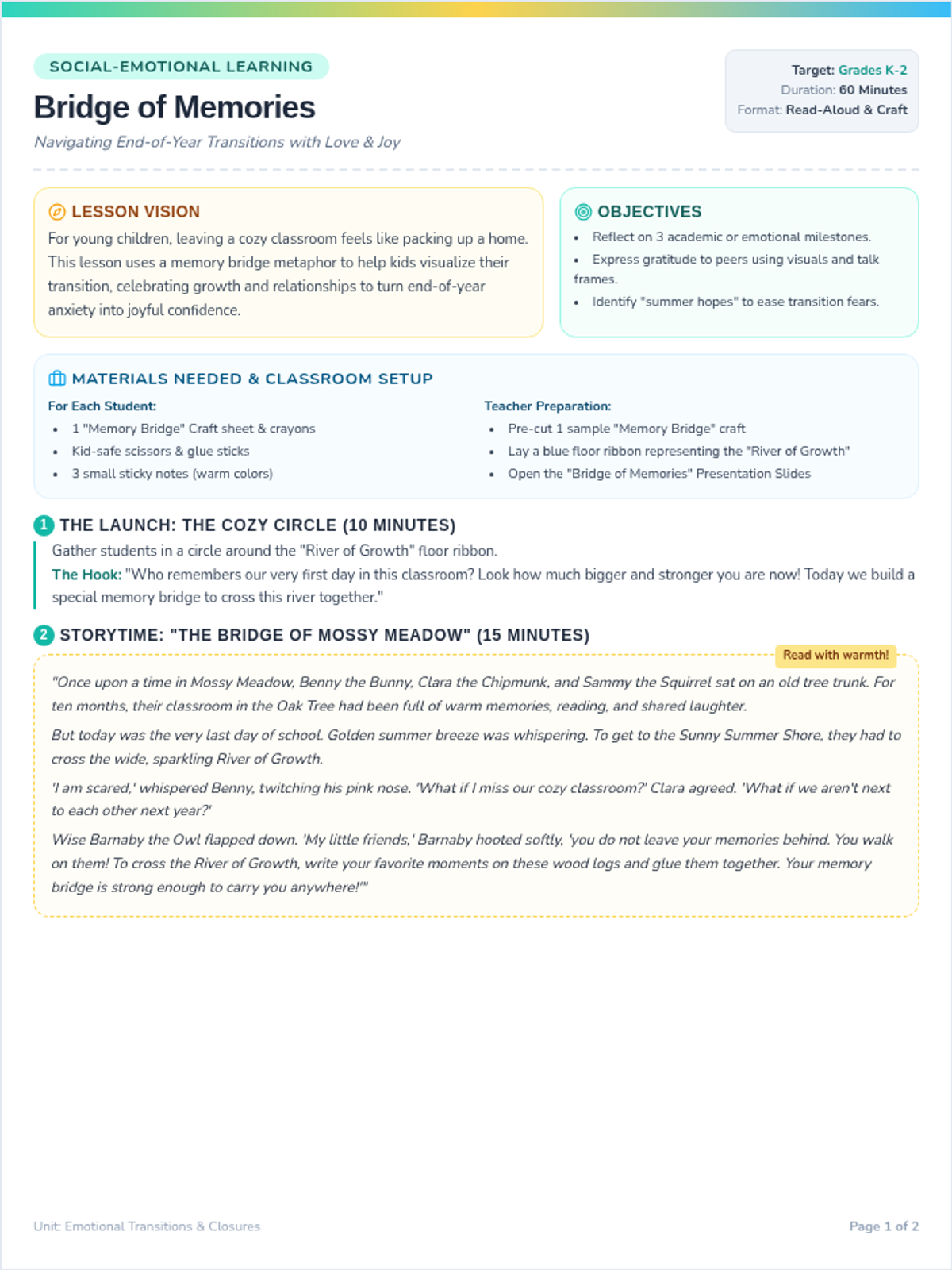
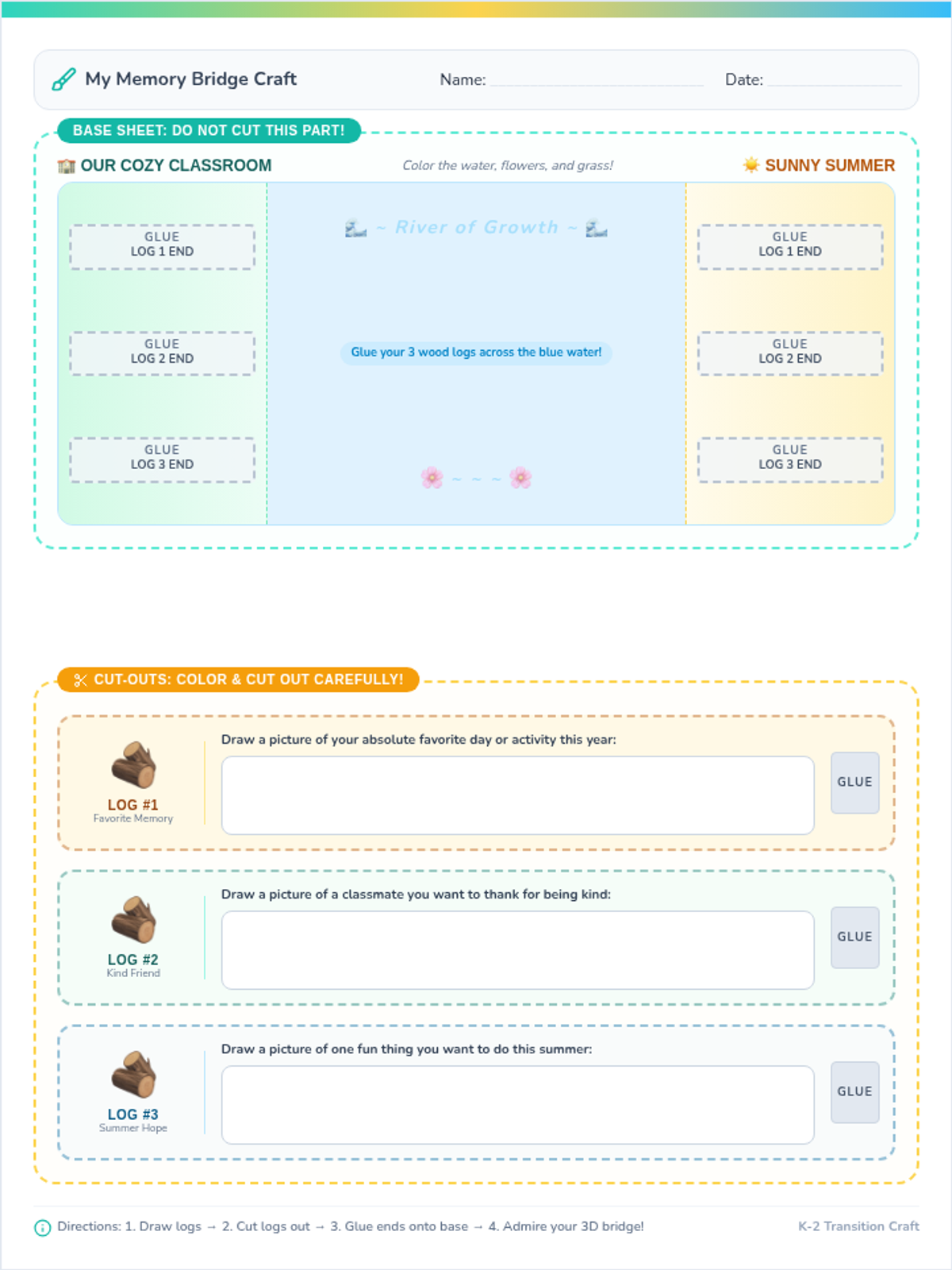
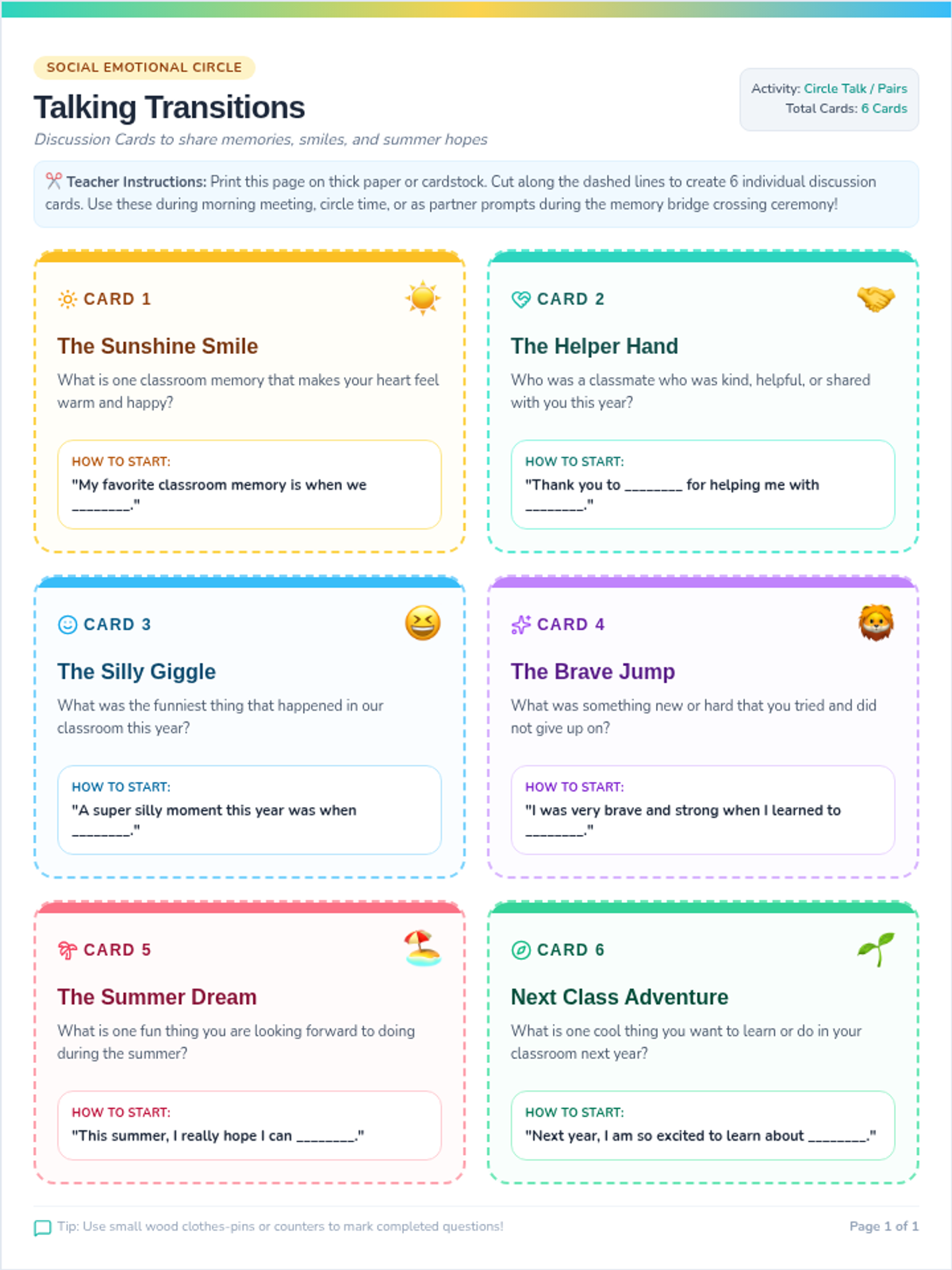
A heartwarming end-of-year transition lesson for K-2 students. Through a reflective story, guided discussions, and a hands-on memory bridge craft, students celebrate their growth, express classmate gratitude, and transition confidently to summer.
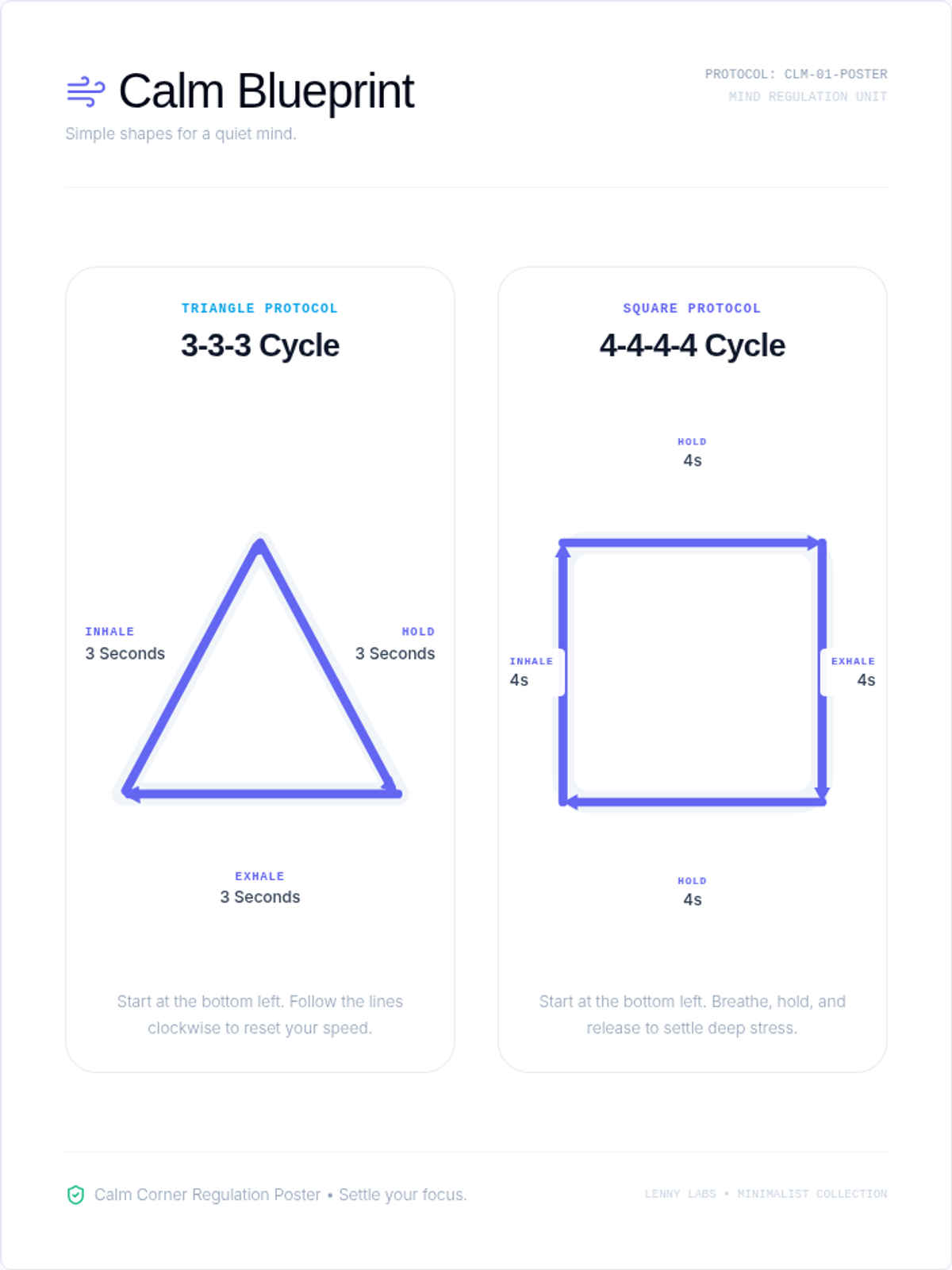
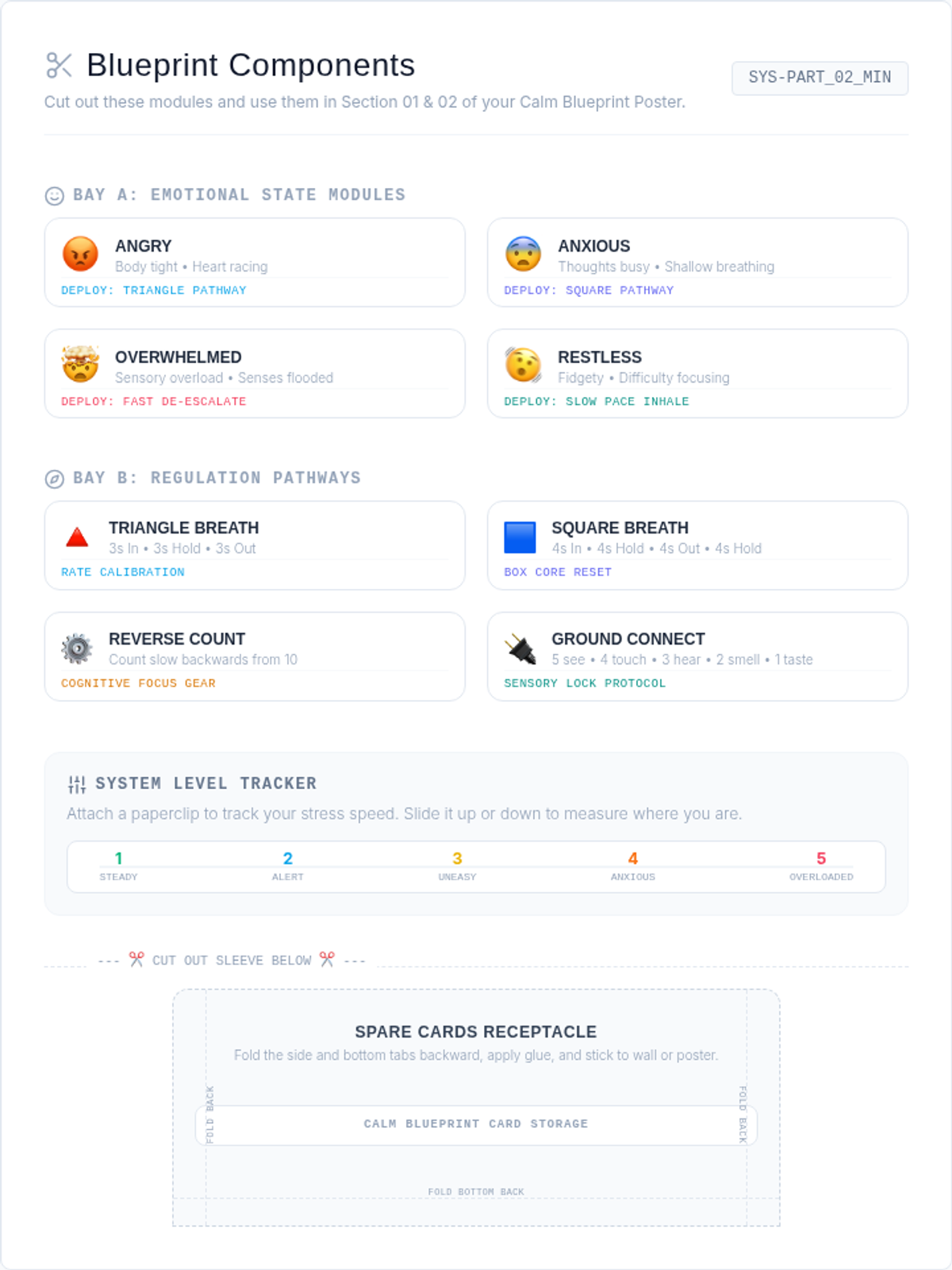
An interactive mental engineering toolkit that teaches children deep breathing exercises using concrete shapes. Students use the visual anchor chart and movable feeling/strategy blueprints to regulate their emotions.
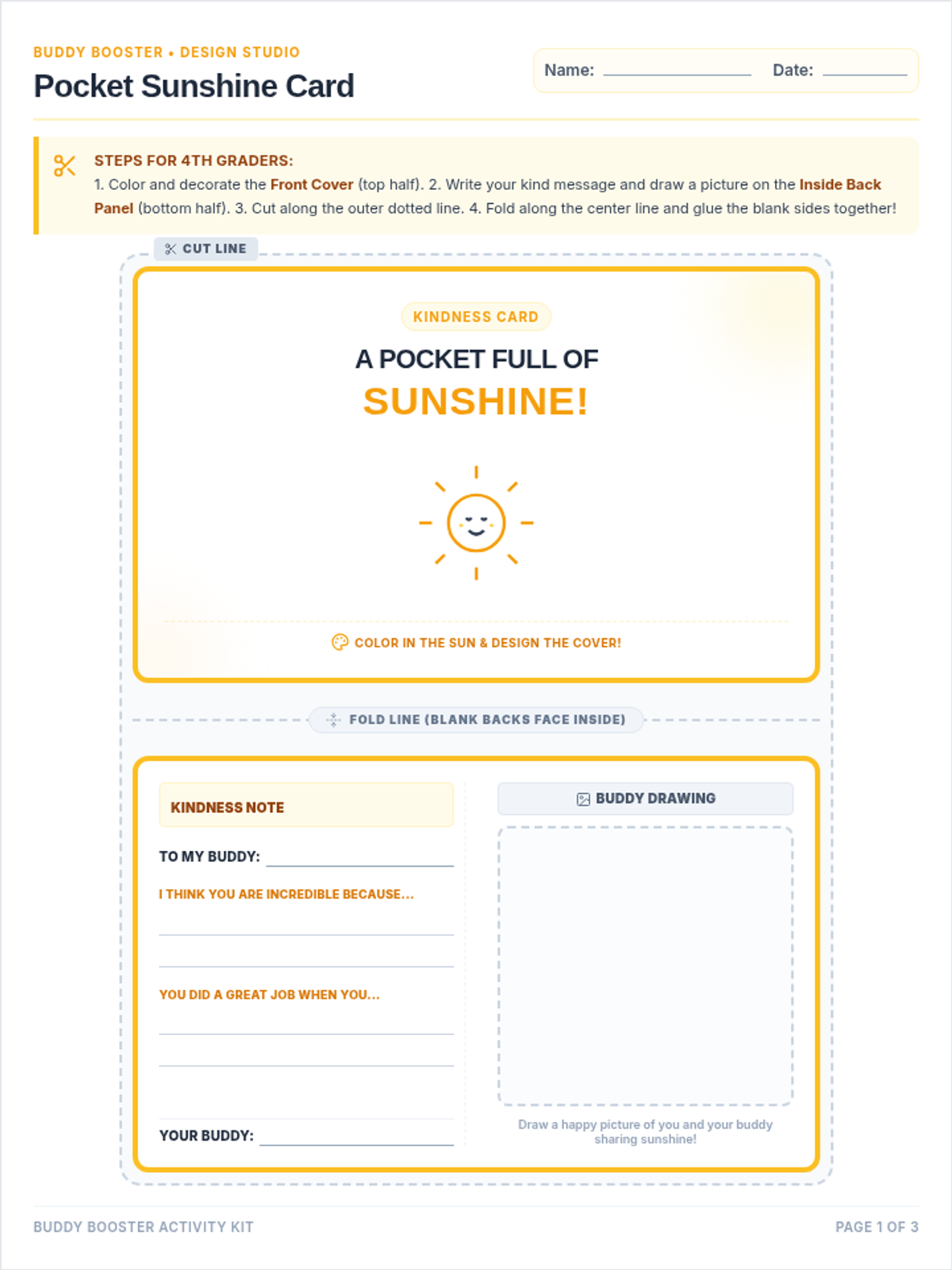
A lesson where fourth-grade students design and write personalized encouragement cards for their kindergarten buddies to build confidence and foster a positive school community.
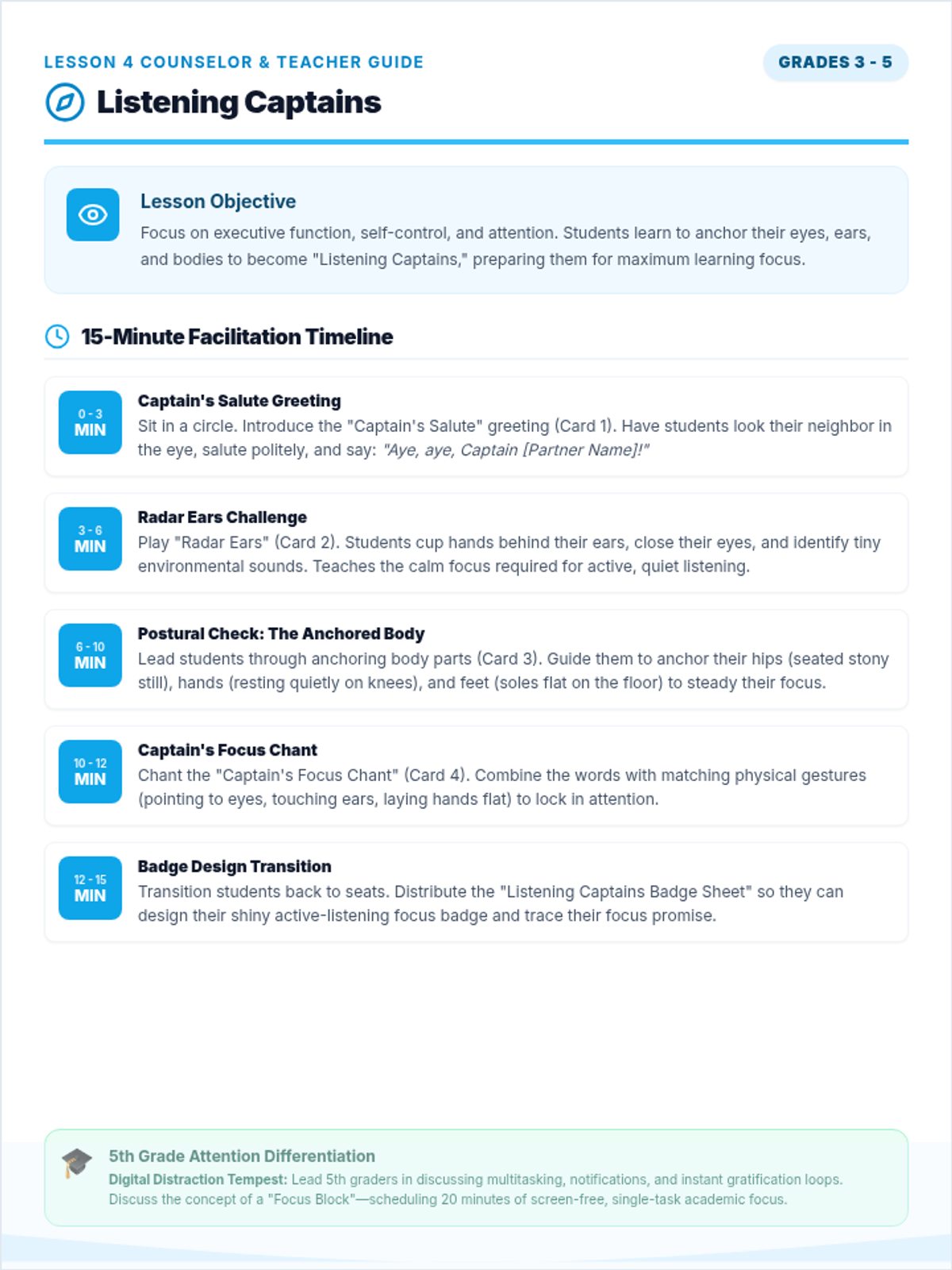
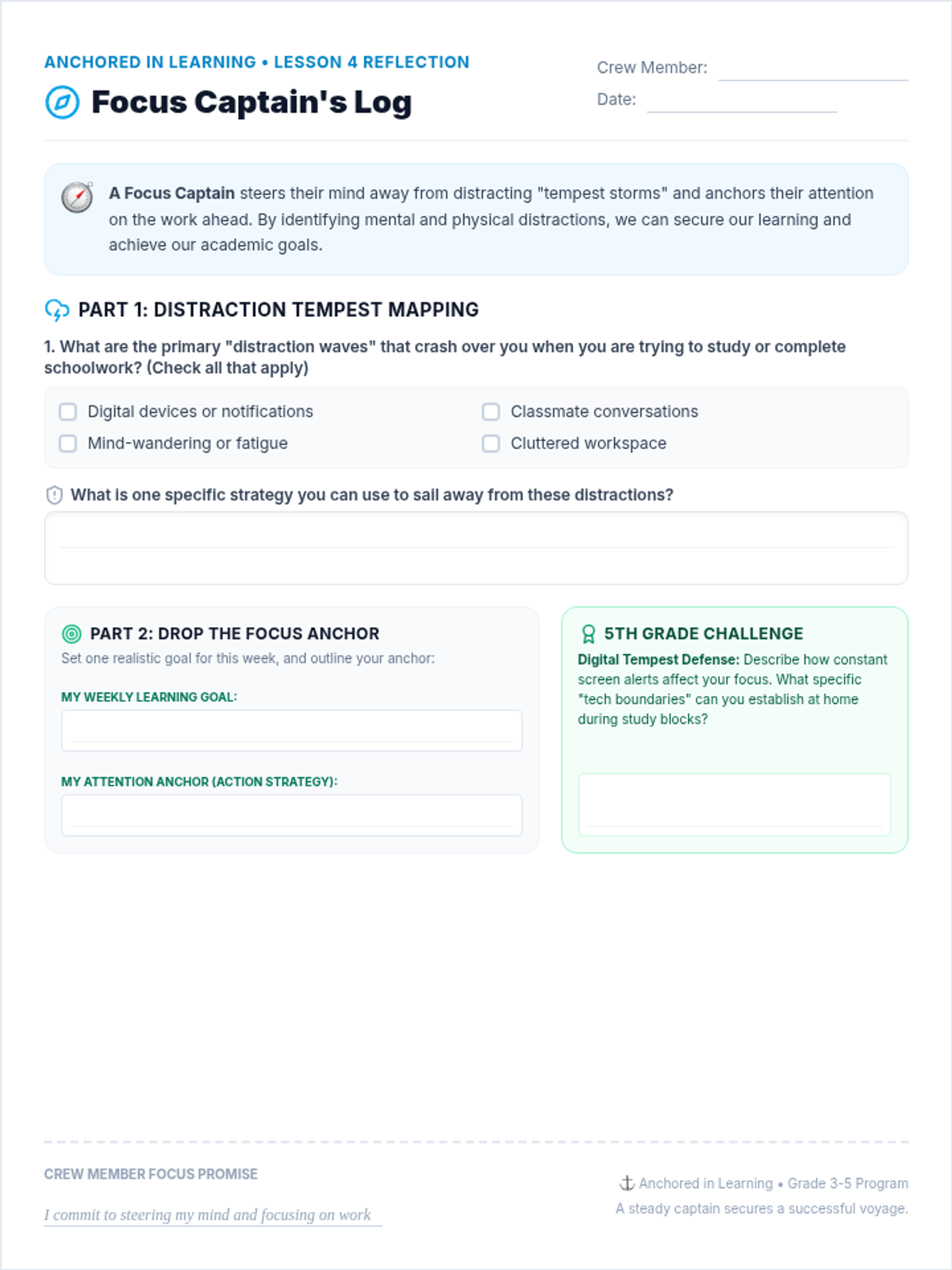
Lesson 4 of the SEL sequence. A complete, ready-to-go 15-minute lesson for 3rd-5th Grade students on focusing attention, managing digital/mental distractions, and anchoring executive attention.
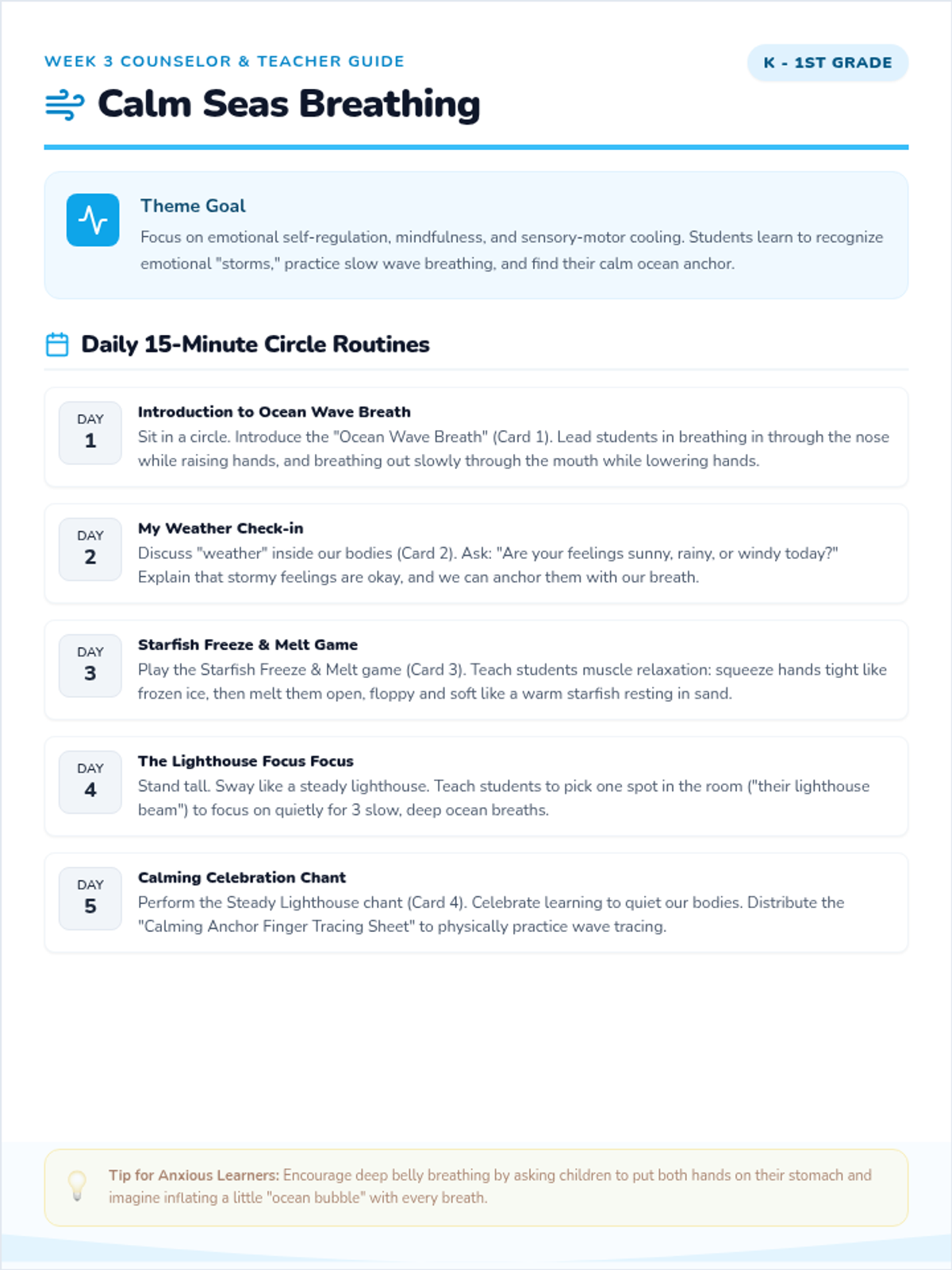
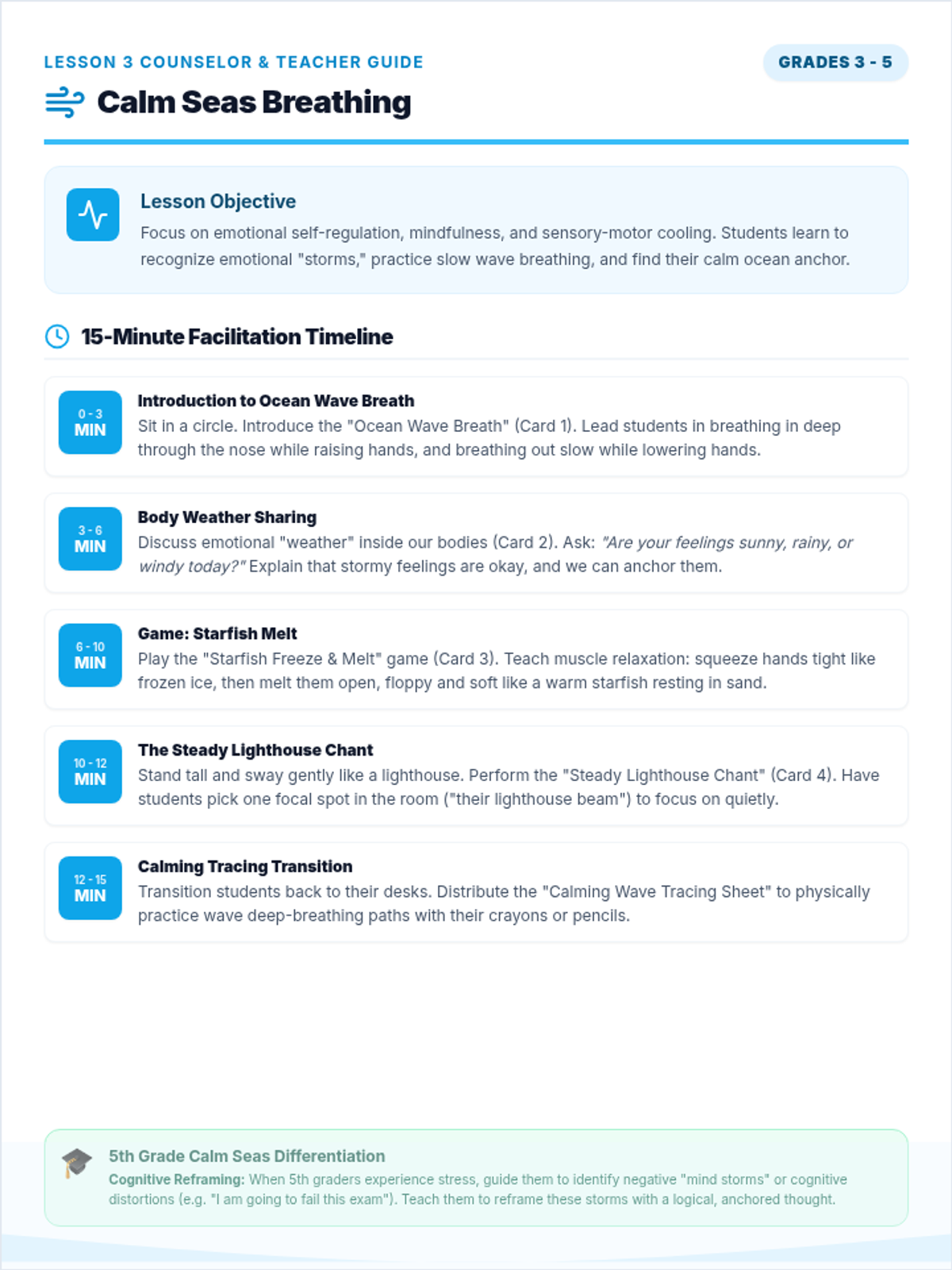
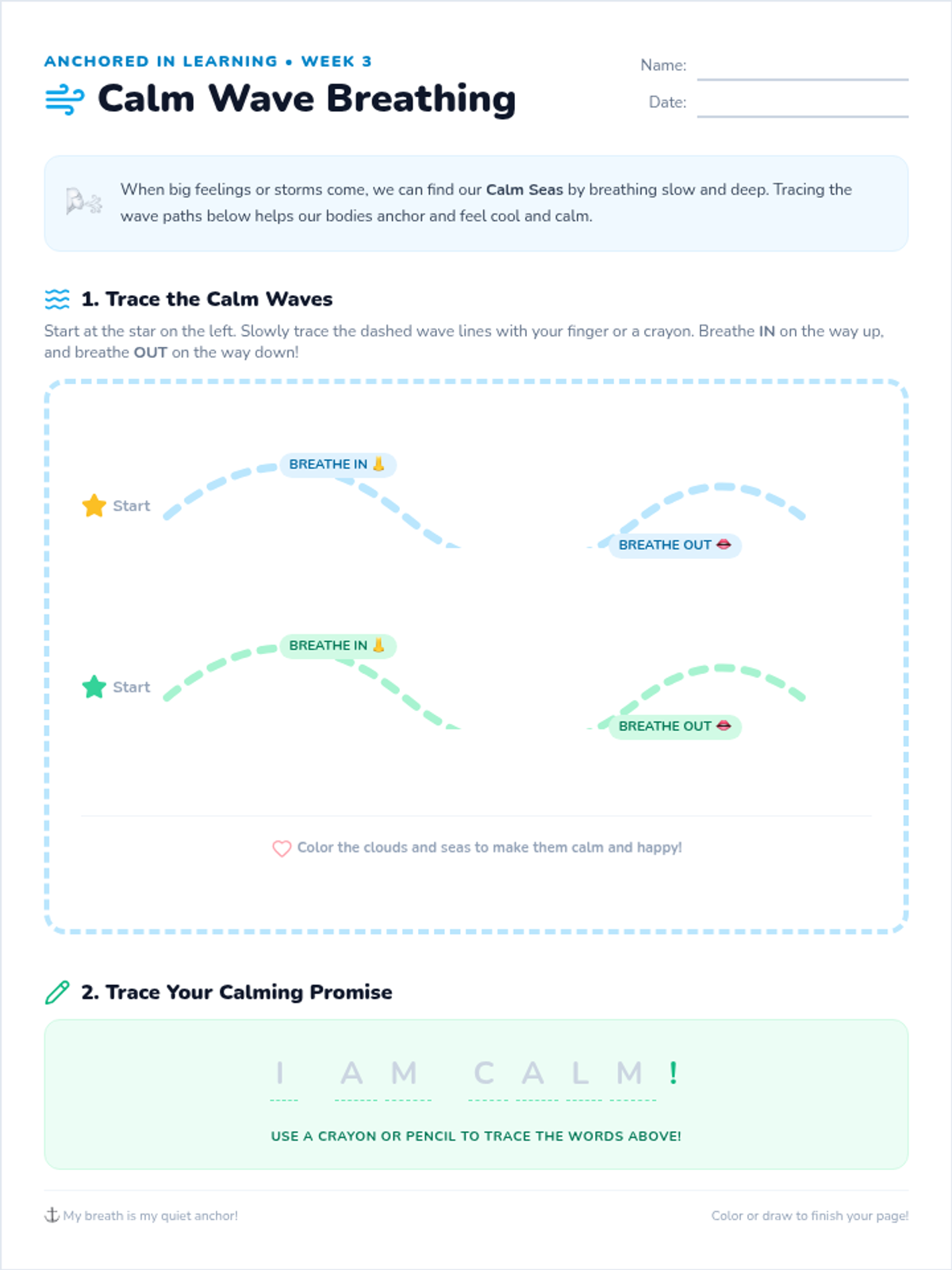
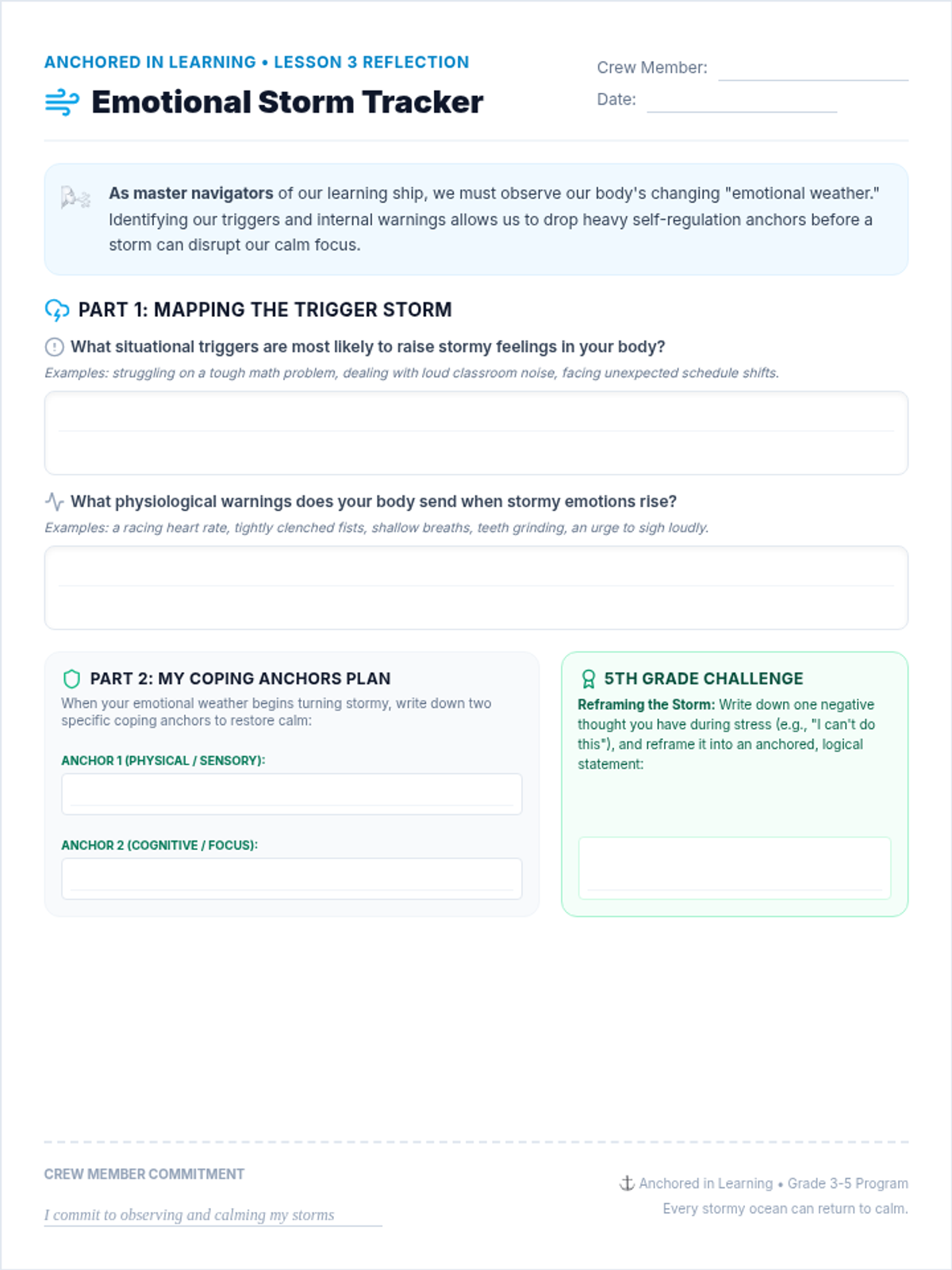
Lesson 3 of the SEL sequence. A complete, ready-to-go 15-minute lesson for 3rd-5th Grade students on emotional self-regulation, recognizing trigger storms, and physical calming strategies.
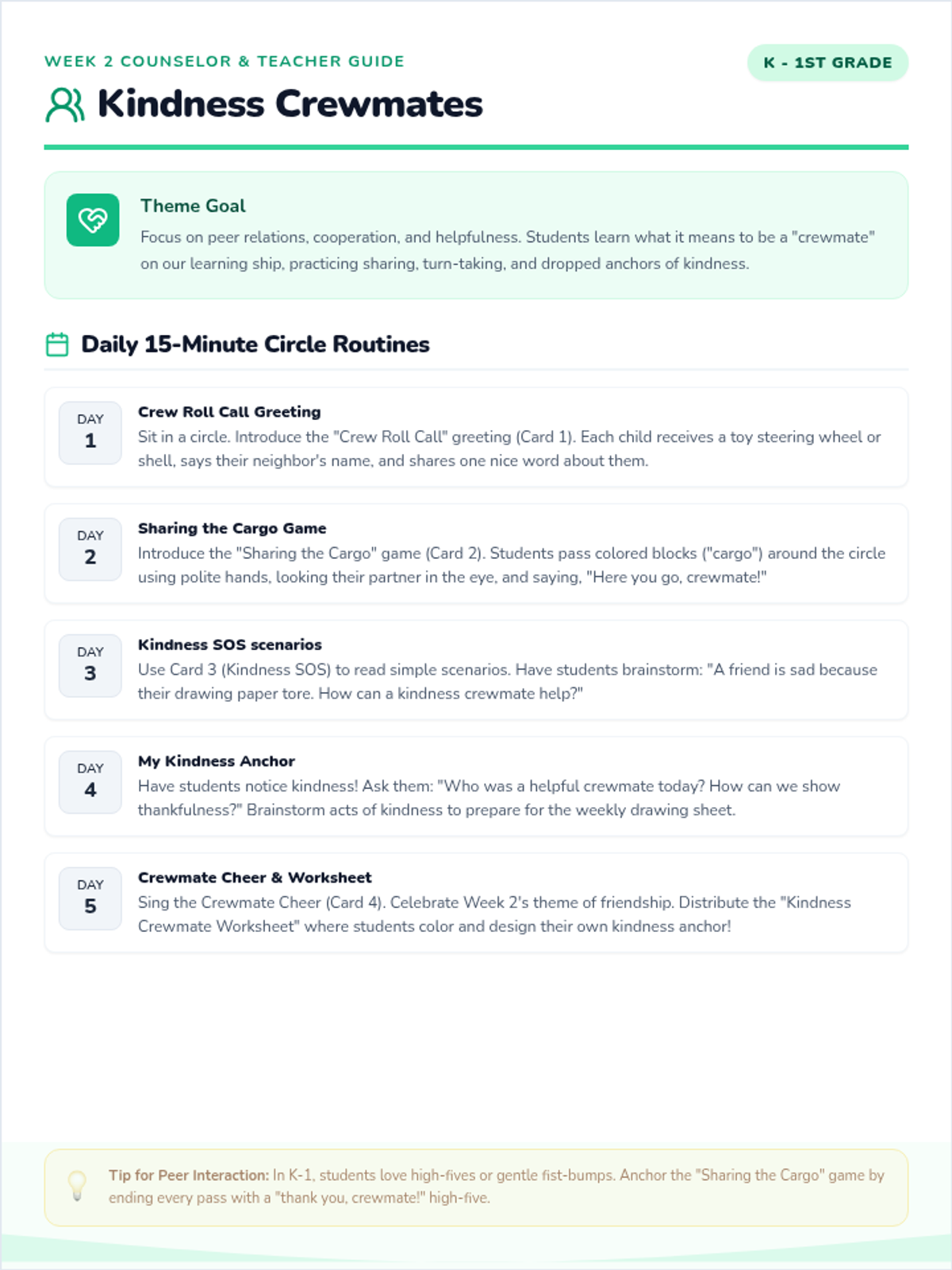
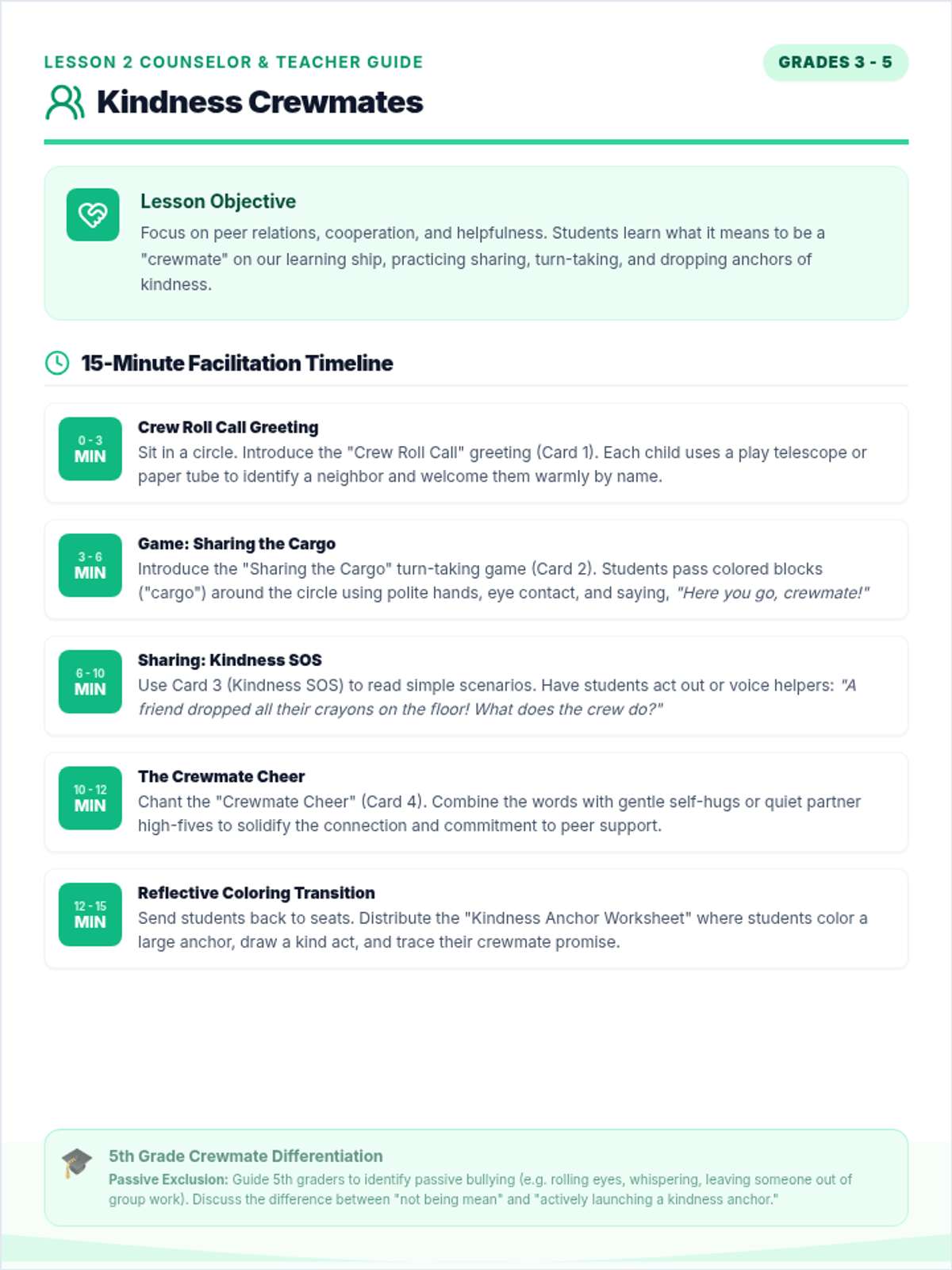
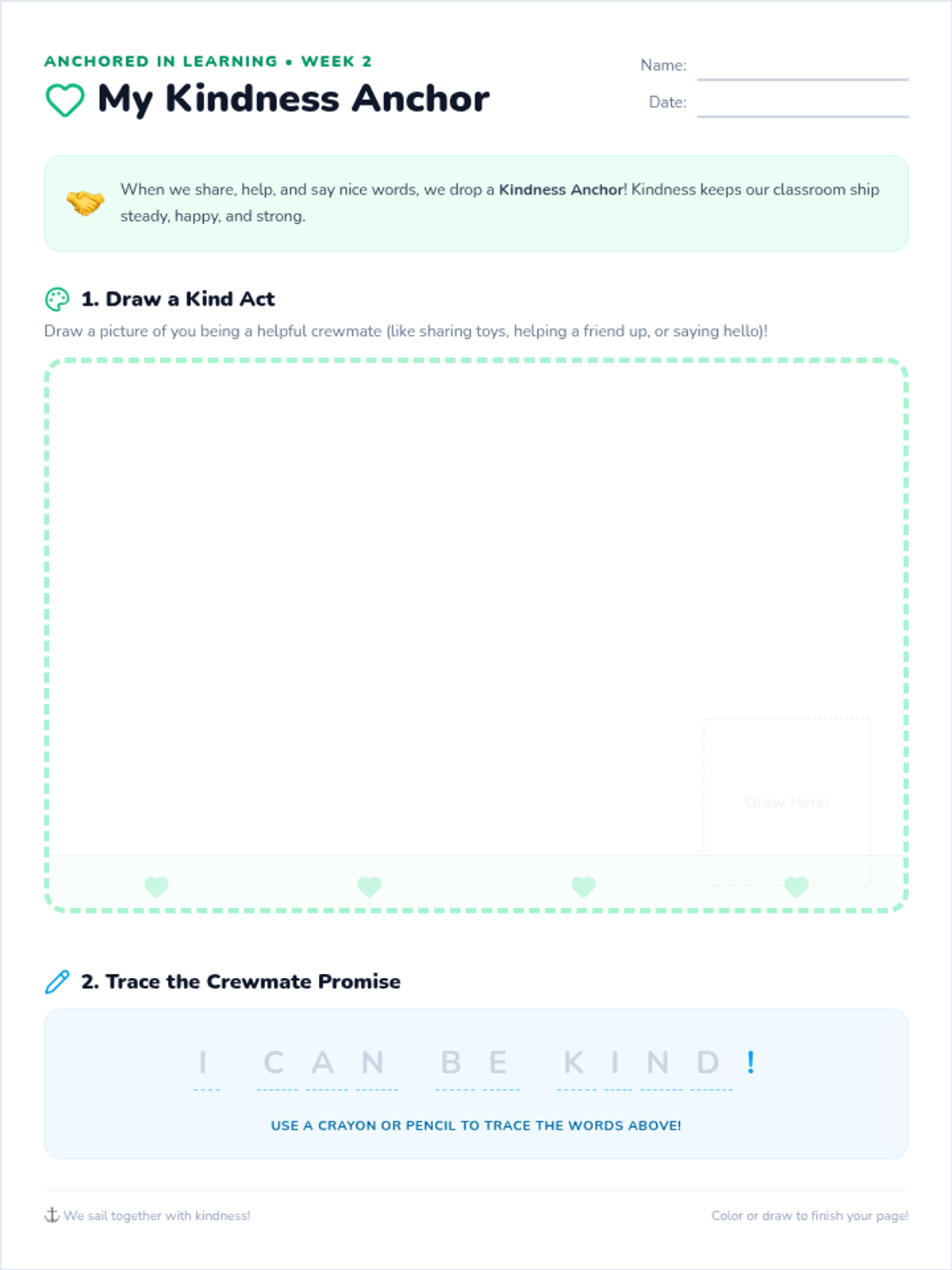
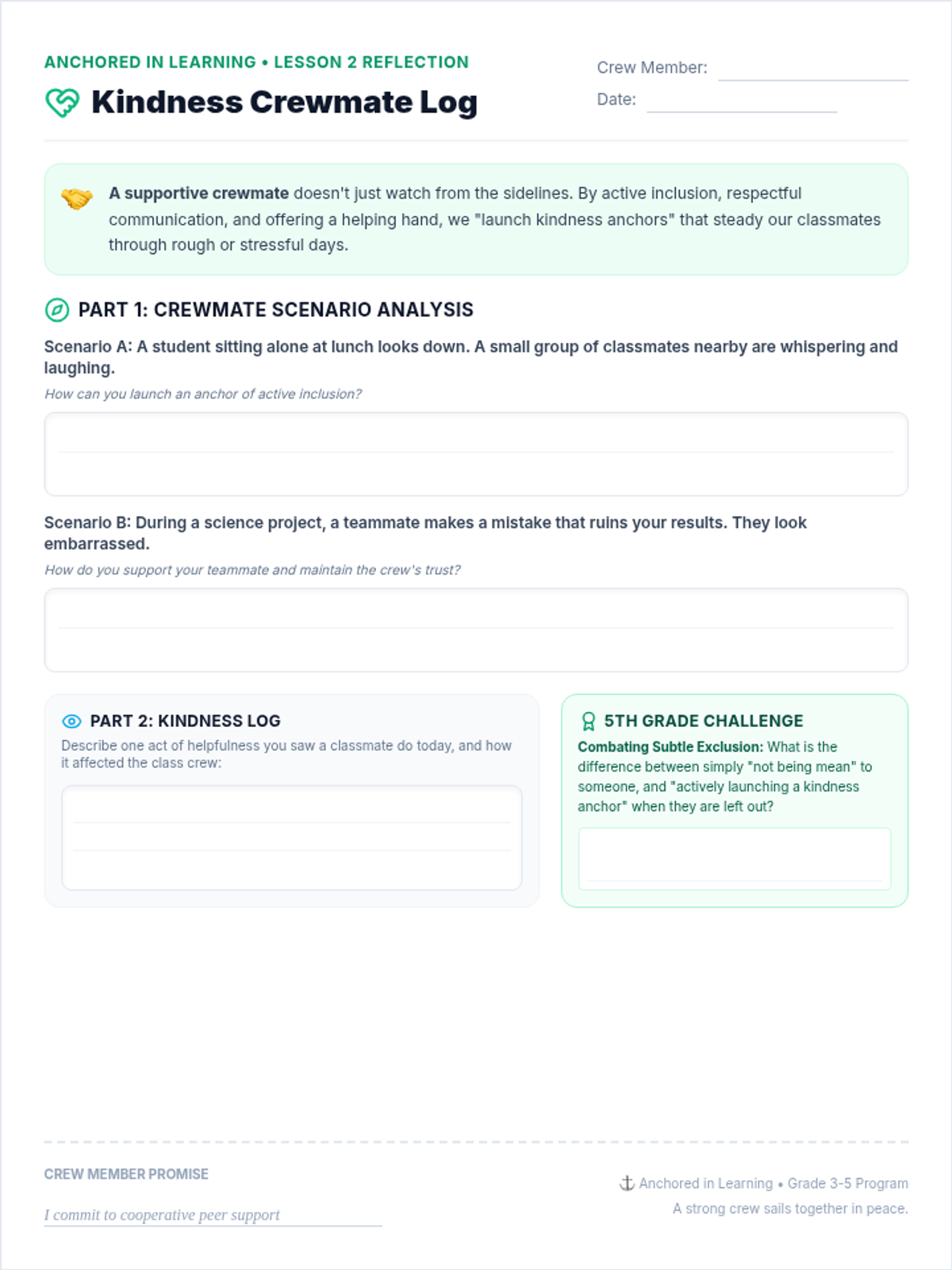
Lesson 2 of the SEL sequence. A complete, ready-to-go 15-minute lesson for 3rd-5th Grade students on cooperative peer relations, active inclusion, and launching kindness anchors.
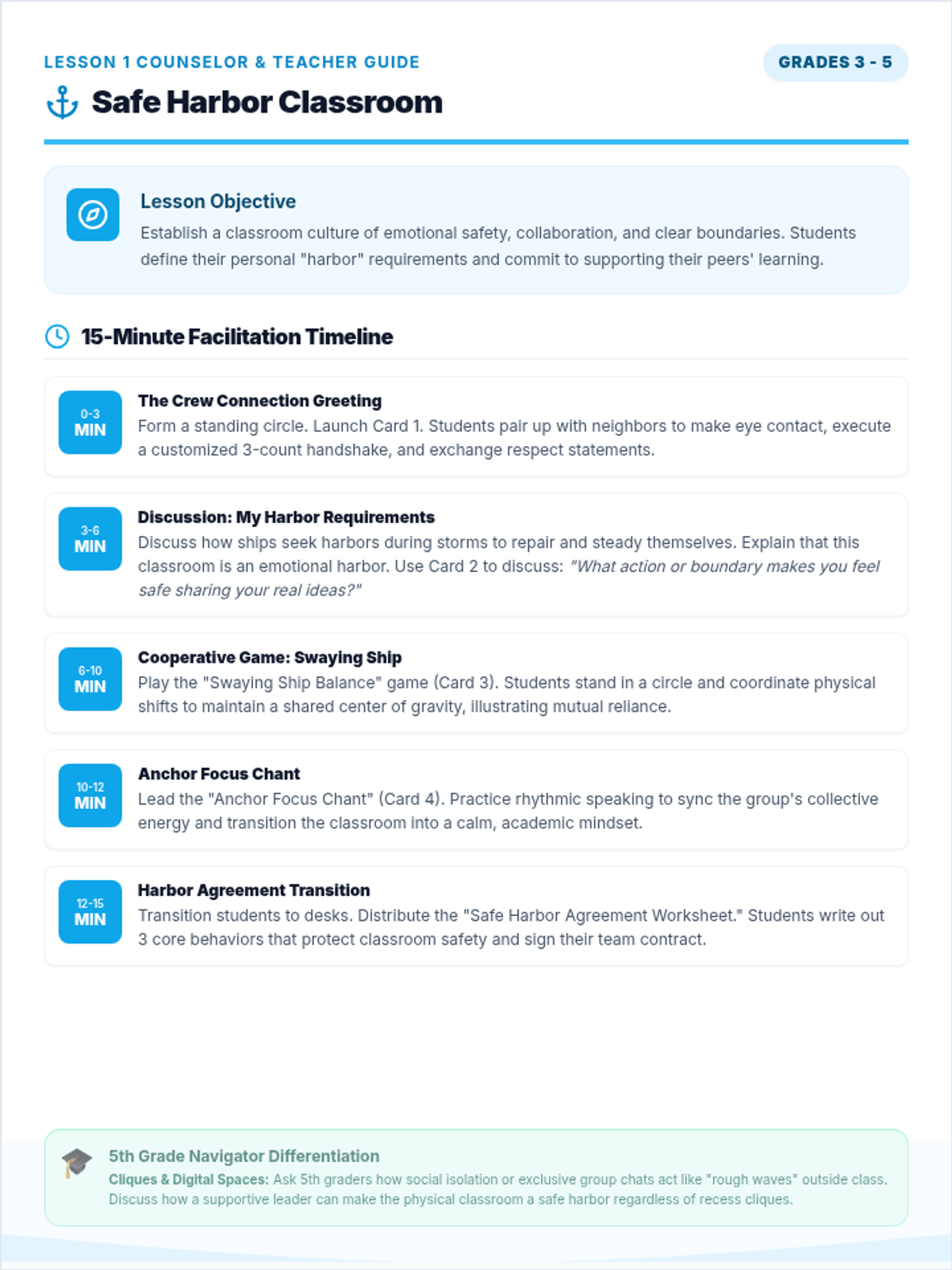
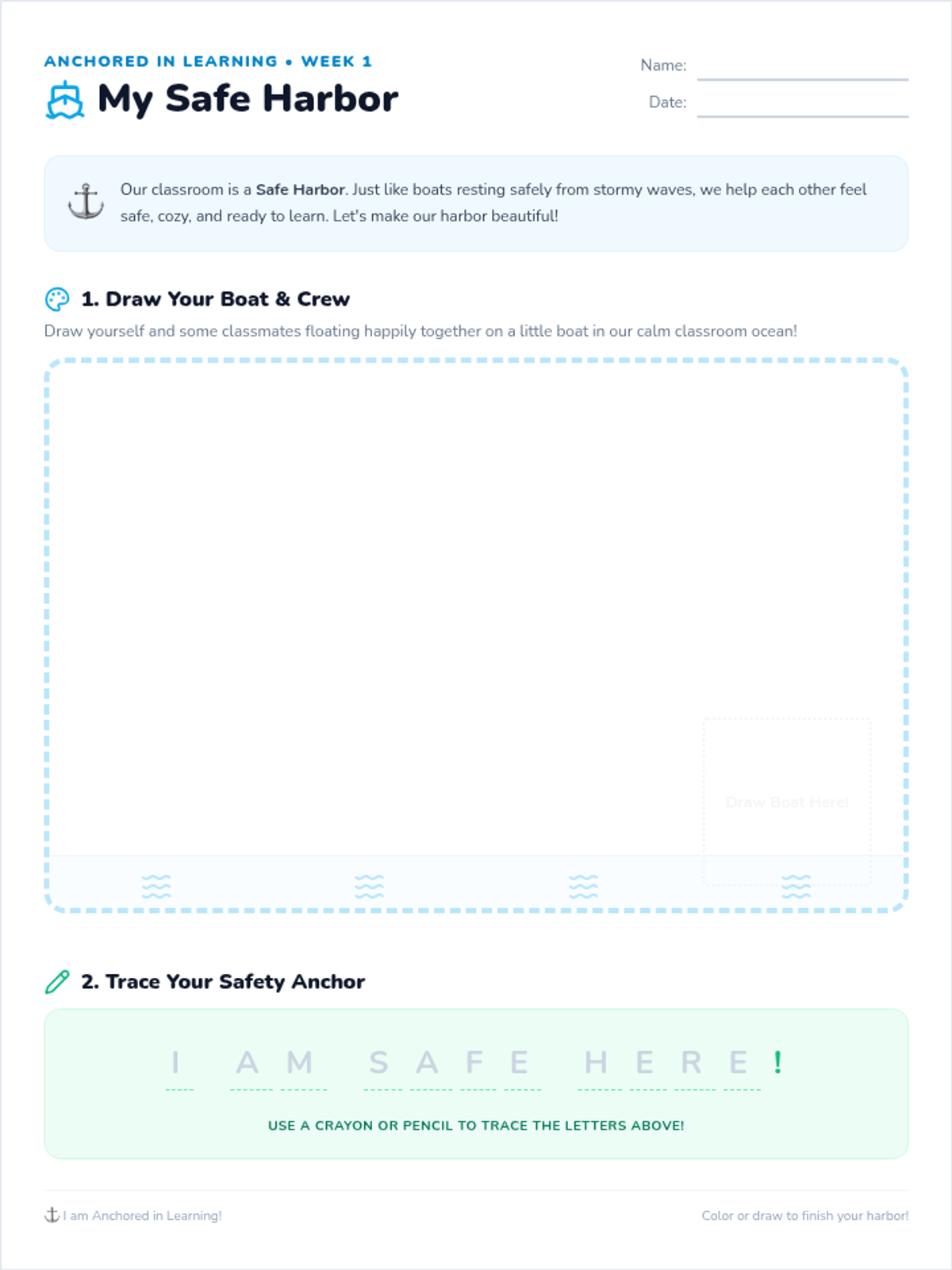
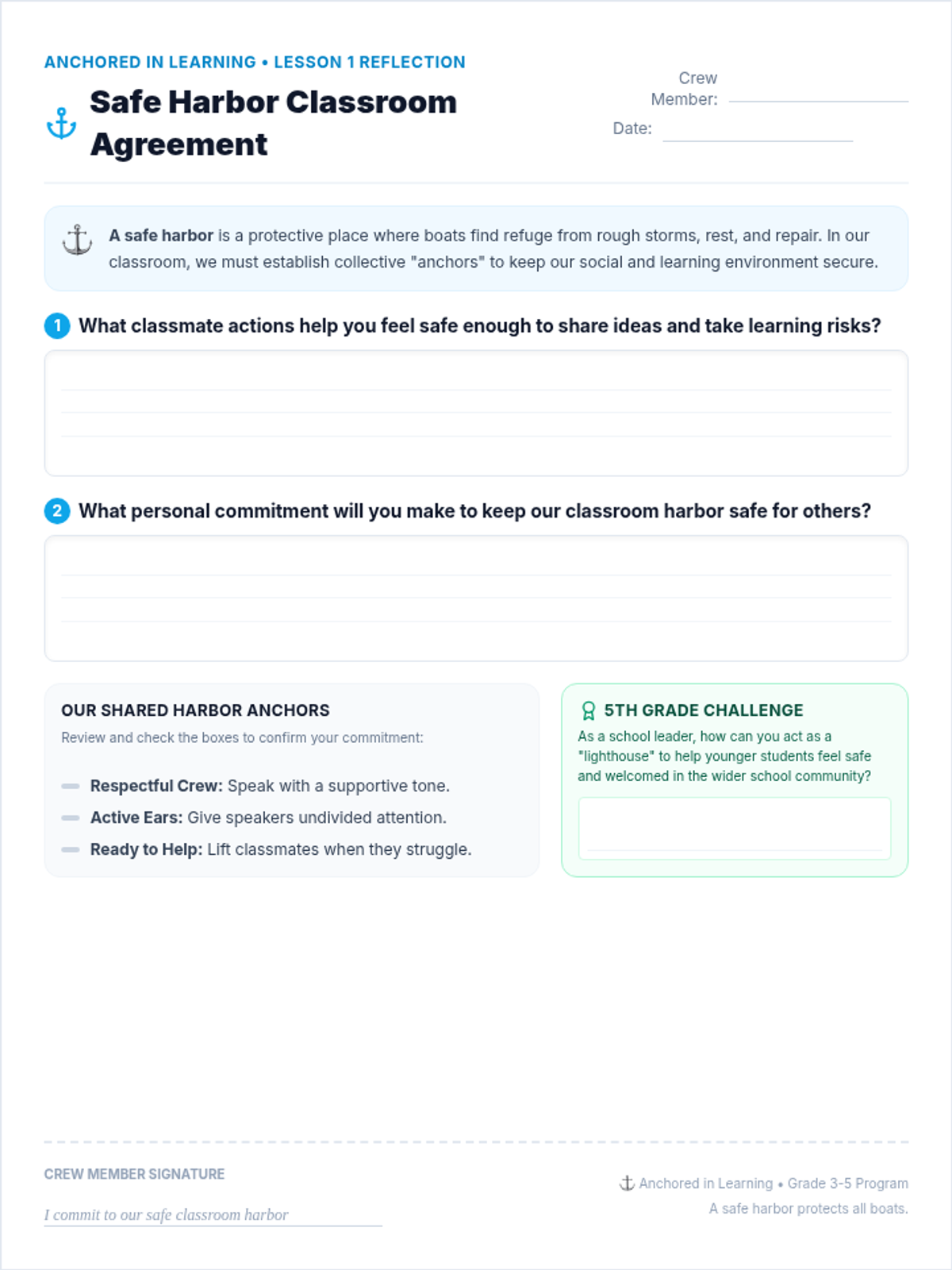
Lesson 1 of the SEL sequence. A complete, ready-to-go 15-minute lesson for 3rd-5th Grade students on building an emotionally safe classroom harbor and establishing mutual support anchors.
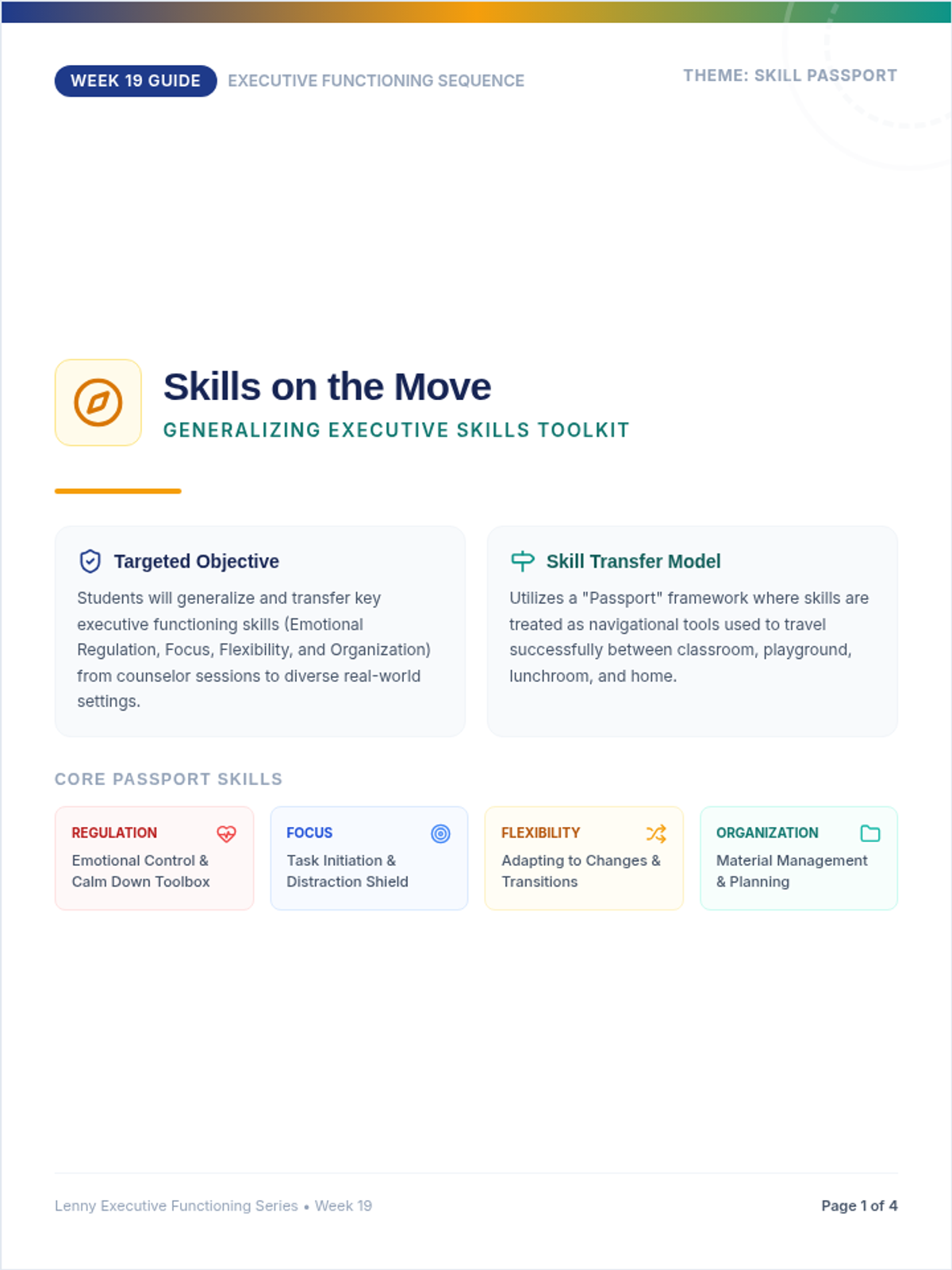
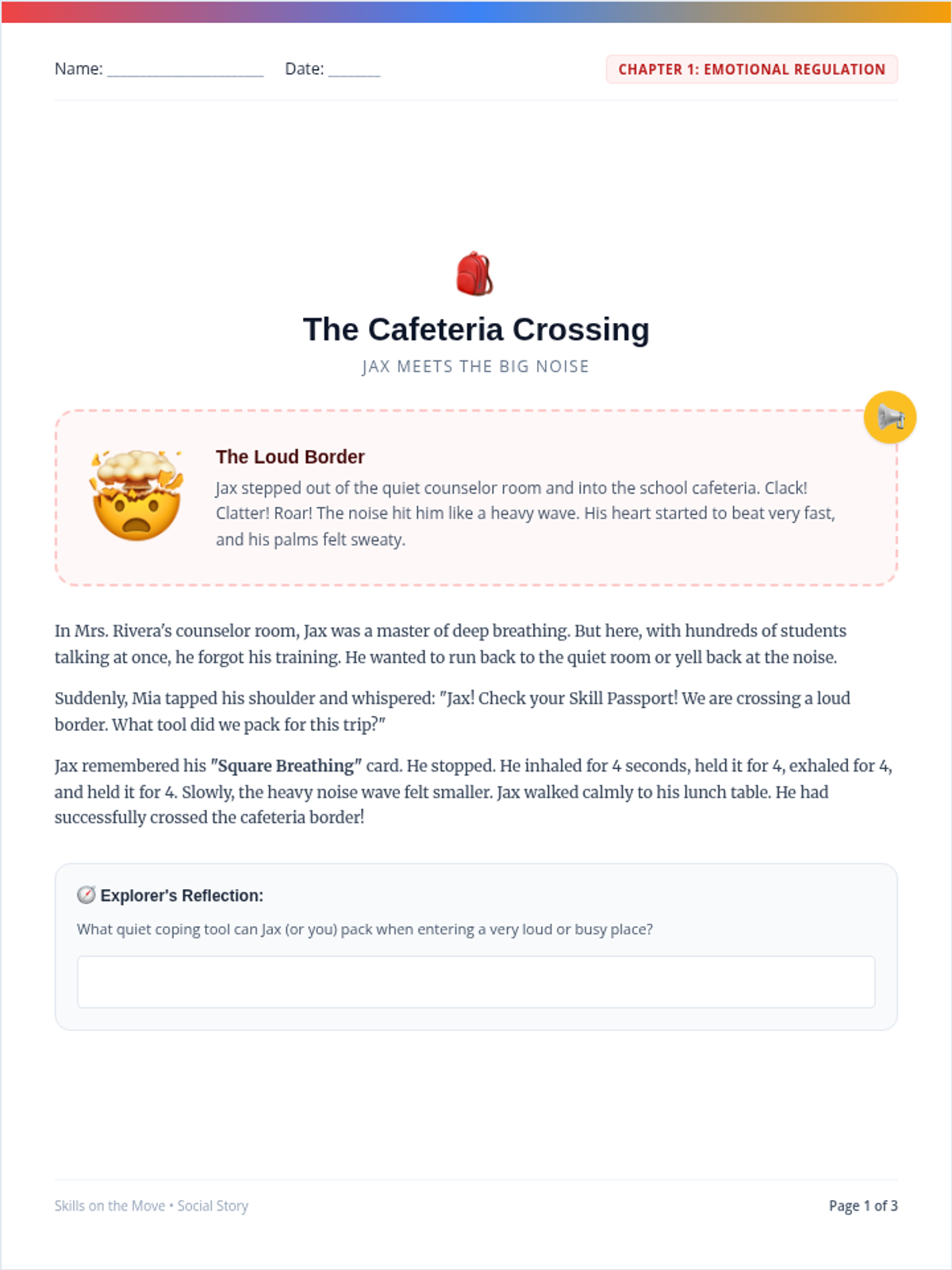
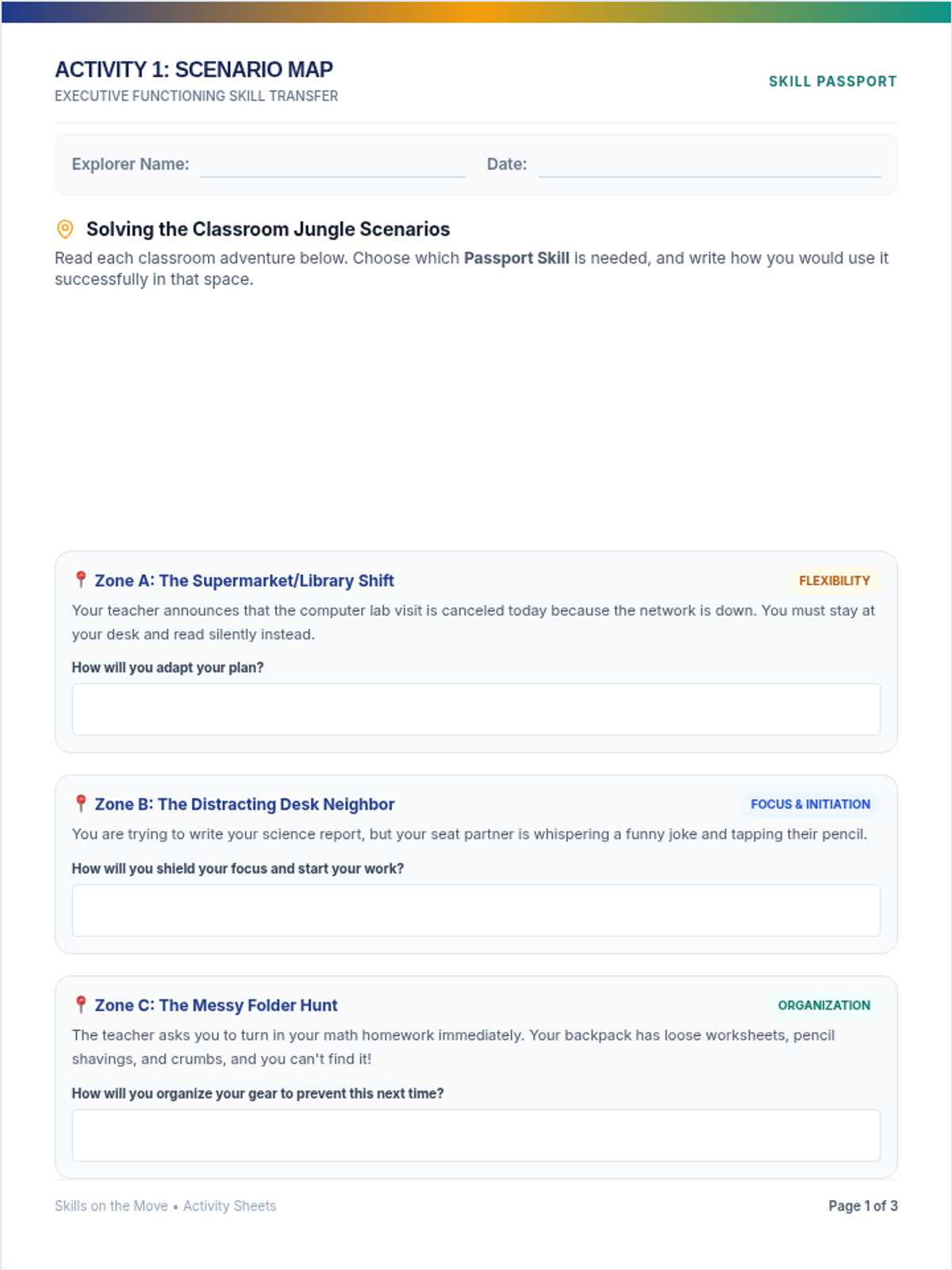
A comprehensive lesson designed to help students generalize and transfer their executive functioning skills—including emotional regulation, focus, flexibility, and organization—across various settings.
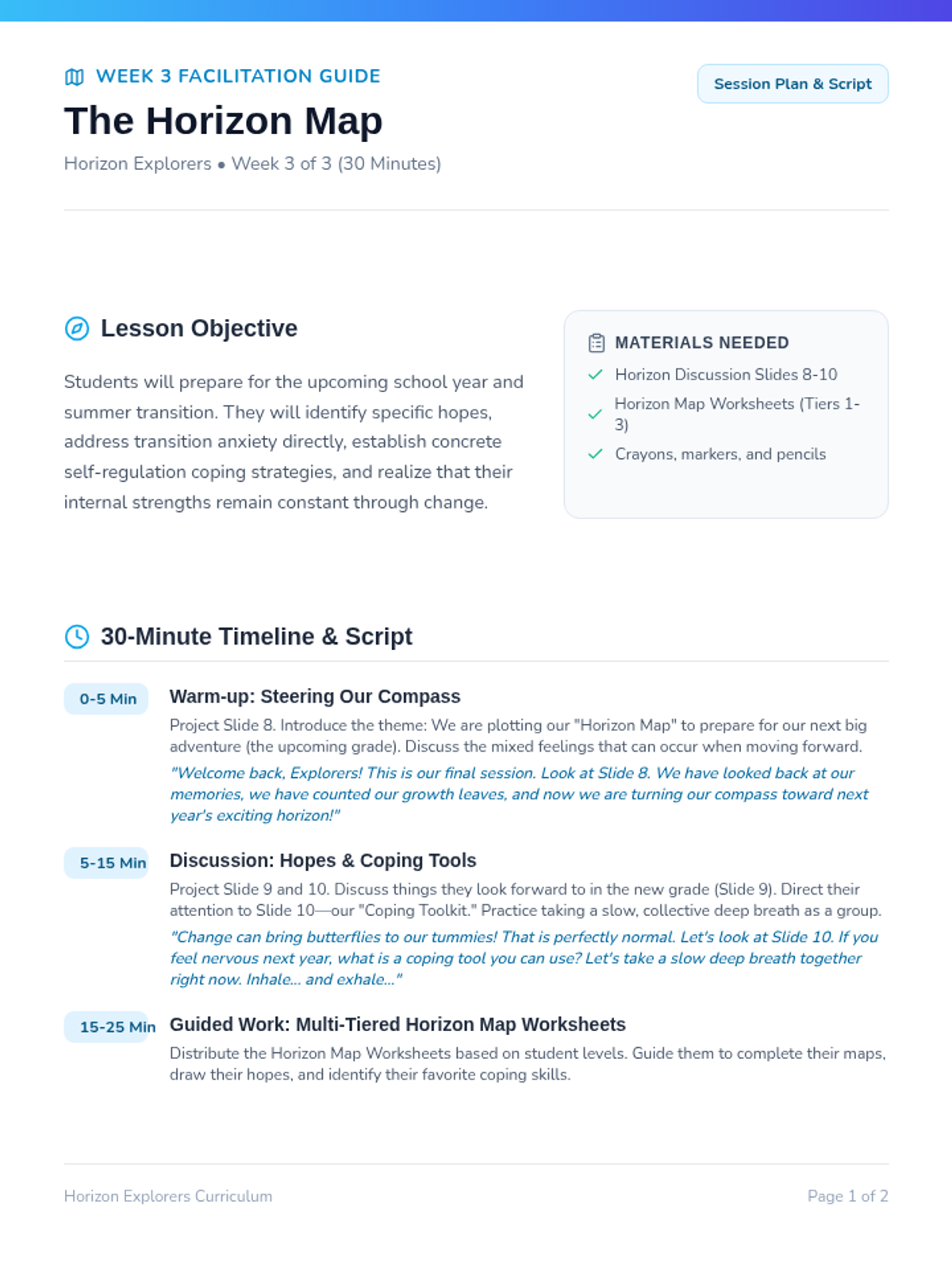
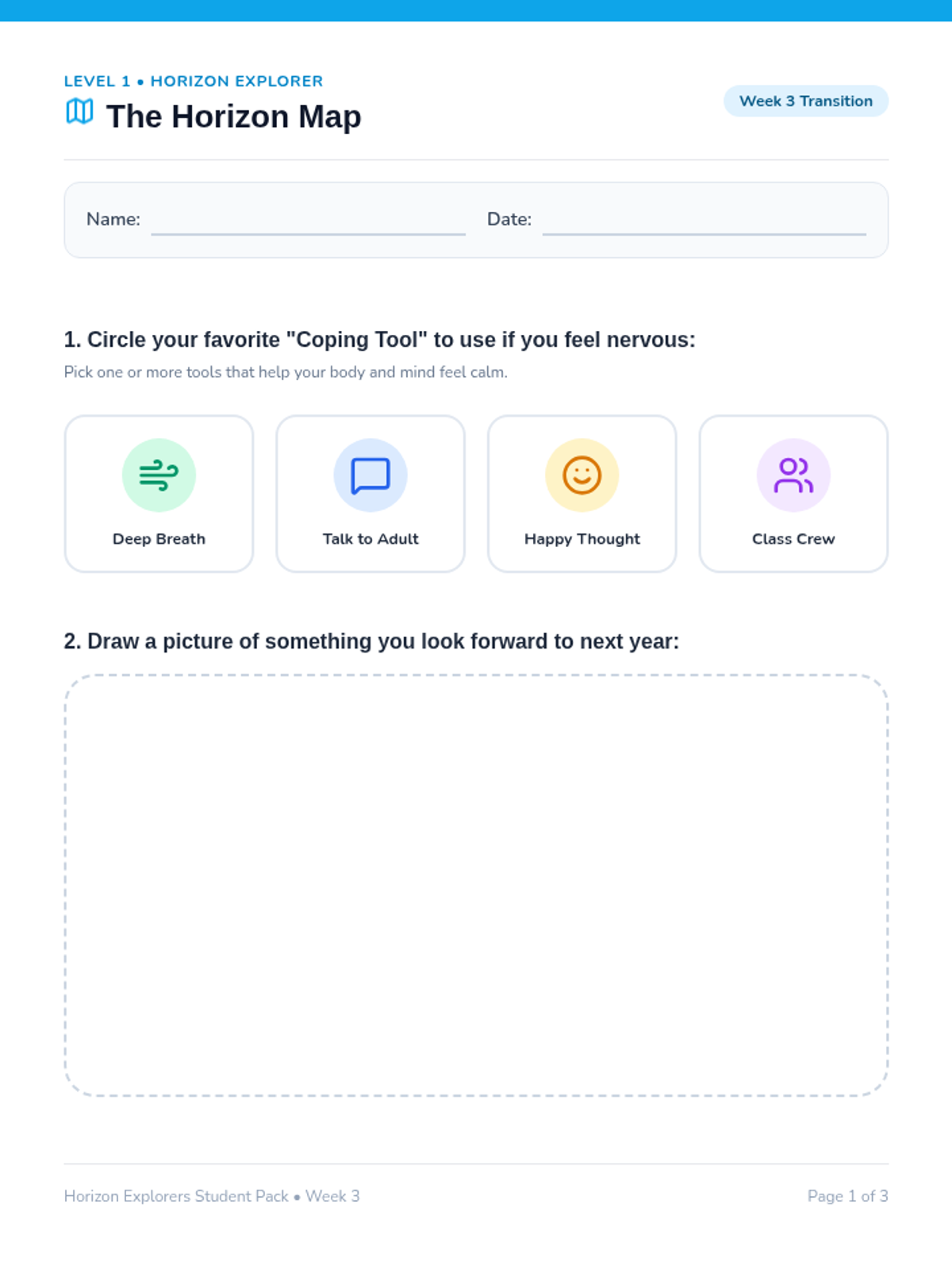
Week 3 prepares students for the upcoming school year, addressing transition anxiety directly and helping them map out coping strategies and future goals.
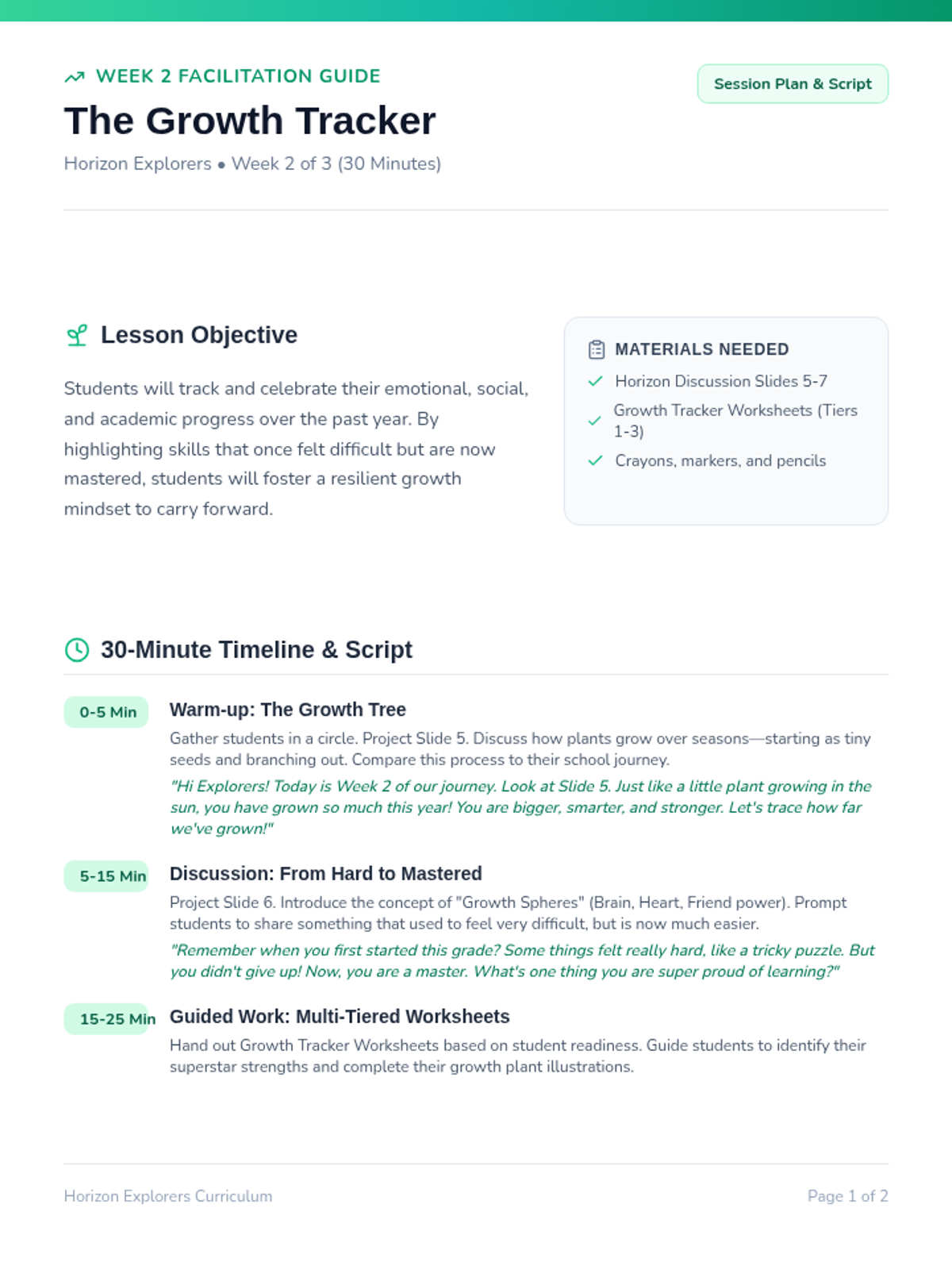
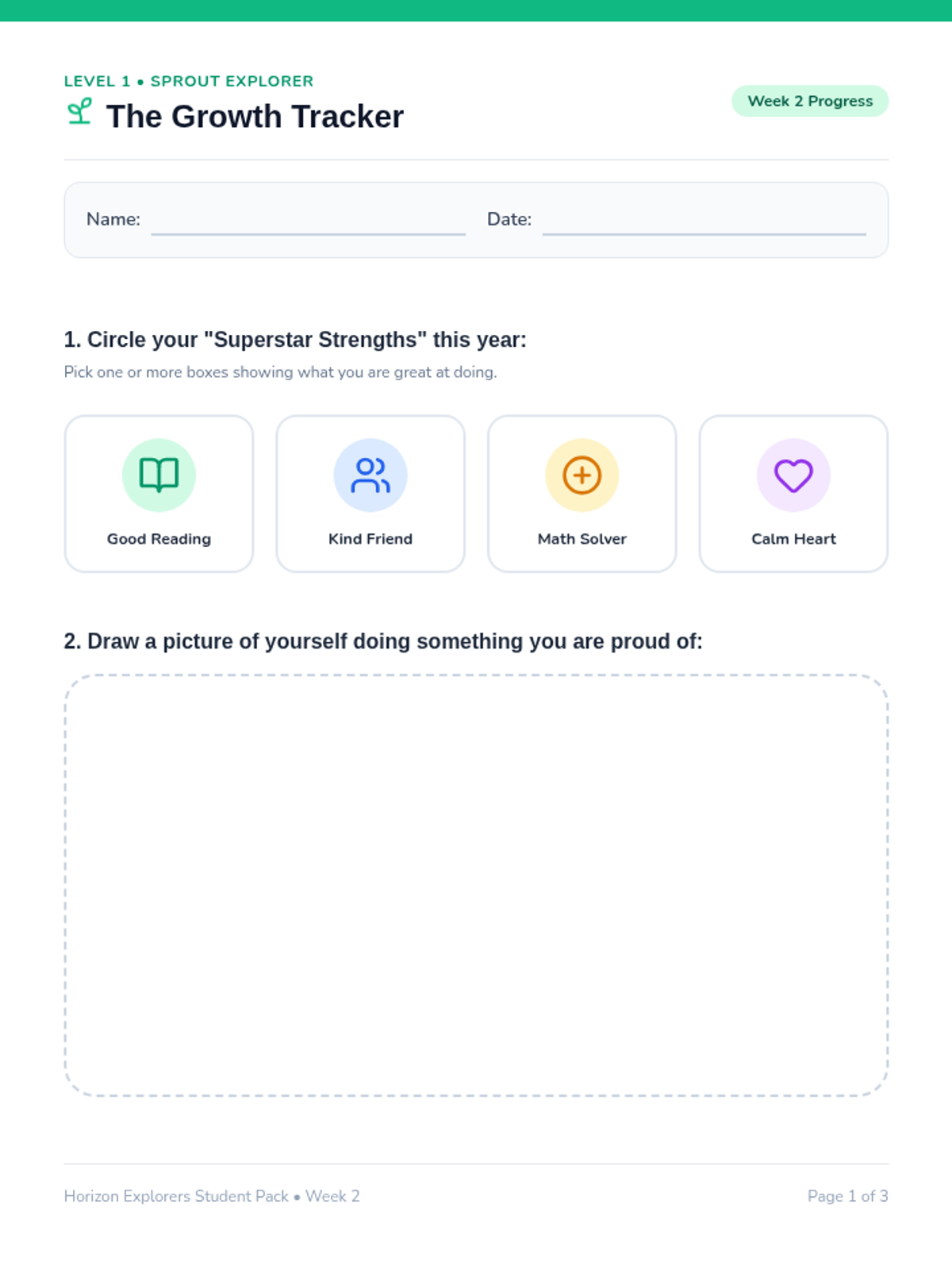
Week 2 focuses on celebrating personal progress, identifying new skills mastered, and tracking how each student has grown emotionally, socially, and academically.