A comprehensive lesson focused on preparing students for Arizona's computer-based state assessments (AASA), covering technology-enhanced items, digital tools, and time management strategies.
This lesson introduces 5th-grade students to the brain's emotional centers, using the hand model of the brain to explain emotional dysregulation and providing concrete 'reboot' strategies.
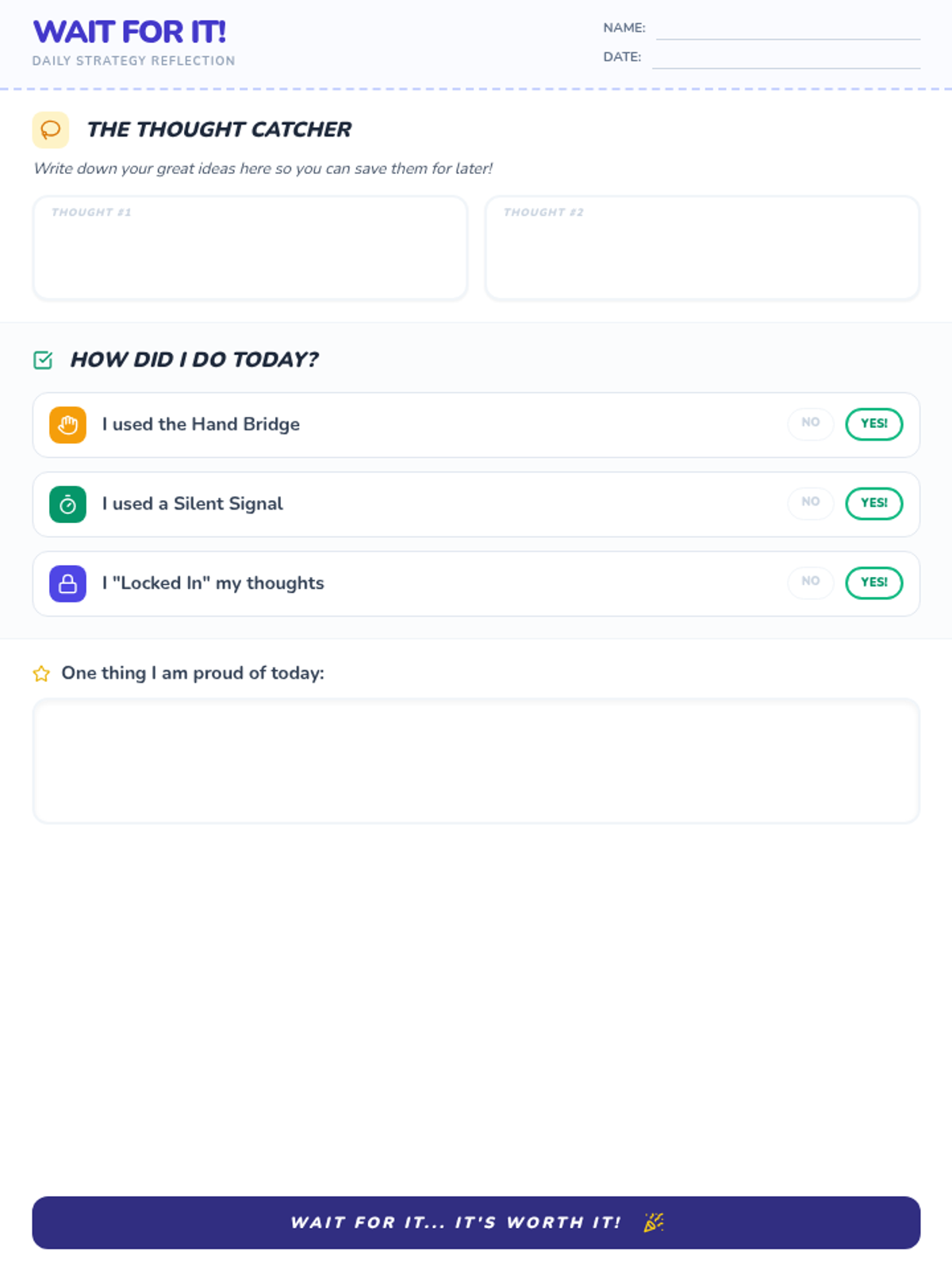
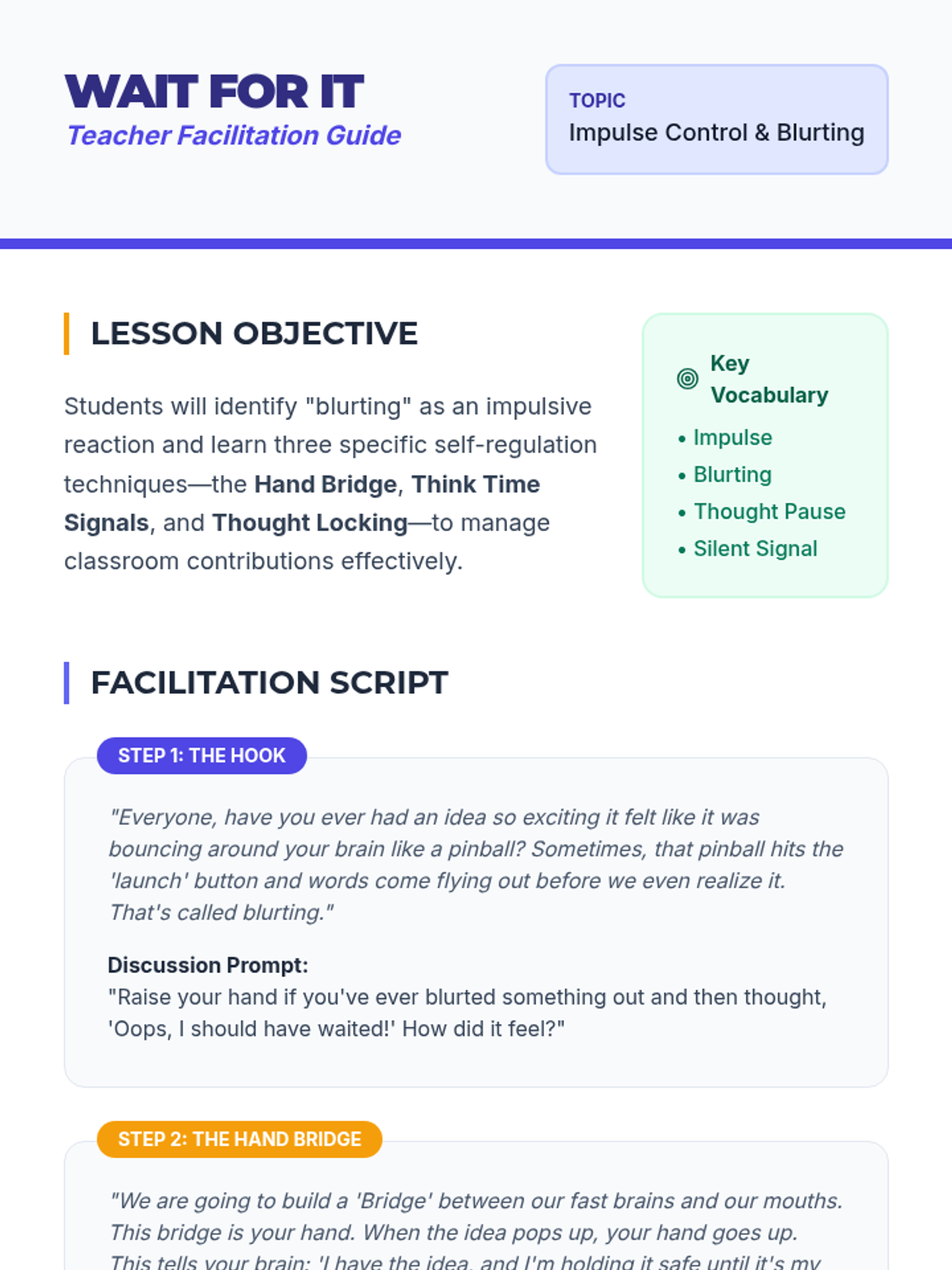
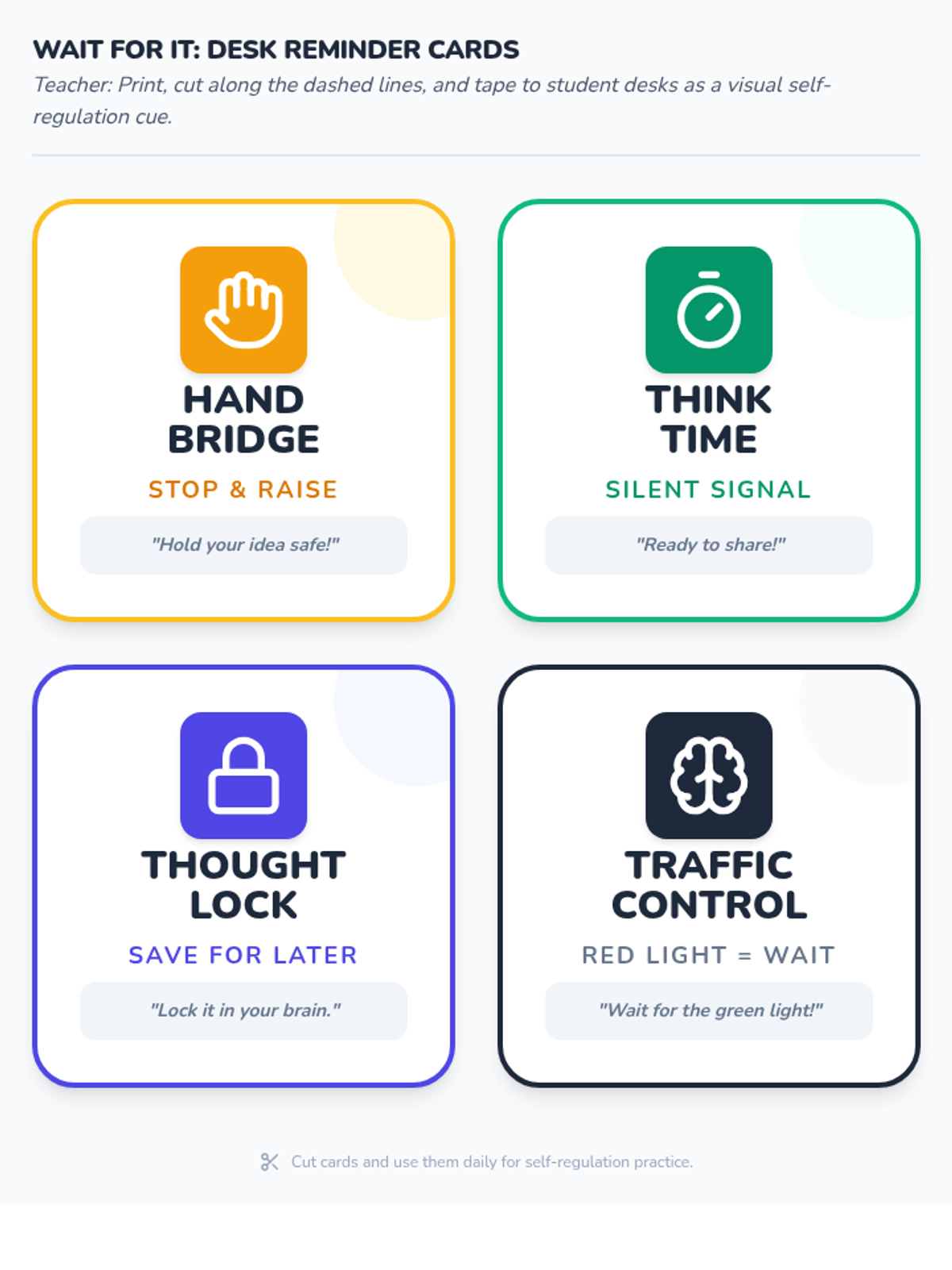
A lesson focused on self-regulation strategies for students who struggle with impulsive blurting, featuring visual cues and 'think time' techniques.
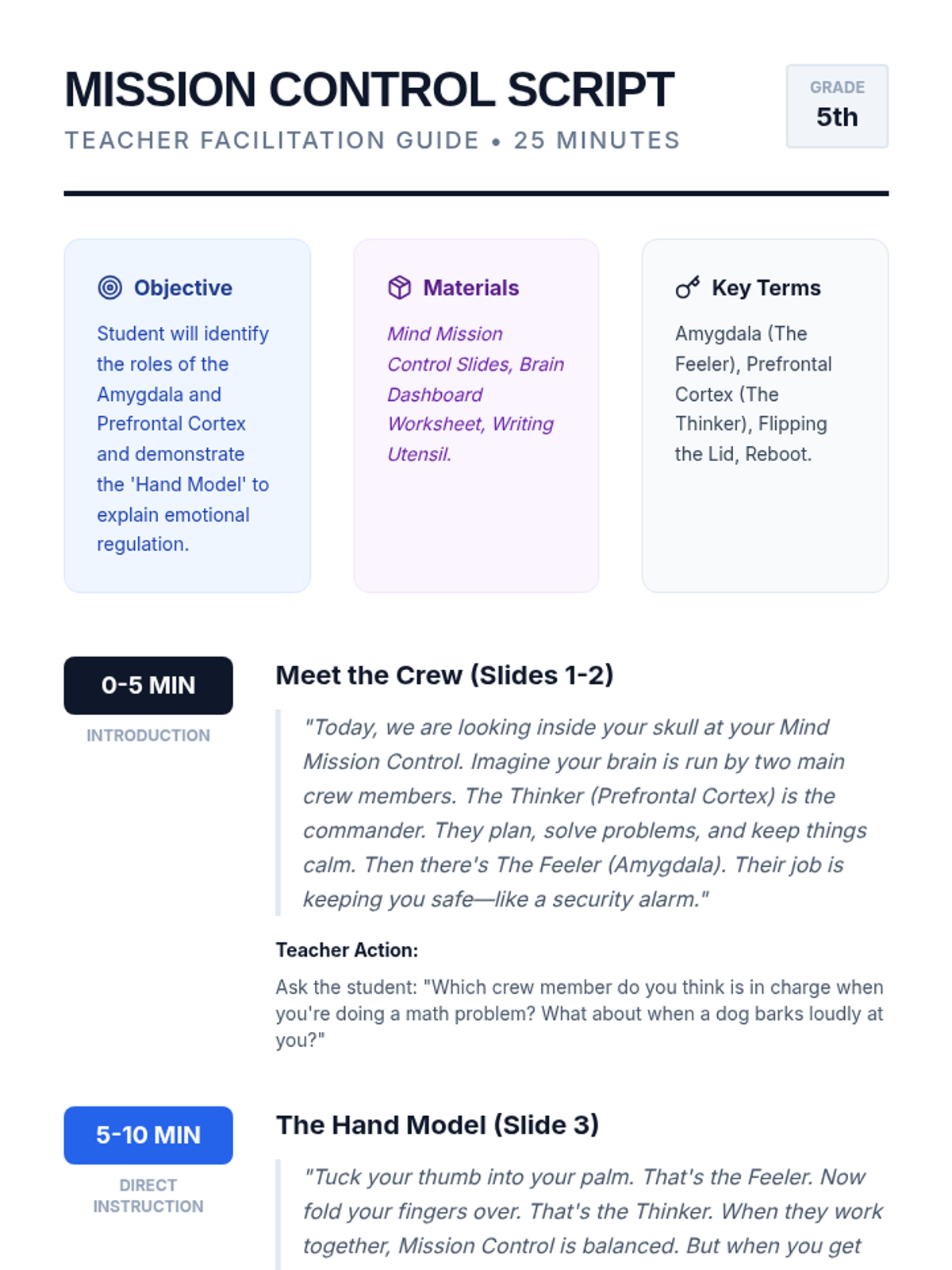
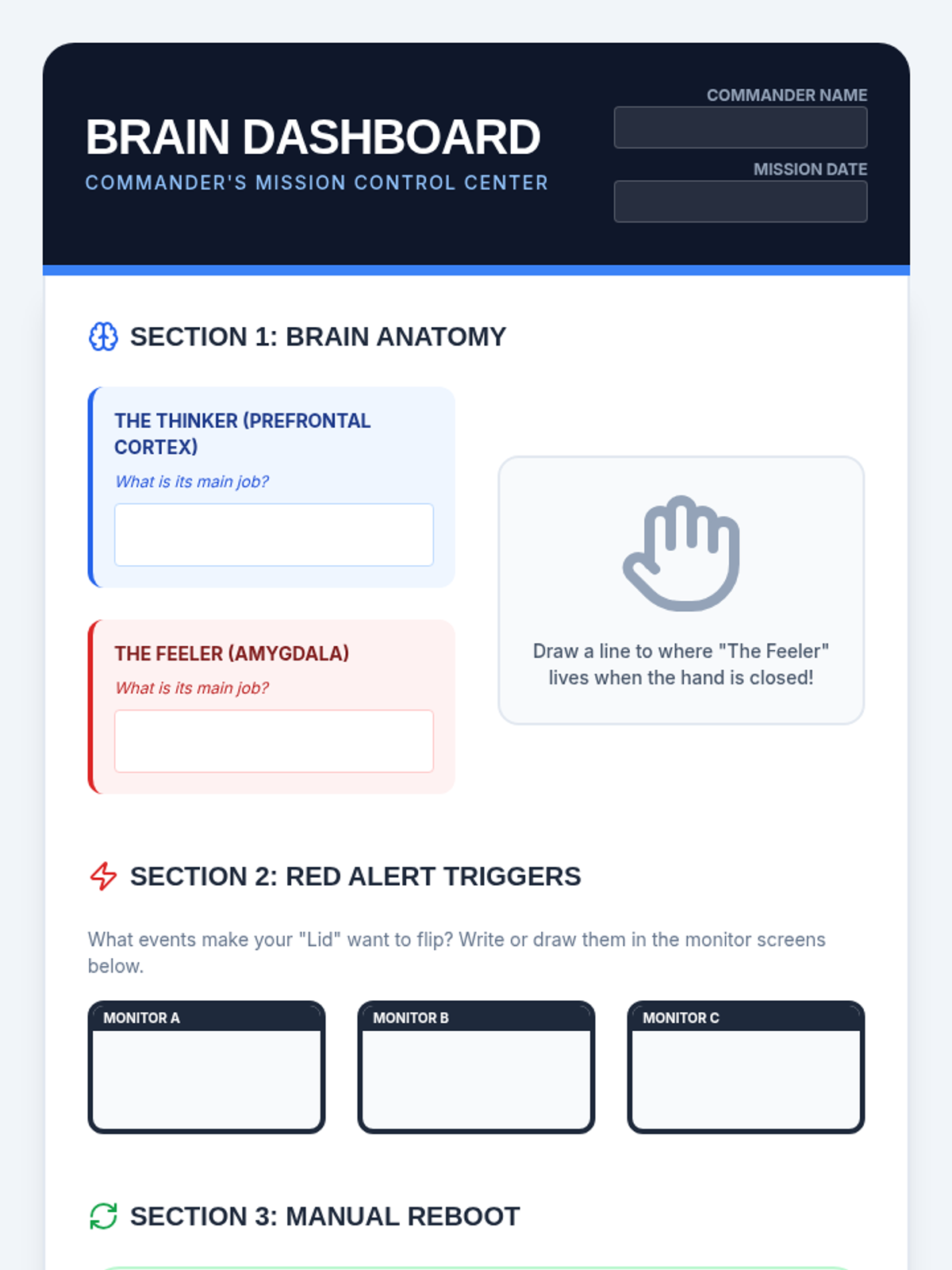
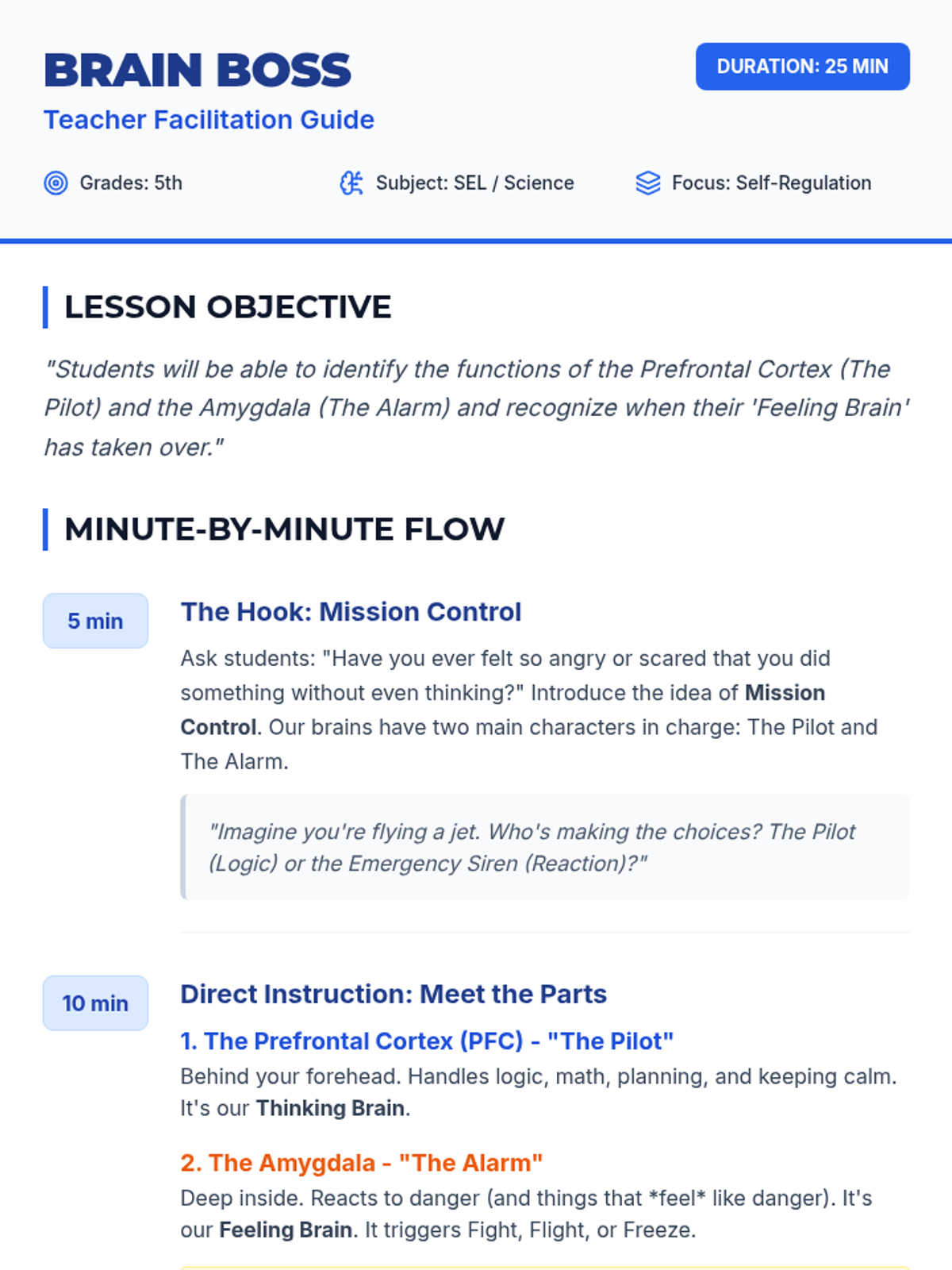
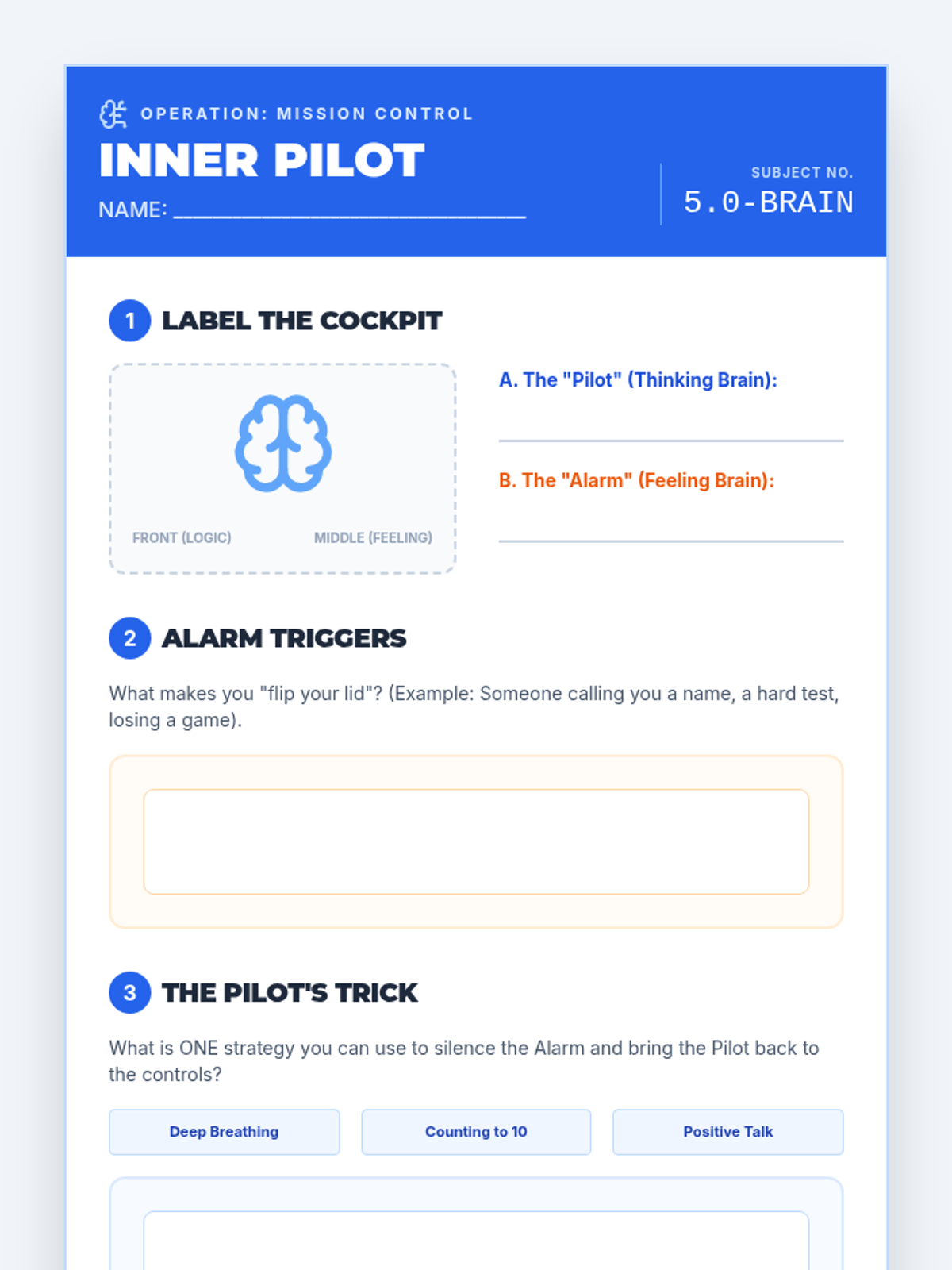
A 25-minute social-emotional learning lesson designed for 5th graders to differentiate between the Prefrontal Cortex (Thinking Brain) and the Amygdala (Feeling Brain), focusing on self-regulation strategies.
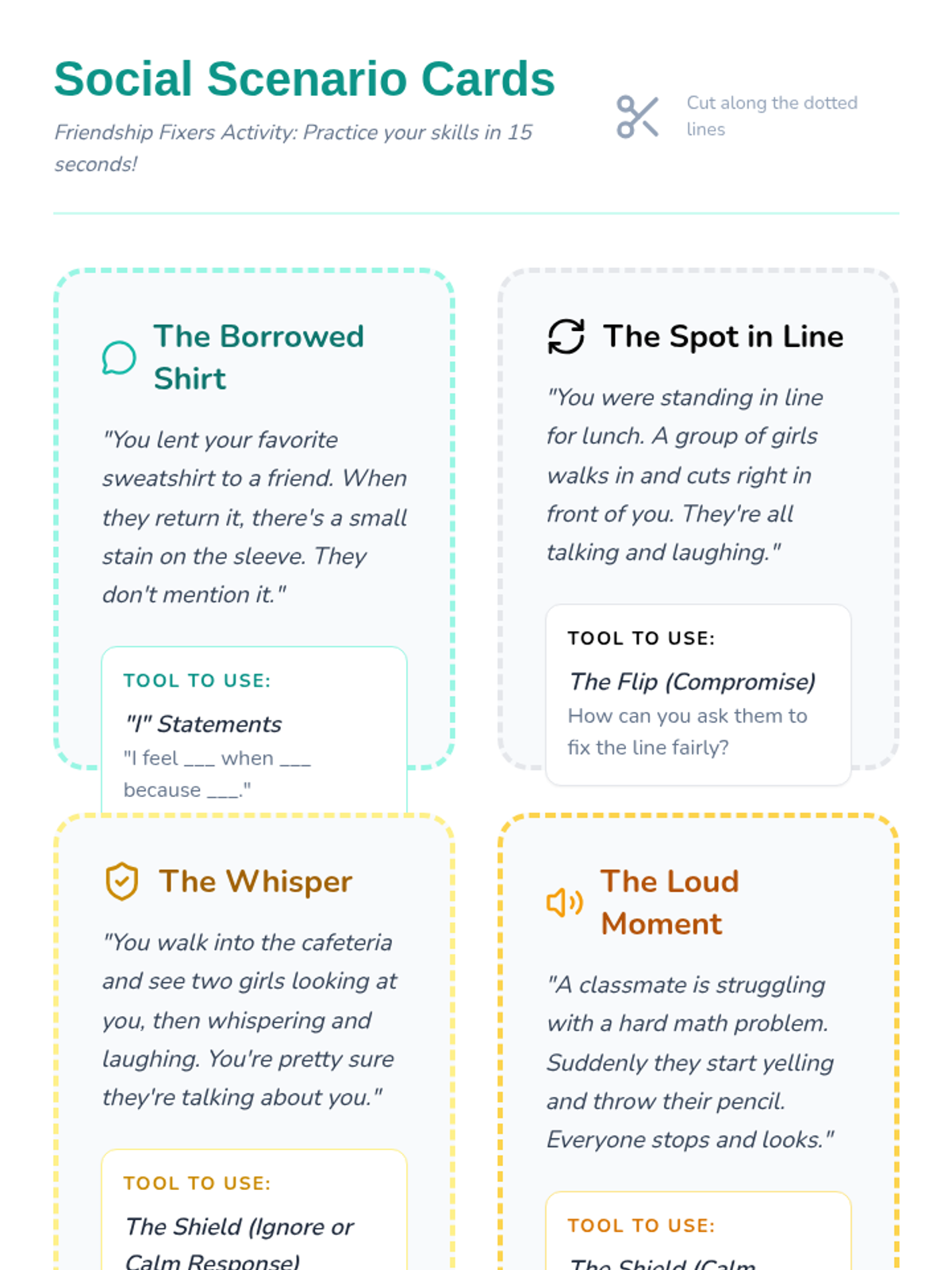
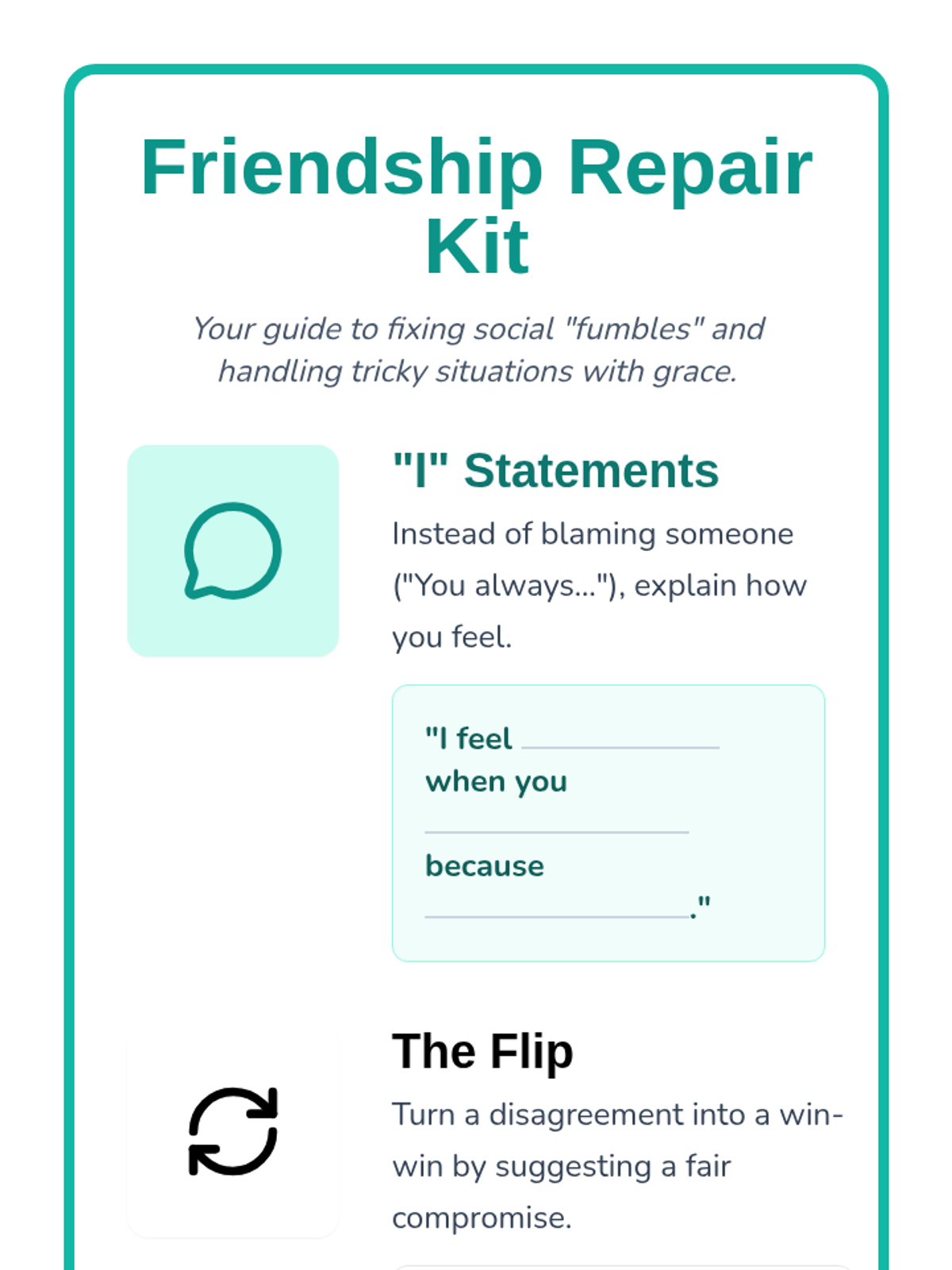
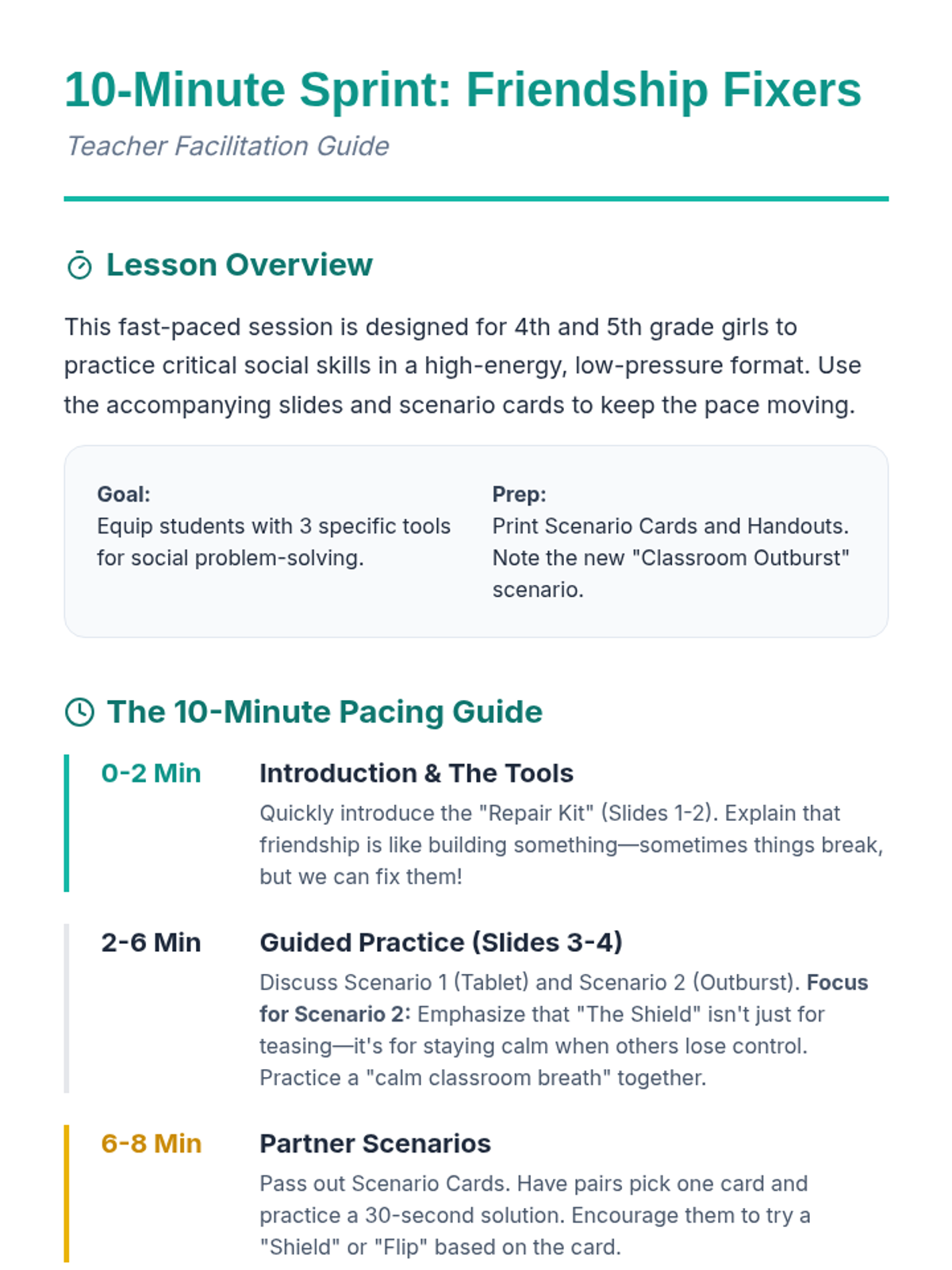
A fast-paced, 10-minute interactive session for 4th and 5th grade girls to practice resolving disagreements, sharing fairly, and responding to teasing with confidence.
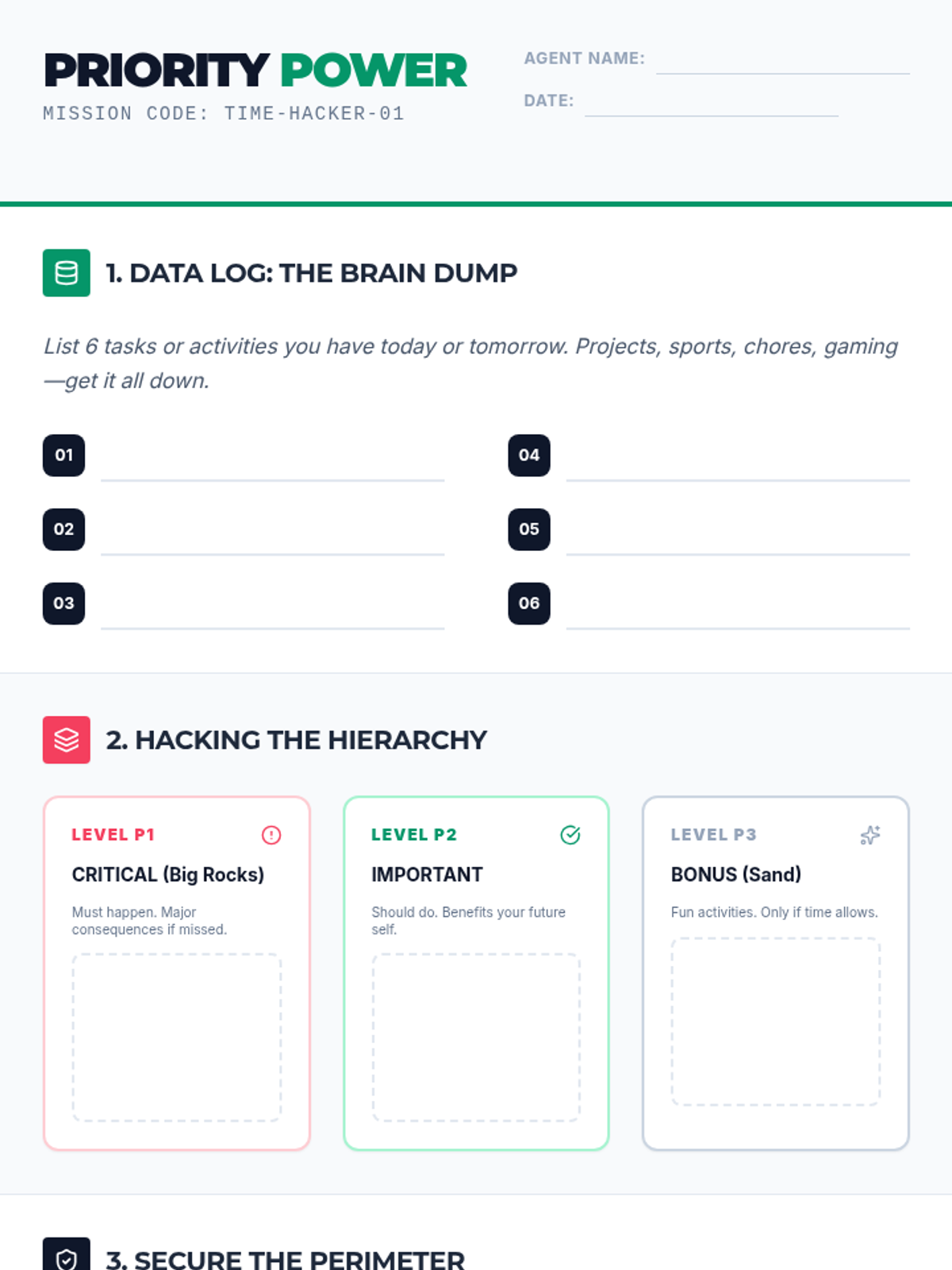
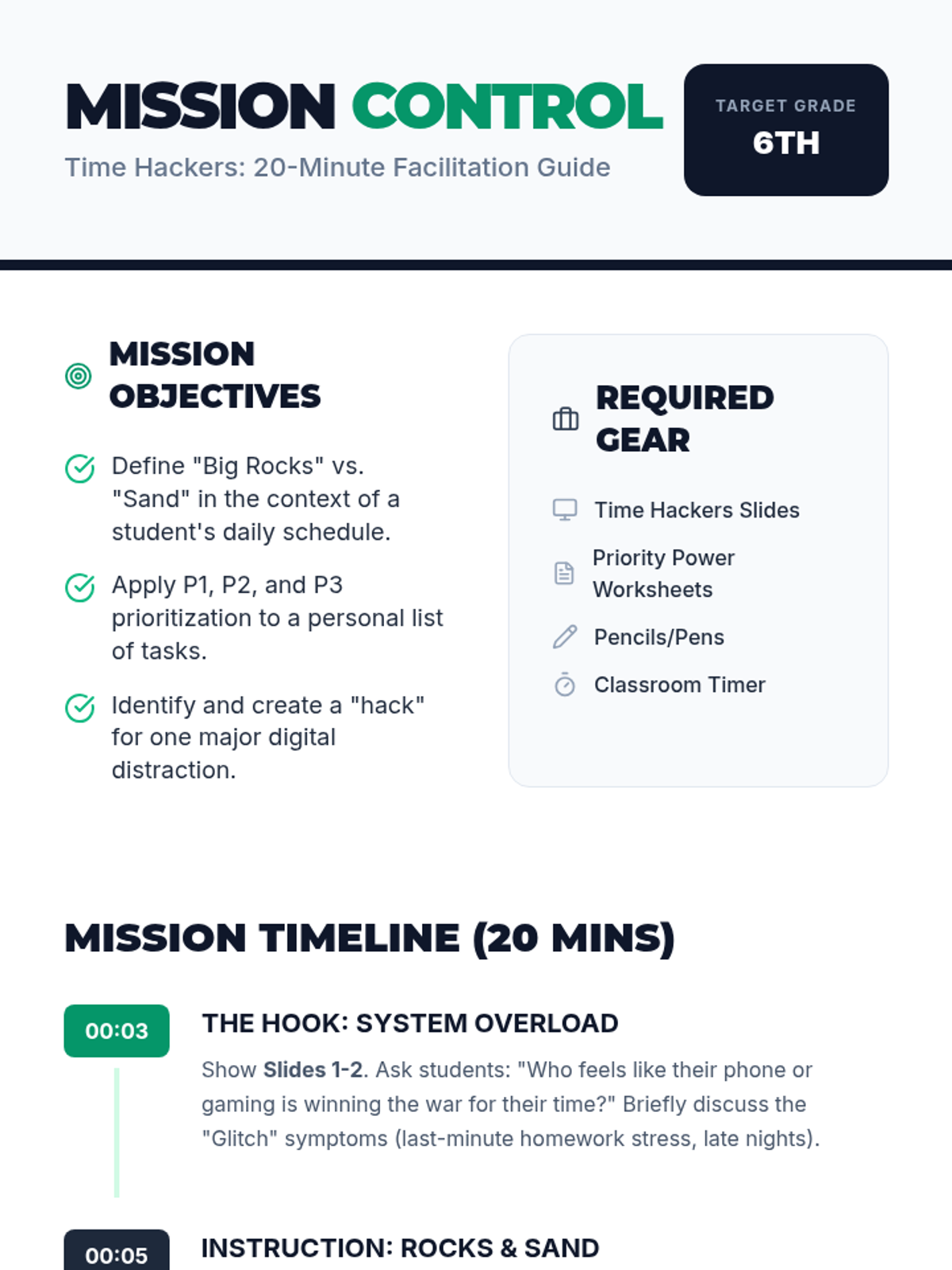
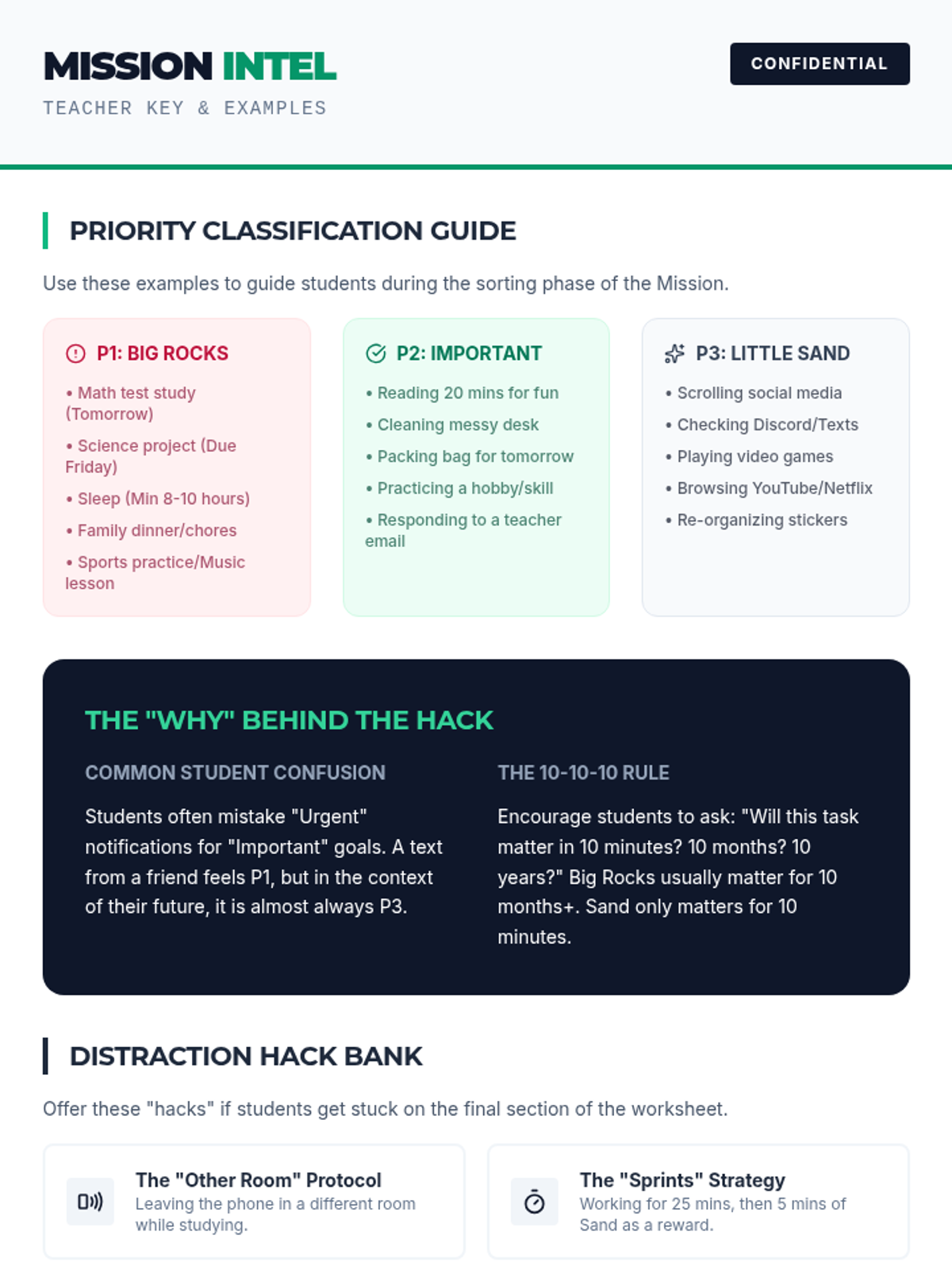
A fast-paced, 20-minute introduction to time management and prioritization for 6th graders, focusing on 'Big Rocks' vs. 'Little Sand'.
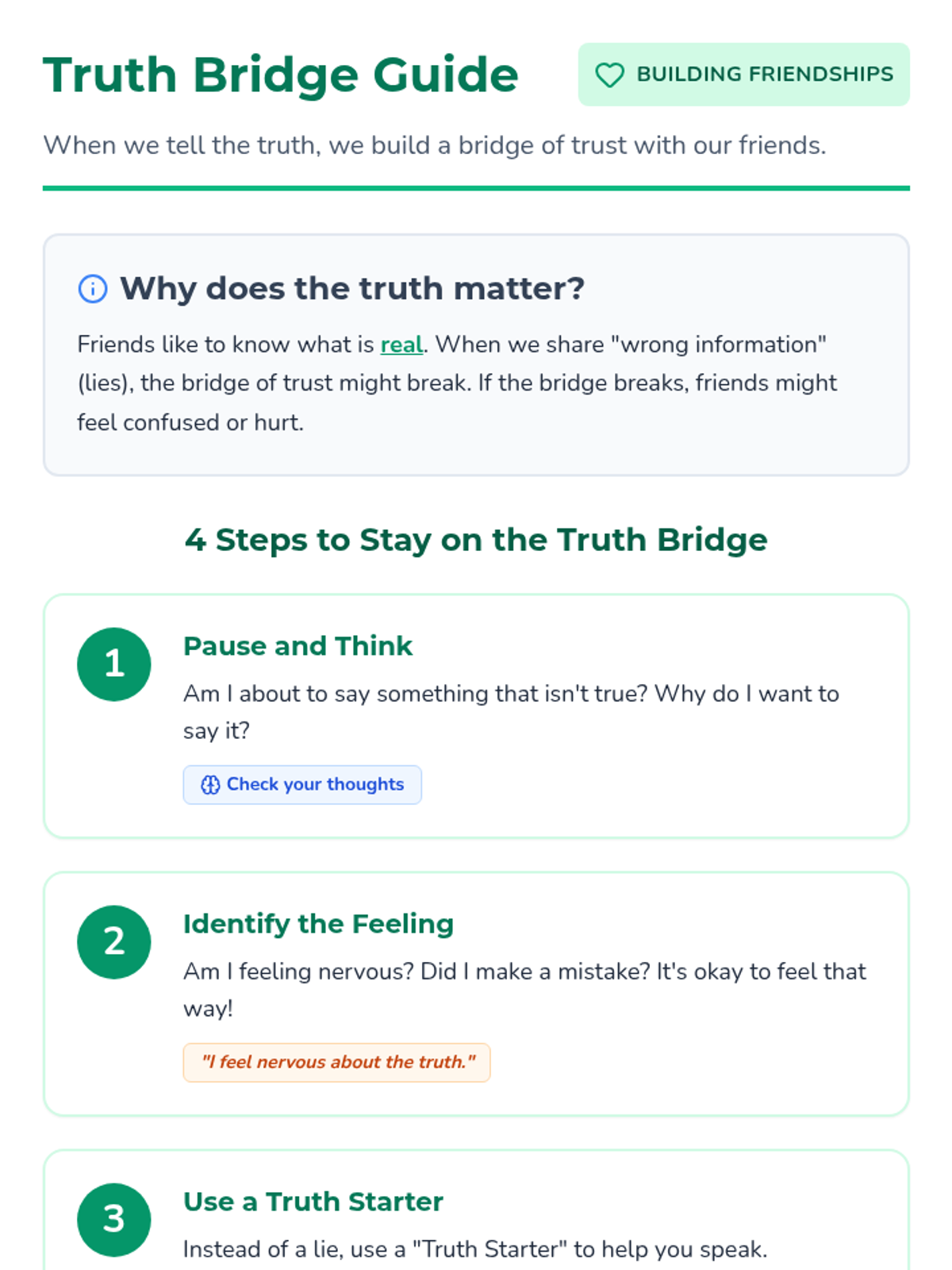
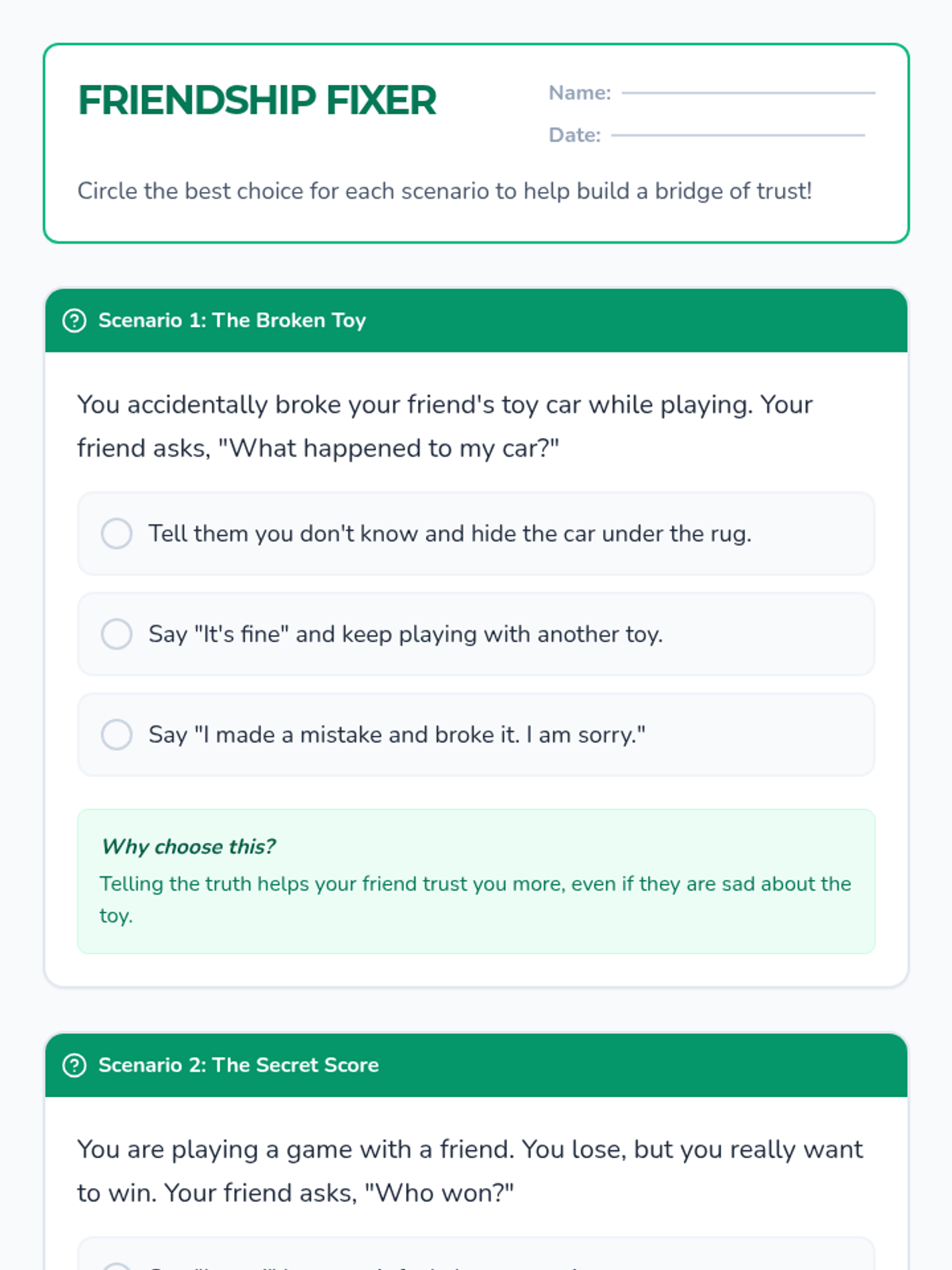
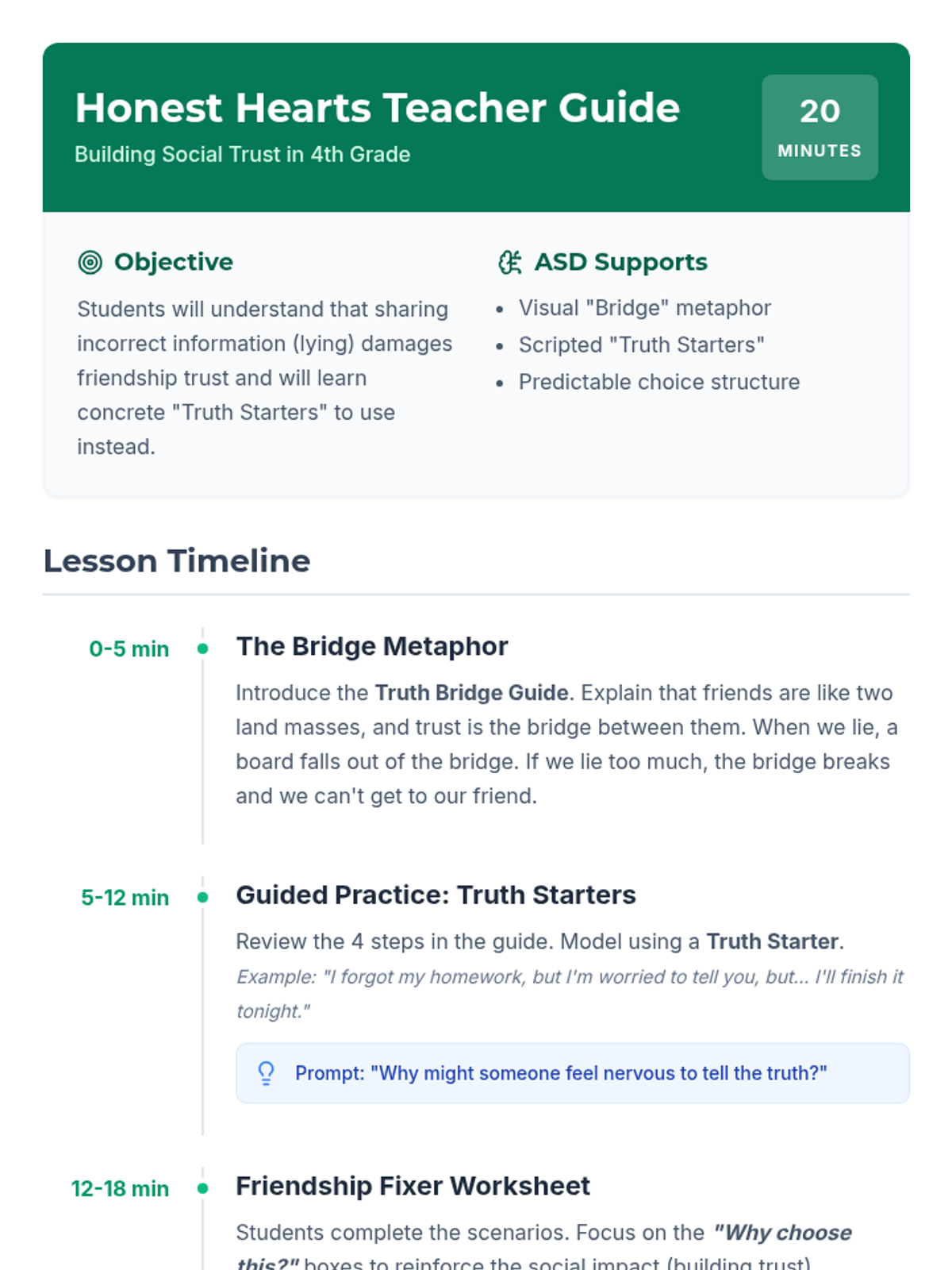
A 20-minute lesson for 4th-grade students with autism focusing on the social impact of lying and providing concrete steps for being honest to build stronger friendships.
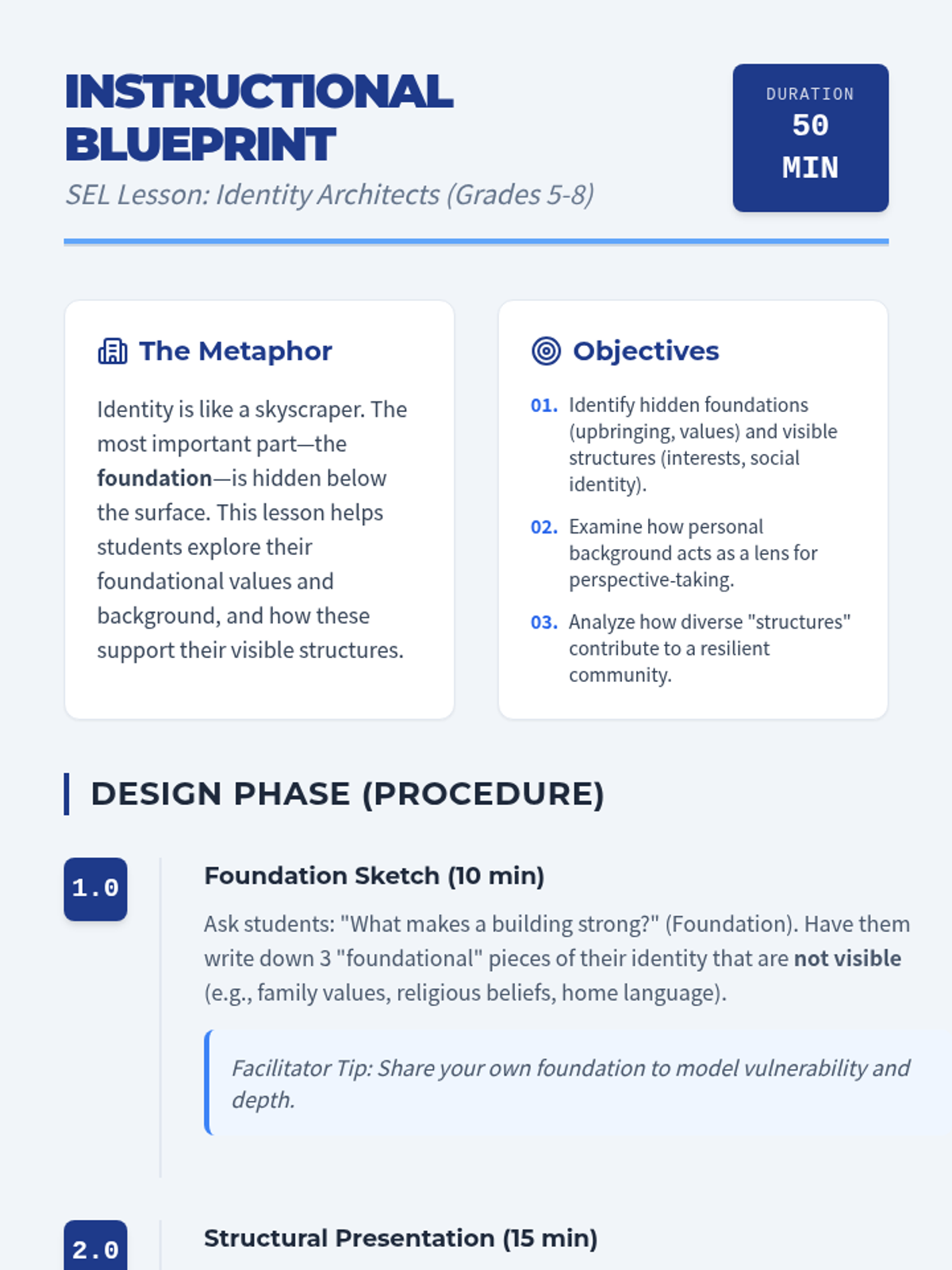
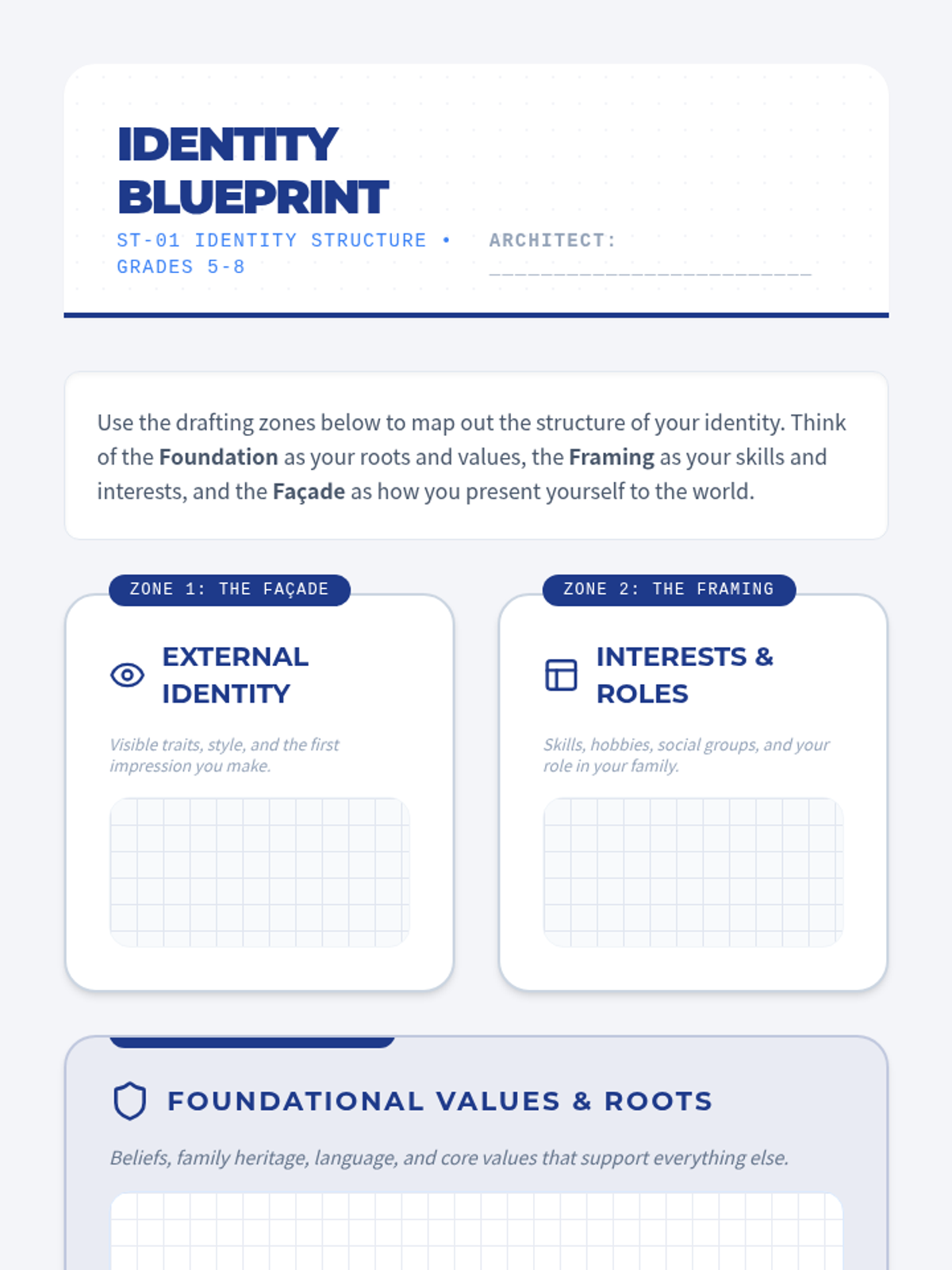
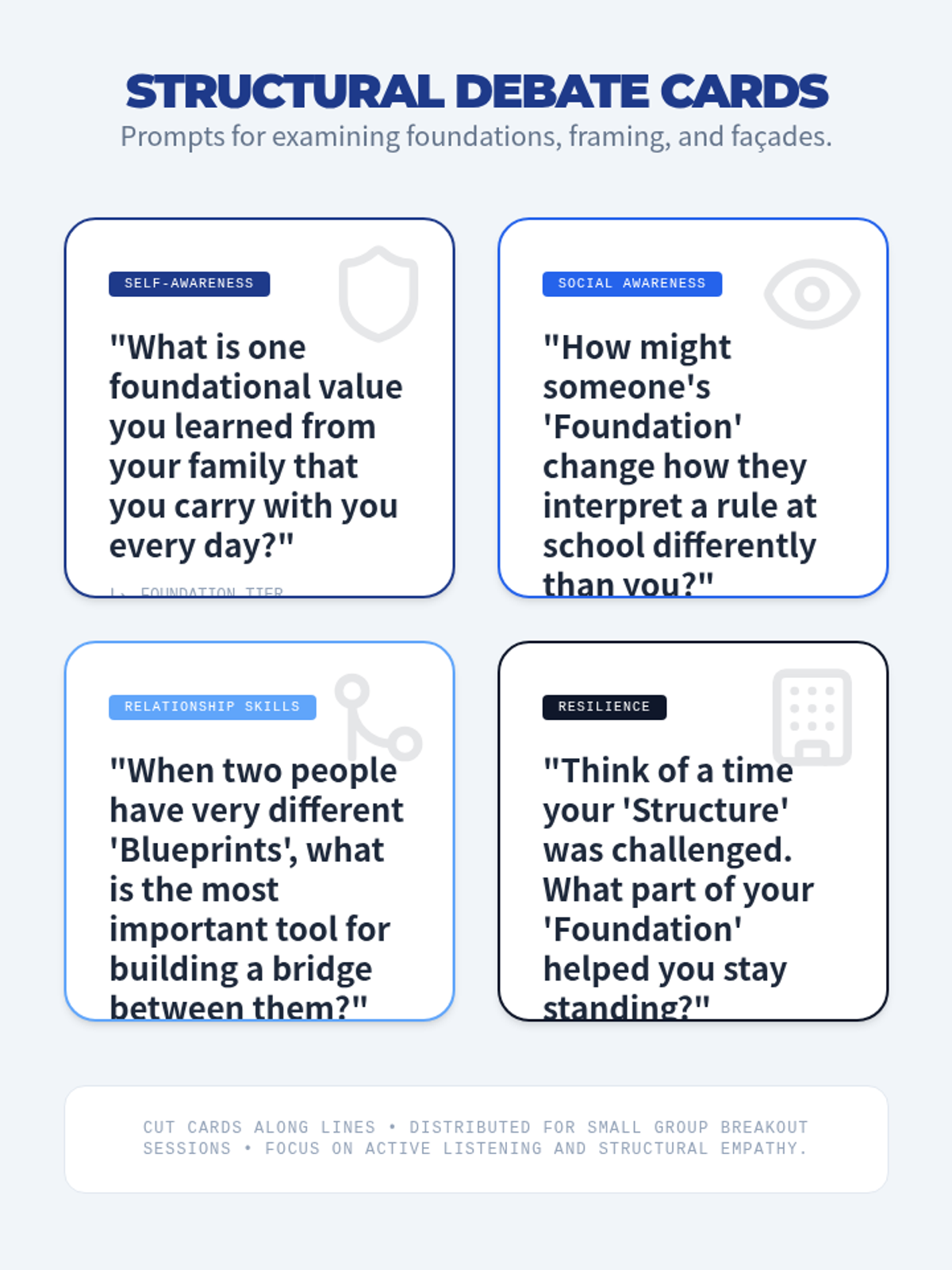
An SEL lesson for grades 5-8 that uses an architectural metaphor to explore the complex layers of identity. Students analyze their "foundations" (upbringing/values) and "structures" (social identity/interests) to understand how diverse perspectives build a stronger society.
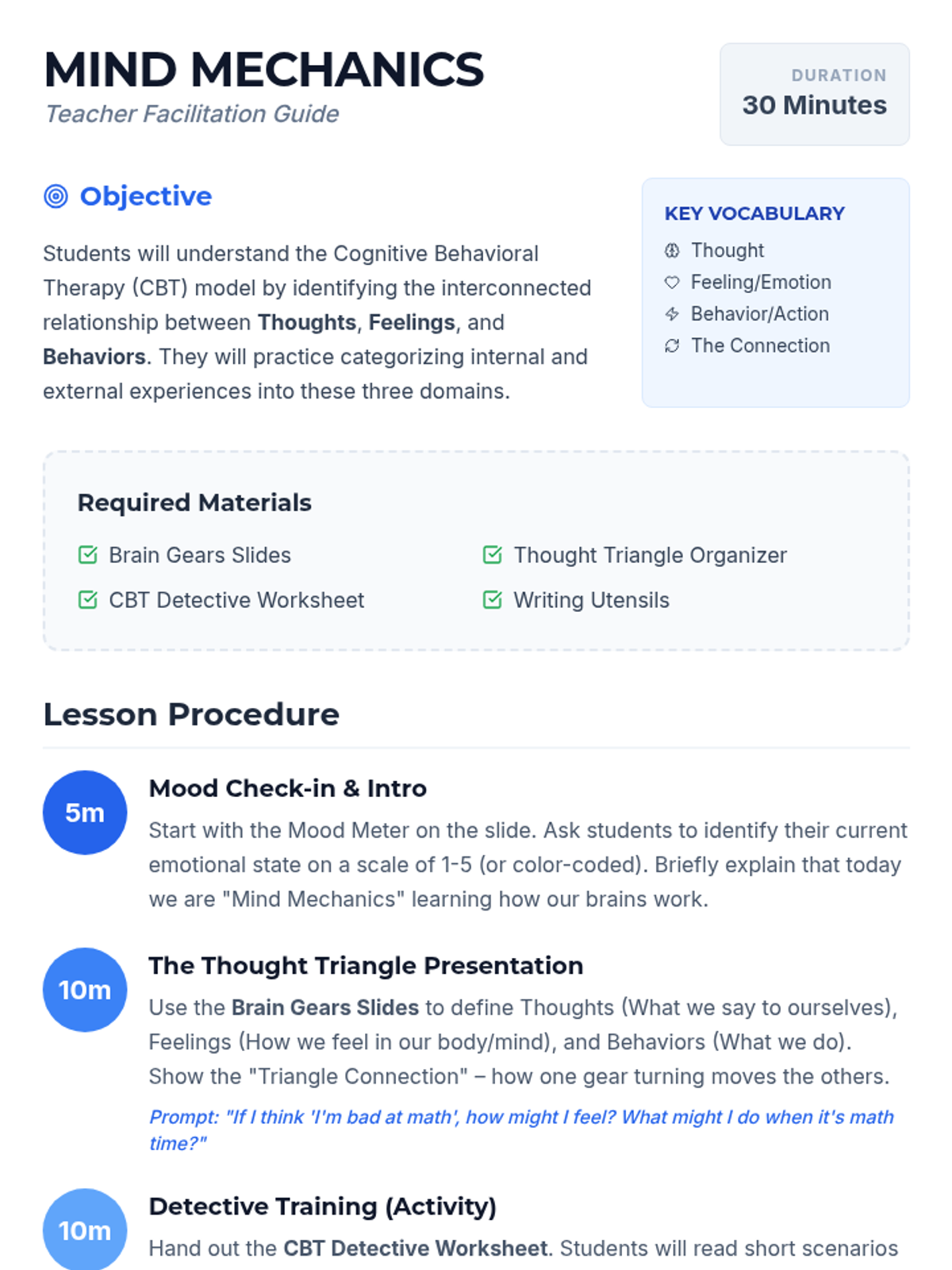
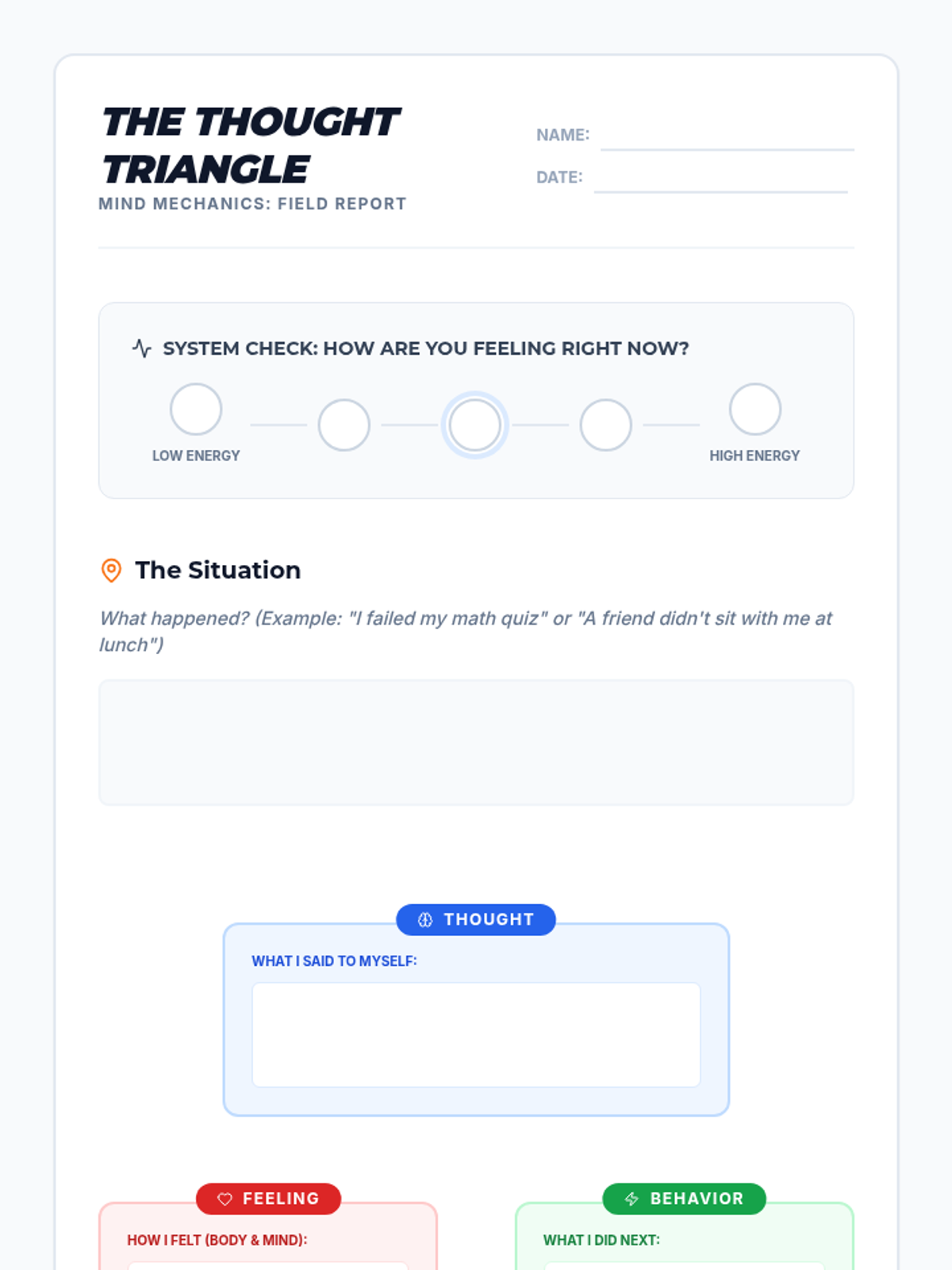
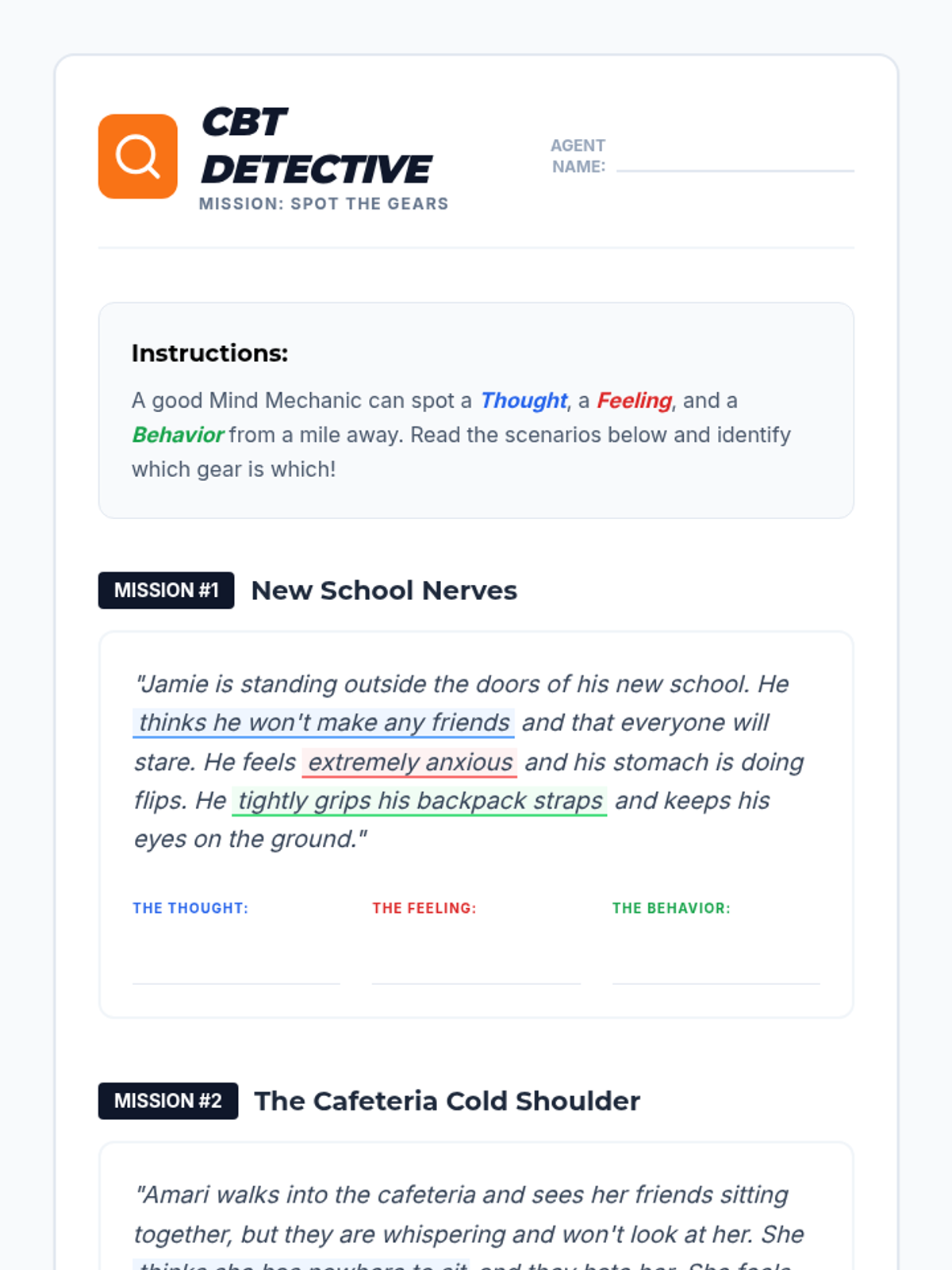
A 30-minute small group lesson introducing the fundamentals of Cognitive Behavioral Therapy (CBT). Students will learn the connection between thoughts, feelings, and behaviors using the 'Thought Triangle' model and practice identifying examples of each.
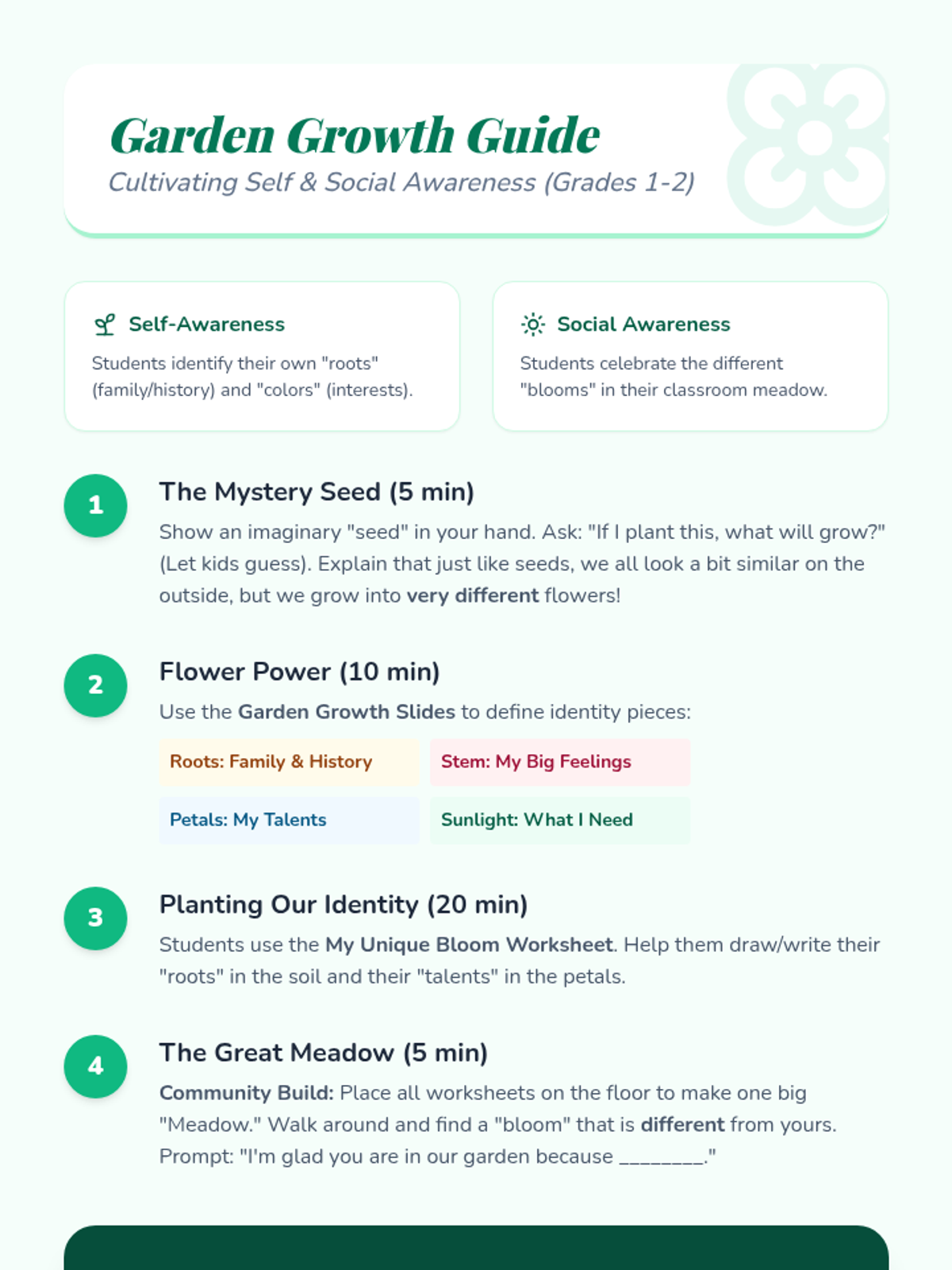
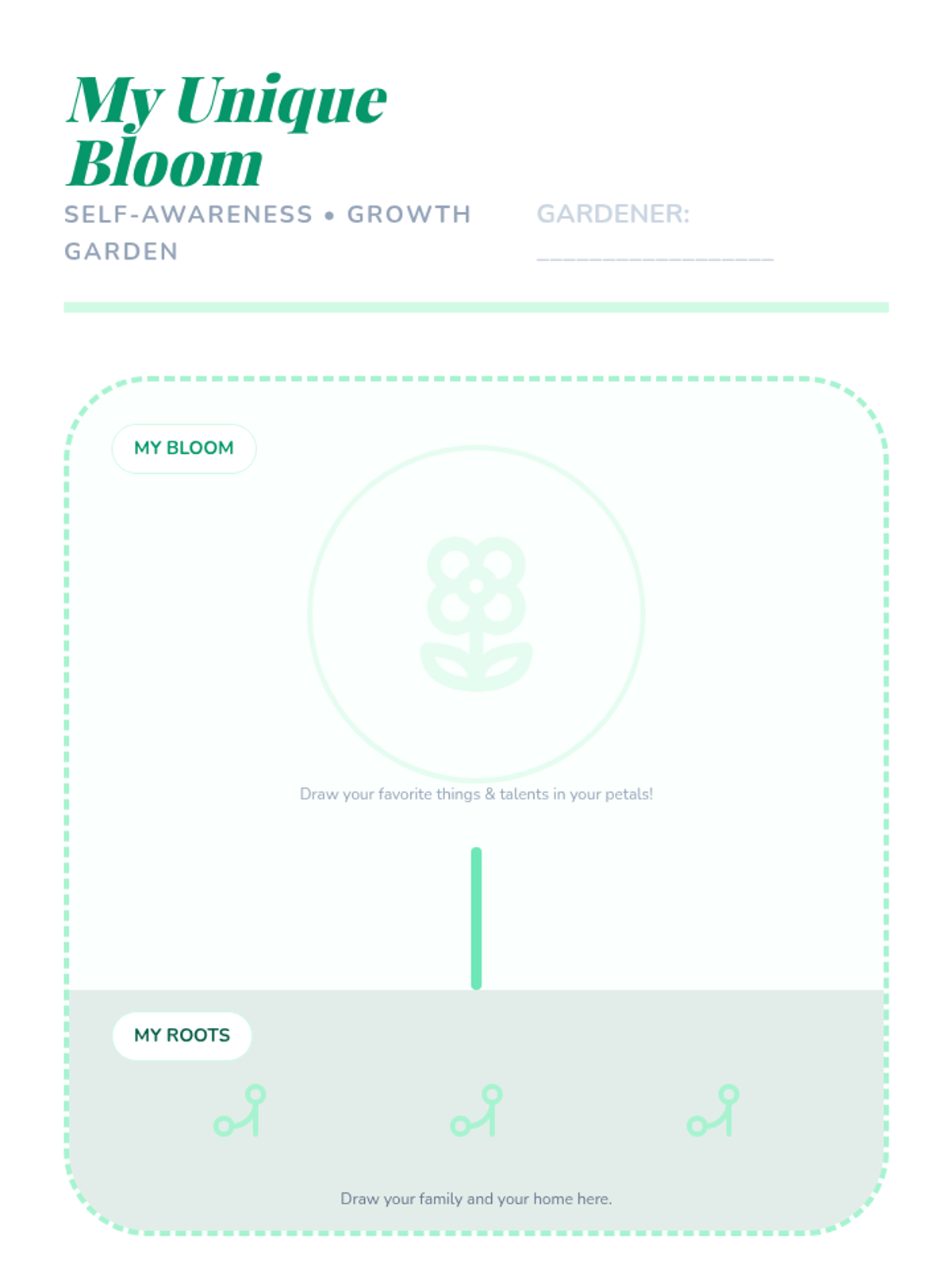
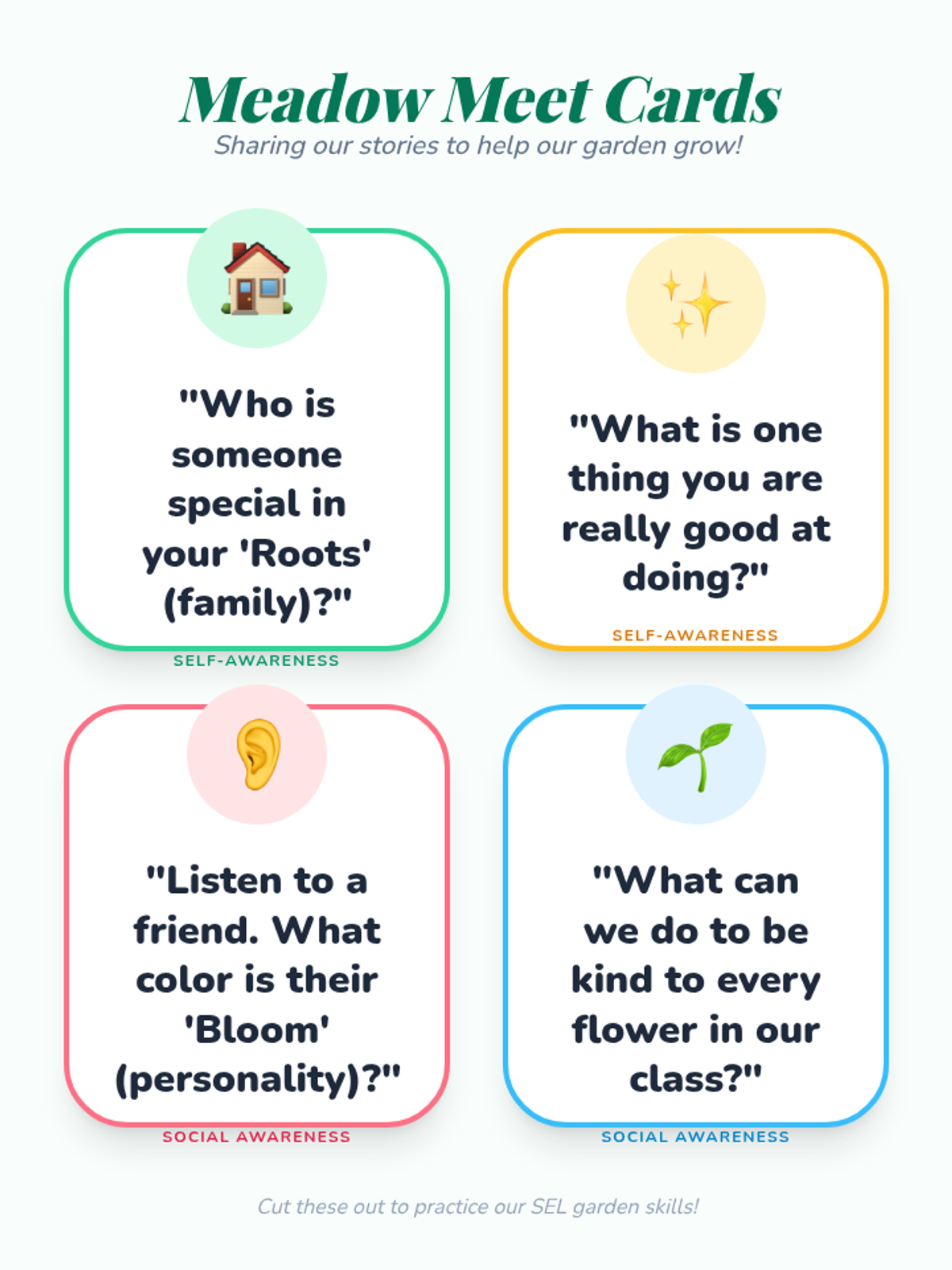
An SEL lesson for grades 1-2 using a garden metaphor to explore self-awareness and social awareness. Students identify their unique "roots" and "blooms" to discover how diversity makes a classroom community stronger and more beautiful.
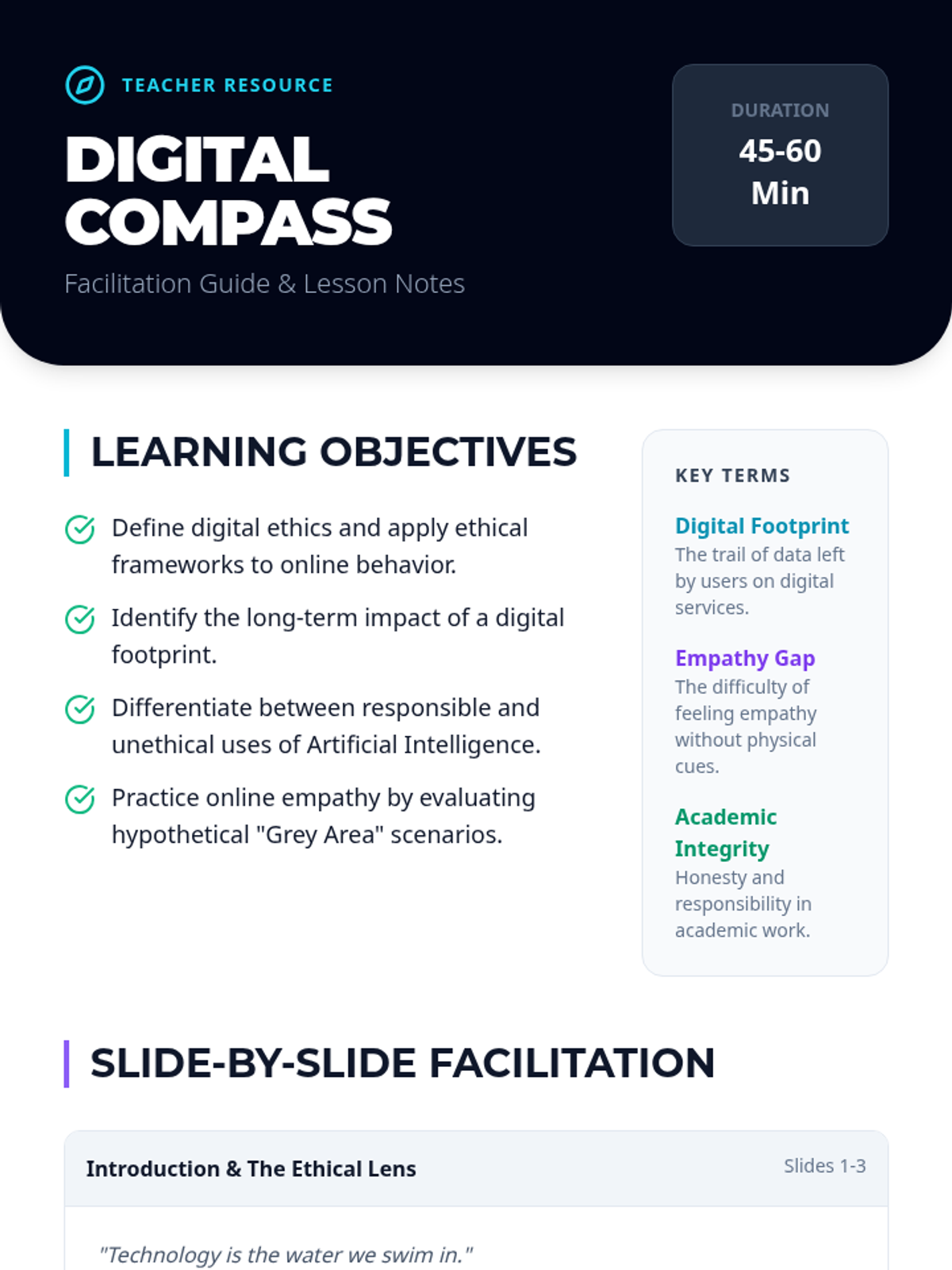
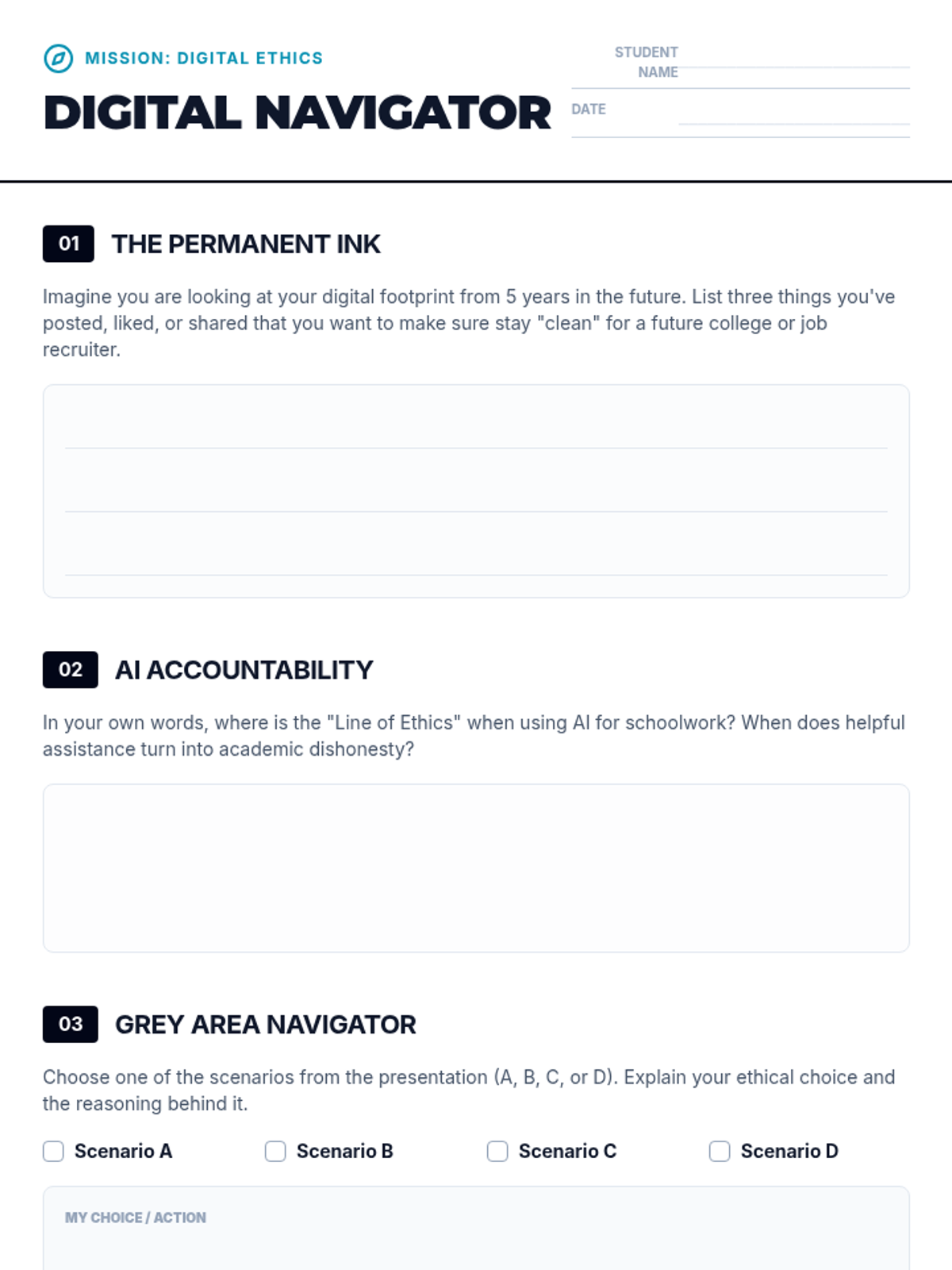
A comprehensive lesson exploring the ethical implications of digital technology use for students, covering privacy, digital footprints, AI responsibility, and online empathy.
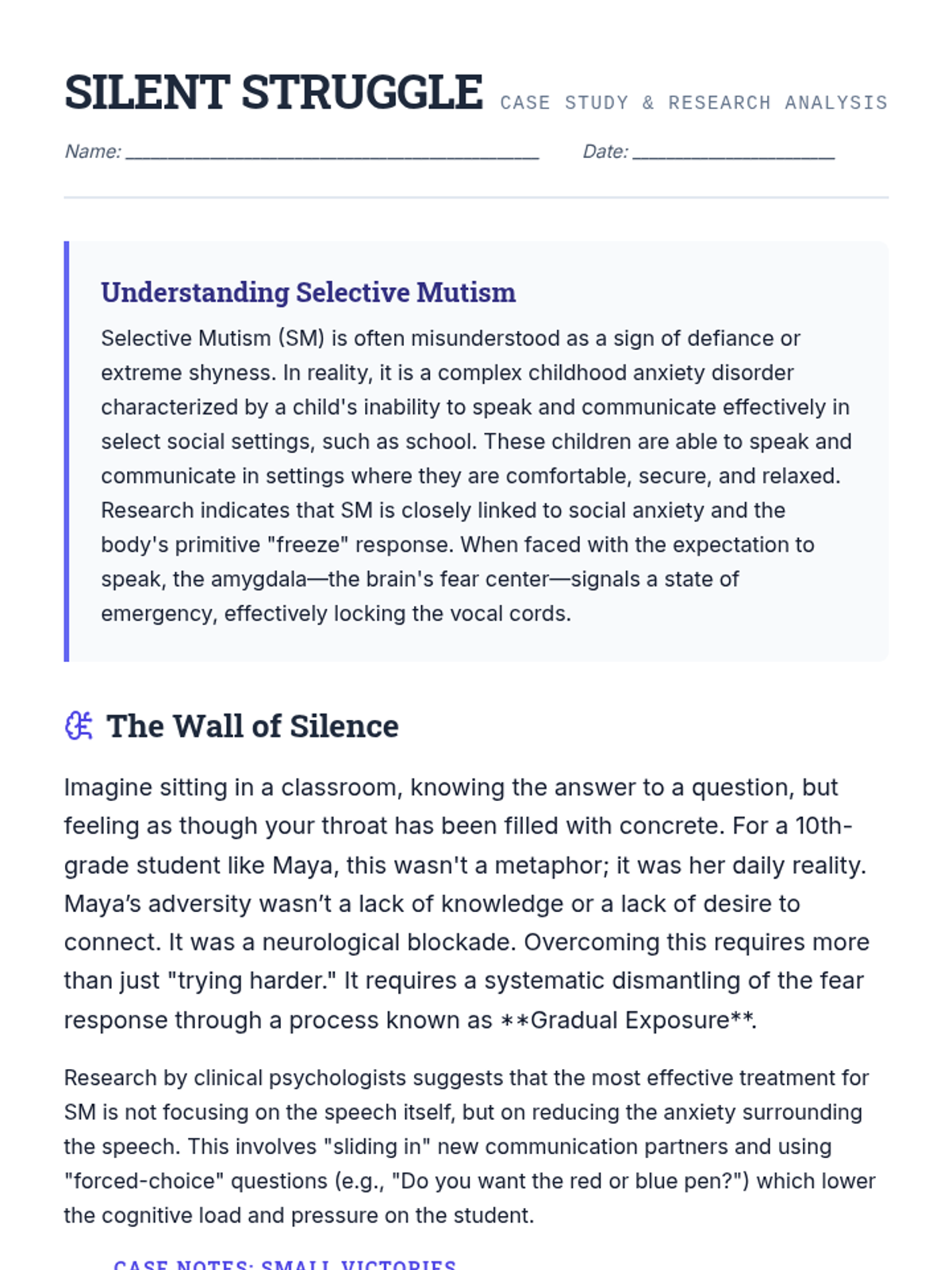
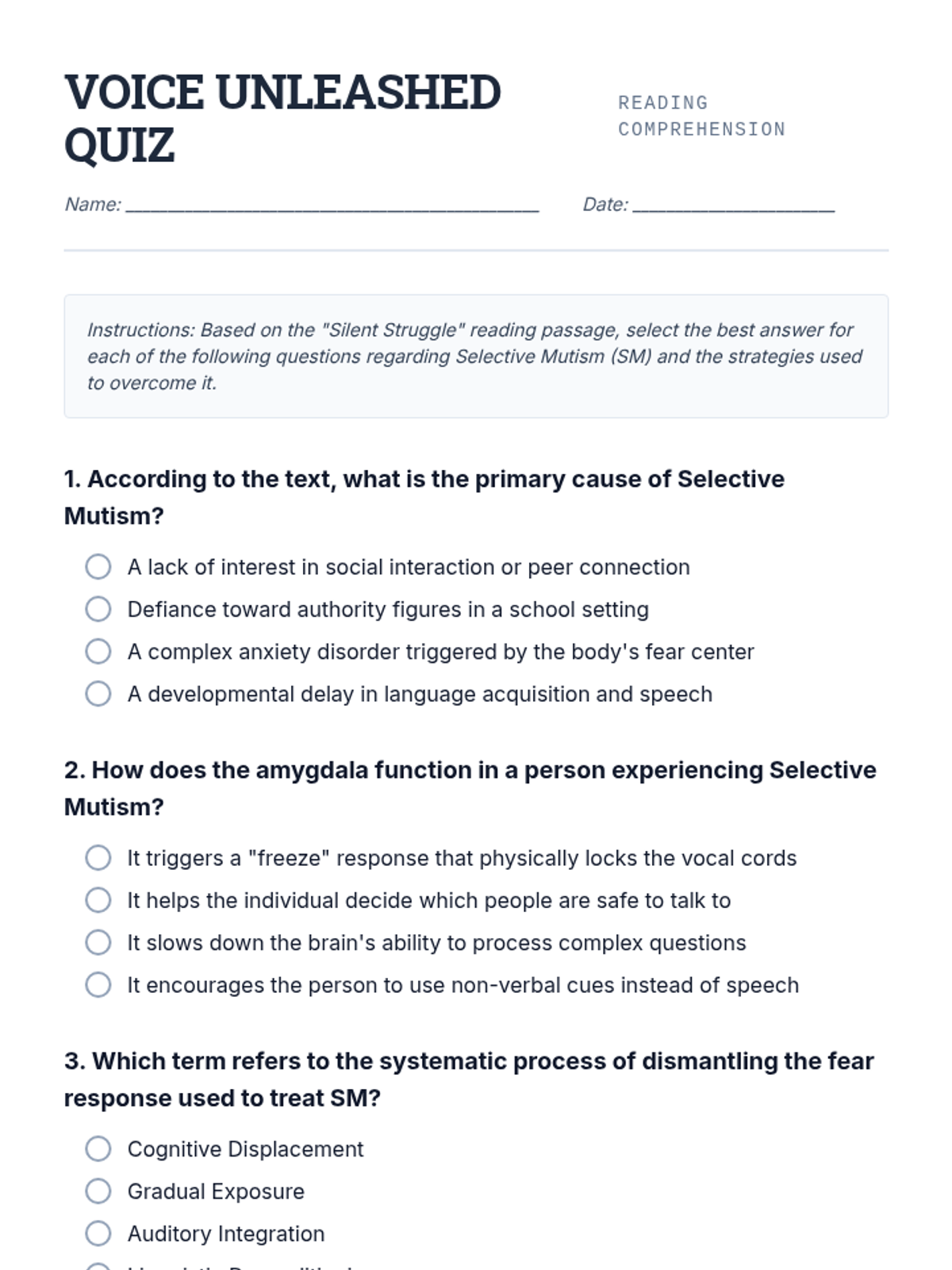
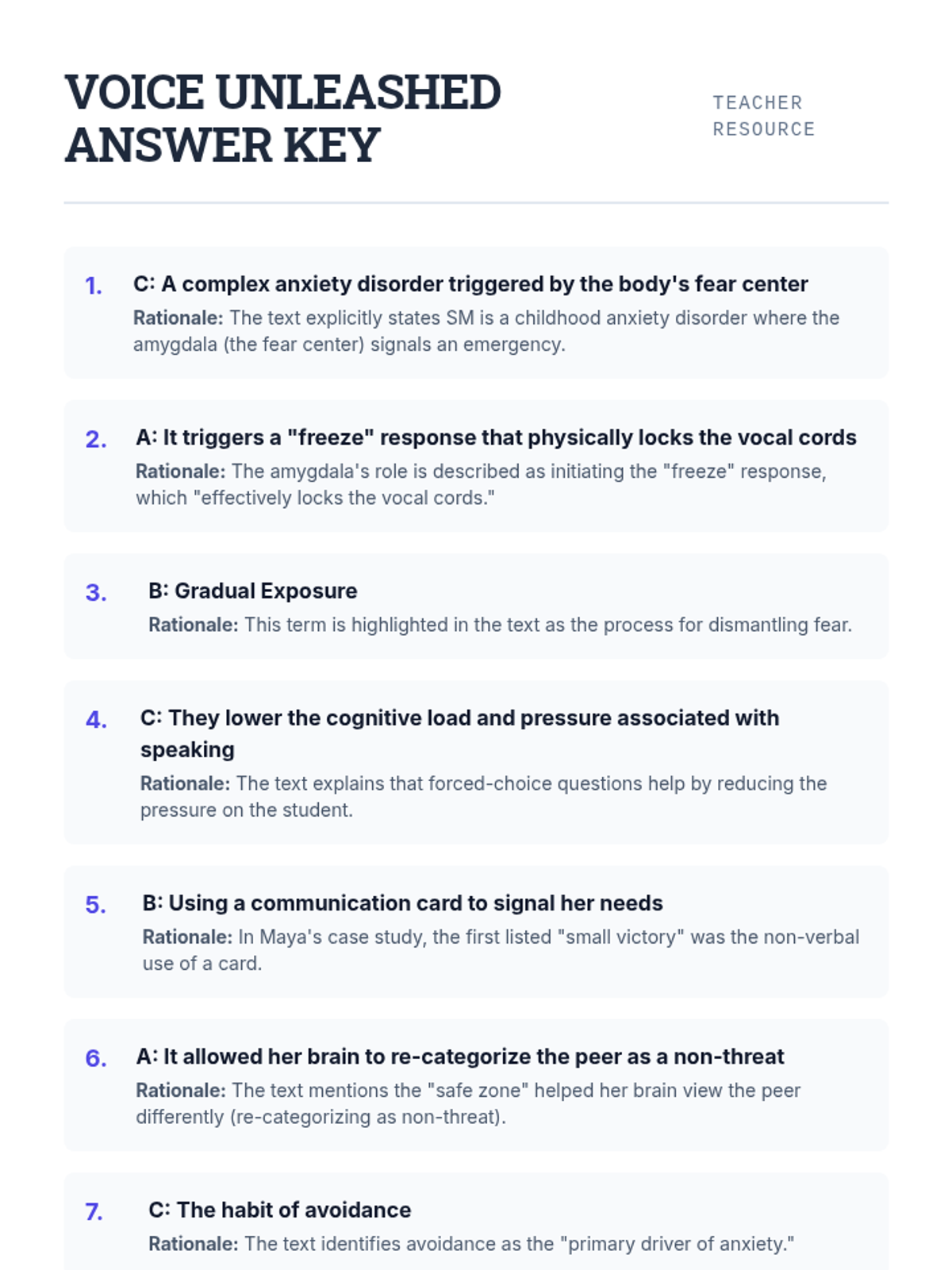
A comprehensive lesson on Selective Mutism, focusing on its clinical definition, the psychological mechanisms of the 'freeze' response, and the resilience required to overcome communication barriers through gradual exposure.
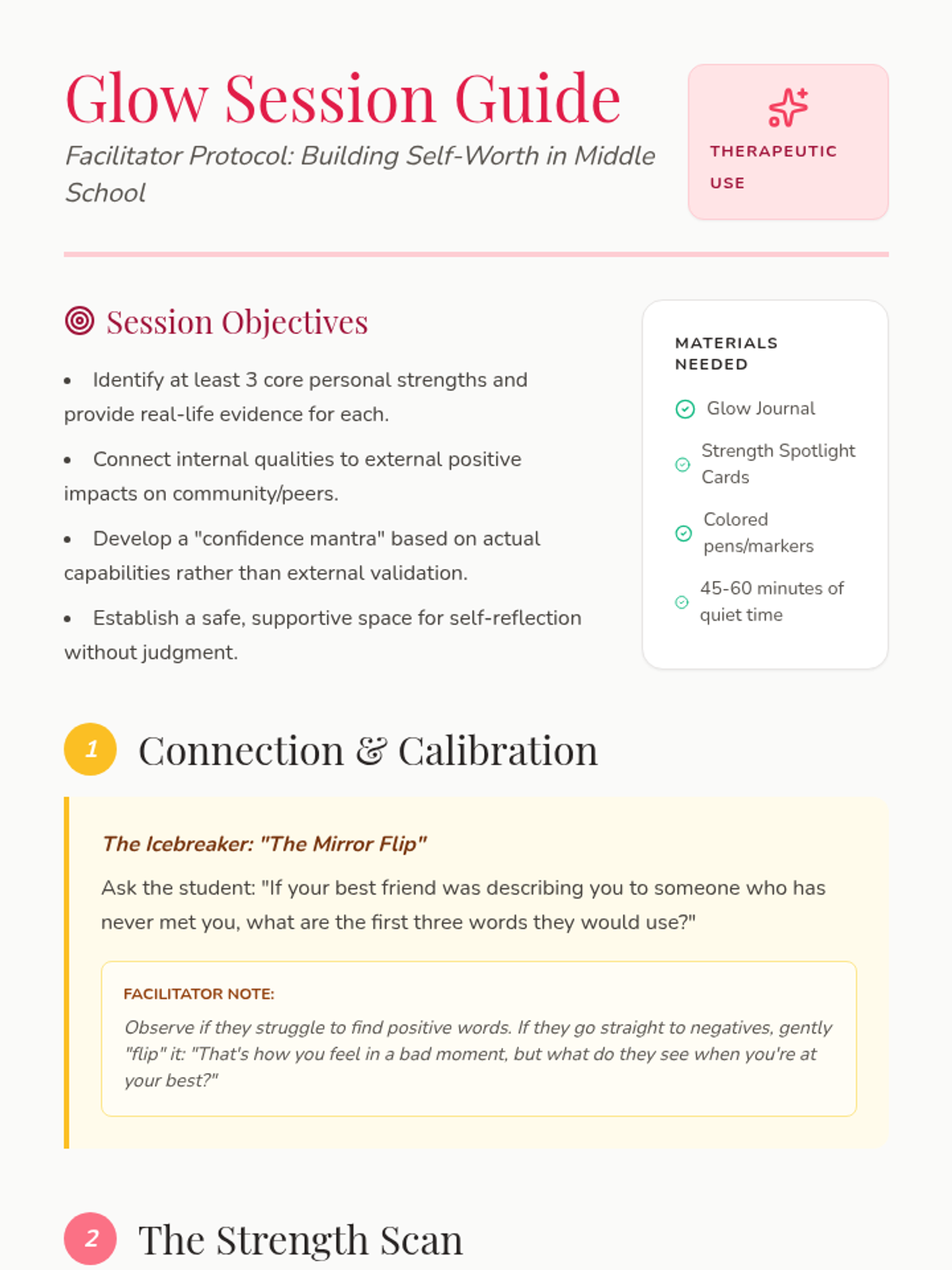
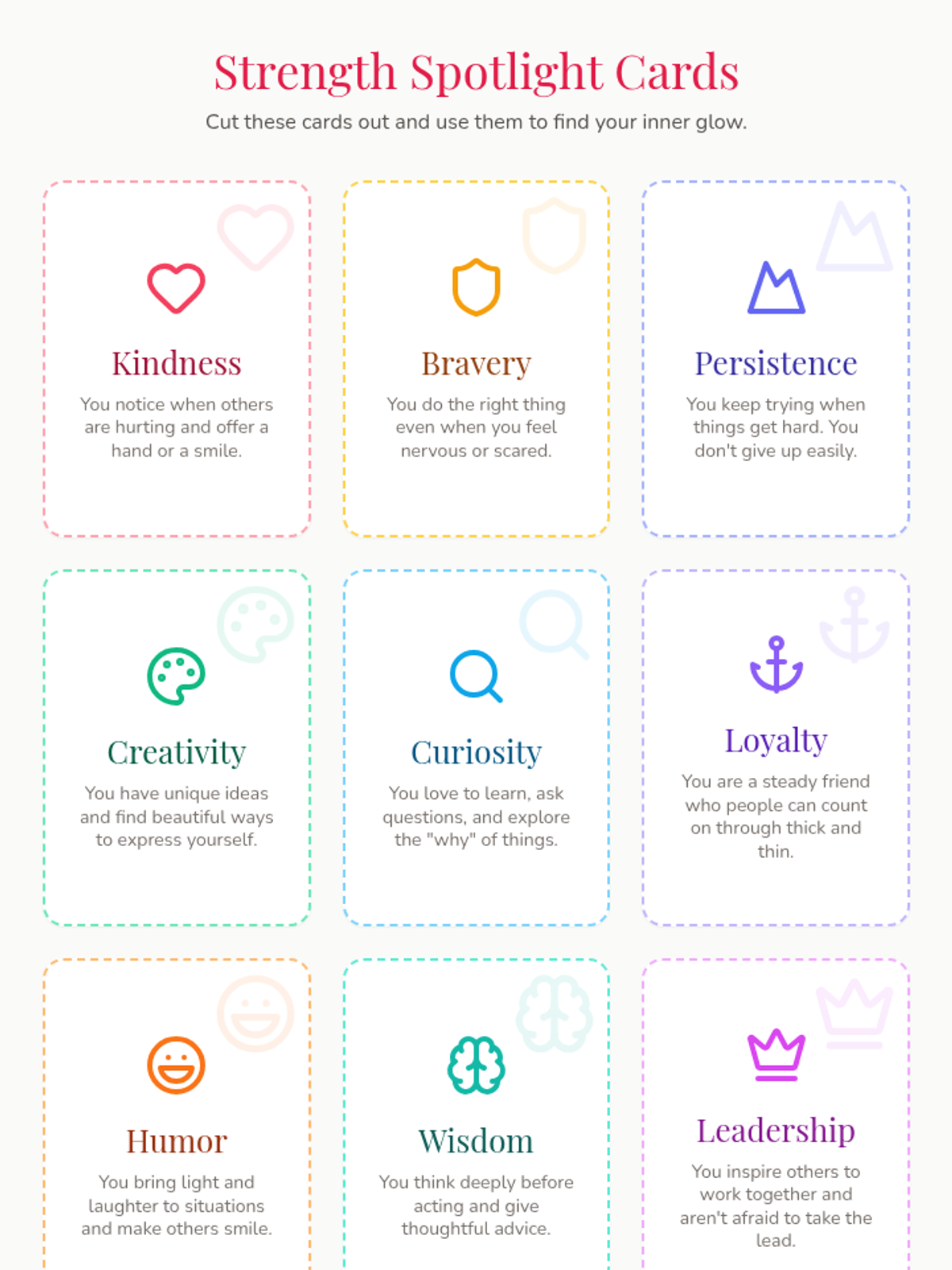
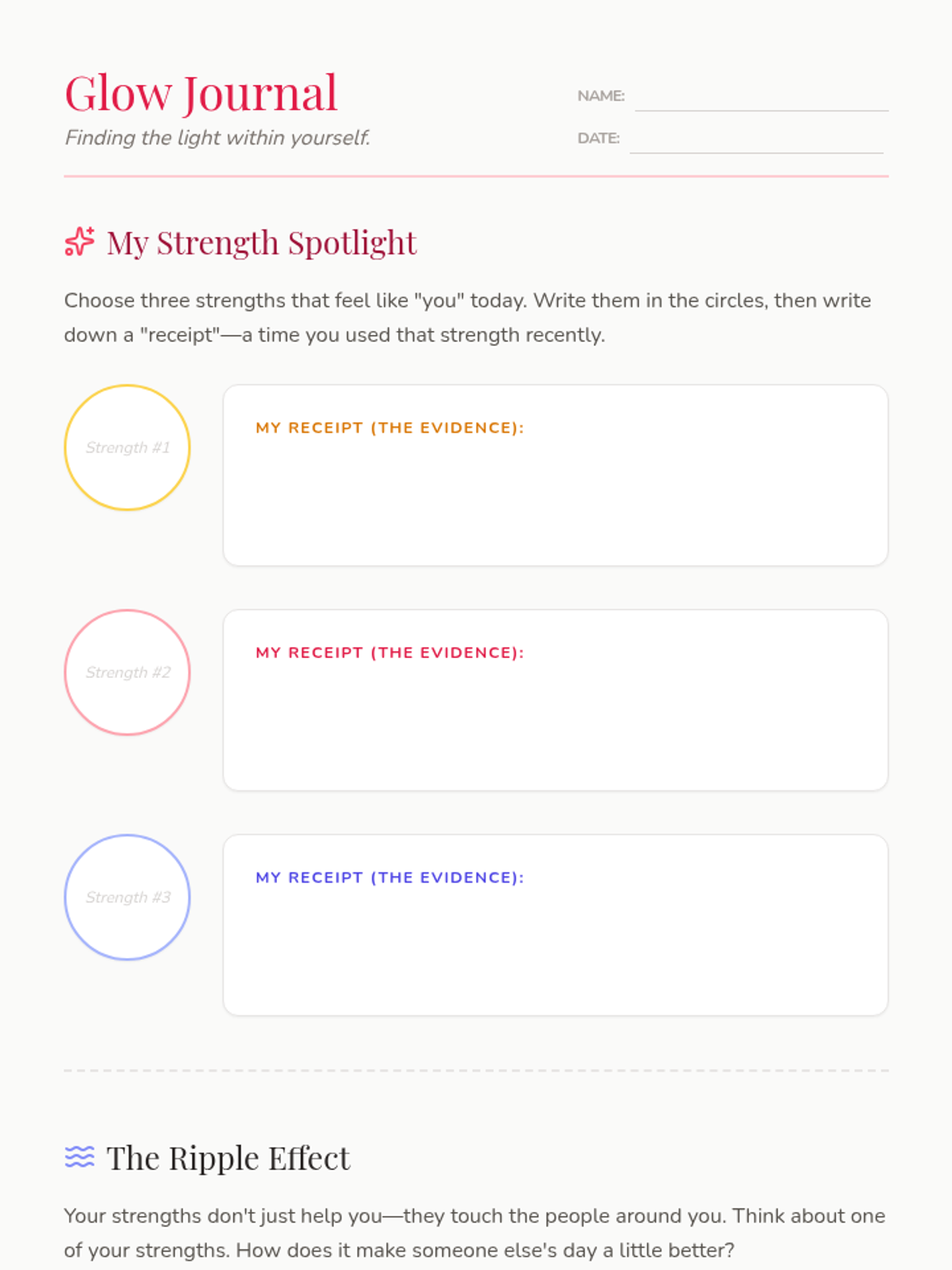
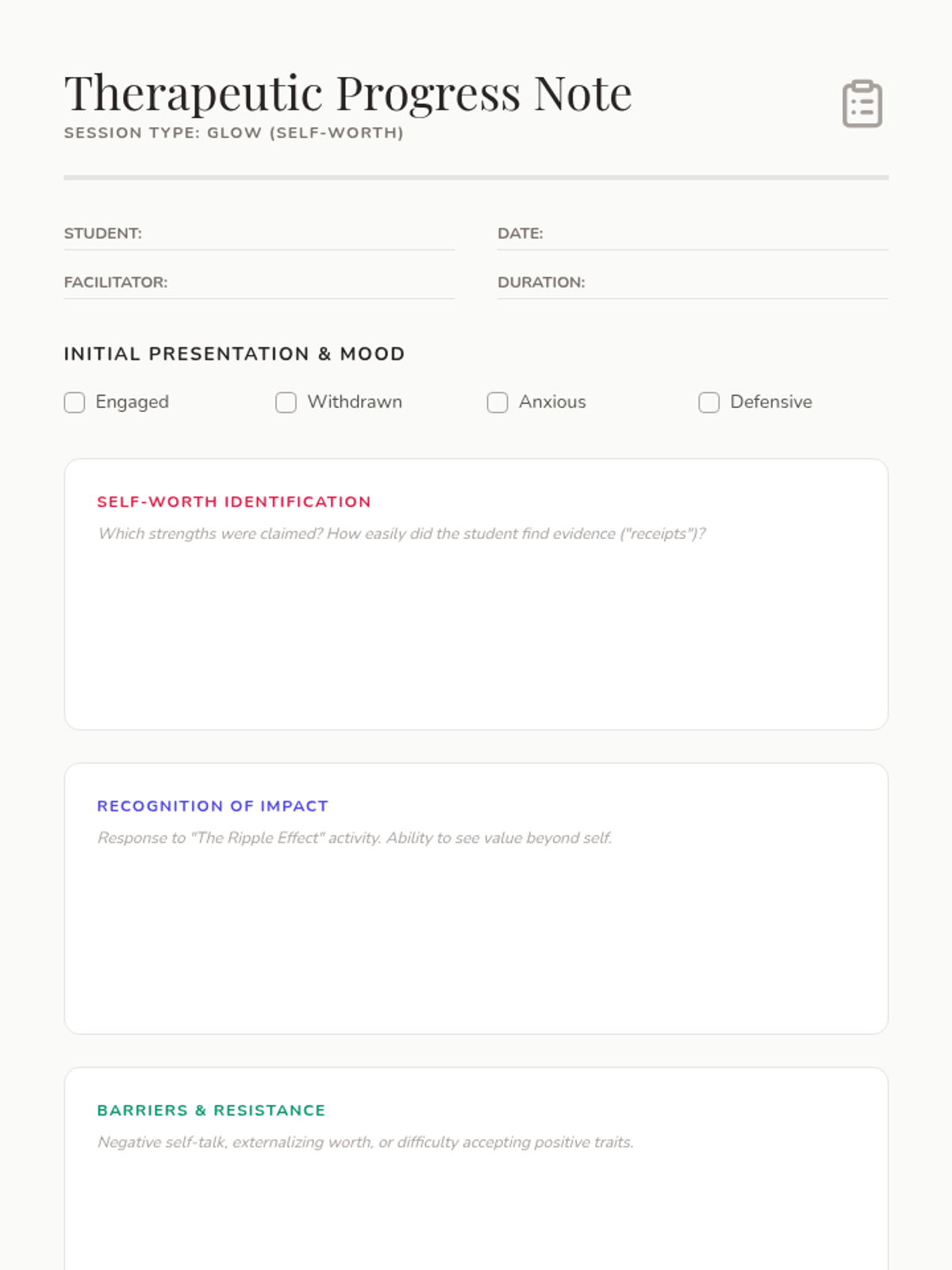
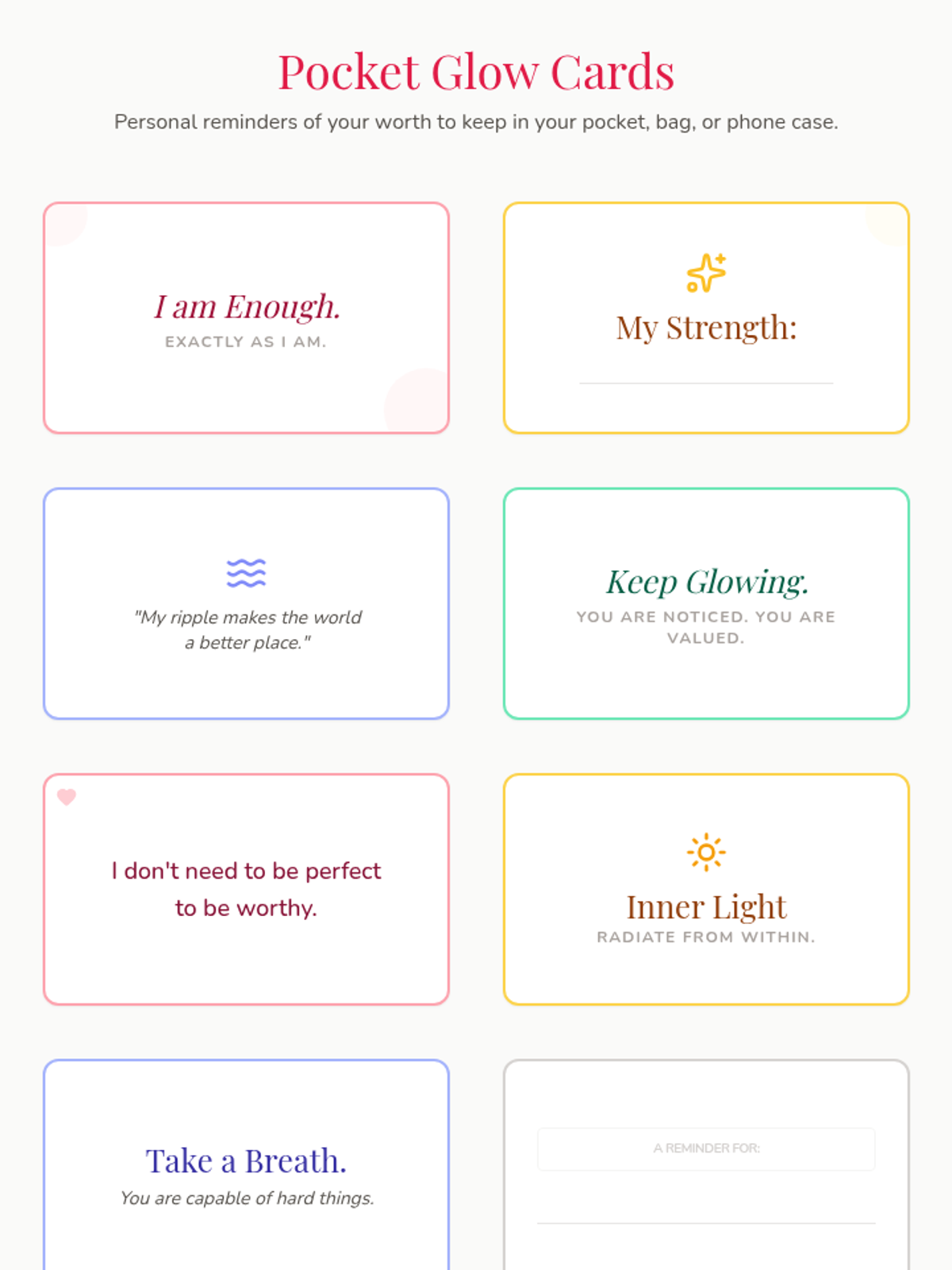
A therapeutic one-on-one session designed to help middle school girls identify their unique strengths, build confidence in their capabilities, and understand their positive impact on the world around them.
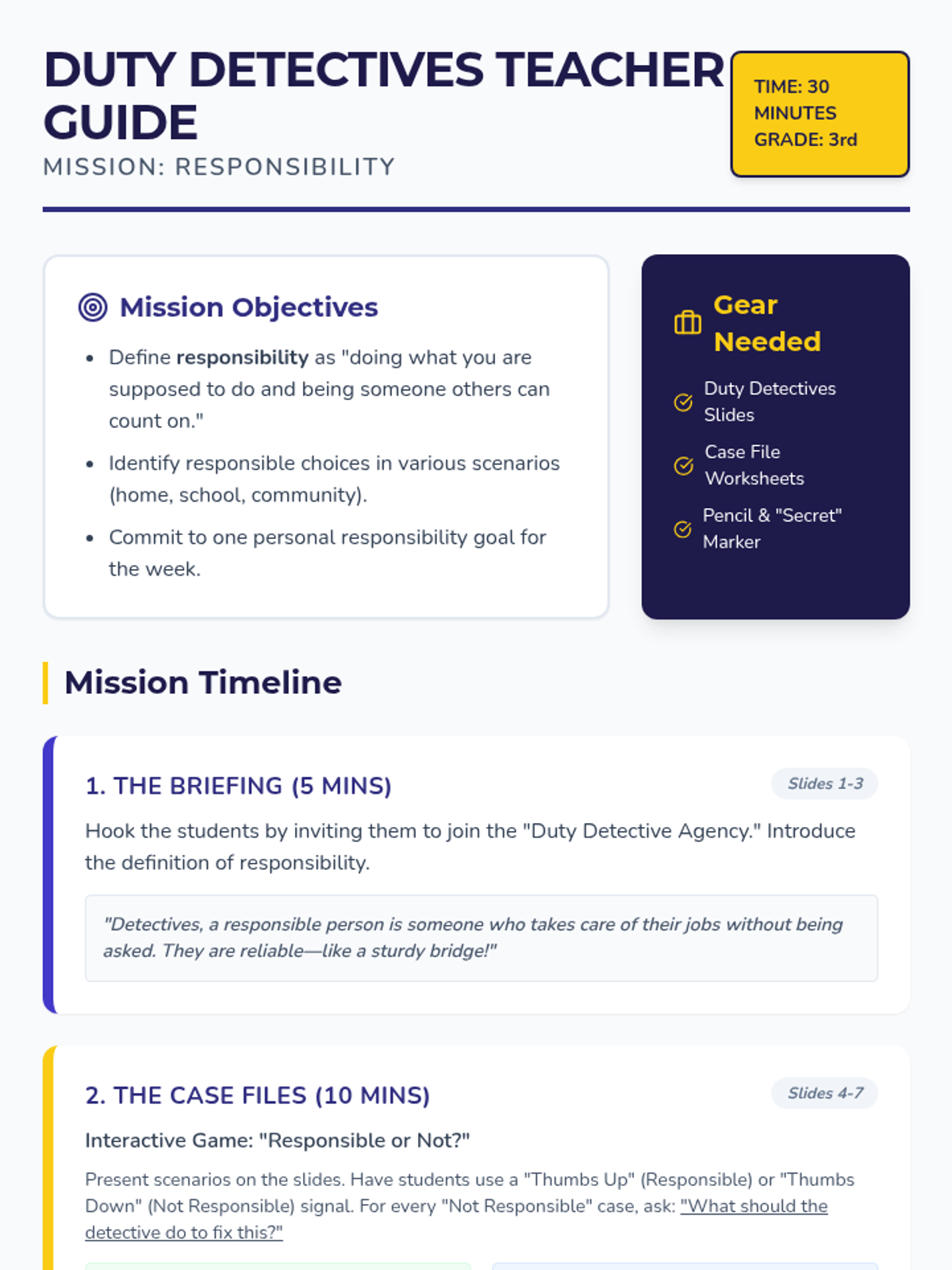
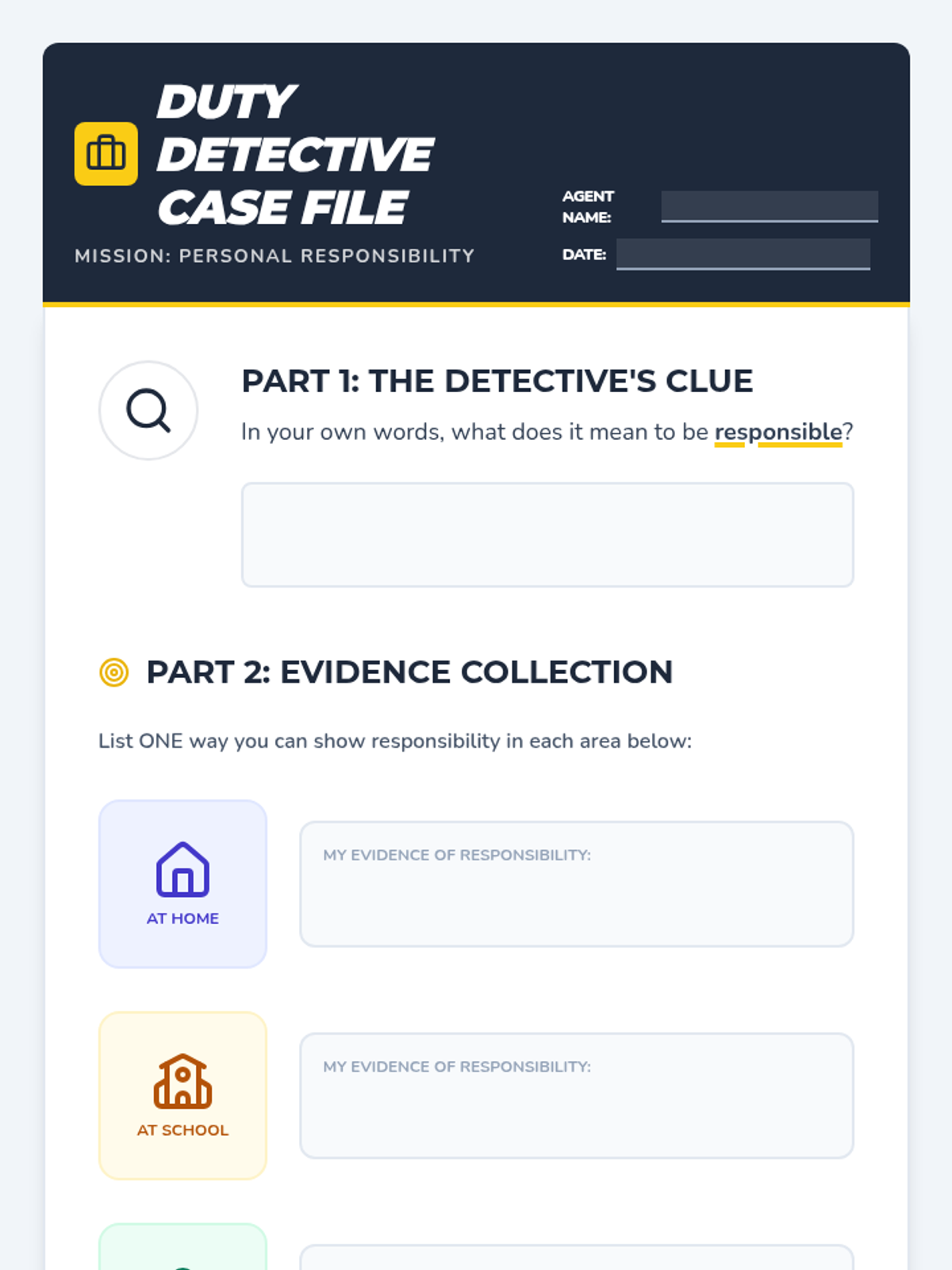
A 30-minute interactive lesson for 3rd graders on the concept of responsibility, framed as a 'detective' mission to solve cases of missing reliability. Students learn what responsibility looks like at home, at school, and in the community.
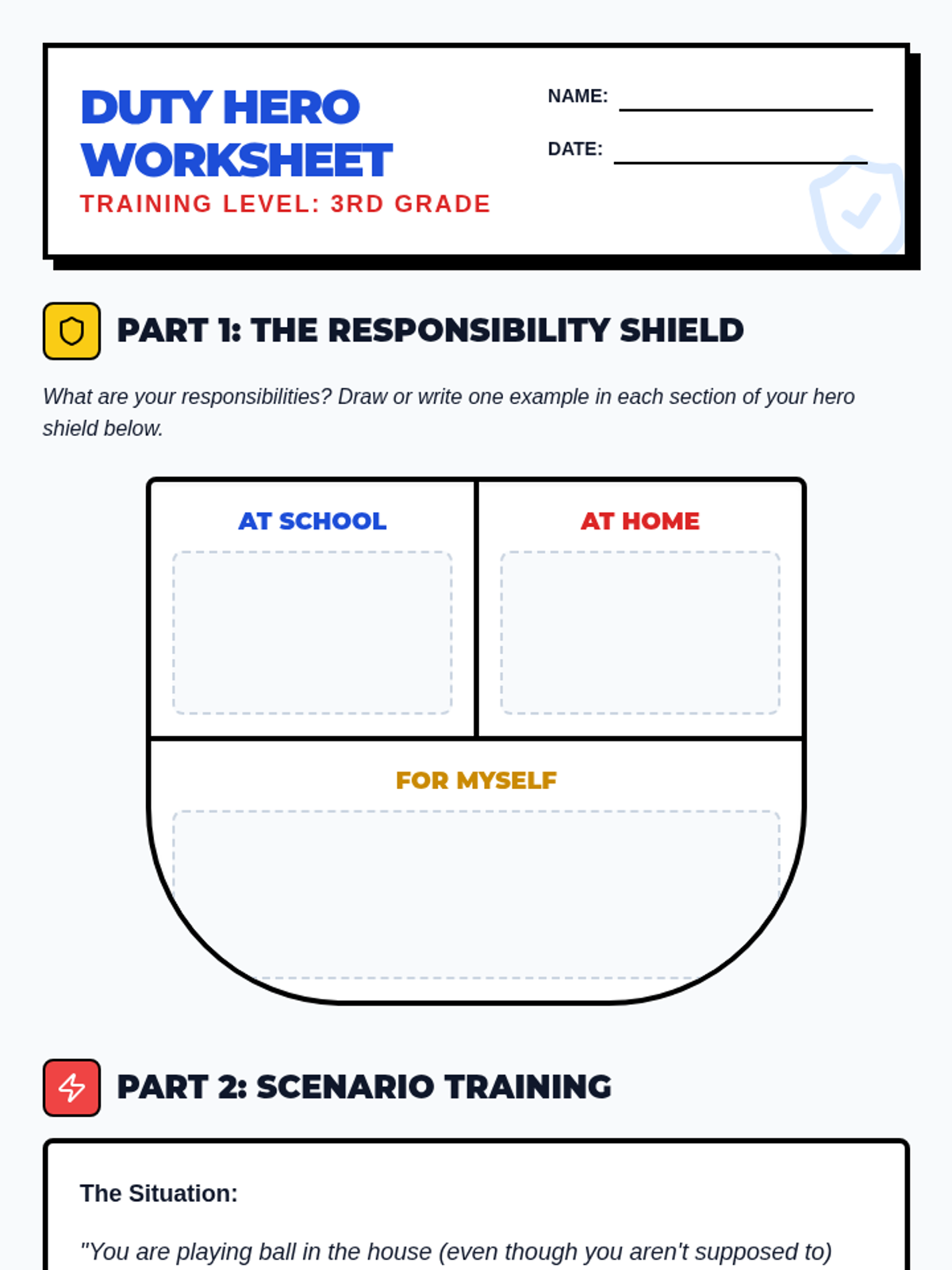
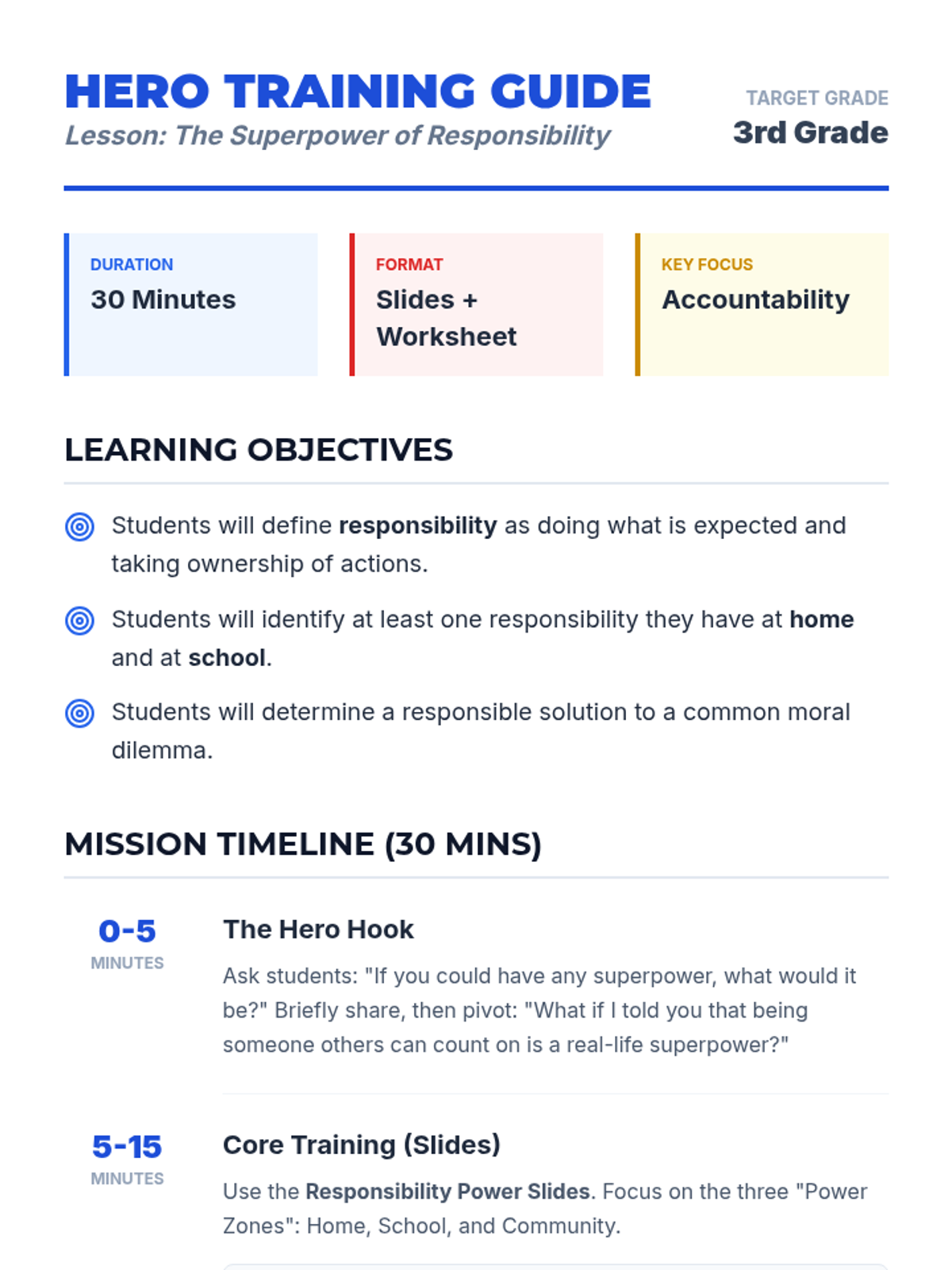
A 30-minute introductory lesson for 3rd graders on understanding and practicing responsibility at home, school, and in the community using a superhero theme.
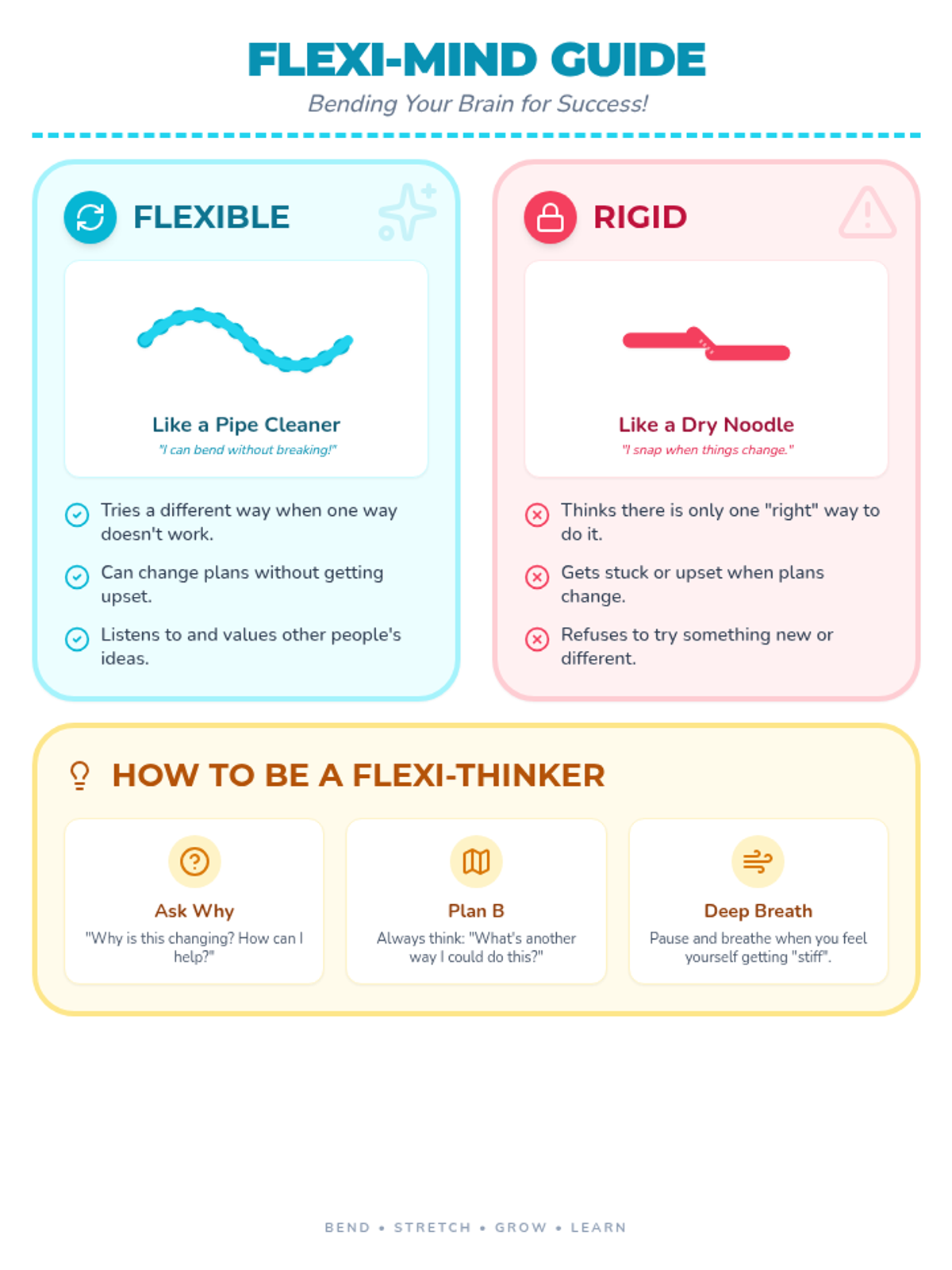
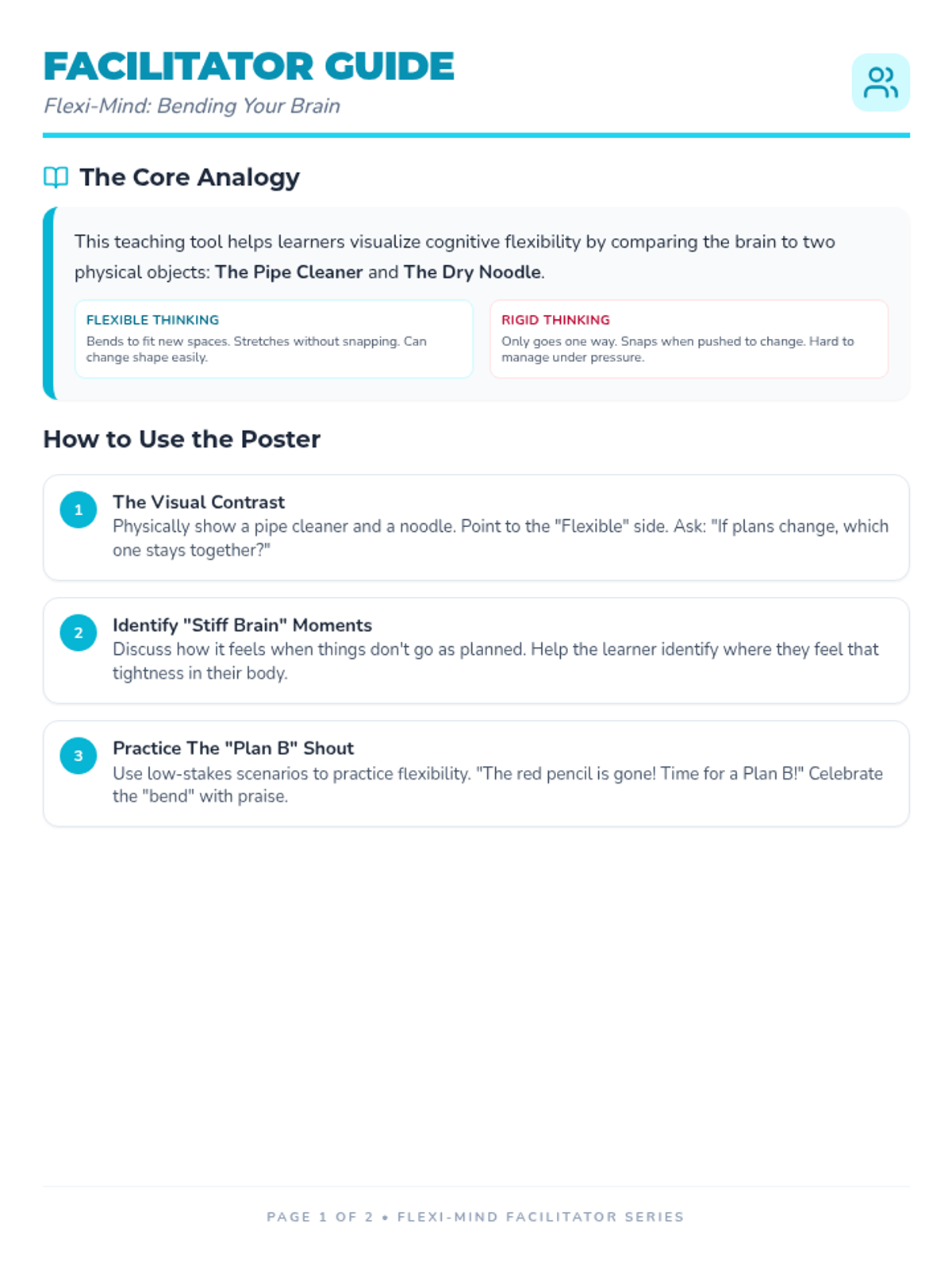
A lesson focused on teaching students the concept of cognitive flexibility through the pipe cleaner analogy, comparing 'flexible' and 'rigid' thinking styles.
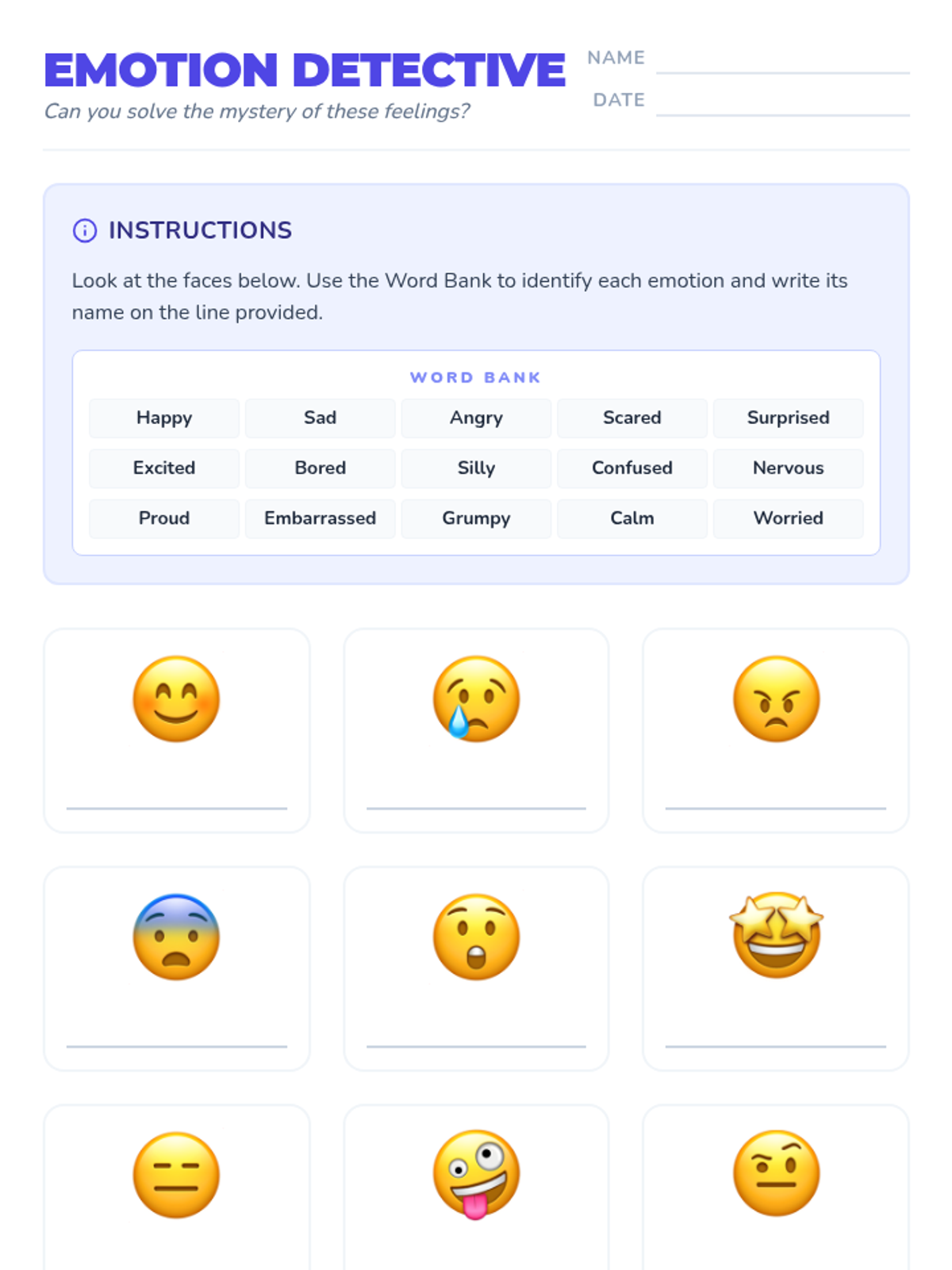
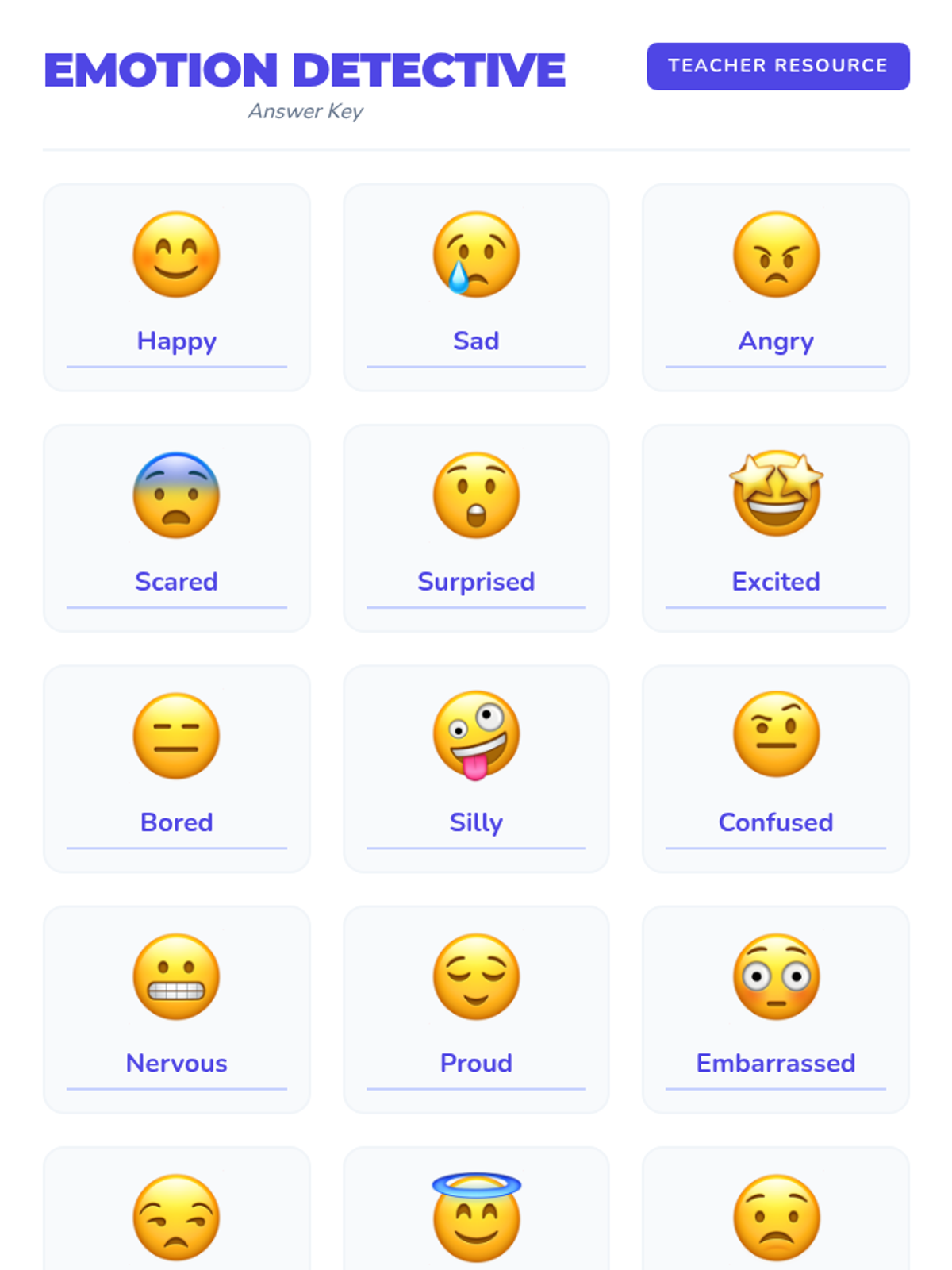
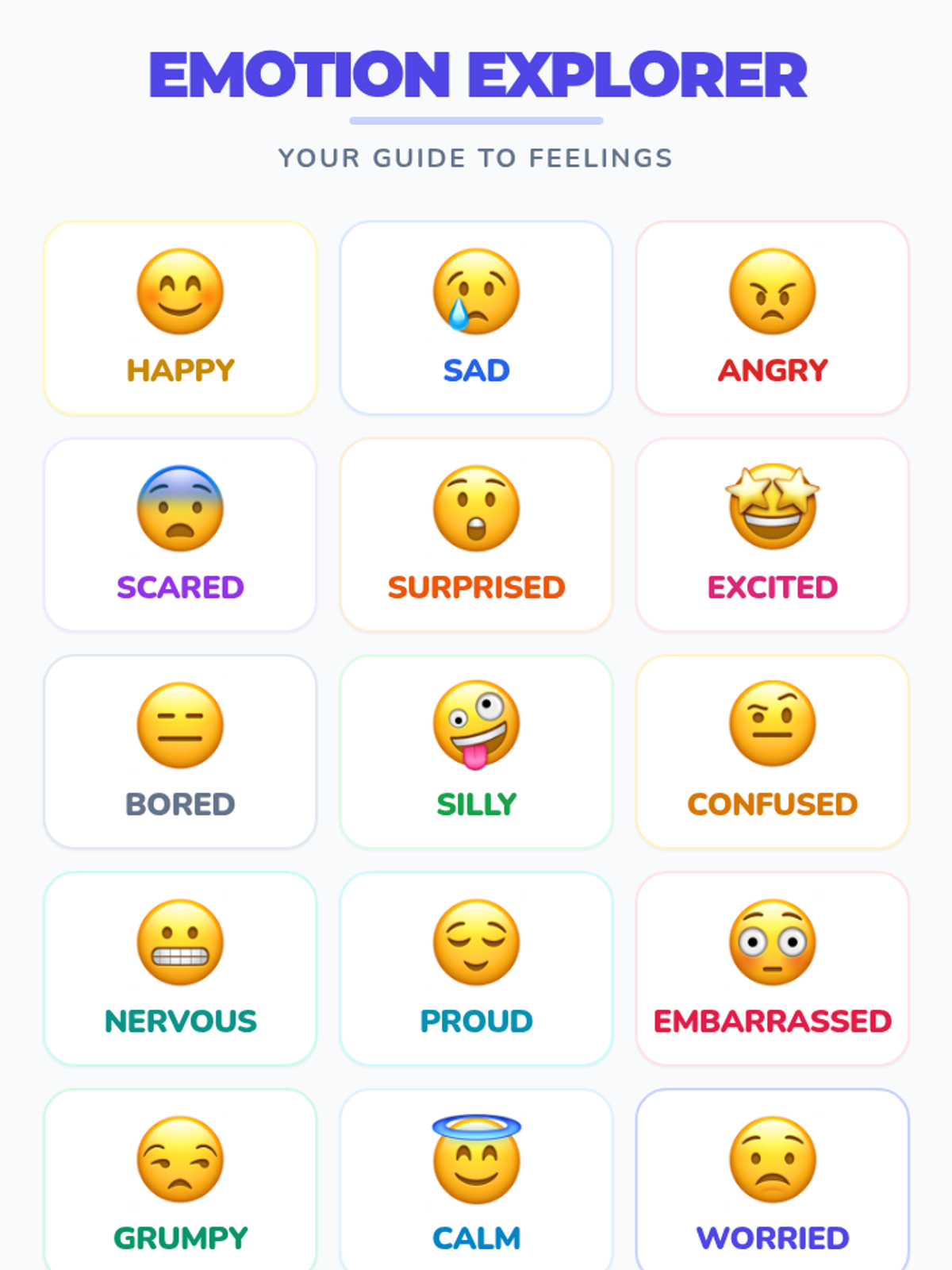
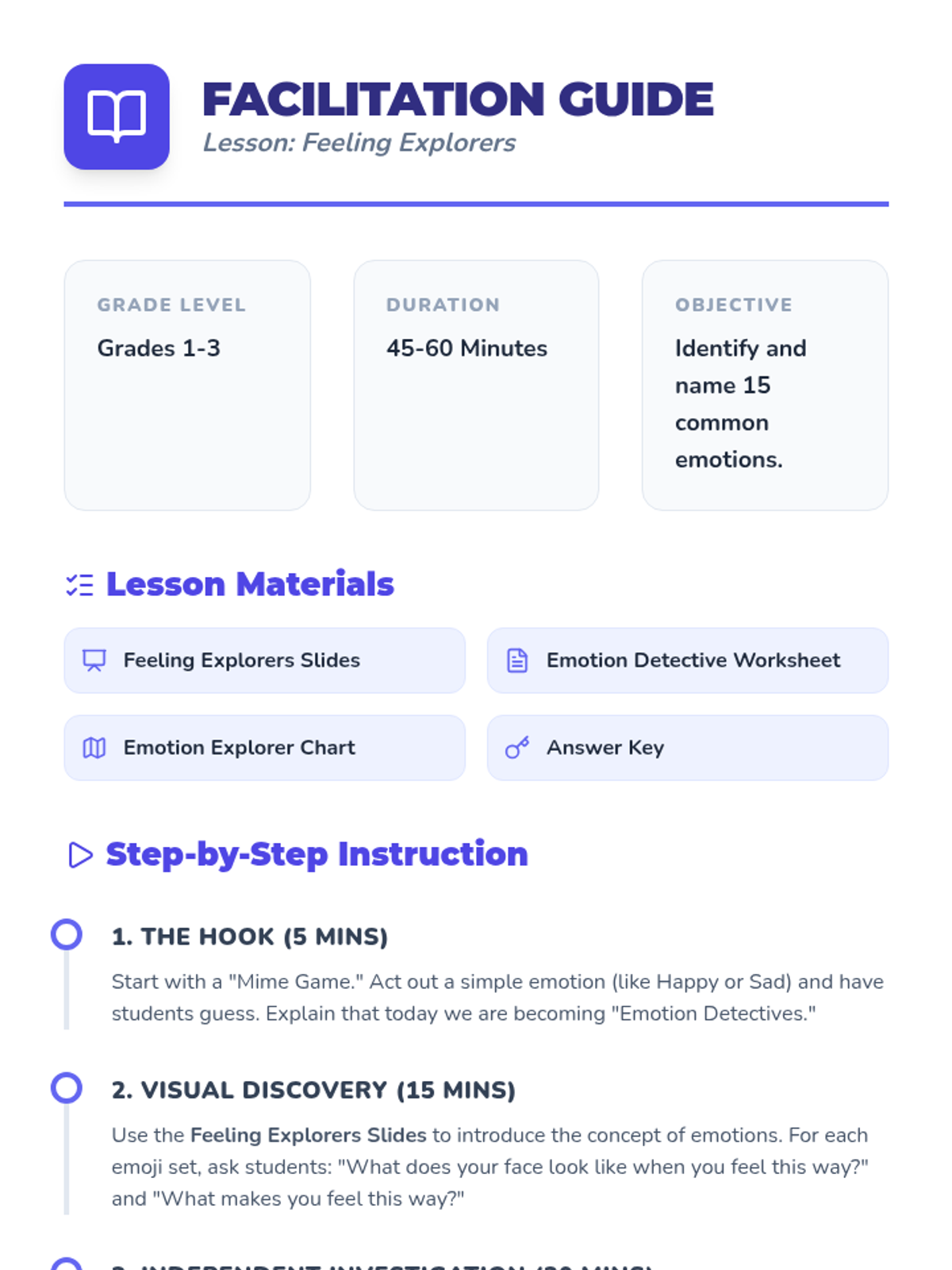
A lesson focused on identifying and naming a wide range of emotions to build emotional intelligence and vocabulary.
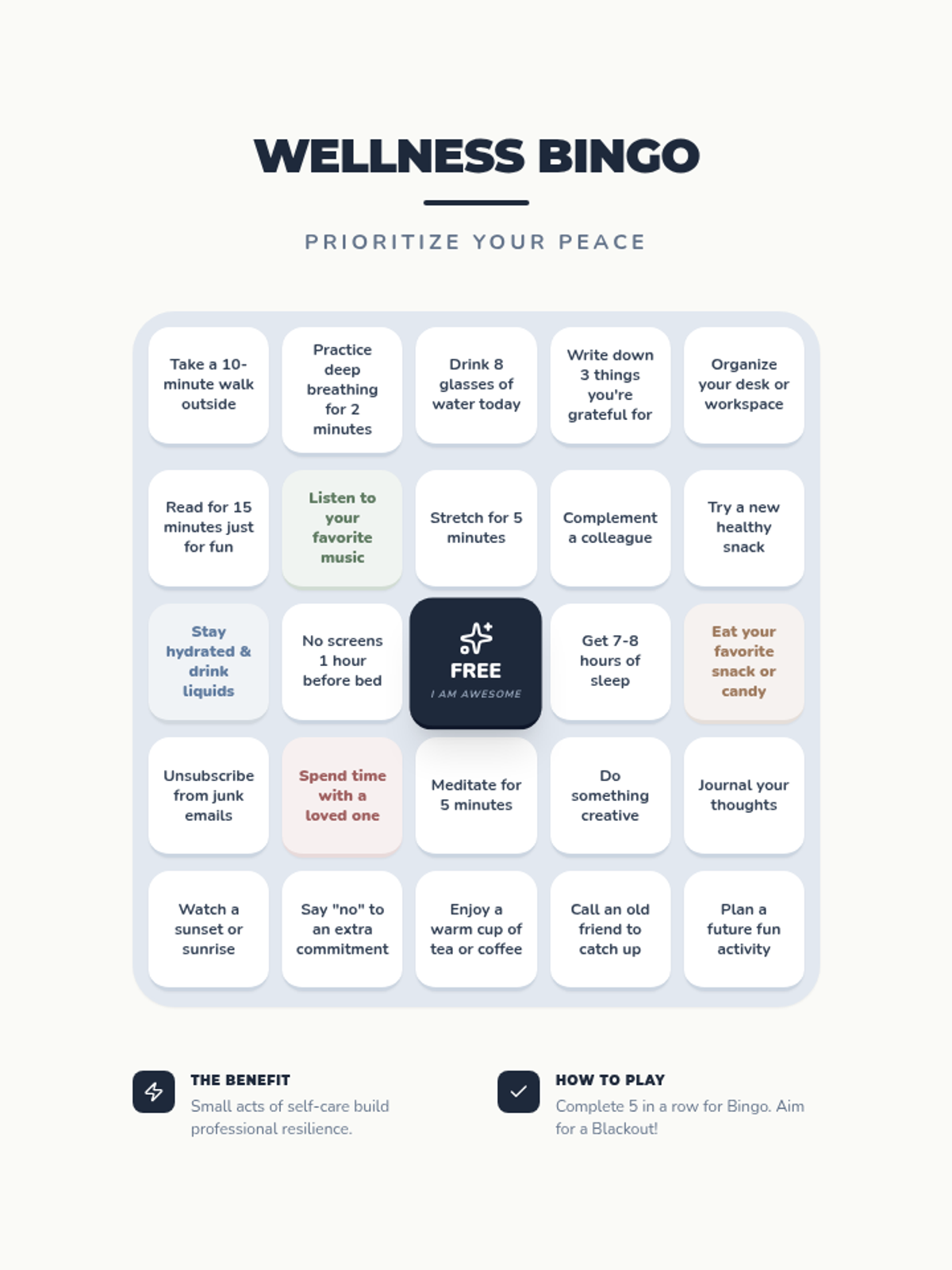
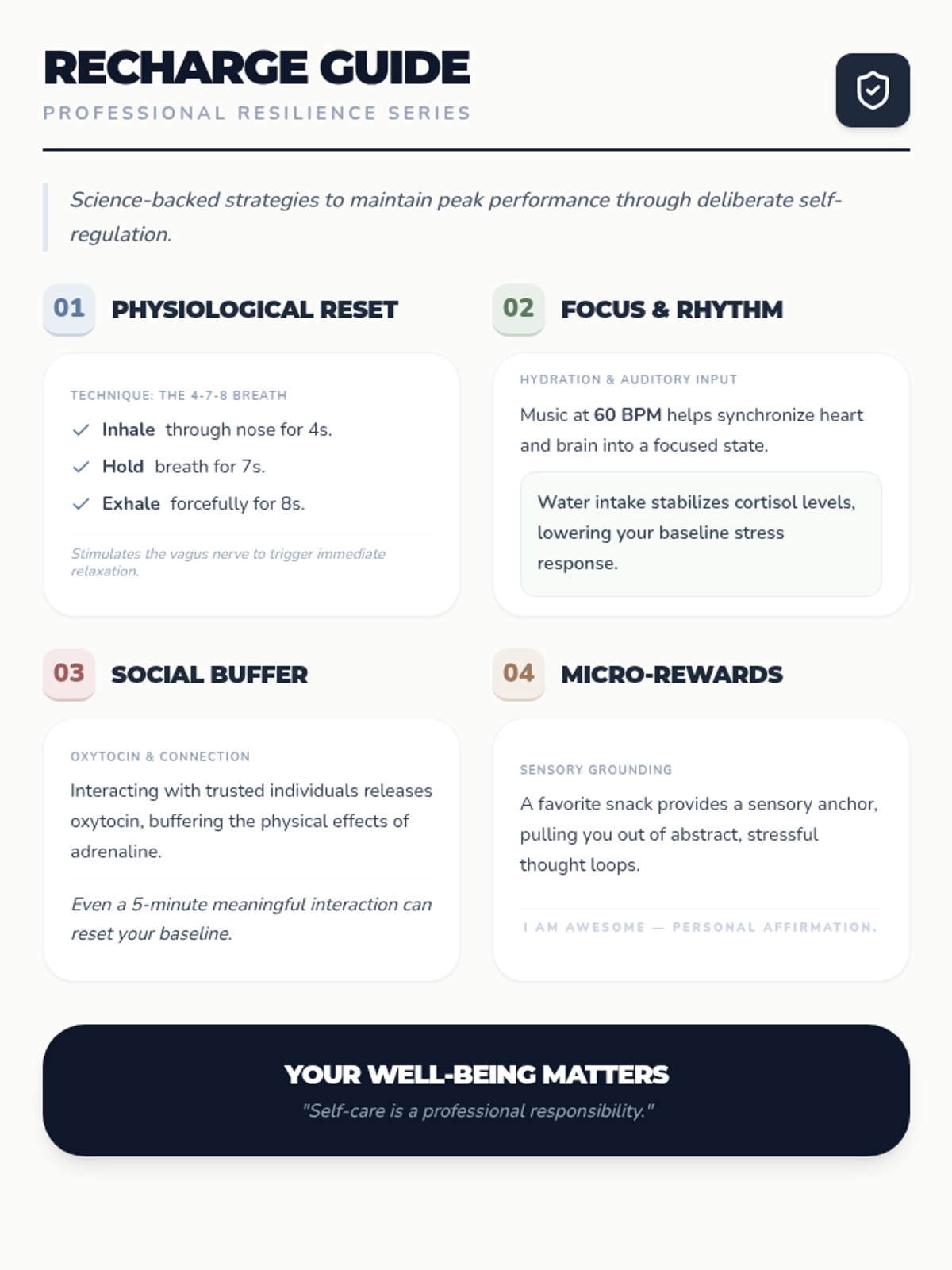
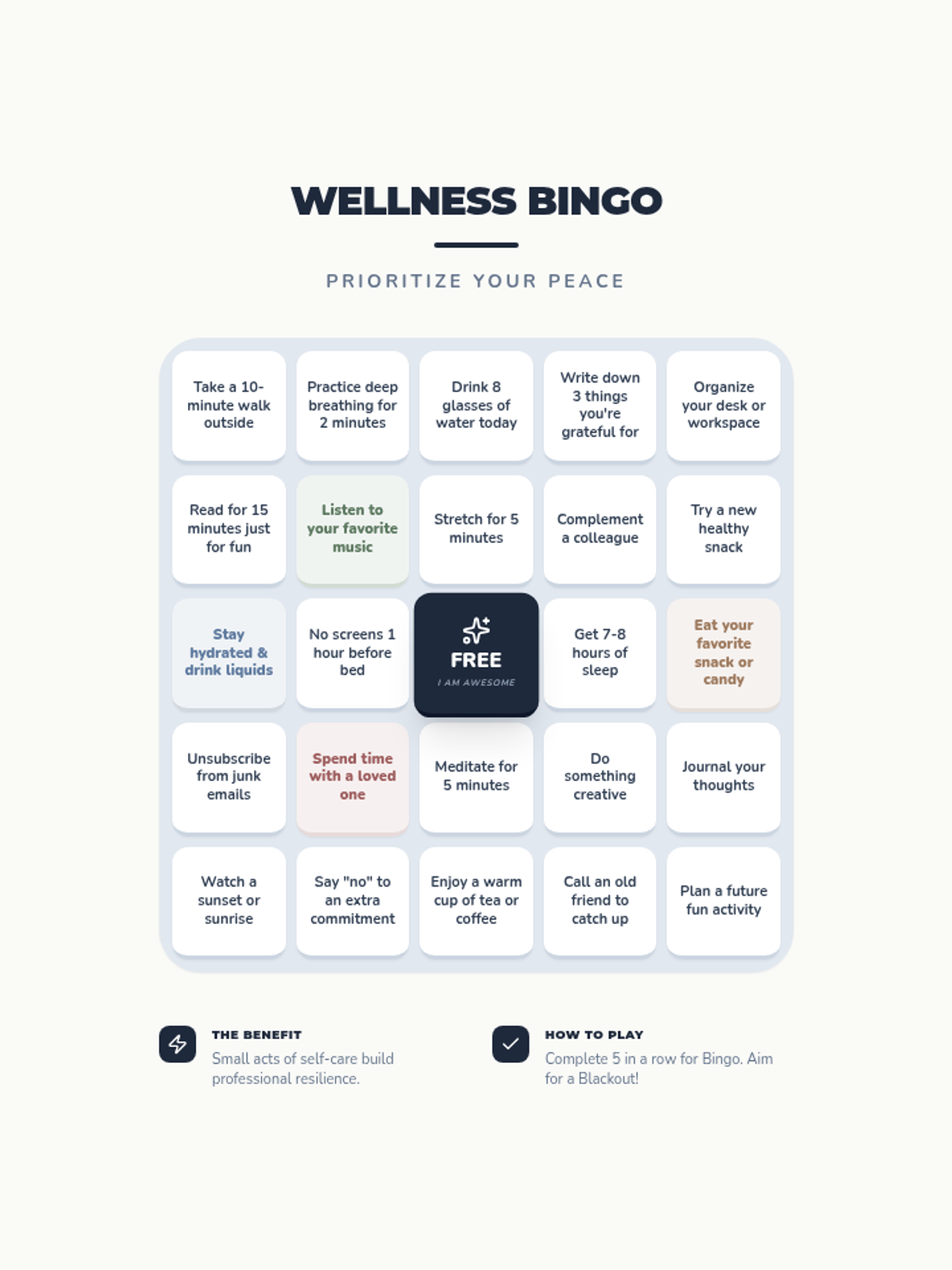
A collection of resources designed to help staff members prioritize their mental health, manage stress, and build a culture of wellness in the workplace.
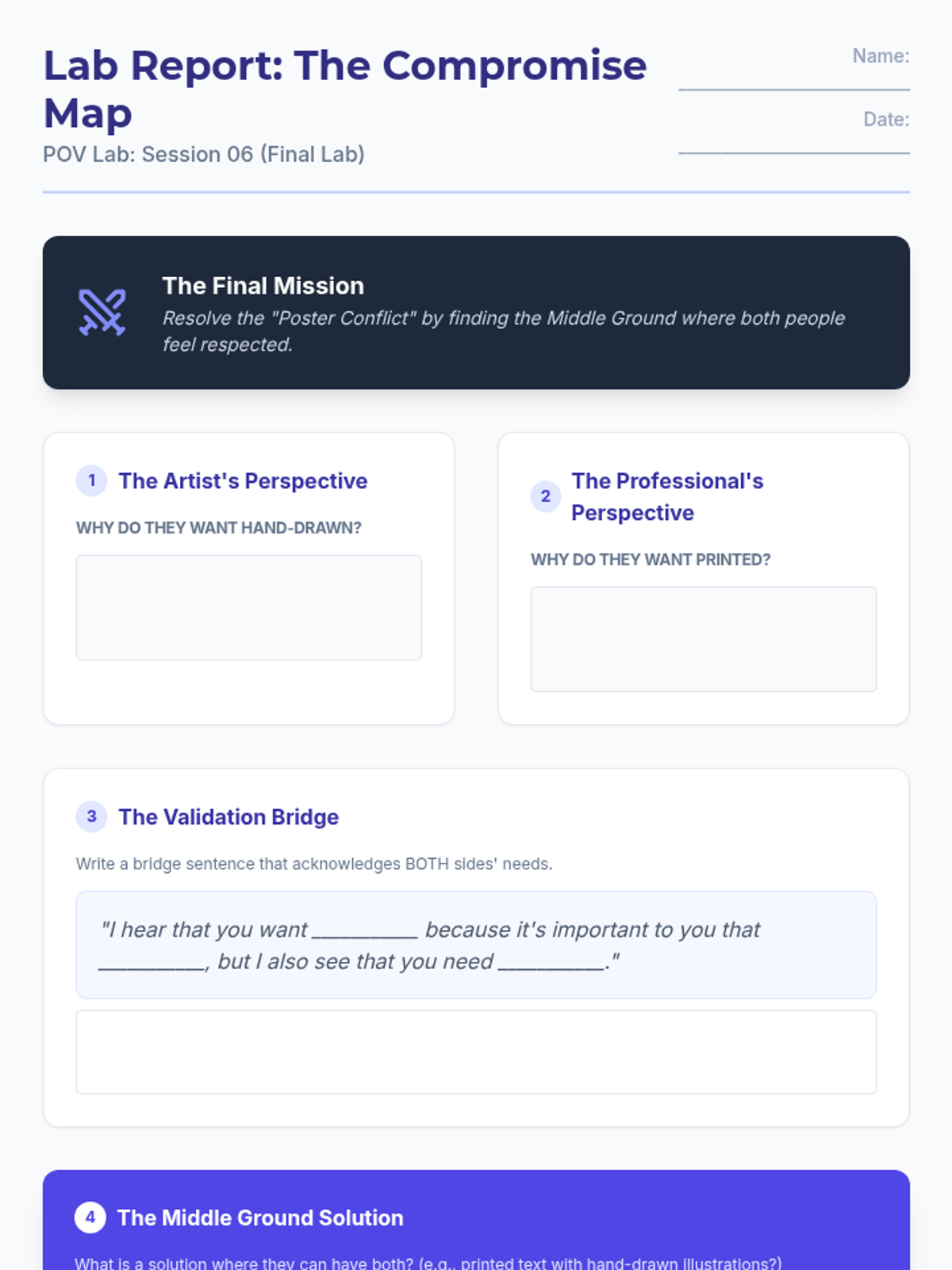
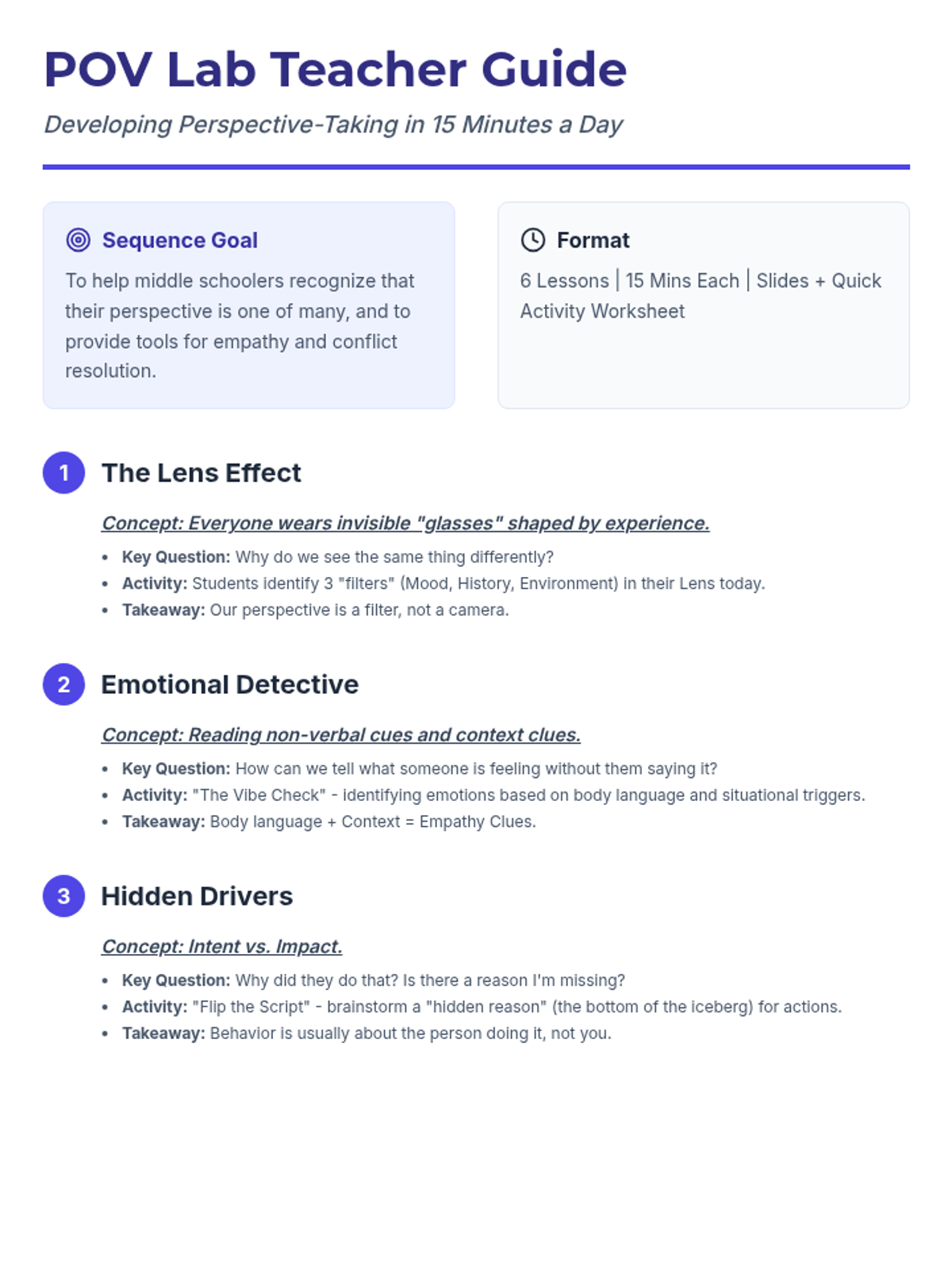
Integrates all previous skills to navigate a mock conflict and find a 'middle ground' resolution.
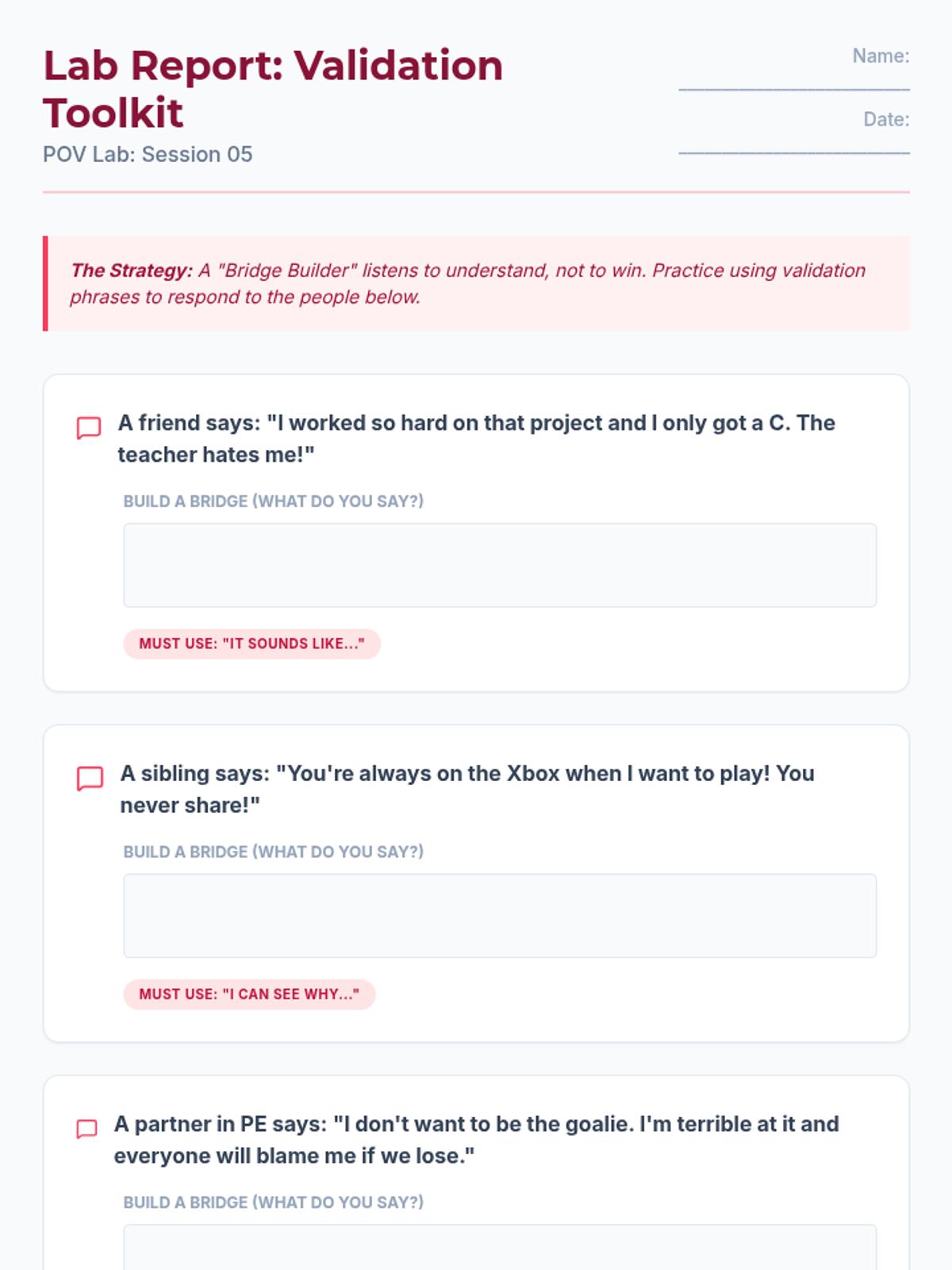
Focuses on active listening and validation—how to acknowledge someone else's perspective even if you don't agree.
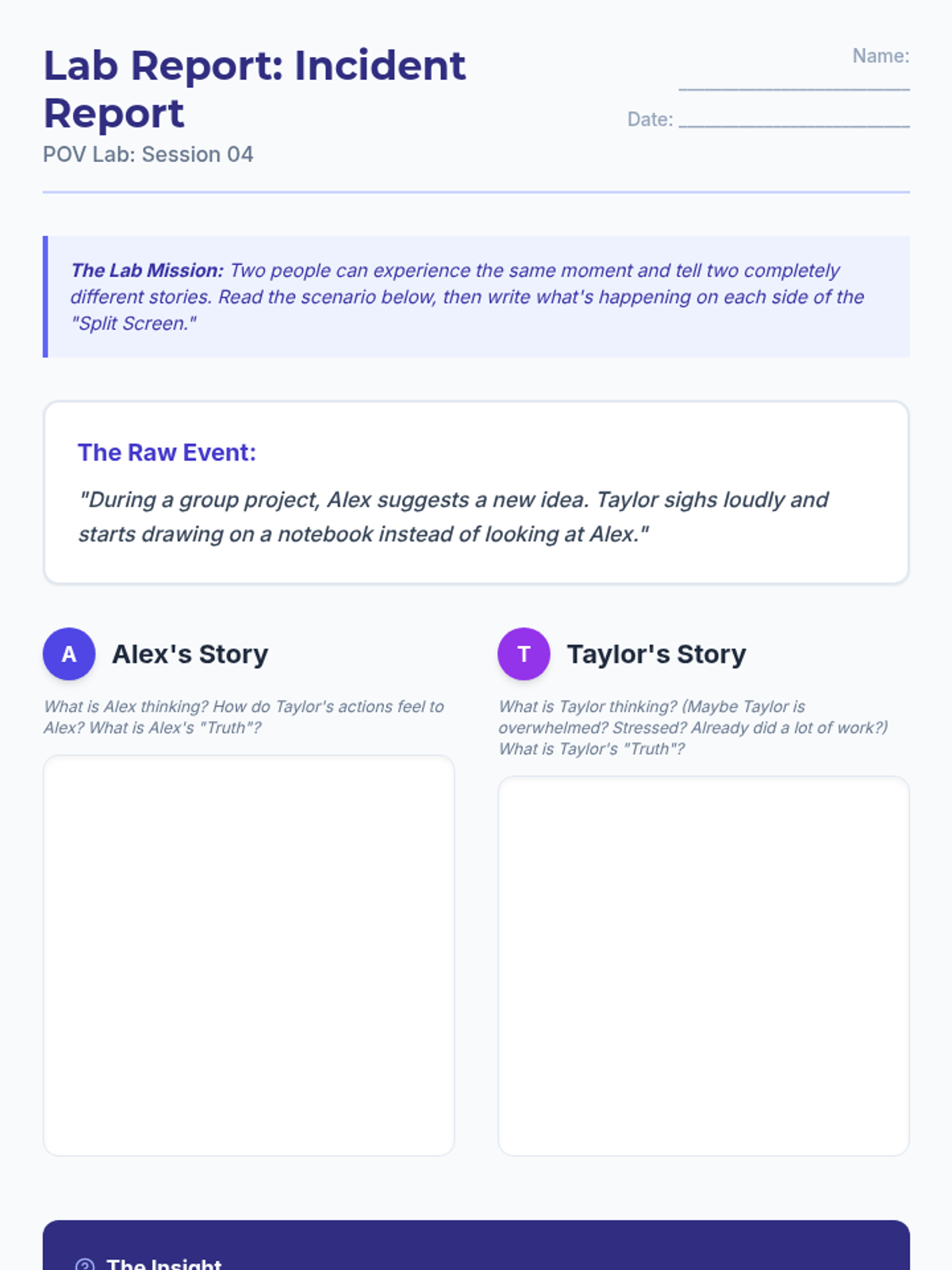
Examines how two people can experience the exact same event and have two different, valid 'truths'.
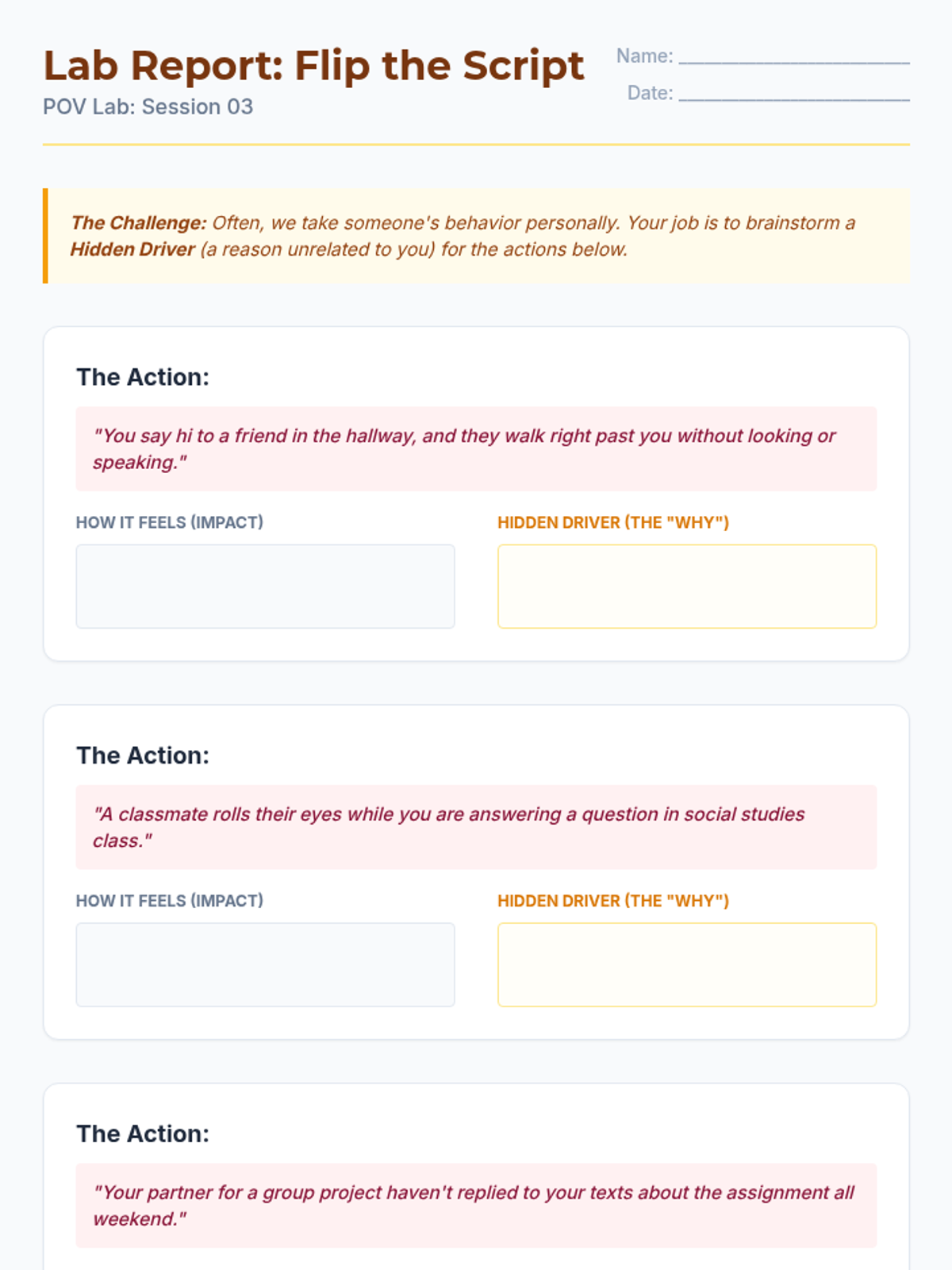
Explores the difference between intent and impact, helping students look for the 'why' behind people's actions.
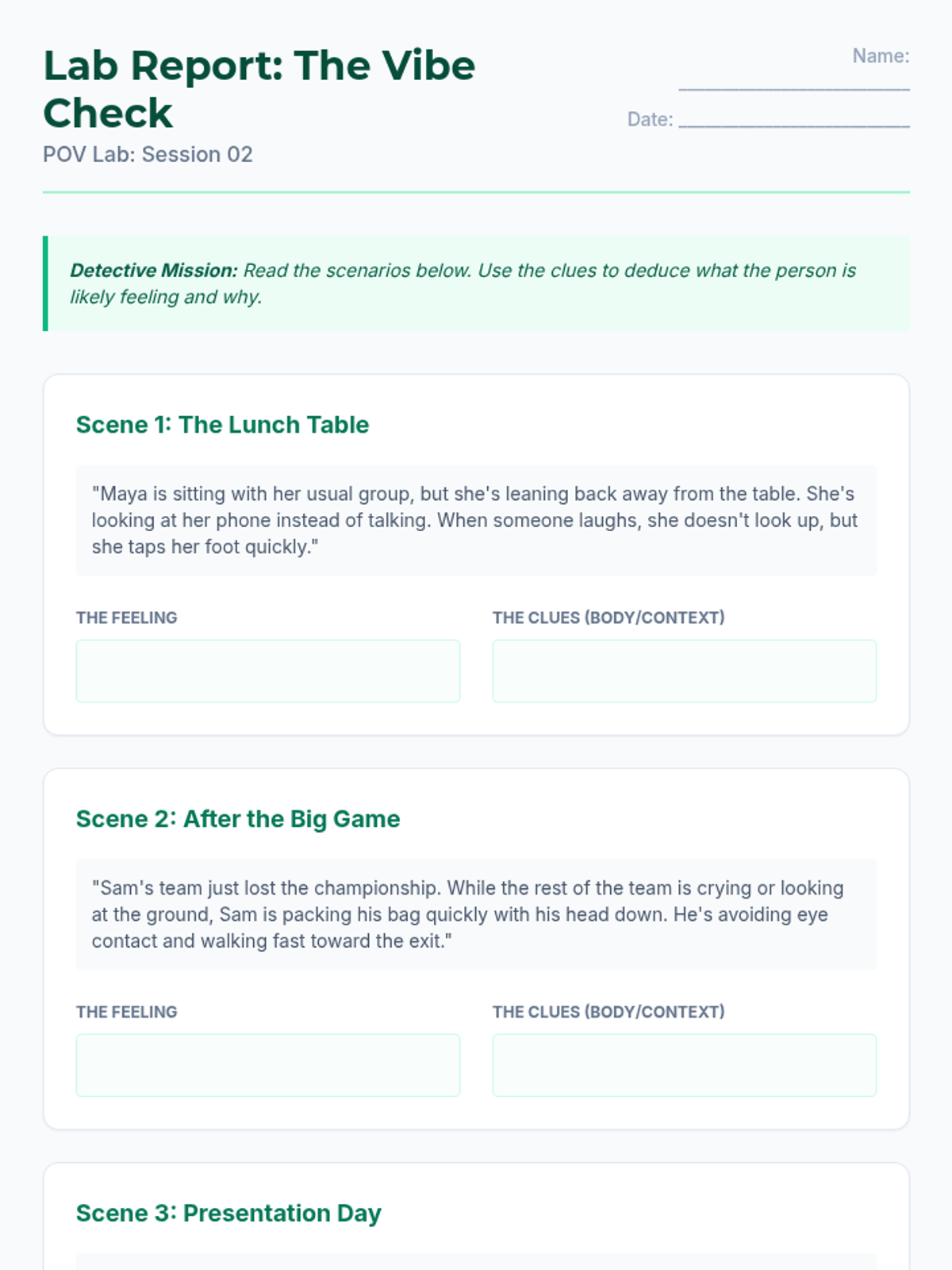
Teaches students to look for non-verbal cues and situational context to identify how others are feeling.
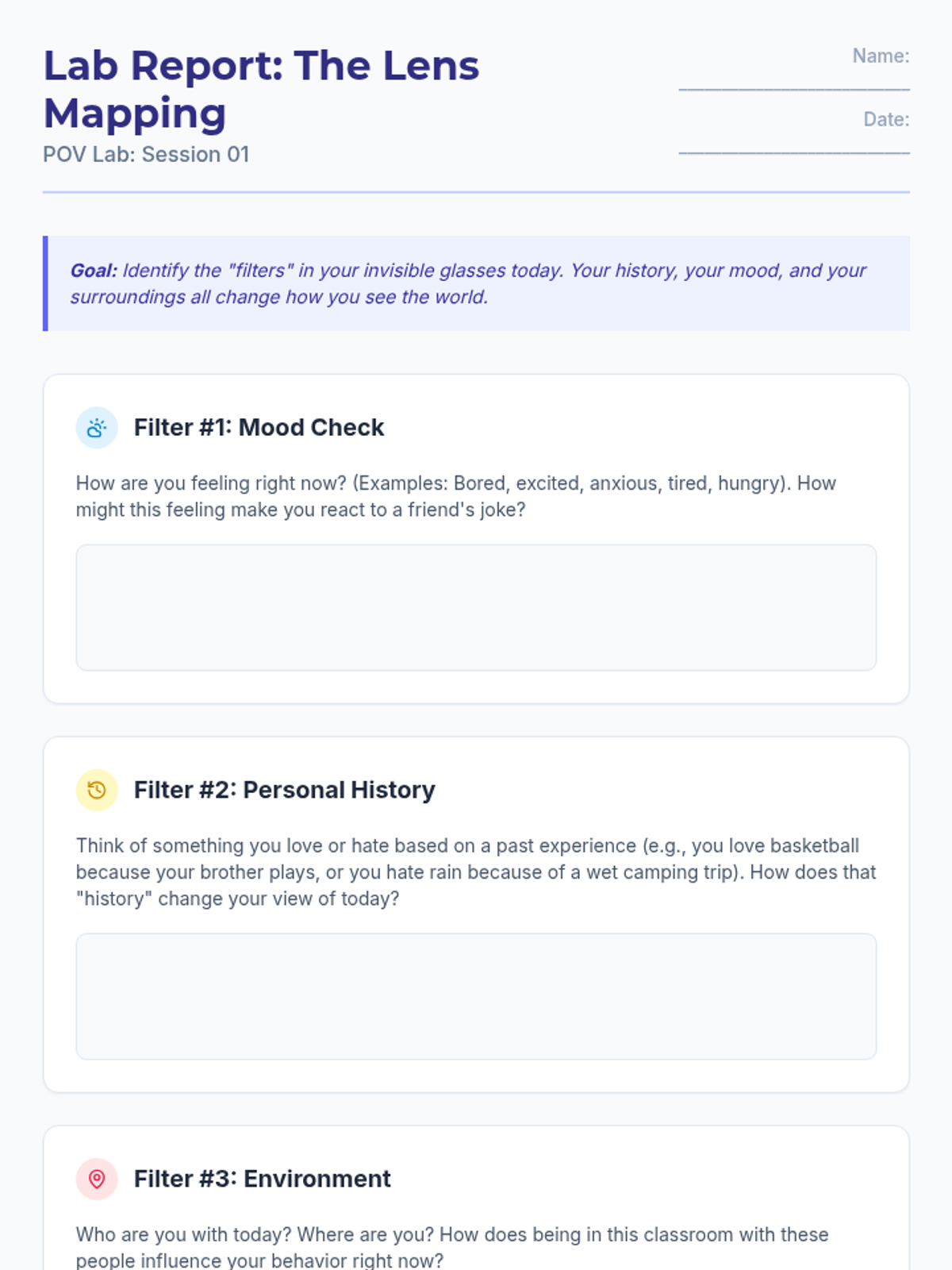
Introduces the concept of 'invisible lenses'—how our personal history, current mood, and environment shape how we see the world.
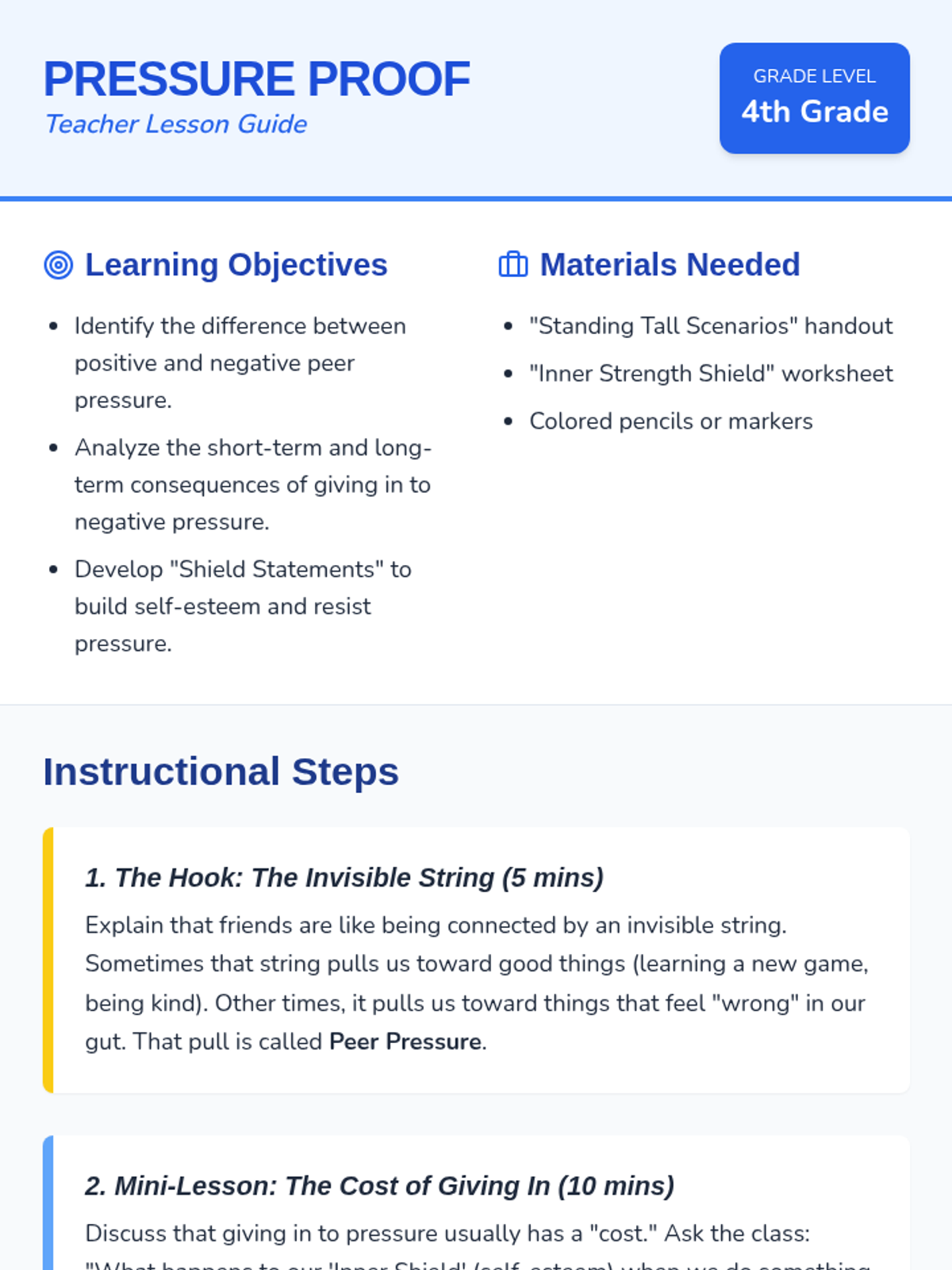
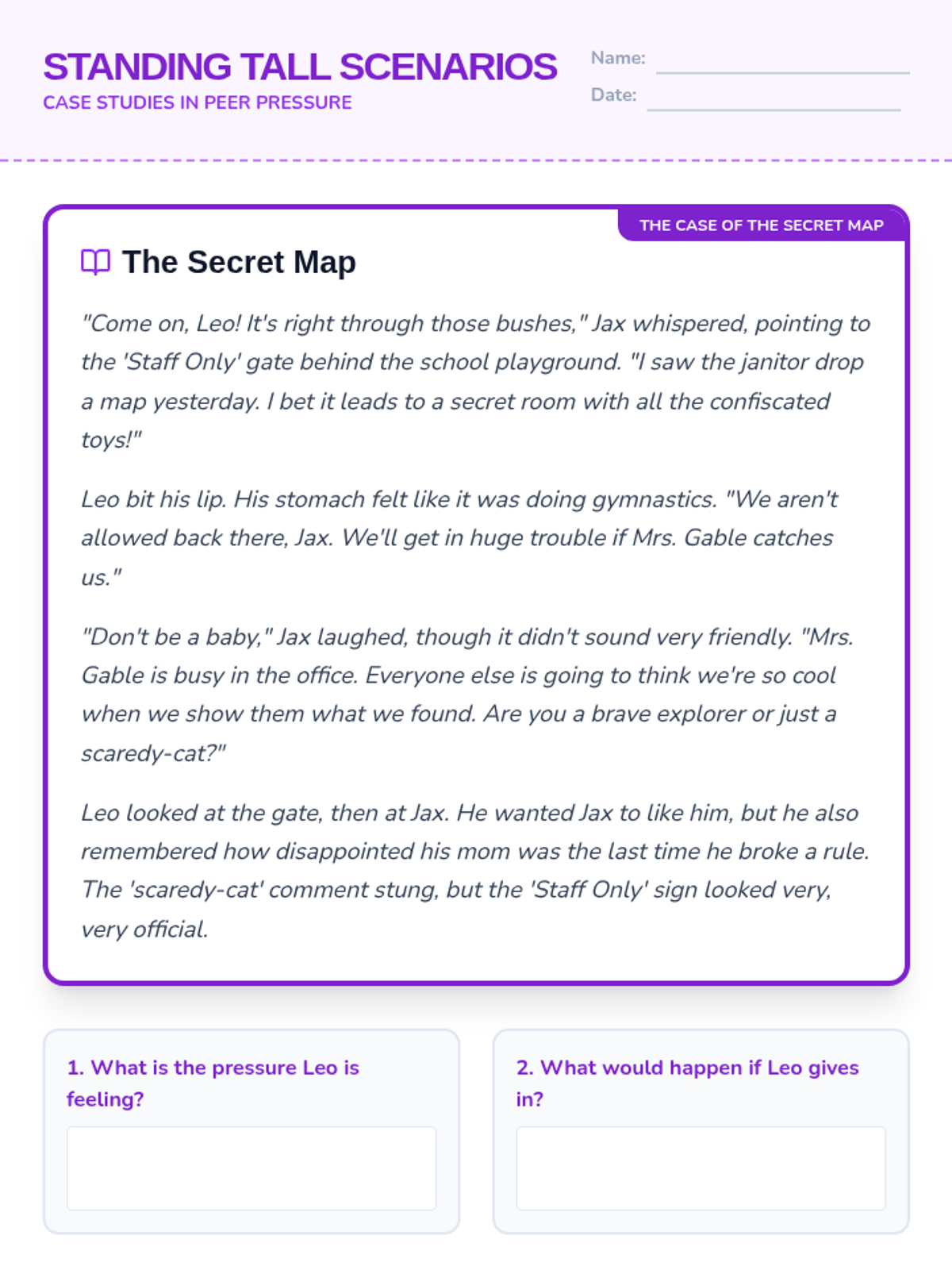
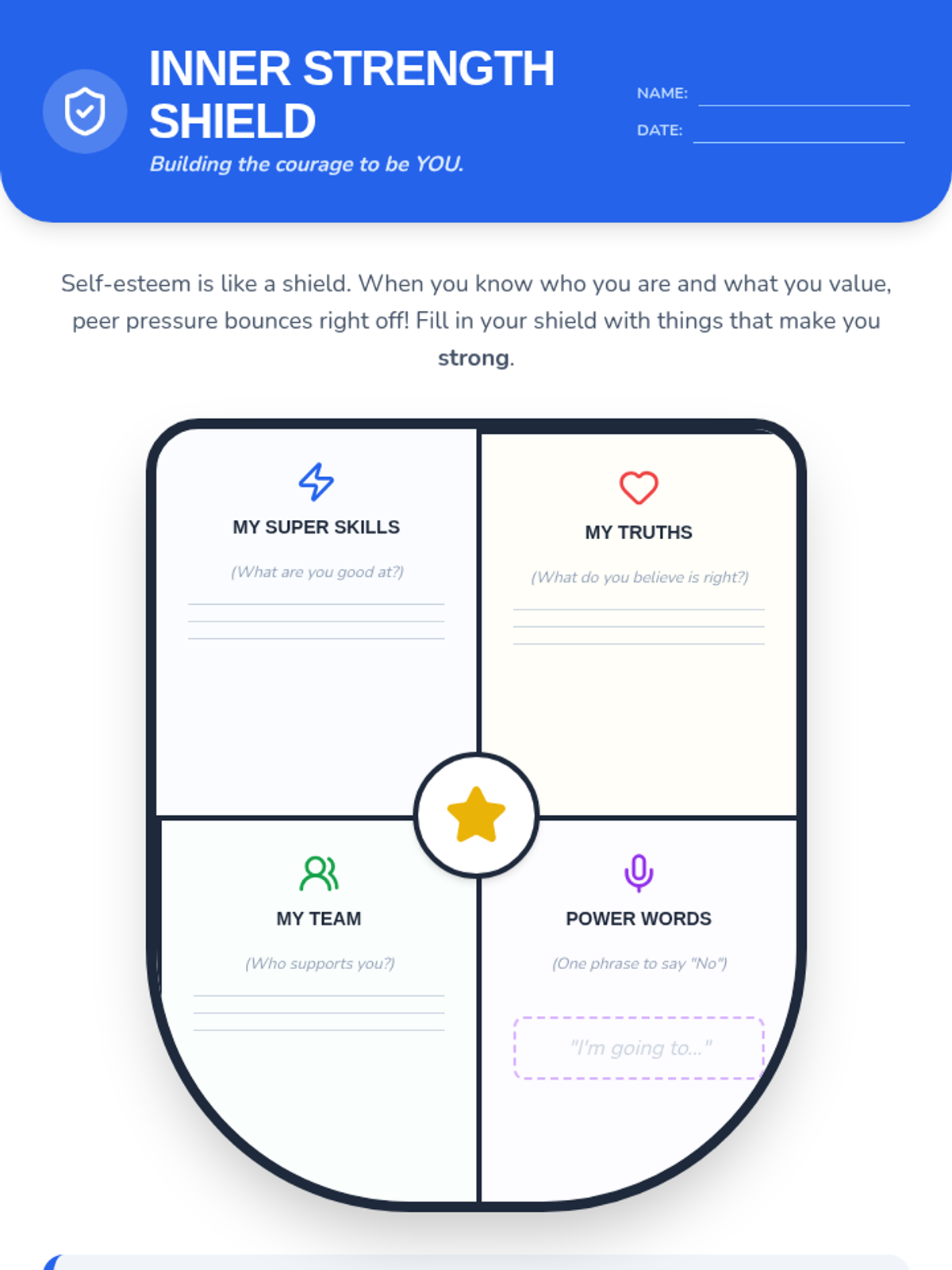
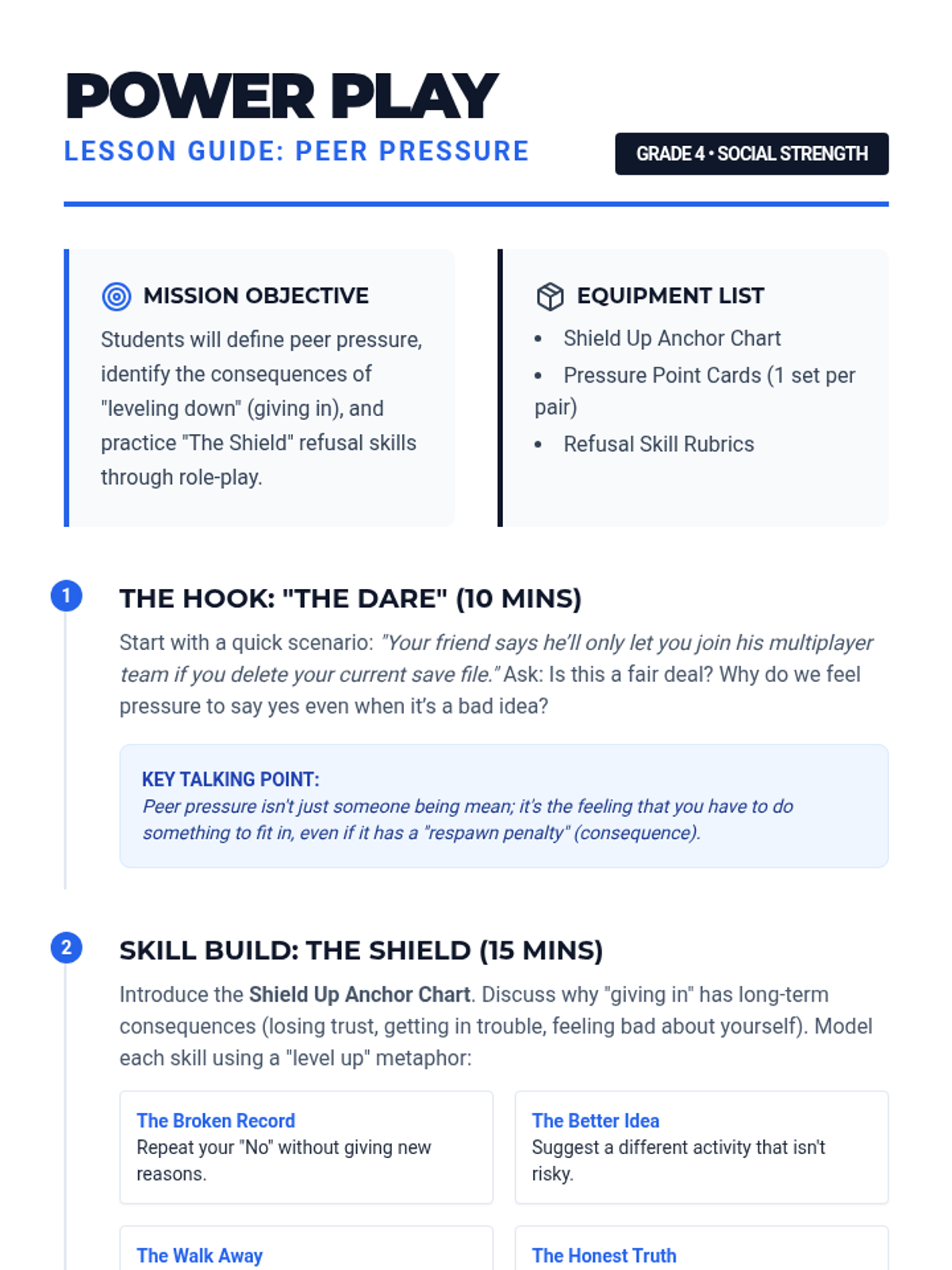
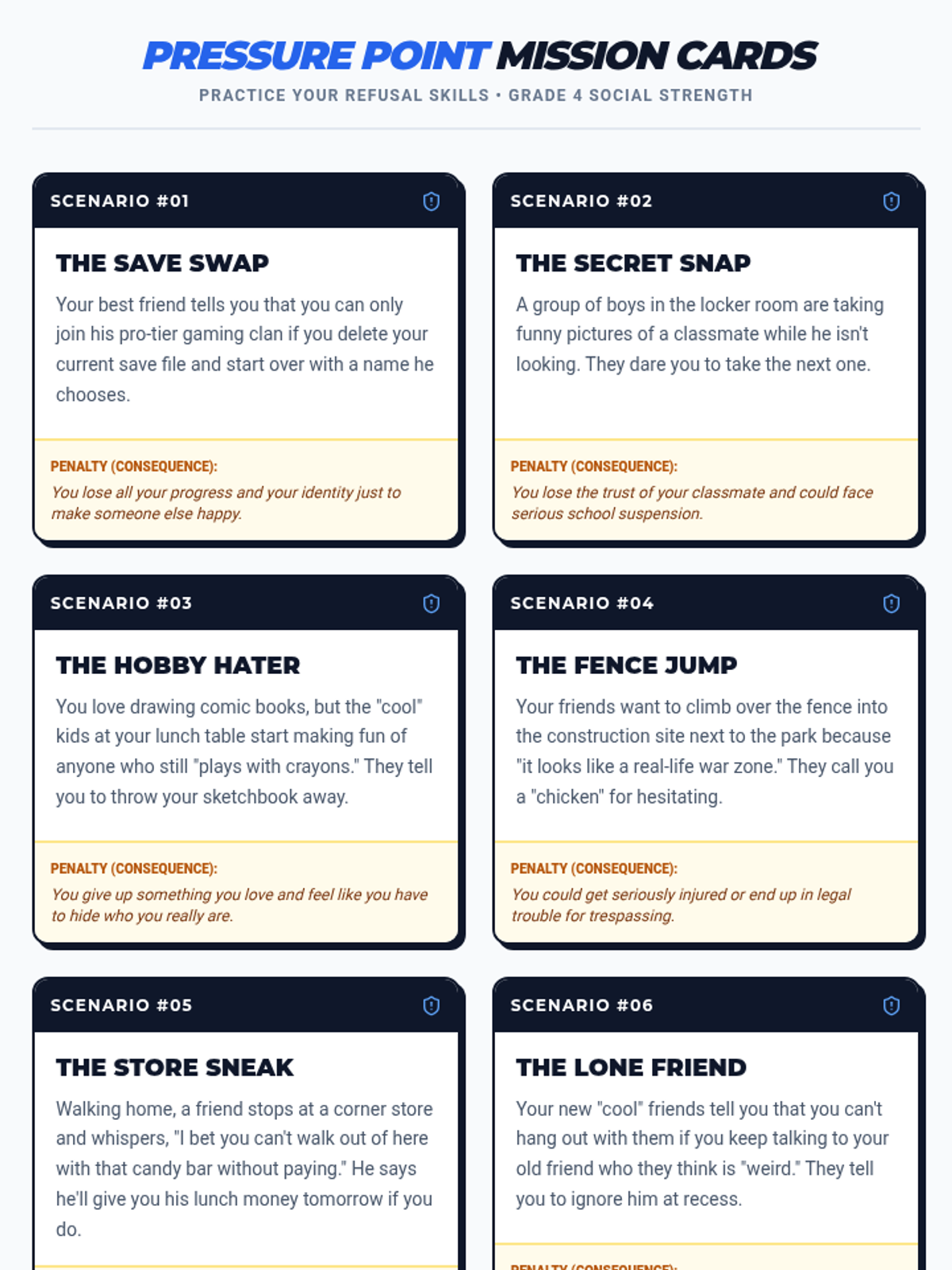
A comprehensive mini-lesson designed for 4th graders to identify peer pressure, understand its consequences, and develop the self-esteem necessary to stand their ground.
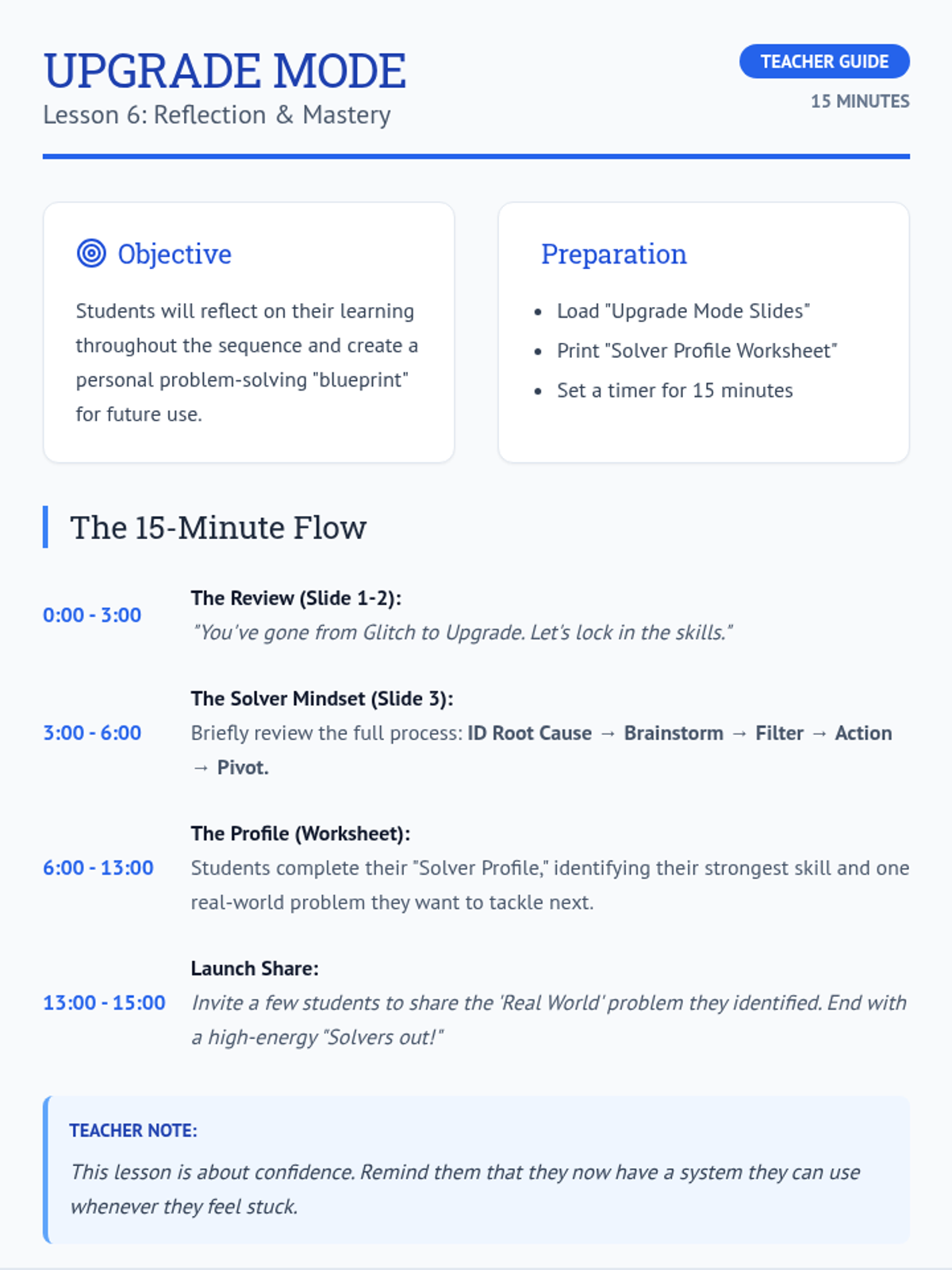
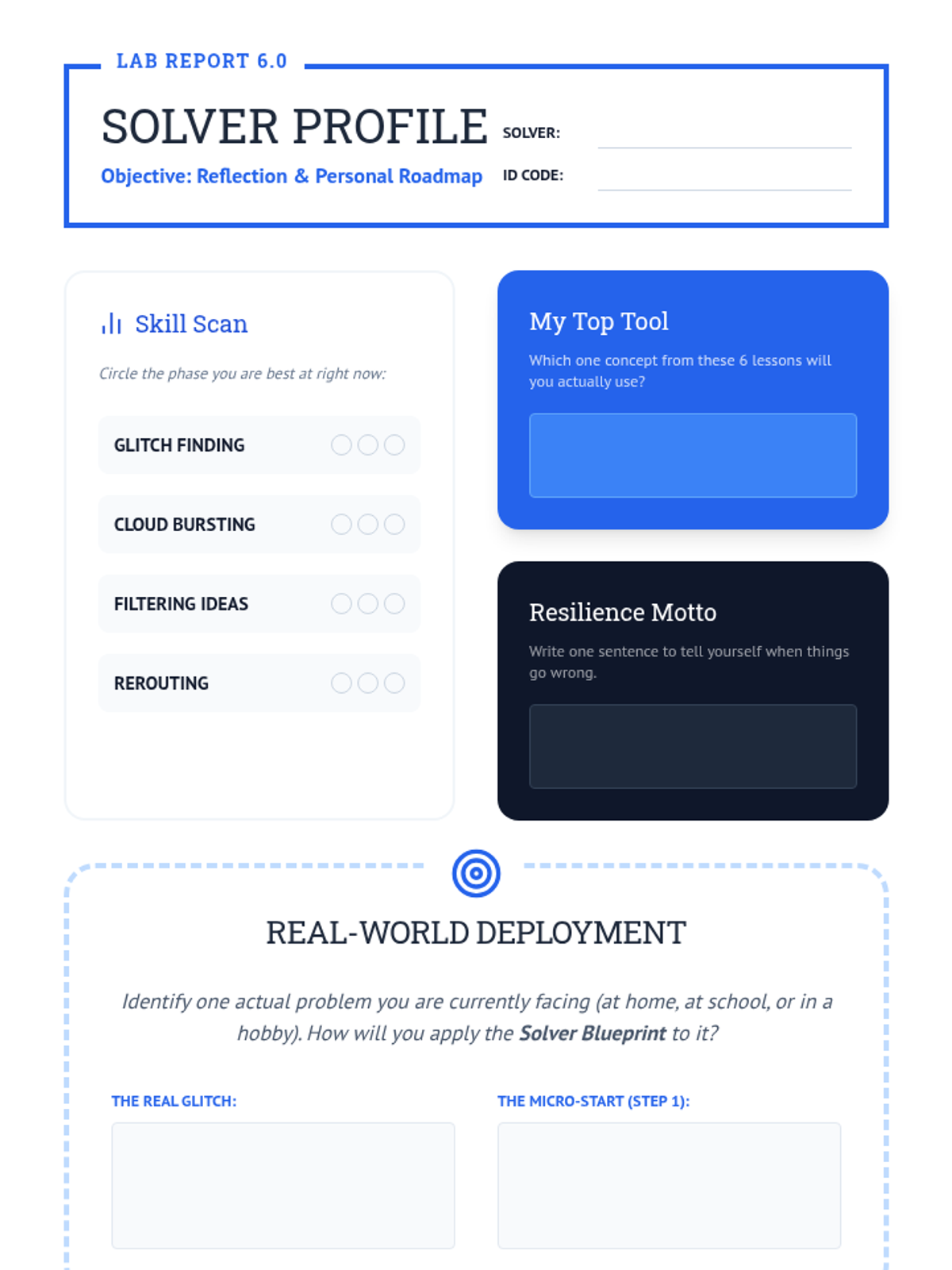
A reflection-focused lesson where students analyze their problem-solving journey and plan for future challenges.
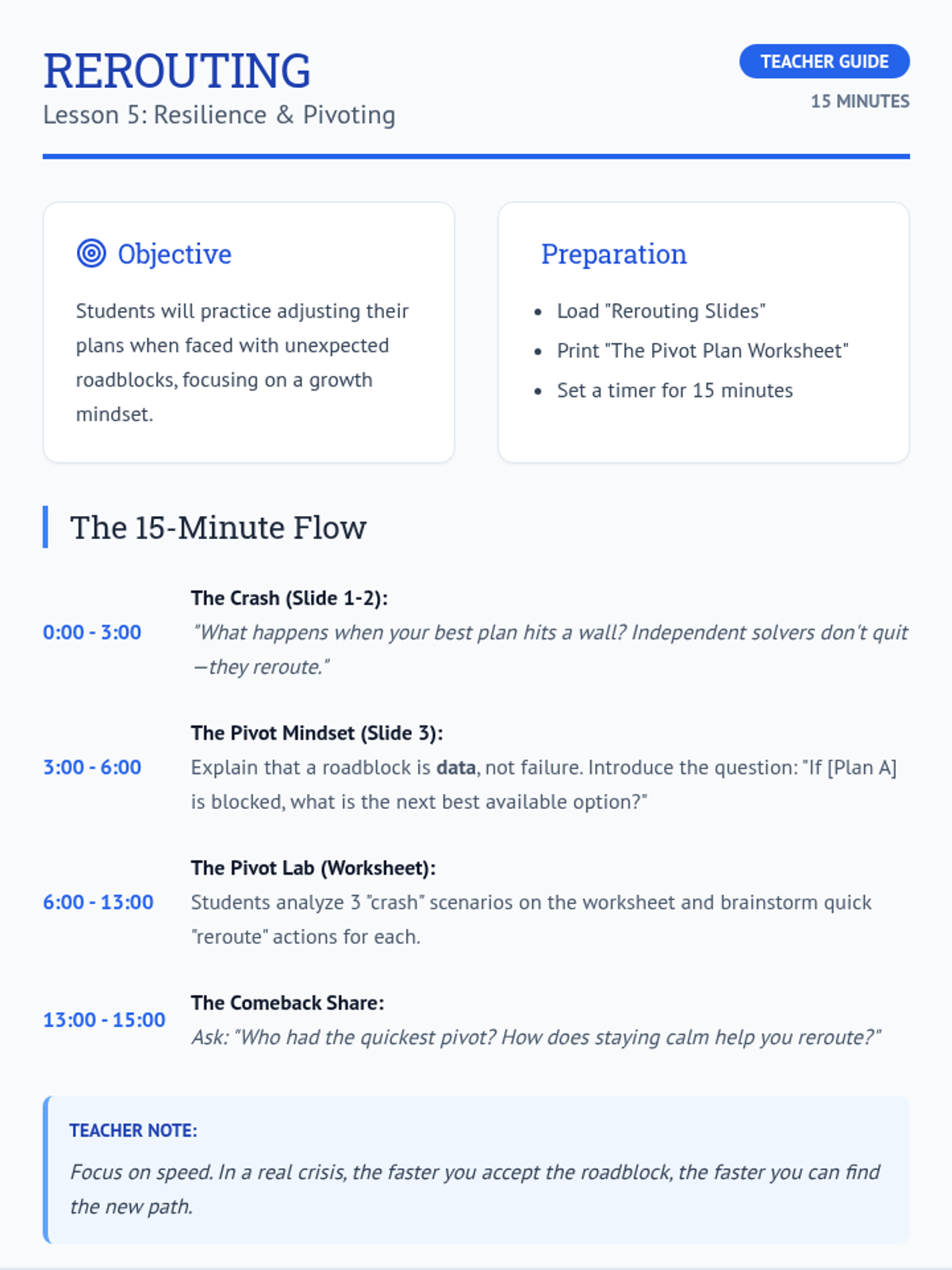
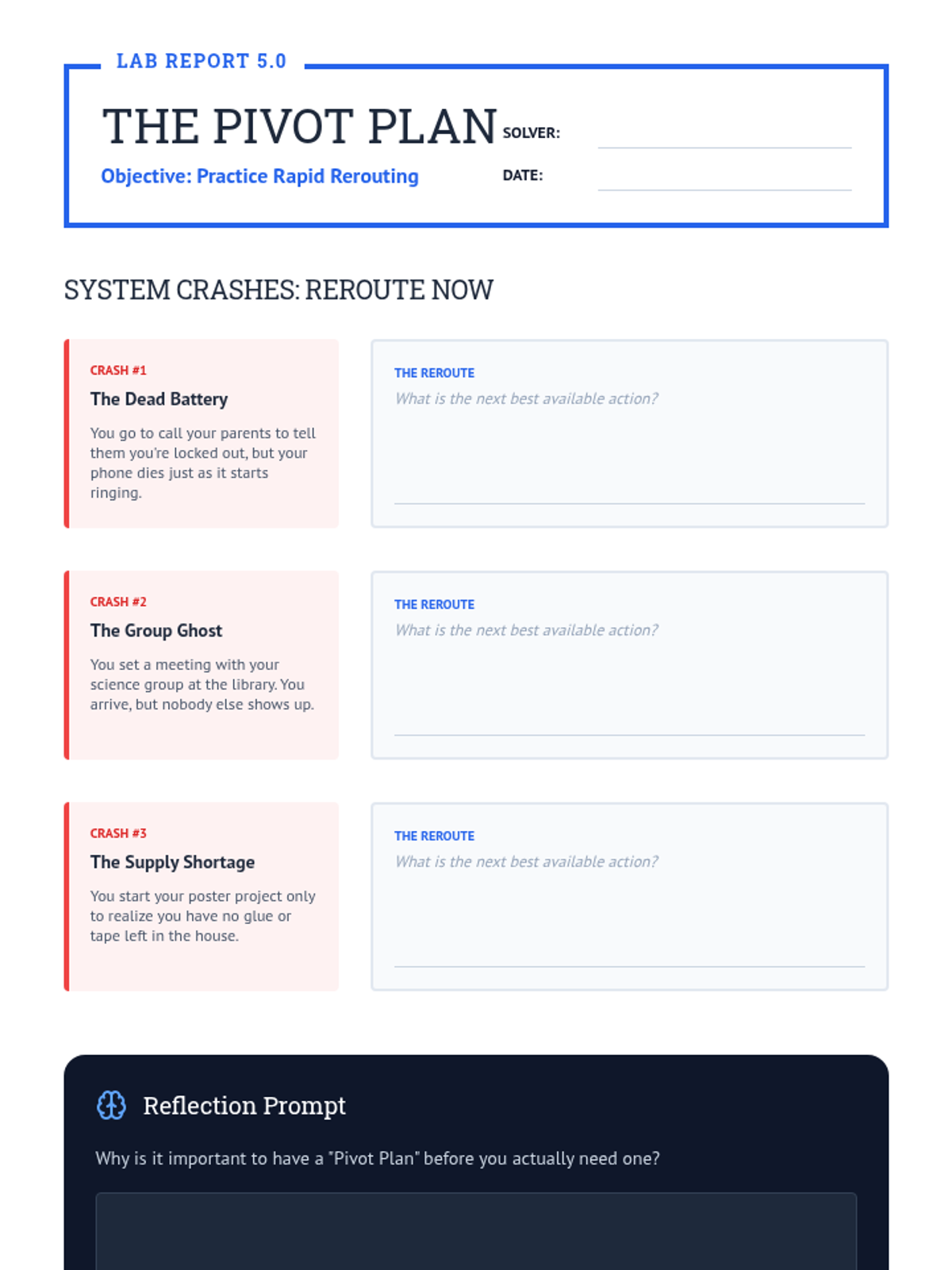
Teaches students how to handle setbacks and adjust their plans when things don't go as expected.
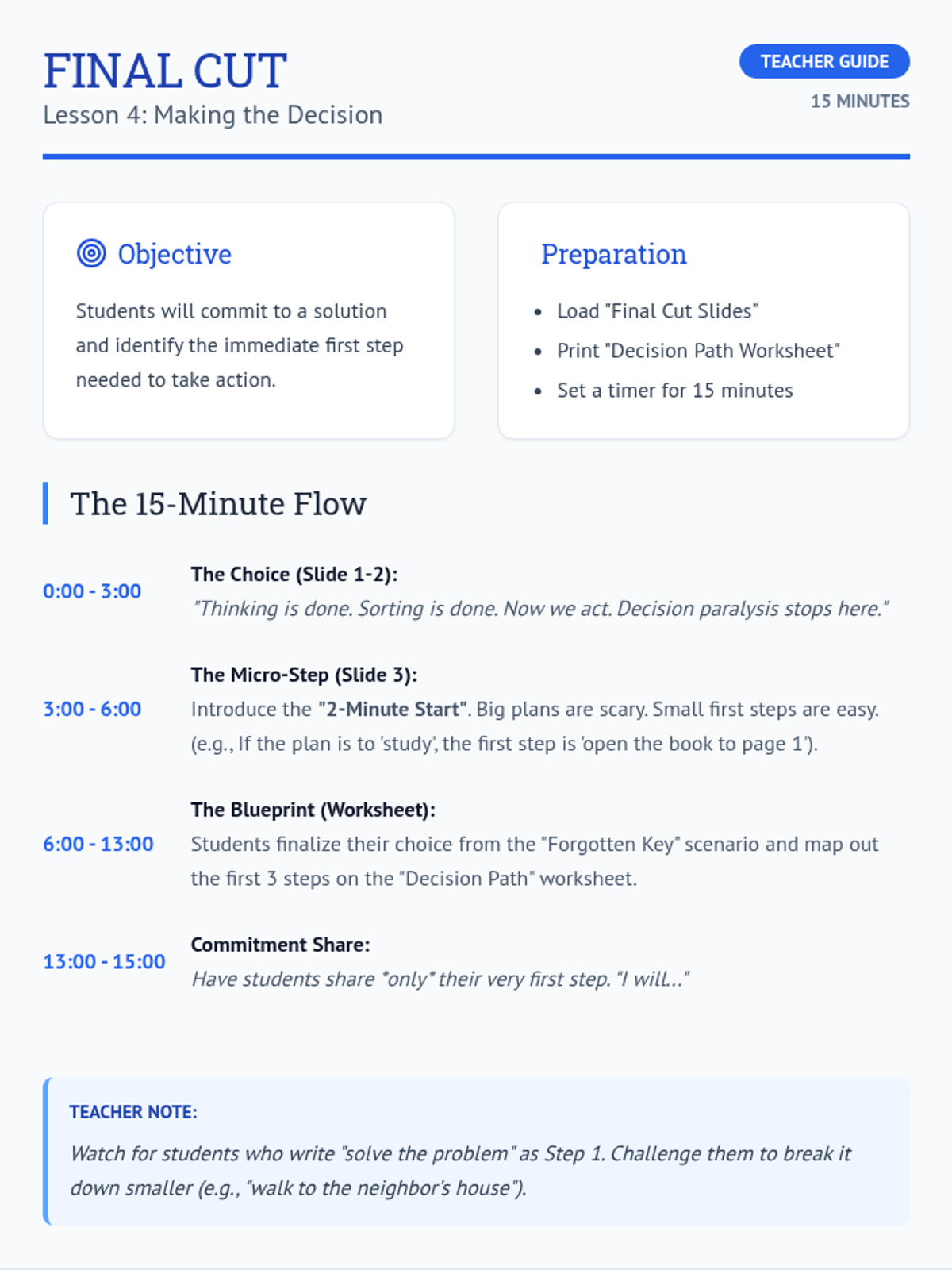
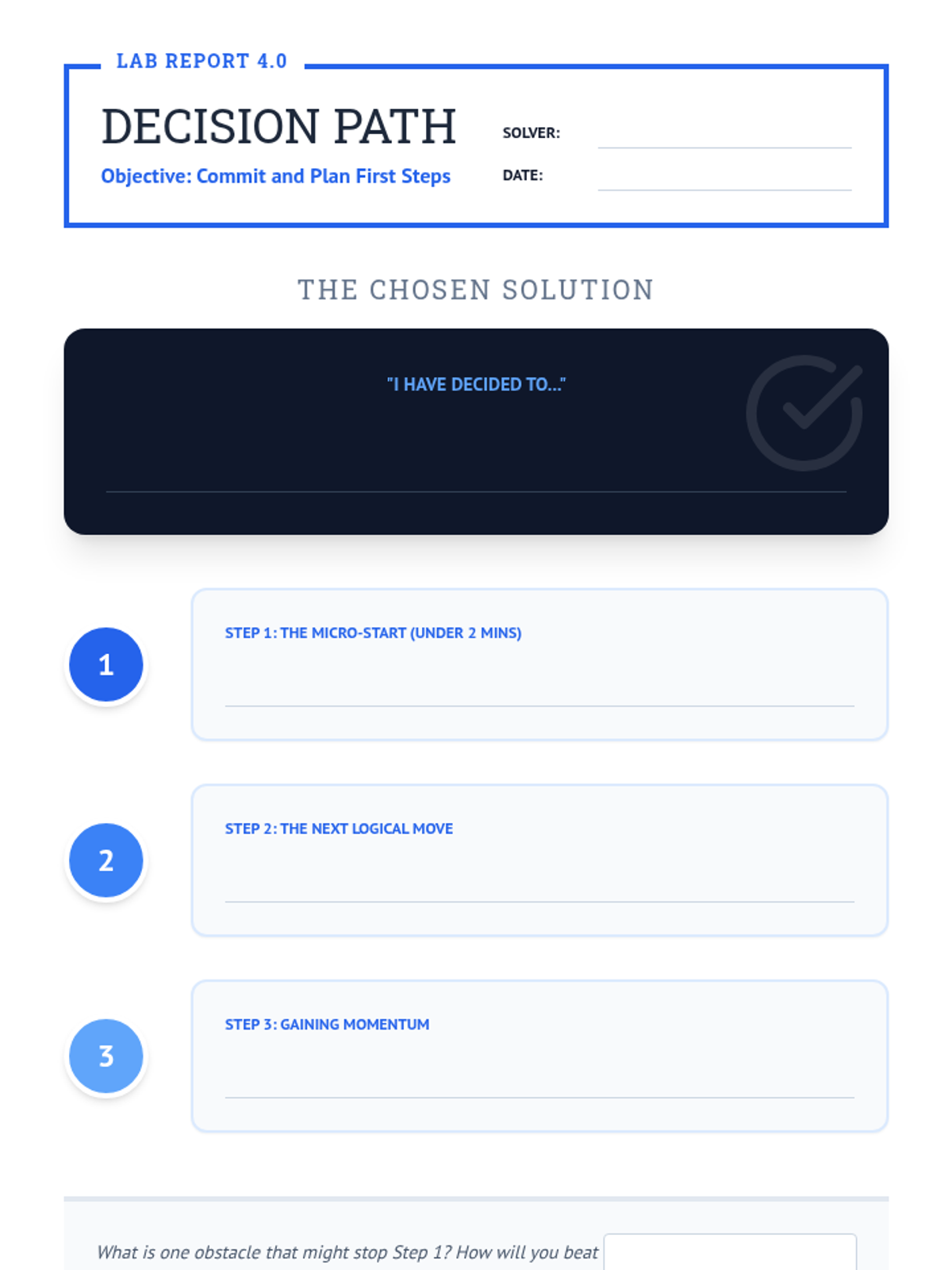
Focuses on the final decision-making process and planning the immediate first step for action.
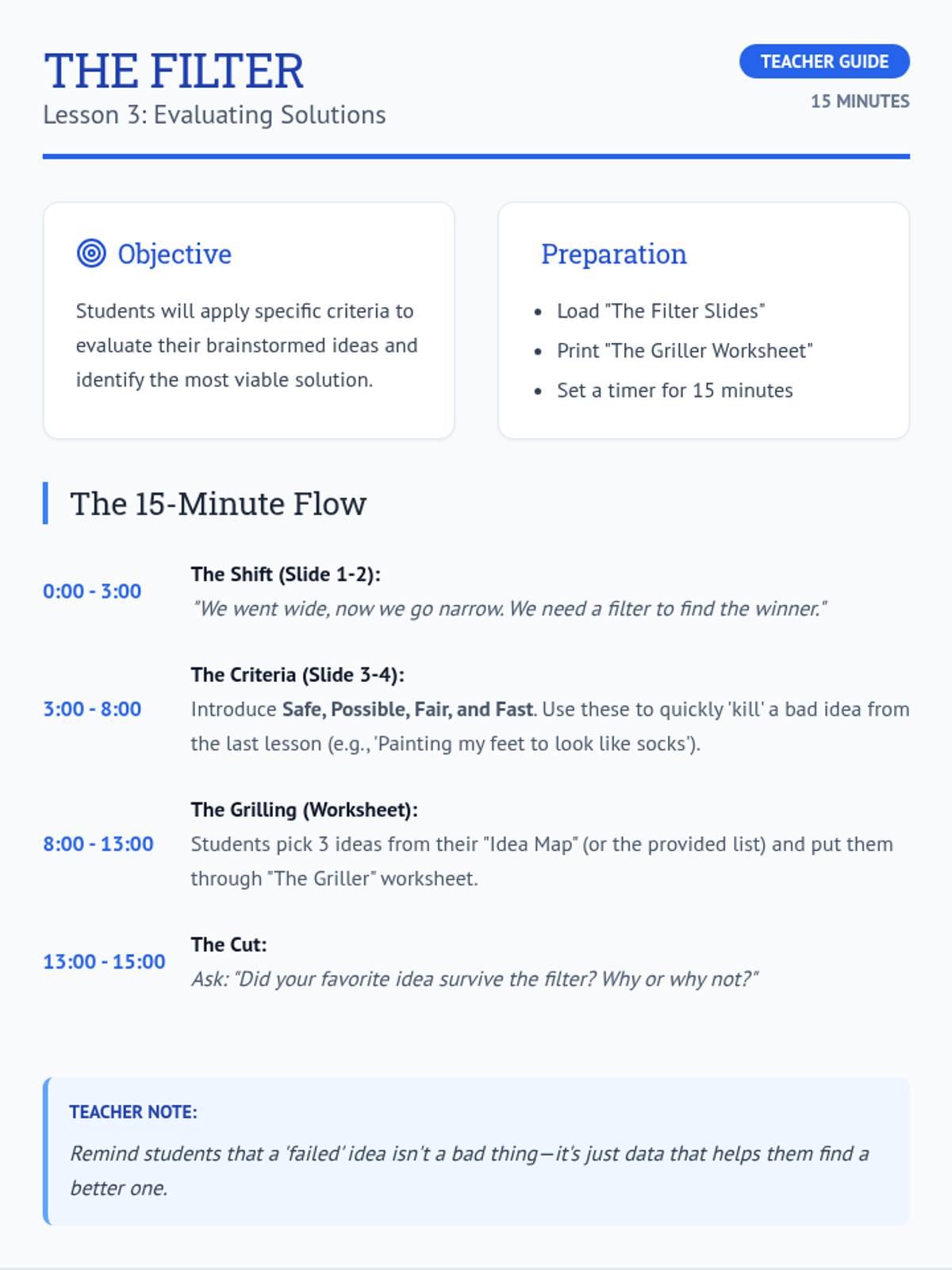
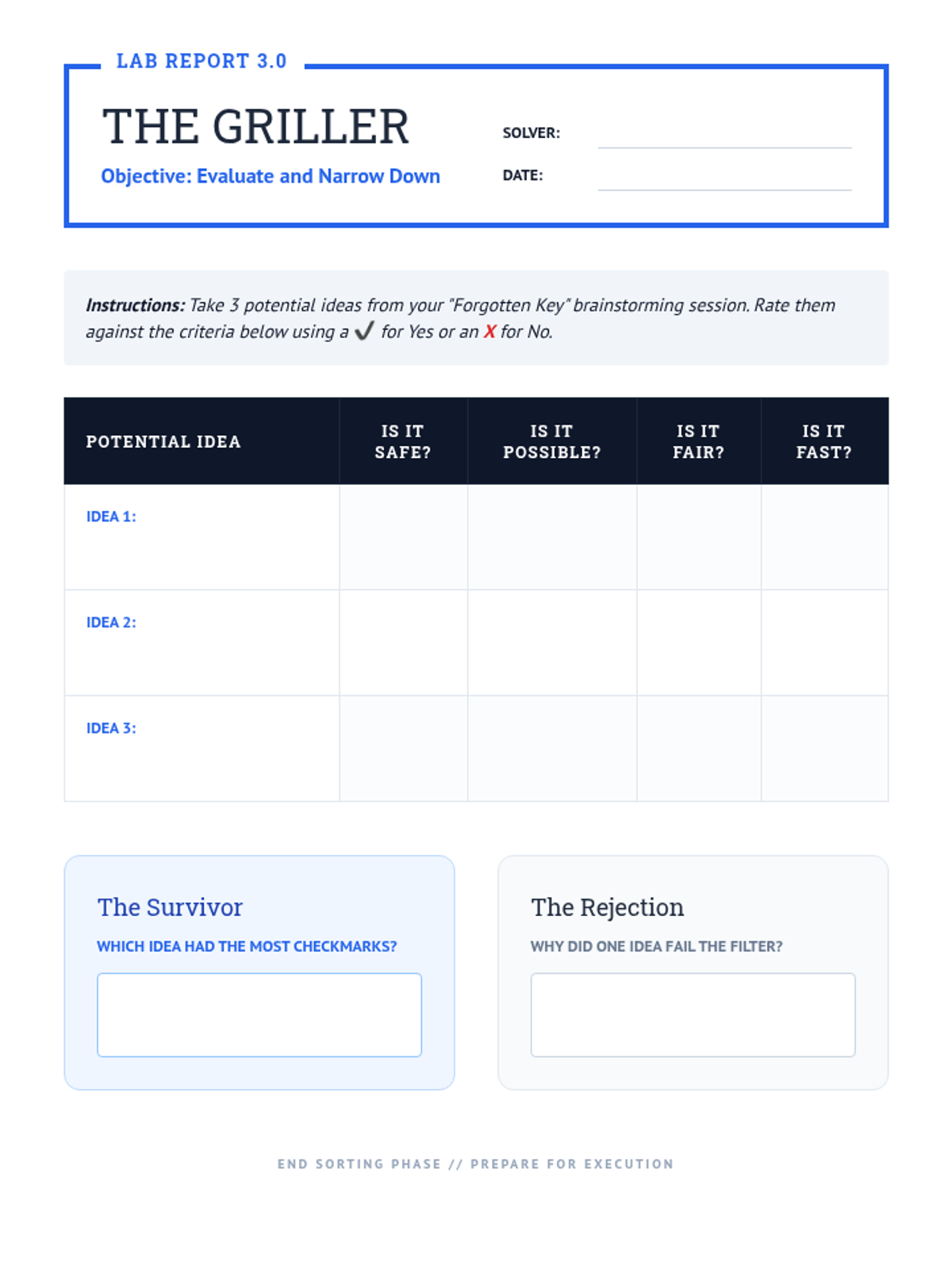
Students apply specific criteria to narrow down their brainstormed ideas and identify the most viable solutions.
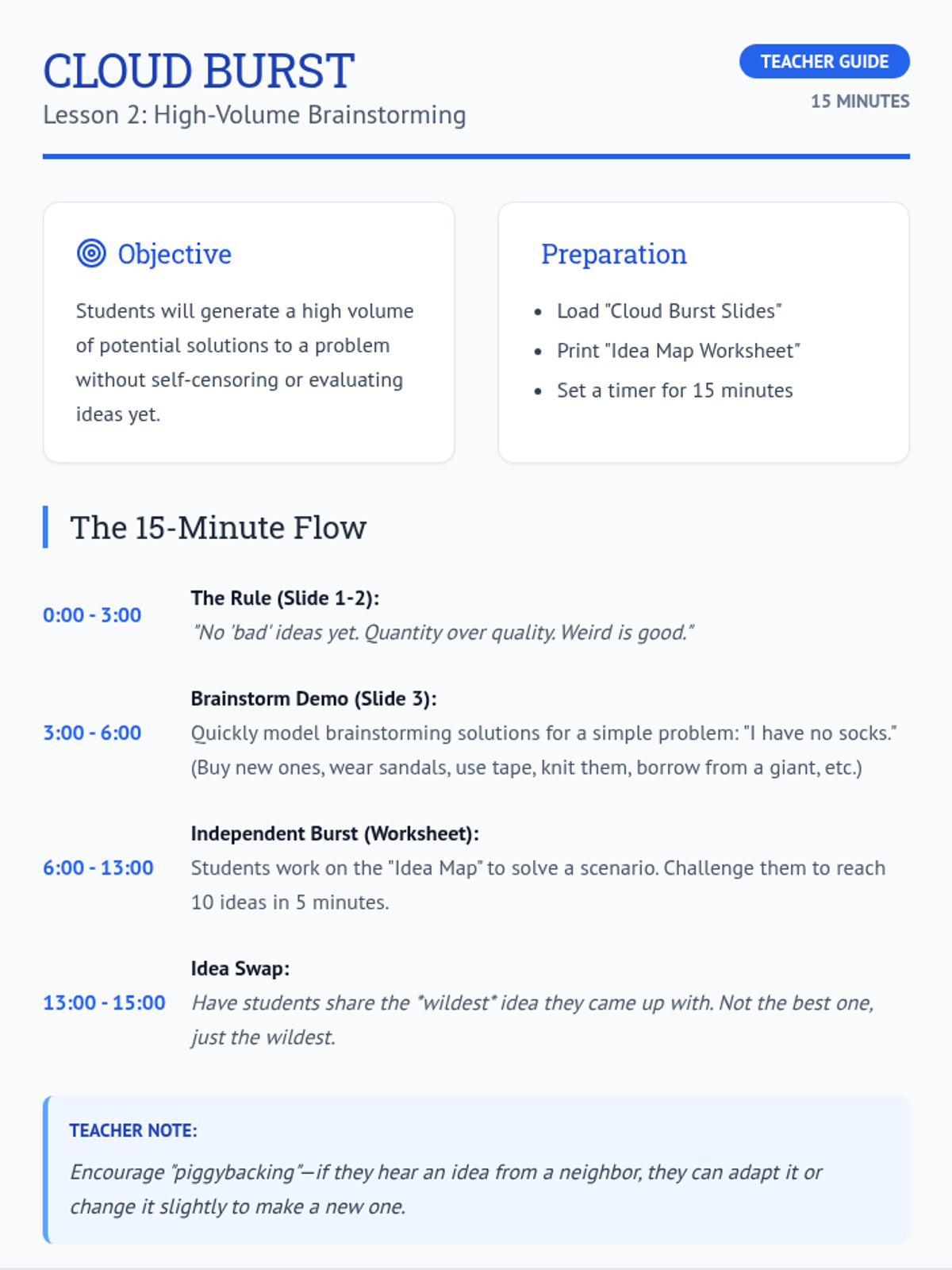
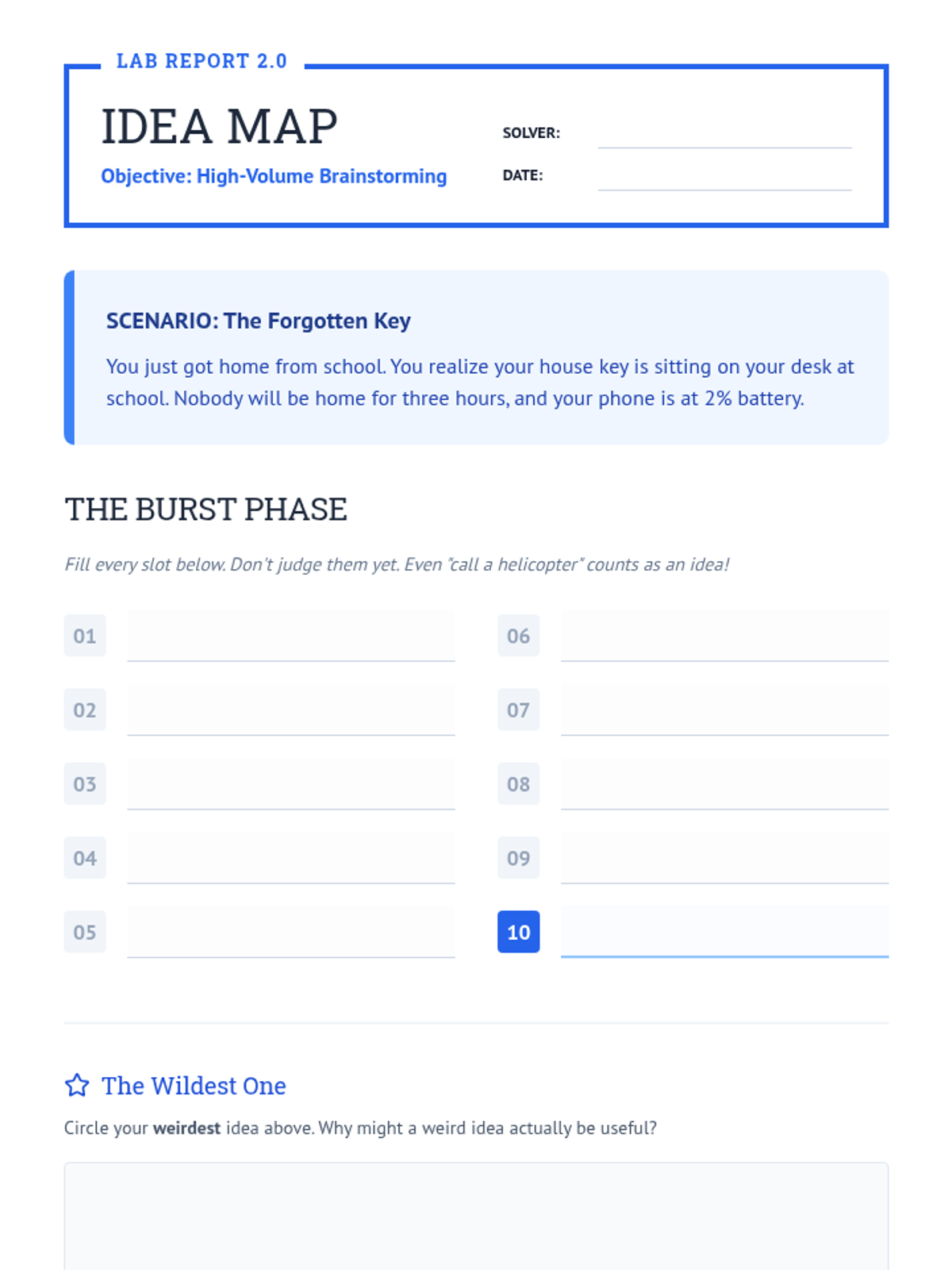
A high-energy session focused on generating a high volume of potential solutions without self-censorship.
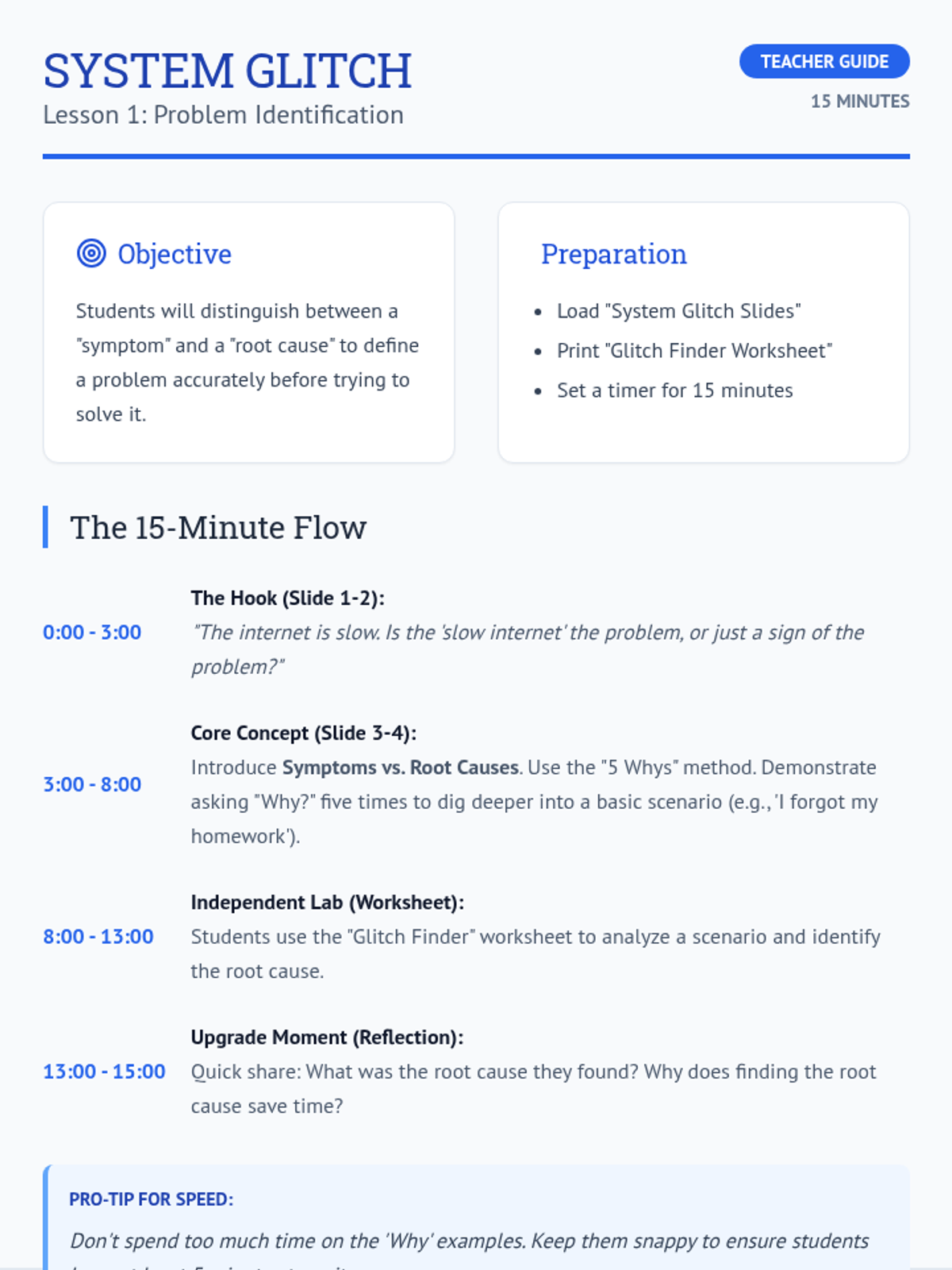
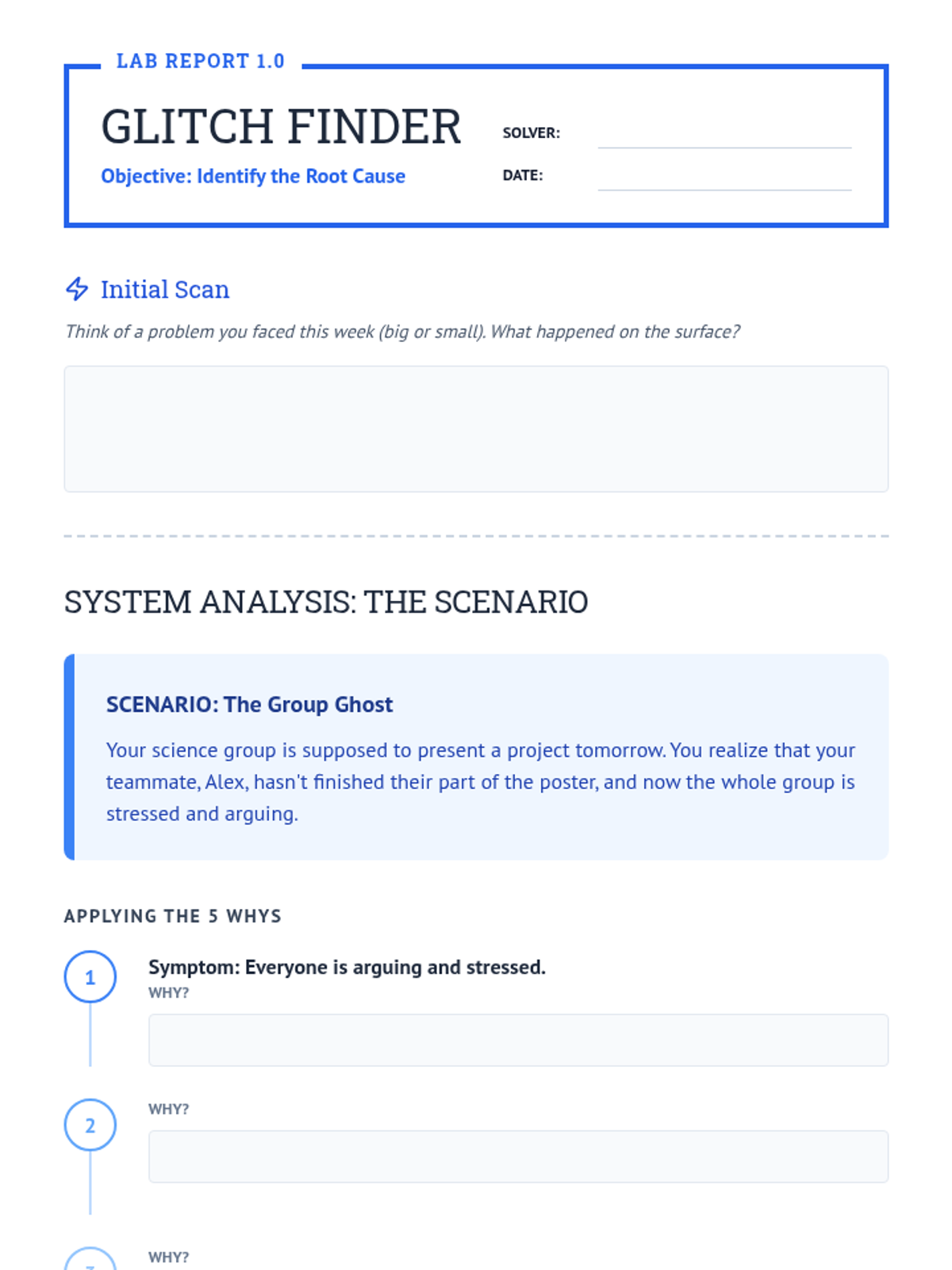
Students learn to distinguish between symptoms and root causes of problems to accurately identify what needs solving.
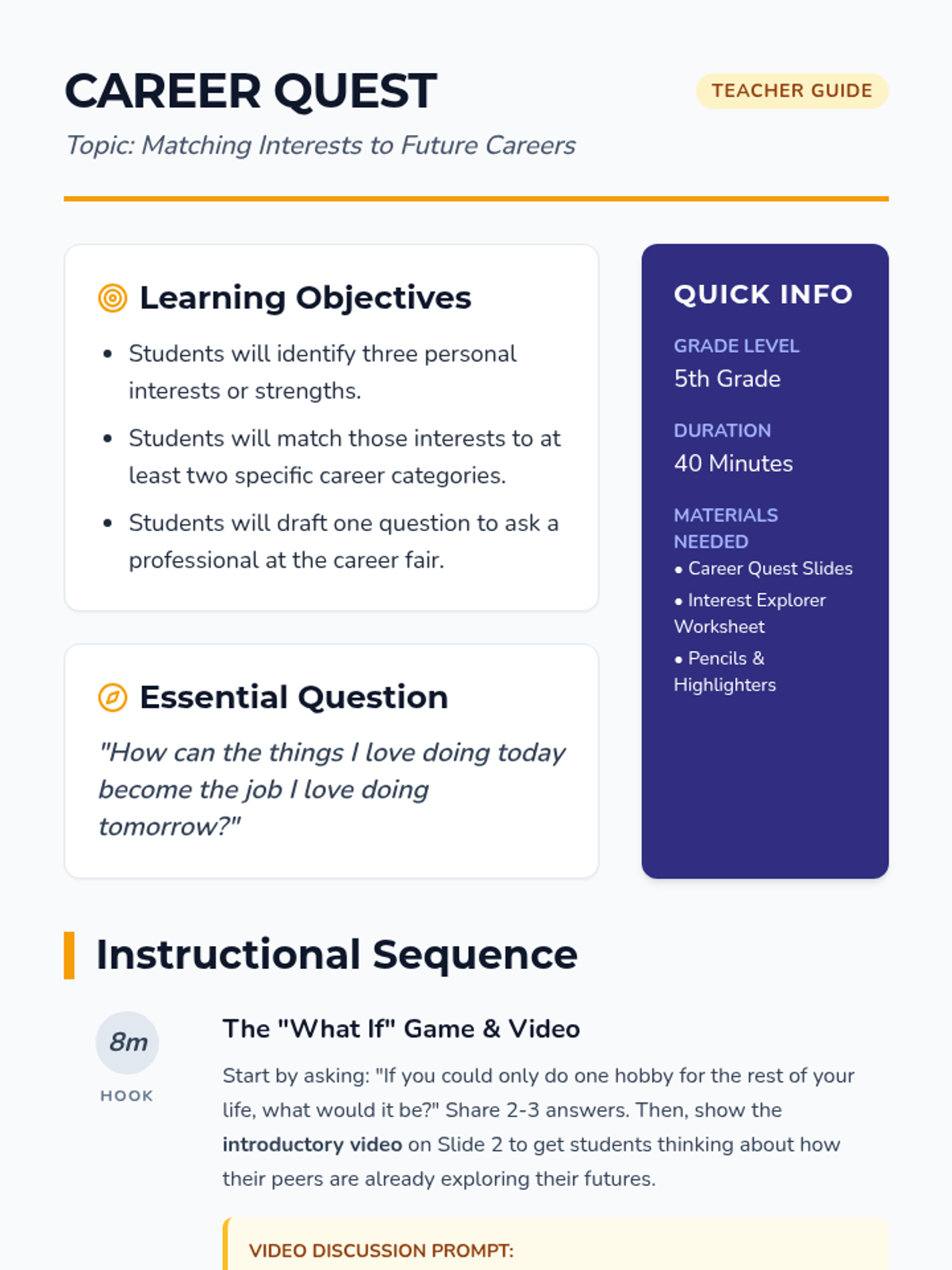
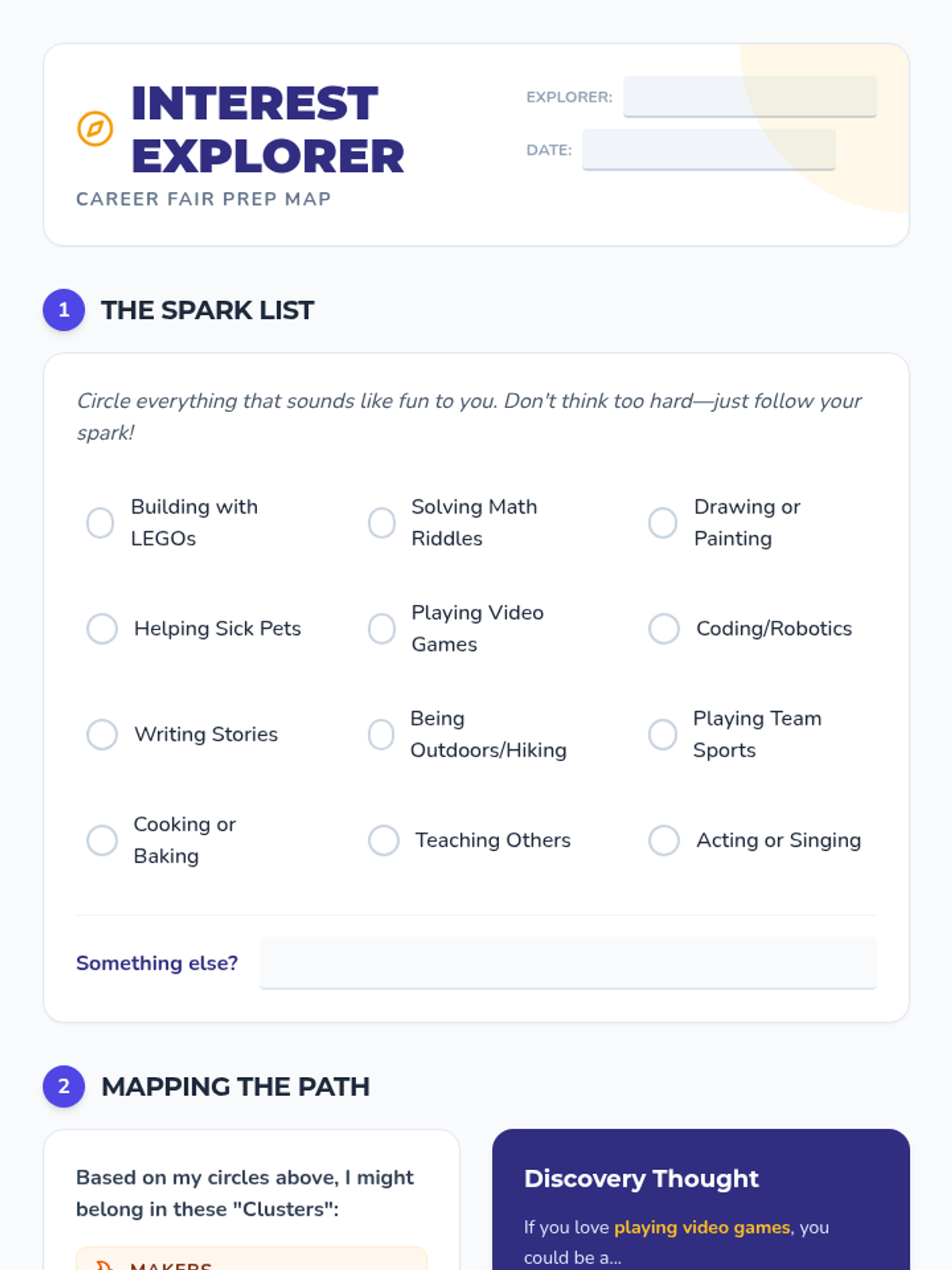
A 35-minute lesson helping 5th grade students discover how their personal interests and hobbies can lead to exciting career paths, preparing them for an upcoming career fair.
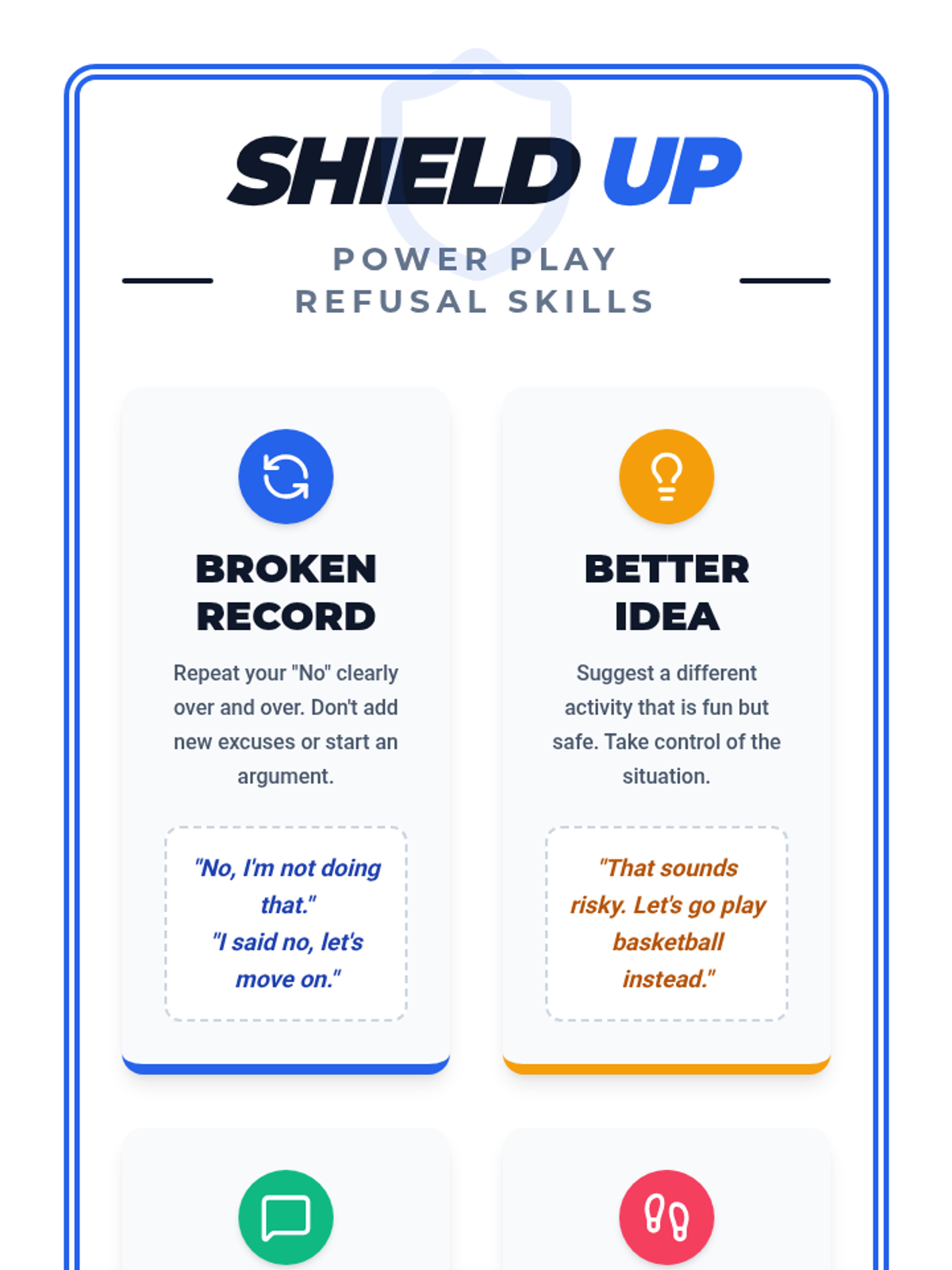
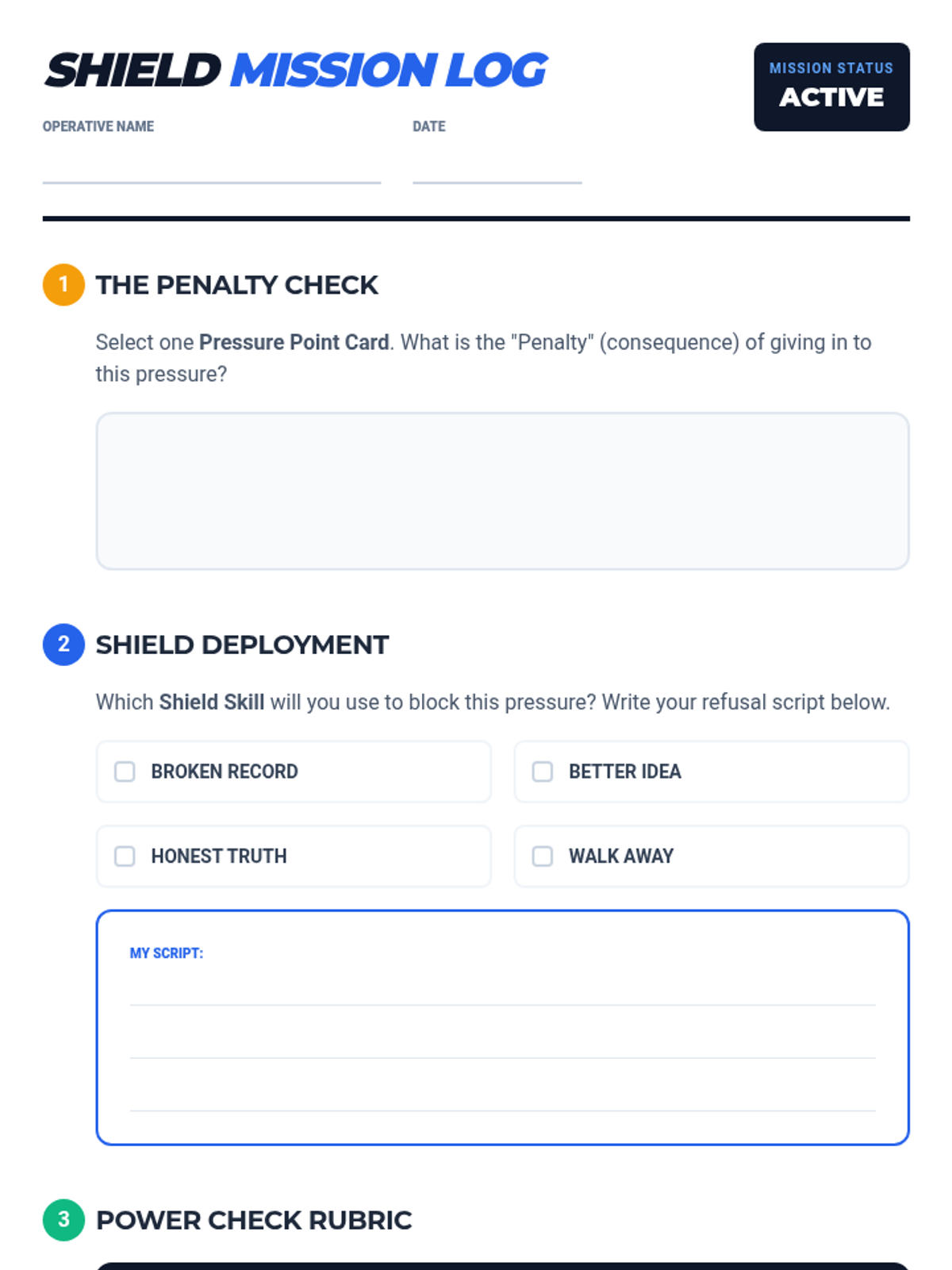
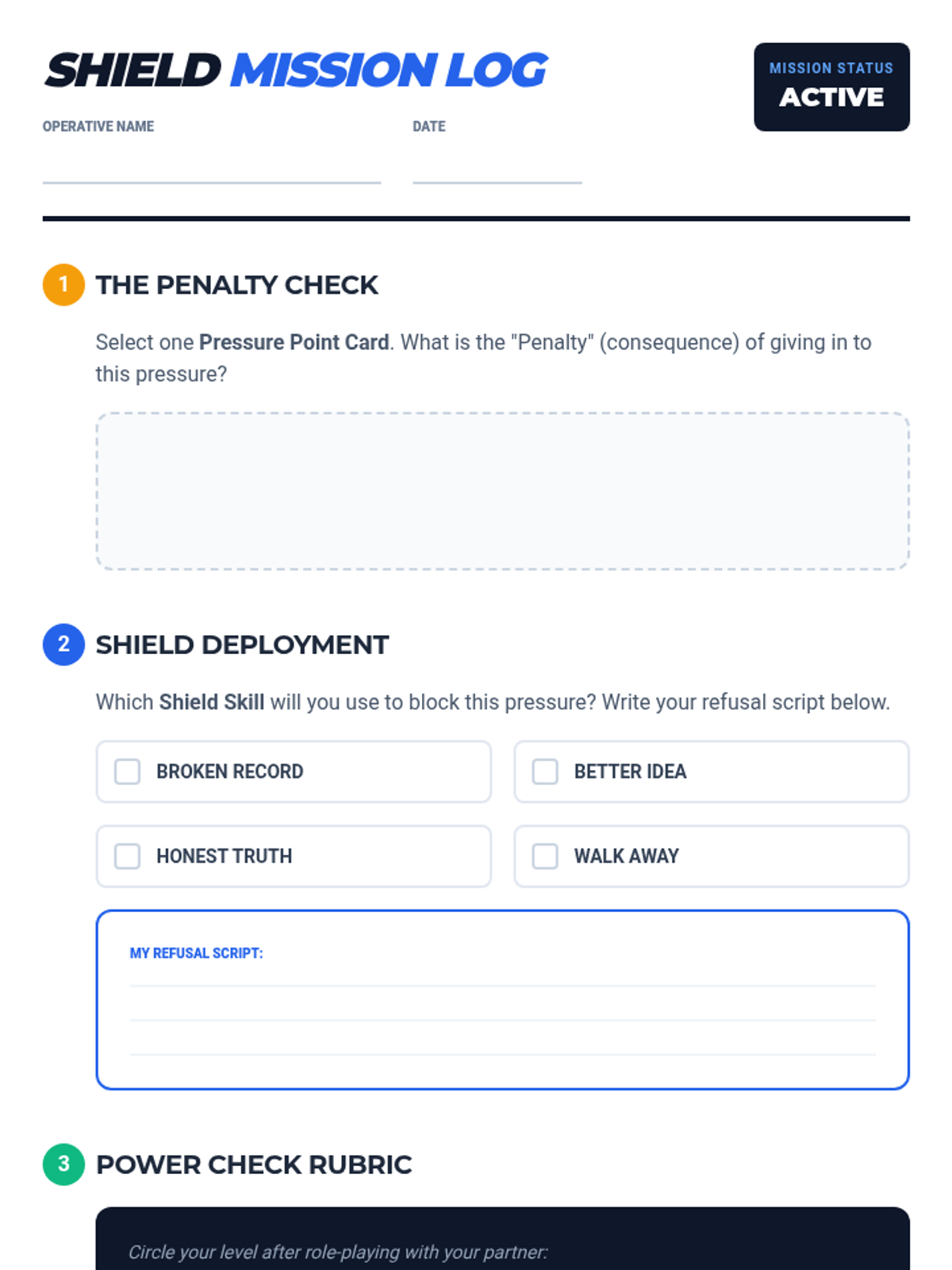
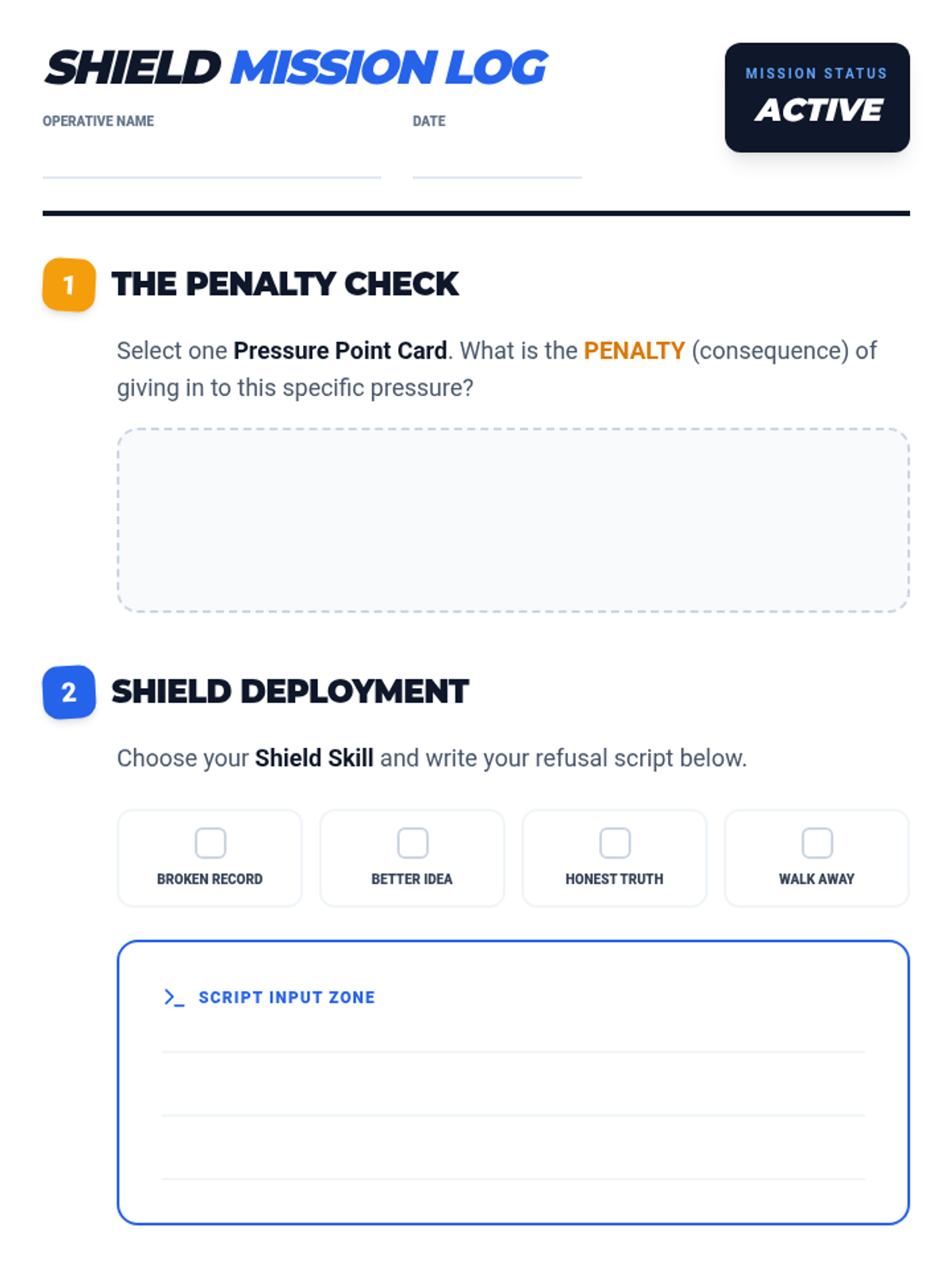
A high-energy lesson for 4th-grade boys focused on identifying peer pressure and practicing refusal skills through interactive scenarios.
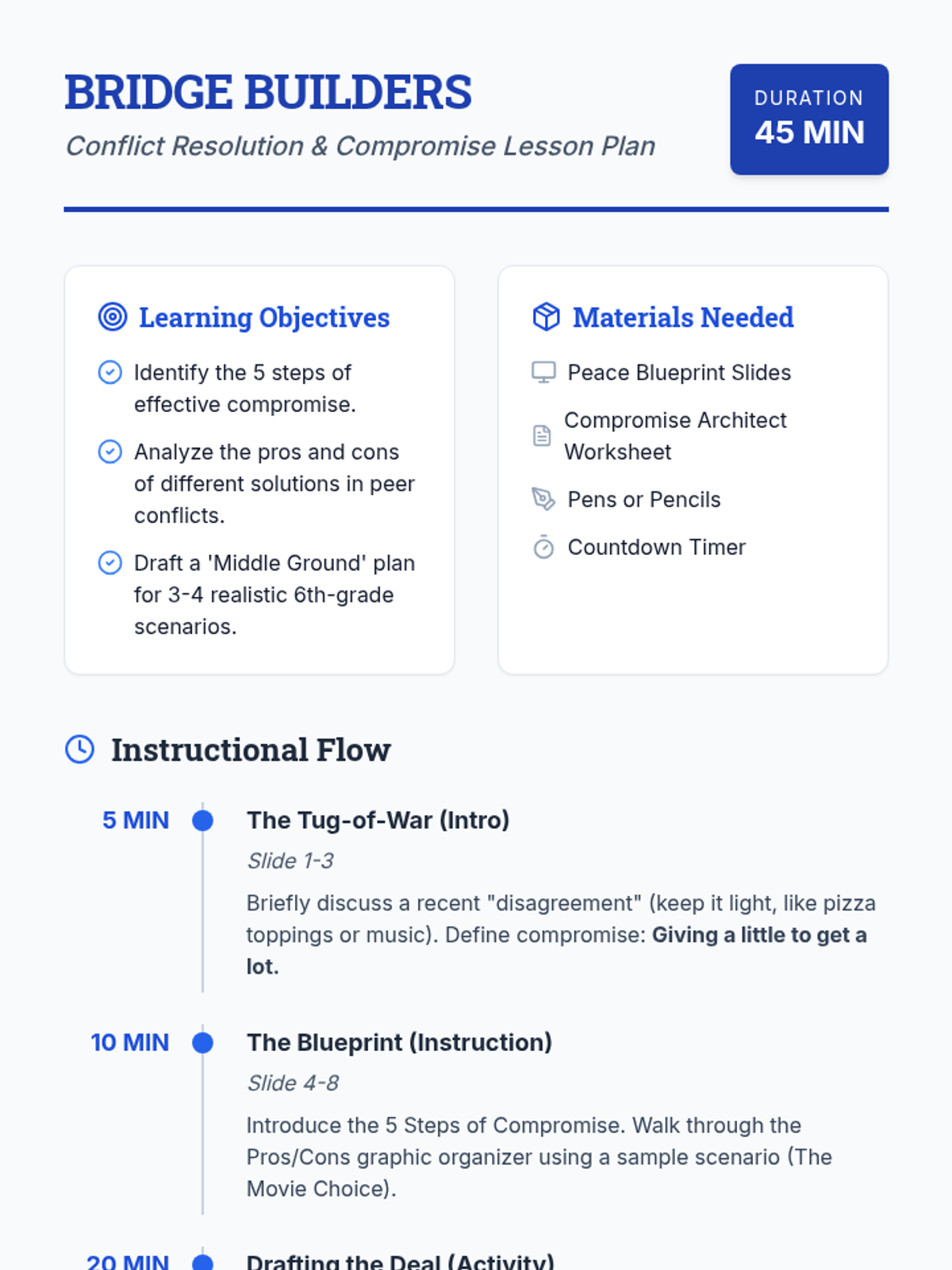
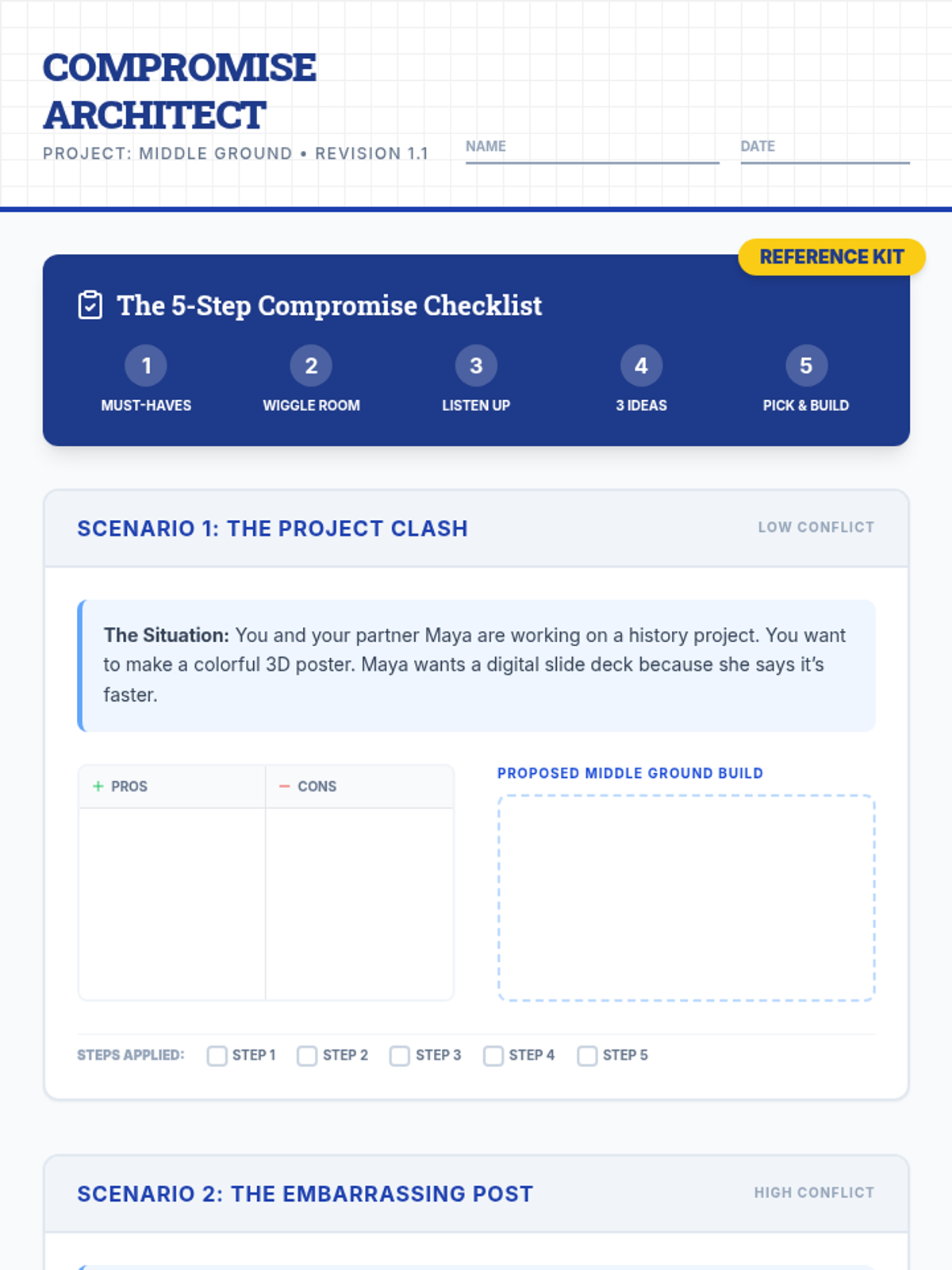
A 45-minute lesson focused on teaching 6th-grade students how to navigate conflicts using the 'Middle Ground' compromise framework. Students will learn a step-by-step checklist for compromising and apply it to relatable peer scenarios.
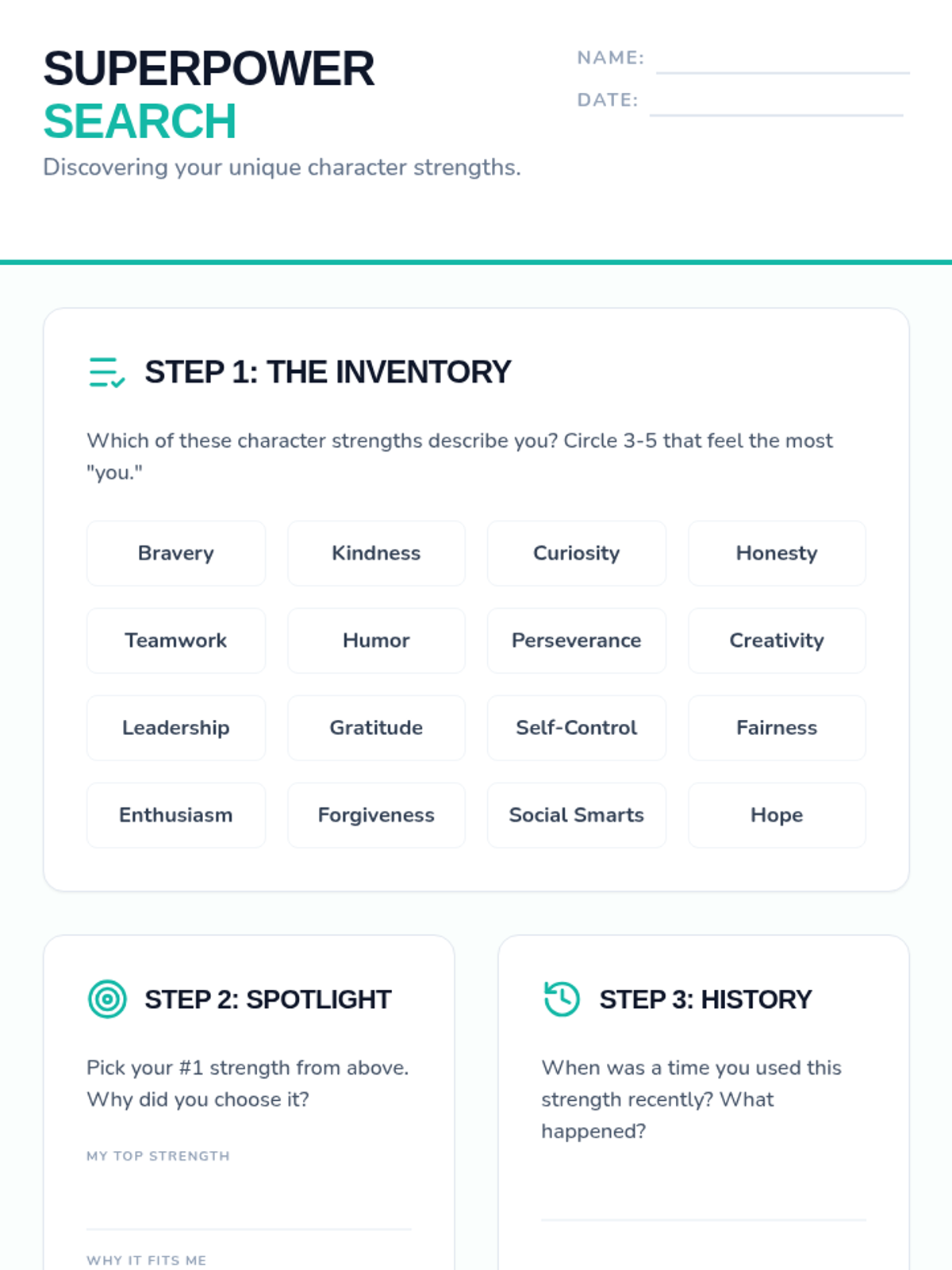
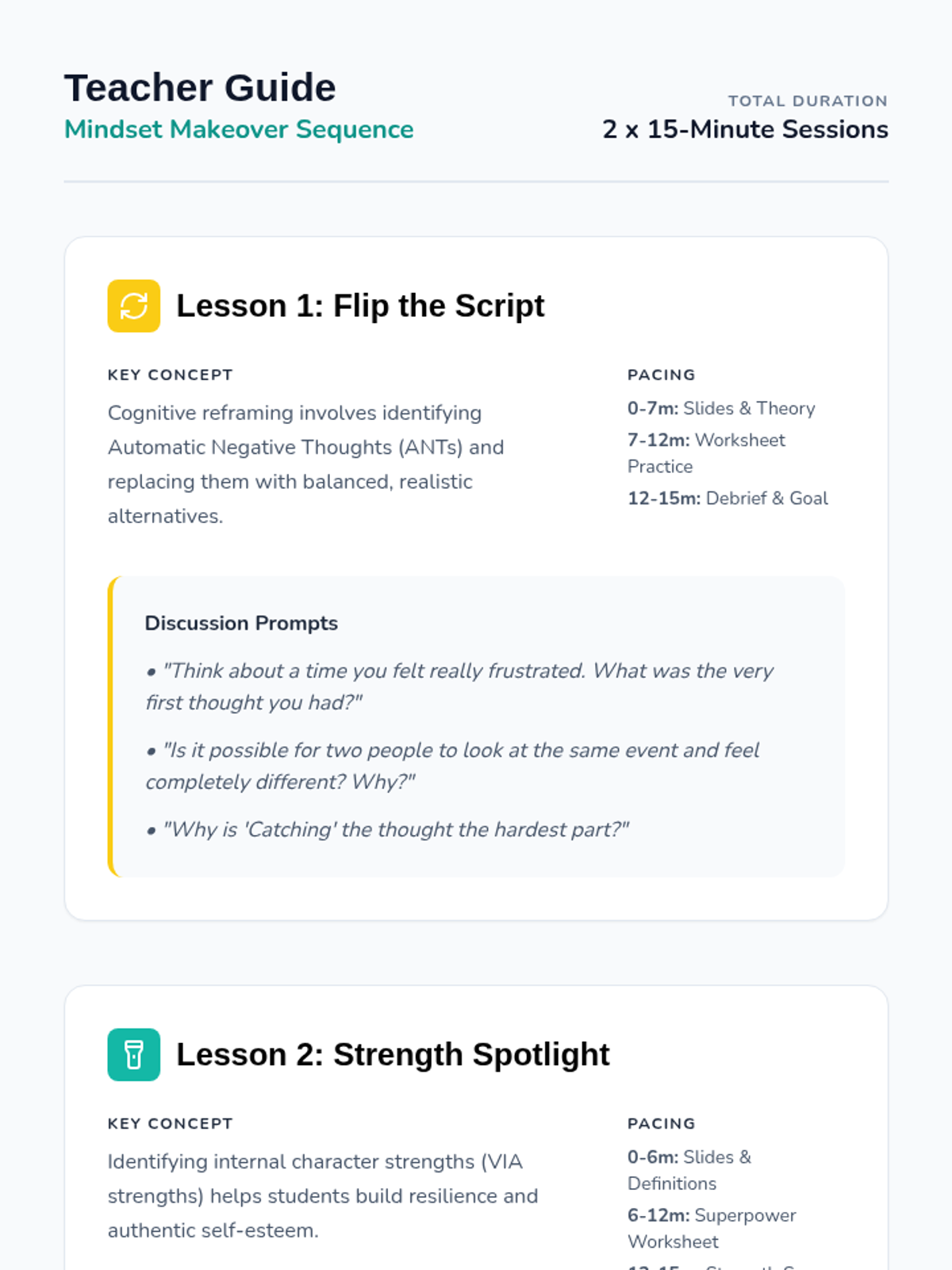
Students explore their unique talents and character traits to build self-confidence and a positive self-image.
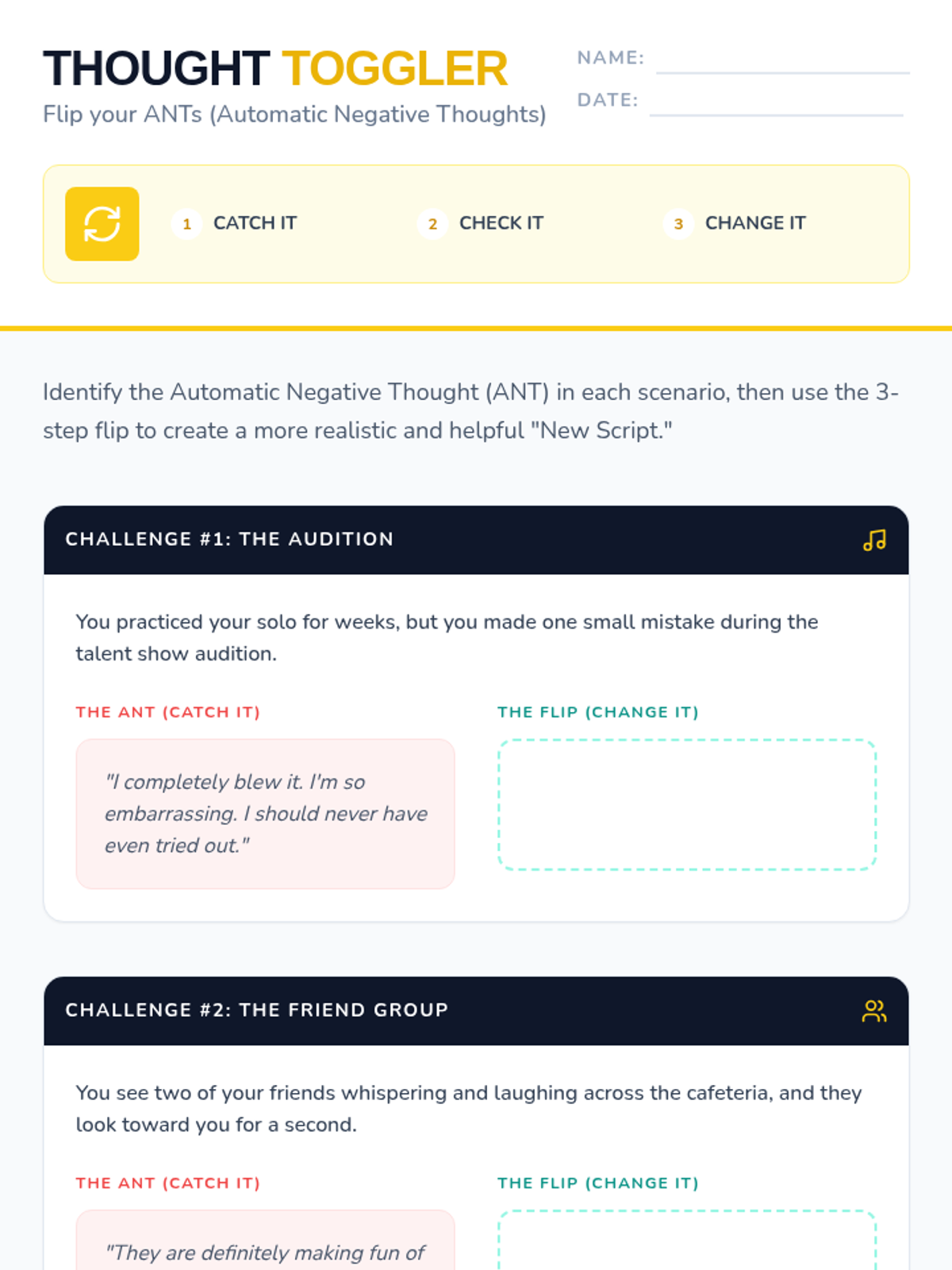
Students learn to identify negative thought patterns and practice 'flipping' them into more realistic, positive, or helpful perspectives.
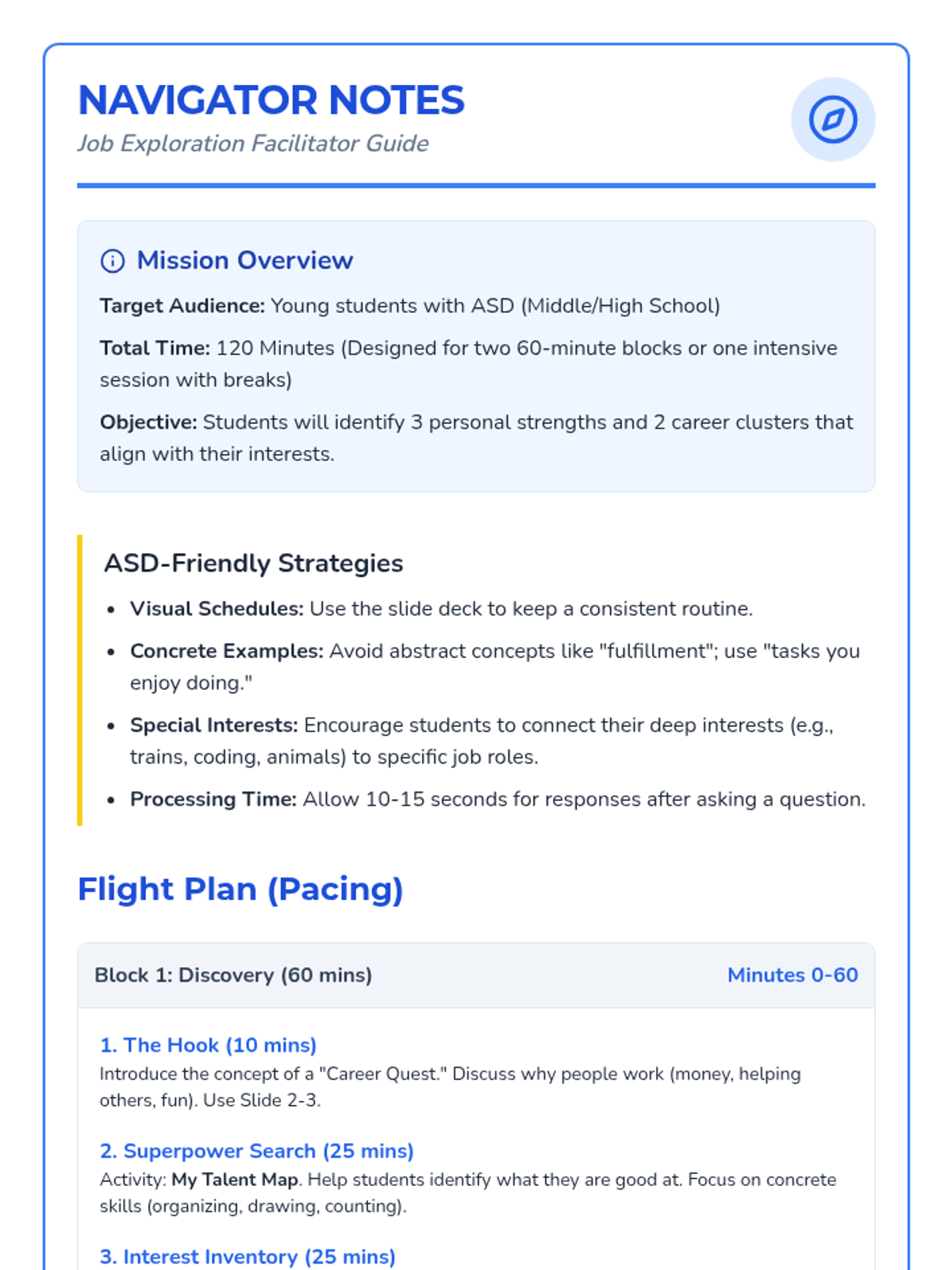
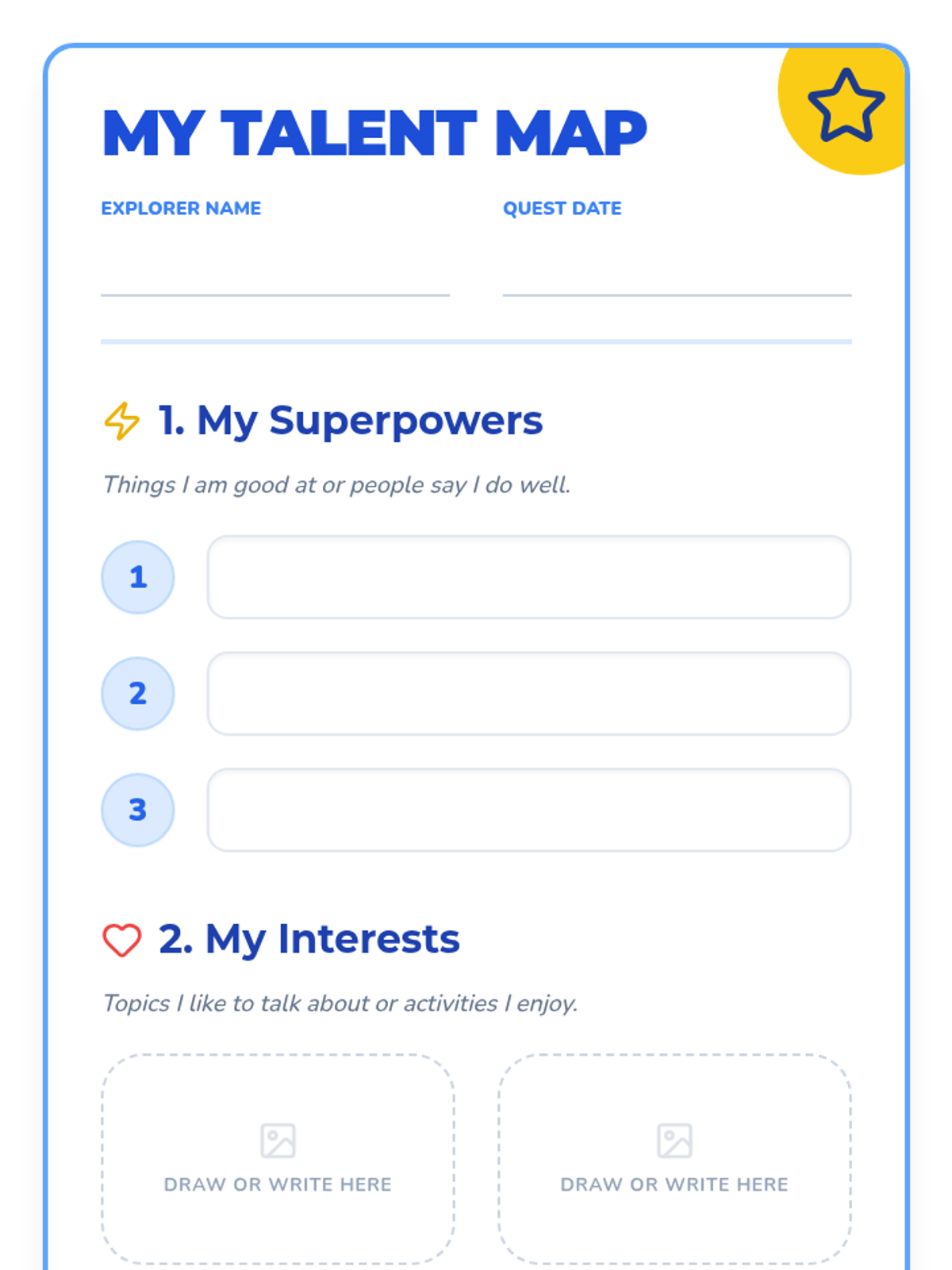
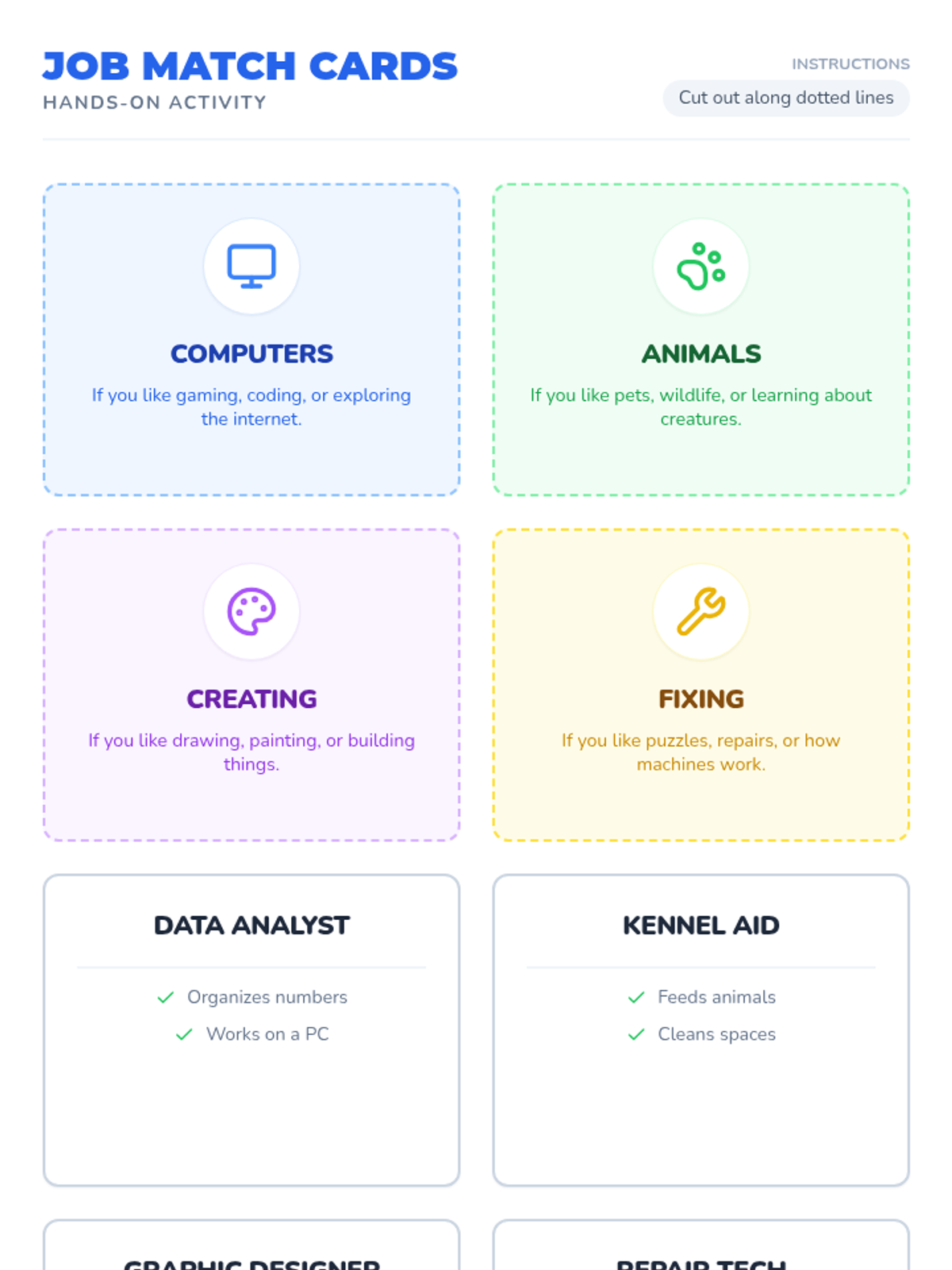
A comprehensive 2-hour introductory session designed for students with ASD to explore their personal strengths, interests, and how these connect to potential career paths. The lesson uses a 'Career Quest' theme to make professional exploration engaging and concrete.
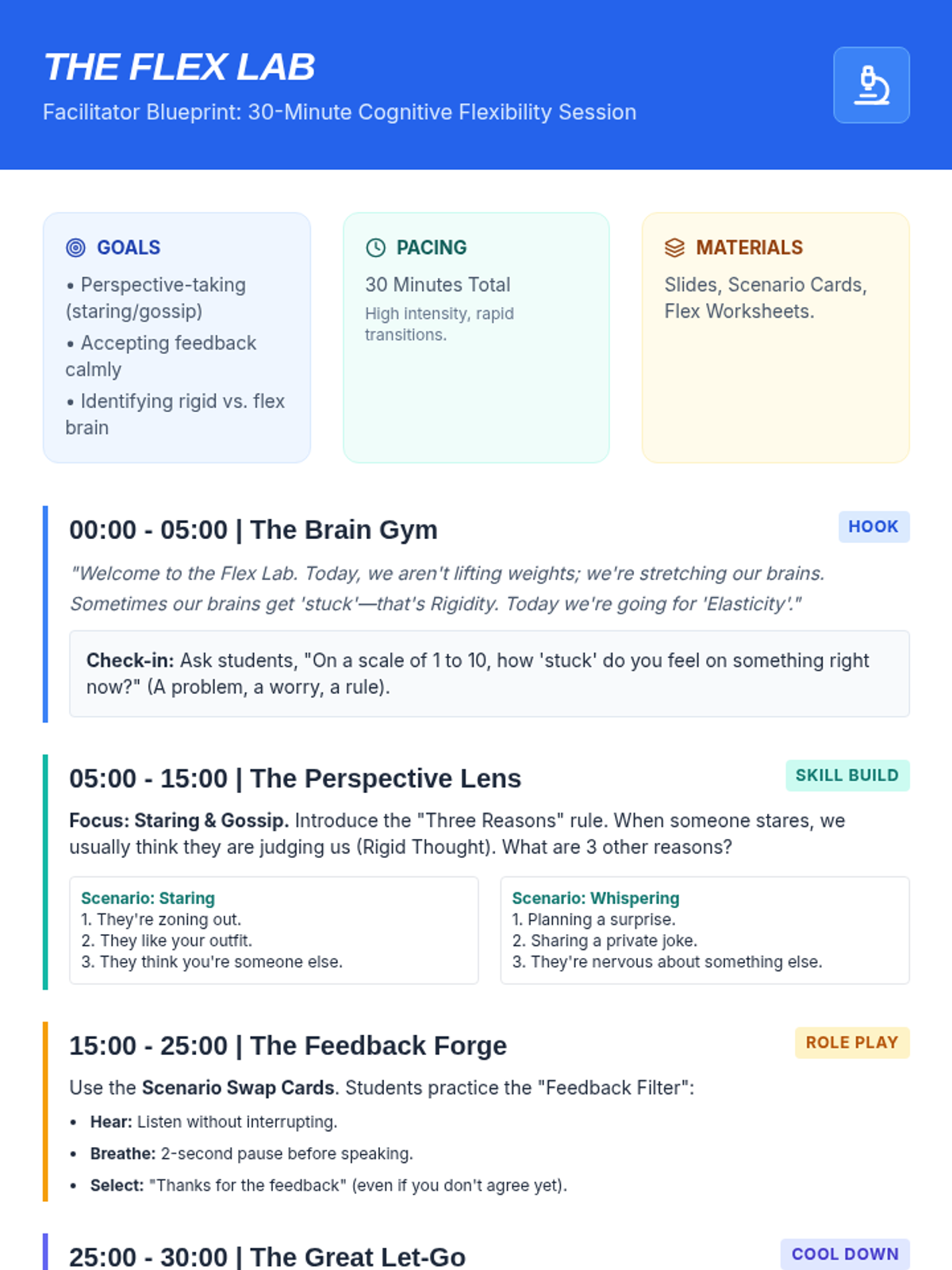
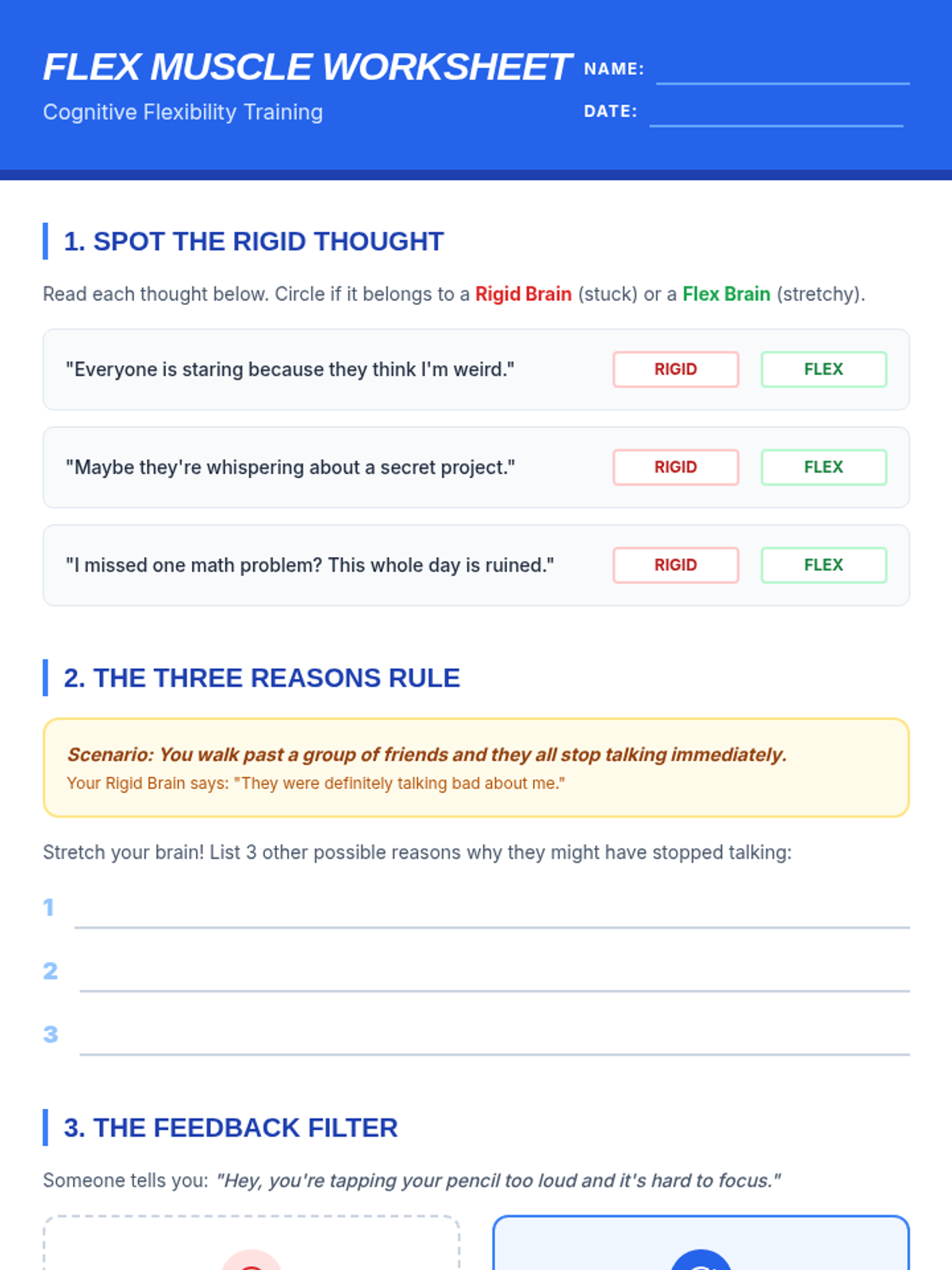
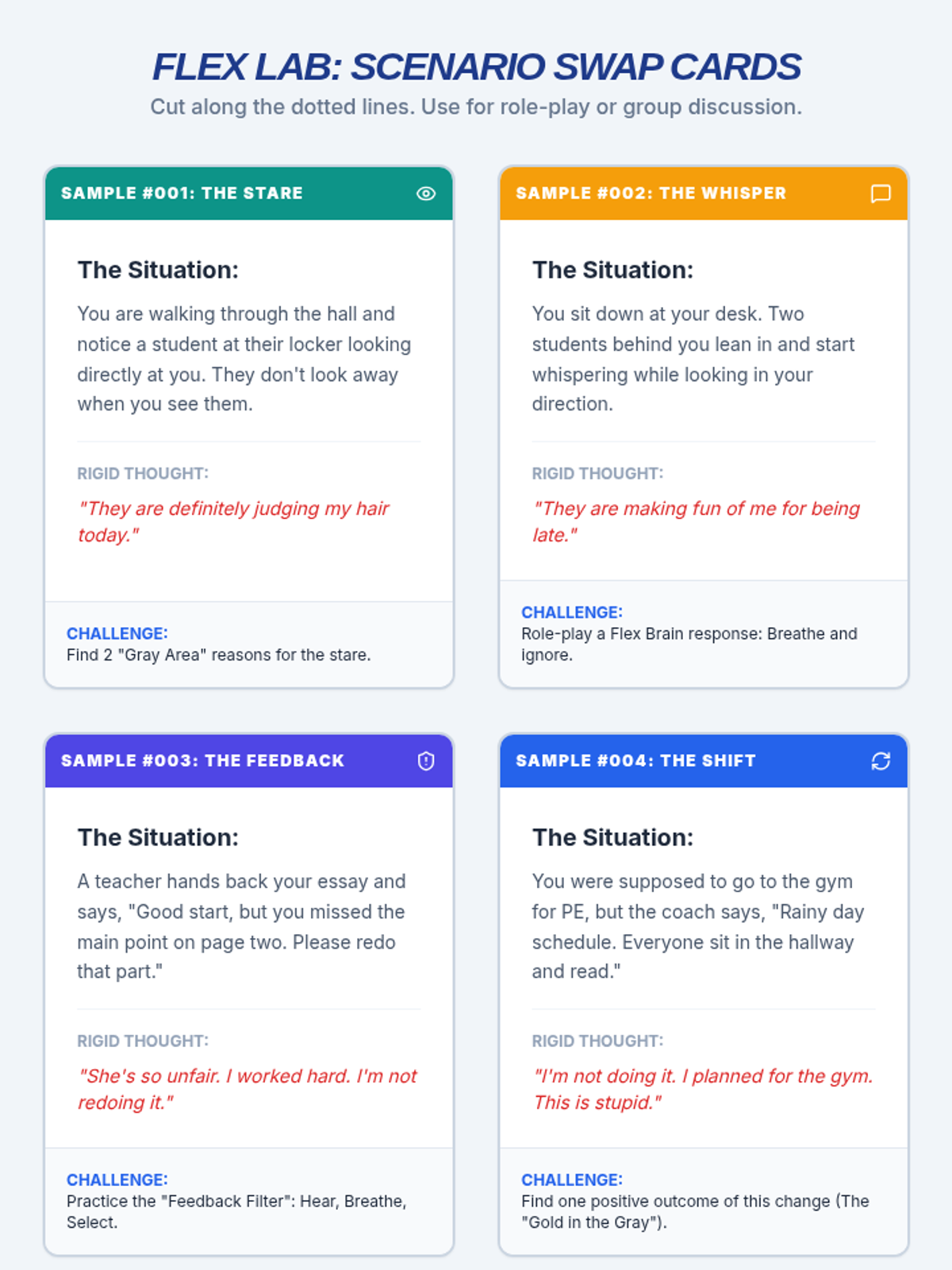
A 30-minute intensive session focused on cognitive flexibility, perspective-taking regarding social cues like staring, and the art of accepting feedback gracefully.
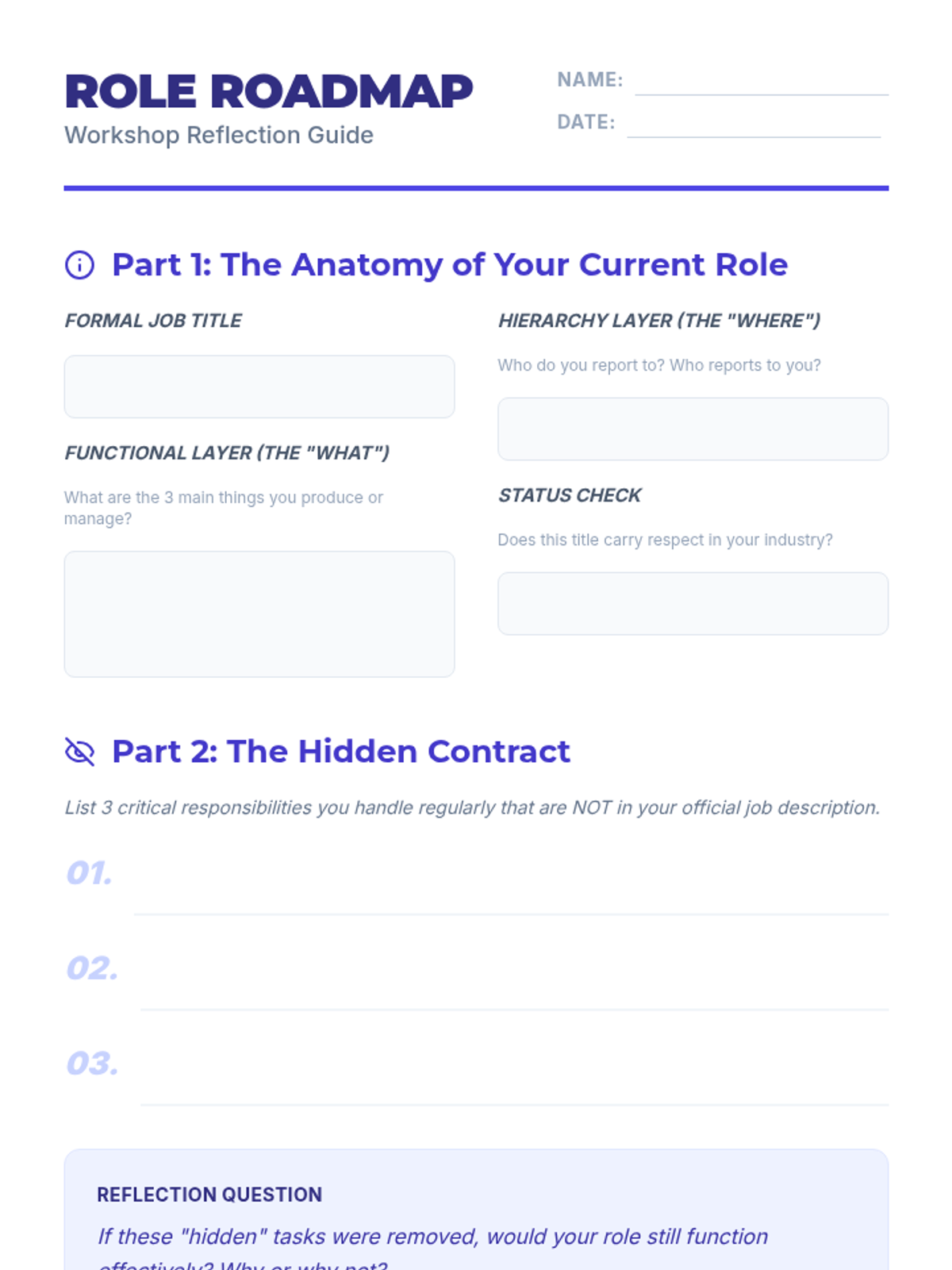
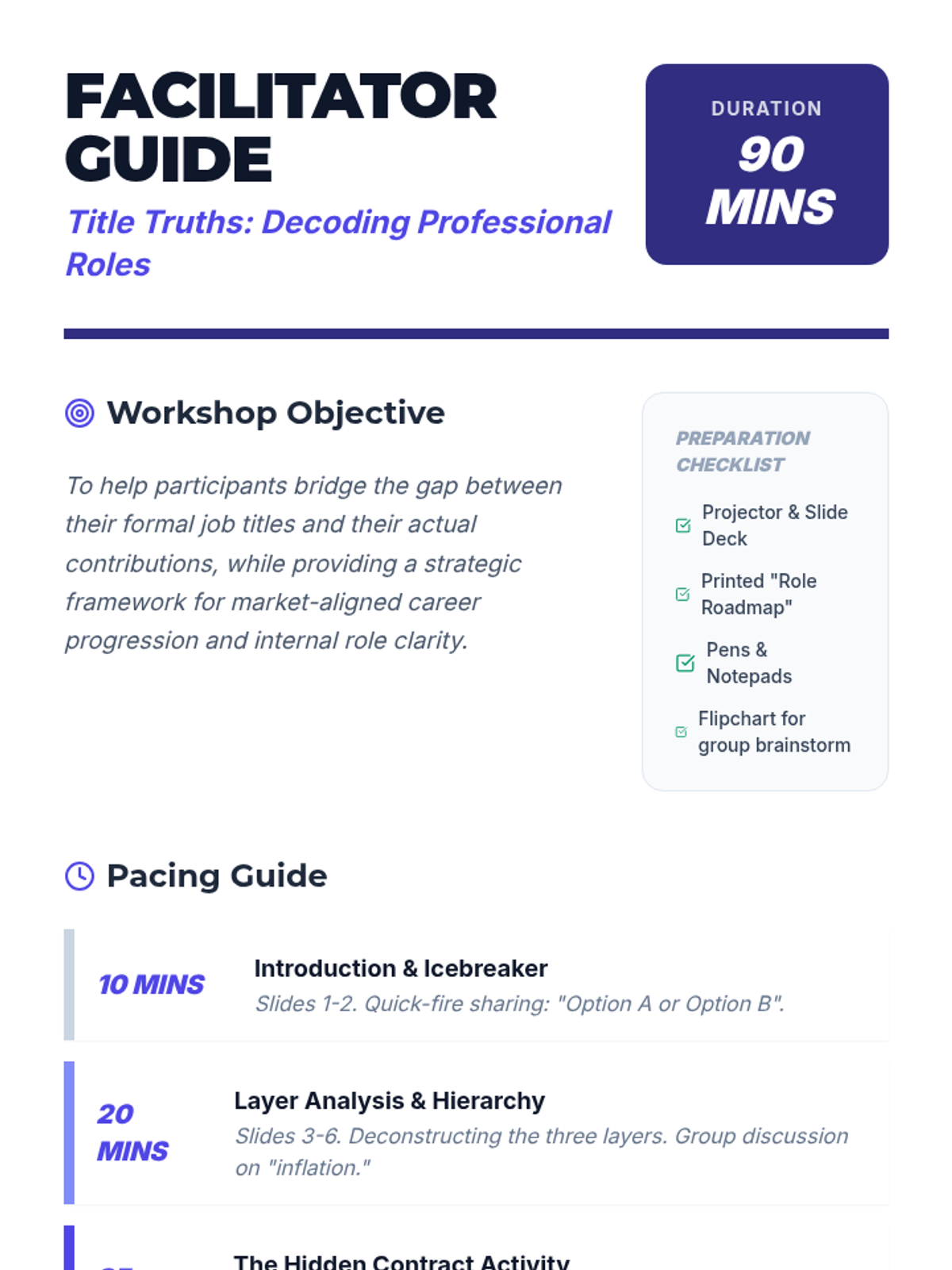
A 90-minute workshop exploring the nuances of professional job titles, their functional reality versus organizational hierarchy, and how to navigate career growth through role clarity.
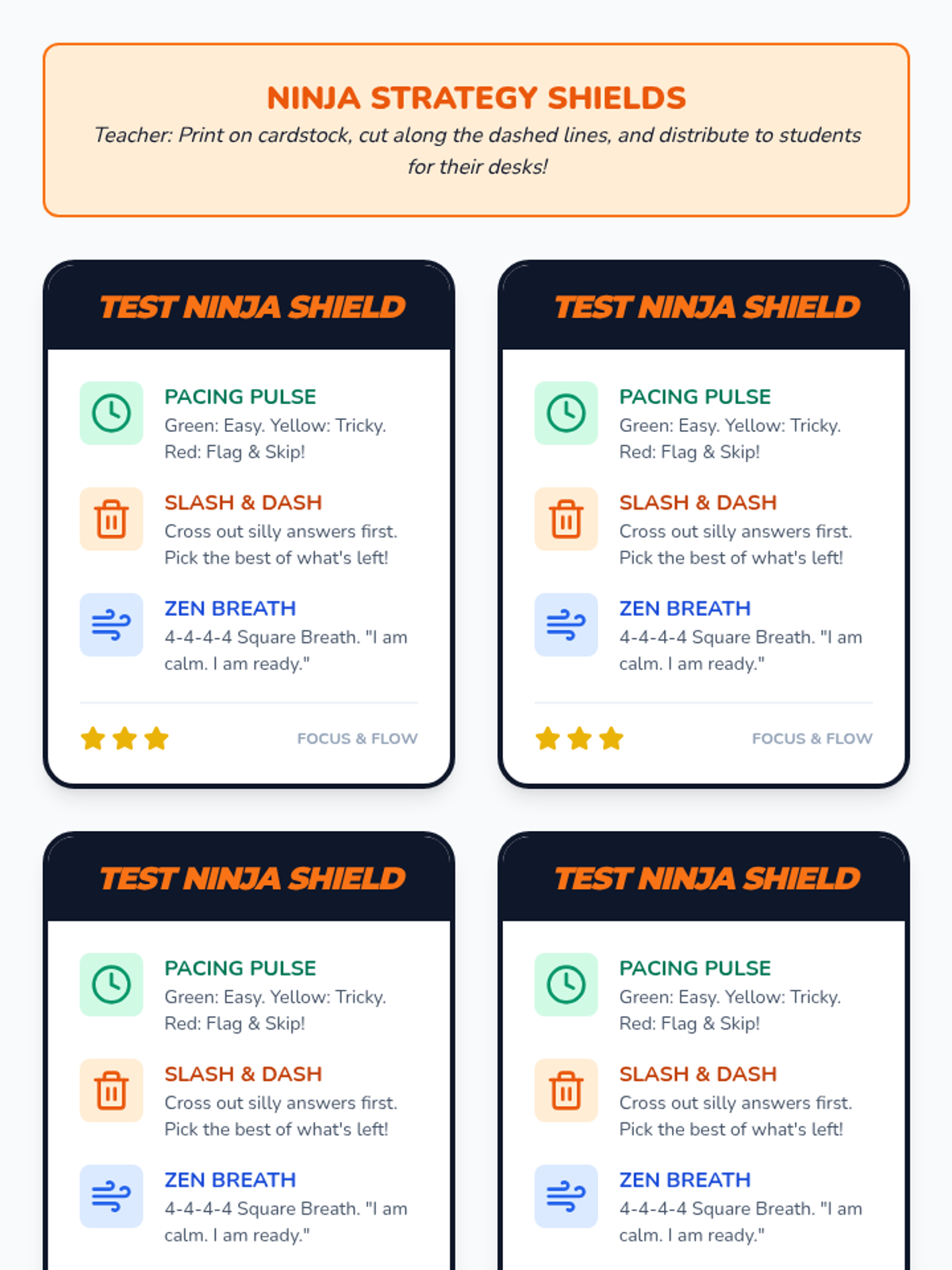
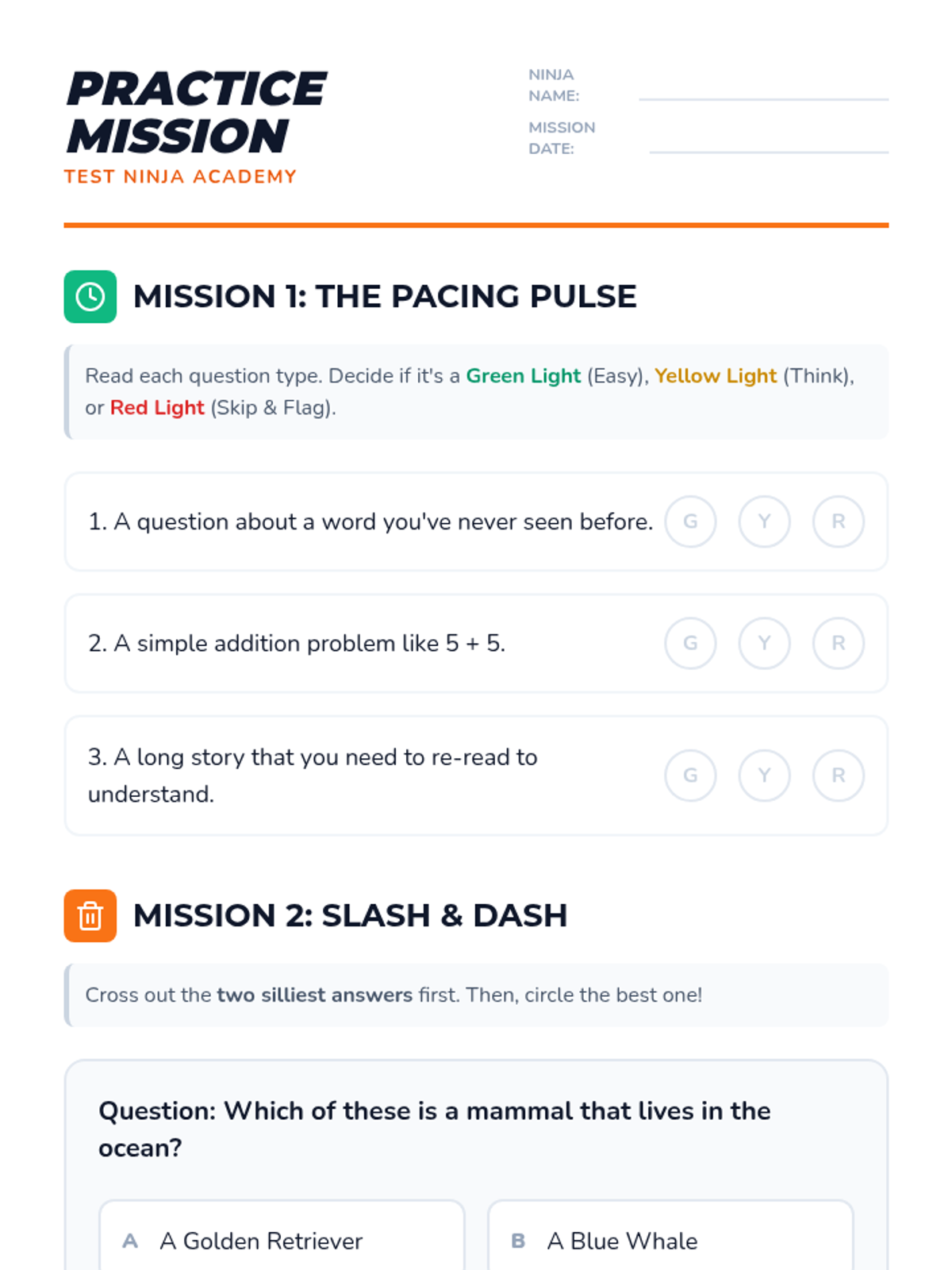
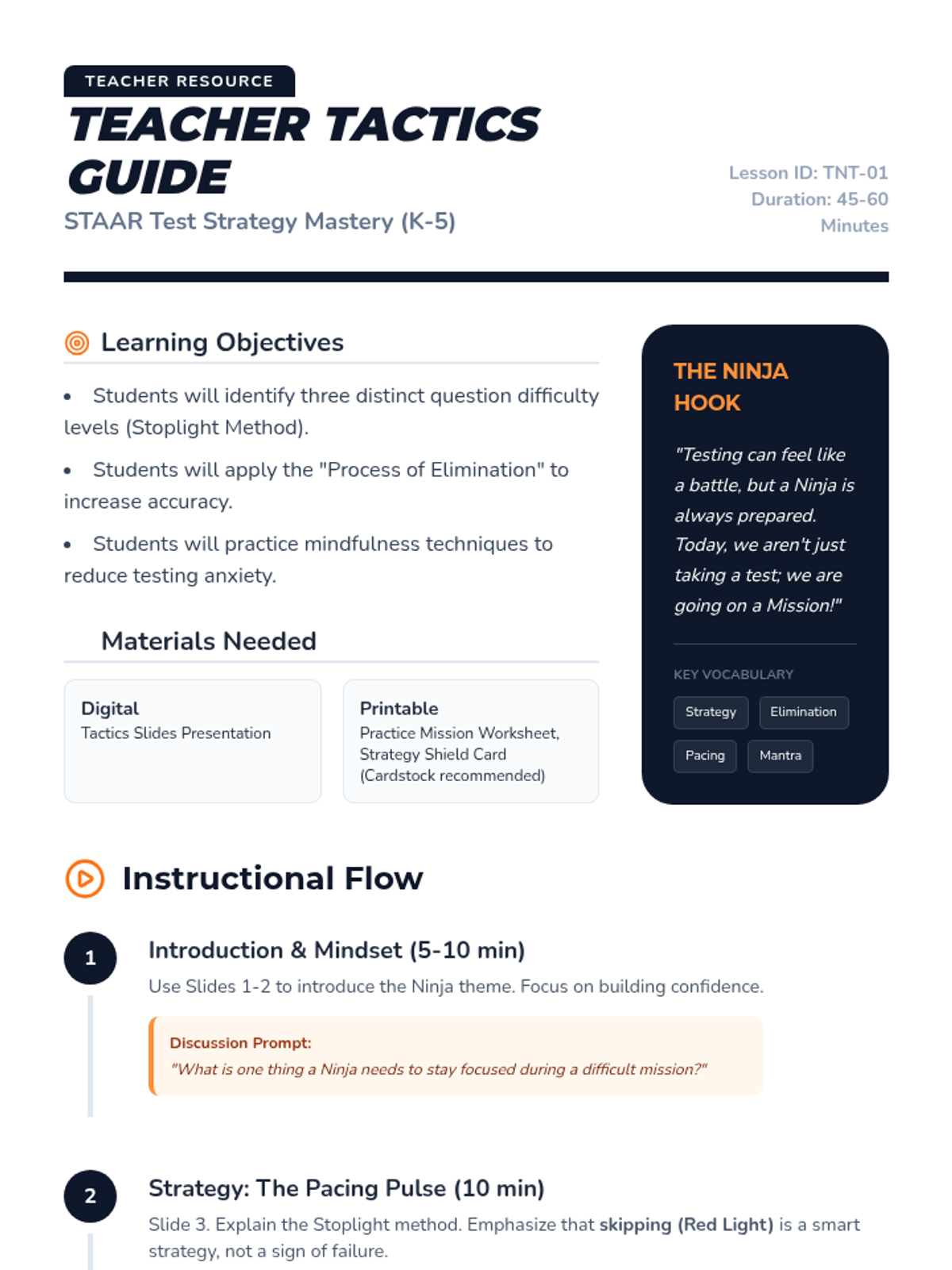
A high-energy lesson designed to equip K-5 students with essential STAAR test-taking strategies, including time management, the process of elimination, and anxiety-reduction techniques using a "Test Ninja" theme.
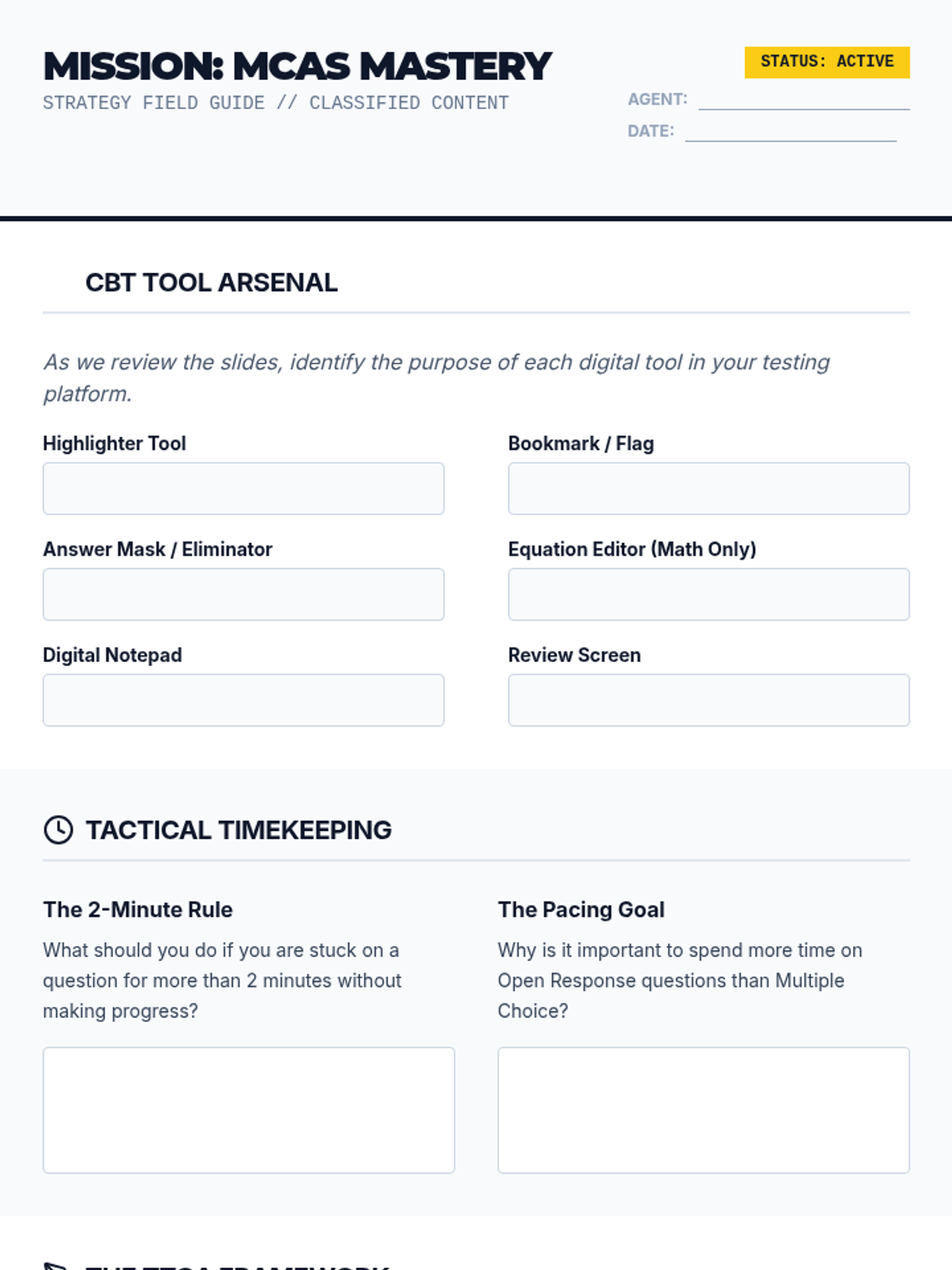
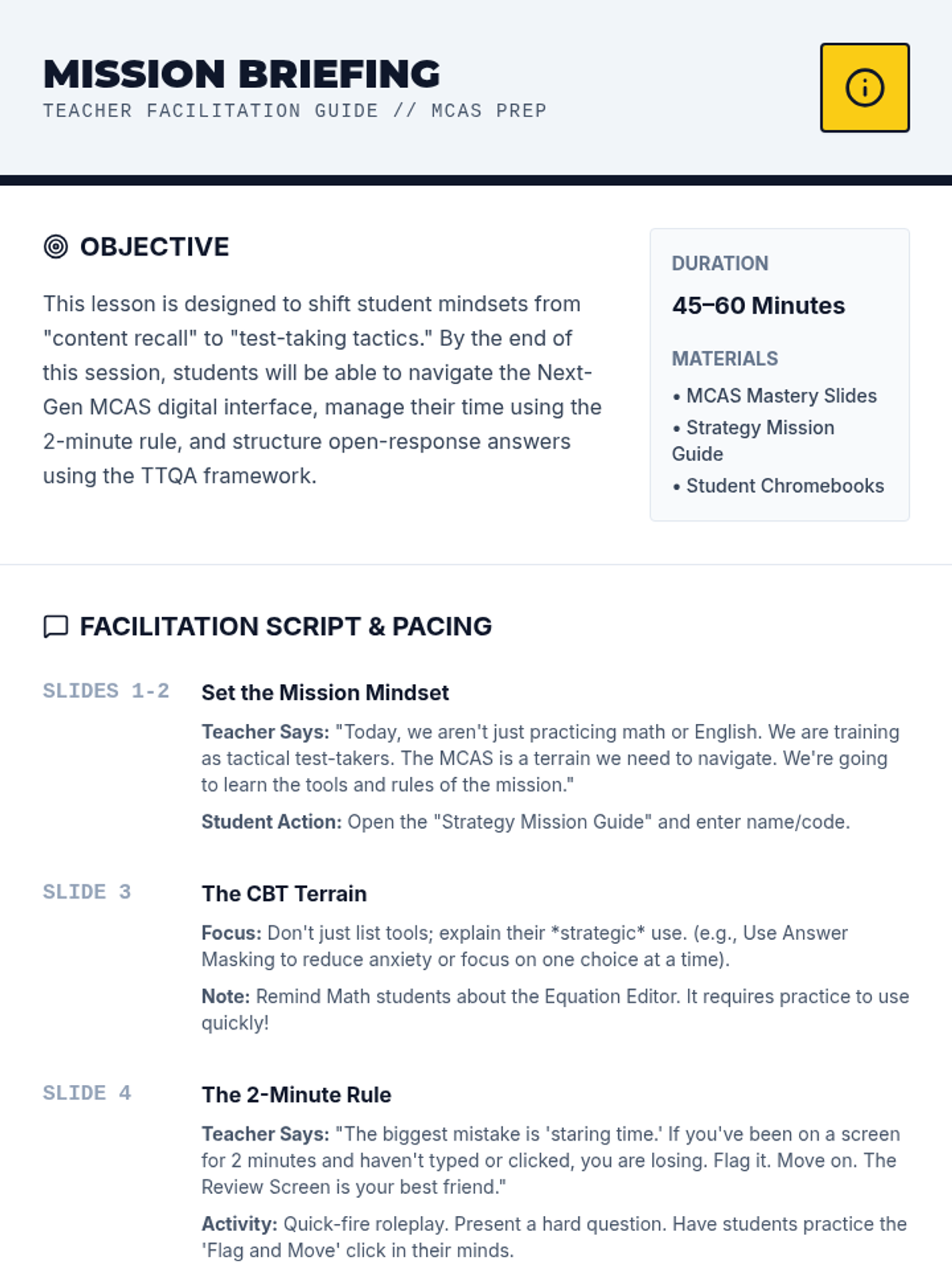
A comprehensive test preparation lesson designed to equip students with tactical strategies for the Next Generation MCAS. This lesson covers computer-based testing tools, time management techniques, and a structured approach to high-scoring open response questions.
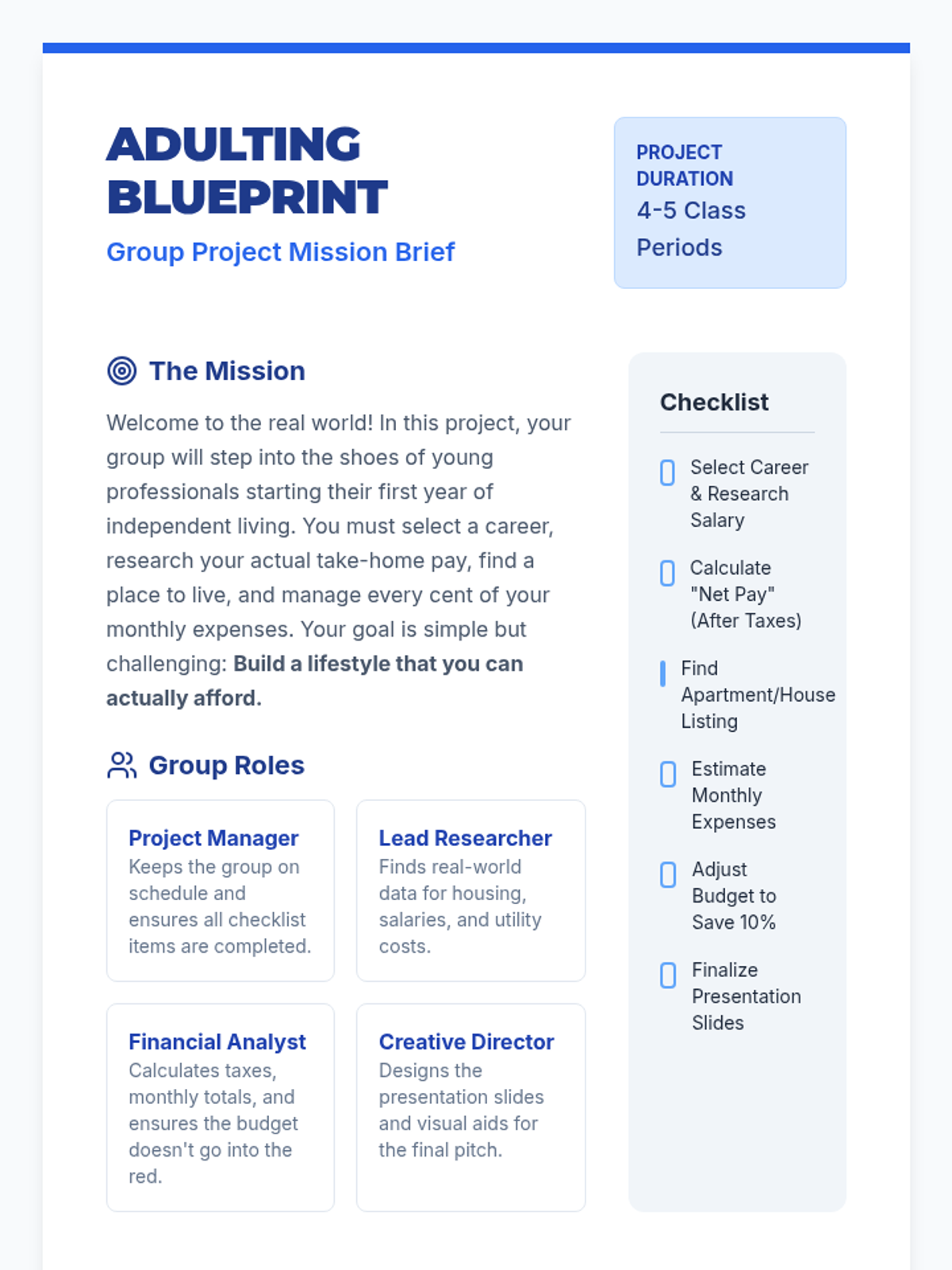
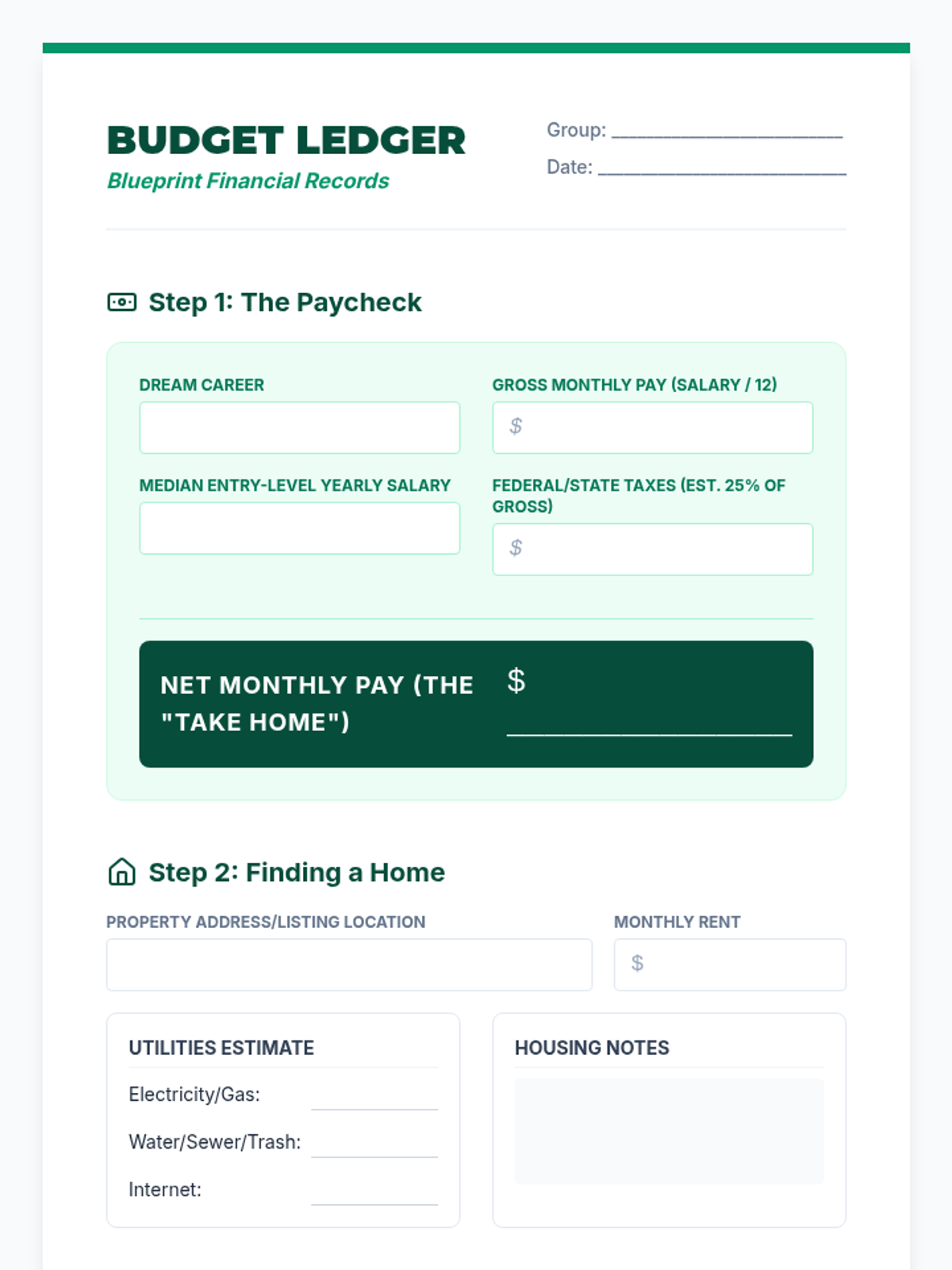
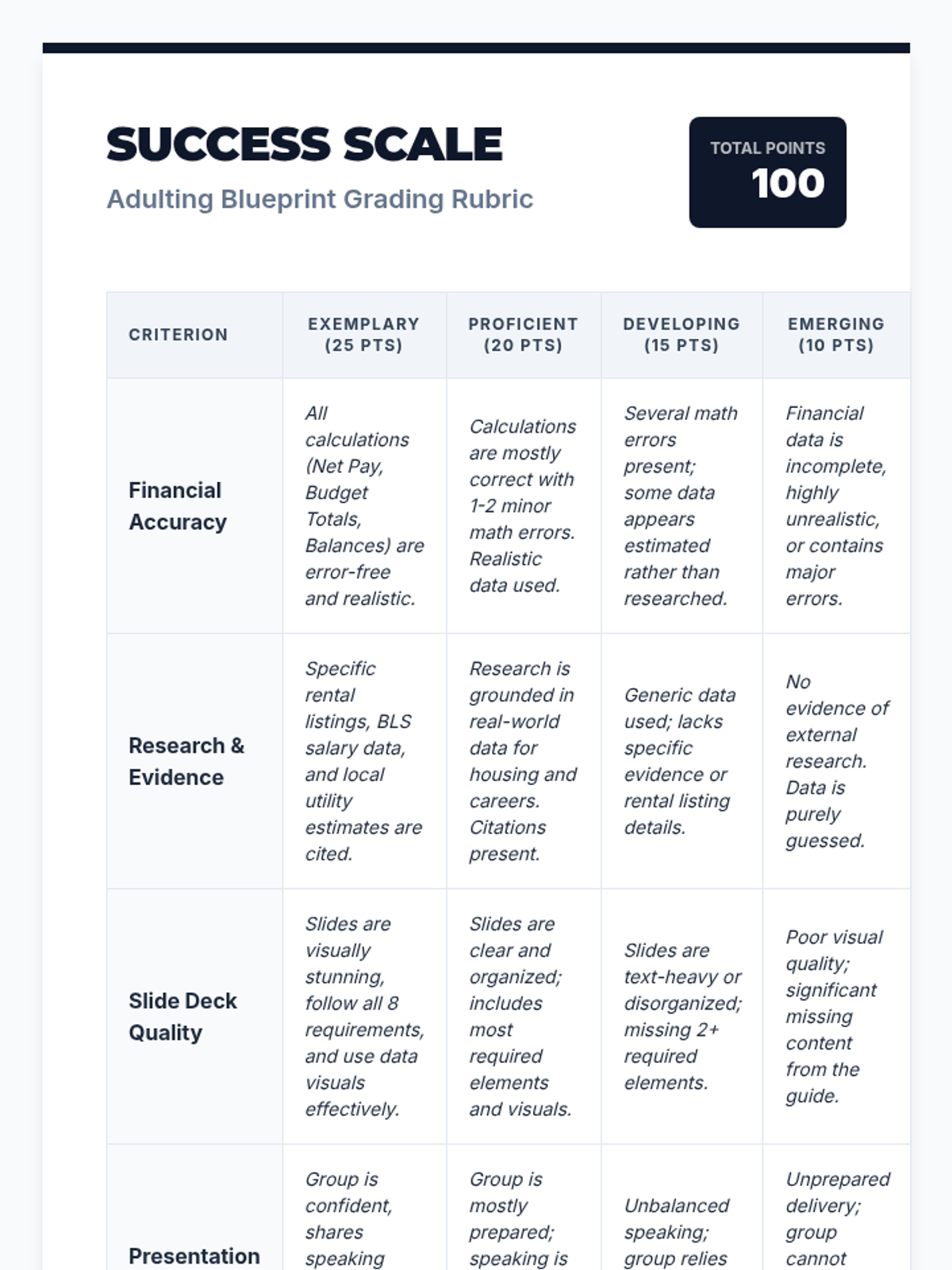
A comprehensive group project where students research a career, calculate their net income, and create a realistic monthly budget based on local cost-of-living data. Students collaborate to navigate the financial realities of adulthood and present their findings.
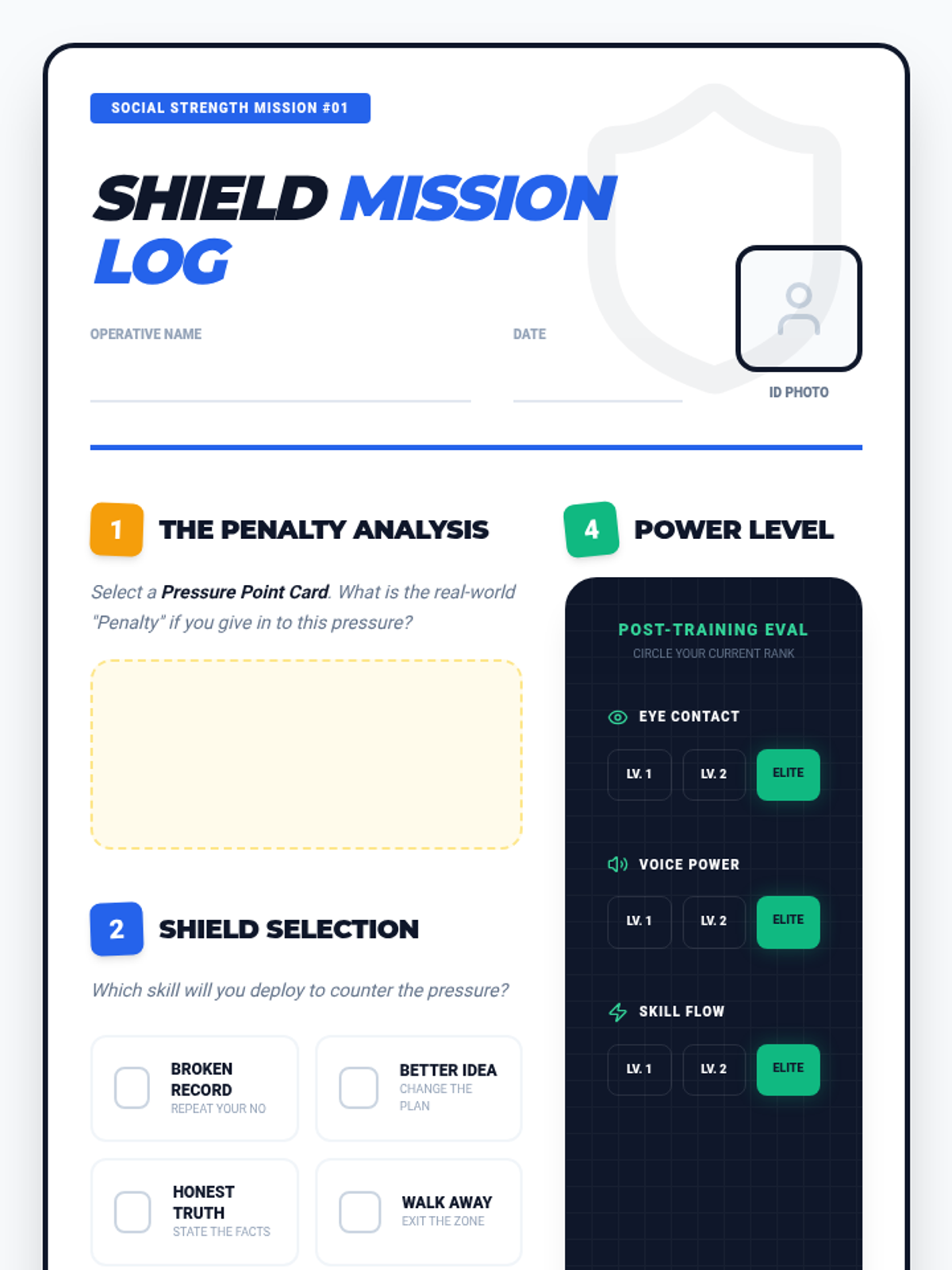
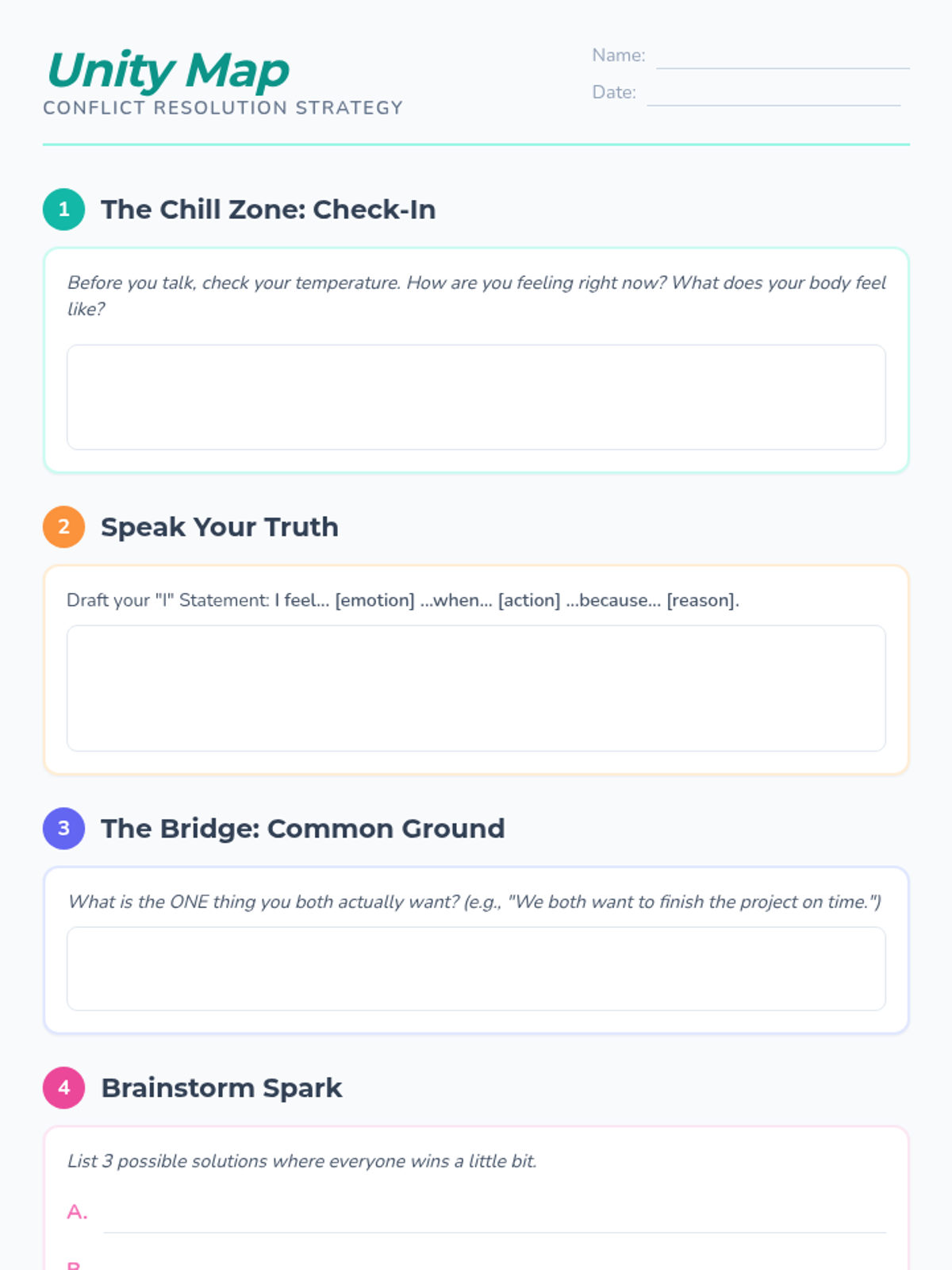
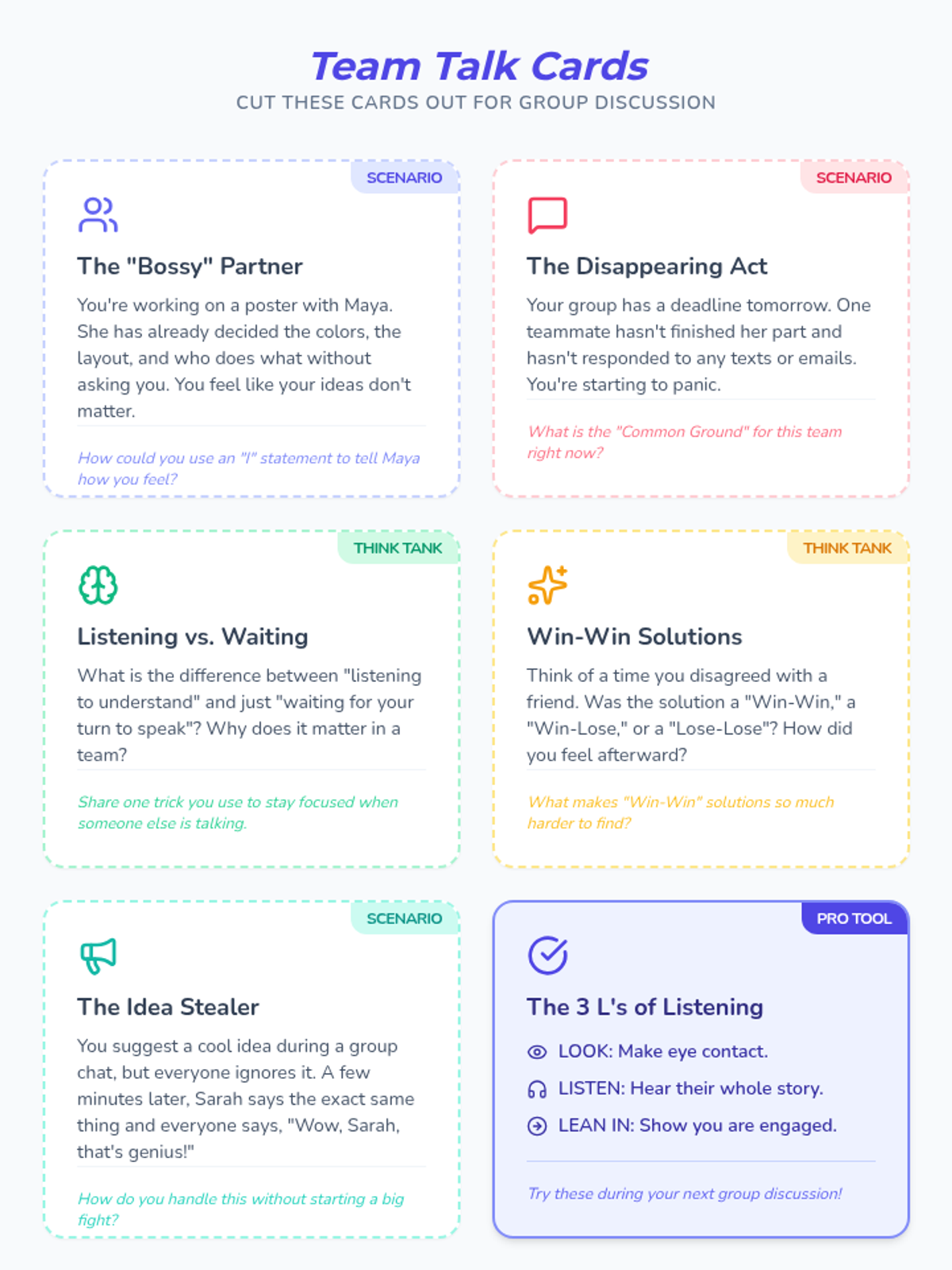
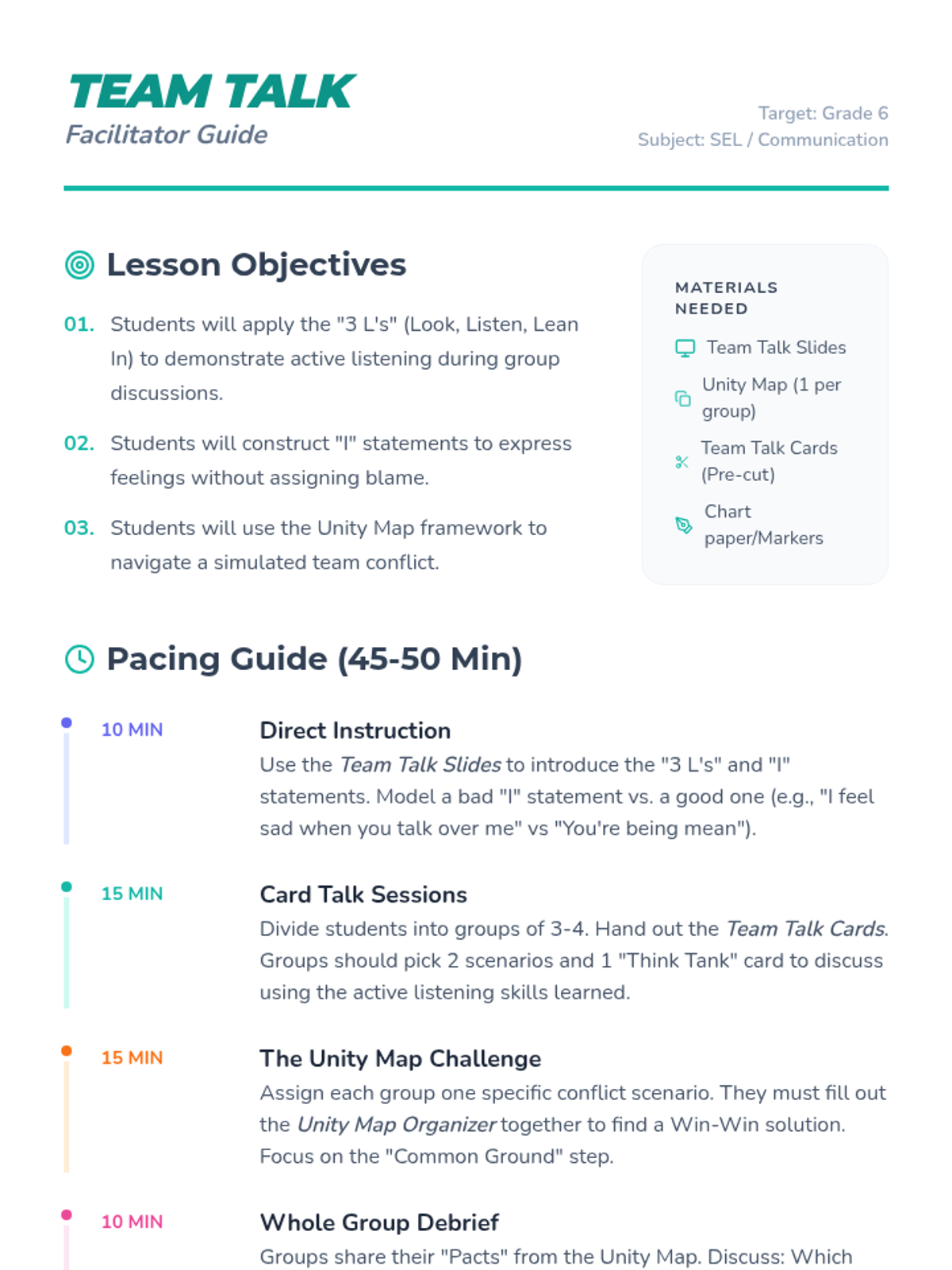
This lesson equips 6th-grade students with essential communication and conflict resolution tools, focusing on active listening, 'I' statements, and a structured 5-step problem-solving framework for teamwork.
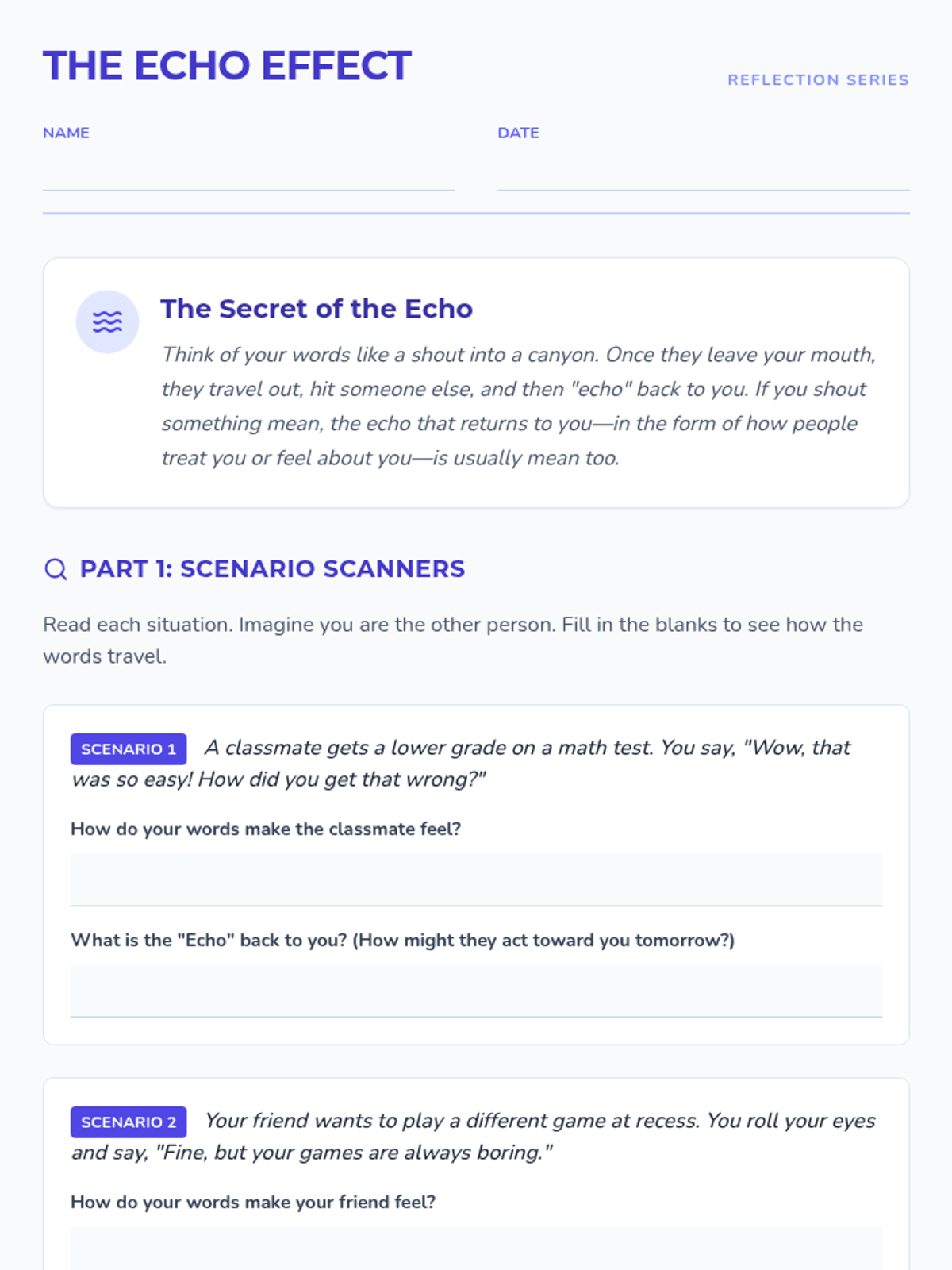
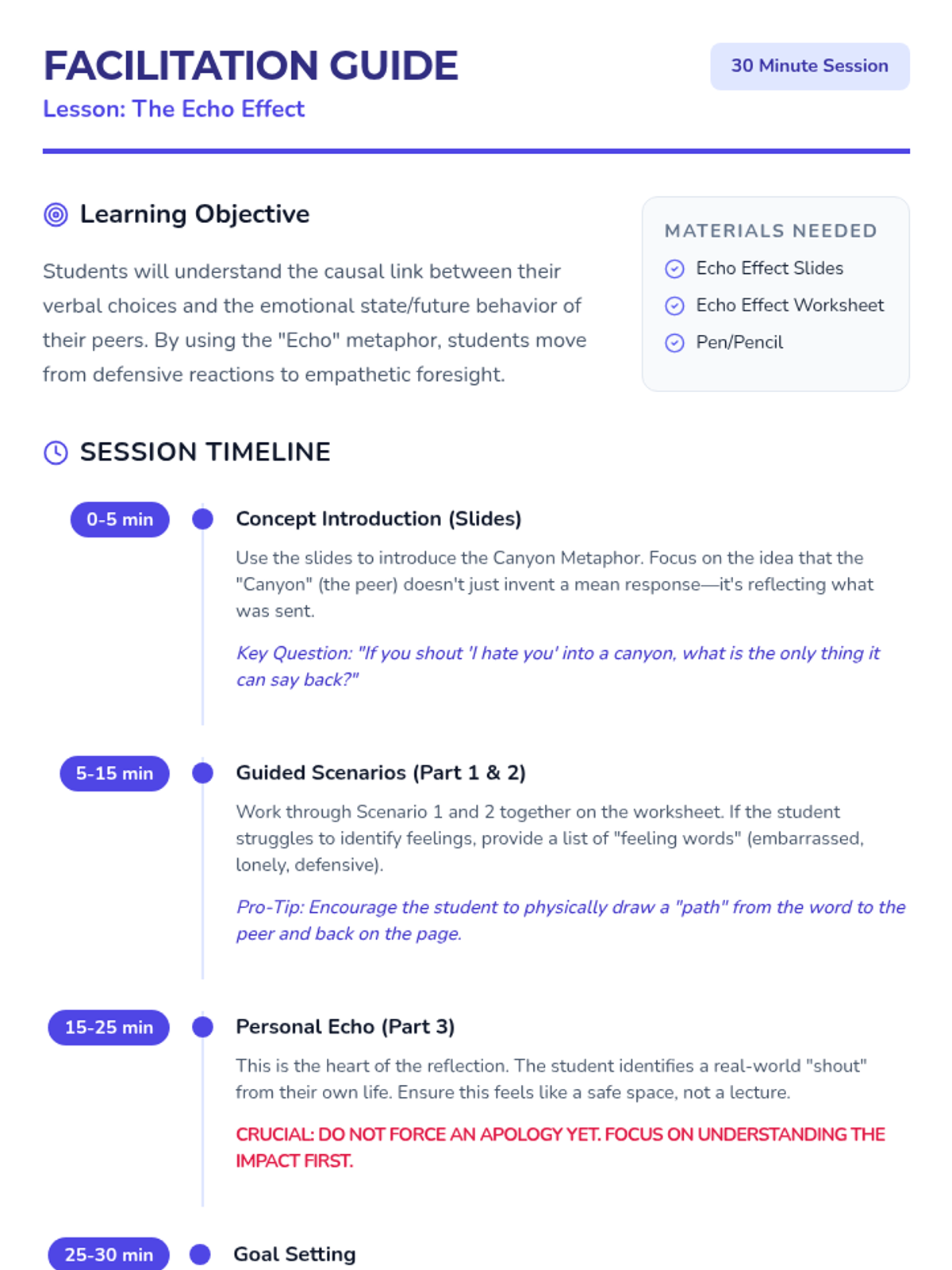
A focused reflection session designed to help students understand the weight of their words and the emotional ripple effects they create in their peer relationships.
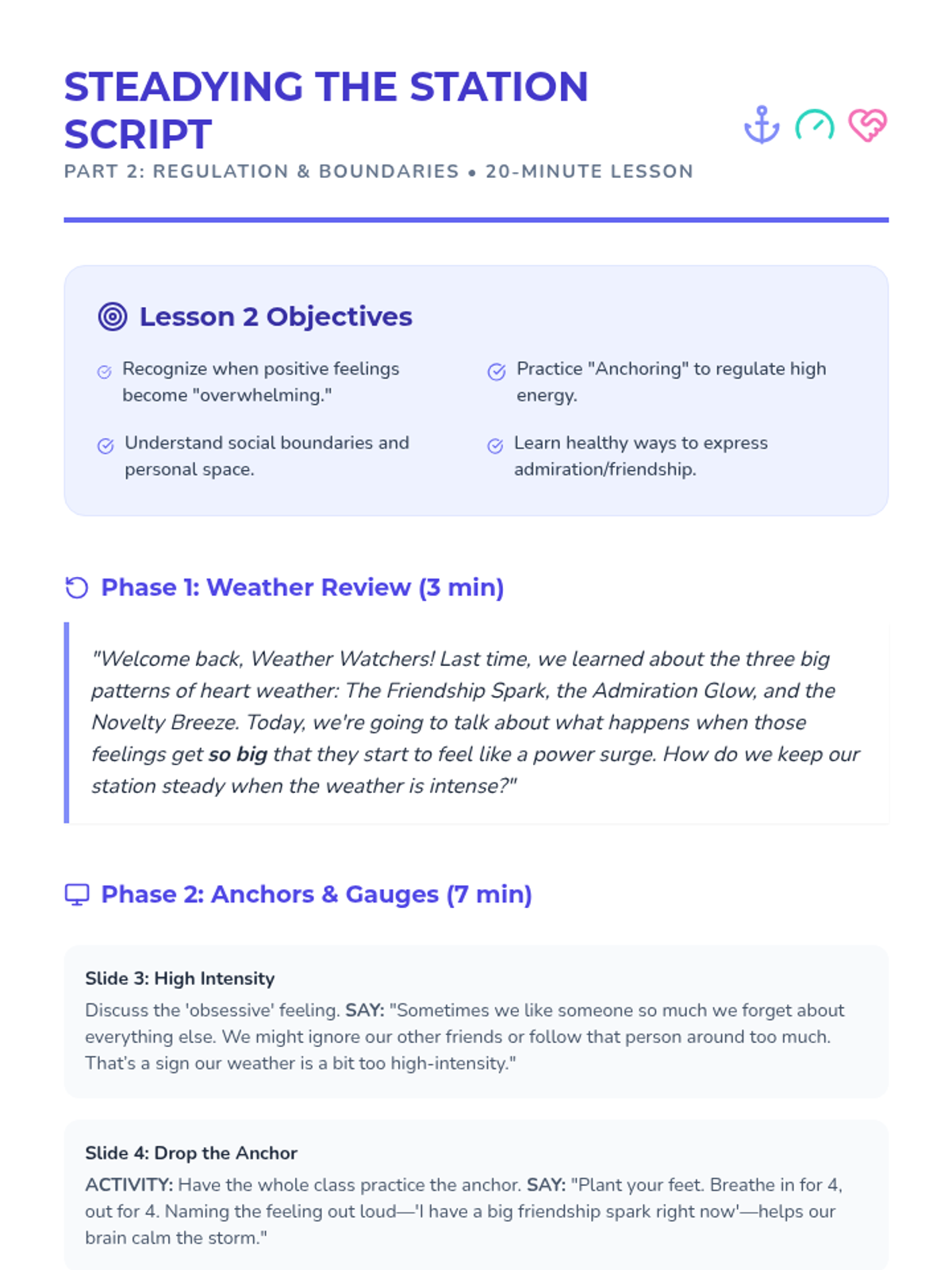
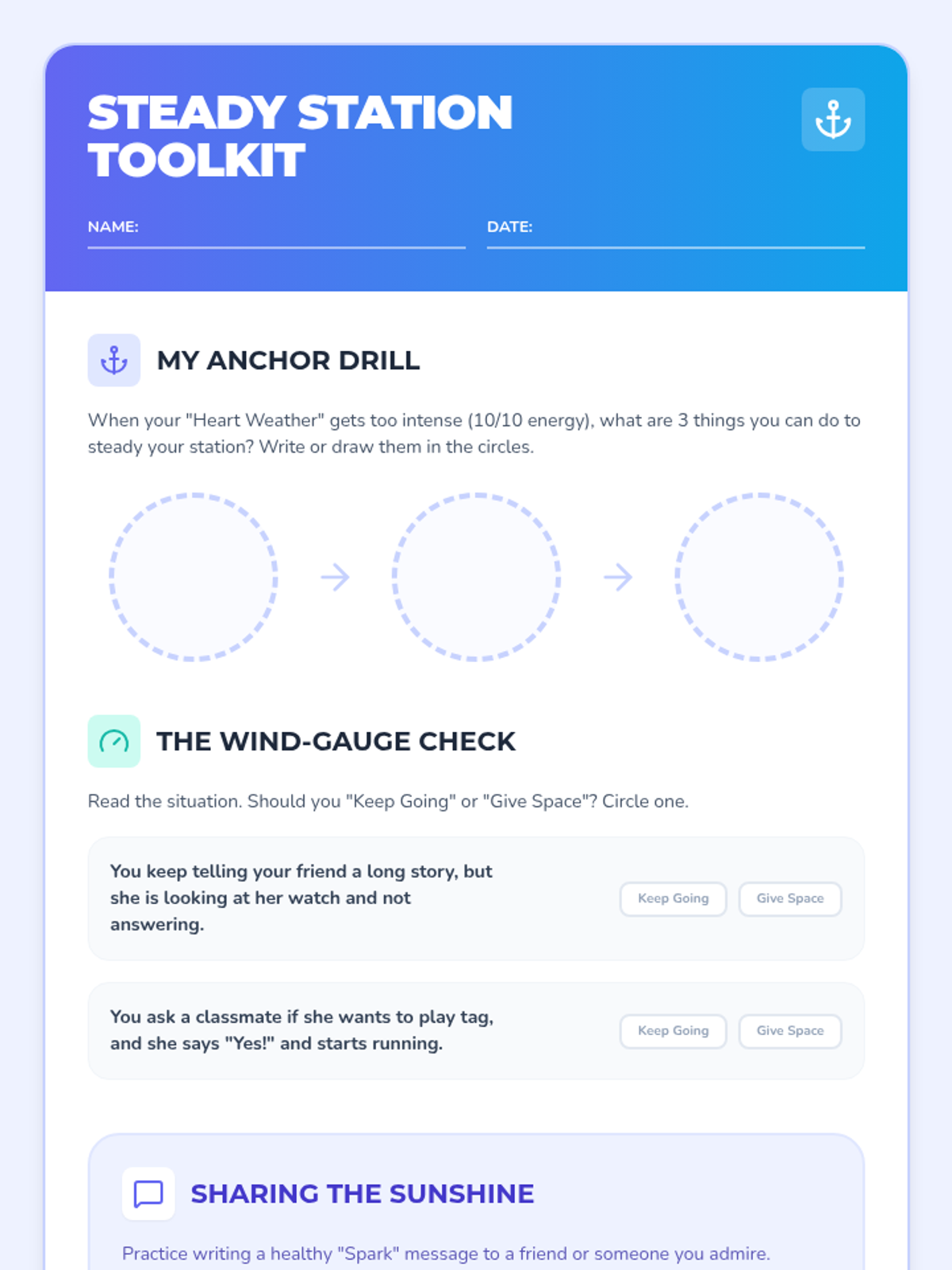
A 20-minute follow-up lesson focused on regulating intense positive emotions and navigating social boundaries. Students learn "anchoring" techniques for high-intensity feelings and how to respect the personal space and comfort of others while expressing admiration or friendship.
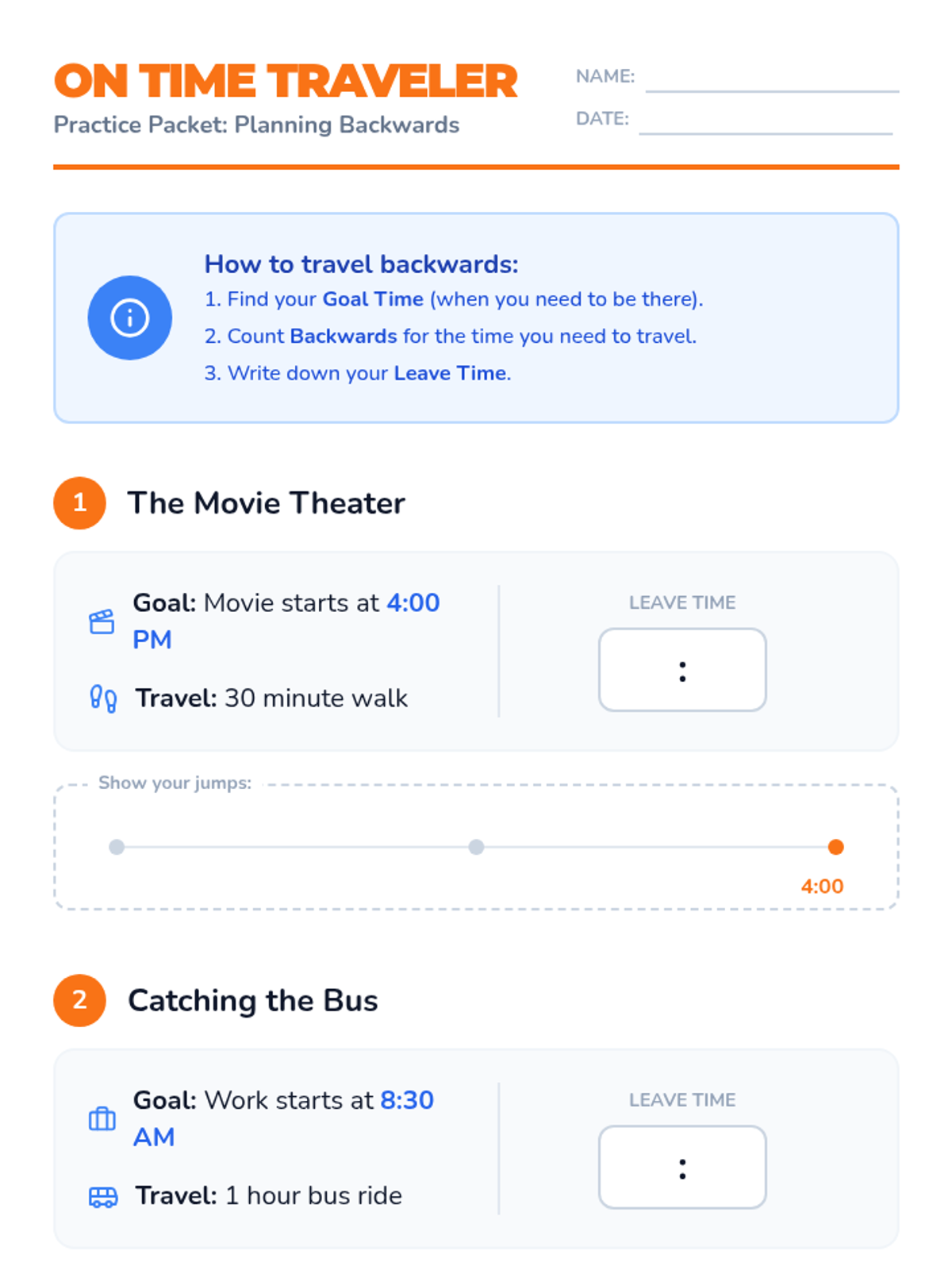
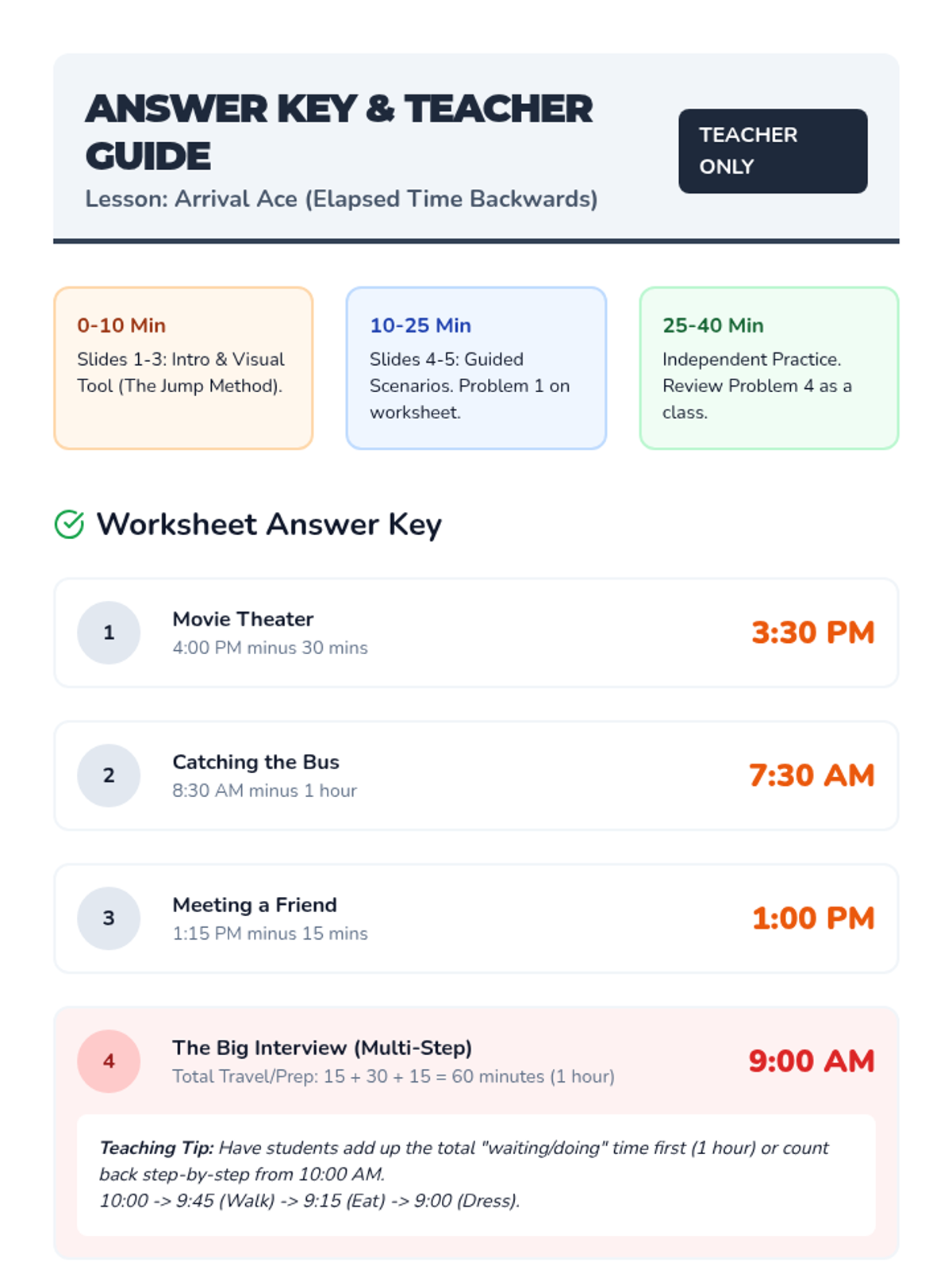
A 40-minute lesson on calculating elapsed time by working backwards. Students learn to plan their departure times for transportation and prioritize tasks to ensure they arrive at their destination on time.
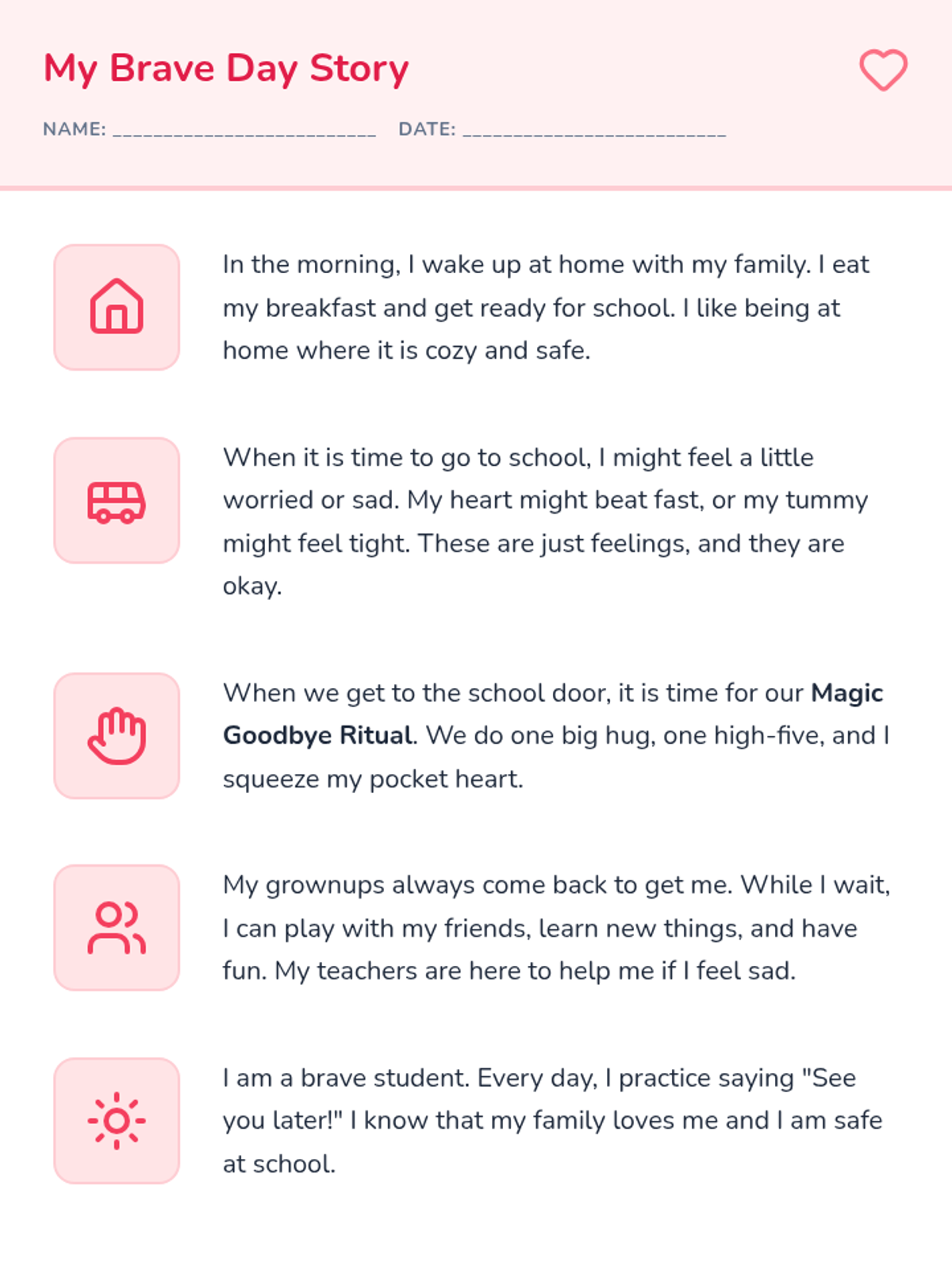
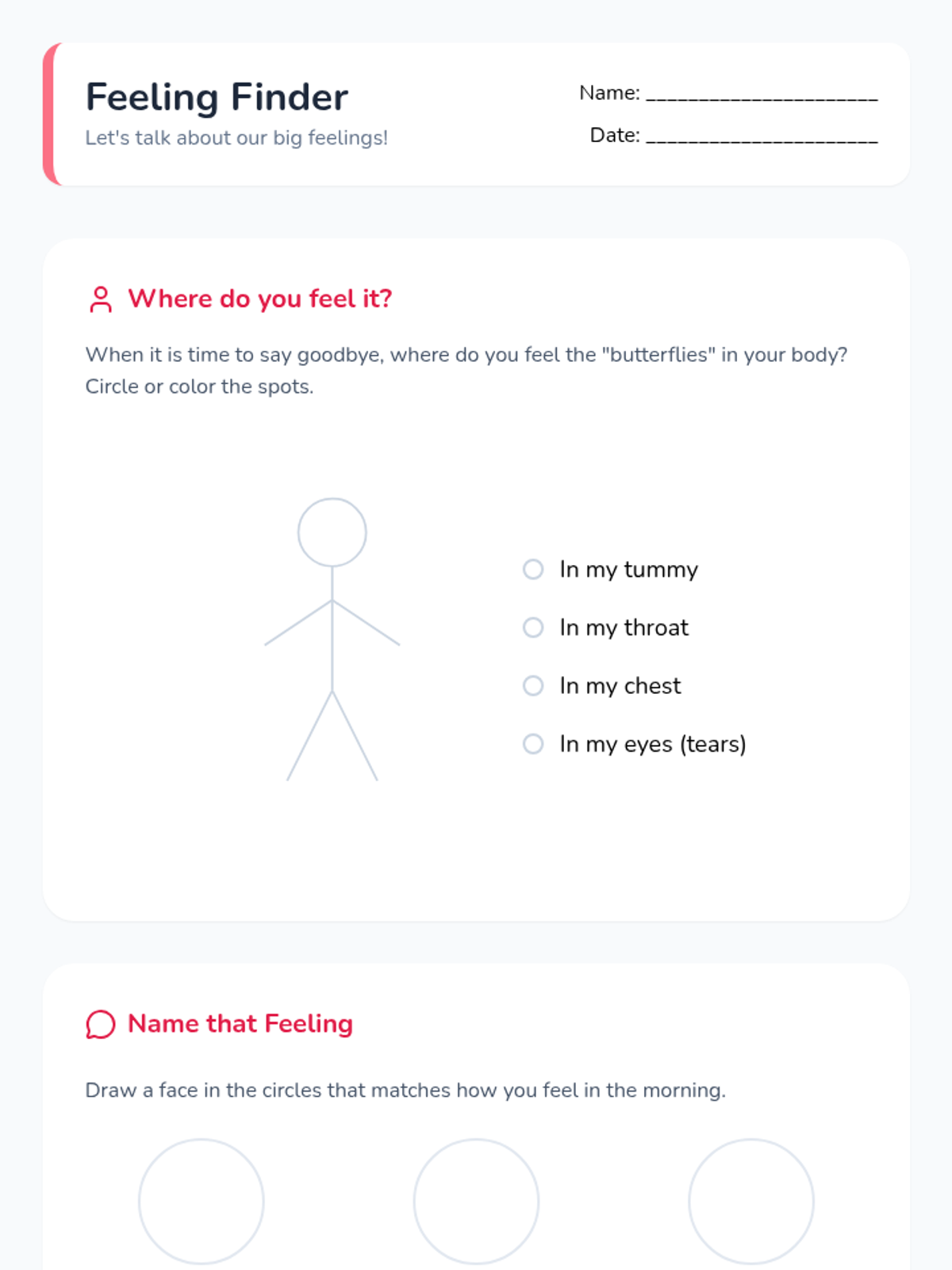
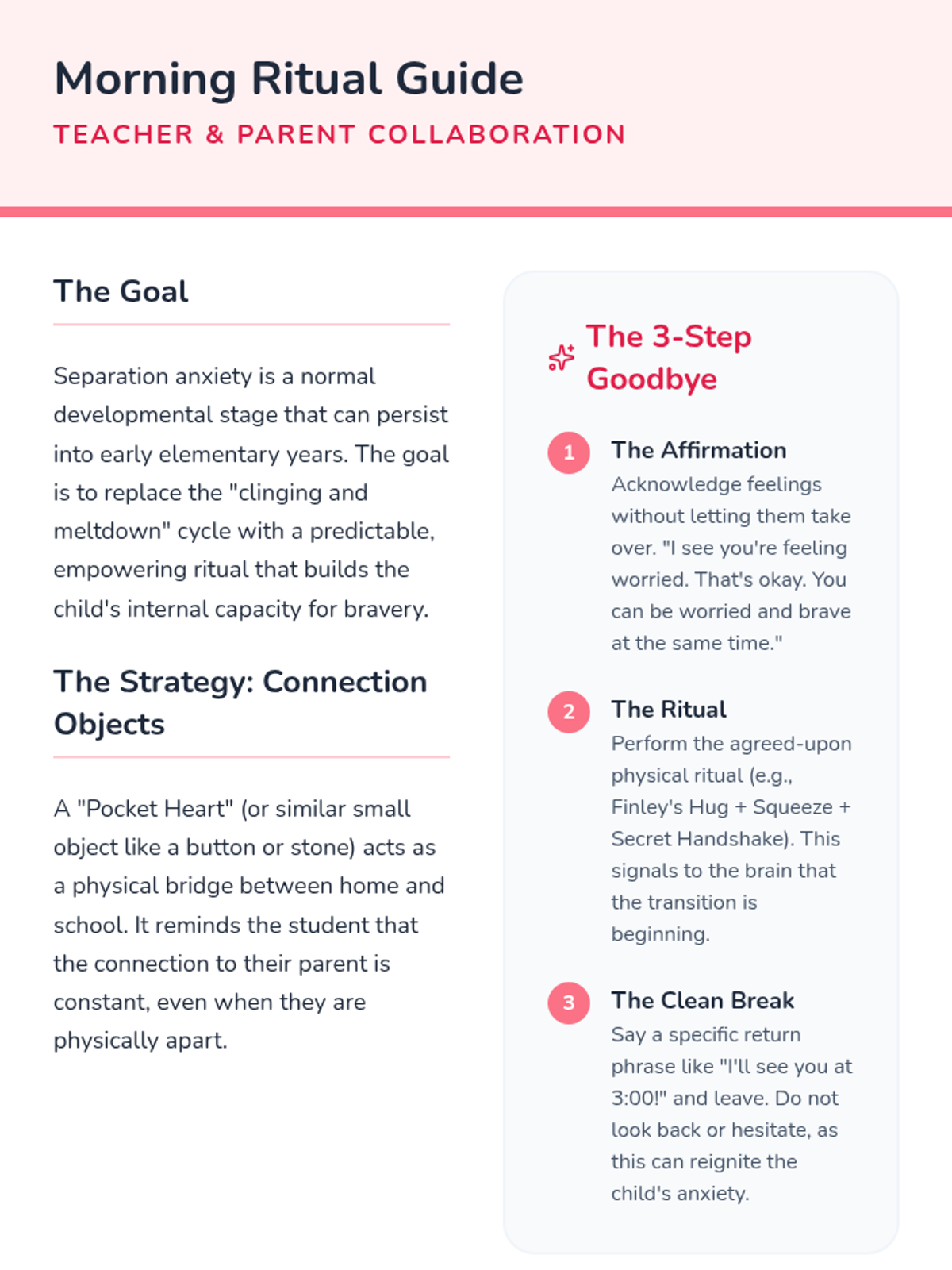
This lesson provides a gentle, supportive approach to managing separation anxiety through storytelling and the establishment of a calming morning ritual. Students learn to identify their feelings and use a 'connection object' to feel close to home while at school.
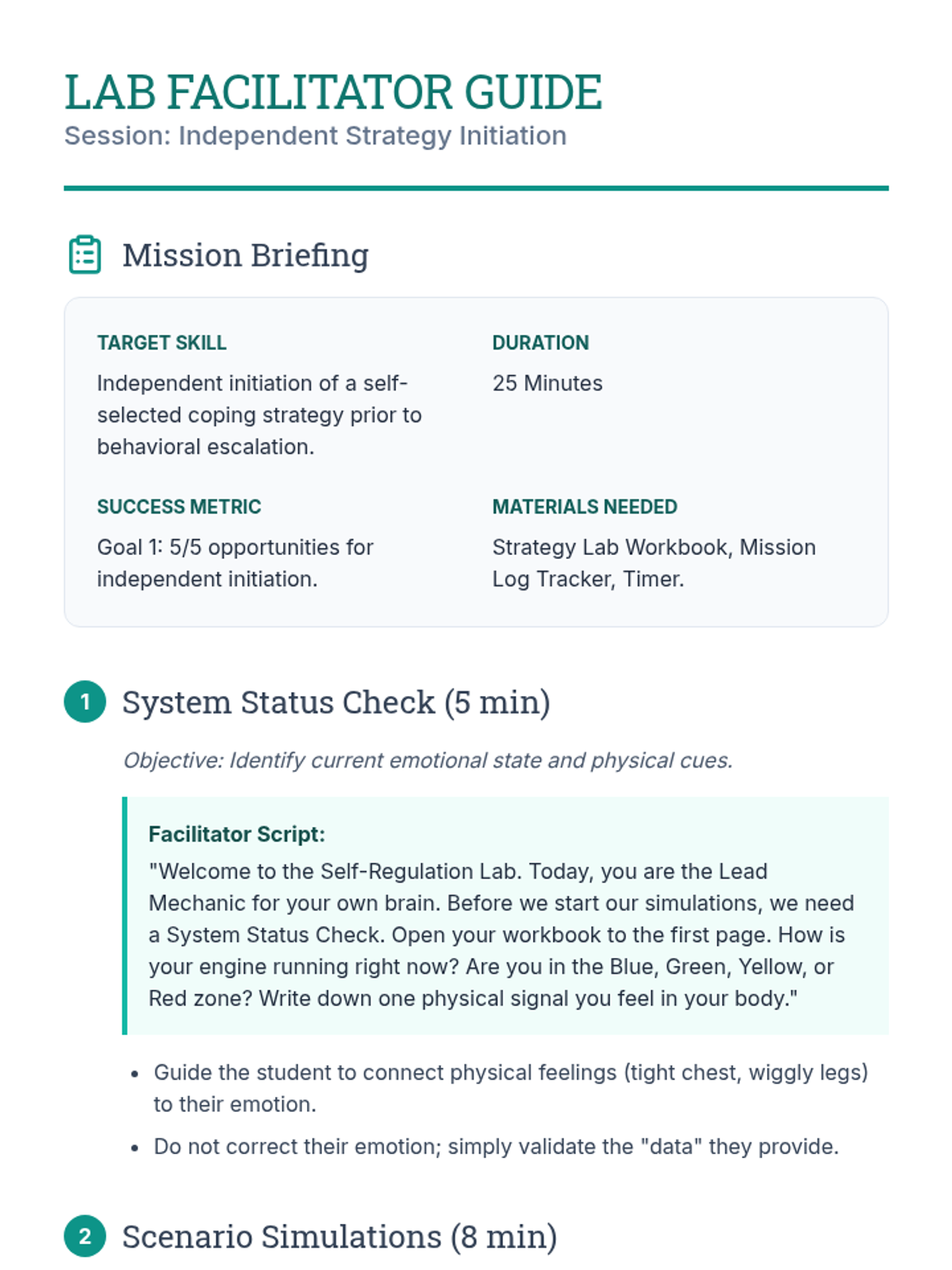
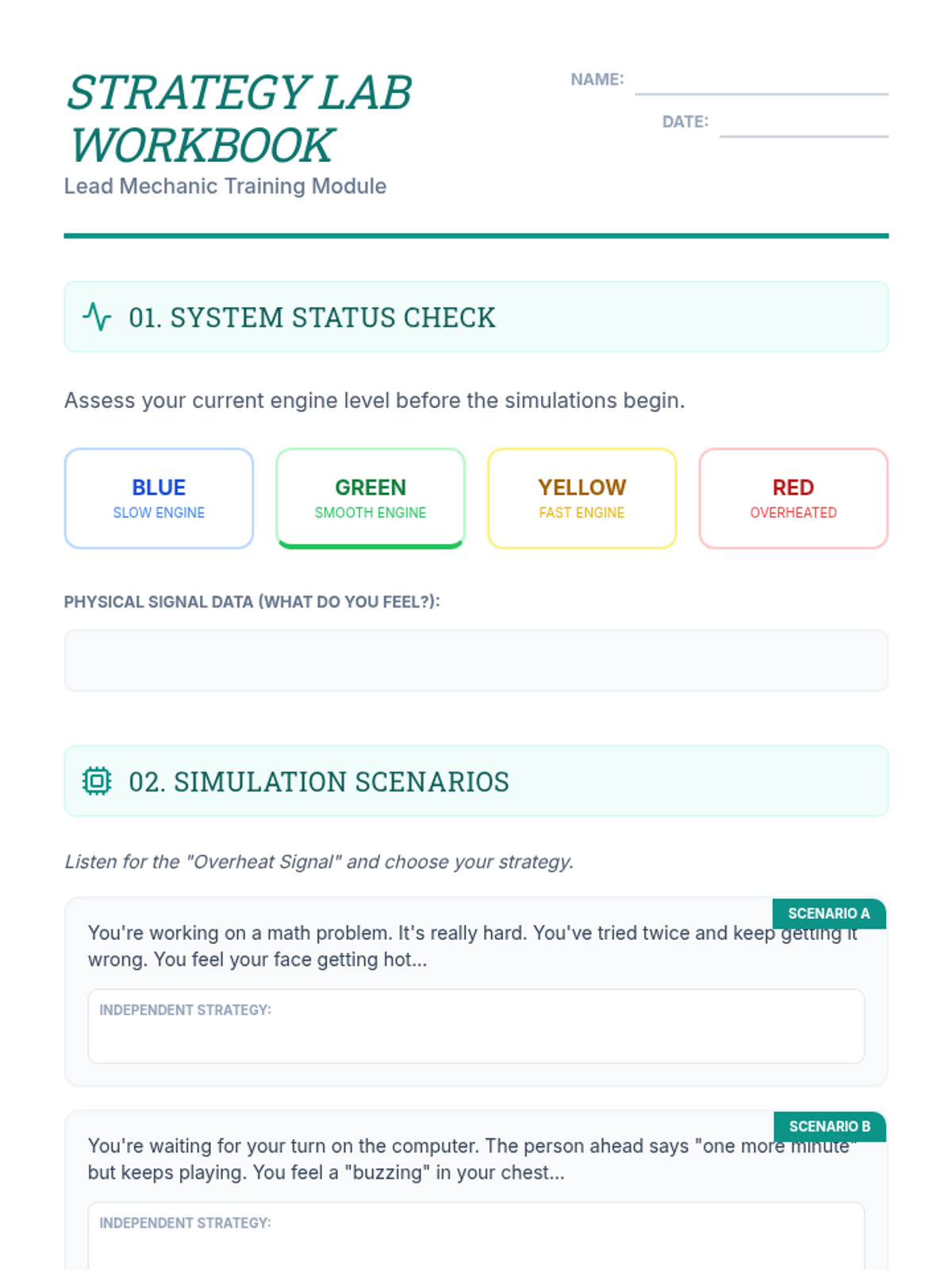
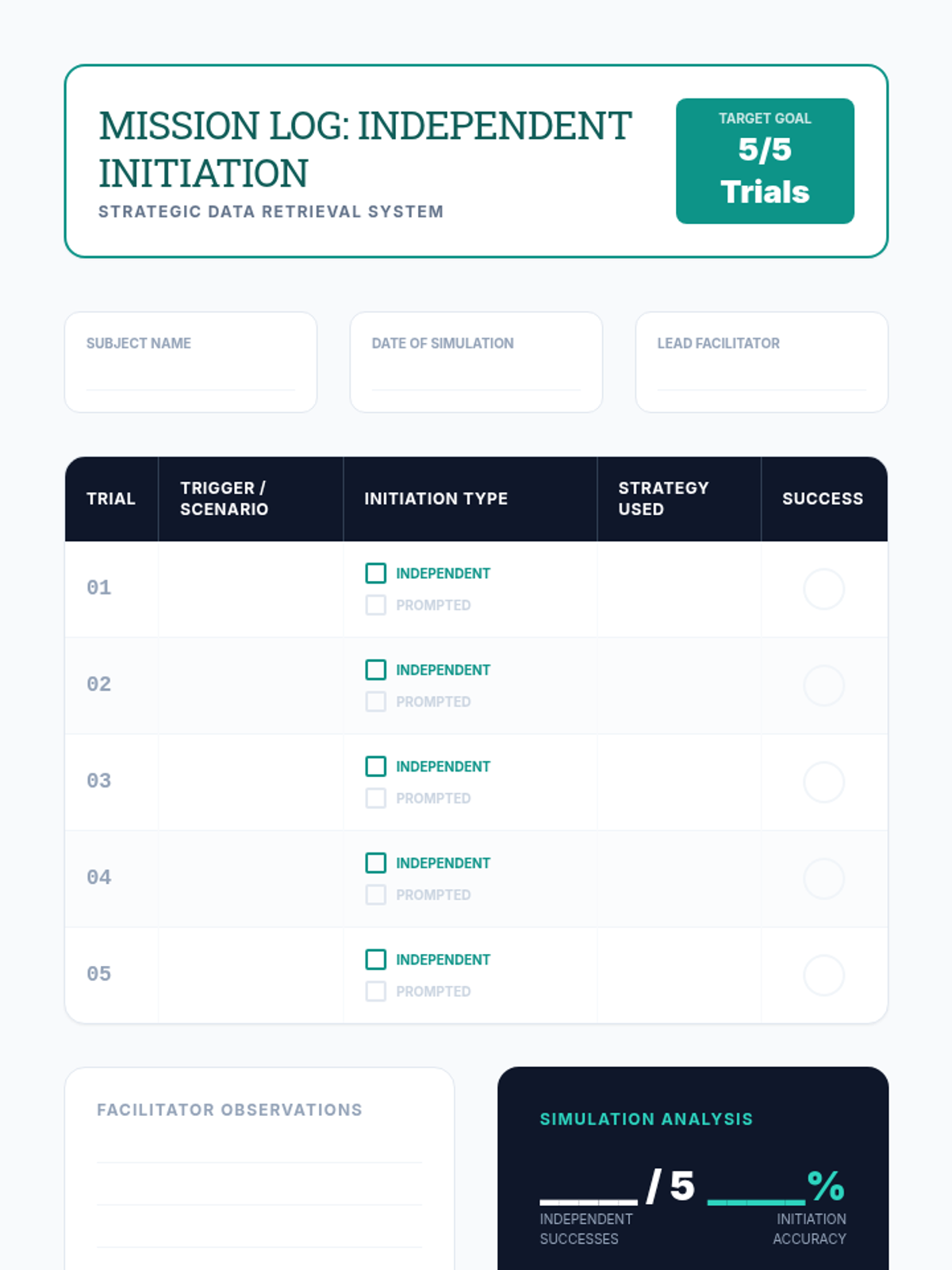
A focused 25-minute session designed to help students recognize internal cues and independently choose coping strategies before emotional escalation occurs. The lesson uses a 'Self-Regulation Lab' theme to frame emotional management as a technical skill.