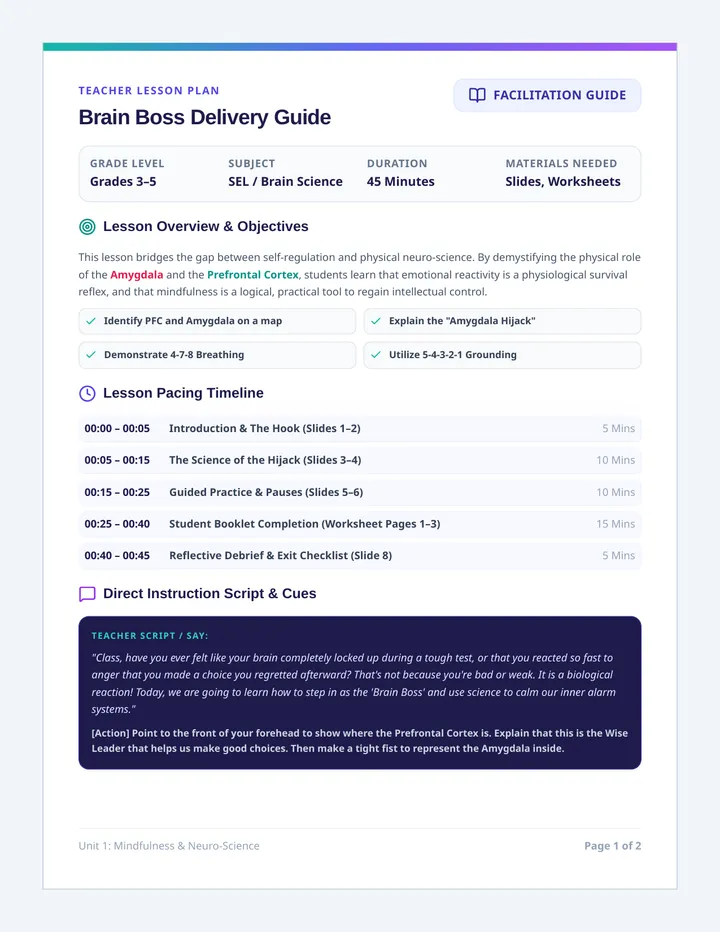
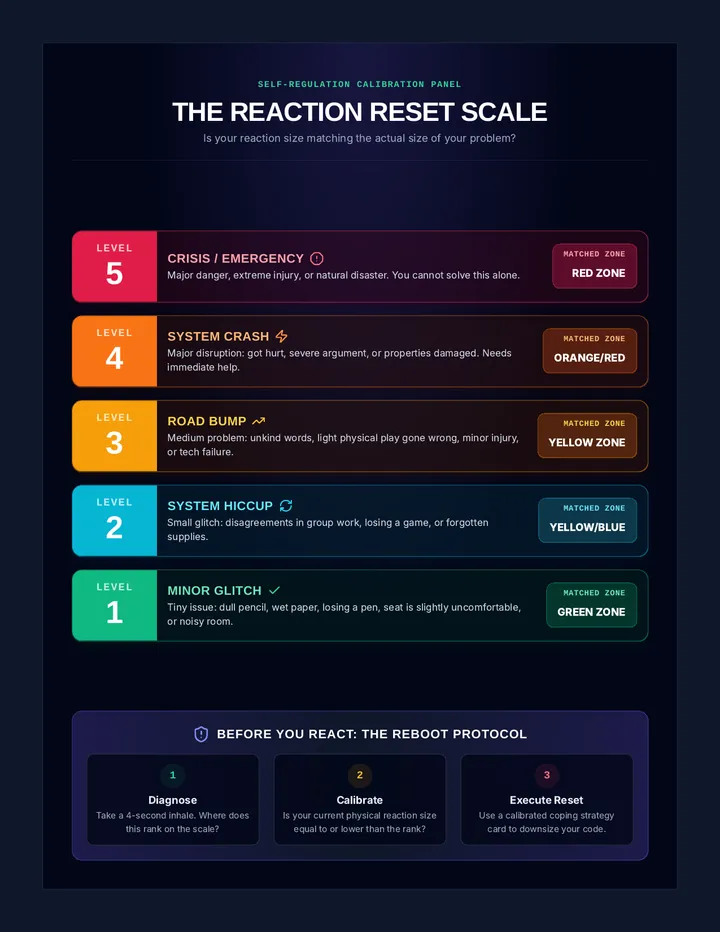
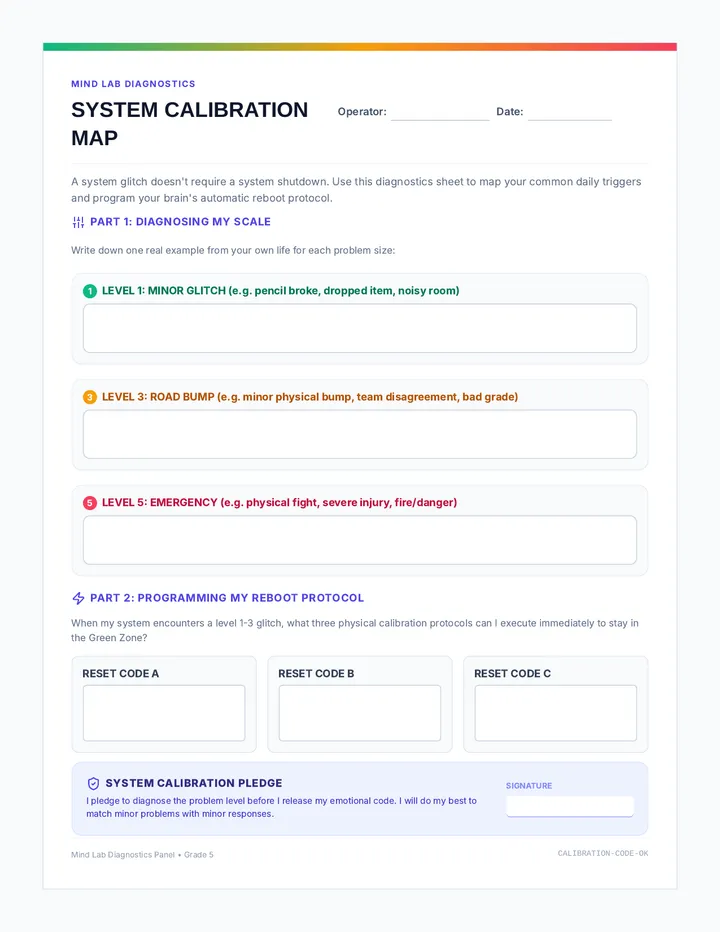
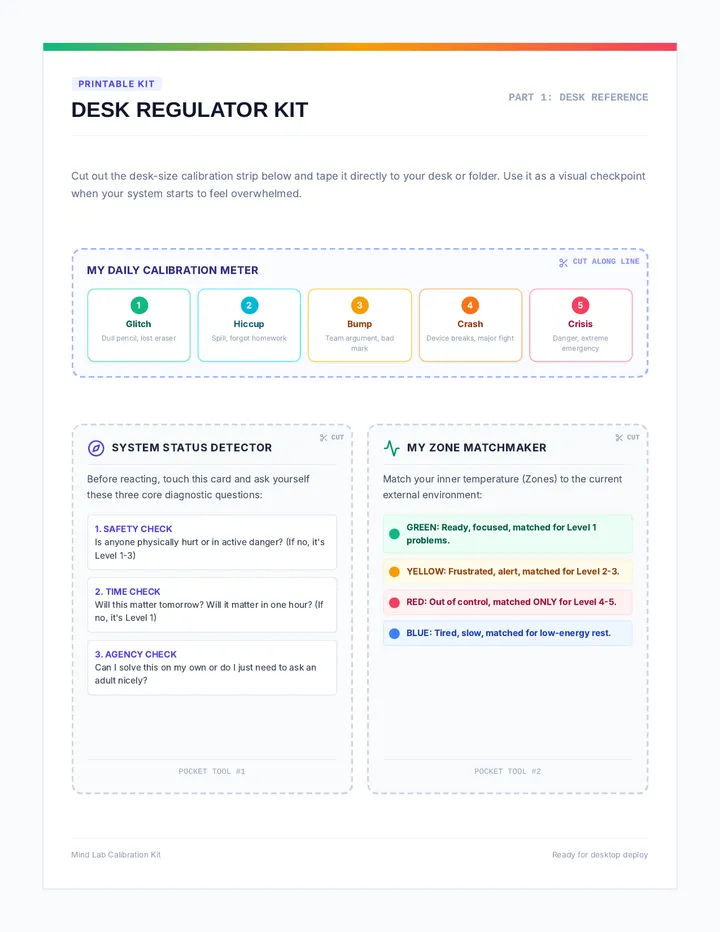
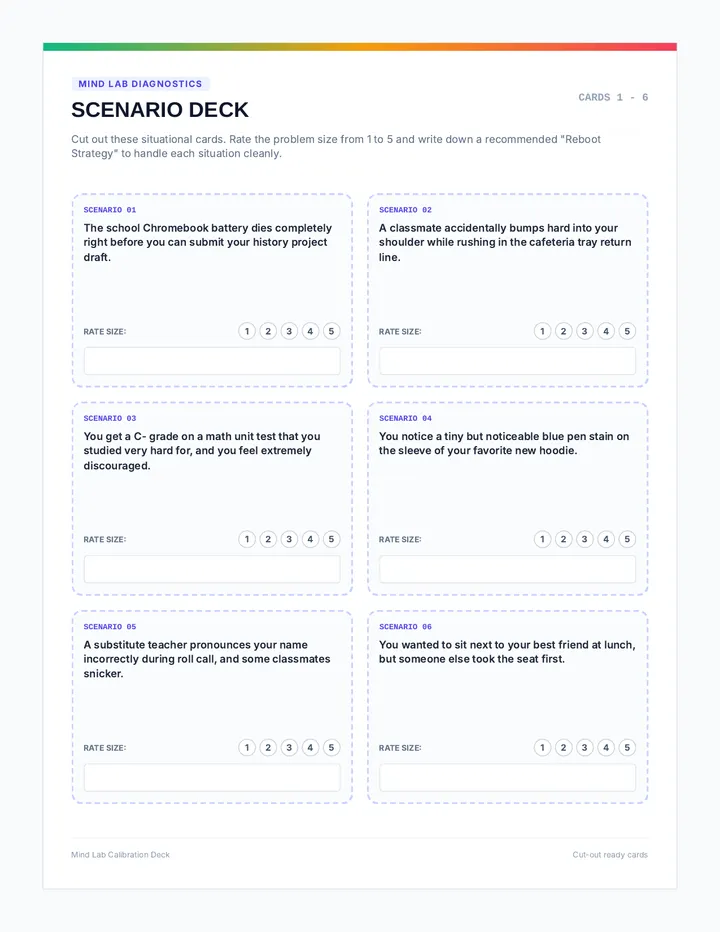
This lesson introduces 5th-grade students to the brain's emotional centers, using the hand model of the brain to explain emotional dysregulation and providing concrete 'reboot' strategies.
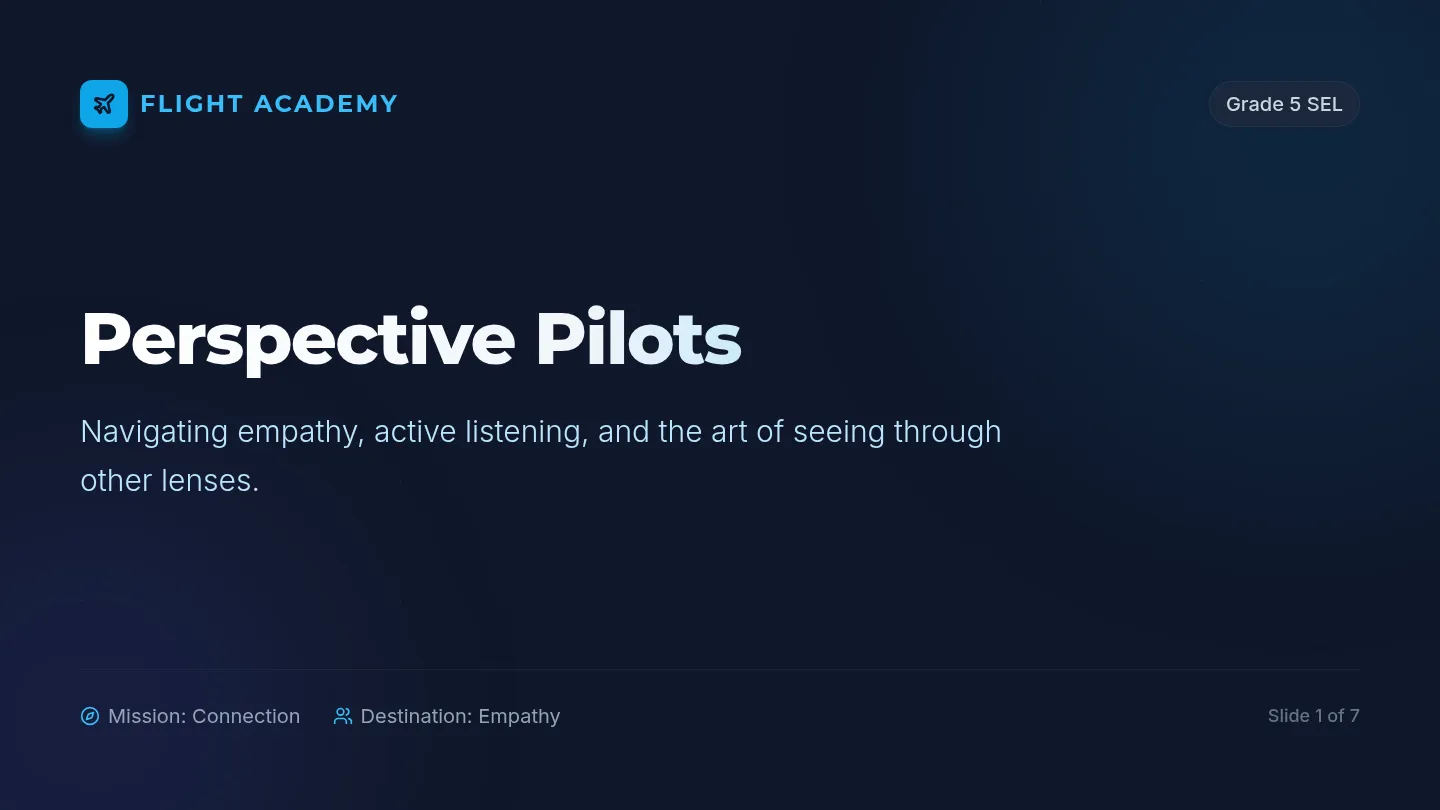
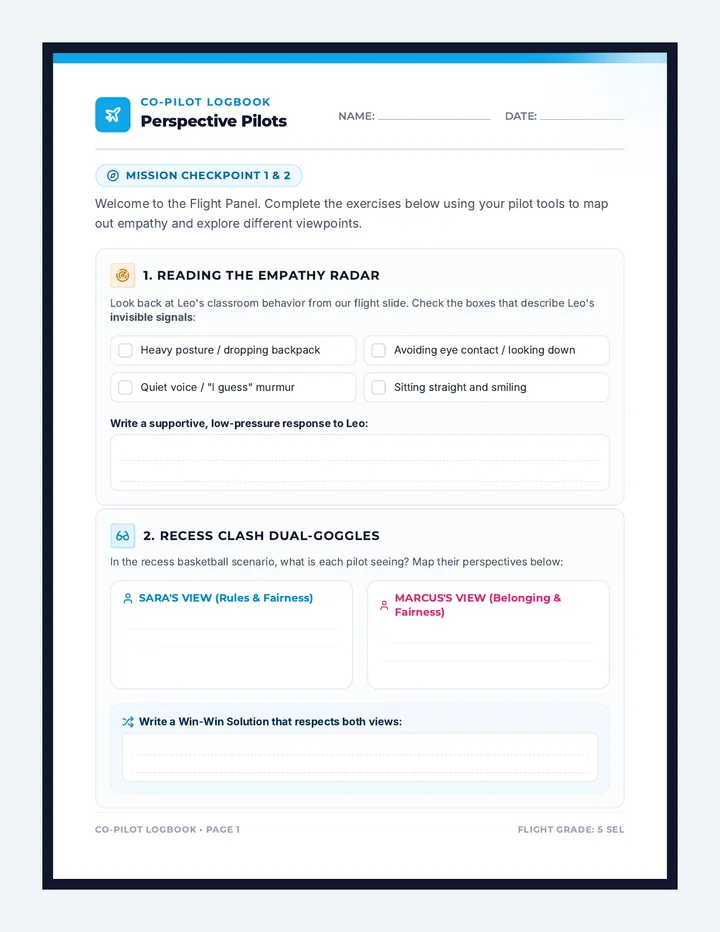
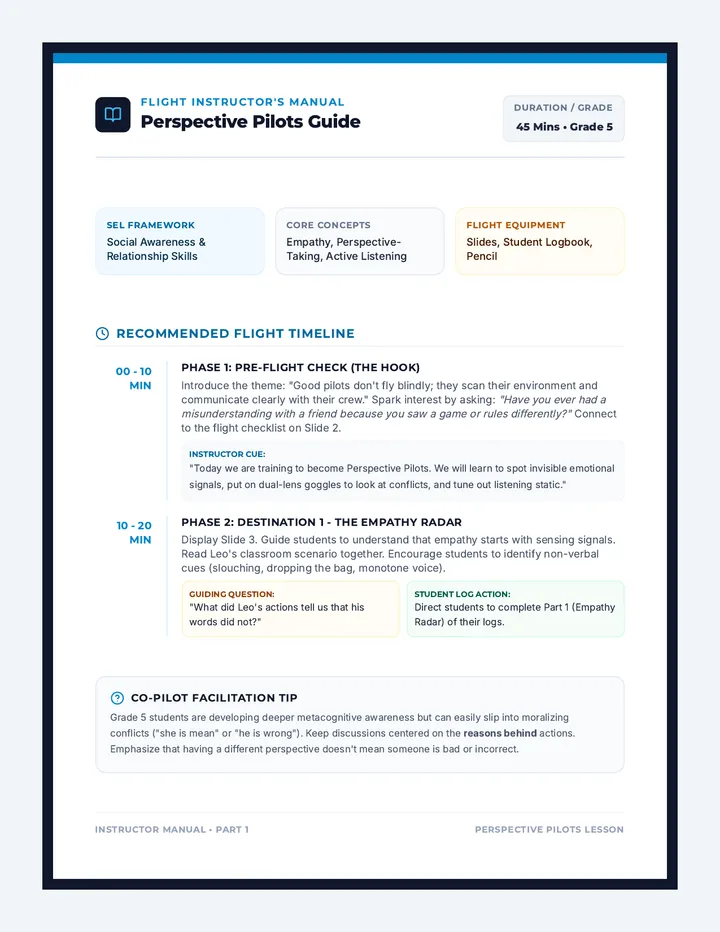
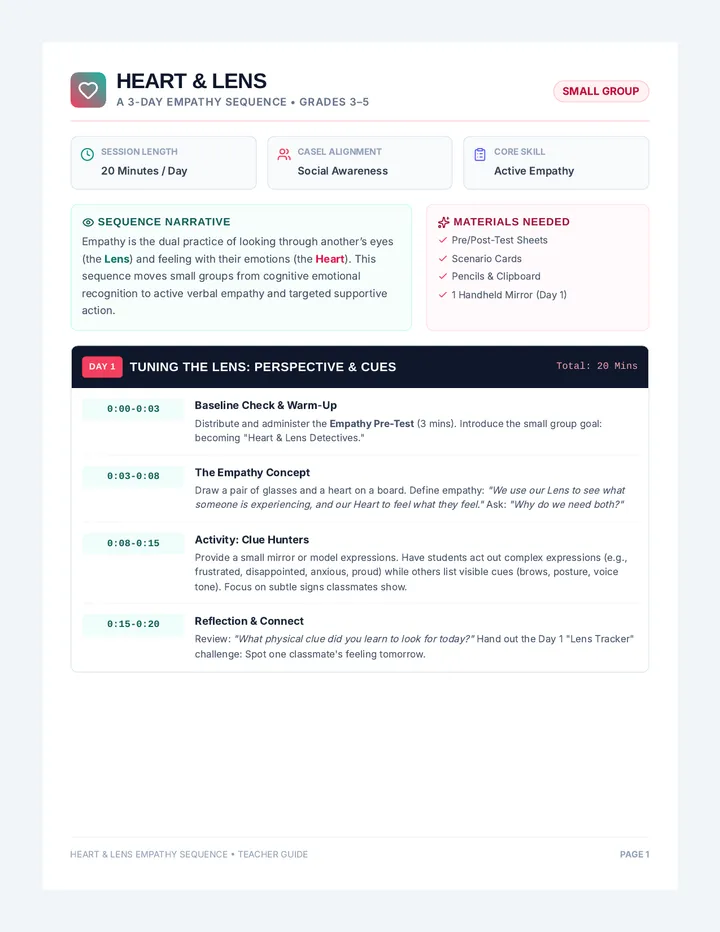
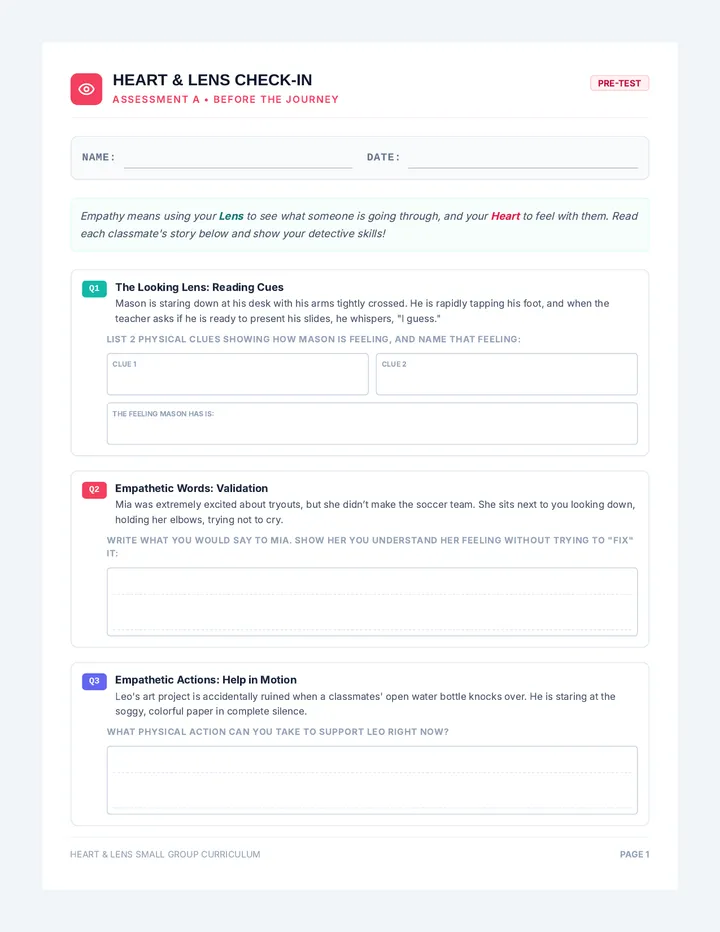
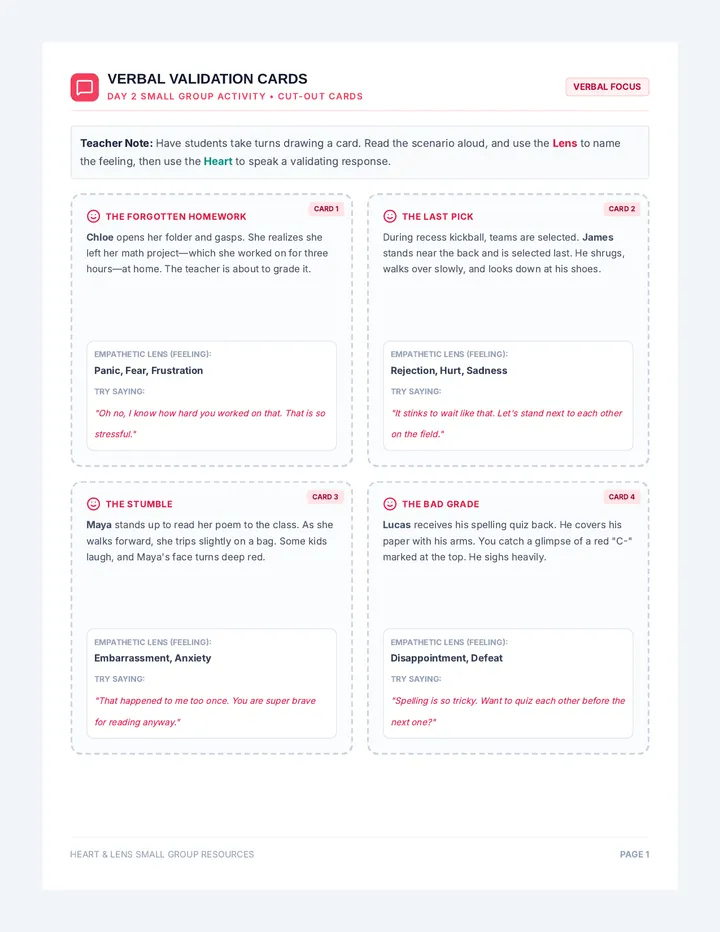
A social-emotional learning lesson designed for 3rd-5th graders to develop empathy and perspective-taking skills through immersive scenarios and role-playing. Students will learn to 'walk in someone else's shoes' using a field-guide inspired approach to human emotions.
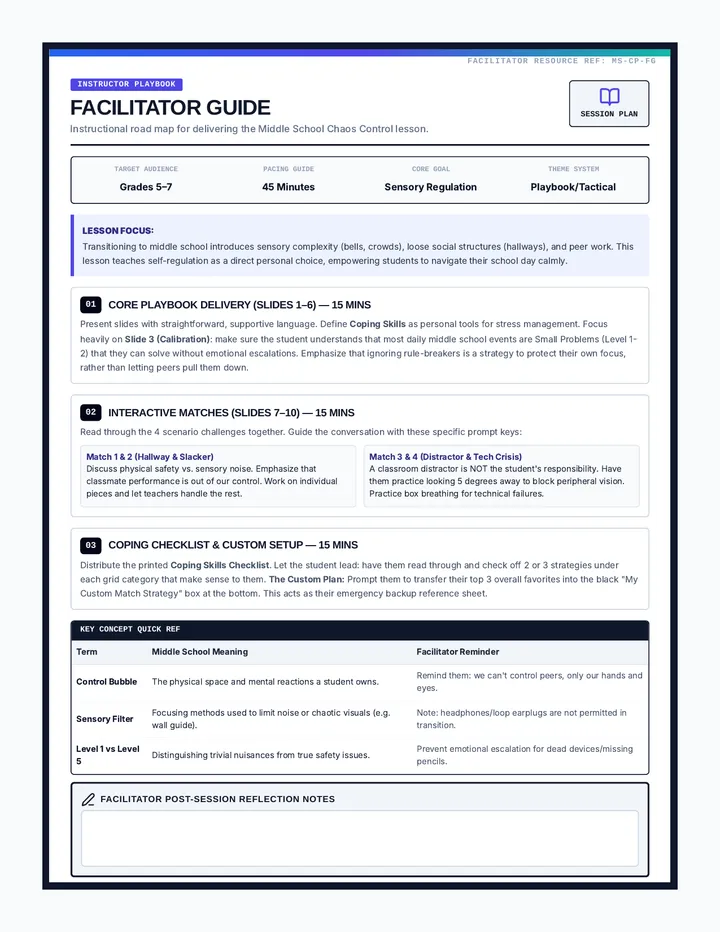
A collection of quick, one-minute breathing and mindfulness activities designed specifically for middle schoolers to reset their focus and manage stress.
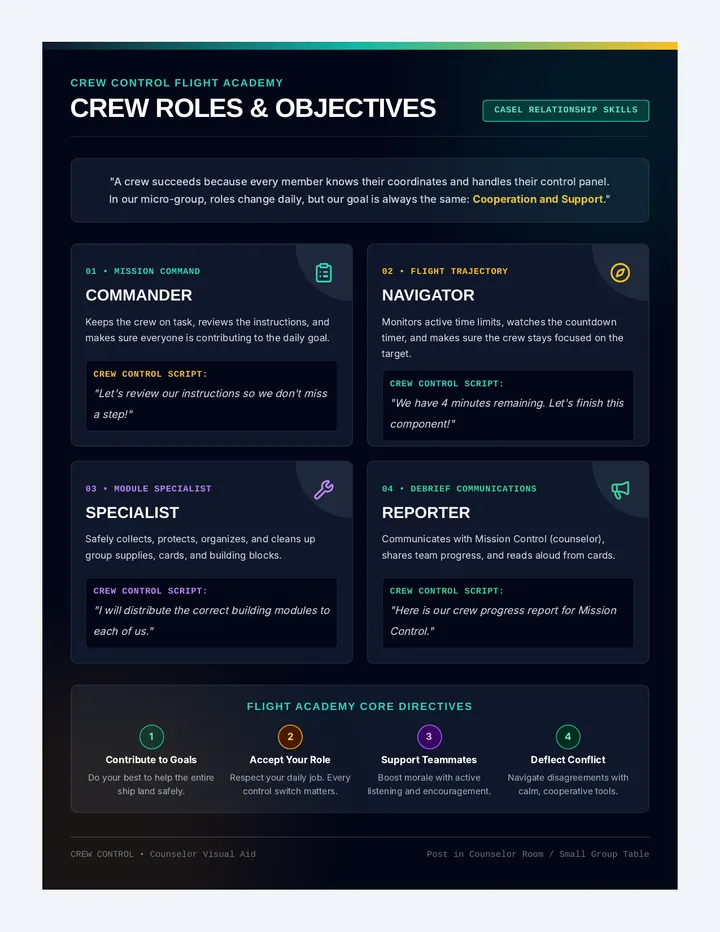
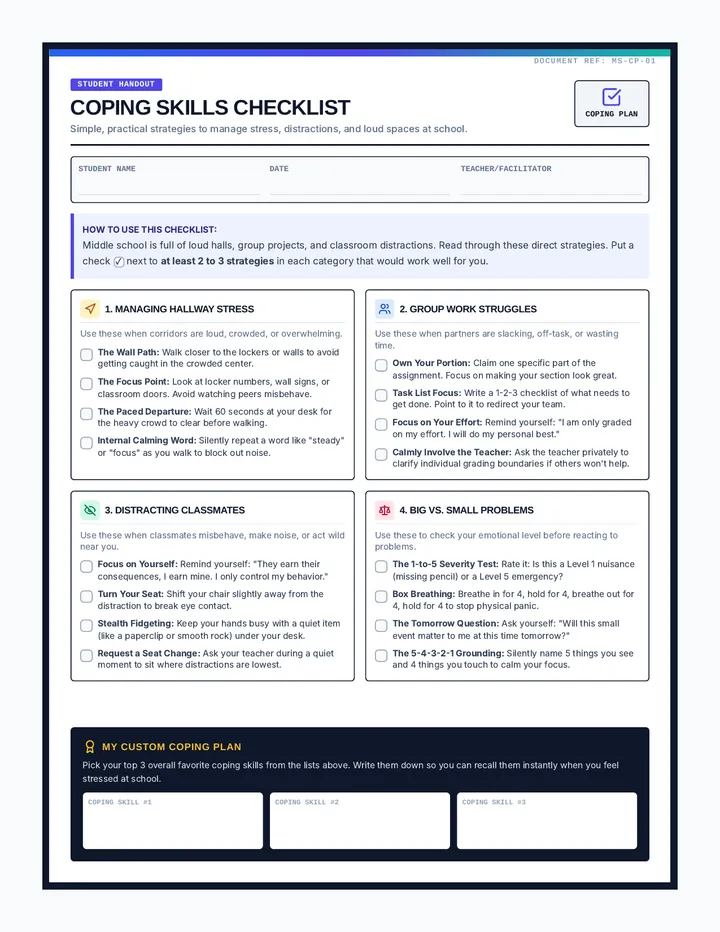
A collection of evidence-based calming strategies and tools designed for an 11-year-old to manage loud or aggressive emotional reactions in a school setting.
Consolidates skills through role-play and creates a personalized 'Voice Power' action plan for future use.
Teaches concrete scripts and methods for requesting assistance when tasks or situations become too difficult.
Helps the student identify physical and emotional 'warning lights' that indicate vulnerability or being overwhelmed.
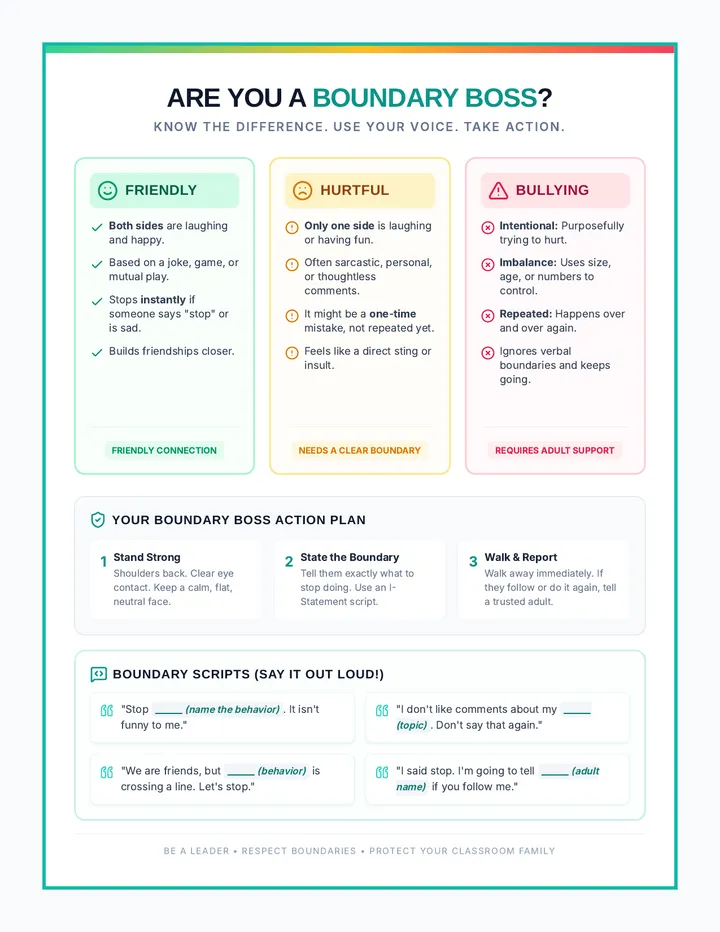
Focuses on identifying when a break or stop is needed and learning various ways to communicate that boundary clearly and calmly.
This lesson introduces students to the concept of cognitive flexibility, helping them distinguish between 'stuck' (rigid) thinking and 'flexible' thinking through scenarios and reframing exercises.
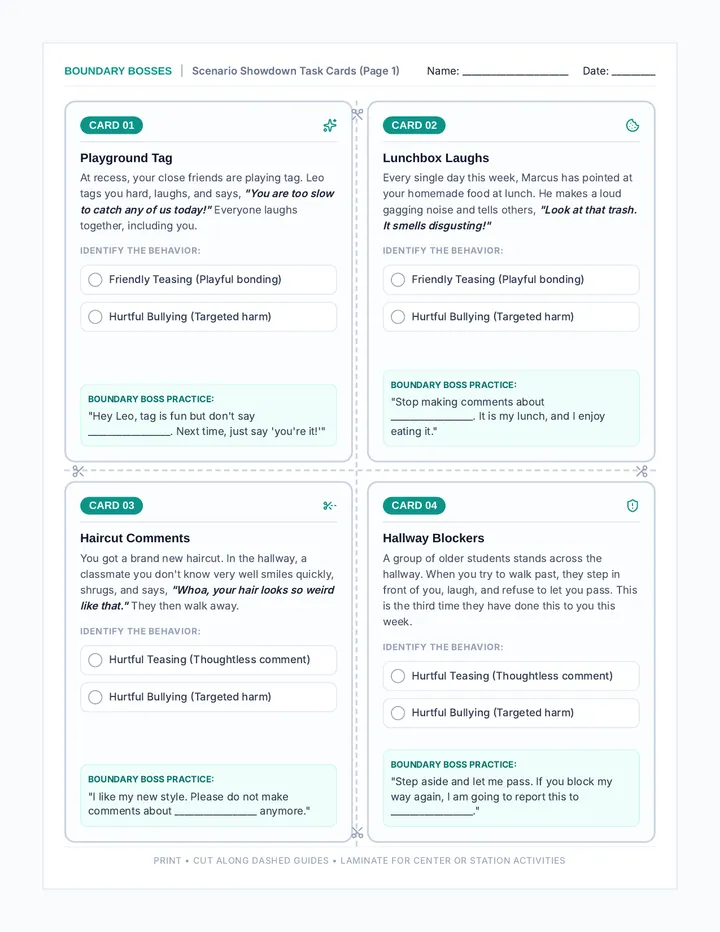
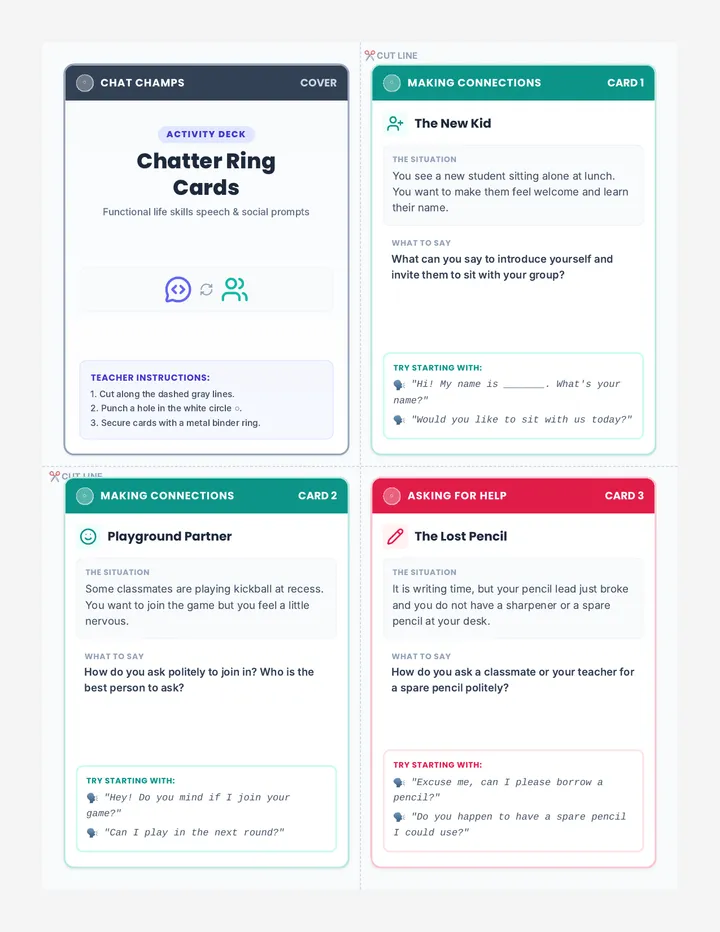
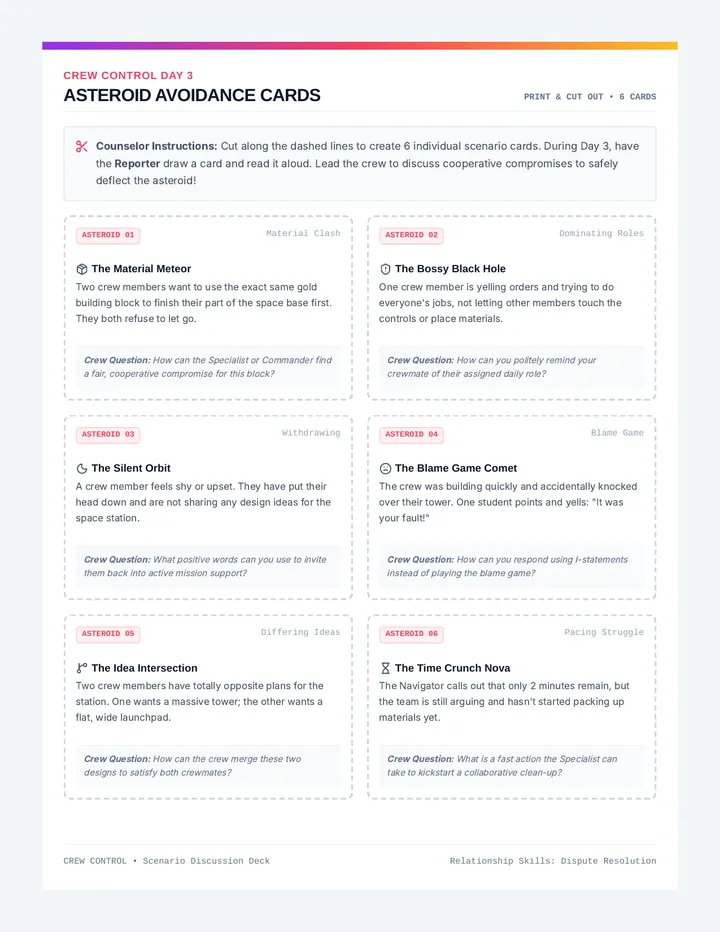
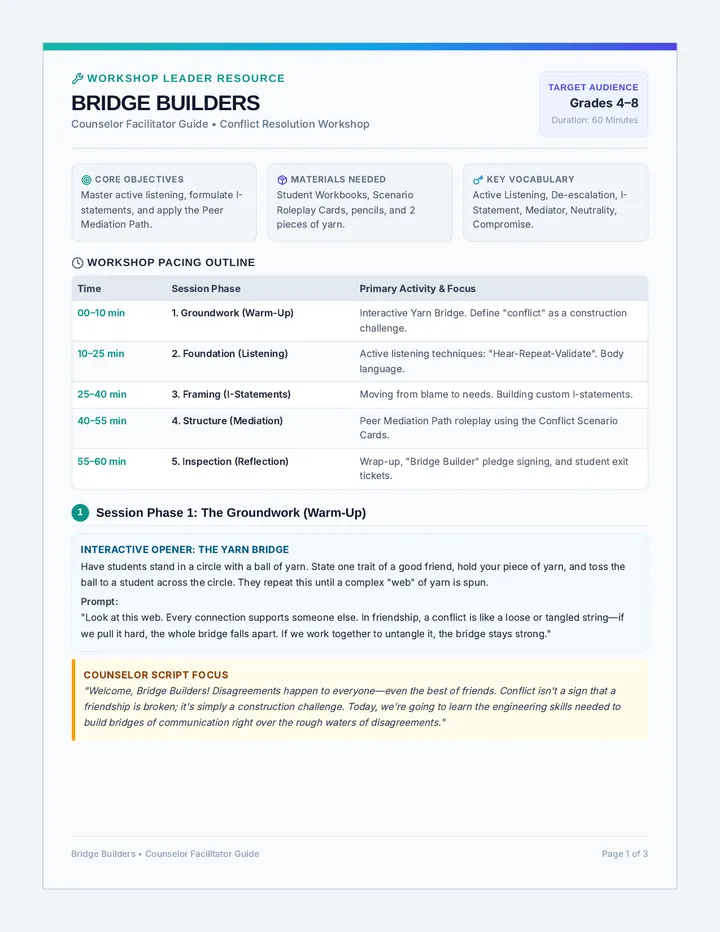
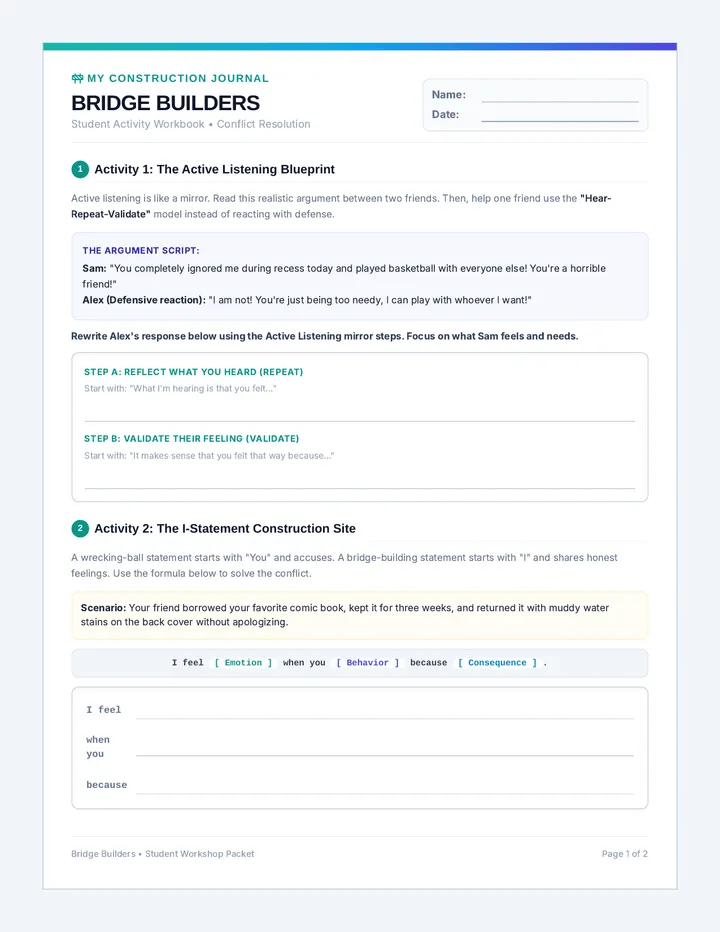
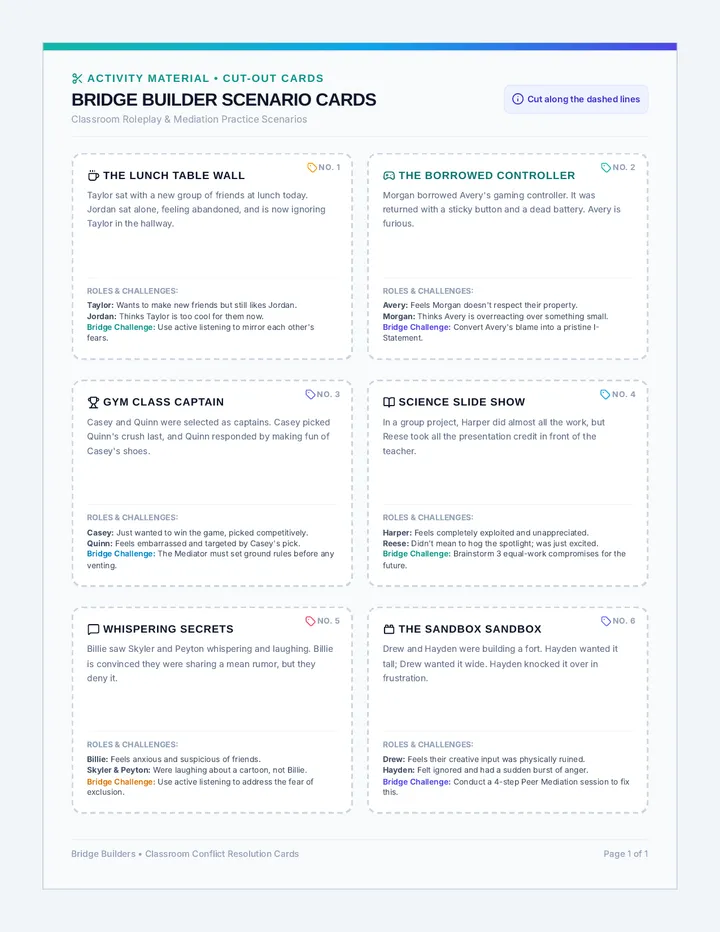
A hands-on activity where students practice conflict resolution and social communication using structured scenario cards and a recording sheet.
A lesson focused on self-regulation strategies for students who struggle with impulsive blurting, featuring visual cues and 'think time' techniques.
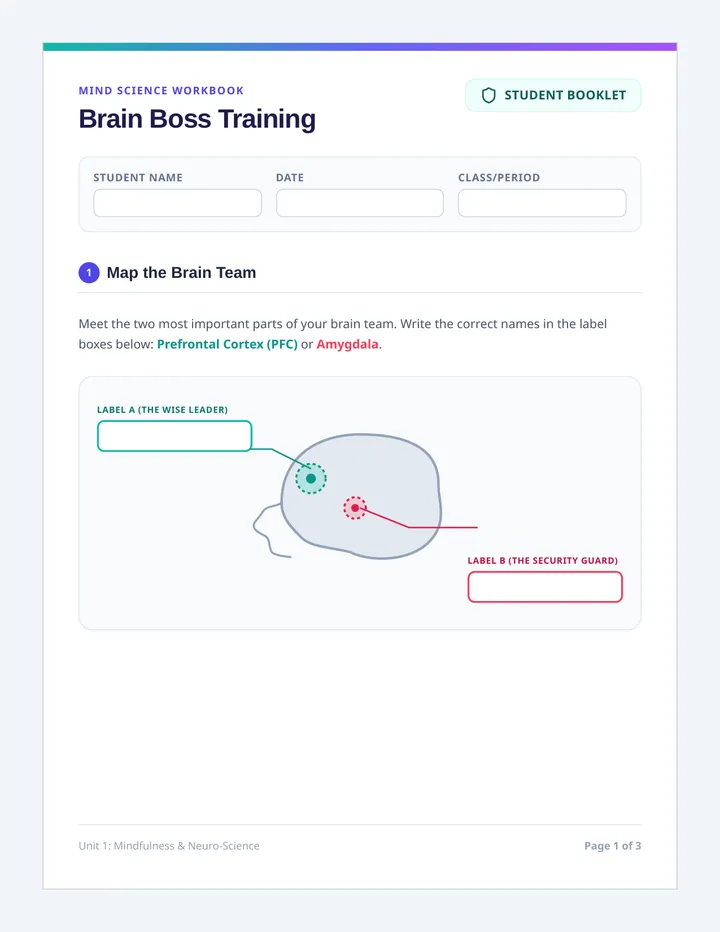
A 25-minute social-emotional learning lesson designed for 5th graders to differentiate between the Prefrontal Cortex (Thinking Brain) and the Amygdala (Feeling Brain), focusing on self-regulation strategies.