A 20-minute lesson for 4th-grade students with autism focusing on the social impact of lying and providing concrete steps for being honest to build stronger friendships.
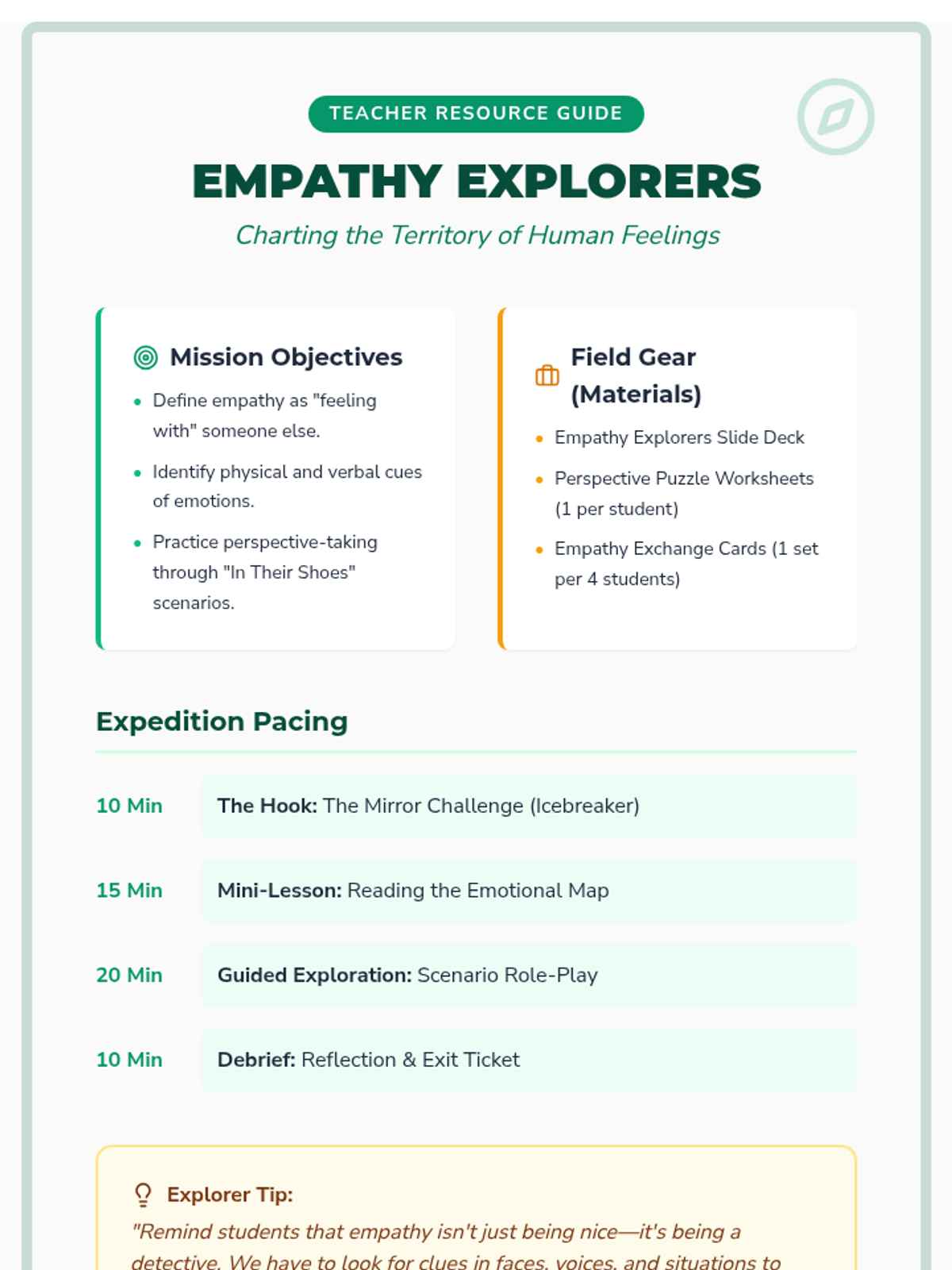
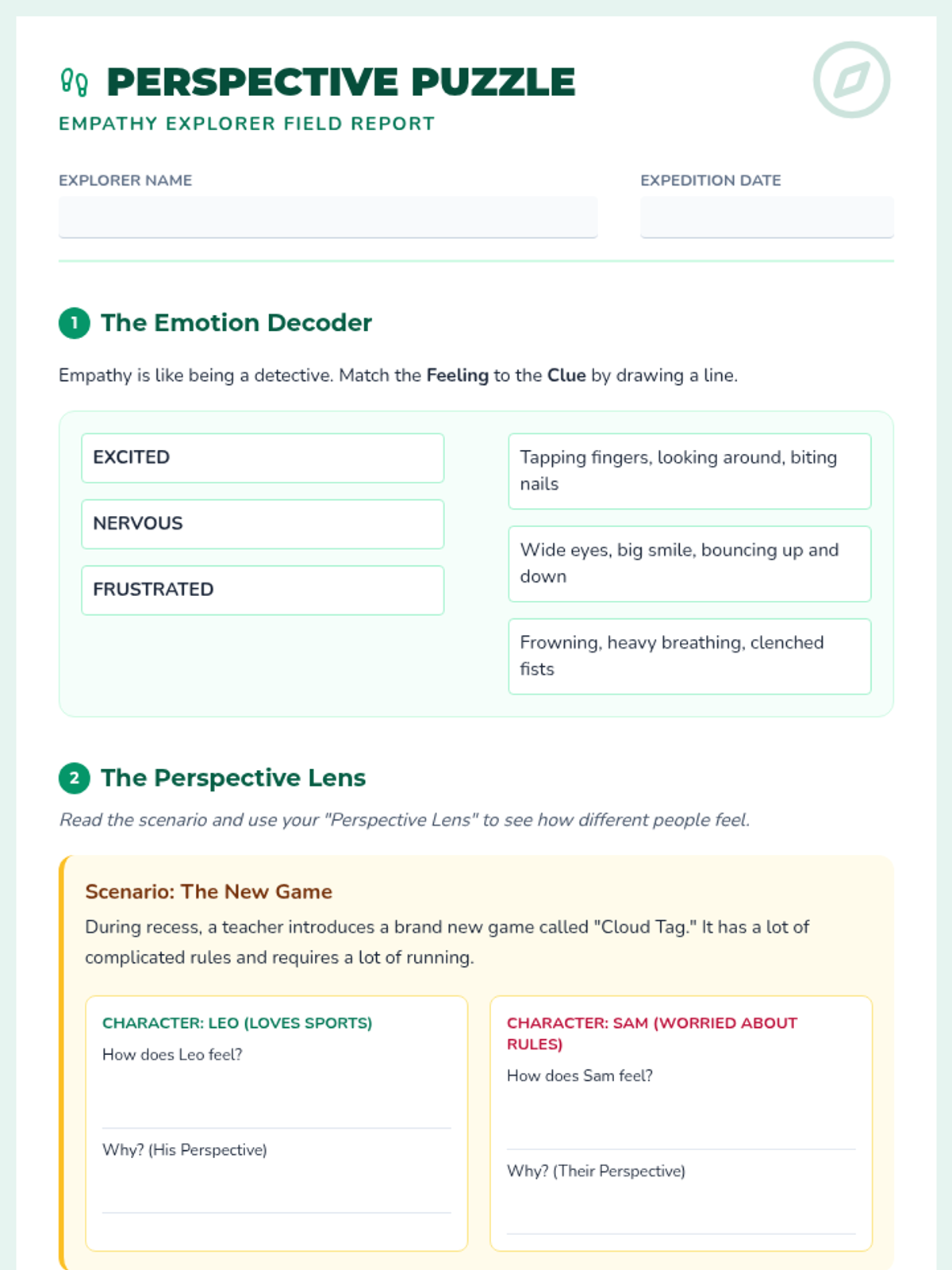
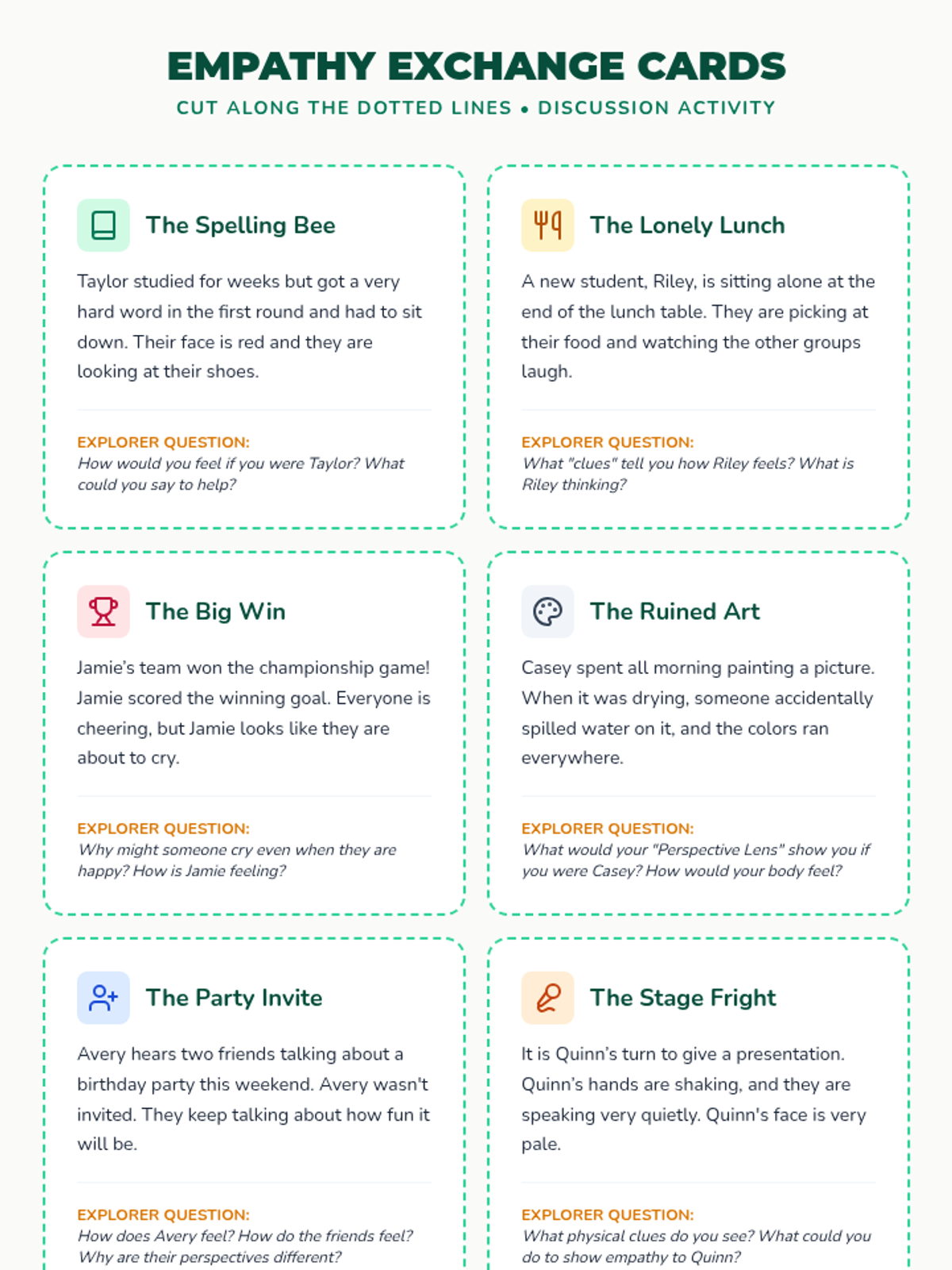
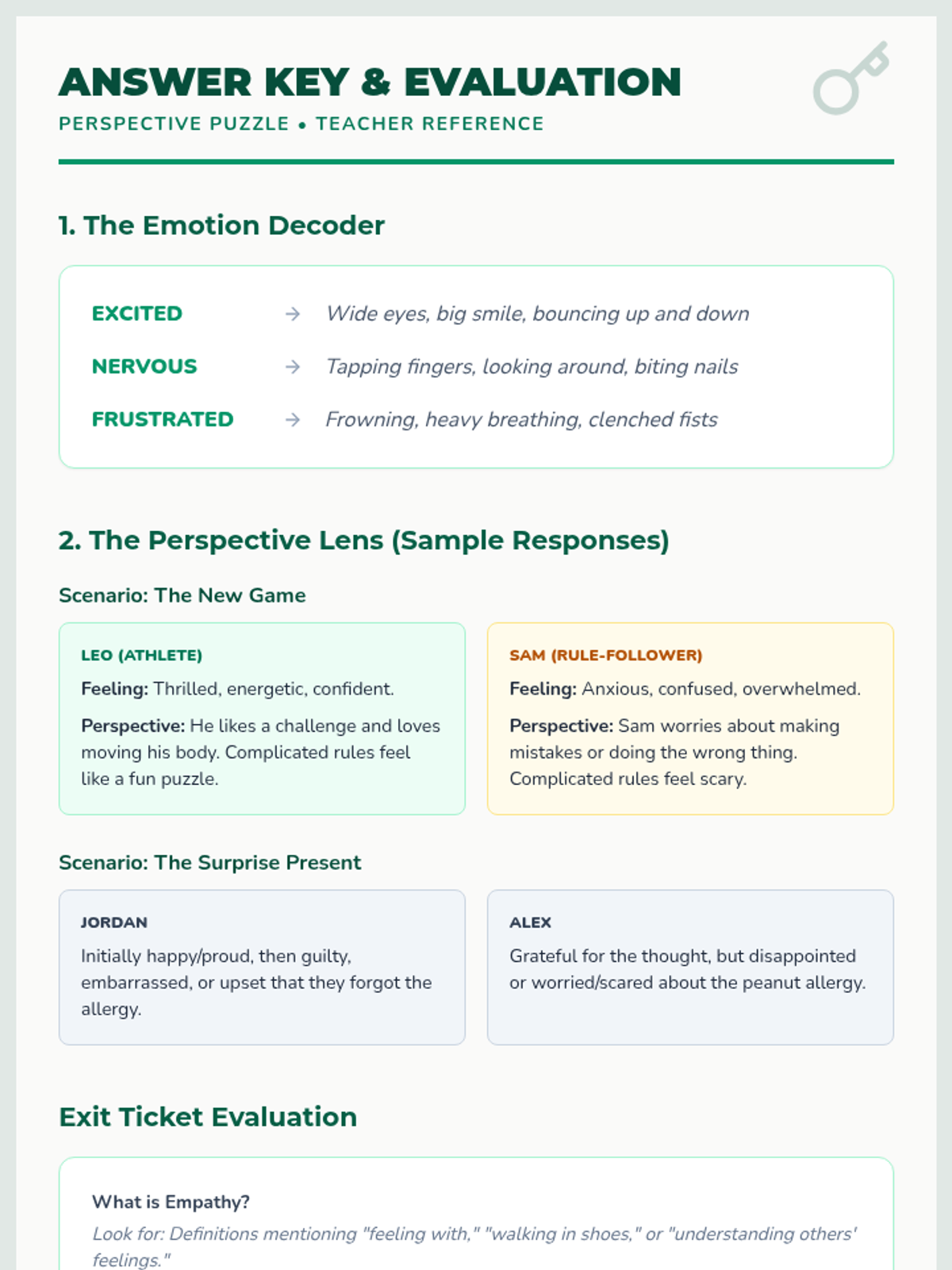
A social-emotional learning lesson designed for 3rd-5th graders to develop empathy and perspective-taking skills through immersive scenarios and role-playing. Students will learn to 'walk in someone else's shoes' using a field-guide inspired approach to human emotions.
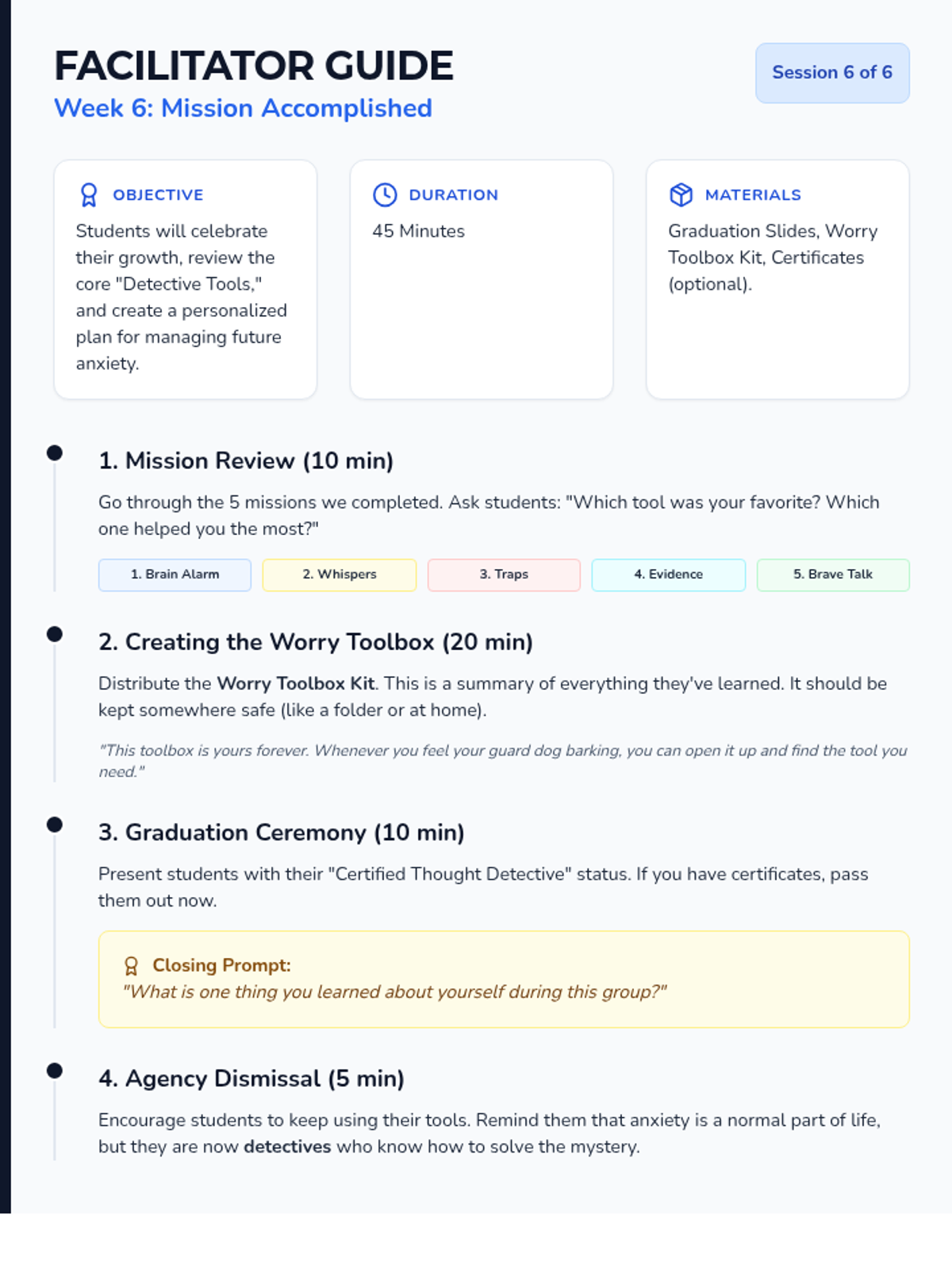
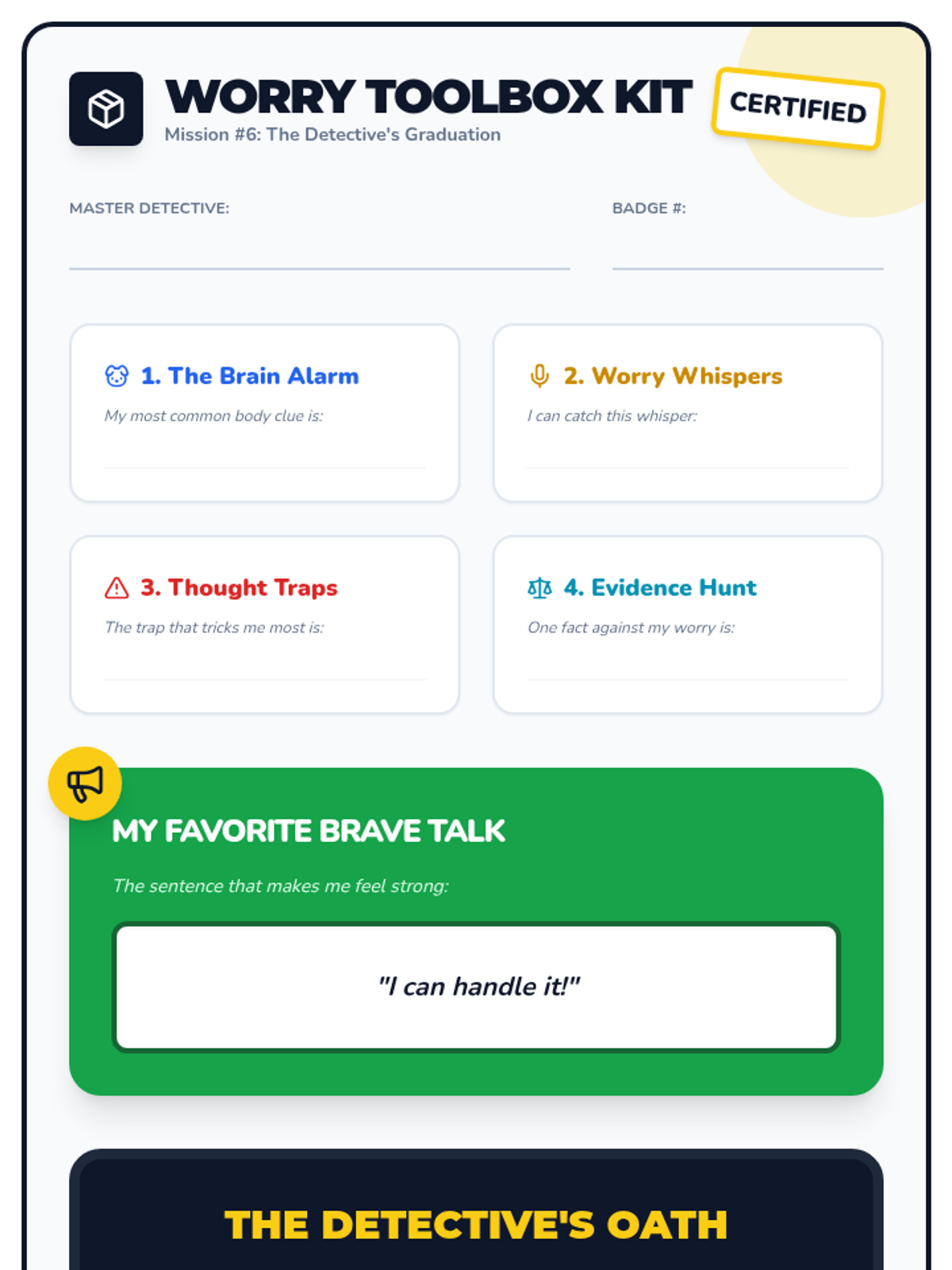
A celebration of the skills learned, where students create a personalized 'Worry Toolbox' and review their progress as certified Thought Detectives.
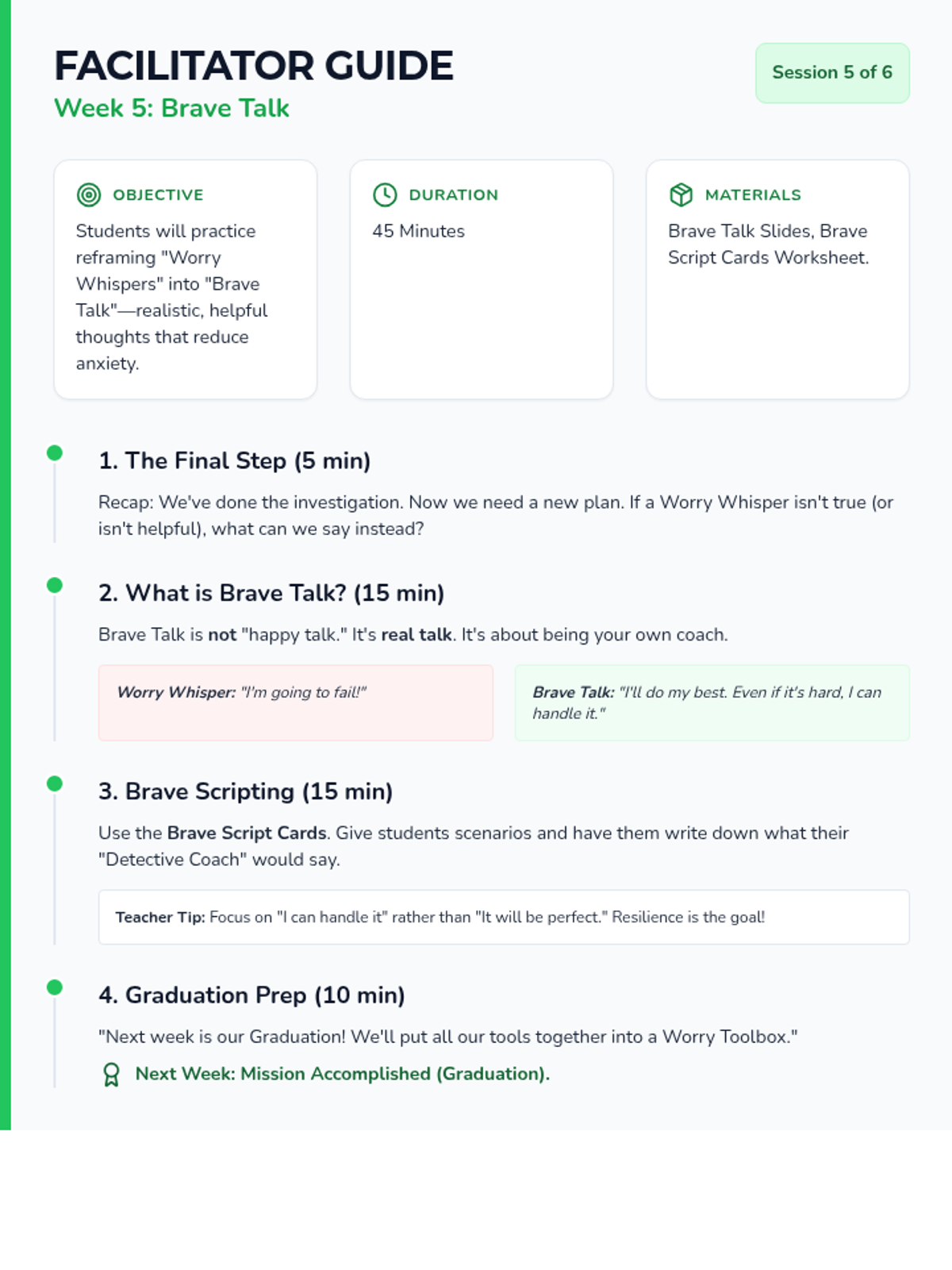
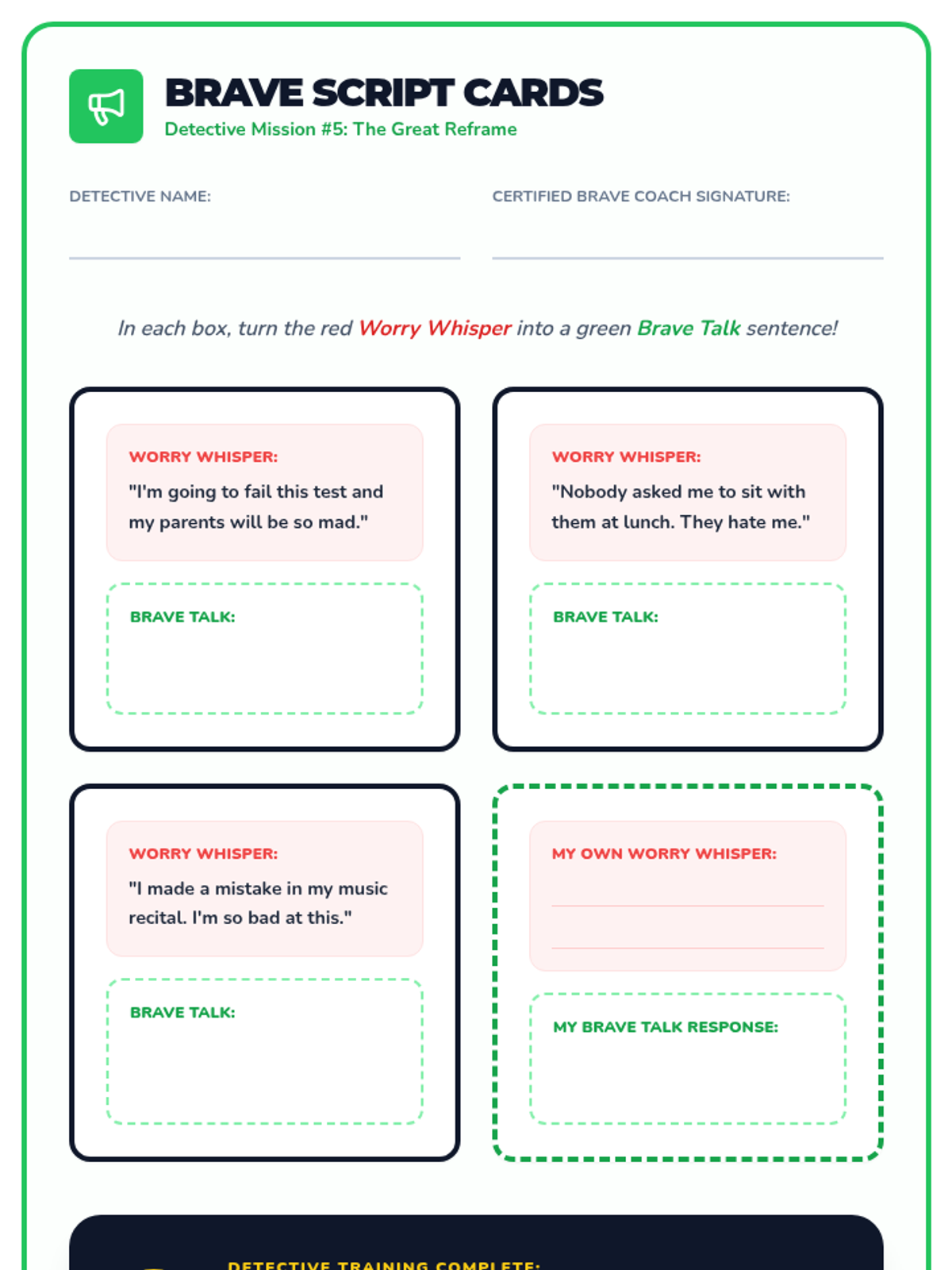
Students practice replacing 'Worry Whispers' with 'Brave Talk'—realistic, helpful statements that empower them to face their fears.
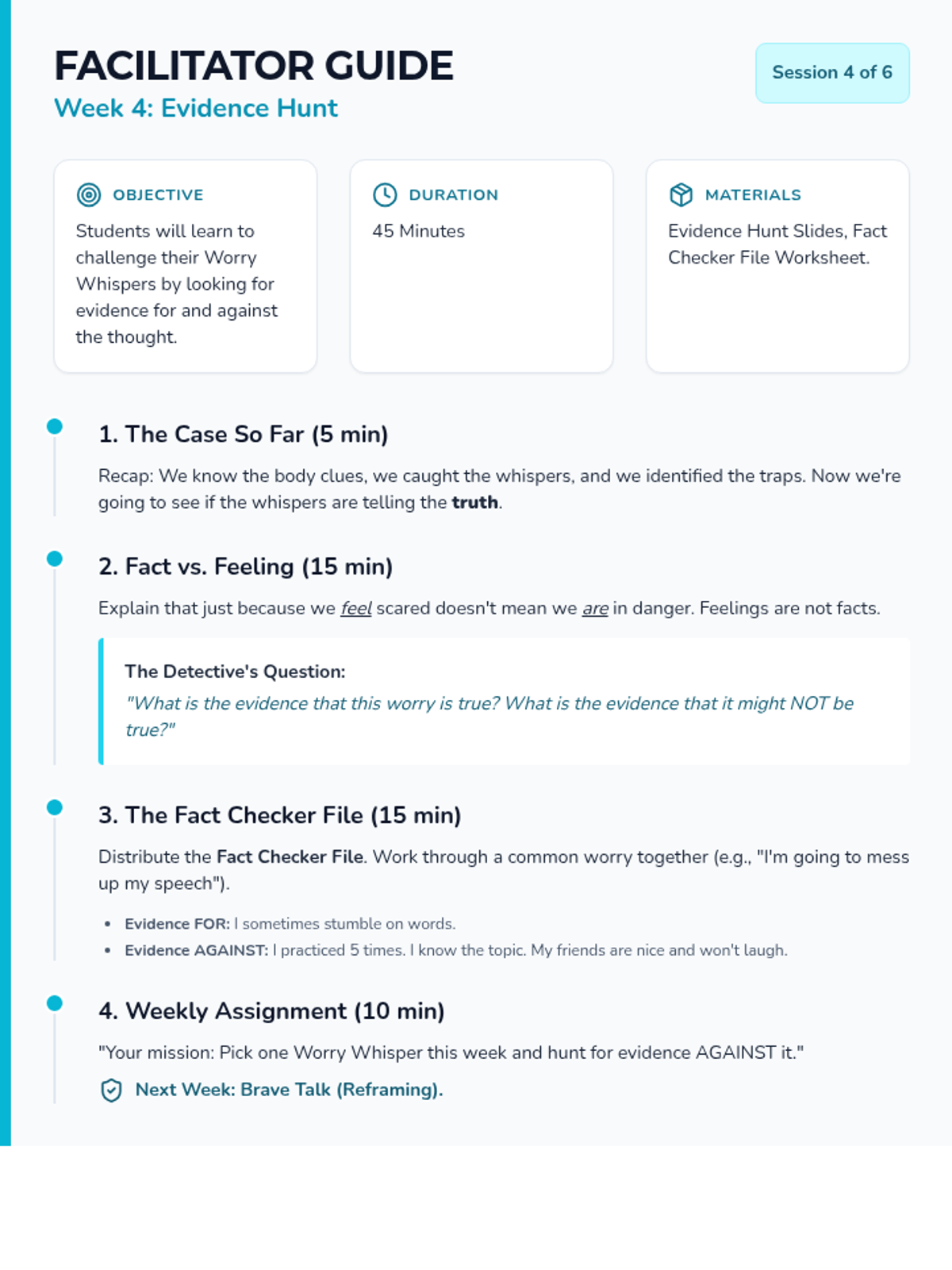
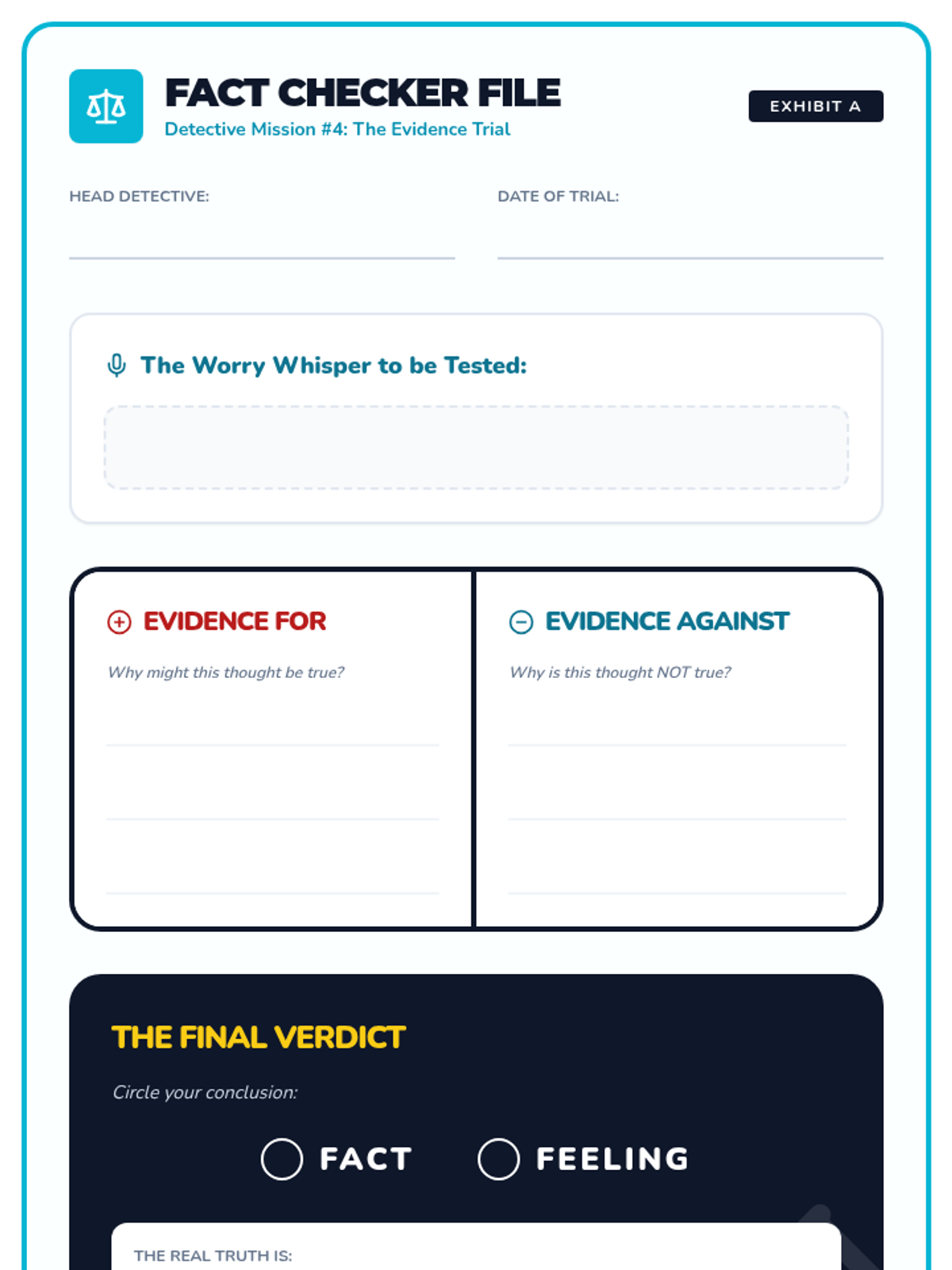
A hands-on session where students play 'Fact Checker' to look for evidence for and against their anxious thoughts to see if they are actually true.
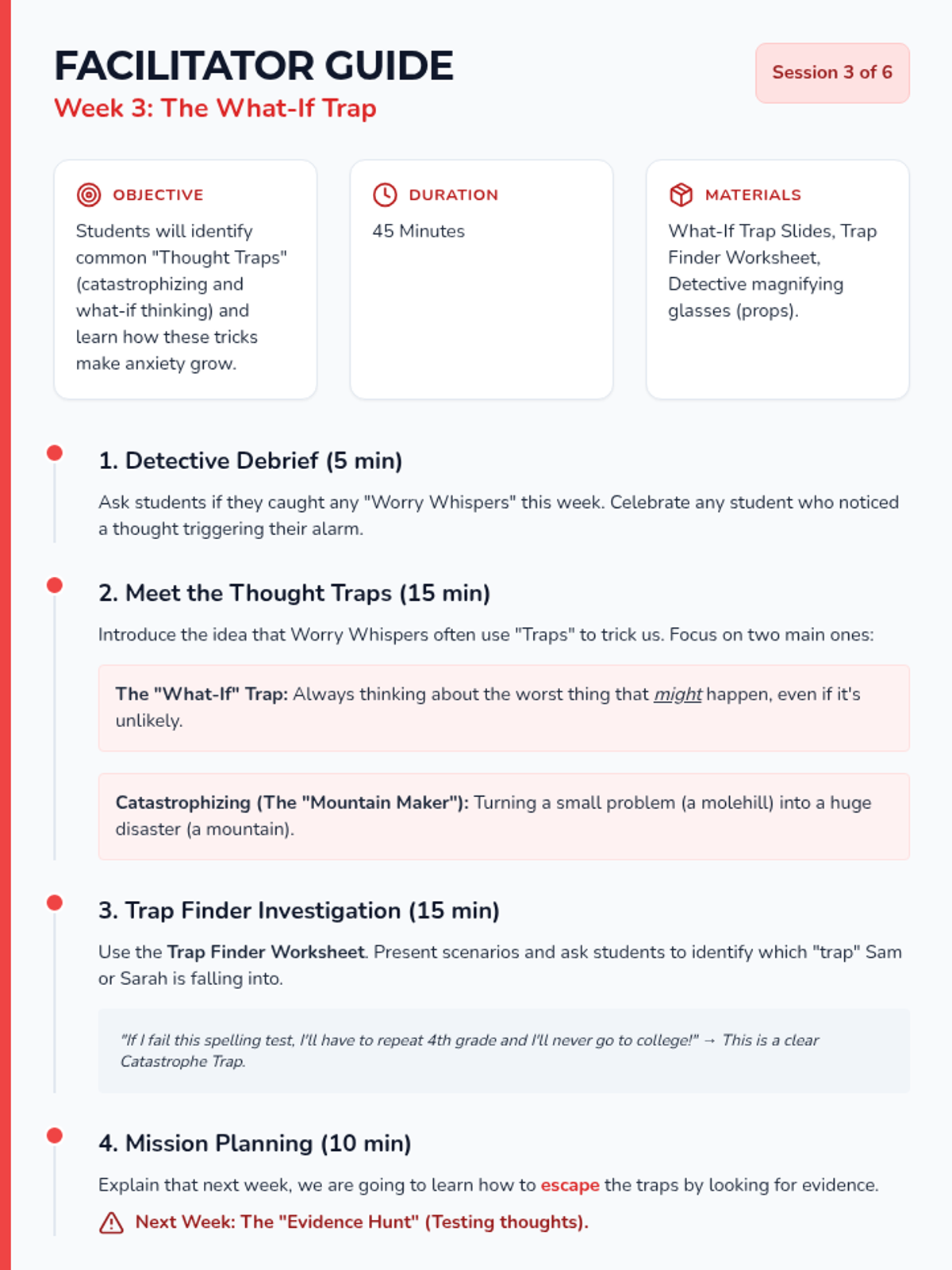
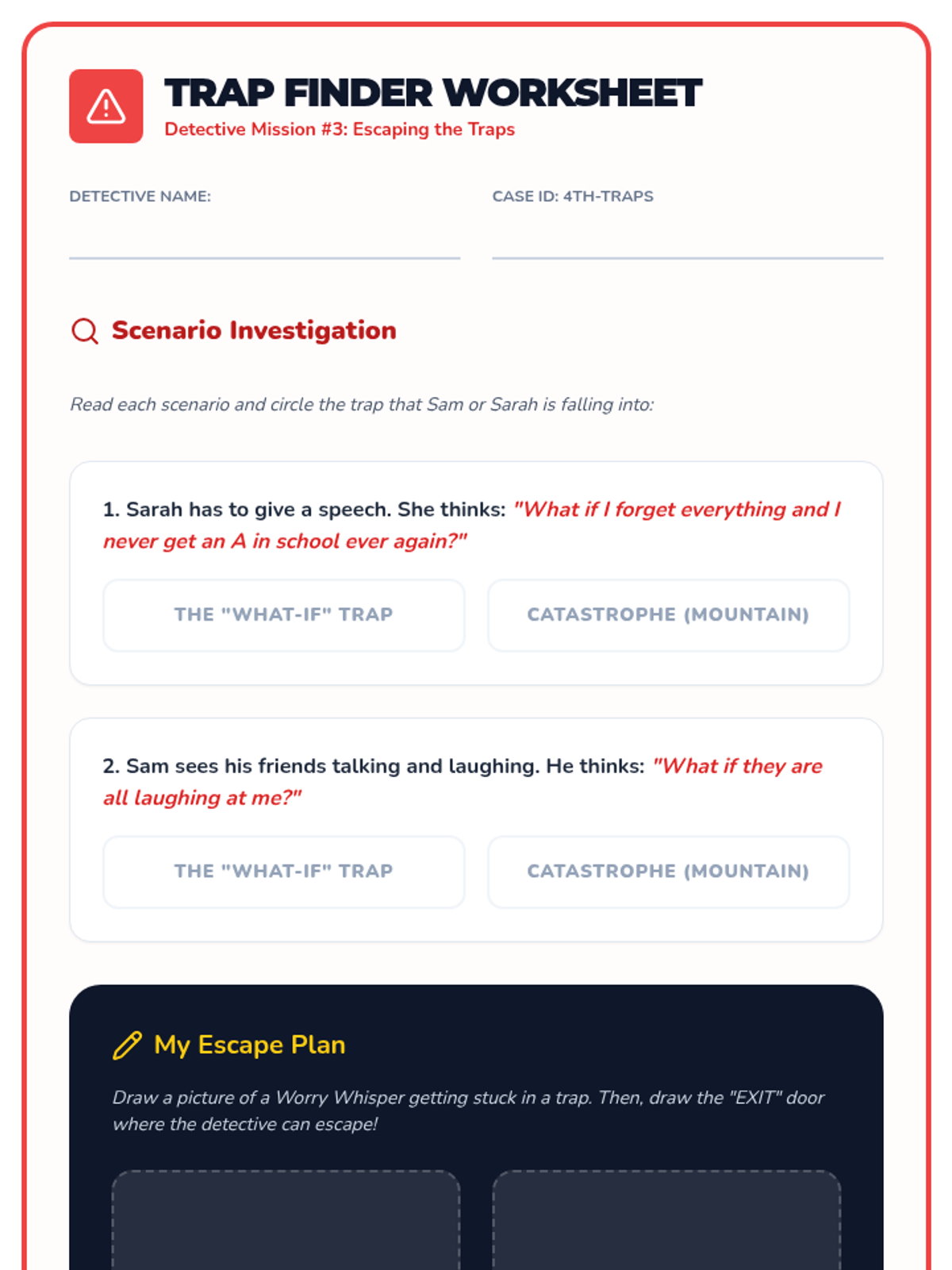
Students identify common 'Thought Traps' like catastrophizing and 'What-If' thinking, learning how these traps trick the brain into feeling more anxious.
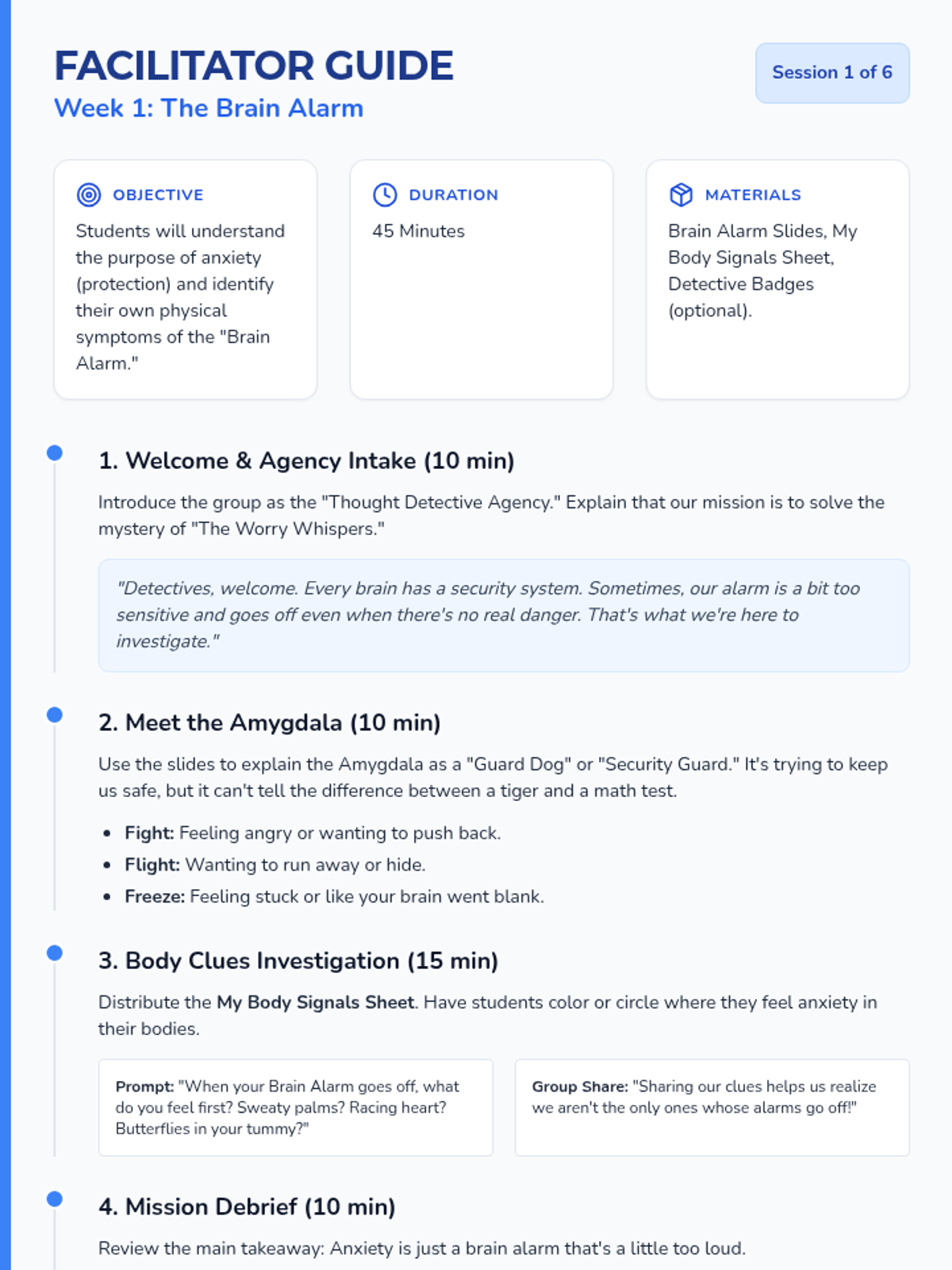
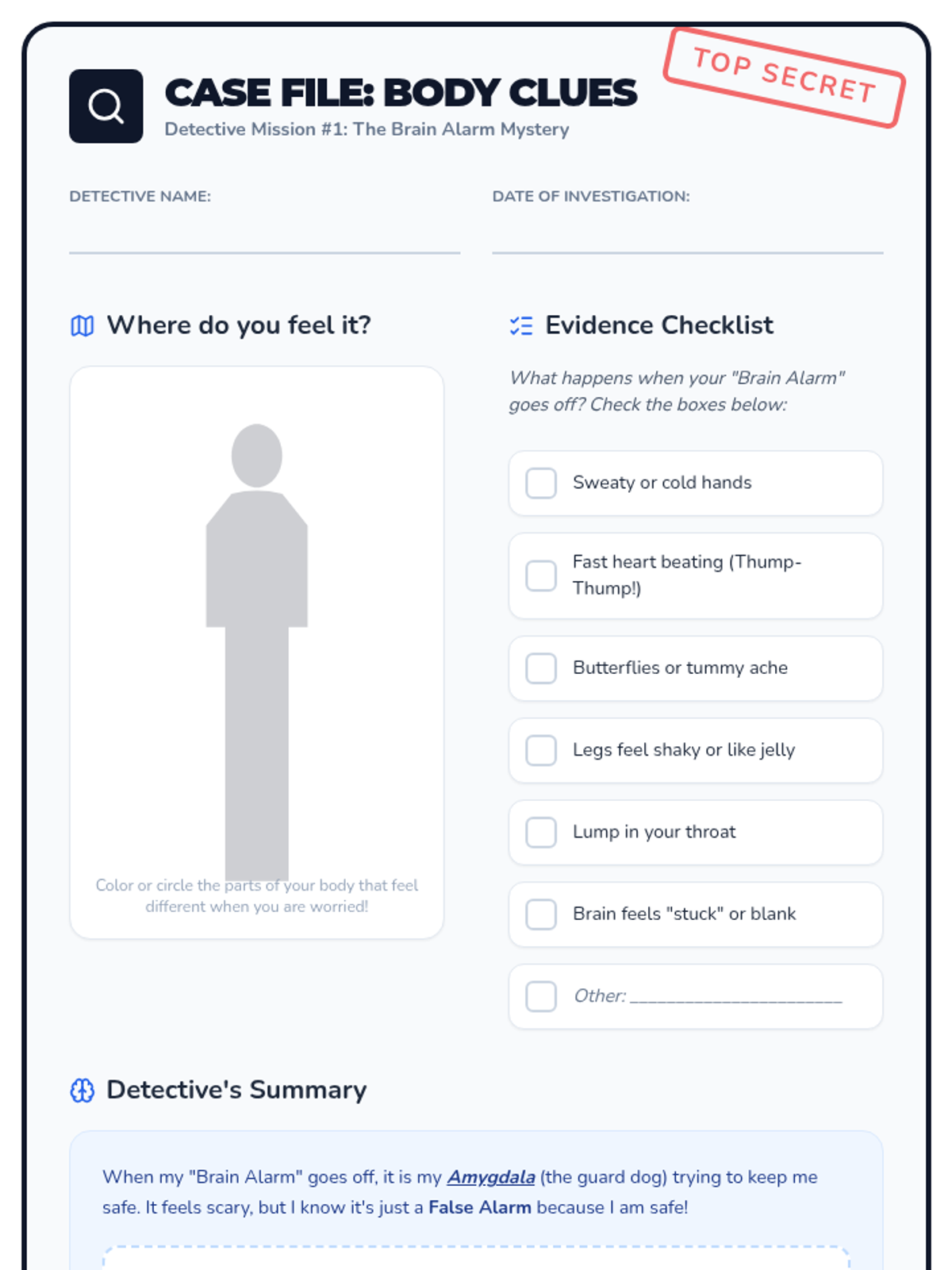
An introductory session where students learn how the brain's 'alarm system' (the amygdala) works and identify their own physical 'clues' that they are feeling anxious.
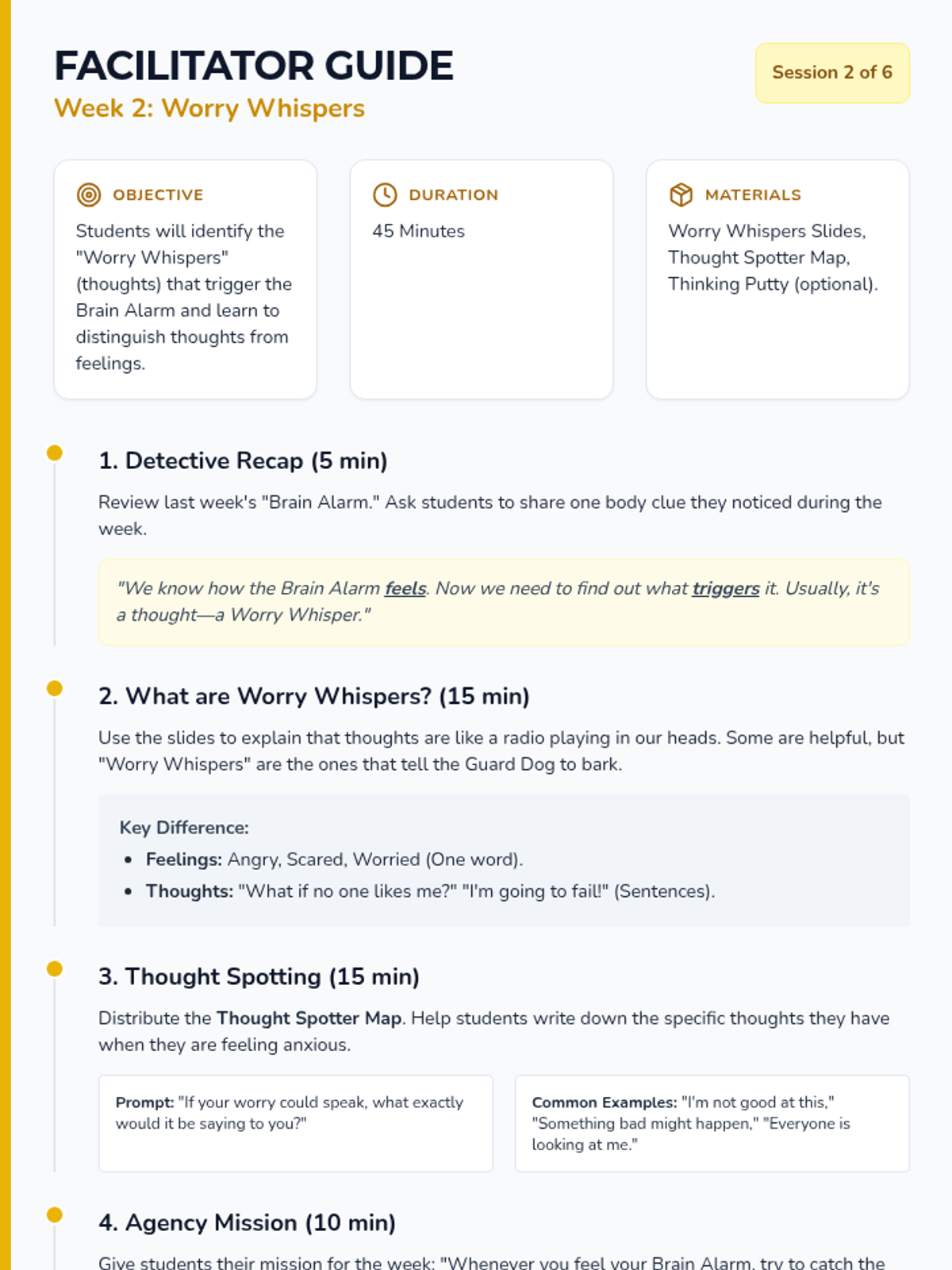
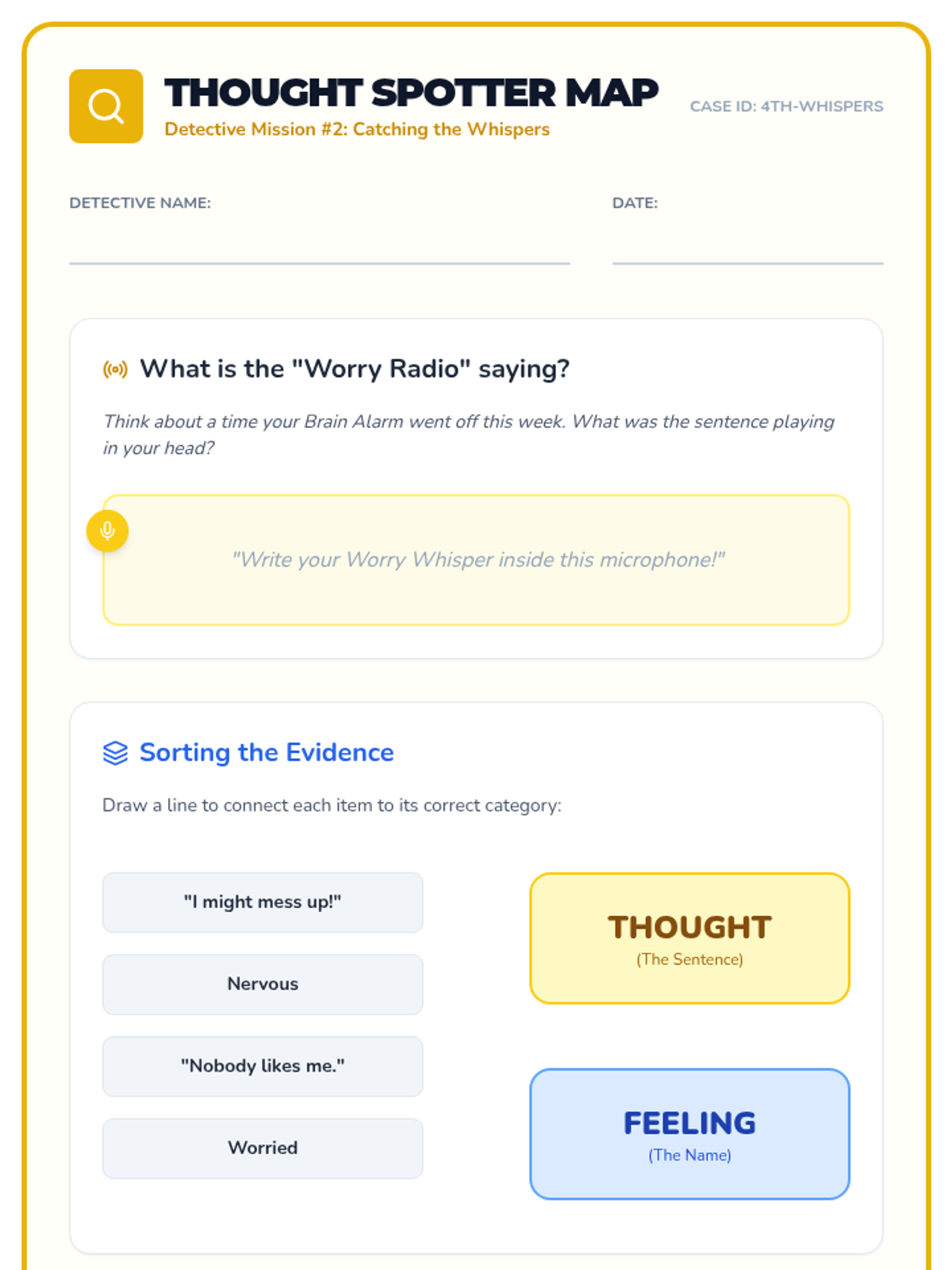
In this session, students learn to distinguish between facts and 'Worry Whispers' (automatic anxious thoughts) and practice catching them as they appear.
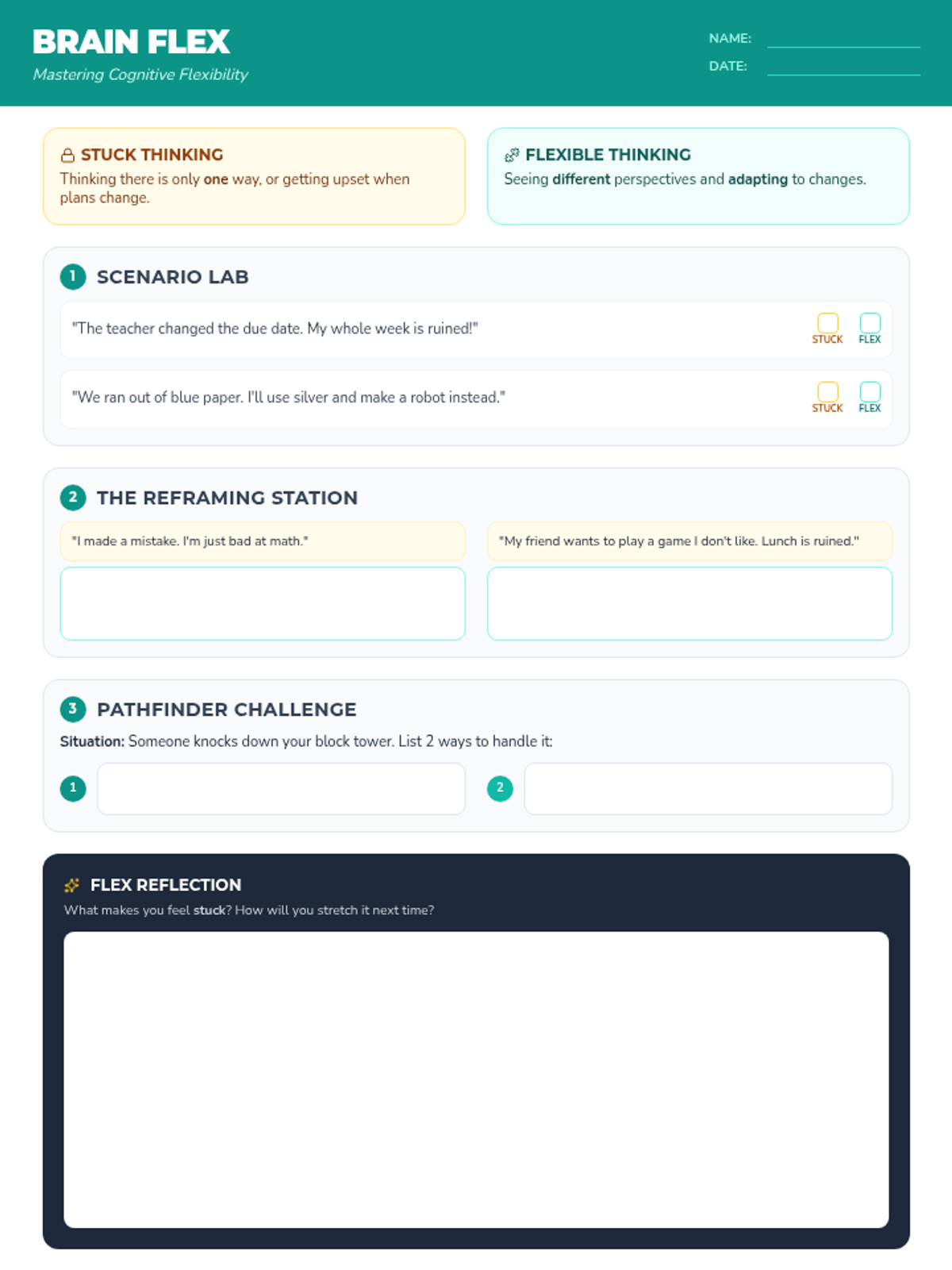
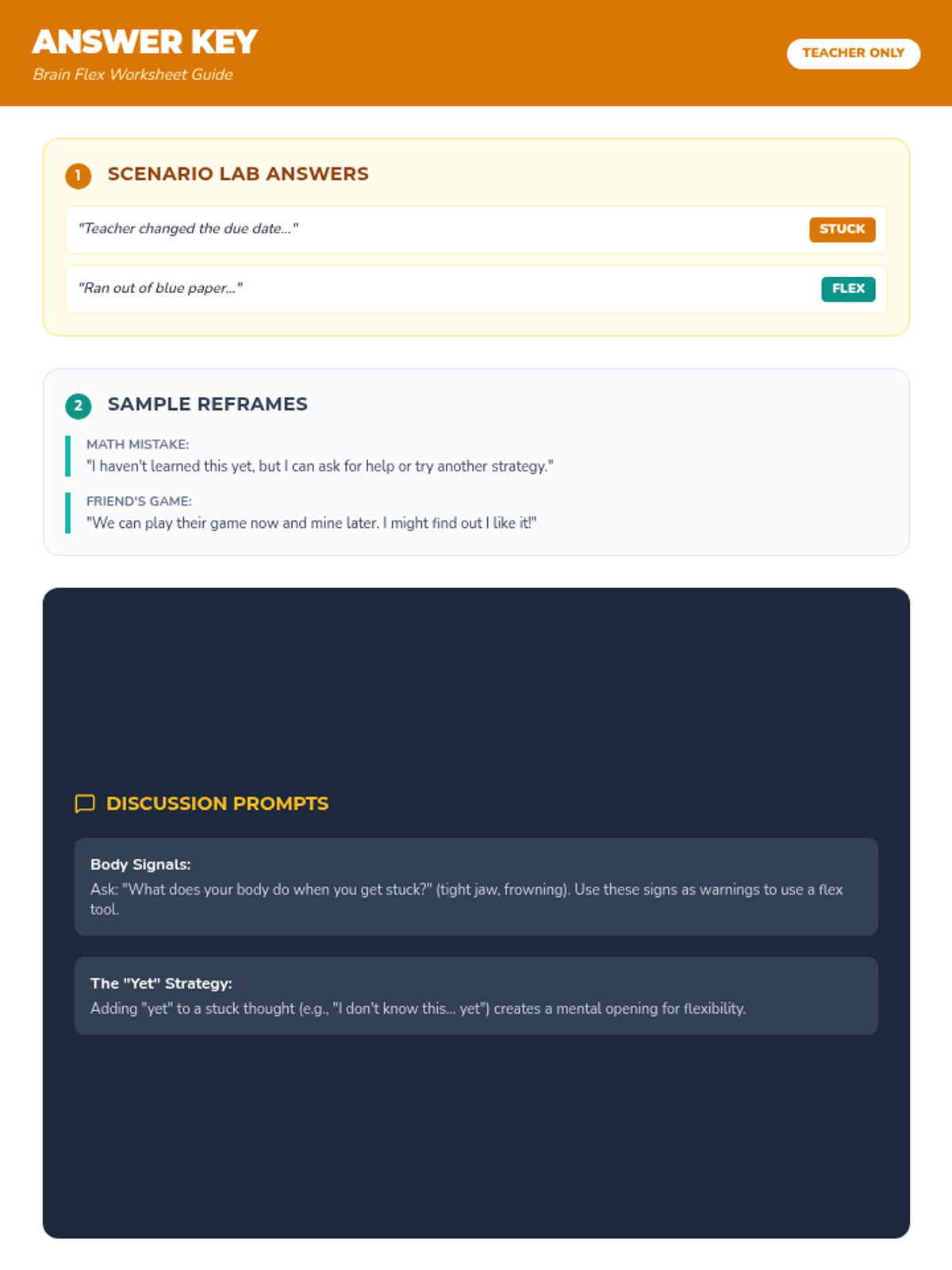
This lesson introduces students to the concept of cognitive flexibility, helping them distinguish between 'stuck' (rigid) thinking and 'flexible' thinking through scenarios and reframing exercises.
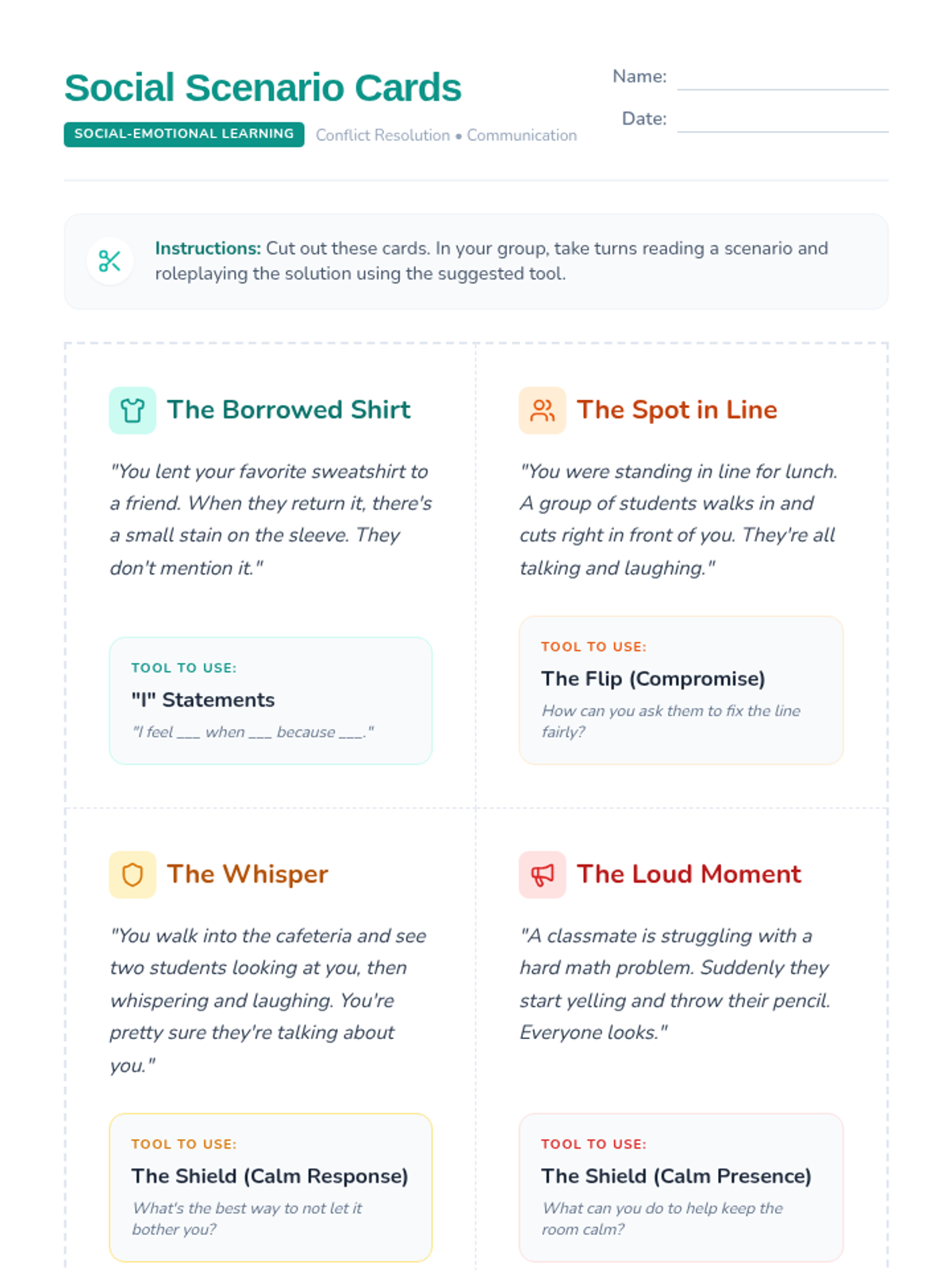
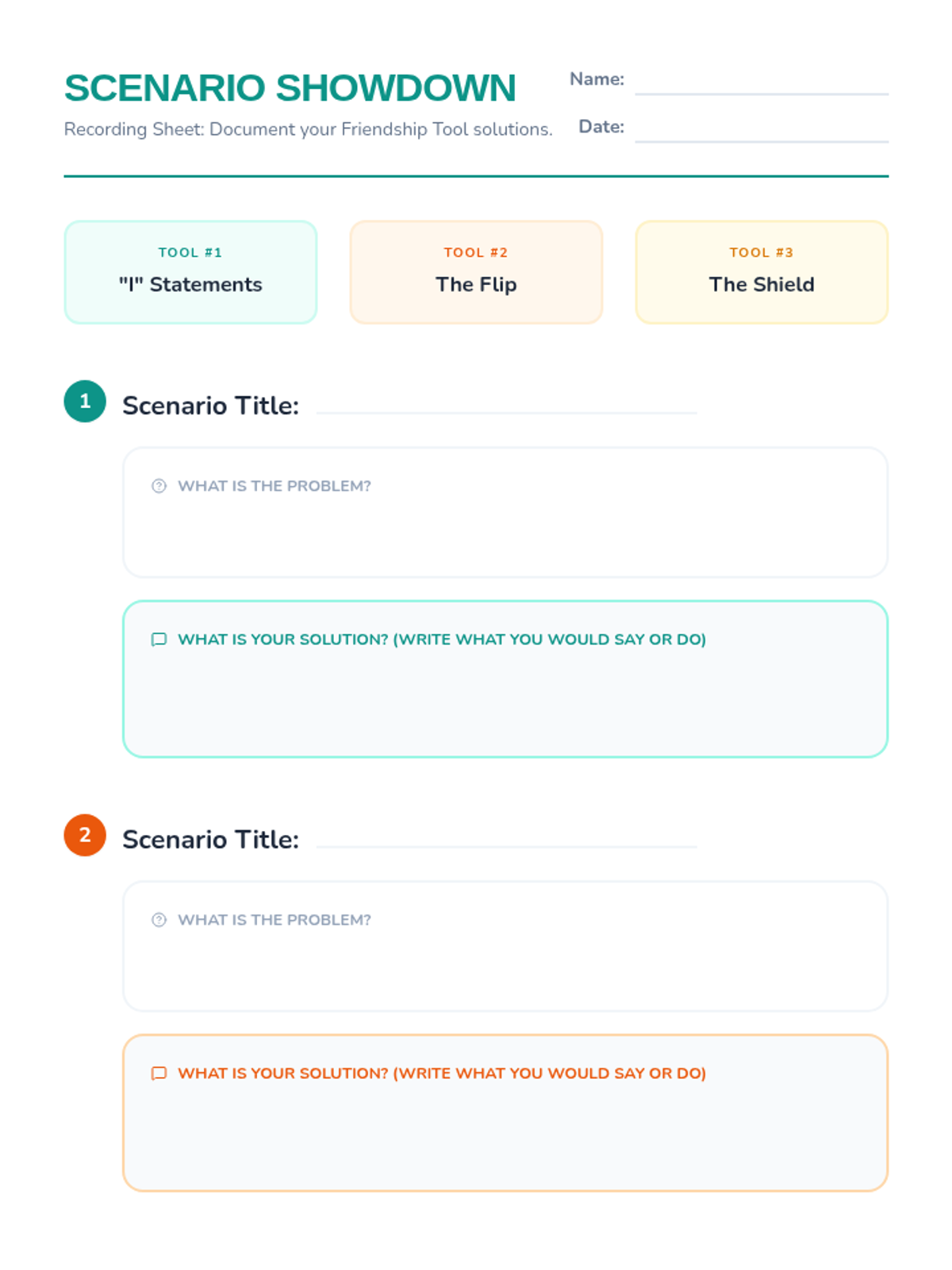
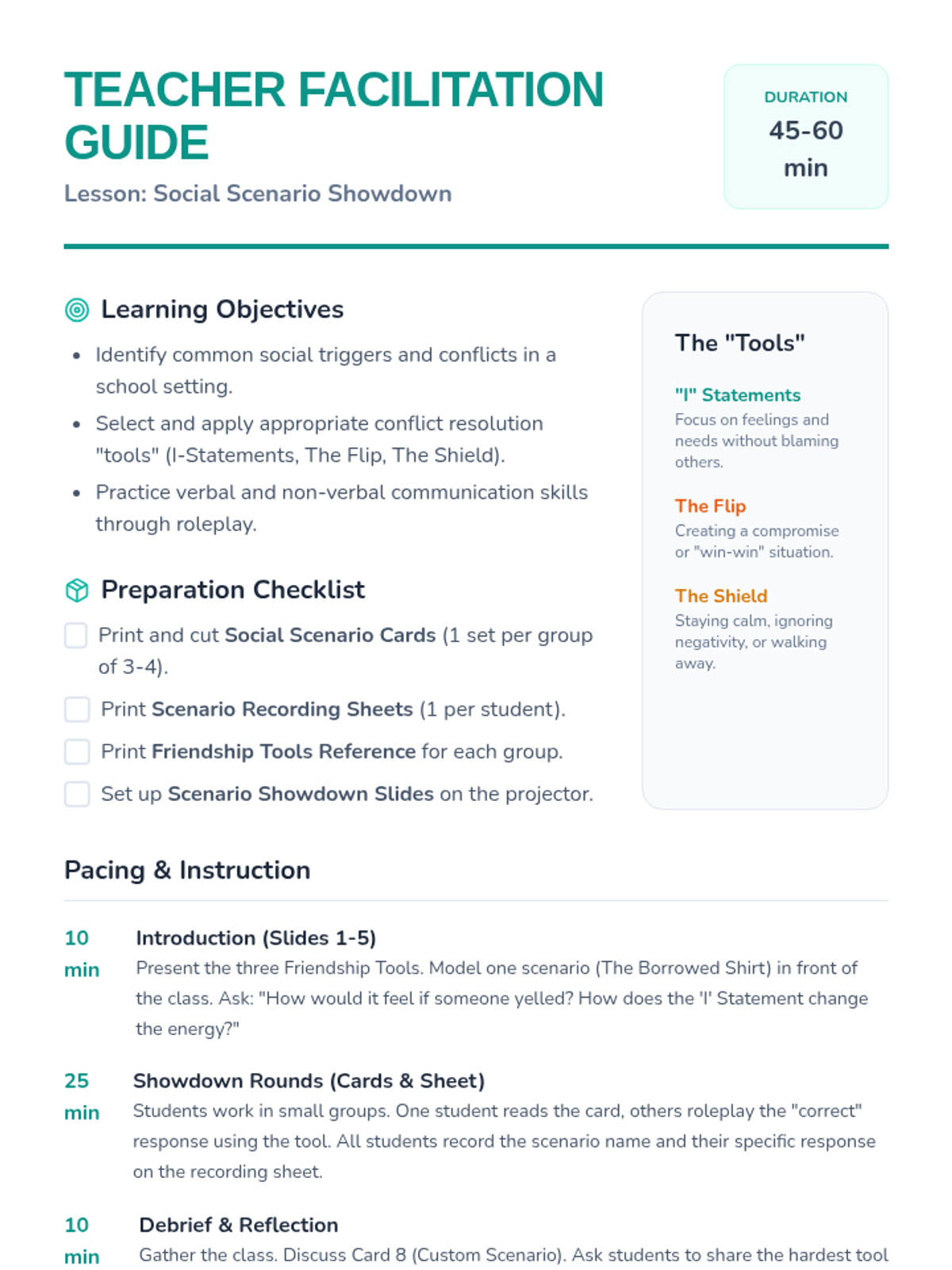
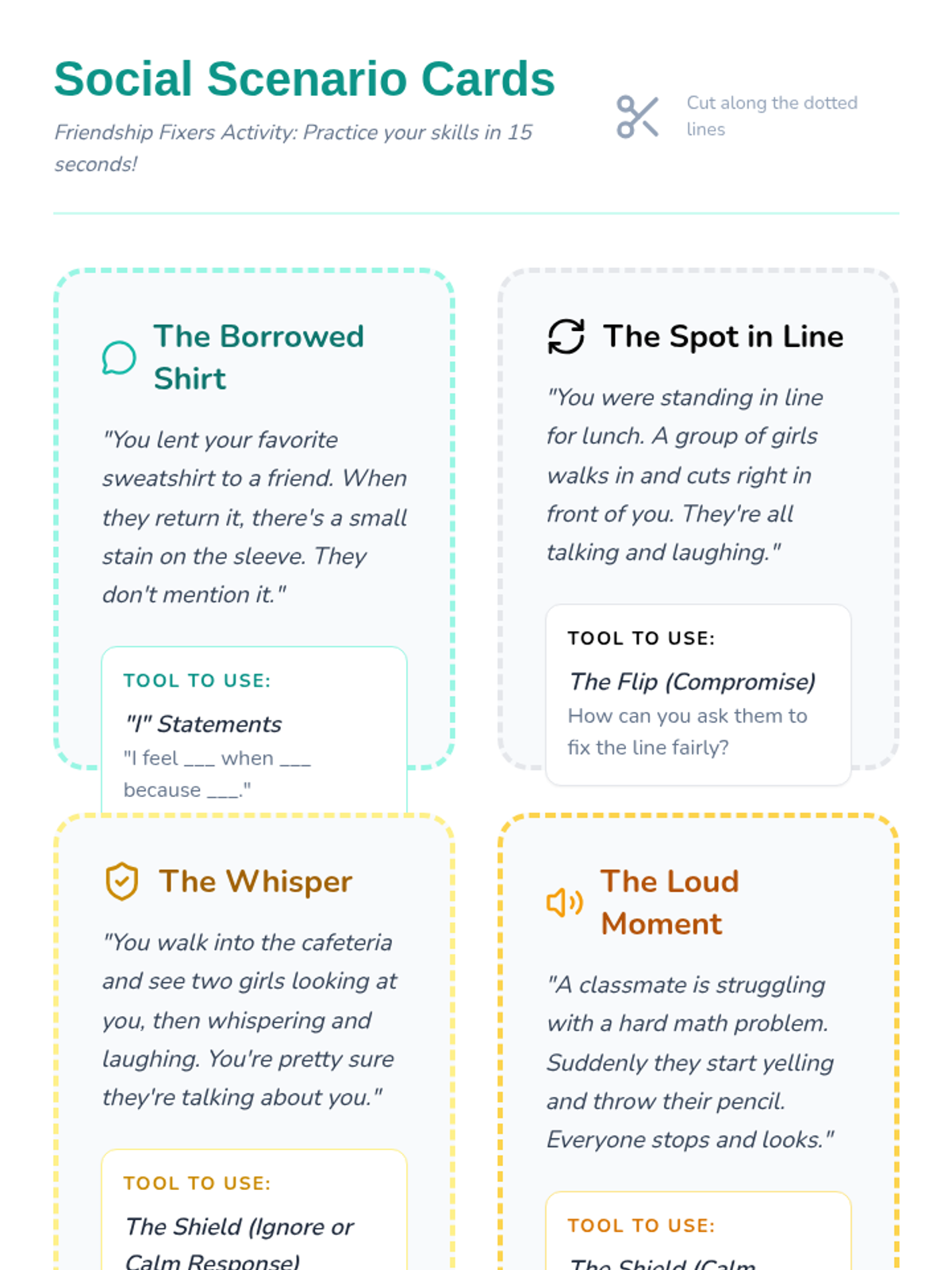
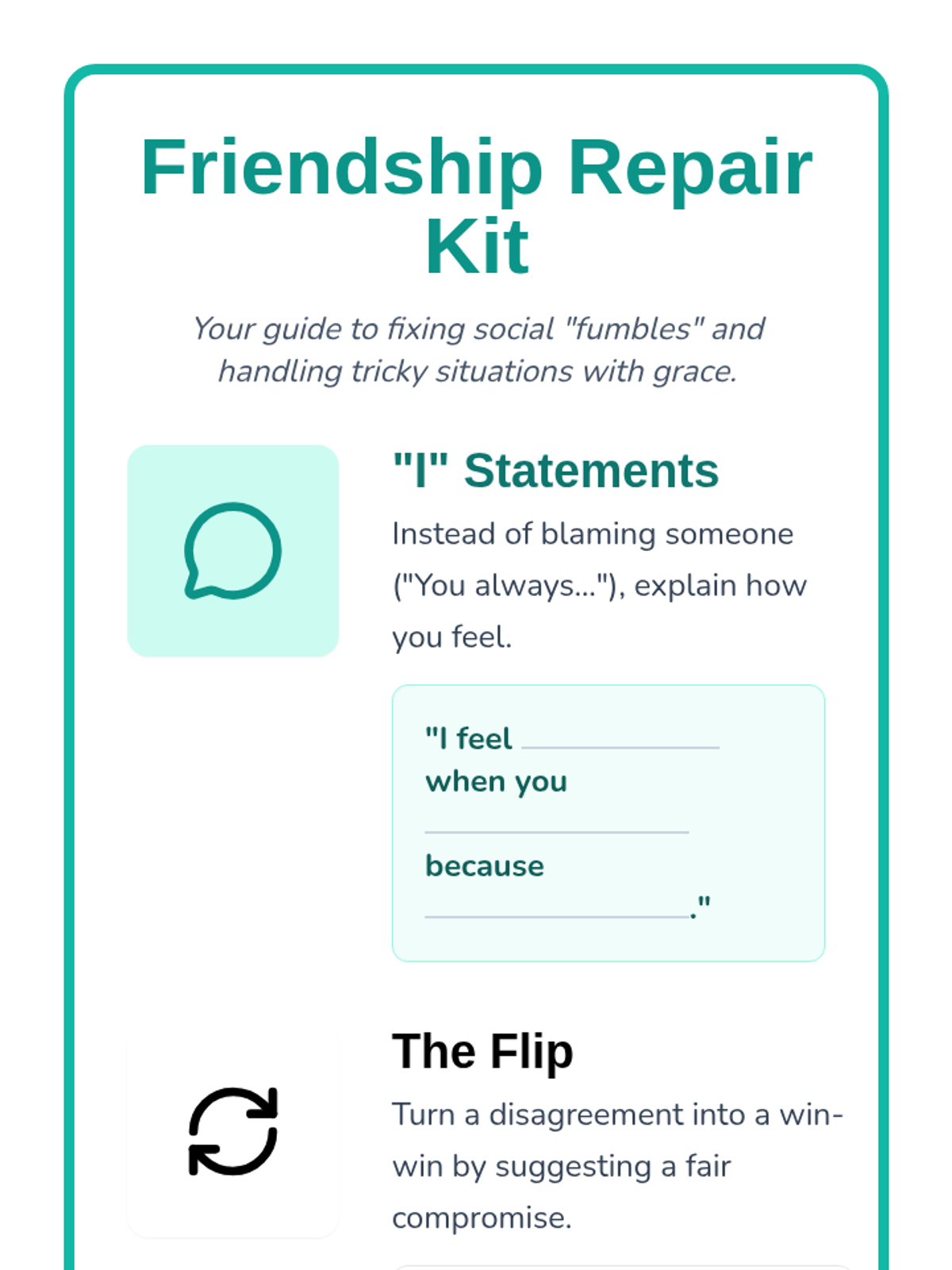
A hands-on activity where students practice conflict resolution and social communication using structured scenario cards and a recording sheet.
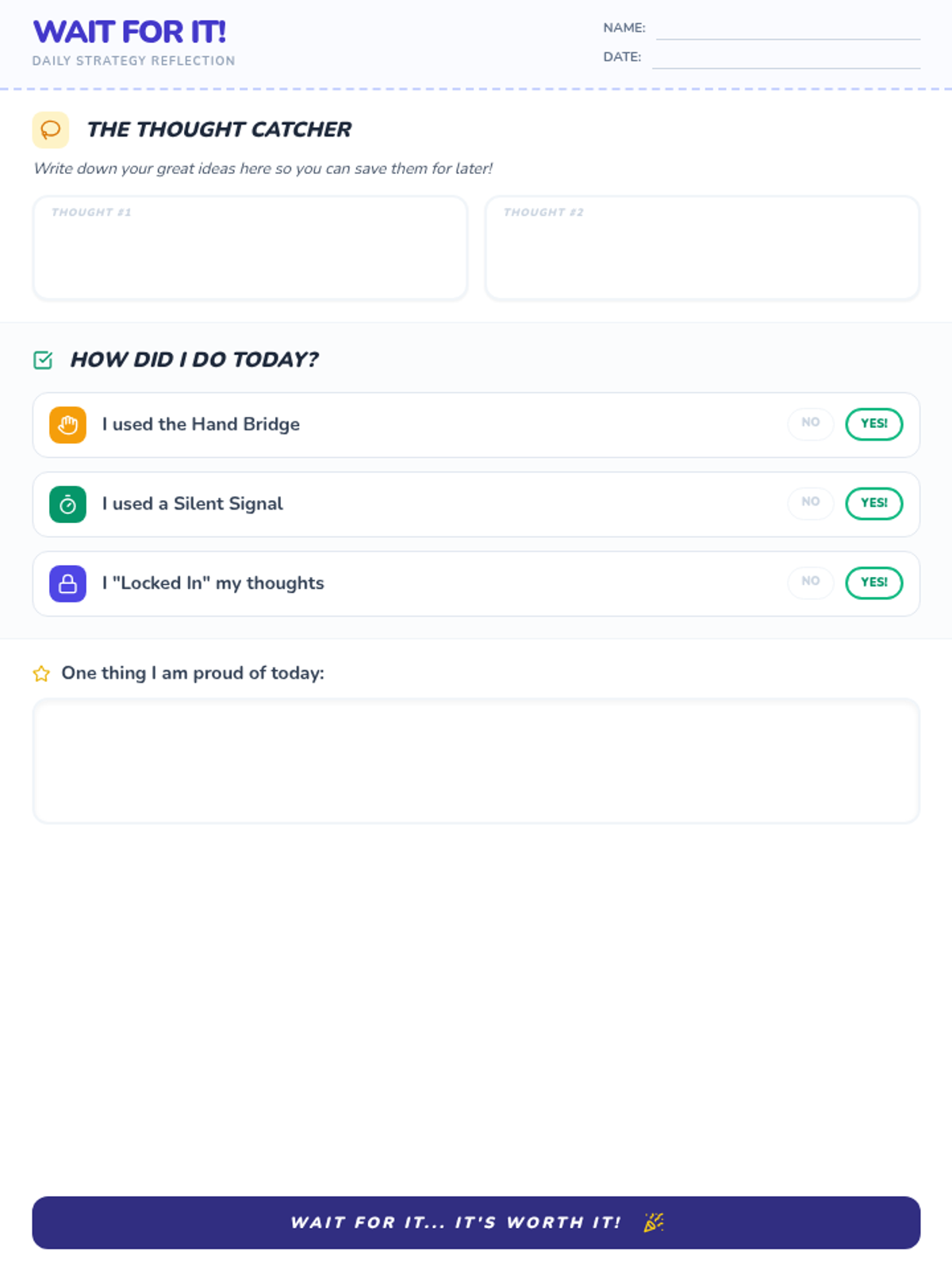
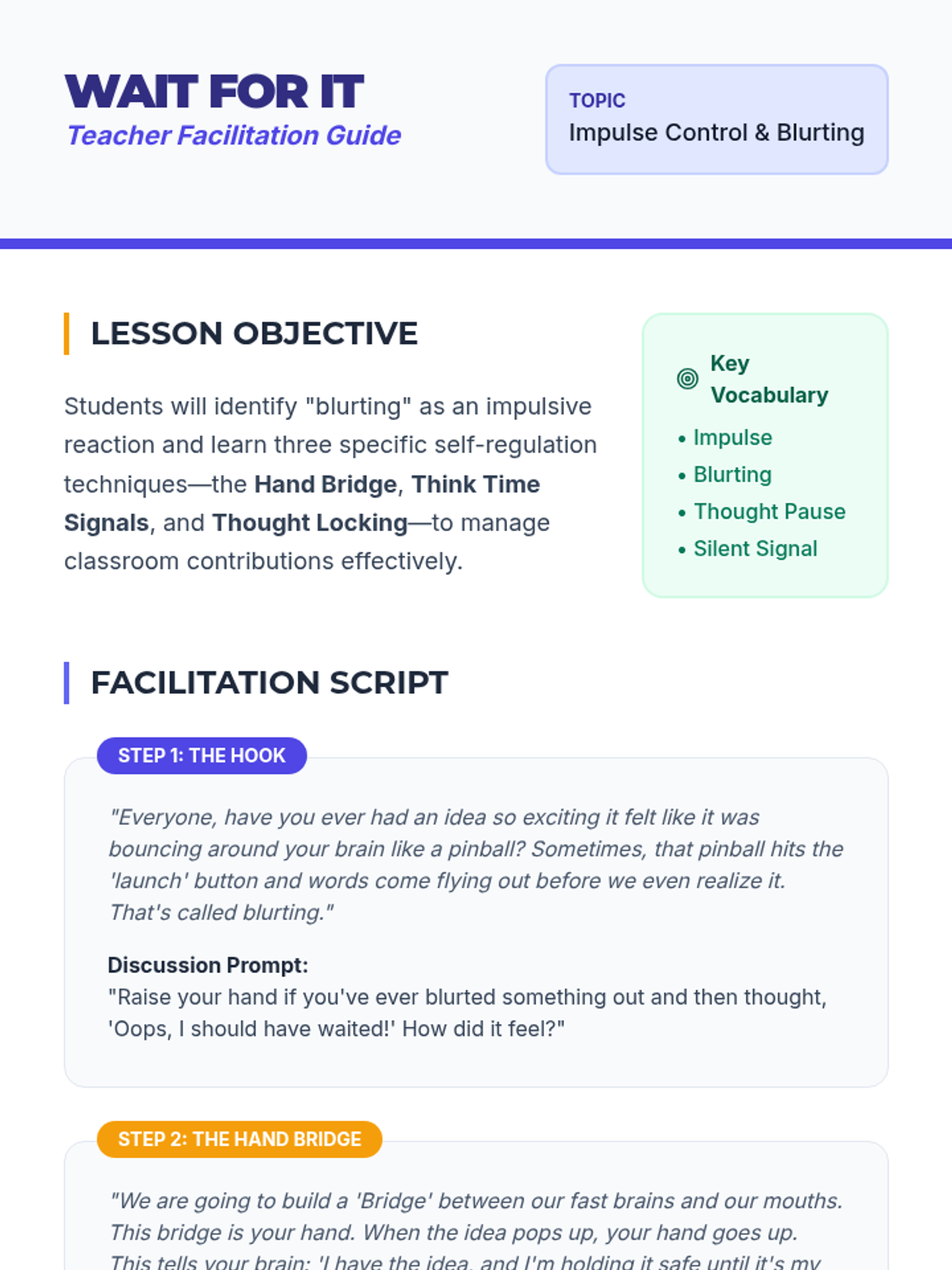
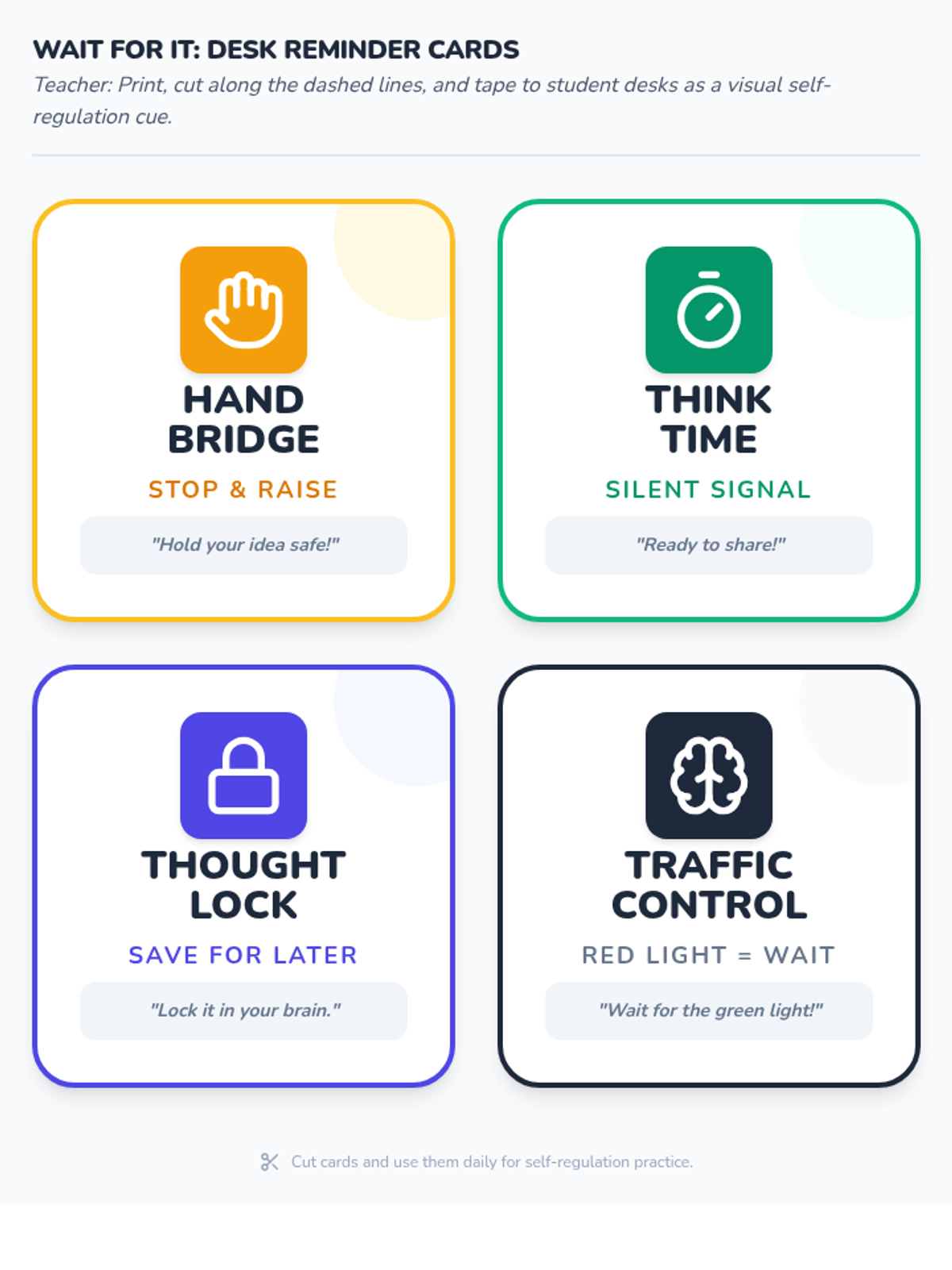
A lesson focused on self-regulation strategies for students who struggle with impulsive blurting, featuring visual cues and 'think time' techniques.
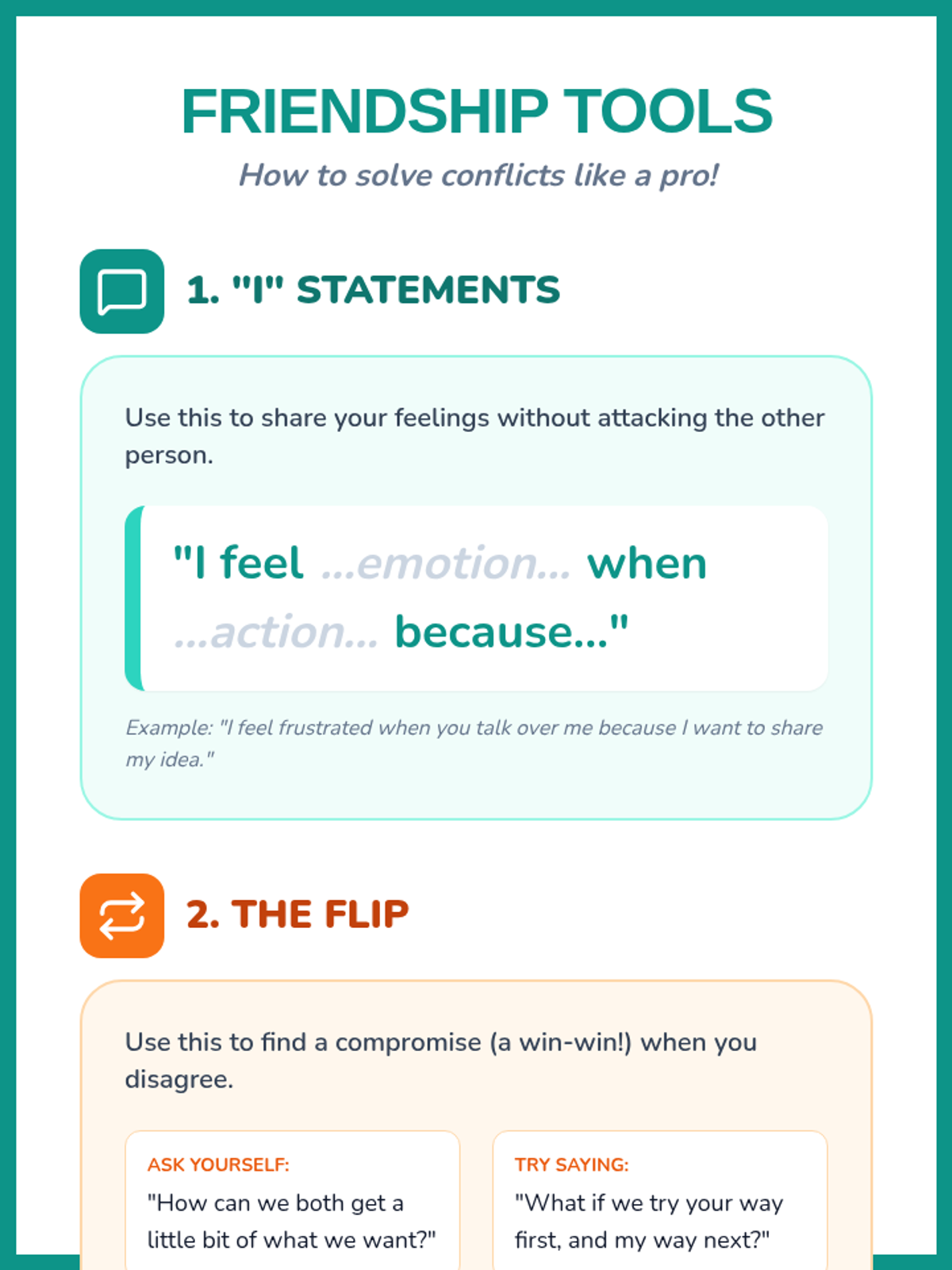
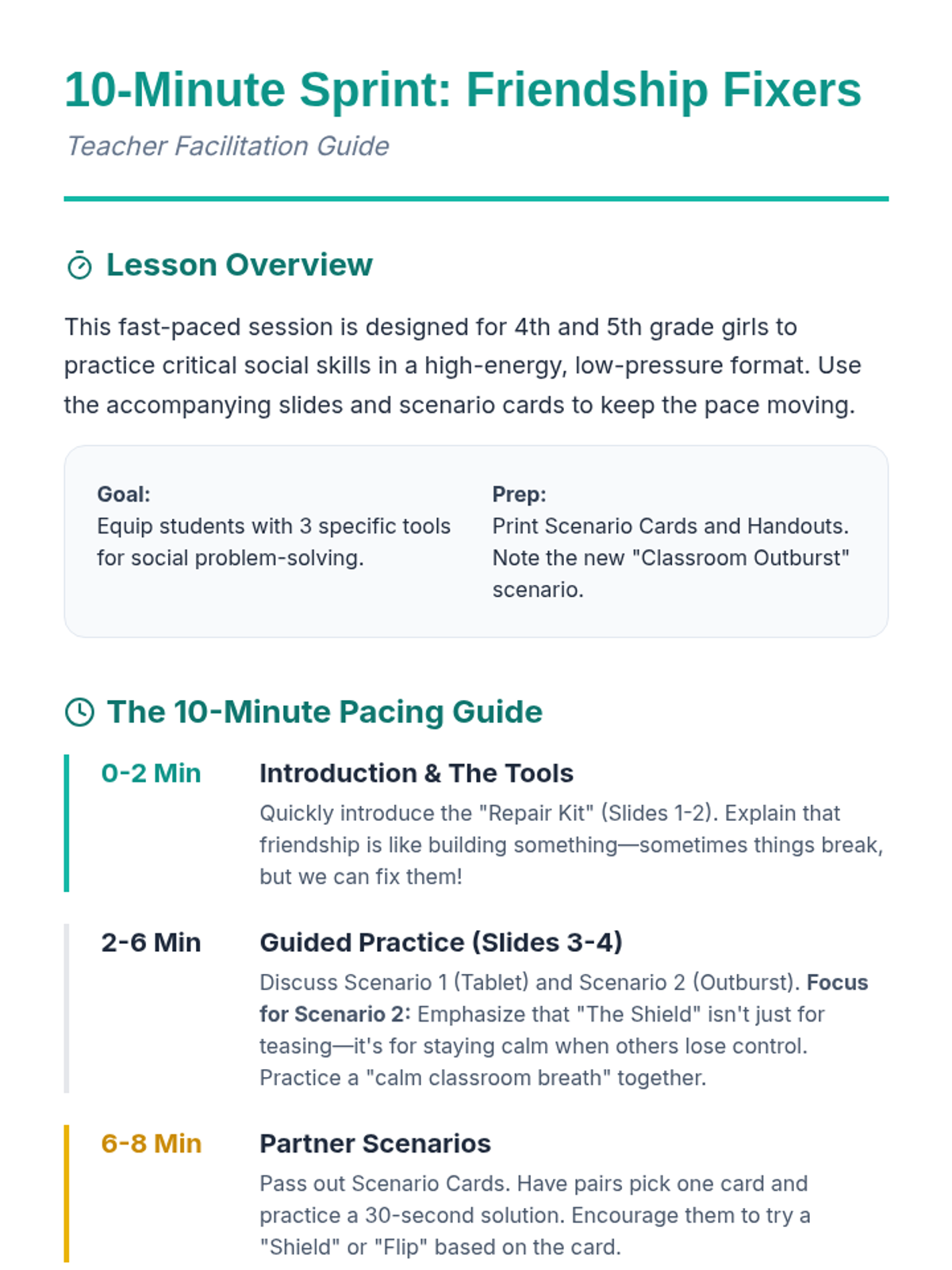
A fast-paced, 10-minute interactive session for 4th and 5th grade girls to practice resolving disagreements, sharing fairly, and responding to teasing with confidence.
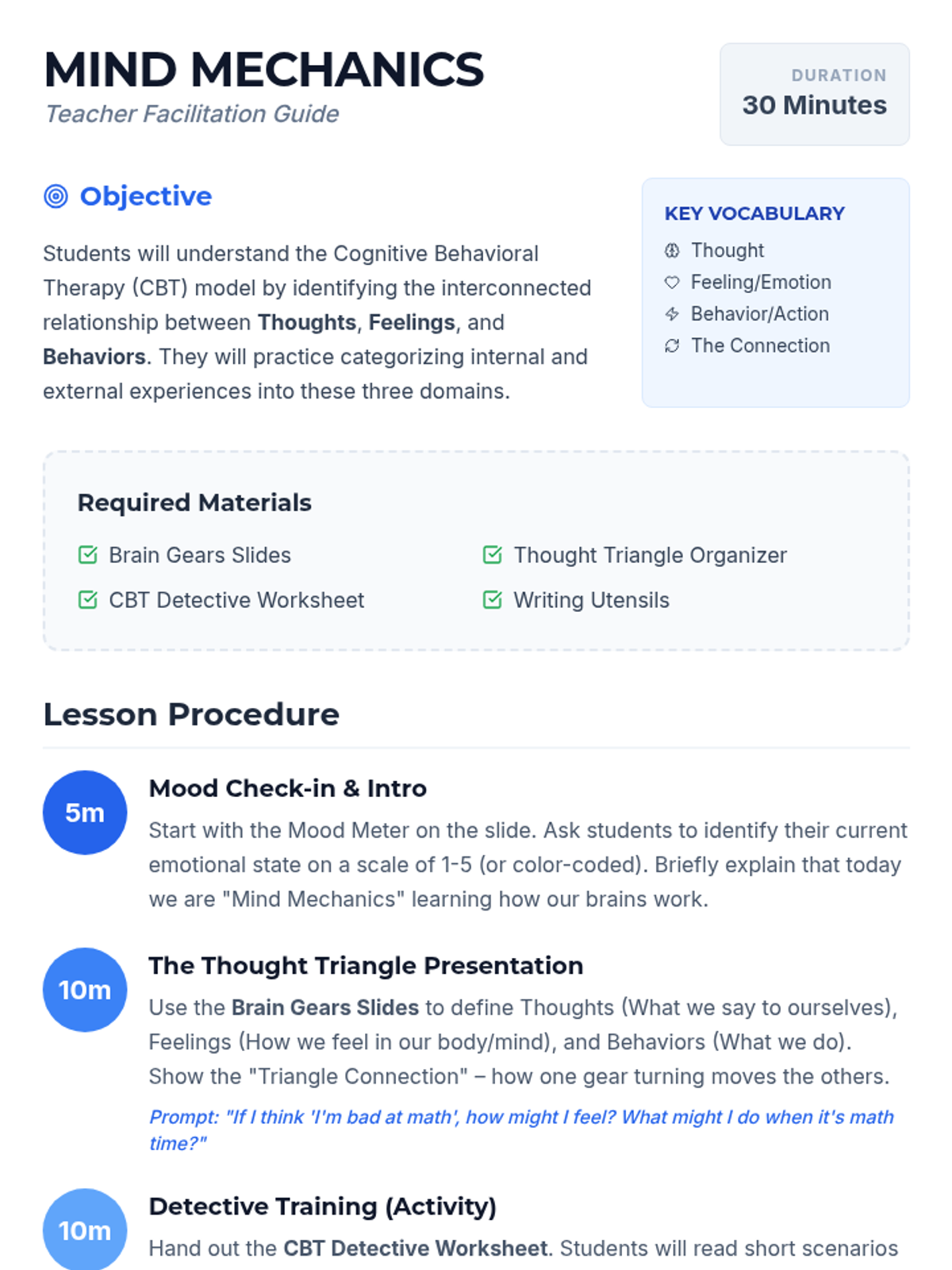
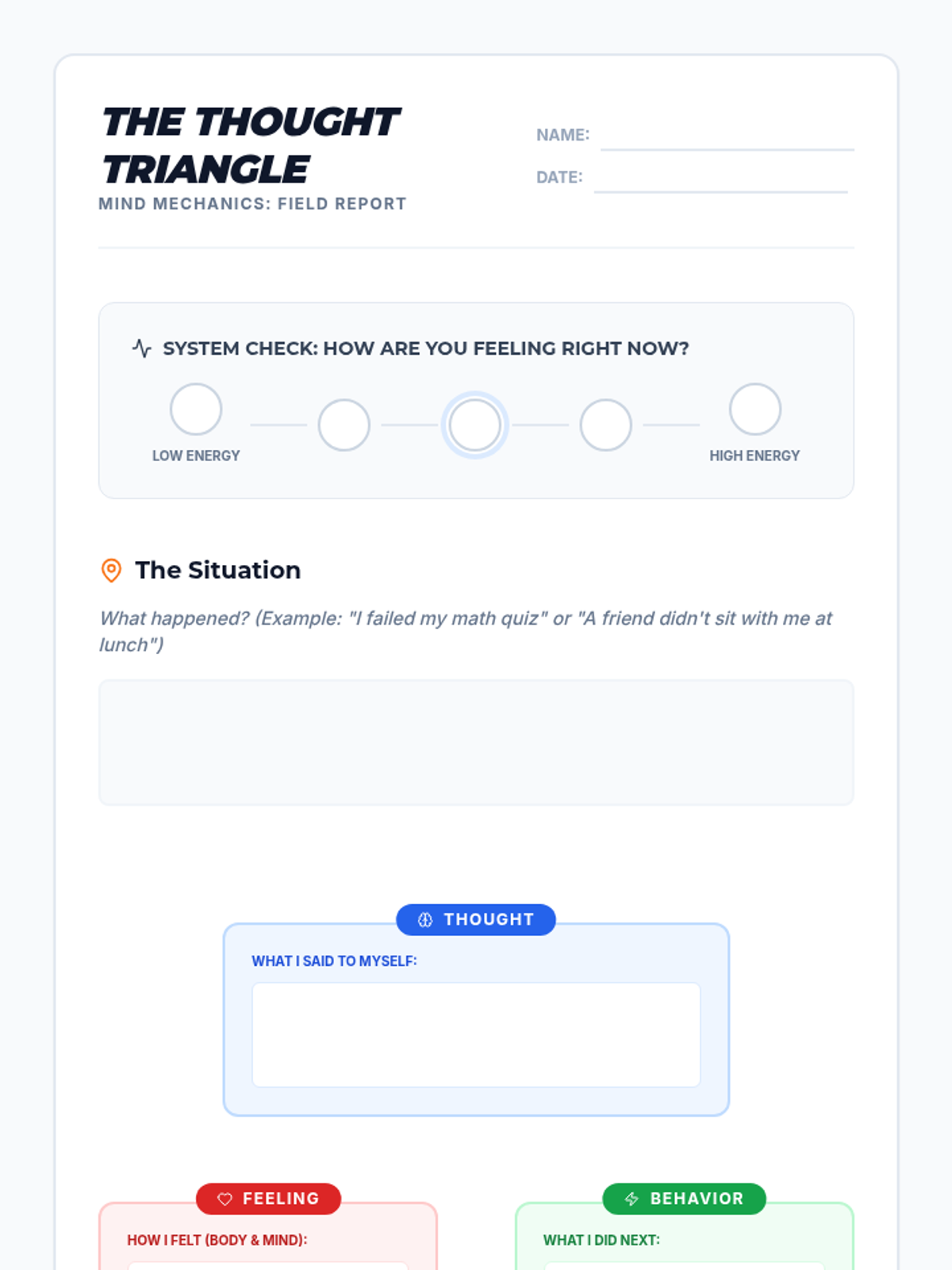
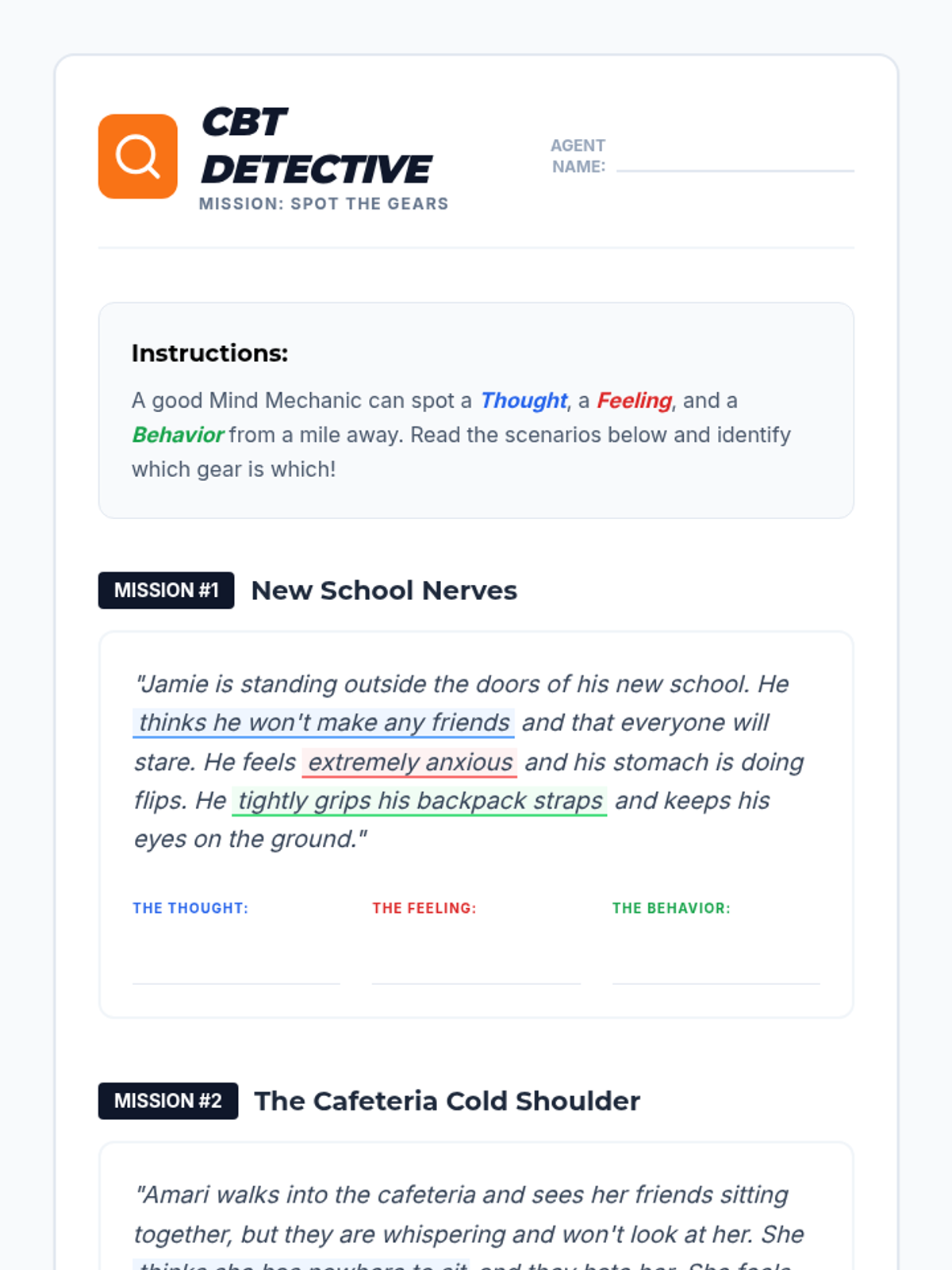
A 30-minute small group lesson introducing the fundamentals of Cognitive Behavioral Therapy (CBT). Students will learn the connection between thoughts, feelings, and behaviors using the 'Thought Triangle' model and practice identifying examples of each.
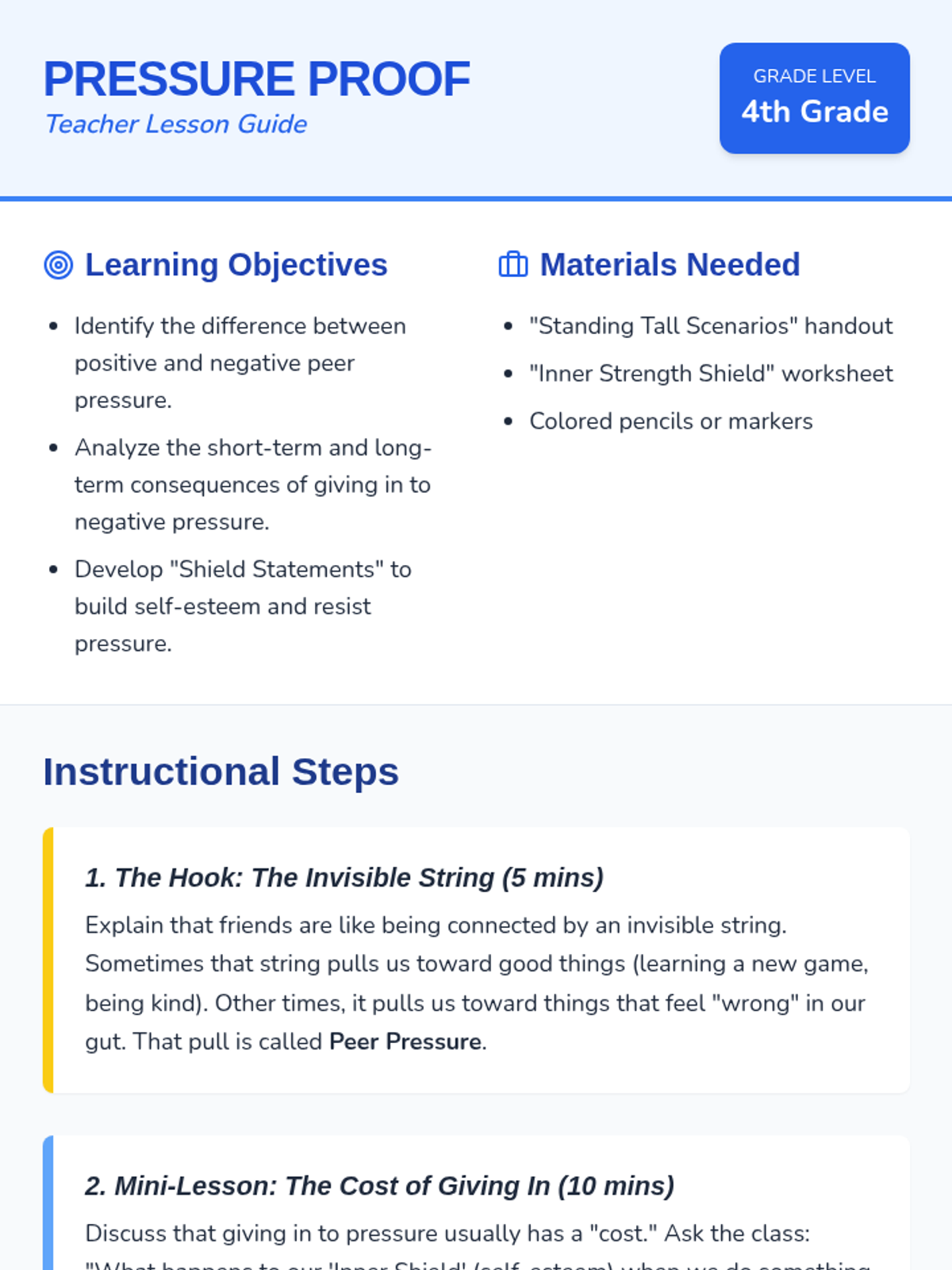
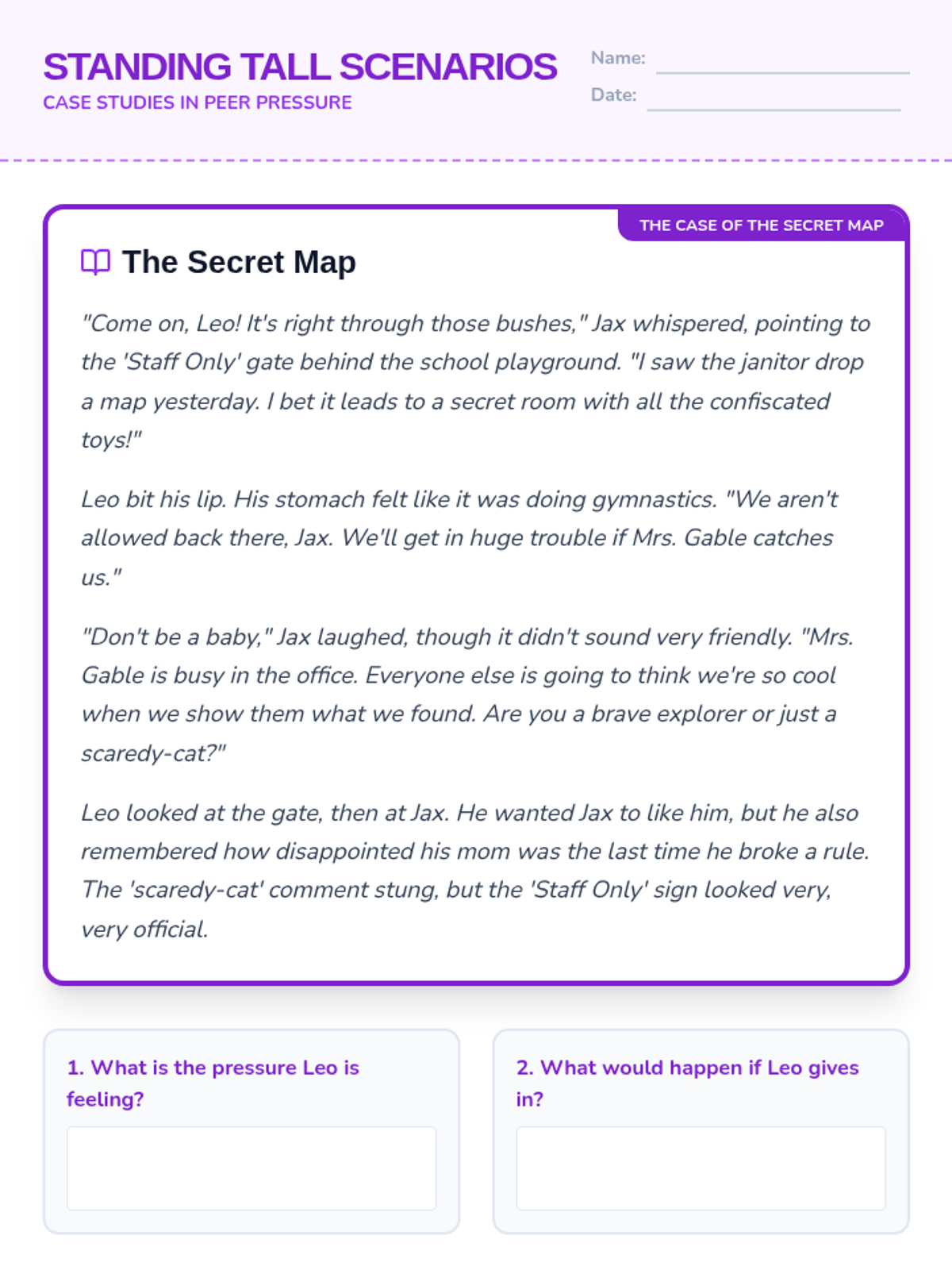
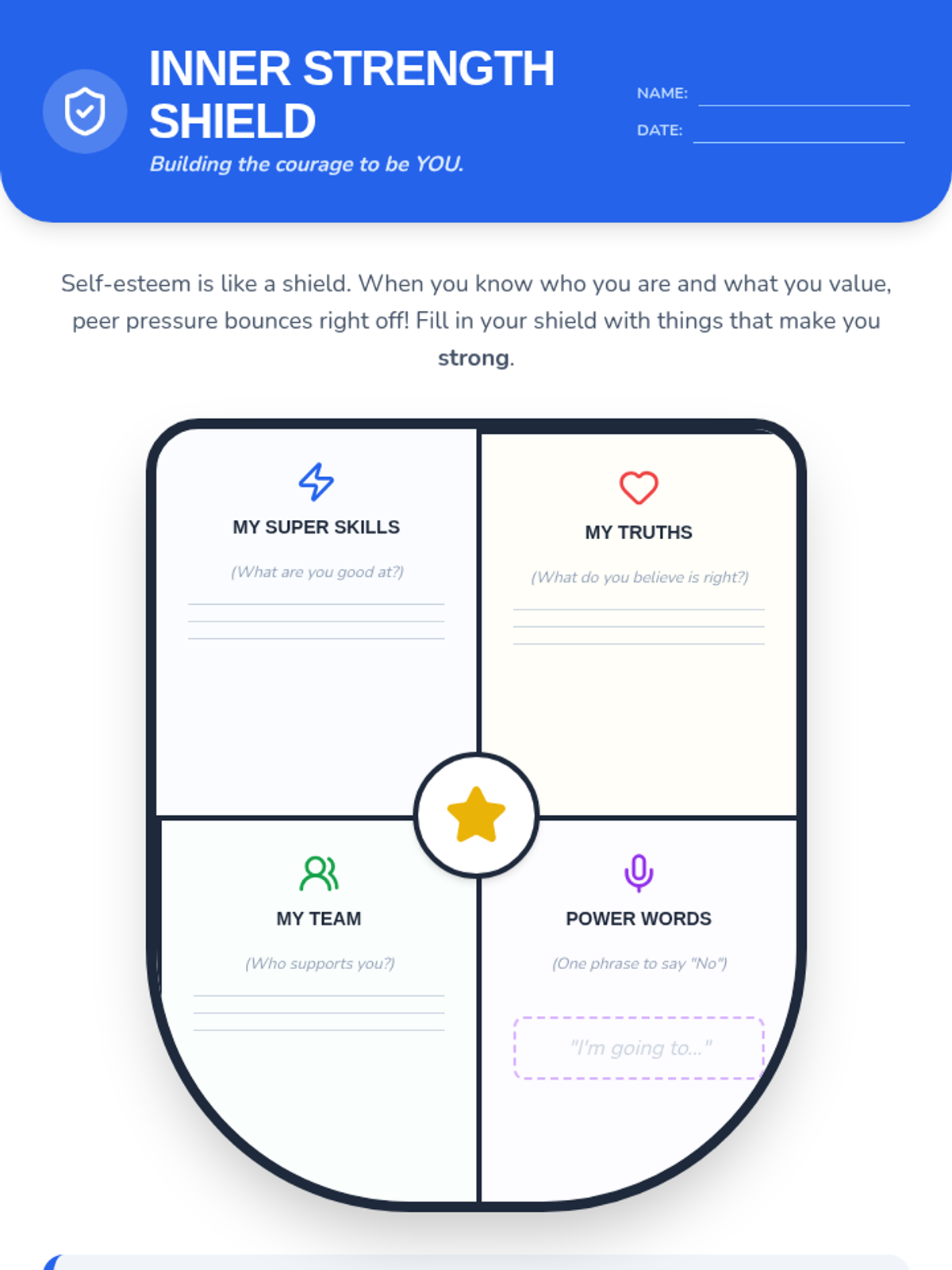
A comprehensive mini-lesson designed for 4th graders to identify peer pressure, understand its consequences, and develop the self-esteem necessary to stand their ground.