Learners are given a limited number of 'votes' to select items from a mixed group of needs and wants. They must work together to ensure the needs are selected first before using votes on wants.
A comprehensive visual behavior management system for a home daycare, featuring a 'Super Squad' theme to engage young boys through visual expectations and a no-cost incentive program.
A comprehensive lesson for kindergarteners on the social nuances of humor, focusing on reading body language and distinguishing between kind and hurtful jokes.
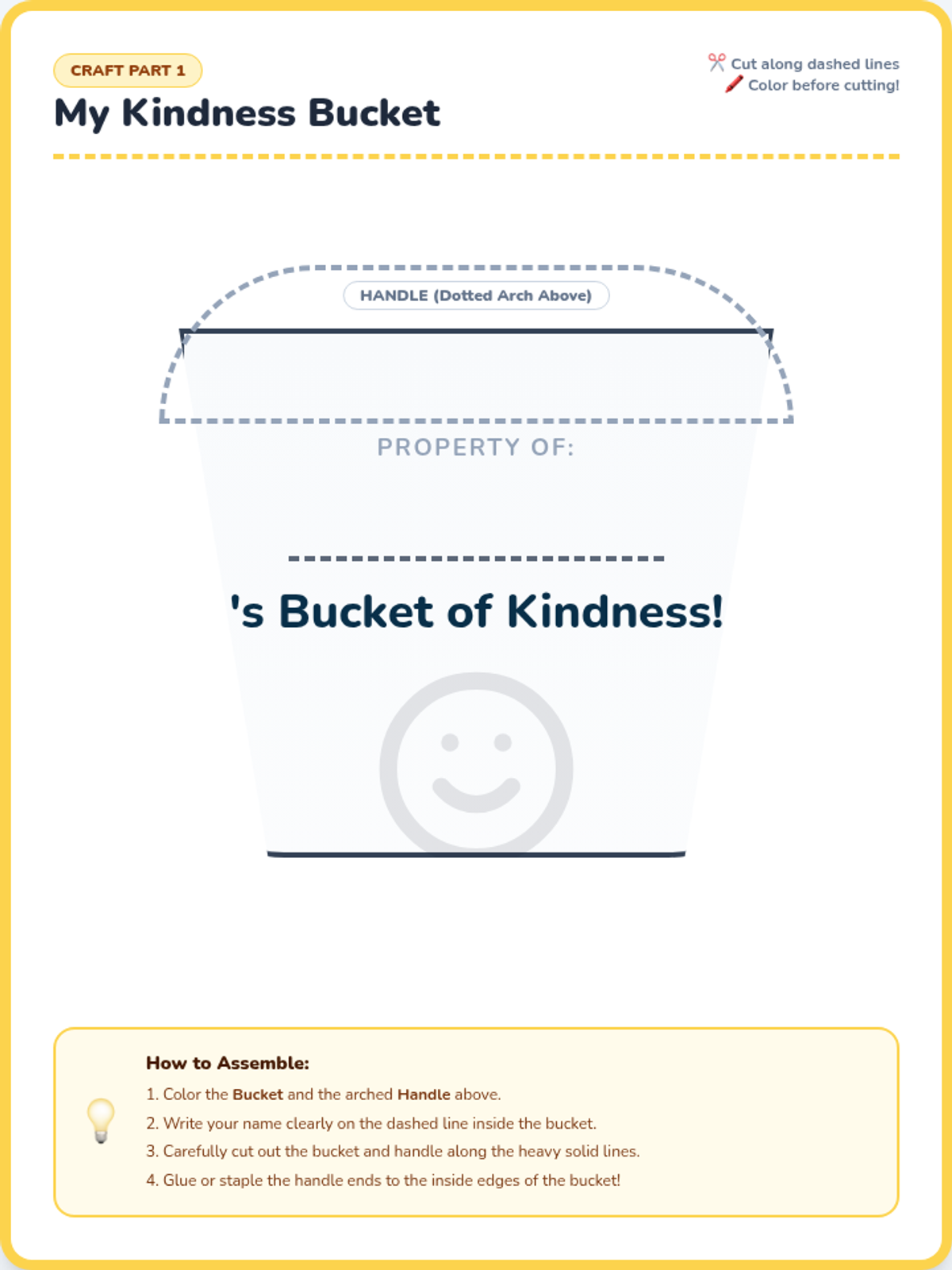
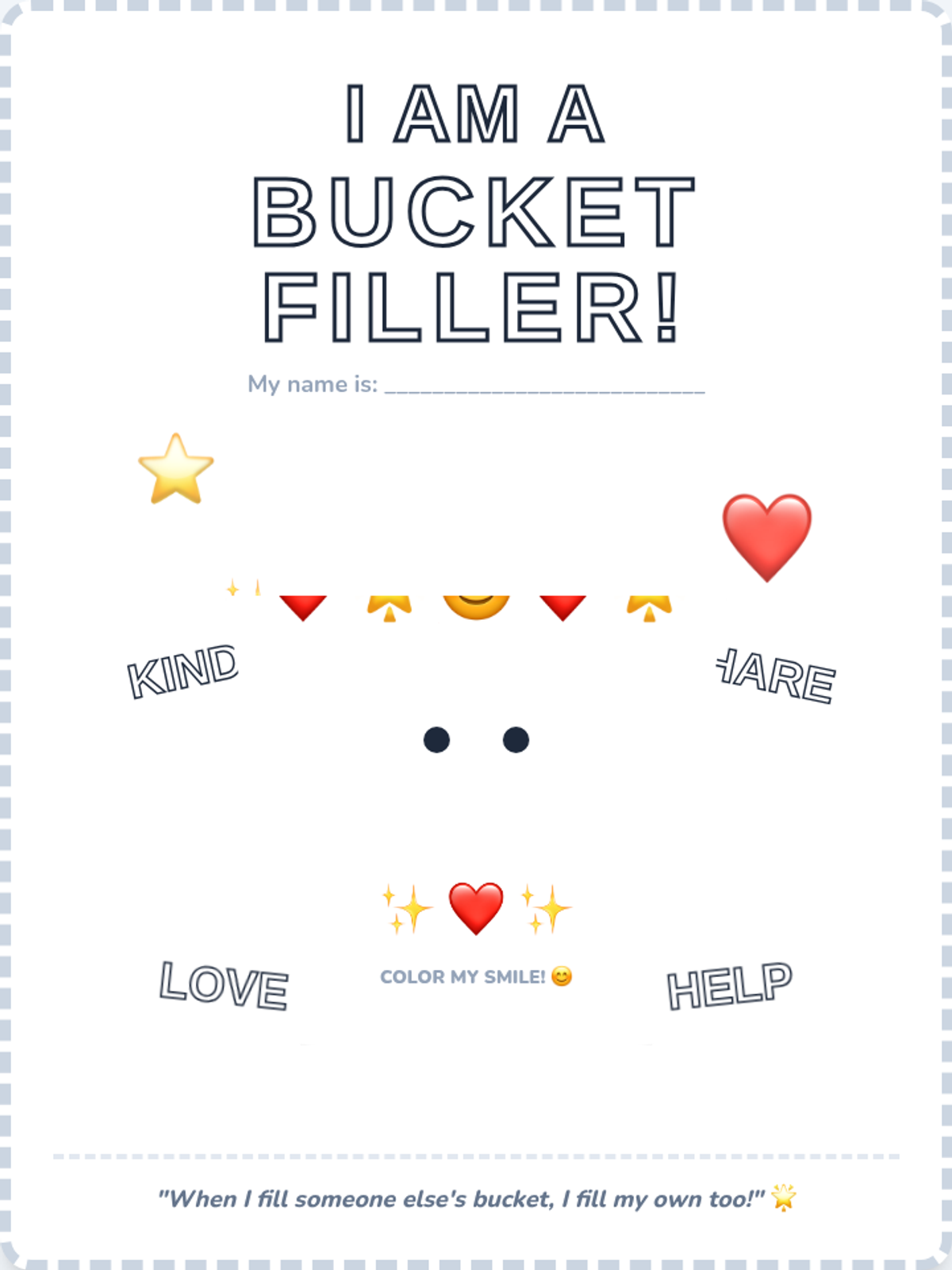
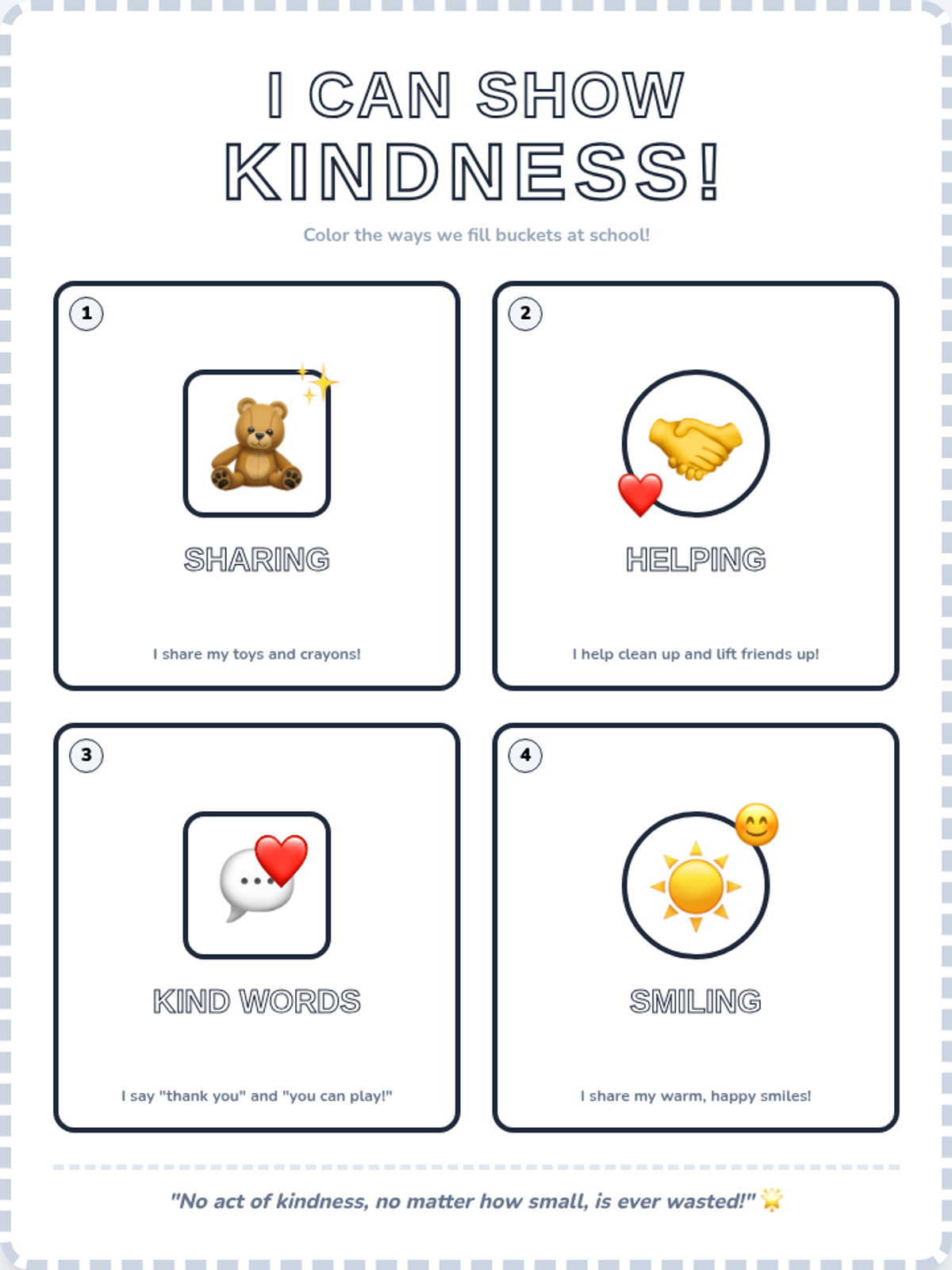
A social-emotional learning lesson for K-2 students based on the book 'Have You Filled a Bucket Today?' by Carol McCloud, focusing on kindness and empathy.
A follow-up Kindergarten lesson focused on conflict resolution and problem-solving, teaching students how to 'fix' friendship problems like they would fix a garden.
A gentle 20-minute lesson designed to help kindergarten students manage separation anxiety through social storytelling, visual routines, and calming coping strategies.
A social-emotional learning lesson focusing on identifying and managing frustration when things don't go as planned in the classroom, using a comic strip scenario.
A construction-themed lesson for 2nd-3rd grade students where they transition from identifying kindness to proactively "building" it. Students use blueprints to design solutions for social challenges and participate in a collective building project.
A growth mindset workshop for grades K-2 focused on distinguishing between fixed 'gloom' thoughts and growth 'bloom' thoughts. Students practice reframing mistakes and building a collaborative classroom garden.
A character-building lesson centered around a board game where students navigate real-life scenarios to practice taking ownership of their actions and choices.
A 10-minute spring-themed lesson for developmental kindergartners focusing on sharing through a collaborative garden-building activity.
A gentle 15-minute social-emotional lesson designed for kindergarten students experiencing separation anxiety. The lesson uses a 'Heart Bridge' metaphor to teach positive self-talk, visual schedules, and the use of comfort objects.
A forensic-themed lesson for 2nd grade students that delves deeper into social cues, empathy, and the "ripple effect" of kind and unkind actions.
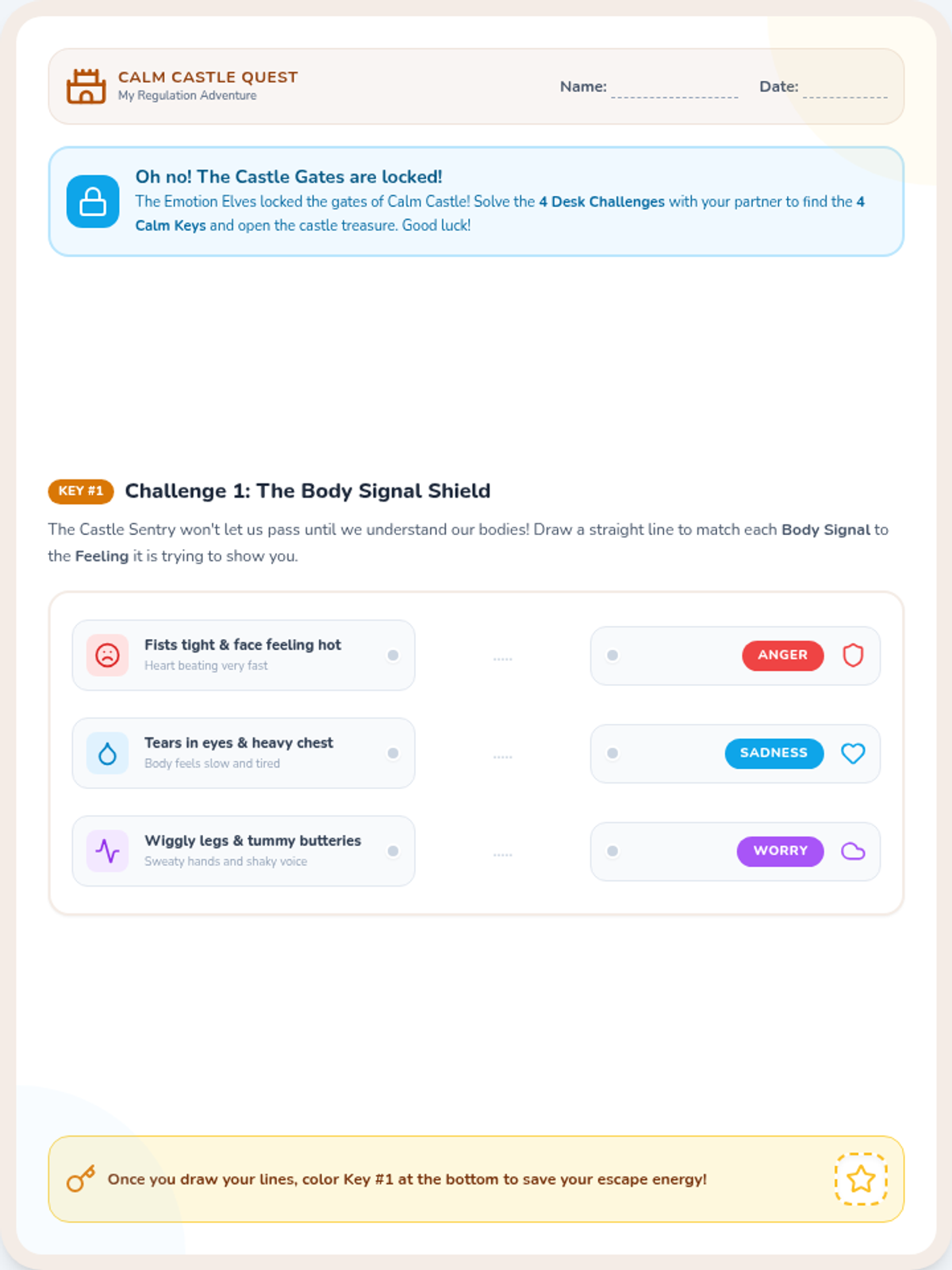
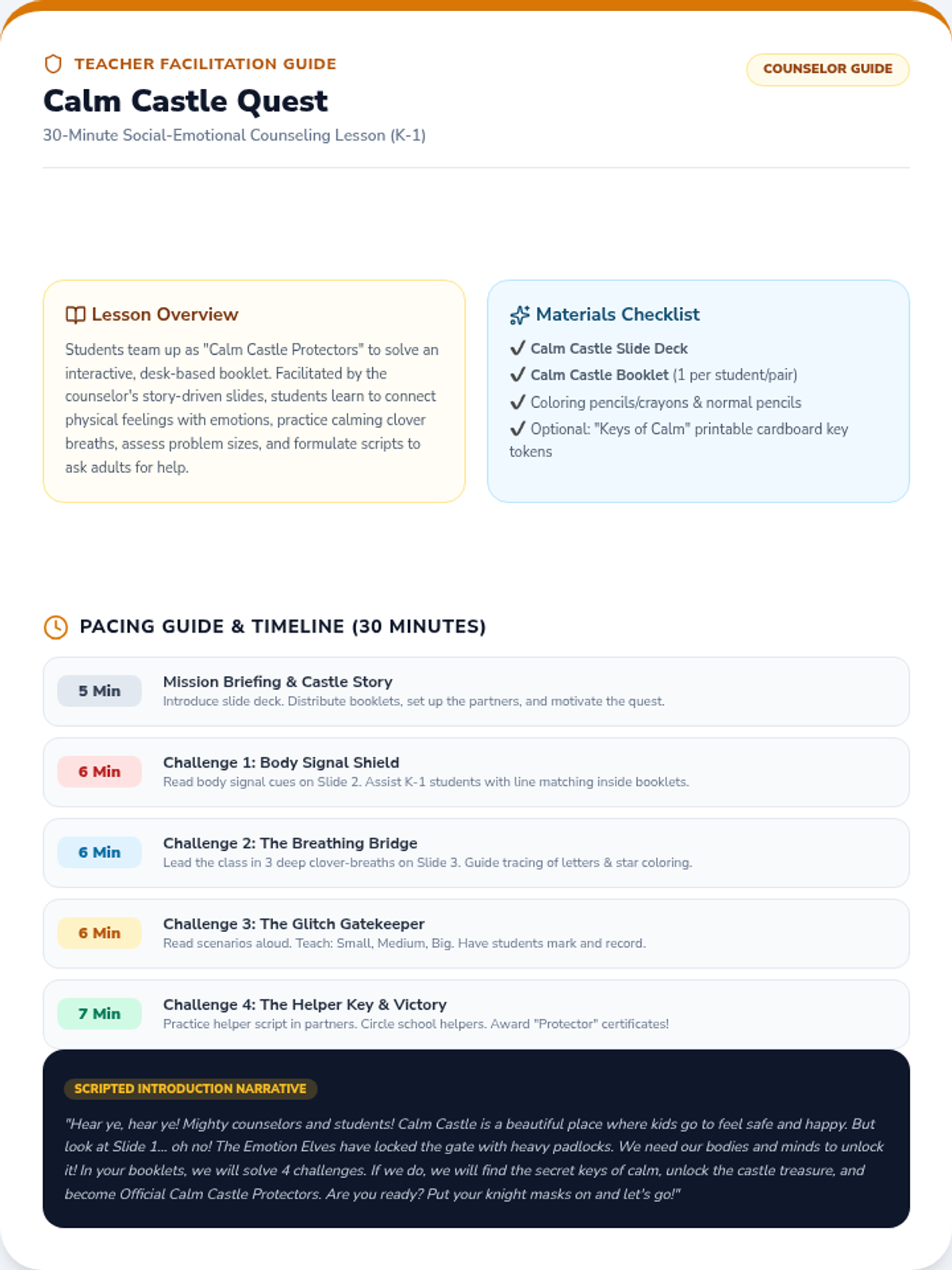
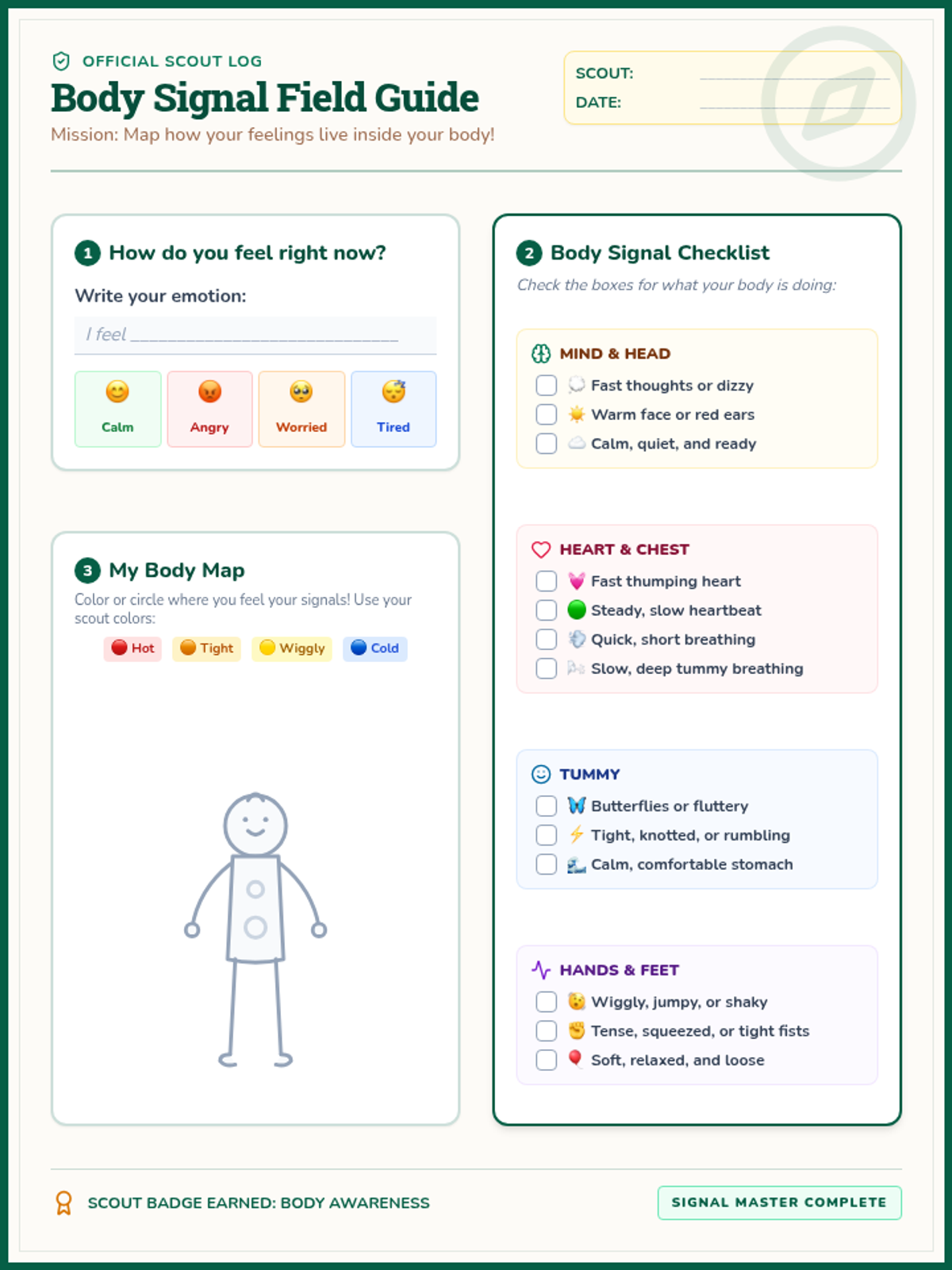
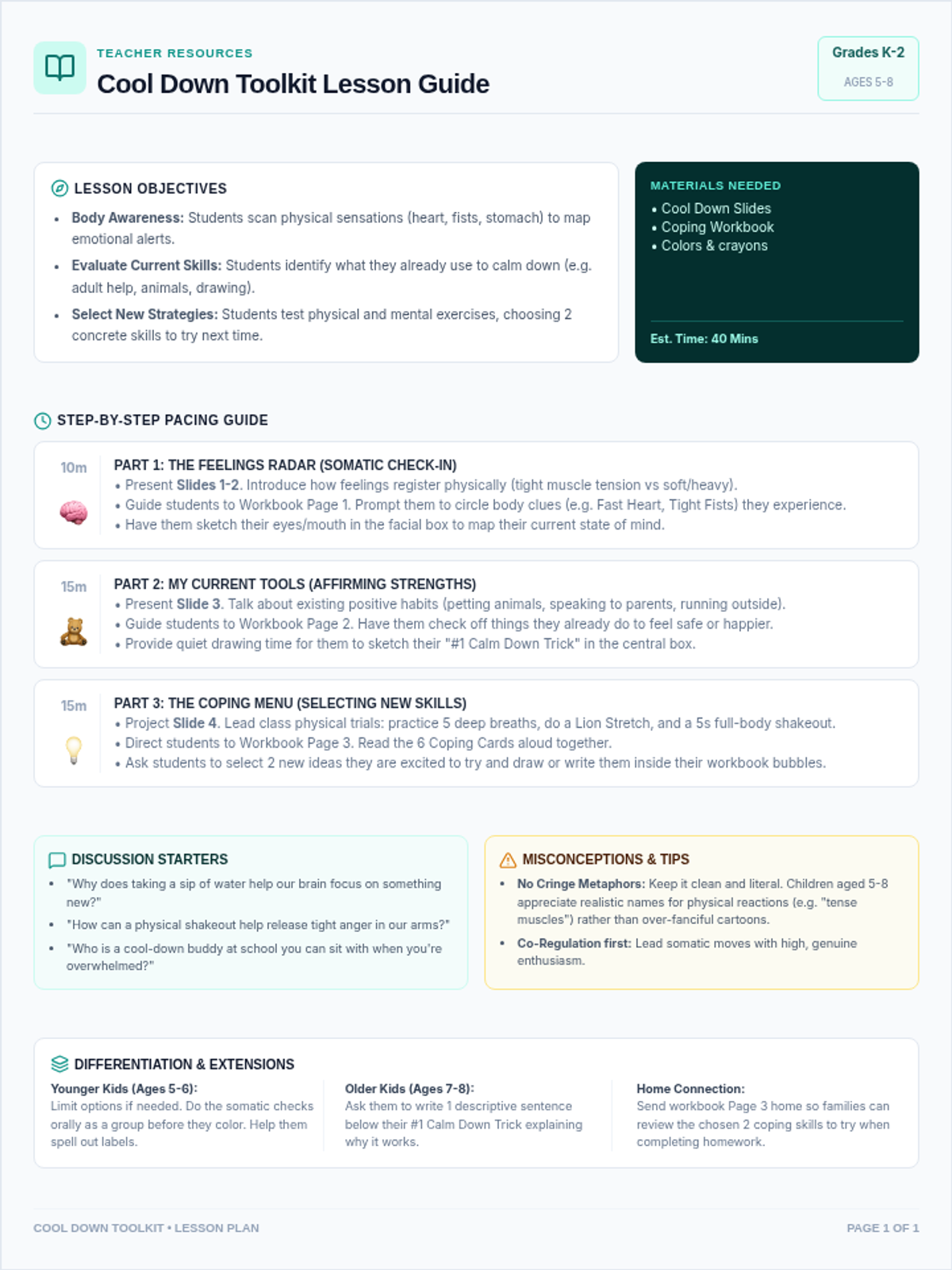
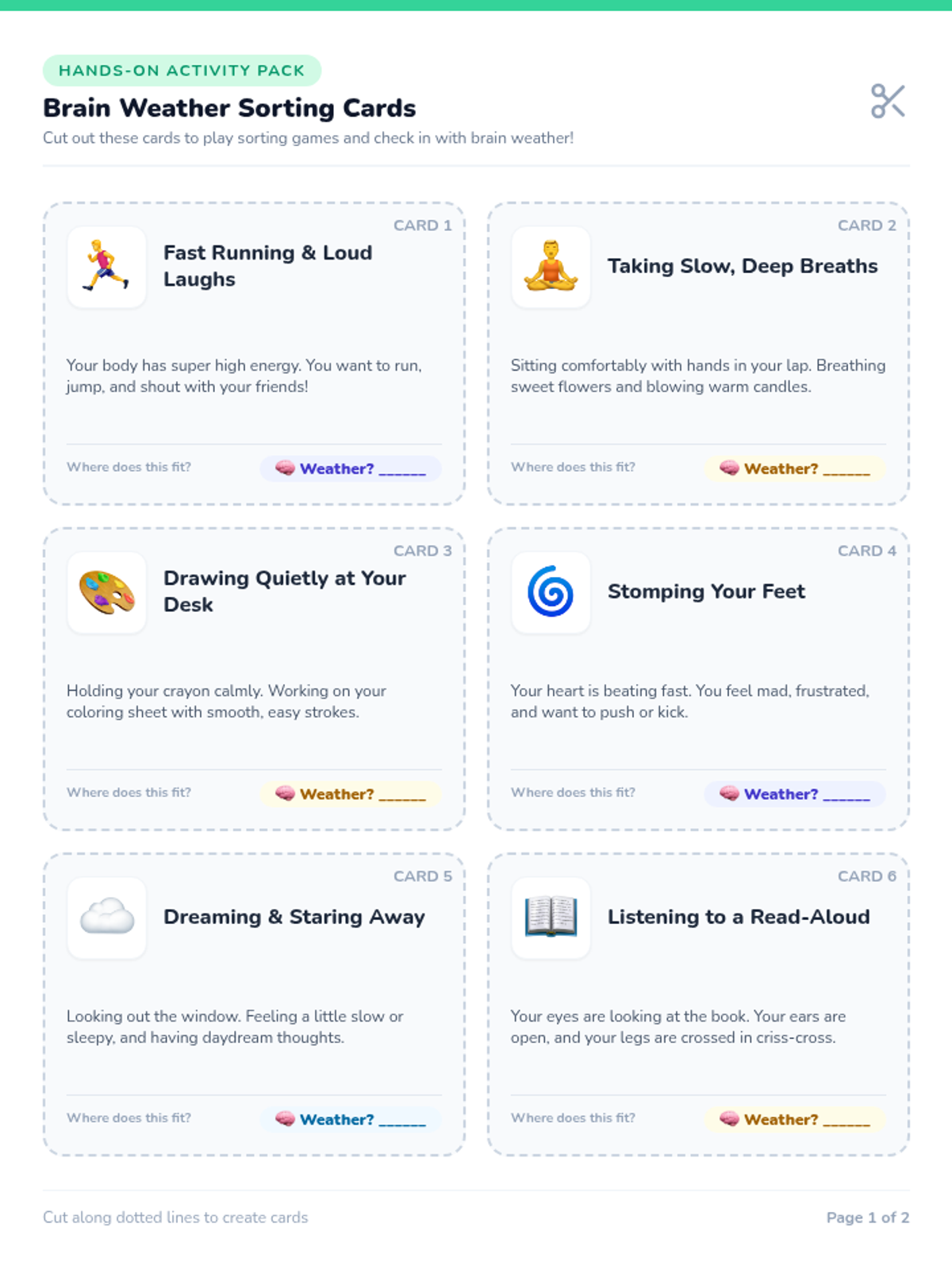
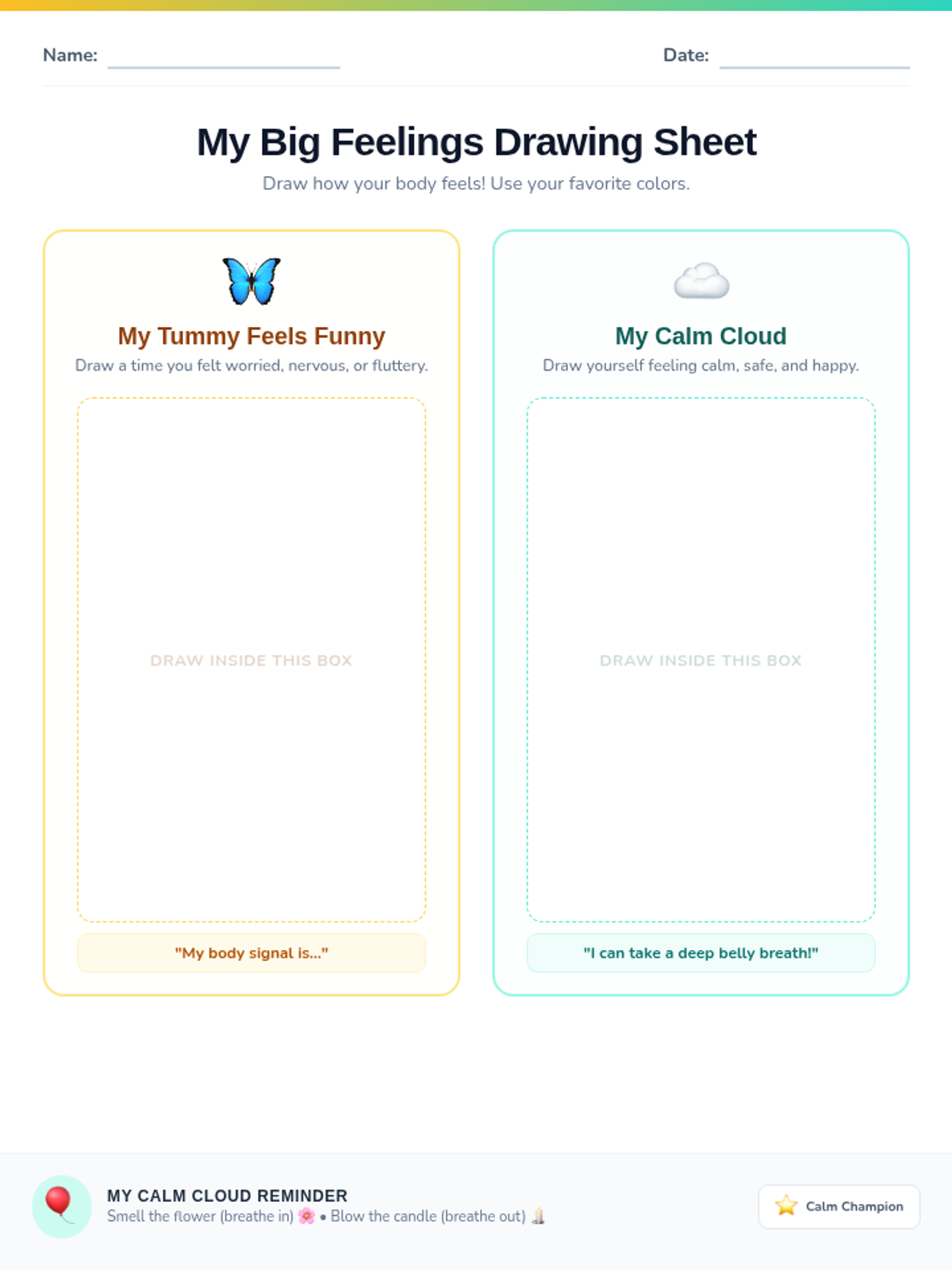
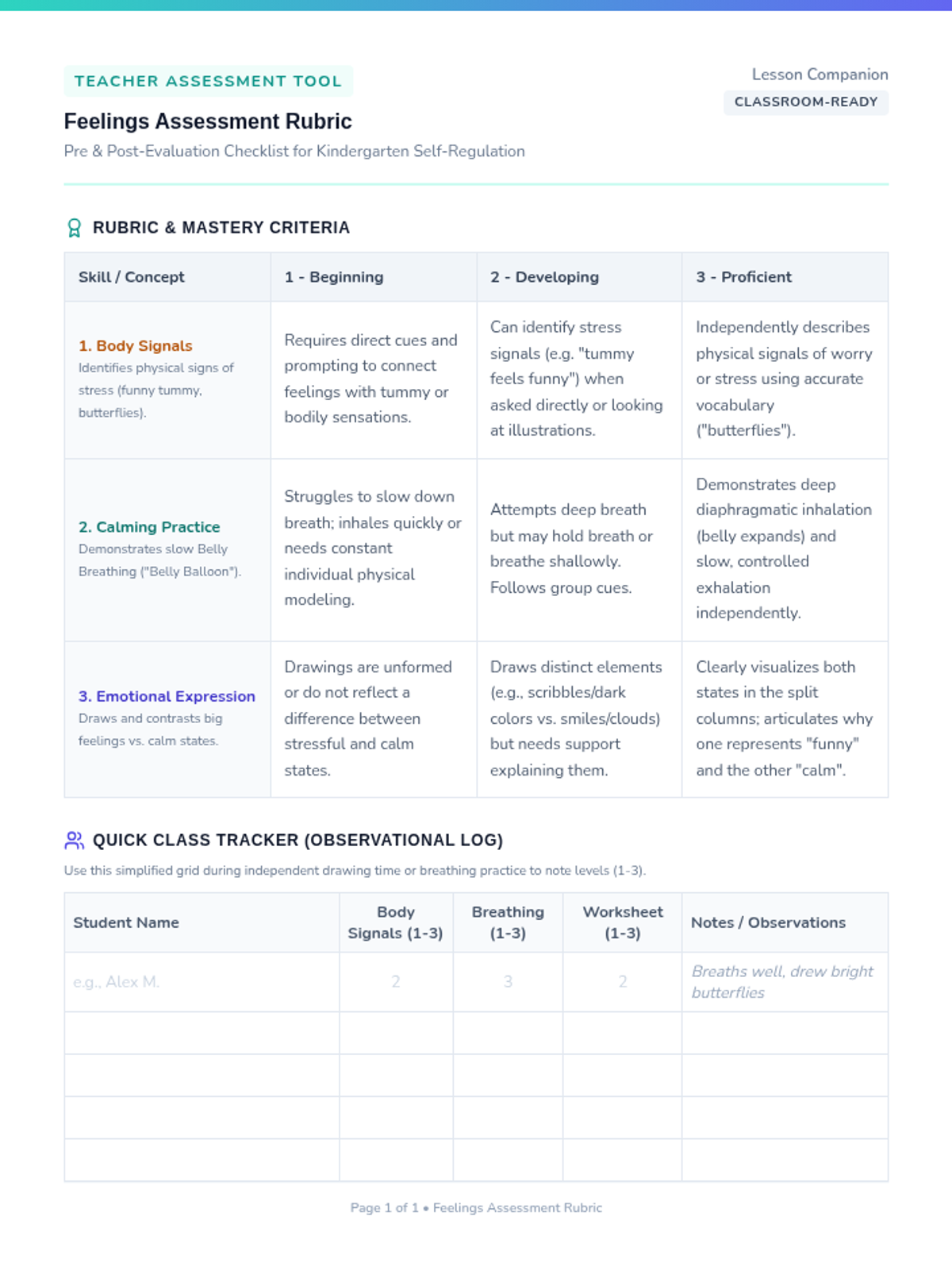
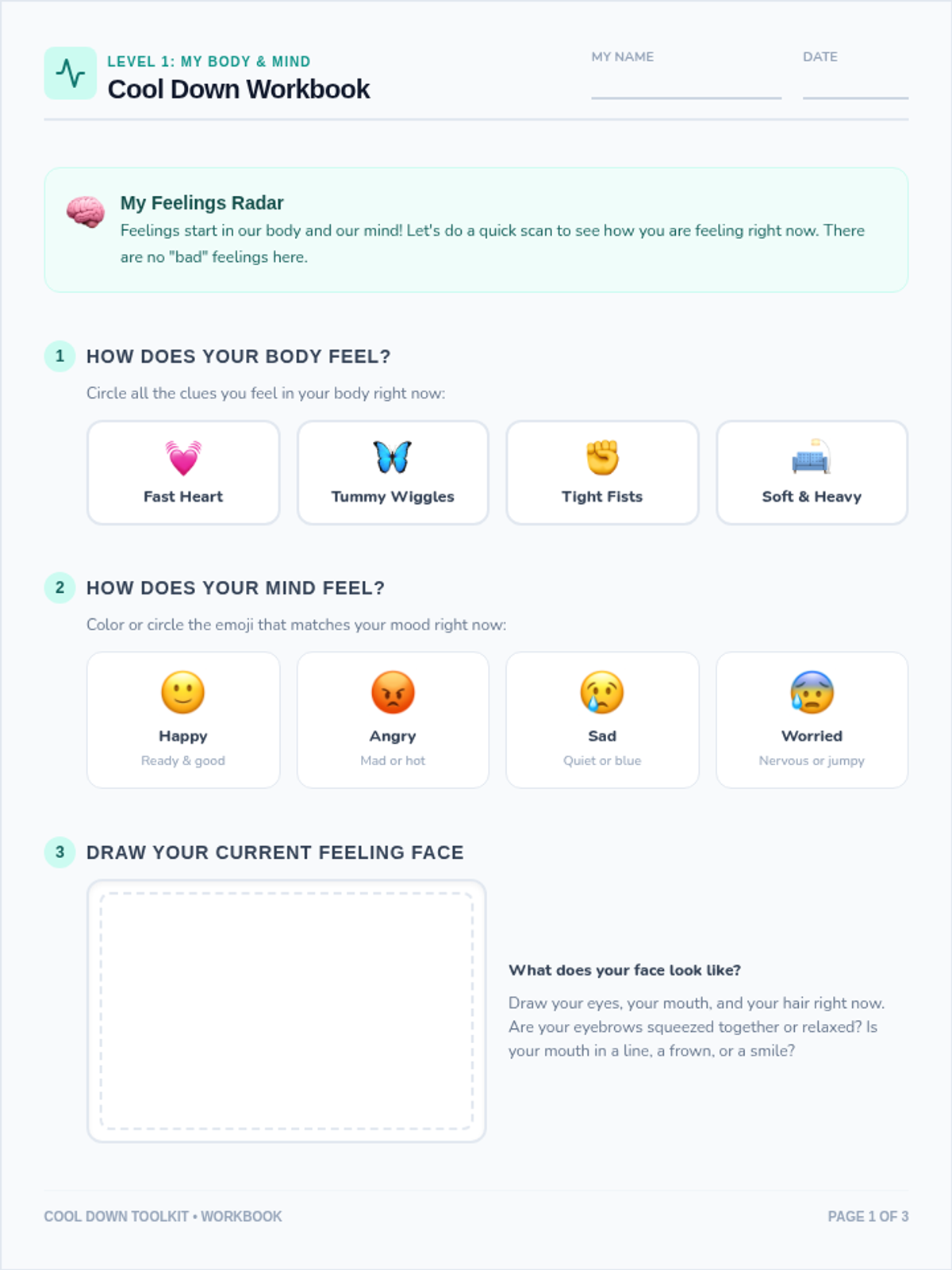
A lesson designed to help students identify and understand the physical signals their bodies send during different emotional states, using a 'Signal Scouts' theme to encourage self-awareness and emotional regulation.
A comprehensive training session for school counselors on teaching effective grounding techniques to students, focusing on sensory, movement, nature-based, and breathing strategies.
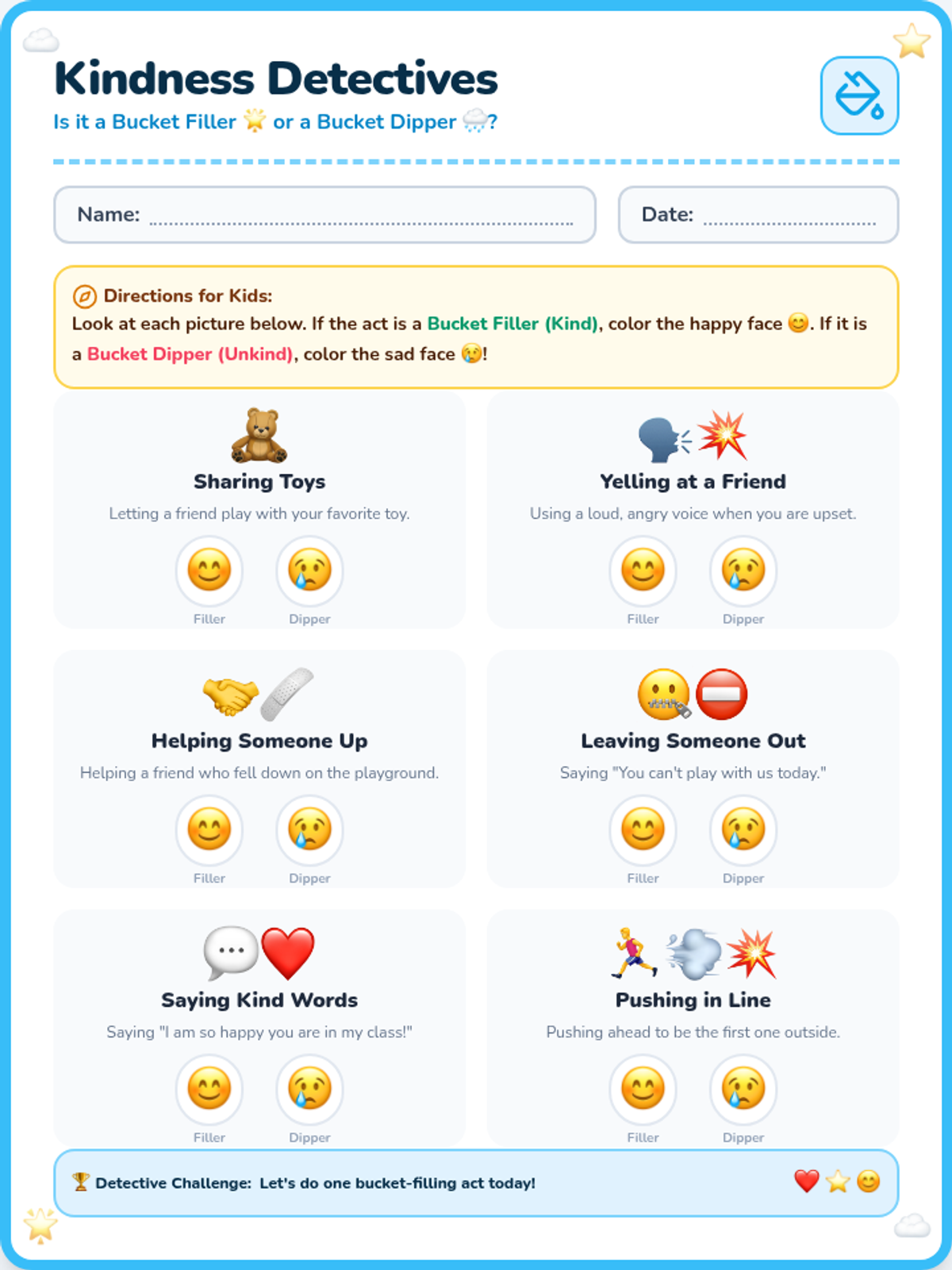
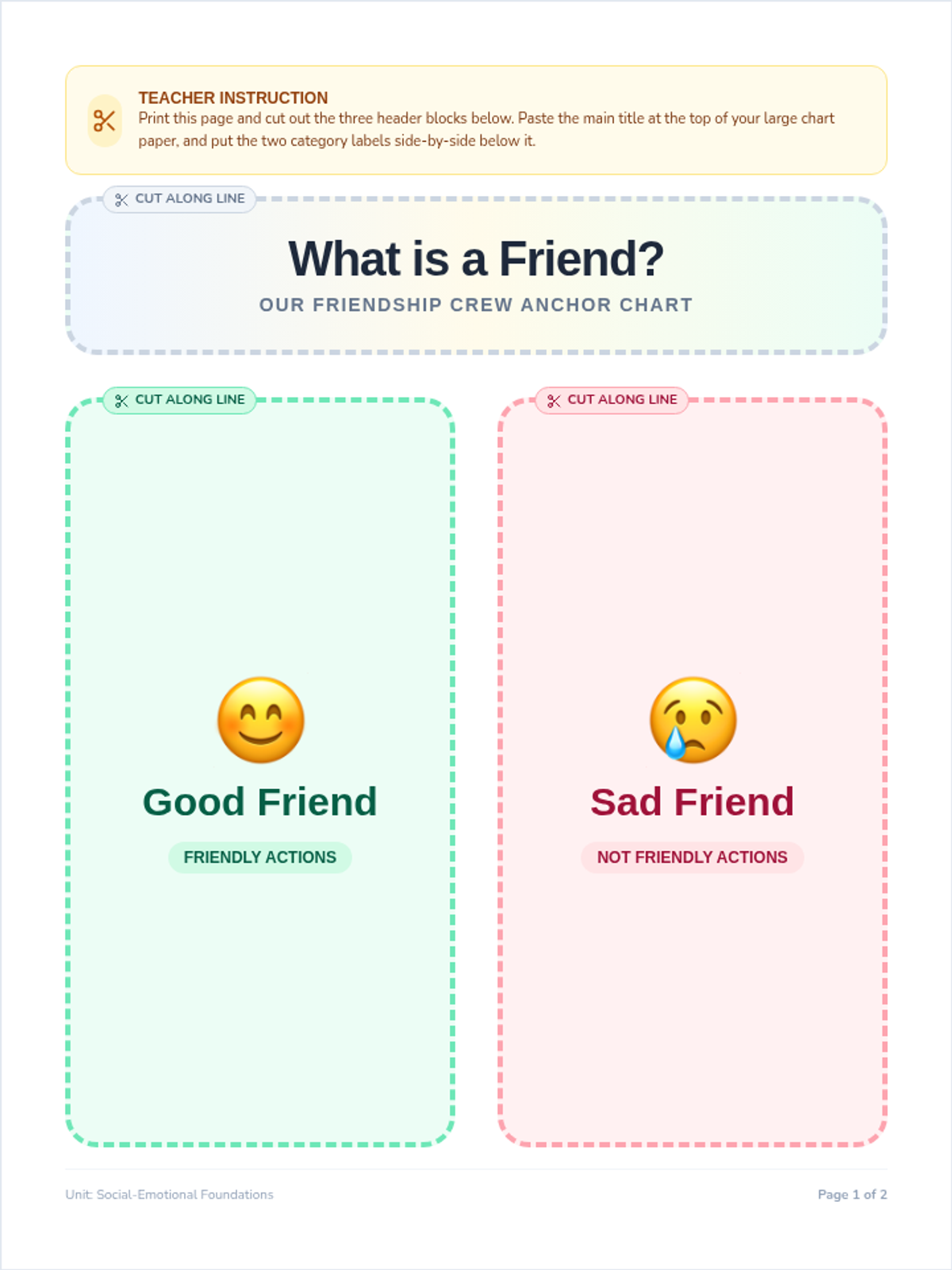
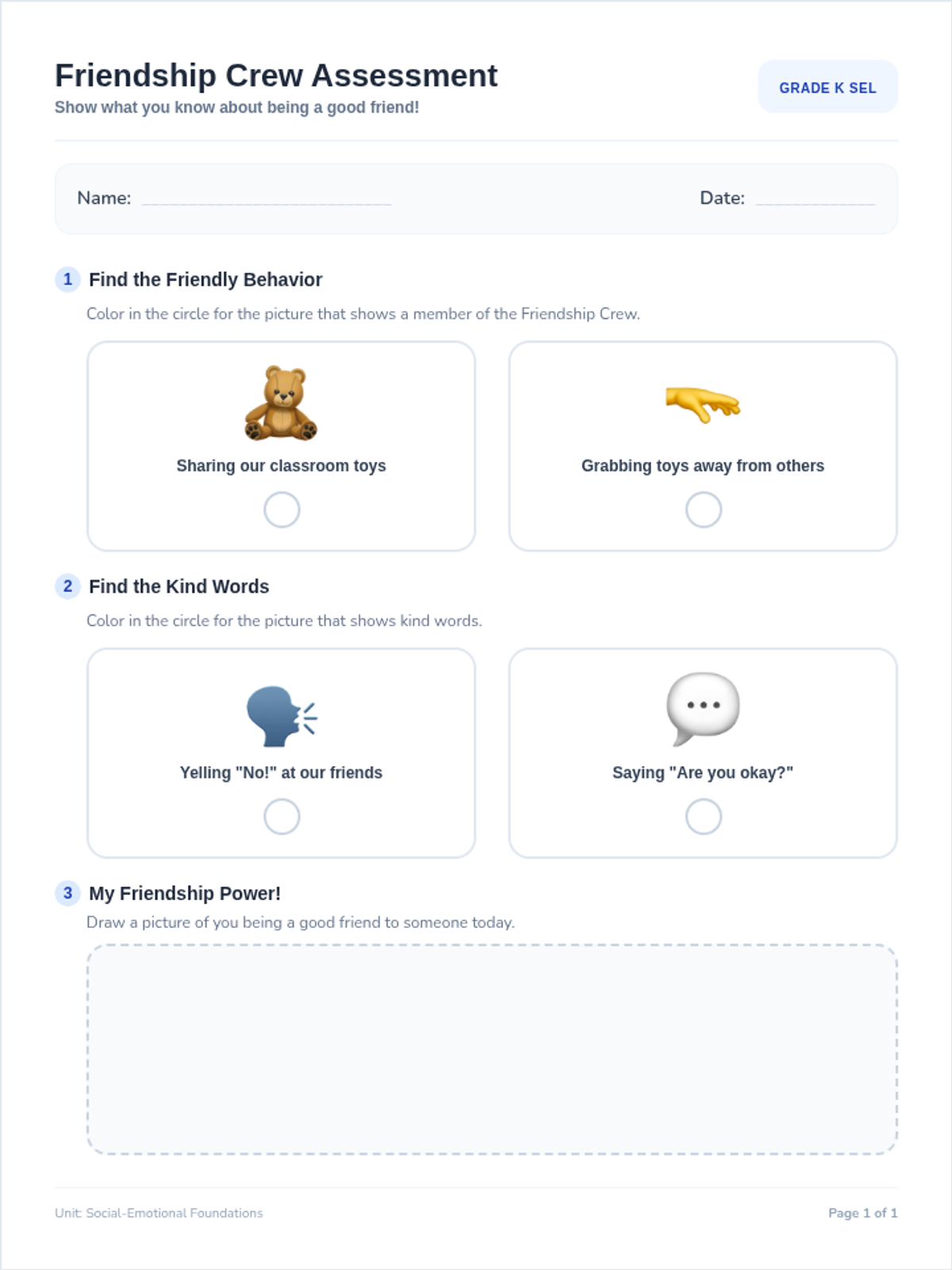
A detective-themed lesson for K-2 students focused on identifying and distinguishing between kind and unkind behaviors through interactive games and a hands-on sorting activity.
Focuses on future-oriented thinking and the "Miracle Morning." Solidifies the home-school connection and celebrates small wins with a "Gold Medal" mindset.
Focuses on developing specific coping skills and "routines" for the transition. Uses the metaphor of "spotting" and "flexibility" to manage big emotions in the morning.
Focuses on identifying current challenges and finding "exceptions" to the morning struggle using the metaphor of a balance beam. Introduces scaling questions and strengths-based goal setting.
A high-engagement lesson designed for young students to identify body signals associated with emotions and select appropriate calming strategies using a detective-themed approach.
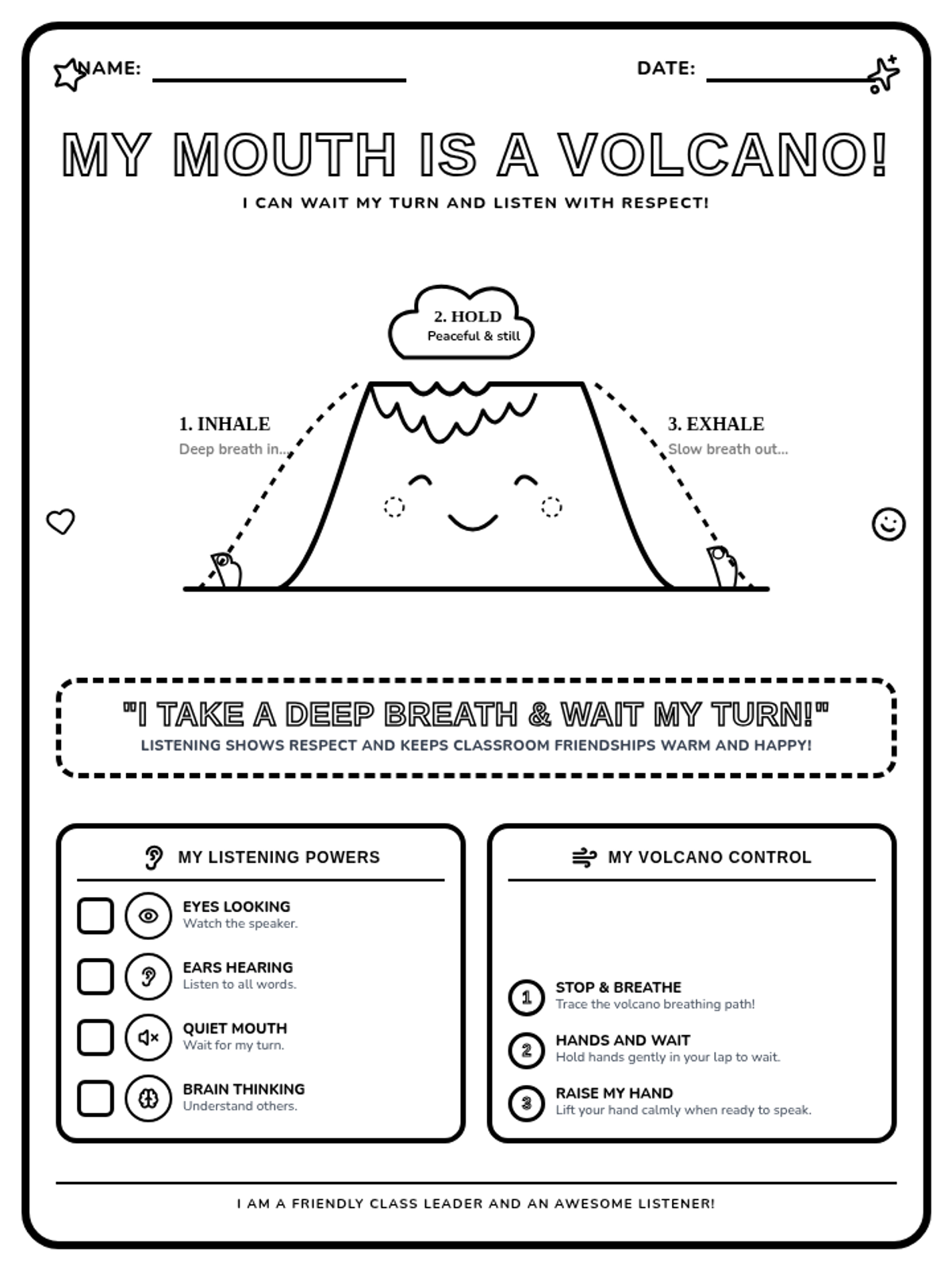
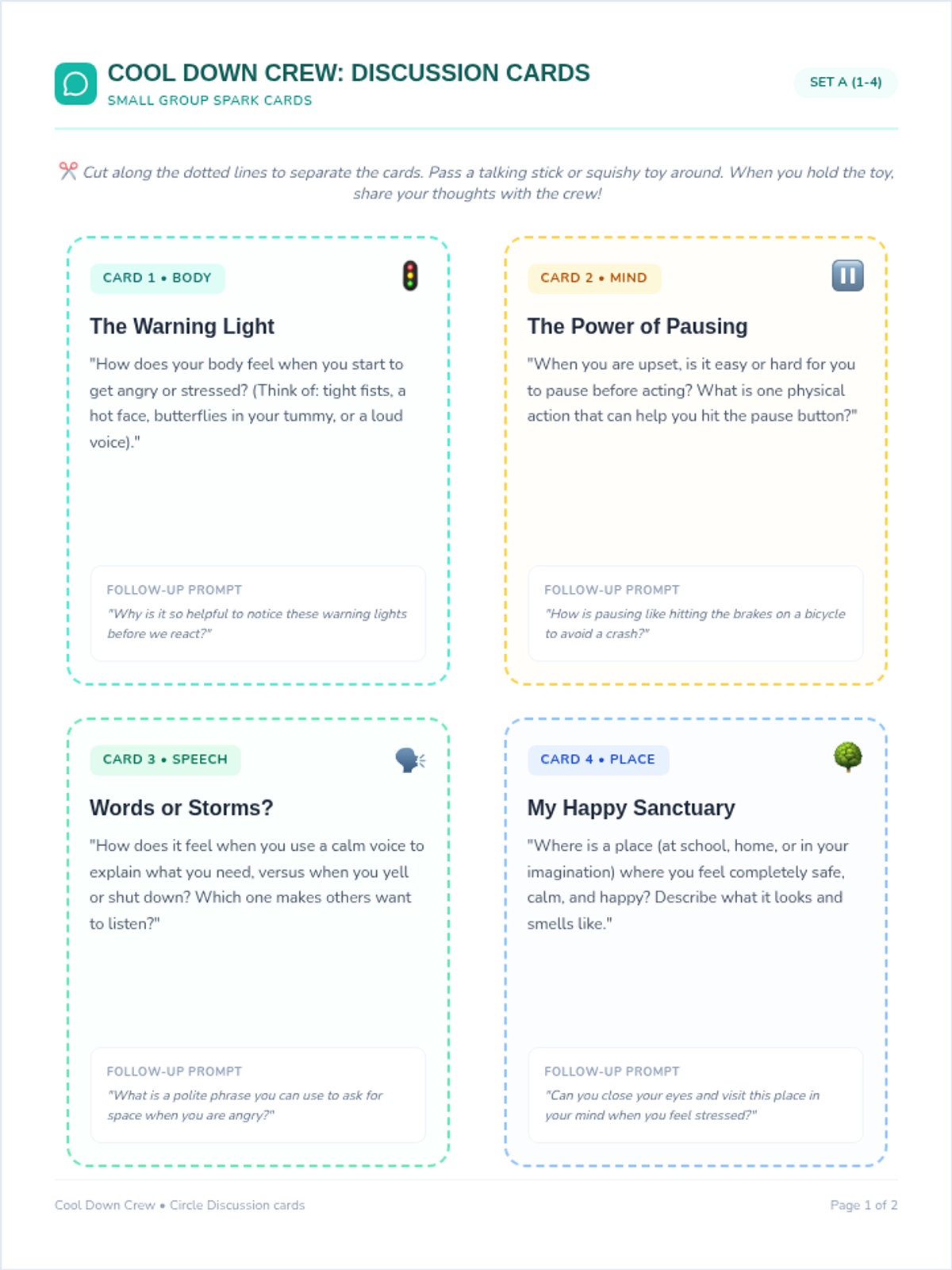
A collection of interactive coloring pages and visual guides focusing on impulse control, positive communication, and conflict resolution for social-emotional learning.
A comprehensive lesson exploring the 'Brain Remote' to manage impulsive urges and use 'Power Words' for self-advocacy and conflict resolution.
Students apply their expanded emotional vocabulary in simulated social situations, practicing the 'Vocabulary Role Play' strategy to solidify language acquisition through performance and interaction.
Builds a robust emotional vocabulary by systematically identifying, recording, and interacting with new words that describe complex feelings.
Employs graphic organizers, color-coding, and images to help students map the physical and situational connections to their feelings.
Uses gestures, facial expressions, and slowed speech to demonstrate emotional vocabulary and social interactions, making language comprehensible for ELLs.
Establishes daily signals and routines for students to communicate their emotional state and readiness for learning, providing a safe and predictable classroom environment.
A quick 10-minute introduction to box breathing, a powerful stress-relief technique, featuring a guided video and classroom practice.
A social-emotional learning lesson for preschoolers focused on distinguishing between bossy and kind voices, and practicing asking instead of telling using a traffic light visual system.
A comprehensive lesson introducing students to various coping strategies through interactive stations and a group bingo game. students will explore problem-solving, movement, art, and breathing techniques to manage their emotions.