A 30-minute kindergarten lesson on building friendship skills, exploring kind behaviors, and identifying characteristics of a good friend through interactive sorting and discussion.
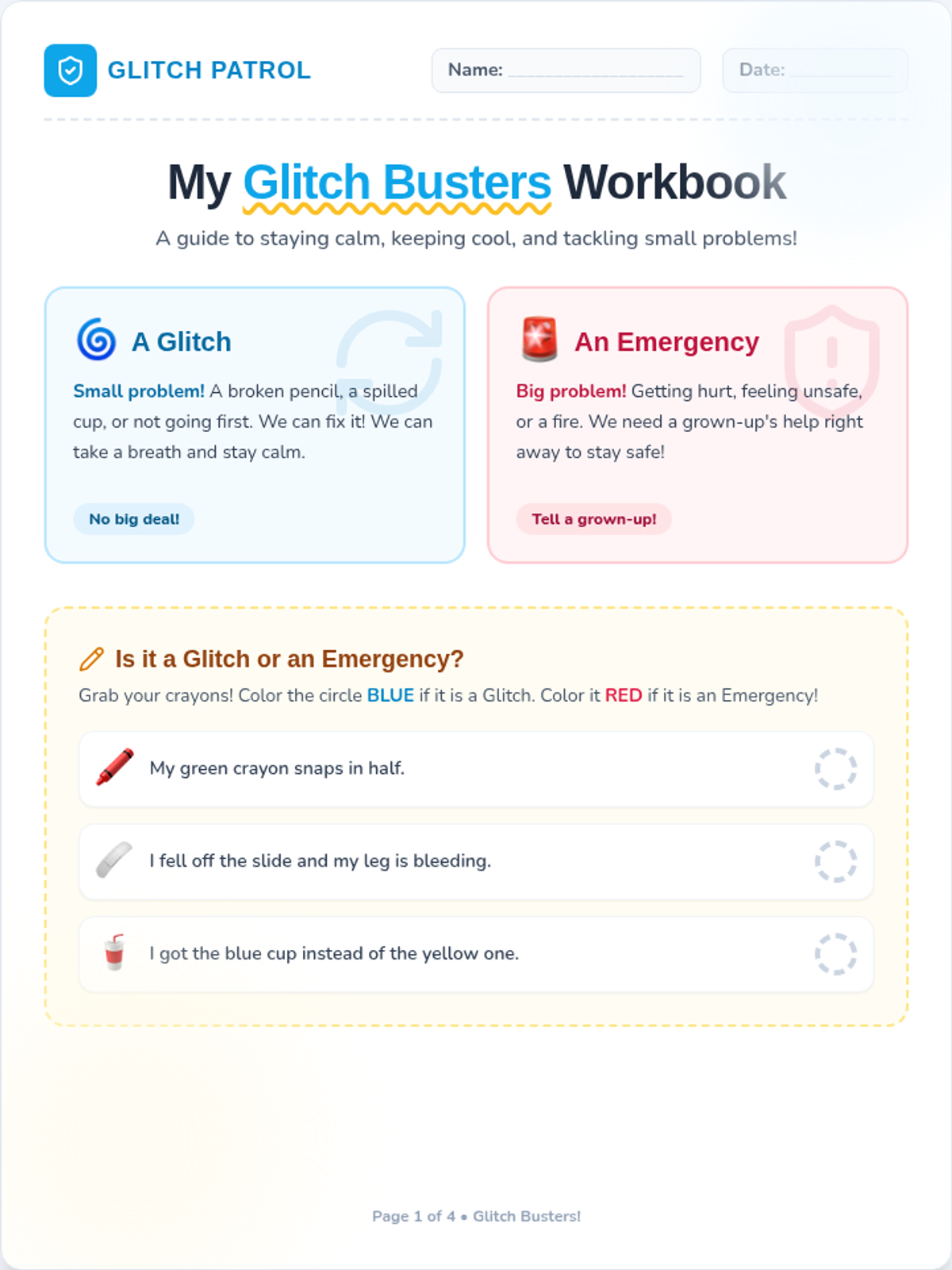
A Kindergarten-level lesson designed to help young students manage big emotions by teaching them the 'Size of the Problem' (Glitches vs. Emergencies), physical calming strategies, and basic emotional self-advocacy using I-statements.
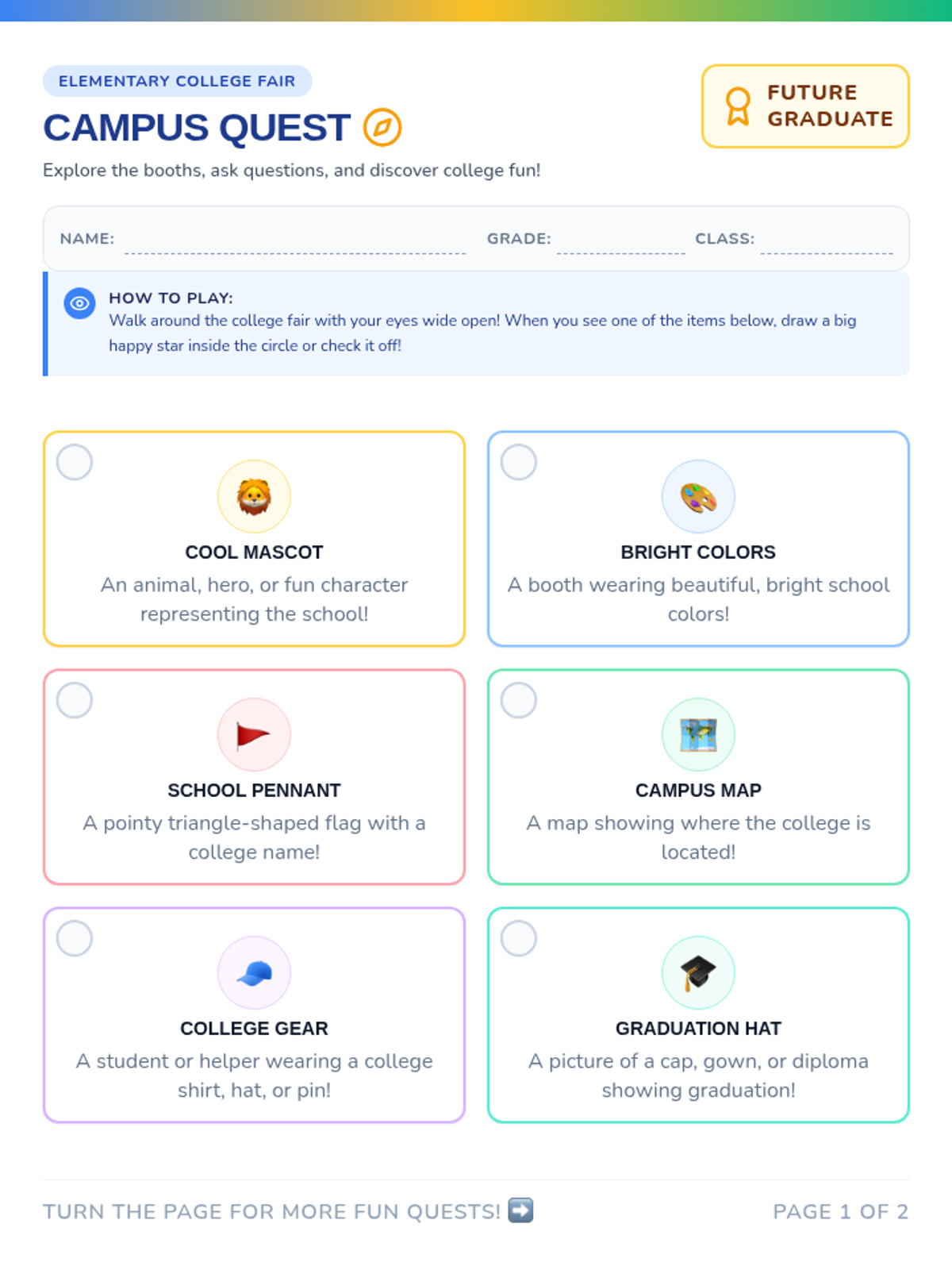
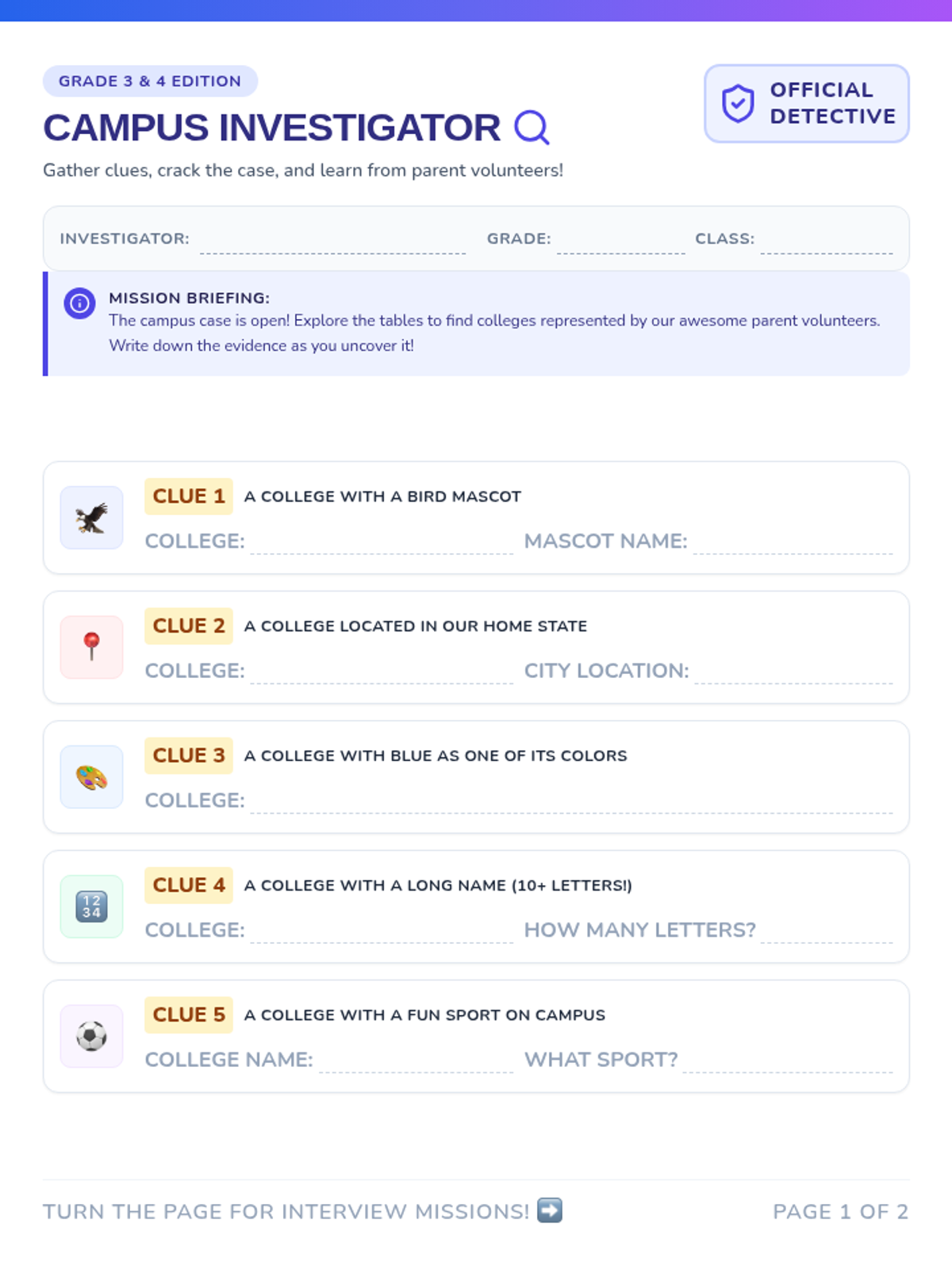
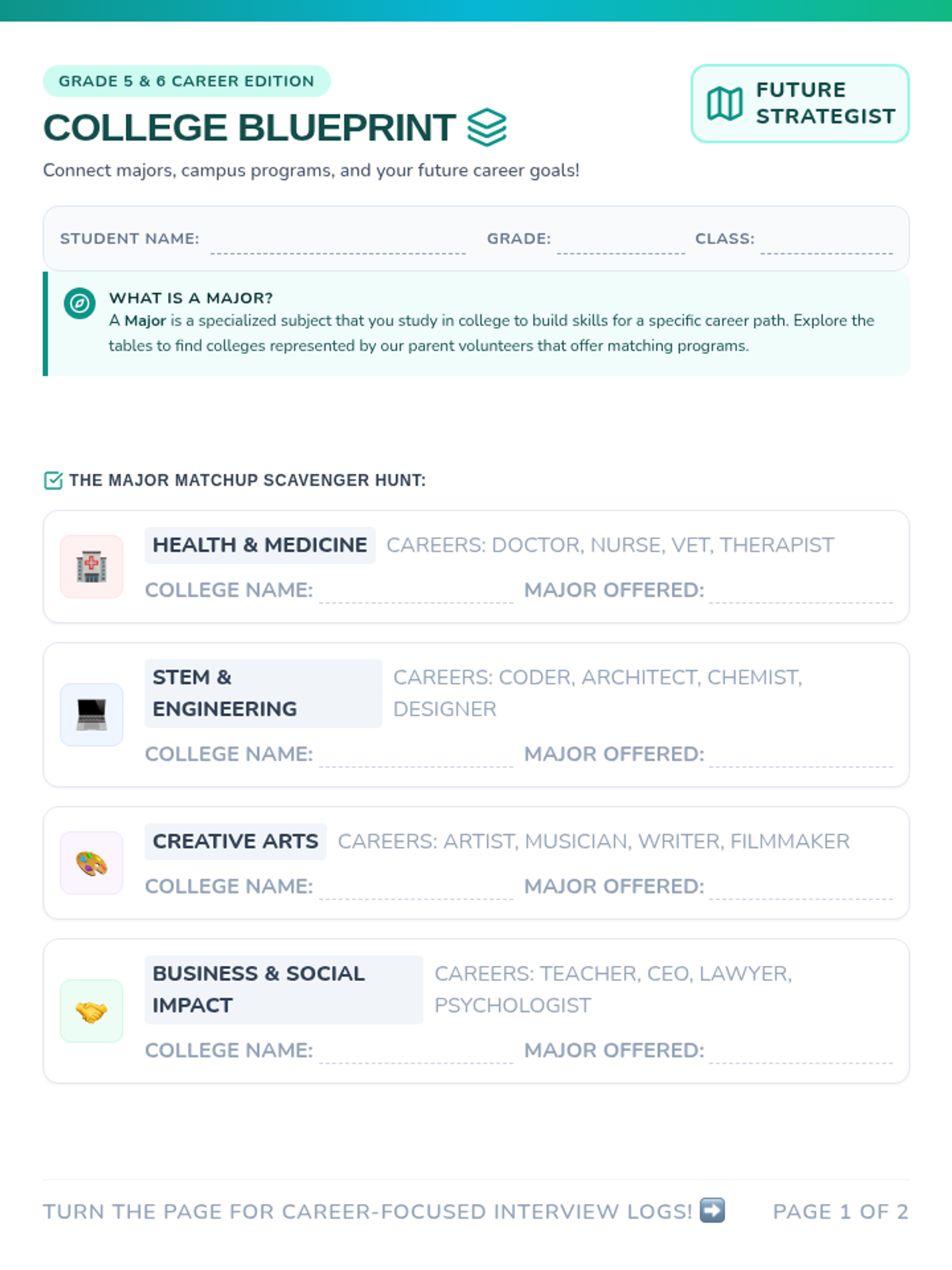
A collection of leveled scavenger hunt worksheets and interactive interview templates for elementary students (K-2, 3-4, and 5-6) to use during a school college fair.
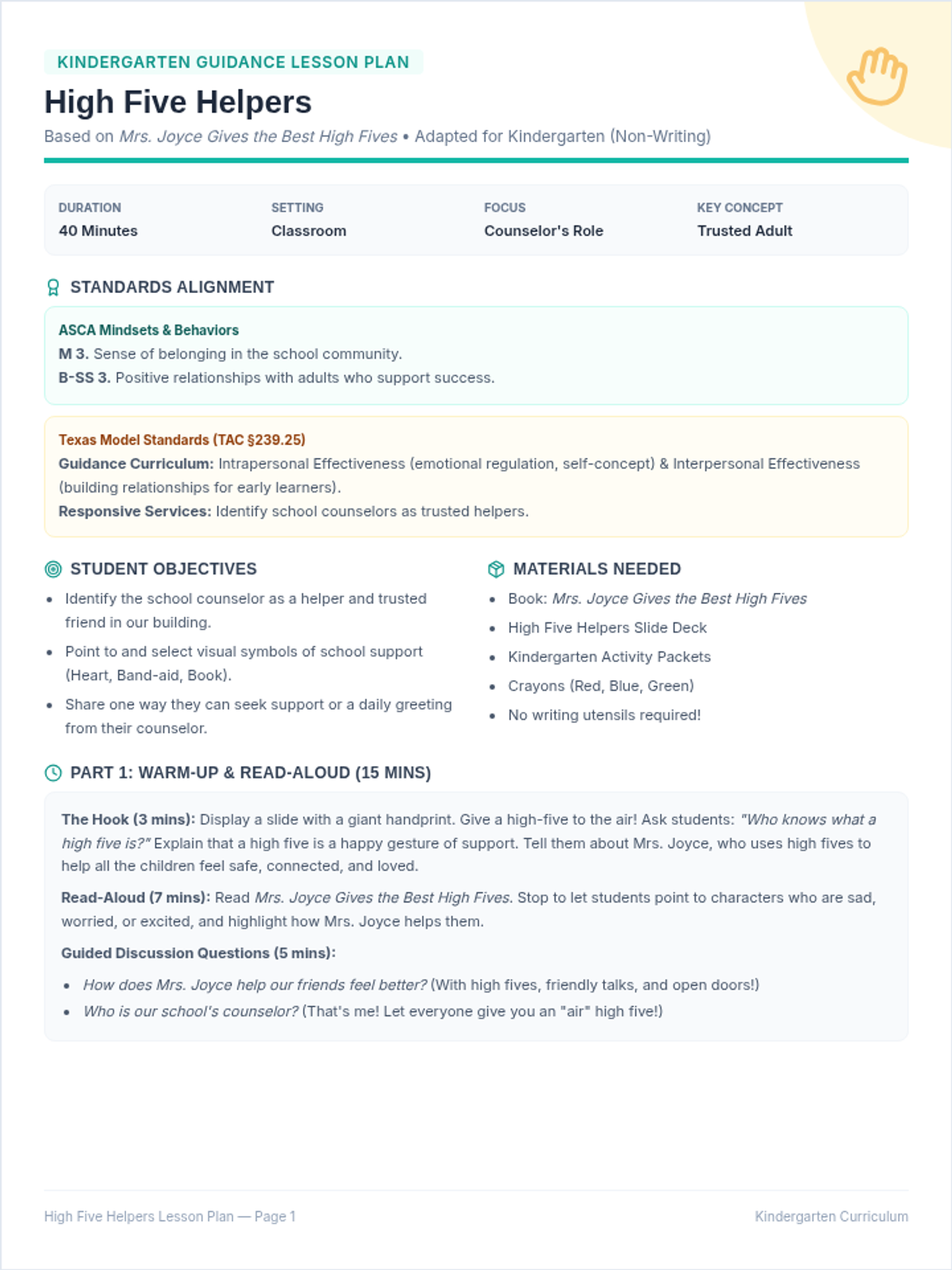
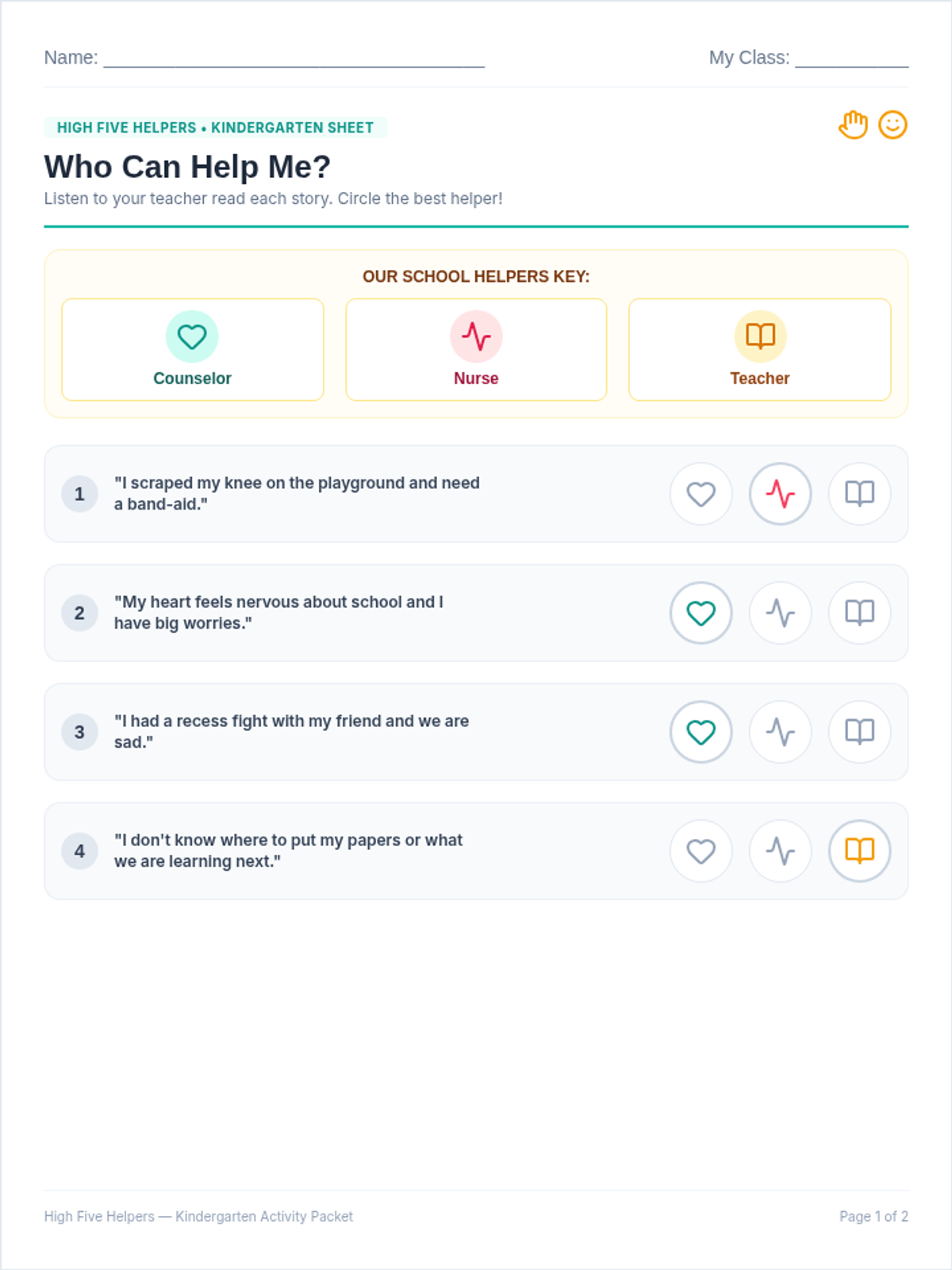
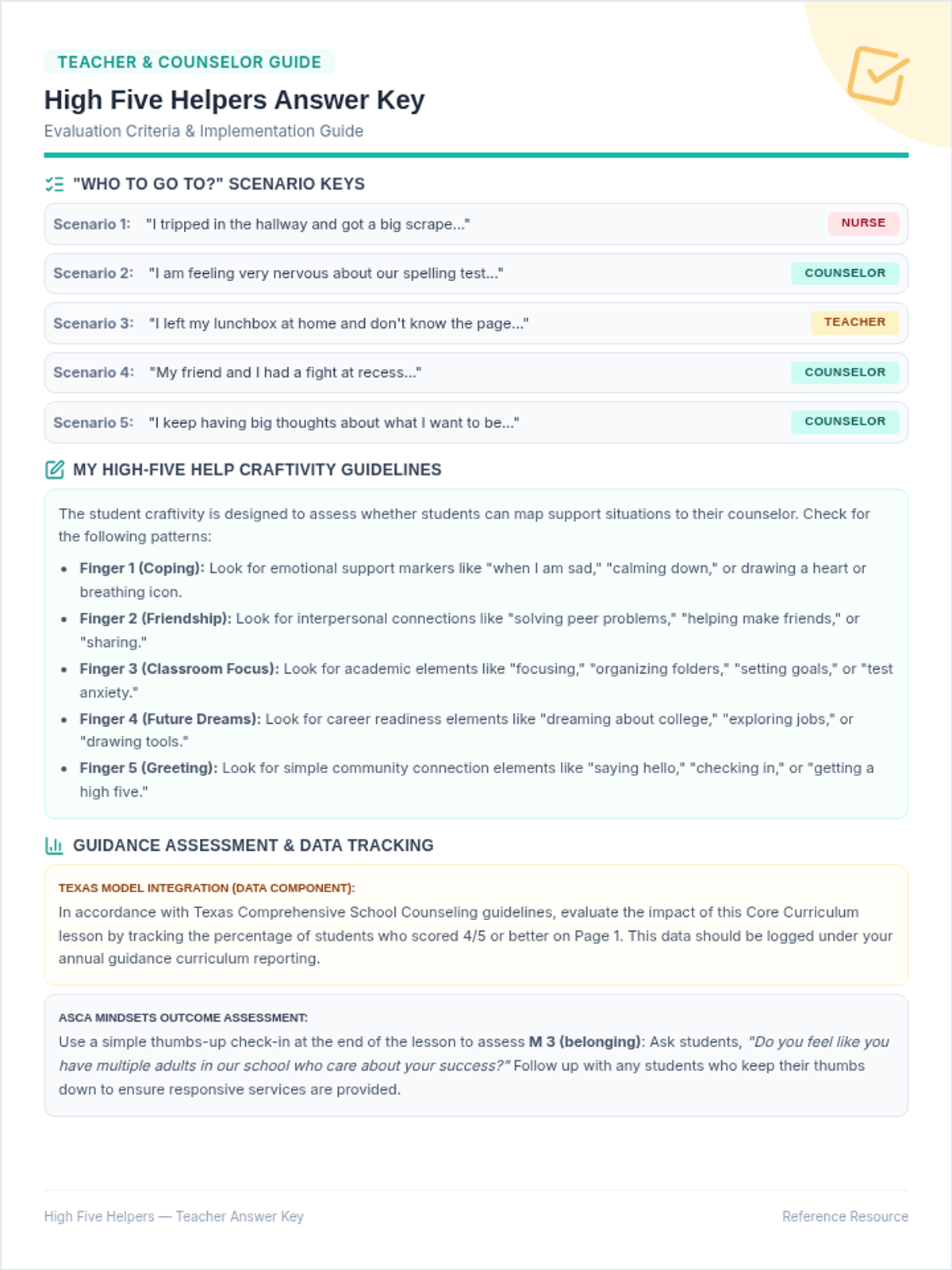
A comprehensive guidance lesson based on the book 'Mrs. Joyce Gives the Best High Fives,' designed to teach students the role of the school counselor and how to seek support. Aligning with ASCA and Texas counseling standards, this lesson helps students identify their school counselor as a trusted adult and understand the various ways they can access help.
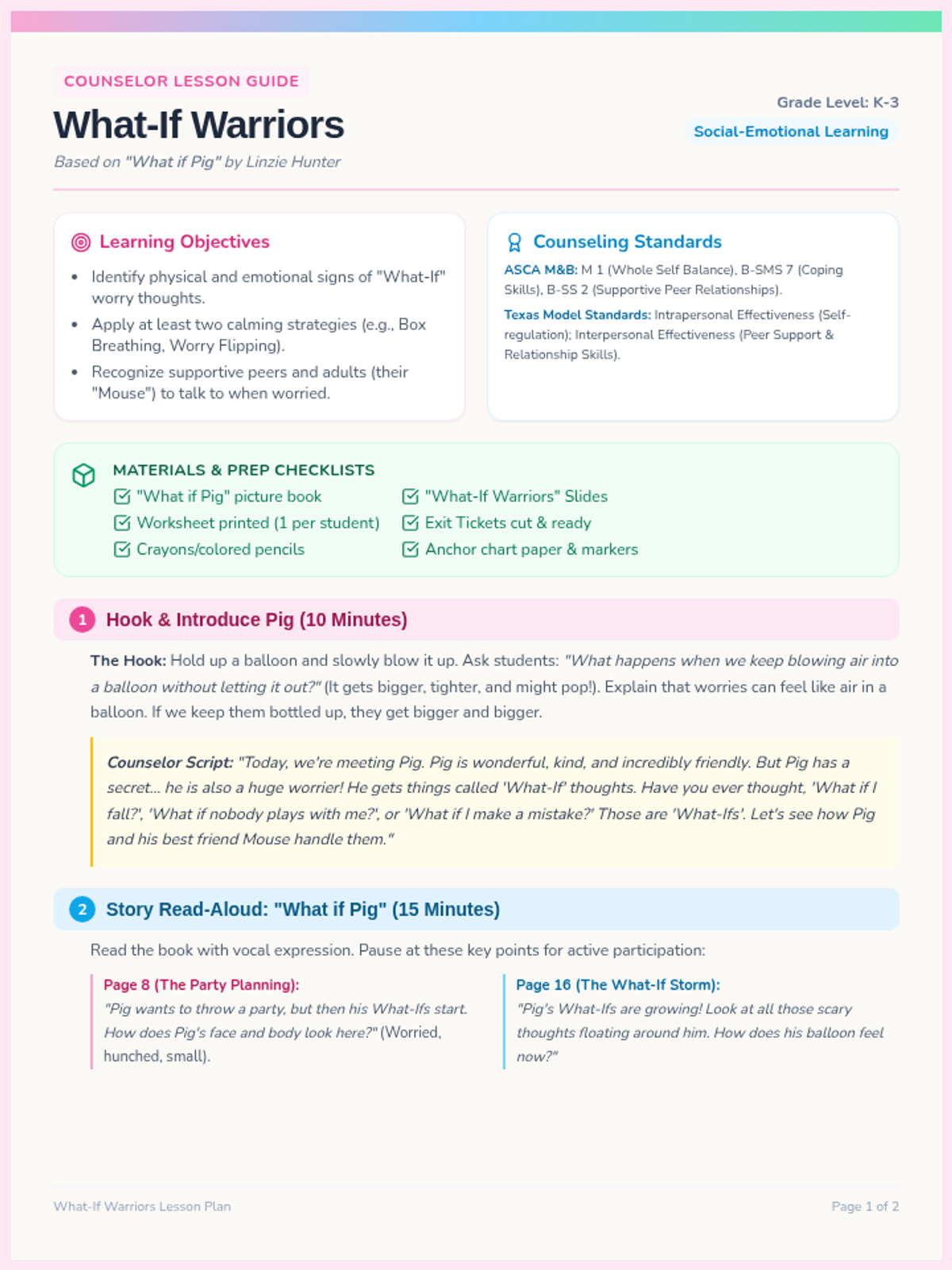
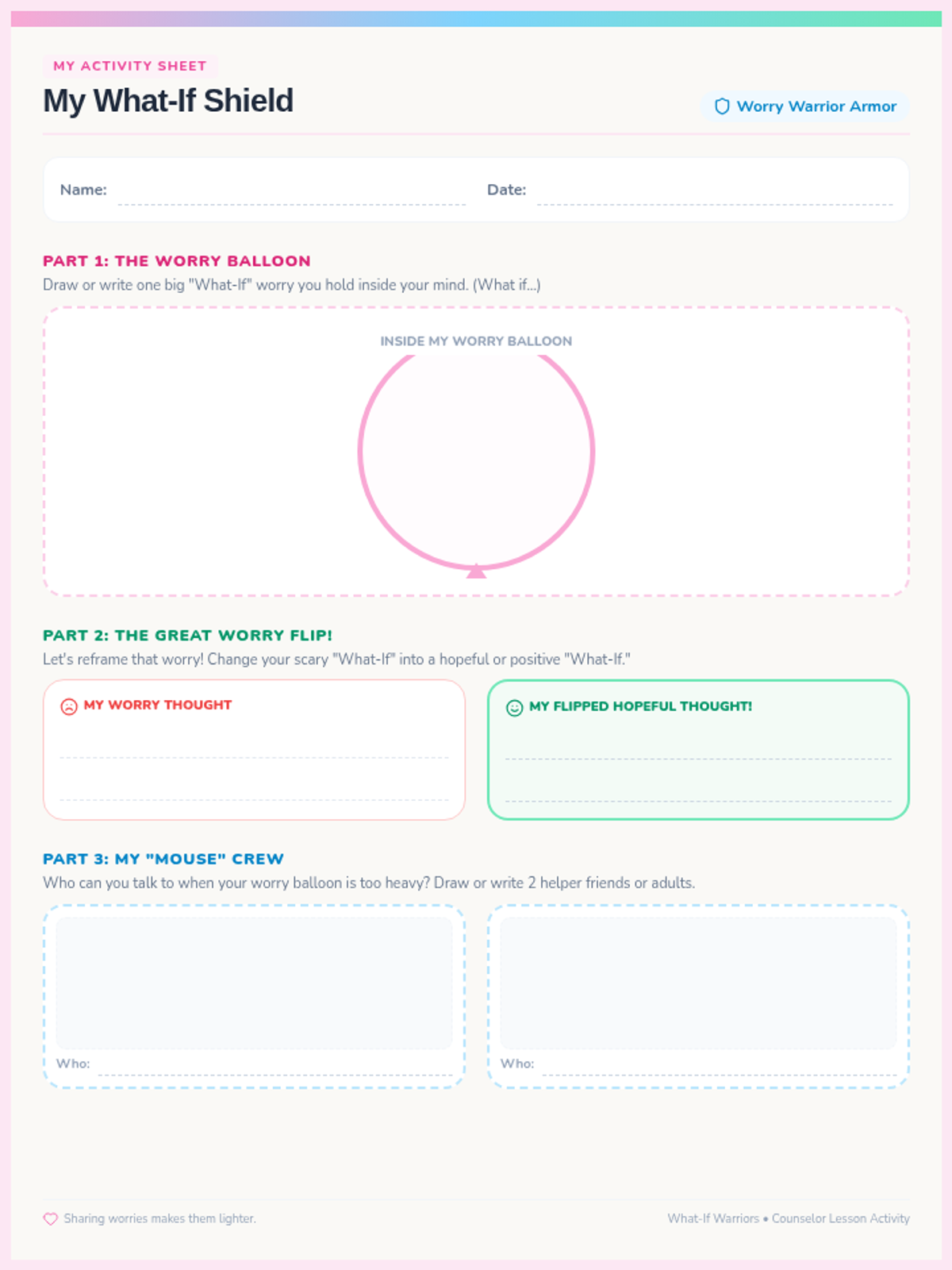
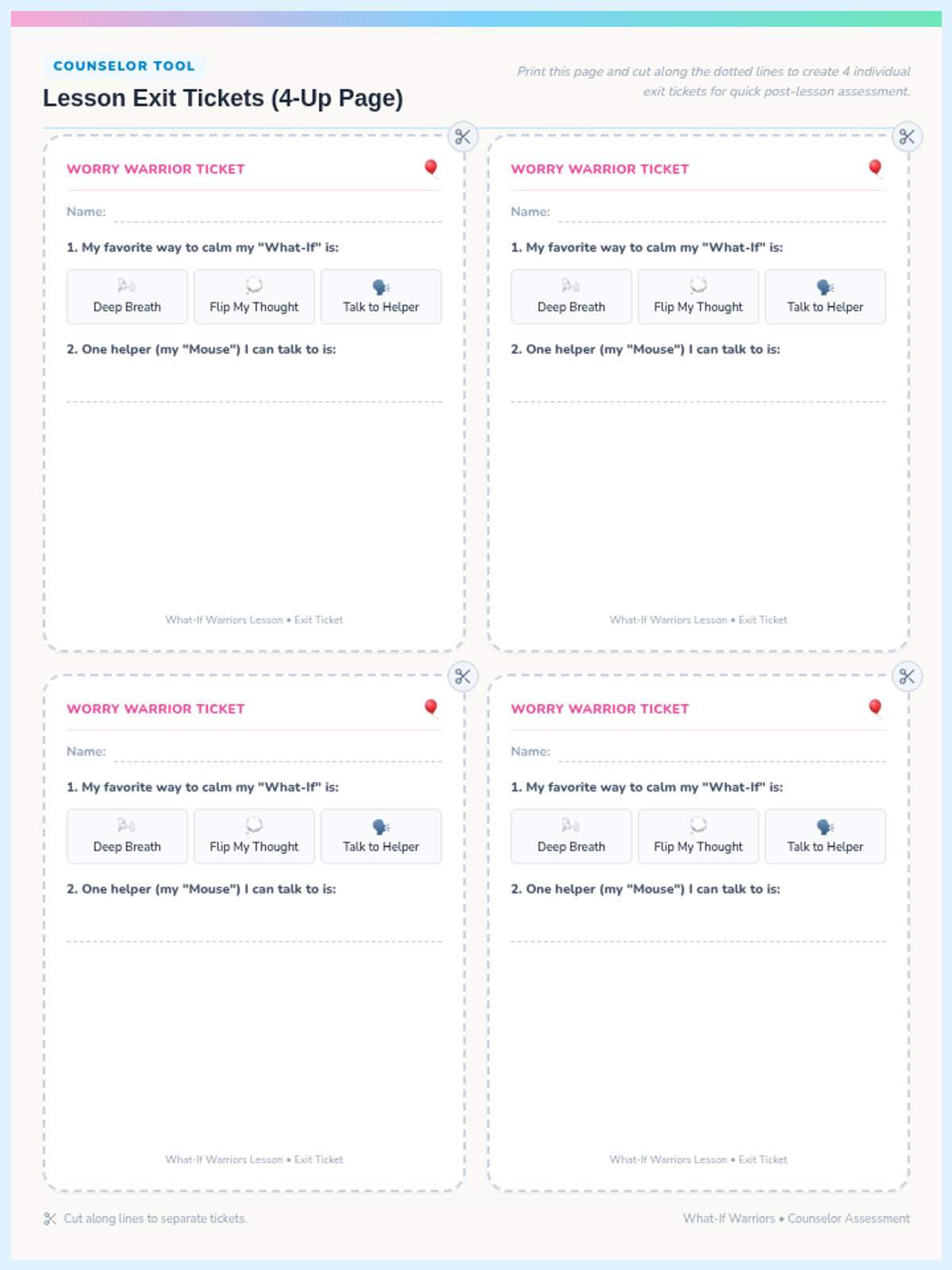
A comprehensive elementary school counseling lesson based on Linzie Hunter's 'What if Pig'. Students explore managing 'What-If' worries and building supportive peer relationships.
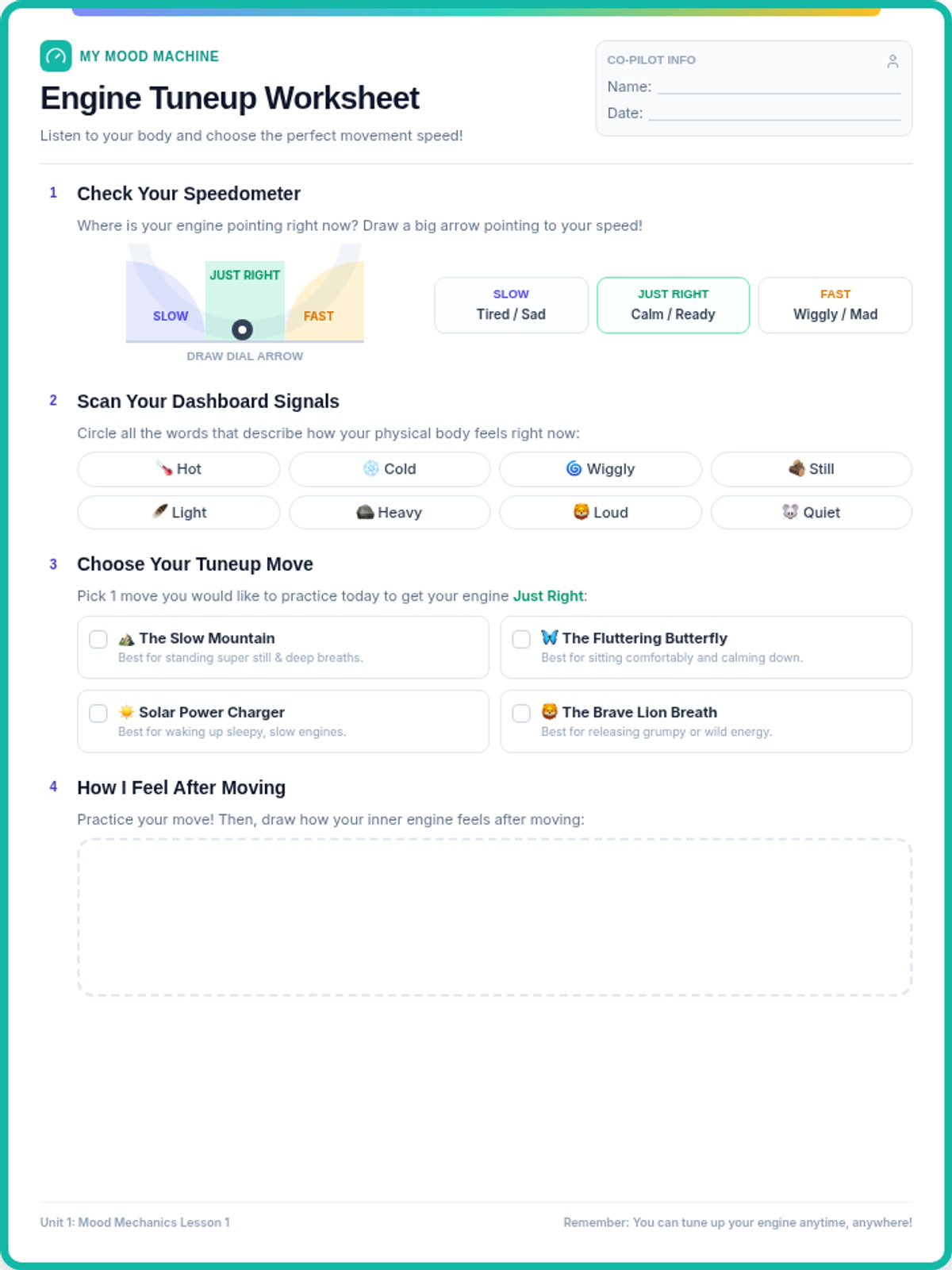
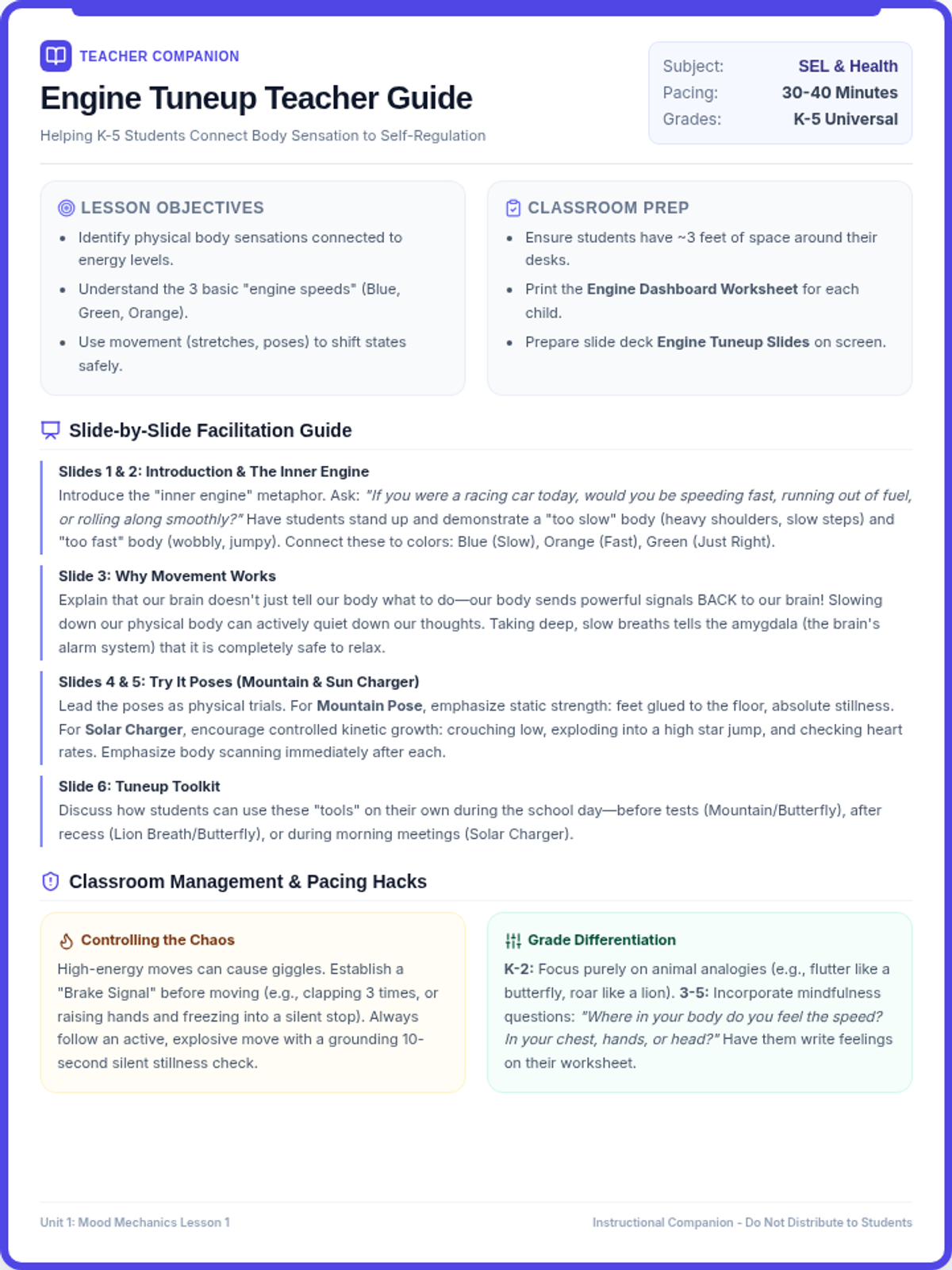
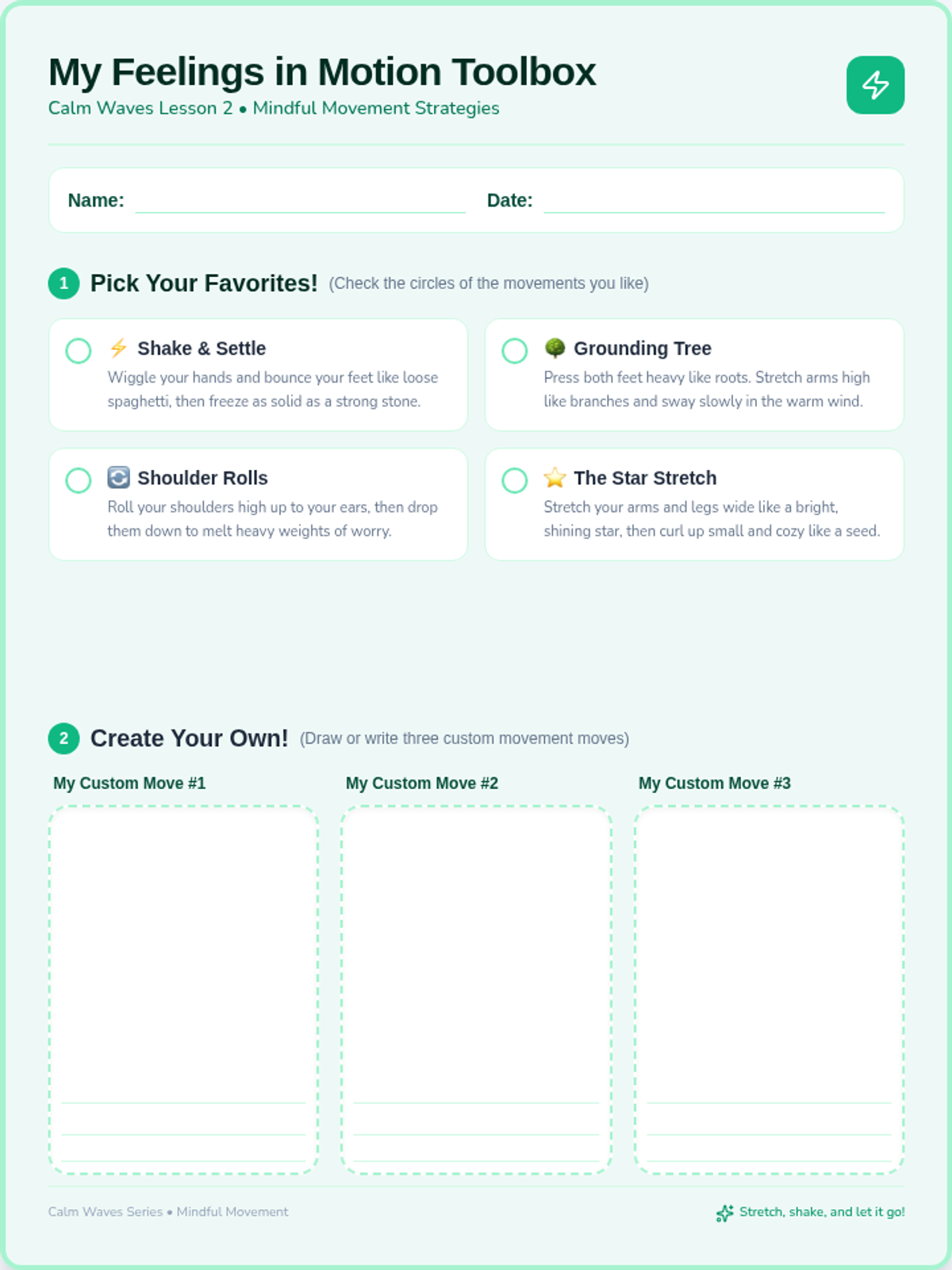
An introductory lesson for K-5 students on how slow stretches, yoga poses, and intentional movement help regulate emotions and tune up their inner engine.
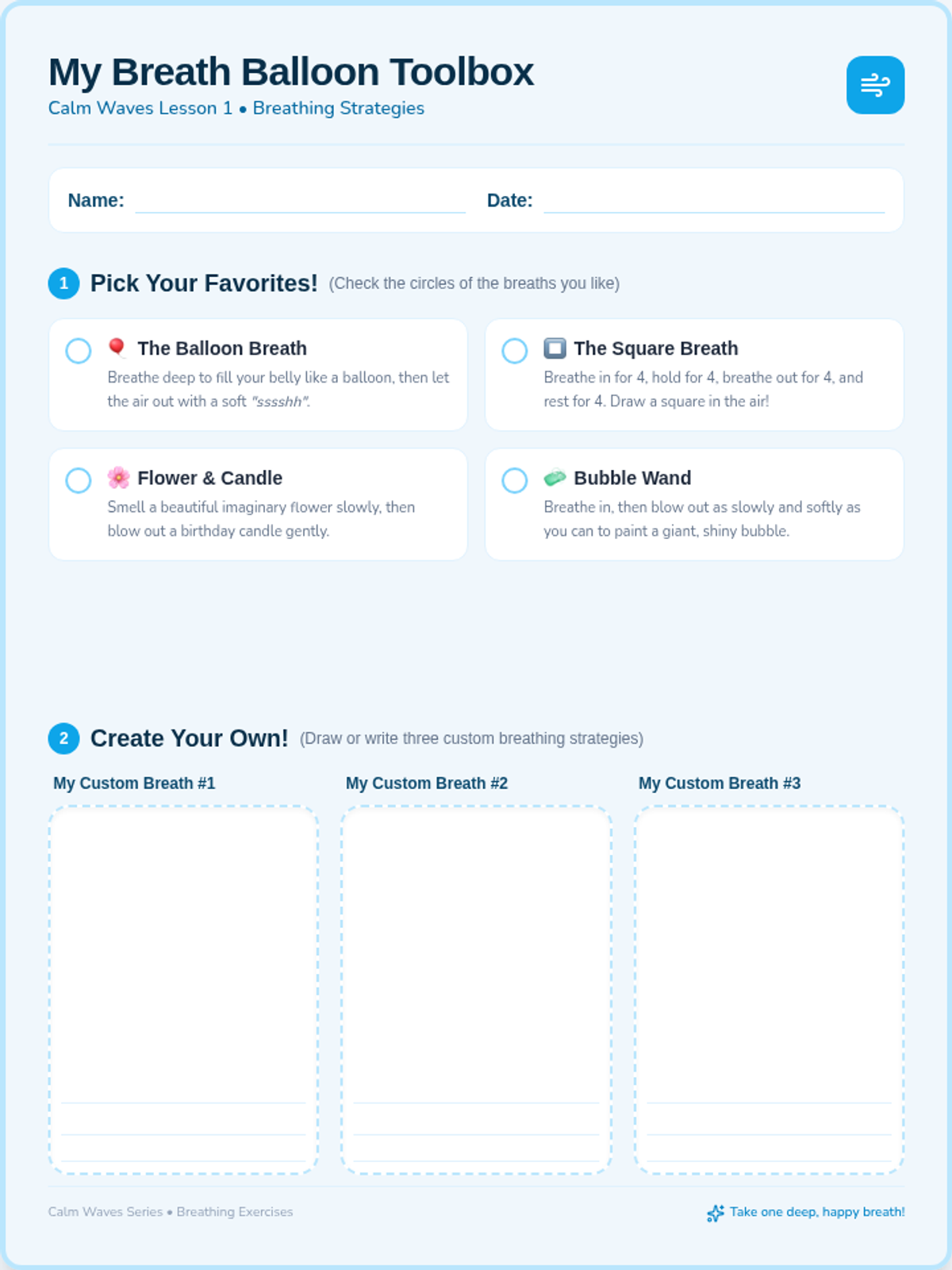
A foundational lesson introducing elementary students to the science and practice of deep breathing and mindful movement as powerful self-regulation tools.
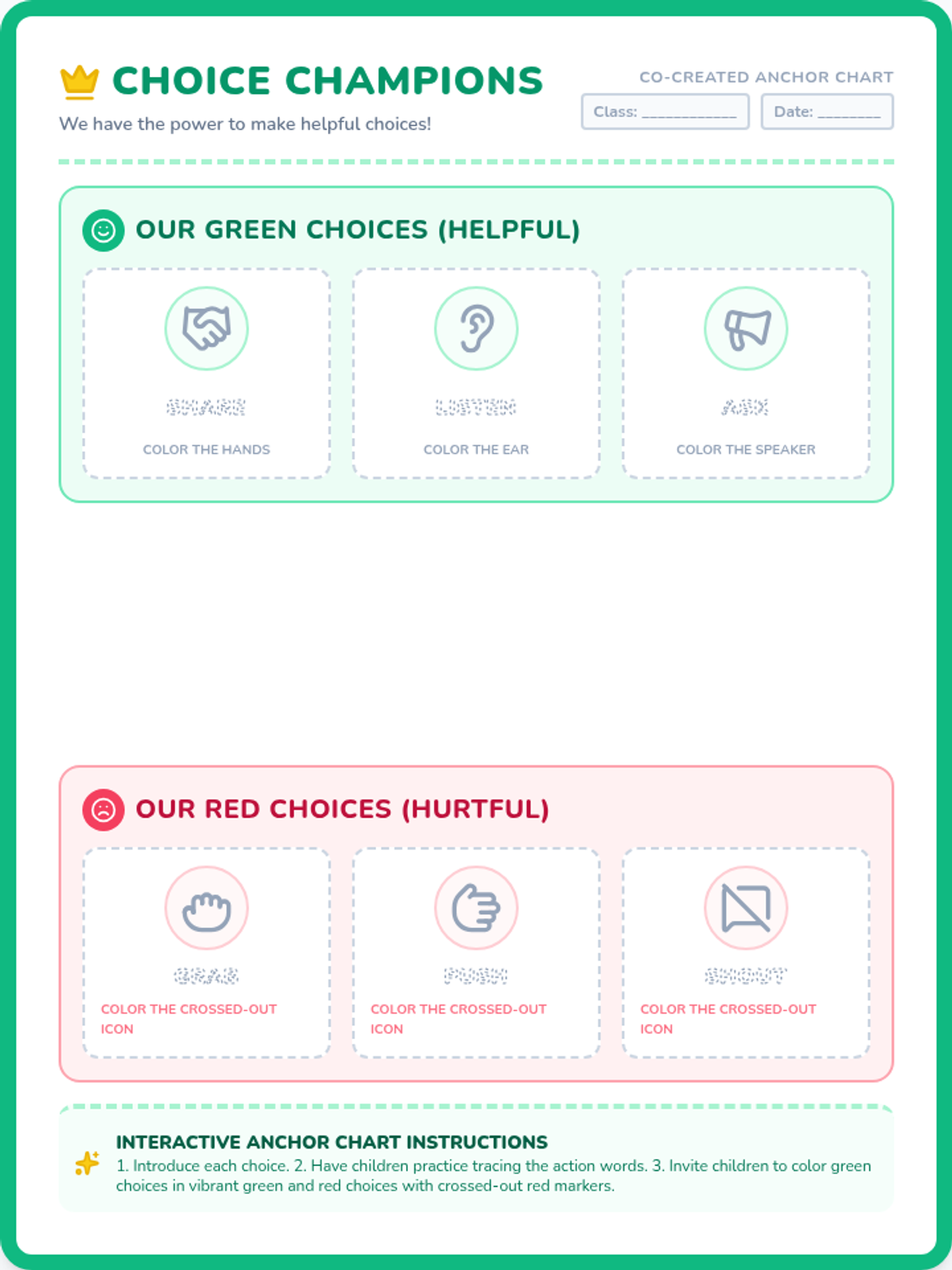
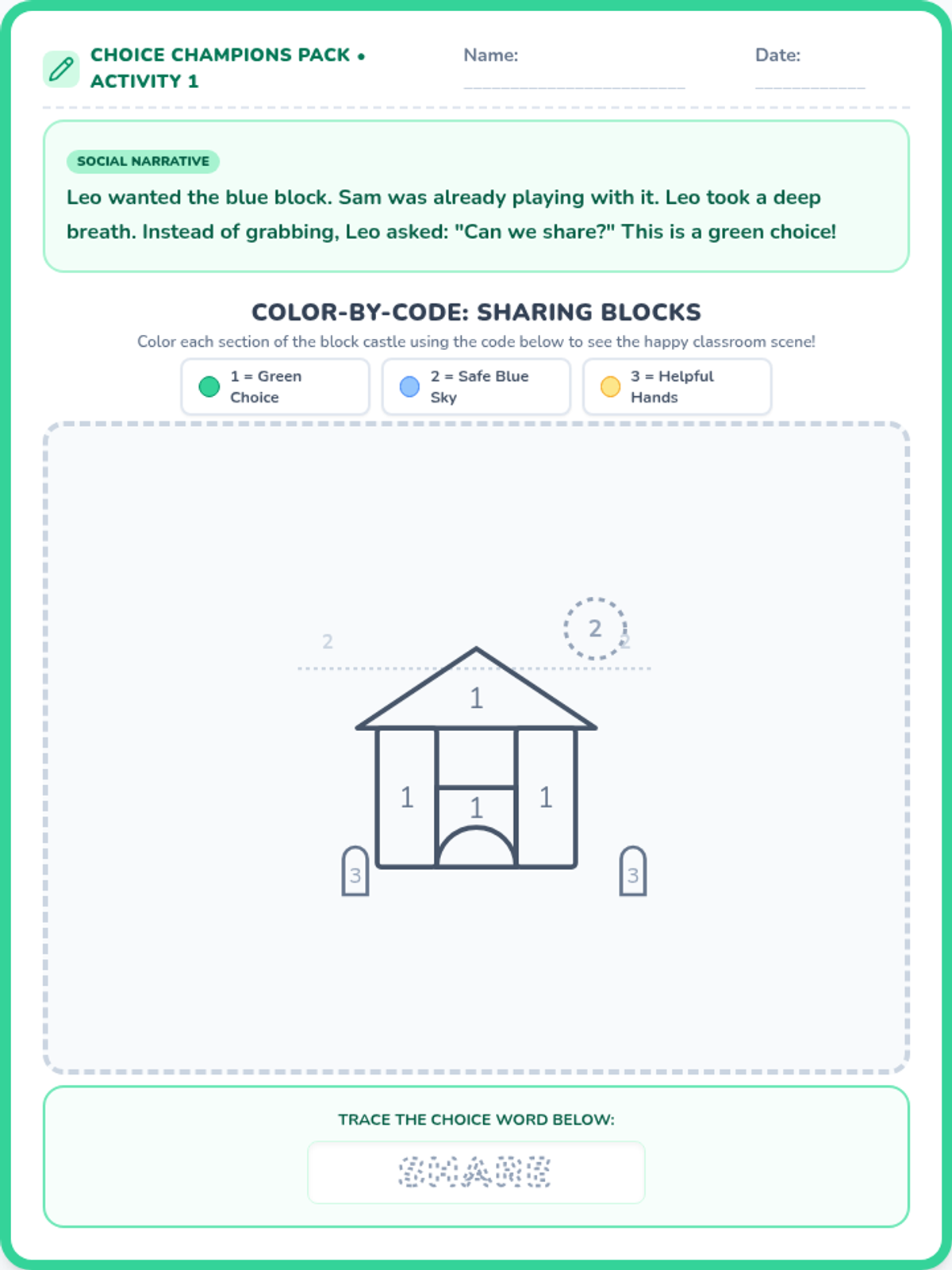
A social-emotional learning lesson focused on helping early childhood and special education students make positive choices and resolve peer conflicts using visual supports, traceable words, and coloring activities.
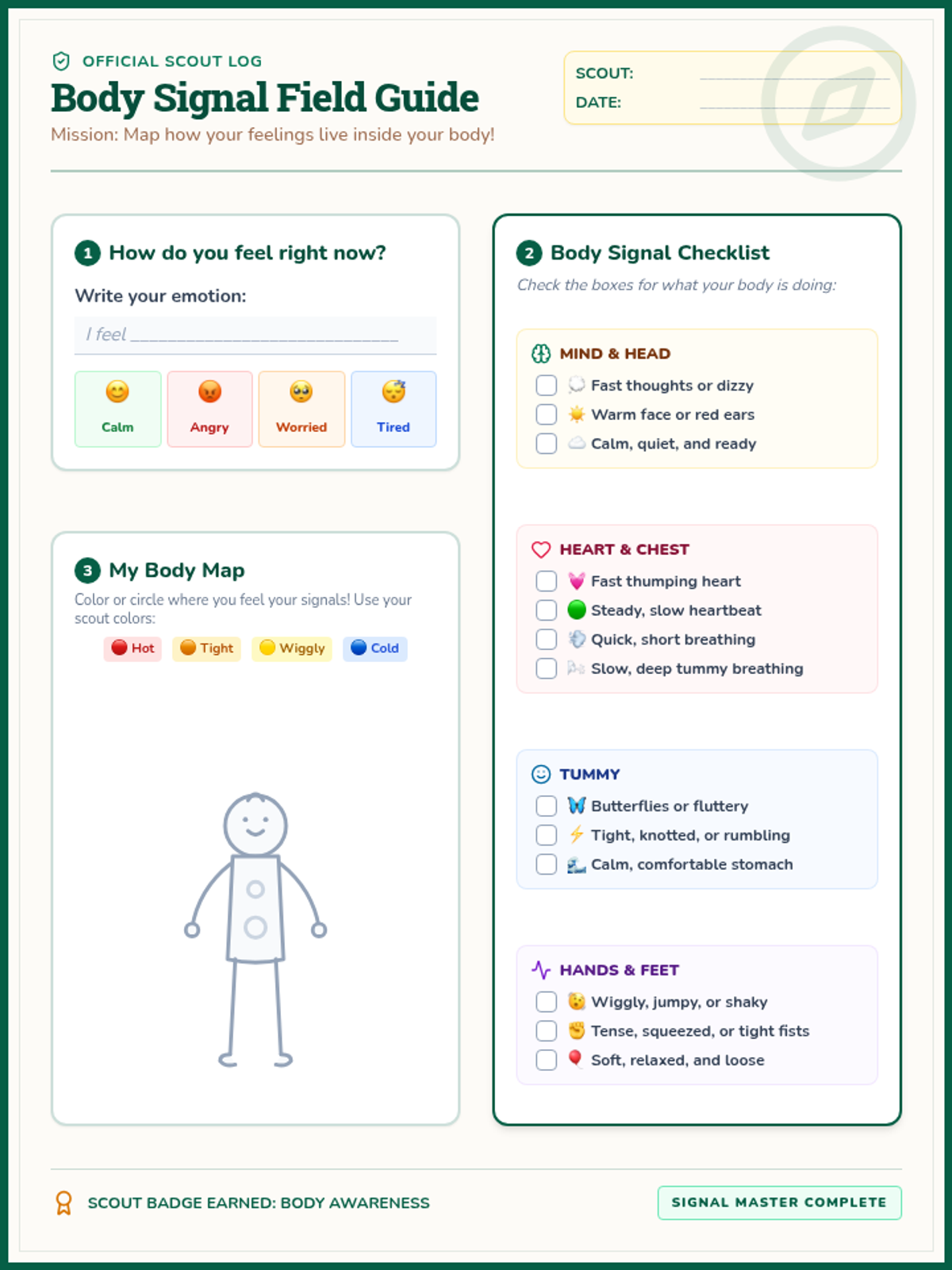
Students identify physical sensations associated with dysregulation using a body scan and create a Body Thermometer visual.
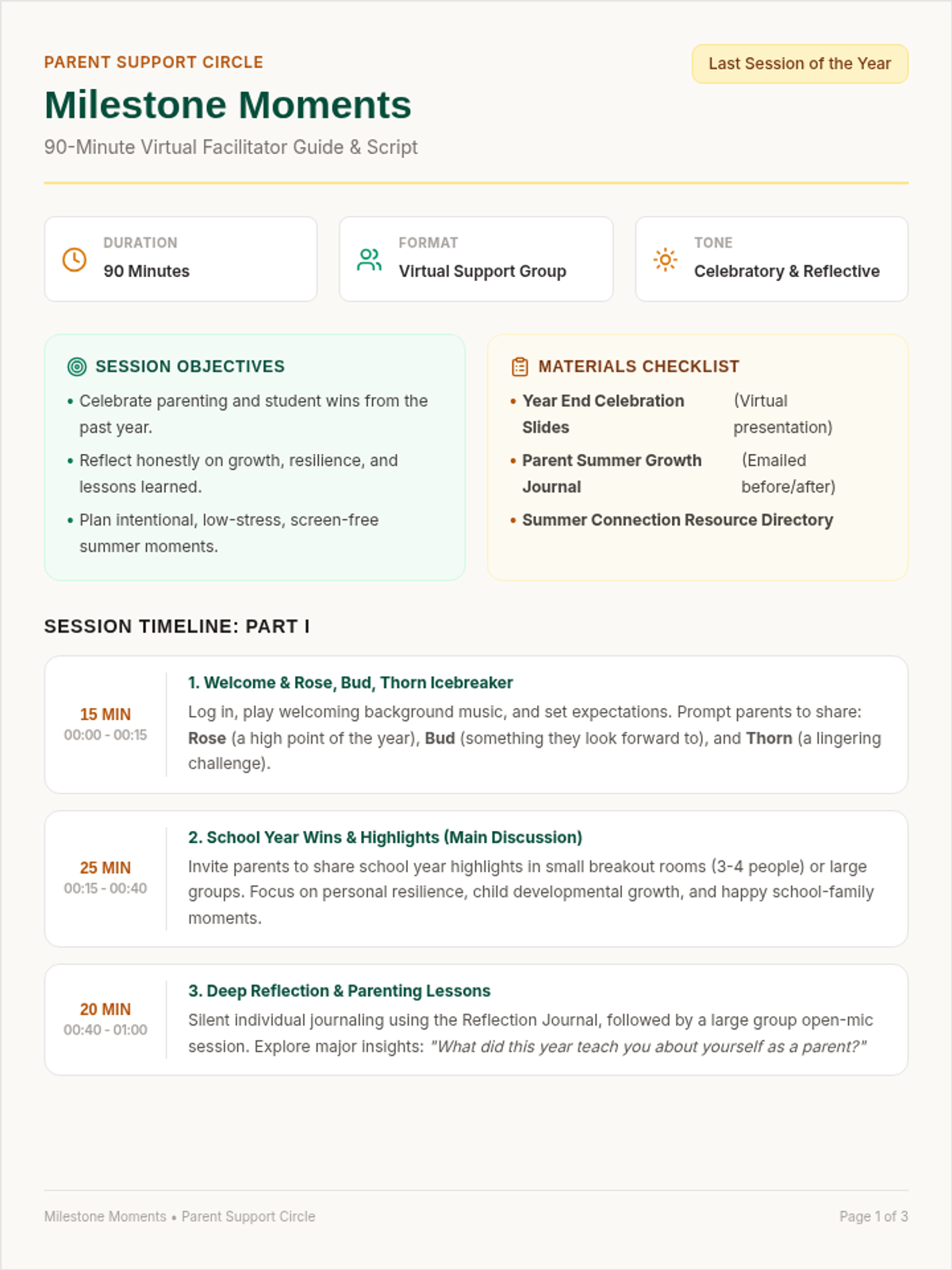
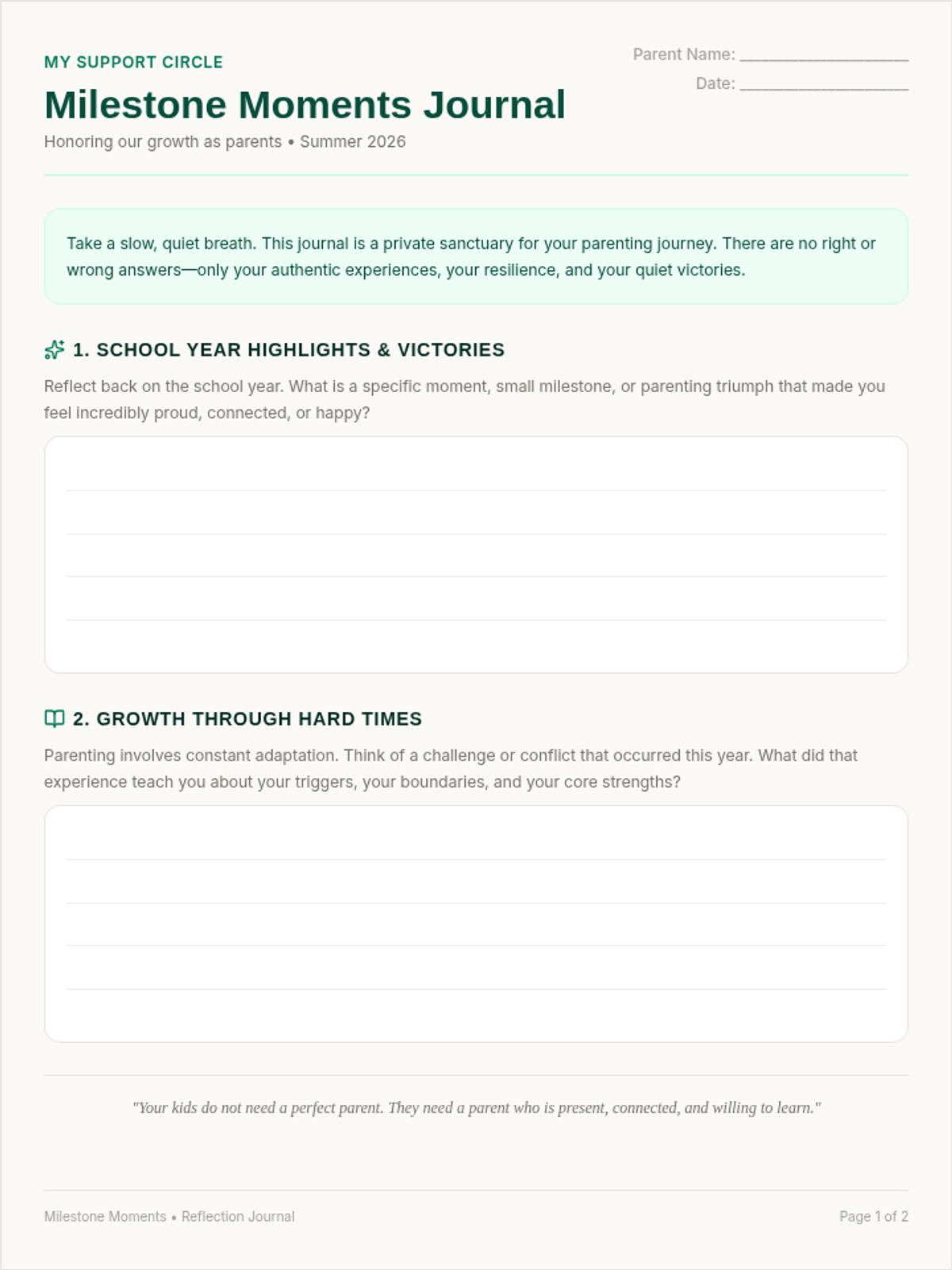
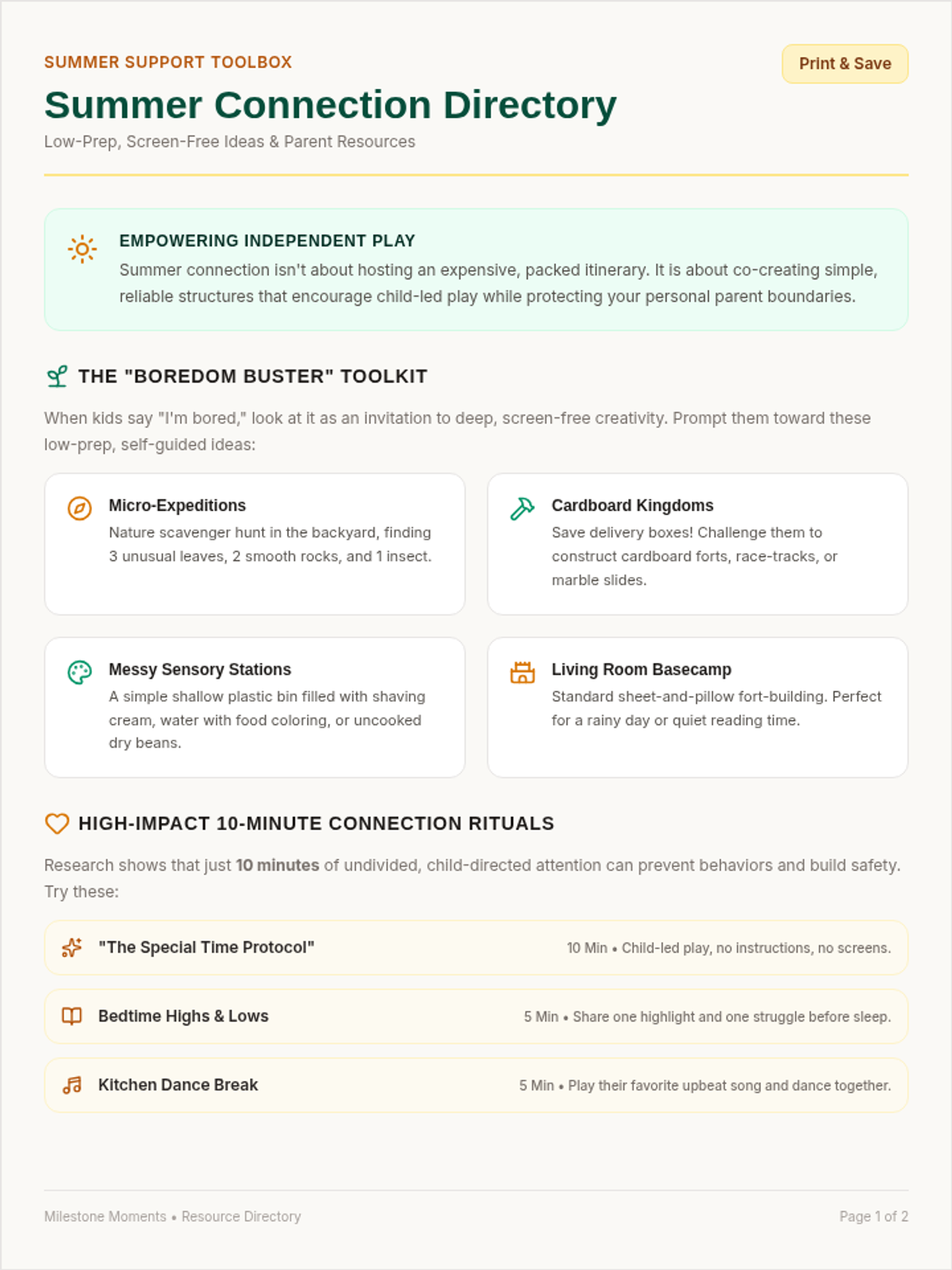
A warm, celebratory parent support group session focused on reflecting on school year successes, planning screen-free summer adventures, and setting growth goals.
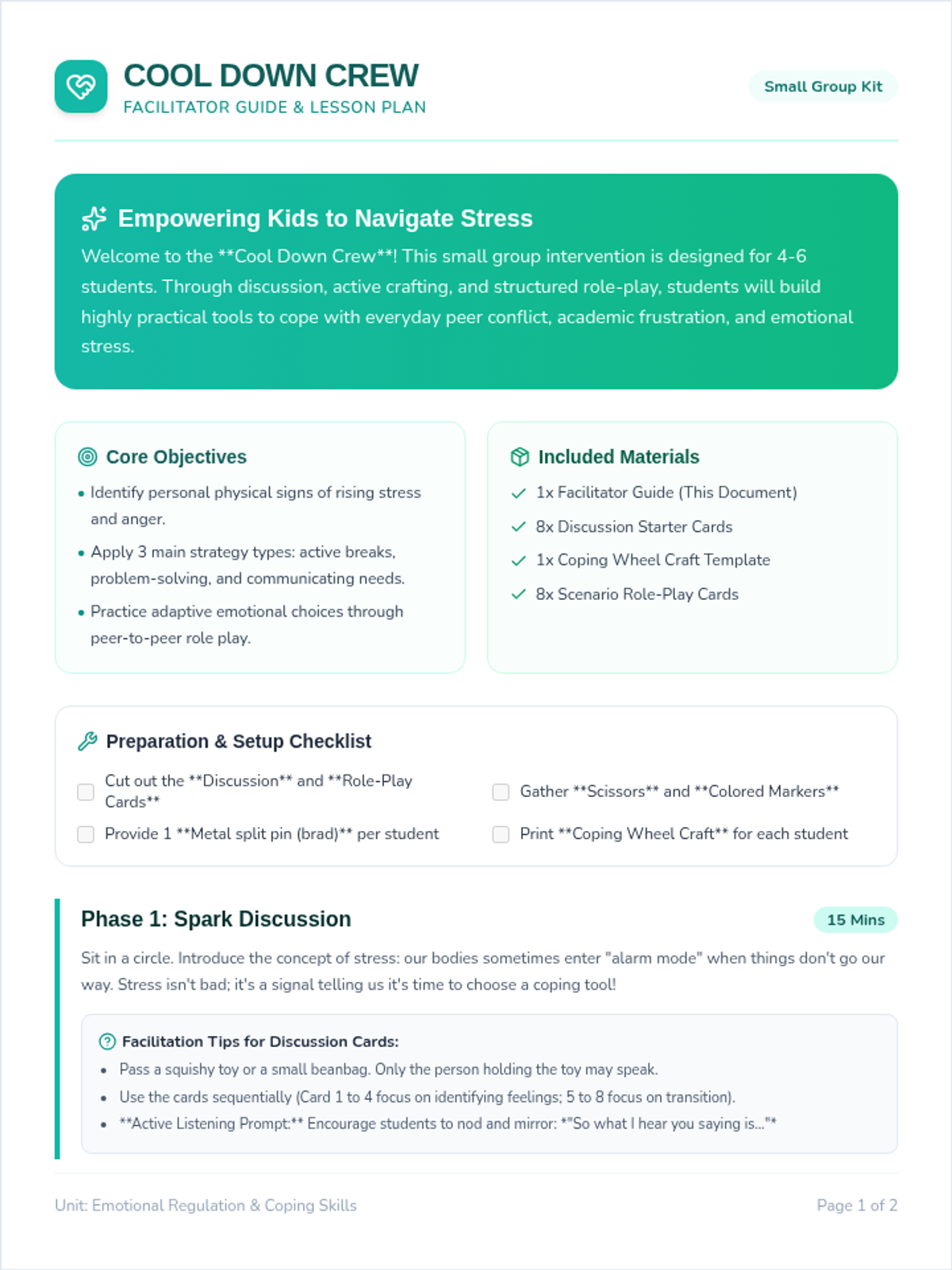
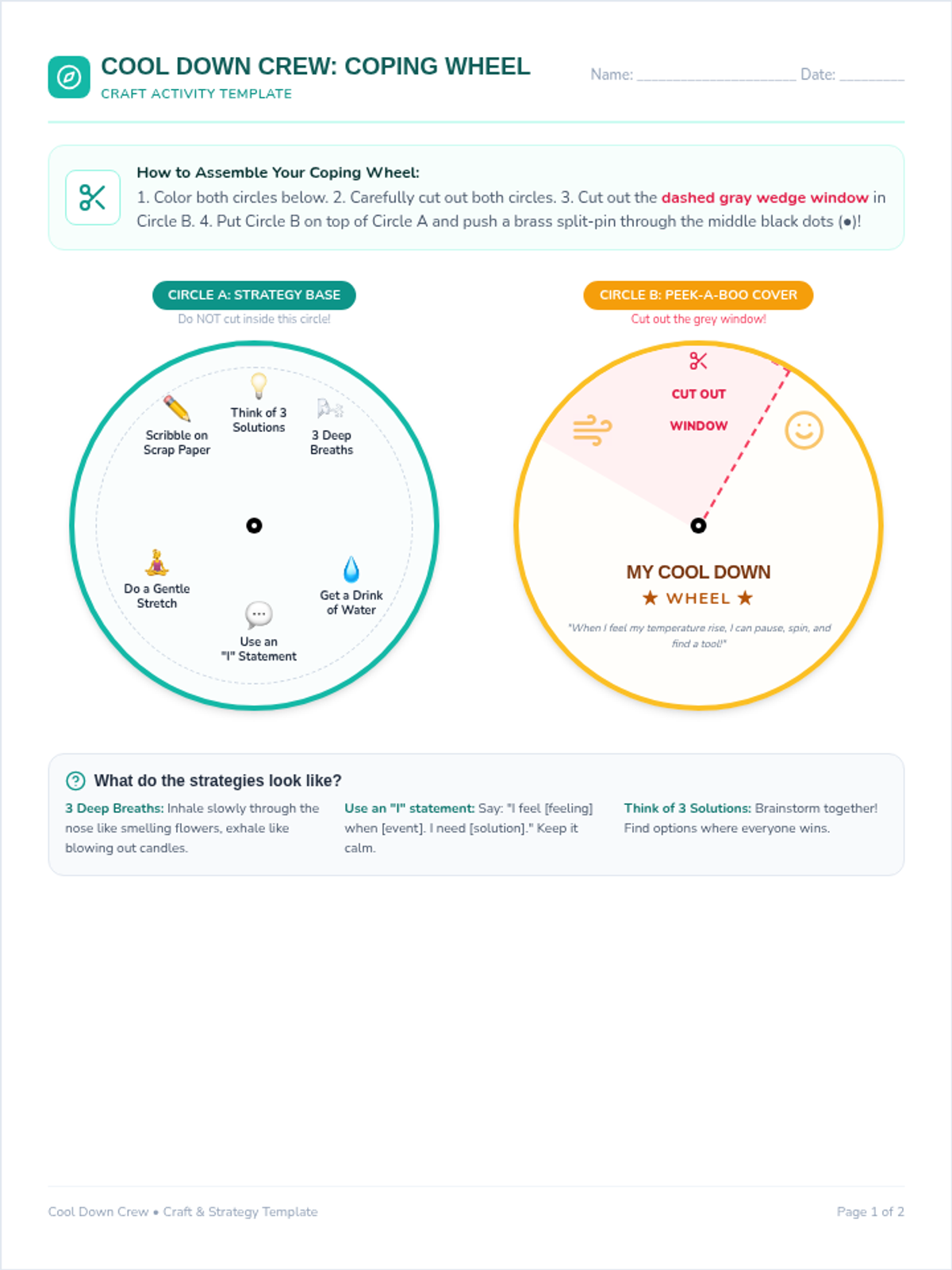
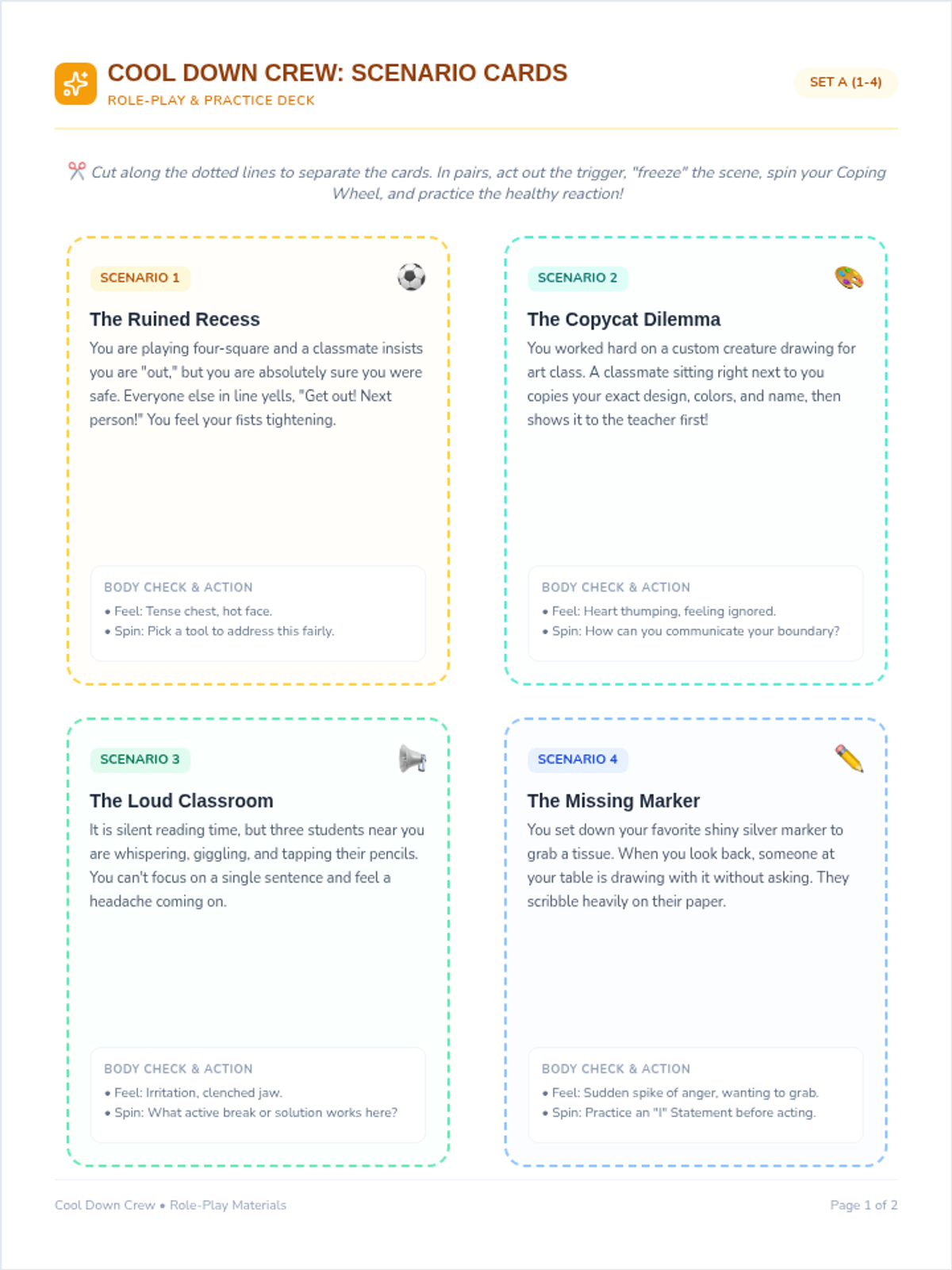
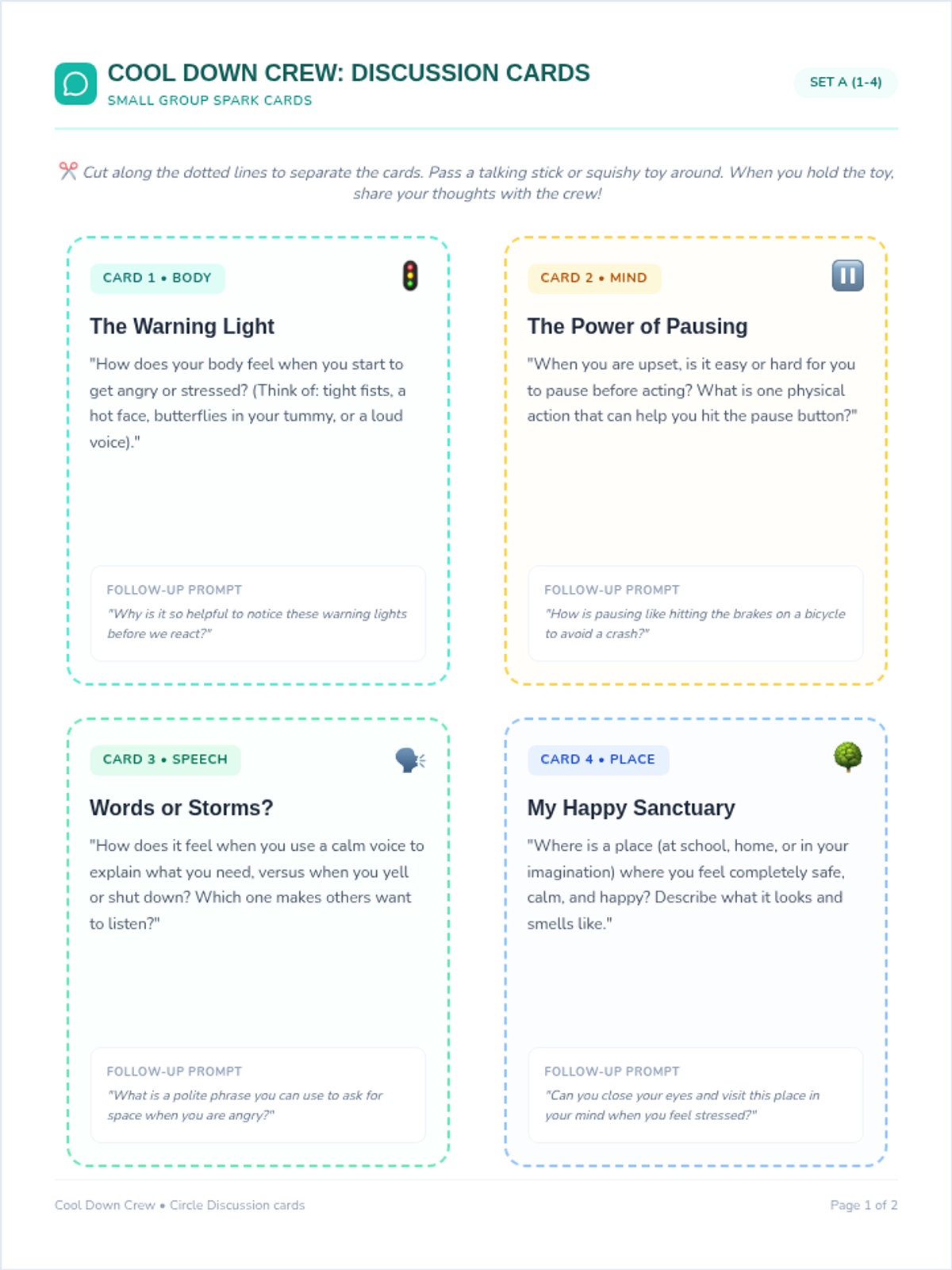
An interactive small group kit designed to equip kids with practical coping tools for everyday stress and conflict. The lesson features a hands-on coping wheel craft, discussion cards, and scenario-based role-play cards.
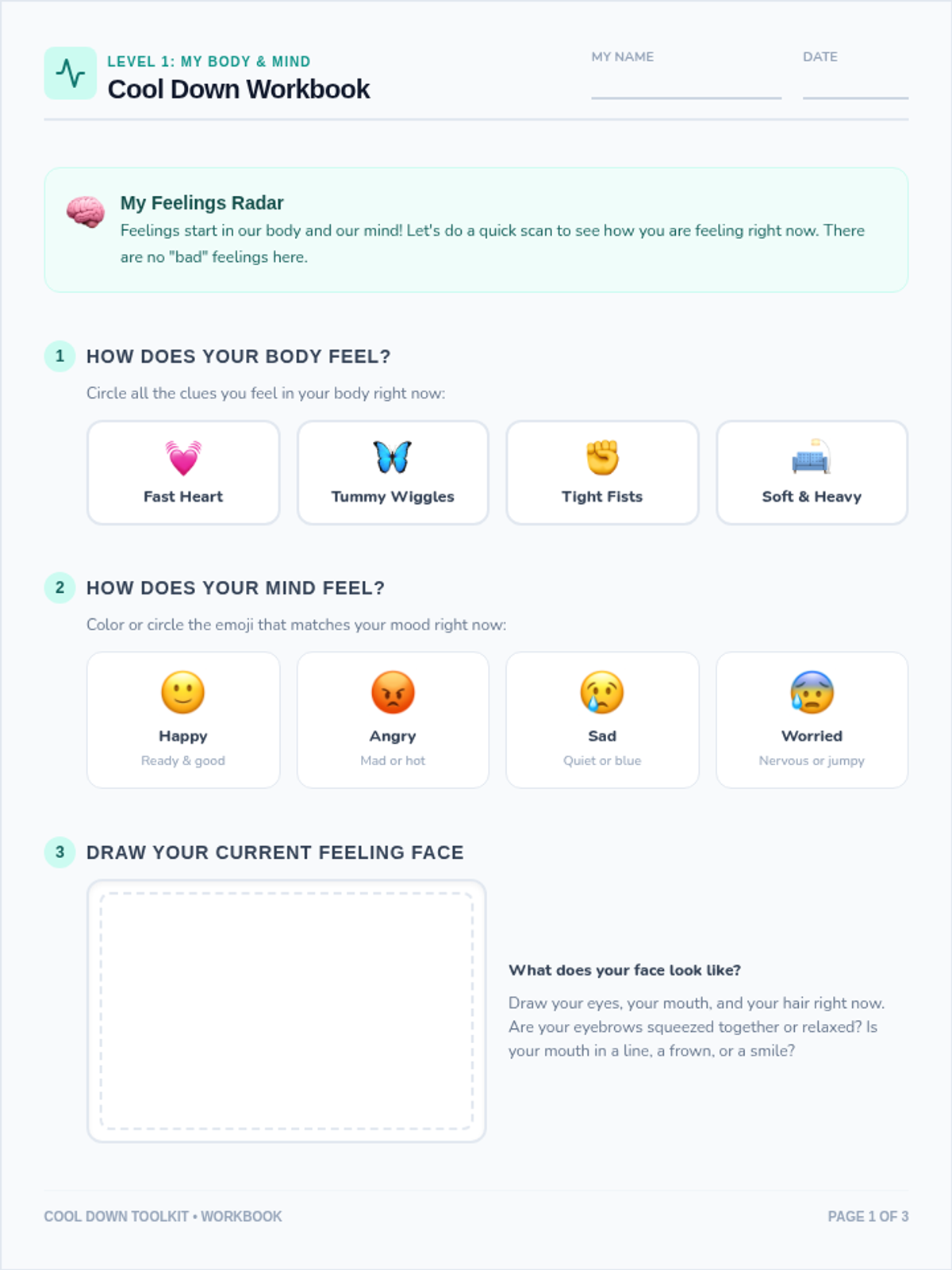
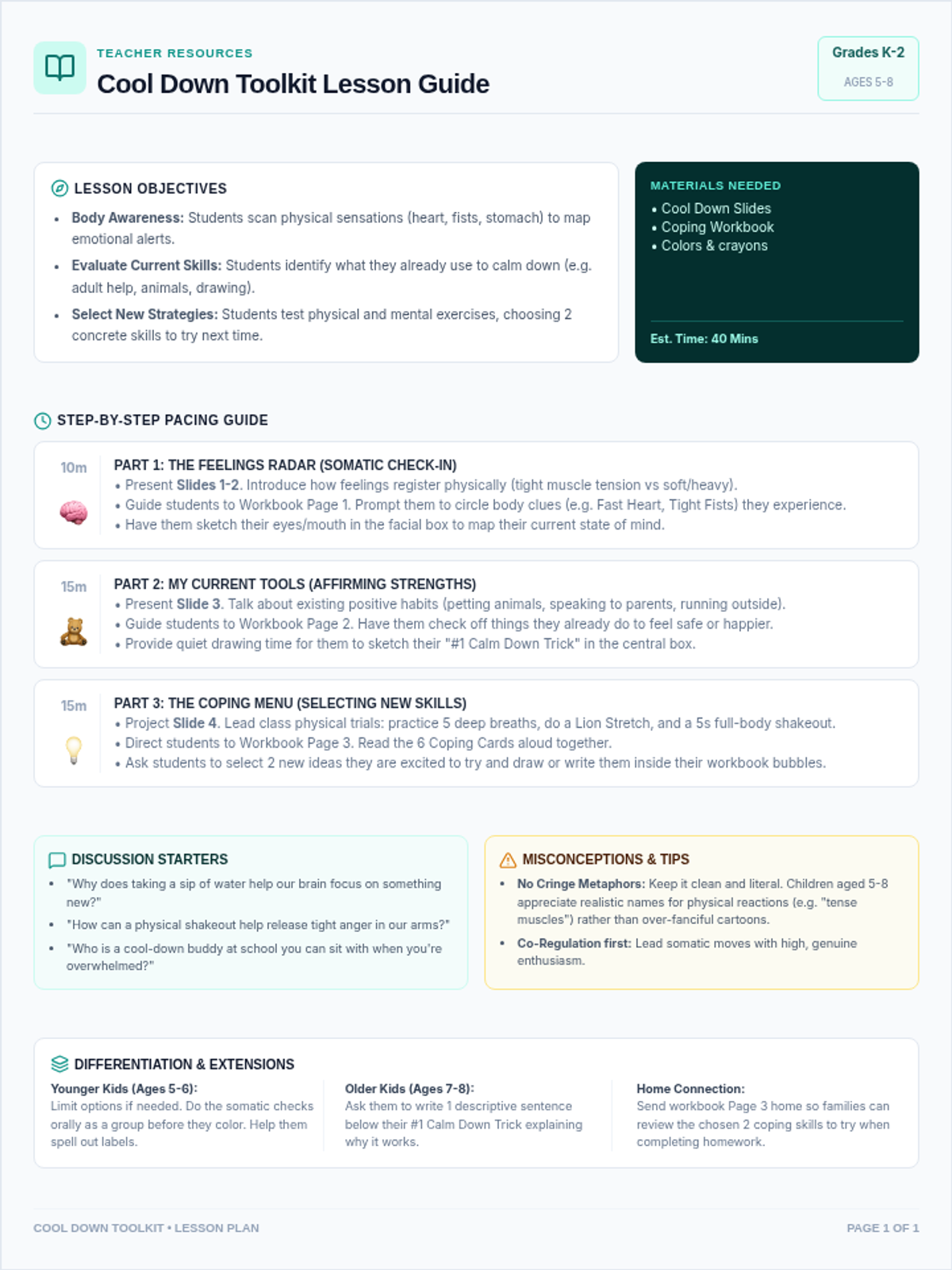
A clean, modern therapeutic lesson designed to teach students aged 5-8 how to identify physical and emotional cues, map their current coping strategies, and choose practical new skills to try.
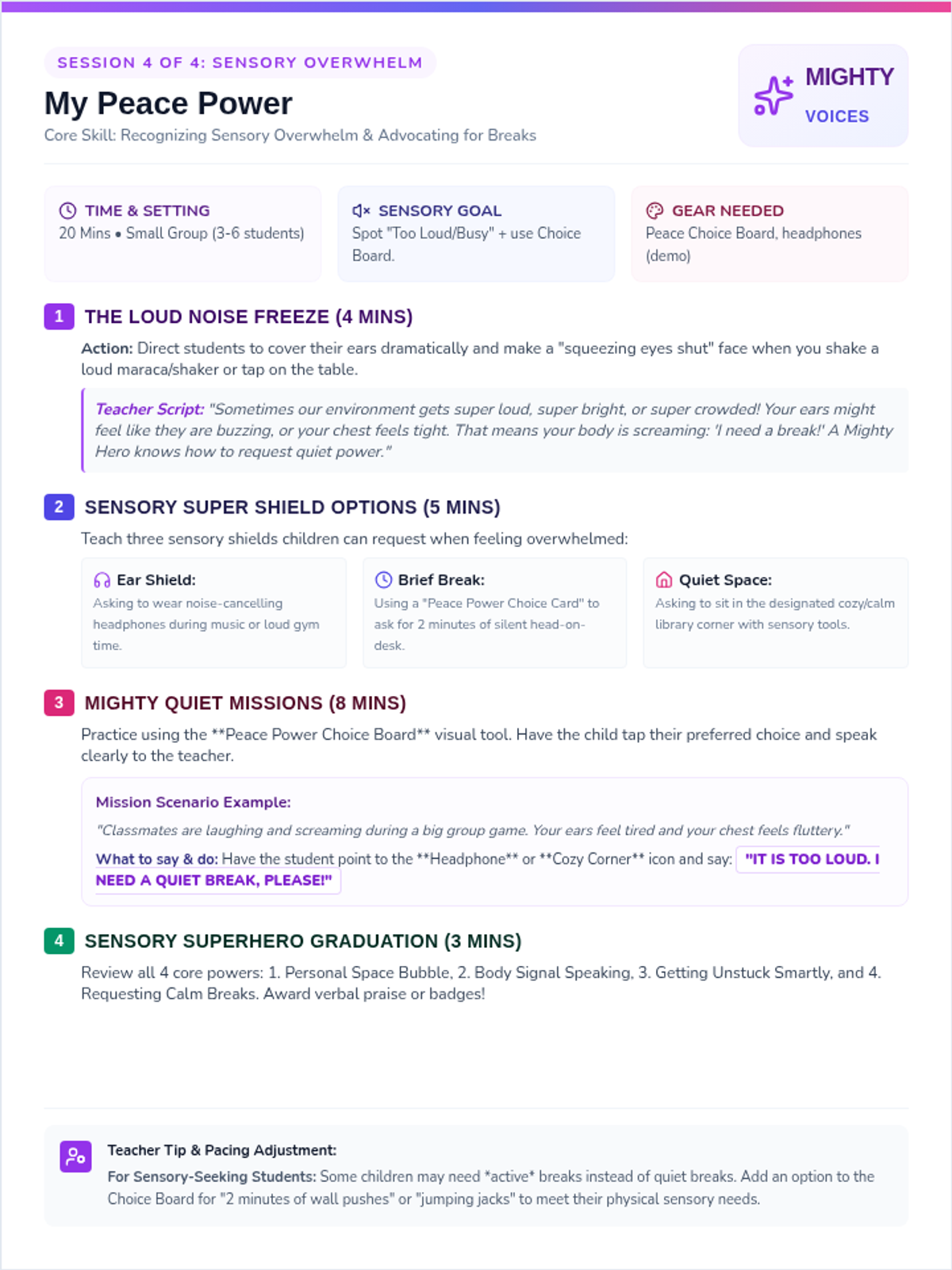
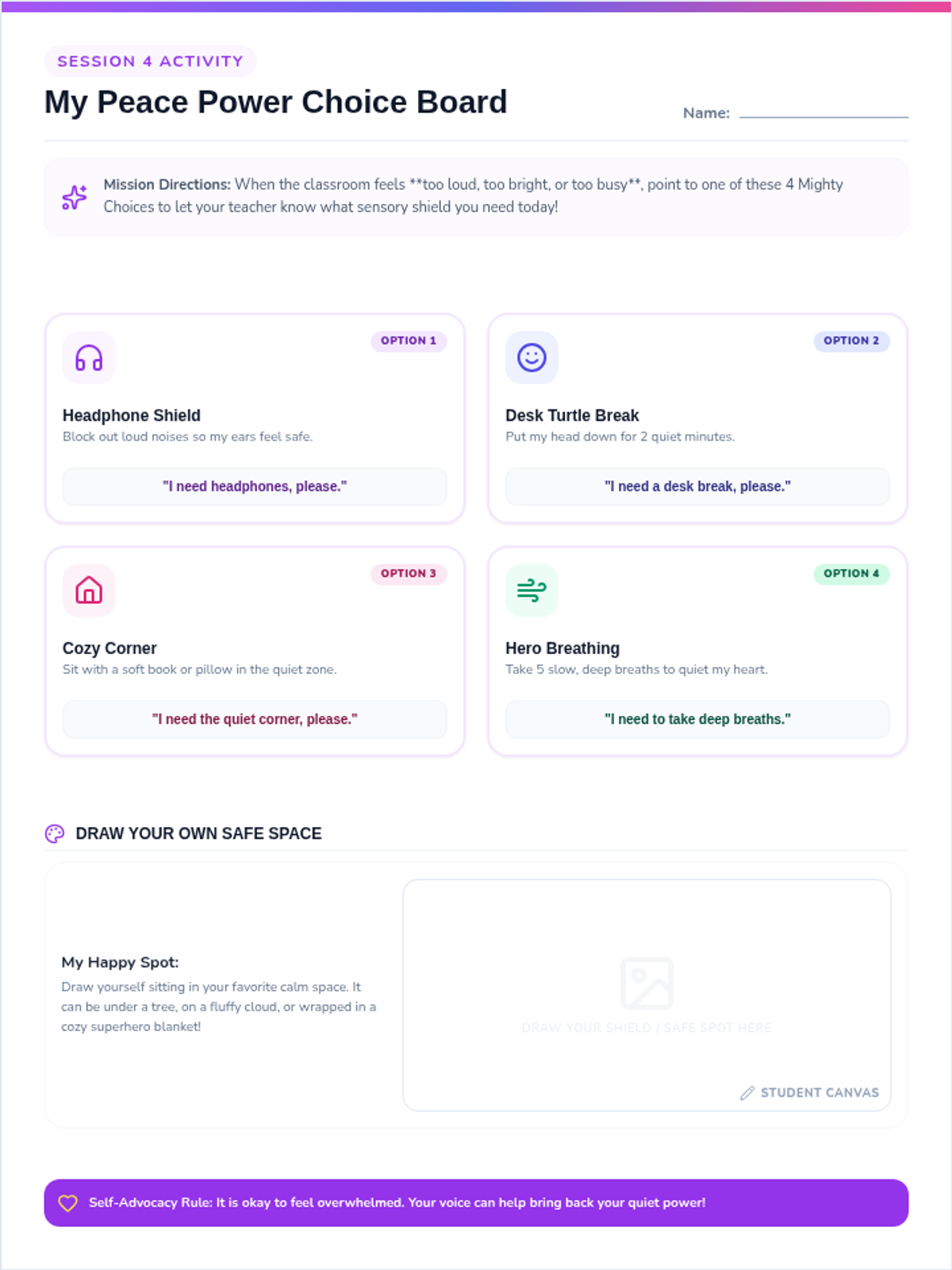
Students learn to recognize when environmental noises or visual stimuli feel too loud or crowded, practicing how to request headphones, a visual break, or a quiet space.
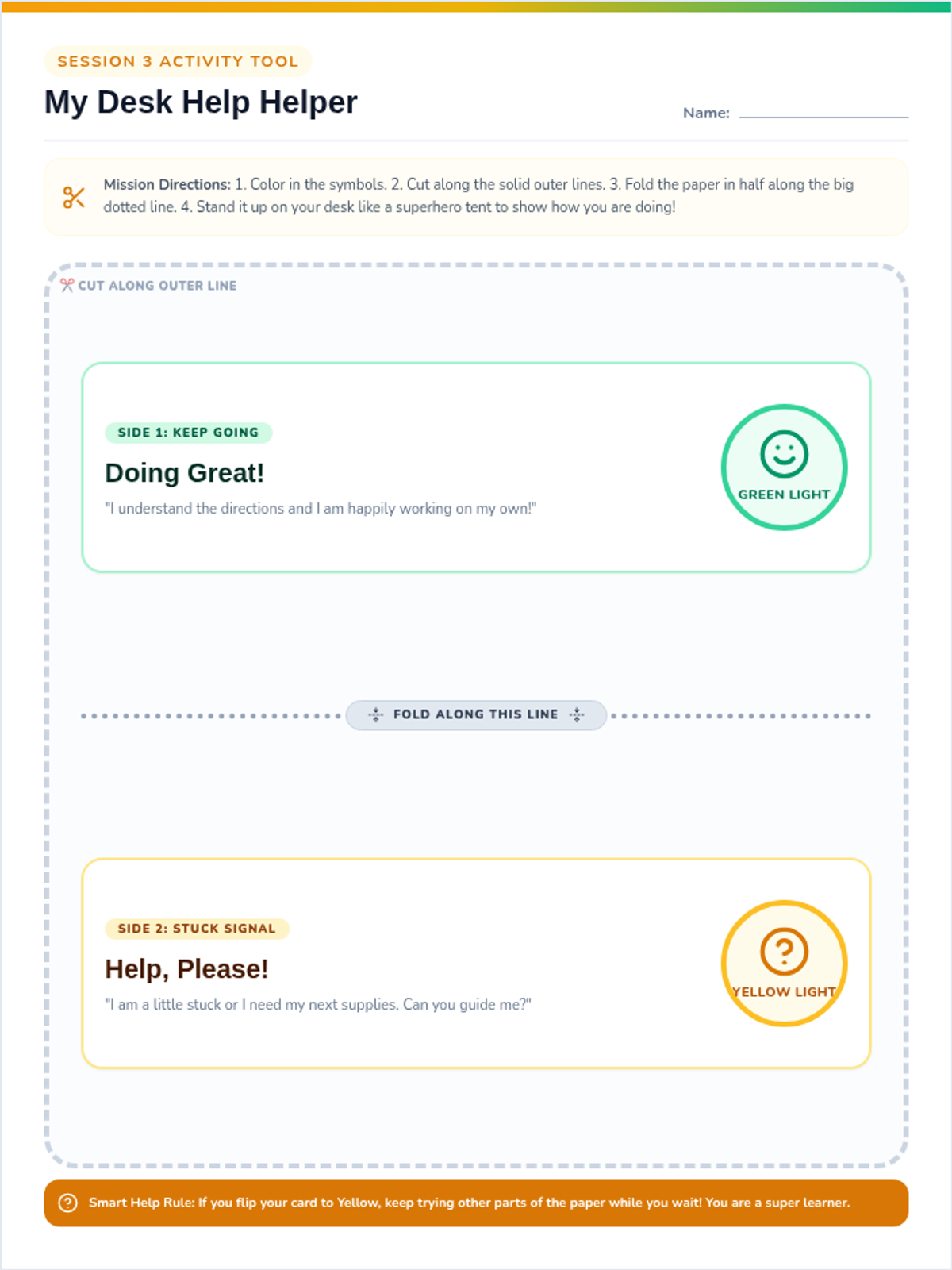
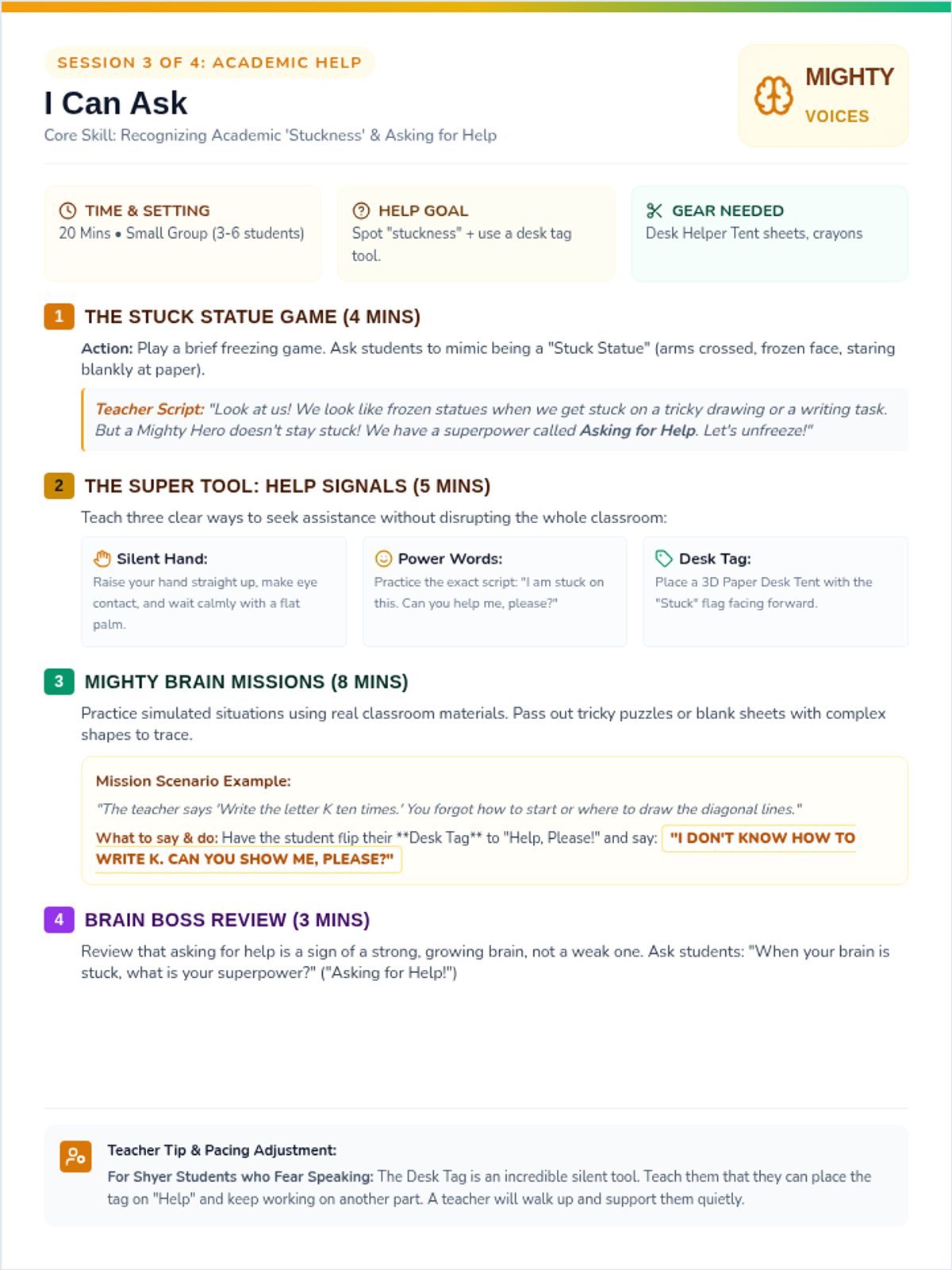
Students discover how to identify when their brain feels 'stuck' or confused and practice three clear ways to ask for academic help using words and hand signals.
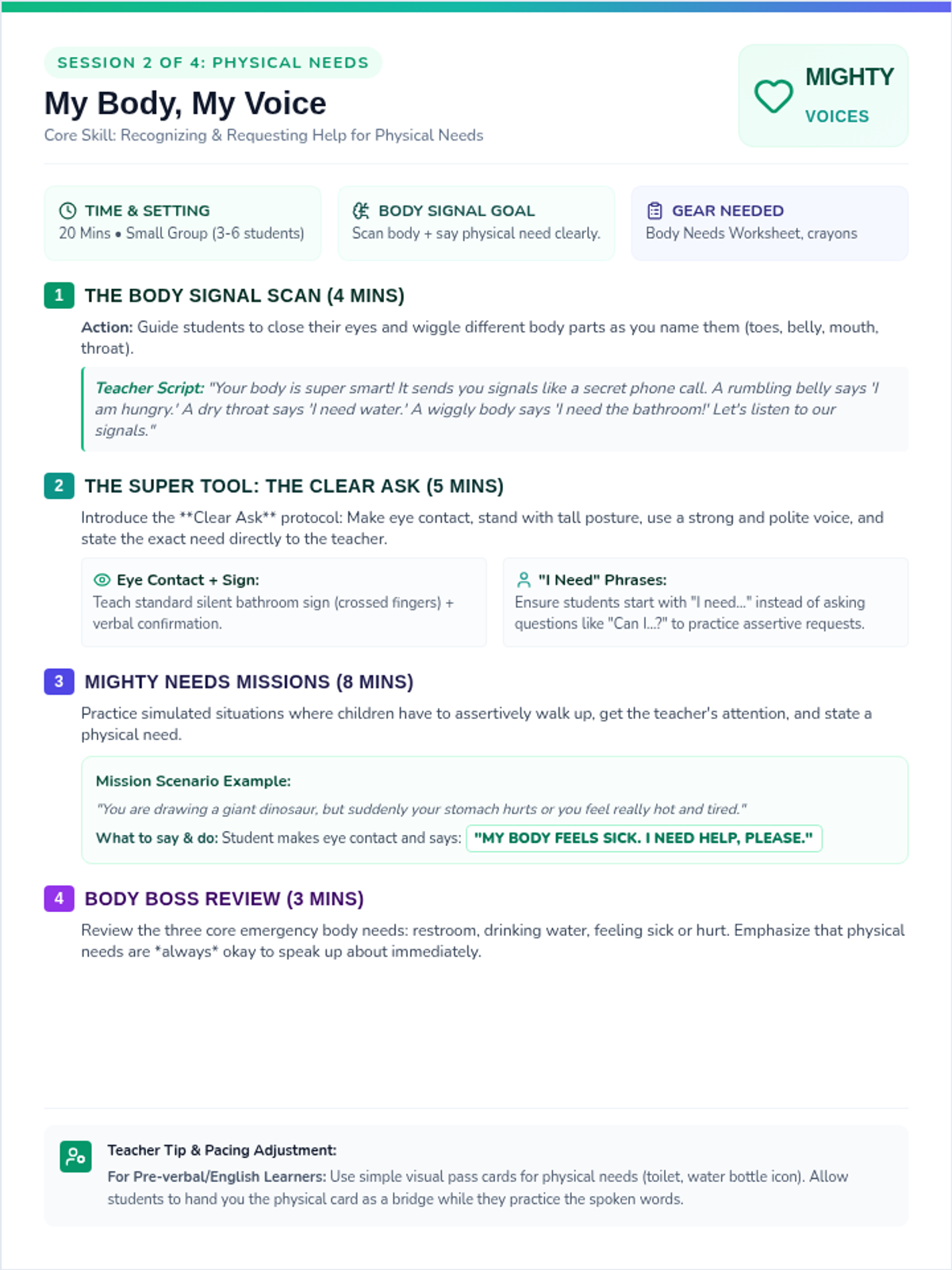
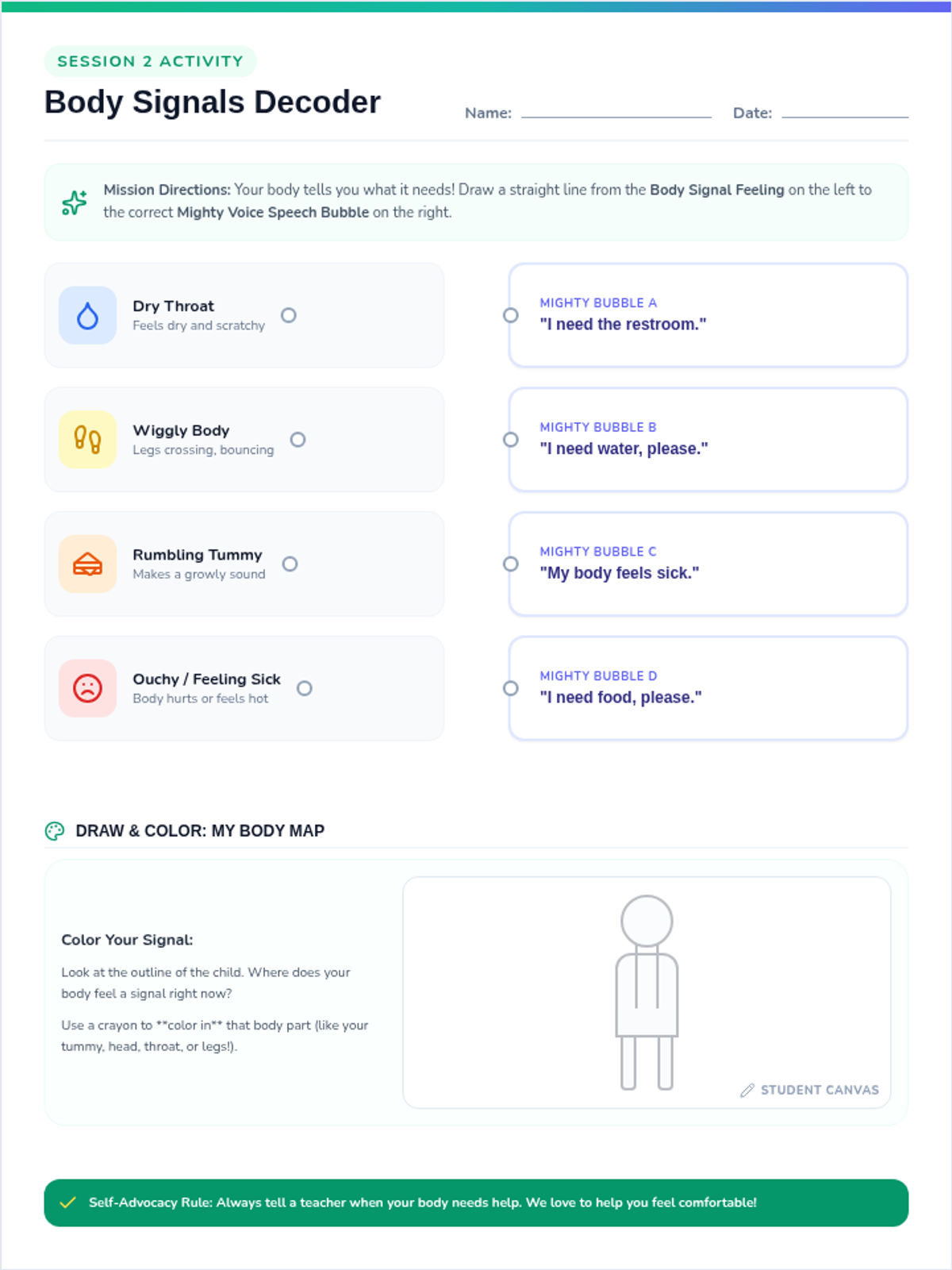
Students learn to identify physical signals in their bodies (hunger, thirst, bathroom needs, or pain) and practice expressing these needs directly and clearly to adults.
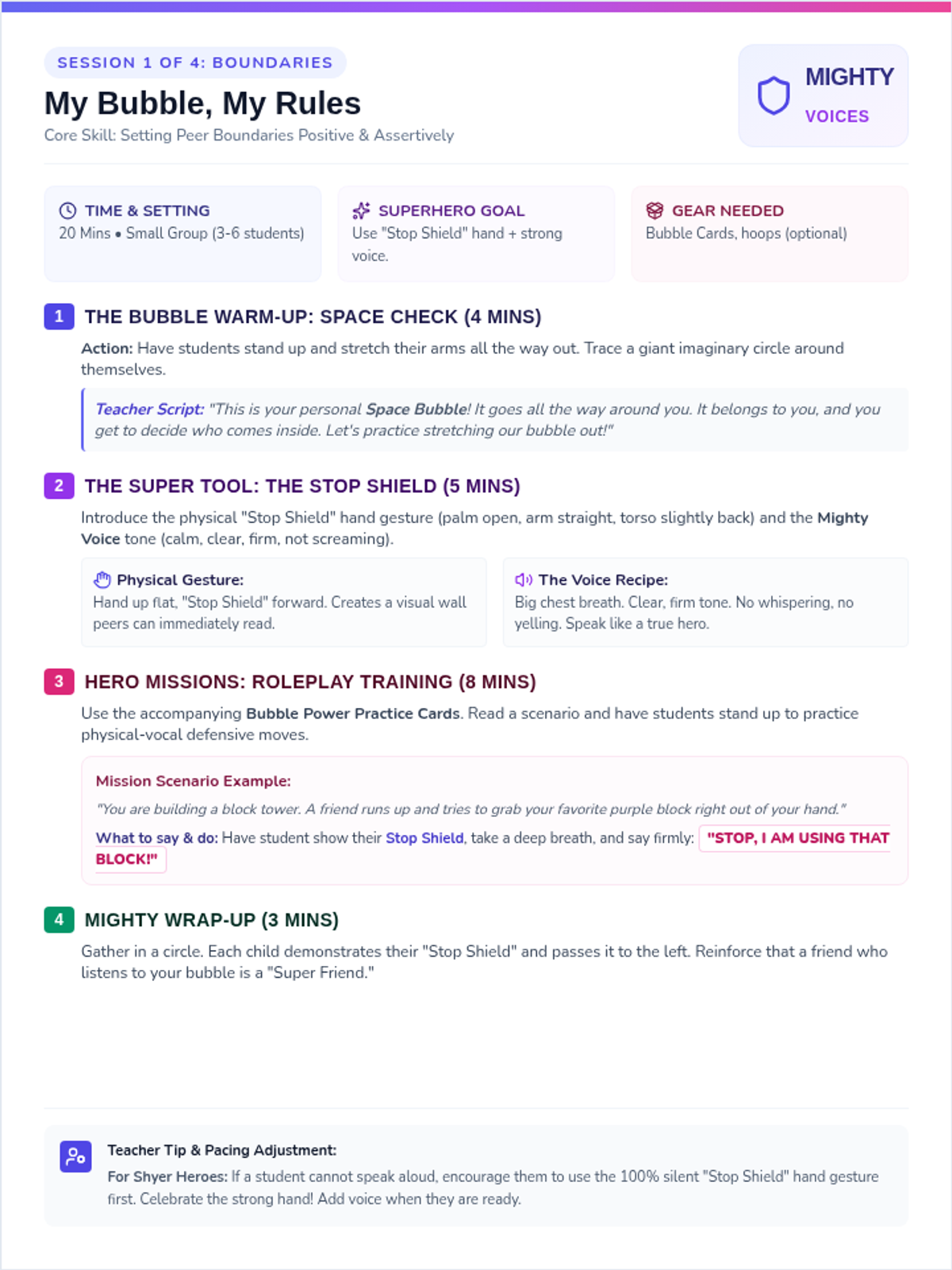
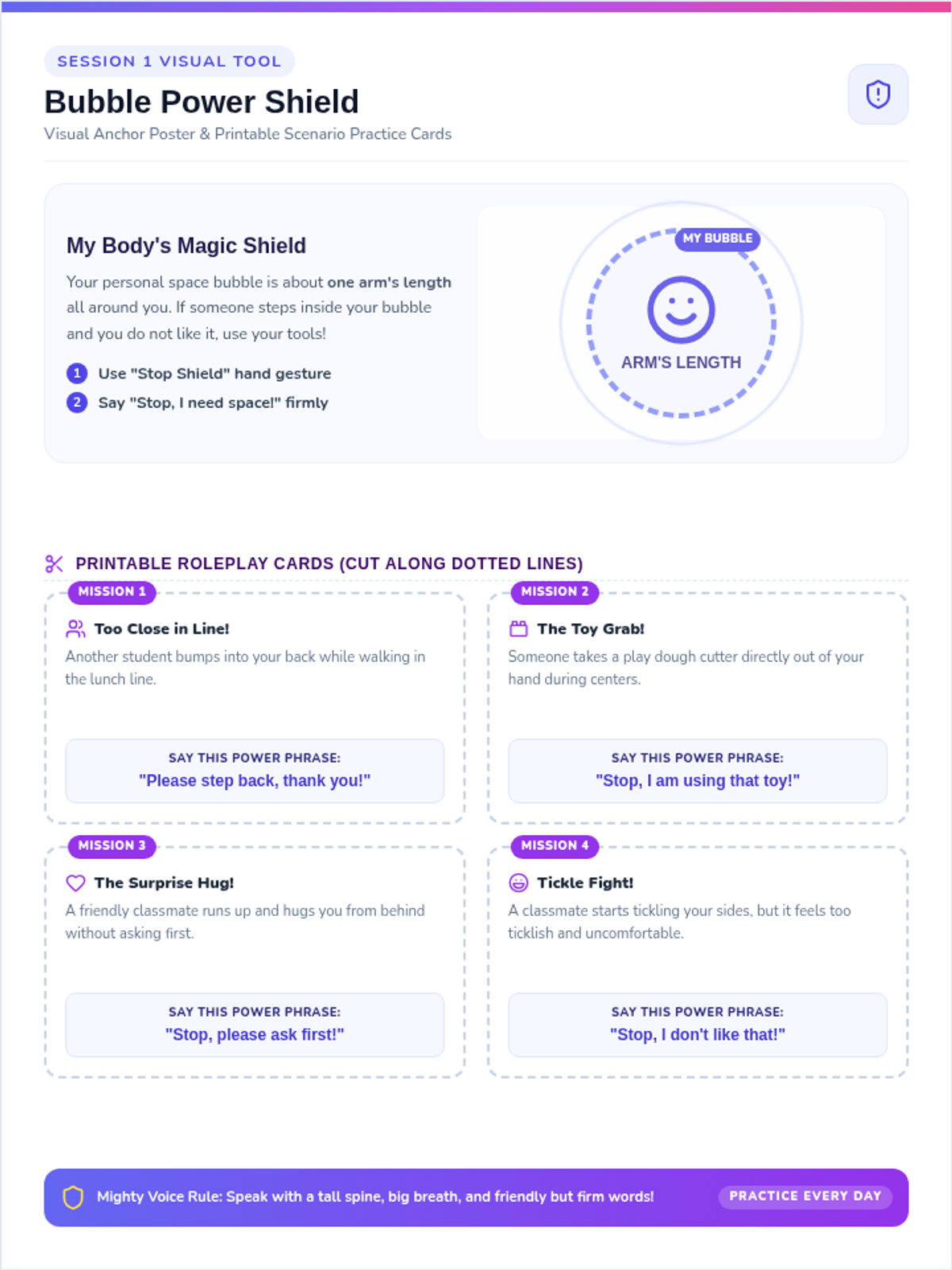
Students learn about their personal space 'bubble' and practice using a strong voice and clear hand signals to set social boundaries with peers.
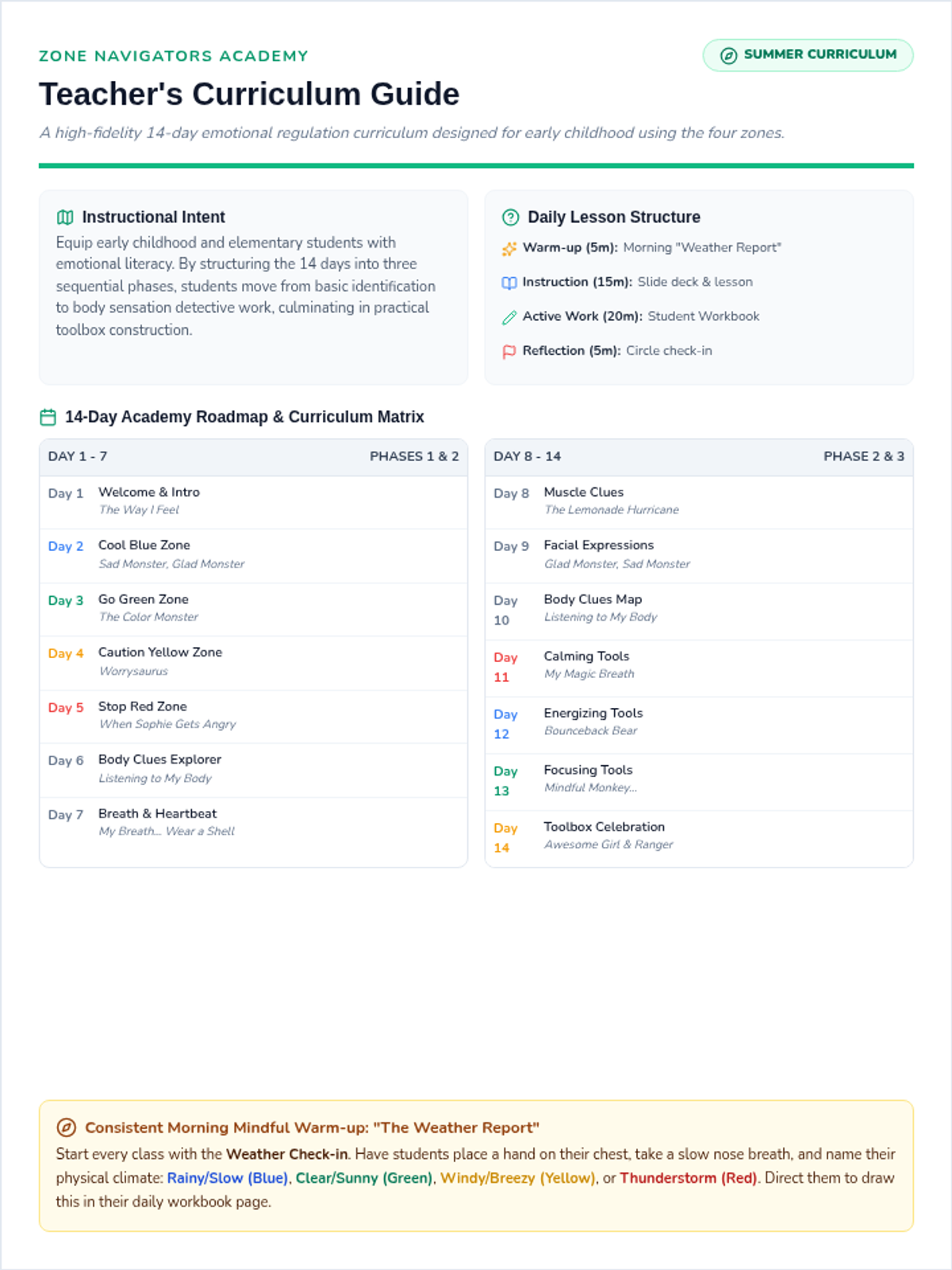
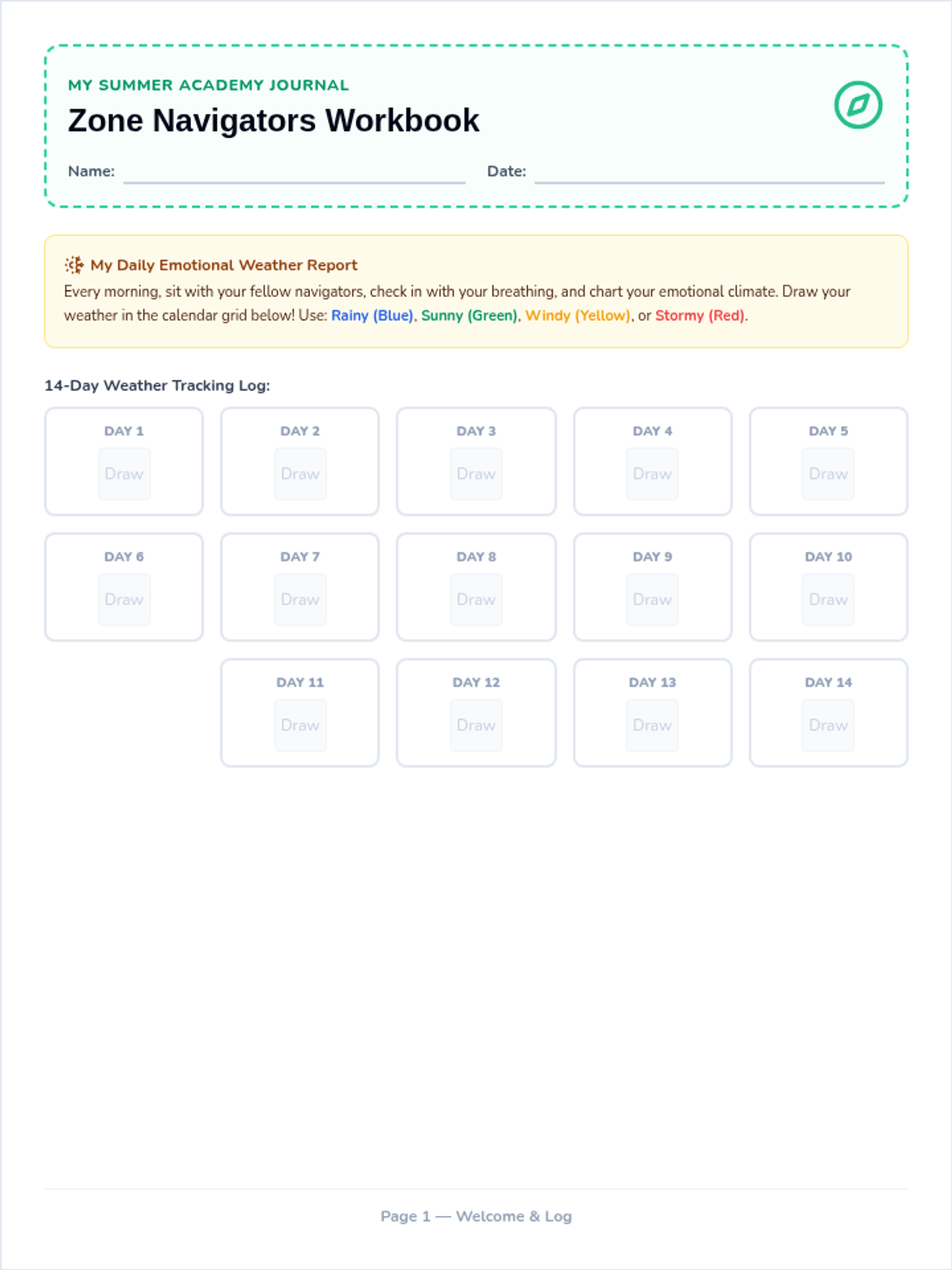
Focuses on Days 11 to 14 of the summer academy, introducing, practicing, and mastering specific calming, focusing, and energizing strategies for self-regulation across all zones.
Focuses on Days 6 to 10 of the summer academy, helping students identify how emotions feel in their physical bodies and mapping physical sensations to their emotional zones.
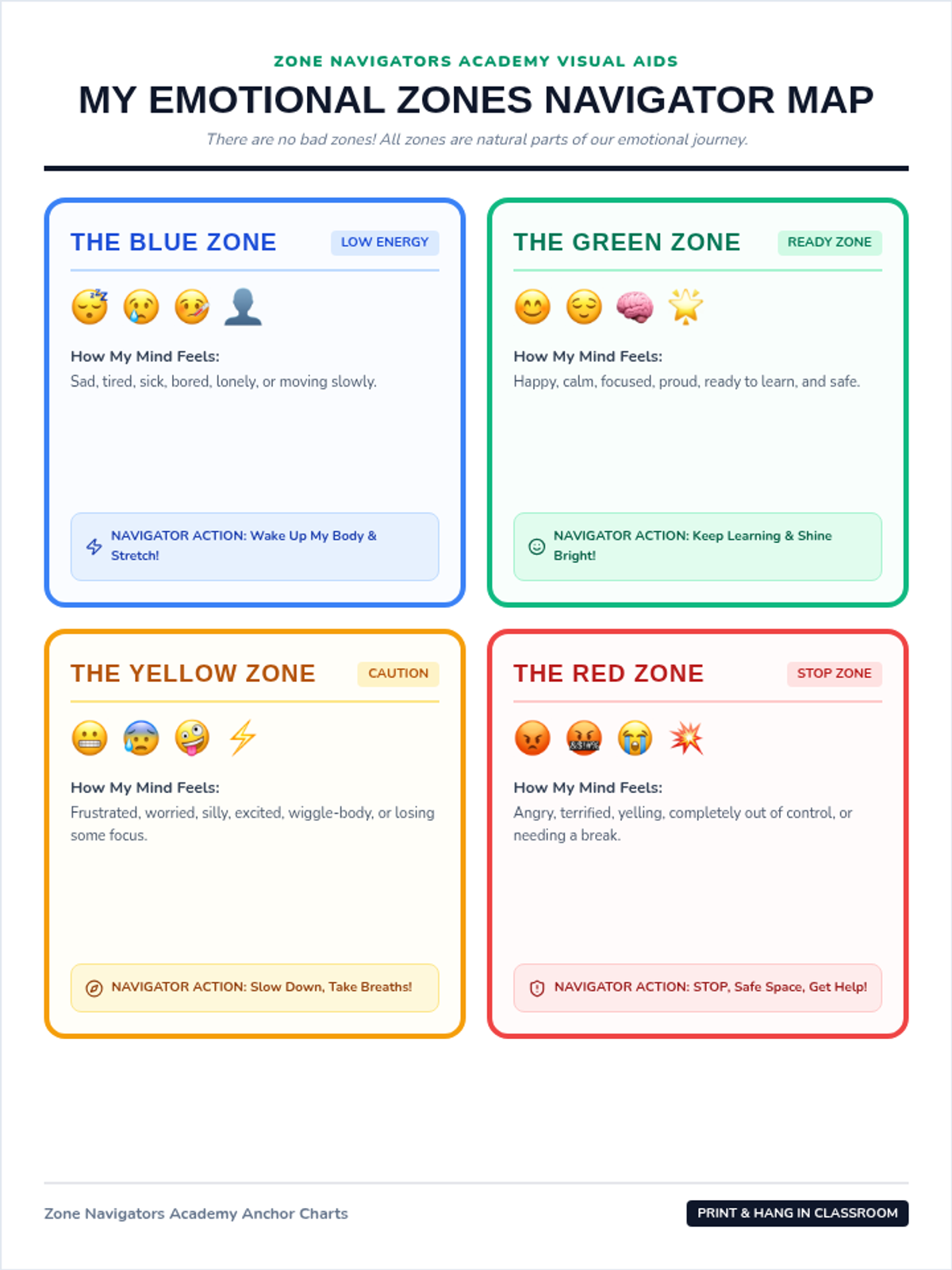
Focuses on Days 1 to 5 of the summer academy, introducing the four emotional zones (Blue, Green, Yellow, and Red) and helping students identify and name their core emotions within each zone.
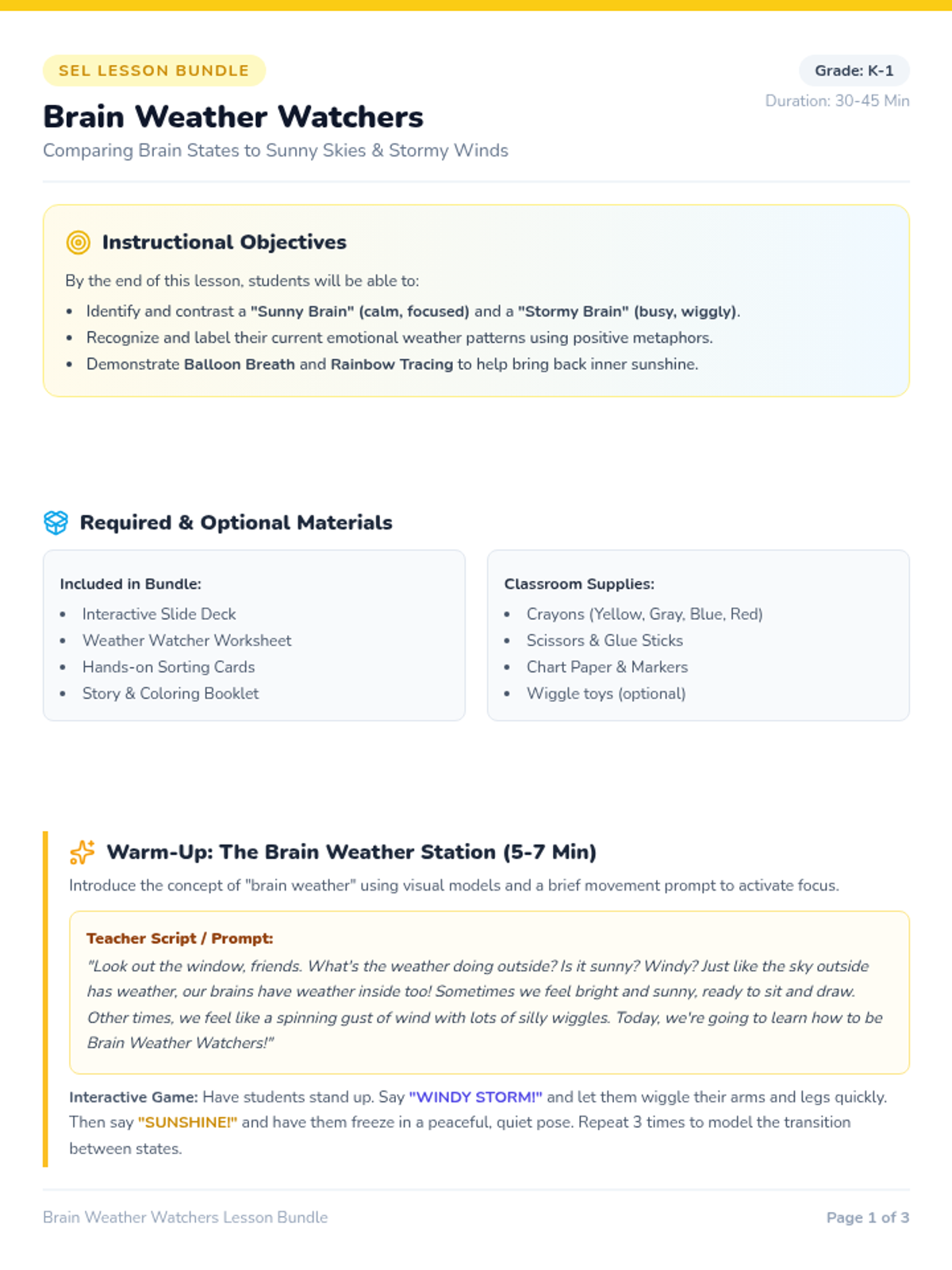
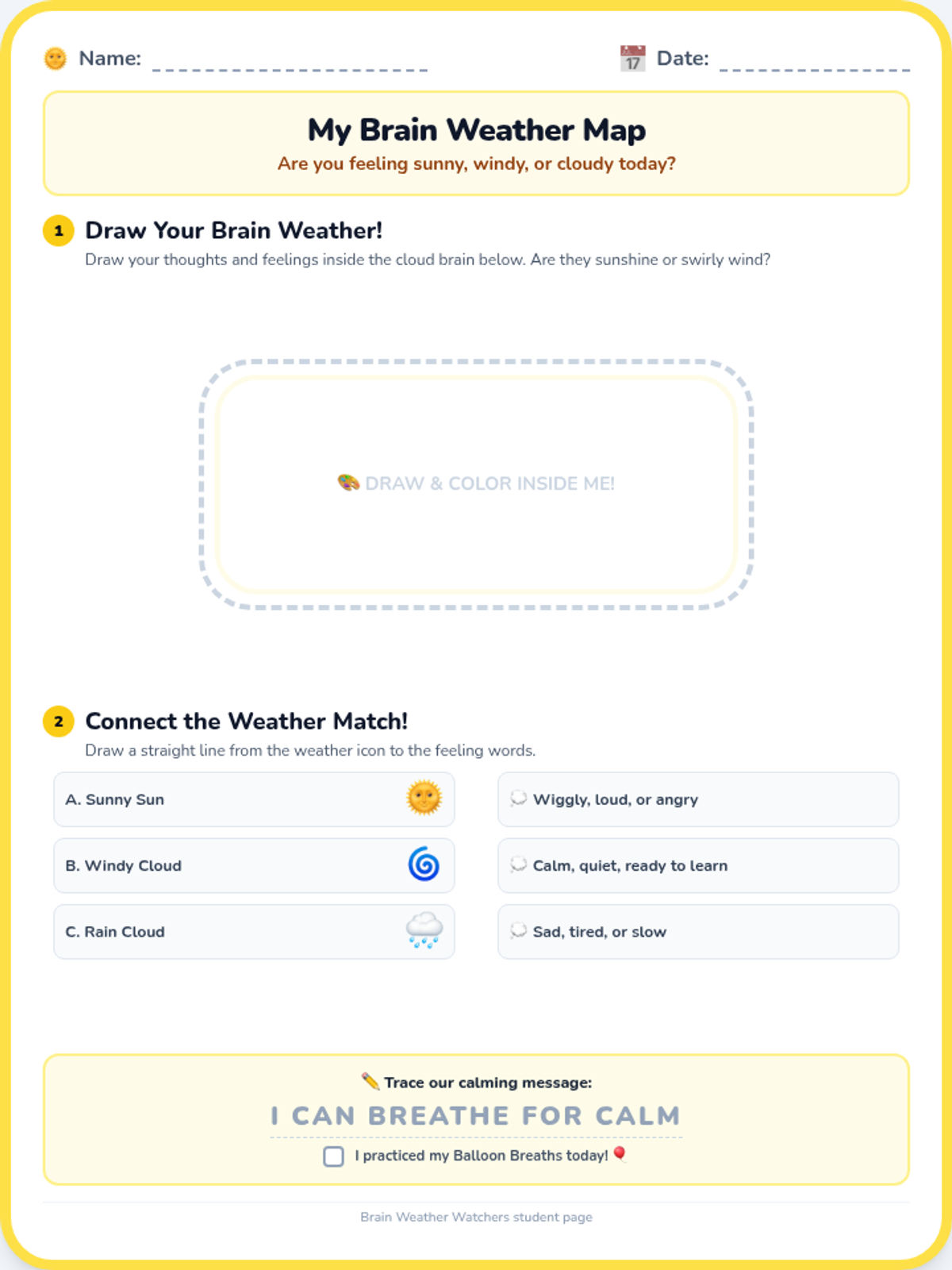
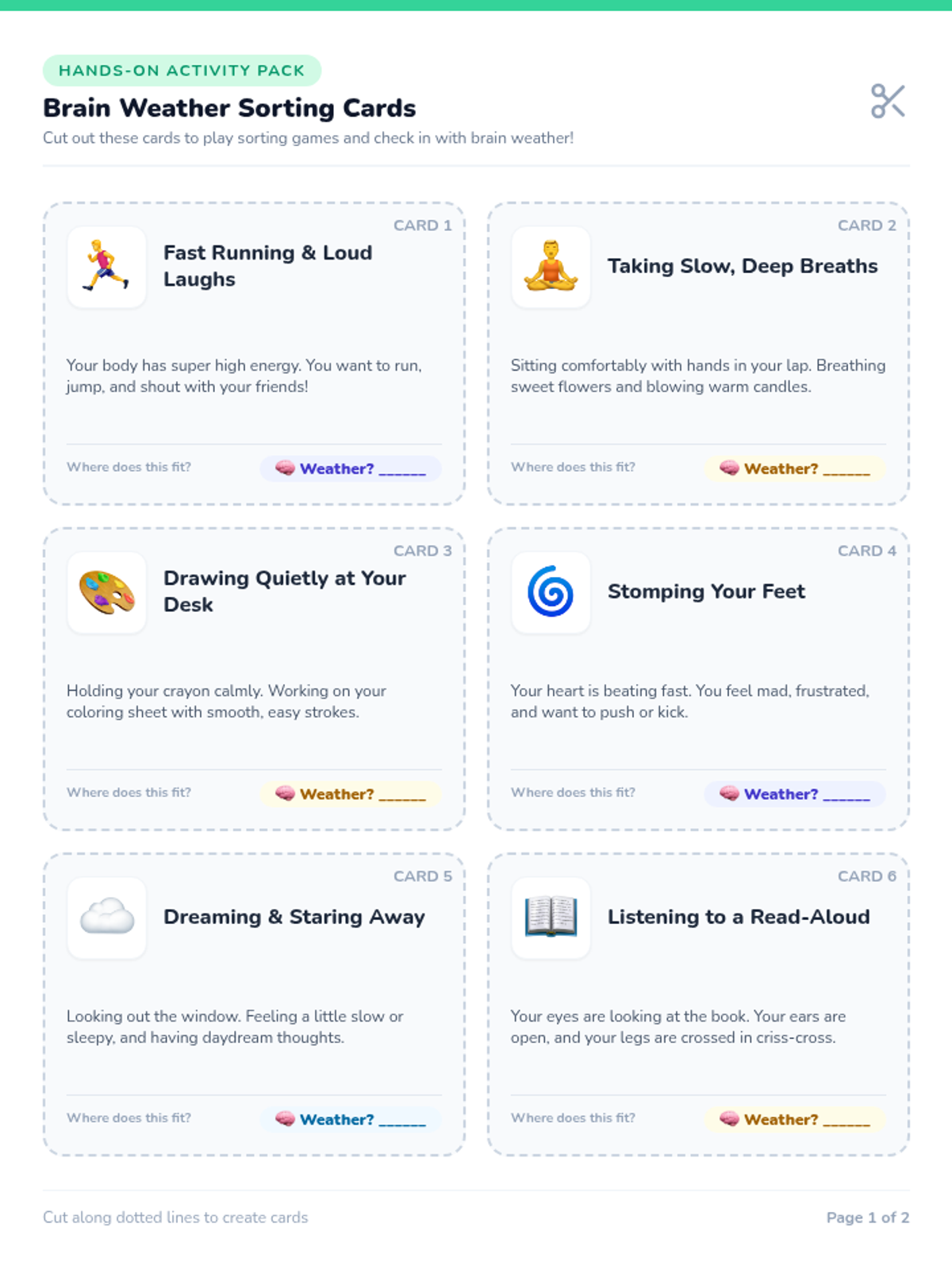
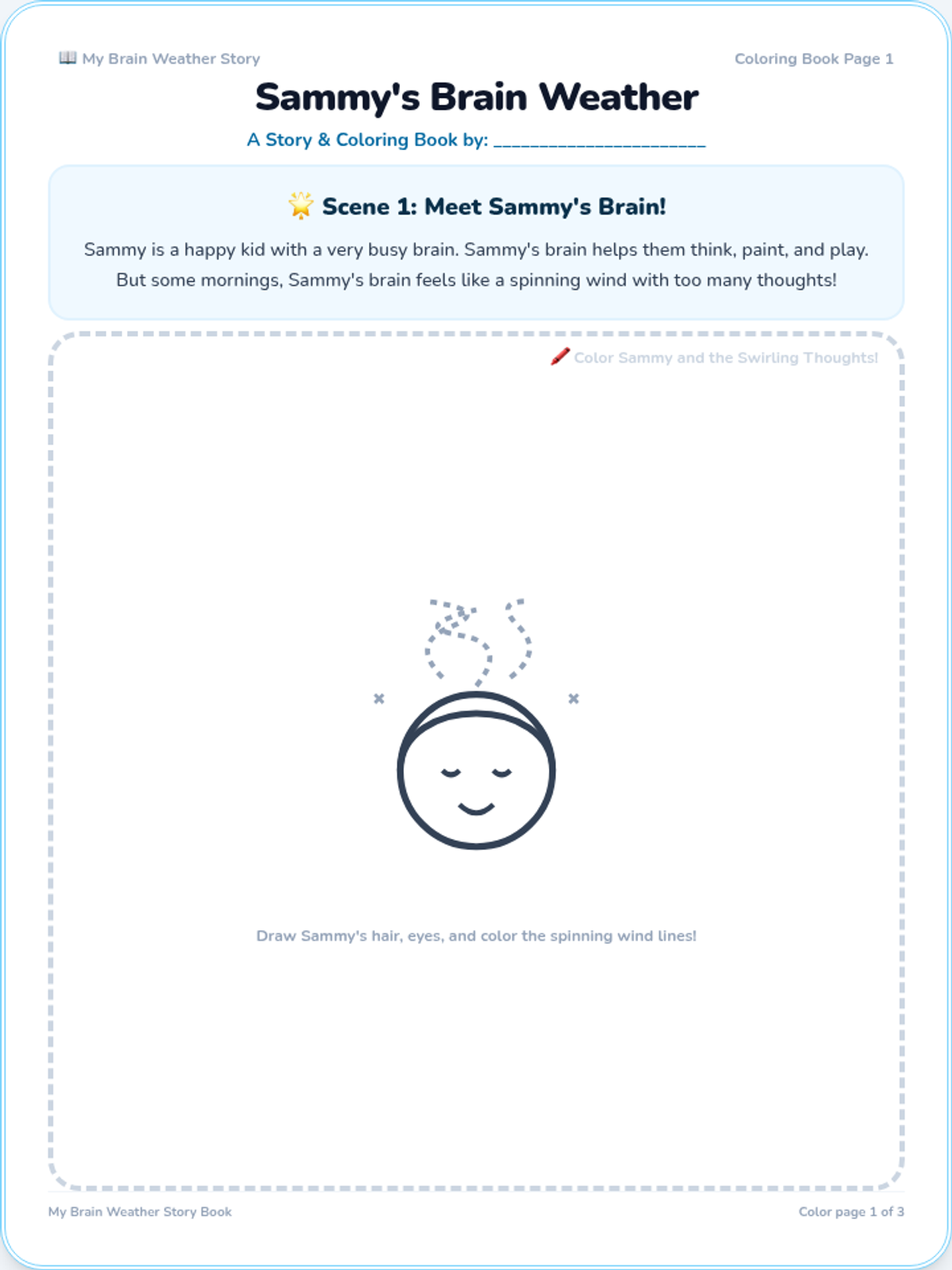
A social-emotional learning lesson for K-1 students comparing their brain's activity levels to weather patterns. Students learn to recognize a 'busy brain' (stormy wind) versus a 'calm brain' (sunny skies) and practice breathing techniques to bring back the sun.
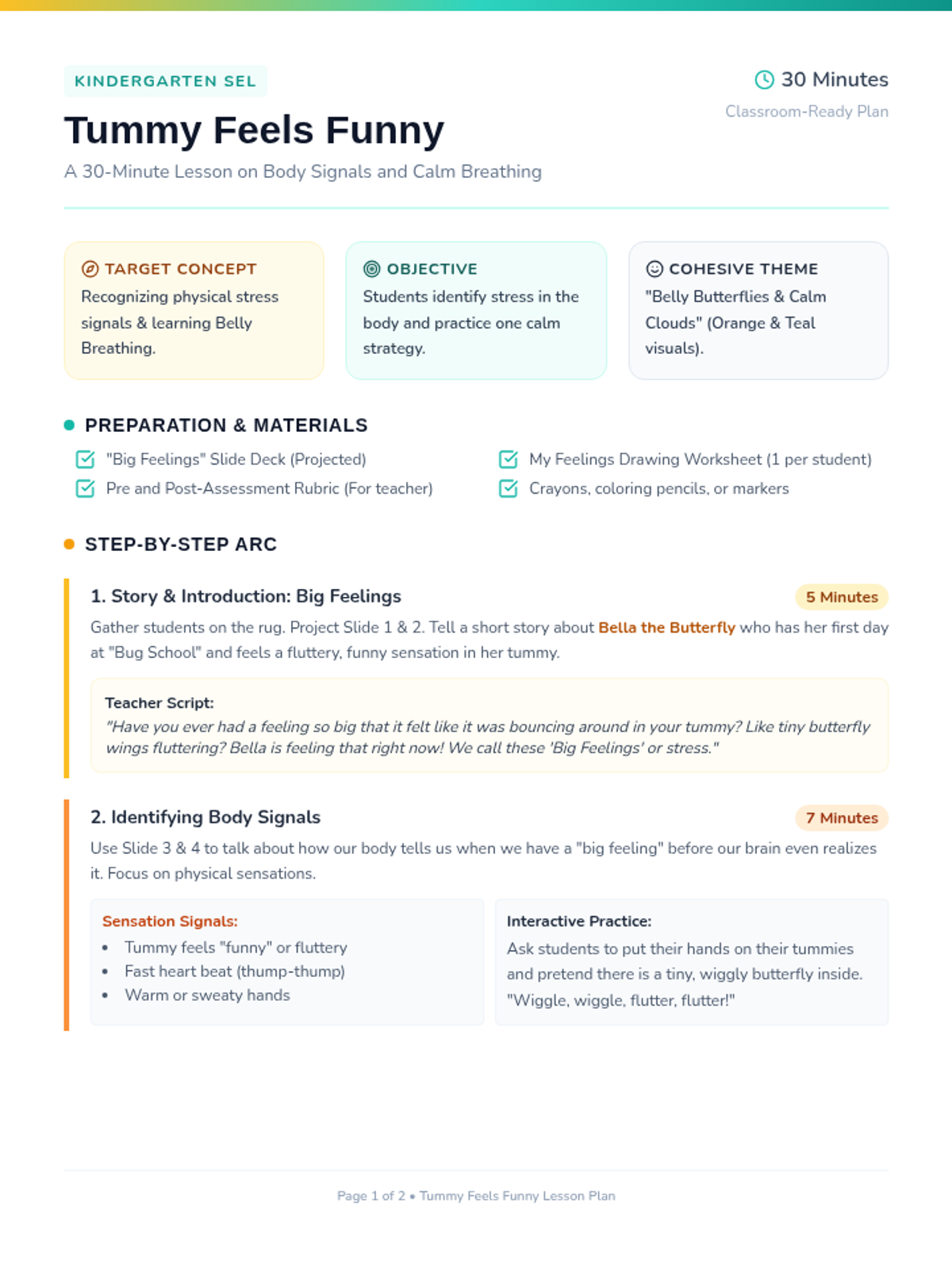
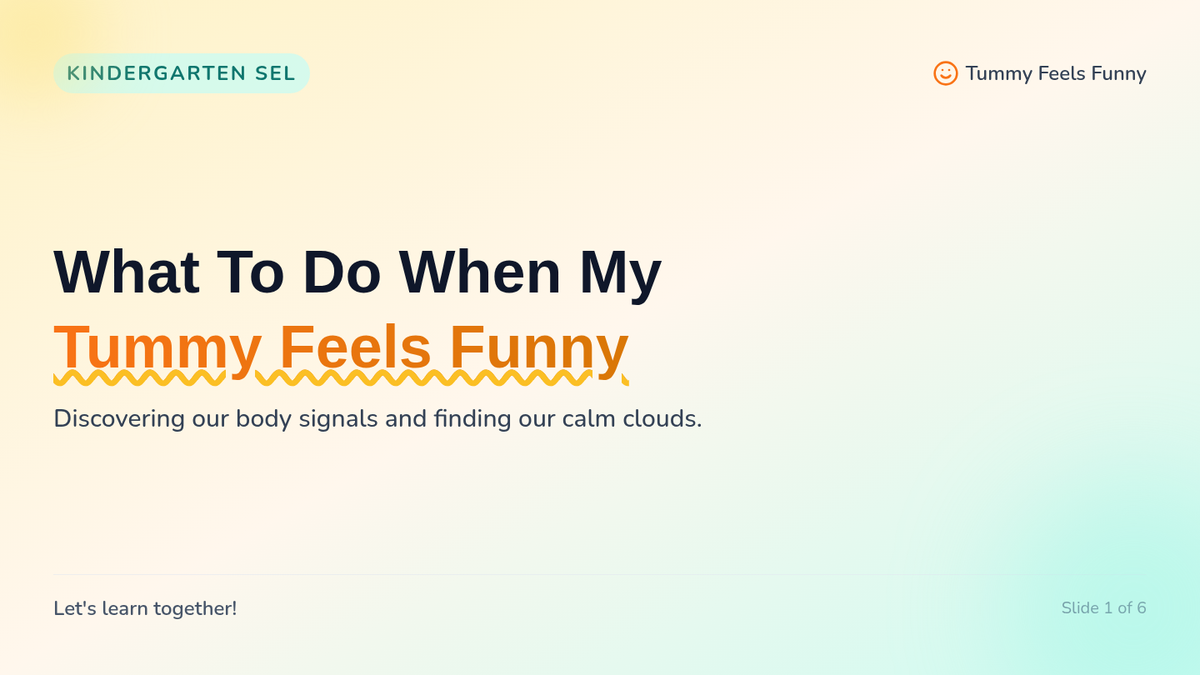
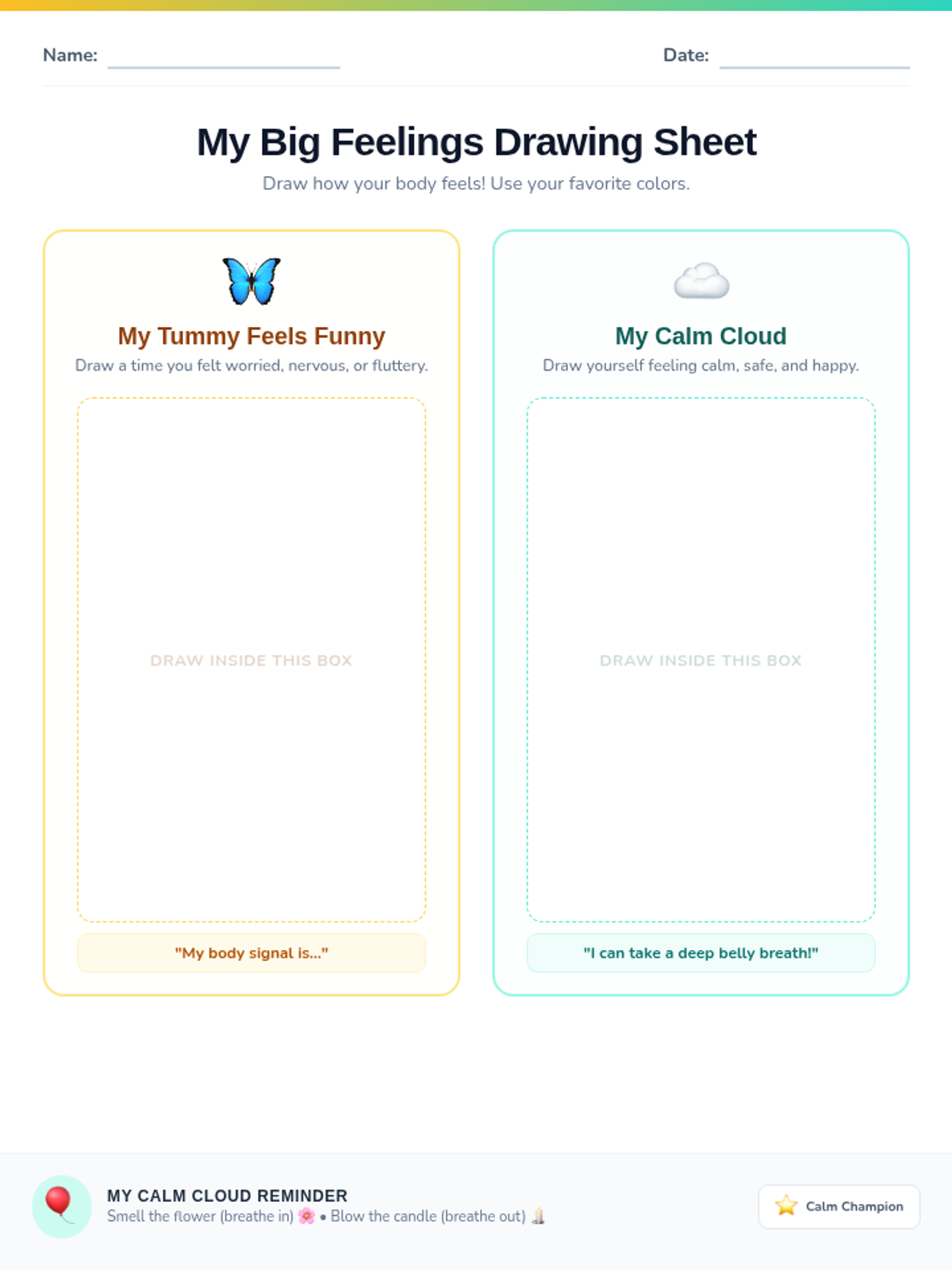
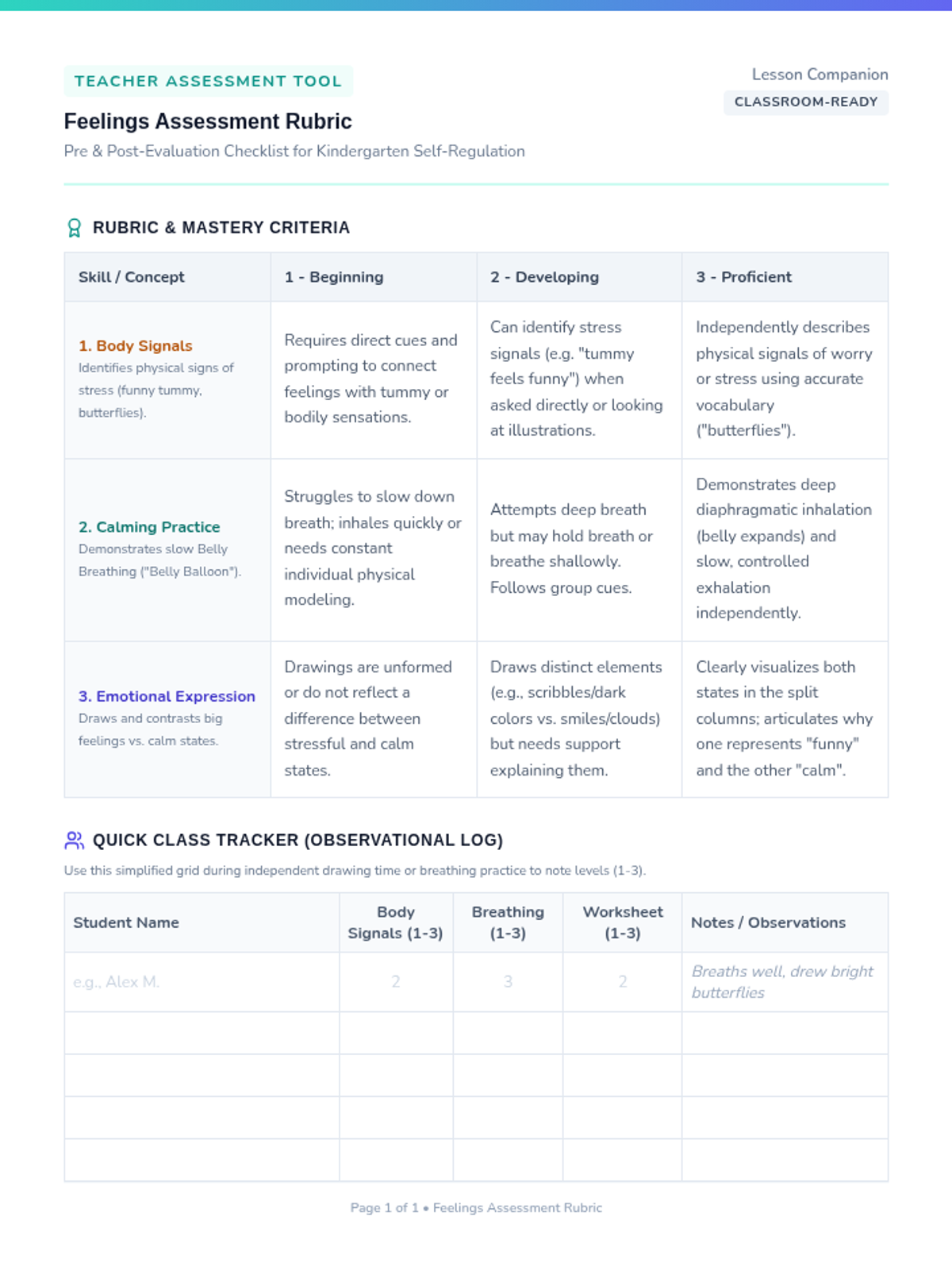
A 30-minute social-emotional learning lesson for Kindergarten students to recognize bodily sensations associated with stress (like a 'funny tummy' or 'butterflies') and learn 'Belly Breathing' as a healthy coping strategy.
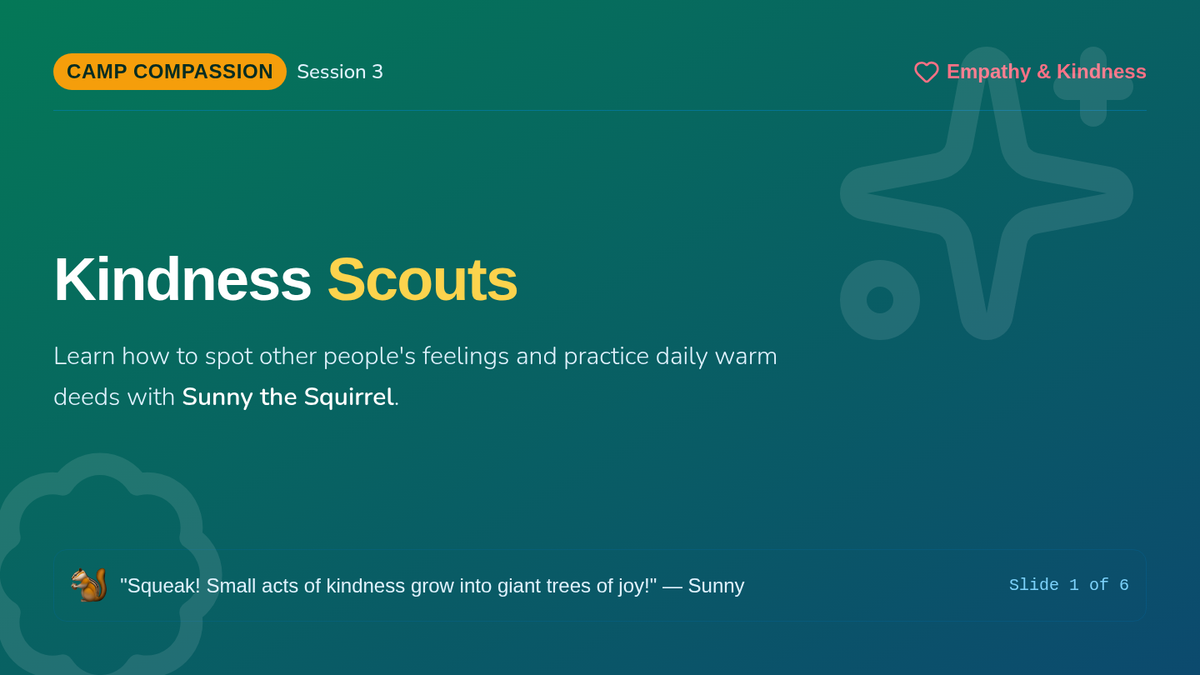
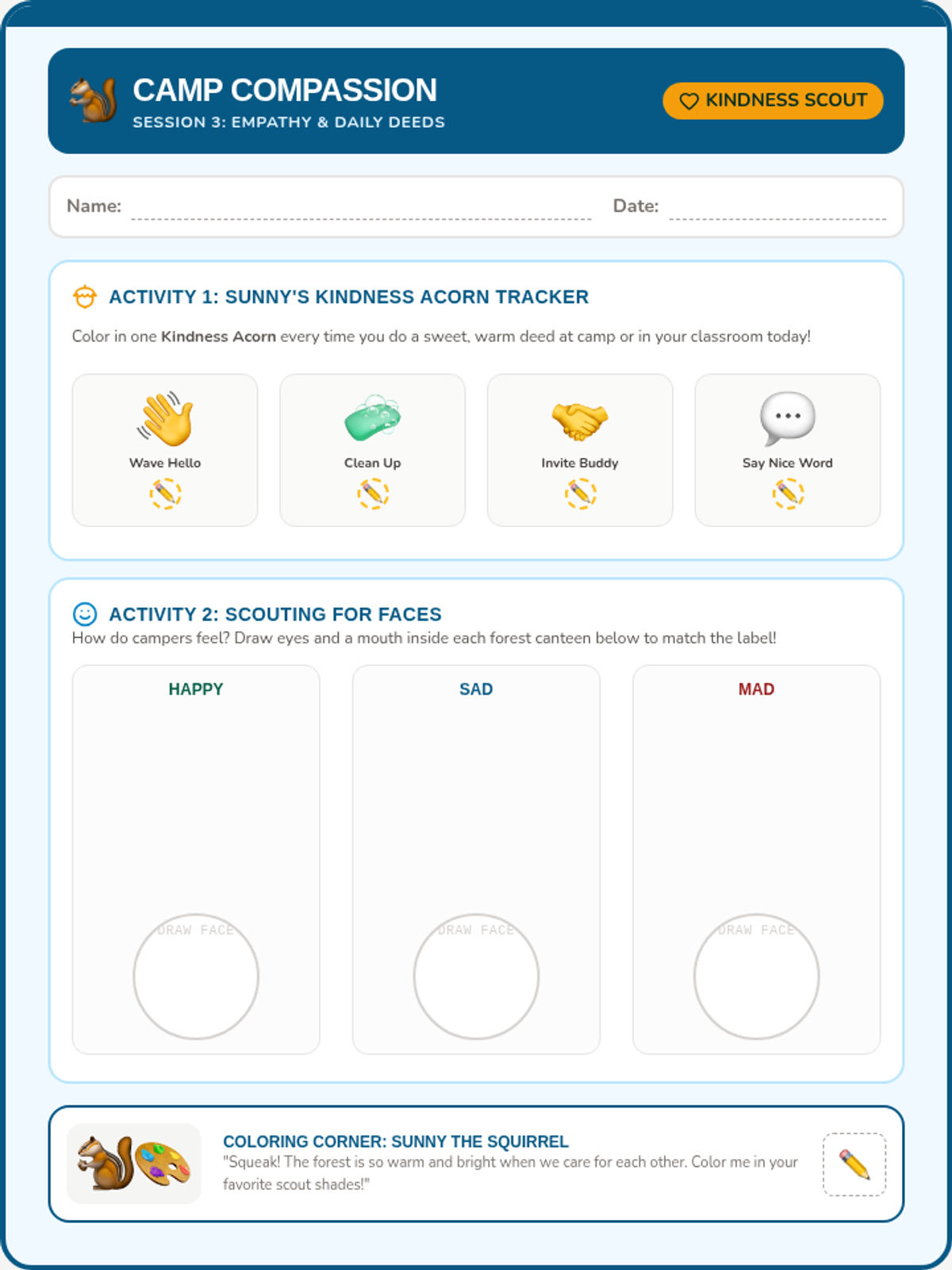
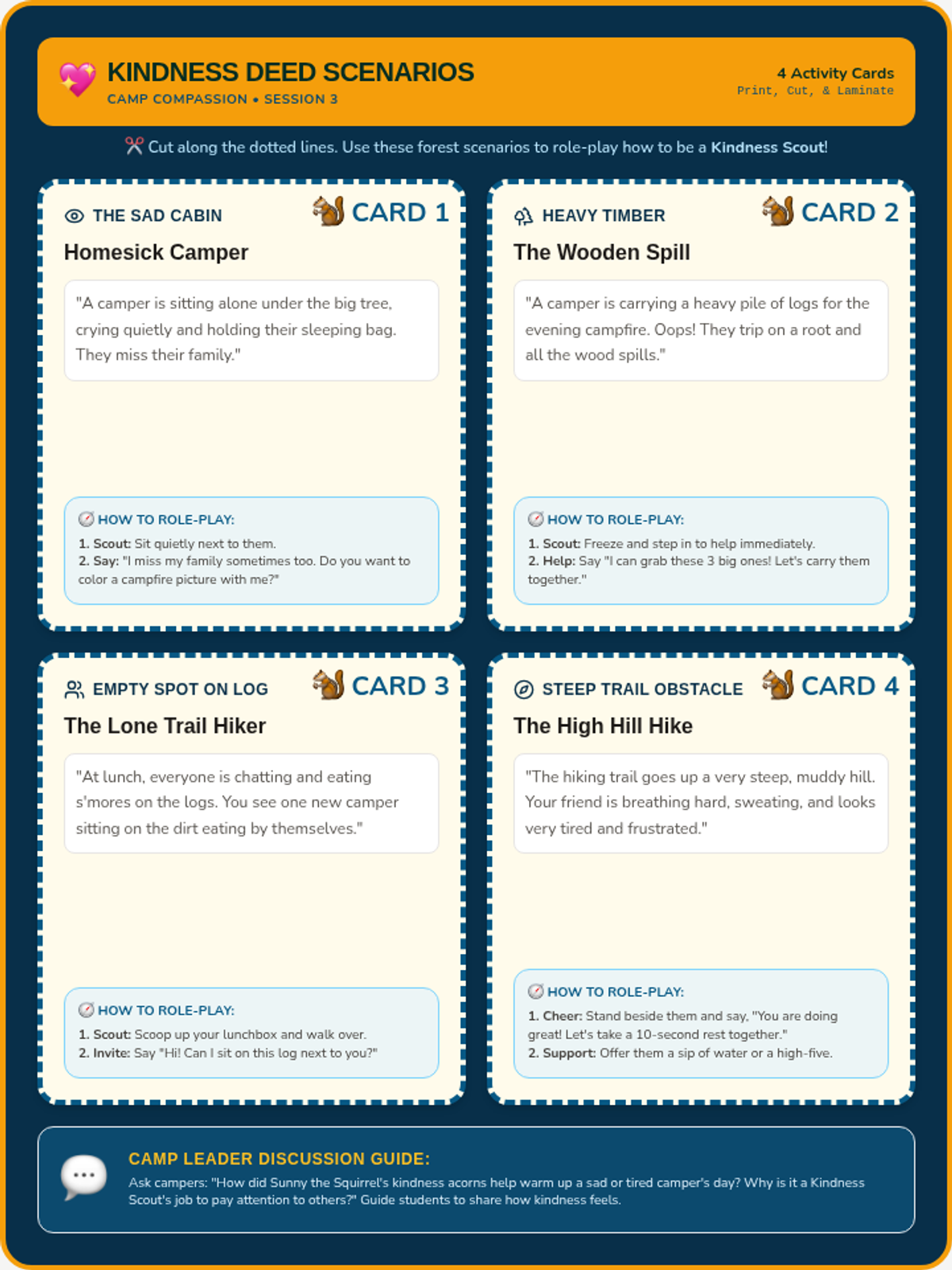
Campers learn how to scout for others' feelings, practice deep empathy, and earn 'kindness badges' by doing small daily deeds of support.
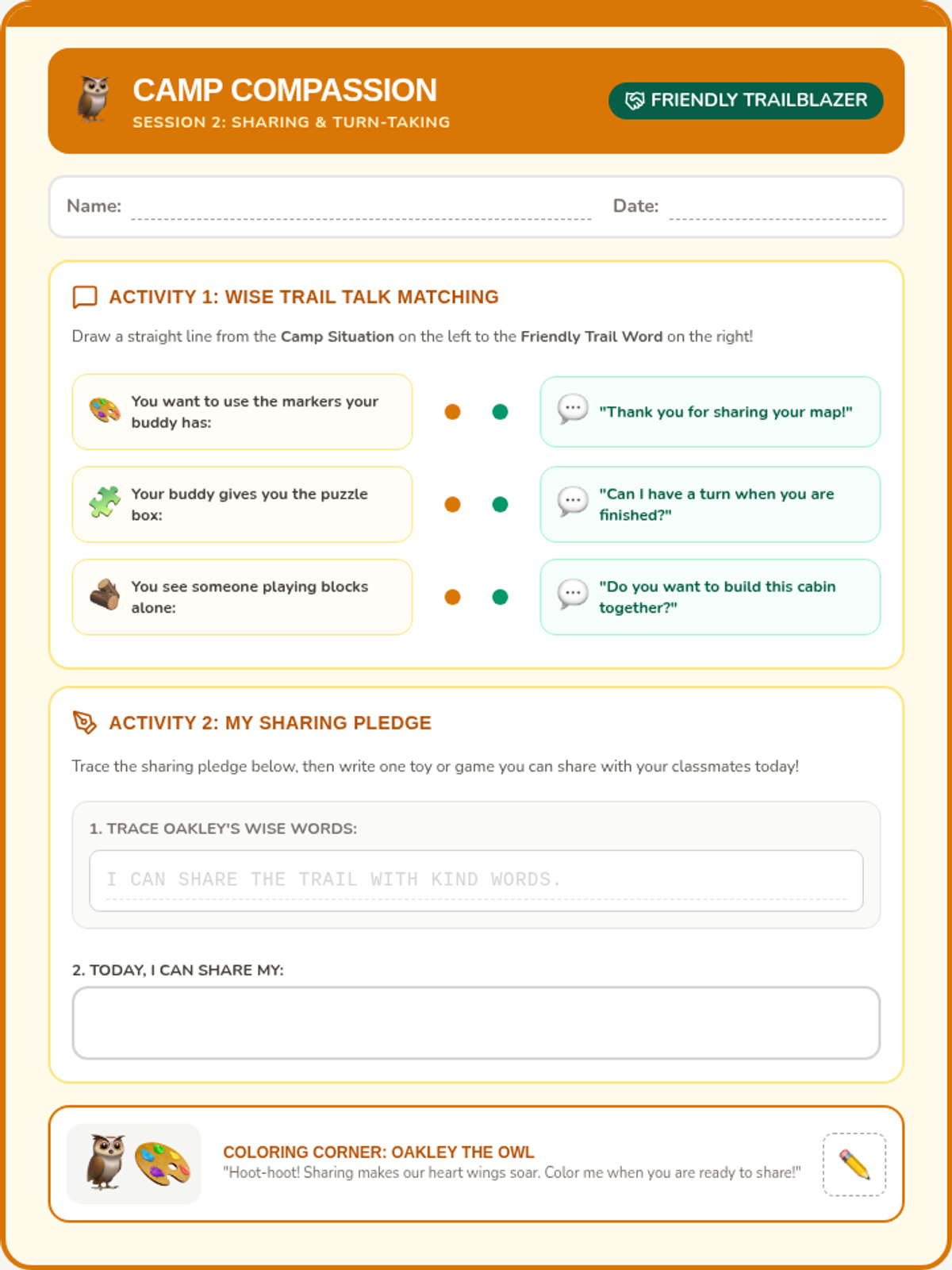
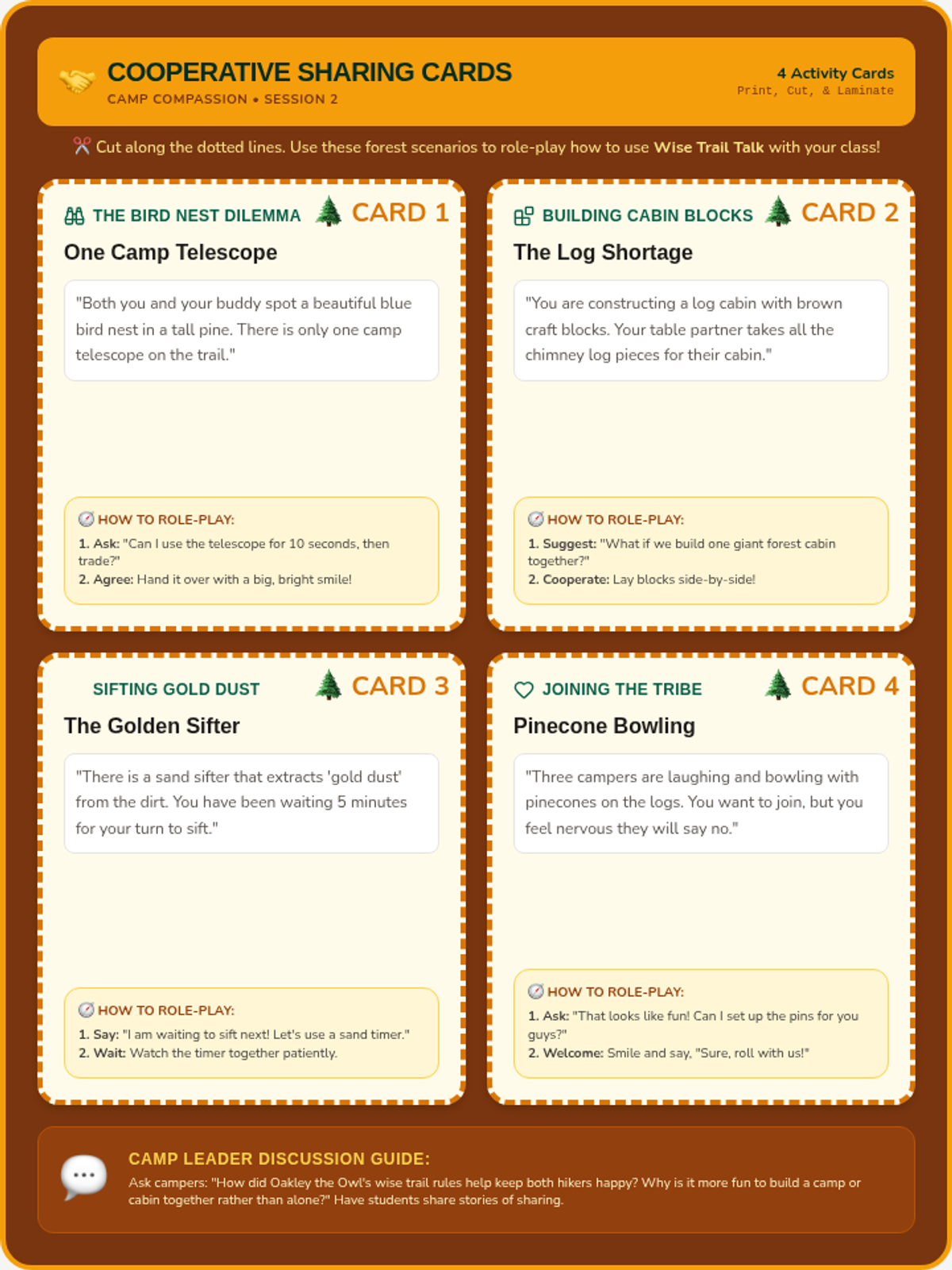
Students practice cooperative hiking strategies on the friendship trail, discovering how to share camp toys, take turns, and use supportive trail words.