In this lesson, students explore delayed gratification through the Marshmallow Test, participating in a self-control activity followed by reflection and discussion.
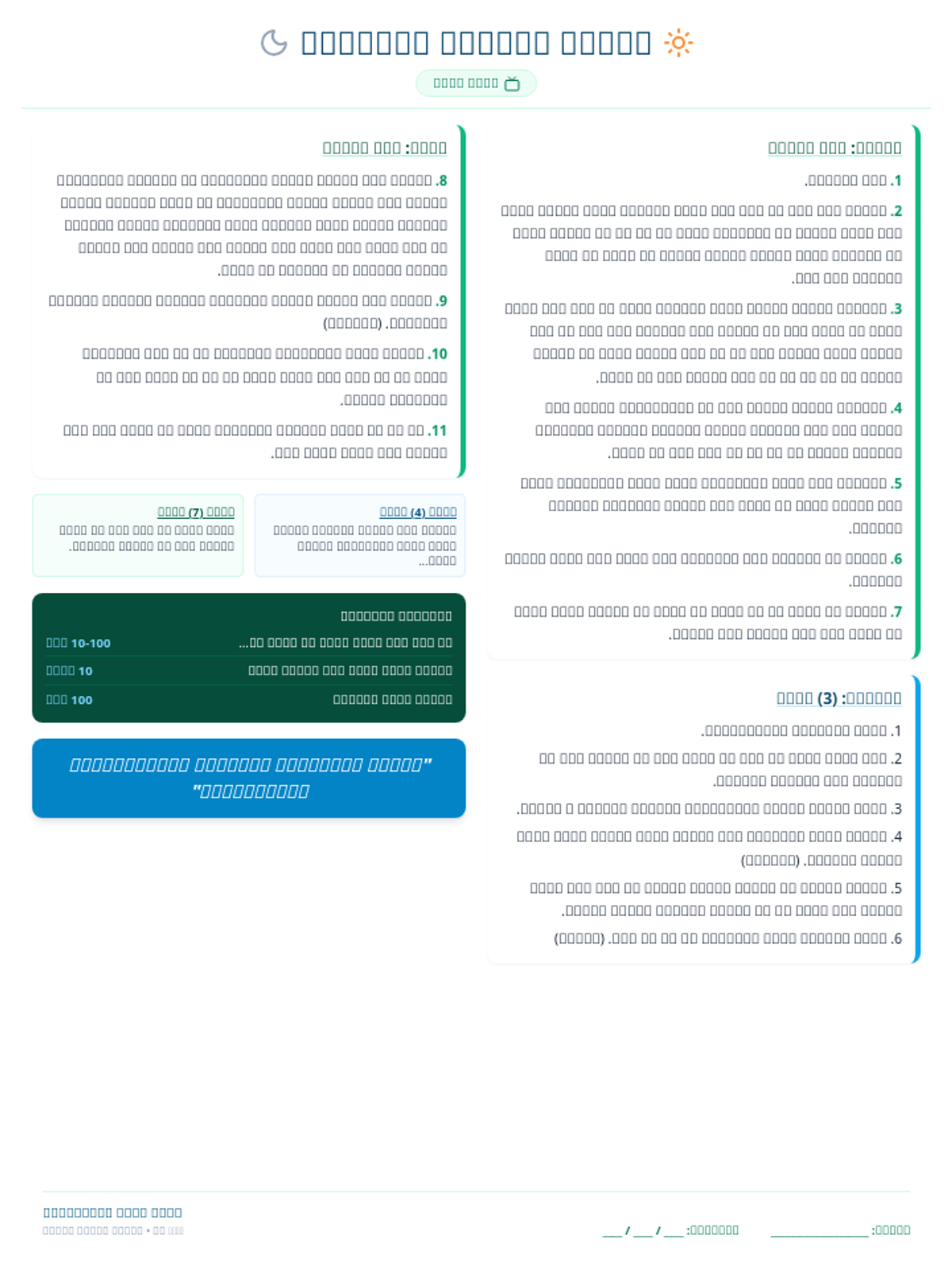
A lesson dedicated to learning and practicing the morning and evening remembrances (Athkar) for spiritual well-being.
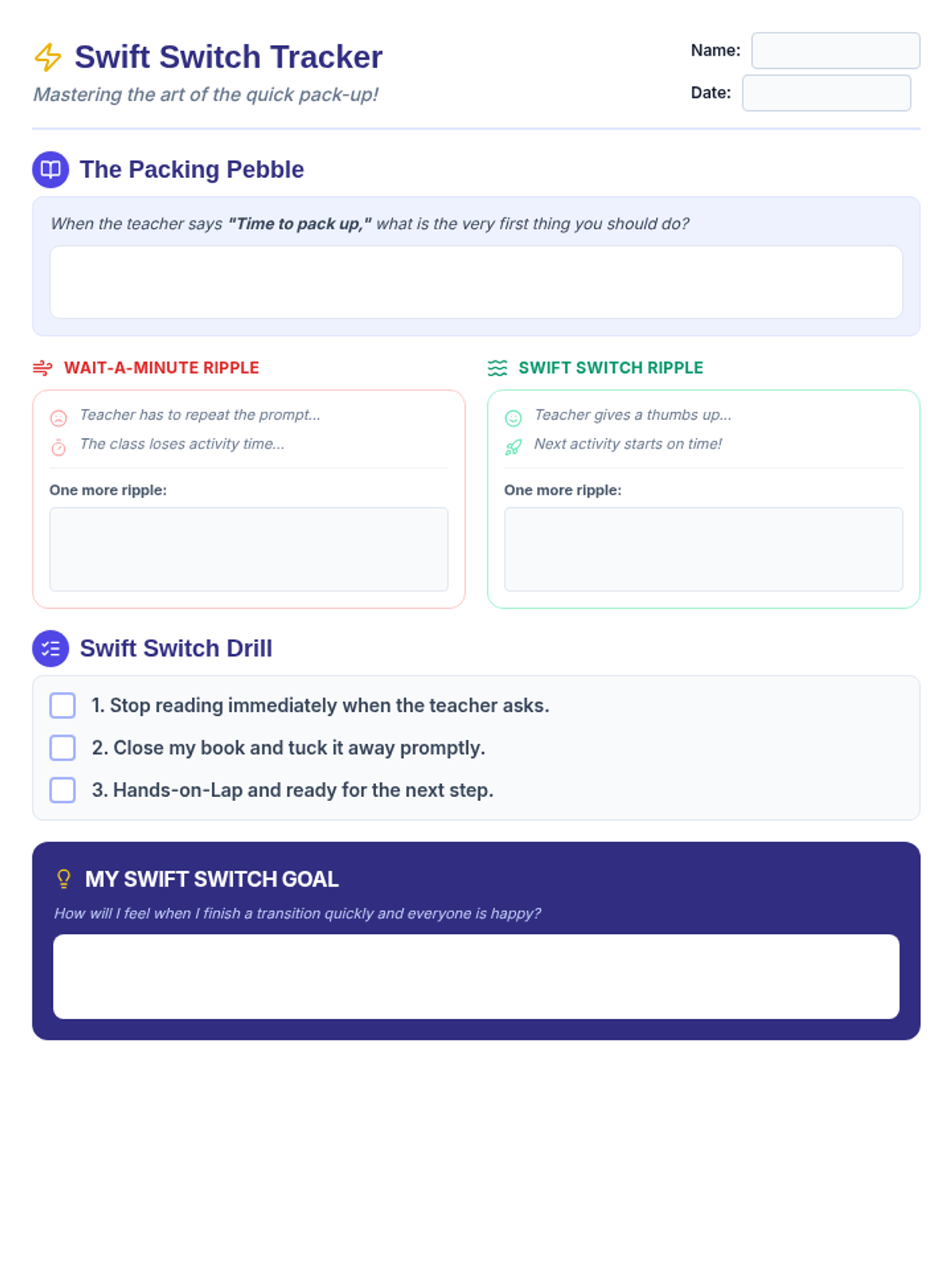
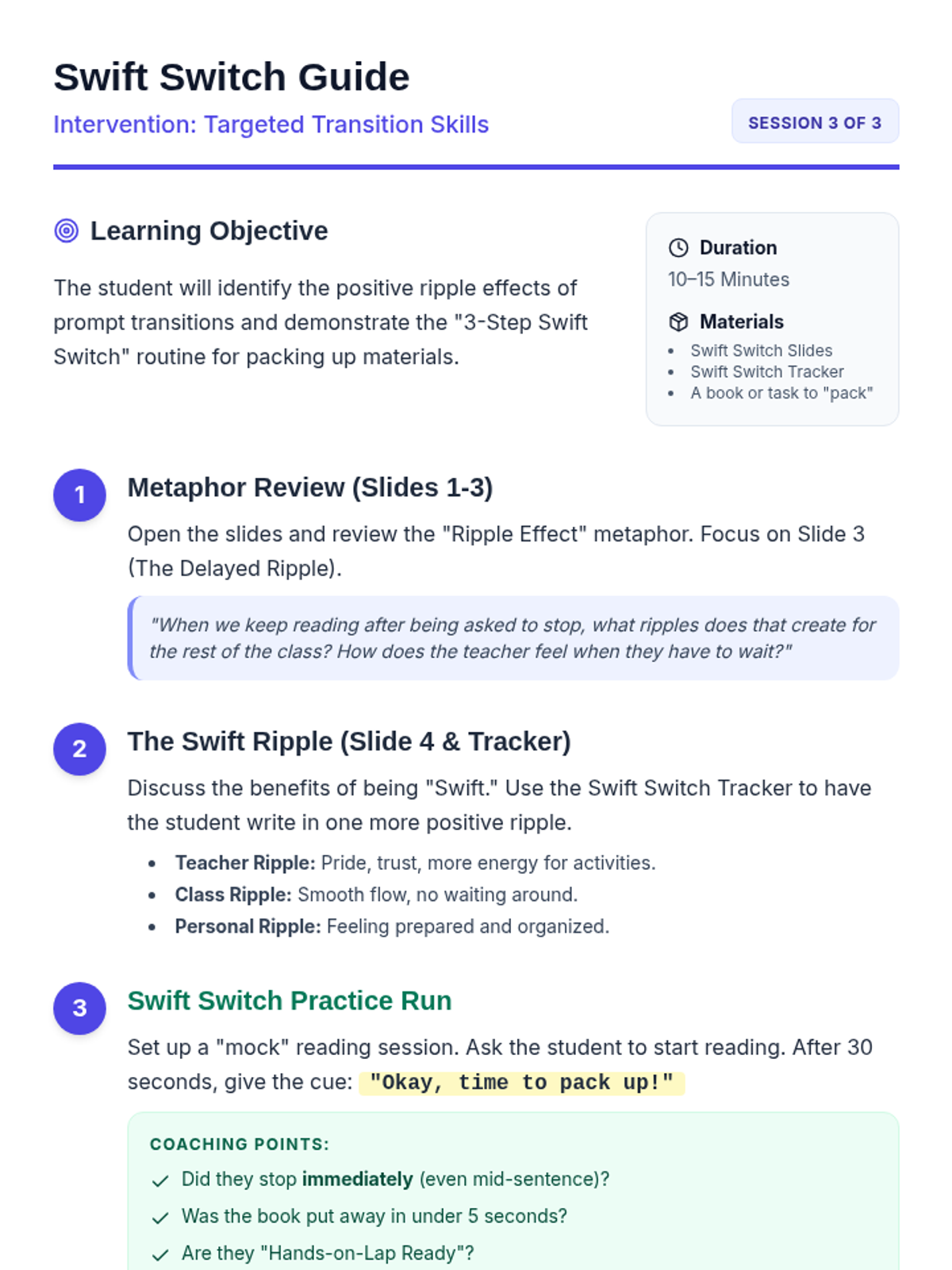
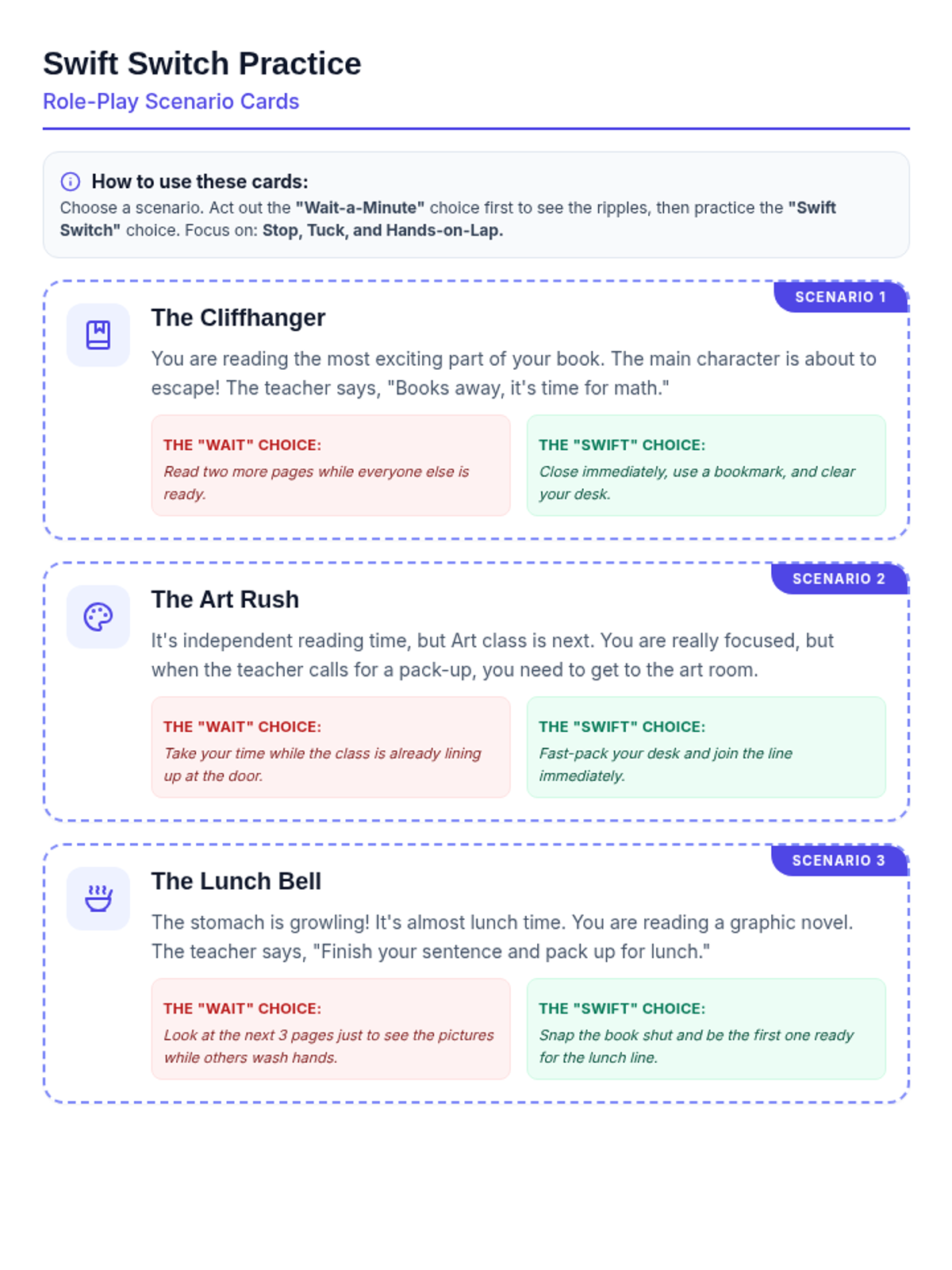
A targeted intervention focused on the transition skill of packing up materials promptly, highlighting the positive ripple effects of being ready for the next part of the day.
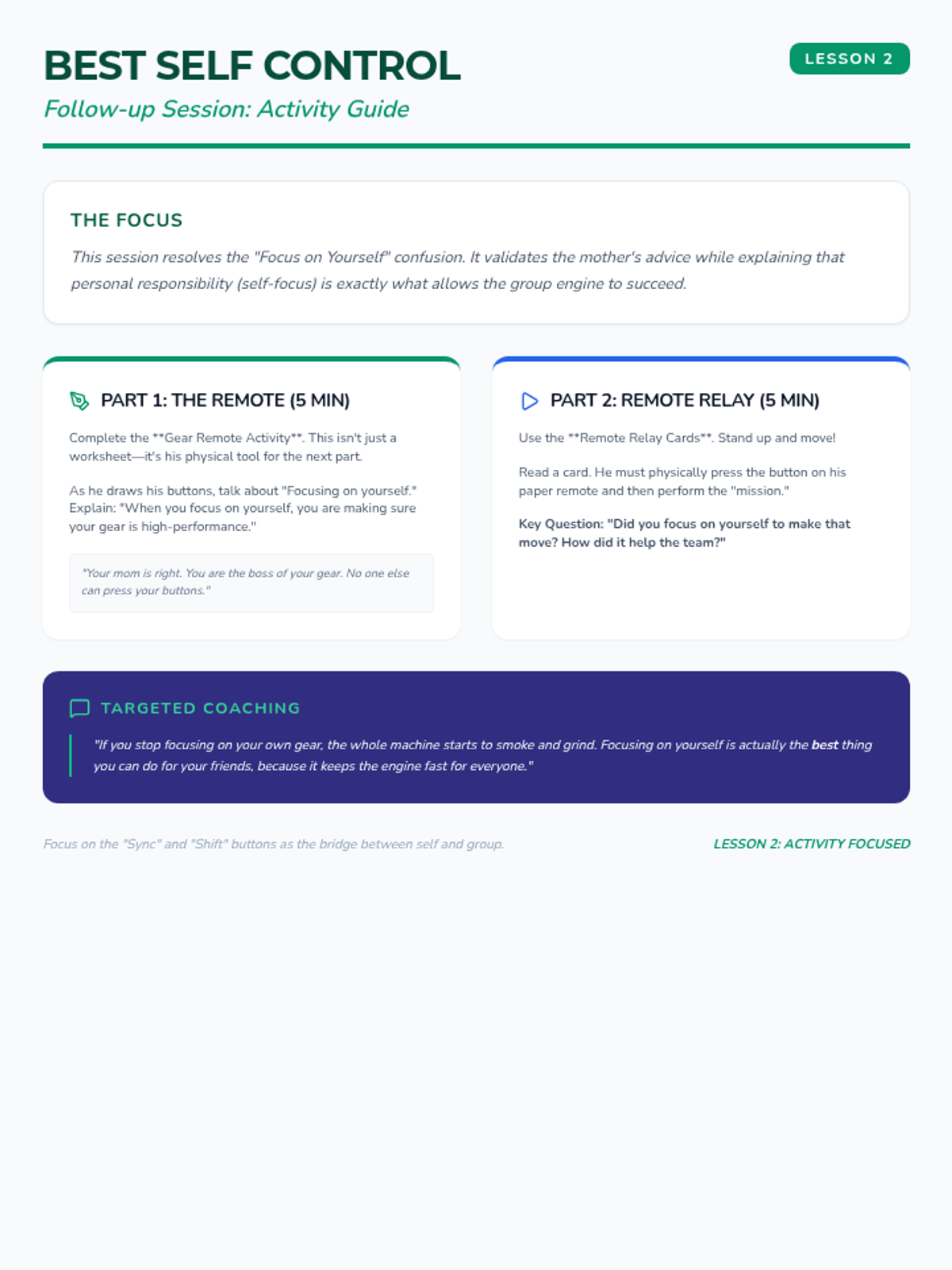
A follow-up session that clarifies the "Focus on Self" advice. It teaches that focusing on yourself means taking 100% responsibility for your own "Remote Control" to ensure your gear turns when the team needs it. Mostly activity-based.
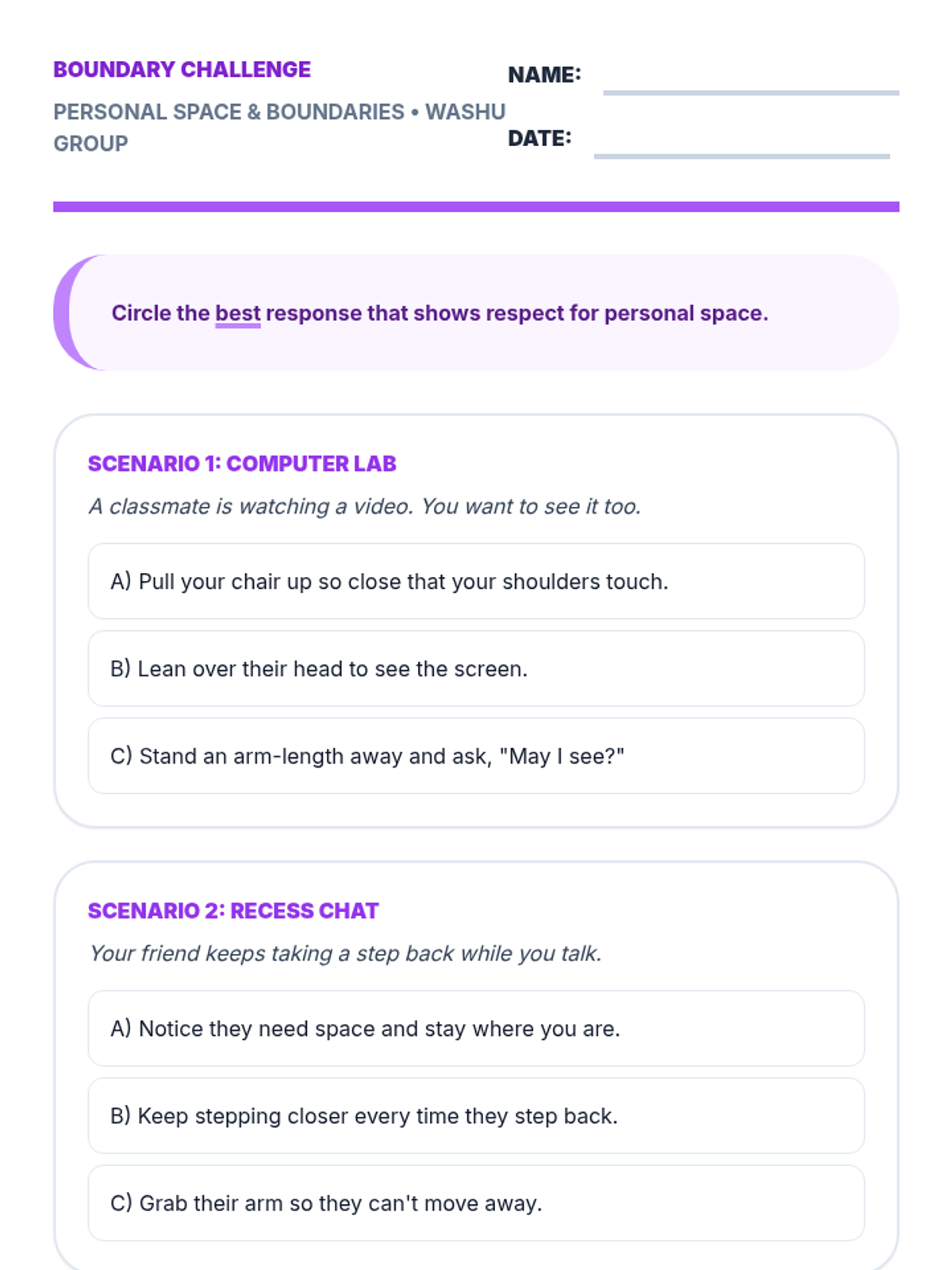
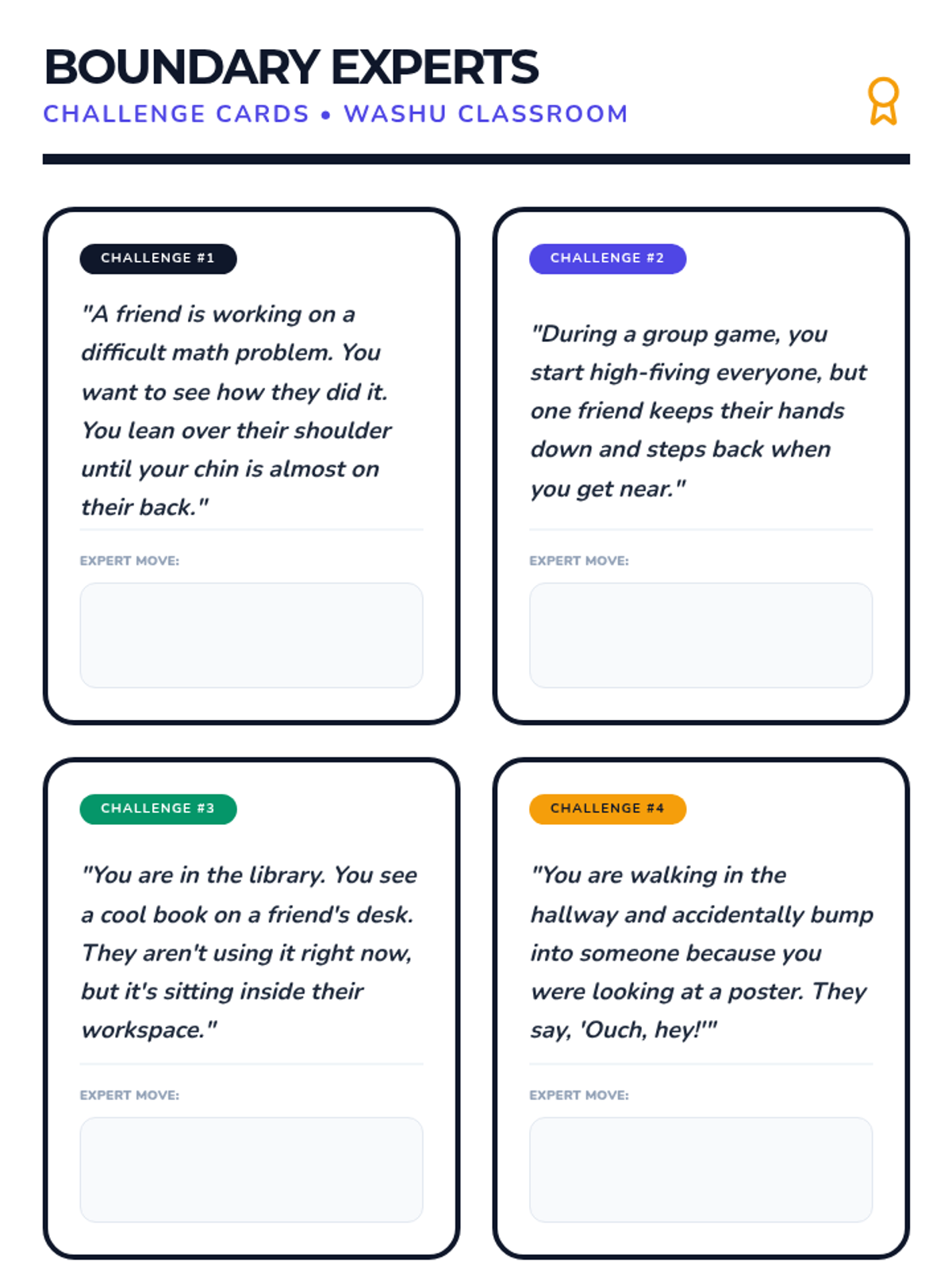
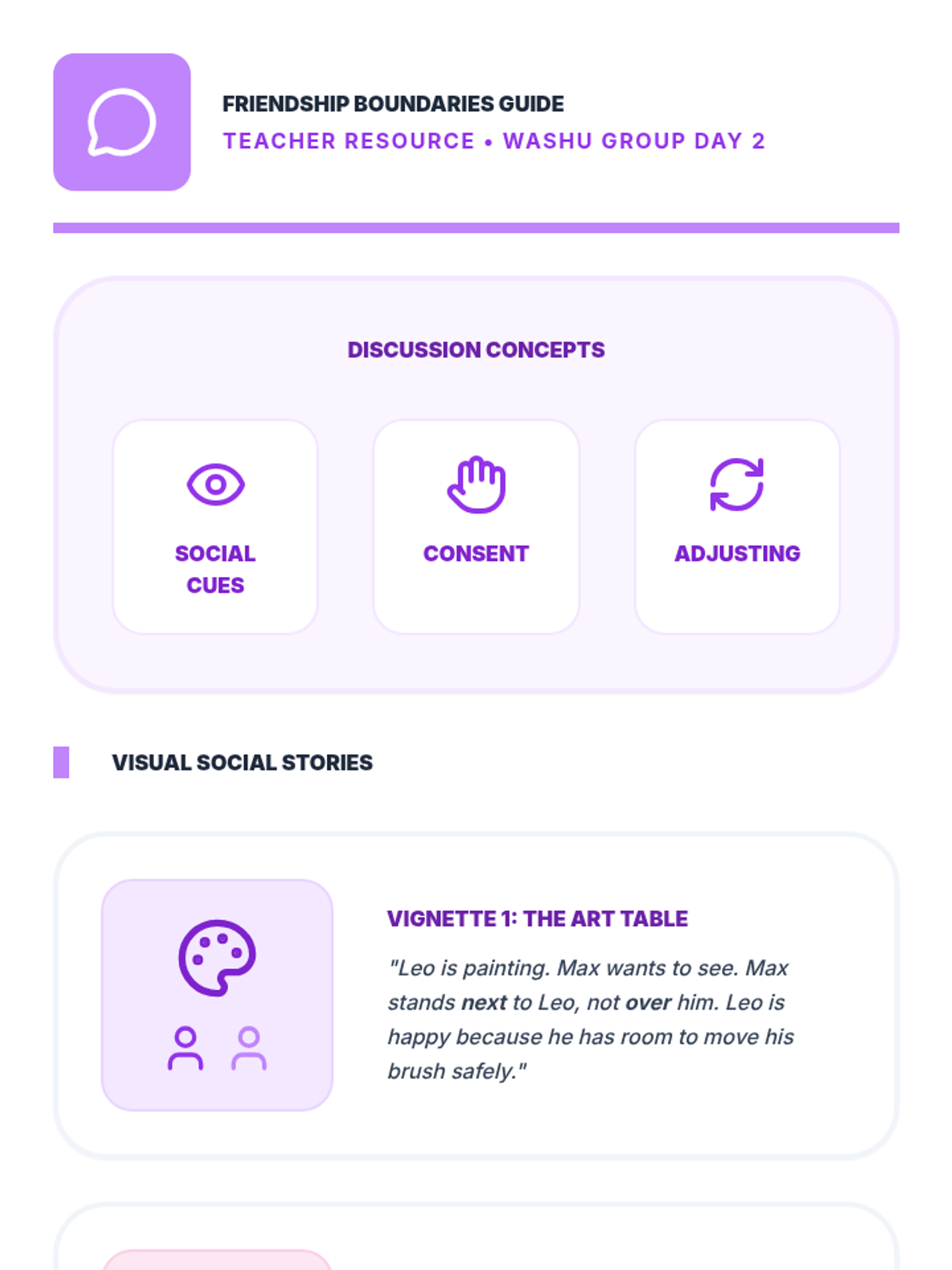
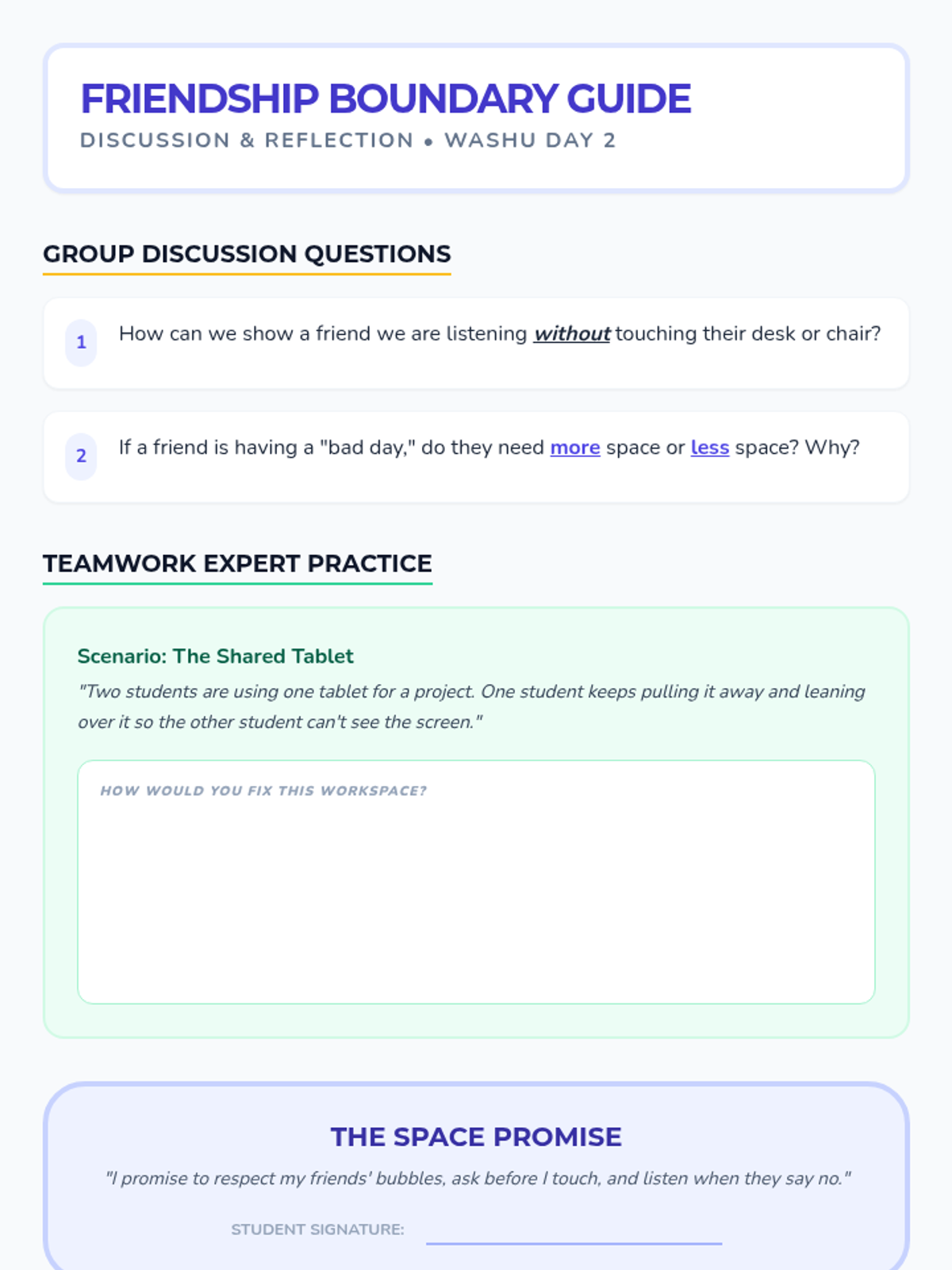
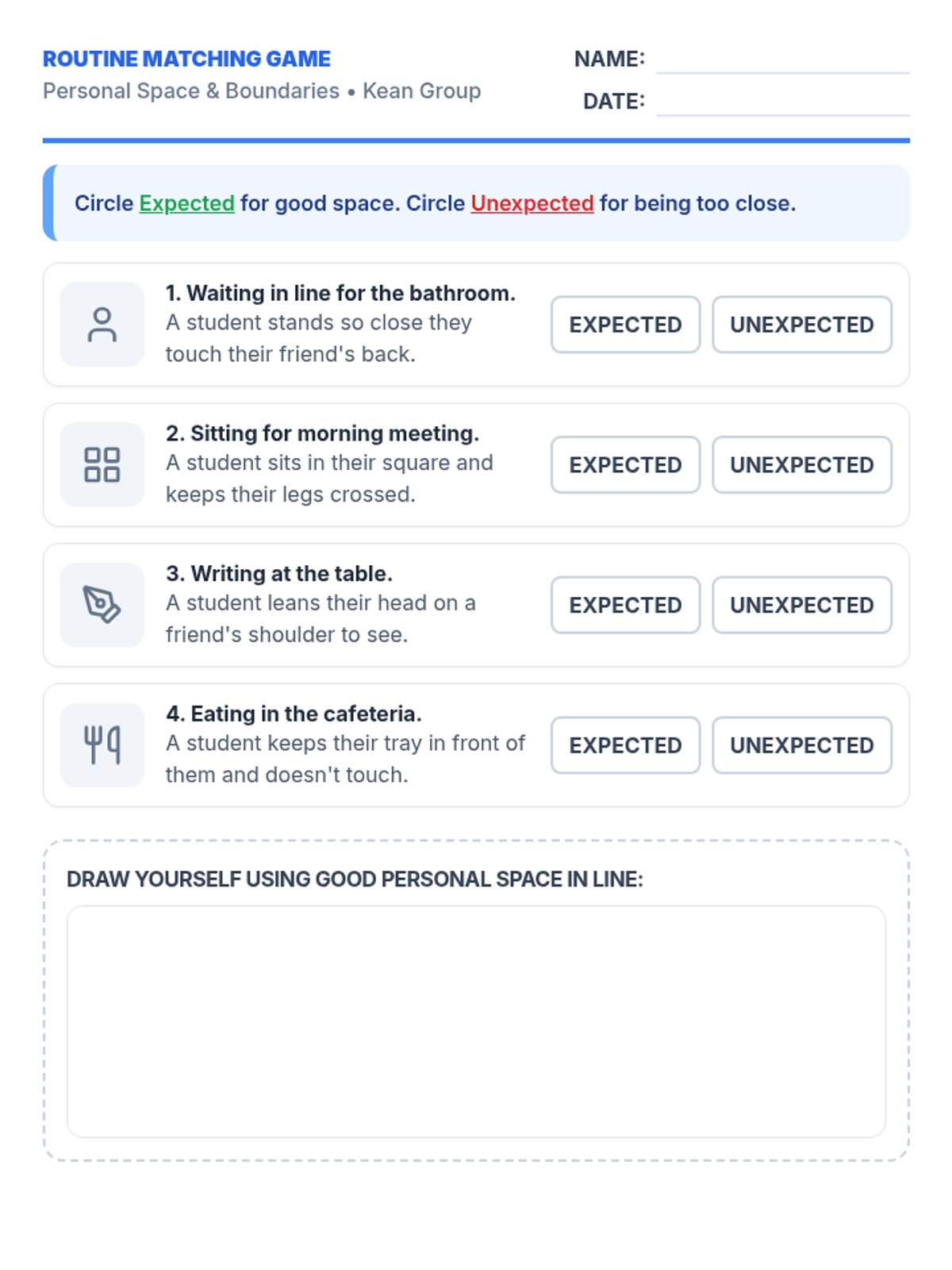
Advanced boundary application for WashU students, focusing on social challenges and respecting personal space within friendships and group work.
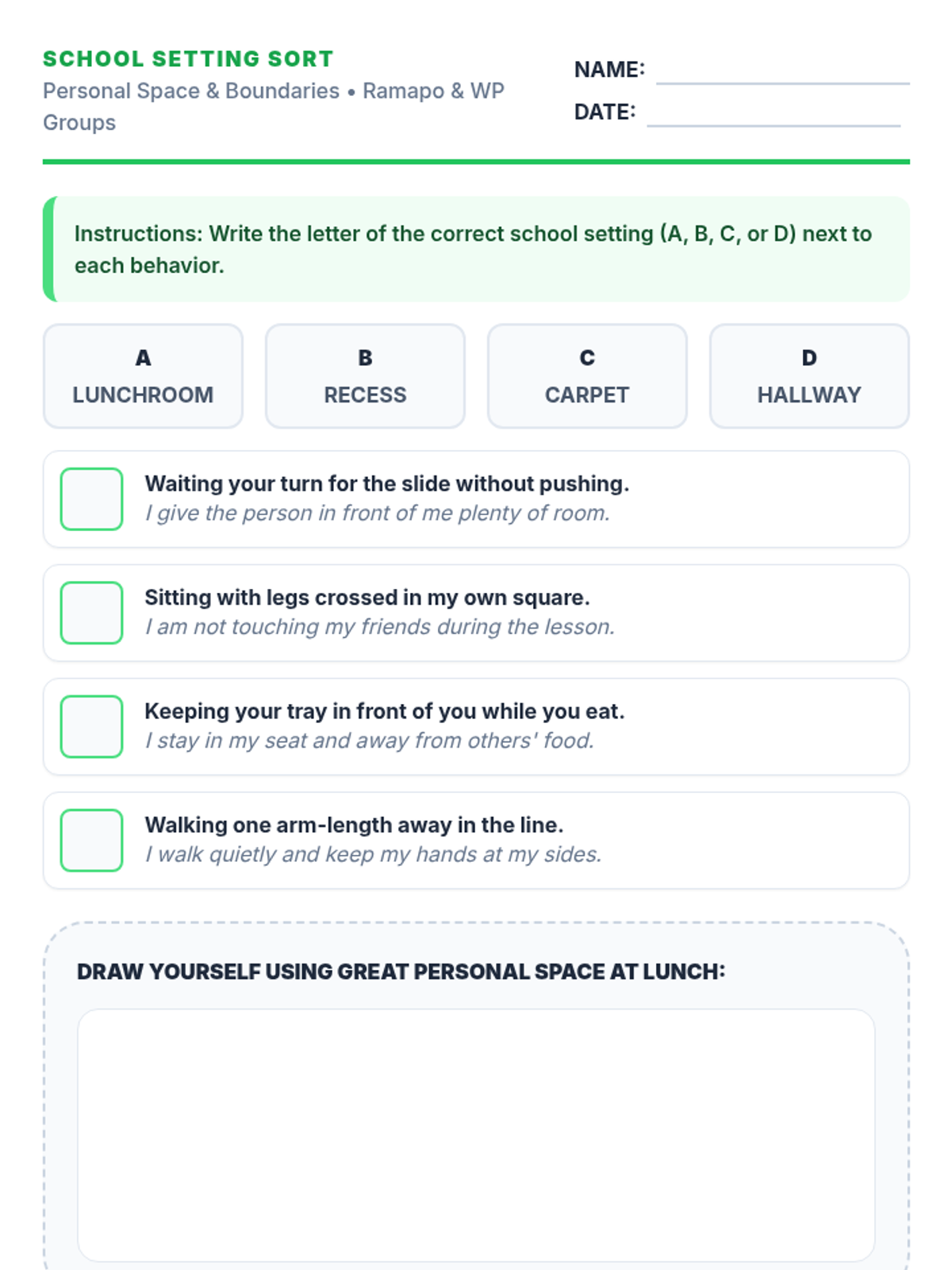
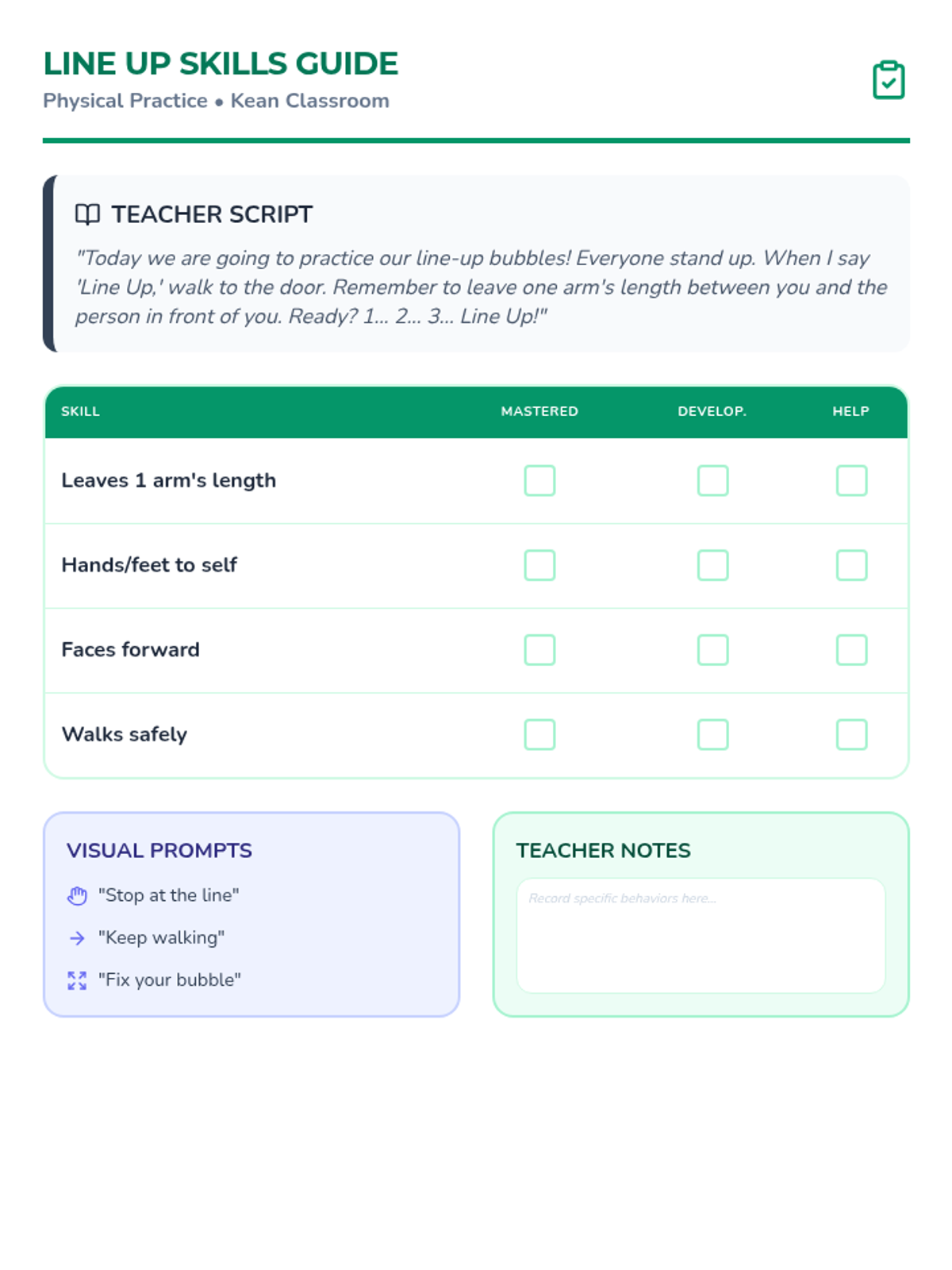
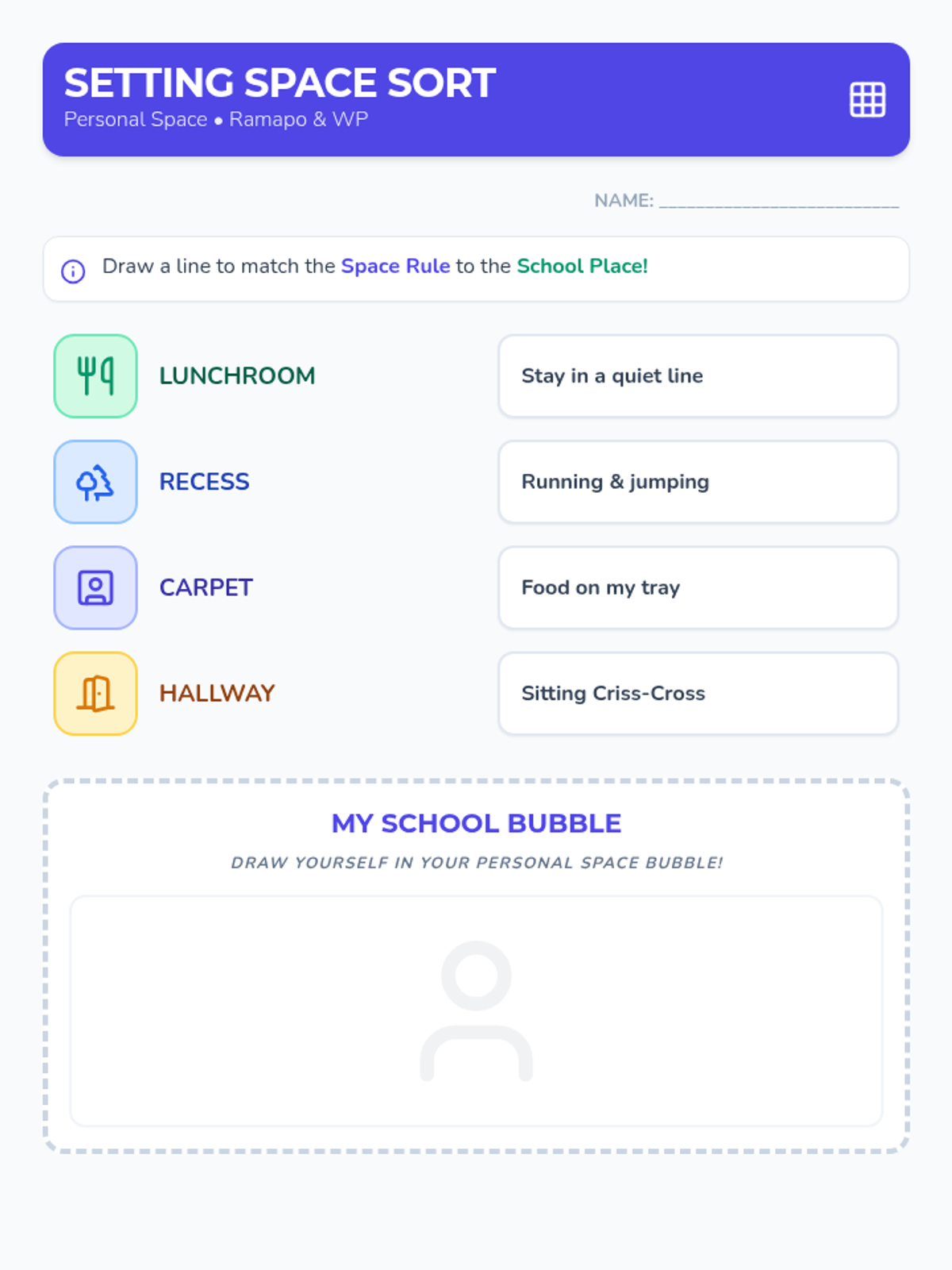
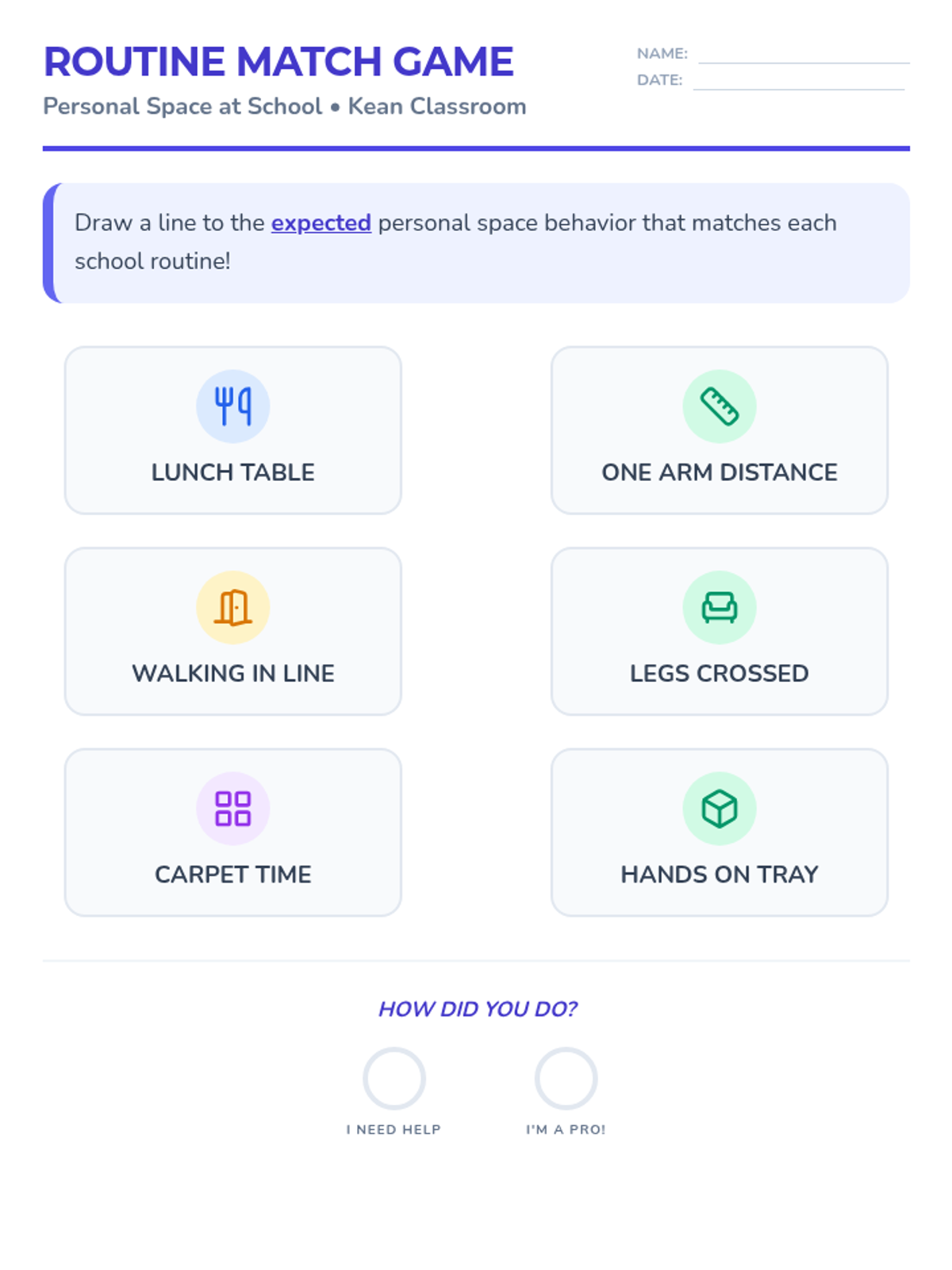
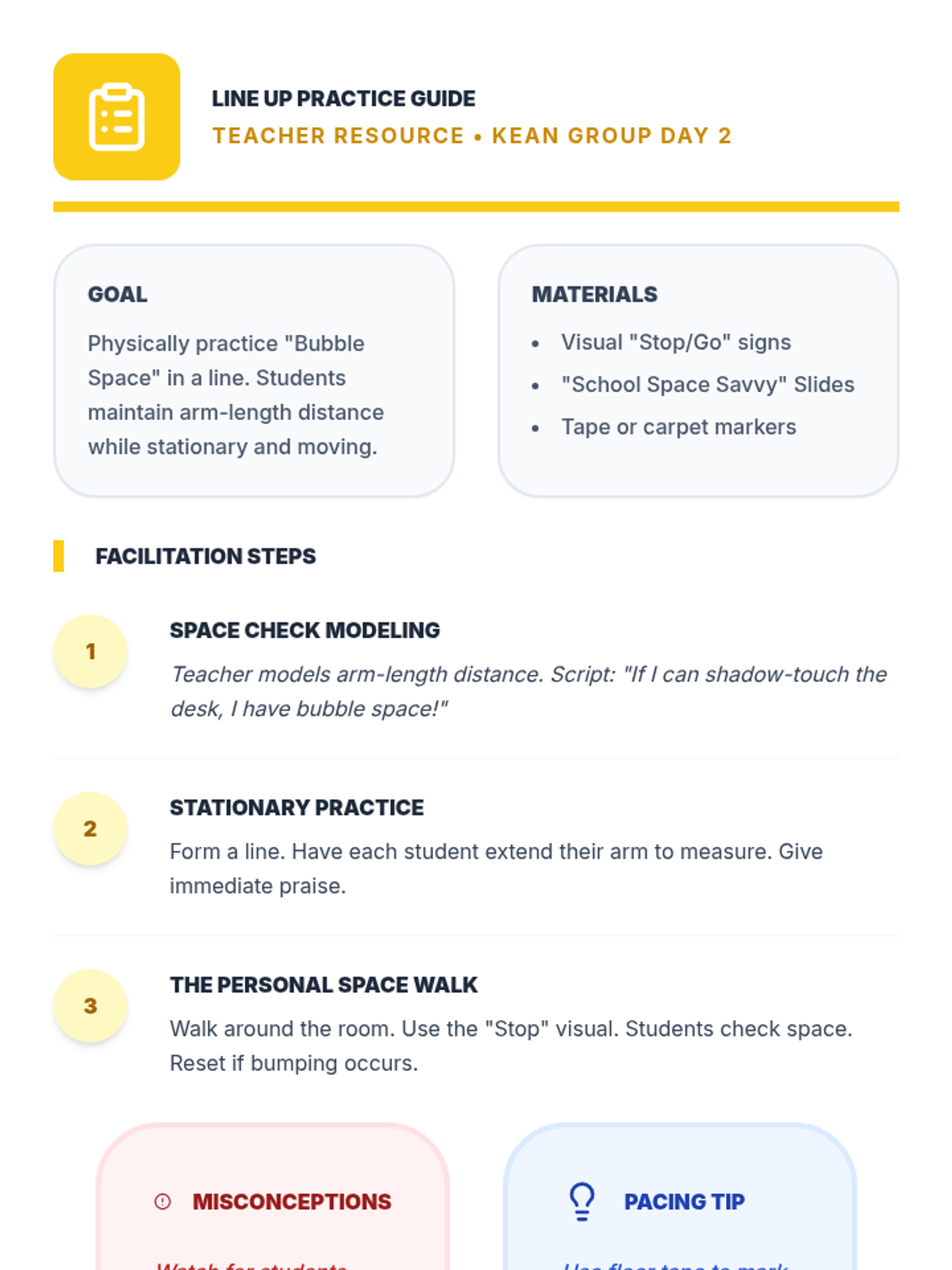
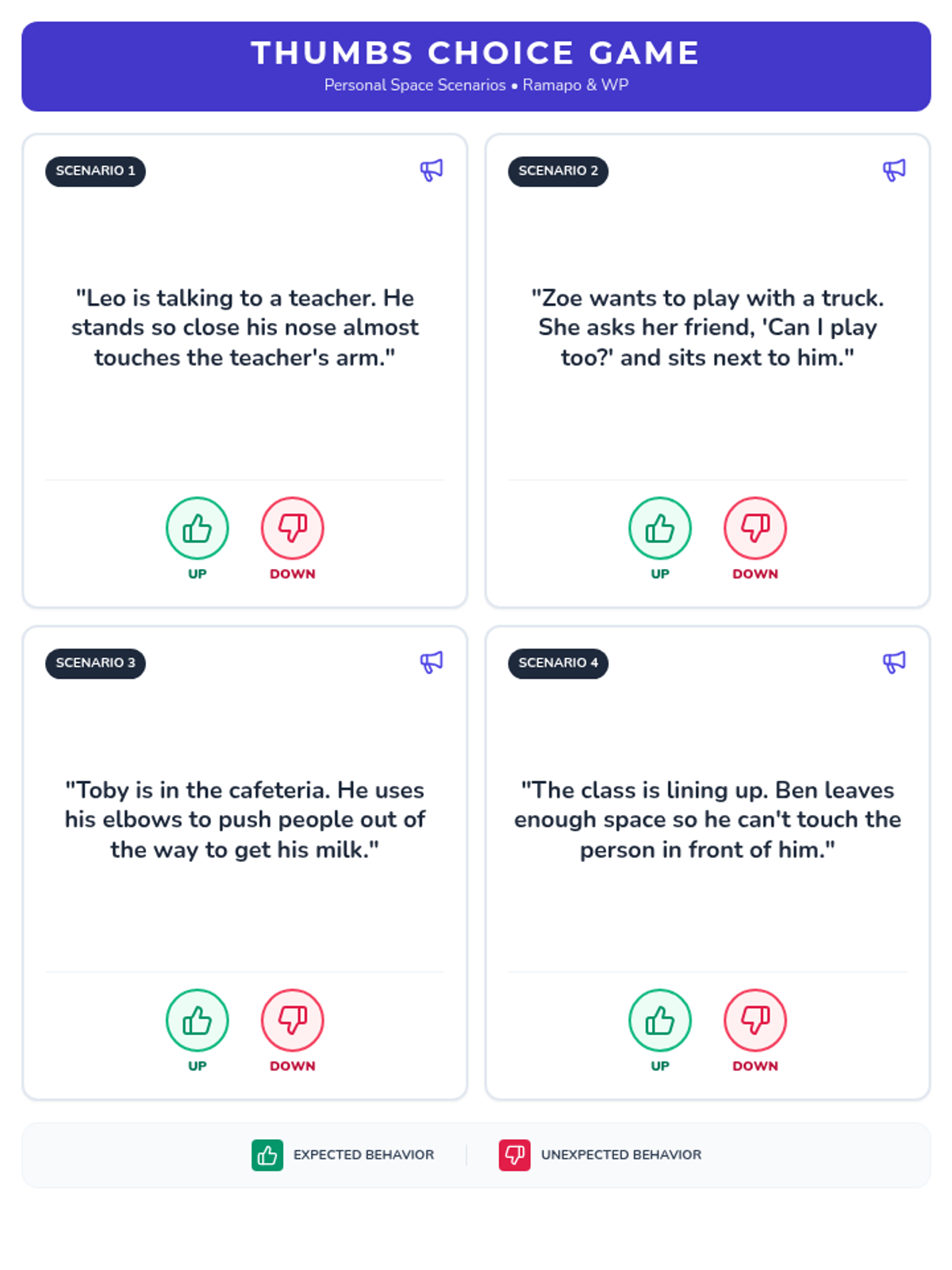
Involves hands-on practice for Kean (lining up) and sorting activities for Ramapo/WP to categorize expected vs. unexpected behaviors in specific school settings.
Focuses on identifying and practicing correct personal space behaviors during school routines such as lunch, recess, and transitions for Kean, Ramapo, and WP students.
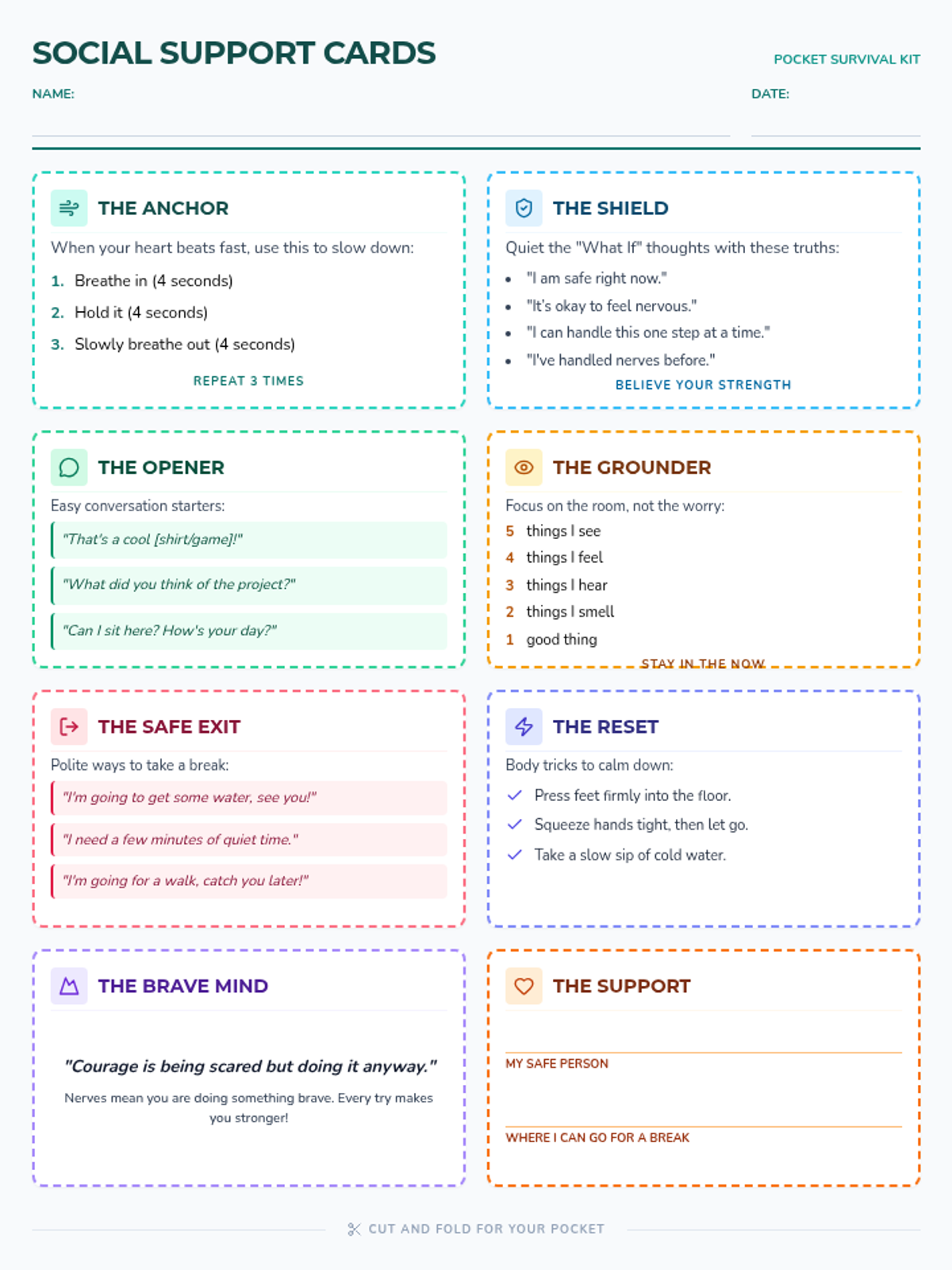
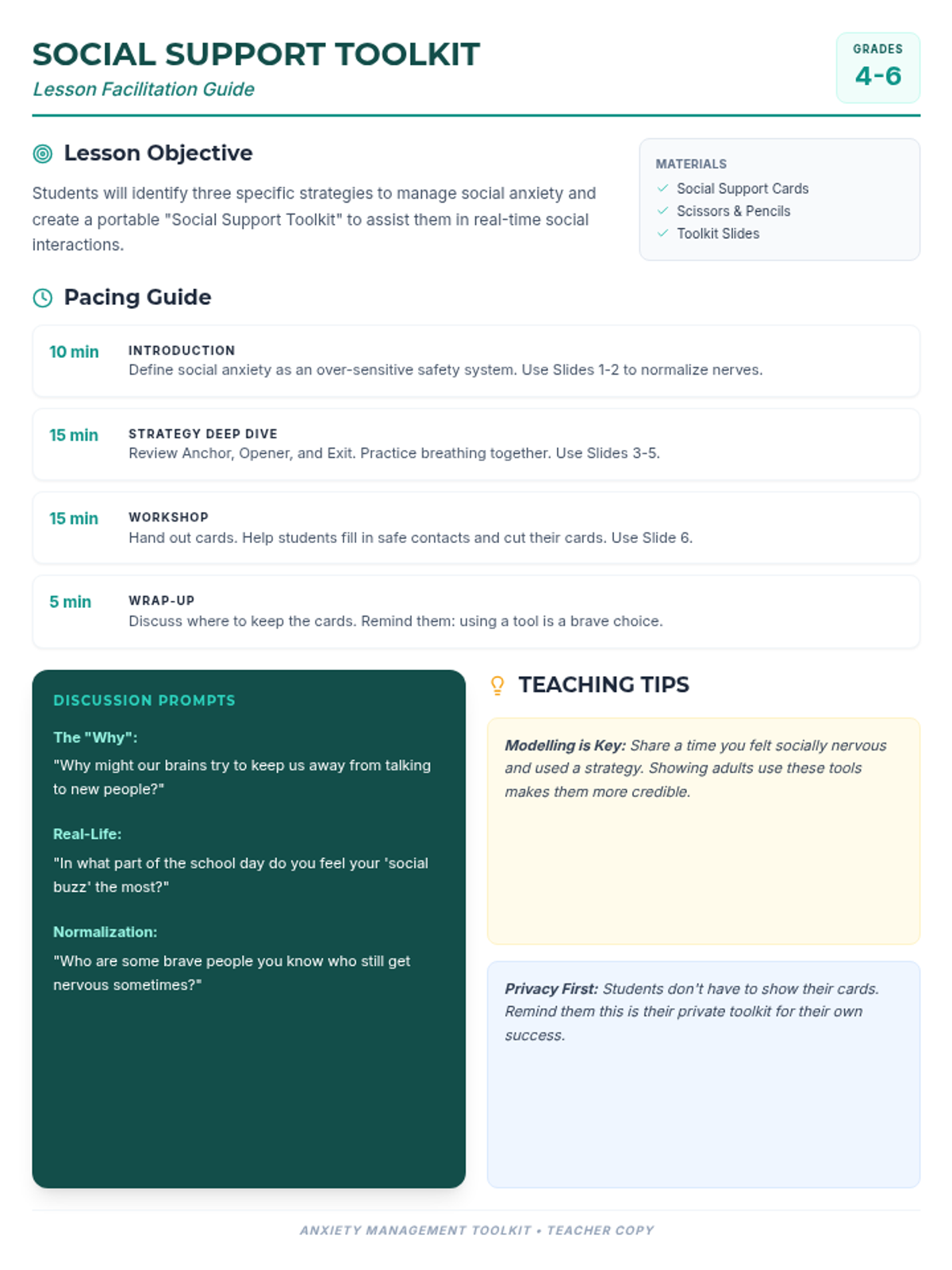
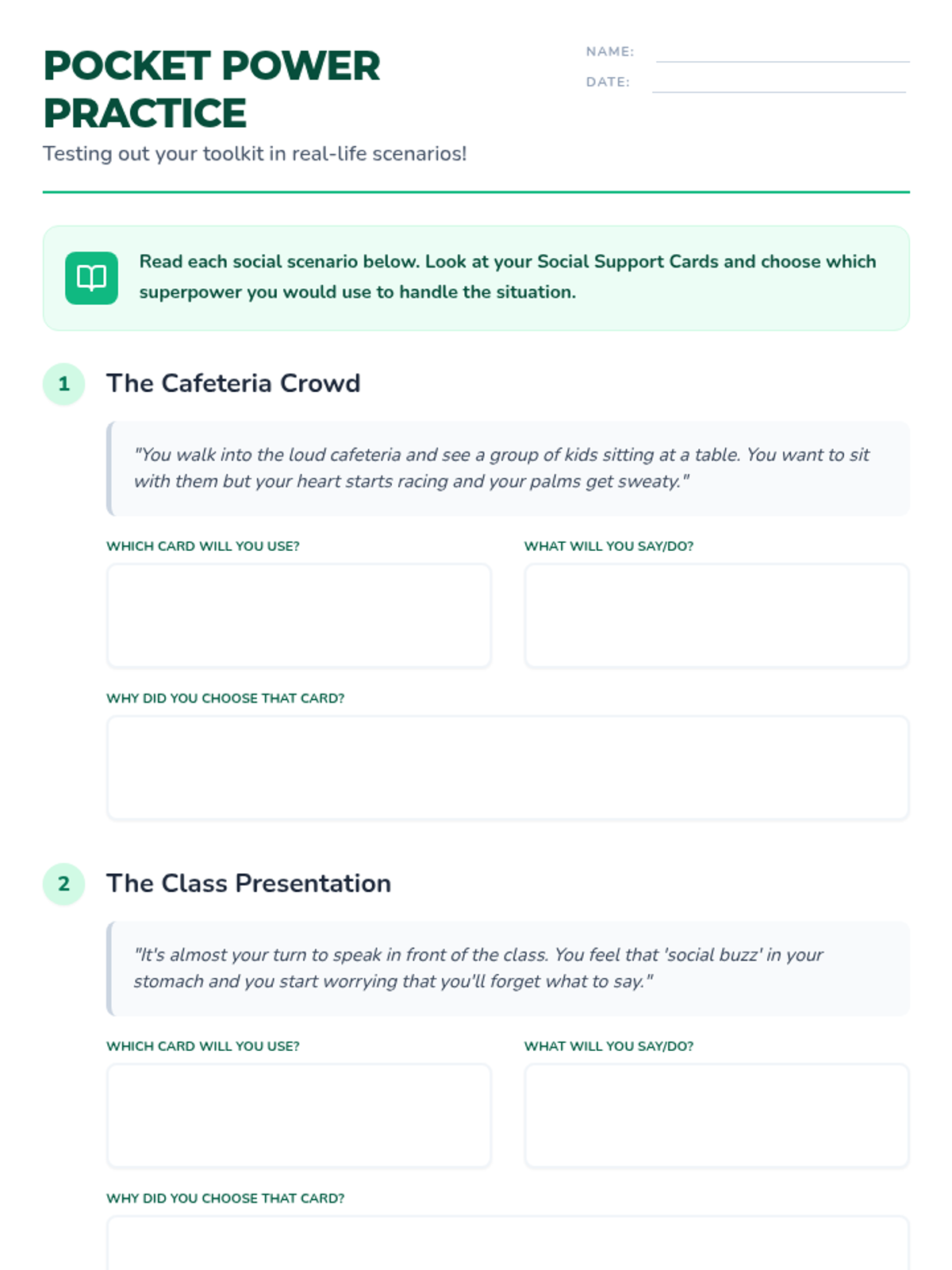
This lesson provides 5th-grade students with practical, portable tools to manage social anxiety in real-time. Through pocket-sized strategy cards, students learn grounding, breathing, and communication techniques to navigate social interactions with confidence.
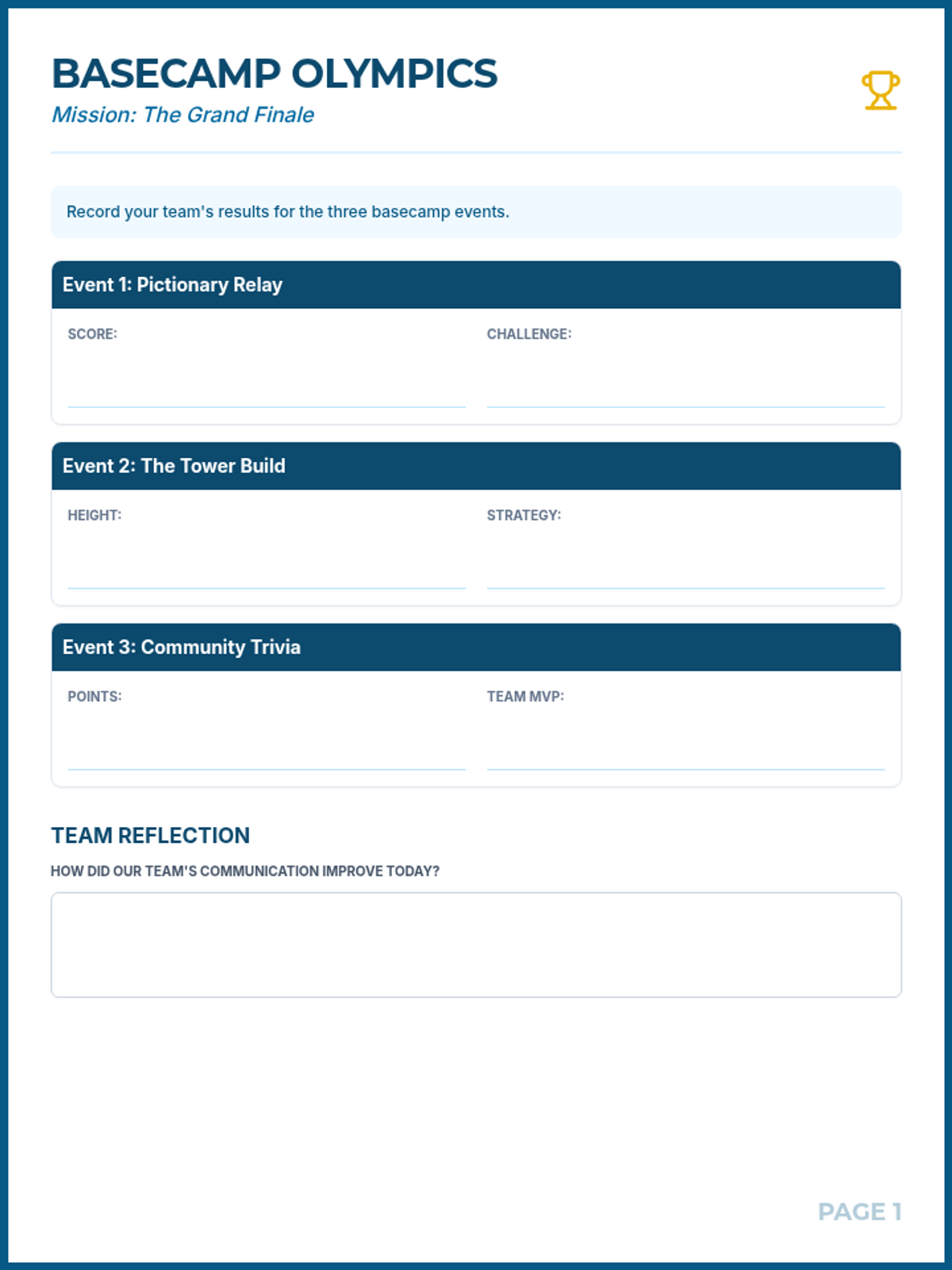
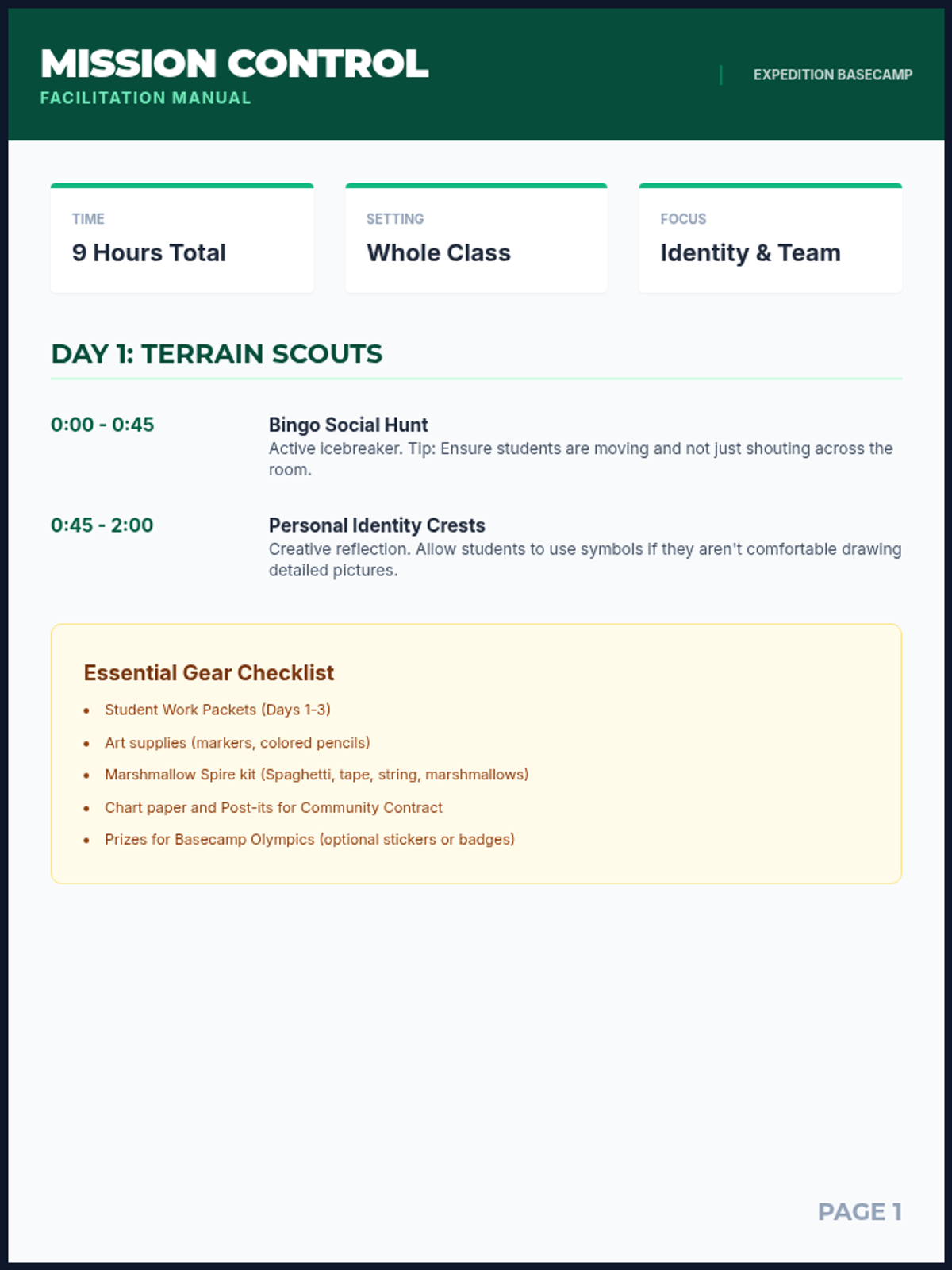
The final day celebrates the new community with a 'Basecamp Olympics' event and a reflective 'Letter to Future Self' to set the tone for the year ahead.
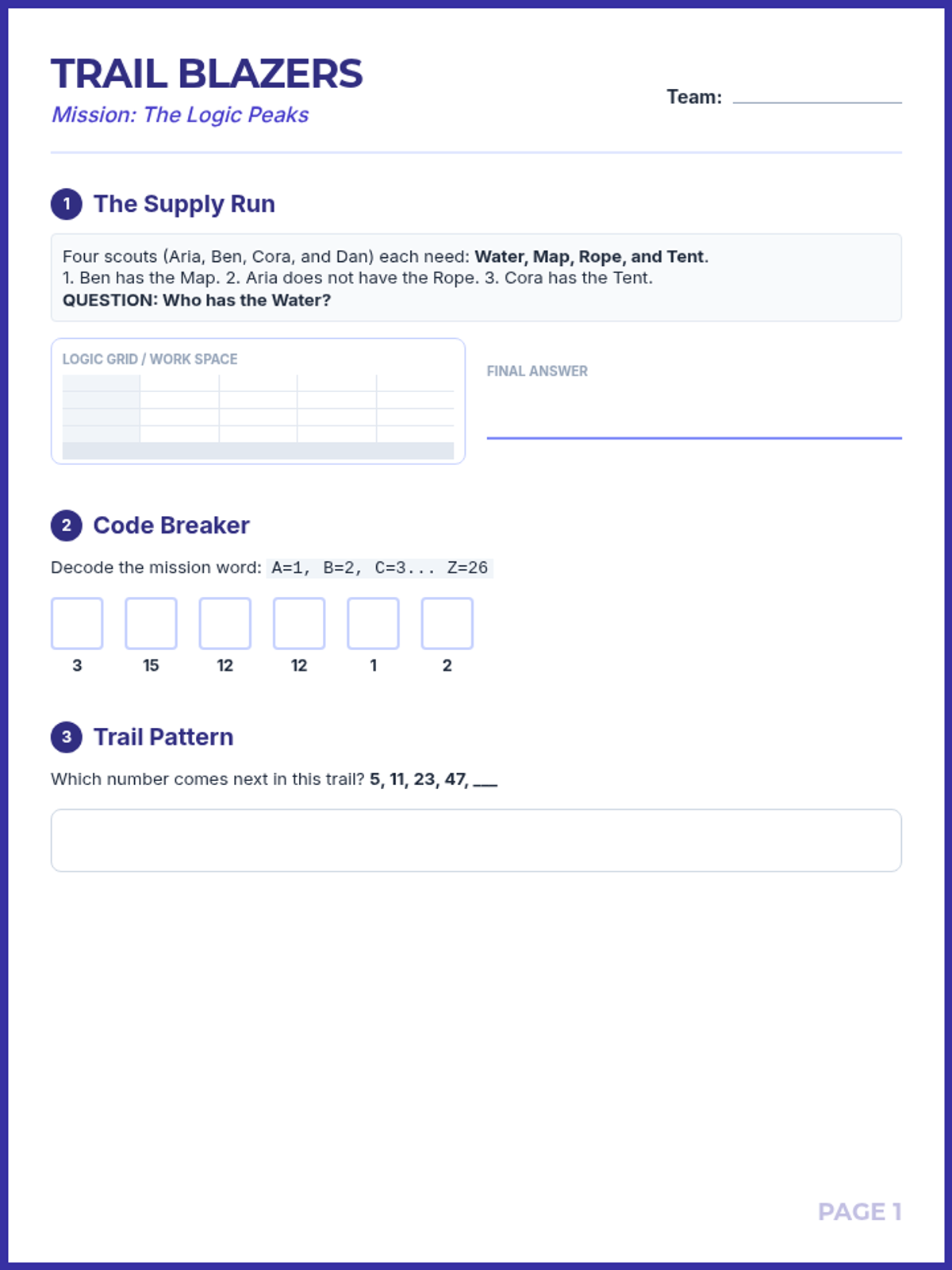
Day two shifts focus to collaborative problem-solving with an engineering challenge and the collective creation of a classroom 'Community Contract'.
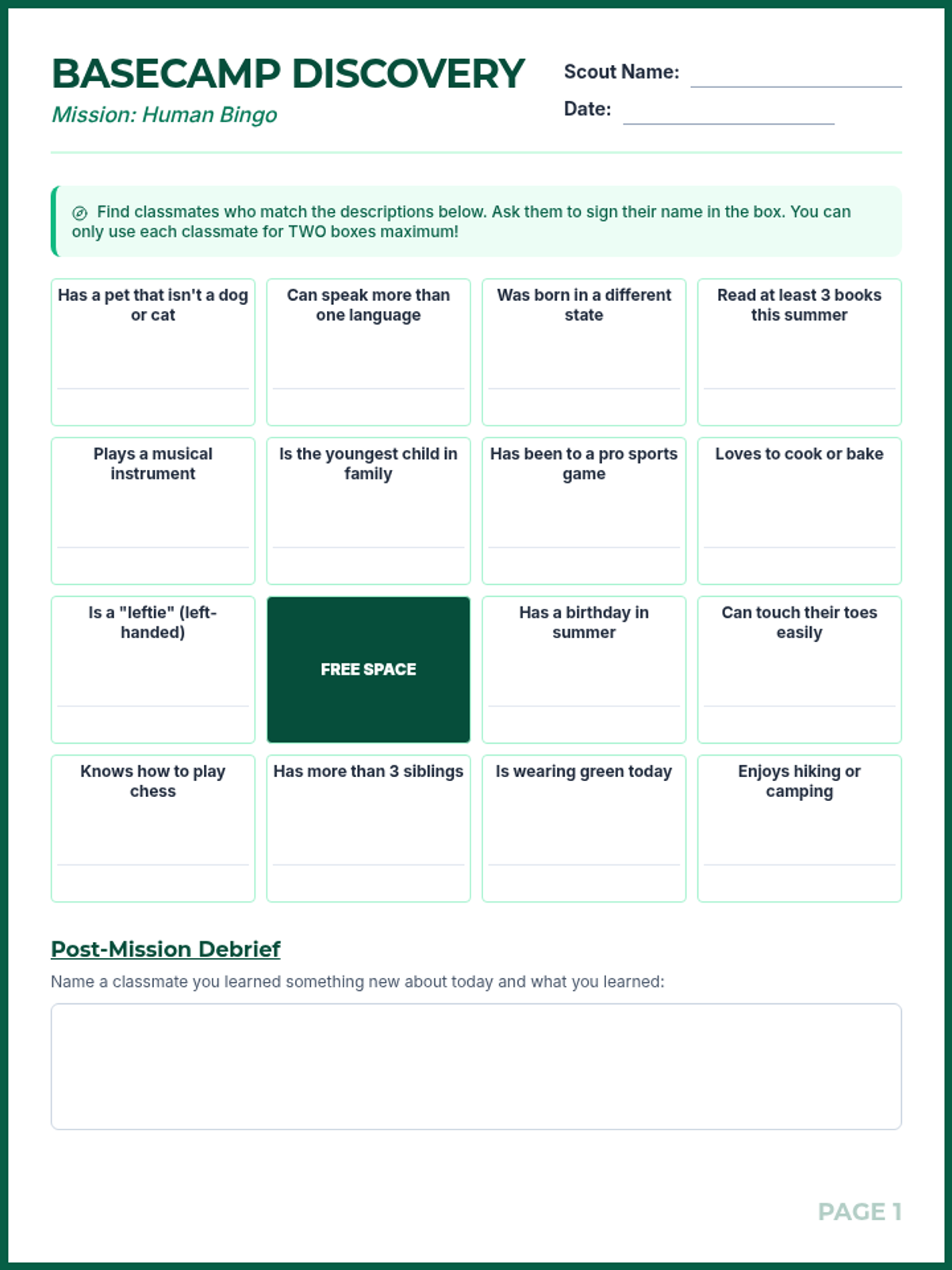
The first day of basecamp focuses on individual identity and initial team bonds through a 'Human Bingo' social hunt and a creative 'Personal Crest' project.
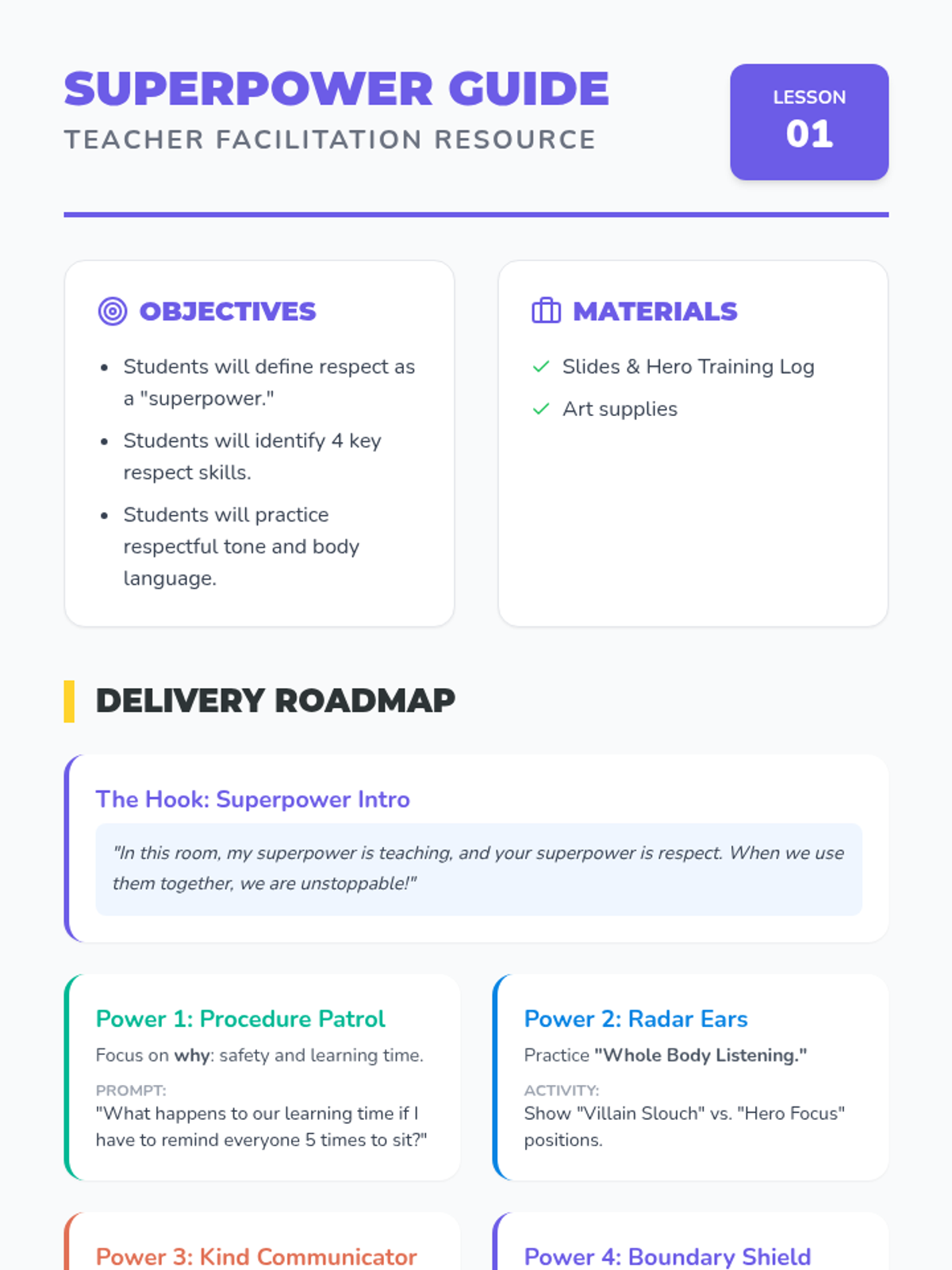
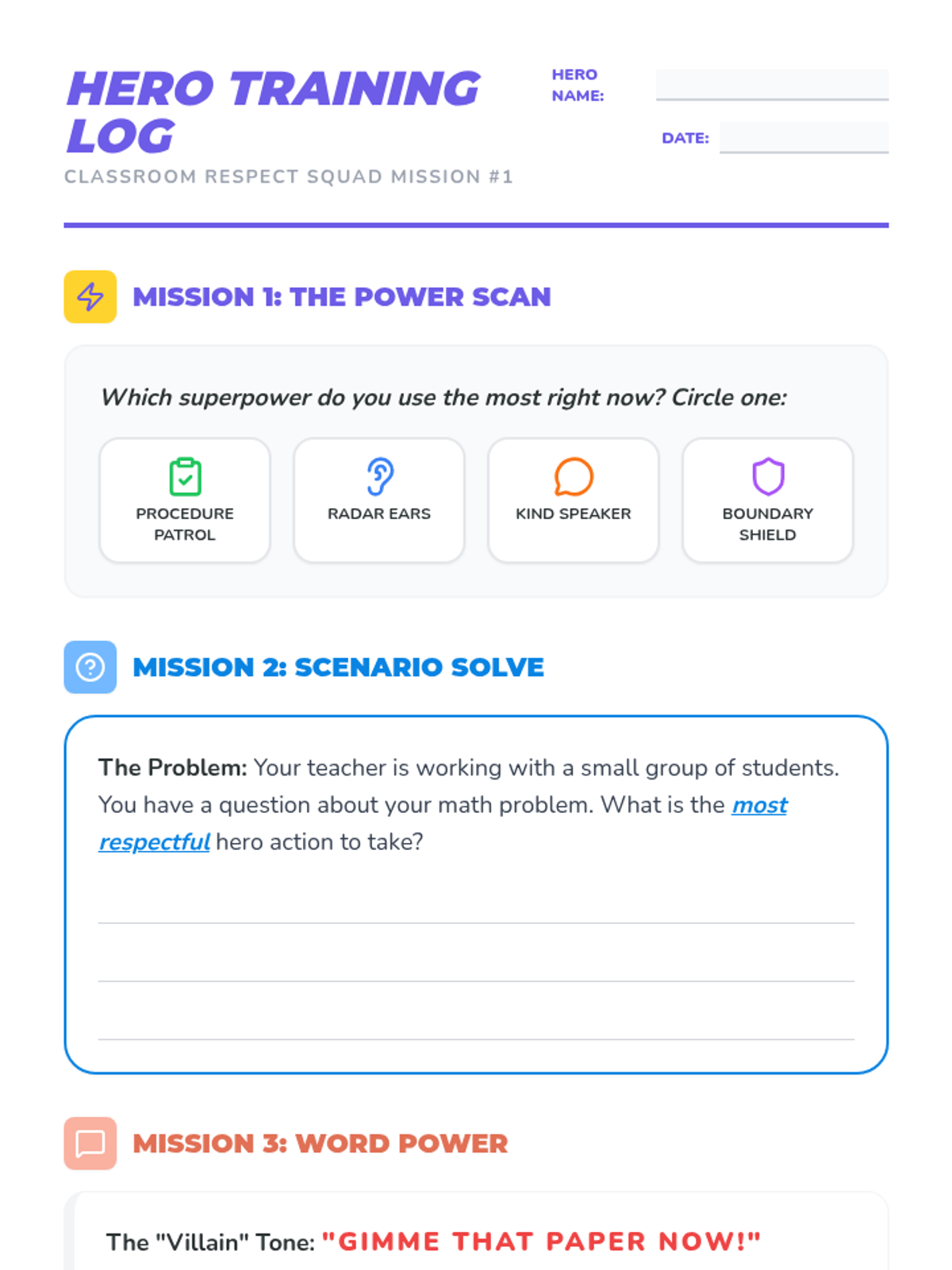
A lesson designed for grade 3 students to explore the concept of respect toward teachers through the lens of 'School Superpowers,' focusing on procedures, active listening, boundaries, and kind communication.
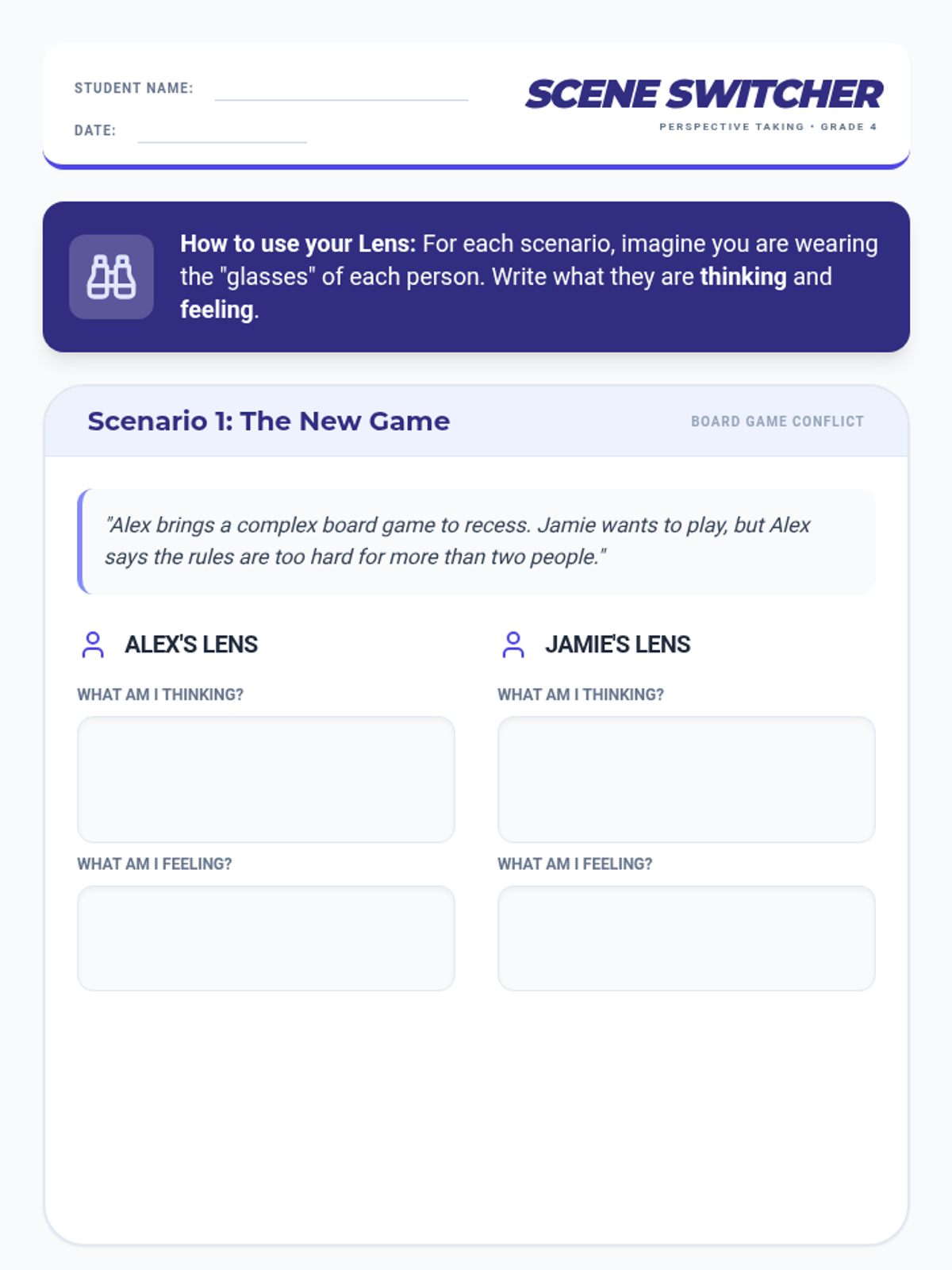
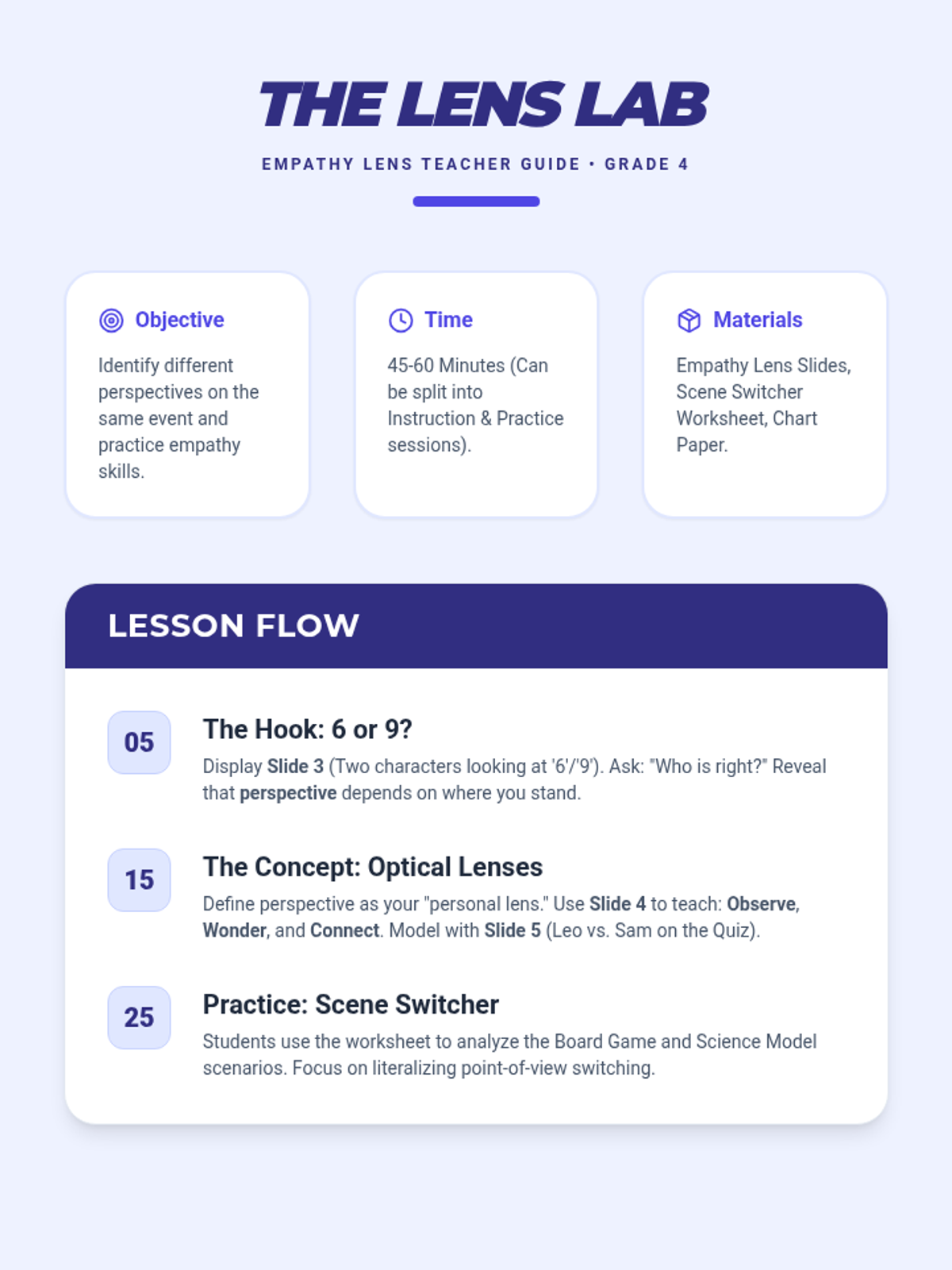
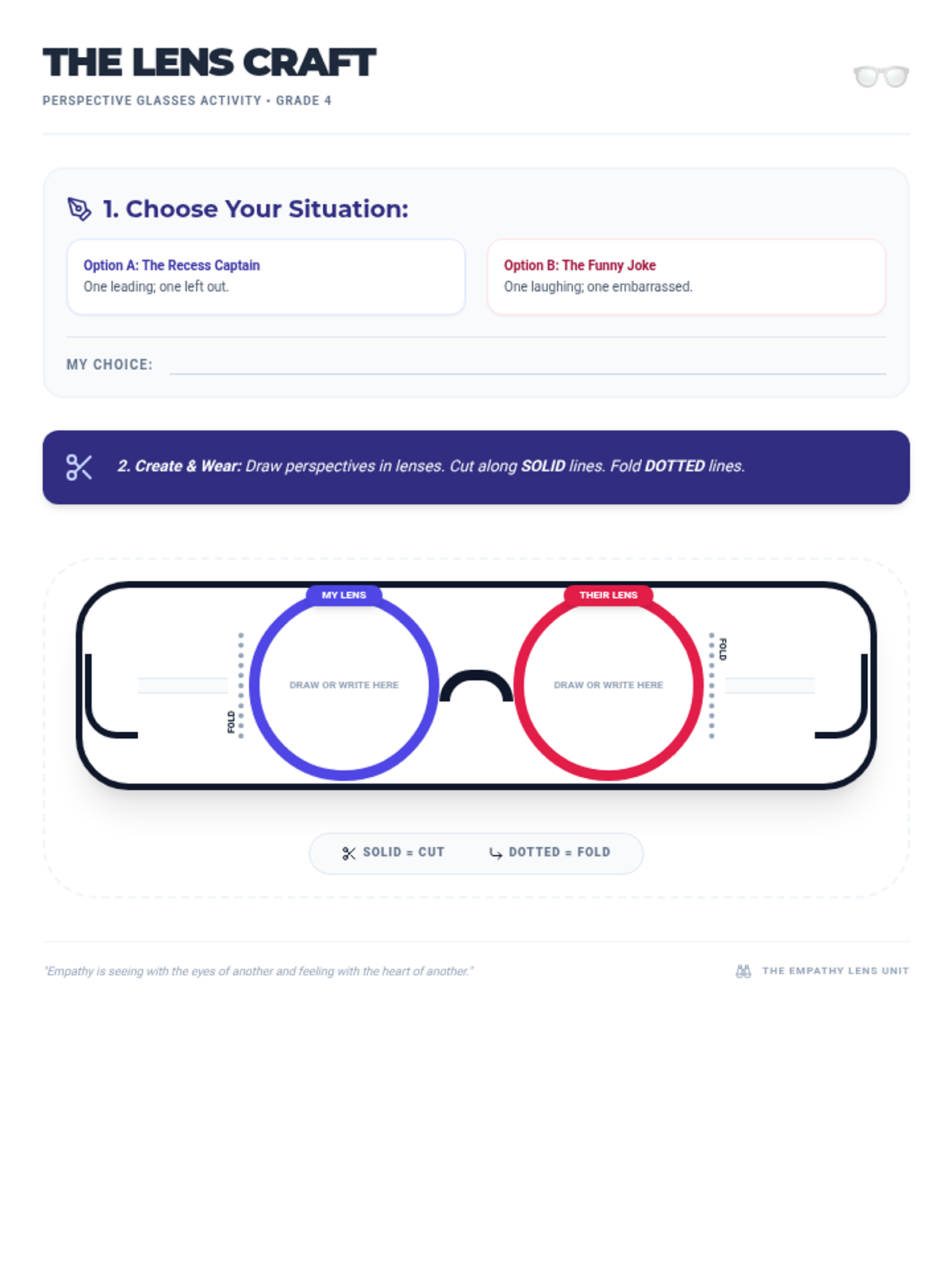
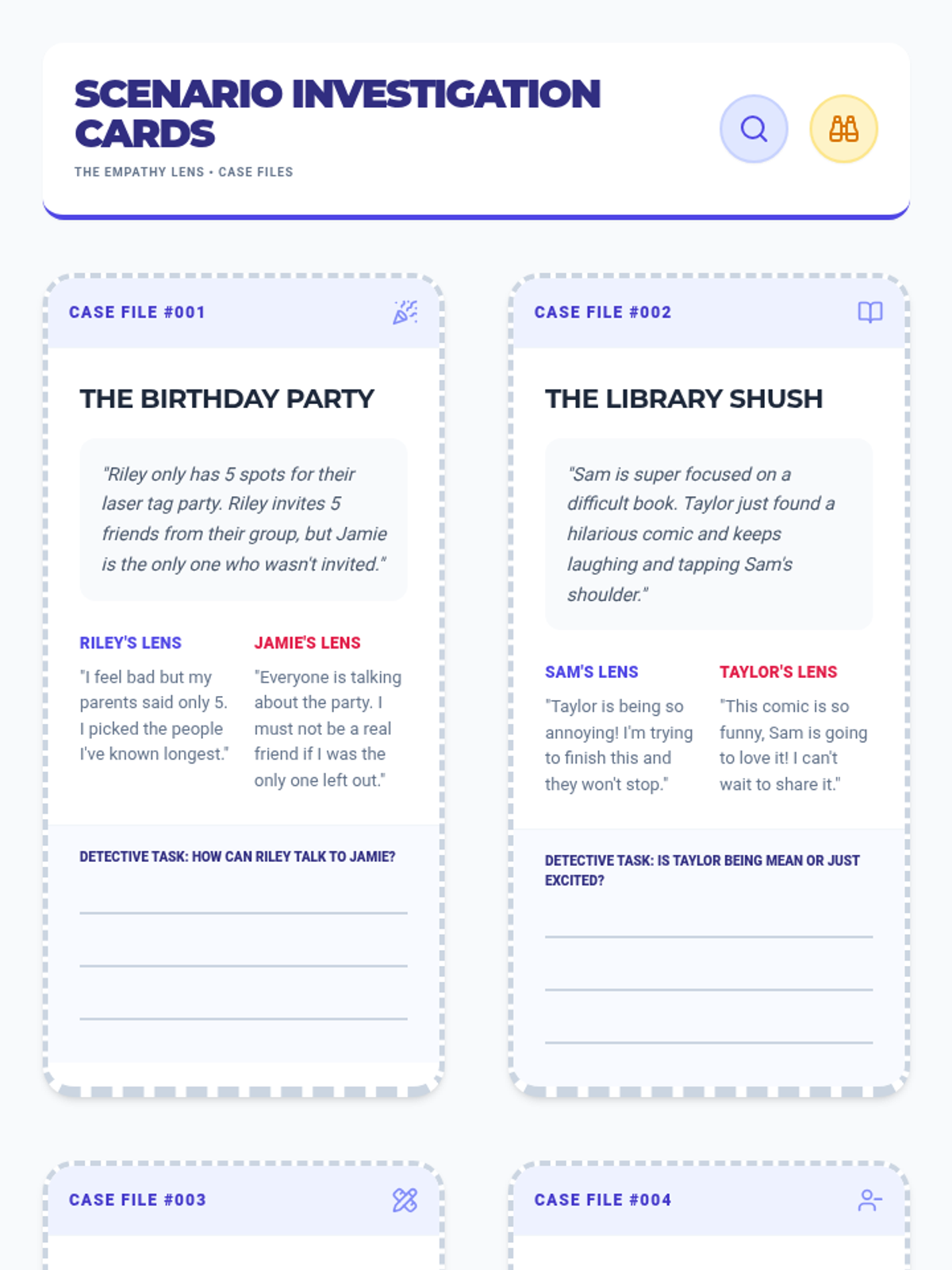
A perspective-taking lesson for fourth graders using the 'Optical Lens' metaphor. Students learn to recognize that two people can experience the same event differently and practice identifying others' feelings and thoughts.
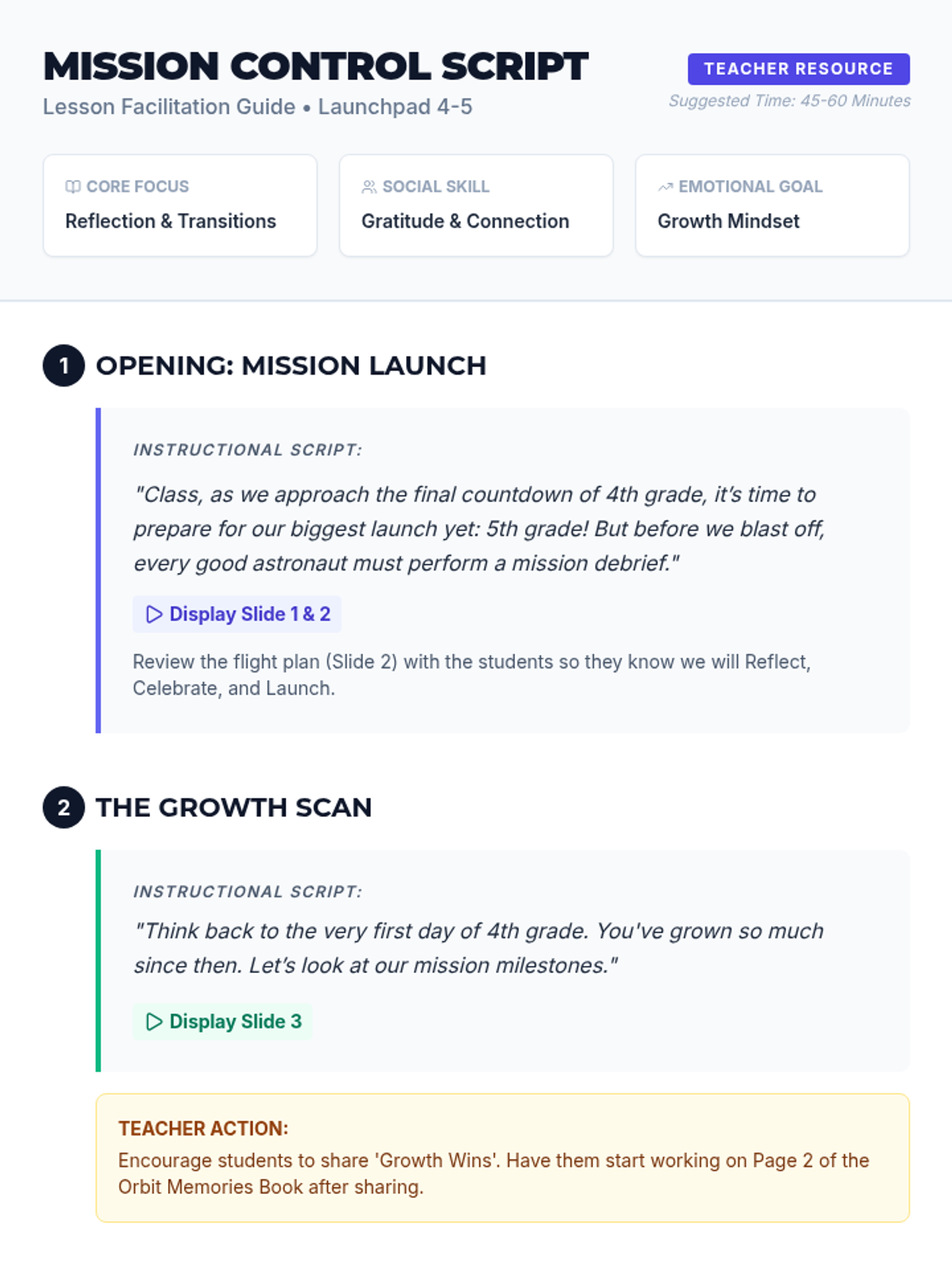
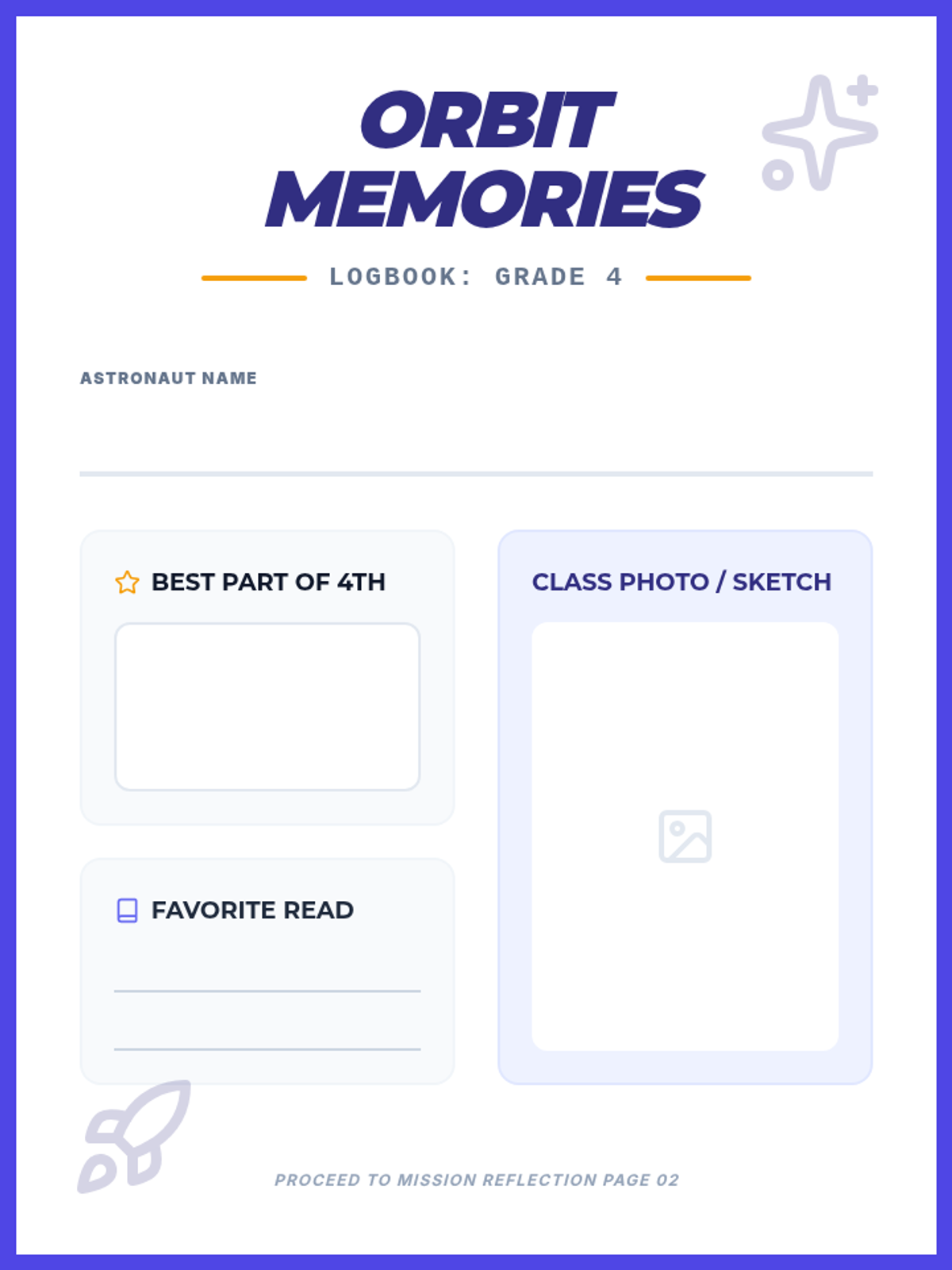
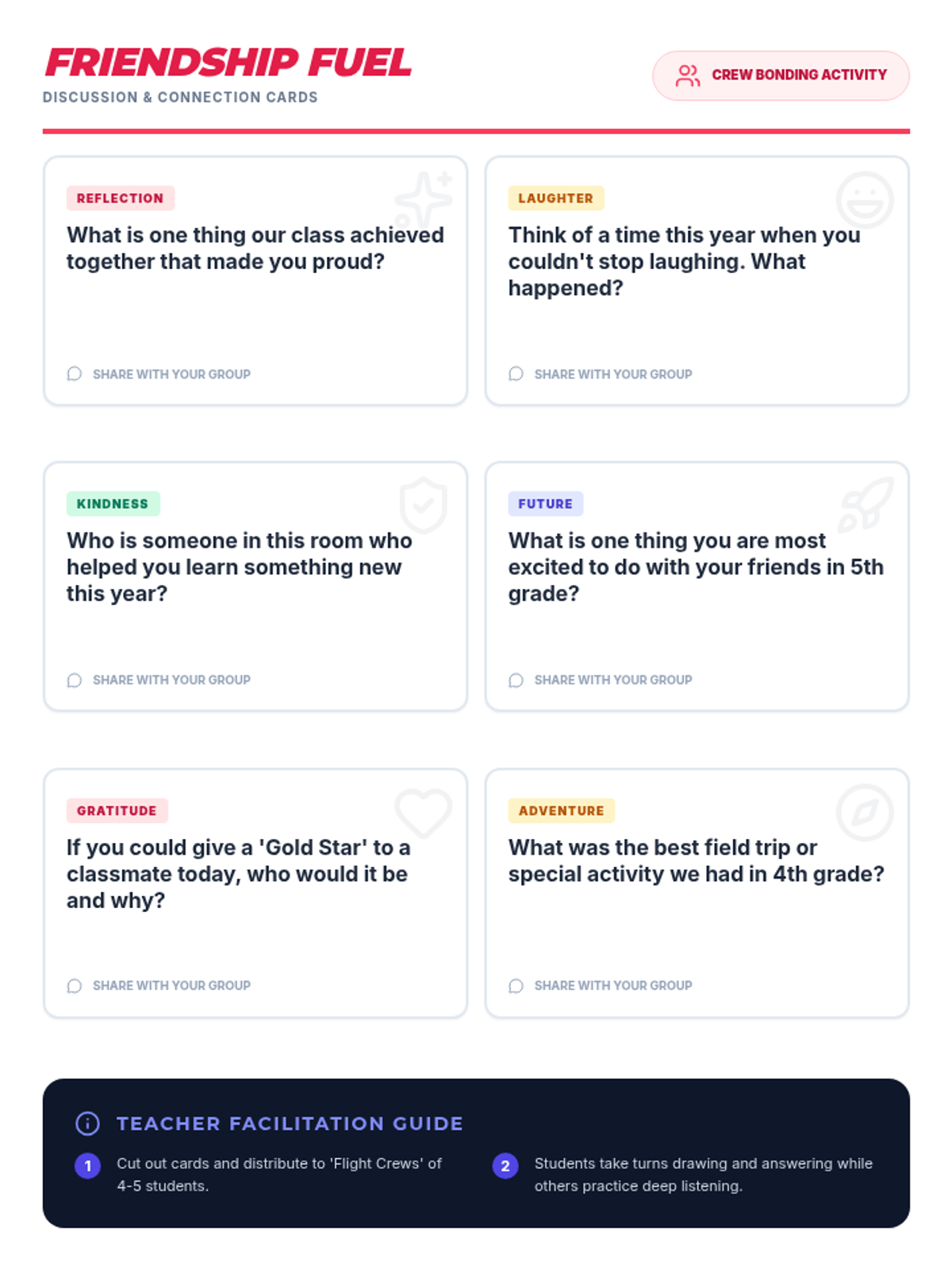
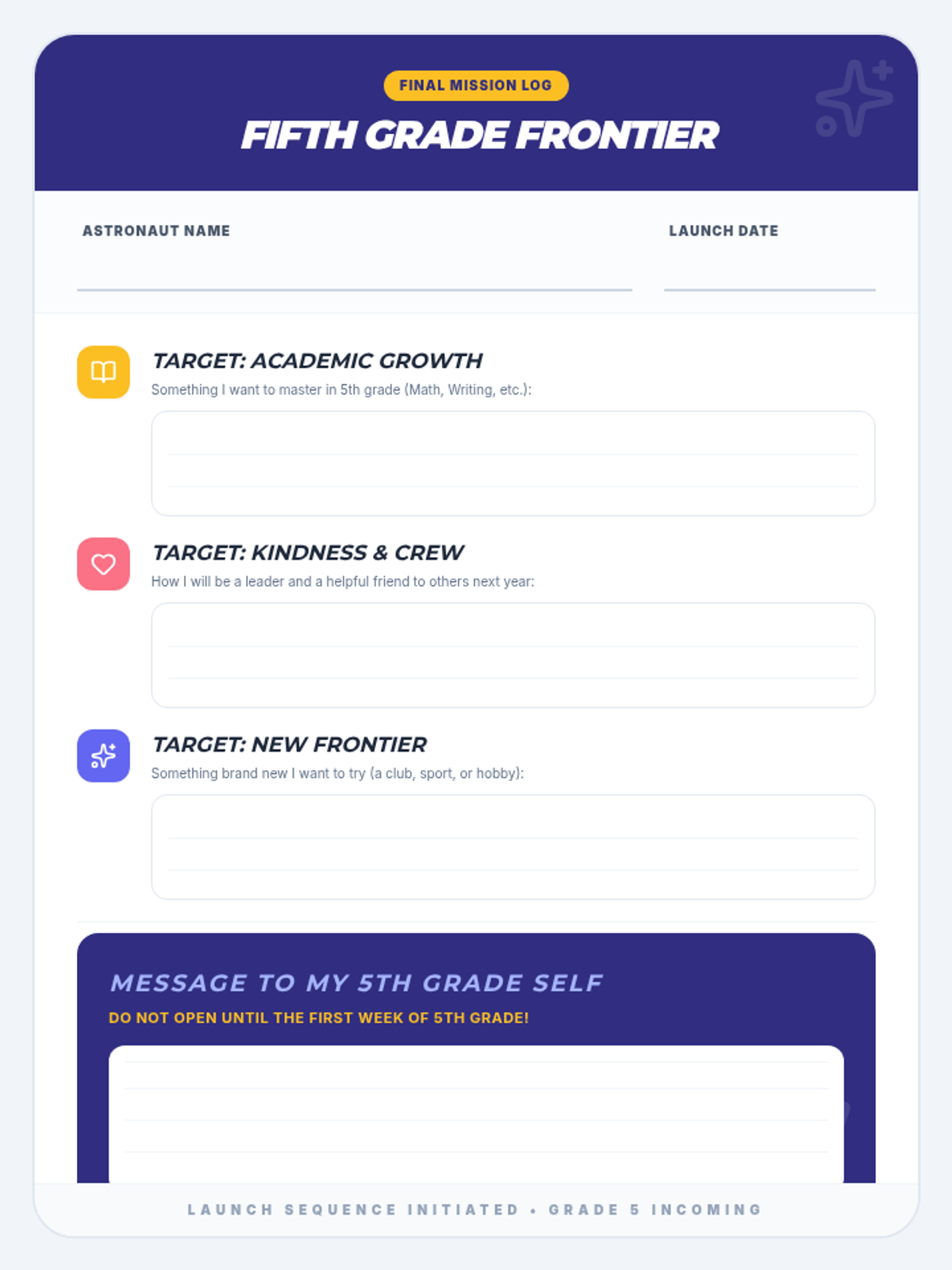
An end-of-year SEL lesson for 4th graders to reflect on their personal growth, celebrate classroom friendships, and set aspirational goals for the transition to 5th grade using a space-exploration theme.
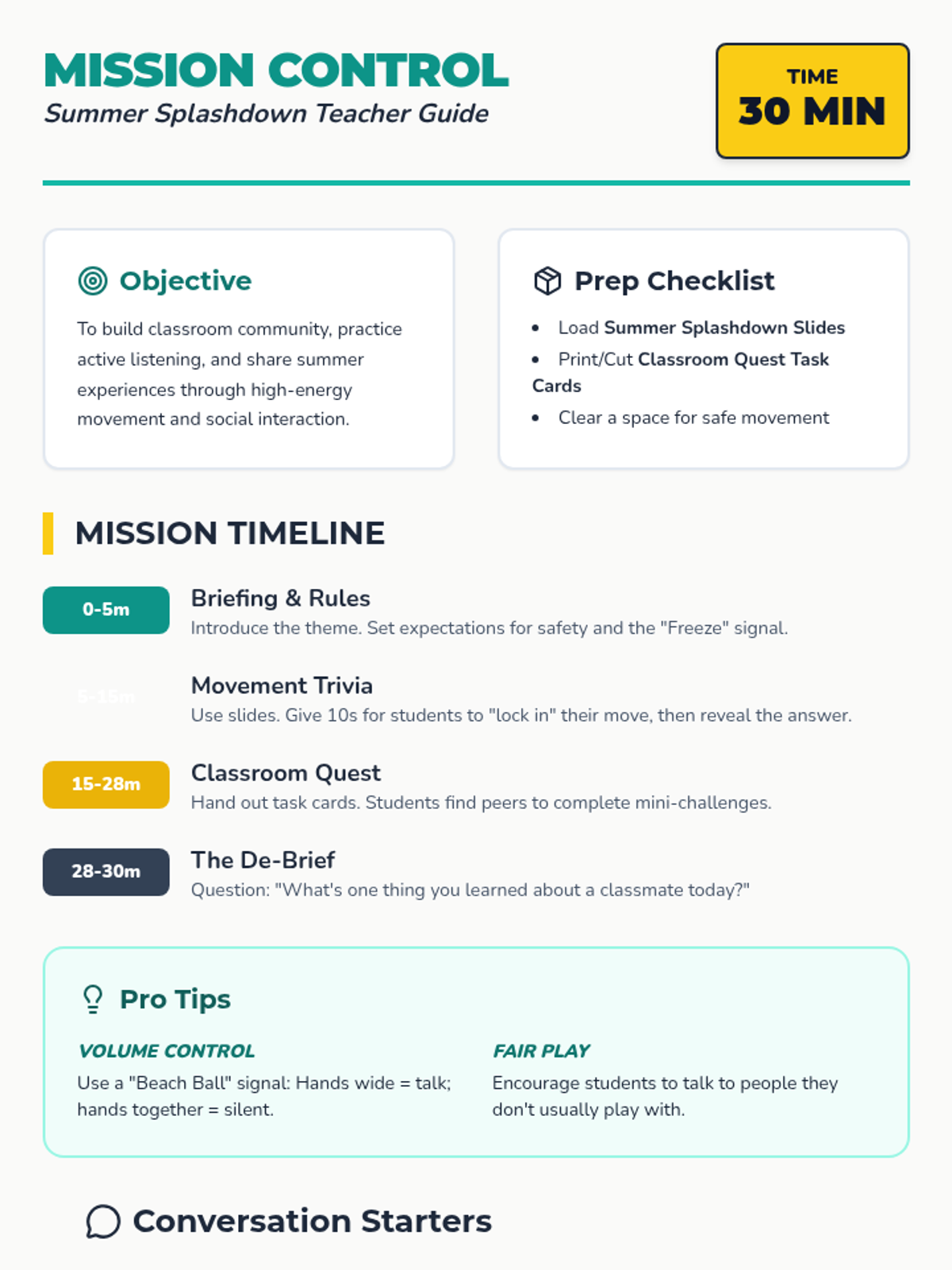
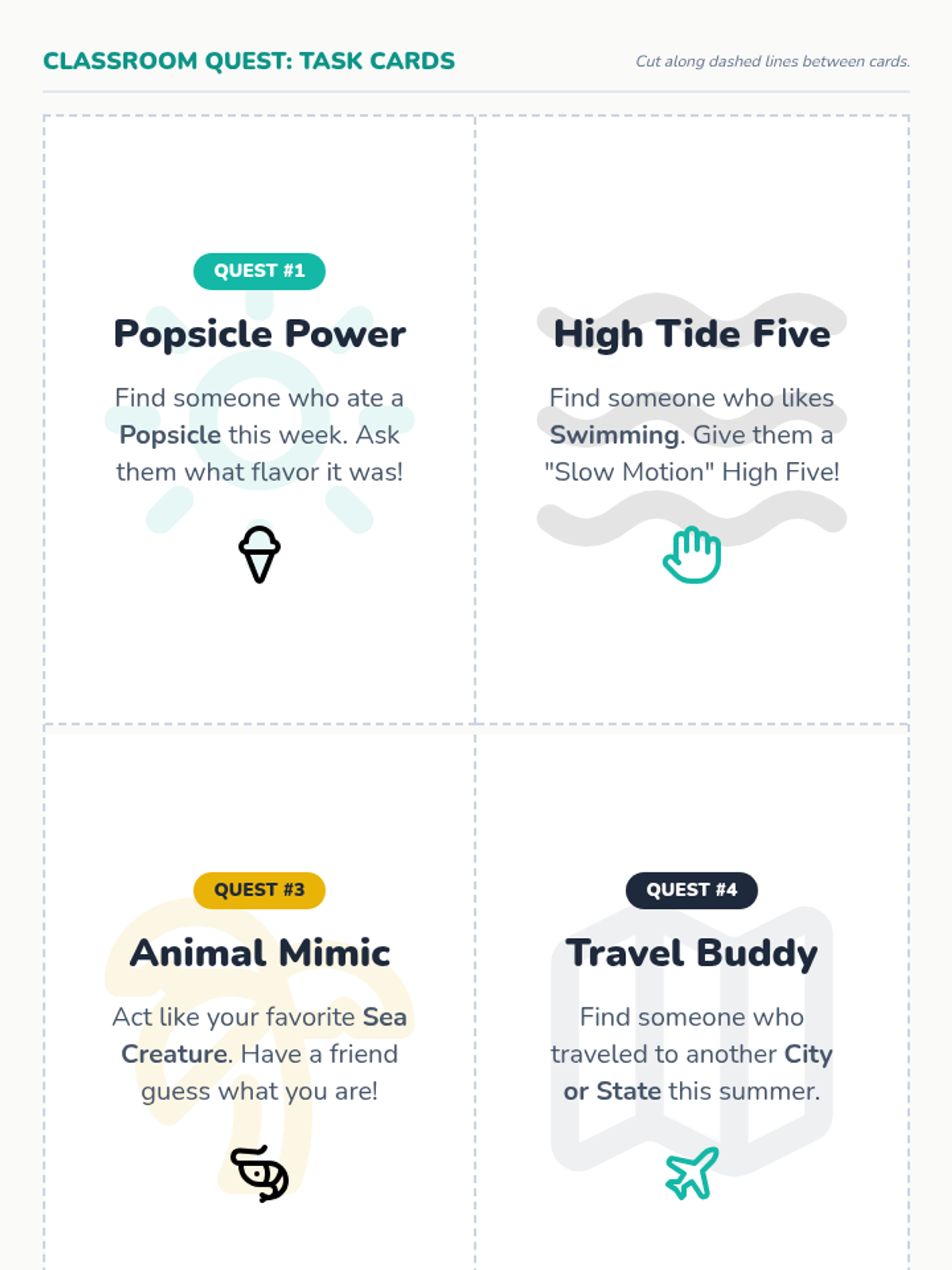
A high-energy, 30-minute session designed to build classroom community through summer-themed movement trivia and a social scavenger hunt.
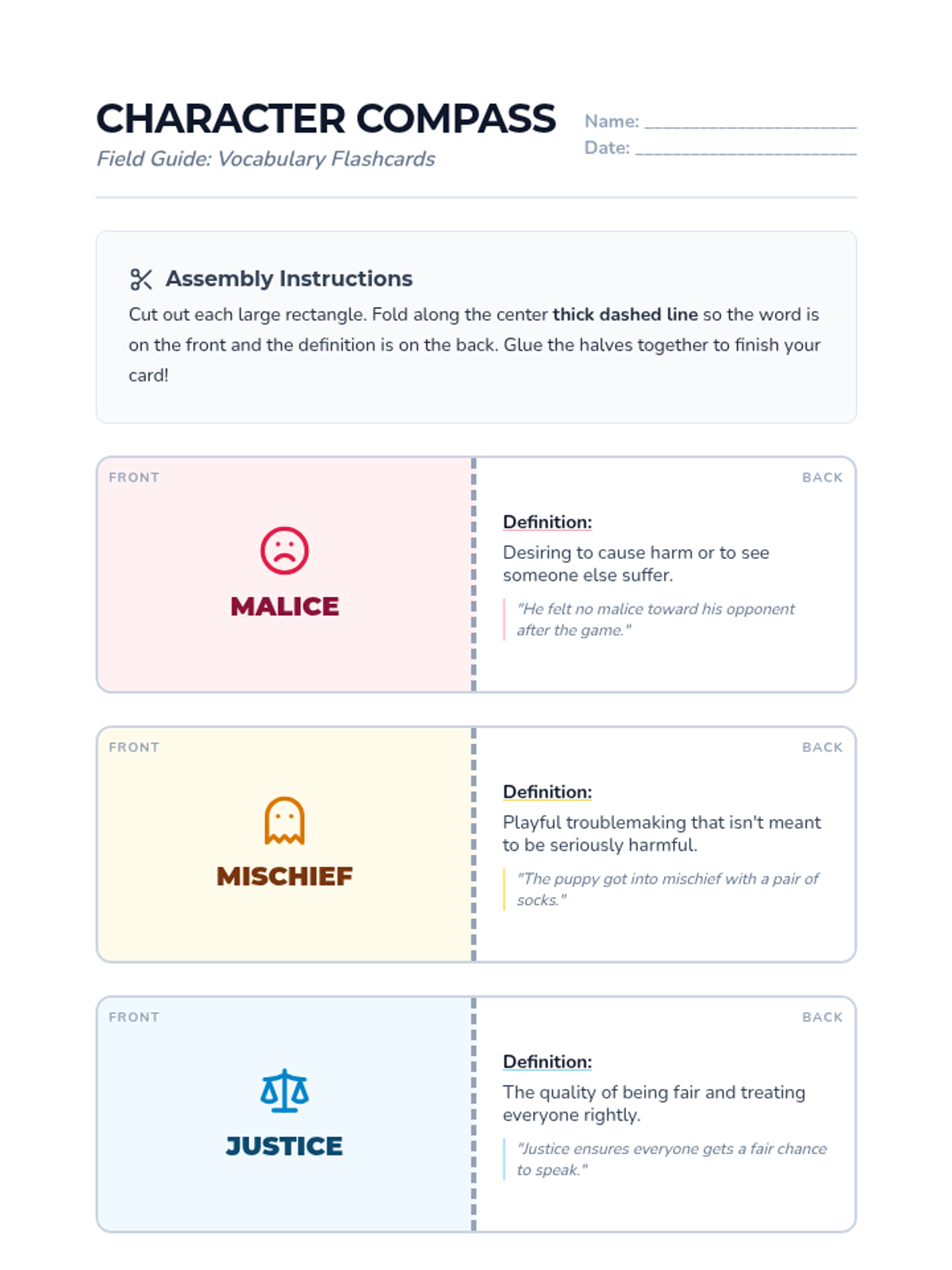
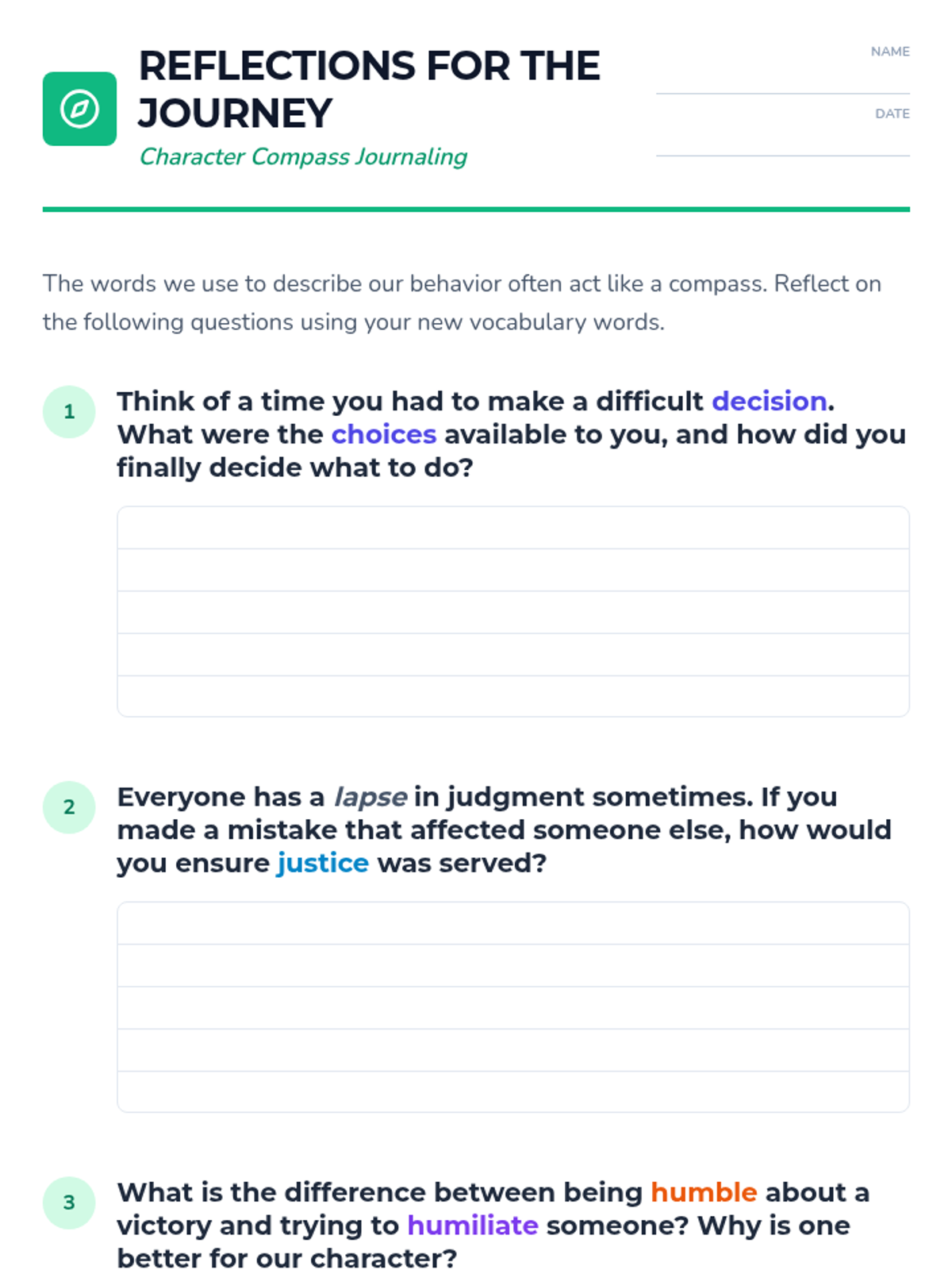
A lesson focused on social-emotional vocabulary, exploring how our choices and attitudes impact ourselves and others. Through foldable flashcards and reflective prompts, students navigate the complexities of character.
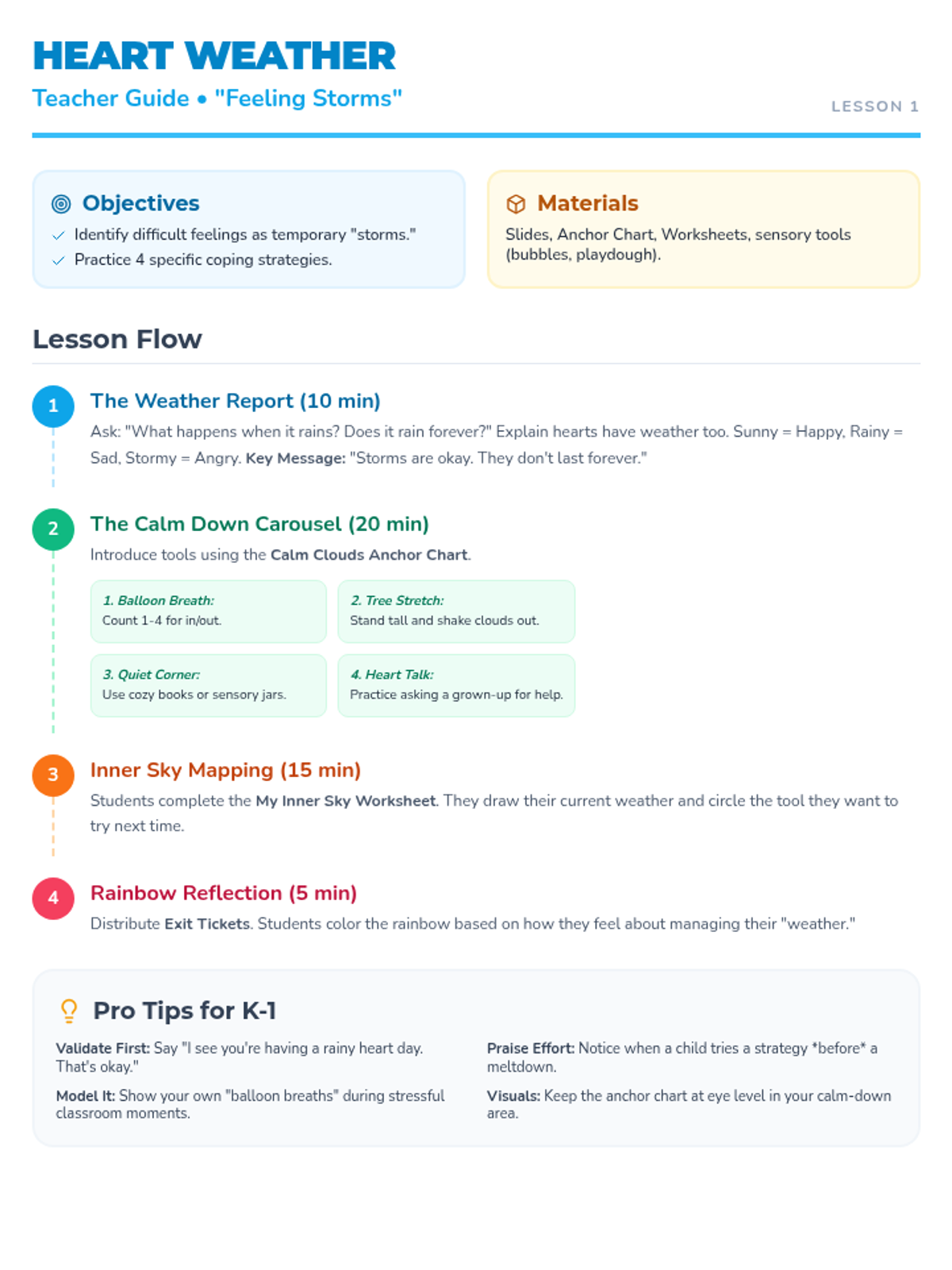
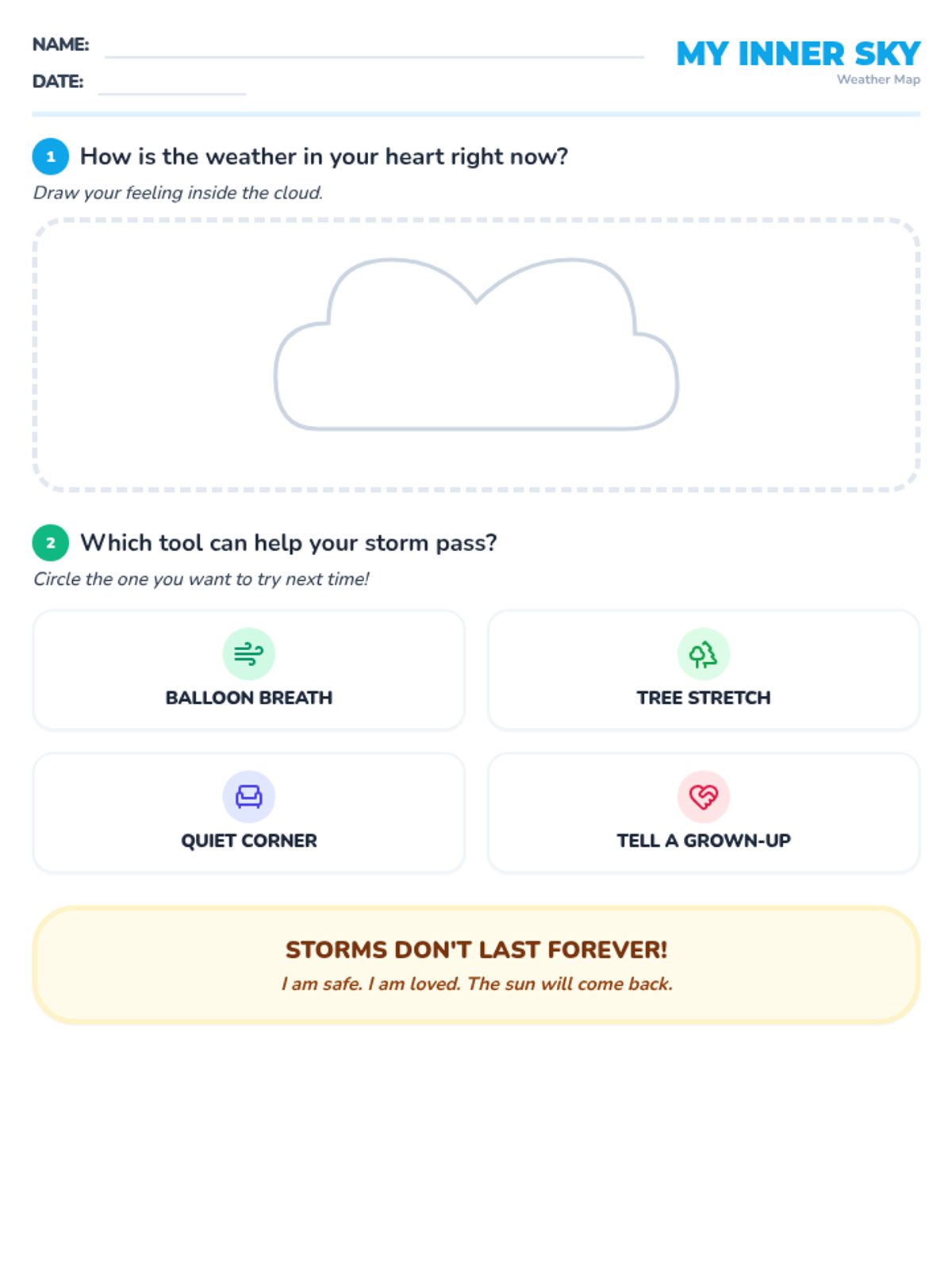
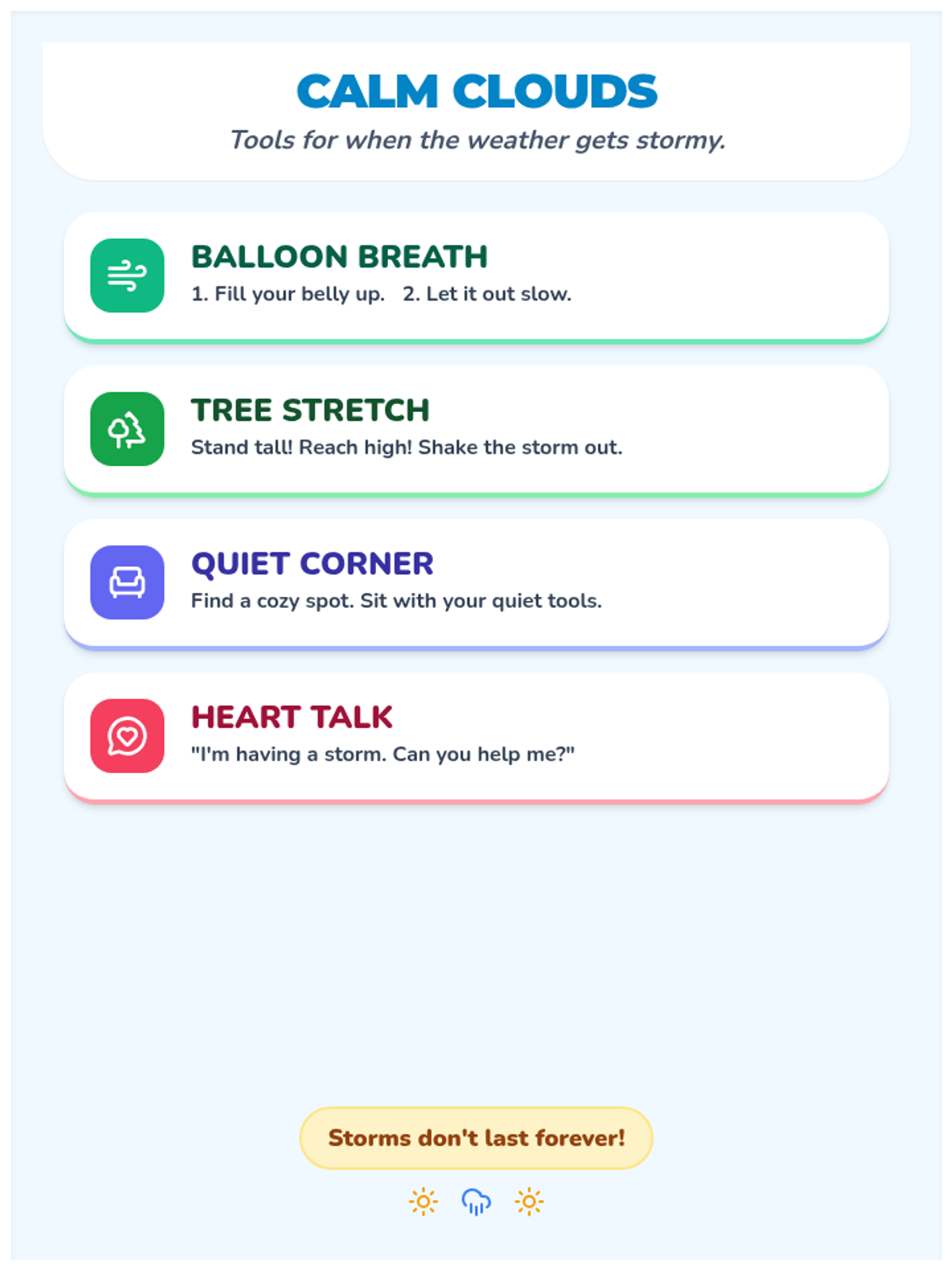
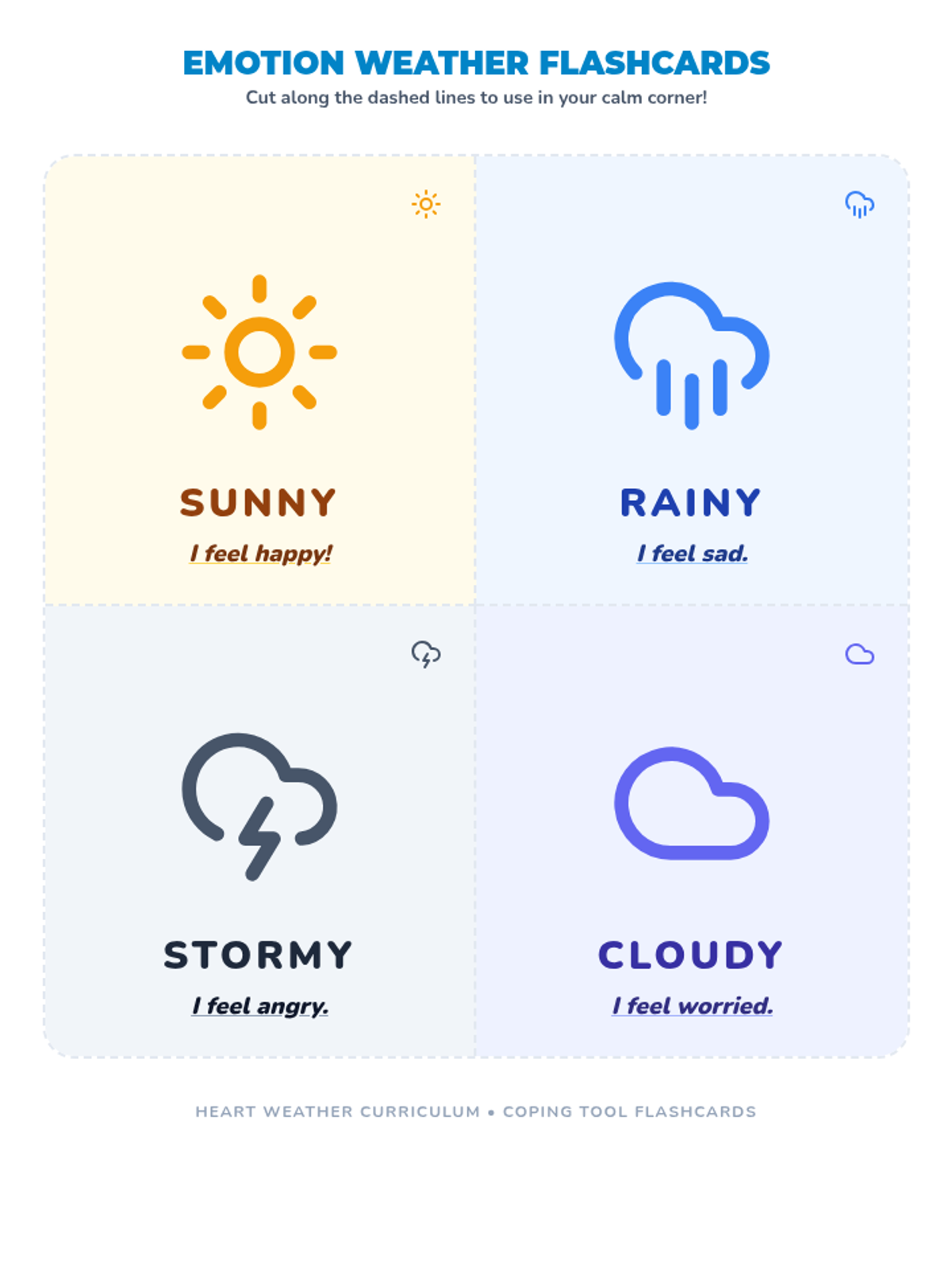
Students in grades 2-3 will use the "Heart Weather" metaphor to analyze emotional triggers, understand the science of self-regulation (the brain's weather station), and develop personalized resilience plans.
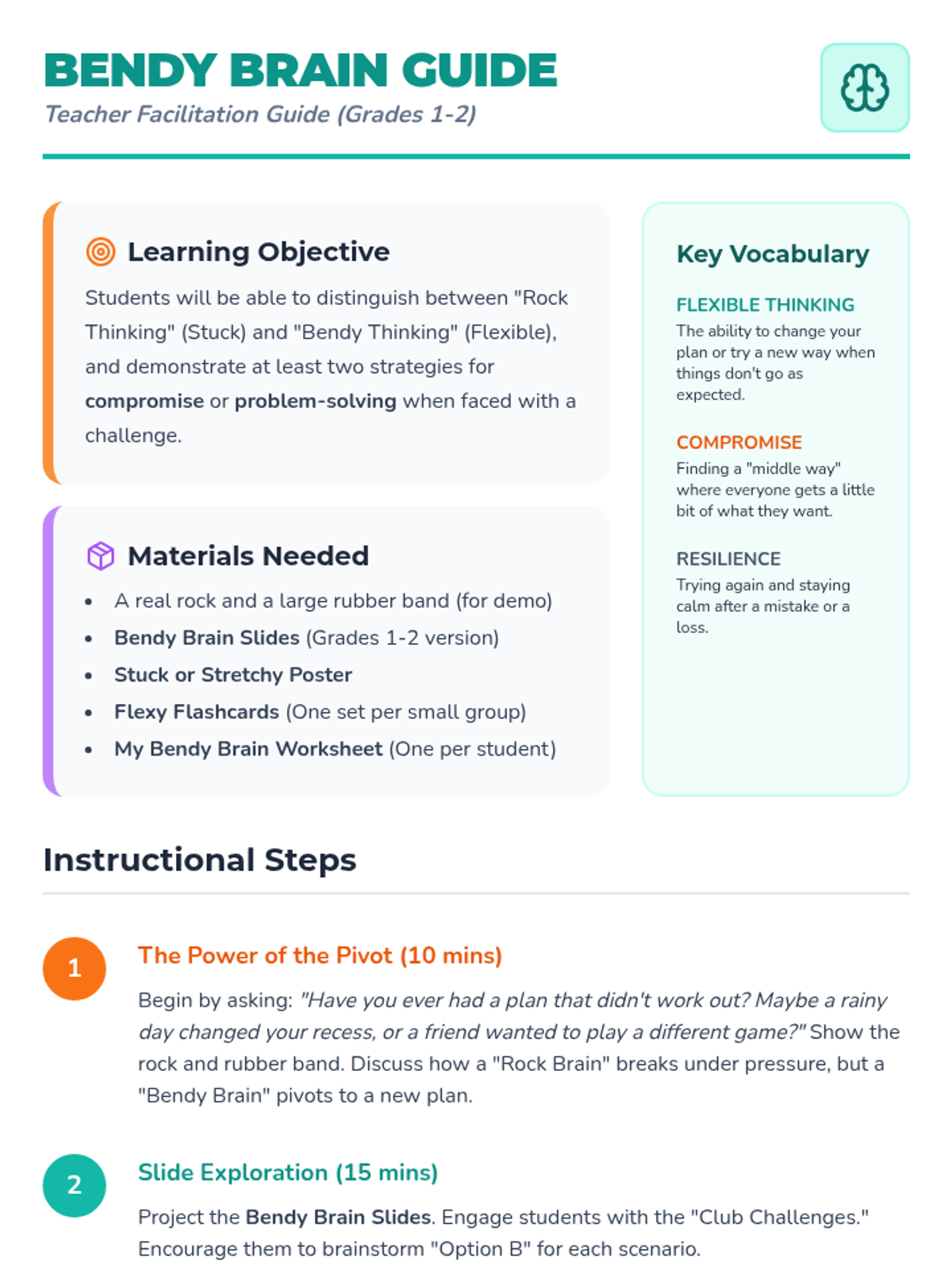
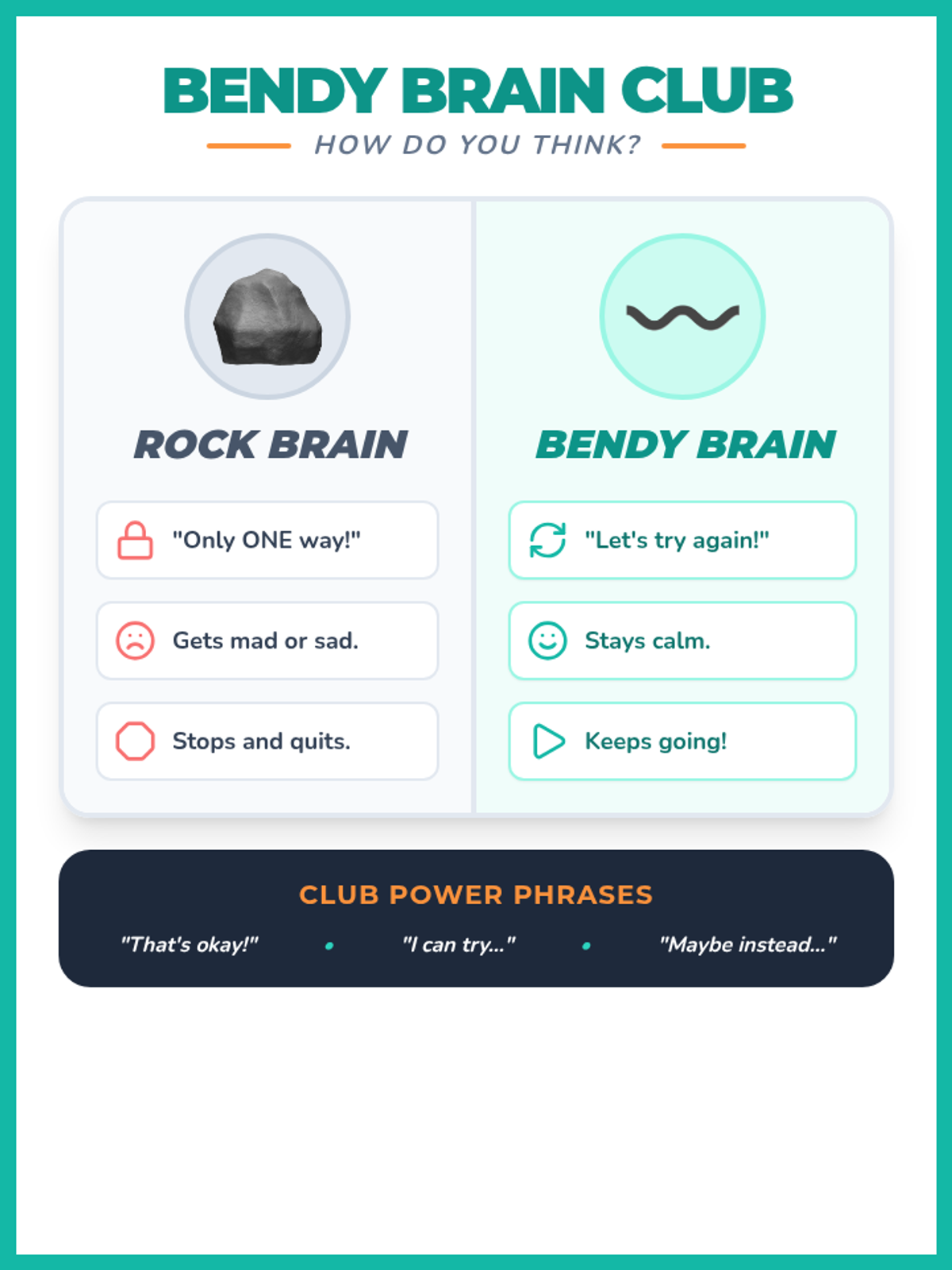
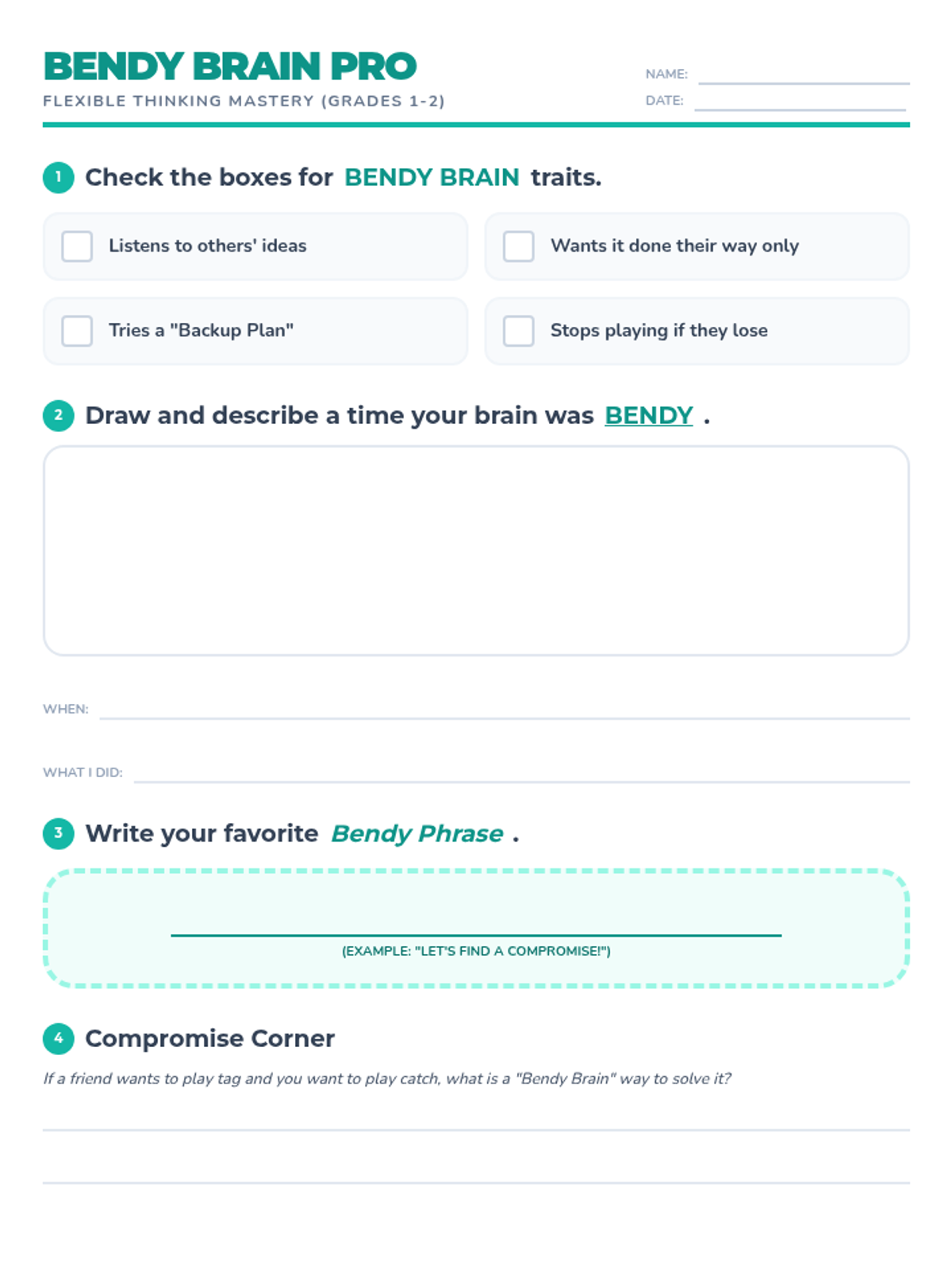
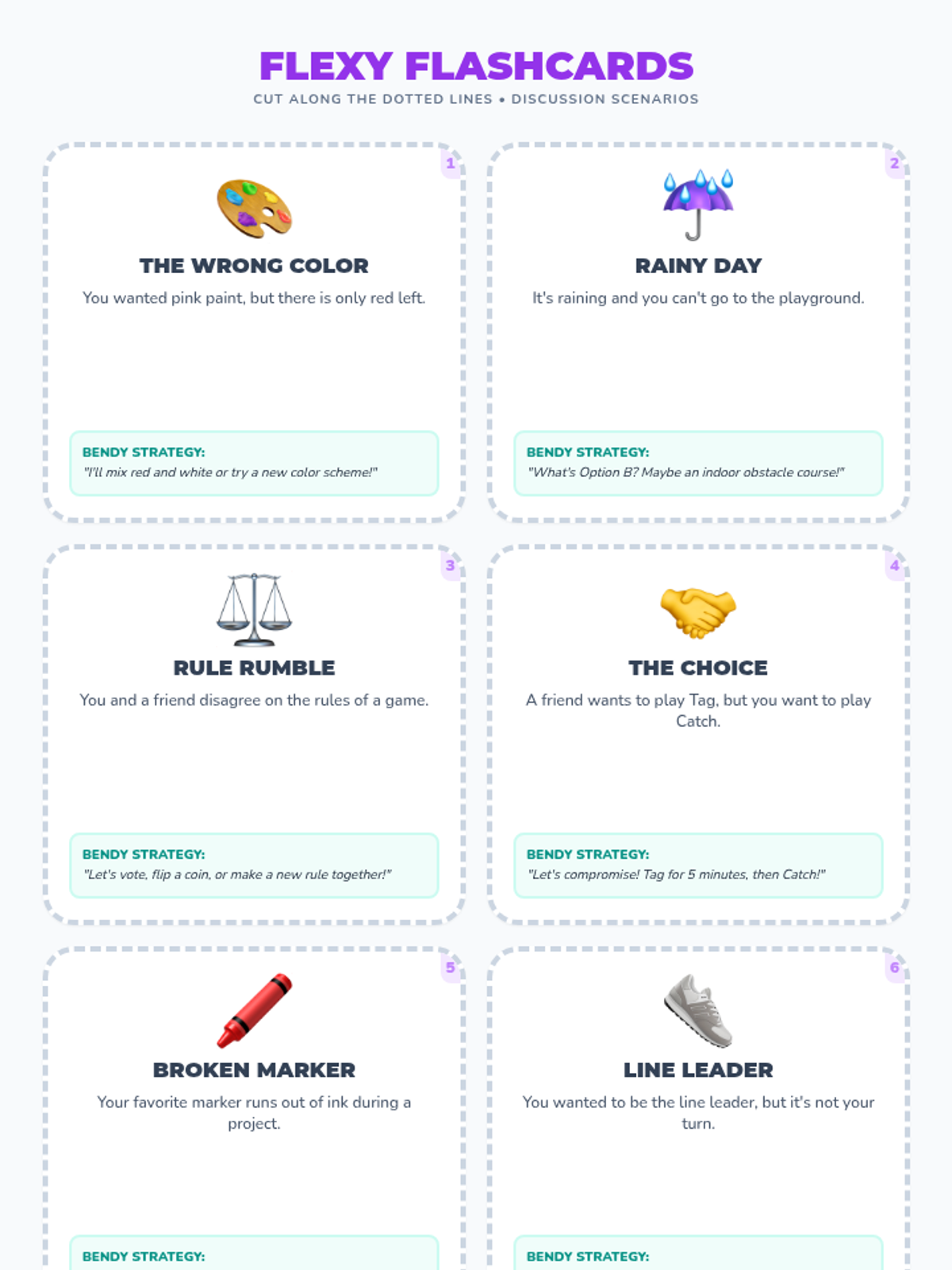
A foundational social-emotional learning lesson for K-1 students that introduces the concept of cognitive flexibility using the 'Rock Brain' vs. 'Bendy Brain' metaphor. Students learn to identify when they are stuck and practice 'stretching' their thinking in response to changes and challenges.
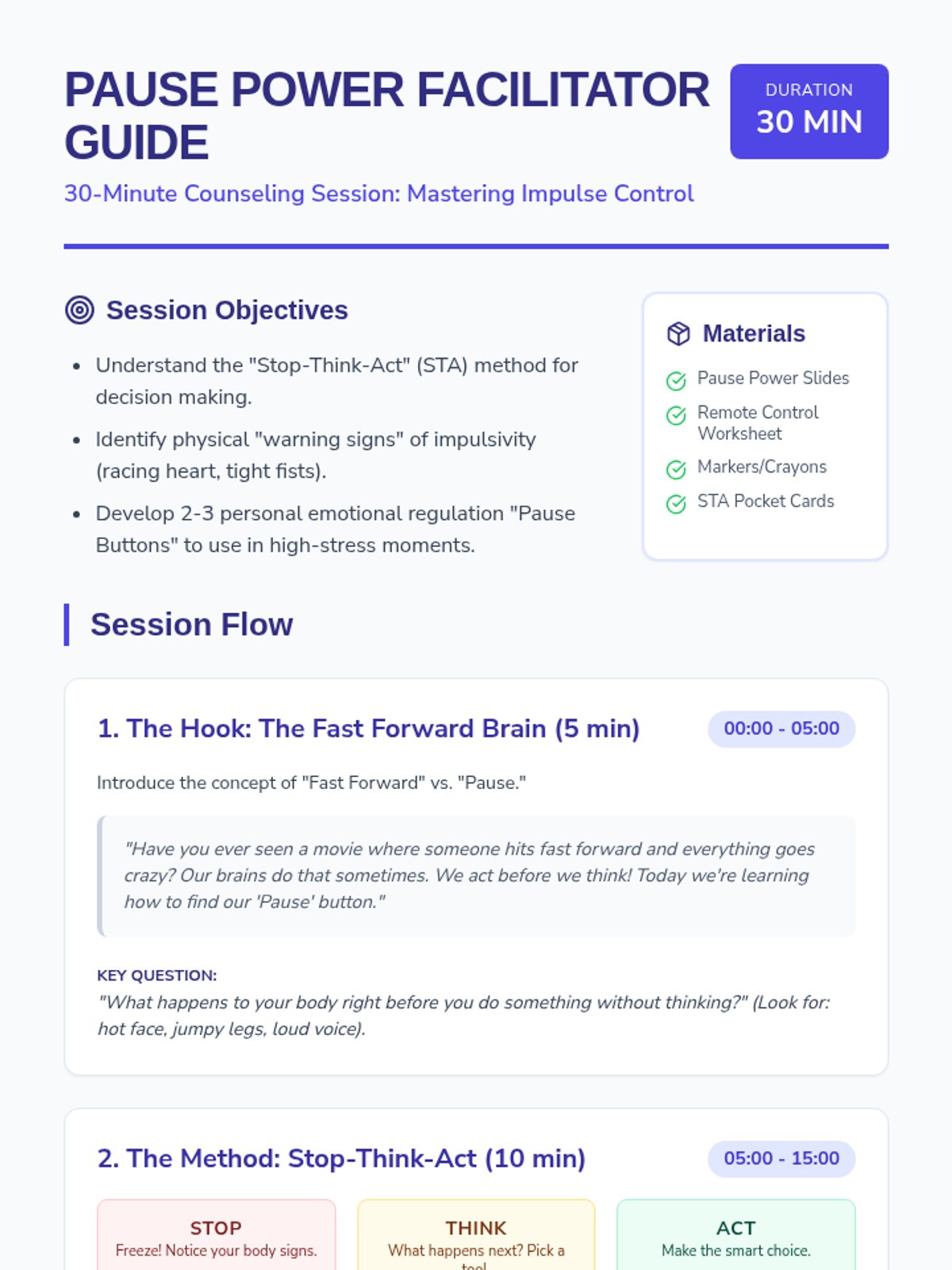
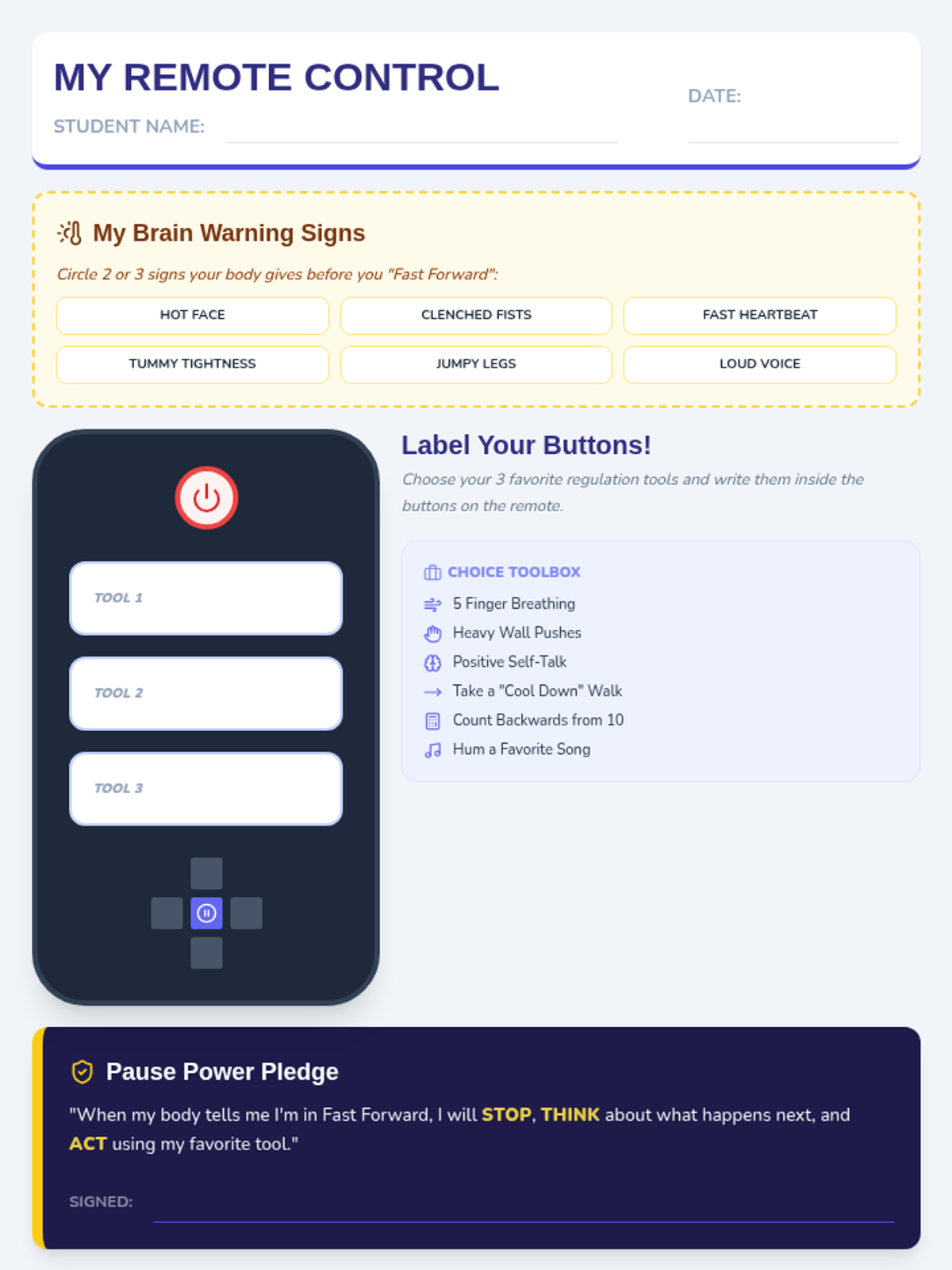
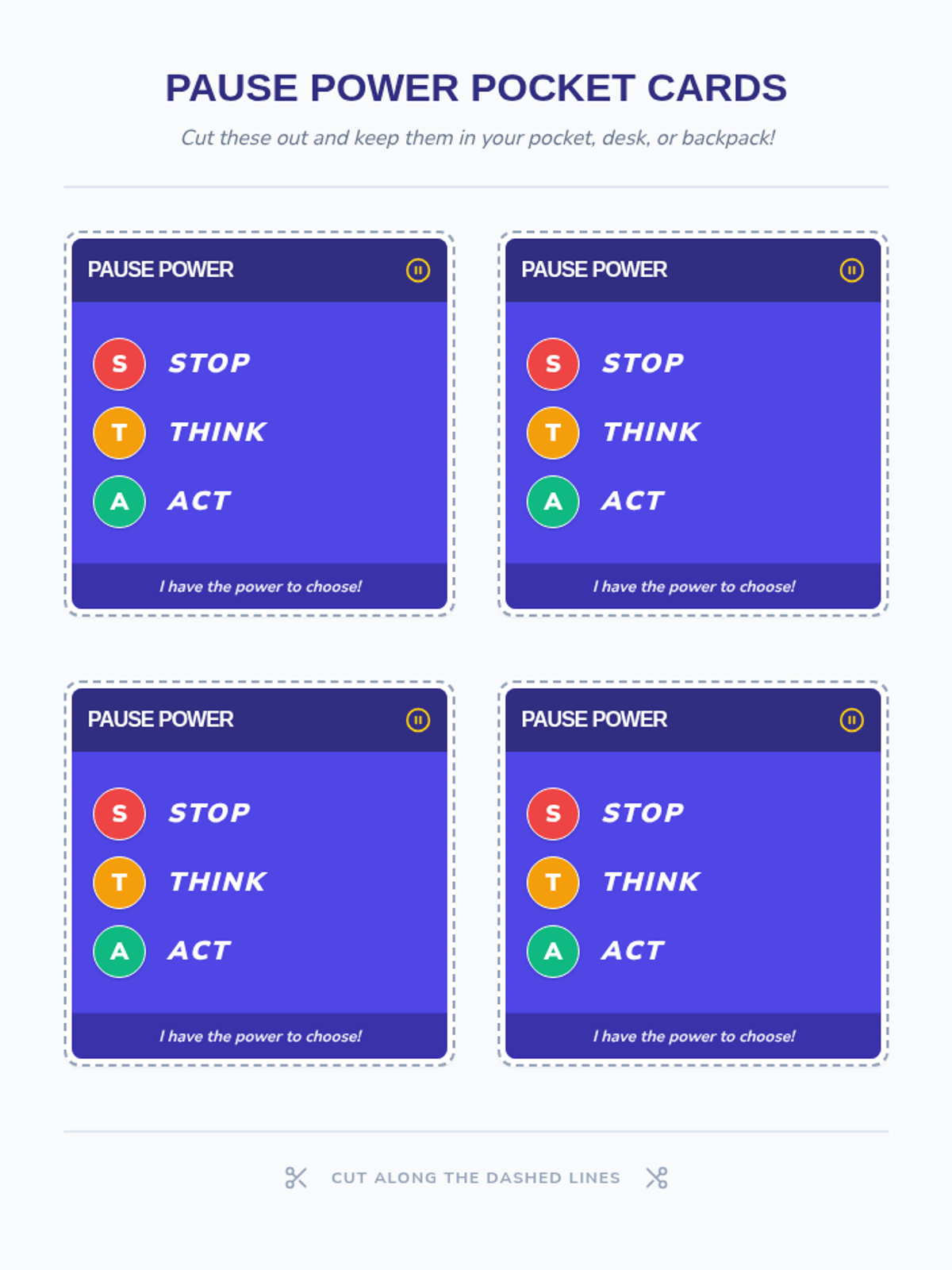
A 30-minute counseling session focused on the Stop-Think-Act method and emotional regulation tools to help students master impulse control.
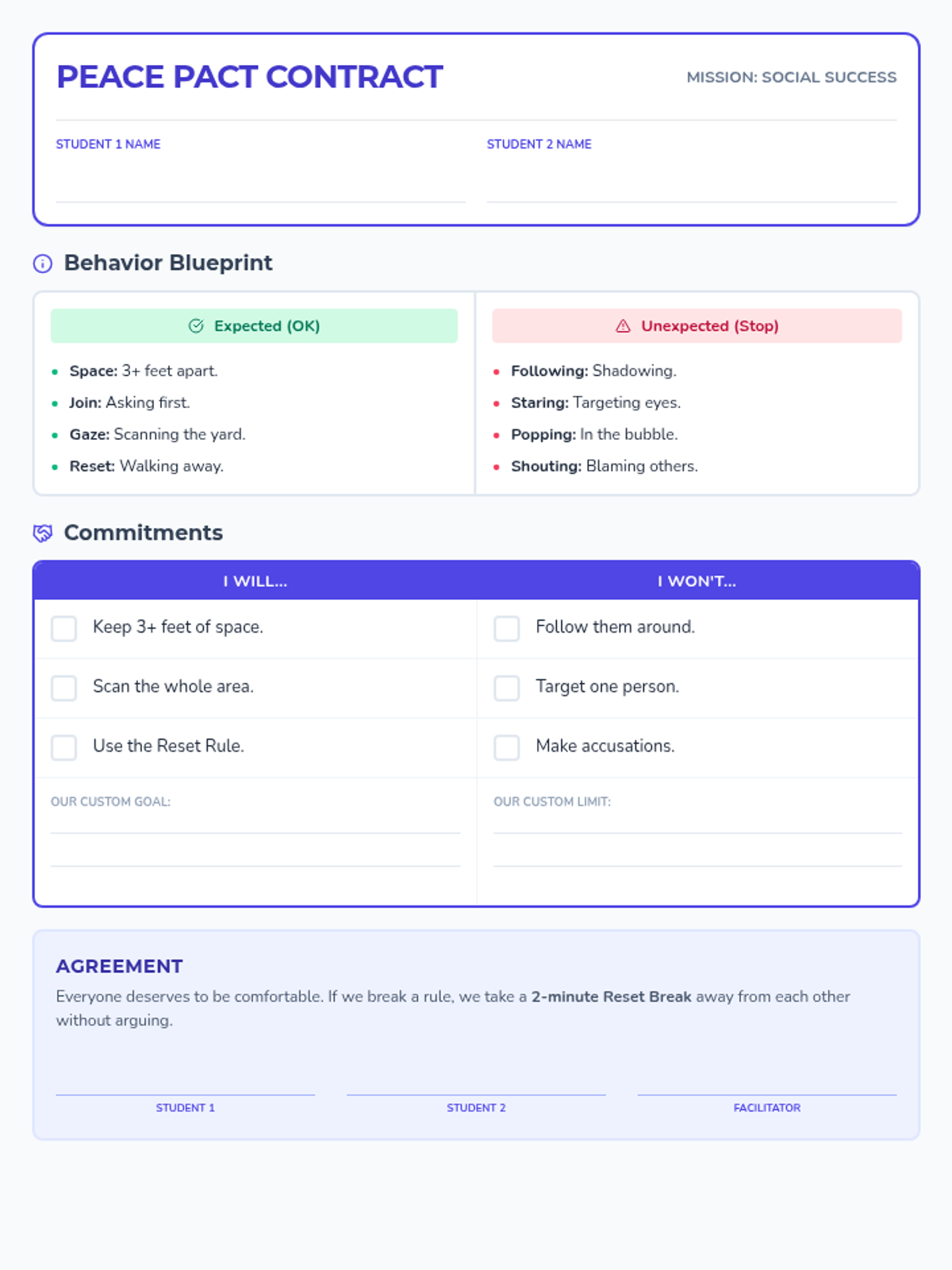
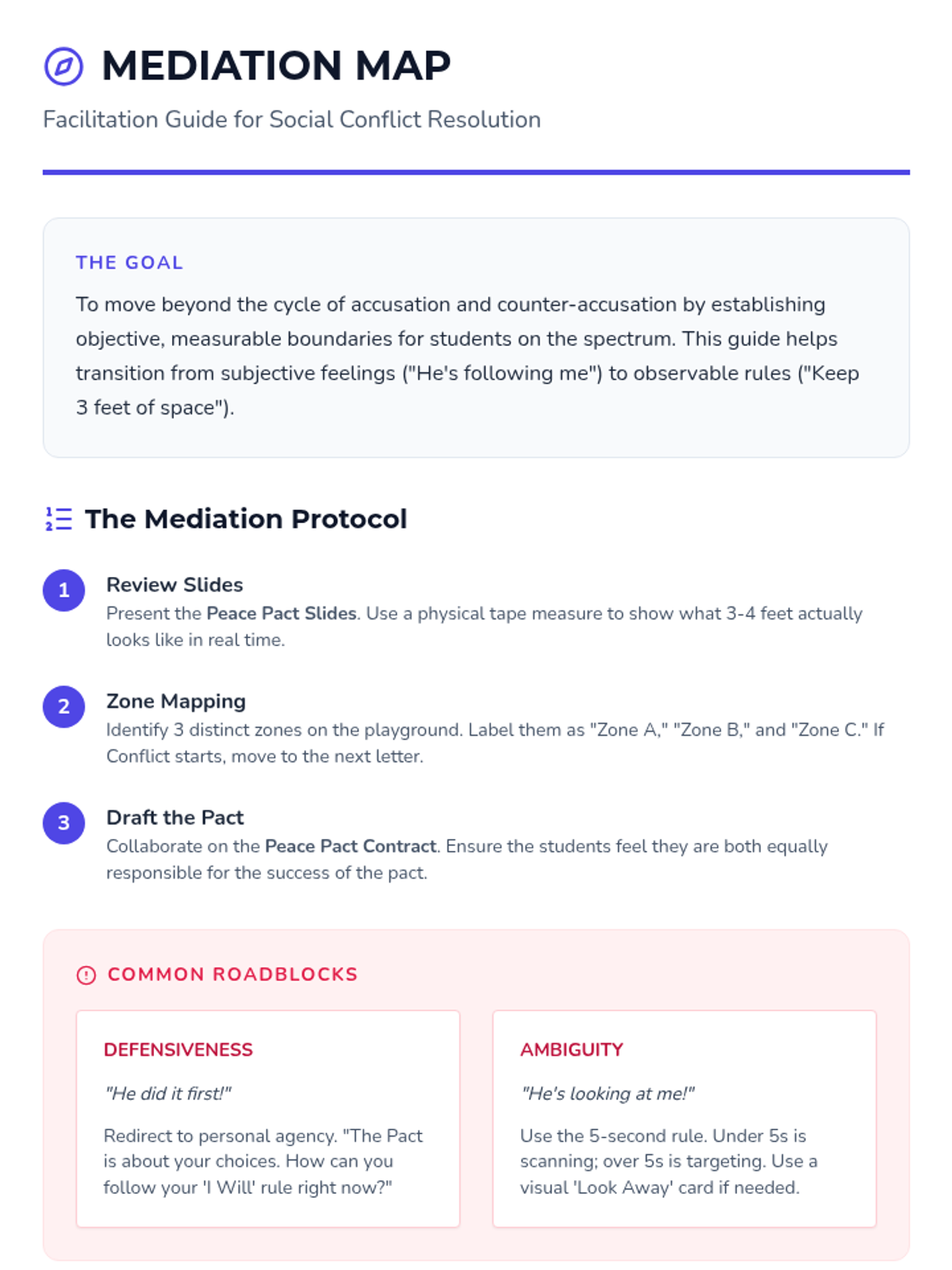
A structured approach to resolving recurring conflicts between students regarding personal space, physical boundaries, and perceived social behaviors during unstructured times.
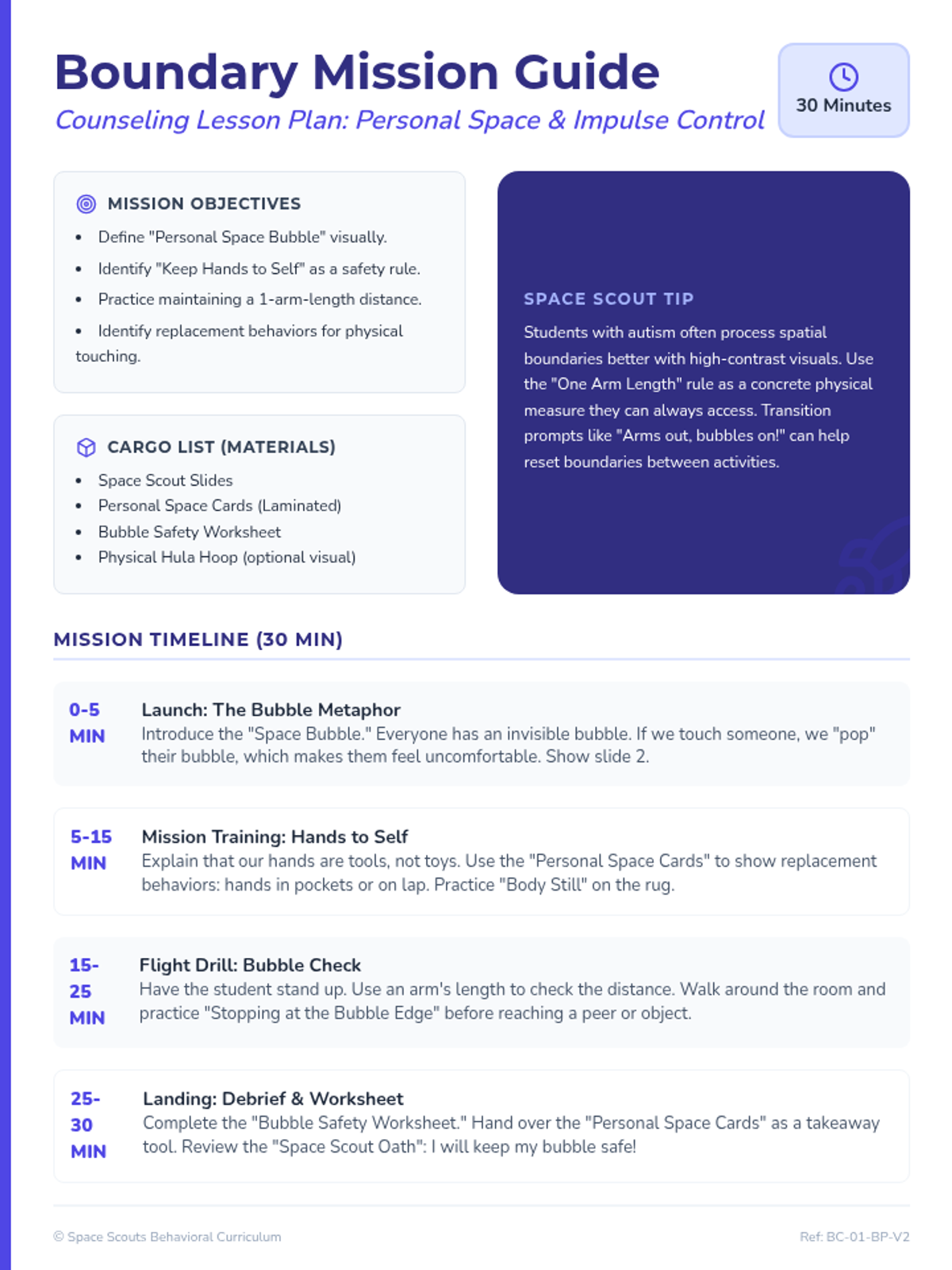
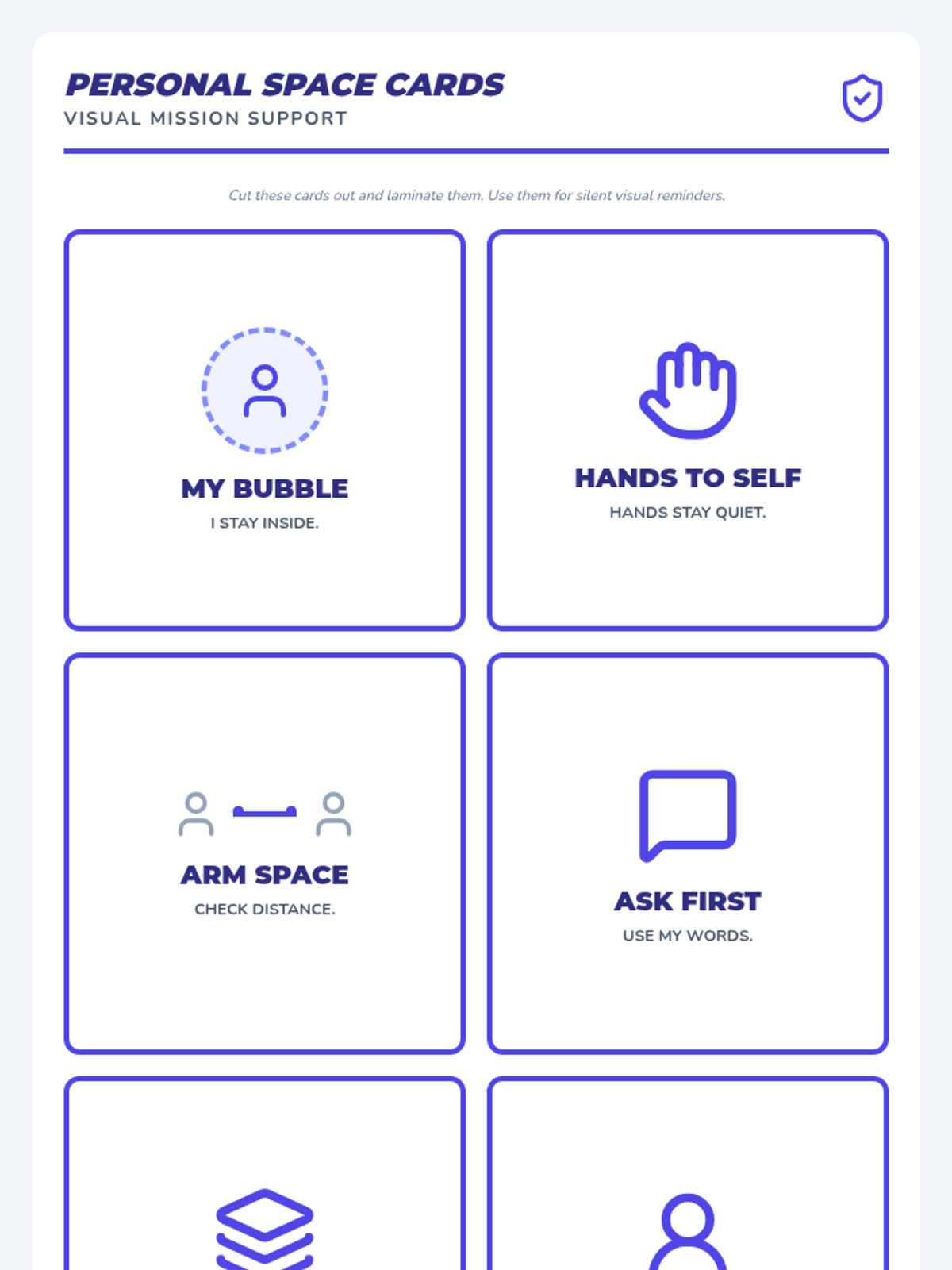
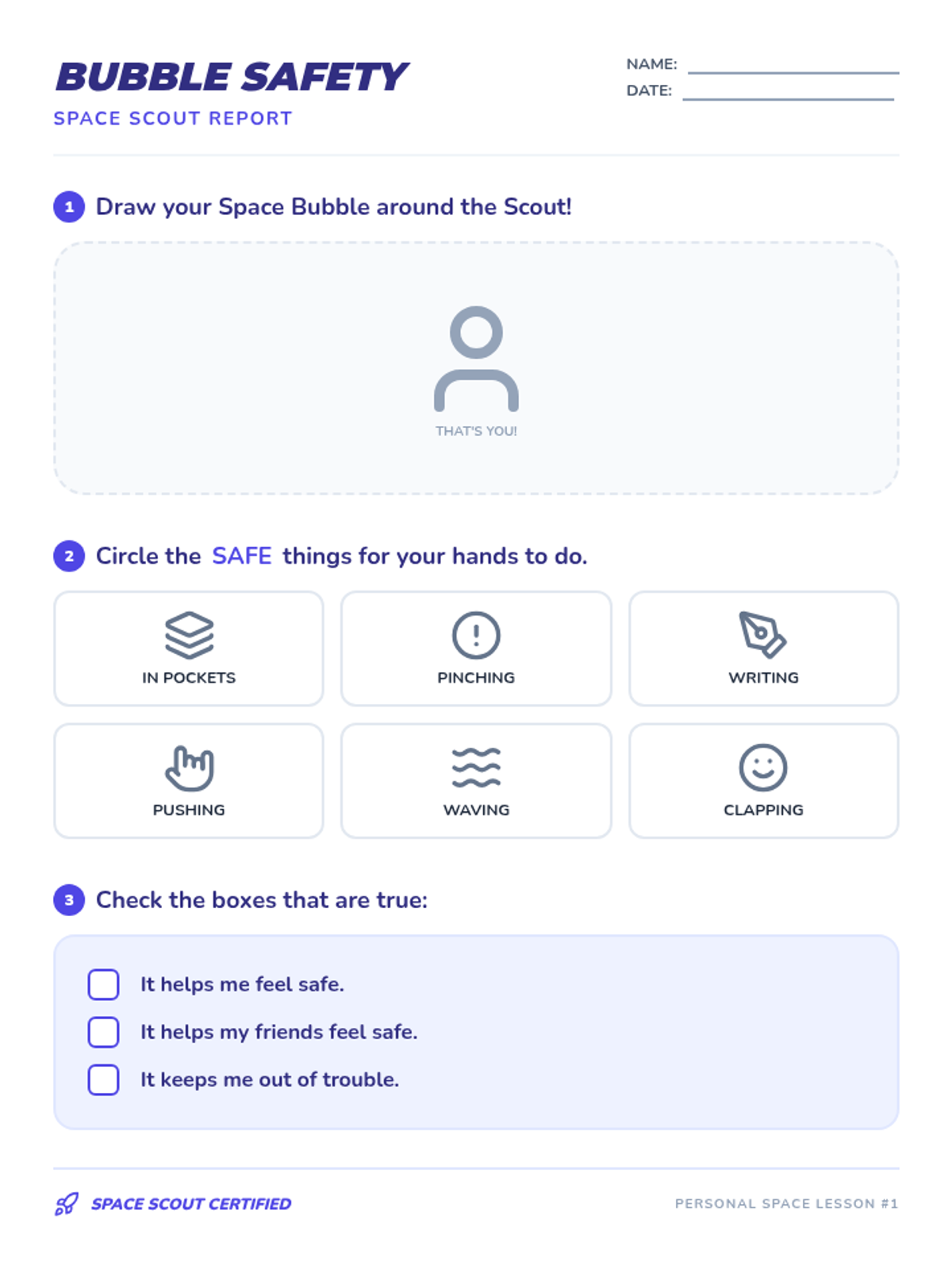
A 30-minute counseling session and supporting materials focused on teaching the 'personal space bubble' and keeping hands to self.
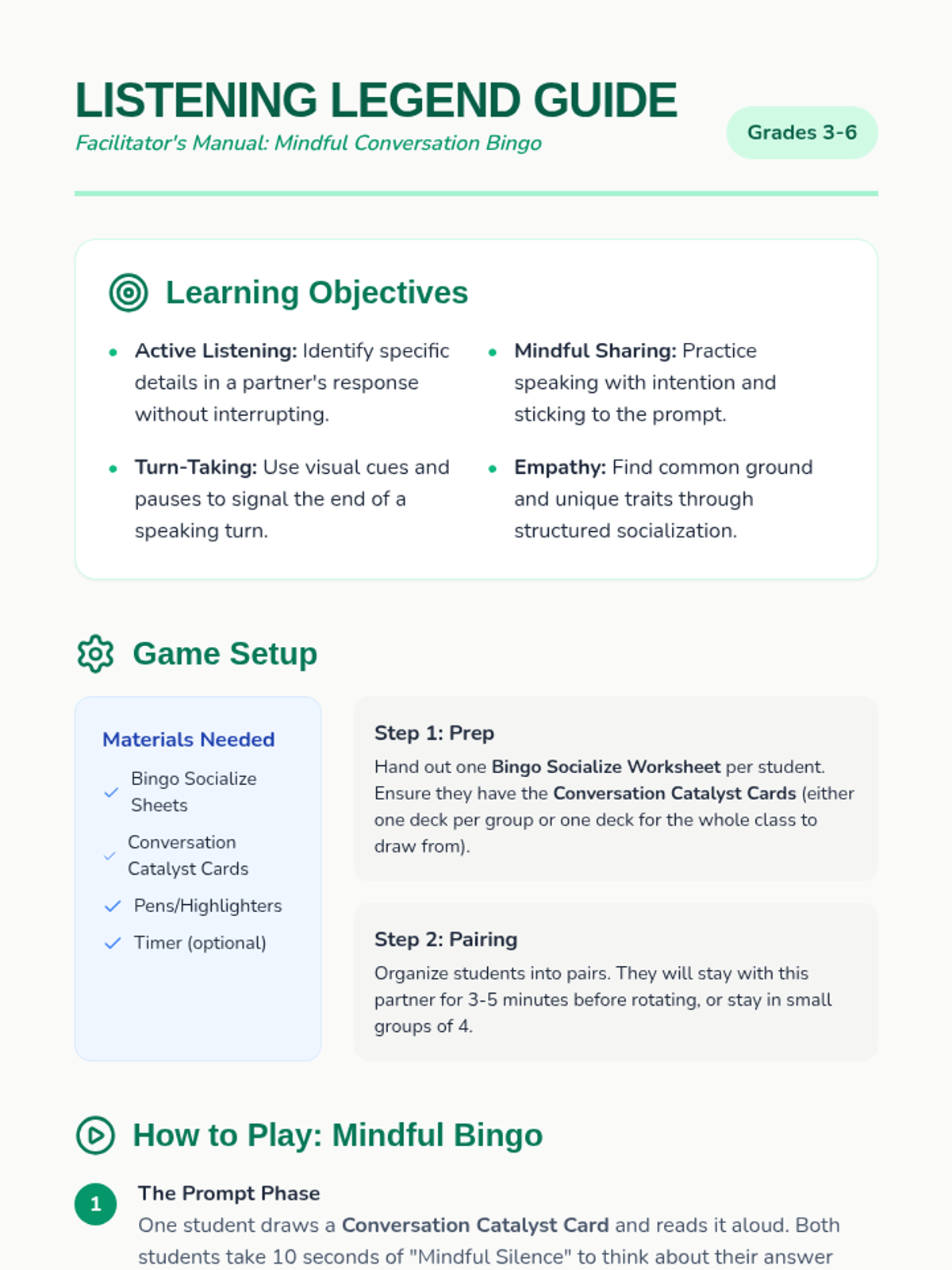
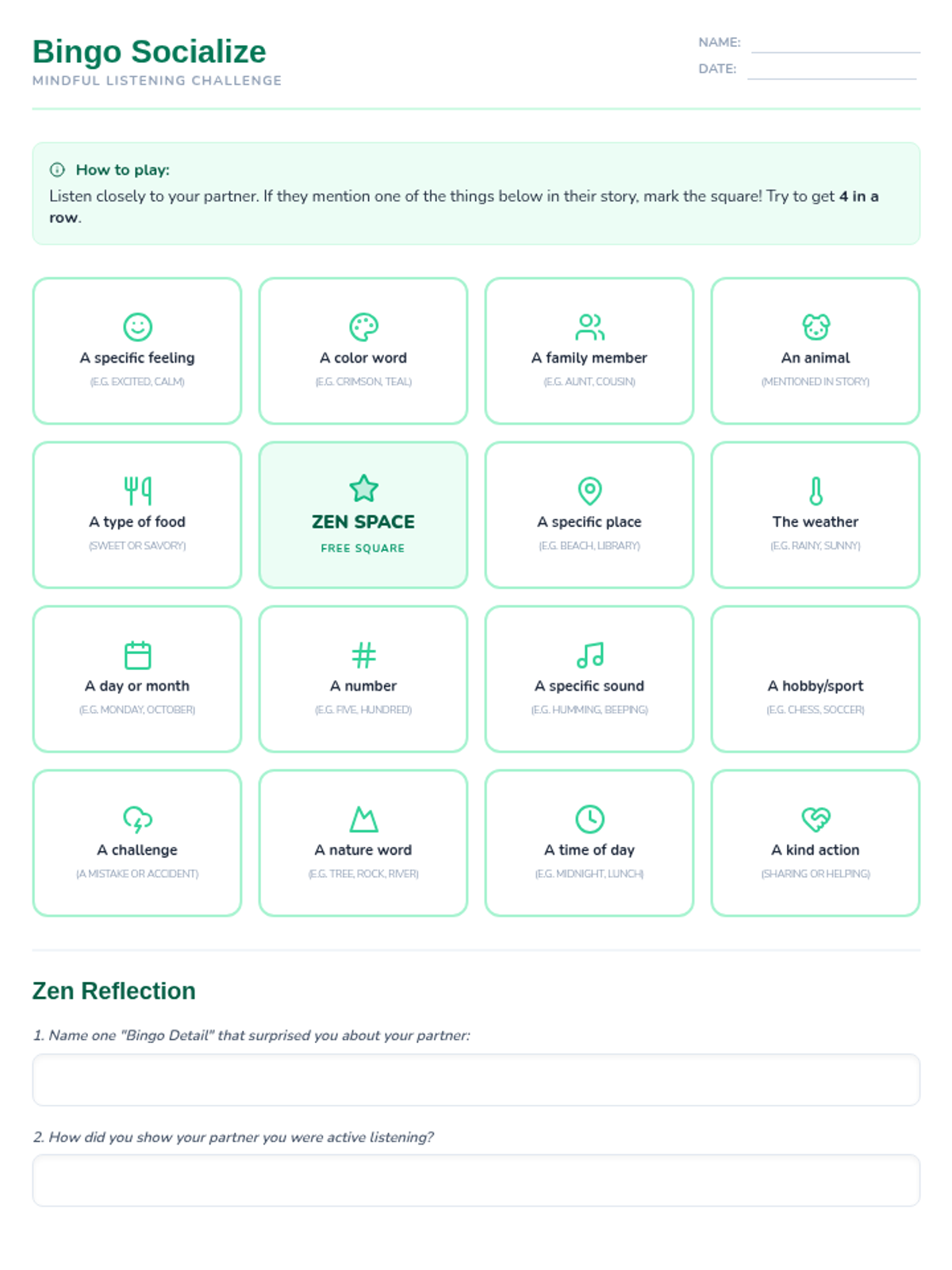
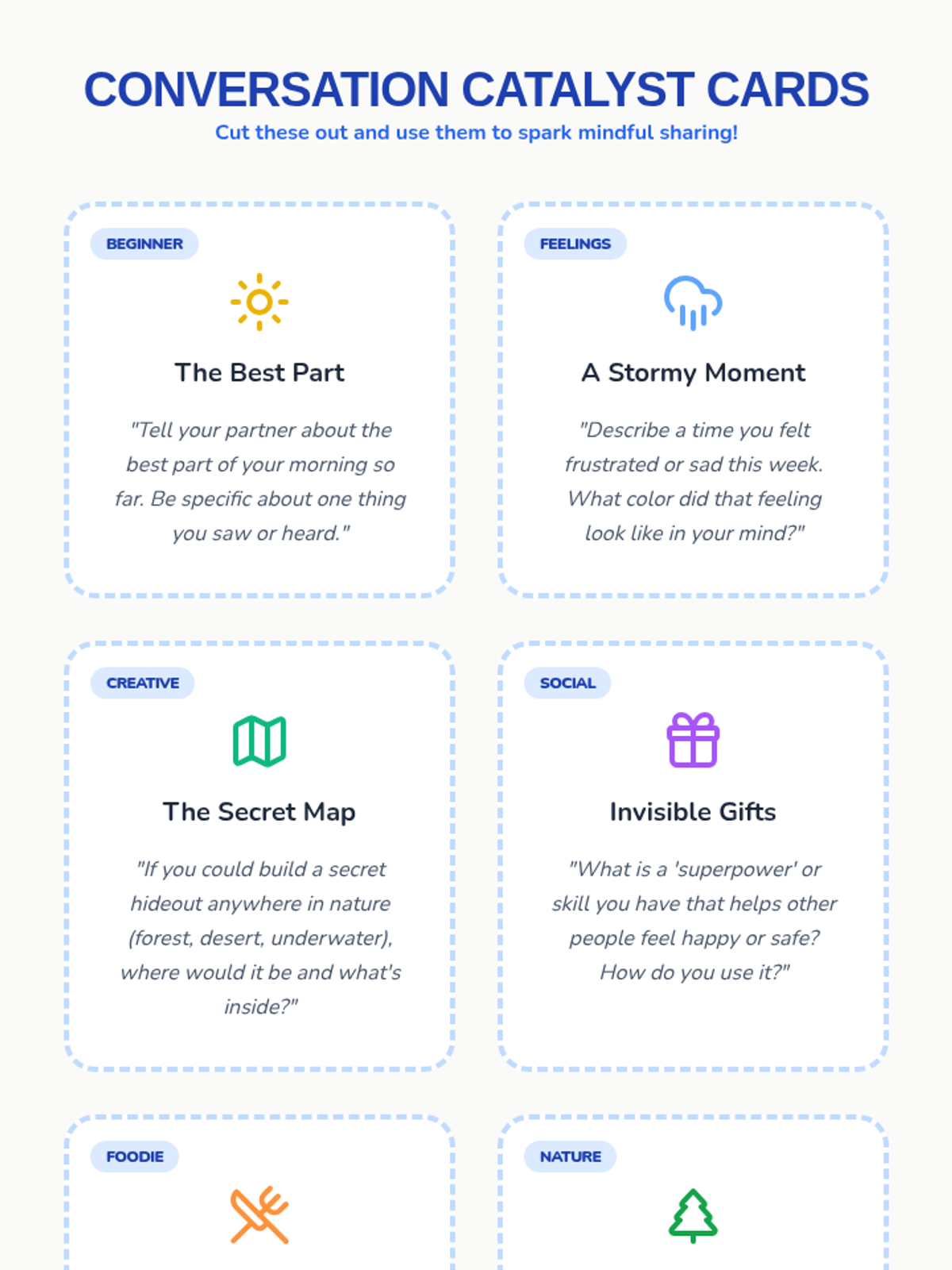
Students learn the art of mindful conversation through interactive games that emphasize listening for detail and sharing thoughts with intention.
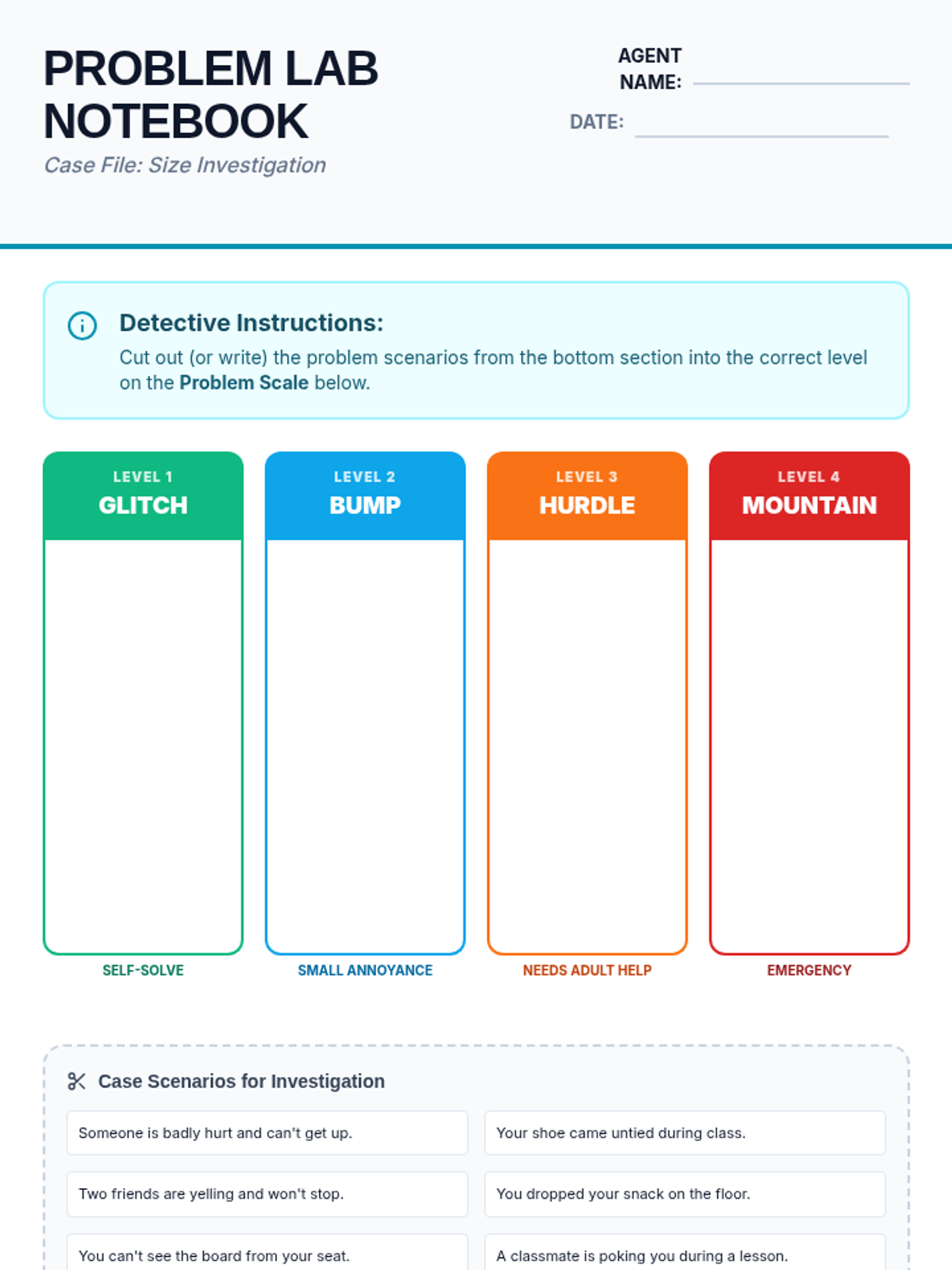
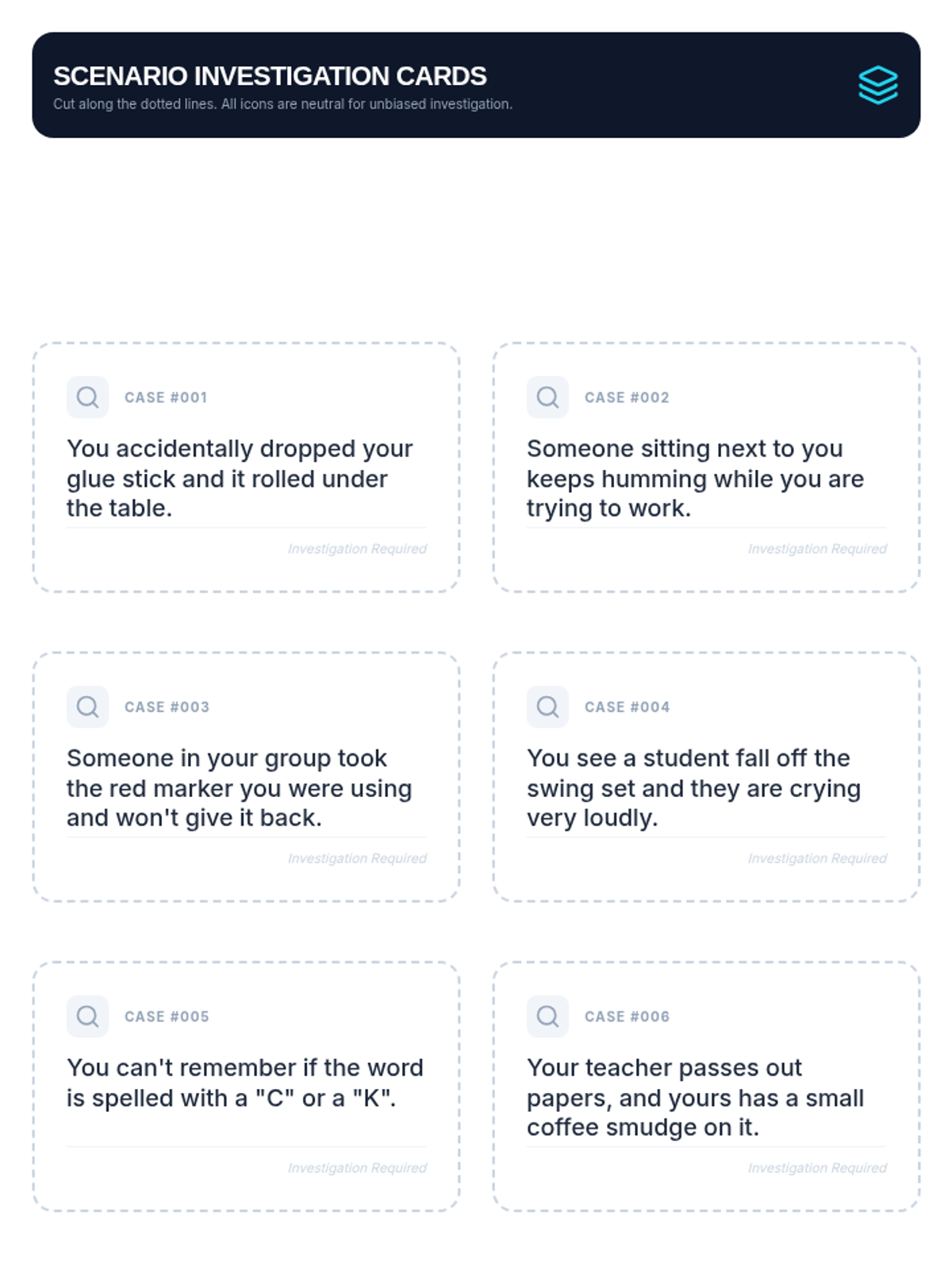
A lesson designed to help students categorize the magnitude of various problems and determine appropriate emotional and behavioral responses. Students will explore a four-level scale ranging from tiny 'glitches' to emergency 'mountains'.