A focused lesson on the Vowel-Consonant-e (Silent E) pattern, helping students transition from short vowel sounds to long vowel sounds through decoding and reading practice.
A 30-minute intensive lesson focused on the VC/CV syllable division rule for twin consonants, designed for 6th-grade ESE students to master decoding multisyllabic words like 'rabbit' and 'muffin'.
A LEGO-themed writing lesson focusing on verbal description and 7-word sentence ordering with adult support.
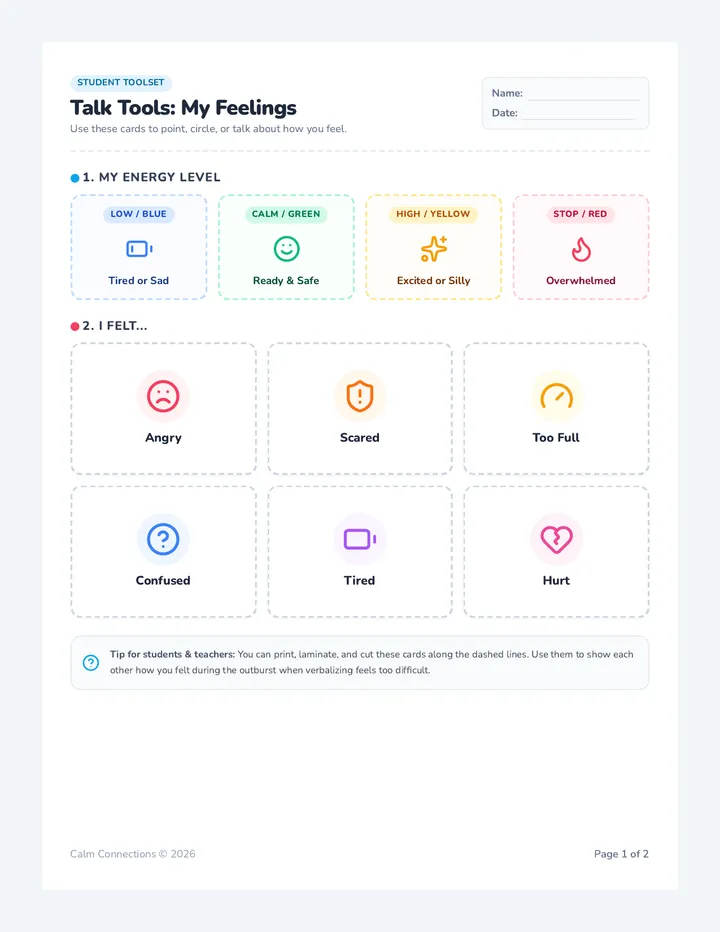
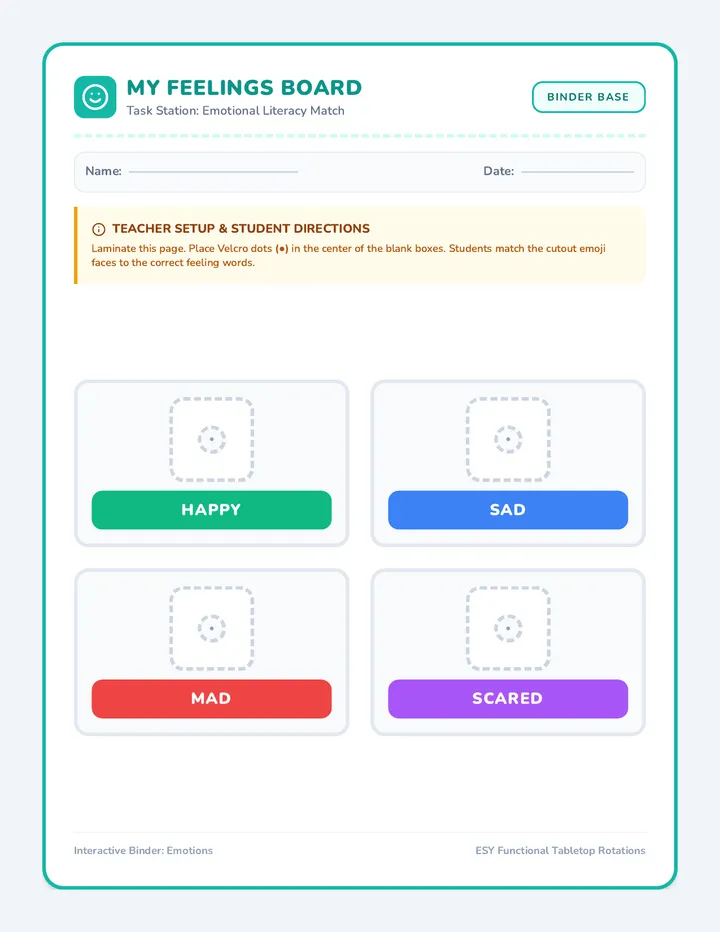
A foundational emotional literacy lesson for K-2 students with special needs, using a train-themed journey to identify and express core emotions through visual aids and interactive scenarios.
A targeted intervention lesson focused on Wilson 4.2 skills, specifically decoding multisyllabic words with a closed syllable (containing blends, digraphs, or welded sounds) and a V-E syllable.
A cumulative review and assessment where students apply both slicing and root identification skills to complex, grade-appropriate vocabulary.
Explores how prefixes and suffixes are added to base words. Students practice stripping away affixes to reveal the root word and its meaning.
Focuses on the mechanics of dividing multisyllabic words using SPIRE Level 3 patterns like VCCV and VCV. Students learn to 'slice' words into manageable chunks for decoding.
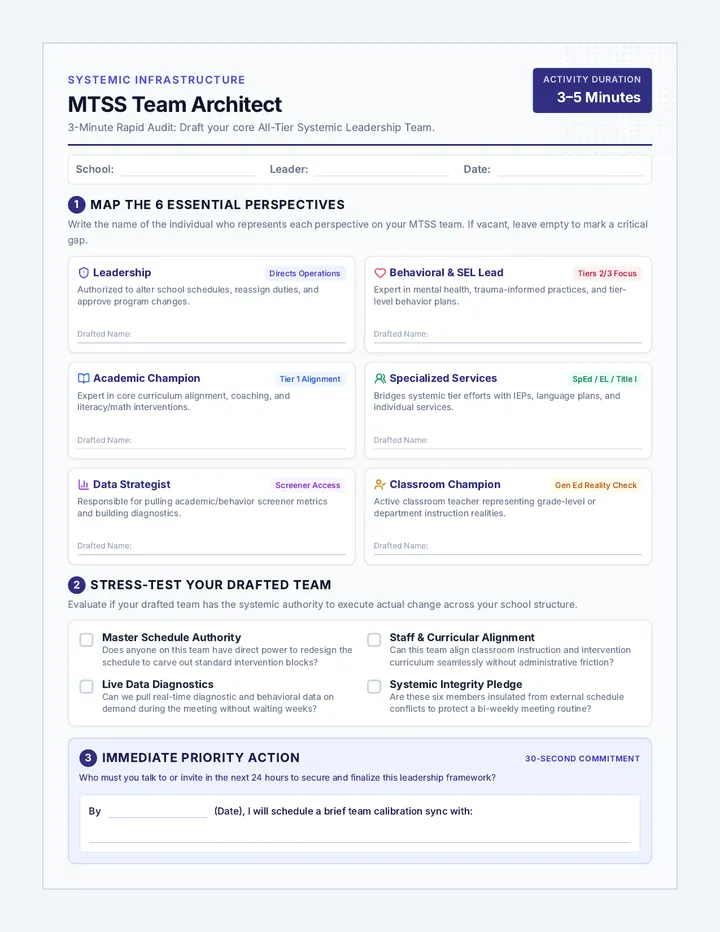
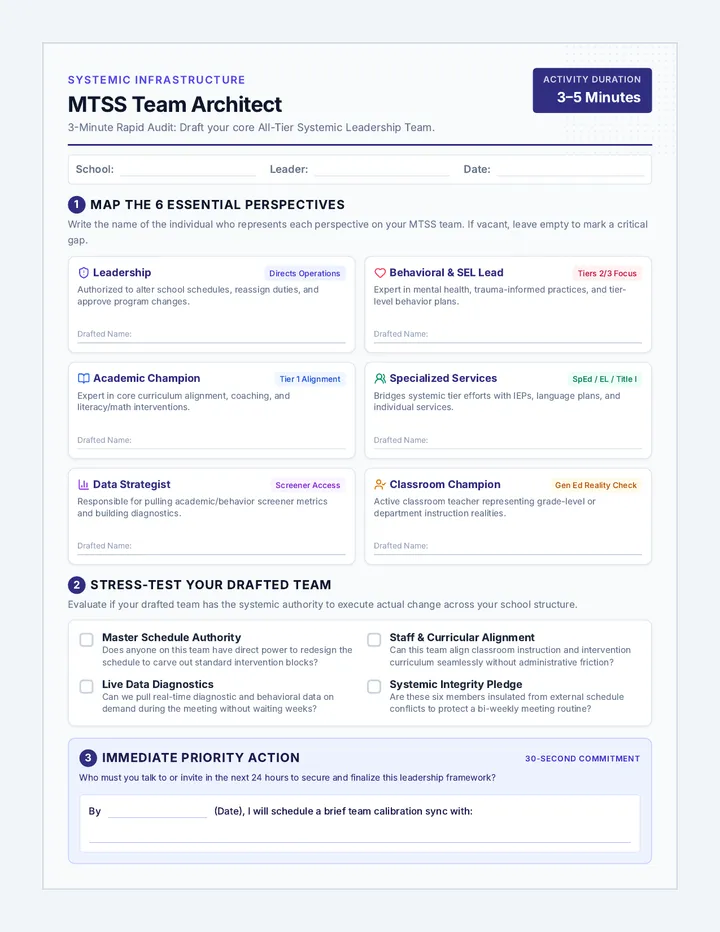
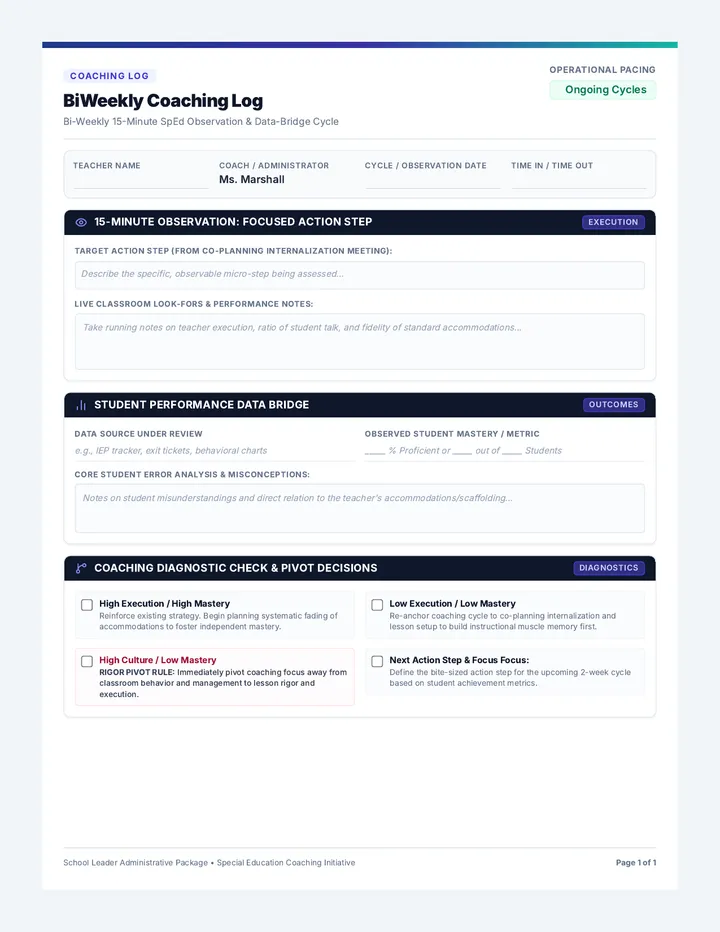
A professional development session focused on analyzing behavior data, social-emotional screening results, and developing intervention plans. Teachers will collaborate in PLCs and grade-level teams to create data-driven enrichment and support strategies.
An introductory lesson on minerals focusing on sensory exploration, property identification, and everyday uses with heavy visual and tactile support.
Students learn and sequence the steps of a school fire drill through tracing and cut-and-paste sorting.
Students describe their favorite pets and pet care needs through drawing prompts and fact-based organizers.
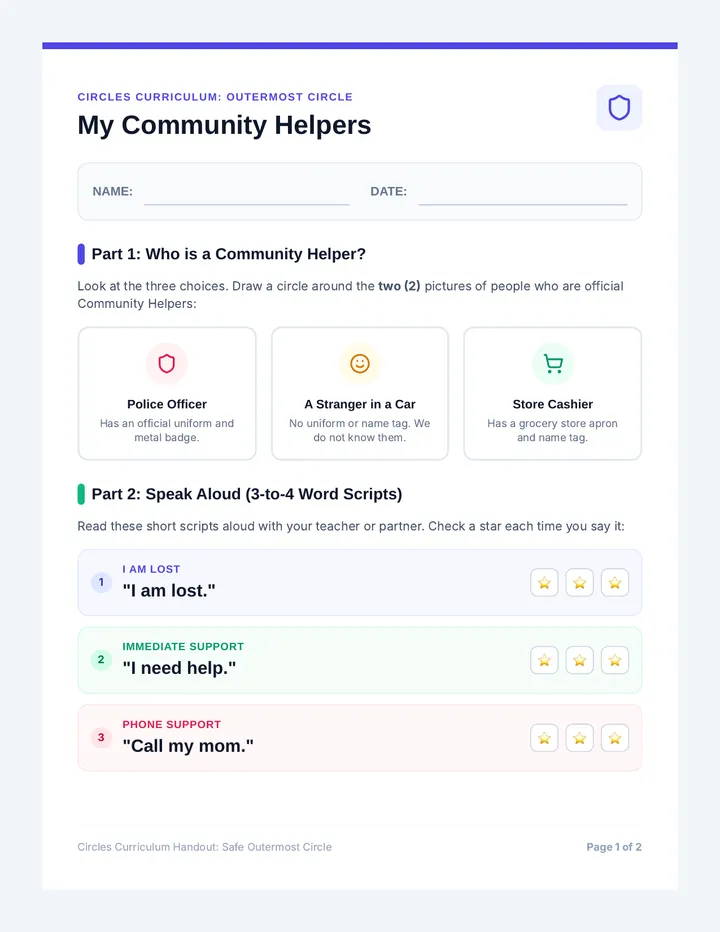
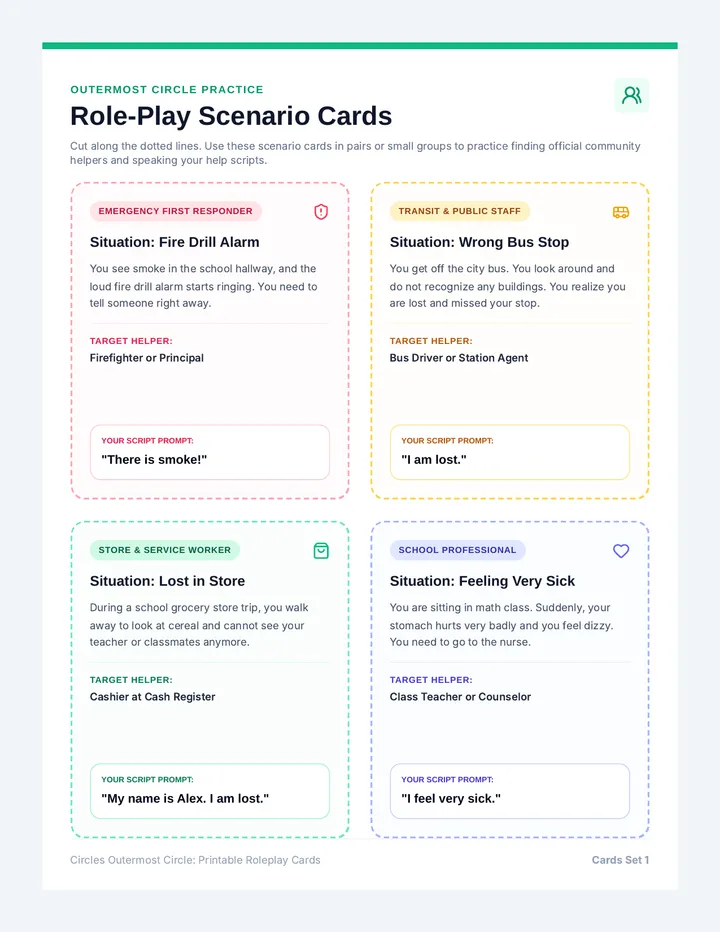
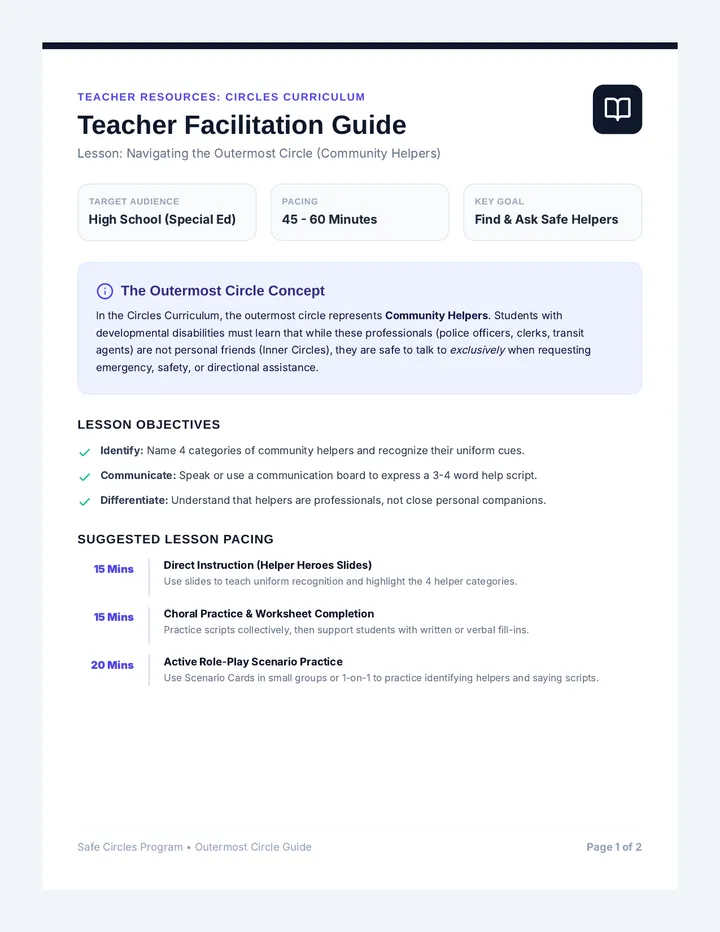
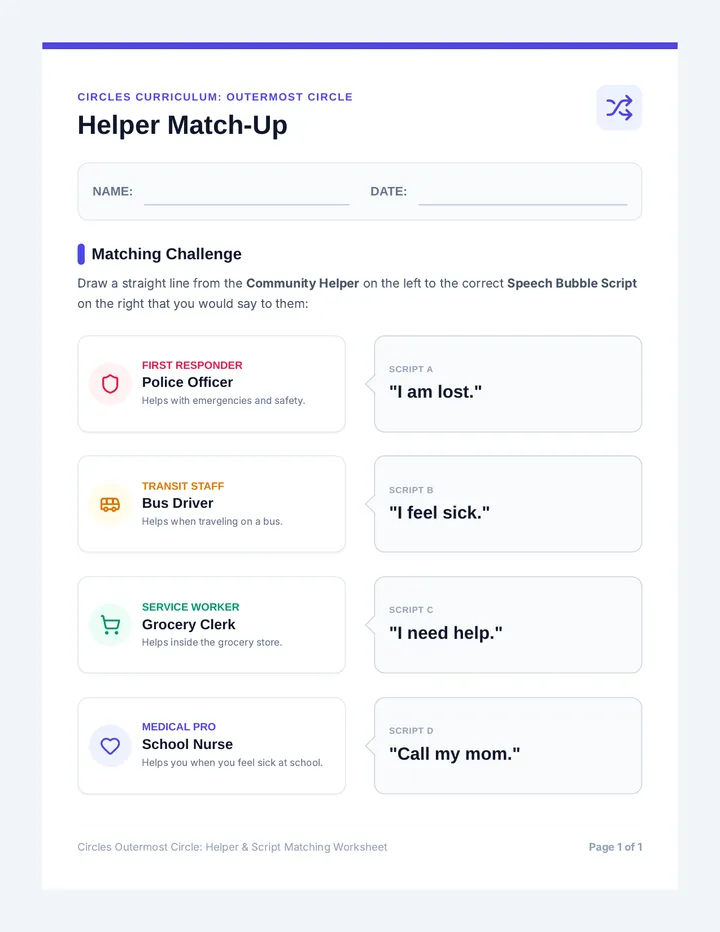
Students identify various community helpers and their roles using sentence starters and matching activities.
Students explore how a plant grows from a seed to a flower through visual sorting, tracing, and structured graphic organizers.
An in-depth look at the Comprehensive School Threat Assessment Guidelines (CSTAG) protocol, focusing on the decision-making process for school-based teams.
A lesson focusing on the trigraph -dge. Students learn the spelling rule that -dge is used to spell the /j/ sound immediately following a short vowel at the end of a word or syllable.
An in-depth look at the 'shun' sound spelled -tion and -sion. Students learn to distinguish between these suffixes based on base words and phonetic cues.
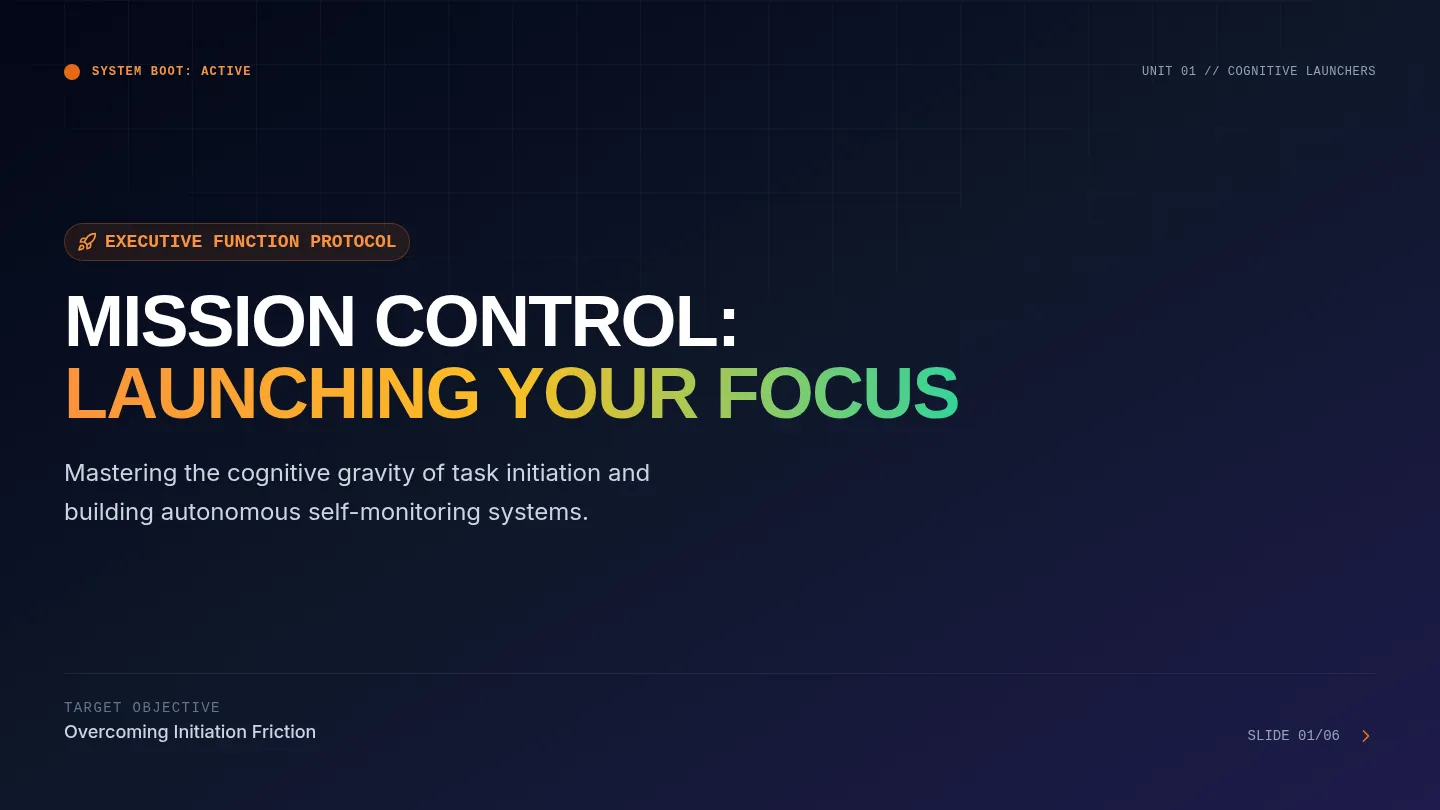
A collection of visual support tools designed to help students navigate their daily schedule and transition between tasks using a structured 1-5 list and a 'First, Then' framework.
A set of high-support, visually clear activities for K-2 special education students to learn about Presidents' Day through social stories, matching, and fine motor tasks.
A lesson focused on helping students manage the frustration of being told 'not right now' for preferred activities, specifically drawing. It uses a social story and visual supports to teach waiting strategies.
A comprehensive support kit for students who seek safety under their desks, featuring a social story, a behavior intervention plan template, and visual communication tools.
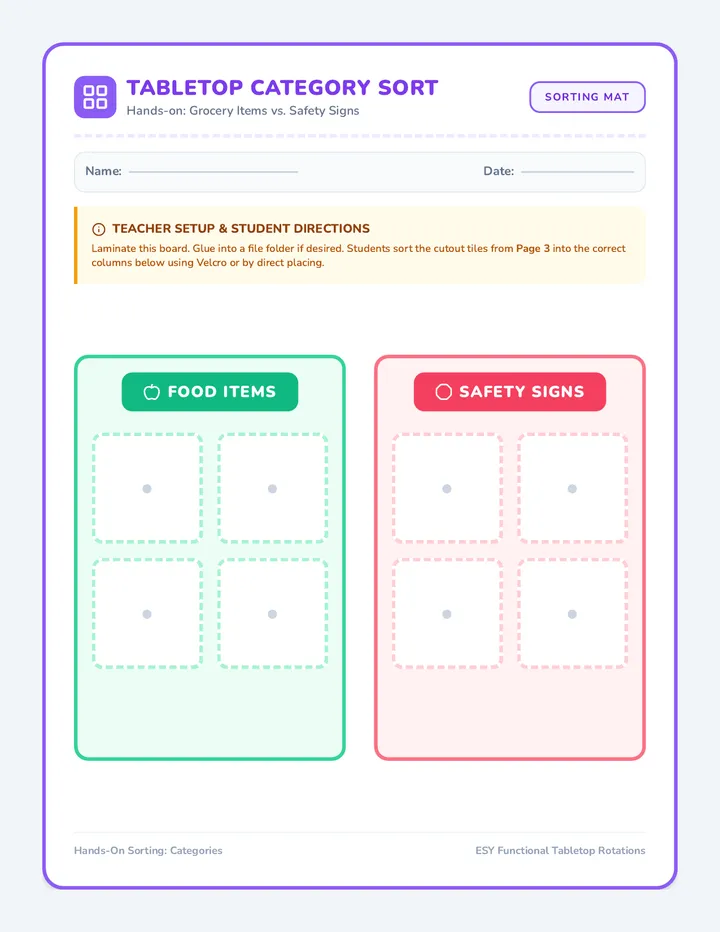
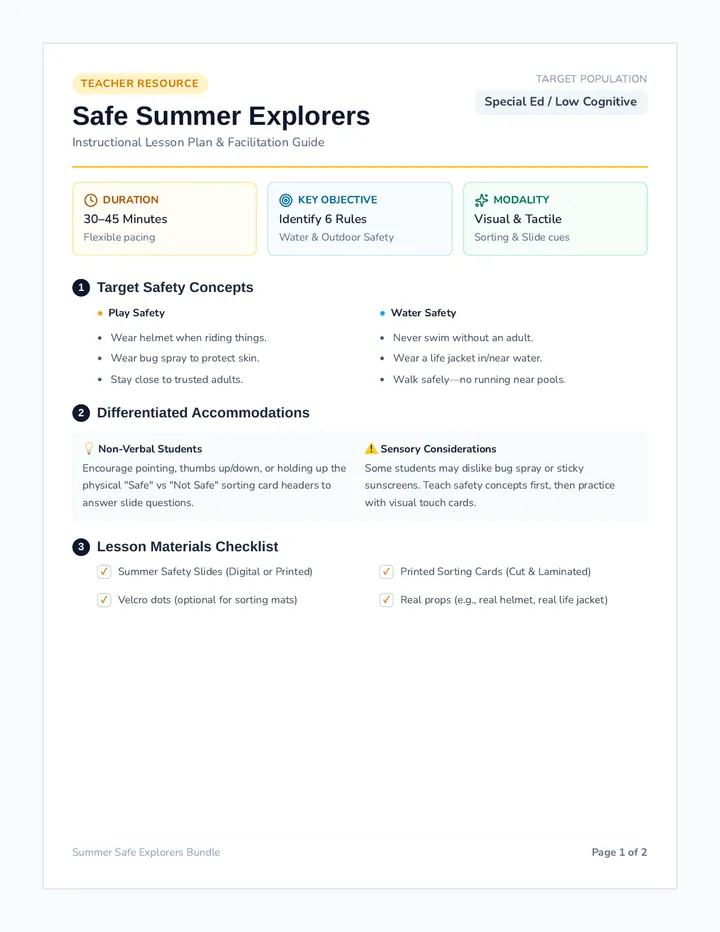
A highly visual, hands-on lesson designed for non-verbal students to master sorting by color and size through physical manipulation and AAC support. This lesson minimizes the need for writing and maximizes visual engagement.
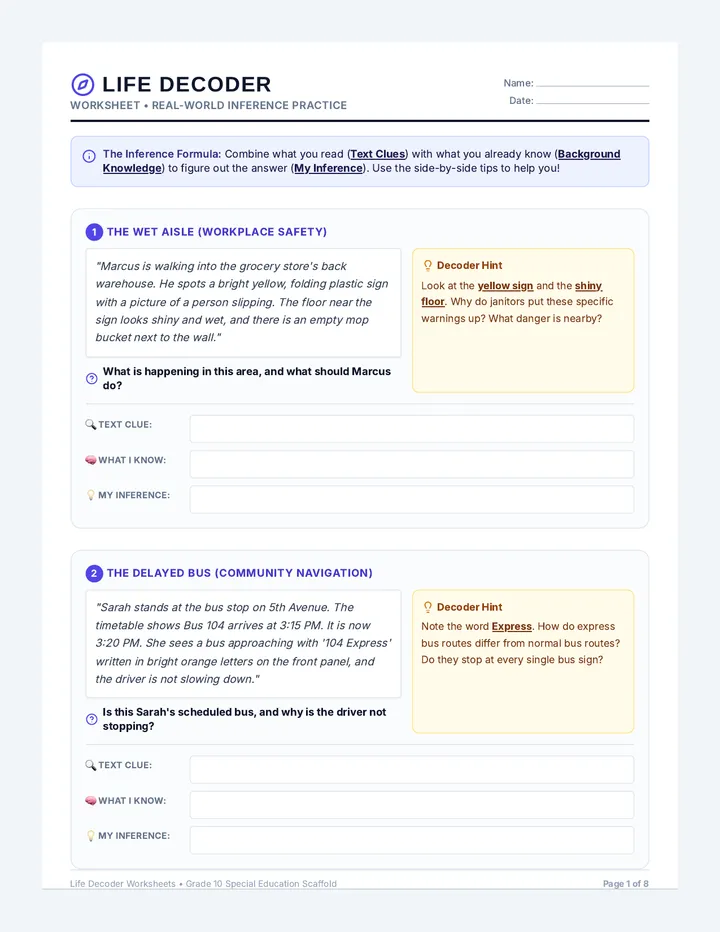
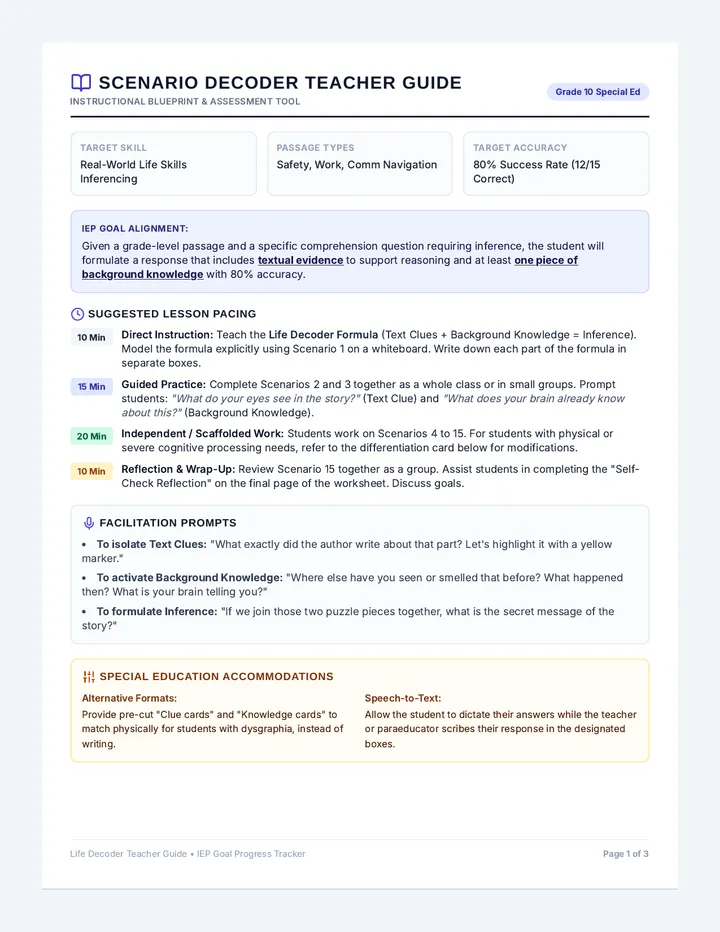
A lesson designed to help 6th-grade students participating in MCAS-Alt master common idioms through visual matching, context clues, and data tracking for independence and accuracy.
A professional development session for high school teachers focusing on restorative practices, emotional regulation, and the implementation of proactive care plans. This lesson equips educators with the tools to handle chronic emotional challenges and foster deep connection with students in grades 9-12.
This lesson introduces and reinforces positive classroom behaviors for second graders through a social story and interactive discussion. It focuses on personal space, following routines, and effective communication strategies.
Final review and assessment of Step 4.2 skills, including spelling dictation and sentence reading.
Fluency-focused activities and games to reinforce automaticity in reading VCe multisyllabic words.
Focus on complex 4.2 words containing blends and digraphs. Students practice reading and spelling words like 'stampede' and 'shrine'.
Introduction to two-syllable words containing one closed syllable and one VCe syllable. Students practice identifying syllable types and dividing words correctly.
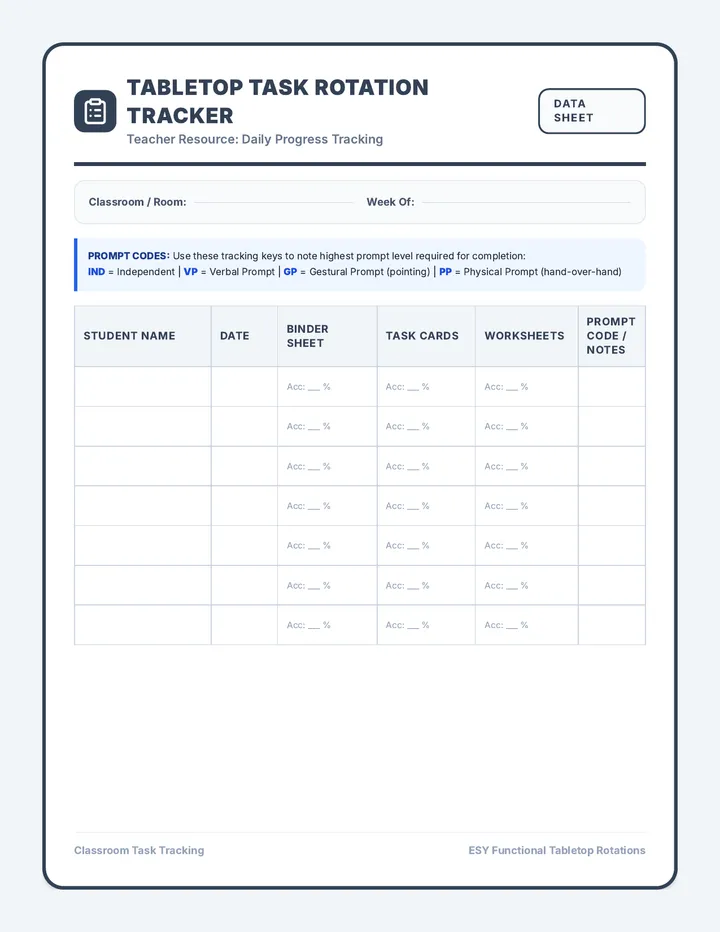
A toolkit for educators to streamline their classroom documentation, featuring a comprehensive filing system setup guide and a versatile student progress tracking tool.
A therapy session focused on teaching impulse control strategies to students with ADHD using a 'Brain Brake' metaphor. The lesson includes a guided activity and portable visual reminders for the classroom.
A targeted lesson on Wilson Reading System Substep 2.1, focusing on the identification, reading, and spelling of the 'glued' or 'welded' sounds: ang, ing, ong, ung, ank, ink, onk, and unk.