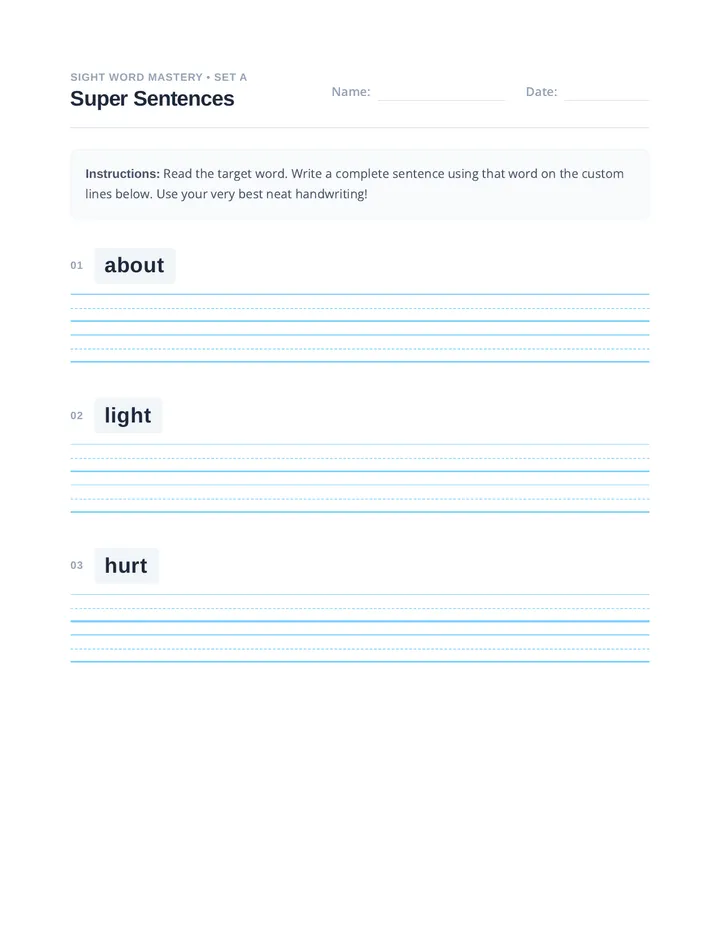
A lesson focusing on the trigraph -dge. Students learn the spelling rule that -dge is used to spell the /j/ sound immediately following a short vowel at the end of a word or syllable.

A 3rd-grade lesson focused on identifying the main idea and supporting details using a 'Main Idea Mountain' theme. Students practice the 'first read' of complex texts before chunking paragraphs to summarize and find the 'big picture'.
A 4-day morning work series focusing on multiplication/division word problems and comparing/contrasting informational texts about animals.
A lesson focusing on the vowel teams 'ai' and 'ay' for the long /a/ sound, following the SPIRE Level 3 progression. Students will practice identifying, reading, and spelling words with these patterns through guided instruction and independent practice.
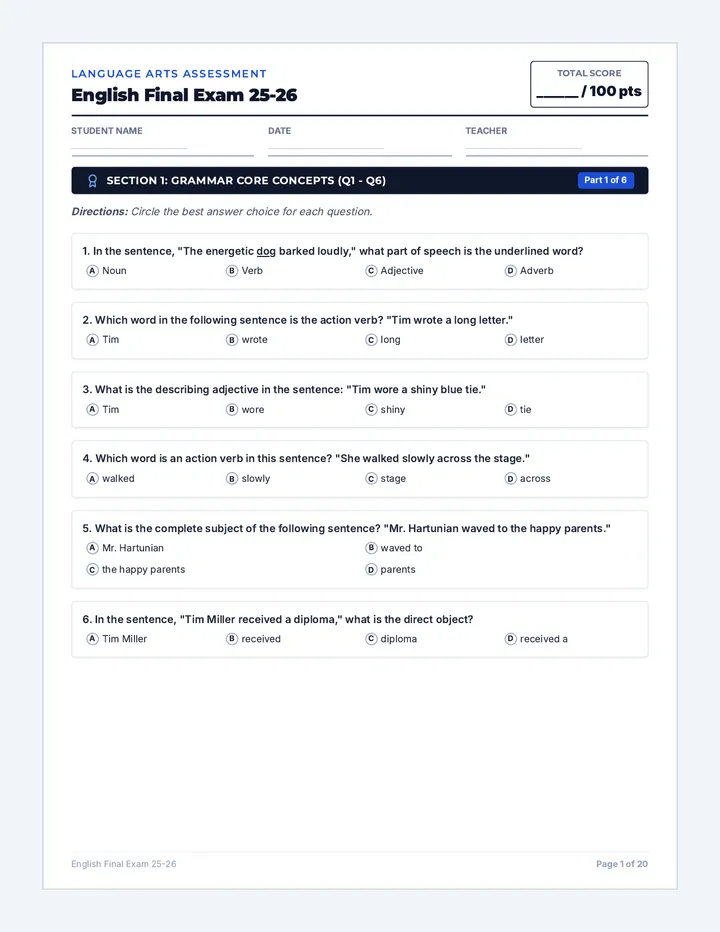
A formal assessment of 3.RL.2 skills using multiple-choice questions over a new folktale.
Applying recounting and moral-finding skills to a West African folktale, 'Anansi and the Pot of Wisdom'.
Analyzing how key details lead to the moral in 'The Boy Who Cried Wolf'.
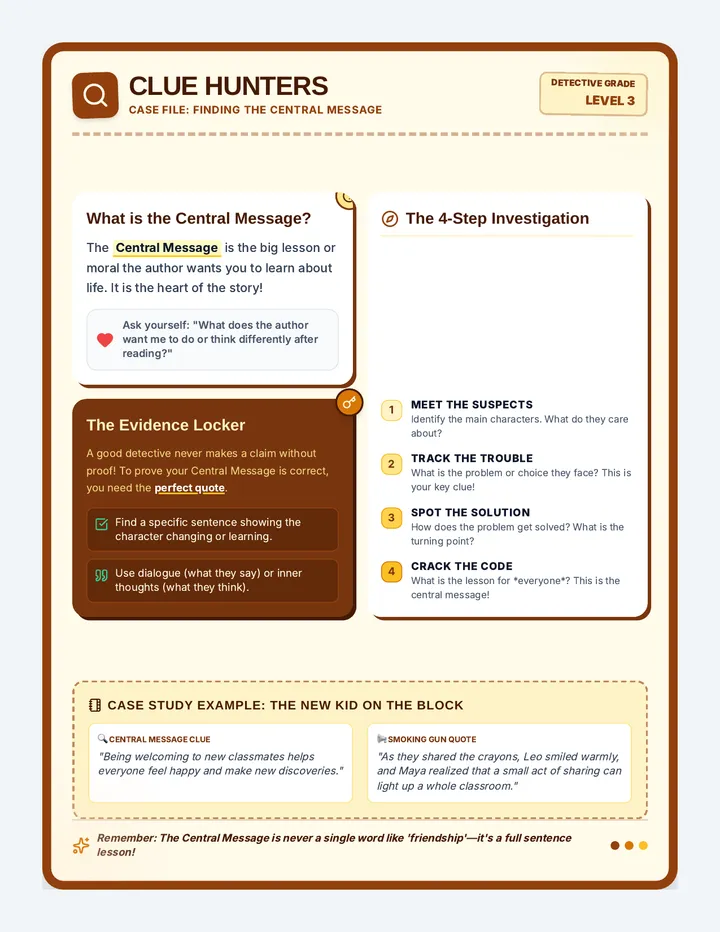
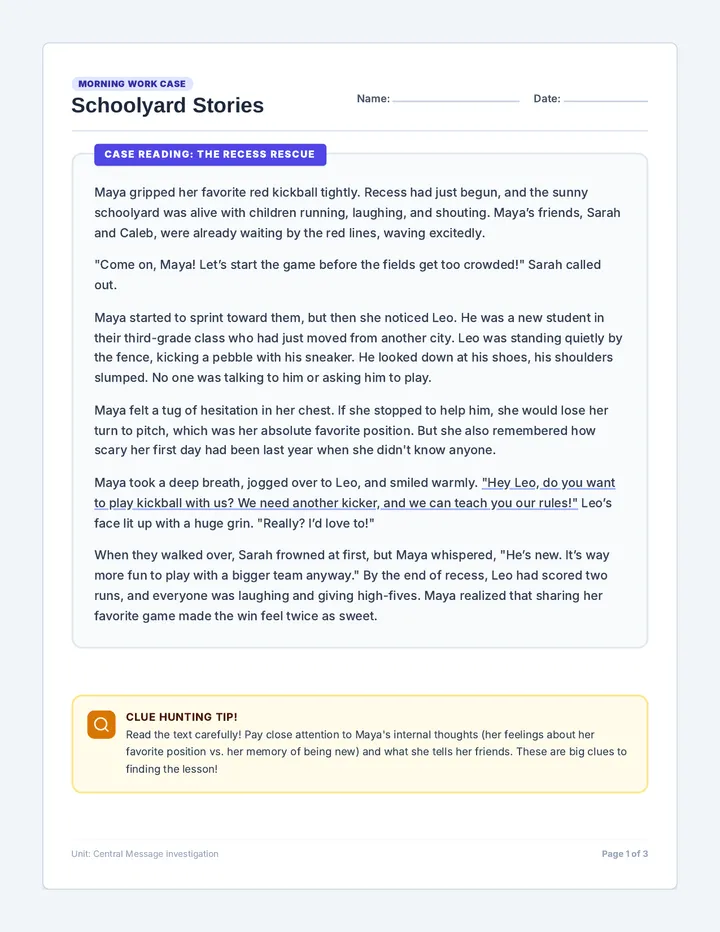
Focus on recounting the sequence of events and identifying the central message in 'The Lion and the Mouse'.
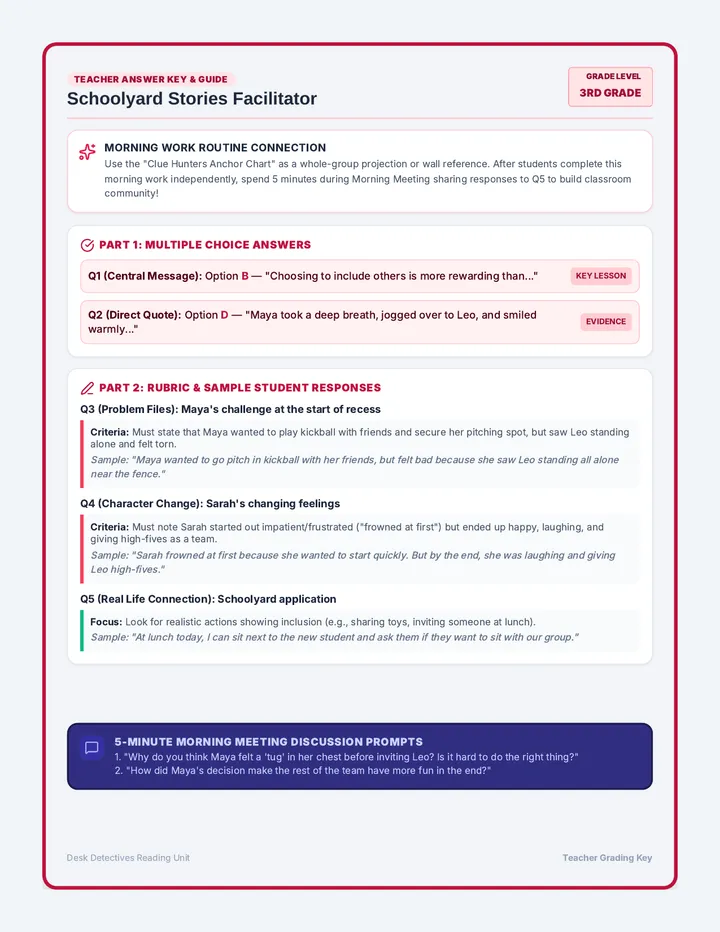
A cumulative assessment where students apply all their 'Desert Detective' skills—literal details, 'how and why' explanations, and citing specific sentence evidence—to solve a final mystery.
A vibrant retelling of the classic Jamaican folktale explaining why Anansi the spider has a thin waist, designed for 2nd-grade performance and comprehension.
Students master the skill of identifying the specific sentence or phrase that proves an answer in a mystery set at Painted Rock.
Students tackle 'how and why' questions, learning to link character actions to specific text evidence in a story about a mysterious cactus.
Students practice answering literal 'who, what, where, and when' questions by citing evidence from a story about a lost canteen.
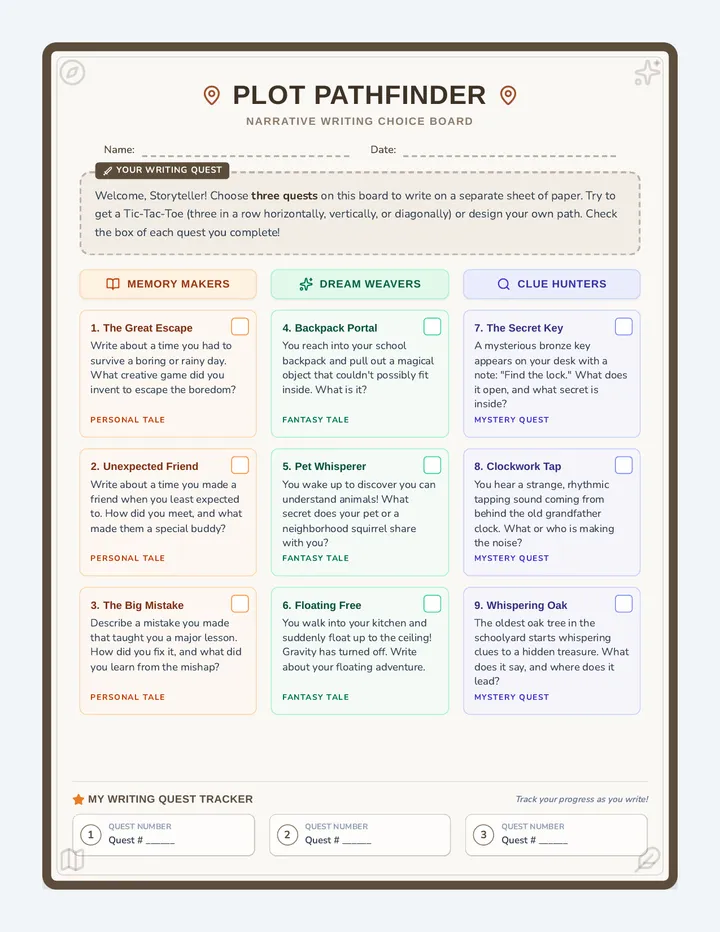
A final capstone lesson where students choose their own object or picture to describe and write about.
A Bluey-themed writing lesson using character-driven prompts to build descriptive sentences.
An art-themed writing lesson focusing on describing colors and creative actions.
A swimming-themed writing lesson focusing on describing textures and colors while practicing sentence structure.
Students produce their final multi-paragraph draft, focusing on indentation and neat handwriting.
Students learn to wrap up their writing with a concluding paragraph that summarizes their main ideas.
Students develop the middle section of their composition by adding facts, details, and explanations about their chosen topic.
Students learn how to write an introductory paragraph with a clear topic sentence and a supporting detail.
Students choose their writing topic and practice writing high-quality sentences with a focus on handwriting mechanics.
A LEGO-themed writing lesson focusing on verbal description and 7-word sentence ordering with adult support.
A 30-minute introductory lesson focusing on distinguishing between literal and non-literal language using context clues and engaging detective-themed examples.
A 35-minute lesson focused on applying context clues to interpret non-literal language in grade-level texts, featuring DOK 2 and 3 assessment questions.
A five-day review focusing on comparing adaptations of animals in ocean and rainforest environments, wrapping up the 10-day 3.RI.9 spiral review.
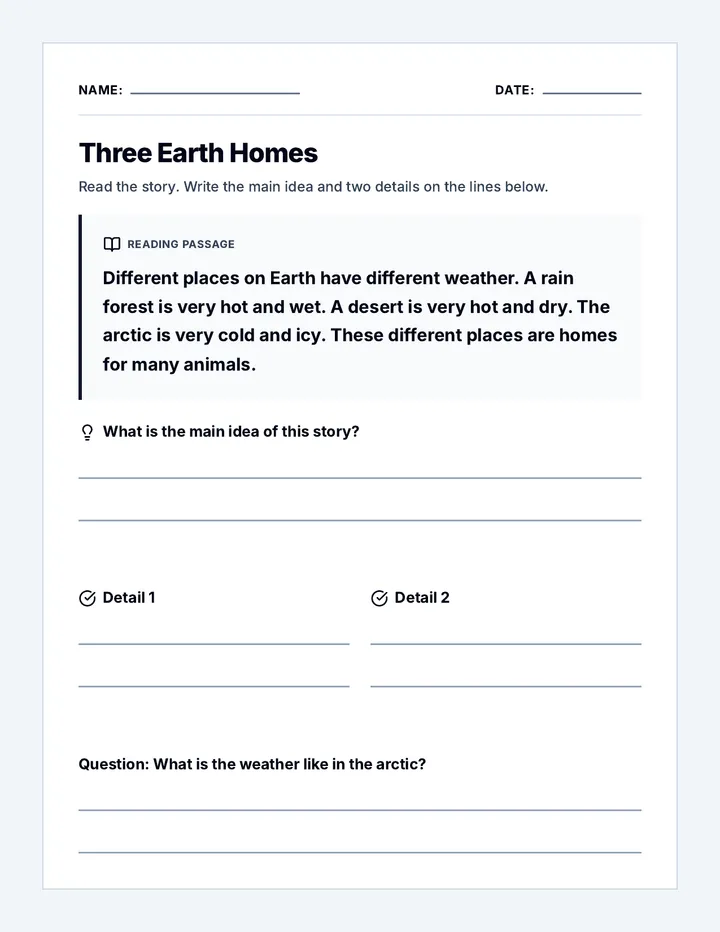
A five-day review focusing on comparing adaptations of animals in desert and arctic environments, specifically targeting standard 3.RI.9. Students read paired texts and identify similarities and differences in key details.
A targeted intervention lesson focused on identifying and naming all 26 lowercase letters through rapid naming, visual discrimination, and playful practice.
A Reader's Theater lesson based on the West African folktale of Anansi and the Pot of Beans, focusing on character expression, fluency, and the 'why' behind folktale origins.