Fluency-focused activities and games to reinforce automaticity in reading VCe multisyllabic words.
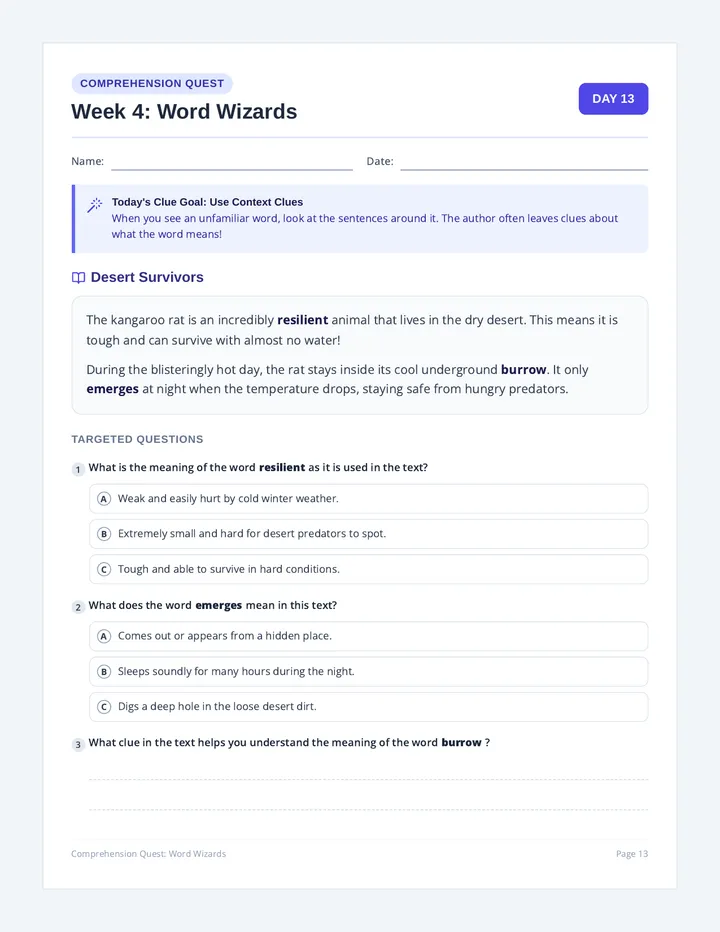
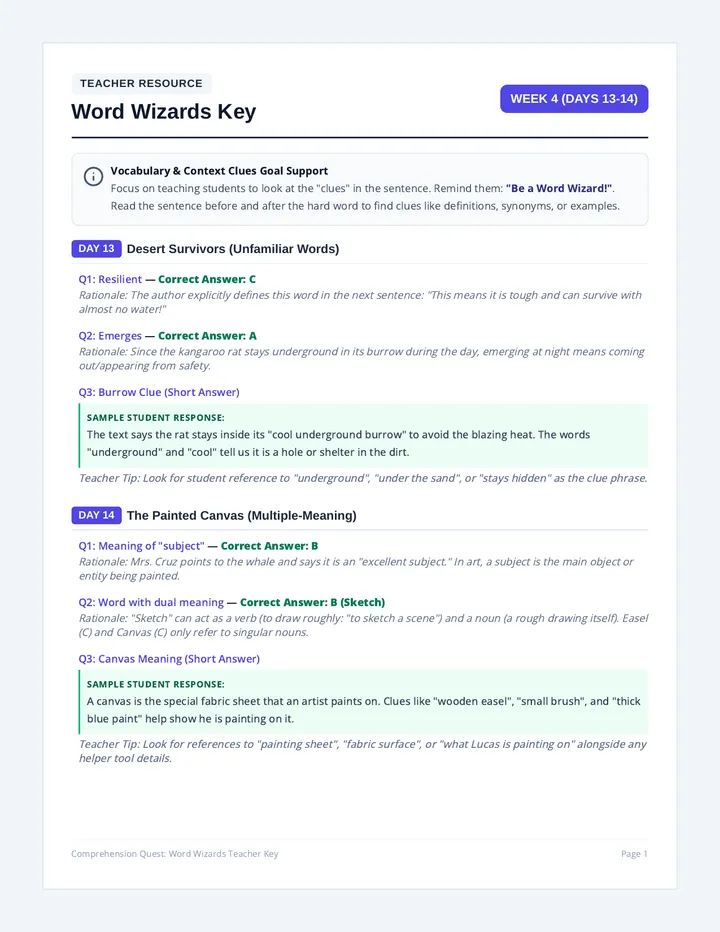
Week 4 focuses on context clues and vocabulary. Students learn to decipher the meanings of unfamiliar academic vocabulary, synonyms, and figurative language using clues in the surrounding text.
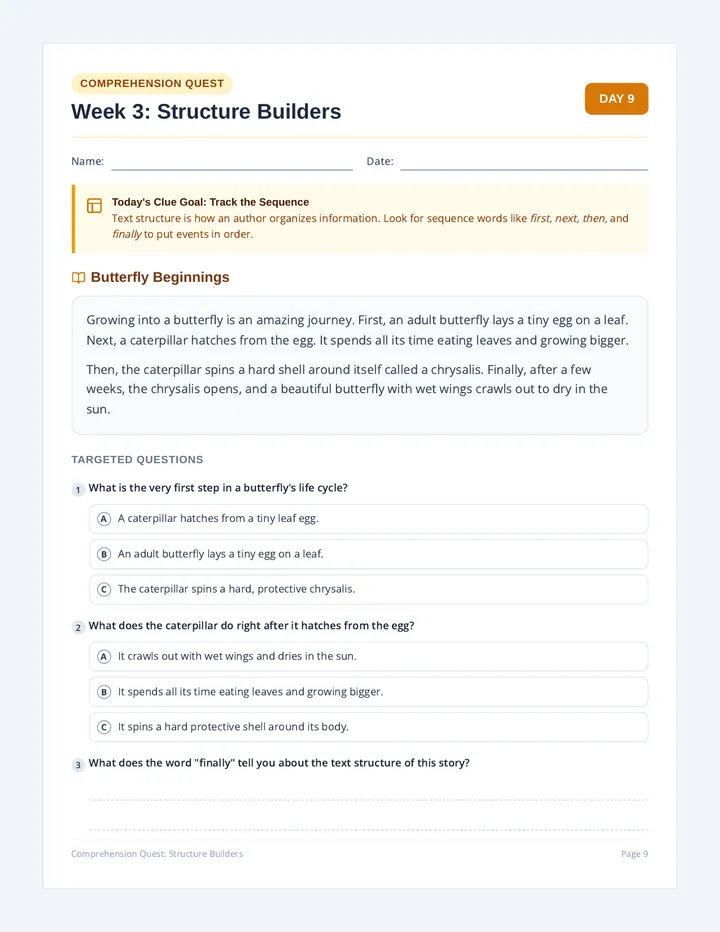
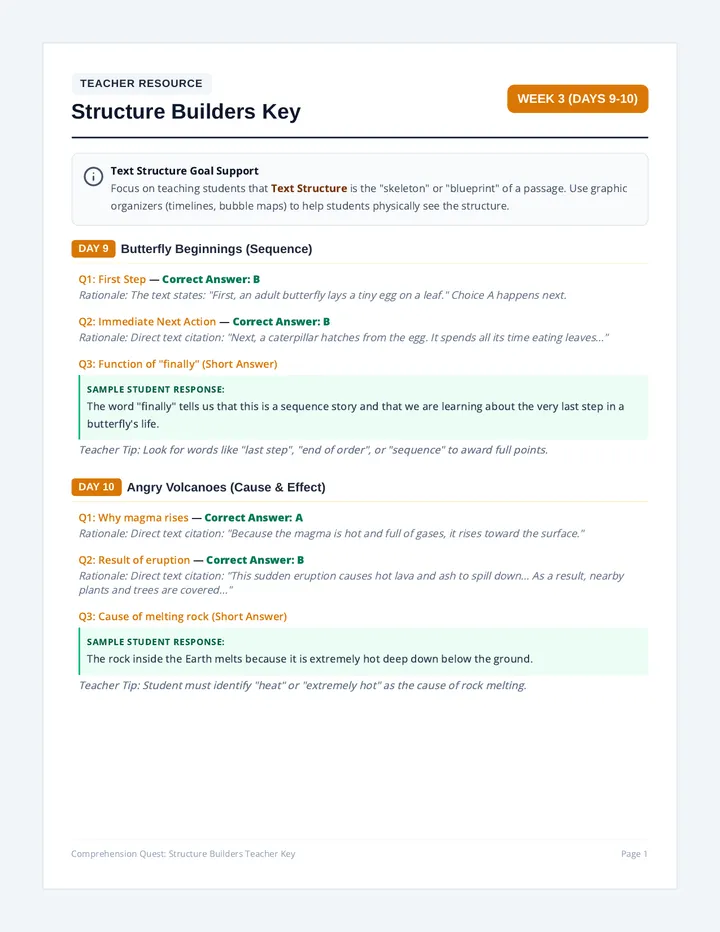
Week 3 focuses on understanding text structure. Students explore chronological order, cause and effect, compare and contrast, and problem/solution text structures.
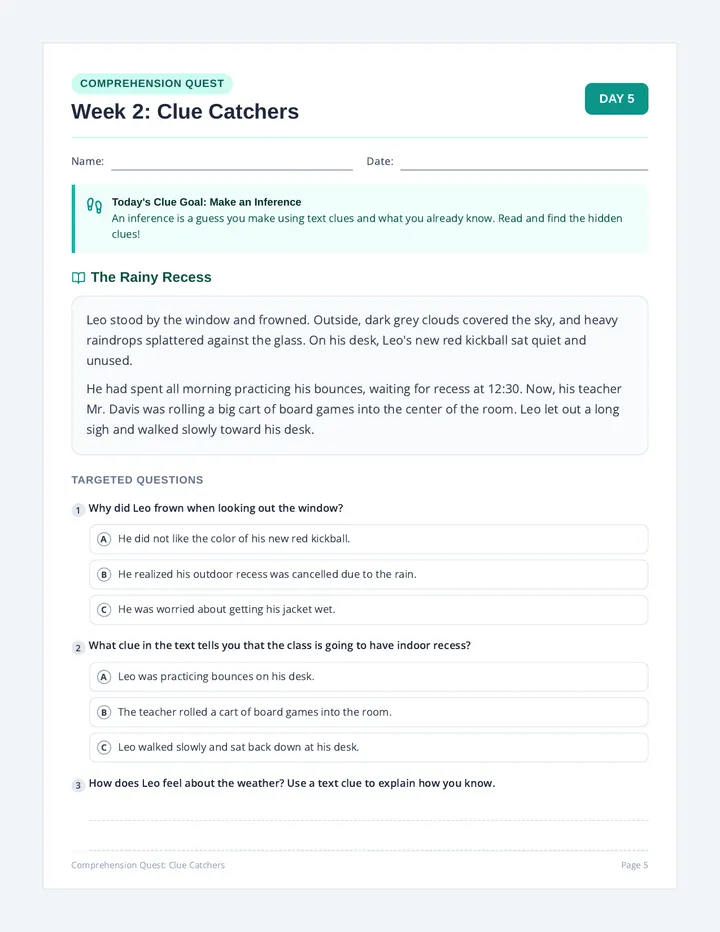
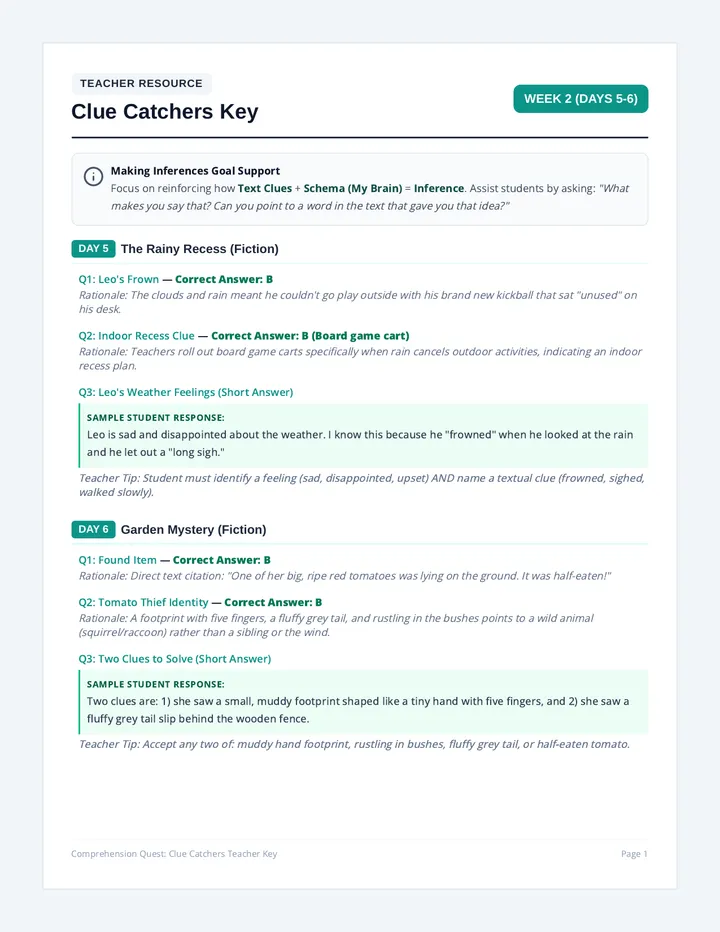
Week 2 focuses on making inferences. Students practice drawing conclusions, identifying clues in the text, and predicting what characters might do next based on evidence.
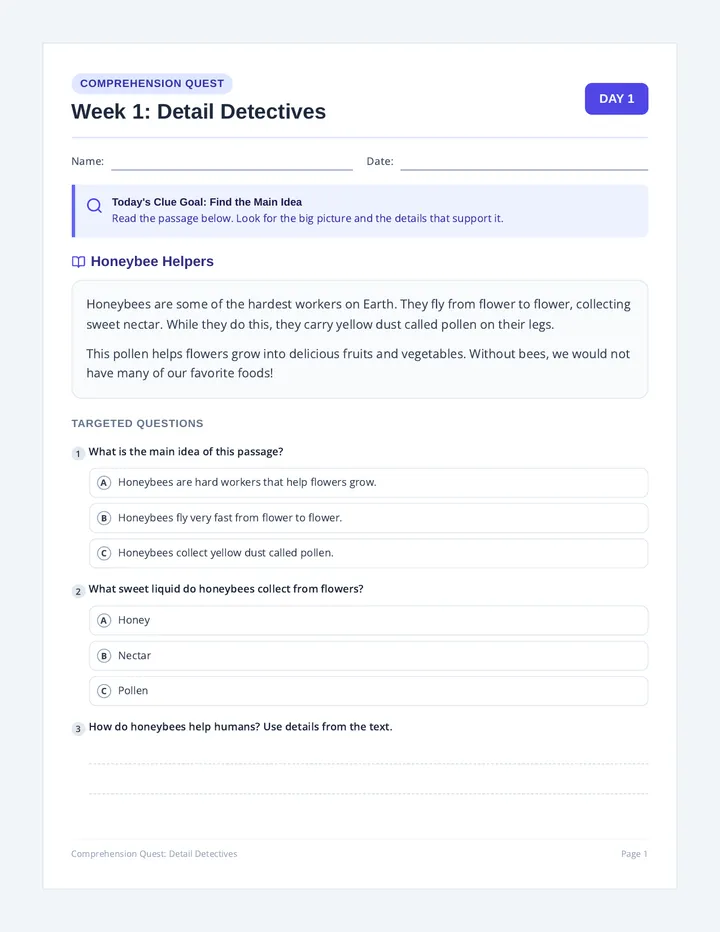
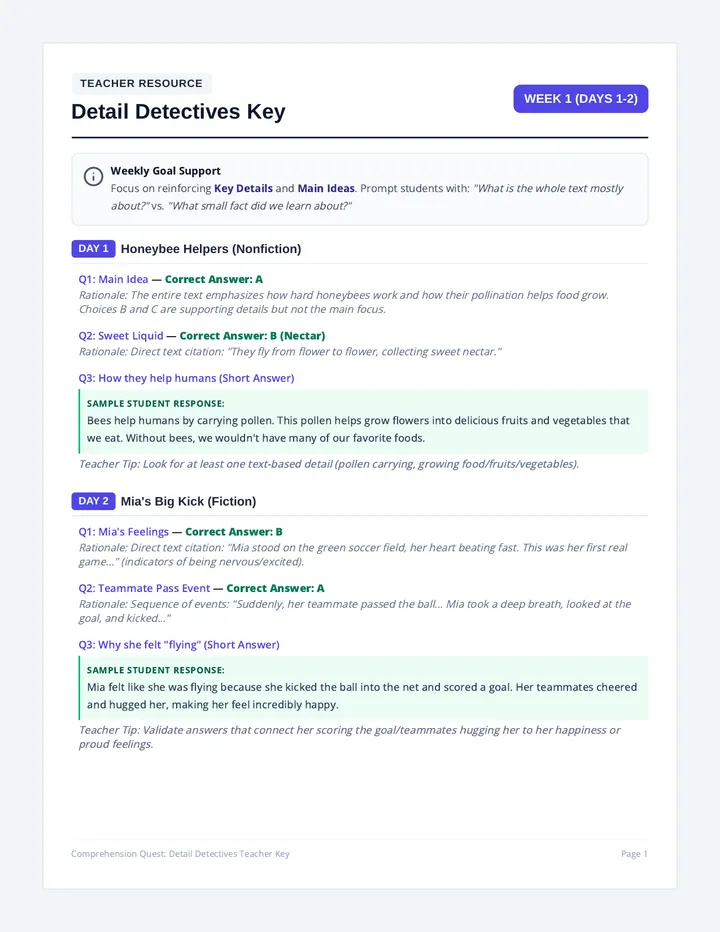
Week 1 focuses on finding key ideas and details. Students practice identifying main ideas, character motives, and summarizing essential details from both fiction and nonfiction passages.
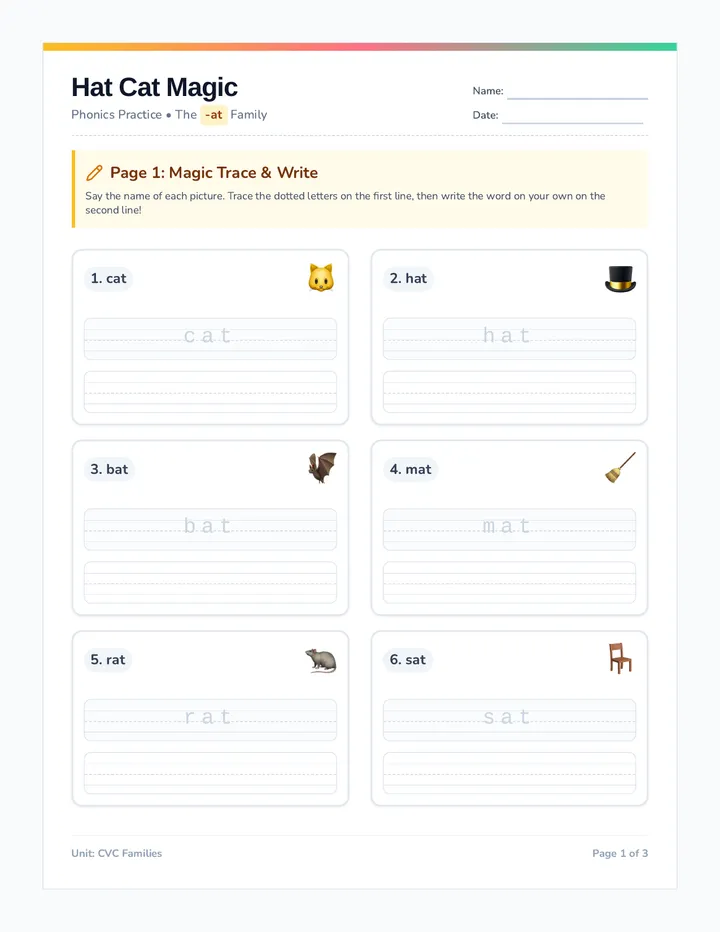
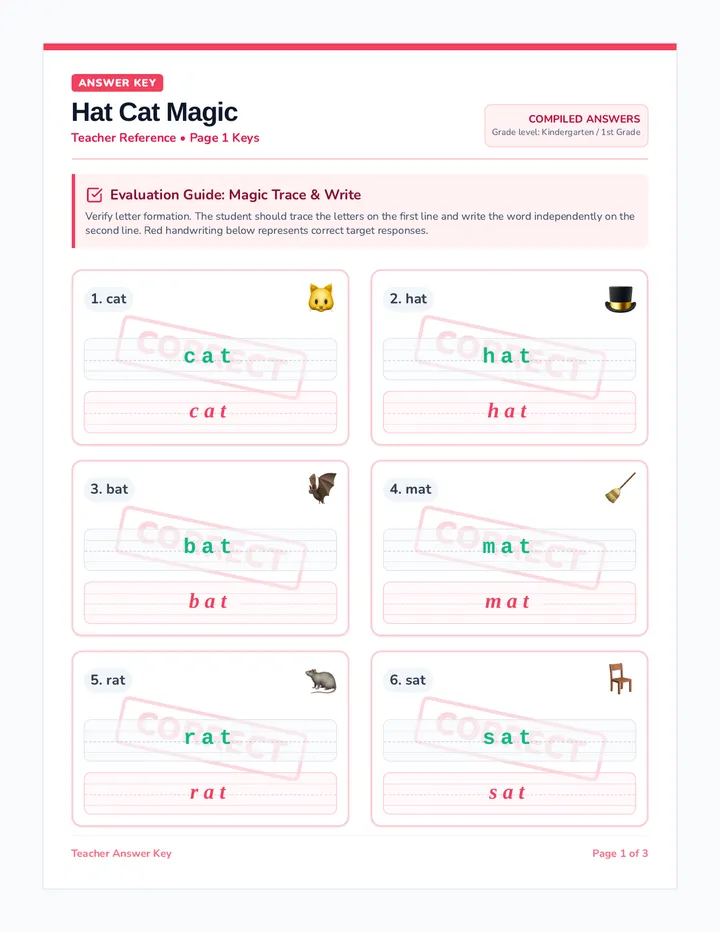
A foundational phonics lesson focusing on the -at word family. Students practice letter tracing, fine motor sorting, and decodable sentence reading to build early reading fluency.
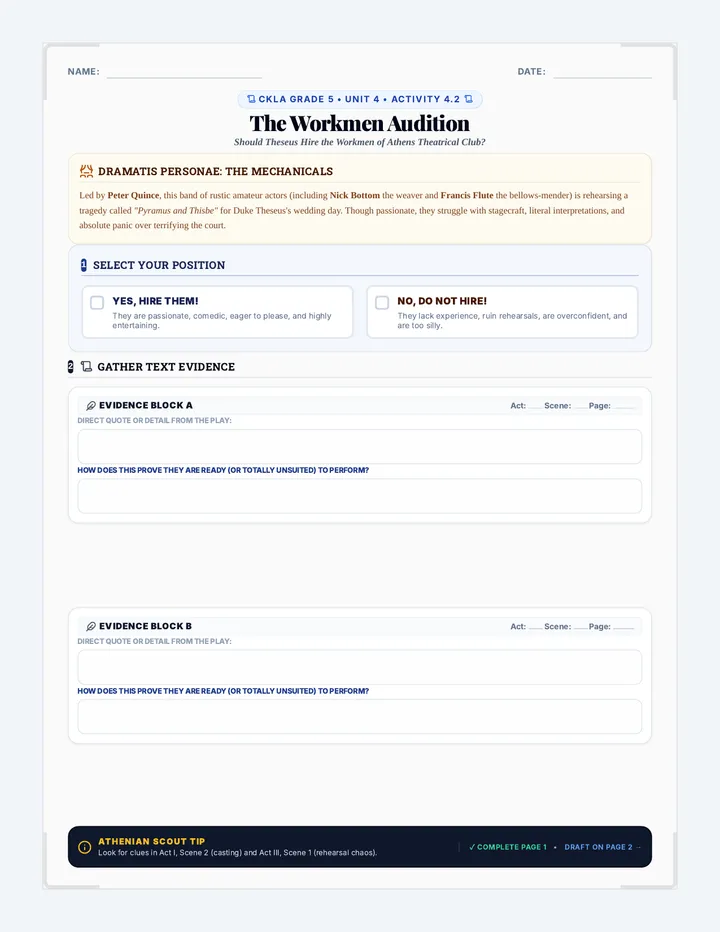
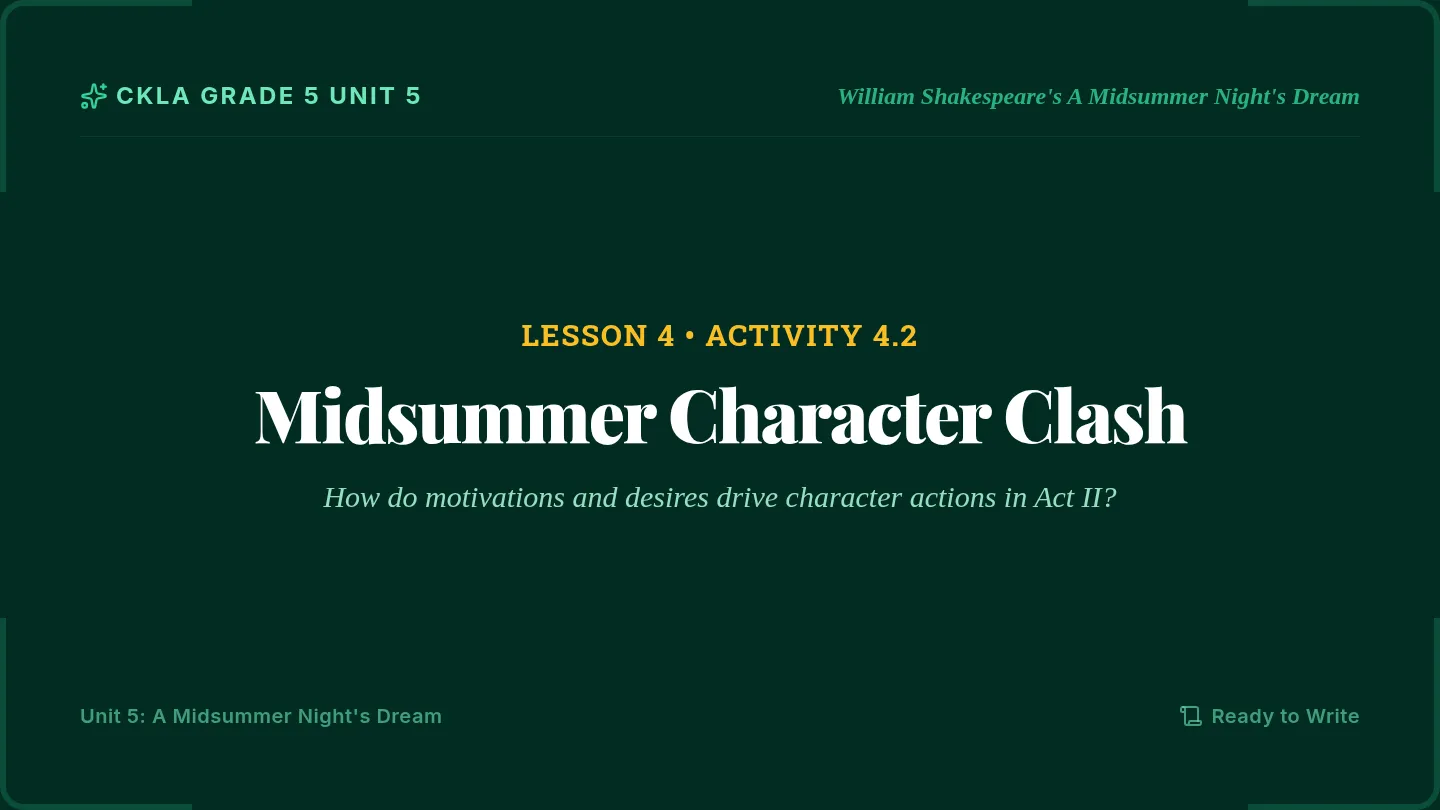
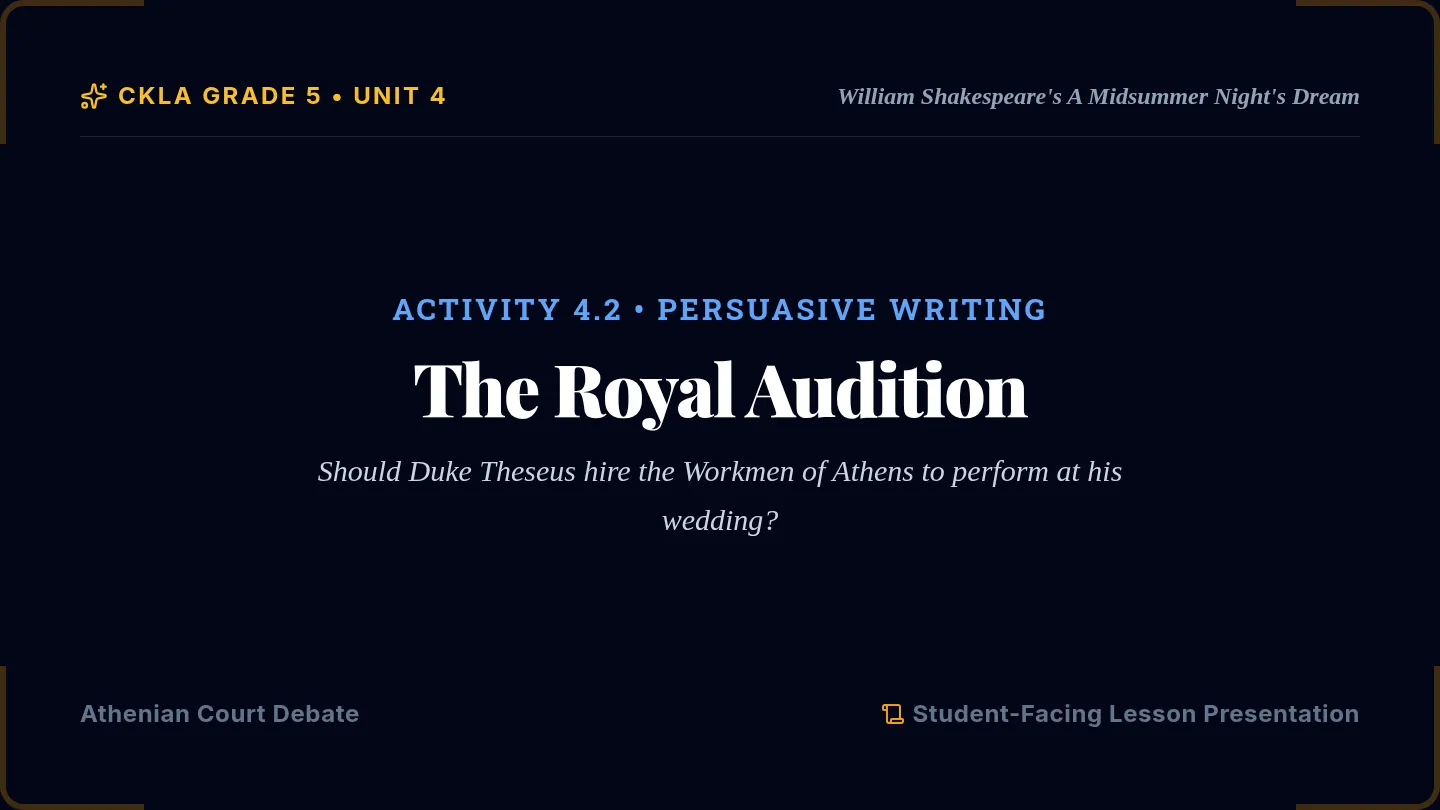
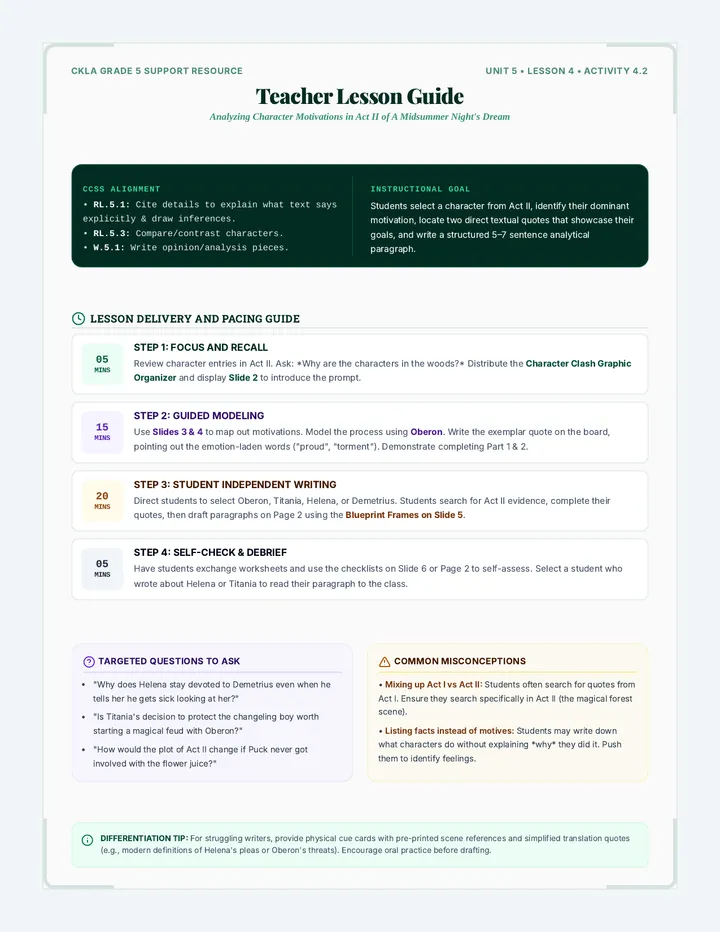
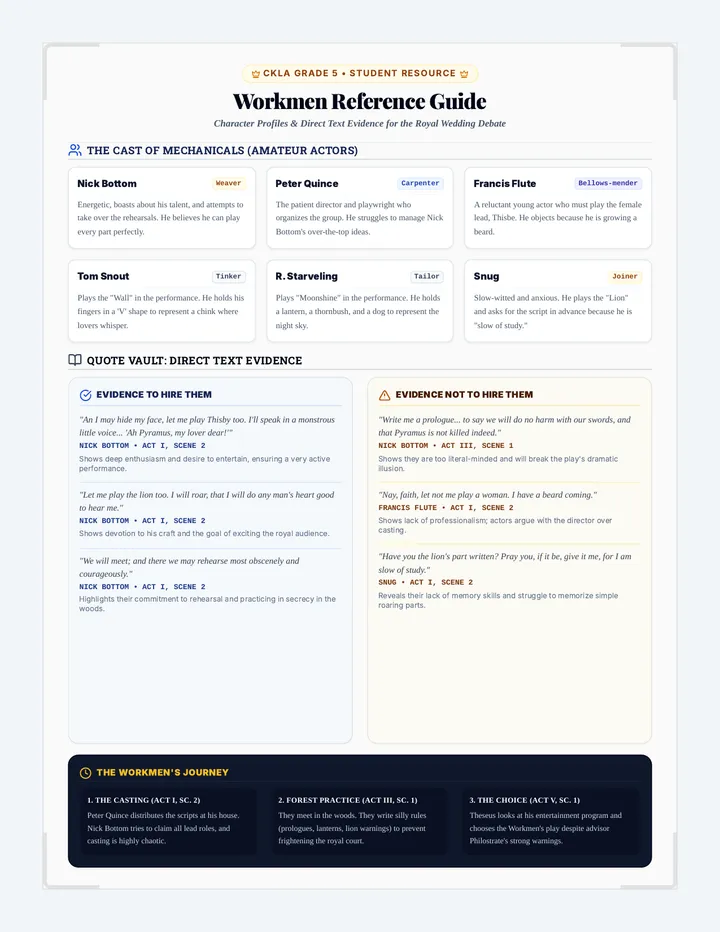
A comprehensive writing lesson centered around the CKLA Grade 5 persuasive prompt: 'Should Theseus hire the Workmen of Athens Theatrical Club?' Students gather text evidence about the mechanicals' theatrical abilities, weigh their strengths and weaknesses, and draft a structured persuasive paragraph.
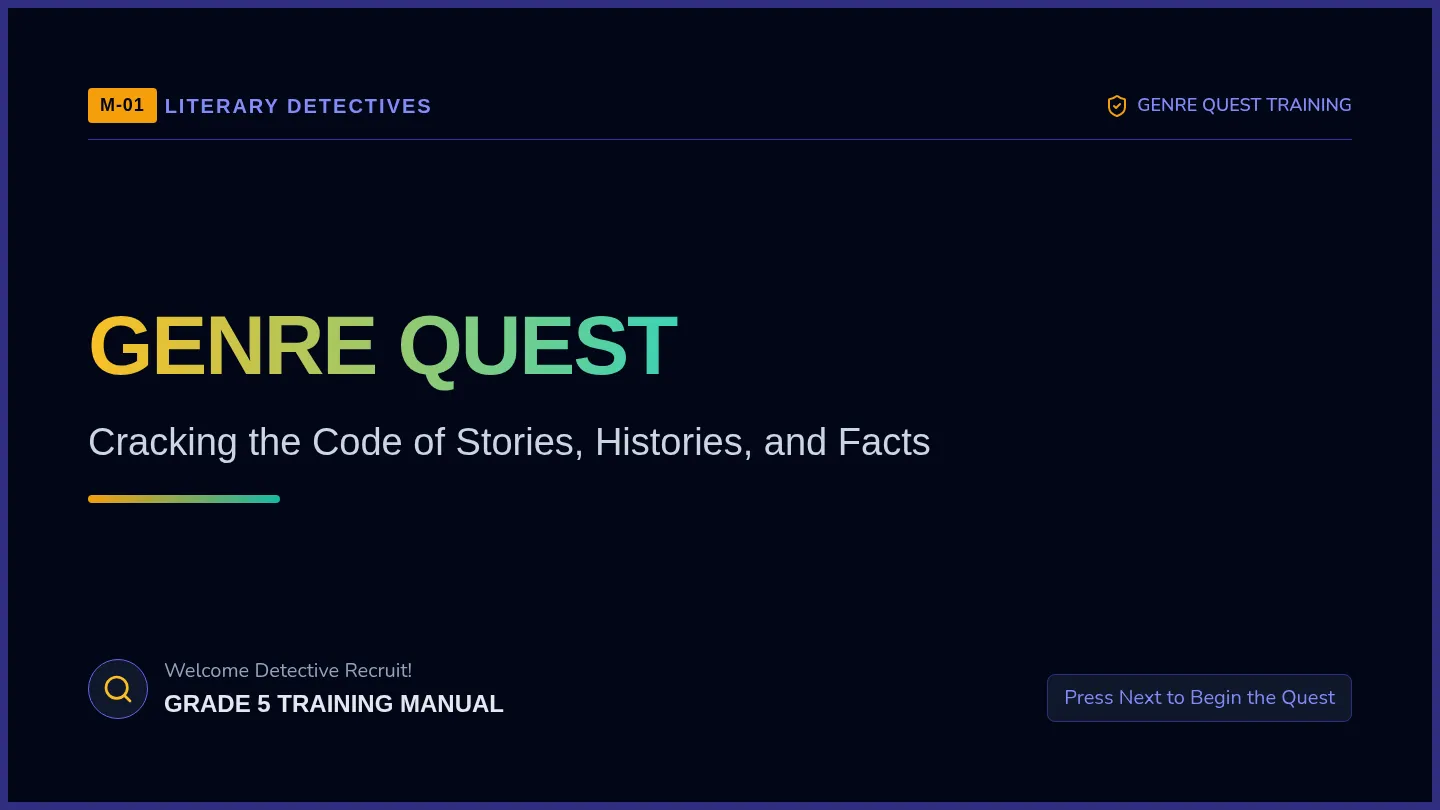
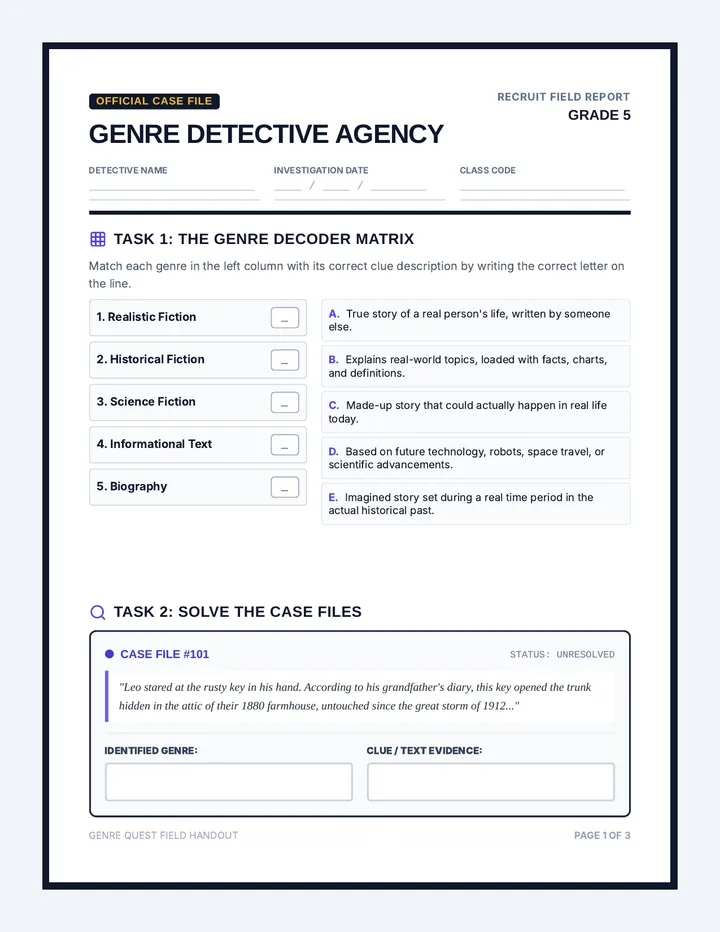
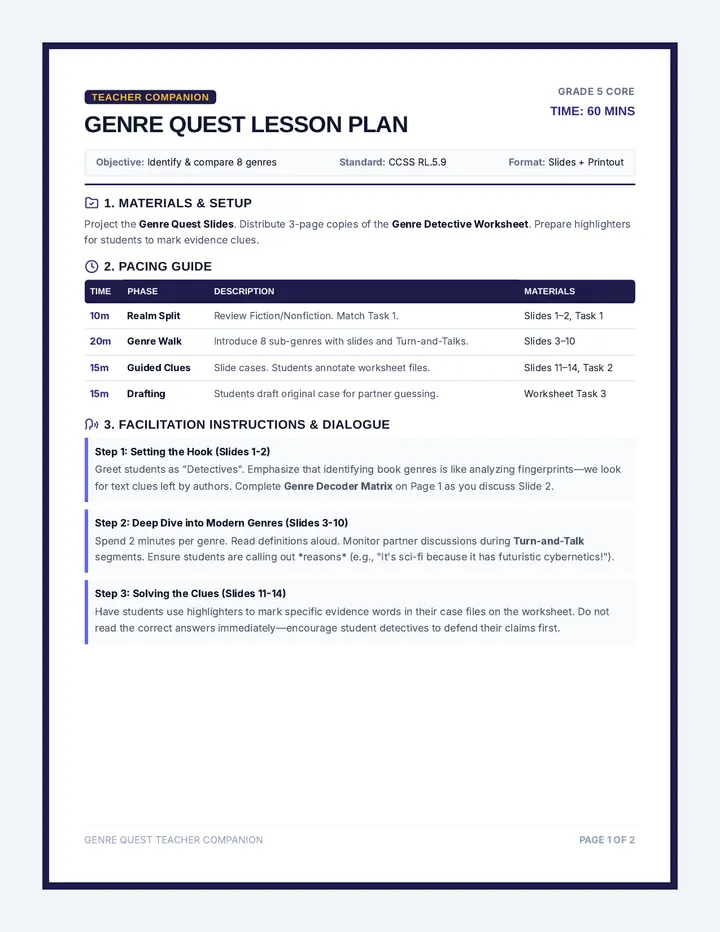
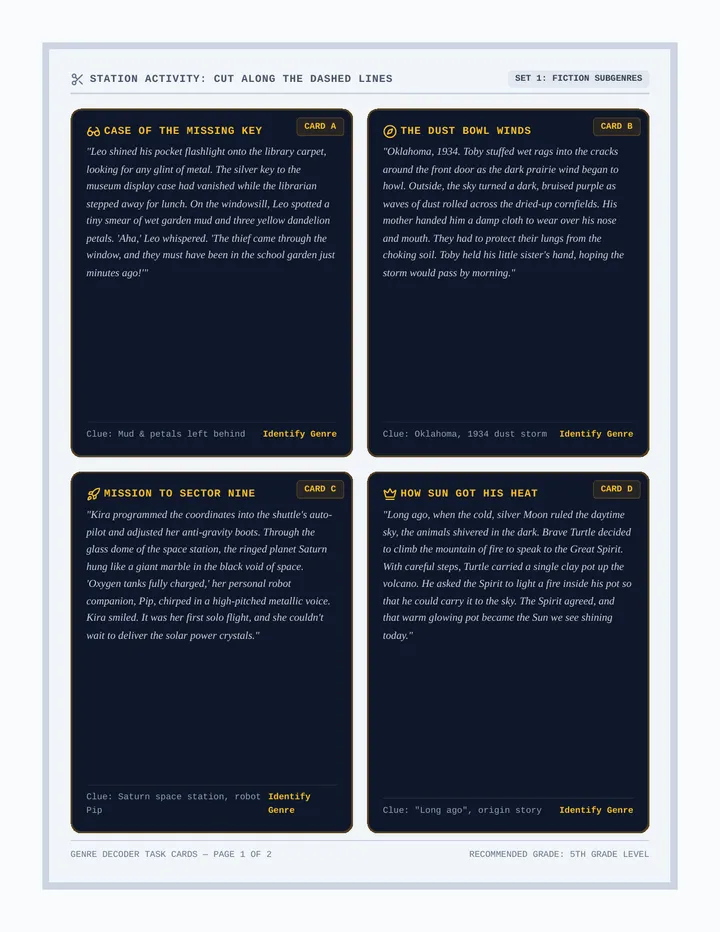
A comprehensive lesson designed for 5th-grade students to identify and distinguish between key literary genres, including fiction and nonfiction basics, and a modern mix of fantasy, science fiction, mystery, and adventure.
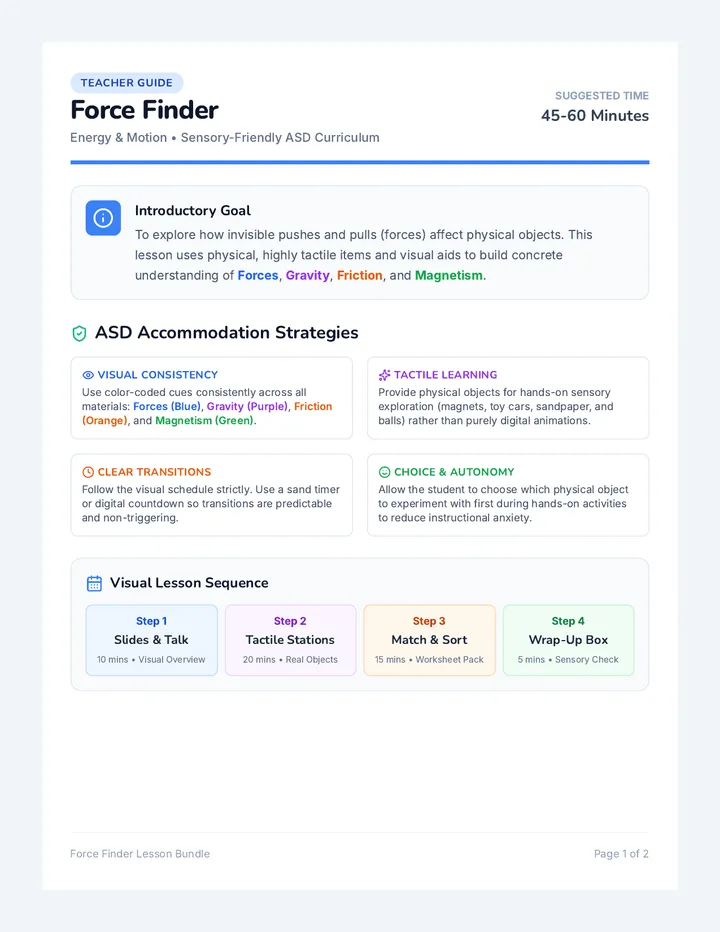
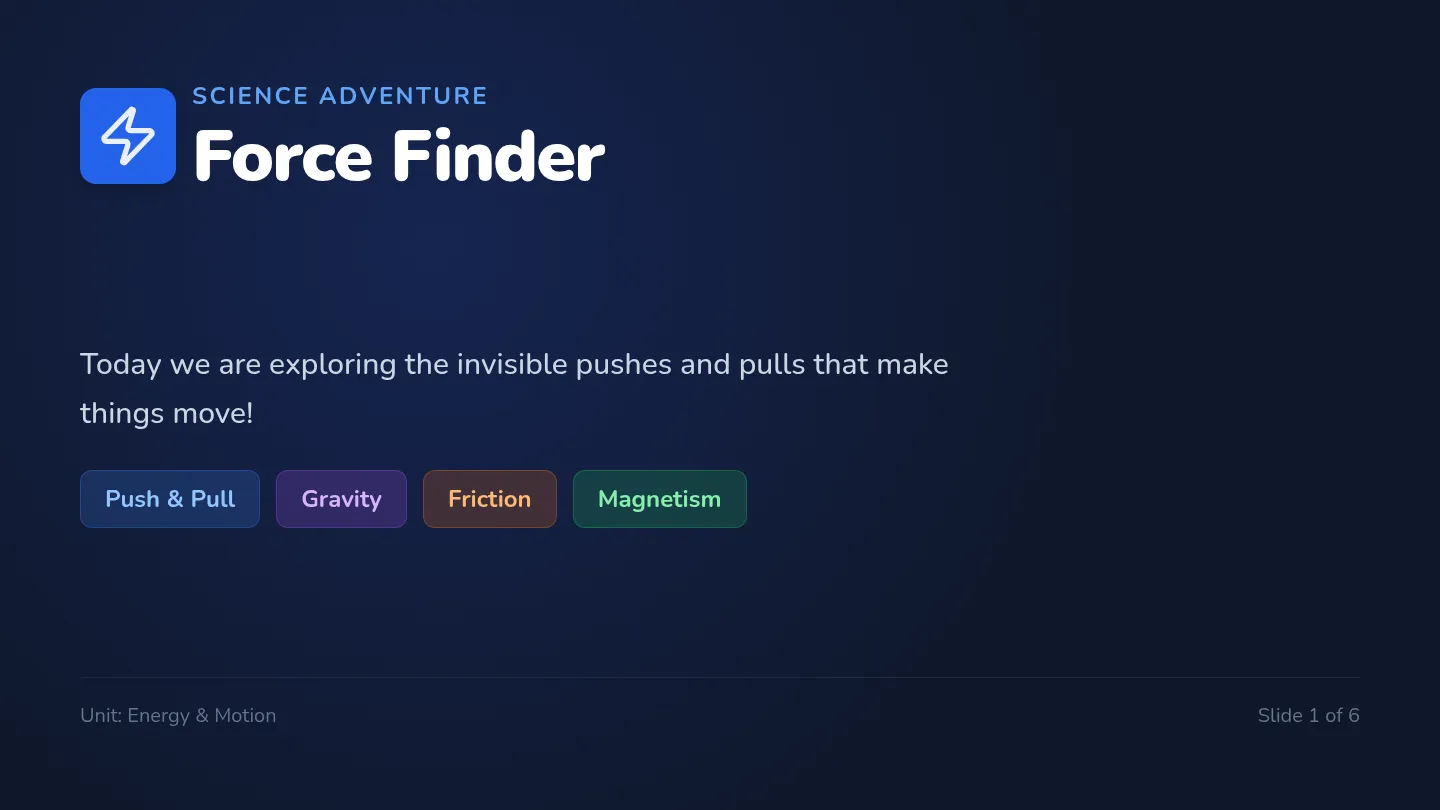
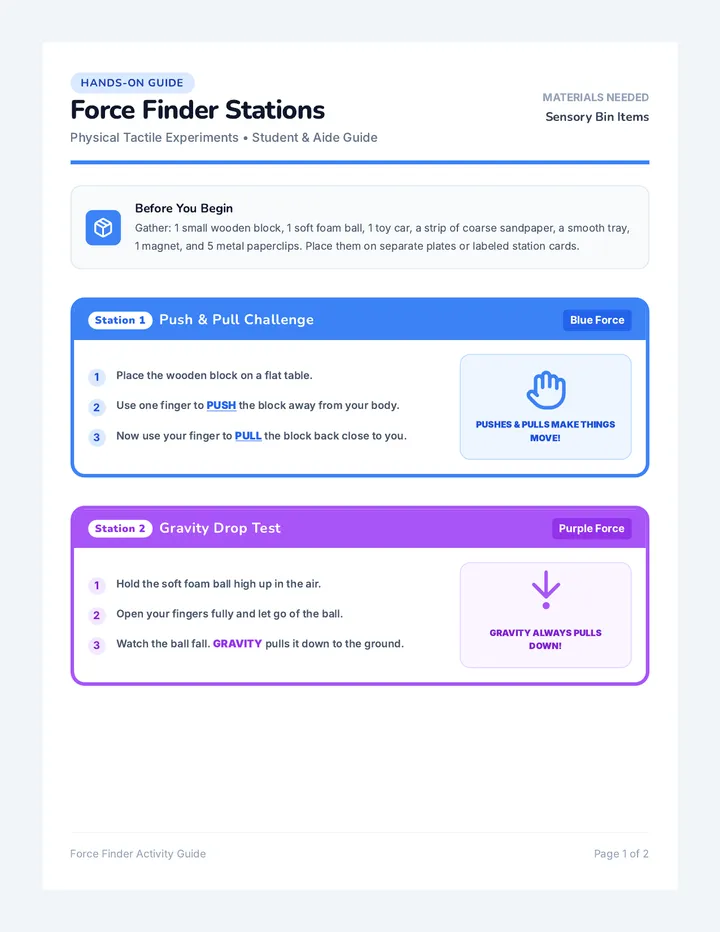
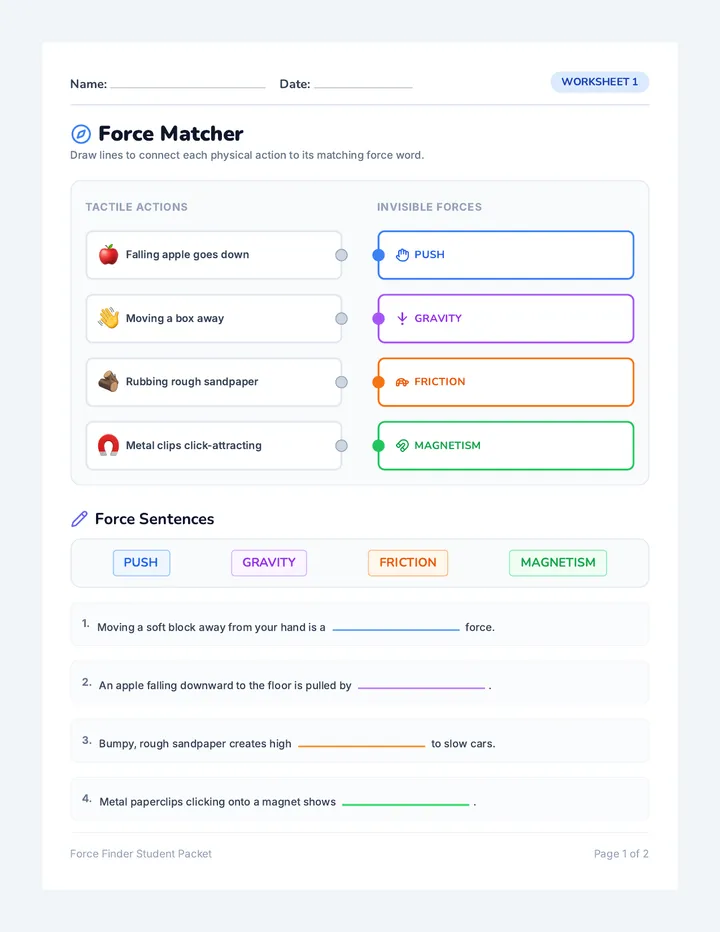
A highly visual, sensory-friendly introductory lesson on energy and motion designed for 5th graders with ASD. Covers pushing/pulling, gravity, friction, and magnetism using color-coded concepts, minimal text, and high-contrast visuals.
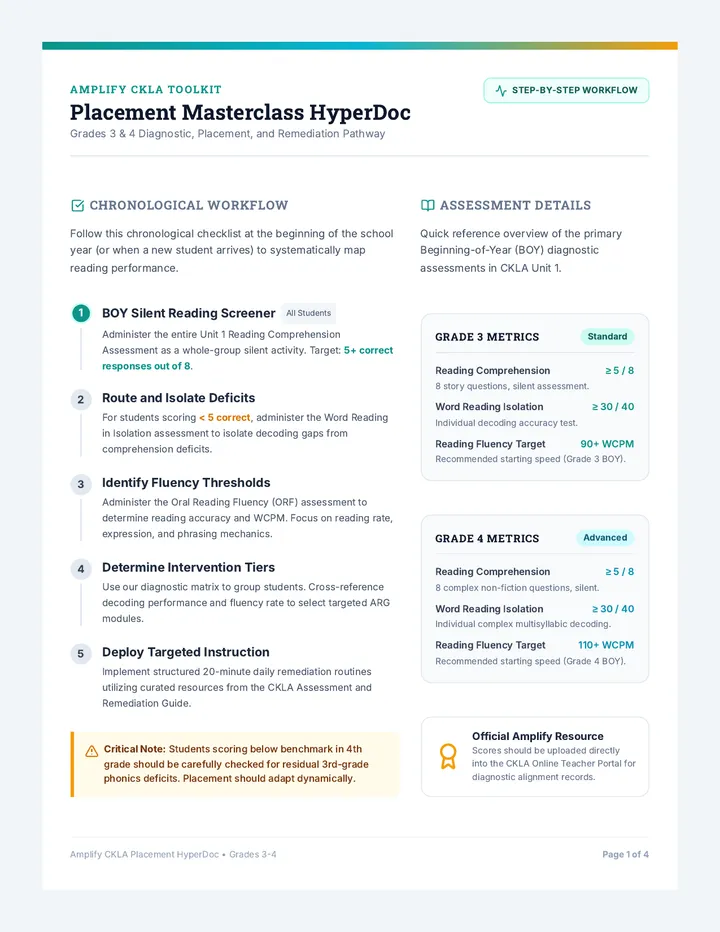
A specialized lesson designed for third and fourth-grade educators to master the CKLA placement, diagnostic, and remediation pathways. This lesson contains professional guides, visual flowcharts, and student grouping trackers to streamline the intervention process.
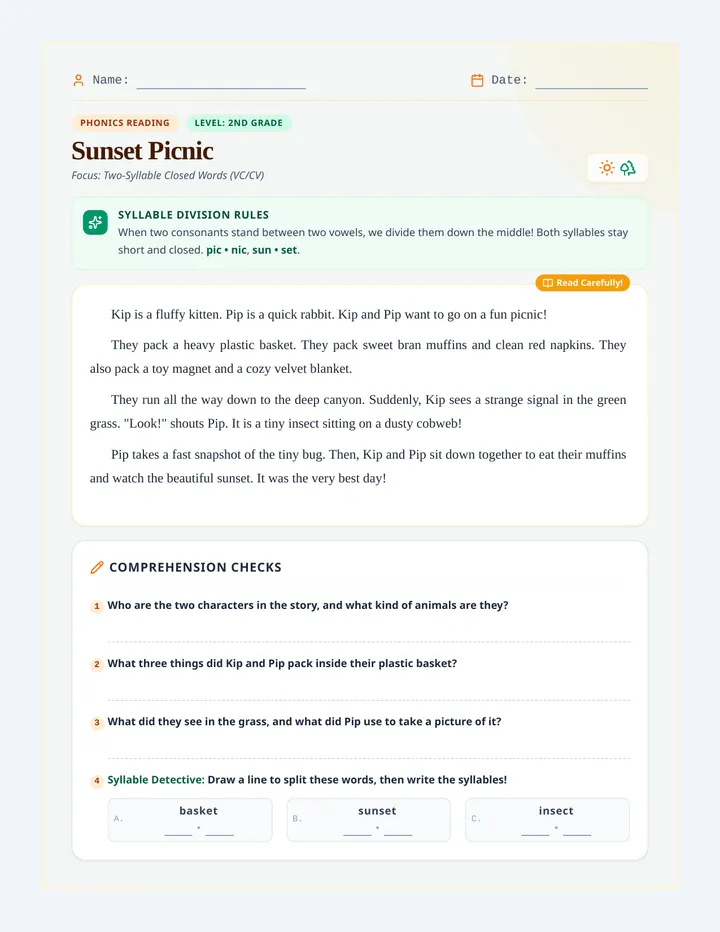
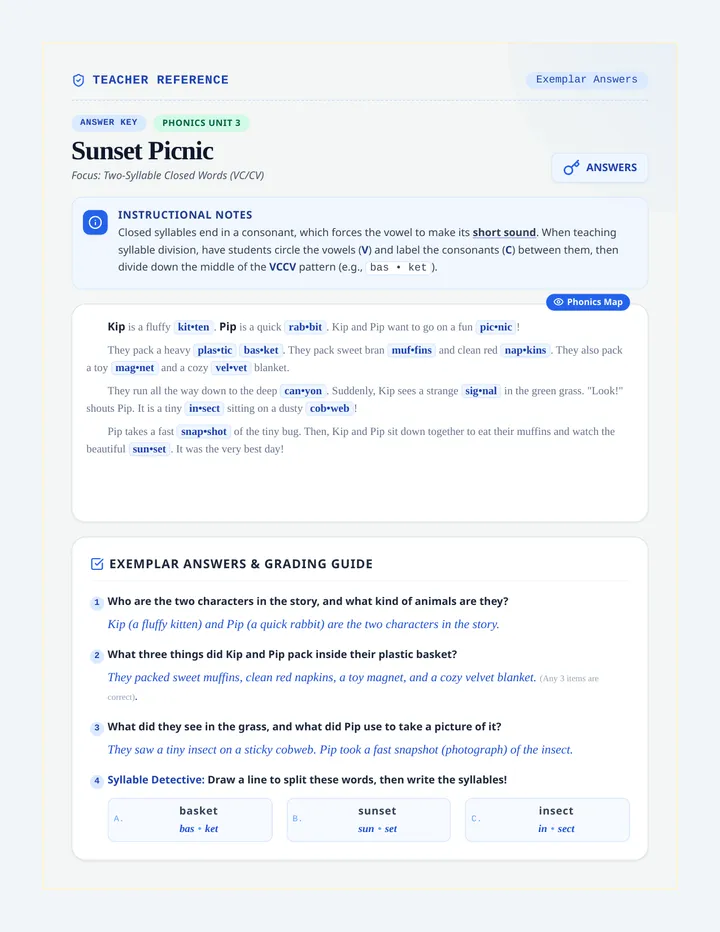
A primary phonics lesson focusing on decoding and understanding two-syllable words with closed syllables. Students practice syllable division, read a decodable story, and answer reading comprehension questions.
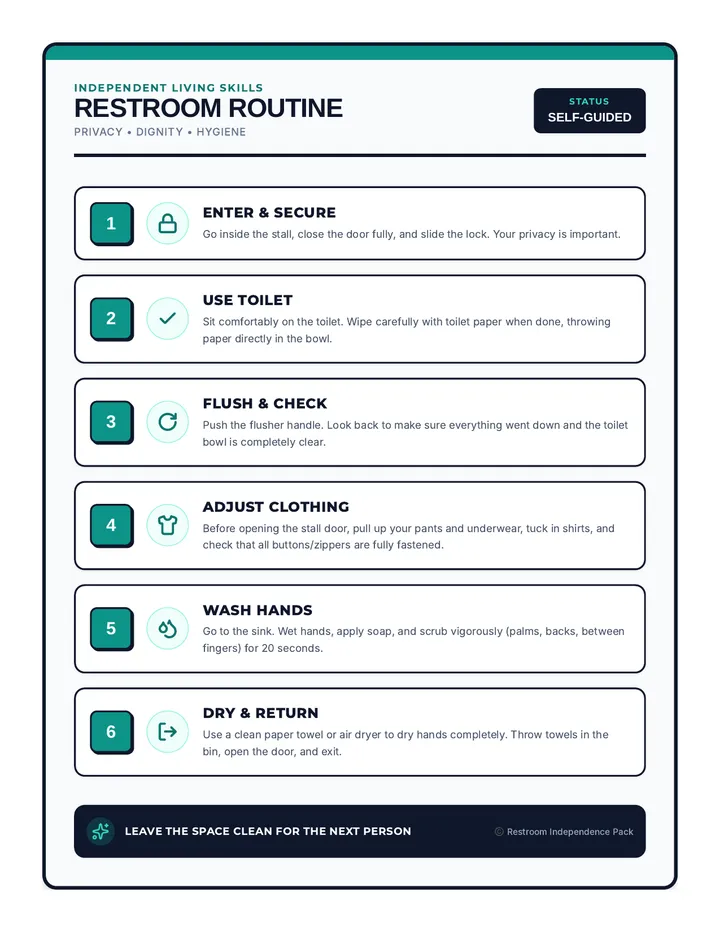
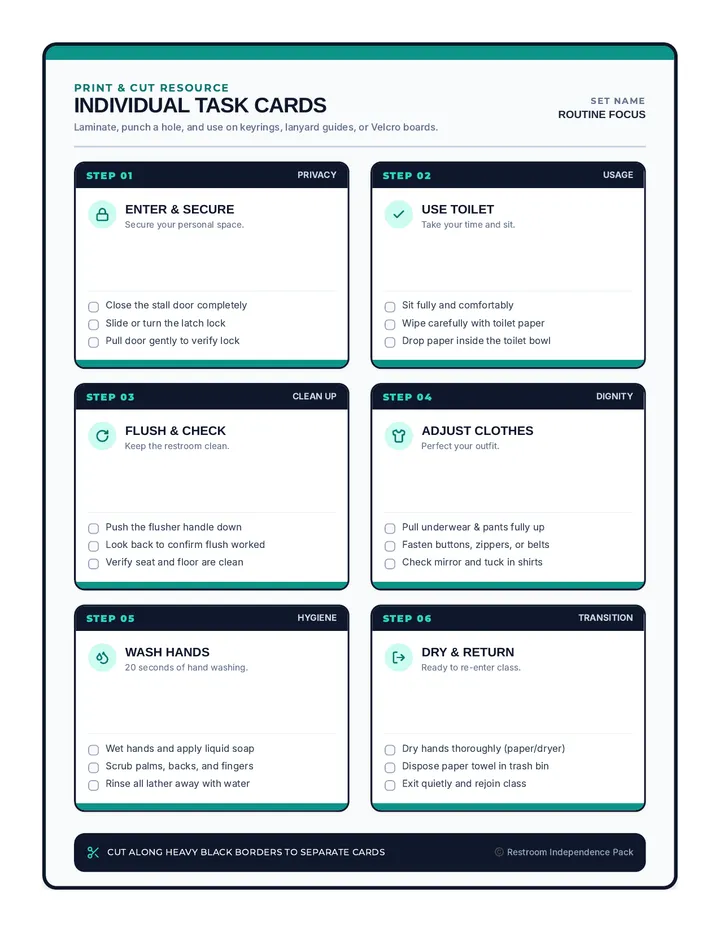
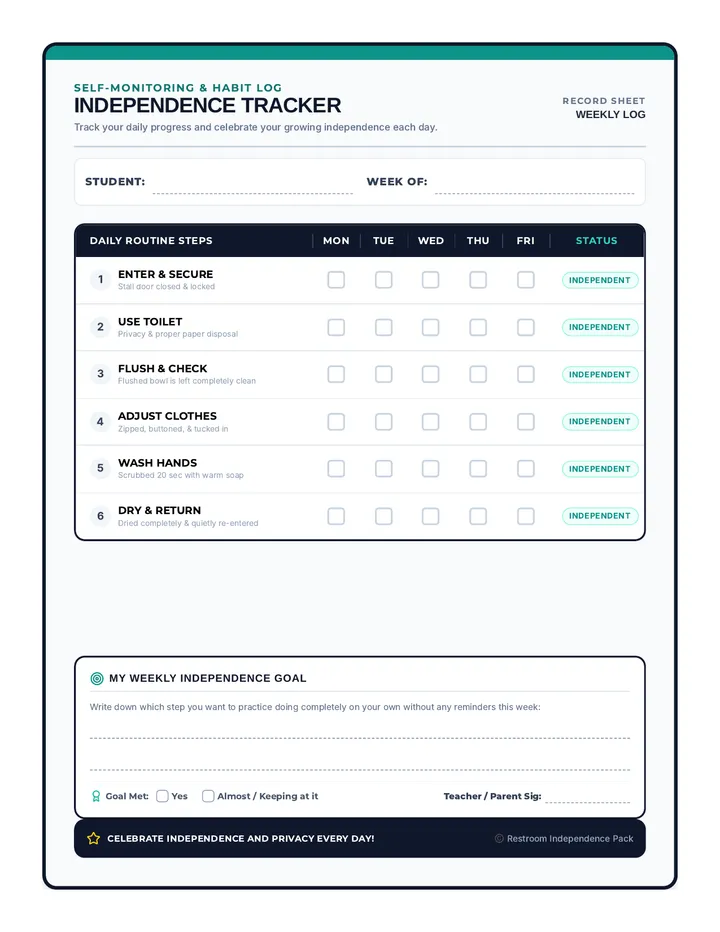
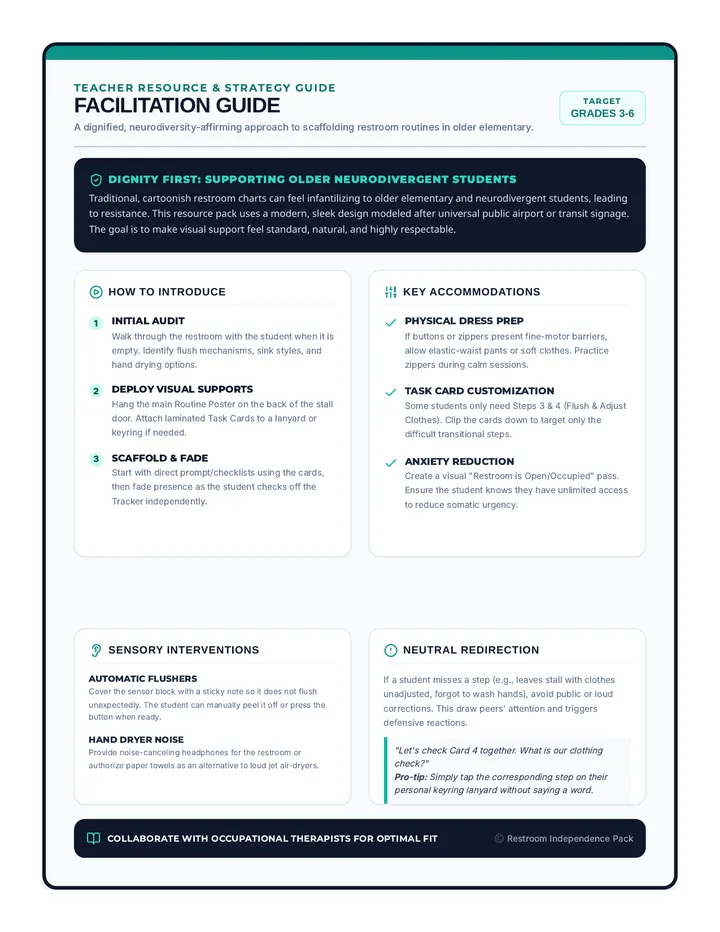
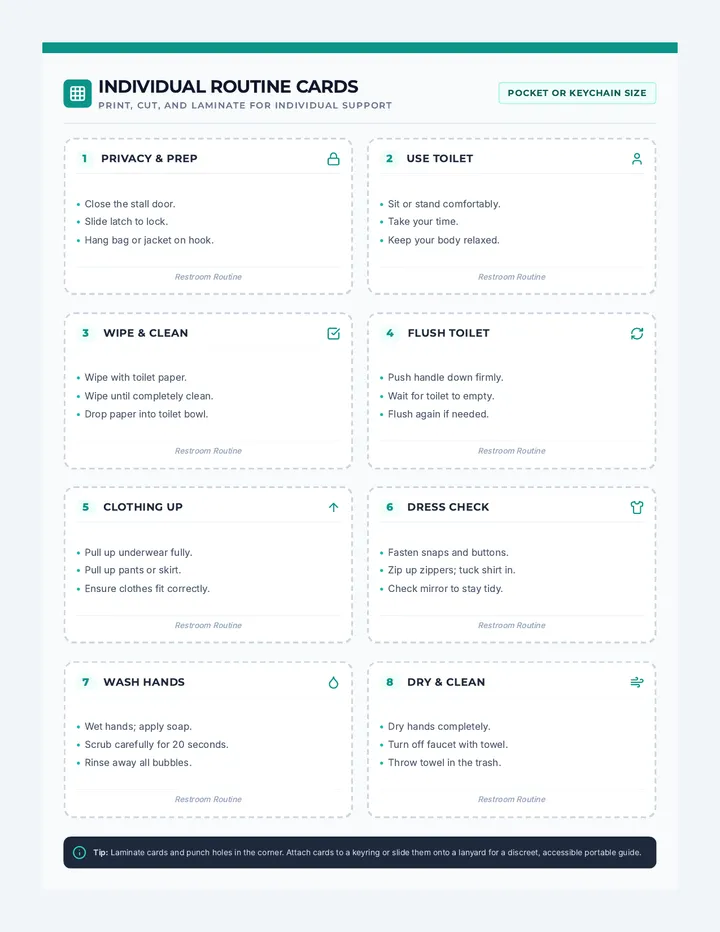
A complete visual support and routine mastery pack designed for older elementary and neurodivergent students. Includes a wall poster, individual task cards, a progress tracker, and a comprehensive implementation guide to foster dignity and privacy.
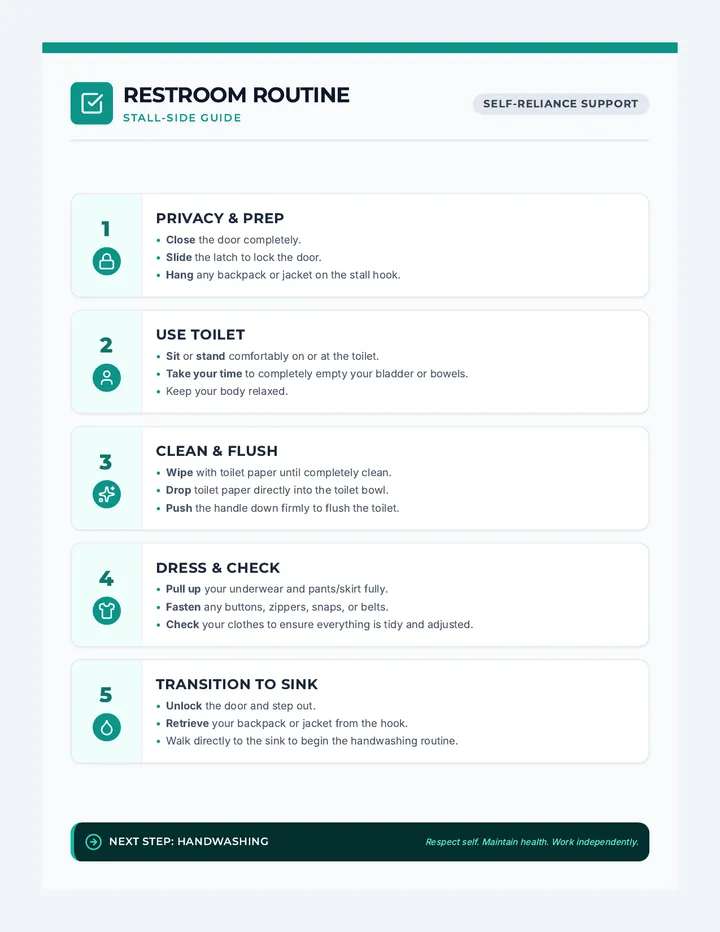
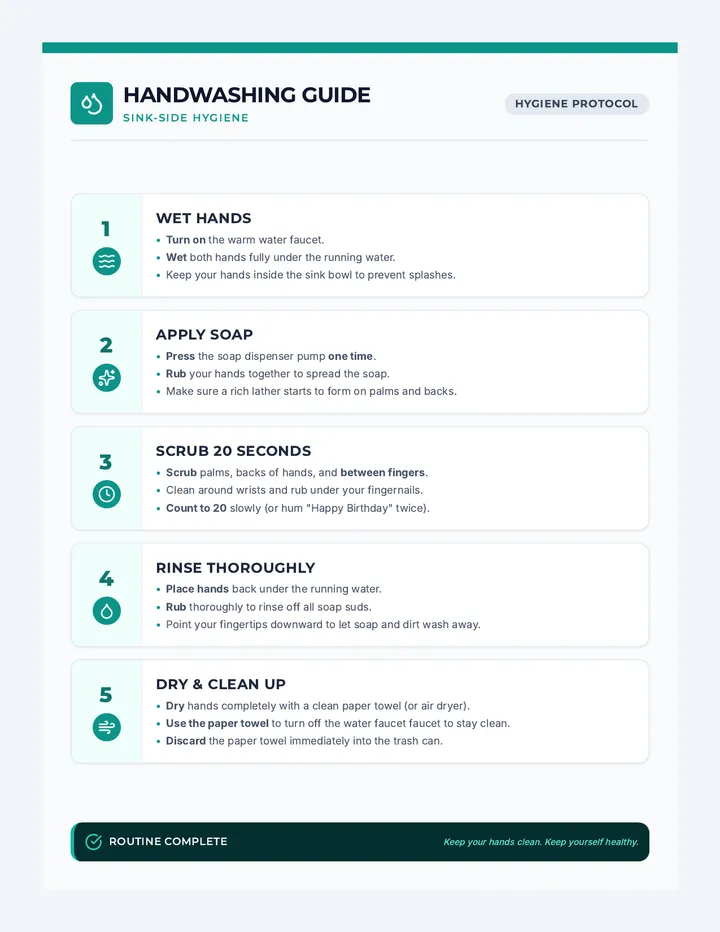
A comprehensive visual support system designed for older elementary and neurodivergent students to promote bathroom independence. Includes a stall-side routine poster, a sink-side handwashing guide, and printable individual visual support cards styled with a clean, modern aesthetic.
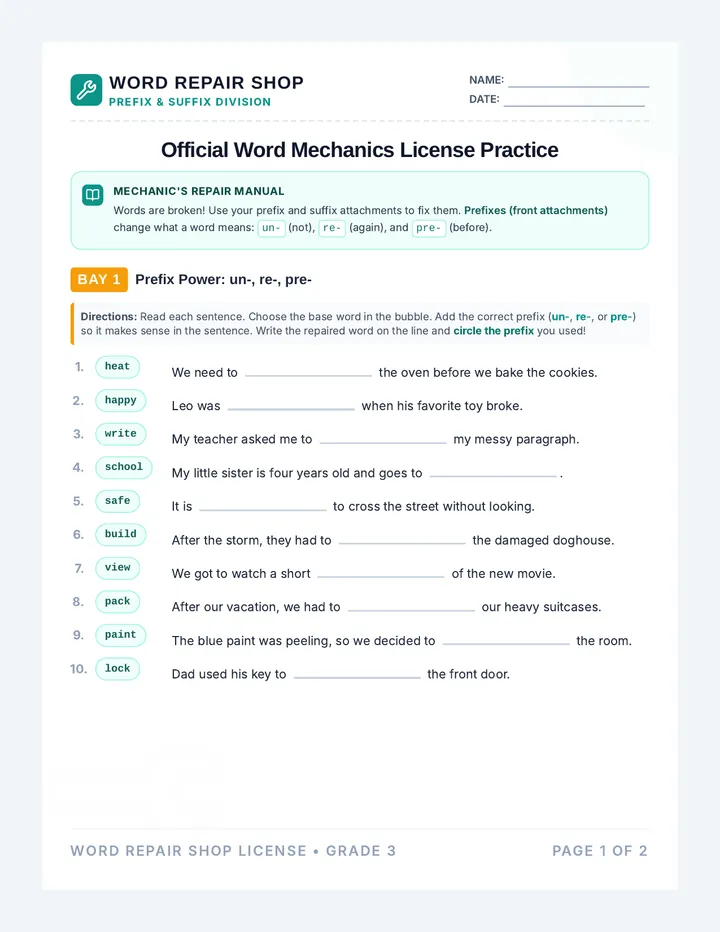
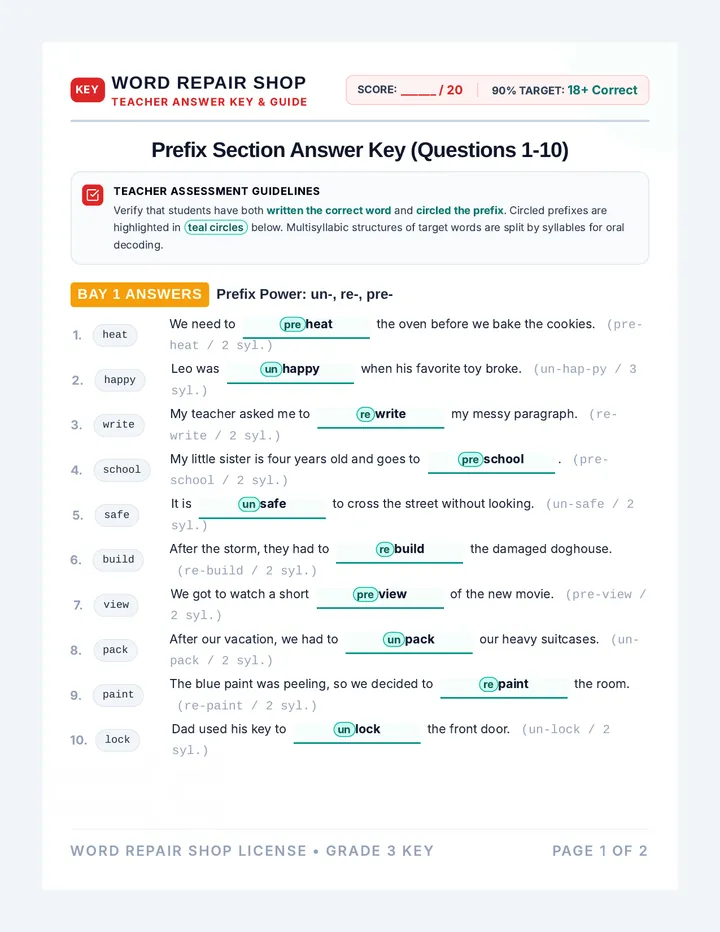
An engaging third-grade lesson where students become 'Word Mechanics' in a Fix-It Shop to learn, identify, and apply common prefixes (un-, re-, pre-) and suffixes (-s, -ed, -ing) in multisyllabic words. Includes a comprehensive student worksheet and a corresponding teacher answer key.
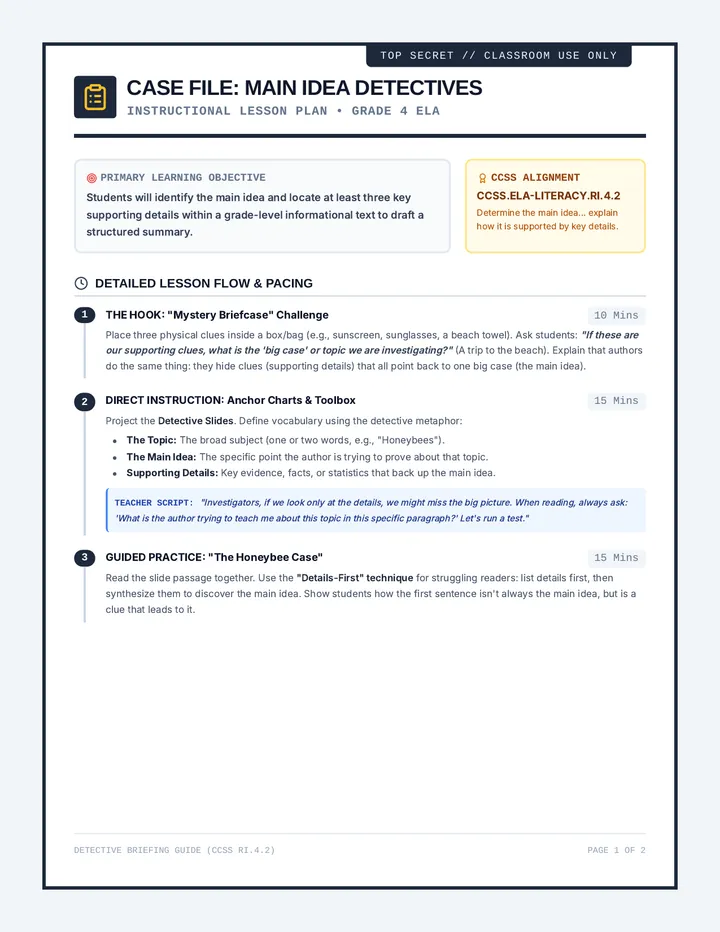
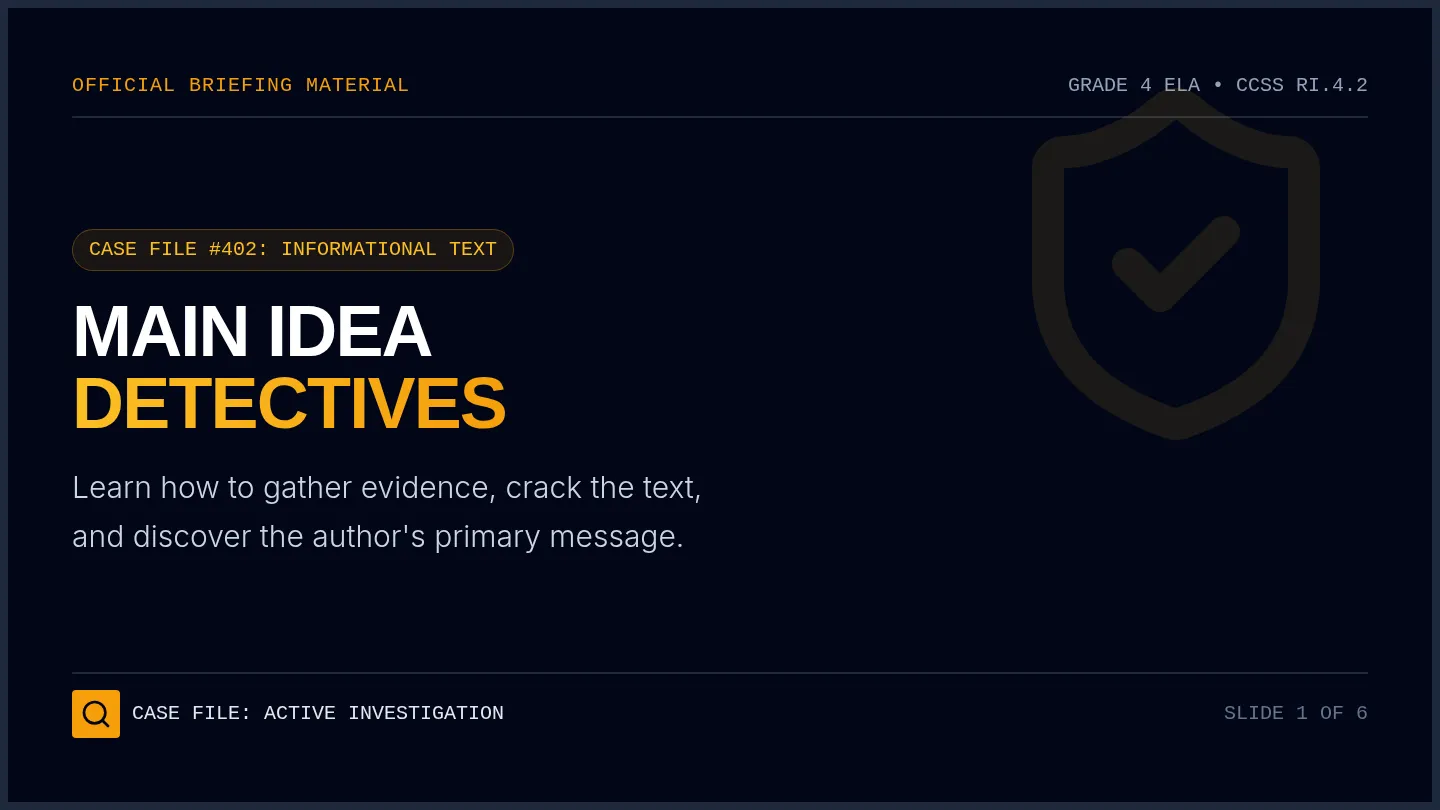
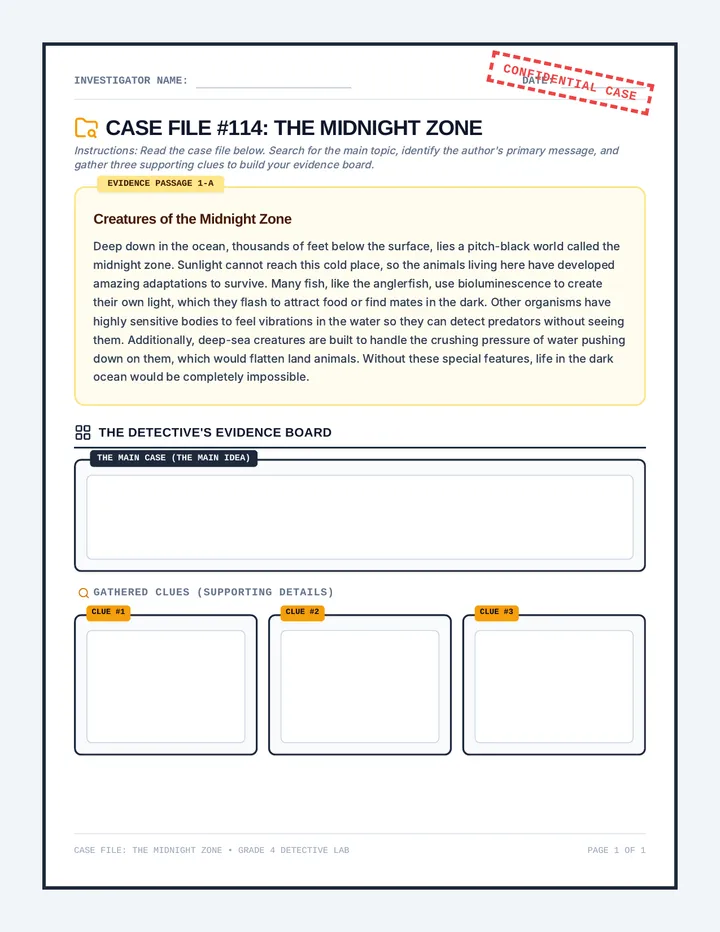
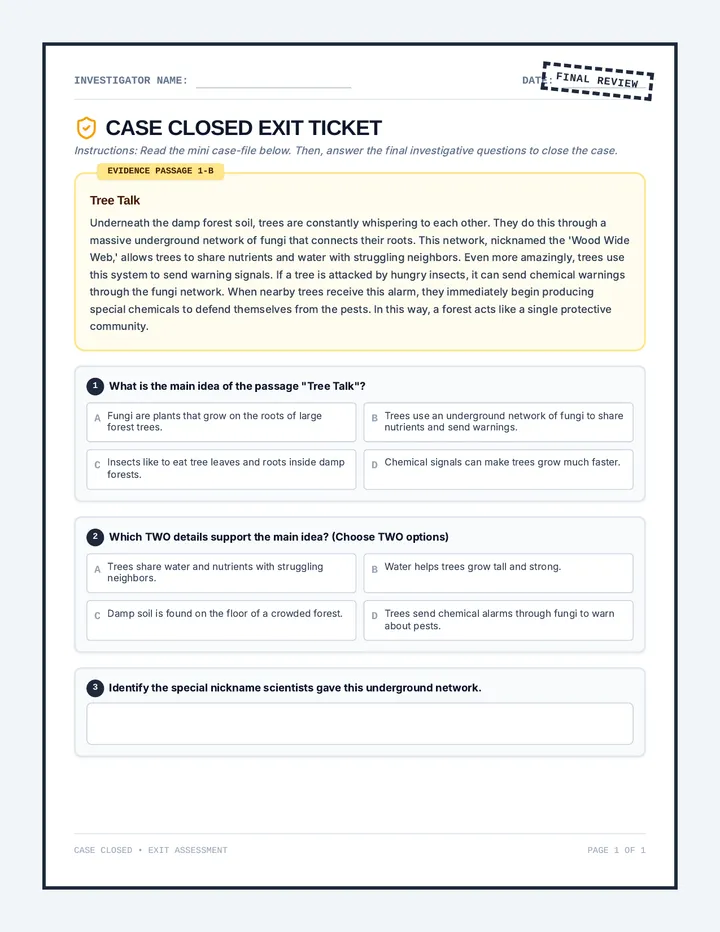
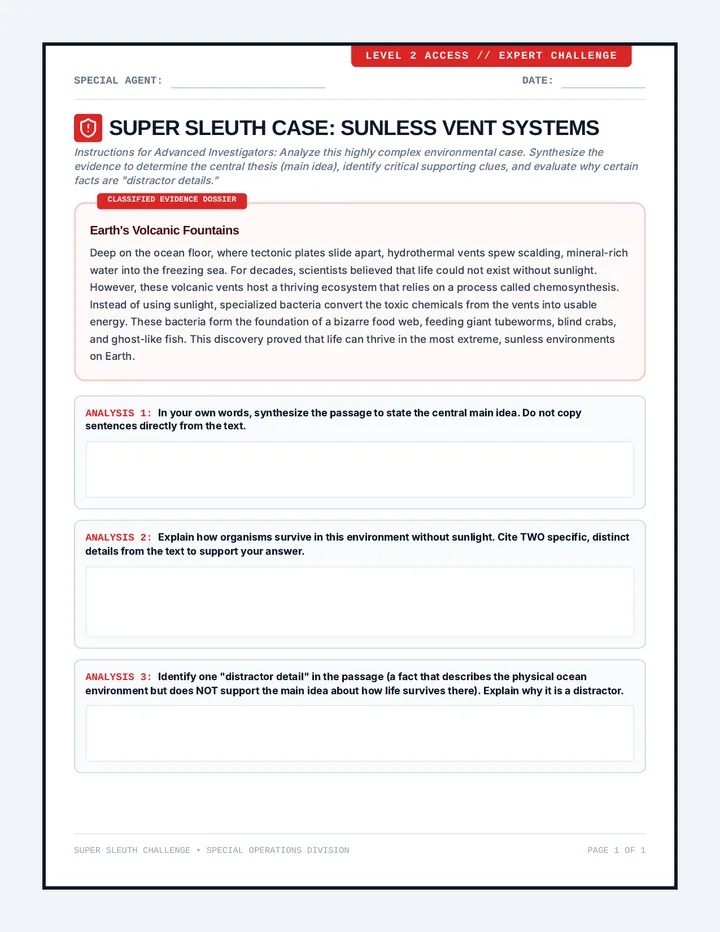
A comprehensive 4th grade ELA lesson plan and set of materials focused on identifying the main idea and supporting details in informational texts. Features a cohesive, highly engaging 'Detective/Investigator' theme with differentiation strategies and structured work areas.
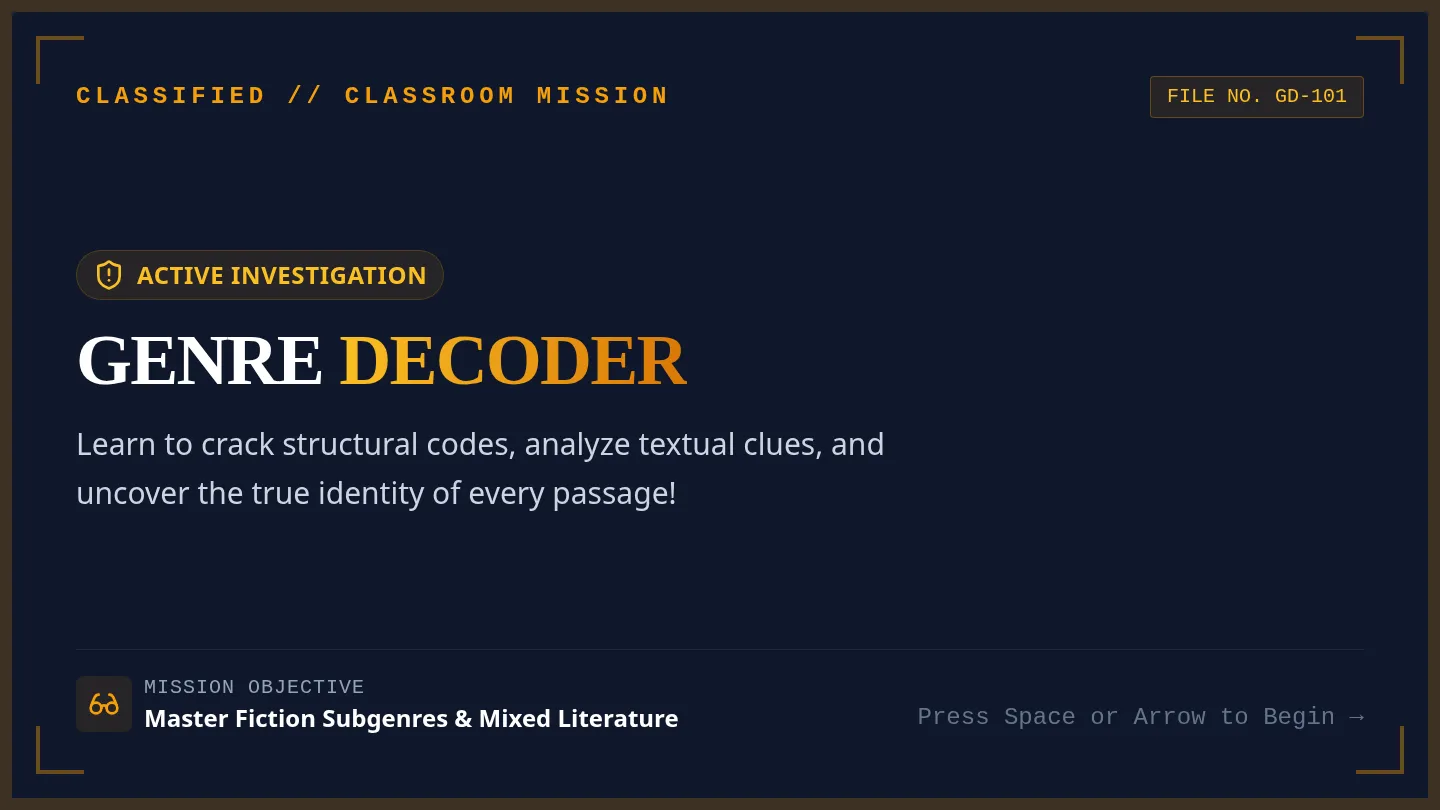
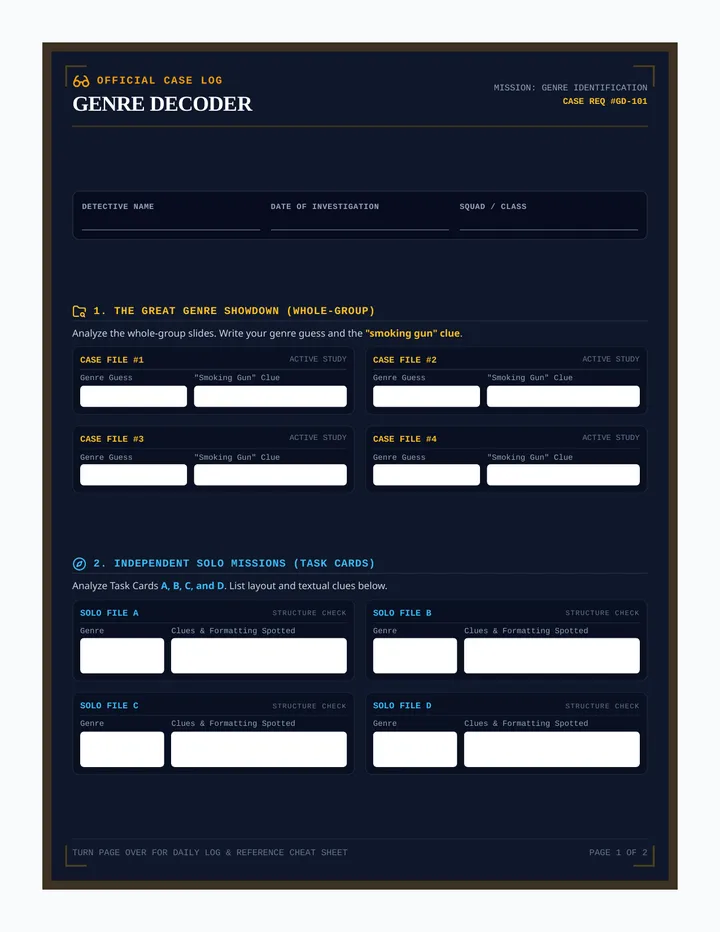
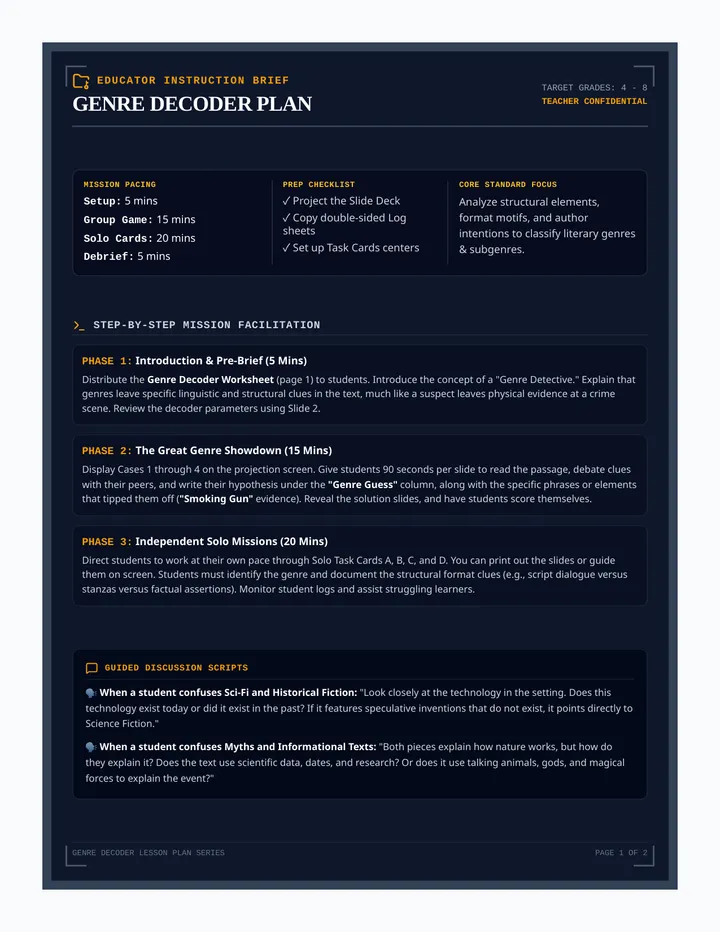
An interactive, gamified lesson where students become 'Genre Detectives' to identify fiction subgenres and mixed literature genres. Includes an interactive classroom presentation, a printable student recording sheet, and a comprehensive teacher guide with full answer keys.
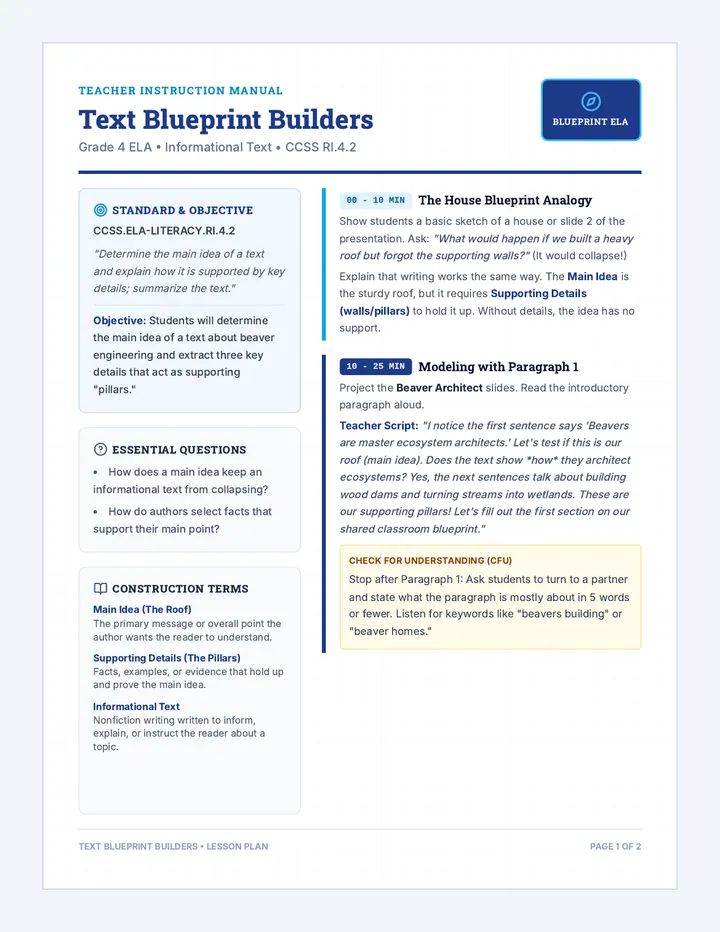
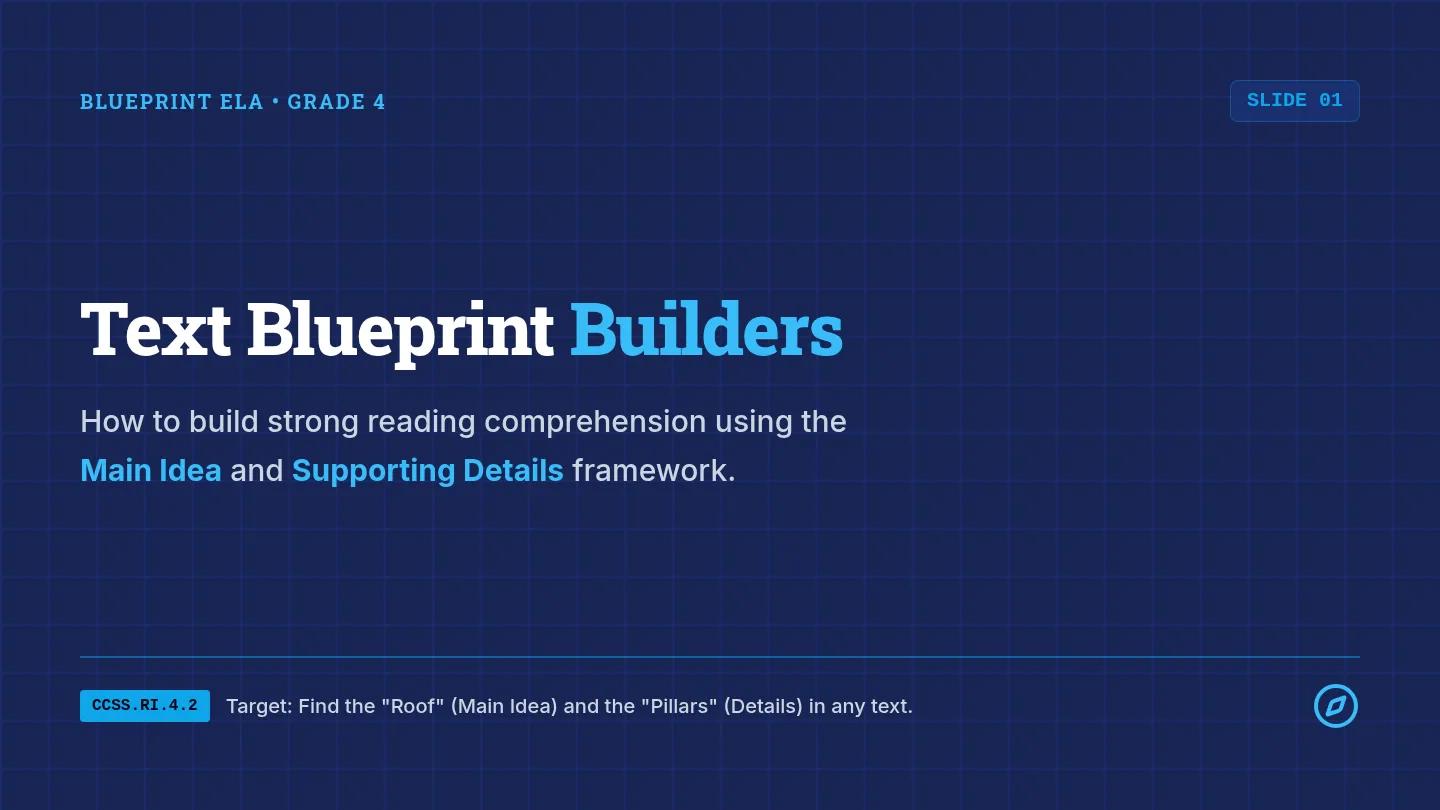
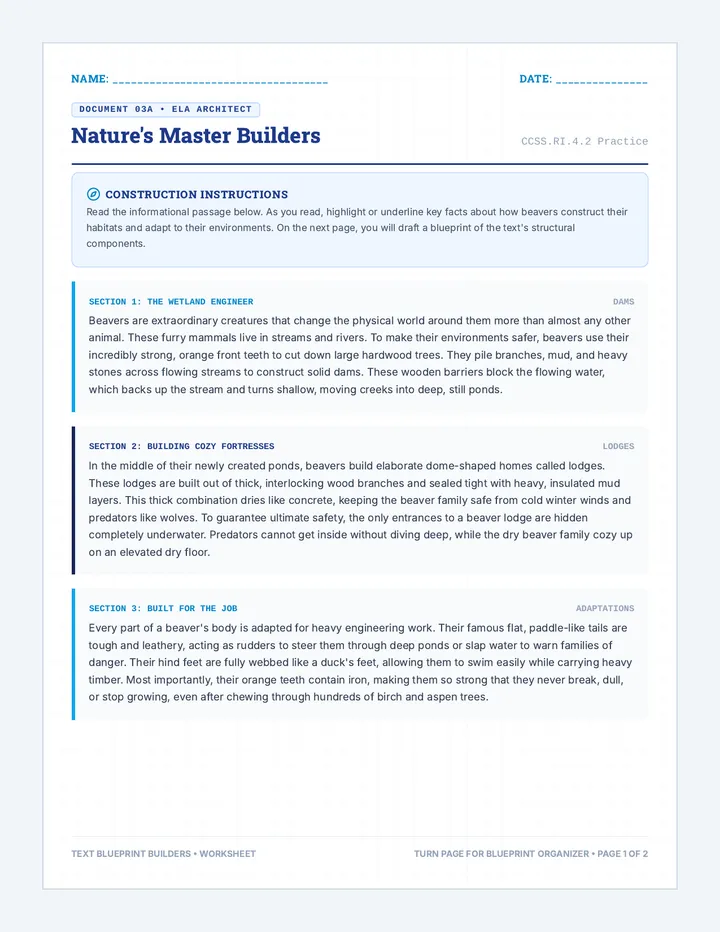
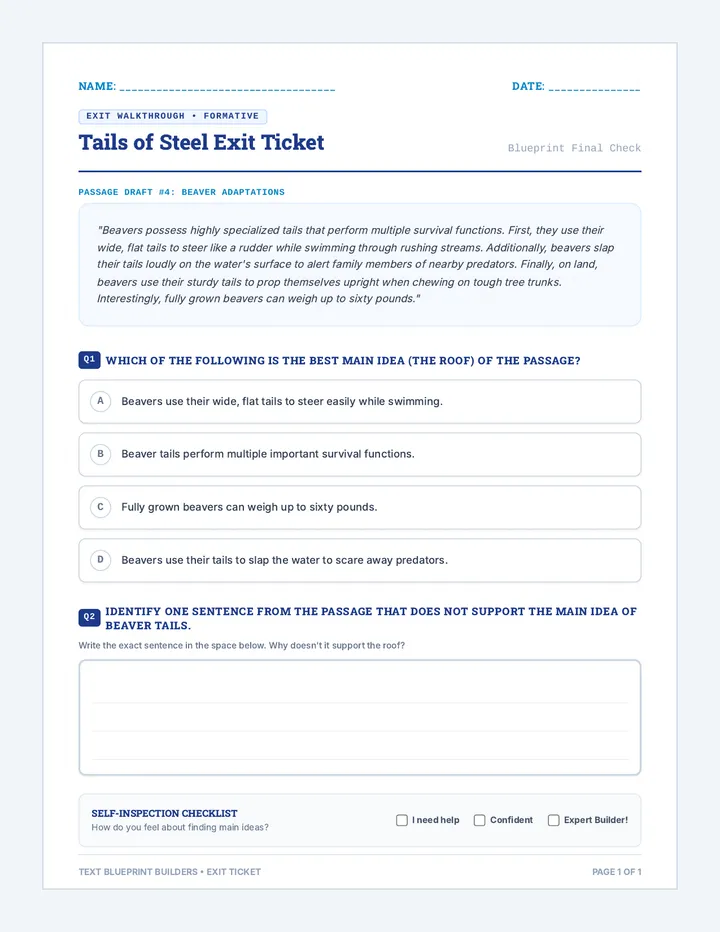
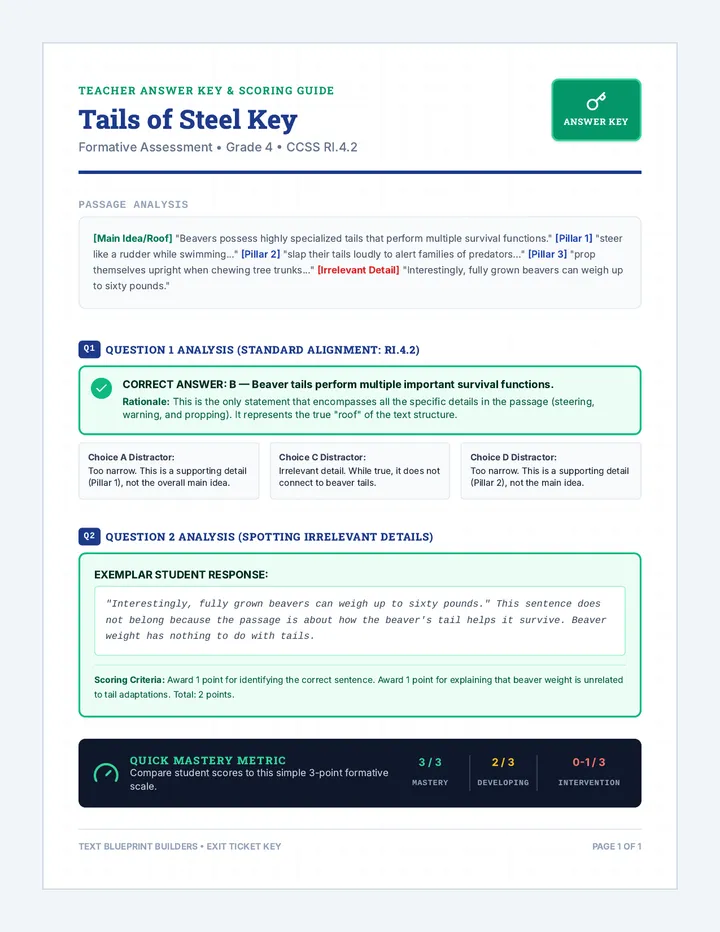
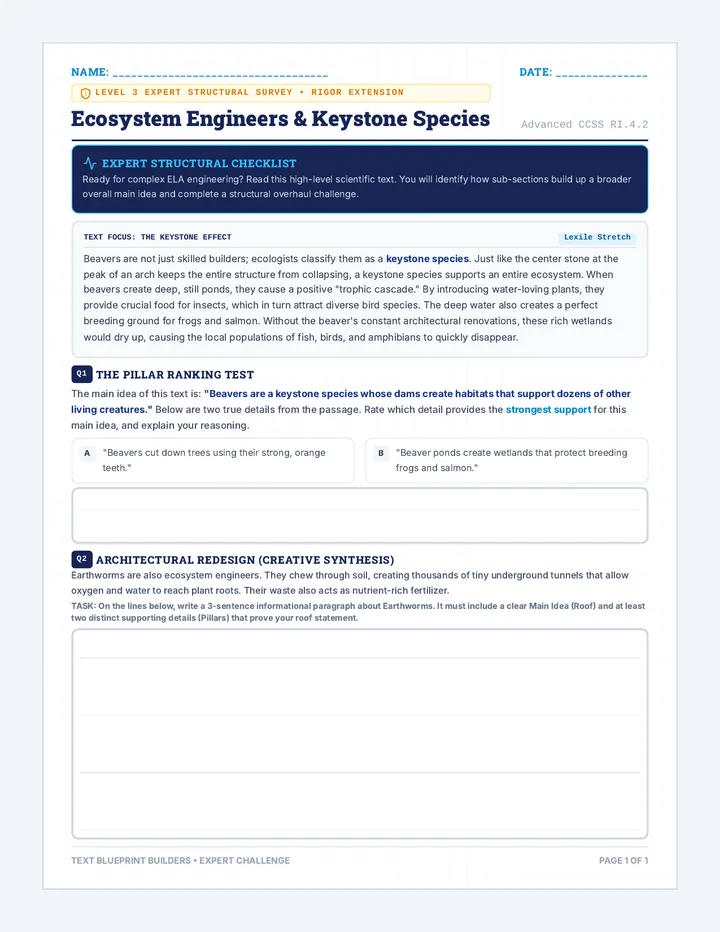
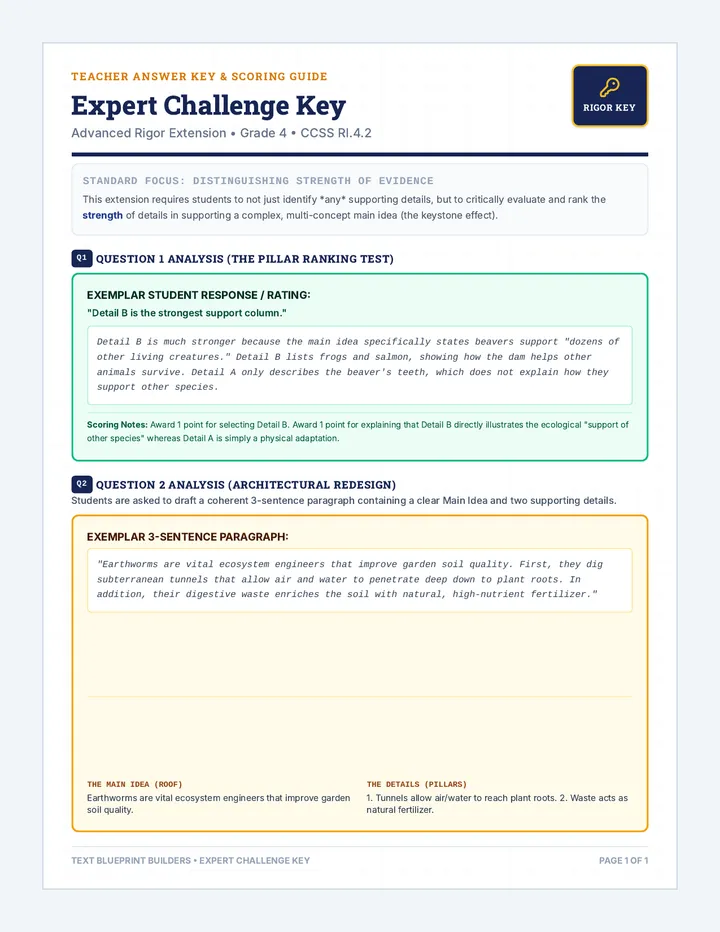
A comprehensive 4th-grade ELA lesson plan focused on identifying the main idea and supporting details in an informational text about beavers, styled around a 'Text Blueprint' theme. Includes detailed teacher instructions, differentiation for ELs and struggling readers, interactive slides, a structured student worksheet, and a formative exit ticket with an answer key.
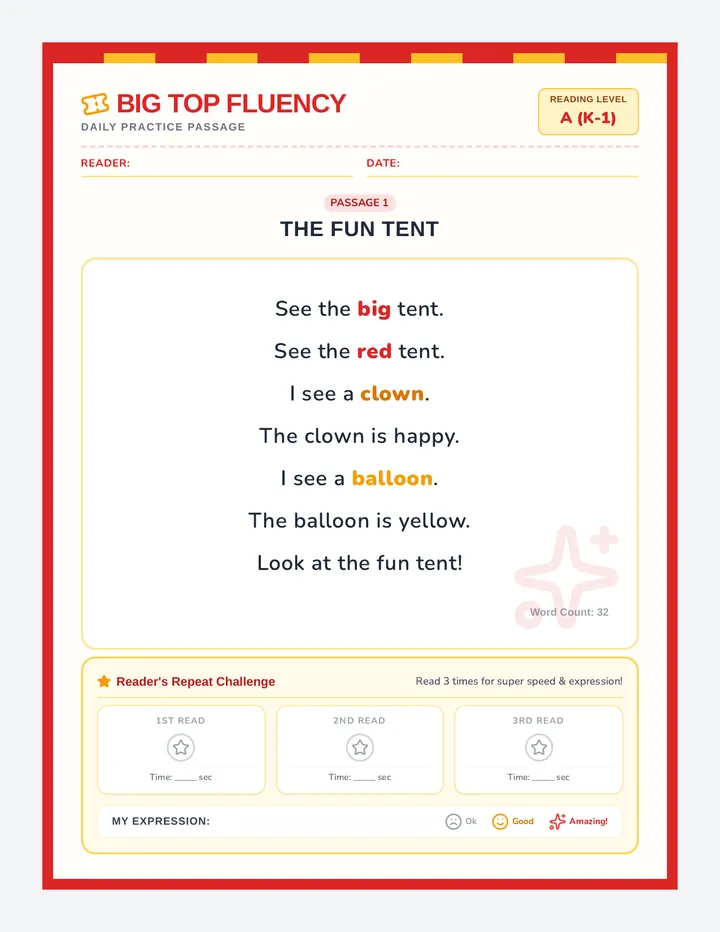
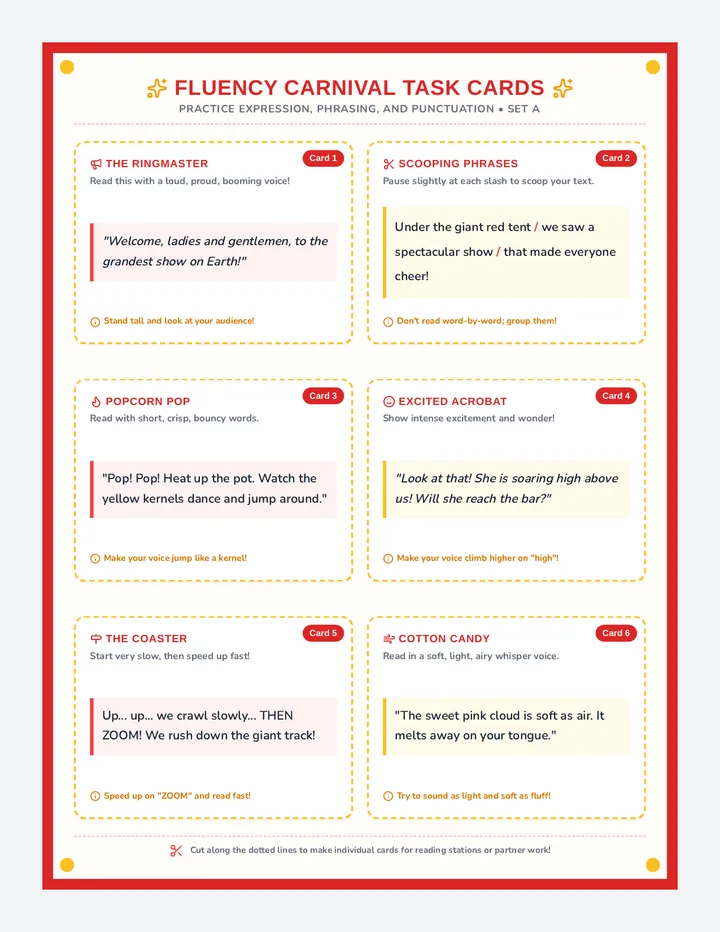
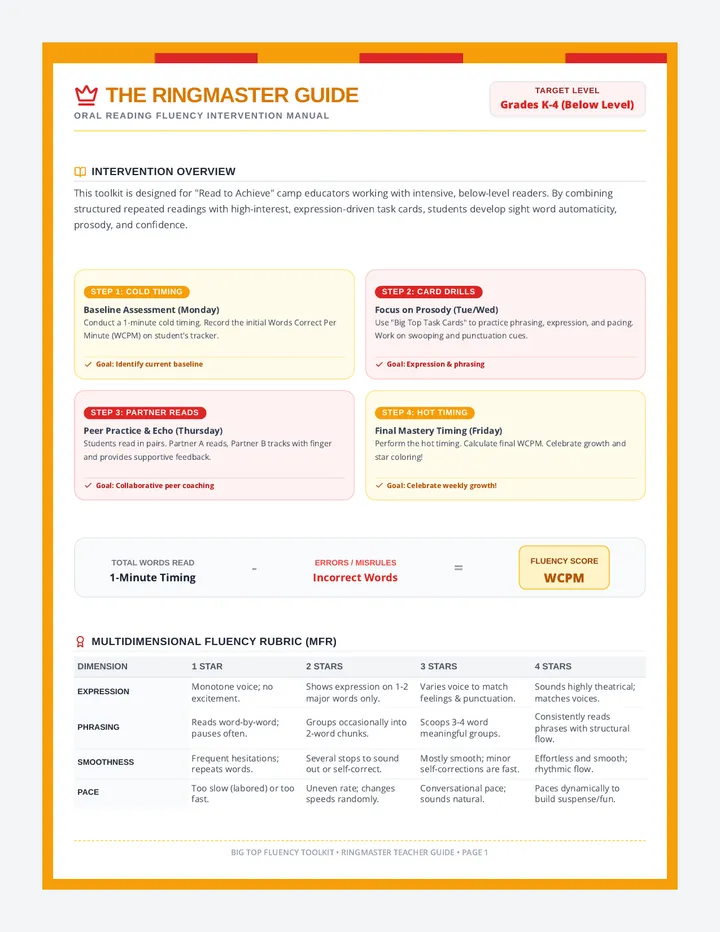
A carnival-themed oral reading fluency toolkit designed for Read to Achieve summer camps. Features differentiated reading passages (levels K-3) with repeated reading trackers, expression-focused task cards, and a teacher scoring and implementation guide.