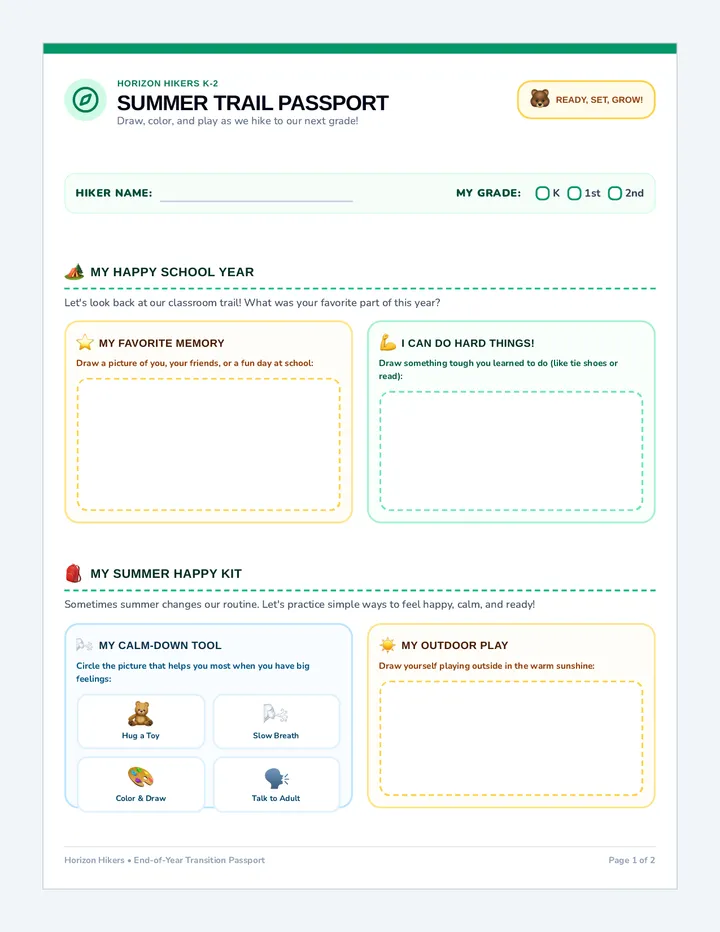
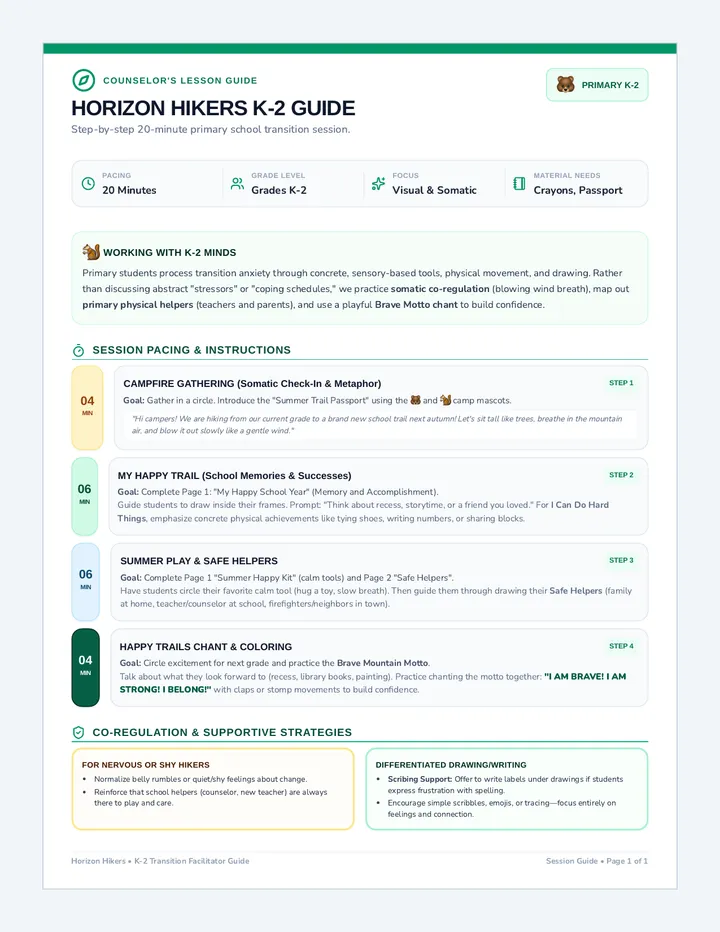
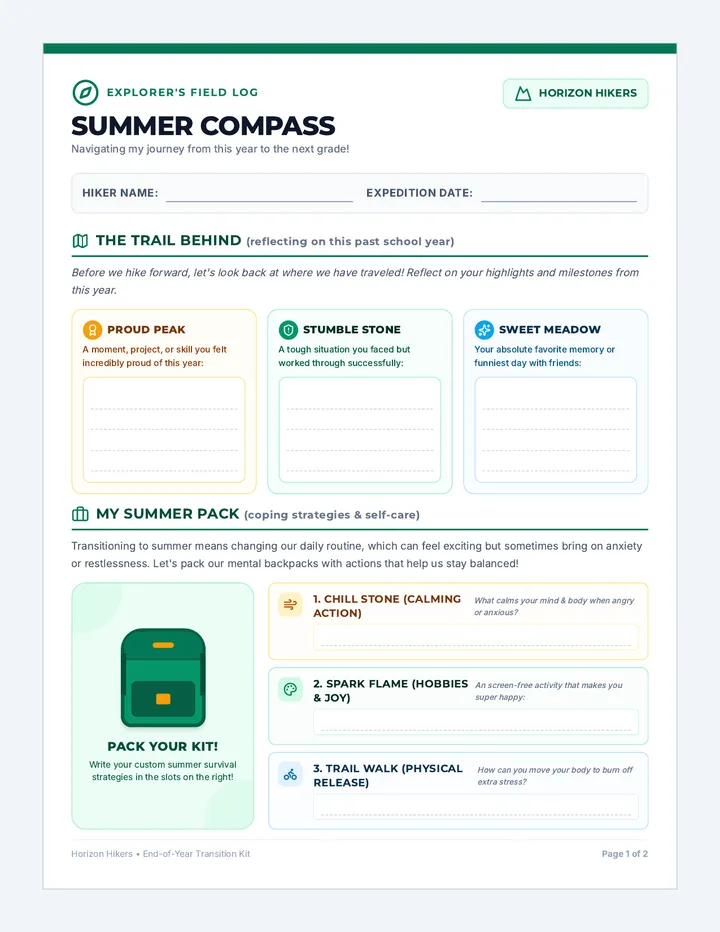
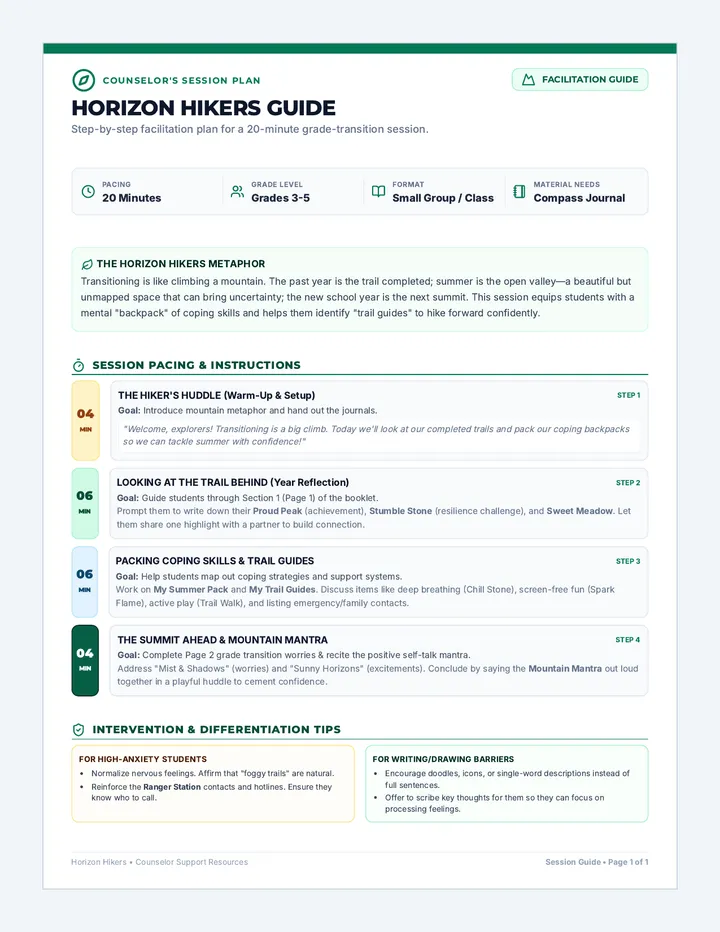
A social-emotional learning lesson for K-2 students to develop their 'Observer Self'—the ability to notice thoughts, feelings, and body sensations without judgment to better practice self-regulation.
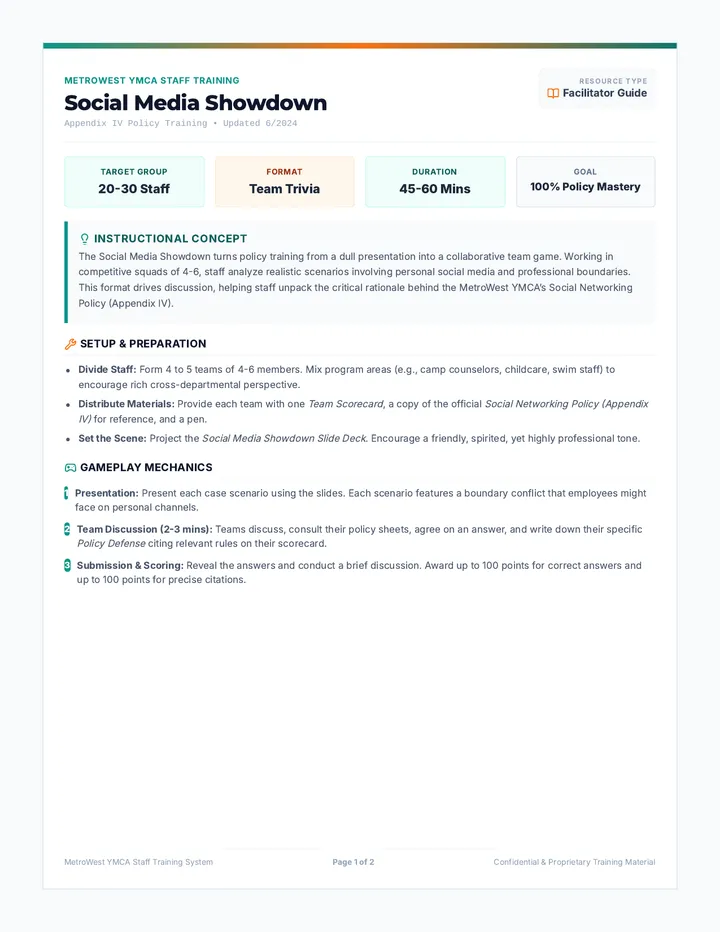
A sophisticated, technical approach to distress tolerance for 2e students, focusing on emotional systems, logical analysis of impulsive vs. regulated behavior, and radical acceptance as a data-driven strategy.
An introductory mindfulness lesson focusing on sharpening the senses through mindful listening and eating practices to help students stay present.
A 30-minute cat-themed lesson for 2nd and 3rd graders that teaches test-taking strategies as 'Cool Cat Skills' and coping skills for staying calm like a 'Chill Cat.'
This lesson introduces middle school students in therapeutic settings to the concept of working memory using the 'Mental Workbench' analogy. Students will practice auditory and visual-spatial memory tasks and learn strategies to manage 'cognitive overload' in a supportive environment.
A whimsical, sensory-focused 10-minute introduction to kindness using a "Kindness Kitchen" theme, moving away from rule-based scenarios to focus on the 'sweetness' of care and proactive helpfulness.
A session focused on identifying the physical and mental signs of anxiety through the metaphor of a 'Body Alarm' system, using sports-themed analogies to make the concepts accessible for young students.
A social-emotional learning lesson that frames kindness, respect, and empathy as 'superpowers' for building strong friendships, featuring a creative bracelet-making craft.
A high-energy, visual lesson introducing 5th graders to the basics of budgeting with a focus on why saving matters. Students navigate financial choices through an interactive expedition simulation designed for learners with ADHD.
A 15-minute small group lesson designed to help 2nd grade and Kindergarten students identify big feelings like anger and frustration and practice practical coping strategies.
A foundational lesson for Kindergarteners to identify basic emotions (happy, sad, mad) through facial expressions, scenarios, and healthy expression strategies.