A high-energy, visual lesson introducing 5th graders to the basics of budgeting with a focus on why saving matters. Students navigate financial choices through an interactive expedition simulation designed for learners with ADHD.
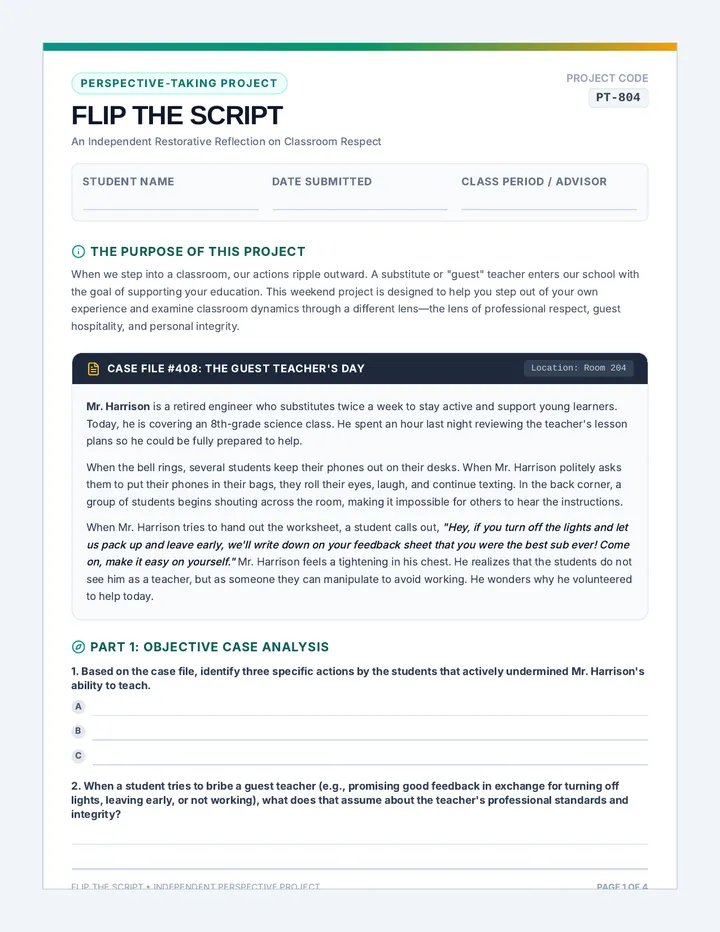
A comprehensive restorative respect and empathy sequence spanning Grades 5 to 8, providing age-appropriate independent reflection packets and companion advisory slides for each grade level.
A lesson focusing on identifying, analyzing, and presenting versatile digital tools and learning supports. Students learn how to storyboard a video presentation mapping their technological toolkit to future career goals.
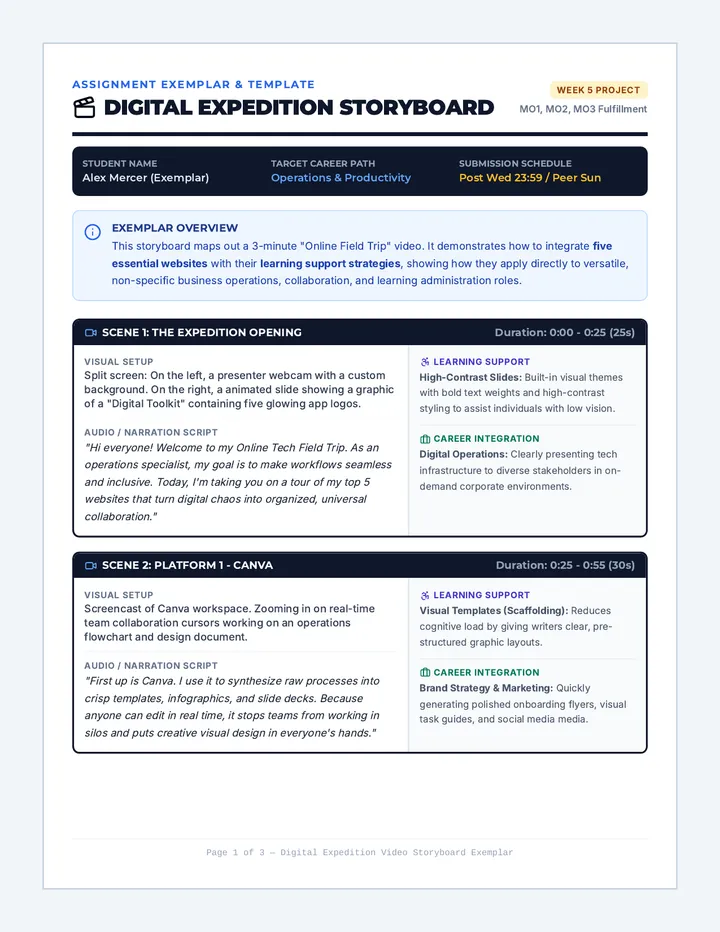
An exemplar video storyboard document showing how to integrate 5 favorite websites and learning supports into an online tech field trip presentation, framed around a general productivity and digital collaboration career.
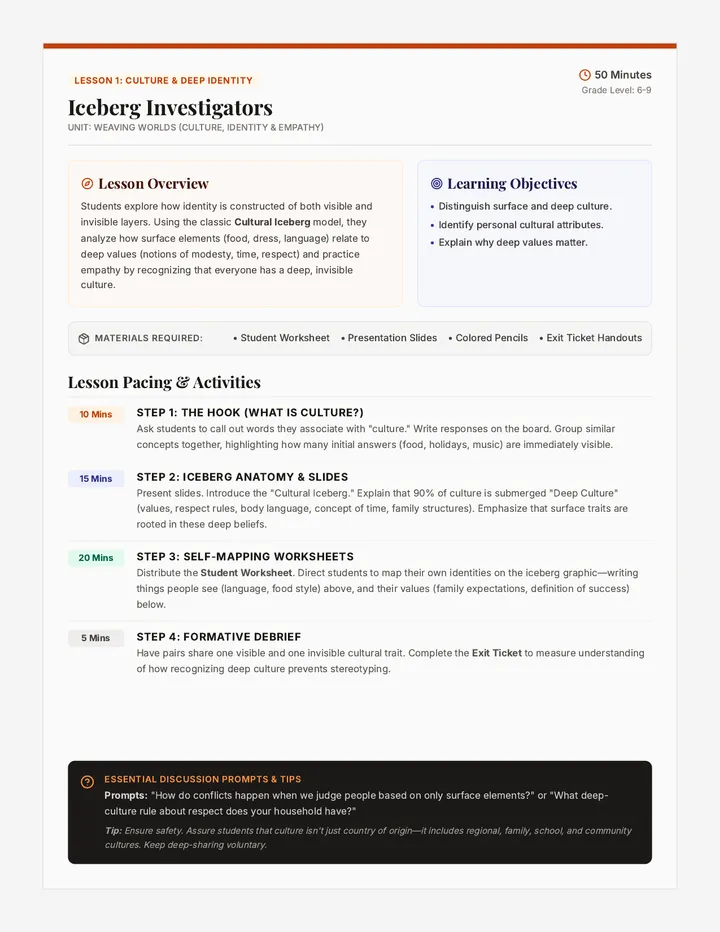
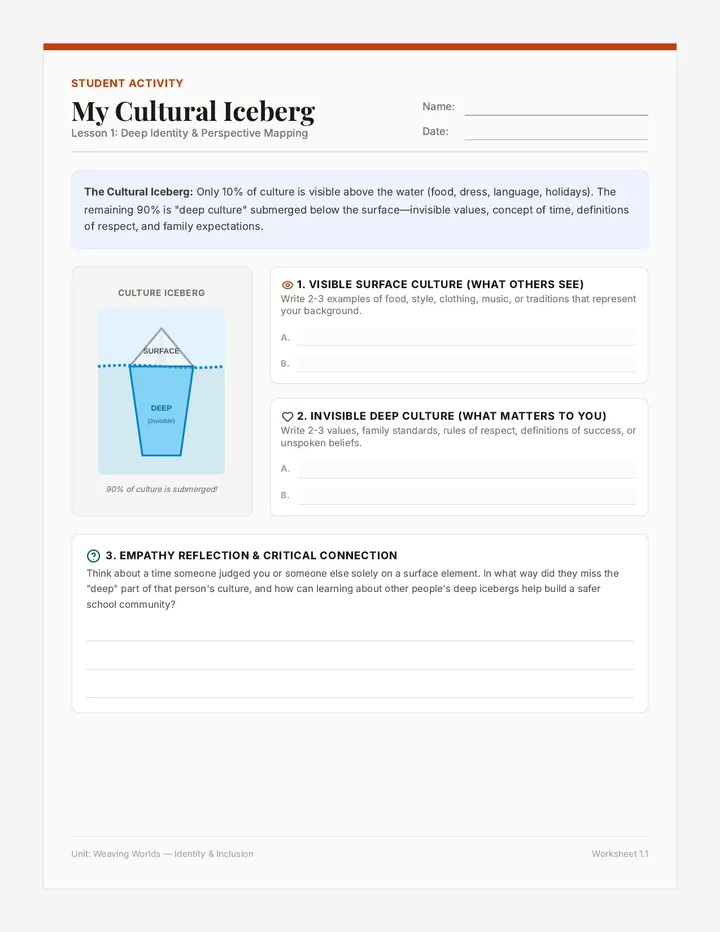
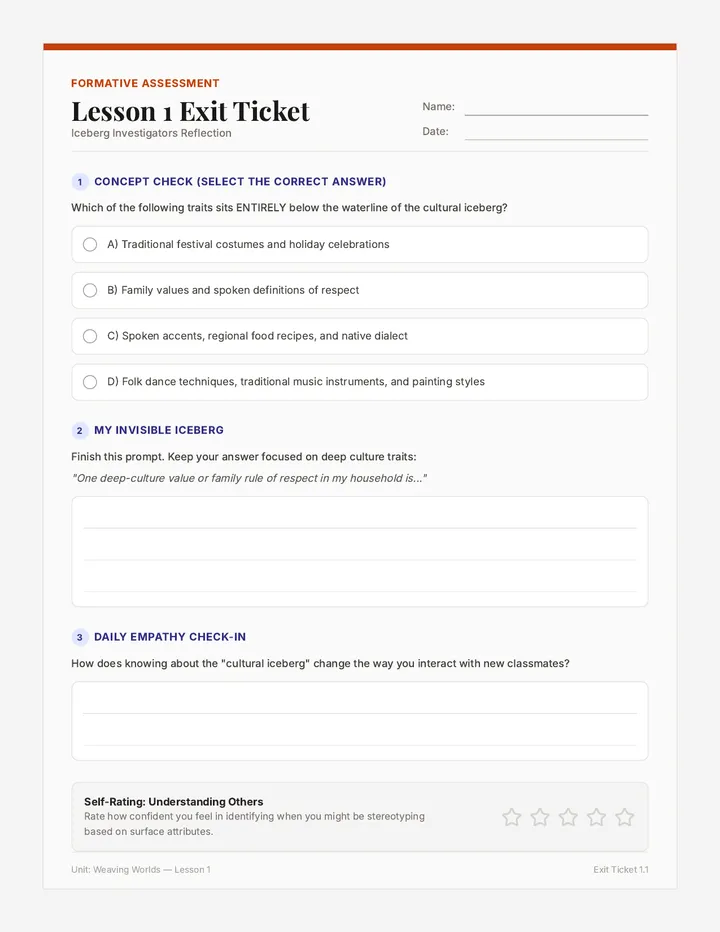
A 3-lesson unit on culture, identity, empathy, and building an inclusive school community. Students explore the cultural iceberg, share personal perspective narratives, and collaborate on actionable school-wide inclusion plans.
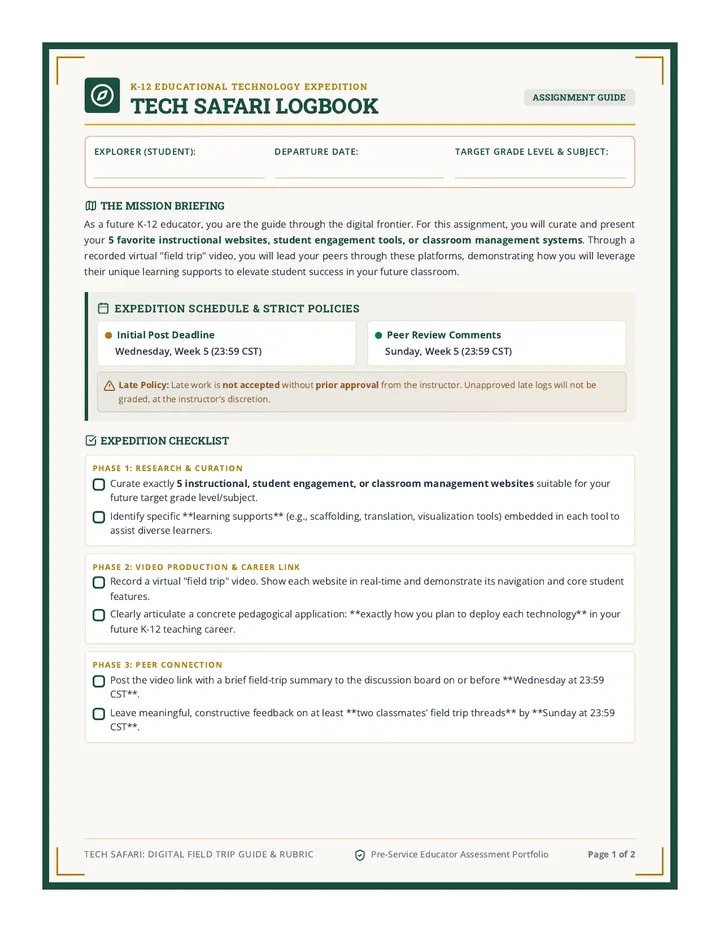
An interactive online field trip project where pre-service K-12 teachers curate, analyze, and present five essential educational technologies. This resource provides a detailed project guide, submission checklist, and evaluation rubric to ensure professional standards and seamless peer collaboration.
A vintage field guide-themed project guide, deadline tracker, submission checklist, and complete analytical rubric for the Tech Safari online field trip assignment. Tailored specifically for pre-service K-12 teachers to evaluate their curation, career planning, and video presentation skills.
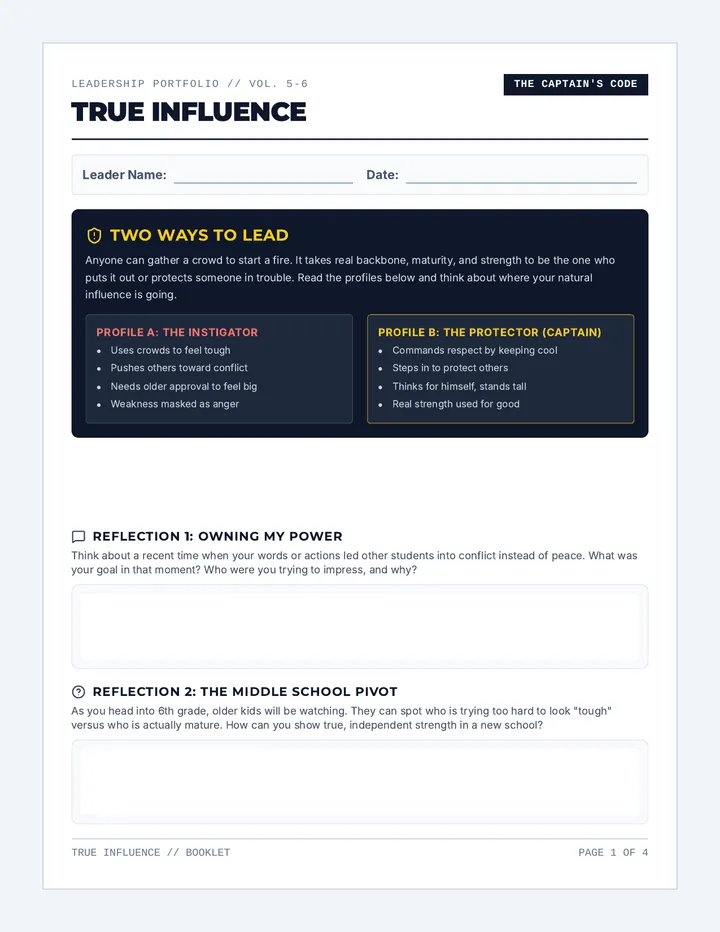
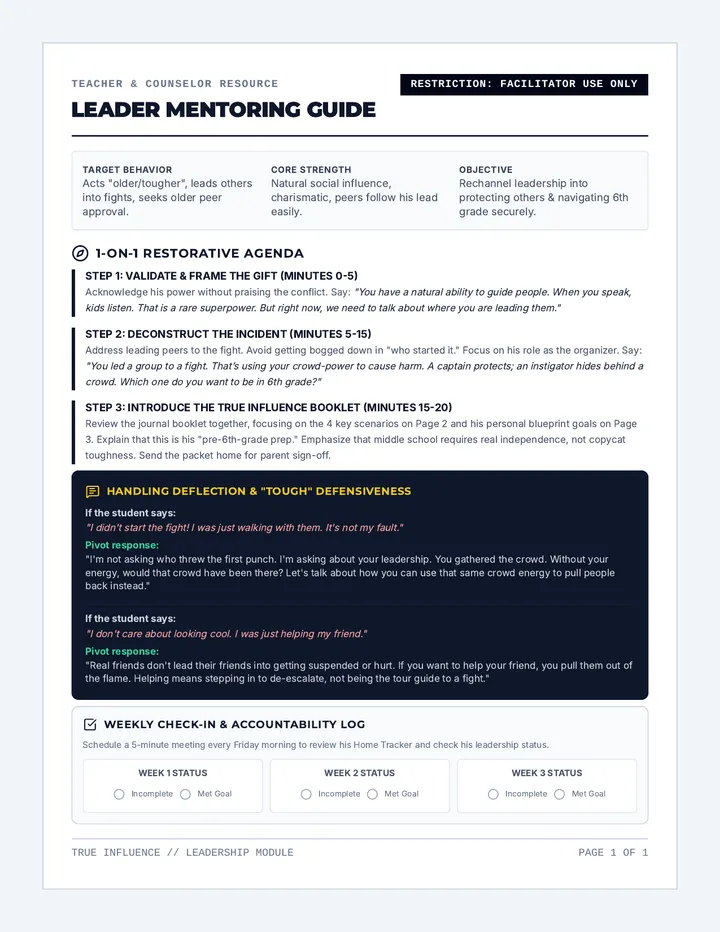
A comprehensive restorative leadership and peer advocacy sequence designed for students transitioning to middle school. It guides students from understanding their social influence to actively protecting peers and spreading positive school culture.
A comprehensive, week-long morning meeting series for the final week of school. Helps students celebrate growth, outline summer plans, address fifth-grade transitions, set future goals, and build class community before departure.
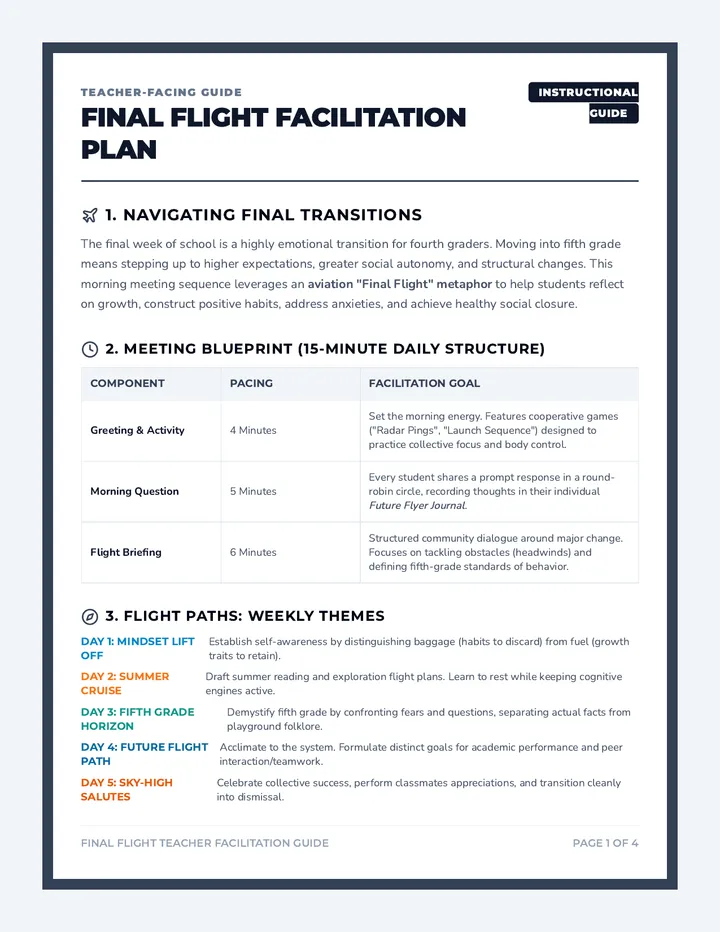
A 4-page teacher-facing facilitation plan and printable prompt cards. Outlines day-by-day lesson scripts, pacing, community-building strategies, and printable pocket-sized cards for facilitating the morning circle.
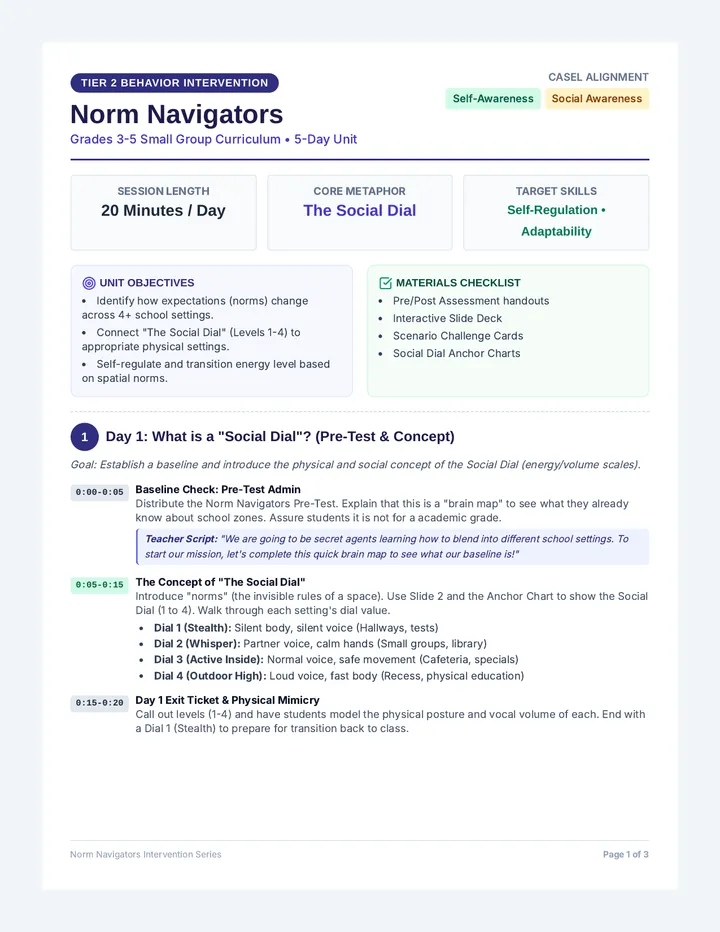
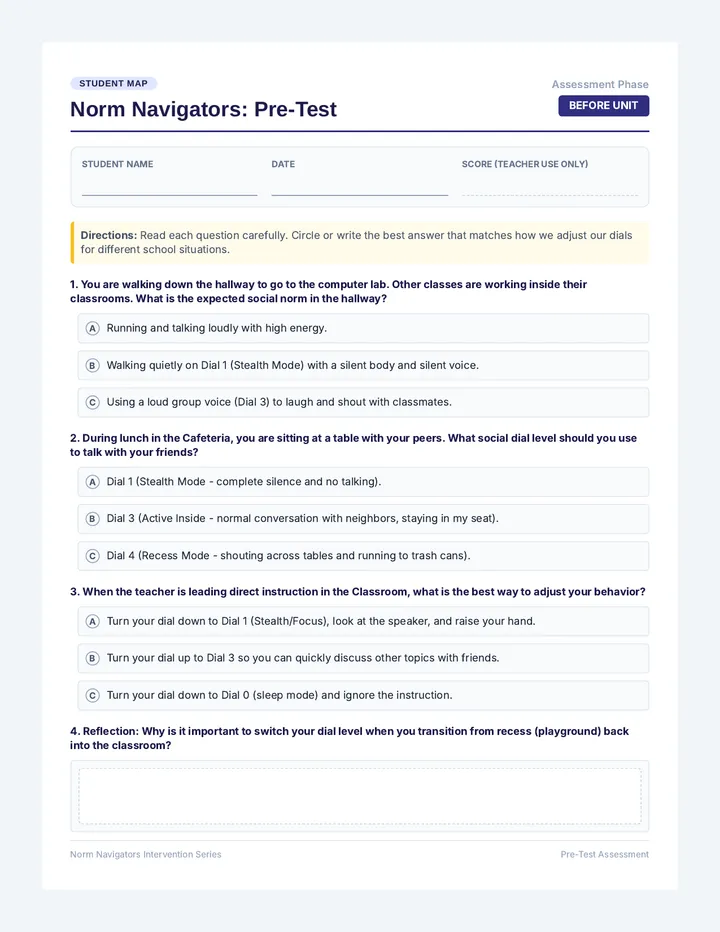
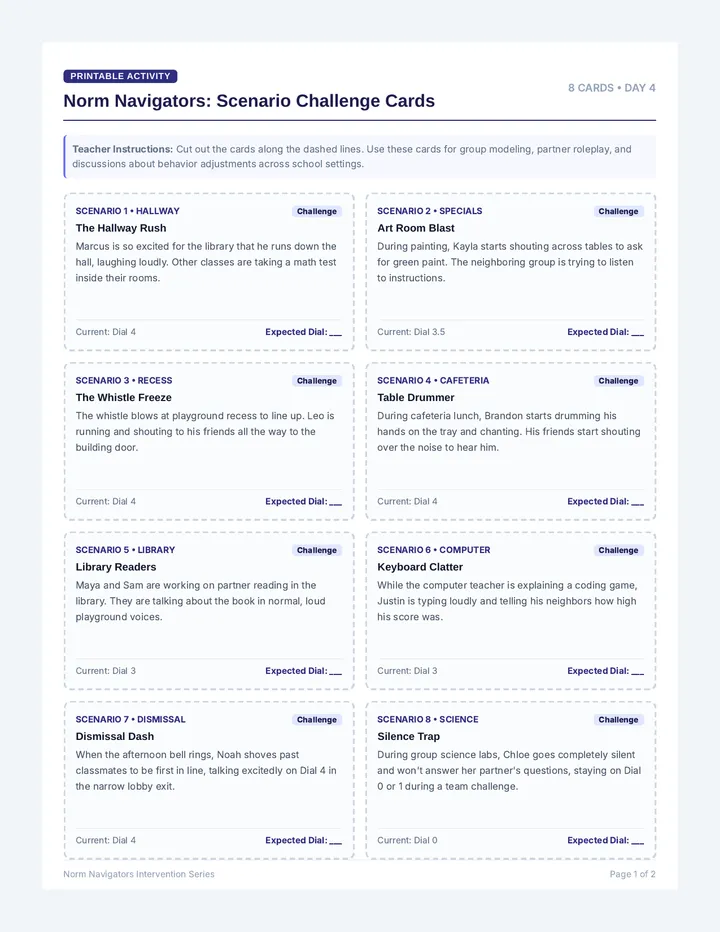
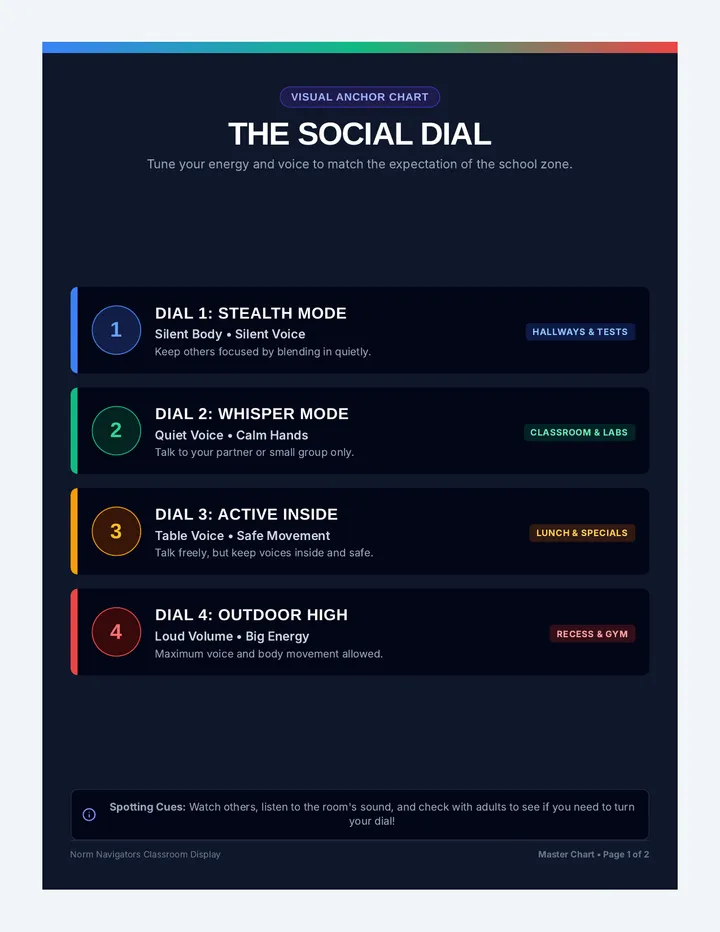
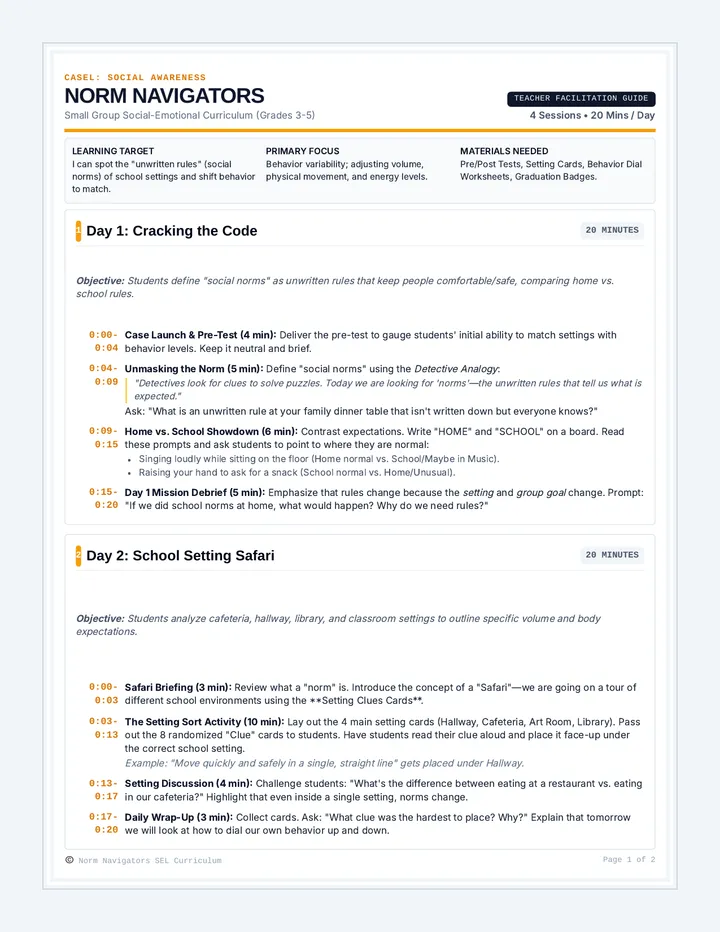
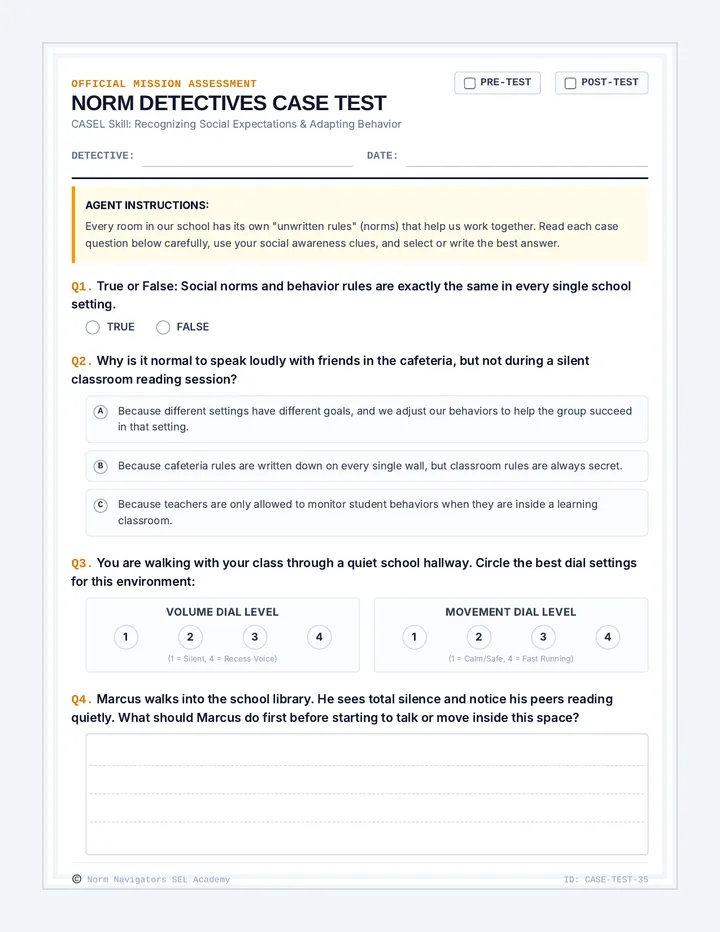
A 5-day Tier 2 behavior intervention sequence for grades 3-5 focused on recognizing and adapting to social norms across different school settings. Aligned with CASEL Self-Awareness and Social Awareness competencies, the sequence uses the concept of the 'Social Dial' to help students regulate their energy and volume.
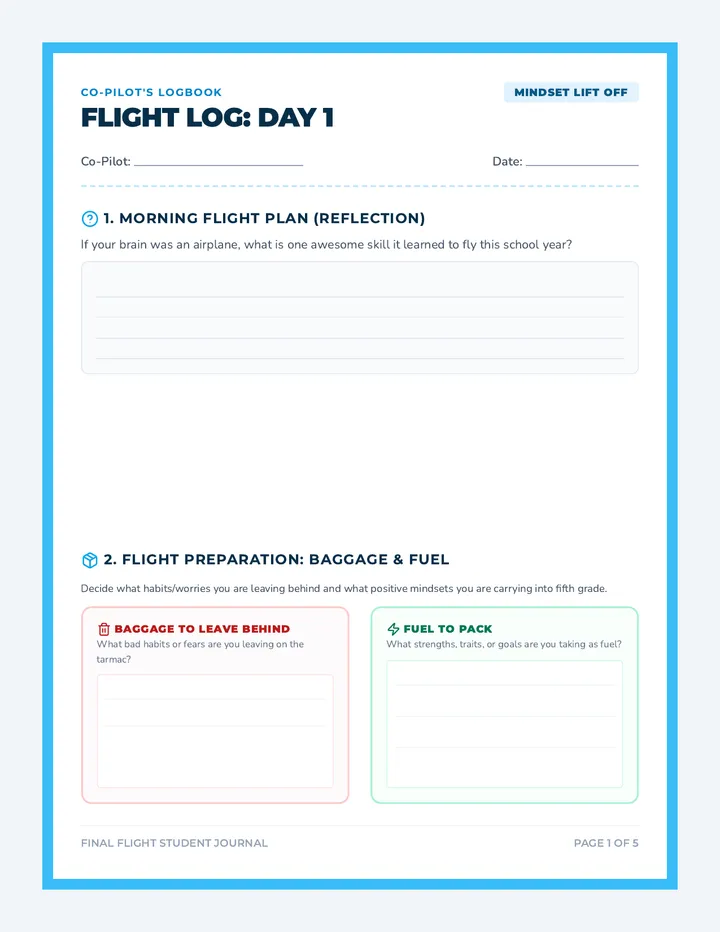
A 5-page student-facing morning meeting reflection booklet styled as an aviation flight log. Includes space for daily morning responses, activity summaries, transition goal-setting, and classmate autographs.
A comprehensive 4-day small-group social-emotional learning sequence for grades 3-5. Aligned with the CASEL Social Awareness framework, this unit teaches students to identify how expectations and social norms change across different school environments and how to adapt their behaviors successfully.