A comprehensive 8th-grade STAAR preparation resource covering all four core subjects with essential formulas, strategies, and key concepts.
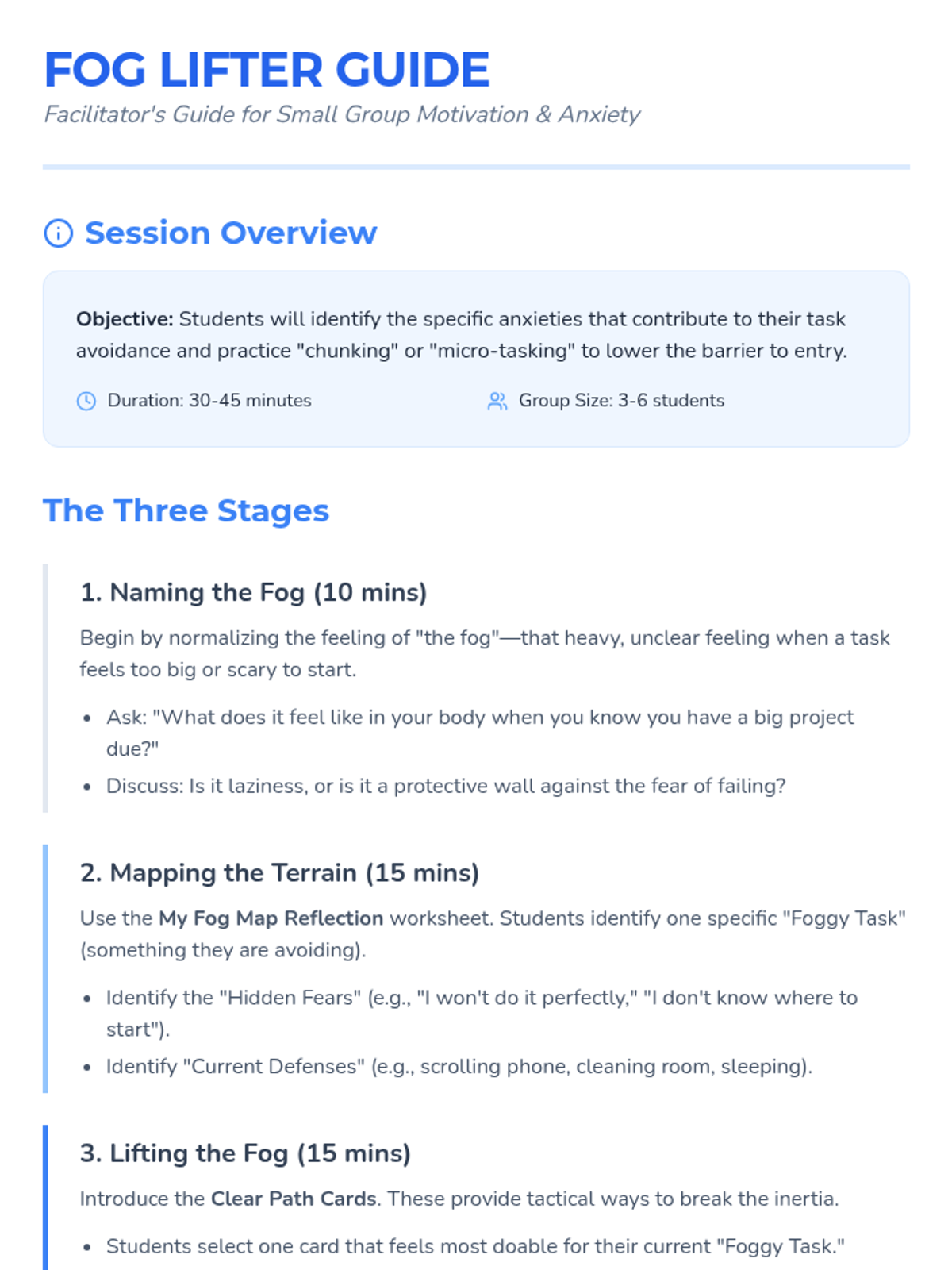
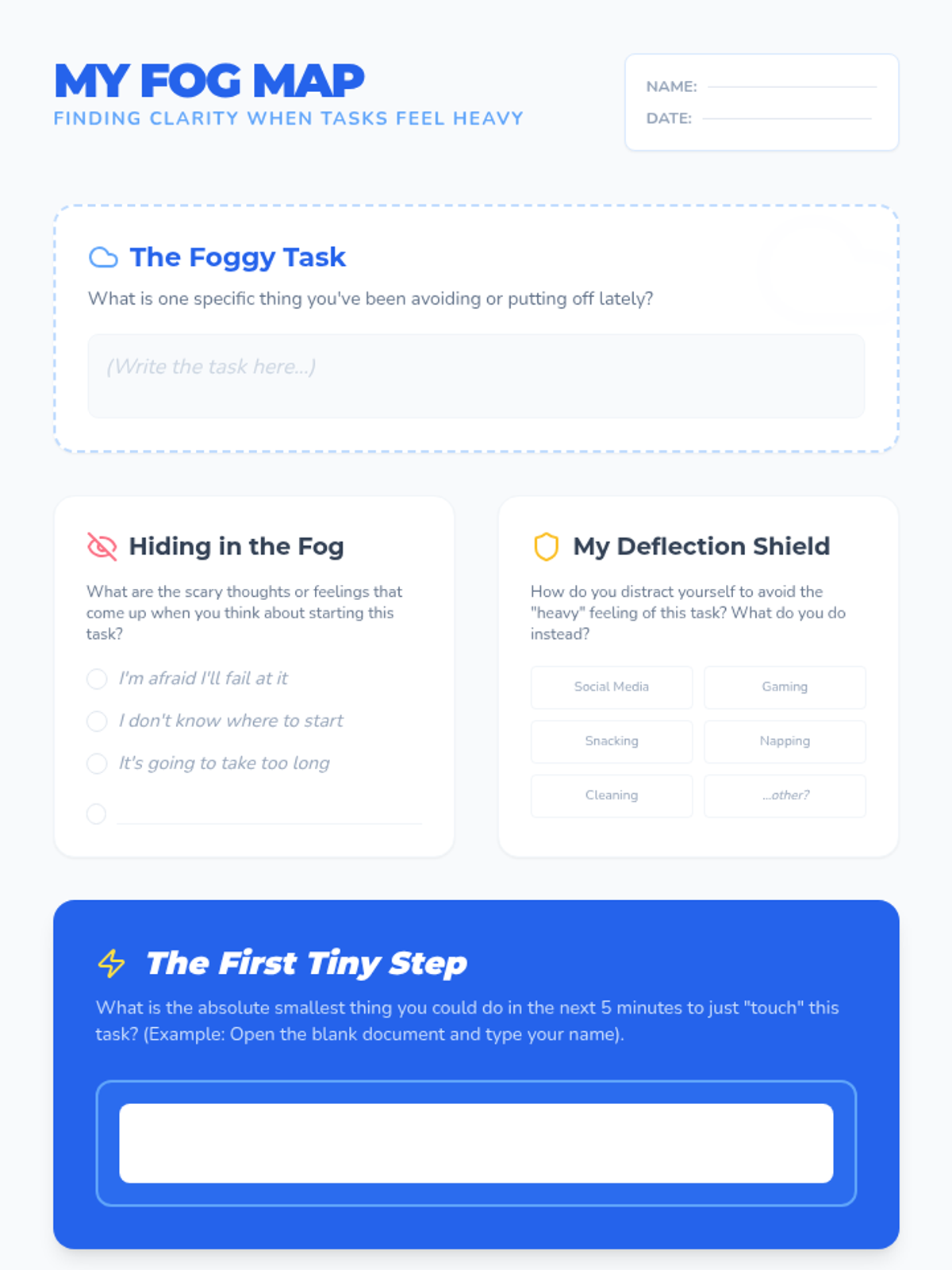
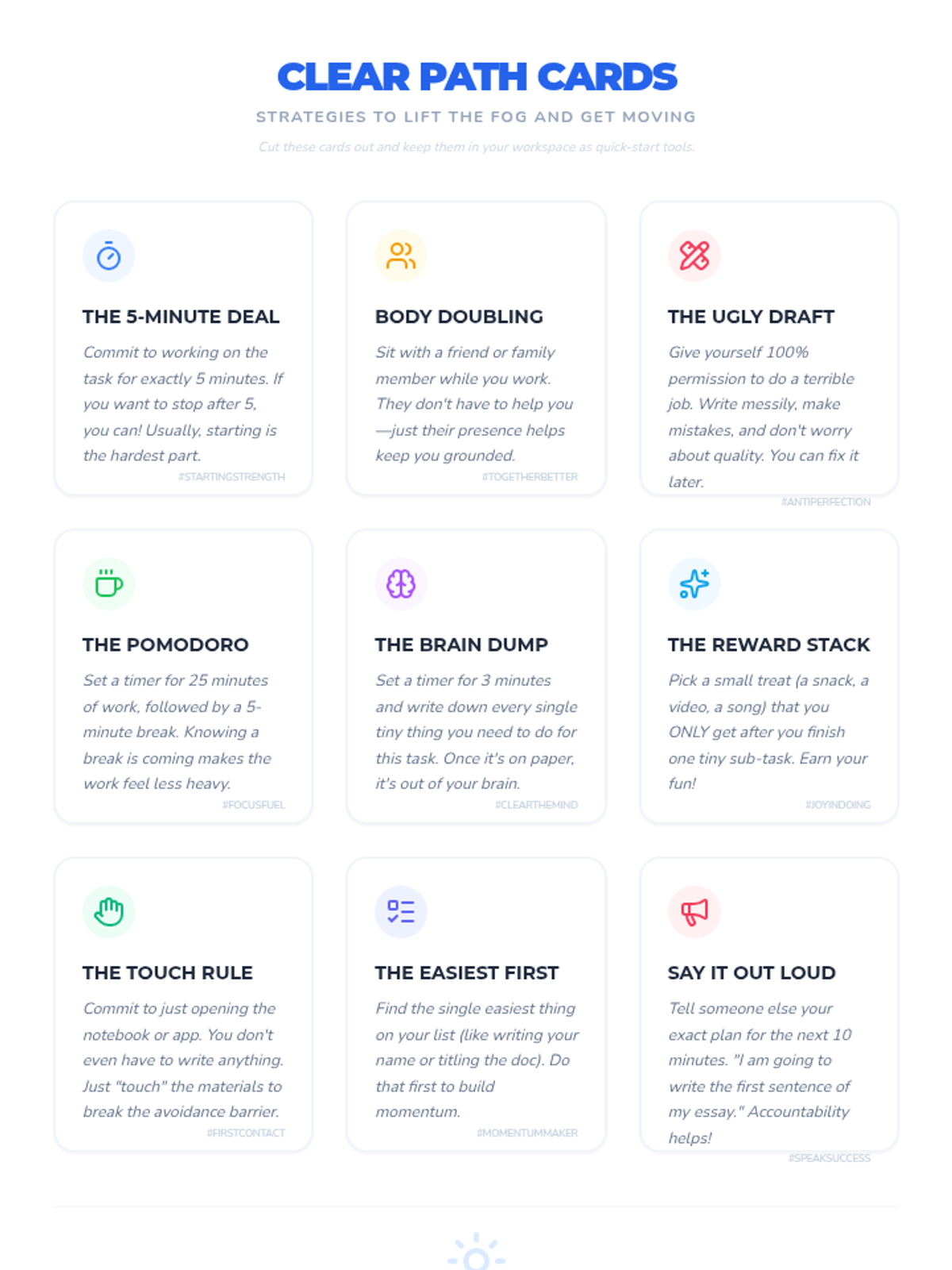
A small group session focused on identifying the anxieties that lead to task avoidance and developing practical strategies to overcome the 'fog' of low motivation.
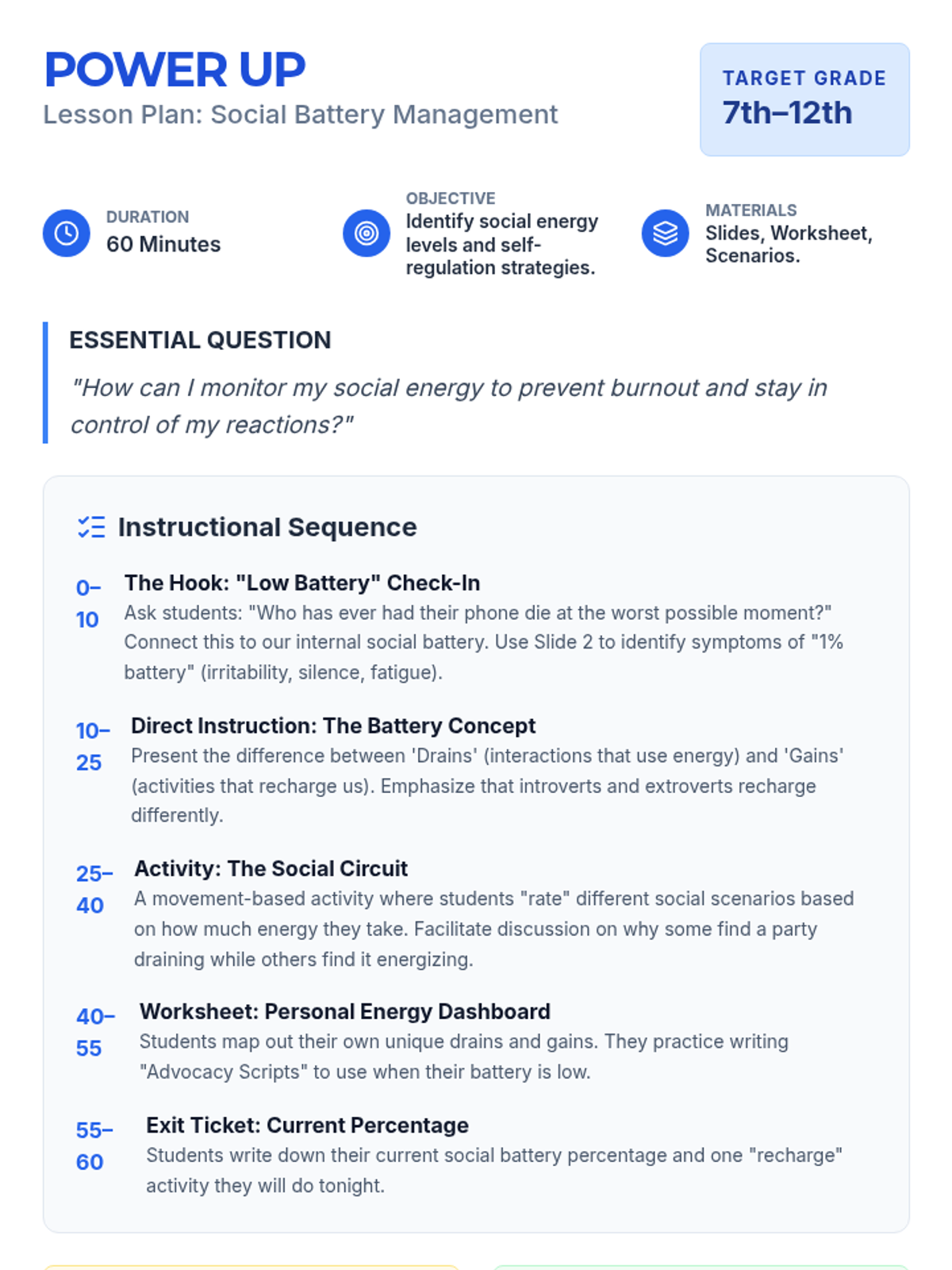
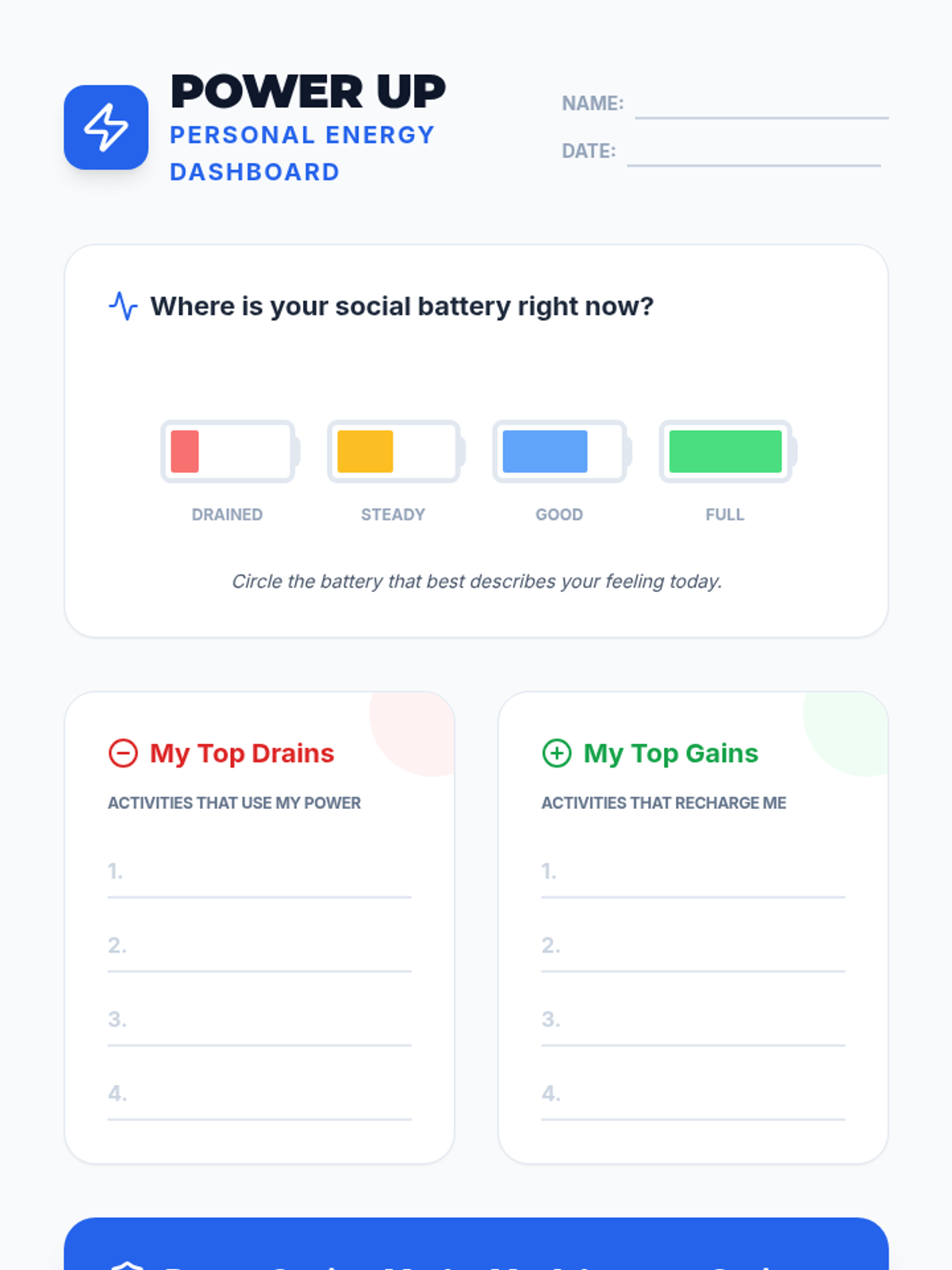
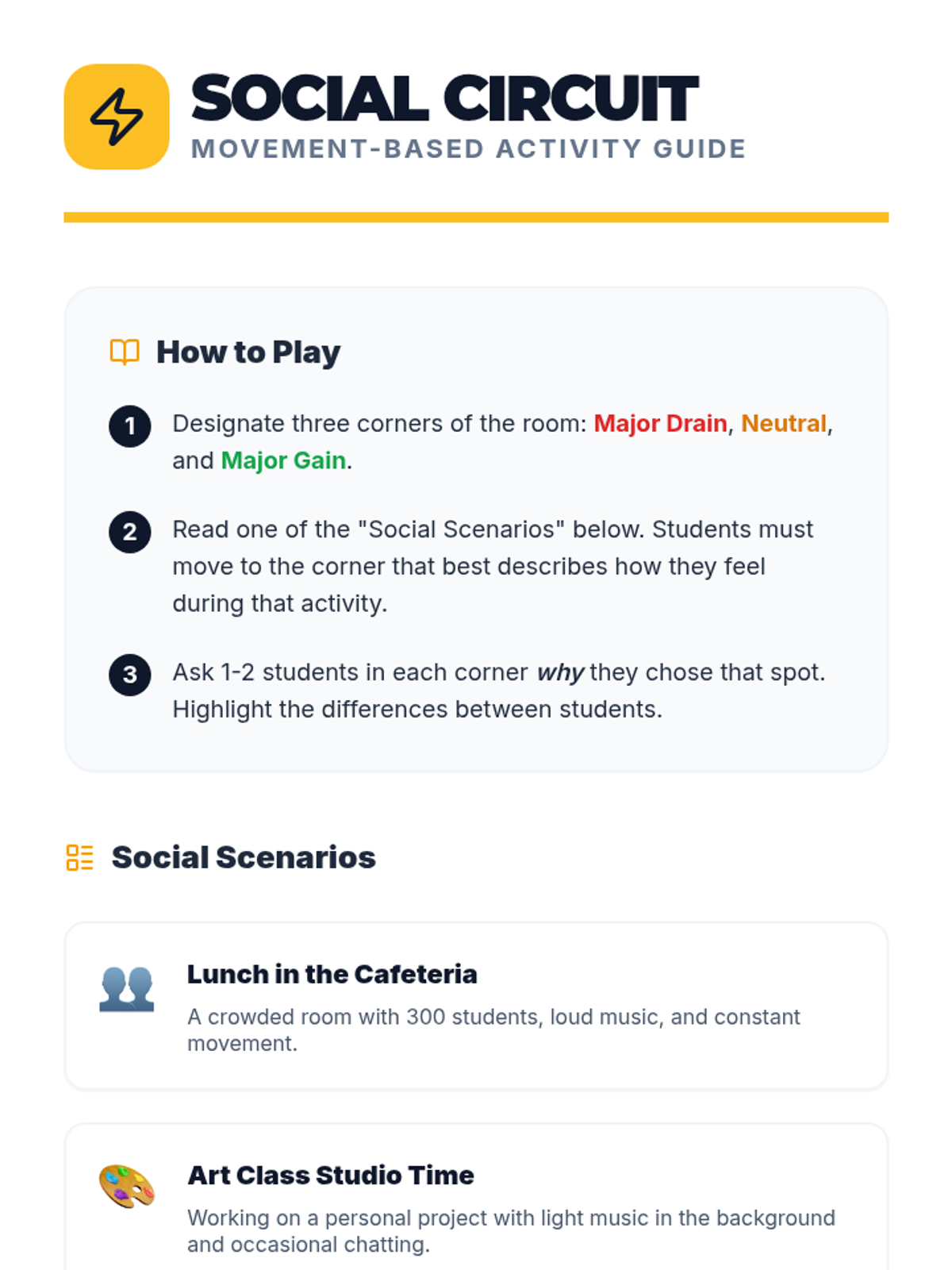
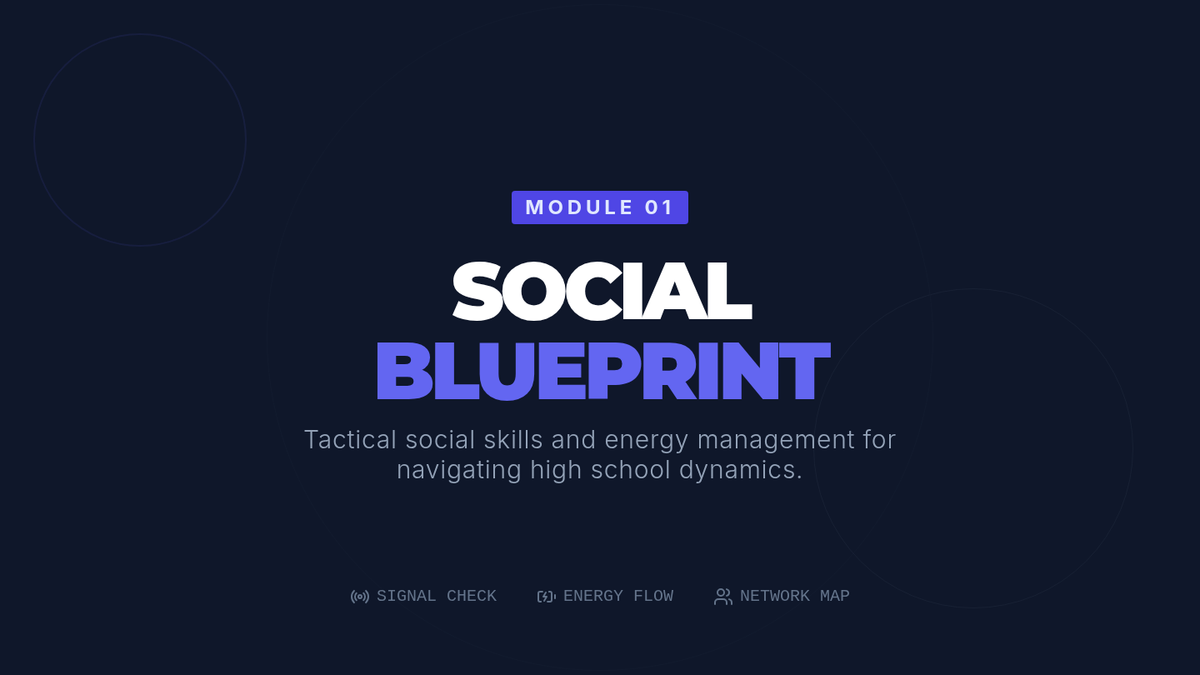
This lesson helps 7th-12th graders visualize their social energy as a 'battery' that needs charging. Students will identify social drains and gains, learning to advocate for 'recharge time' to prevent burnout and reactive outbursts.
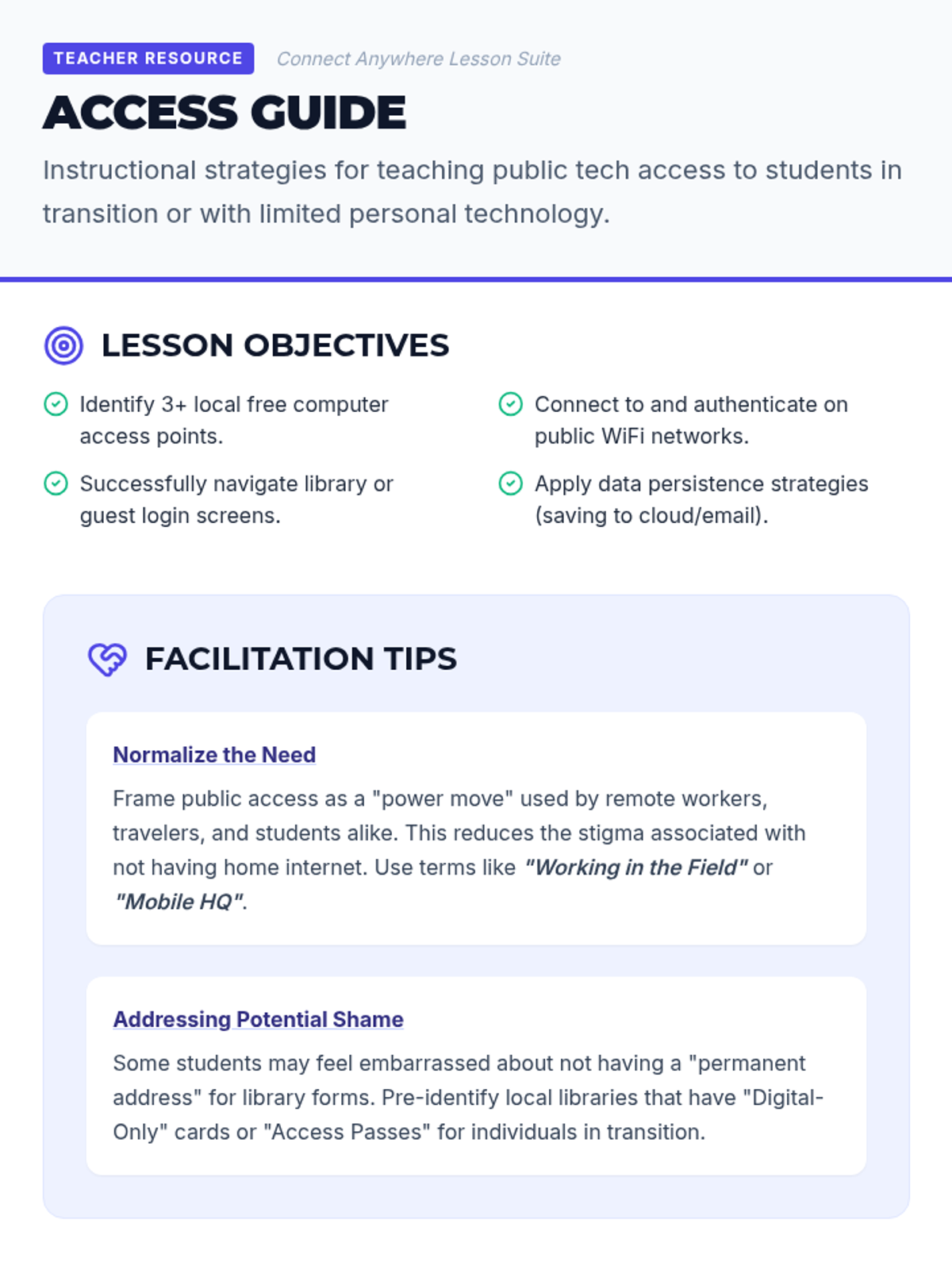
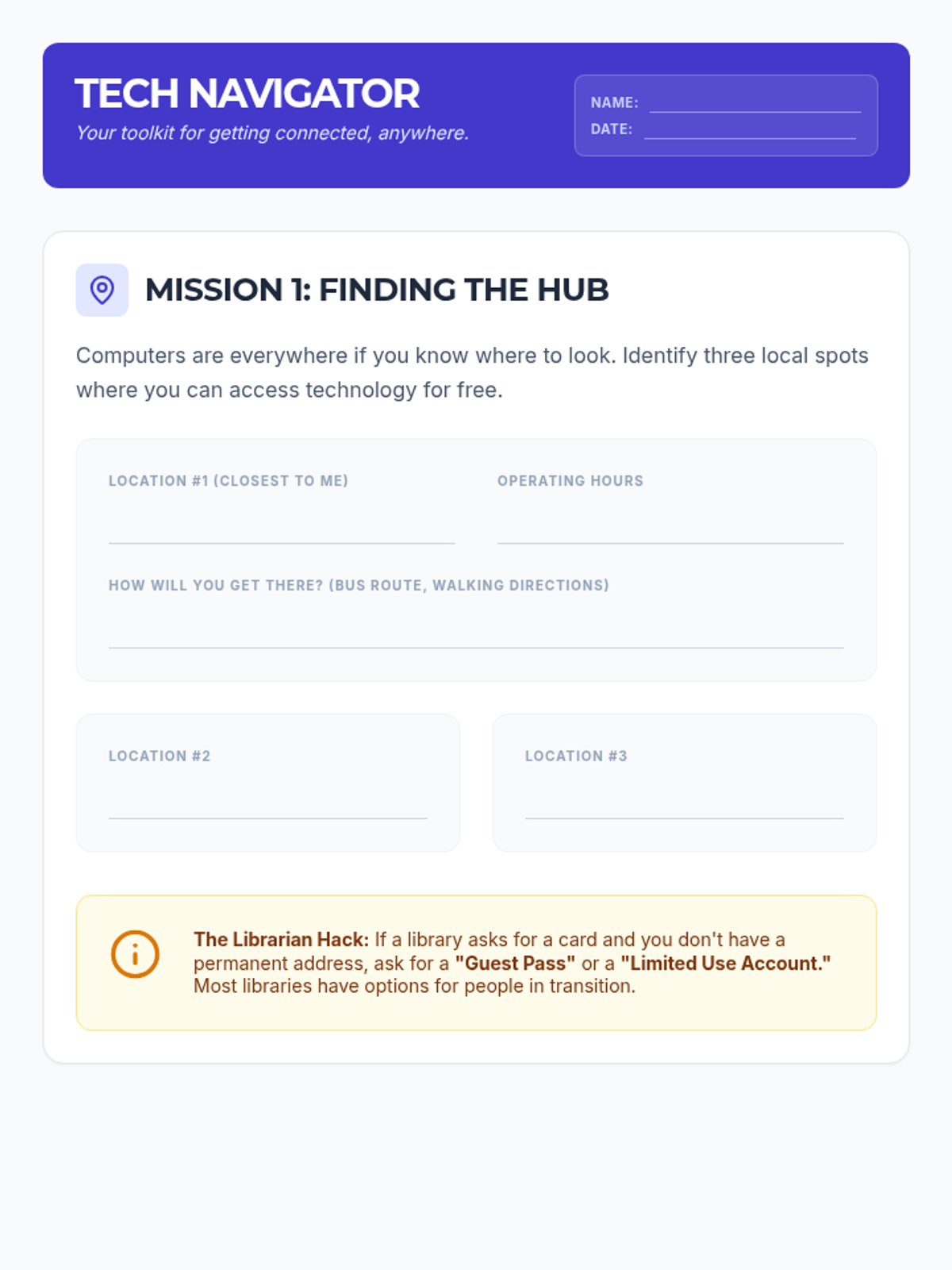
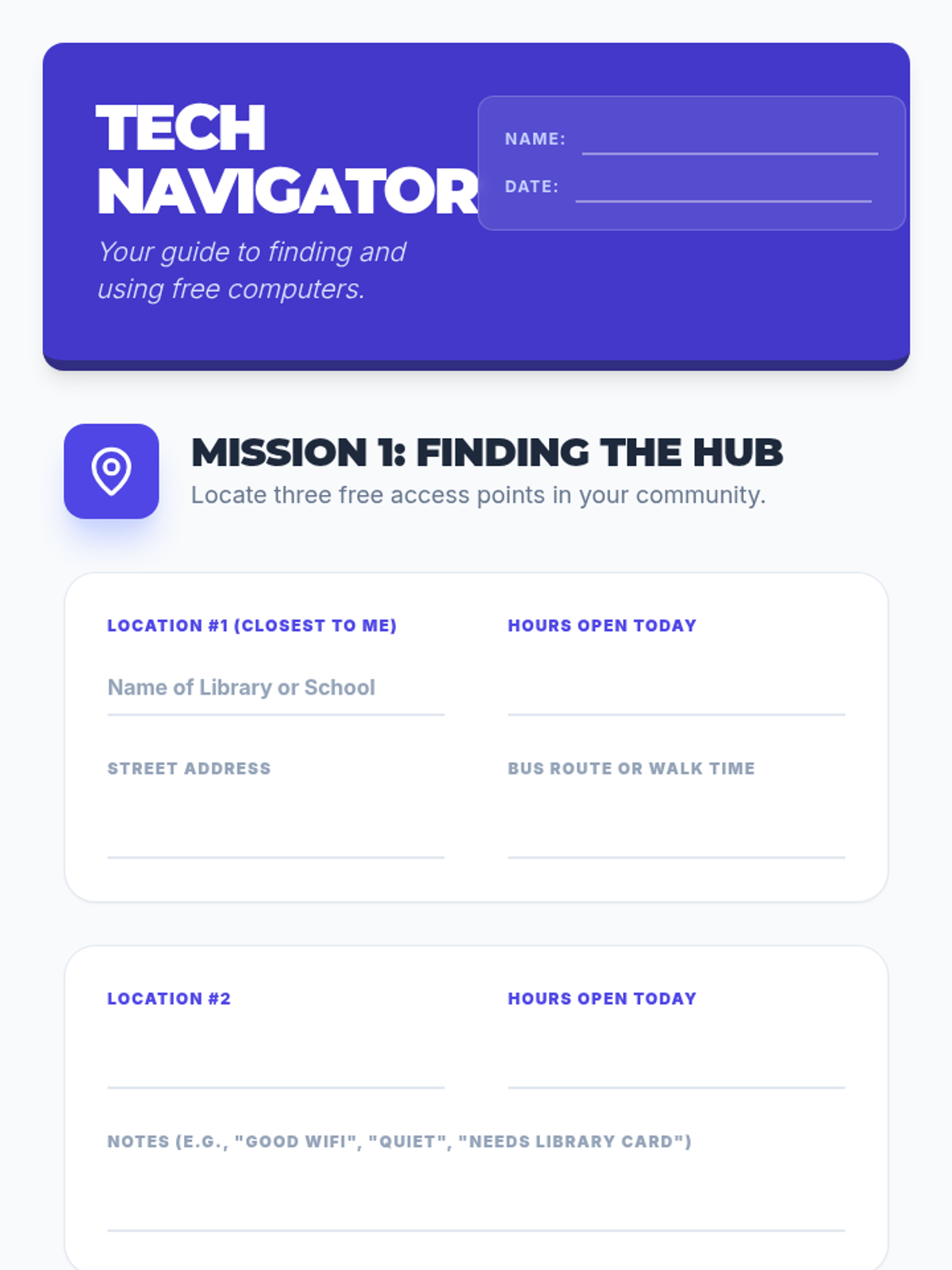
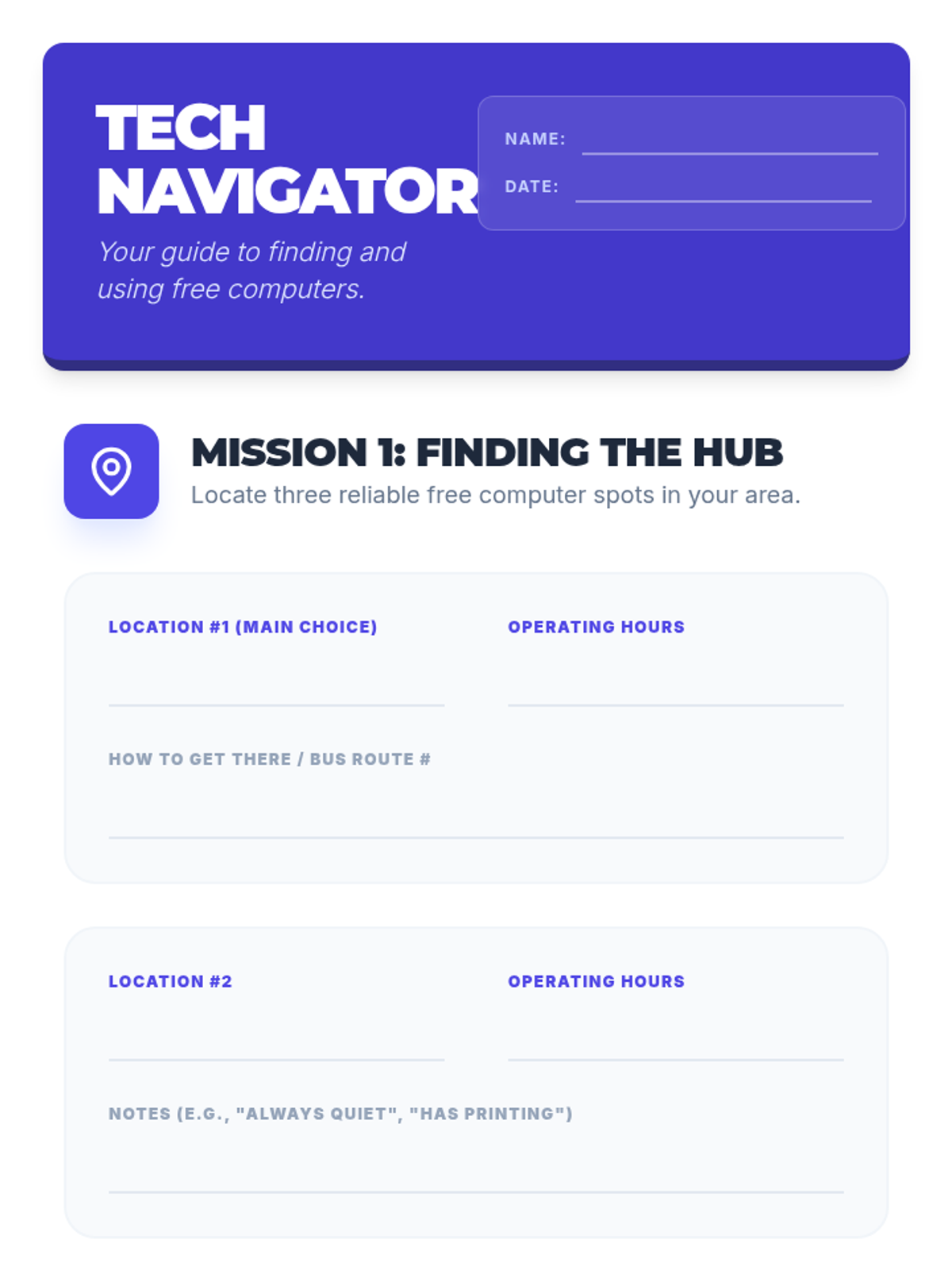
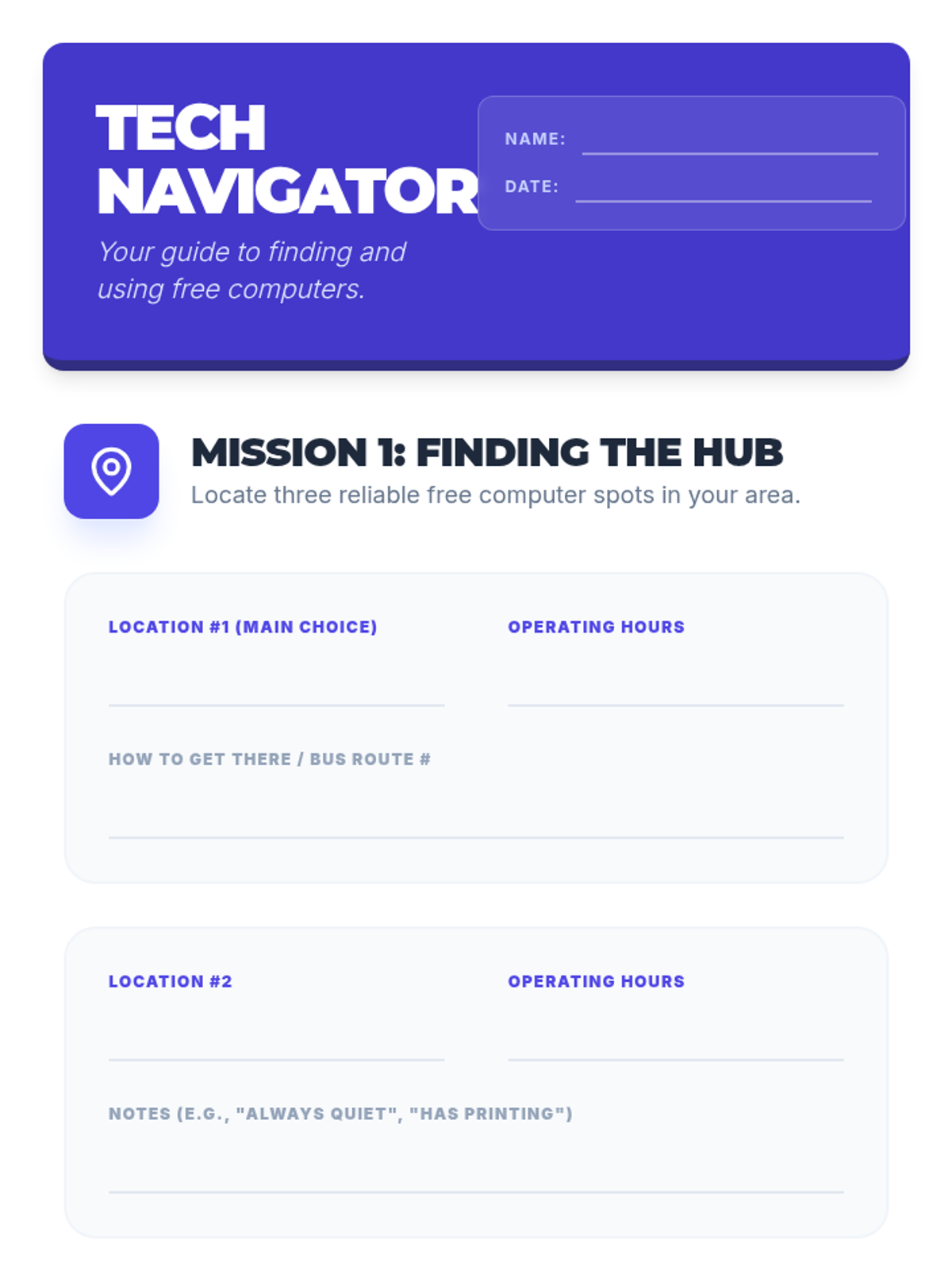
A practical guide for students to find and use public technology resources safely and effectively. This lesson covers locating free computers, navigating public interfaces, and connecting to open WiFi networks.
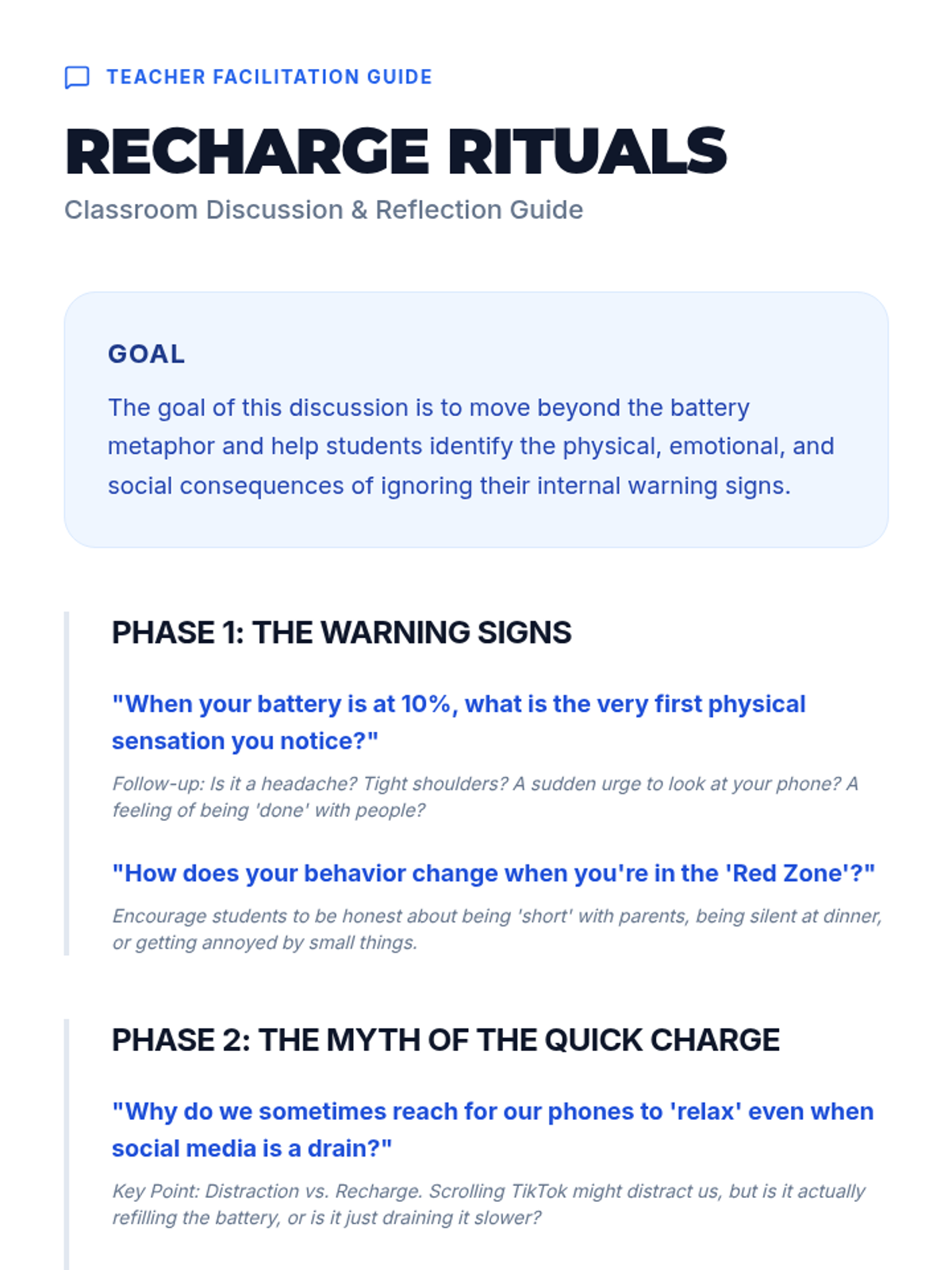
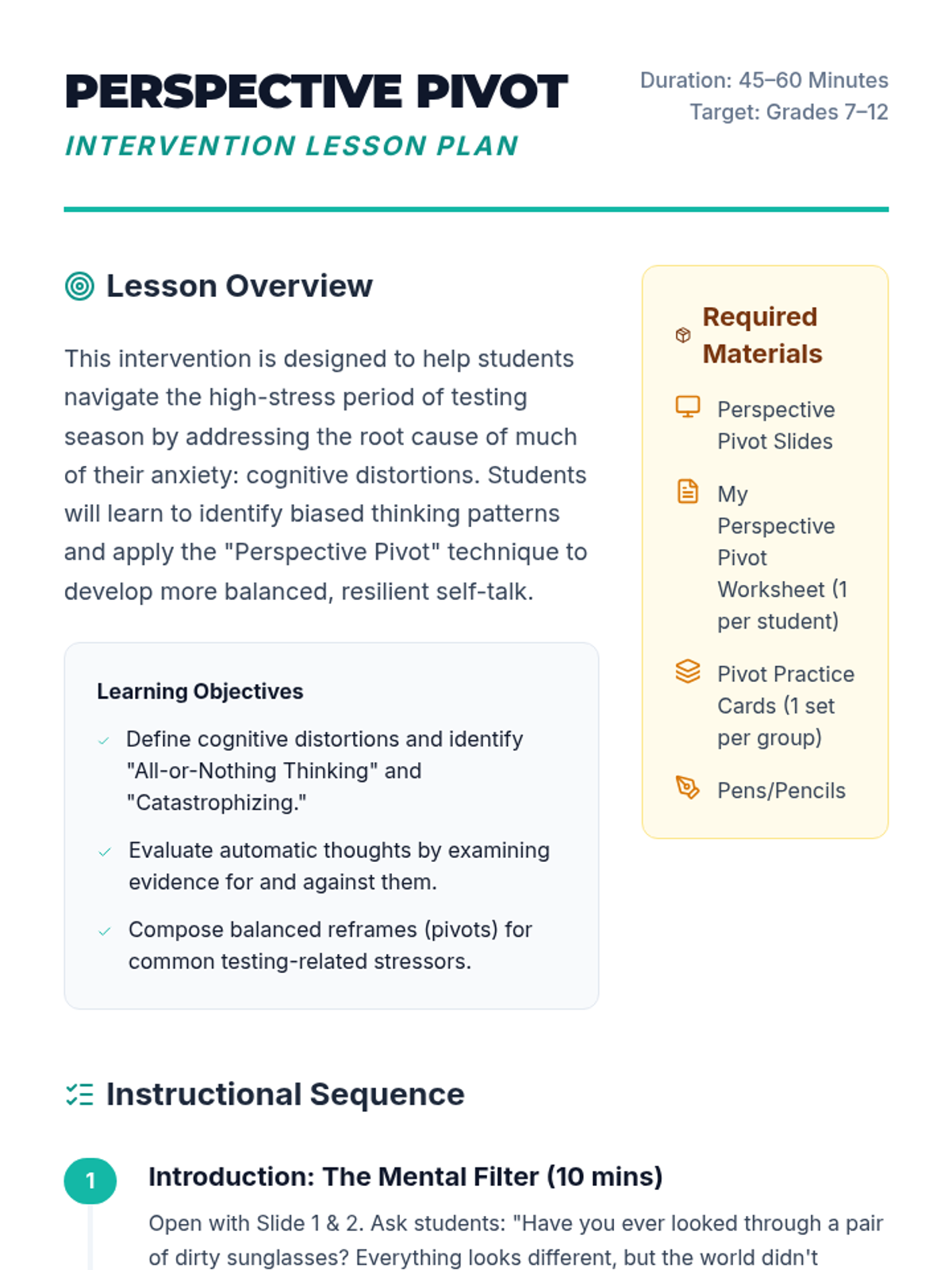
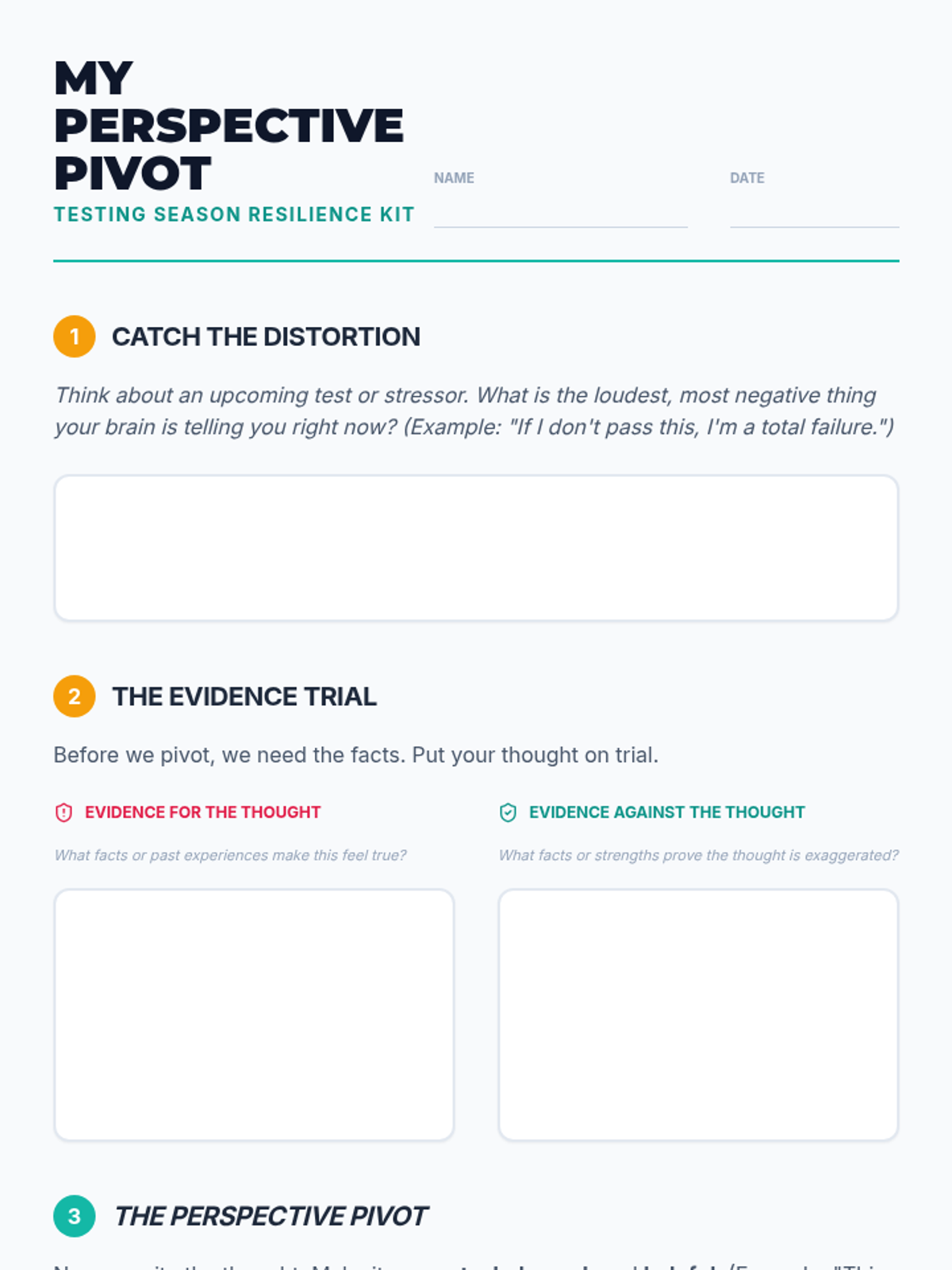
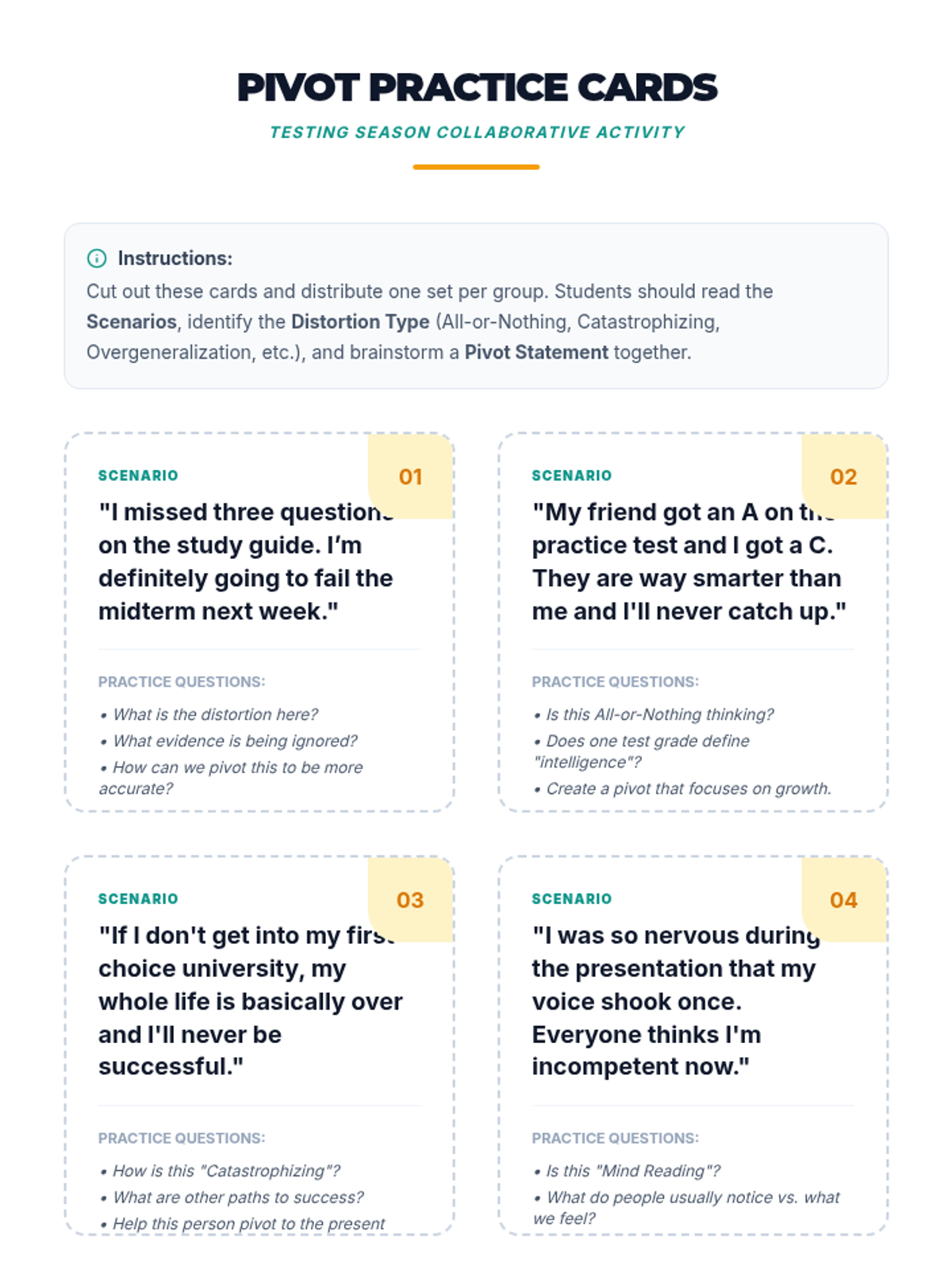
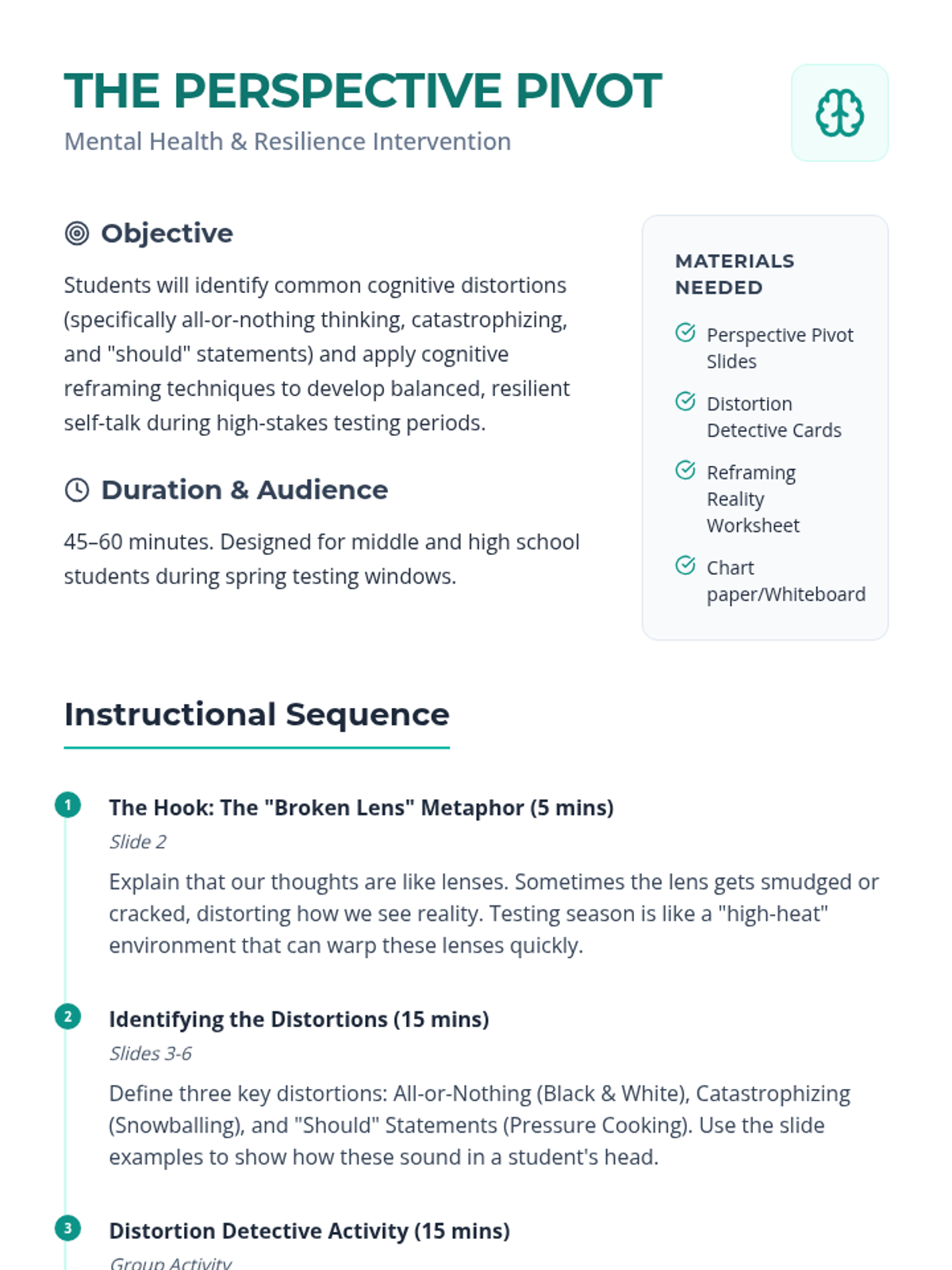
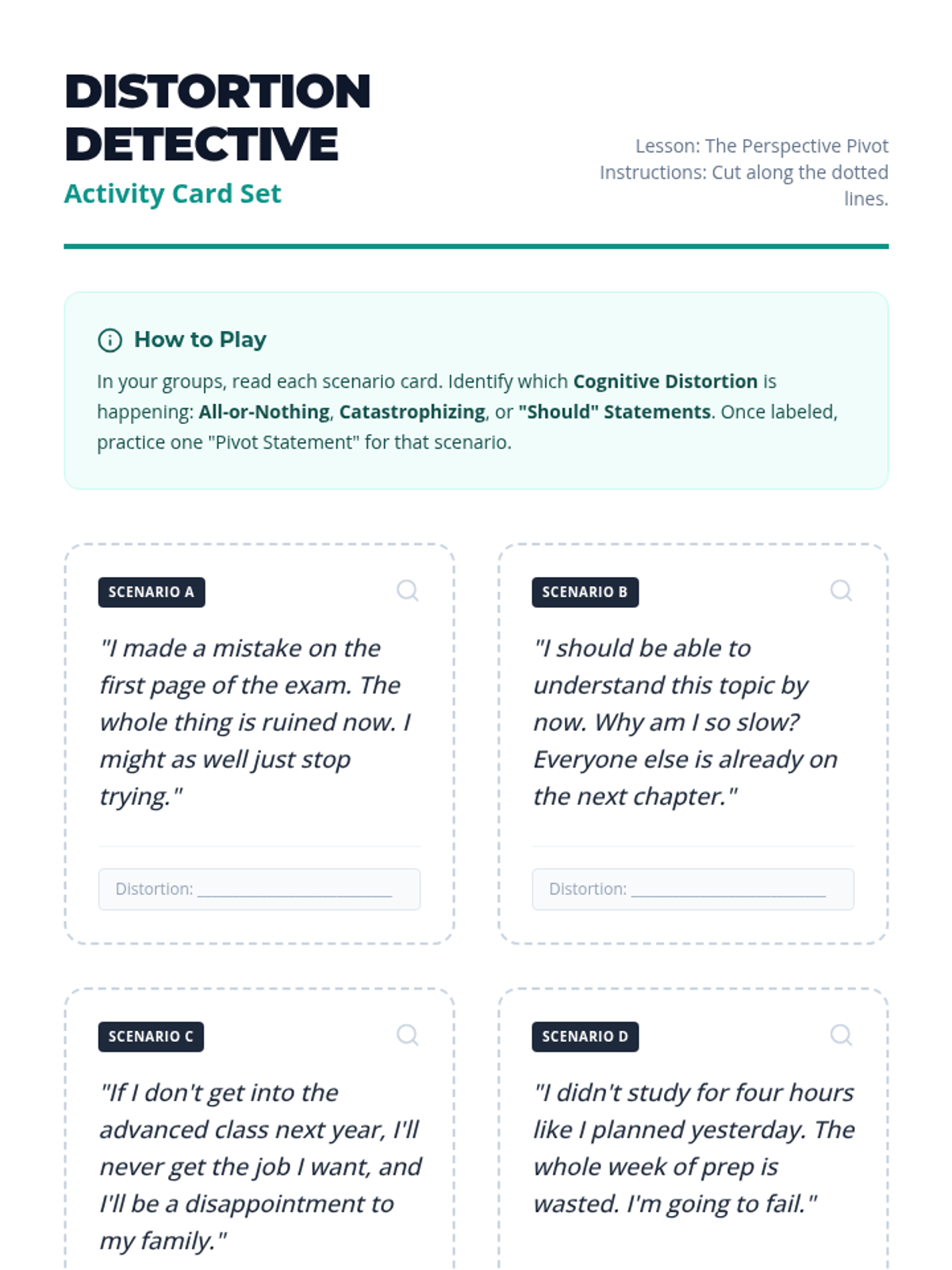
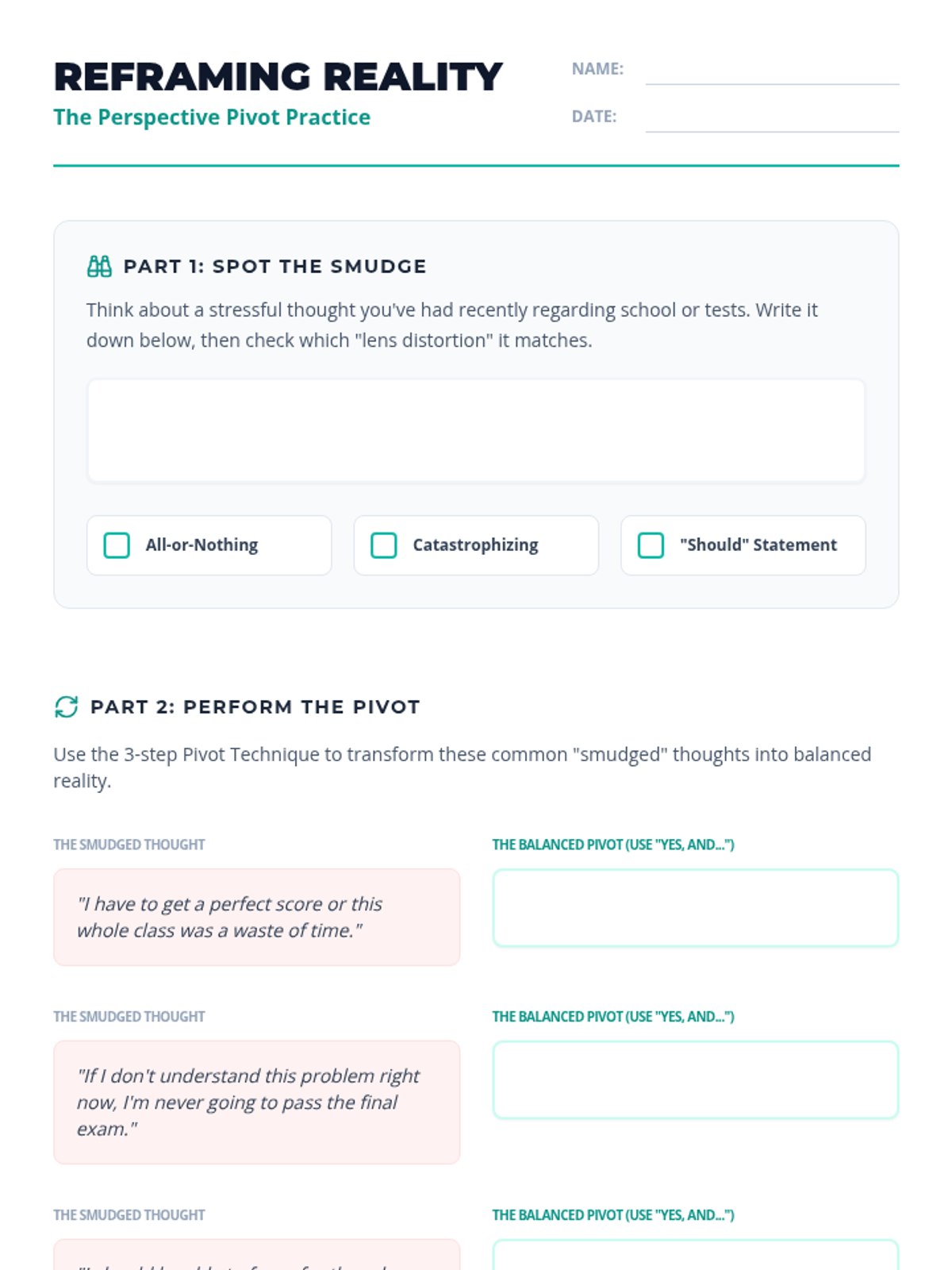
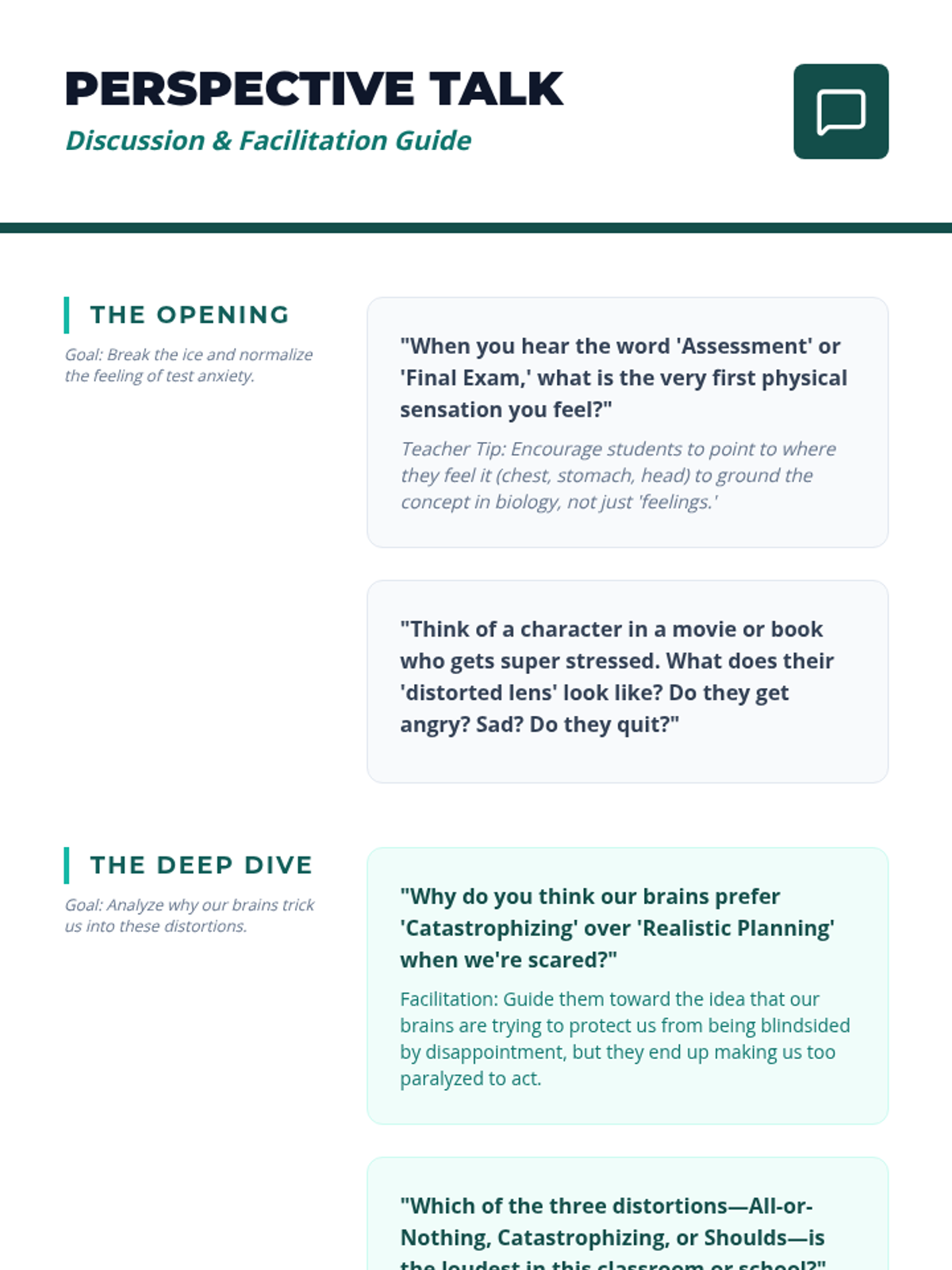
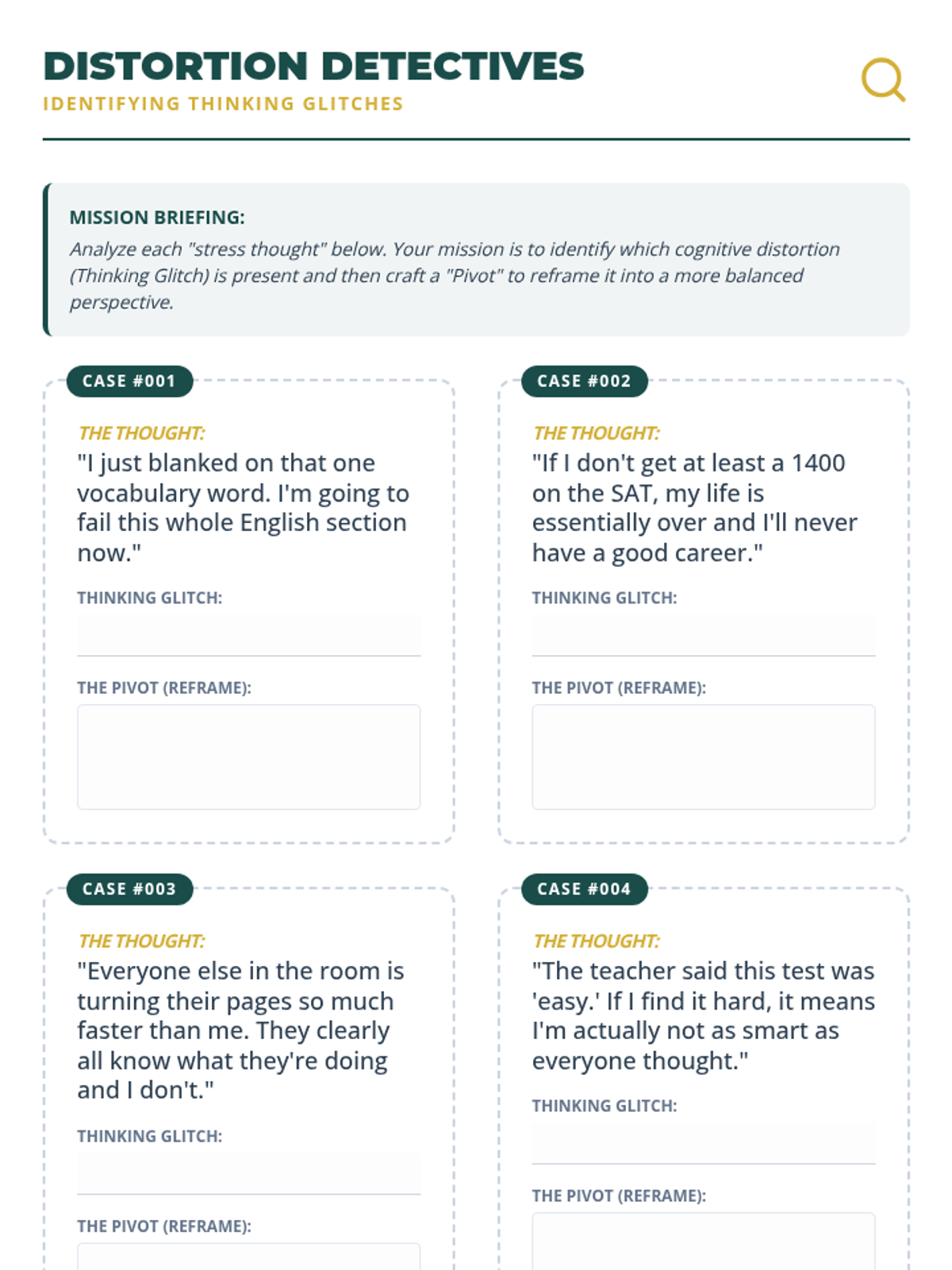
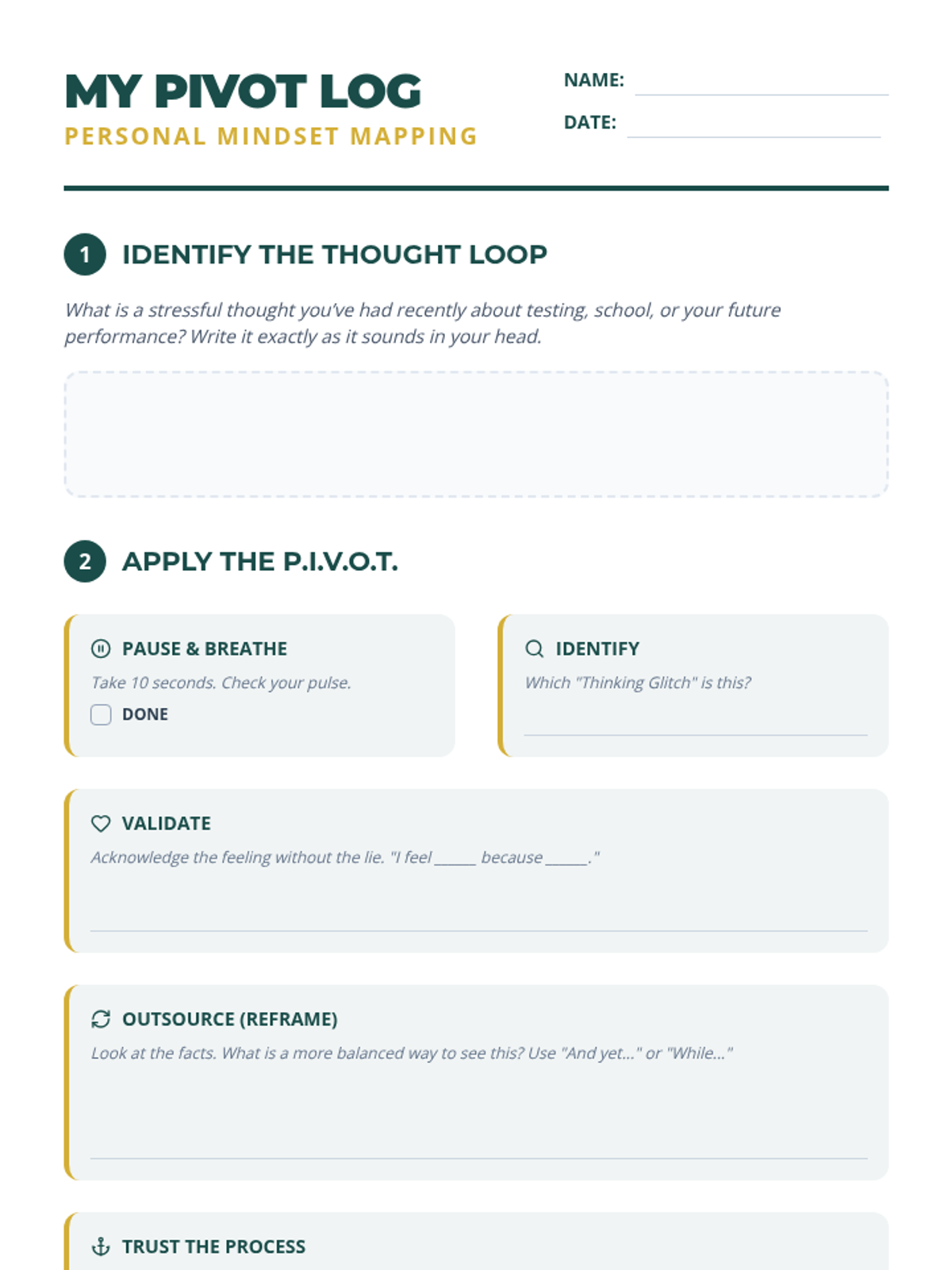
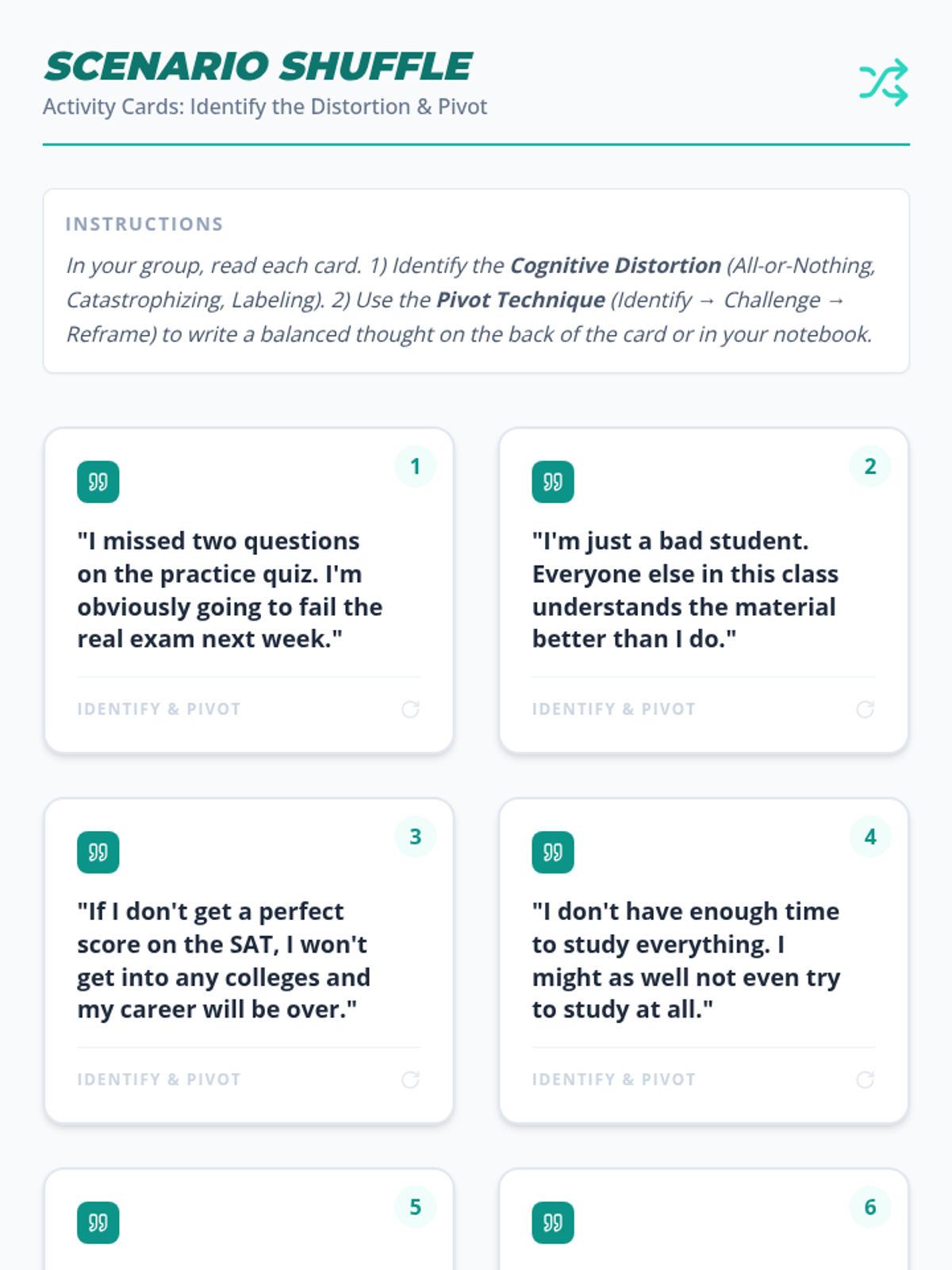
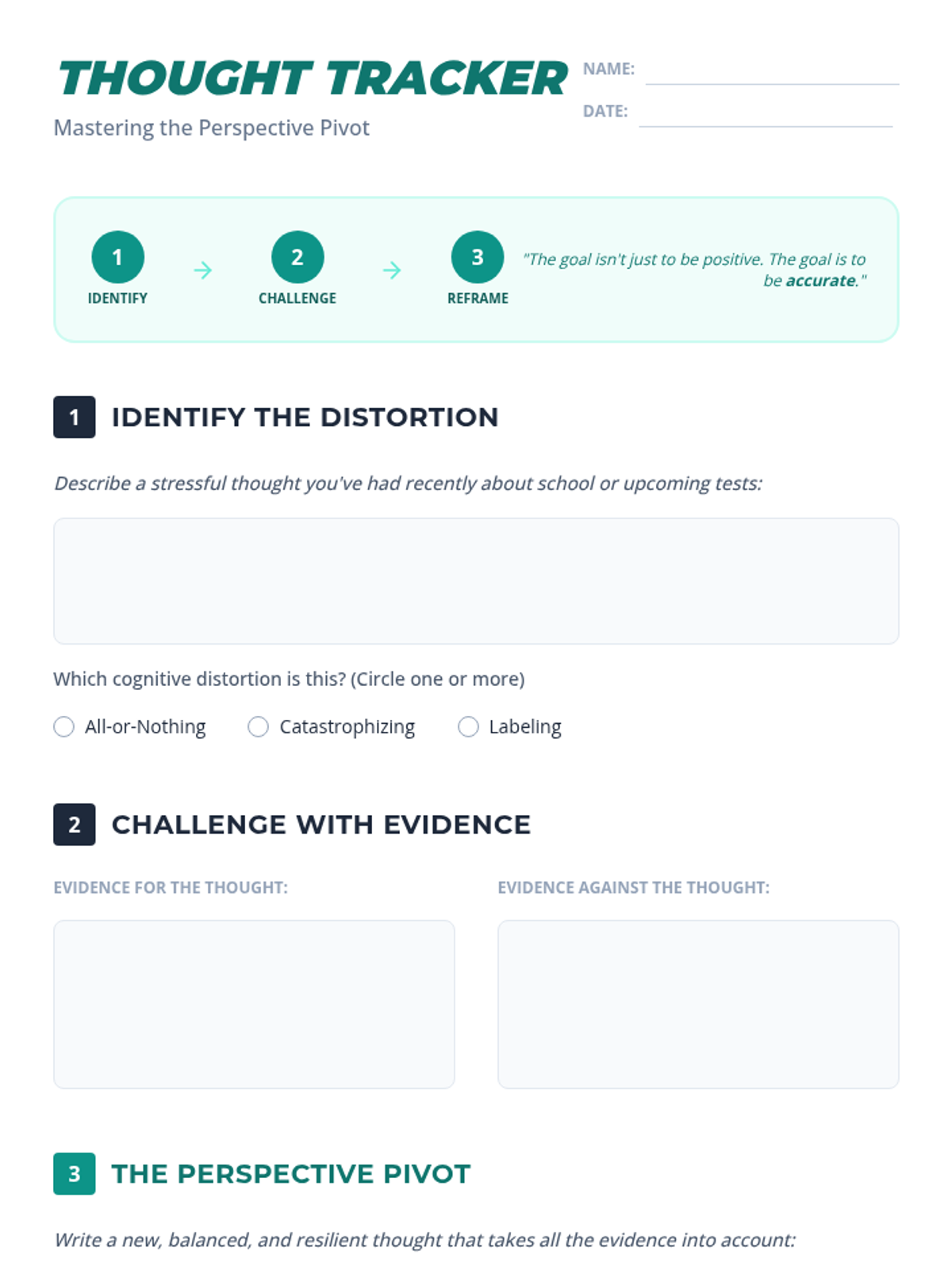
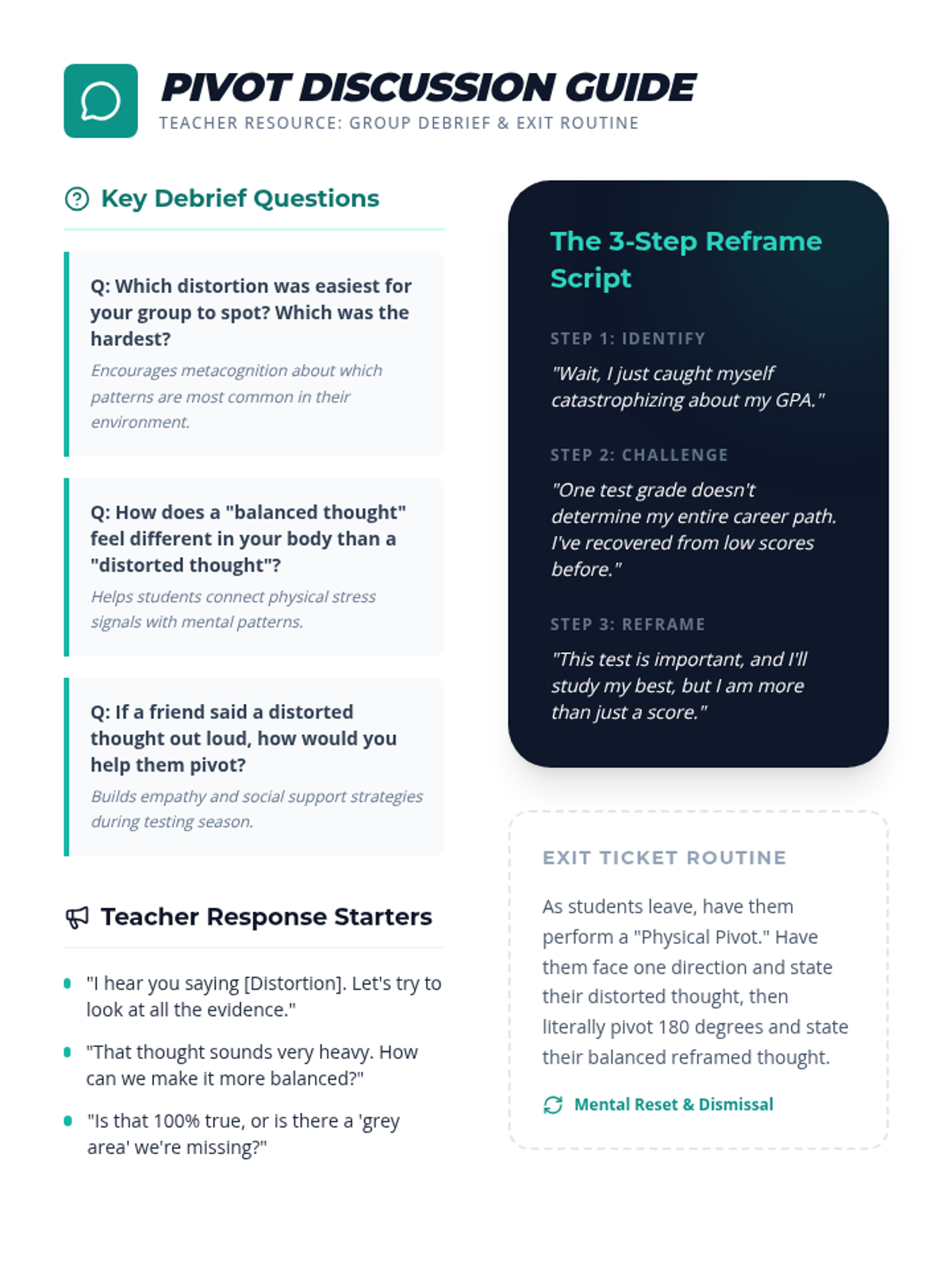
A social-emotional learning intervention designed to help students identify and challenge cognitive distortions during testing season by practicing cognitive reframing techniques.
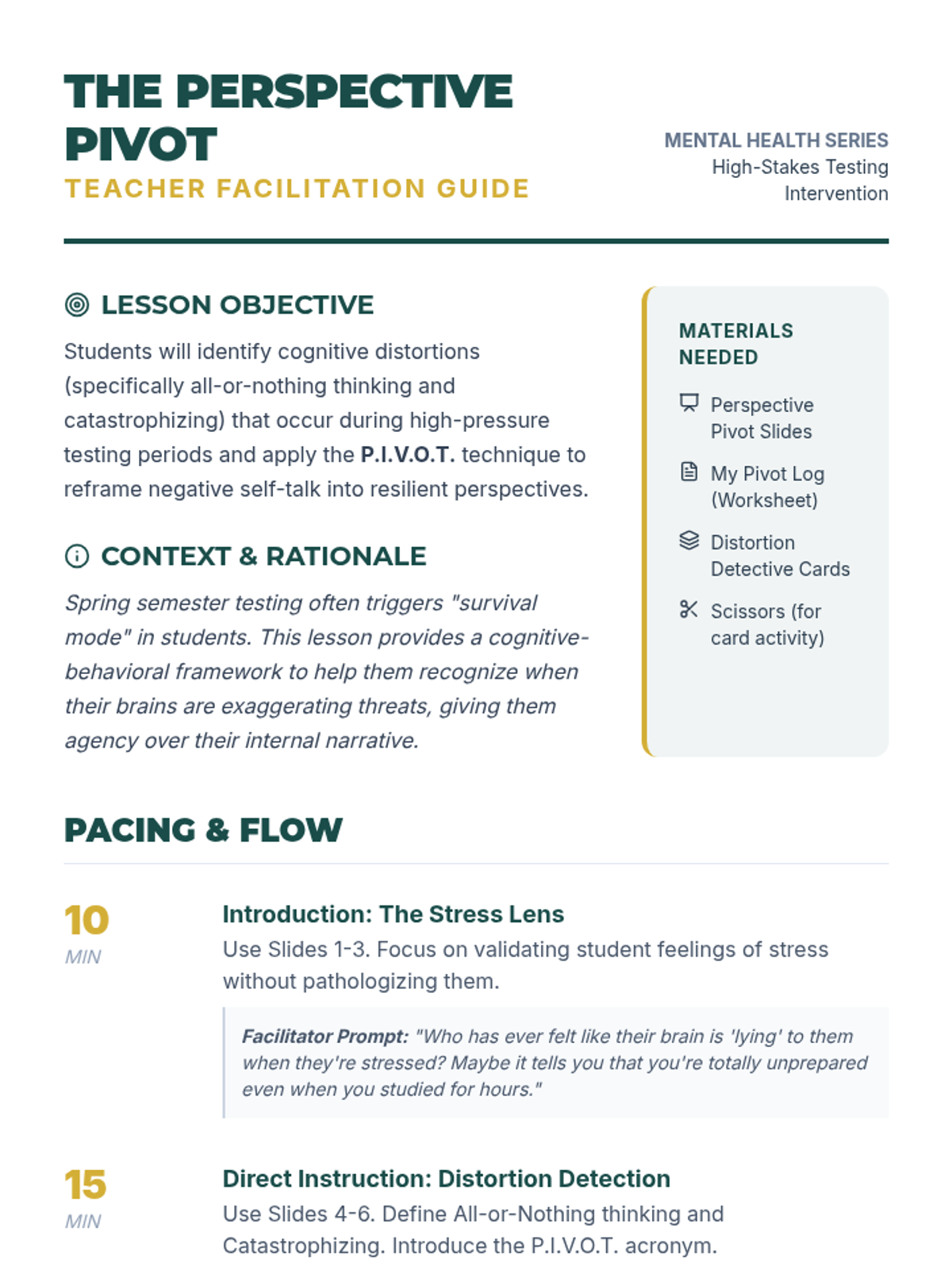
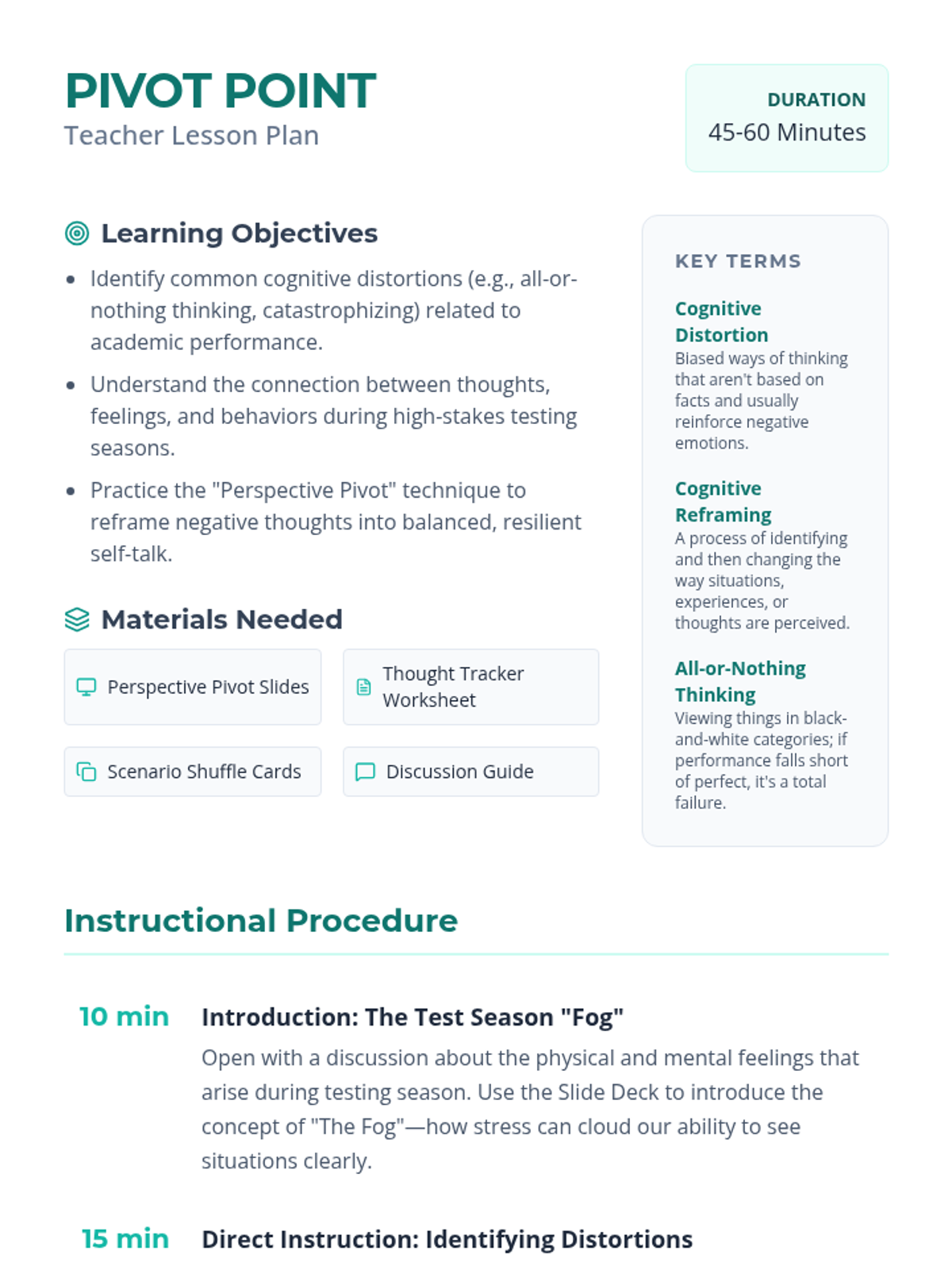
A social-emotional learning intervention designed to help students identify and reframe cognitive distortions during high-stakes testing seasons. Students will learn to pivot from 'all-or-nothing' thinking to balanced, resilient self-talk.
A mental health intervention designed to help students identify and challenge cognitive distortions during high-stakes testing seasons. Students will learn to reframe 'all-or-nothing' thinking into balanced, resilient self-talk.
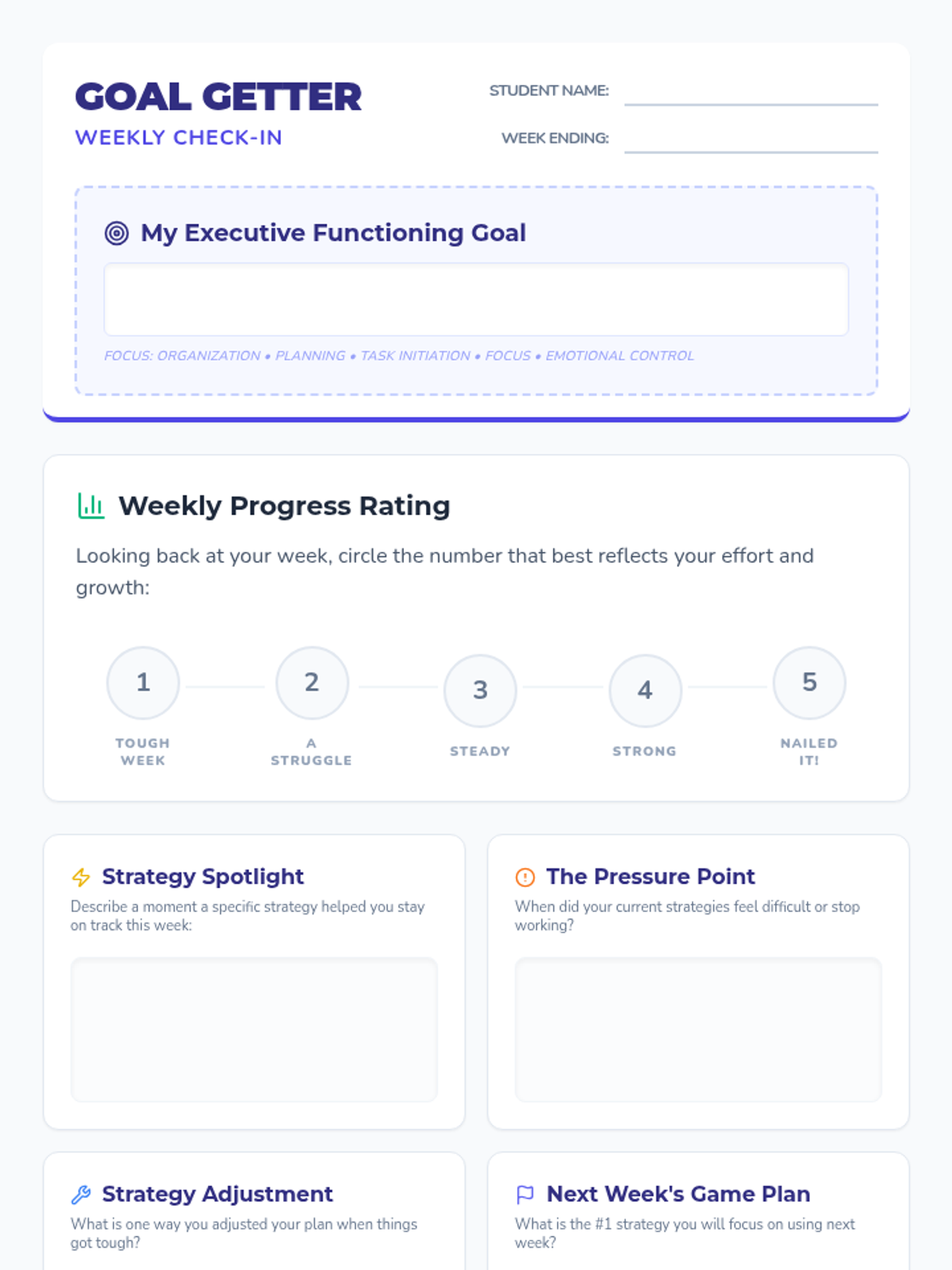
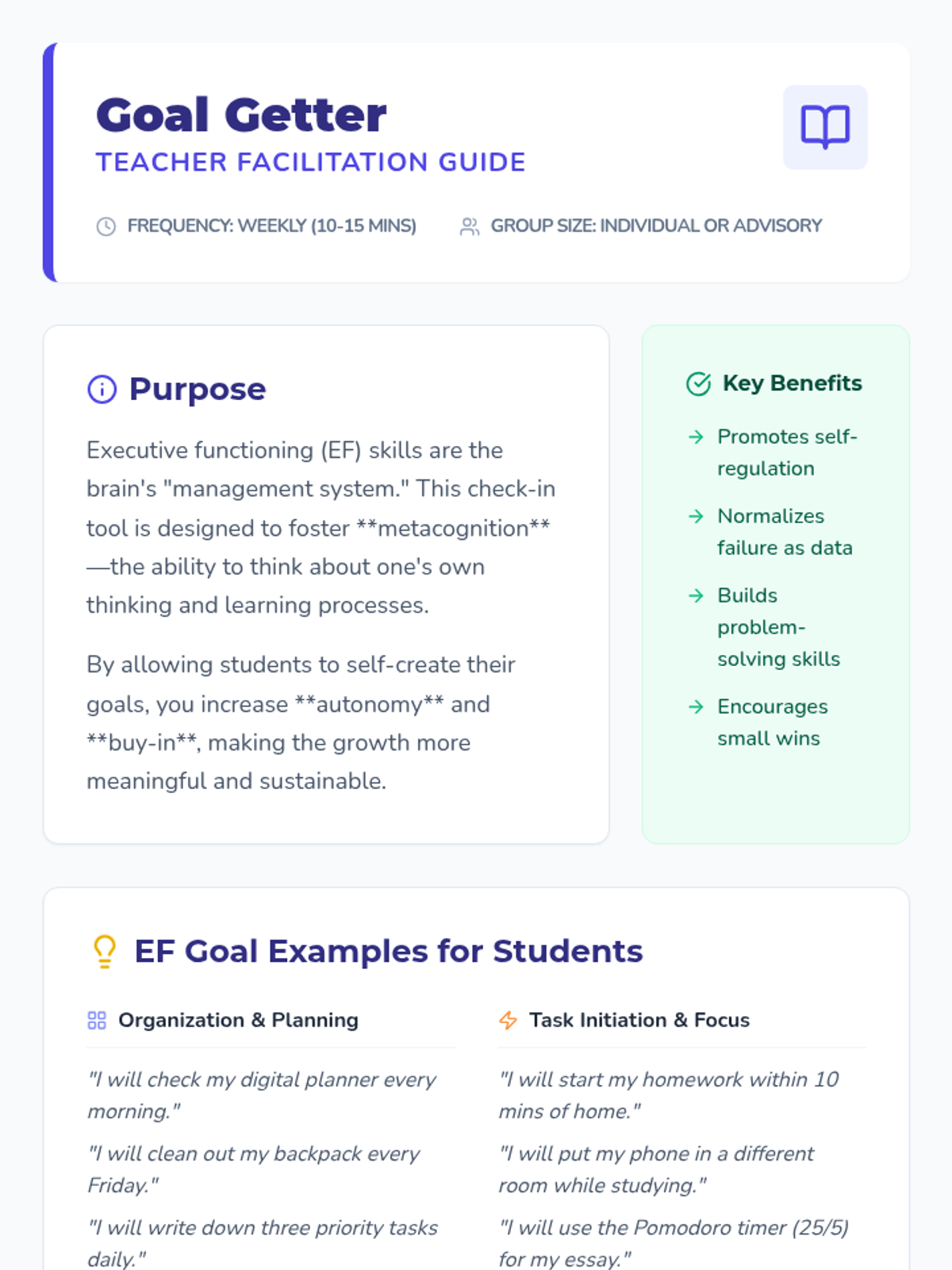
A weekly routine for students to track and reflect on self-created executive functioning goals, promoting metacognition and self-regulation.
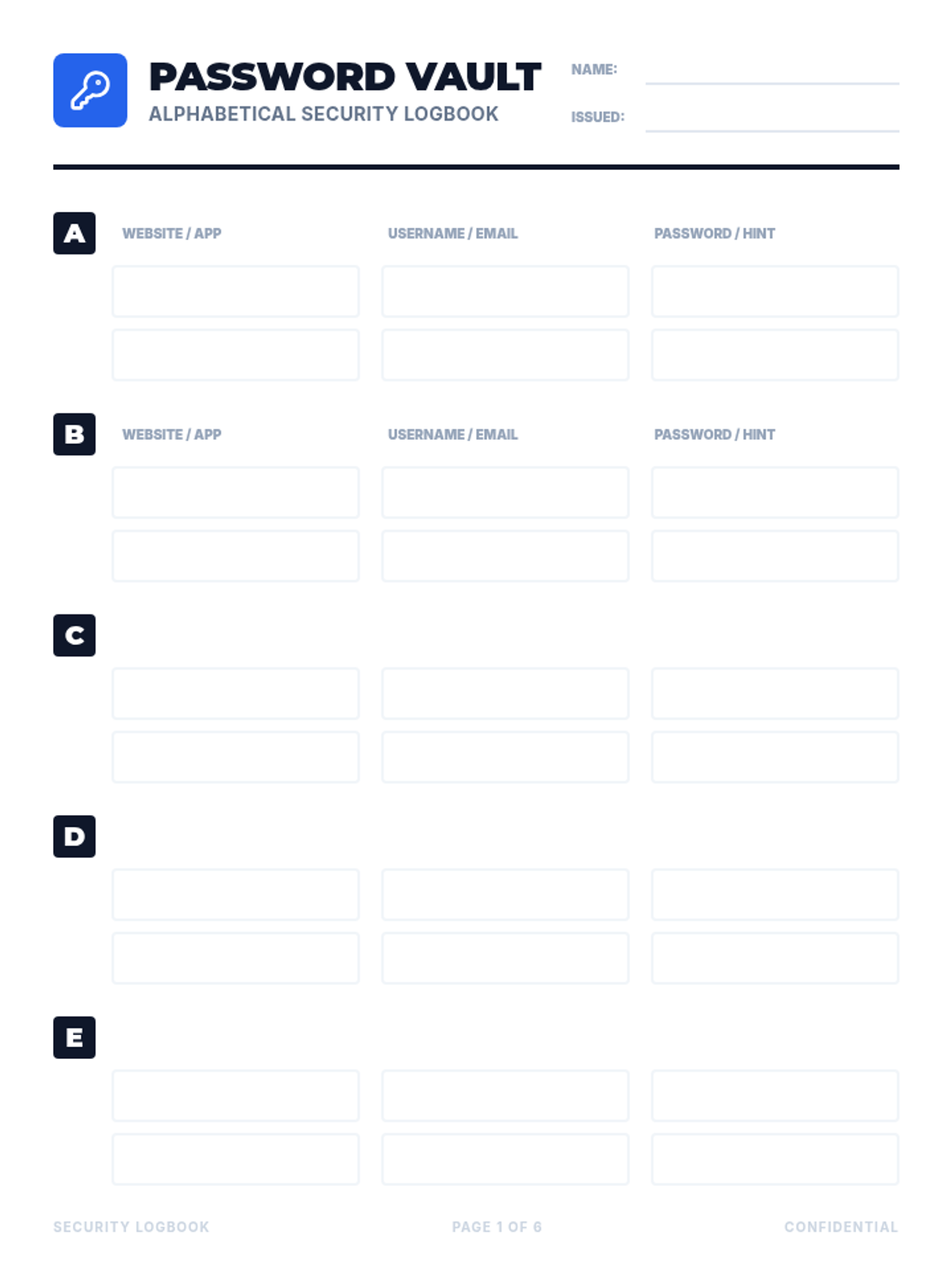
A practical resource for students to securely record and organize their digital credentials in an alphabetical format.
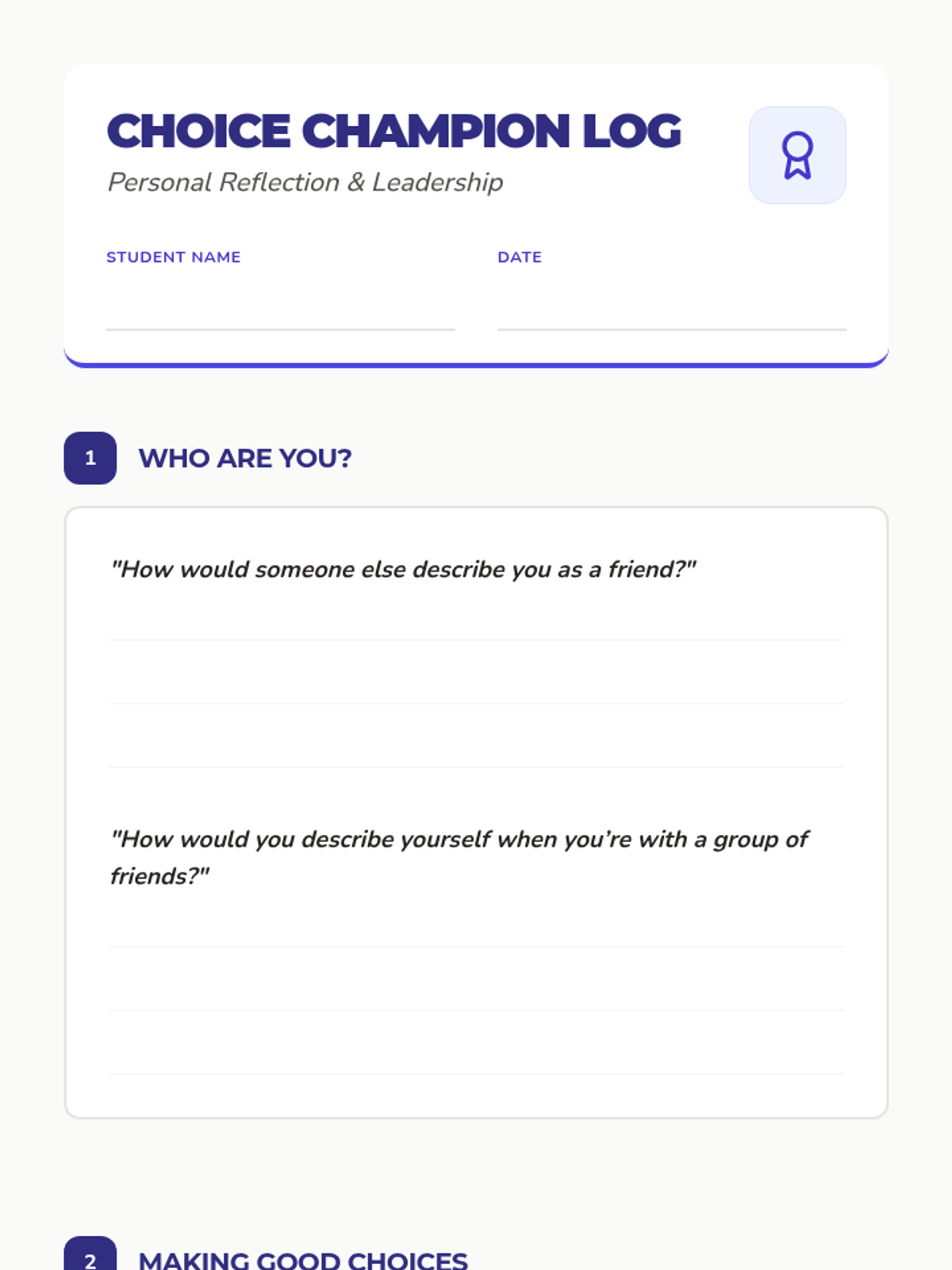
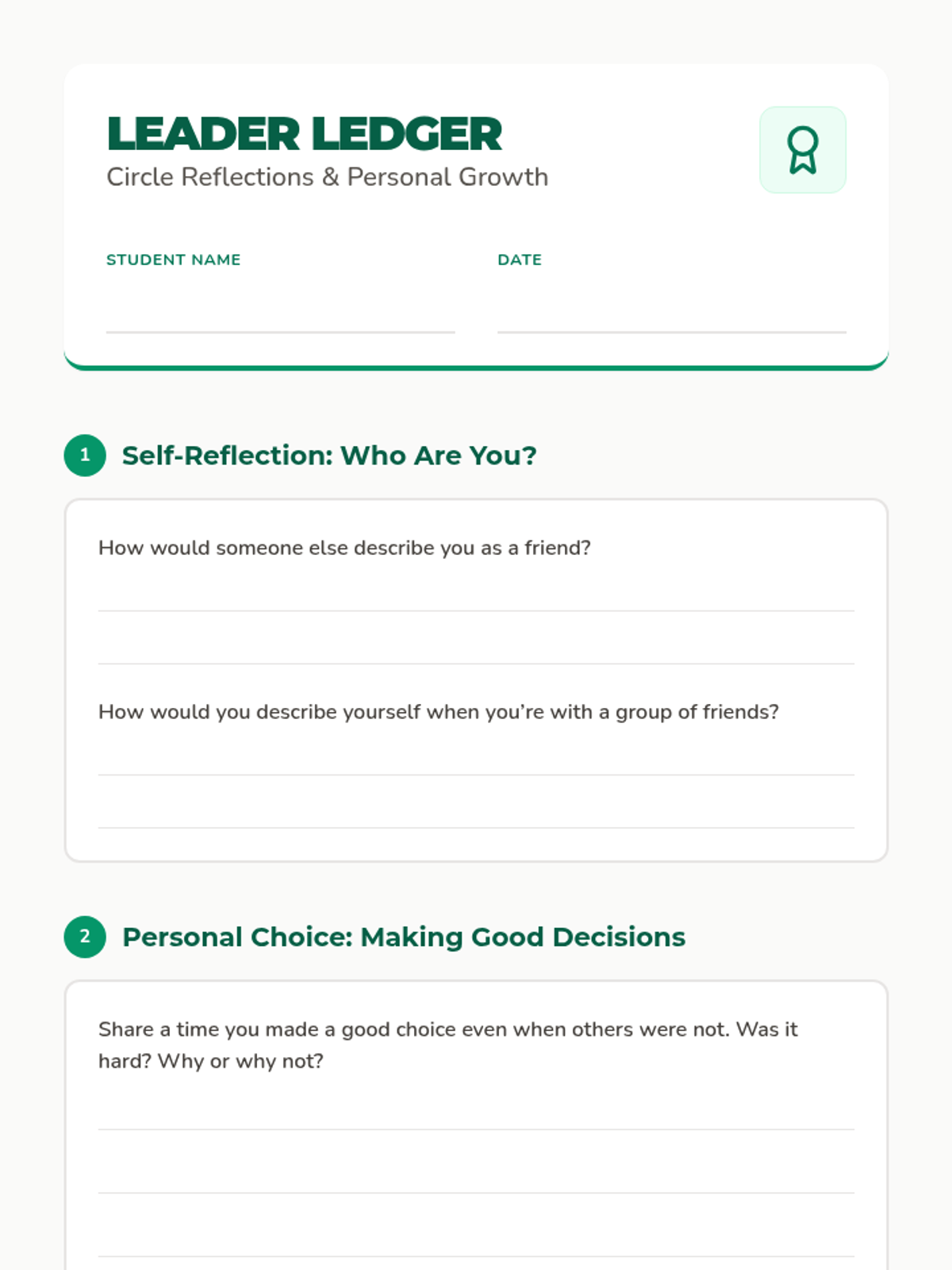
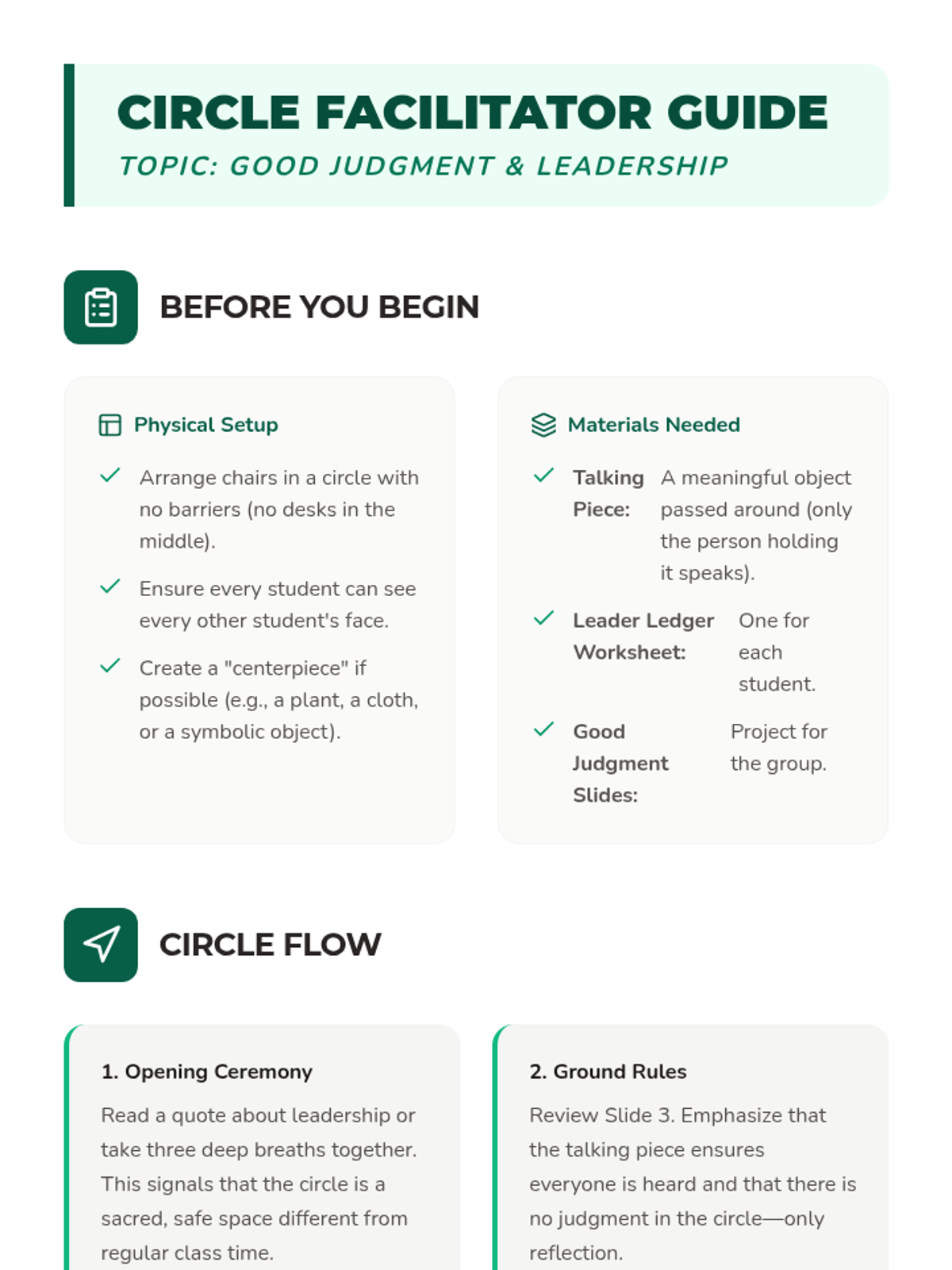
A restorative circle lesson designed to help students reflect on their personal choices, the impact of their behavior on others, and how to lead by example within their school community.
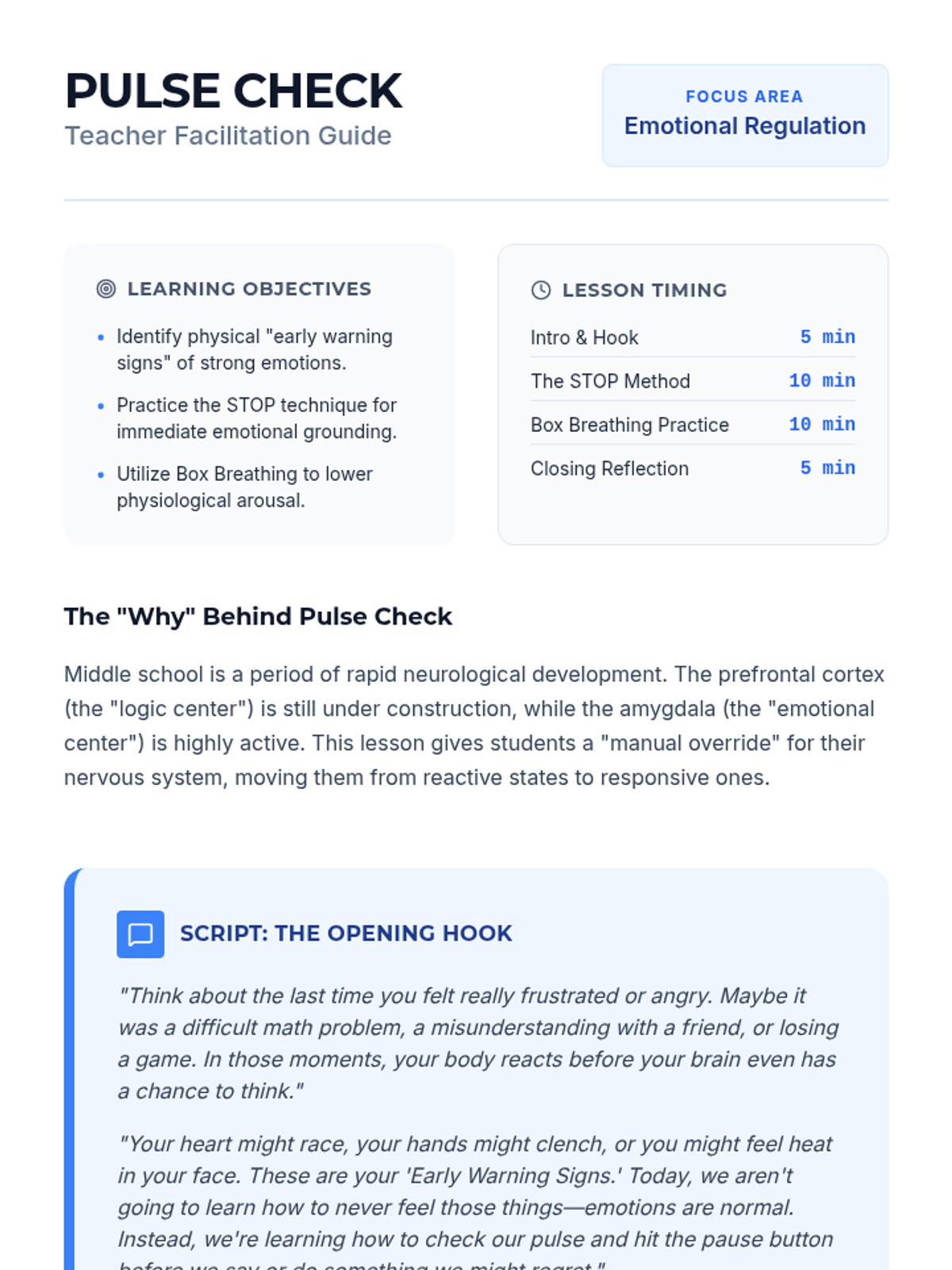
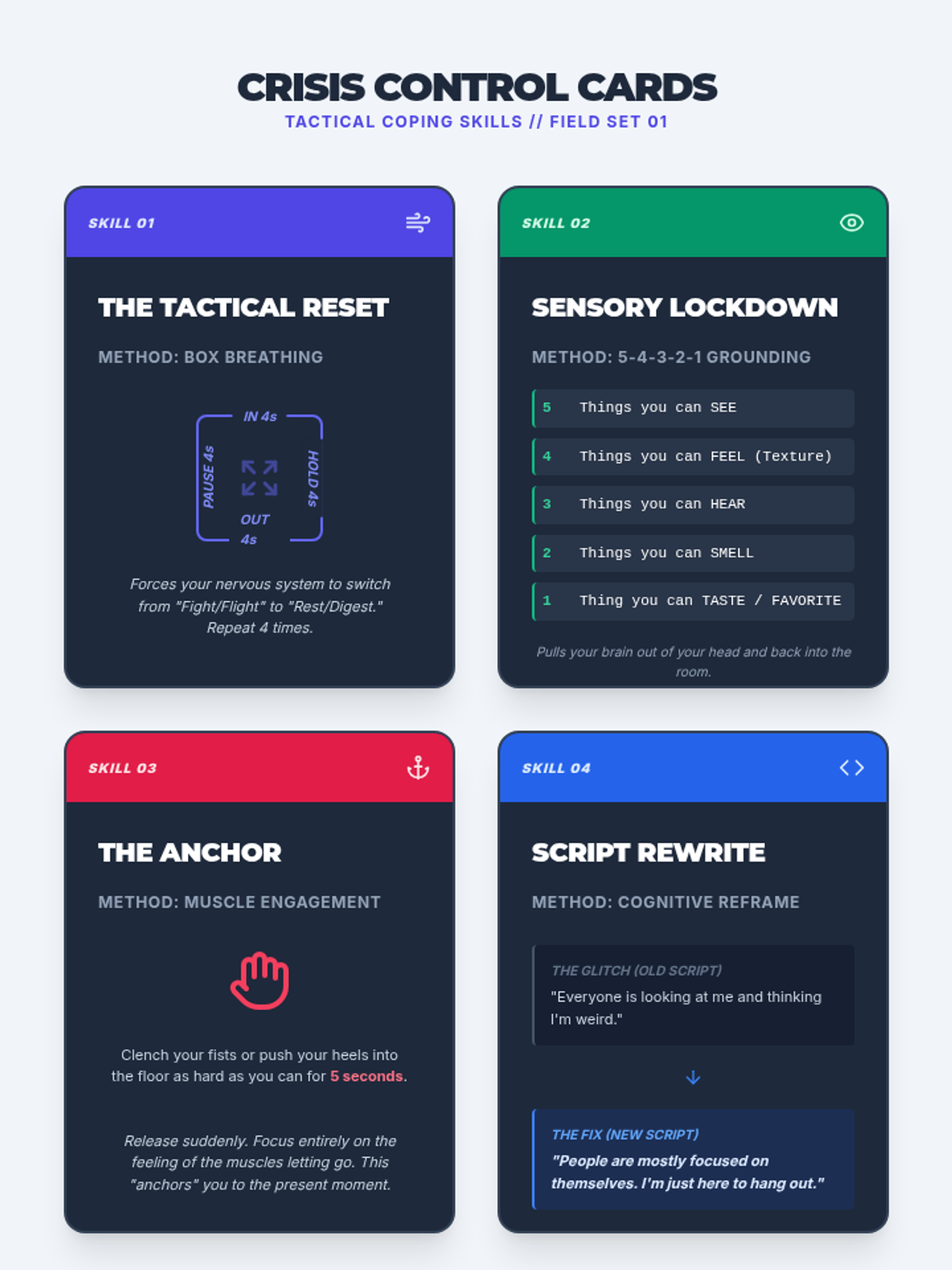
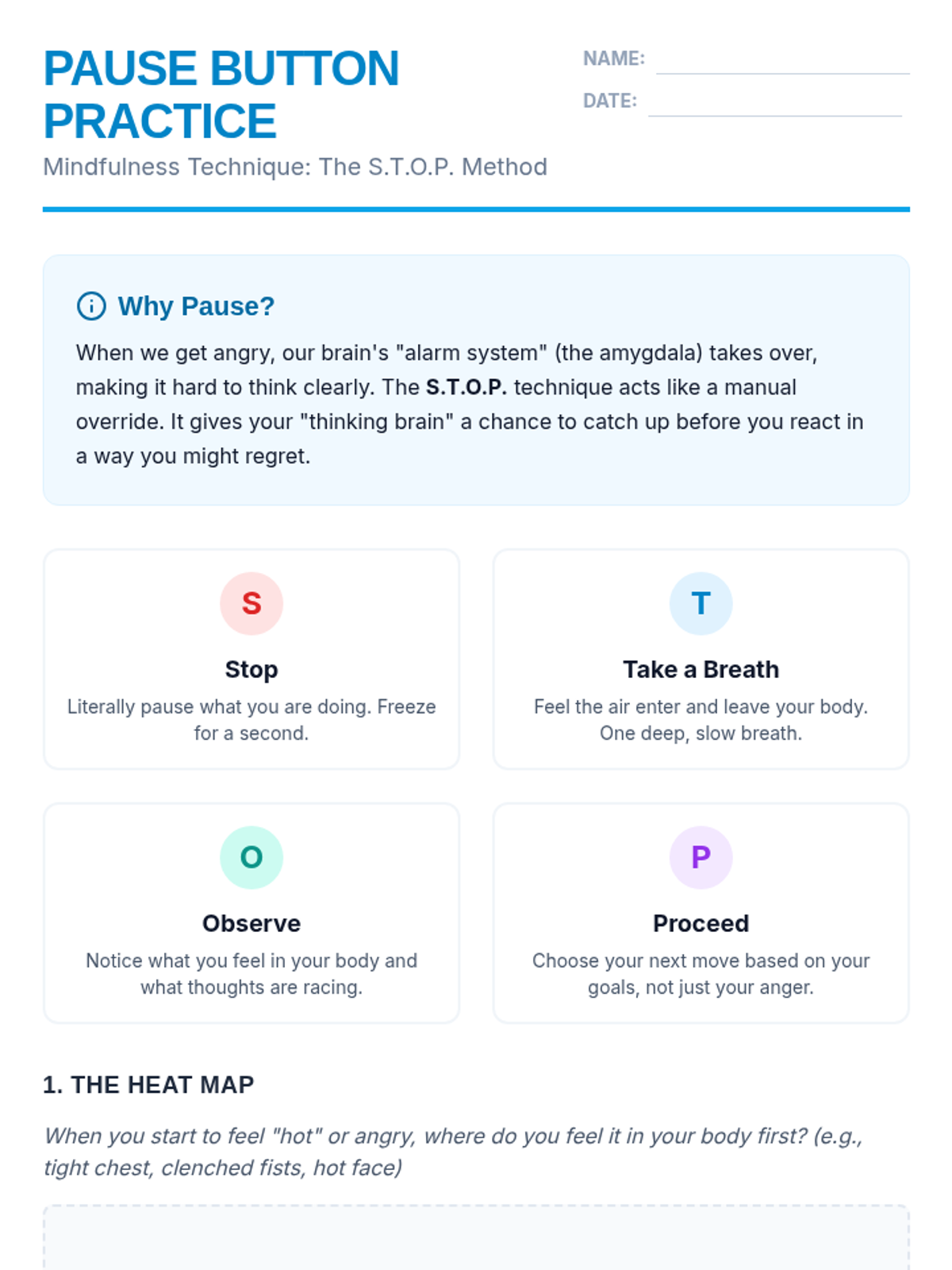
A comprehensive guide for middle school teachers to lead students through mindfulness techniques focused on identifying and managing intense emotions using the STOP and Box Breathing methods.
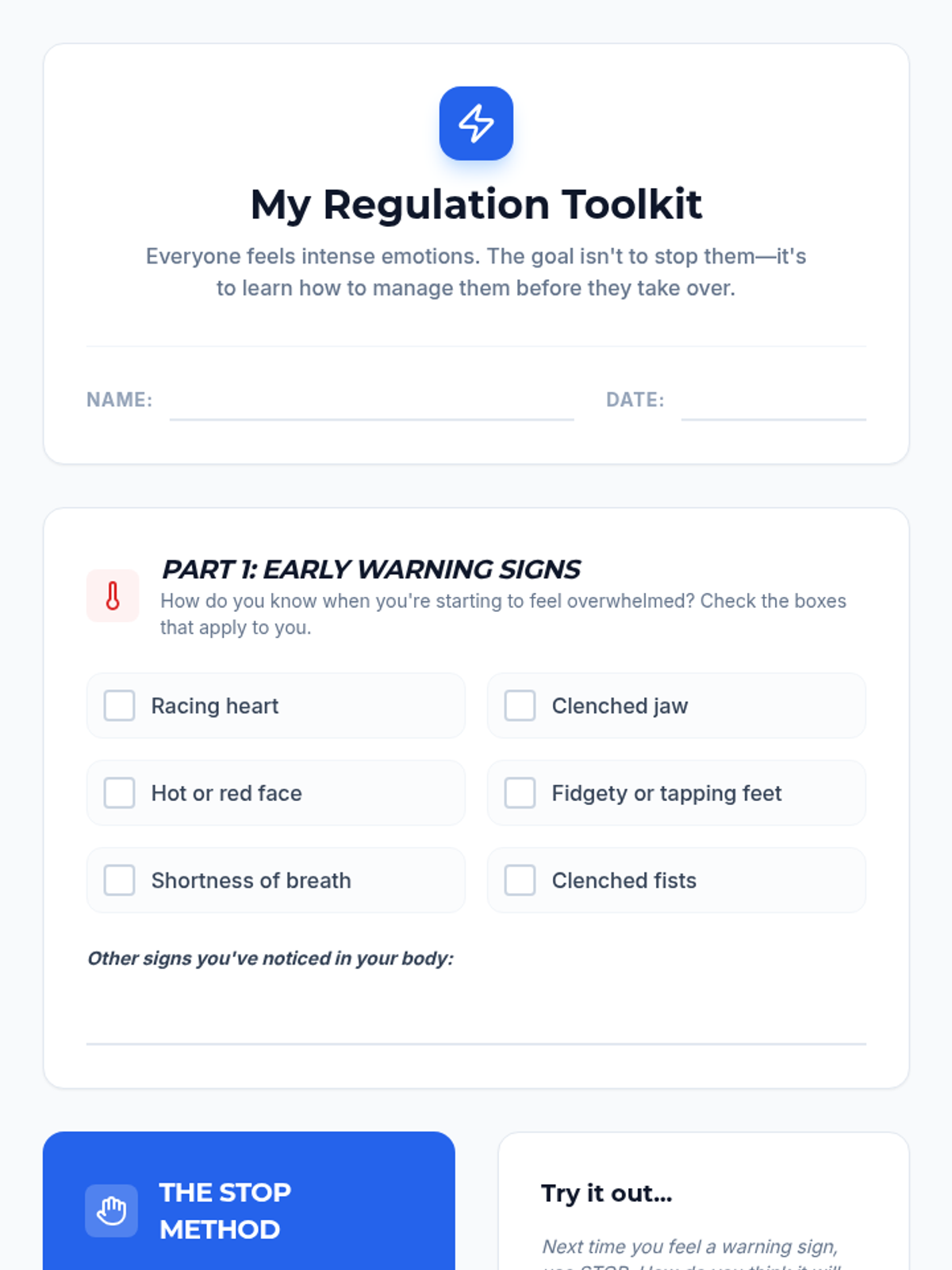
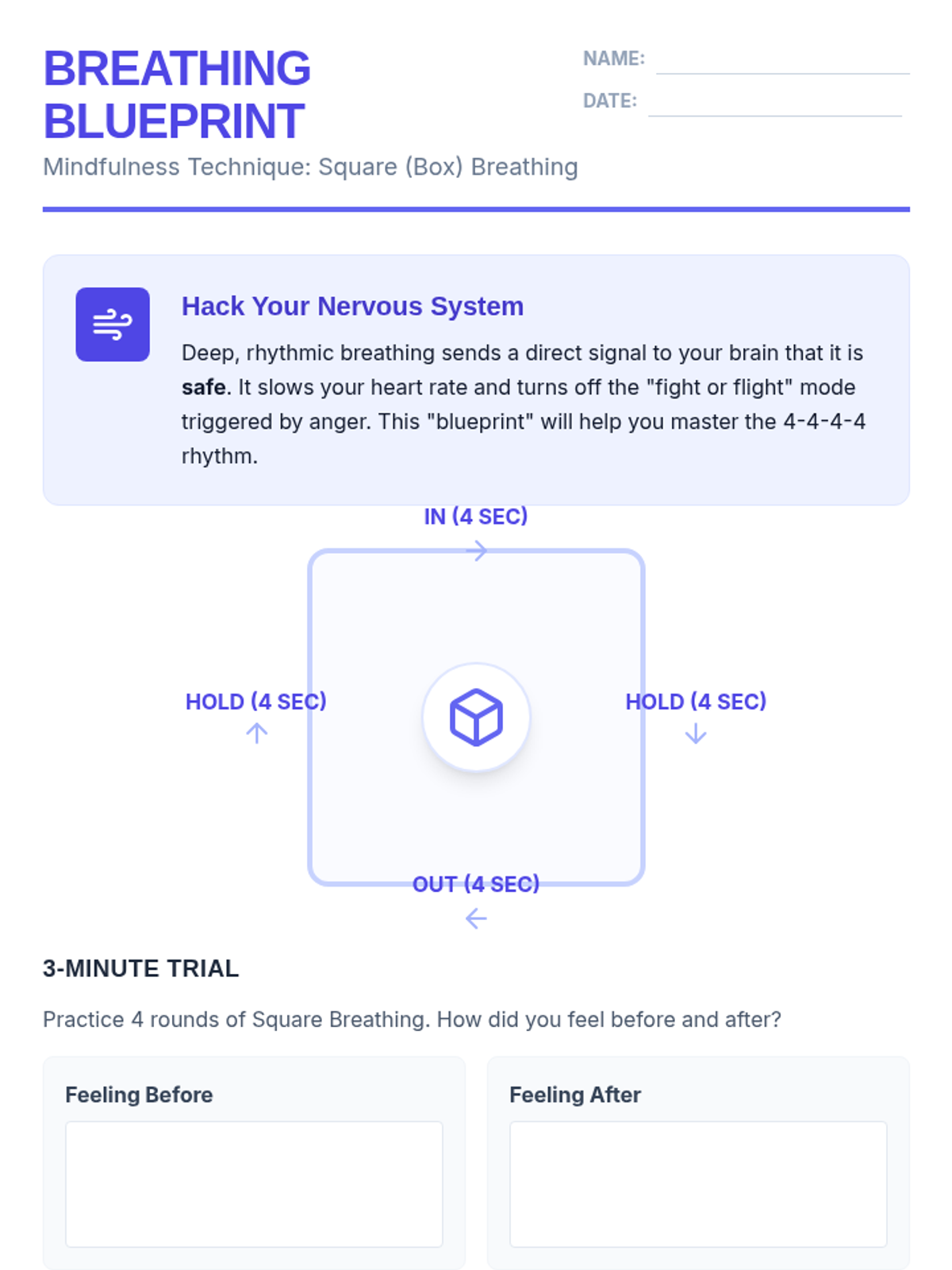
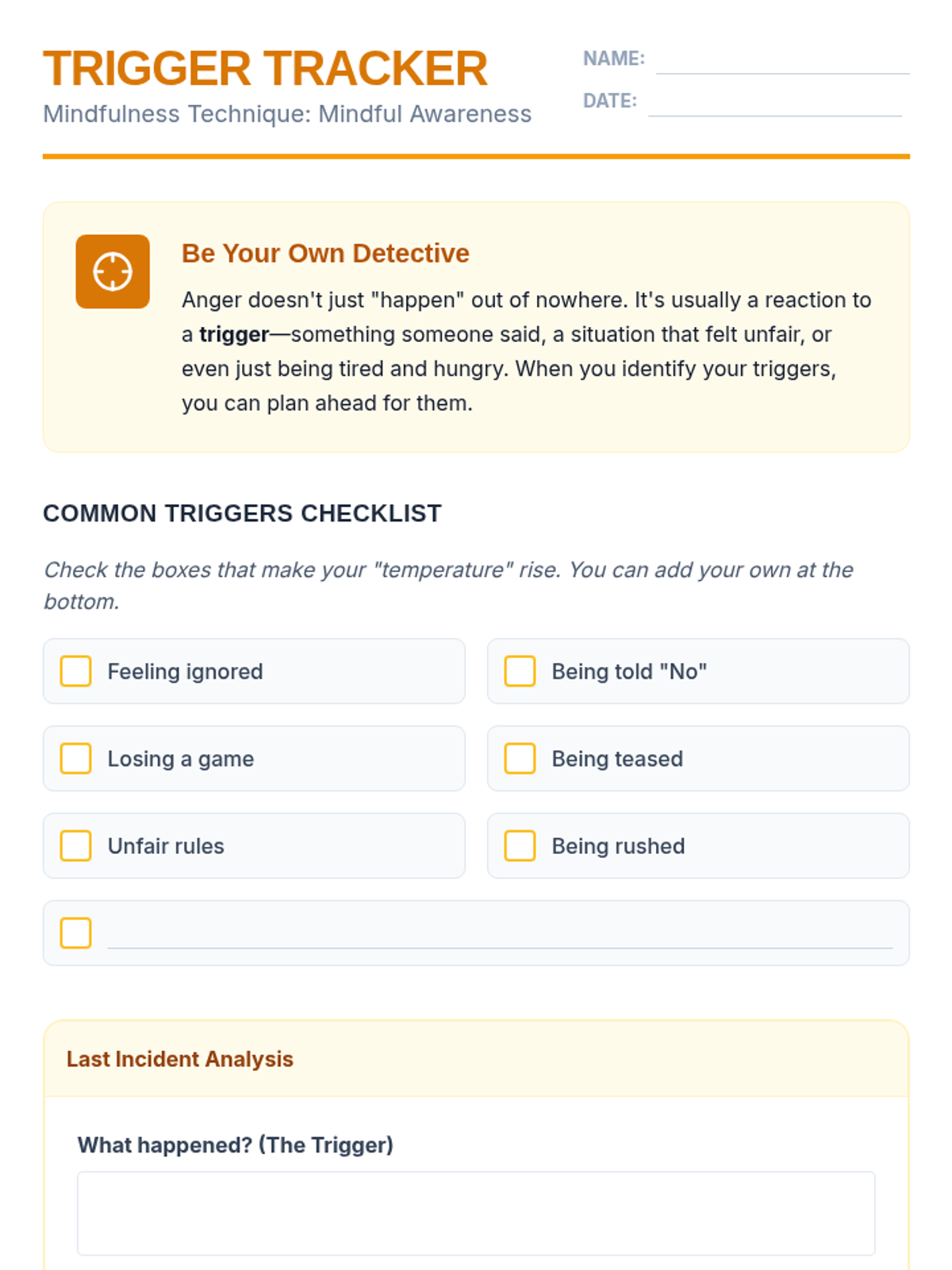
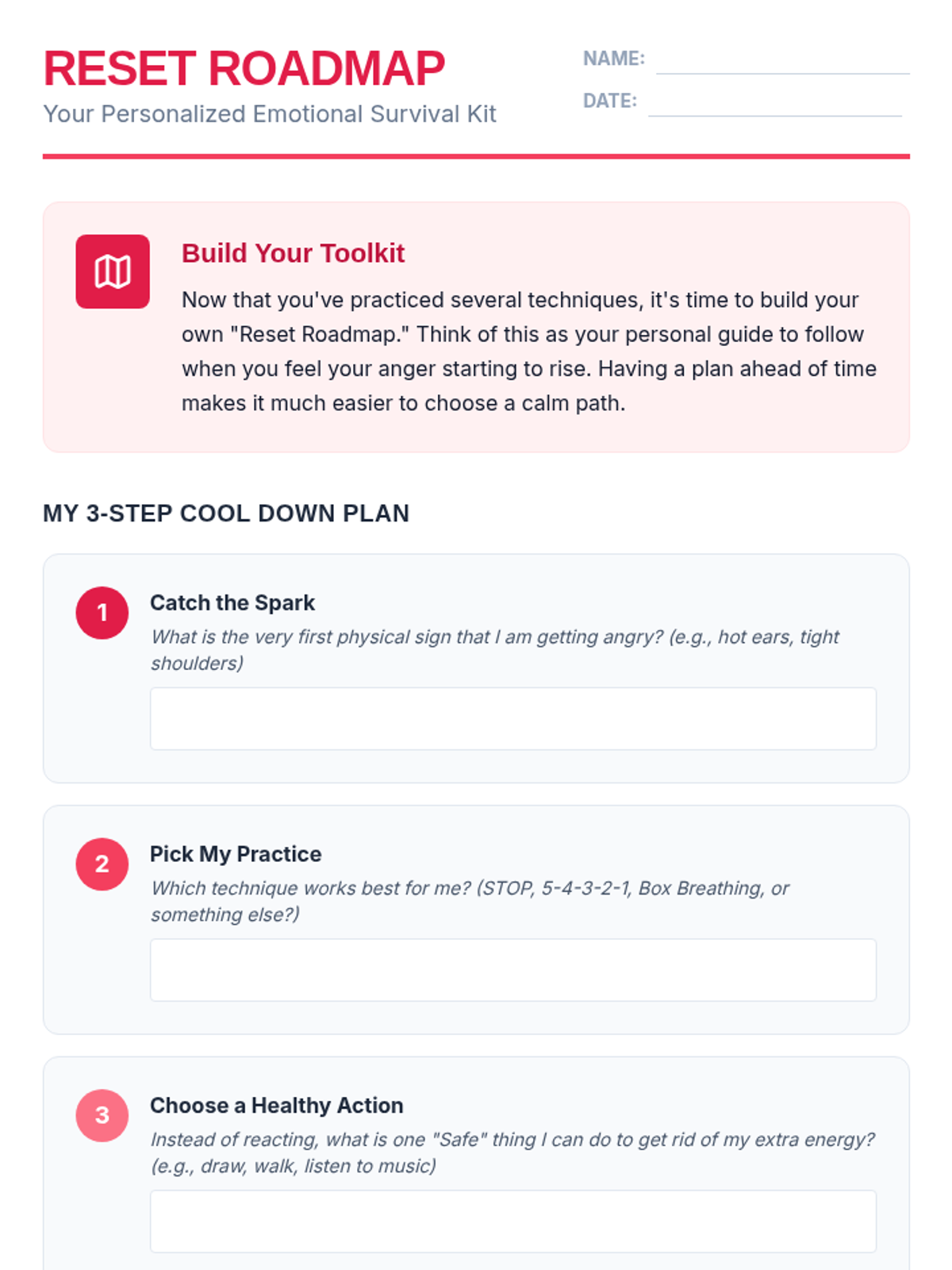
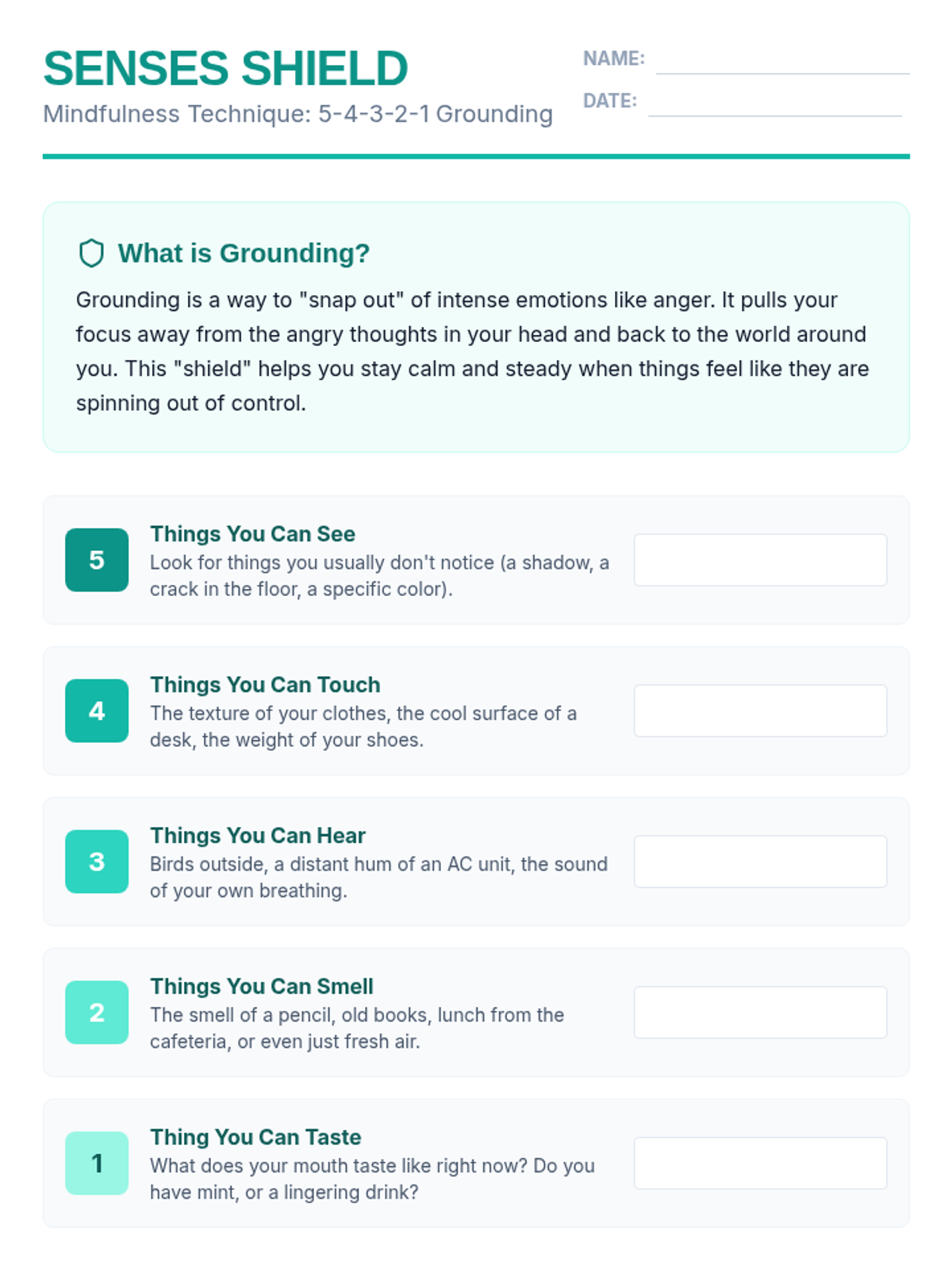
A series of mindfulness practices designed for middle schoolers to manage intense emotions, particularly anger, through physiological and cognitive techniques.
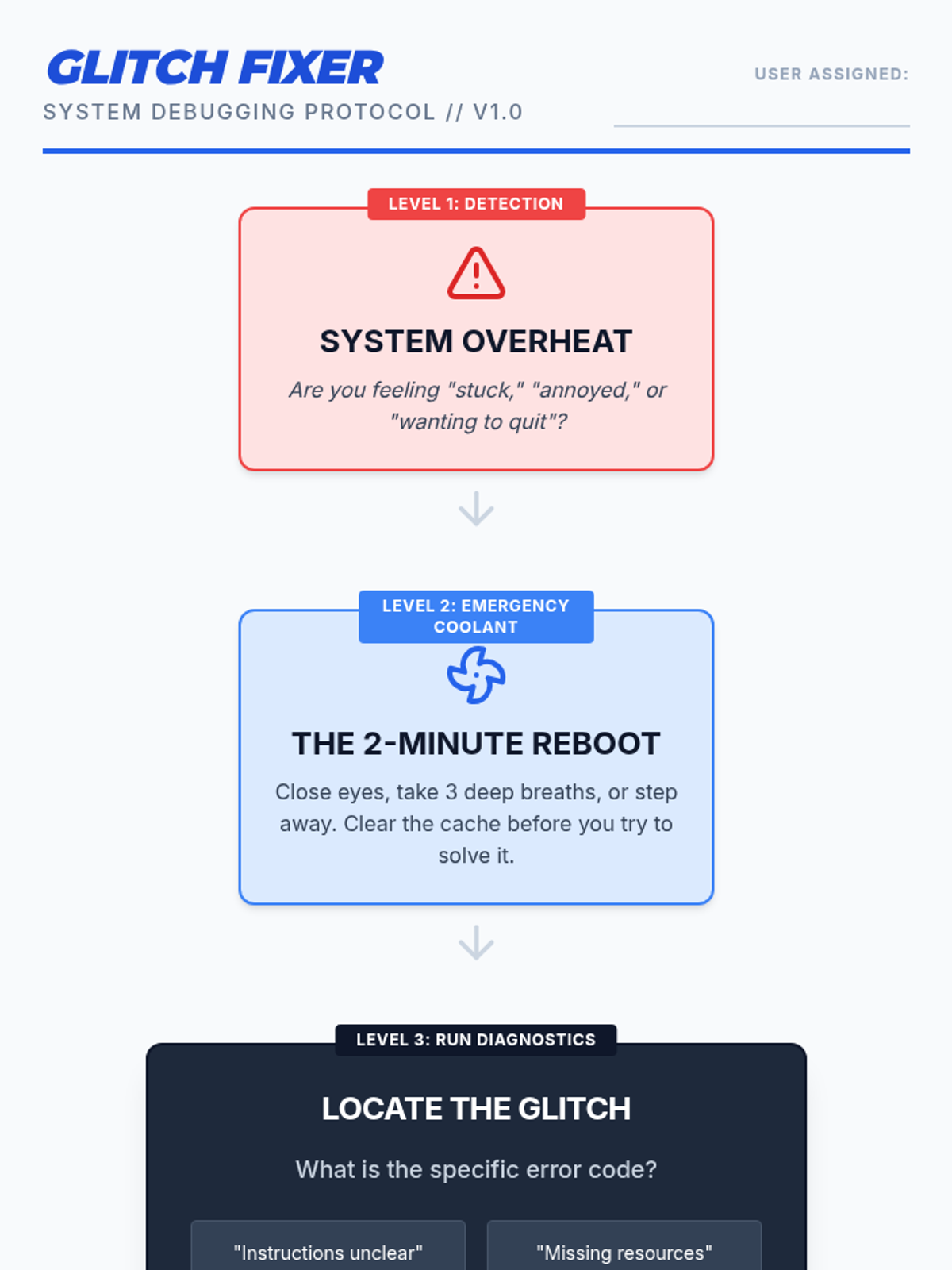
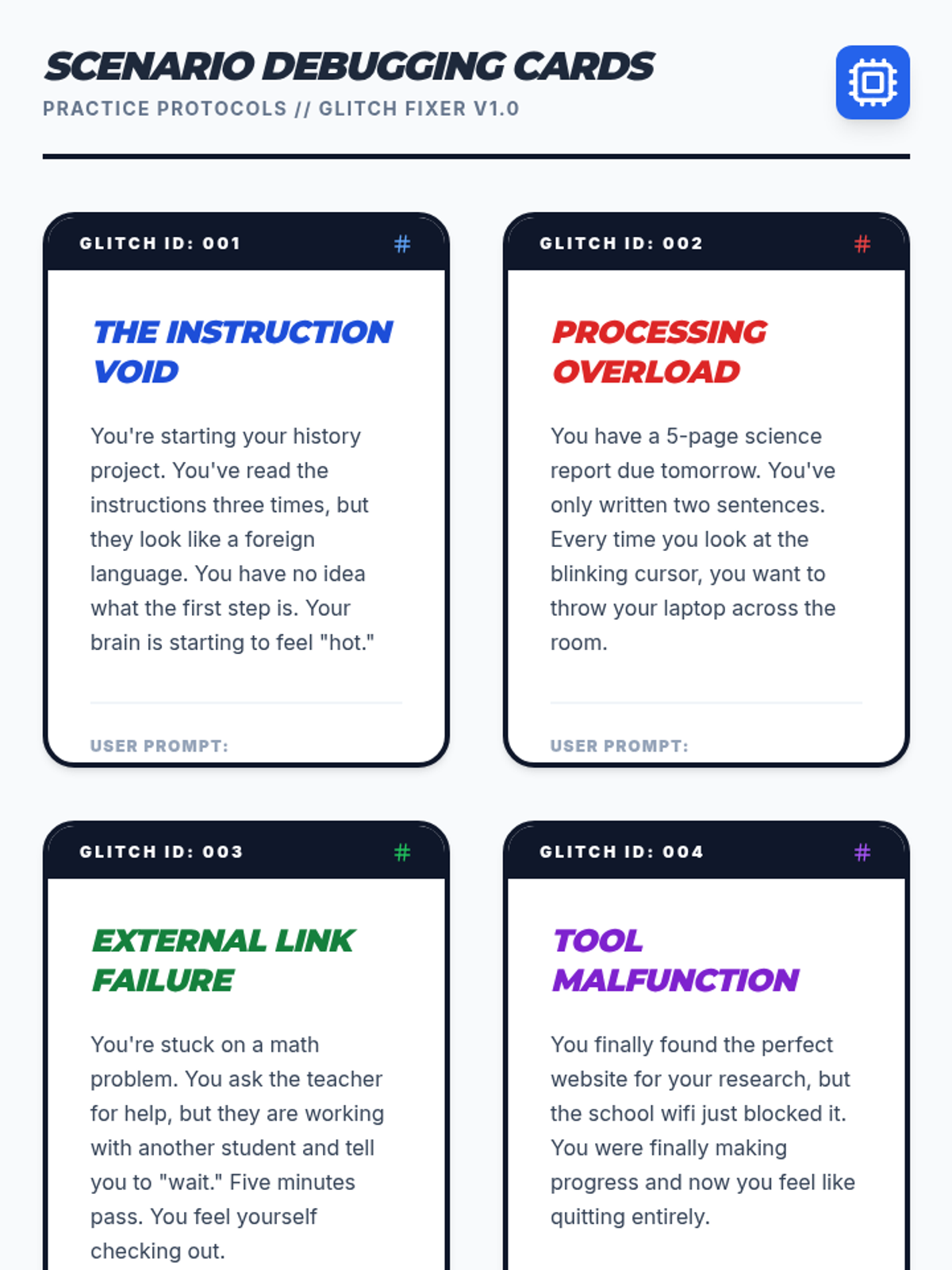
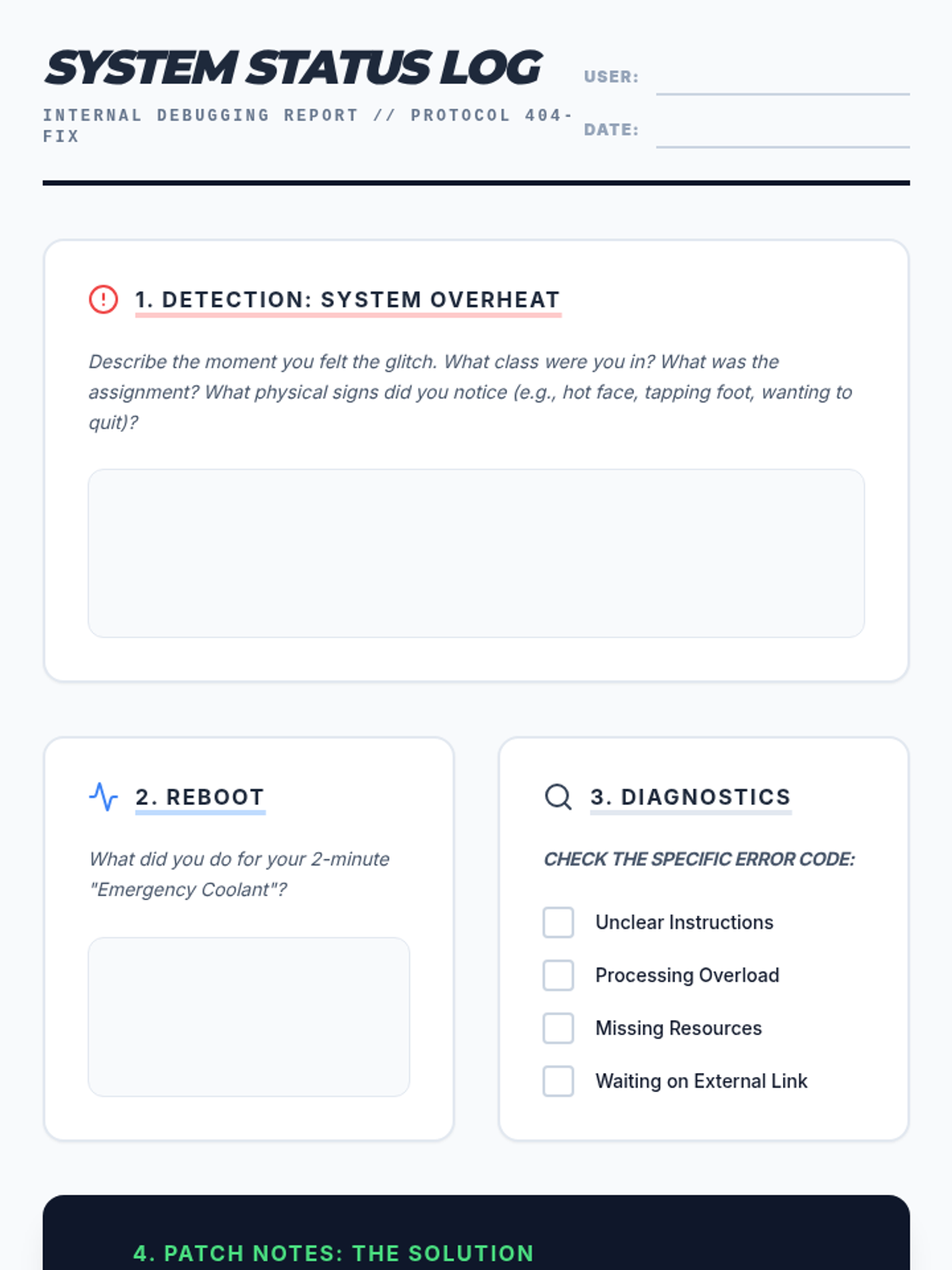
A set of tools designed to help middle school students navigate schoolwork frustration using a 'tech-support' debugging framework. Includes a visual flowchart and practice scenarios.
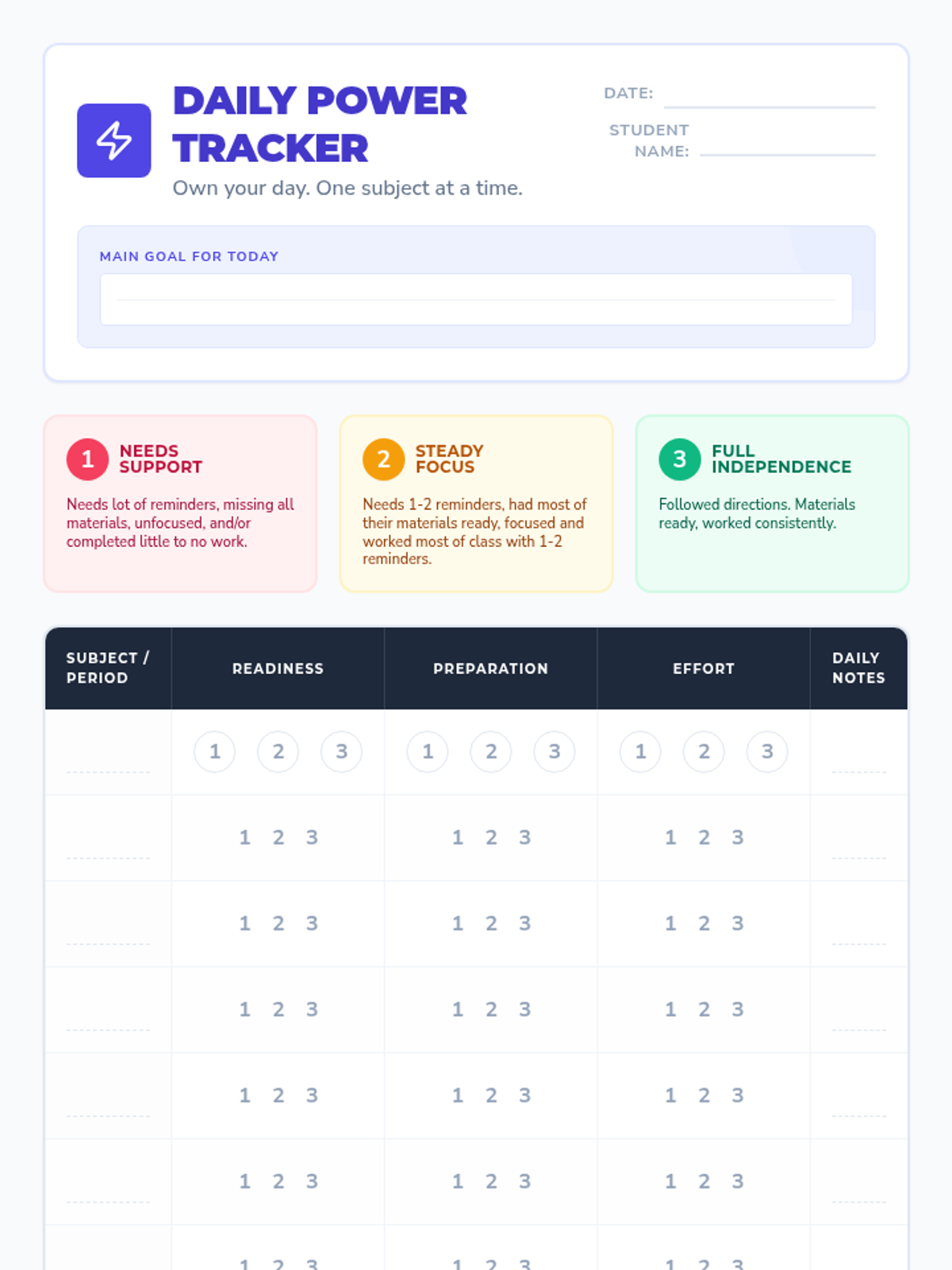
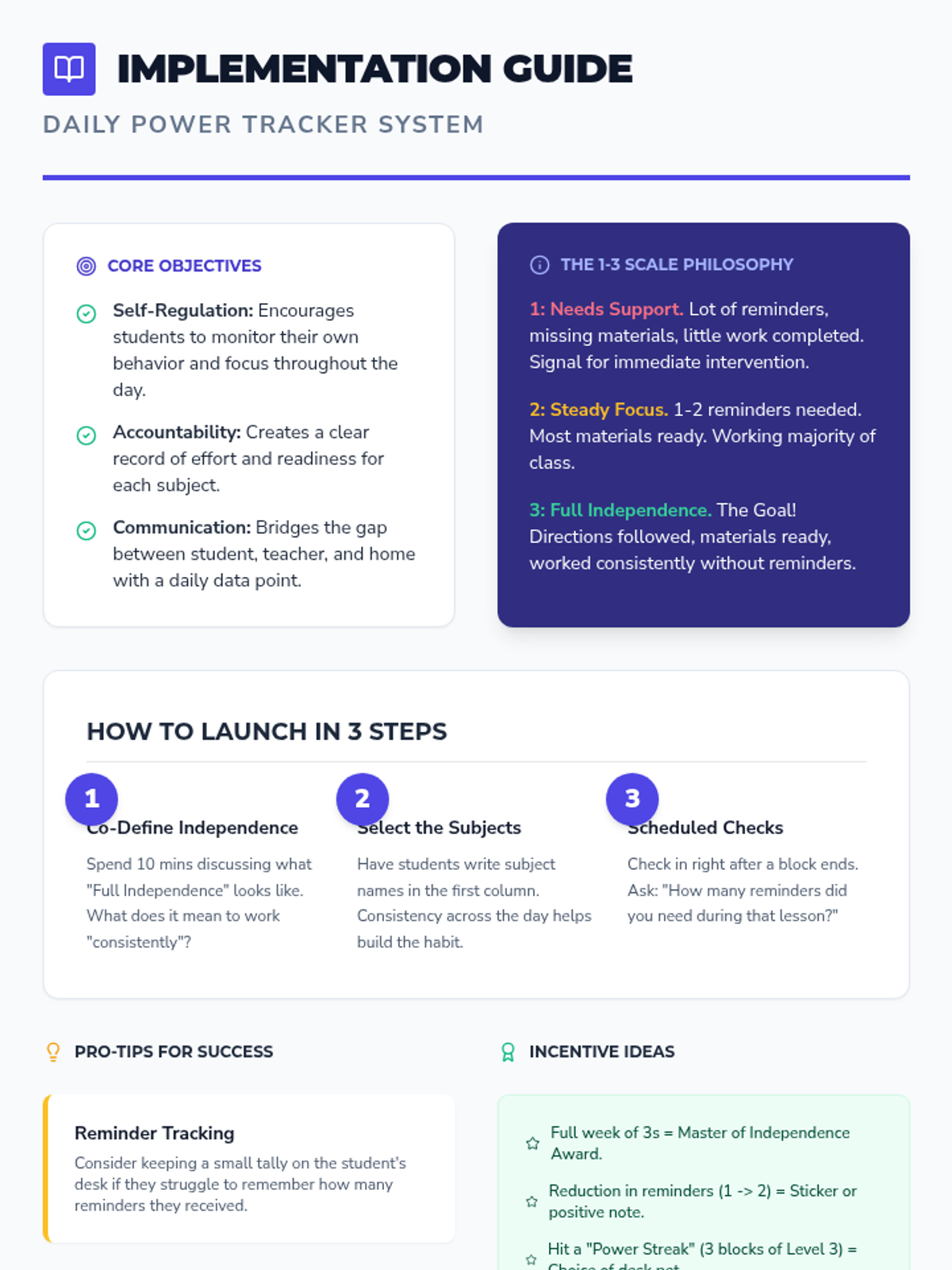
A daily habit-building system for students to monitor their readiness, preparation, and work effort across all subjects. Includes student trackers and teacher implementation guides to foster accountability and self-regulation.
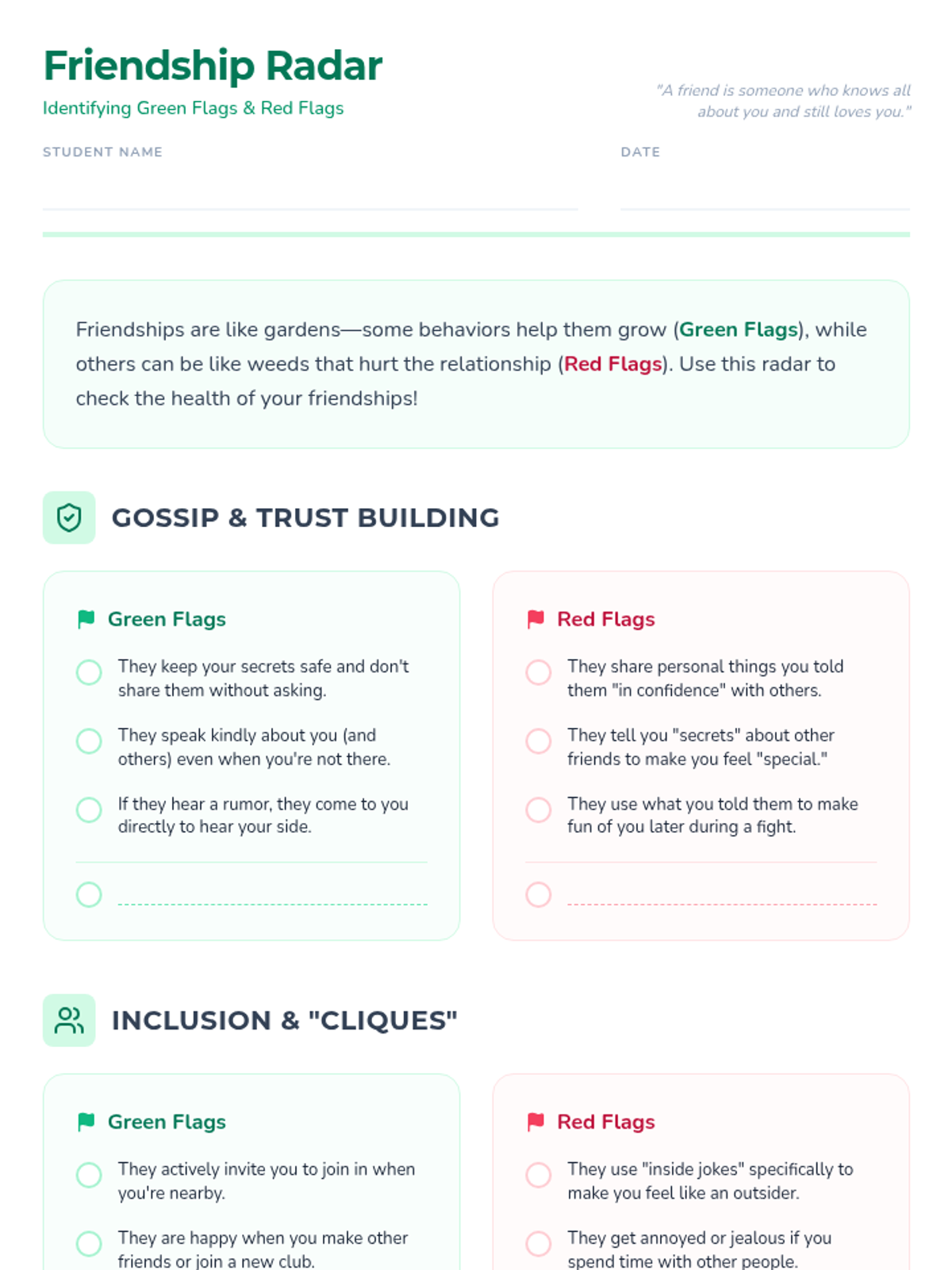
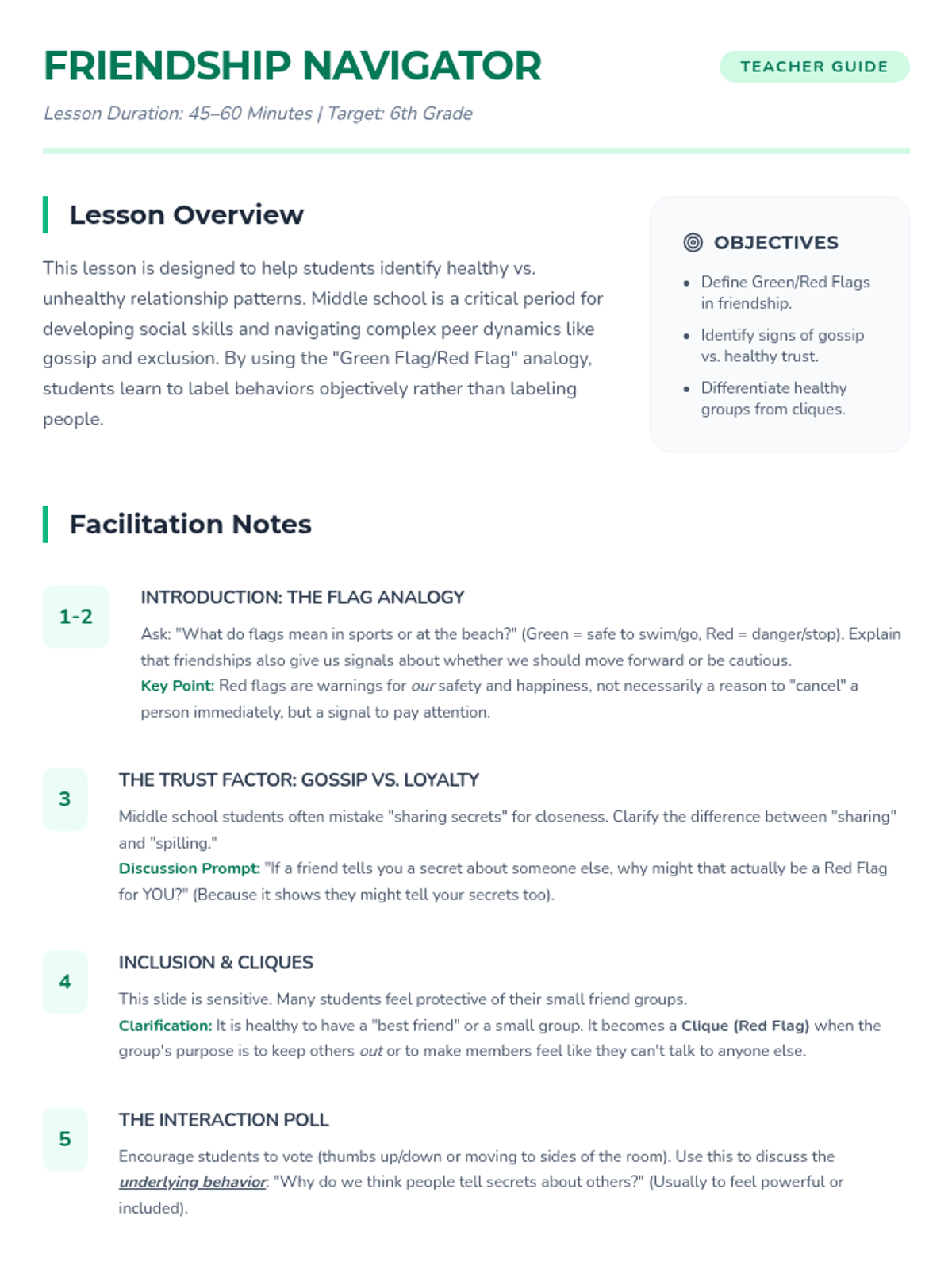
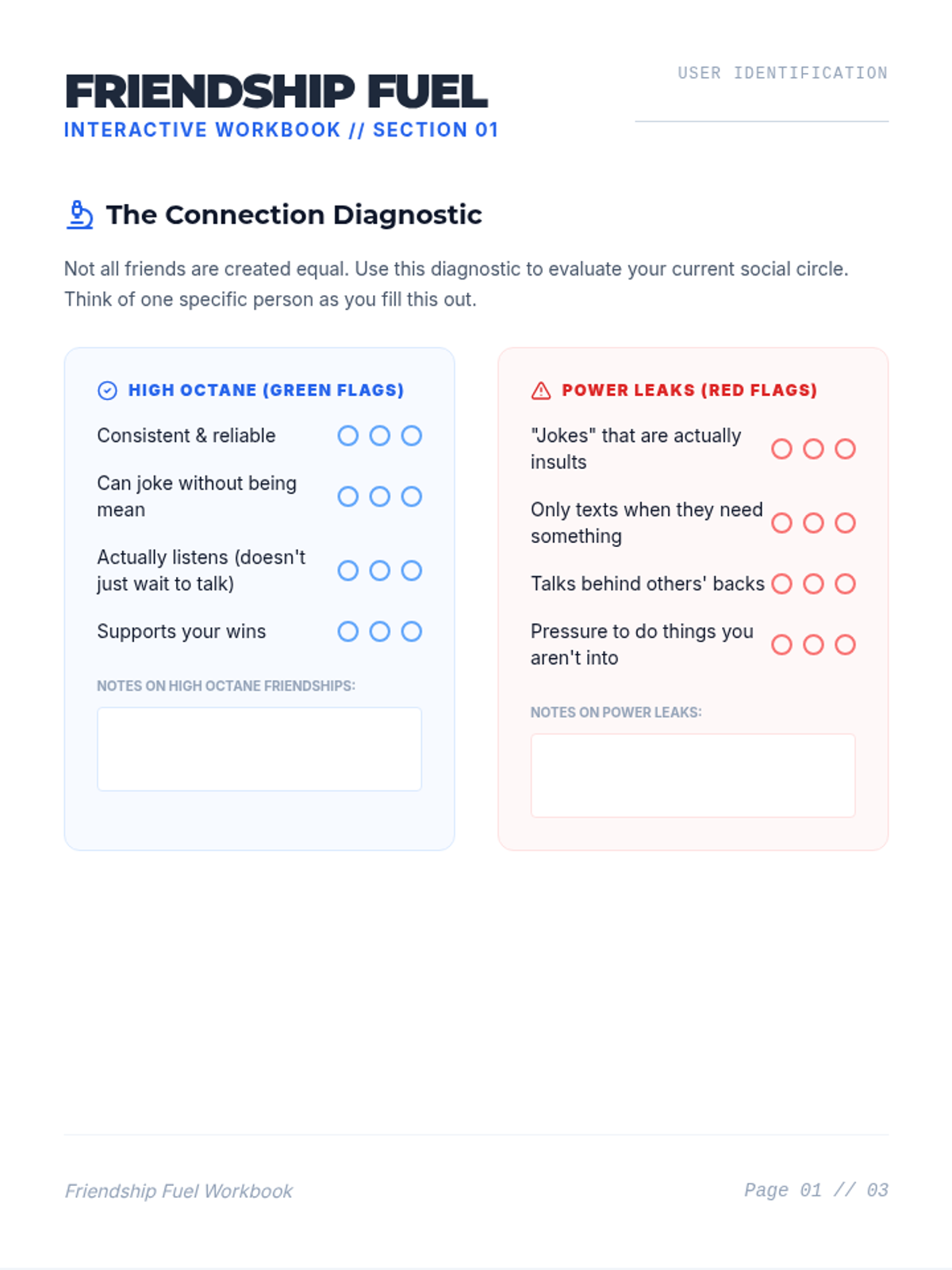
A lesson focused on helping middle school students distinguish between healthy and unhealthy friendship dynamics, specifically focusing on trust, gossip, and social inclusion.
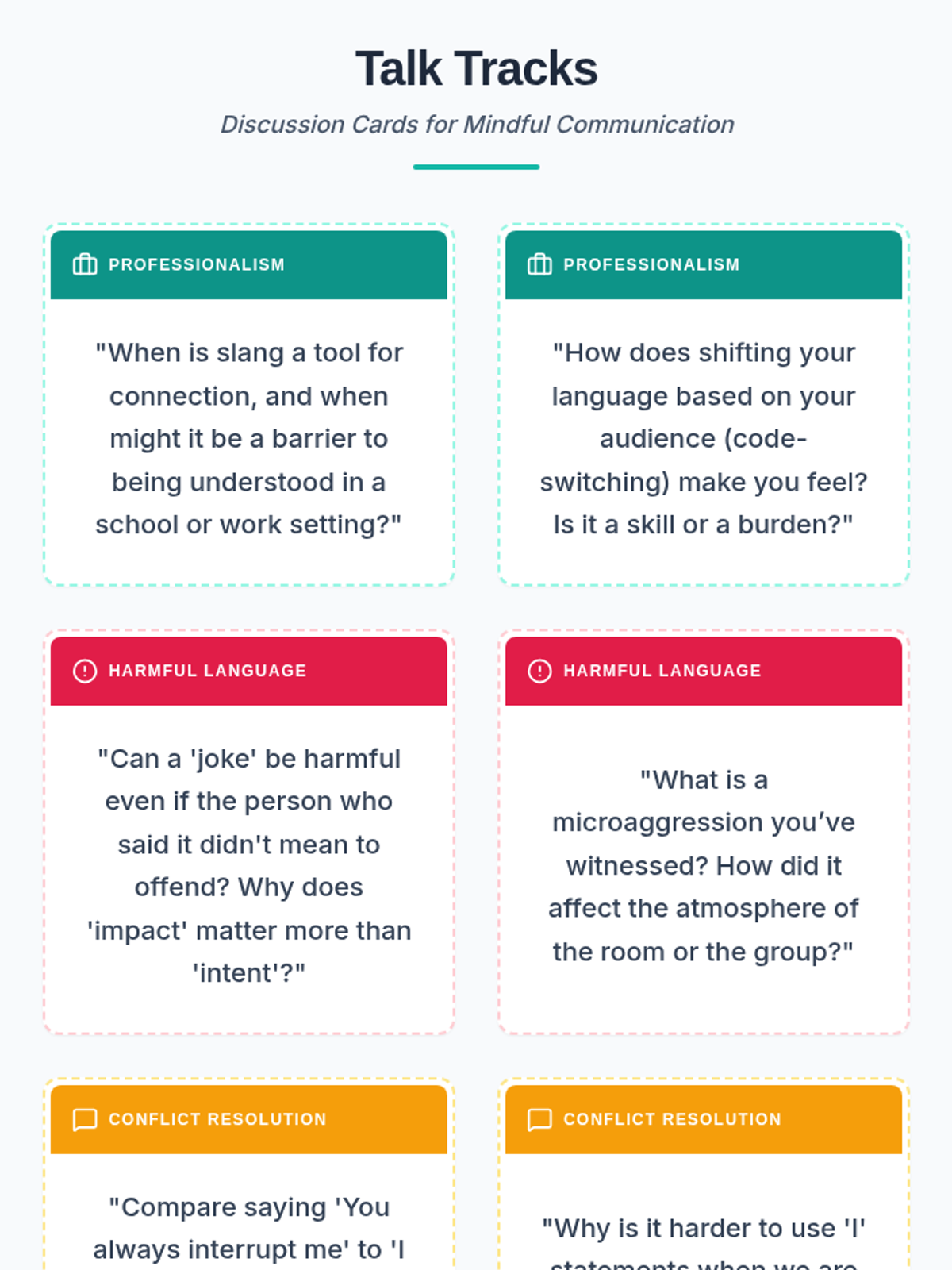
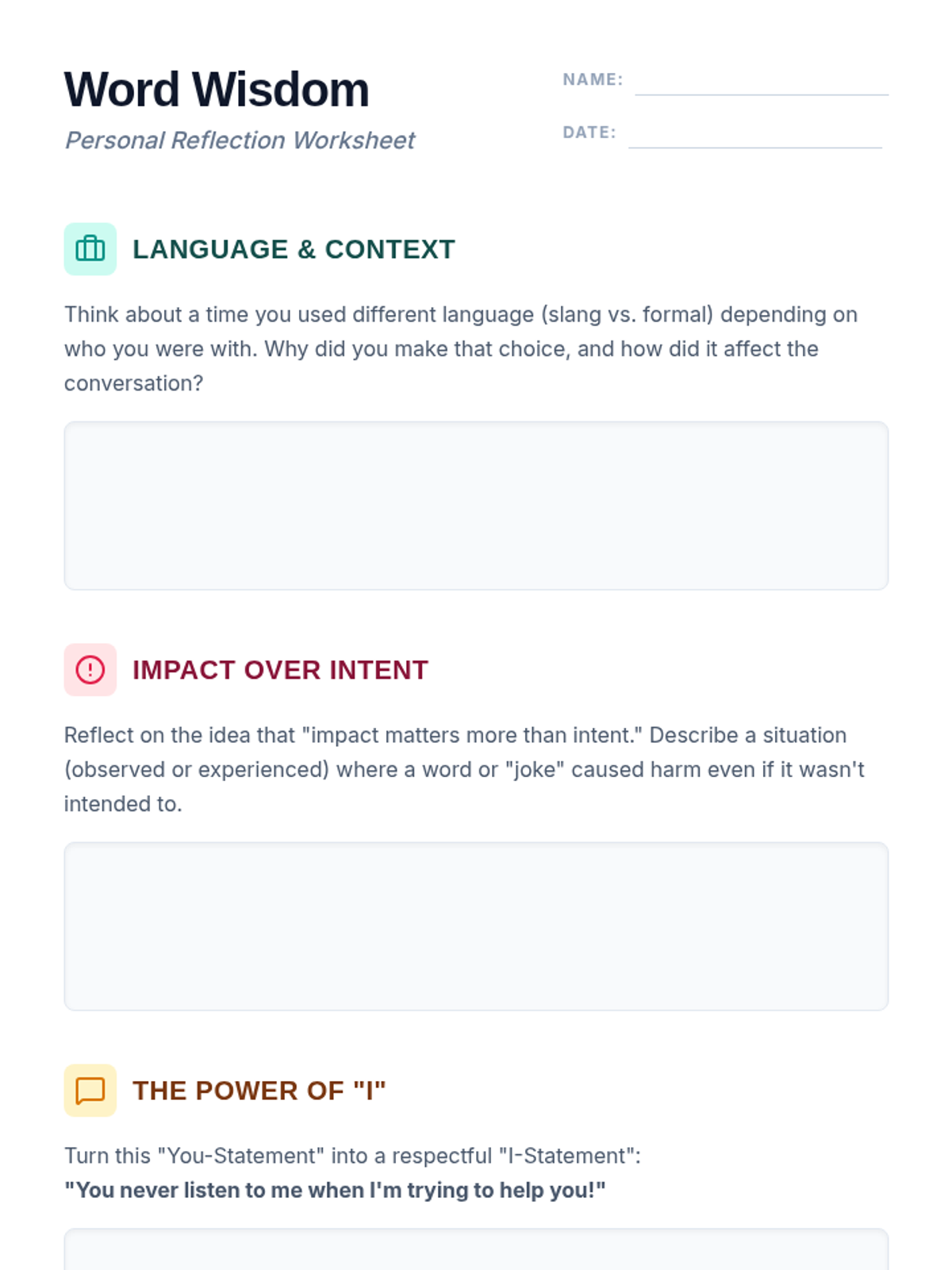
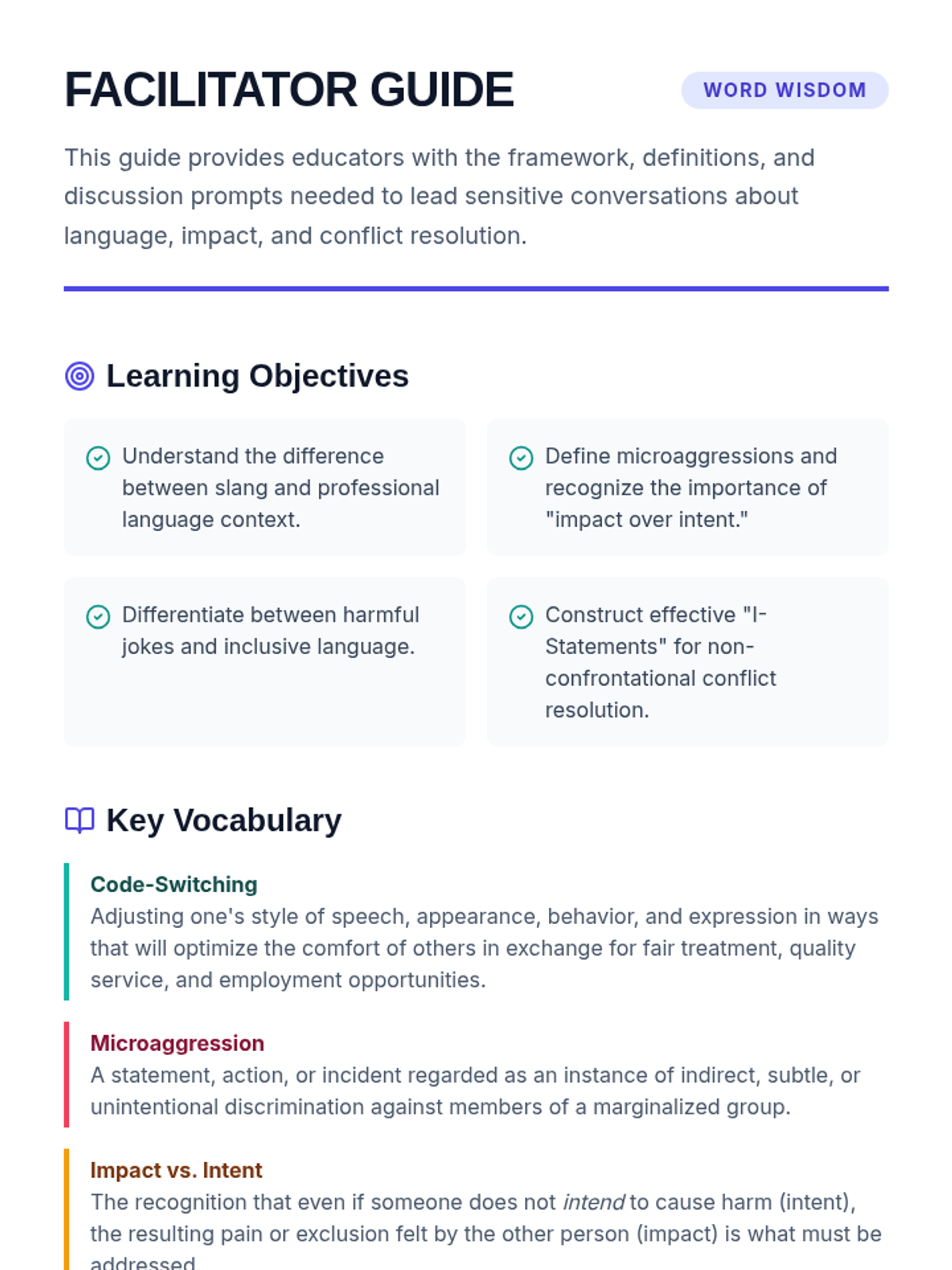
A comprehensive lesson exploring the impact of language choice, focusing on professionalism, avoiding microaggressions, and using 'I' statements for conflict resolution.
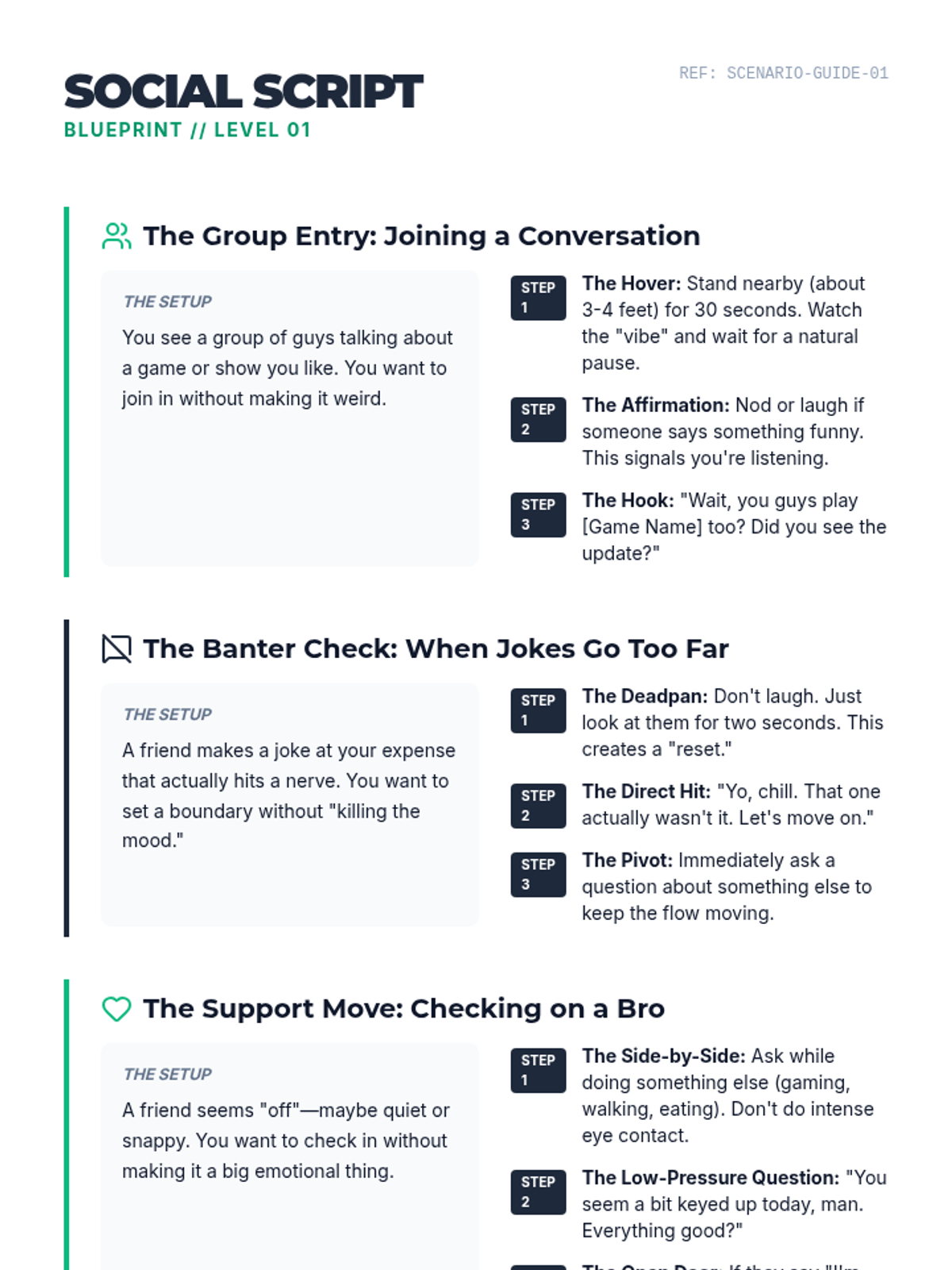
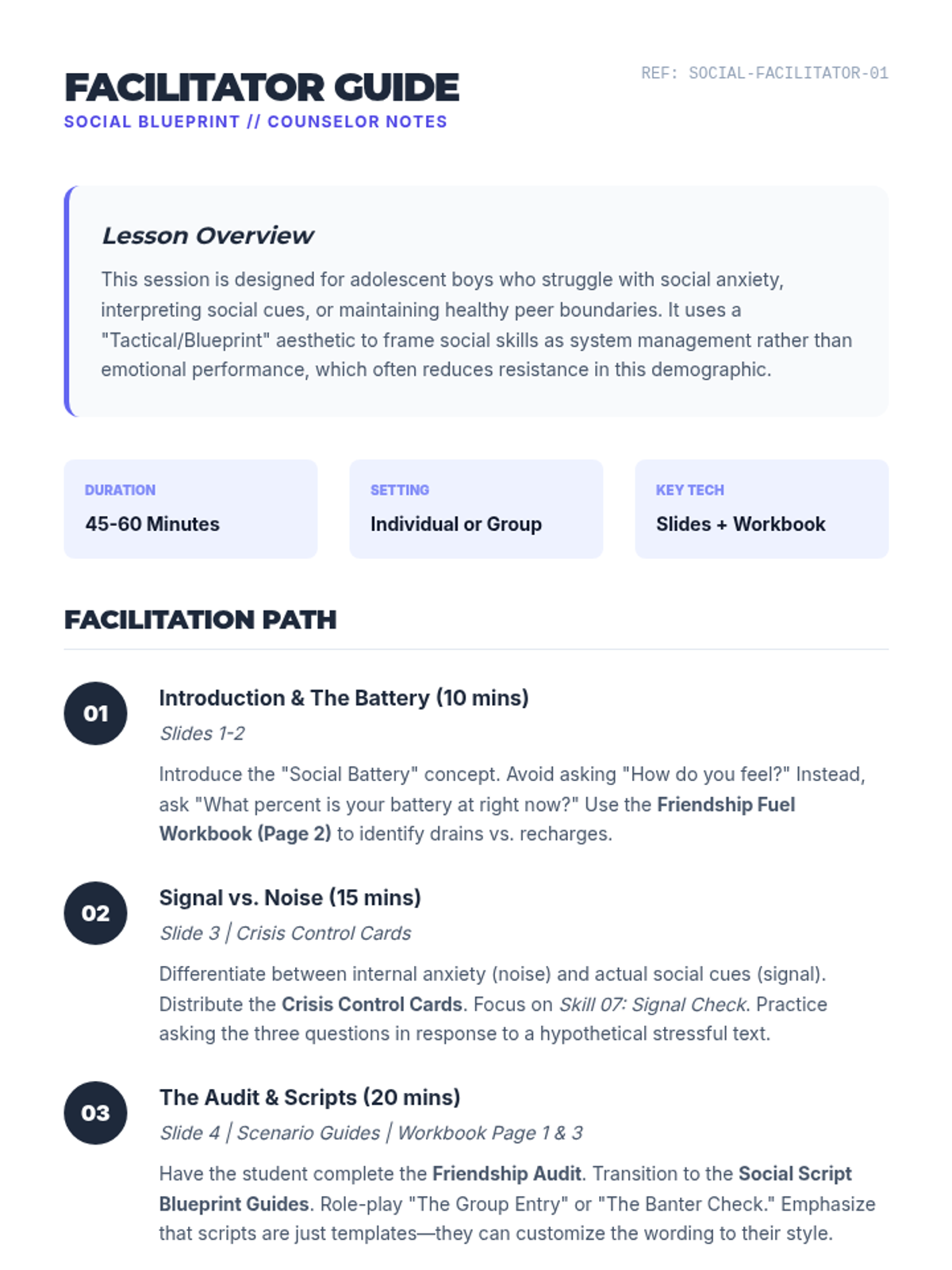
A comprehensive social skills toolkit for teenagers, focusing on navigating friendship dynamics, understanding social cues, and managing social anxiety through practical scenarios and self-reflection.
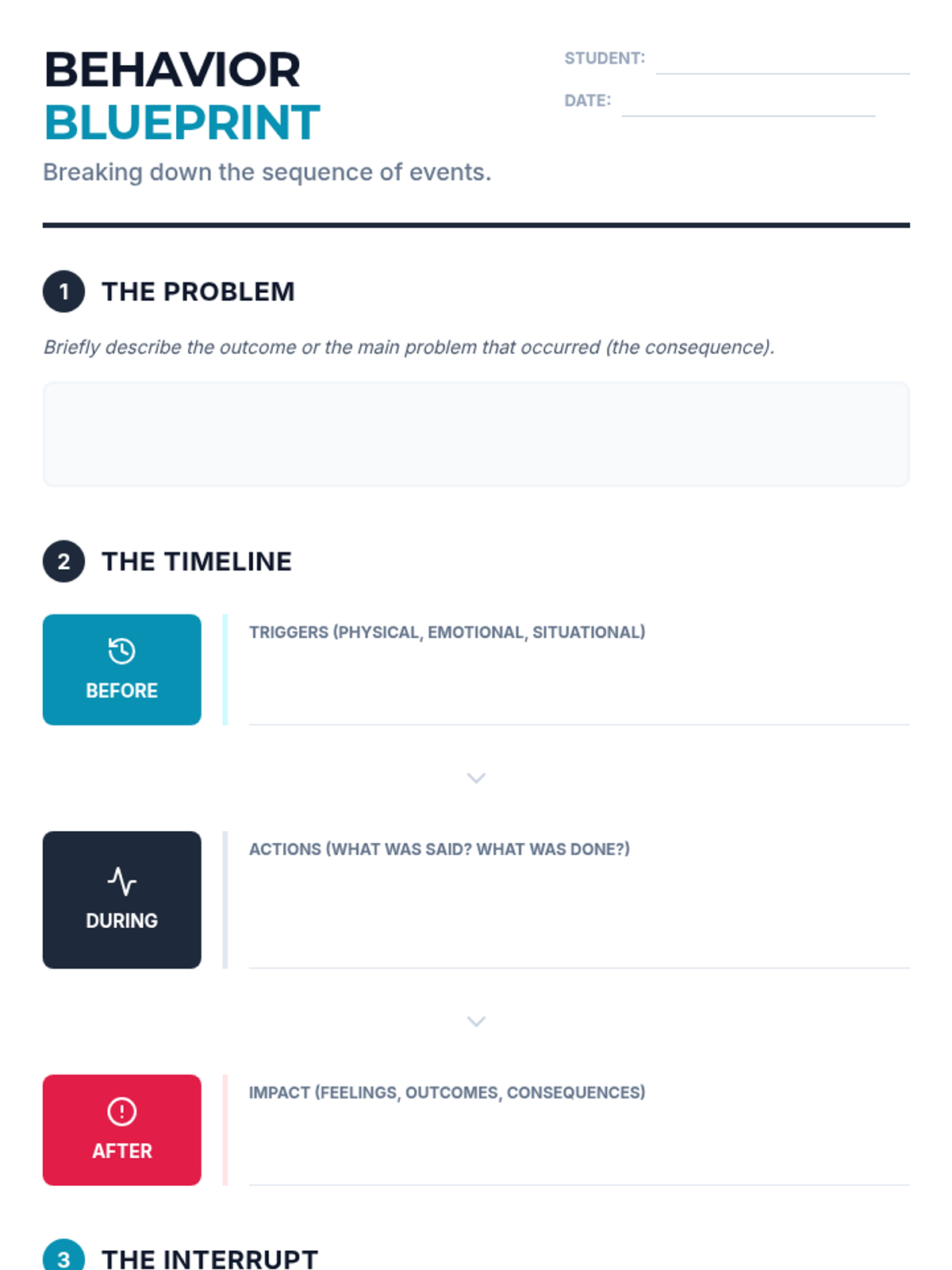
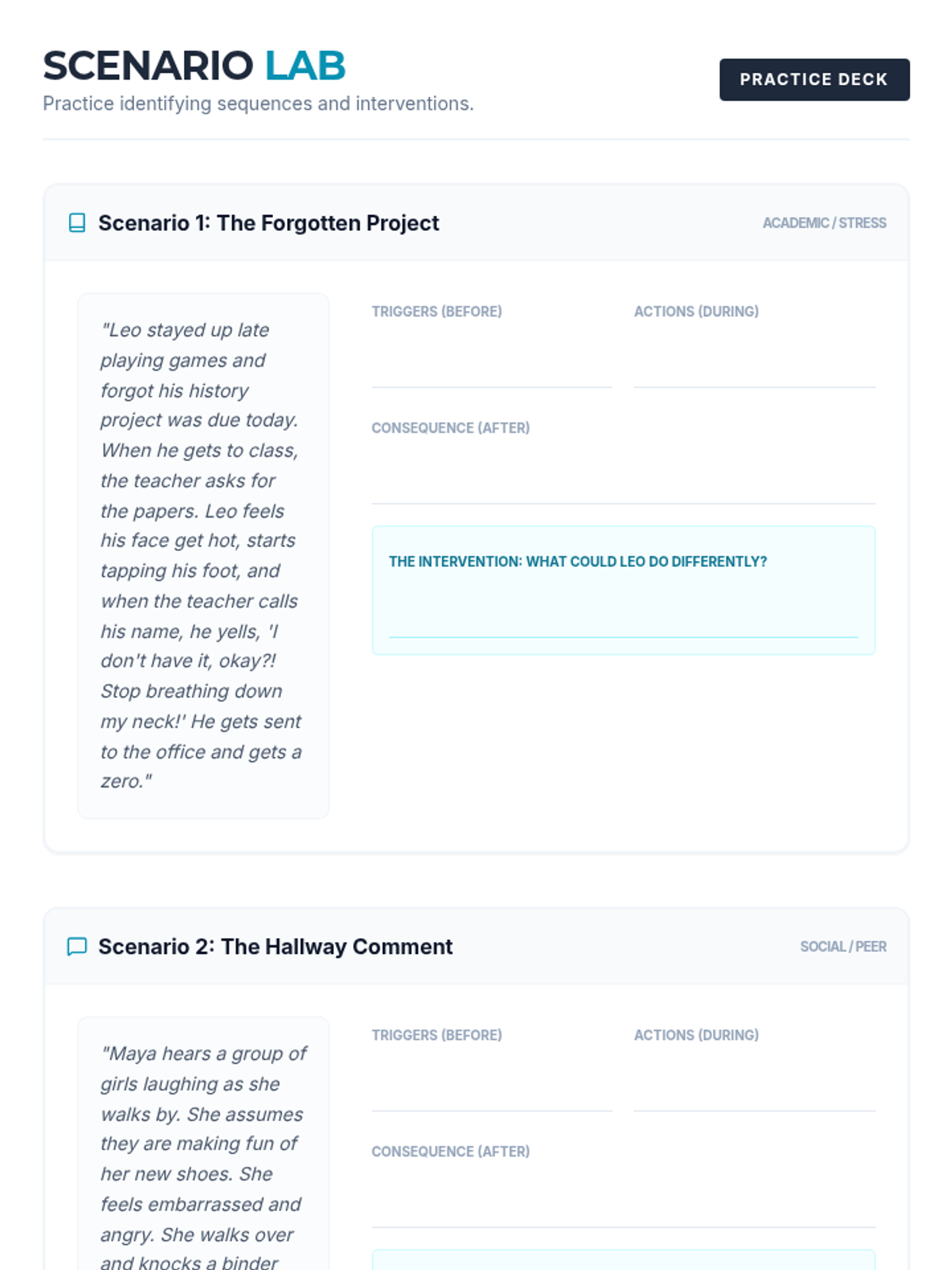
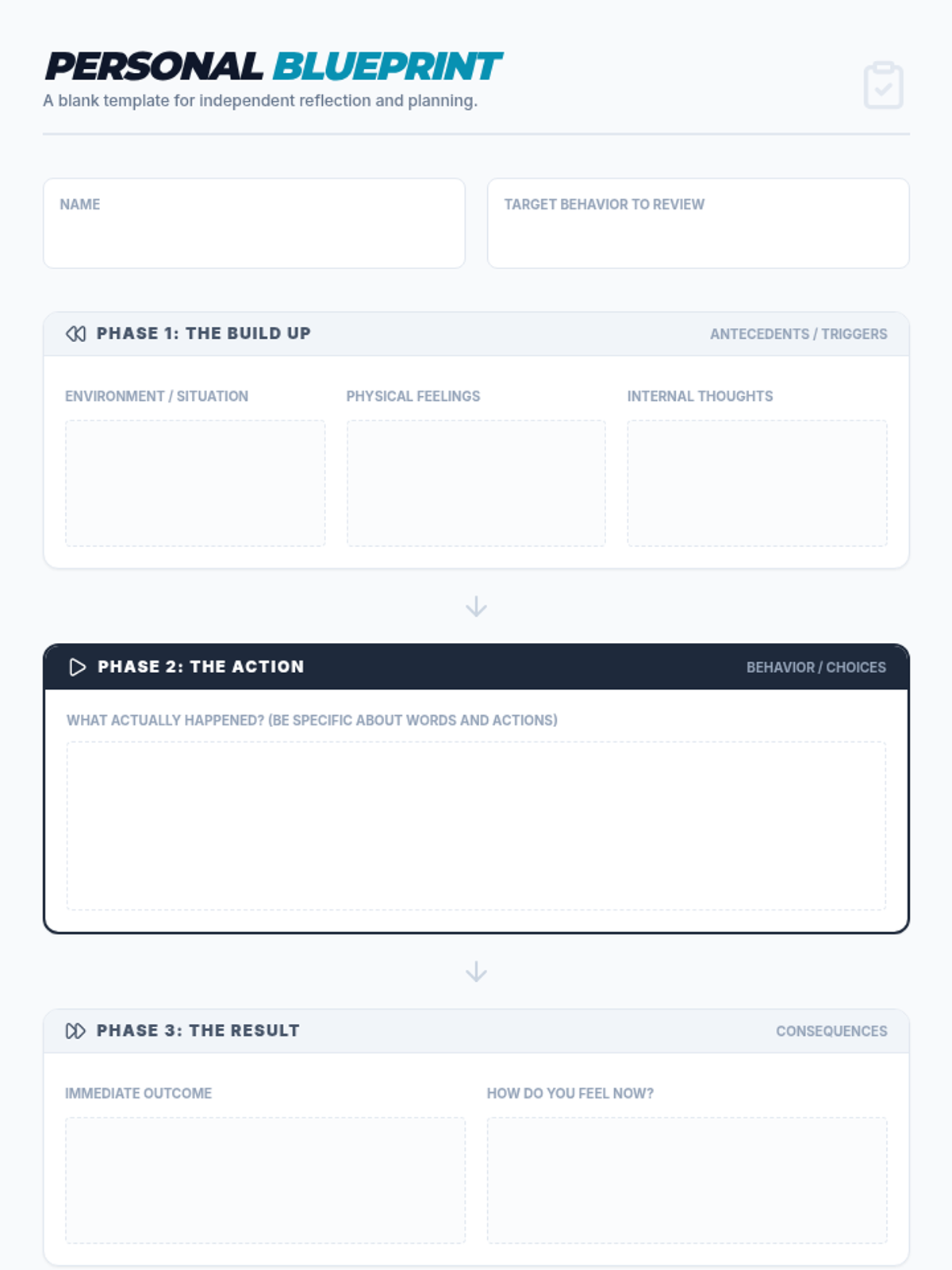
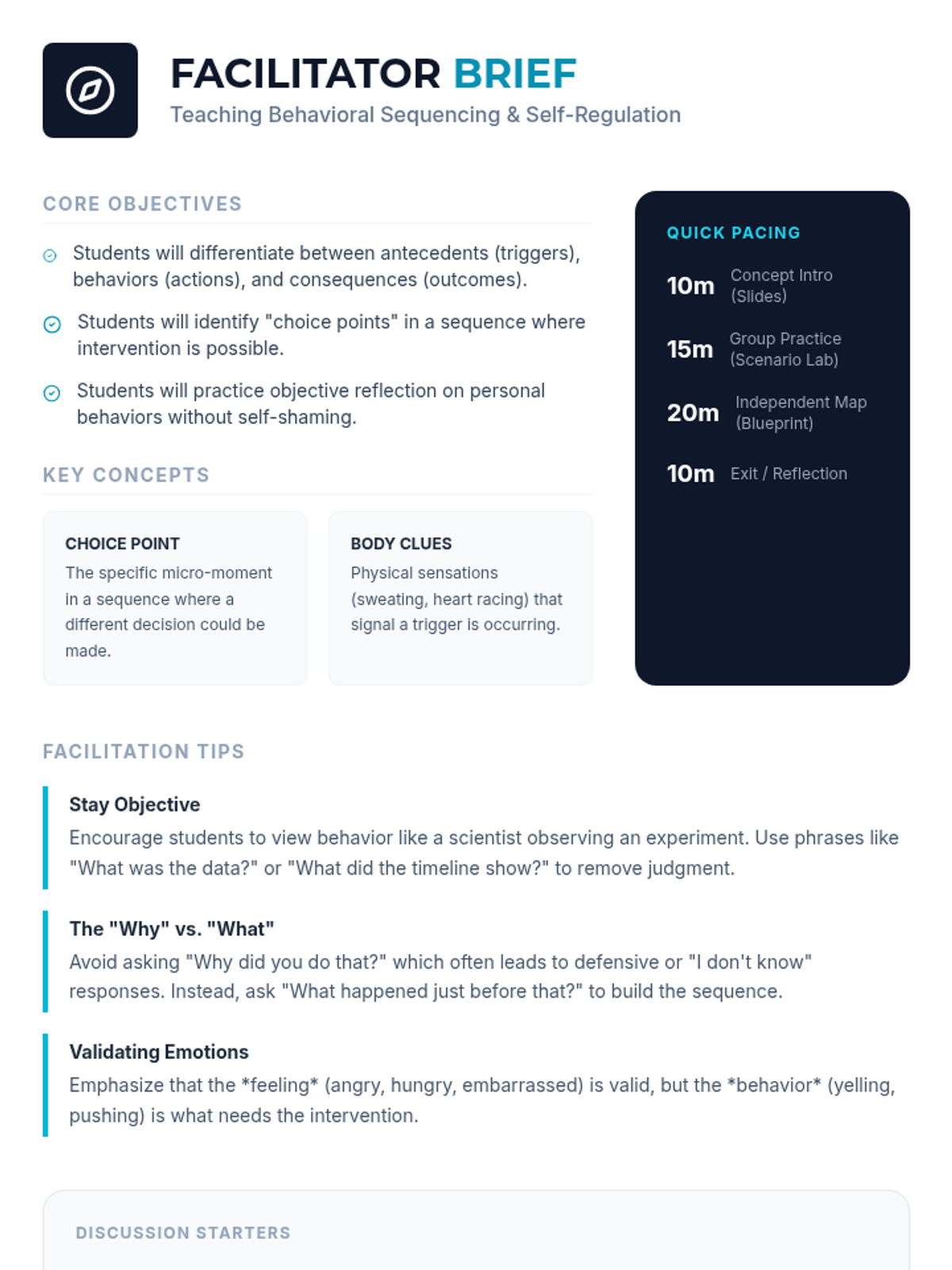
A comprehensive lesson for students aged 11-17 to understand the sequence of their actions, identifying triggers, behaviors, and consequences to build self-regulation and problem-solving skills.
A comprehensive intervention designed to help students identify and challenge cognitive distortions during high-stakes testing seasons, focusing on cognitive reframing techniques to build resilience.
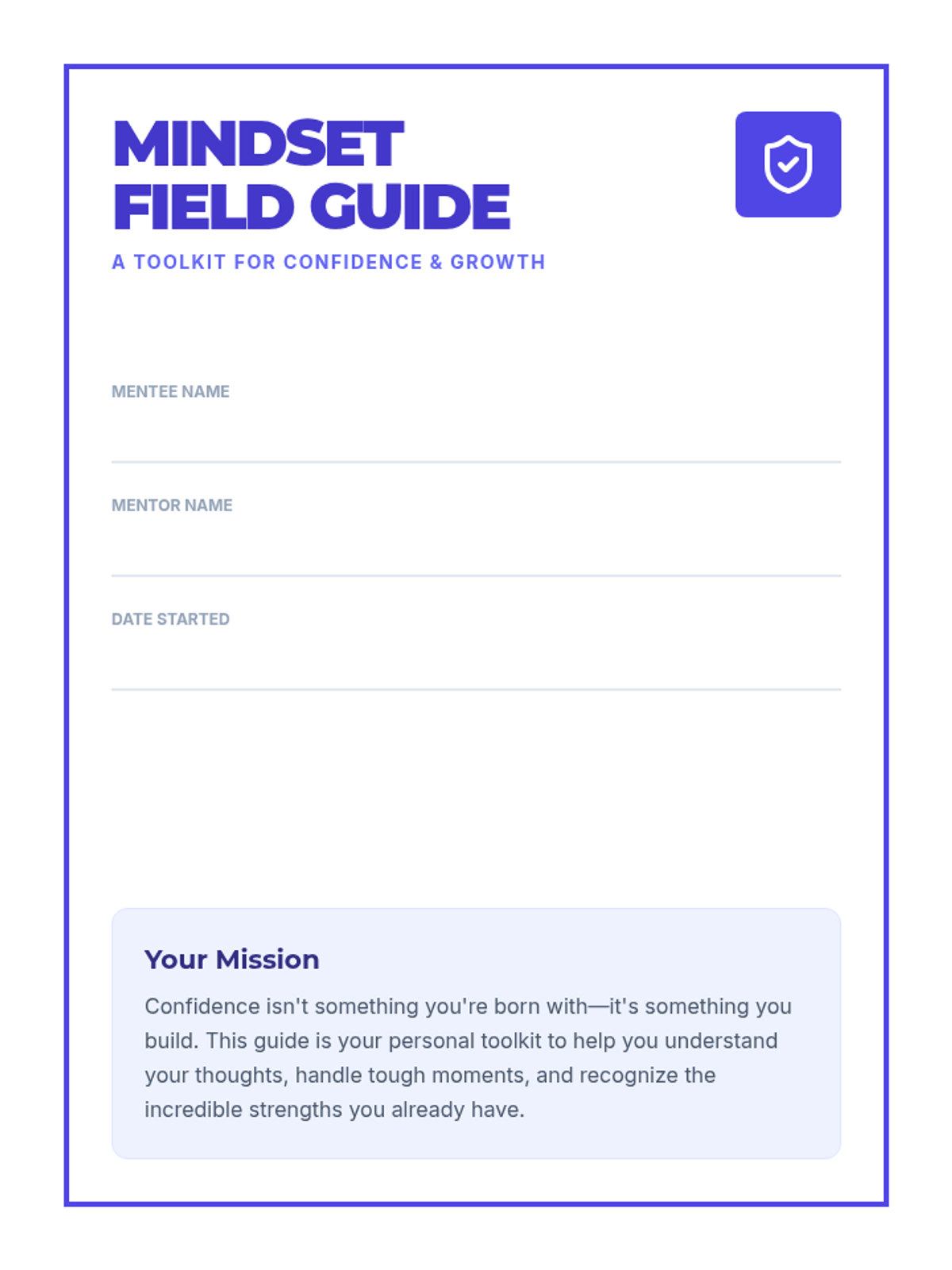
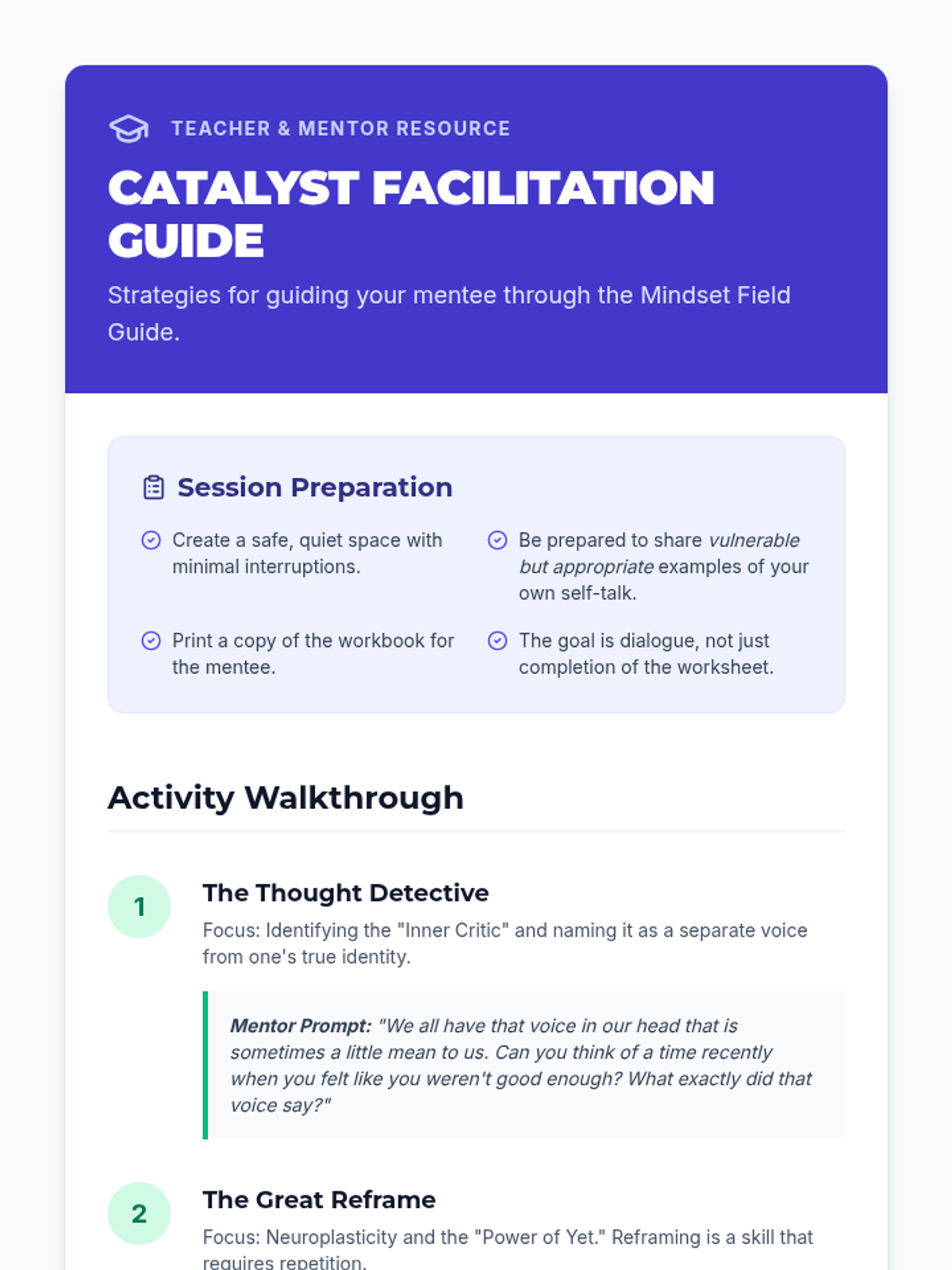
A mentor-facilitated program designed to build student confidence through positive self-talk, growth mindset exercises, and practical coping strategies. The materials provide a structured but flexible framework for meaningful 1-on-1 sessions.
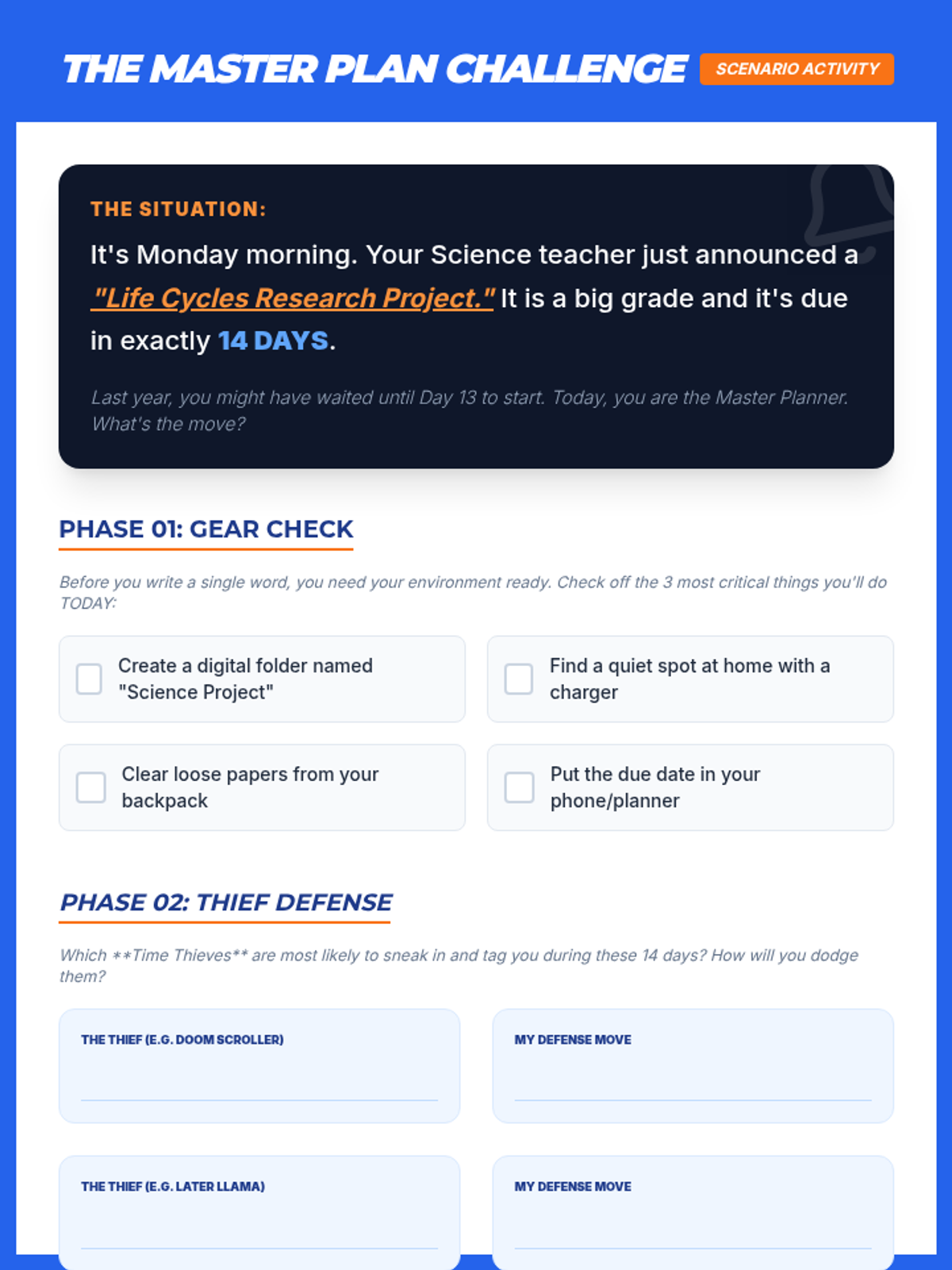
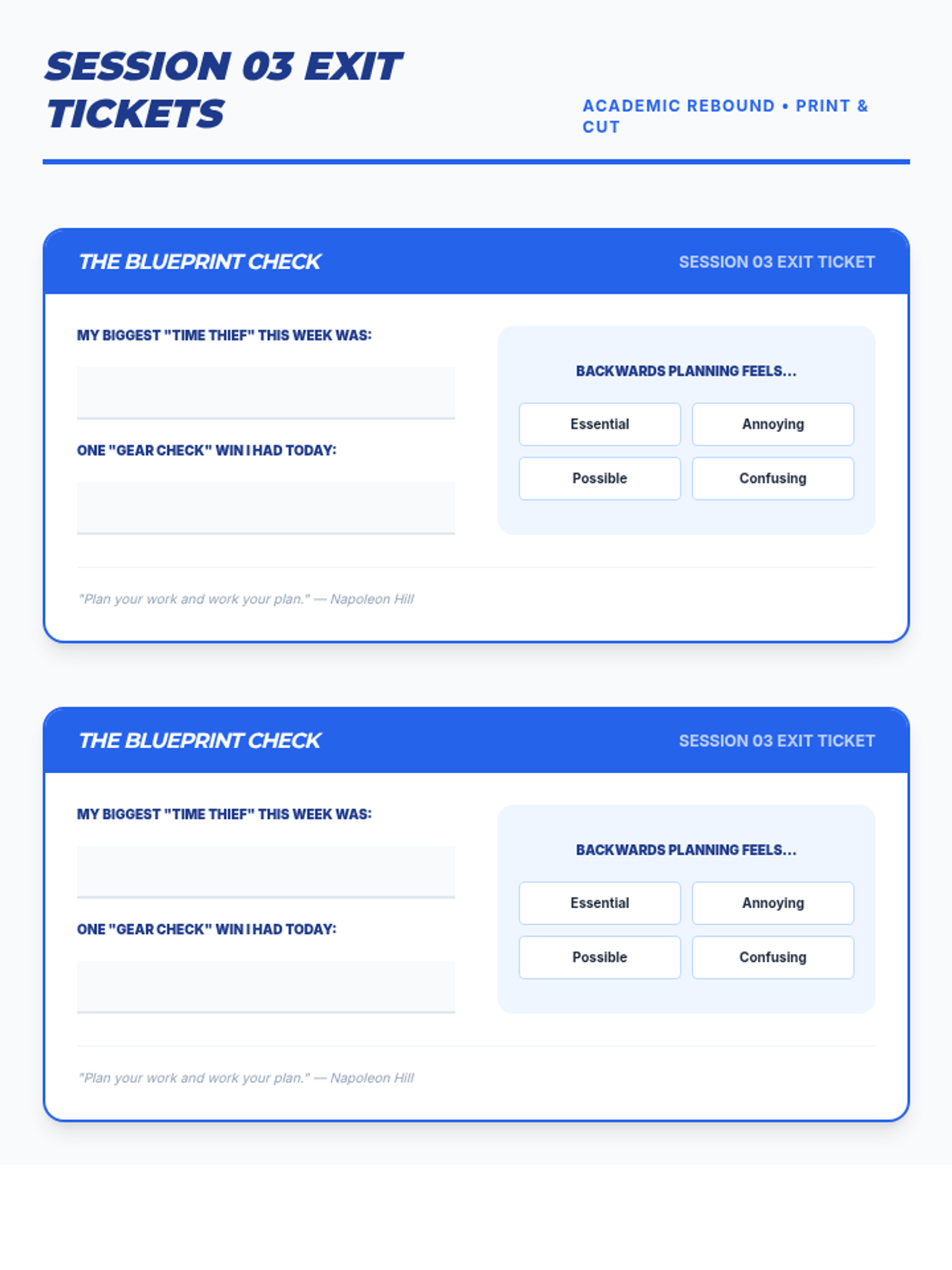
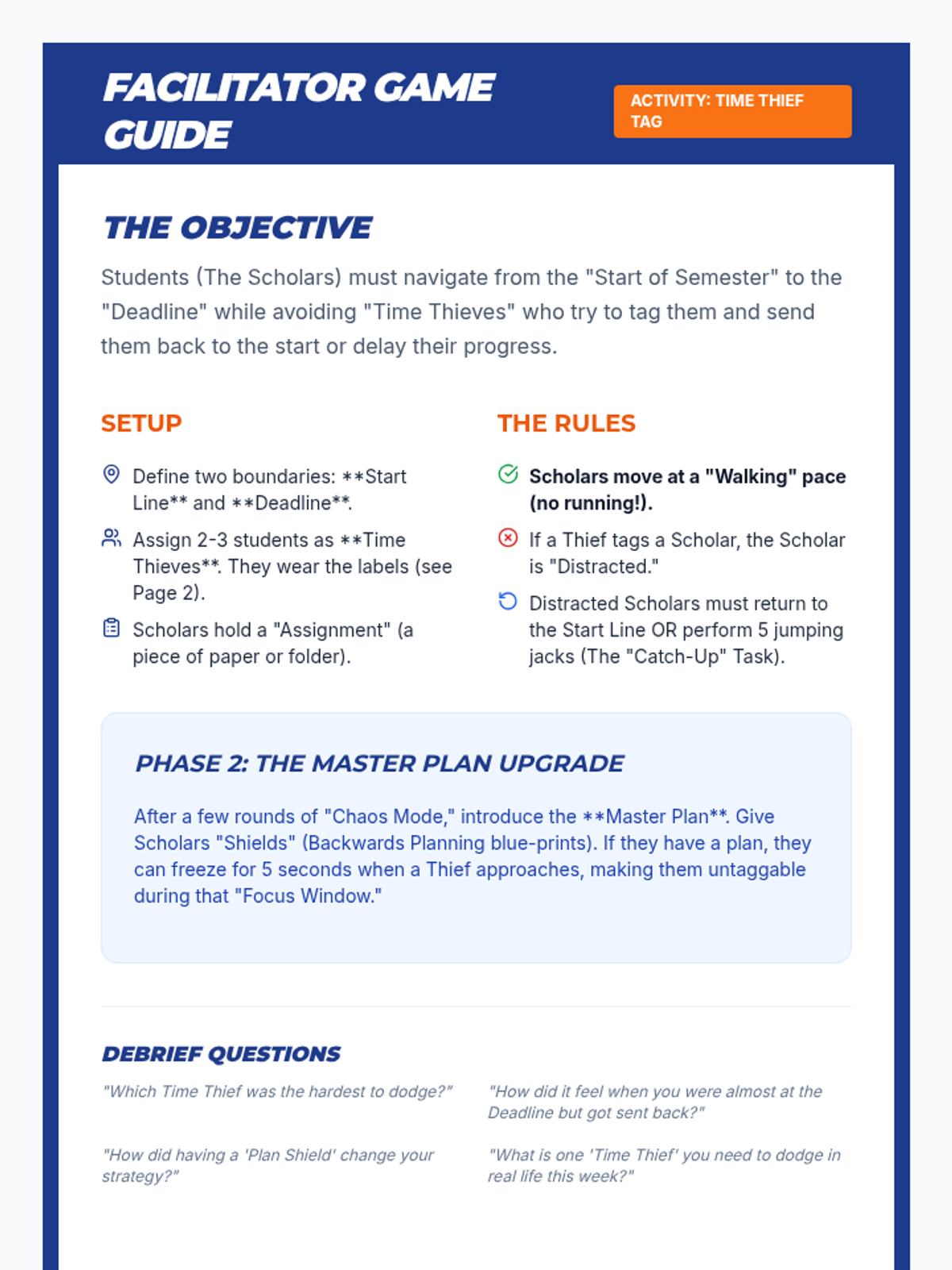
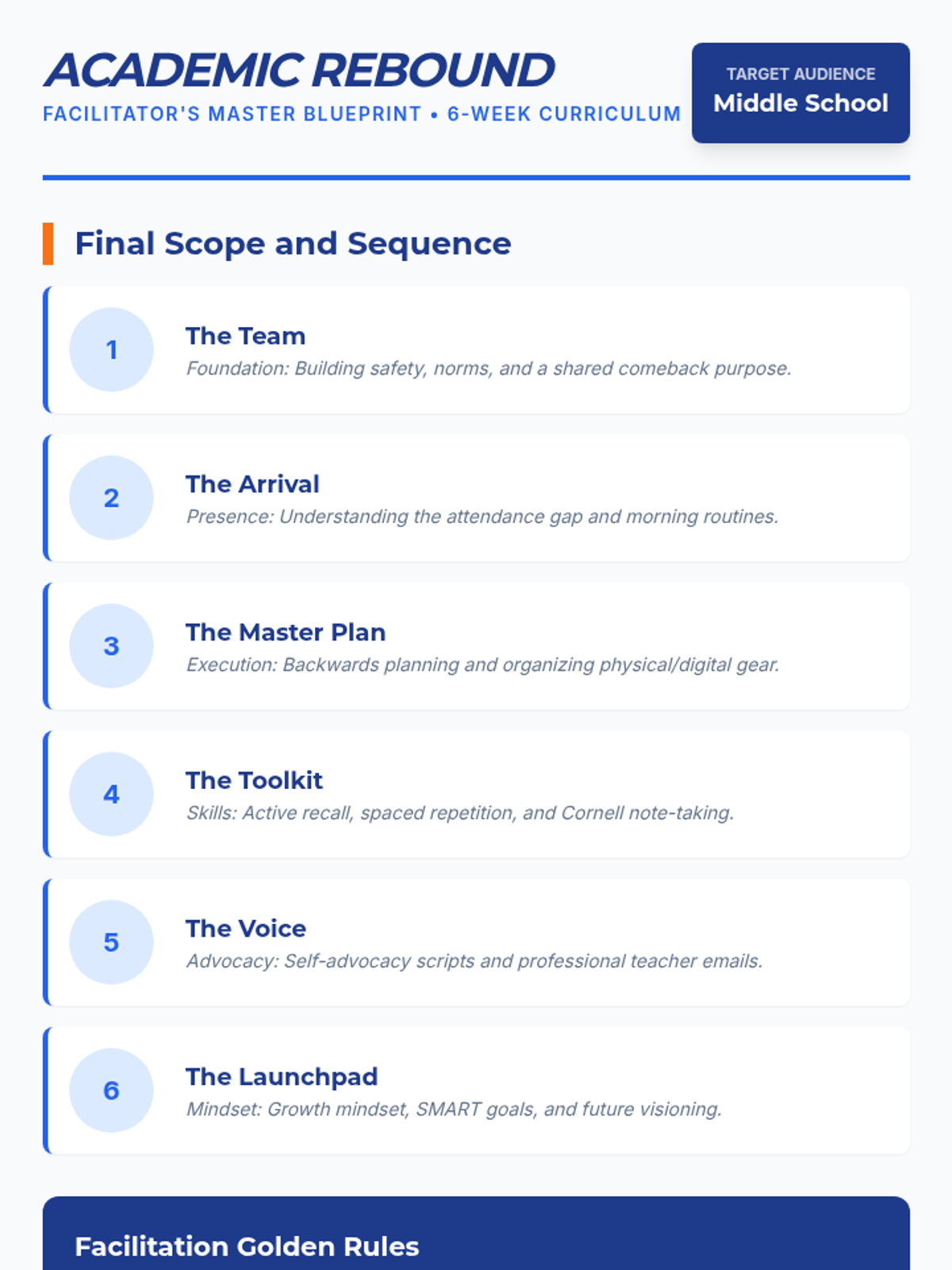
A session focused on the 'how' of school, teaching students to manage their time through backwards planning and organizing their physical and digital learning spaces. Activities include a 'Time Thief' movement game and backpack/folder audits.
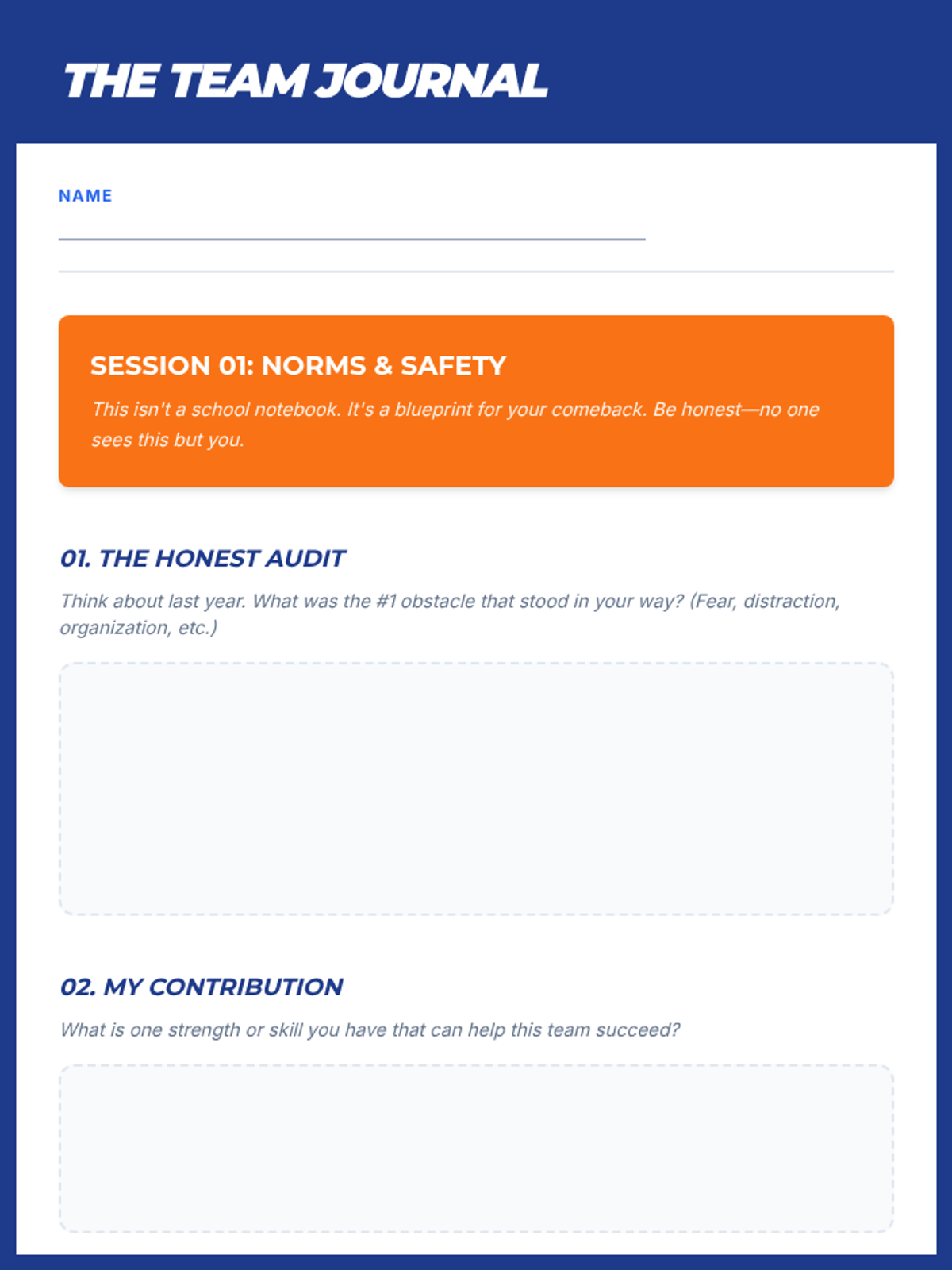
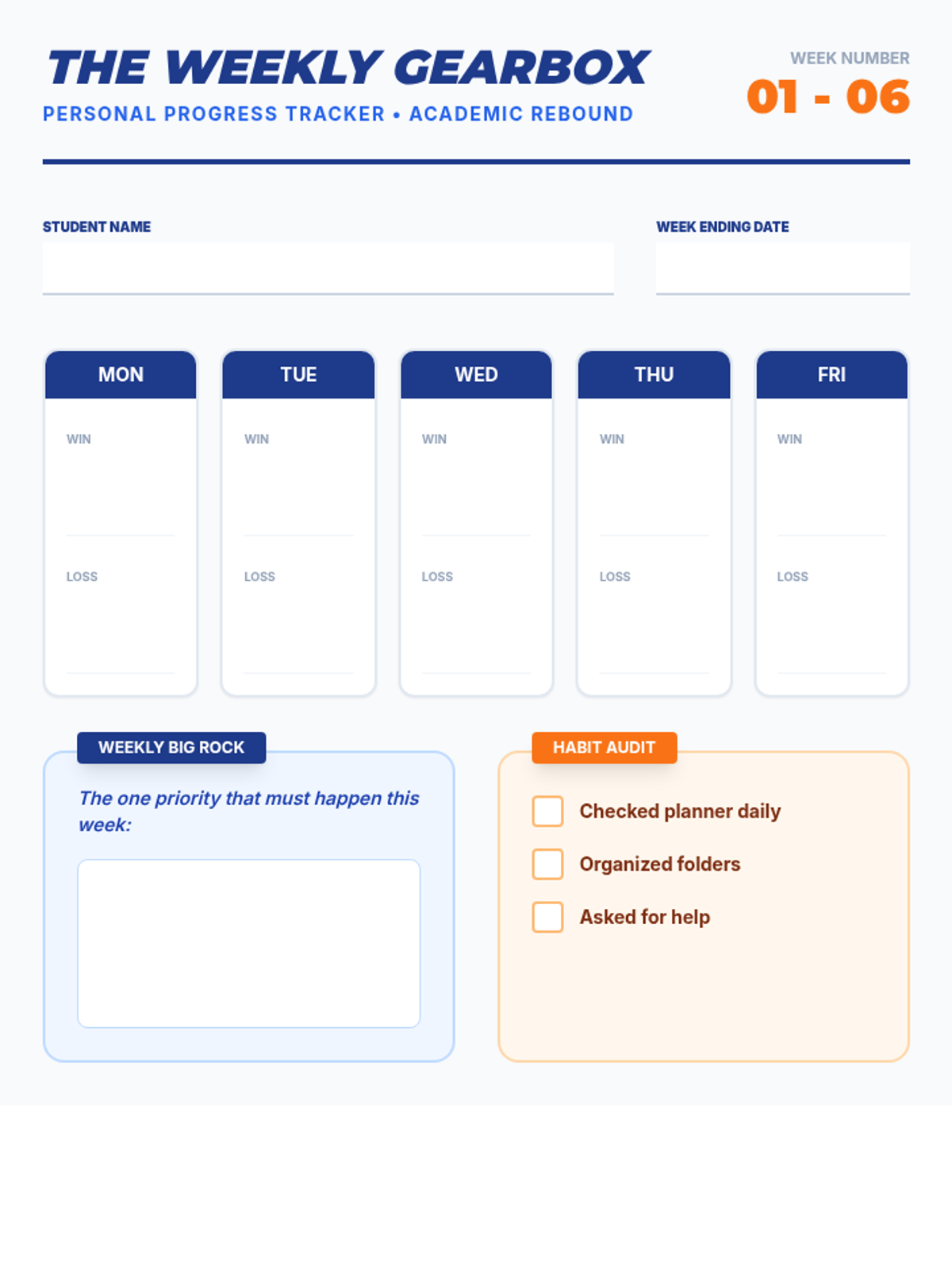
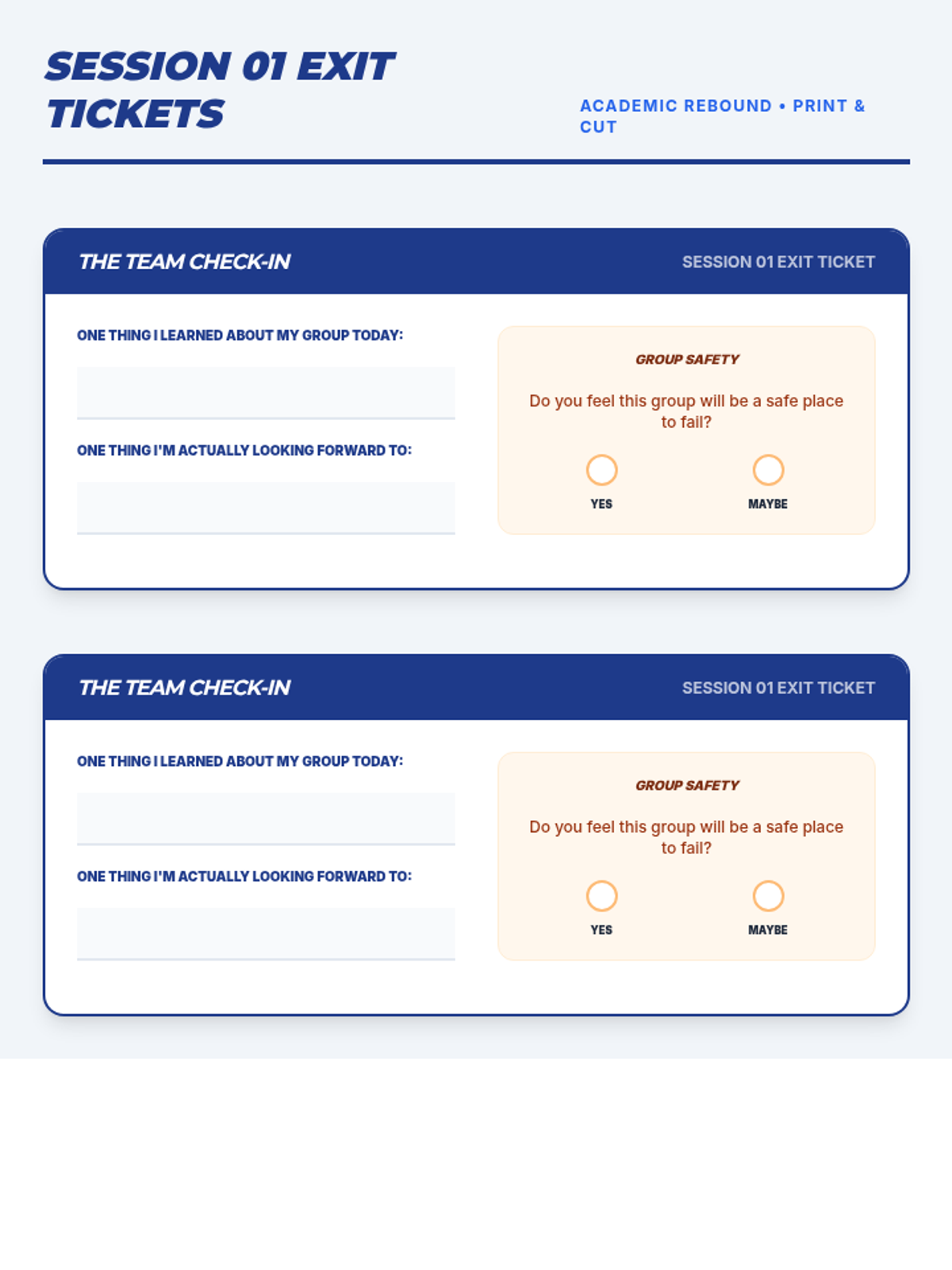
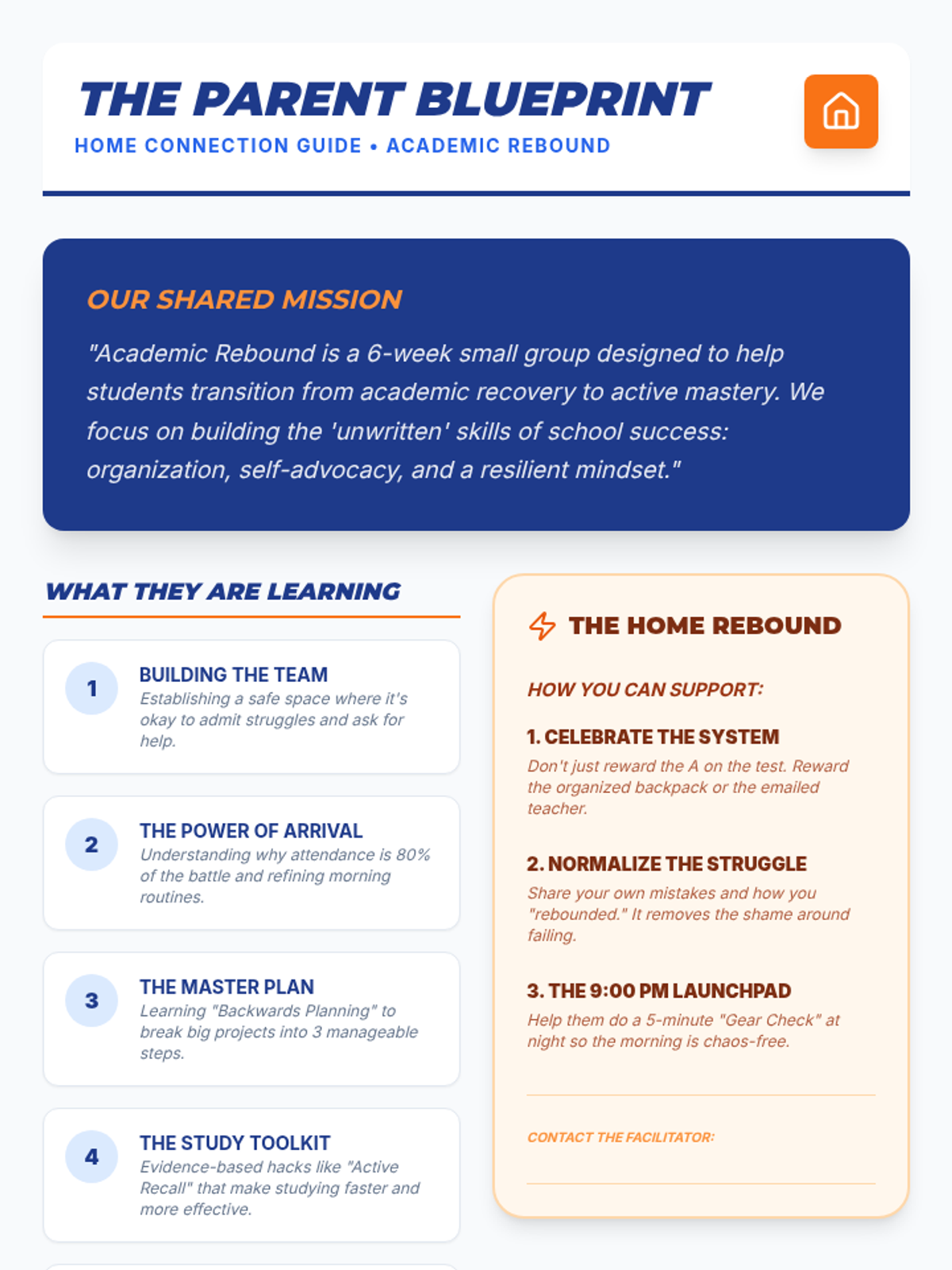
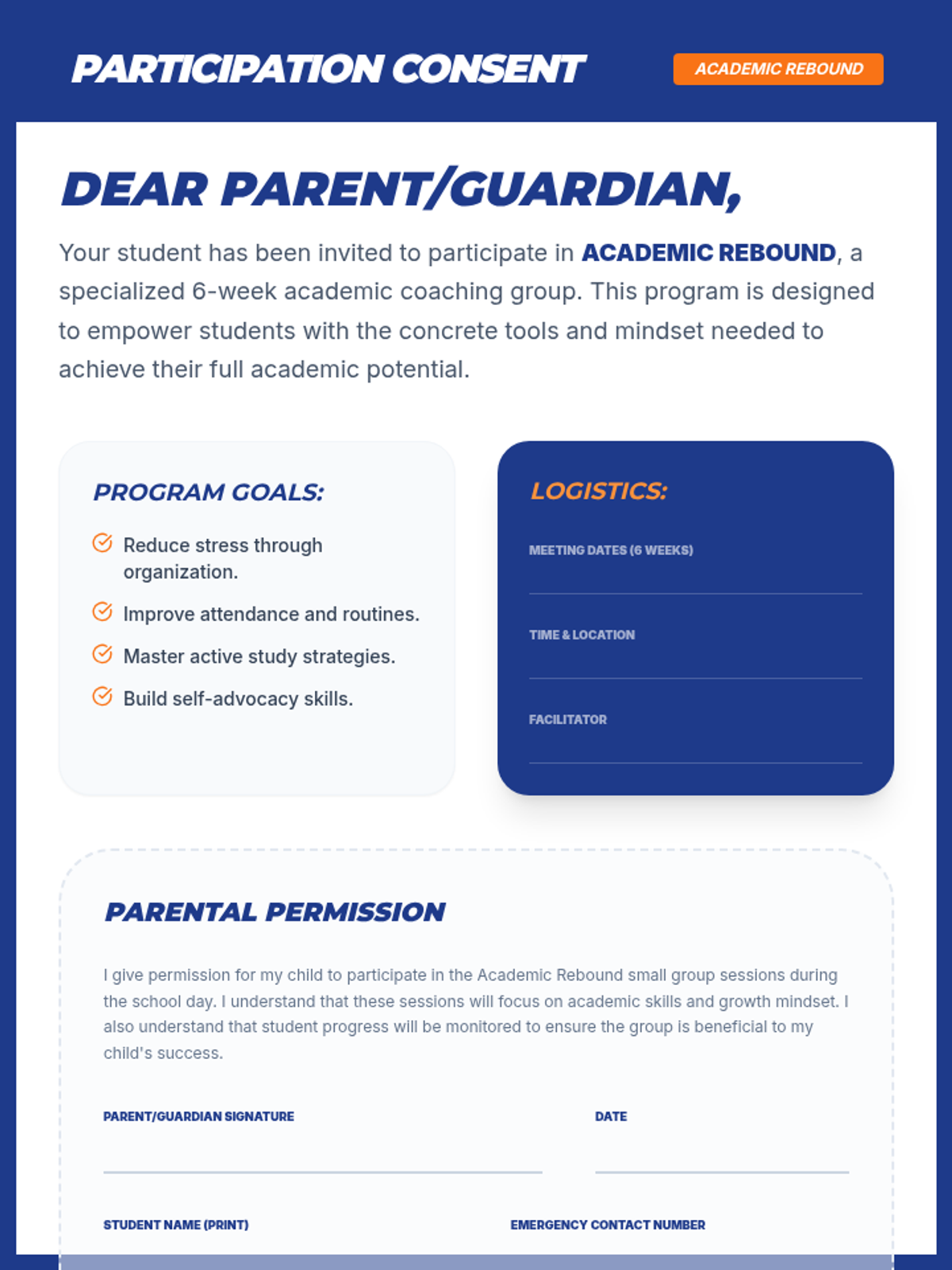
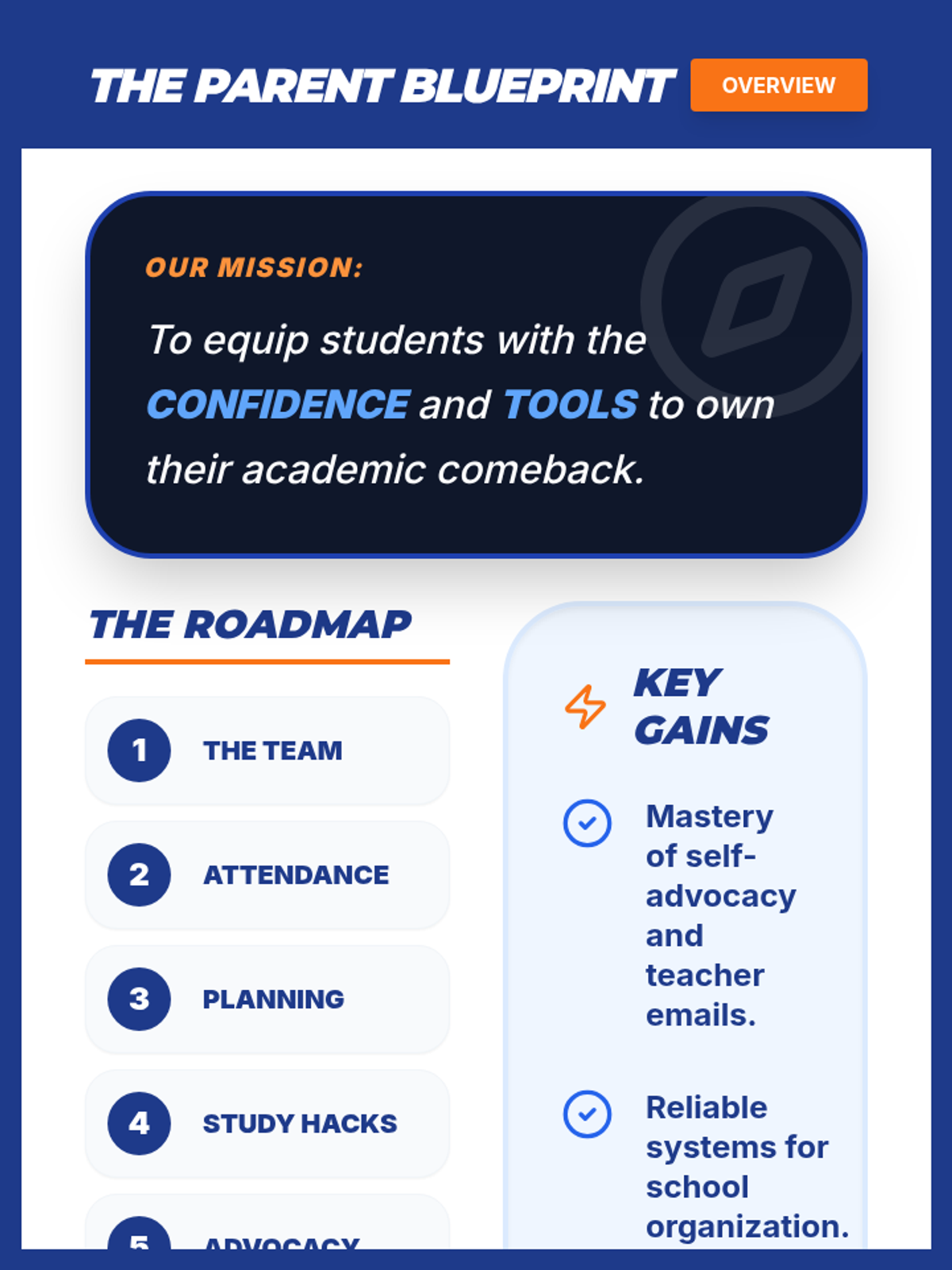
A foundation-building session focused on establishing psychological safety, group norms, and the shared purpose of the Academic Rebound program. Students participate in movement-based activities to build connection and define what they need from each other to succeed.
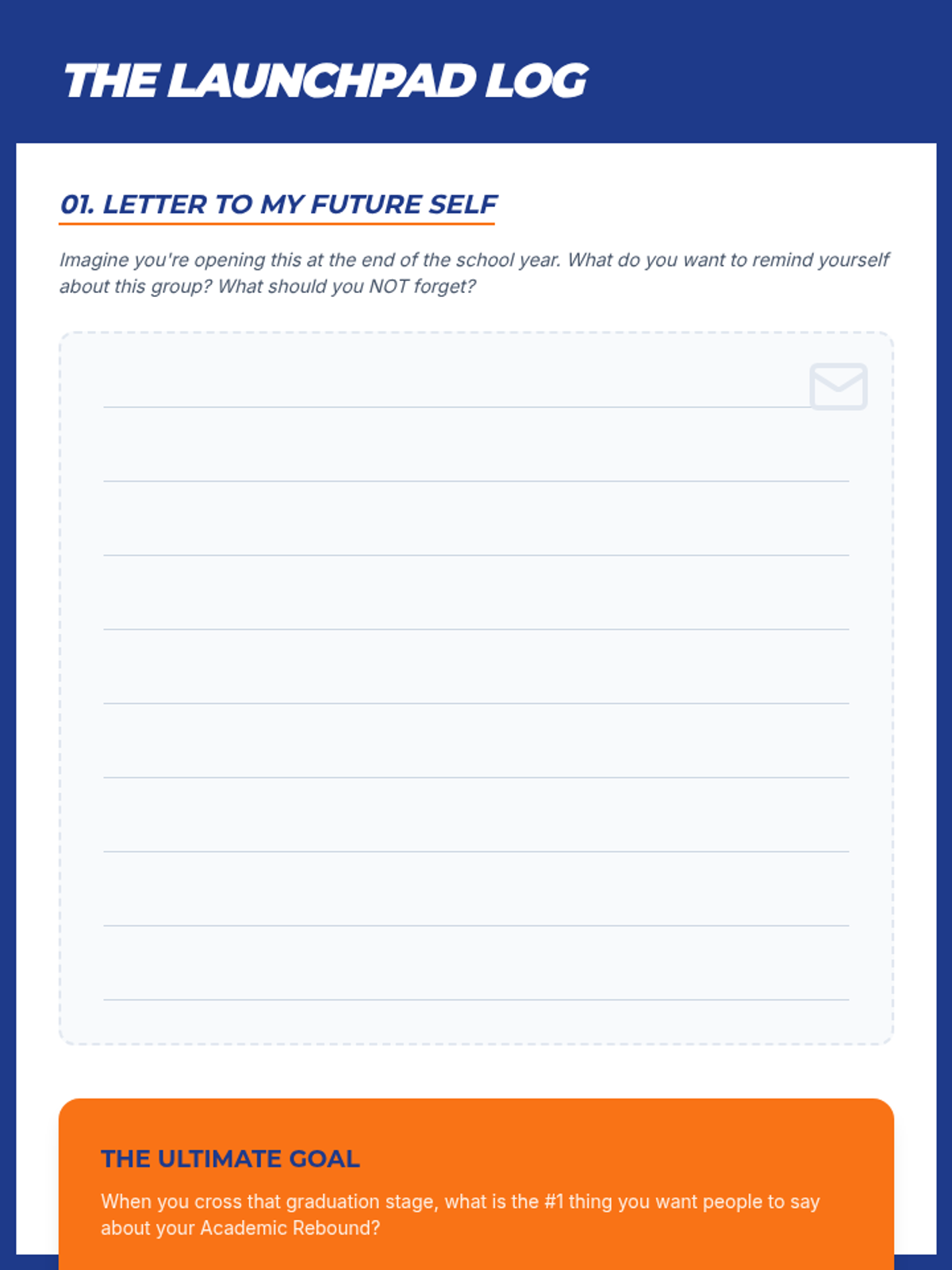
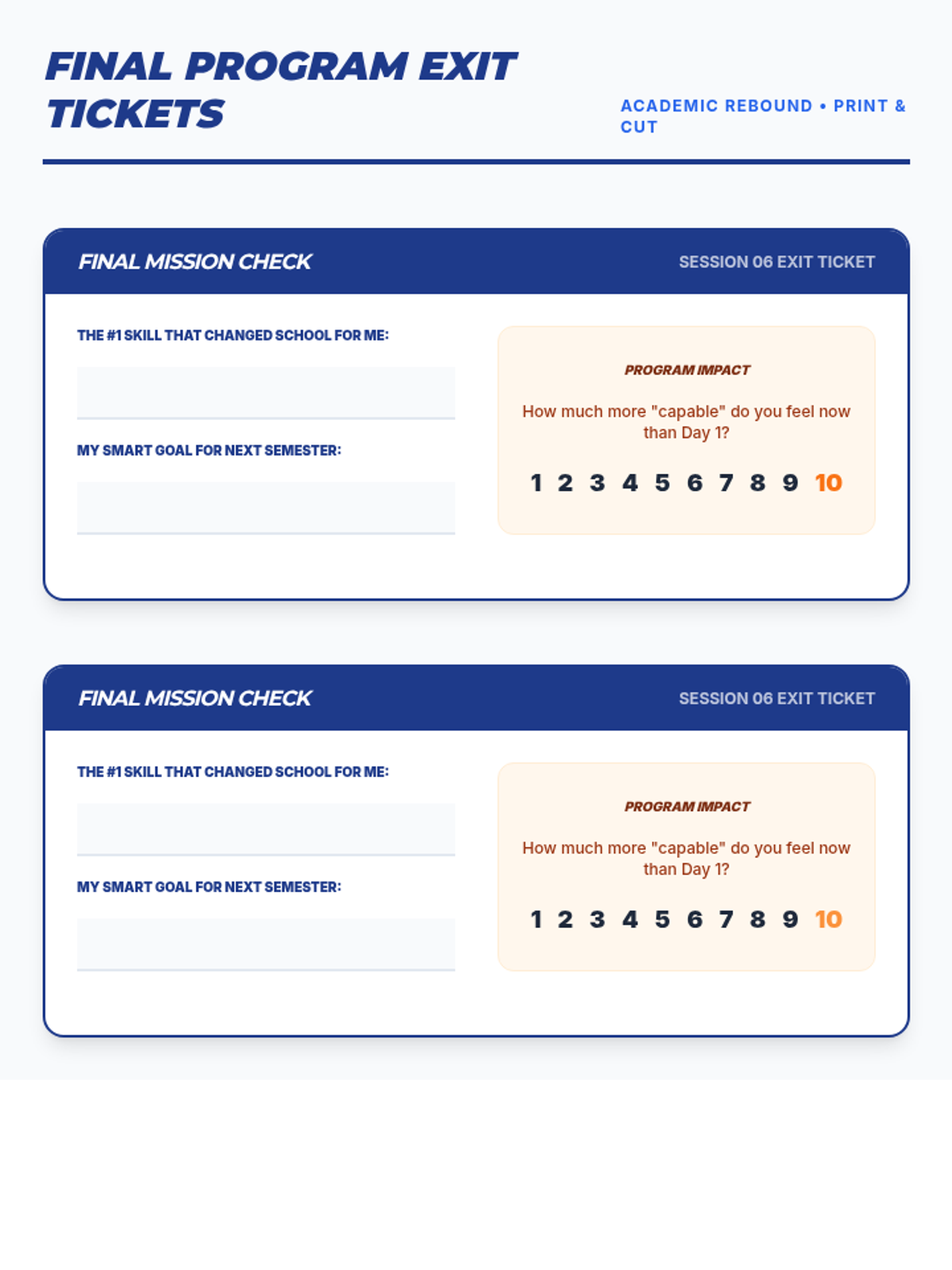
The final session celebrating growth. Students reflect on their progress, set long-term SMART goals with a growth mindset, and participate in a final 'Launchpad' celebration.
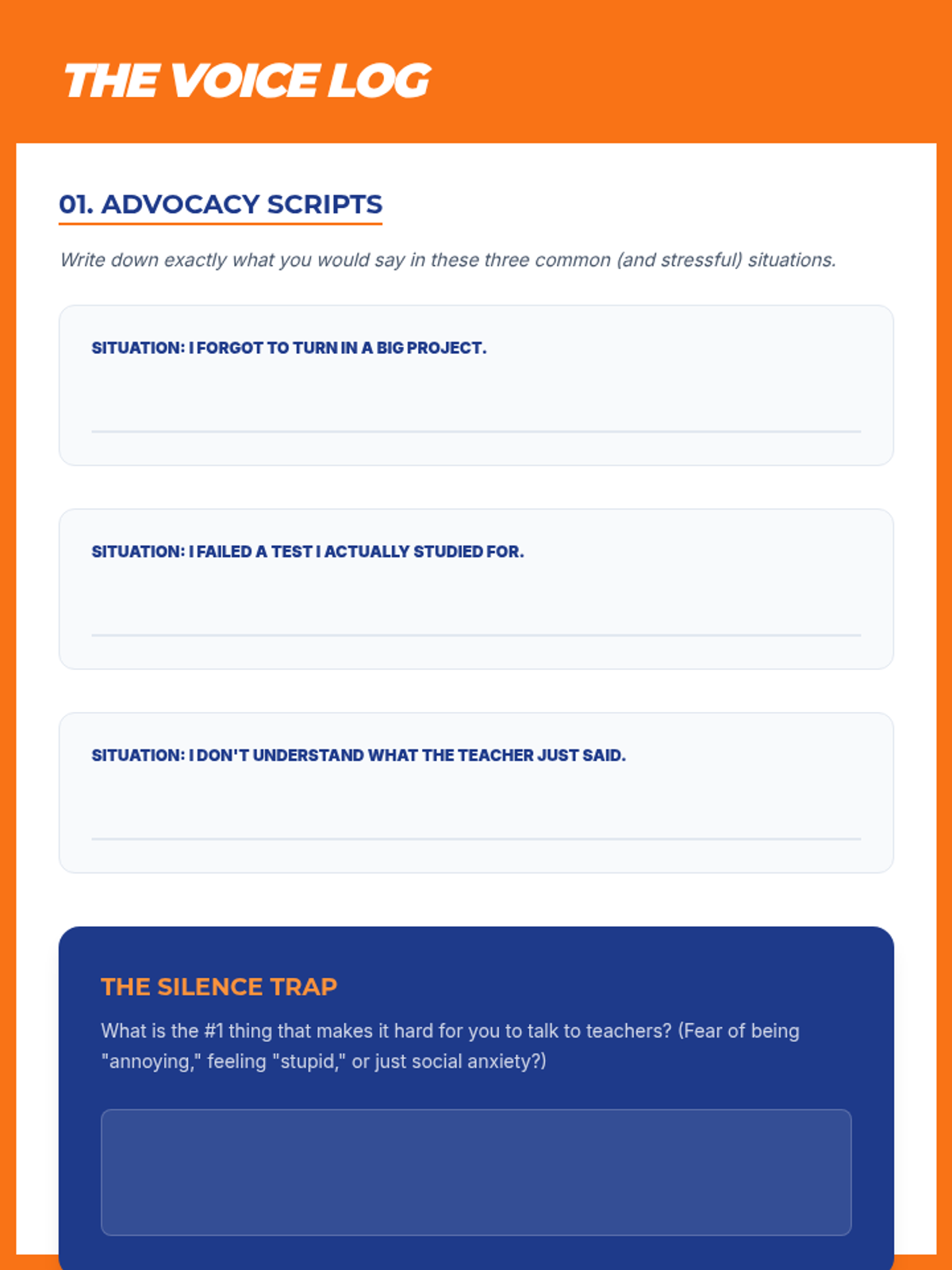
Focused on communication skills, students learn how to advocate for their needs with teachers. Includes role-playing scenarios for asking for help and practicing professional email etiquette.
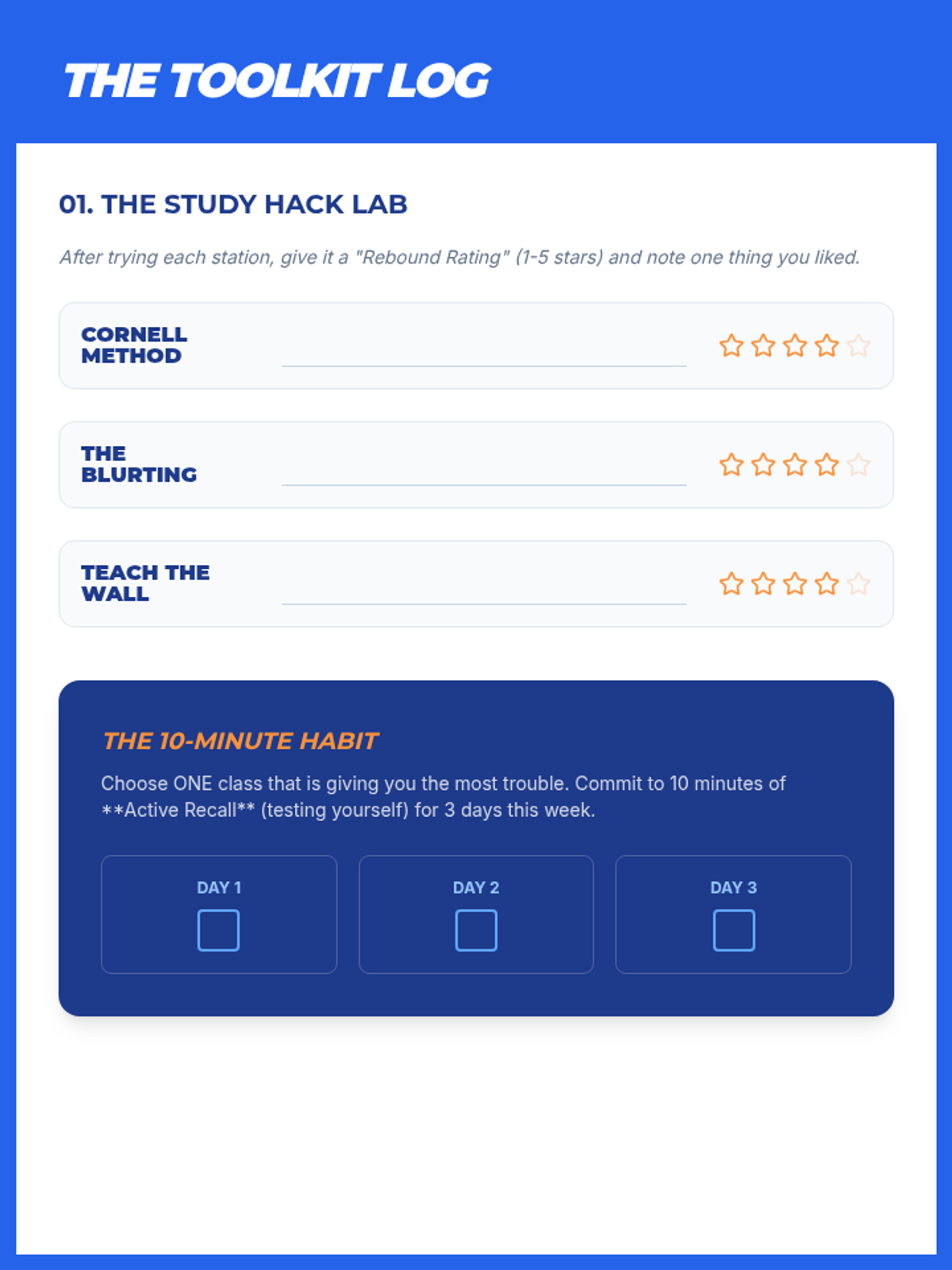
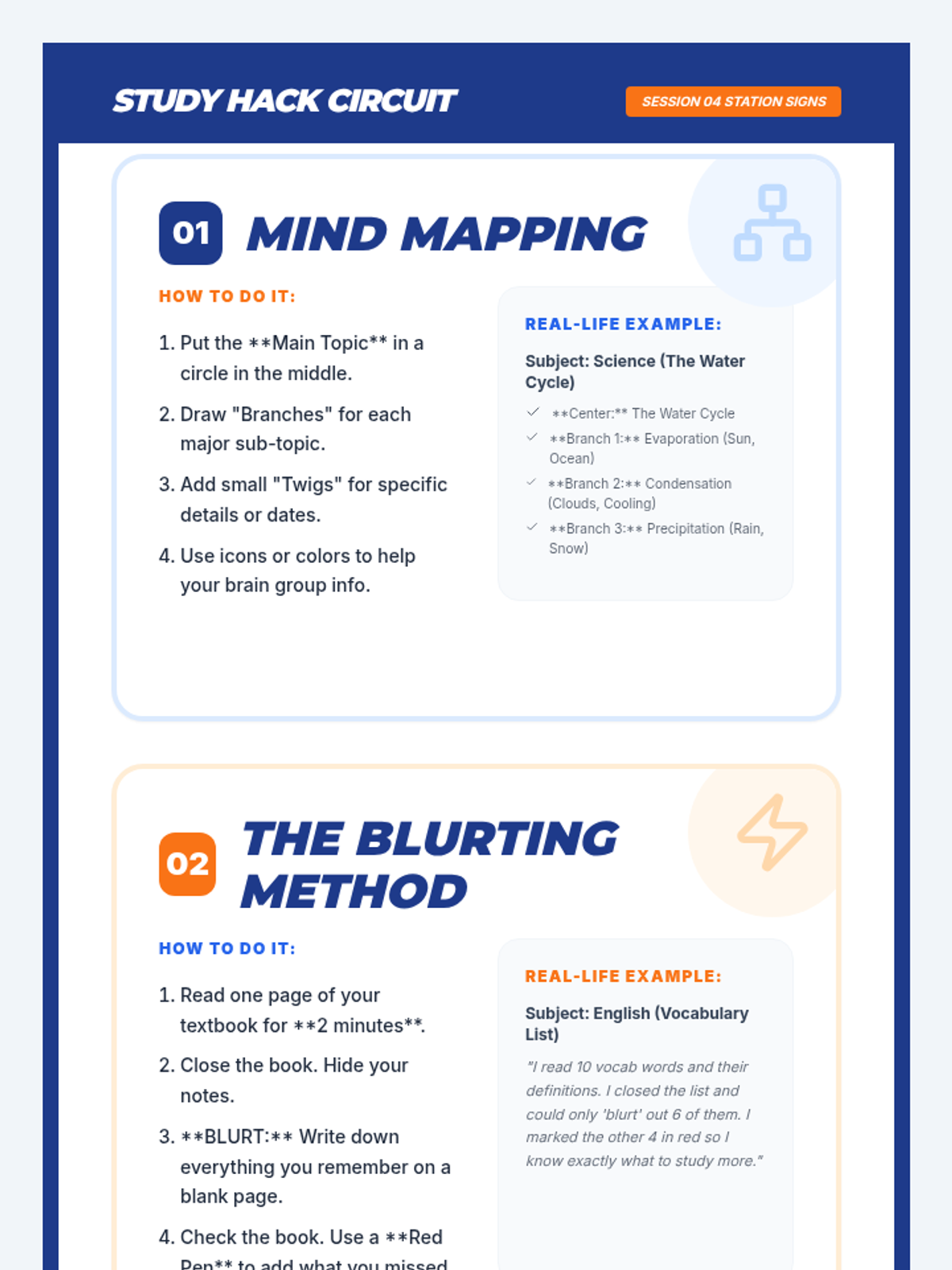
Instruction on active note-taking systems and evidence-based study strategies like active recall and spaced repetition. Students engage in a 'Study Hack' station rotation to test different methods.
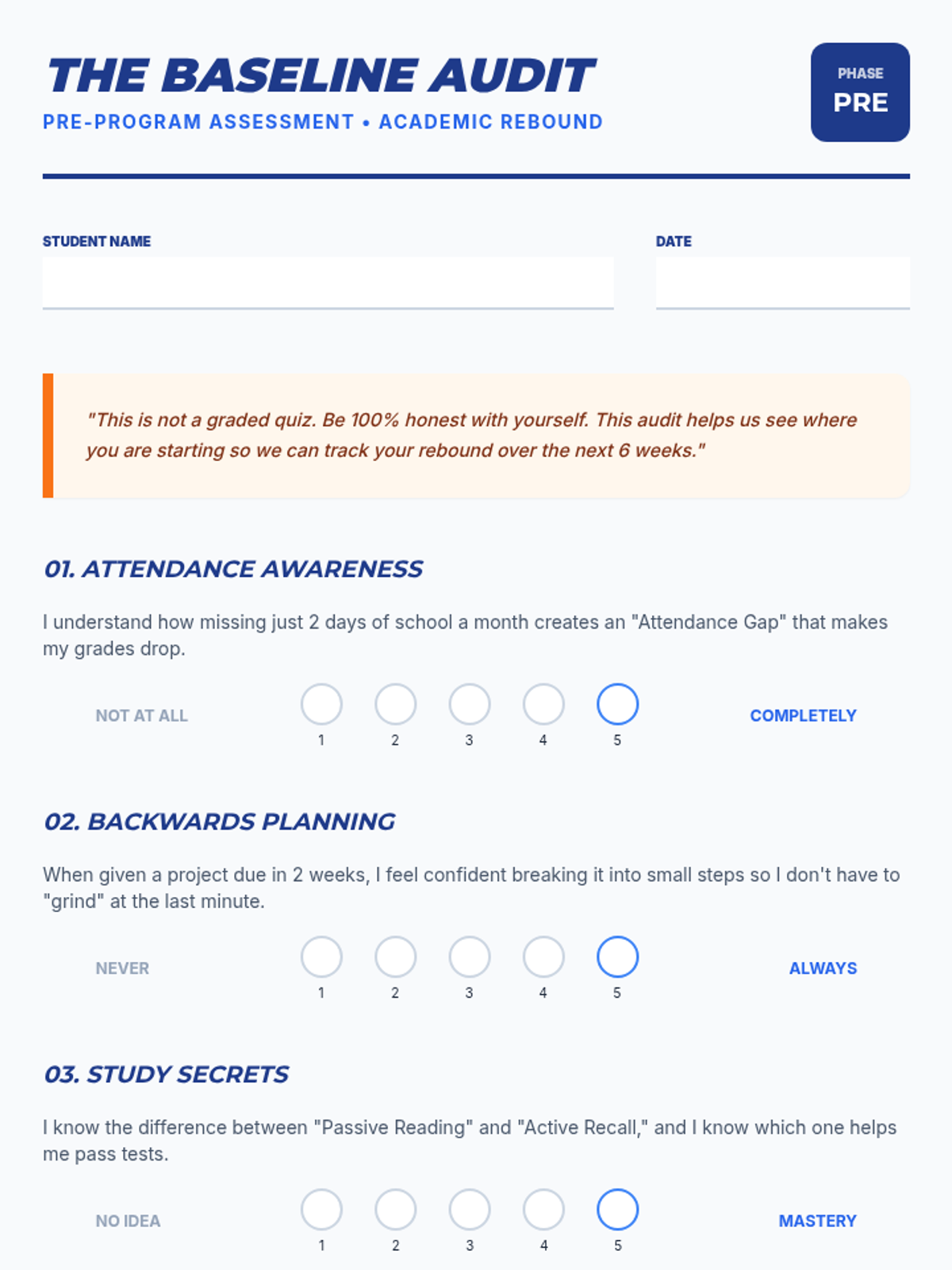
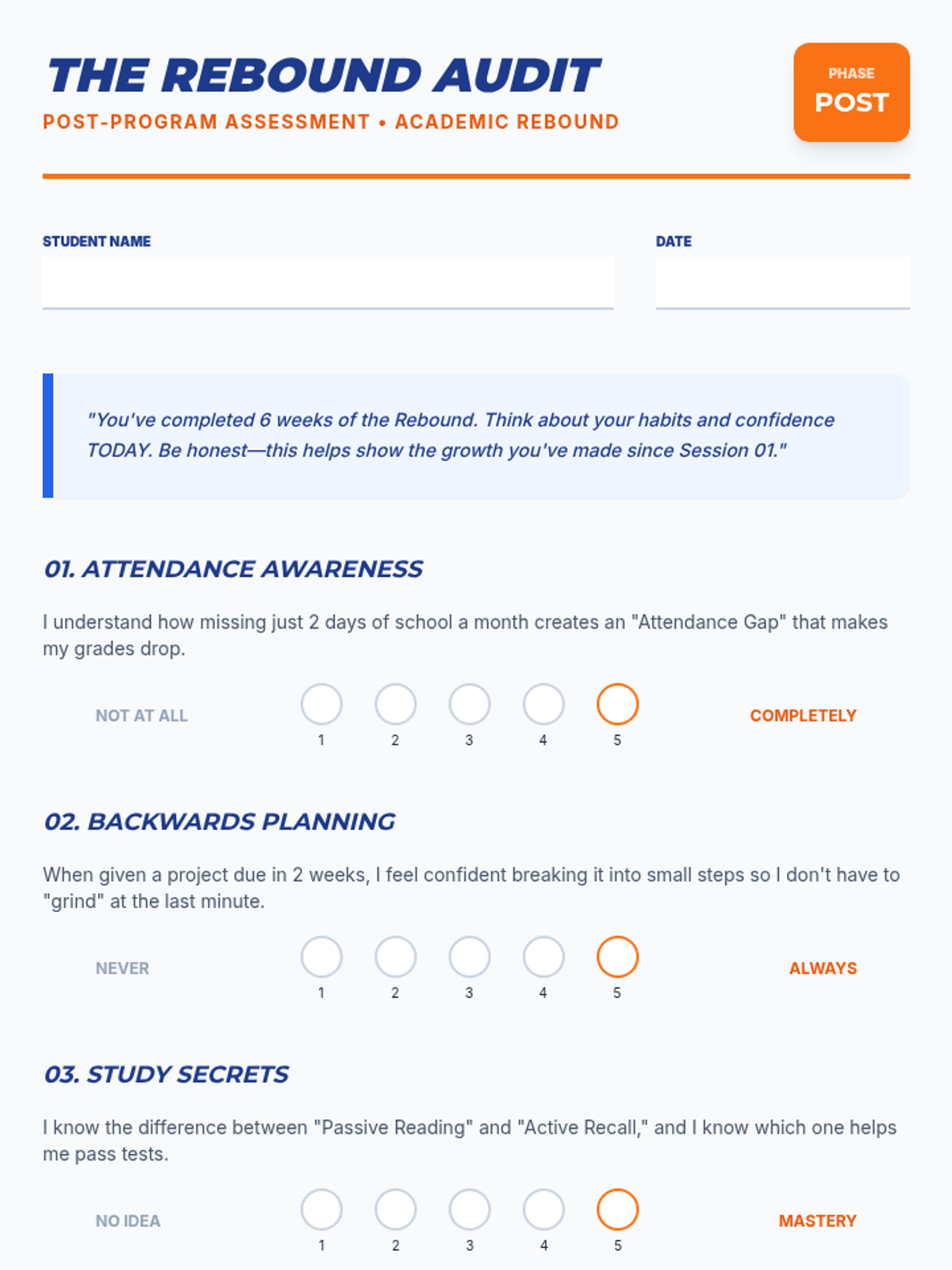
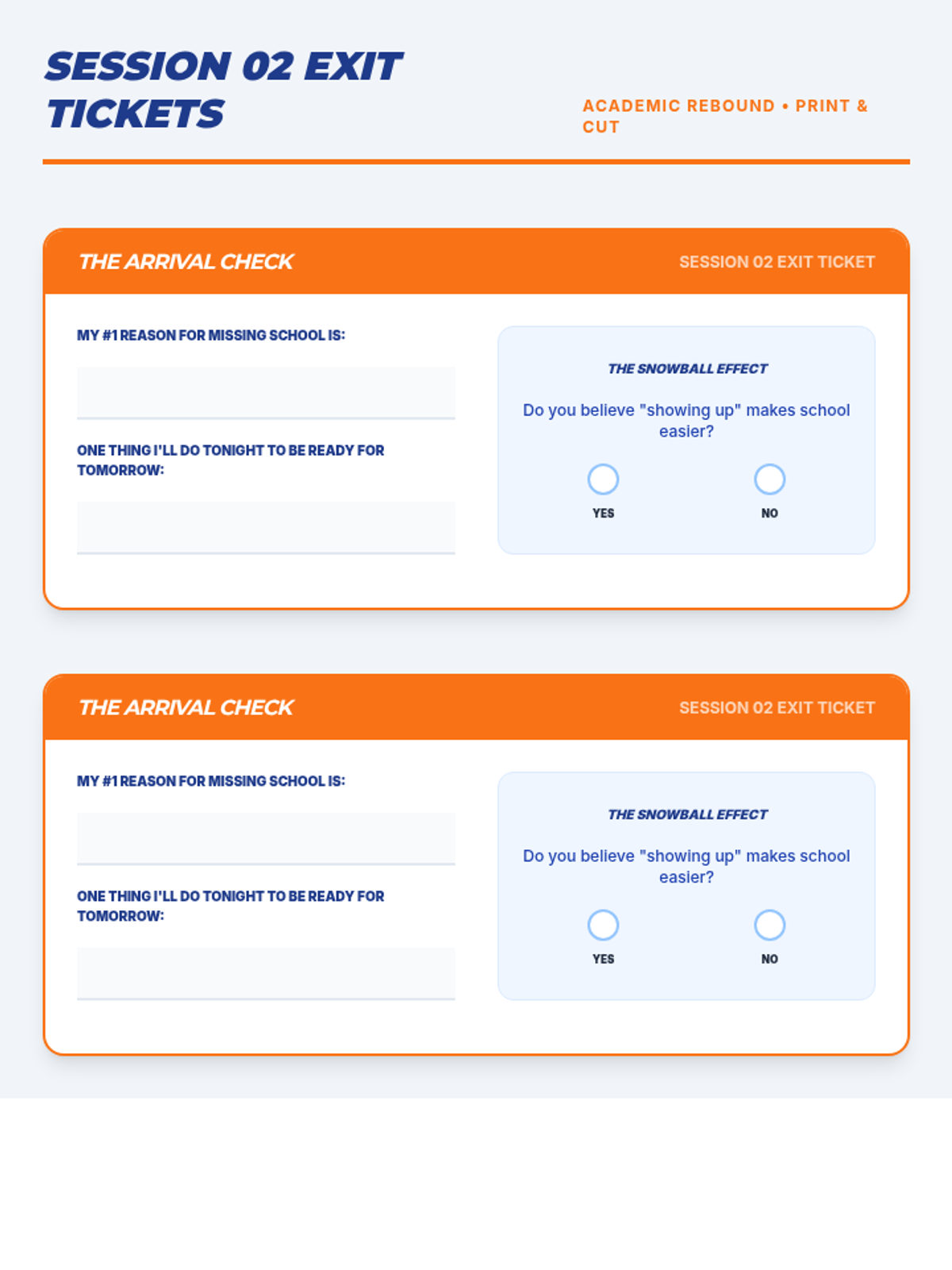
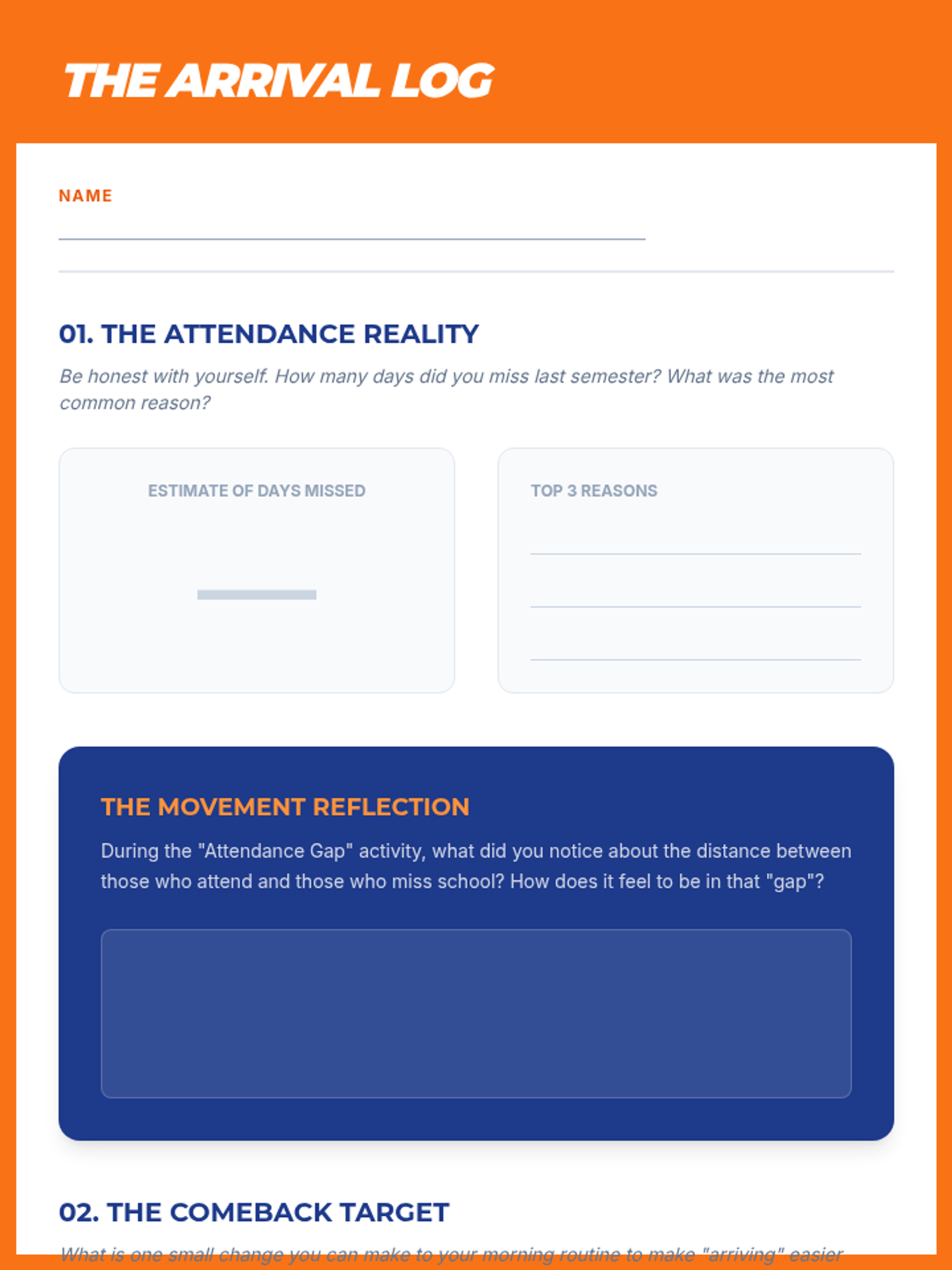
A session focused on the 'why' of attendance. Students explore how being present is the baseline for all academic success and participate in a movement activity that visualizes the 'Attendance Gap' and how missed days snowball into missed opportunities.
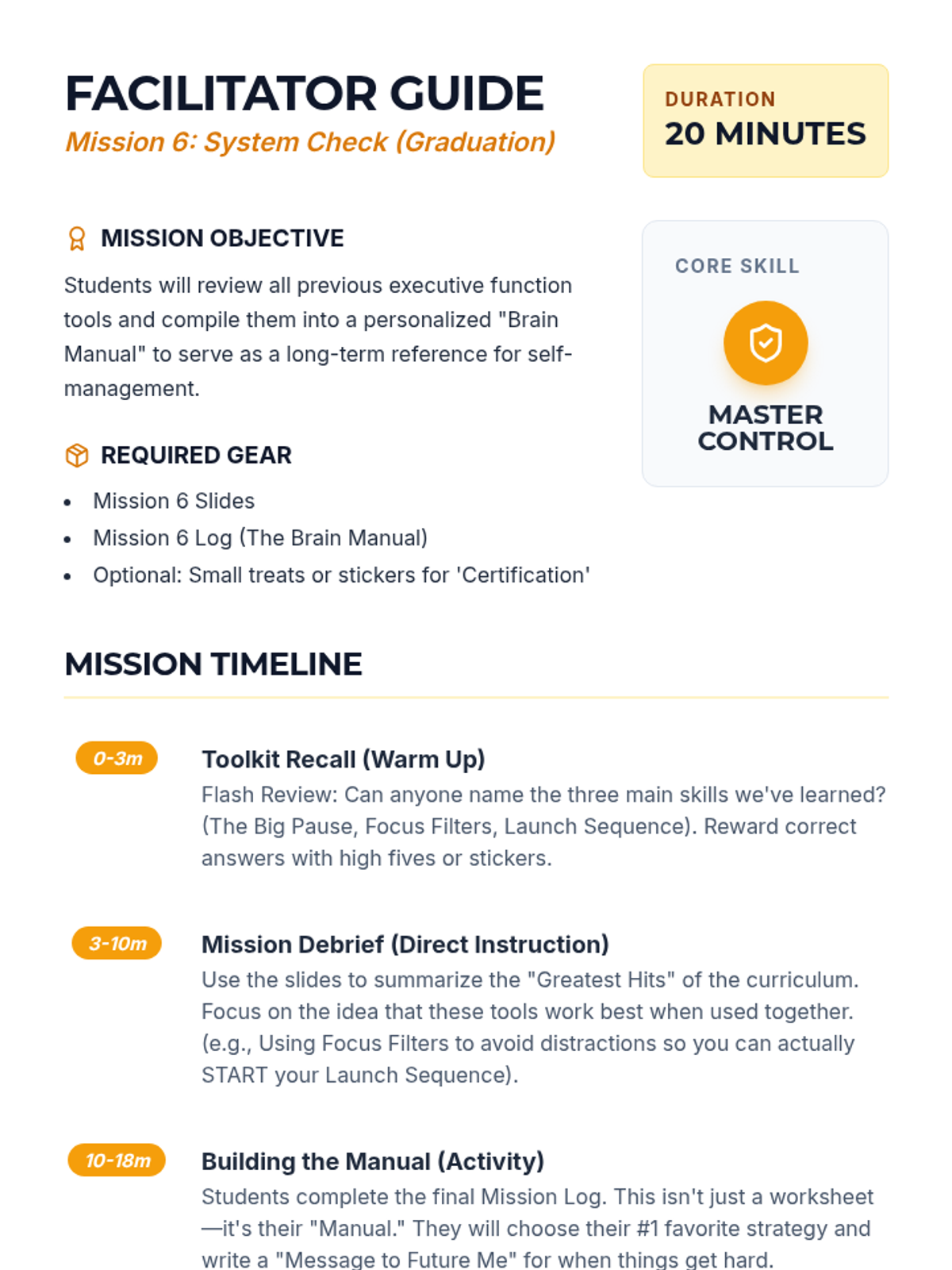
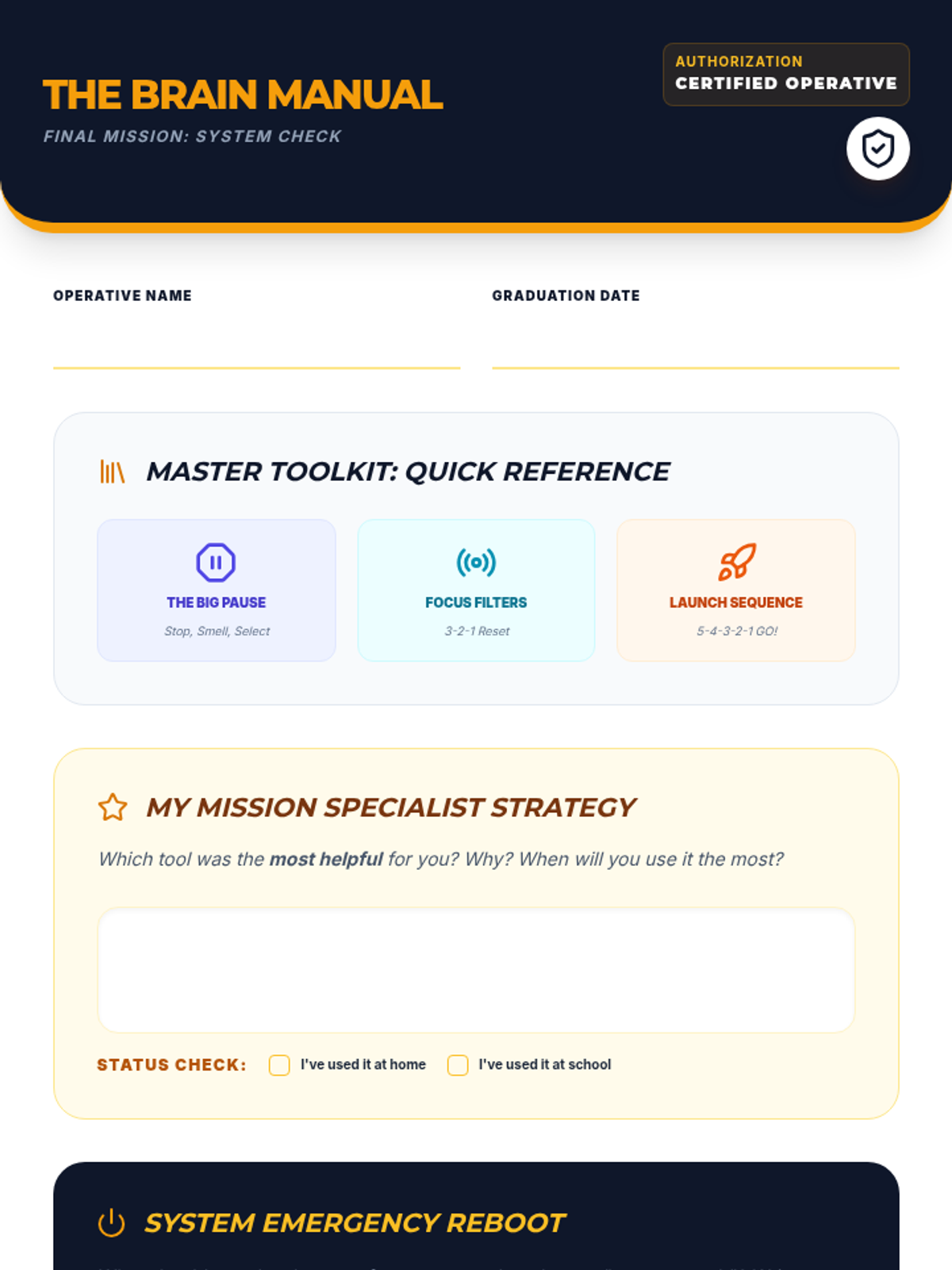
Final review of all strategies and the creation of a personalized "Brain Manual" for future success.
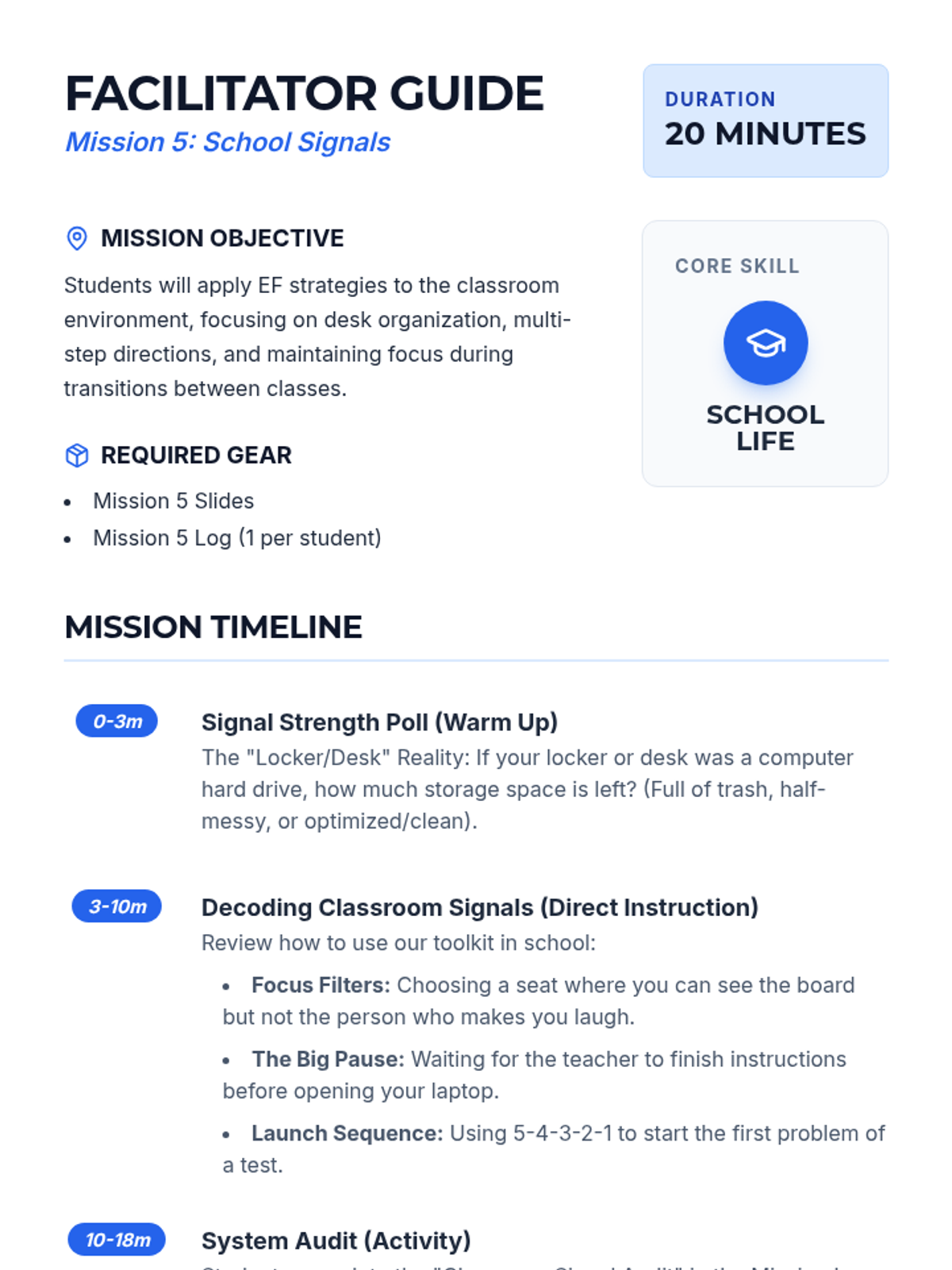
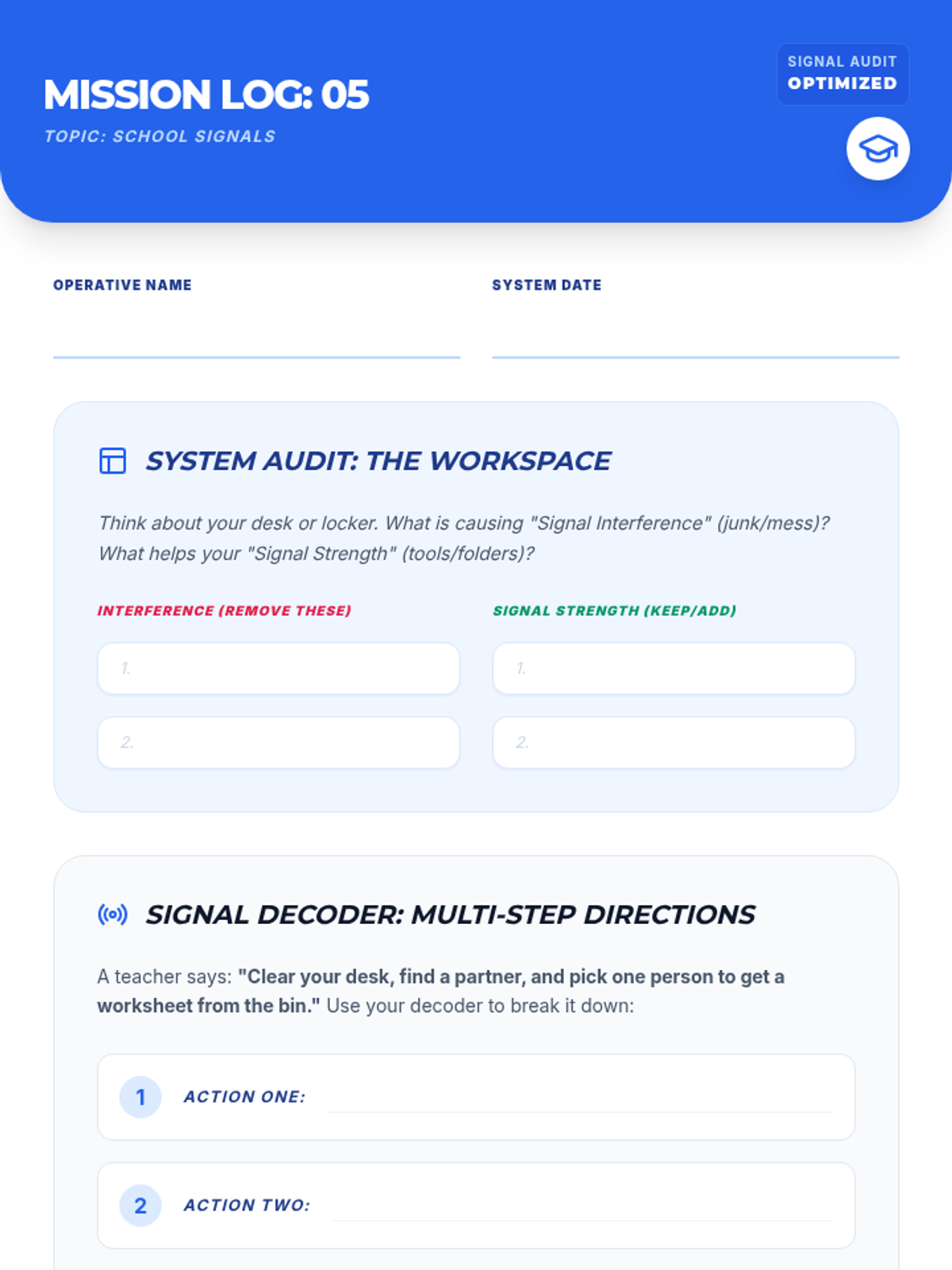
Practical strategies for staying focused and organized in the classroom environment.
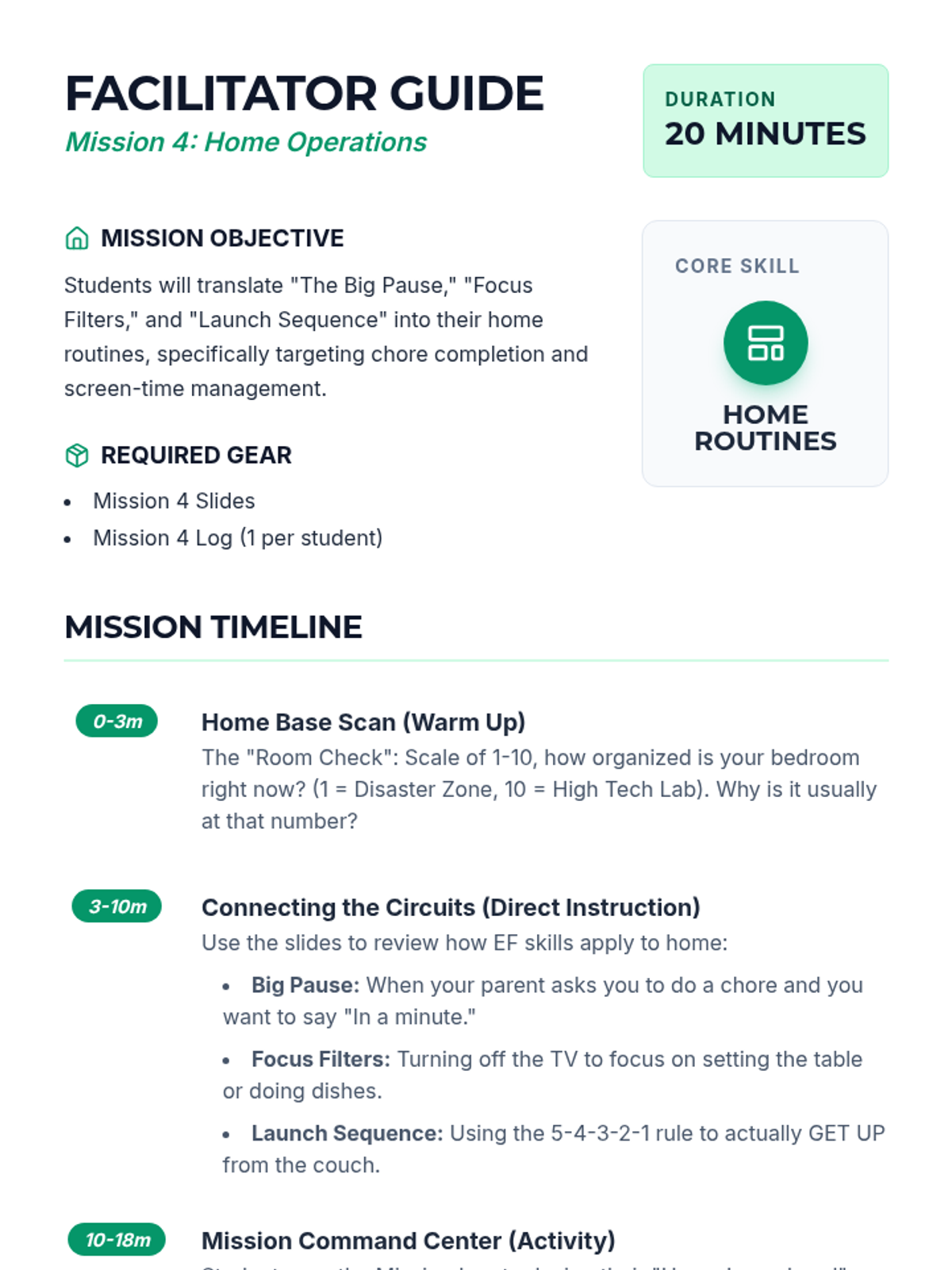
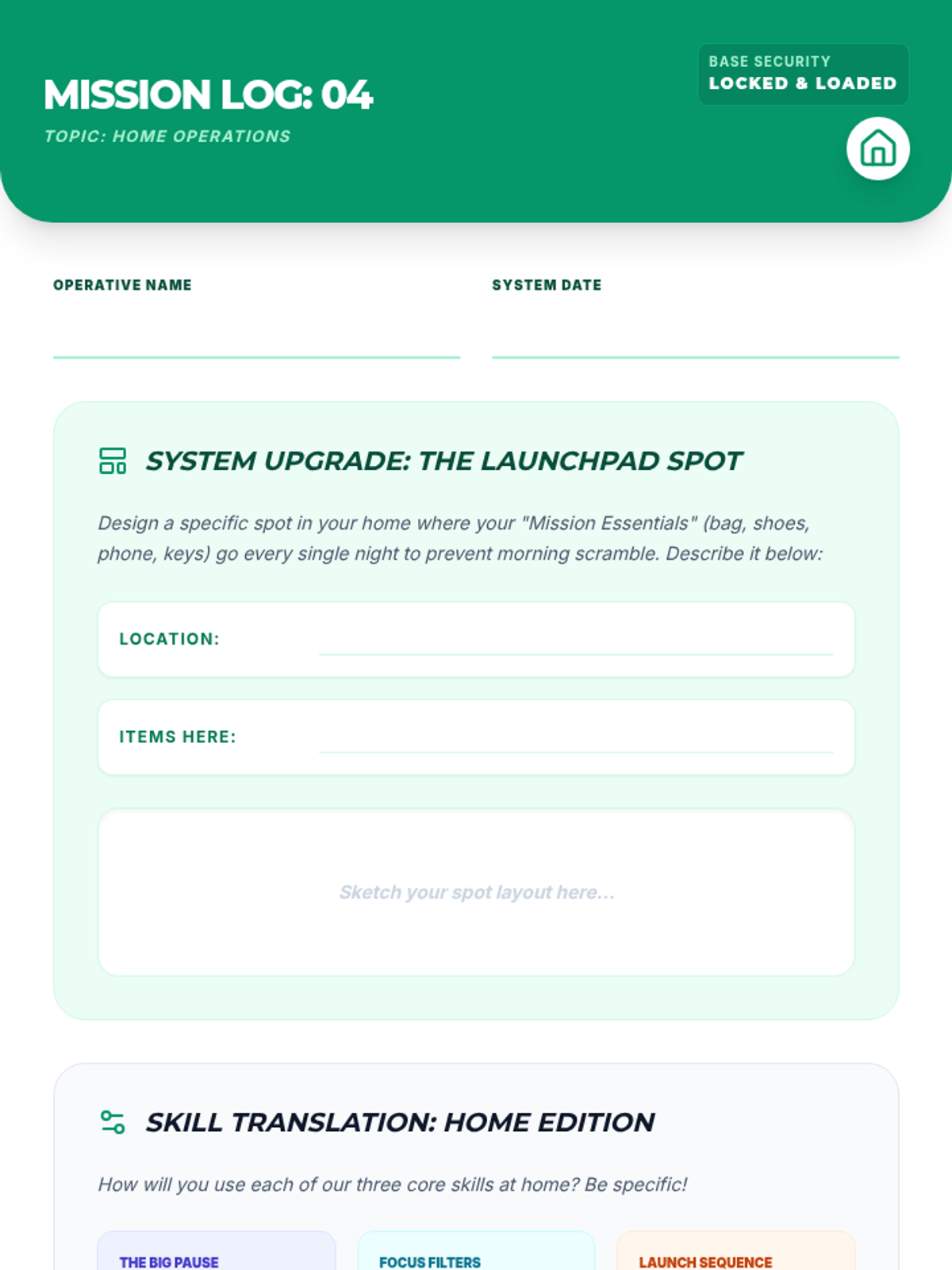
Applying impulse control and task initiation skills to home-based responsibilities like chores and routines.