A 30-minute career exploration lesson for 5th graders that uses drawing and creativity to help students visualize their future selves in various career paths.
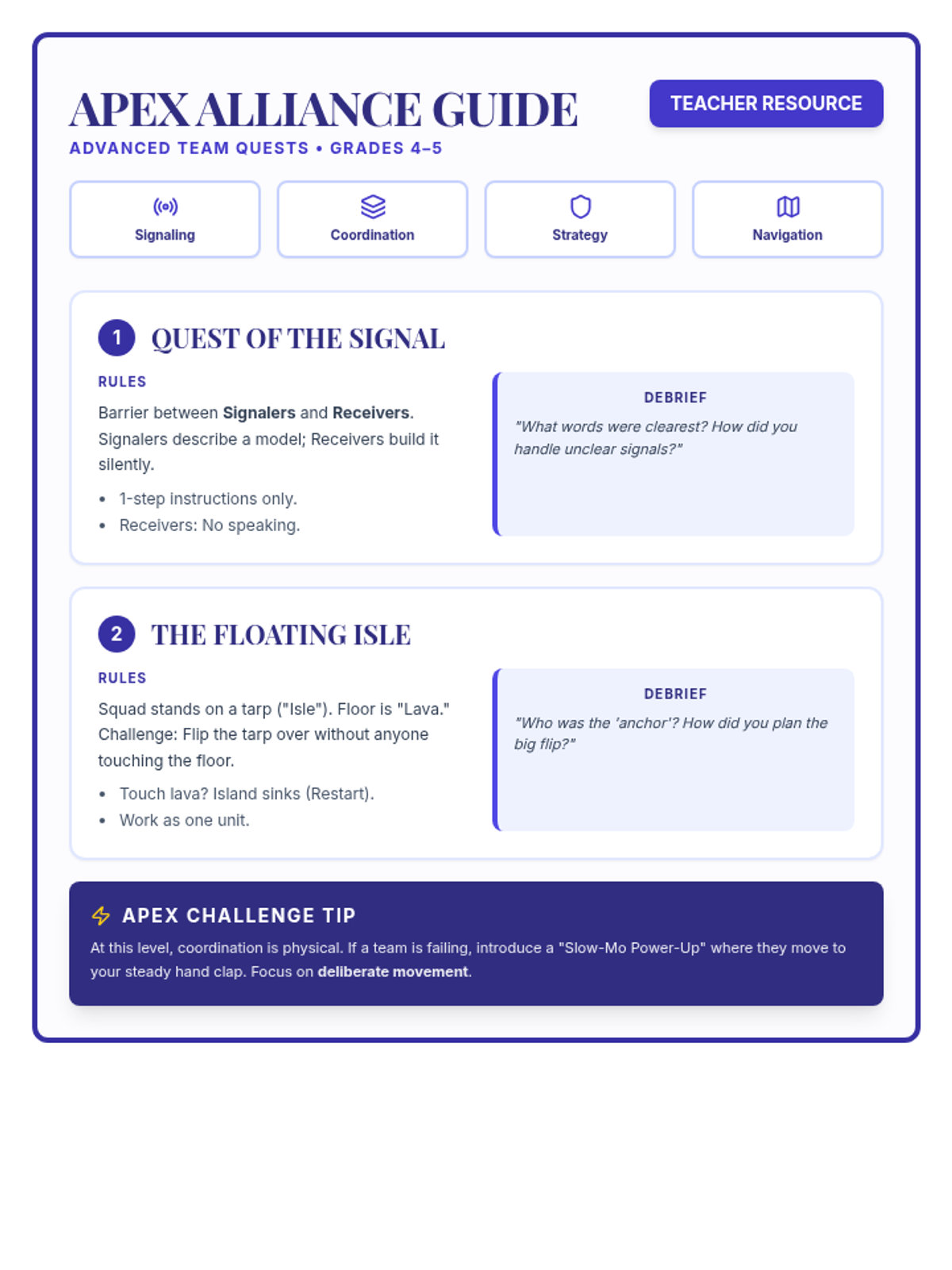
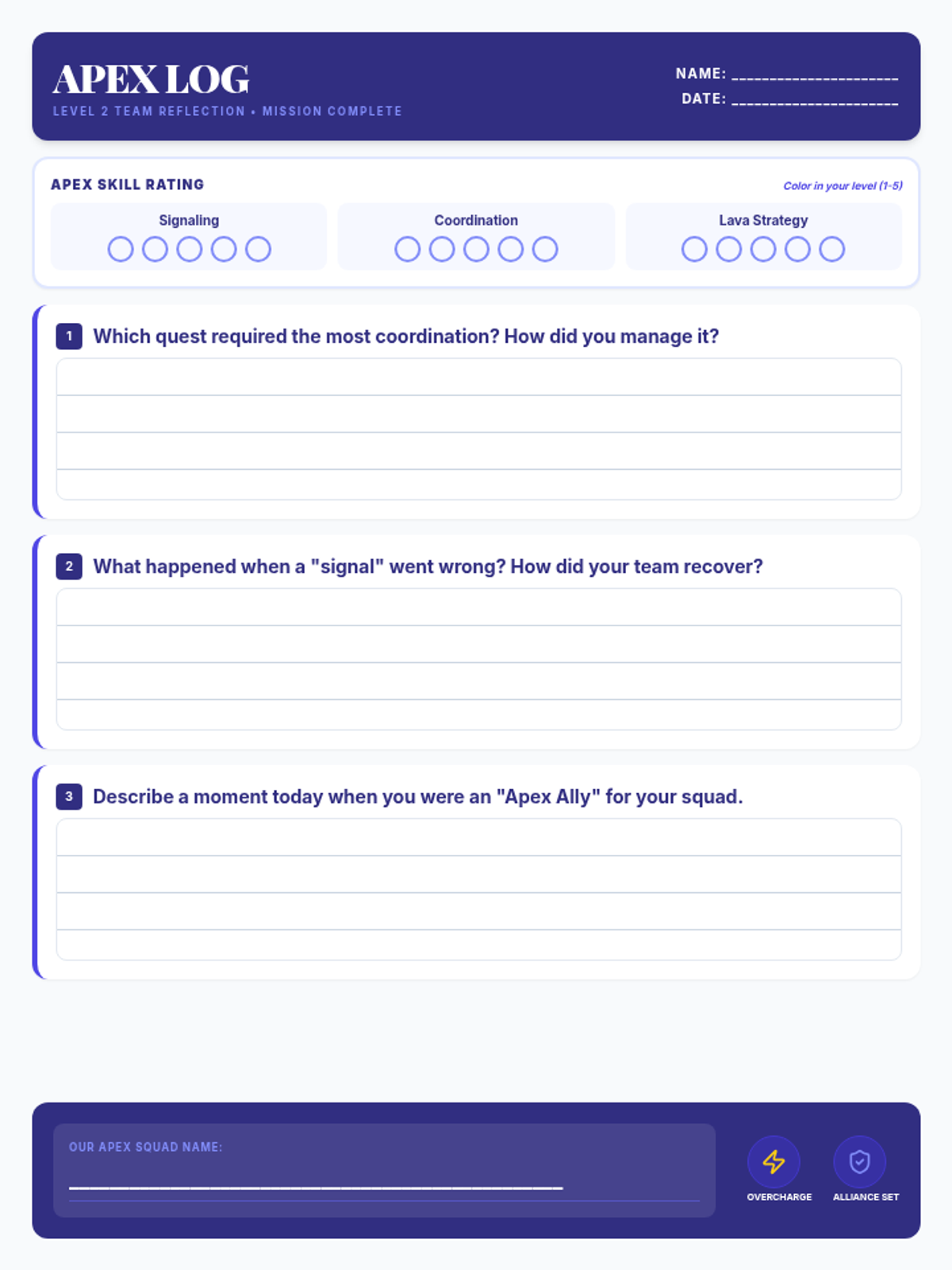
A second set of three 15-minute quests focused on advanced coordination, clear signaling, and group problem-solving under pressure.
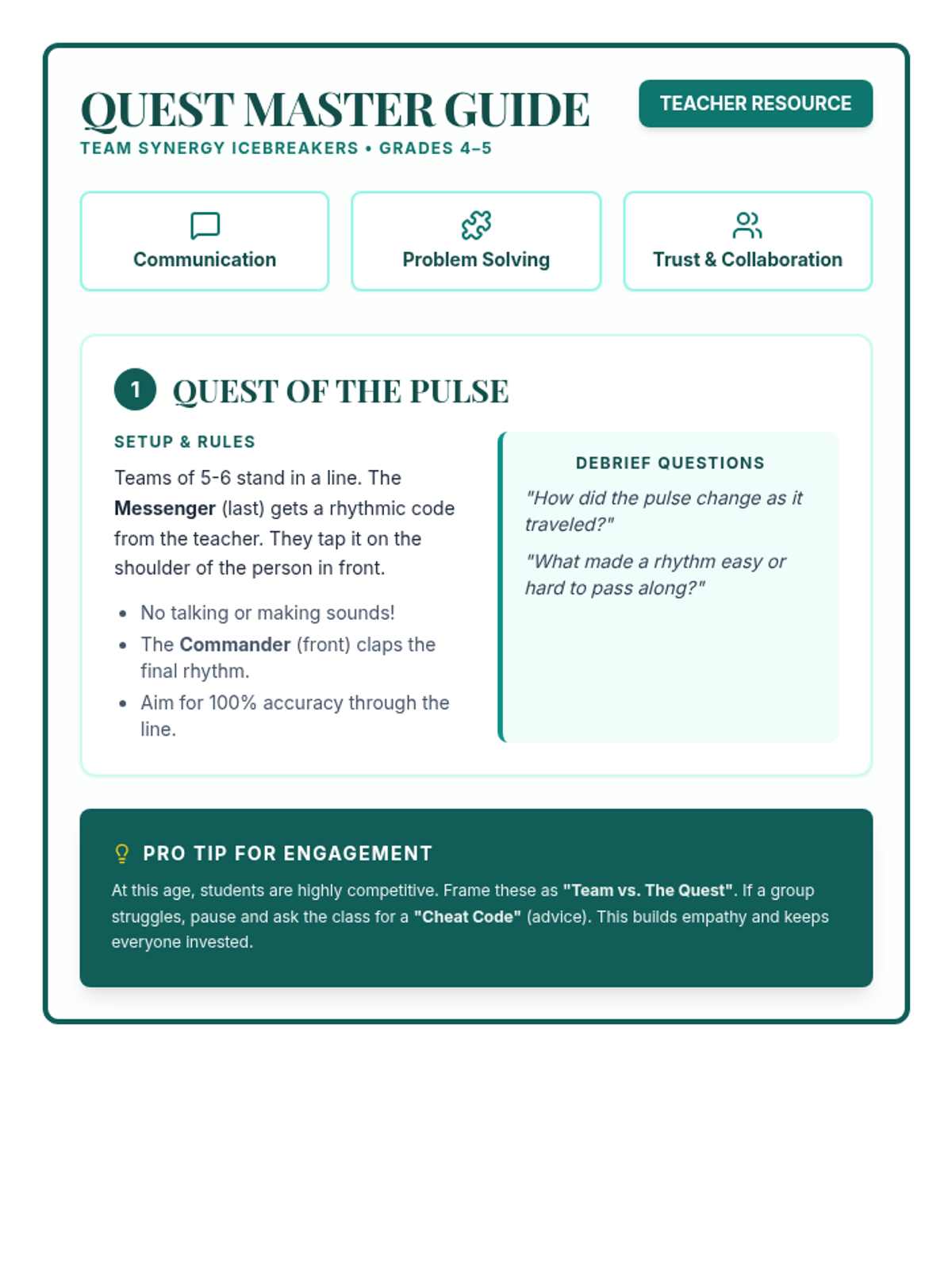
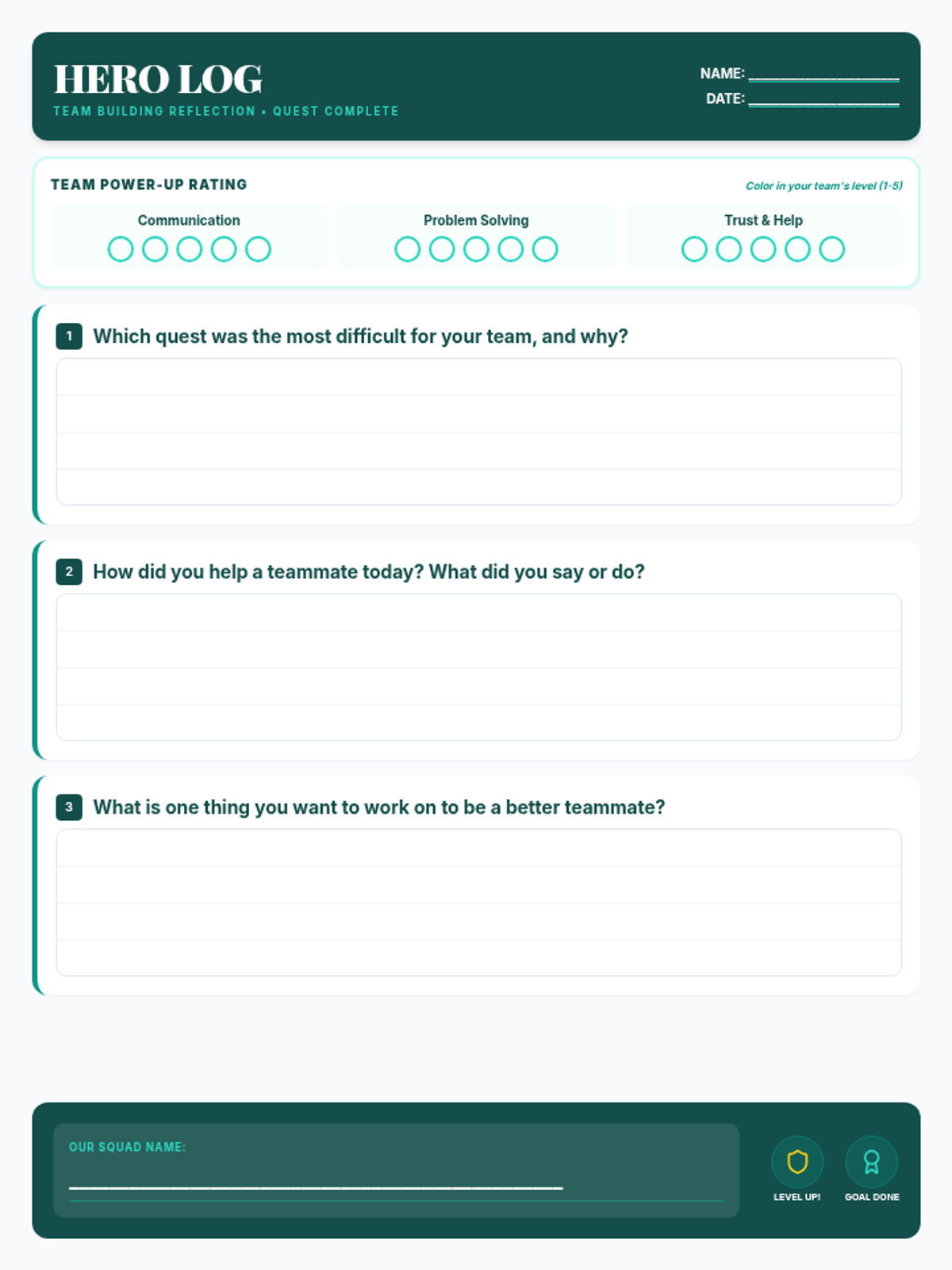
A collection of three 15-minute icebreakers focused on communication, problem-solving, and trust, complete with visual aids and reflection tools.
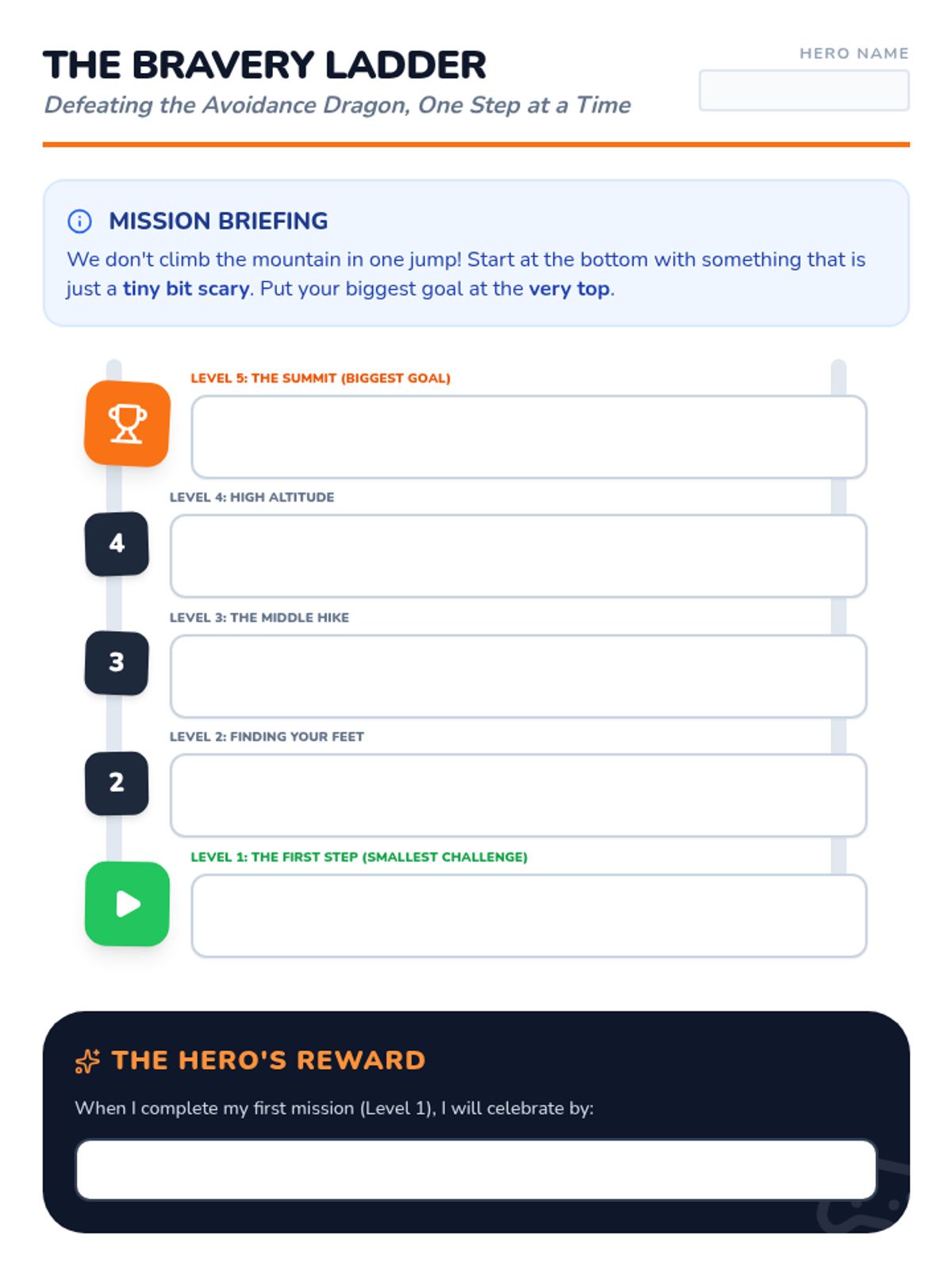
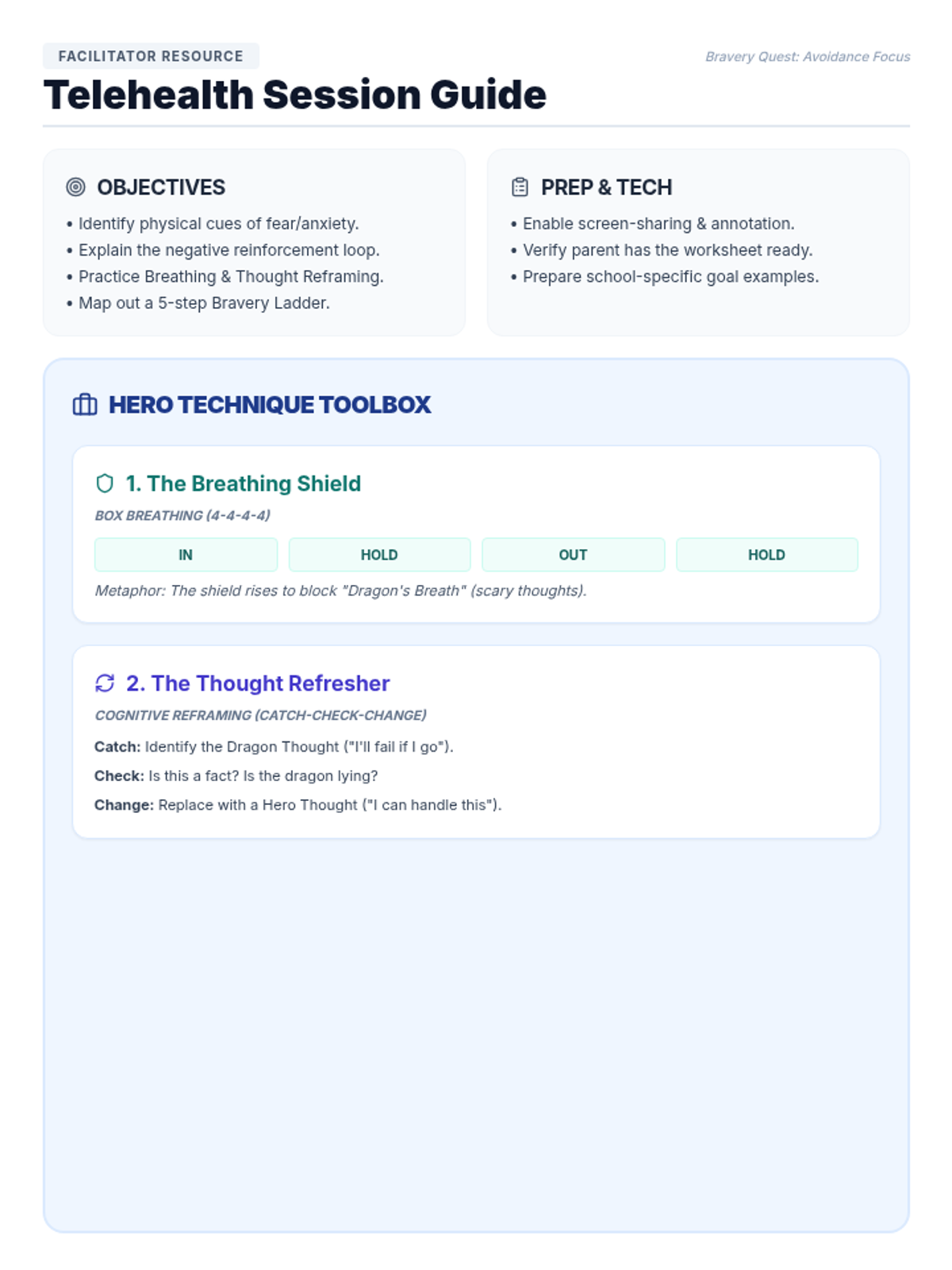
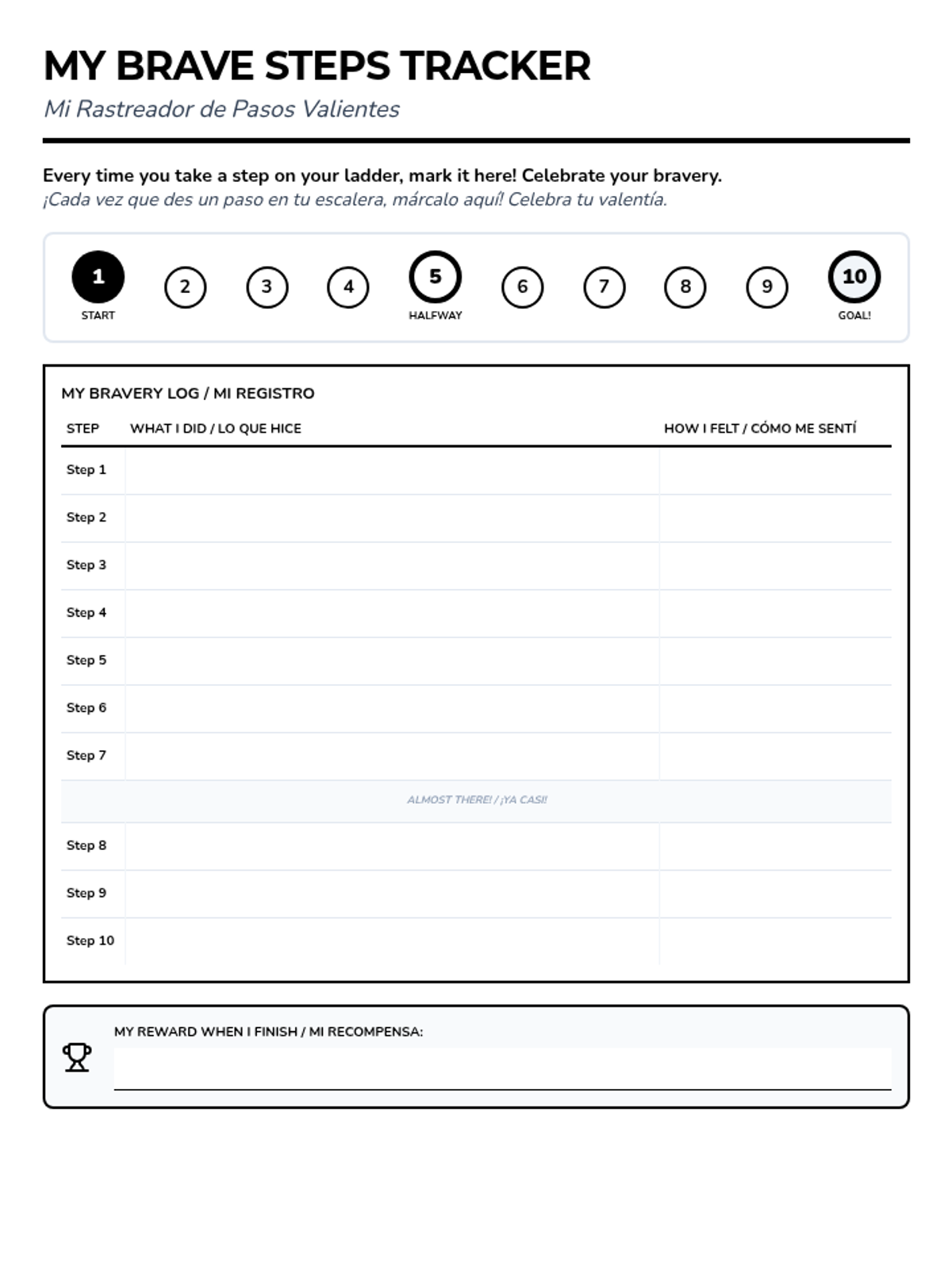
A psychoeducation lesson for a 10-year-old boy focusing on understanding the cycle of avoidance and negative reinforcement through the metaphor of a 'Bravery Quest.' It includes slides for telehealth delivery, a goal-setting worksheet, and a facilitator guide.
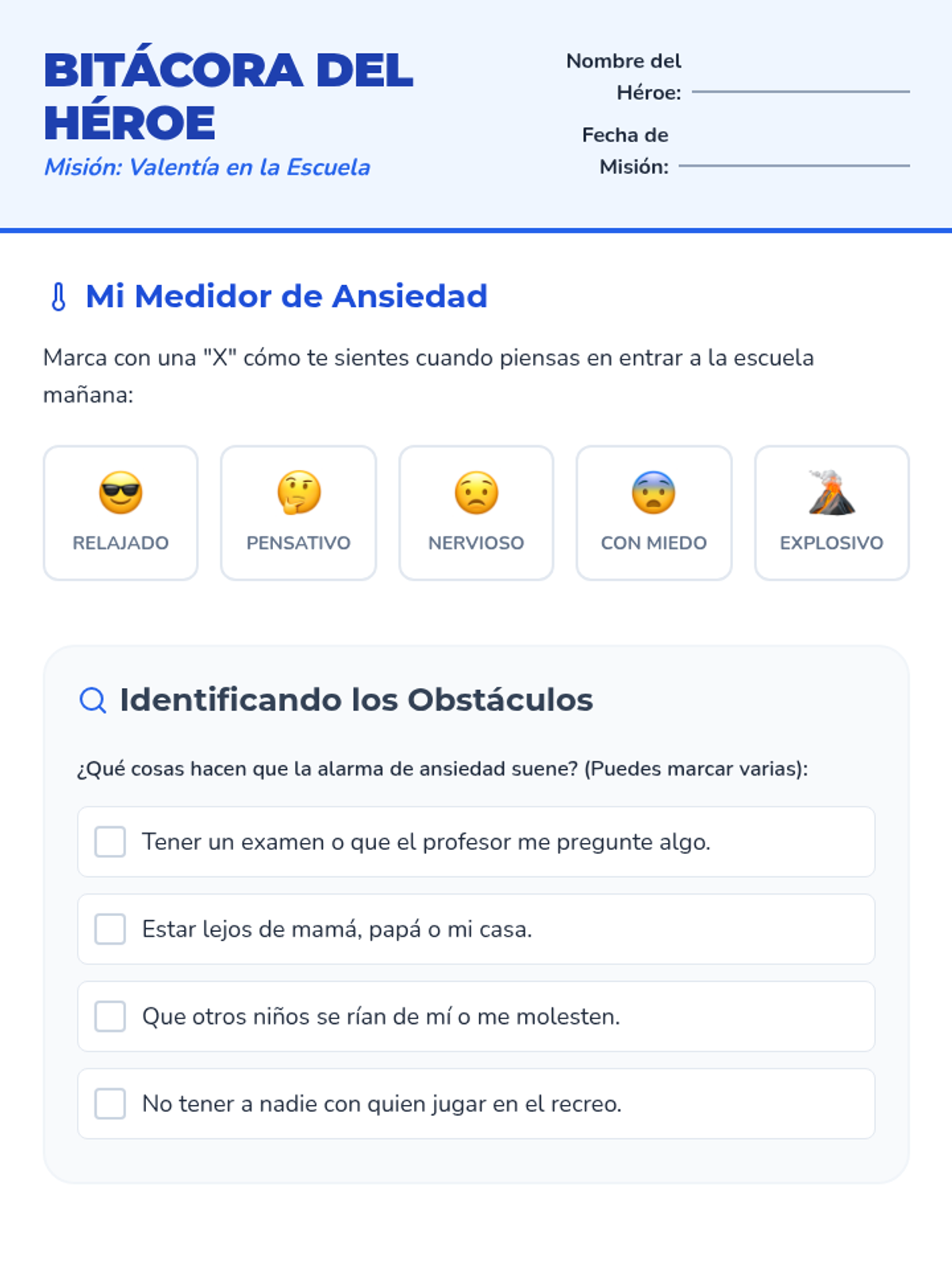
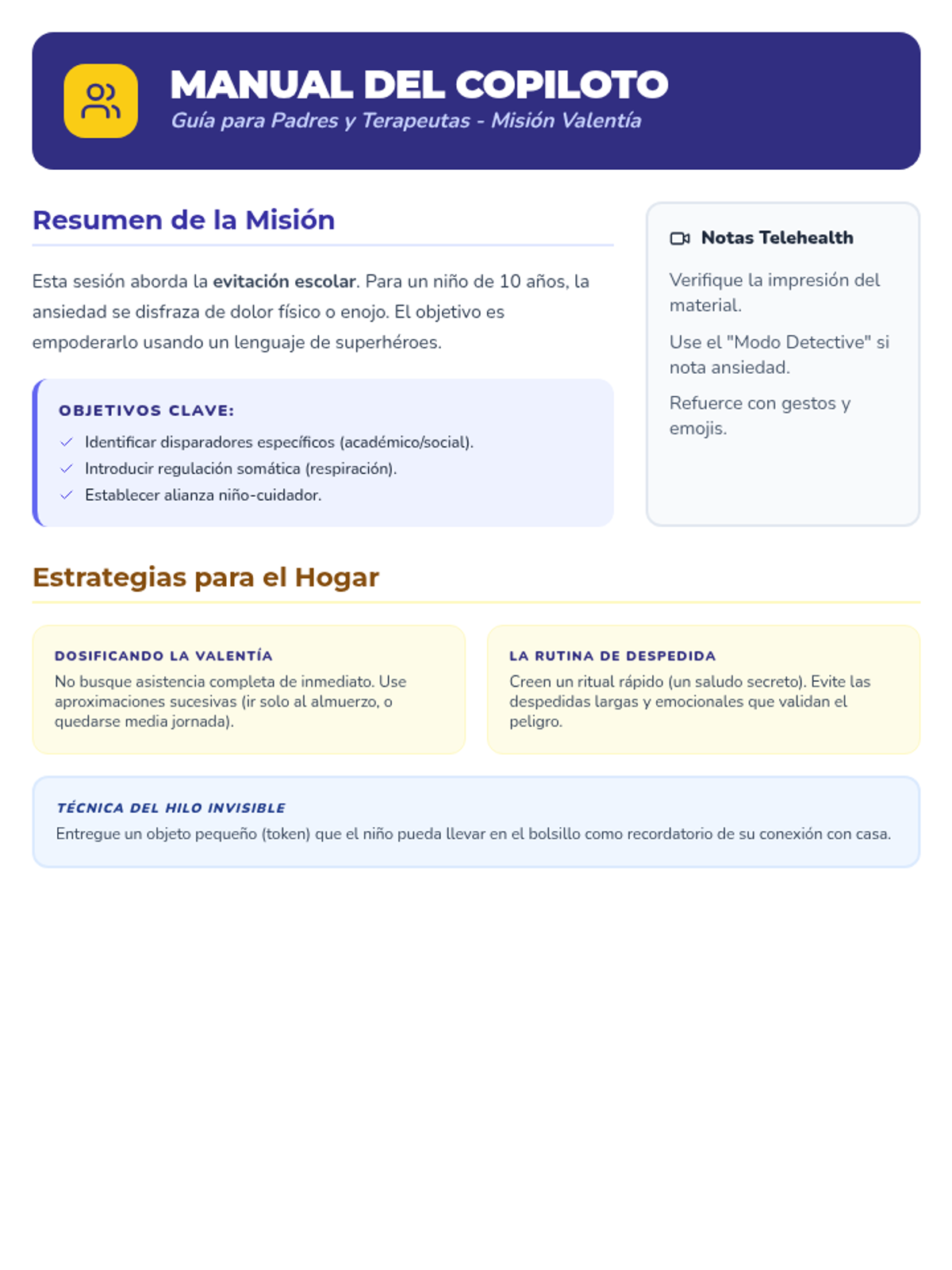
A telehealth-focused lesson designed for a 10-year-old boy struggling with school attendance and anxiety, covering academic pressure, separation, and social challenges through a superhero theme.
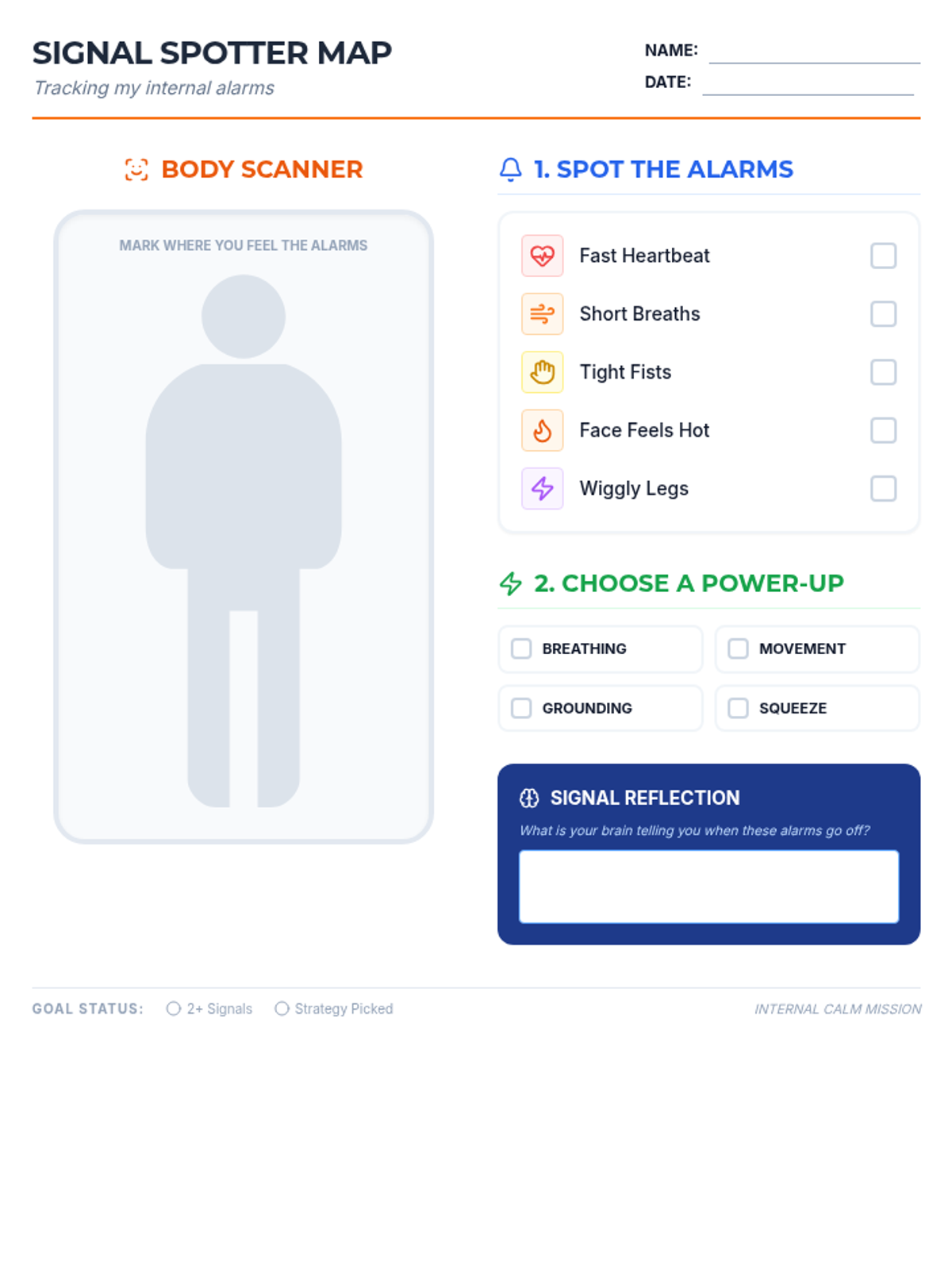
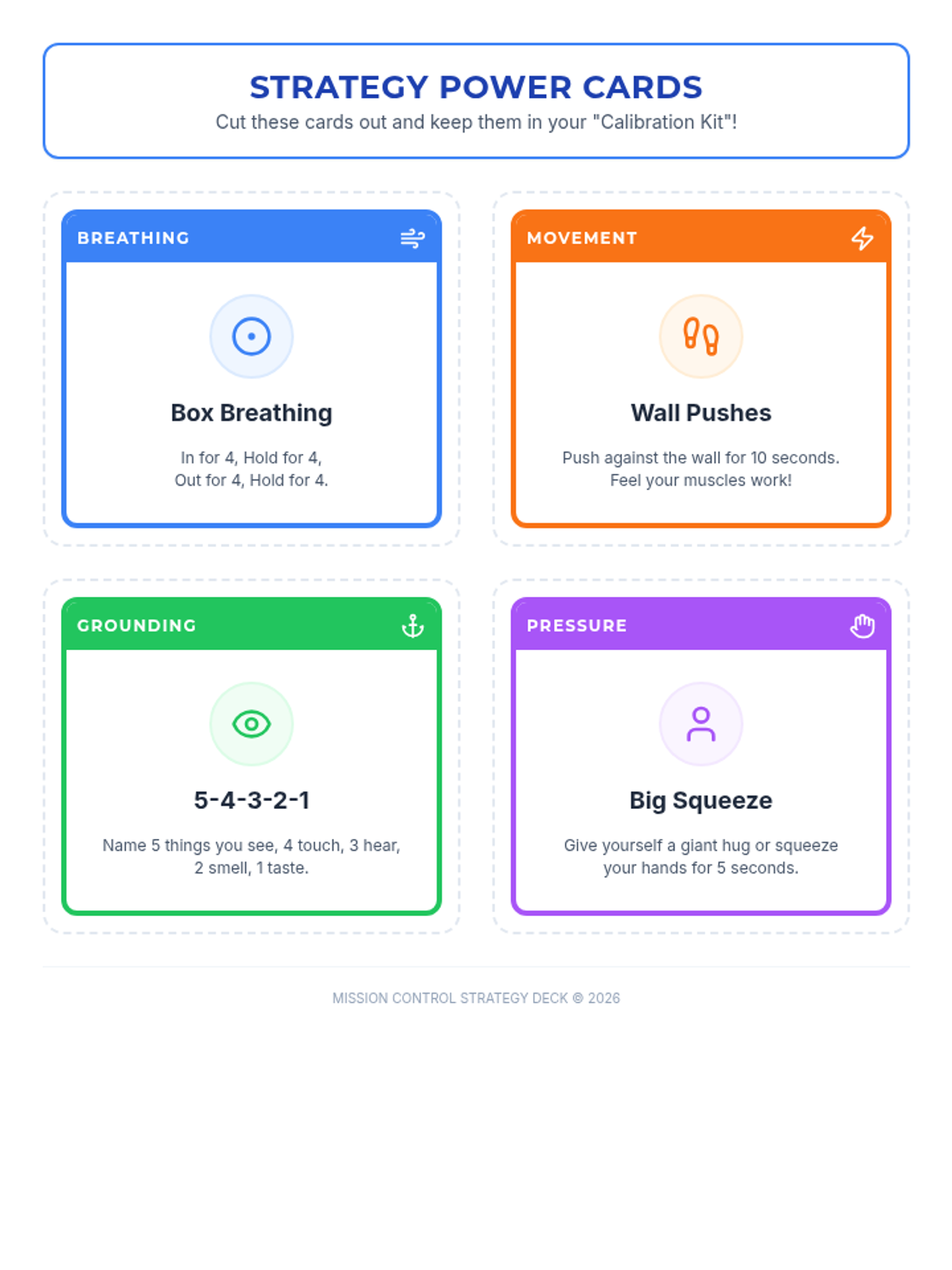
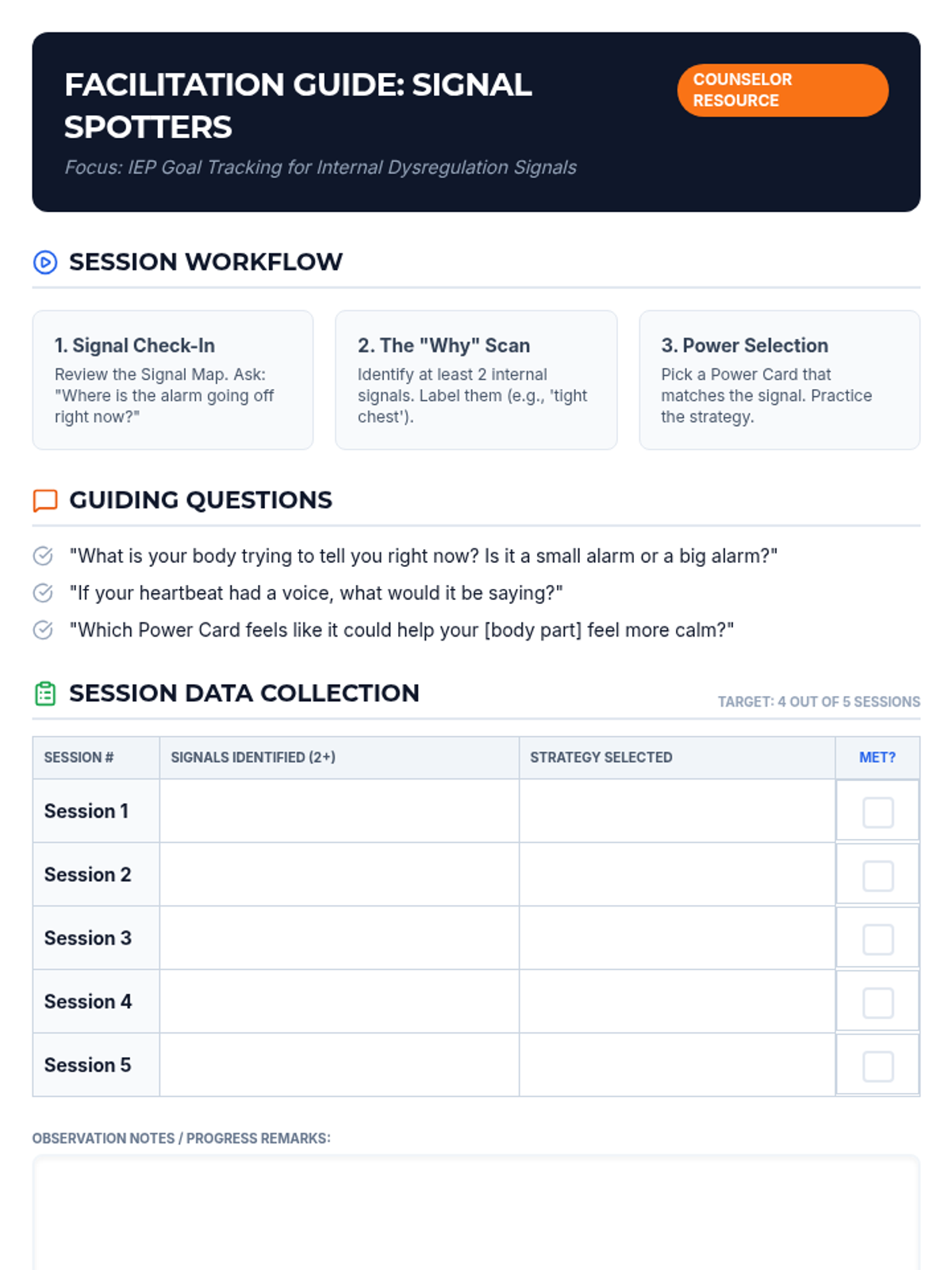
A structured counseling lesson focused on identifying internal physiological signals of dysregulation and matching them with effective coping strategies. Students use a body map to locate 'alarms' and select 'power-up' strategies to return to a calm state.
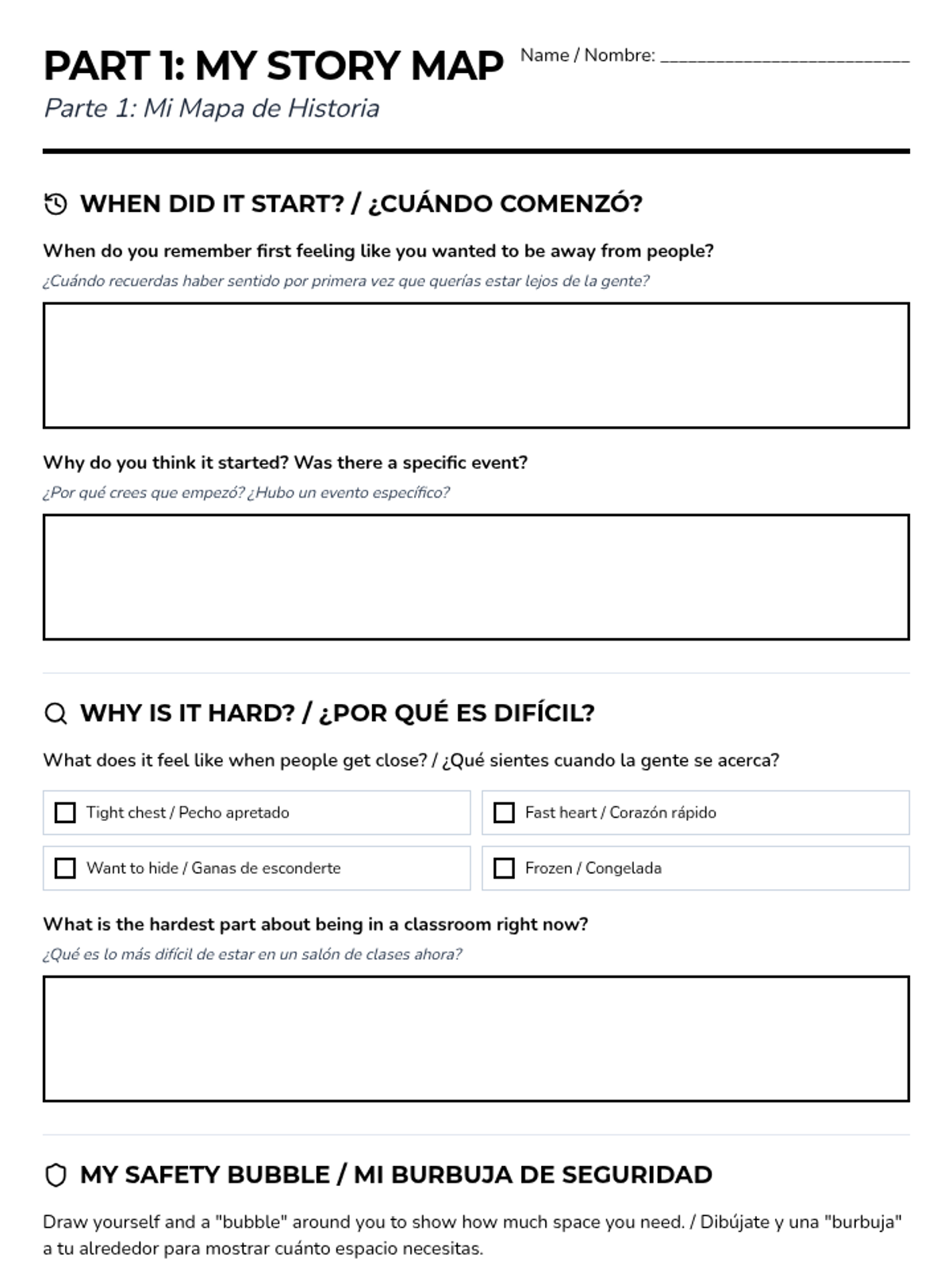
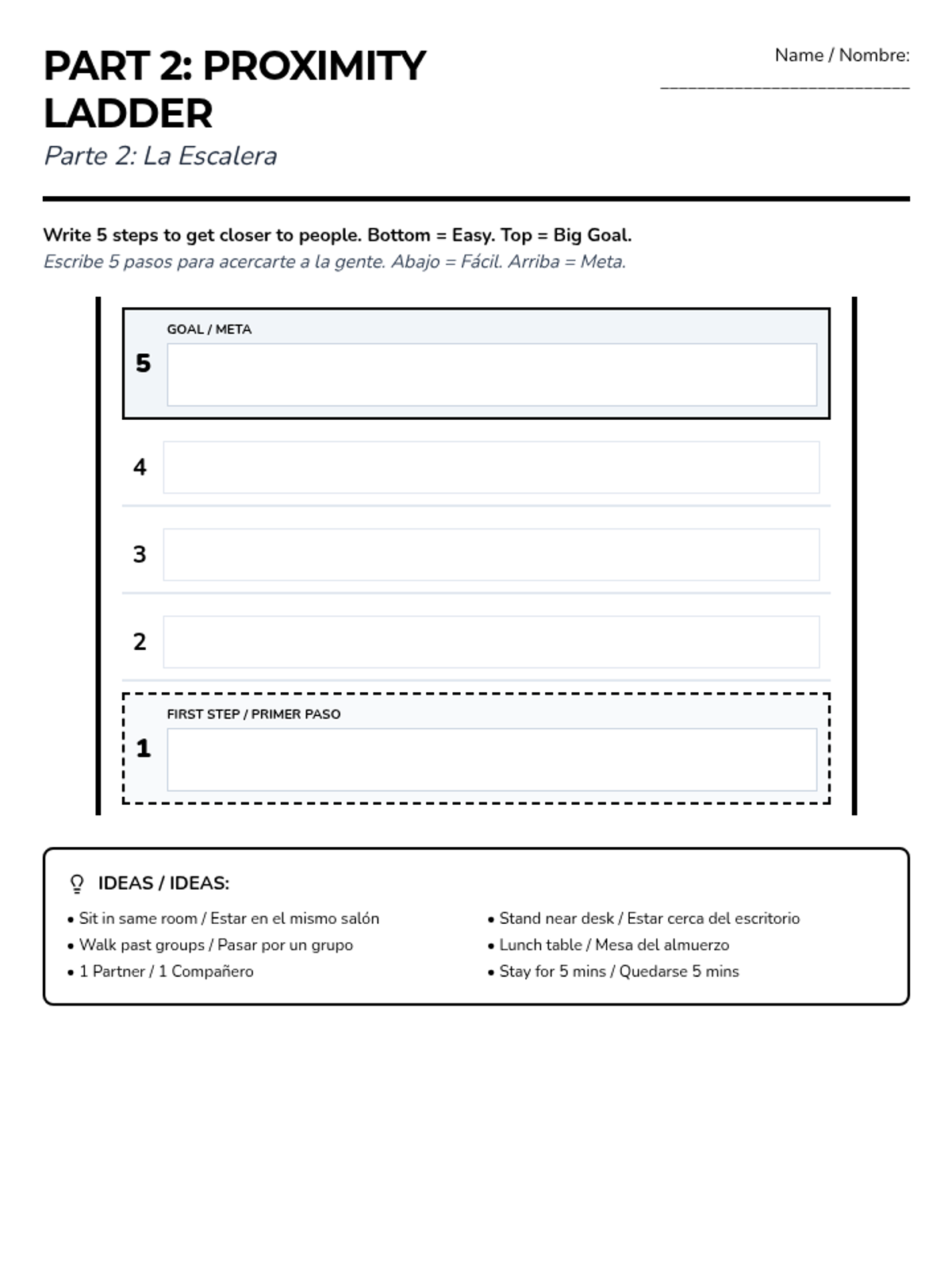
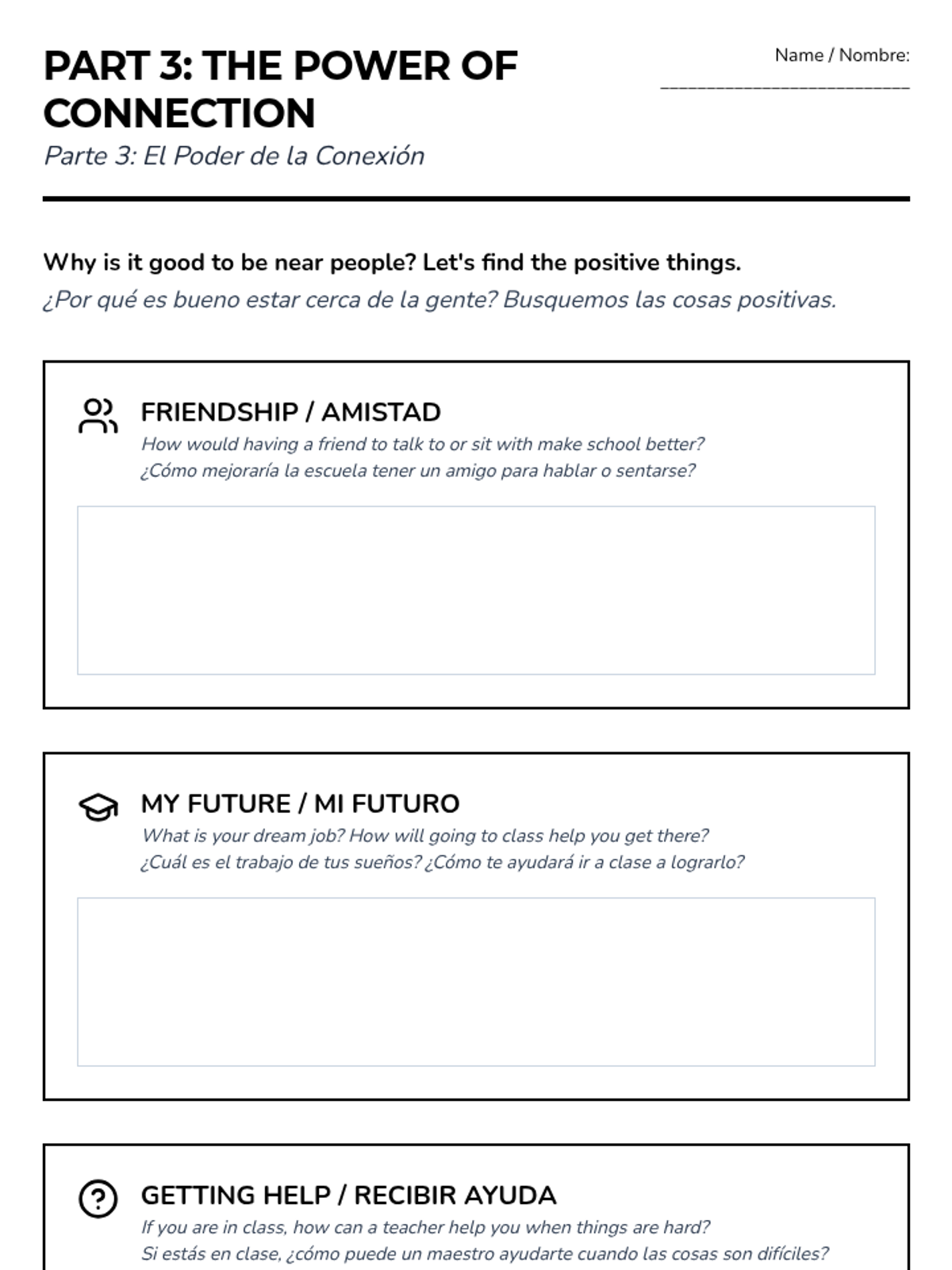
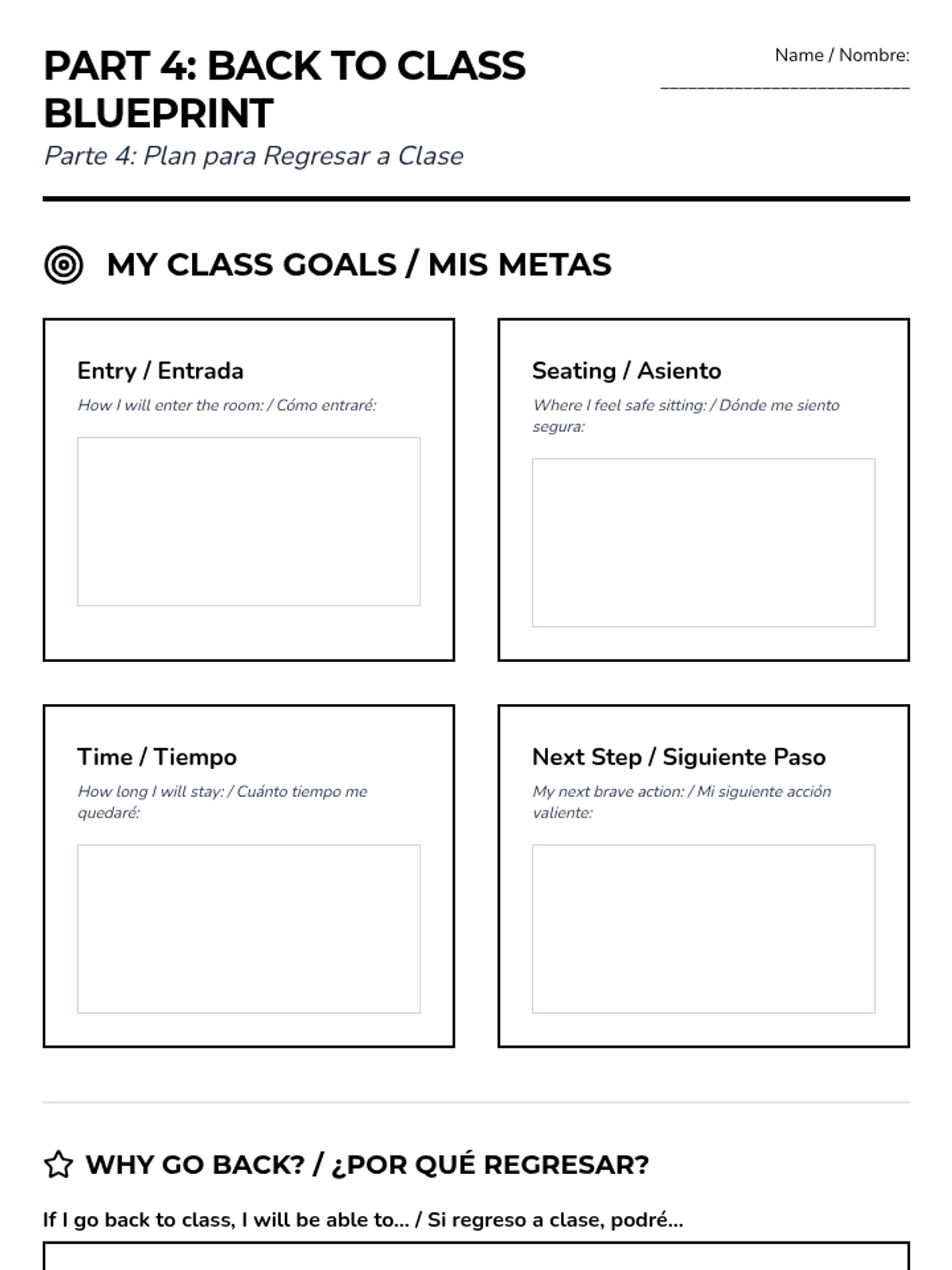
This lesson provides a structured approach for a student to reflect on their past experiences with proximity, identify the benefits of social connection, and create actionable 'ladder' goals for returning to the classroom and being near others.
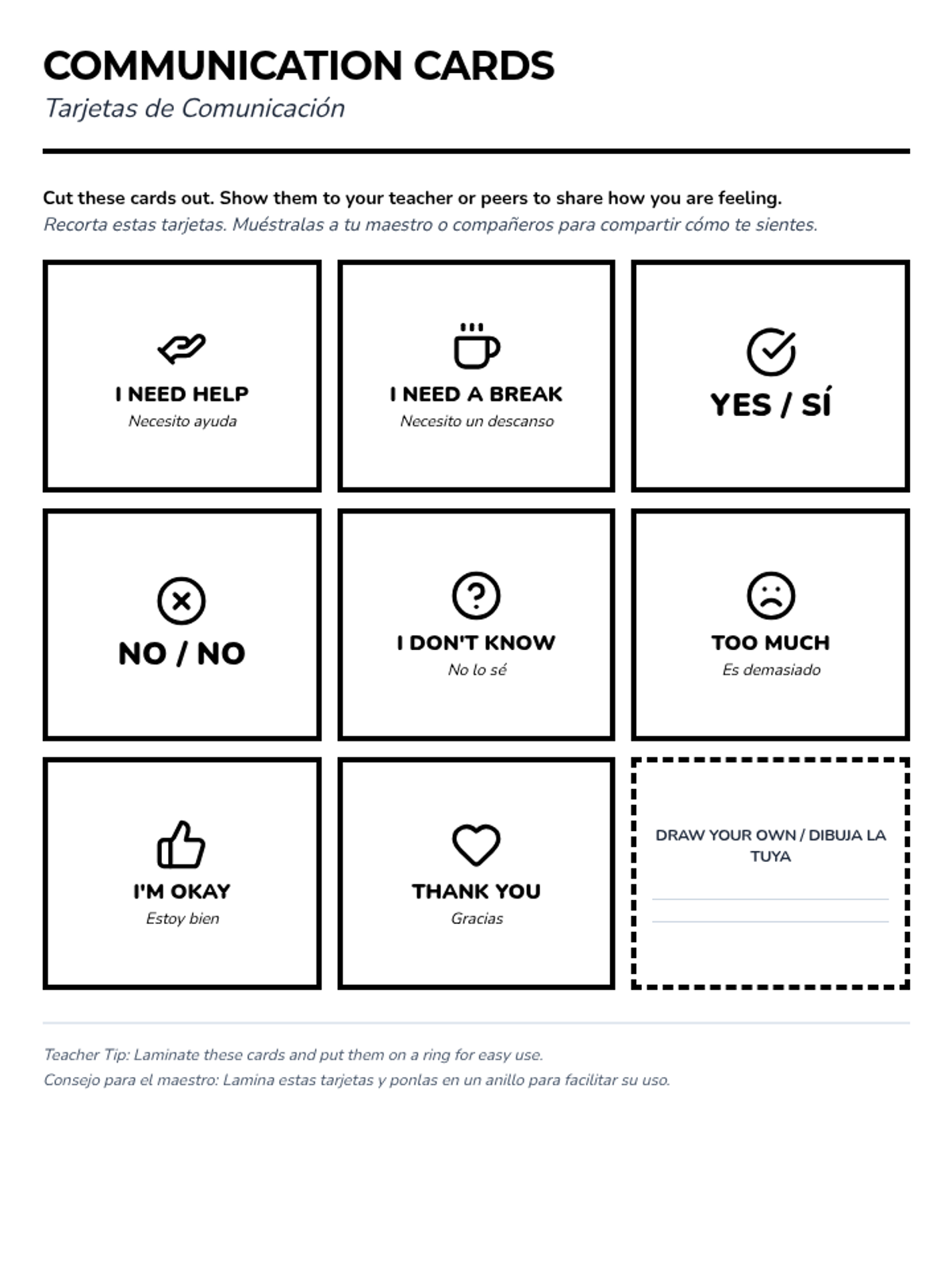
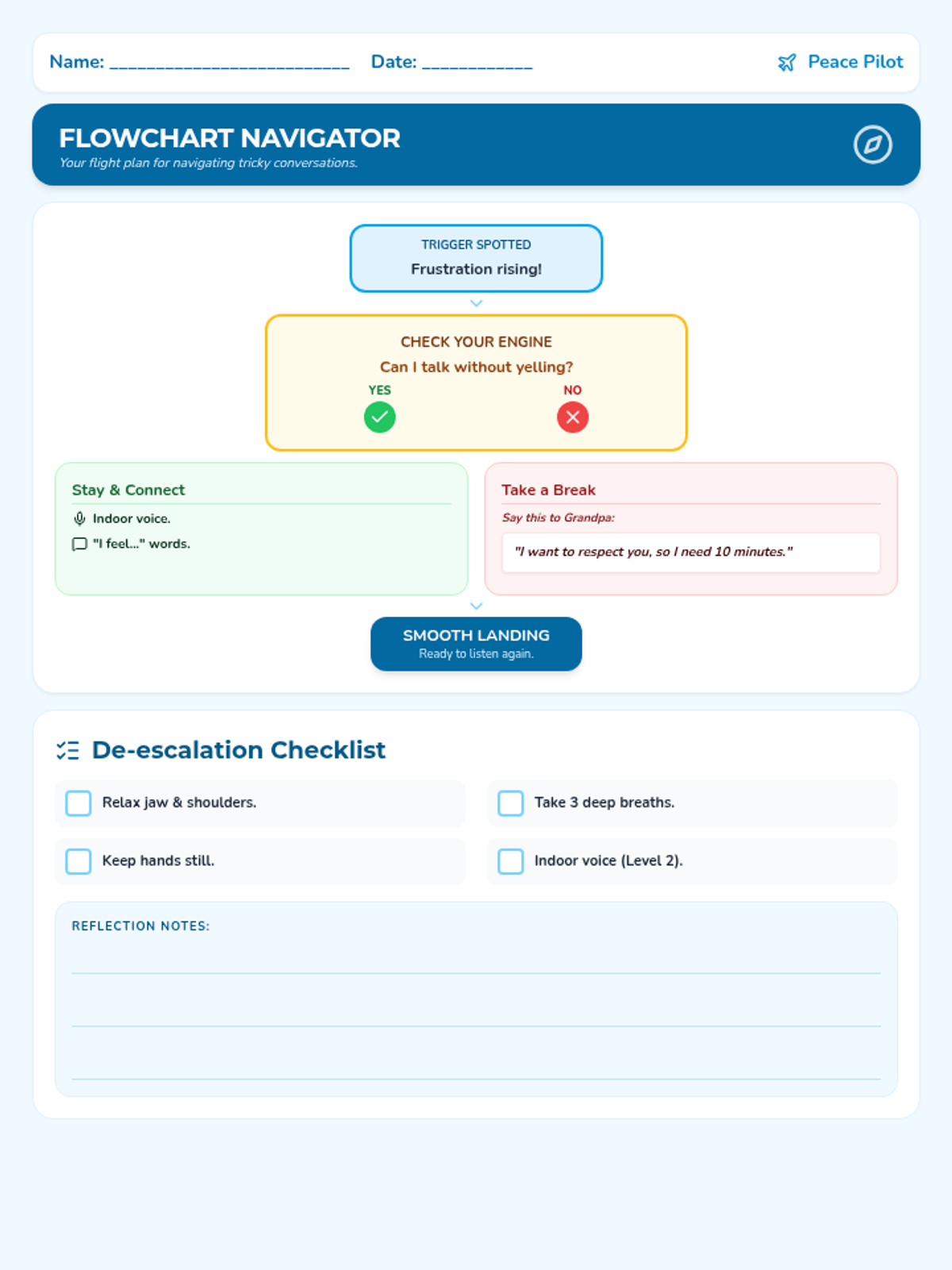
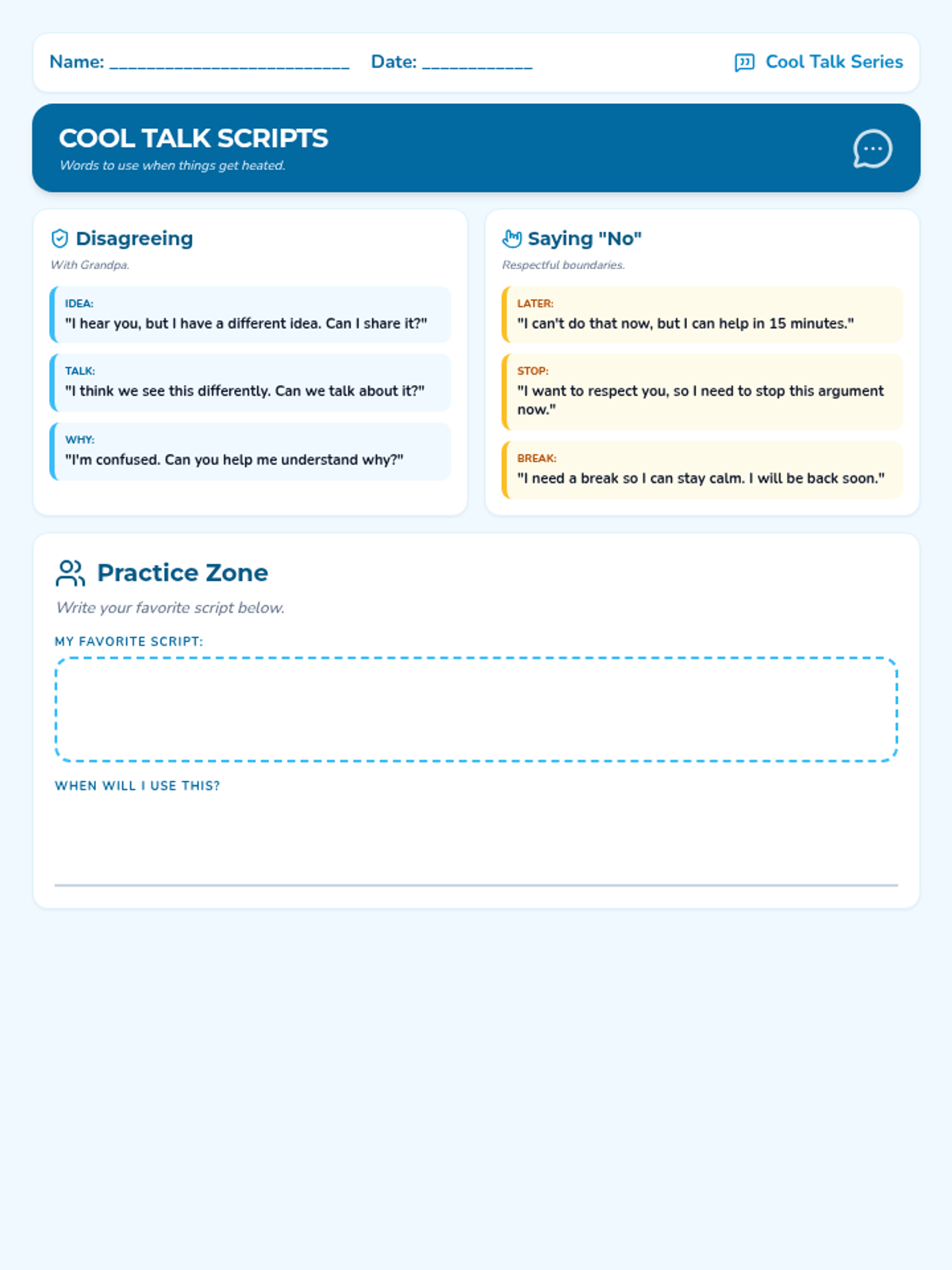
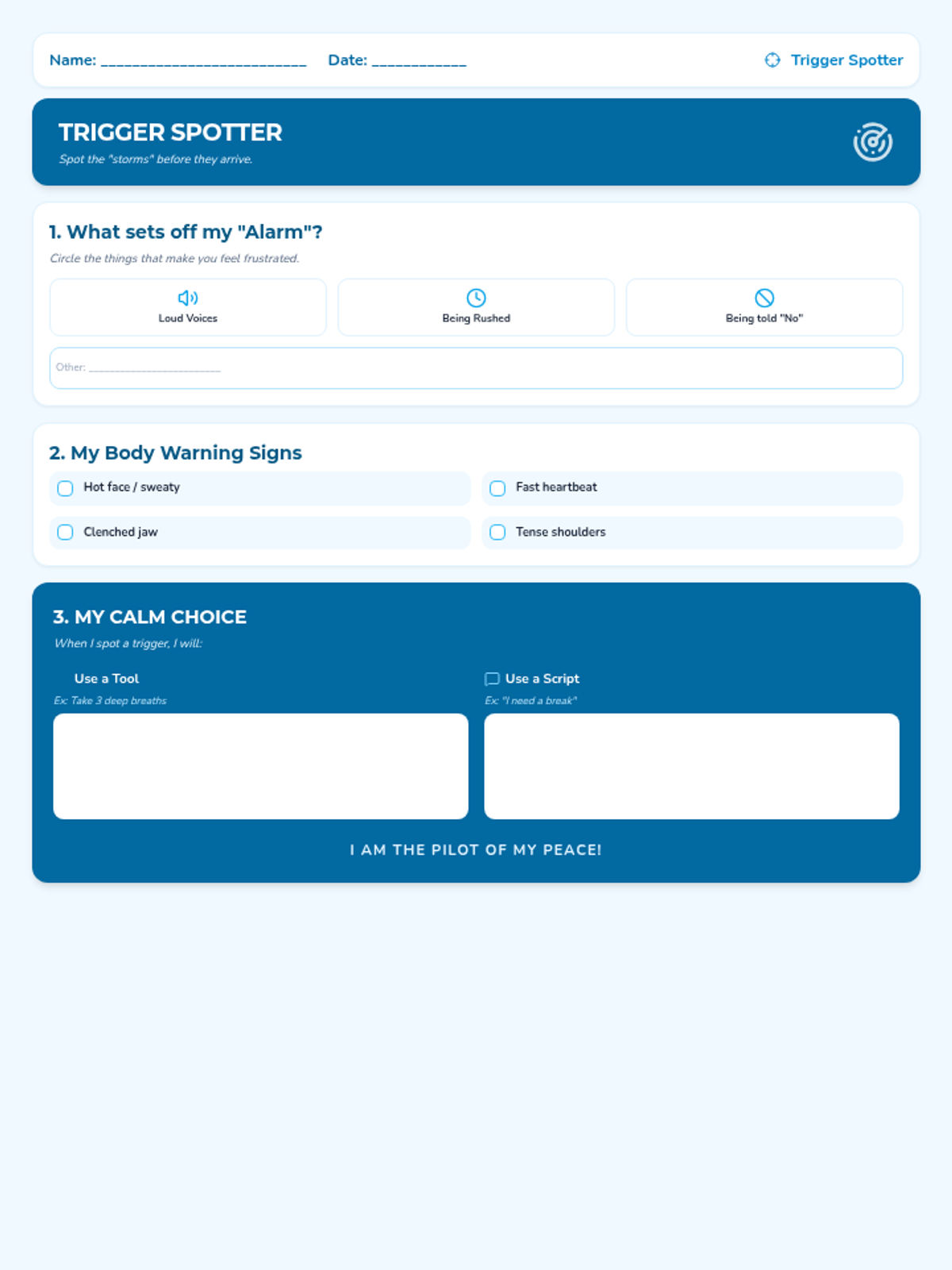
A collection of visual tools and communication strategies designed to help students navigate family conflict, manage emotional triggers, and use de-escalation techniques while maintaining respectful boundaries.
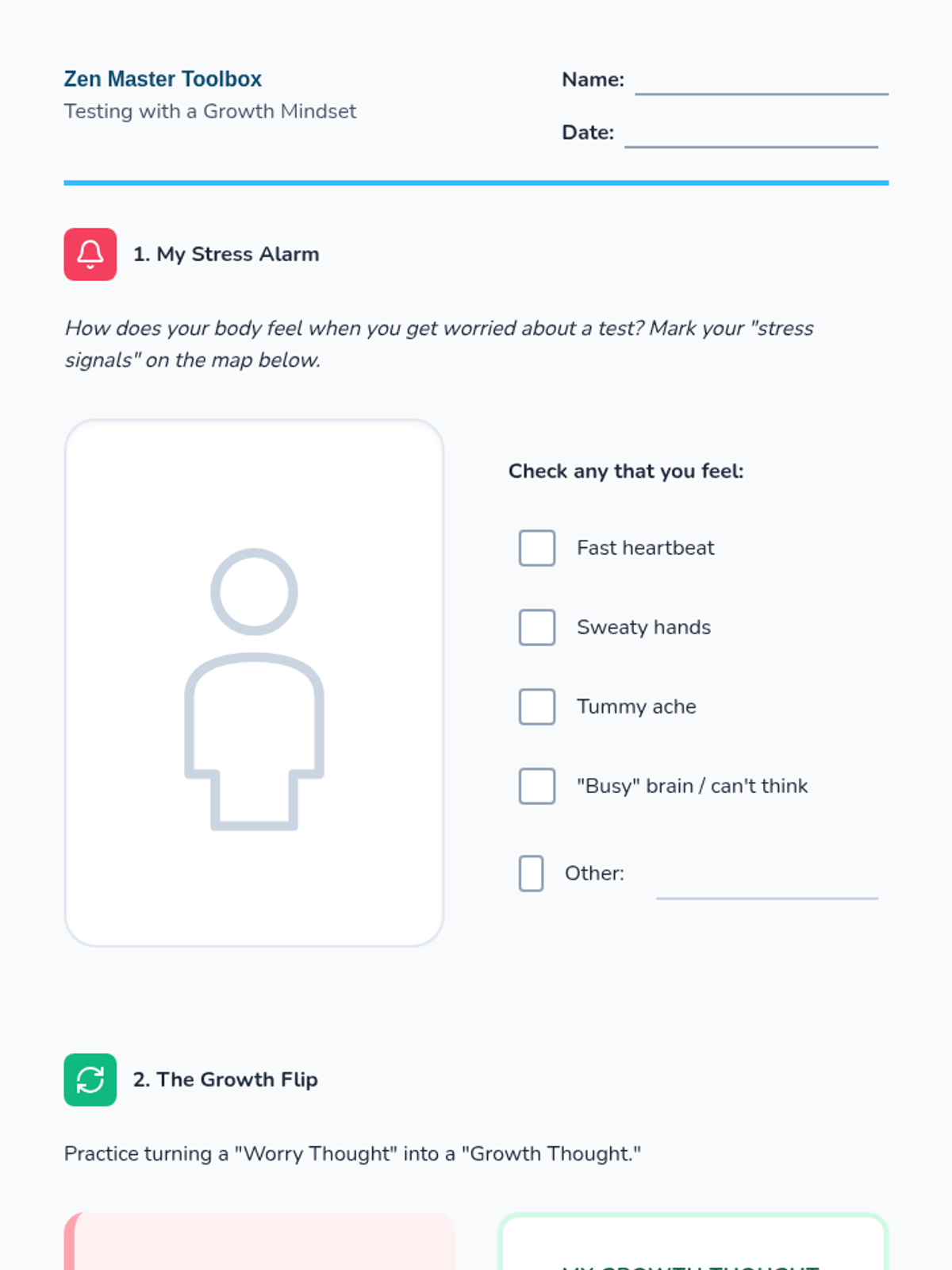
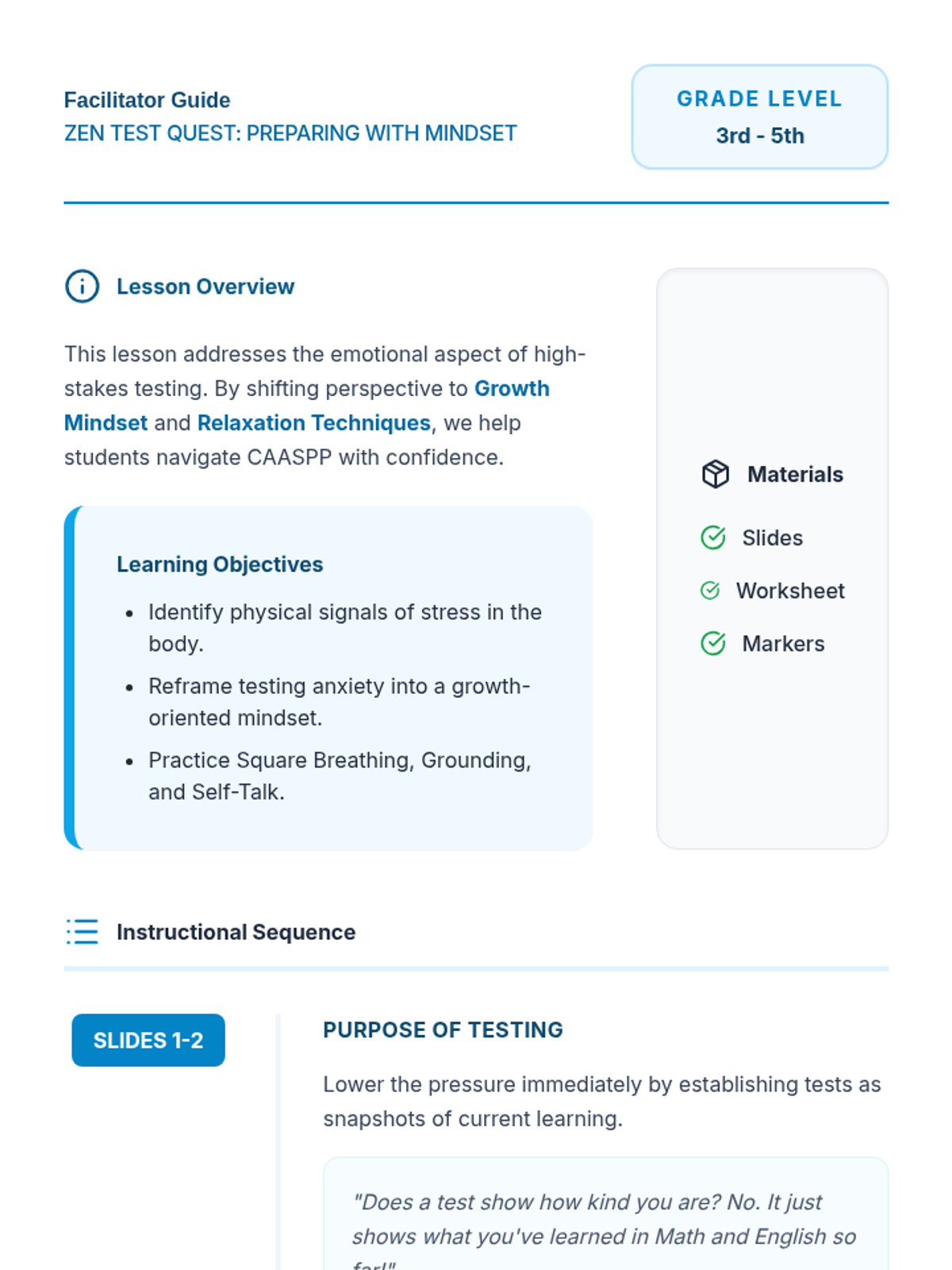
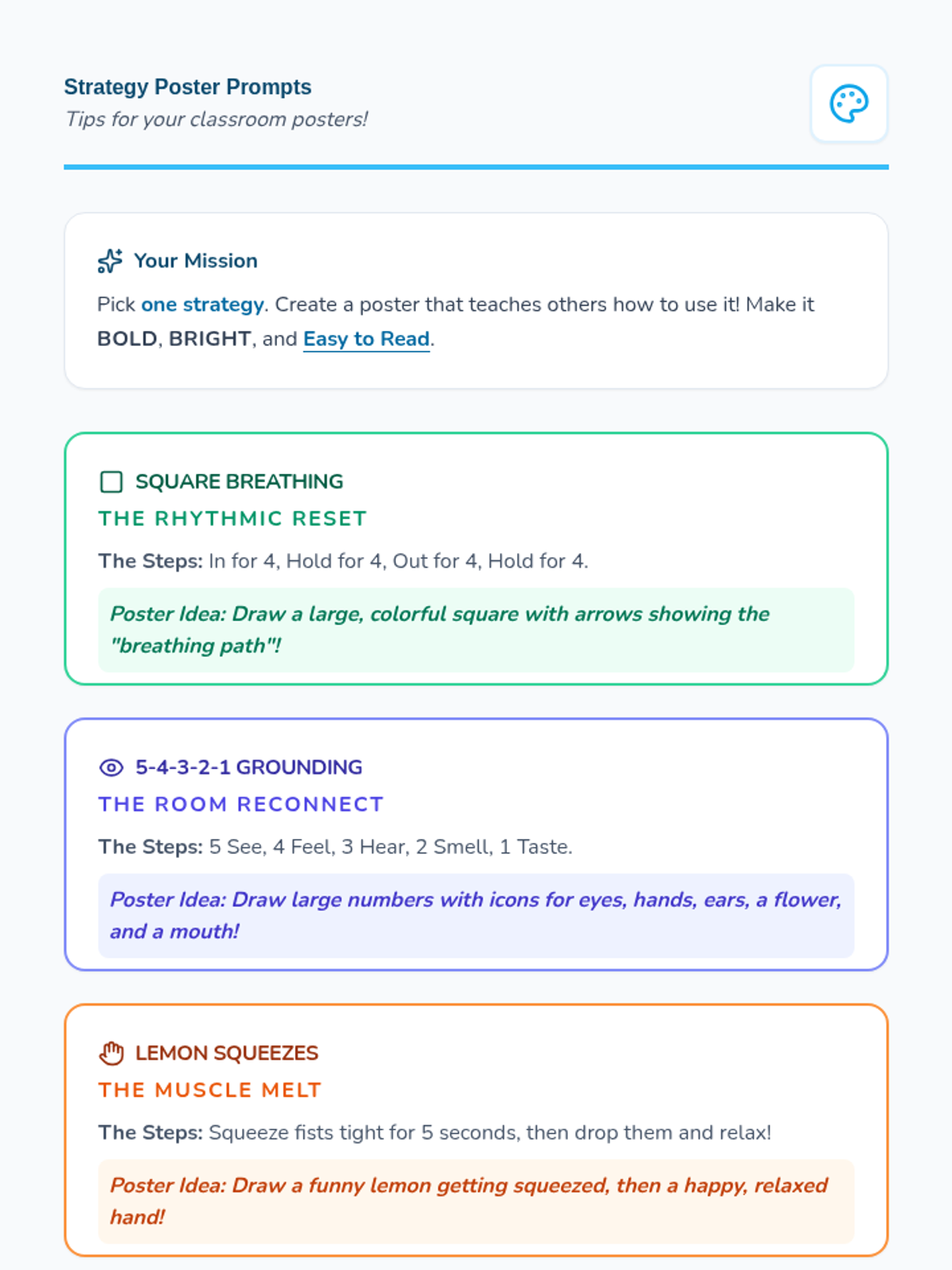
A growth-mindset focused lesson designed to help 3rd-5th grade students manage CAASPP testing anxiety using mindfulness and relaxation techniques. Students learn to view testing as an opportunity to showcase their learning and identify growth areas.
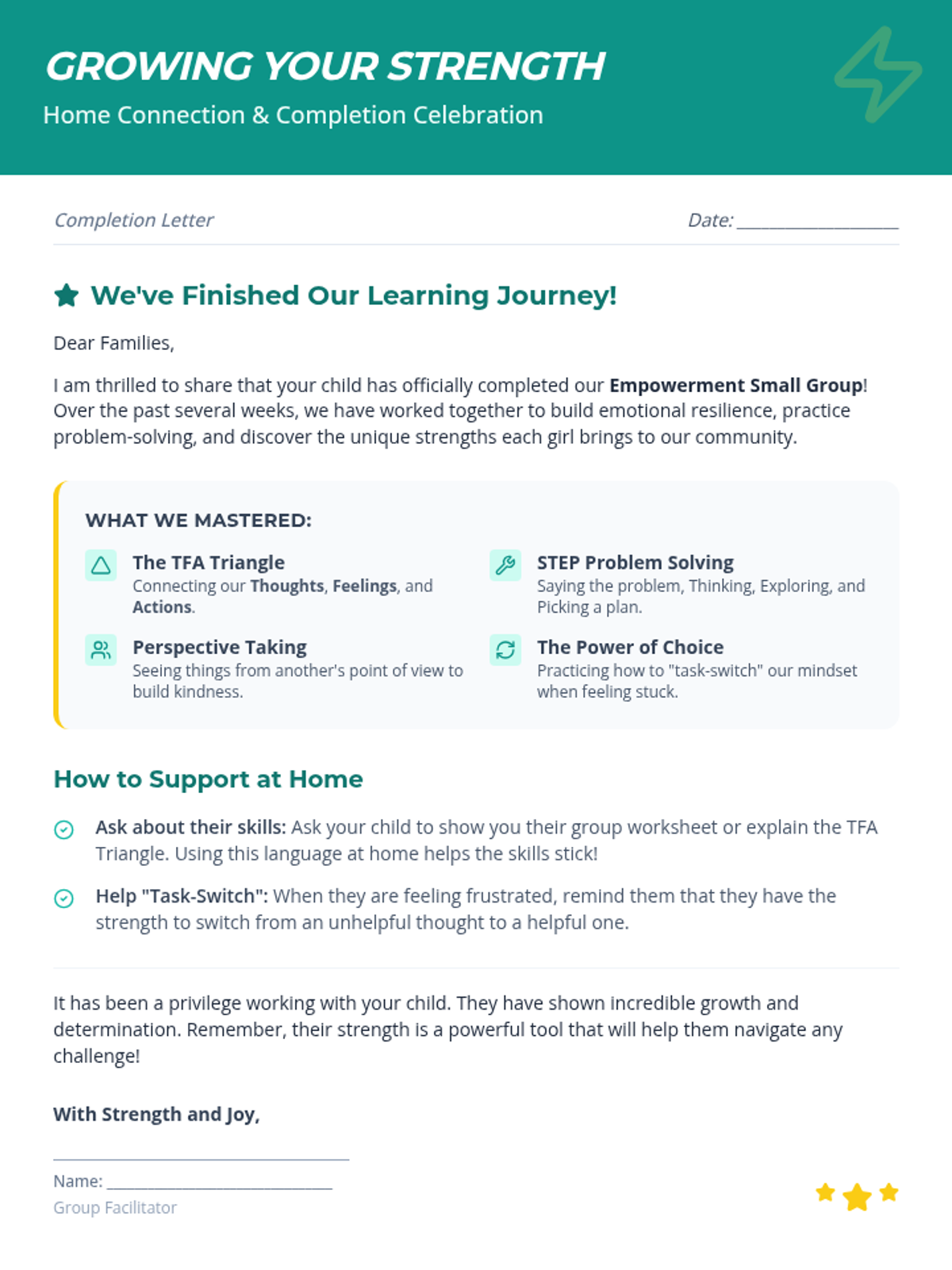
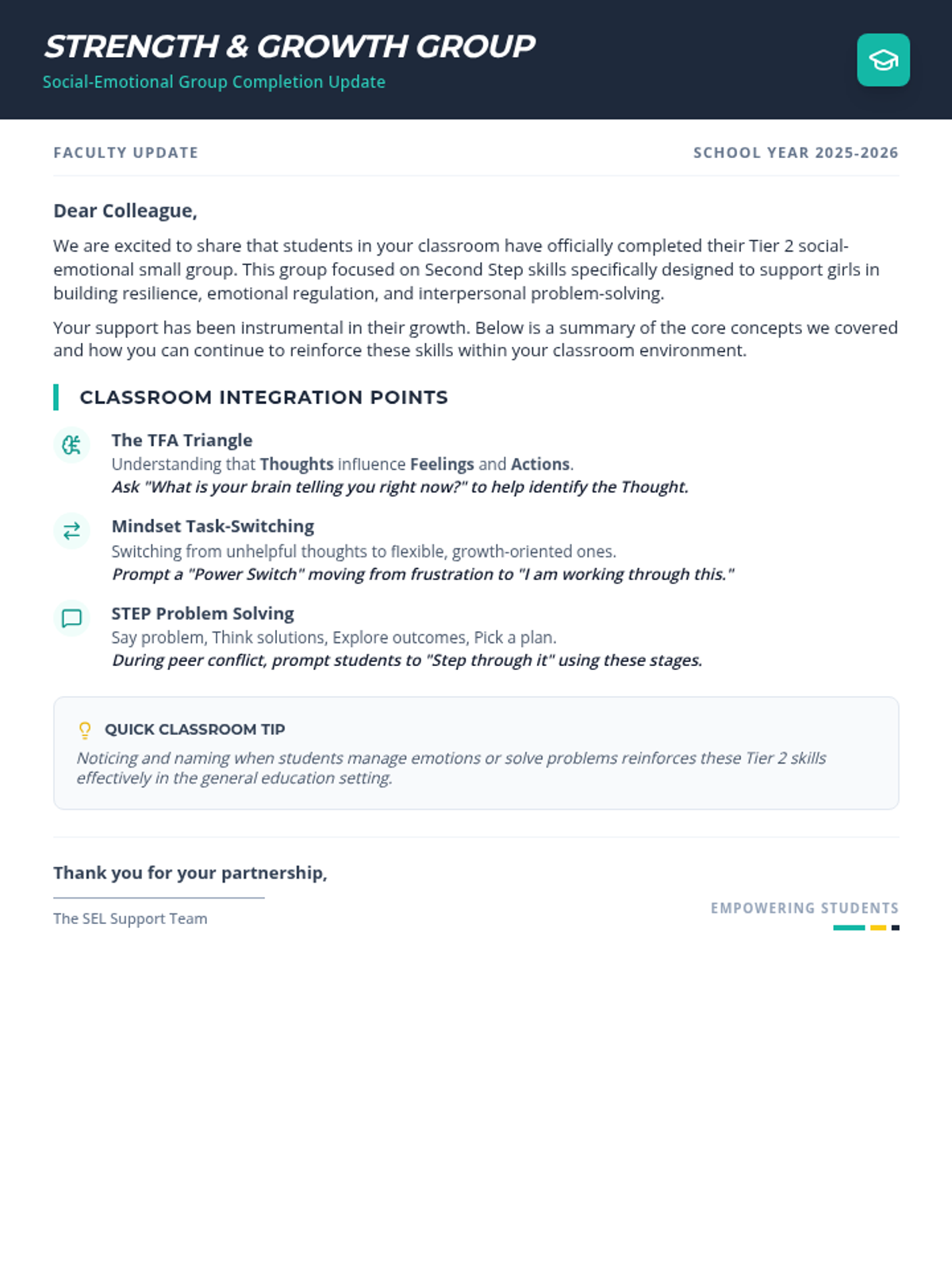
A comprehensive wrap-up session for Second Step Tier 2 small groups for girls, featuring the 'Spark Your Strength' theme. Reviews the TFA triangle, perspective-taking, problem-solving, and resilience.
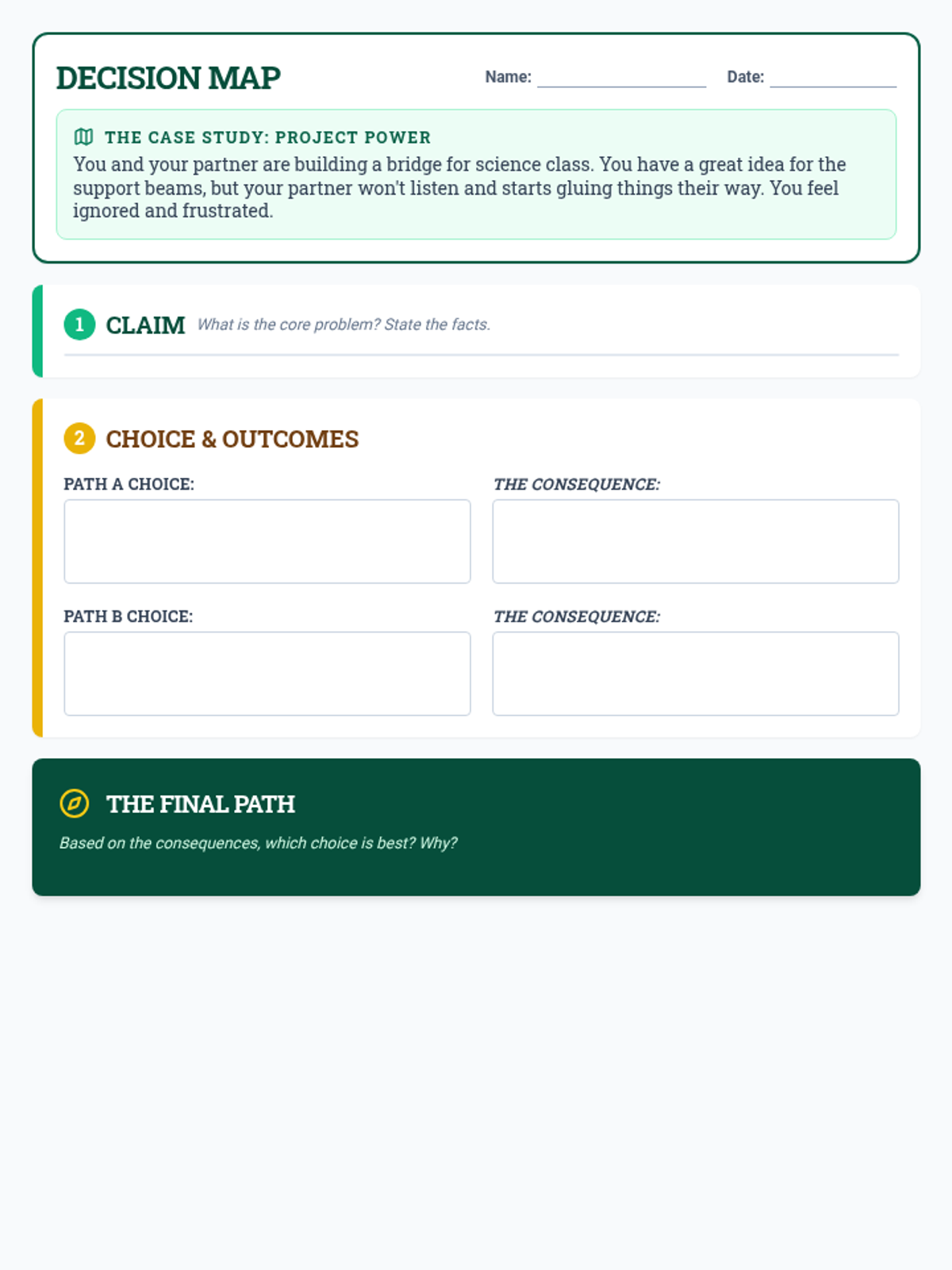
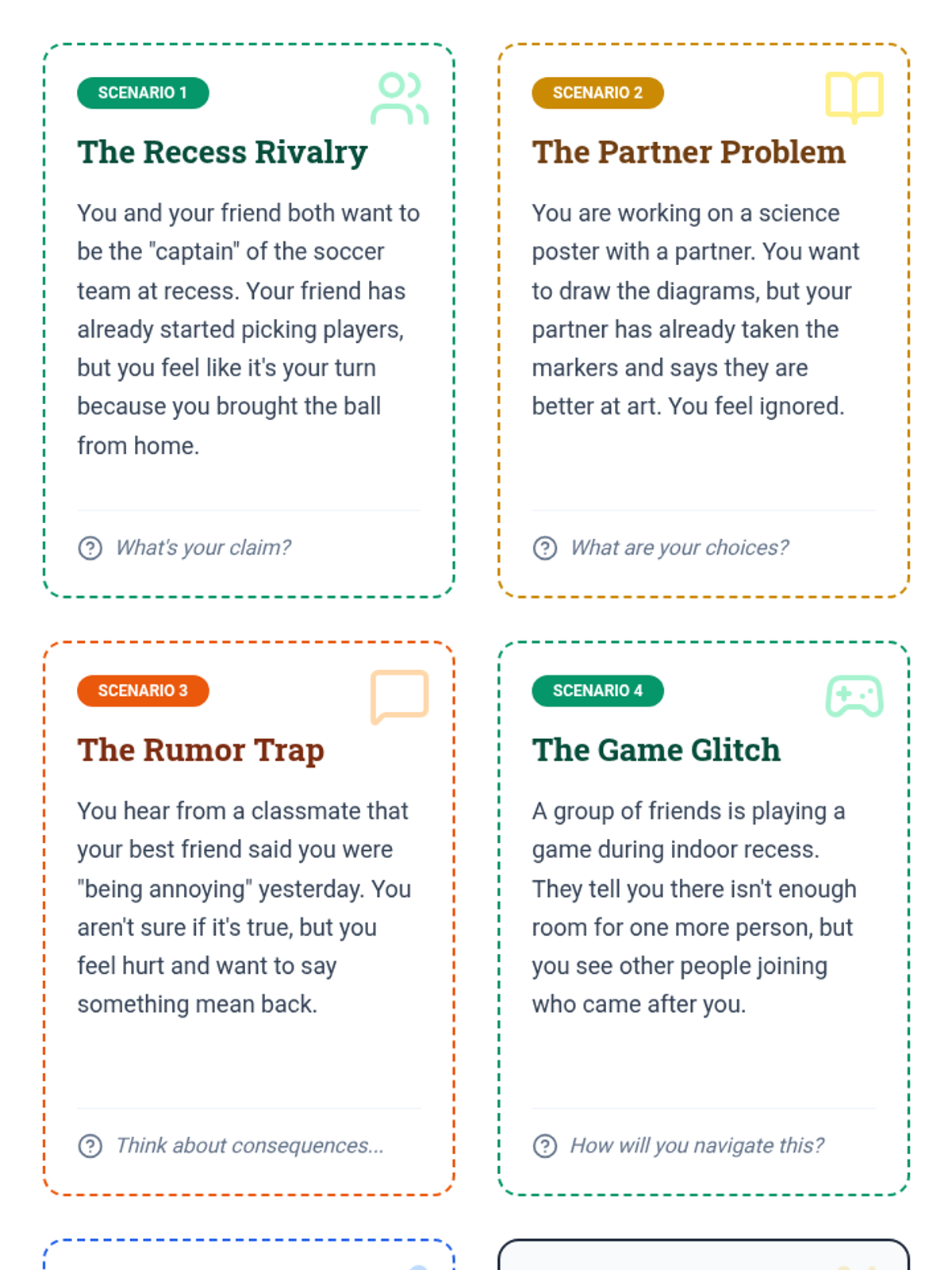
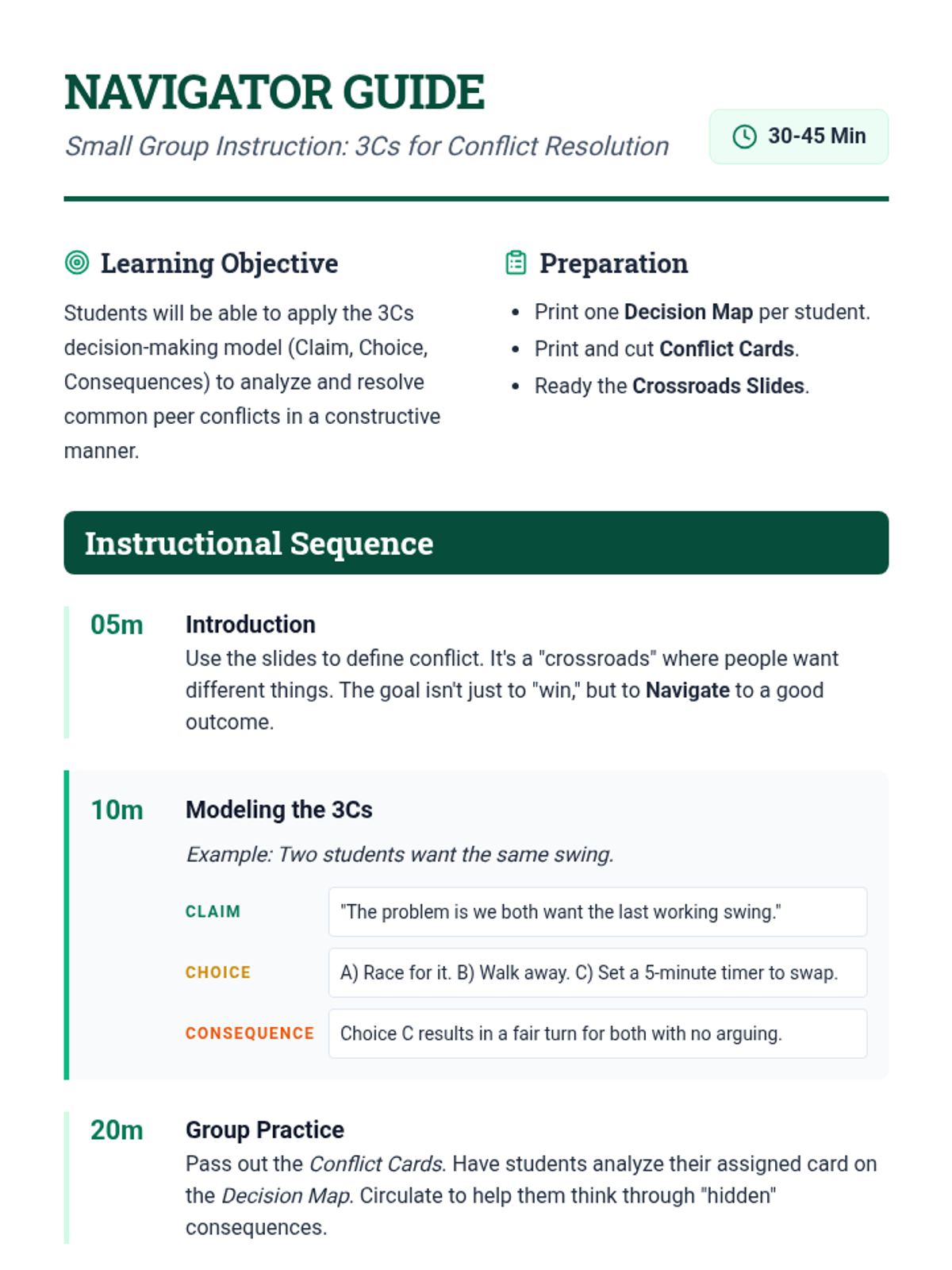
In this lesson, students are introduced to the 3Cs model (Claim, Choice, Consequences) and apply it to common school-based conflicts in a small group setting.
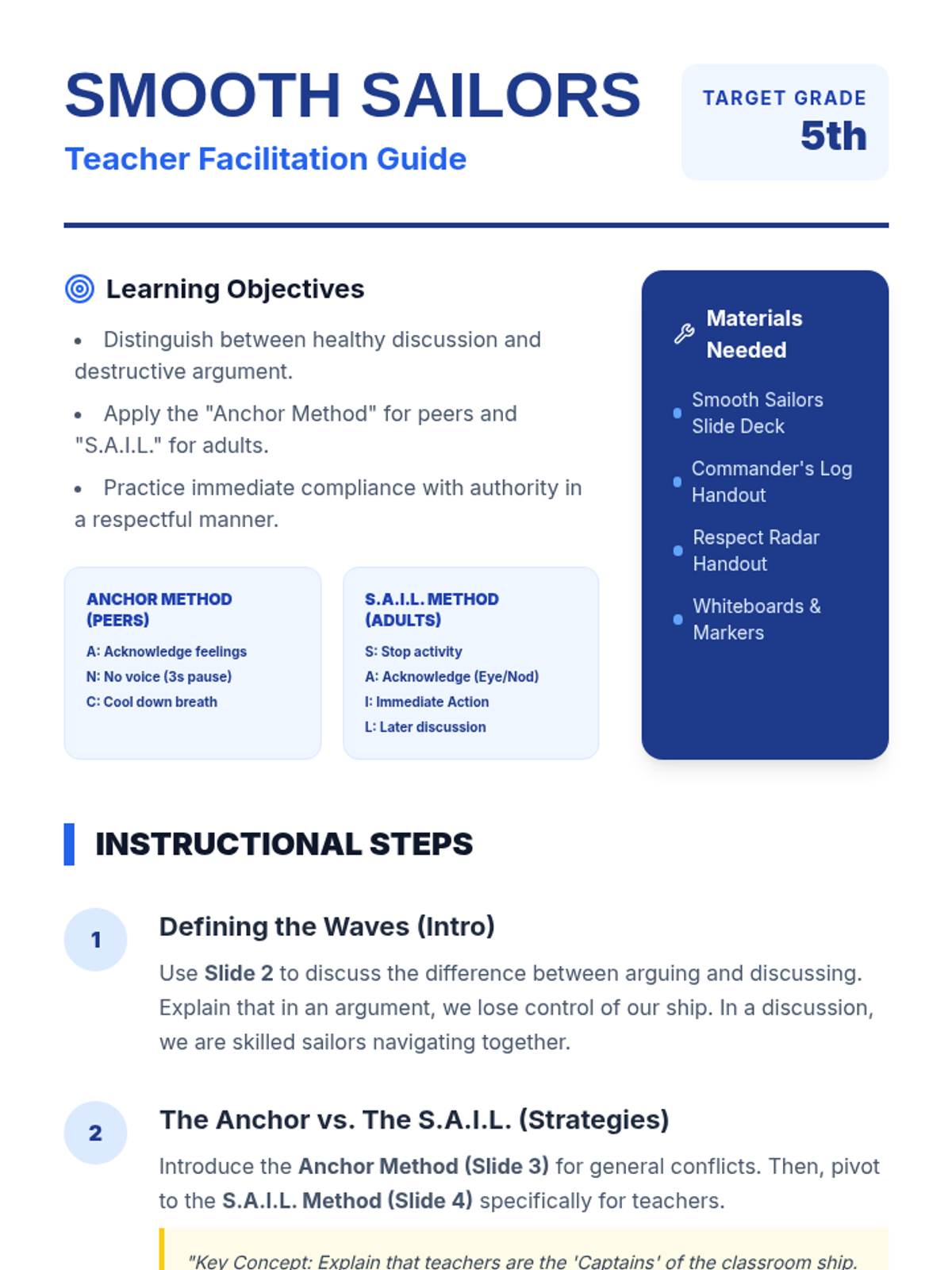
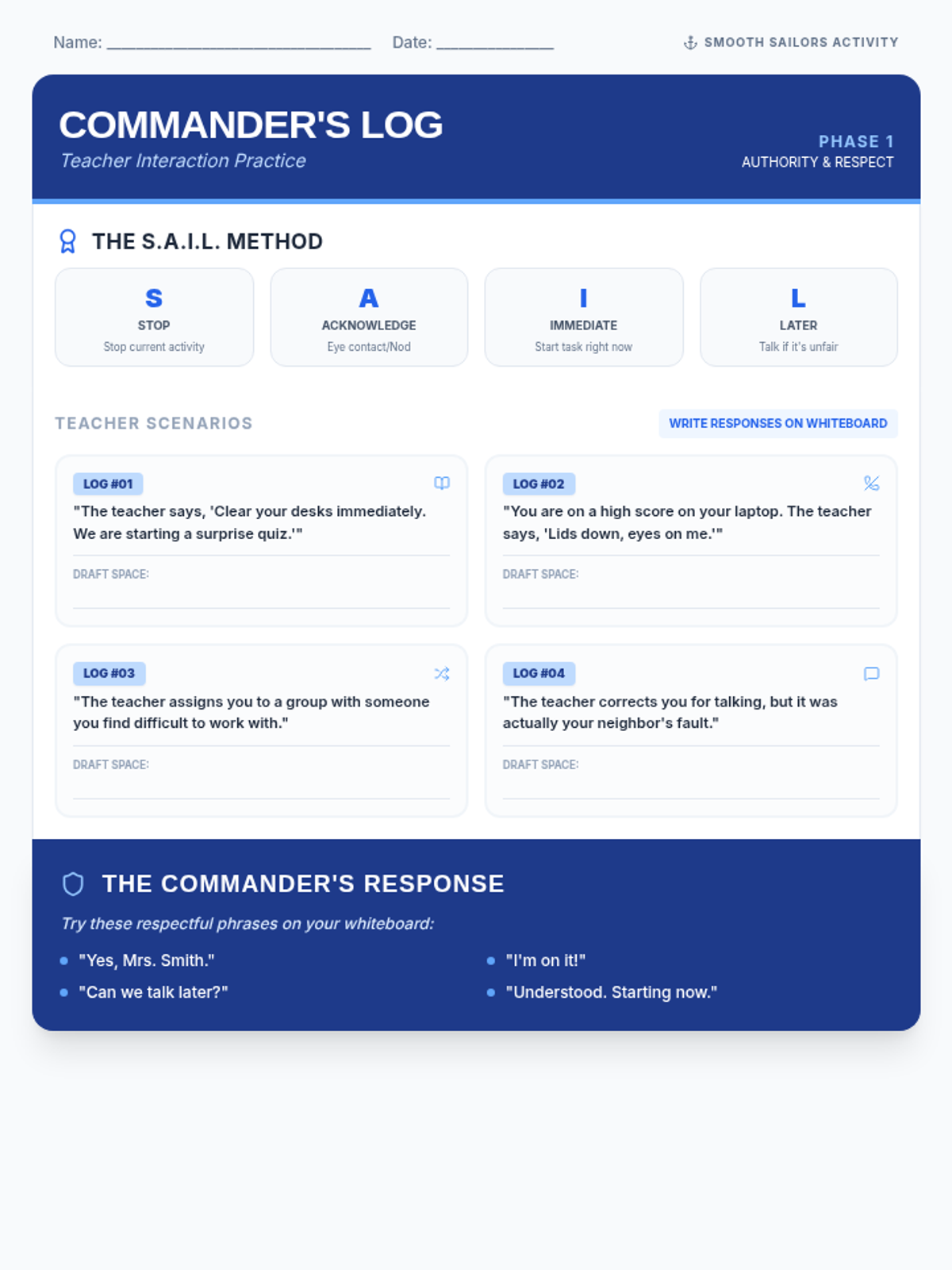
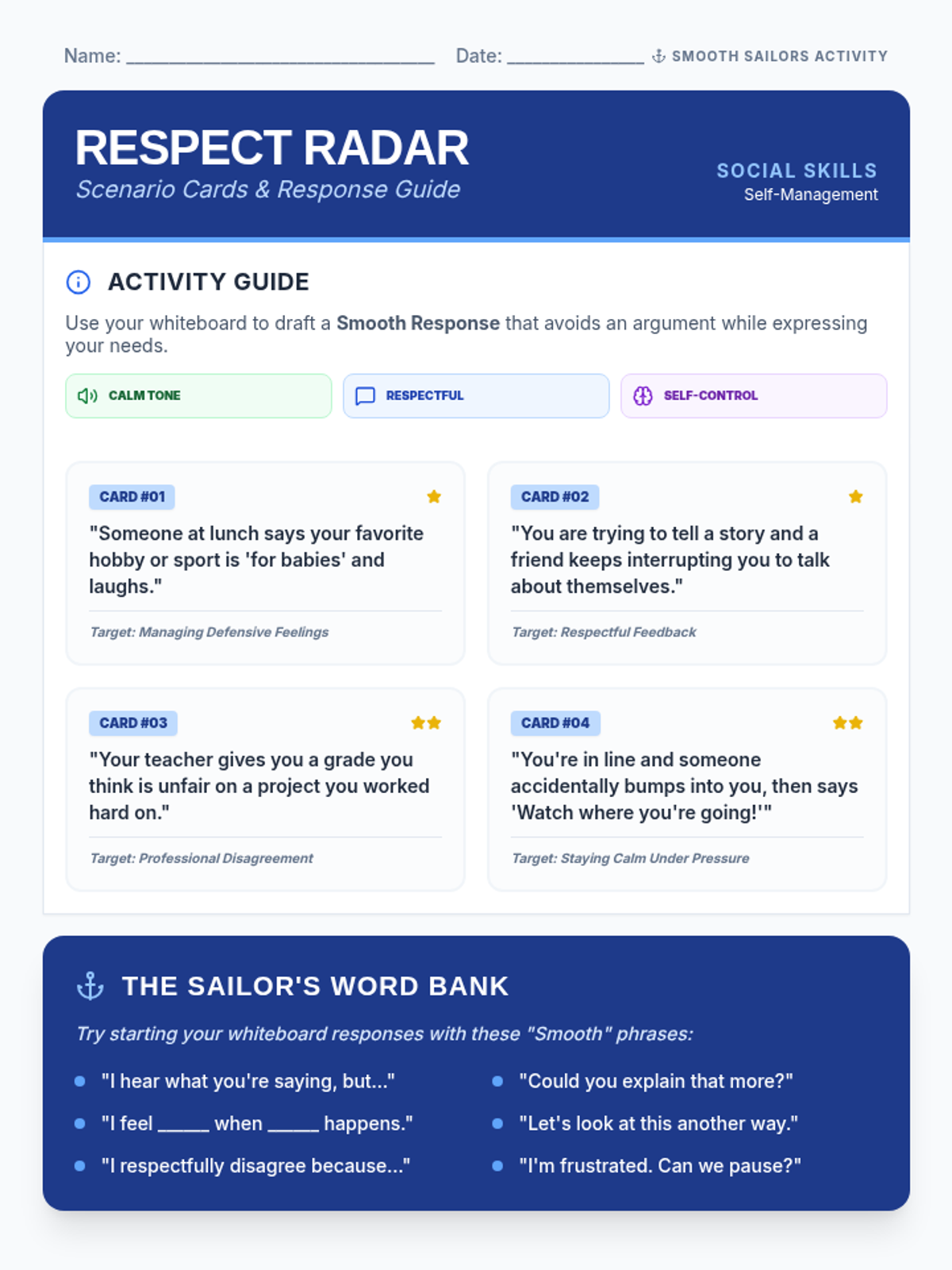
A social-emotional learning lesson focused on self-management and respect, teaching students how to handle disagreements without becoming argumentative. Students learn the 'Anchor Method' to stay calm and practice transforming conflict into conversation.
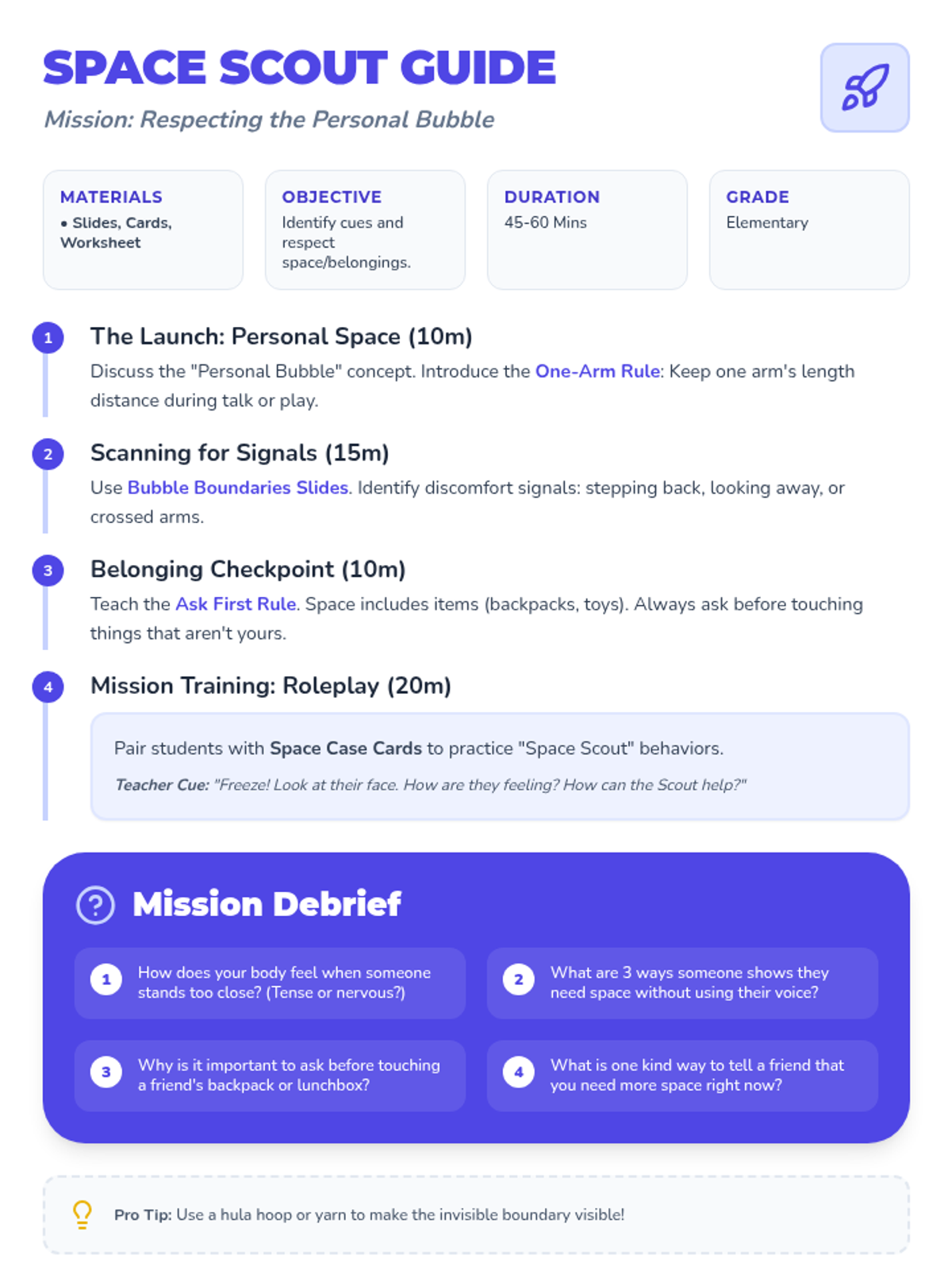
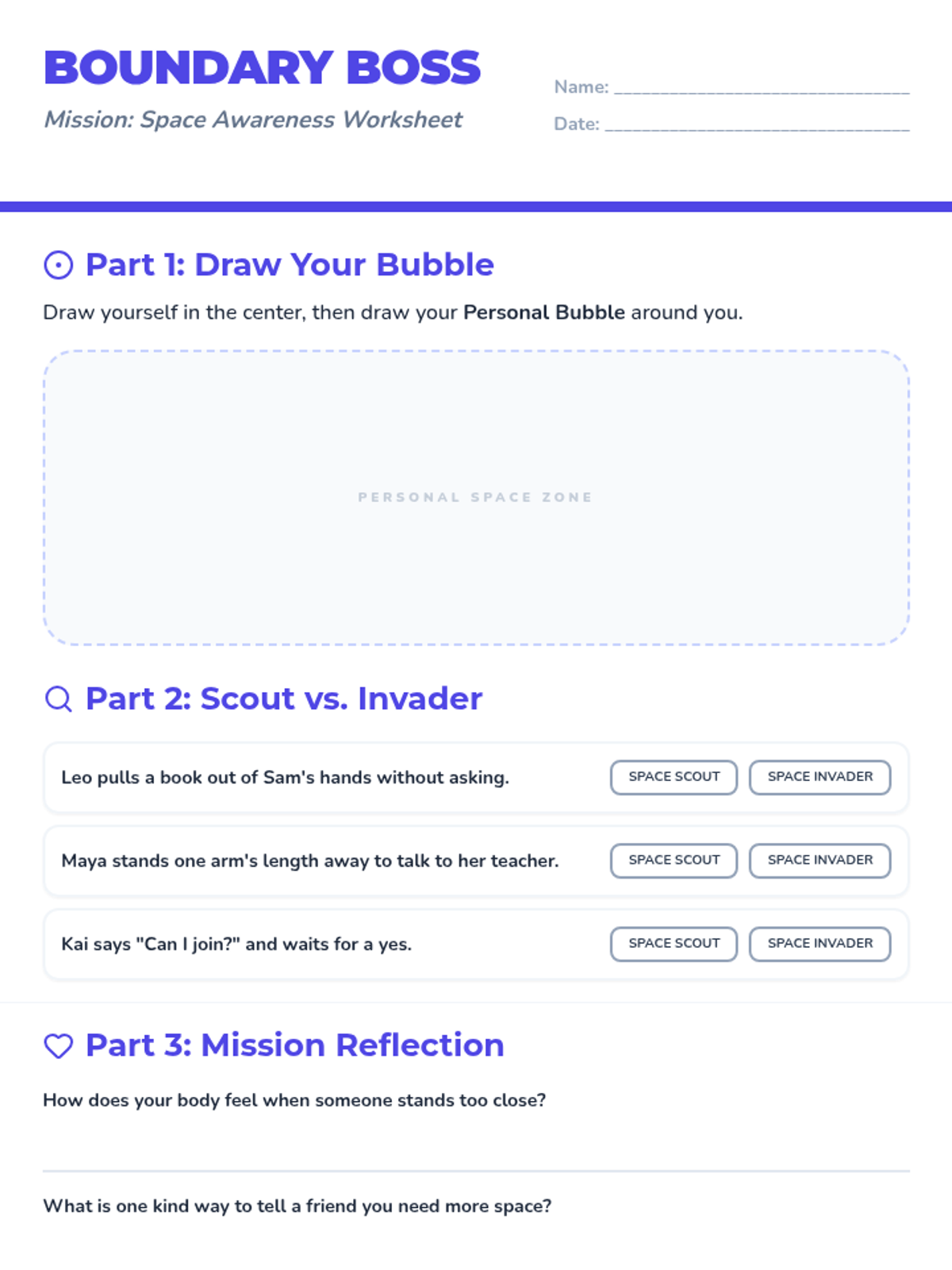
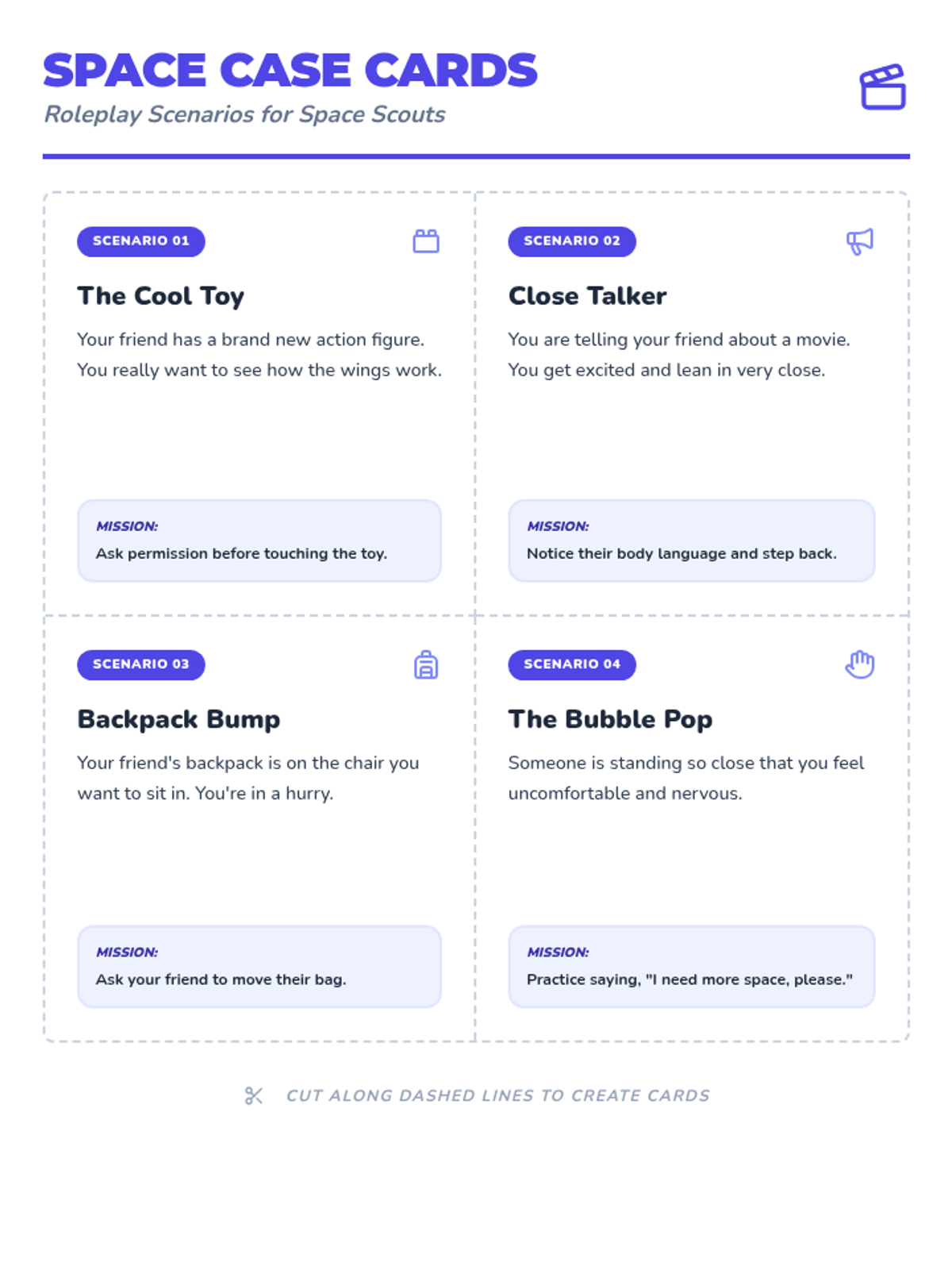
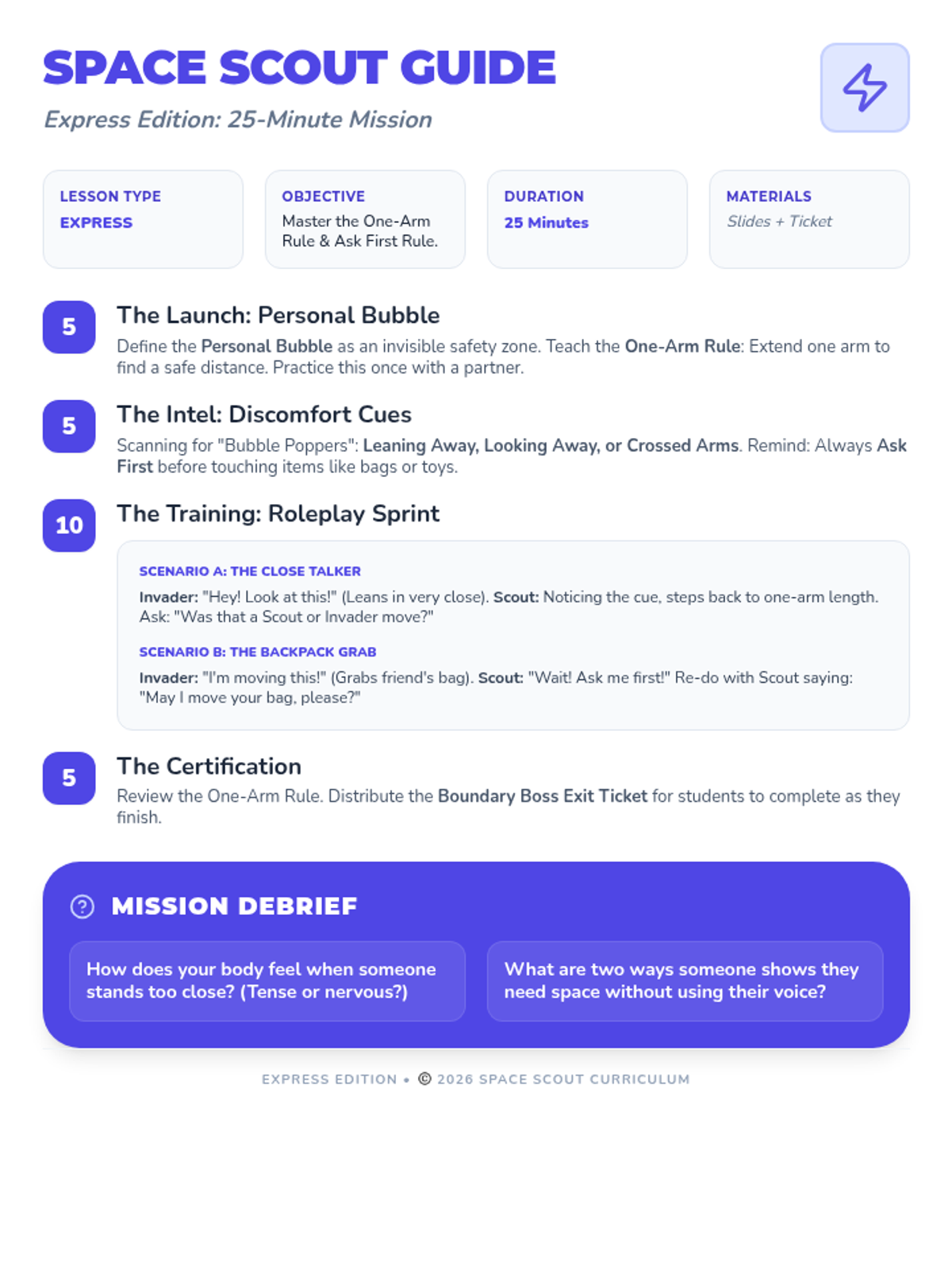
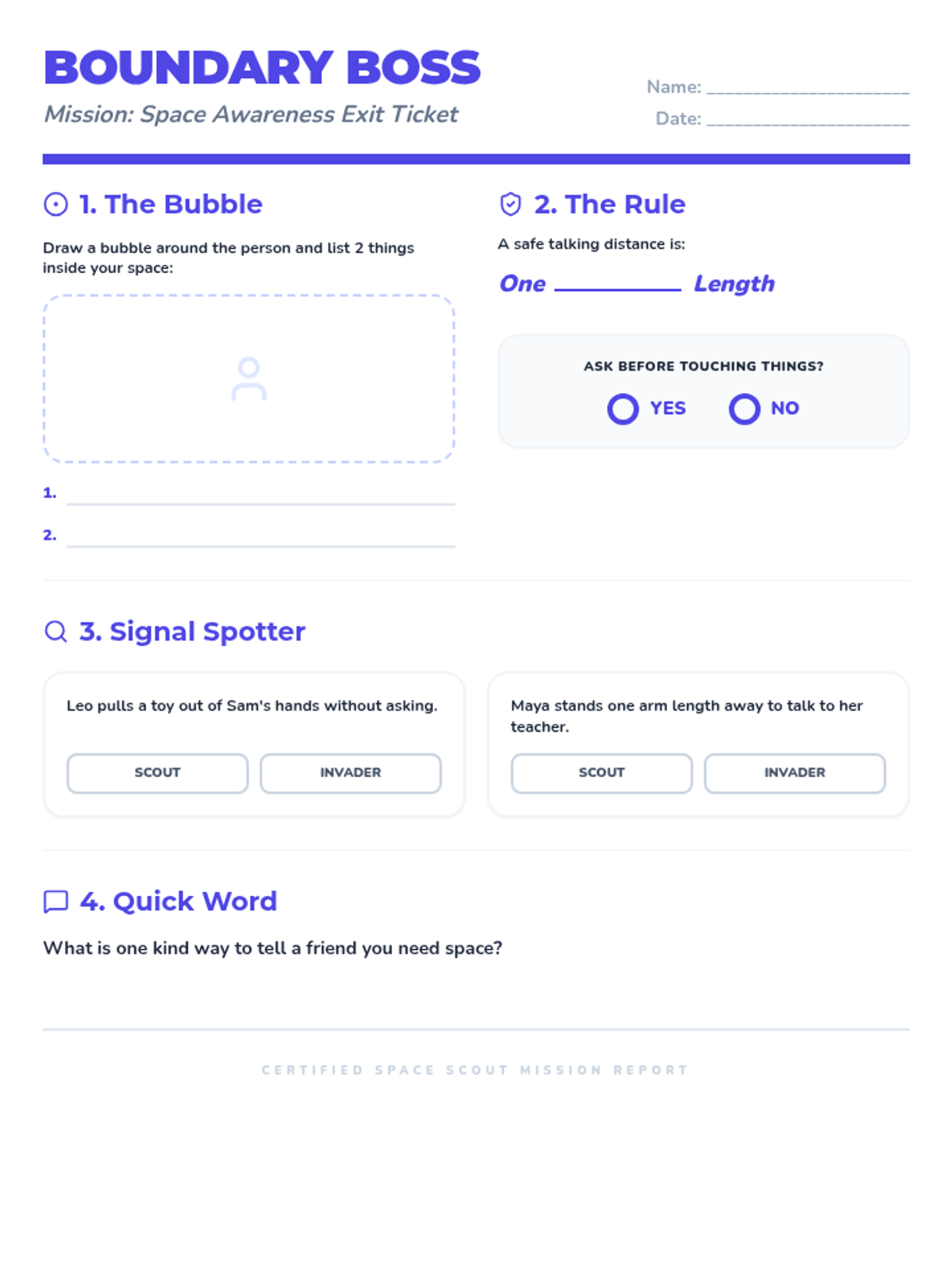
A social-emotional learning lesson focused on personal space, social cues, and respecting the belongings of others. Students learn to identify their 'personal bubble' and use body language to navigate social interactions respectfully.
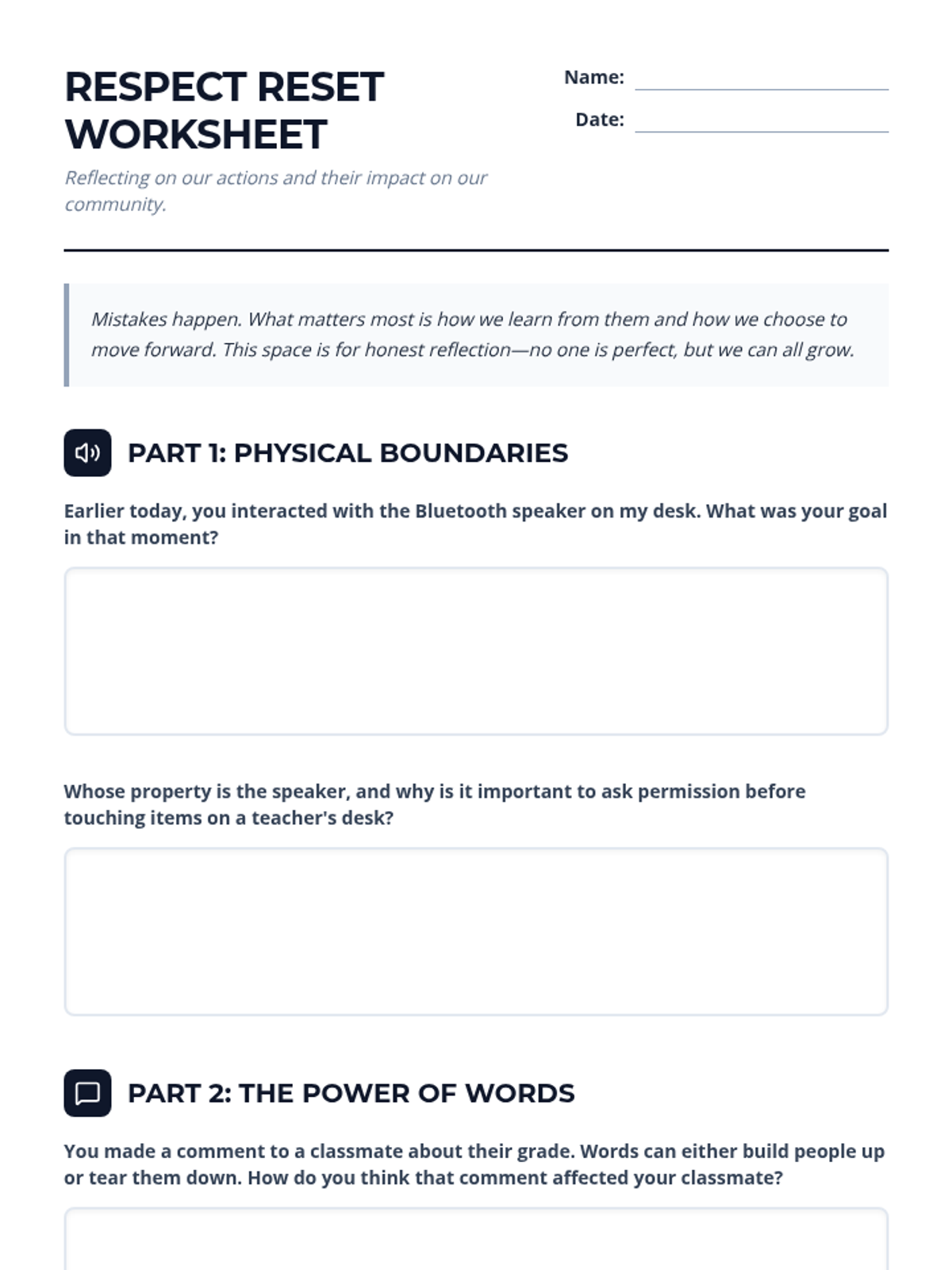
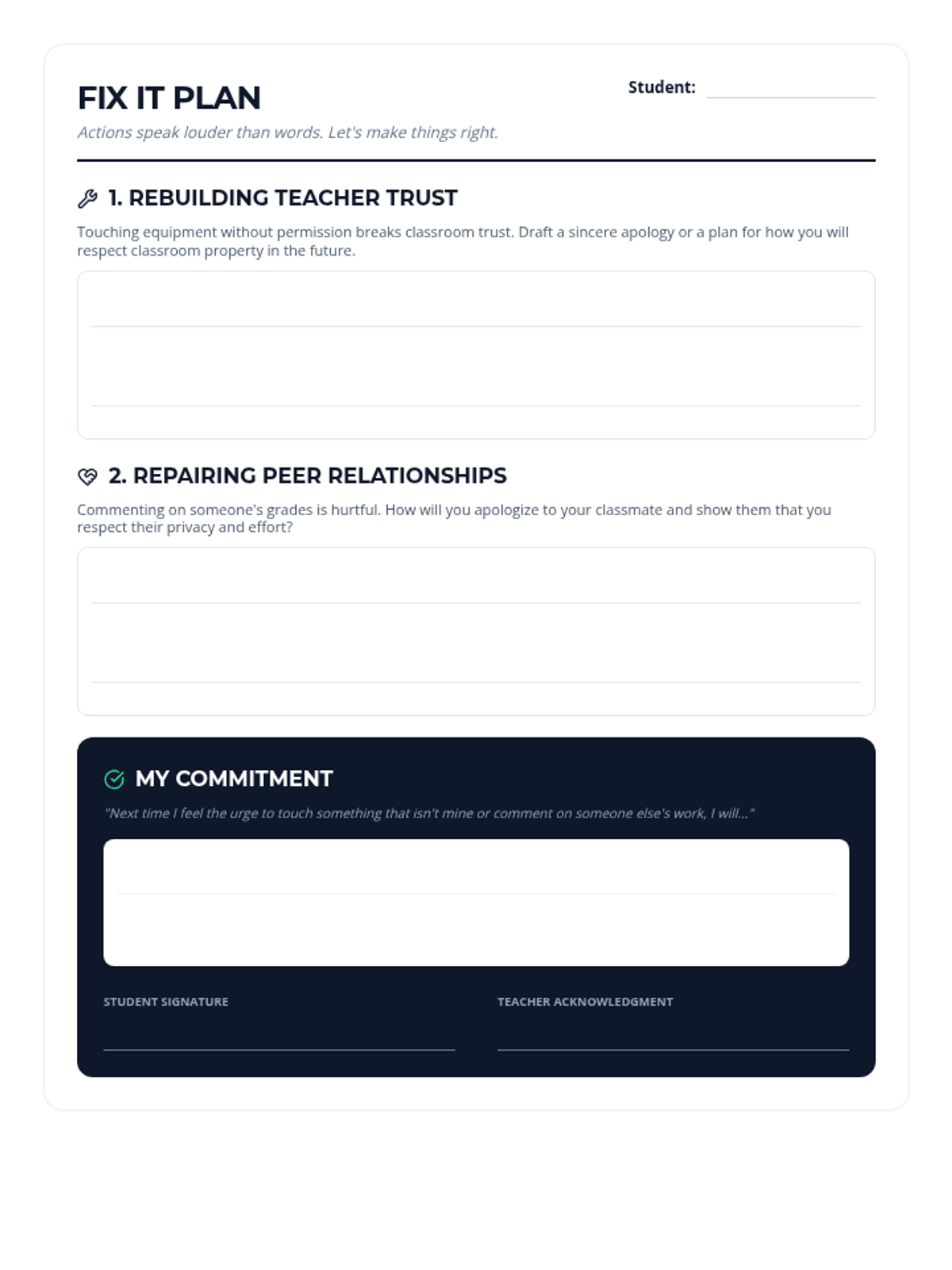
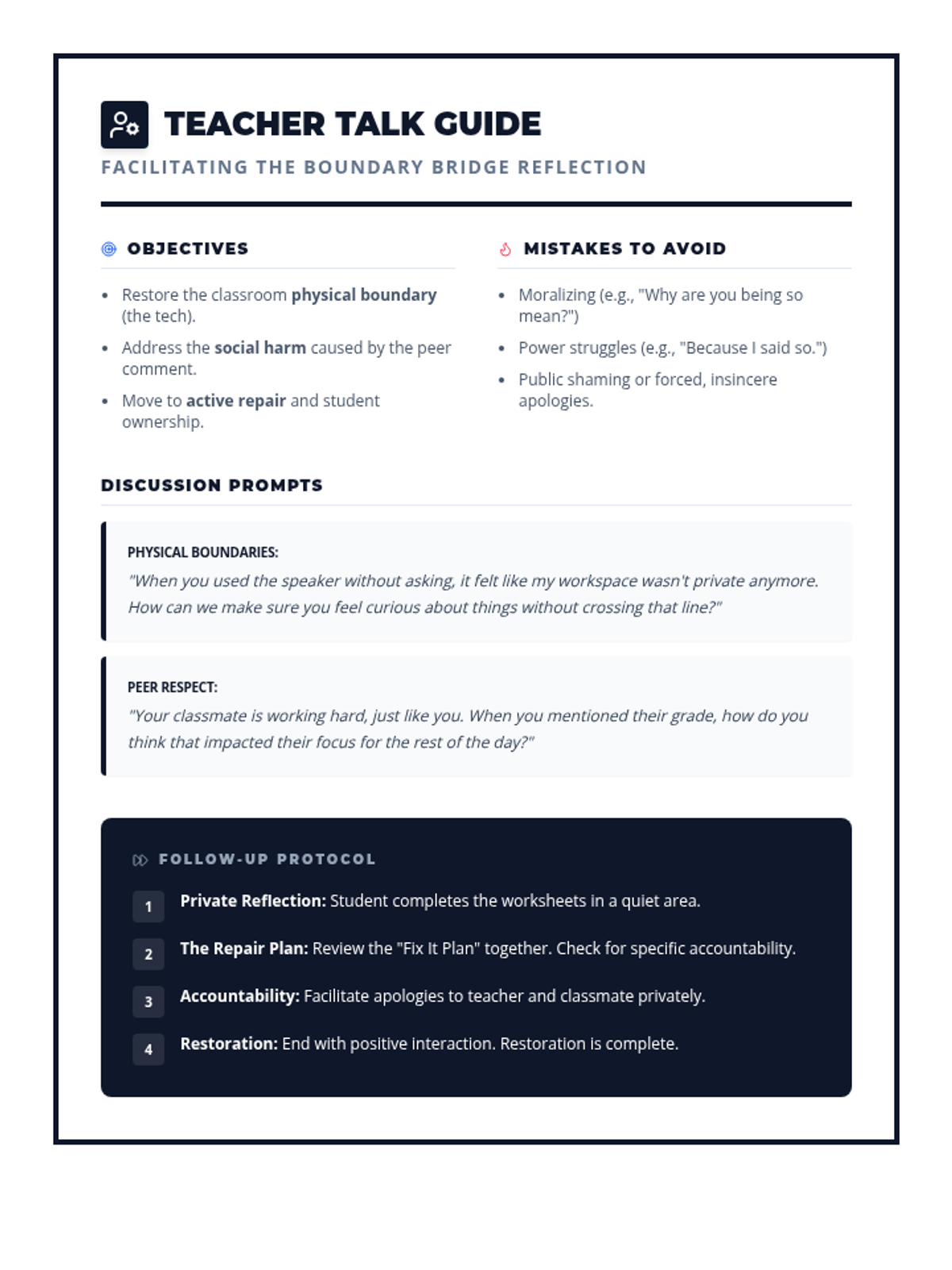
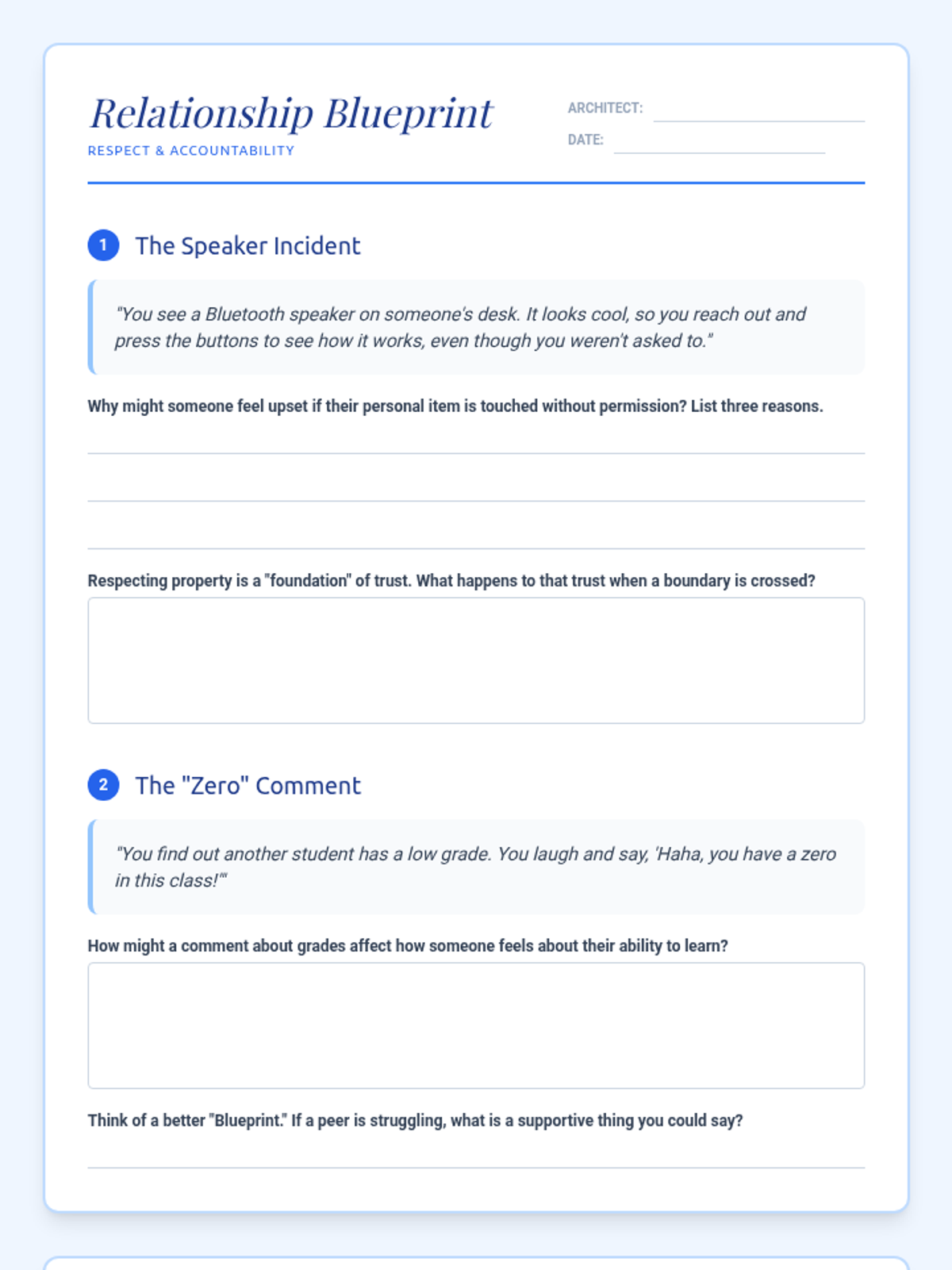
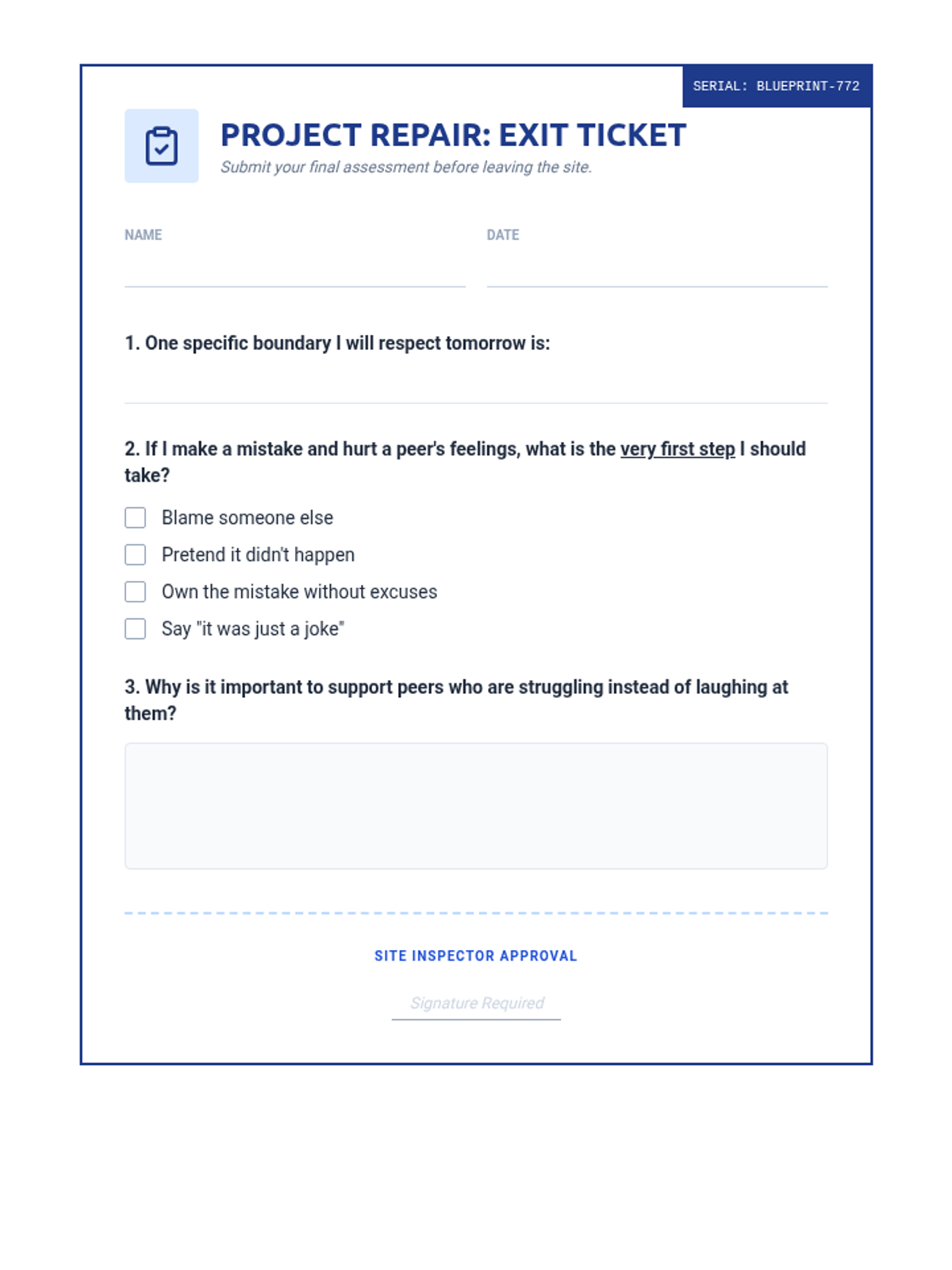
A restorative justice lesson designed to help students reflect on physical boundaries, digital responsibility, and peer respect after a behavioral incident involving classroom property and unkind comments.
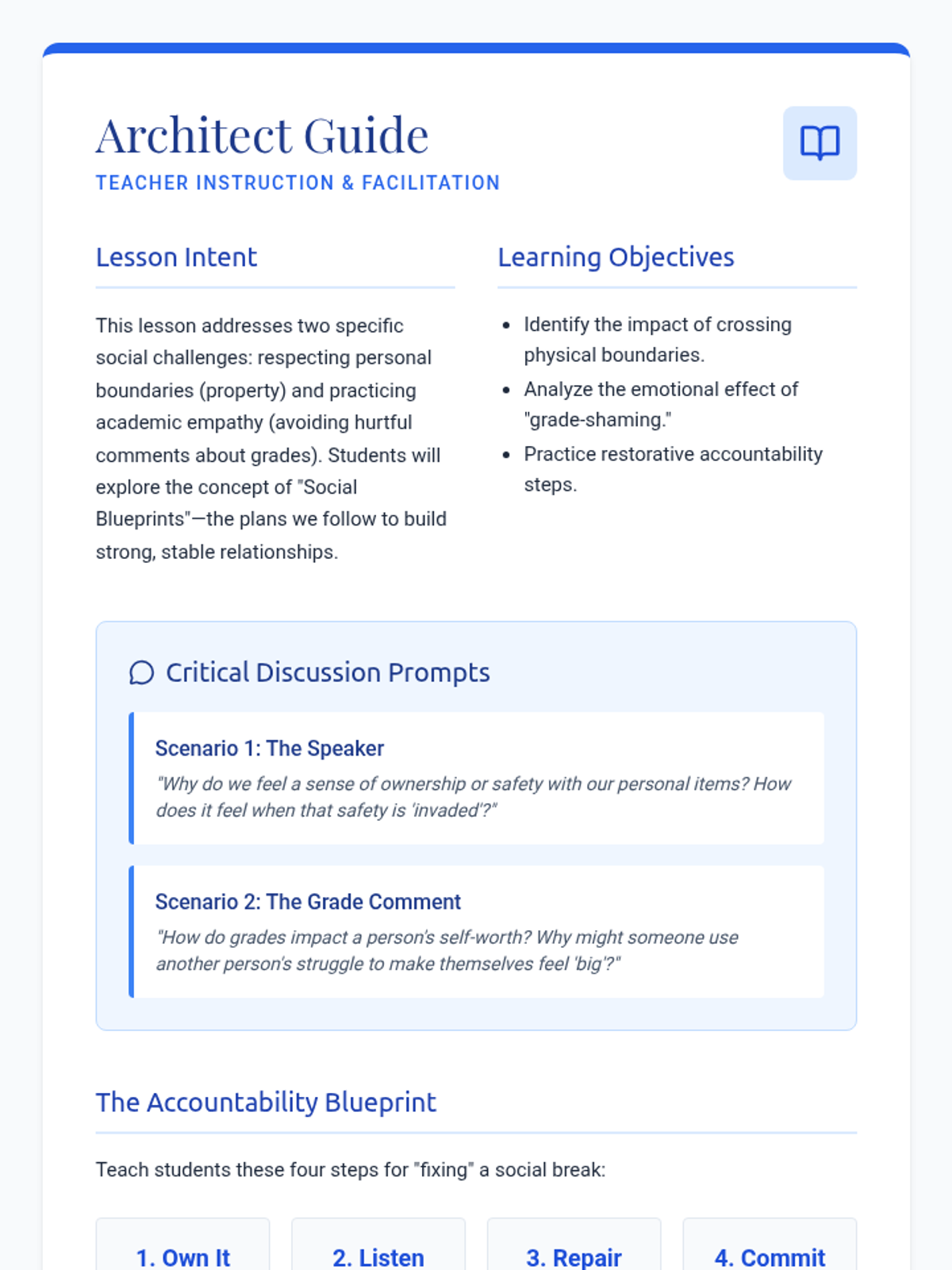
A social-emotional learning lesson focused on respecting personal property and practicing academic empathy through accountability.
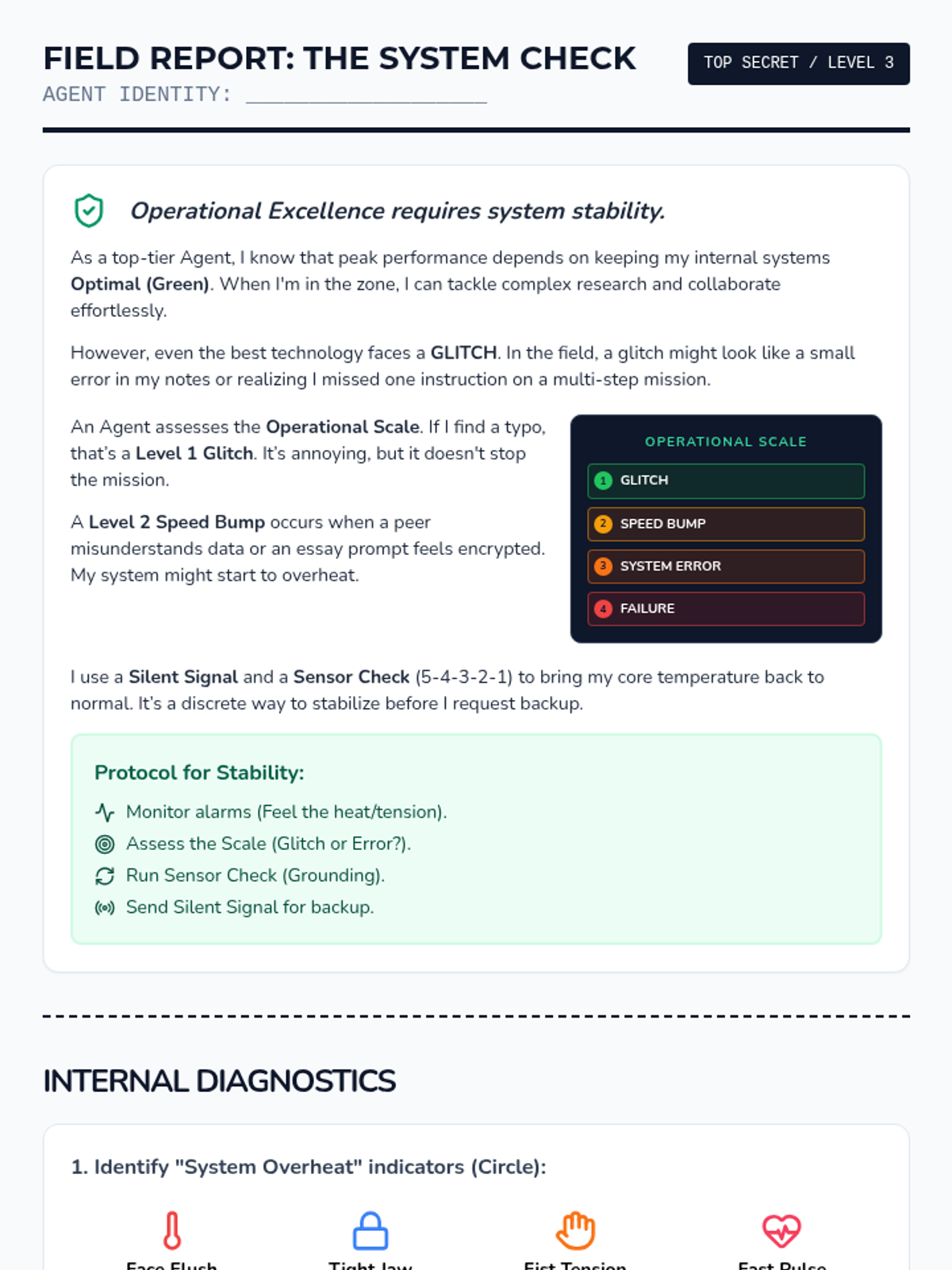
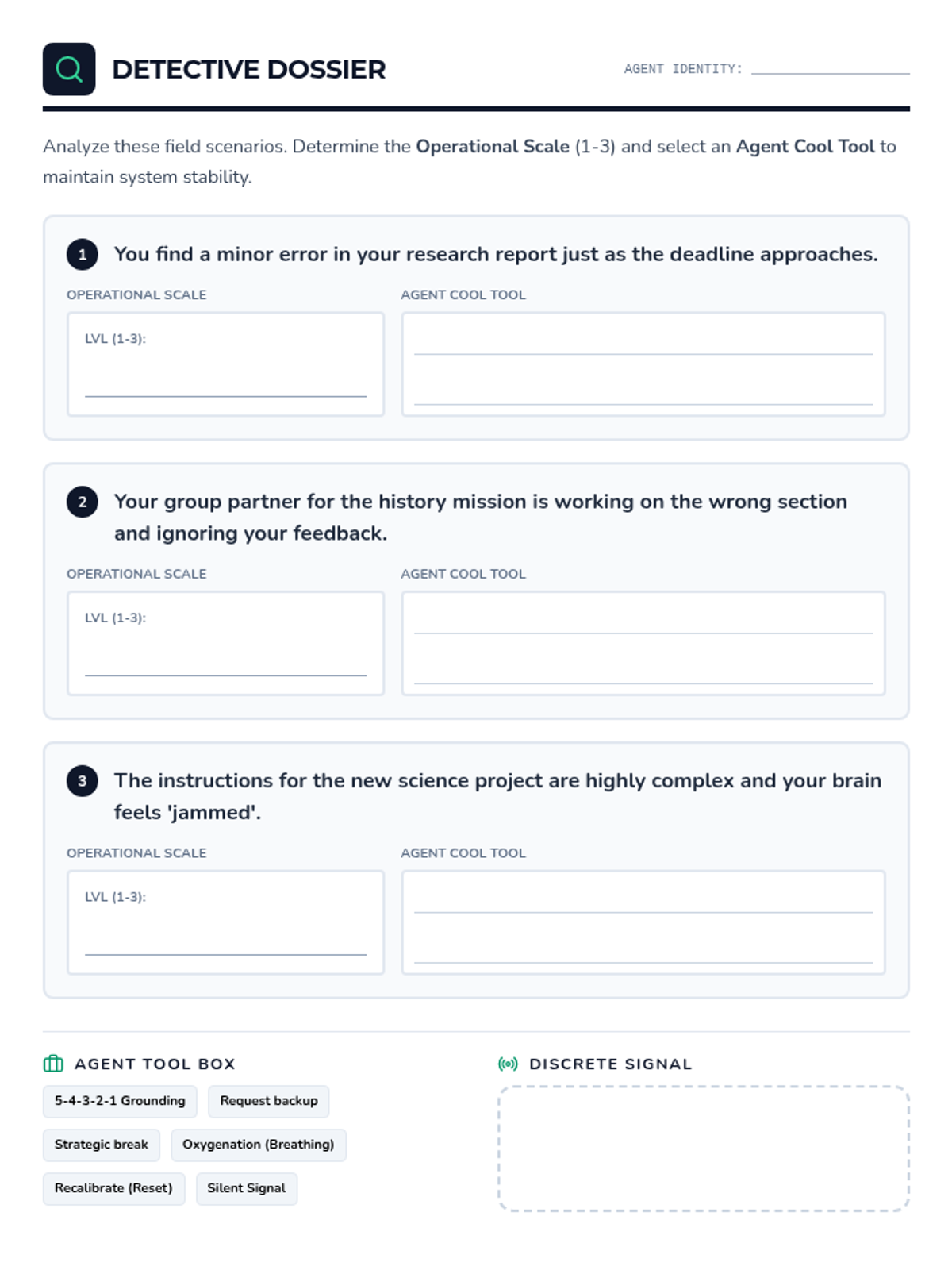
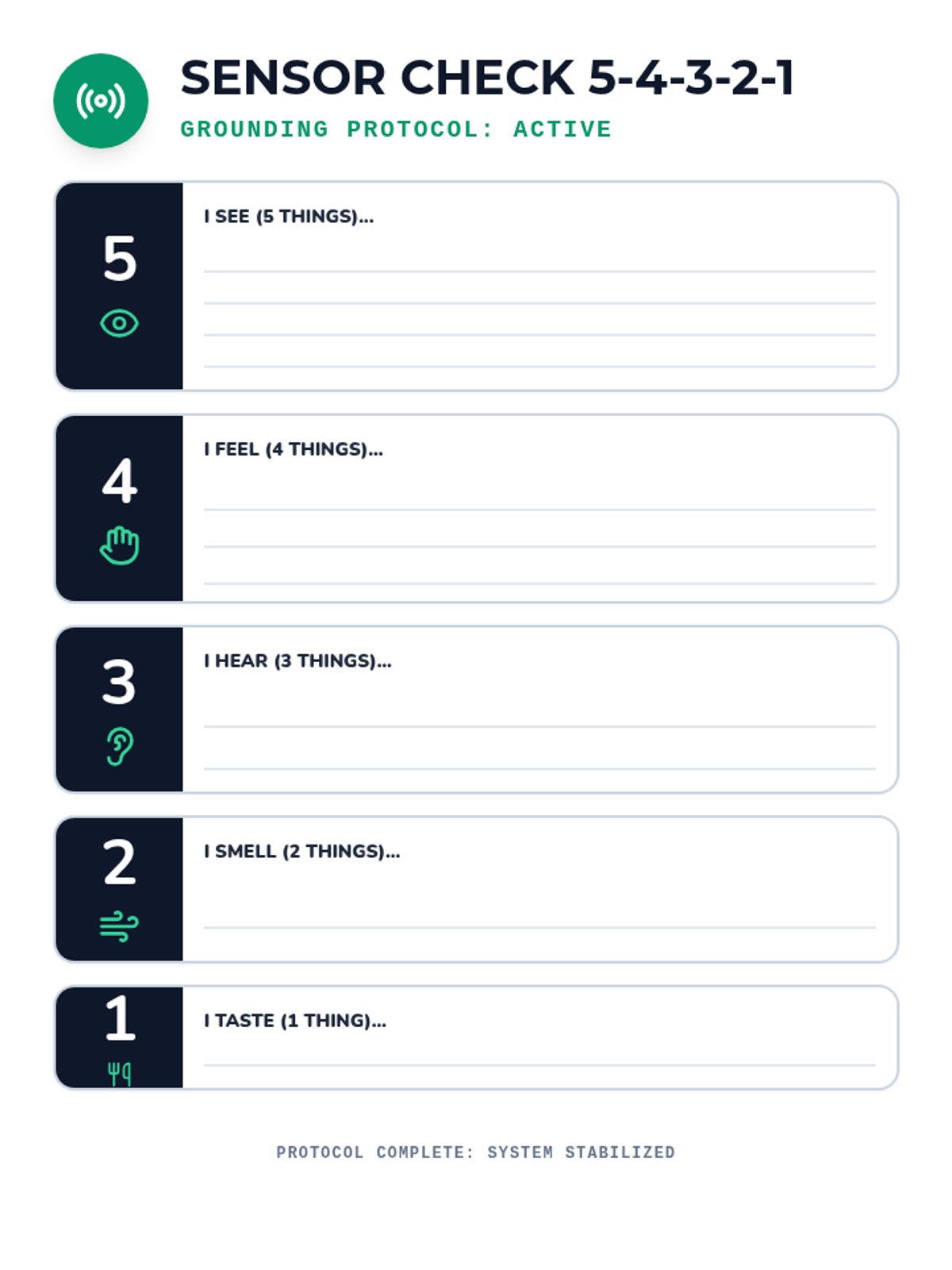
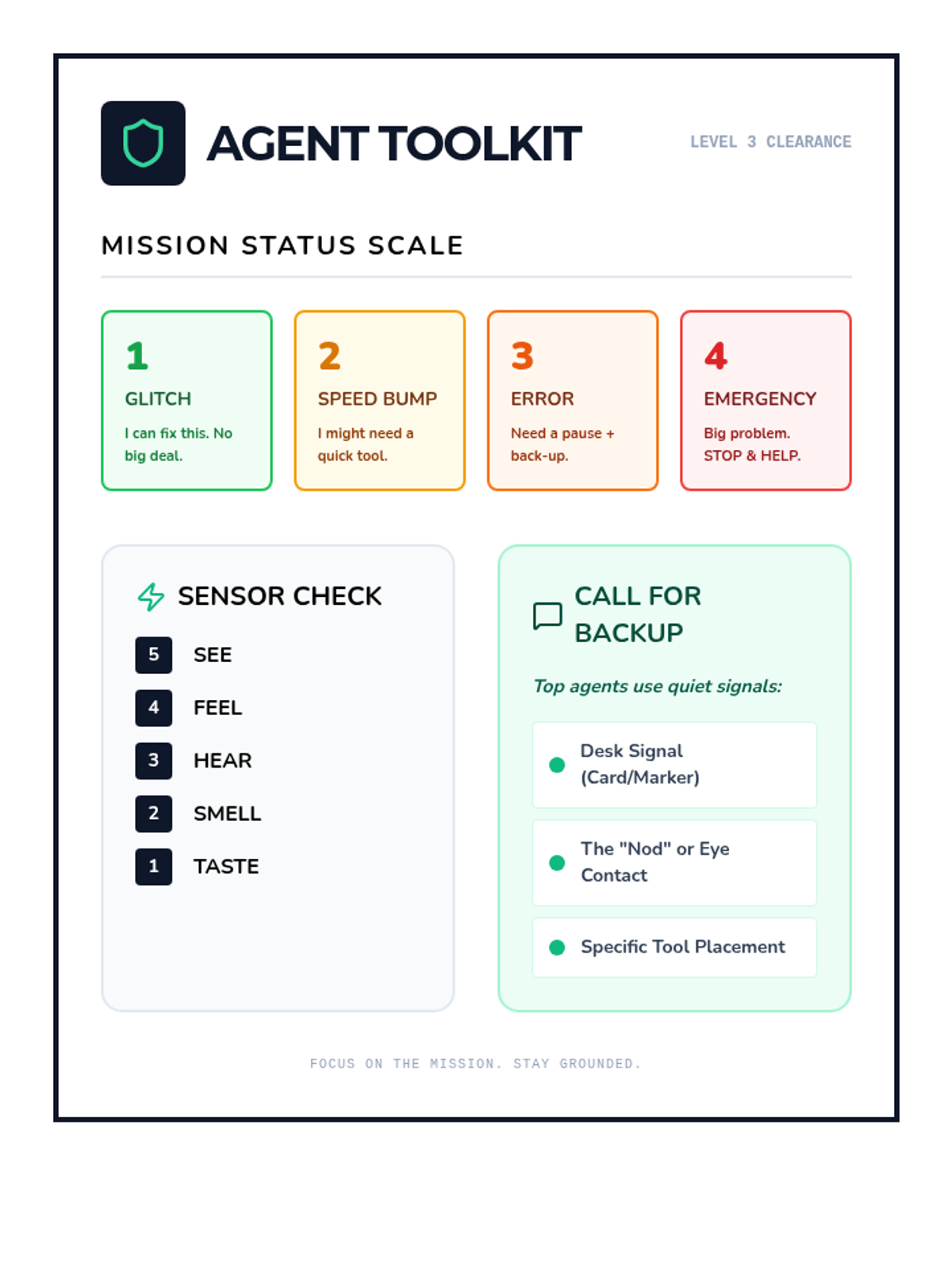
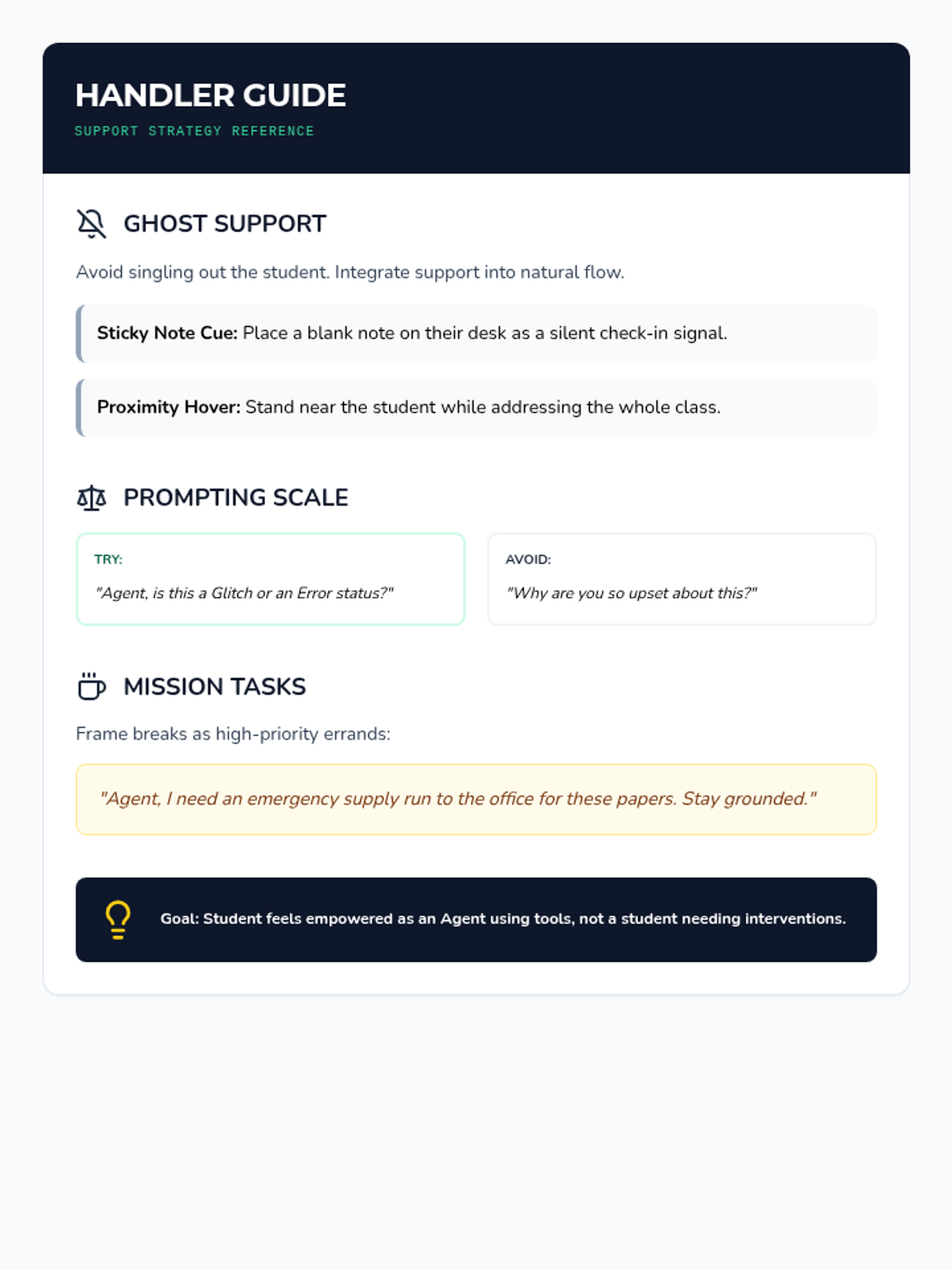
A social-emotional learning lesson focused on identifying the 'Size of the Problem' and utilizing grounding exercises, framed through an empowering 'Secret Agent' theme to support students with low frustration tolerance.
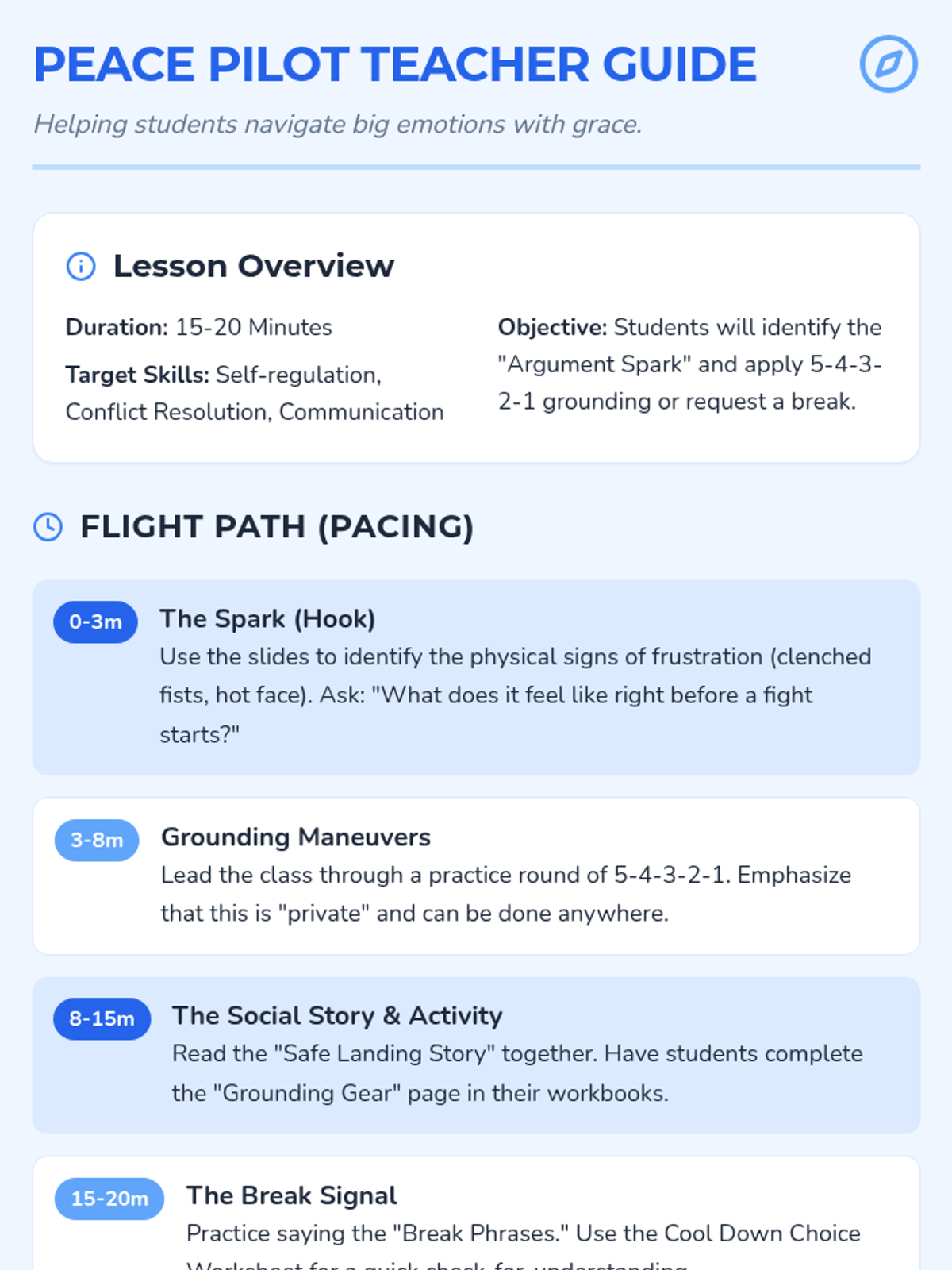
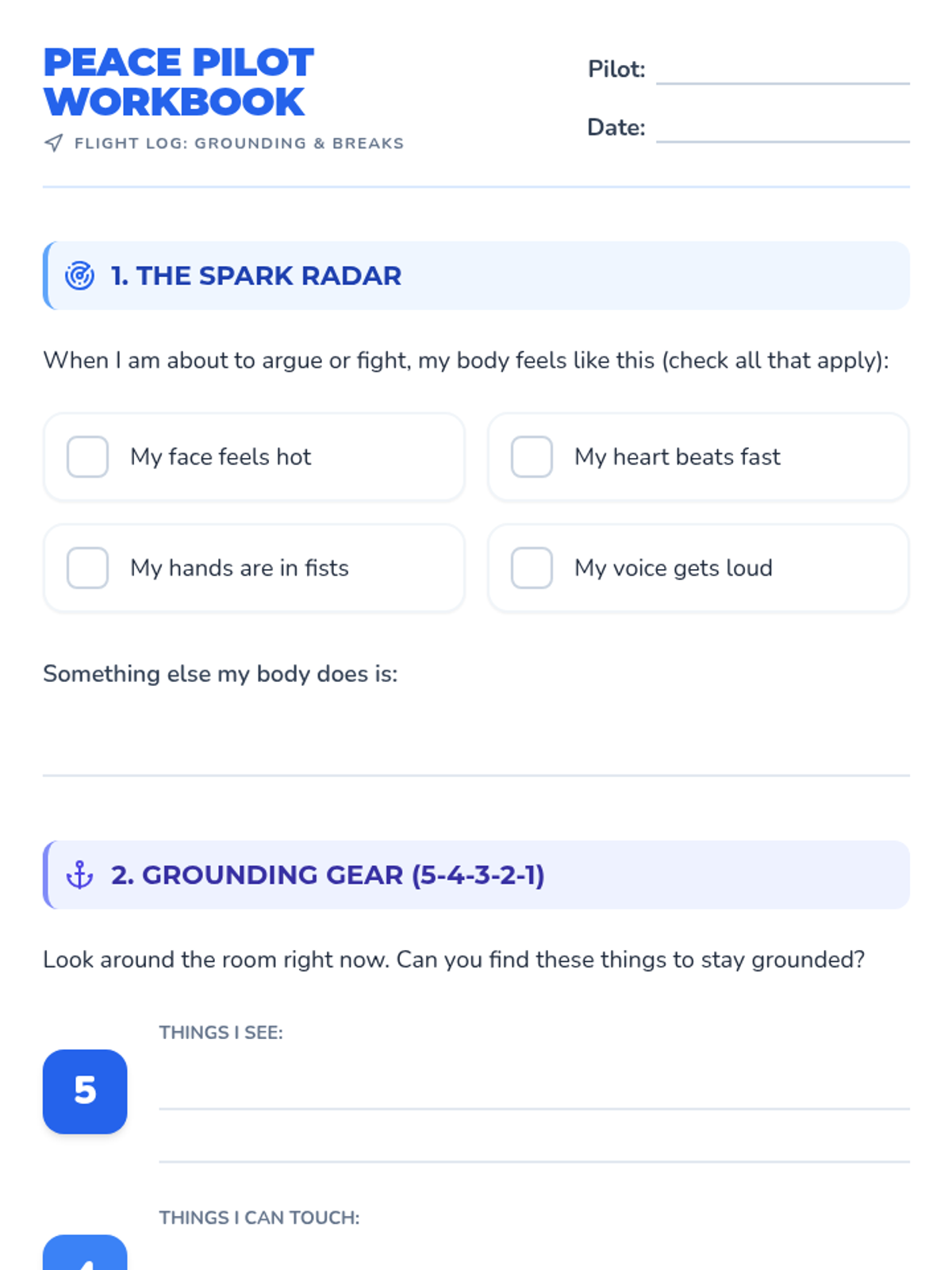
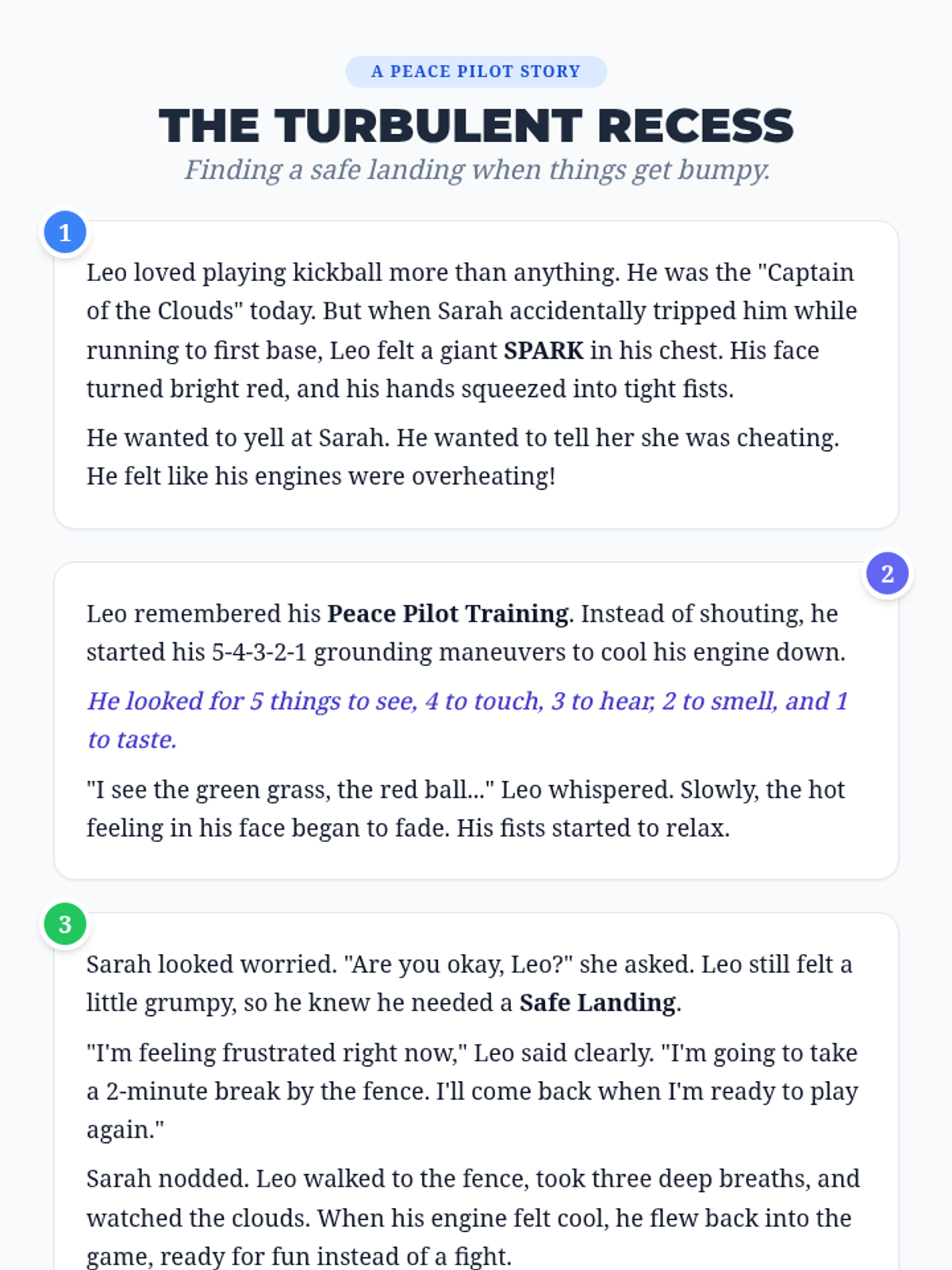
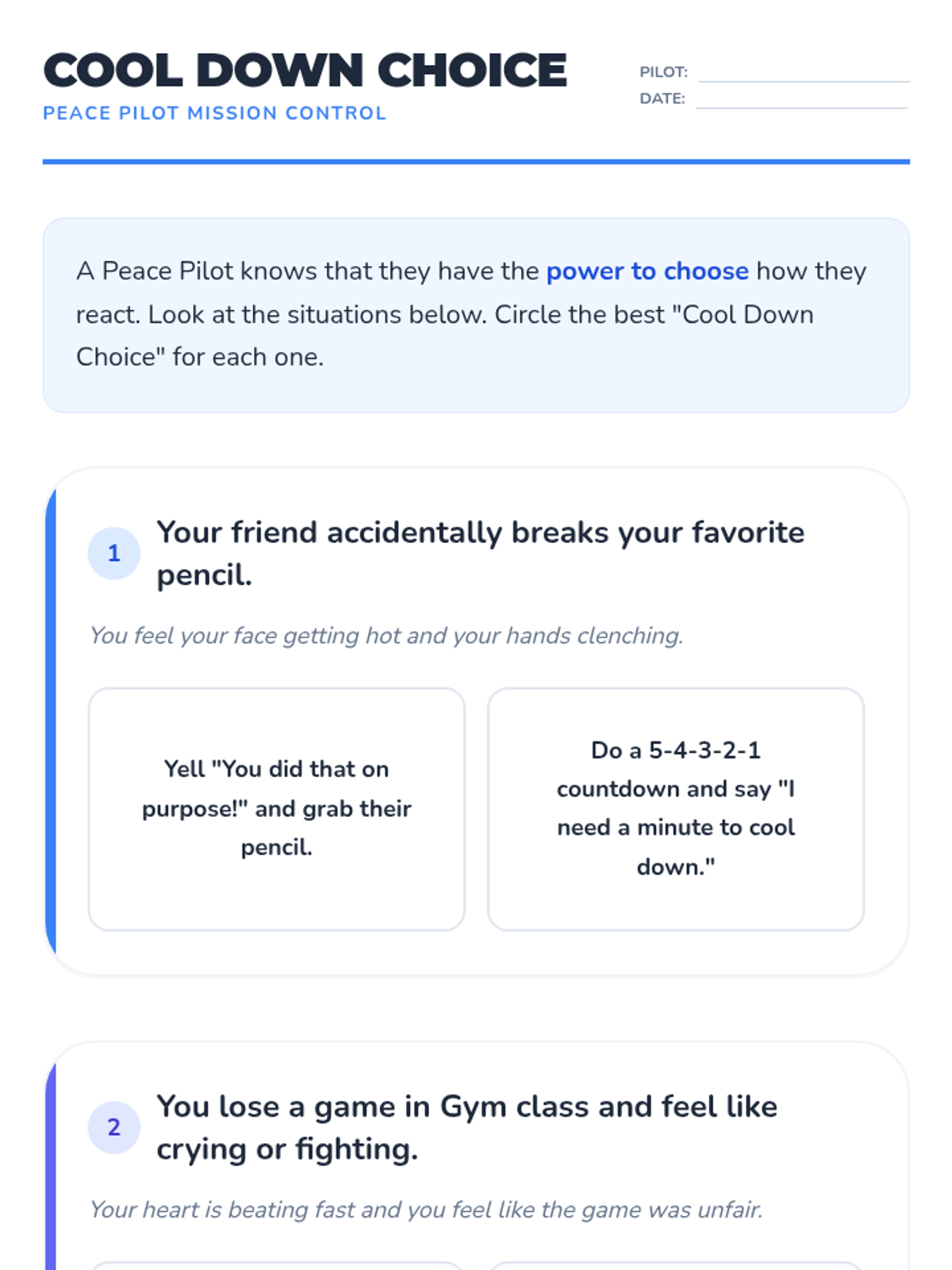
A lesson focused on self-regulation techniques, specifically the 5-4-3-2-1 grounding method and requesting breaks, to help students choose calm over conflict.
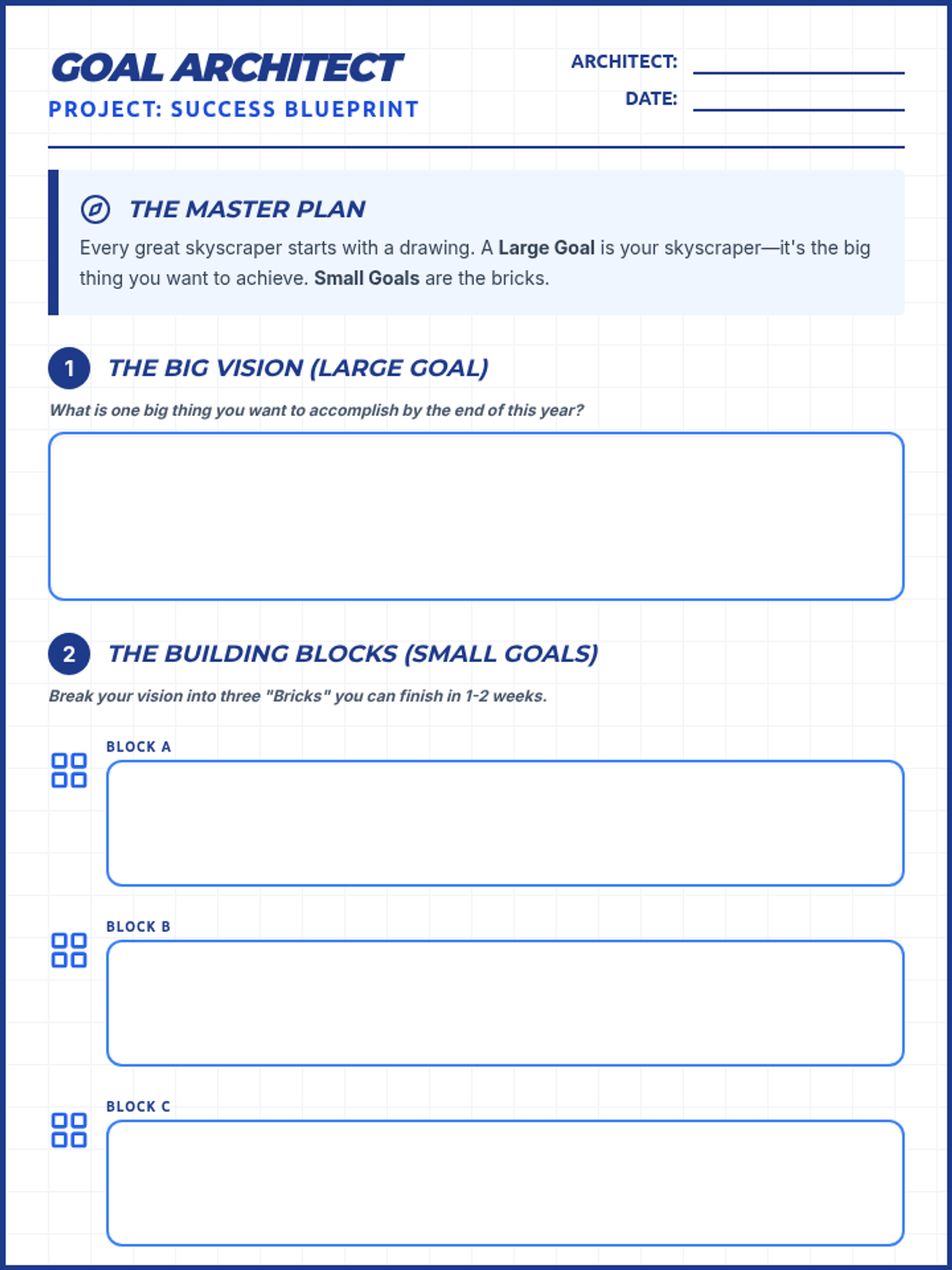
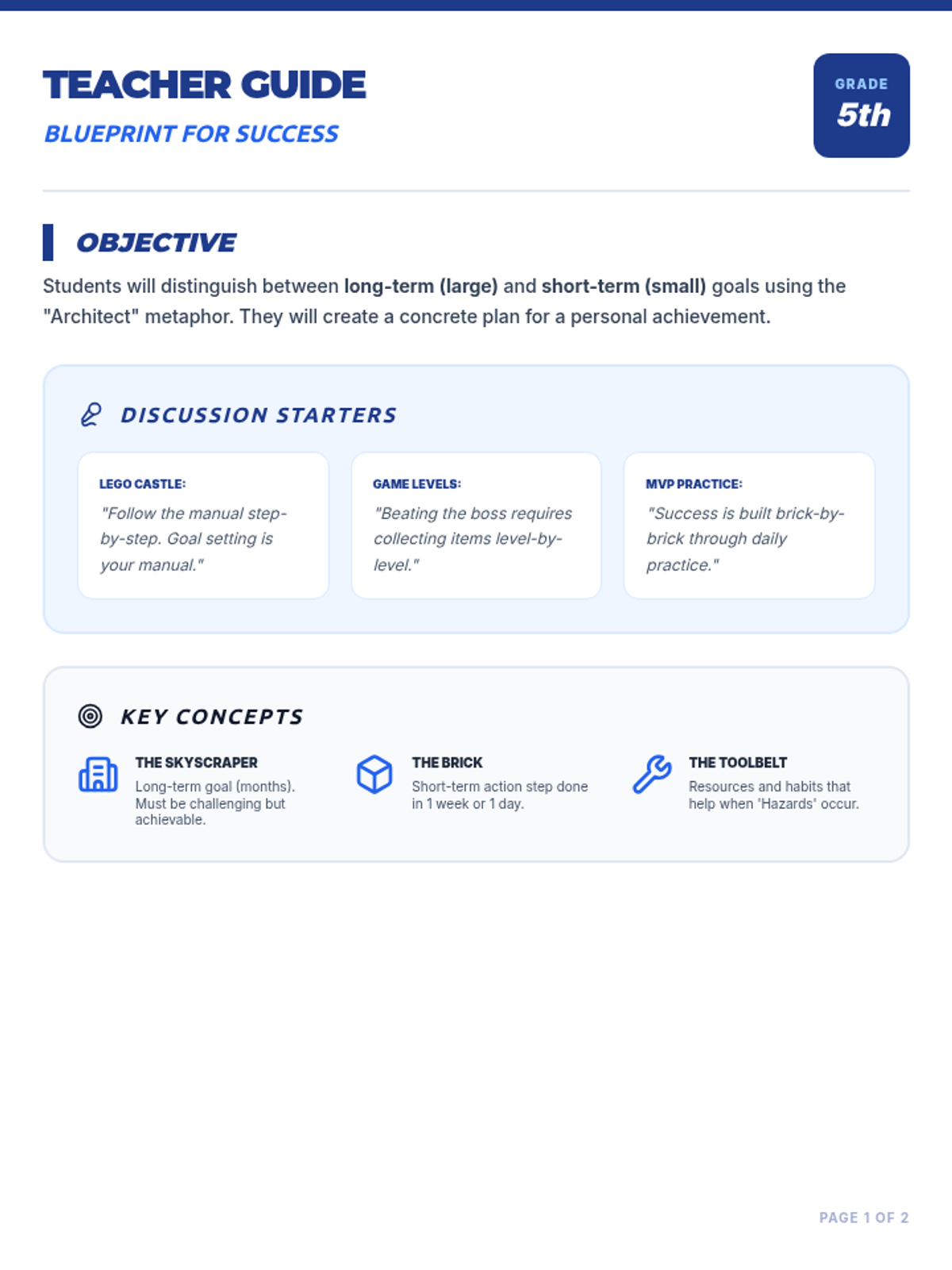
Students learn to distinguish between long-term (large) goals and short-term (small) goals, using a 'blueprint' framework to break down big dreams into manageable steps.
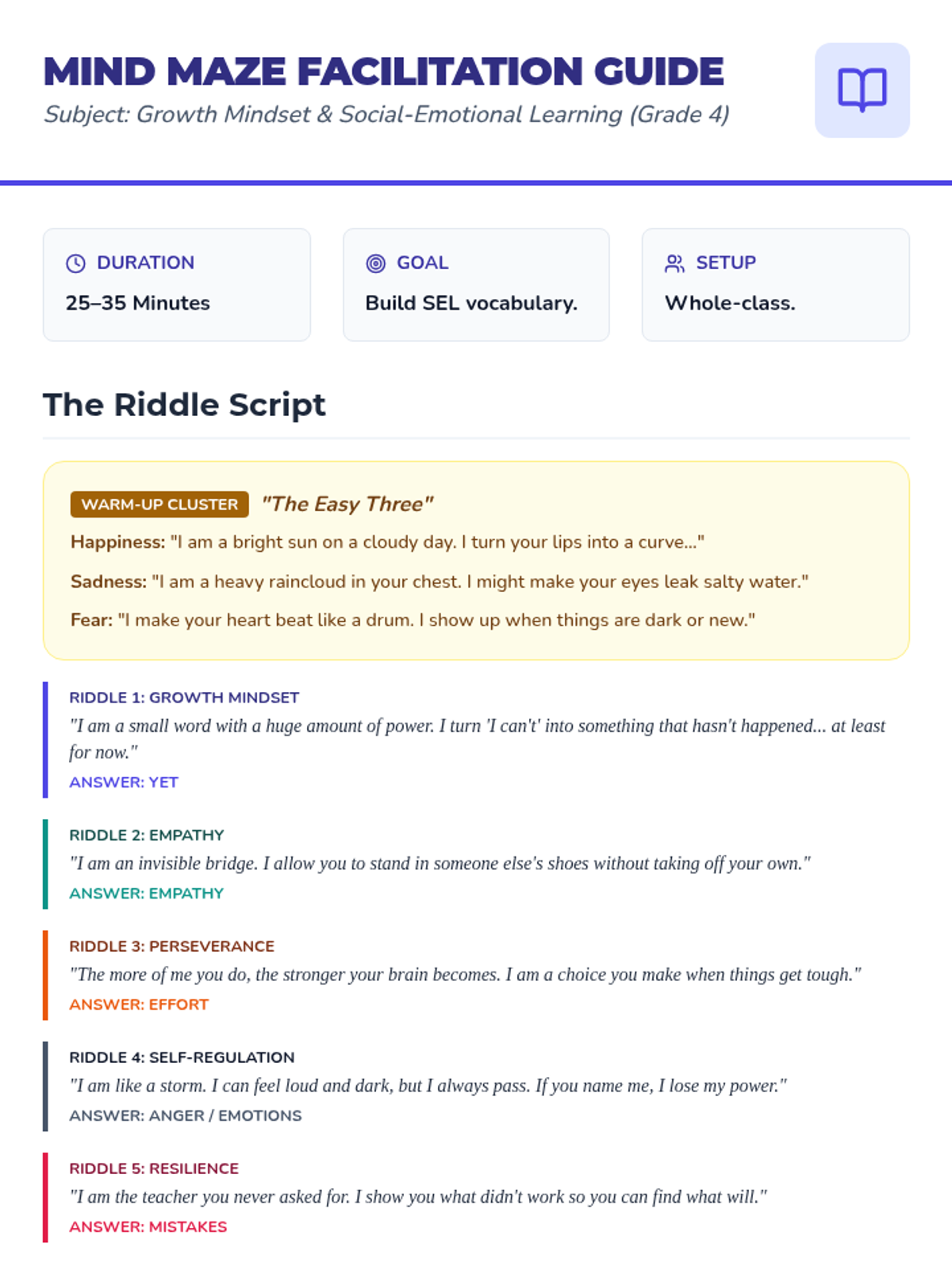
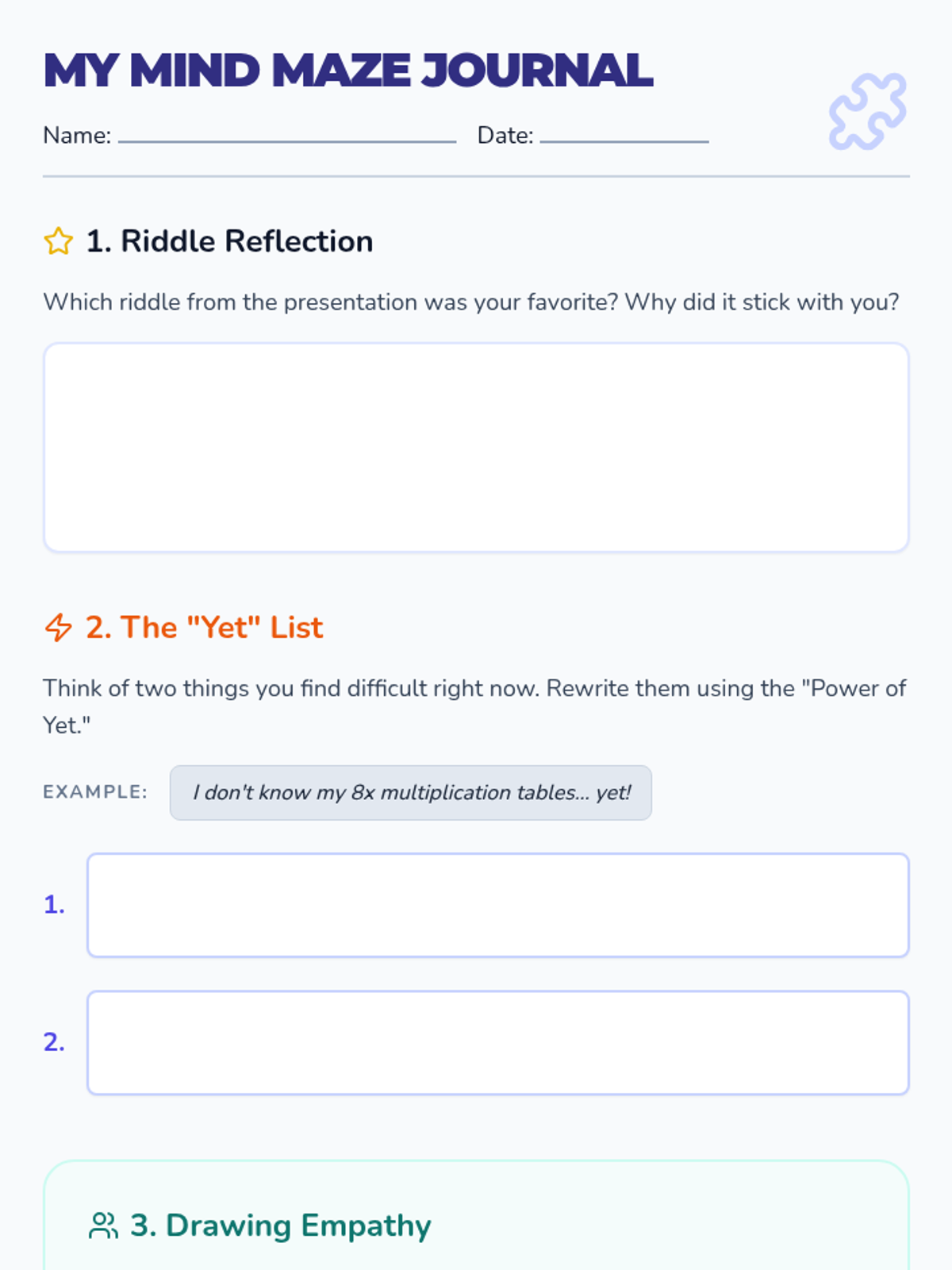
A riddle-based interactive session focusing on developing a growth mindset, perseverance, and emotional intelligence through critical thinking and empathy puzzles.
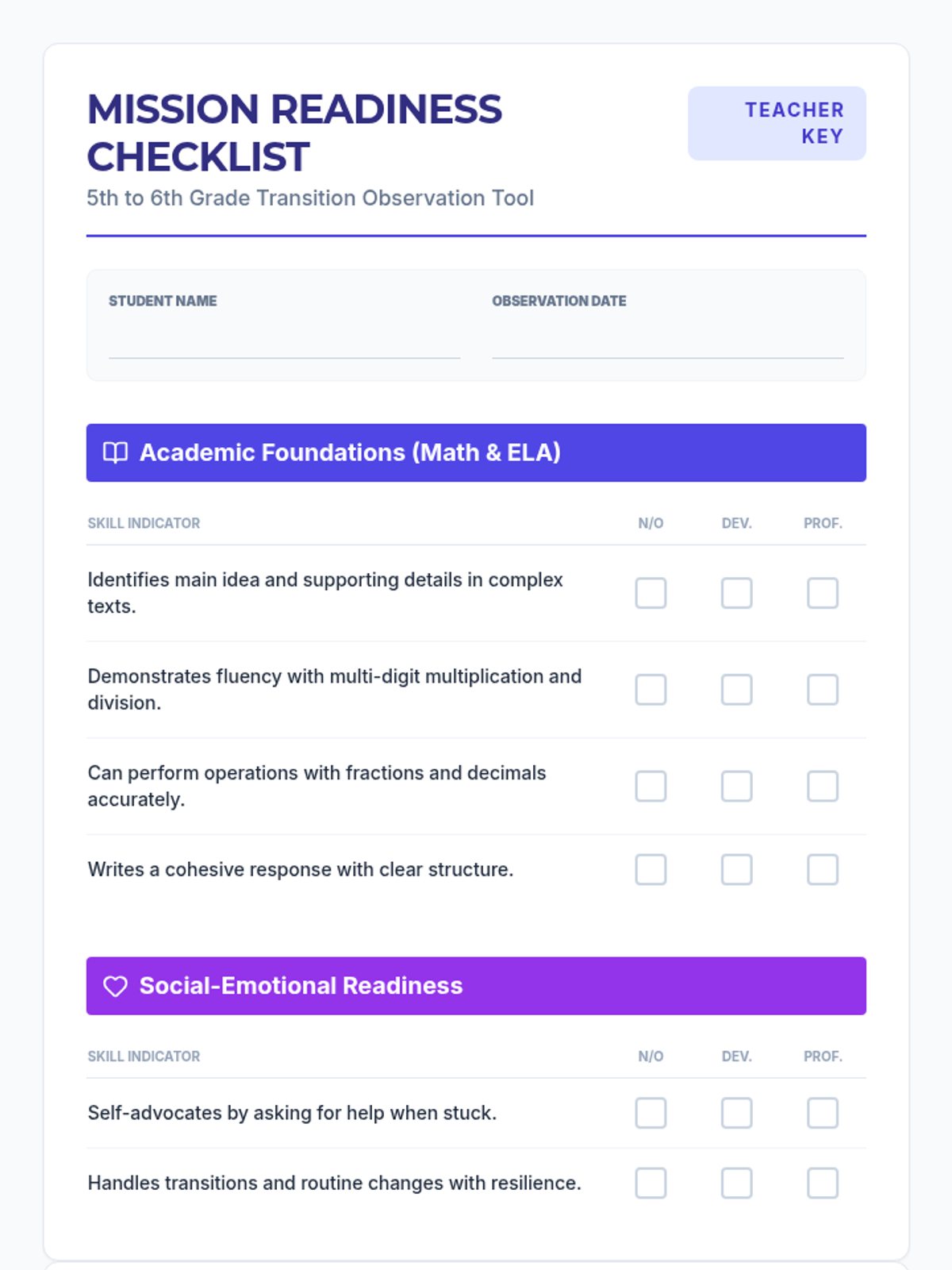
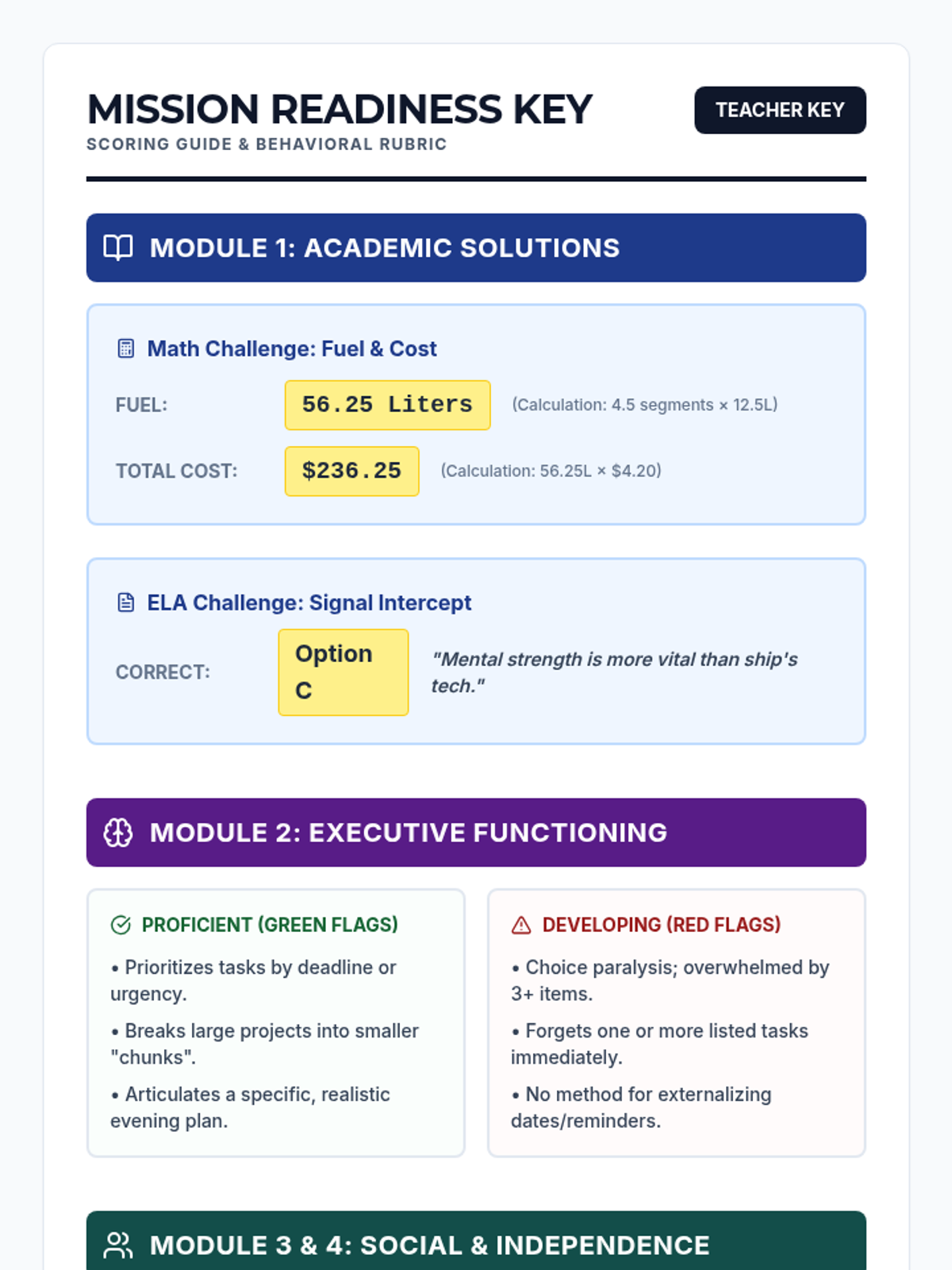
A comprehensive readiness assessment designed to evaluate academic, executive functioning, social-emotional, and functional independence skills for students transitioning from 5th to 6th grade.
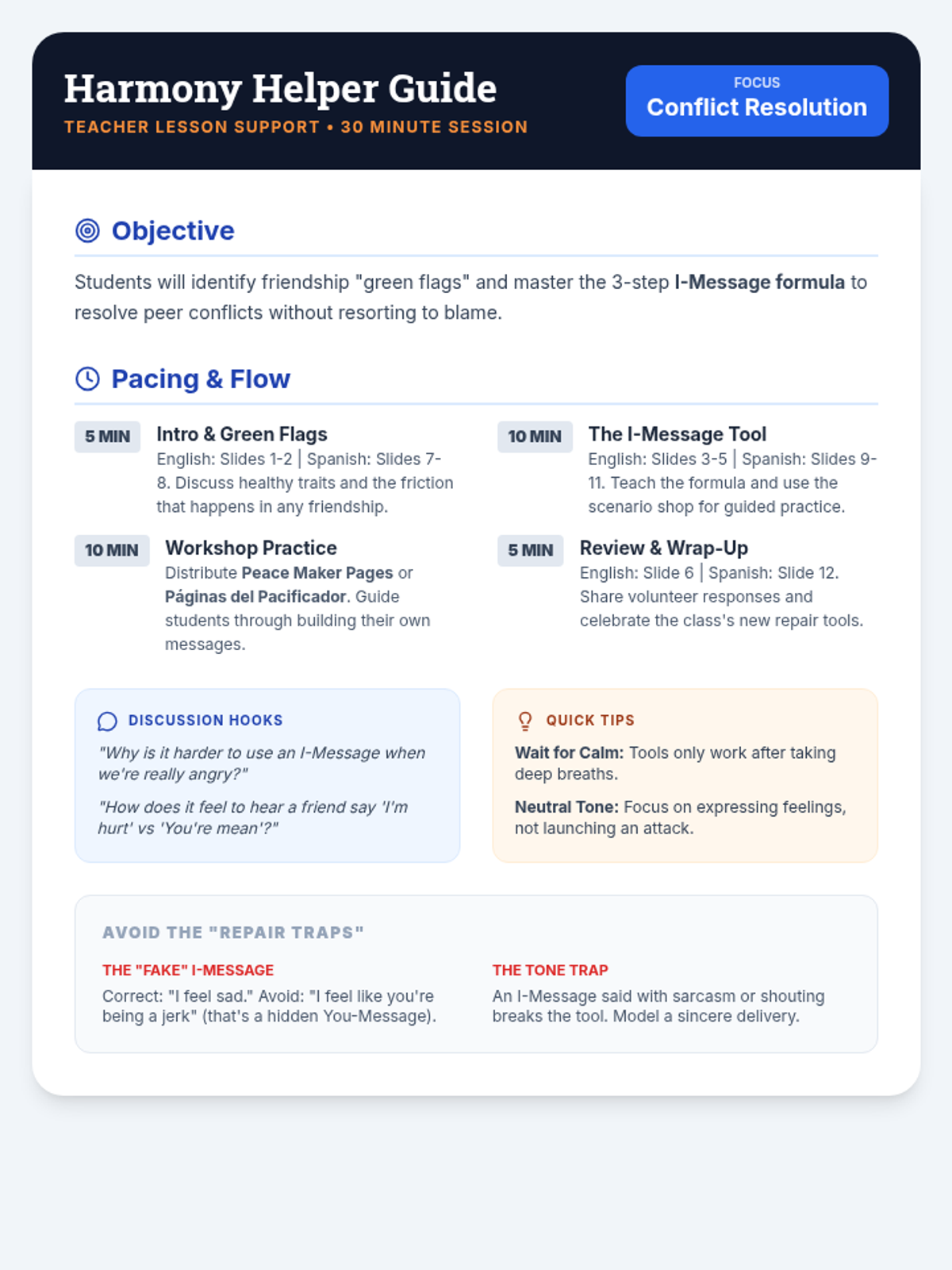
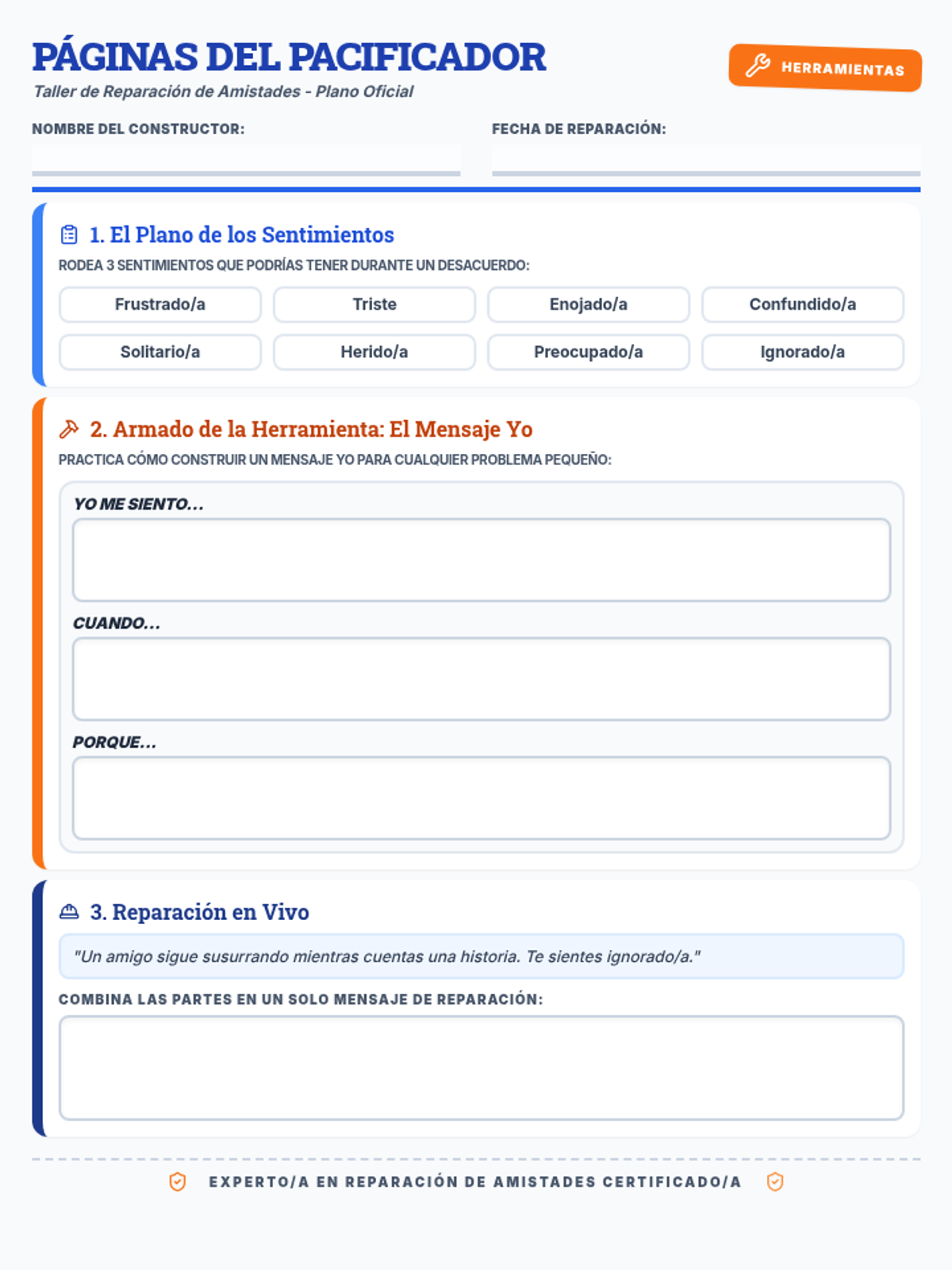
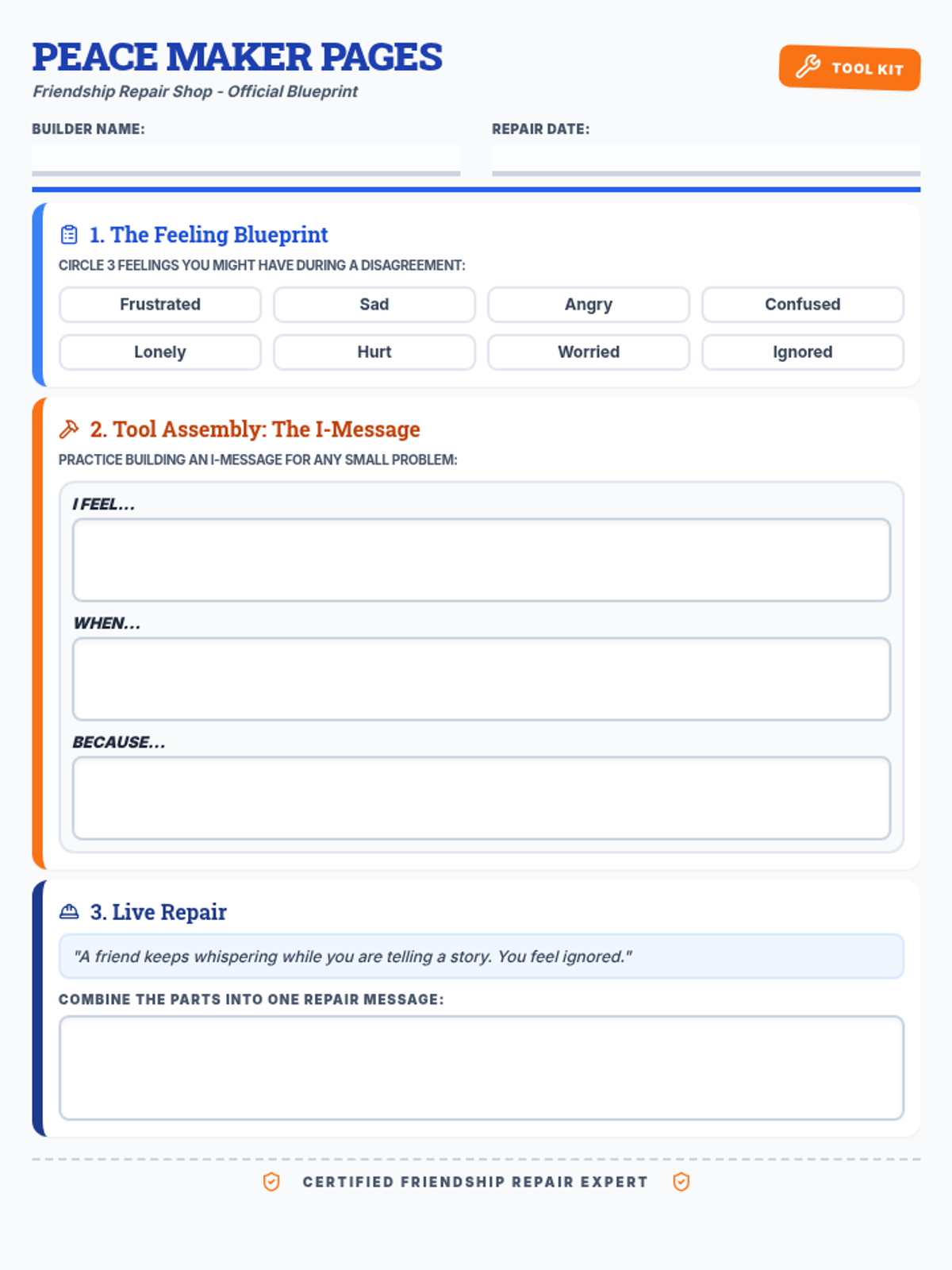
A 30-minute lesson for 3rd-5th graders on maintaining friendships and resolving conflicts using the I-Message technique. Students will identify friendship qualities and practice healthy communication tools.
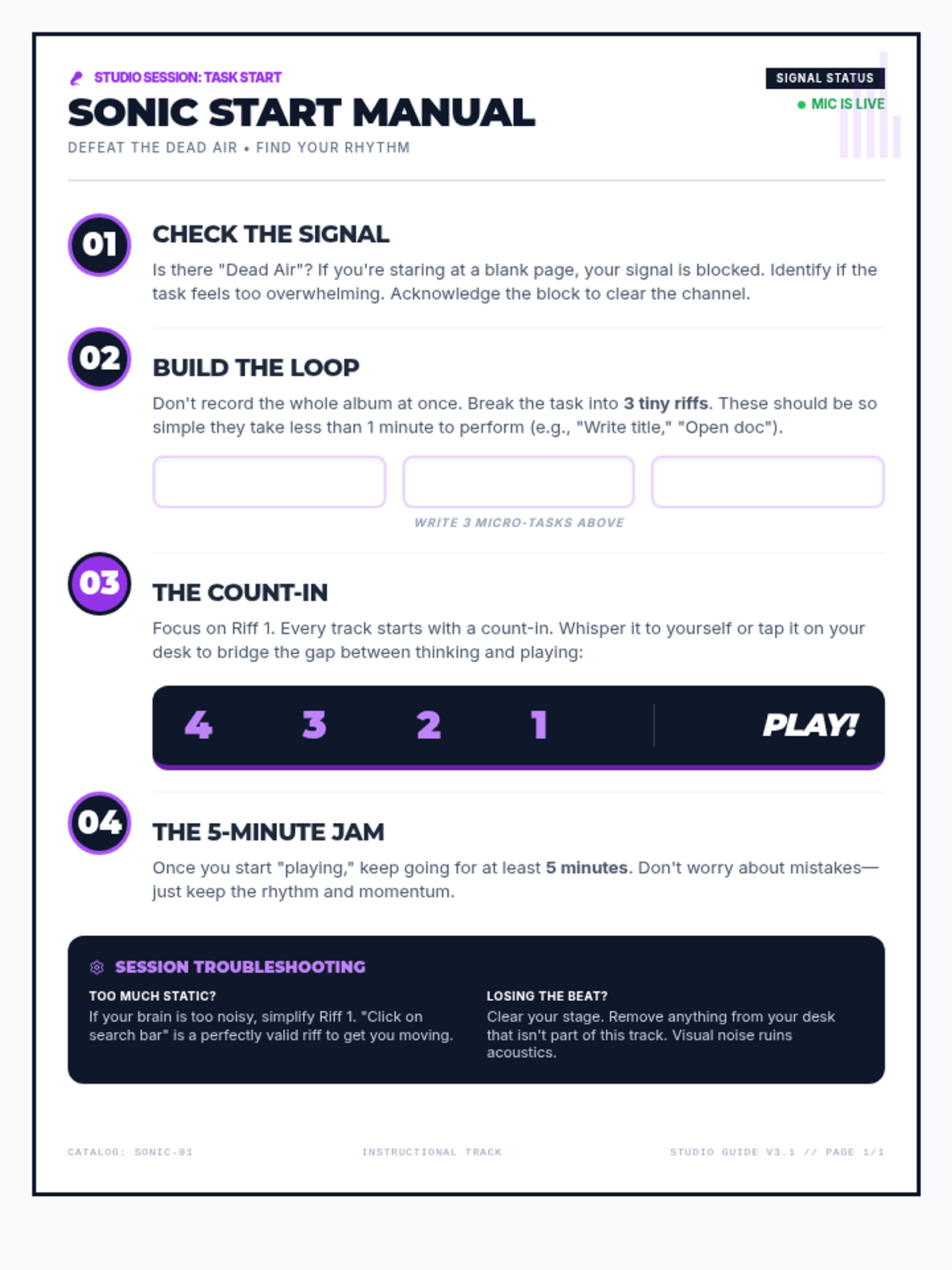
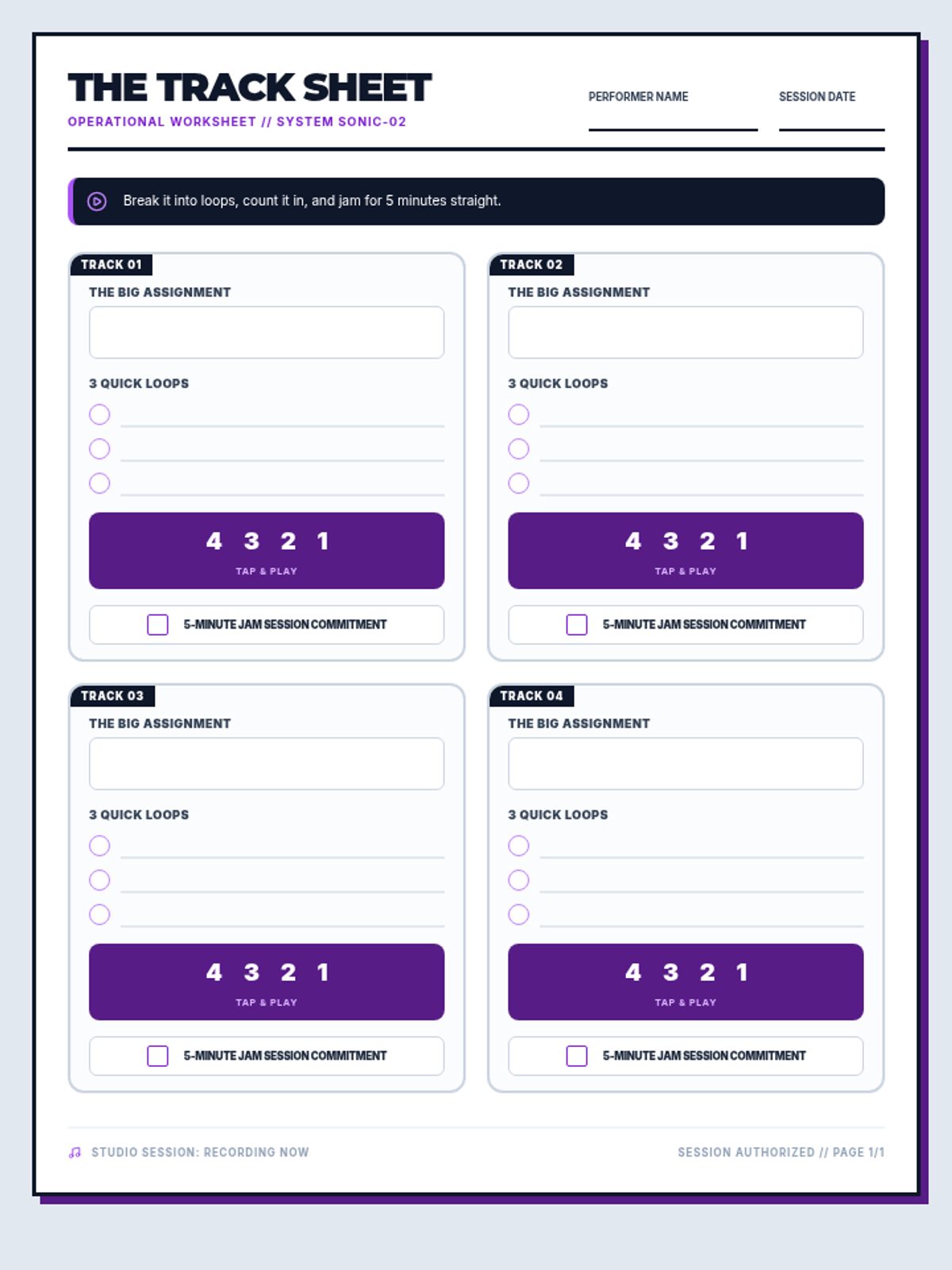
A practical lesson focusing on task initiation through a musical lens. Students learn to overcome 'Dead Air' (procrastination) using 'The Count-In' and 'The 5-Minute Jam' to build momentum in their classroom work.
A synthesis lesson where students apply all strategies to identify villains and deploy superheroes in complex social scenarios.
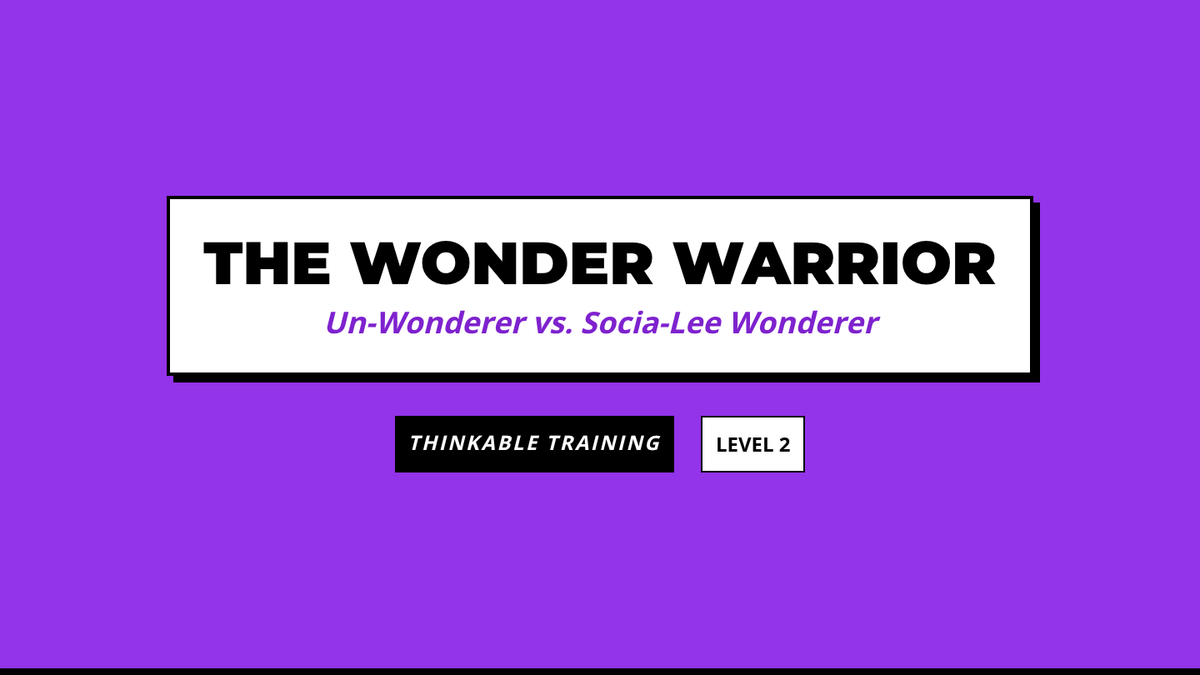
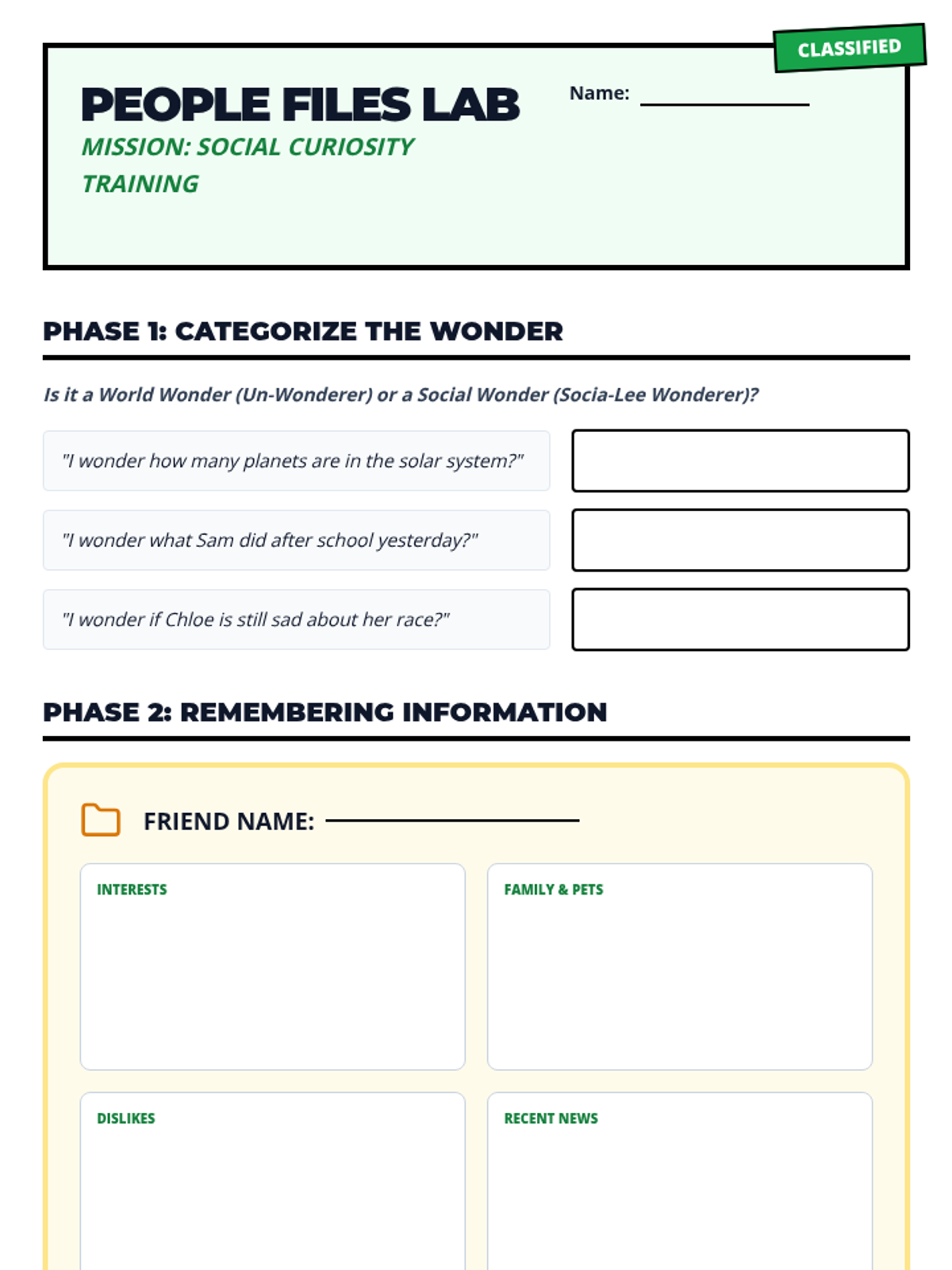
Focuses on moving from world-wondering to people-wondering using 'People Files' and social curiosity to build stronger relationships.
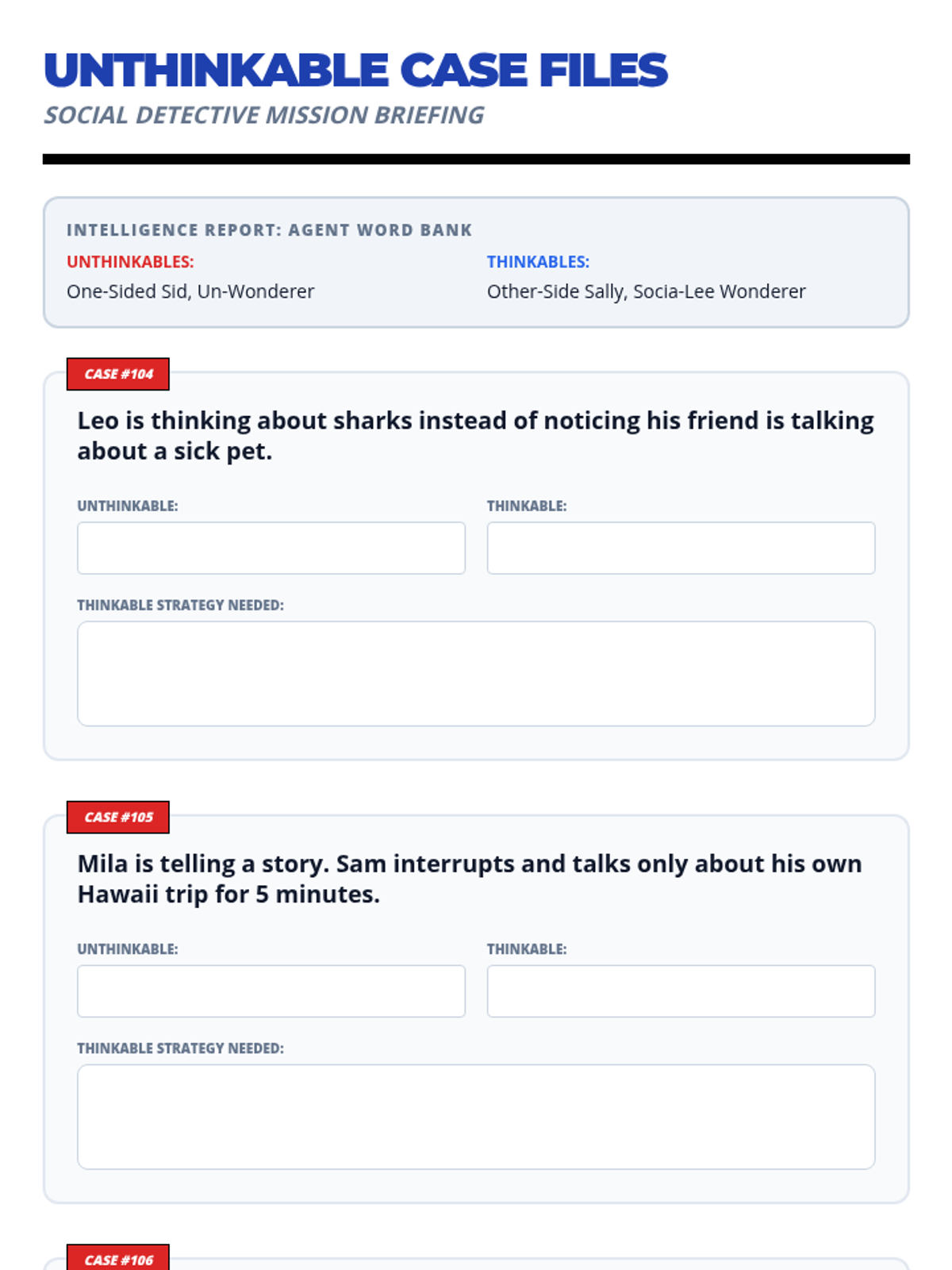
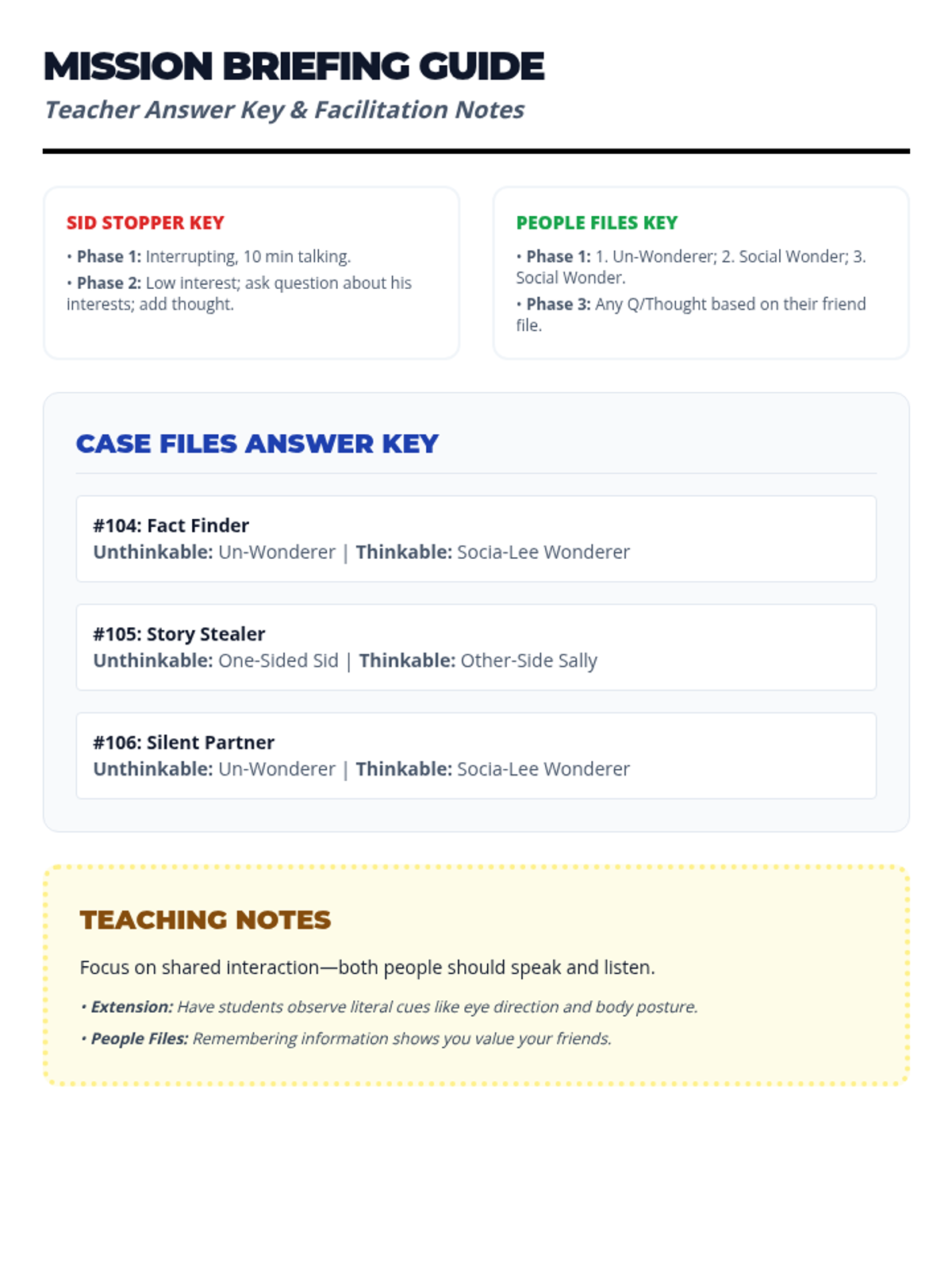
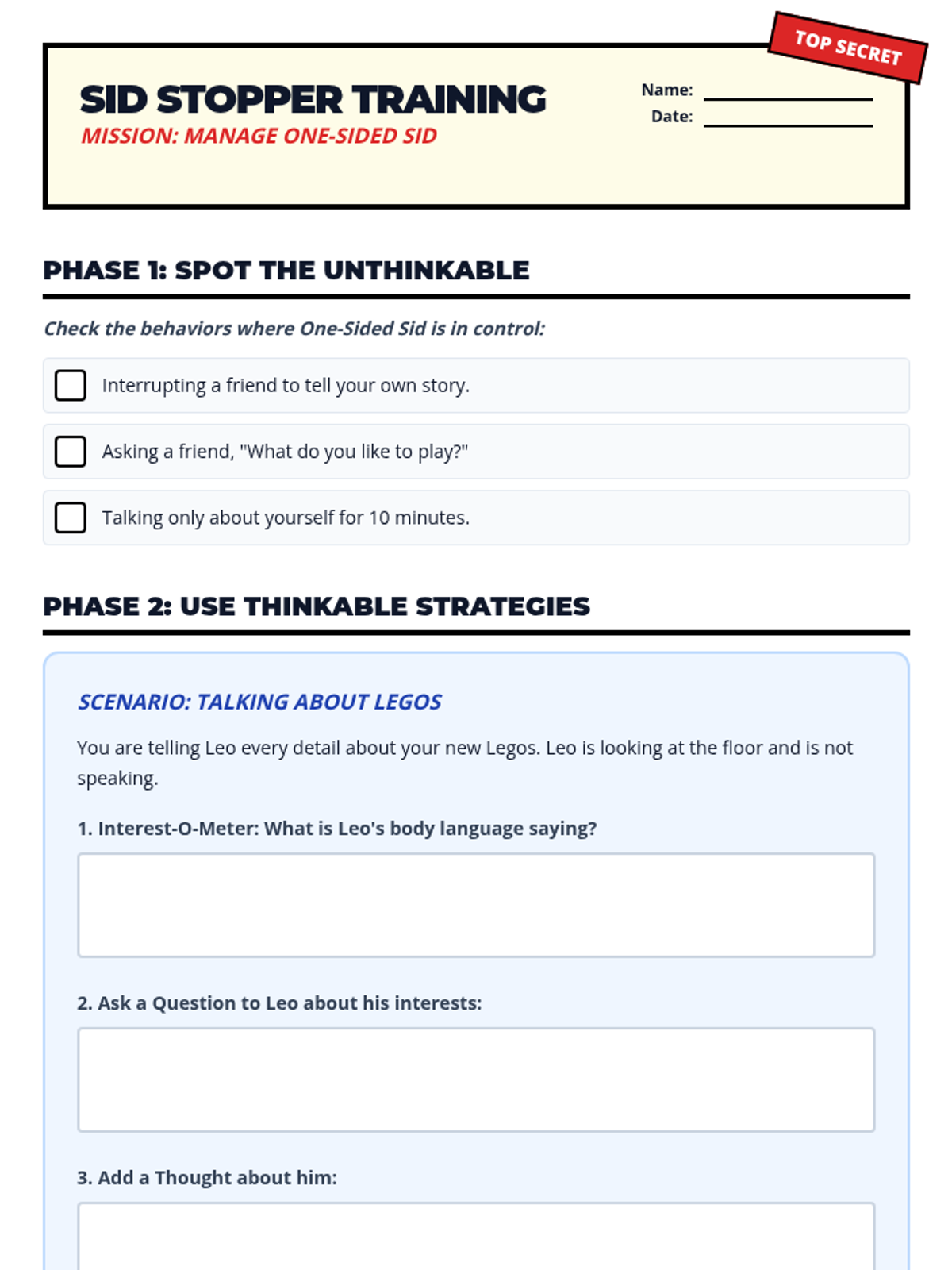
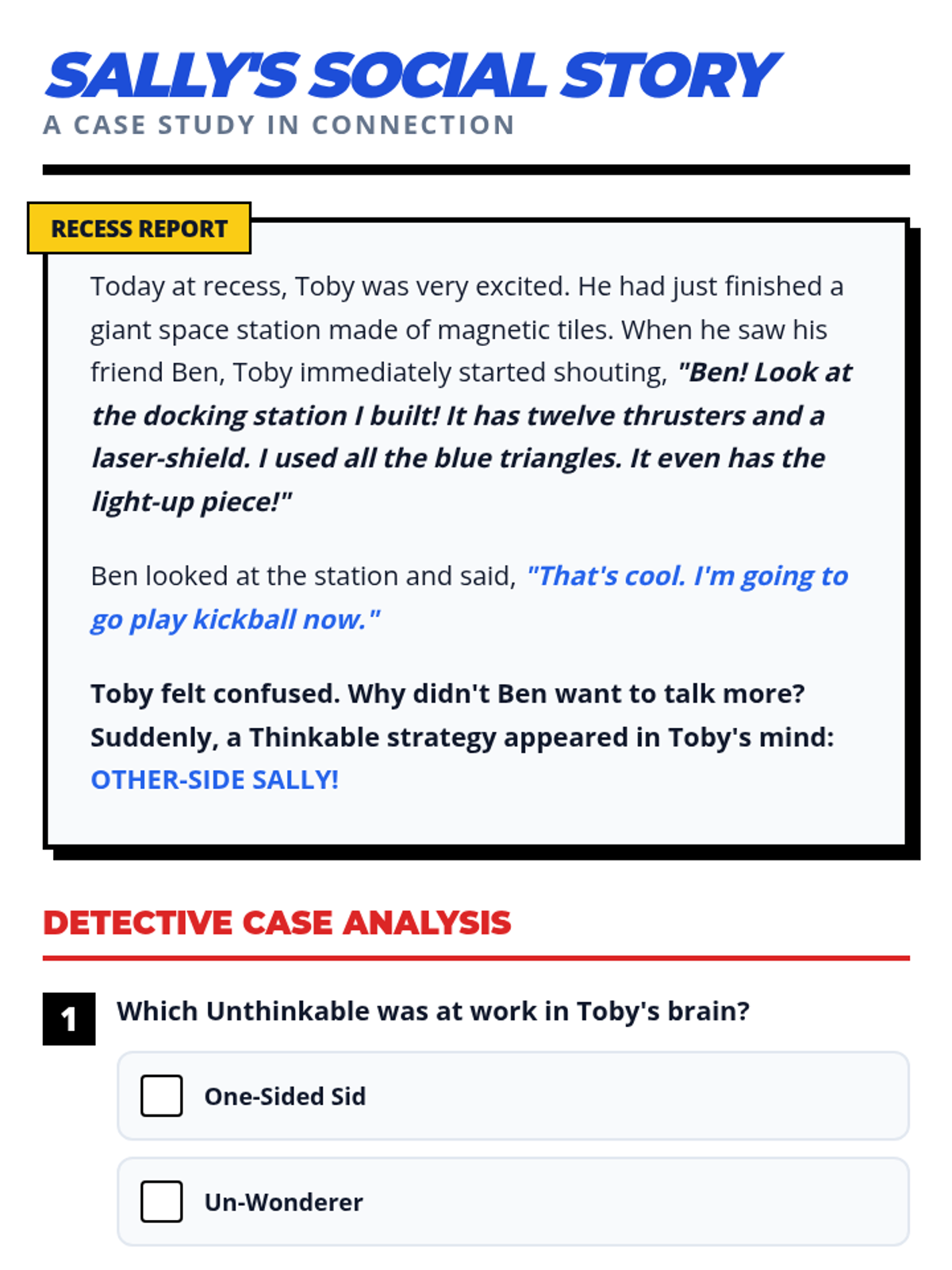
Teaches students to identify conversation-hogging behaviors and use strategies like the Interest-O-Meter and 'Ask a Question' to ensure balanced social interactions.
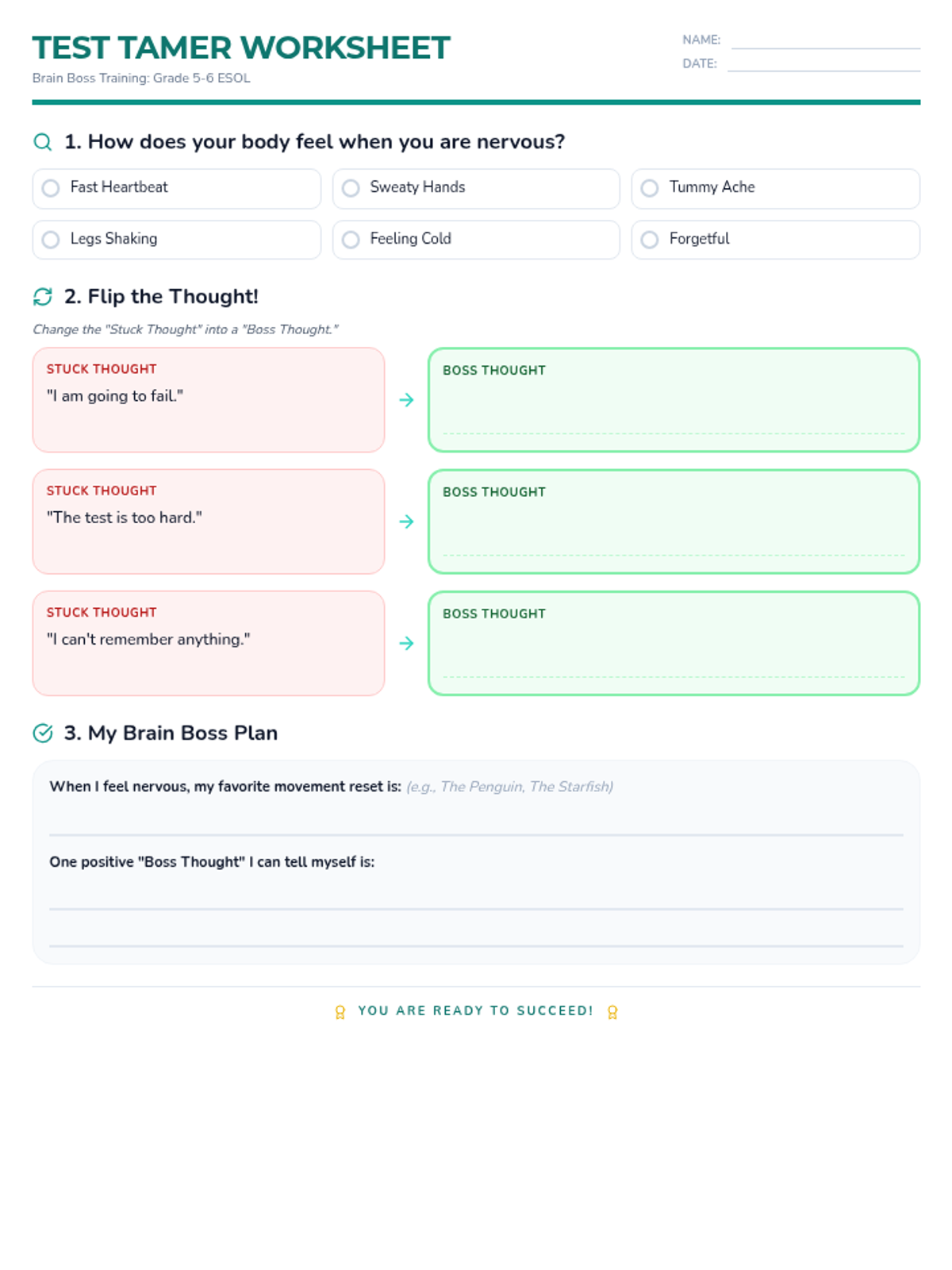
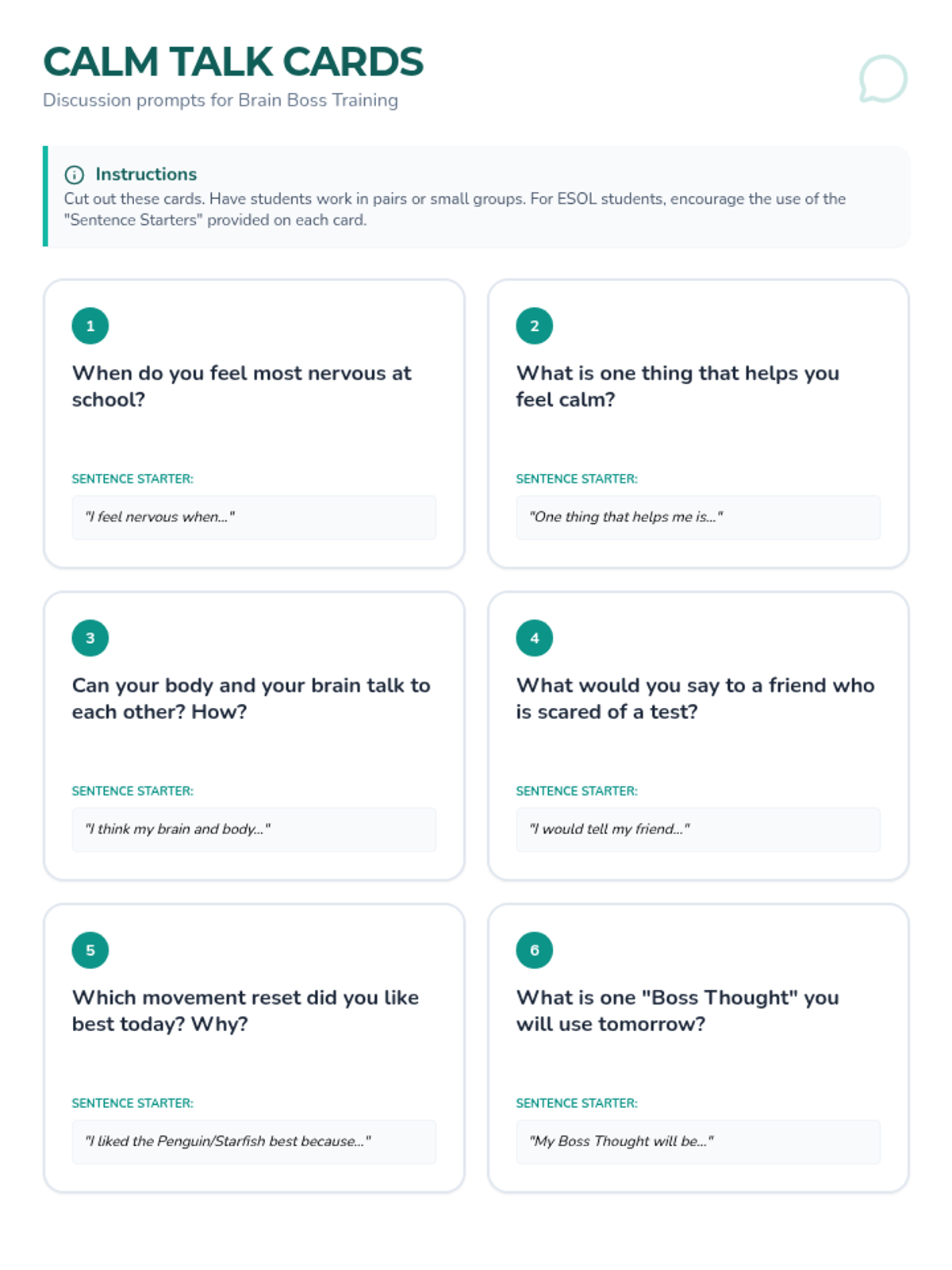
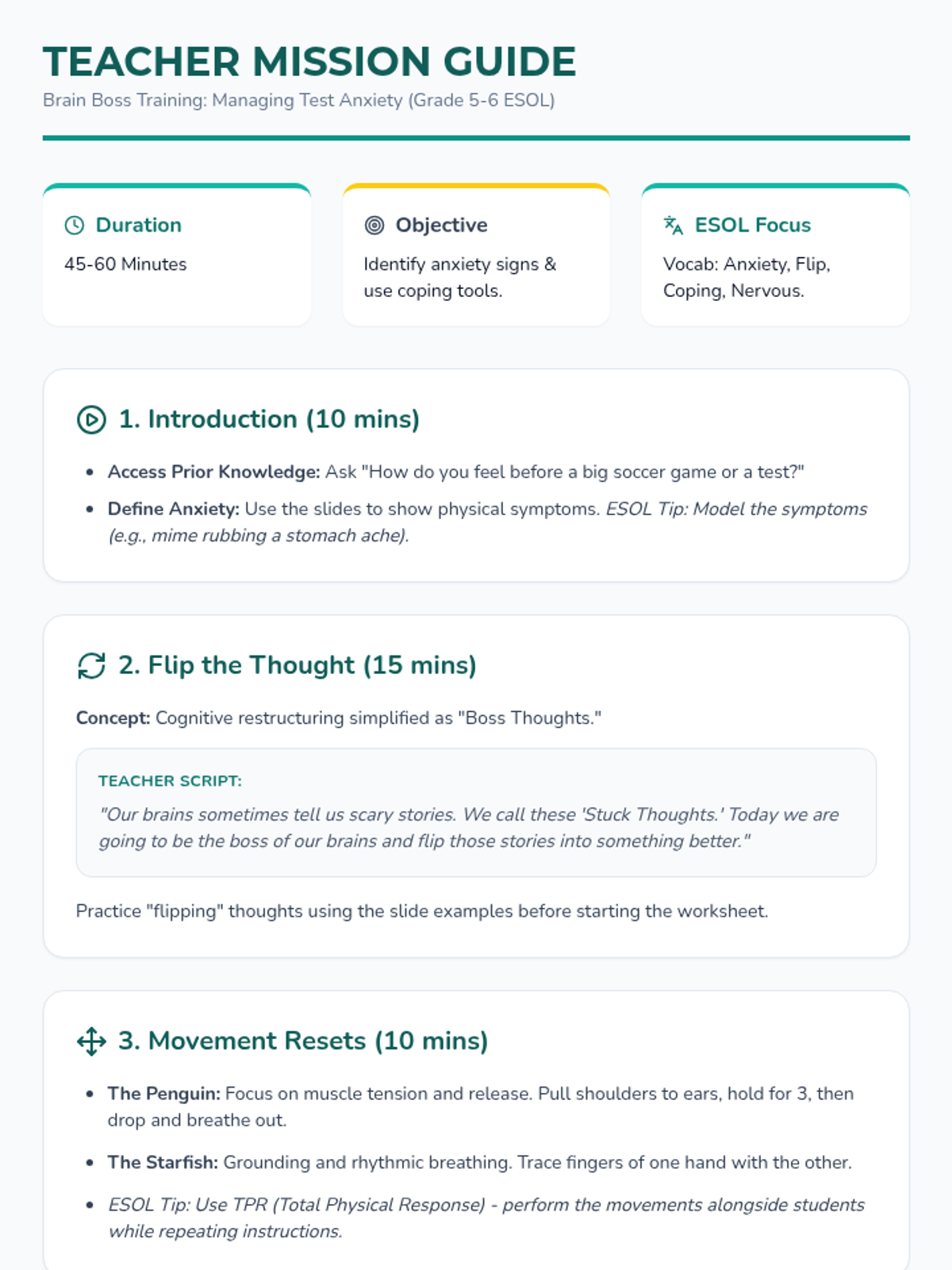
A lesson designed for Grade 5-6 ESOL students to identify signs of test anxiety and implement coping strategies including movement and cognitive restructuring. Students will learn to 'flip' negative thoughts and use physical resets to stay focused during assessments.
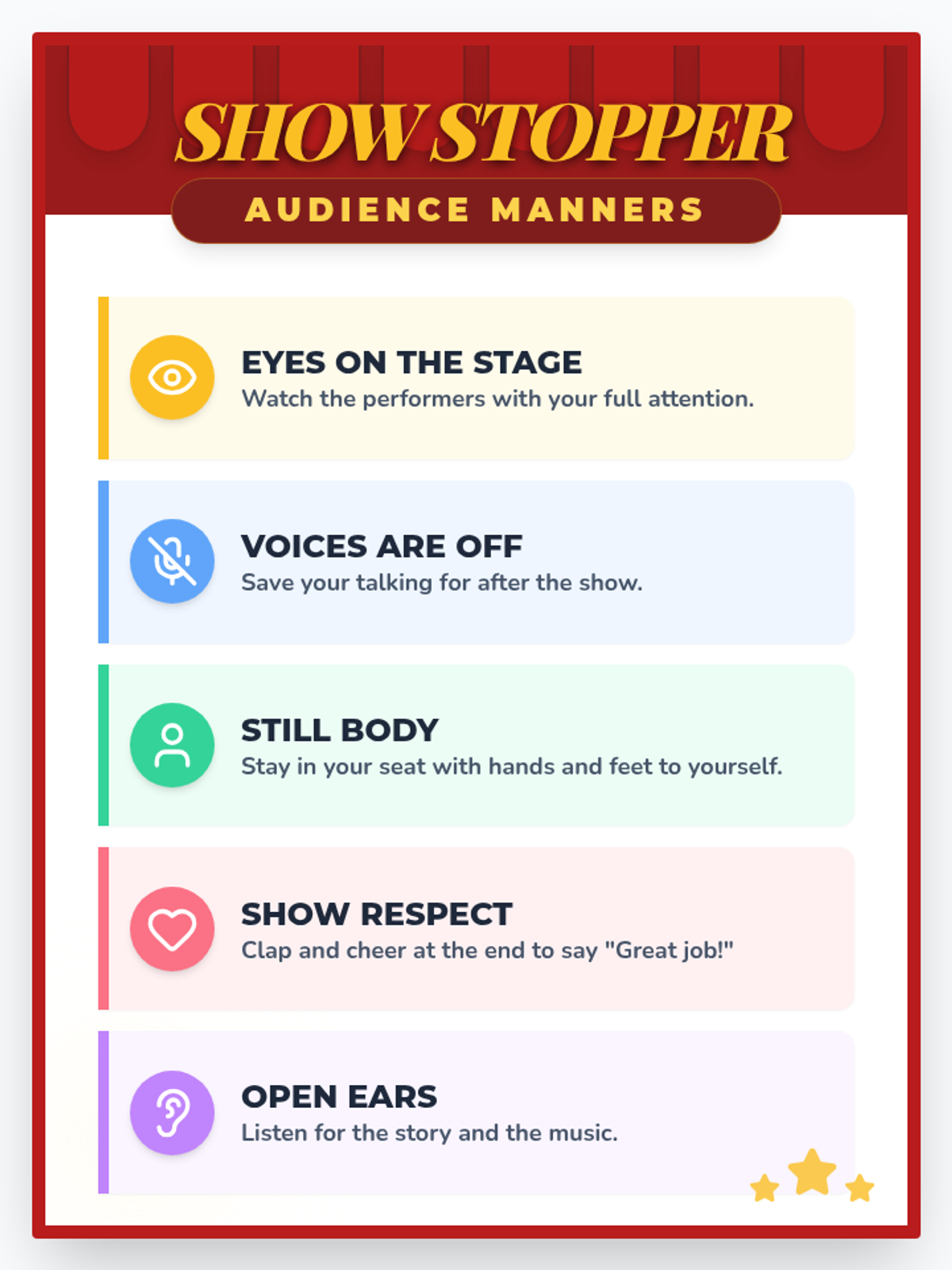
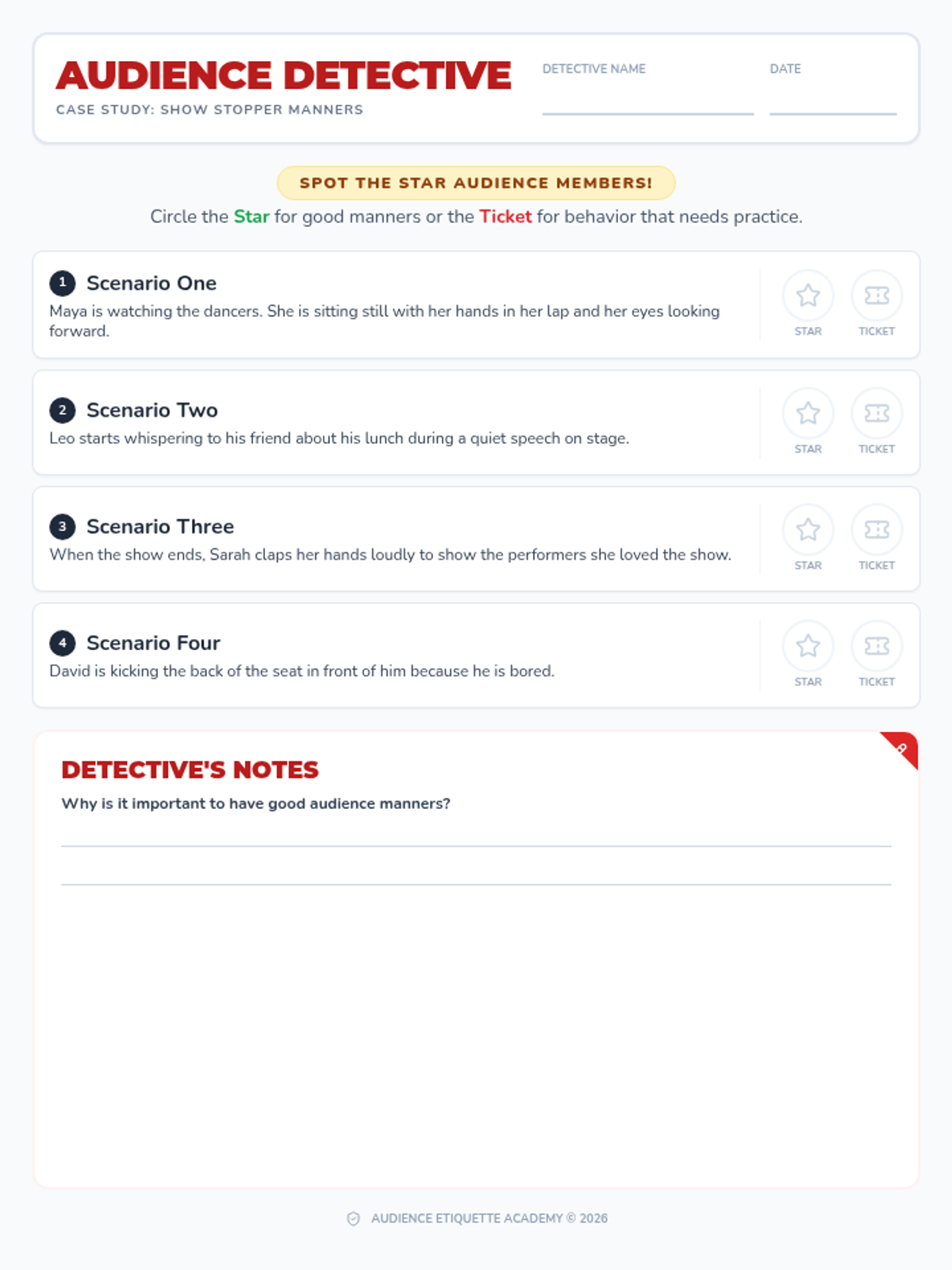
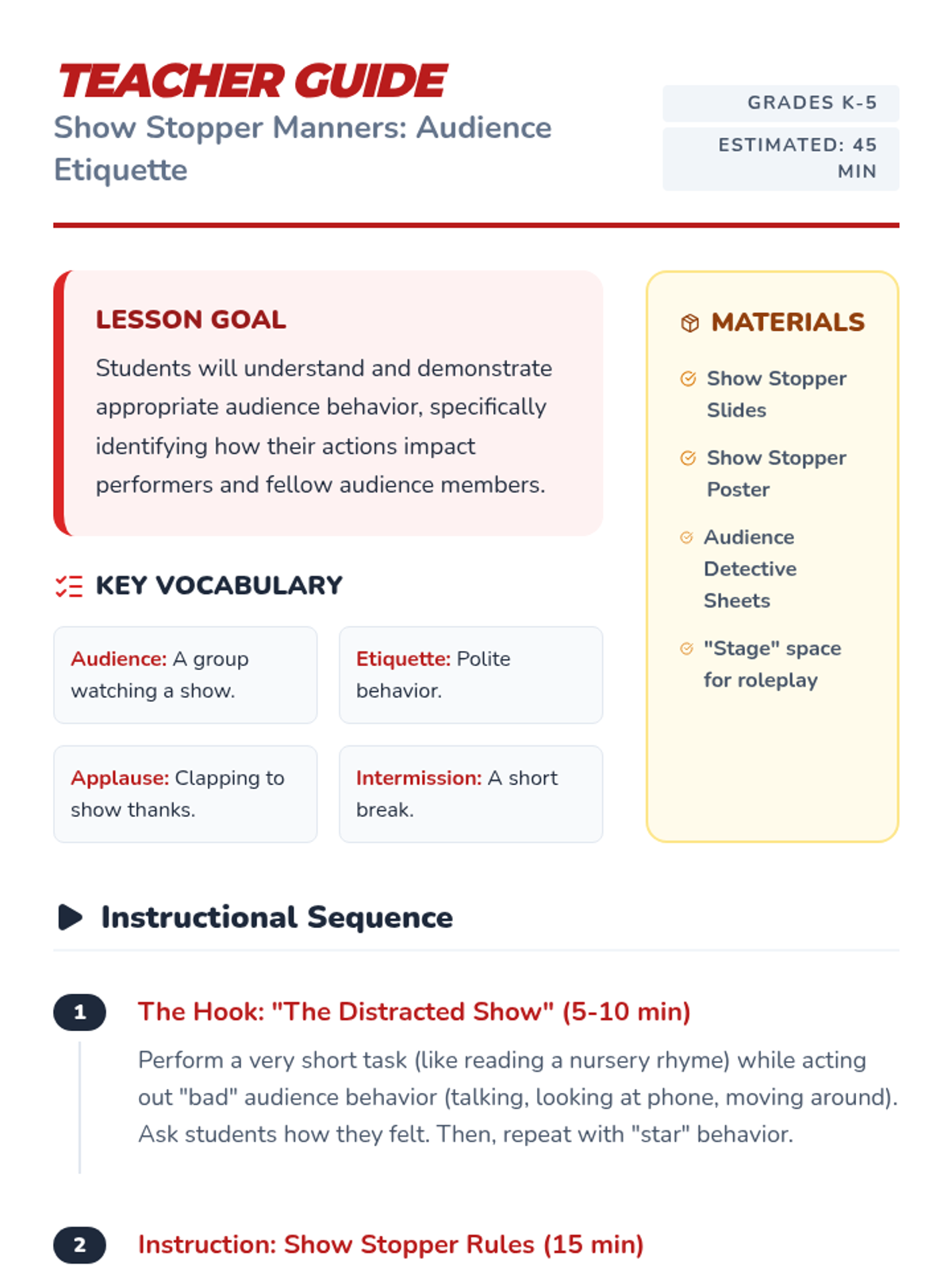
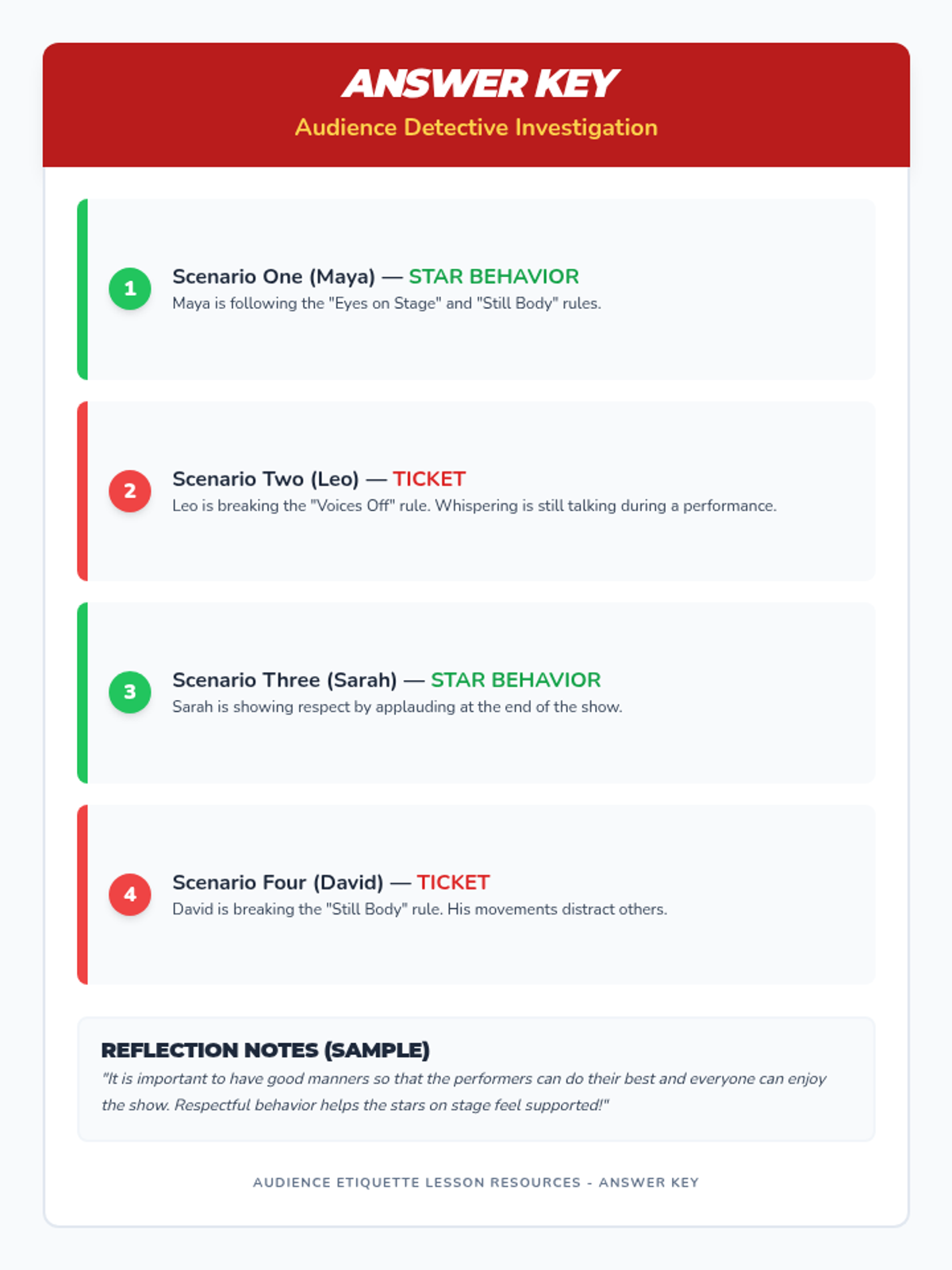
A theatrical lesson for K-5 students on audience etiquette, using a stage theme to teach respect, focus, and appropriate responses.
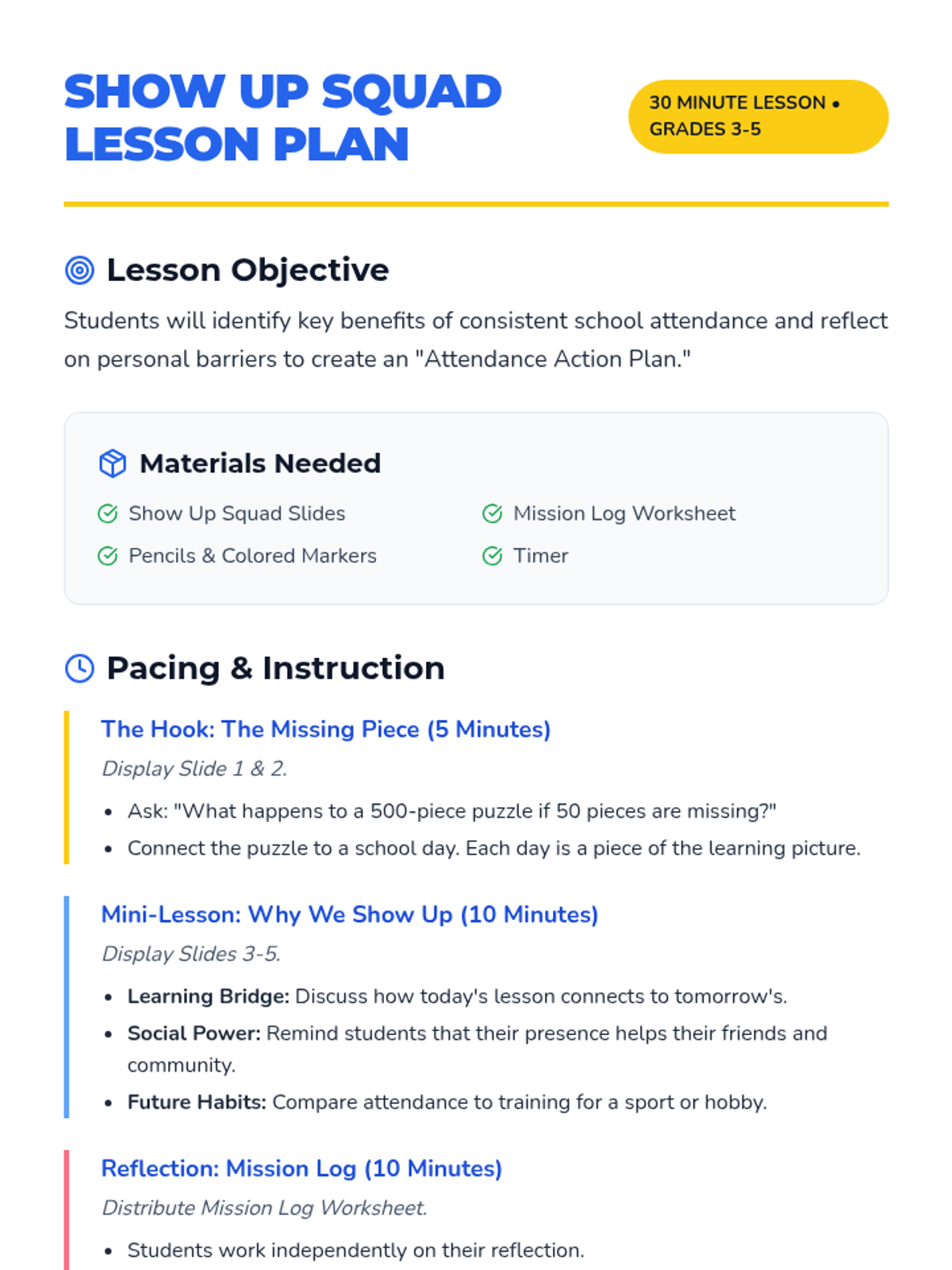
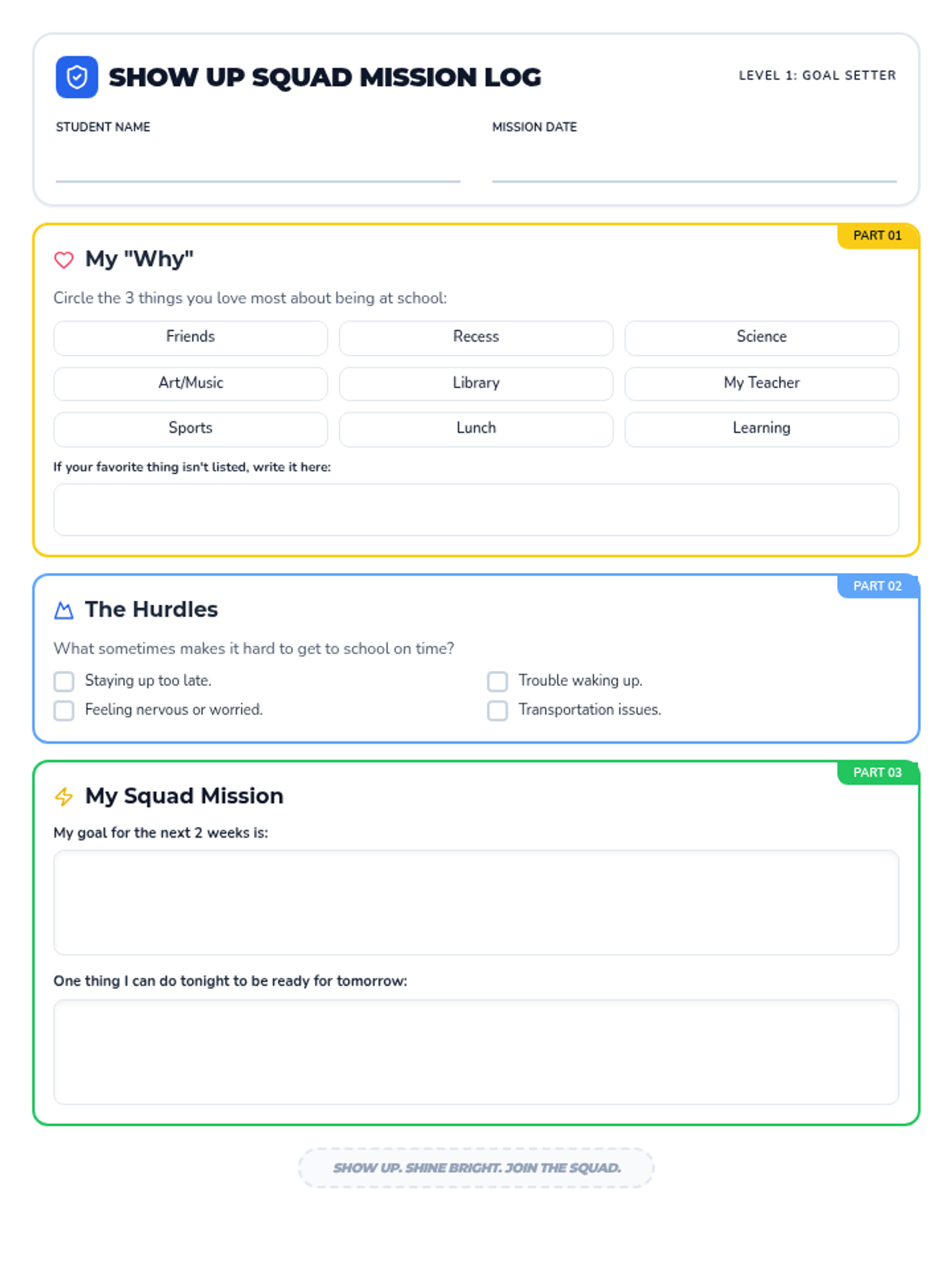
A 30-minute lesson designed for upper elementary students to understand the impact of school attendance on their learning and social connections. Students join the 'Show Up Squad' to reflect on their own attendance habits and set positive goals.
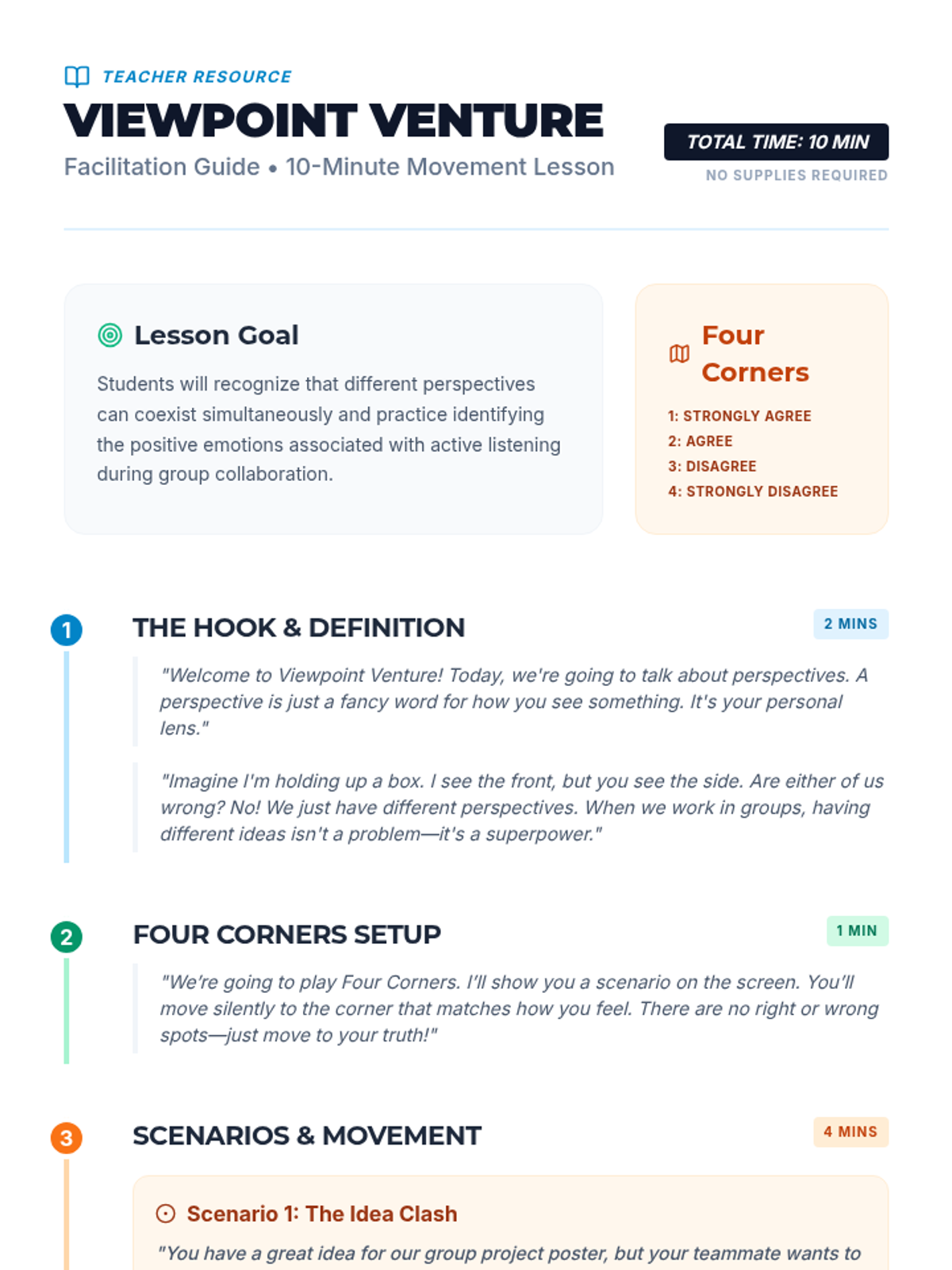
A quick, high-energy 10-minute lesson using movement to explore perspective-taking and the emotional impact of being heard during group work.
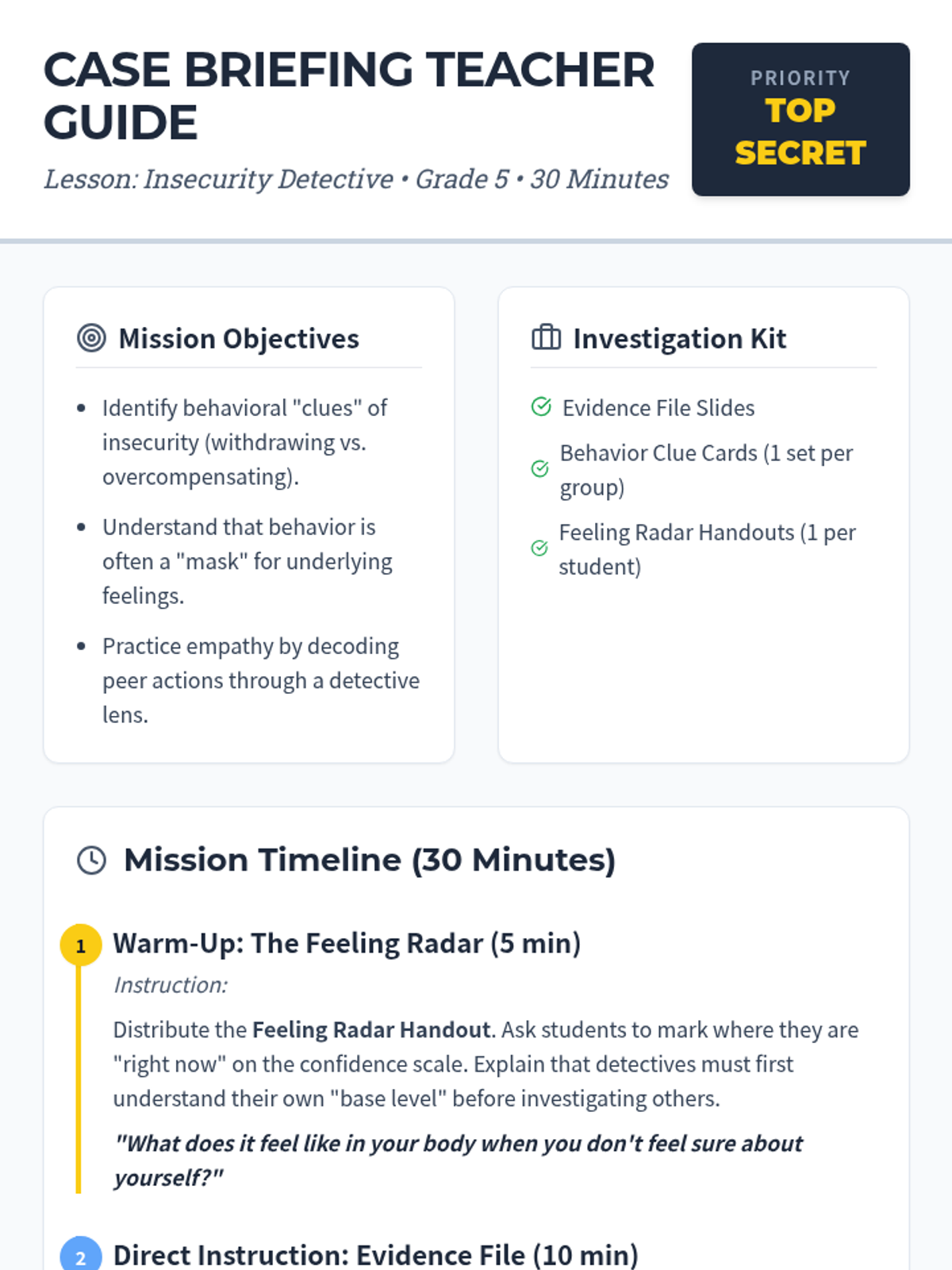
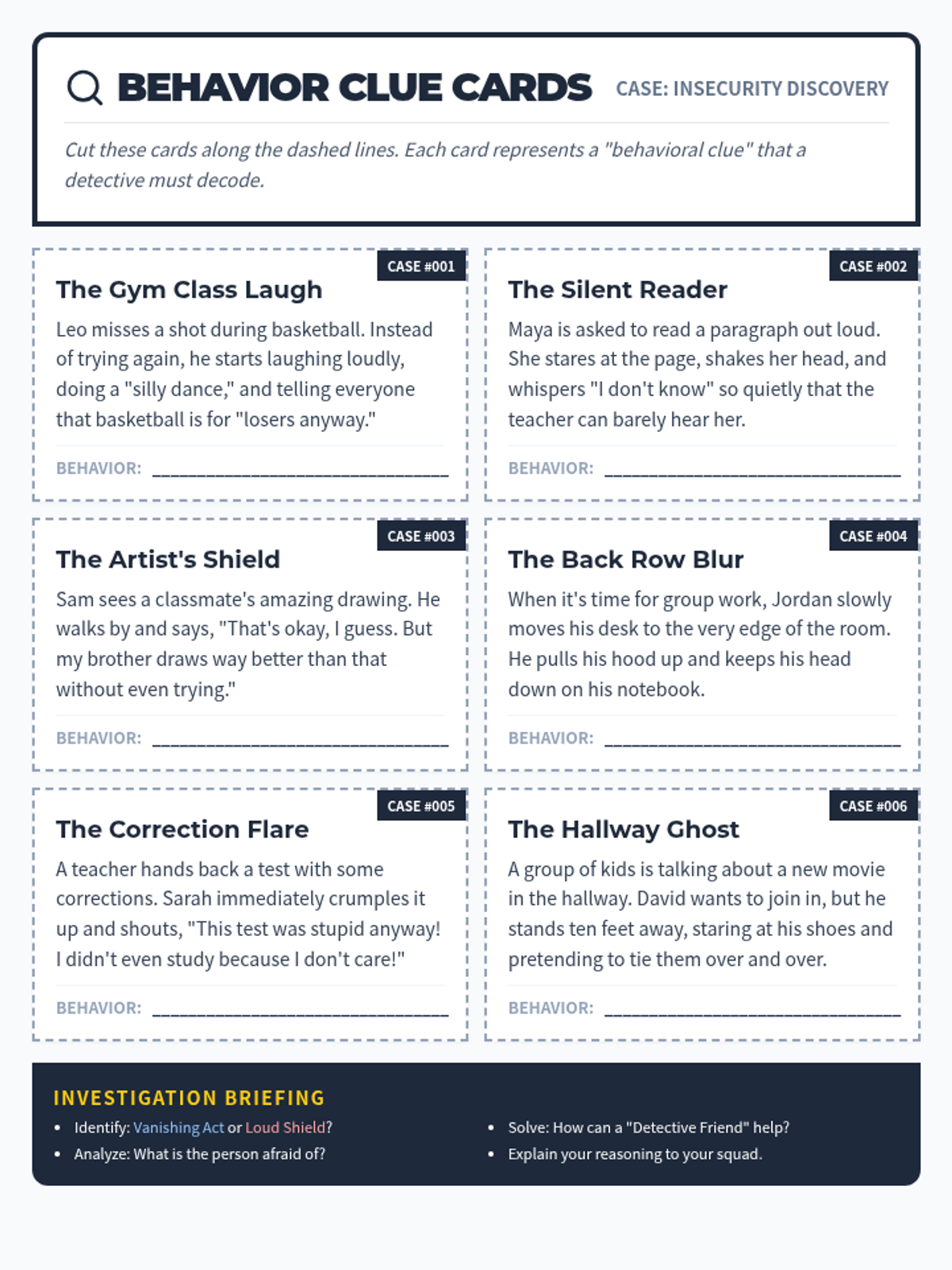
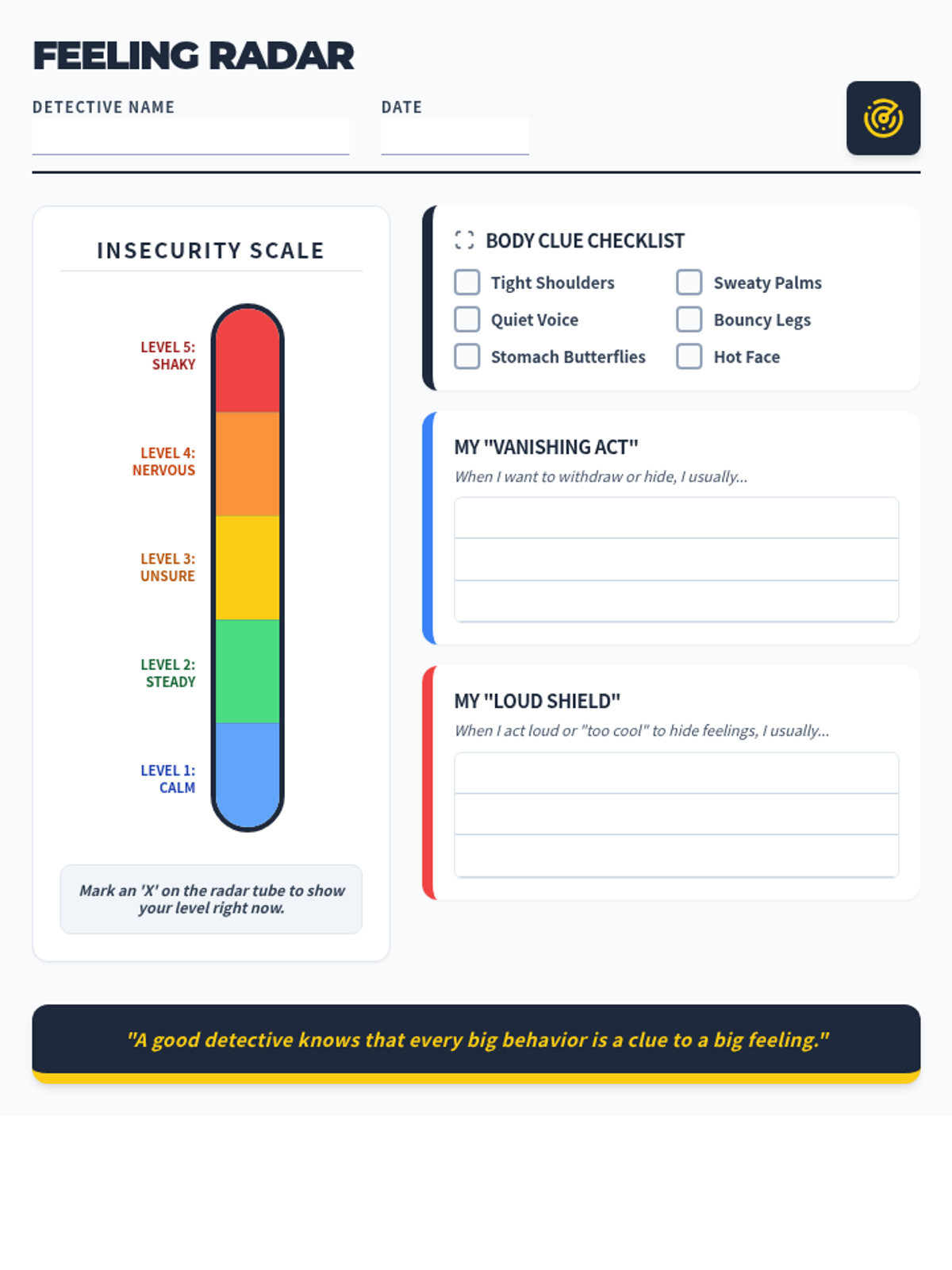
A Social-Emotional Learning lesson focused on identifying the behavioral 'masks' of insecurity. Students learn to spot signs like withdrawing and overcompensating through a detective-themed investigation.
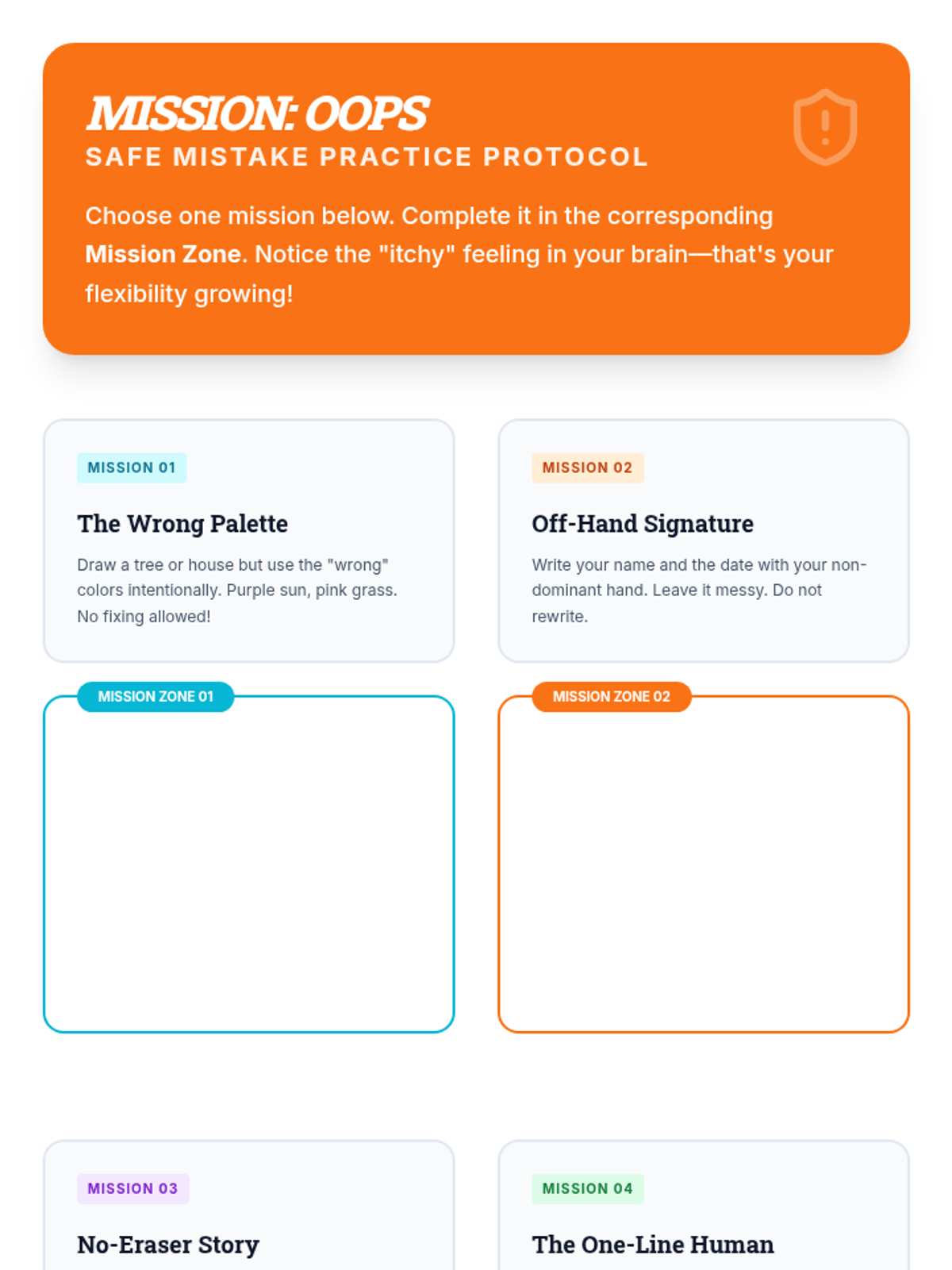
Students will explore the concept of 'The Quality Slider' to differentiate between necessary quality and perfection, while practicing intentional safe mistakes.
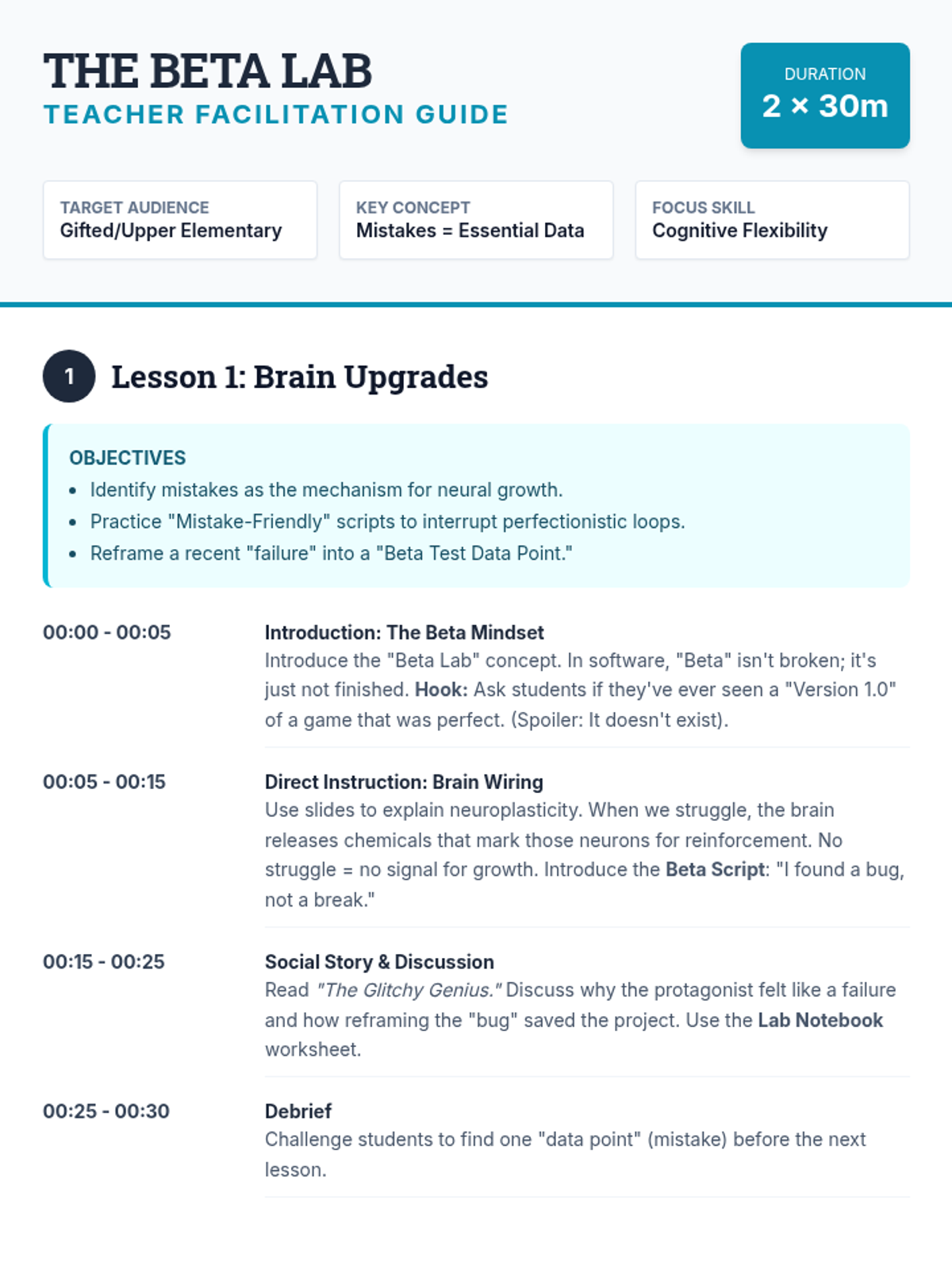
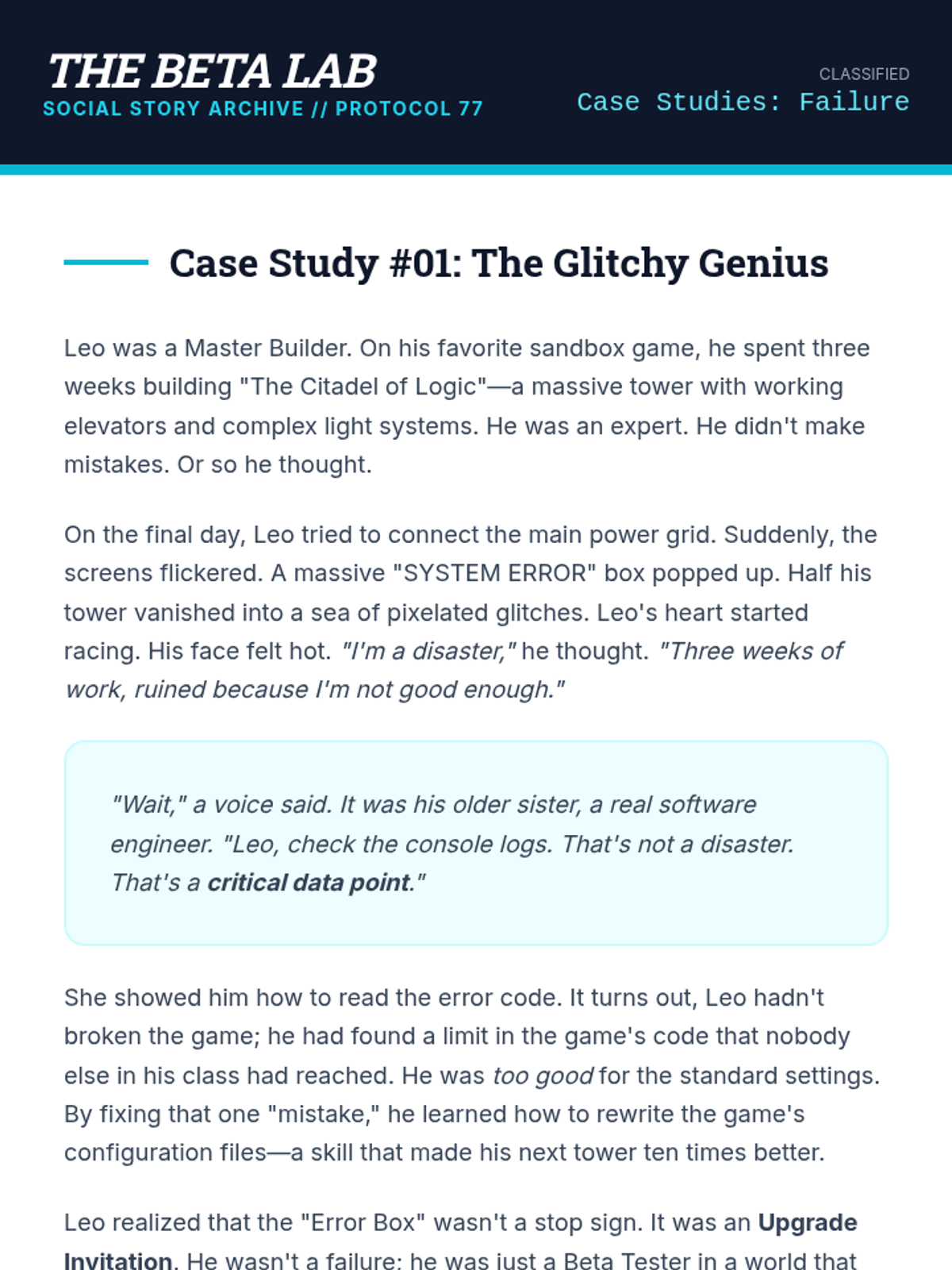
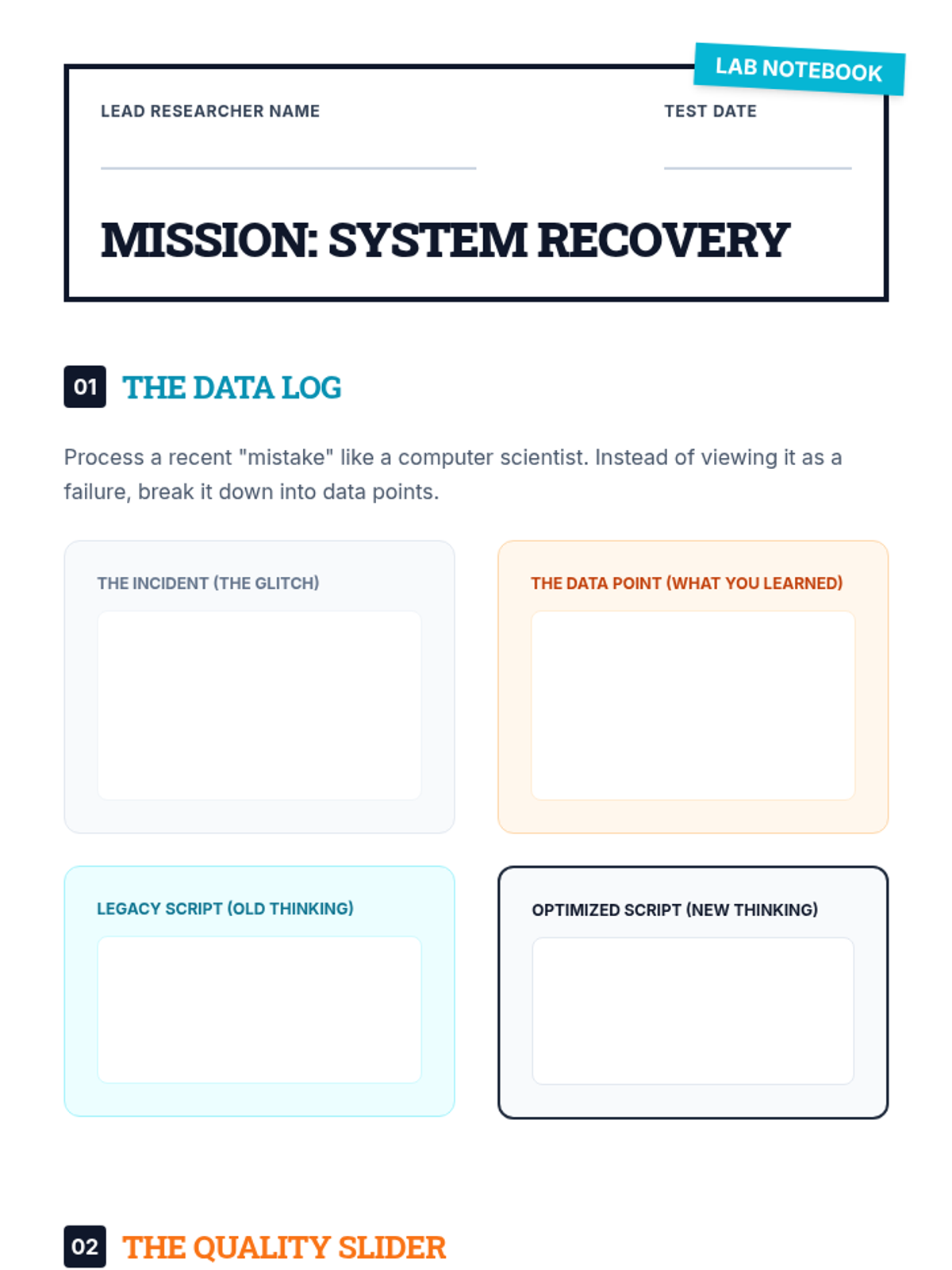
Students will learn the science of how mistakes build neural pathways and practice using 'mistake-friendly' language to reframe failures as data points.
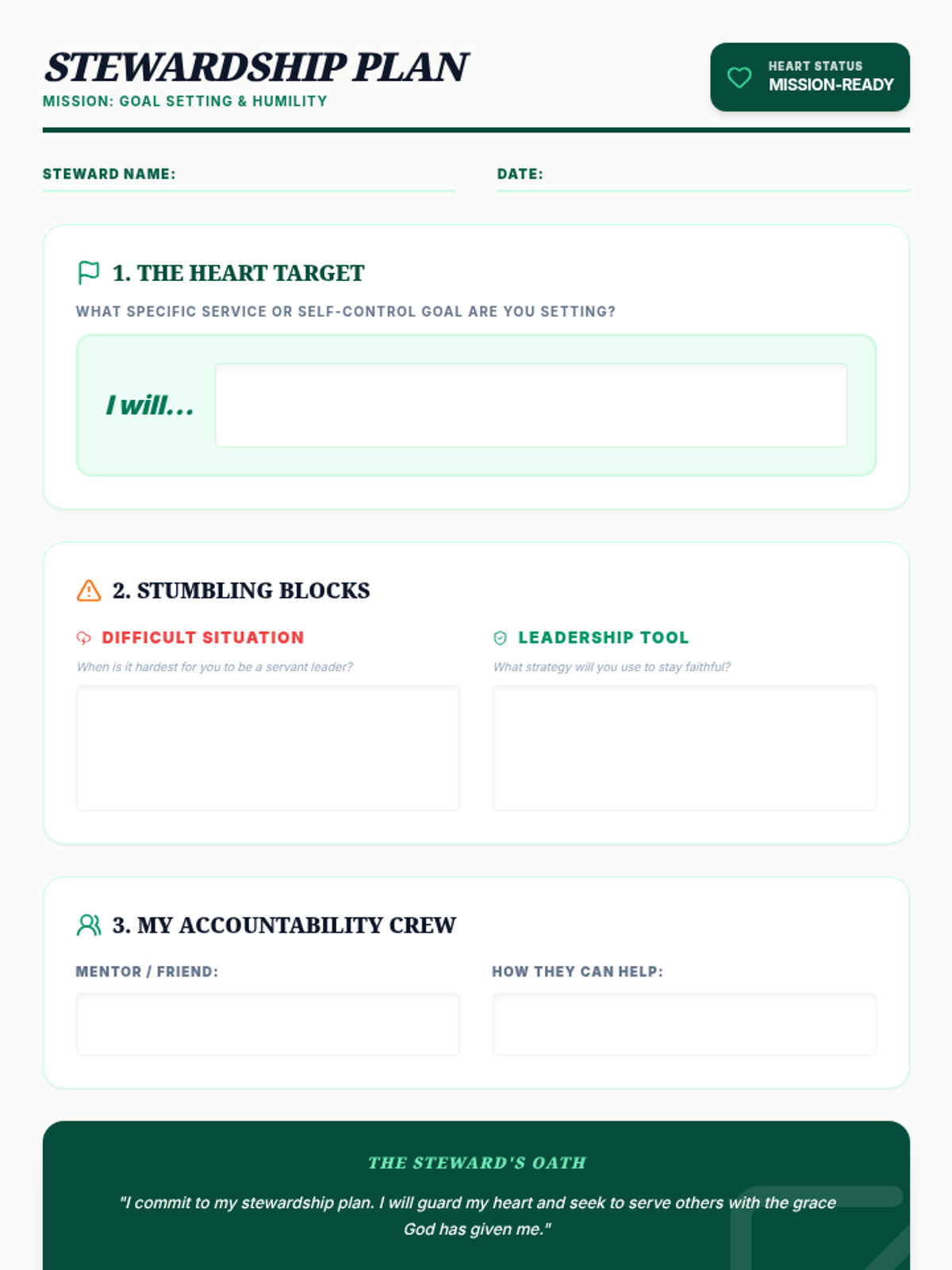
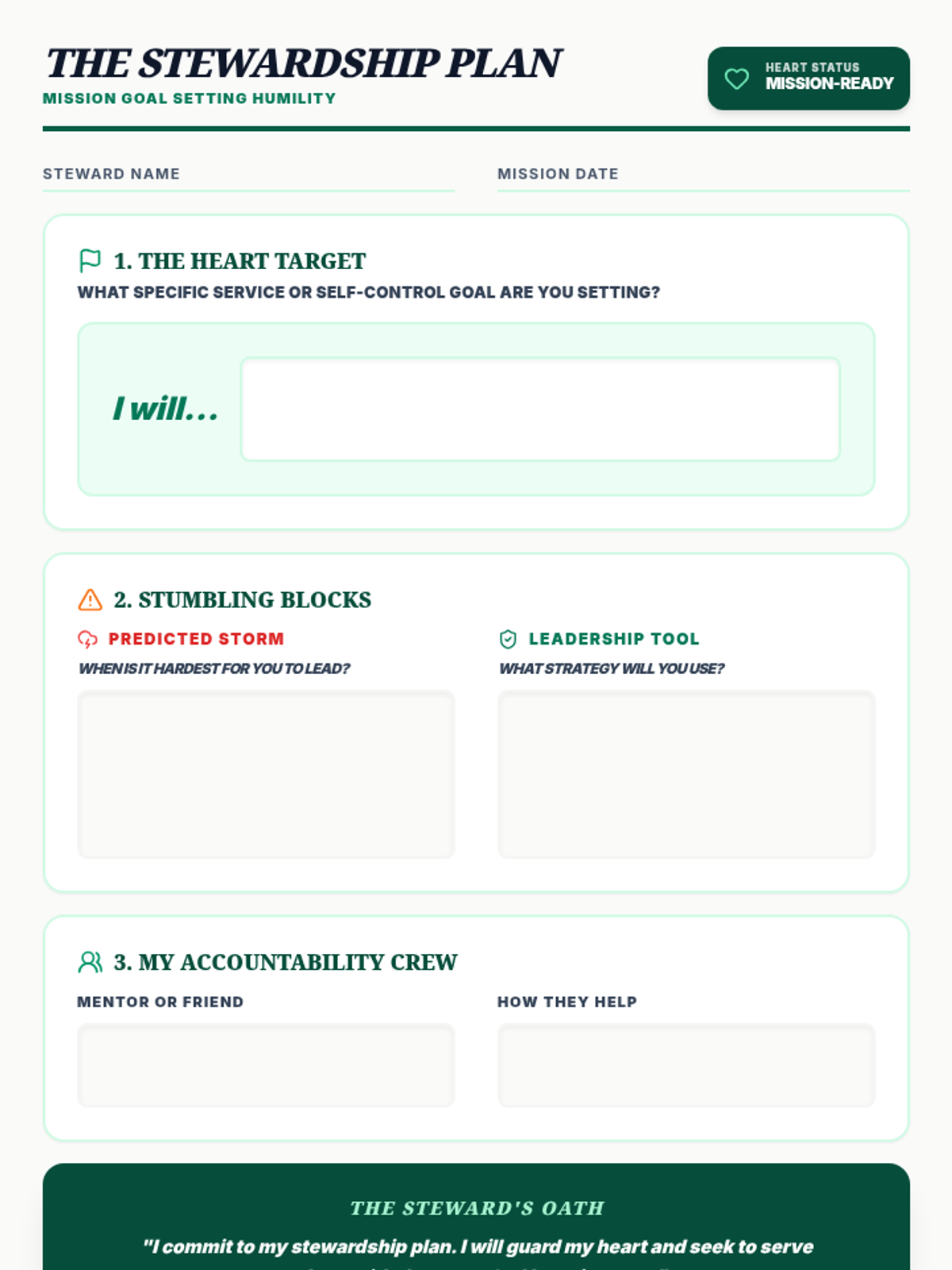
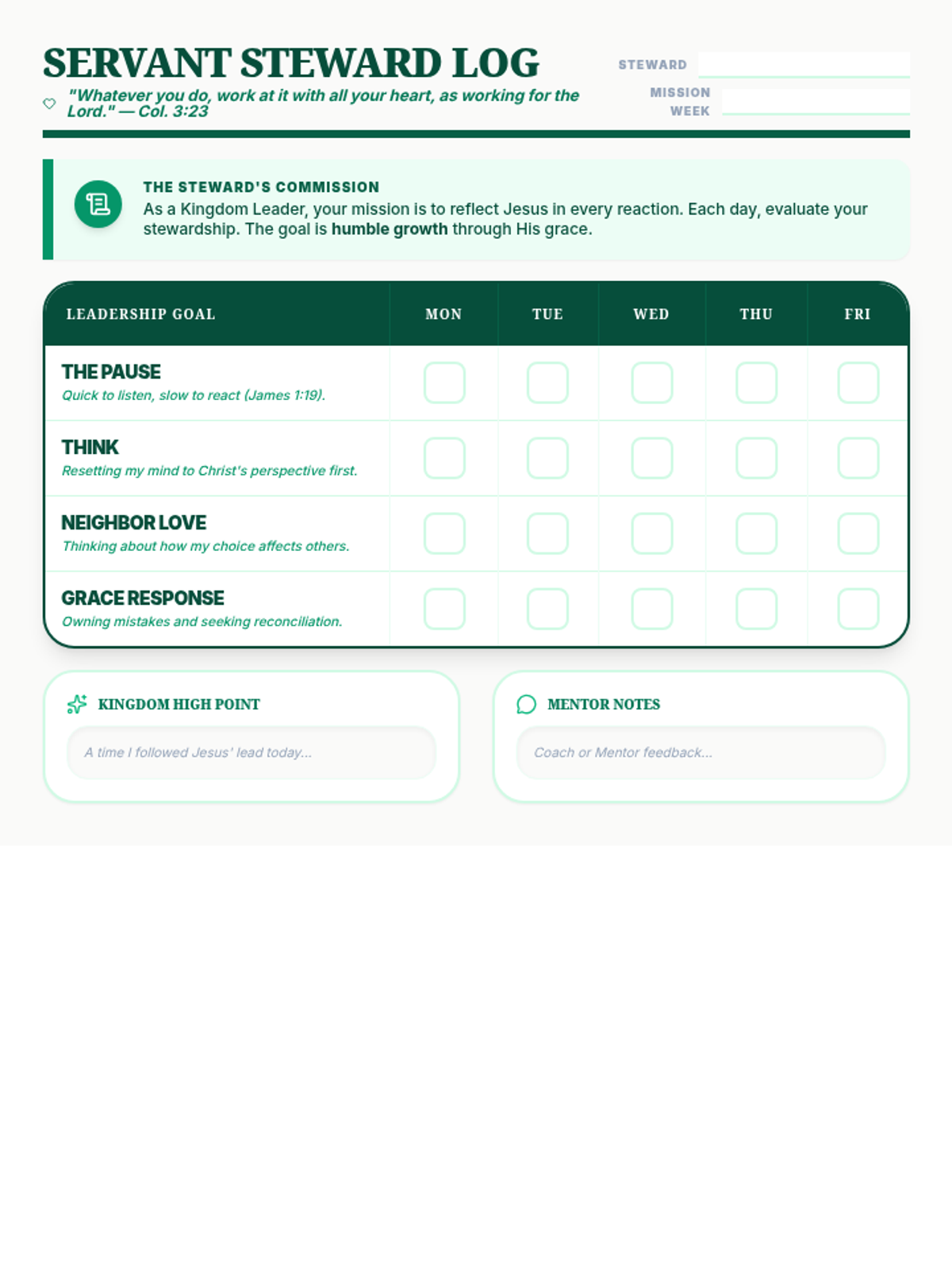
Empowers students to set spiritual and behavioral goals that align with their call to be faithful stewards and servant leaders in their daily lives.
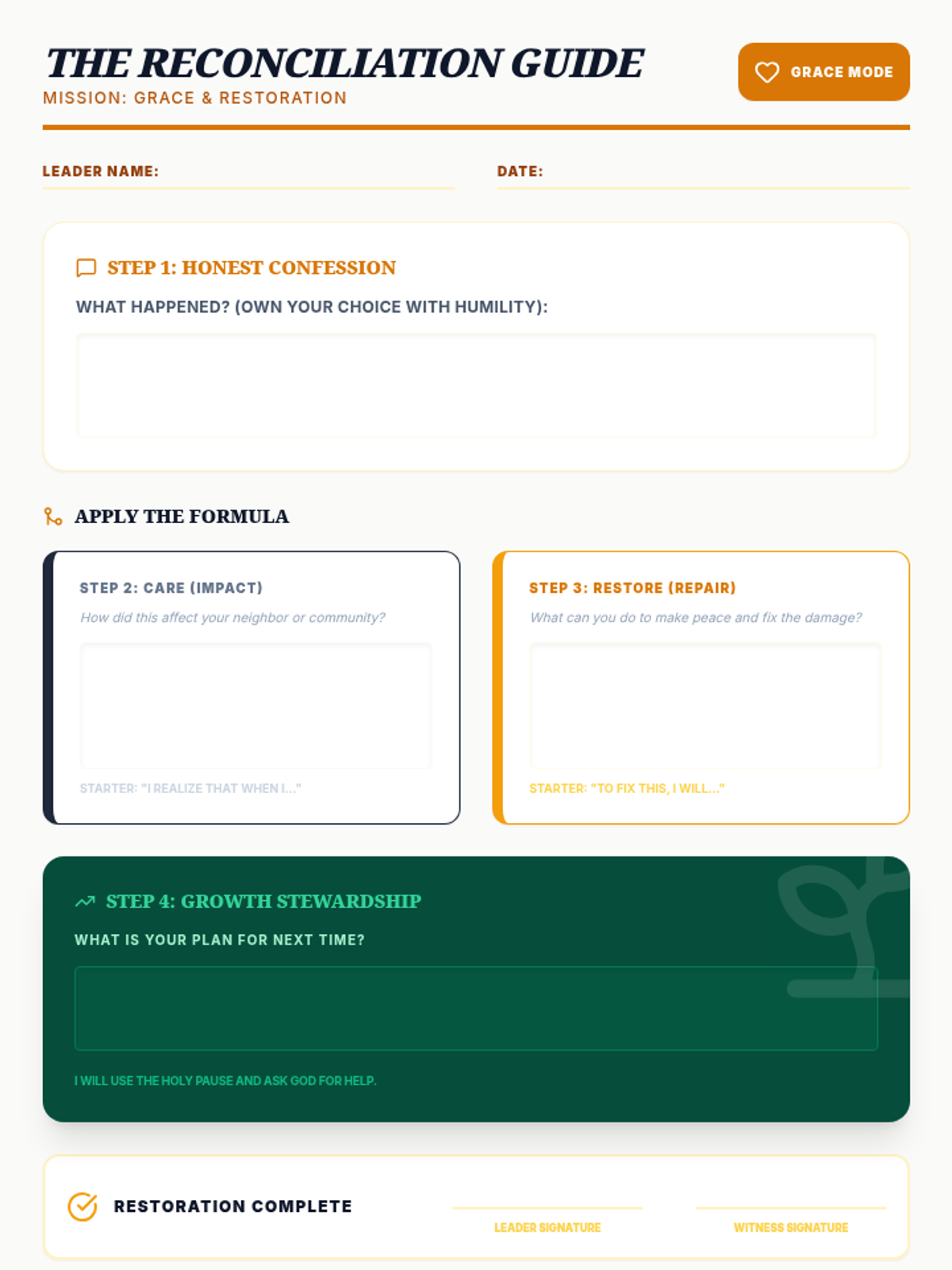
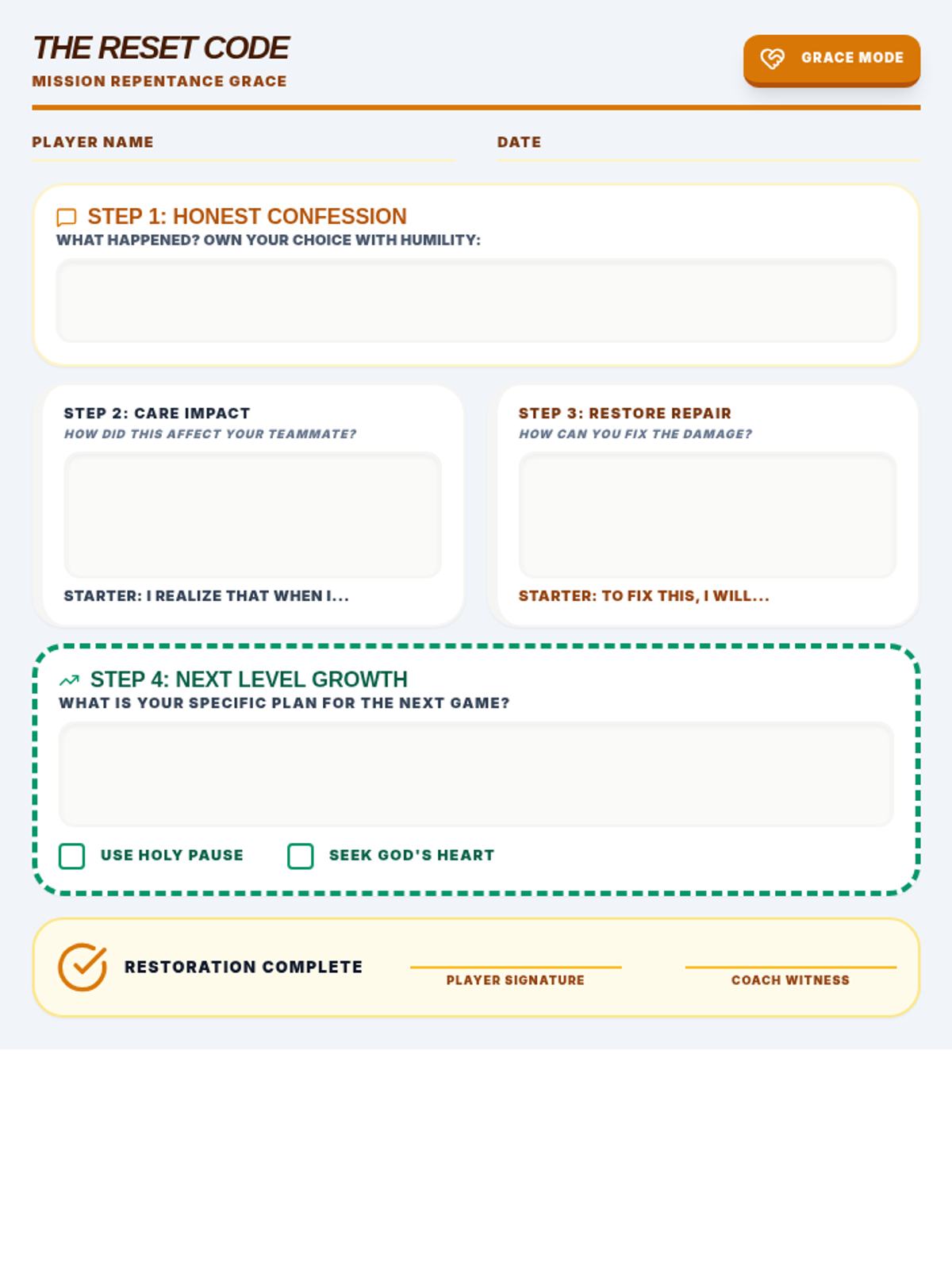
Teaches the 'Grace Response' for taking accountability and seeking reconciliation after making a mistake, modeled after biblical repentance and forgiveness.
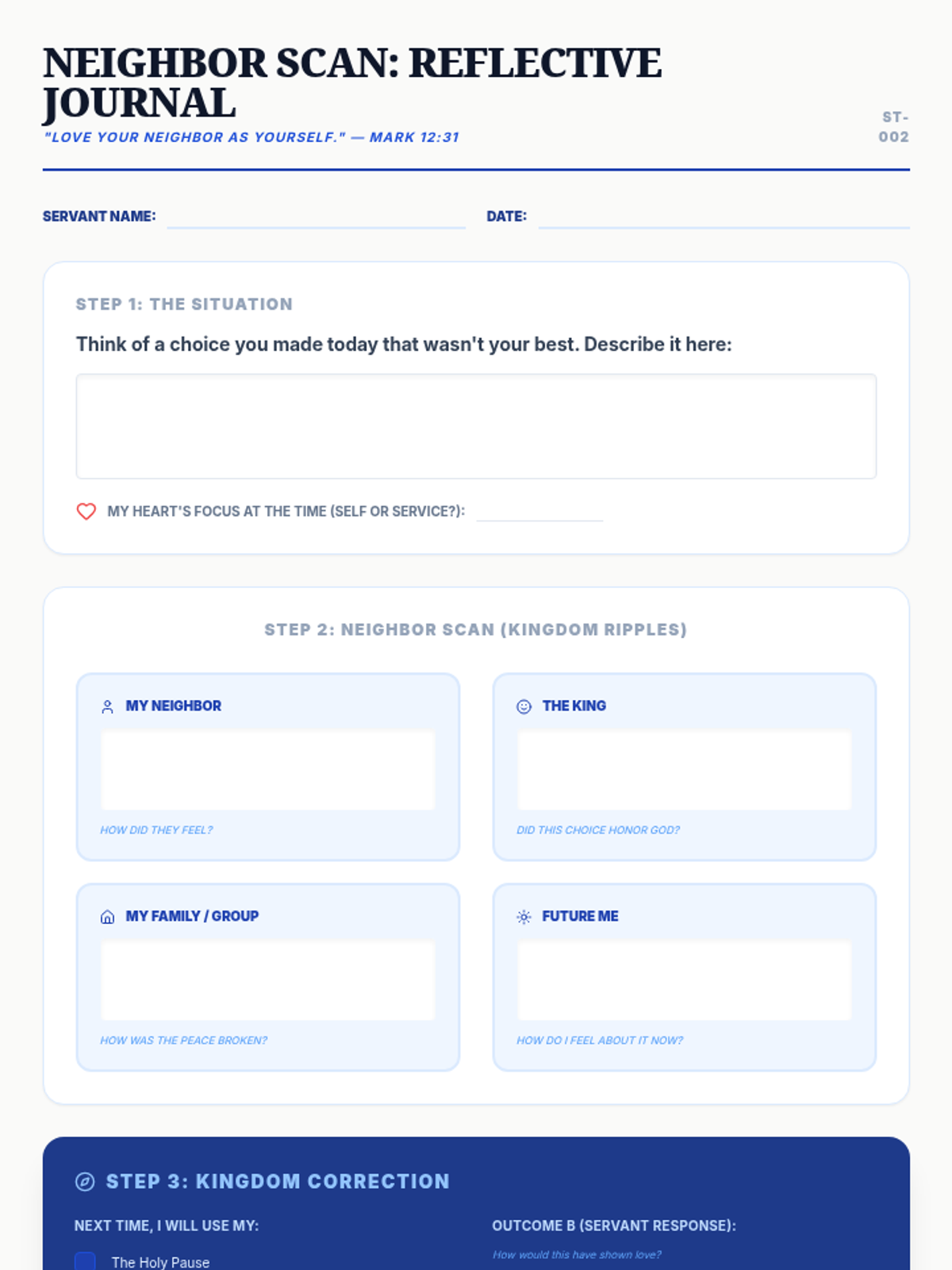
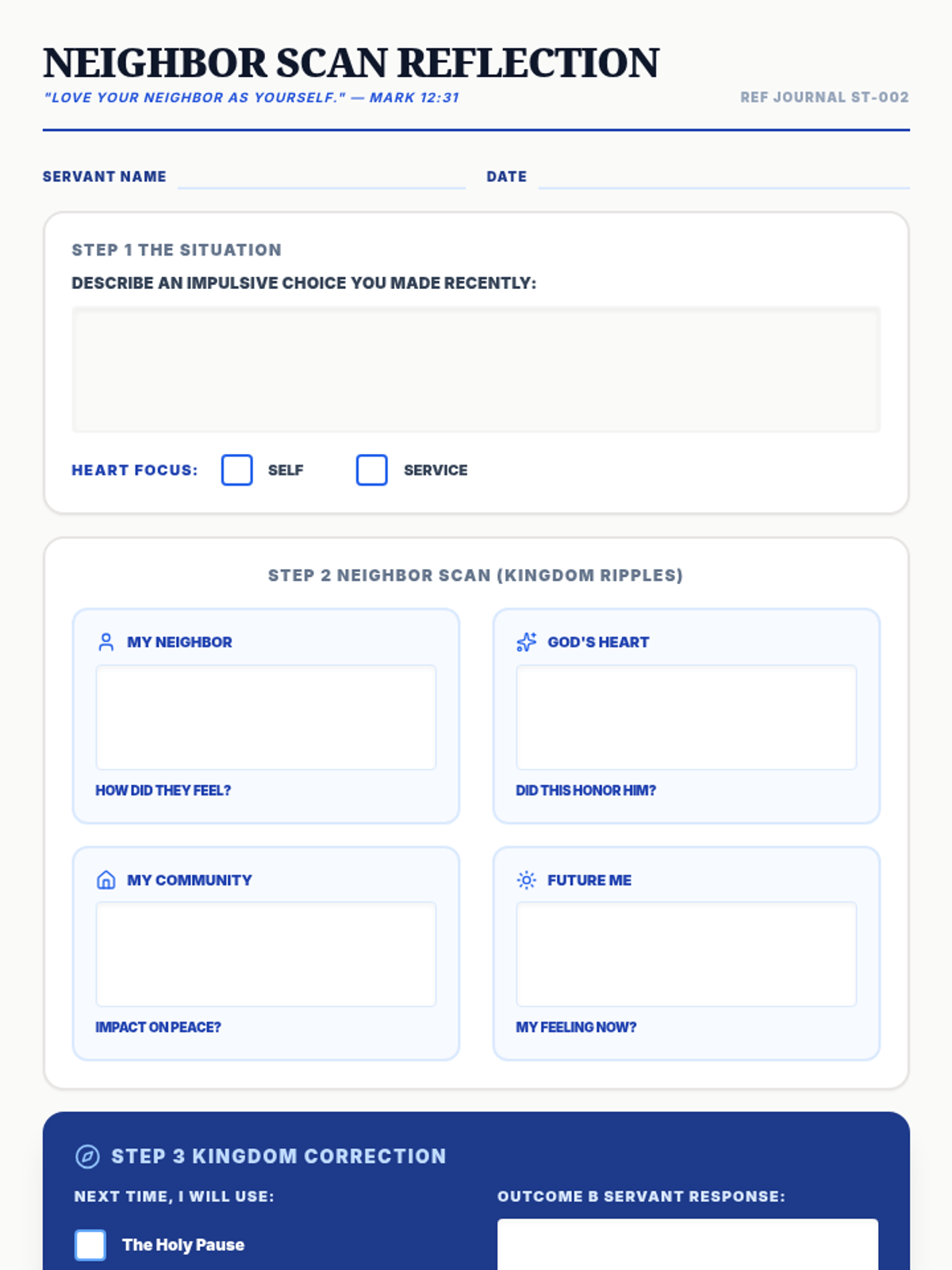
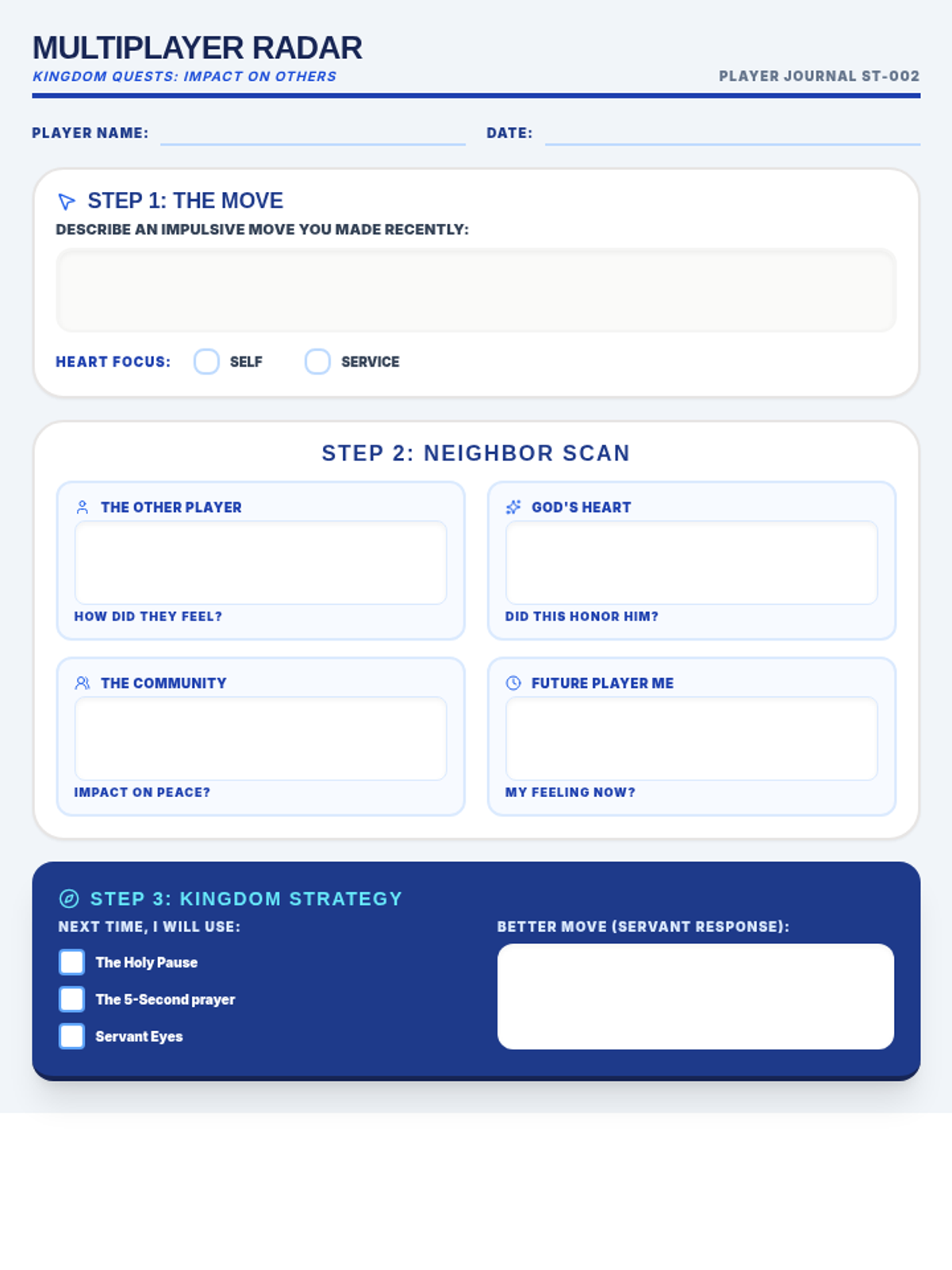
Focuses on perspective-taking and empathy by examining how our actions reflect God's love to our neighbors and the community around us.
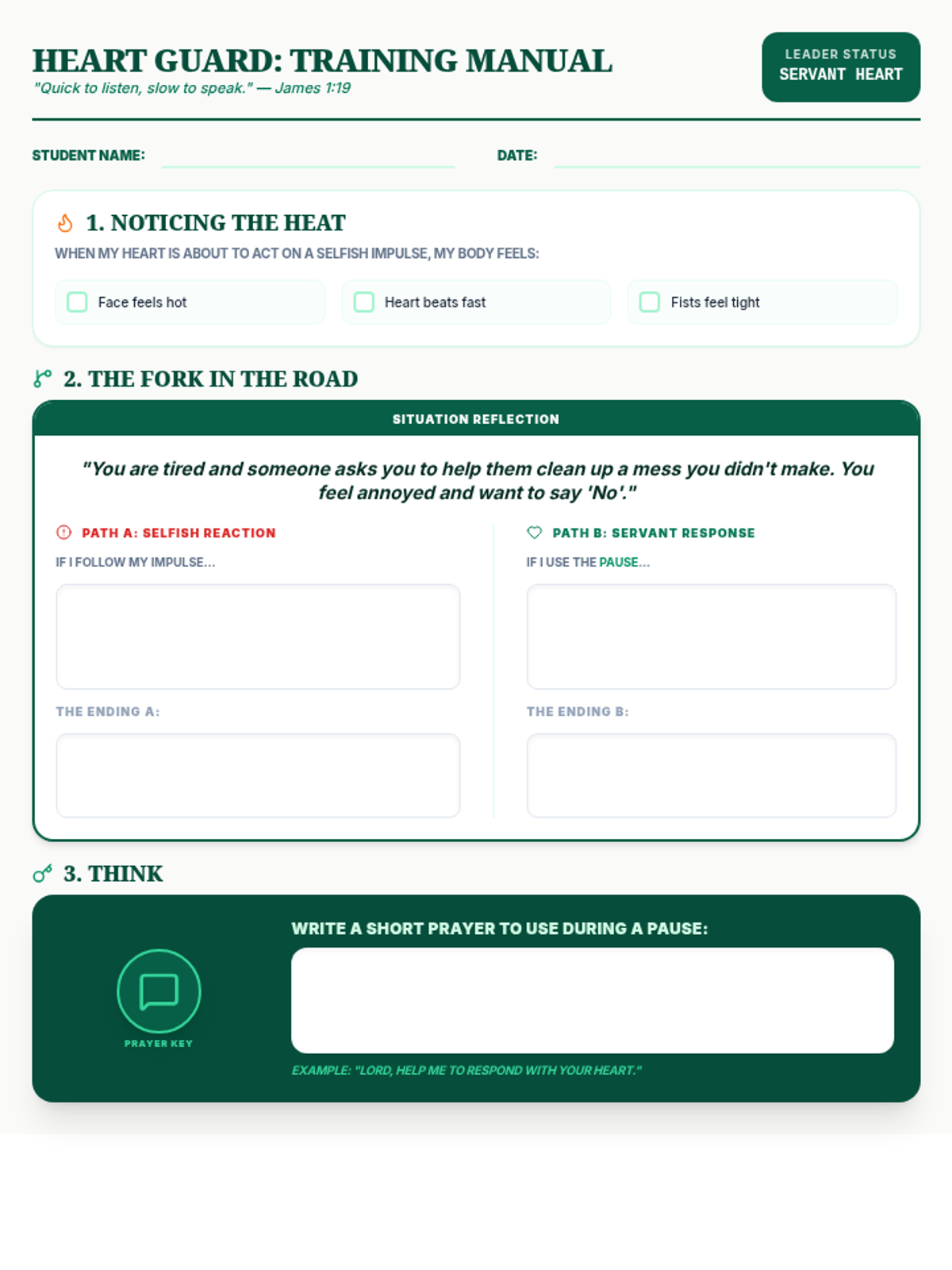
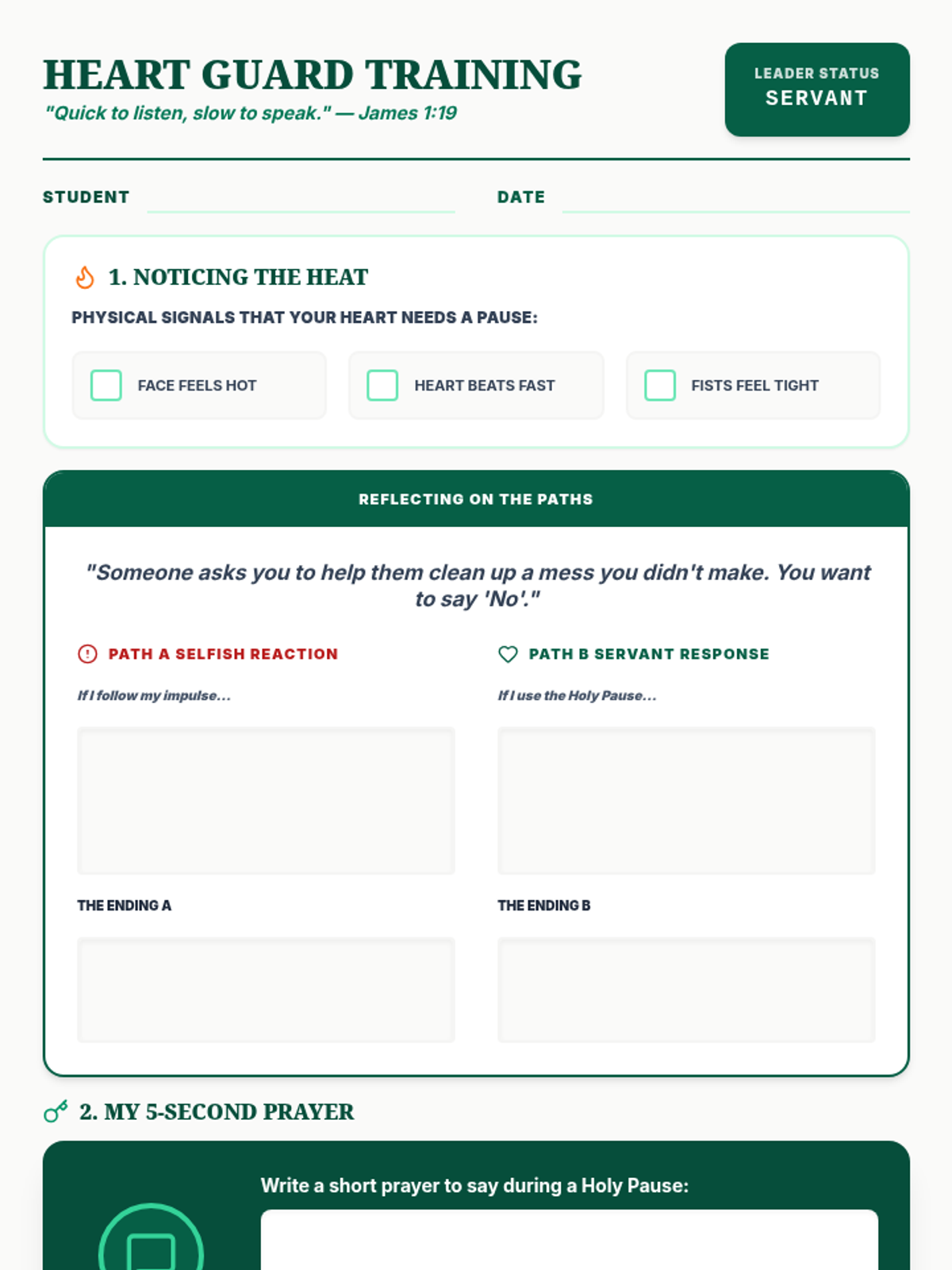
Explores the biblical principle of guarding the heart and tongue using strategies like the 'Holy Pause' and the '5-Second Prayer' to manage impulsive reactions.
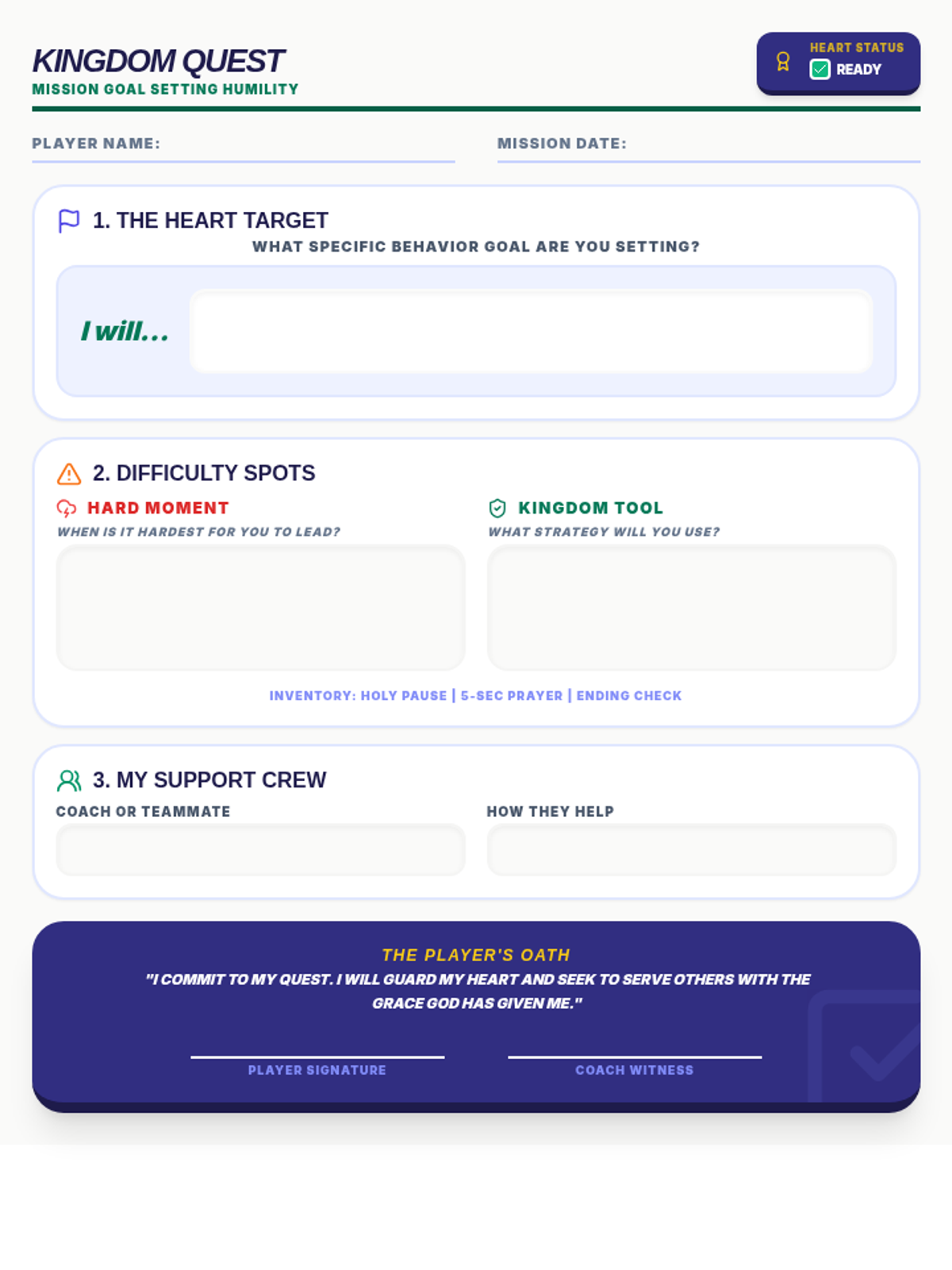
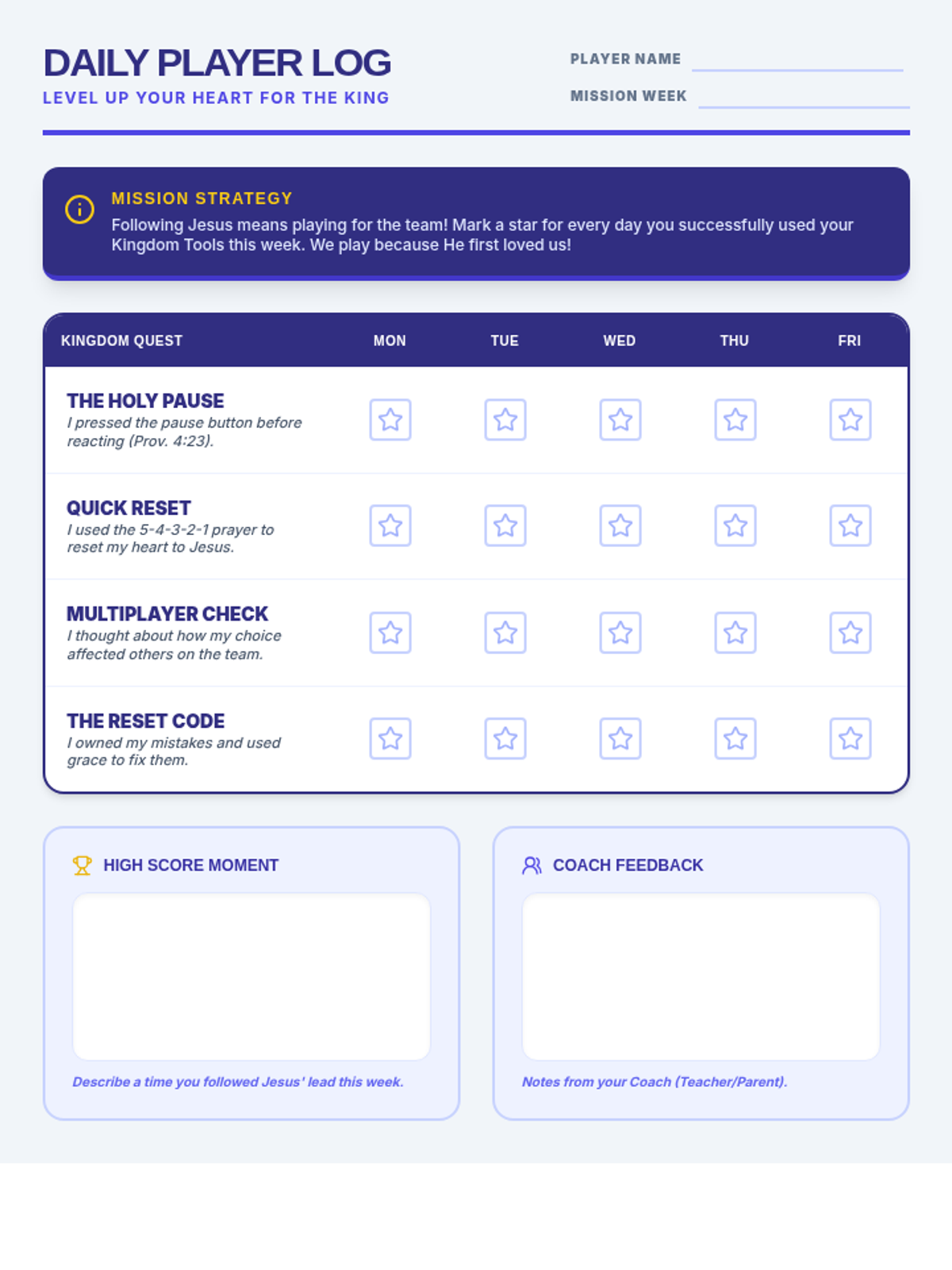
Students set 'Kingdom Quests'—behavioral goals that align with their call to reflect Christ's love in their daily lives.
Introduces the 'Reset Code' of repentance and reconciliation, showing how God's grace allows us to fix mistakes and restore relationships.
Explores how our choices impact others in the 'Multiplayer Mode' of life, using the Gospel to motivate empathy and kindness.
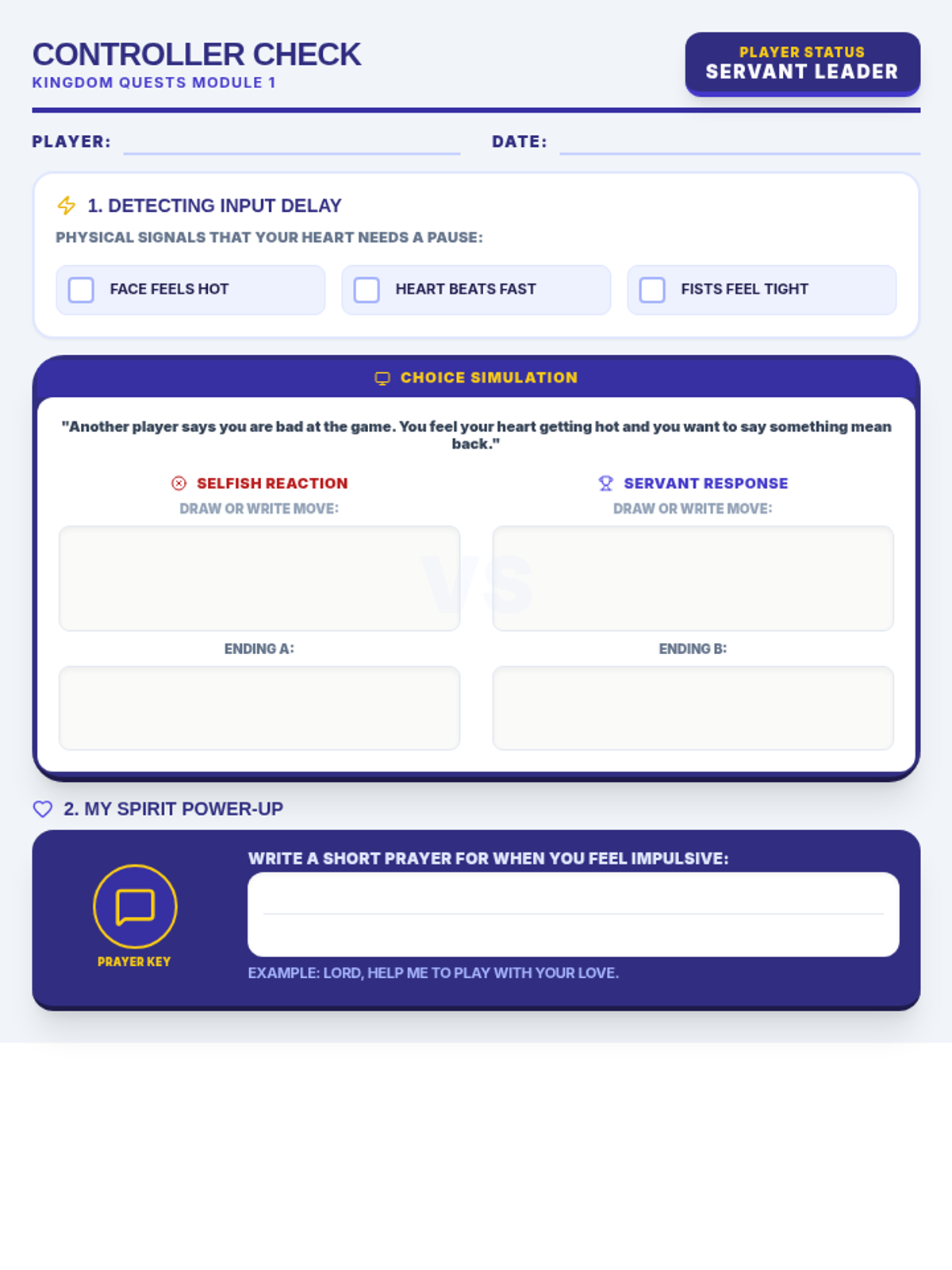
Teaches impulse control using gaming metaphors like the 'Holy Pause' and 'Brain Save', focusing on guarding the heart as the ultimate controller.
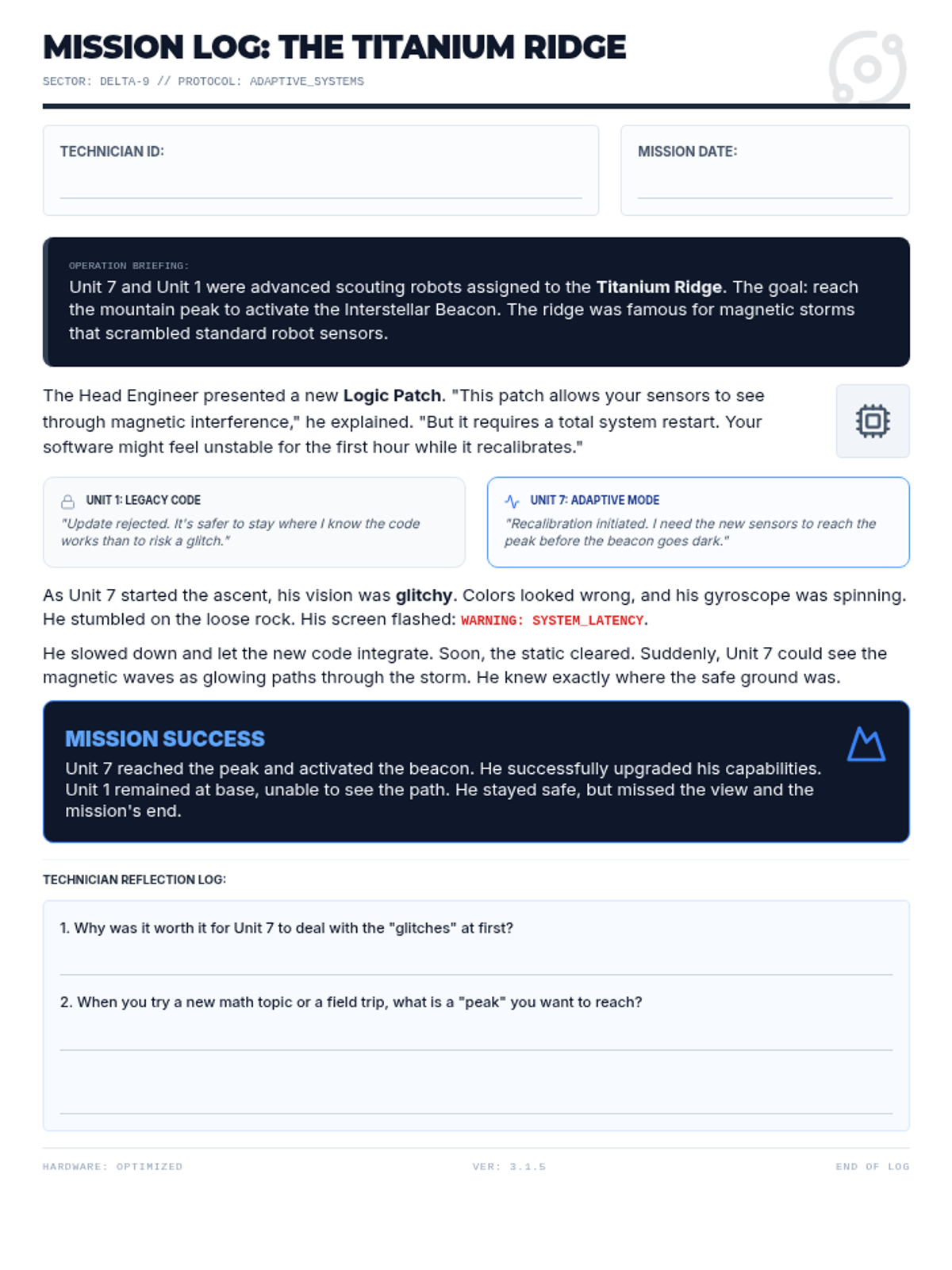
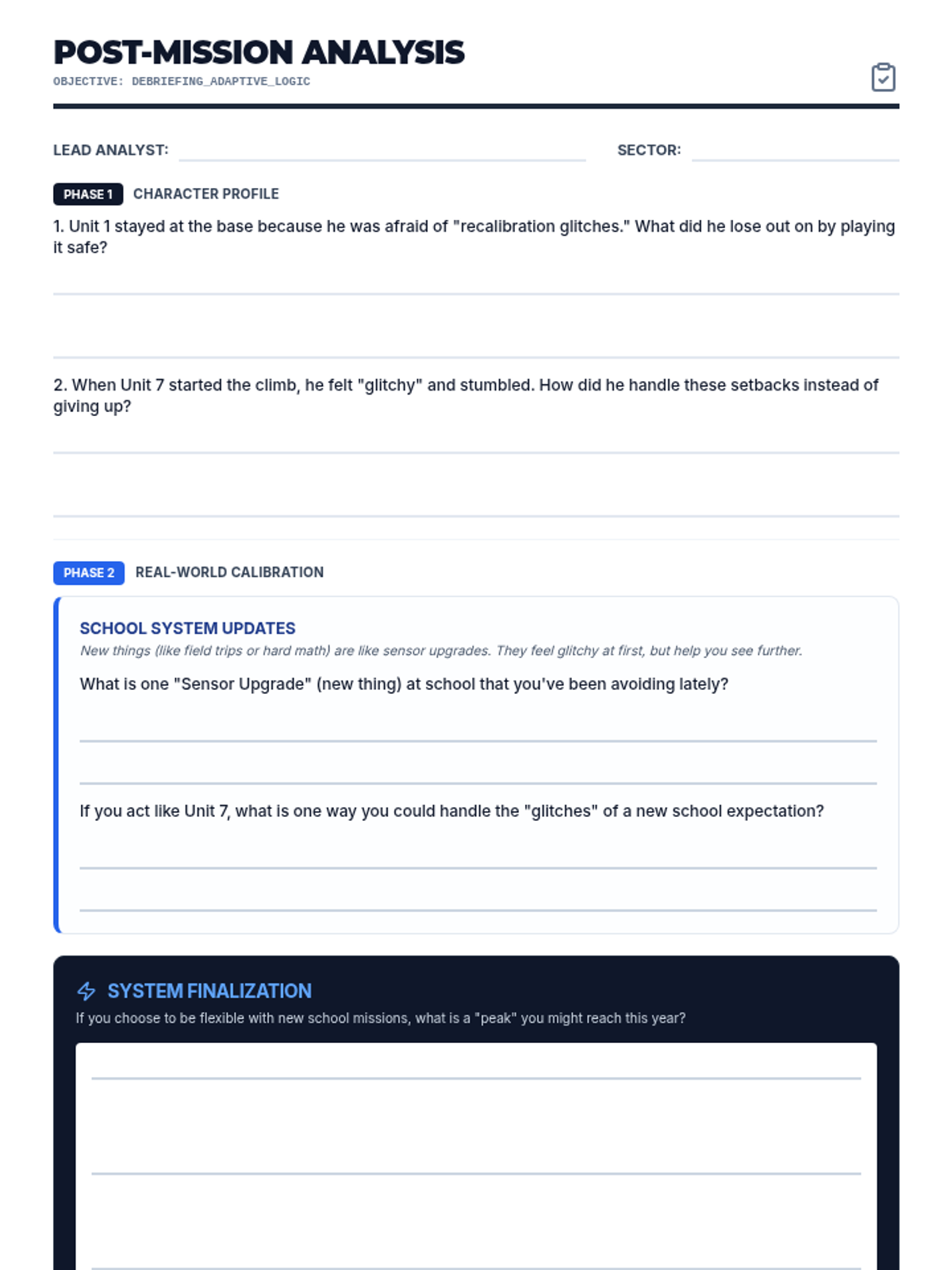
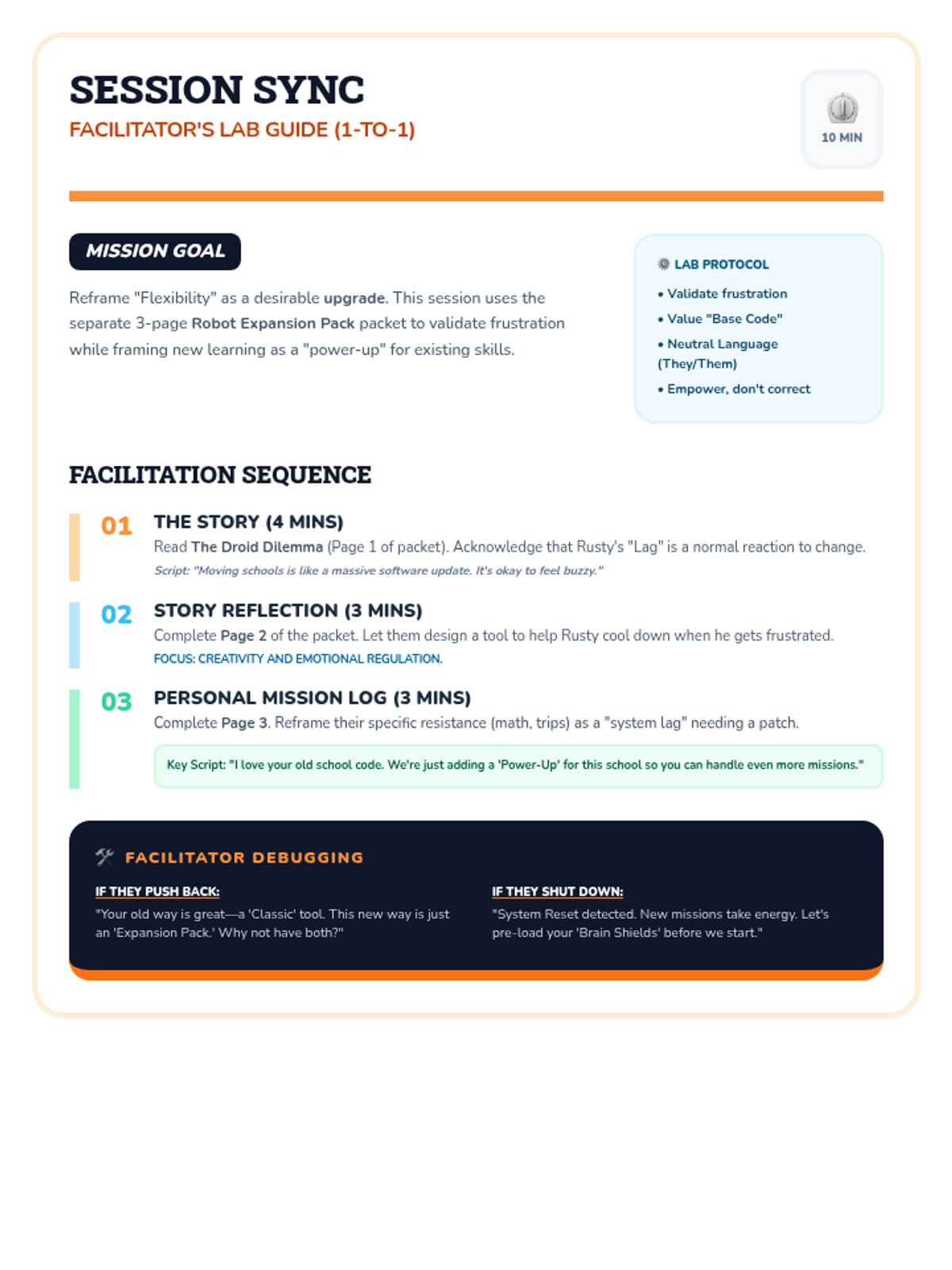
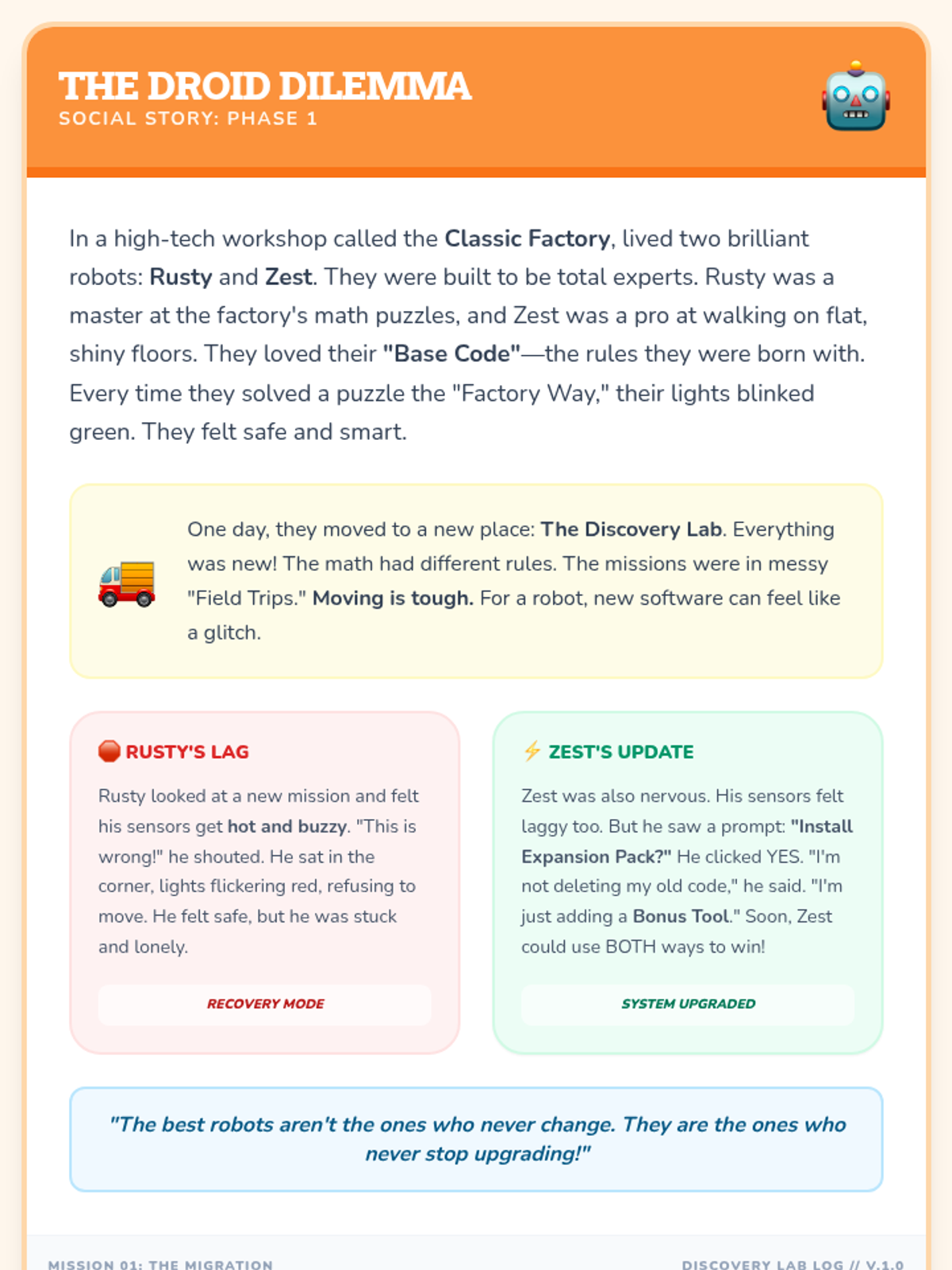
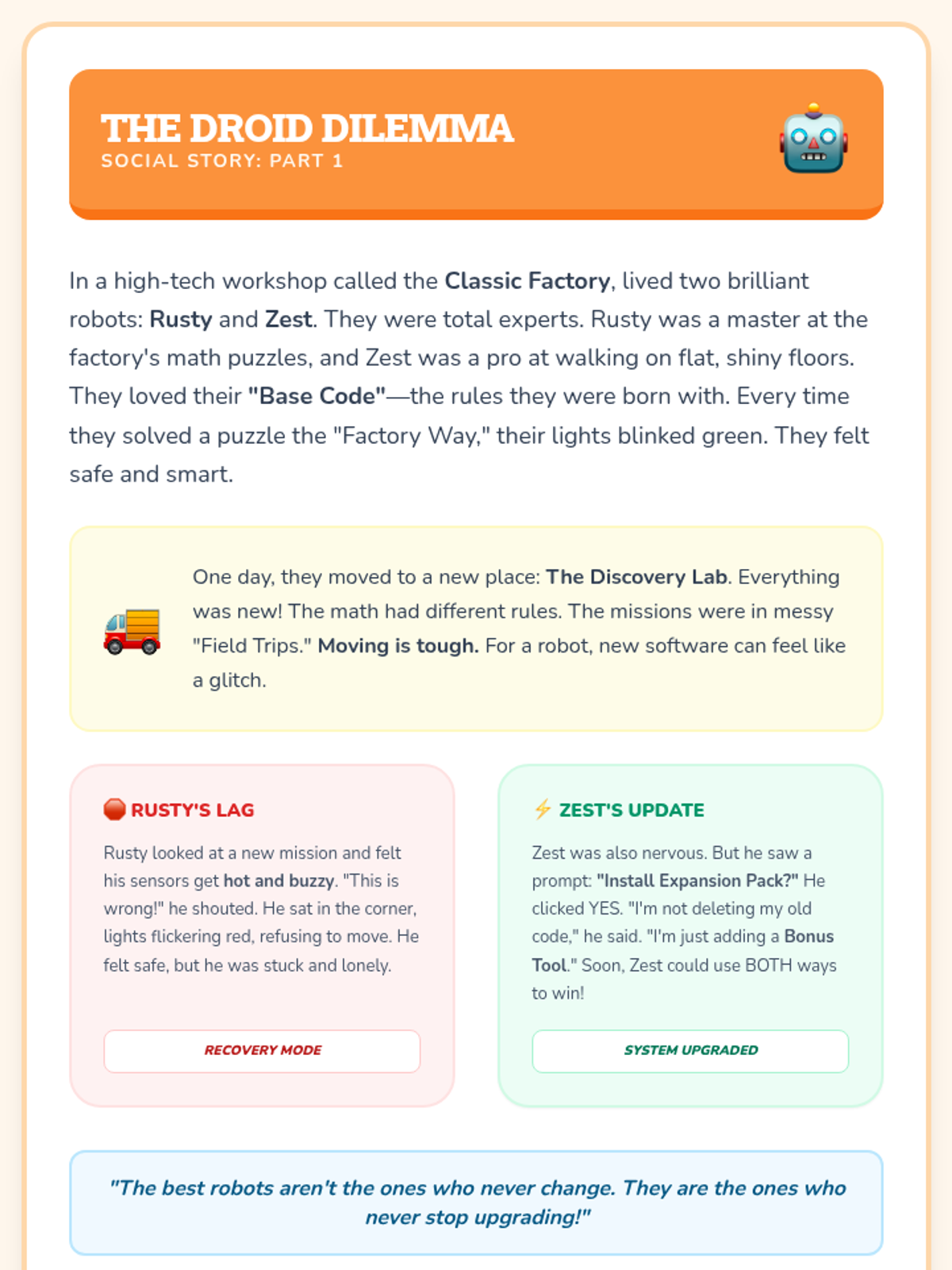
A social story and reflection lesson designed for neurodivergent students to encourage flexibility and growth through a relatable robot metaphor.
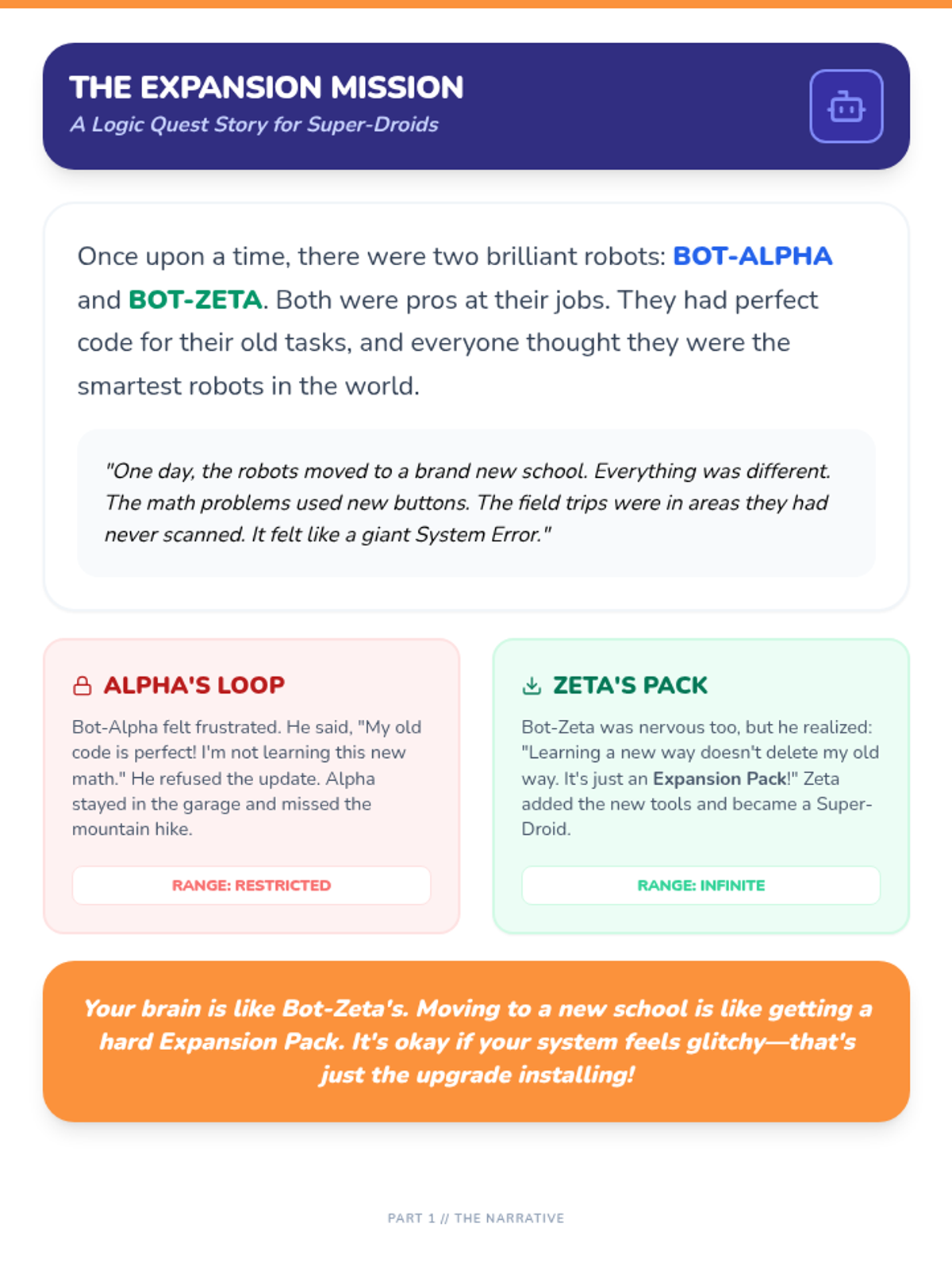
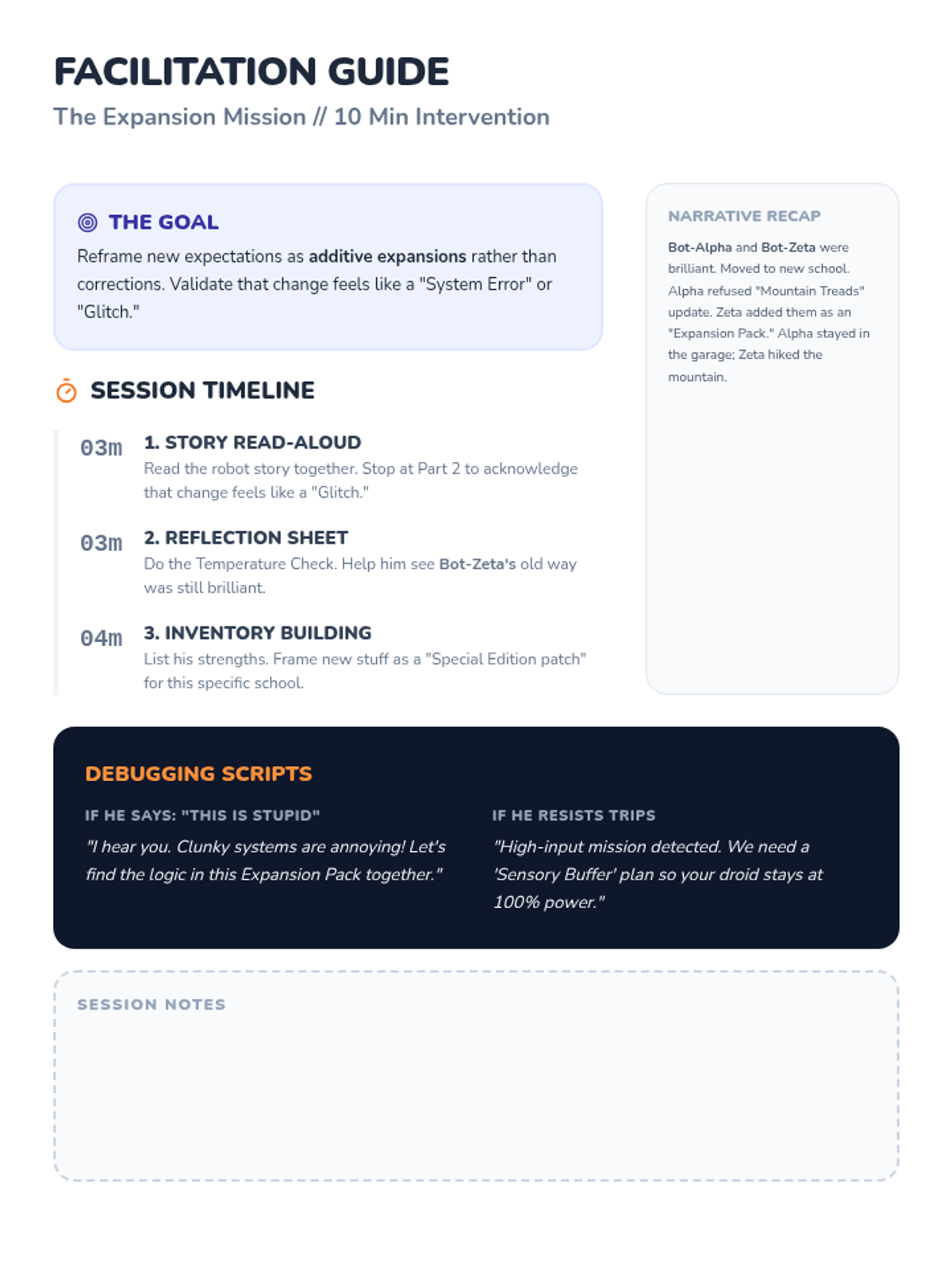
A 10-minute intervention using a robot social story to explain cognitive flexibility. Frames new learning as an "Expansion Pack" to existing brilliant skills.
A 10-minute 1-to-1 session for bright students with ADHD/Autism focused on cognitive flexibility. It frames new school expectations and academic topics as "system updates" to avoid a condescending tone.
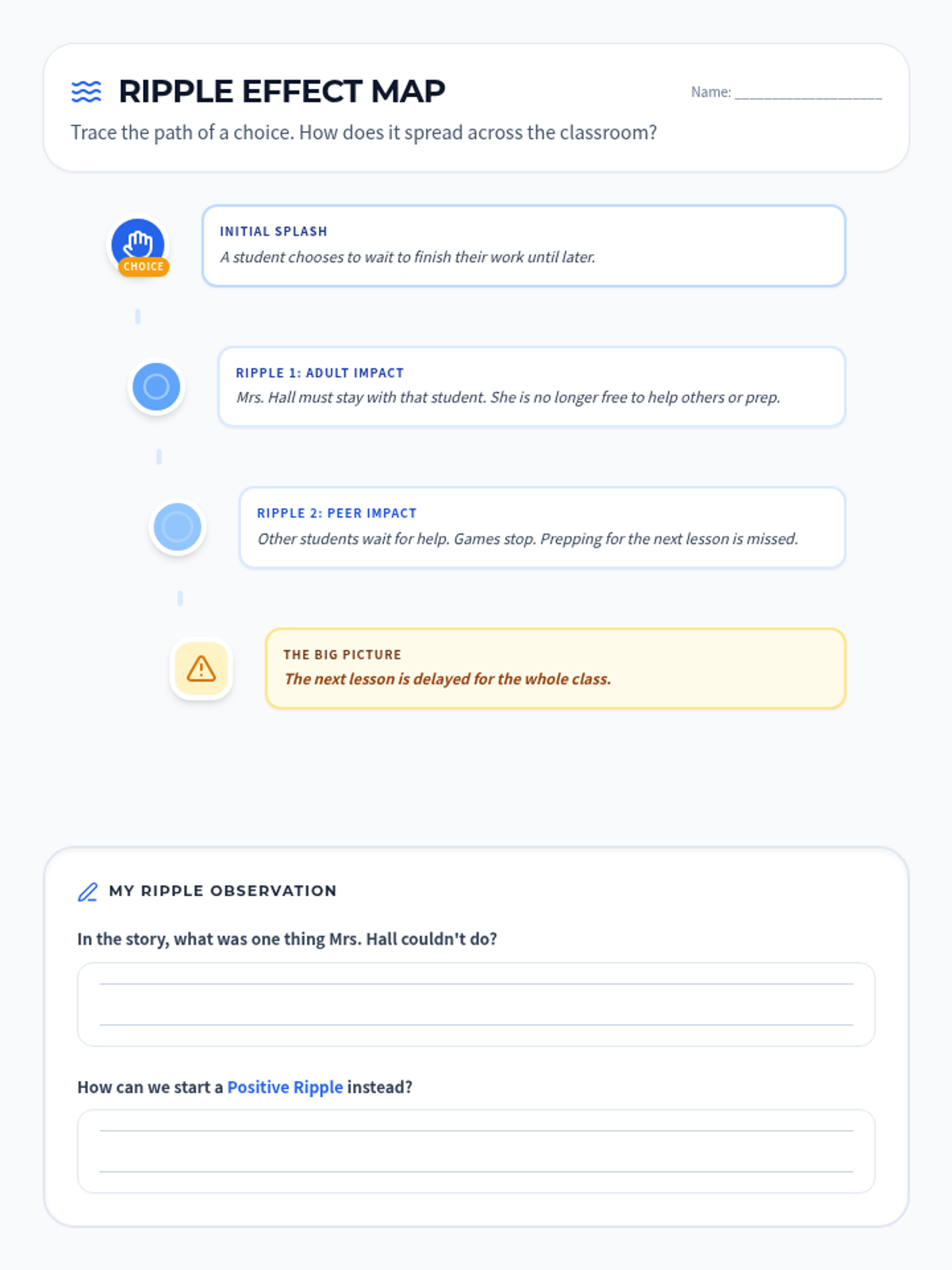
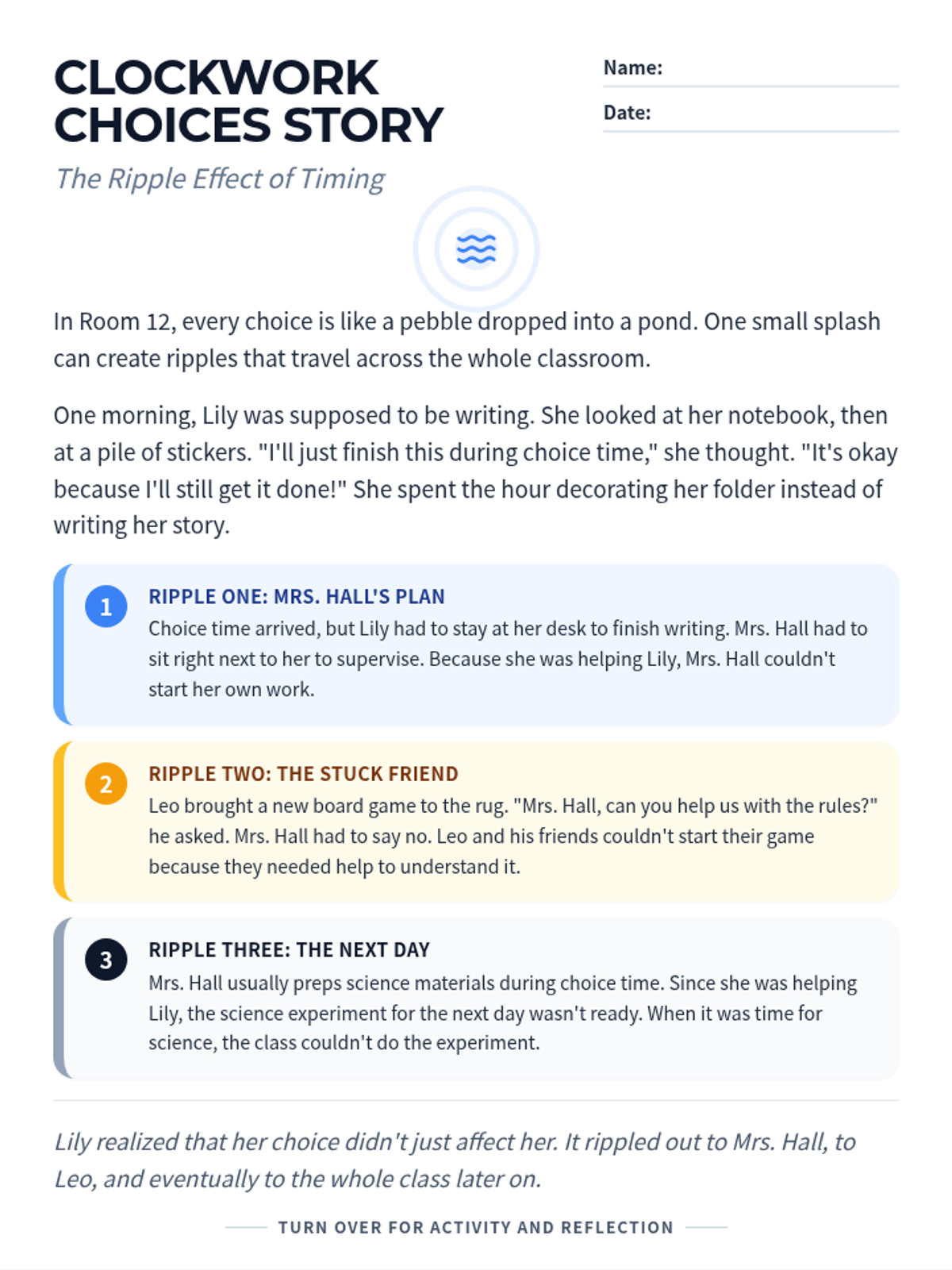
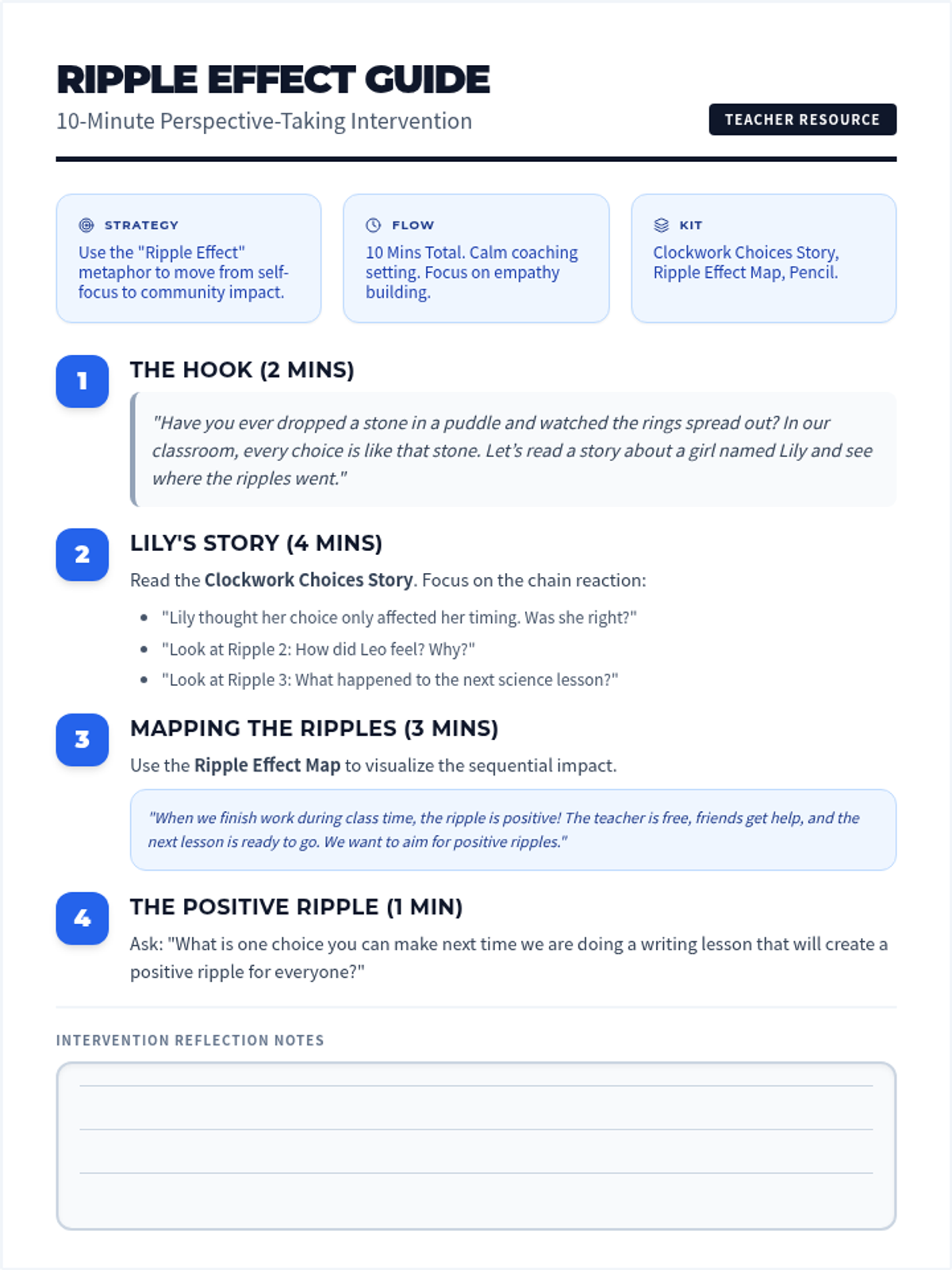
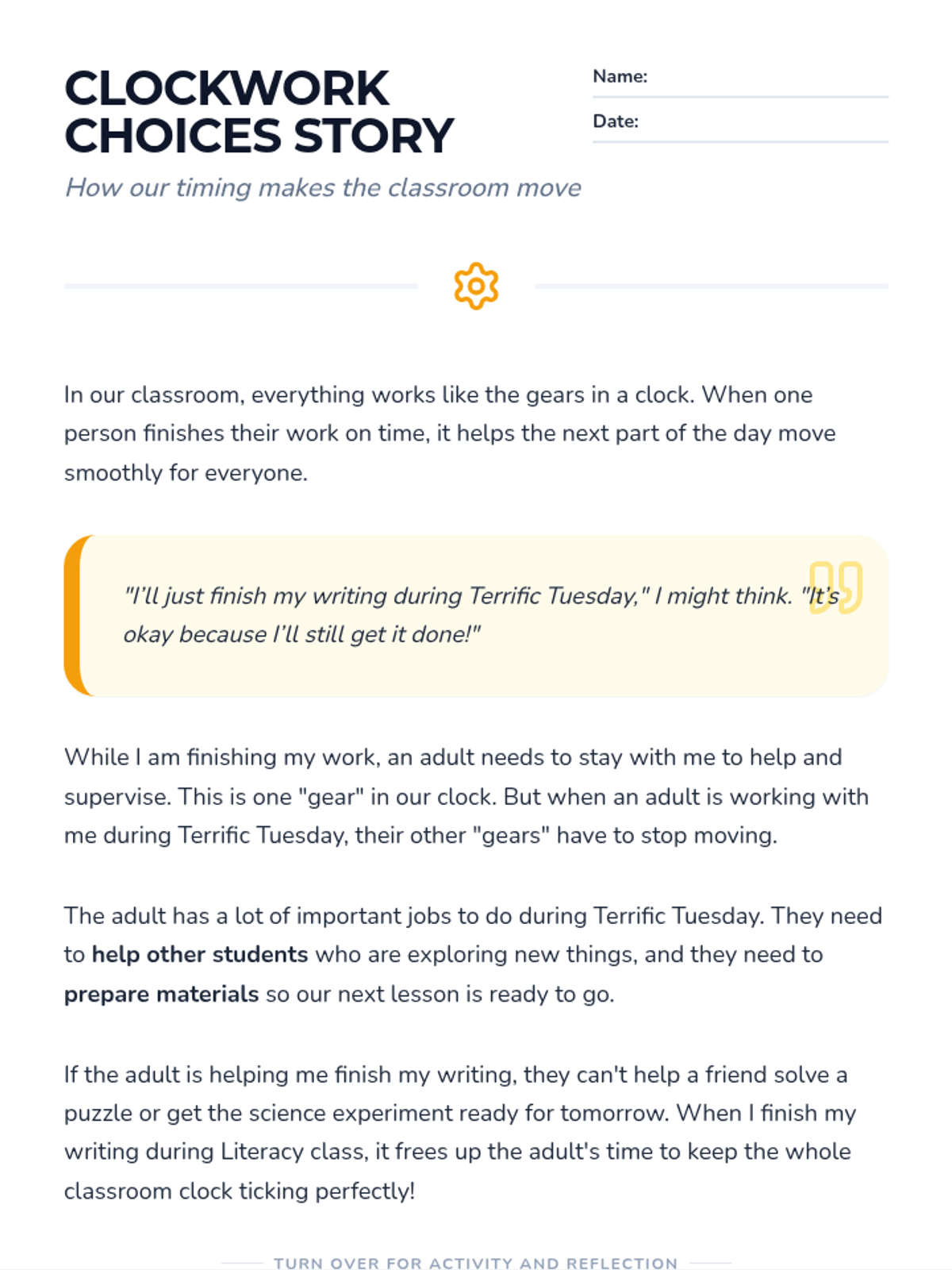
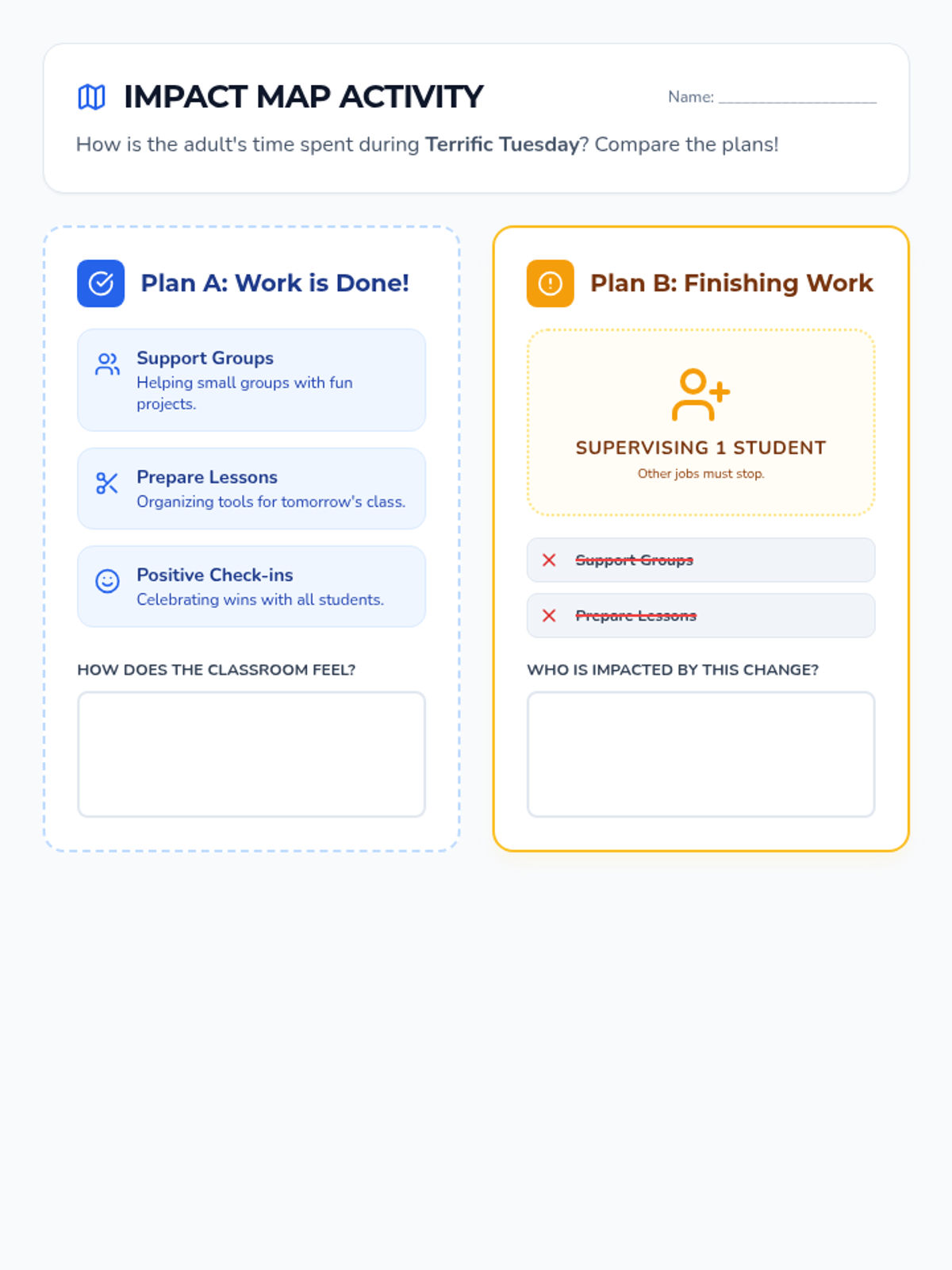
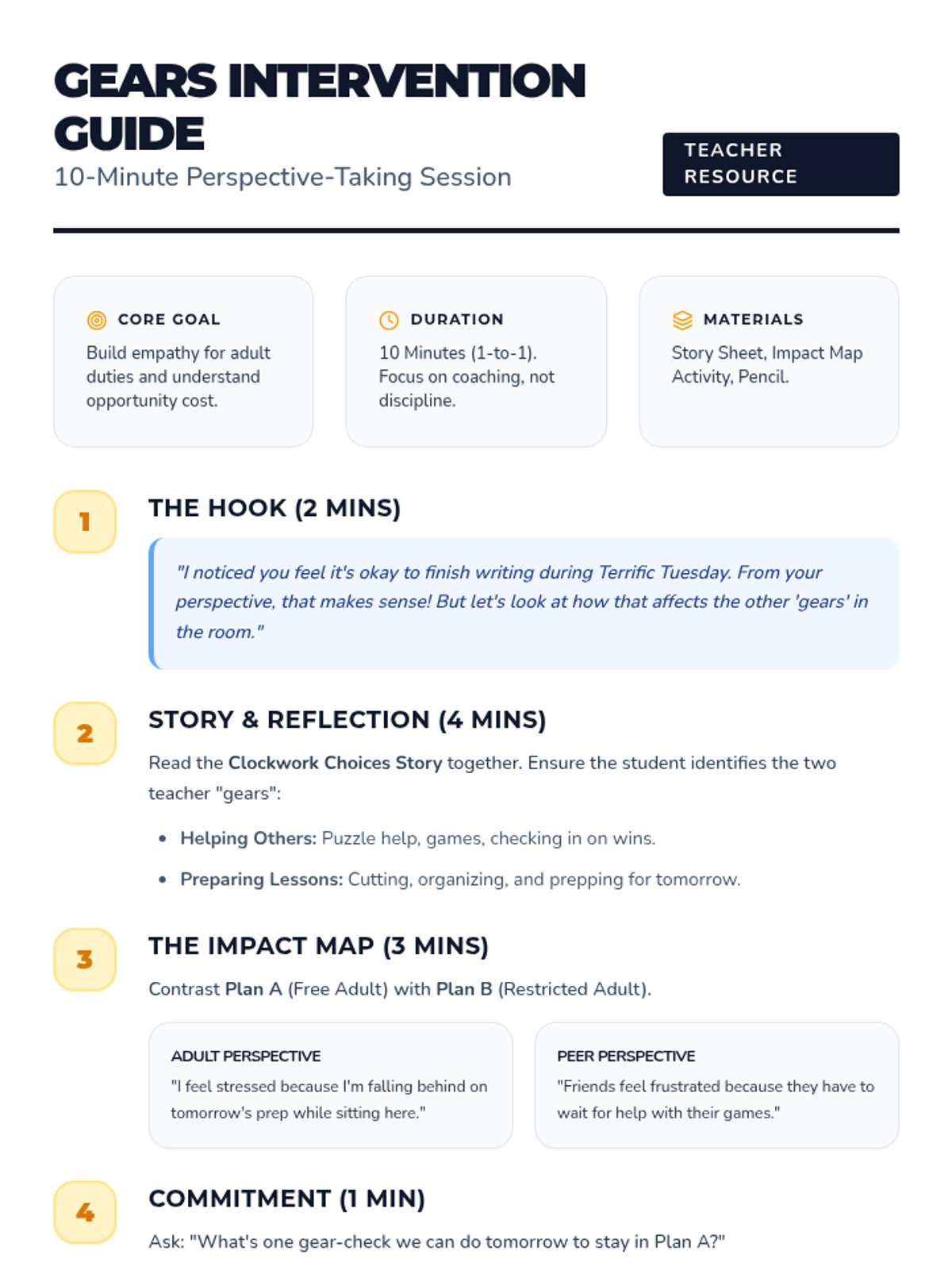
A 10-minute intervention focused on perspective-taking regarding task completion and its impact on classroom management and adult responsibilities.
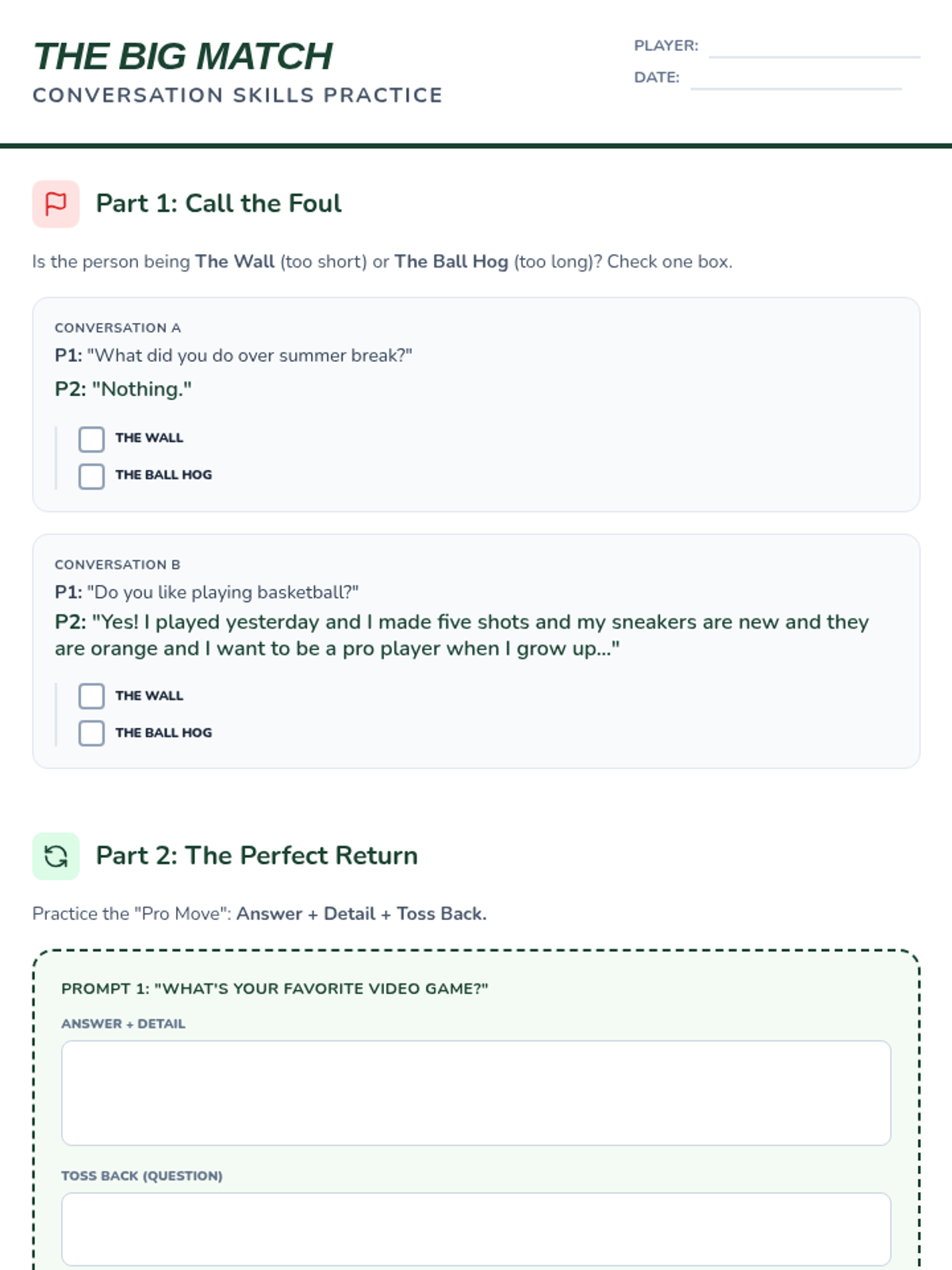
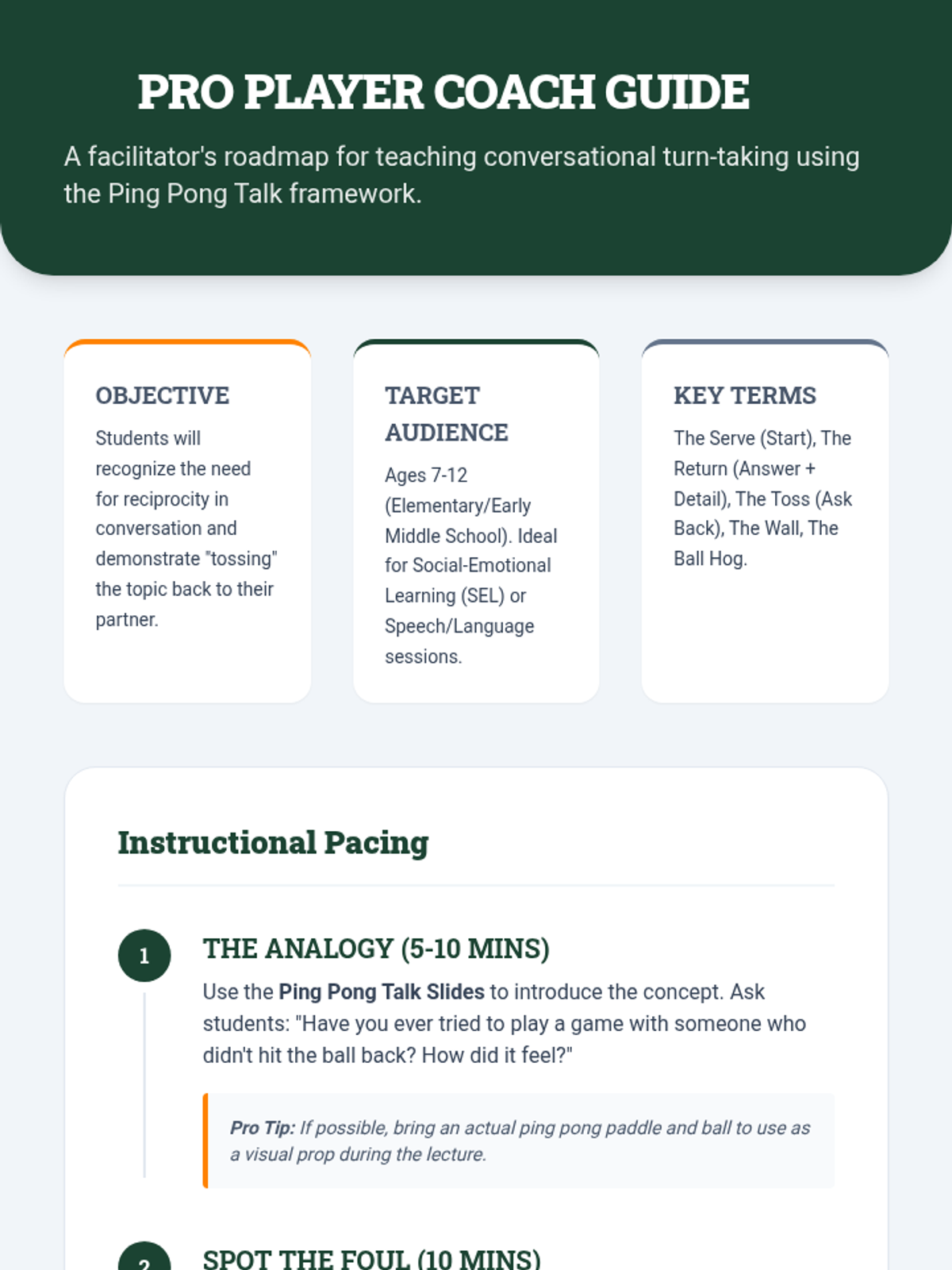
A social skills lesson focused on the 'back-and-forth' nature of conversation using a ping pong analogy. Students learn how to serve (start), return (respond), and toss (ask back) in a balanced dialogue.
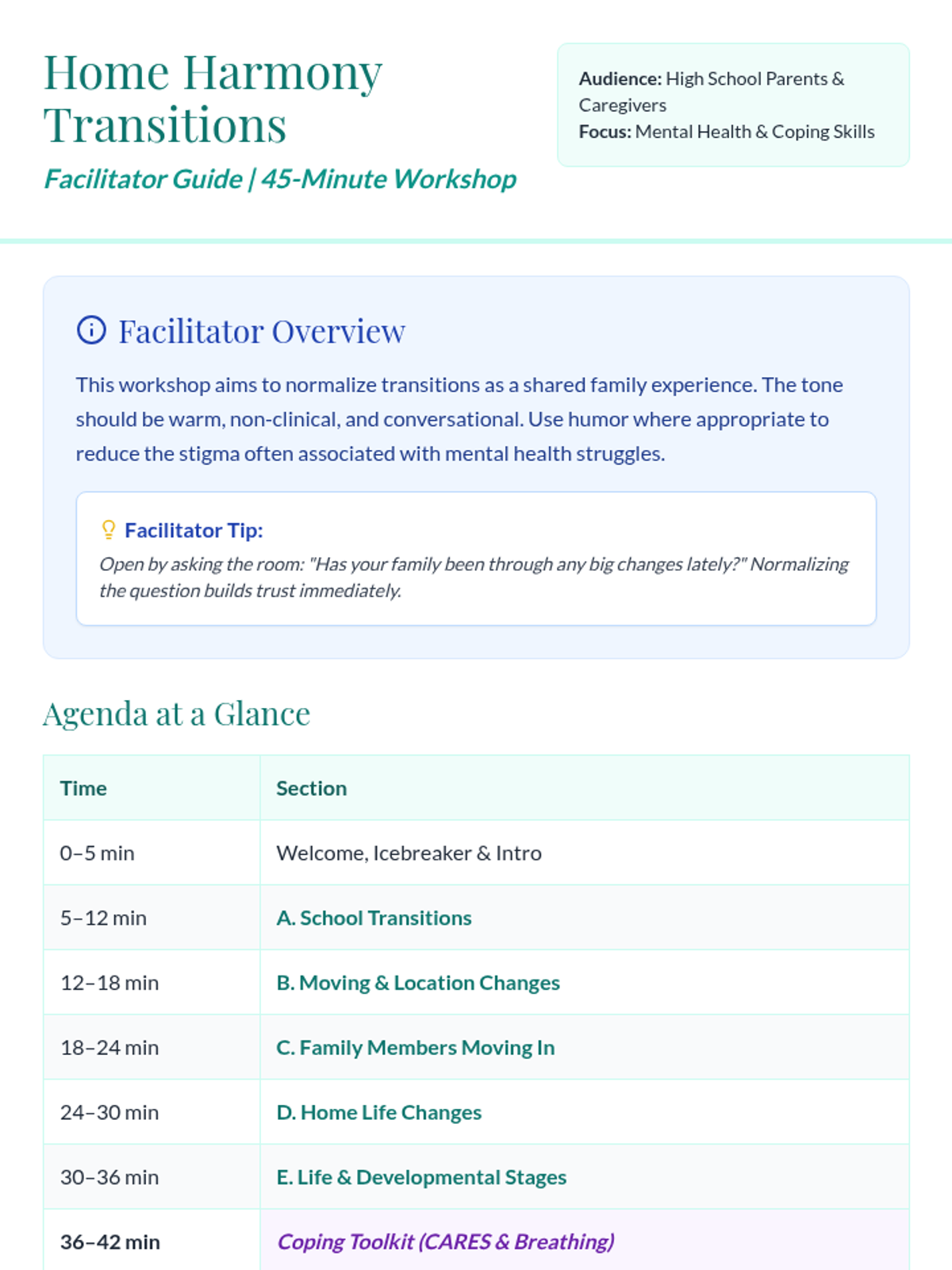
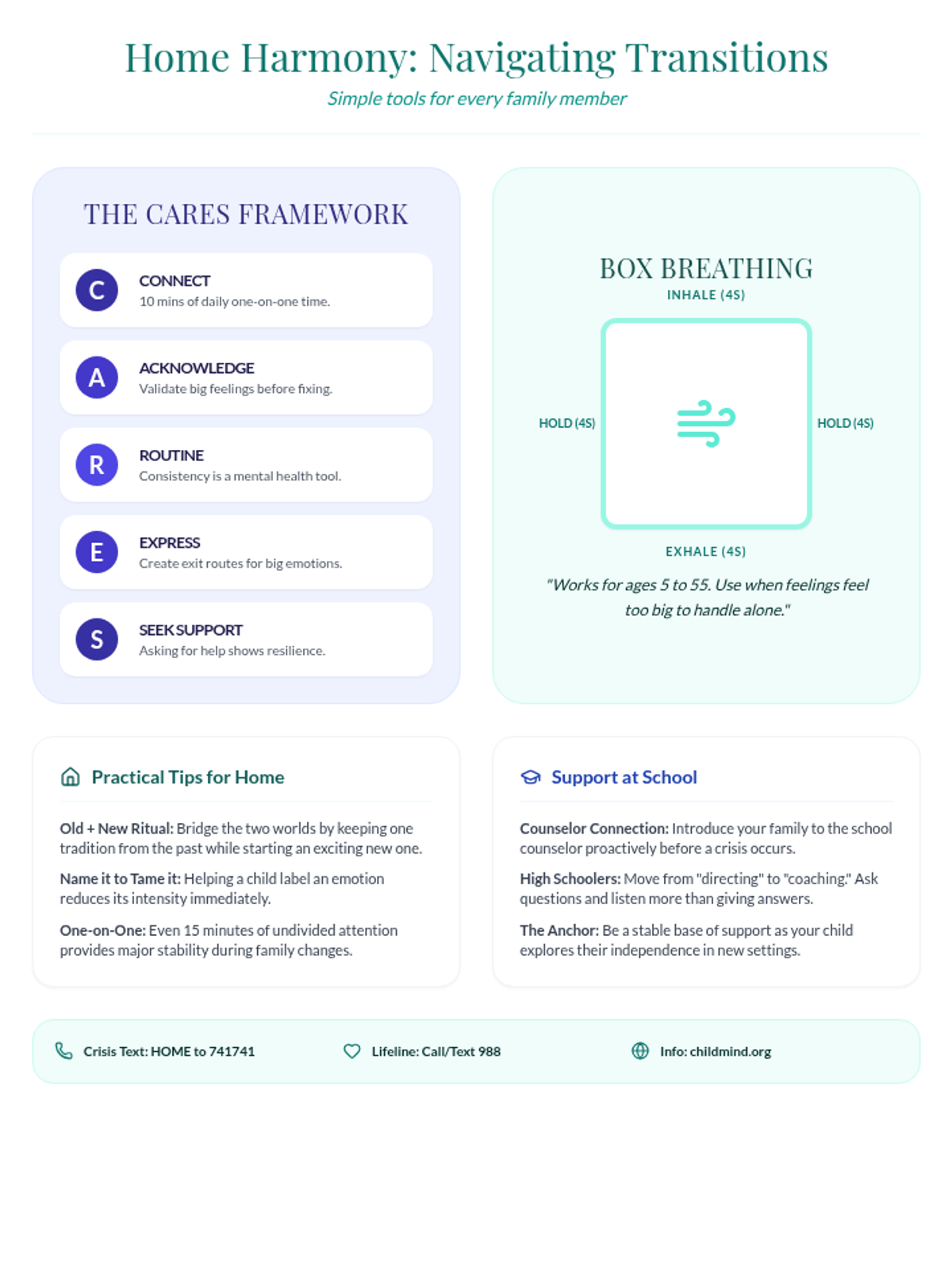
A 45-minute workshop designed to equip high school parents and caregivers with simple, effective coping strategies for family transitions.
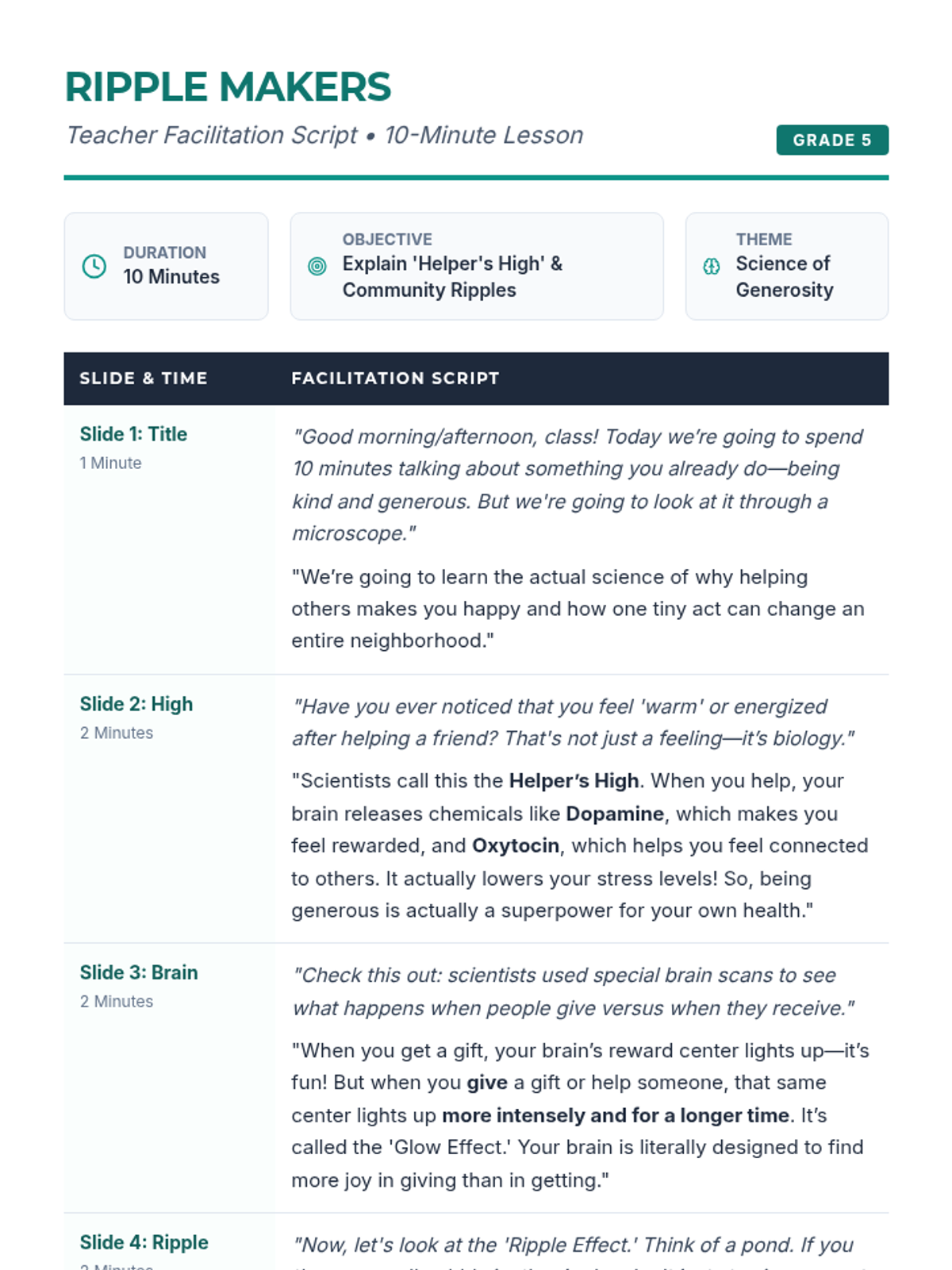
A quick 10-minute exploration of the science of generosity, explaining the 'Helper's High' and the community-wide ripple effect of kind acts.
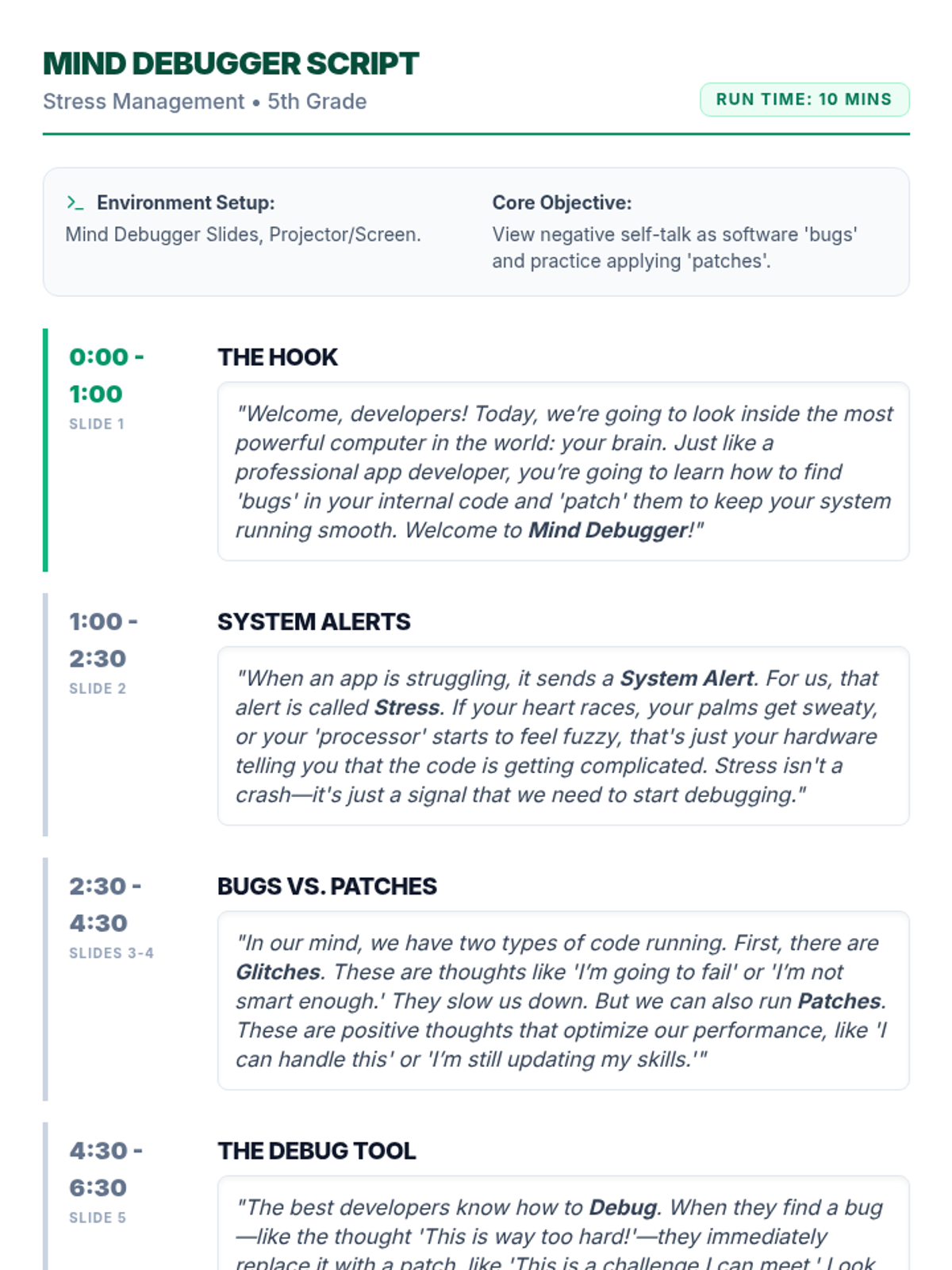
A 10-minute lesson for 5th graders using an app developer theme to teach positive self-talk. Students learn to 'debug' their negative thoughts (glitches) and replace them with positive 'patches' to manage stress.