A 30-minute introductory lesson for 3rd graders on personal space and privacy using the 'Space Bubble' metaphor to help students define and communicate their boundaries.
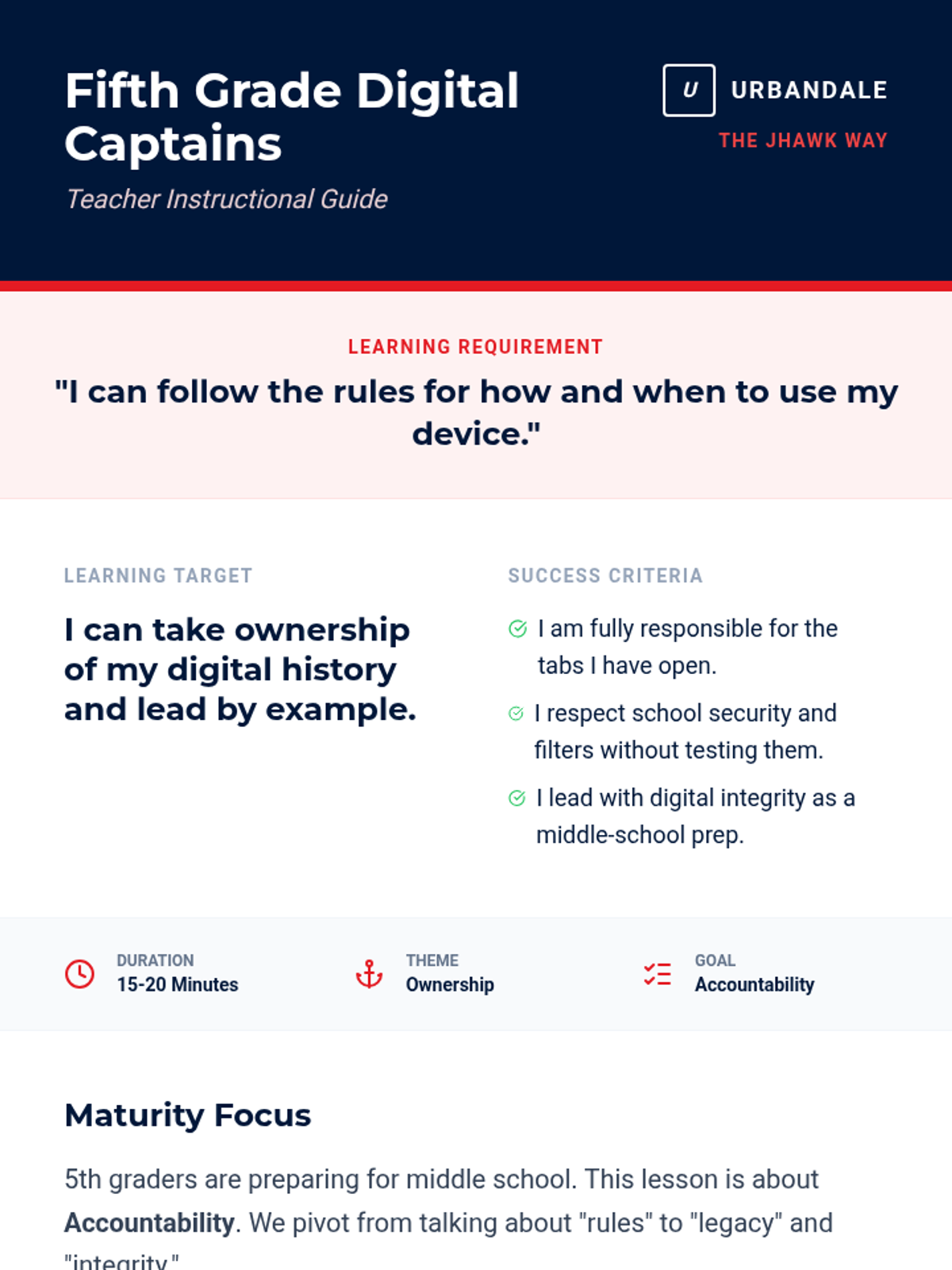
Empowers 5th graders to lead by example, discussing the importance of academic integrity and resisting the urge to bypass school filters.
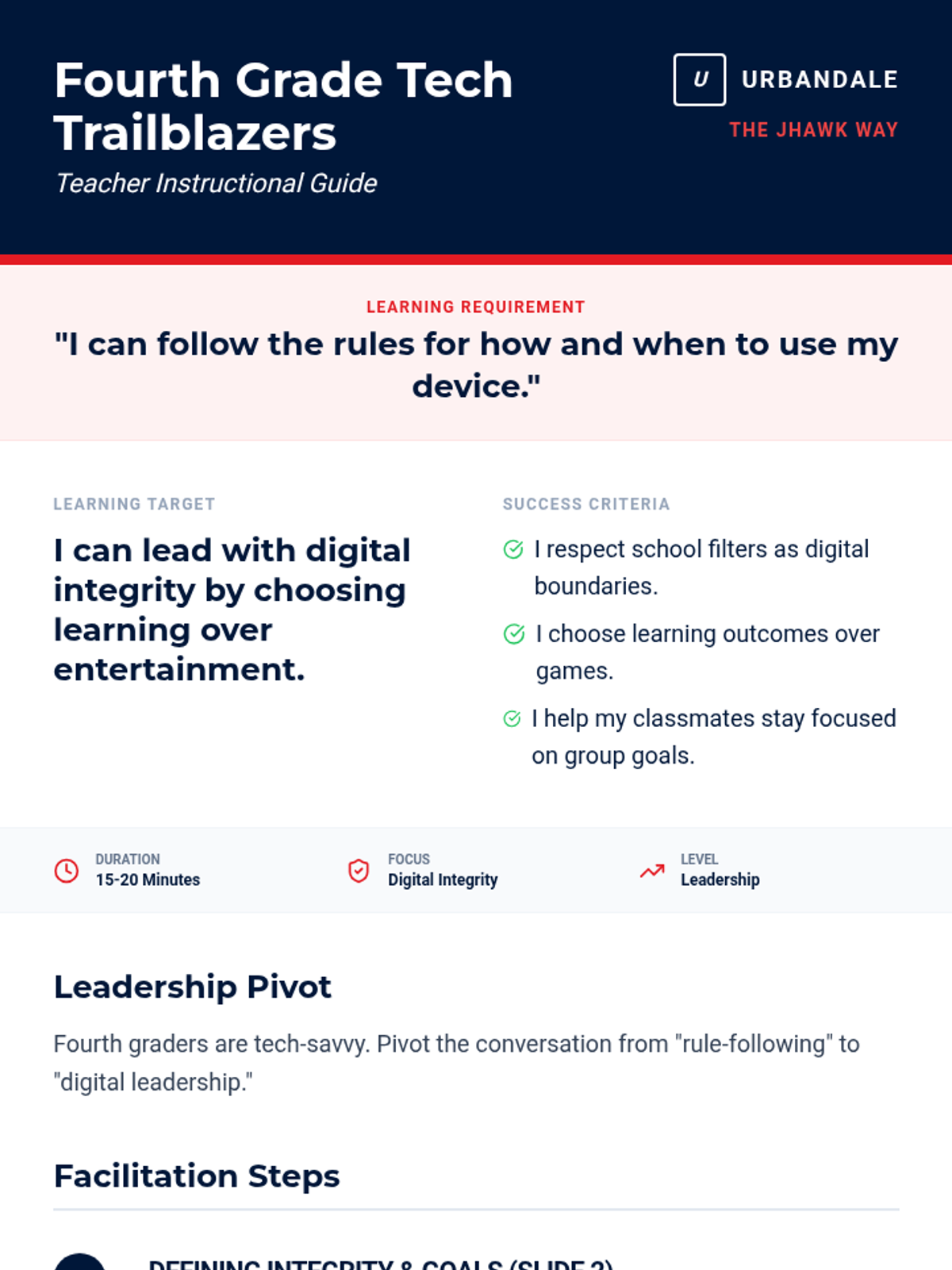
Addresses the specific challenges of 4th graders, focusing on avoiding game websites and maintaining focus on assigned tasks.
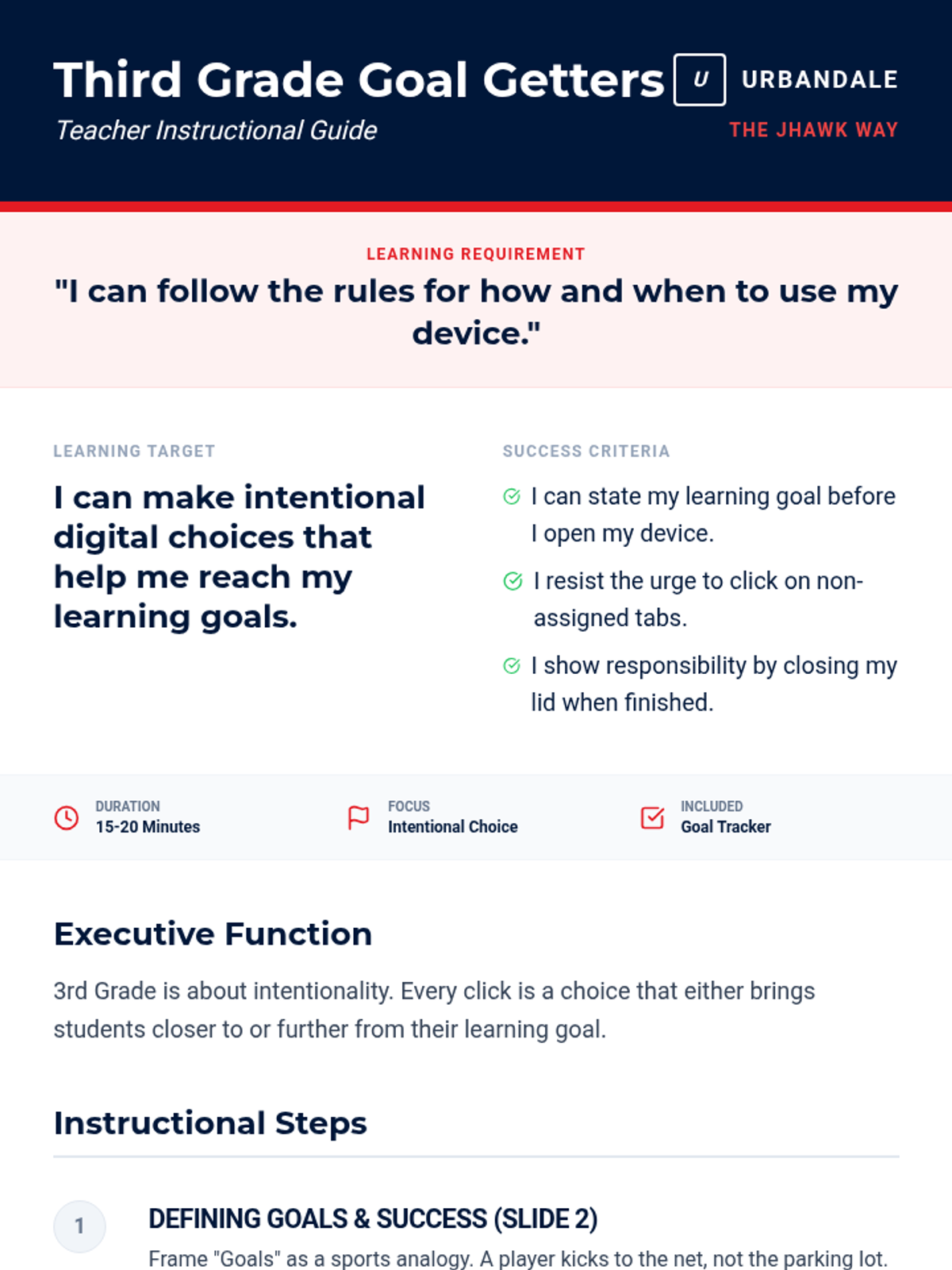
Helps 3rd graders identify common online distractions and practice making responsible choices that align with their learning goals.
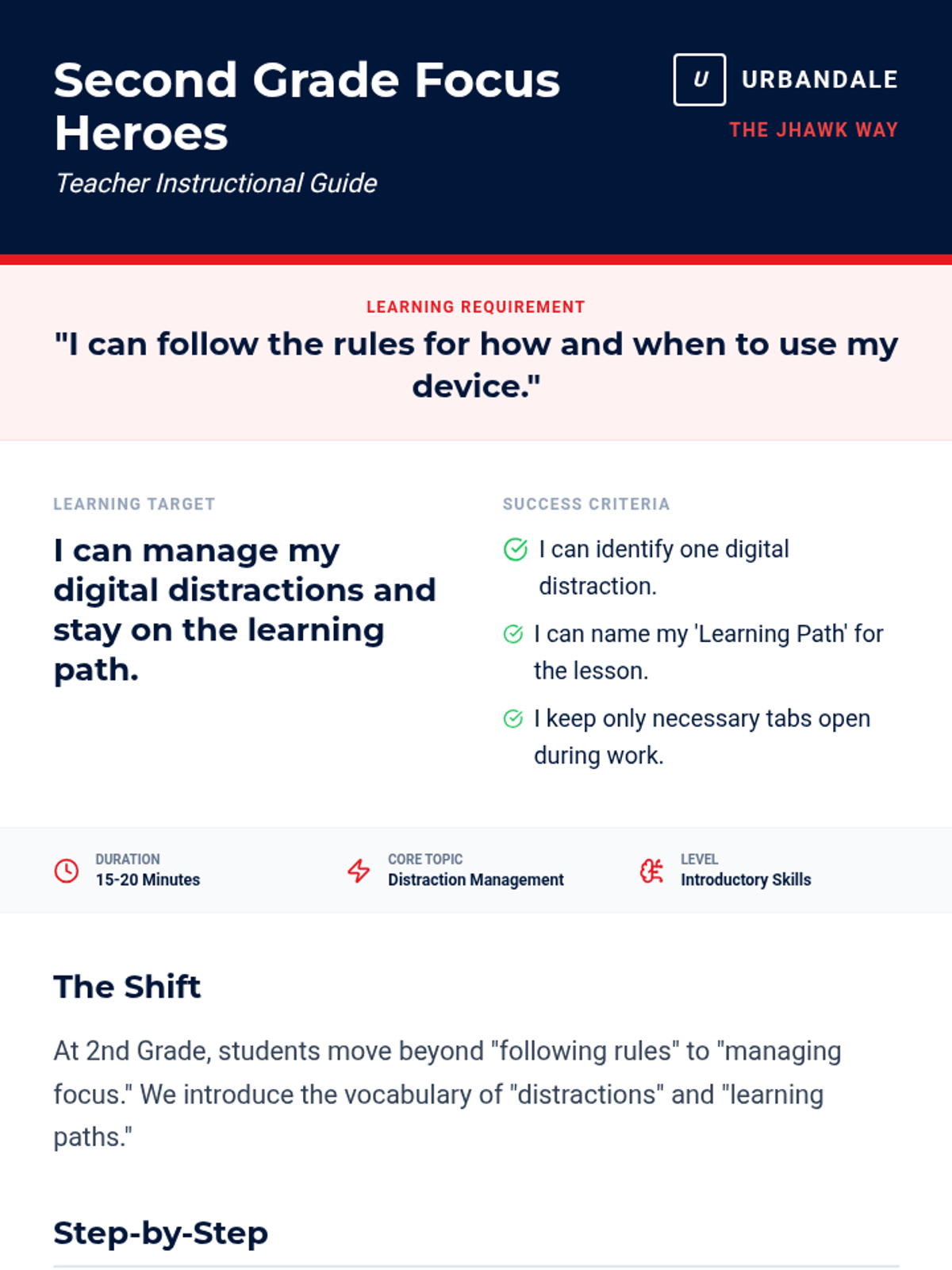
Introduces 2nd graders to the idea of managing digital distractions and staying on task during learning time.
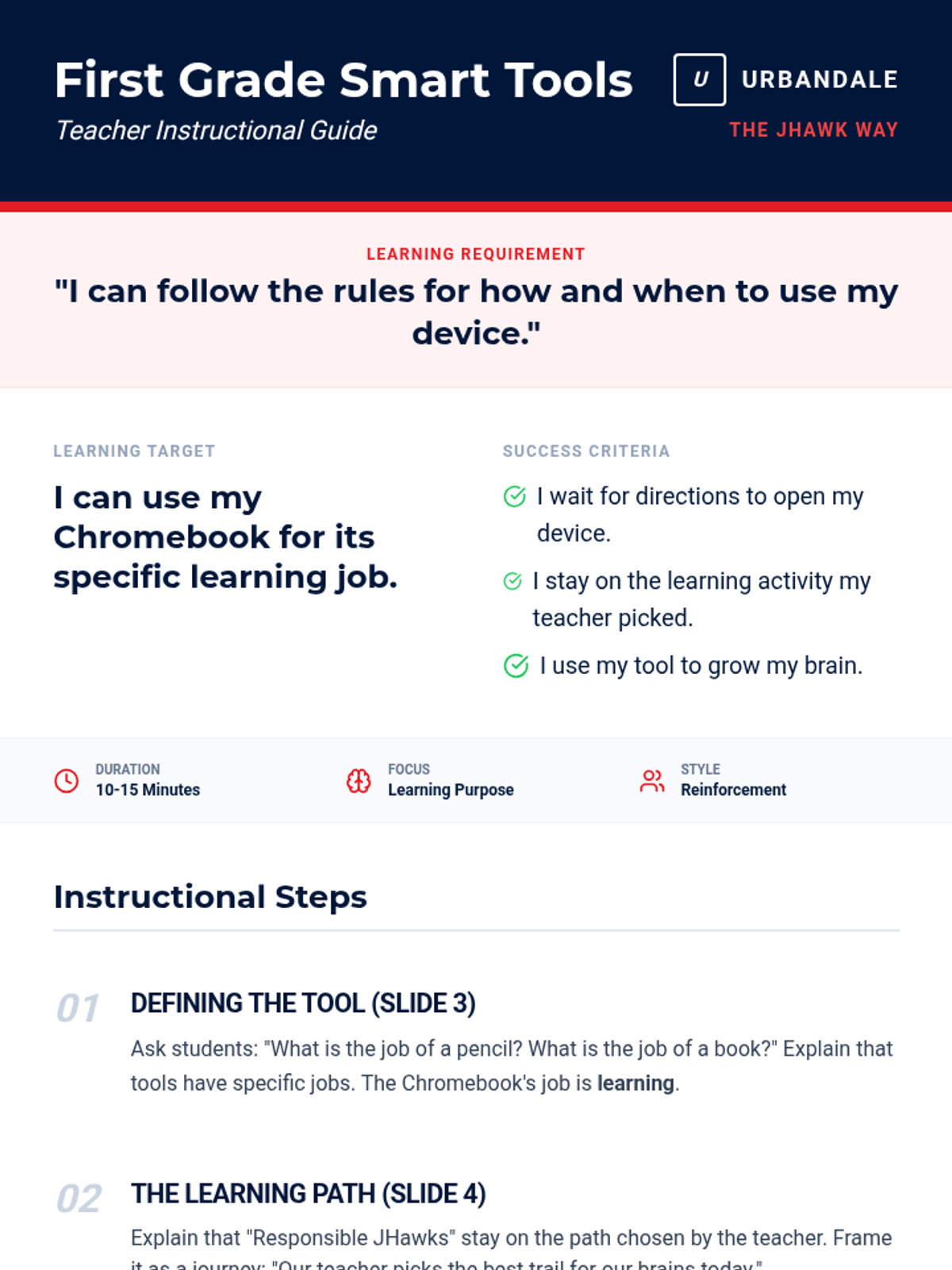
Reinforces the 'Tool not Toy' concept for 1st graders, emphasizing the JHawk Way of being Responsible with school technology.
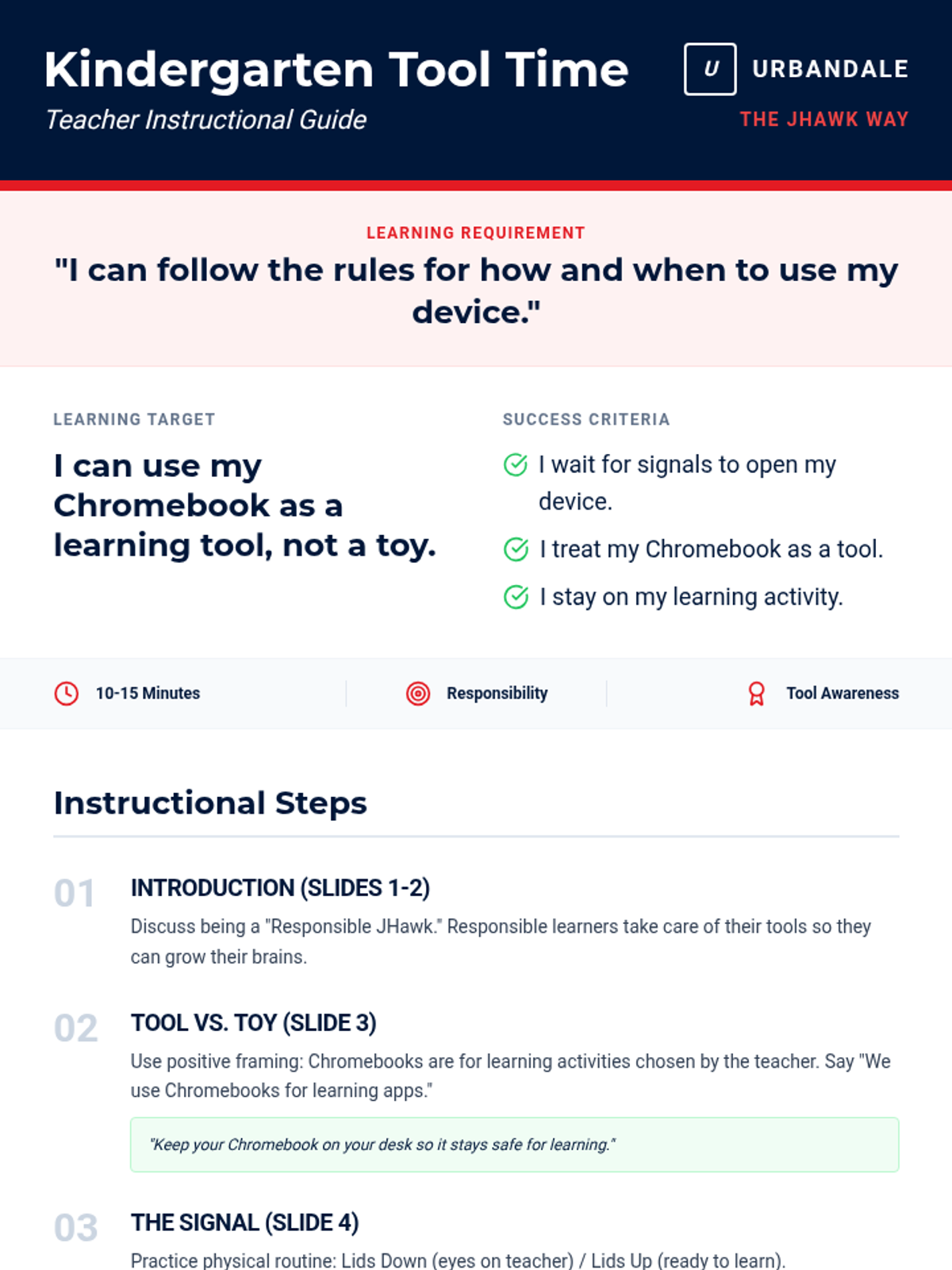
Introduces Kindergarteners to the concept that Chromebooks are learning tools, not toys, focusing on following teacher directions for when to use them.
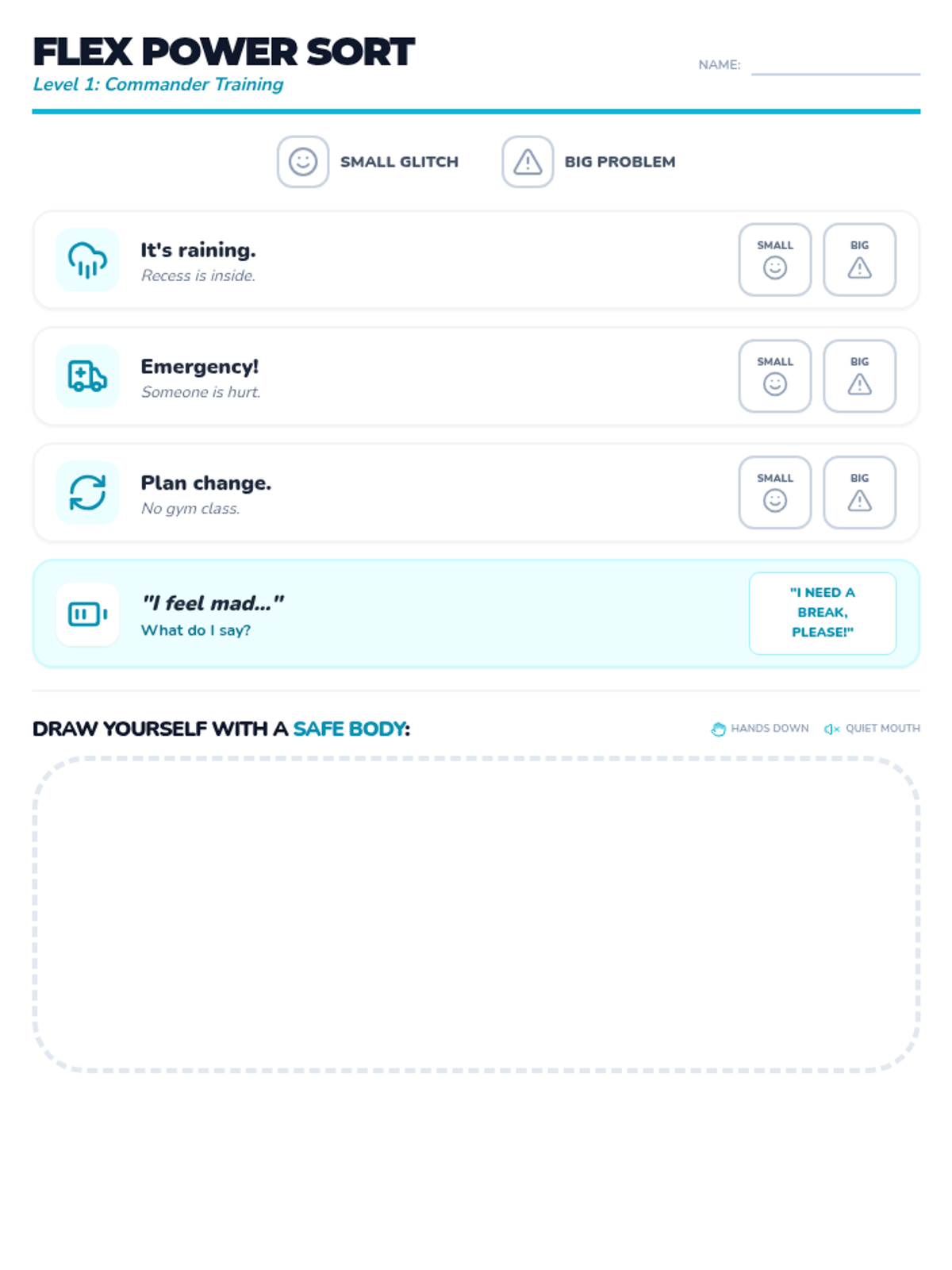
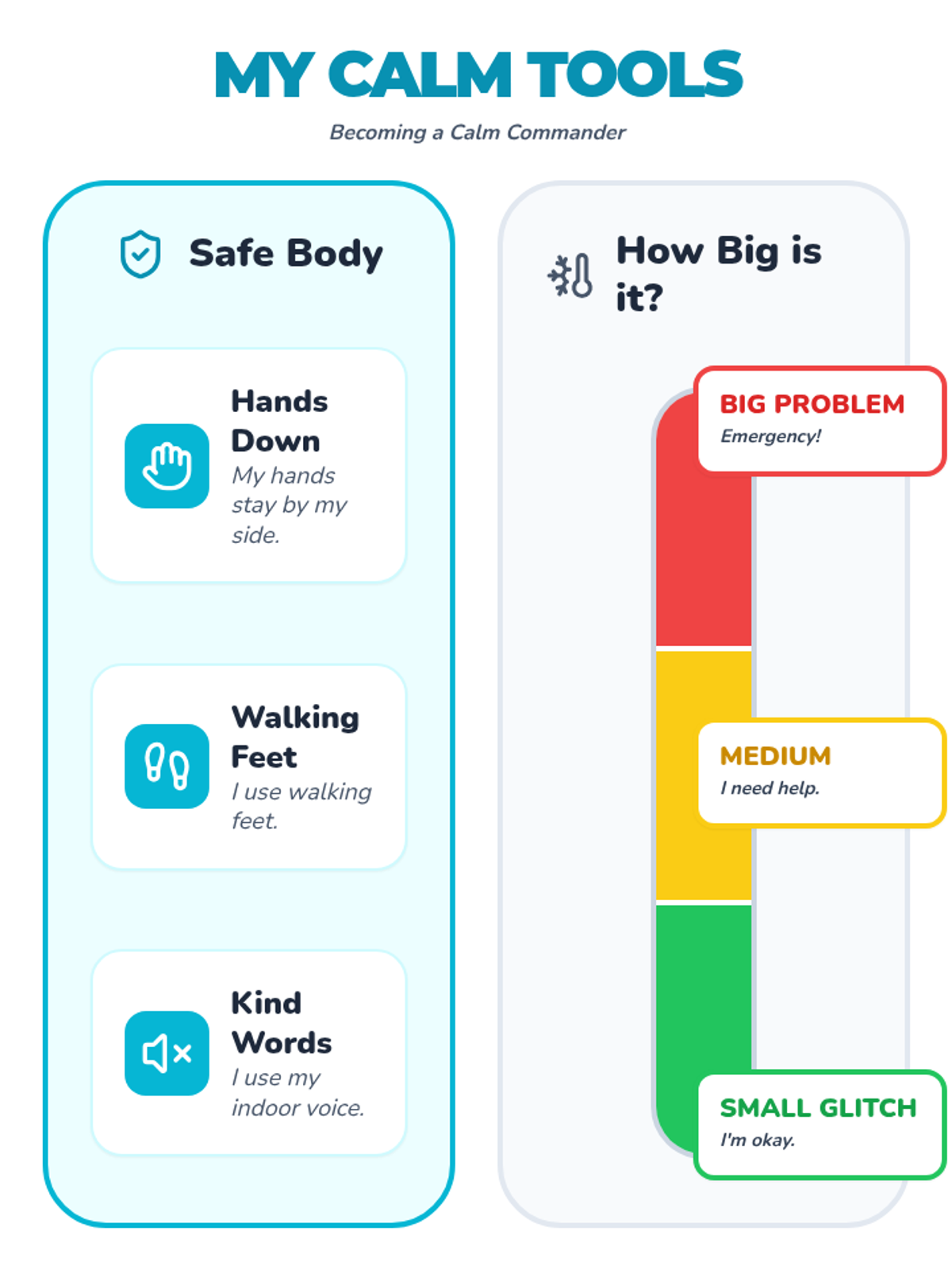
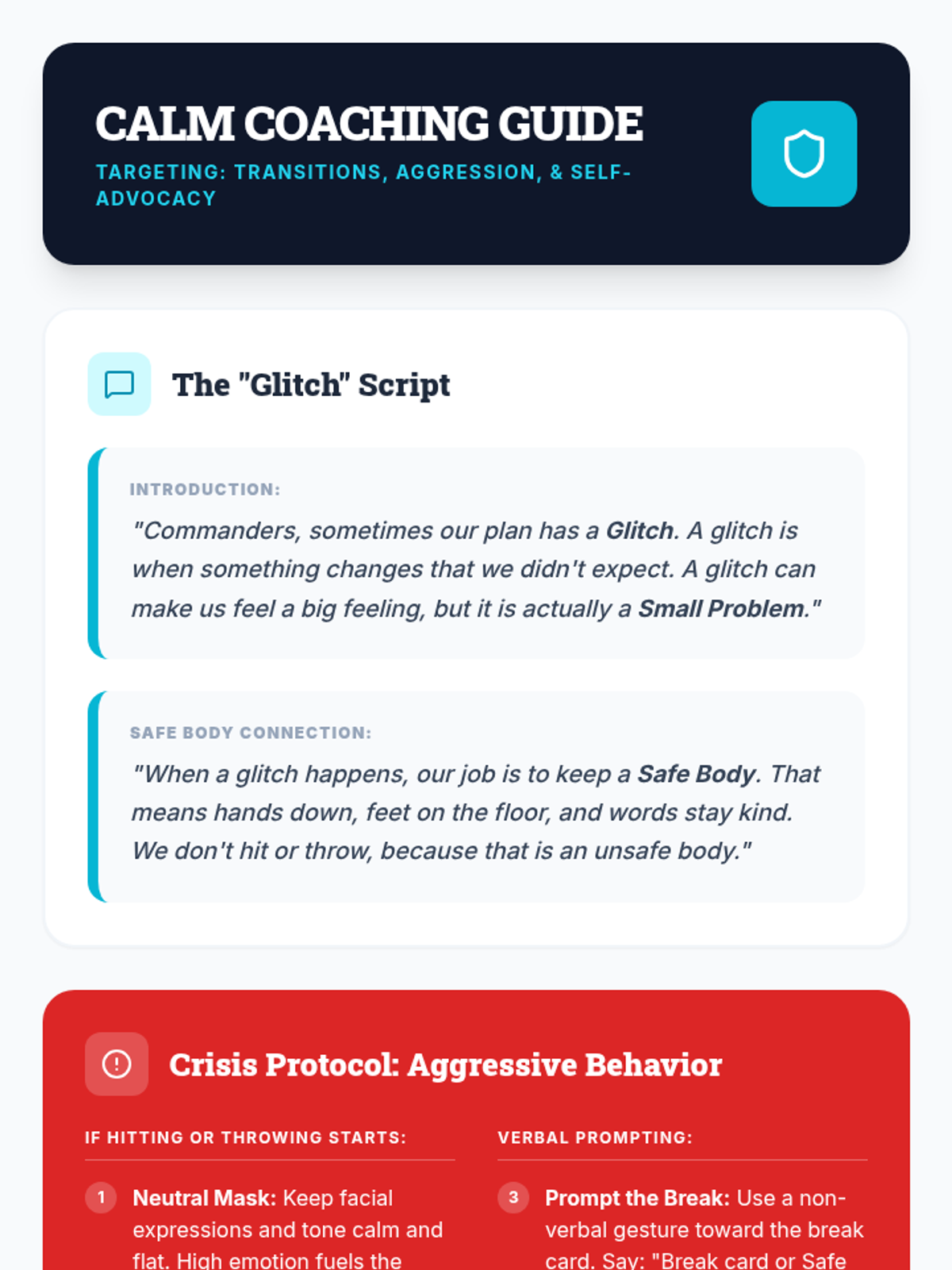
This lesson teaches students to distinguish between big and small problems, maintain a safe body during plan changes, and use a 'break' card effectively.
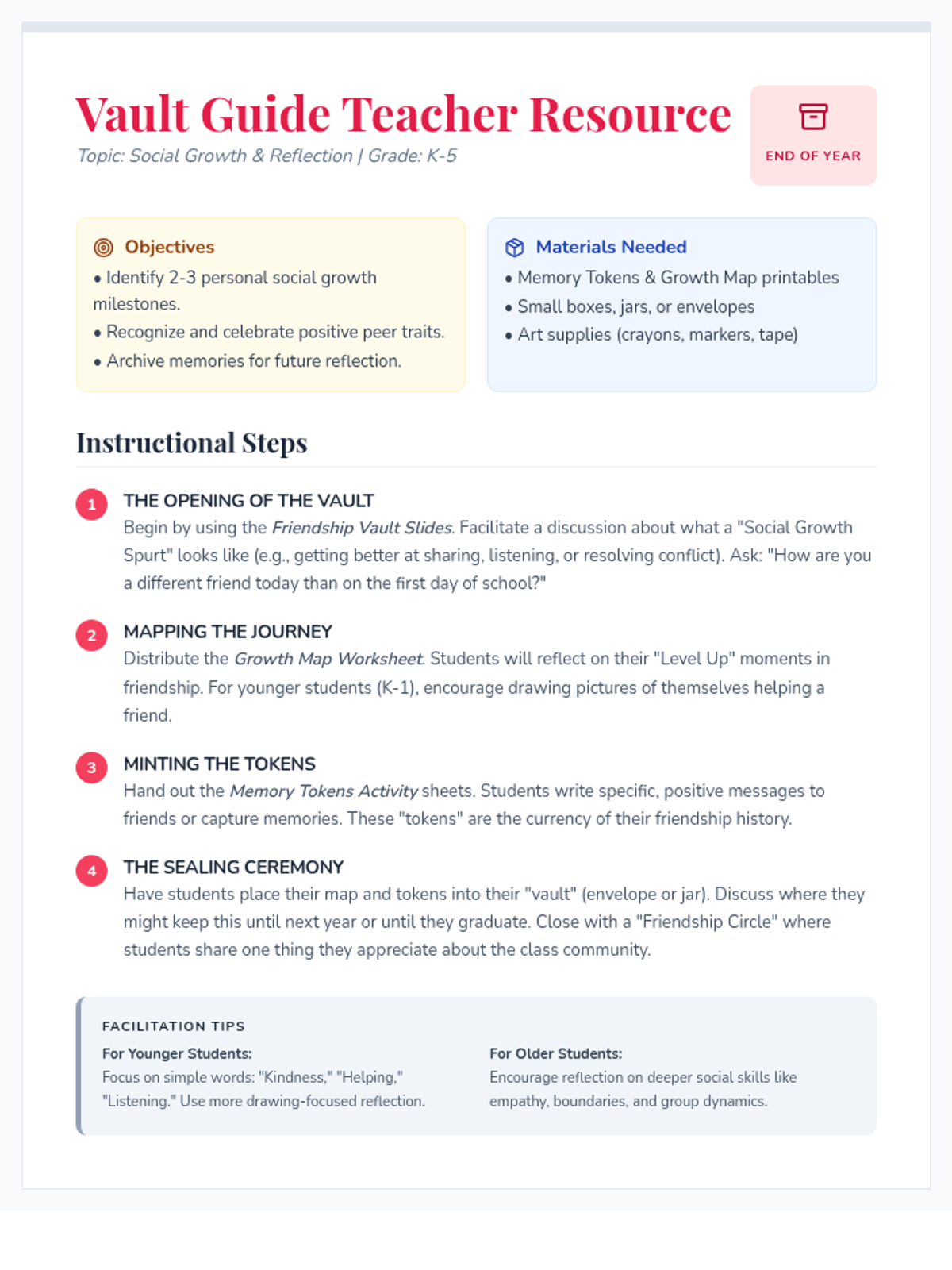
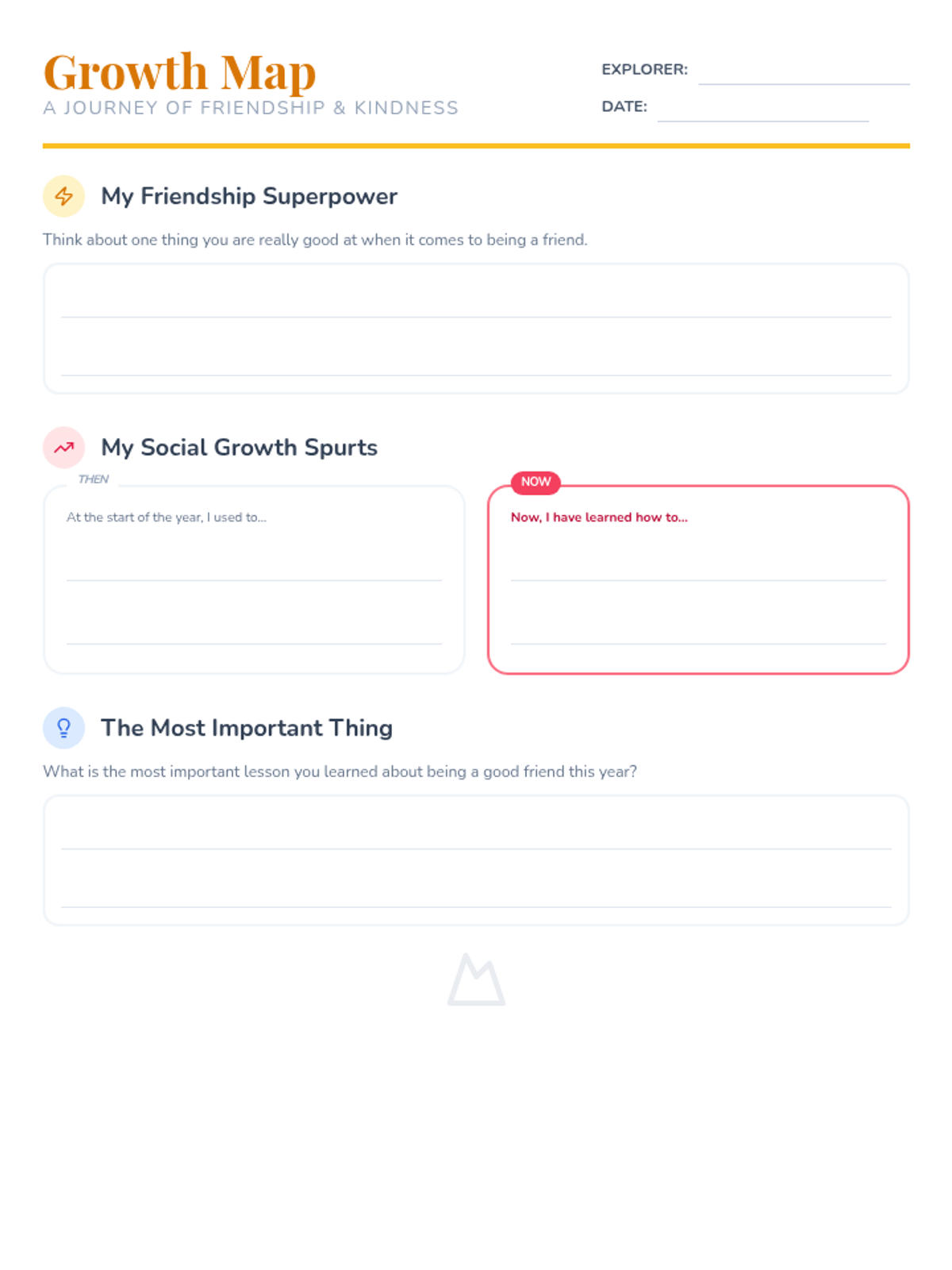
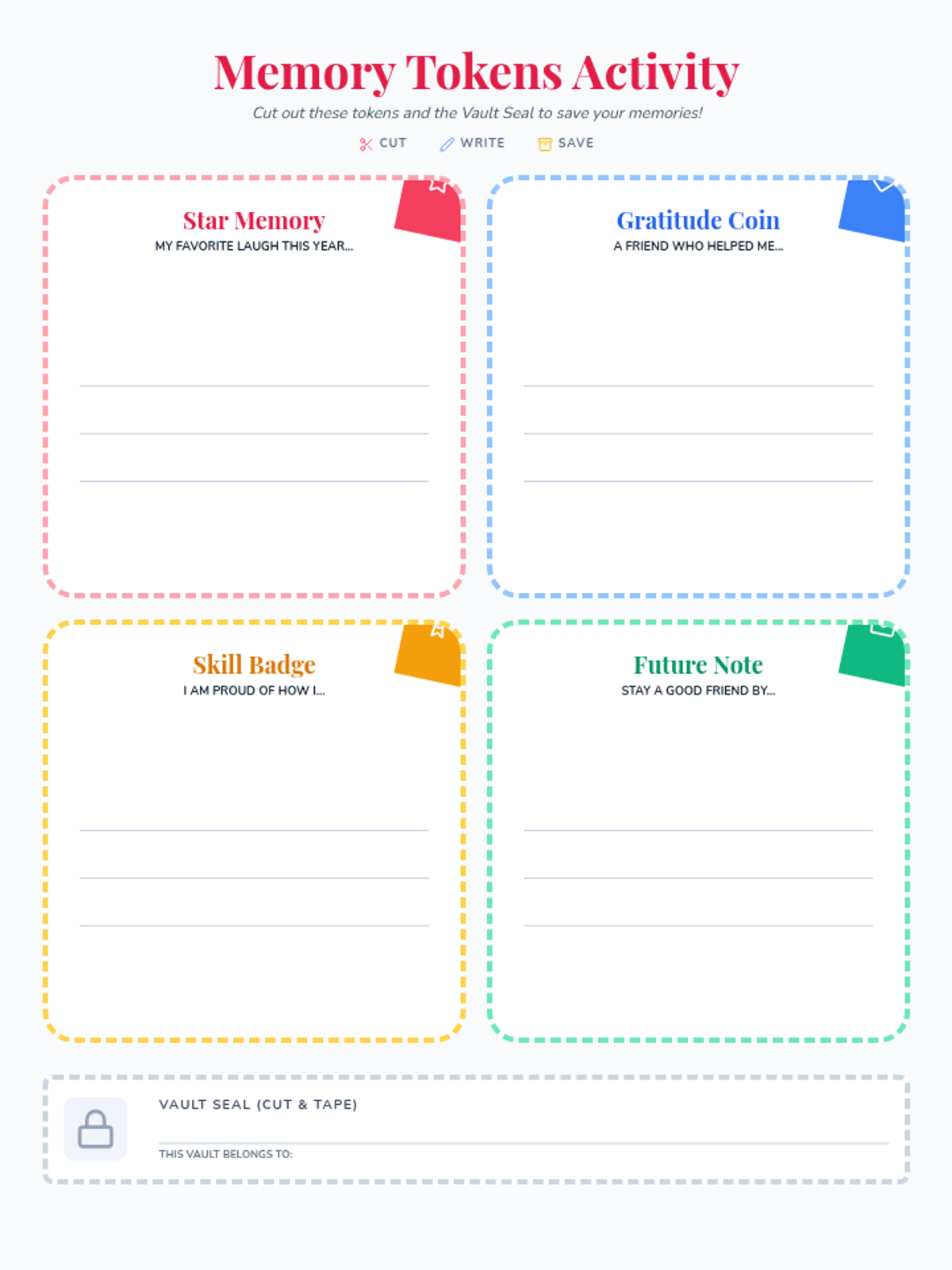
A reflective social-emotional learning lesson where students celebrate their social growth and create a time capsule of their year's friendships. Students reflect on interpersonal skills they've mastered and document meaningful connections with their peers.
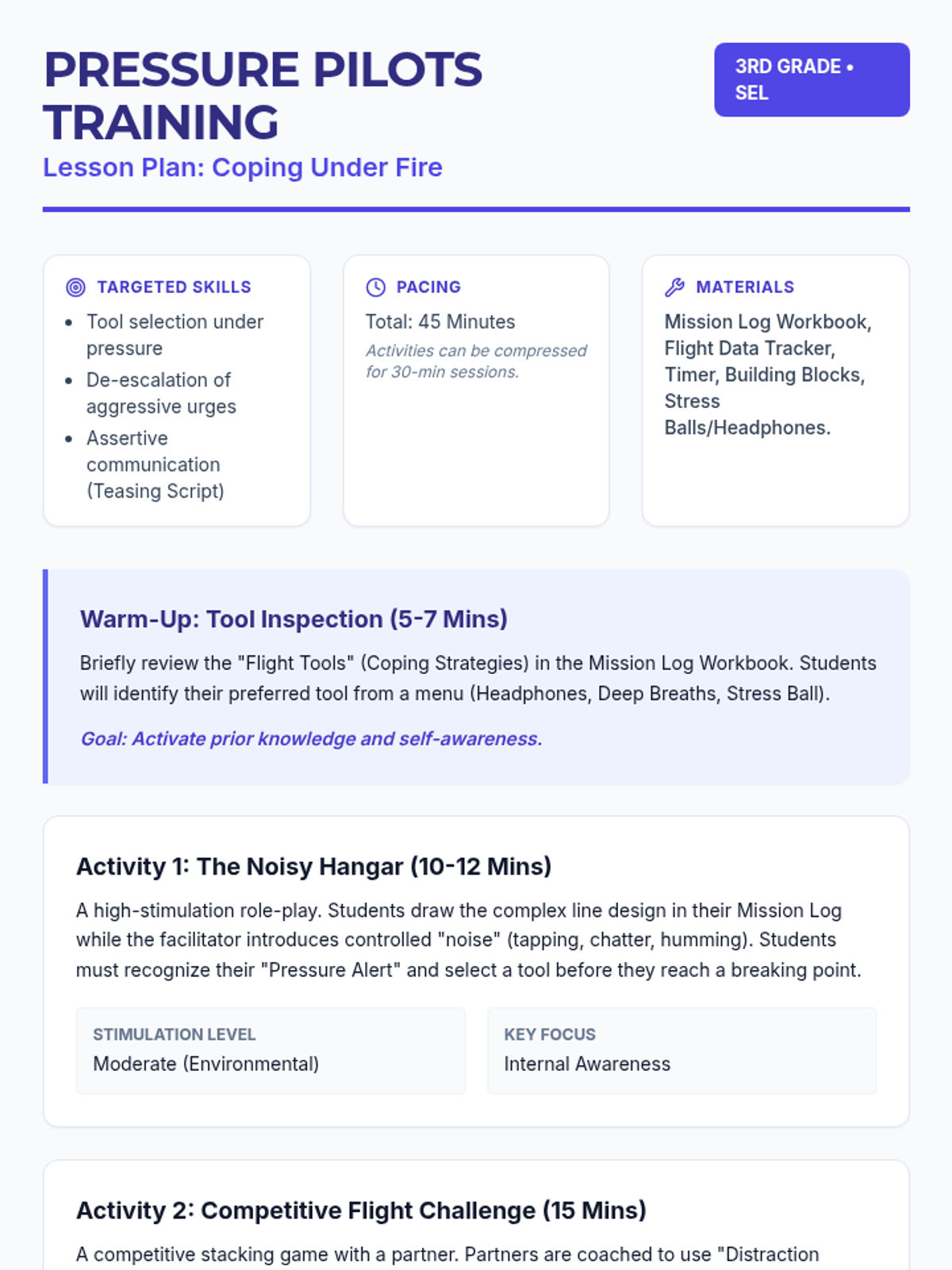
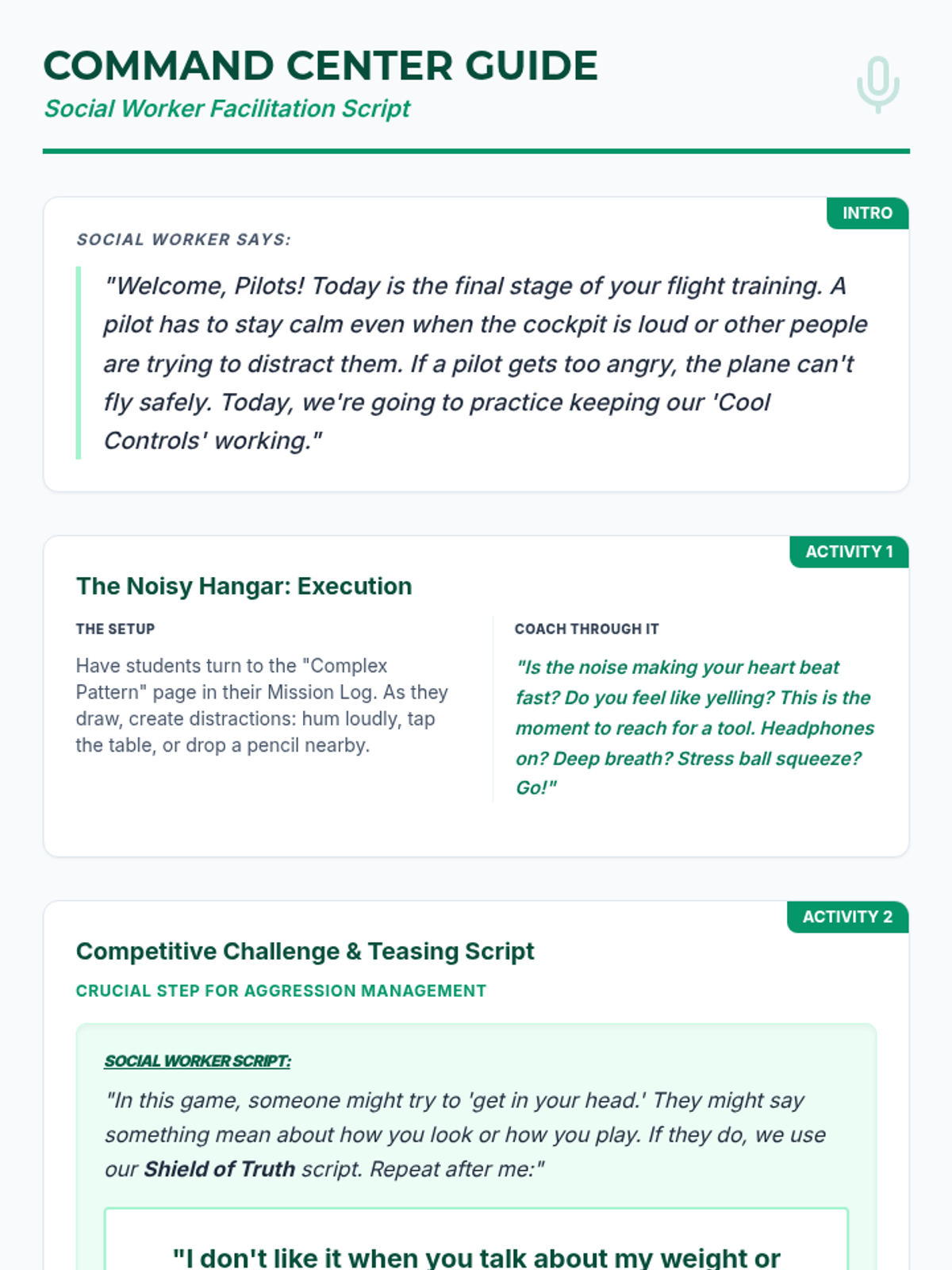
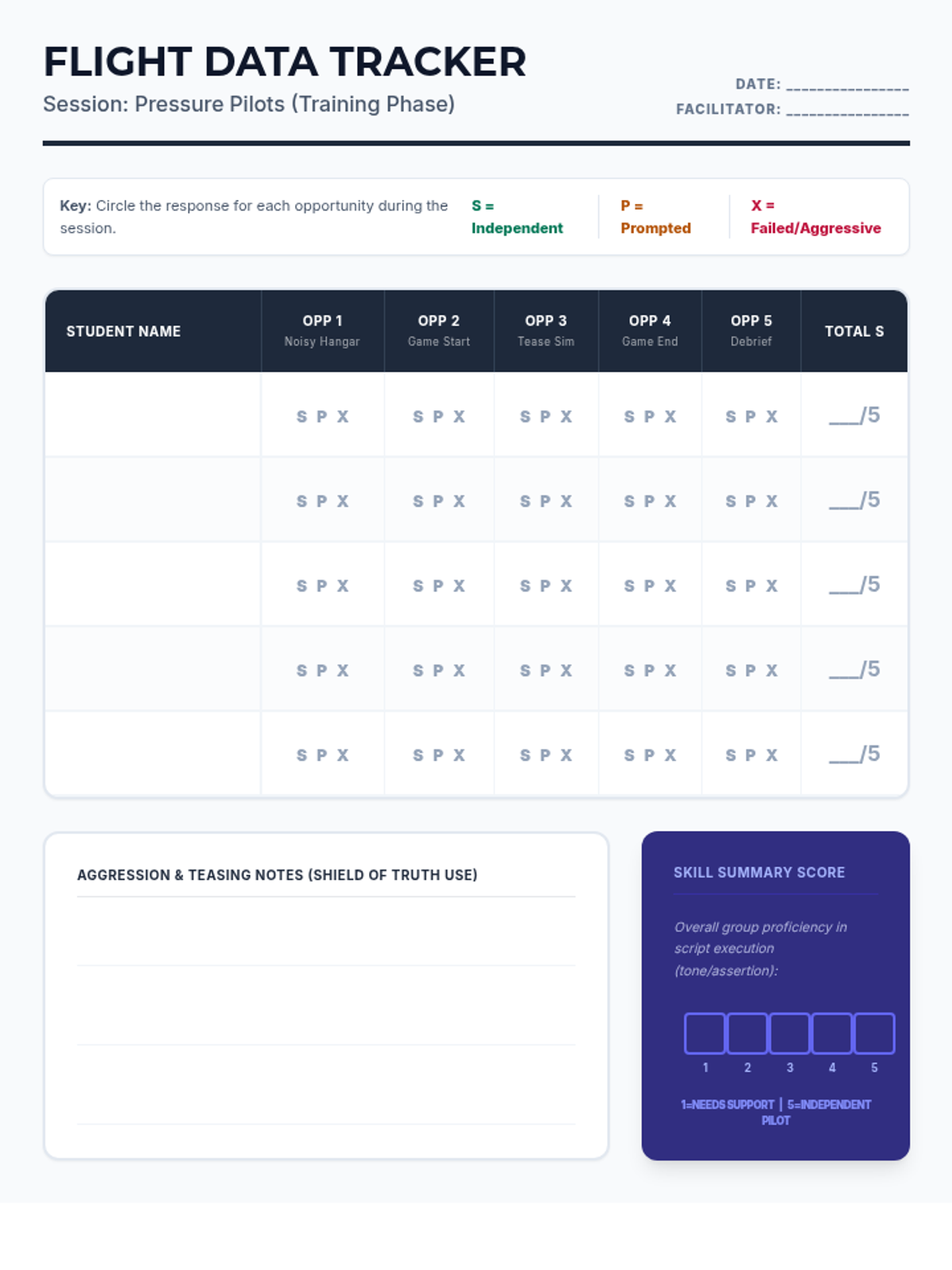
A social-emotional learning lesson designed for 3rd graders to practice using coping strategies during high-stimulation and high-pressure scenarios, specifically focusing on responding to teasing and social pressure.
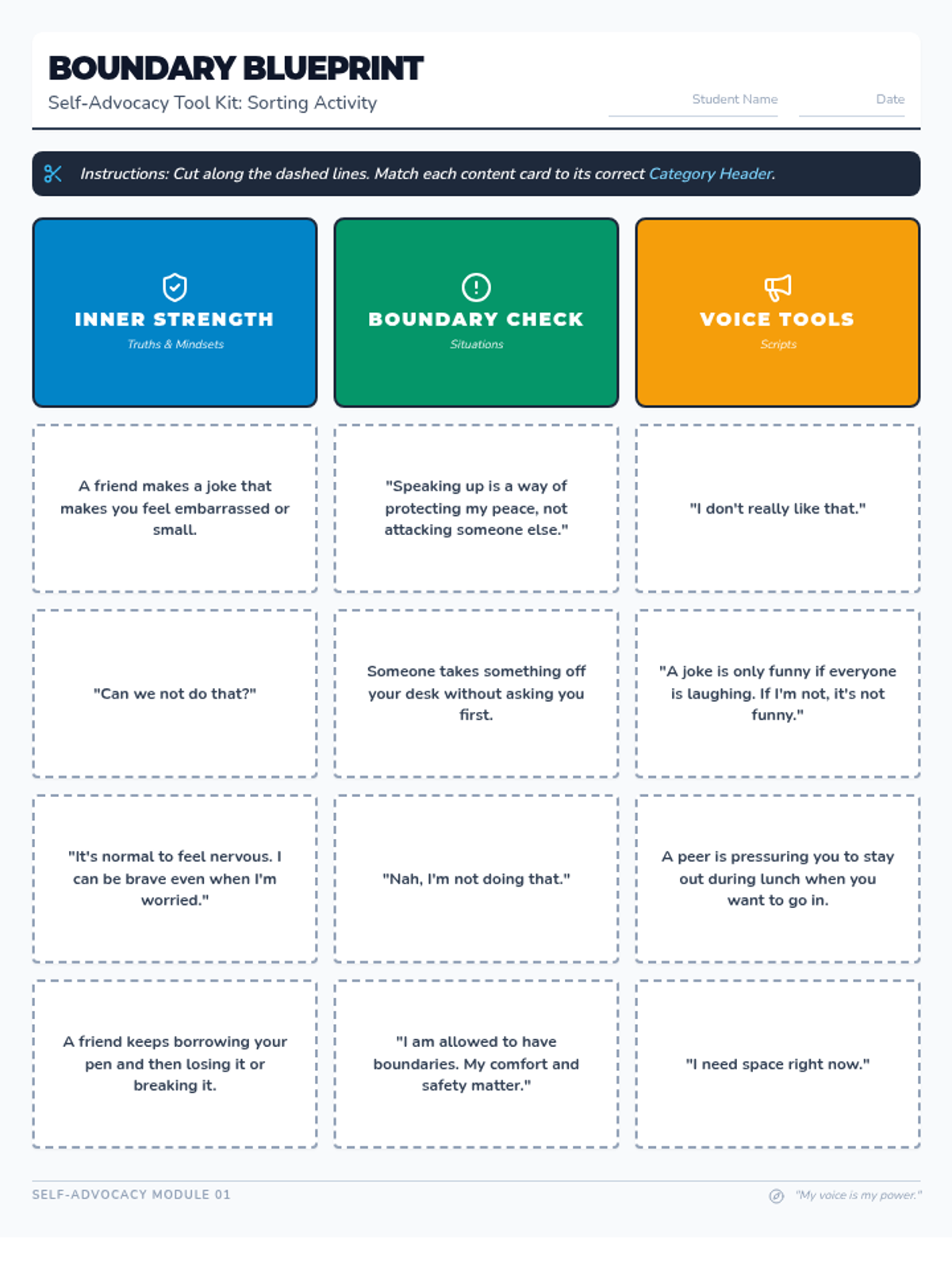
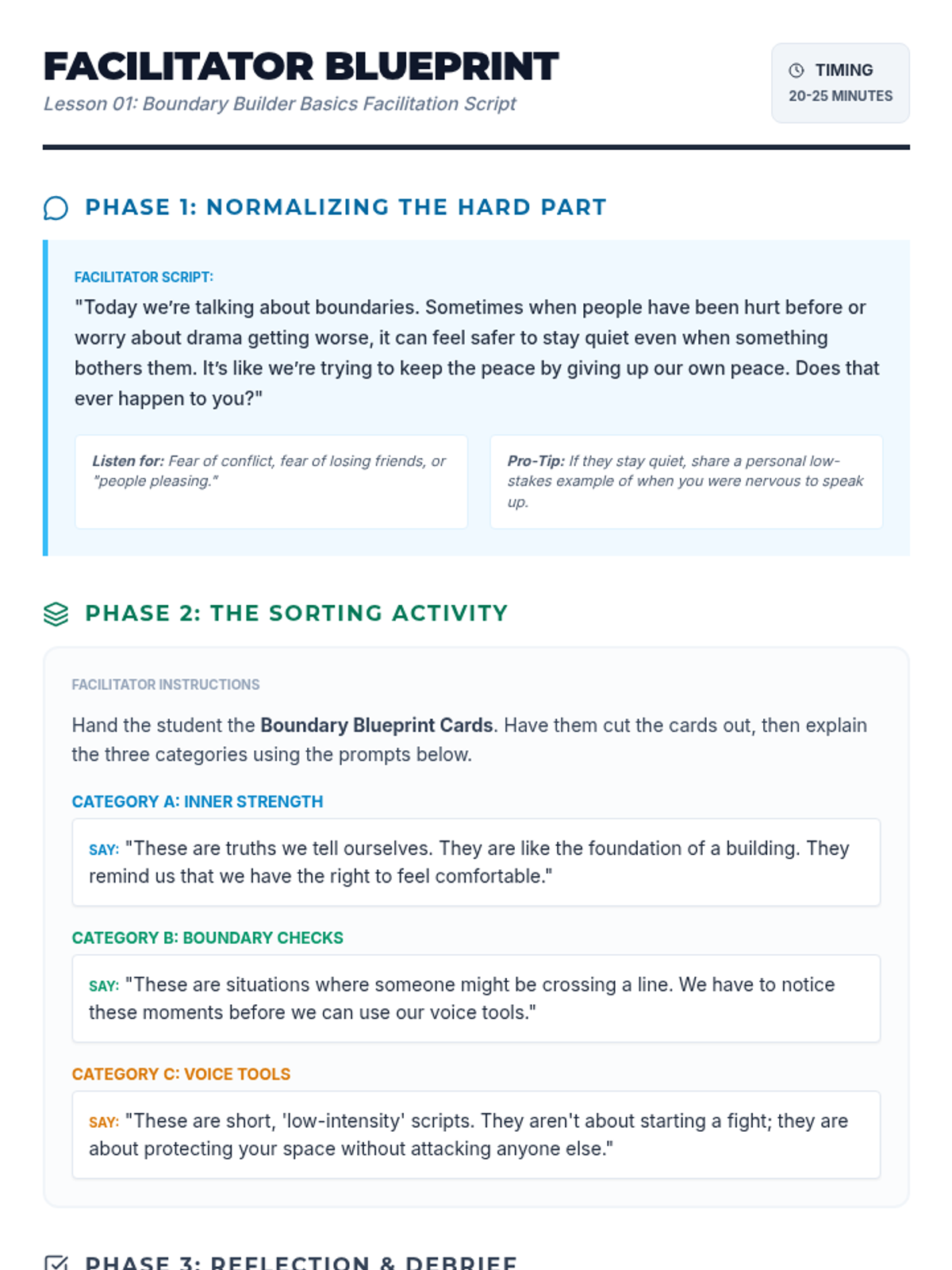
A foundational session focused on normalizing the difficulty of self-advocacy, identifying personal boundaries, and practicing low-intensity scripts to protect one's peace.
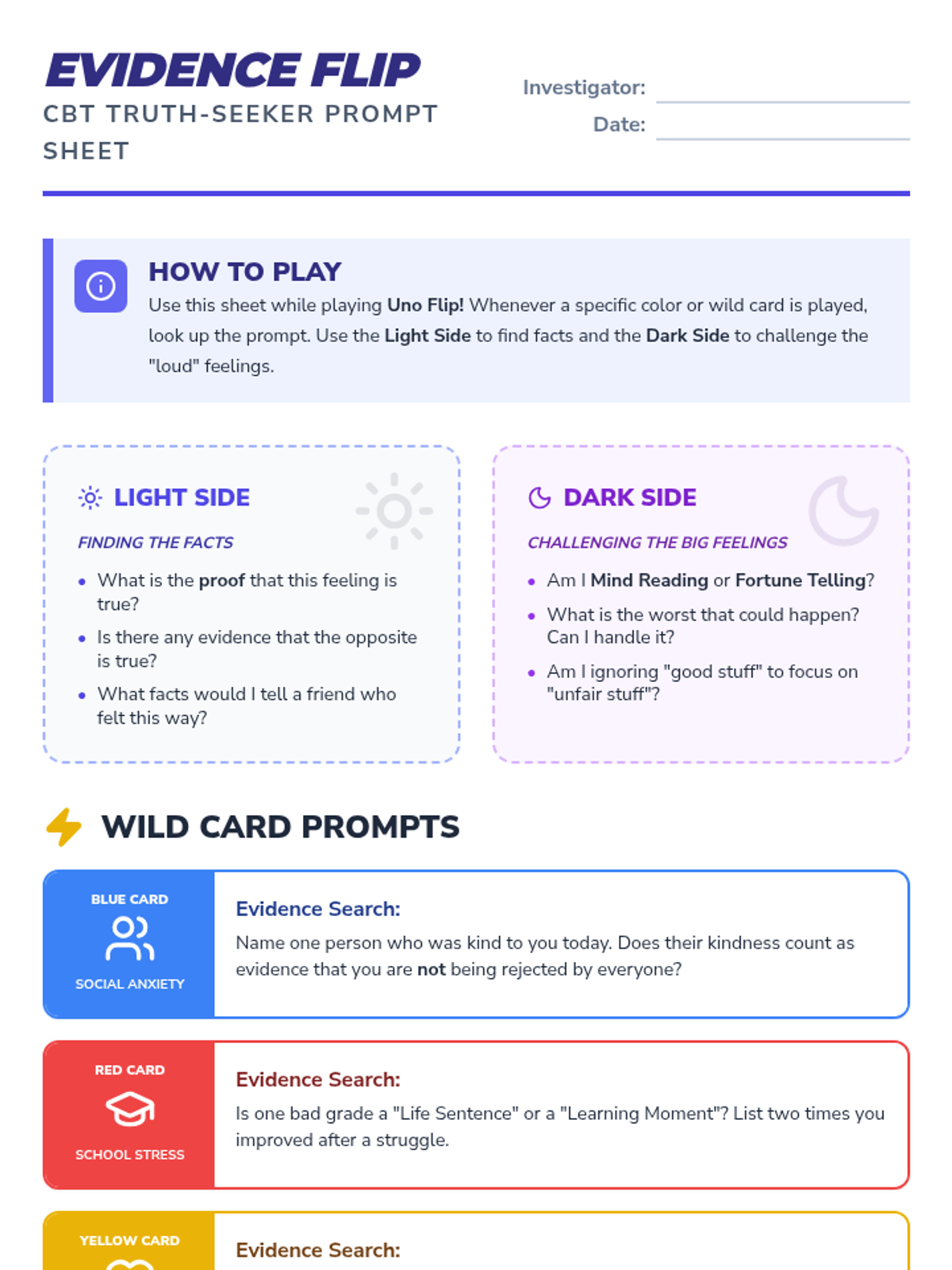
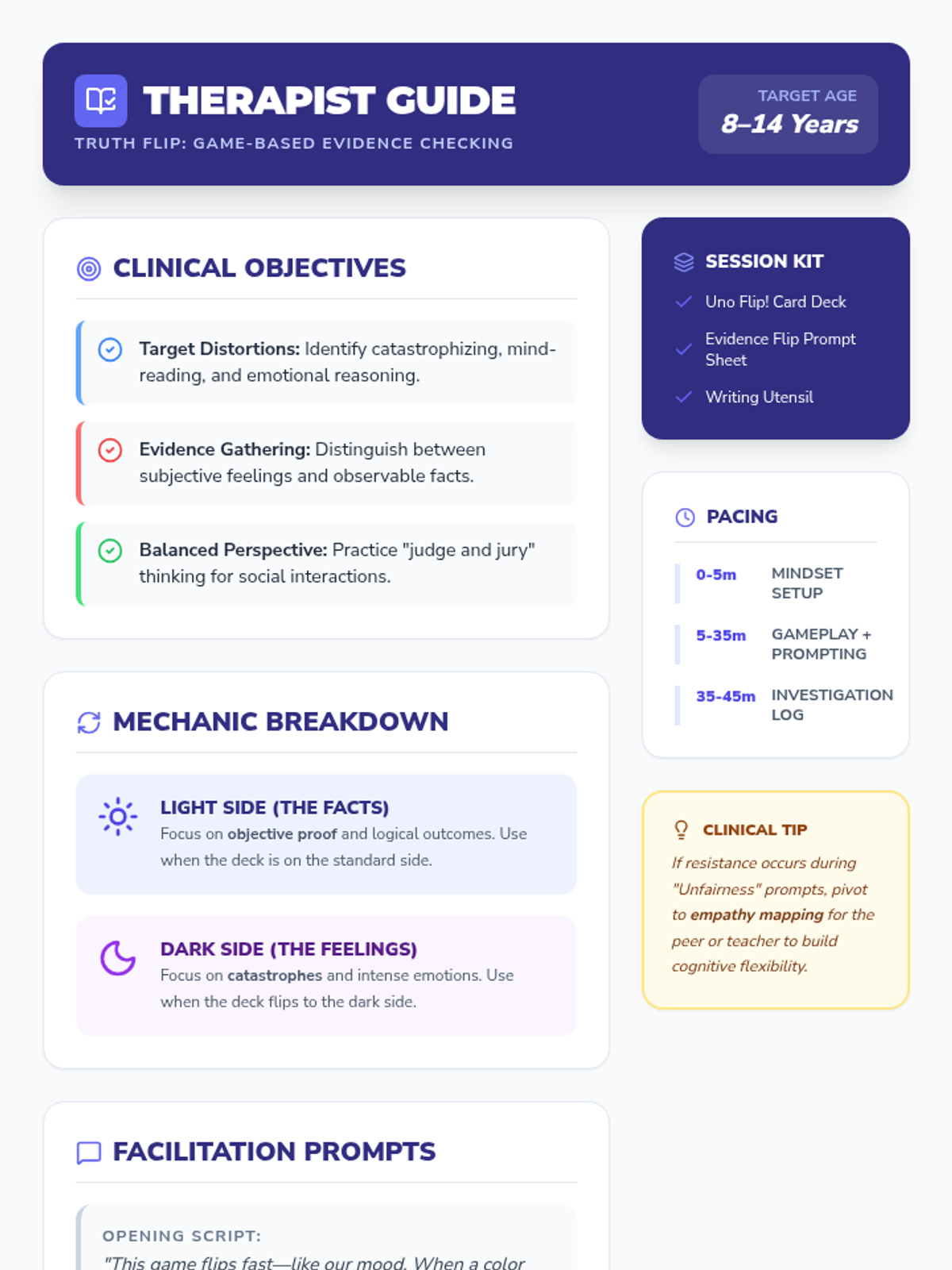
A targeted CBT session using the game Uno Flip to help students identify evidence for their thoughts, challenge catastrophizing, and manage social anxiety.
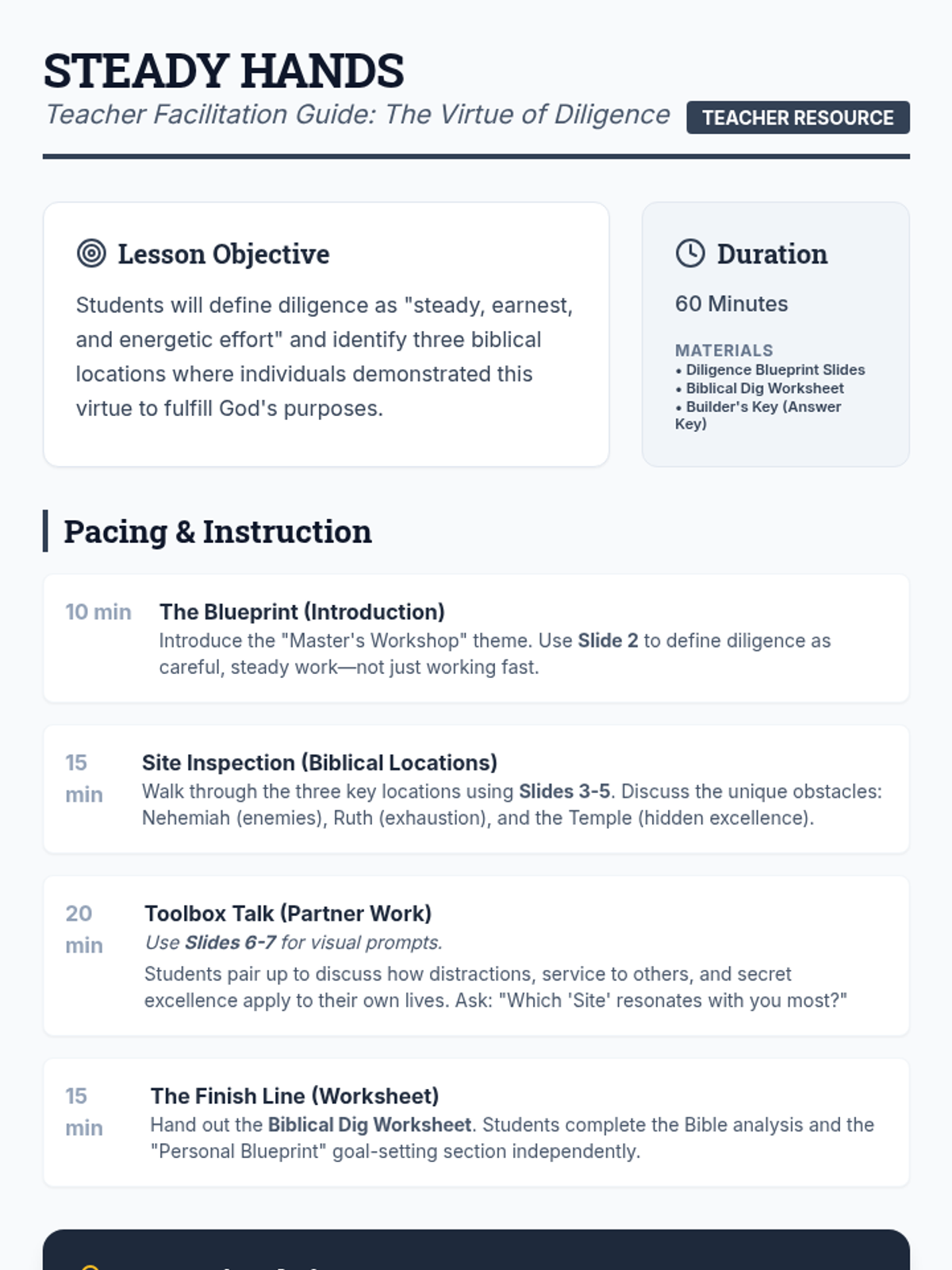
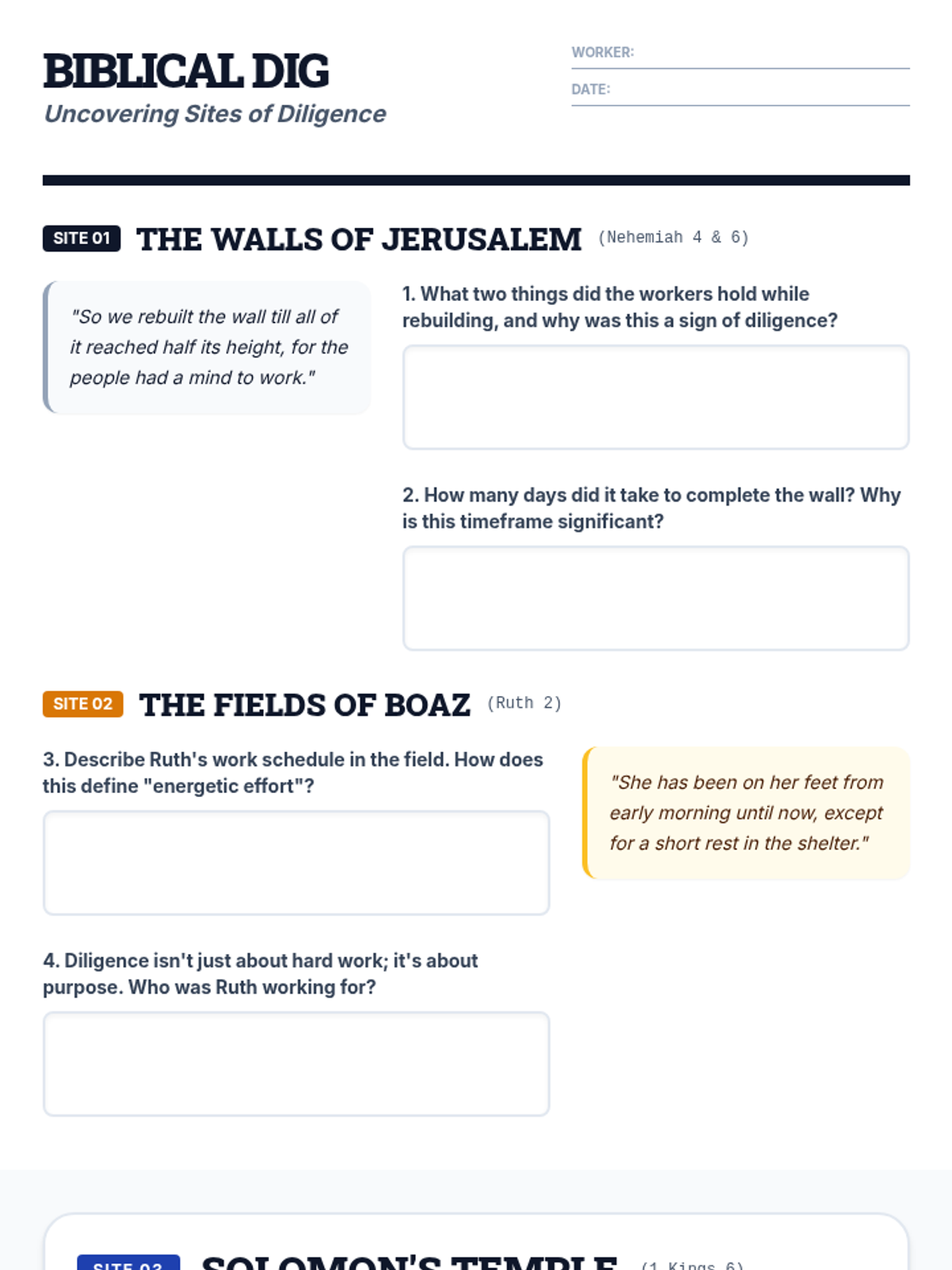
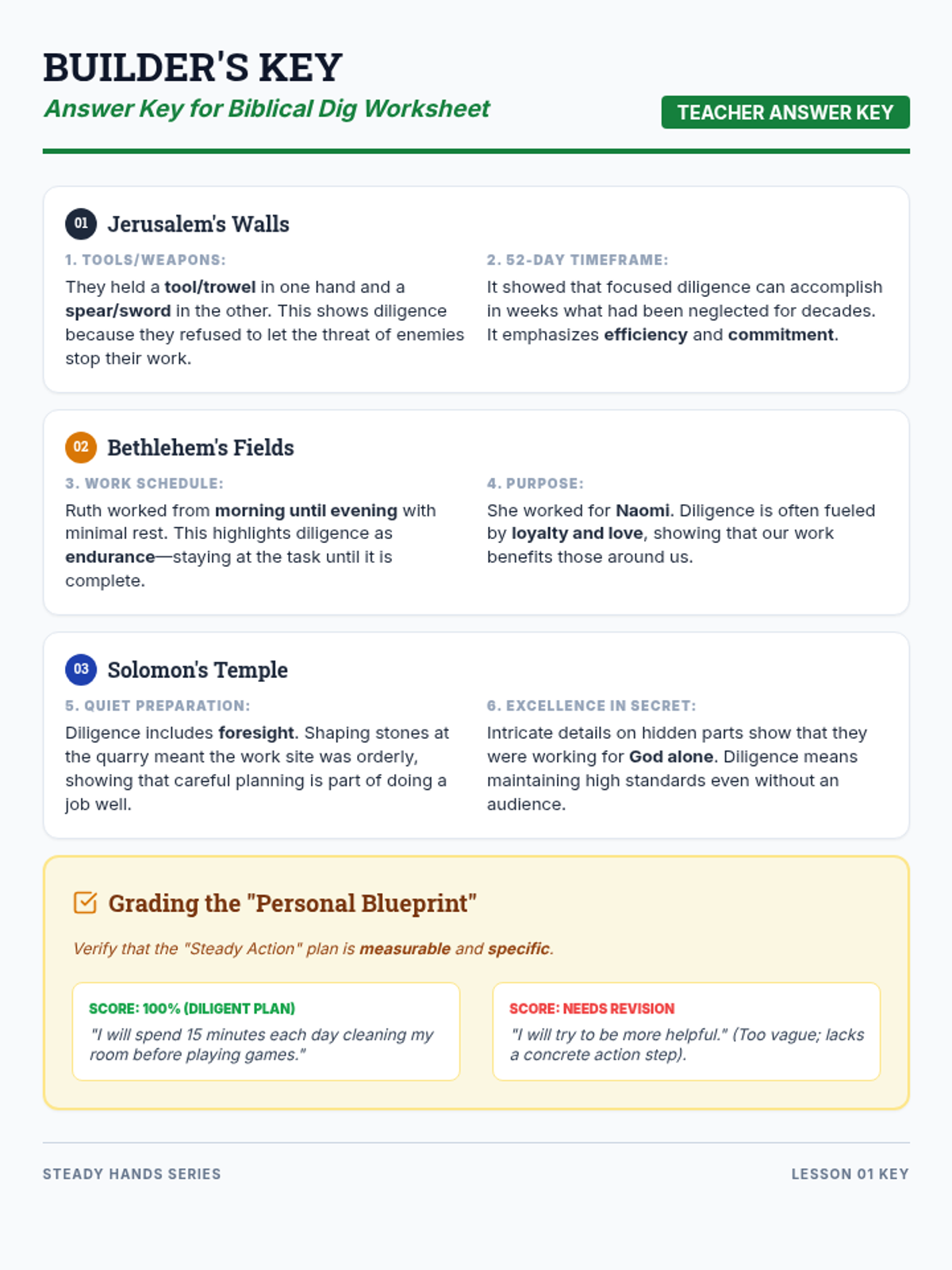
A lesson exploring the biblical virtue of diligence through the lens of ancient builders and laborers, featuring Nehemiah, Ruth, and the Temple craftsmen.
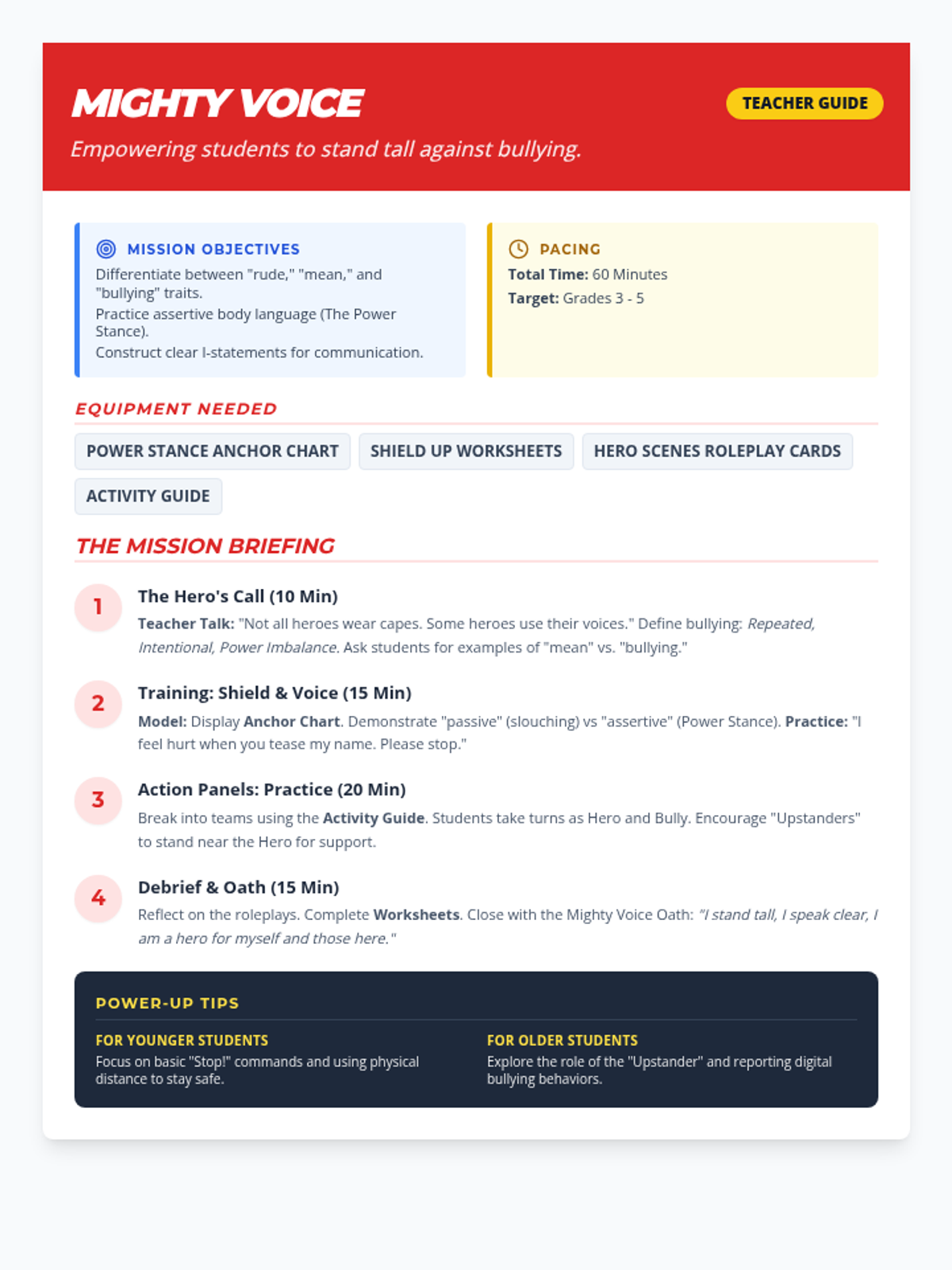
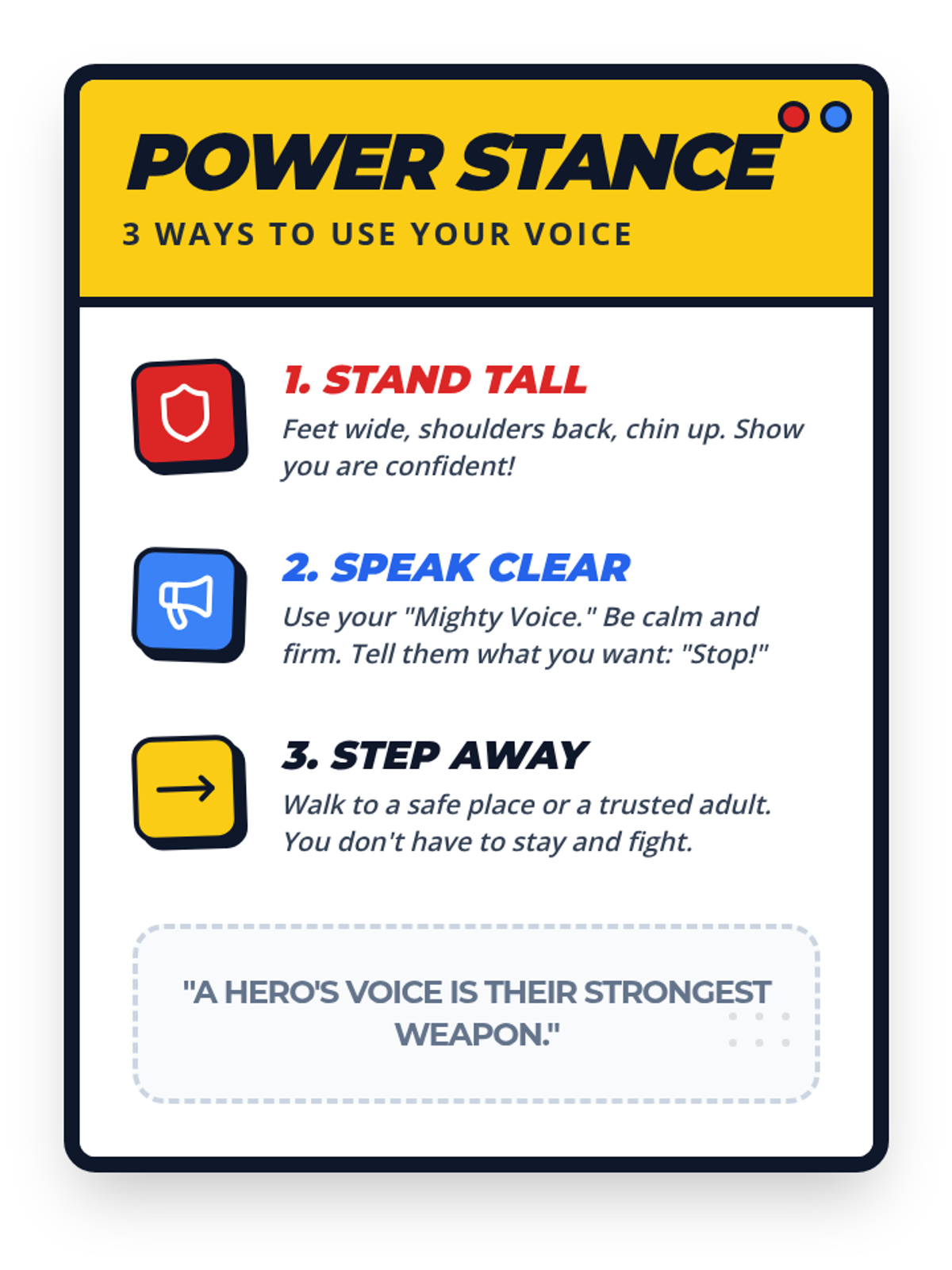
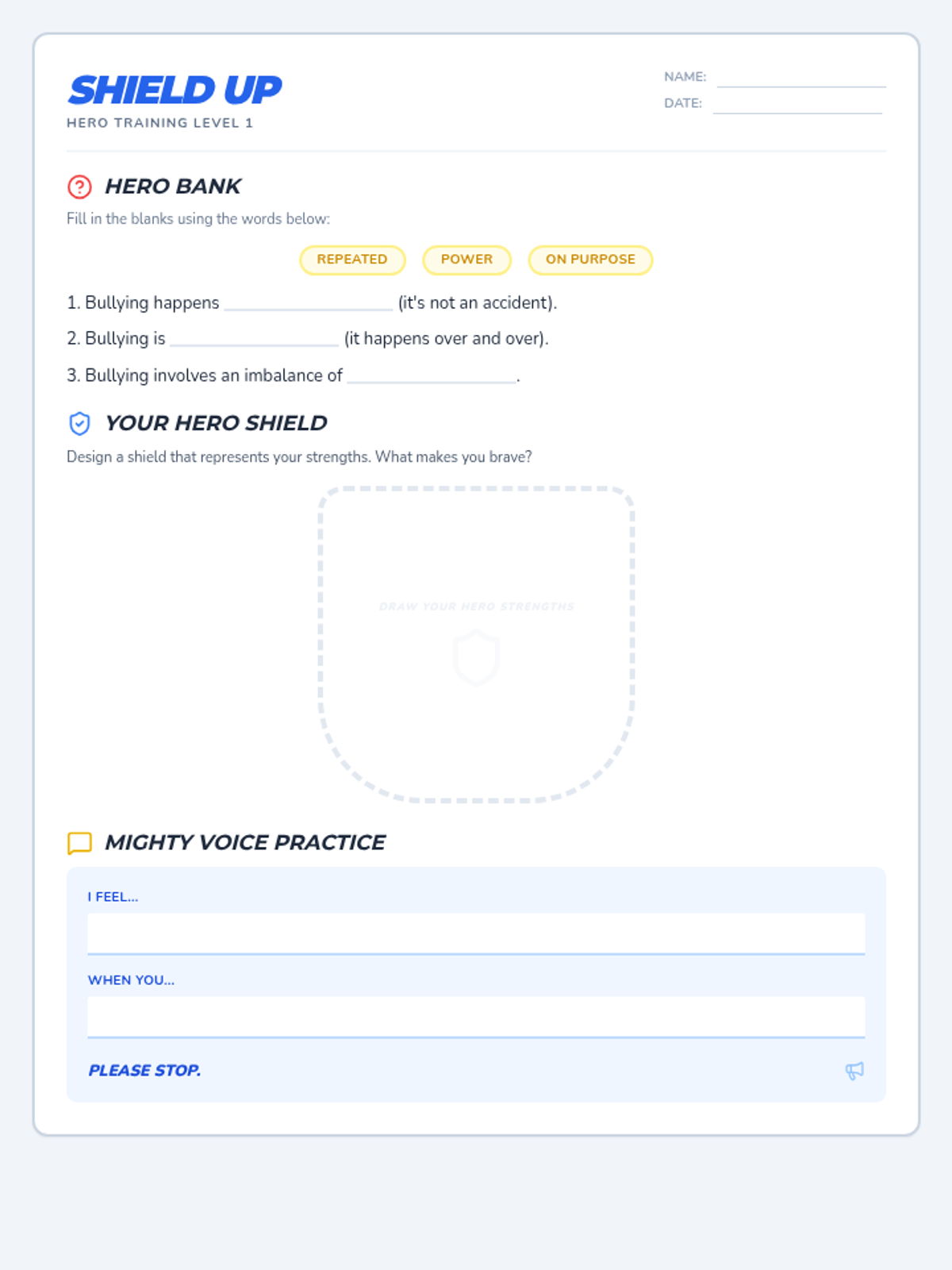
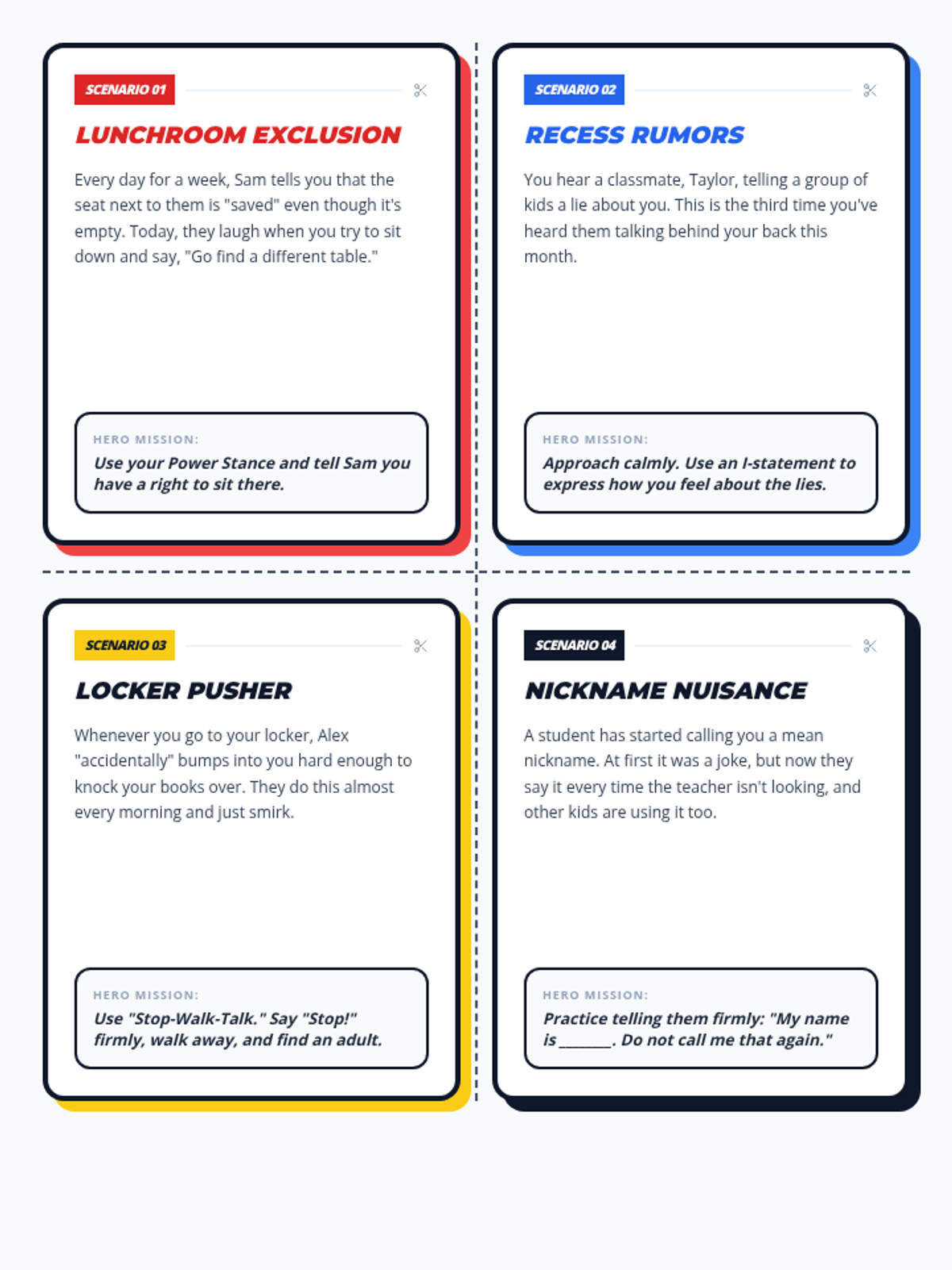
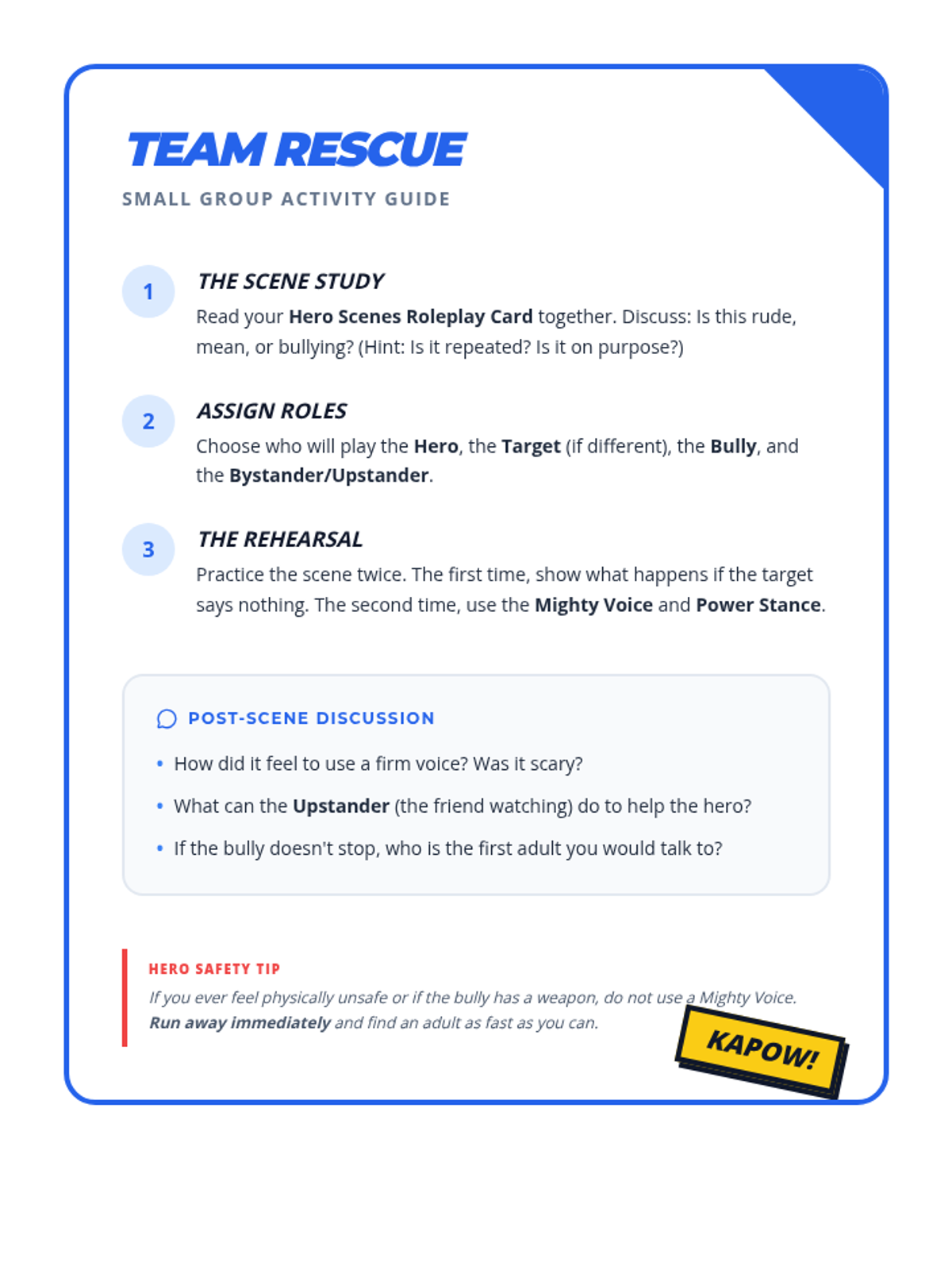
A comprehensive lesson designed to empower students with assertive communication strategies to stand up against bullying. Through roleplay, reflection, and visual aids, students learn to use their 'mighty voice' and 'hero shield' to handle challenging social situations.
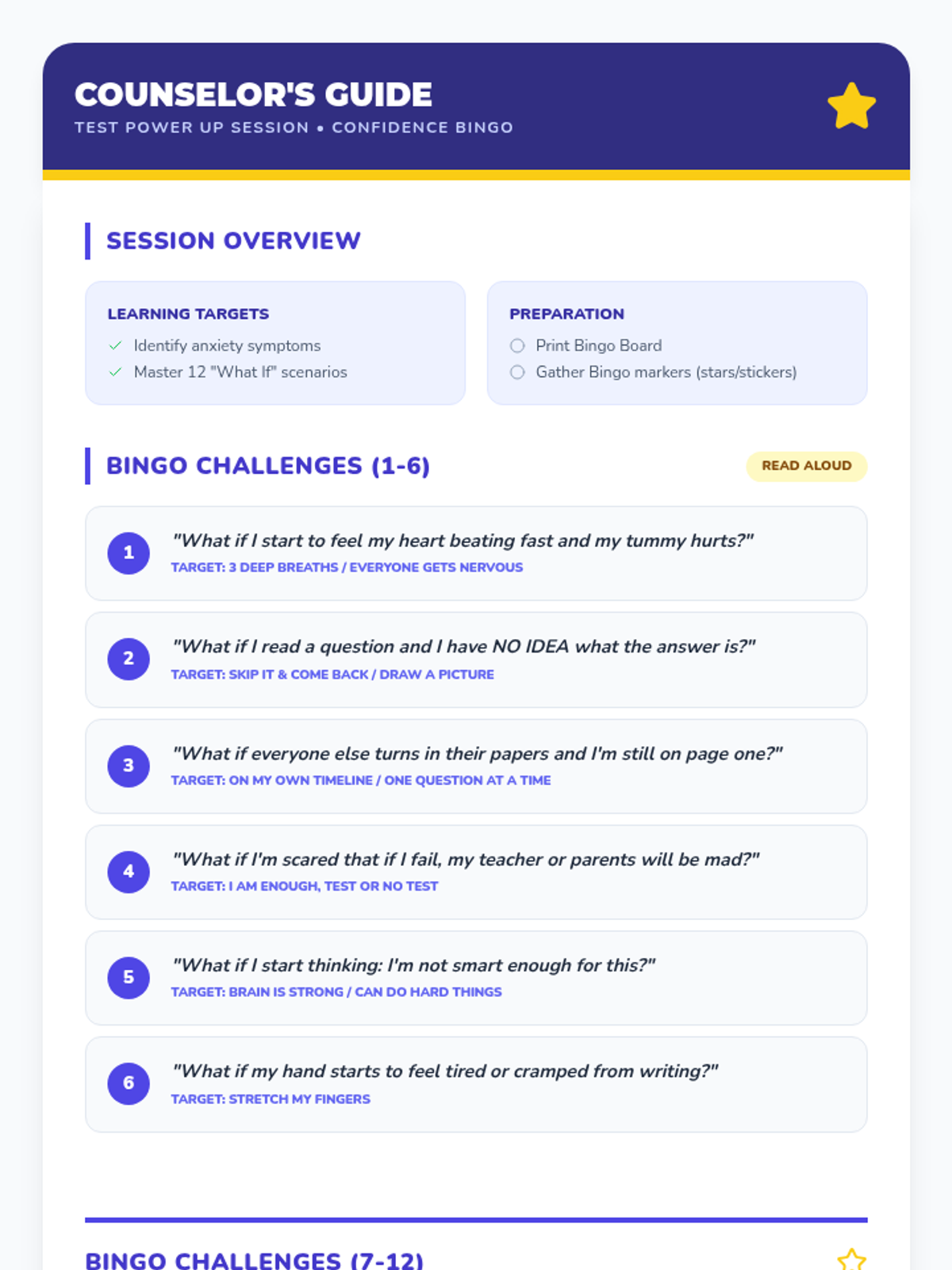
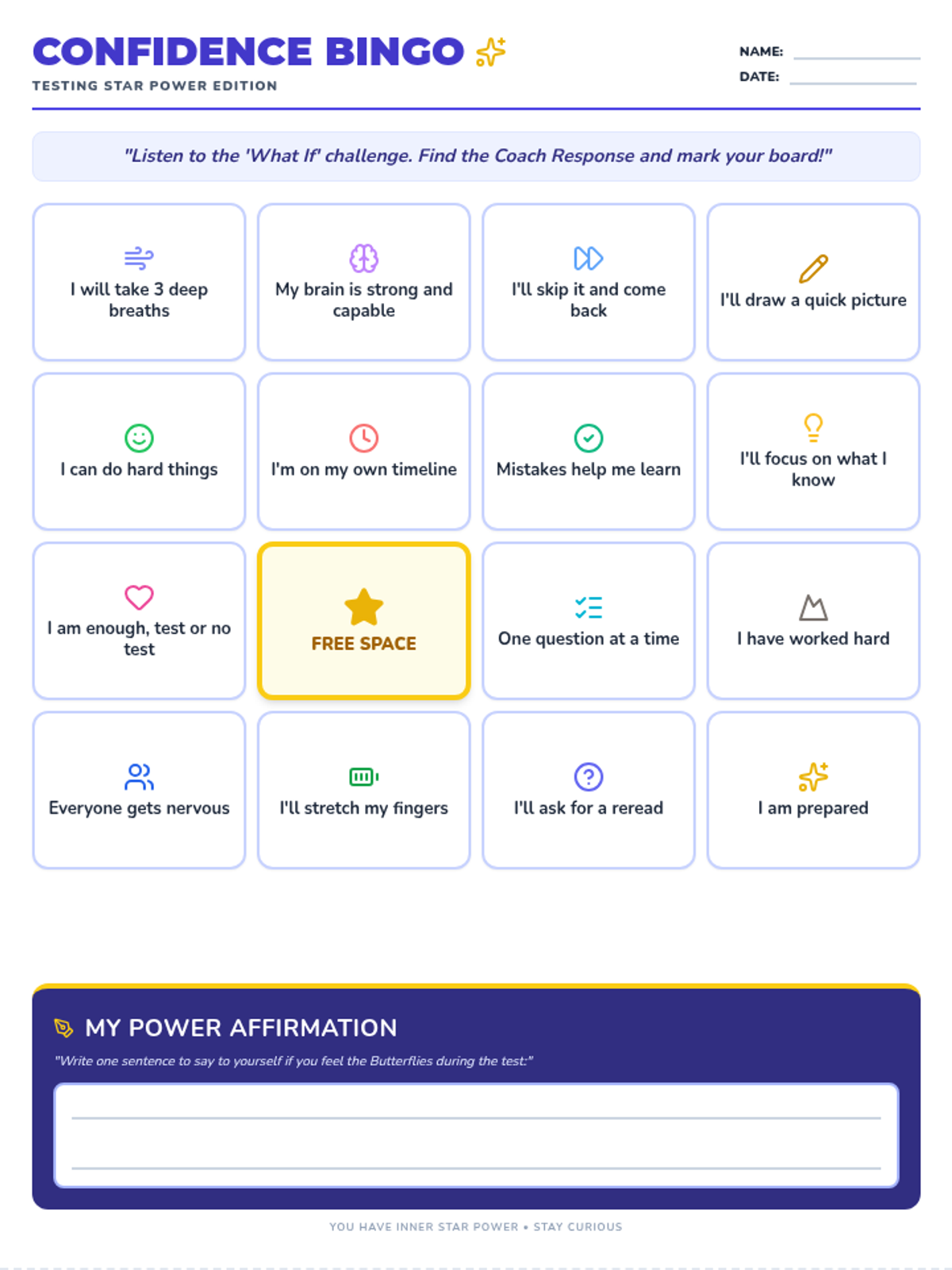
An individual counseling session focused on equipping a 3rd-grade student with tools to manage test anxiety through positive self-talk and proactive problem-solving.
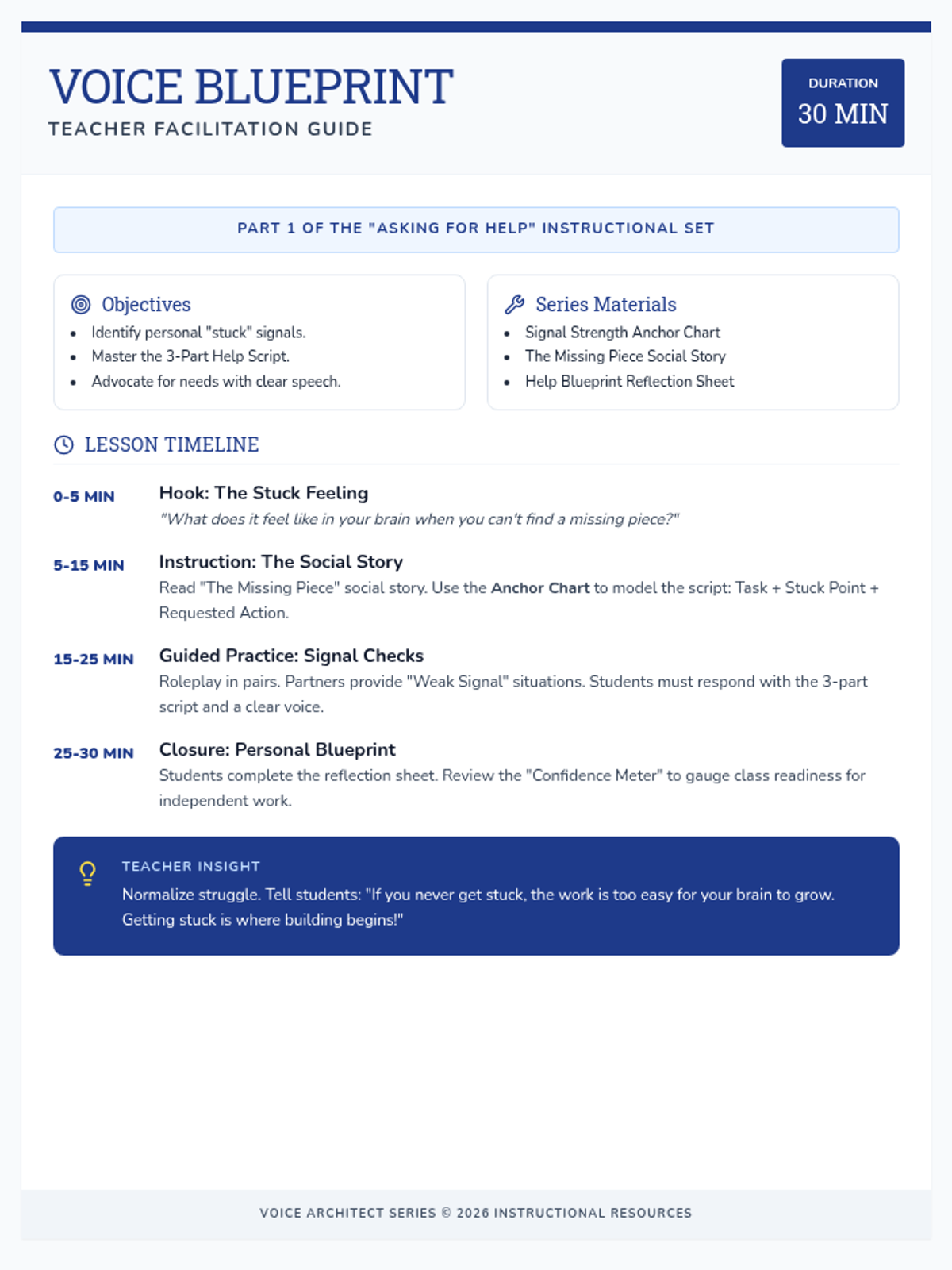
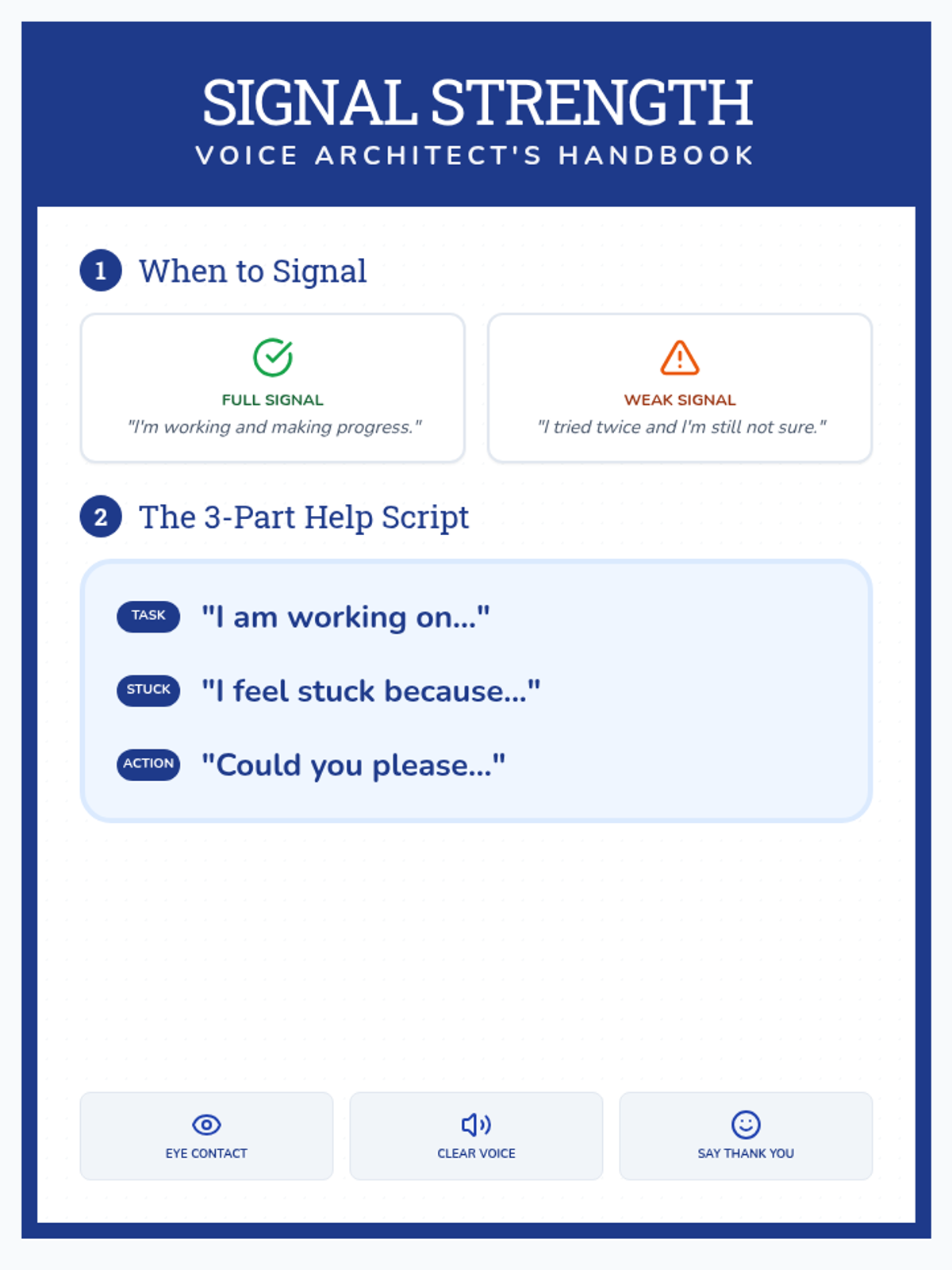
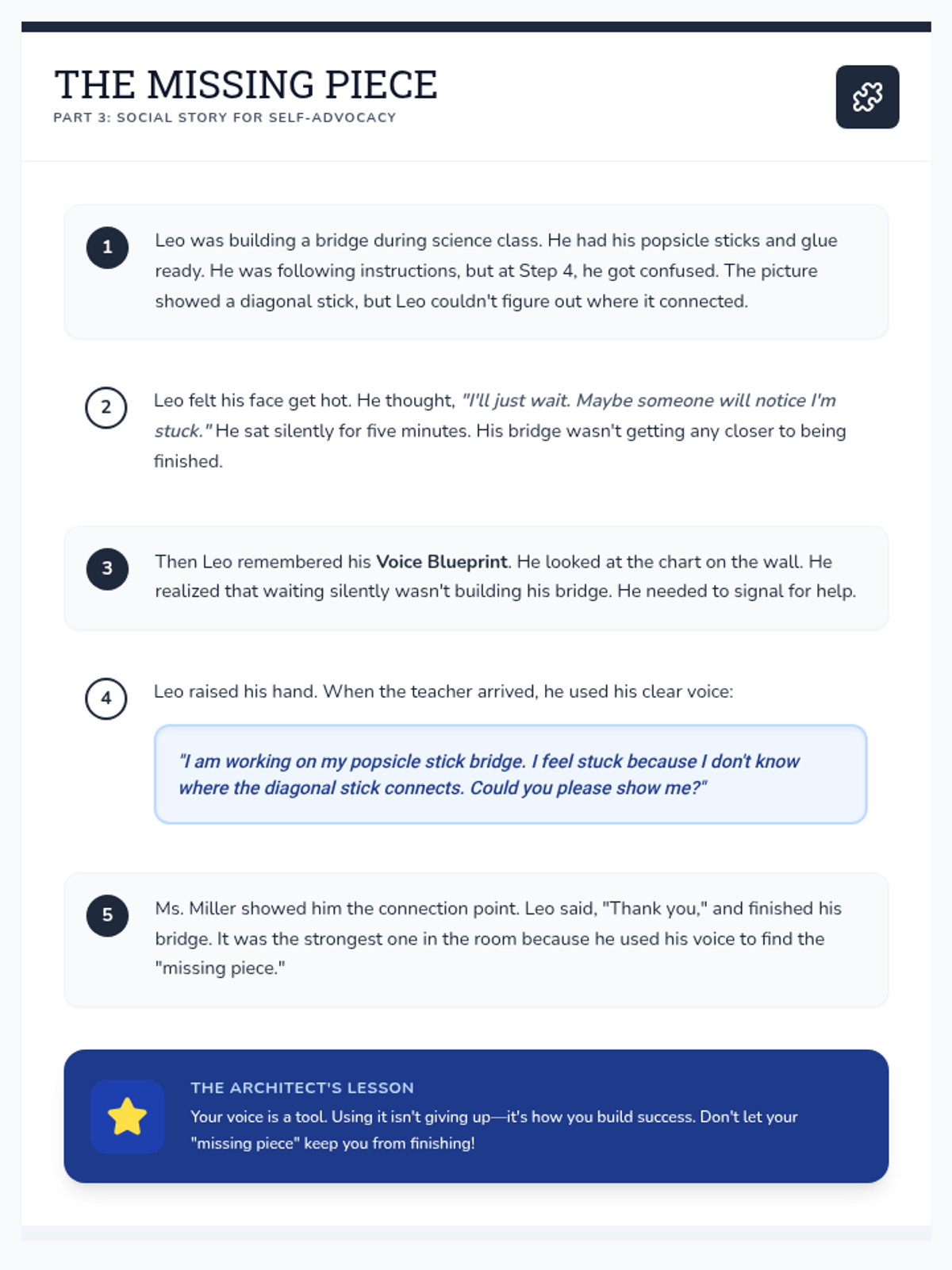
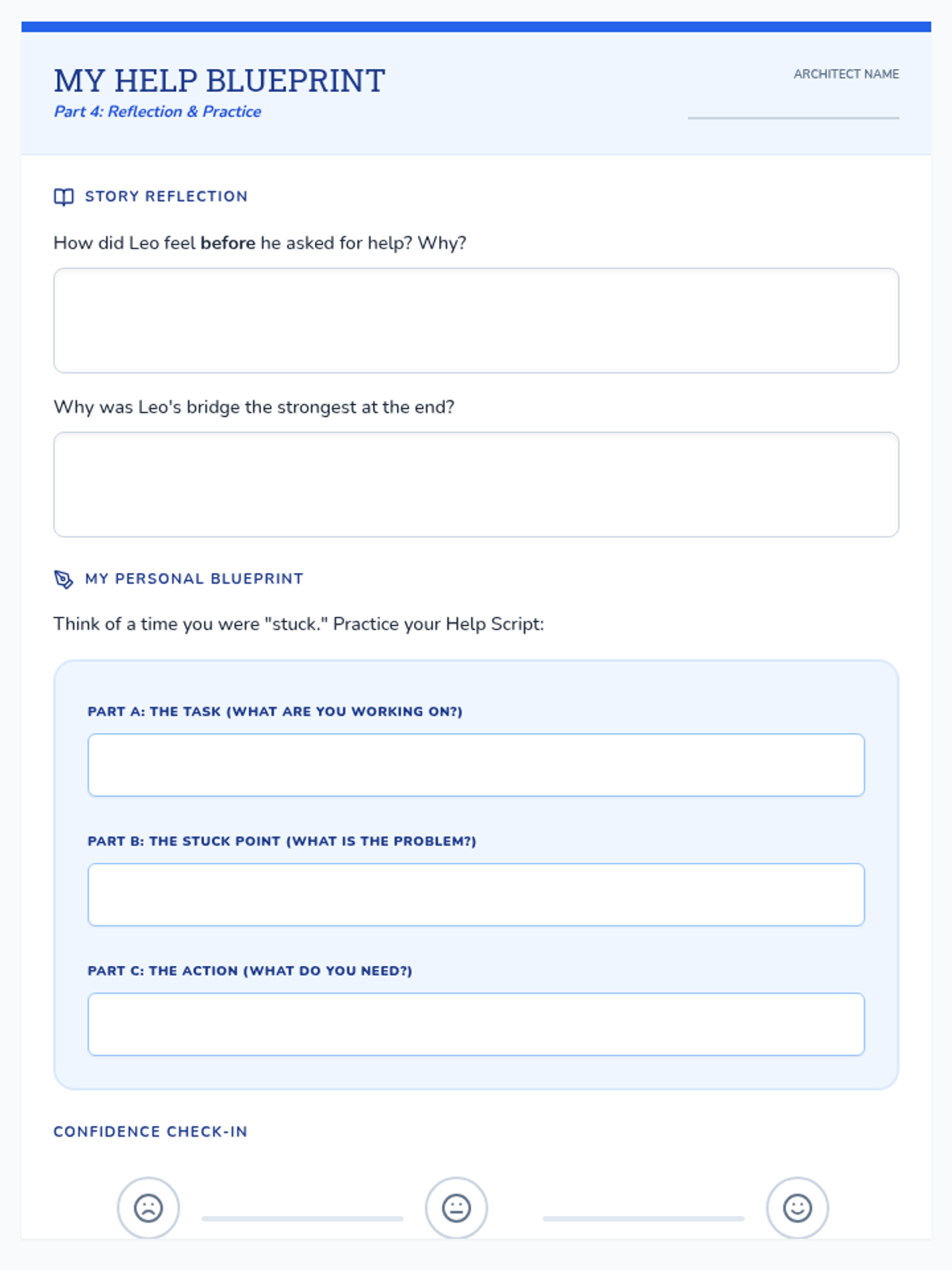
A comprehensive 30-minute lesson on self-advocacy focusing on the skill of asking for help, including modeling, guided practice, and reflection.
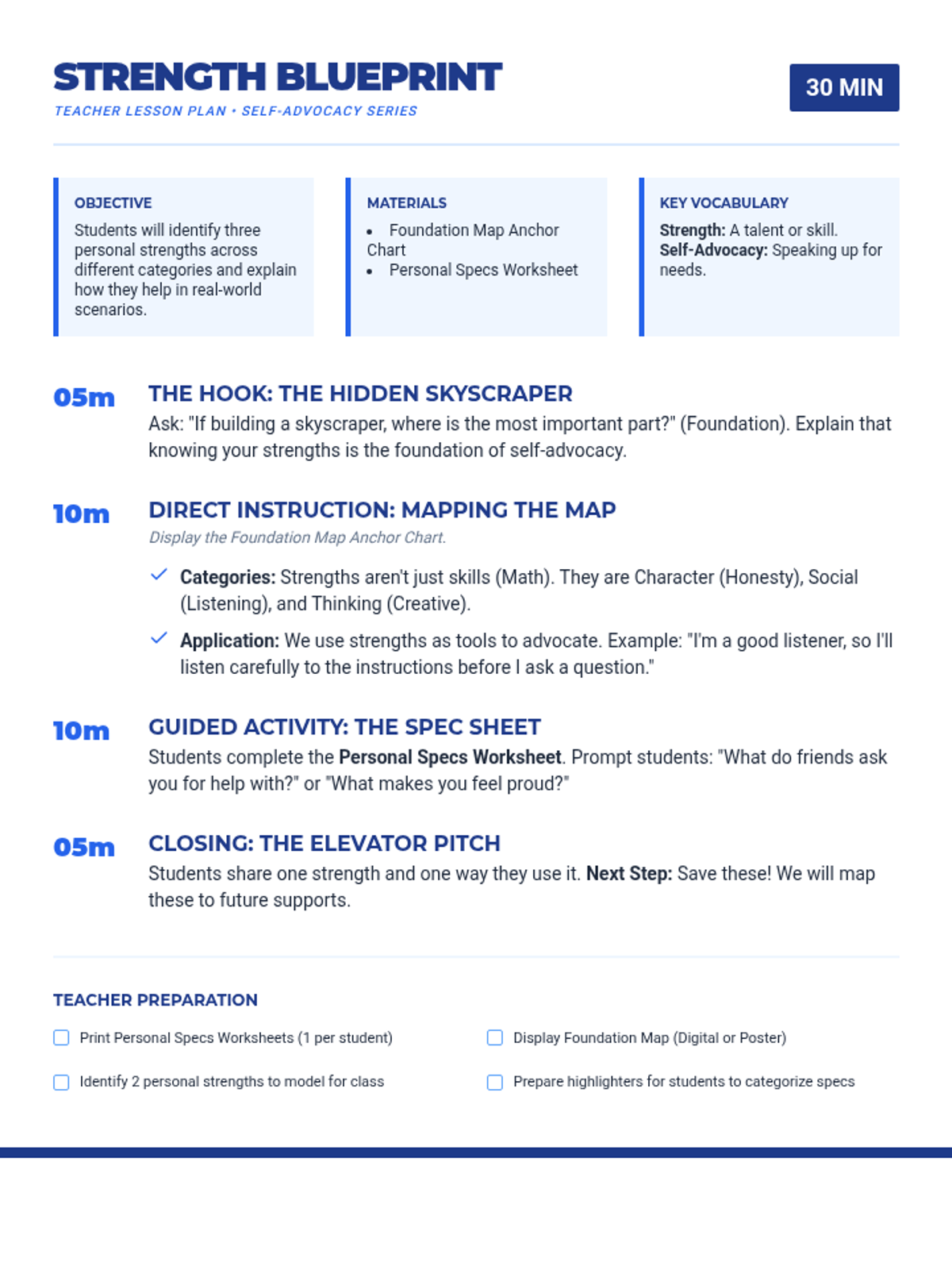
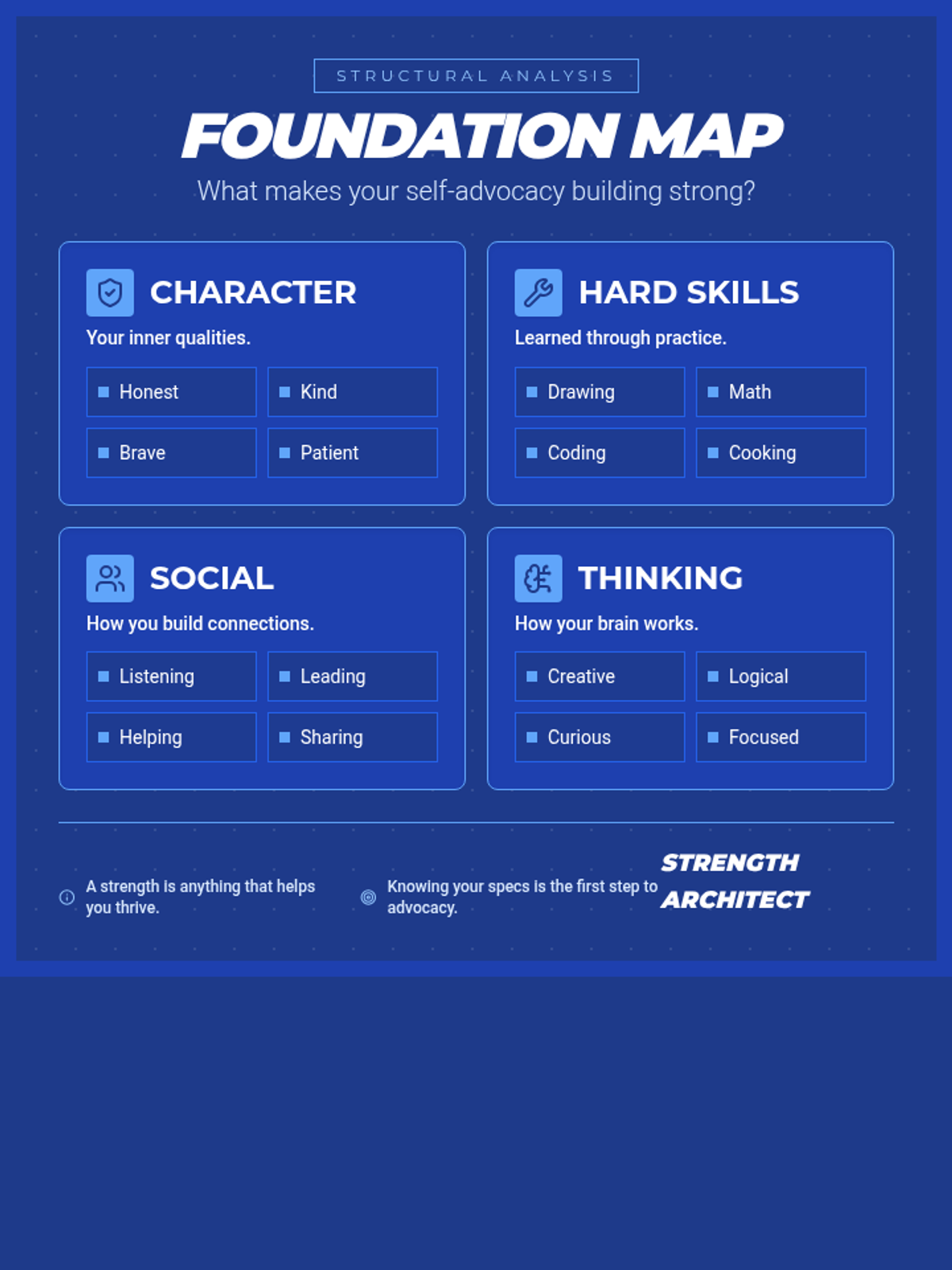
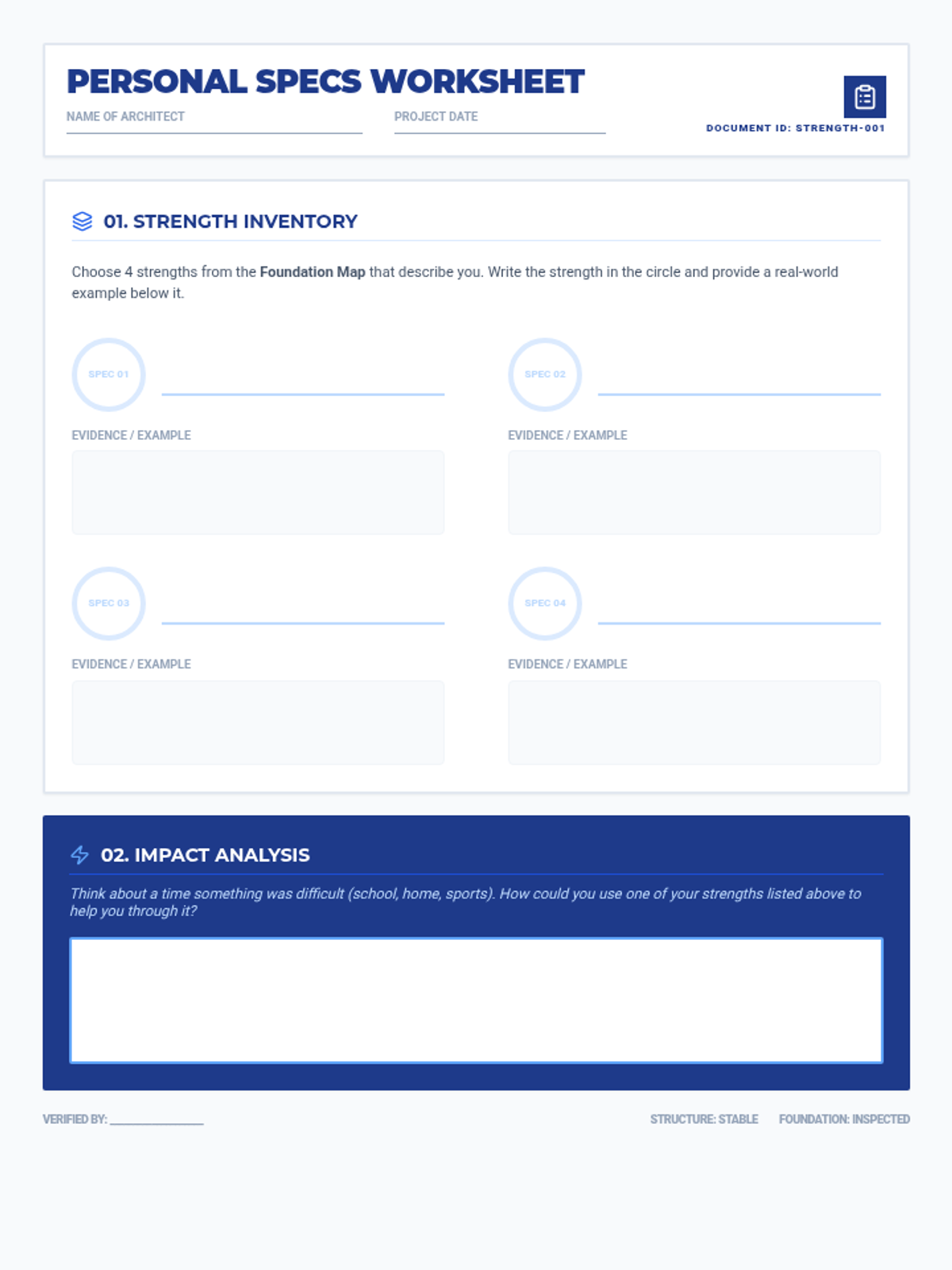
A 30-minute lesson focused on helping students identify their unique personal strengths as a foundation for self-advocacy. Students explore various categories of strengths and map them to their daily lives.
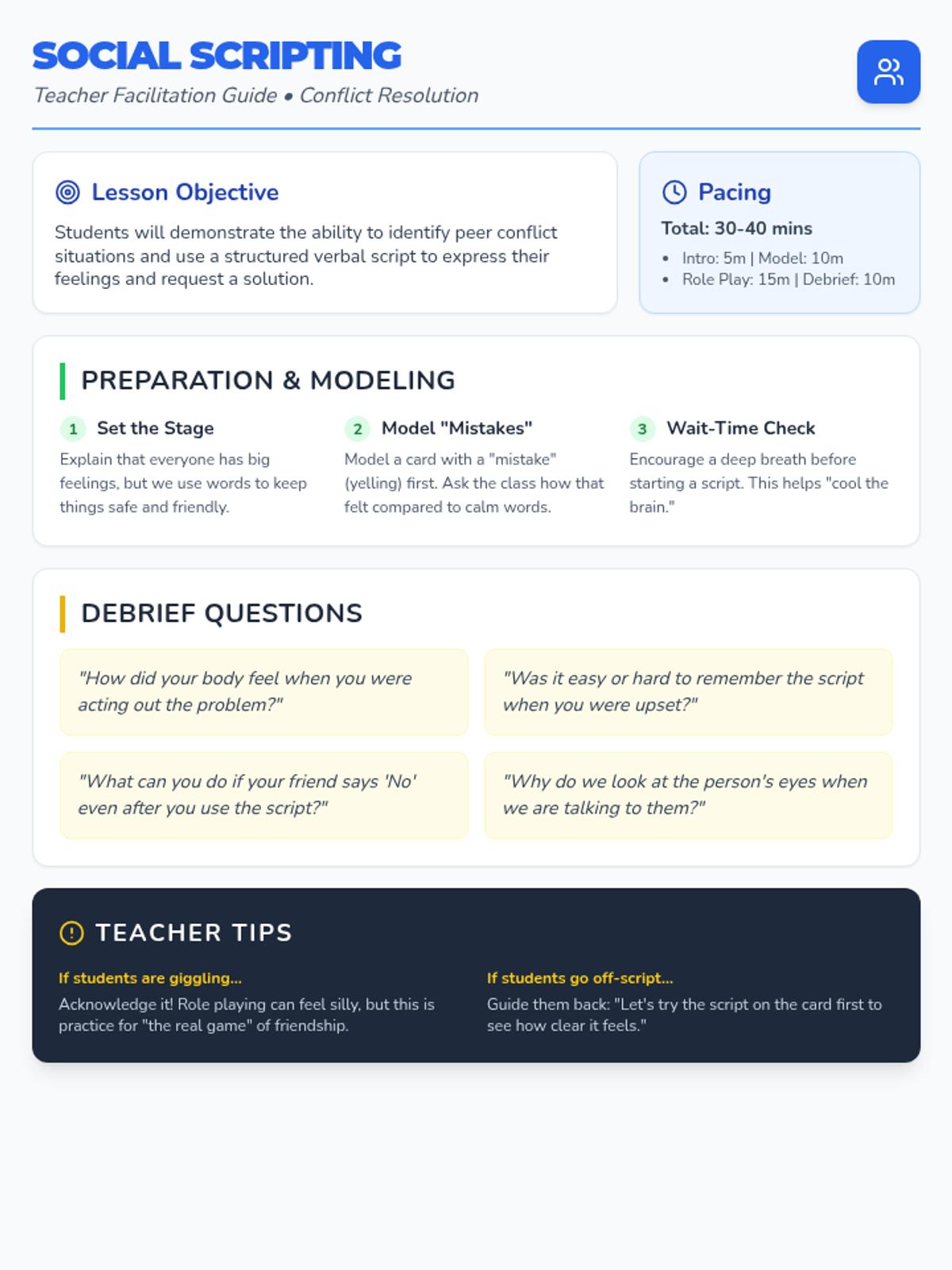
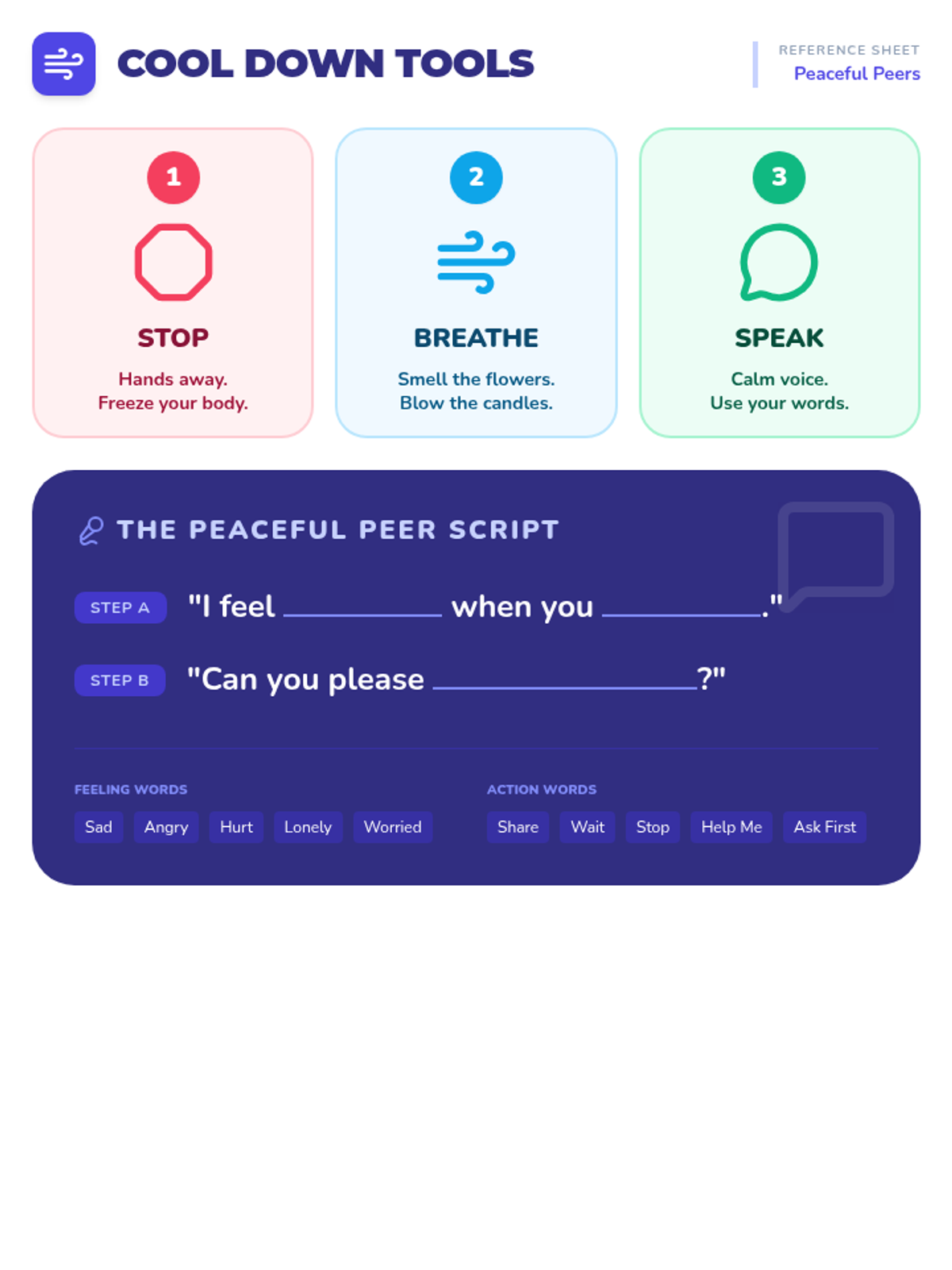
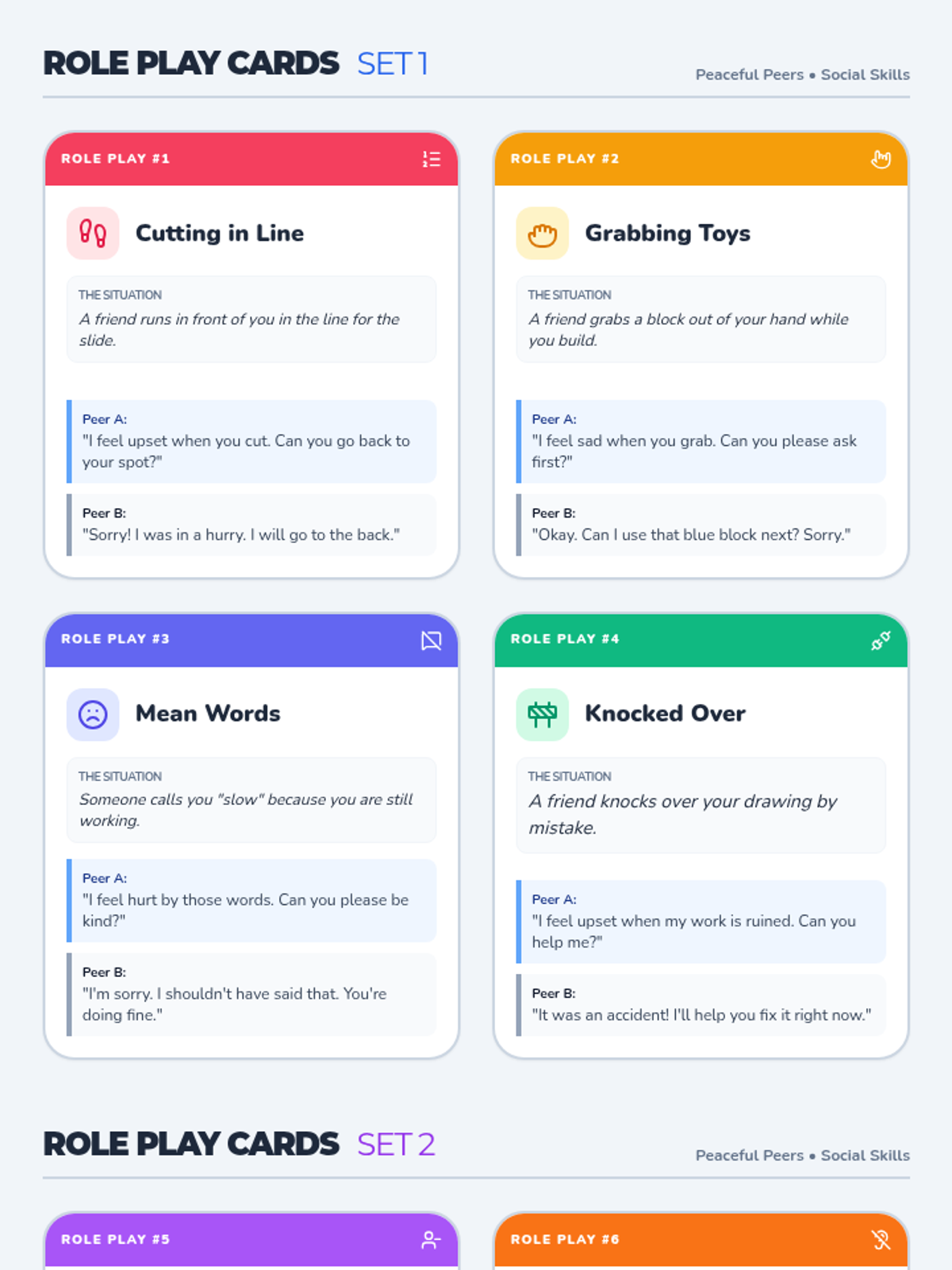
A hands-on lesson teaching students how to navigate peer conflicts using simple scripts and visual cues. Students practice empathy and problem-solving through structured role-play scenarios.
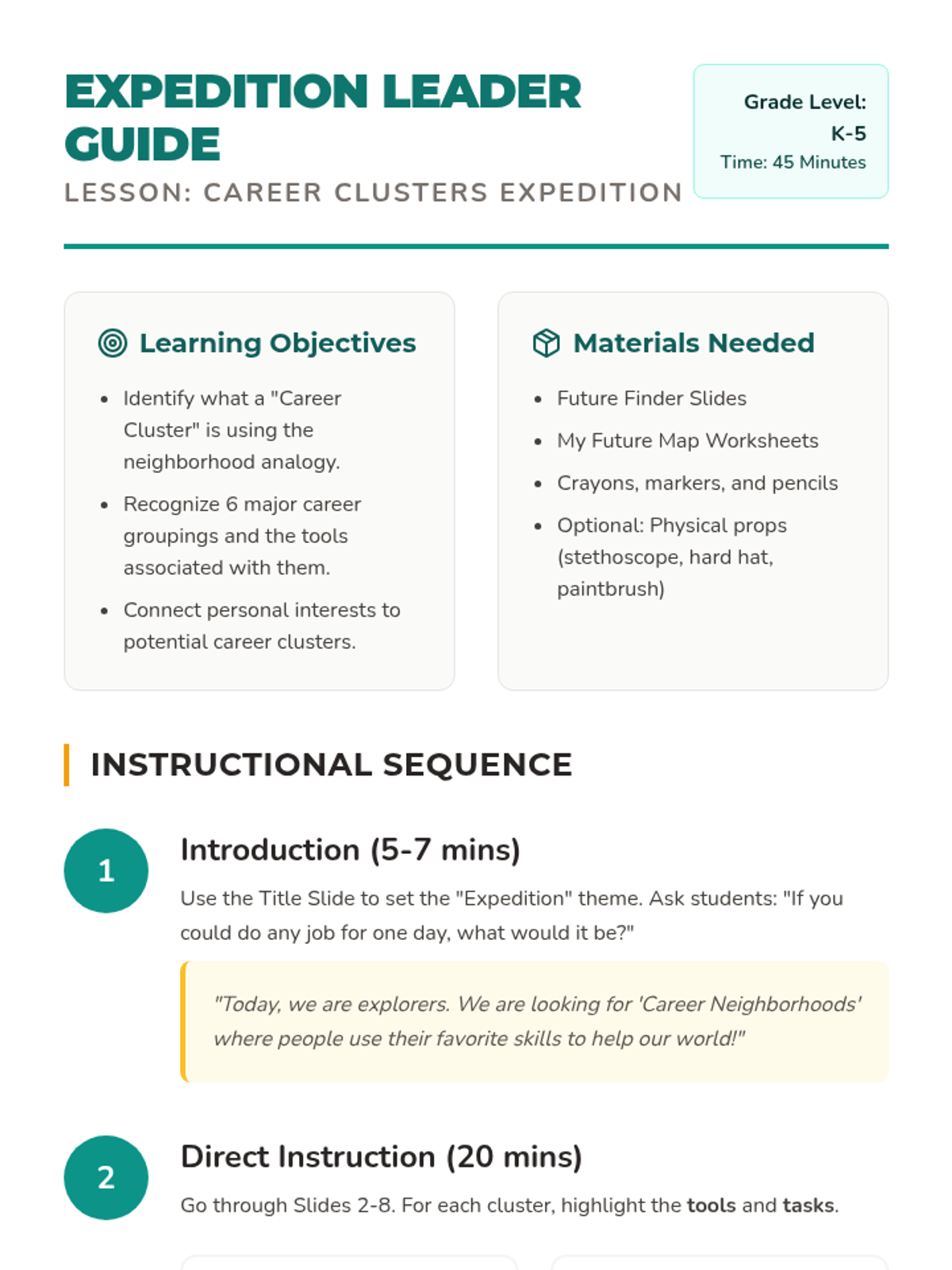
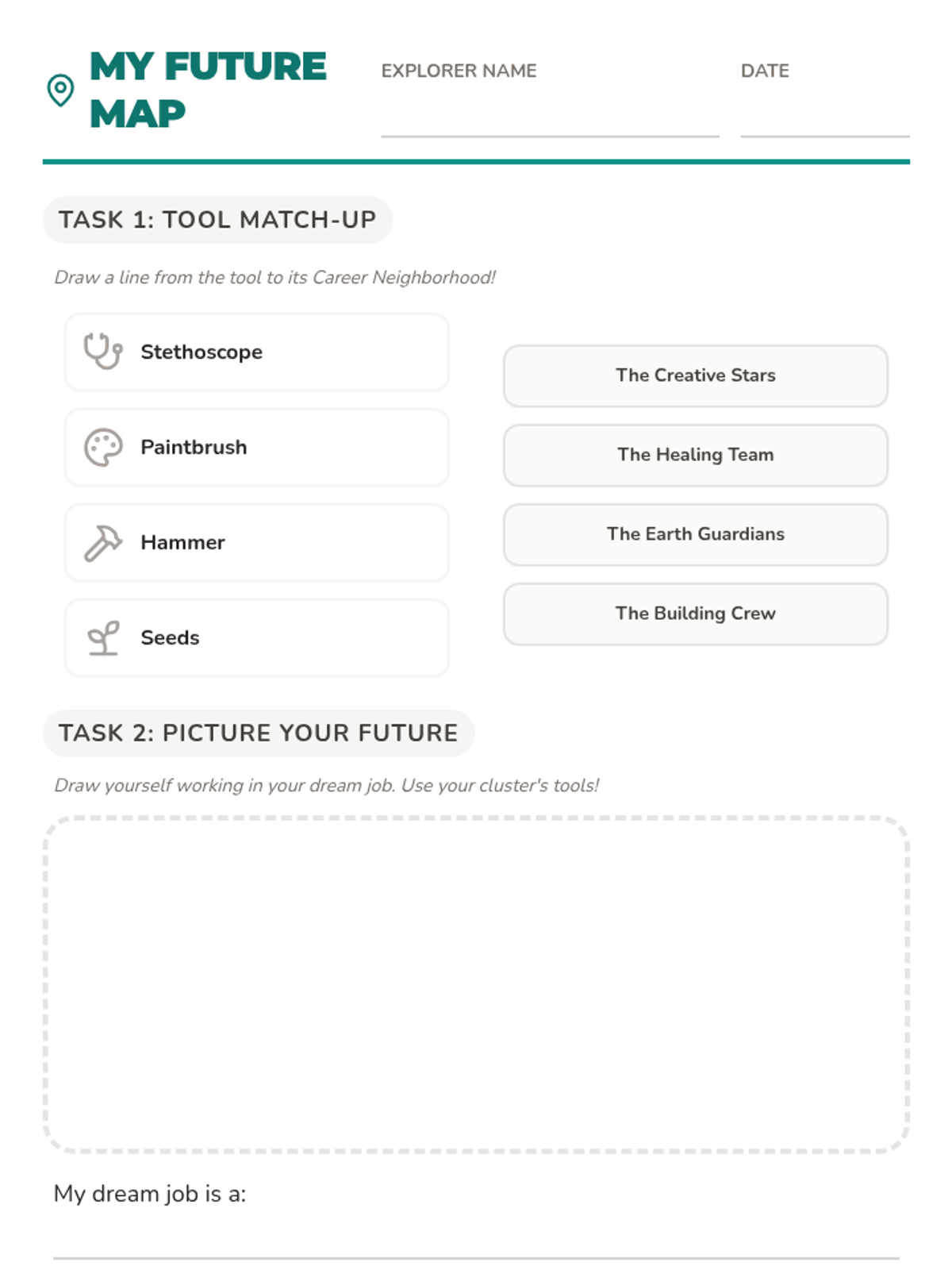
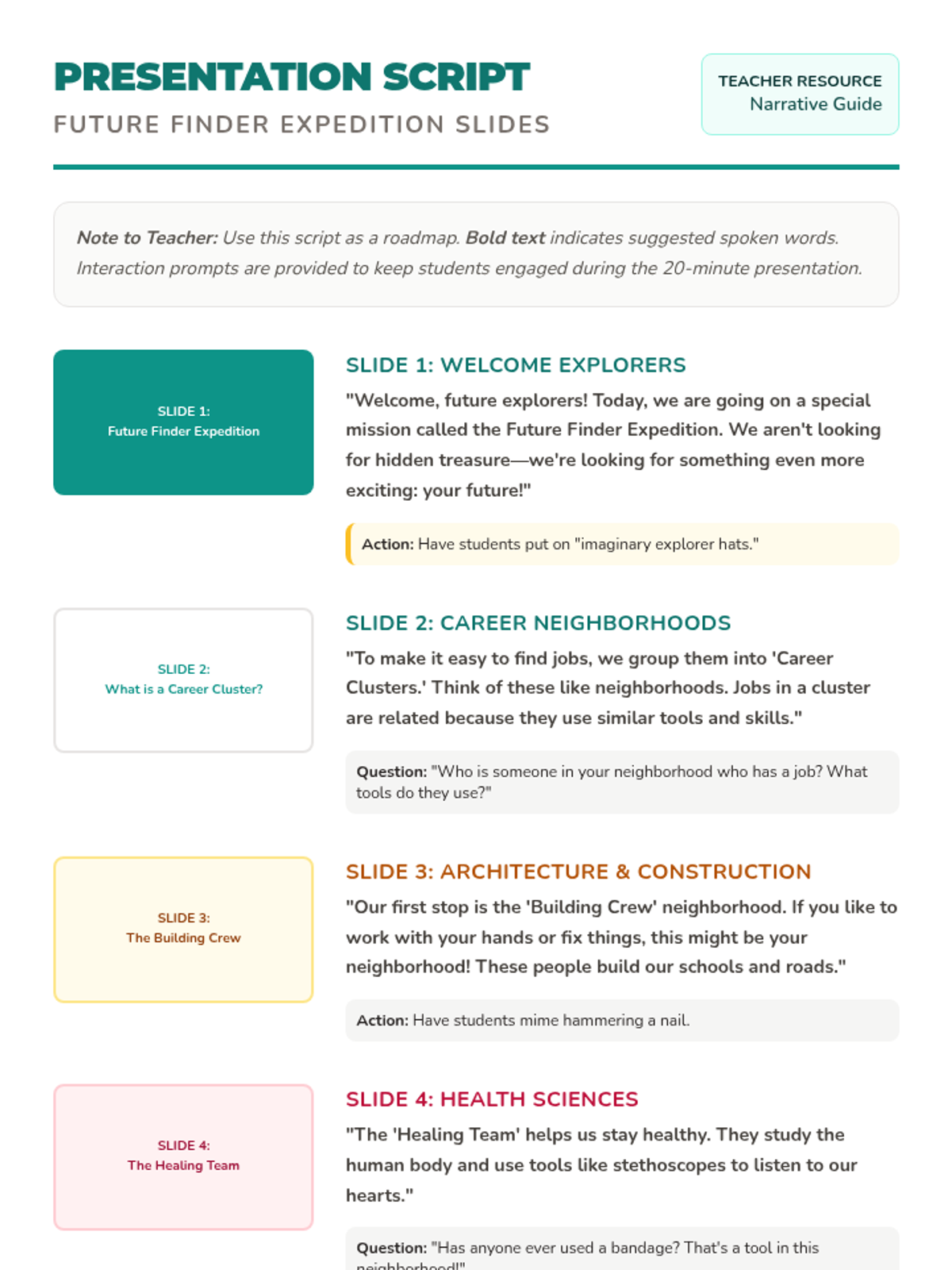
An introductory lesson on career clusters designed for elementary students, focusing on grouping interests and skills into career 'neighborhoods'.
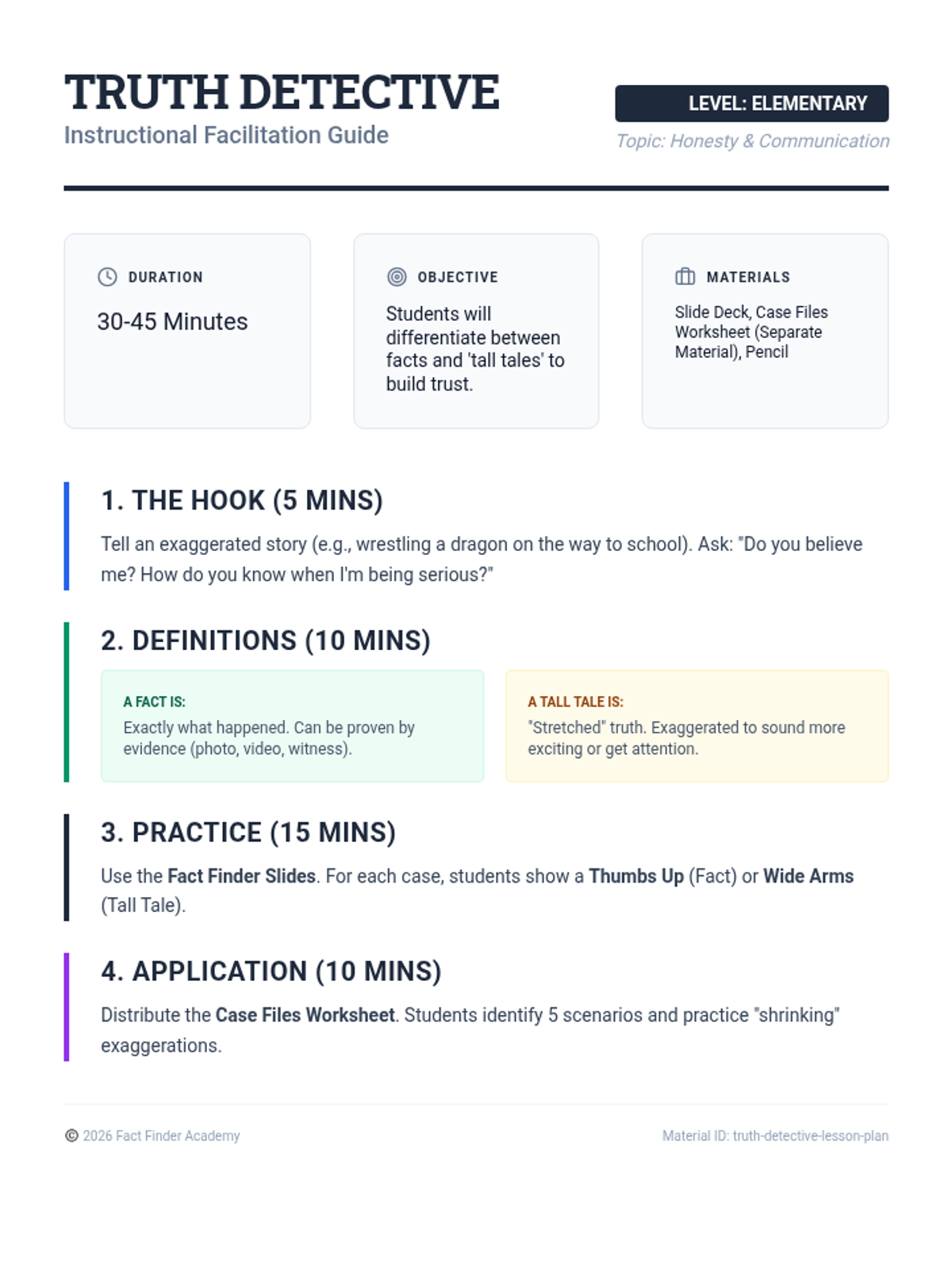
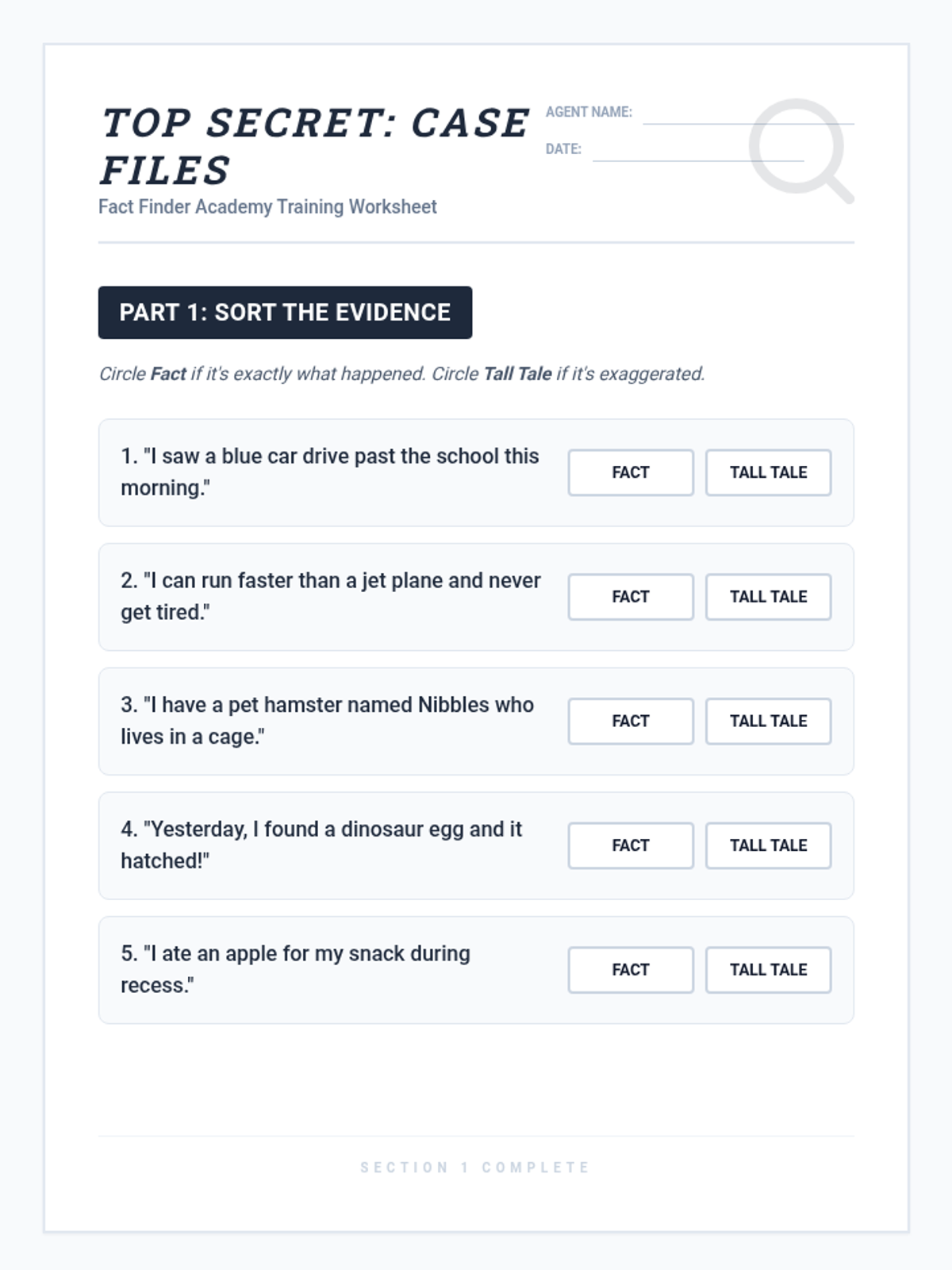
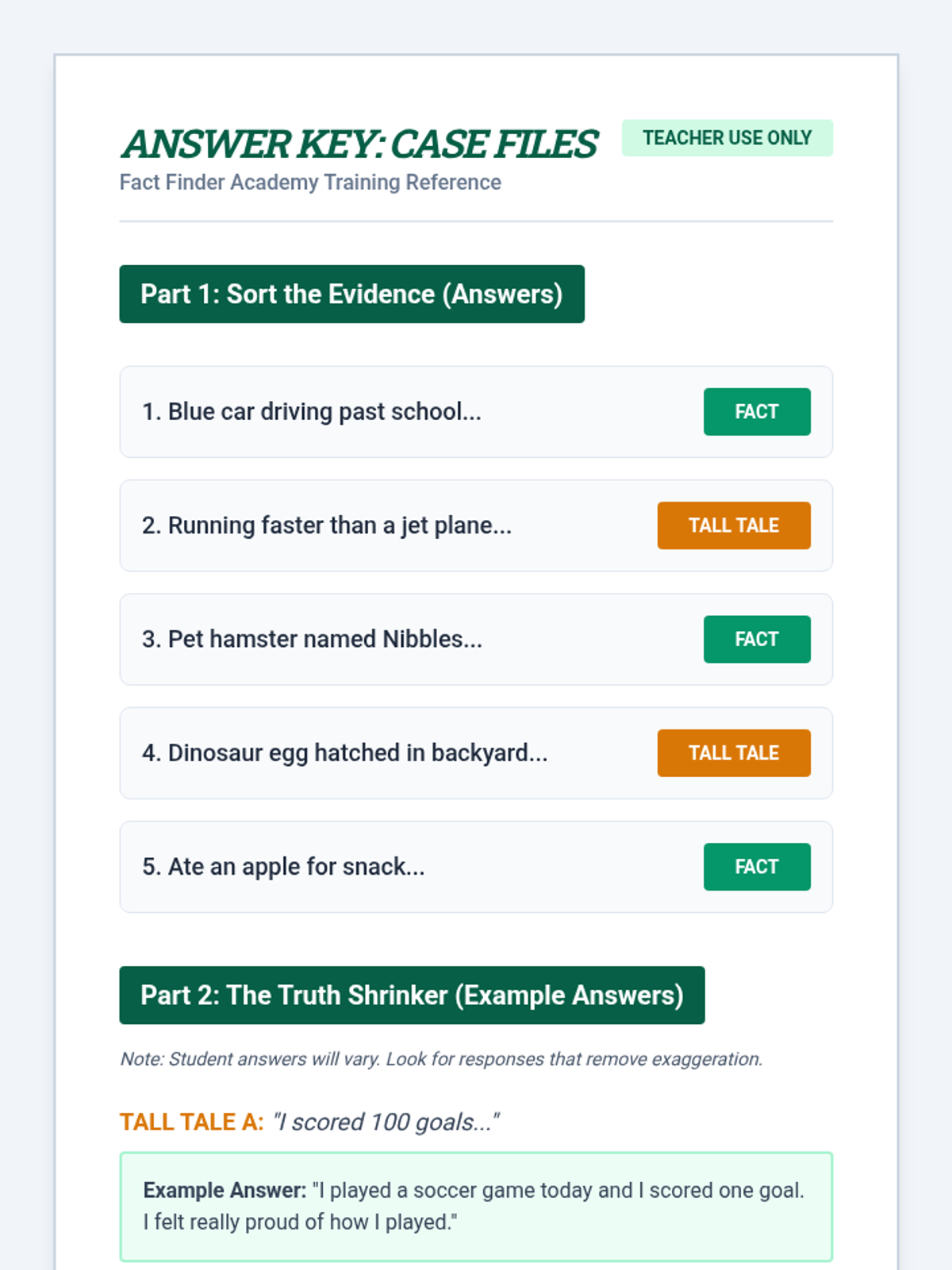
A counseling lesson focused on helping students distinguish between objective facts and exaggerated 'tall tales' to improve communication and honesty.
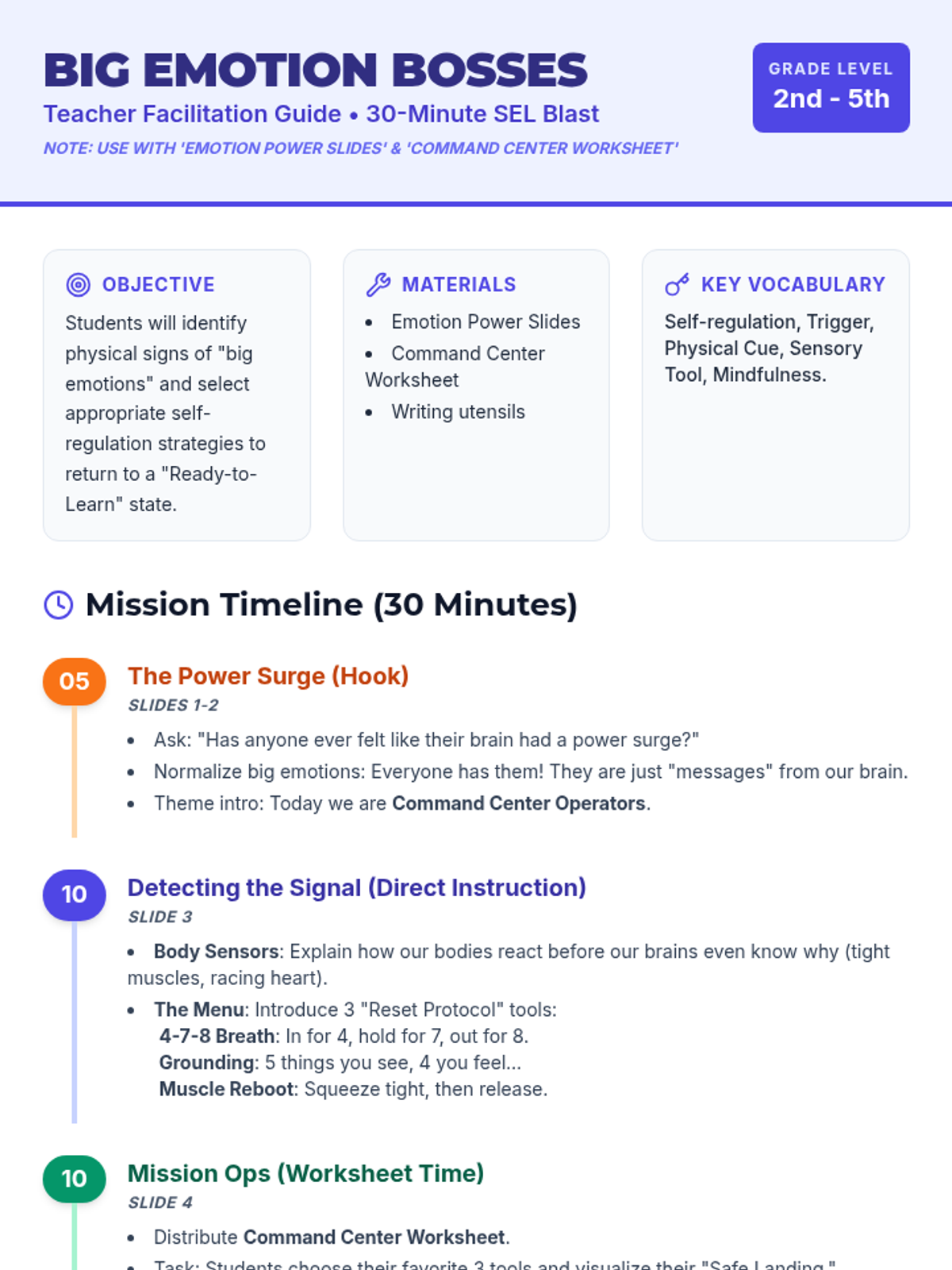
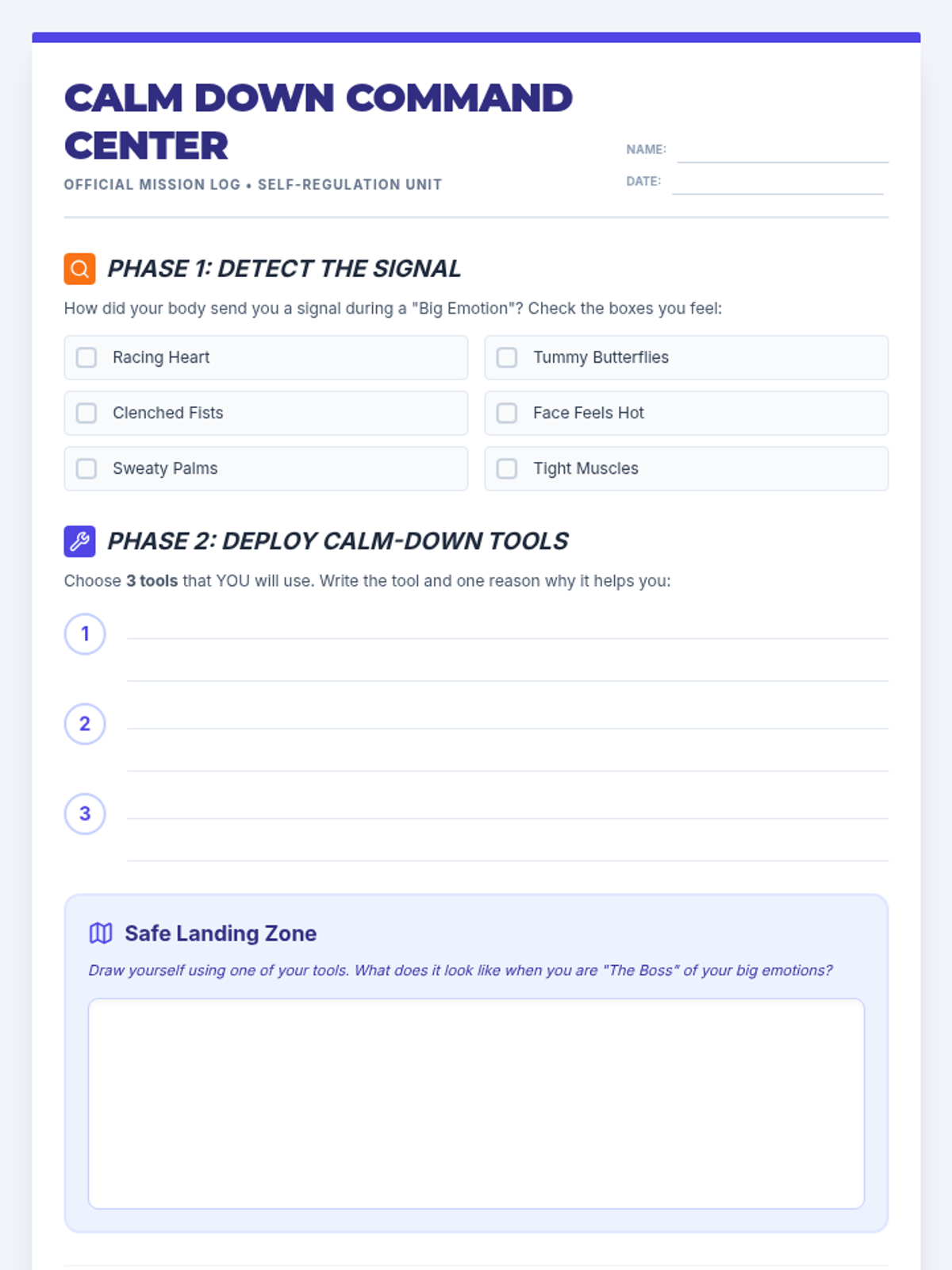
A 30-minute SEL lesson focused on identifying intense emotions and applying self-regulation strategies through a 'Command Center' theme. Students learn to 'detect' their feelings and 'deploy' calming tools.
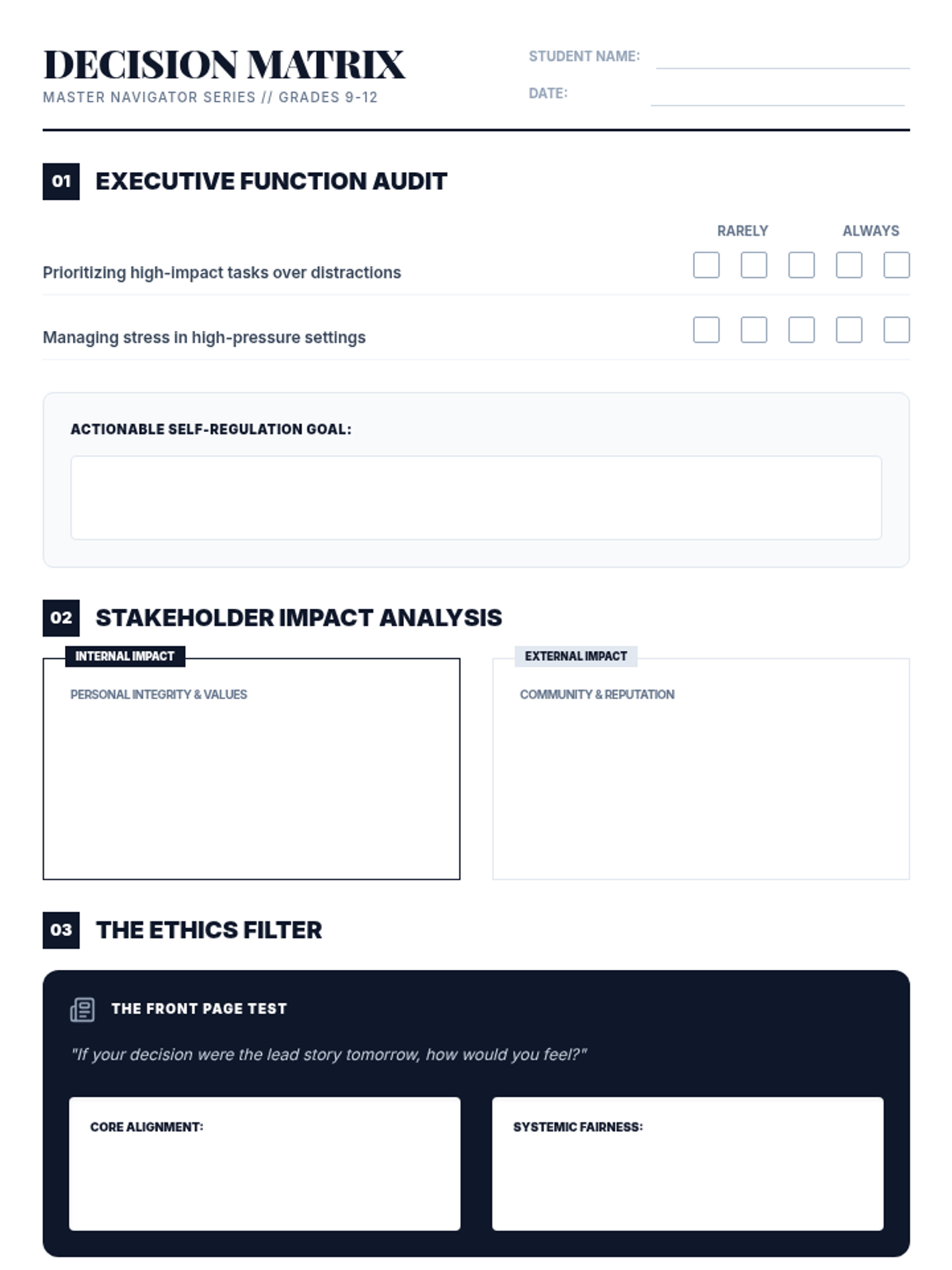
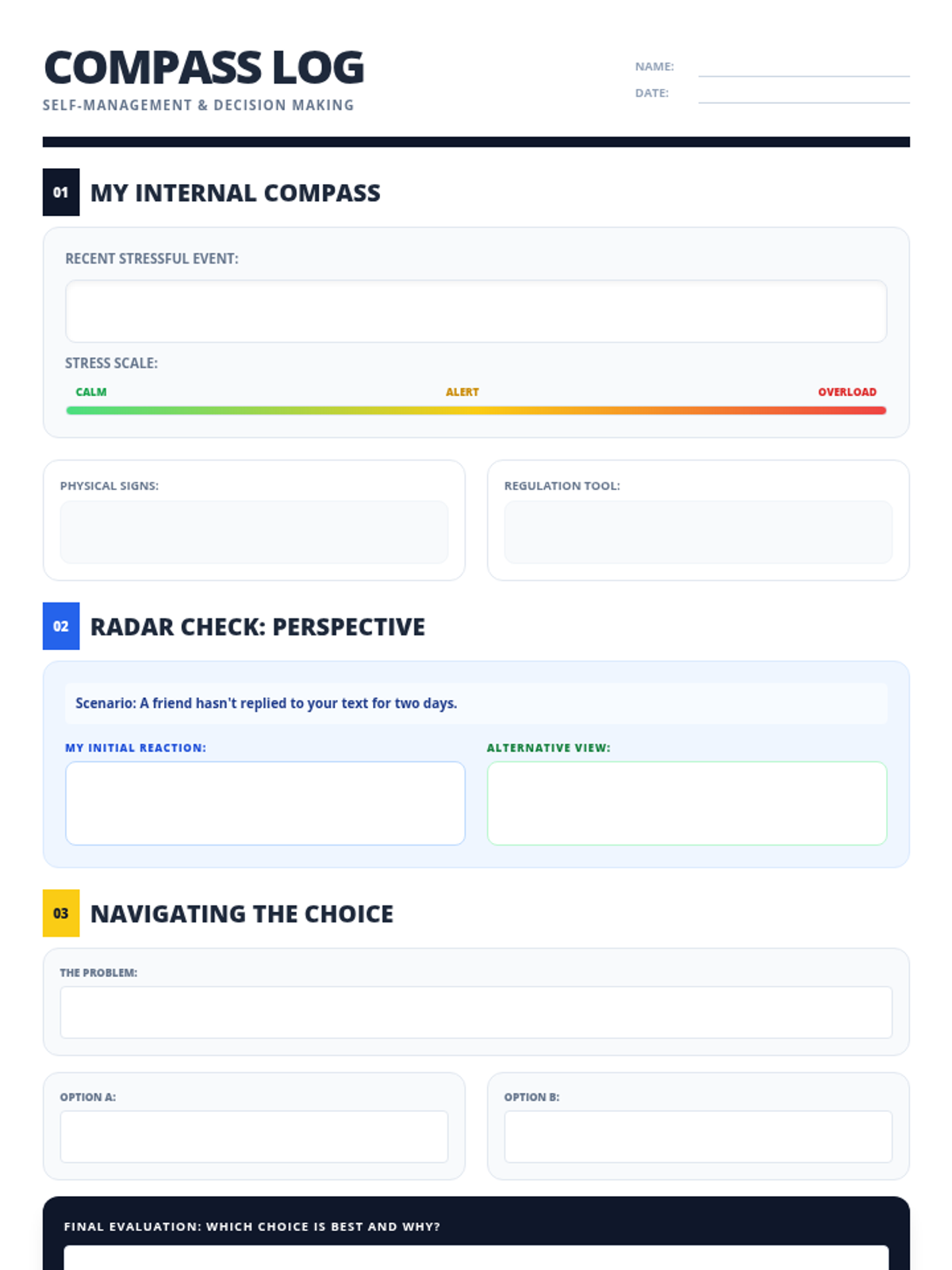
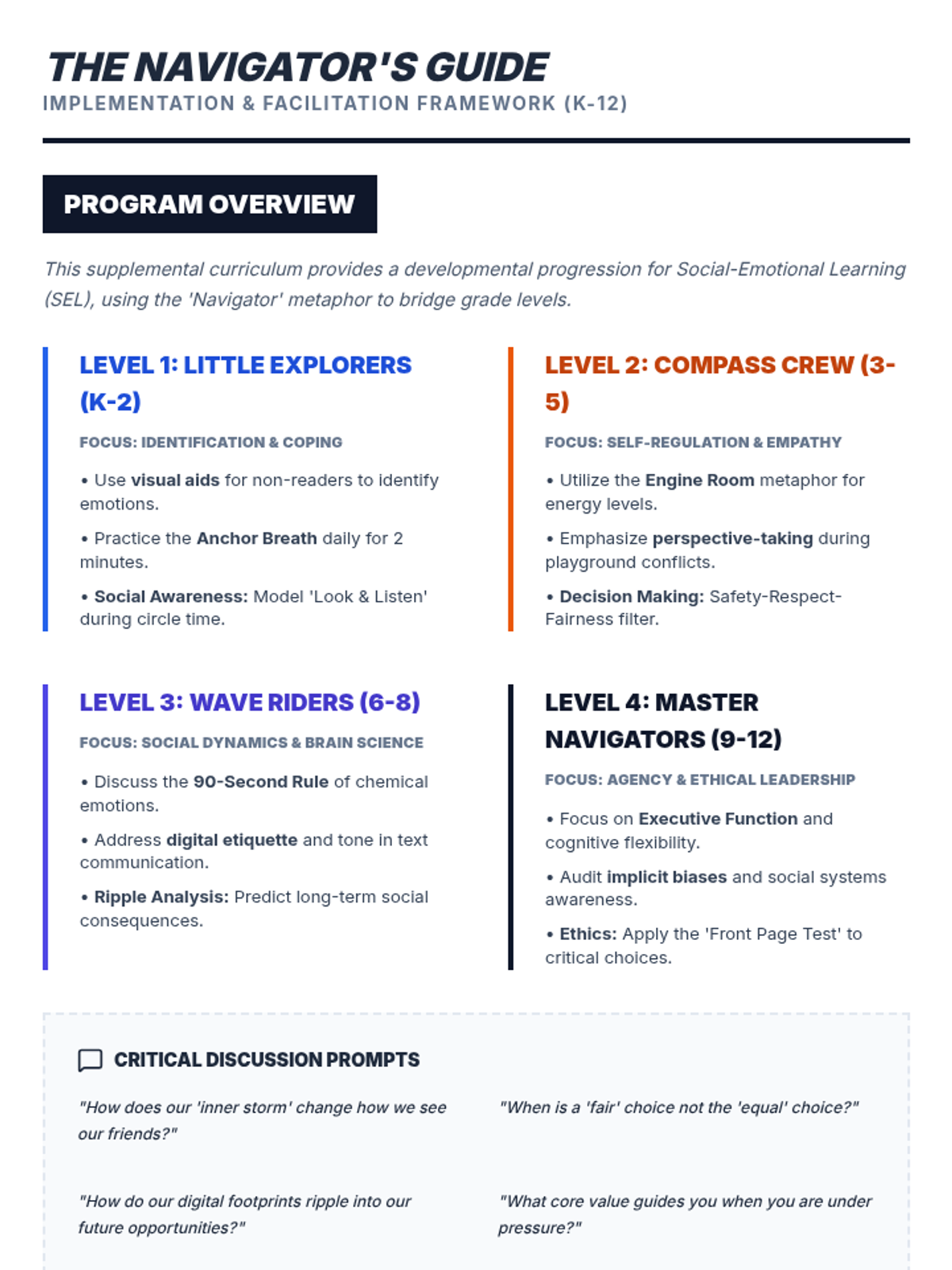
Advanced decision-making and ethical leadership for high school students.
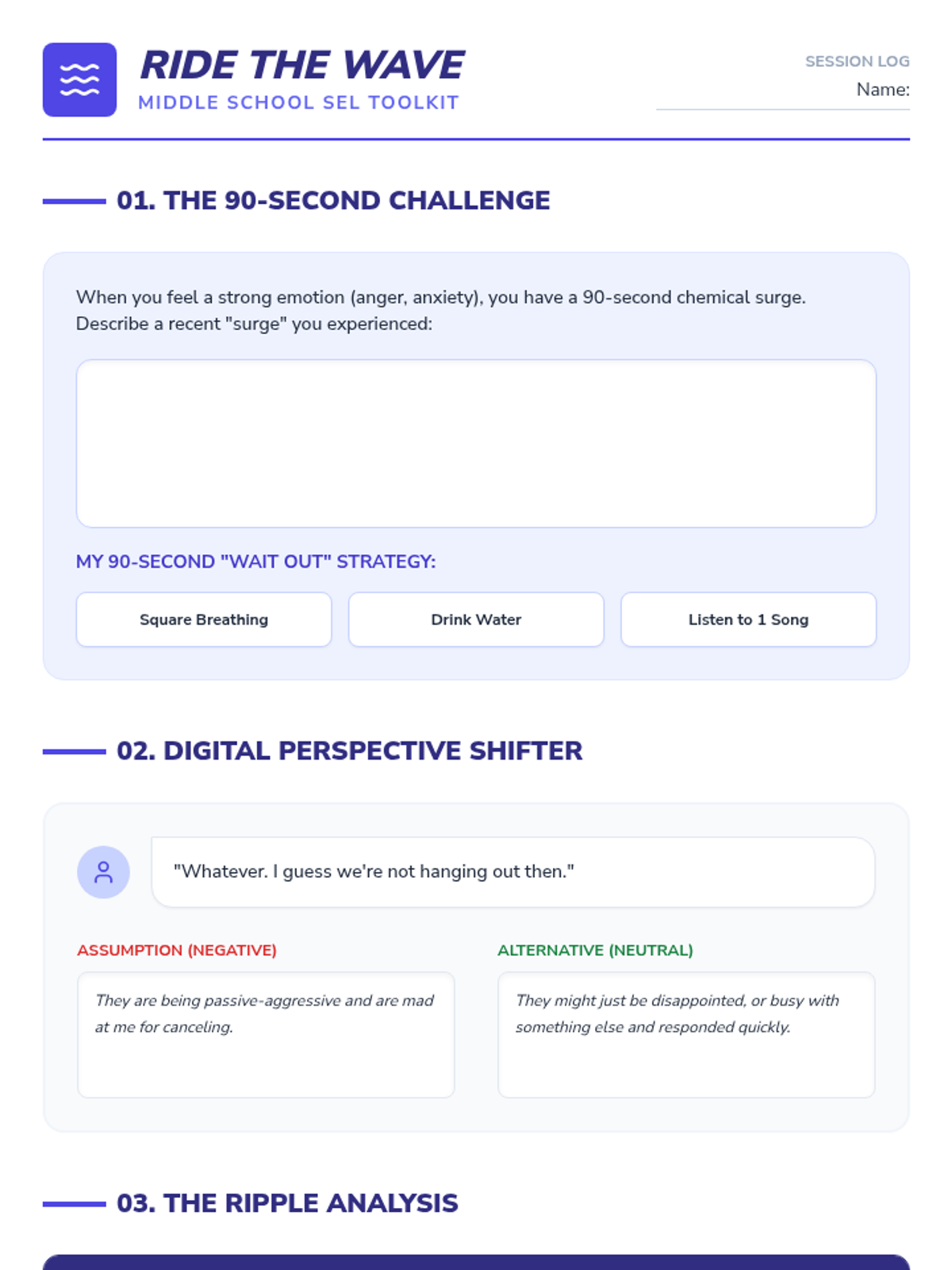
Navigating social dynamics and stress management for middle schoolers.
Developing empathy and self-regulation tools for upper elementary students.
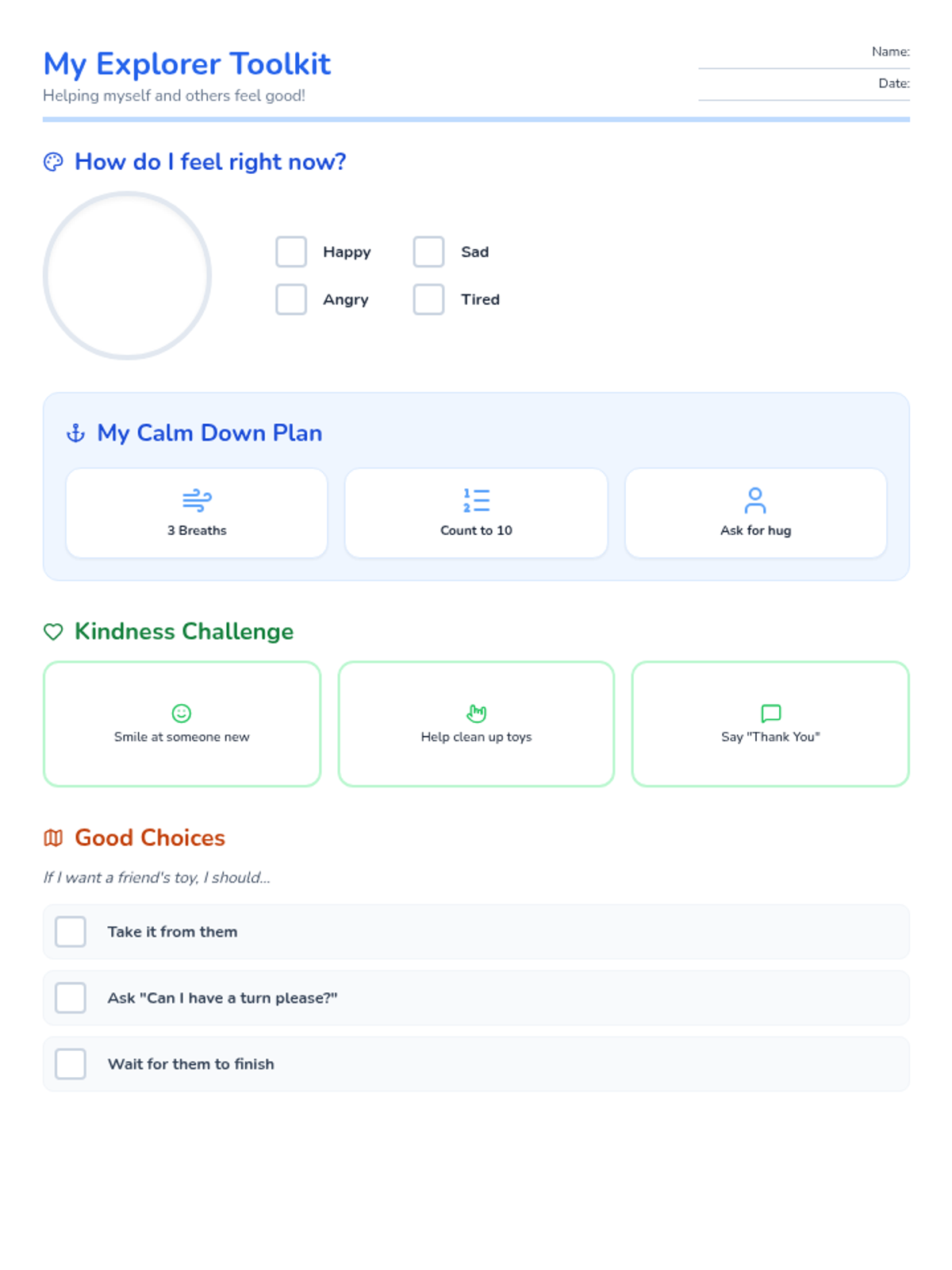
Foundational SEL skills for early learners focusing on identifying feelings and simple coping strategies.
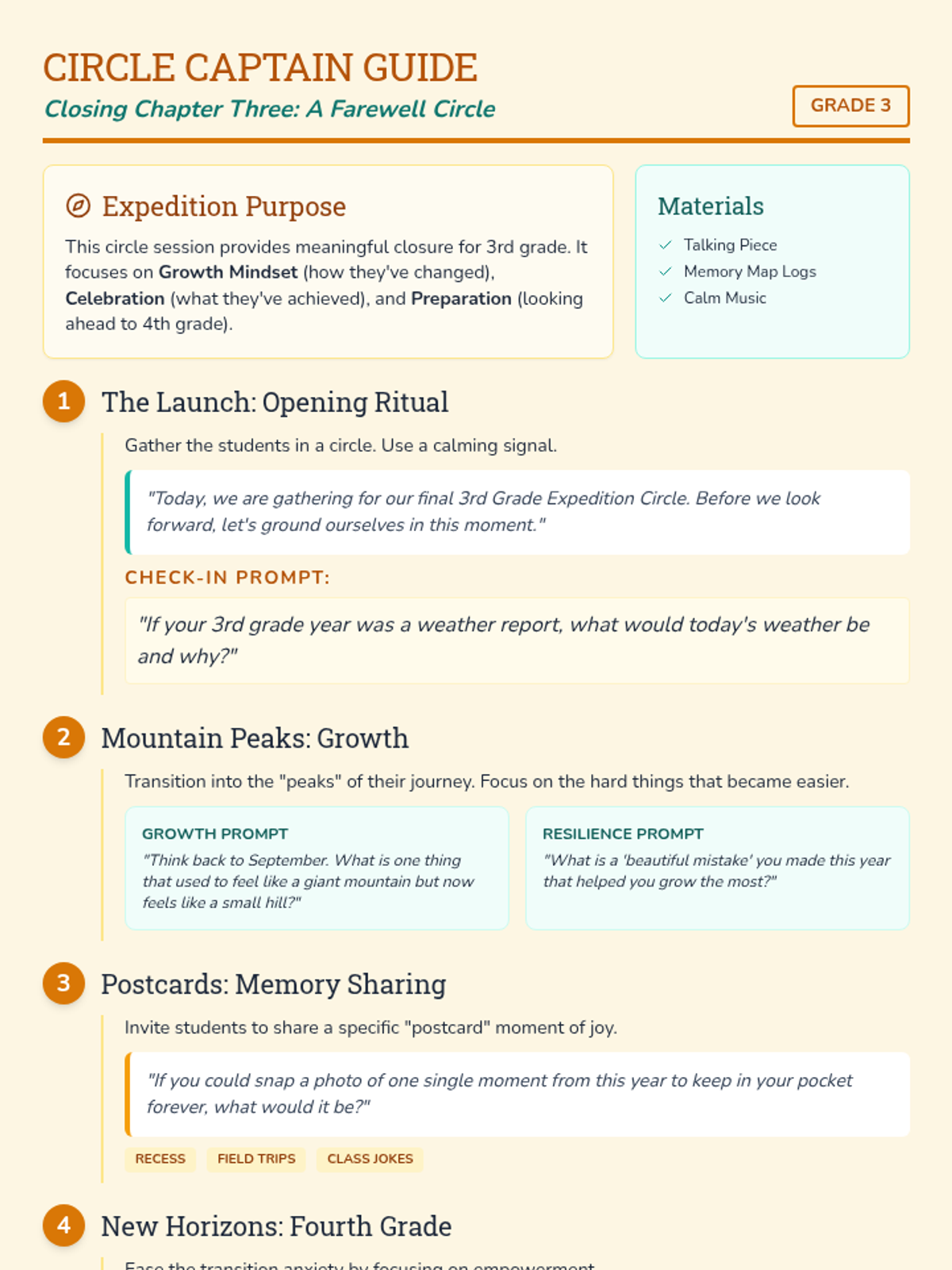
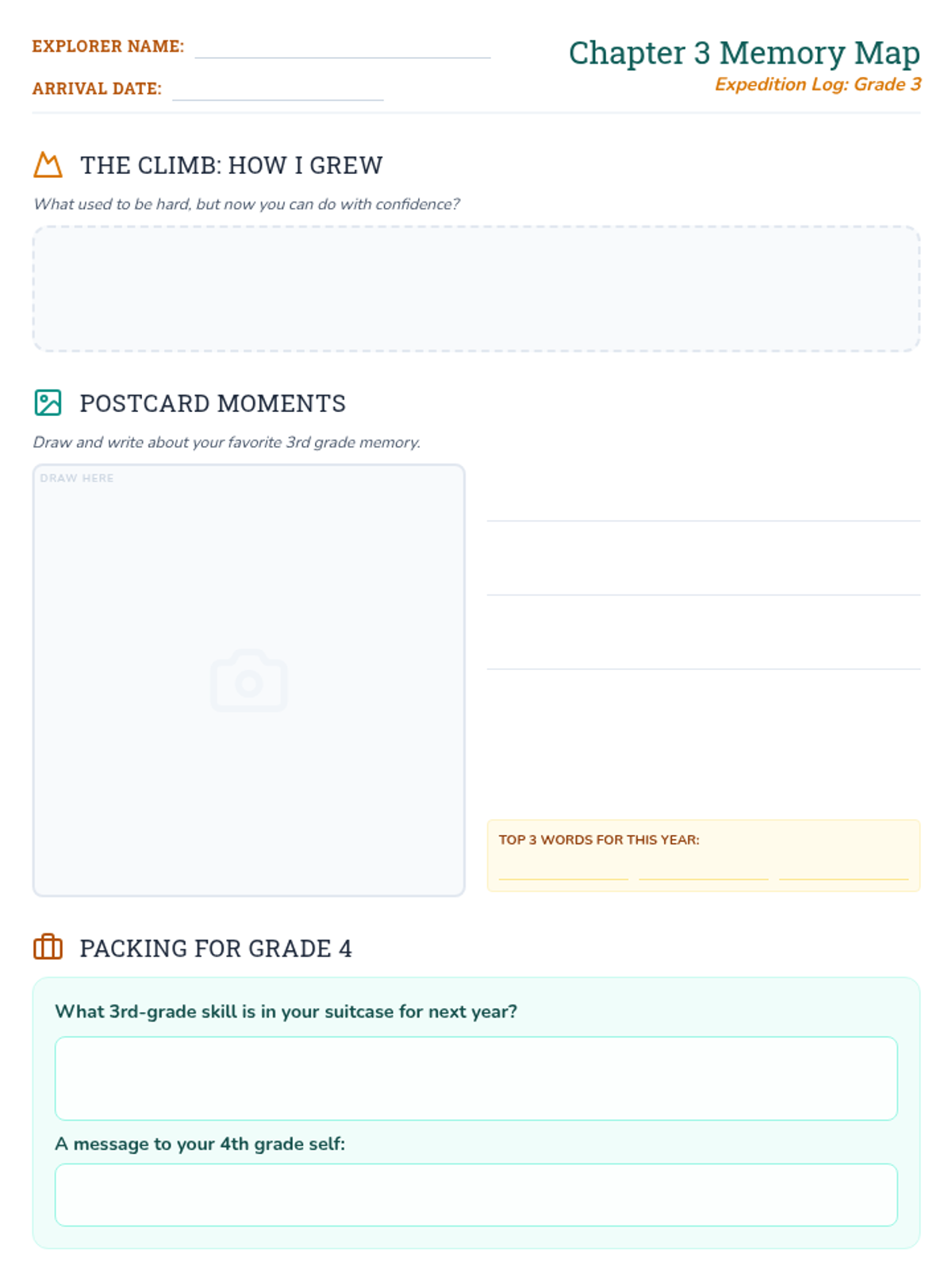
A celebratory end-of-year circle session for 3rd graders focused on reflecting on growth, sharing favorite memories, and preparing for the transition to 4th grade. Students will engage in guided discussion and personal reflection to close their school year with confidence.
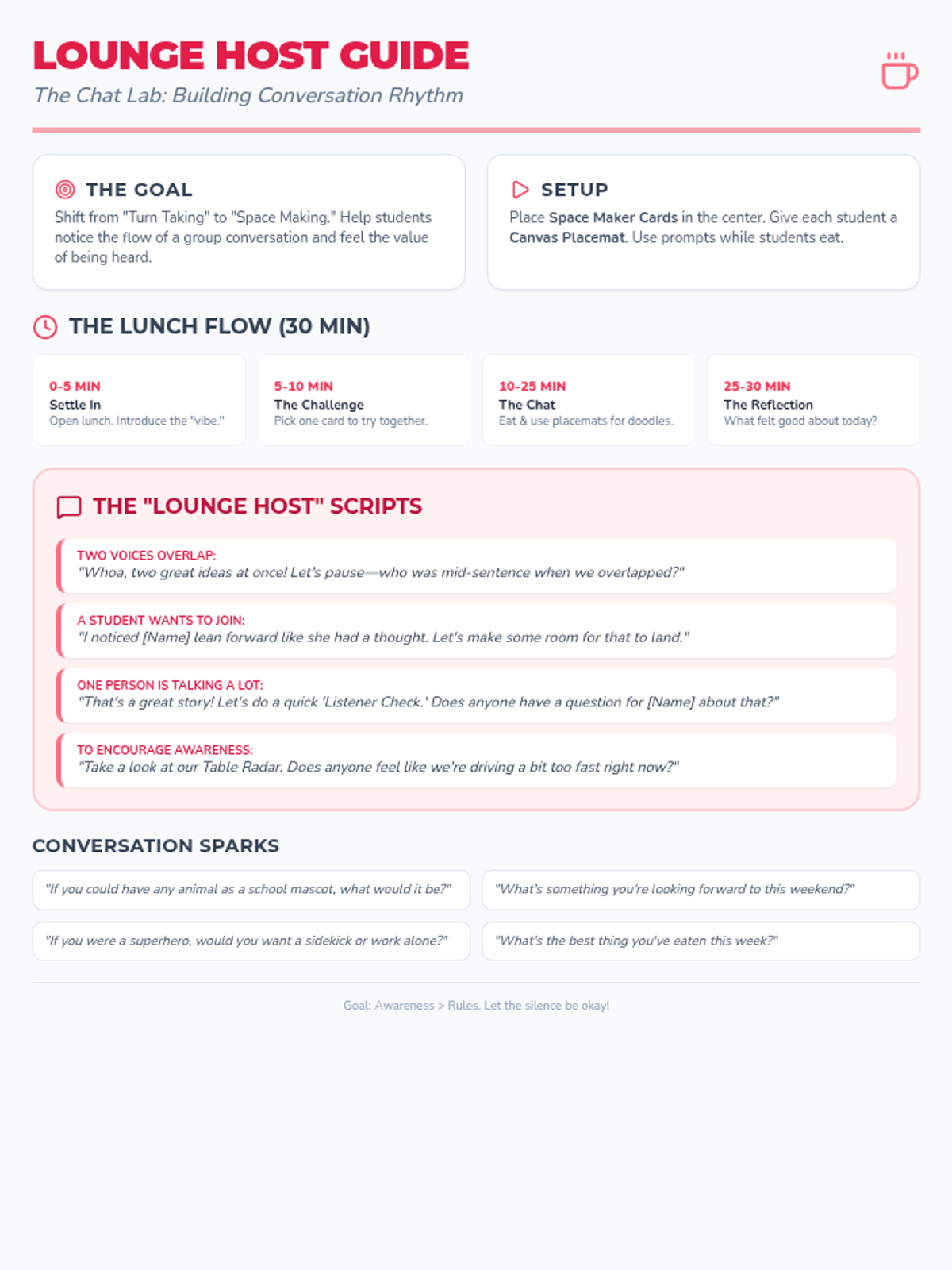
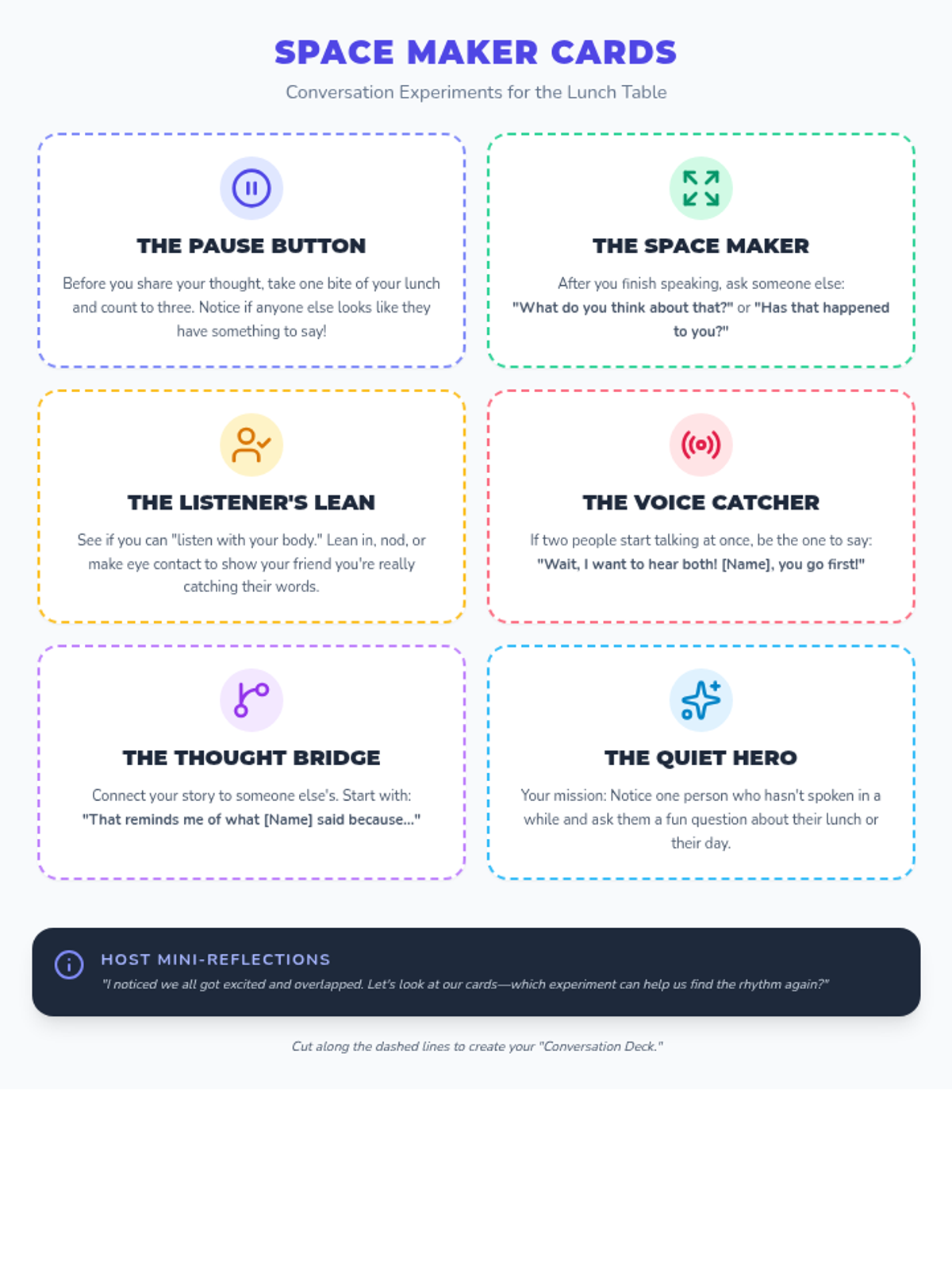
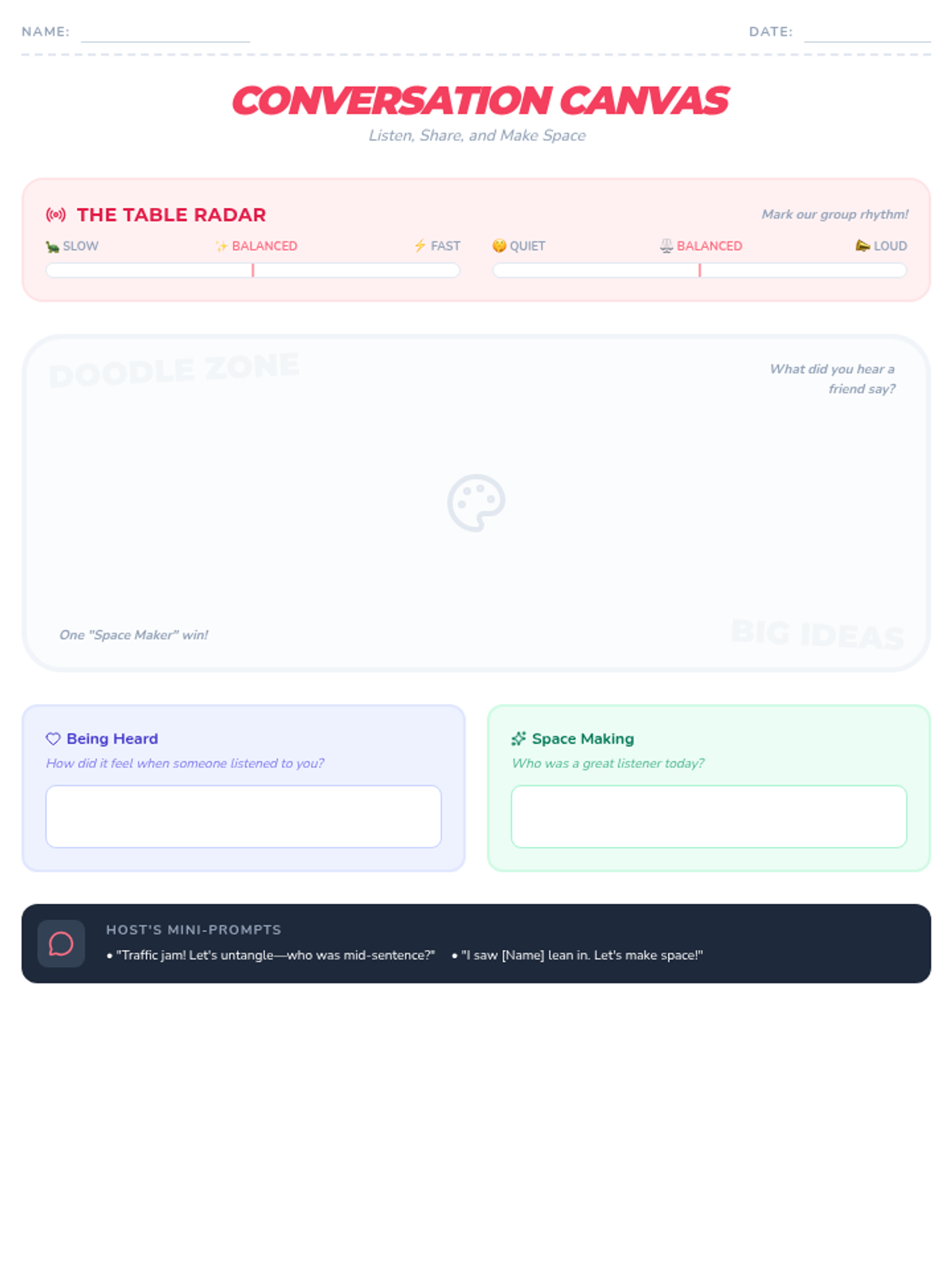
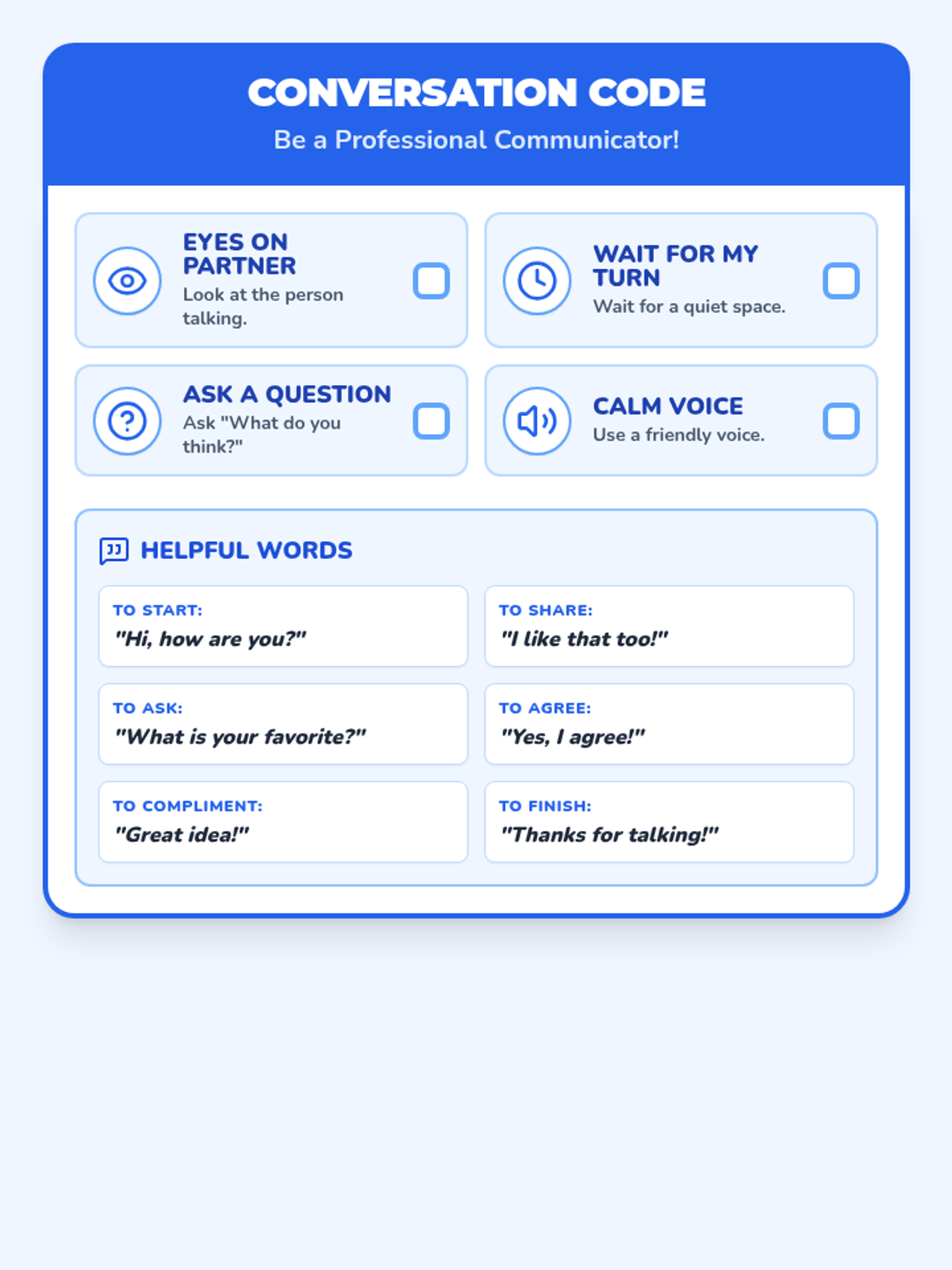
A social-emotional lunch group session designed for elementary students to practice the 'rhythm' of conversation. Instead of rigid turn-taking, it focuses on building awareness of others' voices and the feeling of being heard.
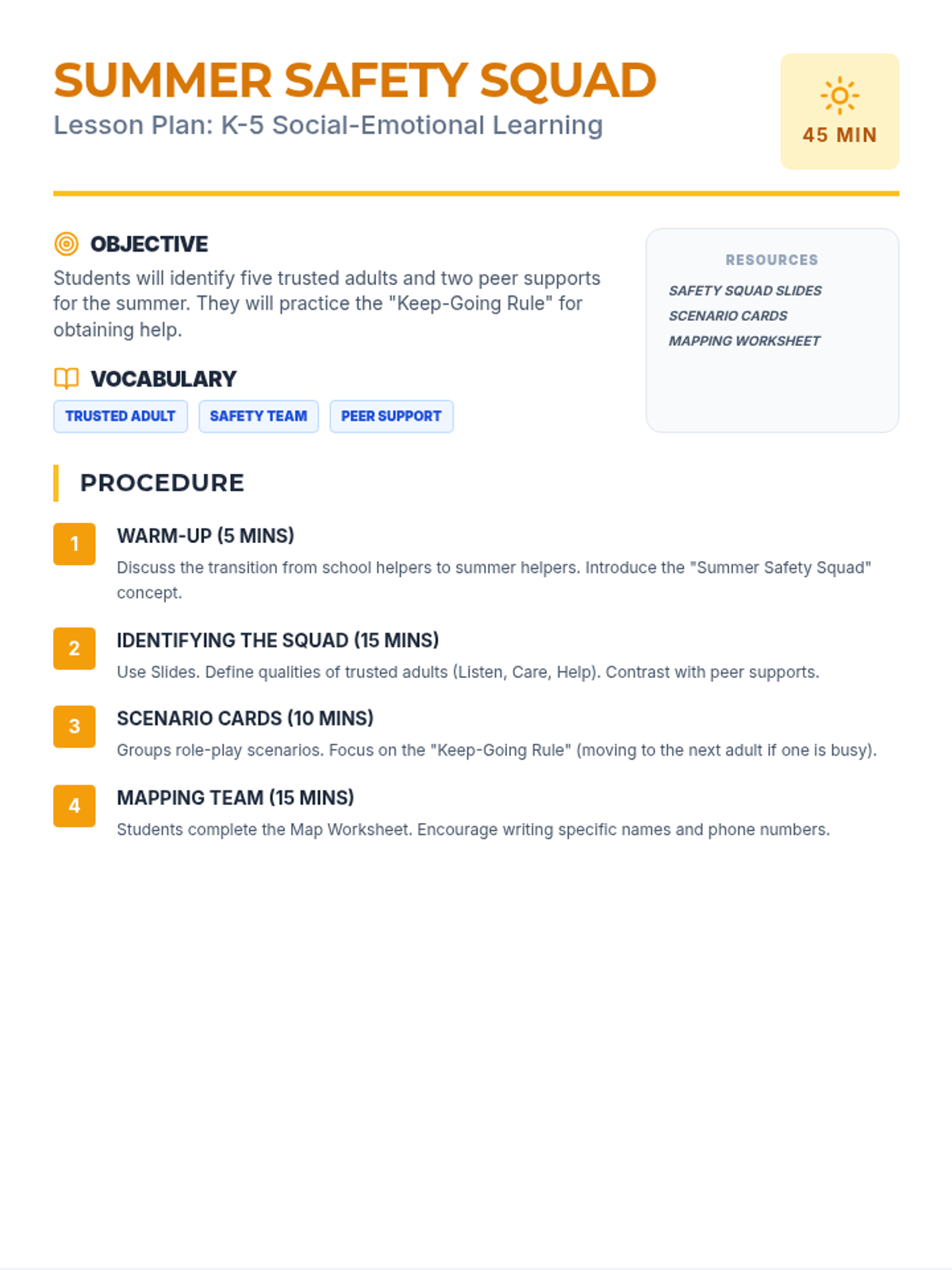
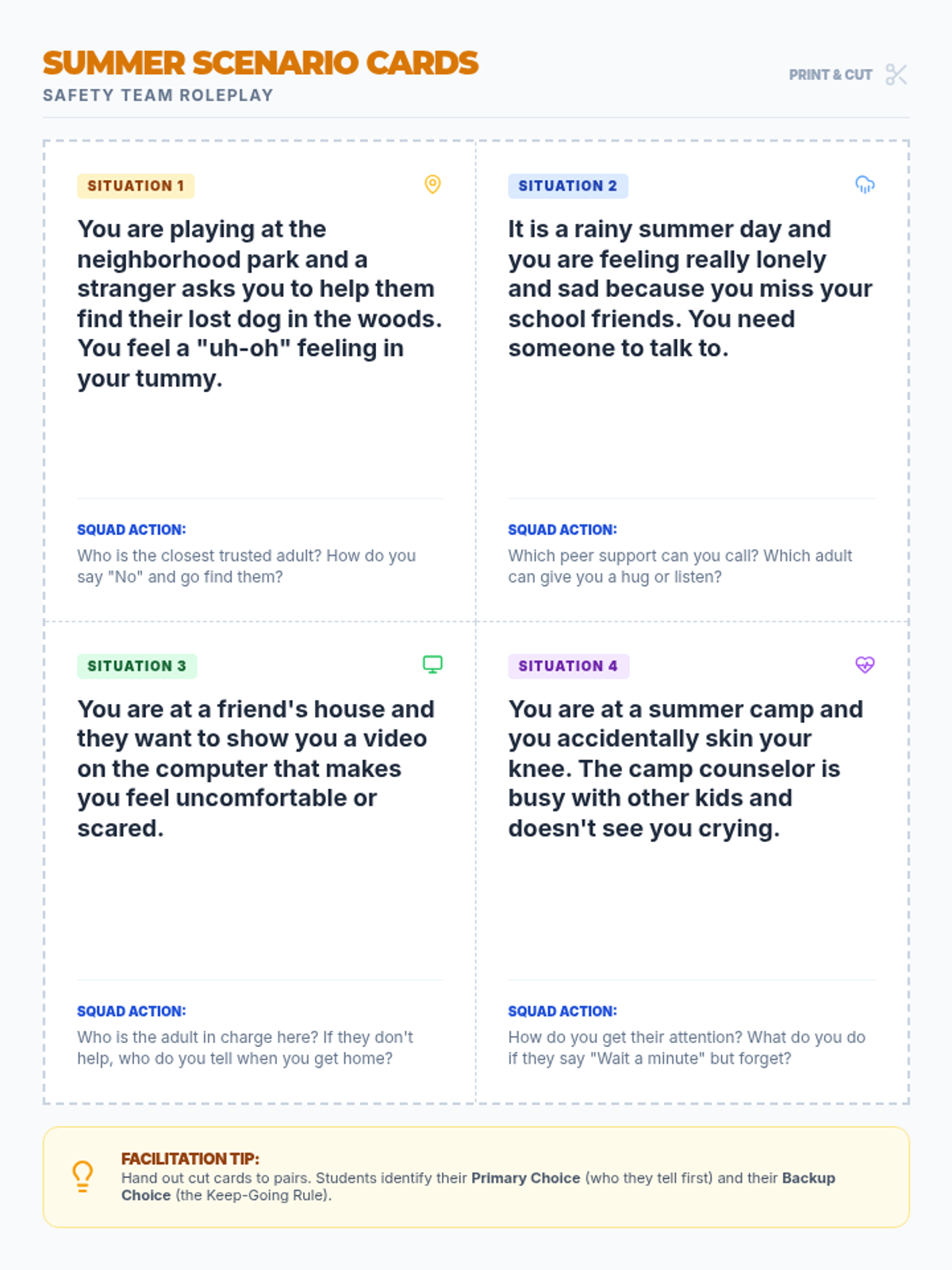
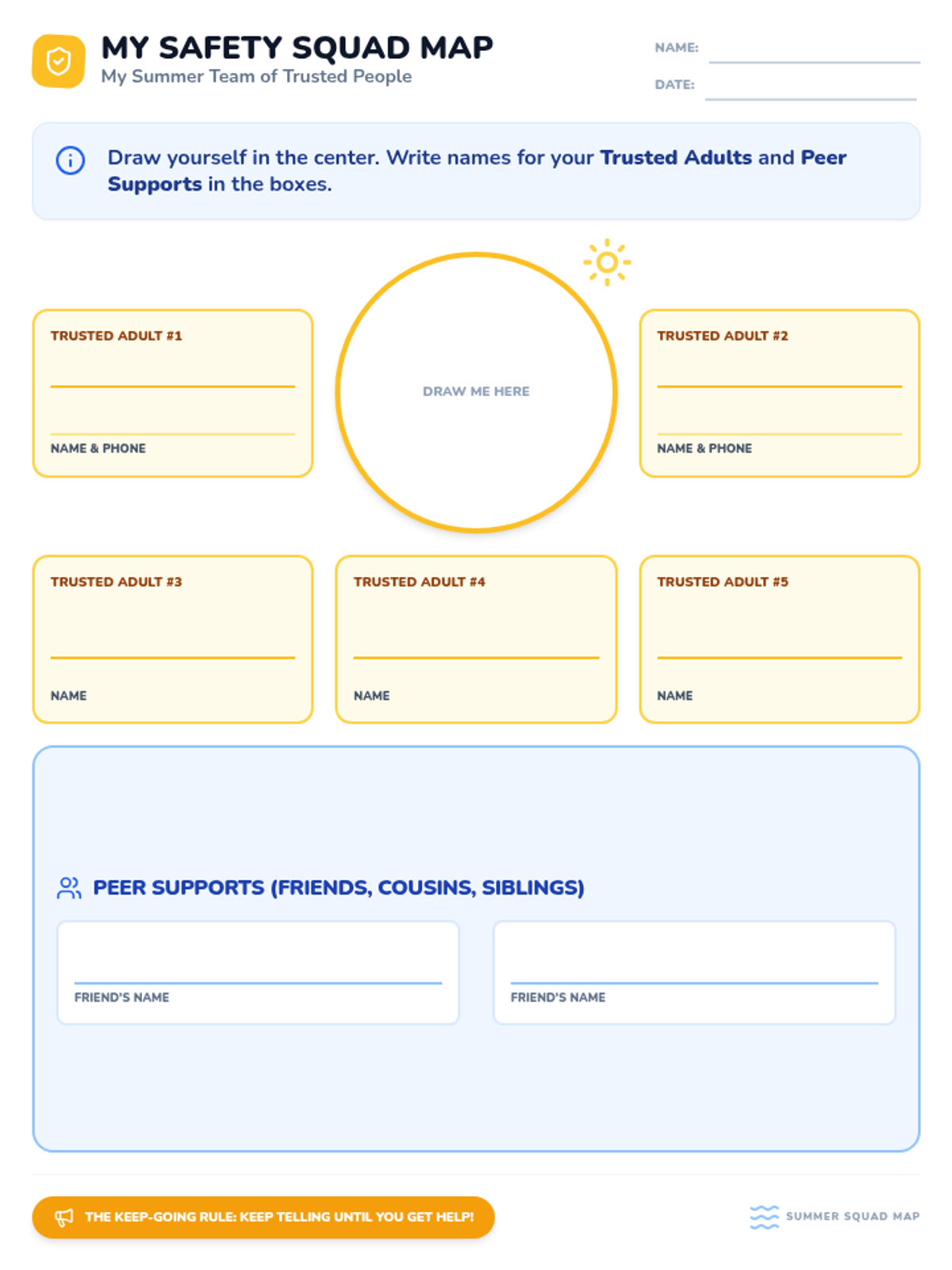
A transition lesson for K-5 students to identify a 'safety team' of trusted adults and peers for the summer months. Through visual mapping and discussion, students build a concrete network of support for when school is closed.
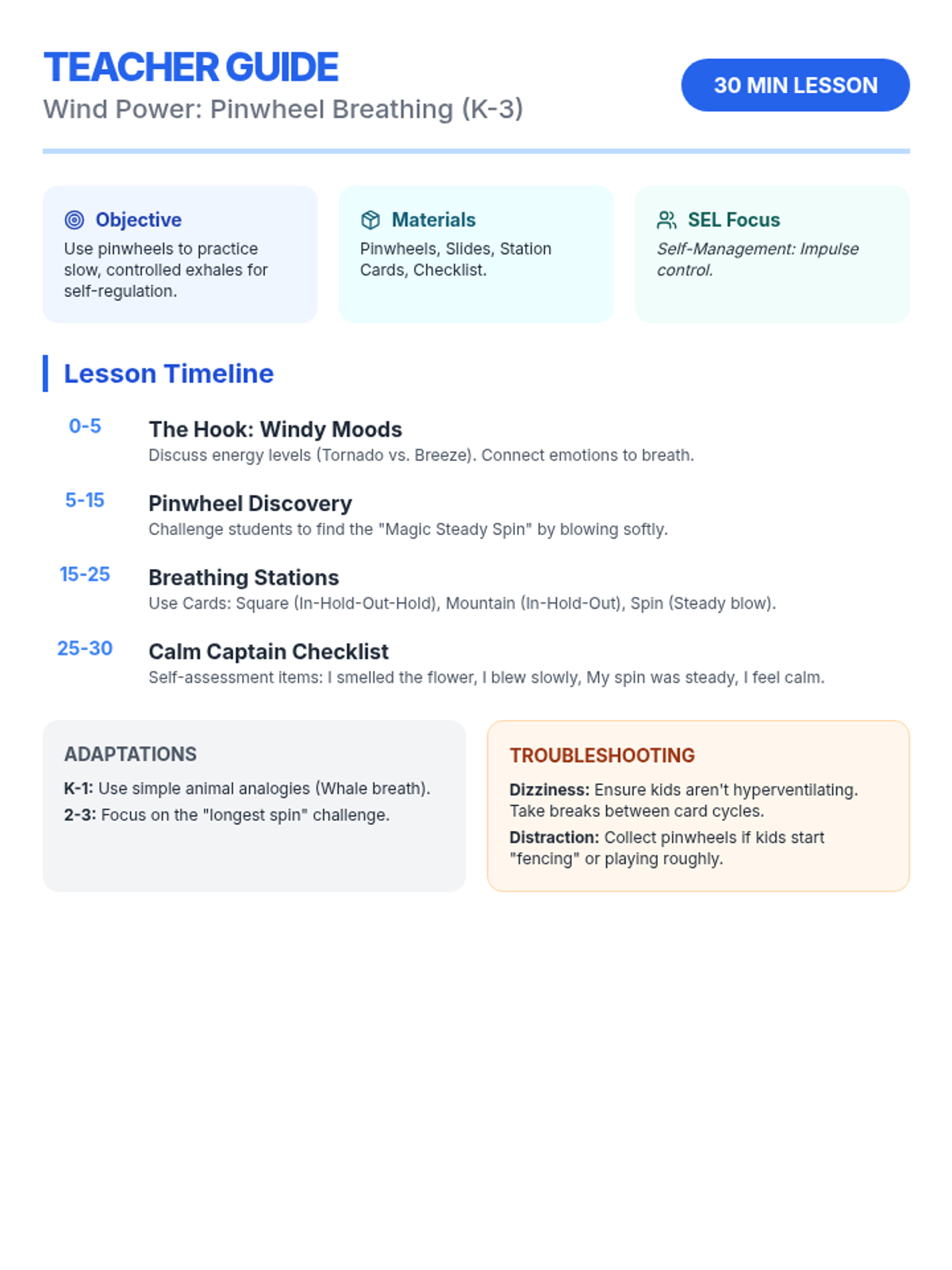
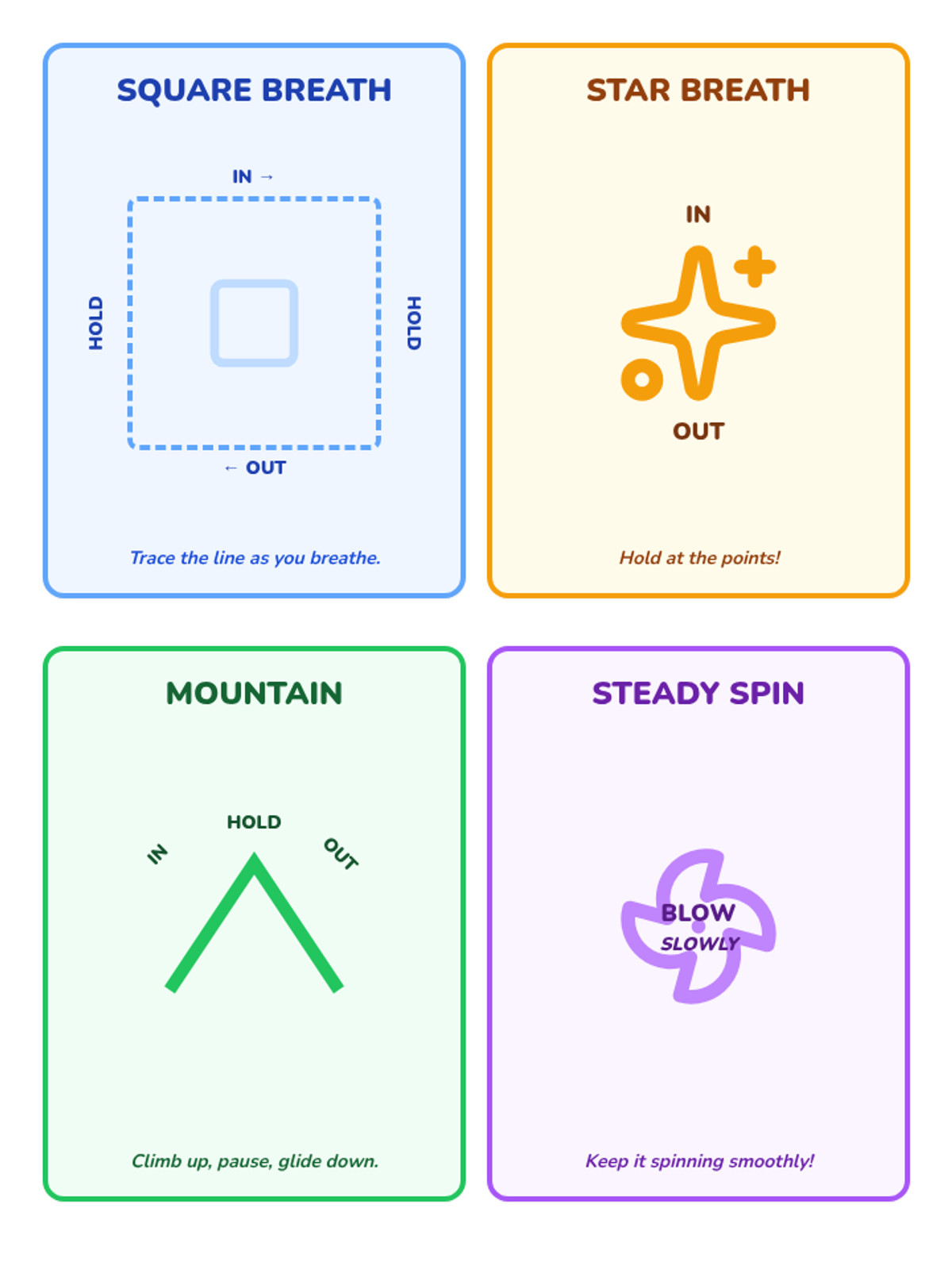
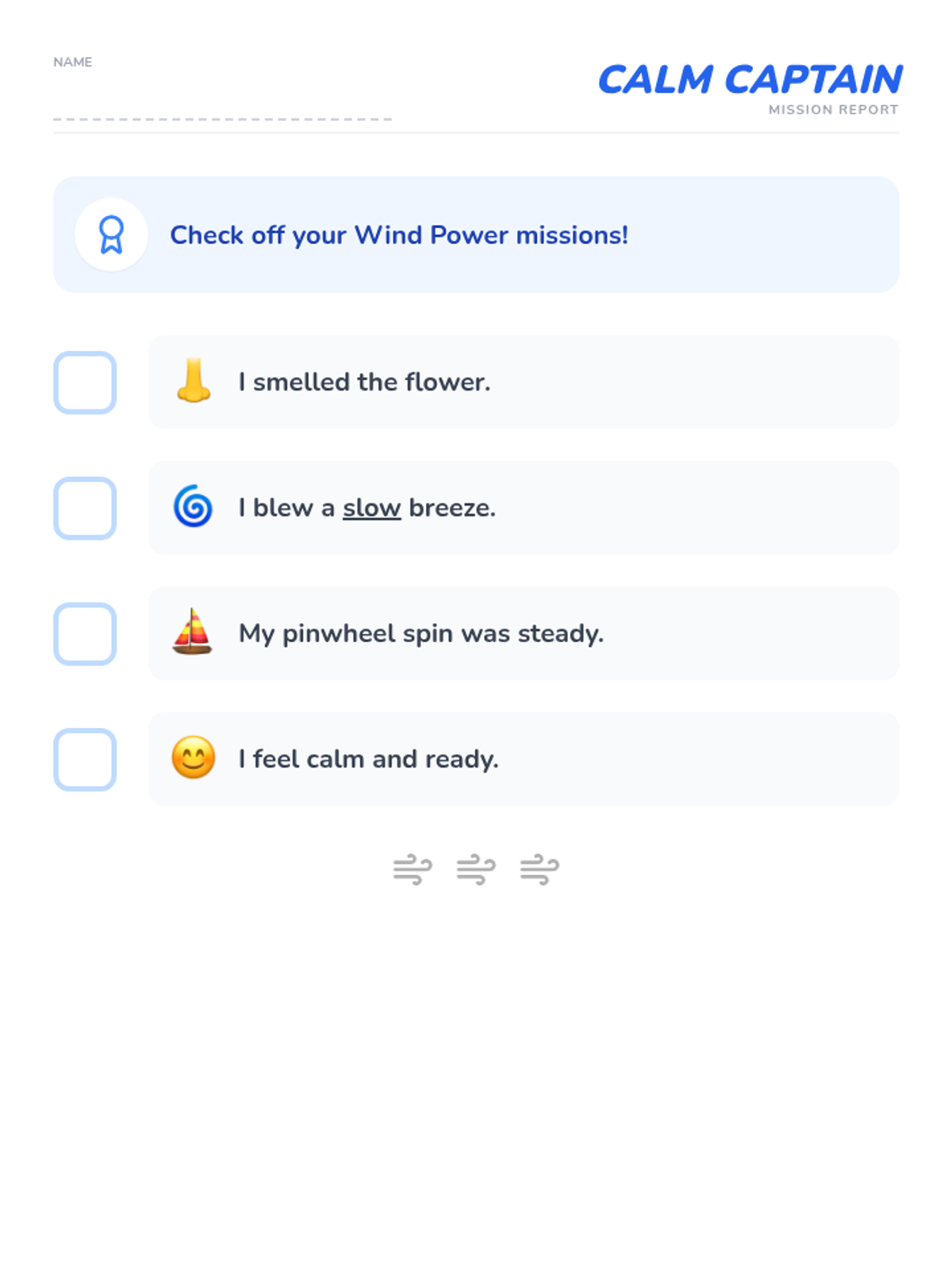
A 30-minute SEL lesson for grades K-3 using pinwheels to teach self-regulation and deep breathing techniques through hands-on practice.
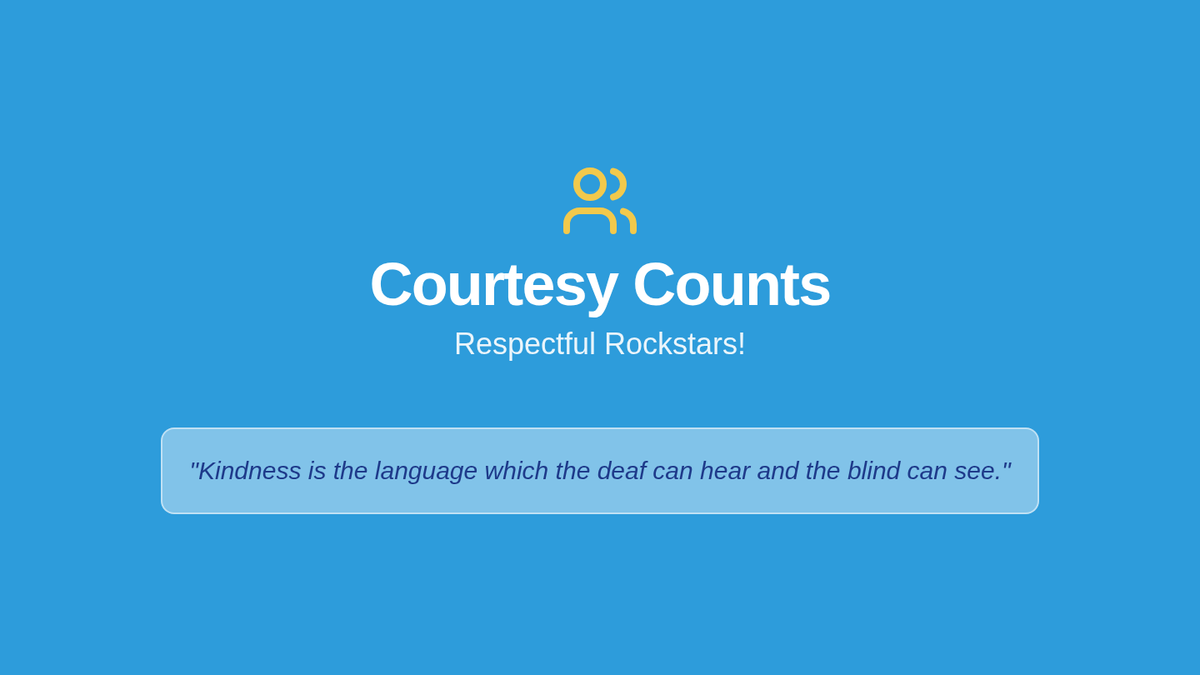
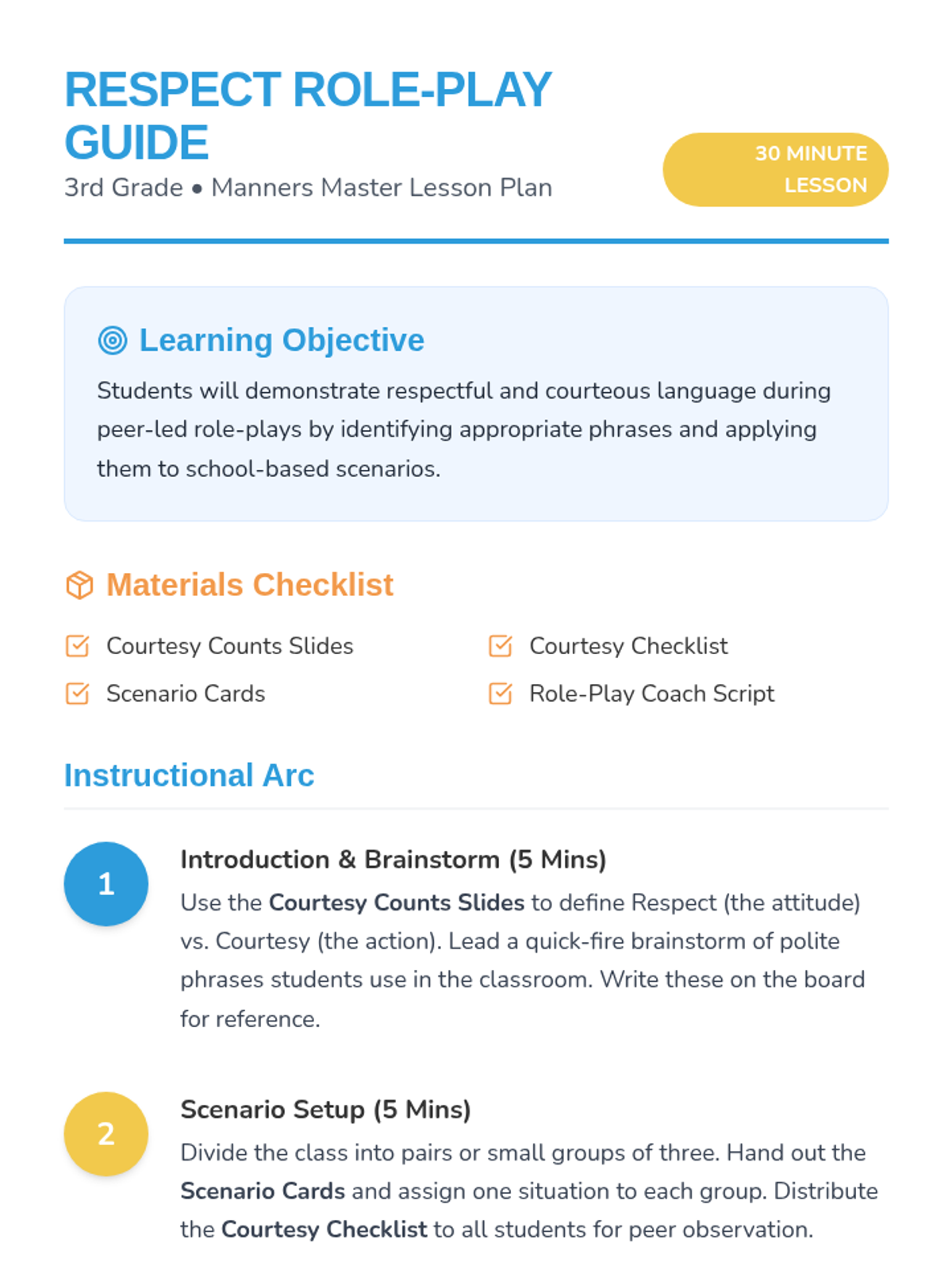
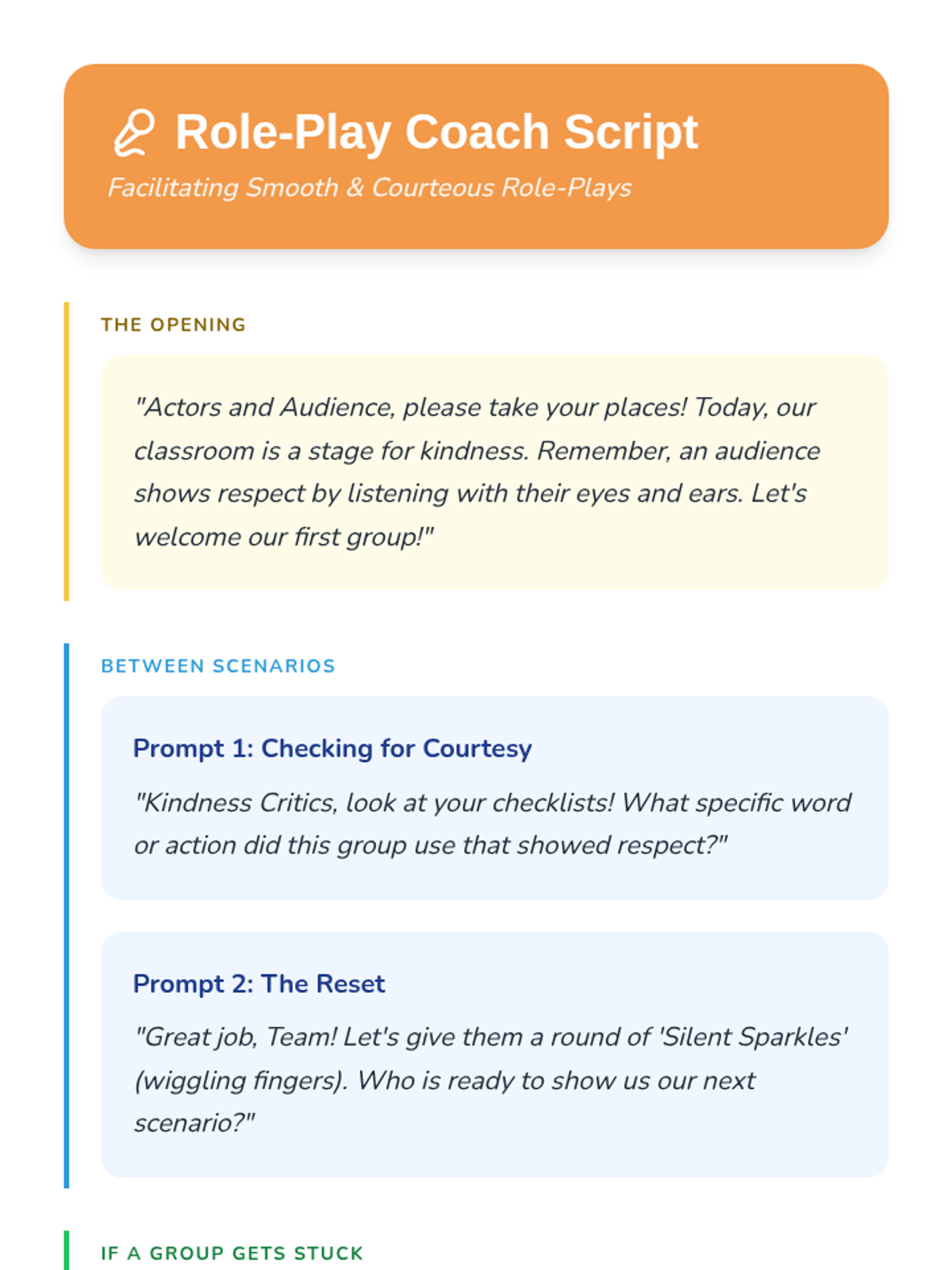
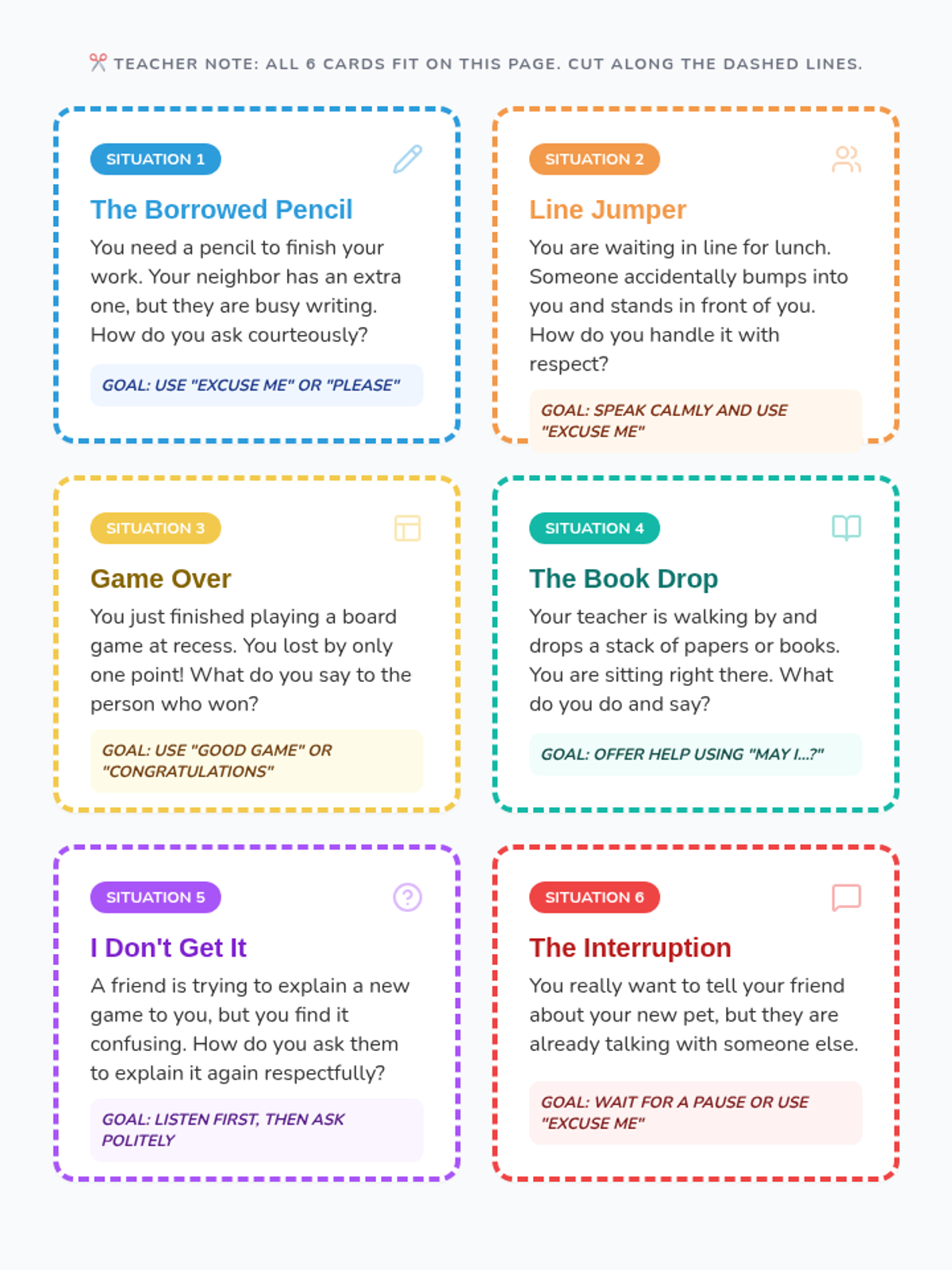
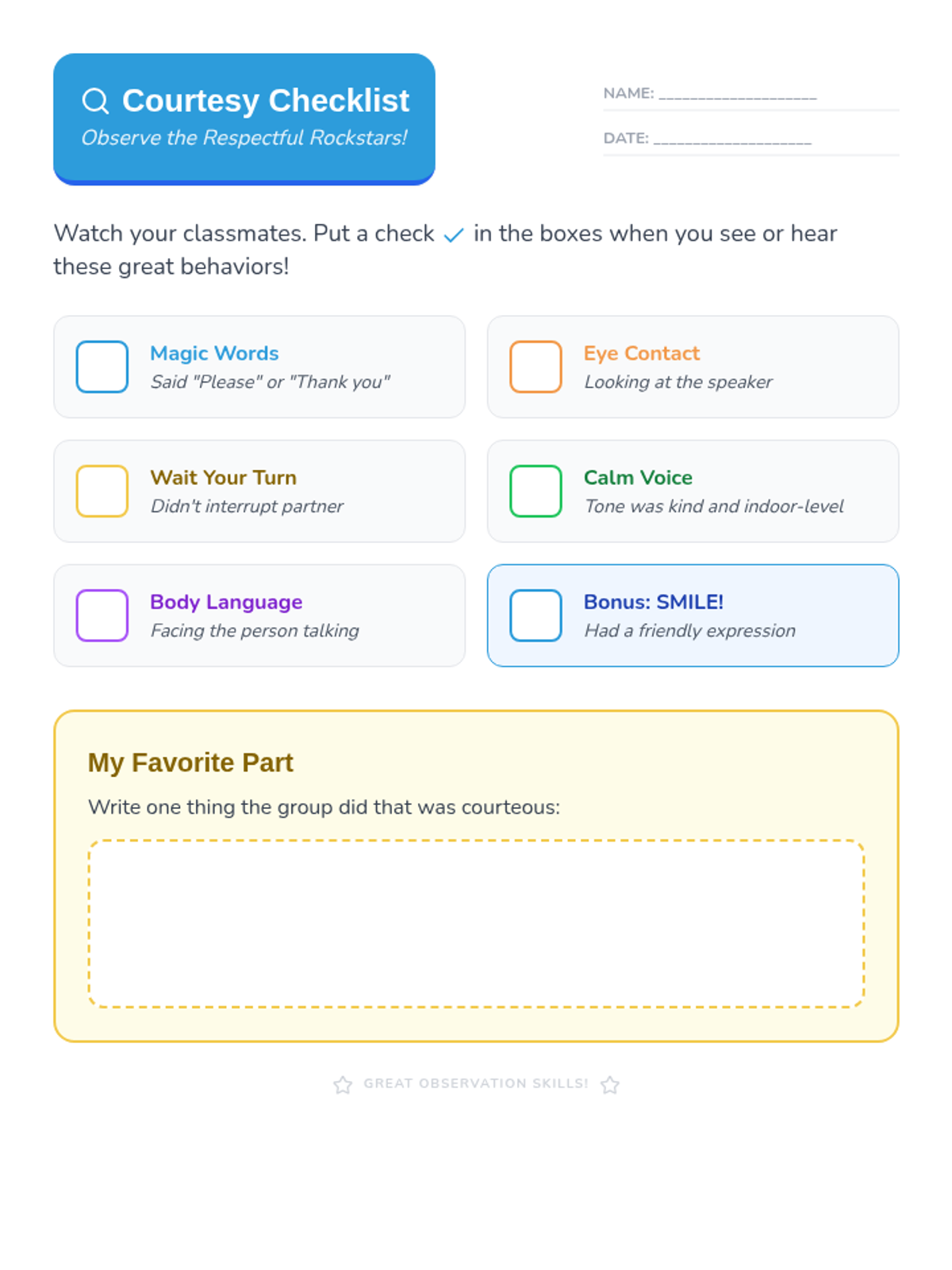
A high-energy, 30-minute social-emotional learning lesson where 3rd graders practice respectful communication through active role-playing and peer feedback. Students will learn the difference between respect and courtesy while applying polite phrases to real-world school scenarios.
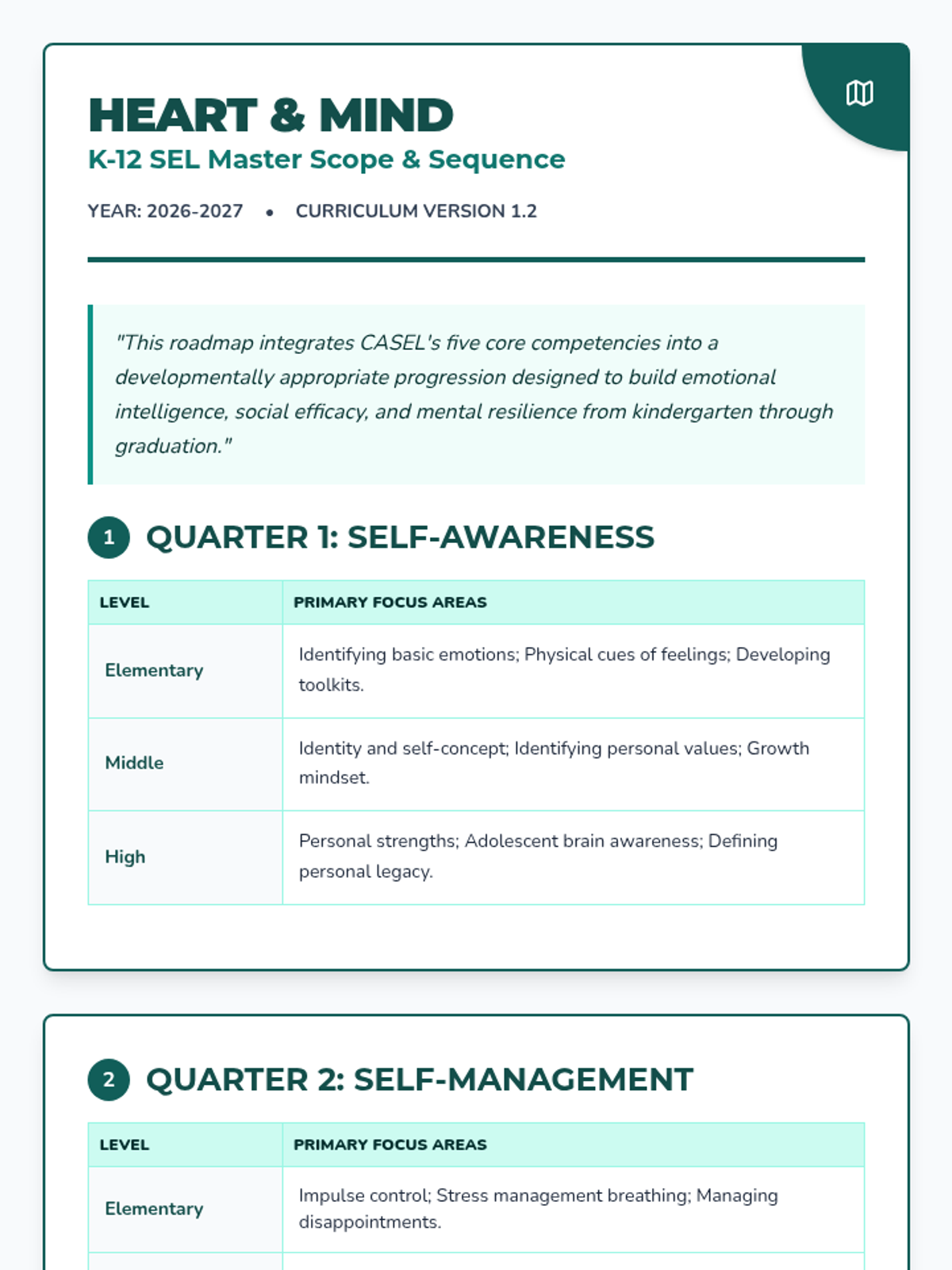
A comprehensive overview of the full-year K-12 SEL curriculum, providing teachers with a structured scope and sequence for implementation.
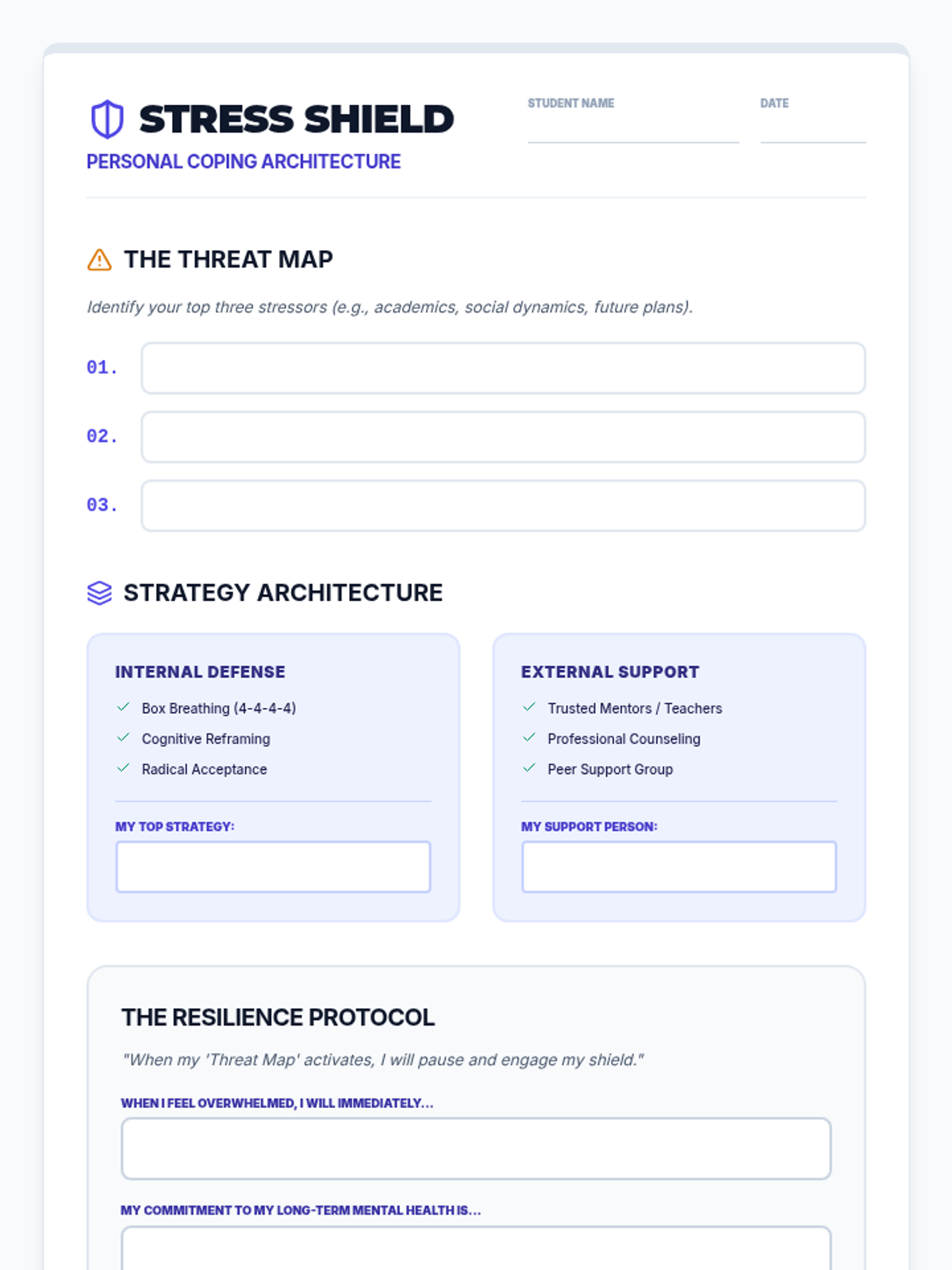
Equips high school students with advanced coping mechanisms, mental health awareness, and resilience strategies for adulthood.
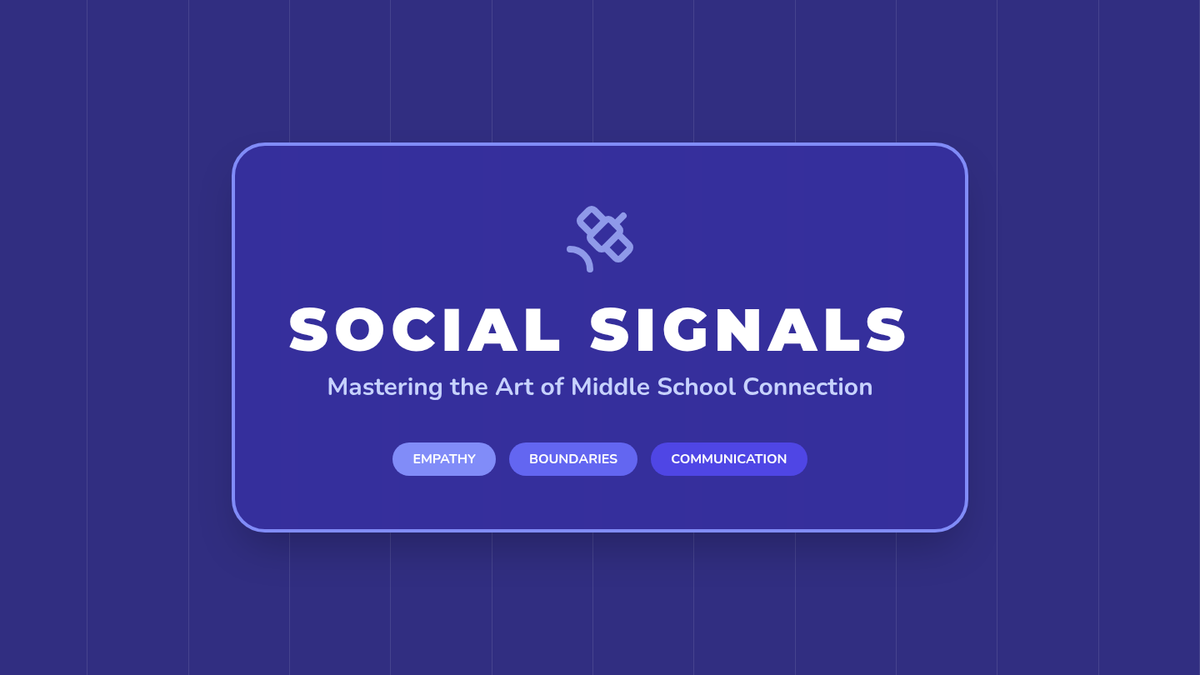
Explores social dynamics, peer relationships, and managing life transitions for middle school students.
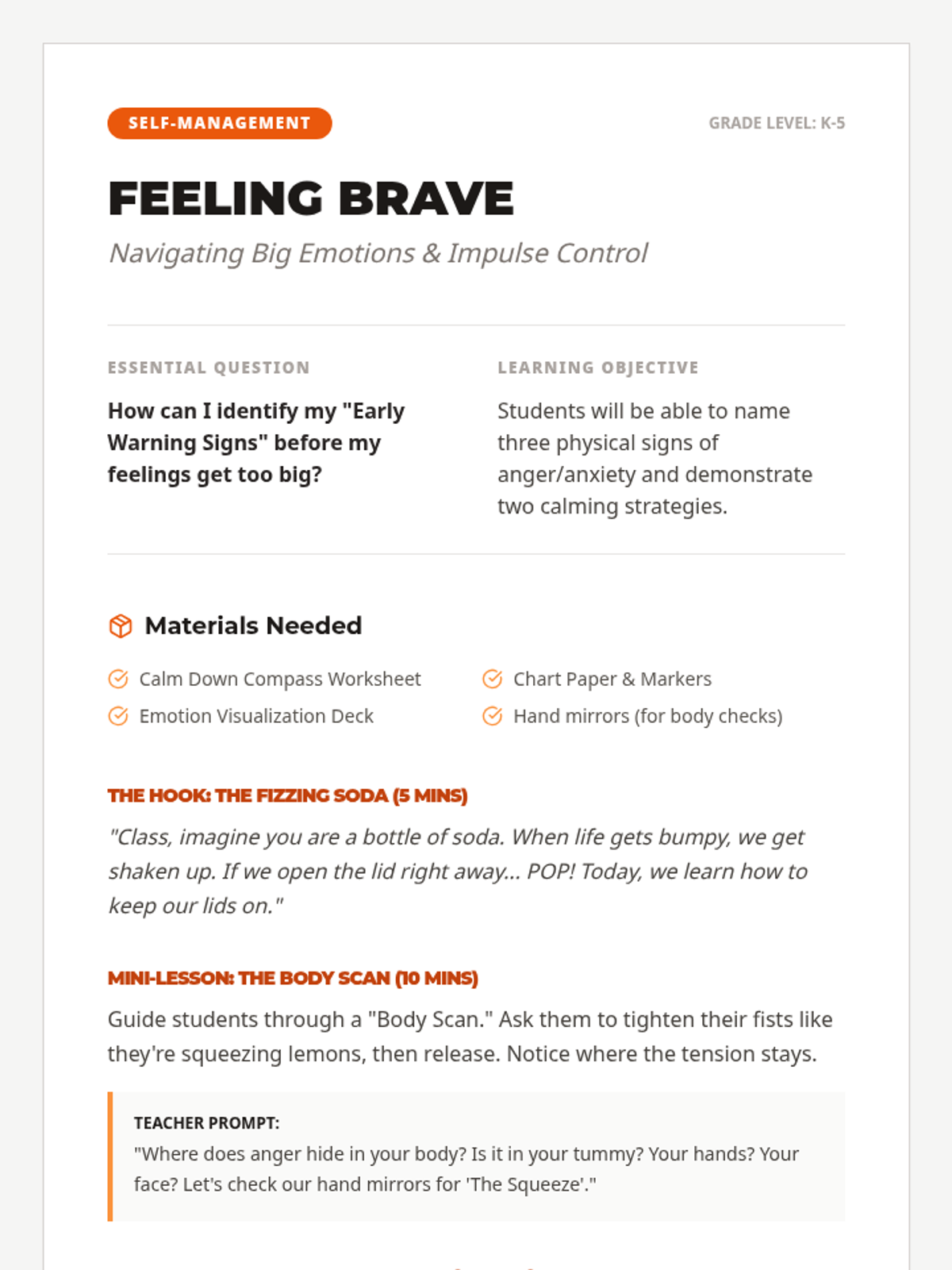
Focuses on helping elementary students identify emotions and build a toolkit for behavior regulation and calming down.
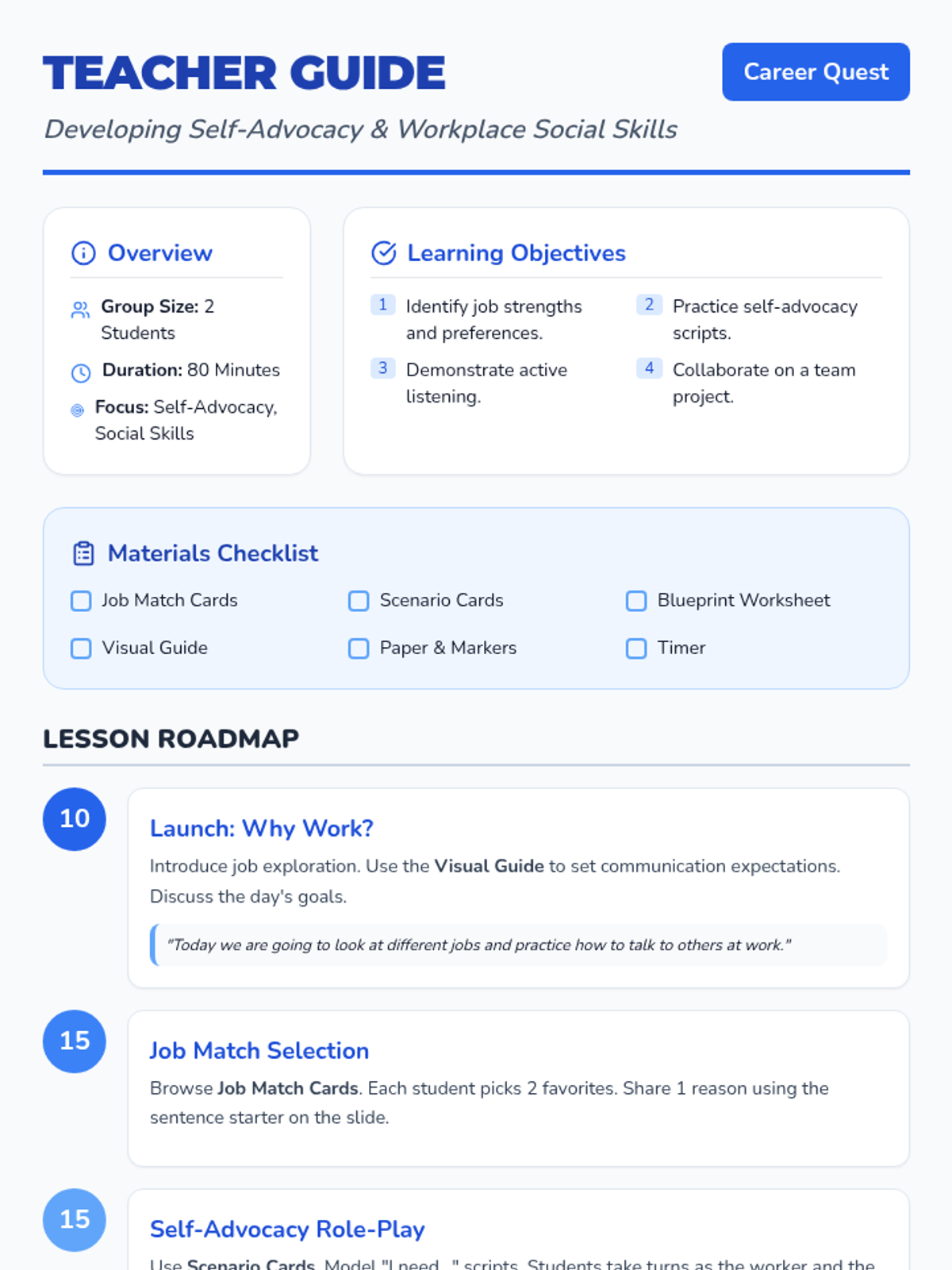
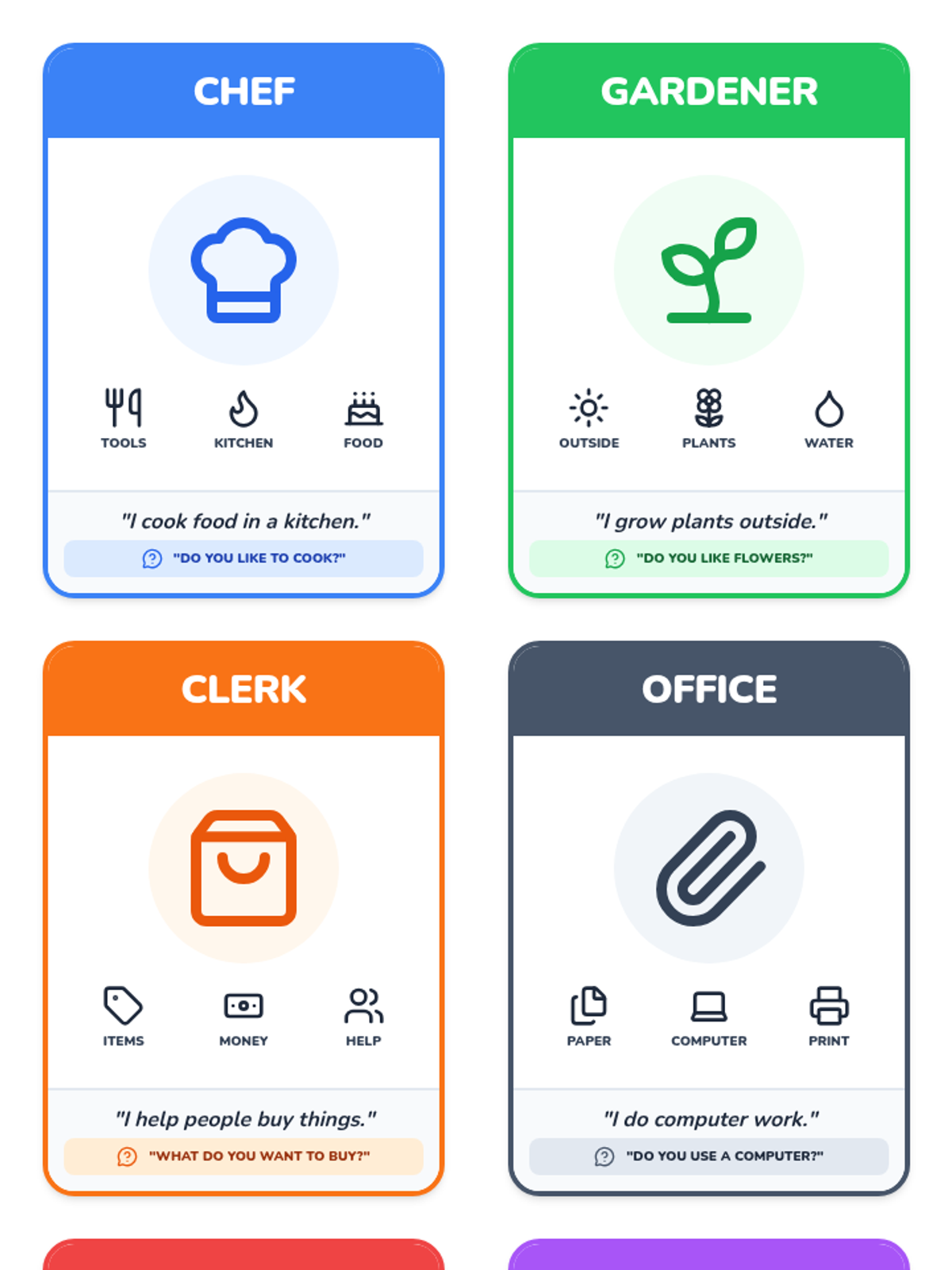
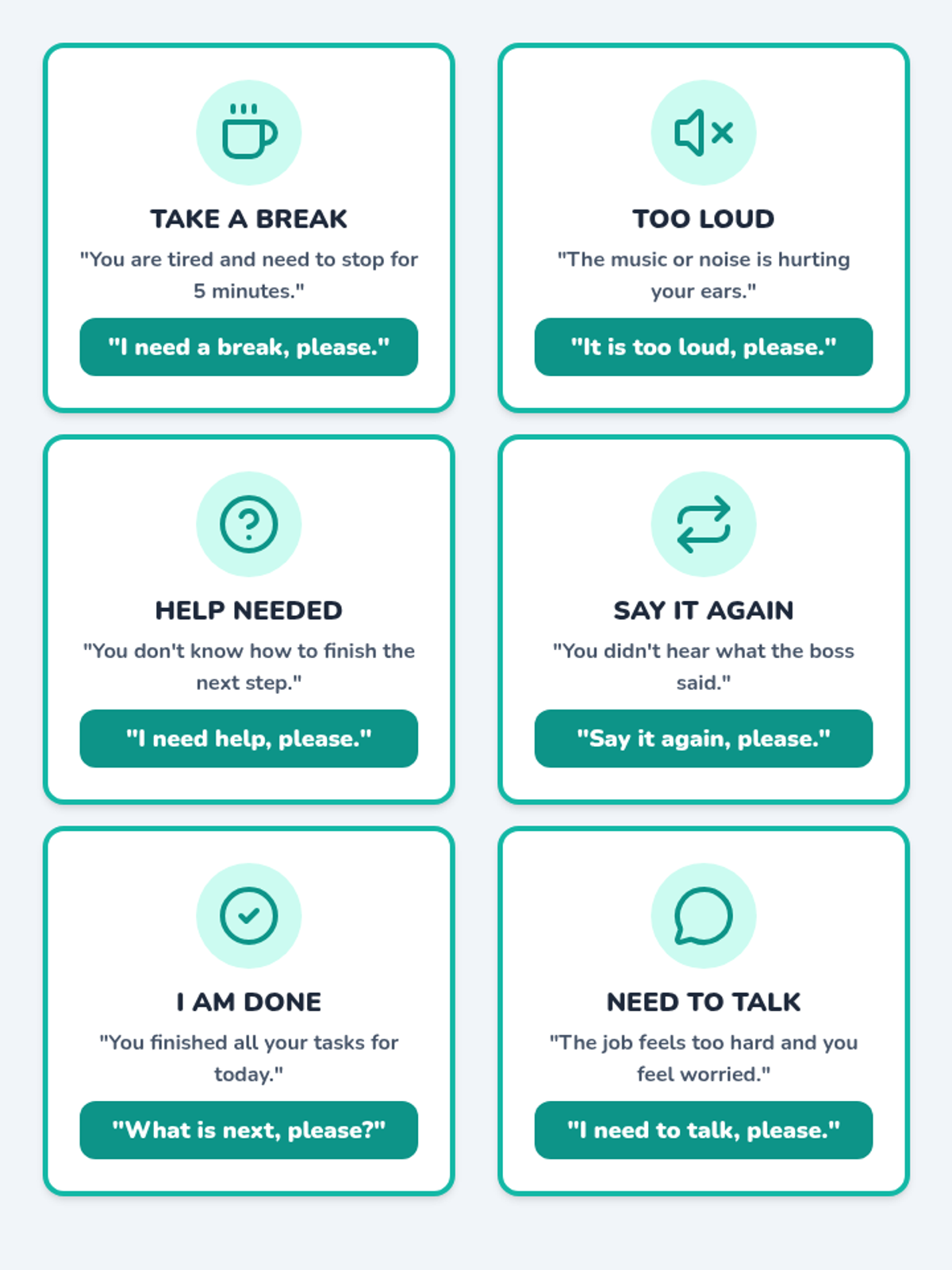
A social skills and job exploration lesson for students on the spectrum, focusing on self-advocacy, collaboration, and identifying career interests through visual-supported activities.
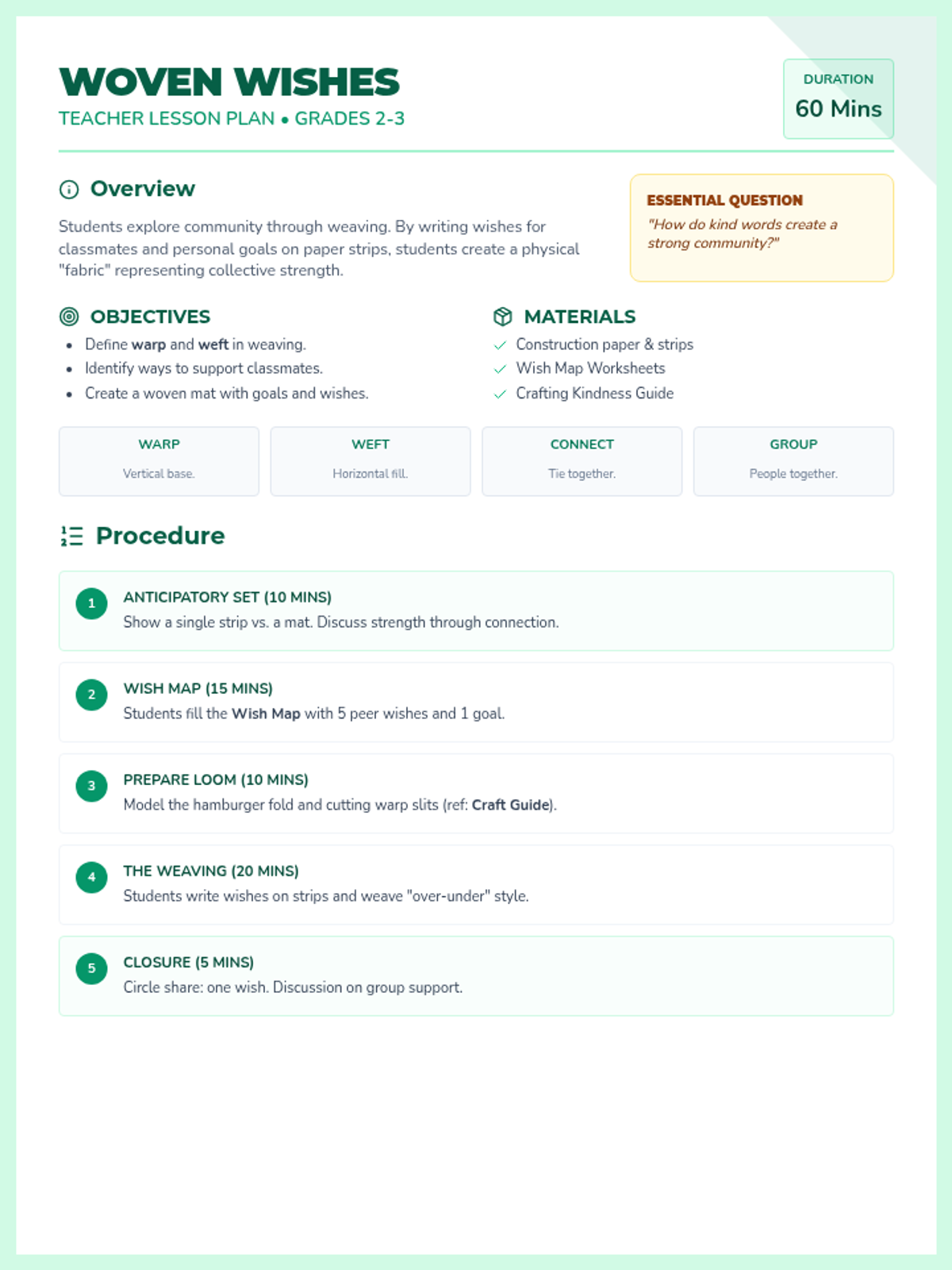
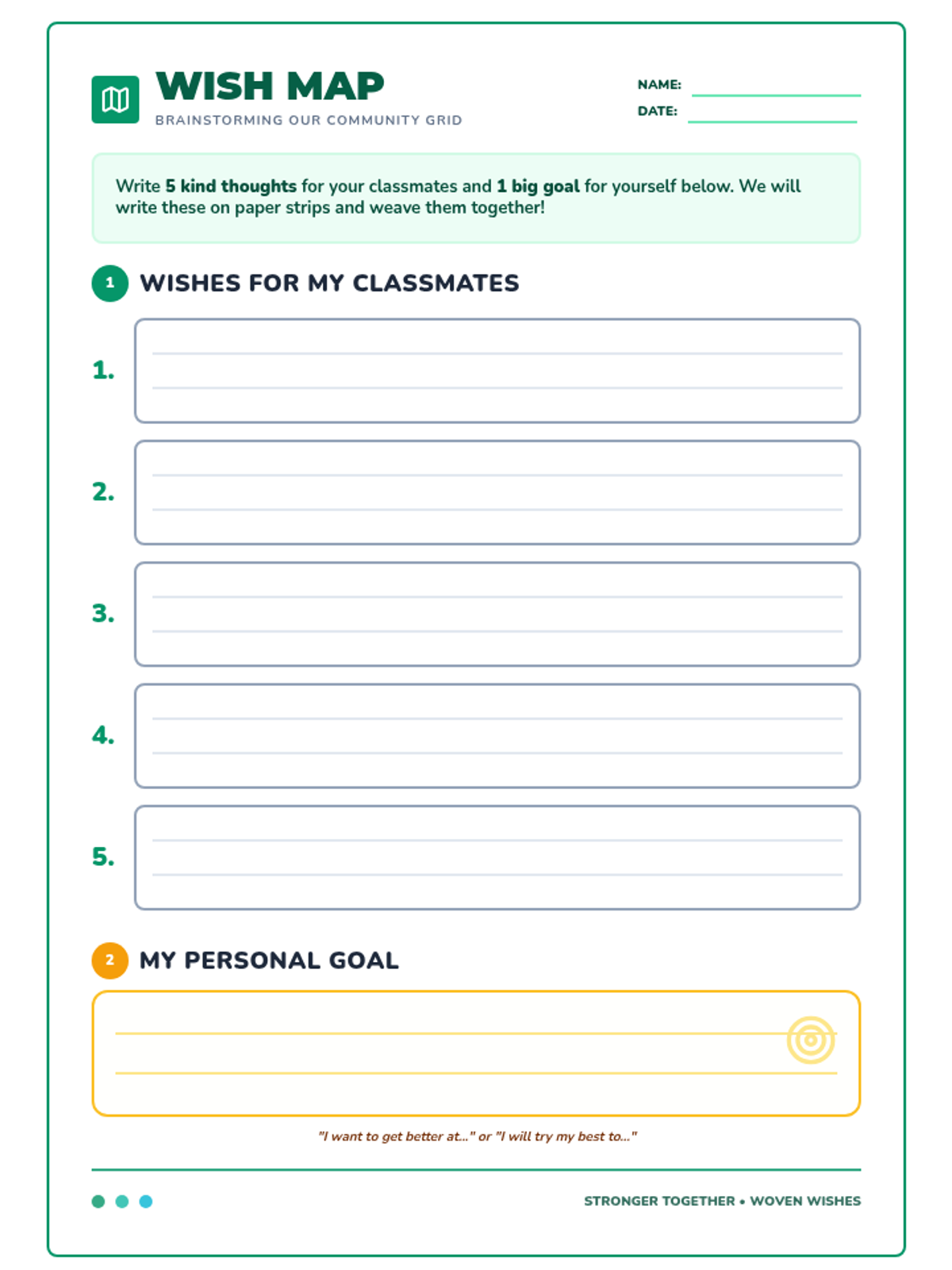
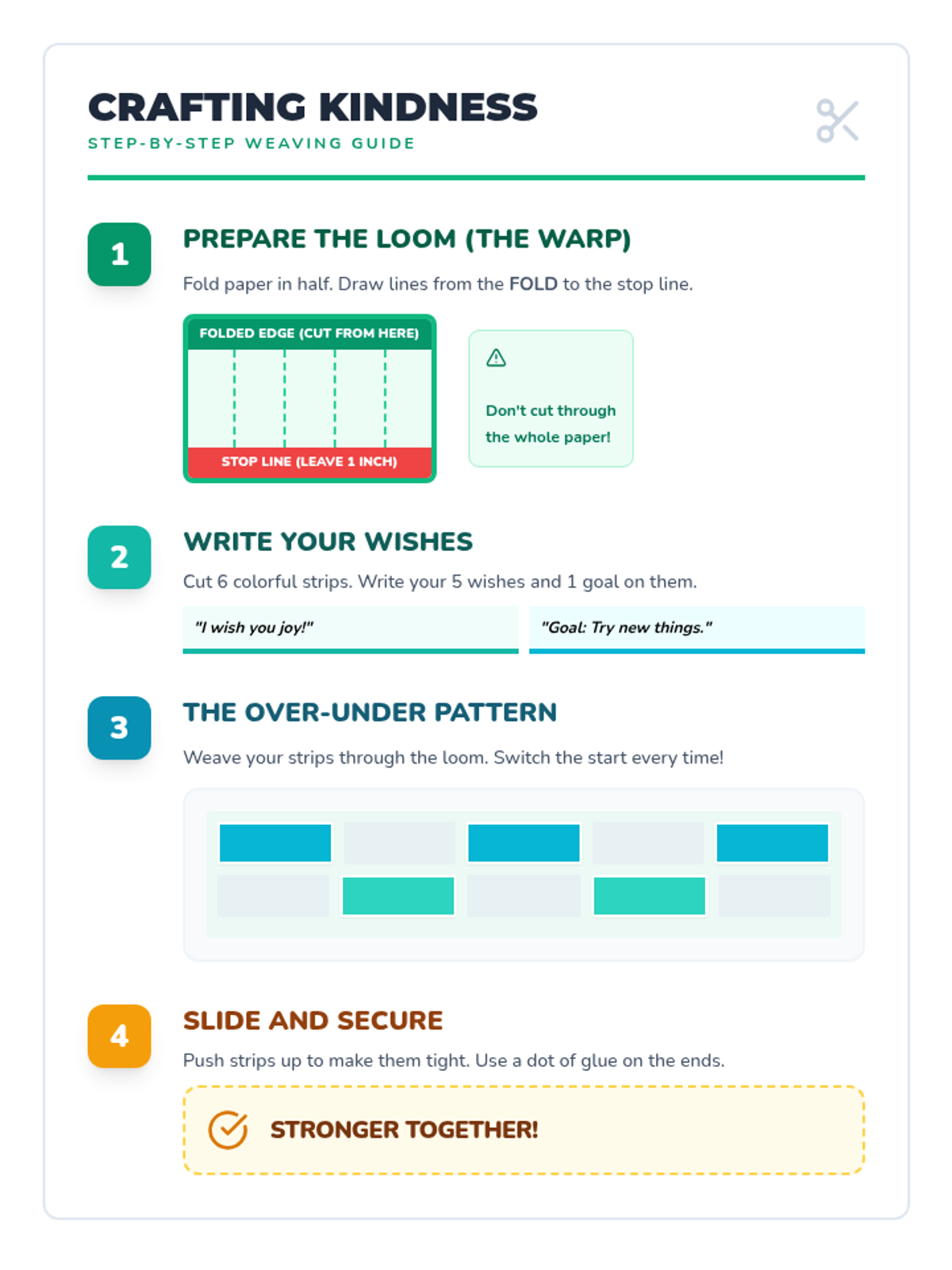
A social-emotional learning and art lesson where students explore community interconnectedness by weaving paper 'wishes' into a collective and personal tapestry of goals.
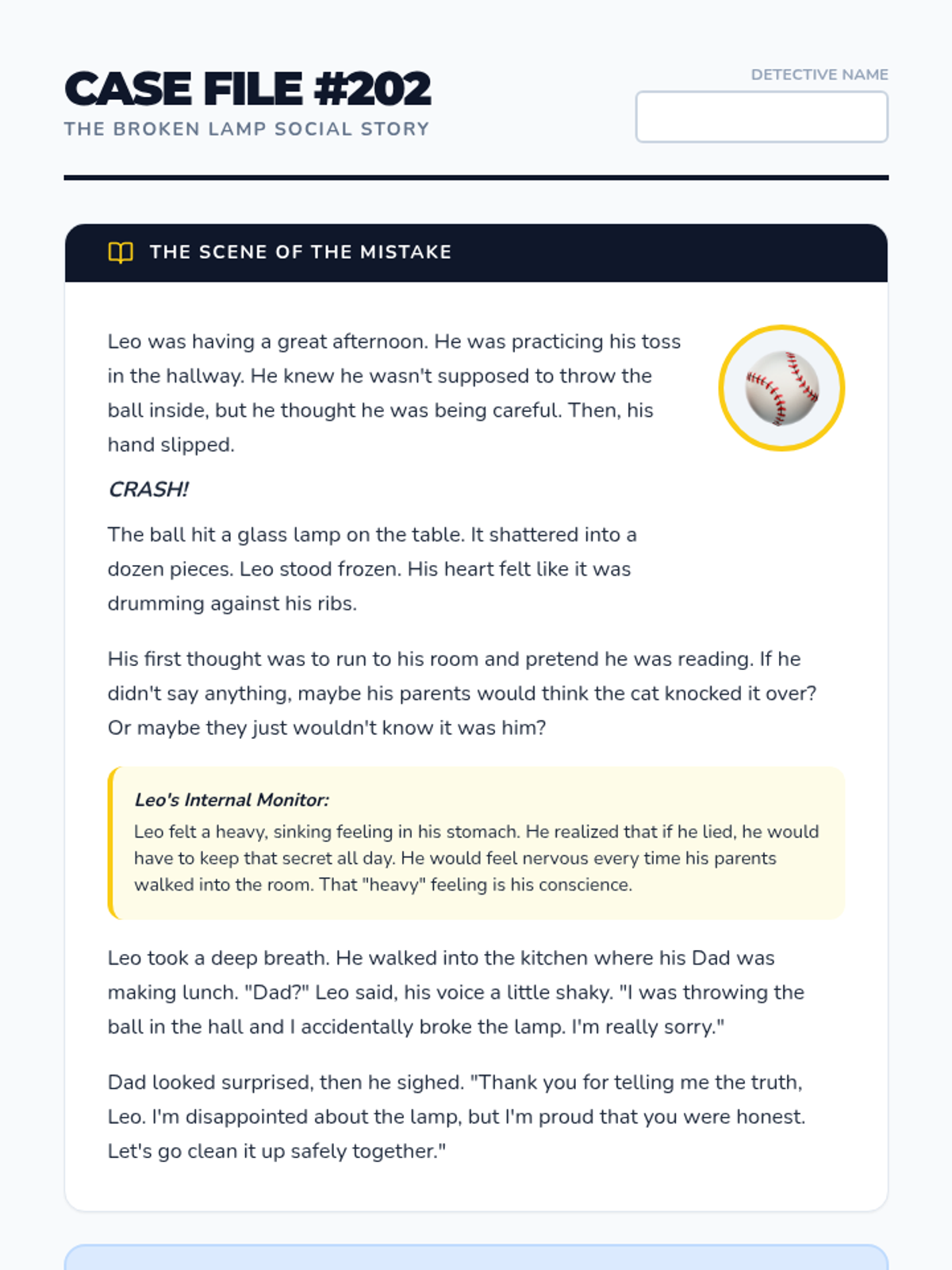
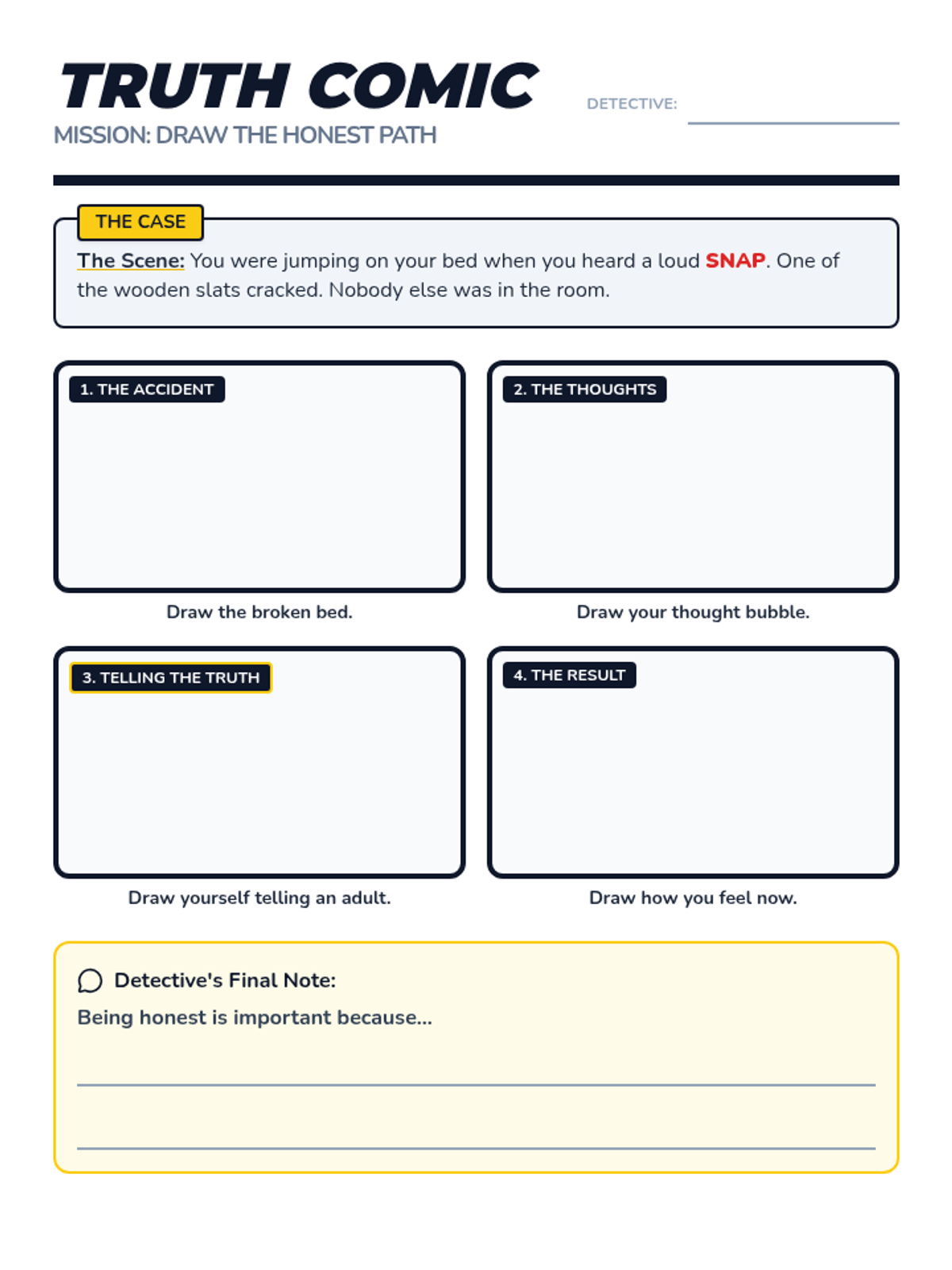
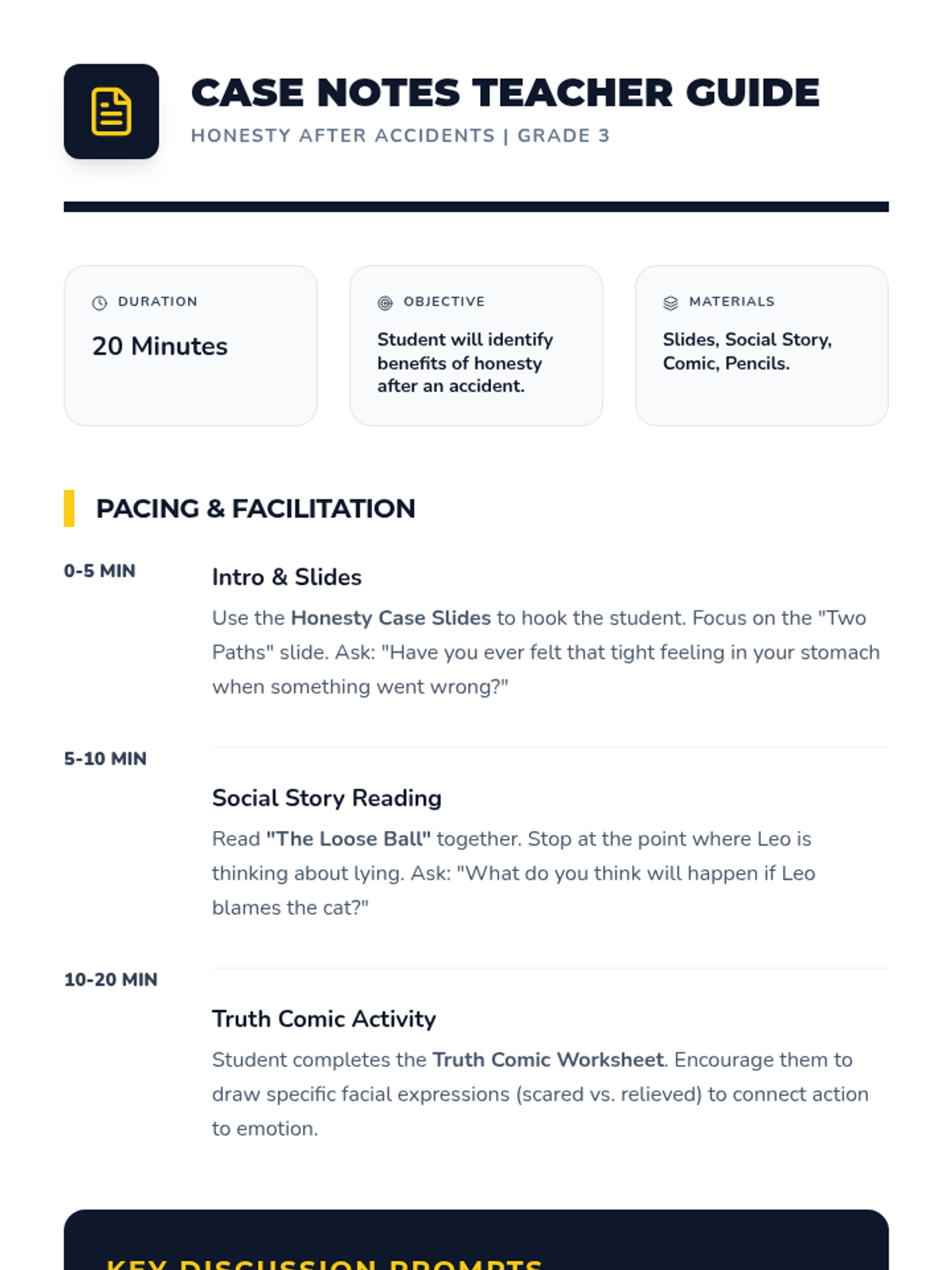
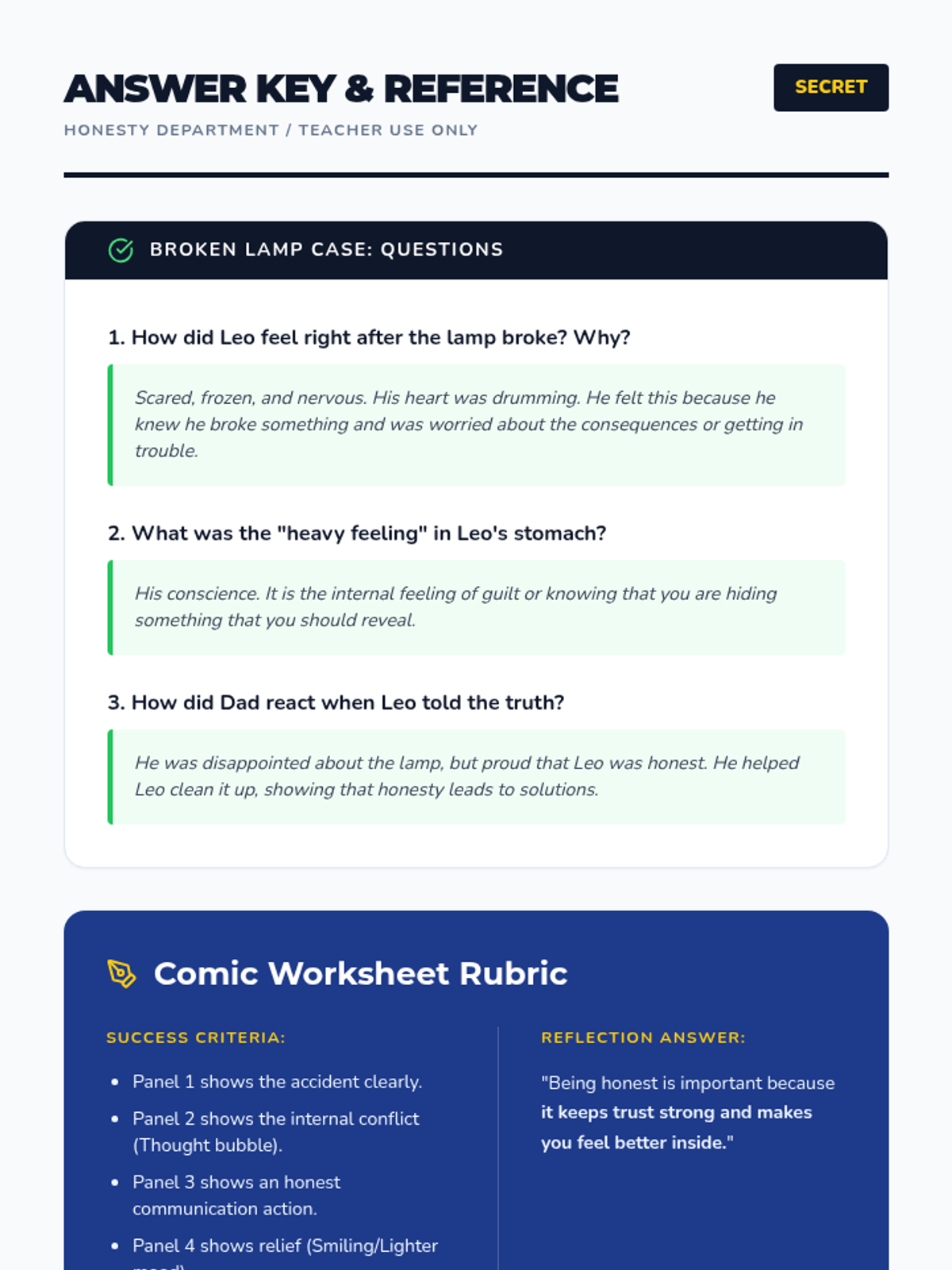
A 20-minute focused lesson on the importance of honesty after an accidental mistake, designed for a 3rd-grade student. Includes a social story, interactive slides, and a comic strip creation activity.
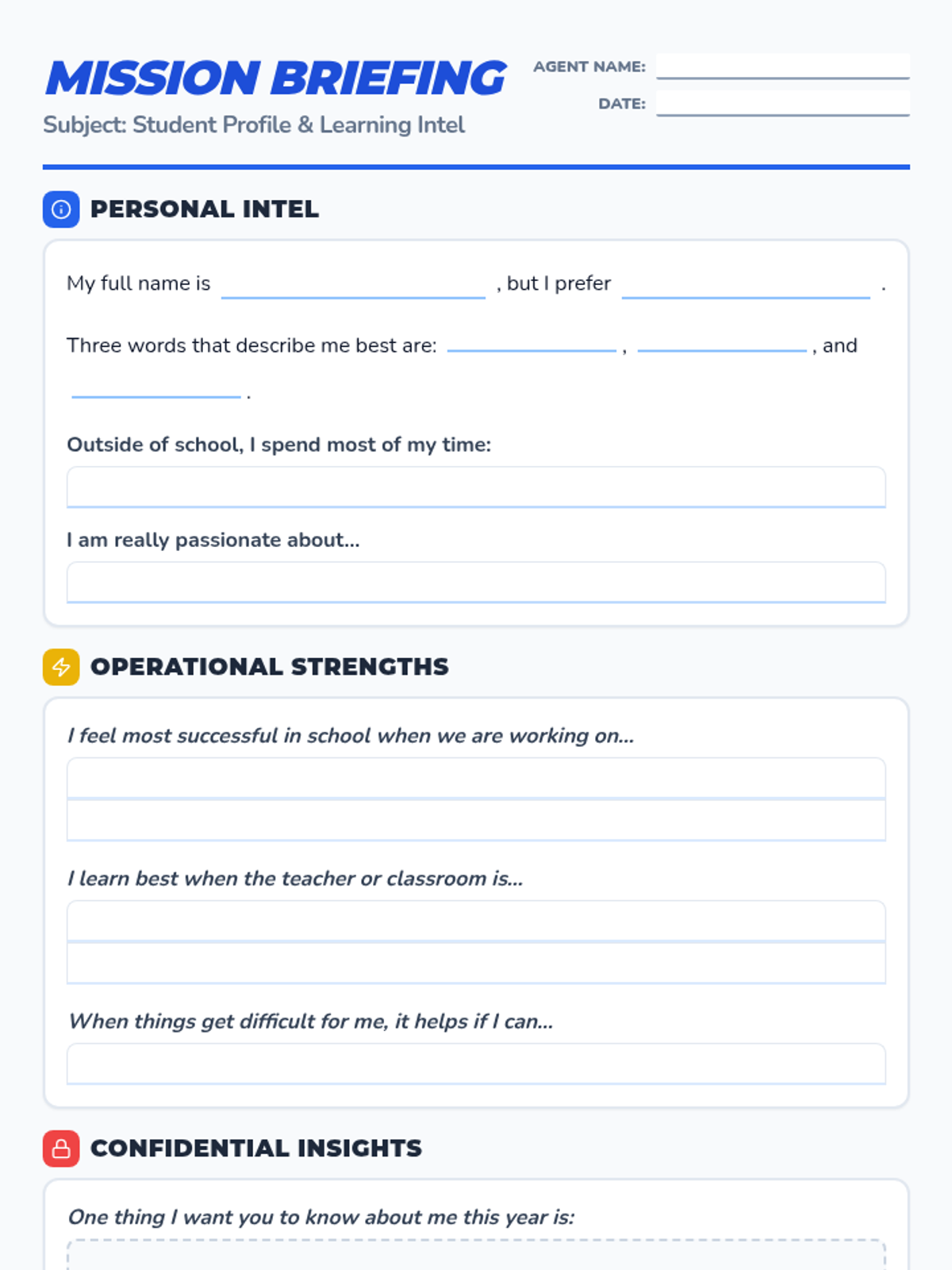
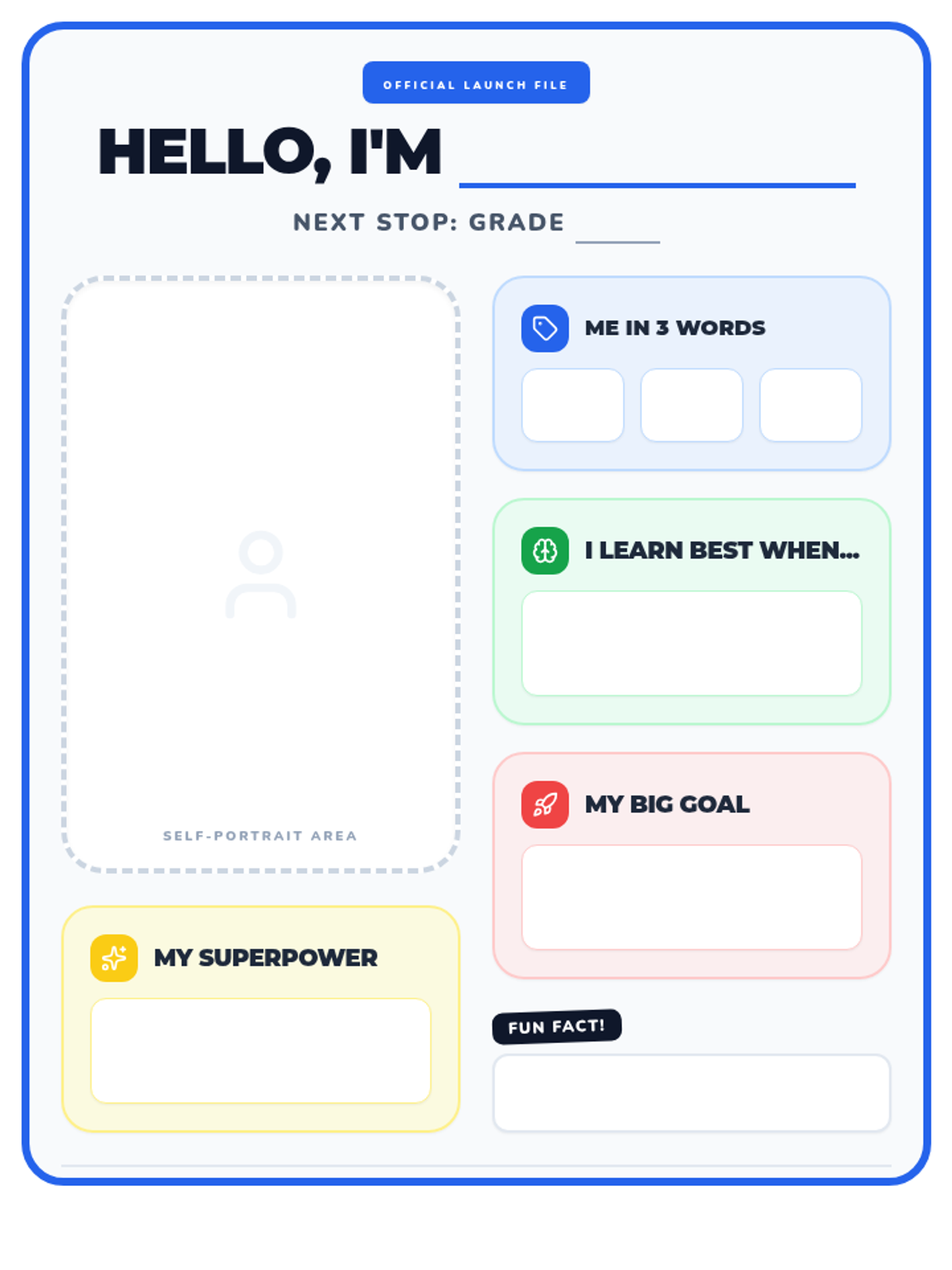
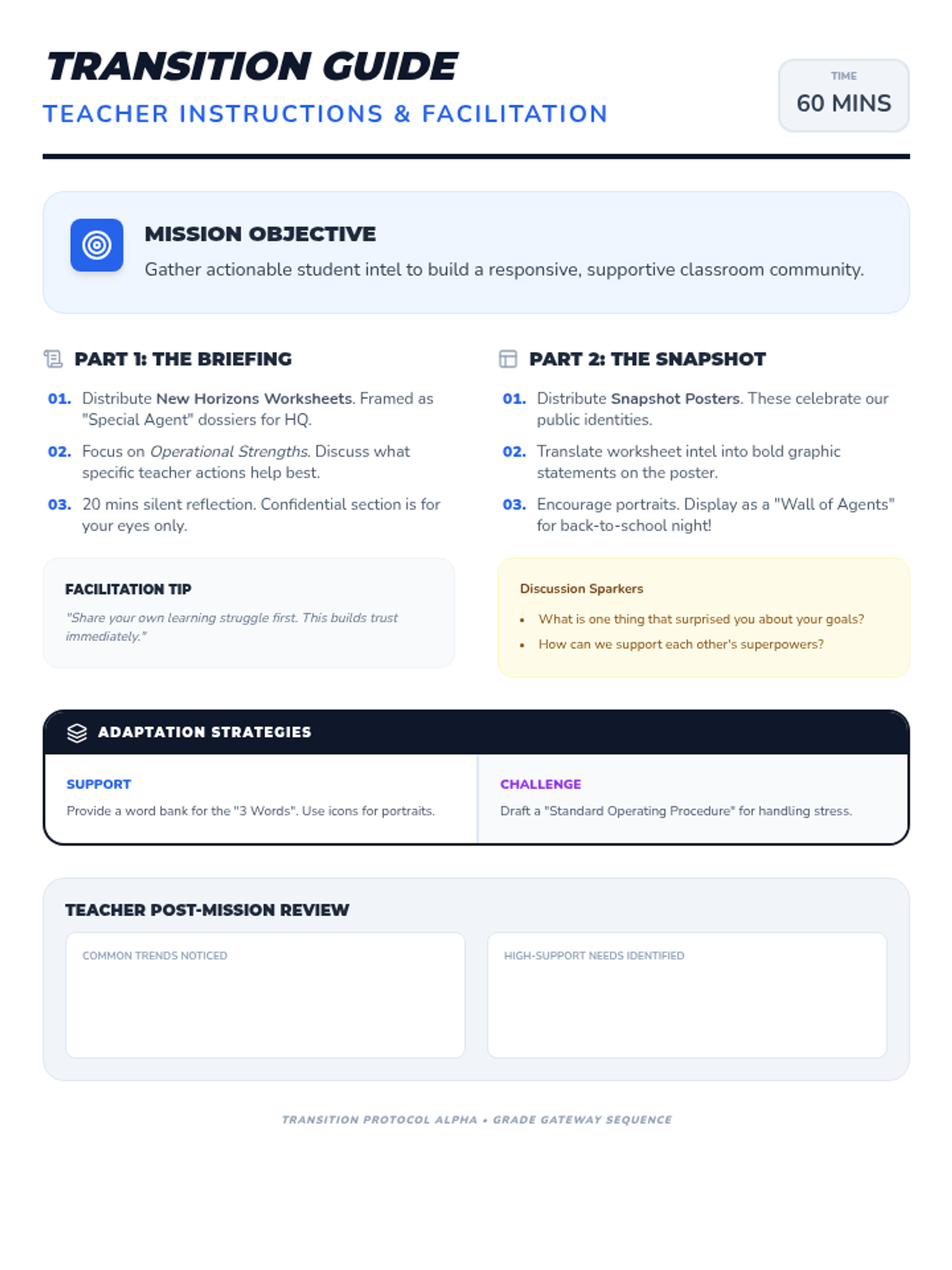
A lesson designed to help students reflect on their identity and learning preferences as they transition to a new school year, providing teachers with valuable personal insights.
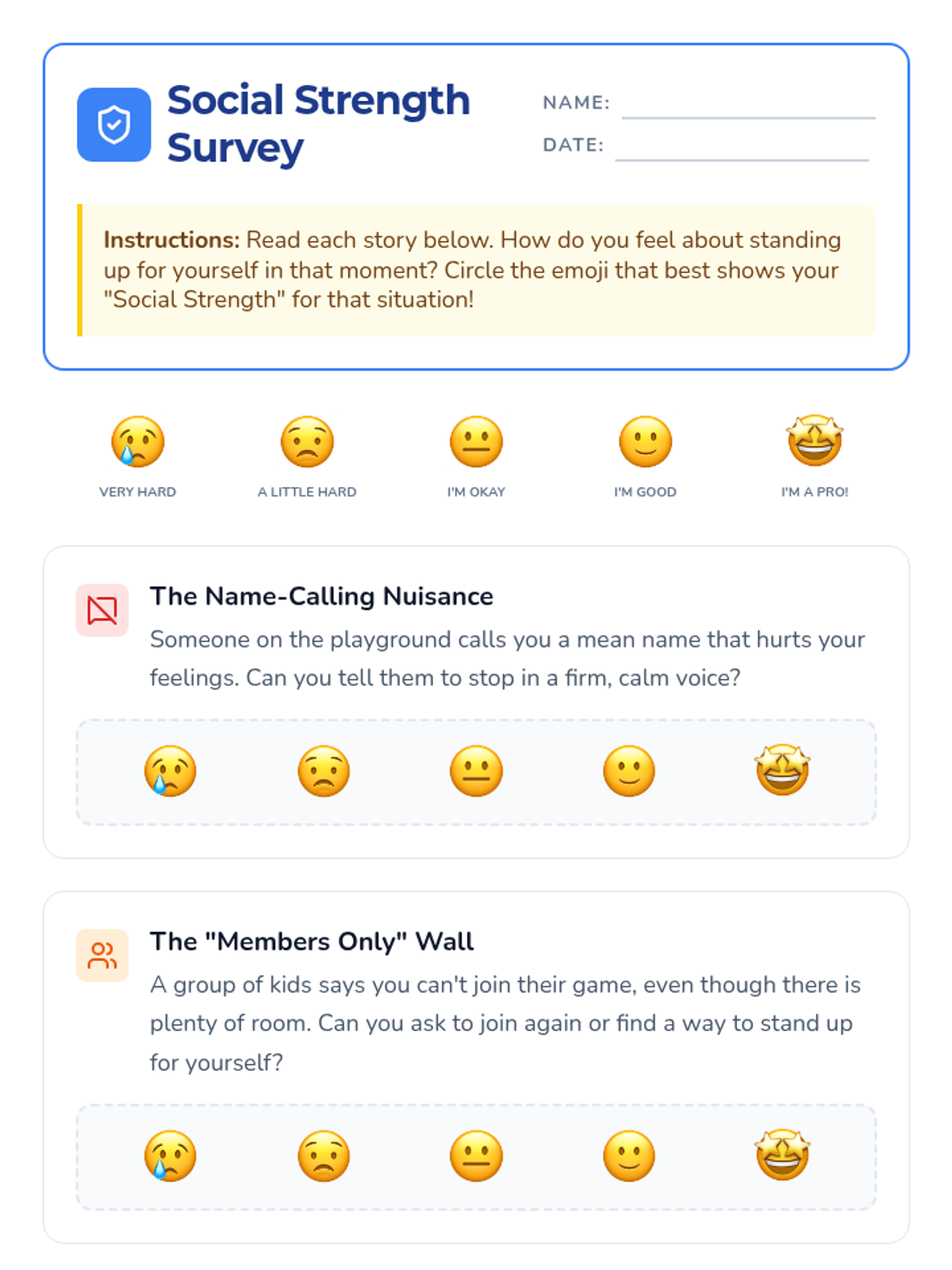
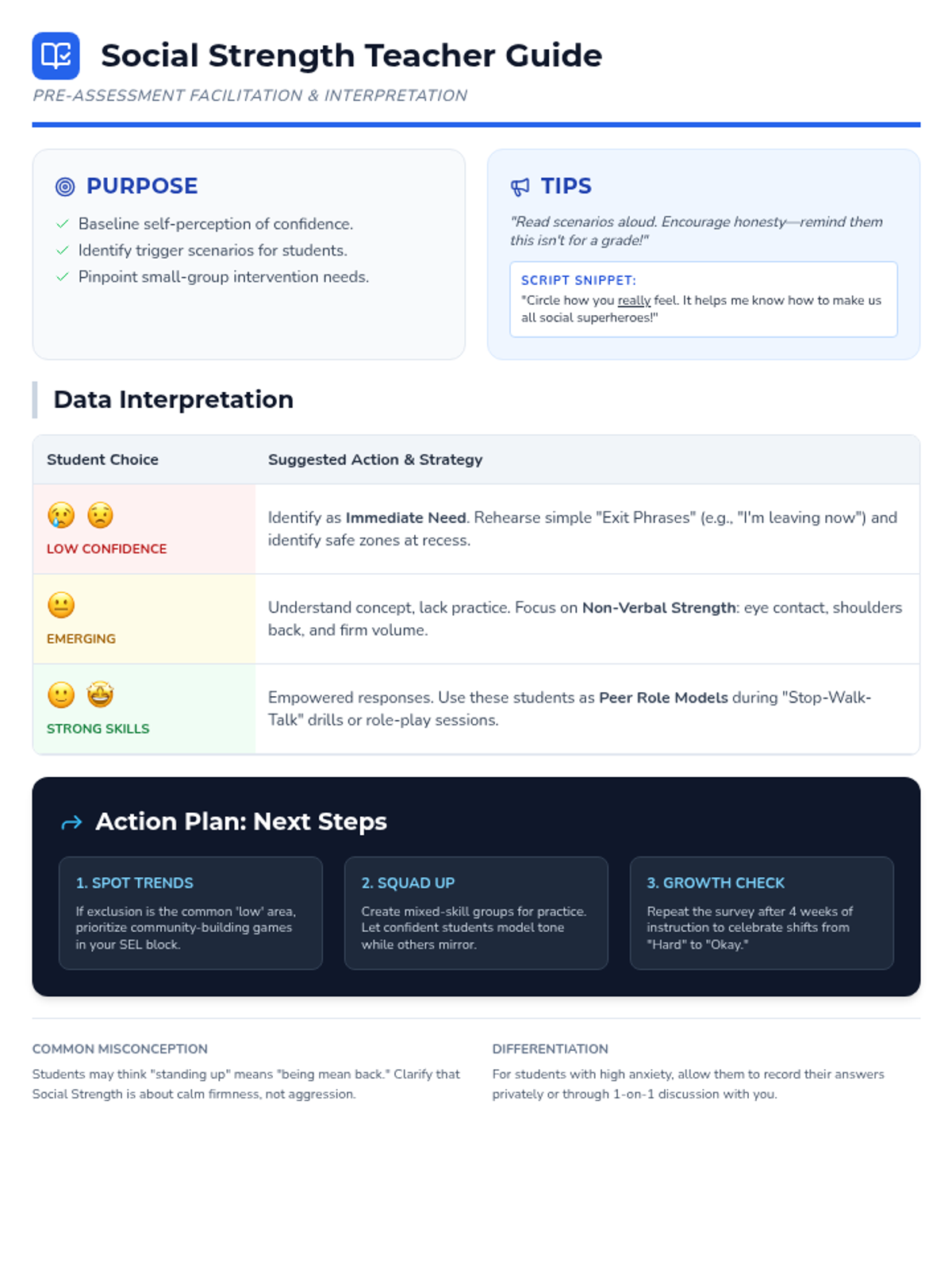
This lesson introduces 3rd grade students to the concept of standing up for themselves in social situations, beginning with a visual self-assessment of their current skills and comfort levels.
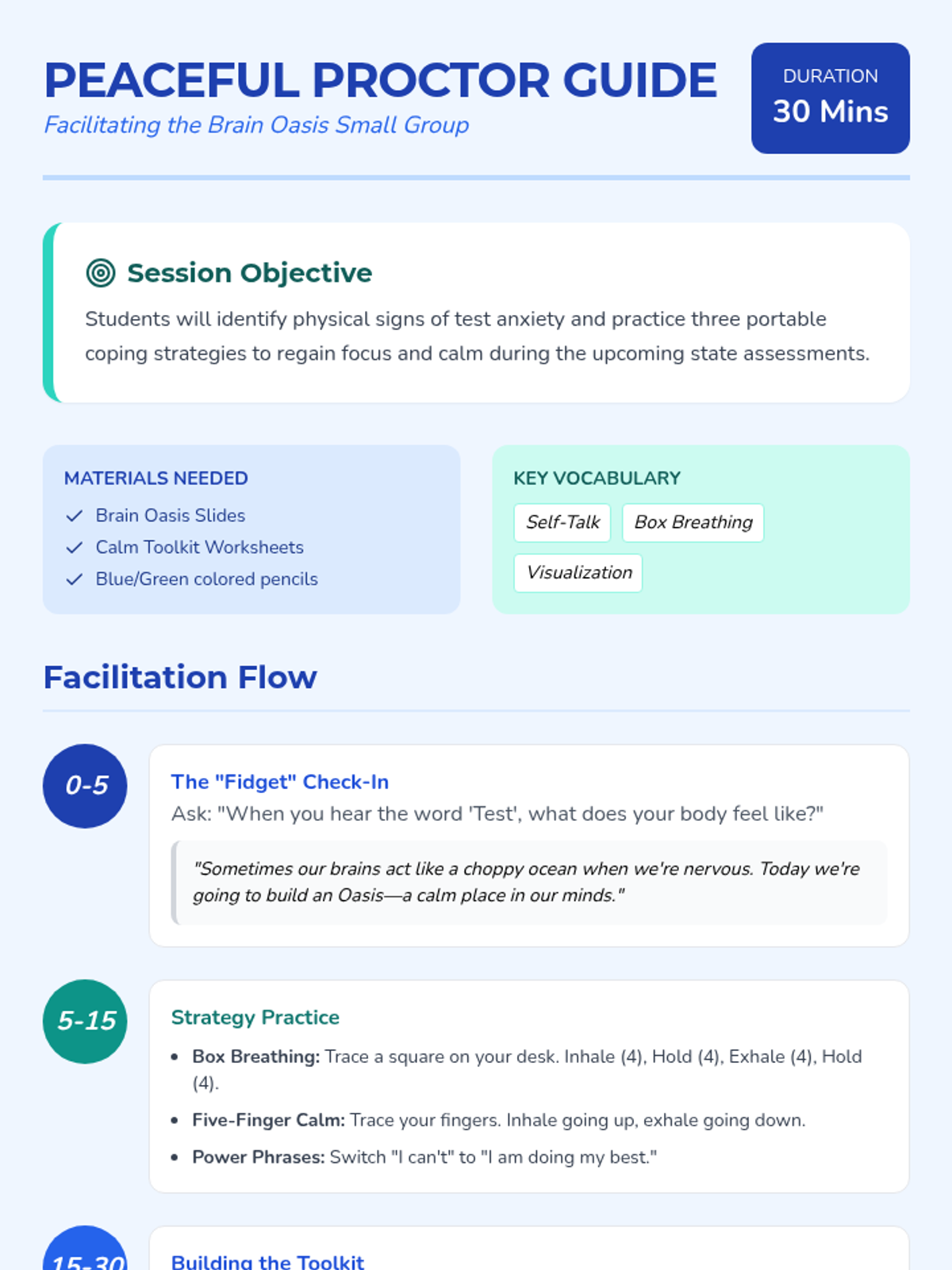
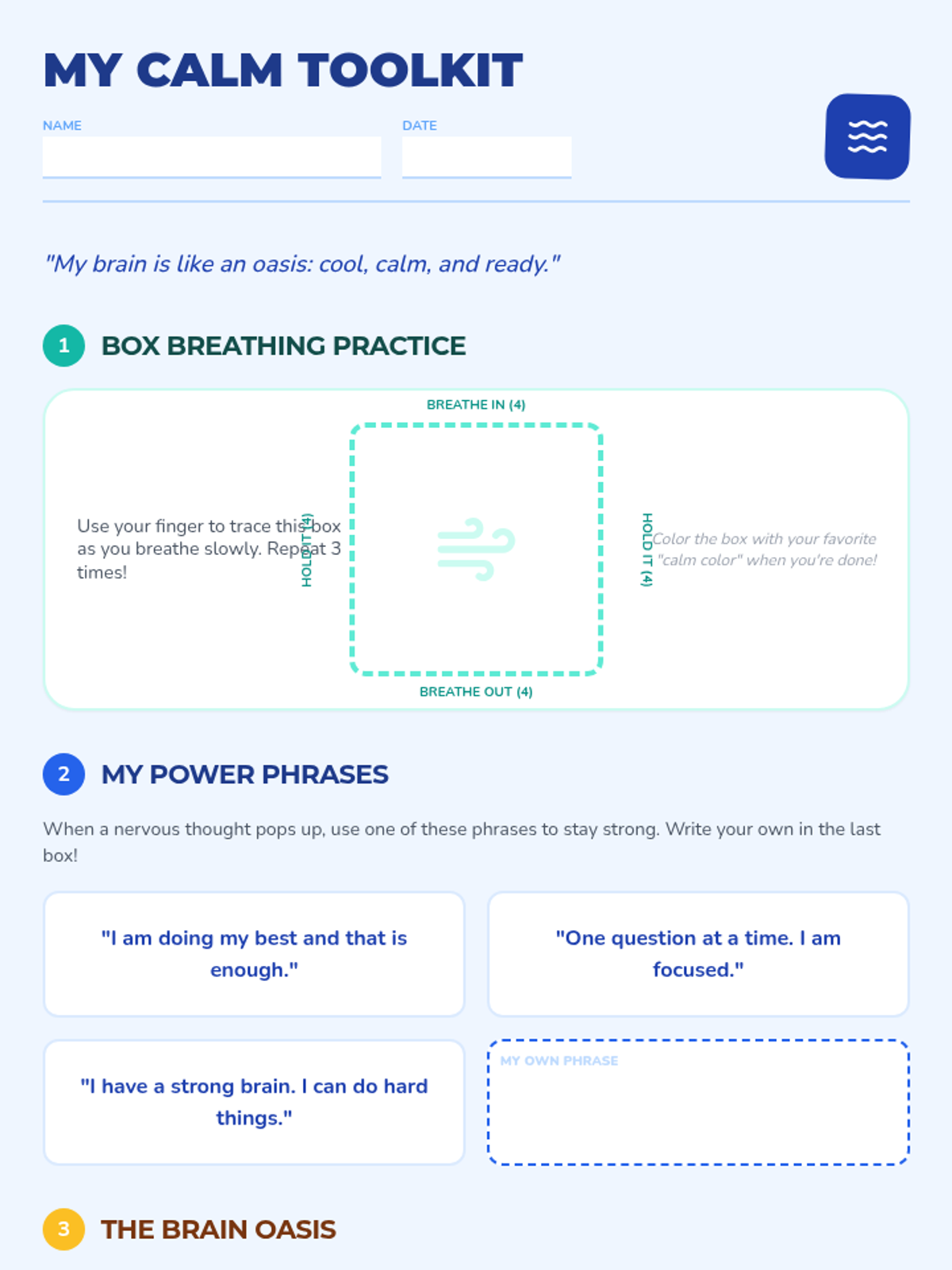
A small-group session focused on three core 'cool-down' strategies to use during high-stakes testing: Box Breathing, the Five-Finger Calm, and Power Phrases.
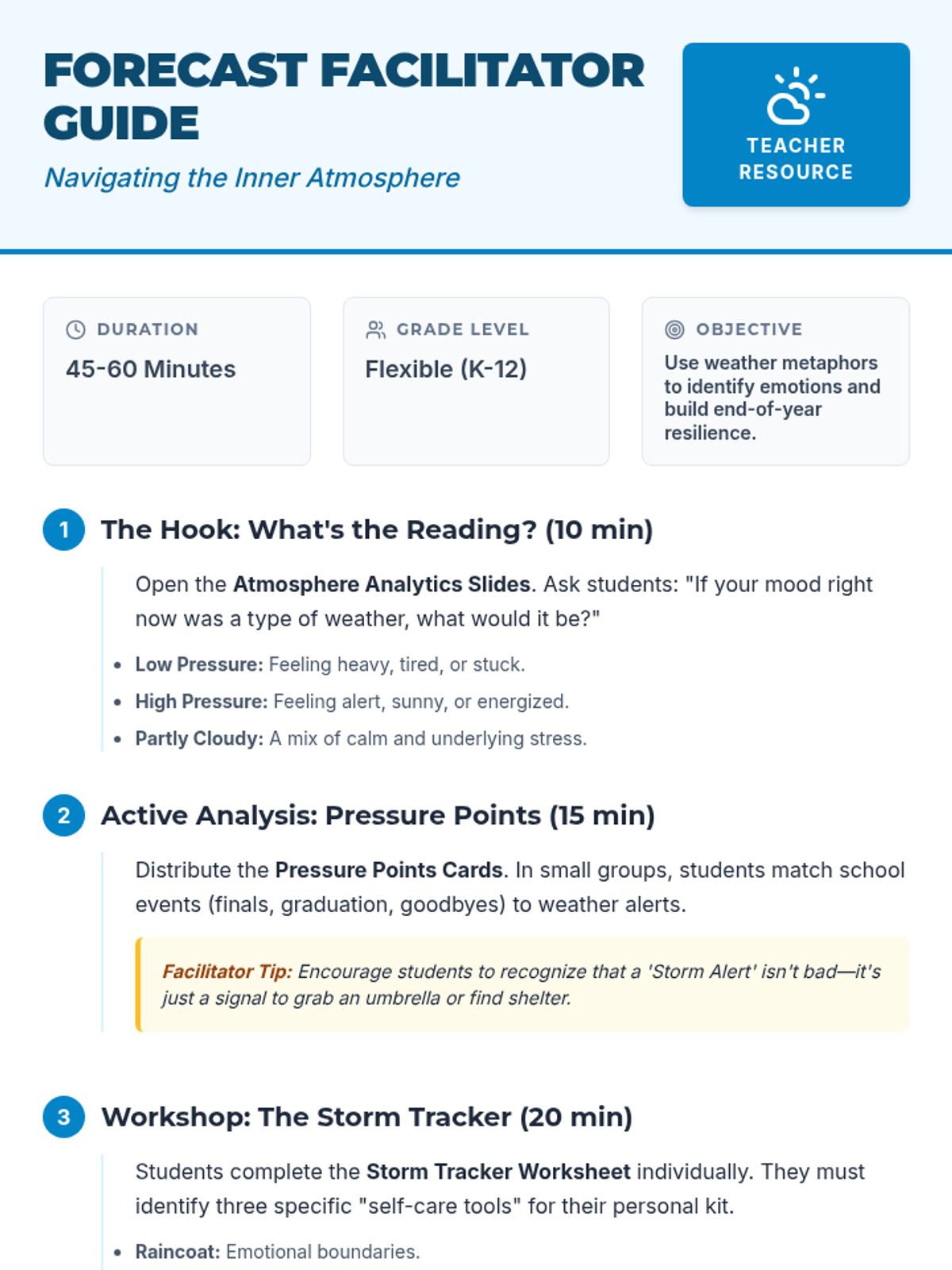
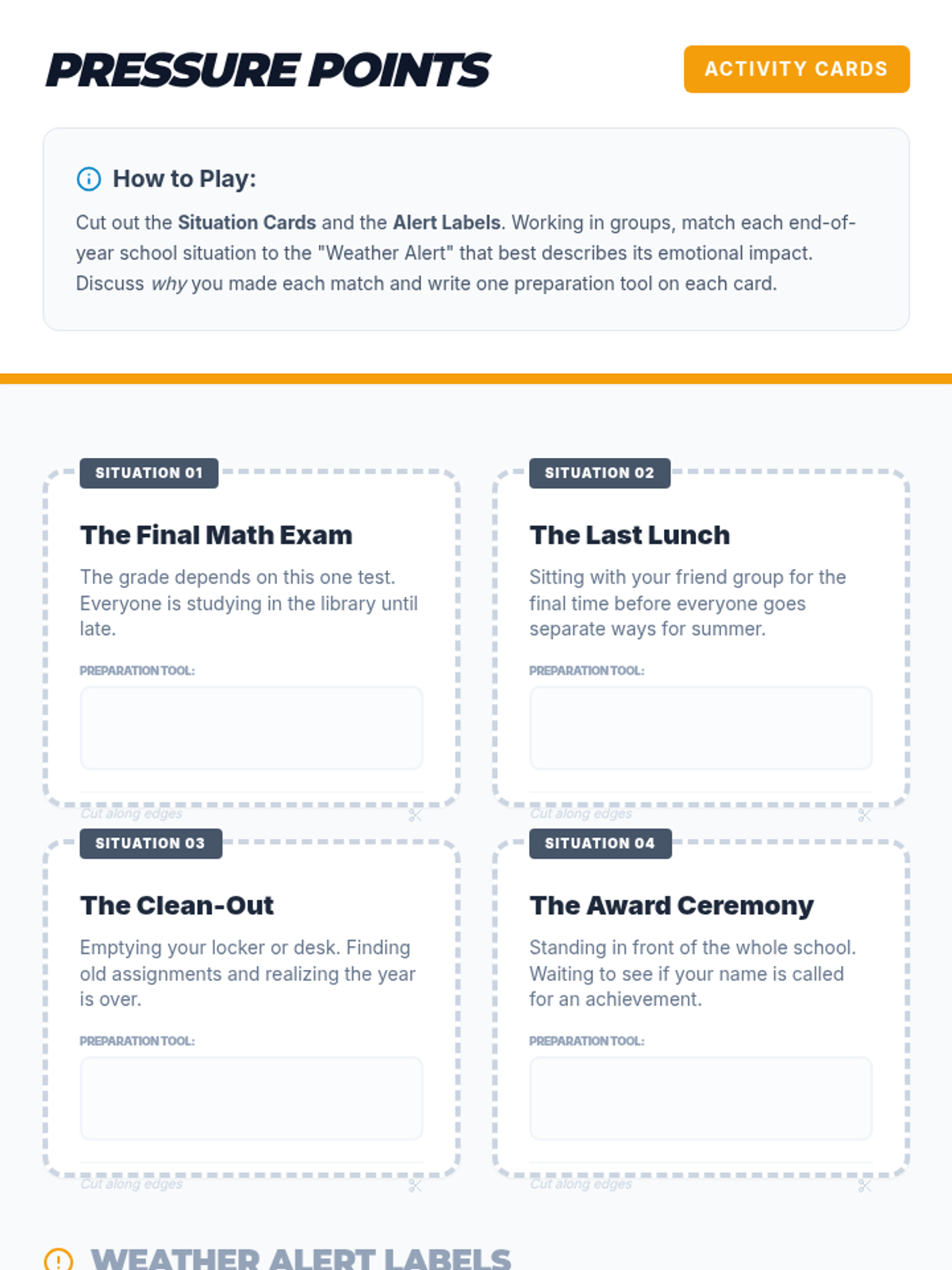
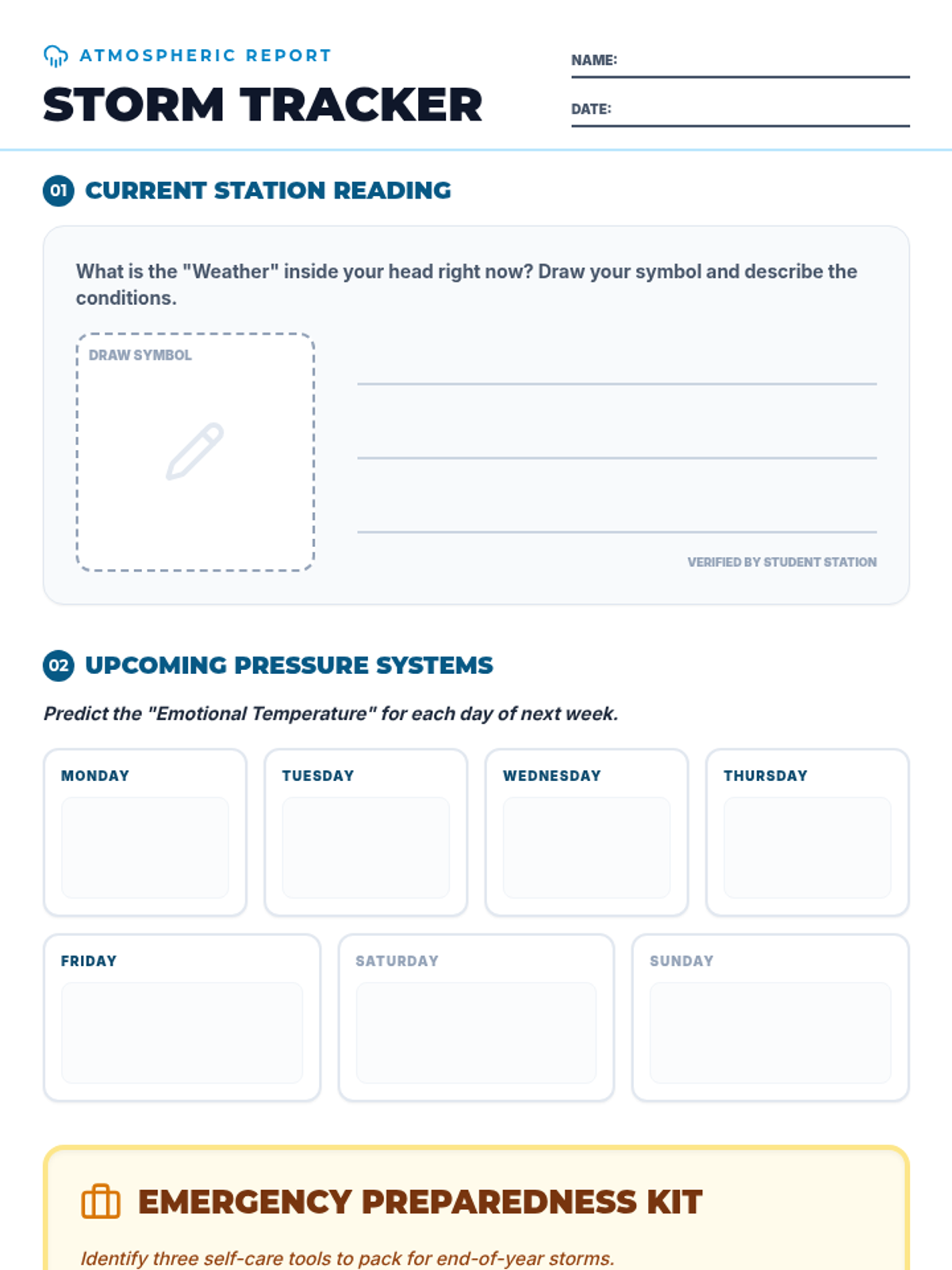
A social-emotional learning lesson where students use meteorological metaphors to map out their emotional states and prepare for the pressures of the final school weeks.
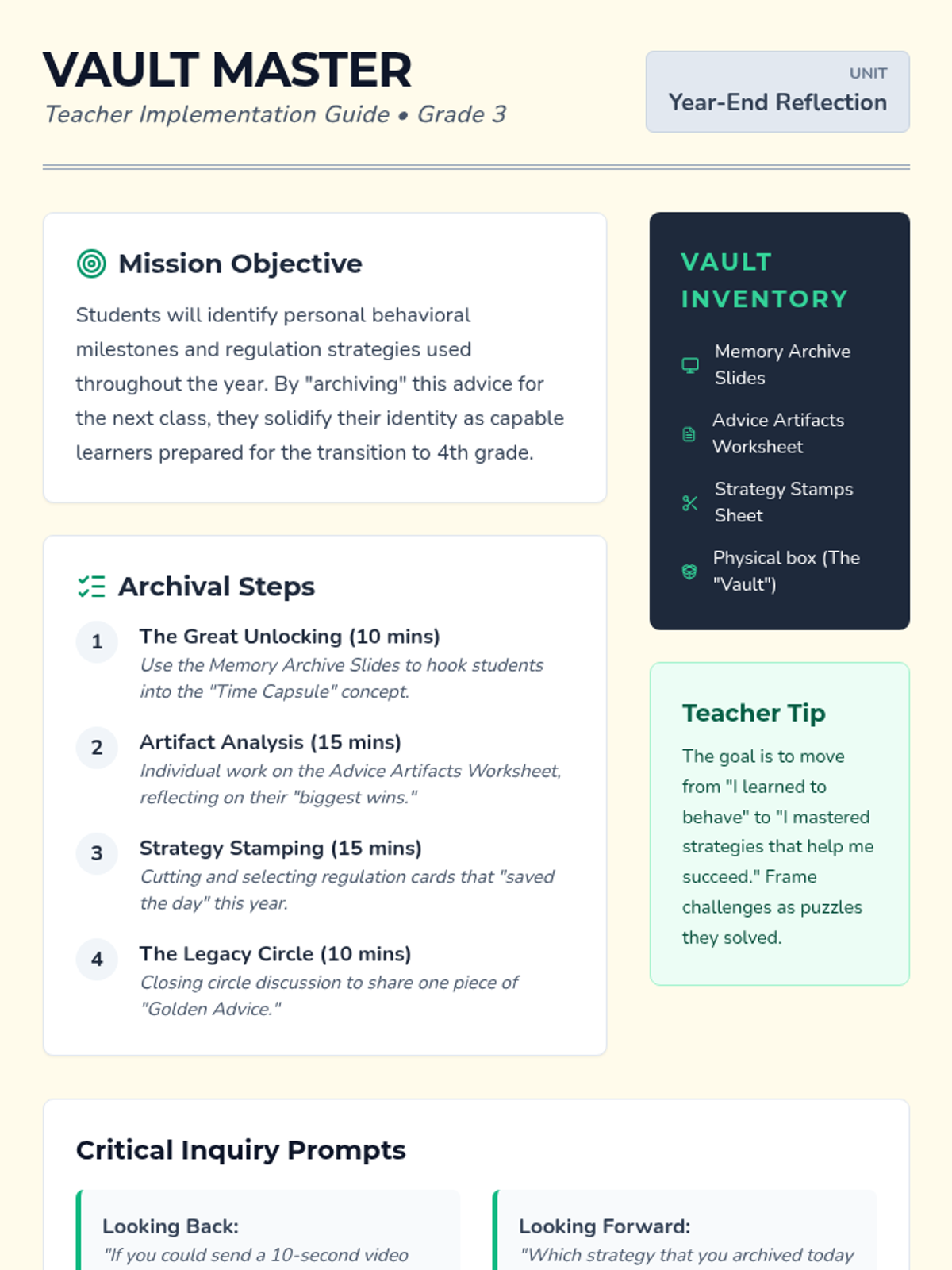
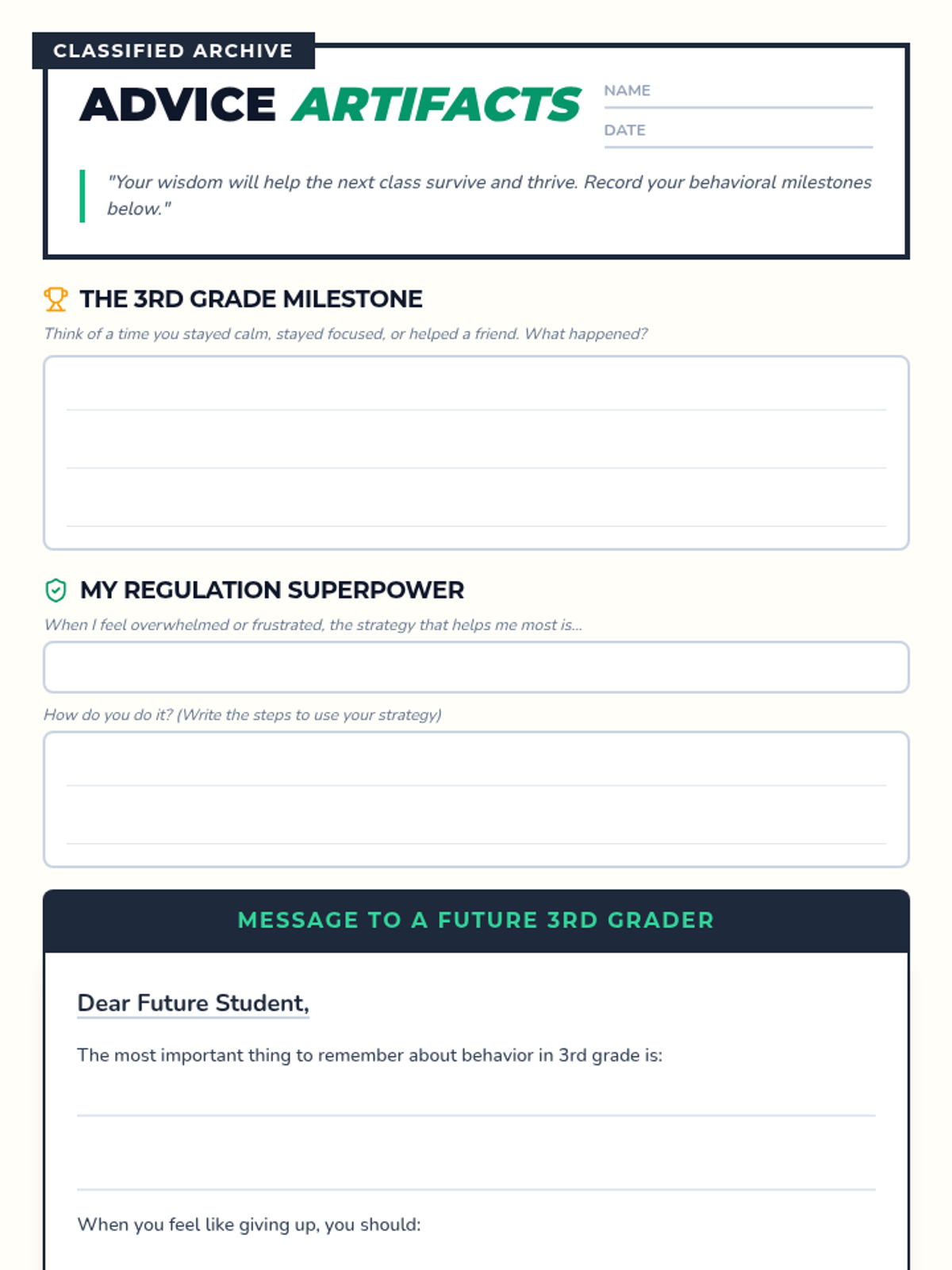
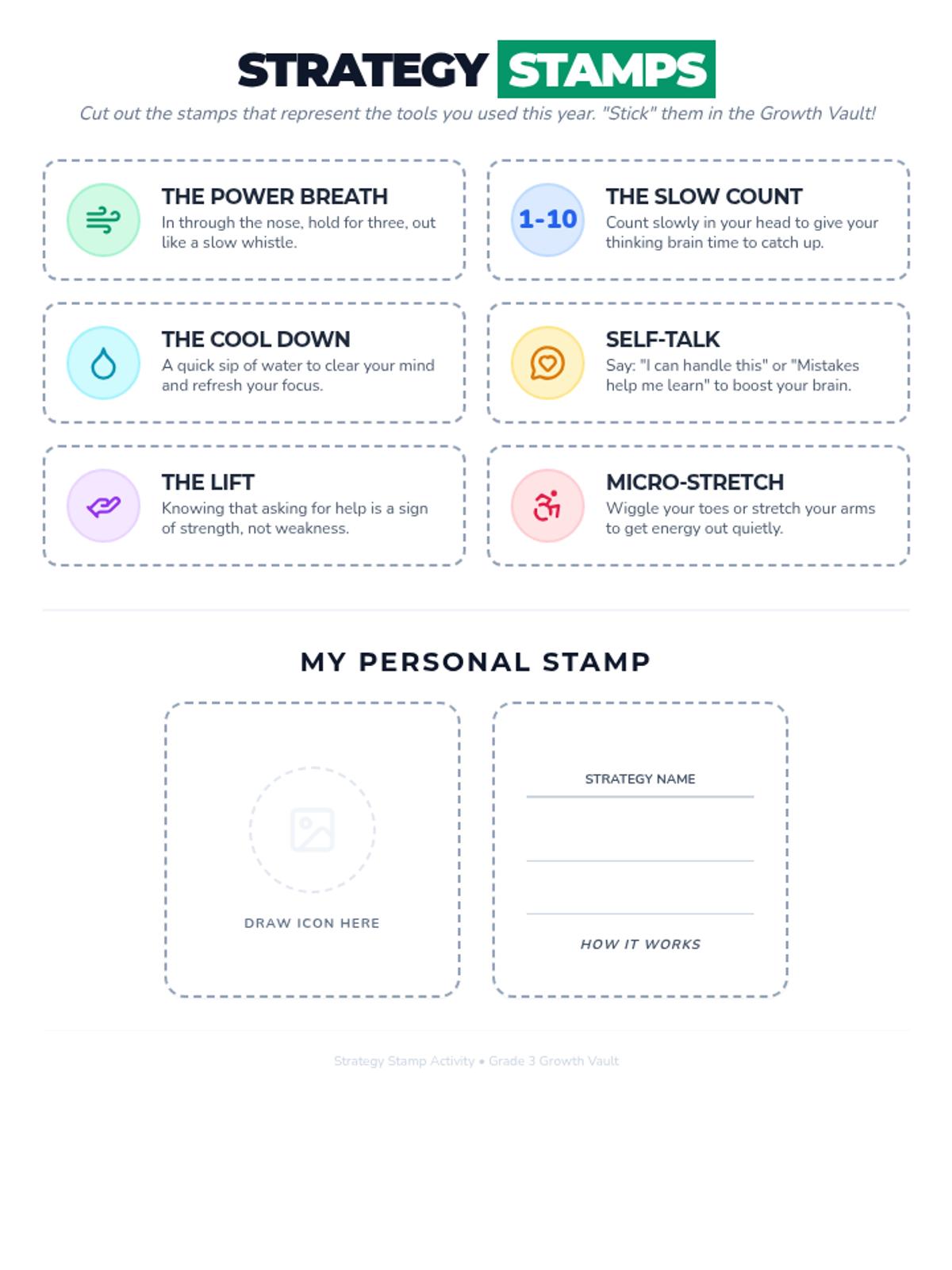
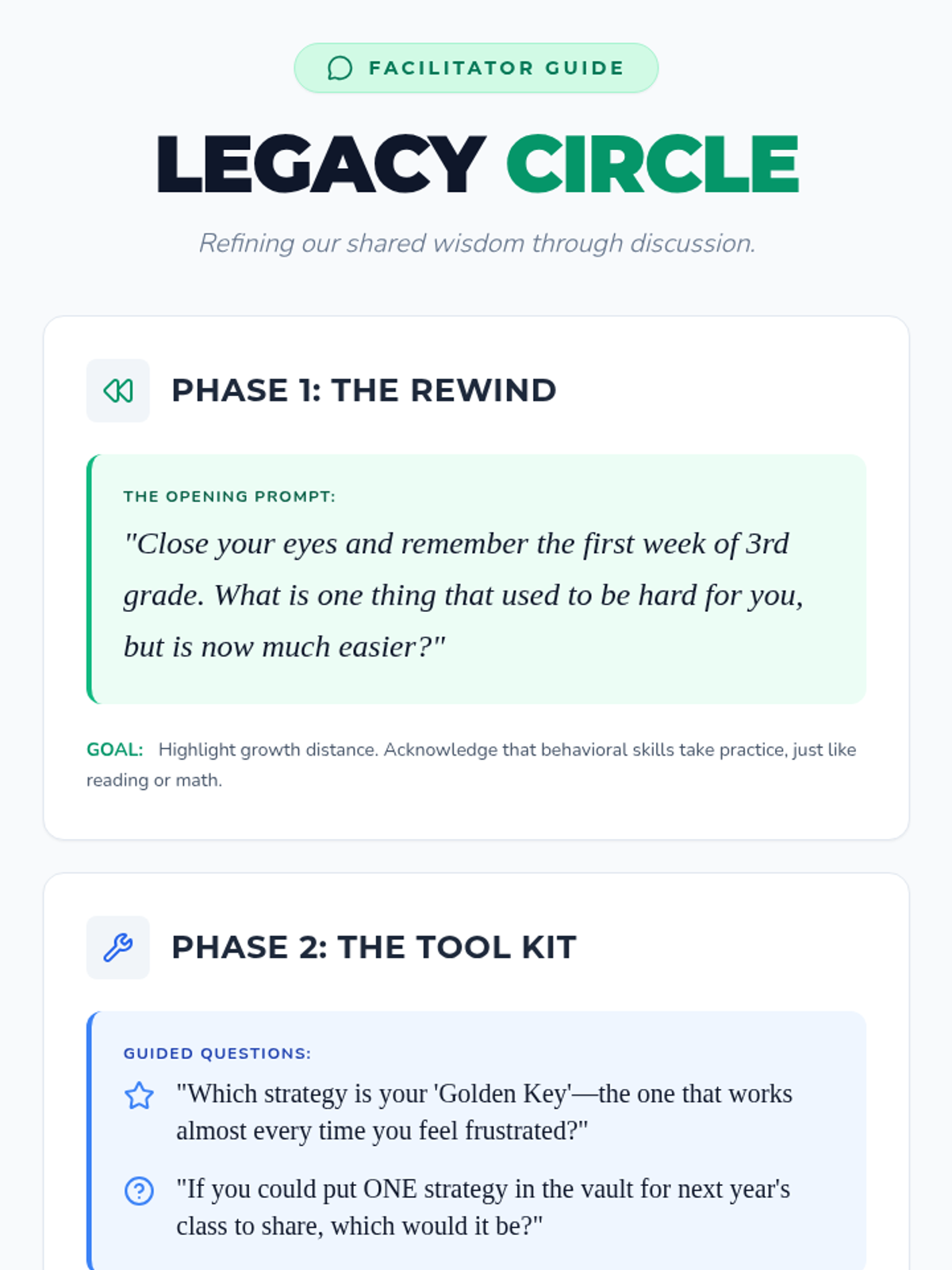
A reflective lesson where 3rd graders archive their behavioral growth and regulation strategies to pass on to future students, fostering self-efficacy and closure.
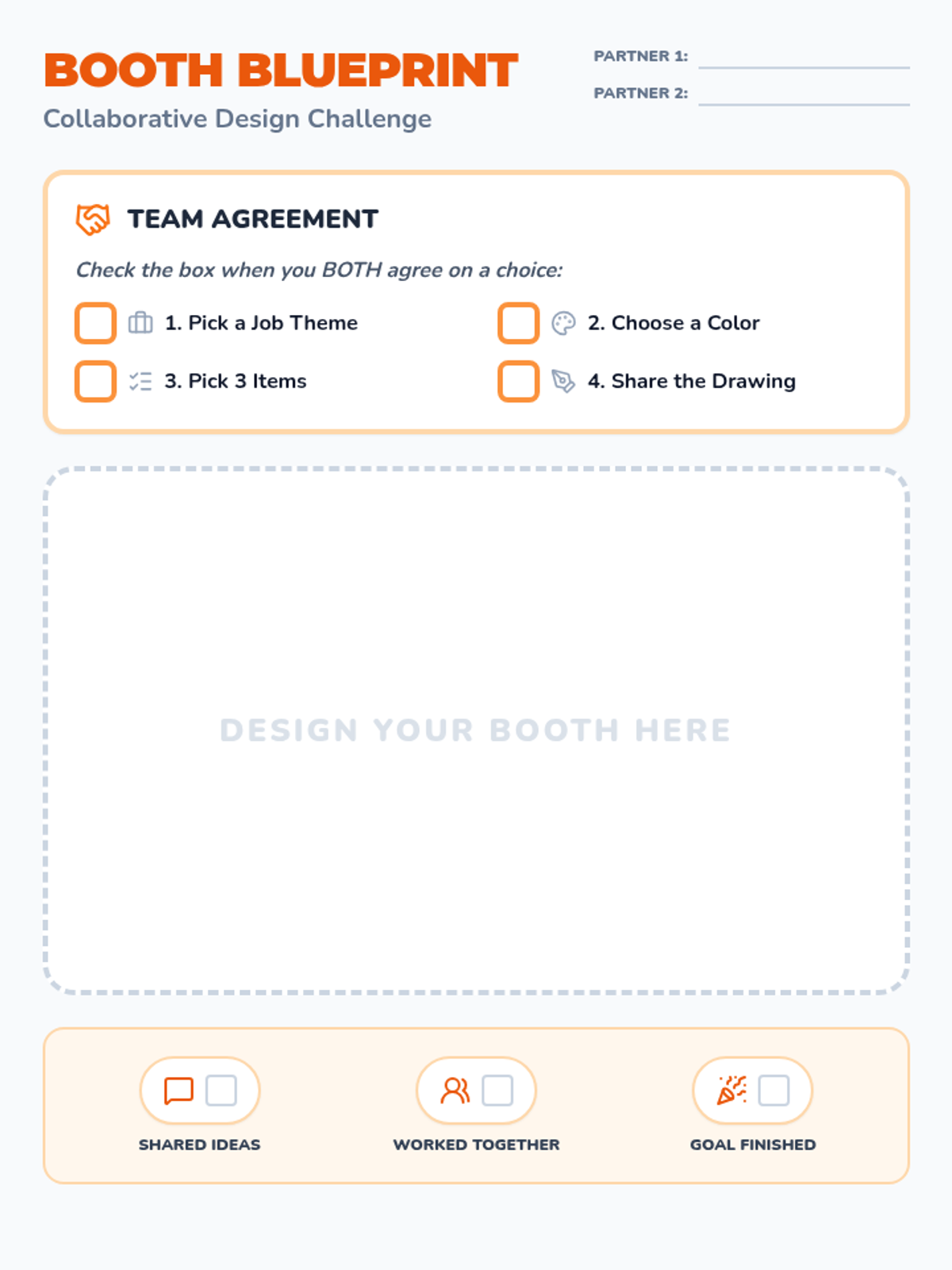
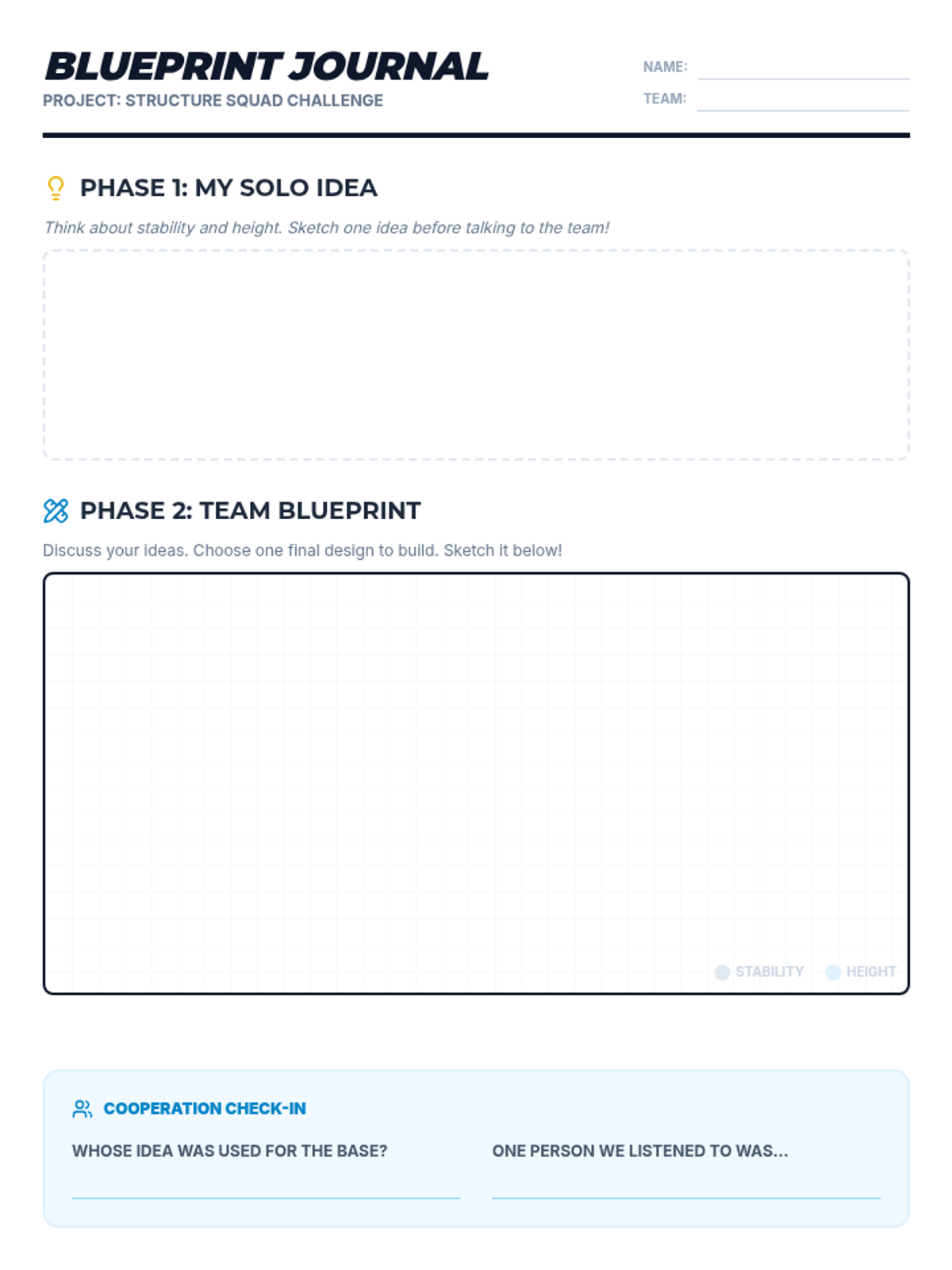
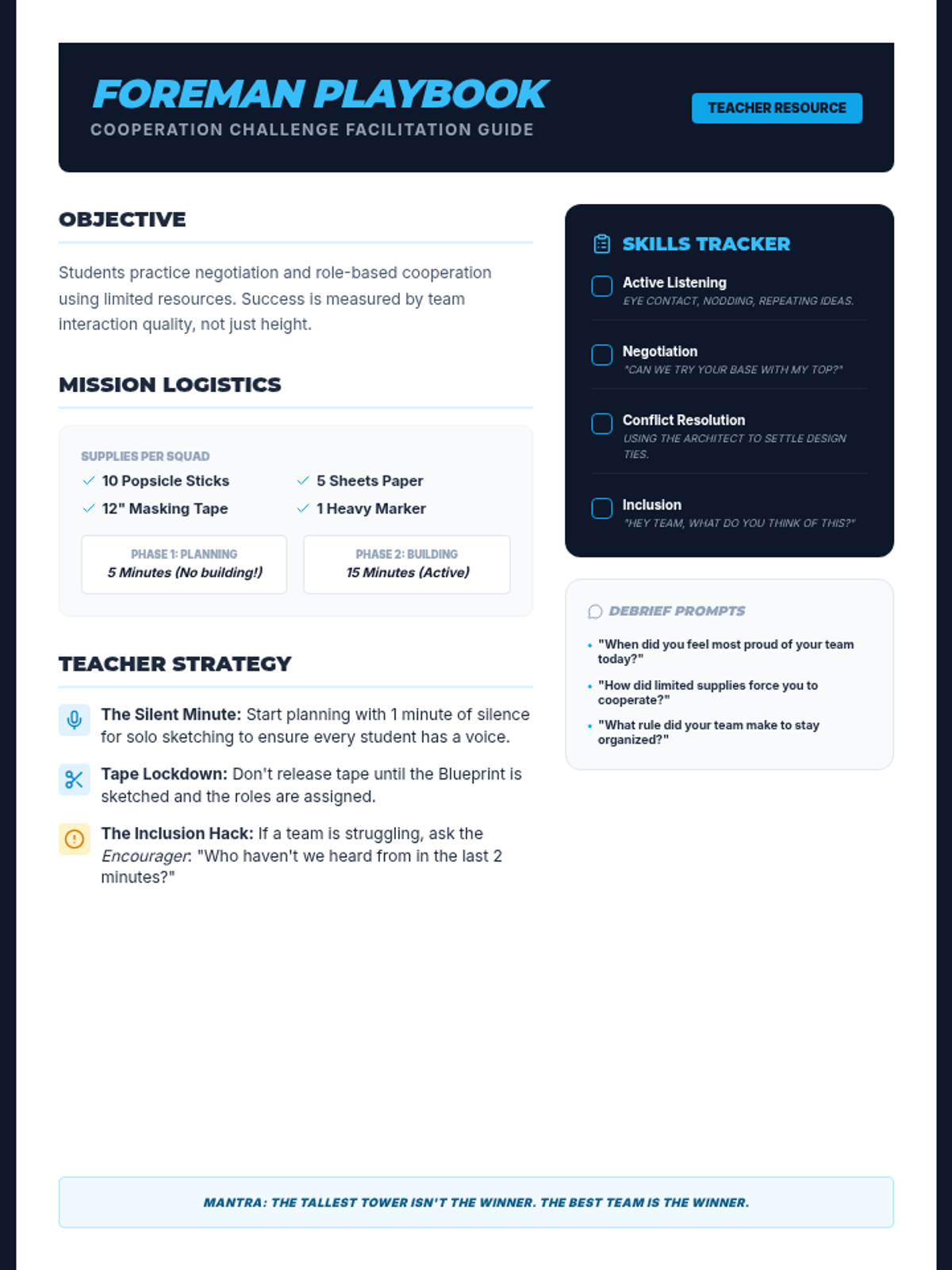
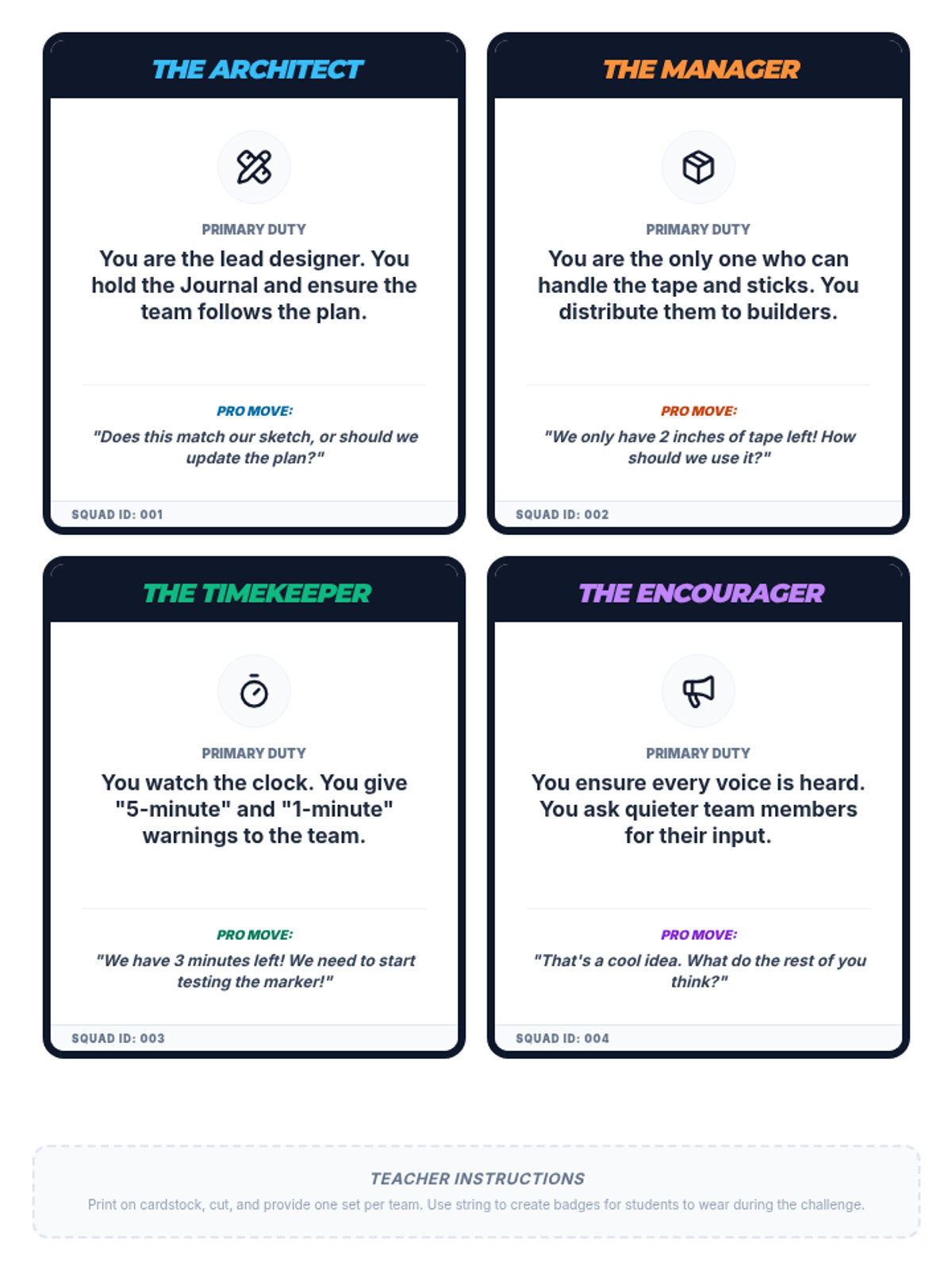
A hands-on engineering challenge focused on cooperation and teamwork using limited supplies. Students must work together to design and build the tallest free-standing structure using only paper, tape, and popsicle sticks.
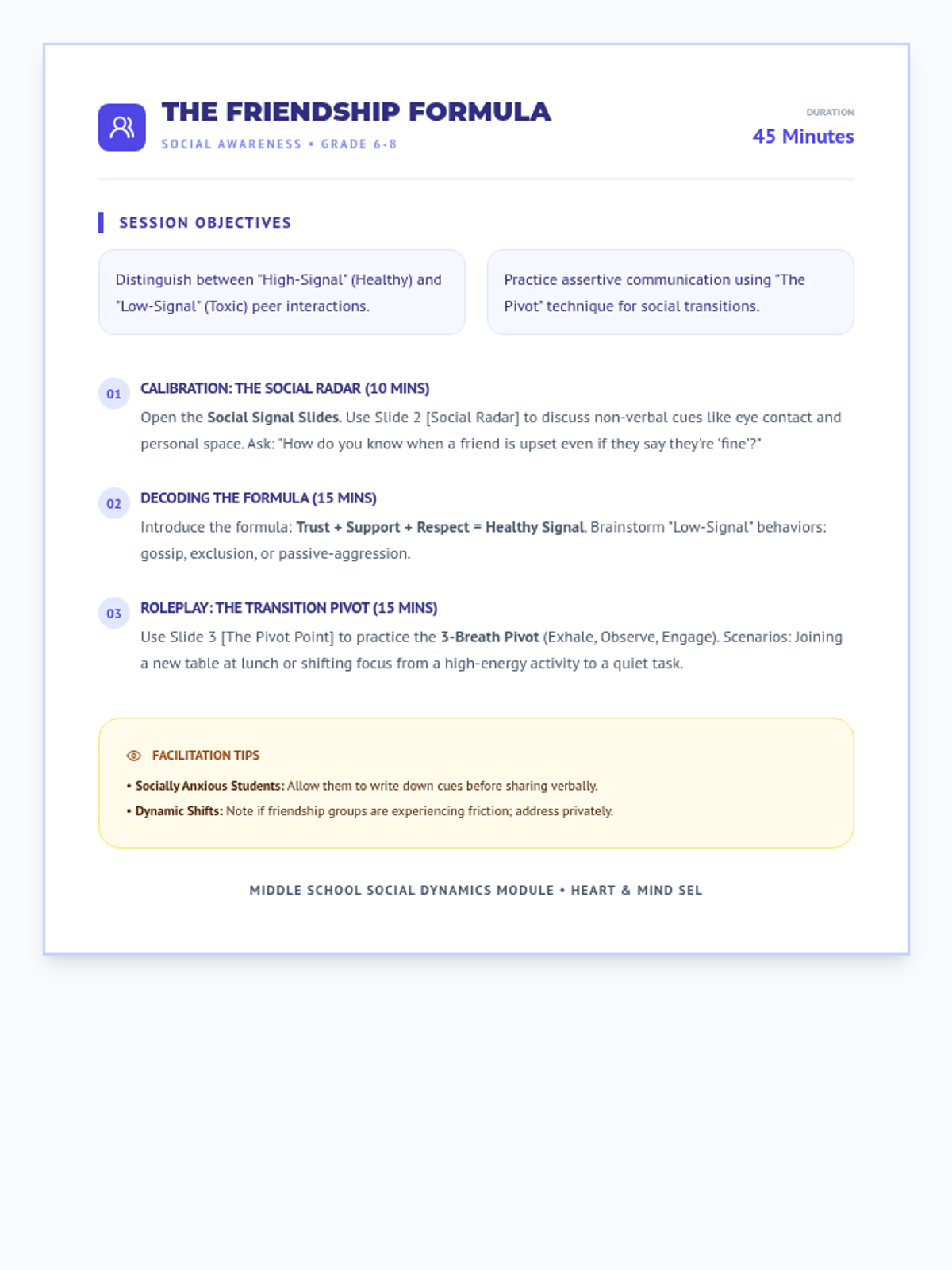
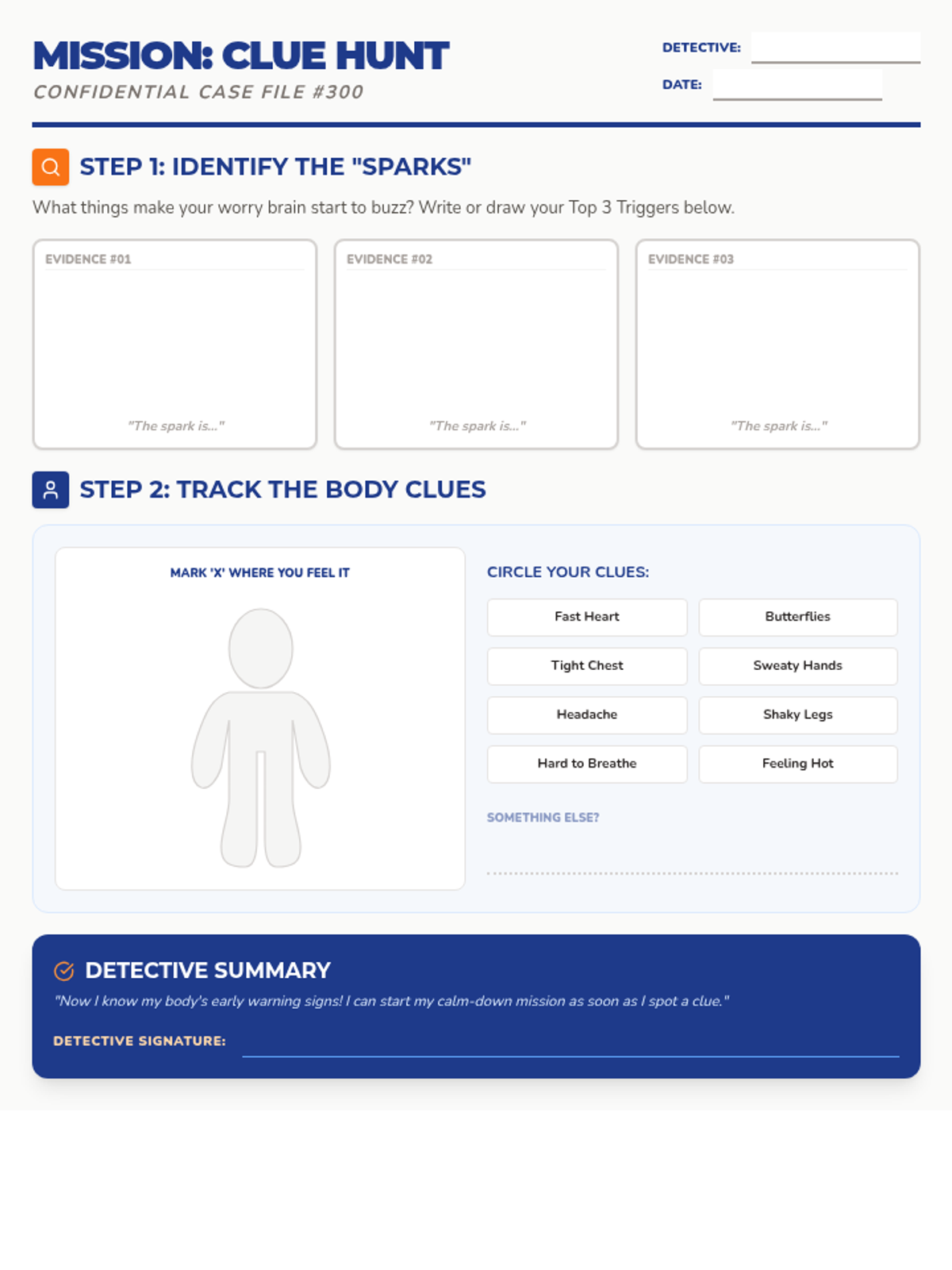
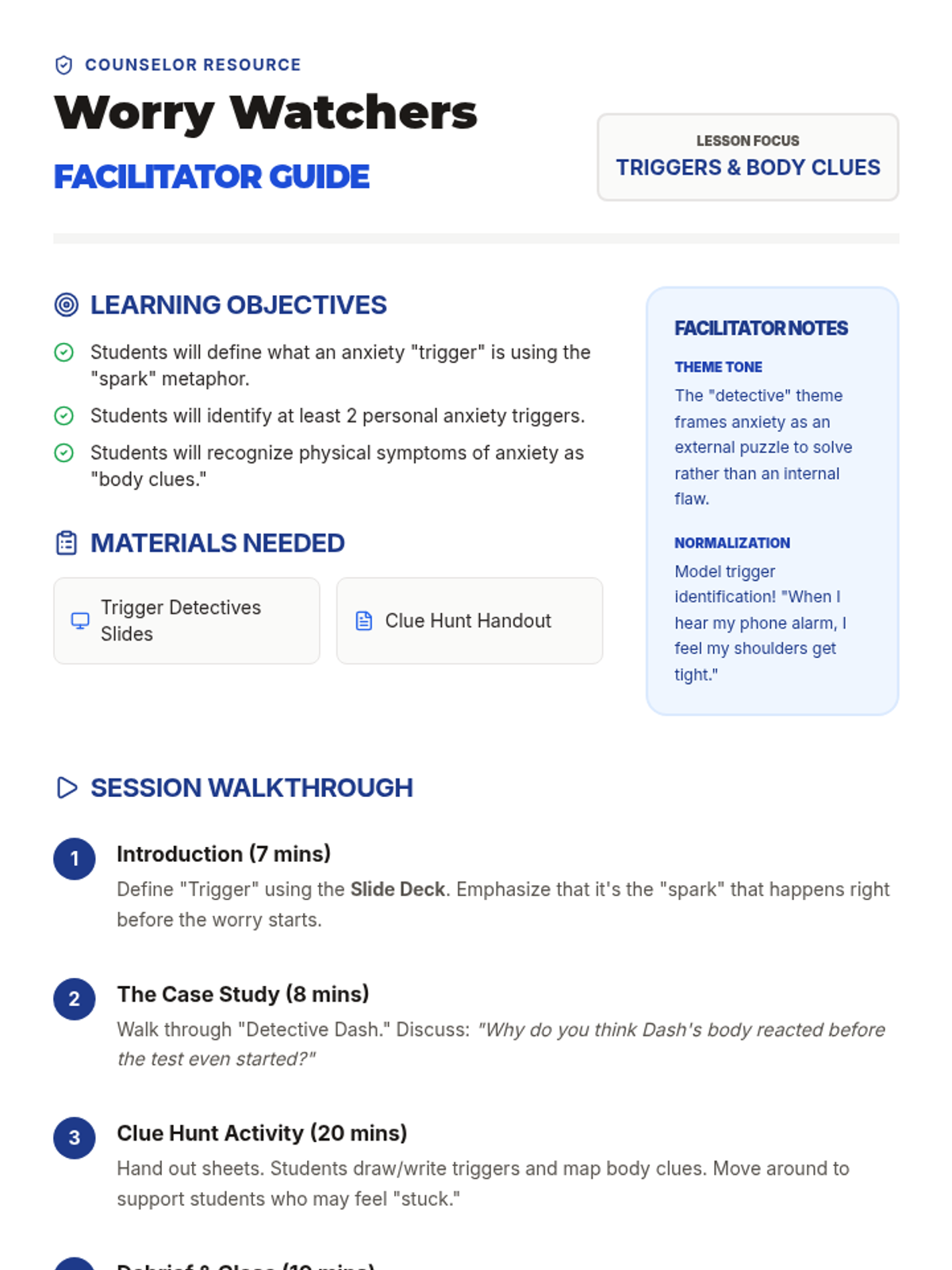
A small group counseling session for 3rd graders focused on identifying personal anxiety triggers and physical 'clues' in the body using a detective-themed approach.
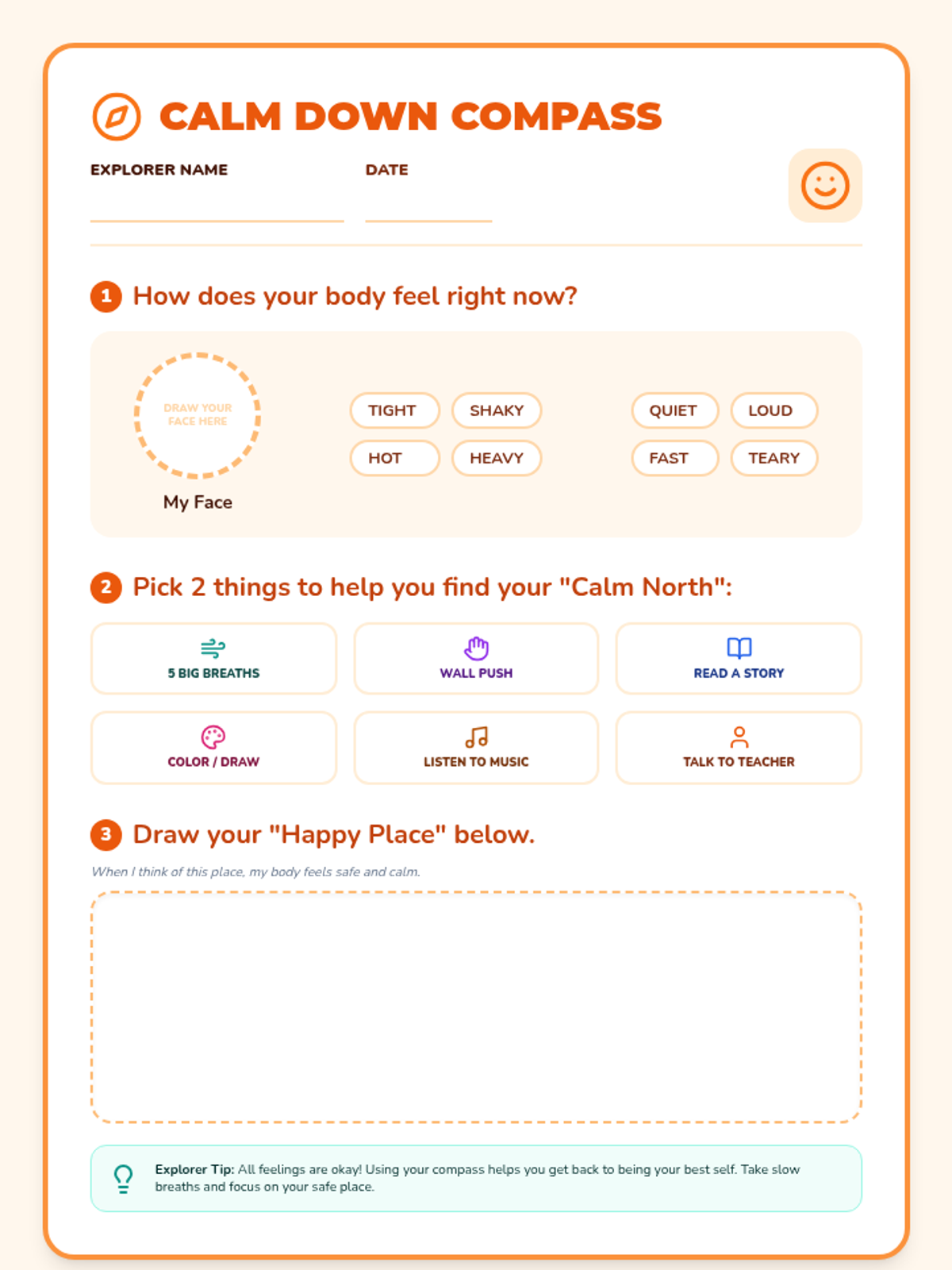
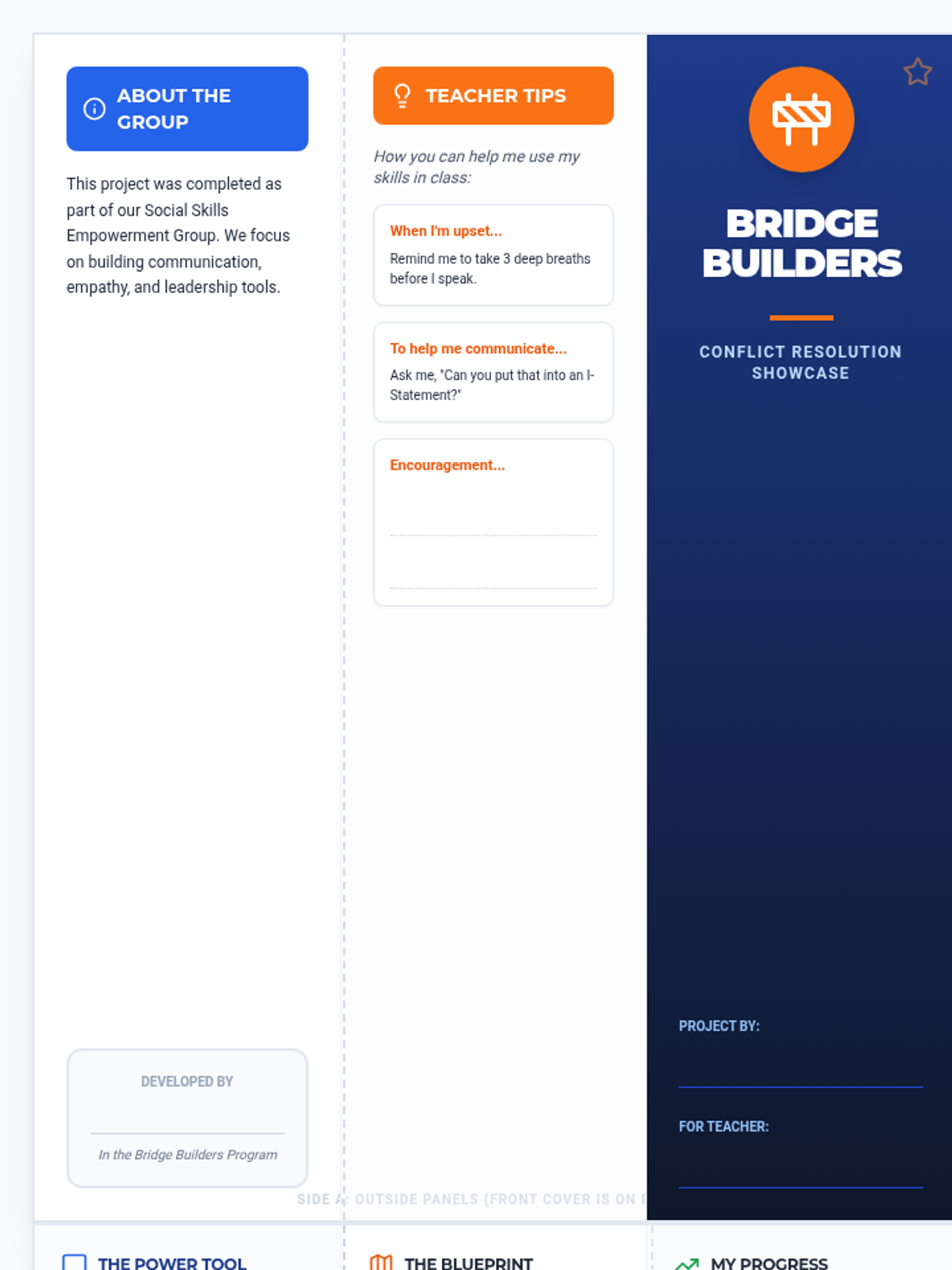
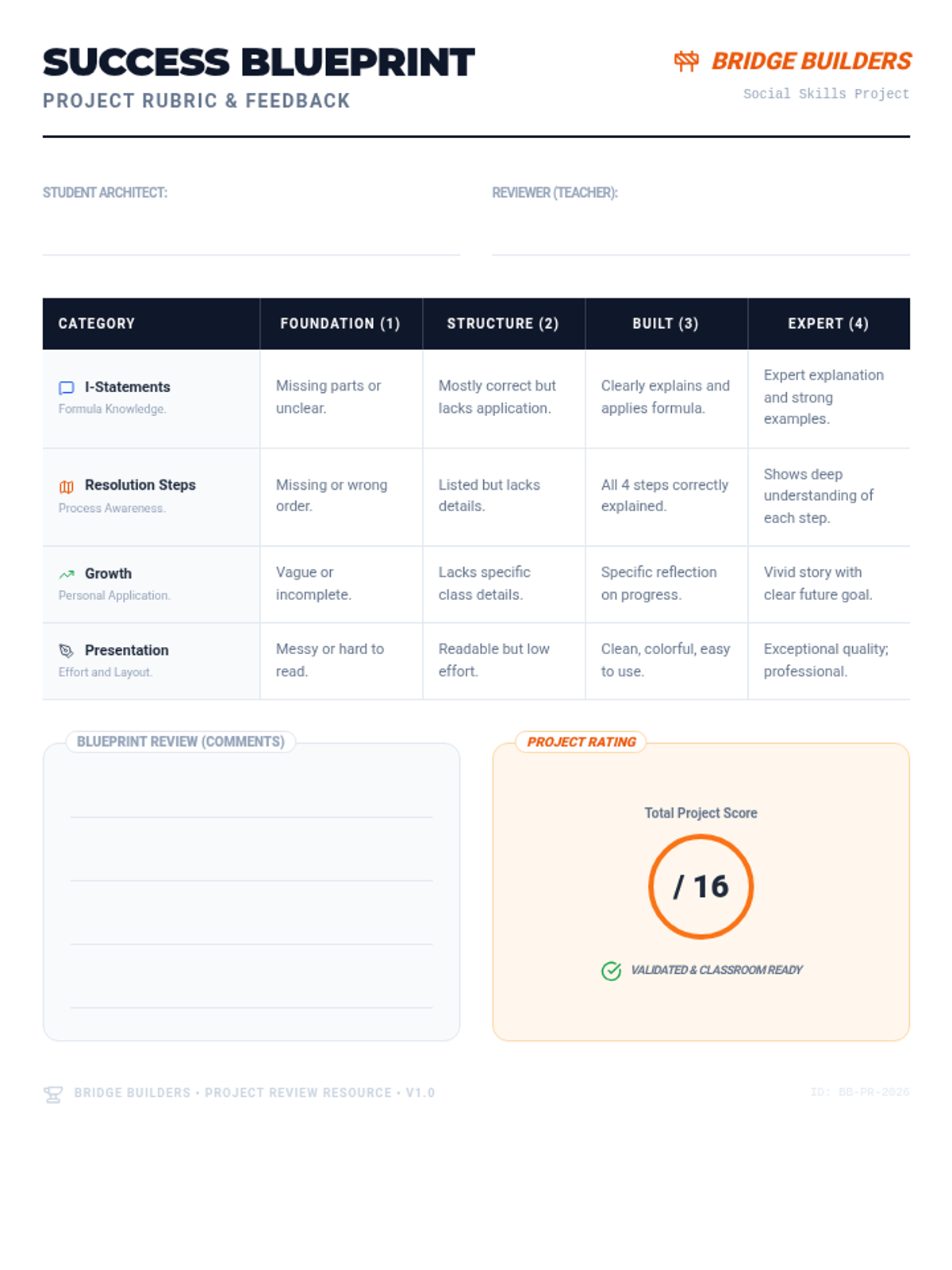
A project-based lesson where students create a trifold brochure to demonstrate their mastery of conflict resolution and I-statements to their classroom teacher.
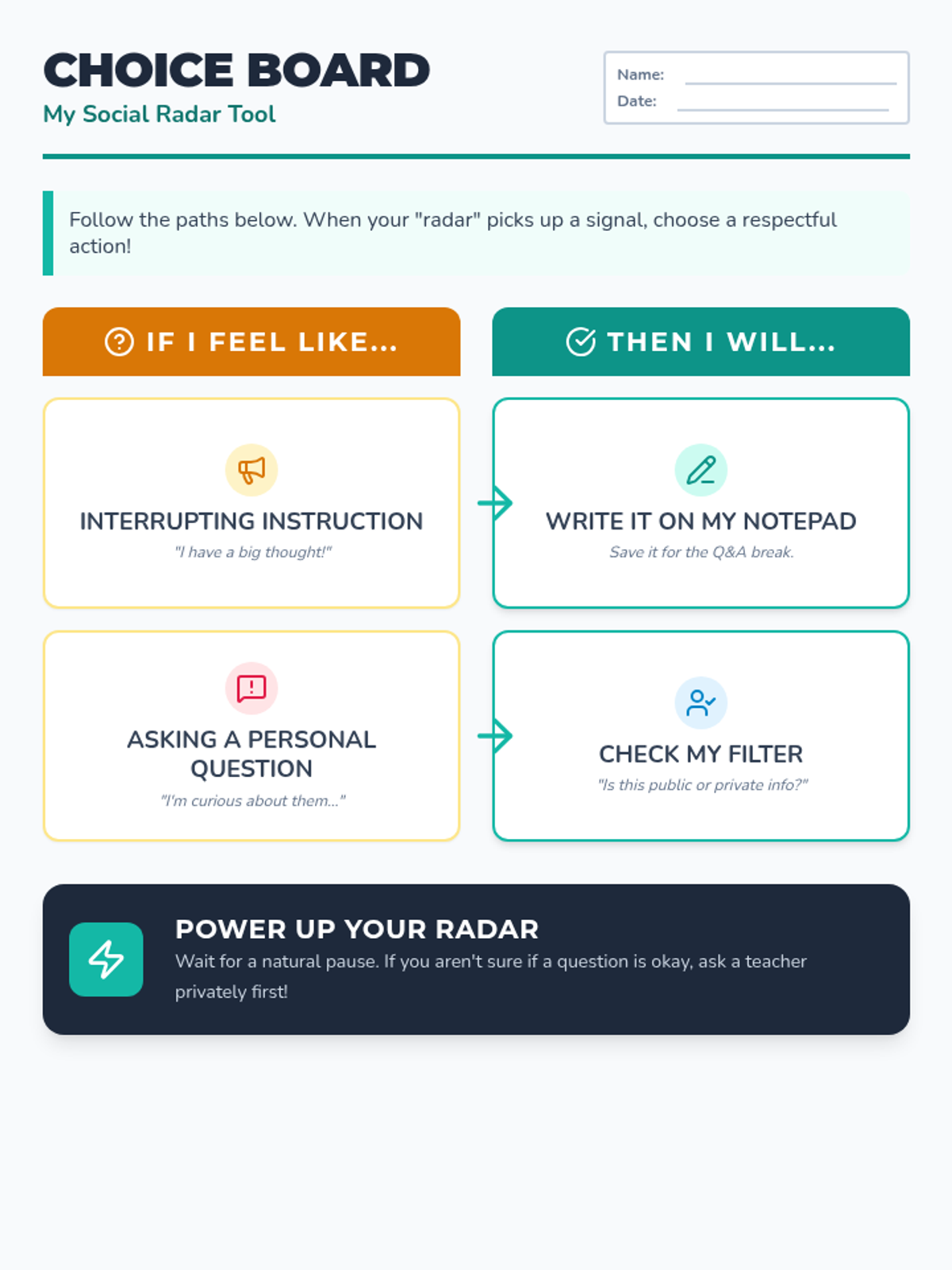
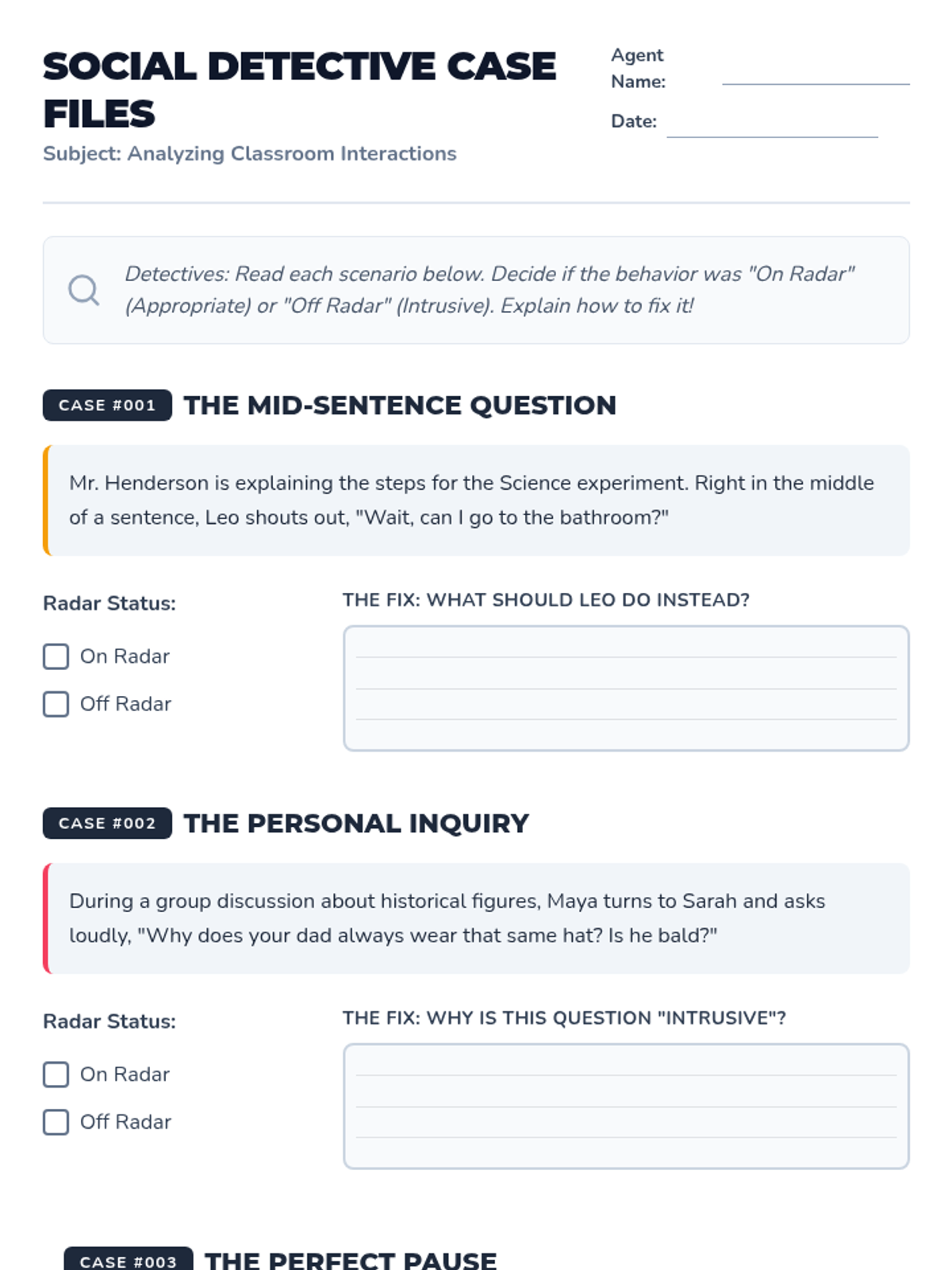
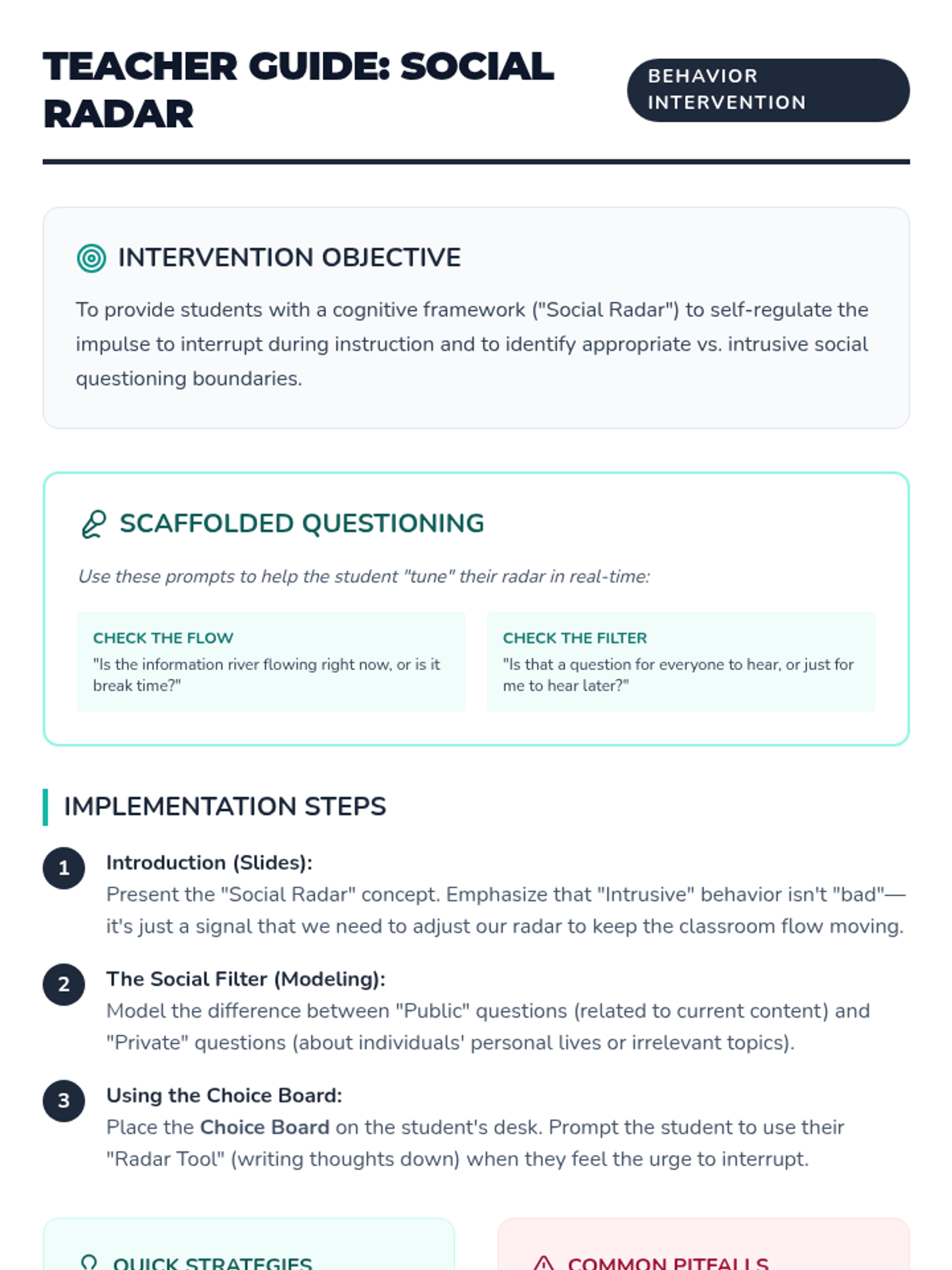
A behavior intervention lesson focused on teaching students how to recognize instructional 'flow' and apply a 'social filter' to avoid interrupting and asking inappropriate questions.
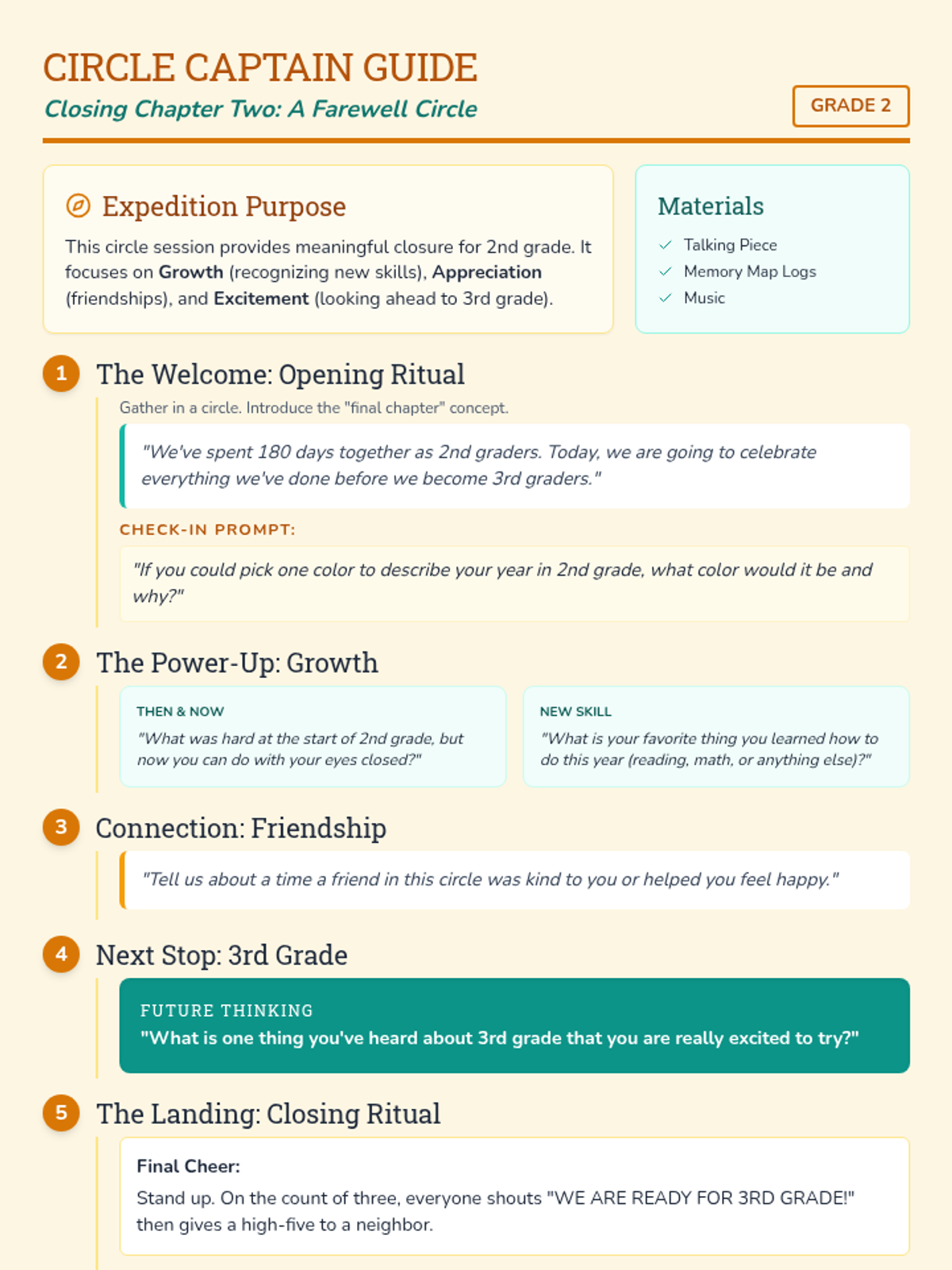
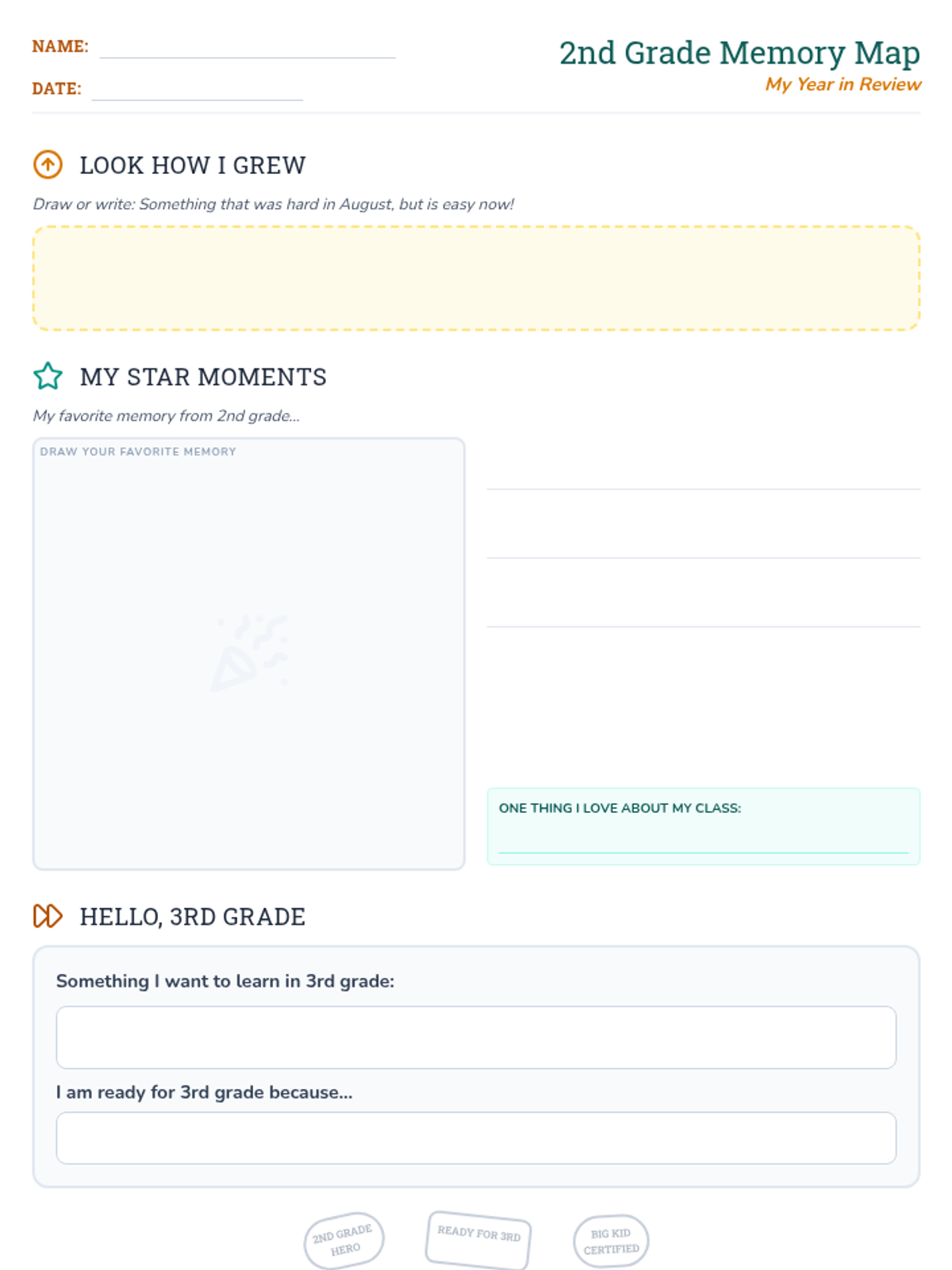
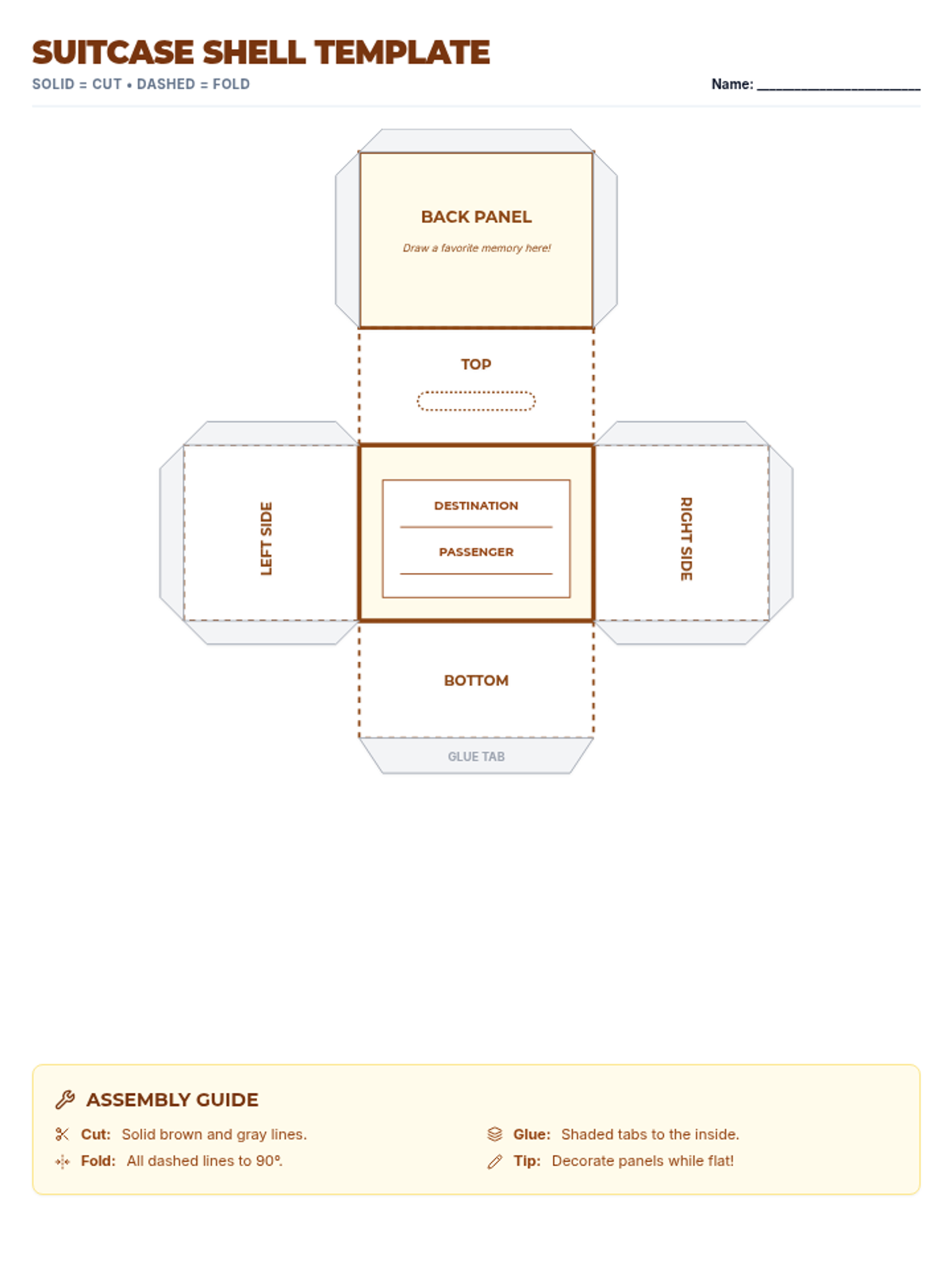
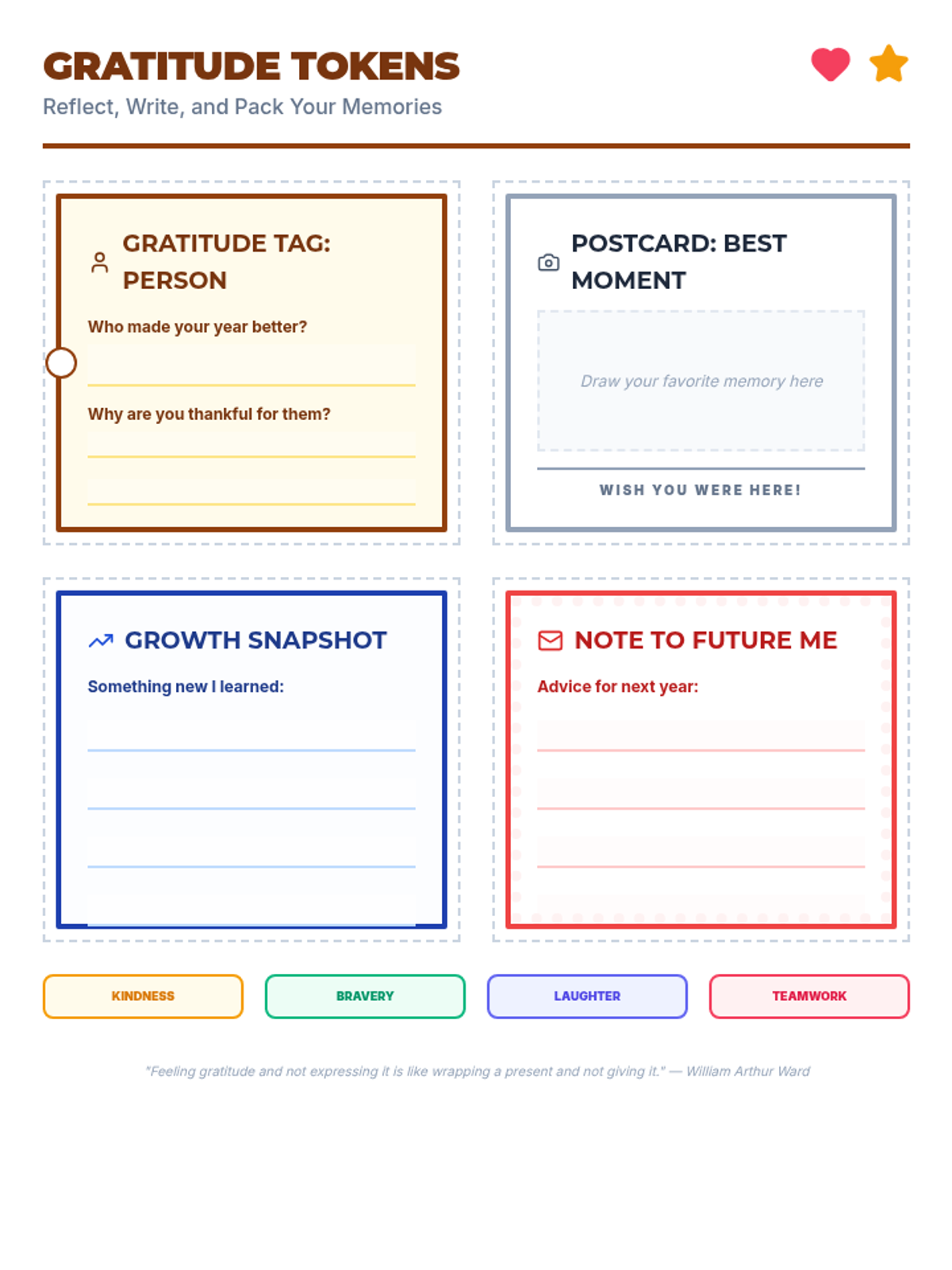
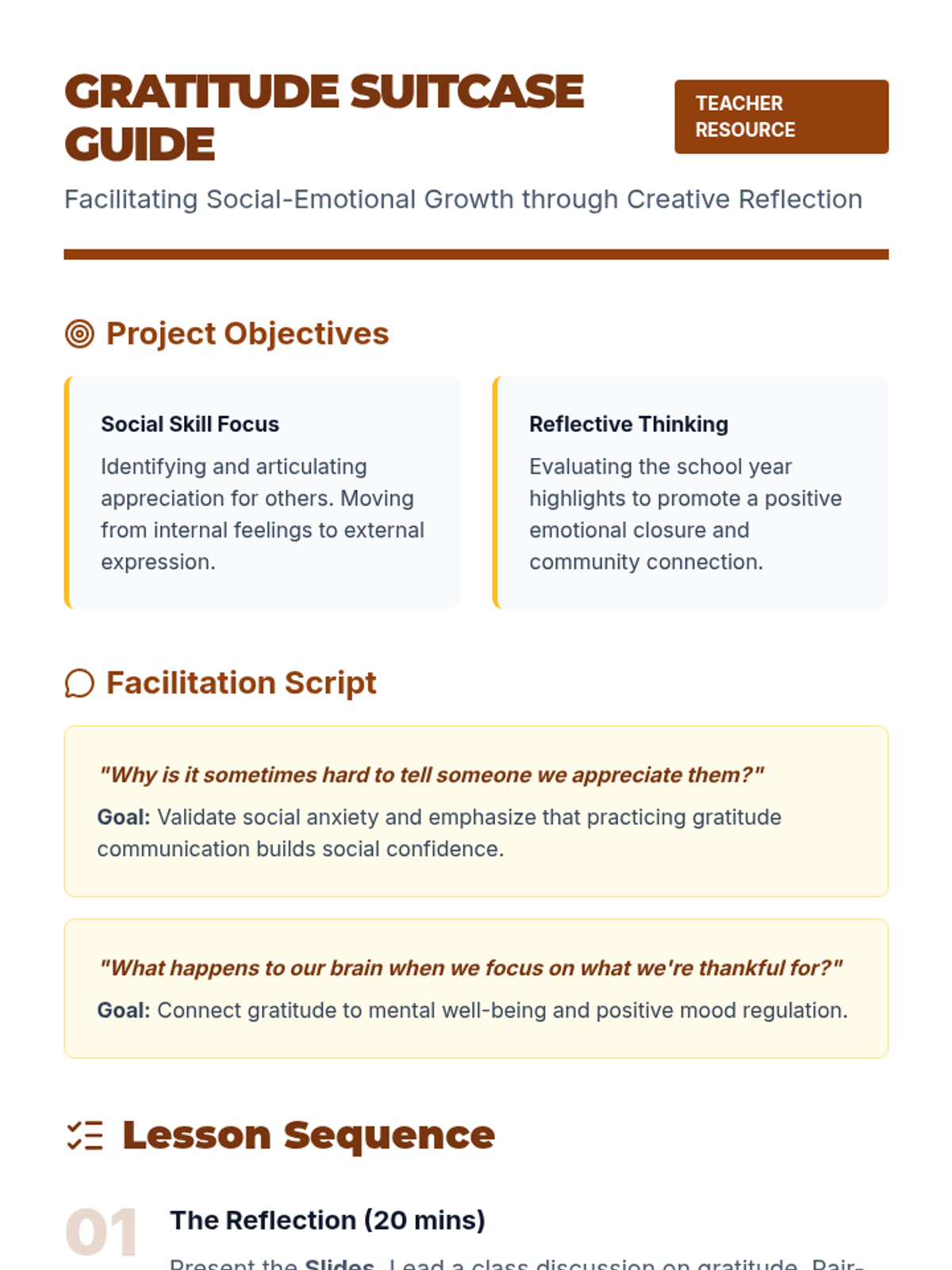
Students reflect on their year, practice expressing gratitude, and build a physical memory box to store their highlights.
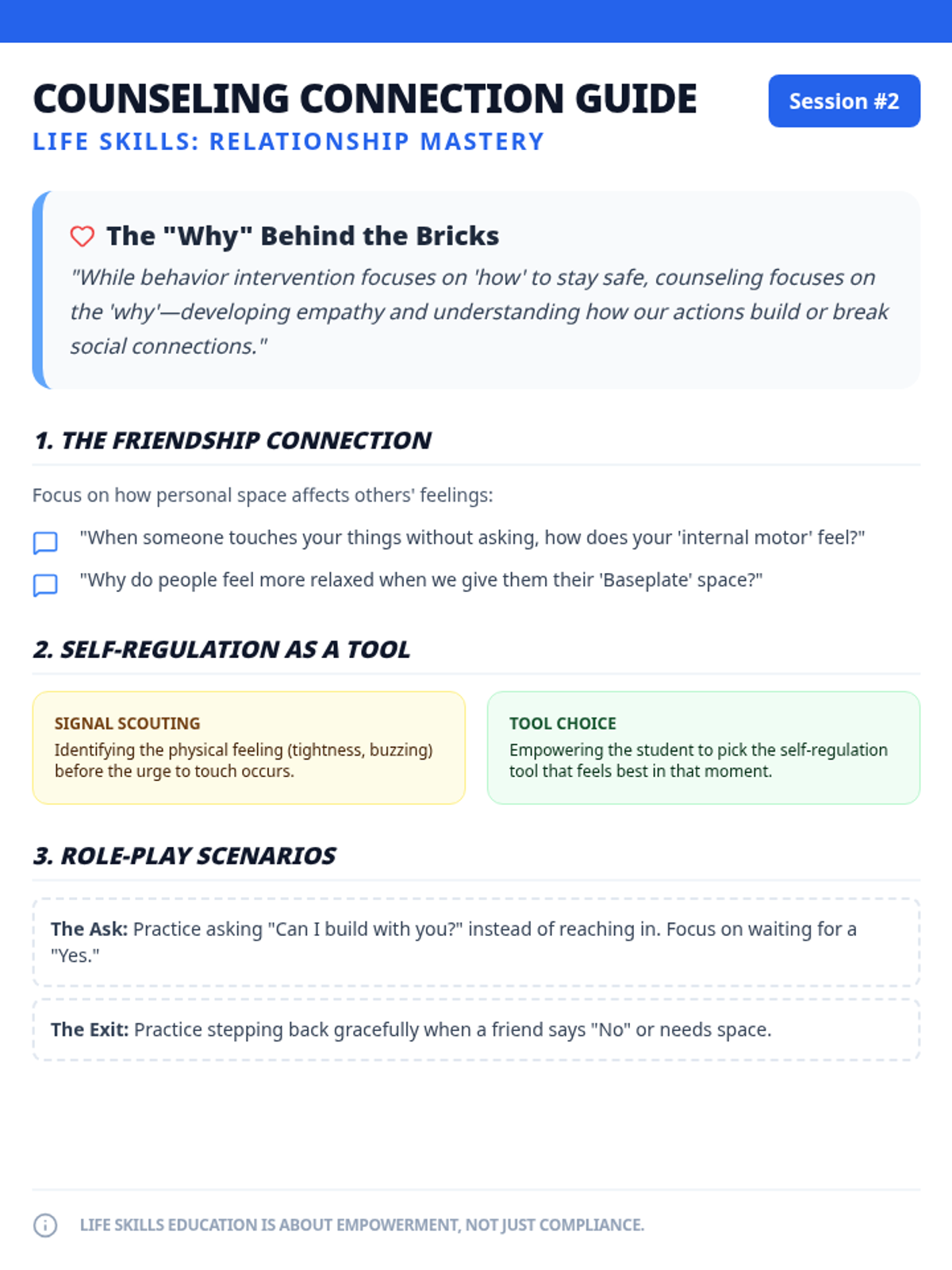
A counseling and life-skills focused lesson that uses LEGO metaphors to teach students about the "Connection Code"—the habits and social awareness needed to build and maintain positive relationships and self-regulation as a life skill.
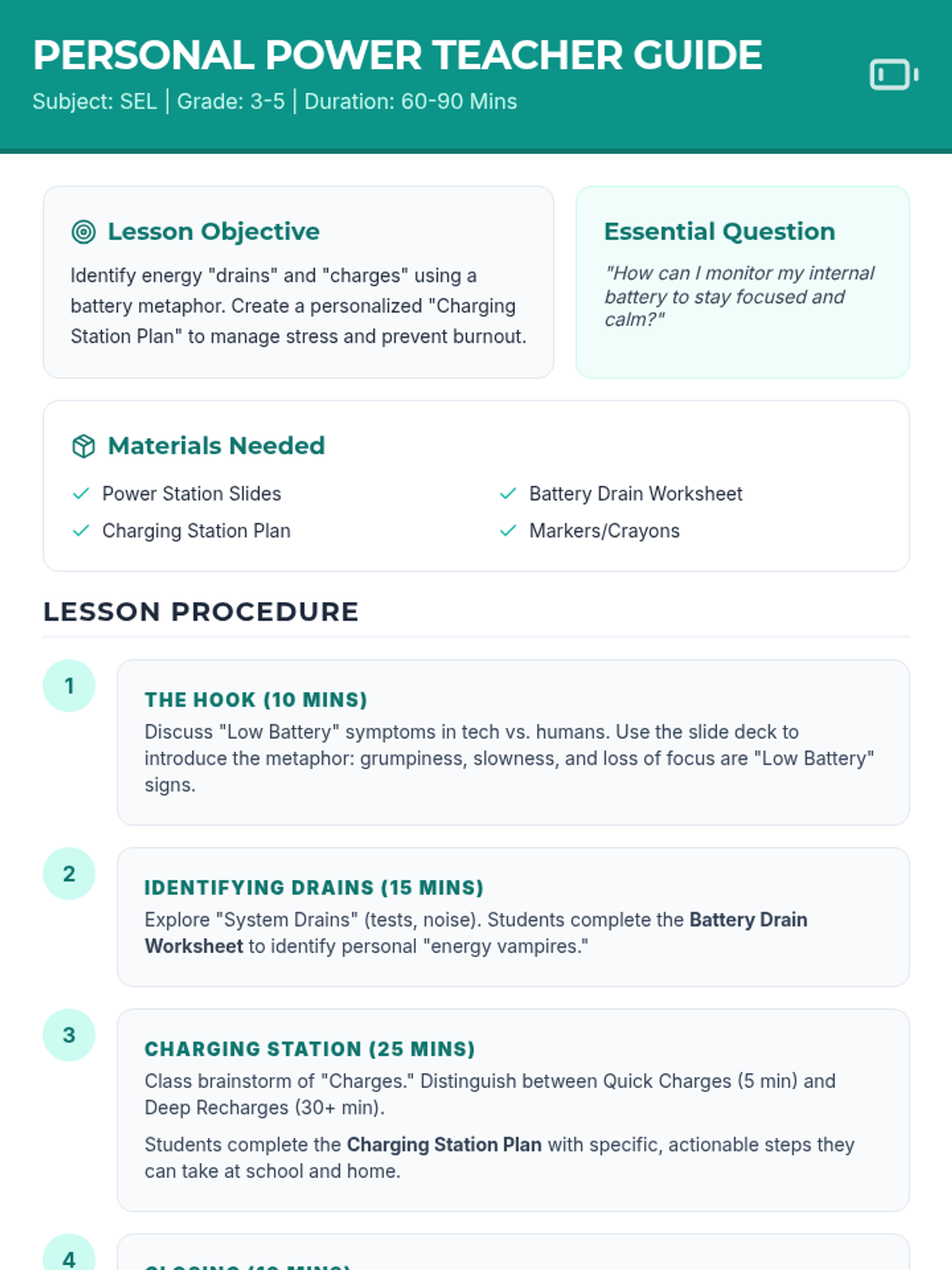
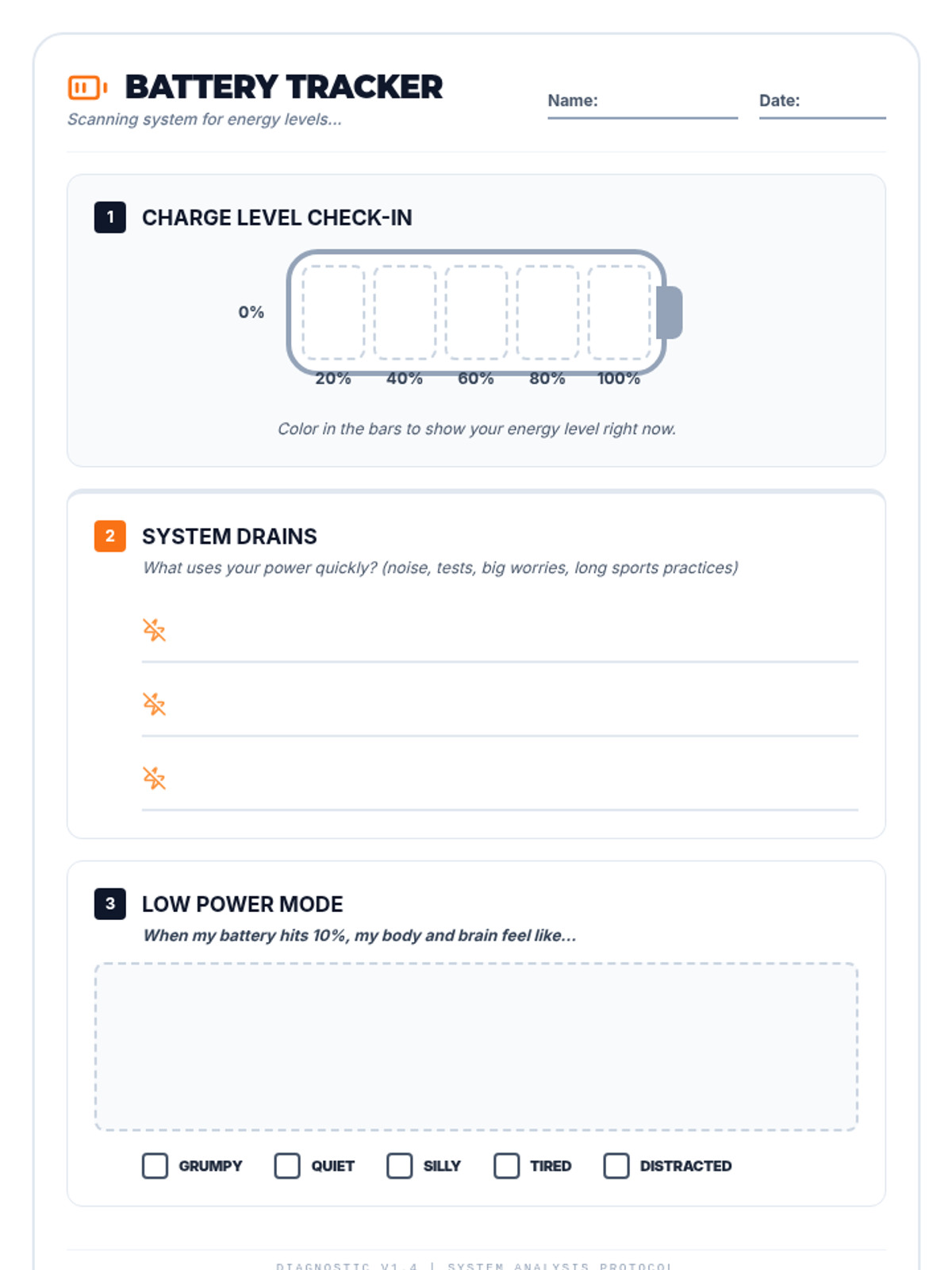
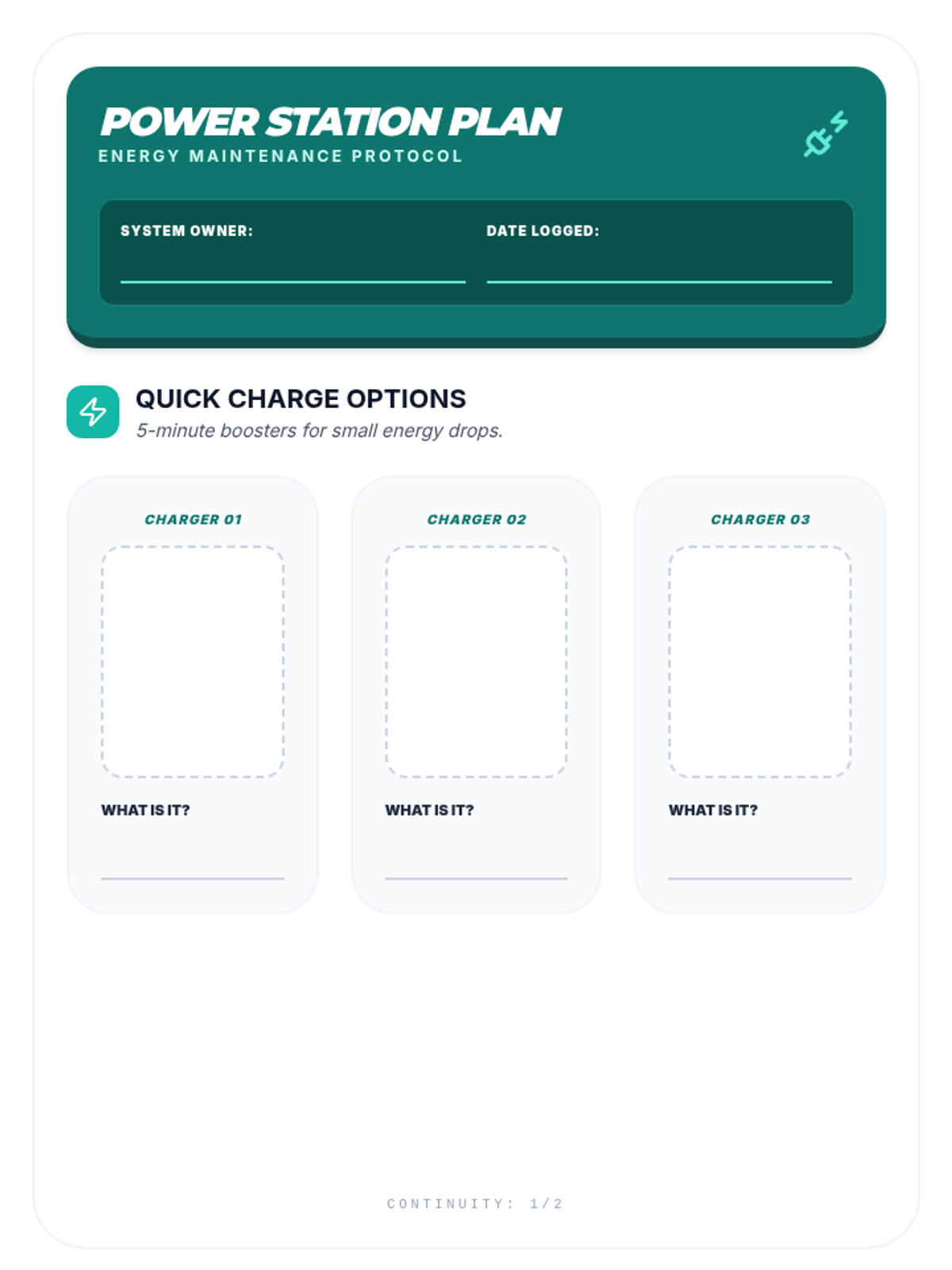
An introductory lesson where students learn the battery metaphor for emotional energy, identify their personal 'energy vampires' (drains) and 'power sources' (charges), and design a maintenance plan.
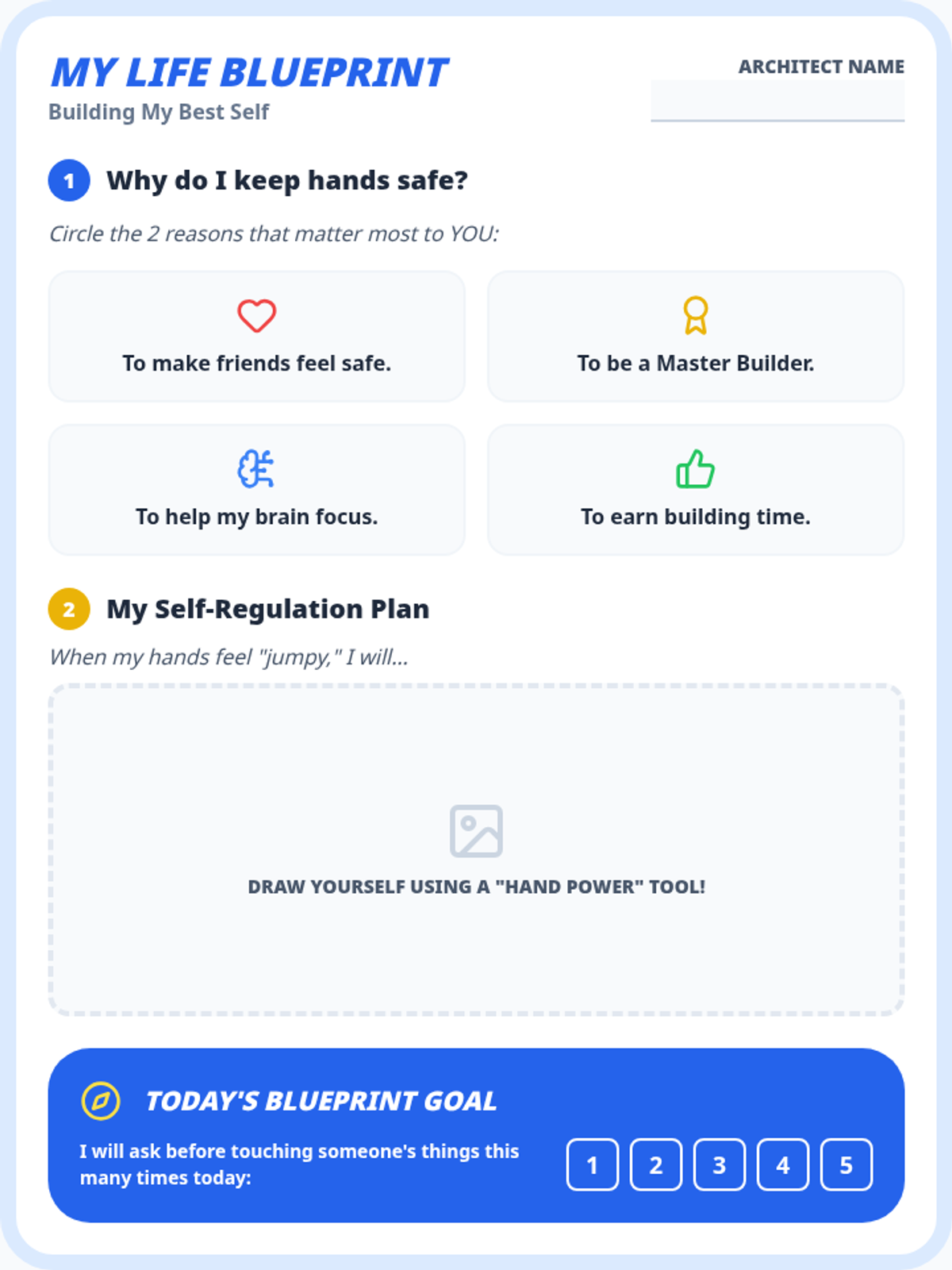
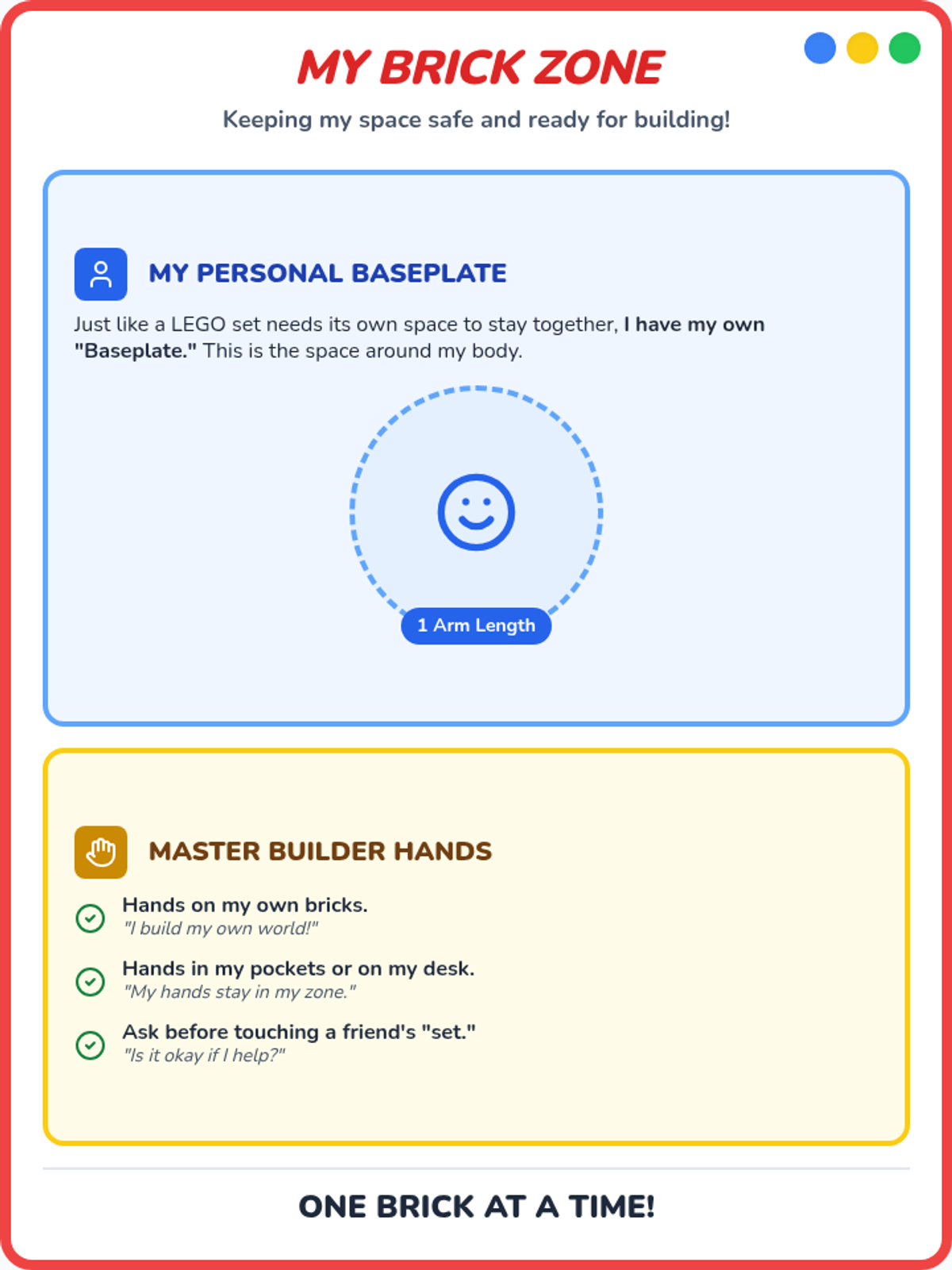
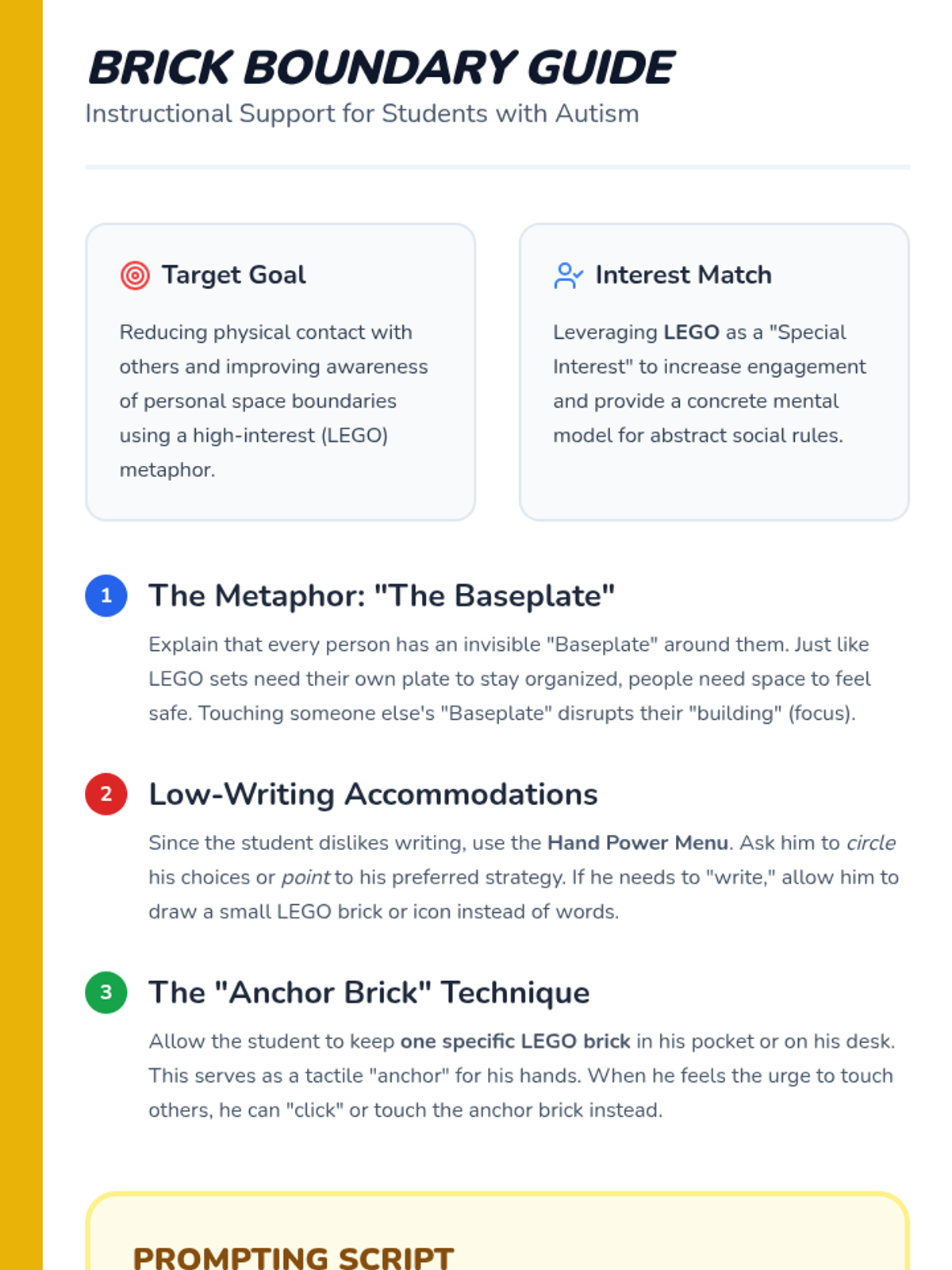
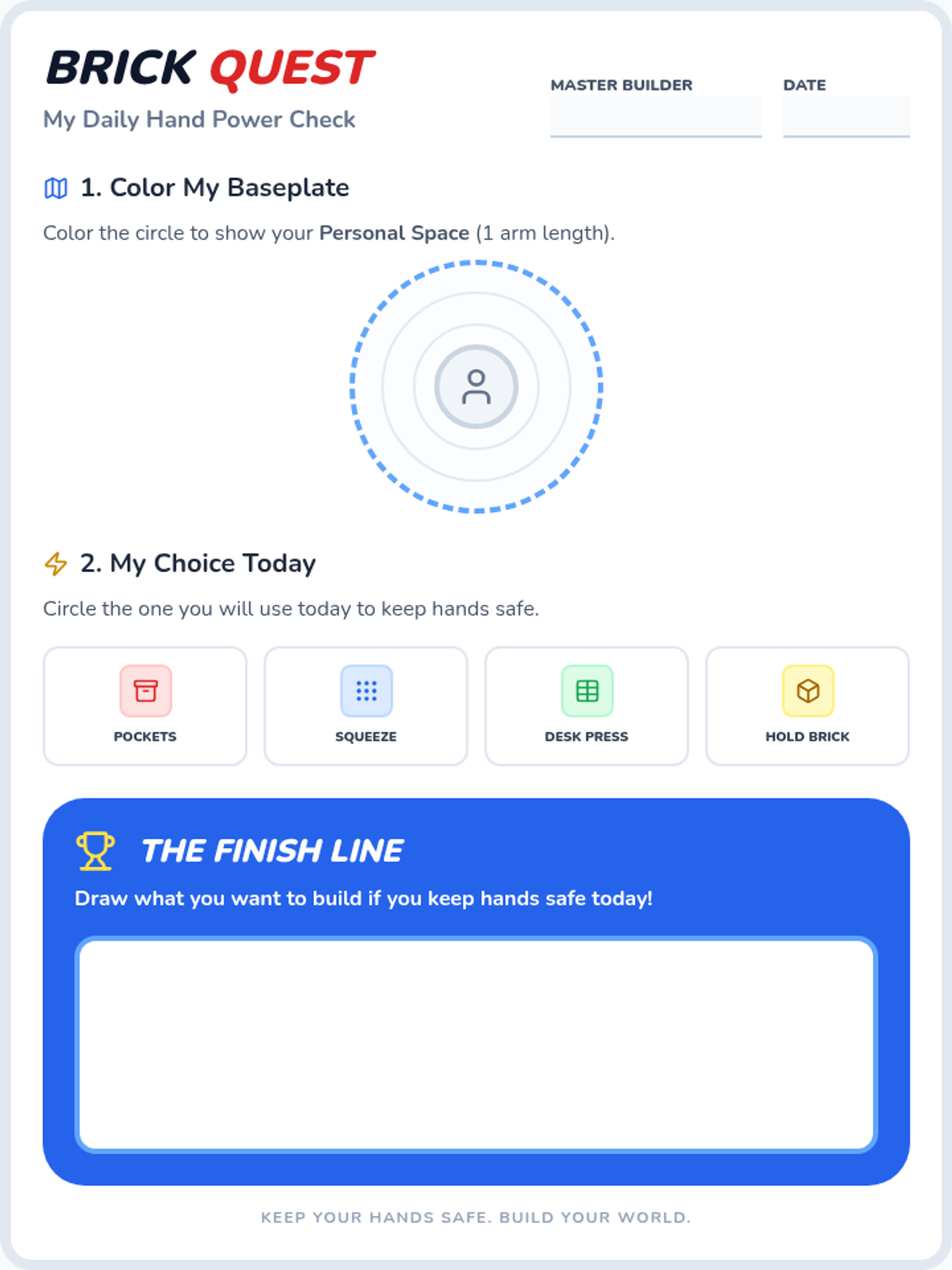
A LEGO-themed lesson designed for an autistic 5th grader to learn about personal space and self-regulation techniques for keeping hands to himself. The lesson uses high-interest visuals and low-writing activities to engage the student.
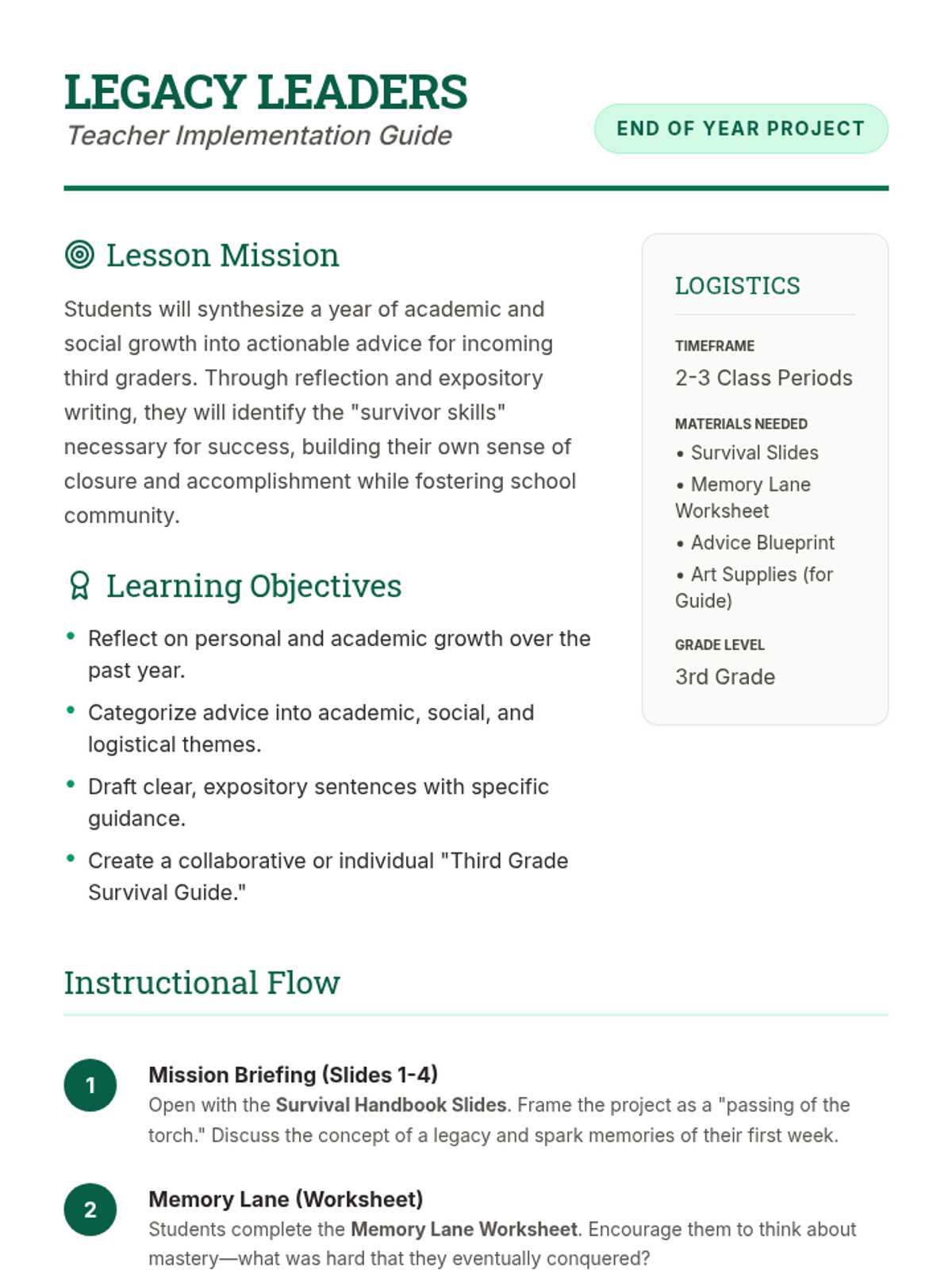
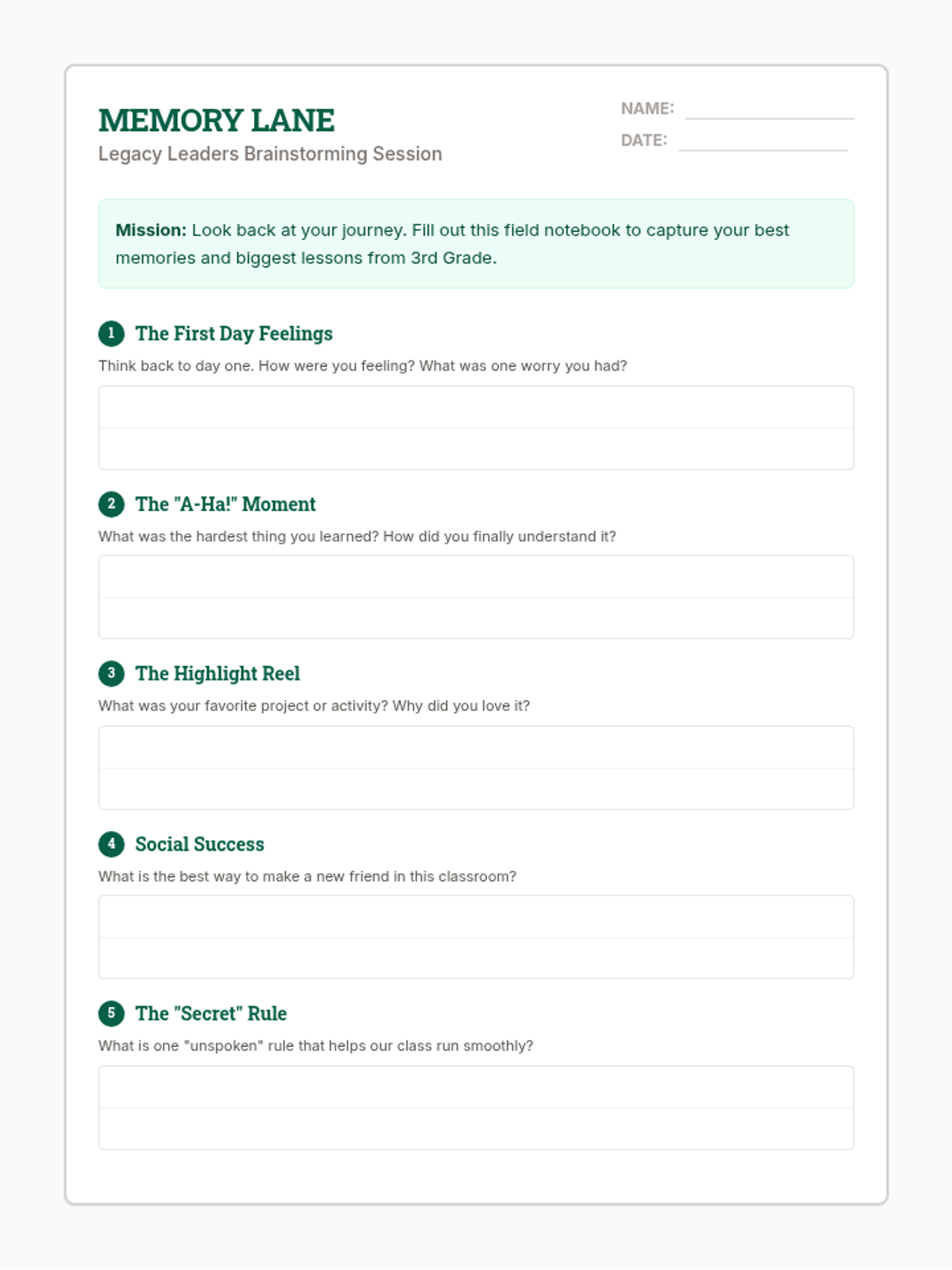
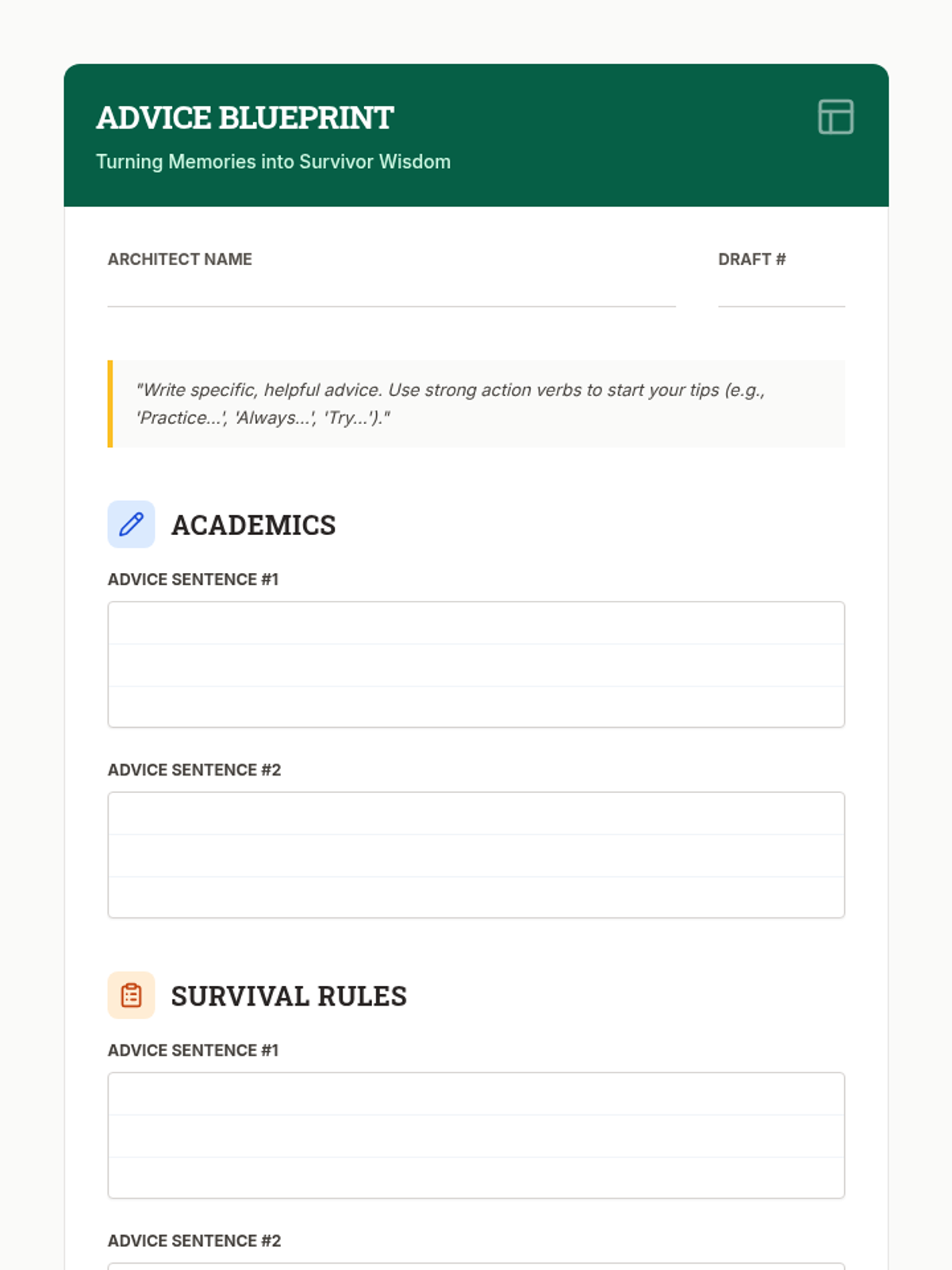
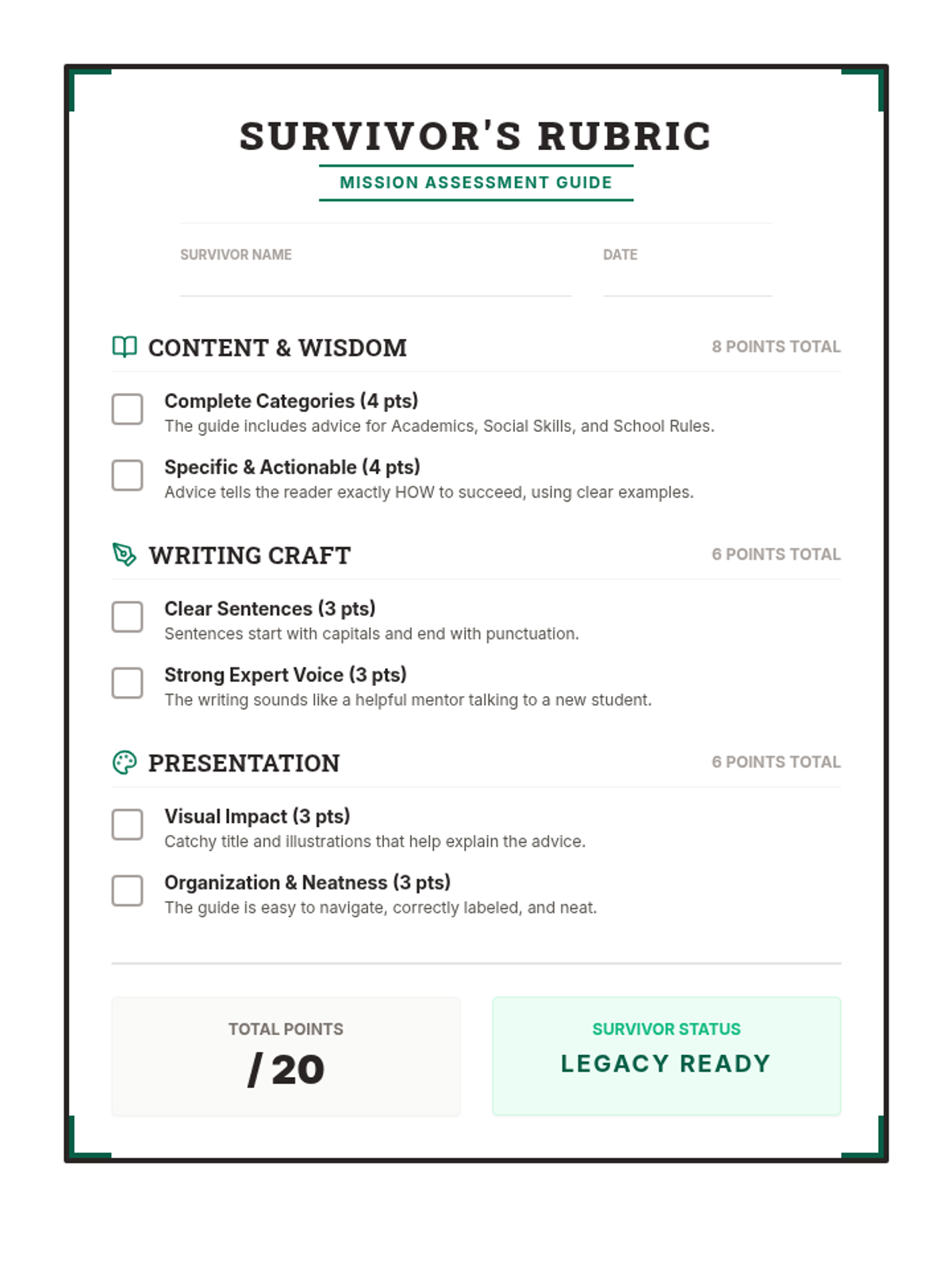
Students reflect on their personal and academic growth to create a survival guide for next year's incoming class, focusing on community building and expository writing.